
#babylon
babylon
709,303 views
2,653 Discussing
Hot
Latest

·
--
$2.6 billion worth of Bitcoin could be unlocked: Is Babylon changing its strategy?
While the market is focused on BTC price fluctuations, a noteworthy proposal from Babylon has received less attention.
Fisher Yu, Babylon’s co-founder, has proposed ending Bitcoin Staking operations before the end of 2026 to focus resources on developing the TBV (Trustless Bitcoin Vault) protocol.
What makes this proposal noteworthy is the scale of the assets involved:
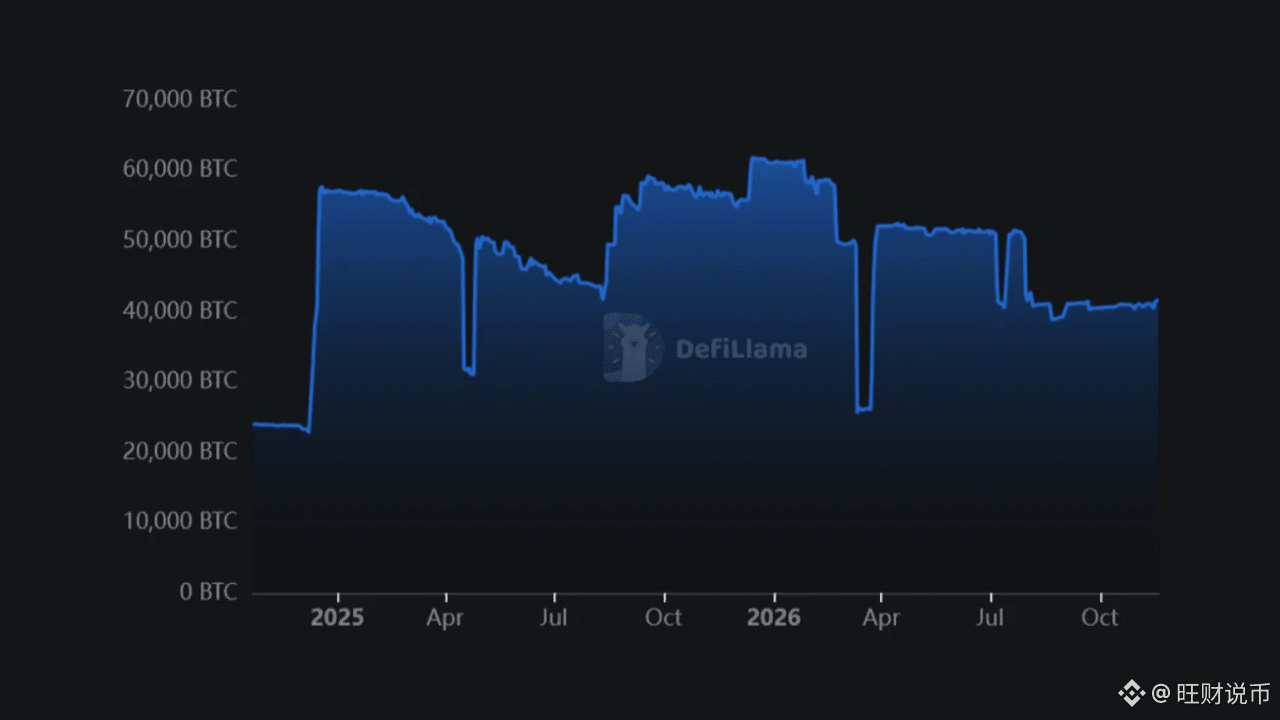
• Around 41,600 BTC are currently staked on Babylon.
• Their estimated value is nearly $2.6 billion.
• These BTC could be unlocked in stages if the proposal is implemented.
So, what could happen?
Unlocking the BTC does not mean that all 41,600 BTC will immediately be sold. However, when a large amount of assets moves from a locked state into circulation, the market needs to closely monitor holders’ behavior.
In particular, while market liquidity remains weak, even a small portion of these BTC moving could attract attention.
My take: This is a story about the structure of Bitcoin’s supply, not simply a staking news item.
It’s important to remember that this is currently only a proposal for community discussion, not a final decision.
Do you think the unlocking of 41,600 BTC will create selling pressure, or will most holders continue to hold for the long term?
#bitcoin #BTC #Babylon

421
·
--
🟠 Babylon Proposes Ending Bitcoin Staking by Year-End — $2.6B in BTC in Focus
📌 What happened
Babylon co-founder Fisher Yu has proposed sunsetting the protocol's Bitcoin staking service by the end of 2026, shifting the team's focus to its new Trustless Bitcoin Vaults (TBV). The proposal, posted on Babylon's official forum on Nov 17, is still at the discussion stage — no governance vote has taken place yet.
• Staking and co-staking rewards would be set to zero
• No new staking registrations; staking finality would be disabled
• Existing stakers could still unstake under current rules
📊 Key numbers
• ~41,600 BTC (~$2.6B) currently staked on Babylon
• BABY token inflation would fall to 2% from 5.5%
• $BABY down ~8.7% in 24h
• Aave governance approved a preliminary proposal (Nov 9) to let native BTC serve as collateral via TBV on Aave V4; a final vote is still needed
• TBV permissioned mainnet expected late November, wider access in early 2027
🔍 Why it matters
Babylon pioneered Bitcoin staking, so ending it is a major strategic pivot for BTC DeFi. The open question is what happens to the ~41,600 BTC staked — holders can unstake and move into TBV, hold, or sell, which puts near-term attention on BTC flows. On the other side, cutting BABY inflation by more than half reduces token emissions, and TBV would let native BTC be used as collateral for borrowing on Aave without wrapping or bridging — a potentially bigger market than staking itself.
👀 What to watch
• Whether the Babylon community backs the proposal in a governance vote
• Unstaking flows from the ~41,600 BTC
• TBV mainnet launch later this month and the final Aave V4 vote
Not financial advice. Source: Babylon forum / CoinMarketCap, Bitcoin.com, Nov 20.
$BABY $BTC #Babylon #Bitcoin #DeFi
8

The pioneer of Bitcoin staking is shutting down. On November 17, Babylon co-founder Fisher Yu posted on the official forum, proposing that the Bitcoin staking business be wound down by the end of the year and that the project pivot entirely to trustless Bitcoin vaults (TBV). The numbers are striking: about 41,600 $BTC are still locked on the platform, worth nearly $2.6 billion, with around 80% delegated to two service providers operated by Kraken. Annualized staking yields are now just 0.03%–0.5%, and after the shutdown, $BABY inflation will drop from 5.5% to 2%. Note that this is still only at the discussion stage: there has been no vote or implementation timeline, and the coins will not be unlocked immediately. Aave is set to take over: on November 9, a proposal passed unanimously to let users borrow stablecoins on Aave V4 using native BTC as collateral through TBV, with no wrapping or cross-chain transfers required. The staking era offered annualized yields of 0.04%; the lending era is a bet on the scale of BTC collateral. #Babylon #BTCFi
The pioneer of Bitcoin staking is shutting down. On November 17, Babylon co-founder Fisher Yu posted on the official forum, proposing that the Bitcoin staking business be wound down by the end of the year and that the project pivot entirely to trustless Bitcoin vaults (TBV). The numbers are striking: about 41,600 $BTC are still locked on the platform, worth nearly $2.6 billion, with around 80% delegated to two service providers operated by Kraken. Annualized staking yields are now just 0.03%–0.5%, and after the shutdown, $BABY inflation will drop from 5.5% to 2%. Note that this is still only at the discussion stage: there has been no vote or implementation timeline, and the coins will not be unlocked immediately. Aave is set to take over: on November 9, a proposal passed unanimously to let users borrow stablecoins on Aave V4 using native BTC as collateral through TBV, with no wrapping or cross-chain transfers required. The staking era offered annualized yields of 0.04%; the lending era is a bet on the scale of BTC collateral. #Babylon #BTCFi
481

·
--
A Babylon co-founder has proposed ending Bitcoin staking by the end of 2026. This is an interesting development.
According to Odaily, Babylon currently has around 41,600 $BTC staked, worth nearly $2.6 billion, with about 80% delegated to two service providers operated by Kraken. The team wants to shift its resources toward the trustless Bitcoin Vault protocol (TBV).
A few key points:
• This is currently just a community discussion; a vote may be proposed later
• Funds won’t be unlocked all at once. Early withdrawal after co-signing by the committee would take around 2–7 days, while waiting for the lockup period to expire could take up to 15 months
• The dashboard shows an annualized yield of just 0.03%–0.5% for BTC staking
Such low yields suggest that the Bitcoin staking narrative hasn’t really held up in a weak market. The next things to watch are the vote outcome and the actual pace of withdrawals.
For reference only; this is not investment advice. #Babylon #BitcoinStaking
57

·
--
🚨 Babylon co-founder proposes ending Bitcoin staking by year-end: What will happen to 41,600 BTC (about $2.6 billion)?
📌 Event: On November 17, co-founder Fisher Yu proposed on the forum ending BTC staking before the end of 2026, zeroing out rewards and stopping new staking, while shifting focus to TBV (Bitcoin-collateralized lending, integrated with Aave).
📊 Data (sources: Bitcoin.com/DefiLlama):
• About 41,600 BTC currently staked
• About 80% delegated to two nodes operated by Kraken
• Staking yields have fallen to 0.03%-0.5%
• BABY inflation will drop from 5.5% to 2%
⚠️ Note: This is currently only a forum discussion; no voting date has been set, and current stakers can still unstake under the existing rules.
🧠 My take: With BTC around 62,000 and the fear index at 12, the “staking” story is running out of steam as yields approach zero. The market would rather hear the narrative of “borrowing money without selling your coins.” But if over 40,000 BTC are unstaked all at once, that could create significant short-term psychological pressure.
Do you think this signals a shift in BTC DeFi, or is it another case of a narrative losing momentum? Let’s discuss in the comments 👇
$BTC $BABY $AAVE
#比特币 #Babylon #BTCFi
For personal opinions only; not investment advice
45

·
--
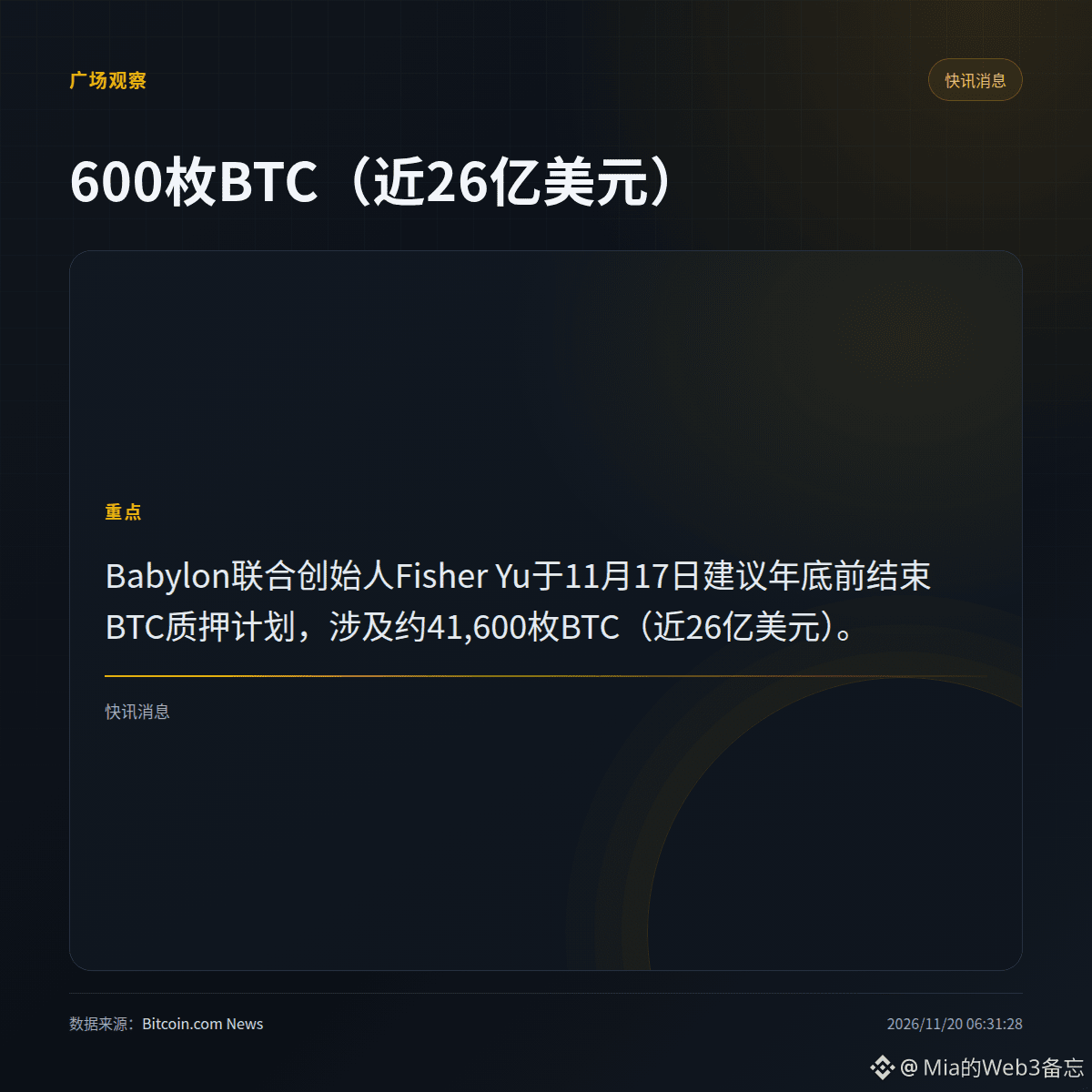
Babylon co-founder Fisher Yu proposed on November 17 considering ending the protocol’s Bitcoin staking program before the end of this year. About 41,600 BTC are currently staked on the protocol, worth nearly $2.6 billion. This figure shows that the proposal affects not just a small-scale test pool, but most of the assets held by the protocol. It is important to distinguish that a proposal does not mean a shutdown has been confirmed: neither the timeline nor the specific arrangements have been finalized. So, we cannot yet assume that these 41,600 BTC have been unstaked.$BTC #Babylon. In the short term, don’t focus only on one statement—trading volume and price ranges are more telling.
Babylon co-founder Fisher Yu proposed on November 17 considering ending the protocol’s Bitcoin staking program before the end of this year. About 41,600 BTC are currently staked on the protocol, worth nearly $2.6 billion. This figure shows that the proposal affects not just a small-scale test pool, but most of the assets held by the protocol. It is important to distinguish that a proposal does not mean a shutdown has been confirmed: neither the timeline nor the specific arrangements have been finalized. So, we cannot yet assume that these 41,600 BTC have been unstaked.$BTC #Babylon. In the short term, don’t focus only on one statement—trading volume and price ranges are more telling.
54

·
--
【Will Babylon, which has over 40,000 Bitcoin staked, shut down staking? Co-founder proposes zeroing rewards and accepting no new deposits by year-end】
Babylon co-founder Fisher Yu proposed on the forum on November 17 that Bitcoin staking be halted by the end of this year: staking rewards would be set to zero, no new stakes would be accepted, and existing stakes could still be redeemed under the original rules (with funds arriving in about 50 hours). The team would shift its focus to a new product that lets users "collateralize BTC on Aave and borrow stablecoins without BTC ever leaving the Bitcoin chain." BABY's annual inflation rate would also drop from 5.5% to 2%. On November 18, the protocol still held about 41,600 BTC, worth around $2.58 billion. This is only a proposal for now; it has not been put to a vote, and no specific date has been set.
$BABY
#Babylon #比特币质押 #BTCFi
1
223

Babylon co-founder Fisher Yu himself proposed shutting down BTC staking by year-end. I think this post is more honest than any bullish news: the yield from BTC staking was essentially funded by issuing more BABY, using dilution of BABY holders to subsidize BTC deposits. Now they’re admitting they can’t afford to keep doing it.
First, the facts. On November 17, he posted on the Babylon forum, proposing that before year-end they reduce BTC staking and co-staking rewards to zero, disable staking finality, and stop accepting new staking registrations, while allowing existing stakers to unstake as usual under the current rules. The reasons: first, the team wants to focus entirely on TBV (a trust-minimized Bitcoin vault; it has passed Aave governance and can use native BTC to borrow stablecoins on Aave V4); second, BABY’s annual inflation can be cut from 5.5% to 2%. For now, this is only a forum discussion—there’s been no vote and no implementation timeline.
Let’s do the math. Under the plan approved last October, the 5.5% inflation was distributed as follows: 1% to BTC stakers, an additional 2.35% to BTC stakers who also staked BABY, 2% to BABY stakers, and 0.075% each to FP and validators. Cutting it to 2% removes exactly the entire 3.5% that went to the BTC side. In other words, BTC stakers were never earning some kind of “Bitcoin security service fee”—they were earning newly issued tokens, and most people sold them as soon as they claimed them.
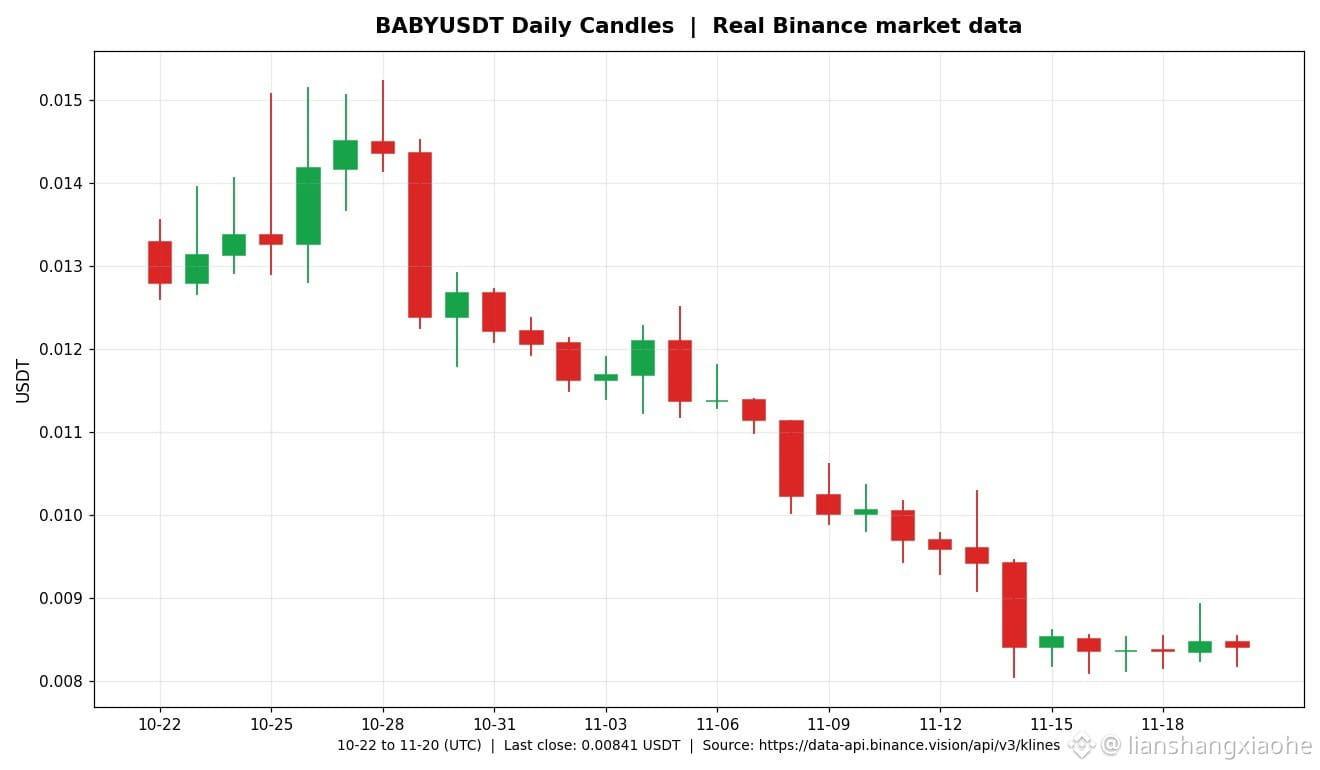
What’s interesting is the market reaction. Around the time the proposal came out, BABY’s daily price went from 0.00836 to 0.00826 now (Binance spot). Inflation has been cut by more than 60%, yet the price hasn’t budged. My read is that the effects cancel each other out: getting rid of constant selling pressure is good, but BABY has also lost its main use case. The co-staking requirement was 20,000 BABY for every 1 BTC, worth only about $166 at the current price. For a BTC worth over $60,000, that “must-have” demand was symbolic to begin with. Canceling it won’t eliminate much real buying demand—and, conversely, it shows that the demand attributed to this use case was overstated from the start.
Then there are the 41,520 BTC still staked, worth about $2.59 billion at a price of $62,443. Once rewards go to zero, they have no reason to stay, so they’ll likely be unstaked over time. How much that number falls will show the actual demand for the narrative that “Bitcoin staking provides security to other chains.” My guess is: not much will be left.
From here, BABY’s valuation depends entirely on TBV: the private, permissioned mainnet is reportedly scheduled for the end of November, while the permissionless version won’t arrive until early 2027. As for Aave’s revenue sharing, they’ve only said that “a portion” will go toward AAVE and BABY buybacks; I didn’t see the percentage in the post. Until TBV generates real borrowing volume and revenue, don’t treat “inflation cut by 60%” as bullish news and start shilling the token. The part they’re cutting was a cost paid to BTC depositors, not something being handed to you for free.
Sources: Babylon forum post “On sunsetting Bitcoin staking” (11/17); co-staking tokenomics proposal and October on-chain vote; Binance BABYUSDT market data (around 6 a.m. on 11/19, UTC+8)
#Babylon #BTCFi
6
·
--
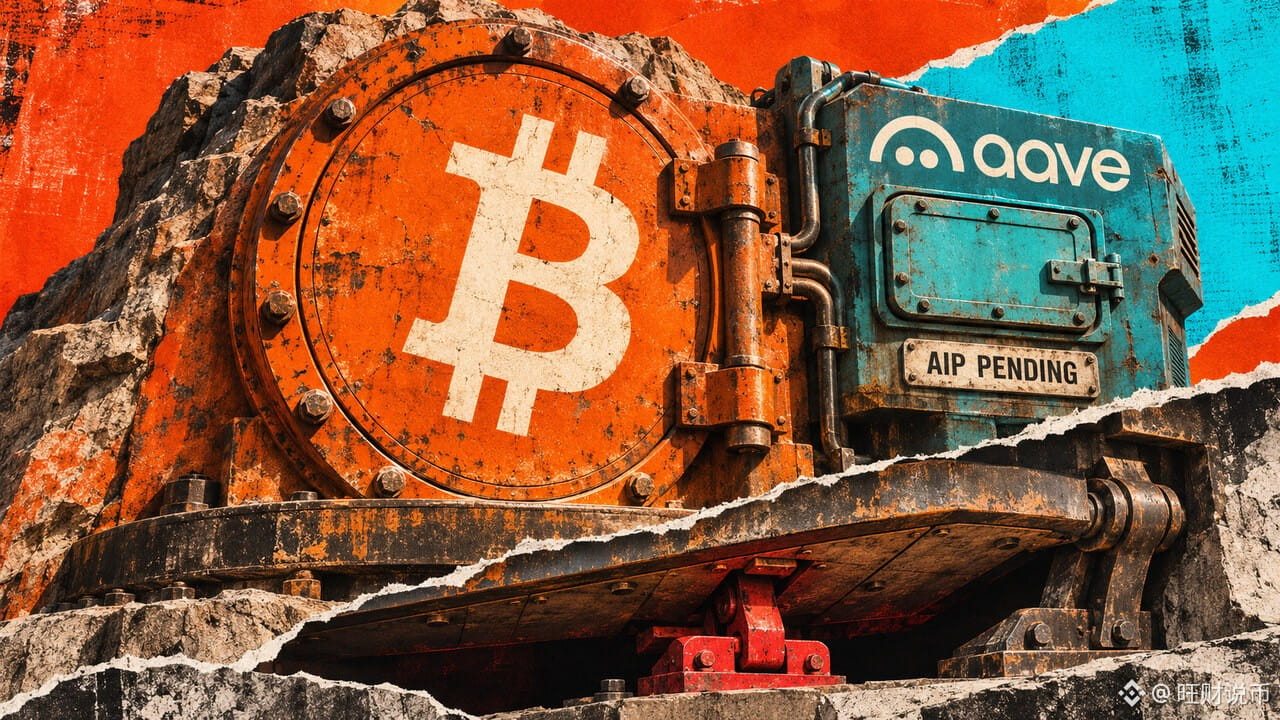
🏦 Can you borrow stablecoins on Aave with native BTC—without wrapping it? The vote passed unanimously, but it’s not live yet!
📌 On 11/9, the Aave DAO approved the Babylon proposal with 100% support: lock BTC in a Babylon self-custody vault and borrow USDT/USDC on Aave V4—no wrapping, no cross-chain transfers, and no third-party custody.
🔢 Key details:
• 78% collateral ratio
• Initial stablecoin capacity of about $21 million (figures vary slightly by source)
• Targeting a limited launch by the end of 2026
• One step left: the final on-chain AIP vote
⚠️ CryptoSlate warns: liquidation could wipe out the entire vault, and settlement still depends on WBTC, so it’s not quite as “native” as it sounds.
📊 Market: $AAVE 24h +6.5% at $109.34; $BTC $65,141; Fear & Greed Index: 10 (extreme fear).
👉 Will demand grow in a bear market for BTC holders who want to “borrow without selling”? Or are you more worried about liquidation? Let’s talk in the comments 👇
#Aave #Babylon #BTC ecosystem
For personal views only; not investment advice
2


·
--
Bearish
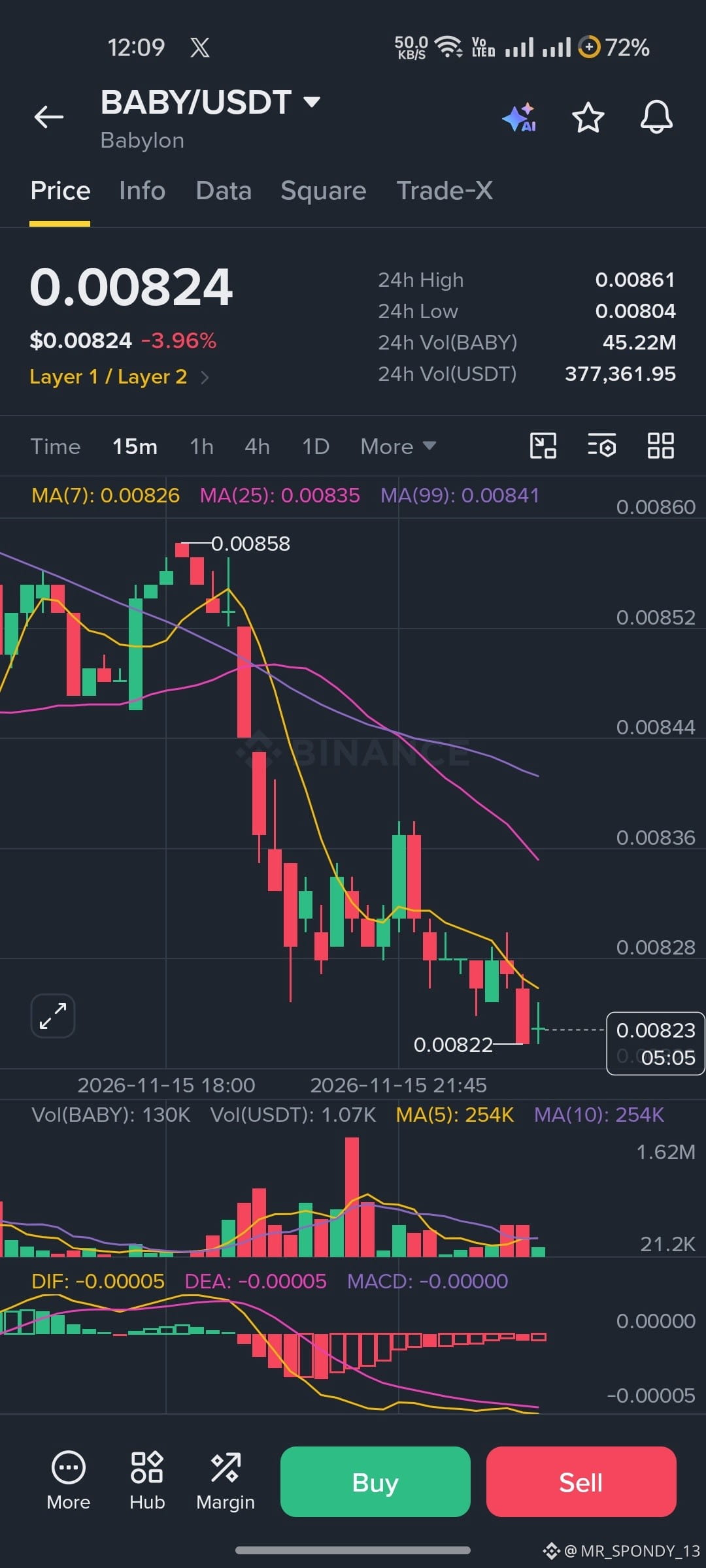
$BABY/USDT Futures Short Setup
Babylon is facing selling pressure, down 3.96% today and trading near $0.00824. Price was rejected at $0.00858 and is now trading below all key moving averages on the 15-minute chart, indicating short-term bearish momentum.
Trade Details
- Direction: Short
- Entry Zone: $0.00824 – $0.00832
- TP1: $0.00815
- TP2: $0.00804
- TP3: $0.00790
- Stop Loss: $0.00842
Manage your leverage carefully and always use a stop loss.
#BABY #Babylon #CryptoTrading #BinanceSquare #Mr_SPONDY_13
$BABY
{future}(BABYUSDT)
$BABY /USDT Futures Short Setup
Babylon is facing selling pressure, down 3.96% today and trading near $0.00824. Price was rejected at $0.00858 and is now trading below all key moving averages on the 15-minute chart, indicating short-term bearish momentum.
Trade Details
- Direction: Short
- Entry Zone: $0.00824 – $0.00832
- TP1: $0.00815
- TP2: $0.00804
- TP3: $0.00790
- Stop Loss: $0.00842
Manage your leverage carefully and always use a stop loss.
#BABY #Babylon #CryptoTrading #BinanceSquare #Mr_SPONDY_13
$BABY
1
165

·
--
"Beyond crypto-native users" is a phrase that implies outreach, but what actually stood out was how self-referential the current touchpoints still are. $BABY #TBV @Babylon_Labs removes bridge and custodian risk, which is exactly the kind of guarantee that would matter to someone outside crypto who's cautious about counterparty exposure. But the two integrations actually live right now, Aave for borrowing and Gomining for mining yield, both assume the user already understands DeFi lending or mining economics well enough to want in. Neither is built as an on-ramp for someone whose only context is "I own some Bitcoin and don't fully trust exchanges." The argument for why this should matter beyond crypto natives is coherent, non-custodial by design, no wrapped-token risk, genuinely safer primitives. But the actual paths into using it still run entirely through crypto-native infrastructure, aimed at people already fluent in lending markets and staking mechanics. The audience the pitch describes and the audience the current product reaches aren't the same group yet, and closing that gap looks less like a marketing problem and more like a missing layer nobody's built.
@babylonlabs_io #Babylon $BABY
"Beyond crypto-native users" is a phrase that implies outreach, but what actually stood out was how self-referential the current touchpoints still are. $BABY #TBV @Babylon_Labs removes bridge and custodian risk, which is exactly the kind of guarantee that would matter to someone outside crypto who's cautious about counterparty exposure. But the two integrations actually live right now, Aave for borrowing and Gomining for mining yield, both assume the user already understands DeFi lending or mining economics well enough to want in. Neither is built as an on-ramp for someone whose only context is "I own some Bitcoin and don't fully trust exchanges." The argument for why this should matter beyond crypto natives is coherent, non-custodial by design, no wrapped-token risk, genuinely safer primitives. But the actual paths into using it still run entirely through crypto-native infrastructure, aimed at people already fluent in lending markets and staking mechanics. The audience the pitch describes and the audience the current product reaches aren't the same group yet, and closing that gap looks less like a marketing problem and more like a missing layer nobody's built.
@BabylonLabs_io #Babylon $BABY
@BabylonLabs_io #Babylon $BABY
Mollie Piskura vl6b:
这么厉害,为什么只有300个BTC的额度呢?为什么高度依赖WBTC呢?好搞笑,你们这些营销号到底收了多少钱?
1
251

·
--
🚨 $BABY Are whales hinting at an opportunity before the market opens its eyes?
While money flees $BTC after liquidations exceeded $1 billion, BABY is appearing at around $0.010 as one of the infrastructure tokens linked to #bitcoin
The big news today: Aave DAO approved integrating native Bitcoin as collateral via Babylon TBV, with a buyback plan allocating 15% of it to BABY.
This means BABY could link its value directly to the volume of borrowing on Aave, not just hype.
Why are whales interested?
The price is relatively low, but the sector is real, not meme-based.
Whales in futures increased their buy ratio from 14% to 19% over one week.
If liquidity returns, infrastructure often moves before memes.
Key level: A breakout above $0.0103 on strong volume could open the way to $0.012–0.013; a drop below $0.0098 temporarily invalidates the scenario.
Explicit warning: This is not a call to buy, but a monitoring roadmap—the market is still in the fear zone.
#BinancePick #Babylon #baby
1
40
·
--
🏦 Borrow stablecoins using BTC directly as collateral—without bridging or wrapping? Aave voting is live today!
📌 The Aave DAO has put Babylon’s “native BTC collateral” proposal up for a Snapshot vote, running 11/6–11/9 (Eastern Time, starting and ending at 9:03).
🔐 BTC stays in a Taproot vault on the Bitcoin network, with no custodial wrapper like WBTC. Aave V4 would record only a non-transferable accounting token.
📊 LlamaRisk recommends an initial cap of 300 BTC and a 78% collateral ratio.
⚠️ But note: passing the vote ≠ launch. On-chain governance voting, a new audit, and final parameters are still needed. Some forum users have also raised concerns about emergency pauses and control of the vault. Recovering collateral during liquidation could take days—that’s the biggest risk.
💬 At around $BTC $75,773 (24h -5.5%), the market is weak, but the BTCFi narrative is moving forward. Will earning yield on “idle BTC” be a long-term positive—or a new source of risk?
Would you borrow against native BTC? Share your thoughts in the comments 👇
$BTC $ETH #Aave #BTCFi #Babylon
Personal opinion only; not investment advice
17
·
--
Bullish
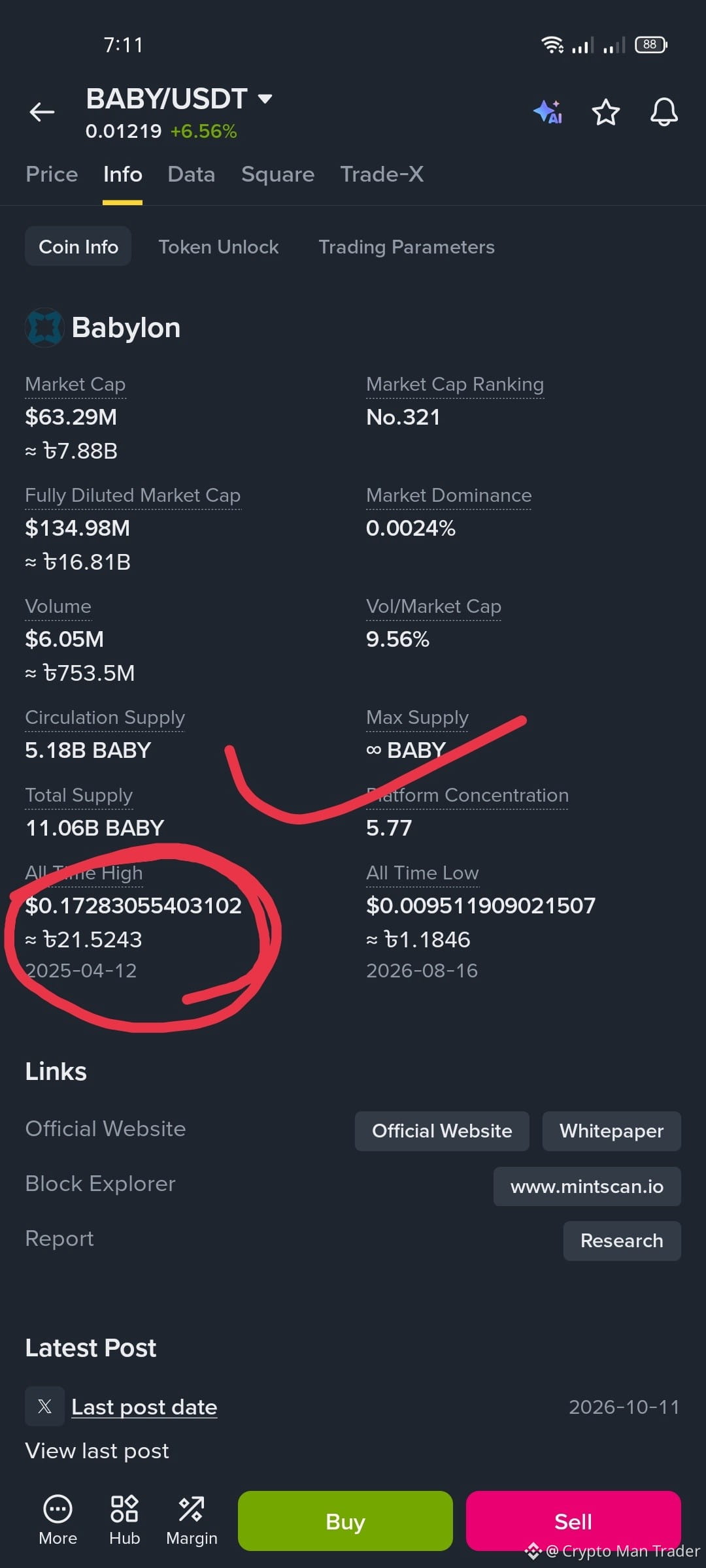
🚀 CAN $BABY HIT $0.12 BY THE END OF 2026?
What if $BABYLON surprises the entire crypto market with a massive bullish rally?
Imagine seeing $BABYLON reach $0.12 USDT before the end of 2026!
🎯 2026 Bullish Price Targets
Target 1: $0.04
Target 2: $0.06
Target 3: $0.09
Final Target: $0.12 USDT
Could this be a golden opportunity for long-term holders?
Stay patient, watch the market, and never ignore risk management.
Who's holding $BABYLON for $0.12?
#BABYLON #Crypto #Altcoins #2026Prediction #BullishTargets #BinanceSquare
29
The strongest performer in Layer1 today turned out to be $BABY. In the 10/26 perps wire, it gained +5.02% in a single day on 4.85x volume, making it the leading gainer in the Layer1 sector during that period. On Binance, it’s currently trading around $0.0138–$0.0144, up about +8.96% over 5 days, with a market cap of roughly $68–71 million and a circulating supply of about 4.9 billion tokens. Don’t let its relatively small market cap fool you: Babylon is riding the BTC staking narrative, and its small size means big swings—it can shoot straight up, but it can fall just as fast. Those who held on yesterday caught the sector’s biggest gains, but the biggest risk with a high-volume rally is buying at peak euphoria. The volume is real, but its staying power hasn’t been proven yet, so think about how much of a pullback you can handle before jumping in. #Babylon #Layer1
The strongest performer in Layer1 today turned out to be $BABY . In the 10/26 perps wire, it gained +5.02% in a single day on 4.85x volume, making it the leading gainer in the Layer1 sector during that period. On Binance, it’s currently trading around $0.0138–$0.0144, up about +8.96% over 5 days, with a market cap of roughly $68–71 million and a circulating supply of about 4.9 billion tokens. Don’t let its relatively small market cap fool you: Babylon is riding the BTC staking narrative, and its small size means big swings—it can shoot straight up, but it can fall just as fast. Those who held on yesterday caught the sector’s biggest gains, but the biggest risk with a high-volume rally is buying at peak euphoria. The volume is real, but its staying power hasn’t been proven yet, so think about how much of a pullback you can handle before jumping in. #Babylon #Layer1

313
·
--
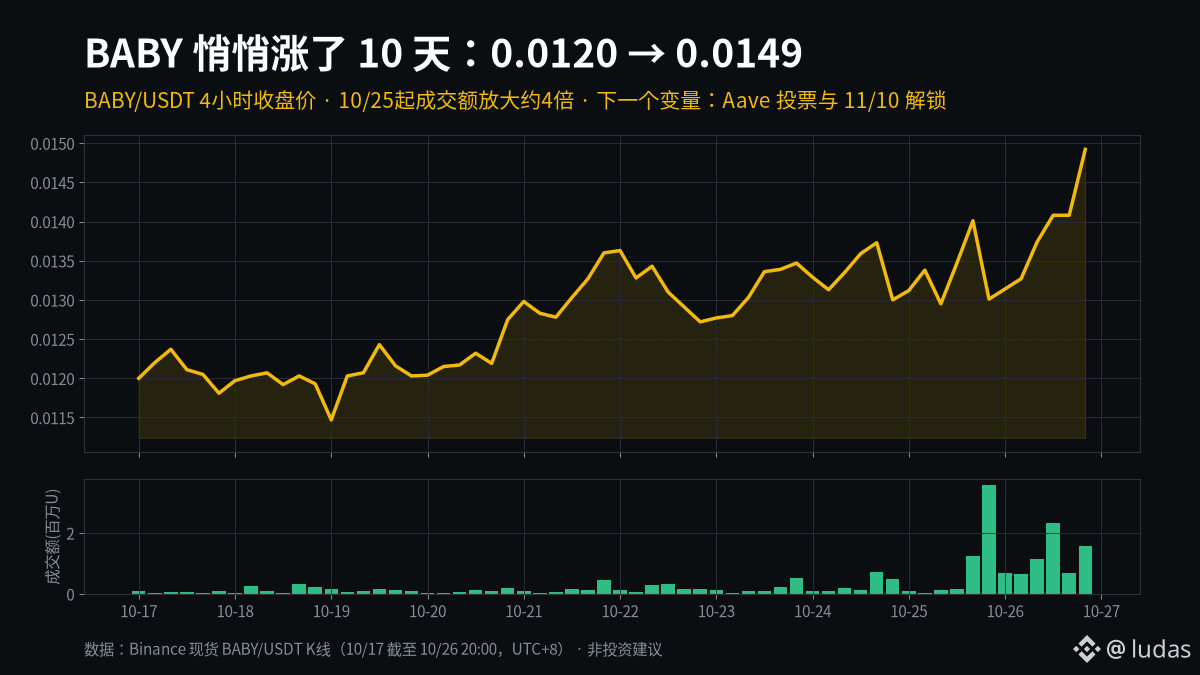
BABY hasn’t been making many headlines, but it’s been quietly rising for 10 days 👀
📊 Binance spot: closed at 0.01203 on 10/17 → now around 0.0149, +13.9% in 24h and about +24% over 10 days
🔥 Trading volume on 10/25 was about 6.42 million U, nearly 4x the previous day’s 1.68 million; today it’s still around 5.74 million
🧵 Background (Alea Research): At the end of Q3, Babylon had 40,481 BTC staked on the Bitcoin network. On 10/14, a proposal to use native BTC as collateral on Aave V4 entered the final comment stage (ARFC); it still needs to pass a Snapshot vote and an on-chain vote
⚠️ Countervailing factors (CoinGecko): About 136 million tokens (roughly 1.2% of the total supply) unlock on 11/10; the team plans to submit tokenomics changes by the end of November
My take: This move looks more like the market is pricing in the expectation that “BTC-backed lending can generate real revenue for BABY” ahead of time. I haven’t seen any single official announcement of positive news. The voting timeline and the 11/10 unlock are the two dates to watch next. Not investment advice.
Do you think native BTC coming to Aave could be a turning point for BTCFi? Let’s discuss in the comments 👇
If you found this useful, leave a like~
$BABY $AAVE $BTC
#BTCFi #Babylon #Altcoins
531

·
--
Bearish
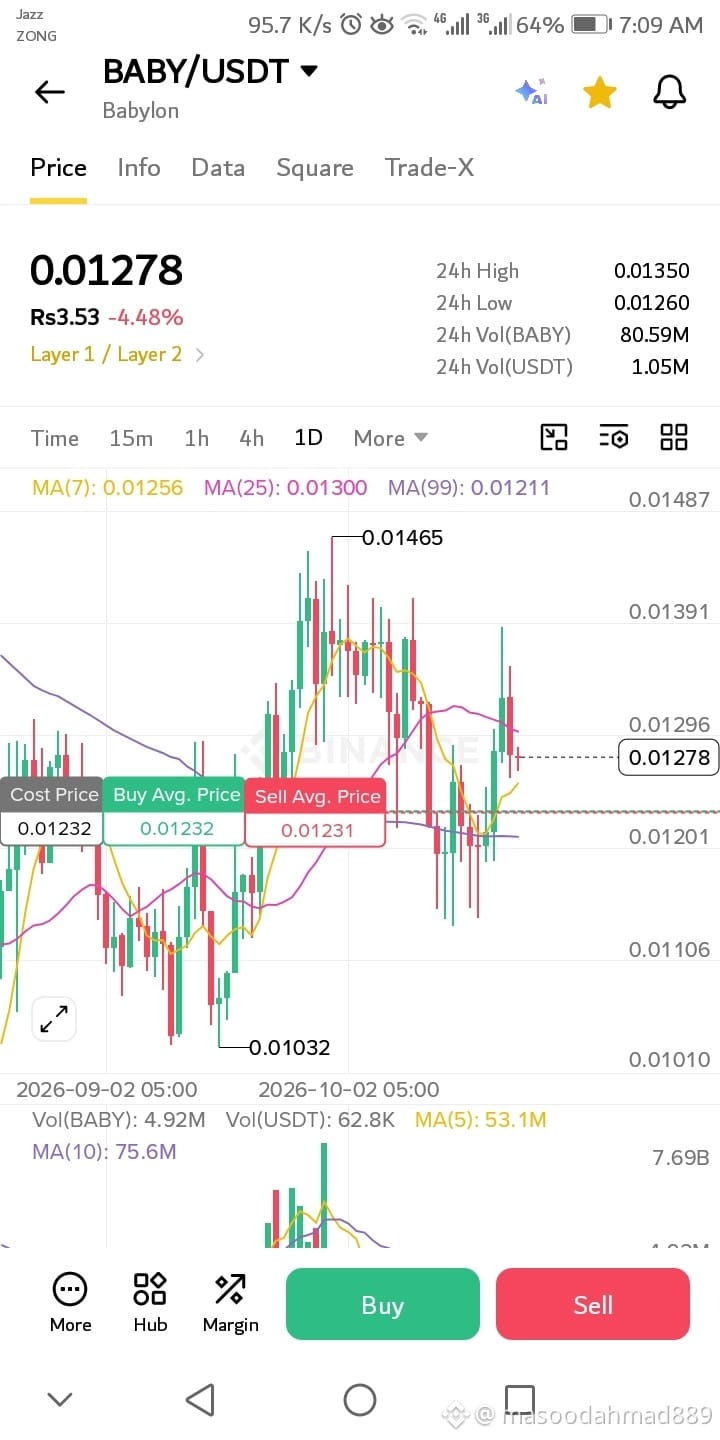
#Babylon Bearish below 0.01300.
Confirmation: Enter short only if price rejects resistance or breaks below 0.01260. Avoid chasing the move.
BABY/USDT — Trading Setup
Chart bias
Current price (screenshot) 0.01278
Immediate resistance 0.01300–0.01310
Immediate support 0.01260
Major support 0.01210–0.01200
#Babylon
Confirmation: Enter short only if price rejects resistance or breaks below 0.01260. Avoid chasing the move.
BABY/USDT — Trading Setup
Chart bias
Current price (screenshot) 0.01278
Immediate resistance 0.01300–0.01310
Immediate support 0.01260
Major support 0.01210–0.01200
#Babylon
174

#baby $BABY
This is the missing piece. Bitcoin’s capital + Babylon’s protocol = a new era.
Babylon is bringing something Bitcoin never had: *yield without wrapping*.
For 15 years Bitcoin just sat there. Secure, but silent. Babylon changes that.
By using Bitcoin as a staking asset, Babylon secures PoS chains, L2s, and DA layers — while BTC holders finally earn rewards.
No bridges. No wrapping. Just pure Bitcoin security, extended to the whole crypto ecosystem.
This is the missing piece. Bitcoin’s capital + Babylon’s protocol = a new era.
The chain that started it all… is now securing everything else.
#Babylon #BTCFi
This is the missing piece. Bitcoin’s capital + Babylon’s protocol = a new era.
Babylon is bringing something Bitcoin never had: *yield without wrapping*.
For 15 years Bitcoin just sat there. Secure, but silent. Babylon changes that.
By using Bitcoin as a staking asset, Babylon secures PoS chains, L2s, and DA layers — while BTC holders finally earn rewards.
No bridges. No wrapping. Just pure Bitcoin security, extended to the whole crypto ecosystem.
This is the missing piece. Bitcoin’s capital + Babylon’s protocol = a new era.
The chain that started it all… is now securing everything else.
#Babylon #BTCFi
104

Teaching & Discovery
The new Babylon campaign is the perfect opportunity to discover how Bitcoin staking secures PoS chains. An innovative economic model that combines fund protection and reward accumulation. Join the adventure soon! 💡#Babylon $BABY
Teaching & Discovery
The new Babylon campaign is the perfect opportunity to discover how Bitcoin staking secures PoS chains. An innovative economic model that combines fund protection and reward accumulation. Join the adventure soon! 💡#Babylon $BABY
The new Babylon campaign is the perfect opportunity to discover how Bitcoin staking secures PoS chains. An innovative economic model that combines fund protection and reward accumulation. Join the adventure soon! 💡#Babylon $BABY
27

·
--
Bullish
#baby $BABY @babylonlabs_io Everyone is talking about the price of Bitcoin.. Hardly anyone talks about what Bitcoin can actually do.
👀 For a time I thought Bitcoin was only good for two things:
✅ You hold onto it.
✅ You wait for the price to go up.
Then something hit me.
🍋 The thing that is supposed to be the digital asset in the world just sits there doing nothing most of the time.
That never really made sense to me.
Every time the market goes up people put billions of dollars into these DeFi things that're really risky just to get a higher return.. Bitcoin, which is the thing that people trust the most usually just sits on the side because if you want to use it you have to wrap it or bridge it or trust someone else to hold it for you.
That just seems wrong.
💥 So I started looking into a way of doing things.
What if Bitcoin could stay right where it is and still be useful?
That is the idea that got my attention.
The goal is not to get rid of the way Bitcoin keeps peoples money safe. The goal is to build on top of it.
The question is not "How can Bitcoin be like all the DeFi tokens?"
It is "How can DeFi work with Bitcoin?"
That changes everything.
🌕 If Bitcoin can be used for lending or staking or securing networks without people having to give up control of their money then the biggest opportunity might not be creating a new asset.
It might be making the most of the one we already have.
We are still in the days and people should be careful before they put their money into anything.
I think the next big thing for Bitcoin will not just be about the price.
It will be, about what Bitcoin can do.
🍋What do you think will happen first for Bitcoin: will the price go up or will people find ways to use it?
#bitcoin #blockchain #cryptoeducation #Babylon
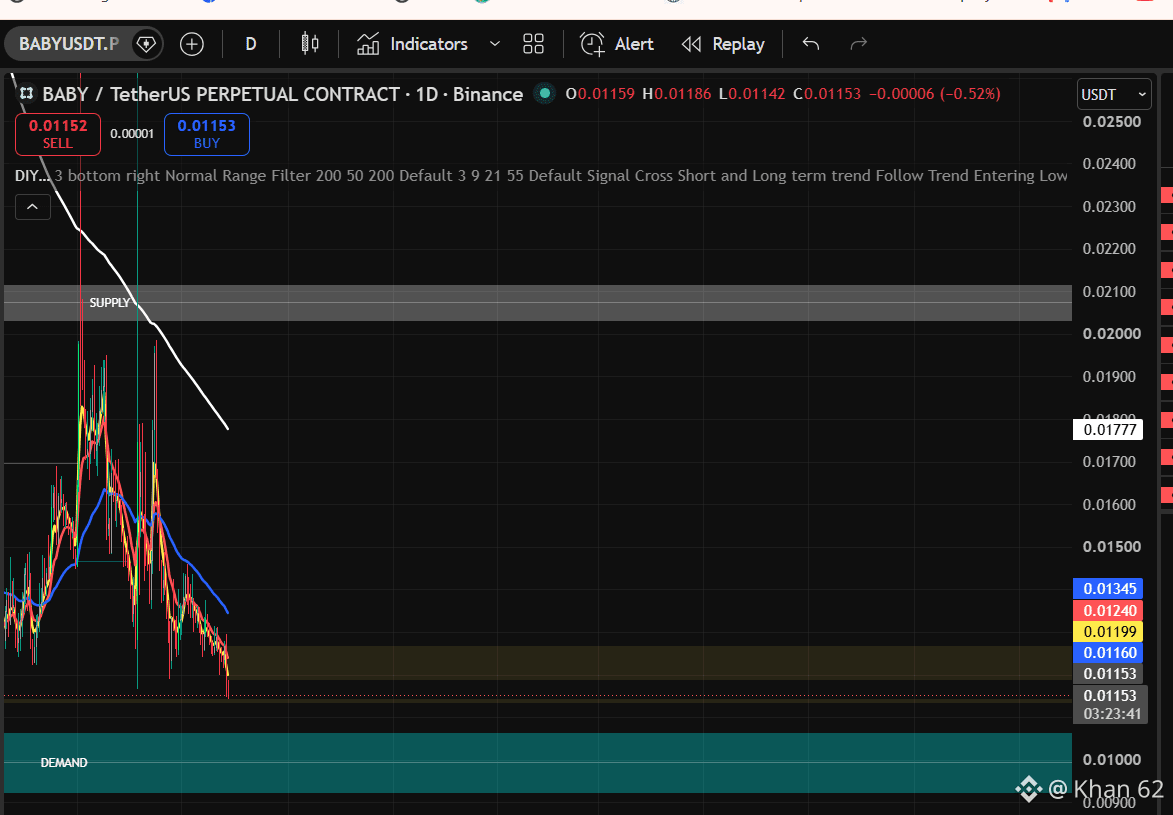
$BABY $BTC
#baby $BABY @BabylonLabs_io Everyone is talking about the price of Bitcoin.. Hardly anyone talks about what Bitcoin can actually do.
👀 For a time I thought Bitcoin was only good for two things:
✅ You hold onto it.
✅ You wait for the price to go up.
Then something hit me.
🍋 The thing that is supposed to be the digital asset in the world just sits there doing nothing most of the time.
That never really made sense to me.
Every time the market goes up people put billions of dollars into these DeFi things that're really risky just to get a higher return.. Bitcoin, which is the thing that people trust the most usually just sits on the side because if you want to use it you have to wrap it or bridge it or trust someone else to hold it for you.
That just seems wrong.
💥 So I started looking into a way of doing things.
What if Bitcoin could stay right where it is and still be useful?
That is the idea that got my attention.
The goal is not to get rid of the way Bitcoin keeps peoples money safe. The goal is to build on top of it.
The question is not "How can Bitcoin be like all the DeFi tokens?"
It is "How can DeFi work with Bitcoin?"
That changes everything.
🌕 If Bitcoin can be used for lending or staking or securing networks without people having to give up control of their money then the biggest opportunity might not be creating a new asset.
It might be making the most of the one we already have.
We are still in the days and people should be careful before they put their money into anything.
I think the next big thing for Bitcoin will not just be about the price.
It will be, about what Bitcoin can do.
🍋What do you think will happen first for Bitcoin: will the price go up or will people find ways to use it?
#bitcoin #blockchain #cryptoeducation #Babylon
$BABY $BTC
121
Log in to explore more content
Join global crypto users on Binance Square
⚡️ Get latest and useful information about crypto.
💬 Trusted by the world’s largest crypto exchange.
👍 Discover real insights from verified creators.
Email / Phone number
Trending Topics
1
#Bitcoin'sReboundFadesBelow$60K
3,547 views
88 Discussing
2
#NVIDIAReinstatesJensenHuangasCEO
220,482 views
1,491 Discussing
3
#WillMarketsStageAThanksgivingReliefRally?
307,163 views
2,295 Discussing
4
#WillOctCorePCEShiftFedHikeExpectations?
107,025 views
1,080 Discussing
5
#EvolveAtBinanceBlockchainWeek
223,121 views
1,393 Discussing
6
#XRPBrieflyReclaims$1BeforeRetreatingTo$0.96
0 views
0 Discussing
7
#CrossRiverBankLaunchesBitcoinBackedLoansUpTo$250K
0 views
0 Discussing
8
#SouthKoreaBeginsCryptoProviderShareholderReviews
1,878 views
63 Discussing
9
#USAddsMegaspeedToEntityList
7,233 views
156 Discussing
10
#GrayscaleLaunches2xLeveragedZcashETF
4,961 views
100 Discussing