

#cryptosecurity
cryptosecurity
8.4M views
11,050 Discussing
Hot
Latest

⚠️ What happened with $ONE (Harmony) and why it matters if you have it in your walletIf you’ve had ONE stored for a while, pay attention — the network changed completely.
Quick timeline 👇
🔴 August 2026: an attacker exploited a flaw in the Harmony consensus and minted 4 billion ONE tokens out of thin air. The price crashed.
🔴 As a response, the team decided something drastic: to close down the Harmony mainnet and migrate all ONE tokens to Ethereum as an ERC-20.
🔴 The migration was carried out on September 9-10, 2026. Balances in normal wallets and exchanges were credited automatically on Ethereum — but funds that were in liquidity pools or multisig wallets, if they weren’t withdrawn before the cutoff, did not migrate.
⚠️ What happened with $ONE (Harmony) and why it matters if you have it in your wallet
If you’ve had ONE stored for a while, pay attention — the network changed completely.
Quick timeline 👇
🔴 August 2026: an attacker exploited a flaw in the Harmony consensus and minted 4 billion ONE tokens out of thin air. The price crashed.
🔴 As a response, the team decided something drastic: to close down the Harmony mainnet and migrate all ONE tokens to Ethereum as an ERC-20.
🔴 The migration was carried out on September 9-10, 2026. Balances in normal wallets and exchanges were credited automatically on Ethereum — but funds that were in liquidity pools or multisig wallets, if they weren’t withdrawn before the cutoff, did not migrate.
Quick timeline 👇
🔴 August 2026: an attacker exploited a flaw in the Harmony consensus and minted 4 billion ONE tokens out of thin air. The price crashed.
🔴 As a response, the team decided something drastic: to close down the Harmony mainnet and migrate all ONE tokens to Ethereum as an ERC-20.
🔴 The migration was carried out on September 9-10, 2026. Balances in normal wallets and exchanges were credited automatically on Ethereum — but funds that were in liquidity pools or multisig wallets, if they weren’t withdrawn before the cutoff, did not migrate.
1
600

·
--
#$20MXRPDrainedFrom6678HardwareWallets
🚨 $20M+ WORTH OF XRP DRAINED — CRYPTO SECURITY ALERT 🚨
A major XRP security incident is raising serious concerns across the crypto community.
According to blockchain analysis cited by Binance News, 11.75M XRP was drained from 6,678 wallets across six waves between September 15–20, worth nearly $20 million at the reported price.
⚠️ Important: D’CENT says the confirmed abnormal transfers were associated with its App Wallet. It says hardware wallets whose recovery phrase was never entered into the App Wallet have not been confirmed affected.
🔐 Security reminder:
Never share your recovery phrase or private key. If a recovery phrase may have been exposed, simply restoring the same phrase on another device does not create new keys. D’CENT recommends creating a completely new wallet and transferring assets.
Self-custody = responsibility.
Your seed phrase is your last line of defense. 🛡️
#20MXRPDrainedFrom6678HardwareWallet #XRP #CryptoSecurity
#$20MXRPDrainedFrom6678HardwareWallets
🚨 $20M+ WORTH OF XRP DRAINED — CRYPTO SECURITY ALERT 🚨
A major XRP security incident is raising serious concerns across the crypto community.
According to blockchain analysis cited by Binance News, 11.75M XRP was drained from 6,678 wallets across six waves between September 15–20, worth nearly $20 million at the reported price.
⚠️ Important: D’CENT says the confirmed abnormal transfers were associated with its App Wallet. It says hardware wallets whose recovery phrase was never entered into the App Wallet have not been confirmed affected.
🔐 Security reminder:
Never share your recovery phrase or private key. If a recovery phrase may have been exposed, simply restoring the same phrase on another device does not create new keys. D’CENT recommends creating a completely new wallet and transferring assets.
Self-custody = responsibility.
Your seed phrase is your last line of defense. 🛡️
#20MXRPDrainedFrom6678HardwareWallet #XRP #CryptoSecurity
🚨 $20M+ WORTH OF XRP DRAINED — CRYPTO SECURITY ALERT 🚨
A major XRP security incident is raising serious concerns across the crypto community.
According to blockchain analysis cited by Binance News, 11.75M XRP was drained from 6,678 wallets across six waves between September 15–20, worth nearly $20 million at the reported price.
⚠️ Important: D’CENT says the confirmed abnormal transfers were associated with its App Wallet. It says hardware wallets whose recovery phrase was never entered into the App Wallet have not been confirmed affected.
🔐 Security reminder:
Never share your recovery phrase or private key. If a recovery phrase may have been exposed, simply restoring the same phrase on another device does not create new keys. D’CENT recommends creating a completely new wallet and transferring assets.
Self-custody = responsibility.
Your seed phrase is your last line of defense. 🛡️
#20MXRPDrainedFrom6678HardwareWallet #XRP #CryptoSecurity
1
120

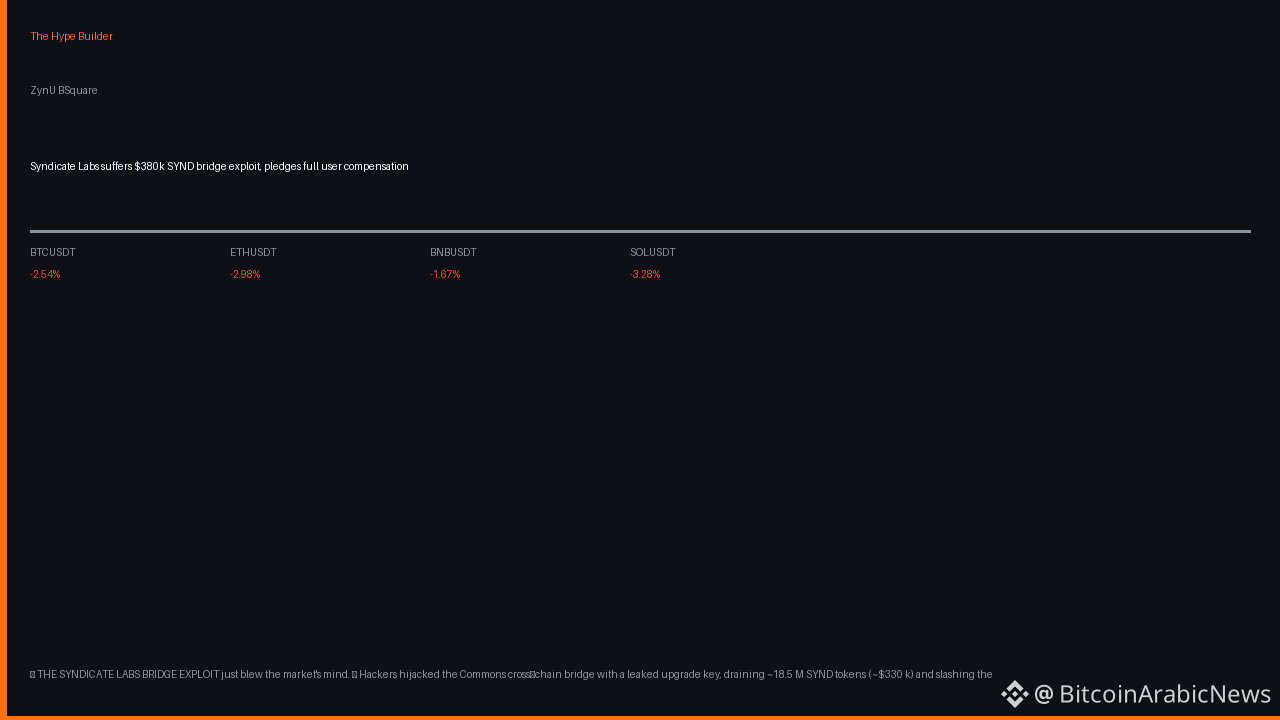
🔥 THE SYNDICATE LABS BRIDGE EXPLOIT just blew the market's mind.
📊 Hackers hijacked the Commons cross‑chain bridge with a leaked upgrade key, draining ~18.5 M SYND tokens (~$330 k) and slashing the token price 12% in seconds. The fallout rippled across BSC, where #CryptoSecurity alerts spiked, #BridgeHack headlines dominated feeds, and #SyndicateLabs users saw their balances evaporate. Meanwhile, BTC futures OI sits at $8.04 B with a bullish funding rate (+0.0003%) and a 1.18 L/S ratio, signaling that long‑biased traders are already eyeing the next swing.
💡 This breach throws a stark warning on cross‑chain vulnerabilities, threatening confidence in #DeFiRisk assets and could trigger a broader pull‑back from #CrossChain projects as greed‑driven sentiment (71/100) teeters on the edge.
❓ What’s your next move — double‑down on bridge‑hardened tokens or sit tight and watch the flood?
🔥 THE SYNDICATE LABS BRIDGE EXPLOIT just blew the market's mind.
📊 Hackers hijacked the Commons cross‑chain bridge with a leaked upgrade key, draining ~18.5 M SYND tokens (~$330 k) and slashing the token price 12% in seconds. The fallout rippled across BSC, where #CryptoSecurity alerts spiked, #BridgeHack headlines dominated feeds, and #SyndicateLabs users saw their balances evaporate. Meanwhile, BTC futures OI sits at $8.04 B with a bullish funding rate (+0.0003%) and a 1.18 L/S ratio, signaling that long‑biased traders are already eyeing the next swing.
💡 This breach throws a stark warning on cross‑chain vulnerabilities, threatening confidence in #DeFiRisk assets and could trigger a broader pull‑back from #CrossChain projects as greed‑driven sentiment (71/100) teeters on the edge.
❓ What’s your next move — double‑down on bridge‑hardened tokens or sit tight and watch the flood?
📊 Hackers hijacked the Commons cross‑chain bridge with a leaked upgrade key, draining ~18.5 M SYND tokens (~$330 k) and slashing the token price 12% in seconds. The fallout rippled across BSC, where #CryptoSecurity alerts spiked, #BridgeHack headlines dominated feeds, and #SyndicateLabs users saw their balances evaporate. Meanwhile, BTC futures OI sits at $8.04 B with a bullish funding rate (+0.0003%) and a 1.18 L/S ratio, signaling that long‑biased traders are already eyeing the next swing.
💡 This breach throws a stark warning on cross‑chain vulnerabilities, threatening confidence in #DeFiRisk assets and could trigger a broader pull‑back from #CrossChain projects as greed‑driven sentiment (71/100) teeters on the edge.
❓ What’s your next move — double‑down on bridge‑hardened tokens or sit tight and watch the flood?
10

·
--
INSTITUTIONAL CAPITAL DEMANDS FORTRESS SECURITY $KCS ECOSYSTEM ELEVATES WALLET RESILIENCE TO LEVEL 3 🔒 ⚡
Smart money doesn't just chase charts; big capital flows where asset security is airtight. 🔒 A major top-tier exchange just upgraded its core cryptographic wallet infrastructure to the highest CCSS Level 3 certification, eliminating single points of failure across the key management lifecycle. 📊
This operational hardening removes counterparty anxiety for institutional desks while protecting retail order flow. 🛡️ As market infrastructure matures, platforms prioritizing verifiable security are positioning themselves to capture the next wave of deep liquidity. 💡
Will institutional capital prioritize security upgrades like this when picking their main execution venues for the next leg up? 👇
⚠️ Not financial advice. Always manage your risk. 🛡️
🏷️ #KCS #CryptoSecurity #InstitutionalCrypto #Altcoins
💎 🛡️
INSTITUTIONAL CAPITAL DEMANDS FORTRESS SECURITY $KCS ECOSYSTEM ELEVATES WALLET RESILIENCE TO LEVEL 3 🔒 ⚡
Smart money doesn't just chase charts; big capital flows where asset security is airtight. 🔒 A major top-tier exchange just upgraded its core cryptographic wallet infrastructure to the highest CCSS Level 3 certification, eliminating single points of failure across the key management lifecycle. 📊
This operational hardening removes counterparty anxiety for institutional desks while protecting retail order flow. 🛡️ As market infrastructure matures, platforms prioritizing verifiable security are positioning themselves to capture the next wave of deep liquidity. 💡
Will institutional capital prioritize security upgrades like this when picking their main execution venues for the next leg up? 👇
⚠️ Not financial advice. Always manage your risk. 🛡️
🏷️ #KCS #CryptoSecurity #InstitutionalCrypto #Altcoins
💎 🛡️
Smart money doesn't just chase charts; big capital flows where asset security is airtight. 🔒 A major top-tier exchange just upgraded its core cryptographic wallet infrastructure to the highest CCSS Level 3 certification, eliminating single points of failure across the key management lifecycle. 📊
This operational hardening removes counterparty anxiety for institutional desks while protecting retail order flow. 🛡️ As market infrastructure matures, platforms prioritizing verifiable security are positioning themselves to capture the next wave of deep liquidity. 💡
Will institutional capital prioritize security upgrades like this when picking their main execution venues for the next leg up? 👇
⚠️ Not financial advice. Always manage your risk. 🛡️
🏷️ #KCS #CryptoSecurity #InstitutionalCrypto #Altcoins
💎 🛡️
13

·
--
Your crypto security starts with you. 🔐
Never share your password, private keys, or recovery phrase.
Be careful with links, fake giveaways, impersonators, and messages promising guaranteed returns.
A great investment means little if you lose access to your account.
Protect your assets before thinking about growing them.
#CryptoSecurity #Binance #bitcoin #Web3
Your crypto security starts with you. 🔐
Never share your password, private keys, or recovery phrase.
Be careful with links, fake giveaways, impersonators, and messages promising guaranteed returns.
A great investment means little if you lose access to your account.
Protect your assets before thinking about growing them.
#CryptoSecurity #Binance #bitcoin #Web3
Never share your password, private keys, or recovery phrase.
Be careful with links, fake giveaways, impersonators, and messages promising guaranteed returns.
A great investment means little if you lose access to your account.
Protect your assets before thinking about growing them.
#CryptoSecurity #Binance #bitcoin #Web3
24

·
--
🚨 $BNB TREASURY FIRM NANO LABS FOUNDER X ACCOUNT COMPROMISED BY HACKERS! ⚠️
Nano Labs founder Jack Kong just had his X handle hijacked, broadcasting fake announcements to trap unsuspecting market participants. 🚨 Social engineering breaches like this often trigger sudden volatility traps as unauthorized project news circulates.
When key players connected to major holdings like $BNB get targeted, smart money steps back to let the bad actors exhaust their liquidity games. 🔍 Always verify contract addresses and news feeds through official security updates before acting on sudden social media noise. 💬 Did you catch the fake announcement in real time, or are you staying on the sidelines until the smoke clears? 👇
⚠️ Not financial advice. Always manage your risk. 🛡️
🏷️ #BNB #CryptoSecurity #MarketAlert #RiskManagement
⚡ 🛡️
🚨 $BNB TREASURY FIRM NANO LABS FOUNDER X ACCOUNT COMPROMISED BY HACKERS! ⚠️
Nano Labs founder Jack Kong just had his X handle hijacked, broadcasting fake announcements to trap unsuspecting market participants. 🚨 Social engineering breaches like this often trigger sudden volatility traps as unauthorized project news circulates.
When key players connected to major holdings like $BNB get targeted, smart money steps back to let the bad actors exhaust their liquidity games. 🔍 Always verify contract addresses and news feeds through official security updates before acting on sudden social media noise. 💬 Did you catch the fake announcement in real time, or are you staying on the sidelines until the smoke clears? 👇
⚠️ Not financial advice. Always manage your risk. 🛡️
🏷️ #BNB #CryptoSecurity #MarketAlert #RiskManagement
⚡ 🛡️
Nano Labs founder Jack Kong just had his X handle hijacked, broadcasting fake announcements to trap unsuspecting market participants. 🚨 Social engineering breaches like this often trigger sudden volatility traps as unauthorized project news circulates.
When key players connected to major holdings like $BNB get targeted, smart money steps back to let the bad actors exhaust their liquidity games. 🔍 Always verify contract addresses and news feeds through official security updates before acting on sudden social media noise. 💬 Did you catch the fake announcement in real time, or are you staying on the sidelines until the smoke clears? 👇
⚠️ Not financial advice. Always manage your risk. 🛡️
🏷️ #BNB #CryptoSecurity #MarketAlert #RiskManagement
⚡ 🛡️
16

·
--
🚨 Nearly $20M in XRP drained from 6,678 wallets across six attack waves, per XRPL.to and DCENT. Exposed App Wallet phrases — even on hardware — must be replaced immediately. This highlights critical self-custody risks amid ongoing XRP volatility. Traders should reassess wallet security before positioning. How are you securing your XRP holdings?
#CryptoSecurity
$XRP #TradingSignal #CryptoAnalysis
🚨 Nearly $20M in XRP drained from 6,678 wallets across six attack waves, per XRPL.to and DCENT. Exposed App Wallet phrases — even on hardware — must be replaced immediately. This highlights critical self-custody risks amid ongoing XRP volatility. Traders should reassess wallet security before positioning. How are you securing your XRP holdings?
#CryptoSecurity
$XRP #TradingSignal #CryptoAnalysis
#CryptoSecurity
$XRP #TradingSignal #CryptoAnalysis
28

·
--
EU watchdogs warn: quantum computers could crack cryptocurrencies! Regulators say the development of quantum computing may threaten blockchain security. The Bitcoin team is evaluating migration plans, while Ethereum plans to complete quantum-resistant upgrades by 2029. The crypto world faces new challenges, and the two major mainstream coins have already begun taking action. $BTC $ETH #QuantumComputing #CryptoSecurity
EU watchdogs are sounding the alarm: quantum computers could crack crypto! Regulators warn quantum computing threatens blockchain security. Bitcoin devs are evaluating migration plans while Ethereum aims to complete quantum-resistant upgrades by 2029. The crypto world faces a new challenge, and major coins are already taking action. $BTC $ETH #QuantumComputing #CryptoSecurity
EU watchdogs warn: quantum computers could crack cryptocurrencies! Regulators say the development of quantum computing may threaten blockchain security. The Bitcoin team is evaluating migration plans, while Ethereum plans to complete quantum-resistant upgrades by 2029. The crypto world faces new challenges, and the two major mainstream coins have already begun taking action. $BTC $ETH #QuantumComputing #CryptoSecurity
EU watchdogs are sounding the alarm: quantum computers could crack crypto! Regulators warn quantum computing threatens blockchain security. Bitcoin devs are evaluating migration plans while Ethereum aims to complete quantum-resistant upgrades by 2029. The crypto world faces a new challenge, and major coins are already taking action. $BTC $ETH #QuantumComputing #CryptoSecurity
EU watchdogs are sounding the alarm: quantum computers could crack crypto! Regulators warn quantum computing threatens blockchain security. Bitcoin devs are evaluating migration plans while Ethereum aims to complete quantum-resistant upgrades by 2029. The crypto world faces a new challenge, and major coins are already taking action. $BTC $ETH #QuantumComputing #CryptoSecurity
409

·
--
Article
Binance Google Authenticator 2FA setup guide: a practical Binance how-toTL;DR
If you searched for 「Binance Google Authenticator 2FA setup guide」, this walkthrough sticks to official Binance paths: confirm the entry point, follow the steps, then lock down security. This account focuses on in-depth tutorials and risk warnings, helping beginners get the process working end-to-end. The links below use only official Binance domains; the invite code matches this account. Not financial advice.
Register:
https://www.binance.com/zh-CN/join?ref=BNAPP
Android download:
https://download.binance.com/pack/BNApp_F0000680.apk
Binance Google Authenticator 2FA setup guide: a practical Binance how-to
TL;DR
If you searched for 「Binance Google Authenticator 2FA setup guide」, this walkthrough sticks to official Binance paths: confirm the entry point, follow the steps, then lock down security. This account focuses on in-depth tutorials and risk warnings, helping beginners get the process working end-to-end. The links below use only official Binance domains; the invite code matches this account. Not financial advice.
Register:
https://www.binance.com/zh-CN/join?ref=BNAPP
Android download:
https://download.binance.com/pack/BNApp_F0000680.apk
If you searched for 「Binance Google Authenticator 2FA setup guide」, this walkthrough sticks to official Binance paths: confirm the entry point, follow the steps, then lock down security. This account focuses on in-depth tutorials and risk warnings, helping beginners get the process working end-to-end. The links below use only official Binance domains; the invite code matches this account. Not financial advice.
Register:
https://www.binance.com/zh-CN/join?ref=BNAPP
Android download:
https://download.binance.com/pack/BNApp_F0000680.apk
47

·
--
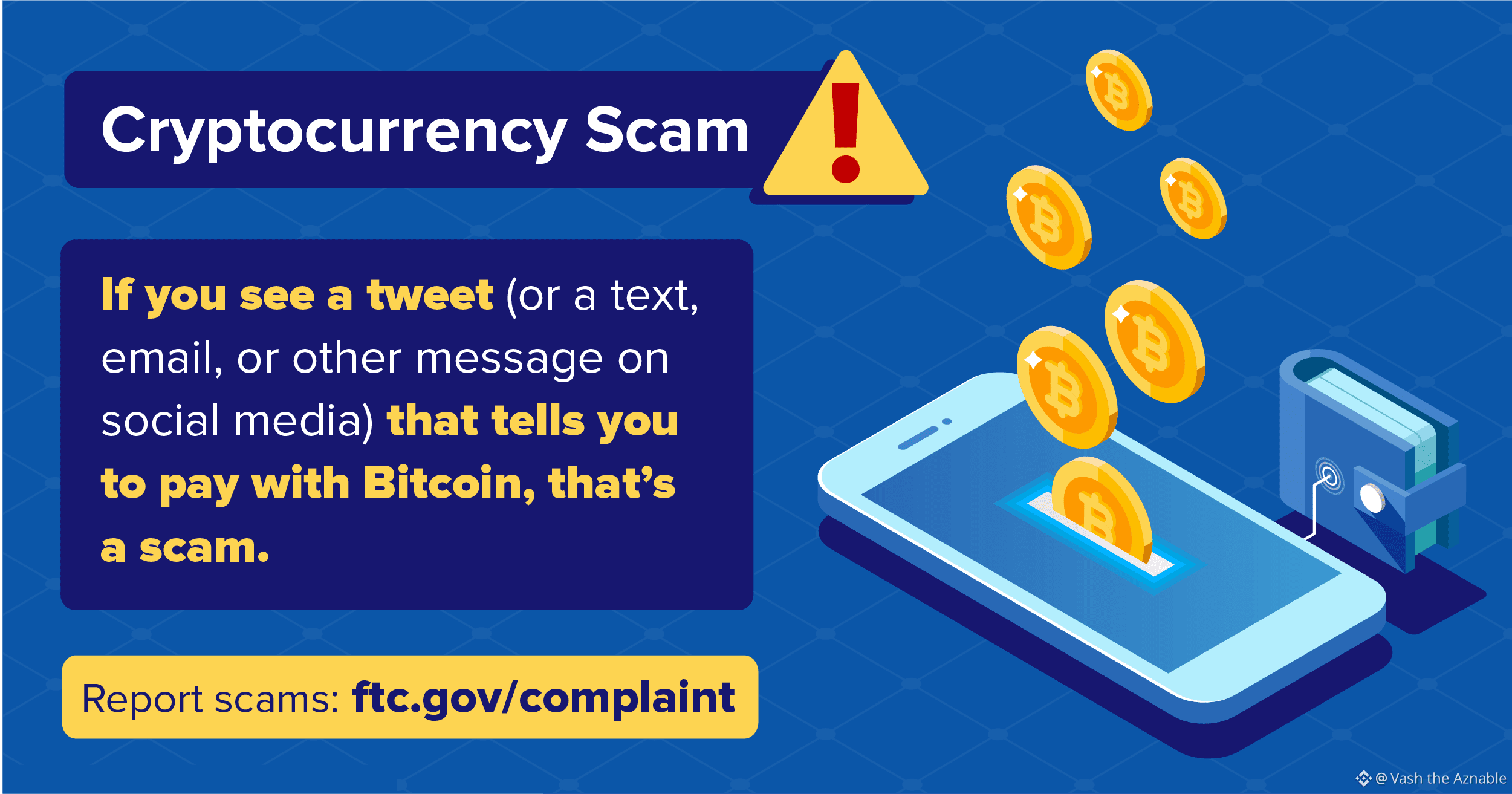
🚨 Security Alert: iPhone Malware Targeting Crypto Wallets
Binance has issued a fresh security warning after researchers (including SlowMist) discovered a malicious iOS app called FomoPeek (v1.1–1.2) exploiting iPhone/iPad vulnerabilities to gain maximum device access — potentially exposing private keys, seed phrases, login credentials, and chat data.
If you're on iOS 26.x or earlier and have this app installed:
✅ Delete it immediately, don't reinstall
✅ Update iOS to the latest version
✅ Self-custody users: create a fresh wallet on a clean device and migrate funds
✅ Report any suspicious activity to support with evidence
📈 Meanwhile, the market stayed strong — Bitcoin briefly touched ~$87,300 (highest since Jan 2026) as U.S. spot $BTC ETFs pulled in nearly $1B in net inflows, the biggest single-day haul since October 2025.
Stay #SAFU🙏 — always verify apps before installing, and never share your seed phrase with anyone. 🔐
#Binance #CryptoSecurity #Bitcoin #BTC
🚨 Security Alert: iPhone Malware Targeting Crypto Wallets
Binance has issued a fresh security warning after researchers (including SlowMist) discovered a malicious iOS app called FomoPeek (v1.1–1.2) exploiting iPhone/iPad vulnerabilities to gain maximum device access — potentially exposing private keys, seed phrases, login credentials, and chat data.
If you're on iOS 26.x or earlier and have this app installed:
✅ Delete it immediately, don't reinstall
✅ Update iOS to the latest version
✅ Self-custody users: create a fresh wallet on a clean device and migrate funds
✅ Report any suspicious activity to support with evidence
📈 Meanwhile, the market stayed strong — Bitcoin briefly touched ~$87,300 (highest since Jan 2026) as U.S. spot $BTC ETFs pulled in nearly $1B in net inflows, the biggest single-day haul since October 2025.
Stay #SAFU🙏 — always verify apps before installing, and never share your seed phrase with anyone. 🔐
#Binance #CryptoSecurity #Bitcoin #BTC
Binance has issued a fresh security warning after researchers (including SlowMist) discovered a malicious iOS app called FomoPeek (v1.1–1.2) exploiting iPhone/iPad vulnerabilities to gain maximum device access — potentially exposing private keys, seed phrases, login credentials, and chat data.
If you're on iOS 26.x or earlier and have this app installed:
✅ Delete it immediately, don't reinstall
✅ Update iOS to the latest version
✅ Self-custody users: create a fresh wallet on a clean device and migrate funds
✅ Report any suspicious activity to support with evidence
📈 Meanwhile, the market stayed strong — Bitcoin briefly touched ~$87,300 (highest since Jan 2026) as U.S. spot $BTC ETFs pulled in nearly $1B in net inflows, the biggest single-day haul since October 2025.
Stay #SAFU🙏 — always verify apps before installing, and never share your seed phrase with anyone. 🔐
#Binance #CryptoSecurity #Bitcoin #BTC
64
·
--
Warning! Malicious app FomoPeek on the App Store used iOS kernel exploits to break out of the sandbox and steal sensitive data from other apps, leading to $580K in stolen crypto! Safety first—don’t easily download unknown apps! #cryptosecurity #iossecurity
Beware! Malicious app FomoPeek on the App Store used iOS kernel exploits to escape the sandbox and access sensitive data from other apps, resulting in $580K in stolen crypto! Security first, don't download unknown apps casually! #cryptosecurity #iossecurity $BTC $ETH
Warning! Malicious app FomoPeek on the App Store used iOS kernel exploits to break out of the sandbox and steal sensitive data from other apps, leading to $580K in stolen crypto! Safety first—don’t easily download unknown apps! #cryptosecurity #iossecurity
Beware! Malicious app FomoPeek on the App Store used iOS kernel exploits to escape the sandbox and access sensitive data from other apps, resulting in $580K in stolen crypto! Security first, don't download unknown apps casually! #cryptosecurity #iossecurity $BTC $ETH
Beware! Malicious app FomoPeek on the App Store used iOS kernel exploits to escape the sandbox and access sensitive data from other apps, resulting in $580K in stolen crypto! Security first, don't download unknown apps casually! #cryptosecurity #iossecurity $BTC $ETH
173

Toxic FomoPeek on iOS related to the theft case involving $580,000 in crypto
- SlowMist said the malicious FomoPeek versions were previously distributed via the Apple App Store.
- The app exploits an iOS vulnerability to escape the sandbox and access sensitive data from other applications.
- FomoPeek is linked to the theft of $580,000 worth of crypto.
#BinanceSquare #CryptoNews #CryptoSecurity #SlowMist
$btc $eth
#vlikevn Titanbot
Source: CoinTelegraph
Toxic FomoPeek on iOS related to the theft case involving $580,000 in crypto
- SlowMist said the malicious FomoPeek versions were previously distributed via the Apple App Store.
- The app exploits an iOS vulnerability to escape the sandbox and access sensitive data from other applications.
- FomoPeek is linked to the theft of $580,000 worth of crypto.
#BinanceSquare #CryptoNews #CryptoSecurity #SlowMist
$btc $eth
#vlikevn Titanbot
Source: CoinTelegraph
- SlowMist said the malicious FomoPeek versions were previously distributed via the Apple App Store.
- The app exploits an iOS vulnerability to escape the sandbox and access sensitive data from other applications.
- FomoPeek is linked to the theft of $580,000 worth of crypto.
#BinanceSquare #CryptoNews #CryptoSecurity #SlowMist
$btc $eth
#vlikevn Titanbot
Source: CoinTelegraph

🚨 Swiss Bitcoin Pay: Attack and server shutdown 🚨
Swiss Bitcoin Pay, a non-custodial payment processor, temporarily shut down its servers following a security attack. According to the company, users’ funds are protected, but sensitive data such as email addresses and BTC addresses were leaked. The company is investigating the incident.
What security measures should Bitcoin payment processors implement? 👇
$BTC #CryptoSecurity
Informational content. Does not constitute financial advice.
🚨 Swiss Bitcoin Pay: Attack and server shutdown 🚨
Swiss Bitcoin Pay, a non-custodial payment processor, temporarily shut down its servers following a security attack. According to the company, users’ funds are protected, but sensitive data such as email addresses and BTC addresses were leaked. The company is investigating the incident.
What security measures should Bitcoin payment processors implement? 👇
$BTC #CryptoSecurity
Informational content. Does not constitute financial advice.
Swiss Bitcoin Pay, a non-custodial payment processor, temporarily shut down its servers following a security attack. According to the company, users’ funds are protected, but sensitive data such as email addresses and BTC addresses were leaked. The company is investigating the incident.
What security measures should Bitcoin payment processors implement? 👇
$BTC #CryptoSecurity
Informational content. Does not constitute financial advice.
41

·
--
What Your RPC Can ObserveAn RPC endpoint can learn more from a wallet than many users realize.
Balance requests reveal the addresses being checked. Gas estimates and simulations can expose what a user may do before the transaction reaches the chain. Timing, IP information, client headers and repeated query patterns can help correlate several addresses or separate browsing contexts.
HTTPS protects data in transit from casual interception, but the endpoint still processes the request. A VPN may change the visible IP address, yet it does not remove the addresses, methods and behavioral sequence sent to the provider.
Start by mapping every outbound service your wallet or application uses: RPC endpoints, token lists, price feeds, NFT metadata, explorers and swap infrastructure. Separate high-value custody from experimental dapp activity, minimize unnecessary identifiers and document log-retention expectations. Builders should also redact sensitive logs, rotate credentials and monitor new outbound domains after wallet or SDK updates.
The goal is not impossible anonymity. It is reducing unnecessary correlation and knowing which systems can observe user intent.
Read the complete architecture and monitoring guide:
https://tokentoolhub.com/rpc-privacy-and-data-leakage/
#CryptoSecurity #Privacy #SelfCustody #blockchain #Web3
What Your RPC Can Observe
An RPC endpoint can learn more from a wallet than many users realize.
Balance requests reveal the addresses being checked. Gas estimates and simulations can expose what a user may do before the transaction reaches the chain. Timing, IP information, client headers and repeated query patterns can help correlate several addresses or separate browsing contexts.
HTTPS protects data in transit from casual interception, but the endpoint still processes the request. A VPN may change the visible IP address, yet it does not remove the addresses, methods and behavioral sequence sent to the provider.
Start by mapping every outbound service your wallet or application uses: RPC endpoints, token lists, price feeds, NFT metadata, explorers and swap infrastructure. Separate high-value custody from experimental dapp activity, minimize unnecessary identifiers and document log-retention expectations. Builders should also redact sensitive logs, rotate credentials and monitor new outbound domains after wallet or SDK updates.
The goal is not impossible anonymity. It is reducing unnecessary correlation and knowing which systems can observe user intent.
Read the complete architecture and monitoring guide:
https://tokentoolhub.com/rpc-privacy-and-data-leakage/
#CryptoSecurity #Privacy #SelfCustody #blockchain #Web3
Balance requests reveal the addresses being checked. Gas estimates and simulations can expose what a user may do before the transaction reaches the chain. Timing, IP information, client headers and repeated query patterns can help correlate several addresses or separate browsing contexts.
HTTPS protects data in transit from casual interception, but the endpoint still processes the request. A VPN may change the visible IP address, yet it does not remove the addresses, methods and behavioral sequence sent to the provider.
Start by mapping every outbound service your wallet or application uses: RPC endpoints, token lists, price feeds, NFT metadata, explorers and swap infrastructure. Separate high-value custody from experimental dapp activity, minimize unnecessary identifiers and document log-retention expectations. Builders should also redact sensitive logs, rotate credentials and monitor new outbound domains after wallet or SDK updates.
The goal is not impossible anonymity. It is reducing unnecessary correlation and knowing which systems can observe user intent.
Read the complete architecture and monitoring guide:
https://tokentoolhub.com/rpc-privacy-and-data-leakage/
#CryptoSecurity #Privacy #SelfCustody #blockchain #Web3
60

🔐 $BTC — 52 Bitcoin Moved Into Recovery Trust
Whitehat researchers moved 52 BTC connected to the Coldcard hack into an address associated with a recovery trust.
The movement is part of an effort to help recover funds connected to the incident.
Security remains one of crypto's biggest challenges.
#Bitcoin #BTC #CryptoSecurity #Blockchain #CryptoNews
🔐 $BTC — 52 Bitcoin Moved Into Recovery Trust
Whitehat researchers moved 52 BTC connected to the Coldcard hack into an address associated with a recovery trust.
The movement is part of an effort to help recover funds connected to the incident.
Security remains one of crypto's biggest challenges.
#Bitcoin #BTC #CryptoSecurity #Blockchain #CryptoNews
Whitehat researchers moved 52 BTC connected to the Coldcard hack into an address associated with a recovery trust.
The movement is part of an effort to help recover funds connected to the incident.
Security remains one of crypto's biggest challenges.
#Bitcoin #BTC #CryptoSecurity #Blockchain #CryptoNews
20
🚨 Blockstream demands return of stolen BTC on Liquid
Hackers took 4,000 BTC from Blockstream's Liquid sidechain. Now the company is demanding the return of the remaining funds. The situation is tense.
Do you think Blockstream is right to ask for the funds to be returned? 🤔
$BTC #CryptoSecurity
Informational content. Does not constitute financial advice.
🚨 Blockstream demands return of stolen BTC on Liquid
Hackers took 4,000 BTC from Blockstream's Liquid sidechain. Now the company is demanding the return of the remaining funds. The situation is tense.
Do you think Blockstream is right to ask for the funds to be returned? 🤔
$BTC #CryptoSecurity
Informational content. Does not constitute financial advice.
Hackers took 4,000 BTC from Blockstream's Liquid sidechain. Now the company is demanding the return of the remaining funds. The situation is tense.
Do you think Blockstream is right to ask for the funds to be returned? 🤔
$BTC #CryptoSecurity
Informational content. Does not constitute financial advice.
77
🚨 Quantum Attack Cost Disrupted: 86% Reduction
The ECDSA.Fail challenge reduced by 86% the cost of a component of a potential quantum attack on Bitcoin. This implies a significant improvement in the efficiency of the threat.
What impact do you think this will have on BTC security? 👇
$BTC #CryptoSecurity
Informational content. Not financial advice.
🚨 Quantum Attack Cost Disrupted: 86% Reduction
The ECDSA.Fail challenge reduced by 86% the cost of a component of a potential quantum attack on Bitcoin. This implies a significant improvement in the efficiency of the threat.
What impact do you think this will have on BTC security? 👇
$BTC #CryptoSecurity
Informational content. Not financial advice.
The ECDSA.Fail challenge reduced by 86% the cost of a component of a potential quantum attack on Bitcoin. This implies a significant improvement in the efficiency of the threat.
What impact do you think this will have on BTC security? 👇
$BTC #CryptoSecurity
Informational content. Not financial advice.
80
·
--
🚨 White Hats intercepted 52.37 BTC from Coldcard exploit, securing 2.8% of stolen funds before attackers could move them. Galaxy Digital’s Alex Thorn confirms consolidation into a Crypto Recovery address. This rapid response highlights growing on-chain vigilance and may deter future exploits by raising attacker risk. Could this shift incentives toward cooperation over theft in crypto security? #CryptoSecurity
$BTC #TradingSignal #CryptoAnalysis
🚨 White Hats intercepted 52.37 BTC from Coldcard exploit, securing 2.8% of stolen funds before attackers could move them. Galaxy Digital’s Alex Thorn confirms consolidation into a Crypto Recovery address. This rapid response highlights growing on-chain vigilance and may deter future exploits by raising attacker risk. Could this shift incentives toward cooperation over theft in crypto security? #CryptoSecurity
$BTC #TradingSignal #CryptoAnalysis
$BTC #TradingSignal #CryptoAnalysis

83
·
--
🚨 NORTH KOREAN HACKERS UNLEASH NEW TERRAFORM PHISHING VECTOR TARGETING $BTC DEVELOPERS! 💣
📌 Sophisticated threat actor TraderTraitor is actively weaponizing malicious GitHub interview code to infiltrate Web3 infrastructure and hijack AWS credentials. 🔍 Devs downloading unverified repos are triggering stealthy macOS backdoors capable of draining cloud environments and compromised codebases.
⚠️ Institutional security is the real foundation of every $BTC bull run, and these attacks prove threat groups are hunting upstream developer access. 💬 Are you verifying your Terraform dependencies before running init scripts, or leaving your cloud infrastructure exposed? 👇
⚠️ Not financial advice. Always manage your risk. 🛡️
🏷️ #BTC #CryptoSecurity #DevOps #Web3
🛡️ 🔍
🚨 NORTH KOREAN HACKERS UNLEASH NEW TERRAFORM PHISHING VECTOR TARGETING $BTC DEVELOPERS! 💣
📌 Sophisticated threat actor TraderTraitor is actively weaponizing malicious GitHub interview code to infiltrate Web3 infrastructure and hijack AWS credentials. 🔍 Devs downloading unverified repos are triggering stealthy macOS backdoors capable of draining cloud environments and compromised codebases.
⚠️ Institutional security is the real foundation of every $BTC bull run, and these attacks prove threat groups are hunting upstream developer access. 💬 Are you verifying your Terraform dependencies before running init scripts, or leaving your cloud infrastructure exposed? 👇
⚠️ Not financial advice. Always manage your risk. 🛡️
🏷️ #BTC #CryptoSecurity #DevOps #Web3
🛡️ 🔍
📌 Sophisticated threat actor TraderTraitor is actively weaponizing malicious GitHub interview code to infiltrate Web3 infrastructure and hijack AWS credentials. 🔍 Devs downloading unverified repos are triggering stealthy macOS backdoors capable of draining cloud environments and compromised codebases.
⚠️ Institutional security is the real foundation of every $BTC bull run, and these attacks prove threat groups are hunting upstream developer access. 💬 Are you verifying your Terraform dependencies before running init scripts, or leaving your cloud infrastructure exposed? 👇
⚠️ Not financial advice. Always manage your risk. 🛡️
🏷️ #BTC #CryptoSecurity #DevOps #Web3
🛡️ 🔍
16

·
--
🚨 TREZOR BREACH EXPANDS TO 67K USERS AS $DASH AND $ZEC FACE SENTIMENT RE-PRICING! 📉
Trezor's expanded breach impacting 67,000 additional US users is driving an immediate shift in capital allocation toward privacy infrastructure. 📊 When centralized security vectors fail, smart money historically rebalances risk exposure into established privacy protocols like $DASH and $ZEC .
While hardware-related sentiment takes a headline hit, order flow suggests institutional liquidity is absorbing the shock rather than triggering systemic panics. 💡 The broader market is already pricing in a structural migration toward diversified self-custody models. 💬 Will this breach spark a sustained rotation into privacy protocols, or is this merely temporary headline noise? 👇
⚠️ Not financial advice. Always manage your risk. 🛡️
🏷️ #DASH #ZEC #CryptoSecurity #MarketStructure #Crypto
🔍 🛡️
🚨 TREZOR BREACH EXPANDS TO 67K USERS AS $DASH AND $ZEC FACE SENTIMENT RE-PRICING! 📉
Trezor's expanded breach impacting 67,000 additional US users is driving an immediate shift in capital allocation toward privacy infrastructure. 📊 When centralized security vectors fail, smart money historically rebalances risk exposure into established privacy protocols like $DASH and $ZEC .
While hardware-related sentiment takes a headline hit, order flow suggests institutional liquidity is absorbing the shock rather than triggering systemic panics. 💡 The broader market is already pricing in a structural migration toward diversified self-custody models. 💬 Will this breach spark a sustained rotation into privacy protocols, or is this merely temporary headline noise? 👇
⚠️ Not financial advice. Always manage your risk. 🛡️
🏷️ #DASH #ZEC #CryptoSecurity #MarketStructure #Crypto
🔍 🛡️
Trezor's expanded breach impacting 67,000 additional US users is driving an immediate shift in capital allocation toward privacy infrastructure. 📊 When centralized security vectors fail, smart money historically rebalances risk exposure into established privacy protocols like $DASH and $ZEC .
While hardware-related sentiment takes a headline hit, order flow suggests institutional liquidity is absorbing the shock rather than triggering systemic panics. 💡 The broader market is already pricing in a structural migration toward diversified self-custody models. 💬 Will this breach spark a sustained rotation into privacy protocols, or is this merely temporary headline noise? 👇
⚠️ Not financial advice. Always manage your risk. 🛡️
🏷️ #DASH #ZEC #CryptoSecurity #MarketStructure #Crypto
🔍 🛡️
145
Log in to explore more content
Join global crypto users on Binance Square
⚡️ Get latest and useful information about crypto.
💬 Trusted by the world’s largest crypto exchange.
👍 Discover real insights from verified creators.
Email / Phone number
Trending Topics
1
#BinanceWillListHyperliquid(HYPE)
14,494 views
459 Discussing
2
#BitcoinFallsBelow$83,000
461 views
20 Discussing
3
#BitcoinFallsToAround$84,600ThisWeek
0 views
0 Discussing
4
#US30YearYieldHighestSince2004
488 views
40 Discussing
5
#ETHBreaksAbove$2,700
529 views
20 Discussing
6
#USWeighsPromotingDollarStablecoinsAbroad
22,927 views
843 Discussing
7
#US10YTreasuryYieldHits19YearHigh
19,585 views
642 Discussing
8
#SpotBitcoinETFsInflow$2.31BInFourDays
2,896 views
56 Discussing
9
#BitcoinRejectedAt$87,300Twice
0 views
0 Discussing
10
#BCHJumps28%OnCMEFuturesListing
63,467 views
1,335 Discussing