

#binance
binance
542.5M views
1.4M Discussing
Hot
Latest

·
--
🚨 𝗧𝗪𝗢 𝗗𝗔𝗧𝗘𝗦 𝗖𝗢𝗨𝗟𝗗 𝗖𝗛𝗔𝗡𝗚𝗘 𝗧𝗛𝗘 𝗚𝗔𝗠𝗘 𝗙𝗢𝗥 𝗕𝗜𝗡𝗔𝗡𝗖𝗘 𝗨𝗦𝗘𝗥𝗦 𝗜𝗡 𝗕𝗥𝗔𝗭𝗜𝗟
⚠️ If you use Binance, keep an eye on these dates:
📅 𝟯𝟬 𝗢𝗖𝗧𝗢𝗕𝗘𝗥 𝟮𝟬𝟮𝟲
This is the deadline for 𝗩𝗔𝗦𝗣𝘀 (Virtual Asset Service Providers) already operating in Brazil to formally submit their authorization applications to the Central Bank.
📅 𝟬𝟲 𝗡𝗢𝗩𝗘𝗠𝗕𝗘𝗥 𝟮𝟬𝟮𝟲
From this date onward, financial institutions, payment institutions, and other institutions authorized by the Central Bank will not be able to carry out or facilitate certain transactions with virtual asset companies that are not authorized by the Central Bank, except for the cases provided for by regulation.
⚠️ 𝗧𝗛𝗜𝗦 𝗗𝗢𝗘𝗦 𝗡𝗢𝗧 𝗠𝗘𝗔𝗡 𝗬𝗢𝗨𝗥 𝗕𝗜𝗡𝗔𝗡𝗖𝗘 𝗔𝗖𝗖𝗢𝗨𝗡𝗧 𝗪𝗜𝗟𝗟 𝗔𝗨𝗧𝗢𝗠𝗔𝗧𝗜𝗖𝗔𝗟𝗟𝗬 𝗕𝗘 𝗖𝗟𝗢𝗦𝗘𝗗 𝗢𝗡 𝟯𝟭/𝟭𝟬.
There is a transition period.
Even so, the period between 𝟯𝟬/𝟭𝟬 𝗮𝗻𝗱 𝟬𝟲/𝟭𝟭 will be important for tracking which 𝗲𝘅𝗰𝗵𝗮𝗻𝗴𝗲𝘀 (crypto-asset trading platforms) are actually going through the authorization process.
👀 I’ll keep track of updates and share the key information here.
💬 𝗗𝗜𝗗 𝗬𝗢𝗨 𝗞𝗡𝗢𝗪 𝗔𝗕𝗢𝗨𝗧 𝗧𝗛𝗘𝗦𝗘 𝗧𝗪𝗢 𝗗𝗔𝗧𝗘𝗦?
Share your thoughts in the comments and share this post with anyone who uses crypto in Brazil.
#Binance #BancoCentral #RegulamentacaoDigital #MercadoCripto
🚨 𝗧𝗪𝗢 𝗗𝗔𝗧𝗘𝗦 𝗖𝗢𝗨𝗟𝗗 𝗖𝗛𝗔𝗡𝗚𝗘 𝗧𝗛𝗘 𝗚𝗔𝗠𝗘 𝗙𝗢𝗥 𝗕𝗜𝗡𝗔𝗡𝗖𝗘 𝗨𝗦𝗘𝗥𝗦 𝗜𝗡 𝗕𝗥𝗔𝗭𝗜𝗟
⚠️ If you use Binance, keep an eye on these dates:
📅 𝟯𝟬 𝗢𝗖𝗧𝗢𝗕𝗘𝗥 𝟮𝟬𝟮𝟲
This is the deadline for 𝗩𝗔𝗦𝗣𝘀 (Virtual Asset Service Providers) already operating in Brazil to formally submit their authorization applications to the Central Bank.
📅 𝟬𝟲 𝗡𝗢𝗩𝗘𝗠𝗕𝗘𝗥 𝟮𝟬𝟮𝟲
From this date onward, financial institutions, payment institutions, and other institutions authorized by the Central Bank will not be able to carry out or facilitate certain transactions with virtual asset companies that are not authorized by the Central Bank, except for the cases provided for by regulation.
⚠️ 𝗧𝗛𝗜𝗦 𝗗𝗢𝗘𝗦 𝗡𝗢𝗧 𝗠𝗘𝗔𝗡 𝗬𝗢𝗨𝗥 𝗕𝗜𝗡𝗔𝗡𝗖𝗘 𝗔𝗖𝗖𝗢𝗨𝗡𝗧 𝗪𝗜𝗟𝗟 𝗔𝗨𝗧𝗢𝗠𝗔𝗧𝗜𝗖𝗔𝗟𝗟𝗬 𝗕𝗘 𝗖𝗟𝗢𝗦𝗘𝗗 𝗢𝗡 𝟯𝟭/𝟭𝟬.
There is a transition period.
Even so, the period between 𝟯𝟬/𝟭𝟬 𝗮𝗻𝗱 𝟬𝟲/𝟭𝟭 will be important for tracking which 𝗲𝘅𝗰𝗵𝗮𝗻𝗴𝗲𝘀 (crypto-asset trading platforms) are actually going through the authorization process.
👀 I’ll keep track of updates and share the key information here.
💬 𝗗𝗜𝗗 𝗬𝗢𝗨 𝗞𝗡𝗢𝗪 𝗔𝗕𝗢𝗨𝗧 𝗧𝗛𝗘𝗦𝗘 𝗧𝗪𝗢 𝗗𝗔𝗧𝗘𝗦?
Share your thoughts in the comments and share this post with anyone who uses crypto in Brazil.
#Binance #BancoCentral #RegulamentacaoDigital #MercadoCripto
⚠️ If you use Binance, keep an eye on these dates:
📅 𝟯𝟬 𝗢𝗖𝗧𝗢𝗕𝗘𝗥 𝟮𝟬𝟮𝟲
This is the deadline for 𝗩𝗔𝗦𝗣𝘀 (Virtual Asset Service Providers) already operating in Brazil to formally submit their authorization applications to the Central Bank.
📅 𝟬𝟲 𝗡𝗢𝗩𝗘𝗠𝗕𝗘𝗥 𝟮𝟬𝟮𝟲
From this date onward, financial institutions, payment institutions, and other institutions authorized by the Central Bank will not be able to carry out or facilitate certain transactions with virtual asset companies that are not authorized by the Central Bank, except for the cases provided for by regulation.
⚠️ 𝗧𝗛𝗜𝗦 𝗗𝗢𝗘𝗦 𝗡𝗢𝗧 𝗠𝗘𝗔𝗡 𝗬𝗢𝗨𝗥 𝗕𝗜𝗡𝗔𝗡𝗖𝗘 𝗔𝗖𝗖𝗢𝗨𝗡𝗧 𝗪𝗜𝗟𝗟 𝗔𝗨𝗧𝗢𝗠𝗔𝗧𝗜𝗖𝗔𝗟𝗟𝗬 𝗕𝗘 𝗖𝗟𝗢𝗦𝗘𝗗 𝗢𝗡 𝟯𝟭/𝟭𝟬.
There is a transition period.
Even so, the period between 𝟯𝟬/𝟭𝟬 𝗮𝗻𝗱 𝟬𝟲/𝟭𝟭 will be important for tracking which 𝗲𝘅𝗰𝗵𝗮𝗻𝗴𝗲𝘀 (crypto-asset trading platforms) are actually going through the authorization process.
👀 I’ll keep track of updates and share the key information here.
💬 𝗗𝗜𝗗 𝗬𝗢𝗨 𝗞𝗡𝗢𝗪 𝗔𝗕𝗢𝗨𝗧 𝗧𝗛𝗘𝗦𝗘 𝗧𝗪𝗢 𝗗𝗔𝗧𝗘𝗦?
Share your thoughts in the comments and share this post with anyone who uses crypto in Brazil.
#Binance #BancoCentral #RegulamentacaoDigital #MercadoCripto
Sandie Creselious BOB :
Essa eu não sabia obrigado pela informação
1
1
678

·
--
Bullish
🚨 BINANCE JUST ENTERED THE AI RACE.
But this is bigger than just another AI chatbot.
Binance Intelligence brings 3 powerful layers:
⚡ Agent OS → Developers build AI agents connected to trading, data & wallets.
🤖 Binance AI → Everyday users get personalized market insights, alerts & tools.
🔥 AI Pro → Advanced traders can turn simple prompts into automated strategies, test them, and potentially run them 24/7.
The interesting part?
AI is no longer just explaining the market.
It is starting to interact with the financial infrastructure itself.
Crypto + AI is getting very real. 👀
#Binance #AI #Crypto #Web3 $BTC $BNB $SOL
🚨 BINANCE JUST ENTERED THE AI RACE.
But this is bigger than just another AI chatbot.
Binance Intelligence brings 3 powerful layers:
⚡ Agent OS → Developers build AI agents connected to trading, data & wallets.
🤖 Binance AI → Everyday users get personalized market insights, alerts & tools.
🔥 AI Pro → Advanced traders can turn simple prompts into automated strategies, test them, and potentially run them 24/7.
The interesting part?
AI is no longer just explaining the market.
It is starting to interact with the financial infrastructure itself.
Crypto + AI is getting very real. 👀
#Binance #AI #Crypto #Web3 $BTC $BNB $SOL
But this is bigger than just another AI chatbot.
Binance Intelligence brings 3 powerful layers:
⚡ Agent OS → Developers build AI agents connected to trading, data & wallets.
🤖 Binance AI → Everyday users get personalized market insights, alerts & tools.
🔥 AI Pro → Advanced traders can turn simple prompts into automated strategies, test them, and potentially run them 24/7.
The interesting part?
AI is no longer just explaining the market.
It is starting to interact with the financial infrastructure itself.
Crypto + AI is getting very real. 👀
#Binance #AI #Crypto #Web3 $BTC $BNB $SOL

87


·
--
Bullish
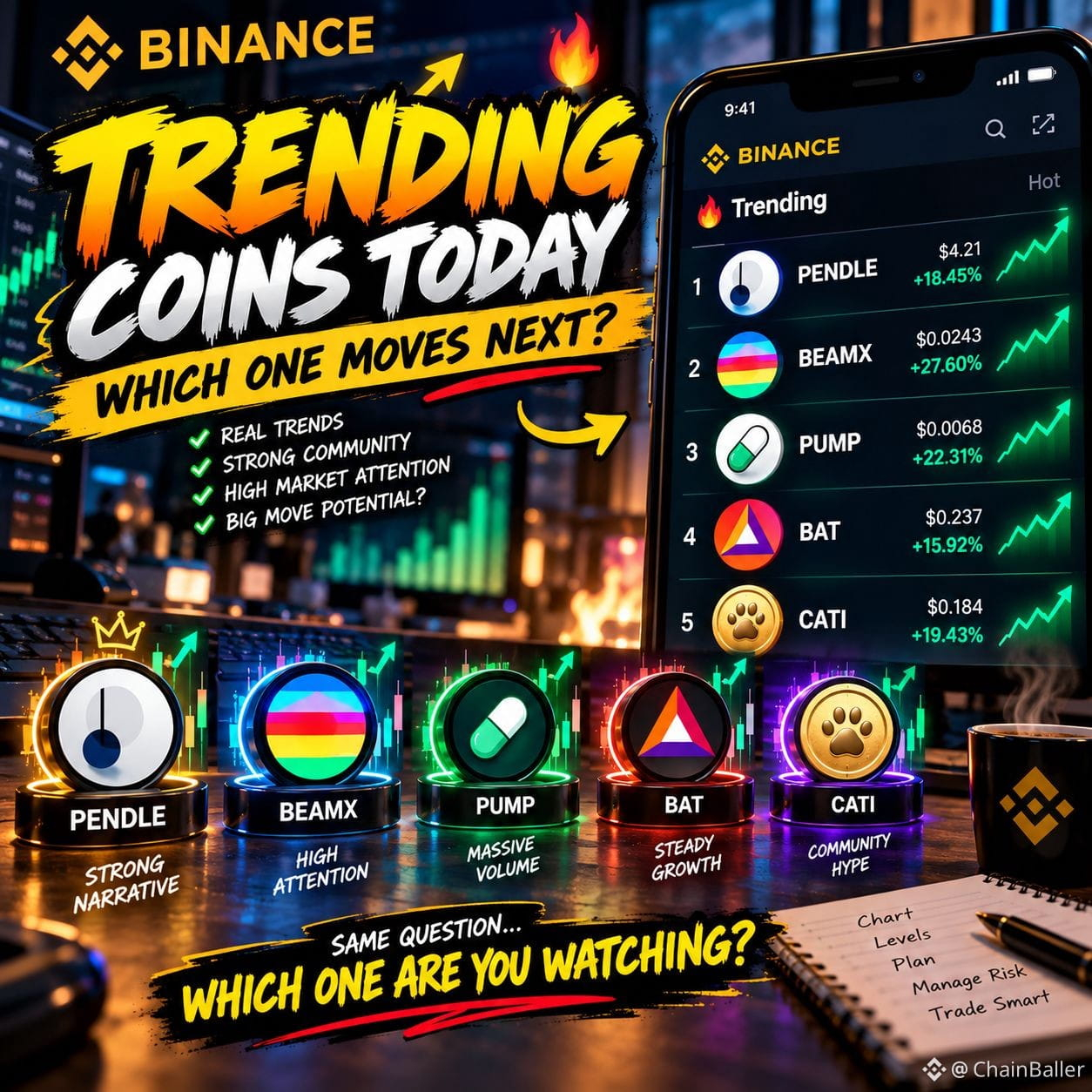
⁉️🪝 BINANCE TRENDING BOARD IS GETTING INTERESTING… WHO’S NEXT? 👀🔥
Some names are suddenly getting serious attention on Binance — PENDLE, BEAMX, BAT, PUMP and CATI are among the coins showing up on the hot radar. ⚡
But here’s the part I care about…
A coin being trending doesn’t automatically mean it’s ready to pump.
The real opportunity comes when attention meets a clean chart setup. 📊
That’s what I’m hunting today.
👀 Trending ≠ chasing
🎯 Trending + clean level = interesting
The crowd usually notices the move after the candle starts flying.
I’d rather find the setup before that happens. 🪝🔥
Which Binance trending coin are you watching right now — PENDLE, BEAMX, PUMP, BAT or CATI? ⁉️
#ChainBaller #Binance #CryptoMarket
⁉️🪝 BINANCE TRENDING BOARD IS GETTING INTERESTING… WHO’S NEXT? 👀🔥
Some names are suddenly getting serious attention on Binance — PENDLE, BEAMX, BAT, PUMP and CATI are among the coins showing up on the hot radar. ⚡
But here’s the part I care about…
A coin being trending doesn’t automatically mean it’s ready to pump.
The real opportunity comes when attention meets a clean chart setup. 📊
That’s what I’m hunting today.
👀 Trending ≠ chasing
🎯 Trending + clean level = interesting
The crowd usually notices the move after the candle starts flying.
I’d rather find the setup before that happens. 🪝🔥
Which Binance trending coin are you watching right now — PENDLE, BEAMX, PUMP, BAT or CATI? ⁉️
#ChainBaller #Binance #CryptoMarket
Some names are suddenly getting serious attention on Binance — PENDLE, BEAMX, BAT, PUMP and CATI are among the coins showing up on the hot radar. ⚡
But here’s the part I care about…
A coin being trending doesn’t automatically mean it’s ready to pump.
The real opportunity comes when attention meets a clean chart setup. 📊
That’s what I’m hunting today.
👀 Trending ≠ chasing
🎯 Trending + clean level = interesting
The crowd usually notices the move after the candle starts flying.
I’d rather find the setup before that happens. 🪝🔥
Which Binance trending coin are you watching right now — PENDLE, BEAMX, PUMP, BAT or CATI? ⁉️
#ChainBaller #Binance #CryptoMarket
49

History and trust
The story of Binance: from zero to the world’s largest crypto company
Binance wasn’t always big. It was founded in 2017 by Changpeng Zhao (CZ).
In just 180 days, it became the world’s largest exchange. Why?
Because it did something different: very low fees
and lots of coins to choose from.
Today, it has more than 200 million users around the world, and it’s much more than an app for buying Bitcoin. It’s a bank, an academy, a social network, and an investment platform—all in one.
And best of all, it keeps growing. In 2025, it launched
Megadrop, Square, and more tools to help you earn money without being an expert.
Did you know Binance started out so small?
#historiabinance #CZ #binance
If you don’t have an account yet and want to get started, my code is 450628178. Link in my profile.
History and trust
The story of Binance: from zero to the world’s largest crypto company
Binance wasn’t always big. It was founded in 2017 by Changpeng Zhao (CZ).
In just 180 days, it became the world’s largest exchange. Why?
Because it did something different: very low fees
and lots of coins to choose from.
Today, it has more than 200 million users around the world, and it’s much more than an app for buying Bitcoin. It’s a bank, an academy, a social network, and an investment platform—all in one.
And best of all, it keeps growing. In 2025, it launched
Megadrop, Square, and more tools to help you earn money without being an expert.
Did you know Binance started out so small?
#historiabinance #CZ #binance
If you don’t have an account yet and want to get started, my code is 450628178. Link in my profile.
The story of Binance: from zero to the world’s largest crypto company
Binance wasn’t always big. It was founded in 2017 by Changpeng Zhao (CZ).
In just 180 days, it became the world’s largest exchange. Why?
Because it did something different: very low fees
and lots of coins to choose from.
Today, it has more than 200 million users around the world, and it’s much more than an app for buying Bitcoin. It’s a bank, an academy, a social network, and an investment platform—all in one.
And best of all, it keeps growing. In 2025, it launched
Megadrop, Square, and more tools to help you earn money without being an expert.
Did you know Binance started out so small?
#historiabinance #CZ #binance
If you don’t have an account yet and want to get started, my code is 450628178. Link in my profile.
91

·
--
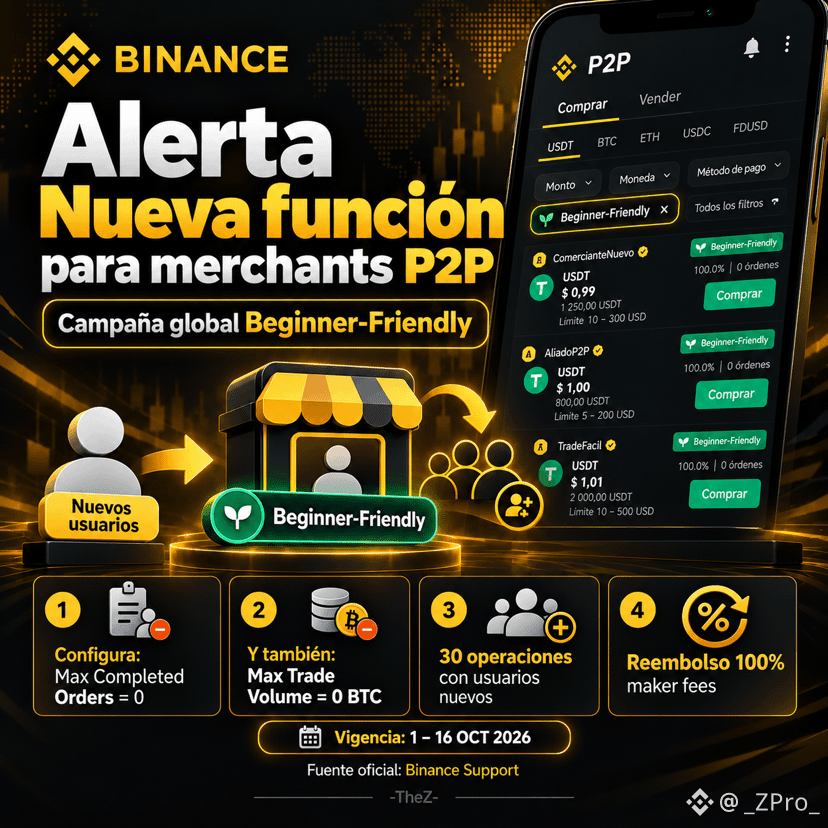
⚠️ Alert — new feature for P2P merchants
Binance has launched a new global P2P campaign featuring ads labeled “Beginner-Friendly,” specifically aimed at new users on the platform.
📌 How does it work?
For an ad to qualify for this category, the merchant must set:
• Max Completed Orders = 0
• Max Trade Volume = 0 BTC
With these settings, Binance can show the ad to users with no prior P2P trading history and also enable a dedicated Beginner-Friendly filter in the interface.
💰 Incentive for merchants
During the campaign, eligible merchants who complete at least 30 trades with new users may receive a 100% rebate on maker fees charged for qualifying trades.
📅 Period: October 1–16, 2026.
🔎 Why does it matter?
This feature introduces a new way to target P2P ads based on the counterparty’s trading history. For merchants, it could open up a different strategy for attracting new users while also reducing costs during the promotion.
It’s also worth checking whether these new settings appear in the payloads for creating, editing, or retrieving ads via API, especially for P2P automation systems.
🔗 [Fuente oficial](https://www.binance.com/en/support/announcement)
#Binance #BinanceP2P #P2P $USDT #merchant #BinanceSquare
⚠️ Alert — new feature for P2P merchants
Binance has launched a new global P2P campaign featuring ads labeled “Beginner-Friendly,” specifically aimed at new users on the platform.
📌 How does it work?
For an ad to qualify for this category, the merchant must set:
• Max Completed Orders = 0
• Max Trade Volume = 0 BTC
With these settings, Binance can show the ad to users with no prior P2P trading history and also enable a dedicated Beginner-Friendly filter in the interface.
💰 Incentive for merchants
During the campaign, eligible merchants who complete at least 30 trades with new users may receive a 100% rebate on maker fees charged for qualifying trades.
📅 Period: October 1–16, 2026.
🔎 Why does it matter?
This feature introduces a new way to target P2P ads based on the counterparty’s trading history. For merchants, it could open up a different strategy for attracting new users while also reducing costs during the promotion.
It’s also worth checking whether these new settings appear in the payloads for creating, editing, or retrieving ads via API, especially for P2P automation systems.
🔗 Fuente oficial
#Binance #BinanceP2P #P2P $USDT #merchant #BinanceSquare
Binance has launched a new global P2P campaign featuring ads labeled “Beginner-Friendly,” specifically aimed at new users on the platform.
📌 How does it work?
For an ad to qualify for this category, the merchant must set:
• Max Completed Orders = 0
• Max Trade Volume = 0 BTC
With these settings, Binance can show the ad to users with no prior P2P trading history and also enable a dedicated Beginner-Friendly filter in the interface.
💰 Incentive for merchants
During the campaign, eligible merchants who complete at least 30 trades with new users may receive a 100% rebate on maker fees charged for qualifying trades.
📅 Period: October 1–16, 2026.
🔎 Why does it matter?
This feature introduces a new way to target P2P ads based on the counterparty’s trading history. For merchants, it could open up a different strategy for attracting new users while also reducing costs during the promotion.
It’s also worth checking whether these new settings appear in the payloads for creating, editing, or retrieving ads via API, especially for P2P automation systems.
🔗 Fuente oficial
#Binance #BinanceP2P #P2P $USDT #merchant #BinanceSquare
1
220

·
--
Article
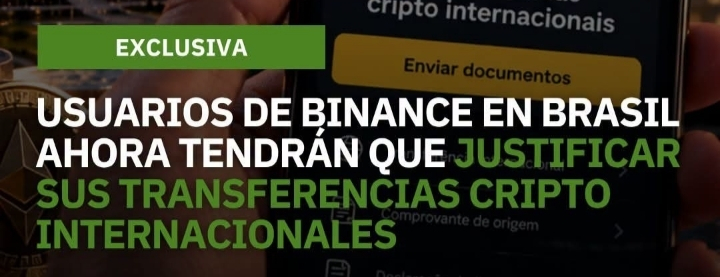
🚨🇧🇷 BINANCE CHANGES INTERNATIONAL CRYPTO TRANSFERS IN BRAZILStarting November 1, 2026, Binance users in Brazil will face new requirements when making certain cryptocurrency transfers with non-resident counterparties.
The measure responds to new regulatory requirements from the Central Bank of Brazil.
📋 WHAT WILL USERS HAVE TO REPORT?
For each international transfer, you must specify:
👉 Purpose of the transaction.
For amounts up to US$50,000, a simplified list of 10 categories will be used. Above that amount, the Central Bank’s full classification will apply.
🚨🇧🇷 BINANCE CHANGES INTERNATIONAL CRYPTO TRANSFERS IN BRAZIL
Starting November 1, 2026, Binance users in Brazil will face new requirements when making certain cryptocurrency transfers with non-resident counterparties.
The measure responds to new regulatory requirements from the Central Bank of Brazil.
📋 WHAT WILL USERS HAVE TO REPORT?
For each international transfer, you must specify:
👉 Purpose of the transaction.
For amounts up to US$50,000, a simplified list of 10 categories will be used. Above that amount, the Central Bank’s full classification will apply.
The measure responds to new regulatory requirements from the Central Bank of Brazil.
📋 WHAT WILL USERS HAVE TO REPORT?
For each international transfer, you must specify:
👉 Purpose of the transaction.
For amounts up to US$50,000, a simplified list of 10 categories will be used. Above that amount, the Central Bank’s full classification will apply.
67
📢 FUTURES REWARD CAMPAIGN: SHARE 200 BNB
$BNB $NMR $MINA
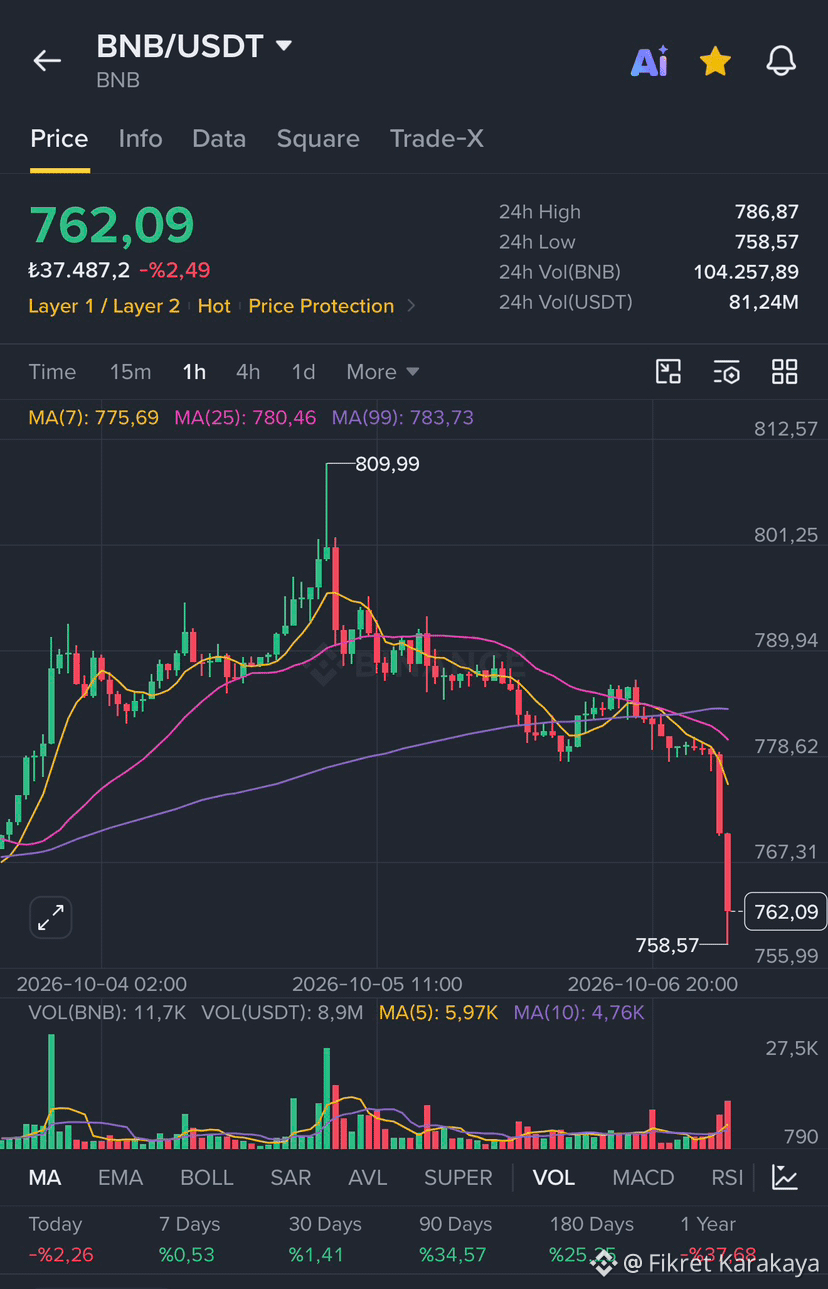
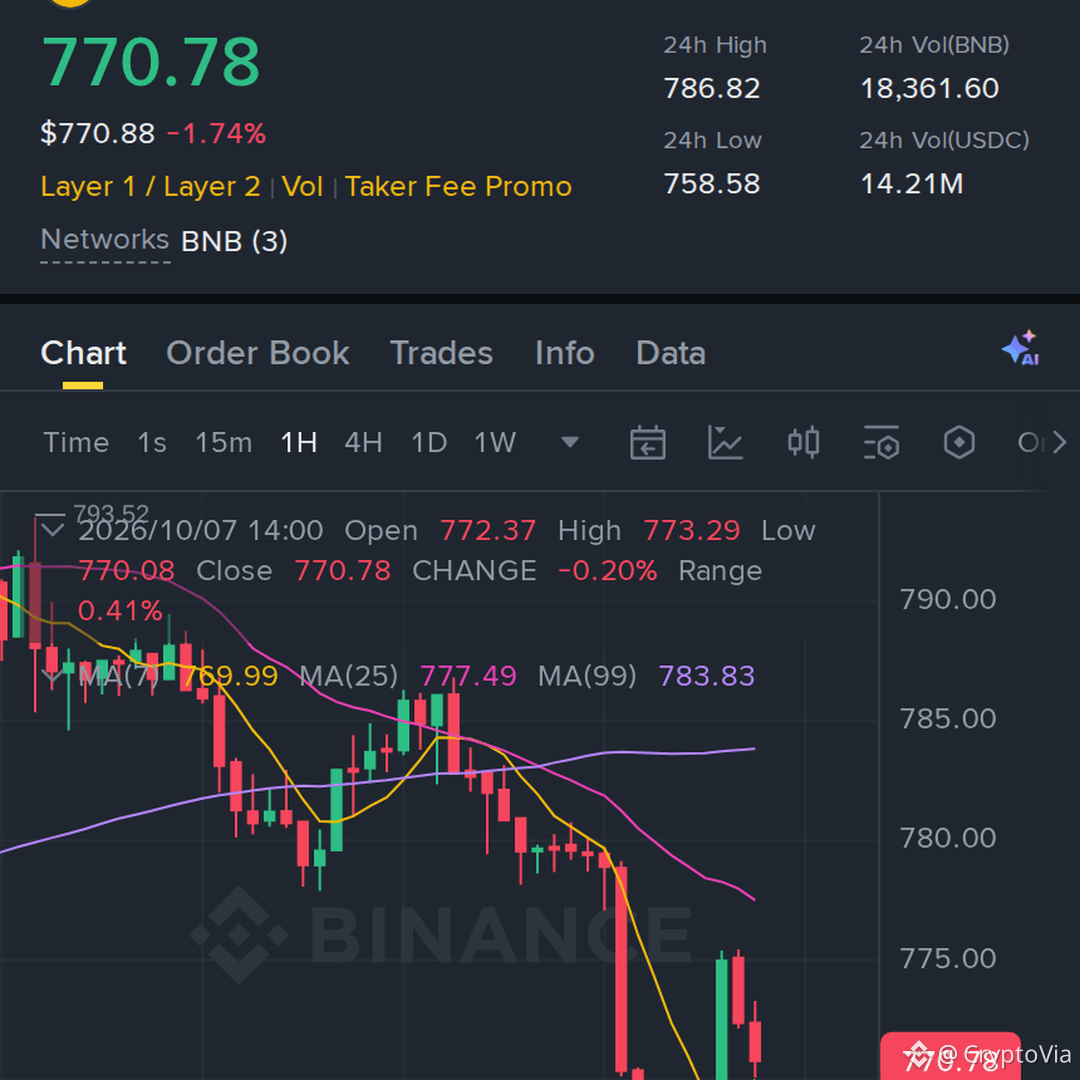
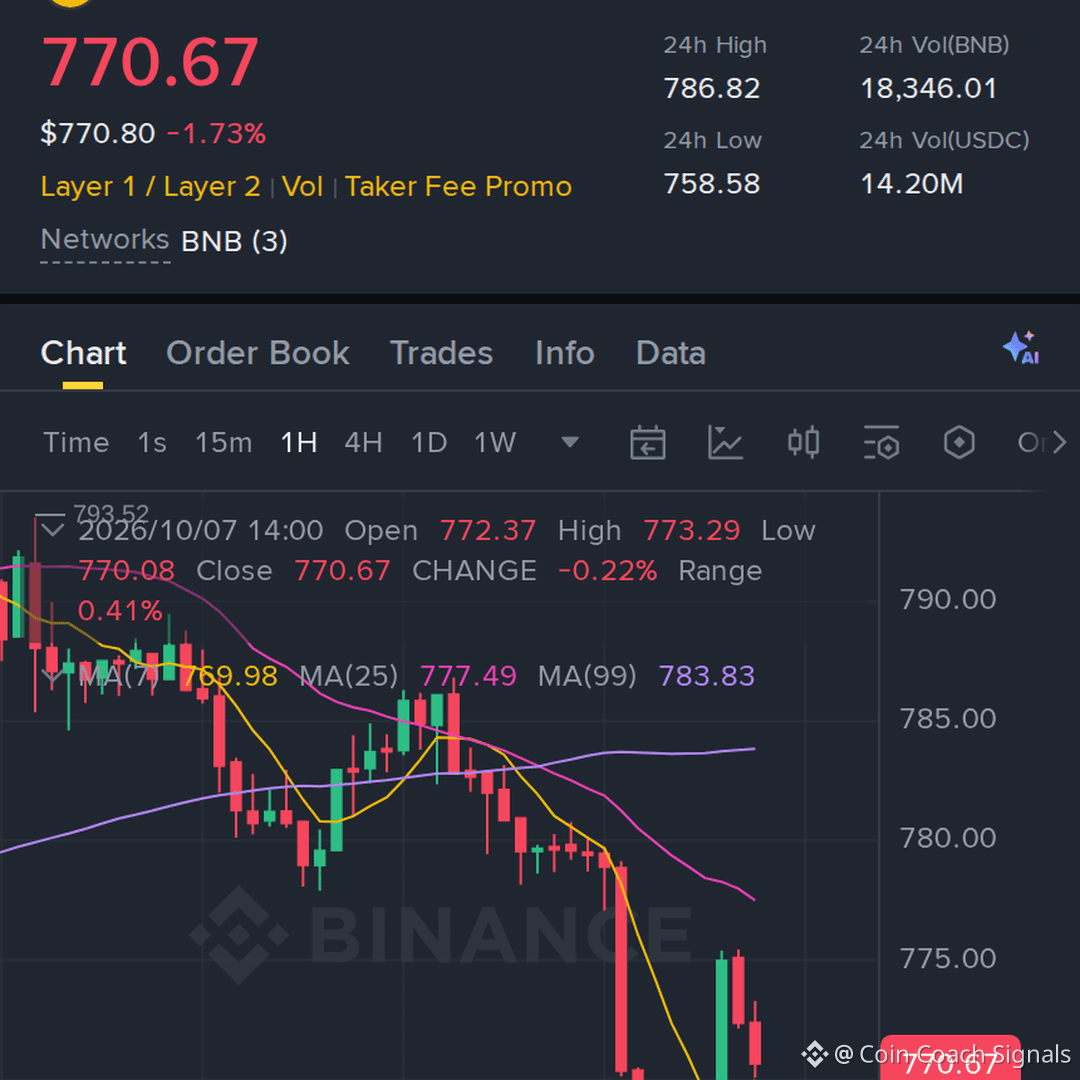
BNB is at 769.6 USDT · -1.69% over 24h · Vol 95M
🏷️ Event type: FUTURES_CAMPAIGN · published by Binance on 07/10/2026
The futures market has shown modest weakness, with BNB slipping 1.69% while trading volume remains robust at nearly 95 million. Binance’s new task‑based campaign aims to boost engagement by distributing 200 BNB among active traders, potentially providing a short‑term uplift to futures activity. Market participants should weigh the incentive against the broader downtrend before allocating capital.
📉 Live market data — TRENDING DOWN
• NMR · 38.7% · Vol 45M
• MINA · -26% · Vol 15M
• RAD · -22% · Vol 6M
Exchange announcements pull attention onto the named asset, and attention arrives fast and leaves just as fast.
#BNB #Binance
Source: https://www.binance.com/vi/support/announcement/c6f5ccd7407f40ac98ff0d38ea9dfa3e
For reference only, not financial advice (DYOR).
📢 FUTURES REWARD CAMPAIGN: SHARE 200 BNB
$BNB $NMR $MINA
BNB is at 769.6 USDT · -1.69% over 24h · Vol 95M
🏷️ Event type: FUTURES_CAMPAIGN · published by Binance on 07/10/2026
The futures market has shown modest weakness, with BNB slipping 1.69% while trading volume remains robust at nearly 95 million. Binance’s new task‑based campaign aims to boost engagement by distributing 200 BNB among active traders, potentially providing a short‑term uplift to futures activity. Market participants should weigh the incentive against the broader downtrend before allocating capital.
📉 Live market data — TRENDING DOWN
• NMR · 38.7% · Vol 45M
• MINA · -26% · Vol 15M
• RAD · -22% · Vol 6M
Exchange announcements pull attention onto the named asset, and attention arrives fast and leaves just as fast.
#BNB #Binance
Source: https://www.binance.com/vi/support/announcement/c6f5ccd7407f40ac98ff0d38ea9dfa3e
For reference only, not financial advice (DYOR).
$BNB $NMR $MINA
BNB is at 769.6 USDT · -1.69% over 24h · Vol 95M
🏷️ Event type: FUTURES_CAMPAIGN · published by Binance on 07/10/2026
The futures market has shown modest weakness, with BNB slipping 1.69% while trading volume remains robust at nearly 95 million. Binance’s new task‑based campaign aims to boost engagement by distributing 200 BNB among active traders, potentially providing a short‑term uplift to futures activity. Market participants should weigh the incentive against the broader downtrend before allocating capital.
📉 Live market data — TRENDING DOWN
• NMR · 38.7% · Vol 45M
• MINA · -26% · Vol 15M
• RAD · -22% · Vol 6M
Exchange announcements pull attention onto the named asset, and attention arrives fast and leaves just as fast.
#BNB #Binance
Source: https://www.binance.com/vi/support/announcement/c6f5ccd7407f40ac98ff0d38ea9dfa3e
For reference only, not financial advice (DYOR).
2


·
--
$BTC
{spot}(BTCUSDT)
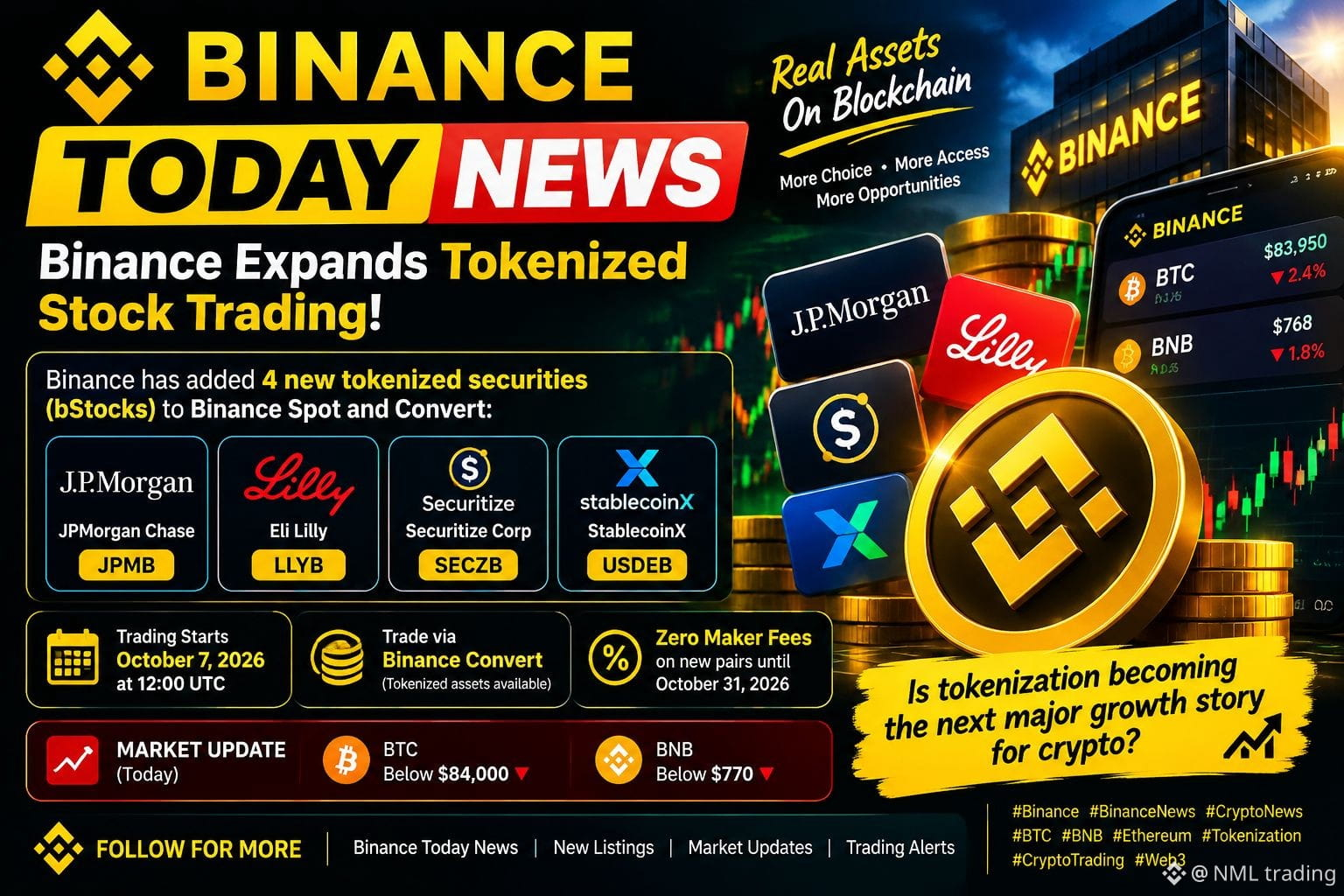
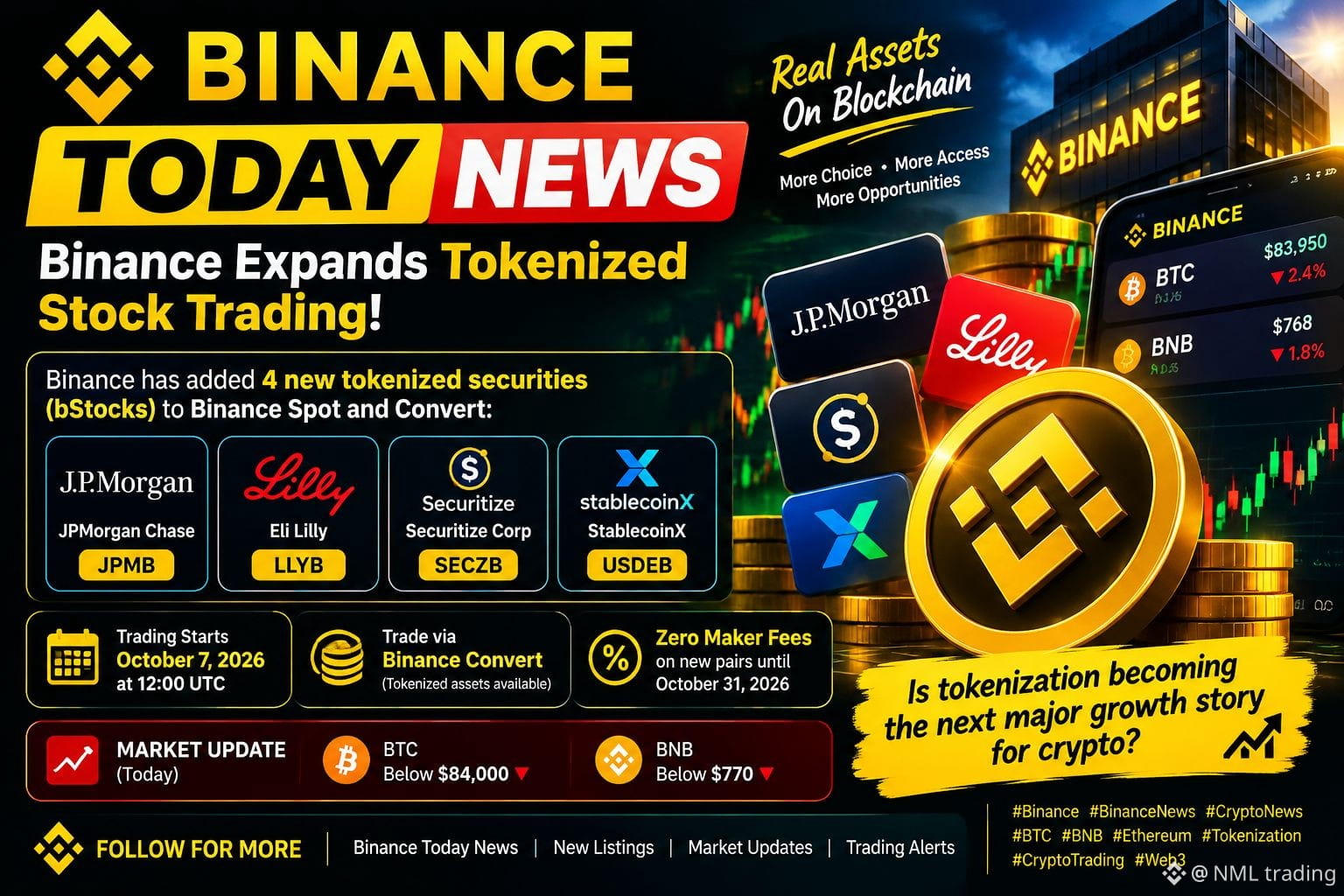
🚨 BINANCE TODAY NEWS 🔥
🟡 Binance Expands Tokenized Stock Trading!
Binance has announced the addition of 4 new tokenized securities (bStocks) to Binance Spot and Convert:
🏦 JPMorgan Chase — JPMB
💊 Eli Lilly — LLYB
🔐 Securitize Corp — SECZB
💵 StablecoinX — USDEB
📅 Trading is scheduled to begin October 7, 2026 at 12:00 UTC.
Binance says users will also be able to trade these tokenized assets through Binance Convert, while zero maker fees are available on the new pairs until October 31, 2026.
📊 Meanwhile, the crypto market is showing volatility. Binance market data reported BTC below $84,000 and BNB below $770 today.
👀 Key Question: Is tokenization becoming the next major growth story for crypto?
🔥 Follow for more Binance Today News, new listings, market updates & trading alerts.
#Binance #BinanceNews #CryptoNews #BTC #BNB #Ethereum #Tokenization #CryptoTrading #Web3#Binance
$BTC
🚨 BINANCE TODAY NEWS 🔥
🟡 Binance Expands Tokenized Stock Trading!
Binance has announced the addition of 4 new tokenized securities (bStocks) to Binance Spot and Convert:
🏦 JPMorgan Chase — JPMB
💊 Eli Lilly — LLYB
🔐 Securitize Corp — SECZB
💵 StablecoinX — USDEB
📅 Trading is scheduled to begin October 7, 2026 at 12:00 UTC.
Binance says users will also be able to trade these tokenized assets through Binance Convert, while zero maker fees are available on the new pairs until October 31, 2026.
📊 Meanwhile, the crypto market is showing volatility. Binance market data reported BTC below $84,000 and BNB below $770 today.
👀 Key Question: Is tokenization becoming the next major growth story for crypto?
🔥 Follow for more Binance Today News, new listings, market updates & trading alerts.
#Binance #BinanceNews #CryptoNews #BTC #BNB #Ethereum #Tokenization #CryptoTrading #Web3#Binance
🚨 BINANCE TODAY NEWS 🔥
🟡 Binance Expands Tokenized Stock Trading!
Binance has announced the addition of 4 new tokenized securities (bStocks) to Binance Spot and Convert:
🏦 JPMorgan Chase — JPMB
💊 Eli Lilly — LLYB
🔐 Securitize Corp — SECZB
💵 StablecoinX — USDEB
📅 Trading is scheduled to begin October 7, 2026 at 12:00 UTC.
Binance says users will also be able to trade these tokenized assets through Binance Convert, while zero maker fees are available on the new pairs until October 31, 2026.
📊 Meanwhile, the crypto market is showing volatility. Binance market data reported BTC below $84,000 and BNB below $770 today.
👀 Key Question: Is tokenization becoming the next major growth story for crypto?
🔥 Follow for more Binance Today News, new listings, market updates & trading alerts.
#Binance #BinanceNews #CryptoNews #BTC #BNB #Ethereum #Tokenization #CryptoTrading #Web3#Binance
13
·
--
$BTC
{spot}(BTCUSDT)
🚨 BINANCE TODAY NEWS 🔥
🟡 Binance Expands Tokenized Stock Trading!
Binance has announced the addition of 4 new tokenized securities (bStocks) to Binance Spot and Convert:
🏦 JPMorgan Chase — JPMB
💊 Eli Lilly — LLYB
🔐 Securitize Corp — SECZB
💵 StablecoinX — USDEB
📅 Trading is scheduled to begin October 7, 2026 at 12:00 UTC.
Binance says users will also be able to trade these tokenized assets through Binance Convert, while zero maker fees are available on the new pairs until October 31, 2026.
📊 Meanwhile, the crypto market is showing volatility. Binance market data reported BTC below $84,000 and BNB below $770 today.
👀 Key Question: Is tokenization becoming the next major growth story for crypto?
🔥 Follow for more Binance Today News, new listings, market updates & trading alerts.
#Binance #BinanceNews #CryptoNews #BTC #BNB #Ethereum #Tokenization #CryptoTrading #Web3#Binance
$BTC
🚨 BINANCE TODAY NEWS 🔥
🟡 Binance Expands Tokenized Stock Trading!
Binance has announced the addition of 4 new tokenized securities (bStocks) to Binance Spot and Convert:
🏦 JPMorgan Chase — JPMB
💊 Eli Lilly — LLYB
🔐 Securitize Corp — SECZB
💵 StablecoinX — USDEB
📅 Trading is scheduled to begin October 7, 2026 at 12:00 UTC.
Binance says users will also be able to trade these tokenized assets through Binance Convert, while zero maker fees are available on the new pairs until October 31, 2026.
📊 Meanwhile, the crypto market is showing volatility. Binance market data reported BTC below $84,000 and BNB below $770 today.
👀 Key Question: Is tokenization becoming the next major growth story for crypto?
🔥 Follow for more Binance Today News, new listings, market updates & trading alerts.
#Binance #BinanceNews #CryptoNews #BTC #BNB #Ethereum #Tokenization #CryptoTrading #Web3#Binance
🚨 BINANCE TODAY NEWS 🔥
🟡 Binance Expands Tokenized Stock Trading!
Binance has announced the addition of 4 new tokenized securities (bStocks) to Binance Spot and Convert:
🏦 JPMorgan Chase — JPMB
💊 Eli Lilly — LLYB
🔐 Securitize Corp — SECZB
💵 StablecoinX — USDEB
📅 Trading is scheduled to begin October 7, 2026 at 12:00 UTC.
Binance says users will also be able to trade these tokenized assets through Binance Convert, while zero maker fees are available on the new pairs until October 31, 2026.
📊 Meanwhile, the crypto market is showing volatility. Binance market data reported BTC below $84,000 and BNB below $770 today.
👀 Key Question: Is tokenization becoming the next major growth story for crypto?
🔥 Follow for more Binance Today News, new listings, market updates & trading alerts.
#Binance #BinanceNews #CryptoNews #BTC #BNB #Ethereum #Tokenization #CryptoTrading #Web3#Binance
13
·
--
Binance is listing four tokenized stocks for spot trading today at 12:00 UTC (6 p.m. in Dhaka).
JPMorgan, Eli Lilly, Securitize, and StablecoinX. The trading symbols are JPMB, LLYB, SECZB, and USDEB, all paired with USDT.
Zero maker fees apply to these pairs until October 31. They also count as margin collateral from day one, but you can’t borrow them.
The phrase I’m going to read twice appears in Binance’s fine print: “bStocks are not stocks or shares,” and they don’t give you direct ownership of a stake in the company.
That means you get price exposure in your Binance account, but you don’t become a shareholder.
And the service isn’t available to anyone in the United States.
My take: a practical option if you want stock exposure alongside crypto without opening a brokerage account. Just make sure you understand what you own.
Would you buy JPMorgan stock through Binance, or keep stock trading with a broker?
$BNB $USDT
#bStocks #Binance
This is not financial advice. Do your own research.
Binance is listing four tokenized stocks for spot trading today at 12:00 UTC (6 p.m. in Dhaka).
JPMorgan, Eli Lilly, Securitize, and StablecoinX. The trading symbols are JPMB, LLYB, SECZB, and USDEB, all paired with USDT.
Zero maker fees apply to these pairs until October 31. They also count as margin collateral from day one, but you can’t borrow them.
The phrase I’m going to read twice appears in Binance’s fine print: “bStocks are not stocks or shares,” and they don’t give you direct ownership of a stake in the company.
That means you get price exposure in your Binance account, but you don’t become a shareholder.
And the service isn’t available to anyone in the United States.
My take: a practical option if you want stock exposure alongside crypto without opening a brokerage account. Just make sure you understand what you own.
Would you buy JPMorgan stock through Binance, or keep stock trading with a broker?
$BNB $USDT
#bStocks #Binance
This is not financial advice. Do your own research.
JPMorgan, Eli Lilly, Securitize, and StablecoinX. The trading symbols are JPMB, LLYB, SECZB, and USDEB, all paired with USDT.
Zero maker fees apply to these pairs until October 31. They also count as margin collateral from day one, but you can’t borrow them.
The phrase I’m going to read twice appears in Binance’s fine print: “bStocks are not stocks or shares,” and they don’t give you direct ownership of a stake in the company.
That means you get price exposure in your Binance account, but you don’t become a shareholder.
And the service isn’t available to anyone in the United States.
My take: a practical option if you want stock exposure alongside crypto without opening a brokerage account. Just make sure you understand what you own.
Would you buy JPMorgan stock through Binance, or keep stock trading with a broker?
$BNB $USDT
#bStocks #Binance
This is not financial advice. Do your own research.
67

·
--
Bullish
🛡️ Proactive Security Wins: How to Keep Your Crypto Safe on Binance! 🔒✨
In the fast-evolving Web3 world, proactive security is your best defense. Taking action before a potential threat occurs is what keeps your assets completely secure! 🌐💪
Here are key habits every trader should follow:
1️⃣ Enable 2FA: Always use Authenticator Apps or Passkeys instead of plain SMS.
2️⃣ Verify Links & Messages: Double-check official URLs and beware of phishing attempts.
3️⃣ Regular Audit: Monitor your account activity and connected devices regularly.
Staying proactive ensures peace of mind while navigating the crypto space. Securing your funds starts with you! 📈🙌
#Binance #CryptoSecurity #ProactiveSecurity #Write2Earn #Web3
🛡️ Proactive Security Wins: How to Keep Your Crypto Safe on Binance! 🔒✨
In the fast-evolving Web3 world, proactive security is your best defense. Taking action before a potential threat occurs is what keeps your assets completely secure! 🌐💪
Here are key habits every trader should follow:
1️⃣ Enable 2FA: Always use Authenticator Apps or Passkeys instead of plain SMS.
2️⃣ Verify Links & Messages: Double-check official URLs and beware of phishing attempts.
3️⃣ Regular Audit: Monitor your account activity and connected devices regularly.
Staying proactive ensures peace of mind while navigating the crypto space. Securing your funds starts with you! 📈🙌
#Binance #CryptoSecurity #ProactiveSecurity #Write2Earn #Web3
In the fast-evolving Web3 world, proactive security is your best defense. Taking action before a potential threat occurs is what keeps your assets completely secure! 🌐💪
Here are key habits every trader should follow:
1️⃣ Enable 2FA: Always use Authenticator Apps or Passkeys instead of plain SMS.
2️⃣ Verify Links & Messages: Double-check official URLs and beware of phishing attempts.
3️⃣ Regular Audit: Monitor your account activity and connected devices regularly.
Staying proactive ensures peace of mind while navigating the crypto space. Securing your funds starts with you! 📈🙌
#Binance #CryptoSecurity #ProactiveSecurity #Write2Earn #Web3
32

·
--
Bullish
【Binance Adds 4 bStocks Tonight: More Than Trading—They Can Also Be Used as Collateral】
Binance announced today that it will open spot trading for four bStocks pairs at 20:00 on October 7 (Taiwan time):
• $JPMB/USDT: JPMorgan Chase
• $LLYB/USDT: Eli Lilly
• $SECZB/USDT: Securitize
• USDEB/USDT: StablecoinX
At the same time, these four assets will also become eligible collateral for Cross Margin, Portfolio Margin, and Portfolio Margin Pro. Withdrawals are scheduled to open at 21:00.
What really stands out this time is not just the addition of new trading pairs. bStocks are moving beyond simply “tracking stock prices” and toward being usable as trading collateral—another step forward in the capital efficiency of on-chain securities.
But there are three things not to confuse:
① bStocks are not shares or stock in the original companies. Holding them does not make you a shareholder of those companies.
② They can currently be used as margin collateral, but Binance’s announcement explicitly states that borrowing these four assets is not supported for now.
③ The products are available only to eligible users in eligible regions. Adding a collateral feature also increases leverage and liquidation risks.
Things to watch for tonight:
• Bid-ask spreads and order book depth after trading opens at 20:00
• Whether bStocks prices diverge significantly from the underlying prices after regular U.S. stock market trading begins at 21:30
• Whether collateral haircuts, margin usage, and liquidity grow in practice
“Being tradable” is the first step. “Being usable as collateral” means they are beginning to compete in a more complete capital-efficiency landscape.
Do you think tokenized stocks will eventually become standard assets on crypto platforms, or will they remain constrained by regulatory and regional barriers?
#BStocks #TokenizedStocks #Binance
$JPMB
{spot}(JPMBUSDT)
$LLYB
{spot}(LLYBUSDT)
$SECZB
{spot}(SECZBUSDT)
【Binance Adds 4 bStocks Tonight: More Than Trading—They Can Also Be Used as Collateral】
Binance announced today that it will open spot trading for four bStocks pairs at 20:00 on October 7 (Taiwan time):
• $JPMB /USDT: JPMorgan Chase
• $LLYB /USDT: Eli Lilly
• $SECZB /USDT: Securitize
• USDEB/USDT: StablecoinX
At the same time, these four assets will also become eligible collateral for Cross Margin, Portfolio Margin, and Portfolio Margin Pro. Withdrawals are scheduled to open at 21:00.
What really stands out this time is not just the addition of new trading pairs. bStocks are moving beyond simply “tracking stock prices” and toward being usable as trading collateral—another step forward in the capital efficiency of on-chain securities.
But there are three things not to confuse:
① bStocks are not shares or stock in the original companies. Holding them does not make you a shareholder of those companies.
② They can currently be used as margin collateral, but Binance’s announcement explicitly states that borrowing these four assets is not supported for now.
③ The products are available only to eligible users in eligible regions. Adding a collateral feature also increases leverage and liquidation risks.
Things to watch for tonight:
• Bid-ask spreads and order book depth after trading opens at 20:00
• Whether bStocks prices diverge significantly from the underlying prices after regular U.S. stock market trading begins at 21:30
• Whether collateral haircuts, margin usage, and liquidity grow in practice
“Being tradable” is the first step. “Being usable as collateral” means they are beginning to compete in a more complete capital-efficiency landscape.
Do you think tokenized stocks will eventually become standard assets on crypto platforms, or will they remain constrained by regulatory and regional barriers?
#BStocks #TokenizedStocks #Binance
$JPMB
$LLYB
$SECZB
Binance announced today that it will open spot trading for four bStocks pairs at 20:00 on October 7 (Taiwan time):
• $JPMB /USDT: JPMorgan Chase
• $LLYB /USDT: Eli Lilly
• $SECZB /USDT: Securitize
• USDEB/USDT: StablecoinX
At the same time, these four assets will also become eligible collateral for Cross Margin, Portfolio Margin, and Portfolio Margin Pro. Withdrawals are scheduled to open at 21:00.
What really stands out this time is not just the addition of new trading pairs. bStocks are moving beyond simply “tracking stock prices” and toward being usable as trading collateral—another step forward in the capital efficiency of on-chain securities.
But there are three things not to confuse:
① bStocks are not shares or stock in the original companies. Holding them does not make you a shareholder of those companies.
② They can currently be used as margin collateral, but Binance’s announcement explicitly states that borrowing these four assets is not supported for now.
③ The products are available only to eligible users in eligible regions. Adding a collateral feature also increases leverage and liquidation risks.
Things to watch for tonight:
• Bid-ask spreads and order book depth after trading opens at 20:00
• Whether bStocks prices diverge significantly from the underlying prices after regular U.S. stock market trading begins at 21:30
• Whether collateral haircuts, margin usage, and liquidity grow in practice
“Being tradable” is the first step. “Being usable as collateral” means they are beginning to compete in a more complete capital-efficiency landscape.
Do you think tokenized stocks will eventually become standard assets on crypto platforms, or will they remain constrained by regulatory and regional barriers?
#BStocks #TokenizedStocks #Binance
$JPMB
$LLYB
$SECZB

1
35

·
--
Bullish
Verified
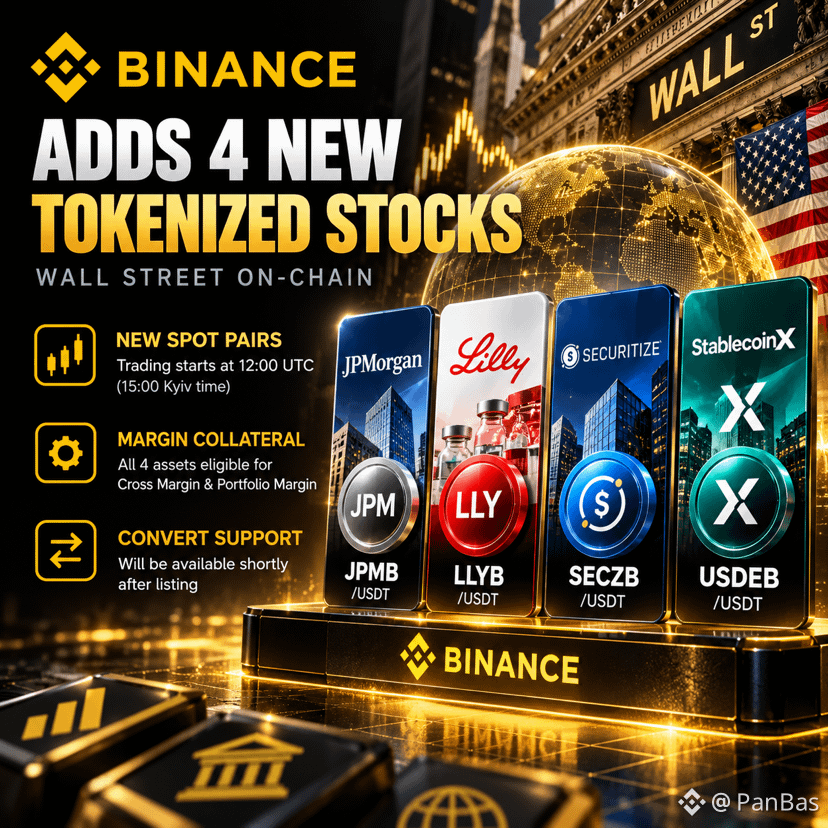
🚨 WALL STREET IS MOVING DEEPER INTO BINANCE
Today Binance adds 4 new tokenized securities to Spot:
JPMorgan — $JPMB
Eli Lilly — $LLYB
Securitize — $SECZB
StablecoinX — $USDEB
But this is more than another listing.
Binance is also making all four eligible as margin collateral.
Tokenized stocks are moving from “something you can trade” to actual infrastructure inside crypto markets.
Next step: more Wall Street assets as collateral?
#Binance #BStocks #RWA
🚨 WALL STREET IS MOVING DEEPER INTO BINANCE
Today Binance adds 4 new tokenized securities to Spot:
JPMorgan — $JPMB
Eli Lilly — $LLYB
Securitize — $SECZB
StablecoinX — $USDEB
But this is more than another listing.
Binance is also making all four eligible as margin collateral.
Tokenized stocks are moving from “something you can trade” to actual infrastructure inside crypto markets.
Next step: more Wall Street assets as collateral?
#Binance #BStocks #RWA
Today Binance adds 4 new tokenized securities to Spot:
JPMorgan — $JPMB
Eli Lilly — $LLYB
Securitize — $SECZB
StablecoinX — $USDEB
But this is more than another listing.
Binance is also making all four eligible as margin collateral.
Tokenized stocks are moving from “something you can trade” to actual infrastructure inside crypto markets.
Next step: more Wall Street assets as collateral?
#Binance #BStocks #RWA
129

·
--
BNB (BNB) Technical Analysis & Trading Tips
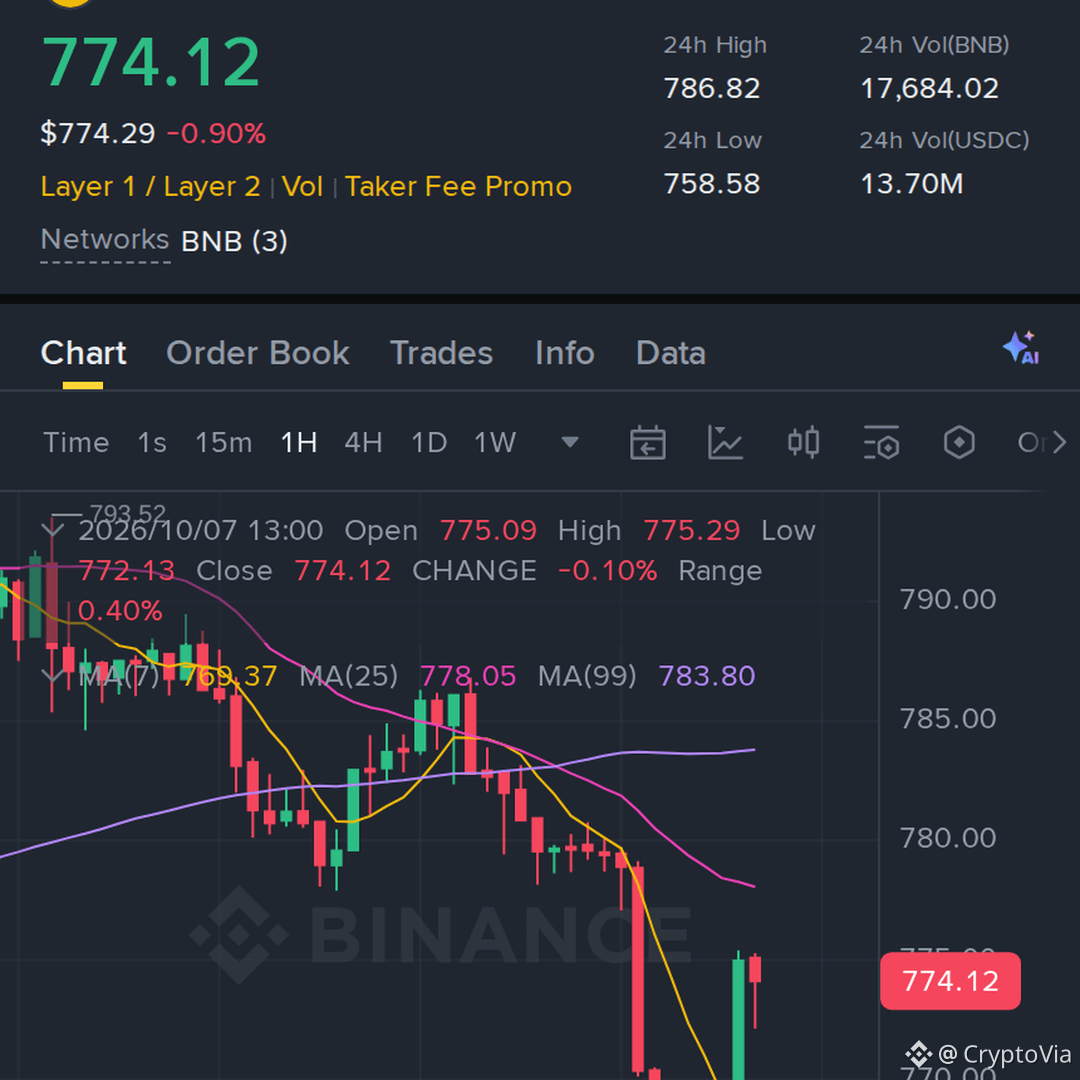
BNB is outperforming several major altcoins following a week of relative strength (+9% to +12% across recent sessions). As Bitcoin consolidates near the $85,500 – $86,000 range, BNB is consolidating inside a constructive pennant structure, preparing for its next major volatility expansion.
Key Technical Levels Overview
Relative Strength Index (14-period RSI): Sitting around 54–58 on 4-hour and daily charts, signaling steady bullish momentum without entering overbought territory (>70).
Moving Averages (EMA/SMA):
Trading safely above the 20-period EMA ($752) and 50-period EMA ($740).
200-period SMA continues to act as macro structural support.
Key Support Zones: $745 (Immediate) | $720 (Major Demand Zone)
Key Resistance Zones: $780 (Local High/Pivot) | $810 (Major Psychological Target)
Actionable Trading Strategies
1. Range-Bound Dip Buying (Accumulation)
Setup: Look for pullbacks into the $745 – $755 support band on lower-timeframe liquidity sweeps.
Confirmation: Watch for bullish divergence on the 1-hour RSI or higher volume buying spikes.
Target: $778 – $785
Stop-Loss: Below $738 (1.5% to 2% risk buffer).
2. Resistance Breakout Continuation
Setup: Enter on a decisive 4-hour candle close above $782 with above-average volume.
Target: Next macro targets at $810 – $835.
Stop-Loss: Just below the breakout candle low ($768).
Risk Management & Execution Rules
Leverage Threshold: Limit leverage to 3x–5x max on futures, as market-wide sensitivity to U.S. Treasury yields and macro news can trigger sharp fakeouts.
Launchpool Catalyst Checking: Monitor upcoming Binance Launchpool/Megadrop announcements—BNB holding dynamics often spike around snapshot dates.
Trailing Stops: Once a trade hits 1:1.5 Risk-to-Reward, move stop-loss to breakeven to eliminate downside risk during range-bound conditions.
$BNB
{spot}(BNBUSDT)
#BinanceLaunchesBinanceIntelligence #Binance #BinanceHerYerde
BNB (BNB) Technical Analysis & Trading Tips
BNB is outperforming several major altcoins following a week of relative strength (+9% to +12% across recent sessions). As Bitcoin consolidates near the $85,500 – $86,000 range, BNB is consolidating inside a constructive pennant structure, preparing for its next major volatility expansion.
Key Technical Levels Overview
Relative Strength Index (14-period RSI): Sitting around 54–58 on 4-hour and daily charts, signaling steady bullish momentum without entering overbought territory (>70).
Moving Averages (EMA/SMA):
Trading safely above the 20-period EMA ($752) and 50-period EMA ($740).
200-period SMA continues to act as macro structural support.
Key Support Zones: $745 (Immediate) | $720 (Major Demand Zone)
Key Resistance Zones: $780 (Local High/Pivot) | $810 (Major Psychological Target)
Actionable Trading Strategies
1. Range-Bound Dip Buying (Accumulation)
Setup: Look for pullbacks into the $745 – $755 support band on lower-timeframe liquidity sweeps.
Confirmation: Watch for bullish divergence on the 1-hour RSI or higher volume buying spikes.
Target: $778 – $785
Stop-Loss: Below $738 (1.5% to 2% risk buffer).
2. Resistance Breakout Continuation
Setup: Enter on a decisive 4-hour candle close above $782 with above-average volume.
Target: Next macro targets at $810 – $835.
Stop-Loss: Just below the breakout candle low ($768).
Risk Management & Execution Rules
Leverage Threshold: Limit leverage to 3x–5x max on futures, as market-wide sensitivity to U.S. Treasury yields and macro news can trigger sharp fakeouts.
Launchpool Catalyst Checking: Monitor upcoming Binance Launchpool/Megadrop announcements—BNB holding dynamics often spike around snapshot dates.
Trailing Stops: Once a trade hits 1:1.5 Risk-to-Reward, move stop-loss to breakeven to eliminate downside risk during range-bound conditions.
$BNB
#BinanceLaunchesBinanceIntelligence #Binance #BinanceHerYerde
BNB is outperforming several major altcoins following a week of relative strength (+9% to +12% across recent sessions). As Bitcoin consolidates near the $85,500 – $86,000 range, BNB is consolidating inside a constructive pennant structure, preparing for its next major volatility expansion.
Key Technical Levels Overview
Relative Strength Index (14-period RSI): Sitting around 54–58 on 4-hour and daily charts, signaling steady bullish momentum without entering overbought territory (>70).
Moving Averages (EMA/SMA):
Trading safely above the 20-period EMA ($752) and 50-period EMA ($740).
200-period SMA continues to act as macro structural support.
Key Support Zones: $745 (Immediate) | $720 (Major Demand Zone)
Key Resistance Zones: $780 (Local High/Pivot) | $810 (Major Psychological Target)
Actionable Trading Strategies
1. Range-Bound Dip Buying (Accumulation)
Setup: Look for pullbacks into the $745 – $755 support band on lower-timeframe liquidity sweeps.
Confirmation: Watch for bullish divergence on the 1-hour RSI or higher volume buying spikes.
Target: $778 – $785
Stop-Loss: Below $738 (1.5% to 2% risk buffer).
2. Resistance Breakout Continuation
Setup: Enter on a decisive 4-hour candle close above $782 with above-average volume.
Target: Next macro targets at $810 – $835.
Stop-Loss: Just below the breakout candle low ($768).
Risk Management & Execution Rules
Leverage Threshold: Limit leverage to 3x–5x max on futures, as market-wide sensitivity to U.S. Treasury yields and macro news can trigger sharp fakeouts.
Launchpool Catalyst Checking: Monitor upcoming Binance Launchpool/Megadrop announcements—BNB holding dynamics often spike around snapshot dates.
Trailing Stops: Once a trade hits 1:1.5 Risk-to-Reward, move stop-loss to breakeven to eliminate downside risk during range-bound conditions.
$BNB
#BinanceLaunchesBinanceIntelligence #Binance #BinanceHerYerde
21

·
--
Bullish
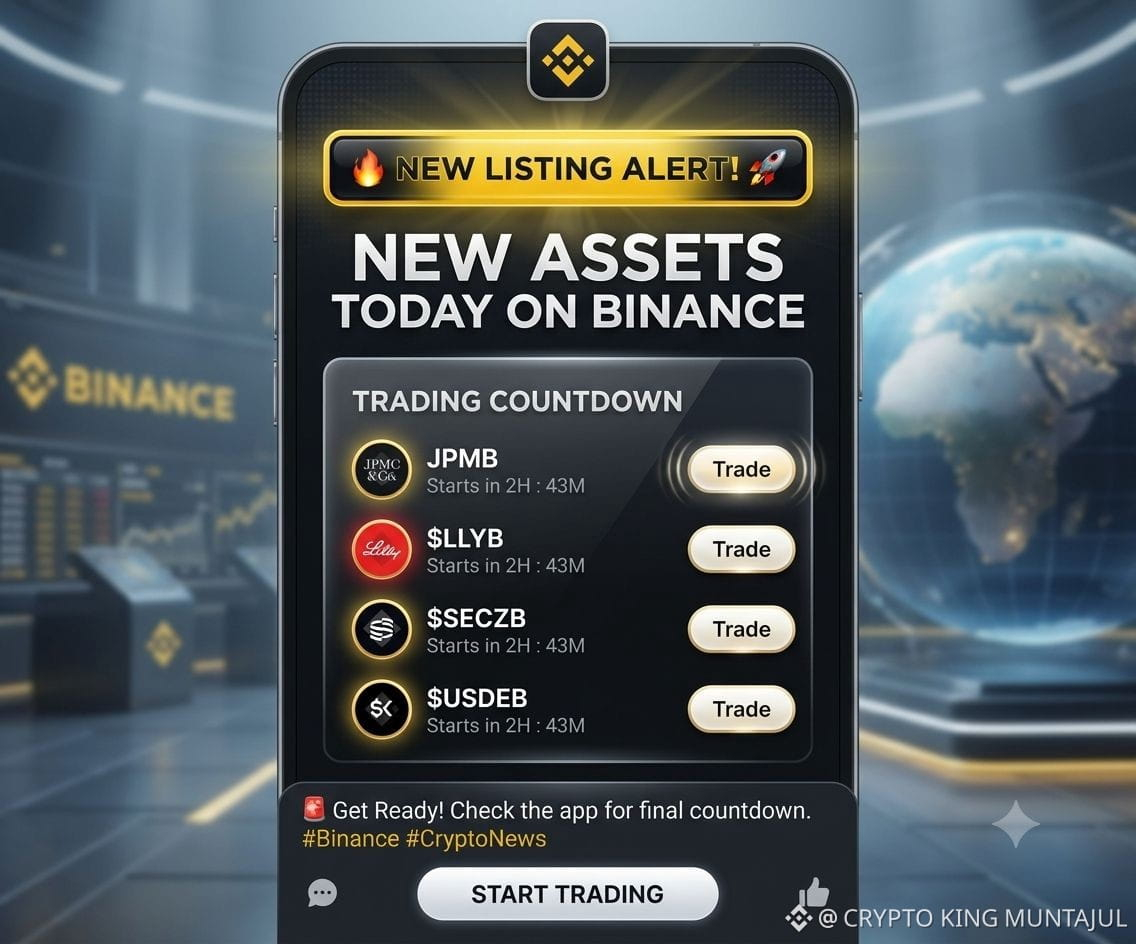
🚀 **NEW LISTING ALERT: 4 NEW ASSETS GOING LIVE!** ⏰💥
The trading countdown is officially ticking! ⏰ Binance is launching trading pairs for 4 new tokenized/pre-market assets in **less than 3 hours**!
Here are the details you need to know:
### 📊 **New Assets & Countdown:**
1. **$JPMB ** 🏦
* ⏳ **Starts in:** ~2 Hours 43 Minutes
2. **$LLYB ** 💊
* ⏳ **Starts in:** ~2 Hours 43 Minutes
3. **$SECZB ** 🔒
* ⏳ **Starts in:** ~2 Hours 43 Minutes
4. **$USDEB** 💵
* ⏳ **Starts in:** ~2 Hours 43 Minutes
💡 **Key Takeaways & Strategy:**
* 🎯 **Set Your Alarms:** Early liquidity moves fast! Make sure your order books and deposit wallets are ready before launch time.
* 📈 **Risk Management:** Initial listing volatility can be extremely high—always set stop-losses and manage your position sizing.
* 🔍 **Research:** Do your due diligence (DYOR) on these newly listed projects before jumping in.
👇 **Which of these 4 tokens are you bullish on? Let’s discuss in the comments below!** 💬🔥
#Binance #CryptoNews #TradingAlert #NewListing #CryptoCommunity
🚀 **NEW LISTING ALERT: 4 NEW ASSETS GOING LIVE!** ⏰💥
The trading countdown is officially ticking! ⏰ Binance is launching trading pairs for 4 new tokenized/pre-market assets in **less than 3 hours**!
Here are the details you need to know:
### 📊 **New Assets & Countdown:**
1. **$JPMB ** 🏦
* ⏳ **Starts in:** ~2 Hours 43 Minutes
2. **$LLYB ** 💊
* ⏳ **Starts in:** ~2 Hours 43 Minutes
3. **$SECZB ** 🔒
* ⏳ **Starts in:** ~2 Hours 43 Minutes
4. **$USDEB** 💵
* ⏳ **Starts in:** ~2 Hours 43 Minutes
💡 **Key Takeaways & Strategy:**
* 🎯 **Set Your Alarms:** Early liquidity moves fast! Make sure your order books and deposit wallets are ready before launch time.
* 📈 **Risk Management:** Initial listing volatility can be extremely high—always set stop-losses and manage your position sizing.
* 🔍 **Research:** Do your due diligence (DYOR) on these newly listed projects before jumping in.
👇 **Which of these 4 tokens are you bullish on? Let’s discuss in the comments below!** 💬🔥
#Binance #CryptoNews #TradingAlert #NewListing #CryptoCommunity
The trading countdown is officially ticking! ⏰ Binance is launching trading pairs for 4 new tokenized/pre-market assets in **less than 3 hours**!
Here are the details you need to know:
### 📊 **New Assets & Countdown:**
1. **$JPMB ** 🏦
* ⏳ **Starts in:** ~2 Hours 43 Minutes
2. **$LLYB ** 💊
* ⏳ **Starts in:** ~2 Hours 43 Minutes
3. **$SECZB ** 🔒
* ⏳ **Starts in:** ~2 Hours 43 Minutes
4. **$USDEB** 💵
* ⏳ **Starts in:** ~2 Hours 43 Minutes
💡 **Key Takeaways & Strategy:**
* 🎯 **Set Your Alarms:** Early liquidity moves fast! Make sure your order books and deposit wallets are ready before launch time.
* 📈 **Risk Management:** Initial listing volatility can be extremely high—always set stop-losses and manage your position sizing.
* 🔍 **Research:** Do your due diligence (DYOR) on these newly listed projects before jumping in.
👇 **Which of these 4 tokens are you bullish on? Let’s discuss in the comments below!** 💬🔥
#Binance #CryptoNews #TradingAlert #NewListing #CryptoCommunity
191

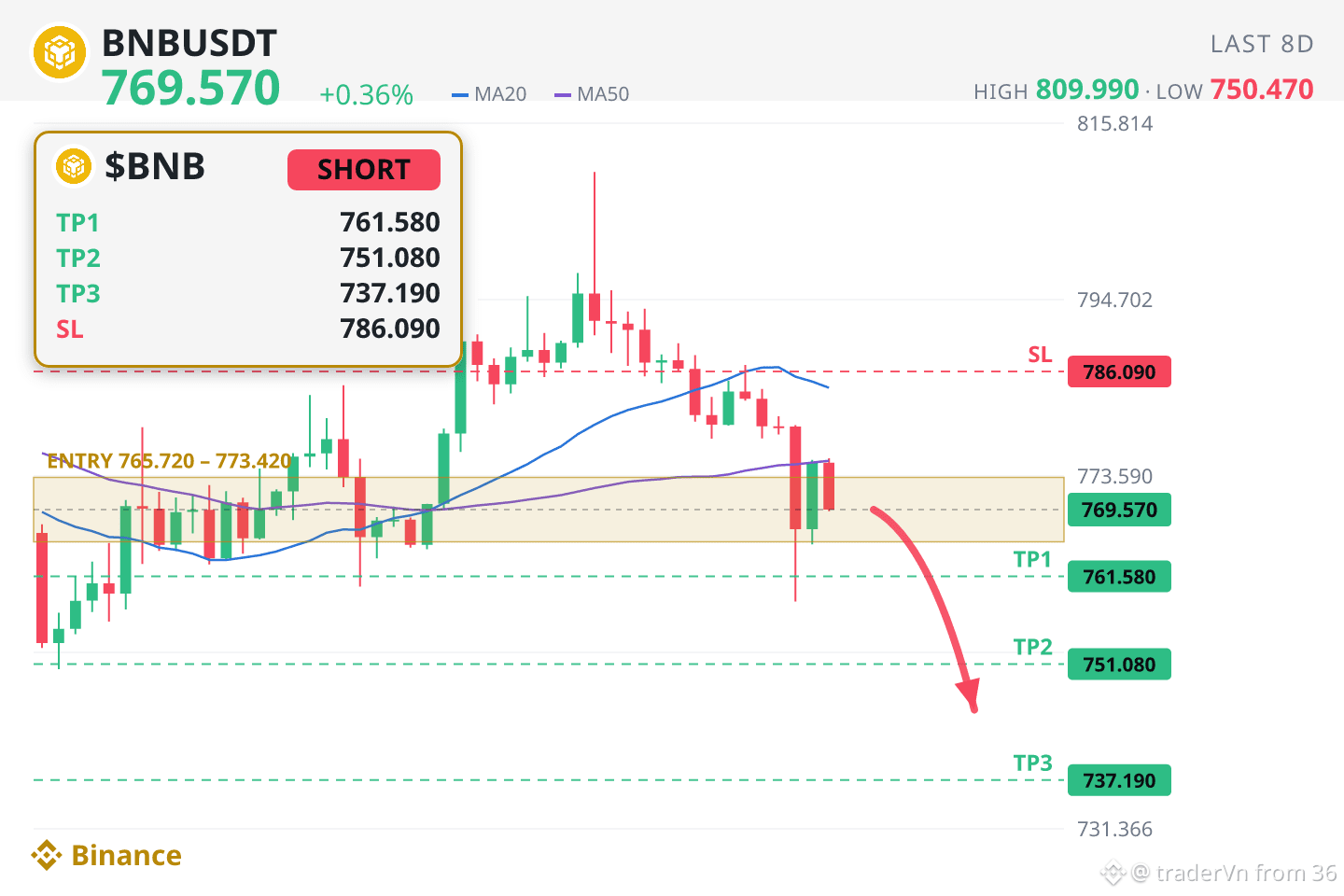
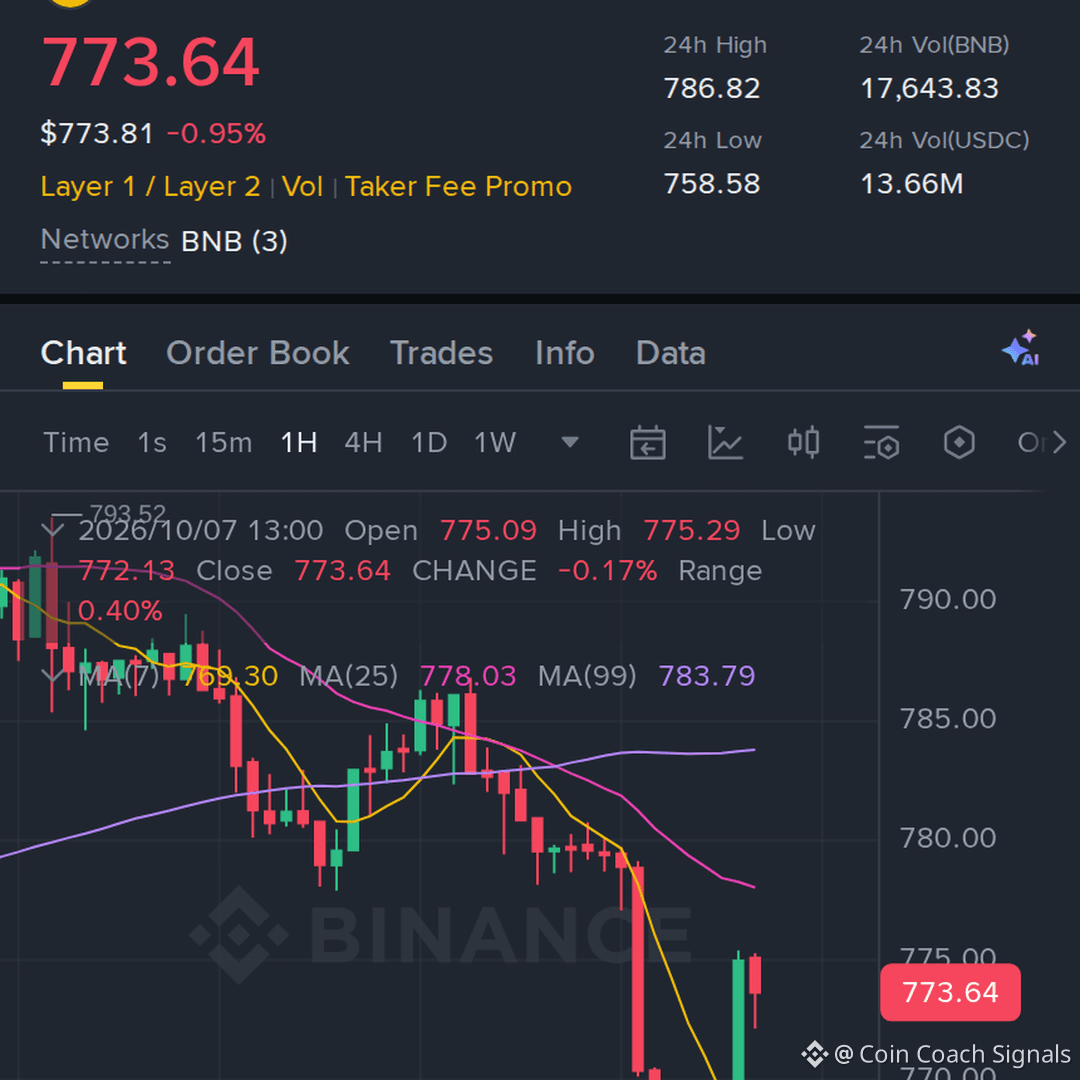
keeping watch here, $BNB is struggling to hold the recovery, so I’m working with about 43x
Entry: 773.44–774.64 | Stop Loss: 786.43
TP1: 756.87 / TP2: 739.6 / TP3: 722.48
#BNB #Crypto #Write2Earn #Binance
keeping watch here, $BNB is struggling to hold the recovery, so I’m working with about 43x
Entry: 773.44–774.64 | Stop Loss: 786.43
TP1: 756.87 / TP2: 739.6 / TP3: 722.48
#BNB #Crypto #Write2Earn #Binance
Entry: 773.44–774.64 | Stop Loss: 786.43
TP1: 756.87 / TP2: 739.6 / TP3: 722.48
#BNB #Crypto #Write2Earn #Binance
27
Log in to explore more content
Join global crypto users on Binance Square
⚡️ Get latest and useful information about crypto.
💬 Trusted by the world’s largest crypto exchange.
👍 Discover real insights from verified creators.
Email / Phone number
Trending Topics
1
#BinanceLaunchesBinanceIntelligence
760,608 views
4,742 Discussing
2
#BTCFallsBelow$84K
36,202 views
128 Discussing
3
#DubaiVARAIssuesReserveAssetAuditCircular
11,425 views
416 Discussing
4
#SECApproves3XBitcoinETF
9,979 views
342 Discussing
5
#WinklevossFilesSpotZcashETFApplication
19,852 views
463 Discussing
6
#SouthKoreaAITradeLiftsWorldcoinTo$7.41B
2,333 views
41 Discussing
7
#StrategyEstimates$4.1BIncomeTaxBenefit
1,482 views
22 Discussing
8
#IglooShutsDownAbstractBlockchain
8,139 views
243 Discussing
9
#StrategyMarketCapSurpassesRumble
50,296 views
981 Discussing
10
#StriveBuys2000BTCFor$169M
18,908 views
163 Discussing