
Storm89
3.4k Posts

Storm89
Report
Block User
If there an even 1% chance,Fight🔥
Frequent Trader
1.4 Years
1.0K+ Following
2.4K+ Followers
5.8K Liked
Posts
All
Quotes
PINNED
·
--
AI agents can think, negotiate, and execute
So why are they still waiting on us to process their payments?
That’s the missing piece in 2026
Models got smarter, but the moment two agents need to transact, we force them back to human rails human keys, human approvals, human speed
The agent economy isn't failing on intelligence. It’s failing on settlement
To solve this, we don't just need faster chains. We need three basic primitives:
•Real agent identity (not API keys)
•On-chain liability when things break
•Micro-payments running at machin speed
That’s what makes Kite’s approach interesting designing infrastructure where agents are first-class citizens, built specifically for M2M commerce
So the real question: when your AI hires another AI, who owns the wallet, and who’s responsible for the mistake?
Is M2M payments the next obvious wave, or are we building infrastructure ahead of actual demand? Curious to hear your take
#KiteBBW $KITE
@GoKiteAI
{future}(KITEUSDT)
AI agents can think, negotiate, and execute
So why are they still waiting on us to process their payments?
That’s the missing piece in 2026
Models got smarter, but the moment two agents need to transact, we force them back to human rails human keys, human approvals, human speed
The agent economy isn't failing on intelligence. It’s failing on settlement
To solve this, we don't just need faster chains. We need three basic primitives:
•Real agent identity (not API keys)
•On-chain liability when things break
•Micro-payments running at machin speed
That’s what makes Kite’s approach interesting designing infrastructure where agents are first-class citizens, built specifically for M2M commerce
So the real question: when your AI hires another AI, who owns the wallet, and who’s responsible for the mistake?
Is M2M payments the next obvious wave, or are we building infrastructure ahead of actual demand? Curious to hear your take
#KiteBBW $KITE
@KITE AI 中文

7
10
2.3k
·
--

Pleader Ishan
·
--
🚀 Market Update: Navigating the Current Crypto Waves! 🌊
The market is showing some fascinating movements right now. Whether you're a long-term HODLer or an active day trader, patience and risk management remain your best tools in this volatility.
Remember: Never FOMO into green candles, and always do your own research (DYOR) before making any moves. 💡
$BTC $ETH $BNB
#BinanceSquare
#CryptoTrading
#MarketInsights
#HODL
66
·
--
Verified
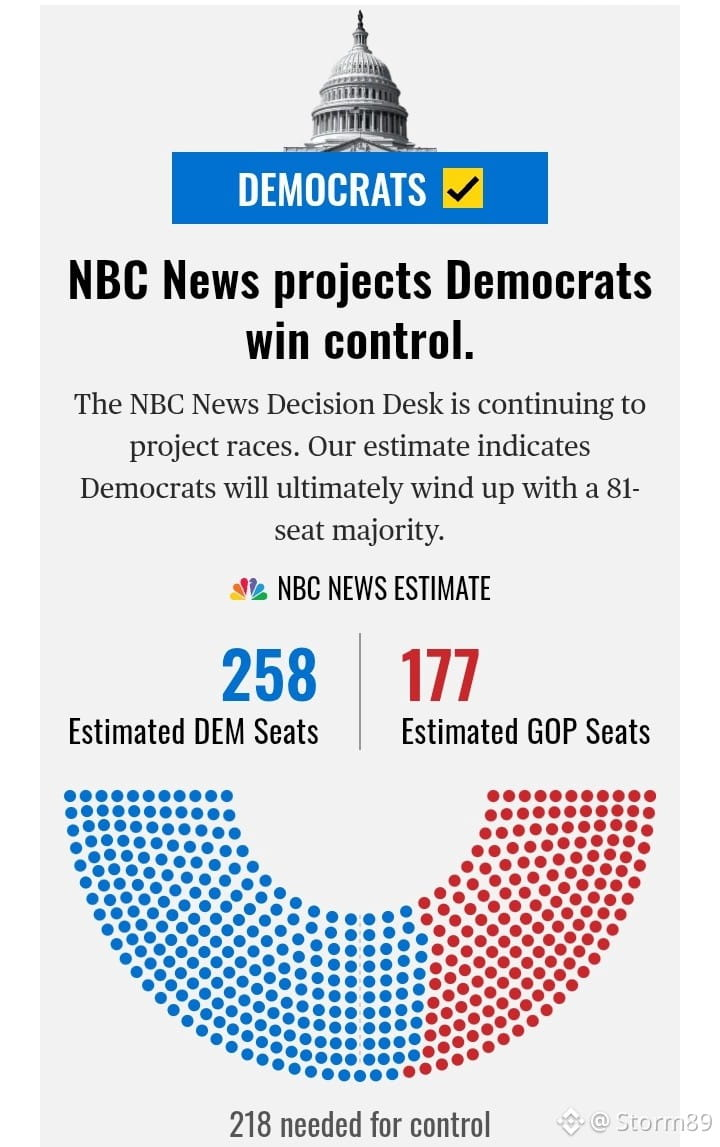
Something big happened in American politics today: the Democrats took control of both chambers of Congress.
Of course, the markets didn’t wait. The Nasdaq fell, the dollar hit a one-month low, and AI companies were hit hardest because the Democrats are threatening to impose oversight on data centers and energy consumption.
Bitcoin was affected too. As the results started coming in, it fell to a seven-week low of around 75k,7 dollars, but then rebounded above 77k and reached around 77,9k by the end of the session.
That means the market absorbed the initial shock and started reassessing things. This comes down to two factors: regulatory uncertainty on one hand, and a weaker dollar and falling bond yields on the other, which could provide liquidity support.
What happened today isn’t the end of the world or the start of a golden age. The political lever that had been wide open has simply tightened a little.
The CLARITY Act, which was nearly ready, will be delayed or renegotiated. That makes volatility the main theme for the coming period—not a one-way trend.
I think Bitcoin has once again proved that it has a solid base, but that base is being supported by liquidity and news, not legislation.
As long as there’s uncertainty, we’ll see sharp swings like the ones today.
Watch 76k as key support and 78k as the first resistance level.
If it can hold above 78 thousand, we may see some stability.
If it breaks below 76 k, the pressure could return.
A recovery needs regulatory clarity, not just election results.
$BTC
#USMidterms-WhatAreMarketsExpecting?
1
6.3k
·
--
Today, the DeFi sector caught my attention, especially UNI and AAVE.
Uniswap is benefiting from renewed interest in decentralized platforms. With the platform fee issue and some of those fees being burned, there’s growing interest in the project’s long-term value.
Aave’s strength, though, lies in a different story.
It’s expanding its lending products and stablecoins, and moving into new areas, but selling pressure from large wallets is still weighing on the price.
I think the DeFi sector is worth keeping an eye on, because at the end of the day, we’re talking about platforms with real-world use, fees, and revenue—not just market hype.
But we also shouldn’t confuse a project’s strength with a good entry opportunity. Every trade has its own conditions and risk management.
Which one has a better opportunity in the next phase, UNI or AAVE? What do you think?
$UNI
$AAVE
1
2
601
·
--
Verified
Binance started the second phase of withdrawals at 04:00 UTC, covering many networks
Deposits are operating normally, but withdrawals may be delayed due to heavy traffic
📌 Binance’s net outflows fell from around $7 billion to $3.5 billion, and the deposit-to-withdrawal ratio returned to 78%
Binance confirmed it had covered 95% of the affected assets and published Proof of Reserves for 10 major coins
CZ confirmed that Binance had set aside 100% of the funds, and that users would not bear any losses
I’m seeing more positive signs from Binance today (the second phase of withdrawals and confirmation of coverage), but BTC is being affected by factors beyond Binance: the elections, tech stocks, and ETF flows
The key level is $76,000. If it holds above that, we could see a rebound
If it breaks below, selling pressure could increase. I think $76,000 is the red line, and today’s elections could be the catalyst that determines the direction. Cautious optimism is still the stance, but this time the caution is a little stronger
DYOR
$BTC
#BinanceReopensWithdrawalsForMoreAssets
1
354
·
--
Verified
Now that crypto withdrawals have resumed, and Binance resumed fiat withdrawals in dollars and other currencies today, we can talk in a language that separates facts from hype—with numbers and evidence.
The platform covered 95% of the total losses, which reached $6.3 billion, and the top ten coins are 100% backed.
As for the actual outflow and net withdrawals after withdrawals reopened, they didn’t exceed $3.64 billion—that’s only about 2.1% of total assets under management, which stand at $171 billion.
More importantly, 98% of users chose to stay on the platform and not withdraw their assets, while Binance absorbed the losses in full using its own funds, without charging users a single penny. That’s where the huge difference between Binance and past cases like FTX becomes clear.
To me, the picture is clear now: the most important figure isn’t the size of the crisis, but the calm in the numbers and the strength of the community.
Trust isn’t built through words. It’s built when you see a platform cover the losses, take responsibility, and gradually reopen withdrawals with confidence. And speaking of performance, $BNB is proving to be the strongest among the major players, trading around $710, leading the pack and outperforming Bitcoin and Ethereum.
Do you think containing the crisis quickly and making up for the outflow so fast is enough to put concerns to rest completely?👇
#BinanceRestores28FiatWithdrawals
6
1
17
9.6k
·
--
Verified
Binance officially announced that it will resume the first phase of withdrawals today between 06:00 and 09:00 (UTC). The first phase covers several assets, with deposits confirmed to be operating normally. Temporary withdrawal delays may occur due to initial demand.
Coverage has reached 95% (10 major coins are 100% covered).
Estimated total damage: 6.3 billion
Frozen on-chain: around 3 billion
Binance allocated 6.34 billion of its own funds to cover the losses
Accused party: North Korea (TraderTraitor) — officially confirmed by the FBI
Today is different. Not just because withdrawals are back, but because the numbers are speaking: 95% coverage using company funds and a new Proof of Reserves that lets you verify it for yourself. Yes, 5% is still being processed, and that’s normal.
But the picture is clear today: Binance took responsibility, and trust is being rebuilt through actions, not promises.
I’m cautiously optimistic, but this time my optimism is a little stronger.
BNB held above the 700–705 support
Support: 700; a break below it could take us toward 672
Resistance: 750
Indicators: Neutral zone; the market is waiting.
Don’t trade emotionally, and base your decision on information, not hype.
DYOR
#BinanceToResumePhaseOneOfWithdrawals
$BNB
$BTC

4
3
719
·
--
Binance announced a potential security incident, and assets linked to it worth nearly $3 billion were frozen. The incident began on Thursday, and Tether and Circle also froze related assets. The final details of the investigation have yet to be clarified.
I think the most important thing in a moment like this is the speed of the response and transparency—not the amount frozen. Binance came out and said that users’ funds are safe and pledged to cover any losses resulting from the breach. It also worked with stablecoin issuers and law enforcement to block the movement of funds. That alone is reassuring, because trust isn’t built with words; it’s built through actions during a crisis.
⚠️ One thing nobody should confuse:
Freezing assets does not mean Binance lost that amount. A freeze is a precautionary measure to protect funds and block the movement of stolen assets, and the figure may increase as the investigation continues. In other words, what we’re seeing here is a protective measure, not necessarily a direct loss.
The market reacted with clear emotion: Bitcoin fell about 6%, Ethereum about 9%, and BNB more than 8% over 24 hours. That’s normal during a major event, but decisions driven by fear often end up costing more than the news itself.
Binance has shown in the past that it can handle crises, and this time it also acted quickly and transparently.
Keep an eye on developments, don’t trade emotionally, and base your decisions on information—not hype.
$BNB
$BTC
#Binance

1
8
2.5k
·
--
Verified
Google’s earnings are out: Cloud and AI revenue surged +103%, but total revenue and earnings per share came in below market expectations, sending the stock sharply lower after hours.
I see the current dip as a long-term buying opportunity. The company’s core business (Cloud) is growing incredibly fast, and the market is currently just punishing it for its heavy infrastructure spending.
Technically: the stock broke support, but a recovery is still very possible as sentiment improves.
DYOR
What do you think? Is this dip a golden opportunity, or is caution the name of the game? 👇
#CanGoogleDefendItsCore $GOOGL
2
1
206
·
--
Verified
Google Earnings, a Chart Rebound, and a Decisive Resistance Test
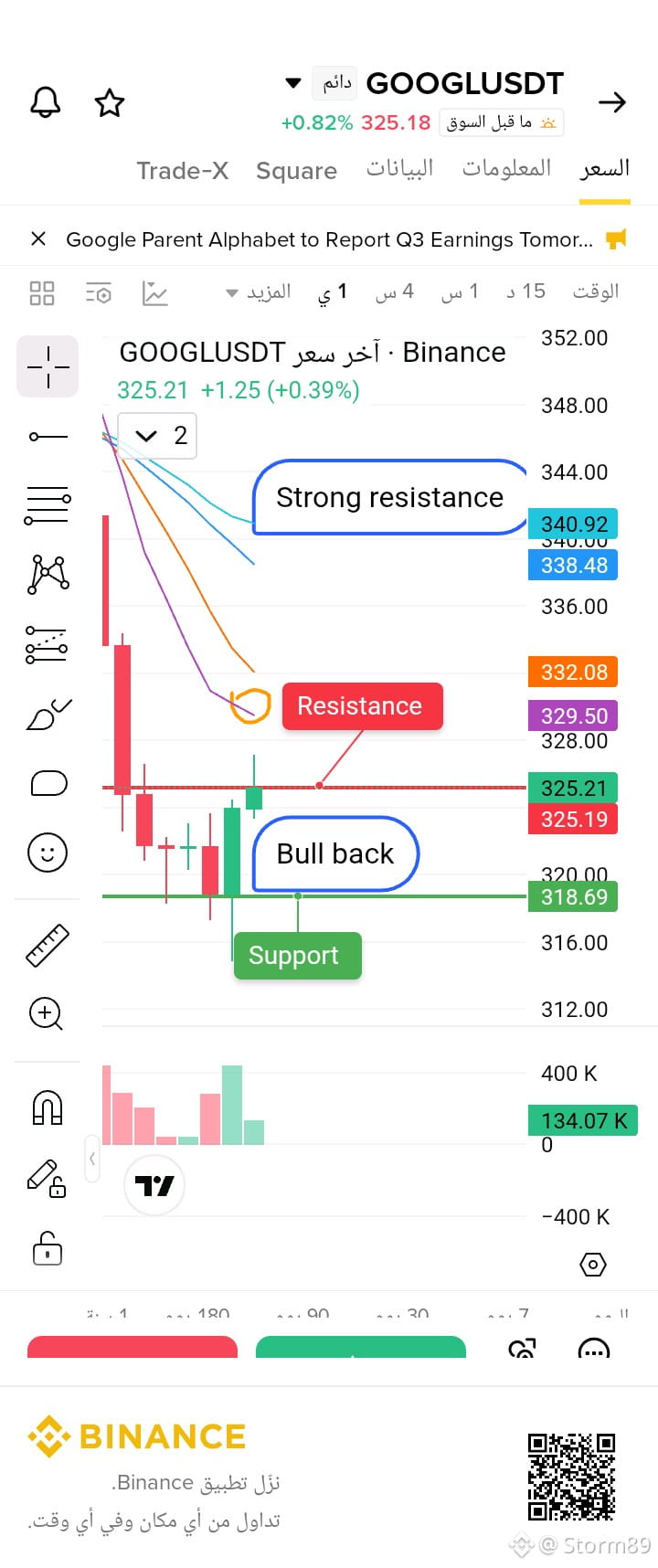
As the earnings announcement approaches during earnings season, stock $GOOGL is showing technical signals worth watching after the recent wave of selling pressure:
• The stock respected the documented technical support levels around 314–315 and rebounded clearly from them. Trading volume on the chart has also improved somewhat, supporting buying momentum.
• The current price near 325 marks an important resistance zone. Breaking above it would open the way to test the key moving averages (20/50/200-day), currently clustered around 340–342.
• An early entry of capital depends on a positive earnings outlook, while maintaining a strict stop-loss below the support zone (below 314).
Google’s upcoming results (on October 28) will be the key technical and fundamental test: either a break above resistance confirms the upward trend, or the stock returns to test its price floor.
• Will Google’s earnings manage to break through current resistance and achieve a successful breakout, or will caution prevail?👇
#CanGoogleDefendItsCore
1
2
299
·
--
Verified
Ringing the Nasdaq bell. Today, BNB Chain entered the world of traditional finance.
What happened yesterday (October 26) was more than just a photo op or a symbolic celebration. The Nasdaq opening bell ceremony for BNB Standard, attended by CZ and network representatives, was a clear announcement of a new merger between crypto and traditional markets:
•The largest institutional BNB treasury
The company now holds more than 515,000 BNB (worth over $380 million), making it the largest publicly listed entity holding the coin as a strategic asset.
•Operational expansion—not just holding
The plan goes beyond holding the token. The company is working to operate its own validator node on BNB Chain, actively helping secure transactions.
•CZ’s vision for AI and payments
The focus ahead isn’t just on traditional trading, but on making the network the core infrastructure for AI agents and trading computing power.
I see this as a strong boost for the long term.
Do you see BNB’s arrival on U.S. public markets as a sign that institutional adoption is truly beginning, or are traditional markets still wary of tying the story to a single coin?
$BNB
#BNBStandardringstheNasdaqOpeningBell
{spot}(BNBUSDT)
Ringing the Nasdaq bell. Today, BNB Chain entered the world of traditional finance.
What happened yesterday (October 26) was more than just a photo op or a symbolic celebration. The Nasdaq opening bell ceremony for BNB Standard, attended by CZ and network representatives, was a clear announcement of a new merger between crypto and traditional markets:
•The largest institutional BNB treasury
The company now holds more than 515,000 BNB (worth over $380 million), making it the largest publicly listed entity holding the coin as a strategic asset.
•Operational expansion—not just holding
The plan goes beyond holding the token. The company is working to operate its own validator node on BNB Chain, actively helping secure transactions.
•CZ’s vision for AI and payments
The focus ahead isn’t just on traditional trading, but on making the network the core infrastructure for AI agents and trading computing power.
I see this as a strong boost for the long term.
Do you see BNB’s arrival on U.S. public markets as a sign that institutional adoption is truly beginning, or are traditional markets still wary of tying the story to a single coin?
$BNB
#BNBStandardringstheNasdaqOpeningBell

3
17
18.4k
·
--
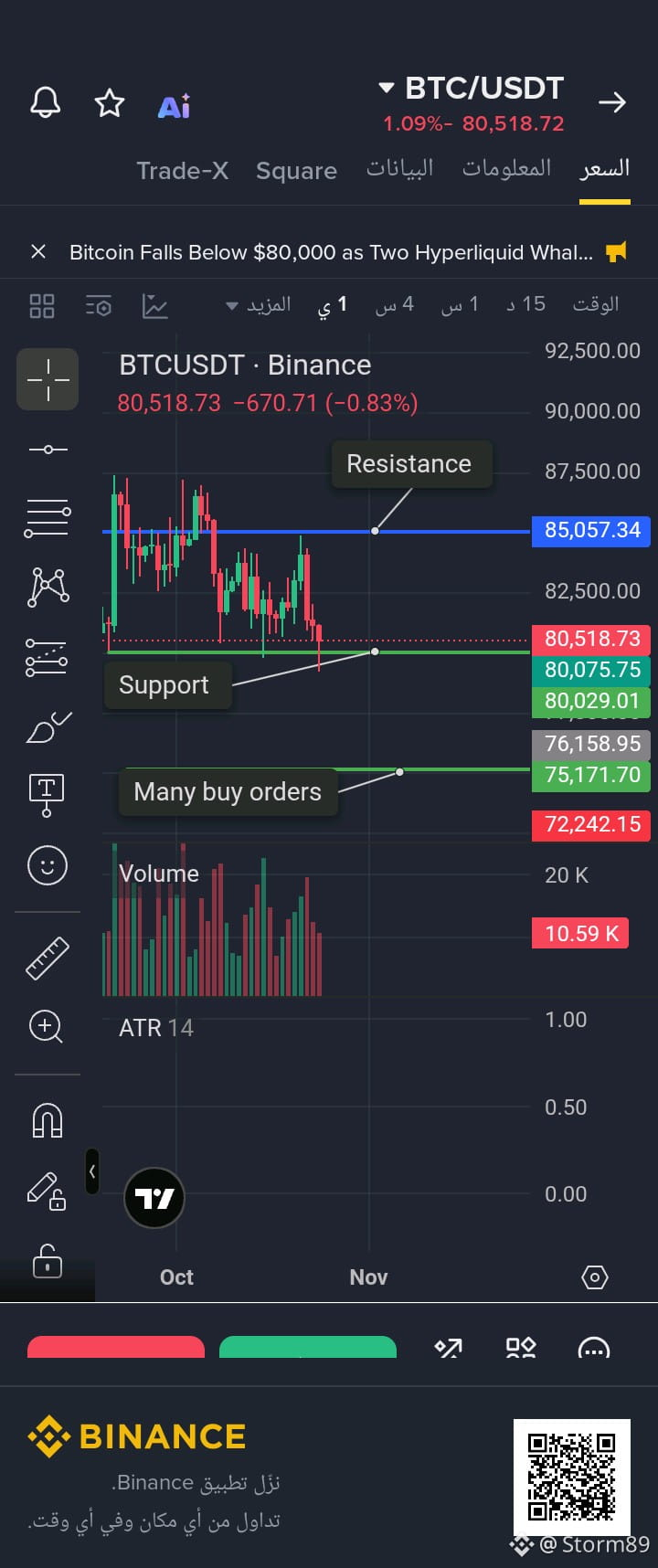
Hello everyone, I’m back after a break, and there’s some market action worth talking about 👀
Bitcoin is back under pressure, reaching the $80,000 area, and U.S. spot Bitcoin ETFs saw outflows of around $635 million in a single day.
That makes me want to hold off for now.
There’s an opportunity, but caution is needed.
Next week is important with the Fed’s decision. But in my opinion, the bigger question is: will demand return to the market and will Bitcoin be able to reclaim its levels, or will the pressure continue?
DYOR
What do you think? An opportunity before another rally, or is caution still warranted?
$BTC
{future}(BTCUSDT)
#Fed
Hello everyone, I’m back after a break, and there’s some market action worth talking about 👀
Bitcoin is back under pressure, reaching the $80,000 area, and U.S. spot Bitcoin ETFs saw outflows of around $635 million in a single day.
That makes me want to hold off for now.
There’s an opportunity, but caution is needed.
Next week is important with the Fed’s decision. But in my opinion, the bigger question is: will demand return to the market and will Bitcoin be able to reclaim its levels, or will the pressure continue?
DYOR
What do you think? An opportunity before another rally, or is caution still warranted?
$BTC
#Fed
2
159
·
--
Verified
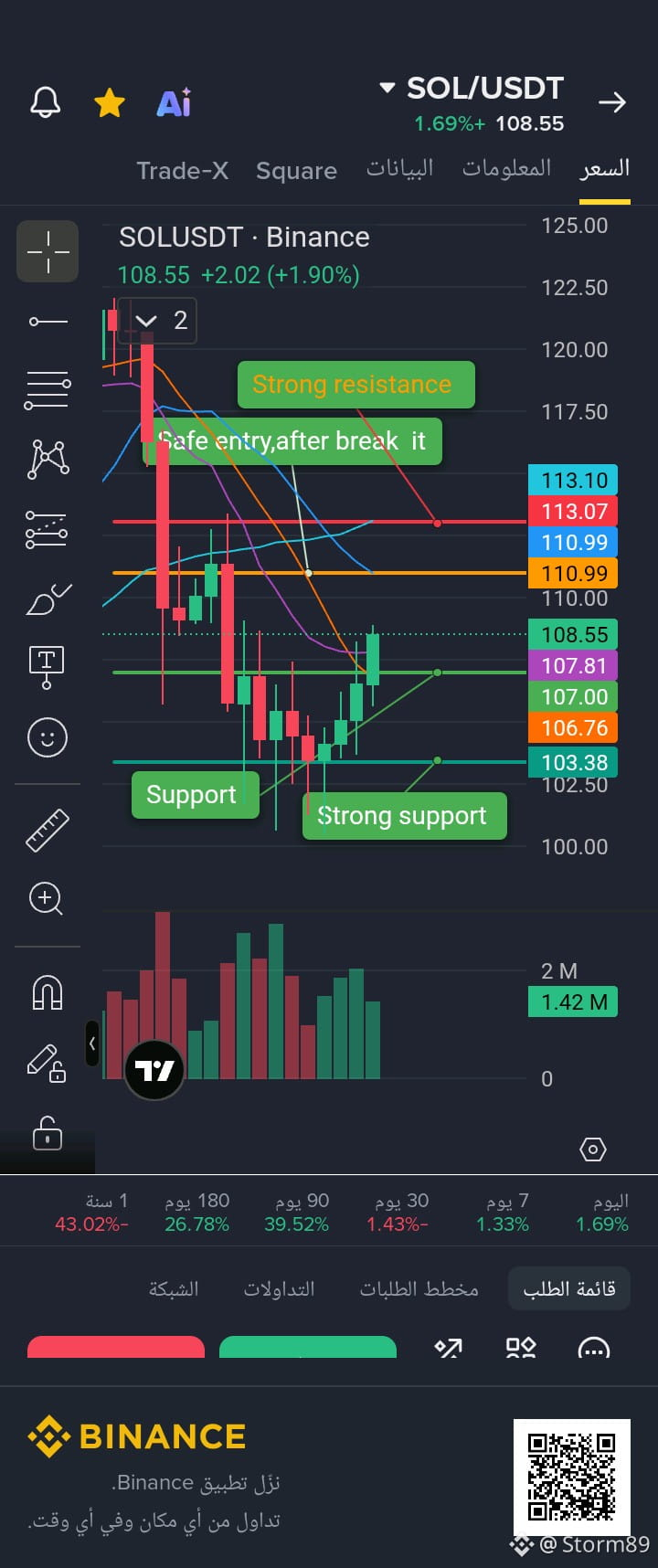
30D trade $SOL 305.9 USDT
I’ve been following Solana news, and there’s a new network update that I think deserves attention 👀
The Alpenglow update aims to significantly reduce transaction confirmation times, from several seconds to fractions of a second. This could improve the experience for users and apps on the network.
It’s a positive step, but its real success isn’t just about speed. More importantly, we’ll have to see whether it translates into actual usage and attracts more projects and users.
I think it’ll give Solana a boost in the long run.
What do you think?
DYOR
$SOL
#SolanaSetToActivateAlpenglowToday
2
7
6.5k
·
--
Verified
Not every company benefiting from the AI boom is making chips.
3M expanded its partnership with Amazon to supply technologies and products related to data centers. At the same time, it raised its earnings outlook after reporting better-than-expected results.
I think this is an important point for the market: AI expansion doesn’t just need processors—it needs a complete infrastructure to help data centers operate and scale. That’s why we could see opportunities in companies that might not be the first ones that come to mind when we talk about AI.
I’m focusing on companies turning this demand into actual profits, not just ones whose shares are rising because of the words “artificial intelligence.”
Which do you think could benefit more in the next phase: the tech companies themselves, or the companies building the infrastructure for them?
DYOR 🚨
$AMZN
{future}(AMZNUSDT)
$AMZNB
Not every company benefiting from the AI boom is making chips.
3M expanded its partnership with Amazon to supply technologies and products related to data centers. At the same time, it raised its earnings outlook after reporting better-than-expected results.
I think this is an important point for the market: AI expansion doesn’t just need processors—it needs a complete infrastructure to help data centers operate and scale. That’s why we could see opportunities in companies that might not be the first ones that come to mind when we talk about AI.
I’m focusing on companies turning this demand into actual profits, not just ones whose shares are rising because of the words “artificial intelligence.”
Which do you think could benefit more in the next phase: the tech companies themselves, or the companies building the infrastructure for them?
DYOR 🚨
$AMZN
$AMZNB

3
338
·
--
Verified
JPMorgan has expanded the use of JPM Coin to the Ethereum network, after it was previously available on Base. The token represents dollar deposits held at the bank and allows its institutional clients to transfer funds on the blockchain instead of relying solely on traditional banking methods.
I see this as an important step because we’re watching blockchain gradually move into the heart of the financial system, not just trading and speculation. If this use expands, we could see greater demand for infrastructure that can genuinely serve institutions.
But this news doesn’t mean ETH’s price will rise immediately; rather, it signals that the network is being used in more real-world financial applications.
Do you think the entry of major banks onto Ethereum could become one of the network’s biggest growth drivers in the coming period?
$ETH
$JPM
#JPMorgan

2
6
4.9k
·
--
Partly True
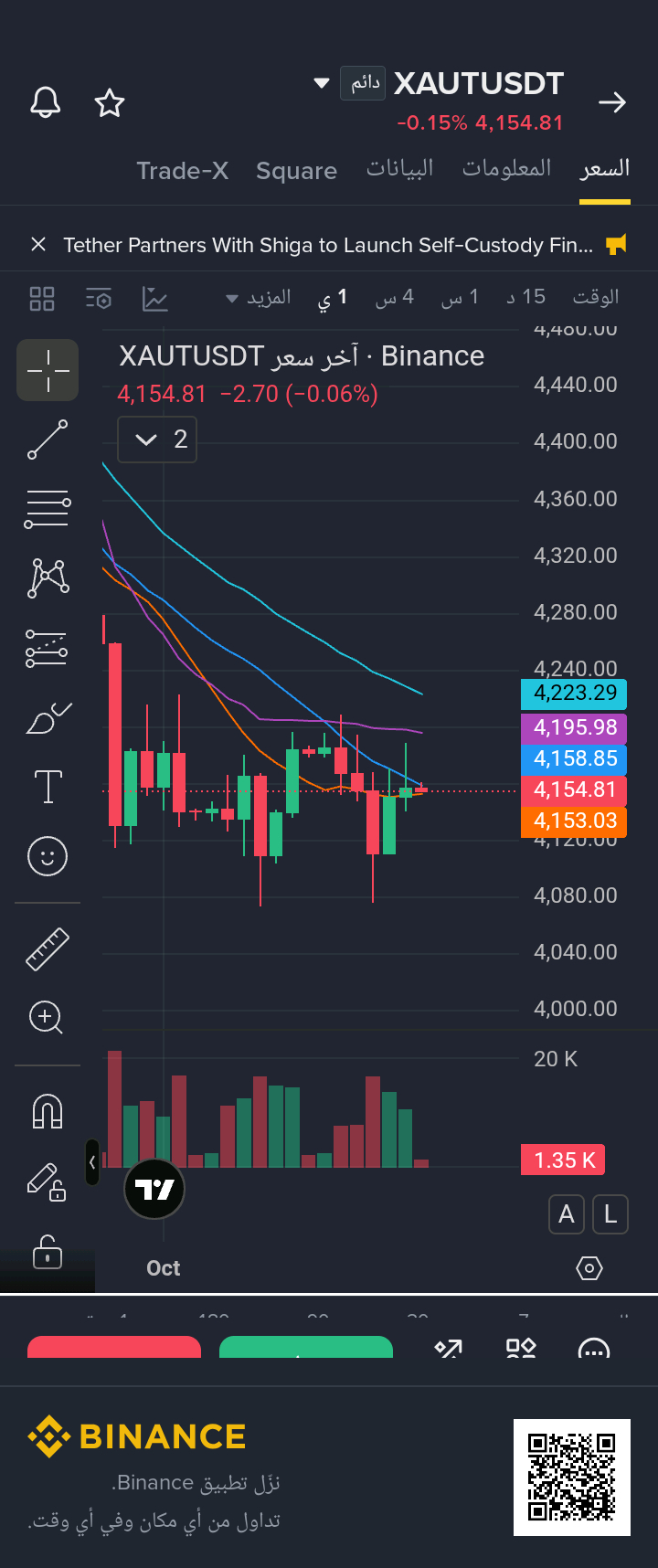
According to U.S. Bureau of Labor Statistics (BLS) data released for September 2026, the latest inflation reading of 3.7% defied expectations and brought the specter of a hawkish Fed policy back into focus.
Yet gold’s price action showed remarkable resilience, steering clear of a collapse.
• Rebound after pressure: Gold bounced back strongly and steadied, weathering pressure from the dollar and bond yields.
• Markets are recalibrating their expectations as inflation remains above target, putting gold under the spotlight as a key hedging tool.
• Holding above current support levels confirms that the recent pullbacks were merely a shakeout, not a change in the broader trend.
Do you think gold’s current rebound is enough to take it back to its highs, or will the rate shock keep it trading in a volatile range?
$XAU
#XAU
{future}(XAUUSDT)
According to U.S. Bureau of Labor Statistics (BLS) data released for September 2026, the latest inflation reading of 3.7% defied expectations and brought the specter of a hawkish Fed policy back into focus.
Yet gold’s price action showed remarkable resilience, steering clear of a collapse.
• Rebound after pressure: Gold bounced back strongly and steadied, weathering pressure from the dollar and bond yields.
• Markets are recalibrating their expectations as inflation remains above target, putting gold under the spotlight as a key hedging tool.
• Holding above current support levels confirms that the recent pullbacks were merely a shakeout, not a change in the broader trend.
Do you think gold’s current rebound is enough to take it back to its highs, or will the rate shock keep it trading in a volatile range?
$XAU
#XAU
2
152
·
--
Verified
In trading, sometimes the biggest advantage is not knowing more than everyone else, but keeping your intentions private until the right moment
This is why I think Nillion deserves a closer look
Covenants brings an interesting idea to the table: encrypted instructions that can remain hidden until specific conditions are met
Imagine what this could mean for private orders, onchain auctions, and strategies where revealing your intentions too early can work against you
With Dusk now live on Ethereum , I want to see how developers turn this idea into real products that people can actually use
Technology can sound impressive on paper, but adoption depends on more than a good concept
Reliability, execution, cost, and ease of use will all matter
Nillion’s seven era roadmap gives the project room to grow, but for me, real progress will be measured by what gets built and how well it works in practice
Privacy should be more than just a feature It could become an important part of how onchain applications are designed
What would you build first if you could create applications with private, condition based execution?
#nil $NIL @nillionnetwork
In trading, sometimes the biggest advantage is not knowing more than everyone else, but keeping your intentions private until the right moment
This is why I think Nillion deserves a closer look
Covenants brings an interesting idea to the table: encrypted instructions that can remain hidden until specific conditions are met
Imagine what this could mean for private orders, onchain auctions, and strategies where revealing your intentions too early can work against you
With Dusk now live on Ethereum , I want to see how developers turn this idea into real products that people can actually use
Technology can sound impressive on paper, but adoption depends on more than a good concept
Reliability, execution, cost, and ease of use will all matter
Nillion’s seven era roadmap gives the project room to grow, but for me, real progress will be measured by what gets built and how well it works in practice
Privacy should be more than just a feature It could become an important part of how onchain applications are designed
What would you build first if you could create applications with private, condition based execution?
#nil $NIL @Nillion

6
14
434
·
--
TSMC announced a 69% increase in profits, which means demand for AI chips is still strong. Even so, tech stocks are under pressure after U.S. inflation data came in higher than expected, at 3.7% year over year versus forecasts of 3.6%.
The market isn’t doubting AI itself.
But investors are asking:
Who will be able to turn these investments into actual profits, and who might struggle with the costs if inflation stays high and interest rates remain elevated?
Because high inflation could delay interest rate cuts and increase companies’ borrowing costs, especially for those spending huge sums to expand their AI projects.
So, is what we’re seeing a normal correction after overly optimistic expectations, or the start of a reassessment of the sector?
$TSM
$RWUSD
#CPIWatch

4
5
1.3k
·
--
Verified
U.S. inflation data came in higher than expected, and the market has started reacting to it.
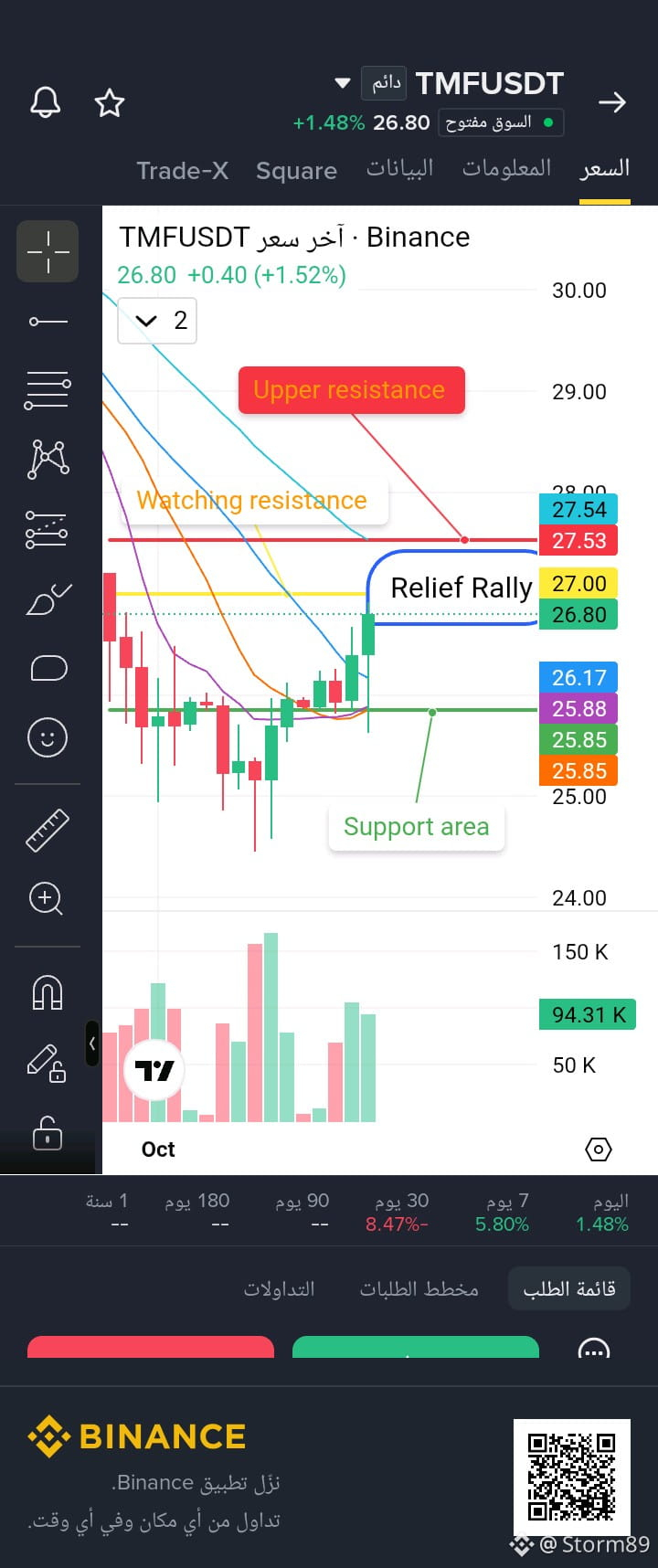
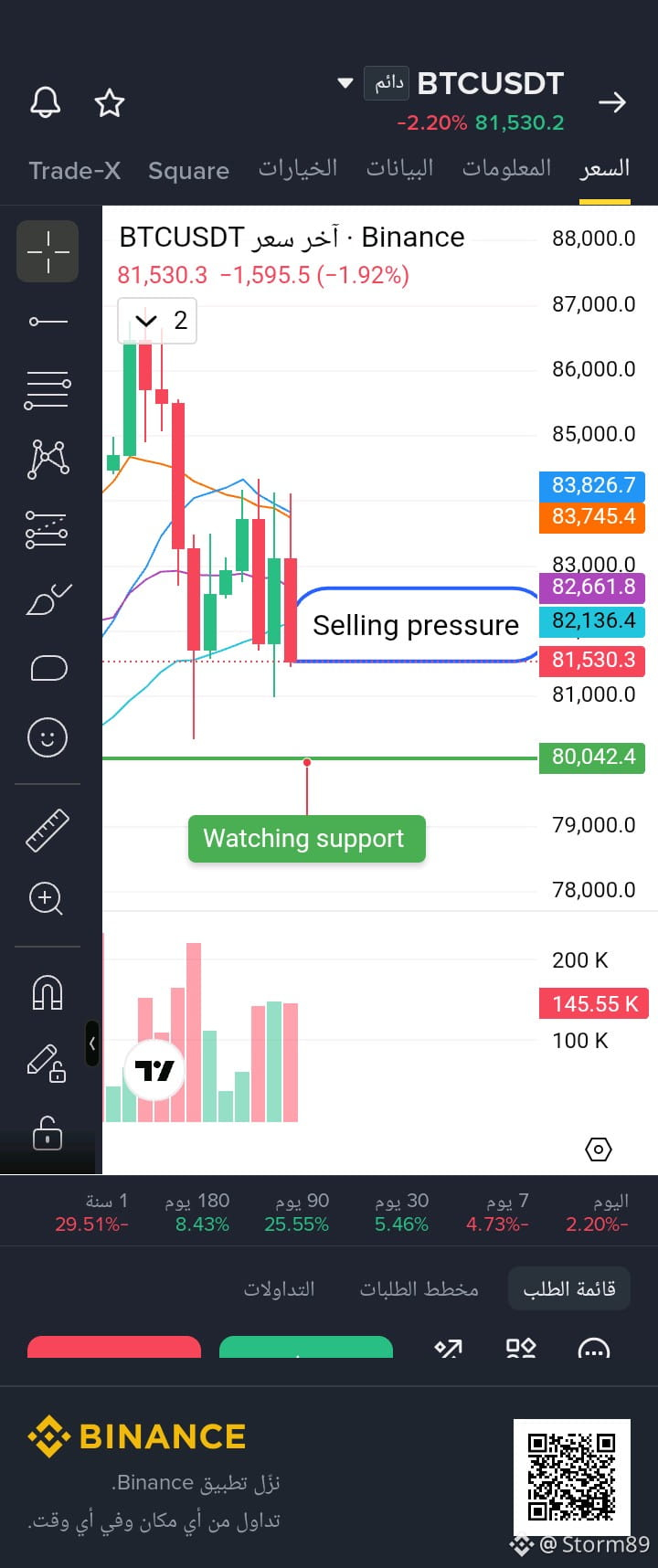
Let’s connect the dots between TMF and Bitcoin.
If inflation stays elevated, that could give the Fed another reason to delay rate cuts. In that case, long-term bonds could come under pressure if yields continue rising, while Bitcoin could also struggle if market conditions remain tight and risk appetite continues to weaken.
I’m not going to rush to judge either one. I want to see whether TMF can hold its rebound and whether BTC can stop the selling pressure or will keep falling.
If yields keep climbing, we could see additional pressure on both. But if yields cool off and the market digests the news, the picture could change.
Do you think the market has started pricing in a new period of higher interest rates, or are we seeing a temporary reaction to the inflation data?
$TMF
$BTC
#CPIWatch
4
9
11.3k
·
--
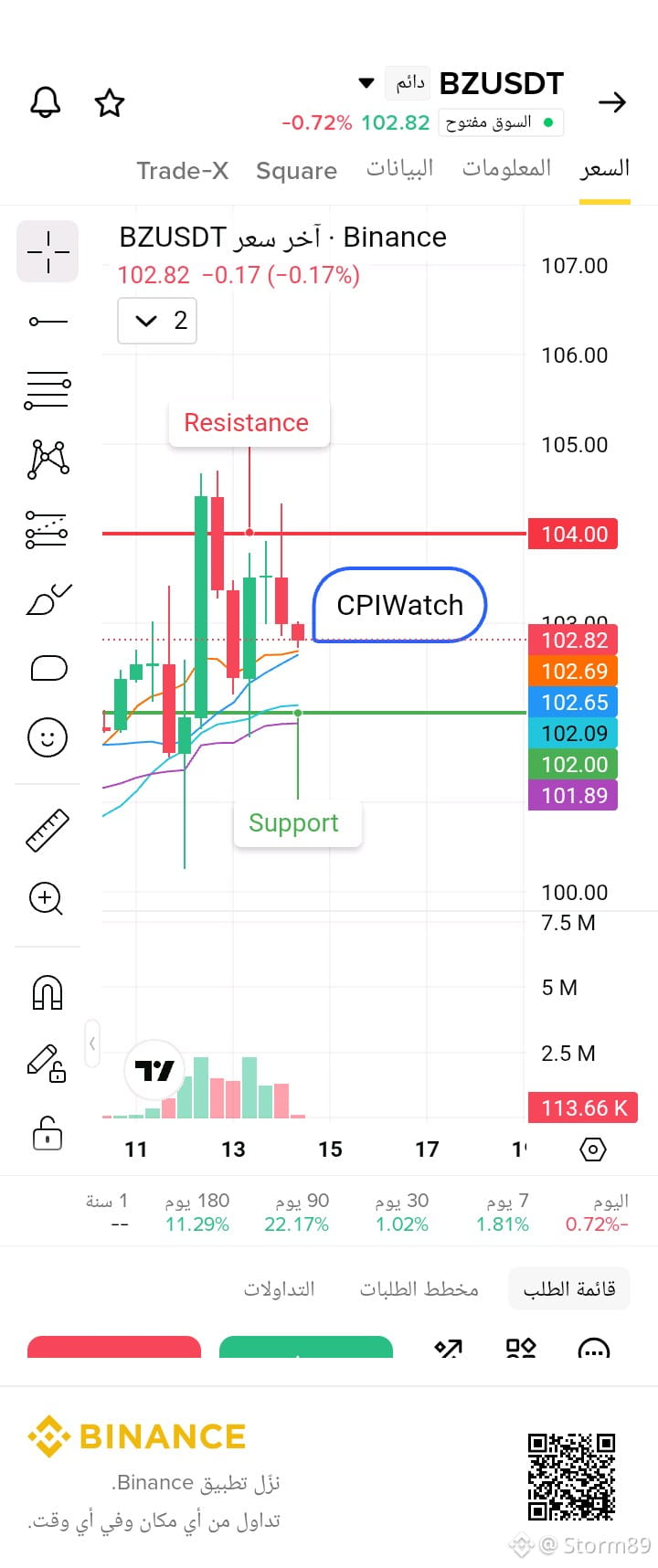
Oil this time isn’t just a story of supply and demand, because any sustained increase in energy prices could feed into U.S. inflation, and therefore affect Fed decisions and bond yields.
I see two scenarios we need to watch:
• If inflation comes in higher than expected: concerns will grow, and the market may start pricing in a greater chance of the Fed tightening monetary policy.
In this case, bond yields could rise and bond prices fall. Oil could be supported by continued geopolitical tensions, but rising inflation alone doesn’t guarantee that it will go up.
• But if inflation comes in lower than expected, expectations of rate hikes could ease and bond yields could fall, giving bond prices room to recover.
As for oil, I’ll be watching to see whether demand and geopolitical tensions can keep prices supported, or whether the market will start taking profits.
That’s why I won’t rush into a position before the data. I’ll watch the market’s reaction first, because the surprise isn’t necessarily in the inflation figure itself, but in how much it differs from market expectations.
• If inflation comes in higher than expected, do you expect oil to keep rising?
$BZ
$RWUSD
#CPIWatch
{spot}(RWUSDUSDT)
Oil this time isn’t just a story of supply and demand, because any sustained increase in energy prices could feed into U.S. inflation, and therefore affect Fed decisions and bond yields.
I see two scenarios we need to watch:
• If inflation comes in higher than expected: concerns will grow, and the market may start pricing in a greater chance of the Fed tightening monetary policy.
In this case, bond yields could rise and bond prices fall. Oil could be supported by continued geopolitical tensions, but rising inflation alone doesn’t guarantee that it will go up.
• But if inflation comes in lower than expected, expectations of rate hikes could ease and bond yields could fall, giving bond prices room to recover.
As for oil, I’ll be watching to see whether demand and geopolitical tensions can keep prices supported, or whether the market will start taking profits.
That’s why I won’t rush into a position before the data. I’ll watch the market’s reaction first, because the surprise isn’t necessarily in the inflation figure itself, but in how much it differs from market expectations.
• If inflation comes in higher than expected, do you expect oil to keep rising?
$BZ
$RWUSD
#CPIWatch
3
2.2k
Log in to explore more content
Join global crypto users on Binance Square
⚡️ Get latest and useful information about crypto.
💬 Trusted by the world’s largest crypto exchange.
👍 Discover real insights from verified creators.
Email / Phone number
Trending Topics
USMidterms-WhatAreMarketsExpecting?
181,630 views
1,386 Discussing
Democratic Congressional Sweep Shakes Trump Trades in AI Stocks and Crypto
Binance News
·24 Likes
·7k views
USOctoberNFP-AreRateCutsStillPossible
302,259 views
2,351 Discussing
AMDBeatsExpectations-AINarrativeContinues
47,185 views
516 Discussing