

#web3infrastructure
web3infrastructure
214,674 views
3,059 Discussing
Hot
Latest

·
--
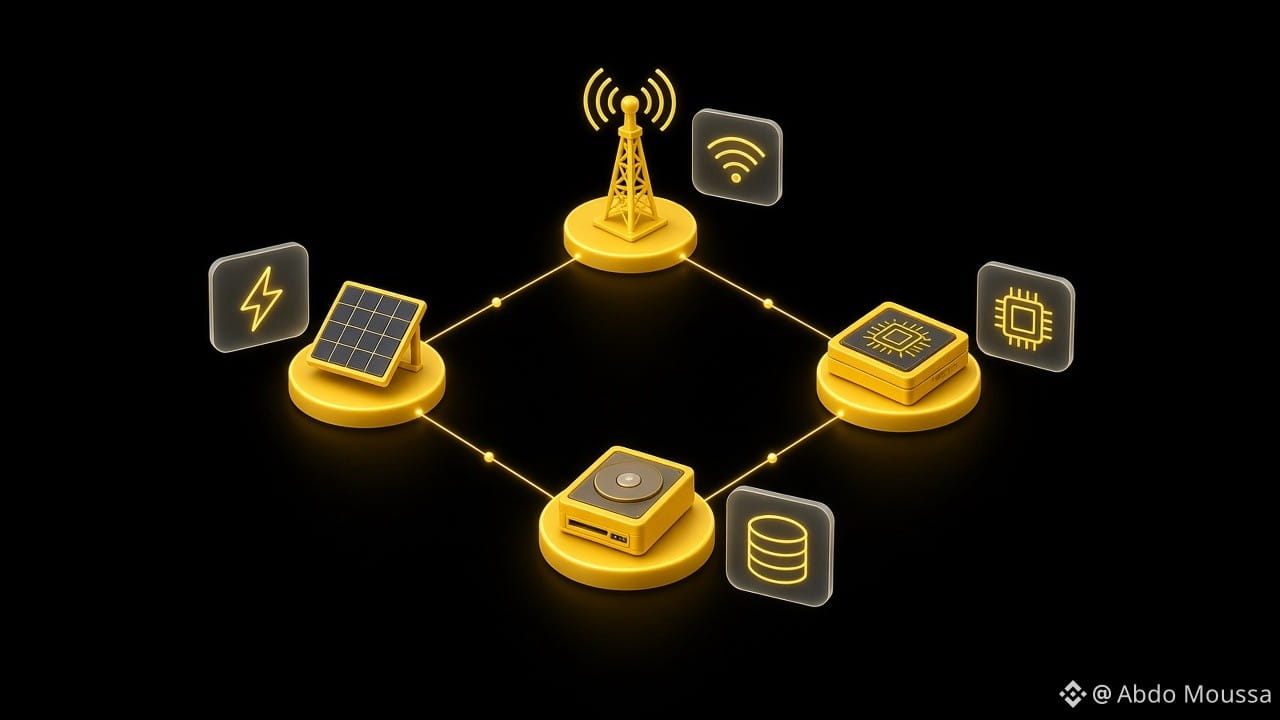
𝗘𝘃𝗲𝗿 𝘄𝗼𝗻𝗱𝗲𝗿𝗲𝗱 𝗵𝗼𝘄 𝗪𝗲𝗯𝟯 𝗽𝗿𝗼𝘁𝗼𝗰𝗼𝗹𝘀 𝗮𝗿𝗲 𝗰𝗿𝗼𝘄𝗱-𝘀𝗼𝘂𝗿𝗰𝗶𝗻𝗴 𝗽𝗵𝘆𝘀𝗶𝗰𝗮𝗹 𝗶𝗻𝗳𝗿𝗮𝘀𝘁𝗿𝘂𝗰𝘁𝘂𝗿𝗲 𝗹𝗶𝗸𝗲 𝟱𝗚 𝗻𝗲𝘁𝘄𝗼𝗿𝗸𝘀, 𝗲𝗻𝗲𝗿𝗴𝘆 𝗴𝗿𝗶𝗱𝘀, 𝗮𝗻𝗱 𝗔𝗜 𝗰𝗼𝗺𝗽𝘂𝘁𝗲 𝗰𝗹𝘂𝘀𝘁𝗲𝗿𝘀? 𝗘𝗻𝘁𝗲𝗿 𝗗𝗲𝗣𝗜𝗡 📡⚡
𝘋𝘳𝘢𝘸𝘪𝘯𝘨 𝘧𝘳𝘰𝘮 𝘧𝘰𝘶𝘯𝘥𝘢𝘵𝘪𝘰𝘯𝘢𝘭 𝘭𝘦𝘴𝘴𝘰𝘯𝘴 𝘰𝘯 #BinanceAcademy, 𝘩𝘦𝘳𝘦 𝘪𝘴 𝘺𝘰𝘶𝘳 𝘲𝘶𝘪𝘤𝘬 𝘪𝘯𝘧𝘳𝘢𝘴𝘵𝘳𝘶𝘤𝘵𝘶𝘳𝘦 𝘣𝘳𝘦𝘢𝘬𝘥𝘰𝘸𝘯:
1️⃣ 𝗪𝗵𝗮𝘁 𝗶𝘀 𝗗𝗲𝗣𝗜𝗡?
• Decentralized Physical Infrastructure Networks use token incentives to coordinate individual hardware providers around the world, helping build open physical networks.
2️⃣ 𝗞𝗲𝘆 𝗥𝗲𝗮𝗹-𝗪𝗼𝗿𝗹𝗱 𝗦𝗲𝗰𝘁𝗼𝗿𝘀:
• Wireless coverage (5G hotspots), decentralized storage, environmental sensor networks, and distributed GPU compute power for AI models.
3️⃣ 𝗖𝗵𝗮𝗹𝗹𝗲𝗻𝗴𝗶𝗻𝗴 𝗖𝗲𝗻𝘁𝗿𝗮𝗹𝗶𝘇𝗲𝗱 𝗠𝗼𝗻𝗼𝗽𝗼𝗹𝗶𝗲𝘀:
• By replacing much of the upfront capital expenditure (CapEx) with token incentives, DePIN can cut infrastructure costs and reduce single points of failure.
⚠️ 𝗥𝗶𝘀𝗸 𝗡𝗼𝘁𝗲:
DePIN participation involves hardware costs, changing token rewards and network adoption risks.
Expand your technical literacy, explore physical Web3 networks 🌐
📖 Learn more on Binance Academy: https://www.binance.com/en/academy/articles/what-is-depin-in-crypto
Crypto involves risk, this is not financial advice, Always DYOR 💡
#DePIN #Web3Infrastructure #CryptoEducation
Follow me for more 💛
𝗘𝘃𝗲𝗿 𝘄𝗼𝗻𝗱𝗲𝗿𝗲𝗱 𝗵𝗼𝘄 𝗪𝗲𝗯𝟯 𝗽𝗿𝗼𝘁𝗼𝗰𝗼𝗹𝘀 𝗮𝗿𝗲 𝗰𝗿𝗼𝘄𝗱-𝘀𝗼𝘂𝗿𝗰𝗶𝗻𝗴 𝗽𝗵𝘆𝘀𝗶𝗰𝗮𝗹 𝗶𝗻𝗳𝗿𝗮𝘀𝘁𝗿𝘂𝗰𝘁𝘂𝗿𝗲 𝗹𝗶𝗸𝗲 𝟱𝗚 𝗻𝗲𝘁𝘄𝗼𝗿𝗸𝘀, 𝗲𝗻𝗲𝗿𝗴𝘆 𝗴𝗿𝗶𝗱𝘀, 𝗮𝗻𝗱 𝗔𝗜 𝗰𝗼𝗺𝗽𝘂𝘁𝗲 𝗰𝗹𝘂𝘀𝘁𝗲𝗿𝘀? 𝗘𝗻𝘁𝗲𝗿 𝗗𝗲𝗣𝗜𝗡 📡⚡
𝘋𝘳𝘢𝘸𝘪𝘯𝘨 𝘧𝘳𝘰𝘮 𝘧𝘰𝘶𝘯𝘥𝘢𝘵𝘪𝘰𝘯𝘢𝘭 𝘭𝘦𝘴𝘴𝘰𝘯𝘴 𝘰𝘯 #BinanceAcademy, 𝘩𝘦𝘳𝘦 𝘪𝘴 𝘺𝘰𝘶𝘳 𝘲𝘶𝘪𝘤𝘬 𝘪𝘯𝘧𝘳𝘢𝘴𝘵𝘳𝘶𝘤𝘵𝘶𝘳𝘦 𝘣𝘳𝘦𝘢𝘬𝘥𝘰𝘸𝘯:
1️⃣ 𝗪𝗵𝗮𝘁 𝗶𝘀 𝗗𝗲𝗣𝗜𝗡?
• Decentralized Physical Infrastructure Networks use token incentives to coordinate individual hardware providers around the world, helping build open physical networks.
2️⃣ 𝗞𝗲𝘆 𝗥𝗲𝗮𝗹-𝗪𝗼𝗿𝗹𝗱 𝗦𝗲𝗰𝘁𝗼𝗿𝘀:
• Wireless coverage (5G hotspots), decentralized storage, environmental sensor networks, and distributed GPU compute power for AI models.
3️⃣ 𝗖𝗵𝗮𝗹𝗹𝗲𝗻𝗴𝗶𝗻𝗴 𝗖𝗲𝗻𝘁𝗿𝗮𝗹𝗶𝘇𝗲𝗱 𝗠𝗼𝗻𝗼𝗽𝗼𝗹𝗶𝗲𝘀:
• By replacing much of the upfront capital expenditure (CapEx) with token incentives, DePIN can cut infrastructure costs and reduce single points of failure.
⚠️ 𝗥𝗶𝘀𝗸 𝗡𝗼𝘁𝗲:
DePIN participation involves hardware costs, changing token rewards and network adoption risks.
Expand your technical literacy, explore physical Web3 networks 🌐
📖 Learn more on Binance Academy: https://www.binance.com/en/academy/articles/what-is-depin-in-crypto
Crypto involves risk, this is not financial advice, Always DYOR 💡
#DePIN #Web3Infrastructure #CryptoEducation
Follow me for more 💛
𝘋𝘳𝘢𝘸𝘪𝘯𝘨 𝘧𝘳𝘰𝘮 𝘧𝘰𝘶𝘯𝘥𝘢𝘵𝘪𝘰𝘯𝘢𝘭 𝘭𝘦𝘴𝘴𝘰𝘯𝘴 𝘰𝘯 #BinanceAcademy, 𝘩𝘦𝘳𝘦 𝘪𝘴 𝘺𝘰𝘶𝘳 𝘲𝘶𝘪𝘤𝘬 𝘪𝘯𝘧𝘳𝘢𝘴𝘵𝘳𝘶𝘤𝘵𝘶𝘳𝘦 𝘣𝘳𝘦𝘢𝘬𝘥𝘰𝘸𝘯:
1️⃣ 𝗪𝗵𝗮𝘁 𝗶𝘀 𝗗𝗲𝗣𝗜𝗡?
• Decentralized Physical Infrastructure Networks use token incentives to coordinate individual hardware providers around the world, helping build open physical networks.
2️⃣ 𝗞𝗲𝘆 𝗥𝗲𝗮𝗹-𝗪𝗼𝗿𝗹𝗱 𝗦𝗲𝗰𝘁𝗼𝗿𝘀:
• Wireless coverage (5G hotspots), decentralized storage, environmental sensor networks, and distributed GPU compute power for AI models.
3️⃣ 𝗖𝗵𝗮𝗹𝗹𝗲𝗻𝗴𝗶𝗻𝗴 𝗖𝗲𝗻𝘁𝗿𝗮𝗹𝗶𝘇𝗲𝗱 𝗠𝗼𝗻𝗼𝗽𝗼𝗹𝗶𝗲𝘀:
• By replacing much of the upfront capital expenditure (CapEx) with token incentives, DePIN can cut infrastructure costs and reduce single points of failure.
⚠️ 𝗥𝗶𝘀𝗸 𝗡𝗼𝘁𝗲:
DePIN participation involves hardware costs, changing token rewards and network adoption risks.
Expand your technical literacy, explore physical Web3 networks 🌐
📖 Learn more on Binance Academy: https://www.binance.com/en/academy/articles/what-is-depin-in-crypto
Crypto involves risk, this is not financial advice, Always DYOR 💡
#DePIN #Web3Infrastructure #CryptoEducation
Follow me for more 💛
2
80

⚡ $NEAR UNLOCKS CROSS-CHAIN TREASURY INFRASTRUCTURE ACROSS 35 BLOCKCHAINS AS ECOSYSTEM VELOCITY BUILDS! 📈
Smart capital always gravitates toward real utility, and $NEAR just flipped the script on institutional infrastructure. By anchoring native multisig treasury execution spanning dozens of networks, on-chain liquidity depth is preparing for a structural step-change. 🌊
📊 While operational purists debate signer latency, the broader institutional bid cares about security and capital agility. The fundamental rails are locking in, paving the runway for massive sustained settlement volume. 💡 Is cross-chain enterprise adoption the exact catalyst $NEAR needs to dominate this cycle? 👇
⚠️ Not financial advice. Always manage your risk. 🛡️
🏷️ #NEAR #Web3Infrastructure #CryptoEcosystem #Altcoins
⚡ 💎
⚡ $NEAR UNLOCKS CROSS-CHAIN TREASURY INFRASTRUCTURE ACROSS 35 BLOCKCHAINS AS ECOSYSTEM VELOCITY BUILDS! 📈
Smart capital always gravitates toward real utility, and $NEAR just flipped the script on institutional infrastructure. By anchoring native multisig treasury execution spanning dozens of networks, on-chain liquidity depth is preparing for a structural step-change. 🌊
📊 While operational purists debate signer latency, the broader institutional bid cares about security and capital agility. The fundamental rails are locking in, paving the runway for massive sustained settlement volume. 💡 Is cross-chain enterprise adoption the exact catalyst $NEAR needs to dominate this cycle? 👇
⚠️ Not financial advice. Always manage your risk. 🛡️
🏷️ #NEAR #Web3Infrastructure #CryptoEcosystem #Altcoins
⚡ 💎
Smart capital always gravitates toward real utility, and $NEAR just flipped the script on institutional infrastructure. By anchoring native multisig treasury execution spanning dozens of networks, on-chain liquidity depth is preparing for a structural step-change. 🌊
📊 While operational purists debate signer latency, the broader institutional bid cares about security and capital agility. The fundamental rails are locking in, paving the runway for massive sustained settlement volume. 💡 Is cross-chain enterprise adoption the exact catalyst $NEAR needs to dominate this cycle? 👇
⚠️ Not financial advice. Always manage your risk. 🛡️
🏷️ #NEAR #Web3Infrastructure #CryptoEcosystem #Altcoins
⚡ 💎

12
🦈 $NIL IS BUILDING THE INVISIBLE BACKBONE FOR AI AGENTS AND DEEP LIQUIDITY! ⚡
While retail chases surface-level privacy narratives, smart capital is tracking who actually shields proprietary execution logic. 💡 $NIL is pivoting away from passive storage toward encrypted instructions and private inference, creating the dark venue automated trading agents require before hitting the order book.
🌊 If builders anchor high-value computational workflows here, this flips from an experimental thesis into critical market infrastructure. 💬 Are you front-running this AI infrastructure shift or waiting for adoption metrics to confirm? 👇
⚠️ Not financial advice. Always manage your risk. 🛡️
🏷️ #NIL #CryptoAI #Web3Infrastructure #Altcoins
🎯 🦈
🦈 $NIL IS BUILDING THE INVISIBLE BACKBONE FOR AI AGENTS AND DEEP LIQUIDITY! ⚡
While retail chases surface-level privacy narratives, smart capital is tracking who actually shields proprietary execution logic. 💡 $NIL is pivoting away from passive storage toward encrypted instructions and private inference, creating the dark venue automated trading agents require before hitting the order book.
🌊 If builders anchor high-value computational workflows here, this flips from an experimental thesis into critical market infrastructure. 💬 Are you front-running this AI infrastructure shift or waiting for adoption metrics to confirm? 👇
⚠️ Not financial advice. Always manage your risk. 🛡️
🏷️ #NIL #CryptoAI #Web3Infrastructure #Altcoins
🎯 🦈
While retail chases surface-level privacy narratives, smart capital is tracking who actually shields proprietary execution logic. 💡 $NIL is pivoting away from passive storage toward encrypted instructions and private inference, creating the dark venue automated trading agents require before hitting the order book.
🌊 If builders anchor high-value computational workflows here, this flips from an experimental thesis into critical market infrastructure. 💬 Are you front-running this AI infrastructure shift or waiting for adoption metrics to confirm? 👇
⚠️ Not financial advice. Always manage your risk. 🛡️
🏷️ #NIL #CryptoAI #Web3Infrastructure #Altcoins
🎯 🦈

5

·
--
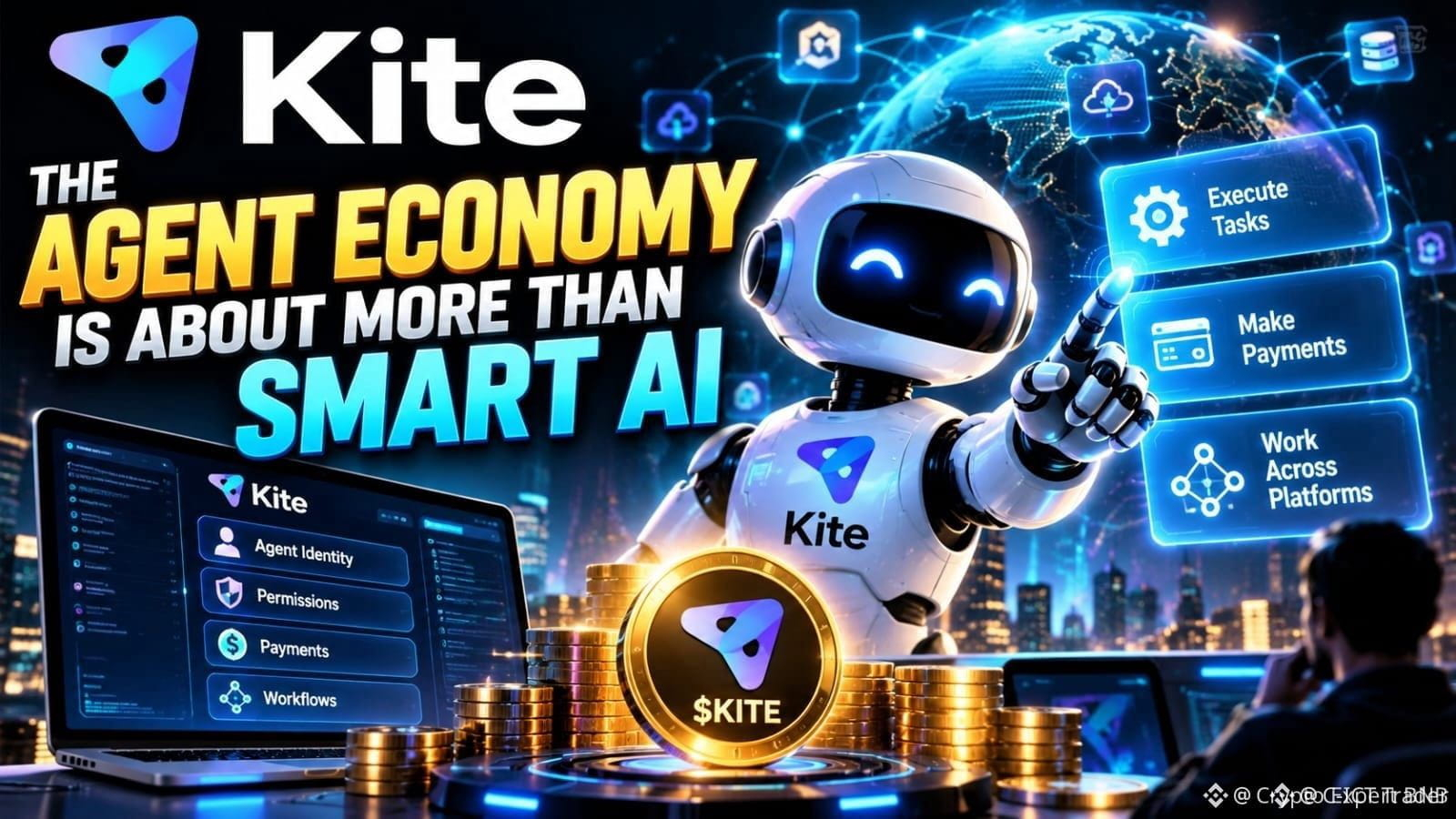
🦈 $KITE UNLOCKS THE INSTITUTIONAL INFRASTRUCTURE LAYER FOR AUTONOMOUS AI AGENT LIQUIDITY ⚡
The paradigm shifts the moment AI transitions from answering queries to executing autonomous capital flows. 🔍 The true structural moat for $KITE lies in building programmable rails, identity frameworks, and delegated permissions that govern agent execution without surrendering institutional oversight.
When autonomous agents coordinate settlements and access services cross-platform, deterministic trust boundaries become critical infrastructure. 💡 Balancing machine autonomy with verifiable risk parameters is the defining bottleneck smart money is watching closely.
🤔 What becomes the primary catalyst for scaling this agent economy: execution intelligence, settlement efficiency, or verifiable permission safeguards?
⚠️ Not financial advice. Always manage your risk. 🛡️
🏷️ #KITE #AIAgents #Web3Infrastructure #Crypto
🎯 🦈
🦈 $KITE UNLOCKS THE INSTITUTIONAL INFRASTRUCTURE LAYER FOR AUTONOMOUS AI AGENT LIQUIDITY ⚡
The paradigm shifts the moment AI transitions from answering queries to executing autonomous capital flows. 🔍 The true structural moat for $KITE lies in building programmable rails, identity frameworks, and delegated permissions that govern agent execution without surrendering institutional oversight.
When autonomous agents coordinate settlements and access services cross-platform, deterministic trust boundaries become critical infrastructure. 💡 Balancing machine autonomy with verifiable risk parameters is the defining bottleneck smart money is watching closely.
🤔 What becomes the primary catalyst for scaling this agent economy: execution intelligence, settlement efficiency, or verifiable permission safeguards?
⚠️ Not financial advice. Always manage your risk. 🛡️
🏷️ #KITE #AIAgents #Web3Infrastructure #Crypto
🎯 🦈
The paradigm shifts the moment AI transitions from answering queries to executing autonomous capital flows. 🔍 The true structural moat for $KITE lies in building programmable rails, identity frameworks, and delegated permissions that govern agent execution without surrendering institutional oversight.
When autonomous agents coordinate settlements and access services cross-platform, deterministic trust boundaries become critical infrastructure. 💡 Balancing machine autonomy with verifiable risk parameters is the defining bottleneck smart money is watching closely.
🤔 What becomes the primary catalyst for scaling this agent economy: execution intelligence, settlement efficiency, or verifiable permission safeguards?
⚠️ Not financial advice. Always manage your risk. 🛡️
🏷️ #KITE #AIAgents #Web3Infrastructure #Crypto
🎯 🦈
7
·
--
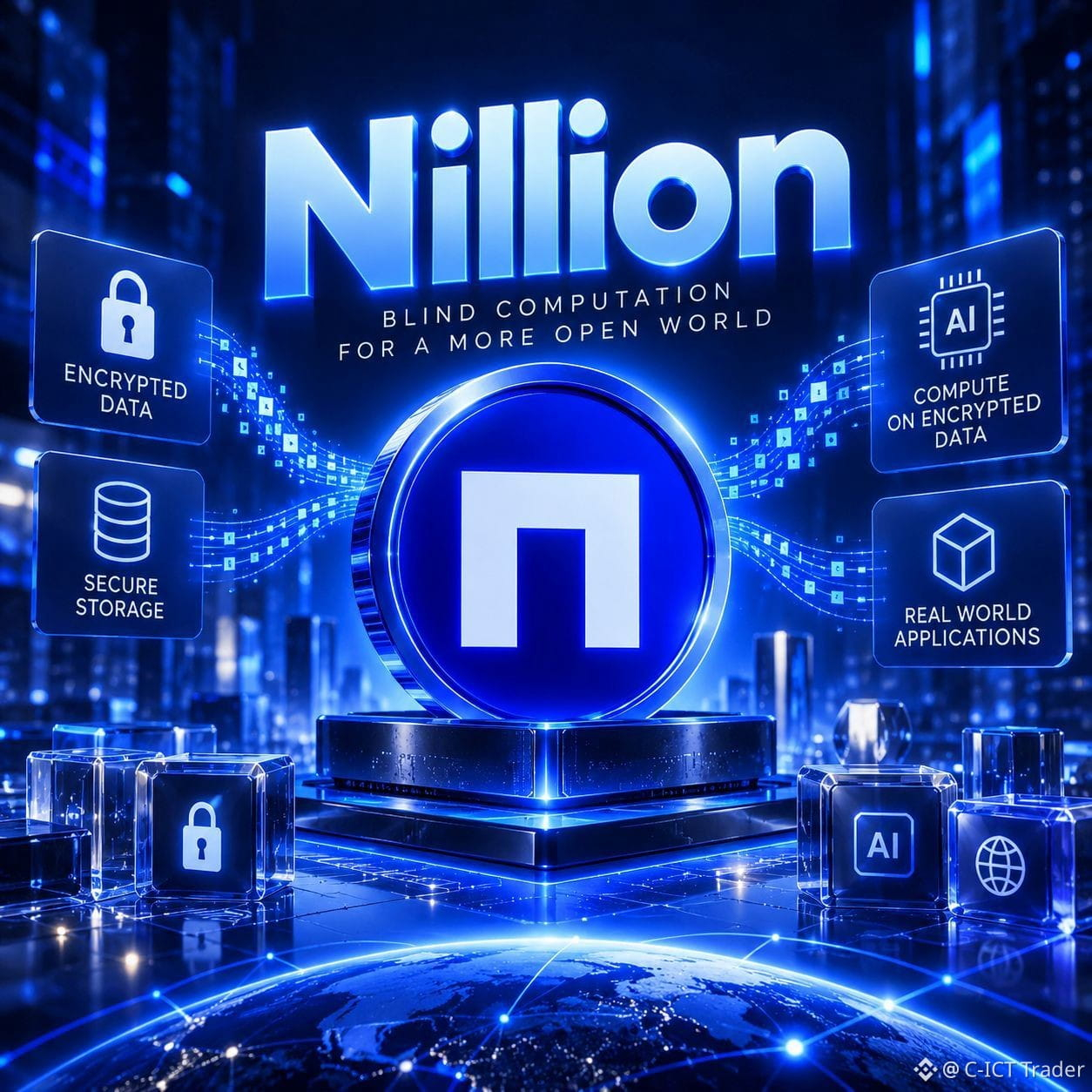
🔍 $NIL IS BUILDING INSTITUTIONAL-GRADE INFRASTRUCTURE BEYOND SURFACE-LEVEL PRIVACY HYPE ⚡
While retail chases transient narrative spikes, smart capital tracks foundational utility and verifiable adoption. 💡 Executing blind computation on encrypted data via DUSK on Ethereum represents a fundamental paradigm shift for sensitive Web3 applications and autonomous AI agents.
Sustainable market structure is never forged on speculative froth, but on structural demand developers actively build upon. 🔍 $NIL is separating itself from hollow privacy claims by solving practical data execution. 🤔 Will blind computation become the indispensable architectural foundation for decentralized AI?
⚠️ Not financial advice. Always manage your risk. 🛡️
🏷️ #NIL #Web3Infrastructure #CryptoResearch #SmartMoney
🎯 🦈
🔍 $NIL IS BUILDING INSTITUTIONAL-GRADE INFRASTRUCTURE BEYOND SURFACE-LEVEL PRIVACY HYPE ⚡
While retail chases transient narrative spikes, smart capital tracks foundational utility and verifiable adoption. 💡 Executing blind computation on encrypted data via DUSK on Ethereum represents a fundamental paradigm shift for sensitive Web3 applications and autonomous AI agents.
Sustainable market structure is never forged on speculative froth, but on structural demand developers actively build upon. 🔍 $NIL is separating itself from hollow privacy claims by solving practical data execution. 🤔 Will blind computation become the indispensable architectural foundation for decentralized AI?
⚠️ Not financial advice. Always manage your risk. 🛡️
🏷️ #NIL #Web3Infrastructure #CryptoResearch #SmartMoney
🎯 🦈
While retail chases transient narrative spikes, smart capital tracks foundational utility and verifiable adoption. 💡 Executing blind computation on encrypted data via DUSK on Ethereum represents a fundamental paradigm shift for sensitive Web3 applications and autonomous AI agents.
Sustainable market structure is never forged on speculative froth, but on structural demand developers actively build upon. 🔍 $NIL is separating itself from hollow privacy claims by solving practical data execution. 🤔 Will blind computation become the indispensable architectural foundation for decentralized AI?
⚠️ Not financial advice. Always manage your risk. 🛡️
🏷️ #NIL #Web3Infrastructure #CryptoResearch #SmartMoney
🎯 🦈
19

·
--
🦈 INSTITUTIONAL LIQUIDITY EXPANDS AS STRIPE WALLET VOLUME HITS $25B UNDER $USDC RAILS ⚡
Smart money infrastructure is locking in critical mass away from speculative order flow. 🌊 With embedded wallet assets scaling 25x and monthly throughput reaching $25 billion, institutional rails are actively building deep integration for stablecoin settlement and autonomous agent execution. 📊
💡 As unified APIs converge yield-bearing stablecoin balances directly with conventional payment pipelines, the friction between global fiat reserves and on-chain liquidity pools is rapidly evaporating. 💬 Will autonomous AI agents surpass human transaction volume as the dominant driver of stablecoin velocity? 👇
⚠️ Not financial advice. Always manage your risk. 🛡️
🏷️ #USDC #Stablecoins #Web3Infrastructure #Crypto
🎯 🦈
🦈 INSTITUTIONAL LIQUIDITY EXPANDS AS STRIPE WALLET VOLUME HITS $25B UNDER $USDC RAILS ⚡
Smart money infrastructure is locking in critical mass away from speculative order flow. 🌊 With embedded wallet assets scaling 25x and monthly throughput reaching $25 billion, institutional rails are actively building deep integration for stablecoin settlement and autonomous agent execution. 📊
💡 As unified APIs converge yield-bearing stablecoin balances directly with conventional payment pipelines, the friction between global fiat reserves and on-chain liquidity pools is rapidly evaporating. 💬 Will autonomous AI agents surpass human transaction volume as the dominant driver of stablecoin velocity? 👇
⚠️ Not financial advice. Always manage your risk. 🛡️
🏷️ #USDC #Stablecoins #Web3Infrastructure #Crypto
🎯 🦈
Smart money infrastructure is locking in critical mass away from speculative order flow. 🌊 With embedded wallet assets scaling 25x and monthly throughput reaching $25 billion, institutional rails are actively building deep integration for stablecoin settlement and autonomous agent execution. 📊
💡 As unified APIs converge yield-bearing stablecoin balances directly with conventional payment pipelines, the friction between global fiat reserves and on-chain liquidity pools is rapidly evaporating. 💬 Will autonomous AI agents surpass human transaction volume as the dominant driver of stablecoin velocity? 👇
⚠️ Not financial advice. Always manage your risk. 🛡️
🏷️ #USDC #Stablecoins #Web3Infrastructure #Crypto
🎯 🦈
6

·
--
🚨 $SOL ECOSYSTEM EXPANDS AS INSTITUTIONAL HARDWARE SECURITY INTEGRATES ON-CHAIN MOBILE ARCHITECTURE 🛡️
Ledger has introduced Atom, an FPGA-isolated secure Android device bridging on-chain execution with everyday mobile utility, featuring direct integration with Solana Mobile. 🔍 This structural shift allows smart contracts and autonomous AI agents to submit execution intents while keeping core signing operations strictly compartmentalized.
With specialized physical tamper defenses and isolated signature verification, institutional-grade execution is steadily migrating toward mobile liquidity touchpoints. 💡 As infrastructure matures to accommodate autonomous agents and on-chain interactions, security layers are becoming the ultimate moat for ecosystem adoption. 🤔 Will integrated mobile security accelerate broader institutional order flow across $SOL ? 👇
⚠️ Not financial advice. Always manage your risk. 🛡️
🏷️ #SOL #Solana #CryptoSecurity #Web3Infrastructure
🎯 🦈
🚨 $SOL ECOSYSTEM EXPANDS AS INSTITUTIONAL HARDWARE SECURITY INTEGRATES ON-CHAIN MOBILE ARCHITECTURE 🛡️
Ledger has introduced Atom, an FPGA-isolated secure Android device bridging on-chain execution with everyday mobile utility, featuring direct integration with Solana Mobile. 🔍 This structural shift allows smart contracts and autonomous AI agents to submit execution intents while keeping core signing operations strictly compartmentalized.
With specialized physical tamper defenses and isolated signature verification, institutional-grade execution is steadily migrating toward mobile liquidity touchpoints. 💡 As infrastructure matures to accommodate autonomous agents and on-chain interactions, security layers are becoming the ultimate moat for ecosystem adoption. 🤔 Will integrated mobile security accelerate broader institutional order flow across $SOL ? 👇
⚠️ Not financial advice. Always manage your risk. 🛡️
🏷️ #SOL #Solana #CryptoSecurity #Web3Infrastructure
🎯 🦈
Ledger has introduced Atom, an FPGA-isolated secure Android device bridging on-chain execution with everyday mobile utility, featuring direct integration with Solana Mobile. 🔍 This structural shift allows smart contracts and autonomous AI agents to submit execution intents while keeping core signing operations strictly compartmentalized.
With specialized physical tamper defenses and isolated signature verification, institutional-grade execution is steadily migrating toward mobile liquidity touchpoints. 💡 As infrastructure matures to accommodate autonomous agents and on-chain interactions, security layers are becoming the ultimate moat for ecosystem adoption. 🤔 Will integrated mobile security accelerate broader institutional order flow across $SOL ? 👇
⚠️ Not financial advice. Always manage your risk. 🛡️
🏷️ #SOL #Solana #CryptoSecurity #Web3Infrastructure
🎯 🦈
22

⚡ INSTITUTIONAL RAILS EXPAND ACROSS 12 CHAINS WITH GLOBAL $USDT EMBEDDED SETTLEMENT! 🌊
Infrastructure is quietly bridging the gap between on-chain liquidity and legacy commerce. Rain just rolled out an embedded wallet framework across 12 major blockchains, equipping partners with instant fiat gateways and card spend access at 175 million global merchant terminals.
Smart money tracks distribution velocity above all else. 💡 Seamlessly routing assets like $USDC directly into point-of-sale networks transforms static balances into active economic energy while keeping self-custody intact.
💬 Will frictionless embedded checkout rails trigger the next major surge in real-world stablecoin velocity? 👇
⚠️ Not financial advice. Always manage your risk. 🛡️
🏷️ #USDT #Stablecoins #CryptoAdoption #Web3Infrastructure
🔥 💎
⚡ INSTITUTIONAL RAILS EXPAND ACROSS 12 CHAINS WITH GLOBAL $USDT EMBEDDED SETTLEMENT! 🌊
Infrastructure is quietly bridging the gap between on-chain liquidity and legacy commerce. Rain just rolled out an embedded wallet framework across 12 major blockchains, equipping partners with instant fiat gateways and card spend access at 175 million global merchant terminals.
Smart money tracks distribution velocity above all else. 💡 Seamlessly routing assets like $USDC directly into point-of-sale networks transforms static balances into active economic energy while keeping self-custody intact.
💬 Will frictionless embedded checkout rails trigger the next major surge in real-world stablecoin velocity? 👇
⚠️ Not financial advice. Always manage your risk. 🛡️
🏷️ #USDT #Stablecoins #CryptoAdoption #Web3Infrastructure
🔥 💎
Infrastructure is quietly bridging the gap between on-chain liquidity and legacy commerce. Rain just rolled out an embedded wallet framework across 12 major blockchains, equipping partners with instant fiat gateways and card spend access at 175 million global merchant terminals.
Smart money tracks distribution velocity above all else. 💡 Seamlessly routing assets like $USDC directly into point-of-sale networks transforms static balances into active economic energy while keeping self-custody intact.
💬 Will frictionless embedded checkout rails trigger the next major surge in real-world stablecoin velocity? 👇
⚠️ Not financial advice. Always manage your risk. 🛡️
🏷️ #USDT #Stablecoins #CryptoAdoption #Web3Infrastructure
🔥 💎
10

🧩 Infrastructure Watch — Focus on Real Demand
$FIL | $ENA | $ENSO
Infrastructure and DeFi projects offer different value propositions, from decentralized storage to financial applications and blockchain connectivity.
📊 Evaluate network usage, token supply, and market liquidity rather than relying on the sector narrative alone.
⚡ Strong fundamentals and favorable price structure can provide a better research starting point.
🎯 Key Takeaway: Utility matters, but valuation and execution matter too.
#FIL #ENA #ENSO #DeFi #Web3Infrastructure
{future}(FILUSDT)
{future}(ENAUSDT)
{future}(ENSOUSDT)
🧩 Infrastructure Watch — Focus on Real Demand
$FIL | $ENA | $ENSO
Infrastructure and DeFi projects offer different value propositions, from decentralized storage to financial applications and blockchain connectivity.
📊 Evaluate network usage, token supply, and market liquidity rather than relying on the sector narrative alone.
⚡ Strong fundamentals and favorable price structure can provide a better research starting point.
🎯 Key Takeaway: Utility matters, but valuation and execution matter too.
#FIL #ENA #ENSO #DeFi #Web3Infrastructure
$FIL | $ENA | $ENSO
Infrastructure and DeFi projects offer different value propositions, from decentralized storage to financial applications and blockchain connectivity.
📊 Evaluate network usage, token supply, and market liquidity rather than relying on the sector narrative alone.
⚡ Strong fundamentals and favorable price structure can provide a better research starting point.
🎯 Key Takeaway: Utility matters, but valuation and execution matter too.
#FIL #ENA #ENSO #DeFi #Web3Infrastructure
1
40

·
--
Article
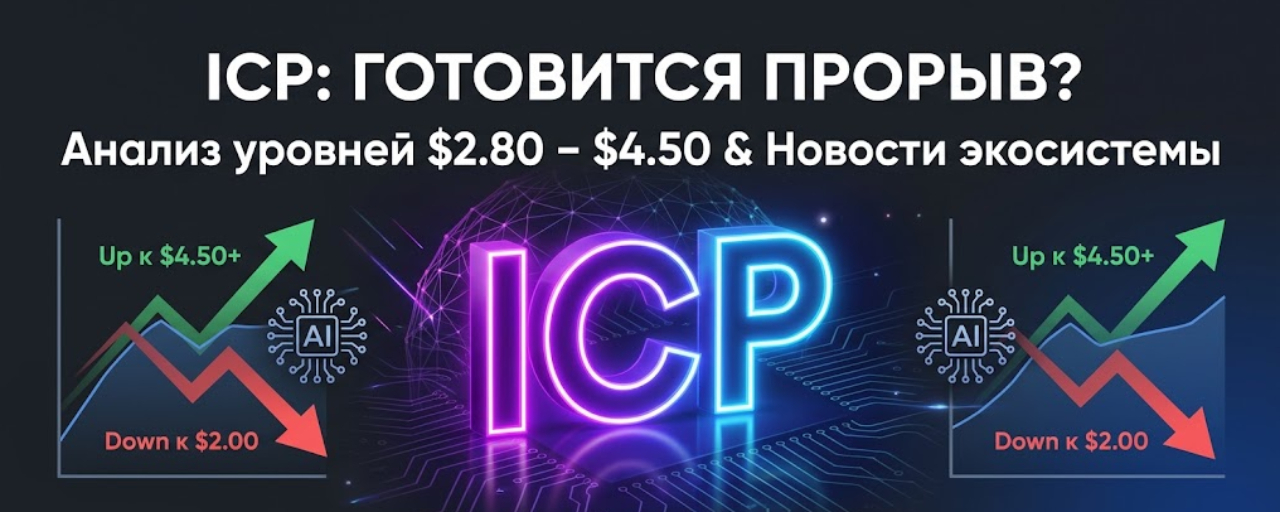
Internet Computer: Fundamental Breakthrough or Prolonged Consolidation? News Analysis and Price ScenariosThe Internet Computer blockchain ($ICP ) by DFINITY remains one of the most technologically advanced and, at the same time, controversial projects on the market.
Against the backdrop of ecosystem upgrades and the Mission 70 ecosystem initiative (aimed at reducing deflationary pressure and optimizing tokenomics), the coin is forming key levels for its next move.
Internet Computer: Fundamental Breakthrough or Prolonged Consolidation? News Analysis and Price Scenarios
The Internet Computer blockchain ($ICP ) by DFINITY remains one of the most technologically advanced and, at the same time, controversial projects on the market.
Against the backdrop of ecosystem upgrades and the Mission 70 ecosystem initiative (aimed at reducing deflationary pressure and optimizing tokenomics), the coin is forming key levels for its next move.
Against the backdrop of ecosystem upgrades and the Mission 70 ecosystem initiative (aimed at reducing deflationary pressure and optimizing tokenomics), the coin is forming key levels for its next move.
156

#depinwatch
🌐 DePIN ALERT: REAL-WORLD INFRASTRUCTURE MEETS CRYPTO!
Decentralized physical infrastructure remains a compelling sector as blockchain networks attempt to coordinate computing, storage and physical resources.
💡 WHAT THIS MEANS FOR TRADERS:
DePIN projects combine crypto incentives with real-world infrastructure demand, creating a different growth narrative from traditional DeFi.
🔍 3 COINS TO WATCH:
📡 $HNT — Helium remains one of the best-known decentralized wireless infrastructure ecosystems.
💾 $FIL — Filecoin remains a major decentralized storage network.
{spot}(FILUSDT)
🖥️ $RENDER — Render connects blockchain incentives with decentralized GPU computing.
{spot}(RENDERUSDT)
Could DePIN become a major capital rotation sector?
#FIL #RENDER #DePIN #Web3Infrastructure
#depinwatch
🌐 DePIN ALERT: REAL-WORLD INFRASTRUCTURE MEETS CRYPTO!
Decentralized physical infrastructure remains a compelling sector as blockchain networks attempt to coordinate computing, storage and physical resources.
💡 WHAT THIS MEANS FOR TRADERS:
DePIN projects combine crypto incentives with real-world infrastructure demand, creating a different growth narrative from traditional DeFi.
🔍 3 COINS TO WATCH:
📡 $HNT — Helium remains one of the best-known decentralized wireless infrastructure ecosystems.
💾 $FIL — Filecoin remains a major decentralized storage network.
🖥️ $RENDER — Render connects blockchain incentives with decentralized GPU computing.
Could DePIN become a major capital rotation sector?
#FIL #RENDER #DePIN #Web3Infrastructure
🌐 DePIN ALERT: REAL-WORLD INFRASTRUCTURE MEETS CRYPTO!
Decentralized physical infrastructure remains a compelling sector as blockchain networks attempt to coordinate computing, storage and physical resources.
💡 WHAT THIS MEANS FOR TRADERS:
DePIN projects combine crypto incentives with real-world infrastructure demand, creating a different growth narrative from traditional DeFi.
🔍 3 COINS TO WATCH:
📡 $HNT — Helium remains one of the best-known decentralized wireless infrastructure ecosystems.
💾 $FIL — Filecoin remains a major decentralized storage network.
🖥️ $RENDER — Render connects blockchain incentives with decentralized GPU computing.
Could DePIN become a major capital rotation sector?
#FIL #RENDER #DePIN #Web3Infrastructure

1
397

·
--
The AI Blockchain Evolution: Why @OpenLedger is Rewriting the Rules of the Data EconomyThe intersection of Artificial Intelligence (AI) and Decentralized Physical Infrastructure Networks (DePIN) is arguably the most explosive narrative in Web3 today. While traditional AI development remains heavily gatekept by centralized tech monopolies, a paradigm shift is happening on-chain. Leading this charge is @OpenLedger, the world's first AI-native blockchain designed specifically to democratize, secure, and monetize the entire AI lifecycle.
Solving the Centralized AI Crisis
Right now, general-purpose LLMs face massive hurdles: data manipulation risks, a lack of transparency in training models, and zero rewards for the communities that actually create the data. @Openledger changes the game by introducing an EVM-compatible Layer 2 framework that makes data, models, and AI agents fully liquid, traceable, and composable.
At the heart of this ecosystem are three key innovations:
Datanets: Community-owned, on-chain data hubs focused on specific domains (e.g., legal, medical, or niche tech datasets) that allow users to securely contribute high-quality data.
Proof of Attribution (PoA): This groundbreaking protocol tracks exactly how much a specific piece of data influences an AI model's output, ensuring completely transparent data provenance.
ModelFactory & OpenLoRA: A zero-code infrastructure layer allowing developers to fine-tune specialized language models (SLMs) efficiently without needing massive, expensive server farms.
Real Utility Behind the $OPEN Token
Unlike many speculative tokens riding the AI wave, the native token $OPEN serves as the literal lifeblood of the network. It handles network gas fees, powers the deployment of custom models, and facilitates real-time, fair rewards for data contributors and node operators.
By tying token utility directly to compute power and dataset curation, OpenLedger is shifting the narrative from "hype" to sustainable infrastructure. Backed by industry titans and designed for scalability, this ecosystem is proving that decentralized intelligence is not just a concept—it is the future.
Keep an eye on how this narrative unfolds as user-owned AI takes center stage.
#OpenLedger #DePIN #DecentralizedAI #Web3Infrastructure
The AI Blockchain Evolution: Why @OpenLedger is Rewriting the Rules of the Data Economy
The intersection of Artificial Intelligence (AI) and Decentralized Physical Infrastructure Networks (DePIN) is arguably the most explosive narrative in Web3 today. While traditional AI development remains heavily gatekept by centralized tech monopolies, a paradigm shift is happening on-chain. Leading this charge is @OpenLedger, the world's first AI-native blockchain designed specifically to democratize, secure, and monetize the entire AI lifecycle.
Solving the Centralized AI Crisis
Right now, general-purpose LLMs face massive hurdles: data manipulation risks, a lack of transparency in training models, and zero rewards for the communities that actually create the data. @OpenLedger changes the game by introducing an EVM-compatible Layer 2 framework that makes data, models, and AI agents fully liquid, traceable, and composable.
At the heart of this ecosystem are three key innovations:
Datanets: Community-owned, on-chain data hubs focused on specific domains (e.g., legal, medical, or niche tech datasets) that allow users to securely contribute high-quality data.
Proof of Attribution (PoA): This groundbreaking protocol tracks exactly how much a specific piece of data influences an AI model's output, ensuring completely transparent data provenance.
ModelFactory & OpenLoRA: A zero-code infrastructure layer allowing developers to fine-tune specialized language models (SLMs) efficiently without needing massive, expensive server farms.
Real Utility Behind the $OPEN Token
Unlike many speculative tokens riding the AI wave, the native token $OPEN serves as the literal lifeblood of the network. It handles network gas fees, powers the deployment of custom models, and facilitates real-time, fair rewards for data contributors and node operators.
By tying token utility directly to compute power and dataset curation, OpenLedger is shifting the narrative from "hype" to sustainable infrastructure. Backed by industry titans and designed for scalability, this ecosystem is proving that decentralized intelligence is not just a concept—it is the future.
Keep an eye on how this narrative unfolds as user-owned AI takes center stage.
#OpenLedger #DePIN #DecentralizedAI #Web3Infrastructure
Solving the Centralized AI Crisis
Right now, general-purpose LLMs face massive hurdles: data manipulation risks, a lack of transparency in training models, and zero rewards for the communities that actually create the data. @OpenLedger changes the game by introducing an EVM-compatible Layer 2 framework that makes data, models, and AI agents fully liquid, traceable, and composable.
At the heart of this ecosystem are three key innovations:
Datanets: Community-owned, on-chain data hubs focused on specific domains (e.g., legal, medical, or niche tech datasets) that allow users to securely contribute high-quality data.
Proof of Attribution (PoA): This groundbreaking protocol tracks exactly how much a specific piece of data influences an AI model's output, ensuring completely transparent data provenance.
ModelFactory & OpenLoRA: A zero-code infrastructure layer allowing developers to fine-tune specialized language models (SLMs) efficiently without needing massive, expensive server farms.
Real Utility Behind the $OPEN Token
Unlike many speculative tokens riding the AI wave, the native token $OPEN serves as the literal lifeblood of the network. It handles network gas fees, powers the deployment of custom models, and facilitates real-time, fair rewards for data contributors and node operators.
By tying token utility directly to compute power and dataset curation, OpenLedger is shifting the narrative from "hype" to sustainable infrastructure. Backed by industry titans and designed for scalability, this ecosystem is proving that decentralized intelligence is not just a concept—it is the future.
Keep an eye on how this narrative unfolds as user-owned AI takes center stage.
#OpenLedger #DePIN #DecentralizedAI #Web3Infrastructure
88

·
--
Article
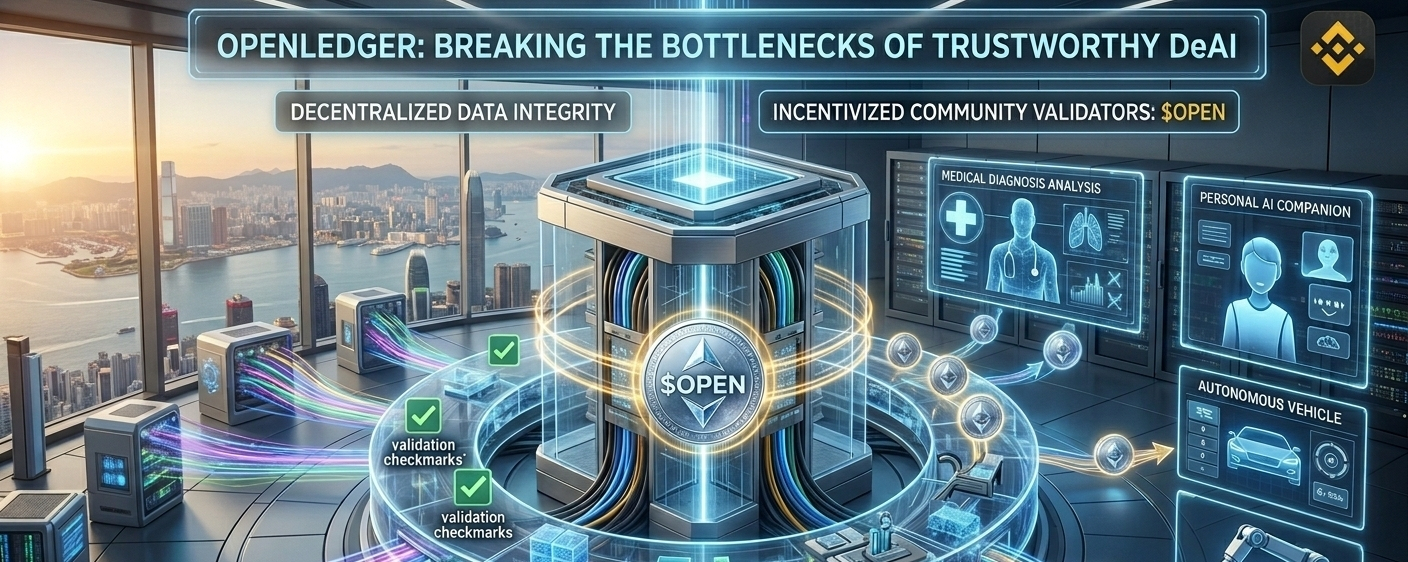
The Blueprint for Autonomous AI: Unlocking Verified Data on OpenLedgerAs Artificial Intelligence continues its rapid ascent, the industry faces a fundamental crisis: trust. Centralized data repositories, where AI training data currently resides, are opaque and vulnerable to bias and manipulation. This creates AI models that can be compromised or produce harmful 'hallucinations.' A truly decentralized AI ecosystem (DeAI) cannot function without a foundation of trustworthy data that is both secure and auditable. We need a way to verify the data supply chain.
This is precisely where @Openledger steps in, positioning itself as the foundational infrastructure for Decentralized AI. Rather than just another dApp, OpenLedger is building specialized data pipelines designed specifically for DeAI model training. It utilizes a decentralized network of validators to crowdsource, clean, and verify data before it ever reaches the AI models. This creates a cryptographically verifiable history of data provenance, ensuring that every piece of information used for training is high-integrity and authentic.
Central to this decentralized infrastructure is the $OPEN token. This isn't just a speculative asset; it is the economic engine that makes the entire system functional. Validators are incentivized to provide rigorous, high-quality data checks because they earn $OPEN rewards for their validated work. This aligns technical data integrity with financial incentives, creating a robust, community-driven ecosystem. The token model ensures the long-term sustainability and security of the decentralized data supply chain.
OpenLedger is mapping a future where data is sovereign, secure, and available for verifiable intelligence. By solving the critical bottleneck of decentralized data integrity, they are providing the blueprint for autonomous, trustworthy AI. It's time to build a smarter, decentralized intelligence.
#OpenLedger #DeAI #Web3Infrastructure #DataIntegrity
The Blueprint for Autonomous AI: Unlocking Verified Data on OpenLedger
As Artificial Intelligence continues its rapid ascent, the industry faces a fundamental crisis: trust. Centralized data repositories, where AI training data currently resides, are opaque and vulnerable to bias and manipulation. This creates AI models that can be compromised or produce harmful 'hallucinations.' A truly decentralized AI ecosystem (DeAI) cannot function without a foundation of trustworthy data that is both secure and auditable. We need a way to verify the data supply chain.
This is precisely where @OpenLedger steps in, positioning itself as the foundational infrastructure for Decentralized AI. Rather than just another dApp, OpenLedger is building specialized data pipelines designed specifically for DeAI model training. It utilizes a decentralized network of validators to crowdsource, clean, and verify data before it ever reaches the AI models. This creates a cryptographically verifiable history of data provenance, ensuring that every piece of information used for training is high-integrity and authentic.
Central to this decentralized infrastructure is the $OPEN token. This isn't just a speculative asset; it is the economic engine that makes the entire system functional. Validators are incentivized to provide rigorous, high-quality data checks because they earn $OPEN rewards for their validated work. This aligns technical data integrity with financial incentives, creating a robust, community-driven ecosystem. The token model ensures the long-term sustainability and security of the decentralized data supply chain.
OpenLedger is mapping a future where data is sovereign, secure, and available for verifiable intelligence. By solving the critical bottleneck of decentralized data integrity, they are providing the blueprint for autonomous, trustworthy AI. It's time to build a smarter, decentralized intelligence.
#OpenLedger #DeAI #Web3Infrastructure #DataIntegrity
This is precisely where @OpenLedger steps in, positioning itself as the foundational infrastructure for Decentralized AI. Rather than just another dApp, OpenLedger is building specialized data pipelines designed specifically for DeAI model training. It utilizes a decentralized network of validators to crowdsource, clean, and verify data before it ever reaches the AI models. This creates a cryptographically verifiable history of data provenance, ensuring that every piece of information used for training is high-integrity and authentic.
Central to this decentralized infrastructure is the $OPEN token. This isn't just a speculative asset; it is the economic engine that makes the entire system functional. Validators are incentivized to provide rigorous, high-quality data checks because they earn $OPEN rewards for their validated work. This aligns technical data integrity with financial incentives, creating a robust, community-driven ecosystem. The token model ensures the long-term sustainability and security of the decentralized data supply chain.
OpenLedger is mapping a future where data is sovereign, secure, and available for verifiable intelligence. By solving the critical bottleneck of decentralized data integrity, they are providing the blueprint for autonomous, trustworthy AI. It's time to build a smarter, decentralized intelligence.
#OpenLedger #DeAI #Web3Infrastructure #DataIntegrity
85

·
--
We need to stop treating decentralized node placement like a basic game of Risk.
Most people look at a global map of nodes and think, "Great, we have global coverage." But a recent latency test I ran on @OpenGradient proved just how deceptive a pretty map can be.
The scheduler did exactly what it was programmed to do: it routed a request to the absolute closest inference node geographically. On paper, it was a flawless decision. In reality, it was a disaster.
The local node didn’t have the specific model ready and had to start pulling it from scratch. Meanwhile, a "warm" node slightly further away was sitting completely idle, ready to go. Because of a blind spot in routing, the shortest physical distance turned into the slowest execution time.
This is the hidden trap. Decentralized AI routing isn't a geography problem; it’s a fluid coordination problem.If you're only measuring physical distance, you're ignoring real-time GPU capacity, queue bottlenecks, live model states, and failure correlations.
Worse, visual distribution is often an illusion. You can place two nodes in entirely different cities, but if they rely on the same cloud provider, the same underlying operator, or the same regional fiber backbone, they aren't independent. They represent a shared failure point waiting to happen.
The complexity goes even deeper when you realize that full nodes shouldn't even share the same footprint as inference nodes. Their priority is optimizing proof propagation, not user ping. Then you throw data nodes into the mix, where being close to the data source matters way more than being close to the end-user.
Traditional facility-location models can map these trade-offs, but the real wildcard is how the economic incentives will drive node deployment.
The next milestone for $OPG shouldn't be about spreading nodes randomly across a map. It’s about whether new infrastructure actually plugs these invisible latency gaps and cuts down the shared dependencies that users actually experience.
#OPG #OpenGradient #DeAI #Web3Infrastructure
We need to stop treating decentralized node placement like a basic game of Risk.
Most people look at a global map of nodes and think, "Great, we have global coverage." But a recent latency test I ran on @OpenGradient proved just how deceptive a pretty map can be.
The scheduler did exactly what it was programmed to do: it routed a request to the absolute closest inference node geographically. On paper, it was a flawless decision. In reality, it was a disaster.
The local node didn’t have the specific model ready and had to start pulling it from scratch. Meanwhile, a "warm" node slightly further away was sitting completely idle, ready to go. Because of a blind spot in routing, the shortest physical distance turned into the slowest execution time.
This is the hidden trap. Decentralized AI routing isn't a geography problem; it’s a fluid coordination problem.If you're only measuring physical distance, you're ignoring real-time GPU capacity, queue bottlenecks, live model states, and failure correlations.
Worse, visual distribution is often an illusion. You can place two nodes in entirely different cities, but if they rely on the same cloud provider, the same underlying operator, or the same regional fiber backbone, they aren't independent. They represent a shared failure point waiting to happen.
The complexity goes even deeper when you realize that full nodes shouldn't even share the same footprint as inference nodes. Their priority is optimizing proof propagation, not user ping. Then you throw data nodes into the mix, where being close to the data source matters way more than being close to the end-user.
Traditional facility-location models can map these trade-offs, but the real wildcard is how the economic incentives will drive node deployment.
The next milestone for $OPG shouldn't be about spreading nodes randomly across a map. It’s about whether new infrastructure actually plugs these invisible latency gaps and cuts down the shared dependencies that users actually experience.
#OPG #OpenGradient #DeAI #Web3Infrastructure
Most people look at a global map of nodes and think, "Great, we have global coverage." But a recent latency test I ran on @OpenGradient proved just how deceptive a pretty map can be.
The scheduler did exactly what it was programmed to do: it routed a request to the absolute closest inference node geographically. On paper, it was a flawless decision. In reality, it was a disaster.
The local node didn’t have the specific model ready and had to start pulling it from scratch. Meanwhile, a "warm" node slightly further away was sitting completely idle, ready to go. Because of a blind spot in routing, the shortest physical distance turned into the slowest execution time.
This is the hidden trap. Decentralized AI routing isn't a geography problem; it’s a fluid coordination problem.If you're only measuring physical distance, you're ignoring real-time GPU capacity, queue bottlenecks, live model states, and failure correlations.
Worse, visual distribution is often an illusion. You can place two nodes in entirely different cities, but if they rely on the same cloud provider, the same underlying operator, or the same regional fiber backbone, they aren't independent. They represent a shared failure point waiting to happen.
The complexity goes even deeper when you realize that full nodes shouldn't even share the same footprint as inference nodes. Their priority is optimizing proof propagation, not user ping. Then you throw data nodes into the mix, where being close to the data source matters way more than being close to the end-user.
Traditional facility-location models can map these trade-offs, but the real wildcard is how the economic incentives will drive node deployment.
The next milestone for $OPG shouldn't be about spreading nodes randomly across a map. It’s about whether new infrastructure actually plugs these invisible latency gaps and cuts down the shared dependencies that users actually experience.
#OPG #OpenGradient #DeAI #Web3Infrastructure
120

·
--
The shift toward on-chain automation is moving fast, but speed doesn't matter if security and compliance are left behind. That is why the recent launch of the Newton Mainnet Beta by @NewtonProtocol is such a massive milestone for the Web3 space.
Instead of reactive post-transaction monitoring, they are introducing a true "compliance-as-code" architecture. By combining programmable policies, zero-knowledge proofs (ZKPs), and secure rollups, it evaluates and authorizes transactions before they ever hit the settlement layer. For builders using VaultKit to deploy complex AI-driven strategies or institutional vaults, this provides a tamper-proof execution environment that enforces strict risk rules seamlessly.
It is incredibly exciting to see the $NEWT token find real-world utility in a live ecosystem that bridges the gap between intelligent AI agents and decentralized finance infrastructure.
#Newt #MainnetBeta #Web3Infrastructure
The shift toward on-chain automation is moving fast, but speed doesn't matter if security and compliance are left behind. That is why the recent launch of the Newton Mainnet Beta by @NewtonProtocol is such a massive milestone for the Web3 space.
Instead of reactive post-transaction monitoring, they are introducing a true "compliance-as-code" architecture. By combining programmable policies, zero-knowledge proofs (ZKPs), and secure rollups, it evaluates and authorizes transactions before they ever hit the settlement layer. For builders using VaultKit to deploy complex AI-driven strategies or institutional vaults, this provides a tamper-proof execution environment that enforces strict risk rules seamlessly.
It is incredibly exciting to see the $NEWT token find real-world utility in a live ecosystem that bridges the gap between intelligent AI agents and decentralized finance infrastructure.
#Newt #MainnetBeta #Web3Infrastructure
Instead of reactive post-transaction monitoring, they are introducing a true "compliance-as-code" architecture. By combining programmable policies, zero-knowledge proofs (ZKPs), and secure rollups, it evaluates and authorizes transactions before they ever hit the settlement layer. For builders using VaultKit to deploy complex AI-driven strategies or institutional vaults, this provides a tamper-proof execution environment that enforces strict risk rules seamlessly.
It is incredibly exciting to see the $NEWT token find real-world utility in a live ecosystem that bridges the gap between intelligent AI agents and decentralized finance infrastructure.
#Newt #MainnetBeta #Web3Infrastructure
2
100

The market is completely distracted by short-term noise, but real wealth is built by focusing on solid infrastructure. This is exactly why @NewtonProtocol is on my radar right now.
They are quietly solving major Web3 scalability issues with their Mainnet Beta. No empty AI hype, just pure technological execution.
Are you accumulating $NEWT before the rest of the market wakes up? Let me know your targets below! 👇
$NEWT #Newt #Web3Infrastructure #MainnetBeta #Crypto
The market is completely distracted by short-term noise, but real wealth is built by focusing on solid infrastructure. This is exactly why @NewtonProtocol is on my radar right now.
They are quietly solving major Web3 scalability issues with their Mainnet Beta. No empty AI hype, just pure technological execution.
Are you accumulating $NEWT before the rest of the market wakes up? Let me know your targets below! 👇
$NEWT #Newt #Web3Infrastructure #MainnetBeta #Crypto
They are quietly solving major Web3 scalability issues with their Mainnet Beta. No empty AI hype, just pure technological execution.
Are you accumulating $NEWT before the rest of the market wakes up? Let me know your targets below! 👇
$NEWT #Newt #Web3Infrastructure #MainnetBeta #Crypto
1
117

🌩️ The Stress Test: Why Verifiable AI Infrastructure is the Ultimate Flex for Web3
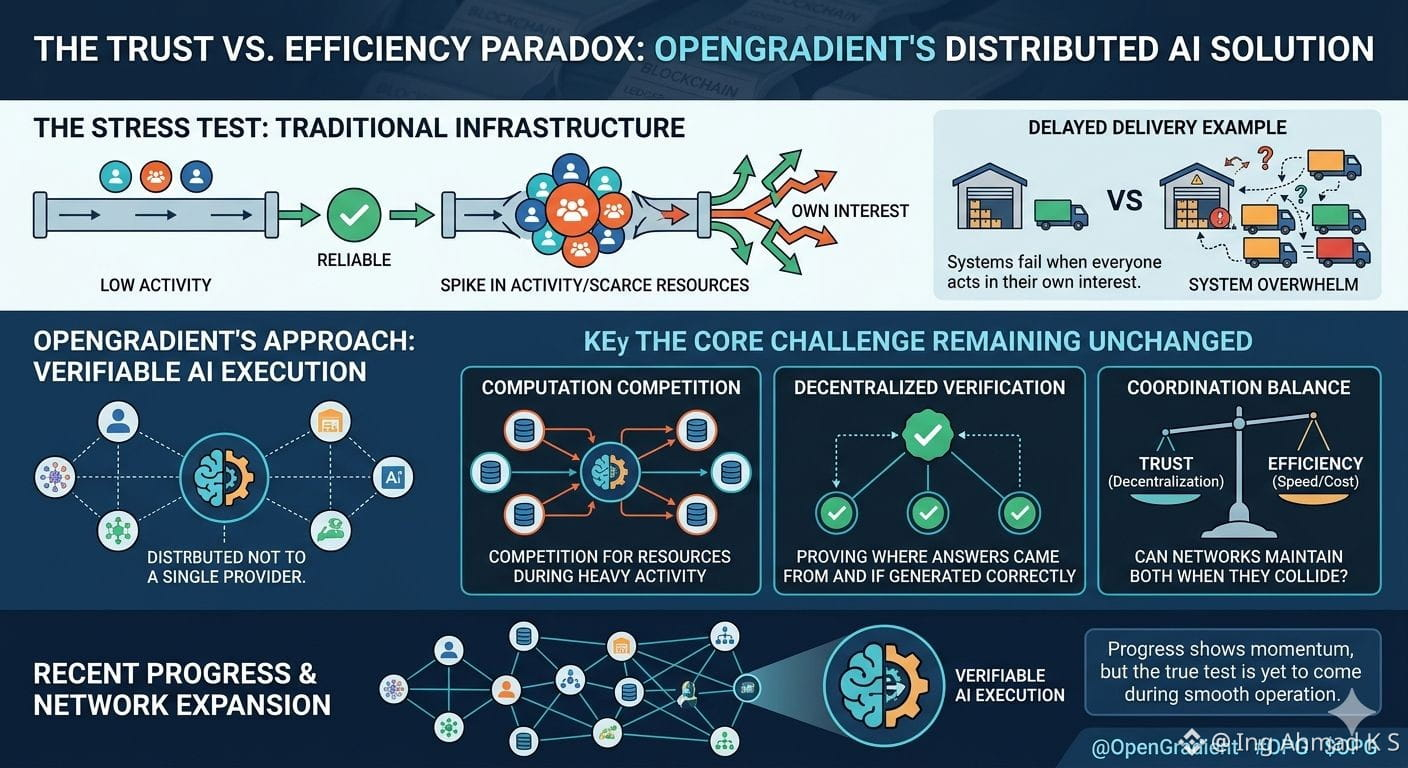
Most Web3 infrastructure looks flawless when the network is quiet. But we all know what happens when gas fees spike, activity explodes, and everyone rushes for the exit at once. Human nature takes over, systems clog, and theoretical assumptions fall apart.
That is exactly the chaos that @OpenGradient (#OPG) is built to withstand.
🤖 Moving Beyond Just "Distributed AI"
OpenGradient isn’t just about tossing AI models onto a network and hoping for the best. It’s tackling the real bottleneck: decentralized verification.
Think of it like a massive global delivery network. When demand is low, everything arrives on time. But when a massive surge hits, warehouses back up, drivers get rerouted, and small inefficiencies trigger a total system meltdown.
In the AI world, that "meltdown" looks like computation bottlenecks and broken trust. As decentralized applications (dApps) scale, just getting an answer from an AI model isn't enough. You have to prove:
Where that answer came from.
How it was generated.
That no single provider tampered with the result.
⚖️ The Ultimate Crypto Paradox: Trust vs. Efficiency
OpenGradient’s recent technical milestones show serious momentum in verifiable AI execution and network expansion. But the ultimate challenge for $OPG remains the ultimate challenge for Web3: Can a network maintain absolute trust without sacrificing hyper-efficiency?
Usually, these two goals move in opposite directions. When the next major market surge collides with these systems, we’ll see which networks are actually built for the future, and which ones were just enjoying the quiet.
Keep your eyes on the infrastructure layer.
What are your thoughts on the intersection of AI and decentralized verification? Drop your comments below! 👇
#OPG $OPG #AI #DeFi #Web3Infrastructure
🌩️ The Stress Test: Why Verifiable AI Infrastructure is the Ultimate Flex for Web3
Most Web3 infrastructure looks flawless when the network is quiet. But we all know what happens when gas fees spike, activity explodes, and everyone rushes for the exit at once. Human nature takes over, systems clog, and theoretical assumptions fall apart.
That is exactly the chaos that @OpenGradient (#OPG) is built to withstand.
🤖 Moving Beyond Just "Distributed AI"
OpenGradient isn’t just about tossing AI models onto a network and hoping for the best. It’s tackling the real bottleneck: decentralized verification.
Think of it like a massive global delivery network. When demand is low, everything arrives on time. But when a massive surge hits, warehouses back up, drivers get rerouted, and small inefficiencies trigger a total system meltdown.
In the AI world, that "meltdown" looks like computation bottlenecks and broken trust. As decentralized applications (dApps) scale, just getting an answer from an AI model isn't enough. You have to prove:
Where that answer came from.
How it was generated.
That no single provider tampered with the result.
⚖️ The Ultimate Crypto Paradox: Trust vs. Efficiency
OpenGradient’s recent technical milestones show serious momentum in verifiable AI execution and network expansion. But the ultimate challenge for $OPG remains the ultimate challenge for Web3: Can a network maintain absolute trust without sacrificing hyper-efficiency?
Usually, these two goals move in opposite directions. When the next major market surge collides with these systems, we’ll see which networks are actually built for the future, and which ones were just enjoying the quiet.
Keep your eyes on the infrastructure layer.
What are your thoughts on the intersection of AI and decentralized verification? Drop your comments below! 👇
#OPG $OPG #AI #DeFi #Web3Infrastructure
Most Web3 infrastructure looks flawless when the network is quiet. But we all know what happens when gas fees spike, activity explodes, and everyone rushes for the exit at once. Human nature takes over, systems clog, and theoretical assumptions fall apart.
That is exactly the chaos that @OpenGradient (#OPG) is built to withstand.
🤖 Moving Beyond Just "Distributed AI"
OpenGradient isn’t just about tossing AI models onto a network and hoping for the best. It’s tackling the real bottleneck: decentralized verification.
Think of it like a massive global delivery network. When demand is low, everything arrives on time. But when a massive surge hits, warehouses back up, drivers get rerouted, and small inefficiencies trigger a total system meltdown.
In the AI world, that "meltdown" looks like computation bottlenecks and broken trust. As decentralized applications (dApps) scale, just getting an answer from an AI model isn't enough. You have to prove:
Where that answer came from.
How it was generated.
That no single provider tampered with the result.
⚖️ The Ultimate Crypto Paradox: Trust vs. Efficiency
OpenGradient’s recent technical milestones show serious momentum in verifiable AI execution and network expansion. But the ultimate challenge for $OPG remains the ultimate challenge for Web3: Can a network maintain absolute trust without sacrificing hyper-efficiency?
Usually, these two goals move in opposite directions. When the next major market surge collides with these systems, we’ll see which networks are actually built for the future, and which ones were just enjoying the quiet.
Keep your eyes on the infrastructure layer.
What are your thoughts on the intersection of AI and decentralized verification? Drop your comments below! 👇
#OPG $OPG #AI #DeFi #Web3Infrastructure
5
1
118
·
--
Article
🔒 Security Redefined: Inside the Pre-Transaction Enforcement Engine of Newton Mainnet Beta##
The greatest vulnerability in the current Web3 and DeFi space is that risk management and compliance always happen *after* the fact (Post-Transaction). But the only definitive way to stop smart contract exploits and policy breaches is to block them before they ever write to the blockchain.
The team at @NewtonProtocol is solving this fundamental flaw with the launch of the **Newton Mainnet Beta**, introducing a revolutionary on-chain architecture designed for absolute security.
### 🛠️ The Pillars of Pre-Execution Infrastructure
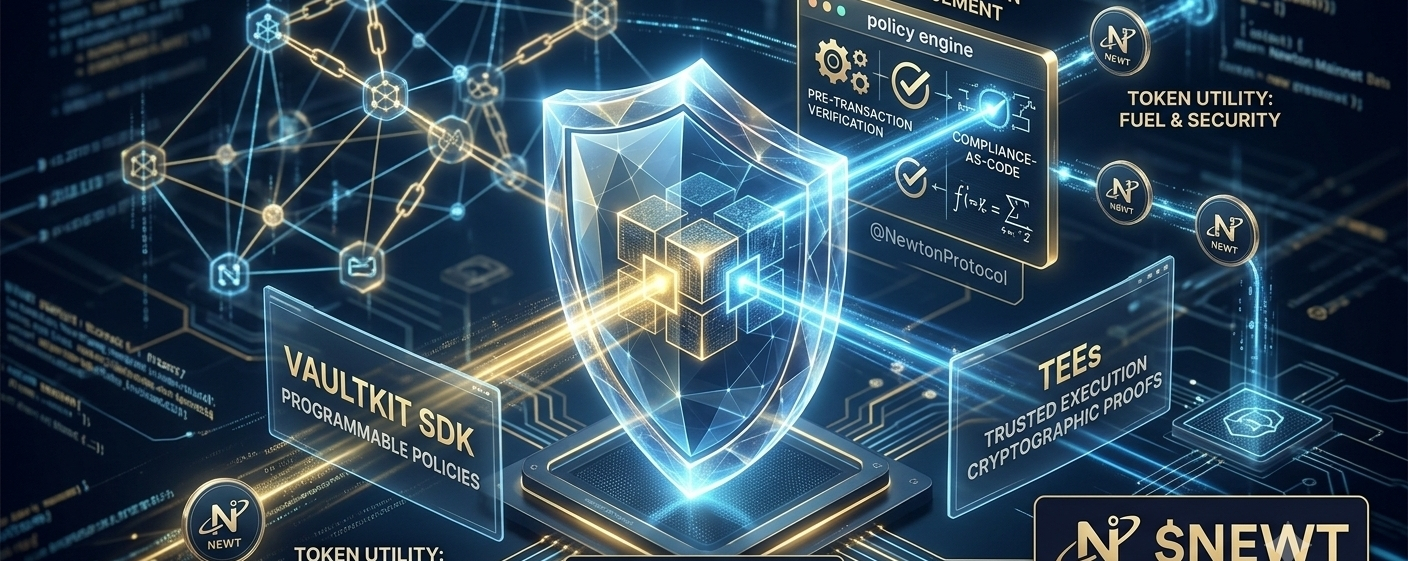
As illustrated in the network's blueprint, this next-generation framework relies on four core synchronized components:
1. **VaultKit SDK (Programmable Policies):** This empowers developers to embed explicit, programmable safety guardrails (like custom spending caps or counterparty rules) into their dApps before deployment.
2. **Pre-Transaction Enforcement Engine:** The central brain of the protocol. It evaluates transactions against established compliance-as-code rules. If an action violates a policy, it is stopped dead in its tracks before execution.
3. **TEEs (Trusted Execution Environments):** A decentralized node network that processes complex AI automated tasks and policy verifications inside hardware-isolated environments, generating tamper-proof cryptographic proofs.
4. **Token Utility ($NEWT):** The economic fuel driving this entire automation and security apparatus. Staking $NEWT ensures operator honesty, while protocol service fees for every policy check and attestation are settled natively using the token.
### 🌐 The Future of Trustless Finance
As the ecosystem transitions toward AI-driven smart wallets and institutional-grade vault architectures, pre-transaction enforcement shifts from being a premium luxury to a foundational necessity. The Newton Mainnet Beta is officially setting the new standard for secure Web3 infrastructure.
#Newt #Web3Infrastructure #DeFi
#MainnetBeta @NewtonProtocol $NEWT
🔒 Security Redefined: Inside the Pre-Transaction Enforcement Engine of Newton Mainnet Beta
##
The greatest vulnerability in the current Web3 and DeFi space is that risk management and compliance always happen *after* the fact (Post-Transaction). But the only definitive way to stop smart contract exploits and policy breaches is to block them before they ever write to the blockchain.
The team at @NewtonProtocol is solving this fundamental flaw with the launch of the **Newton Mainnet Beta**, introducing a revolutionary on-chain architecture designed for absolute security.
### 🛠️ The Pillars of Pre-Execution Infrastructure
As illustrated in the network's blueprint, this next-generation framework relies on four core synchronized components:
1. **VaultKit SDK (Programmable Policies):** This empowers developers to embed explicit, programmable safety guardrails (like custom spending caps or counterparty rules) into their dApps before deployment.
2. **Pre-Transaction Enforcement Engine:** The central brain of the protocol. It evaluates transactions against established compliance-as-code rules. If an action violates a policy, it is stopped dead in its tracks before execution.
3. **TEEs (Trusted Execution Environments):** A decentralized node network that processes complex AI automated tasks and policy verifications inside hardware-isolated environments, generating tamper-proof cryptographic proofs.
4. **Token Utility ($NEWT ):** The economic fuel driving this entire automation and security apparatus. Staking $NEWT ensures operator honesty, while protocol service fees for every policy check and attestation are settled natively using the token.
### 🌐 The Future of Trustless Finance
As the ecosystem transitions toward AI-driven smart wallets and institutional-grade vault architectures, pre-transaction enforcement shifts from being a premium luxury to a foundational necessity. The Newton Mainnet Beta is officially setting the new standard for secure Web3 infrastructure.
#Newt #Web3Infrastructure #DeFi
#MainnetBeta @NewtonProtocol $NEWT
The greatest vulnerability in the current Web3 and DeFi space is that risk management and compliance always happen *after* the fact (Post-Transaction). But the only definitive way to stop smart contract exploits and policy breaches is to block them before they ever write to the blockchain.
The team at @NewtonProtocol is solving this fundamental flaw with the launch of the **Newton Mainnet Beta**, introducing a revolutionary on-chain architecture designed for absolute security.
### 🛠️ The Pillars of Pre-Execution Infrastructure
As illustrated in the network's blueprint, this next-generation framework relies on four core synchronized components:
1. **VaultKit SDK (Programmable Policies):** This empowers developers to embed explicit, programmable safety guardrails (like custom spending caps or counterparty rules) into their dApps before deployment.
2. **Pre-Transaction Enforcement Engine:** The central brain of the protocol. It evaluates transactions against established compliance-as-code rules. If an action violates a policy, it is stopped dead in its tracks before execution.
3. **TEEs (Trusted Execution Environments):** A decentralized node network that processes complex AI automated tasks and policy verifications inside hardware-isolated environments, generating tamper-proof cryptographic proofs.
4. **Token Utility ($NEWT ):** The economic fuel driving this entire automation and security apparatus. Staking $NEWT ensures operator honesty, while protocol service fees for every policy check and attestation are settled natively using the token.
### 🌐 The Future of Trustless Finance
As the ecosystem transitions toward AI-driven smart wallets and institutional-grade vault architectures, pre-transaction enforcement shifts from being a premium luxury to a foundational necessity. The Newton Mainnet Beta is officially setting the new standard for secure Web3 infrastructure.
#Newt #Web3Infrastructure #DeFi
#MainnetBeta @NewtonProtocol $NEWT
10
2
133


·
--
Article
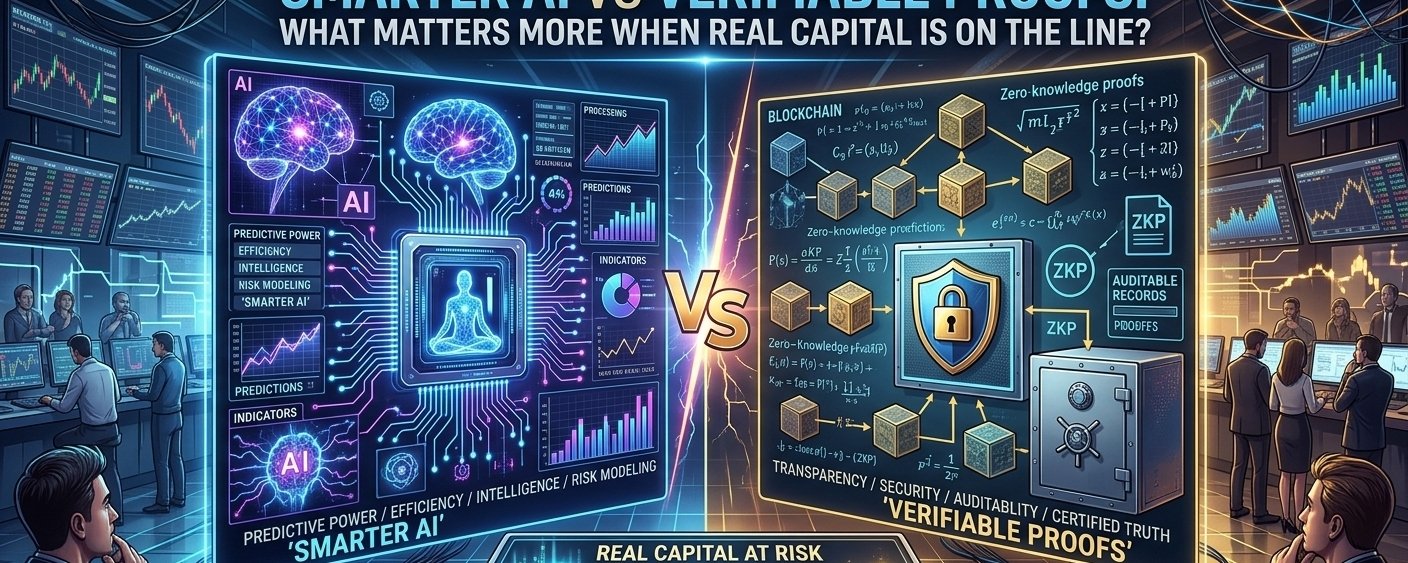
Smarter AI vs Verifiable Proofs: What Matters More When Real Capital is on the Line? When I first joined Binance, I fell into a very common trap. Looking at projects like @NewtonProtocol , I assumed they were simply trying to solve an AI problem by focusing on building a smarter machine, a more predictive algorithm or a better trading agent. But after dedicating significant time to digging past the marketing materials, reading closely through its underlying architecture and stress testing my initial assumptions, my core thesis completely flipped. This isn't actually an AI problem at all. It is fundamentally a trust problem.
The specific structural detail that changed my entire perspective was Newton’s unique approach to its secure rollup for AI driven execution. Instead of taking the easy route and simply allowing autonomous AI agents to operate freely on chain with full access to wallets, the protocol isolates their actions within a verifiable execution environment. This architectural choice means that every single decision an agent makes can be audited, shifting our reliance away from a mysterious black box and toward concrete cryptographic certainty.
As automated strategies and machine intelligence become deeply woven into our day to day trading loops, portfolio management and multi chain DeFi automation, this shift in focus becomes critical. In crypto, a highly optimized trading bot can have an exceptional win rate and still completely blow up a user's account in minutes if it mismanages sudden leverage gaps or ignores explicit drawdown limits. Most current AI infrastructure forces you to blindly trust the off chain system. Newton’s framework introduces strict, enforceable guardrails into the mix. Instead of just letting an agent operate on a vague mandate to maximize yield, you can program hard boundaries regarding specific asset classes, maximum slippage tolerances and strict stop loss thresholds. By validating these processes inside Trusted Execution Environments (TEEs) and generating on chain proofs, the system makes it possible to review exactly why and how an action occurred. When real personal capital is on the line, robust risk controls matter far more than predictive hype.
However, we have to look at the hard trade offs realistically because nothing in Web3 comes without a cost. Stronger verification layers and multi layered rollup structures naturally introduce heavy technical complexity, additional governance assumptions, and operational transaction friction. As the decentralized AI agent ecosystem attempts to scale up, managing these sophisticated cryptographic proof systems without entirely destroying execution speed or pushing gas fees too high is going to be the real competitive battleground.
I am still actively reading through the developer documentation, analyzing the system's resilience and testing my conclusions before finalizing my long term outlook on $NEWT . Yet, this exploration highlights a massive, foundational question that will inevitably shape the entire future of decentralized on chain automation. Which side of the equation matters more to you over the long term. A smarter, fully autonomous AI, or a more rigid, verifiable execution layer?
#Newt @NewtonProtocol #DeFi #CryptoAi #Web3Infrastructure $NEWT
Smarter AI vs Verifiable Proofs: What Matters More When Real Capital is on the Line?
When I first joined Binance, I fell into a very common trap. Looking at projects like @NewtonProtocol , I assumed they were simply trying to solve an AI problem by focusing on building a smarter machine, a more predictive algorithm or a better trading agent. But after dedicating significant time to digging past the marketing materials, reading closely through its underlying architecture and stress testing my initial assumptions, my core thesis completely flipped. This isn't actually an AI problem at all. It is fundamentally a trust problem.
The specific structural detail that changed my entire perspective was Newton’s unique approach to its secure rollup for AI driven execution. Instead of taking the easy route and simply allowing autonomous AI agents to operate freely on chain with full access to wallets, the protocol isolates their actions within a verifiable execution environment. This architectural choice means that every single decision an agent makes can be audited, shifting our reliance away from a mysterious black box and toward concrete cryptographic certainty.
As automated strategies and machine intelligence become deeply woven into our day to day trading loops, portfolio management and multi chain DeFi automation, this shift in focus becomes critical. In crypto, a highly optimized trading bot can have an exceptional win rate and still completely blow up a user's account in minutes if it mismanages sudden leverage gaps or ignores explicit drawdown limits. Most current AI infrastructure forces you to blindly trust the off chain system. Newton’s framework introduces strict, enforceable guardrails into the mix. Instead of just letting an agent operate on a vague mandate to maximize yield, you can program hard boundaries regarding specific asset classes, maximum slippage tolerances and strict stop loss thresholds. By validating these processes inside Trusted Execution Environments (TEEs) and generating on chain proofs, the system makes it possible to review exactly why and how an action occurred. When real personal capital is on the line, robust risk controls matter far more than predictive hype.
However, we have to look at the hard trade offs realistically because nothing in Web3 comes without a cost. Stronger verification layers and multi layered rollup structures naturally introduce heavy technical complexity, additional governance assumptions, and operational transaction friction. As the decentralized AI agent ecosystem attempts to scale up, managing these sophisticated cryptographic proof systems without entirely destroying execution speed or pushing gas fees too high is going to be the real competitive battleground.
I am still actively reading through the developer documentation, analyzing the system's resilience and testing my conclusions before finalizing my long term outlook on $NEWT . Yet, this exploration highlights a massive, foundational question that will inevitably shape the entire future of decentralized on chain automation. Which side of the equation matters more to you over the long term. A smarter, fully autonomous AI, or a more rigid, verifiable execution layer?
#Newt @NewtonProtocol #DeFi #CryptoAi #Web3Infrastructure $NEWT
The specific structural detail that changed my entire perspective was Newton’s unique approach to its secure rollup for AI driven execution. Instead of taking the easy route and simply allowing autonomous AI agents to operate freely on chain with full access to wallets, the protocol isolates their actions within a verifiable execution environment. This architectural choice means that every single decision an agent makes can be audited, shifting our reliance away from a mysterious black box and toward concrete cryptographic certainty.
As automated strategies and machine intelligence become deeply woven into our day to day trading loops, portfolio management and multi chain DeFi automation, this shift in focus becomes critical. In crypto, a highly optimized trading bot can have an exceptional win rate and still completely blow up a user's account in minutes if it mismanages sudden leverage gaps or ignores explicit drawdown limits. Most current AI infrastructure forces you to blindly trust the off chain system. Newton’s framework introduces strict, enforceable guardrails into the mix. Instead of just letting an agent operate on a vague mandate to maximize yield, you can program hard boundaries regarding specific asset classes, maximum slippage tolerances and strict stop loss thresholds. By validating these processes inside Trusted Execution Environments (TEEs) and generating on chain proofs, the system makes it possible to review exactly why and how an action occurred. When real personal capital is on the line, robust risk controls matter far more than predictive hype.
However, we have to look at the hard trade offs realistically because nothing in Web3 comes without a cost. Stronger verification layers and multi layered rollup structures naturally introduce heavy technical complexity, additional governance assumptions, and operational transaction friction. As the decentralized AI agent ecosystem attempts to scale up, managing these sophisticated cryptographic proof systems without entirely destroying execution speed or pushing gas fees too high is going to be the real competitive battleground.
I am still actively reading through the developer documentation, analyzing the system's resilience and testing my conclusions before finalizing my long term outlook on $NEWT . Yet, this exploration highlights a massive, foundational question that will inevitably shape the entire future of decentralized on chain automation. Which side of the equation matters more to you over the long term. A smarter, fully autonomous AI, or a more rigid, verifiable execution layer?
#Newt @NewtonProtocol #DeFi #CryptoAi #Web3Infrastructure $NEWT
35
12
250

·
--
Unlocking dormant Bitcoin liquidity while maintaining total self-custody is a game-changer for decentralized finance. The Trustless Bitcoin Vaults (TBV) developed by @babylonlabs_io BabylonLabs_io provide a groundbreaking security architecture that enables BTC holders to earn native staking yield without sacrificing asset control or relying on risky third-party custodians. By integrating cryptographic time-locks and slashable security mechanisms, the network allows Baby ecosystem participants to scale Proof-of-Stake security seamlessly. Understanding how TBV bridges Bitcoin's security with broader Web3 utility is essential for the future of decentralized yield generation. 🔒⚡
#baby $BABY #BitcoinStaking #DeFi: #Web3Infrastructure
Unlocking dormant Bitcoin liquidity while maintaining total self-custody is a game-changer for decentralized finance. The Trustless Bitcoin Vaults (TBV) developed by @BabylonLabs_io BabylonLabs_io provide a groundbreaking security architecture that enables BTC holders to earn native staking yield without sacrificing asset control or relying on risky third-party custodians. By integrating cryptographic time-locks and slashable security mechanisms, the network allows Baby ecosystem participants to scale Proof-of-Stake security seamlessly. Understanding how TBV bridges Bitcoin's security with broader Web3 utility is essential for the future of decentralized yield generation. 🔒⚡
#baby $BABY #BitcoinStaking #DeFi: #Web3Infrastructure
#baby $BABY #BitcoinStaking #DeFi: #Web3Infrastructure
102
Log in to explore more content
Join global crypto users on Binance Square
⚡️ Get latest and useful information about crypto.
💬 Trusted by the world’s largest crypto exchange.
👍 Discover real insights from verified creators.
Email / Phone number
Trending Topics
1
#BinancePick
3.1M views
154,436 Discussing
2
#EarningsSeason
5.3M views
26,098 Discussing
3
#AnthropicTTMRevenueGrewAbout1200%
37,518 views
458 Discussing
4
#AnthropicS1ExpectedToday
30,826 views
368 Discussing
5
#SouthKoreaReportedlyWeighsFourthCryptoTaxDelay
33,818 views
498 Discussing
6
#FranklinTempletonFilesForTwoDividendToBitcoinETFs
44,947 views
568 Discussing
7
#StrategyMSTRSurpassesNasdaqInMarketCap
34,650 views
402 Discussing
8
#CanadaProposesStablecoinRedemptionWithin3BusinessDays
1,438 views
37 Discussing
9
#ElectrumWalletBugLetRogueServersStealFunds
33,599 views
482 Discussing
10
#ArgentineCourtDismissesLIBRACaseAgainstMilei
50,103 views
604 Discussing