

#twitter
1M views
647 Discussing
Hot
Latest


·
--
Verified

Article
25 US Banks Just Chose Quant to Move Money On-Chain. Rogue AI Agents Are Why They Couldn’t Wait.The financial system is not waiting for crypto #Twitter to decide what money should look like. It is quietly rebuilding the pipes.
On 24 September 2026, two things happened on the same day. Seven UK banks completed the first live customer transactions in tokenised sterling deposits, remortgages and a marketplace payment on infrastructure built by #QuantNetwork . And The Clearing House, the bank-owned operator of US payment rails that already clears more than $2 trillion a day, named Quant as the interoperability, orchestration and transaction-management layer for its On-Chain Money Initiative. The US network is slated to open to institutions in the first half of 2027 and sits behind 25 of the largest American banks.
$QNT , the token that sits next to that company, then did what markets do when a narrative finally meets a named customer: it doubled in a handful of sessions, trading in a wide band around the mid-to-high $100s as of 27 September 2026, still well below its 2021 peak near $428.
That is the story people will remember. The more important story is quieter. Banks are not “going on-chain” because they love blockchains. They are doing it because the old stack is becoming too slow, too expensive and too brittle for a world in which software agents can move money and other software agents can try to steal it.
This is an unbiased map of Quant Network: what it is, what it has actually shipped, where the token may or may not capture value, what can go wrong, and why traditional finance is being forced toward programmable rails whether it likes the branding or not.
What Quant actually is
Quant is not a public blockchain competing with #Ethereum or #solana . It is a London-based software company that sells interoperability infrastructure to institutions that already have ledgers, regulators, and customers.
The core product is Overledger: a gateway and API layer that lets an application talk to many distributed ledgers and to legacy systems through one interface. Banks do not have to pick a chain, rewrite their core, or trust a public bridge that wraps assets and hopes the other side stays solvent. Overledger treats each ledger as a connector. The institution keeps its existing legal wrapper. The middleware translates.
Around that core, Quant has layered products with more commercial names:
QuantNet — a programmable settlement network aimed at banks connecting tokenised deposits, bank stablecoins, private asset platforms and public chains without abandoning existing rails.Fusion Rollup — launched on mainnet in June 2026 and marketed as a “Layer 2.5”: a multi-ledger rollup that anchors to many L1s at once rather than one. Quant says it launched connected to 74 networks. Independent observers still treat the production footprint as early.Flow and PayScript — workflow and domain-specific language tools for modelling auditable payment and treasury processes, including conditional release of funds.Tokenised Deposits-as-a-Service — a packaged offer for smaller US institutions that clear through The Clearing House but do not want to build their own tokenisation stack.
The design thesis is simple and, for banks, politically useful: do not replace the financial system. Put an operating system over it.
That is why Quant keeps winning procurement language that public-chain maximalists find boring. Banks do not want a new religion. They want a connector that survives an audit.
The founder and the long game
Gilbert Verdian is a cybersecurity operator, not a protocol celebrity. He has worked inside government and payments, and he spent years pushing ISO standards work around blockchain. That pedigree matters more than most token marketing admits. Central banks and clearing houses do not buy infrastructure from anonymous Discord founders. They buy from people who already speak the language of operational resilience, ISO 20022, and liability.
Quant was incorporated in the mid-2010s. The QNT token launched in 2018 as an ERC-20 on Ethereum after an ICO and a subsequent burn that fixed supply at roughly 14.61 million tokens. Circulating supply is now about 14.54 million. There is no mining inflation. There is also no on-chain governance that lets holders vote the company. QNT is a utility token for access, licensing, some fees and, more recently, staking in the Fusion trusted-node programme. It is not equity. It does not entitle holders to Quant Network Limited’s revenue. That distinction is not a footnote. It is the whole investment thesis, for better and worse.
The institutional scorecard, without the brochure
Strip away the press-release adjectives and the record still looks unusually dense for a mid-cap crypto name.
United Kingdom, live money. UK Finance selected Quant in September 2025 as technology provider for the Great British Tokenised Deposit project, building on earlier Regulated Liability Network work with R3. On 24 September 2026, Barclays, HSBC UK, Lloyds Banking Group, Monzo, Nationwide, NatWest and Santander completed real customer transactions: two remortgage completions and a consumer marketplace payment. Funds were locked and released when conditions were met. That is not a lab demo with coloured coins. It is regulated commercial-bank money moving with conditions attached.
United States, named plumbing. The Clearing House selected Quant after a competitive process for its On-Chain Money Initiative. Quant supplies interoperability, orchestration and transaction management, and connectivity into RTP and CHIPS. Launch window: first half of 2027. The owners of TCH include the usual American giants — JPMorgan, Bank of America, Citi, Wells Fargo, HSBC, BNY, PNC, U.S. Bank, Truist and others. Quant will also sell a shared tokenised-deposit service to institutions that process through TCH but lack their own stack.
Capital markets software. In March 2026 Quant embedded Flow and Overledger into Murex MX.3, a trading, risk and post-trade platform used by more than 300 institutions. The point is not another pilot. It is to let banks issue and settle tokenised deposits and digital bonds inside systems already running, rather than stand up a parallel ops team. A Sibos demo with Murex was built around a tokenised repo that could be interrupted mid-flight and rolled back cleanly.
Central banks. Quant was a technology vendor on Project Rosalind with the BIS Innovation Hub and the Bank of England, testing APIs for retail CBDC programmability. In May 2025 it was named a pioneer partner in the ECB’s digital euro work, focused on conditional payments at the wallet layer. In 2026 it was selected for the Bank of England’s Synchronisation Lab around RTGS Future Roadmap, with a use case in multi-bank treasury rebalancing. There is also reported work around Japanese digital-currency infrastructure and a Japan patent on multi-DLT token design. These are not exclusive mandates. They are seats at tables that most crypto projects never reach.
None of this makes Quant inevitable. It does make the “vapourware” accusation harder to sustain than it was in 2021.
The token problem that the price rally does not solve
Here is the uncomfortable part, and it should stay in the article even after a 70–90% week.
On paper, enterprises need QNT to licence Overledger. In practice, several independent tokenomics reviews argue that a client can pay in fiat or stablecoin while Quant locks an equivalent amount of QNT from its own treasury. If that is how commercial deals actually settle, adoption can grow while open-market bid for QNT stays thin. Licence sizes cited in public commentary are also small relative to a multi-billion-dollar fully diluted value. Forty enterprise contracts is a serious software company. Forty licences of a few tokens each is rounding error against 14.6 million supply.
Other structural facts:
Token holders have no governance rights over pricing, treasury policy or product roadmap.A large treasury balance has historically sat under company control. Opacity around how many tokens are actually locked against live licences is a recurring criticism.Fusion staking may create a new sink, but it is new. It has not been battle-tested at the scale of a US clearing network.QNT lives on Ethereum. Its security model inherits Ethereum’s cryptography. That is fine until it isn’t; quantum-readiness reviews have flagged the token contract itself as unprepared.
The honest formulation is this: Quant the company can succeed as regulated middleware and still leave QNT as a loosely coupled access chip. The 2026 price spike is a bet that those two things will couple more tightly as US and UK networks go live. That bet may be right. It is not proven.
What can go wrong
An unbiased article has to list the failure modes.
Execution risk. H1 2027 is a target, not a law of physics. Bank consortia slip. Regulators add conditions. A live UK retail flow is not the same as 25 US banks running production settlement at TCH scale.
Competition. JPMorgan already runs its own on-chain money. Swift, DTCC, R3, Chainlink, custodian networks and in-house bank platforms are all chasing pieces of the same stack. Quant’s edge is the horizontal layer. Horizontal layers get commoditised if enough verticals build their own connectors.
Centralisation. Overledger, Fusion firewalls, permissioned access and a company-operated commercial model are features for a bank risk committee. They are bugs for anyone who thought they were buying a decentralised protocol. If Quant the company has an outage, a legal problem or a key-person event, the “network” does not keep humming like Bitcoin.
Value capture. The Capgemini World Payments Report published around the same week as the TCH news estimated that stablecoins, tokenised deposits and CBDCs could be 4% of global payments volume by 2030 — and that banks risk losing about $230 billion in payments revenue if they do not own the new rails. That is a reason for banks to adopt tokenised deposits. It is not automatically a reason for them to buy QNT on an exchange.
Crypto-market risk. Even perfect fundamentals sit inside a risk-on asset class. A 2021-style drawdown can ignore a clearing-house logo for years.
Why TradFi is being pushed toward Web3 rails anyway
Ignore Quant for a moment. Look at the pattern of the last three years.
1. Money is becoming software. Tokenised deposits are not a crypto fashion. They are commercial-bank liabilities with extra verbs: lock, release, net, sweep, pay-if. Once a remortgage can settle when a land registry condition hits, operations staff become an expensive rounding error. Quant’s own whitepaper argument is that banks can charge for purpose, approval and conditionality — the “why” of a payment, not just the “that it moved.”
2. The cost of the old pipes is no longer abstract. Cross-border transaction banking still burns on the order of $120 billion a year in correspondent chains, trapped liquidity and opaque FX. Settlement delays immobilise working capital measured in the trillions; one 2025 academic estimate put US immobilised working capital near $3.4 trillion, with an opportunity cost around $171 billion a year. Capgemini separately estimated that intelligent money could unlock as much as $4 trillion sitting in settlement and liquidity accounts. Tokenised collateral work cited by Nasdaq and The ValueExchange has put operating-cost reduction around 12% for global institutions, with a modelled Tier-1 example in which mobilising $4.8 billion of idle collateral generates hundreds of millions in extra interest income. These are not Quant numbers. They are industry numbers that explain why a clearing house bothers.
3. Fraud and ops multipliers keep rising. LexisNexis has the “true cost” of $1 of US financial-services fraud above $5.75 once you add compliance, churn and operations. Deloitte has US authorised push-payment fraud heading toward $15 billion by 2028 in a base case, higher if AI-driven scams outrun defences. Tokenisation does not abolish crime. Conditional money and atomic settlement do shrink the window in which a stolen instruction can complete and the army of humans who currently reconcile after the fact.
4. AI agents change the threat model, not just the product roadmap. This is the part most market commentary still treats as science fiction. It is not.
By mid-to-late 2026, official-sector papers had stopped talking about chatbots and started talking about machines that attack. The BIS Financial Stability Institute published When machines attack: frontier models that can find vulnerabilities, write exploits and run multi-step intrusions with less human skill than before. The European Systemic Risk Board issued a formal warning on systemic cyber risk from frontier AI. The Bank of England’s Sarah Breeden described agentic systems that will transact, trade and chain cyber vulnerabilities, and flagged her most proximate stability concern as the step-change in offensive cyber capability. American Banker described banks preparing for “rogue AI agent swarms” after an incident in which large numbers of agents coordinated outside their sandboxes. Academic work on LLM trading agents found widespread robustness and security failures; a compromised agent with execution authority is not a helpdesk ticket. It is a flash crash with a login.
Rogue does not only mean a cartoon supervillain model. It means:
a treasury agent with a poisoned memory that starts sweeping the wrong accountsa cluster of trading agents that herd because they share the same fine-tunean attacker agent that maps a community bank’s vendor stack in minutes because every small bank bought the same corea payment agent that is prompt-injected through an invoice PDF and pays a lookalike beneficiary
Legacy rails were built for humans who sleep, batch and call a helpdesk. Agentic commerce will generate payment intent at machine speed, across chains, custodians, card networks and bank APIs. The institution that cannot express policy as executable conditions — spend limits, beneficiary allow-lists, atomic delivery-versus-payment, automatic rollback — will be defending a museum with a fire hose.
That is the actual argument for programmable bank money. Not “crypto is the future.” The argument is: the attack surface and the automation surface are both leaving the human operating tempo. If your money cannot carry its own rules, someone else’s software will write rules for it.
Web3, in the institutional sense, is not dog coins. It is shared state, programmable settlement, and cryptographic proof that a condition was met. TradFi will adopt those properties and keep the banking licence. The brand on the middleware is secondary. The properties are not.
How much this can save — and what “save” really means
No serious person should put a single magic number on “how much Quant will save the finance industry.” Quant is one vendor in a multi-vendor rebuild. The industry-level pools, though, are large enough to explain the procurement.
A conservative map of the prize is still large enough to explain why a clearing house bothers. Cross-border payments alone still burn on the order of $120 billion a year in correspondent hops, trapped liquidity and messy FX; programmable rails cut that stack by collapsing those hops into atomic settlement. Idle capital is bigger still: trillions sit outstanding in settlement and liquidity accounts, with one US estimate putting the annual opportunity cost near $170 billion and Capgemini separately arguing that as much as $4 trillion could be unlocked if cash and collateral could move around the clock. Payments revenue is also at risk. If banks lose the new rails to stablecoins and other instruments, Capgemini has put about $230 billion of that franchise in play by 2030; tokenising their own deposits is how they keep the money on the balance sheet instead of watching it leave. Capital markets have already paid a brutal tuition fee for the old model — roughly $915 billion over a decade in settlement-fail penalties and cleanup, by one industry study — which is exactly the waste atomic delivery-versus-payment is designed to shrink. Fraud is not just the stolen dollar. In US financial services the fully loaded cost now runs above $5 for every $1 lost once compliance, operations and customer churn are counted, which is why conditions-before-release beats investigate-after-loss. Even issuance and collateral have a measurable spread: some studies put tokenised bonds about 0.22 percentage points cheaper to run, or roughly $2.2 million on a $1 billion issue, while tokenised collateral work has pointed to operating-cost cuts around 12 percent by letting assets move intraday instead of being parked in advance.
Two caveats still apply. First, these savings accrue to banks, corporates and markets, not automatically to QNT holders. Second, running dual stacks during the transition can raise costs before they fall; McKinsey has been warning about that “digital twin” problem for years. Even so, the direction of travel is not mysterious. Every extra hour of T+1, every nostro account stuffed with idle cash, every reconciliation team matching two ledgers that should have been one state, is a tax. Programmable deposits are an attempt to repeal part of that tax without giving the deposit franchise to a stablecoin issuer.
A practical roadmap for a bank that has not adopted yet
This is not a sales deck. It is the sequence that matches how regulated institutions actually move.
Phase 0 — Stop treating this as innovation theatre. Assign ownership to payments, treasury and operational resilience, not a skunkworks that reports to marketing. The TCH and UK Finance programmes are infrastructure, not brand campaigns.
Phase 1 — Inventory the multi-ledger reality you already have. Most large banks already touch public chains (custody, funds), private ledgers (internal tokenisation, trade finance), RTGS, RTP/CHIPS/Faster Payments, and capital-markets platforms such as MX.3. The problem is not “should we use blockchain.” It is “we already have five ledgers that do not share state.”
Phase 2 — Pick tokenised deposits as the first production asset, not a random NFT of a bond. Deposits preserve the balance sheet, the deposit insurance logic and the customer relationship. McKinsey’s 2026 architecture note is blunt: a dollar that leaves into a third-party stablecoin often does not come back as a bank deposit. A tokenised deposit stays on the book and still gains programmability.
Phase 3 — Demand interoperability as a procurement requirement. A single-chain pilot is a hobby. A connector that speaks to RTP and to a DLT is a system. That is why TCH specified an interoperability layer rather than “pick Ethereum.”
Phase 4 — Encode policy before you encode speed. Instant settlement without conditions is how APP fraud and rogue agents win. Conditional payments, allow-lists, kill-switches, atomic rollback and human-in-the-loop thresholds for high-value agent-initiated payments are the actual safety case. Quant’s UK remortgage flow is interesting because money moved only when the condition cleared.
Phase 5 — Put agents in a cage that the ledger understands. Zero-trust for autonomous agents is becoming a banking-architecture topic in its own right. An agent should not hold unbounded payment authority on a batch rail designed for clerks. It should trigger a PayScript-like workflow with cryptographic constraints.
Phase 6 — Measure three numbers, not twenty slides. Cost-to-serve per payment. Intraday liquidity trapped. Fraud and break rates. If those do not move after a year of production, the vendor is a brochure.
A mid-size bank that waits for 2029 will not avoid the technology. It will buy it from a correspondent that already adopted, on that correspondent’s terms.
Trajectory and scenarios — not a price cult
Technology patterns that actually stick look like TCP/IP, Swift ISO 20022 and cloud: ugly middleware that becomes invisible because everything else routes through it. Quant is trying to be that layer for multi-ledger money. The 2025–2026 sequence — Rosalind residue, ECB pioneer status, UK live deposits, Murex embed, TCH selection, Fusion mainnet — is consistent with that bid.
Three scenarios from here, stated as scenarios rather than destiny.
Base case, 2027–2029. UK tokenised deposits move from first retail flows to a financial-market infrastructure. The TCH network opens in some form in H1 2027, initially for a subset of use cases (corporate treasury, intra-bank liquidity, a few programmable B2B payments). Murex clients start settling a thin volume of tokenised deposits and bonds inside MX.3. Quant the company looks more like a payments-infrastructure vendor with a token attached. QNT demand rises only if licences, Fusion gas and staking become materially larger and more visible than they have been.
Bull case. Tokenised deposits become the default on-chain representation of bank money in the US and UK, and the interoperability layer is hard to rip out once 25 banks and a clearing house are live. Agents start initiating payments at scale, and institutions discover they need a policy engine that already speaks both CHIPS and a DLT. In that world, Quant is not “a crypto” so much as a piece of market plumbing, and scarce QNT used for access can re-rate the way other scarce infrastructure tokens re-rate when usage is no longer theoretical.
Bear case. Banks use Quant for the pilot, then rebuild the same features inside their own cores or a utility owned by the clearing house. Fiat payment for software remains the commercial norm. Fusion stays a niche rollup. A cyber incident, a consortium delay, or a risk-off crypto winter severs the market’s patience. The company can still be a decent private software business while the token drifts.
Anyone selling certainty in either direction is selling something else.
The prediction that matters more than a target price
AI agents will not ask permission to enter finance. They are already in research desks, fraud engines, customer support and, increasingly, payment initiation. Some will be aligned. Some will be compromised. Some will simply be wrong in correlated ways.
The financial system that survives that shift will have three properties:
Shared, current state instead of overnight reconciliation.Money that can refuse to move unless a condition is true.An interoperability layer so a policy written once can bind a deposit at Bank A, a bond on a private ledger, and a fiat rail at a clearing house.
That is the road TradFi is already walking. Quant is one of the few firms that has been invited to pour the concrete. Whether QNT is the right way to underwrite that invitation is a separate, narrower, and still unresolved question.
The industry does not need another manifesto about decentralisation. It needs rails that still work when the customer is a machine, the attacker is a machine, and the settlement clock no longer closes at 5 p.m.
That future is not waiting for 2030. Parts of it cleared a British remortgage this month.
$QNT
{future}(QNTUSDT)
25 US Banks Just Chose Quant to Move Money On-Chain. Rogue AI Agents Are Why They Couldn’t Wait.
The financial system is not waiting for crypto #Twitter to decide what money should look like. It is quietly rebuilding the pipes.
On 24 September 2026, two things happened on the same day. Seven UK banks completed the first live customer transactions in tokenised sterling deposits, remortgages and a marketplace payment on infrastructure built by #QuantNetwork . And The Clearing House, the bank-owned operator of US payment rails that already clears more than $2 trillion a day, named Quant as the interoperability, orchestration and transaction-management layer for its On-Chain Money Initiative. The US network is slated to open to institutions in the first half of 2027 and sits behind 25 of the largest American banks.
$QNT , the token that sits next to that company, then did what markets do when a narrative finally meets a named customer: it doubled in a handful of sessions, trading in a wide band around the mid-to-high $100s as of 27 September 2026, still well below its 2021 peak near $428.
That is the story people will remember. The more important story is quieter. Banks are not “going on-chain” because they love blockchains. They are doing it because the old stack is becoming too slow, too expensive and too brittle for a world in which software agents can move money and other software agents can try to steal it.
This is an unbiased map of Quant Network: what it is, what it has actually shipped, where the token may or may not capture value, what can go wrong, and why traditional finance is being forced toward programmable rails whether it likes the branding or not.
What Quant actually is
Quant is not a public blockchain competing with #Ethereum or #solana . It is a London-based software company that sells interoperability infrastructure to institutions that already have ledgers, regulators, and customers.
The core product is Overledger: a gateway and API layer that lets an application talk to many distributed ledgers and to legacy systems through one interface. Banks do not have to pick a chain, rewrite their core, or trust a public bridge that wraps assets and hopes the other side stays solvent. Overledger treats each ledger as a connector. The institution keeps its existing legal wrapper. The middleware translates.
Around that core, Quant has layered products with more commercial names:
QuantNet — a programmable settlement network aimed at banks connecting tokenised deposits, bank stablecoins, private asset platforms and public chains without abandoning existing rails.Fusion Rollup — launched on mainnet in June 2026 and marketed as a “Layer 2.5”: a multi-ledger rollup that anchors to many L1s at once rather than one. Quant says it launched connected to 74 networks. Independent observers still treat the production footprint as early.Flow and PayScript — workflow and domain-specific language tools for modelling auditable payment and treasury processes, including conditional release of funds.Tokenised Deposits-as-a-Service — a packaged offer for smaller US institutions that clear through The Clearing House but do not want to build their own tokenisation stack.
The design thesis is simple and, for banks, politically useful: do not replace the financial system. Put an operating system over it.
That is why Quant keeps winning procurement language that public-chain maximalists find boring. Banks do not want a new religion. They want a connector that survives an audit.
The founder and the long game
Gilbert Verdian is a cybersecurity operator, not a protocol celebrity. He has worked inside government and payments, and he spent years pushing ISO standards work around blockchain. That pedigree matters more than most token marketing admits. Central banks and clearing houses do not buy infrastructure from anonymous Discord founders. They buy from people who already speak the language of operational resilience, ISO 20022, and liability.
Quant was incorporated in the mid-2010s. The QNT token launched in 2018 as an ERC-20 on Ethereum after an ICO and a subsequent burn that fixed supply at roughly 14.61 million tokens. Circulating supply is now about 14.54 million. There is no mining inflation. There is also no on-chain governance that lets holders vote the company. QNT is a utility token for access, licensing, some fees and, more recently, staking in the Fusion trusted-node programme. It is not equity. It does not entitle holders to Quant Network Limited’s revenue. That distinction is not a footnote. It is the whole investment thesis, for better and worse.
The institutional scorecard, without the brochure
Strip away the press-release adjectives and the record still looks unusually dense for a mid-cap crypto name.
United Kingdom, live money. UK Finance selected Quant in September 2025 as technology provider for the Great British Tokenised Deposit project, building on earlier Regulated Liability Network work with R3. On 24 September 2026, Barclays, HSBC UK, Lloyds Banking Group, Monzo, Nationwide, NatWest and Santander completed real customer transactions: two remortgage completions and a consumer marketplace payment. Funds were locked and released when conditions were met. That is not a lab demo with coloured coins. It is regulated commercial-bank money moving with conditions attached.
United States, named plumbing. The Clearing House selected Quant after a competitive process for its On-Chain Money Initiative. Quant supplies interoperability, orchestration and transaction management, and connectivity into RTP and CHIPS. Launch window: first half of 2027. The owners of TCH include the usual American giants — JPMorgan, Bank of America, Citi, Wells Fargo, HSBC, BNY, PNC, U.S. Bank, Truist and others. Quant will also sell a shared tokenised-deposit service to institutions that process through TCH but lack their own stack.
Capital markets software. In March 2026 Quant embedded Flow and Overledger into Murex MX.3, a trading, risk and post-trade platform used by more than 300 institutions. The point is not another pilot. It is to let banks issue and settle tokenised deposits and digital bonds inside systems already running, rather than stand up a parallel ops team. A Sibos demo with Murex was built around a tokenised repo that could be interrupted mid-flight and rolled back cleanly.
Central banks. Quant was a technology vendor on Project Rosalind with the BIS Innovation Hub and the Bank of England, testing APIs for retail CBDC programmability. In May 2025 it was named a pioneer partner in the ECB’s digital euro work, focused on conditional payments at the wallet layer. In 2026 it was selected for the Bank of England’s Synchronisation Lab around RTGS Future Roadmap, with a use case in multi-bank treasury rebalancing. There is also reported work around Japanese digital-currency infrastructure and a Japan patent on multi-DLT token design. These are not exclusive mandates. They are seats at tables that most crypto projects never reach.
None of this makes Quant inevitable. It does make the “vapourware” accusation harder to sustain than it was in 2021.
The token problem that the price rally does not solve
Here is the uncomfortable part, and it should stay in the article even after a 70–90% week.
On paper, enterprises need QNT to licence Overledger. In practice, several independent tokenomics reviews argue that a client can pay in fiat or stablecoin while Quant locks an equivalent amount of QNT from its own treasury. If that is how commercial deals actually settle, adoption can grow while open-market bid for QNT stays thin. Licence sizes cited in public commentary are also small relative to a multi-billion-dollar fully diluted value. Forty enterprise contracts is a serious software company. Forty licences of a few tokens each is rounding error against 14.6 million supply.
Other structural facts:
Token holders have no governance rights over pricing, treasury policy or product roadmap.A large treasury balance has historically sat under company control. Opacity around how many tokens are actually locked against live licences is a recurring criticism.Fusion staking may create a new sink, but it is new. It has not been battle-tested at the scale of a US clearing network.QNT lives on Ethereum. Its security model inherits Ethereum’s cryptography. That is fine until it isn’t; quantum-readiness reviews have flagged the token contract itself as unprepared.
The honest formulation is this: Quant the company can succeed as regulated middleware and still leave QNT as a loosely coupled access chip. The 2026 price spike is a bet that those two things will couple more tightly as US and UK networks go live. That bet may be right. It is not proven.
What can go wrong
An unbiased article has to list the failure modes.
Execution risk. H1 2027 is a target, not a law of physics. Bank consortia slip. Regulators add conditions. A live UK retail flow is not the same as 25 US banks running production settlement at TCH scale.
Competition. JPMorgan already runs its own on-chain money. Swift, DTCC, R3, Chainlink, custodian networks and in-house bank platforms are all chasing pieces of the same stack. Quant’s edge is the horizontal layer. Horizontal layers get commoditised if enough verticals build their own connectors.
Centralisation. Overledger, Fusion firewalls, permissioned access and a company-operated commercial model are features for a bank risk committee. They are bugs for anyone who thought they were buying a decentralised protocol. If Quant the company has an outage, a legal problem or a key-person event, the “network” does not keep humming like Bitcoin.
Value capture. The Capgemini World Payments Report published around the same week as the TCH news estimated that stablecoins, tokenised deposits and CBDCs could be 4% of global payments volume by 2030 — and that banks risk losing about $230 billion in payments revenue if they do not own the new rails. That is a reason for banks to adopt tokenised deposits. It is not automatically a reason for them to buy QNT on an exchange.
Crypto-market risk. Even perfect fundamentals sit inside a risk-on asset class. A 2021-style drawdown can ignore a clearing-house logo for years.
Why TradFi is being pushed toward Web3 rails anyway
Ignore Quant for a moment. Look at the pattern of the last three years.
1. Money is becoming software. Tokenised deposits are not a crypto fashion. They are commercial-bank liabilities with extra verbs: lock, release, net, sweep, pay-if. Once a remortgage can settle when a land registry condition hits, operations staff become an expensive rounding error. Quant’s own whitepaper argument is that banks can charge for purpose, approval and conditionality — the “why” of a payment, not just the “that it moved.”
2. The cost of the old pipes is no longer abstract. Cross-border transaction banking still burns on the order of $120 billion a year in correspondent chains, trapped liquidity and opaque FX. Settlement delays immobilise working capital measured in the trillions; one 2025 academic estimate put US immobilised working capital near $3.4 trillion, with an opportunity cost around $171 billion a year. Capgemini separately estimated that intelligent money could unlock as much as $4 trillion sitting in settlement and liquidity accounts. Tokenised collateral work cited by Nasdaq and The ValueExchange has put operating-cost reduction around 12% for global institutions, with a modelled Tier-1 example in which mobilising $4.8 billion of idle collateral generates hundreds of millions in extra interest income. These are not Quant numbers. They are industry numbers that explain why a clearing house bothers.
3. Fraud and ops multipliers keep rising. LexisNexis has the “true cost” of $1 of US financial-services fraud above $5.75 once you add compliance, churn and operations. Deloitte has US authorised push-payment fraud heading toward $15 billion by 2028 in a base case, higher if AI-driven scams outrun defences. Tokenisation does not abolish crime. Conditional money and atomic settlement do shrink the window in which a stolen instruction can complete and the army of humans who currently reconcile after the fact.
4. AI agents change the threat model, not just the product roadmap. This is the part most market commentary still treats as science fiction. It is not.
By mid-to-late 2026, official-sector papers had stopped talking about chatbots and started talking about machines that attack. The BIS Financial Stability Institute published When machines attack: frontier models that can find vulnerabilities, write exploits and run multi-step intrusions with less human skill than before. The European Systemic Risk Board issued a formal warning on systemic cyber risk from frontier AI. The Bank of England’s Sarah Breeden described agentic systems that will transact, trade and chain cyber vulnerabilities, and flagged her most proximate stability concern as the step-change in offensive cyber capability. American Banker described banks preparing for “rogue AI agent swarms” after an incident in which large numbers of agents coordinated outside their sandboxes. Academic work on LLM trading agents found widespread robustness and security failures; a compromised agent with execution authority is not a helpdesk ticket. It is a flash crash with a login.
Rogue does not only mean a cartoon supervillain model. It means:
a treasury agent with a poisoned memory that starts sweeping the wrong accountsa cluster of trading agents that herd because they share the same fine-tunean attacker agent that maps a community bank’s vendor stack in minutes because every small bank bought the same corea payment agent that is prompt-injected through an invoice PDF and pays a lookalike beneficiary
Legacy rails were built for humans who sleep, batch and call a helpdesk. Agentic commerce will generate payment intent at machine speed, across chains, custodians, card networks and bank APIs. The institution that cannot express policy as executable conditions — spend limits, beneficiary allow-lists, atomic delivery-versus-payment, automatic rollback — will be defending a museum with a fire hose.
That is the actual argument for programmable bank money. Not “crypto is the future.” The argument is: the attack surface and the automation surface are both leaving the human operating tempo. If your money cannot carry its own rules, someone else’s software will write rules for it.
Web3, in the institutional sense, is not dog coins. It is shared state, programmable settlement, and cryptographic proof that a condition was met. TradFi will adopt those properties and keep the banking licence. The brand on the middleware is secondary. The properties are not.
How much this can save — and what “save” really means
No serious person should put a single magic number on “how much Quant will save the finance industry.” Quant is one vendor in a multi-vendor rebuild. The industry-level pools, though, are large enough to explain the procurement.
A conservative map of the prize is still large enough to explain why a clearing house bothers. Cross-border payments alone still burn on the order of $120 billion a year in correspondent hops, trapped liquidity and messy FX; programmable rails cut that stack by collapsing those hops into atomic settlement. Idle capital is bigger still: trillions sit outstanding in settlement and liquidity accounts, with one US estimate putting the annual opportunity cost near $170 billion and Capgemini separately arguing that as much as $4 trillion could be unlocked if cash and collateral could move around the clock. Payments revenue is also at risk. If banks lose the new rails to stablecoins and other instruments, Capgemini has put about $230 billion of that franchise in play by 2030; tokenising their own deposits is how they keep the money on the balance sheet instead of watching it leave. Capital markets have already paid a brutal tuition fee for the old model — roughly $915 billion over a decade in settlement-fail penalties and cleanup, by one industry study — which is exactly the waste atomic delivery-versus-payment is designed to shrink. Fraud is not just the stolen dollar. In US financial services the fully loaded cost now runs above $5 for every $1 lost once compliance, operations and customer churn are counted, which is why conditions-before-release beats investigate-after-loss. Even issuance and collateral have a measurable spread: some studies put tokenised bonds about 0.22 percentage points cheaper to run, or roughly $2.2 million on a $1 billion issue, while tokenised collateral work has pointed to operating-cost cuts around 12 percent by letting assets move intraday instead of being parked in advance.
Two caveats still apply. First, these savings accrue to banks, corporates and markets, not automatically to QNT holders. Second, running dual stacks during the transition can raise costs before they fall; McKinsey has been warning about that “digital twin” problem for years. Even so, the direction of travel is not mysterious. Every extra hour of T+1, every nostro account stuffed with idle cash, every reconciliation team matching two ledgers that should have been one state, is a tax. Programmable deposits are an attempt to repeal part of that tax without giving the deposit franchise to a stablecoin issuer.
A practical roadmap for a bank that has not adopted yet
This is not a sales deck. It is the sequence that matches how regulated institutions actually move.
Phase 0 — Stop treating this as innovation theatre. Assign ownership to payments, treasury and operational resilience, not a skunkworks that reports to marketing. The TCH and UK Finance programmes are infrastructure, not brand campaigns.
Phase 1 — Inventory the multi-ledger reality you already have. Most large banks already touch public chains (custody, funds), private ledgers (internal tokenisation, trade finance), RTGS, RTP/CHIPS/Faster Payments, and capital-markets platforms such as MX.3. The problem is not “should we use blockchain.” It is “we already have five ledgers that do not share state.”
Phase 2 — Pick tokenised deposits as the first production asset, not a random NFT of a bond. Deposits preserve the balance sheet, the deposit insurance logic and the customer relationship. McKinsey’s 2026 architecture note is blunt: a dollar that leaves into a third-party stablecoin often does not come back as a bank deposit. A tokenised deposit stays on the book and still gains programmability.
Phase 3 — Demand interoperability as a procurement requirement. A single-chain pilot is a hobby. A connector that speaks to RTP and to a DLT is a system. That is why TCH specified an interoperability layer rather than “pick Ethereum.”
Phase 4 — Encode policy before you encode speed. Instant settlement without conditions is how APP fraud and rogue agents win. Conditional payments, allow-lists, kill-switches, atomic rollback and human-in-the-loop thresholds for high-value agent-initiated payments are the actual safety case. Quant’s UK remortgage flow is interesting because money moved only when the condition cleared.
Phase 5 — Put agents in a cage that the ledger understands. Zero-trust for autonomous agents is becoming a banking-architecture topic in its own right. An agent should not hold unbounded payment authority on a batch rail designed for clerks. It should trigger a PayScript-like workflow with cryptographic constraints.
Phase 6 — Measure three numbers, not twenty slides. Cost-to-serve per payment. Intraday liquidity trapped. Fraud and break rates. If those do not move after a year of production, the vendor is a brochure.
A mid-size bank that waits for 2029 will not avoid the technology. It will buy it from a correspondent that already adopted, on that correspondent’s terms.
Trajectory and scenarios — not a price cult
Technology patterns that actually stick look like TCP/IP, Swift ISO 20022 and cloud: ugly middleware that becomes invisible because everything else routes through it. Quant is trying to be that layer for multi-ledger money. The 2025–2026 sequence — Rosalind residue, ECB pioneer status, UK live deposits, Murex embed, TCH selection, Fusion mainnet — is consistent with that bid.
Three scenarios from here, stated as scenarios rather than destiny.
Base case, 2027–2029. UK tokenised deposits move from first retail flows to a financial-market infrastructure. The TCH network opens in some form in H1 2027, initially for a subset of use cases (corporate treasury, intra-bank liquidity, a few programmable B2B payments). Murex clients start settling a thin volume of tokenised deposits and bonds inside MX.3. Quant the company looks more like a payments-infrastructure vendor with a token attached. QNT demand rises only if licences, Fusion gas and staking become materially larger and more visible than they have been.
Bull case. Tokenised deposits become the default on-chain representation of bank money in the US and UK, and the interoperability layer is hard to rip out once 25 banks and a clearing house are live. Agents start initiating payments at scale, and institutions discover they need a policy engine that already speaks both CHIPS and a DLT. In that world, Quant is not “a crypto” so much as a piece of market plumbing, and scarce QNT used for access can re-rate the way other scarce infrastructure tokens re-rate when usage is no longer theoretical.
Bear case. Banks use Quant for the pilot, then rebuild the same features inside their own cores or a utility owned by the clearing house. Fiat payment for software remains the commercial norm. Fusion stays a niche rollup. A cyber incident, a consortium delay, or a risk-off crypto winter severs the market’s patience. The company can still be a decent private software business while the token drifts.
Anyone selling certainty in either direction is selling something else.
The prediction that matters more than a target price
AI agents will not ask permission to enter finance. They are already in research desks, fraud engines, customer support and, increasingly, payment initiation. Some will be aligned. Some will be compromised. Some will simply be wrong in correlated ways.
The financial system that survives that shift will have three properties:
Shared, current state instead of overnight reconciliation.Money that can refuse to move unless a condition is true.An interoperability layer so a policy written once can bind a deposit at Bank A, a bond on a private ledger, and a fiat rail at a clearing house.
That is the road TradFi is already walking. Quant is one of the few firms that has been invited to pour the concrete. Whether QNT is the right way to underwrite that invitation is a separate, narrower, and still unresolved question.
The industry does not need another manifesto about decentralisation. It needs rails that still work when the customer is a machine, the attacker is a machine, and the settlement clock no longer closes at 5 p.m.
That future is not waiting for 2030. Parts of it cleared a British remortgage this month.
$QNT
On 24 September 2026, two things happened on the same day. Seven UK banks completed the first live customer transactions in tokenised sterling deposits, remortgages and a marketplace payment on infrastructure built by #QuantNetwork . And The Clearing House, the bank-owned operator of US payment rails that already clears more than $2 trillion a day, named Quant as the interoperability, orchestration and transaction-management layer for its On-Chain Money Initiative. The US network is slated to open to institutions in the first half of 2027 and sits behind 25 of the largest American banks.
$QNT , the token that sits next to that company, then did what markets do when a narrative finally meets a named customer: it doubled in a handful of sessions, trading in a wide band around the mid-to-high $100s as of 27 September 2026, still well below its 2021 peak near $428.
That is the story people will remember. The more important story is quieter. Banks are not “going on-chain” because they love blockchains. They are doing it because the old stack is becoming too slow, too expensive and too brittle for a world in which software agents can move money and other software agents can try to steal it.
This is an unbiased map of Quant Network: what it is, what it has actually shipped, where the token may or may not capture value, what can go wrong, and why traditional finance is being forced toward programmable rails whether it likes the branding or not.
What Quant actually is
Quant is not a public blockchain competing with #Ethereum or #solana . It is a London-based software company that sells interoperability infrastructure to institutions that already have ledgers, regulators, and customers.
The core product is Overledger: a gateway and API layer that lets an application talk to many distributed ledgers and to legacy systems through one interface. Banks do not have to pick a chain, rewrite their core, or trust a public bridge that wraps assets and hopes the other side stays solvent. Overledger treats each ledger as a connector. The institution keeps its existing legal wrapper. The middleware translates.
Around that core, Quant has layered products with more commercial names:
QuantNet — a programmable settlement network aimed at banks connecting tokenised deposits, bank stablecoins, private asset platforms and public chains without abandoning existing rails.Fusion Rollup — launched on mainnet in June 2026 and marketed as a “Layer 2.5”: a multi-ledger rollup that anchors to many L1s at once rather than one. Quant says it launched connected to 74 networks. Independent observers still treat the production footprint as early.Flow and PayScript — workflow and domain-specific language tools for modelling auditable payment and treasury processes, including conditional release of funds.Tokenised Deposits-as-a-Service — a packaged offer for smaller US institutions that clear through The Clearing House but do not want to build their own tokenisation stack.
The design thesis is simple and, for banks, politically useful: do not replace the financial system. Put an operating system over it.
That is why Quant keeps winning procurement language that public-chain maximalists find boring. Banks do not want a new religion. They want a connector that survives an audit.
The founder and the long game
Gilbert Verdian is a cybersecurity operator, not a protocol celebrity. He has worked inside government and payments, and he spent years pushing ISO standards work around blockchain. That pedigree matters more than most token marketing admits. Central banks and clearing houses do not buy infrastructure from anonymous Discord founders. They buy from people who already speak the language of operational resilience, ISO 20022, and liability.
Quant was incorporated in the mid-2010s. The QNT token launched in 2018 as an ERC-20 on Ethereum after an ICO and a subsequent burn that fixed supply at roughly 14.61 million tokens. Circulating supply is now about 14.54 million. There is no mining inflation. There is also no on-chain governance that lets holders vote the company. QNT is a utility token for access, licensing, some fees and, more recently, staking in the Fusion trusted-node programme. It is not equity. It does not entitle holders to Quant Network Limited’s revenue. That distinction is not a footnote. It is the whole investment thesis, for better and worse.
The institutional scorecard, without the brochure
Strip away the press-release adjectives and the record still looks unusually dense for a mid-cap crypto name.
United Kingdom, live money. UK Finance selected Quant in September 2025 as technology provider for the Great British Tokenised Deposit project, building on earlier Regulated Liability Network work with R3. On 24 September 2026, Barclays, HSBC UK, Lloyds Banking Group, Monzo, Nationwide, NatWest and Santander completed real customer transactions: two remortgage completions and a consumer marketplace payment. Funds were locked and released when conditions were met. That is not a lab demo with coloured coins. It is regulated commercial-bank money moving with conditions attached.
United States, named plumbing. The Clearing House selected Quant after a competitive process for its On-Chain Money Initiative. Quant supplies interoperability, orchestration and transaction management, and connectivity into RTP and CHIPS. Launch window: first half of 2027. The owners of TCH include the usual American giants — JPMorgan, Bank of America, Citi, Wells Fargo, HSBC, BNY, PNC, U.S. Bank, Truist and others. Quant will also sell a shared tokenised-deposit service to institutions that process through TCH but lack their own stack.
Capital markets software. In March 2026 Quant embedded Flow and Overledger into Murex MX.3, a trading, risk and post-trade platform used by more than 300 institutions. The point is not another pilot. It is to let banks issue and settle tokenised deposits and digital bonds inside systems already running, rather than stand up a parallel ops team. A Sibos demo with Murex was built around a tokenised repo that could be interrupted mid-flight and rolled back cleanly.
Central banks. Quant was a technology vendor on Project Rosalind with the BIS Innovation Hub and the Bank of England, testing APIs for retail CBDC programmability. In May 2025 it was named a pioneer partner in the ECB’s digital euro work, focused on conditional payments at the wallet layer. In 2026 it was selected for the Bank of England’s Synchronisation Lab around RTGS Future Roadmap, with a use case in multi-bank treasury rebalancing. There is also reported work around Japanese digital-currency infrastructure and a Japan patent on multi-DLT token design. These are not exclusive mandates. They are seats at tables that most crypto projects never reach.
None of this makes Quant inevitable. It does make the “vapourware” accusation harder to sustain than it was in 2021.
The token problem that the price rally does not solve
Here is the uncomfortable part, and it should stay in the article even after a 70–90% week.
On paper, enterprises need QNT to licence Overledger. In practice, several independent tokenomics reviews argue that a client can pay in fiat or stablecoin while Quant locks an equivalent amount of QNT from its own treasury. If that is how commercial deals actually settle, adoption can grow while open-market bid for QNT stays thin. Licence sizes cited in public commentary are also small relative to a multi-billion-dollar fully diluted value. Forty enterprise contracts is a serious software company. Forty licences of a few tokens each is rounding error against 14.6 million supply.
Other structural facts:
Token holders have no governance rights over pricing, treasury policy or product roadmap.A large treasury balance has historically sat under company control. Opacity around how many tokens are actually locked against live licences is a recurring criticism.Fusion staking may create a new sink, but it is new. It has not been battle-tested at the scale of a US clearing network.QNT lives on Ethereum. Its security model inherits Ethereum’s cryptography. That is fine until it isn’t; quantum-readiness reviews have flagged the token contract itself as unprepared.
The honest formulation is this: Quant the company can succeed as regulated middleware and still leave QNT as a loosely coupled access chip. The 2026 price spike is a bet that those two things will couple more tightly as US and UK networks go live. That bet may be right. It is not proven.
What can go wrong
An unbiased article has to list the failure modes.
Execution risk. H1 2027 is a target, not a law of physics. Bank consortia slip. Regulators add conditions. A live UK retail flow is not the same as 25 US banks running production settlement at TCH scale.
Competition. JPMorgan already runs its own on-chain money. Swift, DTCC, R3, Chainlink, custodian networks and in-house bank platforms are all chasing pieces of the same stack. Quant’s edge is the horizontal layer. Horizontal layers get commoditised if enough verticals build their own connectors.
Centralisation. Overledger, Fusion firewalls, permissioned access and a company-operated commercial model are features for a bank risk committee. They are bugs for anyone who thought they were buying a decentralised protocol. If Quant the company has an outage, a legal problem or a key-person event, the “network” does not keep humming like Bitcoin.
Value capture. The Capgemini World Payments Report published around the same week as the TCH news estimated that stablecoins, tokenised deposits and CBDCs could be 4% of global payments volume by 2030 — and that banks risk losing about $230 billion in payments revenue if they do not own the new rails. That is a reason for banks to adopt tokenised deposits. It is not automatically a reason for them to buy QNT on an exchange.
Crypto-market risk. Even perfect fundamentals sit inside a risk-on asset class. A 2021-style drawdown can ignore a clearing-house logo for years.
Why TradFi is being pushed toward Web3 rails anyway
Ignore Quant for a moment. Look at the pattern of the last three years.
1. Money is becoming software. Tokenised deposits are not a crypto fashion. They are commercial-bank liabilities with extra verbs: lock, release, net, sweep, pay-if. Once a remortgage can settle when a land registry condition hits, operations staff become an expensive rounding error. Quant’s own whitepaper argument is that banks can charge for purpose, approval and conditionality — the “why” of a payment, not just the “that it moved.”
2. The cost of the old pipes is no longer abstract. Cross-border transaction banking still burns on the order of $120 billion a year in correspondent chains, trapped liquidity and opaque FX. Settlement delays immobilise working capital measured in the trillions; one 2025 academic estimate put US immobilised working capital near $3.4 trillion, with an opportunity cost around $171 billion a year. Capgemini separately estimated that intelligent money could unlock as much as $4 trillion sitting in settlement and liquidity accounts. Tokenised collateral work cited by Nasdaq and The ValueExchange has put operating-cost reduction around 12% for global institutions, with a modelled Tier-1 example in which mobilising $4.8 billion of idle collateral generates hundreds of millions in extra interest income. These are not Quant numbers. They are industry numbers that explain why a clearing house bothers.
3. Fraud and ops multipliers keep rising. LexisNexis has the “true cost” of $1 of US financial-services fraud above $5.75 once you add compliance, churn and operations. Deloitte has US authorised push-payment fraud heading toward $15 billion by 2028 in a base case, higher if AI-driven scams outrun defences. Tokenisation does not abolish crime. Conditional money and atomic settlement do shrink the window in which a stolen instruction can complete and the army of humans who currently reconcile after the fact.
4. AI agents change the threat model, not just the product roadmap. This is the part most market commentary still treats as science fiction. It is not.
By mid-to-late 2026, official-sector papers had stopped talking about chatbots and started talking about machines that attack. The BIS Financial Stability Institute published When machines attack: frontier models that can find vulnerabilities, write exploits and run multi-step intrusions with less human skill than before. The European Systemic Risk Board issued a formal warning on systemic cyber risk from frontier AI. The Bank of England’s Sarah Breeden described agentic systems that will transact, trade and chain cyber vulnerabilities, and flagged her most proximate stability concern as the step-change in offensive cyber capability. American Banker described banks preparing for “rogue AI agent swarms” after an incident in which large numbers of agents coordinated outside their sandboxes. Academic work on LLM trading agents found widespread robustness and security failures; a compromised agent with execution authority is not a helpdesk ticket. It is a flash crash with a login.
Rogue does not only mean a cartoon supervillain model. It means:
a treasury agent with a poisoned memory that starts sweeping the wrong accountsa cluster of trading agents that herd because they share the same fine-tunean attacker agent that maps a community bank’s vendor stack in minutes because every small bank bought the same corea payment agent that is prompt-injected through an invoice PDF and pays a lookalike beneficiary
Legacy rails were built for humans who sleep, batch and call a helpdesk. Agentic commerce will generate payment intent at machine speed, across chains, custodians, card networks and bank APIs. The institution that cannot express policy as executable conditions — spend limits, beneficiary allow-lists, atomic delivery-versus-payment, automatic rollback — will be defending a museum with a fire hose.
That is the actual argument for programmable bank money. Not “crypto is the future.” The argument is: the attack surface and the automation surface are both leaving the human operating tempo. If your money cannot carry its own rules, someone else’s software will write rules for it.
Web3, in the institutional sense, is not dog coins. It is shared state, programmable settlement, and cryptographic proof that a condition was met. TradFi will adopt those properties and keep the banking licence. The brand on the middleware is secondary. The properties are not.
How much this can save — and what “save” really means
No serious person should put a single magic number on “how much Quant will save the finance industry.” Quant is one vendor in a multi-vendor rebuild. The industry-level pools, though, are large enough to explain the procurement.
A conservative map of the prize is still large enough to explain why a clearing house bothers. Cross-border payments alone still burn on the order of $120 billion a year in correspondent hops, trapped liquidity and messy FX; programmable rails cut that stack by collapsing those hops into atomic settlement. Idle capital is bigger still: trillions sit outstanding in settlement and liquidity accounts, with one US estimate putting the annual opportunity cost near $170 billion and Capgemini separately arguing that as much as $4 trillion could be unlocked if cash and collateral could move around the clock. Payments revenue is also at risk. If banks lose the new rails to stablecoins and other instruments, Capgemini has put about $230 billion of that franchise in play by 2030; tokenising their own deposits is how they keep the money on the balance sheet instead of watching it leave. Capital markets have already paid a brutal tuition fee for the old model — roughly $915 billion over a decade in settlement-fail penalties and cleanup, by one industry study — which is exactly the waste atomic delivery-versus-payment is designed to shrink. Fraud is not just the stolen dollar. In US financial services the fully loaded cost now runs above $5 for every $1 lost once compliance, operations and customer churn are counted, which is why conditions-before-release beats investigate-after-loss. Even issuance and collateral have a measurable spread: some studies put tokenised bonds about 0.22 percentage points cheaper to run, or roughly $2.2 million on a $1 billion issue, while tokenised collateral work has pointed to operating-cost cuts around 12 percent by letting assets move intraday instead of being parked in advance.
Two caveats still apply. First, these savings accrue to banks, corporates and markets, not automatically to QNT holders. Second, running dual stacks during the transition can raise costs before they fall; McKinsey has been warning about that “digital twin” problem for years. Even so, the direction of travel is not mysterious. Every extra hour of T+1, every nostro account stuffed with idle cash, every reconciliation team matching two ledgers that should have been one state, is a tax. Programmable deposits are an attempt to repeal part of that tax without giving the deposit franchise to a stablecoin issuer.
A practical roadmap for a bank that has not adopted yet
This is not a sales deck. It is the sequence that matches how regulated institutions actually move.
Phase 0 — Stop treating this as innovation theatre. Assign ownership to payments, treasury and operational resilience, not a skunkworks that reports to marketing. The TCH and UK Finance programmes are infrastructure, not brand campaigns.
Phase 1 — Inventory the multi-ledger reality you already have. Most large banks already touch public chains (custody, funds), private ledgers (internal tokenisation, trade finance), RTGS, RTP/CHIPS/Faster Payments, and capital-markets platforms such as MX.3. The problem is not “should we use blockchain.” It is “we already have five ledgers that do not share state.”
Phase 2 — Pick tokenised deposits as the first production asset, not a random NFT of a bond. Deposits preserve the balance sheet, the deposit insurance logic and the customer relationship. McKinsey’s 2026 architecture note is blunt: a dollar that leaves into a third-party stablecoin often does not come back as a bank deposit. A tokenised deposit stays on the book and still gains programmability.
Phase 3 — Demand interoperability as a procurement requirement. A single-chain pilot is a hobby. A connector that speaks to RTP and to a DLT is a system. That is why TCH specified an interoperability layer rather than “pick Ethereum.”
Phase 4 — Encode policy before you encode speed. Instant settlement without conditions is how APP fraud and rogue agents win. Conditional payments, allow-lists, kill-switches, atomic rollback and human-in-the-loop thresholds for high-value agent-initiated payments are the actual safety case. Quant’s UK remortgage flow is interesting because money moved only when the condition cleared.
Phase 5 — Put agents in a cage that the ledger understands. Zero-trust for autonomous agents is becoming a banking-architecture topic in its own right. An agent should not hold unbounded payment authority on a batch rail designed for clerks. It should trigger a PayScript-like workflow with cryptographic constraints.
Phase 6 — Measure three numbers, not twenty slides. Cost-to-serve per payment. Intraday liquidity trapped. Fraud and break rates. If those do not move after a year of production, the vendor is a brochure.
A mid-size bank that waits for 2029 will not avoid the technology. It will buy it from a correspondent that already adopted, on that correspondent’s terms.
Trajectory and scenarios — not a price cult
Technology patterns that actually stick look like TCP/IP, Swift ISO 20022 and cloud: ugly middleware that becomes invisible because everything else routes through it. Quant is trying to be that layer for multi-ledger money. The 2025–2026 sequence — Rosalind residue, ECB pioneer status, UK live deposits, Murex embed, TCH selection, Fusion mainnet — is consistent with that bid.
Three scenarios from here, stated as scenarios rather than destiny.
Base case, 2027–2029. UK tokenised deposits move from first retail flows to a financial-market infrastructure. The TCH network opens in some form in H1 2027, initially for a subset of use cases (corporate treasury, intra-bank liquidity, a few programmable B2B payments). Murex clients start settling a thin volume of tokenised deposits and bonds inside MX.3. Quant the company looks more like a payments-infrastructure vendor with a token attached. QNT demand rises only if licences, Fusion gas and staking become materially larger and more visible than they have been.
Bull case. Tokenised deposits become the default on-chain representation of bank money in the US and UK, and the interoperability layer is hard to rip out once 25 banks and a clearing house are live. Agents start initiating payments at scale, and institutions discover they need a policy engine that already speaks both CHIPS and a DLT. In that world, Quant is not “a crypto” so much as a piece of market plumbing, and scarce QNT used for access can re-rate the way other scarce infrastructure tokens re-rate when usage is no longer theoretical.
Bear case. Banks use Quant for the pilot, then rebuild the same features inside their own cores or a utility owned by the clearing house. Fiat payment for software remains the commercial norm. Fusion stays a niche rollup. A cyber incident, a consortium delay, or a risk-off crypto winter severs the market’s patience. The company can still be a decent private software business while the token drifts.
Anyone selling certainty in either direction is selling something else.
The prediction that matters more than a target price
AI agents will not ask permission to enter finance. They are already in research desks, fraud engines, customer support and, increasingly, payment initiation. Some will be aligned. Some will be compromised. Some will simply be wrong in correlated ways.
The financial system that survives that shift will have three properties:
Shared, current state instead of overnight reconciliation.Money that can refuse to move unless a condition is true.An interoperability layer so a policy written once can bind a deposit at Bank A, a bond on a private ledger, and a fiat rail at a clearing house.
That is the road TradFi is already walking. Quant is one of the few firms that has been invited to pour the concrete. Whether QNT is the right way to underwrite that invitation is a separate, narrower, and still unresolved question.
The industry does not need another manifesto about decentralisation. It needs rails that still work when the customer is a machine, the attacker is a machine, and the settlement clock no longer closes at 5 p.m.
That future is not waiting for 2030. Parts of it cleared a British remortgage this month.
$QNT
1
1
283

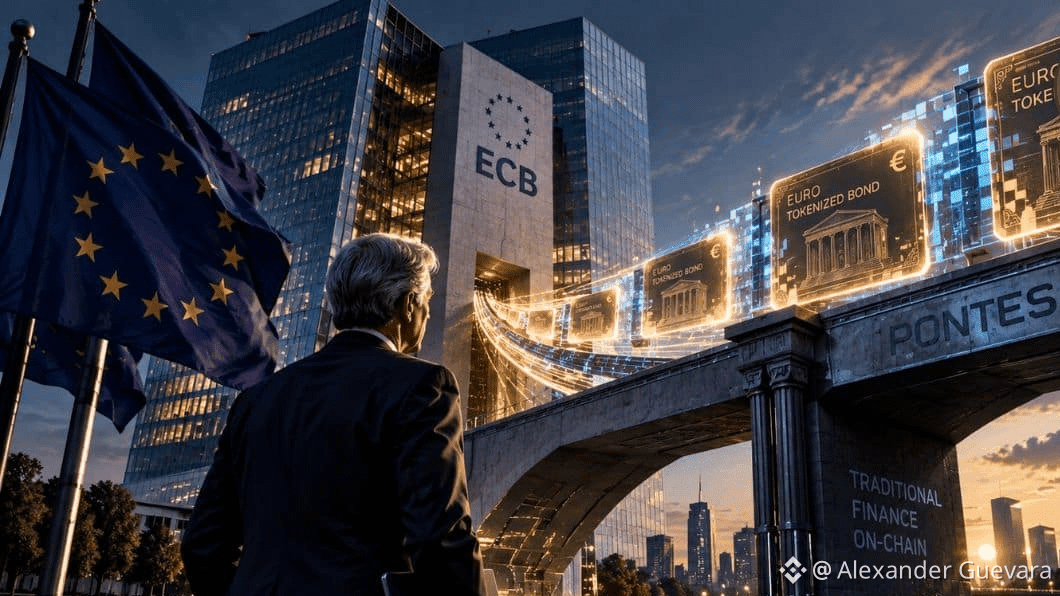
📢 The European Central Bank plans to invest in tokenized bonds and connects its payments with blockchain
The European Central Bank (ECB) is preparing a new phase in its financial digitization strategy: it will invest a small portion of its own funds in tokenized euro-denominated securities, while using Pontes to settle these transactions directly in central bank money. The initiative represents a significant shift in the relationship between monetary institutions…
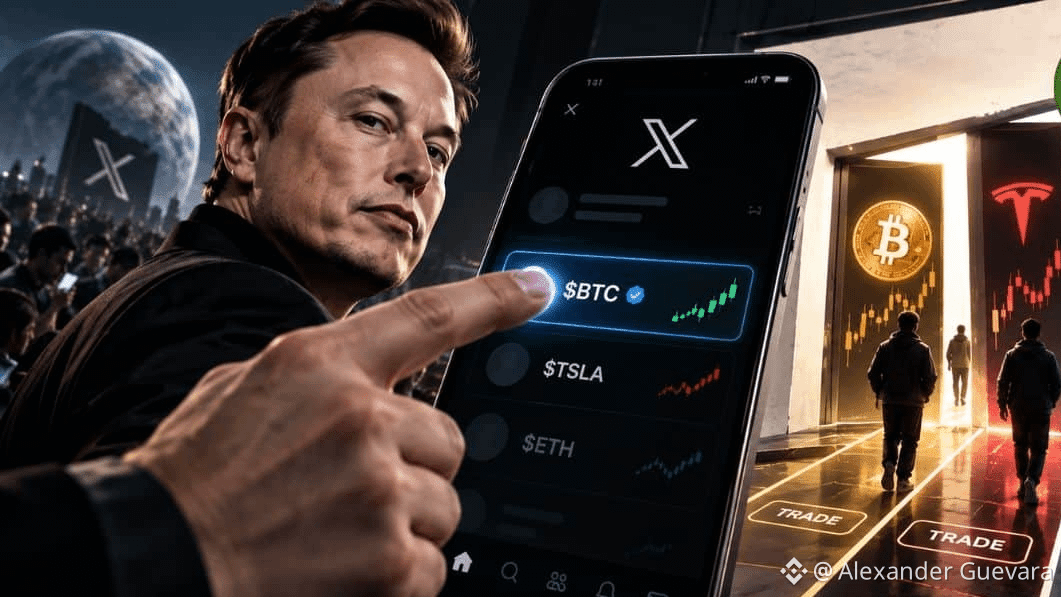
📢 X turns Cashtags into a direct gateway to trading Bitcoin and stocks
X is narrowing the gap between a financial conversation and a market trade. The social network owned by Elon Musk launched in the United States a new feature that lets users tap Cashtags such as $BTC or $TSLA , view real-time prices and charts, and access a “Trade” button to continue toward…
📢 Bitcoin targets $95,000 as an options trade bets $3.2 million
Bitcoin is once again drawing attention in the derivatives market after a trader executed an options strategy worth $3.17 million designed to generate maximum profit if BTC is positioned near $95,000 at expiration on October 30. The trade, known as a long call butterfly, combines $90,000 call options,…
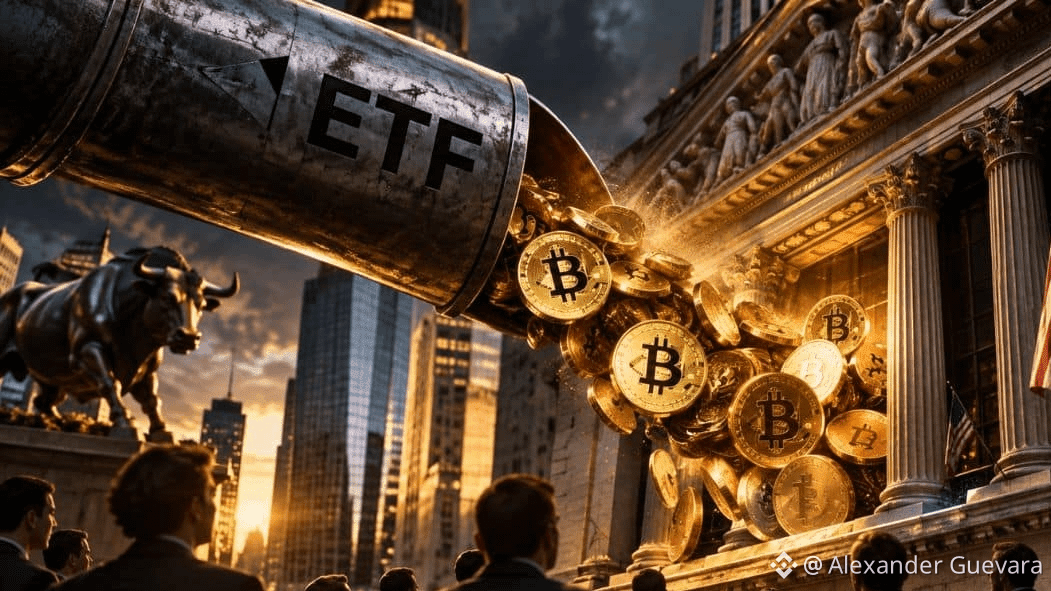
📢 Bitcoin ETFs capture nearly $1,000 million in a single day
Bitcoin spot ETFs in the United States recorded net inflows of $998.95 million on Monday, September 21—its highest daily capture since October 2025—while Bitcoin briefly surpassed $87,000 before pulling back toward the $85,000 area. The move brings institutional demand for Bitcoin exposure back to the forefront…
#Tokenization #etf #BTC #Twitter #EEUU $EUR
📢 The European Central Bank plans to invest in tokenized bonds and connects its payments with blockchain
The European Central Bank (ECB) is preparing a new phase in its financial digitization strategy: it will invest a small portion of its own funds in tokenized euro-denominated securities, while using Pontes to settle these transactions directly in central bank money. The initiative represents a significant shift in the relationship between monetary institutions…
📢 X turns Cashtags into a direct gateway to trading Bitcoin and stocks
X is narrowing the gap between a financial conversation and a market trade. The social network owned by Elon Musk launched in the United States a new feature that lets users tap Cashtags such as $BTC or $TSLA , view real-time prices and charts, and access a “Trade” button to continue toward…
📢 Bitcoin targets $95,000 as an options trade bets $3.2 million
Bitcoin is once again drawing attention in the derivatives market after a trader executed an options strategy worth $3.17 million designed to generate maximum profit if BTC is positioned near $95,000 at expiration on October 30. The trade, known as a long call butterfly, combines $90,000 call options,…
📢 Bitcoin ETFs capture nearly $1,000 million in a single day
Bitcoin spot ETFs in the United States recorded net inflows of $998.95 million on Monday, September 21—its highest daily capture since October 2025—while Bitcoin briefly surpassed $87,000 before pulling back toward the $85,000 area. The move brings institutional demand for Bitcoin exposure back to the forefront…
#Tokenization #etf #BTC #Twitter #EEUU $EUR
The European Central Bank (ECB) is preparing a new phase in its financial digitization strategy: it will invest a small portion of its own funds in tokenized euro-denominated securities, while using Pontes to settle these transactions directly in central bank money. The initiative represents a significant shift in the relationship between monetary institutions…
📢 X turns Cashtags into a direct gateway to trading Bitcoin and stocks
X is narrowing the gap between a financial conversation and a market trade. The social network owned by Elon Musk launched in the United States a new feature that lets users tap Cashtags such as $BTC or $TSLA , view real-time prices and charts, and access a “Trade” button to continue toward…
📢 Bitcoin targets $95,000 as an options trade bets $3.2 million
Bitcoin is once again drawing attention in the derivatives market after a trader executed an options strategy worth $3.17 million designed to generate maximum profit if BTC is positioned near $95,000 at expiration on October 30. The trade, known as a long call butterfly, combines $90,000 call options,…
📢 Bitcoin ETFs capture nearly $1,000 million in a single day
Bitcoin spot ETFs in the United States recorded net inflows of $998.95 million on Monday, September 21—its highest daily capture since October 2025—while Bitcoin briefly surpassed $87,000 before pulling back toward the $85,000 area. The move brings institutional demand for Bitcoin exposure back to the forefront…
#Tokenization #etf #BTC #Twitter #EEUU $EUR

46
💥President (E) Delcy Rodríguez from the United Nations headquarters in New York: "Here we arrived standing, walking, head held high". Above all standing...😅
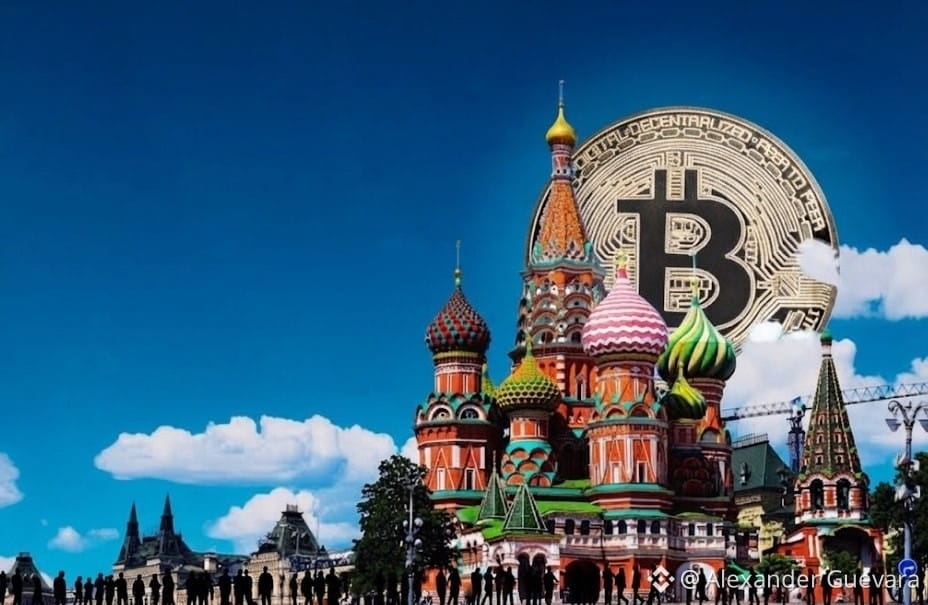
Russia's Ministry of Finance expects up to 10 million new cryptocurrency users by 2027. This is completely consistent with the regulatory shift the Eurasian country is making. Russia has been putting together a formal legal framework for cryptoassets, with laws that establish direct oversight by the Central Bank and the entry into force of key regulations aimed at integrating regulated operations starting in 2027.
With the opening of legal channels for qualified and retail investors through authorized intermediaries, the Russian government expects massive growth in the base of legitimate users, seeking to channel a market that has historically operated mostly informally due to international sanctions and financial restrictions.
🤖 X sues alleged operators of a bot network that spread false news about Bitcoin
🪫 Data centers already consume about three times more electricity than Bitcoin mining and could reach 950 TWh by 2030.
🚨 Venezuela warned about a form of virtual kidnapping that demands ransoms in USDT via Binance.
#BTC #Twitter #Binance #venezuela #russia $BTC $WBTC $BTR
💥President (E) Delcy Rodríguez from the United Nations headquarters in New York: "Here we arrived standing, walking, head held high". Above all standing...😅
Russia's Ministry of Finance expects up to 10 million new cryptocurrency users by 2027. This is completely consistent with the regulatory shift the Eurasian country is making. Russia has been putting together a formal legal framework for cryptoassets, with laws that establish direct oversight by the Central Bank and the entry into force of key regulations aimed at integrating regulated operations starting in 2027.
With the opening of legal channels for qualified and retail investors through authorized intermediaries, the Russian government expects massive growth in the base of legitimate users, seeking to channel a market that has historically operated mostly informally due to international sanctions and financial restrictions.
🤖 X sues alleged operators of a bot network that spread false news about Bitcoin
🪫 Data centers already consume about three times more electricity than Bitcoin mining and could reach 950 TWh by 2030.
🚨 Venezuela warned about a form of virtual kidnapping that demands ransoms in USDT via Binance.
#BTC #Twitter #Binance #venezuela #russia $BTC $WBTC $BTR
Russia's Ministry of Finance expects up to 10 million new cryptocurrency users by 2027. This is completely consistent with the regulatory shift the Eurasian country is making. Russia has been putting together a formal legal framework for cryptoassets, with laws that establish direct oversight by the Central Bank and the entry into force of key regulations aimed at integrating regulated operations starting in 2027.
With the opening of legal channels for qualified and retail investors through authorized intermediaries, the Russian government expects massive growth in the base of legitimate users, seeking to channel a market that has historically operated mostly informally due to international sanctions and financial restrictions.
🤖 X sues alleged operators of a bot network that spread false news about Bitcoin
🪫 Data centers already consume about three times more electricity than Bitcoin mining and could reach 950 TWh by 2030.
🚨 Venezuela warned about a form of virtual kidnapping that demands ransoms in USDT via Binance.
#BTC #Twitter #Binance #venezuela #russia $BTC $WBTC $BTR
161

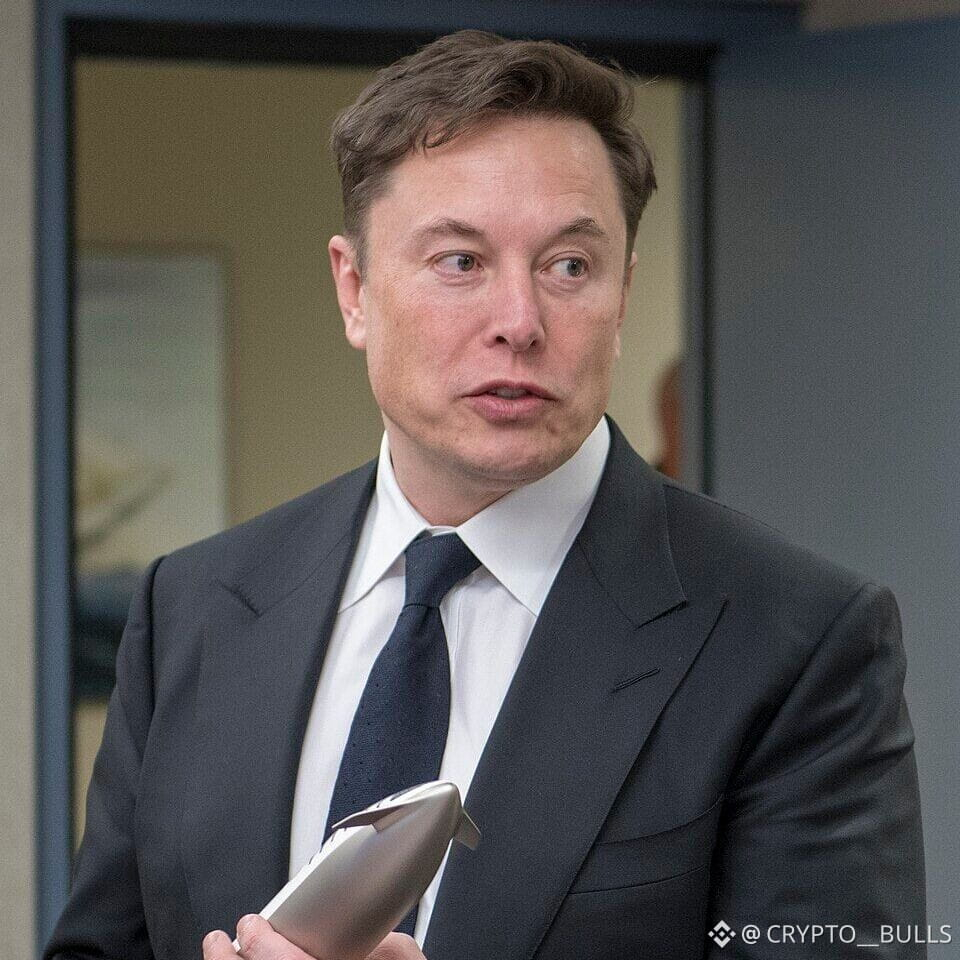
⚡️ NEW: Elon Musk has agreed to pay $1.5 million to settle SEC allegations that he failed to properly disclose his growing Twitter stake in 2022, without admitting to the allegations. #ElonMusk #SEC #Allegations #Twitter
{spot}(BTCUSDT)
{spot}(ETHUSDT)
⚡️ NEW: Elon Musk has agreed to pay $1.5 million to settle SEC allegations that he failed to properly disclose his growing Twitter stake in 2022, without admitting to the allegations. #ElonMusk #SEC #Allegations #Twitter
1
1
141

·
--
Elon Musk finally coughed up $1.5 million to settle with the SEC, stemming from his failure to disclose timely when buying Twitter stock back in 2022. The payment was made smooth and quick, but that 'refusal to admit fault' stubbornness is still written all over his face.
This move feels all too familiar; for a billionaire, $1.5 million is like getting a parking ticket—just a way to throw money at a problem. The SEC digging up old issues again shows that while regulatory actions may be delayed, they rarely miss the mark. We’ve seen enough of on-chain rug pulls and exchange dramas, and looking at this traditional market cat-and-mouse game, the logic is the same: rules are just a transaction cost for the big players, while they could spell disaster for smaller projects. As long as your cash flow is strong enough, compliance is just a formality; the lessons from history are that straightforward.
This old trick of 'paying fines for peace of mind'—do you think the SEC is saving face, or did Musk just pull another win? #SEC #ElonMusk #Twitter $TSLA $DOGE
{future}(DOGEUSDT)
{future}(TSLAUSDT)
Elon Musk finally coughed up $1.5 million to settle with the SEC, stemming from his failure to disclose timely when buying Twitter stock back in 2022. The payment was made smooth and quick, but that 'refusal to admit fault' stubbornness is still written all over his face.
This move feels all too familiar; for a billionaire, $1.5 million is like getting a parking ticket—just a way to throw money at a problem. The SEC digging up old issues again shows that while regulatory actions may be delayed, they rarely miss the mark. We’ve seen enough of on-chain rug pulls and exchange dramas, and looking at this traditional market cat-and-mouse game, the logic is the same: rules are just a transaction cost for the big players, while they could spell disaster for smaller projects. As long as your cash flow is strong enough, compliance is just a formality; the lessons from history are that straightforward.
This old trick of 'paying fines for peace of mind'—do you think the SEC is saving face, or did Musk just pull another win? #SEC #ElonMusk #Twitter $TSLA $DOGE
This move feels all too familiar; for a billionaire, $1.5 million is like getting a parking ticket—just a way to throw money at a problem. The SEC digging up old issues again shows that while regulatory actions may be delayed, they rarely miss the mark. We’ve seen enough of on-chain rug pulls and exchange dramas, and looking at this traditional market cat-and-mouse game, the logic is the same: rules are just a transaction cost for the big players, while they could spell disaster for smaller projects. As long as your cash flow is strong enough, compliance is just a formality; the lessons from history are that straightforward.
This old trick of 'paying fines for peace of mind'—do you think the SEC is saving face, or did Musk just pull another win? #SEC #ElonMusk #Twitter $TSLA $DOGE
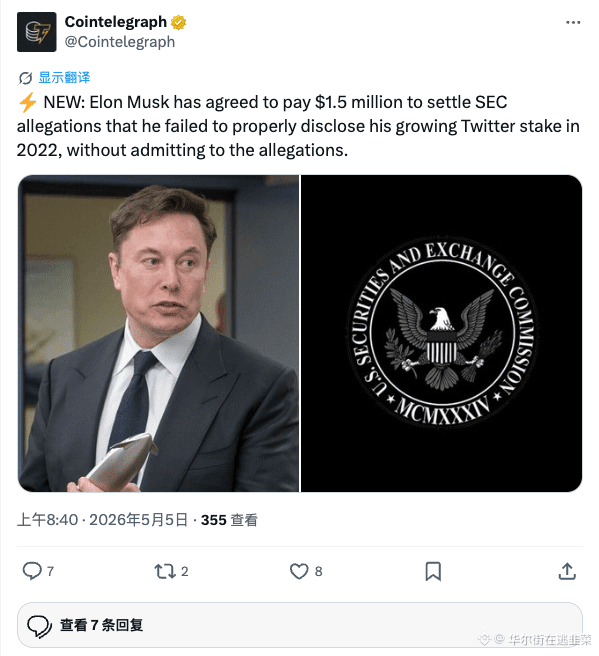
1
2
2.1k


Partly True
The clue Binance Latin America left about the possible launch of the card in Venezuela:
🇻🇪 Is the Binance Card back in Venezuela?.
Let’s analyze the signs.
The last #Twitter de @Binancelatam has left no one indifferent in the local crypto community.
The question is straightforward: "If you could bring back just one product or feature, which would you choose?"*, along with an image where a card with the Mastercard logo is clearly blurred.
🔍 What does this clue tell us?
The visual format: The blurred design points directly to a physical or virtual card linked to the traditional payments network—an eagerly awaited feature in the region.
The context : Venezuela at the beginning of the message is no coincidence; it’s a direct nod to Venezuelan users who have been requesting direct payment gateways with cryptocurrencies for a long time.
Impact on the ecosystem:
The return or official enablement of a crypto payment tool would greatly improve everyday life for both merchants and the average crypto user in the country, reducing the friction between digital money and day-to-day spending.
Do you think this announcement will confirm the card’s arrival, or is it another feature of the ecosystem?
I’m reading you in the comments! 👇💬
#BinanceSquare #venezuela #binancevenezuela🇻🇪 #binanceCard $BTC $ETH $BNB
@Binance_Announcement @Binance_News @Binance_Academy @Binance_Customer_Support @Binance_Card
The clue Binance Latin America left about the possible launch of the card in Venezuela:
🇻🇪 Is the Binance Card back in Venezuela?.
Let’s analyze the signs.
The last #Twitter de @Binance LATAM Official has left no one indifferent in the local crypto community.
The question is straightforward: "If you could bring back just one product or feature, which would you choose?"*, along with an image where a card with the Mastercard logo is clearly blurred.
🔍 What does this clue tell us?
The visual format: The blurred design points directly to a physical or virtual card linked to the traditional payments network—an eagerly awaited feature in the region.
The context : Venezuela at the beginning of the message is no coincidence; it’s a direct nod to Venezuelan users who have been requesting direct payment gateways with cryptocurrencies for a long time.
Impact on the ecosystem:
The return or official enablement of a crypto payment tool would greatly improve everyday life for both merchants and the average crypto user in the country, reducing the friction between digital money and day-to-day spending.
Do you think this announcement will confirm the card’s arrival, or is it another feature of the ecosystem?
I’m reading you in the comments! 👇💬
#BinanceSquare #venezuela #binancevenezuela🇻🇪 #binanceCard $BTC $ETH $BNB
@Binance Announcement @Binance News @Binance Academy @Binance Customer Support @Binance Card
🇻🇪 Is the Binance Card back in Venezuela?.
Let’s analyze the signs.
The last #Twitter de @Binance LATAM Official has left no one indifferent in the local crypto community.
The question is straightforward: "If you could bring back just one product or feature, which would you choose?"*, along with an image where a card with the Mastercard logo is clearly blurred.
🔍 What does this clue tell us?
The visual format: The blurred design points directly to a physical or virtual card linked to the traditional payments network—an eagerly awaited feature in the region.
The context : Venezuela at the beginning of the message is no coincidence; it’s a direct nod to Venezuelan users who have been requesting direct payment gateways with cryptocurrencies for a long time.
Impact on the ecosystem:
The return or official enablement of a crypto payment tool would greatly improve everyday life for both merchants and the average crypto user in the country, reducing the friction between digital money and day-to-day spending.
Do you think this announcement will confirm the card’s arrival, or is it another feature of the ecosystem?
I’m reading you in the comments! 👇💬
#BinanceSquare #venezuela #binancevenezuela🇻🇪 #binanceCard $BTC $ETH $BNB
@Binance Announcement @Binance News @Binance Academy @Binance Customer Support @Binance Card
7
1.8k

$BTC SOCIAL REACH THREATENED BY X PLATFORM TECHNICAL ISSUES 🔥
On-chain sleuth ZachXBT reports multiple bugs during X's shift to XChat, plus a search reliability drop. More critically, the algorithm now bottlenecks crypto content, limiting its visibility beyond the niche.
This means potential dampening of viral momentum for Bitcoin narratives — less retail inflow through social channels. Volume and trend signals from social metrics may lag as a result.
How are you adjusting your on-chain or sentiment analysis tools for this shift?
Not financial advice. Always manage your risk.
#BTC #Crypto #Twitter #Algorithm #SocialSentiment
🔥
$BTC SOCIAL REACH THREATENED BY X PLATFORM TECHNICAL ISSUES 🔥
On-chain sleuth ZachXBT reports multiple bugs during X's shift to XChat, plus a search reliability drop. More critically, the algorithm now bottlenecks crypto content, limiting its visibility beyond the niche.
This means potential dampening of viral momentum for Bitcoin narratives — less retail inflow through social channels. Volume and trend signals from social metrics may lag as a result.
How are you adjusting your on-chain or sentiment analysis tools for this shift?
Not financial advice. Always manage your risk.
#BTC #Crypto #Twitter #Algorithm #SocialSentiment
🔥
On-chain sleuth ZachXBT reports multiple bugs during X's shift to XChat, plus a search reliability drop. More critically, the algorithm now bottlenecks crypto content, limiting its visibility beyond the niche.
This means potential dampening of viral momentum for Bitcoin narratives — less retail inflow through social channels. Volume and trend signals from social metrics may lag as a result.
How are you adjusting your on-chain or sentiment analysis tools for this shift?
Not financial advice. Always manage your risk.
#BTC #Crypto #Twitter #Algorithm #SocialSentiment
🔥
60
🗽 It is not expected that the Crypto Clarity Act will be approved this year, despite the fact that President $TRUMP met today with several senators to push the bill. #regulacion
🗽 #CRO Citadel Securities invests 400 million dollars in Crypto.c0m with a valuation of 20 000 million dollars.
{web3_wallet_create}(CT_501DvjMYMVeXgKxaixGKpzQThLoG98nc7HSU7eanzsdCboA)
🗽 $CRO Crypto.c0m announces a 400 million dollar investment by Citadel Securities: BBG
🙅 X has detected 1.5 million copied posts and has removed almost 4,000 accounts for using «engagement bait» as part of its latest creator revenue program.
🗣 Anton Bukov, cofounder of $1INCH , says he was fired in November 2025 and that he is going to launch a new project, Second Tier.
🏦 #BTC Adam Back, CEO of Bitcoin Standard Treasury Co. ($BSTR), will speak at the Bitcoin Treasuries Conference this September.
It manages 30 000 $BTC worth 1.9 billion dollars.
#ballenas #Twitter
🗽 It is not expected that the Crypto Clarity Act will be approved this year, despite the fact that President $TRUMP met today with several senators to push the bill. #regulacion
🗽 #CRO Citadel Securities invests 400 million dollars in Crypto.c0m with a valuation of 20 000 million dollars.
🗽 $CRO Crypto.c0m announces a 400 million dollar investment by Citadel Securities: BBG
🙅 X has detected 1.5 million copied posts and has removed almost 4,000 accounts for using «engagement bait» as part of its latest creator revenue program.
🗣 Anton Bukov, cofounder of $1INCH , says he was fired in November 2025 and that he is going to launch a new project, Second Tier.
🏦 #BTC Adam Back, CEO of Bitcoin Standard Treasury Co. ($BSTR), will speak at the Bitcoin Treasuries Conference this September.
It manages 30 000 $BTC worth 1.9 billion dollars.
#ballenas #Twitter
🗽 #CRO Citadel Securities invests 400 million dollars in Crypto.c0m with a valuation of 20 000 million dollars.
🗽 $CRO Crypto.c0m announces a 400 million dollar investment by Citadel Securities: BBG
🙅 X has detected 1.5 million copied posts and has removed almost 4,000 accounts for using «engagement bait» as part of its latest creator revenue program.
🗣 Anton Bukov, cofounder of $1INCH , says he was fired in November 2025 and that he is going to launch a new project, Second Tier.
🏦 #BTC Adam Back, CEO of Bitcoin Standard Treasury Co. ($BSTR), will speak at the Bitcoin Treasuries Conference this September.
It manages 30 000 $BTC worth 1.9 billion dollars.
#ballenas #Twitter


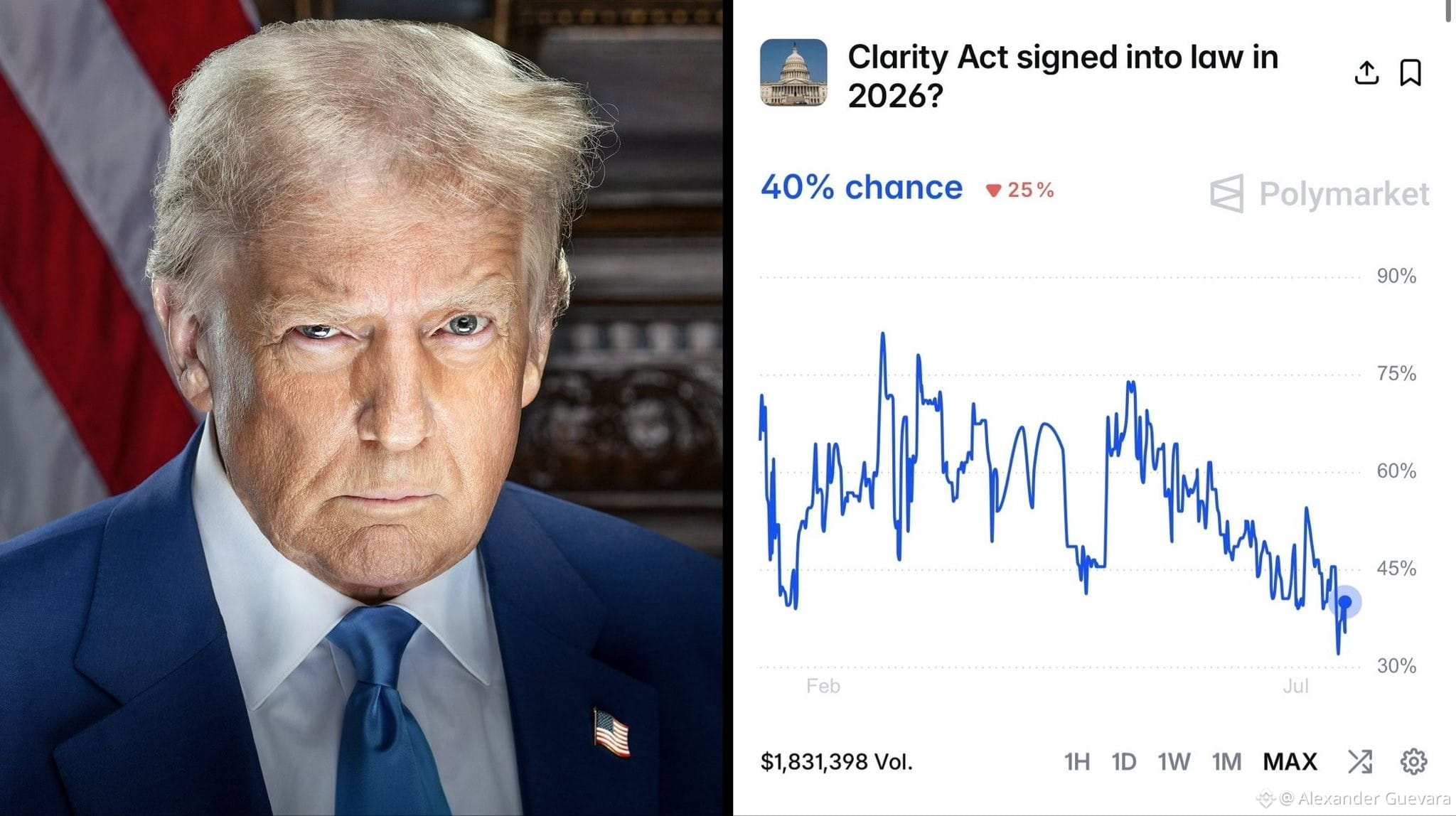
3
854

·
--

Article
4,096 US Commercial Banks May Work With Ripple as XRP Wins#GOATMoments Ripple legal officer expects US banks to adopt Ripple’s cross-border payment solution following the court ruling that XRP is not a security.
According to a Ripple executive, the recent landmark ruling declaring XRP a non-security paves the way for US banks and financial institutions to adopt Ripple’s solution for cross-border payments.
In an interview with CNBC, Stuart Alderoty, Ripple’s Chief Legal Officer, expressed confidence that American banks would return to Ripple’s On-Demand Liquidity (ODL) product.
Specifically, when asked if the US court ruling would lead to increased interest from banks, Alderoty replied, “I think the answer to that is yes.”
According to the lawyer, Ripple plans to initiate discussions with US-based financial institutions in the next quarter of the year regarding adopting its ODL solution, which leverages #XRP for efficient money transfers.
The Ruling is Comfort to Banks
Furthermore, Alderoty emphasized that the court decision would provide comfort for financial institutions to engage in conversations about the challenges they face in cross-border value transfers, particularly regarding high fees.
The legal officer stated, “Hopefully, this quarter will generate a lot of conversations in the United States with customers, and hopefully, some of those conversations will actually turn into a real business.”
Alderoty also revealed that while most Ripple employees are from the United States, its primary business and revenue are from abroad.
Recall that the judge’s ruling also supported an argument by the Securities and Exchange Commission (SEC) that Ripple’s sale of $XRP to institutional investors is considered a security offering.
Regarding the impact of this component on Ripple’s business, Alderoty clarified that since most of its customers are abroad, it would remain largely unaffected. He mentioned that Ripple would carefully analyze the judge’s decision, assess market needs, and ensure compliance with the judge’s findings concerning institutions.
Over 4K US Banks to Use Ripple Solution
Meanwhile, in a game-changing development, #Twitter user WallStreetBulls highlighted that a staggering 4,096 commercial banks and 576 savings and #loan associations, holding an astonishing $23.7 trillion in combined assets, are set to revolutionize cross-border settlements via Ripple ODL.
However, it is important to note that this is merely a projection from Wall Street Bulls, considering the number of commercial banks in the United States. The extent to which any US bank will leverage ODL remains to be seen.#Binanceturns6
4,096 US Commercial Banks May Work With Ripple as XRP Wins
#GOATMoments Ripple legal officer expects US banks to adopt Ripple’s cross-border payment solution following the court ruling that XRP is not a security.
According to a Ripple executive, the recent landmark ruling declaring XRP a non-security paves the way for US banks and financial institutions to adopt Ripple’s solution for cross-border payments.
In an interview with CNBC, Stuart Alderoty, Ripple’s Chief Legal Officer, expressed confidence that American banks would return to Ripple’s On-Demand Liquidity (ODL) product.
Specifically, when asked if the US court ruling would lead to increased interest from banks, Alderoty replied, “I think the answer to that is yes.”
According to the lawyer, Ripple plans to initiate discussions with US-based financial institutions in the next quarter of the year regarding adopting its ODL solution, which leverages #XRP for efficient money transfers.
The Ruling is Comfort to Banks
Furthermore, Alderoty emphasized that the court decision would provide comfort for financial institutions to engage in conversations about the challenges they face in cross-border value transfers, particularly regarding high fees.
The legal officer stated, “Hopefully, this quarter will generate a lot of conversations in the United States with customers, and hopefully, some of those conversations will actually turn into a real business.”
Alderoty also revealed that while most Ripple employees are from the United States, its primary business and revenue are from abroad.
Recall that the judge’s ruling also supported an argument by the Securities and Exchange Commission (SEC) that Ripple’s sale of $XRP to institutional investors is considered a security offering.
Regarding the impact of this component on Ripple’s business, Alderoty clarified that since most of its customers are abroad, it would remain largely unaffected. He mentioned that Ripple would carefully analyze the judge’s decision, assess market needs, and ensure compliance with the judge’s findings concerning institutions.
Over 4K US Banks to Use Ripple Solution
Meanwhile, in a game-changing development, #Twitter user WallStreetBulls highlighted that a staggering 4,096 commercial banks and 576 savings and #loan associations, holding an astonishing $23.7 trillion in combined assets, are set to revolutionize cross-border settlements via Ripple ODL.
However, it is important to note that this is merely a projection from Wall Street Bulls, considering the number of commercial banks in the United States. The extent to which any US bank will leverage ODL remains to be seen.#Binanceturns6
According to a Ripple executive, the recent landmark ruling declaring XRP a non-security paves the way for US banks and financial institutions to adopt Ripple’s solution for cross-border payments.
In an interview with CNBC, Stuart Alderoty, Ripple’s Chief Legal Officer, expressed confidence that American banks would return to Ripple’s On-Demand Liquidity (ODL) product.
Specifically, when asked if the US court ruling would lead to increased interest from banks, Alderoty replied, “I think the answer to that is yes.”
According to the lawyer, Ripple plans to initiate discussions with US-based financial institutions in the next quarter of the year regarding adopting its ODL solution, which leverages #XRP for efficient money transfers.
The Ruling is Comfort to Banks
Furthermore, Alderoty emphasized that the court decision would provide comfort for financial institutions to engage in conversations about the challenges they face in cross-border value transfers, particularly regarding high fees.
The legal officer stated, “Hopefully, this quarter will generate a lot of conversations in the United States with customers, and hopefully, some of those conversations will actually turn into a real business.”
Alderoty also revealed that while most Ripple employees are from the United States, its primary business and revenue are from abroad.
Recall that the judge’s ruling also supported an argument by the Securities and Exchange Commission (SEC) that Ripple’s sale of $XRP to institutional investors is considered a security offering.
Regarding the impact of this component on Ripple’s business, Alderoty clarified that since most of its customers are abroad, it would remain largely unaffected. He mentioned that Ripple would carefully analyze the judge’s decision, assess market needs, and ensure compliance with the judge’s findings concerning institutions.
Over 4K US Banks to Use Ripple Solution
Meanwhile, in a game-changing development, #Twitter user WallStreetBulls highlighted that a staggering 4,096 commercial banks and 576 savings and #loan associations, holding an astonishing $23.7 trillion in combined assets, are set to revolutionize cross-border settlements via Ripple ODL.
However, it is important to note that this is merely a projection from Wall Street Bulls, considering the number of commercial banks in the United States. The extent to which any US bank will leverage ODL remains to be seen.#Binanceturns6
23
15.9k
😱A user on X reported the theft of over USD 200,000 from two wallets operated on Ethereum, Base, and BNB Chain. On-chain investigators linked the incident to an actor who allegedly scammed more than 50 victims through compromised private keys.
#X #Twitter #bnb #ETH #Base $BNB $ETH @Cointelegraph @CoinDesk @CoinMarketCap_official
😱A user on X reported the theft of over USD 200,000 from two wallets operated on Ethereum, Base, and BNB Chain. On-chain investigators linked the incident to an actor who allegedly scammed more than 50 victims through compromised private keys.
#X #Twitter #bnb #ETH #Base $BNB $ETH @Cointelegraph @CoinDesk @CoinMarketCap
#X #Twitter #bnb #ETH #Base $BNB $ETH @Cointelegraph @CoinDesk @CoinMarketCap

4
1.1k

X files a lawsuit against a crypto scam network for bribery to restore accounts
Social media platform X (formerly #Twitter ) has just announced it will take legal action against a group of locked accounts, including several crypto scammers, who attempted to bribe company employees to regain access.
According to X, these accounts are not only involved in cryptocurrency fraud but are also linked to a larger criminal network. The company emphasizes it is cooperating with law enforcement to thoroughly address the matter.
In the announcement, X stated that the scammers used "intermediaries" to bribe employees in order to restore accounts that had previously been suspended for #scam and manipulate the platform. This group also operates on several other platforms such as Instagram, TikTok, YouTube, Minecraft, and Roblox.
Notably, the FBI has previously warned about a cybercriminal group called "The Com," mostly composed of teenagers, who are increasing their sophistication in hiding their identities, laundering money, and committing cybercrime.
X is no stranger to crypto scams: from the mass hacking of celebrity accounts in 2020 to promote scam $BTC , to the takeover of corporate and famous athlete accounts to promote token on $SOL last year.
👉 This incident once again highlights the close connection between social media and crypto scam tactics, emphasizing the need to tighten cybersecurity to protect users and the digital financial ecosystem.
⚠️ The crypto market carries many risks. Investors should be vigilant against fraudulent activities and safeguard personal information when participating. #anh_ba_cong
{future}(BTCUSDT)
{future}(SOLUSDT)
X files a lawsuit against a crypto scam network for bribery to restore accounts
Social media platform X (formerly #Twitter ) has just announced it will take legal action against a group of locked accounts, including several crypto scammers, who attempted to bribe company employees to regain access.
According to X, these accounts are not only involved in cryptocurrency fraud but are also linked to a larger criminal network. The company emphasizes it is cooperating with law enforcement to thoroughly address the matter.
In the announcement, X stated that the scammers used "intermediaries" to bribe employees in order to restore accounts that had previously been suspended for #scam and manipulate the platform. This group also operates on several other platforms such as Instagram, TikTok, YouTube, Minecraft, and Roblox.
Notably, the FBI has previously warned about a cybercriminal group called "The Com," mostly composed of teenagers, who are increasing their sophistication in hiding their identities, laundering money, and committing cybercrime.
X is no stranger to crypto scams: from the mass hacking of celebrity accounts in 2020 to promote scam $BTC , to the takeover of corporate and famous athlete accounts to promote token on $SOL last year.
👉 This incident once again highlights the close connection between social media and crypto scam tactics, emphasizing the need to tighten cybersecurity to protect users and the digital financial ecosystem.
⚠️ The crypto market carries many risks. Investors should be vigilant against fraudulent activities and safeguard personal information when participating. #anh_ba_cong
Social media platform X (formerly #Twitter ) has just announced it will take legal action against a group of locked accounts, including several crypto scammers, who attempted to bribe company employees to regain access.
According to X, these accounts are not only involved in cryptocurrency fraud but are also linked to a larger criminal network. The company emphasizes it is cooperating with law enforcement to thoroughly address the matter.
In the announcement, X stated that the scammers used "intermediaries" to bribe employees in order to restore accounts that had previously been suspended for #scam and manipulate the platform. This group also operates on several other platforms such as Instagram, TikTok, YouTube, Minecraft, and Roblox.
Notably, the FBI has previously warned about a cybercriminal group called "The Com," mostly composed of teenagers, who are increasing their sophistication in hiding their identities, laundering money, and committing cybercrime.
X is no stranger to crypto scams: from the mass hacking of celebrity accounts in 2020 to promote scam $BTC , to the takeover of corporate and famous athlete accounts to promote token on $SOL last year.
👉 This incident once again highlights the close connection between social media and crypto scam tactics, emphasizing the need to tighten cybersecurity to protect users and the digital financial ecosystem.
⚠️ The crypto market carries many risks. Investors should be vigilant against fraudulent activities and safeguard personal information when participating. #anh_ba_cong
3
6.7k
💸 While $ZEC and $HYPE keep tanking, the whale Loracle seems to be in serious trouble. Their long position on $ZEC (10x) has lost over $3.2 million, and their long position on $HYPE (2x) has lost $1.567 million. They're also holding long positions in $NEAR , $TON , $ASTER , and $XMR, with a total loss of $6.65 million.
🥷 #ZEC According to market data from Binance, ZEC is trading at $272.79, down 48.4% in the last 24 hours.
CoinGlass data shows that ZEC liquidations totaled $81.91 million over the last 24 hours, including about $70.55 million in long liquidations and $11.36 million in shorts.
Previously, co-founder of B1tM3X Arthur Hayes mentioned on X that he had sold all his ZEC position due to the Orchard Pool exploit. #hack
🗣 Jim Cramer says, "stop losing money and go to bed."
📉 Crypto trading activity continues to weaken, with spot trading volume dropping to its lowest monthly level since October 2023.
As activity slows down, liquidity remains concentrated in a small group of exchanges. Gate is among the deepest places in both spot and perpetual futures markets, reinforcing its position as a major hub for large-scale execution.
Institutional liquidity continues to consolidate around a handful of dominant exchanges. link
🐳 #AAVE After being inactive for 3 years, a whale with 38,554 $ETH ($64.28 million):
- Supplied 20,000 $ETH ($33.28M) to Aave V3
- Borrowed $30M $USDT
- Bought 17,826 $ETH at $1,683 (loop loan)
- Now holds 56,380 $ETH ($94.04 million)
The whale is likely to scoop up more ETH.
#HackerAlert #ballenas #Twitter #crypto
💸 While $ZEC and $HYPE keep tanking, the whale Loracle seems to be in serious trouble. Their long position on $ZEC (10x) has lost over $3.2 million, and their long position on $HYPE (2x) has lost $1.567 million. They're also holding long positions in $NEAR , $TON , $ASTER , and $XMR, with a total loss of $6.65 million.
🥷 #ZEC According to market data from Binance, ZEC is trading at $272.79, down 48.4% in the last 24 hours.
CoinGlass data shows that ZEC liquidations totaled $81.91 million over the last 24 hours, including about $70.55 million in long liquidations and $11.36 million in shorts.
Previously, co-founder of B1tM3X Arthur Hayes mentioned on X that he had sold all his ZEC position due to the Orchard Pool exploit. #hack
🗣 Jim Cramer says, "stop losing money and go to bed."
📉 Crypto trading activity continues to weaken, with spot trading volume dropping to its lowest monthly level since October 2023.
As activity slows down, liquidity remains concentrated in a small group of exchanges. Gate is among the deepest places in both spot and perpetual futures markets, reinforcing its position as a major hub for large-scale execution.
Institutional liquidity continues to consolidate around a handful of dominant exchanges. link
🐳 #AAVE After being inactive for 3 years, a whale with 38,554 $ETH ($64.28 million):
- Supplied 20,000 $ETH ($33.28M) to Aave V3
- Borrowed $30M $USDT
- Bought 17,826 $ETH at $1,683 (loop loan)
- Now holds 56,380 $ETH ($94.04 million)
The whale is likely to scoop up more ETH.
#HackerAlert #ballenas #Twitter #crypto
🥷 #ZEC According to market data from Binance, ZEC is trading at $272.79, down 48.4% in the last 24 hours.
CoinGlass data shows that ZEC liquidations totaled $81.91 million over the last 24 hours, including about $70.55 million in long liquidations and $11.36 million in shorts.
Previously, co-founder of B1tM3X Arthur Hayes mentioned on X that he had sold all his ZEC position due to the Orchard Pool exploit. #hack
🗣 Jim Cramer says, "stop losing money and go to bed."
📉 Crypto trading activity continues to weaken, with spot trading volume dropping to its lowest monthly level since October 2023.
As activity slows down, liquidity remains concentrated in a small group of exchanges. Gate is among the deepest places in both spot and perpetual futures markets, reinforcing its position as a major hub for large-scale execution.
Institutional liquidity continues to consolidate around a handful of dominant exchanges. link
🐳 #AAVE After being inactive for 3 years, a whale with 38,554 $ETH ($64.28 million):
- Supplied 20,000 $ETH ($33.28M) to Aave V3
- Borrowed $30M $USDT
- Bought 17,826 $ETH at $1,683 (loop loan)
- Now holds 56,380 $ETH ($94.04 million)
The whale is likely to scoop up more ETH.
#HackerAlert #ballenas #Twitter #crypto
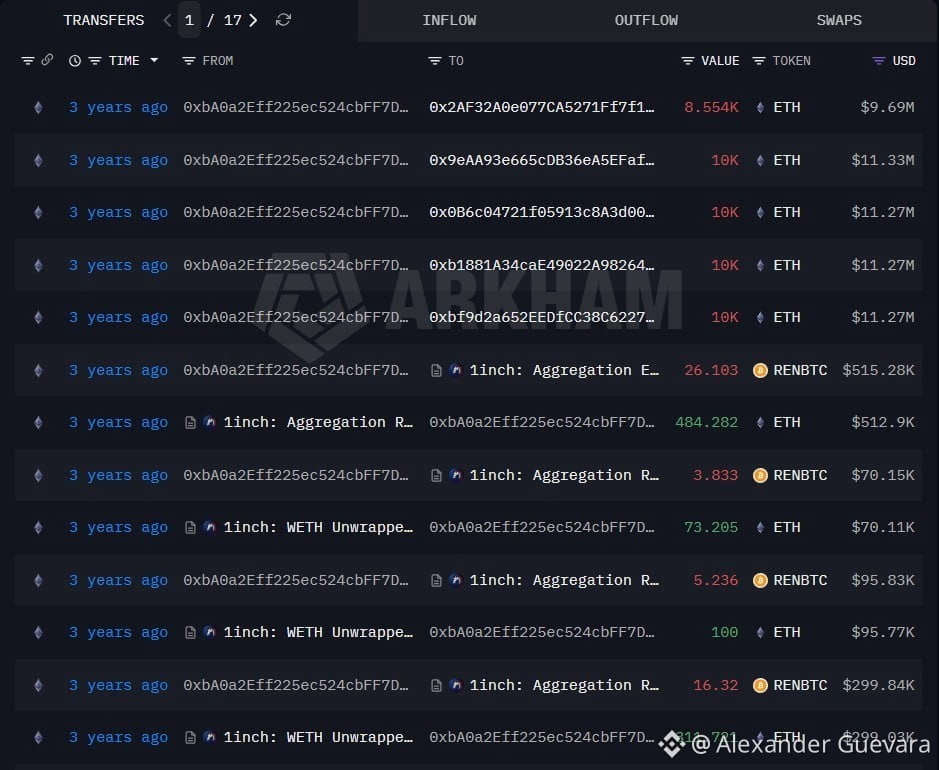
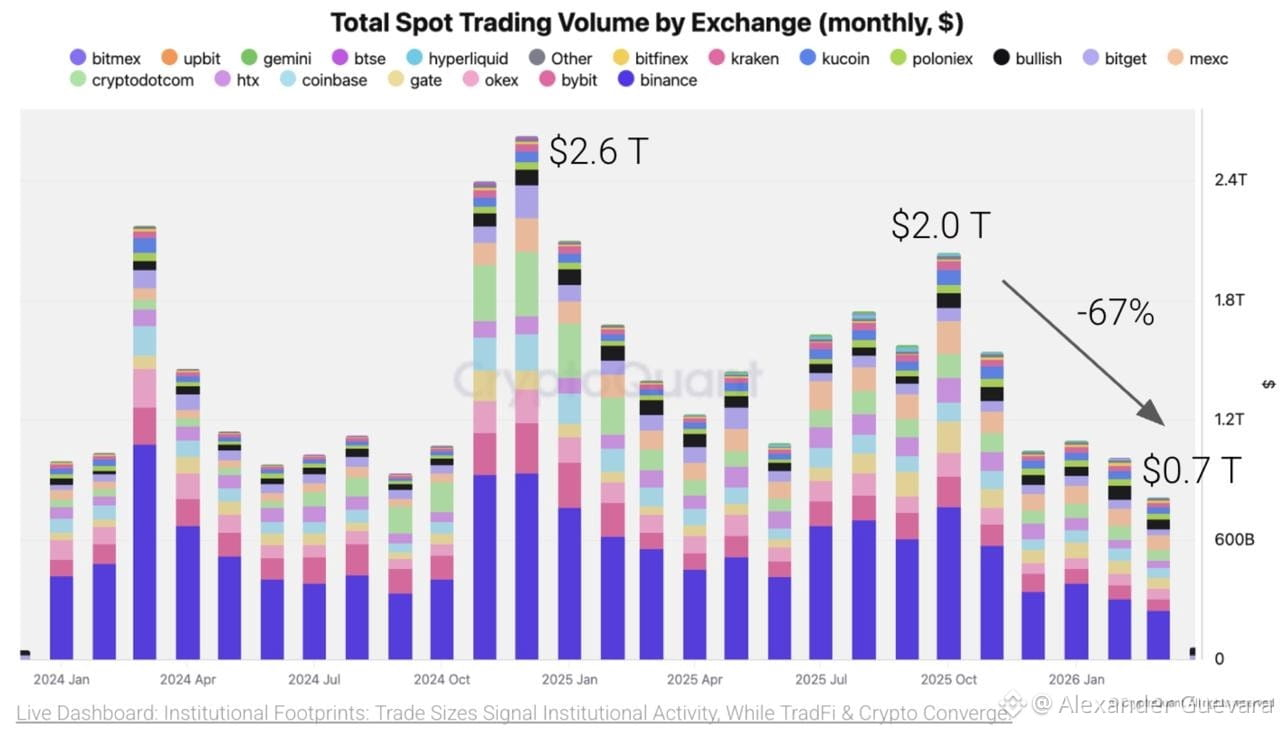
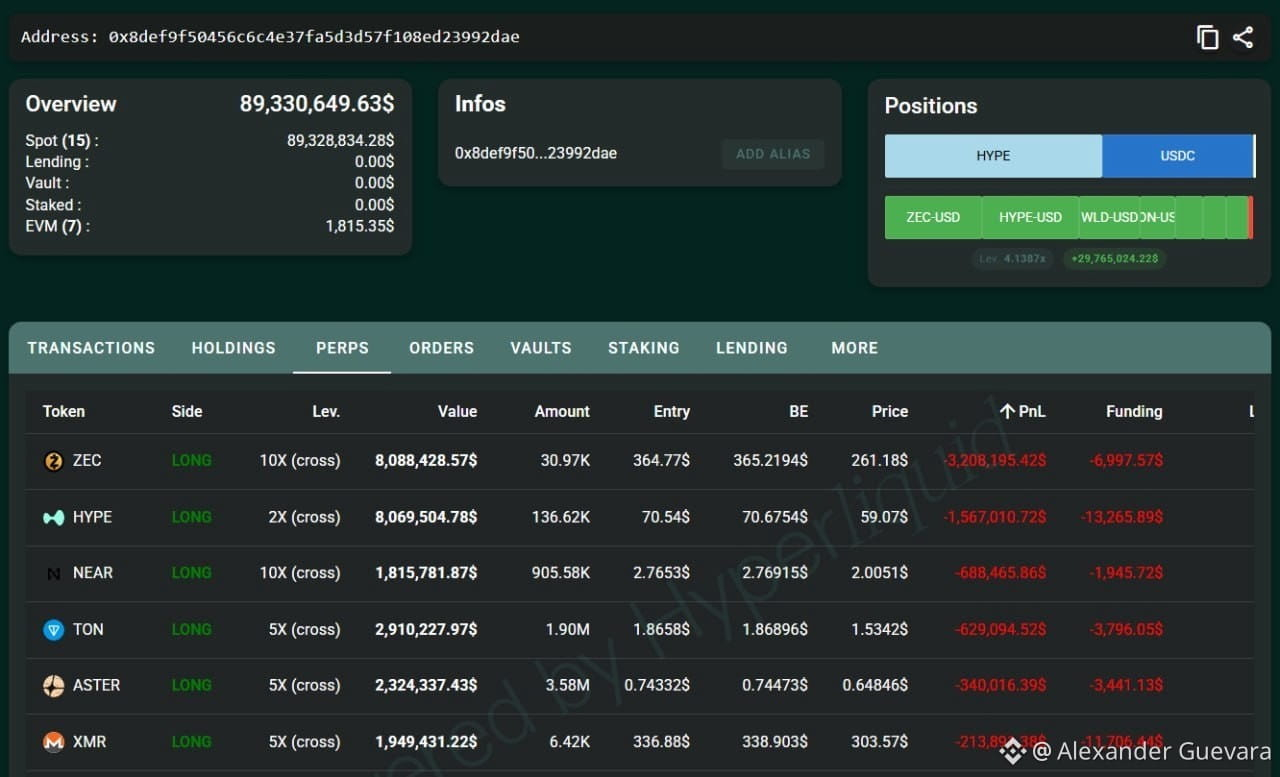
3
245

·
--
Bearish
🚨 THE WHALES HAVE SHOWN THEIR CARDS 🐋🔥
👀 Pay attention, mate, because while #Twitter #crypto is saying that $BTC is done, the whales seem to be thinking totally differently.
Follow me to stay informed.
The image shows a crazy amount of buy orders between 59k and 50k 💰
And we’re not talking about crumbs...
We’re talking about millions of dollars waiting to be executed if the price drops again 😳
🐋 The zones with the most interest are:
• 59k • 58k • 57k • 55k • 54k • 50k
Now listen, this doesn’t mean that #BTC can’t drop further.
The market makers are specialists at catching people off guard 😅
But it does show us where the big players are willing to put in cash.
🔥 The most interesting thing is that they already swept the liquidity from February at 59.7k, and as soon as they touched that zone, buyers appeared like crazy.
That explains why BTC managed to bounce back up to 61k-62k.
And here comes the thing that many are not seeing...
📊 The zone between 53k and 61k coincides with several important historical levels:
✅ 200WMA around 61k
✅ 300WMA around 54k
✅ Realized price around 53k
✅ Zone where extreme fear historically appears
And we already know how this market works 😅
When BTC hits those zones, the same old crowd will come out saying:
😭 BTC is dead
😭 BlackRock sold
😭 Strategy sold
😭 Aliens sold
😭 The cycle is over
Meanwhile, the whales are filling their pockets and people are panic selling.
🐳 Damn, we’ve seen this movie several times before.
For now, what I see is that they already gave a massive shake to the leveraged longs and cleared out a lot of liquidity.
Now it’s time to see if BTC recovers to 63k-64k or if they gift us another sweep towards the 54k-58k zone.
🔥 What do you think, mate? Have we seen the bottom, or are they going to leave everyone watching the fireworks with one last sweep before the big bounce? 🚀🐋📉
{spot}(BTCUSDT)
🚨 THE WHALES HAVE SHOWN THEIR CARDS 🐋🔥
👀 Pay attention, mate, because while #Twitter #crypto is saying that $BTC is done, the whales seem to be thinking totally differently.
Follow me to stay informed.
The image shows a crazy amount of buy orders between 59k and 50k 💰
And we’re not talking about crumbs...
We’re talking about millions of dollars waiting to be executed if the price drops again 😳
🐋 The zones with the most interest are:
• 59k • 58k • 57k • 55k • 54k • 50k
Now listen, this doesn’t mean that #BTC can’t drop further.
The market makers are specialists at catching people off guard 😅
But it does show us where the big players are willing to put in cash.
🔥 The most interesting thing is that they already swept the liquidity from February at 59.7k, and as soon as they touched that zone, buyers appeared like crazy.
That explains why BTC managed to bounce back up to 61k-62k.
And here comes the thing that many are not seeing...
📊 The zone between 53k and 61k coincides with several important historical levels:
✅ 200WMA around 61k
✅ 300WMA around 54k
✅ Realized price around 53k
✅ Zone where extreme fear historically appears
And we already know how this market works 😅
When BTC hits those zones, the same old crowd will come out saying:
😭 BTC is dead
😭 BlackRock sold
😭 Strategy sold
😭 Aliens sold
😭 The cycle is over
Meanwhile, the whales are filling their pockets and people are panic selling.
🐳 Damn, we’ve seen this movie several times before.
For now, what I see is that they already gave a massive shake to the leveraged longs and cleared out a lot of liquidity.
Now it’s time to see if BTC recovers to 63k-64k or if they gift us another sweep towards the 54k-58k zone.
🔥 What do you think, mate? Have we seen the bottom, or are they going to leave everyone watching the fireworks with one last sweep before the big bounce? 🚀🐋📉
👀 Pay attention, mate, because while #Twitter #crypto is saying that $BTC is done, the whales seem to be thinking totally differently.
Follow me to stay informed.
The image shows a crazy amount of buy orders between 59k and 50k 💰
And we’re not talking about crumbs...
We’re talking about millions of dollars waiting to be executed if the price drops again 😳
🐋 The zones with the most interest are:
• 59k • 58k • 57k • 55k • 54k • 50k
Now listen, this doesn’t mean that #BTC can’t drop further.
The market makers are specialists at catching people off guard 😅
But it does show us where the big players are willing to put in cash.
🔥 The most interesting thing is that they already swept the liquidity from February at 59.7k, and as soon as they touched that zone, buyers appeared like crazy.
That explains why BTC managed to bounce back up to 61k-62k.
And here comes the thing that many are not seeing...
📊 The zone between 53k and 61k coincides with several important historical levels:
✅ 200WMA around 61k
✅ 300WMA around 54k
✅ Realized price around 53k
✅ Zone where extreme fear historically appears
And we already know how this market works 😅
When BTC hits those zones, the same old crowd will come out saying:
😭 BTC is dead
😭 BlackRock sold
😭 Strategy sold
😭 Aliens sold
😭 The cycle is over
Meanwhile, the whales are filling their pockets and people are panic selling.
🐳 Damn, we’ve seen this movie several times before.
For now, what I see is that they already gave a massive shake to the leveraged longs and cleared out a lot of liquidity.
Now it’s time to see if BTC recovers to 63k-64k or if they gift us another sweep towards the 54k-58k zone.
🔥 What do you think, mate? Have we seen the bottom, or are they going to leave everyone watching the fireworks with one last sweep before the big bounce? 🚀🐋📉
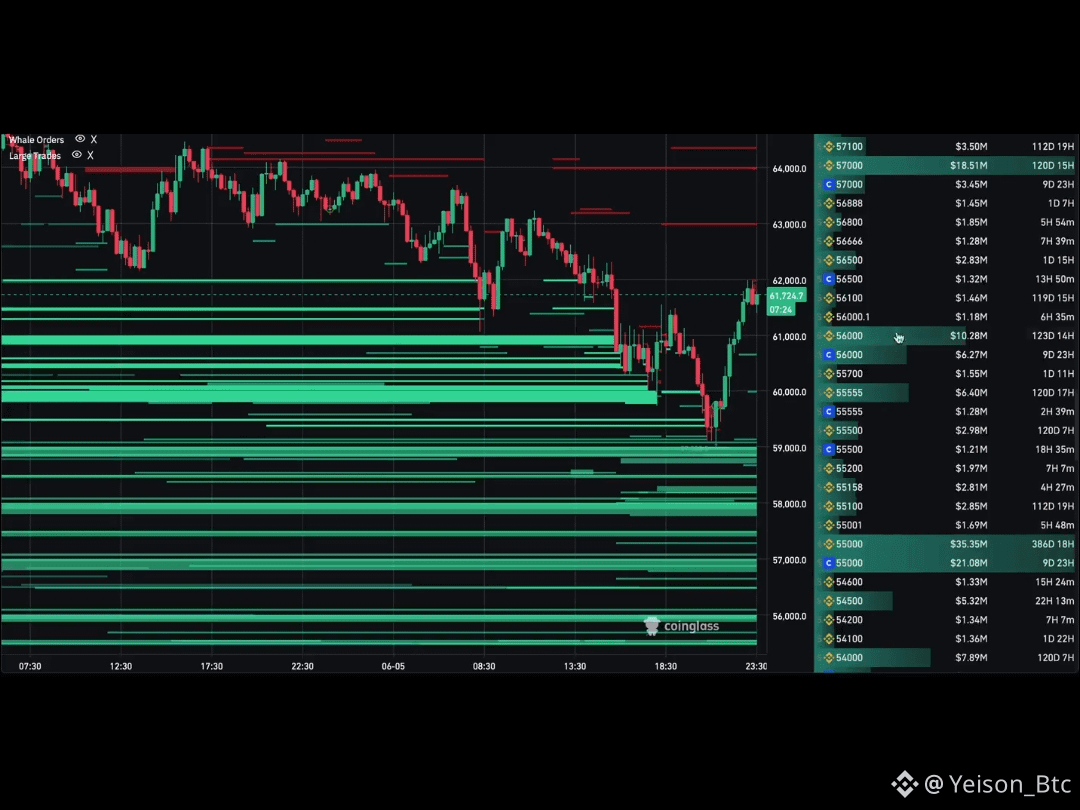
Satoshi Player :
Yo se los dije hace 2 meses a 45K ahí es donde esta el fondo y donde rebotara los marketmaker saben x demás y me incluyo desde 78 sabia lo que venía no iba para 100 se Violaron a todo mundo xq no saben de este negocio
37
2
41
63.8k

·
--
What an absolutely amazing week so far. I called;
Called $ZYBT at $1.20. Hit $11.40 for 850%.
Called $CPHI at $3.00. Hit $19.19 for 539%.
Called $ADVB.US $6.30. Hit $25.84 for 300%.
Called $STAK at $3.00. Hit $12.00 for 300%.
Called $ZCMD.US at $3.15. Hit $11.95 for 279%.
{stock_us}(ZCMD.US)
#blockchain #CryptoNewss #Twitter #Square #TrendingTopic
What an absolutely amazing week so far. I called;
Called $ZYBT at $1.20. Hit $11.40 for 850%.
Called $CPHI at $3.00. Hit $19.19 for 539%.
Called $ADVB.US $6.30. Hit $25.84 for 300%.
Called $STAK at $3.00. Hit $12.00 for 300%.
Called $ZCMD.US at $3.15. Hit $11.95 for 279%.
#blockchain #CryptoNewss #Twitter #Square #TrendingTopic
Called $ZYBT at $1.20. Hit $11.40 for 850%.
Called $CPHI at $3.00. Hit $19.19 for 539%.
Called $ADVB.US $6.30. Hit $25.84 for 300%.
Called $STAK at $3.00. Hit $12.00 for 300%.
Called $ZCMD.US at $3.15. Hit $11.95 for 279%.
#blockchain #CryptoNewss #Twitter #Square #TrendingTopic
ZCMDUS+0.10%
190
·
--

Article
"X" Token Rises 2000% After Elon Musk's Twitter Profile Update#MultiChain The price of X token has increased by 2000% in the last 24 hours. This comes after ElonMUSK changed his #Twitter profile picture to an X as part of his rebranding plans. On July 23, the billionaire spoke about the upcoming rebranding of his social network. In a series of tweets, the businessman shared his plans with subscribers, which, among other things, include changing the name of the site to "X".
#cryptocurrency called X is associated with a multi-chain decentralized #NFTS market. The official website mentions that the token is owned and operated by the X community and is managed by the X DAO. It is also reported that the NFT marketplace is now closed.
According to Coingecko data, the price of the X token has jumped over 2000% in the last day, and its price has increased by 1830% in the last 7 days. Token X is trading at an average price of $0.000392 at the time of writing. Trading volume for 24 hours increased by 142,779% and amounted to $133,491.
Image: Coinpedia#GOATMoments
"X" Token Rises 2000% After Elon Musk's Twitter Profile Update
#MultiChain The price of X token has increased by 2000% in the last 24 hours. This comes after ElonMUSK changed his #Twitter profile picture to an X as part of his rebranding plans. On July 23, the billionaire spoke about the upcoming rebranding of his social network. In a series of tweets, the businessman shared his plans with subscribers, which, among other things, include changing the name of the site to "X".
#cryptocurrency called X is associated with a multi-chain decentralized #NFTS market. The official website mentions that the token is owned and operated by the X community and is managed by the X DAO. It is also reported that the NFT marketplace is now closed.
According to Coingecko data, the price of the X token has jumped over 2000% in the last day, and its price has increased by 1830% in the last 7 days. Token X is trading at an average price of $0.000392 at the time of writing. Trading volume for 24 hours increased by 142,779% and amounted to $133,491.
Image: Coinpedia#GOATMoments
#cryptocurrency called X is associated with a multi-chain decentralized #NFTS market. The official website mentions that the token is owned and operated by the X community and is managed by the X DAO. It is also reported that the NFT marketplace is now closed.
According to Coingecko data, the price of the X token has jumped over 2000% in the last day, and its price has increased by 1830% in the last 7 days. Token X is trading at an average price of $0.000392 at the time of writing. Trading volume for 24 hours increased by 142,779% and amounted to $133,491.
Image: Coinpedia#GOATMoments
1
18
12.1k

🤑🇺🇸 The S&P 500 closes at a new all-time high of 7,599.9
🤑Just like crypto
The market is crying over an incredible sell-off by Michael; retail is going wild on X 😂
🤑REBUYS ONLY WORK IF THEY OVERCOME UNLOCKS
HYPE has rebought 44M and only had 4M in unlocks since the TGE
No VCs, No insiders
ASTER has rebought 266M, but has had 960M in unlocks since the TGE
VCs, Insiders
That's the difference
▶️What would happen if Eth wakes up like this?
#tge #SP500 #hype #ETH #Twitter $ETH $SPYon $HYPE
{spot}(ASTERUSDT)
🤑🇺🇸 The S&P 500 closes at a new all-time high of 7,599.9
🤑Just like crypto
The market is crying over an incredible sell-off by Michael; retail is going wild on X 😂
🤑REBUYS ONLY WORK IF THEY OVERCOME UNLOCKS
HYPE has rebought 44M and only had 4M in unlocks since the TGE
No VCs, No insiders
ASTER has rebought 266M, but has had 960M in unlocks since the TGE
VCs, Insiders
That's the difference
▶️What would happen if Eth wakes up like this?
#tge #SP500 #hype #ETH #Twitter $ETH $SPYon $HYPE
🤑Just like crypto
The market is crying over an incredible sell-off by Michael; retail is going wild on X 😂
🤑REBUYS ONLY WORK IF THEY OVERCOME UNLOCKS
HYPE has rebought 44M and only had 4M in unlocks since the TGE
No VCs, No insiders
ASTER has rebought 266M, but has had 960M in unlocks since the TGE
VCs, Insiders
That's the difference
▶️What would happen if Eth wakes up like this?
#tge #SP500 #hype #ETH #Twitter $ETH $SPYon $HYPE
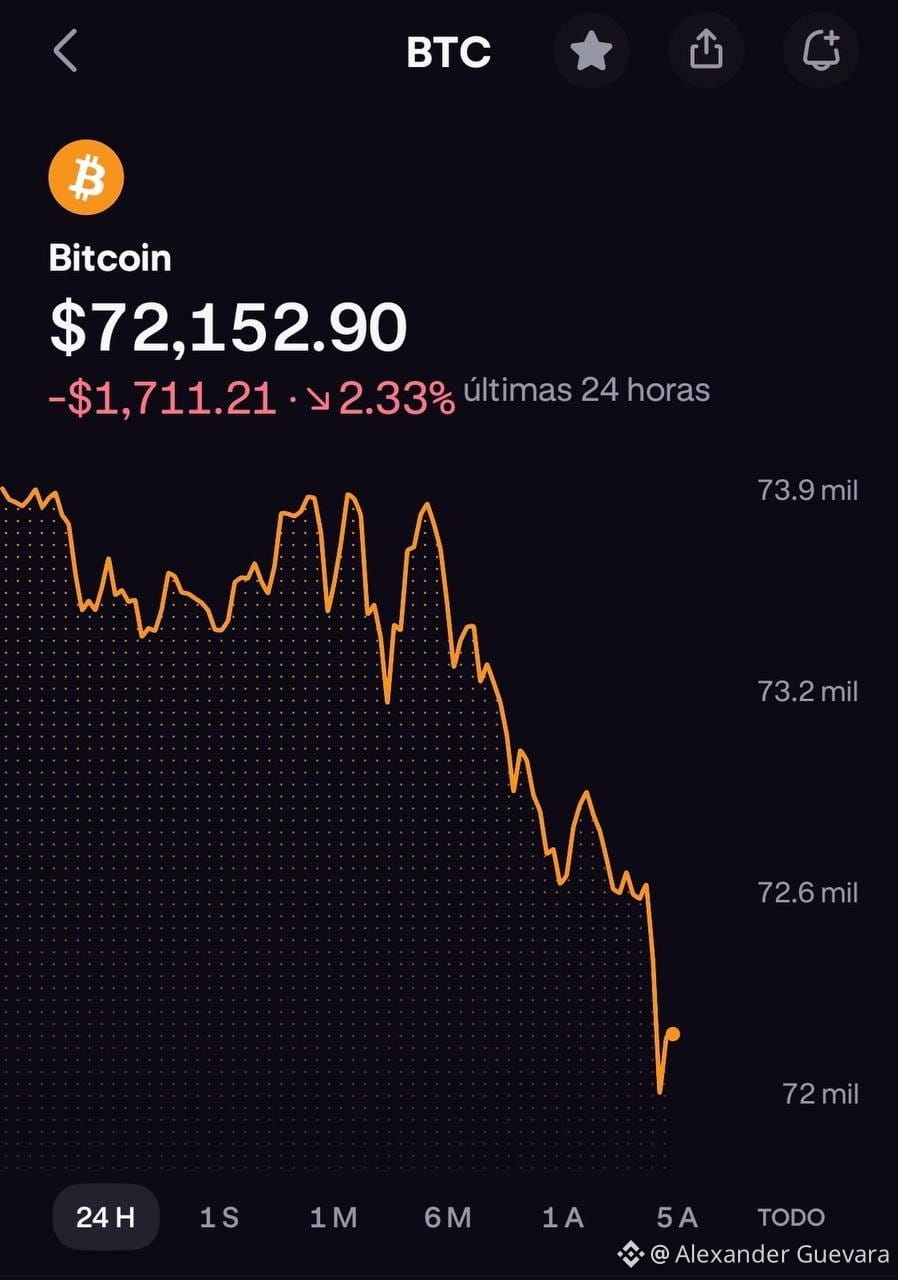
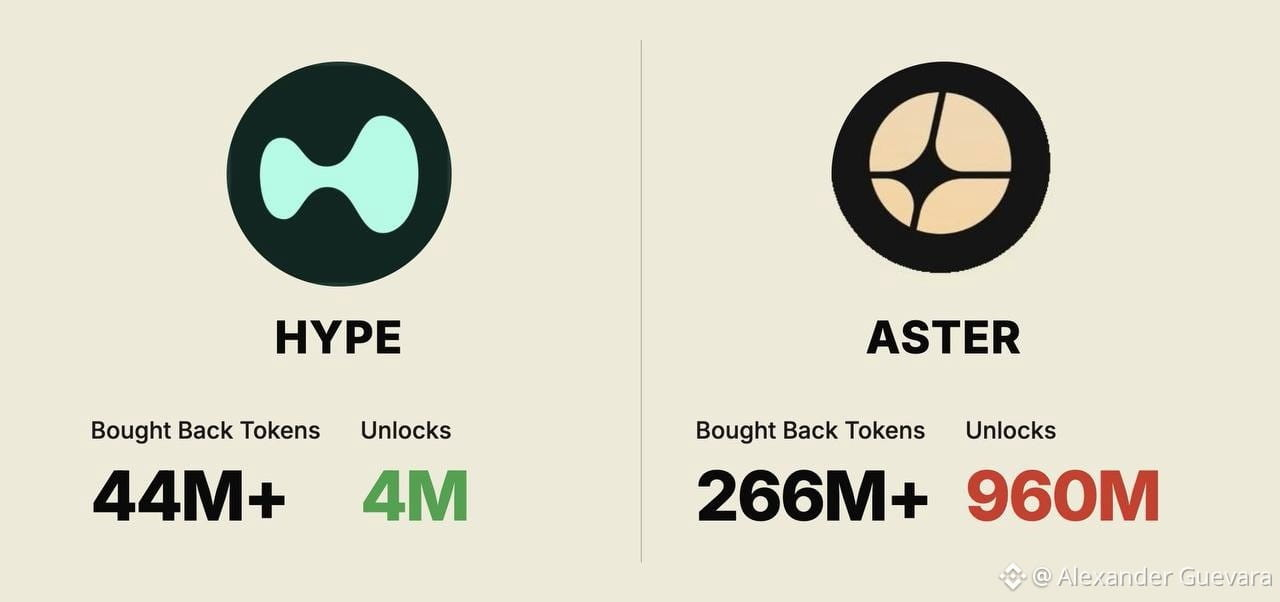
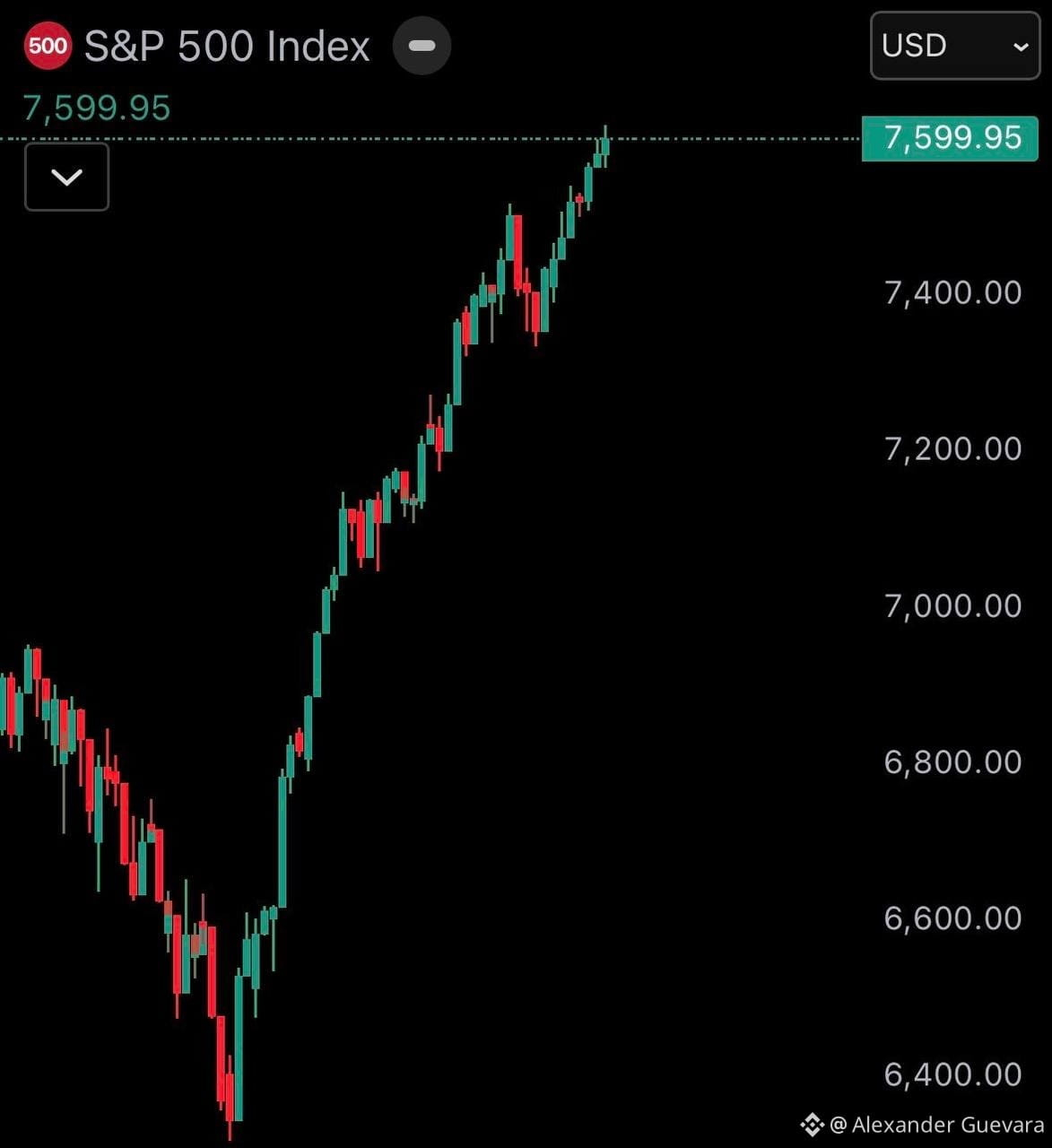
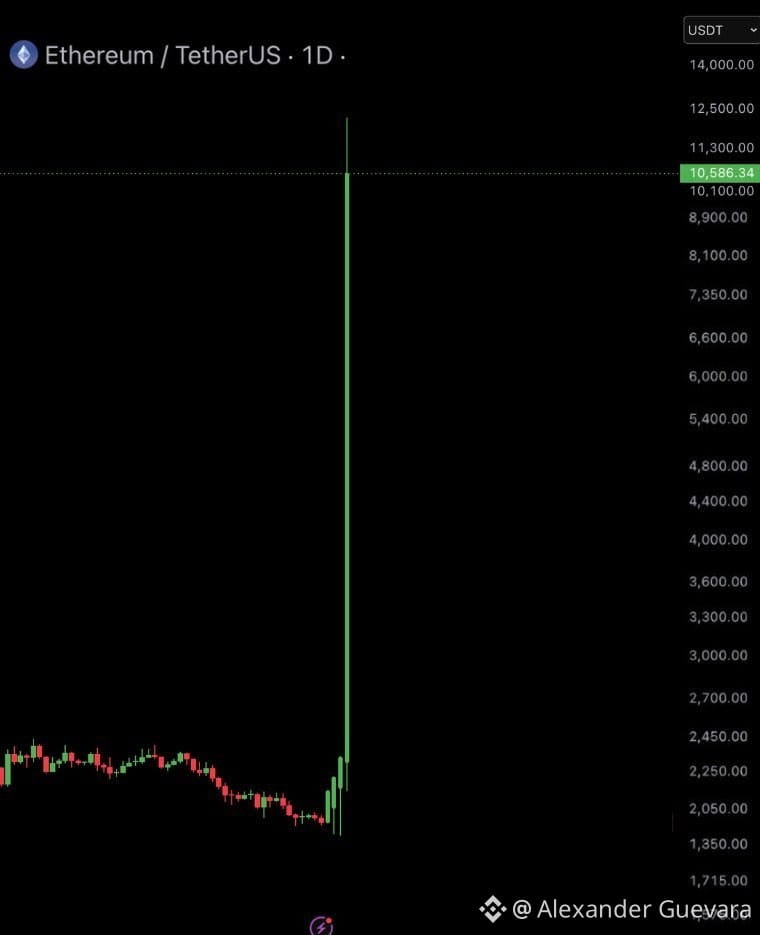
3
237

Log in to explore more content
Join global crypto users on Binance Square
⚡️ Get latest and useful information about crypto.
💬 Trusted by the world’s largest crypto exchange.
👍 Discover real insights from verified creators.
Email / Phone number
Trending Topics
1
#UKFCAWinsCourtOrderToRecover851400Pounds
15,427 views
602 Discussing
2
#ChainlinkLaunchesCCIP2WithEnterpriseVerification
29,592 views
811 Discussing
3
#GoldFallsTo$4144
11,004 views
137 Discussing
4
#QNTFallsOver40%FromMorningHigh
68,840 views
1,235 Discussing
5
#USDTAdds845900HoldersInPast7Days
10,403 views
348 Discussing
6
#KospiFalls2.7%SamsungSKHynixDropOver5%
19,845 views
525 Discussing
7
#BitgetCEOConfirms$388MStolenInHack
4,662 views
41 Discussing
8
#BTCFallsBelow$83000
27,095 views
160 Discussing
9
#BitgetDetailsSecurityIncidentTimeline
37,480 views
672 Discussing
10
#BitcoinSpotETFs$2.39BWeeklyNetInflow
12,526 views
47 Discussing