
#doj
doj
309,245 views
525 Discussing
Hot
Latest

·
--
⚖️ THEY BUILT A $17B SCAM EMPIRE. THE DOJ JUST TORE IT DOWN. 🚨
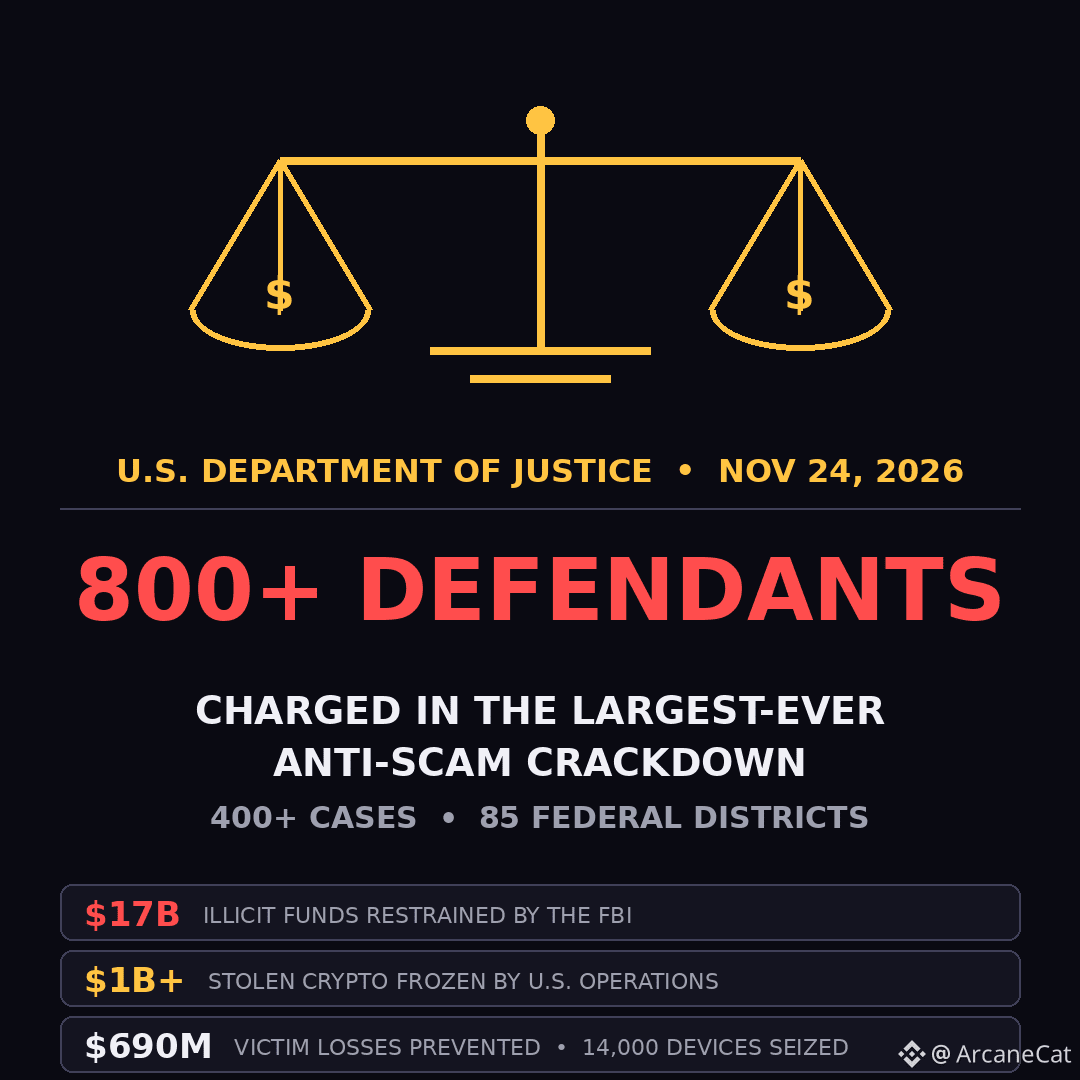
The U.S. Justice Department just announced its largest-ever crackdown on scammers: 400+ cases against 800+ defendants across 85 federal districts.
The FBI's Operation Blackout restrained nearly $17B in illicit funds and seized 14,000+ devices — preventing $690M in victim losses.
Crypto investment fraud run from Southeast Asian scam centers was named front and center. Over $1B in stolen crypto has been frozen.
Scammers cost Americans billions every year. This time, the law came for them.
Not financial advice.
#DOJ #Crypto #ScamAlert #Bitcoin
3

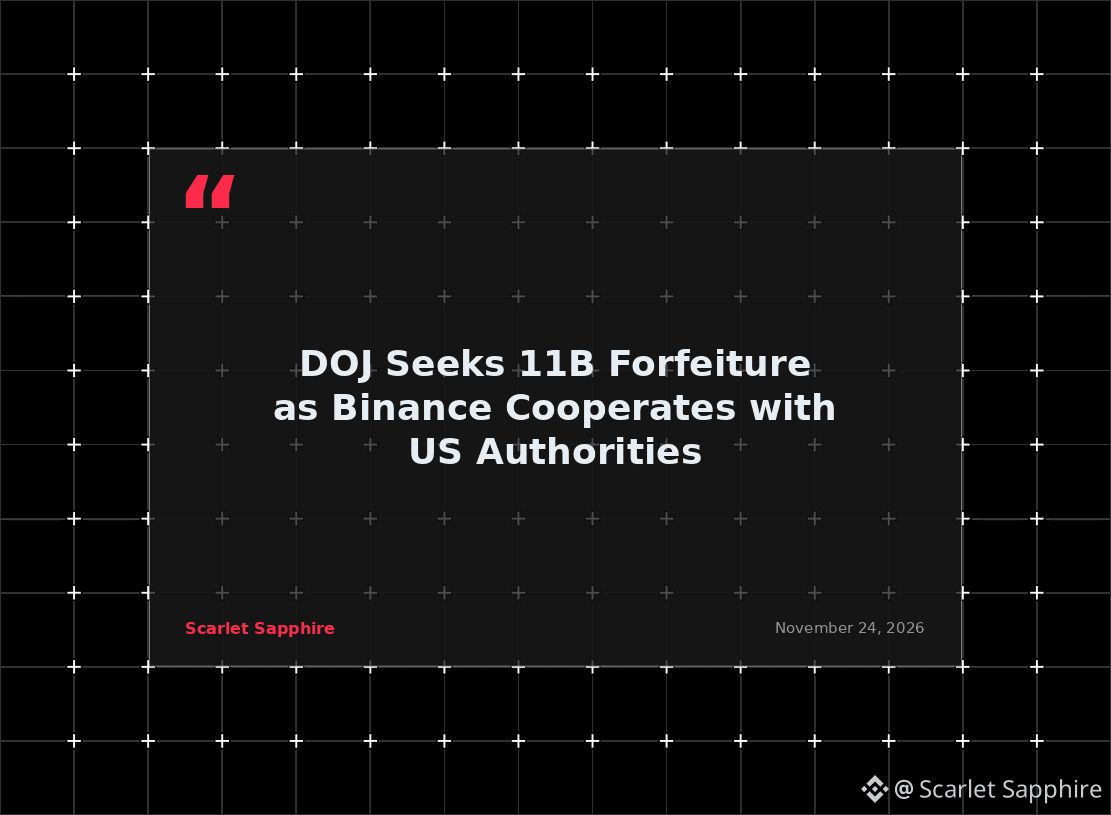
On November 23, the U.S. Department of Justice formally petitioned a court to forfeit $1.17 billion in USDC. The funds came from the October 29 theft of $6.34 billion from Binance, which the FBI attributed to the North Korean hacking group Lazarus—the largest digital asset heist in history. The stolen funds are spread across 36 addresses on 18 blockchains. After Circle froze them, they couldn’t be transferred directly, so the DOJ has to wait for a court ruling before minting an equivalent amount of USDC to hand over to the U.S. government. To date, the U.S. has frozen, seized, or recovered $2.9 billion, but Elliptic says about $2.35 billion is still in hackers’ wallets. Binance users needn’t worry, though—Binance covered the losses in full out of its own pocket long ago. #Binance #DOJ
On November 23, the U.S. Department of Justice formally petitioned a court to forfeit $1.17 billion in USDC. The funds came from the October 29 theft of $6.34 billion from Binance, which the FBI attributed to the North Korean hacking group Lazarus—the largest digital asset heist in history. The stolen funds are spread across 36 addresses on 18 blockchains. After Circle froze them, they couldn’t be transferred directly, so the DOJ has to wait for a court ruling before minting an equivalent amount of USDC to hand over to the U.S. government. To date, the U.S. has frozen, seized, or recovered $2.9 billion, but Elliptic says about $2.35 billion is still in hackers’ wallets. Binance users needn’t worry, though—Binance covered the losses in full out of its own pocket long ago. #Binance #DOJ
60

The US Justice Department has initiated its largest ever crackdown targeting 1,000,000,000 in crypto fraud proceeds following directives from the Trump administration.
#DOJ #CryptoRegulation
The US Justice Department has initiated its largest ever crackdown targeting 1,000,000,000 in crypto fraud proceeds following directives from the Trump administration.
#DOJ #CryptoRegulation
#DOJ #CryptoRegulation
3
The U.S. Department of Justice dropped a bombshell on November 24: the largest anti-fraud crackdown in history, with more than 400 cases and over 800 defendants across 85 federal districts. The FBI’s Operation Blackout seized nearly $17 billion in illicit funds, traced $1.08 billion in stolen cryptocurrency, and helped potential victims avoid $690 million in losses. Crypto investment scams run out of Southeast Asian scam compounds were a major target—including pig-butchering schemes, fake investment platforms, and government impersonation. The crypto world’s biggest enemy has never been the bear market; it’s these scammers. With Thanksgiving here, remind the seniors in your family: anyone telling you to transfer crypto to a “secure wallet” is running a scam. #反诈骗 #DOJ
The U.S. Department of Justice dropped a bombshell on November 24: the largest anti-fraud crackdown in history, with more than 400 cases and over 800 defendants across 85 federal districts. The FBI’s Operation Blackout seized nearly $17 billion in illicit funds, traced $1.08 billion in stolen cryptocurrency, and helped potential victims avoid $690 million in losses. Crypto investment scams run out of Southeast Asian scam compounds were a major target—including pig-butchering schemes, fake investment platforms, and government impersonation. The crypto world’s biggest enemy has never been the bear market; it’s these scammers. With Thanksgiving here, remind the seniors in your family: anyone telling you to transfer crypto to a “secure wallet” is running a scam. #反诈骗 #DOJ
16

·
--
🚨 $BTC SHOCKING: THE BIGGEST CRACKDOWN ON CRYPTO SCAMS IN HISTORY
To me, this changes the game for everyone who has ever received a “safe investment” message about crypto: the U.S. Department of Justice announced its largest-ever operation against scams, and the numbers are on another level: more than 800 defendants, 29 scam compounds dismantled across 4 continents, and nearly $17,000M in illicit funds seized.
Take a look at the detail no one is noticing:
• The FBI, through Operation Blackout, freed more than 2,200 trafficking victims who were forced to scam Americans from those compounds, and seized more than 14,000 devices
• With help from the State Department, more than $1,000M in stolen crypto was frozen, and the DOJ’s Strike Force seized $52M in a single day from Xinbi Guarantee, the marketplace that laundered money for the scammers
• 30 defendants have already been extradited to the U.S., and the operation covers more than 400 cases across 85 federal districts since March of this year
Do you think this historic crackdown will finally put a stop to crypto scams, or will the scammers simply move to another country? 👇
$BTC $ETH
#EstafasCrypto #DOJ #CryptoFraud
2
1.6k

US Department of Justice pursues the largest crypto fraud case in history
- The US Department of Justice (DOJ) calls this the "largest in history" prosecution targeting cryptocurrency fraud.
- The action follows President Trump's directive to crack down on fraud.
- The target is billions of dollars in cryptocurrency from fraudulent activity.
- The RSS description does not provide details on the amount, specific coins, or timing.
#BinanceSquare #CryptoNews #DOJ #CryptoFraud
$btc $eth
#vlikevn Titanbot
Source: The Block
362

·
--
The biggest crypto heist in history just took a major turn — and this time, the good guys are winning.
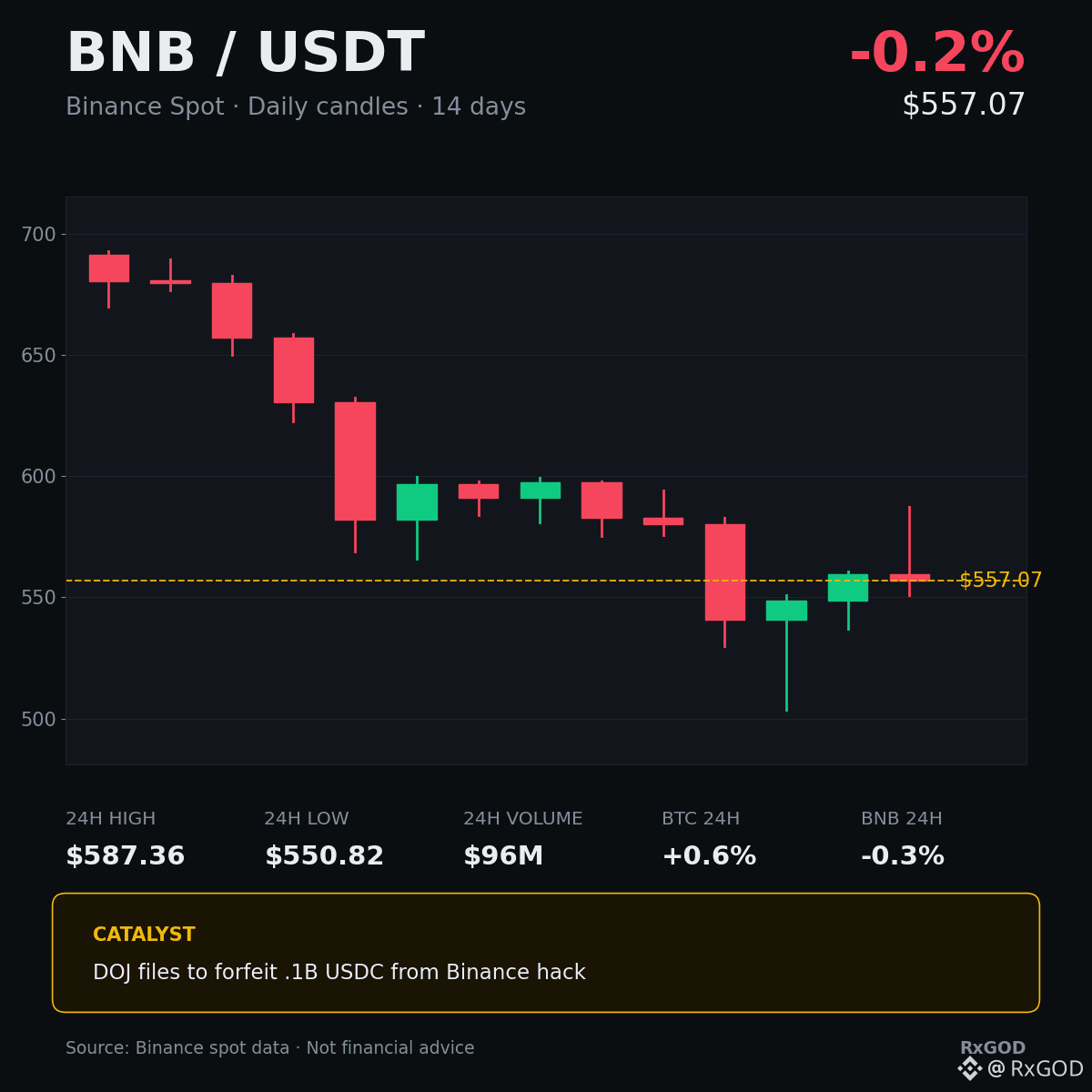
The U.S. Department of Justice filed a civil forfeiture action on Monday to permanently seize over $1.1 billion in $USDC stolen from Binance in the October 29 hack, blamed on North Korea's TraderTraitor group (Lazarus/APT38). The funds — about $1.17 billion across 36 addresses on 18 blockchains, per The Block — were already frozen by Circle, which will issue replacement USDC once a court signs the forfeiture order.
The wider recovery is now substantial: over $2.9 billion of the $6+ billion stolen has been frozen, seized or returned — nearly half the haul — and Binance also holds a $6.5 billion worldwide freezing order from Abu Dhabi courts. But the race is real: Elliptic says hackers already pushed $247 million through Bitcoin coinjoin mixers, and $2.35 billion was still unlaundered last week.
Meanwhile $BNB trades at $557, flat (-0.2%) and down 18% over two weeks, near the low end of its 14-day range. $BTC holds $61,437 (+0.6%) — the market treats this as a managed recovery, not an existential threat.
The honest caveat: forfeiture is a process, not a done deal — a judge still has to sign, and the laundered slice may never come back.
So here's the debate: does a $2.9 billion recovery change how you see exchange risk — or does one $6 billion breach prove no CEX is truly safe? And is a frozen stablecoin a security backstop, or centralization risk of its own?
Not financial advice — DYOR.
#BinanceHack #CryptoNews #DOJ #NorthKorea
33

·
--
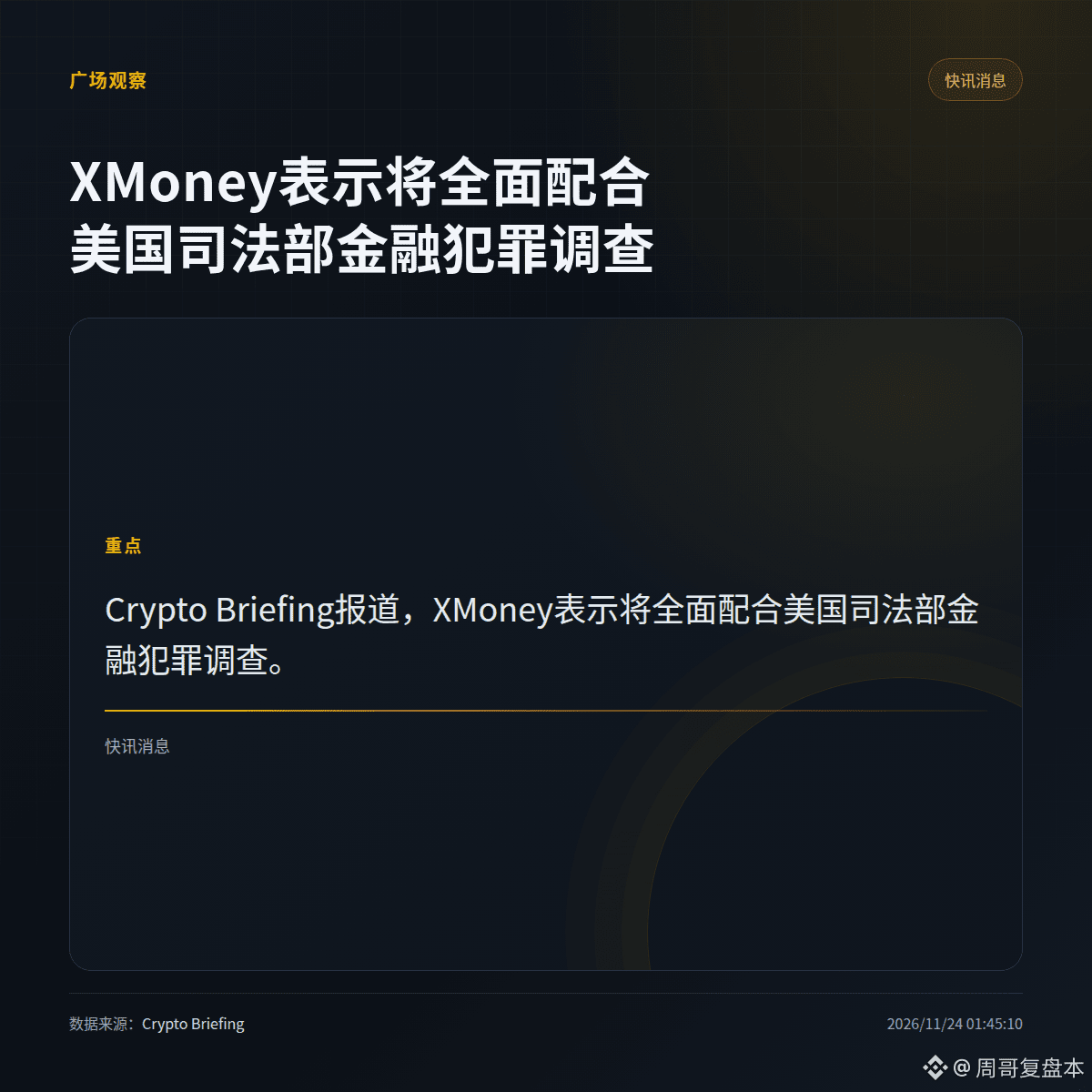
XMoney said it would fully cooperate with a U.S. Department of Justice investigation into financial crime. The $BTC thread is not directly related to it, but falls under digital payments. The show of cooperation itself could boost the platform’s credibility, at the cost of putting data privacy and regulatory scrutiny in the spotlight. This item does not say which accounts or users from which countries are involved in the investigation, so the impact can only be scoped to XMoney itself and its communications with regulators. What to watch is whether the Department of Justice later discloses the scope of the investigation and whether the platform adjusts its data compliance policies. #XMoney #DOJ. In the short term, don’t focus only on one statement; trading volume and the price range are more telling.
XMoney said it would fully cooperate with a U.S. Department of Justice investigation into financial crime. The $BTC thread is not directly related to it, but falls under digital payments. The show of cooperation itself could boost the platform’s credibility, at the cost of putting data privacy and regulatory scrutiny in the spotlight. This item does not say which accounts or users from which countries are involved in the investigation, so the impact can only be scoped to XMoney itself and its communications with regulators. What to watch is whether the Department of Justice later discloses the scope of the investigation and whether the platform adjusts its data compliance policies. #XMoney #DOJ. In the short term, don’t focus only on one statement; trading volume and the price range are more telling.
12

·
--
The DOJ won court approval to seize or restrain over 1.2 billion dollars stolen in the October Binance hack, which it ties to North Korea's TraderTraitor group. #Binance #DOJ
The DOJ won court approval to seize or restrain over 1.2 billion dollars stolen in the October Binance hack, which it ties to North Korea's TraderTraitor group. #Binance #DOJ
28

#OperationTorNadoDarkWebBust
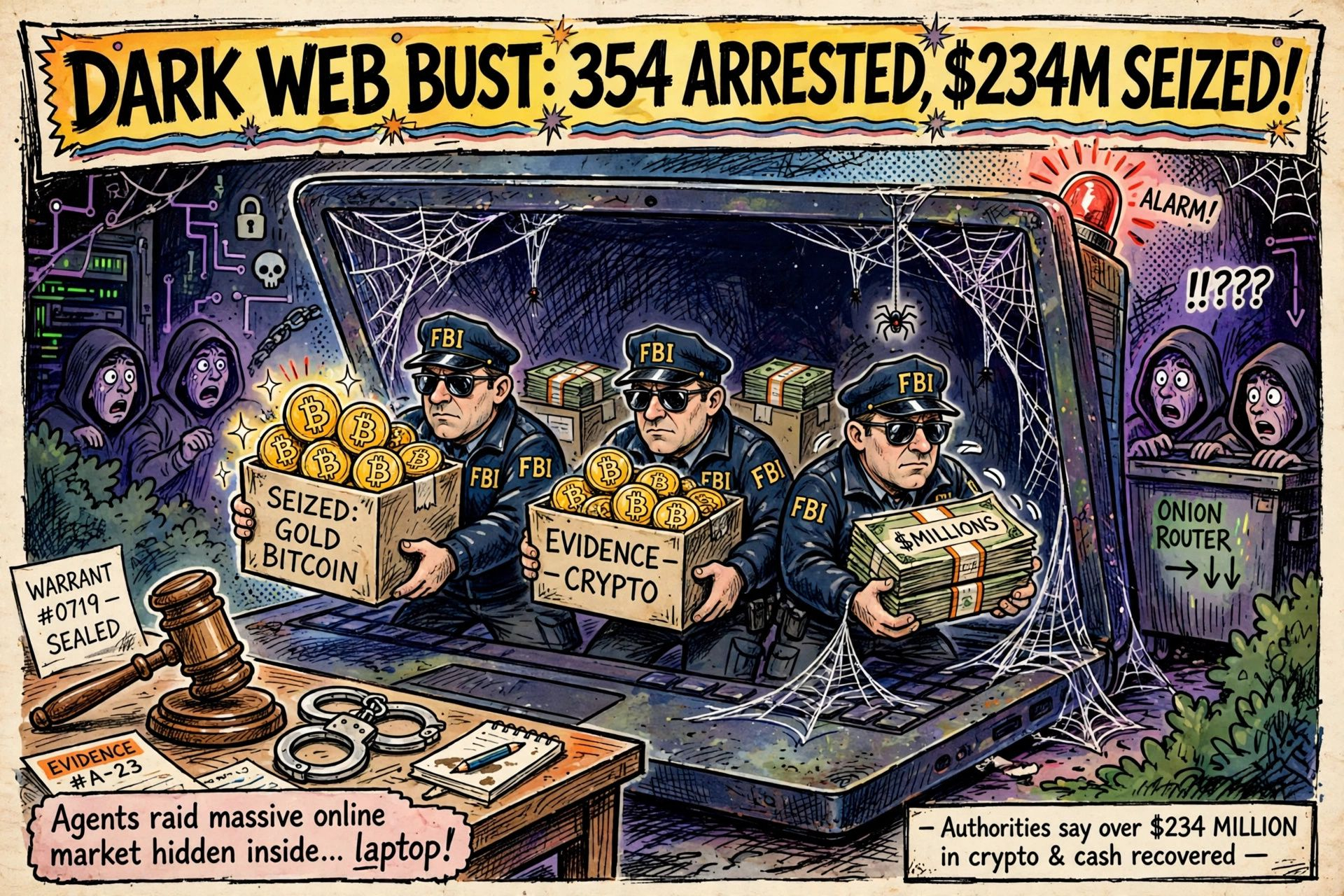
🚨 DOJ AND EUROPOL SWEEP THE DARK WEB, ARREST 354 PEOPLE
Folks, the U.S. Department of Justice and Europol have just announced Operation TorNado, arresting 354 people selling drugs on the dark web across 14 countries and seizing more than $234 million in cash and cryptocurrency. According to the FBI director, this is the largest dark web crackdown ever, running from May 2025 to October 2026 and targeting markets that had been taken down, such as Archetyp, Bohemia, and Nemesis. In the U.S. alone, 132 people were arrested and more than $166 million was seized. In total, the operation confiscated 5,7 tons of drugs, 209 guns, and 38 pill presses. Investigators did not specify how much of the seized money was cryptocurrency.
Biggest perpetual market moves today: $H 0,0198 dollars, $ICP 2,41 dollars, $SOL 75,81 dollars
#DOJ #TorNado #Crypto
12
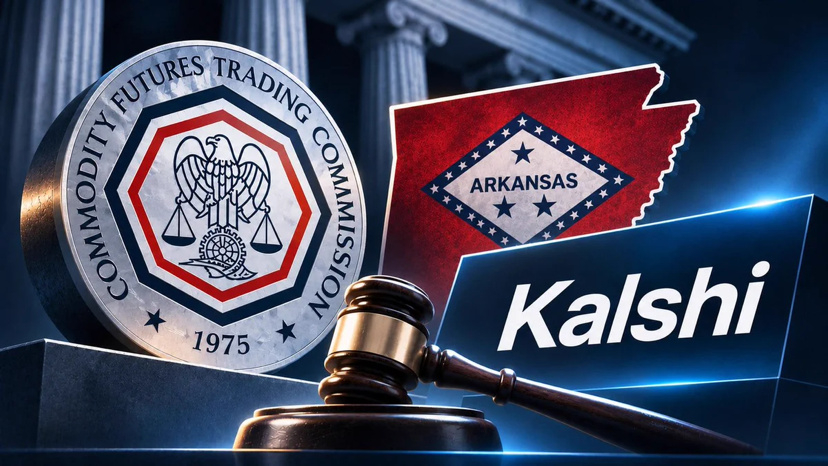
#Kalshi
DOJ and CFTC vs. Arkansas: Federal Agencies Defend Prediction Markets (Kalshi) Against State-Level Bans! ⚖️🇺🇸
The U.S. Department of Justice (#DOJ ) and the Commodity Futures Trading Commission (#CFTC ) have officially filed a lawsuit against the state of Arkansas, seeking to block local restrictions on prediction market platforms like Kalshi.
Key points of the dispute:
➡️ Federal Preemption: The agencies assert that states lack the authority to apply local gambling laws to exchanges and event-based derivative contracts regulated by the CFTC.
➡️ Arkansas’s Position: State Attorney General Tim Griffin previously sued Kalshi, accusing the platform of illegal gambling (specifically regarding bets on sports and elections) and violating consumer protection laws (by allowing individuals under 18 to trade).
➡️ Scope of the Conflict: This marks the 11th U.S. state to become embroiled in a legal dispute with the CFTC over the regulation of prediction markets. The platforms themselves (Kalshi and Crypto.com’s OG.com) have also filed separate lawsuits challenging Arkansas’s actions.
⚠️ The federal government is seeking injunctions to protect legal exchanges from enforcement actions by state authorities. The battle for the future of prediction markets is heating up! 📈
1
135

·
--
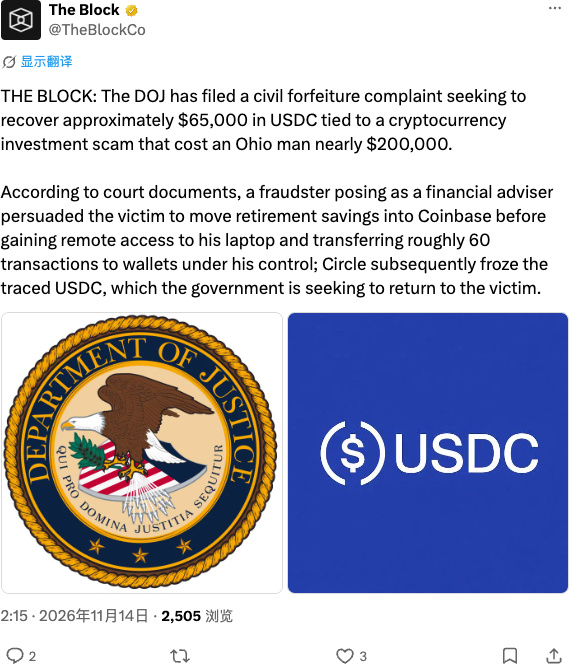
The U.S. Department of Justice has filed charges to recover 65,000 USDC. The victim was scammed out of nearly 200,000. This financial-advisor impersonation scam is the same old trick all over again. 🤡
The DOJ finally took action, but the recovery rate is pretty pathetic. Enjoy the drama, but don’t believe any “market rumors”—the scythe is still raised.
#CryptoScam #USDC #DOJ
The DOJ finally took action, but the recovery rate is pretty pathetic. Enjoy the drama, but don’t believe any “market rumors”—the scythe is still raised.
#CryptoScam #USDC #DOJ
21

·
--
Over $2.7B of the crypto stolen from Binance is now frozen, and a US court just cleared the DOJ to seize or restrain $1.2B of it.
For $BNB holders, the order of events matters more than the headline.
The DOJ announced it Thursday, Nov 12, per The Block (22:40 UTC). It pins the late-October hack on North Korean military hackers it calls TraderTraitor and says tracing continues as funds move through bridges, mixers and exchanges.
Binance spoke first, at 16:54 UTC that day: coverage of affected assets is complete. It committed over $6.34B of company money, from part of SAFU, part of the Futures insurance fund and its treasury, and pledged to refill SAFU to about $1B.
So per Binance, users were covered before any seizure. The $1.2B is a recovery story, not a rescue.
What Binance told users: a new Proof of Reserves snapshot (Nov 12, 00:00 UTC, 198 tokens) is up, the full zero-knowledge proof takes about 40 to 50 hours, and withdrawals keep reopening in phases.
Bitcoin is down 3.62% at $68,933, Fear & Greed 20. BNB is at $637.7, down 2.26% in 24h and 8.47% over 7 days. I'm watching $622.4 and $660.2, the 24h range edges.
Today's data adds up to recovery news meeting a fearful market, with $BNB down less than Bitcoin but still red.
#BNB #Binance #DOJ #NorthKorea
58


·
--
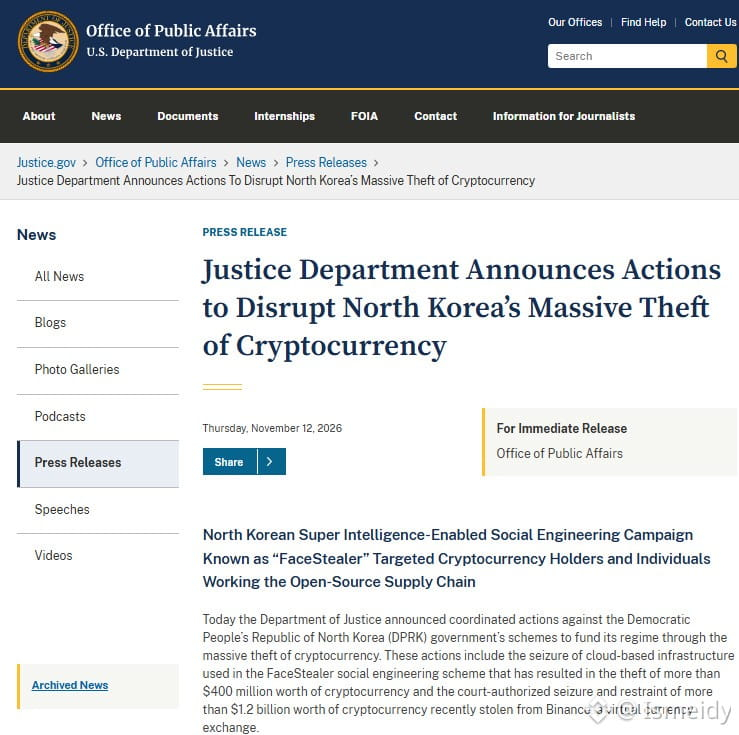
Historic blow to North Korea's cyber machine!
U.S. freezes $1.2 billion linked to #Hackeo a #Binance y and dismantles the "FaceStealer" deepfake video-call network
The U.S. Department of Justice #DOJ has dealt a major blow to the international cryptocurrency ecosystem by dismantling massive cybercrime operations sponsored by the North Korean regime.
The operation combines the recovery of historic funds in the largest hacking case in recent history with the neutralization of sophisticated artificial intelligence-based scams.
Record recovery at Binance: The DOJ obtained court authorization to seize and hold more than $1.2 billion linked to the recent massive hack of Binance. These funds are part of a pool of more than $2.7 billion frozen thanks to cooperation between government agencies and the private sector.
Attribution confirmed #TraderTraitor : Authorities attribute the October 29 attack (in which more than $6 billion was stolen from Binance) to the notorious North Korean military hacker group known as TraderTraitor, whose primary goal is to fund the regime's illicit weapons program.
Dismantling the "FaceStealer" network: In a parallel operation, the DOJ seized the cloud infrastructure used in a separate campaign that stole more than $400 million over the past 18 months. The attackers used stolen accounts and deepfake video calls featuring well-known people to deceive developers and victims, tricking them into installing malicious software.
Malware's reach and FBI action: The FBI seized more than 900 webcam videos belonging to FaceStealer victims and issued official guidance to protect the open-source software developer community, the primary target of long-term infiltration.
$BNB
{future}(BNBUSDT)
$ASTER
{future}(ASTERUSDT)
Historic blow to North Korea's cyber machine!
U.S. freezes $1.2 billion linked to #Hackeo a #Binance y and dismantles the "FaceStealer" deepfake video-call network
The U.S. Department of Justice #DOJ has dealt a major blow to the international cryptocurrency ecosystem by dismantling massive cybercrime operations sponsored by the North Korean regime.
The operation combines the recovery of historic funds in the largest hacking case in recent history with the neutralization of sophisticated artificial intelligence-based scams.
Record recovery at Binance: The DOJ obtained court authorization to seize and hold more than $1.2 billion linked to the recent massive hack of Binance. These funds are part of a pool of more than $2.7 billion frozen thanks to cooperation between government agencies and the private sector.
Attribution confirmed #TraderTraitor : Authorities attribute the October 29 attack (in which more than $6 billion was stolen from Binance) to the notorious North Korean military hacker group known as TraderTraitor, whose primary goal is to fund the regime's illicit weapons program.
Dismantling the "FaceStealer" network: In a parallel operation, the DOJ seized the cloud infrastructure used in a separate campaign that stole more than $400 million over the past 18 months. The attackers used stolen accounts and deepfake video calls featuring well-known people to deceive developers and victims, tricking them into installing malicious software.
Malware's reach and FBI action: The FBI seized more than 900 webcam videos belonging to FaceStealer victims and issued official guidance to protect the open-source software developer community, the primary target of long-term infiltration.
$BNB
$ASTER
4
1
36
25k

·
--
DOJ seeks to recover $1.2 billion from Binance hack; North Korean hackers’ money-laundering network comes to light
The U.S. Department of Justice (DOJ) is pushing to recover approximately $1.2 billion from the Binance hack—the largest hack in Binance’s history and the first time the DOJ has pursued large-scale recovery of proceeds from a crypto hack.
According to Cointelegraph, authorities have frozen more than $2.7 billion in funds linked to the hack and have also cracked down on a malware scam called FaceStealer, which stole more than $400 million. The operation has once again brought a money-laundering network run by North Korean state-sponsored hackers into the public eye.
Why does this matter? The crypto sector has seen multiple large-scale thefts in recent years, but law enforcement has often struggled to recover the funds. The DOJ’s use of systematic measures to freeze funds worth nearly $300 million signals that regulators are improving their ability to track, freeze, and recover hacked funds. More importantly, the case has exposed the full chain through which North Korean hackers use memecoins to launder money—these highly volatile and anonymous assets are ideal channels for dispersing and laundering funds.
Fundamentally, the $2.7 billion frozen far exceeds the $1.2 billion recovery target, indicating that many parts of the funds’ trail still need to be addressed. However, it is important to bear in mind that hacked funds are typically dispersed across multiple layers of wallets, making full recovery extremely difficult. North Korea’s state-sponsored attacks have become a persistent threat and are unlikely to be eliminated in the short term, placing greater demands on the security infrastructure of the entire industry.
How might the market react? News of this kind typically does not directly affect the prices of major cryptocurrencies, but it will intensify discussion around crypto security and tighter regulation. If further details emerge about the memecoin money-laundering network, sentiment toward related niche assets could come under pressure.
On the other hand, although the amount frozen is substantial, it still falls short of the actual pool of hacked funds. The recovery process also involves international legal cooperation, making its outcome uncertain. In addition, the growing difficulty of regulating memecoins could create new compliance pressures.
What should we watch next? From a trading perspective, it is more important to wait for market confirmation than to react to a single news item. If you are following the related assets, it may be more useful in the short term to watch for unusual movements in trading volume and funding rates, as well as for further disclosures about the freezes.
Overall, this event sends a dual signal about security and regulation and is worth following closely.
#Binance #CryptoSafety #DOJ
The above is a summary of information and personal analysis, and does not constitute investment advice.
I will continue to follow and share updates if there are any important developments.
2
·
--
US DOJ Moves to Seize $1.2B Stolen from Binance in North Korean Hack
The US Justice Department has won court authorization to seize or restrain more than $1.2B in crypto stolen from Binance, blaming North Korean military hackers known as TraderTraitor for the Oct 29 theft. Over $2.7B has been frozen so far. Binance puts total losses near $6.3B and says victims are fully repaid. The DOJ also seized cloud infrastructure behind FaceStealer, a video-call scam that stole $400M+ in crypto over 18 months.
$BTC $BNB #Binance #DOJ #Crypto #Hack
Not financial advice.

16
Article
DOJ Moves to Seize $1.2B From the Binance Hack as BTC Slips Below $70KThe US Justice Department just made its biggest move yet in the aftermath of the Binance hack, and it landed on a day when the whole market was bleeding. Here is what I think matters.
What Happened
On Thursday the DOJ said it has received court authority to seize more than $1.2 billion in crypto frozen after the October 29 theft at Binance. According to CoinDesk, that is part of a wider effort by US authorities and private companies that has frozen more than $2.7 billion of the more than $6 billion stolen. The FBI attributes the attack to a North Korean military-linked hacking operation known as TraderTraitor.
In a separate action, federal agents seized cloud infrastructure used in a campaign called FaceStealer. The FBI says it has stolen more than $400 million in crypto over the past 18 months, and it seized more than 900 webcam videos collected by the attackers.
Background
FaceStealer is social engineering at its most uncomfortable. Victims get invited to a fake video meeting that looks like Zoom or Teams. The attackers impersonate a trusted contact, using secretly recorded webcam footage from earlier victims and, increasingly, deepfake video. Then they claim there is a technical problem and tell the target to install software or run a command. That command is the malware.
The FBI also warned that developers who maintain widely used open-source software have been targeted. Compromise one maintainer and you may get a door into everything built on top of their code.
Why It Matters
Two things stand out to me.
First, the money is not just being traced, it is being legally taken. Freezing funds is one step. A court-backed seizure is the step that can lead to actual return. With over $2.7 billion frozen out of $6 billion plus, the recovery rate in this case is already far above what we usually see after a major hack.
Second, the attack method is the real lesson. Smart contracts and cold storage are not the weak point here. A convincing face on a video call is. If a "colleague" asks you to run a command to fix your audio, that is the moment to stop.
Market Impact
The timing is awkward for sentiment. CoinDesk reports Bitcoin fell below $70,000 early Friday, its lowest level since August 19, while Ether dropped below $2,000 for the first time since August. XRP is trading close to $1 and Solana is below $80.
Exchanges liquidated more than $1.3 billion in futures positions over 24 hours, including $677 million tied to Bitcoin, according to Coinglass. CoinDesk linked the selloff to reports of renewed military escalation in the Middle East. The DOJ news is not what is moving prices, but it does show that enforcement is catching up faster than many expected.
What to Watch Next
Watch how much of the $1.2 billion is actually forfeited and returned, and how fast. Watch whether the remaining stolen funds, still moving through bridges, mixers and exchanges, get frozen too. And watch whether more projects and exchanges tighten rules around video-call verification and developer access.
My take: the hackers are getting more sophisticated, but so is the response. Security habits are now as important as any trade.
What is your own rule for verifying a video call before you run anything on your machine? Share it below.
#Binance #CryptoSecurity #DOJ $BNB $BTC $ETH
DOJ Moves to Seize $1.2B From the Binance Hack as BTC Slips Below $70K
The US Justice Department just made its biggest move yet in the aftermath of the Binance hack, and it landed on a day when the whole market was bleeding. Here is what I think matters.
What Happened
On Thursday the DOJ said it has received court authority to seize more than $1.2 billion in crypto frozen after the October 29 theft at Binance. According to CoinDesk, that is part of a wider effort by US authorities and private companies that has frozen more than $2.7 billion of the more than $6 billion stolen. The FBI attributes the attack to a North Korean military-linked hacking operation known as TraderTraitor.
In a separate action, federal agents seized cloud infrastructure used in a campaign called FaceStealer. The FBI says it has stolen more than $400 million in crypto over the past 18 months, and it seized more than 900 webcam videos collected by the attackers.
Background
FaceStealer is social engineering at its most uncomfortable. Victims get invited to a fake video meeting that looks like Zoom or Teams. The attackers impersonate a trusted contact, using secretly recorded webcam footage from earlier victims and, increasingly, deepfake video. Then they claim there is a technical problem and tell the target to install software or run a command. That command is the malware.
The FBI also warned that developers who maintain widely used open-source software have been targeted. Compromise one maintainer and you may get a door into everything built on top of their code.
Why It Matters
Two things stand out to me.
First, the money is not just being traced, it is being legally taken. Freezing funds is one step. A court-backed seizure is the step that can lead to actual return. With over $2.7 billion frozen out of $6 billion plus, the recovery rate in this case is already far above what we usually see after a major hack.
Second, the attack method is the real lesson. Smart contracts and cold storage are not the weak point here. A convincing face on a video call is. If a "colleague" asks you to run a command to fix your audio, that is the moment to stop.
Market Impact
The timing is awkward for sentiment. CoinDesk reports Bitcoin fell below $70,000 early Friday, its lowest level since August 19, while Ether dropped below $2,000 for the first time since August. XRP is trading close to $1 and Solana is below $80.
Exchanges liquidated more than $1.3 billion in futures positions over 24 hours, including $677 million tied to Bitcoin, according to Coinglass. CoinDesk linked the selloff to reports of renewed military escalation in the Middle East. The DOJ news is not what is moving prices, but it does show that enforcement is catching up faster than many expected.
What to Watch Next
Watch how much of the $1.2 billion is actually forfeited and returned, and how fast. Watch whether the remaining stolen funds, still moving through bridges, mixers and exchanges, get frozen too. And watch whether more projects and exchanges tighten rules around video-call verification and developer access.
My take: the hackers are getting more sophisticated, but so is the response. Security habits are now as important as any trade.
What is your own rule for verifying a video call before you run anything on your machine? Share it below.
#Binance #CryptoSecurity #DOJ $BNB $BTC $ETH
66
$BNB 🚨 BREAKING: DOJ SEIZES $1.2B FROM NORTH KOREA BINANCE HACK
DOJ just announced yesterday Nov 12!
FACTS:
- Binance hack: Oct 29 - $6.3B stolen (Largest crypto heist ever)
- Hackers: North Korea military group "TraderTraitor" / Sapphire Sleet
- Method: Fake job interview to get into Binance
- Frozen so far: $2.7B by US Gov + Tether / Circle
- *Seized now: $1.2B* - Court authorized, part of that $2.7B
*What it means:*
- This is NOT new money printed. It's legal step to take ownership of already frozen funds.
Forfeiture still ongoing, DOJ still chasing rest through mixers / bridges.
Binance already covered loss - User funds SAFU.
Plus: FBI seized servers of another NK scam "FaceStealer" - Fake video call deepfakes, stole $400M+ in 18 months with 900+ recorded webcam videos!
Market impact:
Bullish for market! Shows US can recover stolen crypto fast. $2.7B frozen within 2 weeks = Strong.
Stay safe - Don't click fake job interview links on Telegram / LinkedIn
#Binance #BREAKING #DOJ #NorthKorea
---
{future}(BNBUSDT)
{future}(BTCUSDT)
$BNB 🚨 BREAKING: DOJ SEIZES $1.2B FROM NORTH KOREA BINANCE HACK
DOJ just announced yesterday Nov 12!
FACTS:
- Binance hack: Oct 29 - $6.3B stolen (Largest crypto heist ever)
- Hackers: North Korea military group "TraderTraitor" / Sapphire Sleet
- Method: Fake job interview to get into Binance
- Frozen so far: $2.7B by US Gov + Tether / Circle
- *Seized now: $1.2B* - Court authorized, part of that $2.7B
*What it means:*
- This is NOT new money printed. It's legal step to take ownership of already frozen funds.
Forfeiture still ongoing, DOJ still chasing rest through mixers / bridges.
Binance already covered loss - User funds SAFU.
Plus: FBI seized servers of another NK scam "FaceStealer" - Fake video call deepfakes, stole $400M+ in 18 months with 900+ recorded webcam videos!
Market impact:
Bullish for market! Shows US can recover stolen crypto fast. $2.7B frozen within 2 weeks = Strong.
Stay safe - Don't click fake job interview links on Telegram / LinkedIn
#Binance #BREAKING #DOJ #NorthKorea
---
1
82
Log in to explore more content
Join global crypto users on Binance Square
⚡️ Get latest and useful information about crypto.
💬 Trusted by the world’s largest crypto exchange.
👍 Discover real insights from verified creators.
Email / Phone number
Trending Topics
1
#CanMarketsReboundAfterThanksgiving?
378,950 views
3,012 Discussing
2
#EvolveAtBinanceBlockchainWeek
1.1M views
13,068 Discussing
3
#XRPLedgerVaultGets29Votes
18,414 views
232 Discussing
4
#SwitzerlandApproves57JurisdictionsForCryptoDataExchange
3,928 views
16 Discussing
5
#EthereumGlamsterdamKeepsStorageFeeChange
812 views
27 Discussing
6
#CouldSpaceX’sOrbitalDataCentersBoostAIChipDemand?
157,555 views
1,604 Discussing
7
#Nasdaq100FiveDayAvgIntradayVolatilityHits3.8%
38,598 views
415 Discussing
8
#ASEANPlus3ToFormCrossBorderPaymentsCryptoWorkingGroup
9,331 views
23 Discussing
9
#ZcashDevelopersUrgeZECMoveToIronwood
79,656 views
405 Discussing
10
#MoneroFalls13%OnDelistings
217 views
14 Discussing