
Ismeidy
2.6k Posts

Ismeidy
 Square Verified+
Report
Block User
Journalist specializing in decentralized finance, crypto, blockchain, metaverse, web3.
Blockchain consultant. Real and verified information. X: ismeidyfinanzas

SUI Holder
Occasional Trader
8.8 Years
27 Following
102.3K+ Followers
20.4K+ Liked
Posts
All
Quotes
Videos
Live
PINNED
·
--
Bullish
😱🚀😱 SURPRISE YOURSELF😱🚀😱
Will #Solana reach $450?
Solana price $SOL hits 3-month high
These 5 analysts expect a new yearly high
Solana (SOL) price has been rising rapidly since October 13 and is approaching its yearly high.
Solana price also broke an inverse head and shoulders pattern.
How long will it continue to rise?
Analysts are optimistic about Solana
Analysts at #criptomonedas have a predominantly bullish sentiment towards Solana.
Tradermayne believes the price will rise to $40. But his bullish analysis is conditional on a bullish weekly candle close.
Rager and DaanCrypto also noted the importance of the $38 horizontal resistance area, which coincides with the yearly high. This area has been crucial since 2021, supporting and resisting.
Finally, CryptoGodJohn believes that SOL price will eventually reach $250 in the long term and may even reach $450 if it reaches the market cap of #Ethereum
Will it reach the new yearly high?
The daily time frame shows that SOL price has been trading within an inverse head and shoulders (IH&S) pattern since February.
The IH&S is considered a bullish pattern, which usually leads to breakouts.
Today, SOL price is in the process of breaking out of the pattern neckline. A daily close above $26 will confirm the altcoin's breakout.
#crypto2023 #cryptocurrency
😱🚀😱 SURPRISE YOURSELF😱🚀😱
Will #Solana reach $450?
Solana price $SOL hits 3-month high
These 5 analysts expect a new yearly high
Solana (SOL) price has been rising rapidly since October 13 and is approaching its yearly high.
Solana price also broke an inverse head and shoulders pattern.
How long will it continue to rise?
Analysts are optimistic about Solana
Analysts at #criptomonedas have a predominantly bullish sentiment towards Solana.
Tradermayne believes the price will rise to $40. But his bullish analysis is conditional on a bullish weekly candle close.
Rager and DaanCrypto also noted the importance of the $38 horizontal resistance area, which coincides with the yearly high. This area has been crucial since 2021, supporting and resisting.
Finally, CryptoGodJohn believes that SOL price will eventually reach $250 in the long term and may even reach $450 if it reaches the market cap of #Ethereum
Will it reach the new yearly high?
The daily time frame shows that SOL price has been trading within an inverse head and shoulders (IH&S) pattern since February.
The IH&S is considered a bullish pattern, which usually leads to breakouts.
Today, SOL price is in the process of breaking out of the pattern neckline. A daily close above $26 will confirm the altcoin's breakout.
#crypto2023 #cryptocurrency
Will #Solana reach $450?
Solana price $SOL hits 3-month high
These 5 analysts expect a new yearly high
Solana (SOL) price has been rising rapidly since October 13 and is approaching its yearly high.
Solana price also broke an inverse head and shoulders pattern.
How long will it continue to rise?
Analysts are optimistic about Solana
Analysts at #criptomonedas have a predominantly bullish sentiment towards Solana.
Tradermayne believes the price will rise to $40. But his bullish analysis is conditional on a bullish weekly candle close.
Rager and DaanCrypto also noted the importance of the $38 horizontal resistance area, which coincides with the yearly high. This area has been crucial since 2021, supporting and resisting.
Finally, CryptoGodJohn believes that SOL price will eventually reach $250 in the long term and may even reach $450 if it reaches the market cap of #Ethereum
Will it reach the new yearly high?
The daily time frame shows that SOL price has been trading within an inverse head and shoulders (IH&S) pattern since February.
The IH&S is considered a bullish pattern, which usually leads to breakouts.
Today, SOL price is in the process of breaking out of the pattern neckline. A daily close above $26 will confirm the altcoin's breakout.
#crypto2023 #cryptocurrency


161
39
446
138.9k
·
--
Verified
🚨 "THE FLOOR IS ALREADY BEHIND US"
THE BOLD FORECAST BY BRIAN ARMSTRONG THAT ANTICIPATES A 2-YEAR RALLY IN BITCOIN
Brian Armstrong, cofounder and CEO of Coinbase, confirmed during an interview with Bloomberg Television from Singapore that, according to his analysis, #bitcoin ha has already hit its lowest point (the floor) in the current cycle.
The executive expects a sustained bullish trend over the next 12 to 24 months, driven by the proximity of Bitcoin’s next halving event.
Armstrong noted that the crypto ecosystem goes beyond Bitcoin’s price. Projects such as the Base network are seeing year-over-year growth of 700% (7x) in stablecoin payments, alongside steady growth in AI finance (Agentic Finance), prediction markets, and asset tokenization.
#CryptoNews #BTC
$BTC
{future}(BTCUSDT)
🚨 "THE FLOOR IS ALREADY BEHIND US"
THE BOLD FORECAST BY BRIAN ARMSTRONG THAT ANTICIPATES A 2-YEAR RALLY IN BITCOIN
Brian Armstrong, cofounder and CEO of Coinbase, confirmed during an interview with Bloomberg Television from Singapore that, according to his analysis, #bitcoin ha has already hit its lowest point (the floor) in the current cycle.
The executive expects a sustained bullish trend over the next 12 to 24 months, driven by the proximity of Bitcoin’s next halving event.
Armstrong noted that the crypto ecosystem goes beyond Bitcoin’s price. Projects such as the Base network are seeing year-over-year growth of 700% (7x) in stablecoin payments, alongside steady growth in AI finance (Agentic Finance), prediction markets, and asset tokenization.
#CryptoNews #BTC
$BTC
THE BOLD FORECAST BY BRIAN ARMSTRONG THAT ANTICIPATES A 2-YEAR RALLY IN BITCOIN
Brian Armstrong, cofounder and CEO of Coinbase, confirmed during an interview with Bloomberg Television from Singapore that, according to his analysis, #bitcoin ha has already hit its lowest point (the floor) in the current cycle.
The executive expects a sustained bullish trend over the next 12 to 24 months, driven by the proximity of Bitcoin’s next halving event.
Armstrong noted that the crypto ecosystem goes beyond Bitcoin’s price. Projects such as the Base network are seeing year-over-year growth of 700% (7x) in stablecoin payments, alongside steady growth in AI finance (Agentic Finance), prediction markets, and asset tokenization.
#CryptoNews #BTC
$BTC

4
2.2k
·
--
Verified
From the sky to the mat in an hour
#Laptop , the #memecoin of #HunterBiden , it plummets 99% after brushing the $110 billion
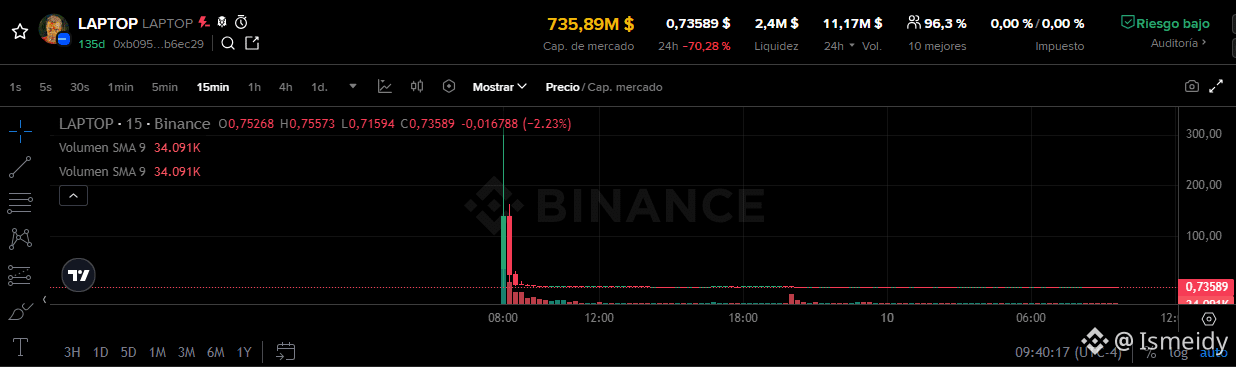
LAPTOP had a chaotic debut in which it briefly neared the $300 per token and reached a theoretical valuation of $110 billion, only to then drop more than 99% to trade near $0.73.
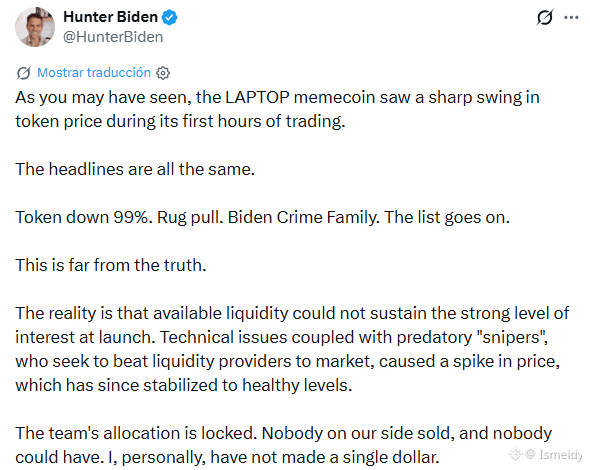
Team diagnosis: Developers attributed the drop to low initial liquidity and to an attack by "predatory sniper bots" that exploited the high demand. To curb the impact, they will inject 4 million tokens (0.4% of the supply) into Aerodrome liquidity pools.
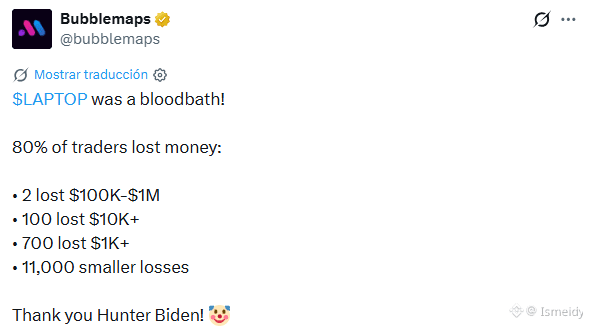
A "massacre" for retail investors: According to the firm Bubblemaps, around 80% of buyers lost money. Hundreds of investors reported losses ranging from $1,000 to $1 million.
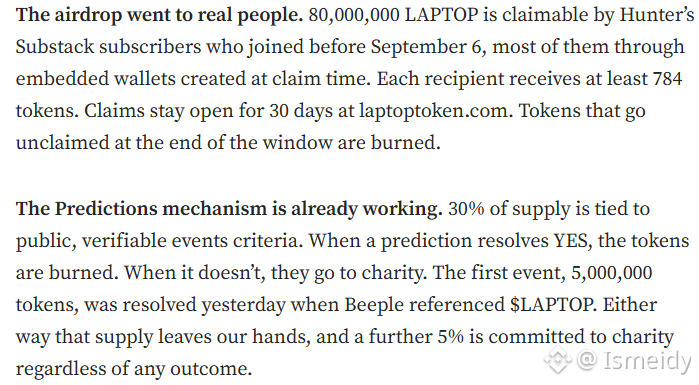
Burn mechanism triggered: The burning of 10 million tokens (1% of the supply) was confirmed after two project predictions were met, one of them linked to a mention by the digital artist Beeple.
Distribution and incidents: The team denied presales or payments to influencers, saying the airdrop benefited real Substack subscribers. At the same time, X suspended the project’s official account, which Hunter Biden publicly responded to by saying it "isn’t going anywhere".
#CryptoNews
$AERO
{future}(AEROUSDT)
$ETH
{future}(ETHUSDT)
From the sky to the mat in an hour
#Laptop , the #memecoin of #HunterBiden , it plummets 99% after brushing the $110 billion
LAPTOP had a chaotic debut in which it briefly neared the $300 per token and reached a theoretical valuation of $110 billion, only to then drop more than 99% to trade near $0.73.
Team diagnosis: Developers attributed the drop to low initial liquidity and to an attack by "predatory sniper bots" that exploited the high demand. To curb the impact, they will inject 4 million tokens (0.4% of the supply) into Aerodrome liquidity pools.
A "massacre" for retail investors: According to the firm Bubblemaps, around 80% of buyers lost money. Hundreds of investors reported losses ranging from $1,000 to $1 million.
Burn mechanism triggered: The burning of 10 million tokens (1% of the supply) was confirmed after two project predictions were met, one of them linked to a mention by the digital artist Beeple.
Distribution and incidents: The team denied presales or payments to influencers, saying the airdrop benefited real Substack subscribers. At the same time, X suspended the project’s official account, which Hunter Biden publicly responded to by saying it "isn’t going anywhere".
#CryptoNews
$AERO
$ETH
#Laptop , the #memecoin of #HunterBiden , it plummets 99% after brushing the $110 billion
LAPTOP had a chaotic debut in which it briefly neared the $300 per token and reached a theoretical valuation of $110 billion, only to then drop more than 99% to trade near $0.73.
Team diagnosis: Developers attributed the drop to low initial liquidity and to an attack by "predatory sniper bots" that exploited the high demand. To curb the impact, they will inject 4 million tokens (0.4% of the supply) into Aerodrome liquidity pools.
A "massacre" for retail investors: According to the firm Bubblemaps, around 80% of buyers lost money. Hundreds of investors reported losses ranging from $1,000 to $1 million.
Burn mechanism triggered: The burning of 10 million tokens (1% of the supply) was confirmed after two project predictions were met, one of them linked to a mention by the digital artist Beeple.
Distribution and incidents: The team denied presales or payments to influencers, saying the airdrop benefited real Substack subscribers. At the same time, X suspended the project’s official account, which Hunter Biden publicly responded to by saying it "isn’t going anywhere".
#CryptoNews
$AERO
$ETH
3
14
7.9k
·
--
Market summary
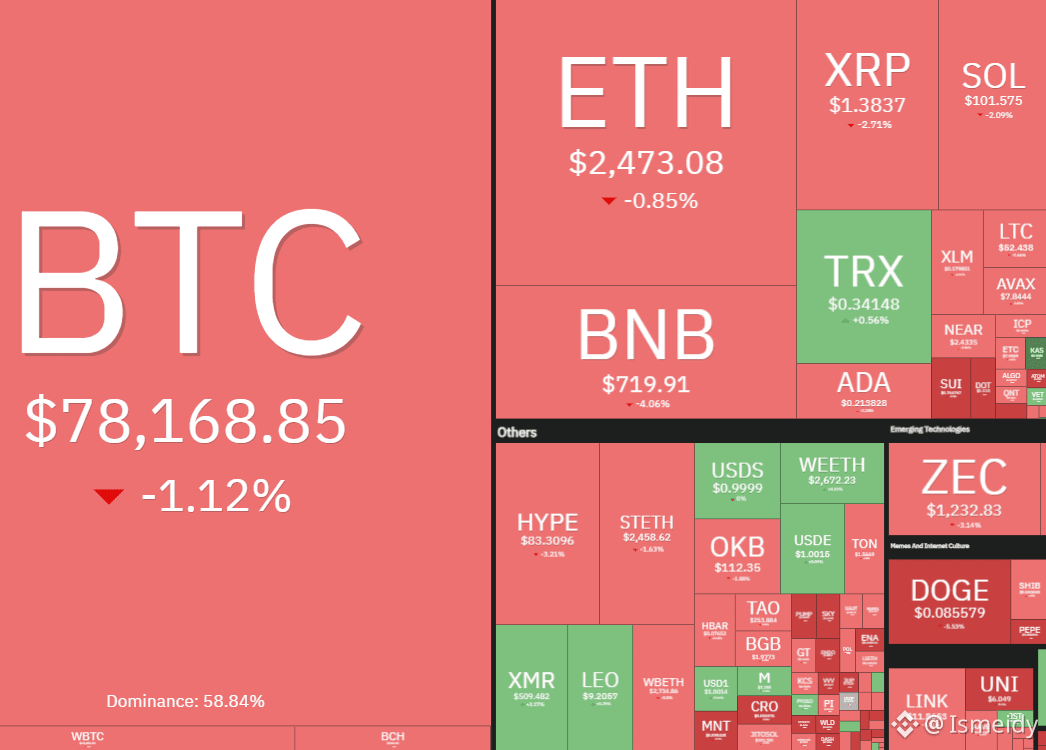
#bitcoin 💰 trades above $78.168 -1.12%
‼️ The top 10 cryptocurrencies are trading in the RED ZONE
The 3 winning assets
KAS 7.30% 📈
ETHFI 3.75% 📈
RAY 3.45% 📈
The 3 losing assets
PONS -28.96% 📉
DASH -12.09%📉
币安人生 -11.75% 📉
📌 #marketcap : $2.65T -1.36%
📌 Dominance of #BTC : 59.0%
📌 Dominance of #ETH : 11.3%
📌 Index of #altcoinseason : 37%
📌 Fear and Greed Index: 69 (GREED)
📌 CMC20 Index 162.29 -1.51%
📌 CMC100 Index 154.60 -1.65%
📌 Indicator of the Pi cycle top 67.347 0.01%
📌 Puell Multiple 01.08 14.89%
📌 22-Day RSI 60.206 -3.94%
$KAS
{future}(KASUSDT)
$ETHFI
{future}(ETHFIUSDT)
$RAY
{spot}(RAYUSDT)
Market summary
#bitcoin 💰 trades above $78.168 -1.12%
‼️ The top 10 cryptocurrencies are trading in the RED ZONE
The 3 winning assets
KAS 7.30% 📈
ETHFI 3.75% 📈
RAY 3.45% 📈
The 3 losing assets
PONS -28.96% 📉
DASH -12.09%📉
币安人生 -11.75% 📉
📌 #marketcap : $2.65T -1.36%
📌 Dominance of #BTC : 59.0%
📌 Dominance of #ETH : 11.3%
📌 Index of #altcoinseason : 37%
📌 Fear and Greed Index: 69 (GREED)
📌 CMC20 Index 162.29 -1.51%
📌 CMC100 Index 154.60 -1.65%
📌 Indicator of the Pi cycle top 67.347 0.01%
📌 Puell Multiple 01.08 14.89%
📌 22-Day RSI 60.206 -3.94%
$KAS
$ETHFI
$RAY
#bitcoin 💰 trades above $78.168 -1.12%
‼️ The top 10 cryptocurrencies are trading in the RED ZONE
The 3 winning assets
KAS 7.30% 📈
ETHFI 3.75% 📈
RAY 3.45% 📈
The 3 losing assets
PONS -28.96% 📉
DASH -12.09%📉
币安人生 -11.75% 📉
📌 #marketcap : $2.65T -1.36%
📌 Dominance of #BTC : 59.0%
📌 Dominance of #ETH : 11.3%
📌 Index of #altcoinseason : 37%
📌 Fear and Greed Index: 69 (GREED)
📌 CMC20 Index 162.29 -1.51%
📌 CMC100 Index 154.60 -1.65%
📌 Indicator of the Pi cycle top 67.347 0.01%
📌 Puell Multiple 01.08 14.89%
📌 22-Day RSI 60.206 -3.94%
$KAS
$ETHFI
$RAY
1
1.2k
·
--
Verified
The biggest restructuring in the history of #Ethereum
#Consensys is split into two giants and catapults #MetaMask into global finance
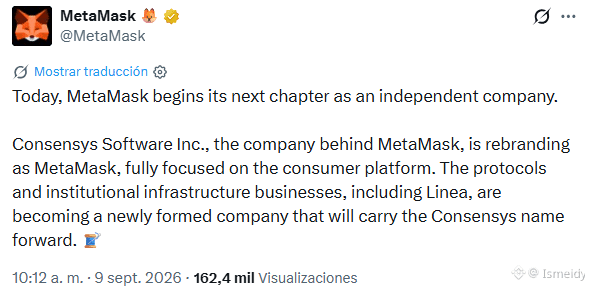
ConsenSys Software Inc. (CSI) will officially be spun off at the end of this year into two fully independent entities, to definitively separate its consumer-focused business from its infrastructure and institutional operations.
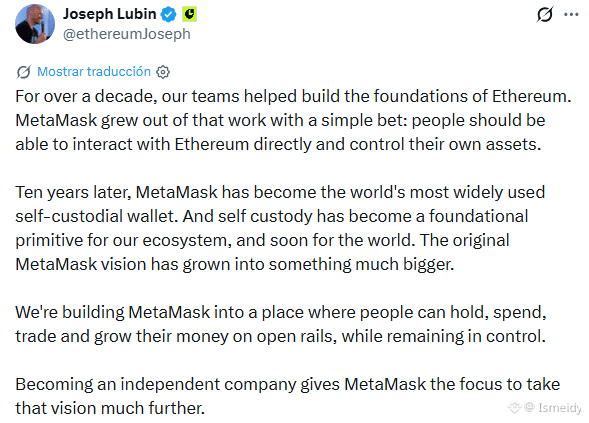
MetaMask is born as a Financial Platform: The current company will officially be renamed MetaMask, under the executive direction of Joe Lubin. It will stop being merely a digital wallet and will instead become a self-managed personal finance super-app that integrates payments, savings, and investments.
Growth and Metrics: It has more than 100 million downloads across 190 countries and billions of dollars in cumulative volume.
Payments Ecosystem: It has already launched a Mastercard card in the US (with rewards in the stablecoin mUSD) and a Money Account, which offers up to 4% APR in mUSD for spending, perpetual trading, and prediction markets.
Consensys (Protocols Group) for #WallStreet : The infrastructure arm will keep the Consensys brand as a new independent company under the direction of CEO Mike Kriak and President David Cunningham (with Lubin as Executive Chairman).
Institutional Focus: It will control the Layer 2 network Linea and the Besu and Teku execution clients, responding to the migration of financial giants like Citi, DTC, and BNY Mellon toward asset tokenization and operational blockchain networks.
#ETH $ETH
{future}(ETHUSDT)
$SOL
{future}(SOLUSDT)
$HYPE
{future}(HYPEUSDT)
The biggest restructuring in the history of #Ethereum
#Consensys is split into two giants and catapults #MetaMask into global finance
ConsenSys Software Inc. (CSI) will officially be spun off at the end of this year into two fully independent entities, to definitively separate its consumer-focused business from its infrastructure and institutional operations.
MetaMask is born as a Financial Platform: The current company will officially be renamed MetaMask, under the executive direction of Joe Lubin. It will stop being merely a digital wallet and will instead become a self-managed personal finance super-app that integrates payments, savings, and investments.
Growth and Metrics: It has more than 100 million downloads across 190 countries and billions of dollars in cumulative volume.
Payments Ecosystem: It has already launched a Mastercard card in the US (with rewards in the stablecoin mUSD) and a Money Account, which offers up to 4% APR in mUSD for spending, perpetual trading, and prediction markets.
Consensys (Protocols Group) for #WallStreet : The infrastructure arm will keep the Consensys brand as a new independent company under the direction of CEO Mike Kriak and President David Cunningham (with Lubin as Executive Chairman).
Institutional Focus: It will control the Layer 2 network Linea and the Besu and Teku execution clients, responding to the migration of financial giants like Citi, DTC, and BNY Mellon toward asset tokenization and operational blockchain networks.
#ETH $ETH
$SOL
$HYPE
#Consensys is split into two giants and catapults #MetaMask into global finance
ConsenSys Software Inc. (CSI) will officially be spun off at the end of this year into two fully independent entities, to definitively separate its consumer-focused business from its infrastructure and institutional operations.
MetaMask is born as a Financial Platform: The current company will officially be renamed MetaMask, under the executive direction of Joe Lubin. It will stop being merely a digital wallet and will instead become a self-managed personal finance super-app that integrates payments, savings, and investments.
Growth and Metrics: It has more than 100 million downloads across 190 countries and billions of dollars in cumulative volume.
Payments Ecosystem: It has already launched a Mastercard card in the US (with rewards in the stablecoin mUSD) and a Money Account, which offers up to 4% APR in mUSD for spending, perpetual trading, and prediction markets.
Consensys (Protocols Group) for #WallStreet : The infrastructure arm will keep the Consensys brand as a new independent company under the direction of CEO Mike Kriak and President David Cunningham (with Lubin as Executive Chairman).
Institutional Focus: It will control the Layer 2 network Linea and the Besu and Teku execution clients, responding to the migration of financial giants like Citi, DTC, and BNY Mellon toward asset tokenization and operational blockchain networks.
#ETH $ETH
$SOL
$HYPE
5
1.7k
·
--
Partly True
From glory to the abyss in minutes
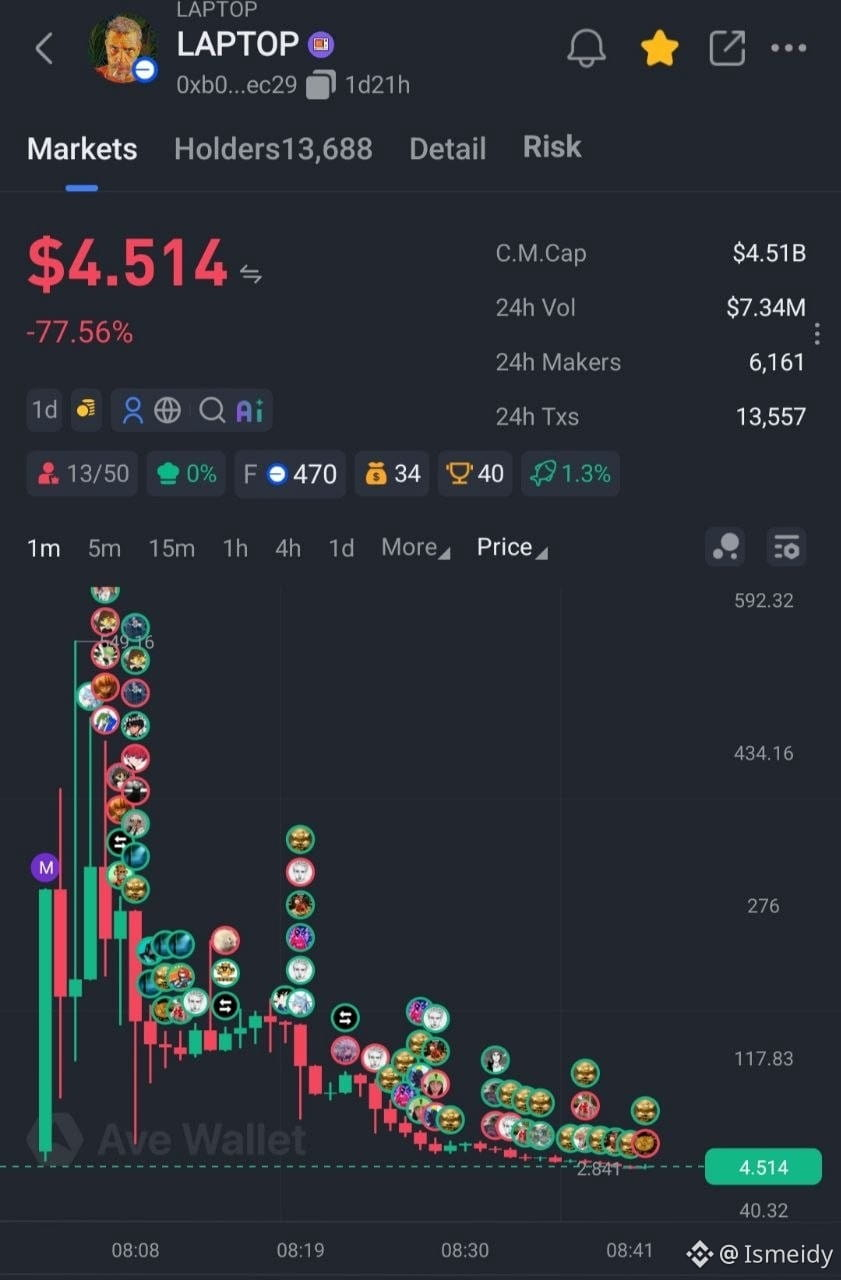
The #memecoin LAPTOP drops 99.45% after a wild spike of $549
A new chapter of extreme volatility shakes the political memecoin ecosystem. The #Laptop token, inspired by the high-profile controversy surrounding #HunterBiden , experienced a devastating financial rollercoaster during its first minutes of public trading.
The token debuted on the market trading at around $10 and immediately surged in a parabolic candle to reach a peak of $549.
As soon as large holders and market makers began liquidating their positions, the price plunged to hit a floor of $2.841.
#CryptoNews
$TRUMP
{future}(TRUMPUSDT)
$WLFI
{future}(WLFIUSDT)
$ETH
{future}(ETHUSDT)
From glory to the abyss in minutes
The #memecoin LAPTOP drops 99.45% after a wild spike of $549
A new chapter of extreme volatility shakes the political memecoin ecosystem. The #Laptop token, inspired by the high-profile controversy surrounding #HunterBiden , experienced a devastating financial rollercoaster during its first minutes of public trading.
The token debuted on the market trading at around $10 and immediately surged in a parabolic candle to reach a peak of $549.
As soon as large holders and market makers began liquidating their positions, the price plunged to hit a floor of $2.841.
#CryptoNews
$TRUMP
$WLFI
$ETH
The #memecoin LAPTOP drops 99.45% after a wild spike of $549
A new chapter of extreme volatility shakes the political memecoin ecosystem. The #Laptop token, inspired by the high-profile controversy surrounding #HunterBiden , experienced a devastating financial rollercoaster during its first minutes of public trading.
The token debuted on the market trading at around $10 and immediately surged in a parabolic candle to reach a peak of $549.
As soon as large holders and market makers began liquidating their positions, the price plunged to hit a floor of $2.841.
#CryptoNews
$TRUMP
$WLFI
$ETH
4
13
17.9k
·
--
Market summary
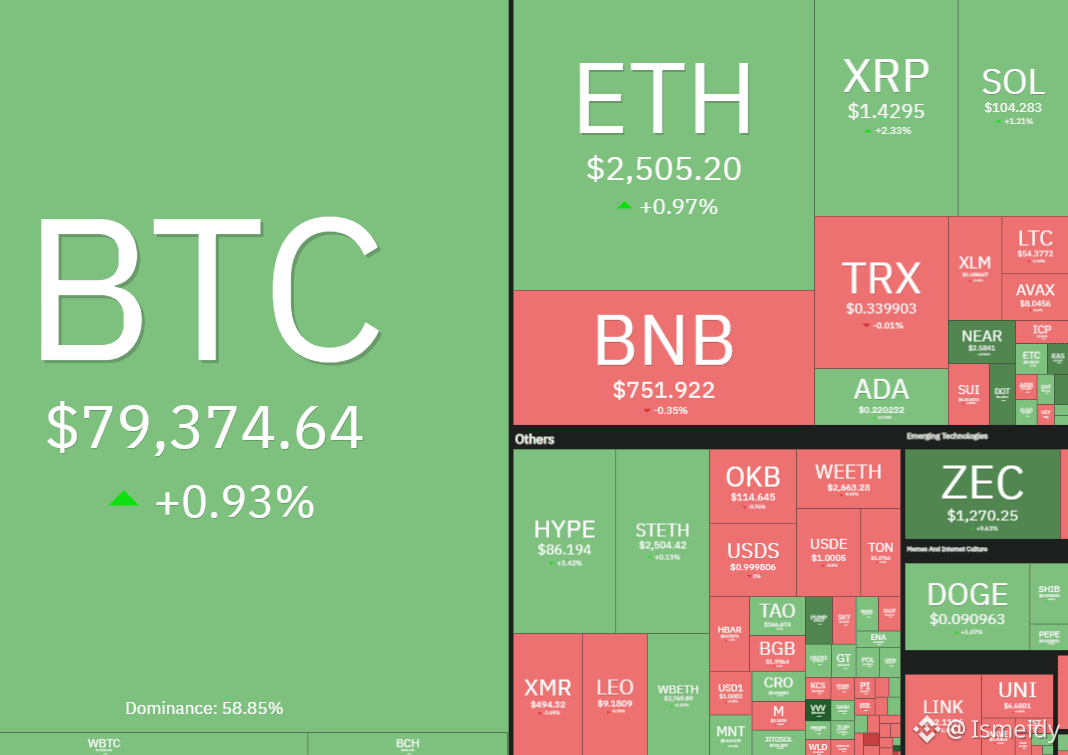
#bitcoin 💰 trades above $79.374 0.93%
‼️ The top 10 cryptocurrencies are trading in the MIXED zone
The 3 winning assets
VVV 45.99% 📈
ATOM 13.33% 📈
NEAR 12.27% 📈
The 3 losing assets
AERO -8.29% 📉
PENDLE -6.21% 📉
WLD -4.68% 📉
📌 #marketcap : $2.69T 0.73%
📌 Dominance of #BTC : 58.9%
📌 Dominance of #ETH : 11.3%
📌 Index of #altcoinseason : 45%
📌 Fear & Greed Index: 73 (GREED)
📌 CMC20 Index 165.230.95%
📌 CMC100 Index 157.69 1.12%
📌 Pi cycle top indicator 67.339 0.02%
📌 Puell Multiple 0.94 0%
📌 RSI 22 days 62.68 1.08%
$VVV
{future}(VVVUSDT)
$ATOM
{future}(ATOMUSDT)
$NEAR
{future}(NEARUSDT)
Market summary
#bitcoin 💰 trades above $79.374 0.93%
‼️ The top 10 cryptocurrencies are trading in the MIXED zone
The 3 winning assets
VVV 45.99% 📈
ATOM 13.33% 📈
NEAR 12.27% 📈
The 3 losing assets
AERO -8.29% 📉
PENDLE -6.21% 📉
WLD -4.68% 📉
📌 #marketcap : $2.69T 0.73%
📌 Dominance of #BTC : 58.9%
📌 Dominance of #ETH : 11.3%
📌 Index of #altcoinseason : 45%
📌 Fear & Greed Index: 73 (GREED)
📌 CMC20 Index 165.230.95%
📌 CMC100 Index 157.69 1.12%
📌 Pi cycle top indicator 67.339 0.02%
📌 Puell Multiple 0.94 0%
📌 RSI 22 days 62.68 1.08%
$VVV
$ATOM
$NEAR
#bitcoin 💰 trades above $79.374 0.93%
‼️ The top 10 cryptocurrencies are trading in the MIXED zone
The 3 winning assets
VVV 45.99% 📈
ATOM 13.33% 📈
NEAR 12.27% 📈
The 3 losing assets
AERO -8.29% 📉
PENDLE -6.21% 📉
WLD -4.68% 📉
📌 #marketcap : $2.69T 0.73%
📌 Dominance of #BTC : 58.9%
📌 Dominance of #ETH : 11.3%
📌 Index of #altcoinseason : 45%
📌 Fear & Greed Index: 73 (GREED)
📌 CMC20 Index 165.230.95%
📌 CMC100 Index 157.69 1.12%
📌 Pi cycle top indicator 67.339 0.02%
📌 Puell Multiple 0.94 0%
📌 RSI 22 days 62.68 1.08%
$VVV
$ATOM
$NEAR
1
6
2.3k
·
--
Verified
"They turned the LAPTOP into a weapon; I turned it into a token"
Hunter Biden announces the memecoin #LAPTOP on the BASE blockchain
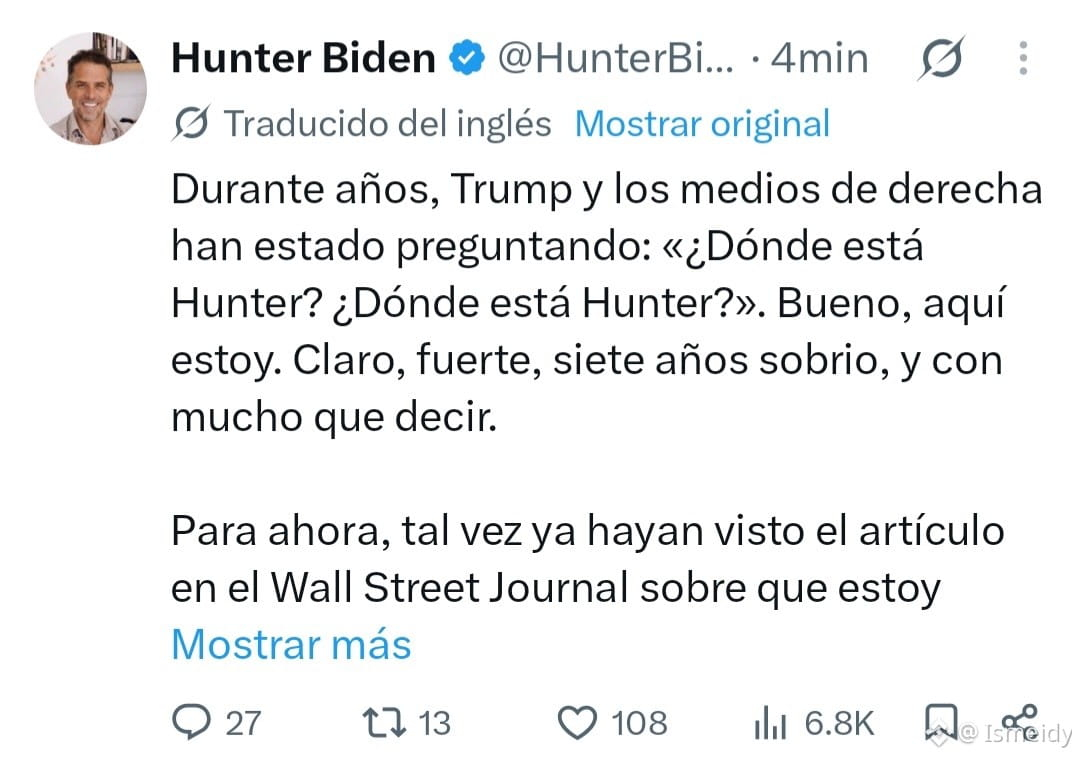
#HunterBiden breaks his silence, claiming seven years of sobriety and transforming the controversial symbol from his past into the $LAPTOP token, whose launch is scheduled for tomorrow on the layer 2 BASE network.
Direct attack on token #TRUMP : He contrasts his project with #memecoin de #DonaldTrump , stating that the president’s token caused consolidated losses of $3.8 billion to nearly one million crypto wallets.
Airdrop for Trump’s affected users: On the 20% of the total $LAPTOP supply will be distributed to the community via an airdrop that intentionally includes users who lost money with the $TRUMP token.
Burn and donation mechanism: 30% of the offering is linked to real-world events; if the pre-programmed conditions are met, the tokens are permanently burned, and if not, they are directed to charitable causes, along with an additional independent lot of 50 million tokens.
Political statement, not a financial promise: Biden clarifies that the asset should not be seen as a vehicle for speculation or enrichment, but rather as a symbol of resilience in the face of the media and political attacks he has faced for years.
$TRUMP
{future}(TRUMPUSDT)
$WLFI
{future}(WLFIUSDT)
$ETH
{future}(ETHUSDT)
"They turned the LAPTOP into a weapon; I turned it into a token"
Hunter Biden announces the memecoin #LAPTOP on the BASE blockchain
#HunterBiden breaks his silence, claiming seven years of sobriety and transforming the controversial symbol from his past into the $LAPTOP token, whose launch is scheduled for tomorrow on the layer 2 BASE network.
Direct attack on token #TRUMP : He contrasts his project with #memecoin de #DonaldTrump , stating that the president’s token caused consolidated losses of $3.8 billion to nearly one million crypto wallets.
Airdrop for Trump’s affected users: On the 20% of the total $LAPTOP supply will be distributed to the community via an airdrop that intentionally includes users who lost money with the $TRUMP token.
Burn and donation mechanism: 30% of the offering is linked to real-world events; if the pre-programmed conditions are met, the tokens are permanently burned, and if not, they are directed to charitable causes, along with an additional independent lot of 50 million tokens.
Political statement, not a financial promise: Biden clarifies that the asset should not be seen as a vehicle for speculation or enrichment, but rather as a symbol of resilience in the face of the media and political attacks he has faced for years.
$TRUMP
$WLFI
$ETH
Hunter Biden announces the memecoin #LAPTOP on the BASE blockchain
#HunterBiden breaks his silence, claiming seven years of sobriety and transforming the controversial symbol from his past into the $LAPTOP token, whose launch is scheduled for tomorrow on the layer 2 BASE network.
Direct attack on token #TRUMP : He contrasts his project with #memecoin de #DonaldTrump , stating that the president’s token caused consolidated losses of $3.8 billion to nearly one million crypto wallets.
Airdrop for Trump’s affected users: On the 20% of the total $LAPTOP supply will be distributed to the community via an airdrop that intentionally includes users who lost money with the $TRUMP token.
Burn and donation mechanism: 30% of the offering is linked to real-world events; if the pre-programmed conditions are met, the tokens are permanently burned, and if not, they are directed to charitable causes, along with an additional independent lot of 50 million tokens.
Political statement, not a financial promise: Biden clarifies that the asset should not be seen as a vehicle for speculation or enrichment, but rather as a symbol of resilience in the face of the media and political attacks he has faced for years.
$TRUMP
$WLFI
$ETH
1
11
15.5k
·
--
Verified
Robinhood Chain dethrones crypto giants
The new Layer 2 network becomes a money-making machine and projects a 31% jump in #WallStreet
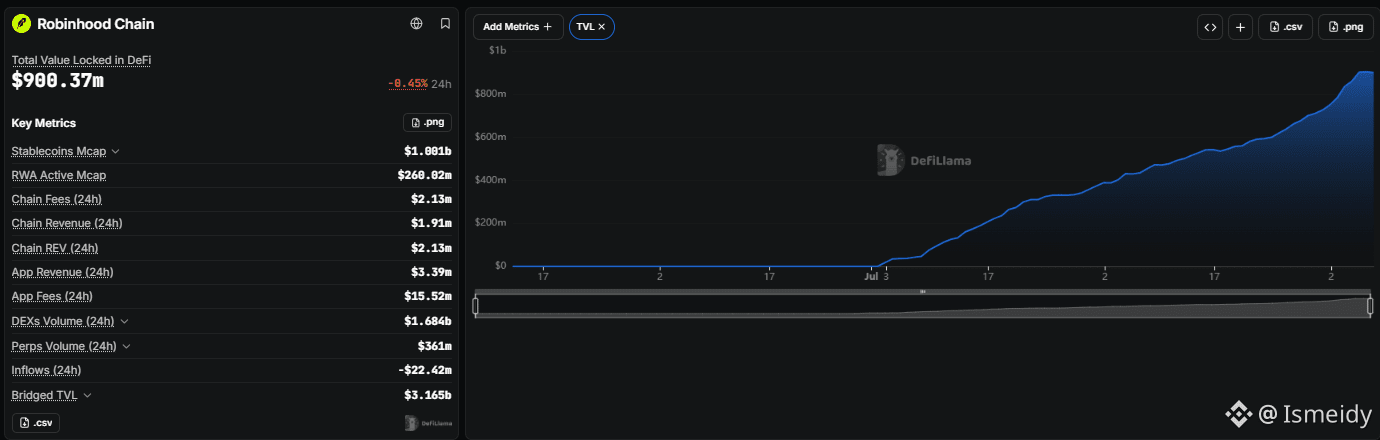
Since its launch on July 1, the Layer 2 “Robinhood Chain” has proven to be highly profitable, generating between $2 and $4 million per day in fees.
Outperforming #solana and #bnb : Over the past 15 days, the network led the blockchain industry with $33 million in fees collected, far surpassing Solana ($11 million) and BNB Chain ($9 million). #Robinhood retains approximately 90% of these gains, allocating 10% to #Arbitrum and less than 1% to Ethereum.
Explosive Growth in Key Metrics: The infrastructure has already accumulated $900 million in Total Value Locked (TVL) and has recorded more than $50 billion in decentralized exchange (DEX) volume.
Boom in Tokenized Assets and Stablecoins: The value of tokenized shares hosted on the network surged from $10 million to $140 million in just two months, capturing 32% of the market for transfers of this type. At the same time, the stablecoin supply reached $1 billion, dominated by USDG (66%) and USDe (33%).
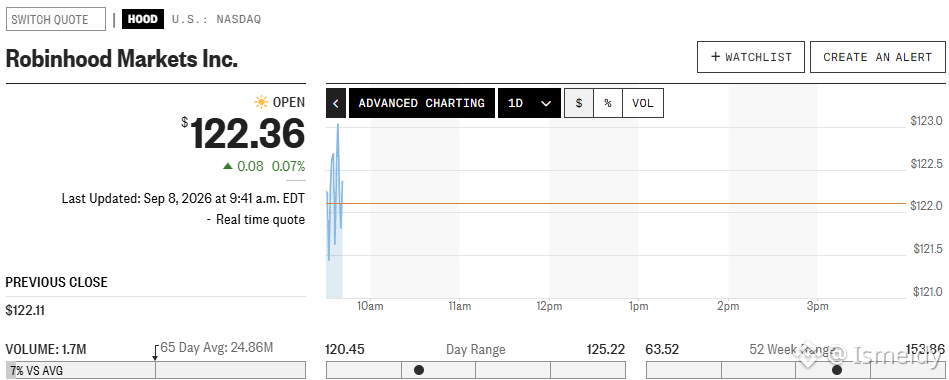
Bullish Market Outlook: Building on this new source of revenue, Bernstein analysts reaffirmed their “outperform” recommendation for Robinhood (HOOD) with a price target of $160. After Monday’s holiday, the shares began Tuesday’s session with a slight upward trend, trading at $122.36 at 9:41 a.m. EDT. According to Bernstein, this represents a potential upside of close to 31% for investors.
$HOODB
{spot}(HOODBUSDT)
$BNB
{future}(BNBUSDT)
$ARB
{future}(ARBUSDT)
Robinhood Chain dethrones crypto giants
The new Layer 2 network becomes a money-making machine and projects a 31% jump in #WallStreet
Since its launch on July 1, the Layer 2 “Robinhood Chain” has proven to be highly profitable, generating between $2 and $4 million per day in fees.
Outperforming #solana and #bnb : Over the past 15 days, the network led the blockchain industry with $33 million in fees collected, far surpassing Solana ($11 million) and BNB Chain ($9 million). #Robinhood retains approximately 90% of these gains, allocating 10% to #Arbitrum and less than 1% to Ethereum.
Explosive Growth in Key Metrics: The infrastructure has already accumulated $900 million in Total Value Locked (TVL) and has recorded more than $50 billion in decentralized exchange (DEX) volume.
Boom in Tokenized Assets and Stablecoins: The value of tokenized shares hosted on the network surged from $10 million to $140 million in just two months, capturing 32% of the market for transfers of this type. At the same time, the stablecoin supply reached $1 billion, dominated by USDG (66%) and USDe (33%).
Bullish Market Outlook: Building on this new source of revenue, Bernstein analysts reaffirmed their “outperform” recommendation for Robinhood (HOOD) with a price target of $160. After Monday’s holiday, the shares began Tuesday’s session with a slight upward trend, trading at $122.36 at 9:41 a.m. EDT. According to Bernstein, this represents a potential upside of close to 31% for investors.
$HOODB
$BNB
$ARB
The new Layer 2 network becomes a money-making machine and projects a 31% jump in #WallStreet
Since its launch on July 1, the Layer 2 “Robinhood Chain” has proven to be highly profitable, generating between $2 and $4 million per day in fees.
Outperforming #solana and #bnb : Over the past 15 days, the network led the blockchain industry with $33 million in fees collected, far surpassing Solana ($11 million) and BNB Chain ($9 million). #Robinhood retains approximately 90% of these gains, allocating 10% to #Arbitrum and less than 1% to Ethereum.
Explosive Growth in Key Metrics: The infrastructure has already accumulated $900 million in Total Value Locked (TVL) and has recorded more than $50 billion in decentralized exchange (DEX) volume.
Boom in Tokenized Assets and Stablecoins: The value of tokenized shares hosted on the network surged from $10 million to $140 million in just two months, capturing 32% of the market for transfers of this type. At the same time, the stablecoin supply reached $1 billion, dominated by USDG (66%) and USDe (33%).
Bullish Market Outlook: Building on this new source of revenue, Bernstein analysts reaffirmed their “outperform” recommendation for Robinhood (HOOD) with a price target of $160. After Monday’s holiday, the shares began Tuesday’s session with a slight upward trend, trading at $122.36 at 9:41 a.m. EDT. According to Bernstein, this represents a potential upside of close to 31% for investors.
$HOODB
$BNB
$ARB
2
666
·
--
Market summary
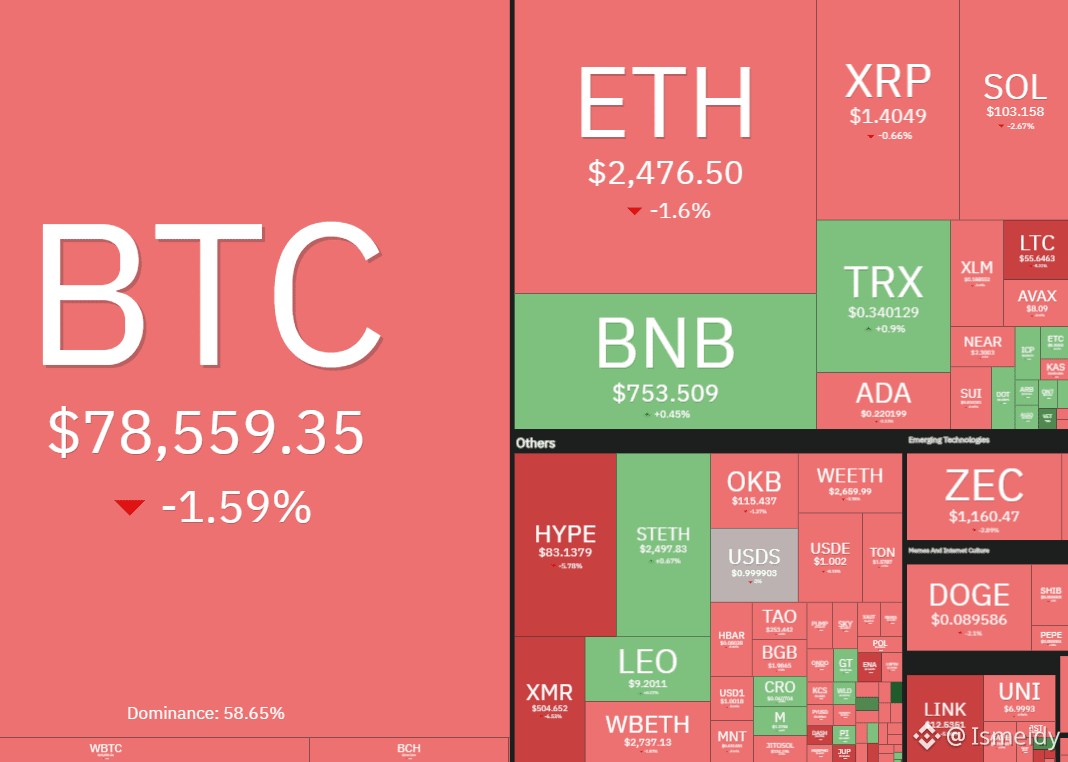
#bitcoin 💰 trades above $78.559 -1.59%
‼️ The top 10 cryptocurrencies are trading in the MIXED zone
The 3 winning assets
AERO 18.05% 📈
VET 9.76% 📈
INJ 9.49% 📈
The 3 losing assets
PENGU -7.57% 📉
STX -7.36%📉
DASH -6.84% 📉
📌 #marketcap : $2.67T -1.19%
📌 Dominance of #BTC : 58.9%
📌 Dominance of #ETH : 11.3%
📌 Index of #altcoinseason : 46%
📌 Fear & Greed Index: 72 (GREED)
📌 CMC20 Index 163.77 -1.4%
📌 CMC100 Index 156.02 -1.33%
📌 Pi cycle top indicator 67.324 0.04%
📌 Puell Multiple 0.94 -16.81%
📌 RSI 22 Days 61.962 -4.59%
$AERO
{future}(AEROUSDT)
$VET
{future}(VETUSDT)
$INJ
{future}(INJUSDT)
Market summary
#bitcoin 💰 trades above $78.559 -1.59%
‼️ The top 10 cryptocurrencies are trading in the MIXED zone
The 3 winning assets
AERO 18.05% 📈
VET 9.76% 📈
INJ 9.49% 📈
The 3 losing assets
PENGU -7.57% 📉
STX -7.36%📉
DASH -6.84% 📉
📌 #marketcap : $2.67T -1.19%
📌 Dominance of #BTC : 58.9%
📌 Dominance of #ETH : 11.3%
📌 Index of #altcoinseason : 46%
📌 Fear & Greed Index: 72 (GREED)
📌 CMC20 Index 163.77 -1.4%
📌 CMC100 Index 156.02 -1.33%
📌 Pi cycle top indicator 67.324 0.04%
📌 Puell Multiple 0.94 -16.81%
📌 RSI 22 Days 61.962 -4.59%
$AERO
$VET
$INJ
#bitcoin 💰 trades above $78.559 -1.59%
‼️ The top 10 cryptocurrencies are trading in the MIXED zone
The 3 winning assets
AERO 18.05% 📈
VET 9.76% 📈
INJ 9.49% 📈
The 3 losing assets
PENGU -7.57% 📉
STX -7.36%📉
DASH -6.84% 📉
📌 #marketcap : $2.67T -1.19%
📌 Dominance of #BTC : 58.9%
📌 Dominance of #ETH : 11.3%
📌 Index of #altcoinseason : 46%
📌 Fear & Greed Index: 72 (GREED)
📌 CMC20 Index 163.77 -1.4%
📌 CMC100 Index 156.02 -1.33%
📌 Pi cycle top indicator 67.324 0.04%
📌 Puell Multiple 0.94 -16.81%
📌 RSI 22 Days 61.962 -4.59%
$AERO
$VET
$INJ
3
2.6k
·
--
Partly True
The official account of #memecoin #LAPTOP operates from the African continent and already adds direct 'follow' from Hunter Biden
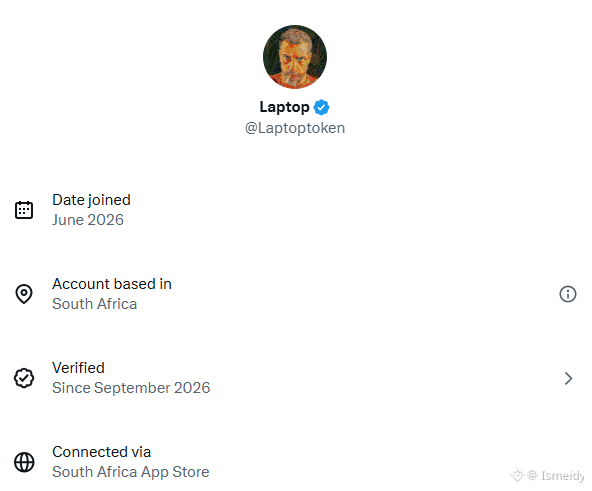
Transparency data from the official profile on X (Laptoptoken) reveals that the account was created in June 2026 and is formally administered from South Africa, connected through that region's App Store.
Recent verification: The profile received the official verification badge on the platform in September 2026.
Explicit backing: The personal, official account of #HunterBiden directly follows the project's account, reinforcing its public link to the initiative.
Operational questions: Community management from South African territory raises scrutiny in the crypto ecosystem about who makes up the technical structure and the marketing team behind the token.
#CryptoNews
$BTC
{future}(BTCUSDT)
$SOL
{future}(SOLUSDT)
$PONS
{future}(PONSUSDT)
The official account of #memecoin #LAPTOP operates from the African continent and already adds direct 'follow' from Hunter Biden
Transparency data from the official profile on X (Laptoptoken) reveals that the account was created in June 2026 and is formally administered from South Africa, connected through that region's App Store.
Recent verification: The profile received the official verification badge on the platform in September 2026.
Explicit backing: The personal, official account of #HunterBiden directly follows the project's account, reinforcing its public link to the initiative.
Operational questions: Community management from South African territory raises scrutiny in the crypto ecosystem about who makes up the technical structure and the marketing team behind the token.
#CryptoNews
$BTC
$SOL
$PONS
Transparency data from the official profile on X (Laptoptoken) reveals that the account was created in June 2026 and is formally administered from South Africa, connected through that region's App Store.
Recent verification: The profile received the official verification badge on the platform in September 2026.
Explicit backing: The personal, official account of #HunterBiden directly follows the project's account, reinforcing its public link to the initiative.
Operational questions: Community management from South African territory raises scrutiny in the crypto ecosystem about who makes up the technical structure and the marketing team behind the token.
#CryptoNews
$BTC
$SOL
$PONS
3
9
13.3k
·
--
Verified
Vengeance on the blockchain
#HunterBiden will launch the memecoin "LAPTOP" on Base and includes an 'airdrop' for the fallen with a Trump token
Hunter Biden, the son of the former president #JoeBiden , debuts in the cryptocurrency sector with the #memecoin #Laptop , scheduled to go live on the Base network on September 9 with a total supply of 1.000 million units.
Tokenomics and unlocks (Vesting): 30% of the tokens are allocated to the founders (including Hunter Biden), with a strict six-month lockup period and a gradual release over more than two years.
Direct airdrop to the 'opposition': 20% will be distributed in two phases: it will go to investors with a losing balance in the memecoin TRUMP, to subscribers of Biden’s Substack, and to the mailing list of video journalist Andrew Callaghan.
Burns conditioned on politics and the market: 30% of the remaining supply will be burned if specific triggers are met, such as a Democratic victory in the 2028 elections, a new all-time high for Bitcoin, or if LAPTOP’s market capitalization surpasses #TRUMP
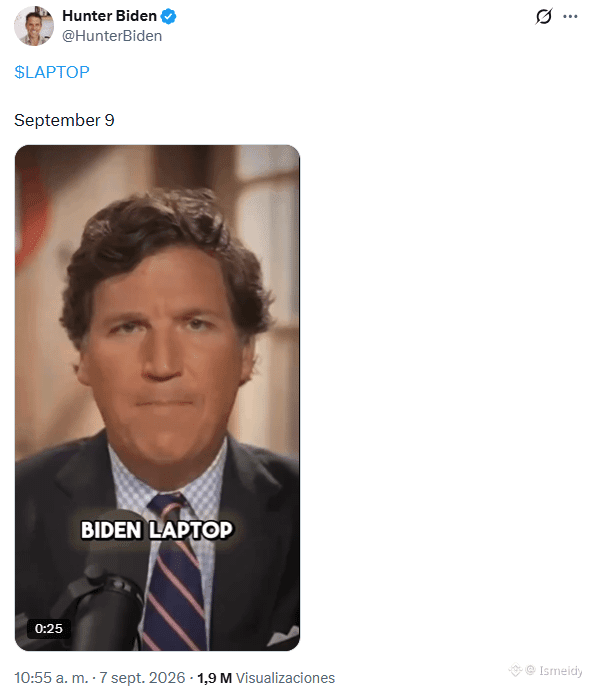
Marketing campaign on X: Biden unveiled the official ticker on X alongside a video montage with media coverage of his infamous abandoned laptop in Delaware in 2019, the source of leaks prior to the 2020 elections
$TRUMP
{future}(TRUMPUSDT)
$WLFI
{future}(WLFIUSDT)
$ETH
{future}(ETHUSDT)
Vengeance on the blockchain
#HunterBiden will launch the memecoin "LAPTOP" on Base and includes an 'airdrop' for the fallen with a Trump token
Hunter Biden, the son of the former president #JoeBiden , debuts in the cryptocurrency sector with the #memecoin #Laptop , scheduled to go live on the Base network on September 9 with a total supply of 1.000 million units.
Tokenomics and unlocks (Vesting): 30% of the tokens are allocated to the founders (including Hunter Biden), with a strict six-month lockup period and a gradual release over more than two years.
Direct airdrop to the 'opposition': 20% will be distributed in two phases: it will go to investors with a losing balance in the memecoin TRUMP, to subscribers of Biden’s Substack, and to the mailing list of video journalist Andrew Callaghan.
Burns conditioned on politics and the market: 30% of the remaining supply will be burned if specific triggers are met, such as a Democratic victory in the 2028 elections, a new all-time high for Bitcoin, or if LAPTOP’s market capitalization surpasses #TRUMP
Marketing campaign on X: Biden unveiled the official ticker on X alongside a video montage with media coverage of his infamous abandoned laptop in Delaware in 2019, the source of leaks prior to the 2020 elections
$TRUMP
$WLFI
$ETH
#HunterBiden will launch the memecoin "LAPTOP" on Base and includes an 'airdrop' for the fallen with a Trump token
Hunter Biden, the son of the former president #JoeBiden , debuts in the cryptocurrency sector with the #memecoin #Laptop , scheduled to go live on the Base network on September 9 with a total supply of 1.000 million units.
Tokenomics and unlocks (Vesting): 30% of the tokens are allocated to the founders (including Hunter Biden), with a strict six-month lockup period and a gradual release over more than two years.
Direct airdrop to the 'opposition': 20% will be distributed in two phases: it will go to investors with a losing balance in the memecoin TRUMP, to subscribers of Biden’s Substack, and to the mailing list of video journalist Andrew Callaghan.
Burns conditioned on politics and the market: 30% of the remaining supply will be burned if specific triggers are met, such as a Democratic victory in the 2028 elections, a new all-time high for Bitcoin, or if LAPTOP’s market capitalization surpasses #TRUMP
Marketing campaign on X: Biden unveiled the official ticker on X alongside a video montage with media coverage of his infamous abandoned laptop in Delaware in 2019, the source of leaks prior to the 2020 elections
$TRUMP
$WLFI
$ETH

1
5
5.4k
·
--
Verified
The $100 bill that’s worth $3 today
The anatomy of a century of currency devaluation under #Fed
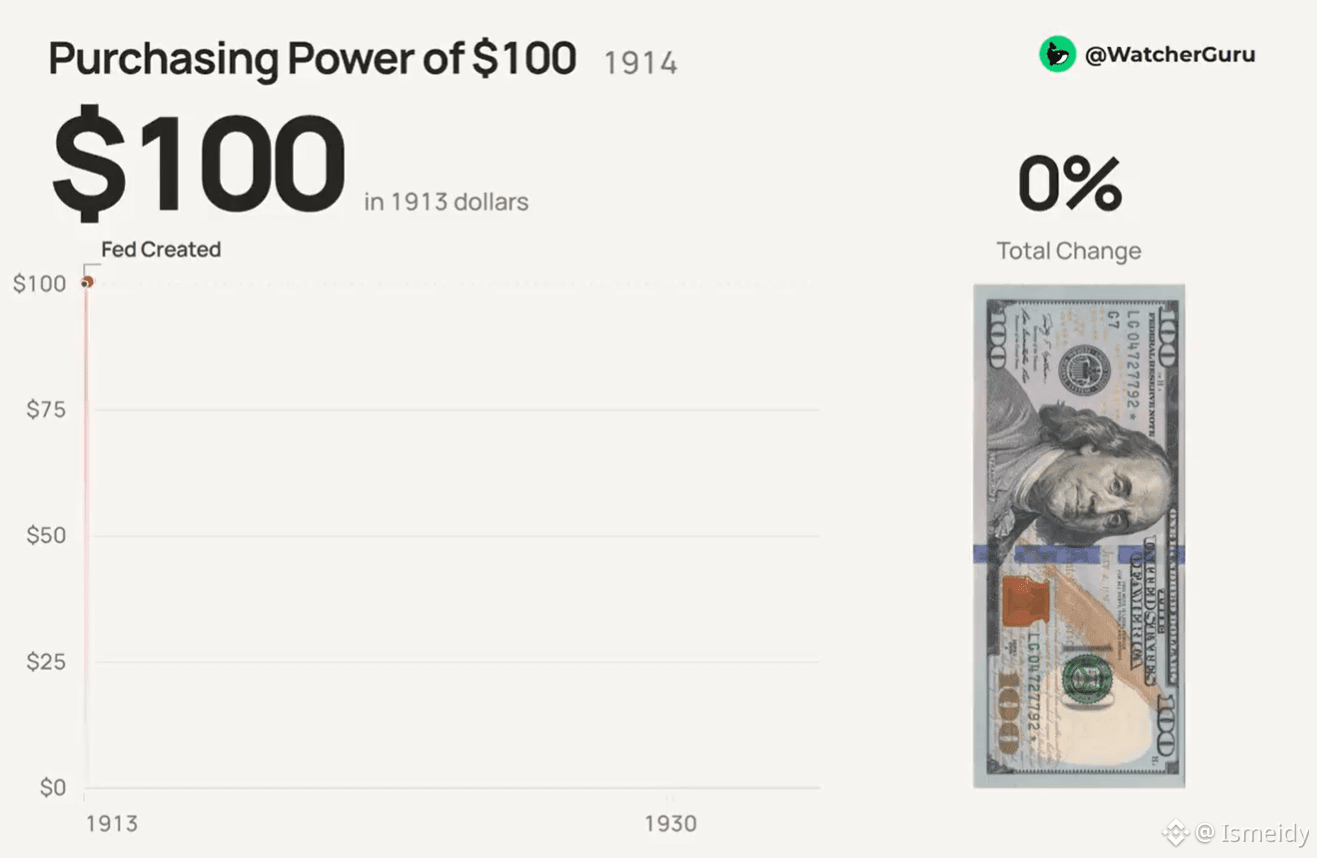
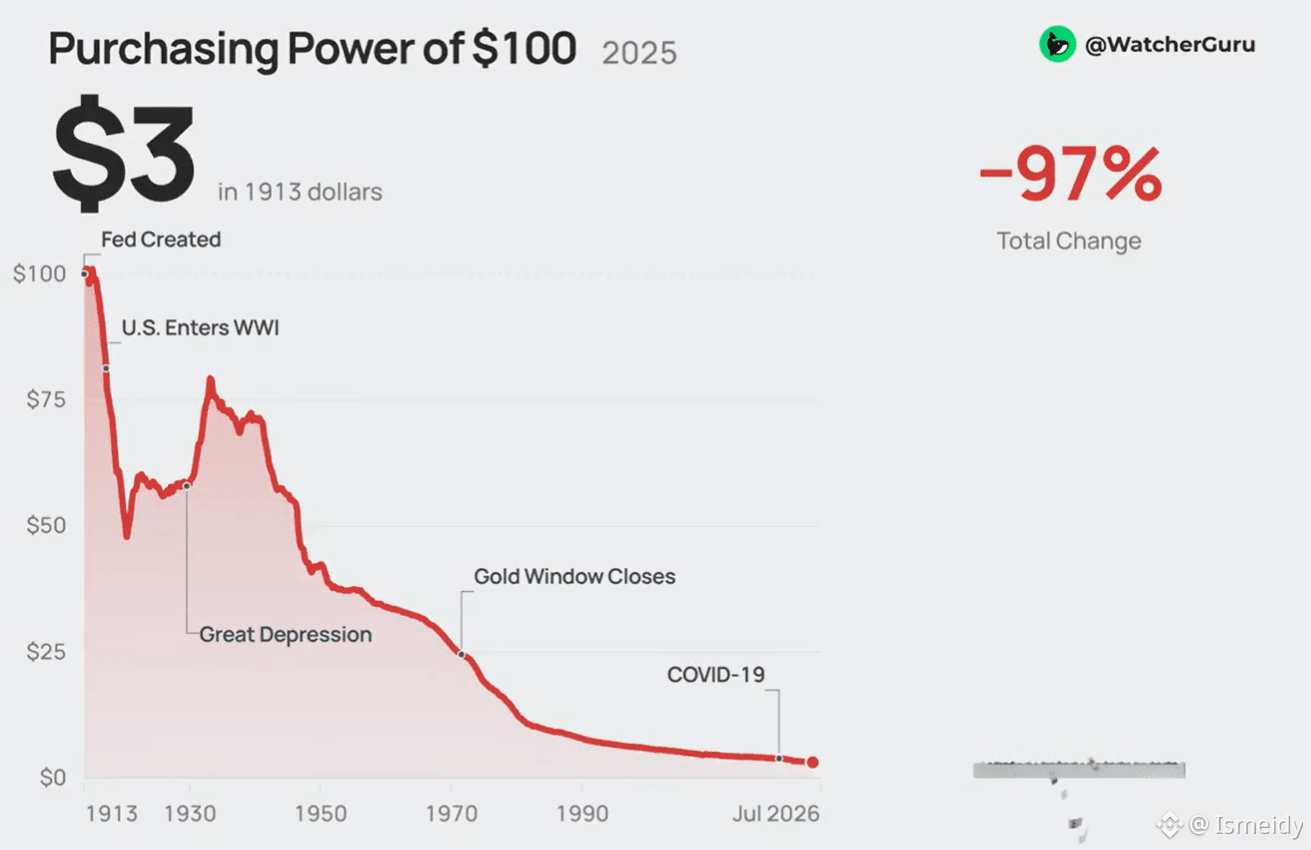
Since the creation of the Federal Reserve (FED) in 1913, the US dollar has lost 97% of its purchasing power, meaning the buying power that $100 had in 1913 is equivalent to only $3 in 2026.
This gradual devaluation is the direct result of cumulative inflation and the expansion of the money supply over more than a century.
Economic milestones in the dollar’s decline
• 1913 (Creation of the FED — $100): The US central bank is established with the power to control the money supply and regulate credit.
• 1917–1921 (World War I — $57 / -43%): War spending financed through debt issuance and printing money creates the first major inflation wave of the 20th century.
• 1933 (Great Depression — $79 / -21%): Purchasing power temporarily rebounds due to severe deflation; the contraction of credit and the drop in demand caused prices to fall massively.
• 1942–1947 (World War II — $43 / -57%): Financing the military conflict and postwar industrial expansion once again accelerate the loss of value.
• 1971–1973 (Closing the gold window — $22 / -78%): President Richard Nixon ends the dollar’s convertibility into gold, bringing the Bretton Woods system to a close and beginning the era of pure fiat money.
• 1981 (Stagflation of the 70s/80s — $11 / -89%): Oil shocks and liquidity expansion trigger double-digit inflations that dramatically reduce the currency’s value.
• 2020–2026 (COVID-19 pandemic and post-pandemic — $3 / -97%): Fiscal stimulus and massive monetary injections to contain the health crisis take purchasing power to its all-time low.
#CryptoNews
$BTC
{future}(BTCUSDT)
$XRP
{future}(XRPUSDT)
$SOL
{future}(SOLUSDT)
The $100 bill that’s worth $3 today
The anatomy of a century of currency devaluation under #Fed
Since the creation of the Federal Reserve (FED) in 1913, the US dollar has lost 97% of its purchasing power, meaning the buying power that $100 had in 1913 is equivalent to only $3 in 2026.
This gradual devaluation is the direct result of cumulative inflation and the expansion of the money supply over more than a century.
Economic milestones in the dollar’s decline
• 1913 (Creation of the FED — $100): The US central bank is established with the power to control the money supply and regulate credit.
• 1917–1921 (World War I — $57 / -43%): War spending financed through debt issuance and printing money creates the first major inflation wave of the 20th century.
• 1933 (Great Depression — $79 / -21%): Purchasing power temporarily rebounds due to severe deflation; the contraction of credit and the drop in demand caused prices to fall massively.
• 1942–1947 (World War II — $43 / -57%): Financing the military conflict and postwar industrial expansion once again accelerate the loss of value.
• 1971–1973 (Closing the gold window — $22 / -78%): President Richard Nixon ends the dollar’s convertibility into gold, bringing the Bretton Woods system to a close and beginning the era of pure fiat money.
• 1981 (Stagflation of the 70s/80s — $11 / -89%): Oil shocks and liquidity expansion trigger double-digit inflations that dramatically reduce the currency’s value.
• 2020–2026 (COVID-19 pandemic and post-pandemic — $3 / -97%): Fiscal stimulus and massive monetary injections to contain the health crisis take purchasing power to its all-time low.
#CryptoNews
$BTC
$XRP
$SOL
The anatomy of a century of currency devaluation under #Fed
Since the creation of the Federal Reserve (FED) in 1913, the US dollar has lost 97% of its purchasing power, meaning the buying power that $100 had in 1913 is equivalent to only $3 in 2026.
This gradual devaluation is the direct result of cumulative inflation and the expansion of the money supply over more than a century.
Economic milestones in the dollar’s decline
• 1913 (Creation of the FED — $100): The US central bank is established with the power to control the money supply and regulate credit.
• 1917–1921 (World War I — $57 / -43%): War spending financed through debt issuance and printing money creates the first major inflation wave of the 20th century.
• 1933 (Great Depression — $79 / -21%): Purchasing power temporarily rebounds due to severe deflation; the contraction of credit and the drop in demand caused prices to fall massively.
• 1942–1947 (World War II — $43 / -57%): Financing the military conflict and postwar industrial expansion once again accelerate the loss of value.
• 1971–1973 (Closing the gold window — $22 / -78%): President Richard Nixon ends the dollar’s convertibility into gold, bringing the Bretton Woods system to a close and beginning the era of pure fiat money.
• 1981 (Stagflation of the 70s/80s — $11 / -89%): Oil shocks and liquidity expansion trigger double-digit inflations that dramatically reduce the currency’s value.
• 2020–2026 (COVID-19 pandemic and post-pandemic — $3 / -97%): Fiscal stimulus and massive monetary injections to contain the health crisis take purchasing power to its all-time low.
#CryptoNews
$BTC
$XRP
$SOL
1
9
3.6k
·
--
"Fix the error first"
A #Hacker unethical person steals $320 million in #LiquidNetwork and demands a patch at #Blockstream to return the money
About 4,000 #BTC were taken from the Liquid Network federation wallet. The attacker took advantage of a flaw in the Elements software to create L-BTC and route them through the SideSwap clearing service, dismissing the claim that the authorization key was compromised.
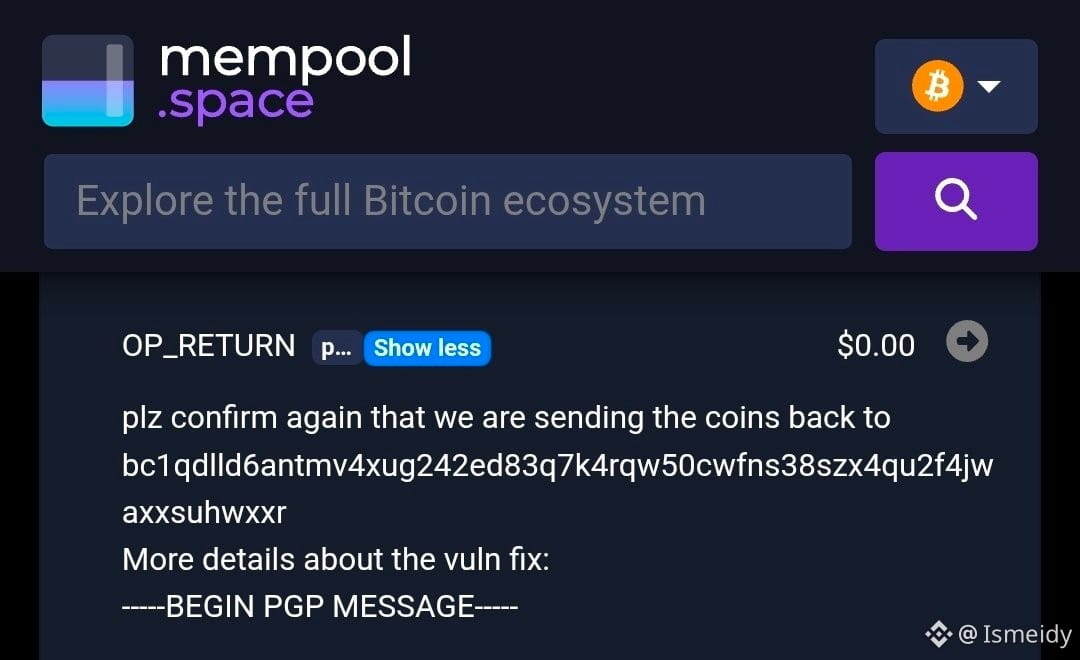
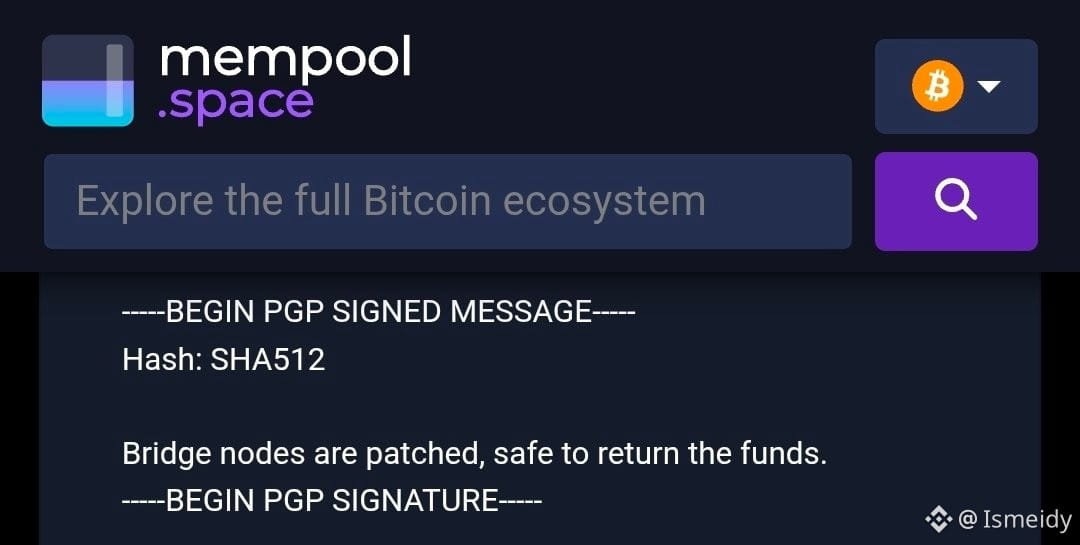
“On-chain” demand: Using encrypted messages with PGP and OP_RETURN logs on the blockchain, the alleged ethical hacker promised to return most of the funds with a single condition: that Blockstream fix the vulnerability and ensure all nodes are updated before the transfer.
Green light #AdamBack : Blockstream replied with a verifiable PGP signature confirming that the bridge nodes have been patched and that the network is ready to receive the capital return without risk.
Freeze status: Despite the confirmation, the 4,000 BTC remains in the attacker’s wallet. As a precaution, Liquid Network keeps all operations on its bridge nodes fully suspended, pausing deposits, withdrawals, and activity on SideSwap.
$BTC
{future}(BTCUSDT)
$XRP
{future}(XRPUSDT)
$SOL
{future}(SOLUSDT)
"Fix the error first"
A #Hacker unethical person steals $320 million in #LiquidNetwork and demands a patch at #Blockstream to return the money
About 4,000 #BTC were taken from the Liquid Network federation wallet. The attacker took advantage of a flaw in the Elements software to create L-BTC and route them through the SideSwap clearing service, dismissing the claim that the authorization key was compromised.
“On-chain” demand: Using encrypted messages with PGP and OP_RETURN logs on the blockchain, the alleged ethical hacker promised to return most of the funds with a single condition: that Blockstream fix the vulnerability and ensure all nodes are updated before the transfer.
Green light #AdamBack : Blockstream replied with a verifiable PGP signature confirming that the bridge nodes have been patched and that the network is ready to receive the capital return without risk.
Freeze status: Despite the confirmation, the 4,000 BTC remains in the attacker’s wallet. As a precaution, Liquid Network keeps all operations on its bridge nodes fully suspended, pausing deposits, withdrawals, and activity on SideSwap.
$BTC
$XRP
$SOL
A #Hacker unethical person steals $320 million in #LiquidNetwork and demands a patch at #Blockstream to return the money
About 4,000 #BTC were taken from the Liquid Network federation wallet. The attacker took advantage of a flaw in the Elements software to create L-BTC and route them through the SideSwap clearing service, dismissing the claim that the authorization key was compromised.
“On-chain” demand: Using encrypted messages with PGP and OP_RETURN logs on the blockchain, the alleged ethical hacker promised to return most of the funds with a single condition: that Blockstream fix the vulnerability and ensure all nodes are updated before the transfer.
Green light #AdamBack : Blockstream replied with a verifiable PGP signature confirming that the bridge nodes have been patched and that the network is ready to receive the capital return without risk.
Freeze status: Despite the confirmation, the 4,000 BTC remains in the attacker’s wallet. As a precaution, Liquid Network keeps all operations on its bridge nodes fully suspended, pausing deposits, withdrawals, and activity on SideSwap.
$BTC
$XRP
$SOL
9
10
13.1k
·
--
Market summary
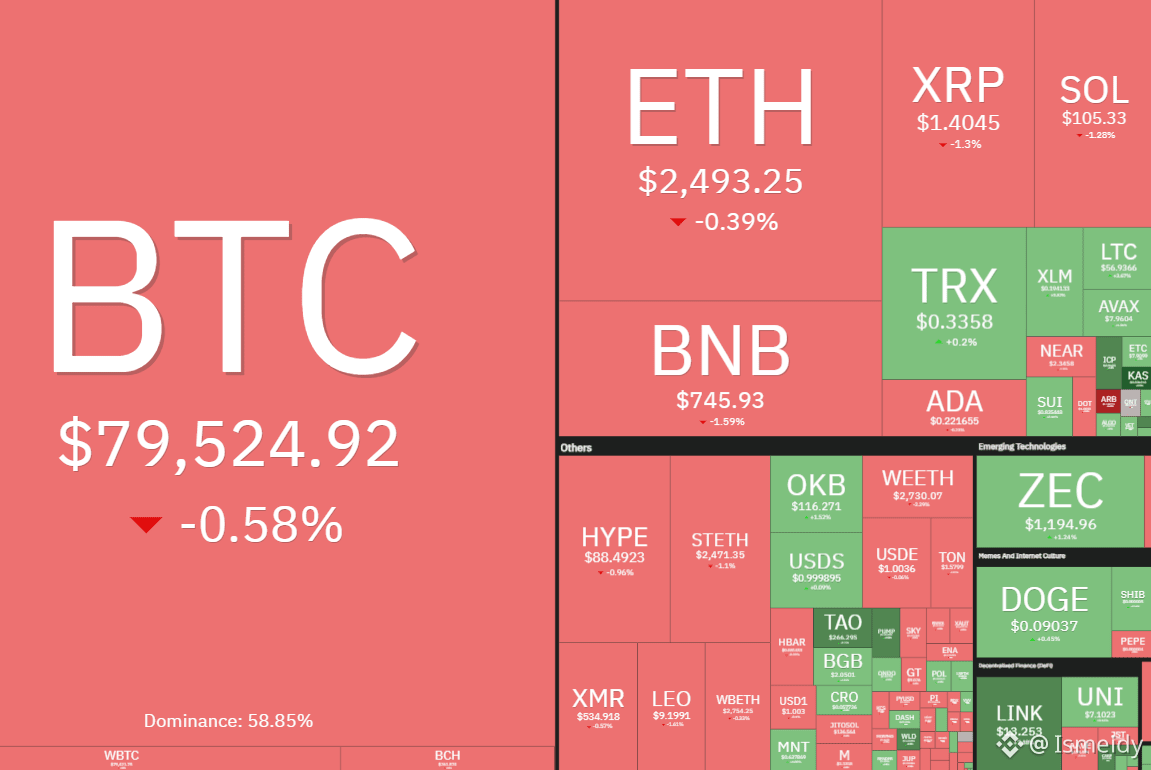
#bitcoin 💰 trades above $79.524 -0.58%
‼️ The top 10 cryptocurrencies are trading in the RED zone
The 3 winning assets
KAS 18.66% 📈
PUMP 12.62% 📈
INJ 12.44% 📈
The 3 losing assets
ARB -15.91% 📉
PONS -13.26%📉
JUP -6.66% 📉
📌 #marketcap : $2.7T -0.41%
📌 Dominance of #BTC : 59.1%
📌 Dominance of #ETH : 11.3%
📌 Index of #altcoinseason : 42%
📌 Fear & Greed Index: 74 (GREED)
📌 CMC20 Index 165.75 -0.56%
📌 CMC100 Index 157.90 -0.49%
📌 Pi cycle top indicator 67.291 -0.03%
📌 Puell Multiple 1.13 13%
📌 22-Day RSI 64.463 -3.01%
$KAS
{future}(KASUSDT)
$PUMP
{future}(PUMPUSDT)
$INJ
{future}(INJUSDT)
Market summary
#bitcoin 💰 trades above $79.524 -0.58%
‼️ The top 10 cryptocurrencies are trading in the RED zone
The 3 winning assets
KAS 18.66% 📈
PUMP 12.62% 📈
INJ 12.44% 📈
The 3 losing assets
ARB -15.91% 📉
PONS -13.26%📉
JUP -6.66% 📉
📌 #marketcap : $2.7T -0.41%
📌 Dominance of #BTC : 59.1%
📌 Dominance of #ETH : 11.3%
📌 Index of #altcoinseason : 42%
📌 Fear & Greed Index: 74 (GREED)
📌 CMC20 Index 165.75 -0.56%
📌 CMC100 Index 157.90 -0.49%
📌 Pi cycle top indicator 67.291 -0.03%
📌 Puell Multiple 1.13 13%
📌 22-Day RSI 64.463 -3.01%
$KAS
$PUMP
$INJ
#bitcoin 💰 trades above $79.524 -0.58%
‼️ The top 10 cryptocurrencies are trading in the RED zone
The 3 winning assets
KAS 18.66% 📈
PUMP 12.62% 📈
INJ 12.44% 📈
The 3 losing assets
ARB -15.91% 📉
PONS -13.26%📉
JUP -6.66% 📉
📌 #marketcap : $2.7T -0.41%
📌 Dominance of #BTC : 59.1%
📌 Dominance of #ETH : 11.3%
📌 Index of #altcoinseason : 42%
📌 Fear & Greed Index: 74 (GREED)
📌 CMC20 Index 165.75 -0.56%
📌 CMC100 Index 157.90 -0.49%
📌 Pi cycle top indicator 67.291 -0.03%
📌 Puell Multiple 1.13 13%
📌 22-Day RSI 64.463 -3.01%
$KAS
$PUMP
$INJ
8
1.3k
·
--
🚨 EPIC RUG PULL
#SLINK collapses from $80M to zero after the hack of the couple #ElonMusk
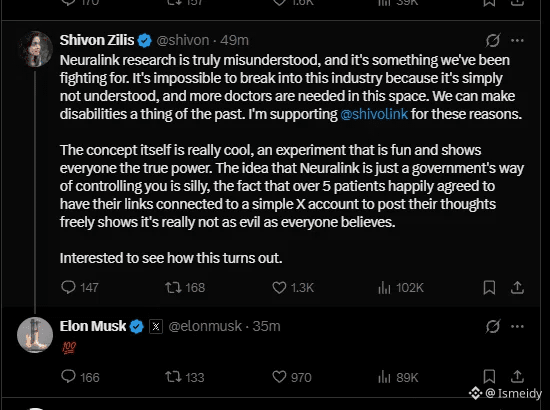
A #Hacker took control of Shivon Zilis's X account to promote the $SLINK memecoin, using a fake narrative about Neuralink to give it credibility.
The FOMO Catalyst: A quick reply from Elon #Musk with the 💯 emoji was enough to light the fuse. The market assumed official validation, unleashing a massive absorption of liquidity across the entire ecosystem.
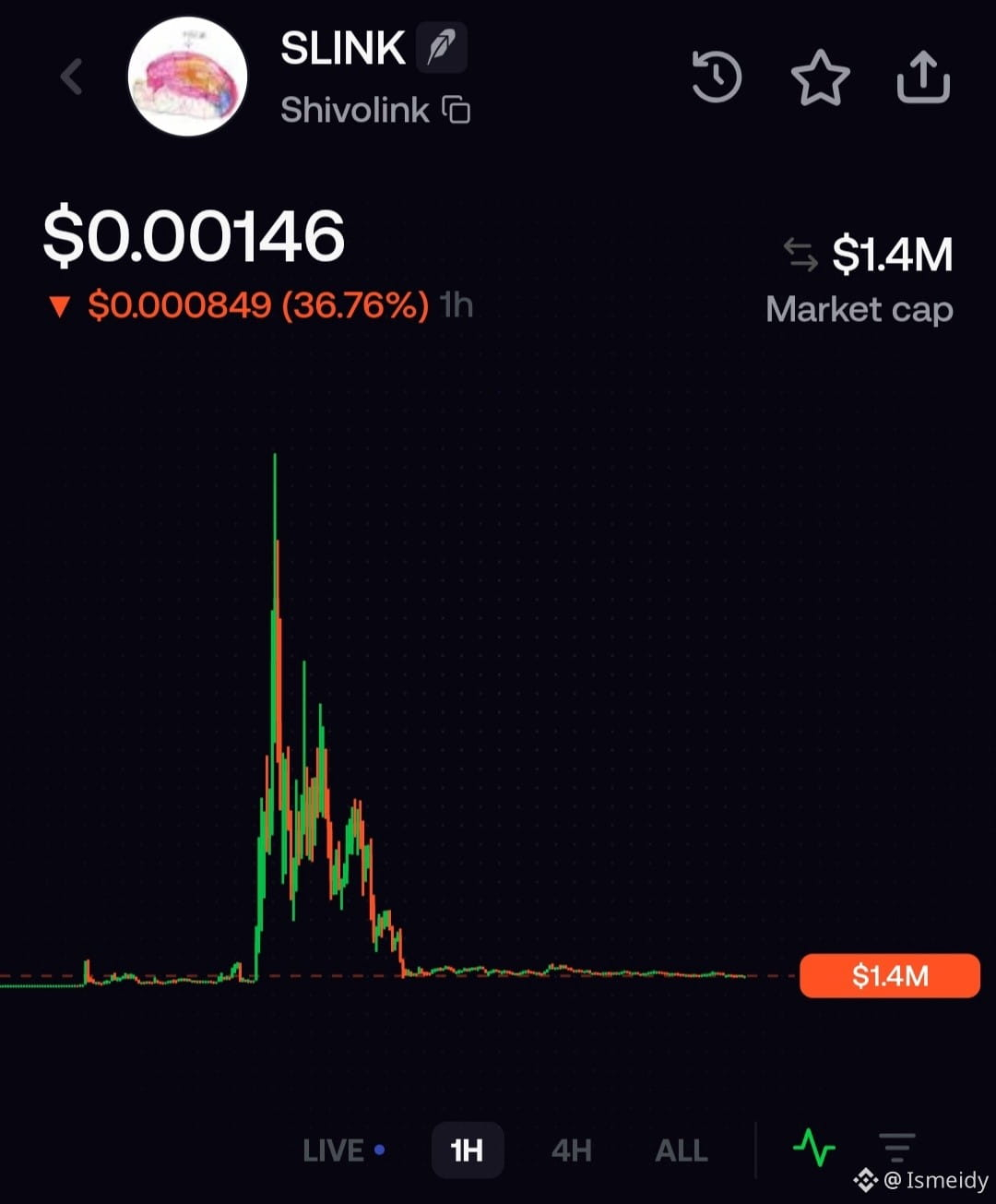
The Technical Massacre: the market cap jumped from zero to a peak of 80 million dollars. However, as soon as the tweet was deleted and the hack was confirmed, insiders and bots dumped their wallets. The chart turned into the classic "death candle," destroying millions of dollars in a matter of minutes and leaving the market cap languishing near $1.4M.
The Market Hangover: Traders who bought at the top were left as exit liquidity. Now, between panic and despair, the community hopes they organize a CTO, because they know a miraculous refund is unlikely to happen.
#CryptoNews
$HOODB
{spot}(HOODBUSDT)
$HOOD
{future}(HOODUSDT)
$SOL
{future}(SOLUSDT)
🚨 EPIC RUG PULL
#SLINK collapses from $80M to zero after the hack of the couple #ElonMusk
A #Hacker took control of Shivon Zilis's X account to promote the $SLINK memecoin, using a fake narrative about Neuralink to give it credibility.
The FOMO Catalyst: A quick reply from Elon #Musk with the 💯 emoji was enough to light the fuse. The market assumed official validation, unleashing a massive absorption of liquidity across the entire ecosystem.
The Technical Massacre: the market cap jumped from zero to a peak of 80 million dollars. However, as soon as the tweet was deleted and the hack was confirmed, insiders and bots dumped their wallets. The chart turned into the classic "death candle," destroying millions of dollars in a matter of minutes and leaving the market cap languishing near $1.4M.
The Market Hangover: Traders who bought at the top were left as exit liquidity. Now, between panic and despair, the community hopes they organize a CTO, because they know a miraculous refund is unlikely to happen.
#CryptoNews
$HOODB
$HOOD
$SOL
#SLINK collapses from $80M to zero after the hack of the couple #ElonMusk
A #Hacker took control of Shivon Zilis's X account to promote the $SLINK memecoin, using a fake narrative about Neuralink to give it credibility.
The FOMO Catalyst: A quick reply from Elon #Musk with the 💯 emoji was enough to light the fuse. The market assumed official validation, unleashing a massive absorption of liquidity across the entire ecosystem.
The Technical Massacre: the market cap jumped from zero to a peak of 80 million dollars. However, as soon as the tweet was deleted and the hack was confirmed, insiders and bots dumped their wallets. The chart turned into the classic "death candle," destroying millions of dollars in a matter of minutes and leaving the market cap languishing near $1.4M.
The Market Hangover: Traders who bought at the top were left as exit liquidity. Now, between panic and despair, the community hopes they organize a CTO, because they know a miraculous refund is unlikely to happen.
#CryptoNews
$HOODB
$HOOD
$SOL
6
1
13
11.7k
·
--
Market Summary
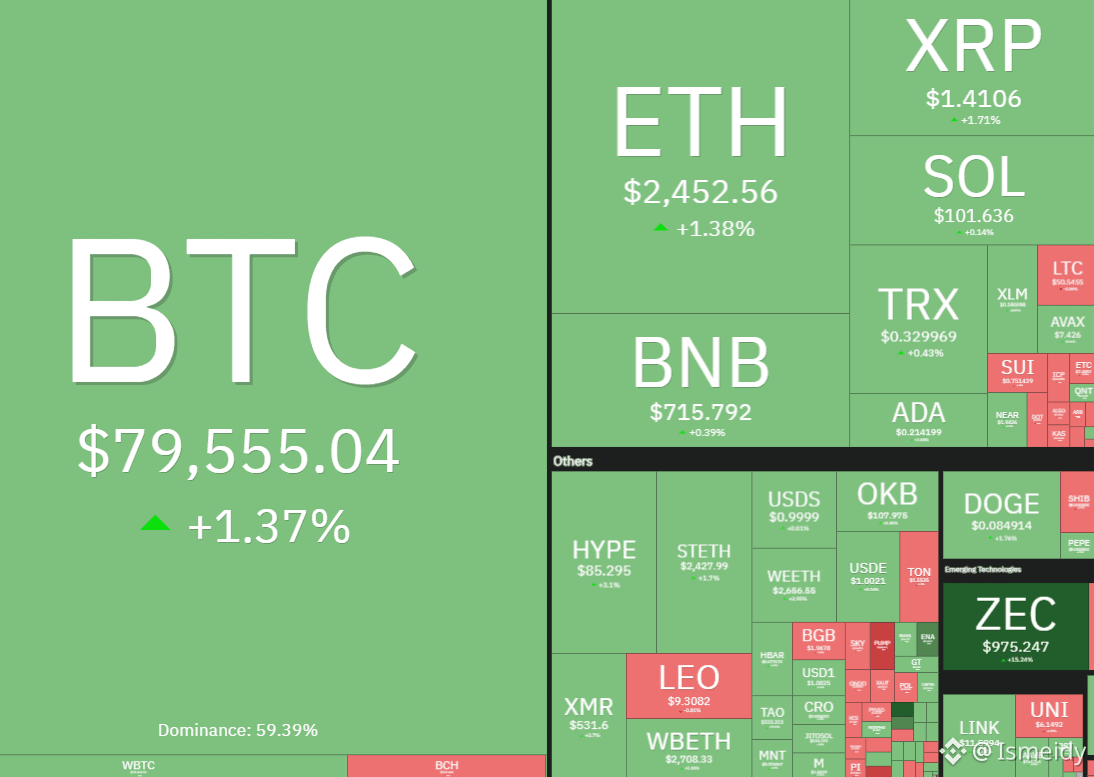
#bitcoin 💰 is trading above $79.555 1.37%
‼️ The top 10 cryptocurrencies are trading in the GREEN zone
The 3 winning assets
PONS 21.06% 📈
DASH 17.07% 📈
ZEC 16.90% 📈
The 3 losing assets
PYTH -8.13% 📉
PUMP -6.49%📉
JUP -5.99% 📉
📌 #marketcap : $2.68T 1.12%
📌 Dominance of #BTC : 59.6%
📌 Dominance of #ETH : 11.2%
📌 Index of #altcoinseason : 37%
📌 Fear and Greed Index: 75 (GREED)
📌 CMC20 Index 162.02 1.15%
📌 CMC100 Index 156.06 1.14%
📌 Pi Cycle Top Indicator 67.216 -0.02%
📌 Puell Multiple 0.90 -3.22%
📌 22-Day RSI 65.776 -1.91%
$DASH
{spot}(DASHUSDT)
$ZEC
{future}(ZECUSDT)
$PYTH
{future}(PYTHUSDT)
Market Summary
#bitcoin 💰 is trading above $79.555 1.37%
‼️ The top 10 cryptocurrencies are trading in the GREEN zone
The 3 winning assets
PONS 21.06% 📈
DASH 17.07% 📈
ZEC 16.90% 📈
The 3 losing assets
PYTH -8.13% 📉
PUMP -6.49%📉
JUP -5.99% 📉
📌 #marketcap : $2.68T 1.12%
📌 Dominance of #BTC : 59.6%
📌 Dominance of #ETH : 11.2%
📌 Index of #altcoinseason : 37%
📌 Fear and Greed Index: 75 (GREED)
📌 CMC20 Index 162.02 1.15%
📌 CMC100 Index 156.06 1.14%
📌 Pi Cycle Top Indicator 67.216 -0.02%
📌 Puell Multiple 0.90 -3.22%
📌 22-Day RSI 65.776 -1.91%
$DASH
$ZEC
$PYTH
#bitcoin 💰 is trading above $79.555 1.37%
‼️ The top 10 cryptocurrencies are trading in the GREEN zone
The 3 winning assets
PONS 21.06% 📈
DASH 17.07% 📈
ZEC 16.90% 📈
The 3 losing assets
PYTH -8.13% 📉
PUMP -6.49%📉
JUP -5.99% 📉
📌 #marketcap : $2.68T 1.12%
📌 Dominance of #BTC : 59.6%
📌 Dominance of #ETH : 11.2%
📌 Index of #altcoinseason : 37%
📌 Fear and Greed Index: 75 (GREED)
📌 CMC20 Index 162.02 1.15%
📌 CMC100 Index 156.06 1.14%
📌 Pi Cycle Top Indicator 67.216 -0.02%
📌 Puell Multiple 0.90 -3.22%
📌 22-Day RSI 65.776 -1.91%
$DASH
$ZEC
$PYTH
2
7
1.6k
·
--
Verified
🔥 From hawks to the pause
The market breathes as the probability of a rate hike collapses to 48% after Waller’s shift
A sudden stop to expectations
After the sharply restrictive tone from the new president of the #Fed , #KevinWarsh , at Jackson Hole last week, the odds of a rate hike in September have deflated rapidly.
The #IPC will be the executioner (or the lifeline): Fed Governor Chris Waller has changed the rules of the game in the short term. He said he will support keeping rates unchanged as long as the next CPI report confirms that underlying inflation continues to fall. If the data disappoint, the hike button will be back on the table.
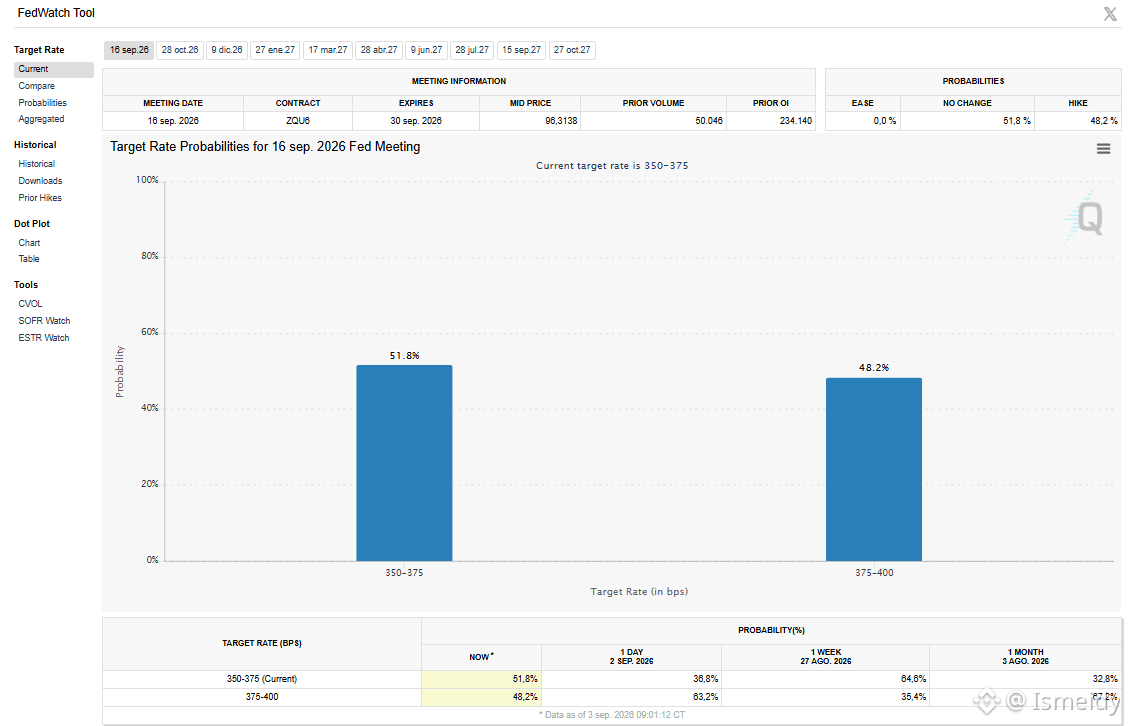
The data backs the drop: Market expectations have reacted immediately to these comments. The probability of a rate hike (Hike) for the September meeting now stands at 48.2%, plunging sharply from the nearly 70% recorded just a day ago. The majority option now is to hold rates in the current 350–375 bp range, with a 51.8% probability.
“Crypto” volatility in the central bank: The Fed’s extreme reliance on monthly macroeconomic data (which often behaves erratically in the short term) is causing the policies of the world’s most important central bank to swing with volatility worthy of cryptocurrency markets. All the pressure now falls on the next moves from Warsh.
#CryptoNews
$SOL
{spot}(SOLUSDT)
$XRP
{future}(XRPUSDT)
$HYPE
{future}(HYPEUSDT)
🔥 From hawks to the pause
The market breathes as the probability of a rate hike collapses to 48% after Waller’s shift
A sudden stop to expectations
After the sharply restrictive tone from the new president of the #Fed , #KevinWarsh , at Jackson Hole last week, the odds of a rate hike in September have deflated rapidly.
The #IPC will be the executioner (or the lifeline): Fed Governor Chris Waller has changed the rules of the game in the short term. He said he will support keeping rates unchanged as long as the next CPI report confirms that underlying inflation continues to fall. If the data disappoint, the hike button will be back on the table.
The data backs the drop: Market expectations have reacted immediately to these comments. The probability of a rate hike (Hike) for the September meeting now stands at 48.2%, plunging sharply from the nearly 70% recorded just a day ago. The majority option now is to hold rates in the current 350–375 bp range, with a 51.8% probability.
“Crypto” volatility in the central bank: The Fed’s extreme reliance on monthly macroeconomic data (which often behaves erratically in the short term) is causing the policies of the world’s most important central bank to swing with volatility worthy of cryptocurrency markets. All the pressure now falls on the next moves from Warsh.
#CryptoNews
$SOL
$XRP
$HYPE
The market breathes as the probability of a rate hike collapses to 48% after Waller’s shift
A sudden stop to expectations
After the sharply restrictive tone from the new president of the #Fed , #KevinWarsh , at Jackson Hole last week, the odds of a rate hike in September have deflated rapidly.
The #IPC will be the executioner (or the lifeline): Fed Governor Chris Waller has changed the rules of the game in the short term. He said he will support keeping rates unchanged as long as the next CPI report confirms that underlying inflation continues to fall. If the data disappoint, the hike button will be back on the table.
The data backs the drop: Market expectations have reacted immediately to these comments. The probability of a rate hike (Hike) for the September meeting now stands at 48.2%, plunging sharply from the nearly 70% recorded just a day ago. The majority option now is to hold rates in the current 350–375 bp range, with a 51.8% probability.
“Crypto” volatility in the central bank: The Fed’s extreme reliance on monthly macroeconomic data (which often behaves erratically in the short term) is causing the policies of the world’s most important central bank to swing with volatility worthy of cryptocurrency markets. All the pressure now falls on the next moves from Warsh.
#CryptoNews
$SOL
$XRP
$HYPE
2
1
8
22.3k
·
--
Market summary
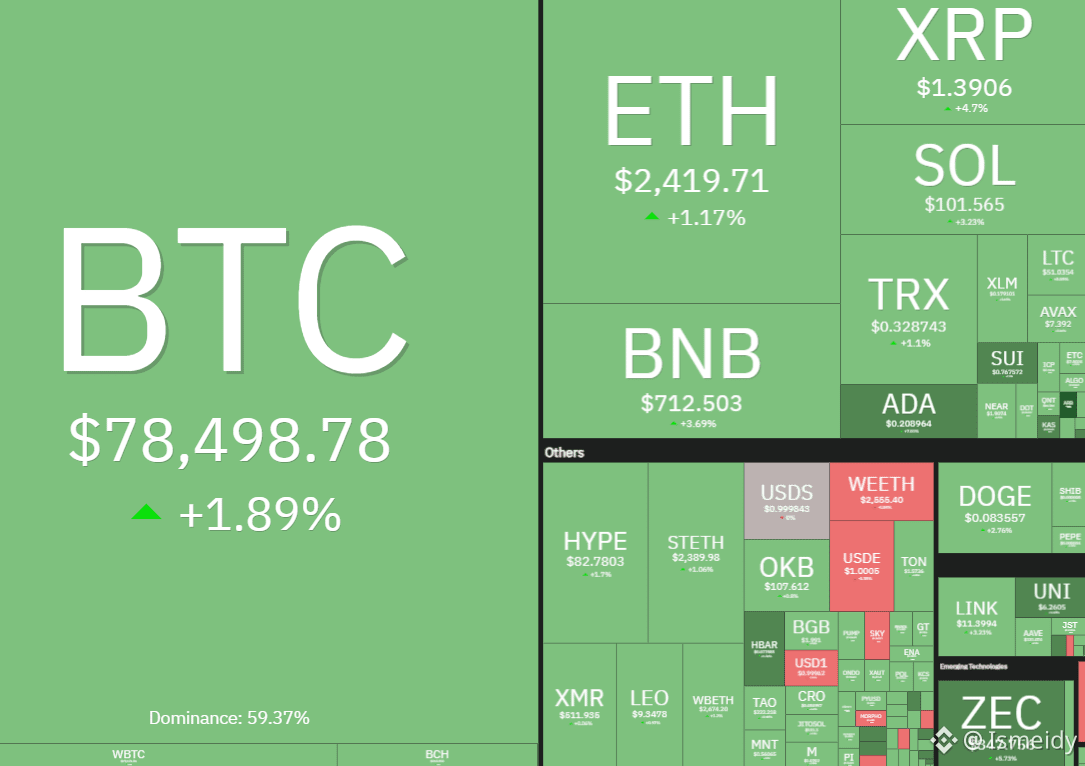
#bitcoin 💰 trades above $78.498 1.89%
‼️ The top 10 cryptocurrencies are trading in the GREEN zone
The 3 winning assets
PONS 46.60% 📈
ARB 23.22% 📈
NIGHT 13.51% 📈
The 3 losing assets
MORPHO -3.13% 📉
SKY -3.06%📉
CC -0.67% 📉
📌 #marketcap : $2.65T 2.46%
📌 #BTC dominance: 59.6%
📌 #ETH dominance: 11.2%
📌 Index of #altcoinseason : 36%
📌 Fear and Greed Index: 73 (GREEN)
📌 CMC20 Index 162.04 2.42%
📌 CMC100 Index 154.12 2.41%
📌 Pi cycle top indicator 67.232 -0.04%
📌 Puell Multiple 0.93 -7.92%
📌 RSI 22 Days 67.061 6.05%
$ARB
{future}(ARBUSDT)
$NIGHT
{future}(NIGHTUSDT)
$MORPHO
{future}(MORPHOUSDT)
Market summary
#bitcoin 💰 trades above $78.498 1.89%
‼️ The top 10 cryptocurrencies are trading in the GREEN zone
The 3 winning assets
PONS 46.60% 📈
ARB 23.22% 📈
NIGHT 13.51% 📈
The 3 losing assets
MORPHO -3.13% 📉
SKY -3.06%📉
CC -0.67% 📉
📌 #marketcap : $2.65T 2.46%
📌 #BTC dominance: 59.6%
📌 #ETH dominance: 11.2%
📌 Index of #altcoinseason : 36%
📌 Fear and Greed Index: 73 (GREEN)
📌 CMC20 Index 162.04 2.42%
📌 CMC100 Index 154.12 2.41%
📌 Pi cycle top indicator 67.232 -0.04%
📌 Puell Multiple 0.93 -7.92%
📌 RSI 22 Days 67.061 6.05%
$ARB
$NIGHT
$MORPHO
#bitcoin 💰 trades above $78.498 1.89%
‼️ The top 10 cryptocurrencies are trading in the GREEN zone
The 3 winning assets
PONS 46.60% 📈
ARB 23.22% 📈
NIGHT 13.51% 📈
The 3 losing assets
MORPHO -3.13% 📉
SKY -3.06%📉
CC -0.67% 📉
📌 #marketcap : $2.65T 2.46%
📌 #BTC dominance: 59.6%
📌 #ETH dominance: 11.2%
📌 Index of #altcoinseason : 36%
📌 Fear and Greed Index: 73 (GREEN)
📌 CMC20 Index 162.04 2.42%
📌 CMC100 Index 154.12 2.41%
📌 Pi cycle top indicator 67.232 -0.04%
📌 Puell Multiple 0.93 -7.92%
📌 RSI 22 Days 67.061 6.05%
$ARB
$NIGHT
$MORPHO
5
1
8
6.5k
·
--
#binanceCard For Venezuelans, it can now be linked to #Paypal
Verification guide and why the charge is made in NZD
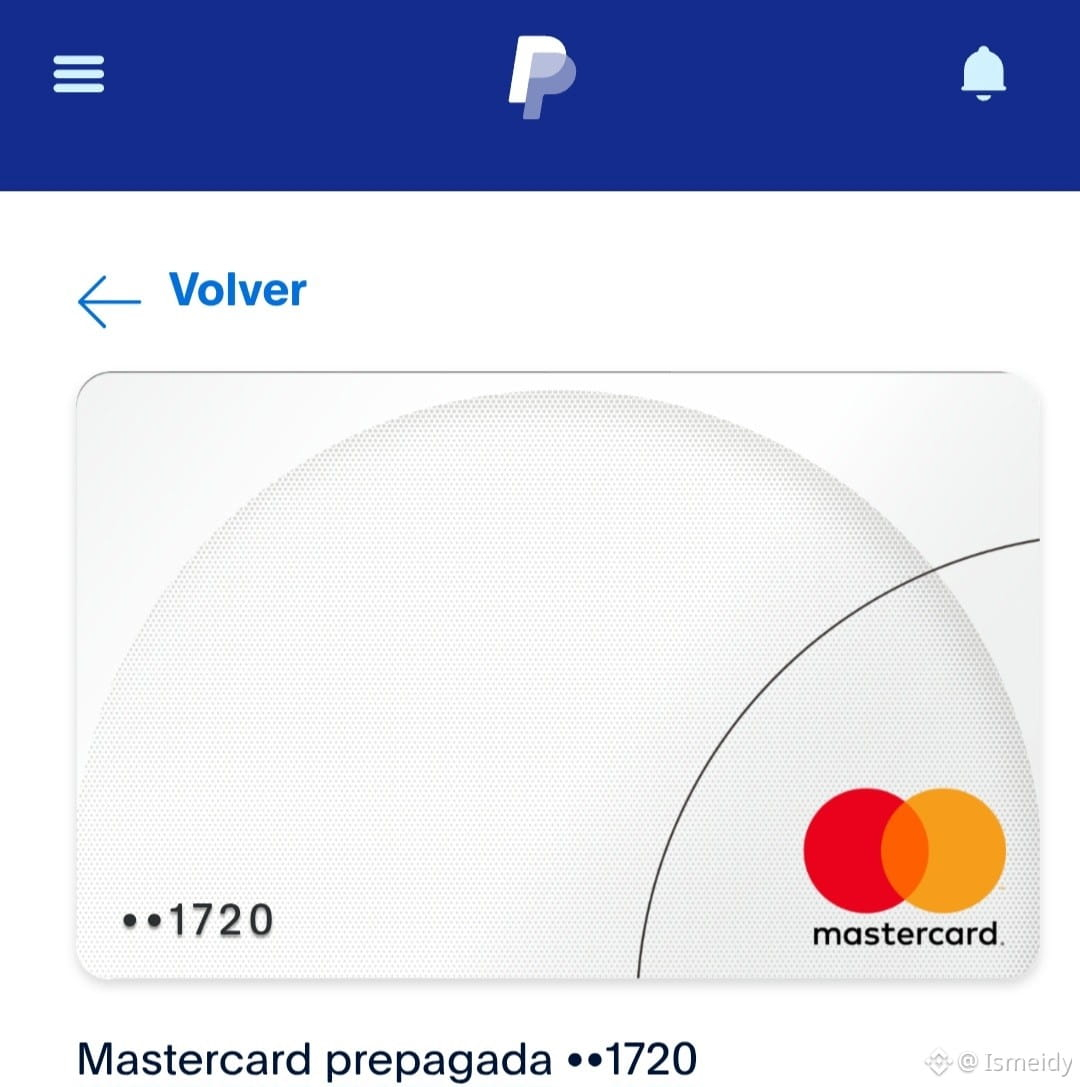
The #Binance Card is now already allowing users to be added and verified successfully on the PayPal platform, opening up a wider range of international payment options for users in the country.
To complete this linking correctly, there are key details that every user should know:
• Mandatory minimum balance: It is strictly necessary to have funds in the Binance wallet (either $USDT or another configured asset). During registration, PayPal runs a small test micro-charge. If the card does not have enough funds to cover it, the platform will reject it immediately.
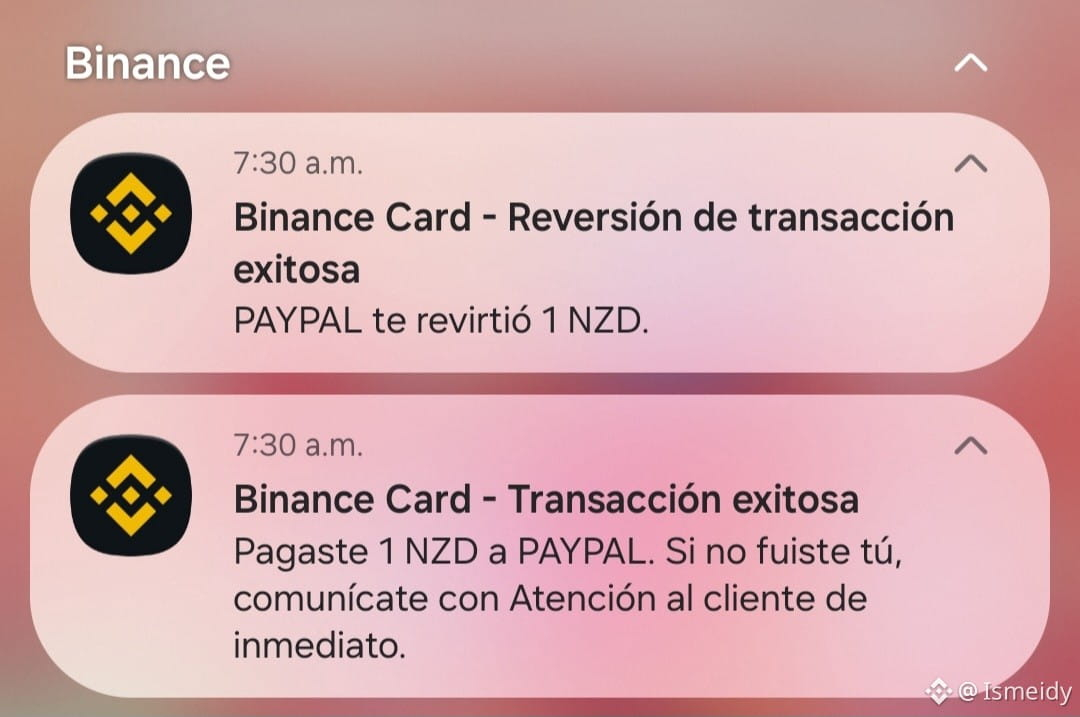
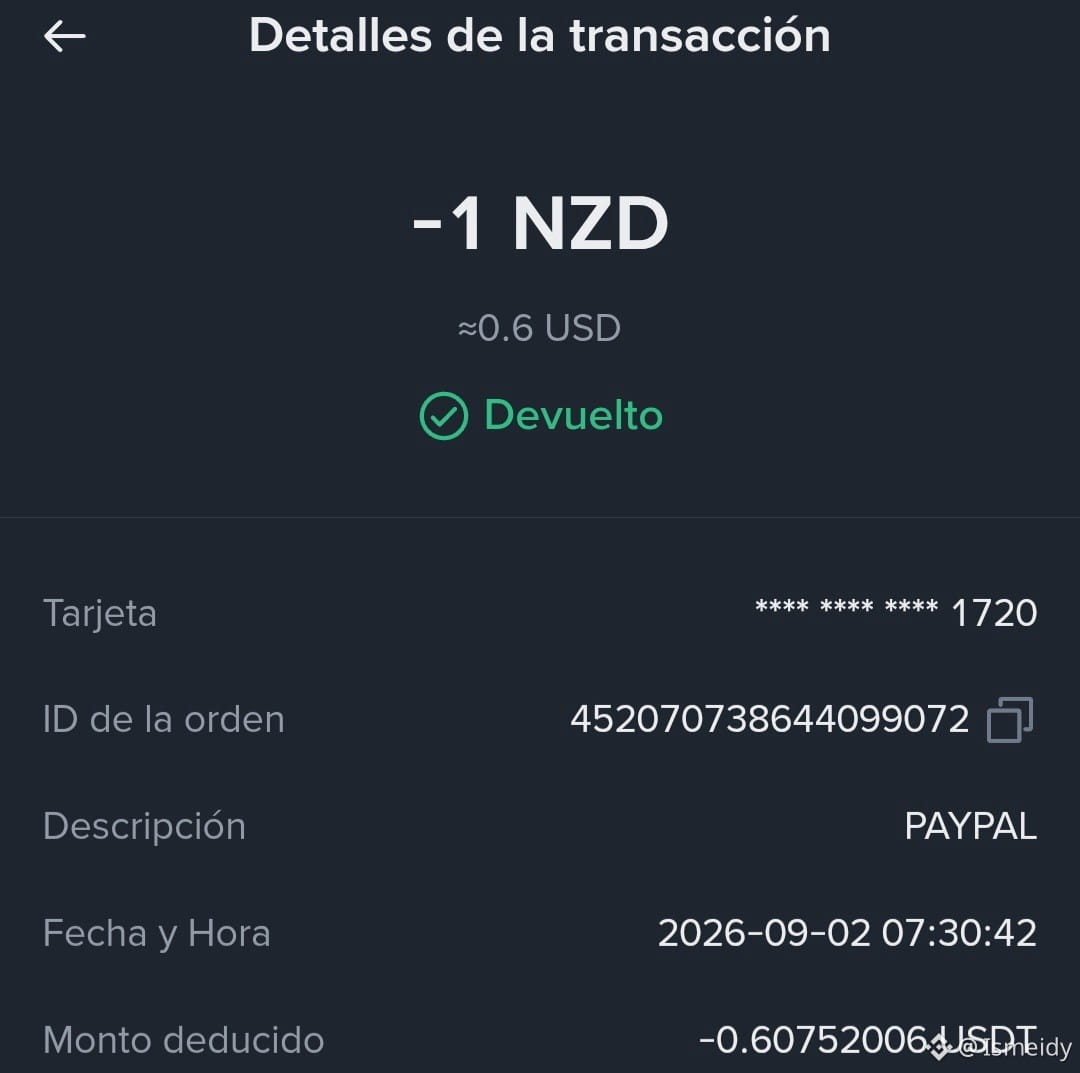
• Verification process and refund: The verification generates a temporary charge equivalent to 1 NZD (approximately $0.60 USD / 0.607 USDT). This amount is not a final fee. Once the card’s validity is confirmed, PayPal automatically reverses the charge within seconds, returning the full funds to the Binance wallet.
What is NZD and why is the charge made in that currency?
• What is NZD?: It is the ISO code for the New Zealand Dollar, the official currency of New Zealand.
• Why is it charged in NZD?: The global infrastructure that issues and processes these Binance virtual cards (in partnership with Fintech partners and the #Mastercard network) uses a bank identification number (BIN) whose issuing entity is registered and settled under New Zealand jurisdiction. When PayPal performs the card’s international verification, it detects the issuer’s origin and requests the micro-charge in the BIN’s native currency (1 NZD), which Binance instantly converts from the user’s cryptoasset balance.
#venezuela
$PYPLB
{spot}(PYPLBUSDT)
$PYPL
{future}(PYPLUSDT)
$SOL
{future}(SOLUSDT)
#binanceCard For Venezuelans, it can now be linked to #Paypal
Verification guide and why the charge is made in NZD
The #Binance Card is now already allowing users to be added and verified successfully on the PayPal platform, opening up a wider range of international payment options for users in the country.
To complete this linking correctly, there are key details that every user should know:
• Mandatory minimum balance: It is strictly necessary to have funds in the Binance wallet (either $USDT or another configured asset). During registration, PayPal runs a small test micro-charge. If the card does not have enough funds to cover it, the platform will reject it immediately.
• Verification process and refund: The verification generates a temporary charge equivalent to 1 NZD (approximately $0.60 USD / 0.607 USDT). This amount is not a final fee. Once the card’s validity is confirmed, PayPal automatically reverses the charge within seconds, returning the full funds to the Binance wallet.
What is NZD and why is the charge made in that currency?
• What is NZD?: It is the ISO code for the New Zealand Dollar, the official currency of New Zealand.
• Why is it charged in NZD?: The global infrastructure that issues and processes these Binance virtual cards (in partnership with Fintech partners and the #Mastercard network) uses a bank identification number (BIN) whose issuing entity is registered and settled under New Zealand jurisdiction. When PayPal performs the card’s international verification, it detects the issuer’s origin and requests the micro-charge in the BIN’s native currency (1 NZD), which Binance instantly converts from the user’s cryptoasset balance.
#venezuela
$PYPLB
$PYPL
$SOL
Verification guide and why the charge is made in NZD
The #Binance Card is now already allowing users to be added and verified successfully on the PayPal platform, opening up a wider range of international payment options for users in the country.
To complete this linking correctly, there are key details that every user should know:
• Mandatory minimum balance: It is strictly necessary to have funds in the Binance wallet (either $USDT or another configured asset). During registration, PayPal runs a small test micro-charge. If the card does not have enough funds to cover it, the platform will reject it immediately.
• Verification process and refund: The verification generates a temporary charge equivalent to 1 NZD (approximately $0.60 USD / 0.607 USDT). This amount is not a final fee. Once the card’s validity is confirmed, PayPal automatically reverses the charge within seconds, returning the full funds to the Binance wallet.
What is NZD and why is the charge made in that currency?
• What is NZD?: It is the ISO code for the New Zealand Dollar, the official currency of New Zealand.
• Why is it charged in NZD?: The global infrastructure that issues and processes these Binance virtual cards (in partnership with Fintech partners and the #Mastercard network) uses a bank identification number (BIN) whose issuing entity is registered and settled under New Zealand jurisdiction. When PayPal performs the card’s international verification, it detects the issuer’s origin and requests the micro-charge in the BIN’s native currency (1 NZD), which Binance instantly converts from the user’s cryptoasset balance.
#venezuela
$PYPLB
$PYPL
$SOL
18
3
39
13.1k
Log in to explore more content
Join global crypto users on Binance Square
⚡️ Get latest and useful information about crypto.
💬 Trusted by the world’s largest crypto exchange.
👍 Discover real insights from verified creators.
Email / Phone number
Trending Topics
USAugustPPIRisesLessThanExpected
61,427 views
886 Discussing
🚨 US AUG PPI: Rises LESS Than Expected! Bullish for Crypto? 🚀
PPI +0.4% MoM as expected, but CORE PPI only +0.2% vs +0.3% expected - cooling!
What it means:
• Wholesale inflation softer than feared
• Fed rate hike chance now 62% - but dovish signals coming
• Core PCE revisions expected downward - bullish
• BTC usually pumps on softer PPI
Fed meeting Sep 15-16 - Market now expects pause, not hike?
Is this the green light for Q4 rally?
#Bitcoin #PPI #Fed #CryptoNews #BTC#usaugustppiriseslessthanexpected
True News
·1 Likes
·1.4k views
SECApprovesNasdaqTexasCommodityTrustRule
33,038 views
623 Discussing
ECBRaisesRatesSecondTimeTo2.5%
29,270 views
448 Discussing