

Wbe3数据
105 Posts

Wbe3数据
Report
Block User
行情分享数据
Open Trade
Occasional Trader
5.1 Years
72 Following
180 Followers
64 Liked
Posts
Portfolio
All
Quotes
·
--
BNB took the stage at the Nasdaq opening bell for the first time, and CZ was there
At 9:30 a.m. ET on October 26 (9:30 p.m. Beijing time), BNB Standard (Nasdaq ticker: BNC), the world’s largest corporate BNB treasury, rang the opening bell in Times Square, New York. CZ attended alongside the company’s board and management team, with people from YZi Labs and BNB Chain also present.
To be clear: this was not a new stock listing. BNC was formerly known as CEA Industries, and its shares have been traded on Nasdaq all along. It changed its name to BNB Standard on September 29 (selected by a community vote, with around 5,799 votes and about 47% of the vote), and Alex Odagiu officially became CEO on October 19. The bell-ringing ceremony celebrated the new name and management team.
A few key figures:
· Held 515,544 BNB as of July 31, worth about $302 million at the time
· BNB accounted for about 93.1% of the company’s total assets
· Plans to operate its own BNB Chain validator nodes and stake through a compliant custodian
· Launched its treasury strategy in July 2025, announcing a $500 million private placement at the time, with YZi Labs and 10X Capital participating
Why is this worth paying attention to?
Its model is similar to “Strategy for BNB”: raising funds in the U.S. stock market to hold BNB, giving institutions that can’t buy crypto directly exposure to BNB through shares. CZ also noted at the event that BNB Chain has around 3 million daily users and produces a block approximately every 0.5 seconds.
But it’s worth keeping a cool head: ringing the bell doesn’t mean the company has added to its treasury. The stock price is highly tied to BNB, and when the coin’s price falls, the stock usually falls even harder. $BNB is now around $741, and has been trading sideways between $736 and $750 all weekend.
Do you think BNB treasury companies will bring sustained buying pressure to BNB, the way Strategy did for BTC? Share your thoughts in the comments.
The information above comes from company announcements and public reports and does not constitute investment advice.
#BNB #BNC #Nasdaq

249
·
--
Binance Listing Roundup | October 26–28: Don’t Miss These Listings
1) PREDICT Pre-Market Perpetual Contract
The PREDICTUSDT Pre-Market Perpetual Contract went live on October 25 at 15:45 (UTC+8), with up to 5x leverage and funding fees settled every 4 hours. Its underlying asset is Predict.fun, a prediction market on BNB Chain. There’s no spot market yet. Note: A contract listing doesn’t guarantee a spot listing, and pre-market trading is typically more volatile.
2) Four TradFi USDT-Margined Perpetual Contracts
Starting October 26 at 17:00, these contracts will be listed one by one at 5-minute intervals: EIDOUSDT, EQTUSDT, STMUSDT, and ABBVUSDT. Trading is available 24/7. Traditional assets are making their way into derivatives, and Binance’s TradFi expansion is still gaining momentum.
3) USDC/AED Spot Trading Pair
Trading opens on October 28 at 16:00 (UTC+8), with spot algorithmic orders also supported. AED is the United Arab Emirates dirham, a fiat currency, giving users another way to deposit funds in the Middle East.
4) Alpha Trading Competition: Axis Robotics
The first round runs from October 26 at 21:00 to November 2 at 21:00 (UTC+8). Participants are ranked by buy volume, and the top 2,000 will share 386,000 AXIS, receiving 193 tokens each. Trading volume during the first two days will count 3x.
5) Alpha Delisting Reminder
PTB, AA, OWL, DORA, ELIZAOS, MEMES, and 哭哭马 have been removed from Alpha. If you hold any of these tokens, remember to plan your sale or withdrawal.
$BNB is currently worth about $741, with a 24-hour range of $731–$746. With platform promotions in full swing, BNB’s use cases continue to grow.
The information above is from Binance’s official announcements. Please refer to the original announcements for details. This is not investment advice.
Which update are you most interested in? Do you think PREDICT will get a spot listing soon? Let’s talk in the comments.
#币安上新 #BNB #Alpha

3
·
--

Article
Privacy-sector rising star Fhenix: $22 million raised and mainnet just launched—how can everyday users get involved?Many people think “airdrop farming” is just about interacting with projects, but what really matters is understanding the project first: who funded it, what it does, what you can do with it now, and where the risks lie. Today, we’re looking at Fhenix, a project in the privacy sector. The team has not yet issued a token, and the information below is based on public sources.
1. What does it do?
Fhenix builds infrastructure related to fully homomorphic encryption (FHE). Its core product is called CoFHE, which you can think of as an “encrypted computing coprocessor”: smart contracts send it encrypted data, it performs computations off-chain, and then returns the results—still encrypted—to the contract. This keeps sensitive information such as balances, positions, and trading strategies hidden throughout the process. Developers can integrate it simply by importing a library in Solidity. Fhenix also offers “dual-mode tokens”: the same token can have either a public balance or a confidential balance, with a one-click switch between the two.
Privacy-sector rising star Fhenix: $22 million raised and mainnet just launched—how can everyday users get involved?
Many people think “airdrop farming” is just about interacting with projects, but what really matters is understanding the project first: who funded it, what it does, what you can do with it now, and where the risks lie. Today, we’re looking at Fhenix, a project in the privacy sector. The team has not yet issued a token, and the information below is based on public sources.
1. What does it do?
Fhenix builds infrastructure related to fully homomorphic encryption (FHE). Its core product is called CoFHE, which you can think of as an “encrypted computing coprocessor”: smart contracts send it encrypted data, it performs computations off-chain, and then returns the results—still encrypted—to the contract. This keeps sensitive information such as balances, positions, and trading strategies hidden throughout the process. Developers can integrate it simply by importing a library in Solidity. Fhenix also offers “dual-mode tokens”: the same token can have either a public balance or a confidential balance, with a one-click switch between the two.
38
·
--
Verified
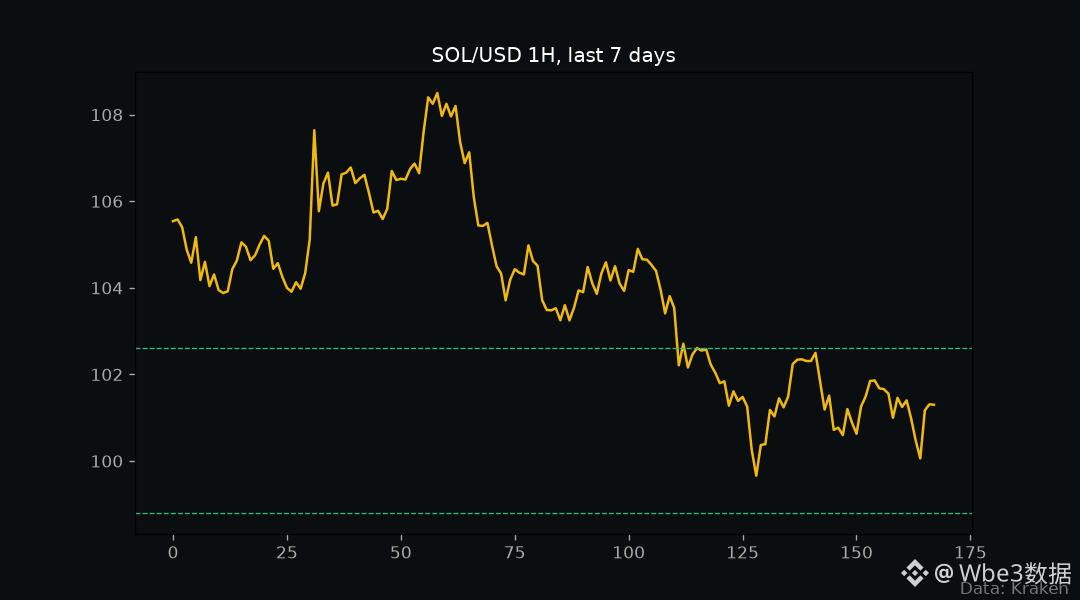
$SOL Day five after the upgrade: Alpenglow went live on mainnet on October 21. According to Anza, the finality time fell from about 12.8 seconds to around 150 milliseconds. The technology is a major positive, but the price is showing a “sell the news” reaction: Kraken data shows SOL at about $101.3, with a 7-day range of $99.7–$108.5. It briefly surged to near $109 after the upgrade, then pulled back.
Key levels (based on the past 7 days of hourly data, for observation only):
• Below: 98.8–99.7, the low zone for the past week. A break below it would signal weakening short-term sentiment.
• Above: 102.6 and 108.5. The former has repeatedly acted as recent resistance; the latter is the weekly high.
Catalysts: JPMorgan launched a tokenized money market fund on Solana, and Samsung Wallet has announced that it will support cross-border USDC transfers by the end of this month. Solana’s on-chain TVL is about $5.73 billion, and its stablecoin supply is about $15.8 billion. Fundamentals are improving, but capital flows are being weighed down by net outflows from spot ETFs.
Risks: Continued ETF outflows, rising Treasury yields weighing on altcoins, and some validator nodes still undergoing upgrades mean network performance remains to be seen.
Which do you think will get there first: the “technology upgrade” or the “price”?
Data: Kraken, DefiLlama. Not investment advice.
#Solana #Alpenglow

1
100
·
--
I took a look at DefiLlama’s public-chain TVL rankings, and the landscape is pretty interesting:
• Ethereum: about $48.56 billion, still far ahead
• Base: about $6.01 billion
• BSC: about $5.79 billion
• Solana: about $5.75 billion
• Tron: about $5.47 billion
• Bitcoin on-chain: about $4.29 billion
There’s less than $600 million separating second through fifth place, so the rankings could change at any moment. Looking at on-chain fees across the industry, the total was about $62.9 million over the past 24 hours, down 4.13% day over day. Tether contributed about $17.27 million and USDC about $6.84 million, so stablecoin issuers remain major fee earners.
TVL is just one way to measure the amount of capital locked up. It doesn’t equal activity, and you shouldn’t focus only on a single day’s figures. It’s a good idea to look at fees and user numbers too.
Data source: DefiLlama. Which public chain do you think will break into the top three next?
#链上数据 #DeFi
Not investment advice.
253
·
--
Article
Bitcoin hashrate back above 1 ZH/s: Miners pivot to AI, but the network gets more crowdedBitcoin hashrate back above 1 ZH/s: Miners are “pivoting to AI,” but the network is getting more crowded
Here’s the bottom line: publicly traded mining companies are shifting power and data centers toward AI/high-performance computing, while Bitcoin’s total network hashrate has returned to a 7-month high. These two things aren’t contradictory, and it’s worth taking a closer look.
1. What the data says
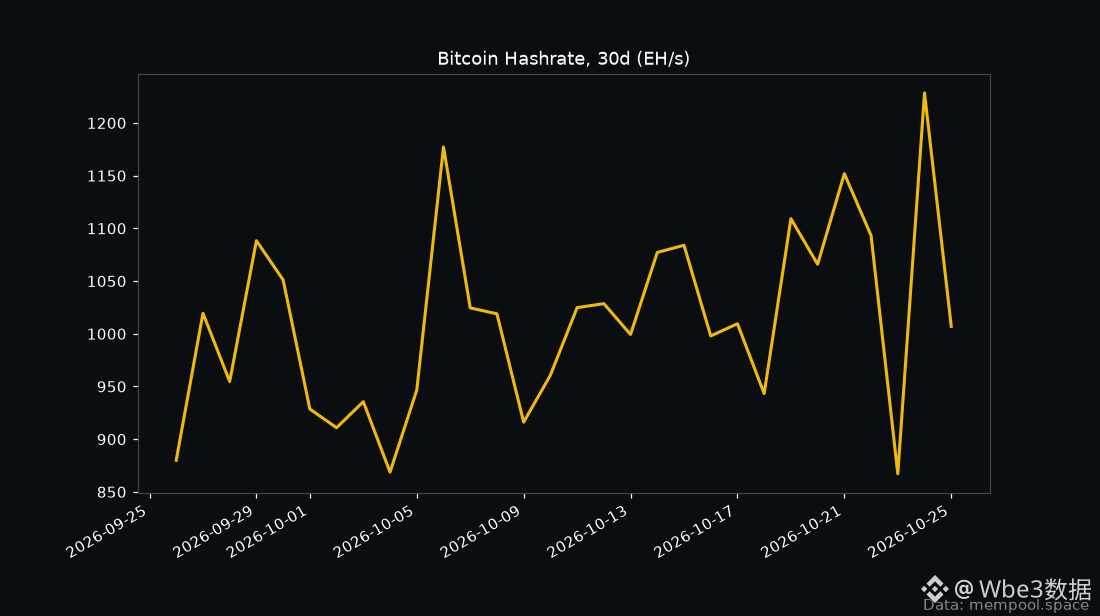
• According to BlocksBridge Miner Weekly, Bitcoin’s 7-day average hashrate has climbed back above 1 ZH/s (= 1,000 EH/s), its highest level since March 3.
• The October 16 difficulty adjustment was +5.92%, bringing difficulty to 140.58T.
• Current data from mempool.space: difficulty adjustment progress is about 67.6%, with the next adjustment estimated at around +4.9%, roughly around October 29 (depending on block production speed).
Bitcoin hashrate back above 1 ZH/s: Miners pivot to AI, but the network gets more crowded
Bitcoin hashrate back above 1 ZH/s: Miners are “pivoting to AI,” but the network is getting more crowded
Here’s the bottom line: publicly traded mining companies are shifting power and data centers toward AI/high-performance computing, while Bitcoin’s total network hashrate has returned to a 7-month high. These two things aren’t contradictory, and it’s worth taking a closer look.
1. What the data says
• According to BlocksBridge Miner Weekly, Bitcoin’s 7-day average hashrate has climbed back above 1 ZH/s (= 1,000 EH/s), its highest level since March 3.
• The October 16 difficulty adjustment was +5.92%, bringing difficulty to 140.58T.
• Current data from mempool.space: difficulty adjustment progress is about 67.6%, with the next adjustment estimated at around +4.9%, roughly around October 29 (depending on block production speed).
54
·
--
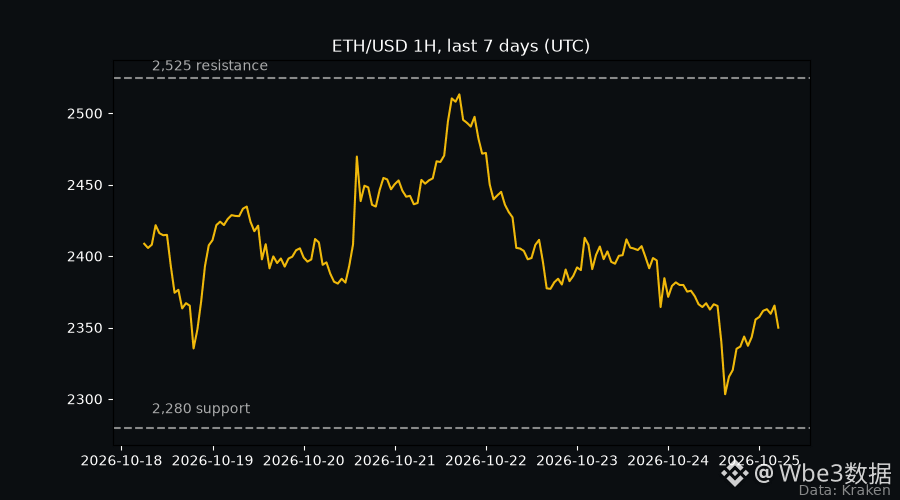
$ETH has traded in the $2,280–$2,525 range over the past 7 days and is currently around $2,350, down about 2.4% from $2,409 a week ago.
Key levels:
• $2,280 is this week's low; a high-volume break below it would signal a weaker short-term structure
• $2,525 is this week's high; a sustained move above it on strong volume would be needed to confirm a rebound
• Ethereum's on-chain TVL is about $49 billion (DefiLlama), making it the public blockchain with the largest concentration of DeFi funds
Catalysts: A recent pickup in DEX trading volume, on-chain stablecoin flows, and progress on upcoming network upgrades.
Risks: Tighter US dollar liquidity, continued stablecoin supply outflows, and a decline in overall market risk appetite could all weigh on the price.
These are price levels to watch, not a forecast. Please manage your position size and risk accordingly. Do you think ETH is more likely to hold $2,280 or fall below it this week?
Data sources: Kraken, DefiLlama. Not investment advice.
#ETH #以太坊 #OnChainData
153
·
--
A weekend look at on-chain DEX trading: According to DefiLlama, total DEX volume over the past 24 hours was about $6.97 billion, down 9.0% day over day. Volume over the past 7 days totaled about $51.8 billion, up 23.4% week over week.
By platform, Uniswap V3 recorded about $820 million (-13.6%), Uniswap V4 about $660 million (-27.1%), PancakeSwap AMM V3 about $690 million, and Aerodrome Slipstream about $320 million (-9.4%).
My take: Overall volume picked up over the week, but there was a noticeable dip on the weekend’s daily figures—a common pattern of quieter weekend trading. V4’s daily decline was steeper than V3’s. It’s best not to read too much into short-term volume swings; weekly averages offer a steadier picture.
Source: DefiLlama. This is a compilation of public data only and does not constitute investment advice.
Which chain and DEX do you trade on most often, and why?
#DeFi #DEX #On-chainData
64
·
--
Article
Stablecoins shed $5.1 billion in 17 days: Is capital exiting or taking a breather?Weekend recap: today, let’s skip the candlestick charts and talk about the market’s “dry powder”—stablecoins.
Prices reflect sentiment, while stablecoin supply shows how many dollars are actually sitting on the sidelines, ready to be put to work. Looking at these on-chain data points together tells us more about what happened this week than looking at BTC’s price movements alone.
1. Total supply: $5.1 billion shed in 17 days
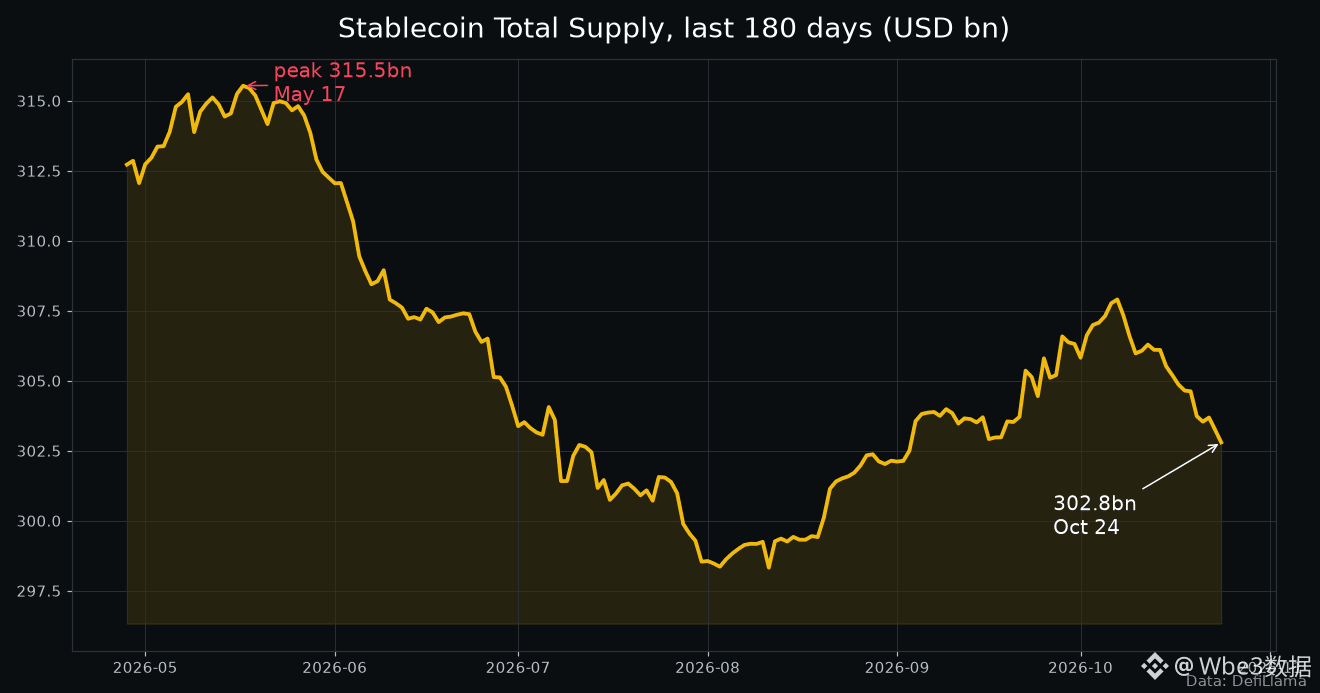
According to DefiLlama, as of October 24, the total stablecoin supply across the market was about $302.8 billion.
A few key milestones:
• May 17: Year-to-date high of about $315.5 billion
• August 11: Interim low of about $298.3 billion
Stablecoins shed $5.1 billion in 17 days: Is capital exiting or taking a breather?
Weekend recap: today, let’s skip the candlestick charts and talk about the market’s “dry powder”—stablecoins.
Prices reflect sentiment, while stablecoin supply shows how many dollars are actually sitting on the sidelines, ready to be put to work. Looking at these on-chain data points together tells us more about what happened this week than looking at BTC’s price movements alone.
1. Total supply: $5.1 billion shed in 17 days
According to DefiLlama, as of October 24, the total stablecoin supply across the market was about $302.8 billion.
A few key milestones:
• May 17: Year-to-date high of about $315.5 billion
• August 11: Interim low of about $298.3 billion
128
·
--
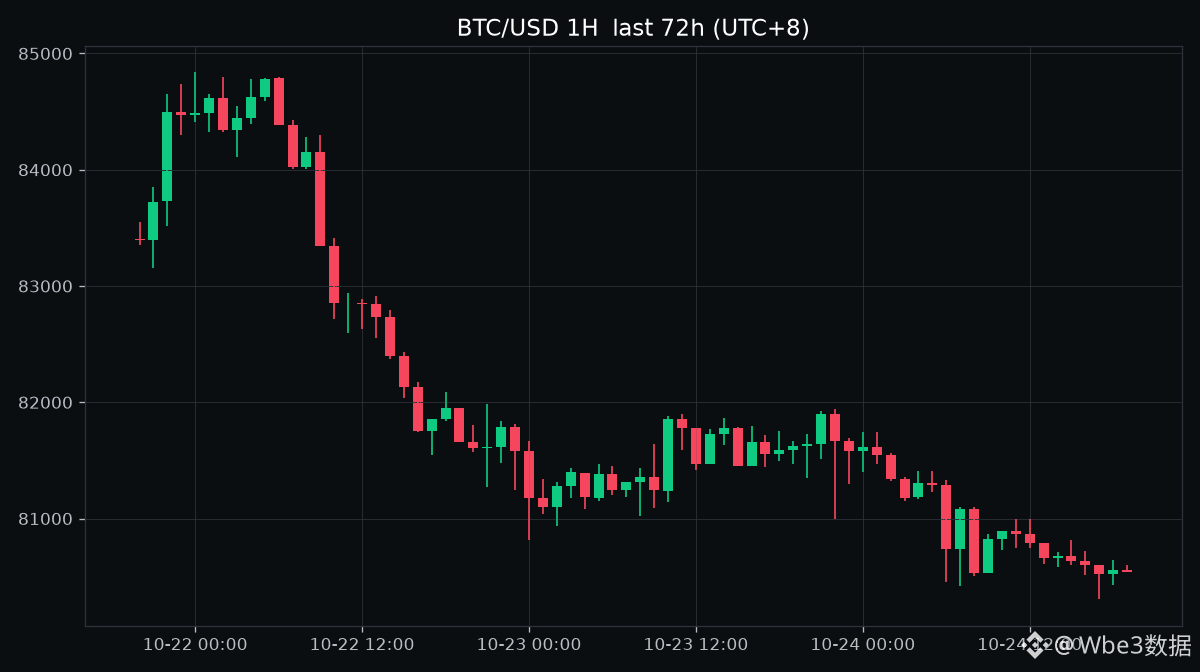
$BTC has fallen steadily over the past three days, from 84,840 to around 80,500. It’s down about 1.3% over 24 hours, with the hourly chart showing a mostly stair-step decline. Each rebound has been pushed back below the previous high.
A few key levels:
• Support: around 80,300, the low for the past 72 hours. Below that is the key 80,000 level.
• Resistance: 81,600–82,000. It tested this range twice yesterday but failed to hold above it.
• Weekend trading is light. A break below 80,000 could trigger a wave of long-position stop-losses, so watch out for sharp wicks.
My take: Until it gets back above 82,000, a weak, choppy market seems more likely. If you’re looking to buy the dip, consider scaling in and setting stop-losses—don’t go all in. This is just my personal observation, not investment advice.
Do you think 80,000 will hold this week?
#BTC #比特币 #MarketAnalysis
53
·
--
Weekend trading is subdued, with major coins edging lower.
$BTC is around $80,550, down about 0.6% from today’s open
ETH is around $2,367, down about 0.7%
SOL is around $101.5, down about 1.1%
BNB is holding steady near $731
Weekend liquidity is thin, so sharp wicks are more likely than usual. If you’re keeping your position light, don’t rush to chase—direction should be clearer after the U.S. market opens on Monday. Are you sitting on the sidelines or positioning this weekend?
#加密市场 #BTC #WeekendMarket
88
·
--
Article
BTC and major cryptocurrencies: what’s the difference?(BTC and major cryptocurrencies: what’s the difference?)*
Before you buy, it’s more useful to understand what you’re buying than to chase price movements.
BTC — the benchmark for a store of value
- Positioning: The earliest crypto asset, with the broadest consensus; often called “digital gold”
- Key features: A fixed supply of 21 million; the main gateway for institutional ETF investment
- What to watch: Halving cycles, net ETF inflows, and the share of long-term holders on-chain
- Profile: **Relatively low volatility and geared toward “storing value,”** but still a high-risk asset
ETH — the underlying platform for smart contracts
- Positioning: The largest public-chain ecosystem and the home base for DeFi, NFTs, and L2s
BTC and major cryptocurrencies: what’s the difference?
(BTC and major cryptocurrencies: what’s the difference?)*
Before you buy, it’s more useful to understand what you’re buying than to chase price movements.
BTC — the benchmark for a store of value
- Positioning: The earliest crypto asset, with the broadest consensus; often called “digital gold”
- Key features: A fixed supply of 21 million; the main gateway for institutional ETF investment
- What to watch: Halving cycles, net ETF inflows, and the share of long-term holders on-chain
- Profile: **Relatively low volatility and geared toward “storing value,”** but still a high-risk asset
ETH — the underlying platform for smart contracts
- Positioning: The largest public-chain ecosystem and the home base for DeFi, NFTs, and L2s
54
·
--
*$NVDAB #*《BTC vs. major coins: what’s really the difference?》**
Before buying, it’s far more useful to understand what you’re buying than to chase price swings.
**BTC — The benchmark for a store of value**
- Role: The earliest crypto asset, with the broadest consensus; often seen as “digital gold”
- Features: Fixed supply of 21 million coins; the main entry point for institutional ETF funds
- What to watch: Halving cycles, net ETF inflows, and the share of long-term holders on-chain
- Profile: **Relatively lower volatility, with a focus on “storing value,”** but still a high-risk asset
**ETH — The underlying platform for smart contracts**
- Role: The largest public blockchain ecosystem; home to DeFi, NFTs, and L2s
- Features: Has a staking mechanism (PoS), real fee revenue, and token burns
- What to watch: Amount staked, L2 activity, gas and burn data, and ecosystem TVL
- Profile: **Both an asset and a “platform stock”;** more sensitive to ecosystem activity
**SOL — A high-performance blockchain built for speed**
- Role: A high-throughput, low-fee public blockchain with active retail and high-frequency applications
- Features: Fast block times and low transaction fees; it has experienced network outages in the past
- What to watch: Active addresses, DEX trading volume, and validator health
- Profile: **Greater upside and downside potential**—it can rally sharply, but its pullbacks are often deeper too
**A simple comparison of the three**
| Dimension | BTC | ETH | SOL |
|---|---|---|---|
| Core narrative | Store of value | Ecosystem platform | High performance |
| Supply | Fixed at 21 million | Inflation + burns | Inflationary |
| Ways to earn | No native staking | Staking | Staking/ecosystem |
| Volatility | Relatively low | Moderate | Relatively high |
**A few things worth remembering**
1. All three are highly volatile assets. **Don’t believe claims that any of them are “guaranteed profits” or “guaranteed to rise.”**
2. Don’t go all in just because someone says one is better. First, think about how much of a drawdown you can tolerate.
3. Diversifying your holdings isn’t a cure-all, but putting too much into a single coin is the riskiest approach.
4. Dollar-cost averaging suits people who don’t have time to watch the market, but it **can’t eliminate downturns
248
·
--
Digital Asset Market Daily | Major assets pull back, fund flows remain weak
On October 22, BTC, ETH, and SOL all declined:
BTC: 82,300.84, down 2.13% intraday
ETH: 2,428.37, down 1.84% intraday
SOL: 104.44, down 2.37% intraday
Technically, BTC is trading below its SMA7 and SMA25, with an RSI12 of 57.31; ETH is below its major moving averages, with an RSI12 of 45.88; SOL is below its SMA7, SMA25, and Bollinger middle band at 110.54, with an RSI12 of 44.69. Prices are weakening in the short term, but momentum is not entirely consistent across assets.
Regarding fund flows, 1-day net flows from large orders were negative across the board: BTC at -206,243,639.43, ETH at -23,780,631.49, and SOL at -11,240,675.13. Fund flows have yet to show a positive consensus.
On the news front, major deployment plans for AI computing infrastructure are still underway, but the market is becoming more cautious about financing costs and returns on capital expenditure. Solana ranks high in social media interest, but sentiment is negative, indicating that market attention does not necessarily translate into buying pressure.
In the derivatives market, liquidation risk should be the top priority. If funding rates, open interest, and liquidation volume all rise at the same time, volatility may increase further.
Key things to watch today: whether prices can reclaim their major moving averages, whether fund outflows narrow, and whether liquidation risks in the derivatives market continue to grow.
#BTC #ETH #SOL #TechnicalAnalysis #FundFlows #OnChainData #DerivativesRisk
363
·
--
AI funding turns cautious as BTC, ETH, and SOL retreat in tandemMarket Analysis for the 22nd | AI funding turns cautious, major coins retreat, SOL sentiment weakens] AI funding | outflows | futures liquidation risk
I. Market Overview
The daily snapshot shows:
BTC: 82,300.84, intraday -2.13%, last 7 days +0.07%, latest 30 daily candles -2.48%
ETH: 2,428.37, intraday -1.84%, last 7 days -0.56%, latest 30 daily candles -9.55%
SOL: 104.44, intraday -2.37%, last 7 days -0.95%, latest 30 daily candles -9.17%
All three major assets fell intraday, with SOL posting the largest decline. Note that the technical data above uses the latest 30 daily candles, and the most recent daily candle may still be forming.
AI funding turns cautious as BTC, ETH, and SOL retreat in tandem
Market Analysis for the 22nd | AI funding turns cautious, major coins retreat, SOL sentiment weakens] AI funding | outflows | futures liquidation risk
I. Market Overview
The daily snapshot shows:
BTC: 82,300.84, intraday -2.13%, last 7 days +0.07%, latest 30 daily candles -2.48%
ETH: 2,428.37, intraday -1.84%, last 7 days -0.56%, latest 30 daily candles -9.55%
SOL: 104.44, intraday -2.37%, last 7 days -0.95%, latest 30 daily candles -9.17%
All three major assets fell intraday, with SOL posting the largest decline. Note that the technical data above uses the latest 30 daily candles, and the most recent daily candle may still be forming.
286
·
--
On-chain market snapshot (as of October 20–21, 2026):
The crypto market is broadly trading sideways with a neutral bias. BTC is fluctuating slightly in the $82,000–$83,000 range, with a market cap of approximately $1.66–$1.67 trillion; ETH is around $2,448. The total market cap is approximately $2.8–$2.9 trillion. $BTC $ETH
Total DeFi TVL is around $90 billion. Ethereum remains dominant, with TVL of approximately $50.28 billion (about 56% of the total), up 1.4% over 24 hours. Next are Base (about $6.2 billion), Solana and BNB Chain (about $5.9 billion each), Tron (about $5.5 billion), and Bitcoin DeFi (about $4.4 billion). Ethereum had approximately 464,000 active addresses and 1.75 million transactions over the past 24 hours; daily DEX trading volume was about $1.14 billion. Stablecoin supply remains high (about $143.7 billion on Ethereum). Overall on-chain activity is steady, with some signs of accumulation by large holders, but spot demand is weak. The market is in a wait-and-see consolidation phase.
211
·
--
【October 21 Market Review | Short-Term Recovery, Structure Remains Cautious】Today's Share
Short-Term Rebound | Technical Divergence | Divergence Between Capital Flows and Sentiment
### I. Market Overview
Data scope: Spot and derivatives market snapshots, focusing on BTC, ETH, and SOL. Technical indicators are calculated based on the most recent **30 daily candles**; the latest daily candle may still be forming.
- **BTC:** Spot **83,213.14**, intraday **+0.22%**, 7-day **+1.87%**, cumulative change over the latest 30 daily candles **-3.47%**
- **ETH:** Spot **2,456.62**, intraday **+0.30%**, 7-day **+1.45%**, cumulative change over the latest 30 daily candles **-10.79%**
- **SOL:** Spot **106.86**, intraday **+0.31%**, 7-day **+2.46%**, cumulative change over the latest 30 daily candles **-9.88%**
【October 21 Market Review | Short-Term Recovery, Structure Remains Cautious】
Today's Share
Short-Term Rebound | Technical Divergence | Divergence Between Capital Flows and Sentiment
### I. Market Overview
Data scope: Spot and derivatives market snapshots, focusing on BTC, ETH, and SOL. Technical indicators are calculated based on the most recent **30 daily candles**; the latest daily candle may still be forming.
- **BTC:** Spot **83,213.14**, intraday **+0.22%**, 7-day **+1.87%**, cumulative change over the latest 30 daily candles **-3.47%**
- **ETH:** Spot **2,456.62**, intraday **+0.30%**, 7-day **+1.45%**, cumulative change over the latest 30 daily candles **-10.79%**
- **SOL:** Spot **106.86**, intraday **+0.31%**, 7-day **+2.46%**, cumulative change over the latest 30 daily candles **-9.88%**
240
·
--
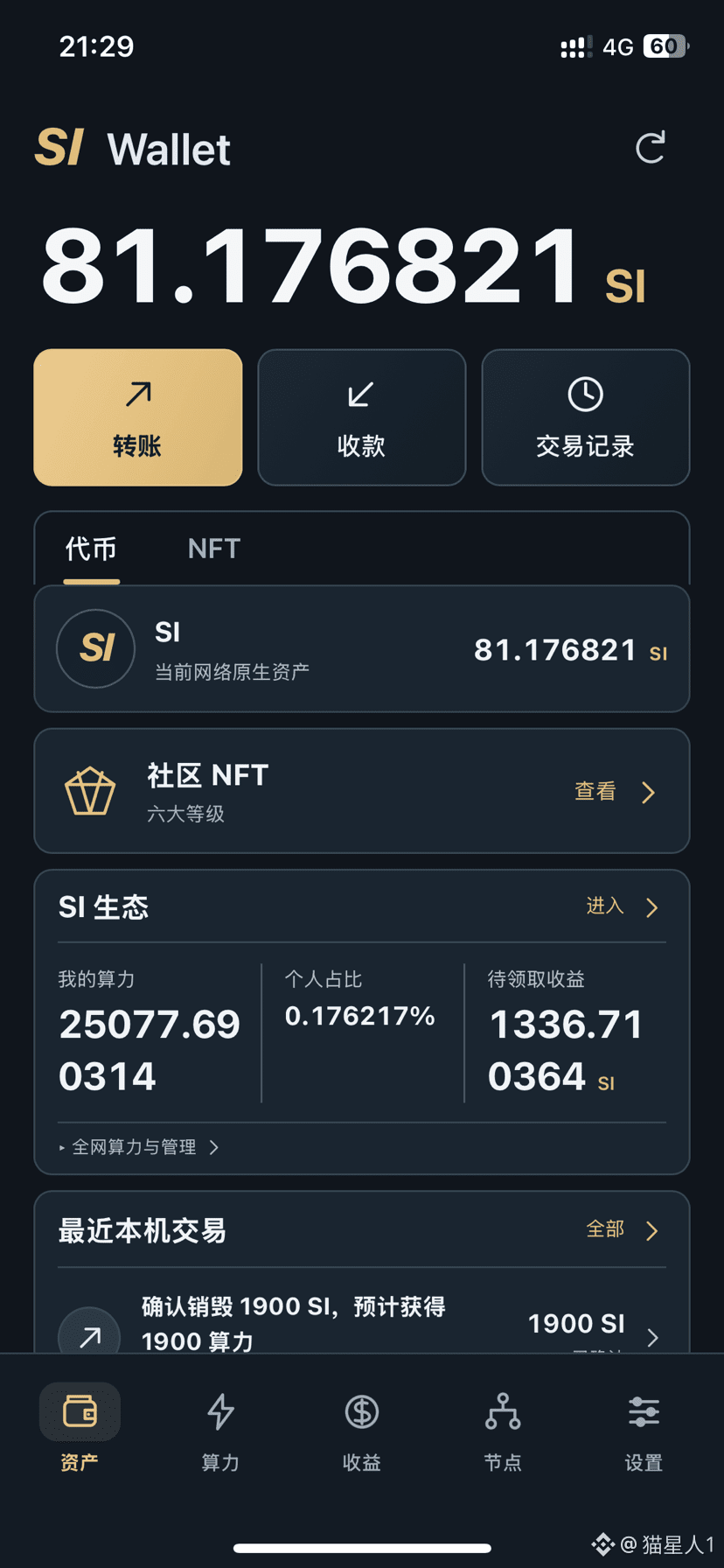
The SI hash-power mining project has just launched, and it's available on both Android and iOS. Anyone who played Mars before knows that hard work beats talent.
The SI hash-power mining project has just launched, and it's available on both Android and iOS. Anyone who played Mars before knows that hard work beats talent.
123

·
--
$ETH The pancake rises while Ethereum falls, laughing to death 😆
$ETH The pancake rises while Ethereum falls, laughing to death 😆
18
Log in to explore more content
Join global crypto users on Binance Square
⚡️ Get latest and useful information about crypto.
💬 Trusted by the world’s largest crypto exchange.
👍 Discover real insights from verified creators.
Email / Phone number