
#cryptorisk
cryptorisk
1.6M views
2,462 Discussing
Hot
Latest

·
--
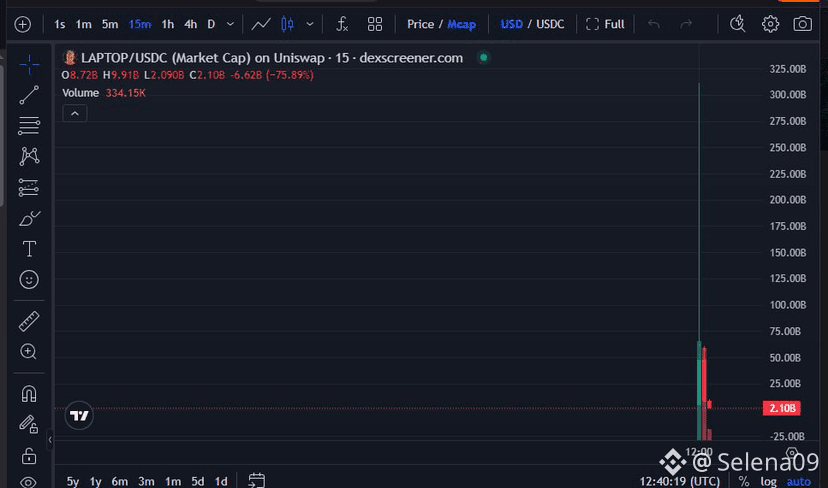
🚨 $LAPTOP caught my attention more for its risks than its price action.
The memecoin is directly associated with Hunter Biden, so beyond liquidity and tokenomics, there’s another major risk: its value can be heavily driven by one person’s name and a political narrative.
For a newly launched token with thin liquidity and extreme volatility, I’d look at who’s behind it + token distribution + liquidity before looking at the percentage gain.
Just my personal risk assessment, not financial advice.
#Laptop #memecoin #CryptoRisk #Crypto #CryptoNews $TRUMP $MELANIA $IOST
🚨 $LAPTOP caught my attention more for its risks than its price action.
The memecoin is directly associated with Hunter Biden, so beyond liquidity and tokenomics, there’s another major risk: its value can be heavily driven by one person’s name and a political narrative.
For a newly launched token with thin liquidity and extreme volatility, I’d look at who’s behind it + token distribution + liquidity before looking at the percentage gain.
Just my personal risk assessment, not financial advice.
#Laptop #memecoin #CryptoRisk #Crypto #CryptoNews $TRUMP $MELANIA $IOST
The memecoin is directly associated with Hunter Biden, so beyond liquidity and tokenomics, there’s another major risk: its value can be heavily driven by one person’s name and a political narrative.
For a newly launched token with thin liquidity and extreme volatility, I’d look at who’s behind it + token distribution + liquidity before looking at the percentage gain.
Just my personal risk assessment, not financial advice.
#Laptop #memecoin #CryptoRisk #Crypto #CryptoNews $TRUMP $MELANIA $IOST
5
3.1k

·
--
🚨 $MEME LAUNCH ALERT: A LIQUIDITY TRAP FOR SNIPERS 🐻
🦈 Institutional flow analysis shows a pre‑launch order block forming at the mint, immediately saturated by a wave of automated snipers. Their speed eclipses retail latency, turning the initial liquidity pool into a hostile zone. 📊 Historical memecoin launches—Trump coin and peers—exhibit a repeatable pattern: rapid supply dump, followed by a sharp price collapse as smart money extracts the premium. The risk‑reward asymmetry is heavily tilted toward the downside, making any chase a money trap. 💬 Are you staying on the sidelines or risking the inevitable squeeze? 👇
⚠️ Not financial advice. Always manage your risk. 🛡️
🏷️ #MEME #SniperAlert #CryptoRisk #Memecoin
🔥 🦈
🚨 $MEME LAUNCH ALERT: A LIQUIDITY TRAP FOR SNIPERS 🐻
🦈 Institutional flow analysis shows a pre‑launch order block forming at the mint, immediately saturated by a wave of automated snipers. Their speed eclipses retail latency, turning the initial liquidity pool into a hostile zone. 📊 Historical memecoin launches—Trump coin and peers—exhibit a repeatable pattern: rapid supply dump, followed by a sharp price collapse as smart money extracts the premium. The risk‑reward asymmetry is heavily tilted toward the downside, making any chase a money trap. 💬 Are you staying on the sidelines or risking the inevitable squeeze? 👇
⚠️ Not financial advice. Always manage your risk. 🛡️
🏷️ #MEME #SniperAlert #CryptoRisk #Memecoin
🔥 🦈
🦈 Institutional flow analysis shows a pre‑launch order block forming at the mint, immediately saturated by a wave of automated snipers. Their speed eclipses retail latency, turning the initial liquidity pool into a hostile zone. 📊 Historical memecoin launches—Trump coin and peers—exhibit a repeatable pattern: rapid supply dump, followed by a sharp price collapse as smart money extracts the premium. The risk‑reward asymmetry is heavily tilted toward the downside, making any chase a money trap. 💬 Are you staying on the sidelines or risking the inevitable squeeze? 👇
⚠️ Not financial advice. Always manage your risk. 🛡️
🏷️ #MEME #SniperAlert #CryptoRisk #Memecoin
🔥 🦈
56

·
--
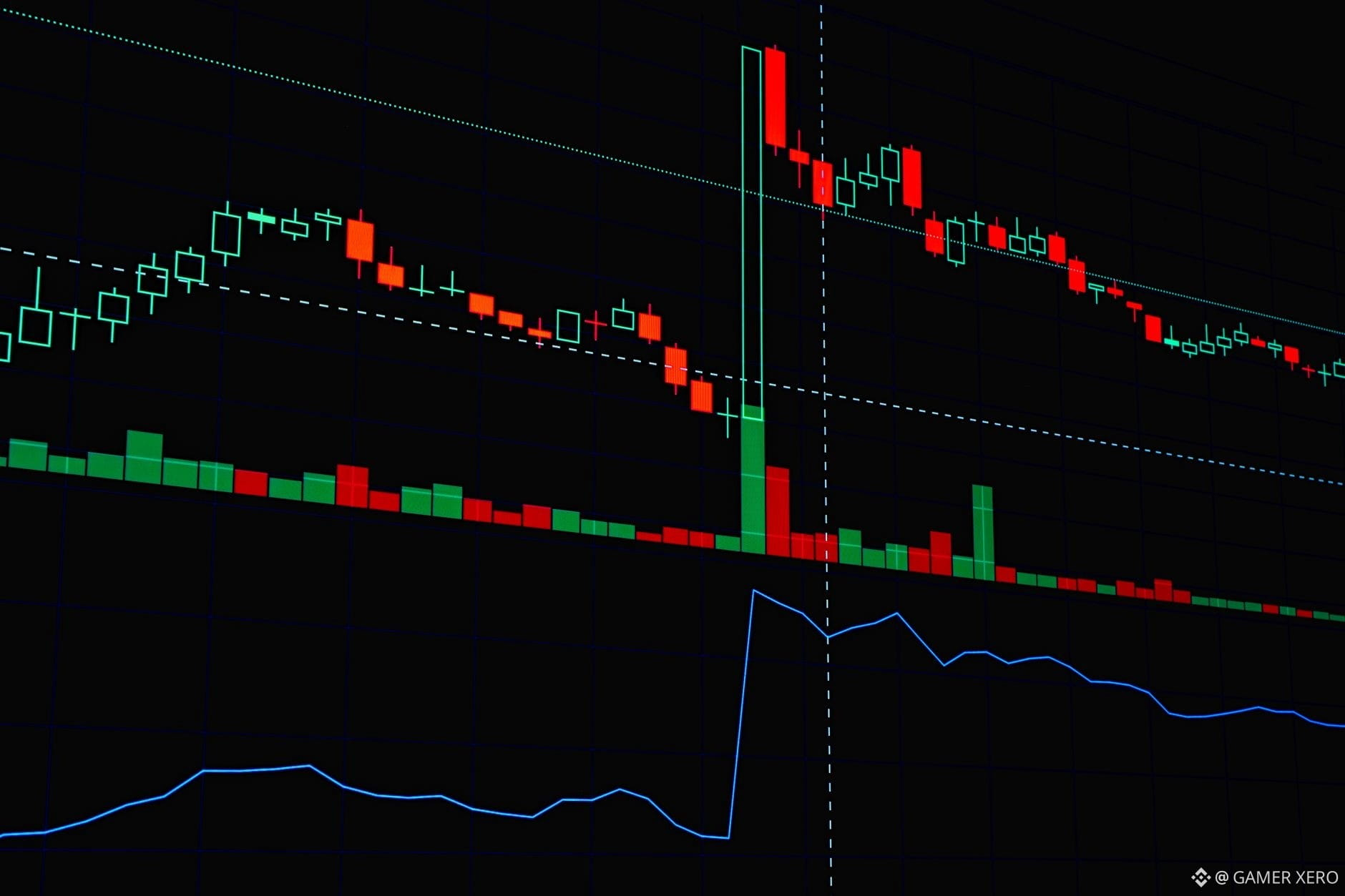
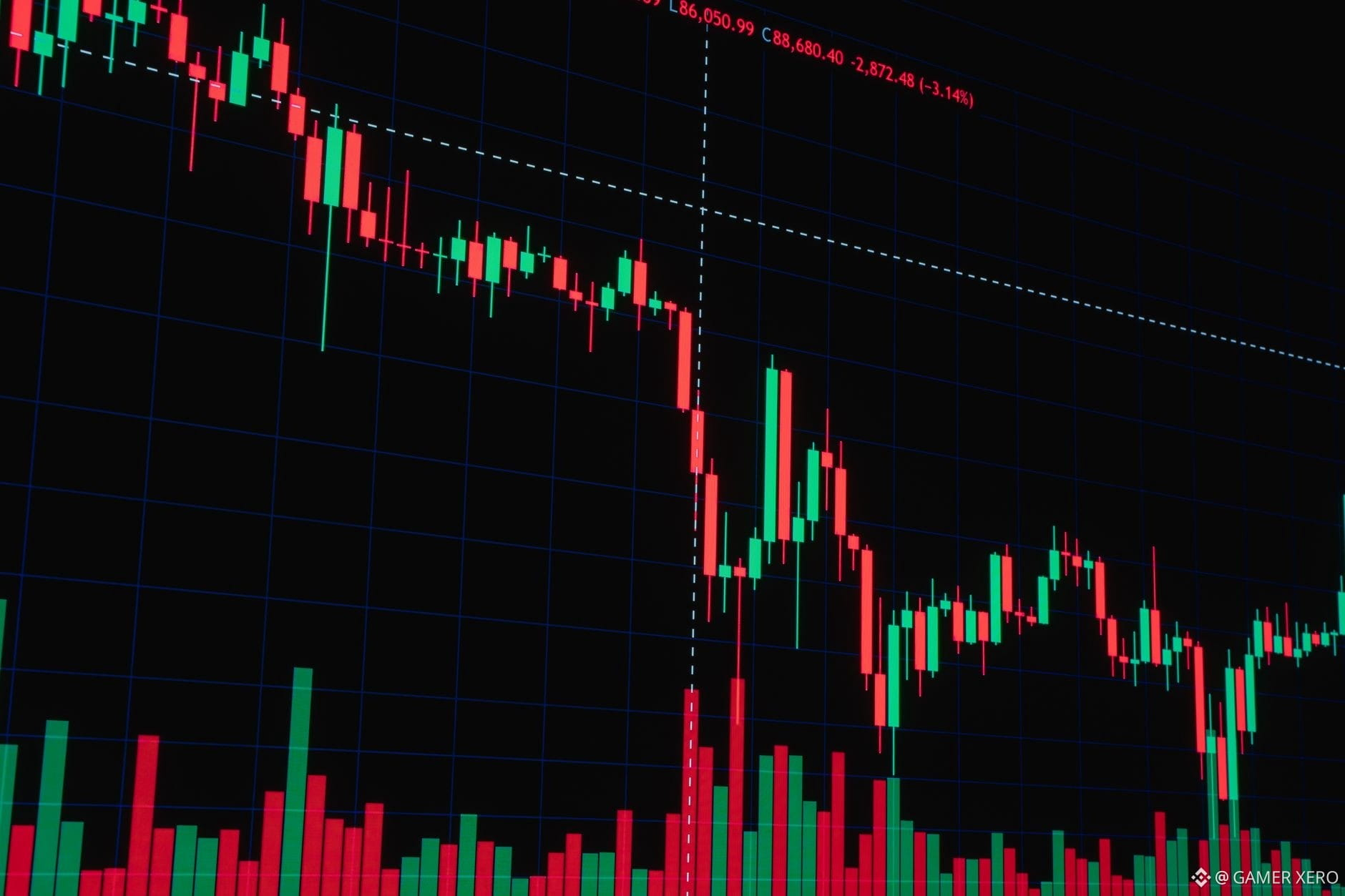
$BTC is hovering around $78,552, a tight range that makes it easy to slip into a loss if you let emotions drive the trade. One way to keep that from happening is to base every entry on a predefined stop‑loss and a clear risk‑per‑trade rule.
Start with your total capital—say $10,000. Decide you’ll never risk more than 1 % on a single position, so your max loss is $100. Look at the current chart and set a stop‑loss a few percent below the entry, for example $77,800, which is roughly a 0.95 % move. The distance between entry and stop is $752; $100 ÷ $752 ≈ 0.13 BTC. That means you’d buy about 0.13 BTC, not the full $10,000 stake. If the price rebounds, your profit potential stays proportional to the risk you took.
By treating every trade as a small, controlled experiment, you remove the fear of “missing out” and let the market move you, not the other way around. How do you currently size your positions when the market is sideways?
#CryptoRisk #CapitalPreservation #TradingDiscipline #GAMERXERO
$BTC is hovering around $78,552, a tight range that makes it easy to slip into a loss if you let emotions drive the trade. One way to keep that from happening is to base every entry on a predefined stop‑loss and a clear risk‑per‑trade rule.
Start with your total capital—say $10,000. Decide you’ll never risk more than 1 % on a single position, so your max loss is $100. Look at the current chart and set a stop‑loss a few percent below the entry, for example $77,800, which is roughly a 0.95 % move. The distance between entry and stop is $752; $100 ÷ $752 ≈ 0.13 BTC. That means you’d buy about 0.13 BTC, not the full $10,000 stake. If the price rebounds, your profit potential stays proportional to the risk you took.
By treating every trade as a small, controlled experiment, you remove the fear of “missing out” and let the market move you, not the other way around. How do you currently size your positions when the market is sideways?
#CryptoRisk #CapitalPreservation #TradingDiscipline #GAMERXERO
Start with your total capital—say $10,000. Decide you’ll never risk more than 1 % on a single position, so your max loss is $100. Look at the current chart and set a stop‑loss a few percent below the entry, for example $77,800, which is roughly a 0.95 % move. The distance between entry and stop is $752; $100 ÷ $752 ≈ 0.13 BTC. That means you’d buy about 0.13 BTC, not the full $10,000 stake. If the price rebounds, your profit potential stays proportional to the risk you took.
By treating every trade as a small, controlled experiment, you remove the fear of “missing out” and let the market move you, not the other way around. How do you currently size your positions when the market is sideways?
#CryptoRisk #CapitalPreservation #TradingDiscipline #GAMERXERO
20

·
--
🦈 $CRO EXPLOIT REVERSED BUT $9M OFF‑CHAIN LOSS LINGERS 🚨
📊 The attacker artificially pumped the thinly‑traded TONIC token, using the inflated price as collateral to siphon $120.4 M across nine markets. Cronos’ validators halted the chain, rolled back 10,961 blocks, and restored $111.2 M, but $9.19 M vanished off‑chain and remains unrecovered. ⚡
💡 This event underscores how thin liquidity pools become a playground for smart‑money liquidity sweeps, exposing systemic risk in cross‑chain collateral frameworks. The network resumed production within 11 hours, yet the residual loss may pressure users to reassess risk buffers. 👇
⚠️ Not financial advice. Always manage your risk. 🛡️
🏷️ #CRO #Exploit #CryptoRisk #SmartMoney
🔥 🦈
🦈 $CRO EXPLOIT REVERSED BUT $9M OFF‑CHAIN LOSS LINGERS 🚨
📊 The attacker artificially pumped the thinly‑traded TONIC token, using the inflated price as collateral to siphon $120.4 M across nine markets. Cronos’ validators halted the chain, rolled back 10,961 blocks, and restored $111.2 M, but $9.19 M vanished off‑chain and remains unrecovered. ⚡
💡 This event underscores how thin liquidity pools become a playground for smart‑money liquidity sweeps, exposing systemic risk in cross‑chain collateral frameworks. The network resumed production within 11 hours, yet the residual loss may pressure users to reassess risk buffers. 👇
⚠️ Not financial advice. Always manage your risk. 🛡️
🏷️ #CRO #Exploit #CryptoRisk #SmartMoney
🔥 🦈
📊 The attacker artificially pumped the thinly‑traded TONIC token, using the inflated price as collateral to siphon $120.4 M across nine markets. Cronos’ validators halted the chain, rolled back 10,961 blocks, and restored $111.2 M, but $9.19 M vanished off‑chain and remains unrecovered. ⚡
💡 This event underscores how thin liquidity pools become a playground for smart‑money liquidity sweeps, exposing systemic risk in cross‑chain collateral frameworks. The network resumed production within 11 hours, yet the residual loss may pressure users to reassess risk buffers. 👇
⚠️ Not financial advice. Always manage your risk. 🛡️
🏷️ #CRO #Exploit #CryptoRisk #SmartMoney
🔥 🦈
7
·
--
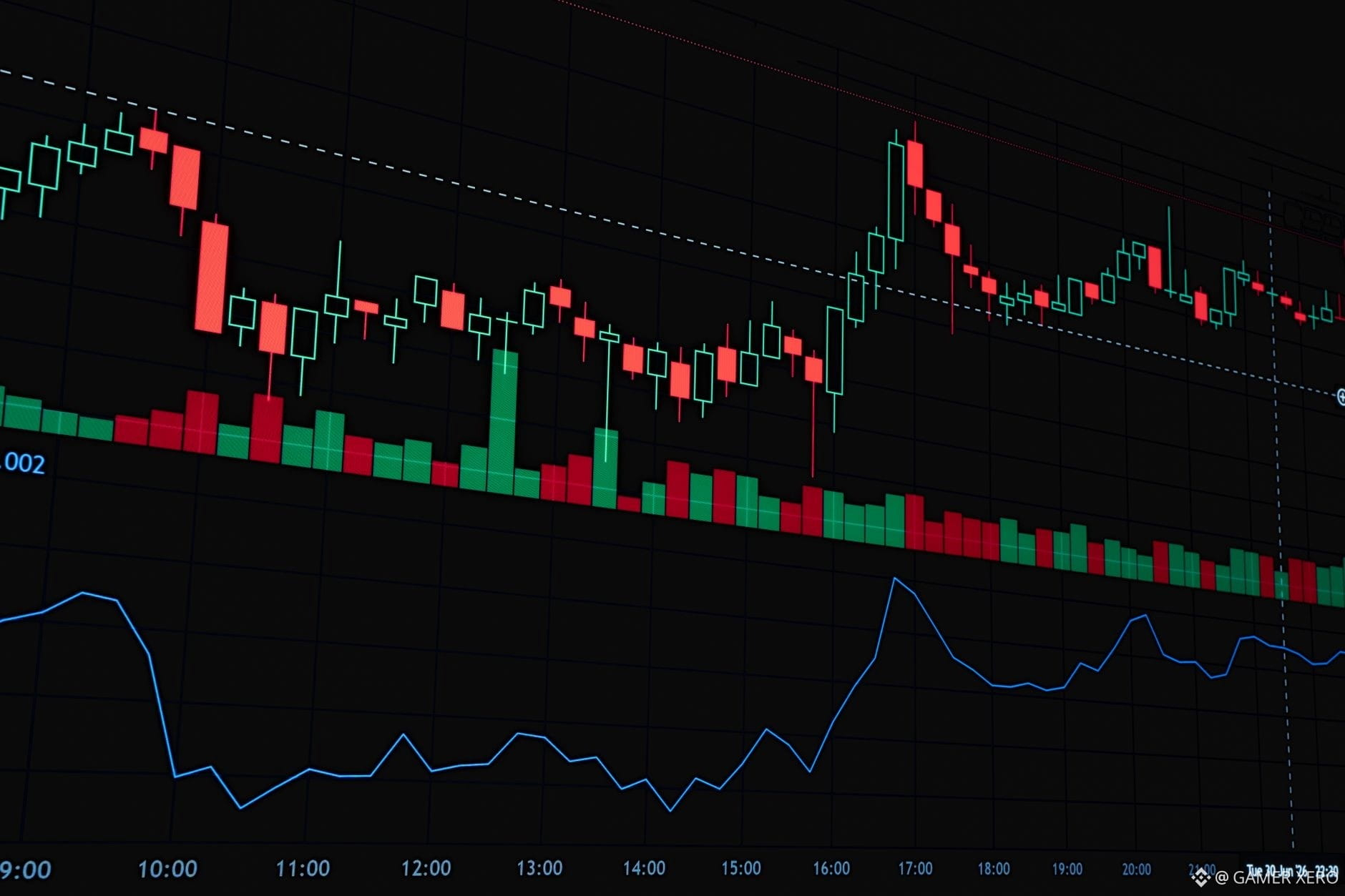
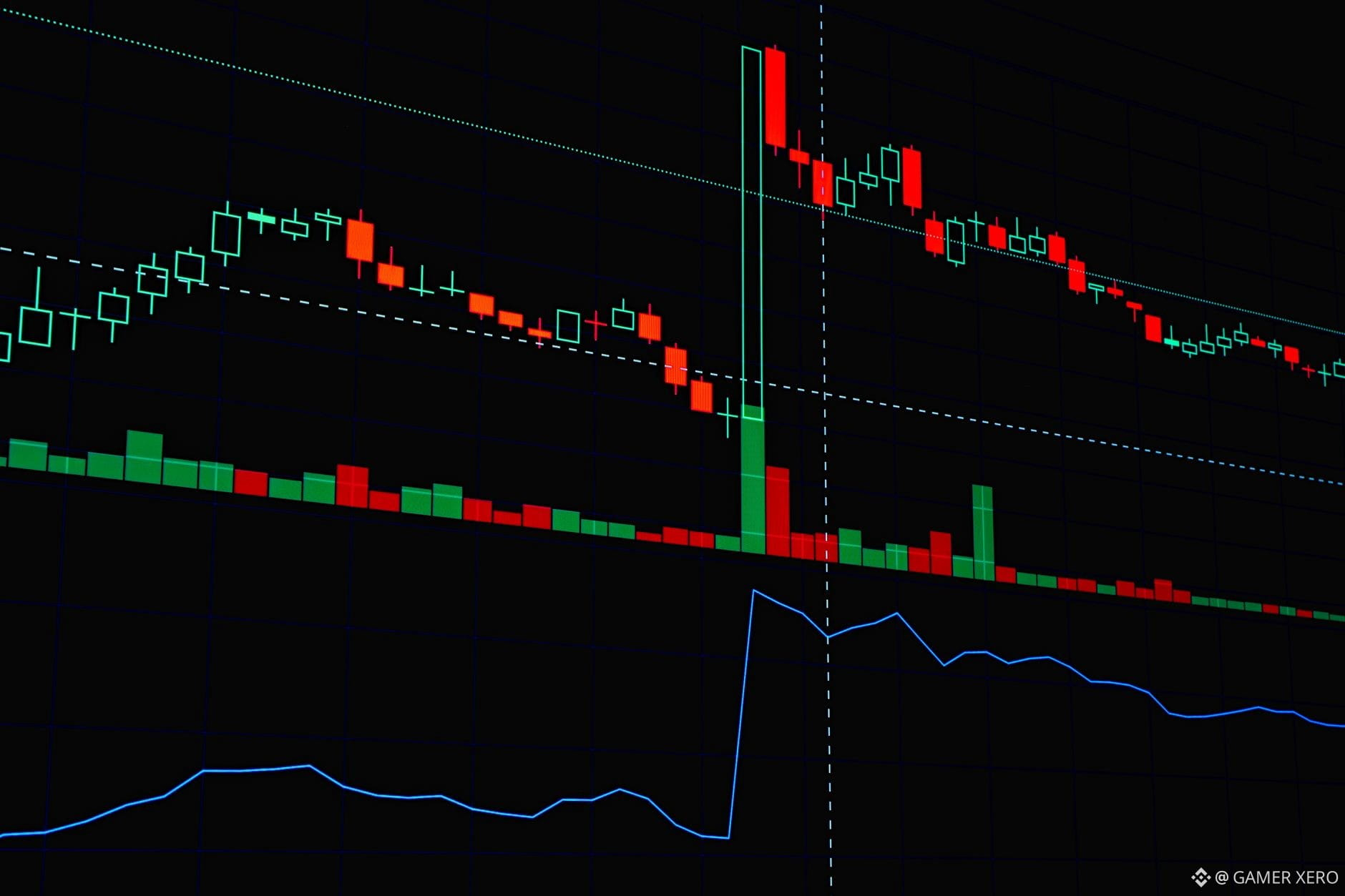
Seeing $BTC wobble around $78,819 with a 24‑hour range of just $1,246 (high $79,926, low $78,680) makes it a textbook case for tightening risk caps. My rule of thumb: never let any single position exceed 5 % of total equity when volatility is under 2 %. With $BTC’s recent -0.98 % move, a 5 % cap translates to a $3,940 exposure per $100k portfolio – enough to stay in the game if the price slides a couple of hundred points, but small enough to survive the next swing.
Diversification works hand‑in‑hand with that cap. I pair $BTC with a lower‑beta asset like $ETH, whose 24‑hour swing is -0.55 % and a tighter $48 spread. Allocating 3 % to $BTC and 2 % to $ETH spreads correlation risk while keeping the combined crypto slice at 5 % of the portfolio. If the market drops 10 % across the board, the loss on the crypto slice is roughly 0.5 % of total equity, which is easier to recover with a disciplined drawdown plan (e.g., adding back only after a 20 % rebound in the slice).
How do you balance position size and diversification when the market stays in a tight band?
#CryptoRisk #PortfolioManagement #RiskControl #GAMERXERO
Seeing $BTC wobble around $78,819 with a 24‑hour range of just $1,246 (high $79,926, low $78,680) makes it a textbook case for tightening risk caps. My rule of thumb: never let any single position exceed 5 % of total equity when volatility is under 2 %. With $BTC ’s recent -0.98 % move, a 5 % cap translates to a $3,940 exposure per $100k portfolio – enough to stay in the game if the price slides a couple of hundred points, but small enough to survive the next swing.
Diversification works hand‑in‑hand with that cap. I pair $BTC with a lower‑beta asset like $ETH , whose 24‑hour swing is -0.55 % and a tighter $48 spread. Allocating 3 % to $BTC and 2 % to $ETH spreads correlation risk while keeping the combined crypto slice at 5 % of the portfolio. If the market drops 10 % across the board, the loss on the crypto slice is roughly 0.5 % of total equity, which is easier to recover with a disciplined drawdown plan (e.g., adding back only after a 20 % rebound in the slice).
How do you balance position size and diversification when the market stays in a tight band?
#CryptoRisk #PortfolioManagement #RiskControl #GAMERXERO
Diversification works hand‑in‑hand with that cap. I pair $BTC with a lower‑beta asset like $ETH , whose 24‑hour swing is -0.55 % and a tighter $48 spread. Allocating 3 % to $BTC and 2 % to $ETH spreads correlation risk while keeping the combined crypto slice at 5 % of the portfolio. If the market drops 10 % across the board, the loss on the crypto slice is roughly 0.5 % of total equity, which is easier to recover with a disciplined drawdown plan (e.g., adding back only after a 20 % rebound in the slice).
How do you balance position size and diversification when the market stays in a tight band?
#CryptoRisk #PortfolioManagement #RiskControl #GAMERXERO
47
·
--
$BTC is trading just under $79,900, barely moving beyond its 24‑hour band of $79,233‑$80,560. That tight range is a perfect classroom for risk control. I start every trade by defining how much of my account I’m willing to lose if the market turns – usually 1 % of total capital. With a $10,000 portfolio that’s $100. If I place a stop‑loss $300 below entry, the maximum loss per coin is $300 × quantity = $100, so the position size works out to 0.33 BTC. That tiny stake keeps my account safe while still letting me stay in the game when the price resumes its swing.
Emotional discipline is the other half. When price nudges the lower edge of the band, I resist the urge to add more just because the market feels “cheap.” Instead, I wait for the price to respect a clear support level or for a candle to close above the midpoint before re‑evaluating. This prevents the common mistake of doubling‑down into a losing trade and protects the capital needed for future setups.
Do you use a fixed‑percentage rule for stop‑loss sizing, or do you adapt it to volatility?
#CryptoRisk #TradingTips #CapitalPreservation #GAMERXERO
$BTC is trading just under $79,900, barely moving beyond its 24‑hour band of $79,233‑$80,560. That tight range is a perfect classroom for risk control. I start every trade by defining how much of my account I’m willing to lose if the market turns – usually 1 % of total capital. With a $10,000 portfolio that’s $100. If I place a stop‑loss $300 below entry, the maximum loss per coin is $300 × quantity = $100, so the position size works out to 0.33 BTC. That tiny stake keeps my account safe while still letting me stay in the game when the price resumes its swing.
Emotional discipline is the other half. When price nudges the lower edge of the band, I resist the urge to add more just because the market feels “cheap.” Instead, I wait for the price to respect a clear support level or for a candle to close above the midpoint before re‑evaluating. This prevents the common mistake of doubling‑down into a losing trade and protects the capital needed for future setups.
Do you use a fixed‑percentage rule for stop‑loss sizing, or do you adapt it to volatility?
#CryptoRisk #TradingTips #CapitalPreservation #GAMERXERO
Emotional discipline is the other half. When price nudges the lower edge of the band, I resist the urge to add more just because the market feels “cheap.” Instead, I wait for the price to respect a clear support level or for a candle to close above the midpoint before re‑evaluating. This prevents the common mistake of doubling‑down into a losing trade and protects the capital needed for future setups.
Do you use a fixed‑percentage rule for stop‑loss sizing, or do you adapt it to volatility?
#CryptoRisk #TradingTips #CapitalPreservation #GAMERXERO


1
125

·
--
Picture this: a token trades at $0.95 while both its reported market cap and fully diluted valuation sit near $670 million.
For traders chasing a fresh $PONS move, the price can look deceptively accessible. But a sub-$1 token is not automatically cheap, and focusing on unit price alone can turn FOMO into an expensive mistake.
The key signal is valuation. At roughly $670 million in market cap and $670 million in FDV, $PONS appears to have little gap between circulating and fully diluted supply, potentially reducing future unlock pressure compared with low-float launches.
That does not remove the downside. A $670 million valuation already prices in substantial expectations, so weak liquidity, concentrated ownership, or fading demand could lead to sharp losses. Compare the valuation and market structure with assets like $BTC and $ETH before treating $0.95 as a bargain.
What risk do you think traders are overlooking here?
#PONS #CryptoRisk #Tokenomics
Picture this: a token trades at $0.95 while both its reported market cap and fully diluted valuation sit near $670 million.
For traders chasing a fresh $PONS move, the price can look deceptively accessible. But a sub-$1 token is not automatically cheap, and focusing on unit price alone can turn FOMO into an expensive mistake.
The key signal is valuation. At roughly $670 million in market cap and $670 million in FDV, $PONS appears to have little gap between circulating and fully diluted supply, potentially reducing future unlock pressure compared with low-float launches.
That does not remove the downside. A $670 million valuation already prices in substantial expectations, so weak liquidity, concentrated ownership, or fading demand could lead to sharp losses. Compare the valuation and market structure with assets like $BTC and $ETH before treating $0.95 as a bargain.
What risk do you think traders are overlooking here?
#PONS #CryptoRisk #Tokenomics
For traders chasing a fresh $PONS move, the price can look deceptively accessible. But a sub-$1 token is not automatically cheap, and focusing on unit price alone can turn FOMO into an expensive mistake.
The key signal is valuation. At roughly $670 million in market cap and $670 million in FDV, $PONS appears to have little gap between circulating and fully diluted supply, potentially reducing future unlock pressure compared with low-float launches.
That does not remove the downside. A $670 million valuation already prices in substantial expectations, so weak liquidity, concentrated ownership, or fading demand could lead to sharp losses. Compare the valuation and market structure with assets like $BTC and $ETH before treating $0.95 as a bargain.
What risk do you think traders are overlooking here?
#PONS #CryptoRisk #Tokenomics
23

Picture this: a token starts sliding, and the team deploys its vault to defend the price.
For holders, that support can look like a safe entry. The danger is mistaking a temporary slowdown for real demand and buying before the market has found a floor.
Here’s the part most people miss: spending treasury reserves can absorb some selling pressure, but it cannot create buyers who do not exist. Once the vault runs low, the same imbalance returns, often with less capital available to manage the next wave.
Whether it is $BTC, $ETH, or $SOL, sustainable support comes from genuine demand, not finite reserves. A defended chart can delay price discovery, but it cannot cancel it.
How do you tell the difference between real accumulation and treasury-funded support?
#CryptoRisk #MarketLiquidity #TradingStrategy
Picture this: a token starts sliding, and the team deploys its vault to defend the price.
For holders, that support can look like a safe entry. The danger is mistaking a temporary slowdown for real demand and buying before the market has found a floor.
Here’s the part most people miss: spending treasury reserves can absorb some selling pressure, but it cannot create buyers who do not exist. Once the vault runs low, the same imbalance returns, often with less capital available to manage the next wave.
Whether it is $BTC , $ETH , or $SOL , sustainable support comes from genuine demand, not finite reserves. A defended chart can delay price discovery, but it cannot cancel it.
How do you tell the difference between real accumulation and treasury-funded support?
#CryptoRisk #MarketLiquidity #TradingStrategy
For holders, that support can look like a safe entry. The danger is mistaking a temporary slowdown for real demand and buying before the market has found a floor.
Here’s the part most people miss: spending treasury reserves can absorb some selling pressure, but it cannot create buyers who do not exist. Once the vault runs low, the same imbalance returns, often with less capital available to manage the next wave.
Whether it is $BTC , $ETH , or $SOL , sustainable support comes from genuine demand, not finite reserves. A defended chart can delay price discovery, but it cannot cancel it.
How do you tell the difference between real accumulation and treasury-funded support?
#CryptoRisk #MarketLiquidity #TradingStrategy
44

·
--
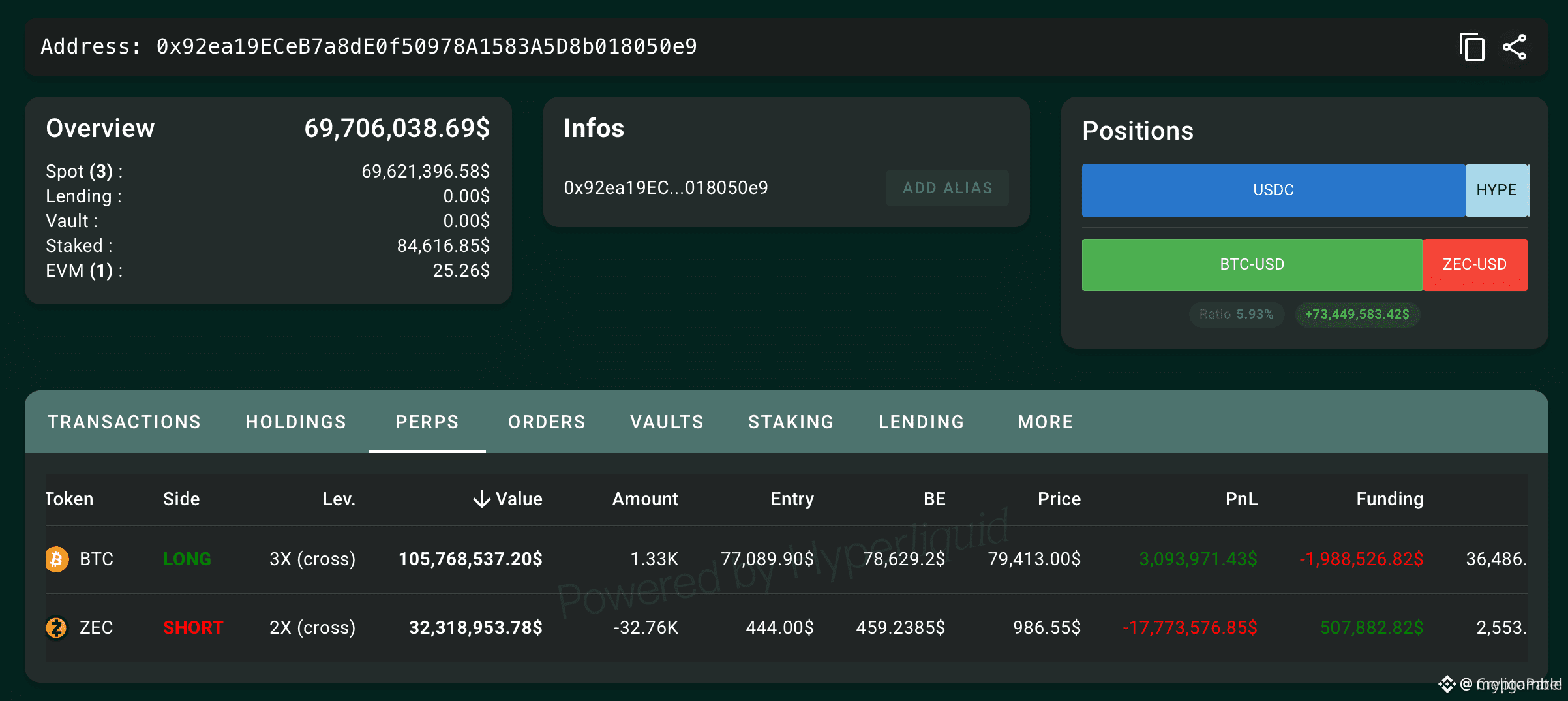
Everyone thinks a big closed profit means the trade is under control, but actually unrealized losses can reverse the whole picture fast.
Seeing +62,686.30 USDT in closed PnL can create dangerous confidence, especially when a live $ZEC futures position has already turned red. It’s like counting yesterday’s winnings while today’s bet is still running.
Here are 3 risks to watch: 1) Closed PnL is money already booked, while paper losses are still changing. 2) A small -0.03% move can grow quickly with leverage. 3) Strong 1-day rankings, even a Top 28 result, can tempt traders to ignore exits and hold too long.
Treat $ZEC risk separately from past gains in $USDT, just as you would with a leveraged $BTC position. Set the exit before emotions take over, because a green history does not protect an open trade.
How do you manage a winning account when the current position turns red?
#ZEC #FuturesTrading #CryptoRisk
Everyone thinks a big closed profit means the trade is under control, but actually unrealized losses can reverse the whole picture fast.
Seeing +62,686.30 USDT in closed PnL can create dangerous confidence, especially when a live $ZEC futures position has already turned red. It’s like counting yesterday’s winnings while today’s bet is still running.
Here are 3 risks to watch: 1) Closed PnL is money already booked, while paper losses are still changing. 2) A small -0.03% move can grow quickly with leverage. 3) Strong 1-day rankings, even a Top 28 result, can tempt traders to ignore exits and hold too long.
Treat $ZEC risk separately from past gains in $USDT, just as you would with a leveraged $BTC position. Set the exit before emotions take over, because a green history does not protect an open trade.
How do you manage a winning account when the current position turns red?
#ZEC #FuturesTrading #CryptoRisk
Seeing +62,686.30 USDT in closed PnL can create dangerous confidence, especially when a live $ZEC futures position has already turned red. It’s like counting yesterday’s winnings while today’s bet is still running.
Here are 3 risks to watch: 1) Closed PnL is money already booked, while paper losses are still changing. 2) A small -0.03% move can grow quickly with leverage. 3) Strong 1-day rankings, even a Top 28 result, can tempt traders to ignore exits and hold too long.
Treat $ZEC risk separately from past gains in $USDT, just as you would with a leveraged $BTC position. Set the exit before emotions take over, because a green history does not protect an open trade.
How do you manage a winning account when the current position turns red?
#ZEC #FuturesTrading #CryptoRisk
82
·
--
I just watched $BTC trade around $79,719 with a tight 1 % swing and $ETH hovering near $2,457. The range felt like a perfect classroom for risk‑management fundamentals.
First, I size the position by risk, not by account size. If I’m comfortable losing 1 % of my capital on any trade, I calculate the dollar amount (e.g., $1,000 on a $100,000 account) and then divide that by the distance to my stop. With $BTC at $79,719 and a stop‑loss a few hundred dollars below the recent low ($78,660), the stop is roughly $1,059 away. $1,000 ÷ $1,059 ≈ 0.94 BTC, so I would enter just under 1 BTC to stay within my risk budget.
Second, I place the stop just beyond the low‑price swing rather than at the exact low. A buffer of about 0.5 % (≈ $400) helps avoid being wiped out by a brief dip that’s not a true breakout. The same logic applies to $ETH: a stop a little below the $2,437.95 low gives a similar protection margin.
How do you decide the exact stop‑loss distance when volatility spikes?
#CryptoRisk #TradingDiscipline #BinanceTips #GAMERXERO
I just watched $BTC trade around $79,719 with a tight 1 % swing and $ETH hovering near $2,457. The range felt like a perfect classroom for risk‑management fundamentals.
First, I size the position by risk, not by account size. If I’m comfortable losing 1 % of my capital on any trade, I calculate the dollar amount (e.g., $1,000 on a $100,000 account) and then divide that by the distance to my stop. With $BTC at $79,719 and a stop‑loss a few hundred dollars below the recent low ($78,660), the stop is roughly $1,059 away. $1,000 ÷ $1,059 ≈ 0.94 BTC, so I would enter just under 1 BTC to stay within my risk budget.
Second, I place the stop just beyond the low‑price swing rather than at the exact low. A buffer of about 0.5 % (≈ $400) helps avoid being wiped out by a brief dip that’s not a true breakout. The same logic applies to $ETH : a stop a little below the $2,437.95 low gives a similar protection margin.
How do you decide the exact stop‑loss distance when volatility spikes?
#CryptoRisk #TradingDiscipline #BinanceTips #GAMERXERO
First, I size the position by risk, not by account size. If I’m comfortable losing 1 % of my capital on any trade, I calculate the dollar amount (e.g., $1,000 on a $100,000 account) and then divide that by the distance to my stop. With $BTC at $79,719 and a stop‑loss a few hundred dollars below the recent low ($78,660), the stop is roughly $1,059 away. $1,000 ÷ $1,059 ≈ 0.94 BTC, so I would enter just under 1 BTC to stay within my risk budget.
Second, I place the stop just beyond the low‑price swing rather than at the exact low. A buffer of about 0.5 % (≈ $400) helps avoid being wiped out by a brief dip that’s not a true breakout. The same logic applies to $ETH : a stop a little below the $2,437.95 low gives a similar protection margin.
How do you decide the exact stop‑loss distance when volatility spikes?
#CryptoRisk #TradingDiscipline #BinanceTips #GAMERXERO
8
·
--
$BTC is holding just above its 24‑hour low at $80,775, while $ETH has nudged up to $2,492. The price band is tight, which makes it a good moment to review portfolio exposure. Start by capping any single‑asset position to a maximum of 15‑20 % of total capital; this prevents one swing from wiping out a large chunk of the account. Then layer diversification across uncorrelated assets – for a crypto‑only portfolio, pairing a core store of value like $BTC with a growth‑oriented token such as $ETH can reduce overall volatility.
When you size into a trade, calculate the expected drawdown based on recent range: $BTC’s low‑high spread is about $4,400, so a 1 % move equals roughly $800. If you risk 1 % of your portfolio on a position, the stop‑loss should be set around that distance to keep potential loss in line with your risk tolerance. After a loss, rebuild with a smaller position size – for example, halve the allocation after each consecutive loss until you return to breakeven, then gradually increase again.
What methods do you use to keep risk in check when the market stays in a narrow band? #CryptoRisk #PortfolioManagement #GAMERXERO #BinanceSquare
$BTC is holding just above its 24‑hour low at $80,775, while $ETH has nudged up to $2,492. The price band is tight, which makes it a good moment to review portfolio exposure. Start by capping any single‑asset position to a maximum of 15‑20 % of total capital; this prevents one swing from wiping out a large chunk of the account. Then layer diversification across uncorrelated assets – for a crypto‑only portfolio, pairing a core store of value like $BTC with a growth‑oriented token such as $ETH can reduce overall volatility.
When you size into a trade, calculate the expected drawdown based on recent range: $BTC ’s low‑high spread is about $4,400, so a 1 % move equals roughly $800. If you risk 1 % of your portfolio on a position, the stop‑loss should be set around that distance to keep potential loss in line with your risk tolerance. After a loss, rebuild with a smaller position size – for example, halve the allocation after each consecutive loss until you return to breakeven, then gradually increase again.
What methods do you use to keep risk in check when the market stays in a narrow band? #CryptoRisk #PortfolioManagement #GAMERXERO #BinanceSquare
When you size into a trade, calculate the expected drawdown based on recent range: $BTC ’s low‑high spread is about $4,400, so a 1 % move equals roughly $800. If you risk 1 % of your portfolio on a position, the stop‑loss should be set around that distance to keep potential loss in line with your risk tolerance. After a loss, rebuild with a smaller position size – for example, halve the allocation after each consecutive loss until you return to breakeven, then gradually increase again.
What methods do you use to keep risk in check when the market stays in a narrow band? #CryptoRisk #PortfolioManagement #GAMERXERO #BinanceSquare
1
1.6k

·
--
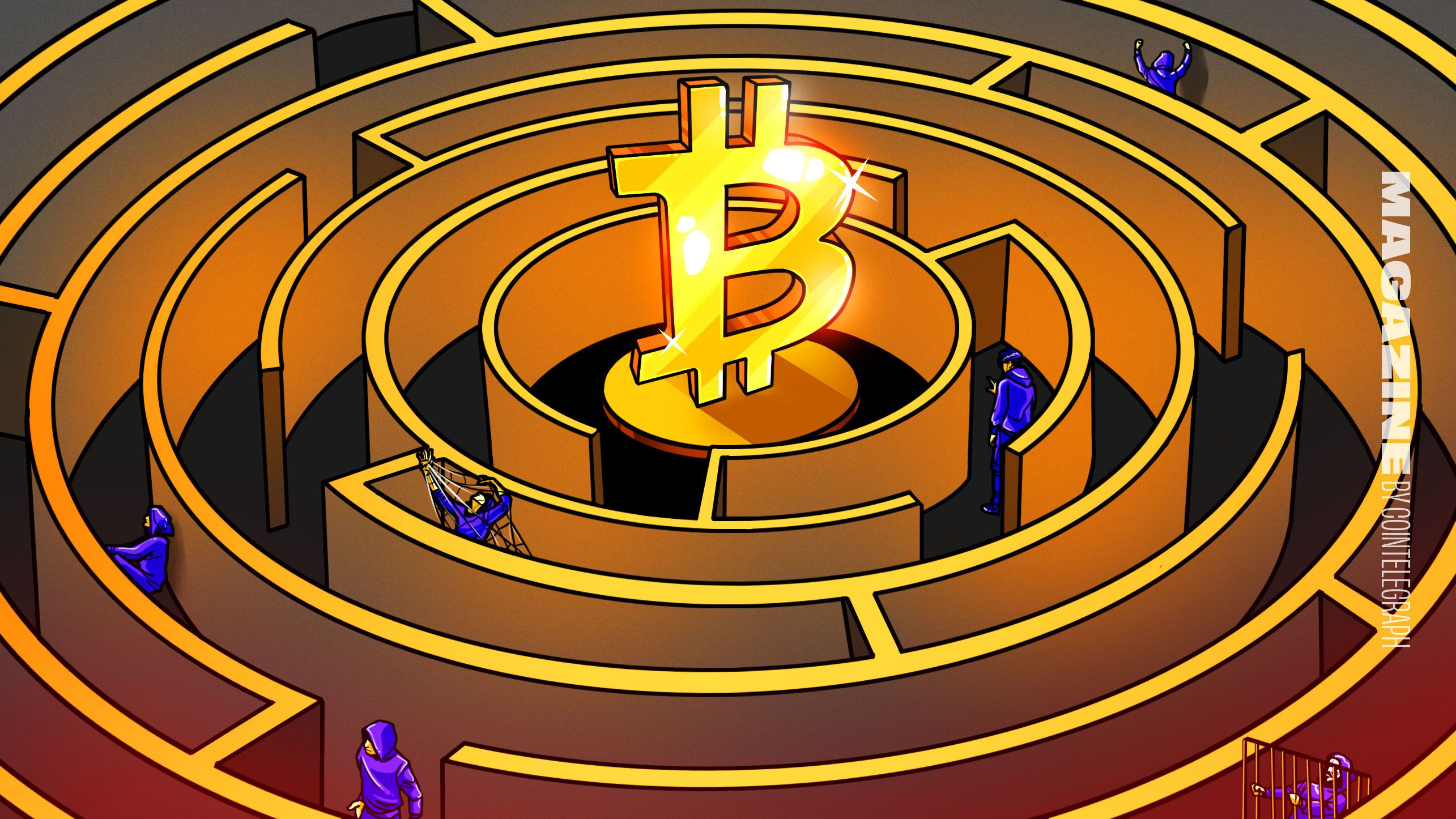
Article
CRYPTO REDEMPTION FAIL: $1B Wallet Cracked, Only $10 FoundCRASHED
Recovery specialists just blew a $1B crypto wallet wide open, only to discover a single $10 left inside. The team used advanced forensic tools, cross‑referencing blockchain data, and brute‑force techniques to crack the wallet’s encryption, but the vault was empty—proof that the money was never there. #CryptoRecovery #Blockchain #FOMO
This isn’t a glitch; it’s a warning. If a wallet can be cracked for free, the risk of “lost” funds being nonexistent is higher than ever. Traders and investors should double‑check their balances and never assume that a missing wallet means hidden wealth. #CryptoRisk #Binance
Don’t wait for a $1B mystery to hit your account. Secure your keys, back up your seed phrases, and stay ahead of the flood. Are you ready to protect your crypto before the next wave hits?
CRYPTO REDEMPTION FAIL: $1B Wallet Cracked, Only $10 Found
CRASHED
Recovery specialists just blew a $1B crypto wallet wide open, only to discover a single $10 left inside. The team used advanced forensic tools, cross‑referencing blockchain data, and brute‑force techniques to crack the wallet’s encryption, but the vault was empty—proof that the money was never there. #CryptoRecovery #Blockchain #FOMO
This isn’t a glitch; it’s a warning. If a wallet can be cracked for free, the risk of “lost” funds being nonexistent is higher than ever. Traders and investors should double‑check their balances and never assume that a missing wallet means hidden wealth. #CryptoRisk #Binance
Don’t wait for a $1B mystery to hit your account. Secure your keys, back up your seed phrases, and stay ahead of the flood. Are you ready to protect your crypto before the next wave hits?
Recovery specialists just blew a $1B crypto wallet wide open, only to discover a single $10 left inside. The team used advanced forensic tools, cross‑referencing blockchain data, and brute‑force techniques to crack the wallet’s encryption, but the vault was empty—proof that the money was never there. #CryptoRecovery #Blockchain #FOMO
This isn’t a glitch; it’s a warning. If a wallet can be cracked for free, the risk of “lost” funds being nonexistent is higher than ever. Traders and investors should double‑check their balances and never assume that a missing wallet means hidden wealth. #CryptoRisk #Binance
Don’t wait for a $1B mystery to hit your account. Secure your keys, back up your seed phrases, and stay ahead of the flood. Are you ready to protect your crypto before the next wave hits?
3
·
--
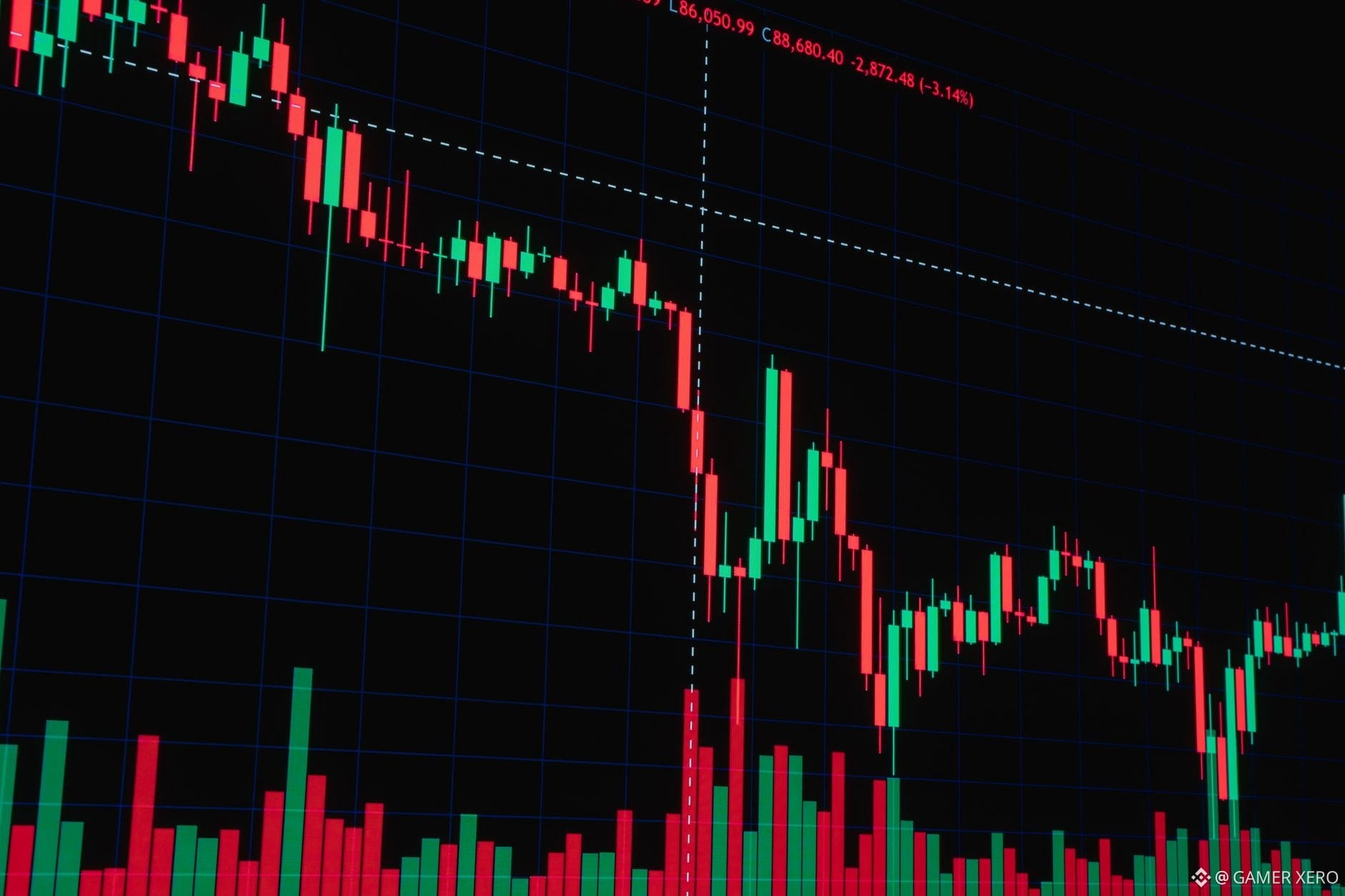
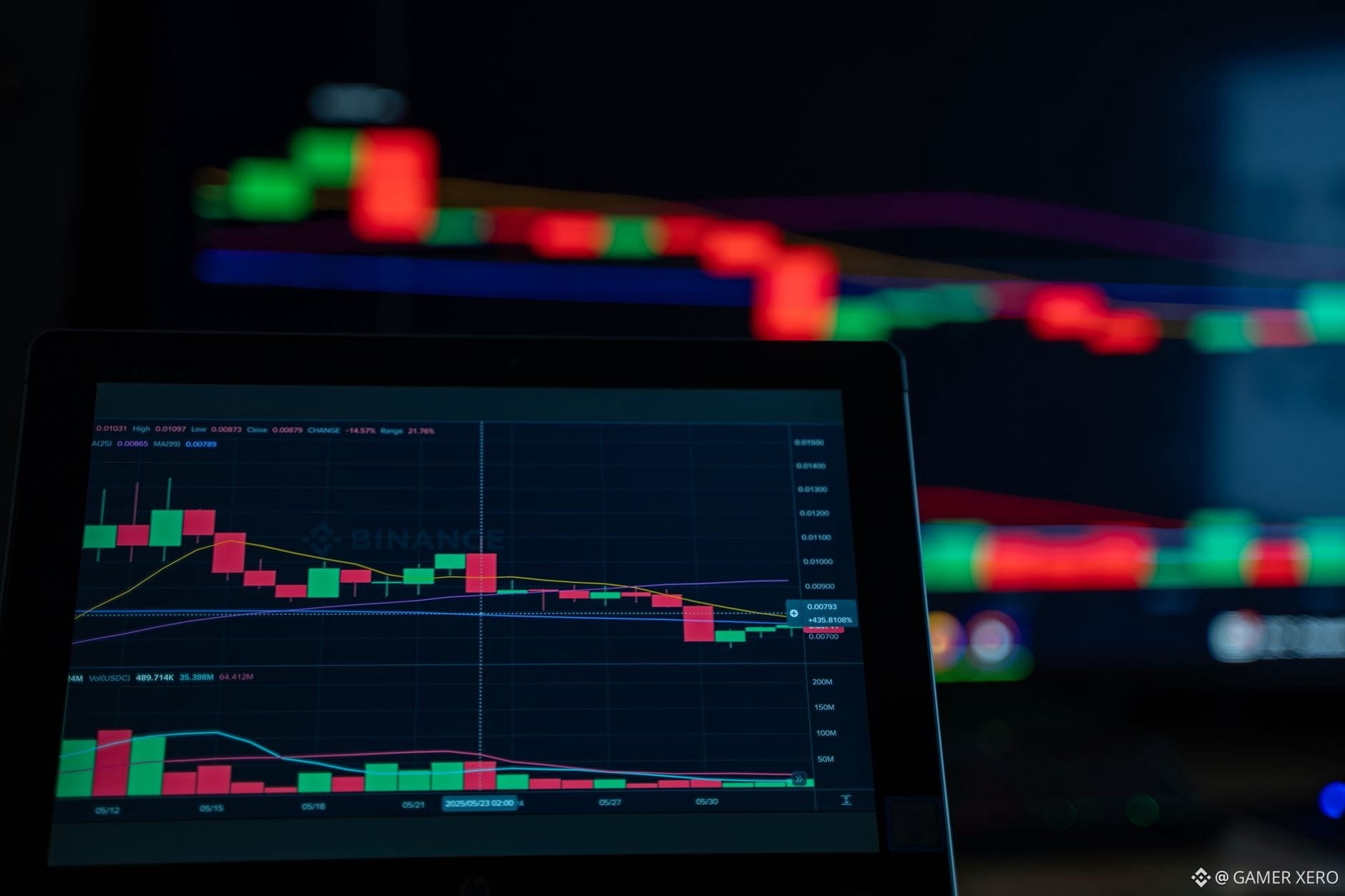
$BTC is sitting at $77,843 and has held above its 24‑hour low of $76,264 for most of the session. In a range like this, the first thing I check is how much I’m willing to lose if the market snaps back toward that low.
A simple rule that works for me is “risk 1 % of total capital per trade.” If your account is $10,000, that means a $100 risk. With $BTC at $77,843, a 1 % stop‑loss would sit around $77,065 – just a few hundred dollars below the current price and comfortably above the 24‑h low. The distance from entry to stop is roughly $778, so a $100 risk translates to a position size of about $12,700 (≈0.16 BTC). If the stop is hit, you lose the pre‑defined $100; if the price stays in the range, you keep the capital ready for the next setup.
The key is sticking to the stop. Emotional pressure to move it farther away only inflates risk and erodes the safety net you built. What’s your go‑to method for sizing a trade when the market is stuck in a tight band?
#CryptoRisk #PositionSizing #TradingDiscipline #GAMERXERO
$BTC is sitting at $77,843 and has held above its 24‑hour low of $76,264 for most of the session. In a range like this, the first thing I check is how much I’m willing to lose if the market snaps back toward that low.
A simple rule that works for me is “risk 1 % of total capital per trade.” If your account is $10,000, that means a $100 risk. With $BTC at $77,843, a 1 % stop‑loss would sit around $77,065 – just a few hundred dollars below the current price and comfortably above the 24‑h low. The distance from entry to stop is roughly $778, so a $100 risk translates to a position size of about $12,700 (≈0.16 BTC). If the stop is hit, you lose the pre‑defined $100; if the price stays in the range, you keep the capital ready for the next setup.
The key is sticking to the stop. Emotional pressure to move it farther away only inflates risk and erodes the safety net you built. What’s your go‑to method for sizing a trade when the market is stuck in a tight band?
#CryptoRisk #PositionSizing #TradingDiscipline #GAMERXERO
A simple rule that works for me is “risk 1 % of total capital per trade.” If your account is $10,000, that means a $100 risk. With $BTC at $77,843, a 1 % stop‑loss would sit around $77,065 – just a few hundred dollars below the current price and comfortably above the 24‑h low. The distance from entry to stop is roughly $778, so a $100 risk translates to a position size of about $12,700 (≈0.16 BTC). If the stop is hit, you lose the pre‑defined $100; if the price stays in the range, you keep the capital ready for the next setup.
The key is sticking to the stop. Emotional pressure to move it farther away only inflates risk and erodes the safety net you built. What’s your go‑to method for sizing a trade when the market is stuck in a tight band?
#CryptoRisk #PositionSizing #TradingDiscipline #GAMERXERO
16
Picture this: the market is quietly consolidating, your leverage is set, and within sixty minutes a sudden geopolitical headline completely wipes the order book.
Most traders prepare for technical breakdowns or macro data drops, yet they repeatedly get caught off-guard when external shocks instantly drain liquidity before a stop-loss can even execute properly.
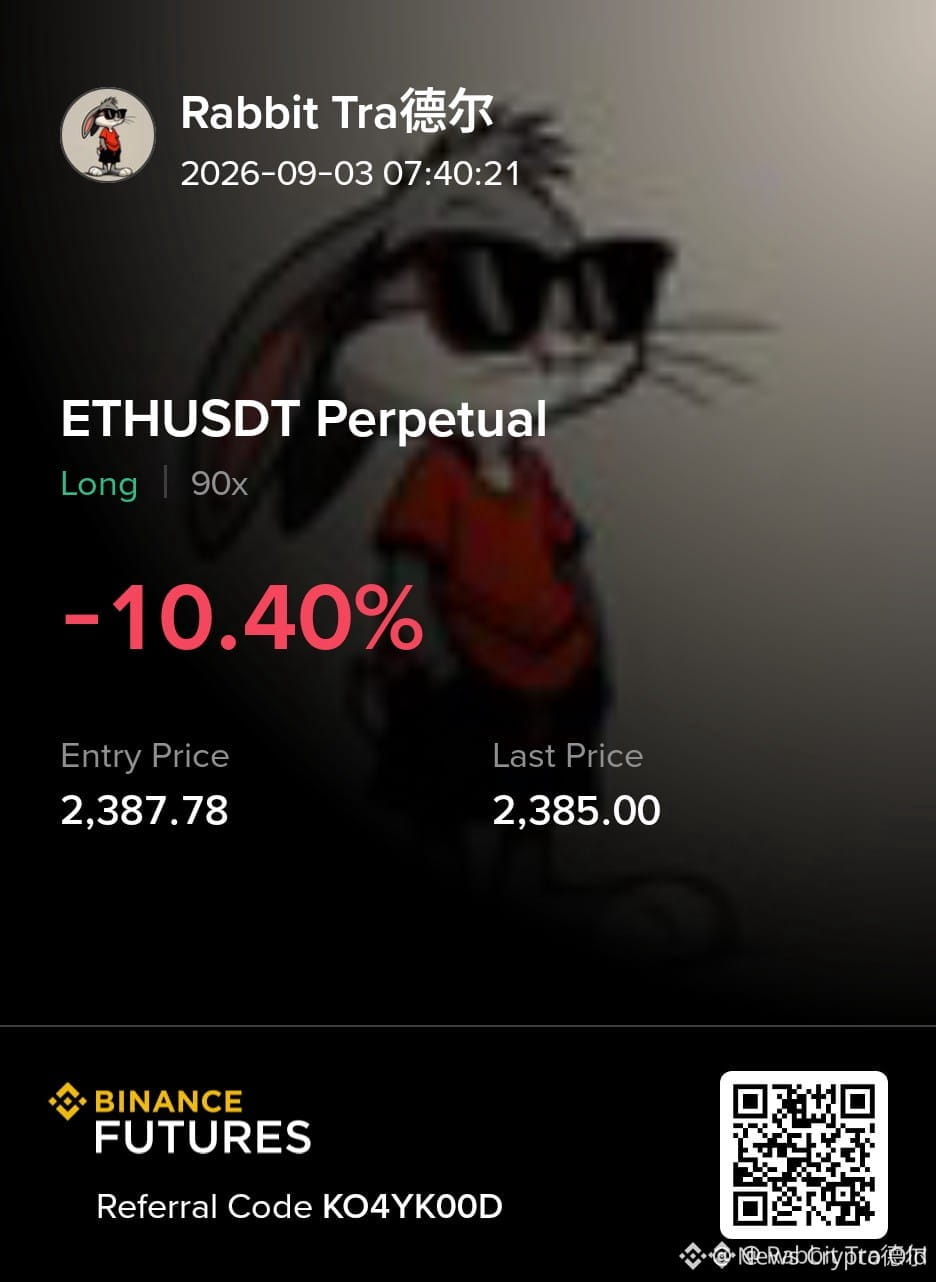
Here is what really unfolded during the recent exchange of strikes between the US and Iran. As breaking headlines hit the wire, aggressive sell pressure pushed $BTC down below the $77,000 level while $ETH swiftly lost support under $2,400. The immediate cascade triggered over $100,000,000 in liquidations across the market in just one hour, catching overleveraged positions completely flat-footed.
The lesson here is rarely about predicting geopolitics, but rather recognizing how fragile open interest becomes during tense macro environments. When forced liquidations accelerate, cascade risk replaces normal price discovery, leaving high-leverage participants with zero room to maneuver.
How are you adjusting your risk and leverage when geopolitical headlines begin to dominate the tape?
#CryptoRisk #Bitcoin #Ethereum
Picture this: the market is quietly consolidating, your leverage is set, and within sixty minutes a sudden geopolitical headline completely wipes the order book.
Most traders prepare for technical breakdowns or macro data drops, yet they repeatedly get caught off-guard when external shocks instantly drain liquidity before a stop-loss can even execute properly.
Here is what really unfolded during the recent exchange of strikes between the US and Iran. As breaking headlines hit the wire, aggressive sell pressure pushed $BTC down below the $77,000 level while $ETH swiftly lost support under $2,400. The immediate cascade triggered over $100,000,000 in liquidations across the market in just one hour, catching overleveraged positions completely flat-footed.
The lesson here is rarely about predicting geopolitics, but rather recognizing how fragile open interest becomes during tense macro environments. When forced liquidations accelerate, cascade risk replaces normal price discovery, leaving high-leverage participants with zero room to maneuver.
How are you adjusting your risk and leverage when geopolitical headlines begin to dominate the tape?
#CryptoRisk #Bitcoin #Ethereum
Most traders prepare for technical breakdowns or macro data drops, yet they repeatedly get caught off-guard when external shocks instantly drain liquidity before a stop-loss can even execute properly.
Here is what really unfolded during the recent exchange of strikes between the US and Iran. As breaking headlines hit the wire, aggressive sell pressure pushed $BTC down below the $77,000 level while $ETH swiftly lost support under $2,400. The immediate cascade triggered over $100,000,000 in liquidations across the market in just one hour, catching overleveraged positions completely flat-footed.
The lesson here is rarely about predicting geopolitics, but rather recognizing how fragile open interest becomes during tense macro environments. When forced liquidations accelerate, cascade risk replaces normal price discovery, leaving high-leverage participants with zero room to maneuver.
How are you adjusting your risk and leverage when geopolitical headlines begin to dominate the tape?
#CryptoRisk #Bitcoin #Ethereum
17
·
--
Seeing $BTC sit just above its 24‑hour low at $77,024 while $ETH drifts around $2,379 gives a clear reminder: tight ranges don’t erase portfolio risk. A practical way to guard against sudden swings is to cap any single‑asset exposure at a percentage you can comfortably lose without jeopardizing your overall strategy—commonly 5‑10 % of the total capital. If you hold $10 k, that means limiting $BTC to $500‑$1 000 and $ETH to a similar slice.
Next, diversify across uncorrelated sectors. While both Bitcoin and Ethereum often move together, adding a higher‑beta asset like BNB, which is currently up 0.88 % at $685, can smooth returns because its price drivers (Binance ecosystem news, futures volume) differ from pure store‑of‑value narratives.
How do you currently set your exposure caps and diversification mix when the market hovers in a narrow band?
#CryptoRisk #PortfolioManagement #DiversifySmart #GAMERXERO
Seeing $BTC sit just above its 24‑hour low at $77,024 while $ETH drifts around $2,379 gives a clear reminder: tight ranges don’t erase portfolio risk. A practical way to guard against sudden swings is to cap any single‑asset exposure at a percentage you can comfortably lose without jeopardizing your overall strategy—commonly 5‑10 % of the total capital. If you hold $10 k, that means limiting $BTC to $500‑$1 000 and $ETH to a similar slice.
Next, diversify across uncorrelated sectors. While both Bitcoin and Ethereum often move together, adding a higher‑beta asset like BNB, which is currently up 0.88 % at $685, can smooth returns because its price drivers (Binance ecosystem news, futures volume) differ from pure store‑of‑value narratives.
How do you currently set your exposure caps and diversification mix when the market hovers in a narrow band?
#CryptoRisk #PortfolioManagement #DiversifySmart #GAMERXERO
Next, diversify across uncorrelated sectors. While both Bitcoin and Ethereum often move together, adding a higher‑beta asset like BNB, which is currently up 0.88 % at $685, can smooth returns because its price drivers (Binance ecosystem news, futures volume) differ from pure store‑of‑value narratives.
How do you currently set your exposure caps and diversification mix when the market hovers in a narrow band?
#CryptoRisk #PortfolioManagement #DiversifySmart #GAMERXERO
27
·
--
I spotted $BTC slipping 1.8 % over the last 24 h, now sitting at $77,448.45, while $ETH is down 2.07 % at $2,421.45. In a sideways market like this, protecting capital beats chasing the next breakout.
First, set a stop‑loss based on the recent low rather than a fixed percentage. For $BTC the 24‑hour low was $76,420.00, so a stop a few hundred dollars above that (e.g., $76,800) gives the trade room to breathe without risking the entire position.
Second, size the position so the dollar loss at that stop never exceeds 1‑2 % of your total account. If your balance is $10,000, a 1.5 % risk equals $150. With a $648 risk per $BTC (entry $77,448 – stop $76,800), you’d take roughly 0.23 BTC ($150 / $648).
Finally, stick to the plan. When the price tests the stop, resist the urge to move it further out; emotional adjustments often turn a controlled risk into a larger loss.
How do you decide between a tight stop and a wider one when volatility spikes?
#CryptoRisk #CapitalPreservation #TradingDiscipline #GAMERXERO
I spotted $BTC slipping 1.8 % over the last 24 h, now sitting at $77,448.45, while $ETH is down 2.07 % at $2,421.45. In a sideways market like this, protecting capital beats chasing the next breakout.
First, set a stop‑loss based on the recent low rather than a fixed percentage. For $BTC the 24‑hour low was $76,420.00, so a stop a few hundred dollars above that (e.g., $76,800) gives the trade room to breathe without risking the entire position.
Second, size the position so the dollar loss at that stop never exceeds 1‑2 % of your total account. If your balance is $10,000, a 1.5 % risk equals $150. With a $648 risk per $BTC (entry $77,448 – stop $76,800), you’d take roughly 0.23 BTC ($150 / $648).
Finally, stick to the plan. When the price tests the stop, resist the urge to move it further out; emotional adjustments often turn a controlled risk into a larger loss.
How do you decide between a tight stop and a wider one when volatility spikes?
#CryptoRisk #CapitalPreservation #TradingDiscipline #GAMERXERO
First, set a stop‑loss based on the recent low rather than a fixed percentage. For $BTC the 24‑hour low was $76,420.00, so a stop a few hundred dollars above that (e.g., $76,800) gives the trade room to breathe without risking the entire position.
Second, size the position so the dollar loss at that stop never exceeds 1‑2 % of your total account. If your balance is $10,000, a 1.5 % risk equals $150. With a $648 risk per $BTC (entry $77,448 – stop $76,800), you’d take roughly 0.23 BTC ($150 / $648).
Finally, stick to the plan. When the price tests the stop, resist the urge to move it further out; emotional adjustments often turn a controlled risk into a larger loss.
How do you decide between a tight stop and a wider one when volatility spikes?
#CryptoRisk #CapitalPreservation #TradingDiscipline #GAMERXERO
30
·
--
Seeing $BTC linger at $78,449.99 while the 24‑hour range stays tight, I reminded myself that preserving capital matters more than chasing the next swing. I start every trade by deciding how much of my overall pool I’m willing to lose on a single idea – I usually cap it at 1‑2 % of my total equity. If my account is $10,000, that means a $100‑$200 risk budget.
With $BTC at $78,450, I plot a stop‑loss a few points below a recent swing low, say $77,900. The distance between entry and stop is $550. To keep the risk at $150, the position size works out to roughly $150 ÷ $550 ≈ 0.0019 BTC, or about $150 worth of exposure. That tiny slice lets the trade breathe without endangering the bulk of the account.
Emotional discipline follows the math. Once the stop is set, I avoid the urge to move it higher because the price nudges up – that habit erodes the very risk buffer I built. The same principle applies to $ETH at $2,465; calculate the stop distance, apply the same % risk, and you’ll end up with a similarly modest exposure.
What’s your go‑to method for sizing positions when the market feels stuck in a narrow band?
#CryptoRisk #CapitalPreservation #TradingDiscipline #GAMERXERO
Seeing $BTC linger at $78,449.99 while the 24‑hour range stays tight, I reminded myself that preserving capital matters more than chasing the next swing. I start every trade by deciding how much of my overall pool I’m willing to lose on a single idea – I usually cap it at 1‑2 % of my total equity. If my account is $10,000, that means a $100‑$200 risk budget.
With $BTC at $78,450, I plot a stop‑loss a few points below a recent swing low, say $77,900. The distance between entry and stop is $550. To keep the risk at $150, the position size works out to roughly $150 ÷ $550 ≈ 0.0019 BTC, or about $150 worth of exposure. That tiny slice lets the trade breathe without endangering the bulk of the account.
Emotional discipline follows the math. Once the stop is set, I avoid the urge to move it higher because the price nudges up – that habit erodes the very risk buffer I built. The same principle applies to $ETH at $2,465; calculate the stop distance, apply the same % risk, and you’ll end up with a similarly modest exposure.
What’s your go‑to method for sizing positions when the market feels stuck in a narrow band?
#CryptoRisk #CapitalPreservation #TradingDiscipline #GAMERXERO
With $BTC at $78,450, I plot a stop‑loss a few points below a recent swing low, say $77,900. The distance between entry and stop is $550. To keep the risk at $150, the position size works out to roughly $150 ÷ $550 ≈ 0.0019 BTC, or about $150 worth of exposure. That tiny slice lets the trade breathe without endangering the bulk of the account.
Emotional discipline follows the math. Once the stop is set, I avoid the urge to move it higher because the price nudges up – that habit erodes the very risk buffer I built. The same principle applies to $ETH at $2,465; calculate the stop distance, apply the same % risk, and you’ll end up with a similarly modest exposure.
What’s your go‑to method for sizing positions when the market feels stuck in a narrow band?
#CryptoRisk #CapitalPreservation #TradingDiscipline #GAMERXERO
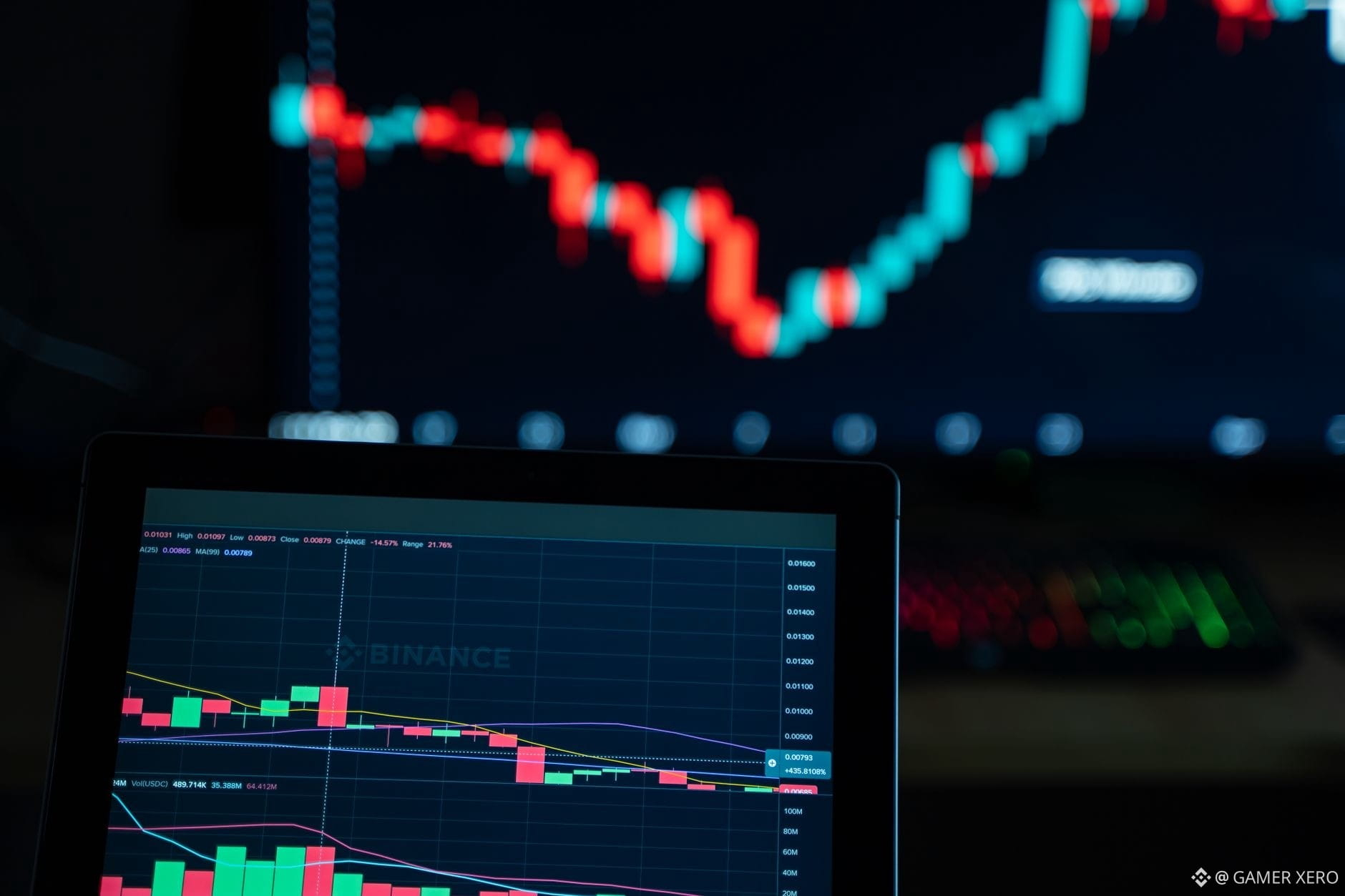
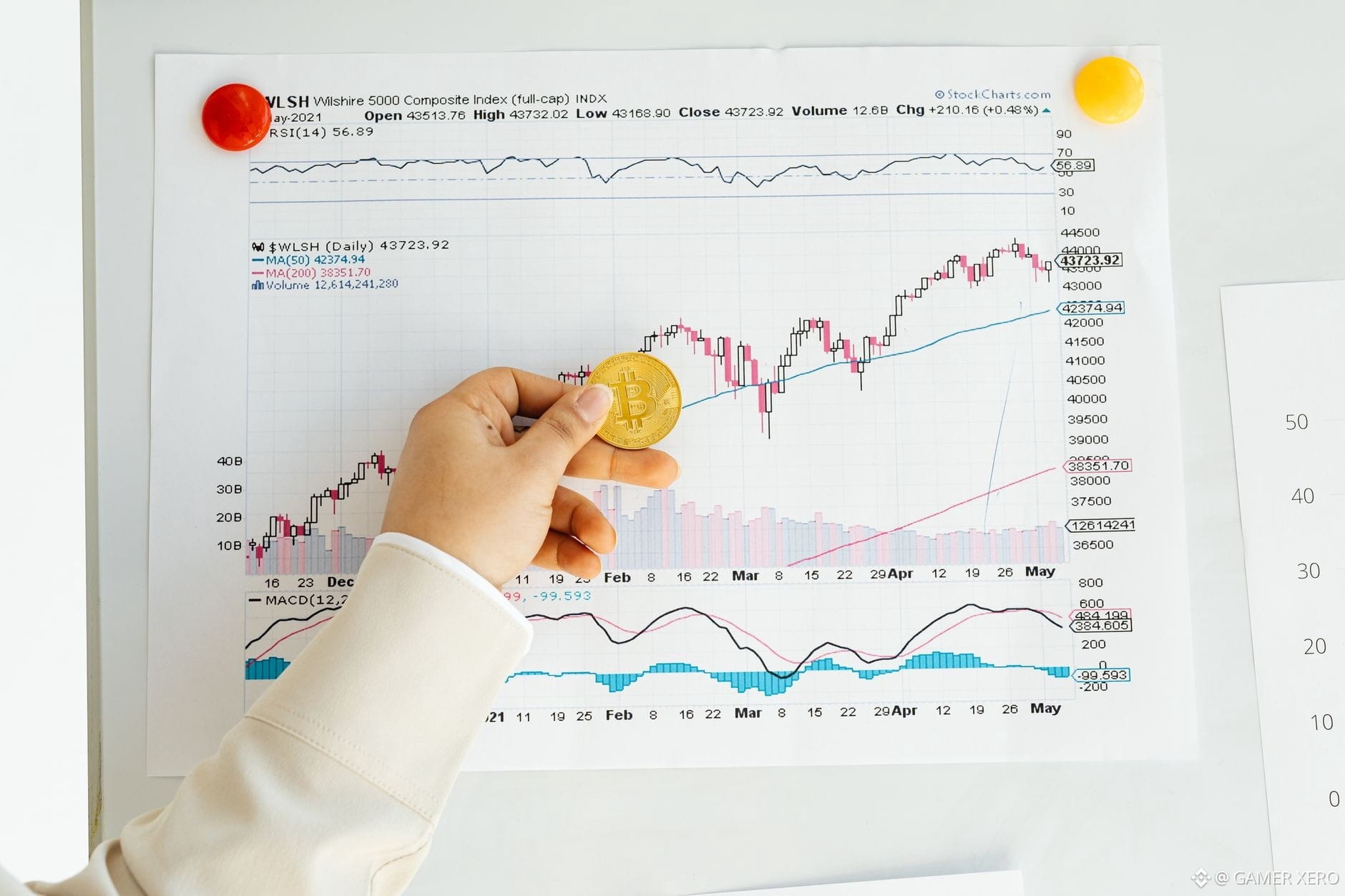
59
·
--
Seeing $BTC hover at $78,649 and $ETH near $2,464 today highlights a market stuck in a narrow band. When prices are confined, volatility becomes a more reliable gauge than recent price moves. My go‑to risk filter starts with an exposure cap: no more than 15 % of the portfolio in any single asset, and a total crypto allocation that never exceeds 40 % of the overall capital base. This protects you if a sudden regulatory shock knocks $BTC or $ETH down 10 % in a day.
Next, I layer diversification by adding a low‑correlation token—say a stable‑coin‑backed product or a non‑price‑linked yield asset—so the portfolio’s beta stays under 0.8. With the current 24 h range, a simple drawdown calculator shows that a 20 % loss on the $BTC slice would shave roughly 3 % off the whole portfolio, while the same hit on a 15 % exposure would only dent it by 0.45 %. That math makes the difference between a panic sell and a measured re‑entry.
How do you currently balance exposure limits and volatility sizing in a range‑bound market?
#CryptoRisk #PortfolioManagement #DiversifySmart #GAMERXERO
Seeing $BTC hover at $78,649 and $ETH near $2,464 today highlights a market stuck in a narrow band. When prices are confined, volatility becomes a more reliable gauge than recent price moves. My go‑to risk filter starts with an exposure cap: no more than 15 % of the portfolio in any single asset, and a total crypto allocation that never exceeds 40 % of the overall capital base. This protects you if a sudden regulatory shock knocks $BTC or $ETH down 10 % in a day.
Next, I layer diversification by adding a low‑correlation token—say a stable‑coin‑backed product or a non‑price‑linked yield asset—so the portfolio’s beta stays under 0.8. With the current 24 h range, a simple drawdown calculator shows that a 20 % loss on the $BTC slice would shave roughly 3 % off the whole portfolio, while the same hit on a 15 % exposure would only dent it by 0.45 %. That math makes the difference between a panic sell and a measured re‑entry.
How do you currently balance exposure limits and volatility sizing in a range‑bound market?
#CryptoRisk #PortfolioManagement #DiversifySmart #GAMERXERO
Next, I layer diversification by adding a low‑correlation token—say a stable‑coin‑backed product or a non‑price‑linked yield asset—so the portfolio’s beta stays under 0.8. With the current 24 h range, a simple drawdown calculator shows that a 20 % loss on the $BTC slice would shave roughly 3 % off the whole portfolio, while the same hit on a 15 % exposure would only dent it by 0.45 %. That math makes the difference between a panic sell and a measured re‑entry.
How do you currently balance exposure limits and volatility sizing in a range‑bound market?
#CryptoRisk #PortfolioManagement #DiversifySmart #GAMERXERO
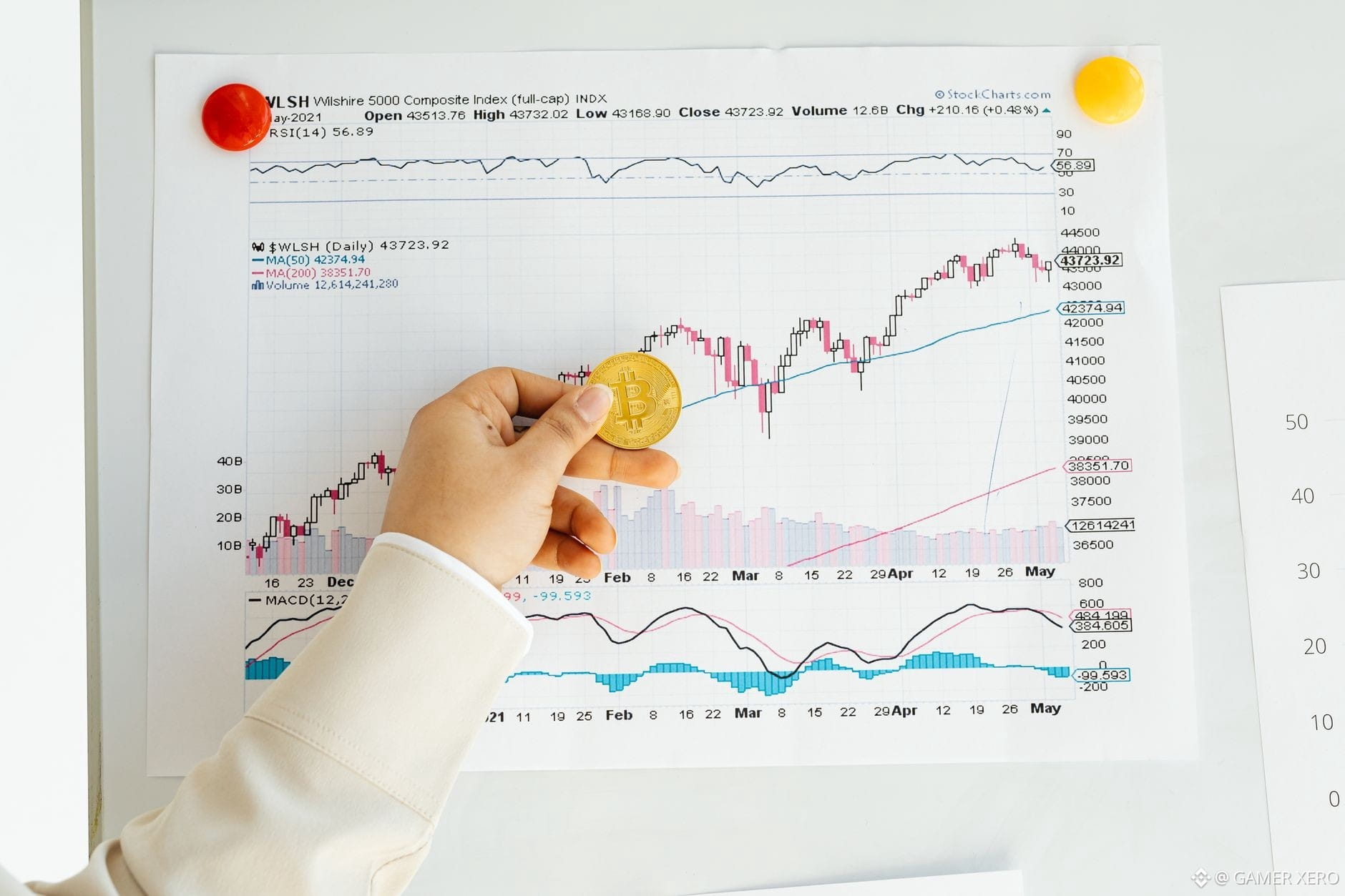
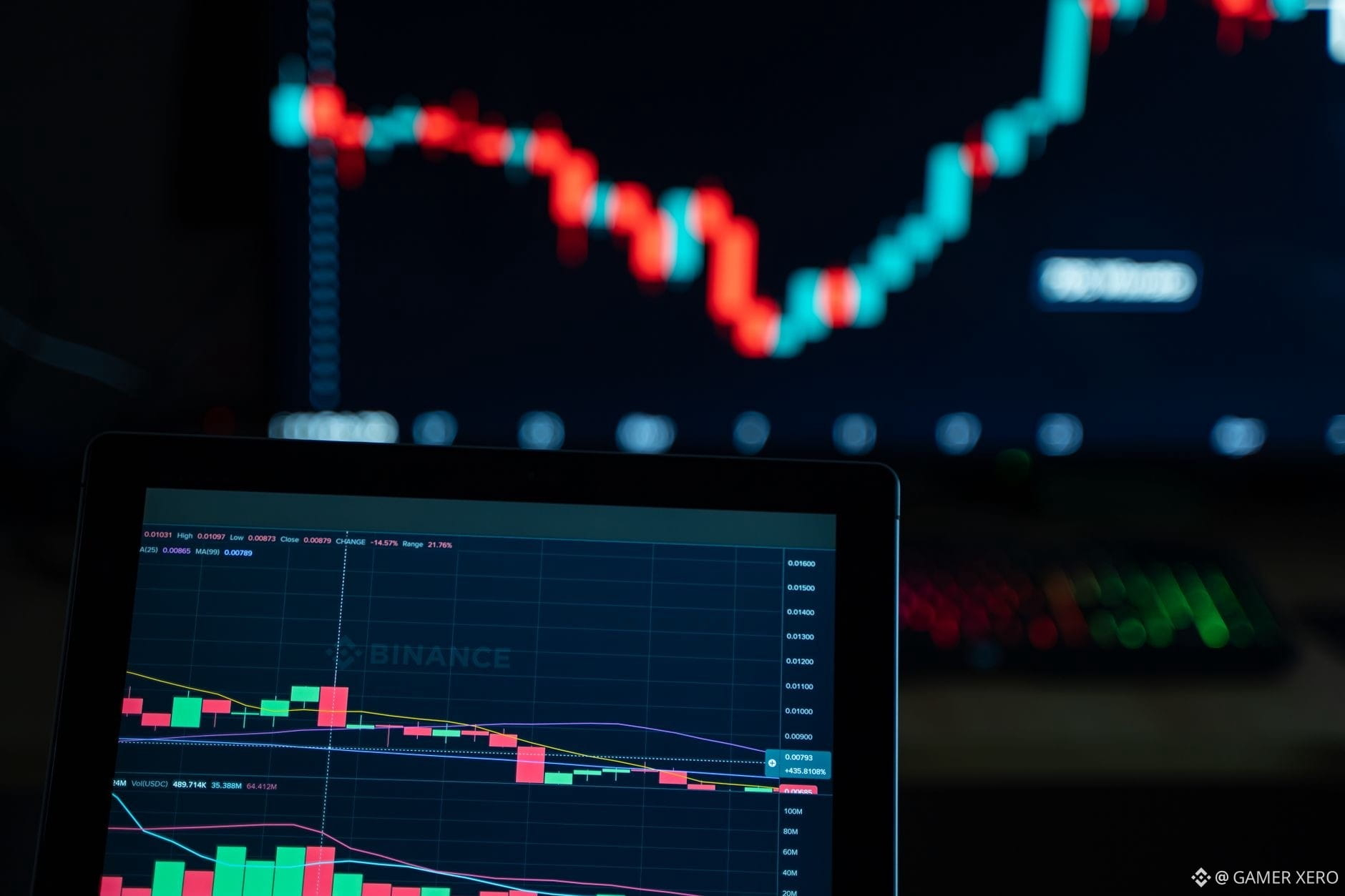
7
·
--
I’ve been watching $BTC hover around the $78,100‑$78,300 band for the past day, while $ETH is stuck in a $2,440‑$2,470 range. When the market compresses like this, I treat each trade as a “capital‑preservation exercise” rather than a profit hunt.
First, I calculate my risk per trade at 1 % of my account. With a $10,000 balance that means a $100 stop‑loss. I then size the position so the distance between entry and stop‑loss equals that $100. For example, if I enter $BTC at $78,150 and set a stop at $77,800 (a $350 move), I’d buy roughly $0.285 BTC ($100 ÷ $350). The same logic applies to $ETH: entering at $2,460 with a stop at $2,430 (a $30 move) yields about 3.33 ETH.
Finally, I lock in my emotions by writing the entry, stop, and target in a notebook before the trade. When the price wiggles, I can glance at the plan and avoid the urge to move the stop or double down.
How do you balance risk size with the desire to stay in a tight range for a longer potential swing?
#CryptoRisk #CapitalPreservation #TraderMindset #GAMERXERO
I’ve been watching $BTC hover around the $78,100‑$78,300 band for the past day, while $ETH is stuck in a $2,440‑$2,470 range. When the market compresses like this, I treat each trade as a “capital‑preservation exercise” rather than a profit hunt.
First, I calculate my risk per trade at 1 % of my account. With a $10,000 balance that means a $100 stop‑loss. I then size the position so the distance between entry and stop‑loss equals that $100. For example, if I enter $BTC at $78,150 and set a stop at $77,800 (a $350 move), I’d buy roughly $0.285 BTC ($100 ÷ $350). The same logic applies to $ETH : entering at $2,460 with a stop at $2,430 (a $30 move) yields about 3.33 ETH.
Finally, I lock in my emotions by writing the entry, stop, and target in a notebook before the trade. When the price wiggles, I can glance at the plan and avoid the urge to move the stop or double down.
How do you balance risk size with the desire to stay in a tight range for a longer potential swing?
#CryptoRisk #CapitalPreservation #TraderMindset #GAMERXERO
First, I calculate my risk per trade at 1 % of my account. With a $10,000 balance that means a $100 stop‑loss. I then size the position so the distance between entry and stop‑loss equals that $100. For example, if I enter $BTC at $78,150 and set a stop at $77,800 (a $350 move), I’d buy roughly $0.285 BTC ($100 ÷ $350). The same logic applies to $ETH : entering at $2,460 with a stop at $2,430 (a $30 move) yields about 3.33 ETH.
Finally, I lock in my emotions by writing the entry, stop, and target in a notebook before the trade. When the price wiggles, I can glance at the plan and avoid the urge to move the stop or double down.
How do you balance risk size with the desire to stay in a tight range for a longer potential swing?
#CryptoRisk #CapitalPreservation #TraderMindset #GAMERXERO
16

·
--
A DeFi pool showing 20% APY can still leave you with less money than simply holding the tokens.
That is the trap many traders miss on STON.fi: attractive yield can distract from token price risk, impermanent loss, and smart contract exposure. You can earn fees in $TON or stablecoins and still finish down overall.
For example, supplying $1,000 of $TON and $USDT does not remove volatility. If $TON drops 30%, the pool rebalances your position toward the weaker asset, so your final value can lag behind simply holding the tokens. The displayed APY is also variable, not guaranteed.
Before chasing yield, check where the returns come from, how deep the liquidity is, and whether the reward token can absorb selling pressure. A high number on the dashboard is not the same as reliable income, especially when $STON incentives are part of the payout.
What risks are you watching most closely in the TON DeFi ecosystem?
#DeFi #TON #CryptoRisk
A DeFi pool showing 20% APY can still leave you with less money than simply holding the tokens.
That is the trap many traders miss on STON.fi: attractive yield can distract from token price risk, impermanent loss, and smart contract exposure. You can earn fees in $TON or stablecoins and still finish down overall.
For example, supplying $1,000 of $TON and $USDT does not remove volatility. If $TON drops 30%, the pool rebalances your position toward the weaker asset, so your final value can lag behind simply holding the tokens. The displayed APY is also variable, not guaranteed.
Before chasing yield, check where the returns come from, how deep the liquidity is, and whether the reward token can absorb selling pressure. A high number on the dashboard is not the same as reliable income, especially when $STON incentives are part of the payout.
What risks are you watching most closely in the TON DeFi ecosystem?
#DeFi #TON #CryptoRisk
That is the trap many traders miss on STON.fi: attractive yield can distract from token price risk, impermanent loss, and smart contract exposure. You can earn fees in $TON or stablecoins and still finish down overall.
For example, supplying $1,000 of $TON and $USDT does not remove volatility. If $TON drops 30%, the pool rebalances your position toward the weaker asset, so your final value can lag behind simply holding the tokens. The displayed APY is also variable, not guaranteed.
Before chasing yield, check where the returns come from, how deep the liquidity is, and whether the reward token can absorb selling pressure. A high number on the dashboard is not the same as reliable income, especially when $STON incentives are part of the payout.
What risks are you watching most closely in the TON DeFi ecosystem?
#DeFi #TON #CryptoRisk
21
Log in to explore more content
Join global crypto users on Binance Square
⚡️ Get latest and useful information about crypto.
💬 Trusted by the world’s largest crypto exchange.
👍 Discover real insights from verified creators.
Email / Phone number
Trending Topics
1
#AppleDebutsFoldablePhone
50,512 views
984 Discussing
2
#TSMCAugustRevenueUp53.3%YoY
12,303 views
351 Discussing
3
#IranSaysReadyToEscalateWarWithUS
15,655 views
355 Discussing
4
#EUExtendsCentralContactPointToCASPs
15,257 views
386 Discussing
5
#US10YTreasuryYieldHitsHighestSinceNov2023
39,101 views
610 Discussing
6
#USTreasuryToBuyBackUpTo$6BLongDatedDebt
22,179 views
184 Discussing
7
#BitcoinSurpasses$79K
76,795 views
296 Discussing
8
#BrentCrudeTops$100
136,015 views
424 Discussing
9
#USADPWeeklyEmploymentRises12000
129,570 views
1,546 Discussing
10
#BankOfAmericaGroupPilotsUSBDCStablecoin
94,756 views
1,209 Discussing