

#rwa
rwa
184.8M views
1.5M Discussing
Hot
Latest

·
--
Article
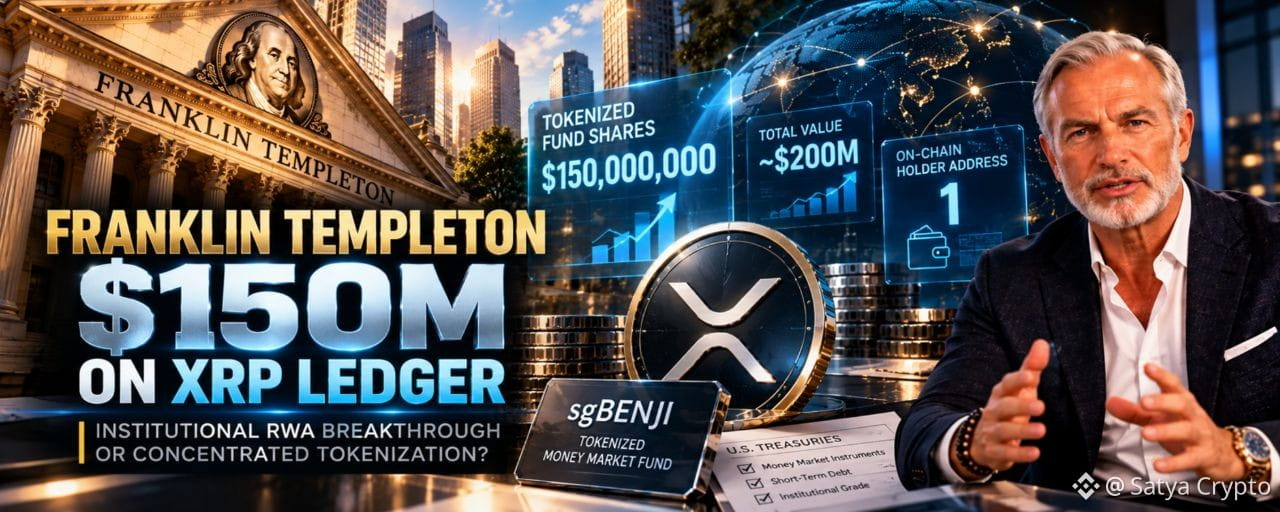
FRANKLIN TEMPLETON ADDS $150M TO XRP LEDGER: A BREAKTHROUGH FOR RWA — OR JUST THE BEGINNING?Institutional tokenization is expanding. But issuance, adoption and liquidity are three very different things.
Franklin Templeton has added approximately $150 million in tokenized money-market fund shares to the XRP Ledger (XRPL).
This is not another proposed blockchain partnership. The issuance has already been recorded on-chain.
Following the transactions, nearly 193 million sgBENJI shares were held on XRPL, with an estimated value of approximately $200 million at the $1.039 share price recorded in the transfers.
For the real-world asset (RWA) industry, that is meaningful progress.
But there is a detail that deserves closer attention: the entire XRPL balance sits in a single wallet.
What does that actually tell us about institutional adoption?
1. THE TRANSACTIONS BEHIND THE HEADLINE
According to an October 24 report by CoinDesk, the latest expansion involved two cash subscription receipts of approximately $75 million each.
Two corresponding batches of just over 72.18 million sgBENJI shares were subsequently issued.
The result:
New subscriptions: approximately $150 million.Newly recorded shares: approximately 144.37 million.Total XRPL balance: approximately 192.7 million shares.Value at the recorded $1.039 share price: approximately $200 million.On-chain holder addresses: one.
The balance increased from roughly 48 million shares to nearly 193 million.
This represents a substantial increase in the fund shares recorded on XRPL.
However, it should not be confused with the total value of all Franklin Templeton tokenized funds across every blockchain.
2. WHAT EXACTLY IS sgBENJI?
sgBENJI represents shares in Franklin Templeton's Singapore-domiciled OnChain U.S. Dollar Short-Term Money Market Fund.
The underlying fund invests in short-term US dollar debt and money-market instruments, including government securities, commercial paper and bank deposits.
Unlike a conventional dollar stablecoin, a fund share represents an investment interest whose value can change.
The fund structure, share register, eligibility rules and applicable legal documents determine what the investor owns.
The blockchain is part of the infrastructure used to represent and transfer that interest.
This distinction matters.
A tokenized fund share is not automatically equivalent to cash, an ordinary cryptocurrency or a freely redeemable stablecoin.
3. WHY DOES THE SINGLE WALLET MATTER?
All newly issued shares went to the same receiving address that already held the fund's XRPL balance.
CoinDesk also reported that the receiving wallet and the issuing account share eight authorized signing addresses, with two signatures required to approve a transaction.
That suggests a strongly controlled operational arrangement.
But one public wallet does not necessarily mean one investor.
A custodian, broker or institutional intermediary may hold assets for multiple underlying clients through an omnibus account.
The public ledger can show the balance and transfers without revealing every beneficial owner recorded in an off-chain register.
Therefore, the data establishes a concentration of on-chain holdings.
It does not establish how many underlying investors participated.
4. TOKEN ISSUANCE IS NOT THE SAME AS MARKET LIQUIDITY
The RWA industry often celebrates the total value of tokenized assets.
That metric is useful, but incomplete.
Consider five different milestones:
Issuance — tokens representing financial assets are created.Distribution — those assets reach eligible end investors.Transferability — the instruments can move between authorized holders.Liquidity — buyers and sellers can execute meaningful trades at competitive prices.Redemption — investors can realize their contractual rights through established processes.
Each stage creates different economic value.
A $200 million on-chain balance does not demonstrate a $200 million liquid secondary market.
The real questions include trading access, available counterparties, order-book depth, settlement rules and transaction costs.
5. WHAT DOES THIS MEAN FOR XRP?
XRPL is the network on which these fund shares are recorded.
That is a meaningful example of financial institutions using blockchain infrastructure.
But the $150 million issuance does not imply that investors purchased $150 million worth of XRP.
The native XRP token serves a different role within the network, including transaction fees and certain reserve requirements.
Fund-share subscriptions and spot XRP demand are not interchangeable.
Anyone evaluating XRP's market outlook should separate network adoption from the actual mechanisms that generate token demand.
6. THE BROADER INSTITUTIONAL STRATEGY
Franklin Templeton's collaboration with DBS and Ripple provides additional context.
In September 2025, the companies announced plans to explore trading and lending solutions combining tokenized money-market fund shares with Ripple's RLUSD stablecoin.
The proposed infrastructure allows eligible institutional participants to interact with tokenized investment products in more flexible ways.
The longer-term opportunity is not simply putting assets on a blockchain.
It is creating systems in which regulated assets can be held, transferred, financed and settled efficiently.
But adoption depends on legal enforceability, custody arrangements, counterparty availability, market access and operational reliability.
7. THE FIVE QUESTIONS RWA INVESTORS SHOULD ASK
Before treating any tokenized asset announcement as a major breakthrough, consider:
What legal rights does the token convey?Who ultimately controls custody and settlement?How many independent beneficial owners can be identified?Is meaningful secondary-market trading actually available?Can holders redeem their positions under clear conditions?
A growing tokenized asset balance may be an important sign of infrastructure development without proving broad investor participation.
Both observations can be true.
THE BOTTOM LINE
Franklin Templeton's latest XRPL issuance is a substantial development for institutional asset tokenization.
The transaction records demonstrate that regulated investment products are increasingly being represented on public blockchain infrastructure.
Yet the concentration in one wallet highlights a crucial distinction:
On-chain issuance is measurable. Investor distribution and executable liquidity require separate evidence.
The next phase of RWA adoption will be judged not only by how much value is tokenized, but by what investors can actually do with those assets.
THE BIG QUESTION:
Is the RWA industry moving from experimentation toward functioning capital markets, or is token issuance still advancing faster than secondary-market liquidity?
Share your perspective.
Sources:
CoinDesk — Franklin Templeton Adds $150 Million in Fund Shares to XRP Ledger, October 24, 2026.
Franklin Templeton — Franklin OnChain U.S. Dollar Short-Term Money Market Fund, Singapore product documentation.
Franklin Templeton / DBS / Ripple — Trading and Lending Solutions Announcement, September 18, 2025.
BitChoice | Satya — Independent Crypto & RWA Research.
Published October 26, 2026.
Educational and informational purposes only. Not financial advice.
#RWA #XRPL #XRP #Tokenization #InstitutionalCrypto
FRANKLIN TEMPLETON ADDS $150M TO XRP LEDGER: A BREAKTHROUGH FOR RWA — OR JUST THE BEGINNING?
Institutional tokenization is expanding. But issuance, adoption and liquidity are three very different things.
Franklin Templeton has added approximately $150 million in tokenized money-market fund shares to the XRP Ledger (XRPL).
This is not another proposed blockchain partnership. The issuance has already been recorded on-chain.
Following the transactions, nearly 193 million sgBENJI shares were held on XRPL, with an estimated value of approximately $200 million at the $1.039 share price recorded in the transfers.
For the real-world asset (RWA) industry, that is meaningful progress.
But there is a detail that deserves closer attention: the entire XRPL balance sits in a single wallet.
What does that actually tell us about institutional adoption?
1. THE TRANSACTIONS BEHIND THE HEADLINE
According to an October 24 report by CoinDesk, the latest expansion involved two cash subscription receipts of approximately $75 million each.
Two corresponding batches of just over 72.18 million sgBENJI shares were subsequently issued.
The result:
New subscriptions: approximately $150 million.Newly recorded shares: approximately 144.37 million.Total XRPL balance: approximately 192.7 million shares.Value at the recorded $1.039 share price: approximately $200 million.On-chain holder addresses: one.
The balance increased from roughly 48 million shares to nearly 193 million.
This represents a substantial increase in the fund shares recorded on XRPL.
However, it should not be confused with the total value of all Franklin Templeton tokenized funds across every blockchain.
2. WHAT EXACTLY IS sgBENJI?
sgBENJI represents shares in Franklin Templeton's Singapore-domiciled OnChain U.S. Dollar Short-Term Money Market Fund.
The underlying fund invests in short-term US dollar debt and money-market instruments, including government securities, commercial paper and bank deposits.
Unlike a conventional dollar stablecoin, a fund share represents an investment interest whose value can change.
The fund structure, share register, eligibility rules and applicable legal documents determine what the investor owns.
The blockchain is part of the infrastructure used to represent and transfer that interest.
This distinction matters.
A tokenized fund share is not automatically equivalent to cash, an ordinary cryptocurrency or a freely redeemable stablecoin.
3. WHY DOES THE SINGLE WALLET MATTER?
All newly issued shares went to the same receiving address that already held the fund's XRPL balance.
CoinDesk also reported that the receiving wallet and the issuing account share eight authorized signing addresses, with two signatures required to approve a transaction.
That suggests a strongly controlled operational arrangement.
But one public wallet does not necessarily mean one investor.
A custodian, broker or institutional intermediary may hold assets for multiple underlying clients through an omnibus account.
The public ledger can show the balance and transfers without revealing every beneficial owner recorded in an off-chain register.
Therefore, the data establishes a concentration of on-chain holdings.
It does not establish how many underlying investors participated.
4. TOKEN ISSUANCE IS NOT THE SAME AS MARKET LIQUIDITY
The RWA industry often celebrates the total value of tokenized assets.
That metric is useful, but incomplete.
Consider five different milestones:
Issuance — tokens representing financial assets are created.Distribution — those assets reach eligible end investors.Transferability — the instruments can move between authorized holders.Liquidity — buyers and sellers can execute meaningful trades at competitive prices.Redemption — investors can realize their contractual rights through established processes.
Each stage creates different economic value.
A $200 million on-chain balance does not demonstrate a $200 million liquid secondary market.
The real questions include trading access, available counterparties, order-book depth, settlement rules and transaction costs.
5. WHAT DOES THIS MEAN FOR XRP?
XRPL is the network on which these fund shares are recorded.
That is a meaningful example of financial institutions using blockchain infrastructure.
But the $150 million issuance does not imply that investors purchased $150 million worth of XRP.
The native XRP token serves a different role within the network, including transaction fees and certain reserve requirements.
Fund-share subscriptions and spot XRP demand are not interchangeable.
Anyone evaluating XRP's market outlook should separate network adoption from the actual mechanisms that generate token demand.
6. THE BROADER INSTITUTIONAL STRATEGY
Franklin Templeton's collaboration with DBS and Ripple provides additional context.
In September 2025, the companies announced plans to explore trading and lending solutions combining tokenized money-market fund shares with Ripple's RLUSD stablecoin.
The proposed infrastructure allows eligible institutional participants to interact with tokenized investment products in more flexible ways.
The longer-term opportunity is not simply putting assets on a blockchain.
It is creating systems in which regulated assets can be held, transferred, financed and settled efficiently.
But adoption depends on legal enforceability, custody arrangements, counterparty availability, market access and operational reliability.
7. THE FIVE QUESTIONS RWA INVESTORS SHOULD ASK
Before treating any tokenized asset announcement as a major breakthrough, consider:
What legal rights does the token convey?Who ultimately controls custody and settlement?How many independent beneficial owners can be identified?Is meaningful secondary-market trading actually available?Can holders redeem their positions under clear conditions?
A growing tokenized asset balance may be an important sign of infrastructure development without proving broad investor participation.
Both observations can be true.
THE BOTTOM LINE
Franklin Templeton's latest XRPL issuance is a substantial development for institutional asset tokenization.
The transaction records demonstrate that regulated investment products are increasingly being represented on public blockchain infrastructure.
Yet the concentration in one wallet highlights a crucial distinction:
On-chain issuance is measurable. Investor distribution and executable liquidity require separate evidence.
The next phase of RWA adoption will be judged not only by how much value is tokenized, but by what investors can actually do with those assets.
THE BIG QUESTION:
Is the RWA industry moving from experimentation toward functioning capital markets, or is token issuance still advancing faster than secondary-market liquidity?
Share your perspective.
Sources:
CoinDesk — Franklin Templeton Adds $150 Million in Fund Shares to XRP Ledger, October 24, 2026.
Franklin Templeton — Franklin OnChain U.S. Dollar Short-Term Money Market Fund, Singapore product documentation.
Franklin Templeton / DBS / Ripple — Trading and Lending Solutions Announcement, September 18, 2025.
BitChoice | Satya — Independent Crypto & RWA Research.
Published October 26, 2026.
Educational and informational purposes only. Not financial advice.
#RWA #XRPL #XRP #Tokenization #InstitutionalCrypto
1
276

·
--
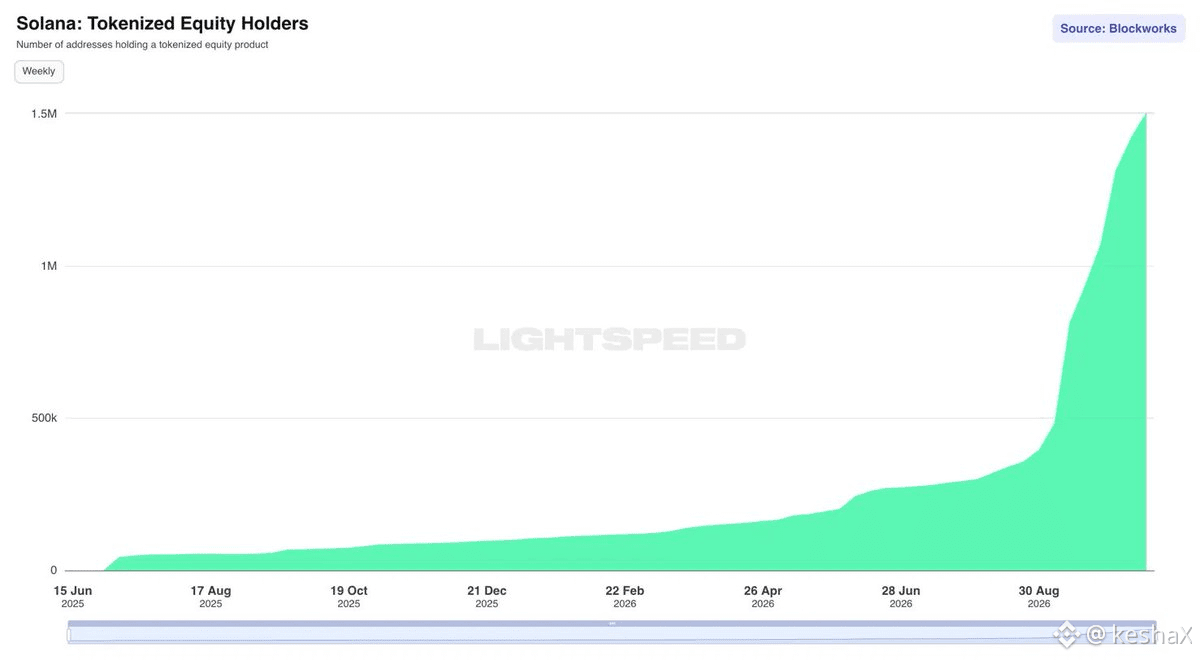
☀️ 1.5 MILLION PEOPLE NOW HOLD TOKENIZED STOCKS ON SOLANA
That's a new all-time high and 5x since August, per Solana.
And it's not just equities moving on-chain:
→ Solana added $22M in euro stablecoins in a single week
→ That's more than every other chain on Token Terminal's list combined (Cointelegraph)
The irony: spot $SOL ETFs still saw -$17.3M of net outflows last week. Users are showing up on-chain even while fund flows stay cold.
Is real usage enough to turn SOL's price around, or do the ETF flows matter more? 👇
#SOL #Solana #RWA
88

·
--
A market can trade 24/7 and still struggle to answer one basic question: what is this asset actually worth?
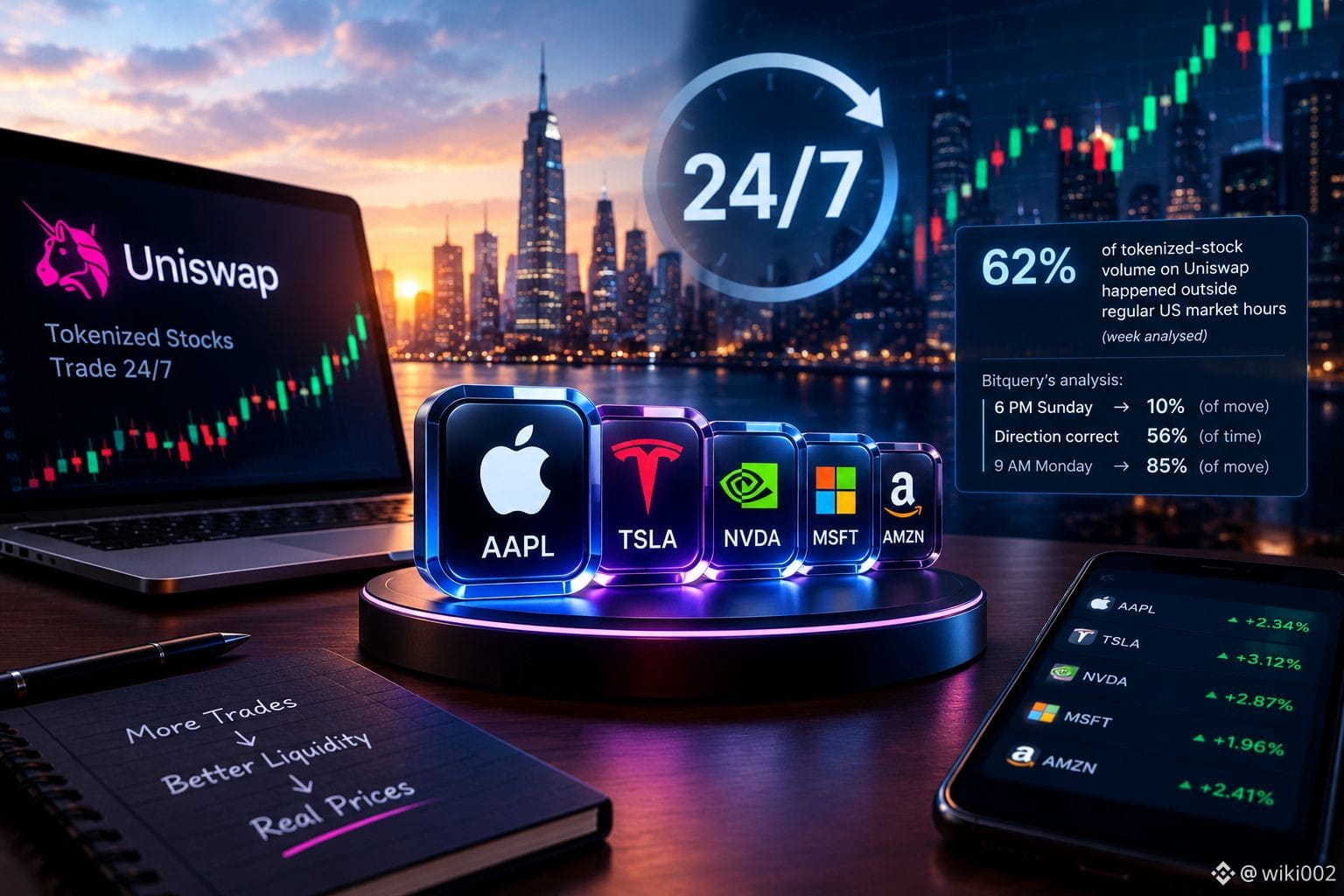
According to a recent report on Uniswap’s tokenized-stock activity, 62% of trading volume during the week analysed occurred outside regular US market hours. That signals demand for round-the-clock access. But volume alone doesn’t tell us whether those trades are producing reliable prices.
Here’s the technical problem:
When the underlying stock market closes, arbitrageurs may lose access to their usual hedging routes. If a stock token trades below its fair value, buying the token and selling the real share is no longer a straightforward trade. Market makers may have to carry more directional risk, while thinner liquidity can make even modest orders move prices sharply.
Bitquery’s analysis of 13 weekends across six issuers found that, by 6 PM Sunday New York time, the typical token had covered just 10% of the move to Monday’s stock-market opening price. Its direction matched the eventual move only 56% of the time. By 9 AM Monday, after stock futures reopened, tokens had covered 85% of that move.
These figures measure how much of the eventual price move tokens reflected—not how accurate their prices were in absolute terms.
That distinction matters for @Uniswap and the wider RWA market. The next step isn’t simply attracting more trades. It’s building deeper executable liquidity, reducing slippage on meaningful order sizes, and improving price discovery when traditional hedging markets are unavailable.
24/7 access creates the opportunity. Reliable prices create the market. 👍
$UNI $AVAX $LINK #Uniswap #RWA #TokenizedStocks
{future}(UNIUSDT)
A market can trade 24/7 and still struggle to answer one basic question: what is this asset actually worth?
According to a recent report on Uniswap’s tokenized-stock activity, 62% of trading volume during the week analysed occurred outside regular US market hours. That signals demand for round-the-clock access. But volume alone doesn’t tell us whether those trades are producing reliable prices.
Here’s the technical problem:
When the underlying stock market closes, arbitrageurs may lose access to their usual hedging routes. If a stock token trades below its fair value, buying the token and selling the real share is no longer a straightforward trade. Market makers may have to carry more directional risk, while thinner liquidity can make even modest orders move prices sharply.
Bitquery’s analysis of 13 weekends across six issuers found that, by 6 PM Sunday New York time, the typical token had covered just 10% of the move to Monday’s stock-market opening price. Its direction matched the eventual move only 56% of the time. By 9 AM Monday, after stock futures reopened, tokens had covered 85% of that move.
These figures measure how much of the eventual price move tokens reflected—not how accurate their prices were in absolute terms.
That distinction matters for @Uniswap Protocol and the wider RWA market. The next step isn’t simply attracting more trades. It’s building deeper executable liquidity, reducing slippage on meaningful order sizes, and improving price discovery when traditional hedging markets are unavailable.
24/7 access creates the opportunity. Reliable prices create the market. 👍
$UNI $AVAX $LINK #Uniswap #RWA #TokenizedStocks
Will-123 BTC :
Una radiografía impecable y muy necesaria sobre uno de los mayores desafíos estructurales en la intersección entre las finanzas tradicionales (TradFi) y DeFi, especialmente en el ecosistema de los Activos del Mundo Real (RWA) y los tokens respaldados por acciones o índices..
2
3
314
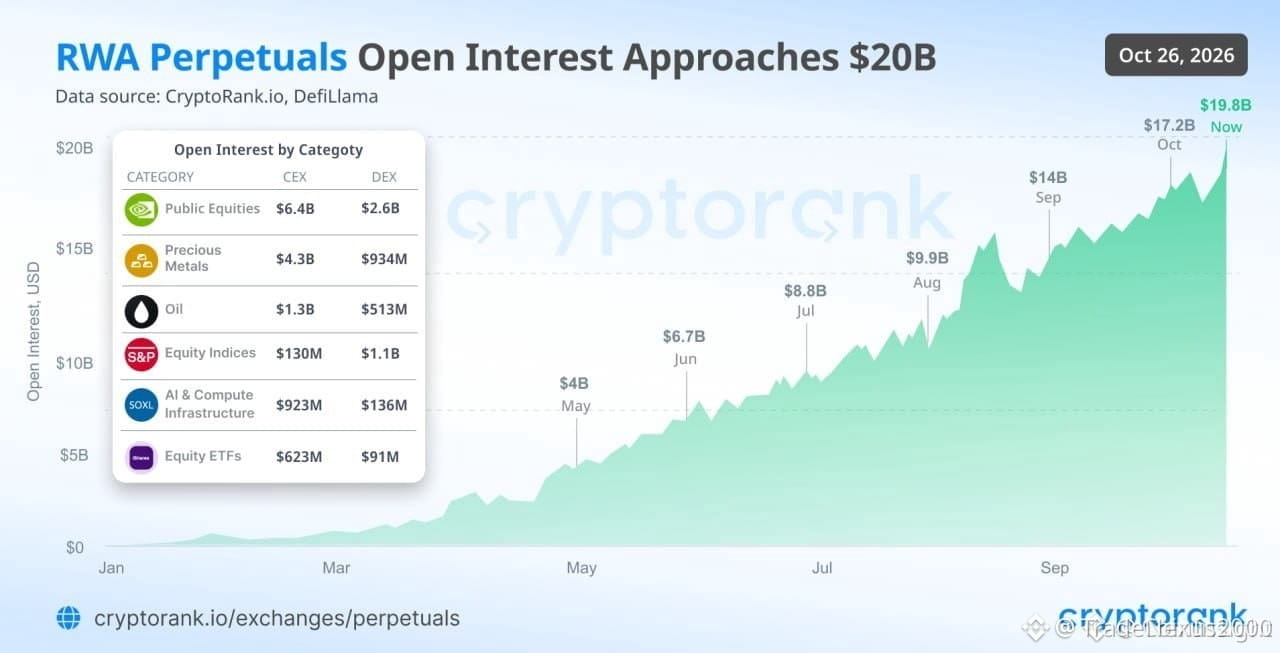
🚨 $RWA PERPETUALS SURGE TO $20B OPEN INTEREST – 192% YTD! 📈
RWA perpetuals have cracked the $20 billion open‑interest barrier, a 192 % surge since June, signaling that institutional capital is gravitating toward crypto‑linked traditional assets. 📊🦈
Current allocation skews 71 % on CEX platforms—dominating stock and precious‑metal contracts—while 29 % lives on DEX venues, fueling deep‑liquidity pools for index derivatives. 📈🌊
As traditional markets become crypto‑accessible, the tug‑of‑war between centralized and decentralized venues will sharpen, creating fresh order‑block opportunities for smart‑money hunters. 🔍💡
💬 How will the CEX‑DEX split shape the next wave of RWA perpetual liquidity? 👇
⚠️ Not financial advice. Always manage your risk. 🛡️
🏷️ #RWA #Perpetuals #Derivatives #Crypto #Liquidity
🦈 🔥
4


·
--

Article
Why Reinsurance Yield Is Largely Uncorrelated with Stocks, Bonds, and CryptoExperienced investors know that markets can swing fast and swing together. For example, the 2008 upheaval in US mortgage markets helped trigger crashes in global stock markets. More recently, concerns over inflation and energy prices due to the war in Iran have impacted markets from stocks to crypto.
Unfortunately, this degree of correlation is a feature, rather than a bug, of finance. Investments that look very different and depend on very different sources can be exposed to the same economic pressures.
Some sources of yield, however, are less closely tied to market movements. Reinsurance, for example, is largely uncorrelated with them: it depends instead chiefly upon the performance of the actual underlying insurance operations.
But what does it mean for returns to be largely uncorrelated? What drives the likes of stocks, bonds, and crypto? Why is reinsurance different? And why hasn’t it seen more widespread adoption by investors? Let’s explore.
What is correlation?
Correlation describes how closely investment returns move together. Investments that tend to rise and fall together are positively correlated. Some investments may be strongly correlated because of the sector they're in, or because they respond similarly to changes in interest rates; for example, share prices across a range of industries can drop concurrently if investors expect a widespread slowdown in consumer spending. Because different asset classes can respond to the same market forces, correlation can extend across markets.
That's important for diversification. If you're holding several categories of assets but they're all strongly correlated, then you're lacking the protection that diversity is intended to provide: a major market event could negatively impact those assets at the same time.
When investments are largely uncorrelated, the performance of one will track that of the other very little, if at all.
Correlation within and across markets
Correlation can exist in assets both within a given market and across different markets. Stocks, bonds, and crypto each offer examples of how ostensibly diversified assets can respond concurrently to the same market pressures.
Stocks
Stock prices reflect what investors are willing to pay for a share of a business, and that depends in part on what they expect the business to earn. Those expectations can change for reasons well beyond the company itself. An otherwise well-run business might face higher fuel costs, more expensive borrowing, or customers with less money to spend. Investors may then expect lower profits and become less willing to pay the same price for its shares.
That helps explain why stocks in different sectors can fall together. Higher oil prices, for example, can increase costs for both an airline and a manufacturer, despite the differences between their businesses. A broader economic slowdown can reduce demand across many industries at once. The companies haven't become identical investments; they're simply exposed to the same problem.
Bonds
Bond investors lend money in exchange for specified payments. But those payments don't fix the price at which the bond can be sold. Suppose an investor holds a bond paying 3% interest, and comparable new bonds begin offering 5%. A buyer has little reason to pay the same price for the lower-paying bond, so its market value falls. A rise in interest rates can therefore reduce the value of many existing fixed-rate bonds simultaneously.
Borrowers' ability to repay also matters. An economic downturn can weaken the finances of multiple companies, making investors less confident that they'll receive the payments promised. Bonds issued by different businesses can consequently fall together, particularly where those businesses face similar financial difficulties.
Crypto
Crypto prices can change because of developments within a particular project, but sentiment can also spread across the industry. Investors becoming less willing to hold crypto can reduce demand for multiple tokens at once, including those belonging to projects that haven't experienced a specific setback.
Crypto’s trading mechanics can amplify that selling. Investors who have borrowed to increase their exposure may be forced to close positions as prices fall. Those liquidations create further selling, which can push prices down again. Holding several different tokens can therefore leave an investor exposed to a shared decline in demand and the selling that follows.
How those connections extend across markets
The same economic development can affect all three asset classes through different mechanisms. Rising interest rates can make borrowing more expensive for businesses, reducing expected profits and the prices investors will pay for their stocks. They can also reduce the resale value of existing fixed-rate bonds. Meanwhile, higher interest payments available elsewhere can make investors less willing to hold speculative assets such as crypto. The investments differ, but their prices can still fall in response to the same change in conditions.
Is reinsurance yield correlated with stocks, bonds, or crypto?
Reinsurance yield, the source of return behind Re, is largely uncorrelated with stocks, bonds, and crypto. Reinsurance is a major market in its own right, but it is driven by different forces than the primary financial markets. Underwriting performance (https://re.xyz/insights/claims-costs-and-premiums) depends almost exclusively upon the underlying insurance operations.
For the reinsurance-derived return, that means performance is driven by a simple formula: premiums earned from insurers on the one side, and the sum of claims and expenses on the other.
Underwriting performance isn't driven by sentiment, or speculation, or profit projections: market events that cause a fall in stock prices or a crypto sell-off typically have no real impact upon the premiums earned or the claims owed under reinsurance contracts.
Why isn't reinsurance in more portfolios?
All of the above raises an obvious question: why isn’t reinsurance ubiquitous in portfolios already?
The answer is simple: for the vast majority of its existence as a market, reinsurance has been almost exclusively the realm of a small number of major players. The steep capital requirements and need for industry relationships have set a prohibitively high barrier to entry.
Re changes that.
How does Re provide access to reinsurance yield?
Re democratizes access by sourcing capital from the DeFi markets. Participants deposit stablecoins to mint reUSD or reUSDe (https://re.xyz/insights/re-protocol-token-suite-explained), yield-bearing tokens. A portion of user capital is deployed offchain to back reinsurance treaties, and underwriting revenue flows back to the protocol to support token yield. In short: individuals bypass the capital barriers, skip the industry relationships, and gain access to the market.
For a closer look at correlation across DeFi yield in particular, read Re and the Uncorrelated Market (https://re.xyz/insights/uncorrelated-markets).
Explore Re: https://re.xyz
Original published on re.xyz:
#reinsurance #RWA #TradFi
Disclosures: For educational and informational purposes only. Nothing in this post is investment, financial, legal, or tax advice, or an offer, solicitation, or recommendation to buy, sell, or hold any digital asset, including reUSD and reUSDe (together, the “Tokens”). No advisory or fiduciary relationship is created by this post; readers should consult qualified legal, tax, and financial professionals before making any decision. Yields are variable, not guaranteed, and may change at any time. Past performance is not a reliable indicator of future results. Digital assets and blockchain-based products involve significant risk, including total loss of principal, market volatility, liquidity constraints, smart contract and protocol vulnerabilities, oracle and collateral risk, counterparty risk, and regulatory uncertainty. The Tokens are not bank deposits, are not FDIC insured, and are not insured by any government agency or protected by any deposit guarantee or policyholder protection scheme. The “re” brand, the re protocol, and re.xyz are operated by Resilience Foundation Cayman LLC (“Resilience Foundation”), an Exempted Limited Guarantee Foundation Company incorporated in the Cayman Islands with Limited Liability with registered number IC-414560, together with its affiliates Resilience (BVI) Ltd and Resilience Inv SPC. Resilience Foundation, Resilience BVI, and Resilience Inv do not provide insurance or reinsurance services, do not act as insurance broker or agent, and do not hold an insurance license. All regulated reinsurance activities are conducted exclusively by Cover Reinsurance SPC Ltd. (“Cover Re SPC”), a Class B(iii) licensed exempted segregated portfolio company in the Cayman Islands, operating under the “Cover Re” brand at https://coverre.com. Holding a Token does not make you an insured, policyholder, or beneficiary of any insurer or reinsurer.The Tokens are available only to eligible non-U.S. persons (as defined under Regulation S of the U.S. Securities Act of 1933) in permitted jurisdictions and are subject to KYC/AML and sanctions screening requirements. Use by U.S. persons or residents, or by persons in any prohibited jurisdiction, is strictly prohibited, and this post is not directed at, and is not an offer or solicitation to, any such person. The Tokens may be classified as securities in certain jurisdictions, and participation is subject to eligibility requirements, KYC/AML verification, and jurisdiction-specific restrictions. Third-party websites, data, and services referenced are provided for convenience only and are not endorsed, verified, or controlled by us.The binding terms of the applicable agreements, including the Terms of Service and, where applicable, the Claims Portal Terms and Conditions, govern and prevail over this summary, which amends nothing in them. See our full Disclosure and Terms of Service at https://re.xyz/disclosure for important additional information.
Why Reinsurance Yield Is Largely Uncorrelated with Stocks, Bonds, and Crypto
Experienced investors know that markets can swing fast and swing together. For example, the 2008 upheaval in US mortgage markets helped trigger crashes in global stock markets. More recently, concerns over inflation and energy prices due to the war in Iran have impacted markets from stocks to crypto.
Unfortunately, this degree of correlation is a feature, rather than a bug, of finance. Investments that look very different and depend on very different sources can be exposed to the same economic pressures.
Some sources of yield, however, are less closely tied to market movements. Reinsurance, for example, is largely uncorrelated with them: it depends instead chiefly upon the performance of the actual underlying insurance operations.
But what does it mean for returns to be largely uncorrelated? What drives the likes of stocks, bonds, and crypto? Why is reinsurance different? And why hasn’t it seen more widespread adoption by investors? Let’s explore.
What is correlation?
Correlation describes how closely investment returns move together. Investments that tend to rise and fall together are positively correlated. Some investments may be strongly correlated because of the sector they're in, or because they respond similarly to changes in interest rates; for example, share prices across a range of industries can drop concurrently if investors expect a widespread slowdown in consumer spending. Because different asset classes can respond to the same market forces, correlation can extend across markets.
That's important for diversification. If you're holding several categories of assets but they're all strongly correlated, then you're lacking the protection that diversity is intended to provide: a major market event could negatively impact those assets at the same time.
When investments are largely uncorrelated, the performance of one will track that of the other very little, if at all.
Correlation within and across markets
Correlation can exist in assets both within a given market and across different markets. Stocks, bonds, and crypto each offer examples of how ostensibly diversified assets can respond concurrently to the same market pressures.
Stocks
Stock prices reflect what investors are willing to pay for a share of a business, and that depends in part on what they expect the business to earn. Those expectations can change for reasons well beyond the company itself. An otherwise well-run business might face higher fuel costs, more expensive borrowing, or customers with less money to spend. Investors may then expect lower profits and become less willing to pay the same price for its shares.
That helps explain why stocks in different sectors can fall together. Higher oil prices, for example, can increase costs for both an airline and a manufacturer, despite the differences between their businesses. A broader economic slowdown can reduce demand across many industries at once. The companies haven't become identical investments; they're simply exposed to the same problem.
Bonds
Bond investors lend money in exchange for specified payments. But those payments don't fix the price at which the bond can be sold. Suppose an investor holds a bond paying 3% interest, and comparable new bonds begin offering 5%. A buyer has little reason to pay the same price for the lower-paying bond, so its market value falls. A rise in interest rates can therefore reduce the value of many existing fixed-rate bonds simultaneously.
Borrowers' ability to repay also matters. An economic downturn can weaken the finances of multiple companies, making investors less confident that they'll receive the payments promised. Bonds issued by different businesses can consequently fall together, particularly where those businesses face similar financial difficulties.
Crypto
Crypto prices can change because of developments within a particular project, but sentiment can also spread across the industry. Investors becoming less willing to hold crypto can reduce demand for multiple tokens at once, including those belonging to projects that haven't experienced a specific setback.
Crypto’s trading mechanics can amplify that selling. Investors who have borrowed to increase their exposure may be forced to close positions as prices fall. Those liquidations create further selling, which can push prices down again. Holding several different tokens can therefore leave an investor exposed to a shared decline in demand and the selling that follows.
How those connections extend across markets
The same economic development can affect all three asset classes through different mechanisms. Rising interest rates can make borrowing more expensive for businesses, reducing expected profits and the prices investors will pay for their stocks. They can also reduce the resale value of existing fixed-rate bonds. Meanwhile, higher interest payments available elsewhere can make investors less willing to hold speculative assets such as crypto. The investments differ, but their prices can still fall in response to the same change in conditions.
Is reinsurance yield correlated with stocks, bonds, or crypto?
Reinsurance yield, the source of return behind Re, is largely uncorrelated with stocks, bonds, and crypto. Reinsurance is a major market in its own right, but it is driven by different forces than the primary financial markets. Underwriting performance (https://re.xyz/insights/claims-costs-and-premiums) depends almost exclusively upon the underlying insurance operations.
For the reinsurance-derived return, that means performance is driven by a simple formula: premiums earned from insurers on the one side, and the sum of claims and expenses on the other.
Underwriting performance isn't driven by sentiment, or speculation, or profit projections: market events that cause a fall in stock prices or a crypto sell-off typically have no real impact upon the premiums earned or the claims owed under reinsurance contracts.
Why isn't reinsurance in more portfolios?
All of the above raises an obvious question: why isn’t reinsurance ubiquitous in portfolios already?
The answer is simple: for the vast majority of its existence as a market, reinsurance has been almost exclusively the realm of a small number of major players. The steep capital requirements and need for industry relationships have set a prohibitively high barrier to entry.
Re changes that.
How does Re provide access to reinsurance yield?
Re democratizes access by sourcing capital from the DeFi markets. Participants deposit stablecoins to mint reUSD or reUSDe (https://re.xyz/insights/re-protocol-token-suite-explained), yield-bearing tokens. A portion of user capital is deployed offchain to back reinsurance treaties, and underwriting revenue flows back to the protocol to support token yield. In short: individuals bypass the capital barriers, skip the industry relationships, and gain access to the market.
For a closer look at correlation across DeFi yield in particular, read Re and the Uncorrelated Market (https://re.xyz/insights/uncorrelated-markets).
Explore Re: https://re.xyz
Original published on re.xyz:
#reinsurance #RWA #TradFi
Disclosures: For educational and informational purposes only. Nothing in this post is investment, financial, legal, or tax advice, or an offer, solicitation, or recommendation to buy, sell, or hold any digital asset, including reUSD and reUSDe (together, the “Tokens”). No advisory or fiduciary relationship is created by this post; readers should consult qualified legal, tax, and financial professionals before making any decision. Yields are variable, not guaranteed, and may change at any time. Past performance is not a reliable indicator of future results. Digital assets and blockchain-based products involve significant risk, including total loss of principal, market volatility, liquidity constraints, smart contract and protocol vulnerabilities, oracle and collateral risk, counterparty risk, and regulatory uncertainty. The Tokens are not bank deposits, are not FDIC insured, and are not insured by any government agency or protected by any deposit guarantee or policyholder protection scheme. The “re” brand, the re protocol, and re.xyz are operated by Resilience Foundation Cayman LLC (“Resilience Foundation”), an Exempted Limited Guarantee Foundation Company incorporated in the Cayman Islands with Limited Liability with registered number IC-414560, together with its affiliates Resilience (BVI) Ltd and Resilience Inv SPC. Resilience Foundation, Resilience BVI, and Resilience Inv do not provide insurance or reinsurance services, do not act as insurance broker or agent, and do not hold an insurance license. All regulated reinsurance activities are conducted exclusively by Cover Reinsurance SPC Ltd. (“Cover Re SPC”), a Class B(iii) licensed exempted segregated portfolio company in the Cayman Islands, operating under the “Cover Re” brand at https://coverre.com. Holding a Token does not make you an insured, policyholder, or beneficiary of any insurer or reinsurer.The Tokens are available only to eligible non-U.S. persons (as defined under Regulation S of the U.S. Securities Act of 1933) in permitted jurisdictions and are subject to KYC/AML and sanctions screening requirements. Use by U.S. persons or residents, or by persons in any prohibited jurisdiction, is strictly prohibited, and this post is not directed at, and is not an offer or solicitation to, any such person. The Tokens may be classified as securities in certain jurisdictions, and participation is subject to eligibility requirements, KYC/AML verification, and jurisdiction-specific restrictions. Third-party websites, data, and services referenced are provided for convenience only and are not endorsed, verified, or controlled by us.The binding terms of the applicable agreements, including the Terms of Service and, where applicable, the Claims Portal Terms and Conditions, govern and prevail over this summary, which amends nothing in them. See our full Disclosure and Terms of Service at https://re.xyz/disclosure for important additional information.
1
3
130

Beyond the Metaverse: The Tech Bridging Blockchains to the Real World
Everyone focuses on digital currencies, but the most complex engineering challenge in Web3 right now is RWA (Real-World Asset) tokenization.
How do you accurately represent physical real estate, bonds, or commodities on a blockchain? You cannot just write a smart contract; you need a flawless, tamper-proof data bridge. This is where Decentralized Oracles come in. Networks like $LINK act as the secure middleware, feeding off-chain data into on-chain environments without relying on a single centralized server.
Meanwhile, high-throughput chains like AVAX and ICP are optimizing their consensus mechanisms specifically to handle the legal and technical weight of institutional asset tokenization. We are moving from speculative tokens to blockchain architectures that execute real-world financial logic.
As a developer, I am fascinated by the Oracle problem. Which infrastructure protocol do you think is best equipped to handle trillions of dollars in real-world assets? Drop your thoughts below! 👇
#RWA #Web3 #BlockchainTech #SmartContract #CryptoNarratives $LINK
1
331
·
--
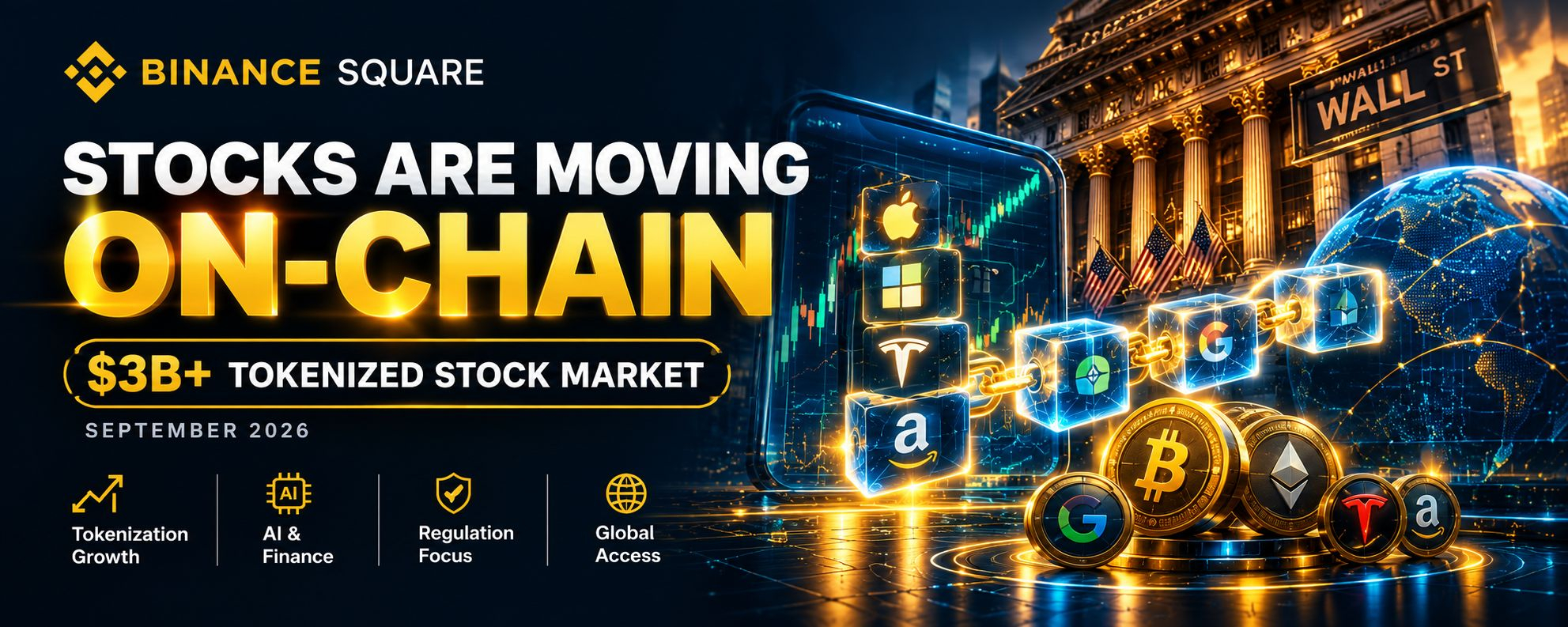
🚨 STOCKS ARE MOVING ON-CHAIN — IS CRYPTO ENTERING A NEW ERA?
Tokenized stocks crossed $3 BILLION in market value in September 2026, according to Binance Research.
Now the bigger question is: can blockchain change how traditional financial assets are accessed and traded?
But remember: a tokenized stock is not automatically the same as owning a traditional share. Legal rights, liquidity, fees, and platform risks matter.
👀 What interests you more?
A) Tokenized stocks
B) AI + crypto
C) DeFi
Comment A, B, or C — and tell me why.
#Tokenization #RWA #crypto #BinanceSquare
85
·
--
🏦 RIPPLE'S XRP LEDGER GETS A MAJOR INSTITUTIONAL DEVELOPMENT.
Aviva Investors and Ripple have announced a tokenized share class of a regulated USD liquidity fund on the XRP Ledger, approved by the Central Bank of Ireland and expanding the use of blockchain in traditional finance.
Tokenization is becoming a key trend to watch as asset managers explore new ways to issue and manage investments.
$XRP
{future}(XRPUSDT)
{spot}(XRPUSDT)
#XRP #Ripple #Tokenization #RWA
🏦 RIPPLE'S XRP LEDGER GETS A MAJOR INSTITUTIONAL DEVELOPMENT.
Aviva Investors and Ripple have announced a tokenized share class of a regulated USD liquidity fund on the XRP Ledger, approved by the Central Bank of Ireland and expanding the use of blockchain in traditional finance.
Tokenization is becoming a key trend to watch as asset managers explore new ways to issue and manage investments.
$XRP
#XRP #Ripple #Tokenization #RWA
147

·
--
Aviva Investors launches tokenized share class of its $29B Sterling fund on XRP Ledger
Major UK asset manager enters on-chain fund distribution, signaling growing institutional adoption of real-world asset tokenization
Could tokenized fund shares become the standard for institutional capital flows?
#RWA #XRP $XRP
(Image upload failed; posted text-only)
Major UK asset manager enters on-chain fund distribution, signaling growing institutional adoption of real-world asset tokenization
Could tokenized fund shares become the standard for institutional capital flows?
#RWA #XRP $XRP
(Image upload failed; posted text-only)
26

·
--
Traders on X are calling this the quietest big tokenization headline today 👀
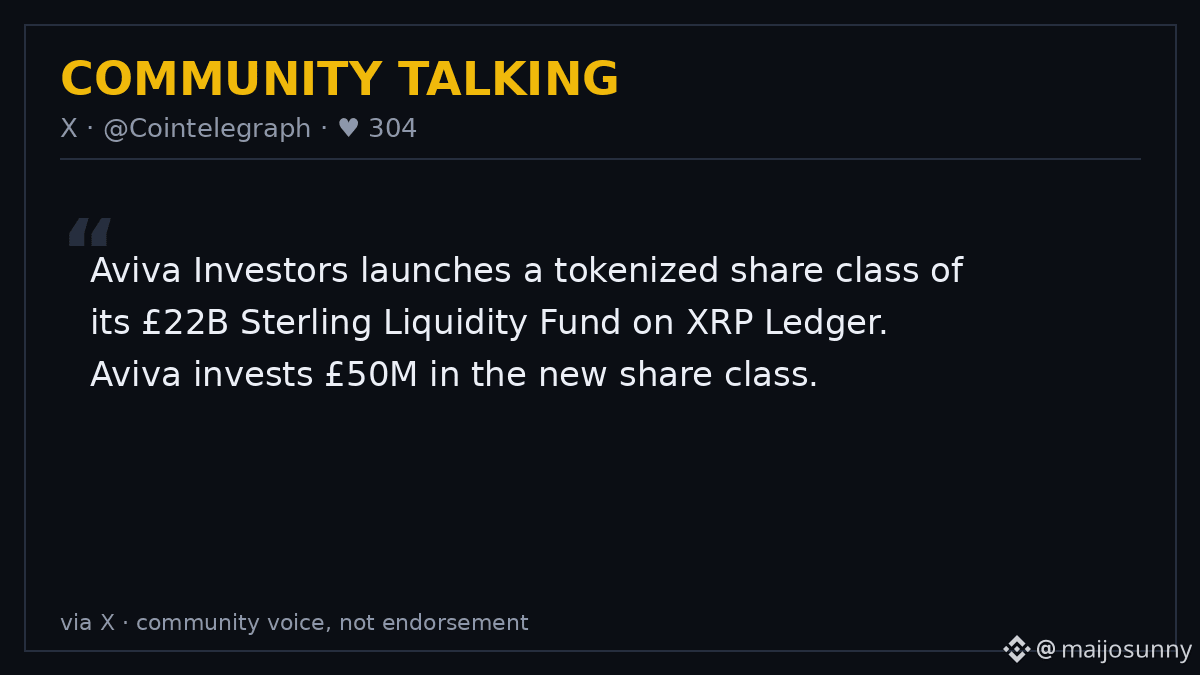
Aviva Investors just launched a tokenized share class of its £22B Sterling Liquidity Fund on the XRP Ledger, putting £50M in (Cointelegraph).
$XRP sits at $1.29, flat over 24h, range $1.27-$1.31.
My take: £22B matters more than £50M. A fund that size choosing XRPL is a real vote for the chain.
But £50M into the fund does NOT mean £50M of XRP was bought. Tokenized shares are not token demand.
Will more TradFi funds follow Aviva onto XRPL, or is this a one-off? 👇
Not financial advice. DYOR.
#XRP #RWA
32

Article
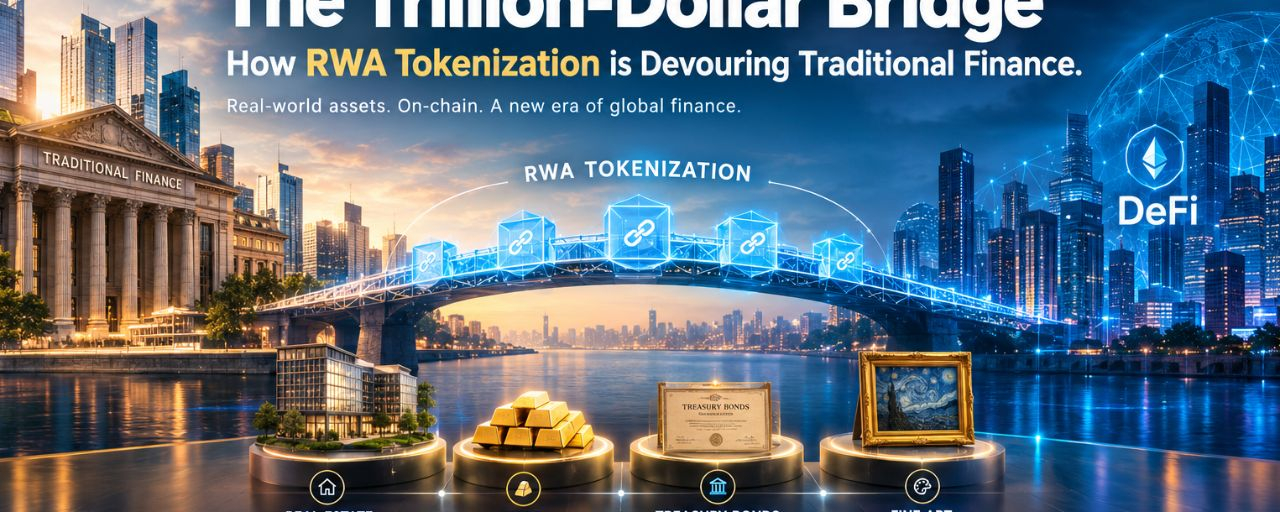
The Trillion-Dollar Bridge: How RWA Tokenization Is Transforming Traditional Finance📊 The Trillion-Dollar Bridge: How RWA Tokenization is Devouring Traditional Finance.
For years, critics have argued that the crypto market is disconnected from reality—a digital casino backed by "thin air." But a massive architectural shift is currently underway. If you are tracking institutional liquidity, you have likely noticed the explosive growth of Real World Assets (RWA) Tokenization.
This is not just another crypto trend; this is the aggressive digitization of global physical wealth. Let’s dissect the mechanics from both a technological and economic perspective.
1. The Technological Infrastructure (Digital Deeds) From an IT and systems architecture standpoint, tokenization is the process of converting rights to a physical asset (real estate, gold, treasury bonds, or even fine art) into a digital token on a blockchain. By utilizing Smart Contracts, these tokens act as immutable, programmable deeds. There is no need for traditional brokers; the code executes ownership transfers and dividend distributions automatically.
2. The Managerial Breakthrough (Fractional Ownership & Liquidity) Through the lens of Management Sciences, traditional assets like real estate suffer from a critical flaw: Illiquidity. It takes months and massive capital to buy or sell a building. RWA tokenization shatters this barrier through Fractional Ownership. A $10 million commercial property can be divided into 100,000 tokens priced at $100 each.
For the Investor: It democratizes access to elite asset classes previously restricted to billionaires.
For the Market: It injects instant liquidity into historically frozen markets. You can now trade a fraction of an office building in Tokyo at 3:00 AM on a Sunday, instantly, with near-zero settlement friction.
3. The Macro-Economic Infiltration (TradFi meets DeFi) The world's largest asset managers (like BlackRock) are already deploying tokenized funds on public blockchains. They are not doing this for decentralization; they are doing it for operational efficiency. Blockchain infrastructure reduces administrative overhead, eliminates counterparty risk, and creates a transparent ledger for auditors.
💡 The Executive Verdict: The bridge between Traditional Finance (TradFi) and Decentralized Finance (DeFi) is officially built. The next wave of wealth generation will not come from meme tokens, but from the protocols that successfully migrate real-world trillions onto the blockchain.
👇 System Query for the Community: Do you believe traditional banks will eventually be forced to adopt blockchain infrastructure entirely to survive, or will they attempt to build their own private, centralized networks? Drop your analysis below!
#RWA #Tokenization #TradFi #CryptoAnalysis #BinanceSquare
The Trillion-Dollar Bridge: How RWA Tokenization Is Transforming Traditional Finance
📊 The Trillion-Dollar Bridge: How RWA Tokenization is Devouring Traditional Finance.
For years, critics have argued that the crypto market is disconnected from reality—a digital casino backed by "thin air." But a massive architectural shift is currently underway. If you are tracking institutional liquidity, you have likely noticed the explosive growth of Real World Assets (RWA) Tokenization.
This is not just another crypto trend; this is the aggressive digitization of global physical wealth. Let’s dissect the mechanics from both a technological and economic perspective.
1. The Technological Infrastructure (Digital Deeds) From an IT and systems architecture standpoint, tokenization is the process of converting rights to a physical asset (real estate, gold, treasury bonds, or even fine art) into a digital token on a blockchain. By utilizing Smart Contracts, these tokens act as immutable, programmable deeds. There is no need for traditional brokers; the code executes ownership transfers and dividend distributions automatically.
2. The Managerial Breakthrough (Fractional Ownership & Liquidity) Through the lens of Management Sciences, traditional assets like real estate suffer from a critical flaw: Illiquidity. It takes months and massive capital to buy or sell a building. RWA tokenization shatters this barrier through Fractional Ownership. A $10 million commercial property can be divided into 100,000 tokens priced at $100 each.
For the Investor: It democratizes access to elite asset classes previously restricted to billionaires.
For the Market: It injects instant liquidity into historically frozen markets. You can now trade a fraction of an office building in Tokyo at 3:00 AM on a Sunday, instantly, with near-zero settlement friction.
3. The Macro-Economic Infiltration (TradFi meets DeFi) The world's largest asset managers (like BlackRock) are already deploying tokenized funds on public blockchains. They are not doing this for decentralization; they are doing it for operational efficiency. Blockchain infrastructure reduces administrative overhead, eliminates counterparty risk, and creates a transparent ledger for auditors.
💡 The Executive Verdict: The bridge between Traditional Finance (TradFi) and Decentralized Finance (DeFi) is officially built. The next wave of wealth generation will not come from meme tokens, but from the protocols that successfully migrate real-world trillions onto the blockchain.
👇 System Query for the Community: Do you believe traditional banks will eventually be forced to adopt blockchain infrastructure entirely to survive, or will they attempt to build their own private, centralized networks? Drop your analysis below!
#RWA #Tokenization #TradFi #CryptoAnalysis #BinanceSquare
48

·
--
When the big names are on the microphone, what are the people laying the pipes doing?
BlackRock, Franklin Templeton, JPMorgan. The headlines about onchain funds put the spotlight on them.
Morgan Stanley is also moving toward tokenized stock trading. But the timeline has slipped, from the second half of 2026 to the first quarter of 2027.
When the big names slow down, everything built on their story slows down too.
Bringing real assets onchain needs a structure underneath. Centrifuge works in exactly that lane: private credit, structured finance. In 2023 it built its own dedicated market inside Aave.
My question here isn’t about the protocol. It’s about the token.
CFG is used for voting and staking. If this story grows, does the upside actually reach the token? I haven’t found clear proof yet.
And the price history hints at something too. The project made headlines, yet CFG often stood still.
So the story can be true. But the story being true and the token benefiting are not the same thing.
I’m watching one thing: whether any verifiable proof appears that protocol usage or revenue flows back to the token. If it does, my view changes.
What comes first for you: a good protocol, or the token’s share of it?
$CFG
{future}(CFGUSDT)
DYOR.
#CFG #Centrifuge #RWA #SolanaDiva
When the big names are on the microphone, what are the people laying the pipes doing?
BlackRock, Franklin Templeton, JPMorgan. The headlines about onchain funds put the spotlight on them.
Morgan Stanley is also moving toward tokenized stock trading. But the timeline has slipped, from the second half of 2026 to the first quarter of 2027.
When the big names slow down, everything built on their story slows down too.
Bringing real assets onchain needs a structure underneath. Centrifuge works in exactly that lane: private credit, structured finance. In 2023 it built its own dedicated market inside Aave.
My question here isn’t about the protocol. It’s about the token.
CFG is used for voting and staking. If this story grows, does the upside actually reach the token? I haven’t found clear proof yet.
And the price history hints at something too. The project made headlines, yet CFG often stood still.
So the story can be true. But the story being true and the token benefiting are not the same thing.
I’m watching one thing: whether any verifiable proof appears that protocol usage or revenue flows back to the token. If it does, my view changes.
What comes first for you: a good protocol, or the token’s share of it?
$CFG
DYOR.
#CFG #Centrifuge #RWA #SolanaDiva
2
237


·
--
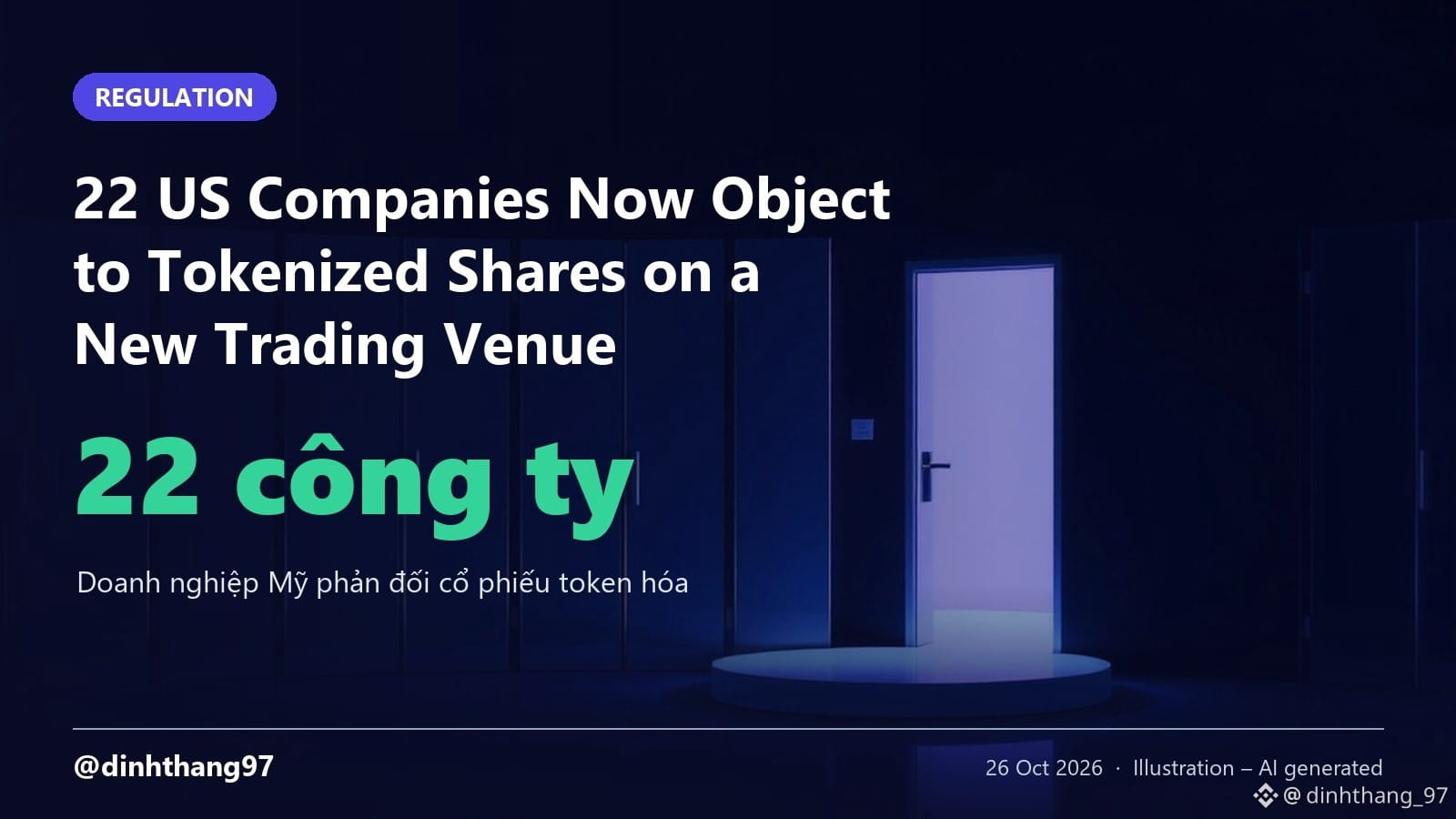
22 US Companies Now Object to Tokenized Shares on a New Trading Venue
• Six more issuers (Wells Fargo, Cisco, Marvell, Arm, Moderna, Intuit) filed objections, lifting the total to 22 from 9 on Oct 15 and 16 on Oct 19
• They object to their stocks trading 24/7 as tokens on a planned venue operating under the SEC's innovation exemption
• No reasons were given, and it is unclear whether objections can block listings
This is a bad sign for tokenized equities: big brand names are opting out before launch, which limits what the venue can offer. Watch for the SEC's response.
Not financial advice. DYOR.
#TokenizedStocks #RWA
52

·
--
🌍 THE NEXT BLOCKCHAIN OPPORTUNITY MAY EXIST OUTSIDE CRYPTO!
Real-World Asset tokenization, or RWA, connects traditional assets and blockchain infrastructure.
Imagine digital tokens representing rights connected to:
🏠 Real estate
📜 Government securities
🥇 Commodities
💼 Private credit
🏦 Financial instruments
Why is this important?
✅ Potentially more efficient settlement
✅ Greater transparency of transactions
✅ Programmable ownership and transfers
✅ New financial distribution models
However, a token doesn't automatically guarantee legal ownership, liquidity, or protection from default.
🔥 The future of tokenization depends on trustworthy assets, enforceable rights, and useful infrastructure.
💬 Which real-world asset would benefit most from blockchain?
#RWA #Tokenization #blockchain #BinanceSquare #Web3

🚀 $RWA SEES CAPITAL SHIFT – WHALE REBALANCE IGNITES MOMENTUM 🦈
📊 The latest RWA Foundation‑Token Terminal report shows a localized capital redistribution across real‑world asset tokens this week. Smart money is pulling liquidity from over‑exposed protocols and re‑stacking into freshly minted tokenized assets, sparking a fresh wave of buying pressure. ⚡ This micro‑reallocation hints at a broader confidence swing, as institutional players hunt for the next yield‑rich frontier in the tokenized real‑estate and commodity space. 🌊
💬 Do you think the fresh influx will fuel a sustained rally for $RWA or merely a short‑term bounce? 👇
⚠️ Not financial advice. Always manage your risk. 🛡️
🏷️ #RWA #Tokenization #CapitalFlow #Crypto
🔥 🚀
1

🦈 $RWA SEES CAPITAL REBALANCE—SMART MONEY REPOSITIONING NOW! 🚨
📊 The weekly RWA Foundation/Token Terminal data shows a localized capital migration into real‑world asset tokens, a subtle liquidity sweep that institutional players favor. 🦈 Volume on the 4H chart nudges higher, hinting at renewed buying pressure while on‑chain supply contracts across a major exchange. 🔍 Should this redistribution sustain, the next upward thrust could breach the current resistance, priming a breakout scenario.
💬 How are you adjusting your exposure to the RWA tokenization wave? 👇
⚠️ Not financial advice. Always manage your risk. 🛡️
🏷️ #RWA #SmartMoney #Tokenization #Crypto
🚀 💎
2
#FranklinTempletonAdds$150MFundSharesToXRPLedger
🚨 $150 MILLION Just Hit XRPL! Is Wall Street Betting BIG? 👀🔥
Franklin Templeton just made a massive move!
🔹 $150M Added: Two $75M subscriptions brought 144.4M new sgBENJI fund shares onto XRPL
🔹 Nearly 4X Growth: 48M → 193M shares, worth ~$200M!
🔹 Institutional Adoption: Franklin now 2nd largest tokenized asset issuer on XRPL behind RLUSD
🔹 The Twist: All shares in ONE wallet - one investor or many clients? Unknown
📊 My Take: Bullish on XRPL, Cautious on XRP!
This is real-world adoption! Traditional finance using blockchain for actual financial products.
⚠️ Important: $150M in tokenized fund shares does NOT mean $150M worth of XRP was purchased! sgBENJI settles in dollars, XRP used only for fees.
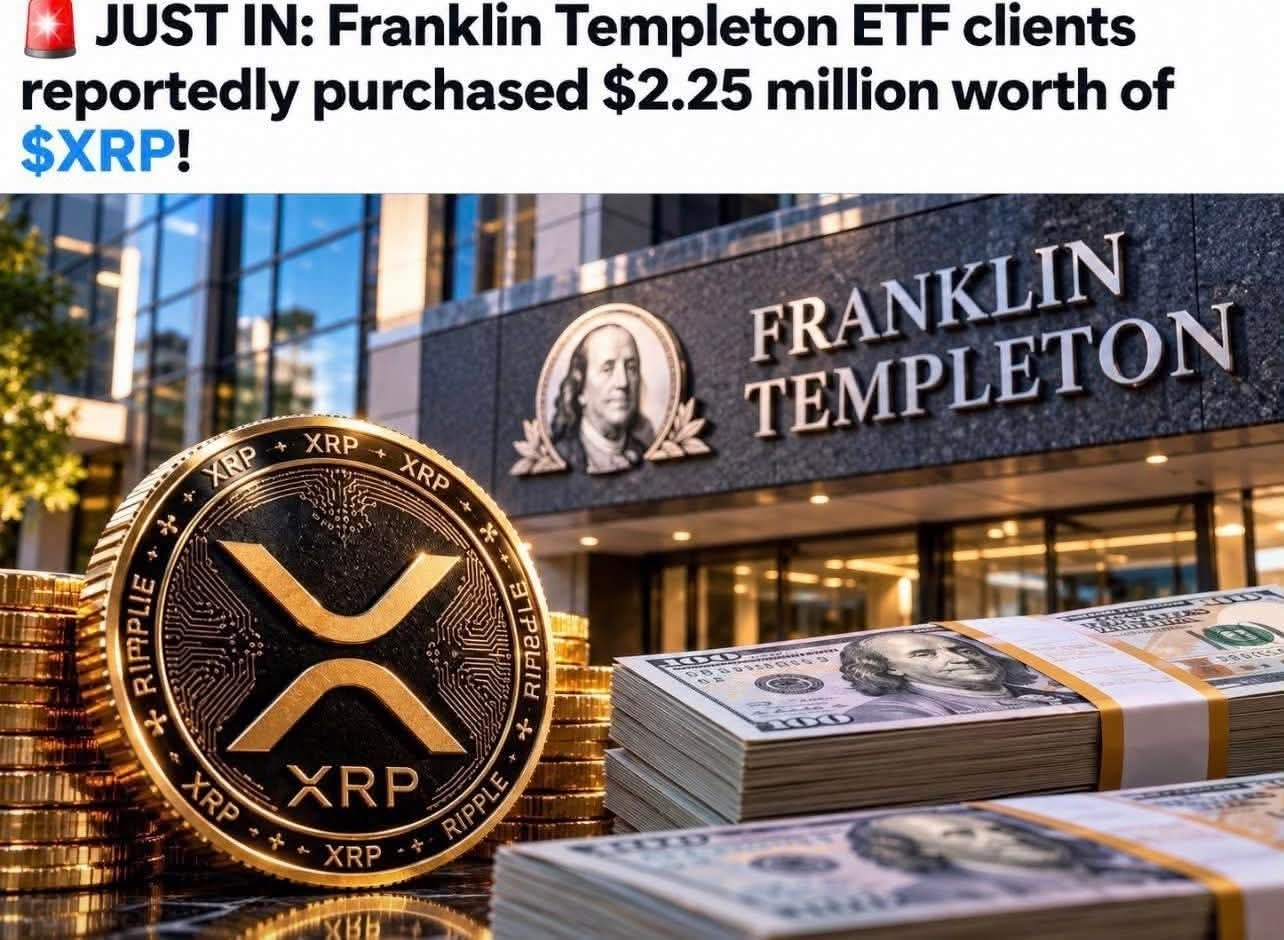
Also: $2.25M XRP ETF inflow claim circulating is NOT independently verified yet.
Is XRPL becoming Wall Street's blockchain? 👇
$XRP #XRPL #RWA #FranklinTempleton #FUND
2
72

Ondo Finance continues to expand its tokenized financial products.
Recent developments include Ondo Private Markets, designed to provide eligible investors with onchain exposure to selected private companies, and the expansion of its tokenized stock ecosystem.
The broader opportunity is compelling:
Traditional assets could become easier to access, transfer, and use across blockchain-based financial applications.
However, there’s an important distinction investors must understand.
A successful tokenization platform does not automatically make its associated token a successful investment.
For ONDO, I would investigate four questions:
🔹 Adoption: Are users and institutions actually using the products?
🔹 Scale: Is the value of assets distributed through the platform growing sustainably?
🔹 Competition: Can Ondo maintain its position as more companies enter tokenization?
🔹 Value capture: How, if at all, does the platform’s growth translate into economic value for ONDO holders?
That last question deserves particular attention.
A business can grow rapidly while its token underperforms if demand for the token itself remains limited or its valuation already assumes substantial future success.
I am interested in tokenization, but I want evidence of a connection between adoption and token economics.
Invest in the mechanism that captures value, not just the industry that creates it.
#ONDO #RWA #Tokenization #RealWorldAssets
177

·
--
$SECZB 📊 Is SECZB (Securitize) The RWA Powerhouse Driving TradFi On-Chain? 🚀
Real-World Asset (RWA) tokenization is moving from hype to institutional reality, and Securitize ($SECZB) stands right at the epicenter of this financial shift. Backed by Wall Street heavyweights like BlackRock, Apollo, and Hamilton Lane, Securitize is setting the standard for tokenized stocks, yield-bearing funds, and fixed income.
🔍 Realistic Market Analysis & Key Drivers
🏦 Institutional Backing & Regulatory Advantage
Unlike unregulated wrapper projects, Securitize operates as a U.S.-licensed broker-dealer and transfer agent. Issuing BlackRock’s BUIDLfundandbridgingtraditionalequitieson−chaingivesSECZB a regulatory moat that few RWA protocols can match.
📈 Multi-Chain Expansion & Tokenized Equities
With expanding deployments across Ethereum, Solana, Avalanche, and BNB Chain, Securitize allows 24/7 fractional stock ownership backed 1:1 by real shares. As volume builds across DEXs and permissioned pools, on-chain fee generation grows.
⚠️ Realistic Risks to Watch
Low Circulating Liquidity: Price swings can be volatile due to fragmented liquidity pools across DEXs.
Regulatory Dependencies: Any tightening in cross-border securities regulations or secondary market trading limits can slow down retail adoption.
🎯 Key Trading Levels & Sentiment
Structural Setup: RWA tokens often experience sharp accumulation phases ahead of major institutional announcements or ETF listings.
Strategy: Look for consolidation zone entries during market-wide dips rather than buying parabolic pumps. Always practice risk management with tight stop-losses.
What’s your take on RWA tokenization? Will TradFi completely shift on-chain this cycle? Let’s discuss below! 👇
#SECZB #RWA #CryptoAnalysis" #BİNANCESQUARE
{spot}(SECZBUSDT)
$SECZB 📊 Is SECZB (Securitize) The RWA Powerhouse Driving TradFi On-Chain? 🚀
Real-World Asset (RWA) tokenization is moving from hype to institutional reality, and Securitize ($SECZB ) stands right at the epicenter of this financial shift. Backed by Wall Street heavyweights like BlackRock, Apollo, and Hamilton Lane, Securitize is setting the standard for tokenized stocks, yield-bearing funds, and fixed income.
🔍 Realistic Market Analysis & Key Drivers
🏦 Institutional Backing & Regulatory Advantage
Unlike unregulated wrapper projects, Securitize operates as a U.S.-licensed broker-dealer and transfer agent. Issuing BlackRock’s BUIDLfundandbridgingtraditionalequitieson−chaingivesSECZB a regulatory moat that few RWA protocols can match.
📈 Multi-Chain Expansion & Tokenized Equities
With expanding deployments across Ethereum, Solana, Avalanche, and BNB Chain, Securitize allows 24/7 fractional stock ownership backed 1:1 by real shares. As volume builds across DEXs and permissioned pools, on-chain fee generation grows.
⚠️ Realistic Risks to Watch
Low Circulating Liquidity: Price swings can be volatile due to fragmented liquidity pools across DEXs.
Regulatory Dependencies: Any tightening in cross-border securities regulations or secondary market trading limits can slow down retail adoption.
🎯 Key Trading Levels & Sentiment
Structural Setup: RWA tokens often experience sharp accumulation phases ahead of major institutional announcements or ETF listings.
Strategy: Look for consolidation zone entries during market-wide dips rather than buying parabolic pumps. Always practice risk management with tight stop-losses.
What’s your take on RWA tokenization? Will TradFi completely shift on-chain this cycle? Let’s discuss below! 👇
#SECZB #RWA #CryptoAnalysis" #BİNANCESQUARE
129
Log in to explore more content
Join global crypto users on Binance Square
⚡️ Get latest and useful information about crypto.
💬 Trusted by the world’s largest crypto exchange.
👍 Discover real insights from verified creators.
Email / Phone number
Trending Topics
1
#BinancePick
2.9M views
150,425 Discussing
2
#EarningsSeason
5.2M views
25,654 Discussing
3
#AnthropicTTMRevenueGrewAbout1200%
12,328 views
287 Discussing
4
#AnthropicS1ExpectedToday
15,393 views
263 Discussing
5
#SouthKoreaReportedlyWeighsFourthCryptoTaxDelay
22,213 views
394 Discussing
6
#FranklinTempletonFilesForTwoDividendToBitcoinETFs
29,506 views
485 Discussing
7
#StrategyMSTRSurpassesNasdaqInMarketCap
22,916 views
352 Discussing
8
#CanadaProposesStablecoinRedemptionWithin3BusinessDays
1,060 views
34 Discussing
9
#ElectrumWalletBugLetRogueServersStealFunds
25,201 views
435 Discussing
10
#ArgentineCourtDismissesLIBRACaseAgainstMilei
38,395 views
538 Discussing