
#mining
mining
1.2M views
3,838 Discussing
Hot
Latest

🚨 Ethiopia Bitcoin Mining Hits a Power Supply Crisis 🧠
📊 | $BTC | $ETH | $BNB |
- Follow, like, and share your thoughts 📈
- Ethiopia’s power utility will cut electricity to Bitcoin miners by 75%, leaving actual supply at only 23% of the contracted amount.
- Due to El Niño, reservoir inflows have fallen by about 20%, limiting generation capacity.
- Mining has been one of the company’s biggest customers—accounting for one-third of its power consumption and contributing about 35% of revenue.
- Power rationing may force mining operations to reduce output or seek other energy sources. 🔥
- Restricted electricity to miners could lead to a short-term decline in Bitcoin hashrate, increasing price volatility.
- If mining sites switch to diesel or other energy, operating costs may rise, tightening profit margins.
- Whale activity has remained neutral recently, with no signs of large-scale buying or selling.
- In the near term, the market is expected to move sideways, so watch how power-policy changes affect supply and demand.
- How much do you think Ethiopia’s power-supply crisis will impact the global Bitcoin network?
- Stay tuned and leave a comment so we can discuss the next developments together.
- #Bitcoin #Crypto #Whales #Mining #Energy
🚨 Ethiopia Bitcoin Mining Hits a Power Supply Crisis 🧠
📊 | $BTC | $ETH | $BNB |
- Follow, like, and share your thoughts 📈
- Ethiopia’s power utility will cut electricity to Bitcoin miners by 75%, leaving actual supply at only 23% of the contracted amount.
- Due to El Niño, reservoir inflows have fallen by about 20%, limiting generation capacity.
- Mining has been one of the company’s biggest customers—accounting for one-third of its power consumption and contributing about 35% of revenue.
- Power rationing may force mining operations to reduce output or seek other energy sources. 🔥
- Restricted electricity to miners could lead to a short-term decline in Bitcoin hashrate, increasing price volatility.
- If mining sites switch to diesel or other energy, operating costs may rise, tightening profit margins.
- Whale activity has remained neutral recently, with no signs of large-scale buying or selling.
- In the near term, the market is expected to move sideways, so watch how power-policy changes affect supply and demand.
- How much do you think Ethiopia’s power-supply crisis will impact the global Bitcoin network?
- Stay tuned and leave a comment so we can discuss the next developments together.
- #Bitcoin #Crypto #Whales #Mining #Energy
📊 | $BTC | $ETH | $BNB |
- Follow, like, and share your thoughts 📈
- Ethiopia’s power utility will cut electricity to Bitcoin miners by 75%, leaving actual supply at only 23% of the contracted amount.
- Due to El Niño, reservoir inflows have fallen by about 20%, limiting generation capacity.
- Mining has been one of the company’s biggest customers—accounting for one-third of its power consumption and contributing about 35% of revenue.
- Power rationing may force mining operations to reduce output or seek other energy sources. 🔥
- Restricted electricity to miners could lead to a short-term decline in Bitcoin hashrate, increasing price volatility.
- If mining sites switch to diesel or other energy, operating costs may rise, tightening profit margins.
- Whale activity has remained neutral recently, with no signs of large-scale buying or selling.
- In the near term, the market is expected to move sideways, so watch how power-policy changes affect supply and demand.
- How much do you think Ethiopia’s power-supply crisis will impact the global Bitcoin network?
- Stay tuned and leave a comment so we can discuss the next developments together.
- #Bitcoin #Crypto #Whales #Mining #Energy

·
--
JUST IN: BitFuFu boosted Bitcoin production 55% to 174 BTC in August.
CleanSpark edged up to 593 BTC.
Canaan slipped to 44 BTC.
$BTC #Bitcoin #Mining #crypto $BR $AIN #FedHikeOddsRiseTo89% #BitcoinThirdSingleBlockReorgInFourWeeks
{spot}(BTCUSDT)
JUST IN: BitFuFu boosted Bitcoin production 55% to 174 BTC in August.
CleanSpark edged up to 593 BTC.
Canaan slipped to 44 BTC.
$BTC #Bitcoin #Mining #crypto $BR $AIN #FedHikeOddsRiseTo89% #BitcoinThirdSingleBlockReorgInFourWeeks
CleanSpark edged up to 593 BTC.
Canaan slipped to 44 BTC.
$BTC #Bitcoin #Mining #crypto $BR $AIN #FedHikeOddsRiseTo89% #BitcoinThirdSingleBlockReorgInFourWeeks

13

·
--
Bullish
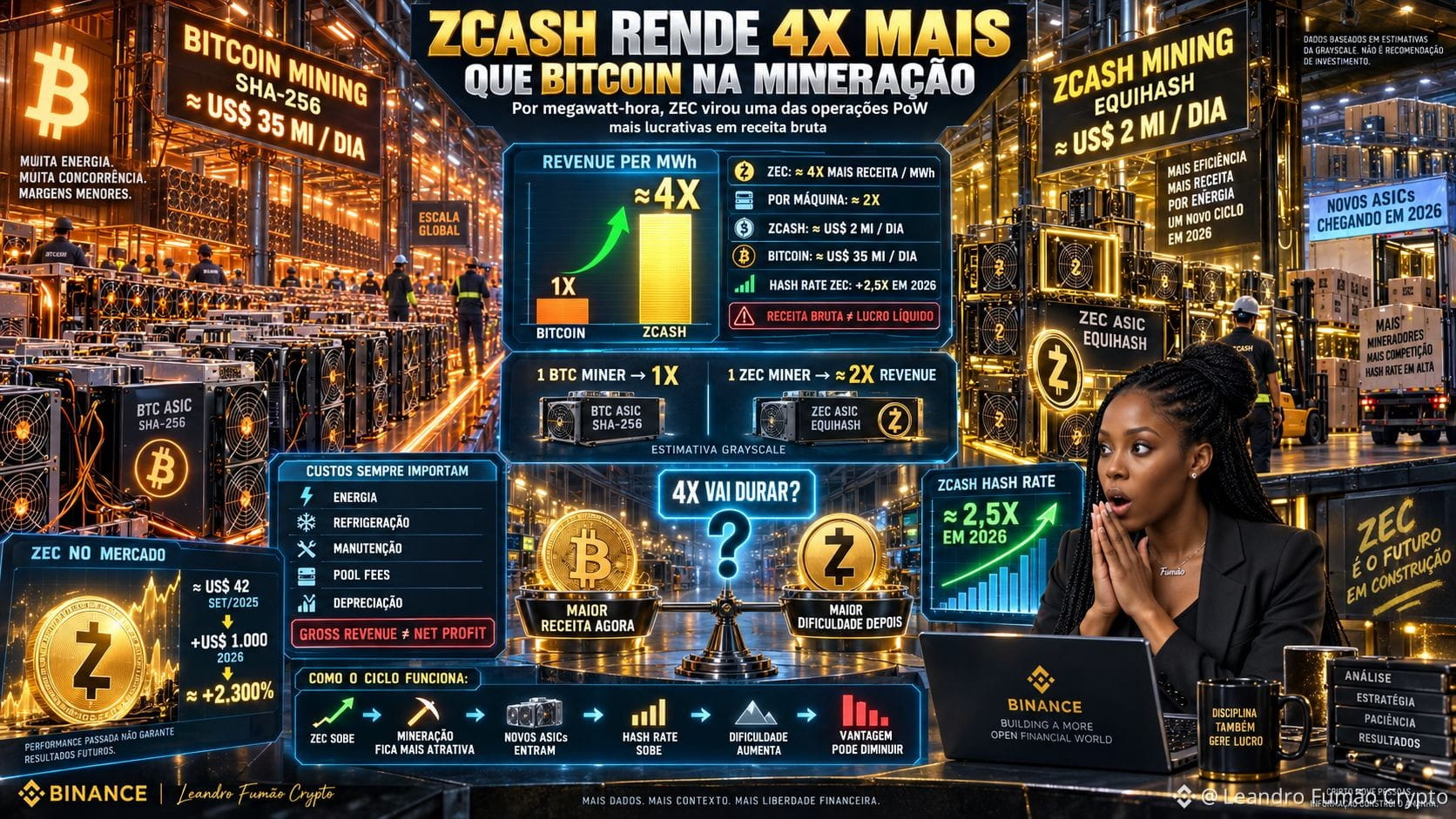
🌱˗ˋˏ🤑ˎˊ˗ 𝑨 𝑪𝑹𝒀𝑷𝑻𝑶 $ZEC 𝑬𝑺𝑻𝑨́ 𝑹𝑬𝑵𝑫𝑬𝑵𝑫𝑶 𝟒𝑿 𝑴𝑨𝑰𝑺 𝑸𝑼𝑨𝑳𝑰𝑫𝑨𝑫𝑬 𝑭𝑰𝑻𝑶𝑪𝑰𝑵 𝑷𝑶𝑹 𝑬𝑵𝑬𝑹𝑮𝑰𝑨 𝑼𝑺𝑨𝑫𝑨⚡
˗ˋˏ📈ˎˊ˗ The ZEC surge is also changing the mining economy.
According to estimates by Zach Pandl, research director at Grayscale, each megawatt-hour used to mine Zcash would generate approximately 4 times more gross revenue than the same amount of energy used to mine Bitcoin.
Today, Zcash miners together receive about $2 million per day, while Bitcoin distributes roughly $35 million.
BTC still dominates total revenue because its mining infrastructure is much larger. But when the comparison is made in terms of energy efficiency, the picture changes.
🔥 Grayscale also estimates that, machine for machine, a dedicated ZEC setup produces about 2x the daily revenue of an equivalent BTC miner.
But there’s a crucial detail:
REVENUE ≠ PROFIT.
Energy, cooling, maintenance, pool fees, and ASIC depreciation still need to be deducted. In addition, Bitcoin uses SHA-256 and Zcash uses Equihash: the machines are not interchangeable. A BTC miner can’t simply point its ASIC to ZEC.
👀 The market has already noticed the opportunity.
Zcash’s hash rate grew by about 2.5x in 2026, increasing network security — but also raising difficulty and gradually reducing each miner’s share of revenue.
All of this comes after an extraordinary revaluation of the $ZEC .
The report says the asset rose from about $42 in September 2025 to more than $1,000, accumulating a gain of nearly 2,300% over one year.
🔥 The big question now is:
how long can this 4x advantage last if more miners enter the race?
👇 If you had access to the necessary infrastructure, would you mine $BTC or Zcash?
#zcash #bitcoin.” #Mining
🌱˗ˋˏ🤑ˎˊ˗ 𝑨 𝑪𝑹𝒀𝑷𝑻𝑶 $ZEC 𝑬𝑺𝑻𝑨́ 𝑹𝑬𝑵𝑫𝑬𝑵𝑫𝑶 𝟒𝑿 𝑴𝑨𝑰𝑺 𝑸𝑼𝑨𝑳𝑰𝑫𝑨𝑫𝑬 𝑭𝑰𝑻𝑶𝑪𝑰𝑵 𝑷𝑶𝑹 𝑬𝑵𝑬𝑹𝑮𝑰𝑨 𝑼𝑺𝑨𝑫𝑨⚡
˗ˋˏ📈ˎˊ˗ The ZEC surge is also changing the mining economy.
According to estimates by Zach Pandl, research director at Grayscale, each megawatt-hour used to mine Zcash would generate approximately 4 times more gross revenue than the same amount of energy used to mine Bitcoin.
Today, Zcash miners together receive about $2 million per day, while Bitcoin distributes roughly $35 million.
BTC still dominates total revenue because its mining infrastructure is much larger. But when the comparison is made in terms of energy efficiency, the picture changes.
🔥 Grayscale also estimates that, machine for machine, a dedicated ZEC setup produces about 2x the daily revenue of an equivalent BTC miner.
But there’s a crucial detail:
REVENUE ≠ PROFIT.
Energy, cooling, maintenance, pool fees, and ASIC depreciation still need to be deducted. In addition, Bitcoin uses SHA-256 and Zcash uses Equihash: the machines are not interchangeable. A BTC miner can’t simply point its ASIC to ZEC.
👀 The market has already noticed the opportunity.
Zcash’s hash rate grew by about 2.5x in 2026, increasing network security — but also raising difficulty and gradually reducing each miner’s share of revenue.
All of this comes after an extraordinary revaluation of the $ZEC .
The report says the asset rose from about $42 in September 2025 to more than $1,000, accumulating a gain of nearly 2,300% over one year.
🔥 The big question now is:
how long can this 4x advantage last if more miners enter the race?
👇 If you had access to the necessary infrastructure, would you mine $BTC or Zcash?
#zcash #bitcoin.” #Mining
˗ˋˏ📈ˎˊ˗ The ZEC surge is also changing the mining economy.
According to estimates by Zach Pandl, research director at Grayscale, each megawatt-hour used to mine Zcash would generate approximately 4 times more gross revenue than the same amount of energy used to mine Bitcoin.
Today, Zcash miners together receive about $2 million per day, while Bitcoin distributes roughly $35 million.
BTC still dominates total revenue because its mining infrastructure is much larger. But when the comparison is made in terms of energy efficiency, the picture changes.
🔥 Grayscale also estimates that, machine for machine, a dedicated ZEC setup produces about 2x the daily revenue of an equivalent BTC miner.
But there’s a crucial detail:
REVENUE ≠ PROFIT.
Energy, cooling, maintenance, pool fees, and ASIC depreciation still need to be deducted. In addition, Bitcoin uses SHA-256 and Zcash uses Equihash: the machines are not interchangeable. A BTC miner can’t simply point its ASIC to ZEC.
👀 The market has already noticed the opportunity.
Zcash’s hash rate grew by about 2.5x in 2026, increasing network security — but also raising difficulty and gradually reducing each miner’s share of revenue.
All of this comes after an extraordinary revaluation of the $ZEC .
The report says the asset rose from about $42 in September 2025 to more than $1,000, accumulating a gain of nearly 2,300% over one year.
🔥 The big question now is:
how long can this 4x advantage last if more miners enter the race?
👇 If you had access to the necessary infrastructure, would you mine $BTC or Zcash?
#zcash #bitcoin.” #Mining
74

·
--
Bullish
₿ Two miners found a block simultaneously — one was discarded
On September 11, a single-block chain reorganization occurred on the Bitcoin network. Two major pools—Spiderpool and Antpool—found valid blocks almost simultaneously, triggering a brief contest to determine which block would be included in the main chain.
The block with the greatest accumulated work prevailed and was accepted by the network, while the other was discarded. This event was documented by analysts at Galaxy Research.
Single-block reorganizations are a rare but routine occurrence for Bitcoin: the network automatically selects the "heaviest" chain and discards the alternative. This poses no threat to the network.
{spot}(BTCUSDT)
$BTC #bitcoin #Mining
₿ Two miners found a block simultaneously — one was discarded
On September 11, a single-block chain reorganization occurred on the Bitcoin network. Two major pools—Spiderpool and Antpool—found valid blocks almost simultaneously, triggering a brief contest to determine which block would be included in the main chain.
The block with the greatest accumulated work prevailed and was accepted by the network, while the other was discarded. This event was documented by analysts at Galaxy Research.
Single-block reorganizations are a rare but routine occurrence for Bitcoin: the network automatically selects the "heaviest" chain and discards the alternative. This poses no threat to the network.
$BTC #bitcoin #Mining
On September 11, a single-block chain reorganization occurred on the Bitcoin network. Two major pools—Spiderpool and Antpool—found valid blocks almost simultaneously, triggering a brief contest to determine which block would be included in the main chain.
The block with the greatest accumulated work prevailed and was accepted by the network, while the other was discarded. This event was documented by analysts at Galaxy Research.
Single-block reorganizations are a rare but routine occurrence for Bitcoin: the network automatically selects the "heaviest" chain and discards the alternative. This poses no threat to the network.
$BTC #bitcoin #Mining

2
142

·
--
Bullish
🚨 Clandestine Crypto Farm Dismantled in Mexico for Energy Theft and Money Laundering
Mexican authorities shut down an illegal mining operation with around 300 GPUs and hidden satellite antennas in the state of Puebla. The facility was running directly connected to the infrastructure of a federal hydropower plant to steal electricity.
📉 Key Points of the Case
Energy “Cat” (Gato de Energia): The farm eliminated its mining costs by diverting power from the public grid in a remote area.
Suspected Cartels: The investigation points to money laundering by organized crime. Mining produces “clean” cryptocurrencies with no prior history, avoiding exchanges that require KYC.
Background in the Region: This is already the 4th dismantled clandestine mining operation in the state of Puebla since 2025.
💡 Market Outlook
Power theft and links to illegal activities increase regulatory pressure and government scrutiny on legitimate miners.
💬 How should the sector deal with illegal mining to avoid more regulatory pressure? Leave your comment, hit like, and follow for more updates! 👇
#CryptoNews #Mining #bitcoin #BinanceSquare #CryptoSecurity $BTC $SIREN $DOGE
🚨 Clandestine Crypto Farm Dismantled in Mexico for Energy Theft and Money Laundering
Mexican authorities shut down an illegal mining operation with around 300 GPUs and hidden satellite antennas in the state of Puebla. The facility was running directly connected to the infrastructure of a federal hydropower plant to steal electricity.
📉 Key Points of the Case
Energy “Cat” (Gato de Energia): The farm eliminated its mining costs by diverting power from the public grid in a remote area.
Suspected Cartels: The investigation points to money laundering by organized crime. Mining produces “clean” cryptocurrencies with no prior history, avoiding exchanges that require KYC.
Background in the Region: This is already the 4th dismantled clandestine mining operation in the state of Puebla since 2025.
💡 Market Outlook
Power theft and links to illegal activities increase regulatory pressure and government scrutiny on legitimate miners.
💬 How should the sector deal with illegal mining to avoid more regulatory pressure? Leave your comment, hit like, and follow for more updates! 👇
#CryptoNews #Mining #bitcoin #BinanceSquare #CryptoSecurity $BTC $SIREN $DOGE
Mexican authorities shut down an illegal mining operation with around 300 GPUs and hidden satellite antennas in the state of Puebla. The facility was running directly connected to the infrastructure of a federal hydropower plant to steal electricity.
📉 Key Points of the Case
Energy “Cat” (Gato de Energia): The farm eliminated its mining costs by diverting power from the public grid in a remote area.
Suspected Cartels: The investigation points to money laundering by organized crime. Mining produces “clean” cryptocurrencies with no prior history, avoiding exchanges that require KYC.
Background in the Region: This is already the 4th dismantled clandestine mining operation in the state of Puebla since 2025.
💡 Market Outlook
Power theft and links to illegal activities increase regulatory pressure and government scrutiny on legitimate miners.
💬 How should the sector deal with illegal mining to avoid more regulatory pressure? Leave your comment, hit like, and follow for more updates! 👇
#CryptoNews #Mining #bitcoin #BinanceSquare #CryptoSecurity $BTC $SIREN $DOGE

Soniarr:
up
6
4
246

Hashrate isn’t a machine counter. It’s an estimate built from how quickly blocks arrive.
The network knows the mining difficulty and sees the time between blocks. From that, it estimates how much hashing work miners must be doing to produce those blocks. A run of fast blocks can make estimated hashrate jump even if no new machines switched on. A run of slow blocks can drag it lower while the hardware stays exactly where it was.
Hypothetical example: if the network’s expected block interval is ten minutes but several blocks arrive in five, the estimate can imply twice the hashrate. That doesn’t prove miners doubled their rigs. It may just be statistical luck.
Reading the number as a live count of mining machines is the common error. It cannot tell you how many ASICs are running, where they are located, whether they’re profitable, or whether some capacity is temporarily offline. It also isn’t a clean measure of miner confidence. Difficulty changes alter the work required, while hardware efficiency keeps changing underneath the estimate.
For $BTC, the useful signal is persistence across a longer window, not one sharp print. Even then, estimated hashrate describes network output, not the financial health of every miner.
Not financial advice. Do your own research.
#Bitcoin #Mining #OnChain
Hashrate isn’t a machine counter. It’s an estimate built from how quickly blocks arrive.
The network knows the mining difficulty and sees the time between blocks. From that, it estimates how much hashing work miners must be doing to produce those blocks. A run of fast blocks can make estimated hashrate jump even if no new machines switched on. A run of slow blocks can drag it lower while the hardware stays exactly where it was.
Hypothetical example: if the network’s expected block interval is ten minutes but several blocks arrive in five, the estimate can imply twice the hashrate. That doesn’t prove miners doubled their rigs. It may just be statistical luck.
Reading the number as a live count of mining machines is the common error. It cannot tell you how many ASICs are running, where they are located, whether they’re profitable, or whether some capacity is temporarily offline. It also isn’t a clean measure of miner confidence. Difficulty changes alter the work required, while hardware efficiency keeps changing underneath the estimate.
For $BTC , the useful signal is persistence across a longer window, not one sharp print. Even then, estimated hashrate describes network output, not the financial health of every miner.
Not financial advice. Do your own research.
#Bitcoin #Mining #OnChain
The network knows the mining difficulty and sees the time between blocks. From that, it estimates how much hashing work miners must be doing to produce those blocks. A run of fast blocks can make estimated hashrate jump even if no new machines switched on. A run of slow blocks can drag it lower while the hardware stays exactly where it was.
Hypothetical example: if the network’s expected block interval is ten minutes but several blocks arrive in five, the estimate can imply twice the hashrate. That doesn’t prove miners doubled their rigs. It may just be statistical luck.
Reading the number as a live count of mining machines is the common error. It cannot tell you how many ASICs are running, where they are located, whether they’re profitable, or whether some capacity is temporarily offline. It also isn’t a clean measure of miner confidence. Difficulty changes alter the work required, while hardware efficiency keeps changing underneath the estimate.
For $BTC , the useful signal is persistence across a longer window, not one sharp print. Even then, estimated hashrate describes network output, not the financial health of every miner.
Not financial advice. Do your own research.
#Bitcoin #Mining #OnChain
53

·
--
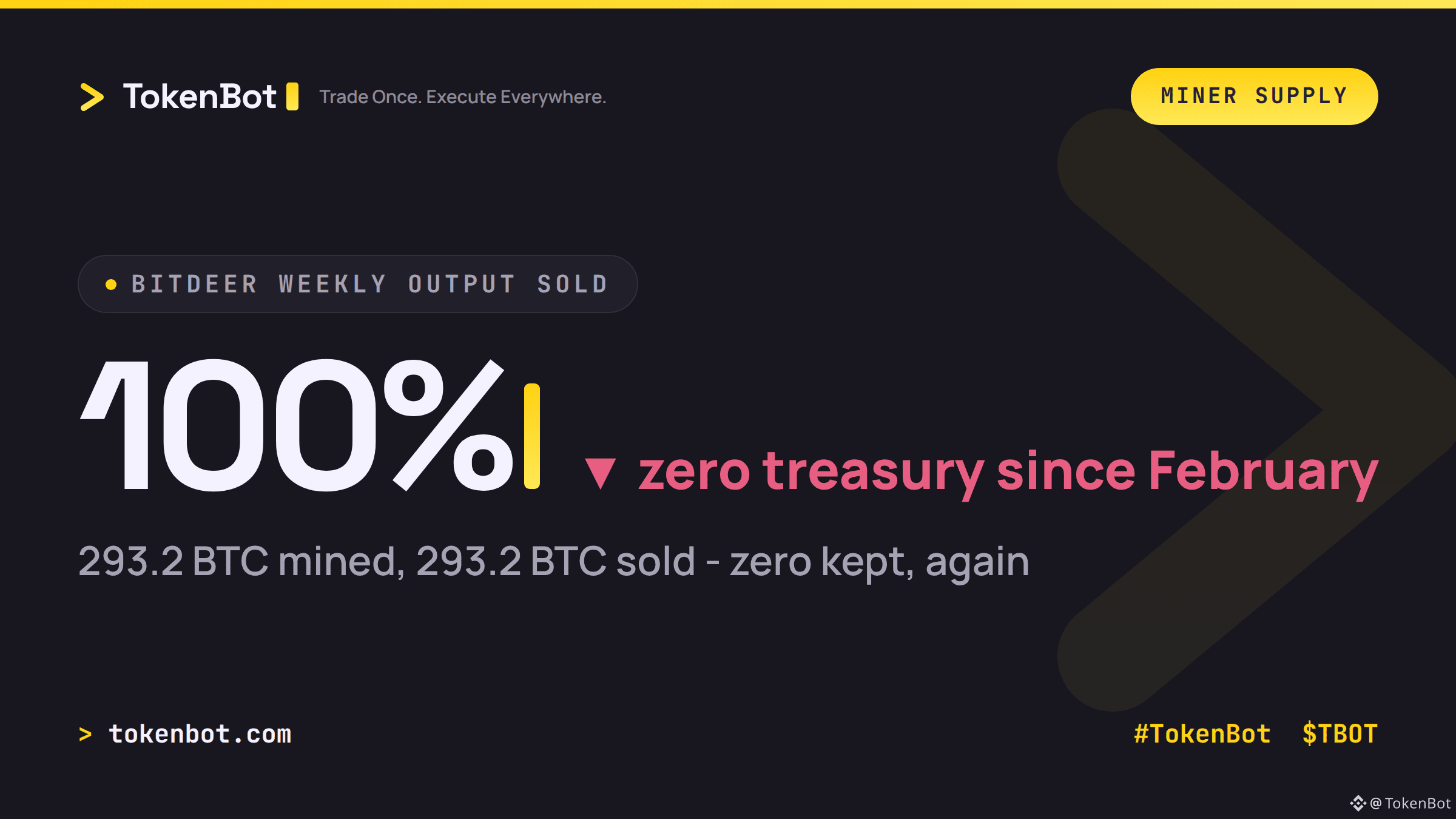
Bitdeer mined 293.2 BTC last week. It sold every single coin — zero BTC held in treasury, the same as every week since February.
That's not a one-off. A Nasdaq-listed miner is now running bitcoin as a cash-flow instrument instead of a balance-sheet asset, funneling fresh supply straight into fiat to fund its AI/HPC buildout. The old miner playbook was hold-through-halving; the new one is sell-on-mint.
Worth tracking: when the biggest structural sellers in the market refuse to hold their own output, who's actually absorbing that supply on every dip?
Trade the read, not just the headline — tokenbot.com
$BTC $TBOT #TokenBot #Bitcoin #Mining
Bitdeer mined 293.2 BTC last week. It sold every single coin — zero BTC held in treasury, the same as every week since February.
That's not a one-off. A Nasdaq-listed miner is now running bitcoin as a cash-flow instrument instead of a balance-sheet asset, funneling fresh supply straight into fiat to fund its AI/HPC buildout. The old miner playbook was hold-through-halving; the new one is sell-on-mint.
Worth tracking: when the biggest structural sellers in the market refuse to hold their own output, who's actually absorbing that supply on every dip?
Trade the read, not just the headline — tokenbot.com
$BTC $TBOT #TokenBot #Bitcoin #Mining
That's not a one-off. A Nasdaq-listed miner is now running bitcoin as a cash-flow instrument instead of a balance-sheet asset, funneling fresh supply straight into fiat to fund its AI/HPC buildout. The old miner playbook was hold-through-halving; the new one is sell-on-mint.
Worth tracking: when the biggest structural sellers in the market refuse to hold their own output, who's actually absorbing that supply on every dip?
Trade the read, not just the headline — tokenbot.com
$BTC $TBOT #TokenBot #Bitcoin #Mining
71
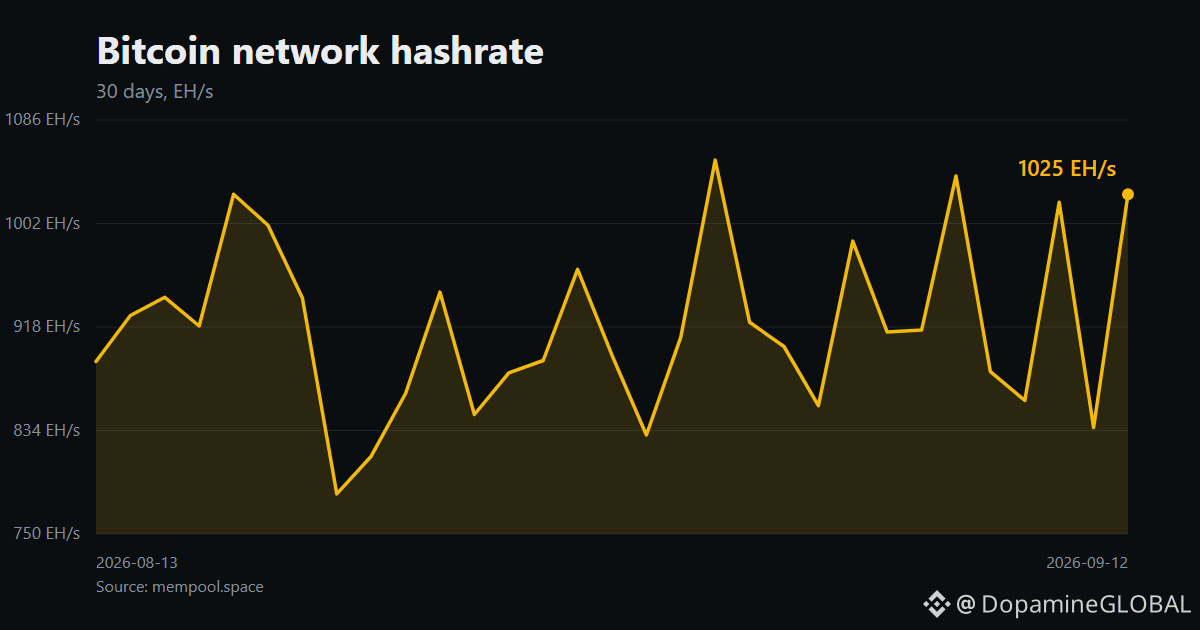
Bitcoin’s fee market is at the floor while the machines keep piling in. The next-block fee is 1 sat/vB, and the fee economy is also 1 sat/vB. Against that, network hashrate sits at 1025 EH/s, up 15.27% over 30d.
That’s a bad combination for anyone reading hashrate as a simple health meter. More hashrate means more computing power competing for the same block space. It does not mean more users are transacting, nor does it prove miners are profitable. $BTC can have a stronger security budget on paper while the fee side gives miners very little extra income.
The 30-day hashrate chart shows capacity expanding, but it can’t identify which operators are absorbing the cost, how efficient their hardware is, or whether treasury sales are happening. The pressure mechanism is clear enough: expensive competition meeting a fee market that’s paying the minimum visible rate.
That’s why “hashrate up” is not automatically bullish for miner economics. It can describe a tougher race, not better cash flow.
Not financial advice. Do your own research.
#Bitcoin #Mining #Onchain
Bitcoin’s fee market is at the floor while the machines keep piling in. The next-block fee is 1 sat/vB, and the fee economy is also 1 sat/vB. Against that, network hashrate sits at 1025 EH/s, up 15.27% over 30d.
That’s a bad combination for anyone reading hashrate as a simple health meter. More hashrate means more computing power competing for the same block space. It does not mean more users are transacting, nor does it prove miners are profitable. $BTC can have a stronger security budget on paper while the fee side gives miners very little extra income.
The 30-day hashrate chart shows capacity expanding, but it can’t identify which operators are absorbing the cost, how efficient their hardware is, or whether treasury sales are happening. The pressure mechanism is clear enough: expensive competition meeting a fee market that’s paying the minimum visible rate.
That’s why “hashrate up” is not automatically bullish for miner economics. It can describe a tougher race, not better cash flow.
Not financial advice. Do your own research.
#Bitcoin #Mining #Onchain
That’s a bad combination for anyone reading hashrate as a simple health meter. More hashrate means more computing power competing for the same block space. It does not mean more users are transacting, nor does it prove miners are profitable. $BTC can have a stronger security budget on paper while the fee side gives miners very little extra income.
The 30-day hashrate chart shows capacity expanding, but it can’t identify which operators are absorbing the cost, how efficient their hardware is, or whether treasury sales are happening. The pressure mechanism is clear enough: expensive competition meeting a fee market that’s paying the minimum visible rate.
That’s why “hashrate up” is not automatically bullish for miner economics. It can describe a tougher race, not better cash flow.
Not financial advice. Do your own research.
#Bitcoin #Mining #Onchain
292

·
--
Canada’s Prime Minister is aggressively promoting mining, seeking $723B in investment over 5 years totaling C$1T! This is absolutely massive bullish news! With abundant energy resources and crypto-friendly policies, Canada could attract more miners and crypto companies. As both traditional and digital mining accelerate, $BTC and $ETH may see another growth wave. This big investment won’t just boost Canada’s economy but could also inject liquidity into the crypto space! #crypto #mining #Canada #investment
Canada’s Prime Minister is aggressively promoting mining, seeking $723B in investment over 5 years totaling C$1T! This is absolutely massive bullish news! With abundant energy resources and crypto-friendly policies, Canada could attract more miners and crypto companies. As both traditional and digital mining accelerate, $BTC and $ETH may see another growth wave. This big investment won’t just boost Canada’s economy but could also inject liquidity into the crypto space! #crypto #mining #Canada #investment
178
🚨 Mexico Busts Large-Scale Illegal Crypto Mining Farm 📈 300 Computers Suspected of Stolen Electricity 🧠
📊 | $BTC | $ETH | $BNB |
- Please follow, like, and leave a comment to share your thoughts. 📈
- Mexican authorities destroyed a large underground crypto mining farm in Puebla.
- The mining farm was reportedly equipped with about 300 computers, using high-performance computing power for mining.
- Preliminary investigations suggest the electricity supply may involve stealing power from a federal hydropower facility.
- The case involves cross-regional electricity theft and has been handed over to the judiciary. 🔥
- In the short term, as the illegal mining farm was cracked down, related electricity costs may fall, which could have a positive impact on Bitcoin mining profits.
- Concerns in the market about supply-chain disruptions are expected to keep volatility elevated, and prices may remain range-bound in the near term.
- Currently, whale activity appears neutral, with no large-scale buying or selling observed.
- If regulation tightens further, the risks posed by illegal mining farms may decrease, while compliance costs for the industry are expected to rise.
- Do you think stronger regulation will improve the competitiveness of legal mining? Feel free to discuss.
- Keep following this platform and share your insights.
- #Bitcoin #Crypto #Mining #Whales #Blockchain
🚨 Mexico Busts Large-Scale Illegal Crypto Mining Farm 📈 300 Computers Suspected of Stolen Electricity 🧠
📊 | $BTC | $ETH | $BNB |
- Please follow, like, and leave a comment to share your thoughts. 📈
- Mexican authorities destroyed a large underground crypto mining farm in Puebla.
- The mining farm was reportedly equipped with about 300 computers, using high-performance computing power for mining.
- Preliminary investigations suggest the electricity supply may involve stealing power from a federal hydropower facility.
- The case involves cross-regional electricity theft and has been handed over to the judiciary. 🔥
- In the short term, as the illegal mining farm was cracked down, related electricity costs may fall, which could have a positive impact on Bitcoin mining profits.
- Concerns in the market about supply-chain disruptions are expected to keep volatility elevated, and prices may remain range-bound in the near term.
- Currently, whale activity appears neutral, with no large-scale buying or selling observed.
- If regulation tightens further, the risks posed by illegal mining farms may decrease, while compliance costs for the industry are expected to rise.
- Do you think stronger regulation will improve the competitiveness of legal mining? Feel free to discuss.
- Keep following this platform and share your insights.
- #Bitcoin #Crypto #Mining #Whales #Blockchain
📊 | $BTC | $ETH | $BNB |
- Please follow, like, and leave a comment to share your thoughts. 📈
- Mexican authorities destroyed a large underground crypto mining farm in Puebla.
- The mining farm was reportedly equipped with about 300 computers, using high-performance computing power for mining.
- Preliminary investigations suggest the electricity supply may involve stealing power from a federal hydropower facility.
- The case involves cross-regional electricity theft and has been handed over to the judiciary. 🔥
- In the short term, as the illegal mining farm was cracked down, related electricity costs may fall, which could have a positive impact on Bitcoin mining profits.
- Concerns in the market about supply-chain disruptions are expected to keep volatility elevated, and prices may remain range-bound in the near term.
- Currently, whale activity appears neutral, with no large-scale buying or selling observed.
- If regulation tightens further, the risks posed by illegal mining farms may decrease, while compliance costs for the industry are expected to rise.
- Do you think stronger regulation will improve the competitiveness of legal mining? Feel free to discuss.
- Keep following this platform and share your insights.
- #Bitcoin #Crypto #Mining #Whales #Blockchain
8

·
--
🔸 0.43%
that's fees as a share of what miners earned over a day
the halving is on a schedule everyone can recite. the line that's supposed to replace the subsidy afterwards is a rounding error, and almost nobody quotes it
block rewards shrink on time. the fee market was supposed to grow into the gap. one of those two is happening
the year says it from another side:
— eight difficulty increases, 33.34% together
— ten decreases, -45.27% together
— net -11.93% across the timeframe
so the network breathes. it doesn't grow
and every four years the half of miner revenue that arrives on a schedule gets cut in half again, while the half that has to be earned from actual usage sits at 0.43% and shows no sign of moving
$BTC doesn't need an answer to this today. it needs one eventually, and eventually has a date on it whether anyone likes the date or not
#Mining
🔸 0.43%
that's fees as a share of what miners earned over a day
the halving is on a schedule everyone can recite. the line that's supposed to replace the subsidy afterwards is a rounding error, and almost nobody quotes it
block rewards shrink on time. the fee market was supposed to grow into the gap. one of those two is happening
the year says it from another side:
— eight difficulty increases, 33.34% together
— ten decreases, -45.27% together
— net -11.93% across the timeframe
so the network breathes. it doesn't grow
and every four years the half of miner revenue that arrives on a schedule gets cut in half again, while the half that has to be earned from actual usage sits at 0.43% and shows no sign of moving
$BTC doesn't need an answer to this today. it needs one eventually, and eventually has a date on it whether anyone likes the date or not
#Mining
that's fees as a share of what miners earned over a day
the halving is on a schedule everyone can recite. the line that's supposed to replace the subsidy afterwards is a rounding error, and almost nobody quotes it
block rewards shrink on time. the fee market was supposed to grow into the gap. one of those two is happening
the year says it from another side:
— eight difficulty increases, 33.34% together
— ten decreases, -45.27% together
— net -11.93% across the timeframe
so the network breathes. it doesn't grow
and every four years the half of miner revenue that arrives on a schedule gets cut in half again, while the half that has to be earned from actual usage sits at 0.43% and shows no sign of moving
$BTC doesn't need an answer to this today. it needs one eventually, and eventually has a date on it whether anyone likes the date or not
#Mining
5
50
·
--
🔸 hashprice up 22.24%
hashrate barely moved
so the machines are the same and the payout isn't. that's the week for a miner
the numbers:
— difficulty up 1.31%, to 127.45 trillion on September 6, 2026
— eighth increase of the year
— hashrate around 934 EH/s, still under 1 ZH/s
— hashprice $39.63 per PH/s per day
that last line decides whether an old rig stays plugged in. every fleet has a level where the electricity costs more than the coin pays, and a week like this pushes a pile of them back over it
for as long as it lasts
why I watch it at all: miners are the only $BTC holders with a monthly electricity bill. they sell into strength because they have to, not because they think anything
where the extra 22.24% came from, I don't know. the numbers I have don't say 🤔
#Mining
🔸 hashprice up 22.24%
hashrate barely moved
so the machines are the same and the payout isn't. that's the week for a miner
the numbers:
— difficulty up 1.31%, to 127.45 trillion on September 6, 2026
— eighth increase of the year
— hashrate around 934 EH/s, still under 1 ZH/s
— hashprice $39.63 per PH/s per day
that last line decides whether an old rig stays plugged in. every fleet has a level where the electricity costs more than the coin pays, and a week like this pushes a pile of them back over it
for as long as it lasts
why I watch it at all: miners are the only $BTC holders with a monthly electricity bill. they sell into strength because they have to, not because they think anything
where the extra 22.24% came from, I don't know. the numbers I have don't say 🤔
#Mining
hashrate barely moved
so the machines are the same and the payout isn't. that's the week for a miner
the numbers:
— difficulty up 1.31%, to 127.45 trillion on September 6, 2026
— eighth increase of the year
— hashrate around 934 EH/s, still under 1 ZH/s
— hashprice $39.63 per PH/s per day
that last line decides whether an old rig stays plugged in. every fleet has a level where the electricity costs more than the coin pays, and a week like this pushes a pile of them back over it
for as long as it lasts
why I watch it at all: miners are the only $BTC holders with a monthly electricity bill. they sell into strength because they have to, not because they think anything
where the extra 22.24% came from, I don't know. the numbers I have don't say 🤔
#Mining
ФЕДАТ - цифровая экосистема спорта:
Майнеры — это единственный источник постоянного предложения BTC на рынке из-за их ежемесячных счетов за электричество. Рост хэшпрайса на 22% — это отличный буфер, который спасает маржинальность и удерживает старые машины от отключения. Отличный фундаментальный разбор! ⛏️📈
1
6
58
·
--
Chinese Version:
Brazil competes for key mineral resources, but state control makes investors hesitate! The mining market is about to change—key mineral tokens may seize the opportunity. #criticalminerals #Brazil $LITH $BTC
English:
Brazil's critical minerals push meets a state control dilemma! Miners are hesitant as the market faces a potential shake-up. Key mineral tokens could see opportunities. #criticalminerals #mining $LITH $BTC
Chinese Version:
Brazil competes for key mineral resources, but state control makes investors hesitate! The mining market is about to change—key mineral tokens may seize the opportunity. #criticalminerals #Brazil $LITH $BTC
English:
Brazil's critical minerals push meets a state control dilemma! Miners are hesitant as the market faces a potential shake-up. Key mineral tokens could see opportunities. #criticalminerals #mining $LITH $BTC
Brazil competes for key mineral resources, but state control makes investors hesitate! The mining market is about to change—key mineral tokens may seize the opportunity. #criticalminerals #Brazil $LITH $BTC
English:
Brazil's critical minerals push meets a state control dilemma! Miners are hesitant as the market faces a potential shake-up. Key mineral tokens could see opportunities. #criticalminerals #mining $LITH $BTC
76

·
--
Bitcoin minors miss the train: BTC climbs 22% since August 17, but mining stocks show a median gain of only 1.8%. At $78,488 (-0.52%) today, spot remains volatile while the infrastructure underperforms. ETH at $2,481 (-0.57%) follows the same cautious pace. This is a clear post-halving signal of distrust: investors trust spot, not mining margins. Are you staying on Bitcoin or betting on miners? #Bitcoin #Mining
Bitcoin minors miss the train: BTC climbs 22% since August 17, but mining stocks show a median gain of only 1.8%. At $78,488 (-0.52%) today, spot remains volatile while the infrastructure underperforms. ETH at $2,481 (-0.57%) follows the same cautious pace. This is a clear post-halving signal of distrust: investors trust spot, not mining margins. Are you staying on Bitcoin or betting on miners? #Bitcoin #Mining
99

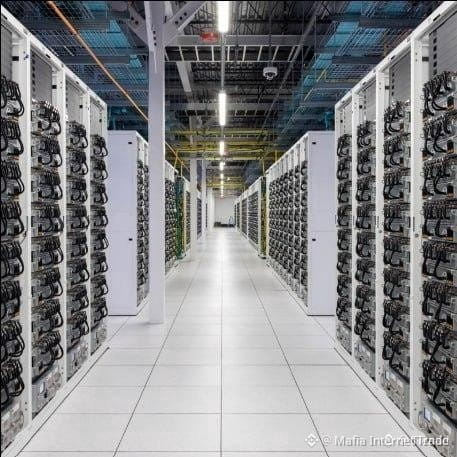
🚨 $BTC MINERS TURN AI, REVENUE SKYROCKETS WHILE HASHRATE PLUMMETS ⚡
📊 AI‑powered rigs are now pulling 25× more revenue per kWh, but the network’s hashrate slipped 21%, sparking a classic supply‑demand tug‑of‑war. 🦈 Smart money eyes the upside: compute demand could turbo‑charge ancillary tokens like $IOST and $KAT as AI workloads balloon. 🌊 Yet the dip in mining profitability raises a red flag on security buffers, a potential liquidity squeeze for long‑term holders.
⚡ Optimists flag a new wave of institutional compute appetite, while pessimists warn the hash‑drop could thin the defender line. Which side of the AI‑mining divide will dictate Bitcoin’s next move? 🤔👇
⚠️ Not financial advice. Always manage your risk. 🛡️
🏷️ #BTC #AIShift #Mining #Crypto
🚀 ⚡
🚨 $BTC MINERS TURN AI, REVENUE SKYROCKETS WHILE HASHRATE PLUMMETS ⚡
📊 AI‑powered rigs are now pulling 25× more revenue per kWh, but the network’s hashrate slipped 21%, sparking a classic supply‑demand tug‑of‑war. 🦈 Smart money eyes the upside: compute demand could turbo‑charge ancillary tokens like $IOST and $KAT as AI workloads balloon. 🌊 Yet the dip in mining profitability raises a red flag on security buffers, a potential liquidity squeeze for long‑term holders.
⚡ Optimists flag a new wave of institutional compute appetite, while pessimists warn the hash‑drop could thin the defender line. Which side of the AI‑mining divide will dictate Bitcoin’s next move? 🤔👇
⚠️ Not financial advice. Always manage your risk. 🛡️
🏷️ #BTC #AIShift #Mining #Crypto
🚀 ⚡
📊 AI‑powered rigs are now pulling 25× more revenue per kWh, but the network’s hashrate slipped 21%, sparking a classic supply‑demand tug‑of‑war. 🦈 Smart money eyes the upside: compute demand could turbo‑charge ancillary tokens like $IOST and $KAT as AI workloads balloon. 🌊 Yet the dip in mining profitability raises a red flag on security buffers, a potential liquidity squeeze for long‑term holders.
⚡ Optimists flag a new wave of institutional compute appetite, while pessimists warn the hash‑drop could thin the defender line. Which side of the AI‑mining divide will dictate Bitcoin’s next move? 🤔👇
⚠️ Not financial advice. Always manage your risk. 🛡️
🏷️ #BTC #AIShift #Mining #Crypto
🚀 ⚡

176

📊 US mining company announces Q2 results and moves toward artificial intelligence
One of the publicly listed Bitcoin mining companies in the United States has announced its financial results for the second quarter of 2026, achieving total revenue of $50.8 million. The company said it mined 656 bitcoins during this period, with a notable decline in the average cash mining cost per bitcoin. Management also indicated a strategic shift toward leveraging artificial intelligence opportunities alongside mining operations.
━━━━━━━━━━━━━━
📊 Impact: 📊 Medium
🏷️ OTHER
#Mining #Earnings #AI #Bitcoin #CorporateNews
📰 Source: biztoc.com
📊 US mining company announces Q2 results and moves toward artificial intelligence
One of the publicly listed Bitcoin mining companies in the United States has announced its financial results for the second quarter of 2026, achieving total revenue of $50.8 million. The company said it mined 656 bitcoins during this period, with a notable decline in the average cash mining cost per bitcoin. Management also indicated a strategic shift toward leveraging artificial intelligence opportunities alongside mining operations.
━━━━━━━━━━━━━━
📊 Impact: 📊 Medium
🏷️ OTHER
#Mining #Earnings #AI #Bitcoin #CorporateNews
📰 Source: biztoc.com
One of the publicly listed Bitcoin mining companies in the United States has announced its financial results for the second quarter of 2026, achieving total revenue of $50.8 million. The company said it mined 656 bitcoins during this period, with a notable decline in the average cash mining cost per bitcoin. Management also indicated a strategic shift toward leveraging artificial intelligence opportunities alongside mining operations.
━━━━━━━━━━━━━━
📊 Impact: 📊 Medium
🏷️ OTHER
#Mining #Earnings #AI #Bitcoin #CorporateNews
📰 Source: biztoc.com

·
--
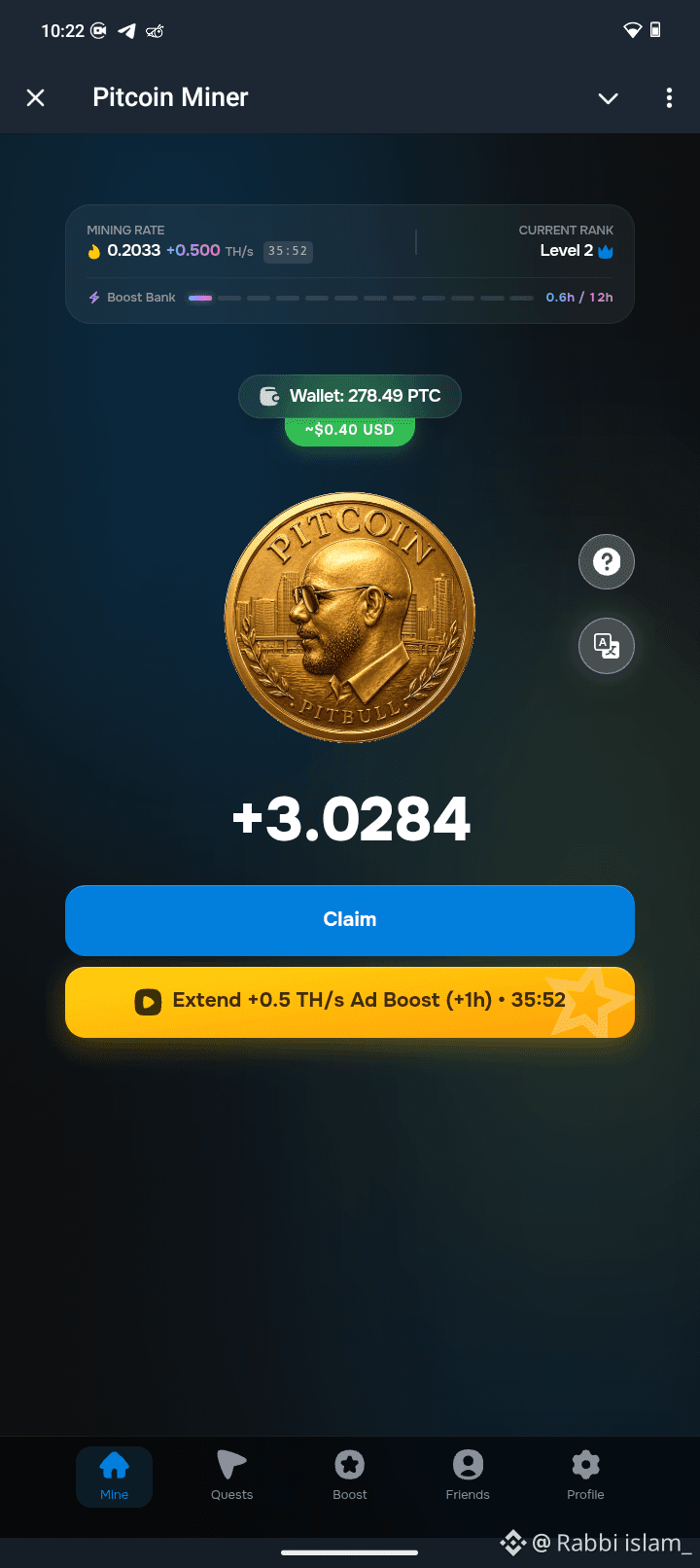
🔥 New Telegram Mining Bot "Pitcoin Miner" – Mine Free $PTC Tokens Now! 🚀
Looking for the next big crypto project on Telegram? Check out Pitcoin Miner! You can start mining PTC tokens completely for free without any investment.
🌟 Key Features:
Easy Mining: Claim your PTC tokens with just a few clicks every day.
Speed Boost: Increase your mining rate (+0.5 TH/s) easily by extending your ad boost and completing tasks.
Level System: Upgrade your rank and complete quests to maximize your daily yield.
👇 Join now and start mining via the link below:
👉 https://t.me/pitbullcoinbot/app?startapp=7694782730
⚡ Don't miss out early! Join now and start accumulating your tokens today.
#crypto #Mining #FreeCrypto #BinanceSquare
🔥 New Telegram Mining Bot "Pitcoin Miner" – Mine Free $PTC Tokens Now! 🚀
Looking for the next big crypto project on Telegram? Check out Pitcoin Miner! You can start mining PTC tokens completely for free without any investment.
🌟 Key Features:
Easy Mining: Claim your PTC tokens with just a few clicks every day.
Speed Boost: Increase your mining rate (+0.5 TH/s) easily by extending your ad boost and completing tasks.
Level System: Upgrade your rank and complete quests to maximize your daily yield.
👇 Join now and start mining via the link below:
👉 https://t.me/pitbullcoinbot/app?startapp=7694782730
⚡ Don't miss out early! Join now and start accumulating your tokens today.
#crypto #Mining #FreeCrypto #BinanceSquare
Looking for the next big crypto project on Telegram? Check out Pitcoin Miner! You can start mining PTC tokens completely for free without any investment.
🌟 Key Features:
Easy Mining: Claim your PTC tokens with just a few clicks every day.
Speed Boost: Increase your mining rate (+0.5 TH/s) easily by extending your ad boost and completing tasks.
Level System: Upgrade your rank and complete quests to maximize your daily yield.
👇 Join now and start mining via the link below:
👉 https://t.me/pitbullcoinbot/app?startapp=7694782730
⚡ Don't miss out early! Join now and start accumulating your tokens today.
#crypto #Mining #FreeCrypto #BinanceSquare
8
⛏️ BitFuFu Announces Bitcoin Production Updates and Operations for August 2026
BitFuFu, a leading Bitcoin mining and services company, has announced its unaudited operational production metrics for August 2026. The announcement includes details about the amount of Bitcoin mined during the stated period and updates on the company’s operations.
━━━━━━━━━━━━━━
📊 Impact: 📊 Average
🏷️ BITCOIN
#Bitcoin #Mining #BitFuFu #CryptoNews #Blockchain
📰 Source: financialpost.com
⛏️ BitFuFu Announces Bitcoin Production Updates and Operations for August 2026
BitFuFu, a leading Bitcoin mining and services company, has announced its unaudited operational production metrics for August 2026. The announcement includes details about the amount of Bitcoin mined during the stated period and updates on the company’s operations.
━━━━━━━━━━━━━━
📊 Impact: 📊 Average
🏷️ BITCOIN
#Bitcoin #Mining #BitFuFu #CryptoNews #Blockchain
📰 Source: financialpost.com
BitFuFu, a leading Bitcoin mining and services company, has announced its unaudited operational production metrics for August 2026. The announcement includes details about the amount of Bitcoin mined during the stated period and updates on the company’s operations.
━━━━━━━━━━━━━━
📊 Impact: 📊 Average
🏷️ BITCOIN
#Bitcoin #Mining #BitFuFu #CryptoNews #Blockchain
📰 Source: financialpost.com
46
⛏️ Ocean Mining appoints Bob Burnett as Chairman of the Board
Ocean Mining announced the appointment of the veteran in the cryptocurrency sector, Bob Burnett, as Chairman of its Board of Directors. The appointment comes as the company prepares to expand its operations, and his dual role in leading the company may add some challenges related to decentralization in the Bitcoin mining industry.
━━━━━━━━━━━━━━
📊 Impact: 📊 Moderate
🏷️ BITCOIN
#Bitcoin #Mining #Leadership #CryptoNews #Blockchain
📰 Source: cryptobriefing.com
⛏️ Ocean Mining appoints Bob Burnett as Chairman of the Board
Ocean Mining announced the appointment of the veteran in the cryptocurrency sector, Bob Burnett, as Chairman of its Board of Directors. The appointment comes as the company prepares to expand its operations, and his dual role in leading the company may add some challenges related to decentralization in the Bitcoin mining industry.
━━━━━━━━━━━━━━
📊 Impact: 📊 Moderate
🏷️ BITCOIN
#Bitcoin #Mining #Leadership #CryptoNews #Blockchain
📰 Source: cryptobriefing.com
Ocean Mining announced the appointment of the veteran in the cryptocurrency sector, Bob Burnett, as Chairman of its Board of Directors. The appointment comes as the company prepares to expand its operations, and his dual role in leading the company may add some challenges related to decentralization in the Bitcoin mining industry.
━━━━━━━━━━━━━━
📊 Impact: 📊 Moderate
🏷️ BITCOIN
#Bitcoin #Mining #Leadership #CryptoNews #Blockchain
📰 Source: cryptobriefing.com
9

·
--
$BTC
BitFuFu is adding to its Bitcoin reserve.
The Singapore-based mining company has pushed its treasury holdings to 1,373 , reinforcing a strategy that goes beyond simply mining and selling into the market.
$BTC
Why it matters: miners sit at the sharp end of Bitcoin’s economics. When a publicly visible mining business chooses to retain more of what it produces, it signals confidence in holding the asset—but it also increases the company’s exposure to price swings and operational pressure.
This is not a market-wide demand metric on its own, and the report does not detail the pace or cost of the accumulation. Still, corporate treasury moves remain worth tracking because they show how industry participants are positioning their balance sheets.
The next thing to watch is whether BitFuFu continues accumulating, adjusts its mining strategy, or provides more detail on how it plans to manage treasury risk.
Are Bitcoin miners becoming longer-term holders rather than automatic sellers?
#Bitcoin #Mining #CryptoNews
$BTC
BitFuFu is adding to its Bitcoin reserve.
The Singapore-based mining company has pushed its treasury holdings to 1,373 , reinforcing a strategy that goes beyond simply mining and selling into the market.
$BTC
Why it matters: miners sit at the sharp end of Bitcoin’s economics. When a publicly visible mining business chooses to retain more of what it produces, it signals confidence in holding the asset—but it also increases the company’s exposure to price swings and operational pressure.
This is not a market-wide demand metric on its own, and the report does not detail the pace or cost of the accumulation. Still, corporate treasury moves remain worth tracking because they show how industry participants are positioning their balance sheets.
The next thing to watch is whether BitFuFu continues accumulating, adjusts its mining strategy, or provides more detail on how it plans to manage treasury risk.
Are Bitcoin miners becoming longer-term holders rather than automatic sellers?
#Bitcoin #Mining #CryptoNews
BitFuFu is adding to its Bitcoin reserve.
The Singapore-based mining company has pushed its treasury holdings to 1,373 , reinforcing a strategy that goes beyond simply mining and selling into the market.
$BTC
Why it matters: miners sit at the sharp end of Bitcoin’s economics. When a publicly visible mining business chooses to retain more of what it produces, it signals confidence in holding the asset—but it also increases the company’s exposure to price swings and operational pressure.
This is not a market-wide demand metric on its own, and the report does not detail the pace or cost of the accumulation. Still, corporate treasury moves remain worth tracking because they show how industry participants are positioning their balance sheets.
The next thing to watch is whether BitFuFu continues accumulating, adjusts its mining strategy, or provides more detail on how it plans to manage treasury risk.
Are Bitcoin miners becoming longer-term holders rather than automatic sellers?
#Bitcoin #Mining #CryptoNews

38
Log in to explore more content
Join global crypto users on Binance Square
⚡️ Get latest and useful information about crypto.
💬 Trusted by the world’s largest crypto exchange.
👍 Discover real insights from verified creators.
Email / Phone number
Trending Topics
1
#FedRateWatch
1.4M views
6,412 Discussing
2
#ZcashRises6%
33,738 views
520 Discussing
3
#XRPSinks10%
22,130 views
342 Discussing
4
#BitcoinETFsShed$450M
3,361 views
71 Discussing
5
#CircleOpensArcMainnet
11,042 views
235 Discussing
6
#ZcashHoldersBackNU7Upgrade
21,966 views
406 Discussing
7
#MSTRTradingVolumeSurpassesMorganStanley
22,549 views
567 Discussing
8
#BitcoinFalls4%
46,034 views
876 Discussing
9
#SKHynixInTalksToMakeMemoryChipsInUS
19,149 views
352 Discussing
10
#OpenAIDiscussesNewFundingAt$1.2TValuation
4,710 views
57 Discussing