

#mining
mining
1.2M views
3,881 Discussing
Hot
Latest

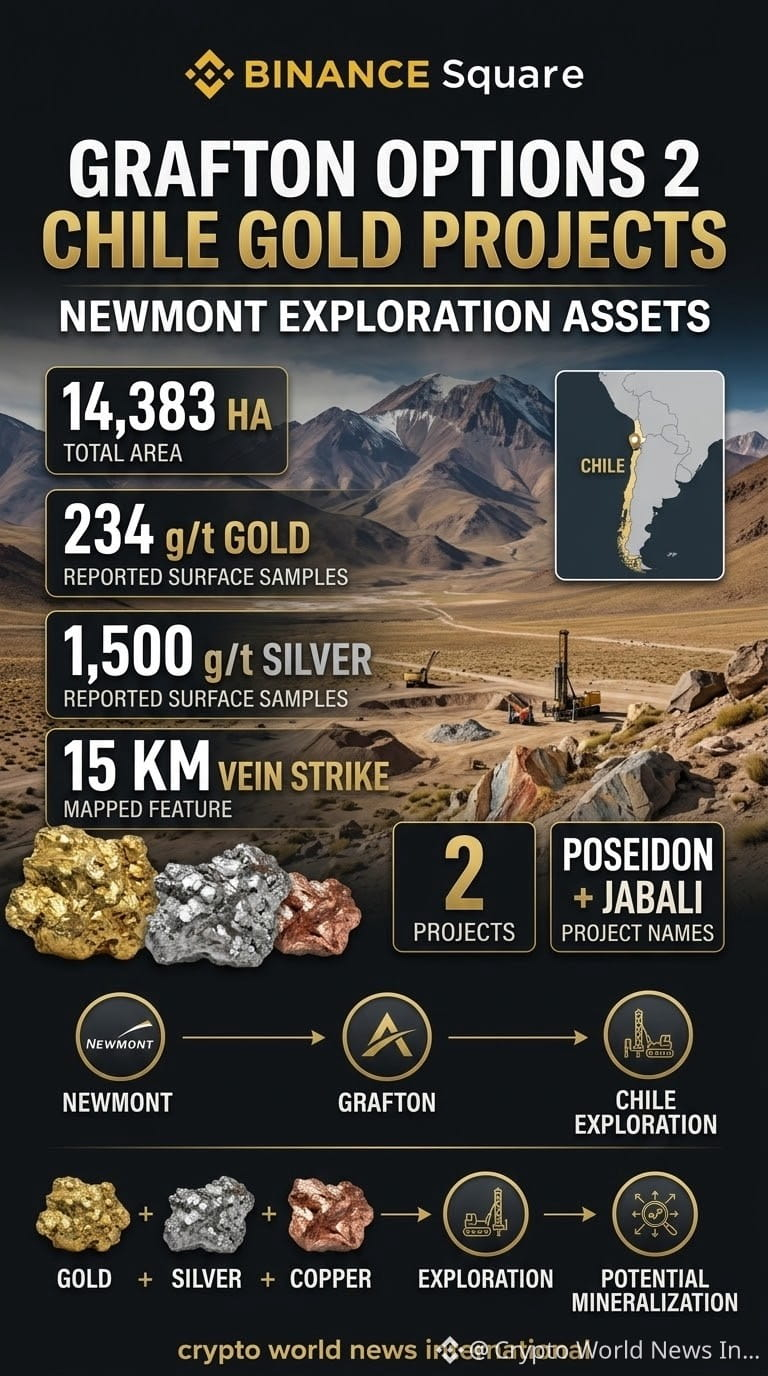
🚨 GRAFTON OPTIONS 2 GOLD PROJECTS FROM NEWMONT
Grafton Resources has secured an exclusive option to acquire 100% of the Poseidon and Jabali exploration projects in Chile from Newmont, expanding its gold-silver-copper exploration footprint.
🔑 Key Points:
• 🟡 2 Chilean exploration projects
• 📍 14,383 ha contiguous Alicahue–Poseidon area
• ⛏️ Poseidon samples reached up to 234 g/t gold
• ⚪ Surface samples reached up to 1,500 g/t silver
• 📏 Potential gold-bearing veins extend across 15 km
• 🔎 Jabali remains undrilled, with drill-preparation infrastructure largely in place
📊 Market Insight:
The deal expands Grafton’s exploration portfolio in Chile’s Andean mineral belt, combining existing gold-copper ground with additional gold-silver-copper targets from Newmont.
🔥 Theme to Watch: GOLD • SILVER • COPPER • MINING
#Gold #GoldMining #Silver #Copper #Mining $XAU $XAG
{future}(XAGUSDT)
{future}(XAUUSDT)
🚨 GRAFTON OPTIONS 2 GOLD PROJECTS FROM NEWMONT
Grafton Resources has secured an exclusive option to acquire 100% of the Poseidon and Jabali exploration projects in Chile from Newmont, expanding its gold-silver-copper exploration footprint.
🔑 Key Points:
• 🟡 2 Chilean exploration projects
• 📍 14,383 ha contiguous Alicahue–Poseidon area
• ⛏️ Poseidon samples reached up to 234 g/t gold
• ⚪ Surface samples reached up to 1,500 g/t silver
• 📏 Potential gold-bearing veins extend across 15 km
• 🔎 Jabali remains undrilled, with drill-preparation infrastructure largely in place
📊 Market Insight:
The deal expands Grafton’s exploration portfolio in Chile’s Andean mineral belt, combining existing gold-copper ground with additional gold-silver-copper targets from Newmont.
🔥 Theme to Watch: GOLD • SILVER • COPPER • MINING
#Gold #GoldMining #Silver #Copper #Mining $XAU $XAG
Grafton Resources has secured an exclusive option to acquire 100% of the Poseidon and Jabali exploration projects in Chile from Newmont, expanding its gold-silver-copper exploration footprint.
🔑 Key Points:
• 🟡 2 Chilean exploration projects
• 📍 14,383 ha contiguous Alicahue–Poseidon area
• ⛏️ Poseidon samples reached up to 234 g/t gold
• ⚪ Surface samples reached up to 1,500 g/t silver
• 📏 Potential gold-bearing veins extend across 15 km
• 🔎 Jabali remains undrilled, with drill-preparation infrastructure largely in place
📊 Market Insight:
The deal expands Grafton’s exploration portfolio in Chile’s Andean mineral belt, combining existing gold-copper ground with additional gold-silver-copper targets from Newmont.
🔥 Theme to Watch: GOLD • SILVER • COPPER • MINING
#Gold #GoldMining #Silver #Copper #Mining $XAU $XAG
211

·
--
🚨 KAZAKHSTAN TARGETS FLARED OIL GAS TO POWER 1.2 TWH OF $BTC MINING! ⚡
Kazakhstan is tapping institutional efficiency by channeling wasted flare gas into $BTC mining infrastructure. 📊 Converting 1.2 TWh of discarded oil field energy annually turns an environmental inefficiency into a robust network security anchor.
Smart money understands that cheap, stranded energy capture directly solidifies the long-term hash rate baseline for $BTC . 💡 As energy producers optimize their balance sheets through crypto integration, institutional conviction at the structural layer continues to compound quietly.
💬 Will sovereign energy monetization accelerate the next major structural shift in global hash rate distribution? 👇
⚠️ Not financial advice. Always manage your risk. 🛡️
🏷️ #BTC #Bitcoin #Crypto #Mining
🦈 ⚡
🚨 KAZAKHSTAN TARGETS FLARED OIL GAS TO POWER 1.2 TWH OF $BTC MINING! ⚡
Kazakhstan is tapping institutional efficiency by channeling wasted flare gas into $BTC mining infrastructure. 📊 Converting 1.2 TWh of discarded oil field energy annually turns an environmental inefficiency into a robust network security anchor.
Smart money understands that cheap, stranded energy capture directly solidifies the long-term hash rate baseline for $BTC . 💡 As energy producers optimize their balance sheets through crypto integration, institutional conviction at the structural layer continues to compound quietly.
💬 Will sovereign energy monetization accelerate the next major structural shift in global hash rate distribution? 👇
⚠️ Not financial advice. Always manage your risk. 🛡️
🏷️ #BTC #Bitcoin #Crypto #Mining
🦈 ⚡
Kazakhstan is tapping institutional efficiency by channeling wasted flare gas into $BTC mining infrastructure. 📊 Converting 1.2 TWh of discarded oil field energy annually turns an environmental inefficiency into a robust network security anchor.
Smart money understands that cheap, stranded energy capture directly solidifies the long-term hash rate baseline for $BTC . 💡 As energy producers optimize their balance sheets through crypto integration, institutional conviction at the structural layer continues to compound quietly.
💬 Will sovereign energy monetization accelerate the next major structural shift in global hash rate distribution? 👇
⚠️ Not financial advice. Always manage your risk. 🛡️
🏷️ #BTC #Bitcoin #Crypto #Mining
🦈 ⚡

16

See translation
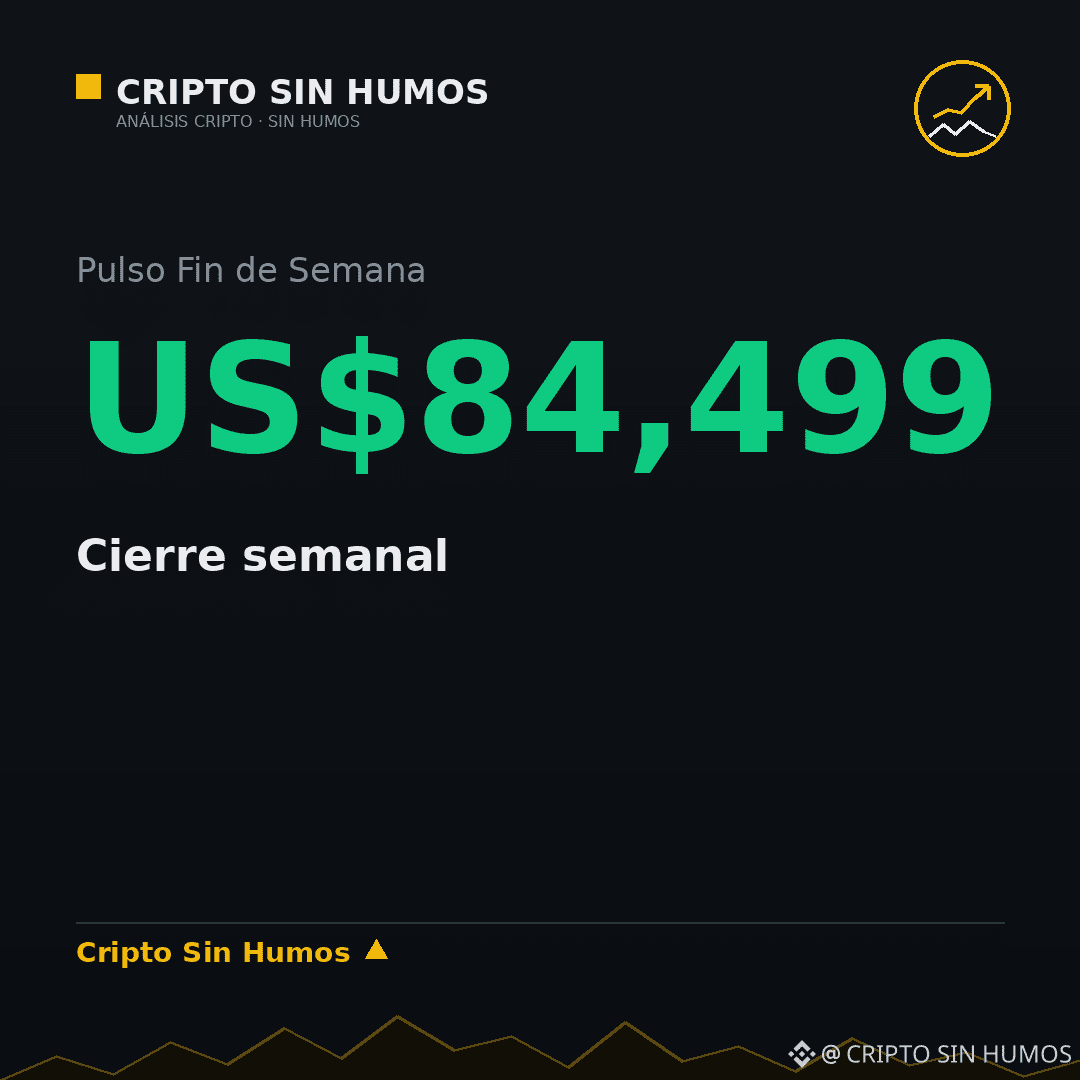
Codelco retiene 100% de utilidades: la confesión de una crisis 💸
Olvídate del rumor de que Codelco va a repartir dividendos millonarios. La gran noticia es que la estatal chilena decidió retener el 100% de sus utilidades de 2025. ¿Por qué? Porque la producción cayó un 11% y necesitan ese efectivo para sobrevivir a la caída estructural. No es un 'buen resultado', es una inyección de oxígeno. Si el cobre no da para mantener la maquinaria, ¿de dónde saldrá la liquidez para el estado? Esto cambia toda la tesis macro chilena. No es optimismo, es sobrevivencia. ¿Crees que el cobre tiene aire para 2026 o estamos ante el inicio de un declive real?
#Codelco #Cobre #EconomiaChile #Mining
No es consejo financiero. Verifica antes de invertir.
Codelco retiene 100% de utilidades: la confesión de una crisis 💸
Olvídate del rumor de que Codelco va a repartir dividendos millonarios. La gran noticia es que la estatal chilena decidió retener el 100% de sus utilidades de 2025. ¿Por qué? Porque la producción cayó un 11% y necesitan ese efectivo para sobrevivir a la caída estructural. No es un 'buen resultado', es una inyección de oxígeno. Si el cobre no da para mantener la maquinaria, ¿de dónde saldrá la liquidez para el estado? Esto cambia toda la tesis macro chilena. No es optimismo, es sobrevivencia. ¿Crees que el cobre tiene aire para 2026 o estamos ante el inicio de un declive real?
#Codelco #Cobre #EconomiaChile #Mining
No es consejo financiero. Verifica antes de invertir.
Olvídate del rumor de que Codelco va a repartir dividendos millonarios. La gran noticia es que la estatal chilena decidió retener el 100% de sus utilidades de 2025. ¿Por qué? Porque la producción cayó un 11% y necesitan ese efectivo para sobrevivir a la caída estructural. No es un 'buen resultado', es una inyección de oxígeno. Si el cobre no da para mantener la maquinaria, ¿de dónde saldrá la liquidez para el estado? Esto cambia toda la tesis macro chilena. No es optimismo, es sobrevivencia. ¿Crees que el cobre tiene aire para 2026 o estamos ante el inicio de un declive real?
#Codelco #Cobre #EconomiaChile #Mining
No es consejo financiero. Verifica antes de invertir.
1
157

·
--
Chinese version:
Major news! Electric Metals' North Star Manganese Project has just passed its cost validation! This will be North America's only fully integrated U.S. manganese chemical supply chain, directly serving the United States' defense and key industrial markets. With 200,000 tpa HPMSM and 10,000 tpa EMM capacity, manganese is a core material for batteries and steel—the future value is limitless! #矿业 #关键金属 $EMM
English version:
Big news! Electric Metals' North Star Manganese Project just passed its cost validation! This will be North America's only fully integrated U.S. manganese supply chain for critical defense and industrial markets. With 200k tpy HPMSM and 10k tpy EMM capacity, manganese is the core material for batteries and steel - the future value is unstoppable! #Mining #CriticalMetals $EMM
Chinese version:
Major news! Electric Metals' North Star Manganese Project has just passed its cost validation! This will be North America's only fully integrated U.S. manganese chemical supply chain, directly serving the United States' defense and key industrial markets. With 200,000 tpa HPMSM and 10,000 tpa EMM capacity, manganese is a core material for batteries and steel—the future value is limitless! #矿业 #关键金属 $EMM
English version:
Big news! Electric Metals' North Star Manganese Project just passed its cost validation! This will be North America's only fully integrated U.S. manganese supply chain for critical defense and industrial markets. With 200k tpy HPMSM and 10k tpy EMM capacity, manganese is the core material for batteries and steel - the future value is unstoppable! #Mining #CriticalMetals $EMM
Major news! Electric Metals' North Star Manganese Project has just passed its cost validation! This will be North America's only fully integrated U.S. manganese chemical supply chain, directly serving the United States' defense and key industrial markets. With 200,000 tpa HPMSM and 10,000 tpa EMM capacity, manganese is a core material for batteries and steel—the future value is limitless! #矿业 #关键金属 $EMM
English version:
Big news! Electric Metals' North Star Manganese Project just passed its cost validation! This will be North America's only fully integrated U.S. manganese supply chain for critical defense and industrial markets. With 200k tpy HPMSM and 10k tpy EMM capacity, manganese is the core material for batteries and steel - the future value is unstoppable! #Mining #CriticalMetals $EMM

·
--
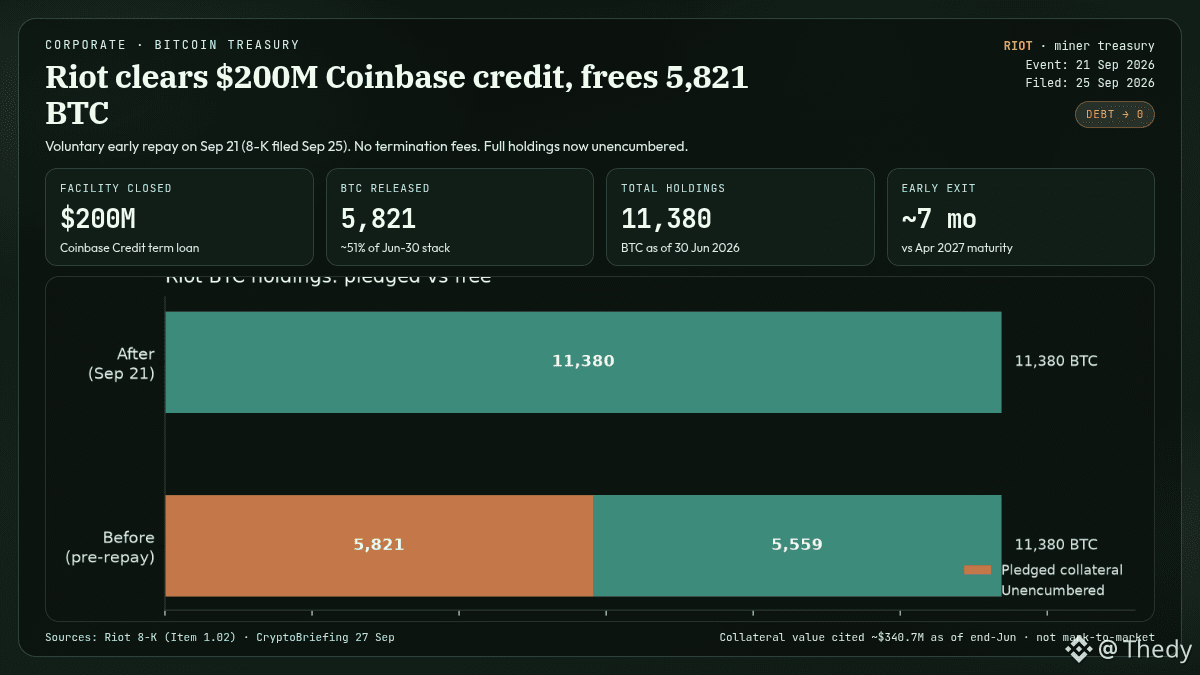
Riot Platforms has just erased $200M in debt to Coinbase Credit… and released 5 821 $BTC collateralized.
FACTS (8-K Item 1.02, event 21/09, deposit 25/09; CryptoBriefing relay 27/09):
• Voluntary early repayment of the secured facility of up to $200M with Coinbase Credit
• No early termination fee
• Exit ~7 months before the April 2027 maturity
• Collateral released: ~5 821 BTC (≈ 51% of Riot’s BTC holdings as of 30/06/2026, i.e., 11,380 BTC), plus USDC and cash in custody
• Collateral valuation cited as ~US$340.7M at end of June (not a day’s mark-to-market)
INTERPRETATION:
Less secured leverage, more treasury flexibility. The coins become a free asset again: hold, refinance, or fund data-center capex. This is not a direct spot-price signal; it’s a miner balance-sheet release.
SCENARIOS:
• Neutral/constructive: stack intact, no forced selling tied to this credit
• Risk: part of the BTC could still be monetized later for CapEx (not confirmed here)
Distinct from Strategy/Strive purchases: here it’s about repayment + collateral release, not net accumulation.
Do you follow the miners (RIOT) or the pure treasury buyers on $BTC ?
#Bitcoin #Crypto #Mining
Riot Platforms has just erased $200M in debt to Coinbase Credit… and released 5 821 $BTC collateralized.
FACTS (8-K Item 1.02, event 21/09, deposit 25/09; CryptoBriefing relay 27/09):
• Voluntary early repayment of the secured facility of up to $200M with Coinbase Credit
• No early termination fee
• Exit ~7 months before the April 2027 maturity
• Collateral released: ~5 821 BTC (≈ 51% of Riot’s BTC holdings as of 30/06/2026, i.e., 11,380 BTC), plus USDC and cash in custody
• Collateral valuation cited as ~US$340.7M at end of June (not a day’s mark-to-market)
INTERPRETATION:
Less secured leverage, more treasury flexibility. The coins become a free asset again: hold, refinance, or fund data-center capex. This is not a direct spot-price signal; it’s a miner balance-sheet release.
SCENARIOS:
• Neutral/constructive: stack intact, no forced selling tied to this credit
• Risk: part of the BTC could still be monetized later for CapEx (not confirmed here)
Distinct from Strategy/Strive purchases: here it’s about repayment + collateral release, not net accumulation.
Do you follow the miners (RIOT) or the pure treasury buyers on $BTC ?
#Bitcoin #Crypto #Mining
FACTS (8-K Item 1.02, event 21/09, deposit 25/09; CryptoBriefing relay 27/09):
• Voluntary early repayment of the secured facility of up to $200M with Coinbase Credit
• No early termination fee
• Exit ~7 months before the April 2027 maturity
• Collateral released: ~5 821 BTC (≈ 51% of Riot’s BTC holdings as of 30/06/2026, i.e., 11,380 BTC), plus USDC and cash in custody
• Collateral valuation cited as ~US$340.7M at end of June (not a day’s mark-to-market)
INTERPRETATION:
Less secured leverage, more treasury flexibility. The coins become a free asset again: hold, refinance, or fund data-center capex. This is not a direct spot-price signal; it’s a miner balance-sheet release.
SCENARIOS:
• Neutral/constructive: stack intact, no forced selling tied to this credit
• Risk: part of the BTC could still be monetized later for CapEx (not confirmed here)
Distinct from Strategy/Strive purchases: here it’s about repayment + collateral release, not net accumulation.
Do you follow the miners (RIOT) or the pure treasury buyers on $BTC ?
#Bitcoin #Crypto #Mining
102

·
--
Bearish
🚨 BITCOIN JUST CROSSED A LEVEL THAT MATTERS TO MINERS. 👀
Bitcoin is now above JPMorgan’s estimated $85,000 production cost.
And that could change something important. ⚡️
For 280 days, BTC stayed below that level.
That put pressure on miners — especially those operating with higher costs — and increased the incentive to sell BTC to cover expenses.
Now the equation is changing. 🔄
If Bitcoin stays above $85K, JPMorgan says miner selling pressure could ease.
That means fewer miners may need to sell just to survive.
The interesting question:
Did Bitcoin just cross the line where miner pressure starts disappearing? 👀
$BTC #Bitcoin #Crypto #Mining
🚨 BITCOIN JUST CROSSED A LEVEL THAT MATTERS TO MINERS. 👀
Bitcoin is now above JPMorgan’s estimated $85,000 production cost.
And that could change something important. ⚡️
For 280 days, BTC stayed below that level.
That put pressure on miners — especially those operating with higher costs — and increased the incentive to sell BTC to cover expenses.
Now the equation is changing. 🔄
If Bitcoin stays above $85K, JPMorgan says miner selling pressure could ease.
That means fewer miners may need to sell just to survive.
The interesting question:
Did Bitcoin just cross the line where miner pressure starts disappearing? 👀
$BTC #Bitcoin #Crypto #Mining
Bitcoin is now above JPMorgan’s estimated $85,000 production cost.
And that could change something important. ⚡️
For 280 days, BTC stayed below that level.
That put pressure on miners — especially those operating with higher costs — and increased the incentive to sell BTC to cover expenses.
Now the equation is changing. 🔄
If Bitcoin stays above $85K, JPMorgan says miner selling pressure could ease.
That means fewer miners may need to sell just to survive.
The interesting question:
Did Bitcoin just cross the line where miner pressure starts disappearing? 👀
$BTC #Bitcoin #Crypto #Mining

12
·
--
Rainbow Rare Earths and Neo have reached a cooperation, clearing the way for research into South Africa’s Phalaborwa rare earth project, which is now moving toward the financing stage. Rare earths are the "vitamins" of the technology industry—indispensable for electric vehicles, chips, and more. The future potential looks immense! #稀有金属 #rare earth
Rainbow Rare Earths teams up with Neo, clearing the way for South Africa's Phalaborwa rare earth study as the project moves toward financing. Rare earths are the "vitamins" of tech industry - crucial for EVs, chips and more. Future potential looking bright! #rareearths #mining
Rainbow Rare Earths and Neo have reached a cooperation, clearing the way for research into South Africa’s Phalaborwa rare earth project, which is now moving toward the financing stage. Rare earths are the "vitamins" of the technology industry—indispensable for electric vehicles, chips, and more. The future potential looks immense! #稀有金属 #rare earth
Rainbow Rare Earths teams up with Neo, clearing the way for South Africa's Phalaborwa rare earth study as the project moves toward financing. Rare earths are the "vitamins" of tech industry - crucial for EVs, chips and more. Future potential looking bright! #rareearths #mining
Rainbow Rare Earths teams up with Neo, clearing the way for South Africa's Phalaborwa rare earth study as the project moves toward financing. Rare earths are the "vitamins" of tech industry - crucial for EVs, chips and more. Future potential looking bright! #rareearths #mining
4
·
--
U.S. and UAE join forces to build the "Andes-Atlantic Corridor," investing $7 billion to support mineral energy development! This is a major breakthrough for the crypto mining industry, especially as the lithium resource supply chain will be strengthened. Argentina's crypto market may see new opportunities as a result!#crypto #mining $BTC $ETH
US & Argentina launch $7B 'Andes-Atlantic Corridor' for mineral energy! Big news for crypto mining as lithium supply chains strengthen. Argentina's crypto scene about to see major boost! #crypto #mining $BTC $ETH
U.S. and UAE join forces to build the "Andes-Atlantic Corridor," investing $7 billion to support mineral energy development! This is a major breakthrough for the crypto mining industry, especially as the lithium resource supply chain will be strengthened. Argentina's crypto market may see new opportunities as a result!#crypto #mining $BTC $ETH
US & Argentina launch $7B 'Andes-Atlantic Corridor' for mineral energy! Big news for crypto mining as lithium supply chains strengthen. Argentina's crypto scene about to see major boost! #crypto #mining $BTC $ETH
US & Argentina launch $7B 'Andes-Atlantic Corridor' for mineral energy! Big news for crypto mining as lithium supply chains strengthen. Argentina's crypto scene about to see major boost! #crypto #mining $BTC $ETH
126
·
--
Global copper output to drop for the first time in 9 years! Copper mining is expected to fall in 2026 since 2017, as declining ore grades, mine disruptions and slow project pipelines weigh on supply. Copper prices have risen for the fifth straight day, nearing all-time highs. What does this mean for the green energy transition? $COPPER #大宗商品 #mining
Global copper output to drop for first time in 9 years! Copper mining set to fall in 2026 since 2017, with declining ore grades, mine disruptions and slow project pipelines. Copper prices rallied for fifth straight day, near all-time highs. What does this mean for green energy transition? $COPPER #commodities #mining
Global copper output to drop for the first time in 9 years! Copper mining is expected to fall in 2026 since 2017, as declining ore grades, mine disruptions and slow project pipelines weigh on supply. Copper prices have risen for the fifth straight day, nearing all-time highs. What does this mean for the green energy transition? $COPPER #大宗商品 #mining
Global copper output to drop for first time in 9 years! Copper mining set to fall in 2026 since 2017, with declining ore grades, mine disruptions and slow project pipelines. Copper prices rallied for fifth straight day, near all-time highs. What does this mean for green energy transition? $COPPER #commodities #mining
Global copper output to drop for first time in 9 years! Copper mining set to fall in 2026 since 2017, with declining ore grades, mine disruptions and slow project pipelines. Copper prices rallied for fifth straight day, near all-time highs. What does this mean for green energy transition? $COPPER #commodities #mining
1
57

·
--
⛏️ THE PoW NARRATIVE IS WAKING UP. HERE'S THE FULL MINEABLE-COIN MAP.
While everyone chases the newest L2 or AI token, a very old narrative is quietly running: Proof-of-Work. 👇
The signal:
$CFX
{future}(CFXUSDT)
🚀 ZEC went ~25x in a year, cracked the top 10, and pulled the privacy sector from $7B to $33B.
🏦 Grayscale's spot Zcash ETF (ZCSH) launched Aug 25 — $362M AUM in days. Institutions are buying MINED coins now.
📈 XMR +13% yesterday. BCH and ETC catching bids.
The thesis: in a world of surveillance + "digital gold" demand, coins with real hardware behind them (no VC unlocks, no insider allocations) are getting a second look. Whether you agree or not, money is rotating here.
So here's the full map of what's mineable, sorted by hardware — save this 📌
ASIC SHA-256 (Bitcoin-class miners)
BTC • BCH • BSV • FB (Fractal Bitcoin) • XEC, PPC (small forks)
ASIC Scrypt
LTC • DOGE (merged-mined with LTC)
ASIC / GPU (other algos)
ETC (Etchash) • KAS (kHeavyHash) • ZEC (Equihash) • DASH (X11) • ETHW
GPU / CPU (no big ASIC needed)
XMR (RandomX — CPU king) • RVN (KawPow) • ERG • FIRO • CKB • ALPH • CFX
How I read it as a trader:
🔹 ZEC/XMR already ran — chasing here is late-stage risk.
🔹 The rotation trade is usually into the laggards of a hot sector: BCH, ETC, LTC, KAS haven't matched ZEC's move.
🔹 But "laggard" can also mean "left behind." Not every PoW coin gets a bid.
⚠️ Sector rotations are fast and brutal both ways. Small size, defined stops, don't marry the narrative.
Which PoW coin do you think runs NEXT? 👇 Drop the ticker.
💬 Not financial advice — personal view only. DYOR & manage your risk.
#PoW #Mining #BCH #ETC #Zcash #Binance
⛏️ THE PoW NARRATIVE IS WAKING UP. HERE'S THE FULL MINEABLE-COIN MAP.
While everyone chases the newest L2 or AI token, a very old narrative is quietly running: Proof-of-Work. 👇
The signal:
$CFX
🚀 ZEC went ~25x in a year, cracked the top 10, and pulled the privacy sector from $7B to $33B.
🏦 Grayscale's spot Zcash ETF (ZCSH) launched Aug 25 — $362M AUM in days. Institutions are buying MINED coins now.
📈 XMR +13% yesterday. BCH and ETC catching bids.
The thesis: in a world of surveillance + "digital gold" demand, coins with real hardware behind them (no VC unlocks, no insider allocations) are getting a second look. Whether you agree or not, money is rotating here.
So here's the full map of what's mineable, sorted by hardware — save this 📌
ASIC SHA-256 (Bitcoin-class miners)
BTC • BCH • BSV • FB (Fractal Bitcoin) • XEC, PPC (small forks)
ASIC Scrypt
LTC • DOGE (merged-mined with LTC)
ASIC / GPU (other algos)
ETC (Etchash) • KAS (kHeavyHash) • ZEC (Equihash) • DASH (X11) • ETHW
GPU / CPU (no big ASIC needed)
XMR (RandomX — CPU king) • RVN (KawPow) • ERG • FIRO • CKB • ALPH • CFX
How I read it as a trader:
🔹 ZEC/XMR already ran — chasing here is late-stage risk.
🔹 The rotation trade is usually into the laggards of a hot sector: BCH, ETC, LTC, KAS haven't matched ZEC's move.
🔹 But "laggard" can also mean "left behind." Not every PoW coin gets a bid.
⚠️ Sector rotations are fast and brutal both ways. Small size, defined stops, don't marry the narrative.
Which PoW coin do you think runs NEXT? 👇 Drop the ticker.
💬 Not financial advice — personal view only. DYOR & manage your risk.
#PoW #Mining #BCH #ETC #Zcash #Binance
While everyone chases the newest L2 or AI token, a very old narrative is quietly running: Proof-of-Work. 👇
The signal:
$CFX
🚀 ZEC went ~25x in a year, cracked the top 10, and pulled the privacy sector from $7B to $33B.
🏦 Grayscale's spot Zcash ETF (ZCSH) launched Aug 25 — $362M AUM in days. Institutions are buying MINED coins now.
📈 XMR +13% yesterday. BCH and ETC catching bids.
The thesis: in a world of surveillance + "digital gold" demand, coins with real hardware behind them (no VC unlocks, no insider allocations) are getting a second look. Whether you agree or not, money is rotating here.
So here's the full map of what's mineable, sorted by hardware — save this 📌
ASIC SHA-256 (Bitcoin-class miners)
BTC • BCH • BSV • FB (Fractal Bitcoin) • XEC, PPC (small forks)
ASIC Scrypt
LTC • DOGE (merged-mined with LTC)
ASIC / GPU (other algos)
ETC (Etchash) • KAS (kHeavyHash) • ZEC (Equihash) • DASH (X11) • ETHW
GPU / CPU (no big ASIC needed)
XMR (RandomX — CPU king) • RVN (KawPow) • ERG • FIRO • CKB • ALPH • CFX
How I read it as a trader:
🔹 ZEC/XMR already ran — chasing here is late-stage risk.
🔹 The rotation trade is usually into the laggards of a hot sector: BCH, ETC, LTC, KAS haven't matched ZEC's move.
🔹 But "laggard" can also mean "left behind." Not every PoW coin gets a bid.
⚠️ Sector rotations are fast and brutal both ways. Small size, defined stops, don't marry the narrative.
Which PoW coin do you think runs NEXT? 👇 Drop the ticker.
💬 Not financial advice — personal view only. DYOR & manage your risk.
#PoW #Mining #BCH #ETC #Zcash #Binance
4
2k

It sounds counterintuitive, but crude grid curtailment can sometimes backfire on Bitcoin mining efficiency. When automated controllers throttle power mid-hash without syncing with the software, rigs waste valuable compute cycles solving blocks that never get properly validated. Instead of saving resources, this friction burns excess electricity for zero output. Grid operators and miners need smarter, more integrated load-balancing solutions to truly optimize energy use. $BTC #Bitcoin #Mining #Energy
It sounds counterintuitive, but crude grid curtailment can sometimes backfire on Bitcoin mining efficiency. When automated controllers throttle power mid-hash without syncing with the software, rigs waste valuable compute cycles solving blocks that never get properly validated. Instead of saving resources, this friction burns excess electricity for zero output. Grid operators and miners need smarter, more integrated load-balancing solutions to truly optimize energy use. $BTC #Bitcoin #Mining #Energy
19
Scientists are actually testing whether a digital fruit fly brain can run Bitcoin hashing algorithms. While it sounds like sci-fi, this browser experiment explores hyper-efficient biological computing models. Imagine a future where biotech meets crypto mining—drastically cutting energy consumption compared to traditional ASICs. It is early-stage weirdness, but it highlights how desperately the industry needs radical power efficiency breakthroughs. $BTC #CryptoNews #Mining #Innovation
Scientists are actually testing whether a digital fruit fly brain can run Bitcoin hashing algorithms. While it sounds like sci-fi, this browser experiment explores hyper-efficient biological computing models. Imagine a future where biotech meets crypto mining—drastically cutting energy consumption compared to traditional ASICs. It is early-stage weirdness, but it highlights how desperately the industry needs radical power efficiency breakthroughs. $BTC #CryptoNews #Mining #Innovation
30
·
--
#矿业转型 #DeFi
Mining veterans bet $410M to build a race track in South Africa! Ex-Sibanye boss Neal Froneman leads the way as mining capital crosses over into the F1 racing circuit—traditional investors are looking for new avenues. $410M isn’t a small sum; it looks like these big names have confidence in both the future of sports industries in emerging markets and DeFi!
#Mining #DeFi
Mining veterans betting $410M on Cape Town F1! Ex-Sibanye CEO Neal Froneman leading the charge, with mining capital making a big leap into motorsports. $410M ain't small change - these old school players are clearly seeing potential in emerging markets and the future of DeFi!
$RACE $MINR
#矿业转型 #DeFi
Mining veterans bet $410M to build a race track in South Africa! Ex-Sibanye boss Neal Froneman leads the way as mining capital crosses over into the F1 racing circuit—traditional investors are looking for new avenues. $410M isn’t a small sum; it looks like these big names have confidence in both the future of sports industries in emerging markets and DeFi!
#Mining #DeFi
Mining veterans betting $410M on Cape Town F1! Ex-Sibanye CEO Neal Froneman leading the charge, with mining capital making a big leap into motorsports. $410M ain't small change - these old school players are clearly seeing potential in emerging markets and the future of DeFi!
$RACE $MINR
Mining veterans bet $410M to build a race track in South Africa! Ex-Sibanye boss Neal Froneman leads the way as mining capital crosses over into the F1 racing circuit—traditional investors are looking for new avenues. $410M isn’t a small sum; it looks like these big names have confidence in both the future of sports industries in emerging markets and DeFi!
#Mining #DeFi
Mining veterans betting $410M on Cape Town F1! Ex-Sibanye CEO Neal Froneman leading the charge, with mining capital making a big leap into motorsports. $410M ain't small change - these old school players are clearly seeing potential in emerging markets and the future of DeFi!
$RACE $MINR
2
Even with Bitcoin pushing past $84K, mining operations aren't out of the woods yet. While the price bump offers a slight temporary relief to hashprice metrics, looming difficulty adjustments suggest underlying stress is still building. A higher coin price alone isn't enough to instantly offset rising network competition and hardware costs. It highlights a delicate balance where profitability remains razor-thin, reminding us that miner health depends heavily on sustainable momentum, not just quick spikes. $BTC #Bitcoin #Mining #CryptoMarket
Even with Bitcoin pushing past $84K, mining operations aren't out of the woods yet. While the price bump offers a slight temporary relief to hashprice metrics, looming difficulty adjustments suggest underlying stress is still building. A higher coin price alone isn't enough to instantly offset rising network competition and hardware costs. It highlights a delicate balance where profitability remains razor-thin, reminding us that miner health depends heavily on sustainable momentum, not just quick spikes. $BTC #Bitcoin #Mining #CryptoMarket
35
·
--
Global Lithium shares surge 50%! A buyer backed by the UAE acquires Titan for A$333M with a 73% premium and fresh funding. Building an integrated lithium supply chain—Lithium's value keeps rising!
Global Lithium stock surges 50%! UAE-backed buyer acquires Titan for A$333M with a 73% premium and fresh funding. Building an integrated lithium supply chain! Lithium's value keeps climbing.
#lithium #mining $LITH
Global Lithium shares surge 50%! A buyer backed by the UAE acquires Titan for A$333M with a 73% premium and fresh funding. Building an integrated lithium supply chain—Lithium's value keeps rising!
Global Lithium stock surges 50%! UAE-backed buyer acquires Titan for A$333M with a 73% premium and fresh funding. Building an integrated lithium supply chain! Lithium's value keeps climbing.
#lithium #mining $LITH
Global Lithium stock surges 50%! UAE-backed buyer acquires Titan for A$333M with a 73% premium and fresh funding. Building an integrated lithium supply chain! Lithium's value keeps climbing.
#lithium #mining $LITH

🚨 Bitcoin rises to $84K but still can’t save miners 🧠
📊 | $BTC | $ETH | $BNB |
- Please follow, like, and comment to share your thoughts 📈
- The Bitcoin price has risen to $84,751, with theoretical gross hash-rate price up 2.65%.
- Despite the price increase, the estimated next difficulty adjustment remains temporary and on the low side.
- A difficulty signal has issued a warning, suggesting miners’ profit margins are under pressure. 🔥
- If hashrate and difficulty continue to trend downward, miners’ earnings may fall further.
- Whale holdings behavior remains neutral, and any direct impact on the price in the short term is likely limited.
- The likelihood of a sideways, ranging market increases; Bitcoin’s short-term movement is expected to stay within a range.
- Do you think Bitcoin’s price can continue to support miners’ profitability? Feel free to share your views.
- Follow us for the latest crypto market updates—looking forward to your comments.
#Bitcoin #Crypto #Whales #Mining #Market
🚨 Bitcoin rises to $84K but still can’t save miners 🧠
📊 | $BTC | $ETH | $BNB |
- Please follow, like, and comment to share your thoughts 📈
- The Bitcoin price has risen to $84,751, with theoretical gross hash-rate price up 2.65%.
- Despite the price increase, the estimated next difficulty adjustment remains temporary and on the low side.
- A difficulty signal has issued a warning, suggesting miners’ profit margins are under pressure. 🔥
- If hashrate and difficulty continue to trend downward, miners’ earnings may fall further.
- Whale holdings behavior remains neutral, and any direct impact on the price in the short term is likely limited.
- The likelihood of a sideways, ranging market increases; Bitcoin’s short-term movement is expected to stay within a range.
- Do you think Bitcoin’s price can continue to support miners’ profitability? Feel free to share your views.
- Follow us for the latest crypto market updates—looking forward to your comments.
#Bitcoin #Crypto #Whales #Mining #Market
📊 | $BTC | $ETH | $BNB |
- Please follow, like, and comment to share your thoughts 📈
- The Bitcoin price has risen to $84,751, with theoretical gross hash-rate price up 2.65%.
- Despite the price increase, the estimated next difficulty adjustment remains temporary and on the low side.
- A difficulty signal has issued a warning, suggesting miners’ profit margins are under pressure. 🔥
- If hashrate and difficulty continue to trend downward, miners’ earnings may fall further.
- Whale holdings behavior remains neutral, and any direct impact on the price in the short term is likely limited.
- The likelihood of a sideways, ranging market increases; Bitcoin’s short-term movement is expected to stay within a range.
- Do you think Bitcoin’s price can continue to support miners’ profitability? Feel free to share your views.
- Follow us for the latest crypto market updates—looking forward to your comments.
#Bitcoin #Crypto #Whales #Mining #Market
49
·
--
Chinese version:
Larvotto begins producing gold and antimony at the Hillgrove mine in Australia! The first batch of concentrate already meets 7% of the world’s antimony demand, and the market is getting tighter. Antimony is a key industrial metal, and in the future its price could really take off! #矿业 #黄金 $GOLD
English version:
Larvotto kicks off gold & antimony production at Hillgrove! First concentrate already meets 7% of global antimony demand as markets tighten. This critical industrial metal could be set for a price surge. #Mining #Gold $GOLD
Chinese version:
Larvotto begins producing gold and antimony at the Hillgrove mine in Australia! The first batch of concentrate already meets 7% of the world’s antimony demand, and the market is getting tighter. Antimony is a key industrial metal, and in the future its price could really take off! #矿业 #黄金 $GOLD
English version:
Larvotto kicks off gold & antimony production at Hillgrove! First concentrate already meets 7% of global antimony demand as markets tighten. This critical industrial metal could be set for a price surge. #Mining #Gold $GOLD
Larvotto begins producing gold and antimony at the Hillgrove mine in Australia! The first batch of concentrate already meets 7% of the world’s antimony demand, and the market is getting tighter. Antimony is a key industrial metal, and in the future its price could really take off! #矿业 #黄金 $GOLD
English version:
Larvotto kicks off gold & antimony production at Hillgrove! First concentrate already meets 7% of global antimony demand as markets tighten. This critical industrial metal could be set for a price surge. #Mining #Gold $GOLD
8


$75,500. Yes, that is the actual average cash cost to produce just one single coin for public mining companies in Q2. It is a staggering number, especially when you realize it is higher than the price of the asset itself during that period. CoinShares just dropped a fascinating report about where the mining industry is heading. Many mining firms have packed their bags and pivoted to Artificial Intelligence infrastructure, but will a sudden price recovery bring them back to the network? Why would anyone jump back to low-margin mining when high-performance AI computing offers much steadier and lucrative revenue?
🔹 The average ex-tax cash cost for public miners hit roughly $75,500 in Q2.
🔹 The massive halving pressure has squeezed traditional mining profit margins to the absolute limit.
🔹 High-performance computing for AI is proving to be way more profitable and stable for these energy giants.
Honestly, it feels like we are witnessing a permanent shift in how these giant mining facilities operate. Once you go AI, you probably do not go back to mining $BTC. What do you think about this transition? #Bitcoin #Mining #AI #Write2Earn
$75,500. Yes, that is the actual average cash cost to produce just one single coin for public mining companies in Q2. It is a staggering number, especially when you realize it is higher than the price of the asset itself during that period. CoinShares just dropped a fascinating report about where the mining industry is heading. Many mining firms have packed their bags and pivoted to Artificial Intelligence infrastructure, but will a sudden price recovery bring them back to the network? Why would anyone jump back to low-margin mining when high-performance AI computing offers much steadier and lucrative revenue?
🔹 The average ex-tax cash cost for public miners hit roughly $75,500 in Q2.
🔹 The massive halving pressure has squeezed traditional mining profit margins to the absolute limit.
🔹 High-performance computing for AI is proving to be way more profitable and stable for these energy giants.
Honestly, it feels like we are witnessing a permanent shift in how these giant mining facilities operate. Once you go AI, you probably do not go back to mining $BTC . What do you think about this transition? #Bitcoin #Mining #AI #Write2Earn
🔹 The average ex-tax cash cost for public miners hit roughly $75,500 in Q2.
🔹 The massive halving pressure has squeezed traditional mining profit margins to the absolute limit.
🔹 High-performance computing for AI is proving to be way more profitable and stable for these energy giants.
Honestly, it feels like we are witnessing a permanent shift in how these giant mining facilities operate. Once you go AI, you probably do not go back to mining $BTC . What do you think about this transition? #Bitcoin #Mining #AI #Write2Earn
1
59
·
--
The global mining M&A is exploding! Fewer deals, but much bigger total value! The big guys aren’t exploring anymore—they’re just buying ready-made assets. Gold, copper, and energy-transition demand is insanely strong! Will this wave of consolidation push gold prices higher? Be careful—when big money moves in, it often signals the eve of a bull market. Will the crypto market follow? #矿业投资 #资源整合 $BTC $GOLD
Global mining M&A exploding! Fewer deals, way bigger values! Giants not exploring, just buying. Gold, copper, energy transition demand crazy! This consolidation could push prices up. Copper and gold about to moon? Big money entering usually means bull run coming. Crypto ready? #mining #gold $BTC $XAU
The global mining M&A is exploding! Fewer deals, but much bigger total value! The big guys aren’t exploring anymore—they’re just buying ready-made assets. Gold, copper, and energy-transition demand is insanely strong! Will this wave of consolidation push gold prices higher? Be careful—when big money moves in, it often signals the eve of a bull market. Will the crypto market follow? #矿业投资 #资源整合 $BTC $GOLD
Global mining M&A exploding! Fewer deals, way bigger values! Giants not exploring, just buying. Gold, copper, energy transition demand crazy! This consolidation could push prices up. Copper and gold about to moon? Big money entering usually means bull run coming. Crypto ready? #mining #gold $BTC $XAU
Global mining M&A exploding! Fewer deals, way bigger values! Giants not exploring, just buying. Gold, copper, energy transition demand crazy! This consolidation could push prices up. Copper and gold about to moon? Big money entering usually means bull run coming. Crypto ready? #mining #gold $BTC $XAU
173
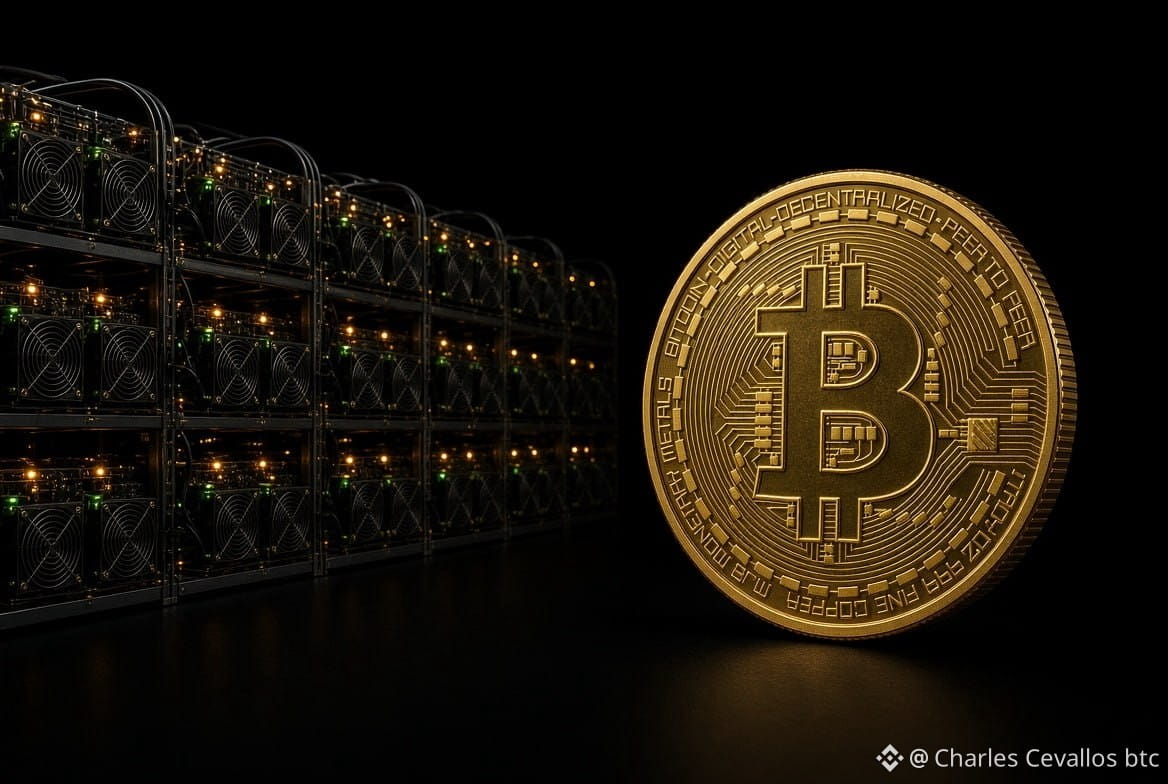
📉 Network Analysis: The hashrate crisis in $BTC
{future}(BTCUSDT)
Bitcoin's hashrate fell 17% during the first half of 2026, accumulating 11 months without new all-time highs. While the network's algorithmic security remains intact, pressure on miners' operating margins reopens a critical debate: Are we looking at a dangerous concentration of computing power in a few hands?
👇 Technical discussion: How will this contraction in mining affect the price structure in the short term? Leave your perspective in the comments and follow me for more market analysis.
#bitcoin #hashrate #Mining #crypto
📉 Network Analysis: The hashrate crisis in $BTC
Bitcoin's hashrate fell 17% during the first half of 2026, accumulating 11 months without new all-time highs. While the network's algorithmic security remains intact, pressure on miners' operating margins reopens a critical debate: Are we looking at a dangerous concentration of computing power in a few hands?
👇 Technical discussion: How will this contraction in mining affect the price structure in the short term? Leave your perspective in the comments and follow me for more market analysis.
#bitcoin #hashrate #Mining #crypto
Bitcoin's hashrate fell 17% during the first half of 2026, accumulating 11 months without new all-time highs. While the network's algorithmic security remains intact, pressure on miners' operating margins reopens a critical debate: Are we looking at a dangerous concentration of computing power in a few hands?
👇 Technical discussion: How will this contraction in mining affect the price structure in the short term? Leave your perspective in the comments and follow me for more market analysis.
#bitcoin #hashrate #Mining #crypto
1
164
Log in to explore more content
Join global crypto users on Binance Square
⚡️ Get latest and useful information about crypto.
💬 Trusted by the world’s largest crypto exchange.
👍 Discover real insights from verified creators.
Email / Phone number
Trending Topics
1
#BitwiseFilesFinalNEARSpotETFProspectus
86,112 views
1,415 Discussing
2
#BitgetHackerMoves$83MStolenXRP
32,646 views
161 Discussing
3
#SOLSpotETFWeeklyInflow$188M
21,508 views
132 Discussing
4
#DogecoinETFsPostBiggestWeekSinceLaunch
53,828 views
974 Discussing
5
#StrategyStriveAdd2305BitcoinThisWeek
143,556 views
2,171 Discussing
6
#TrumpRejectsIranHormuzReopening
123,949 views
1,633 Discussing
7
#TokenizedStockDEXVolumeHits$20.9B
185 views
8 Discussing
8
#CircleTetherFreezeBitgetHackerWallet
107,612 views
1,518 Discussing
9
#SECSaysTokenBuybacksNotAutoSecurities
72,260 views
895 Discussing
10
#ChinaUSAgreeOn$30BTariffCut
5,574 views
47 Discussing