
#finanzasdigitales
finanzasdigitales
112,910 views
259 Discussing
Hot
Latest
·
--
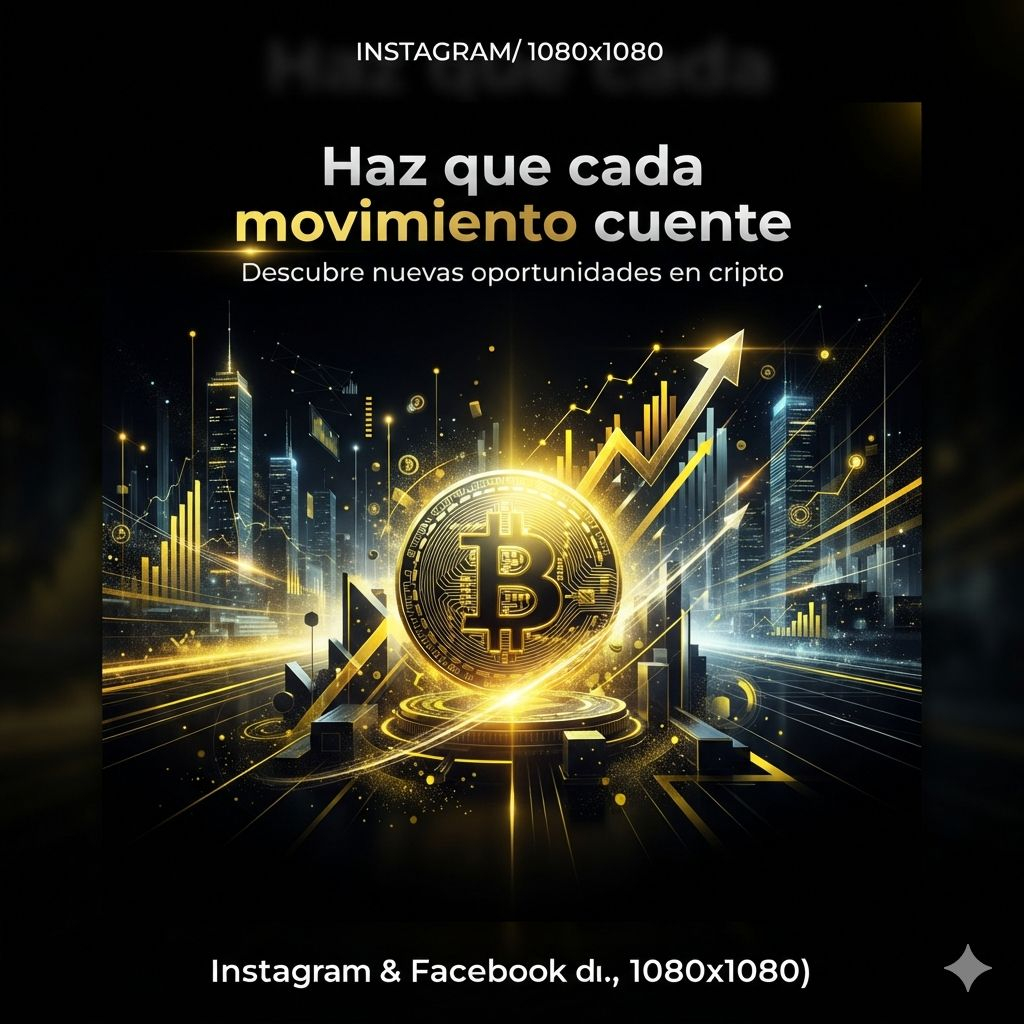
Sometimes we think that big opportunities only come to a few, but the reality is that many start with something as simple as deciding to learn something new.
Cryptocurrencies are no longer a topic for the future—they have become part of the present, opening the door to new ways of investing, saving, and achieving financial freedom.
This isn’t about getting rich overnight, but about understanding a market that is growing and constantly evolving. With information, patience, and a solid strategy, each person can take their first steps more safely.
Today more than ever, learning about digital finance can make a huge difference tomorrow. Knowledge opens doors, and in the crypto world, being prepared is worth a great deal.
It all starts with a decision: to begin. 🚀
#Crypto #Bitcoin #Blockchain$ #FinanzasDigitales #Inversión #Binance
98

·
--
Consensys introduces an interoperability layer for institutional ledgers
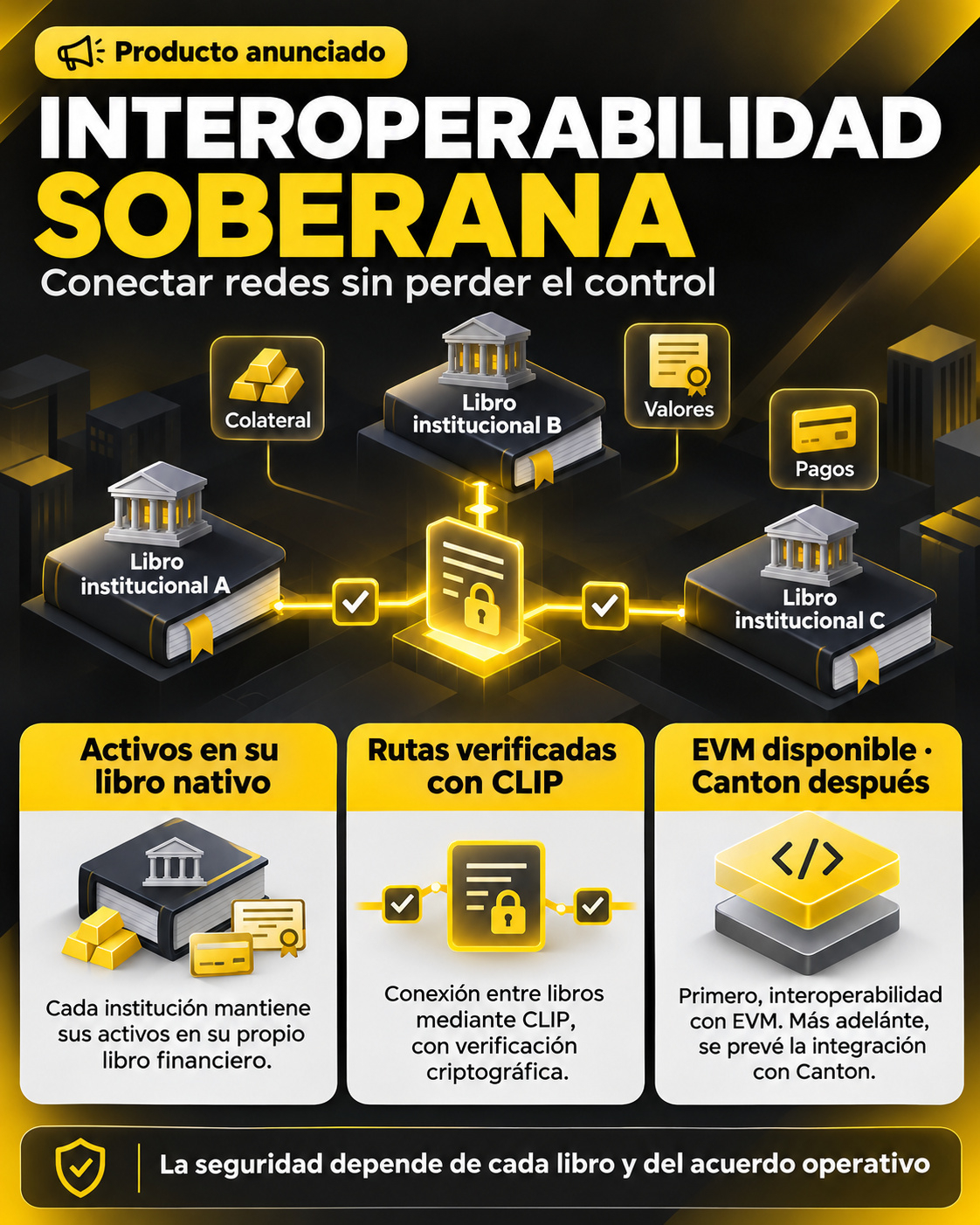
Confirmed fact (November 2, 2026, DevCon Mumbai): Consensys announced Sovereign Network Interoperability, an offering for routing and coordinating transactions between independently operated institutional ledgers. The product covers four flows: collateral mobility, securities settlement, wholesale and cross-currency payments, and fund servicing.
The offering uses the Cross Ledger Interoperability Protocol (CLIP) and cryptographic checks so assets remain on their native ledgers, rather than being converted into bridge-issued representations. Consensys says EVM networks are already available and Canton will follow. It coordinates routing, execution, tracking, and recovery.
Context and limitations: the FAQ acknowledges that each ledger retains its own consensus assumptions, verification software, and operational controls. Security, recovery, support, and responsibilities are defined in the agreement. This is an announced product, not proof of mass adoption or actual settlement by any specific bank.
Market reading, no signal: at 17:11 UTC, Binance showed ETH at 2.235,51 USDT (+0,011% in 24 h; volume 184,67 million), ATOM at 1,381 (-3,629%; 1,13 million), and LINK at 10,881 (-0,448%; 8,54 million). The mixed movement does not attribute a price reaction or anticipate adoption.
The central idea is to reduce custom integrations without taking control away from each institution. To evaluate the product, it is worth checking which networks each route actually supports, what proofs are used, who operates the adapters, and how failures are resolved. Interoperability does not eliminate consensus, governance, key-management, or operational risks.
$ETH $ATOM $LINK
Educational content. Not financial advice.
#Interoperabilidad #Ethereum #FinanzasDigitales #RWA
93

·
--
Article
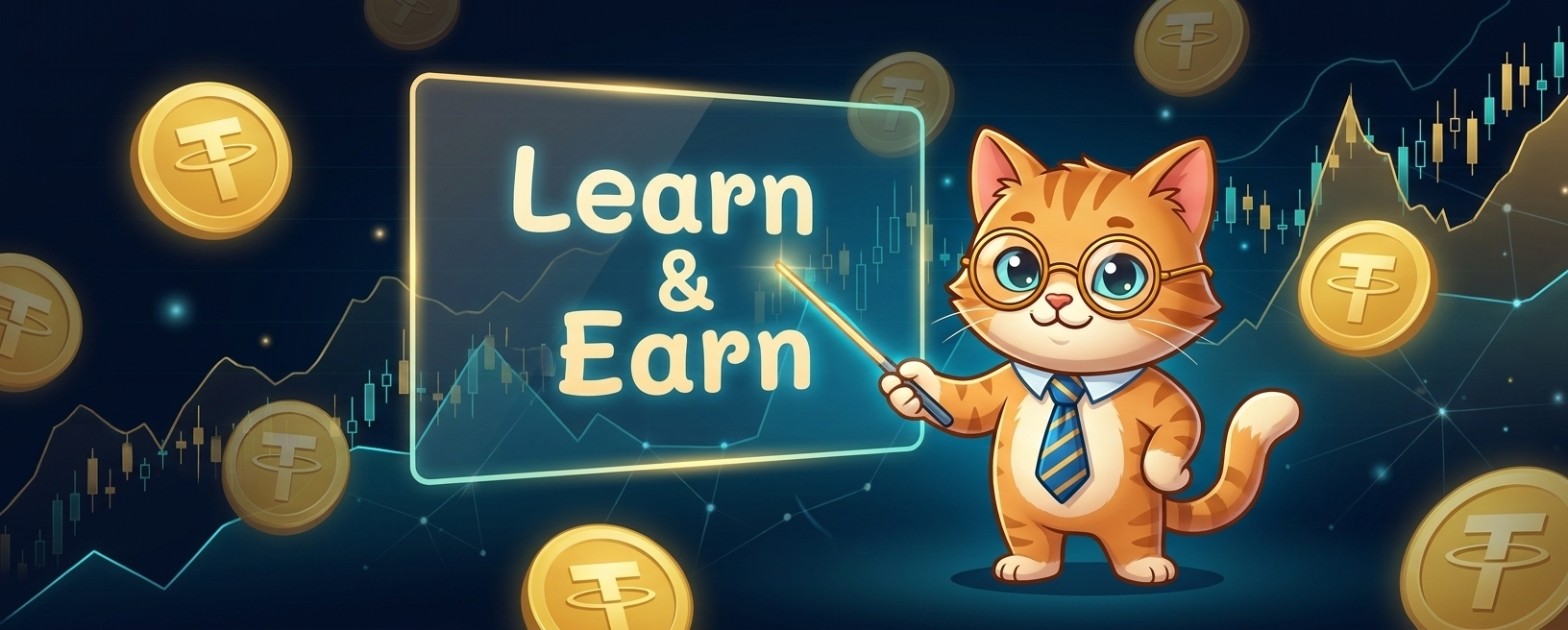
How to Earn $5 to $100 USDT on Binance with “Learn and Earn”💰 EARN $5 TO $100 USDT COMPLETELY FREE ON BINANCE! 🚀 (Step-by-Step Guide for Beginners)
Want to get started in the world of cryptocurrency without risking your own money? Binance, the world’s largest cryptocurrency exchange, gives you between $5 and $100 USDT just for learning the basics of trading.
The process is 100% safe, official, and perfect for both beginners and people who want to improve their digital trading skills.
👇 Follow these detailed steps to claim your reward:
How to Earn $5 to $100 USDT on Binance with “Learn and Earn”
💰 EARN $5 TO $100 USDT COMPLETELY FREE ON BINANCE! 🚀 (Step-by-Step Guide for Beginners)
Want to get started in the world of cryptocurrency without risking your own money? Binance, the world’s largest cryptocurrency exchange, gives you between $5 and $100 USDT just for learning the basics of trading.
The process is 100% safe, official, and perfect for both beginners and people who want to improve their digital trading skills.
👇 Follow these detailed steps to claim your reward:
User-e2e53a74:
alguien quealguien que mealguien que me ayude alguien que me ayude a a a crear a crear bien a crear bien laa crear bien la cuenta a crear bien la cuenta cómo a crear bien la cuenta cómo se a crear bien la cuenta cómo se pone a crear bien la cuenta cómo se pone los a crear bien la cuenta cómo se pone los códigos
7
2
7
5.5k
💵 The digital dollar is changing the way money moves.
Imagine you need to send value to another country, pay an international supplier, or hold digital funds without being directly exposed to Bitcoin price fluctuations.
That’s where stablecoins come in.
🔹 They aim to maintain a stable value relative to a reference asset, such as the dollar.
🔹 They can facilitate digital transfers.
🔹 They are used within the crypto ecosystem.
But be careful: a stablecoin is NOT the same as having dollars in a bank account.
There are risks related to issuers, reserves, liquidity, regulation, and loss of the peg.
As an accountant, my recommendation is to understand the instrument before using it.
A question for business owners in Mexicali:
Would you use digital dollars to pay your international suppliers if they were suitable for your business?
I’d love to hear from you. 👇
📌 Educational content. Not financial advice.
#Stablecoins #USDT #USDC #Binance #DigitalFinance
Si uso dólares digitales
83%
No los uso
17%
6 votes • Voting closed
611
·
--
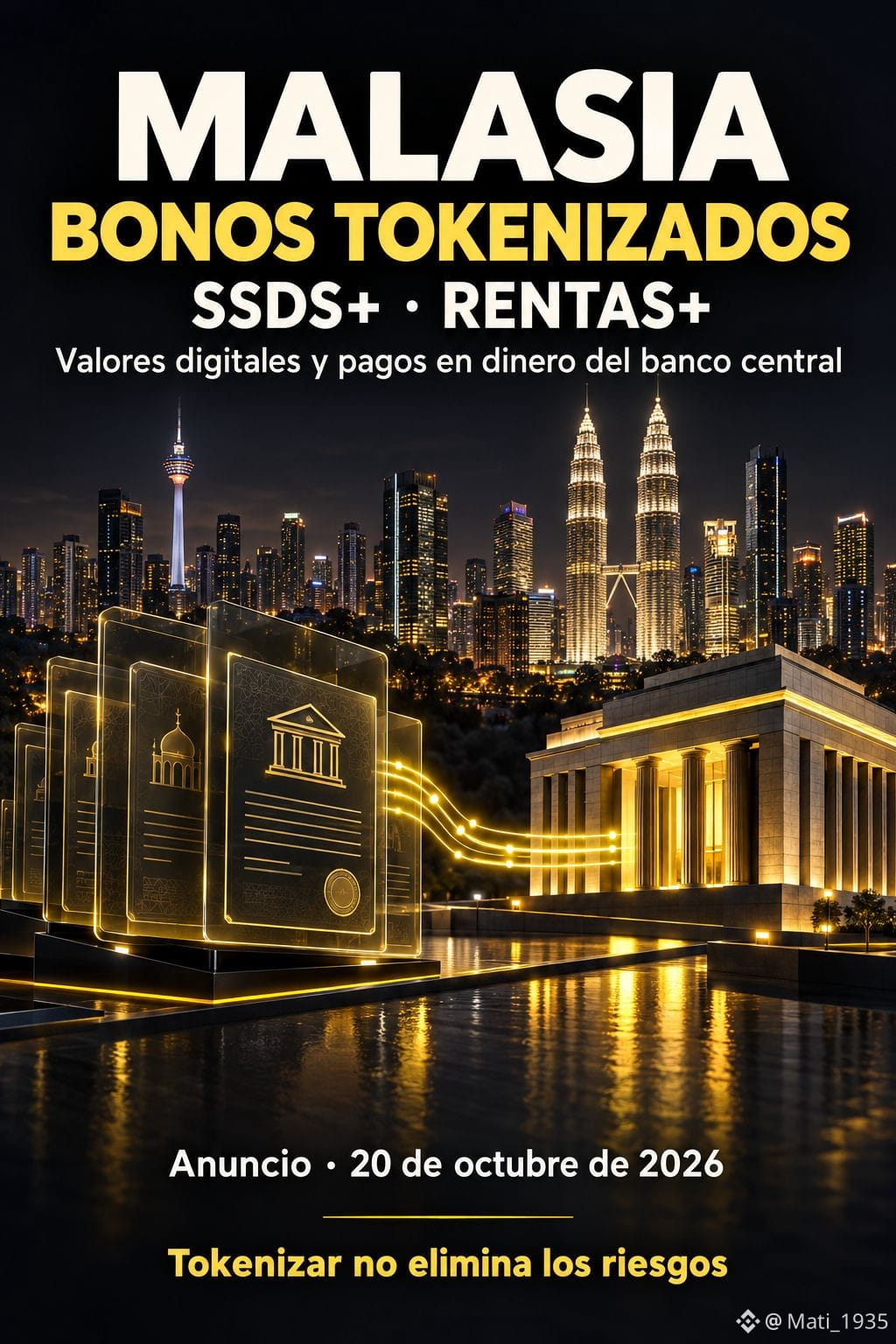
Malaysia connects tokenized bonds to central bank money payments
On October 20, 2026, Bank Negara Malaysia (BNM) announced the launch of SSDS+, a platform for issuing, recording, and safeguarding tokenized bonds and sukuk.
Developed in-house using cloud technology and distributed ledgers, it expands the wholesale market’s securities depository system. It is also ready for tokenized issues of government and corporate bonds for retail investors.
The connection with RENTAS+ separates two functions: SSDS+ records securities ownership and transfers; RENTAS+ moves the corresponding payment in central bank money. The infrastructure enables continuous payments and settlement.
The timeline matters: a speech on September 9 had already projected an initial launch of SSDS+ for September 25. Today’s announcement confirms its launch, without setting a different date for the first transaction. RENTAS+ had been announced on October 7, 2025.
Tokenizing a security means representing it digitally; it does not automatically turn a bond into a cryptocurrency. The announcement does not mention a proprietary crypto token or identify a specific public network, the first issuer, or an issuance volume.
It is also important to distinguish capability from use: the ability to support retail bonds does not prove that a public offering is available. Issuer, liquidity, and operational risks remain; digitizing the records does not guarantee returns.
Market perspective: progress will depend on actual issuances and participants. It does not allow us to infer demand for BTC, ETH, or USDT. As an external reference, Binance spot prices at 18:24 UTC on 10/20 showed BTC at 82.598,01 USDT (+0,882% in 24 h) and ETH at 2.443,56 USDT (+2,097%). These prices do not measure SSDS+ adoption.
$BTC $ETH $USDT
Educational content. Not financial advice.
#Tokenizacion #Malasia #Bonos #DigitalFinance
35

·
--
🌐 Adoption matters, but it needs to be measured
The launch of U.S. spot ETFs in January 2024 opened up a regulated way for certain investors to gain exposure to Bitcoin’s price without directly holding the coins.
My view: financial infrastructure can make access easier, but easier access does not mean an absence of risk. Adoption should be assessed alongside actual demand, costs, and regulation.
#Bitcoin #Adoption #ETF #FinanzasDigitales
76


Article
📰 SUN (SUN): The Energy That Powers the TRON Network ☀️🔗1. What is SUN?
SUN is the native token of the ecosystem built on the TRON network, created with the goal of being the heart of decentralized finance within its chain. It is often referred to as the «Bitcoin of TRON», because it combines utility, governance, and reward functions into a single digital asset.🪙
It was born with a clear idea: to offer simple, secure, and accessible tools so that anyone can take part in the world of decentralized finance, without complications and with very low costs 🤝🌐.
📰 SUN (SUN): The Energy That Powers the TRON Network ☀️🔗
1. What is SUN?
SUN is the native token of the ecosystem built on the TRON network, created with the goal of being the heart of decentralized finance within its chain. It is often referred to as the «Bitcoin of TRON», because it combines utility, governance, and reward functions into a single digital asset.🪙
It was born with a clear idea: to offer simple, secure, and accessible tools so that anyone can take part in the world of decentralized finance, without complications and with very low costs 🤝🌐.
181

·
--

Article
Stanley coins: the bridge between traditional money and the new digital economy$NVDAB
In the world of cryptocurrencies, volatility is one of the main challenges for those who want to use digital assets in their everyday lives. Bitcoin and other cryptoassets can experience significant price swings over very short periods.
This is where stablecoins come in.
Stablecoins are cryptocurrencies designed to maintain a relatively stable value, generally linked to a reference asset such as the US dollar. This feature has made them a fundamental part of the blockchain ecosystem and one of the most practically useful digital instruments.
Stanley coins: the bridge between traditional money and the new digital economy
$NVDAB
In the world of cryptocurrencies, volatility is one of the main challenges for those who want to use digital assets in their everyday lives. Bitcoin and other cryptoassets can experience significant price swings over very short periods.
This is where stablecoins come in.
Stablecoins are cryptocurrencies designed to maintain a relatively stable value, generally linked to a reference asset such as the US dollar. This feature has made them a fundamental part of the blockchain ecosystem and one of the most practically useful digital instruments.
147

·
--
Why does Binance continue to be the favorite platform in Latin America?
Over 150 million users trust it for:
🔹 Low and transparent fees
🔹 Wide variety of cryptocurrencies
🔹 World-class security
🔹 Tools for both beginners and pros
💡 Tip: Start with small amounts, educate yourself before investing, and never risk what you're not willing to lose.
👇 Are you trading here yet? Share your experience in the comments.
#Binance #Criptomonedas #Inversiones $SPCXB #FinanzasDigitales
156
Article
📊 MARKET REPORT: Where is the Crypto economy headed today? 🚀The crypto market has broken the monotony of the past few months! If you were disconnected this week, here’s a summary with verified information about what’s happening in the digital economy.
✨ Today’s Key Data (September 2026)
Bitcoin ($BTC ): It broke through the $80,000 barrier! Trading today at USD 86.172, consolidating an upswing after breaking its sideways streak. In Argentina, this is approximately $130.437.360 pesos at the official reference exchange rate. [1, [2](https://www.binance.com/en/square/post/362032344536048), 3]
📊 MARKET REPORT: Where is the Crypto economy headed today? 🚀
The crypto market has broken the monotony of the past few months! If you were disconnected this week, here’s a summary with verified information about what’s happening in the digital economy.
✨ Today’s Key Data (September 2026)
Bitcoin ($BTC ): It broke through the $80,000 barrier! Trading today at USD 86.172, consolidating an upswing after breaking its sideways streak. In Argentina, this is approximately $130.437.360 pesos at the official reference exchange rate. [1, 2, 3]
✨ Today’s Key Data (September 2026)
Bitcoin ($BTC ): It broke through the $80,000 barrier! Trading today at USD 86.172, consolidating an upswing after breaking its sideways streak. In Argentina, this is approximately $130.437.360 pesos at the official reference exchange rate. [1, 2, 3]
151
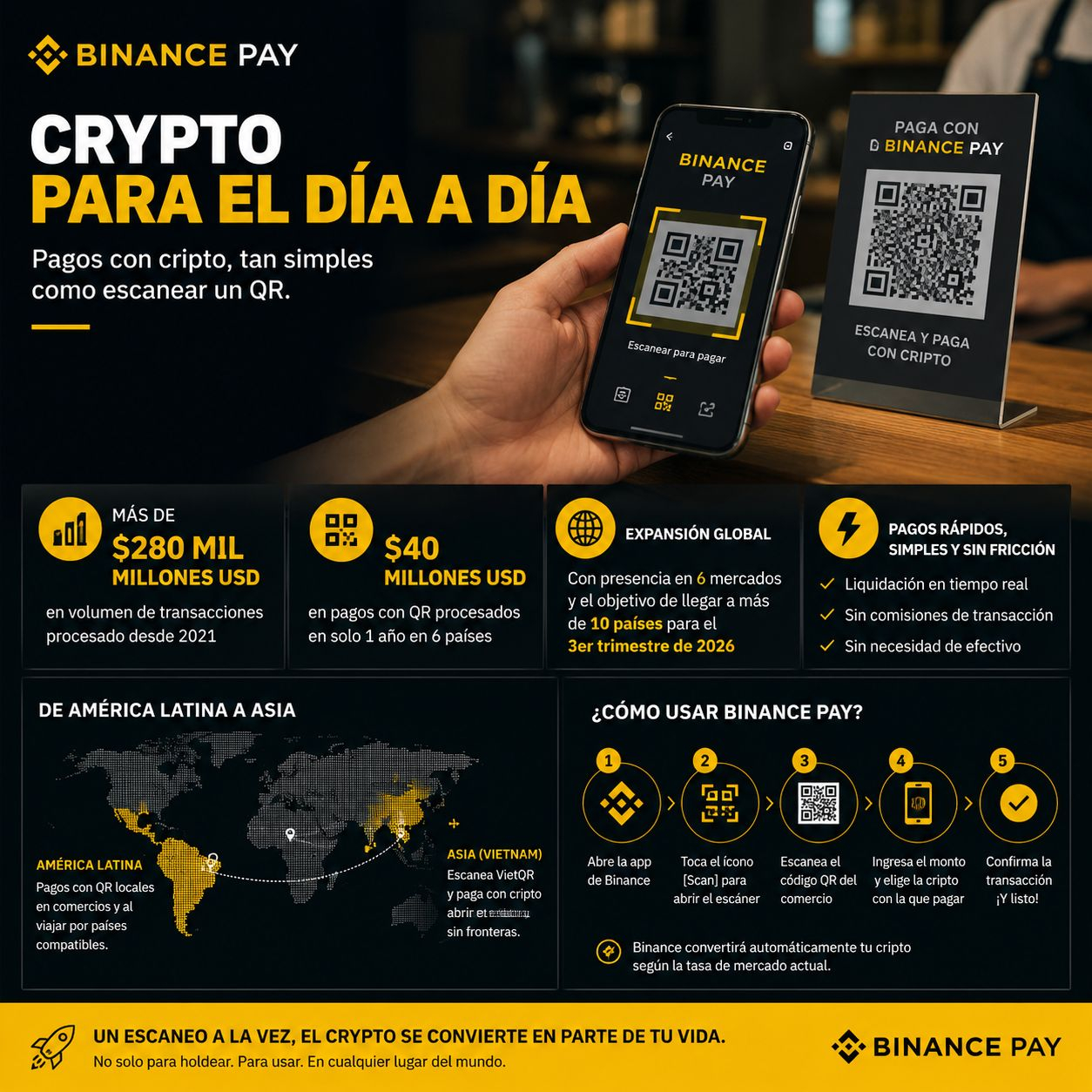
Binance Pay and the Future of Crypto Payments
Binance Pay has already processed over $280 billion USD since 2021, proving that cryptocurrency payments can scale globally 🌍.
🔑 Key Points:
Integration with local QR payments, making daily use easy.
Over $40 million USD in QR payments in just 1 year.
Accelerated growth in Latin America and Asia.
Elimination of intermediaries: fast payments, frictionless, and cashless.
💡 This means you can pay for a coffee, travel, or shop just by scanning a QR code with crypto, just like you would with traditional money.
📈 With plans to expand to more than 10 countries by 2026, Binance Pay is bringing crypto closer to its true purpose: to be used, not just held.
#Crypto #BinancePay #Adoption #FinanzasDigitales
1
3
799
·
--
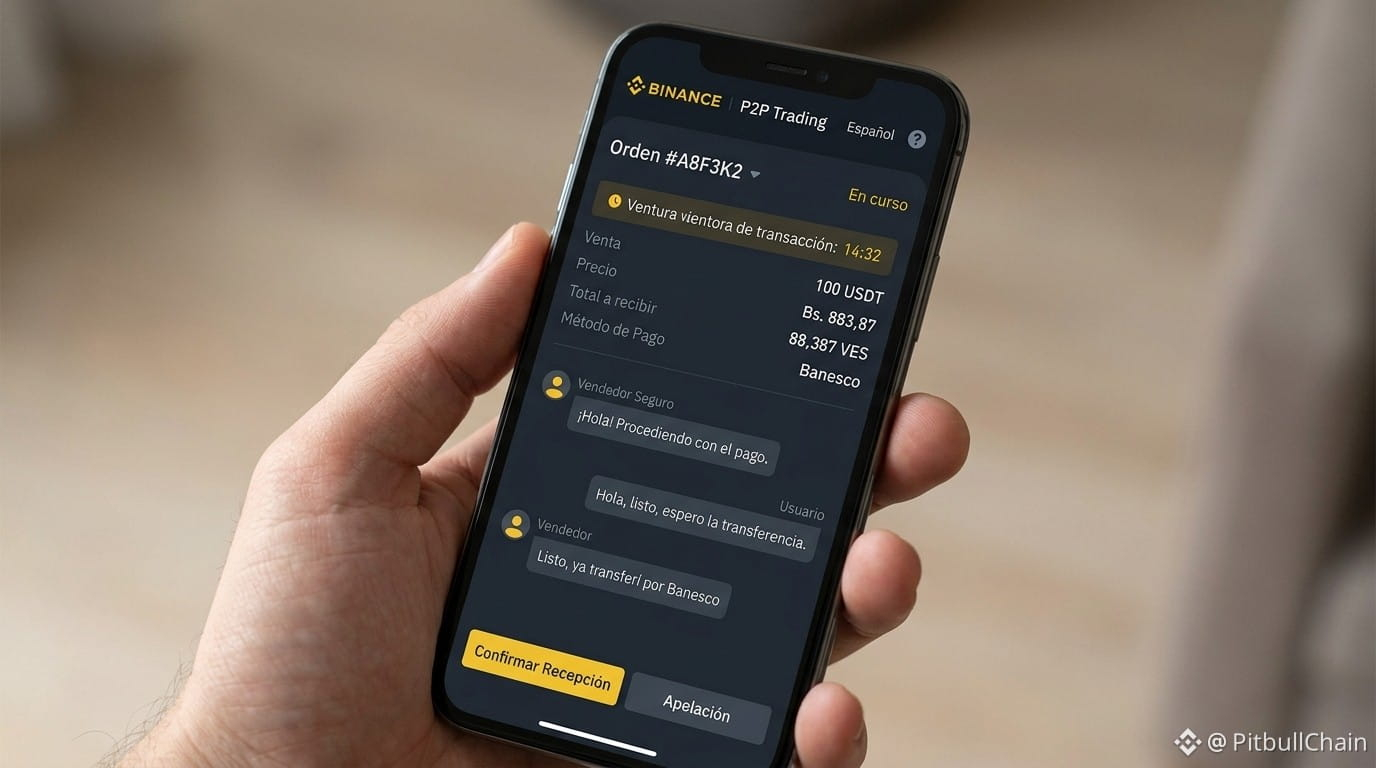
Are you accepting the first order you see on Binance P2P, or are you playing as a market maker?
Today we see more than 190 active orders with buy references at 925.85 Bs and sell at 931.31 Bs on Binance. When the market moves fast and the spread changes pace, entering as a taker without analyzing can cost you several bolívares per USDT.
My recommendation: if you don’t have an immediate rush, publish your own ad (maker). Set your rate, filter users with +98% completion, and protect your capital. In P2P, discipline matters more than rushing.
📊 Live rates and analysis at pitbullchain.com
#BinanceP2P #VenezuelaCrypto #USDT #FinanzasDigitales
81

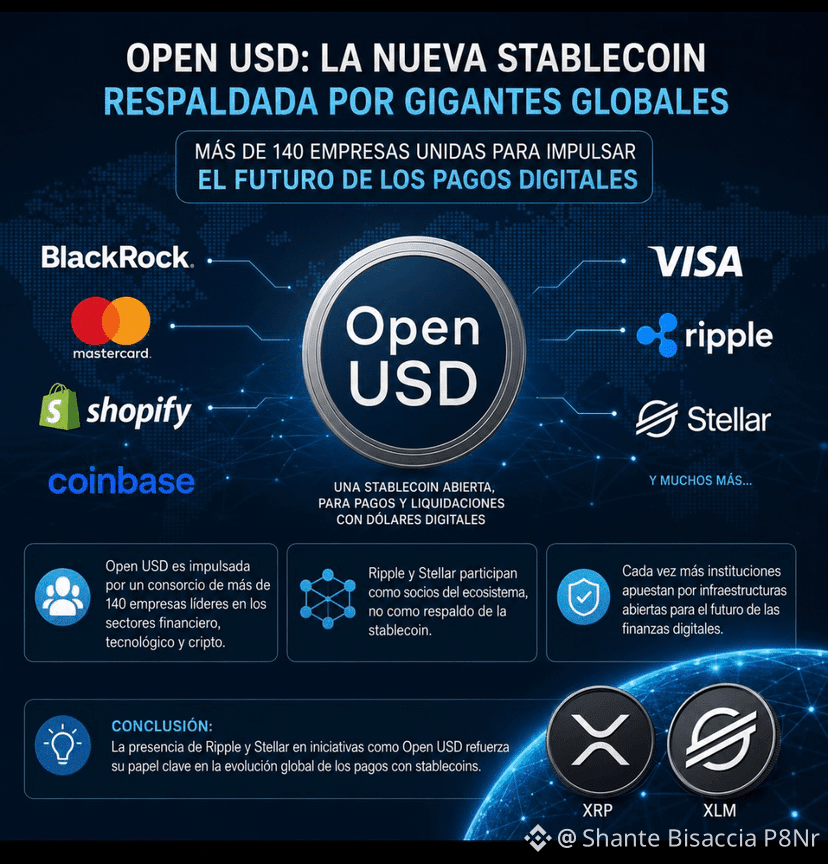
🚨 Open USD continues to make headlines.
The new stablecoin, backed by a consortium of more than 140 companies, brings together giants like BlackRock, Mastercard, Shopify, and Coinbase. Among the participants are also Ripple and Stellar, bringing the XRP and XLM ecosystems back into the spotlight of major digital payments initiatives.
It’s important to clarify that this does not mean Open USD uses XRP or XLM as collateral; rather, both organizations are part of the ecosystem driving this project.
The takeaway is that more and more institutional players are betting on open infrastructures for stablecoin payments, and the presence of Ripple and Stellar in these initiatives strengthens their role in the evolution of digital finance.
$XRP $XRP #OUSD #Stablecoins #FinanzasDigitales
3
5
1.3k
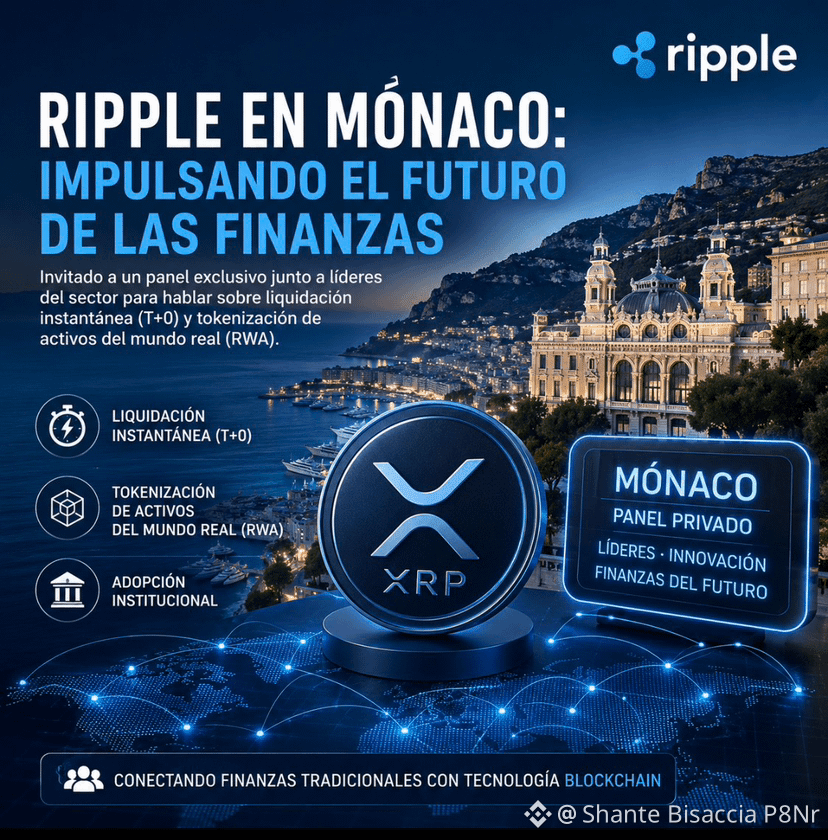
🚨 Ripple keeps gaining institutional traction.
Ripple will be part of a private panel alongside major players in the financial and digital asset sectors. Key topics include instant settlement (T+0) and the tokenization of real-world assets (RWA), two areas that are attracting increasing attention from institutions.
Although some figures shared on social media are speculative, Ripple's participation in these types of gatherings reflects the growing interest in blockchain solutions within traditional financial markets.
🌐 The convergence between traditional finance and blockchain technology continues to move forward steadily.
$XRP #Ripple #RWA #Blockchain #DigitalFinance
3
1
456
·
--
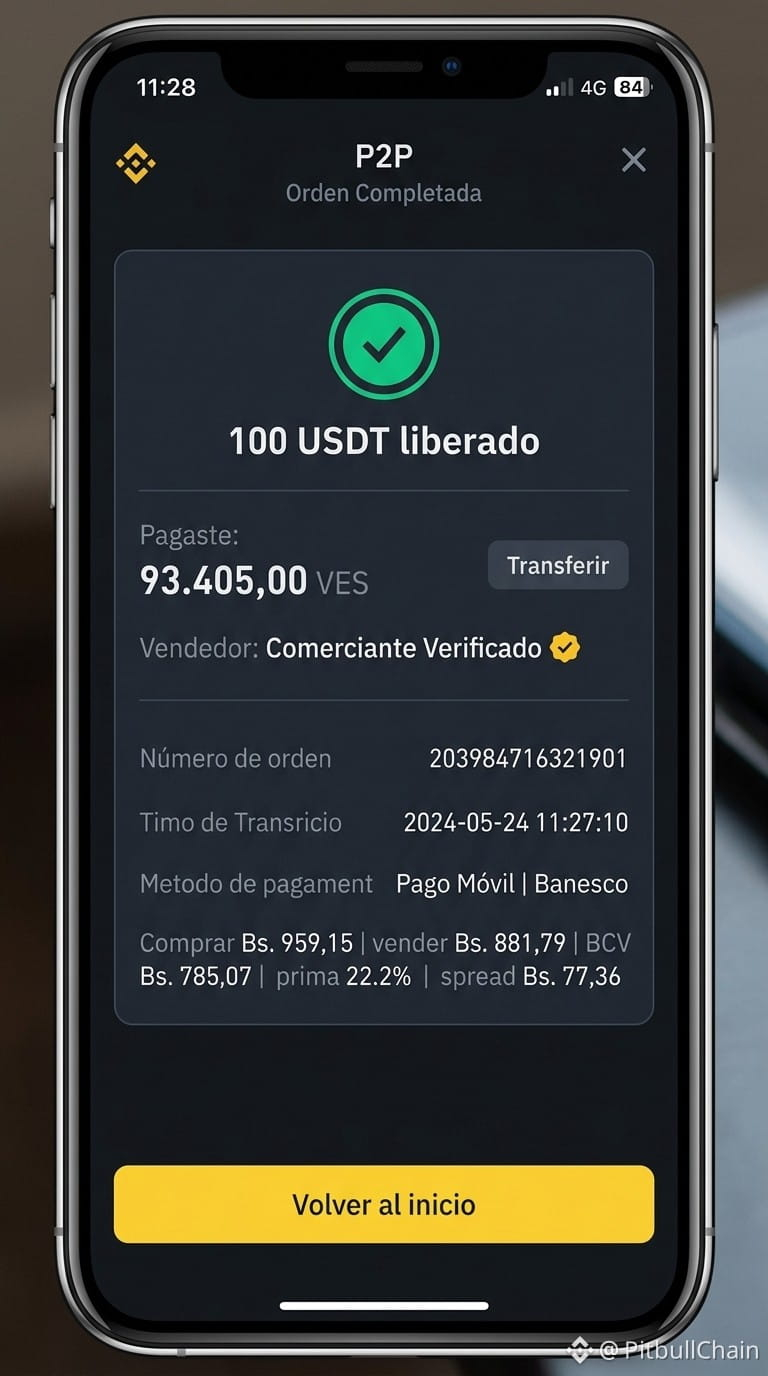
Pay attention to the buy-sell spread today on Binance P2P! ⚠️
While talk of exchange-rate stability continues, the order book tells a different story: buying USDT is around Bs. 959.15, while the sell price sits at Bs. 881.79. That’s a direct spread of Bs. 77.36 (8.77%) and a premium of 22.17% compared to the official rate of Bs. 785.07.
With more than 200 active orders, the market penalizes anyone who doesn’t calculate their entry and exit price correctly. If you’re trading today, check your margin carefully before releasing funds and don’t rush.
📊 Live rates and analysis at pitbullchain.com
#BinanceP2P #VenezuelaCrypto #USDT #FinanzasDigitales
62
·
--
Article
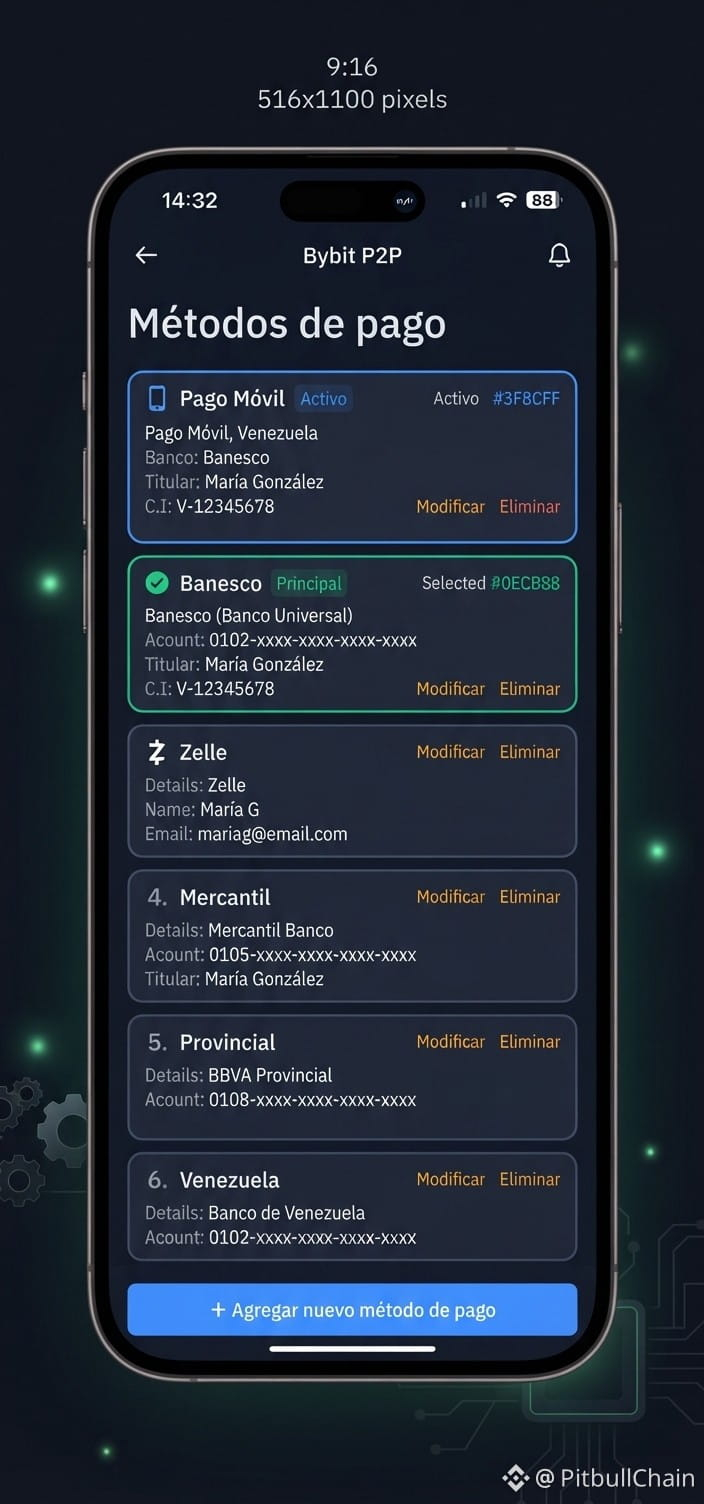
Why is your P2P order taking longer today in Venezuela?Has it happened to you that you open an order to exchange your $USDT to bolívares and it takes twice as long to be released? ⏱️
With more than 190 active offers on Binance P2P, the bottleneck today Monday, September 7 is not the lack of buyers, but the fragmentation of interbank liquidity.
When we see buy orders around 968 Bs and sell orders around 957 Bs on Binance, many users make the mistake of choosing the trader solely by the most attractive rate, ignoring whether they operate with immediate Pago Móvil or direct transfers from the same bank.
Why is your P2P order taking longer today in Venezuela?
Has it happened to you that you open an order to exchange your $USDT to bolívares and it takes twice as long to be released? ⏱️
With more than 190 active offers on Binance P2P, the bottleneck today Monday, September 7 is not the lack of buyers, but the fragmentation of interbank liquidity.
When we see buy orders around 968 Bs and sell orders around 957 Bs on Binance, many users make the mistake of choosing the trader solely by the most attractive rate, ignoring whether they operate with immediate Pago Móvil or direct transfers from the same bank.
87
·
--
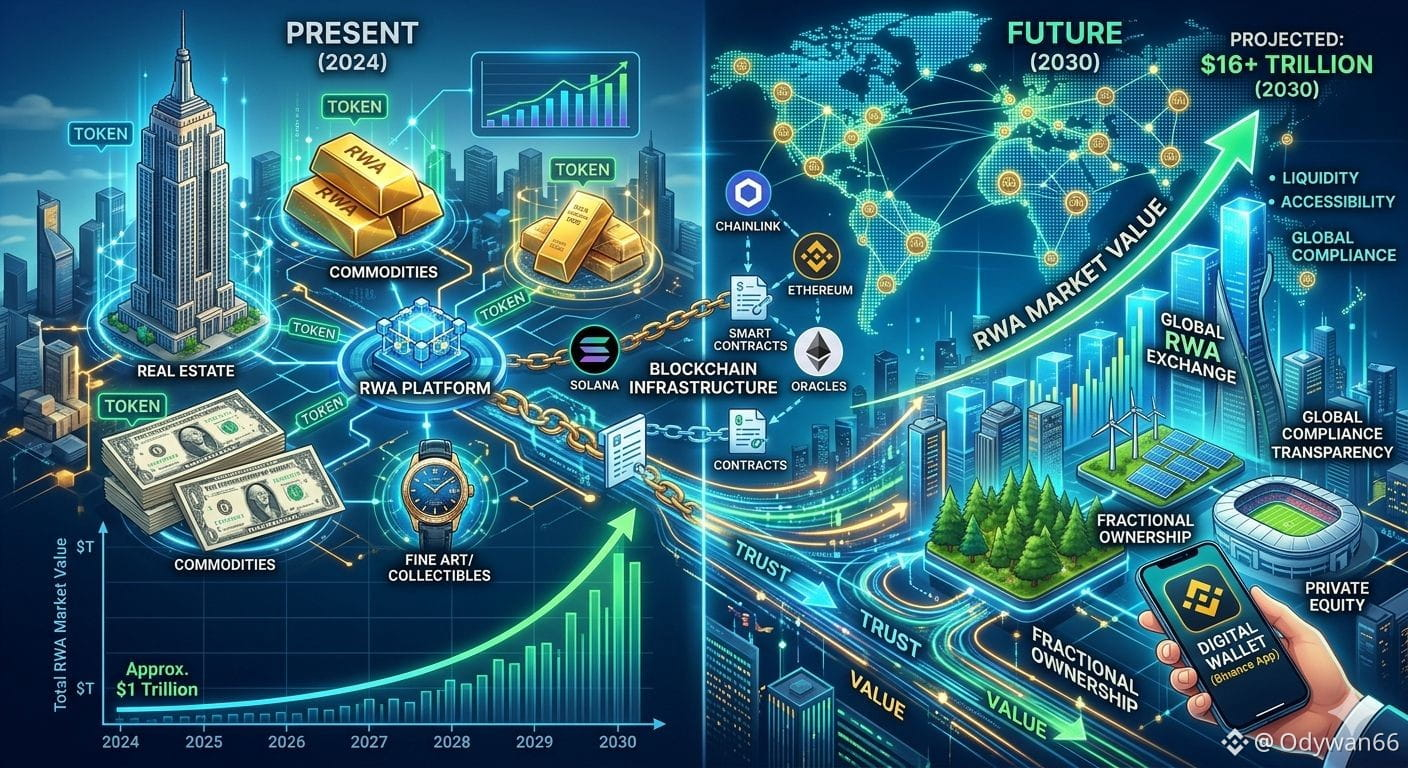
THE FUTURE HAS ALREADY ARRIVED AT BINANCE! The power of RWA 🏢💎
Tired of extreme volatility? It’s time to connect your savings with the real economy. Let me explain why RWA (Real World Assets) are changing the game on Binance! 👇
What are they? 🧠: They are digital tokens that represent real-world physical assets. The perfect union of traditional security and blockchain technology!
What backs them? 🛡️: Zero empty speculation. They are backed by real gold in vaults, real estate properties, and Treasury bonds issued by major global financial giants.
Investment for everyone 💵: You no longer need millions. Thanks to fractionalization, you can invest in portions of large assets with minimum amounts.
Total liquidity ⚡: Forget waiting months to sell a property or a bond. Buy, sell, or exchange your RWA tokens 24/7, 365 days a year—within seconds.
🚀 On Binance, the real assets market moves forward with the technological backing of leading networks and oracles like $LINK to ensure maximum transparency. It’s time to diversify with real value!
And you—do you already have RWA tokens protecting your portfolio? I’d love to hear from you in the comments! 👇
#Binance #RWA #RealWorldAssets #Crypto #Investments #FinanzasDigitales
#
114
·
--
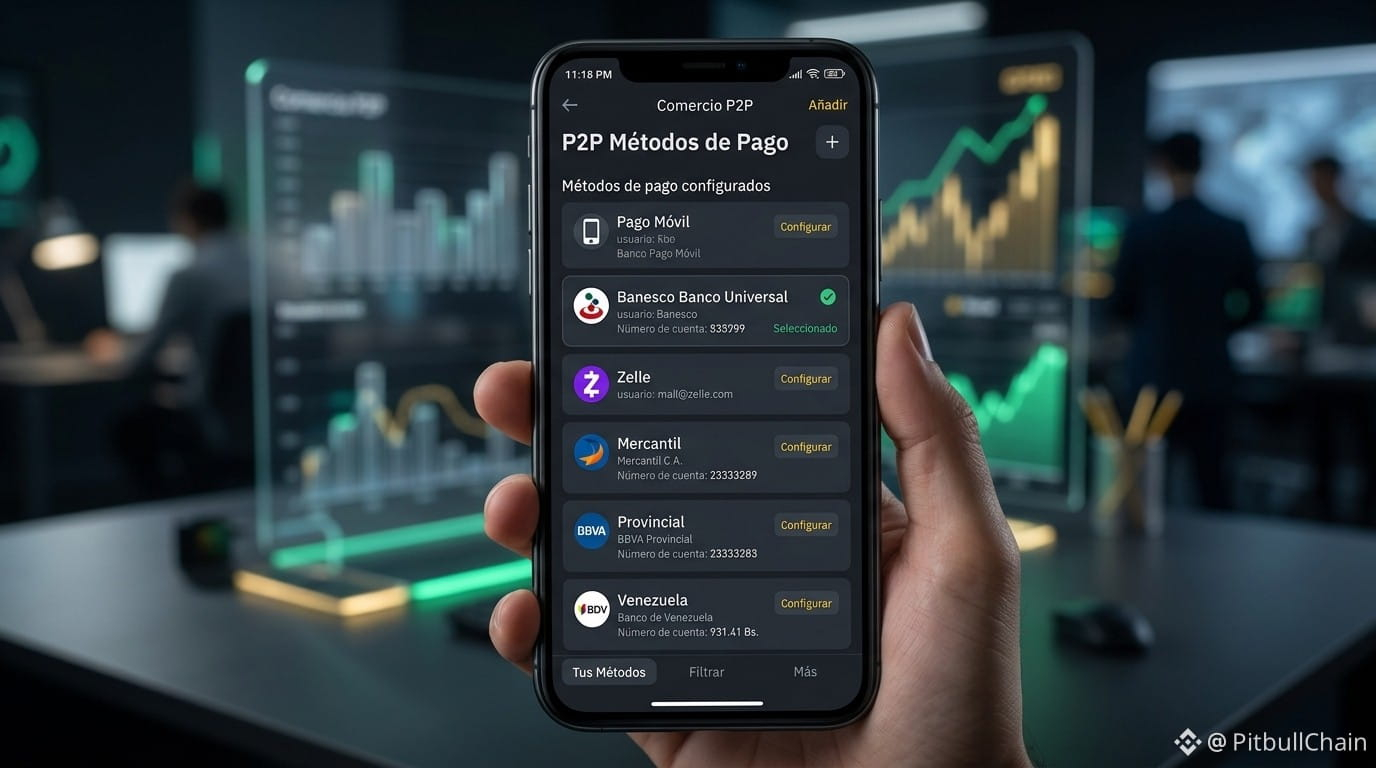
With 217 active orders on Binance P2P, moving bolívares to USDT today requires precision. The market indicates a buy price at Bs. 952.74 and a sell price at Bs. 882.43, opening a spread of Bs. 70.31 (7.97%).
Compared to the BCV at Bs. 785.07, the P2P market holds a premium of 21.36%. Liquidity remains active and constant, but that gap between the quotes punishes anyone who rushes in without a plan. If you’re going to transact, calculate your real costs before releasing funds and watch your effective rate.
📊 Live rates and analysis at pitbullchain.com
#BinanceP2P #VenezuelaCrypto #USDT #FinanzasDigitales
59

·
--
🚀 Are traditional actions on Binance possible? The future of finance is already here 📈💥
Imagine being able to manage your investments from the traditional stock market and your cryptocurrencies in the same place? The financial market is no longer divided between "Wall Street" and "Crypto".
With the new integrations and asset transfers (DTC Transfer), the gap between stocks and crypto is getting smaller and smaller. This changes the rules of the game for everyone:
🌐 Total Diversification: Less friction to move your capital between traditional and digital assets.
⚡ Higher Liquidity: Freedom to trade and protect your portfolio during periods of high volatility.
🛡️ Security and Infrastructure: Efficient transfers without relying on multiple platforms or slow intermediaries.
The financial ecosystem is evolving, and those who understand the convergence between stocks and crypto in time are the ones who gain an advantage.
👇 LEAVE ME YOUR OPINION IN THE COMMENTS! 👇
💬 Do you prefer to keep your capital 100% in Crypto, or would you like to have a portion in traditional stocks within Binance? I’m reading all of you!
#BinanceSquare #StocksToBinance #DTCTransfer #Trading2026 #CryptoNews #Bitcoin #Inversiones #FinanzasDigitales
$BTC C $BNB and $USDT
126
·
--
Bullish
🚀 Hey fam, the financial future is being built day by day!
Being part of the Binance ecosystem already gives us a massive edge. The key here isn't just to trade, but to learn, connect with other creators, and understand where the digital market is headed.
Managing our assets with intelligence and security gives us that freedom we all seek. Let's keep sharing ideas, analyzing trends, and leveraging every tool this platform offers to grow.
What's your financial goal for this week? Can't wait to read your thoughts in the comments! 👇✨
#Binance #CryptoComunidad #FinanzasDigitales $BTC
{spot}(BTCUSDT)
🚀 Hey fam, the financial future is being built day by day!
Being part of the Binance ecosystem already gives us a massive edge. The key here isn't just to trade, but to learn, connect with other creators, and understand where the digital market is headed.
Managing our assets with intelligence and security gives us that freedom we all seek. Let's keep sharing ideas, analyzing trends, and leveraging every tool this platform offers to grow.
What's your financial goal for this week? Can't wait to read your thoughts in the comments! 👇✨
#Binance #CryptoComunidad #FinanzasDigitales $BTC
1
46
Log in to explore more content
Join global crypto users on Binance Square
⚡️ Get latest and useful information about crypto.
💬 Trusted by the world’s largest crypto exchange.
👍 Discover real insights from verified creators.
Email / Phone number
Trending Topics
1
#KeplrAdvisesSocialLoginUsersToTransferAssets
1,126 views
70 Discussing
2
#TetherPlans€28.8MForJuventusCapitalIncrease
1,262 views
67 Discussing
3
#JobsReportRaisesHikeOdds
637,308 views
3,922 Discussing
4
#CPITestsDecemberRateOutlook
218,007 views
1,518 Discussing
5
#US Data Center Rules May Constrain AI Expansion
89,717 views
247 Discussing
6
#ARKPlans14ThematicETFsCoveringAIAndTokenizedMarkets
5,646 views
81 Discussing
7
#WillAnthropicListOnTime
201,996 views
1,657 Discussing
8
#WillUS-IranTensionsBoostSafe-HavenDemand?
106,760 views
724 Discussing
9
#BitcoinETFsSee$412MNetOutflows
19,614 views
85 Discussing
10
#HKSFCPlansToRestrictCryptoAndExchangeTerms
84,298 views
695 Discussing