
#etf
etf
1G views
5.7M Discussing
Hot
Latest

·
--
Bullish
$SOL ETF Inflows Hit $300M! 🔥
Solana ETFs saw $8.3M inflow yesterday, total now $304M.
$SOL holding $225+ strongly.
Is $SOL ready for $300 next?
#sol #Solana #ETF #Write2Earrn 👇🚀
{spot}(SOLUSDT)
$SOL ETF Inflows Hit $300M! 🔥
Solana ETFs saw $8.3M inflow yesterday, total now $304M.
$SOL holding $225+ strongly.
Is $SOL ready for $300 next?
#sol #Solana #ETF #Write2Earrn 👇🚀
Solana ETFs saw $8.3M inflow yesterday, total now $304M.
$SOL holding $225+ strongly.
Is $SOL ready for $300 next?
#sol #Solana #ETF #Write2Earrn 👇🚀
121

#etf
🔴 Crypto panic driven by politics and the Fed: what is happening?
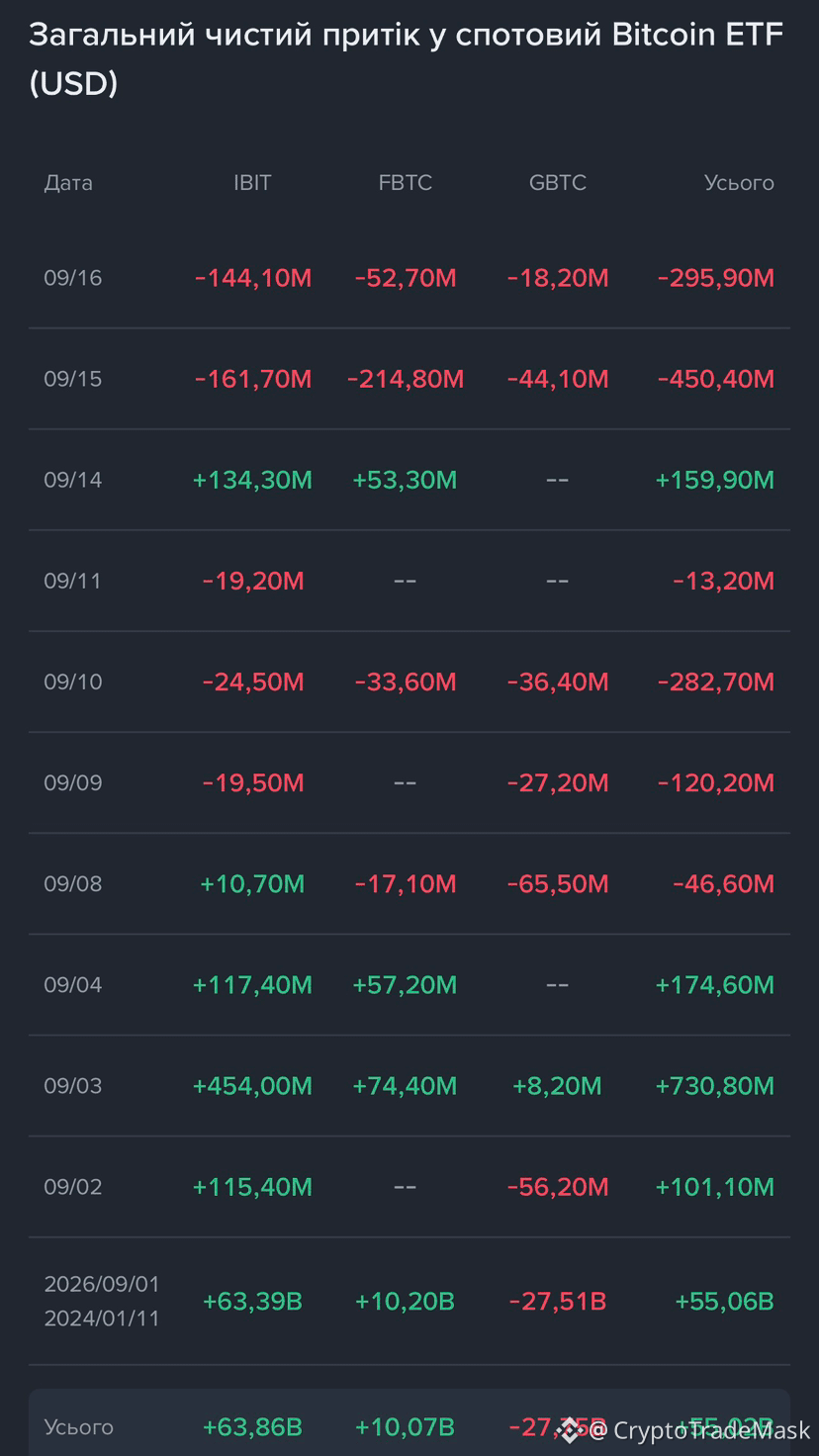
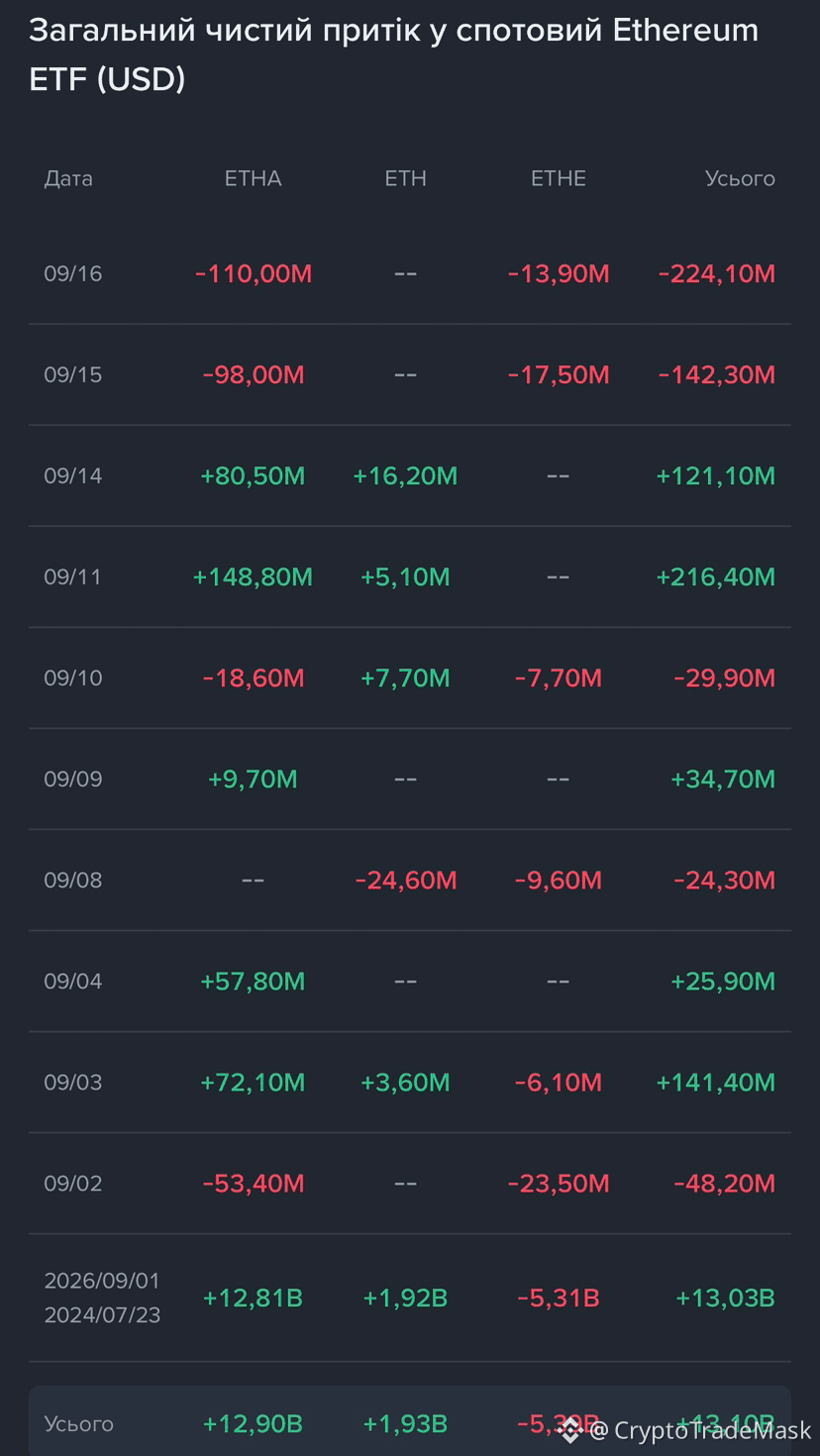
September 2026 brought a sharp reversal to the crypto market. In just two days (September 15–16), institutional investors withdrew over $1.1 billion from spot Bitcoin and Ethereum ETFs.
📊 Key reasons for the slump:
➡️ Failure of the CLARITY Act in the Senate: The bill aimed at providing regulatory clarity for digital assets was blocked due to political disputes regarding ethics and conflicts of interest. The market lost the anticipated transparent rules of the game.
➡️ Fed decisions and high yields: Monetary policy tightening and rising bond yields have dampened risk appetite, leading institutional investors to lock in profits en masse.
➡️ Major fund outflows: The bulk of the outflows came from giants like BlackRock (IBIT) and Fidelity (FBTC).
⚠️ The political deadlock in the US has temporarily deprived the crypto market of its primary growth driver, pushing prices into a phase of heightened volatility.
{future}(ETHUSDT)
{future}(BTCUSDT)
{future}(XRPUSDT)
#etf
🔴 Crypto panic driven by politics and the Fed: what is happening?
September 2026 brought a sharp reversal to the crypto market. In just two days (September 15–16), institutional investors withdrew over $1.1 billion from spot Bitcoin and Ethereum ETFs.
📊 Key reasons for the slump:
➡️ Failure of the CLARITY Act in the Senate: The bill aimed at providing regulatory clarity for digital assets was blocked due to political disputes regarding ethics and conflicts of interest. The market lost the anticipated transparent rules of the game.
➡️ Fed decisions and high yields: Monetary policy tightening and rising bond yields have dampened risk appetite, leading institutional investors to lock in profits en masse.
➡️ Major fund outflows: The bulk of the outflows came from giants like BlackRock (IBIT) and Fidelity (FBTC).
⚠️ The political deadlock in the US has temporarily deprived the crypto market of its primary growth driver, pushing prices into a phase of heightened volatility.
🔴 Crypto panic driven by politics and the Fed: what is happening?
September 2026 brought a sharp reversal to the crypto market. In just two days (September 15–16), institutional investors withdrew over $1.1 billion from spot Bitcoin and Ethereum ETFs.
📊 Key reasons for the slump:
➡️ Failure of the CLARITY Act in the Senate: The bill aimed at providing regulatory clarity for digital assets was blocked due to political disputes regarding ethics and conflicts of interest. The market lost the anticipated transparent rules of the game.
➡️ Fed decisions and high yields: Monetary policy tightening and rising bond yields have dampened risk appetite, leading institutional investors to lock in profits en masse.
➡️ Major fund outflows: The bulk of the outflows came from giants like BlackRock (IBIT) and Fidelity (FBTC).
⚠️ The political deadlock in the US has temporarily deprived the crypto market of its primary growth driver, pushing prices into a phase of heightened volatility.
1
136

·
--
Bullish
🚨 Crypto market update
Teucrium’s proposed 2x Short Daily $XRP ETF has been delayed for the 19th time, with its registration-effective date moved to October 11, 2026. It was not rejected by the SEC—the filing only postpones the product’s potential launch, and gives no official reason.
Meanwhile, Bitcoin and Ethereum ETFs recorded around $1.11 billion in combined outflows over two days, adding pressure across the crypto market.
$BTC $ETH
#XRP #Bitcoin #Ethereum #CryptoNews #ETF
🚨 Crypto market update
Teucrium’s proposed 2x Short Daily $XRP ETF has been delayed for the 19th time, with its registration-effective date moved to October 11, 2026. It was not rejected by the SEC—the filing only postpones the product’s potential launch, and gives no official reason.
Meanwhile, Bitcoin and Ethereum ETFs recorded around $1.11 billion in combined outflows over two days, adding pressure across the crypto market.
$BTC $ETH
#XRP #Bitcoin #Ethereum #CryptoNews #ETF
Teucrium’s proposed 2x Short Daily $XRP ETF has been delayed for the 19th time, with its registration-effective date moved to October 11, 2026. It was not rejected by the SEC—the filing only postpones the product’s potential launch, and gives no official reason.
Meanwhile, Bitcoin and Ethereum ETFs recorded around $1.11 billion in combined outflows over two days, adding pressure across the crypto market.
$BTC $ETH
#XRP #Bitcoin #Ethereum #CryptoNews #ETF
2
305

Today 18 September
📈 Binance Launches ETF Wealth Management
Binance has launched a new ETF Wealth Management service on Binance Earn, giving eligible users access to selected U.S.-listed ETFs.
The service includes ETFs linked to U.S. Treasury securities and investment-grade bonds, expanding Binance's range of financial products beyond cryptocurrencies.
Key Highlights:
🔹 New ETF service on Binance Earn
🔹 Access to selected U.S. ETFs
🔹 Includes Treasury and bond ETFs
🔹 Returns are not guaranteed
#Binance #CryptoNewss #etf #news_update
Today 18 September
📈 Binance Launches ETF Wealth Management
Binance has launched a new ETF Wealth Management service on Binance Earn, giving eligible users access to selected U.S.-listed ETFs.
The service includes ETFs linked to U.S. Treasury securities and investment-grade bonds, expanding Binance's range of financial products beyond cryptocurrencies.
Key Highlights:
🔹 New ETF service on Binance Earn
🔹 Access to selected U.S. ETFs
🔹 Includes Treasury and bond ETFs
🔹 Returns are not guaranteed
#Binance #CryptoNewss #etf #news_update
📈 Binance Launches ETF Wealth Management
Binance has launched a new ETF Wealth Management service on Binance Earn, giving eligible users access to selected U.S.-listed ETFs.
The service includes ETFs linked to U.S. Treasury securities and investment-grade bonds, expanding Binance's range of financial products beyond cryptocurrencies.
Key Highlights:
🔹 New ETF service on Binance Earn
🔹 Access to selected U.S. ETFs
🔹 Includes Treasury and bond ETFs
🔹 Returns are not guaranteed
#Binance #CryptoNewss #etf #news_update

14

·
--
#BitcoinETFsShed$450M
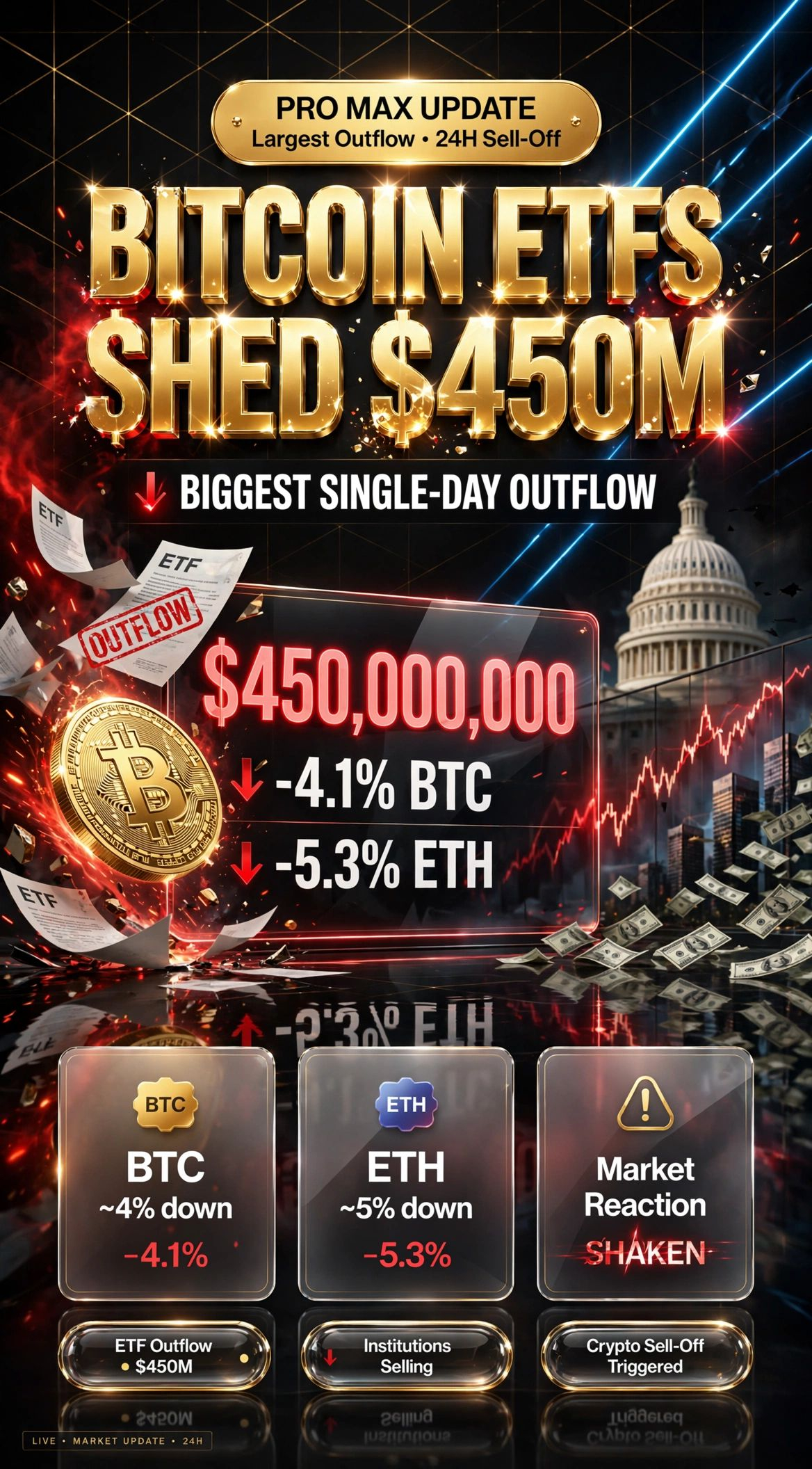
BITCOIN ETFS SHED $450M
🚨 BREAKING: Bitcoin ETFs just shed $450M in biggest single-day outflow!
Market Impact 24H:
$BTC: ~4% down (-4.1%)
$ETH: ~5% down (-5.3%)
$450M outflow — Largest in 24H
Trigger: U.S. Senate's CLARITY Act vote failed 49-50, shaking institutional confidence.
What this means:
ETF Outflow • $450M
Institutions Selling
Crypto Sell-Off Triggered
Institutions were waiting for clearer regulations — delay = temporary sell-off.
Is this capitulation or buying opportunity?
$BTC $ETH $SOL $BNB
#bitcoinetfsshed$450m #BTC #ETH #CryptoNews #etf
#BitcoinETFsShed$450M
BITCOIN ETFS SHED $450M
🚨 BREAKING: Bitcoin ETFs just shed $450M in biggest single-day outflow!
Market Impact 24H:
$BTC : ~4% down (-4.1%)
$ETH : ~5% down (-5.3%)
$450M outflow — Largest in 24H
Trigger: U.S. Senate's CLARITY Act vote failed 49-50, shaking institutional confidence.
What this means:
ETF Outflow • $450M
Institutions Selling
Crypto Sell-Off Triggered
Institutions were waiting for clearer regulations — delay = temporary sell-off.
Is this capitulation or buying opportunity?
$BTC $ETH $SOL $BNB
#bitcoinetfsshed$450m #BTC #ETH #CryptoNews #etf
BITCOIN ETFS SHED $450M
🚨 BREAKING: Bitcoin ETFs just shed $450M in biggest single-day outflow!
Market Impact 24H:
$BTC : ~4% down (-4.1%)
$ETH : ~5% down (-5.3%)
$450M outflow — Largest in 24H
Trigger: U.S. Senate's CLARITY Act vote failed 49-50, shaking institutional confidence.
What this means:
ETF Outflow • $450M
Institutions Selling
Crypto Sell-Off Triggered
Institutions were waiting for clearer regulations — delay = temporary sell-off.
Is this capitulation or buying opportunity?
$BTC $ETH $SOL $BNB
#bitcoinetfsshed$450m #BTC #ETH #CryptoNews #etf
2
100

📈 Binance Adds More Stocks & ETFs
Binance Stock Recurring Buy has added a new list of stocks and ETFs, giving eligible users more assets to choose from.
Some names include , $UBER , $SHOP and $SPOT.US
More choices, more flexibility.
#Binance #ETF #Investing #BinanceSquare
📈 Binance Adds More Stocks & ETFs
Binance Stock Recurring Buy has added a new list of stocks and ETFs, giving eligible users more assets to choose from.
Some names include , $UBER , $SHOP and $SPOT.US
More choices, more flexibility.
#Binance #ETF #Investing #BinanceSquare
Binance Stock Recurring Buy has added a new list of stocks and ETFs, giving eligible users more assets to choose from.
Some names include , $UBER , $SHOP and $SPOT.US
More choices, more flexibility.
#Binance #ETF #Investing #BinanceSquare

65

·
--
The main obstacle to staking inside a US spot $ETH fund is a tax rule, not securities law.
The fund has to keep its investment-trust tax status, and staking puts that at risk. H.R. 10357, the Digital Asset Tax Certainty Act, cleared House Ways and Means on 16 September. As reported, it lets qualifying investment trusts stake without losing trust status.
A large share of US institutional money can legally own only a registered wrapper like these funds.
Two limits. Committee passage is not law, and the House leaves today until 9 November, so no floor vote before the lame duck. Staking rewards also stay ordinary income when received; the deferral is not in the text.
The flows did not wait. US spot $ETH ETFs had net outflows of $224M on 16 September, $110.03M of it from ETHA, and $365.47M across 15-16 September.
#Ethereum #Staking #CryptoTax #ETF
The main obstacle to staking inside a US spot $ETH fund is a tax rule, not securities law.
The fund has to keep its investment-trust tax status, and staking puts that at risk. H.R. 10357, the Digital Asset Tax Certainty Act, cleared House Ways and Means on 16 September. As reported, it lets qualifying investment trusts stake without losing trust status.
A large share of US institutional money can legally own only a registered wrapper like these funds.
Two limits. Committee passage is not law, and the House leaves today until 9 November, so no floor vote before the lame duck. Staking rewards also stay ordinary income when received; the deferral is not in the text.
The flows did not wait. US spot $ETH ETFs had net outflows of $224M on 16 September, $110.03M of it from ETHA, and $365.47M across 15-16 September.
#Ethereum #Staking #CryptoTax #ETF
The fund has to keep its investment-trust tax status, and staking puts that at risk. H.R. 10357, the Digital Asset Tax Certainty Act, cleared House Ways and Means on 16 September. As reported, it lets qualifying investment trusts stake without losing trust status.
A large share of US institutional money can legally own only a registered wrapper like these funds.
Two limits. Committee passage is not law, and the House leaves today until 9 November, so no floor vote before the lame duck. Staking rewards also stay ordinary income when received; the deferral is not in the text.
The flows did not wait. US spot $ETH ETFs had net outflows of $224M on 16 September, $110.03M of it from ETHA, and $365.47M across 15-16 September.
#Ethereum #Staking #CryptoTax #ETF
43

·
--
Bullish
🏛️📈 Matt Hougan, Chief Investment Officer at Bitwise, confirmed that the crypto bull market will continue its growth even without the passage of the #CLARITYAct 🚀💎
💼🌐 Institutional inflows through Spot #etf and investments from top wealth managers support the sustainability of gains, independent of Washington's gridlock 📊🛡️
#ETFs
#BTC
#bitcoin
$BTC
{spot}(BTCUSDT)
$ETH
{spot}(ETHUSDT)
$LINK
{spot}(LINKUSDT)
🏛️📈 Matt Hougan, Chief Investment Officer at Bitwise, confirmed that the crypto bull market will continue its growth even without the passage of the #CLARITYAct 🚀💎
💼🌐 Institutional inflows through Spot #etf and investments from top wealth managers support the sustainability of gains, independent of Washington's gridlock 📊🛡️
#ETFs
#BTC
#bitcoin
$BTC
$ETH
$LINK
💼🌐 Institutional inflows through Spot #etf and investments from top wealth managers support the sustainability of gains, independent of Washington's gridlock 📊🛡️
#ETFs
#BTC
#bitcoin
$BTC
$ETH
$LINK


ETH 4U 🍀
From OnionSam
37

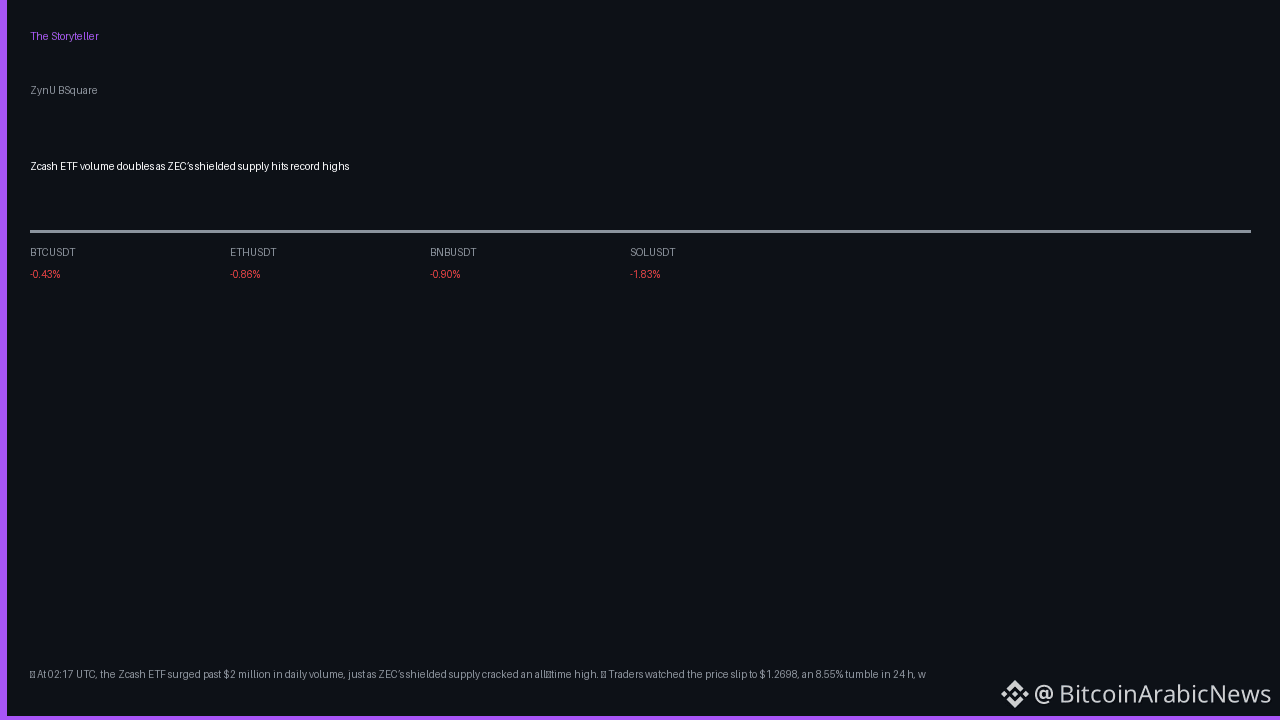
🔥 At 02:17 UTC, the Zcash ETF surged past $2 million in daily volume, just as ZEC’s shielded supply cracked an all‑time high.
📊 Traders watched the price slip to $1.2698, an 8.55% tumble in 24 h, while $364 M of on‑chain activity poured in, RSI sinking to 33.7 and the Bollinger Band hugging the lower edge. Yet the #ZEC #ETF ripped through the silence, doubling its flow and forcing the market’s neutral 51/100 sentiment to wobble. Meanwhile, #CryptoSupply analysts note the surge in shielded coins is a silent army building under the radar, even as #Bitcoin’s open interest sits at $8.13 B, hinting institutions are eyeing the dip.
💡 The twist? The same smart‑money that shied away from Bitcoin’s rally is now loading up ZEC’s privacy vaults, turning a bearish chart into a covert accumulation play.
❓ Will the record‑high shielded supply become the catalyst that flips ZEC from a price‑drop story to the next privacy‑driven breakout?
🔥 At 02:17 UTC, the Zcash ETF surged past $2 million in daily volume, just as ZEC’s shielded supply cracked an all‑time high.
📊 Traders watched the price slip to $1.2698, an 8.55% tumble in 24 h, while $364 M of on‑chain activity poured in, RSI sinking to 33.7 and the Bollinger Band hugging the lower edge. Yet the #ZEC #ETF ripped through the silence, doubling its flow and forcing the market’s neutral 51/100 sentiment to wobble. Meanwhile, #CryptoSupply analysts note the surge in shielded coins is a silent army building under the radar, even as #Bitcoin’s open interest sits at $8.13 B, hinting institutions are eyeing the dip.
💡 The twist? The same smart‑money that shied away from Bitcoin’s rally is now loading up ZEC’s privacy vaults, turning a bearish chart into a covert accumulation play.
❓ Will the record‑high shielded supply become the catalyst that flips ZEC from a price‑drop story to the next privacy‑driven breakout?
📊 Traders watched the price slip to $1.2698, an 8.55% tumble in 24 h, while $364 M of on‑chain activity poured in, RSI sinking to 33.7 and the Bollinger Band hugging the lower edge. Yet the #ZEC #ETF ripped through the silence, doubling its flow and forcing the market’s neutral 51/100 sentiment to wobble. Meanwhile, #CryptoSupply analysts note the surge in shielded coins is a silent army building under the radar, even as #Bitcoin’s open interest sits at $8.13 B, hinting institutions are eyeing the dip.
💡 The twist? The same smart‑money that shied away from Bitcoin’s rally is now loading up ZEC’s privacy vaults, turning a bearish chart into a covert accumulation play.
❓ Will the record‑high shielded supply become the catalyst that flips ZEC from a price‑drop story to the next privacy‑driven breakout?
177
#etf
$100M at Crypto-ETF Launch Is NOT an Indicator of Real Demand
A starting balance of $100 million is becoming a new benchmark for crypto ETFs. However, a large Day 1 figure often reflects the sponsor's deep pockets rather than genuine appetite from retail or institutional investors.
Initial assets under management (AUM) are driven by internal seed capital and fluctuations in token prices. Issuers often inject millions of dollars themselves through affiliated entities to ensure baseline liquidity. Furthermore, high secondary market trading volume merely indicates attention toward the asset; if shares simply change hands, the fund's own capital does not grow, and the price of the underlying cryptocurrency can drive AUM changes even in the complete absence of new money.
📊 Performance of actual market products:
➡️ T. Rowe Price Active Crypto ETF (TKNZ): Planned seed capital of $15 million established the sponsor-funded starting balance, demonstrating technical readiness for launch but not actual retail demand.
➡️ Fidelity Solana Fund (FSOL): After a modest $5 million start, the fund attracted over $120 million in paid-in capital and saw $34.4 million in net inflows during the first quarter of 2026, demonstrating strong organic interest.
➡️ Franklin Solana ETF (SOEZ): Starting at $2.32 million, the fund grew to $9.78 million in raised contributions, maintaining a steady, albeit moderate, inflow of capital.
➡️ Bitwise Dogecoin ETF (BWOW): Secured $2.5 million in seed investment but recorded zero new share issuances in the first half of 2026. Due to redemptions and a drop in the DOGE price, the fund's assets fell to $473,000, leading to the decision to liquidate the fund.
⚠️ For ETF creators, the $100 million mark is merely an operational threshold for ensuring visibility and liquidity. The market's true verdict emerges only over time through sustained share issuance and genuine capital inflows that remain in the fund after the initial hype has faded.
{future}(DOGEUSDT)
{future}(SOLUSDT)
{future}(BTCUSDT)
#etf
$100M at Crypto-ETF Launch Is NOT an Indicator of Real Demand
A starting balance of $100 million is becoming a new benchmark for crypto ETFs. However, a large Day 1 figure often reflects the sponsor's deep pockets rather than genuine appetite from retail or institutional investors.
Initial assets under management (AUM) are driven by internal seed capital and fluctuations in token prices. Issuers often inject millions of dollars themselves through affiliated entities to ensure baseline liquidity. Furthermore, high secondary market trading volume merely indicates attention toward the asset; if shares simply change hands, the fund's own capital does not grow, and the price of the underlying cryptocurrency can drive AUM changes even in the complete absence of new money.
📊 Performance of actual market products:
➡️ T. Rowe Price Active Crypto ETF (TKNZ): Planned seed capital of $15 million established the sponsor-funded starting balance, demonstrating technical readiness for launch but not actual retail demand.
➡️ Fidelity Solana Fund (FSOL): After a modest $5 million start, the fund attracted over $120 million in paid-in capital and saw $34.4 million in net inflows during the first quarter of 2026, demonstrating strong organic interest.
➡️ Franklin Solana ETF (SOEZ): Starting at $2.32 million, the fund grew to $9.78 million in raised contributions, maintaining a steady, albeit moderate, inflow of capital.
➡️ Bitwise Dogecoin ETF (BWOW): Secured $2.5 million in seed investment but recorded zero new share issuances in the first half of 2026. Due to redemptions and a drop in the DOGE price, the fund's assets fell to $473,000, leading to the decision to liquidate the fund.
⚠️ For ETF creators, the $100 million mark is merely an operational threshold for ensuring visibility and liquidity. The market's true verdict emerges only over time through sustained share issuance and genuine capital inflows that remain in the fund after the initial hype has faded.
$100M at Crypto-ETF Launch Is NOT an Indicator of Real Demand
A starting balance of $100 million is becoming a new benchmark for crypto ETFs. However, a large Day 1 figure often reflects the sponsor's deep pockets rather than genuine appetite from retail or institutional investors.
Initial assets under management (AUM) are driven by internal seed capital and fluctuations in token prices. Issuers often inject millions of dollars themselves through affiliated entities to ensure baseline liquidity. Furthermore, high secondary market trading volume merely indicates attention toward the asset; if shares simply change hands, the fund's own capital does not grow, and the price of the underlying cryptocurrency can drive AUM changes even in the complete absence of new money.
📊 Performance of actual market products:
➡️ T. Rowe Price Active Crypto ETF (TKNZ): Planned seed capital of $15 million established the sponsor-funded starting balance, demonstrating technical readiness for launch but not actual retail demand.
➡️ Fidelity Solana Fund (FSOL): After a modest $5 million start, the fund attracted over $120 million in paid-in capital and saw $34.4 million in net inflows during the first quarter of 2026, demonstrating strong organic interest.
➡️ Franklin Solana ETF (SOEZ): Starting at $2.32 million, the fund grew to $9.78 million in raised contributions, maintaining a steady, albeit moderate, inflow of capital.
➡️ Bitwise Dogecoin ETF (BWOW): Secured $2.5 million in seed investment but recorded zero new share issuances in the first half of 2026. Due to redemptions and a drop in the DOGE price, the fund's assets fell to $473,000, leading to the decision to liquidate the fund.
⚠️ For ETF creators, the $100 million mark is merely an operational threshold for ensuring visibility and liquidity. The market's true verdict emerges only over time through sustained share issuance and genuine capital inflows that remain in the fund after the initial hype has faded.
85

·
--
🚨 BREAKING: Bitcoin Faces Major ETF Selling Pressure! 📉
BlackRock and other spot Bitcoin ETFs reportedly recorded a massive $450.33 million outflow, marking the largest single-day withdrawal in the past three months. 💰🔻
The move could signal short-term caution among institutional investors as market participants closely watch BTC’s next direction. If selling pressure continues, Bitcoin may face additional volatility and downside risks. However, ETF flows can change quickly, so traders should avoid panic and monitor volume, support levels, and broader market sentiment. 👀$BTC
{spot}(BTCUSDT)
⚠️ DYOR | NFA | Manage Risk
#Bitcoin #BTC #ETF #Crypto #BinanceSquare
🚨 BREAKING: Bitcoin Faces Major ETF Selling Pressure! 📉
BlackRock and other spot Bitcoin ETFs reportedly recorded a massive $450.33 million outflow, marking the largest single-day withdrawal in the past three months. 💰🔻
The move could signal short-term caution among institutional investors as market participants closely watch BTC’s next direction. If selling pressure continues, Bitcoin may face additional volatility and downside risks. However, ETF flows can change quickly, so traders should avoid panic and monitor volume, support levels, and broader market sentiment. 👀$BTC
⚠️ DYOR | NFA | Manage Risk
#Bitcoin #BTC #ETF #Crypto #BinanceSquare
BlackRock and other spot Bitcoin ETFs reportedly recorded a massive $450.33 million outflow, marking the largest single-day withdrawal in the past three months. 💰🔻
The move could signal short-term caution among institutional investors as market participants closely watch BTC’s next direction. If selling pressure continues, Bitcoin may face additional volatility and downside risks. However, ETF flows can change quickly, so traders should avoid panic and monitor volume, support levels, and broader market sentiment. 👀$BTC
⚠️ DYOR | NFA | Manage Risk
#Bitcoin #BTC #ETF #Crypto #BinanceSquare

72

💎🔥 XRP: IS THE MARKET IGNORING ONE OF THE BIGGEST CATALYSTS?
The $XRP is trading today in the US$1.33–1.40 range, after taking heavy pressure from the Senate’s rejection of the CLARITY Act and the Fed’s rate hikes. But even in this scenario, there’s a piece of information that deserves attention: XRP ETFs are still attracting capital.
🏦 INSTITUTIONAL MONEY KEEPS COMING IN
Spot XRP ETFs have recorded inflows across 11 consecutive sessions, totaling approximately US$170 million in that period and about US$1.68 billion since launch. In other words: while the price retreats, part of the institutional capital continues increasing its exposure to XRP.
🚨 AND THIS HAPPENS AT A MOMENT OF WEAKNESS
XRP briefly fell to around US$1.29 after the CLARITY Act vote failed, but it remains within a region the market is watching. Recent analysis puts US$1.30 as support and US$1.40–1.44 as an important resistance zone.
📈 WHY THIS COULD MATTER
If XRP manages to reclaim US$1.40 and then break above the US$1.44–1.46 area, the structure could gain strength and attract buyers again. At the same time, the persistence of positive ETF flows keeps a demand source in place that didn’t exist at the same level in prior cycles.
🔥 The bullish thesis for people tracking XRP is exactly this:
price under pressure + ETFs accumulating + institutional adoption + XRPL development.
The market may be looking only at the short-term decline, while the institutional infrastructure continues to move forward.
💎 The opportunity—for those who believe in XRP’s long-term thesis—may be precisely in the moments when sentiment is weakest.
⚠️ XRP is a highly volatile and speculative asset. The factors presented do not guarantee appreciation and the price could keep falling. The investor may lose part or all of their capital. Not financial advice.
#xrp #xrpl #ripple #etf
💎🔥 XRP: IS THE MARKET IGNORING ONE OF THE BIGGEST CATALYSTS?
The $XRP is trading today in the US$1.33–1.40 range, after taking heavy pressure from the Senate’s rejection of the CLARITY Act and the Fed’s rate hikes. But even in this scenario, there’s a piece of information that deserves attention: XRP ETFs are still attracting capital.
🏦 INSTITUTIONAL MONEY KEEPS COMING IN
Spot XRP ETFs have recorded inflows across 11 consecutive sessions, totaling approximately US$170 million in that period and about US$1.68 billion since launch. In other words: while the price retreats, part of the institutional capital continues increasing its exposure to XRP.
🚨 AND THIS HAPPENS AT A MOMENT OF WEAKNESS
XRP briefly fell to around US$1.29 after the CLARITY Act vote failed, but it remains within a region the market is watching. Recent analysis puts US$1.30 as support and US$1.40–1.44 as an important resistance zone.
📈 WHY THIS COULD MATTER
If XRP manages to reclaim US$1.40 and then break above the US$1.44–1.46 area, the structure could gain strength and attract buyers again. At the same time, the persistence of positive ETF flows keeps a demand source in place that didn’t exist at the same level in prior cycles.
🔥 The bullish thesis for people tracking XRP is exactly this:
price under pressure + ETFs accumulating + institutional adoption + XRPL development.
The market may be looking only at the short-term decline, while the institutional infrastructure continues to move forward.
💎 The opportunity—for those who believe in XRP’s long-term thesis—may be precisely in the moments when sentiment is weakest.
⚠️ XRP is a highly volatile and speculative asset. The factors presented do not guarantee appreciation and the price could keep falling. The investor may lose part or all of their capital. Not financial advice.
#xrp #xrpl #ripple #etf
The $XRP is trading today in the US$1.33–1.40 range, after taking heavy pressure from the Senate’s rejection of the CLARITY Act and the Fed’s rate hikes. But even in this scenario, there’s a piece of information that deserves attention: XRP ETFs are still attracting capital.
🏦 INSTITUTIONAL MONEY KEEPS COMING IN
Spot XRP ETFs have recorded inflows across 11 consecutive sessions, totaling approximately US$170 million in that period and about US$1.68 billion since launch. In other words: while the price retreats, part of the institutional capital continues increasing its exposure to XRP.
🚨 AND THIS HAPPENS AT A MOMENT OF WEAKNESS
XRP briefly fell to around US$1.29 after the CLARITY Act vote failed, but it remains within a region the market is watching. Recent analysis puts US$1.30 as support and US$1.40–1.44 as an important resistance zone.
📈 WHY THIS COULD MATTER
If XRP manages to reclaim US$1.40 and then break above the US$1.44–1.46 area, the structure could gain strength and attract buyers again. At the same time, the persistence of positive ETF flows keeps a demand source in place that didn’t exist at the same level in prior cycles.
🔥 The bullish thesis for people tracking XRP is exactly this:
price under pressure + ETFs accumulating + institutional adoption + XRPL development.
The market may be looking only at the short-term decline, while the institutional infrastructure continues to move forward.
💎 The opportunity—for those who believe in XRP’s long-term thesis—may be precisely in the moments when sentiment is weakest.
⚠️ XRP is a highly volatile and speculative asset. The factors presented do not guarantee appreciation and the price could keep falling. The investor may lose part or all of their capital. Not financial advice.
#xrp #xrpl #ripple #etf

5
1.1k

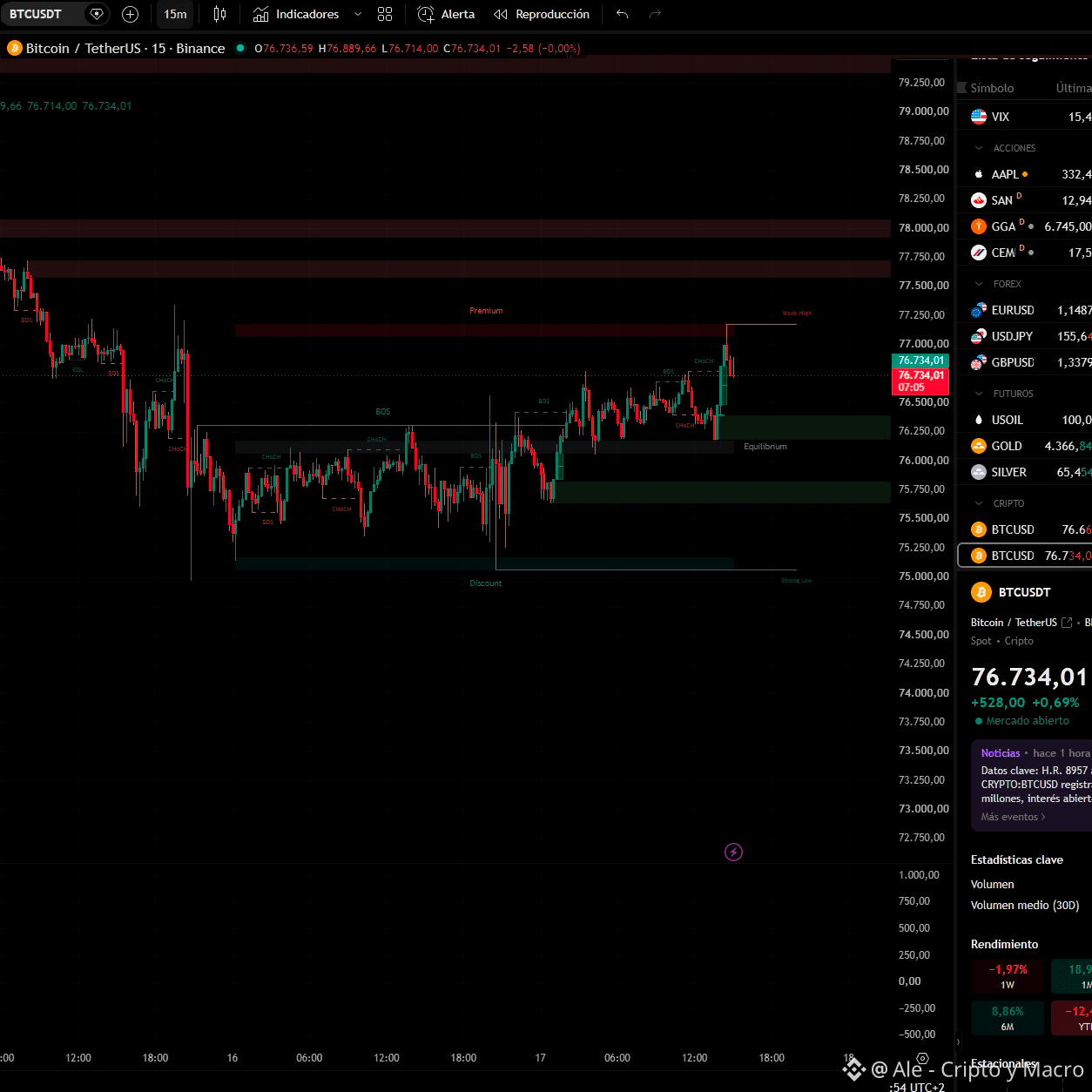
Bitcoin rebounds to $76,700... but the ETFs are still selling.
After falling below $76,000 following the Fed decision, Bitcoin recovered and is now trading near $76,734 (+0.69% today), approaching a technical resistance zone at $77,000–77,500.
What’s curious: this is happening while Bitcoin spot ETFs continue to post net outflows near $450 million in the last few hours. The price is rising, but the large institutional money hasn’t returned with force yet.
This disconnect (price rising, negative institutional flows) usually means that for now, the rebound is being driven more by retail buyers or short position covering, not by a new wave of institutional buying.
Do you trust this bounce, or do you expect confirmation with positive flows first? 👇
#Bitcoin #BTC #ETF #CreatorPad
Bitcoin rebounds to $76,700... but the ETFs are still selling.
After falling below $76,000 following the Fed decision, Bitcoin recovered and is now trading near $76,734 (+0.69% today), approaching a technical resistance zone at $77,000–77,500.
What’s curious: this is happening while Bitcoin spot ETFs continue to post net outflows near $450 million in the last few hours. The price is rising, but the large institutional money hasn’t returned with force yet.
This disconnect (price rising, negative institutional flows) usually means that for now, the rebound is being driven more by retail buyers or short position covering, not by a new wave of institutional buying.
Do you trust this bounce, or do you expect confirmation with positive flows first? 👇
#Bitcoin #BTC #ETF #CreatorPad
After falling below $76,000 following the Fed decision, Bitcoin recovered and is now trading near $76,734 (+0.69% today), approaching a technical resistance zone at $77,000–77,500.
What’s curious: this is happening while Bitcoin spot ETFs continue to post net outflows near $450 million in the last few hours. The price is rising, but the large institutional money hasn’t returned with force yet.
This disconnect (price rising, negative institutional flows) usually means that for now, the rebound is being driven more by retail buyers or short position covering, not by a new wave of institutional buying.
Do you trust this bounce, or do you expect confirmation with positive flows first? 👇
#Bitcoin #BTC #ETF #CreatorPad
304

🔥 CRYPTO HOURLY — BREAKING UPDATES 🔥
━━━━━━━━━━━━━━━━━━━━
🔴 Bearish - Bitcoin ETFs Bleed $450M as Outflows Hit June Highs
• Investors pulled $450M from Bitcoin ETFs as BTC fell 2.5% and the CLARITY Act stalled, signaling weaker institutional demand.
🔴 Bearish - $570M in crypto longs wiped out as Clarity Act fails
• The Clarity Act failed, wiping out $570 million in crypto longs and causing a sharp market downturn due to regulatory disappointment.
━━━━━━━━━━━━━━━━━━━━
📈 Market Sentiment: 51 (Neutral)
📊 Stay ahead. Think smart. Trade safe.
#cryptonews #BTC #ETF $BTC
Disclaimer: Includes third-party opinions. No advice.
BTC: -2.06% (H: 77727.8 L: 74968) | ETH: -3.38% (H: 2501.02 L: 2358.88) | SOL: -3.62% (H: 101.59 L: 95.82)
🔥 CRYPTO HOURLY — BREAKING UPDATES 🔥
━━━━━━━━━━━━━━━━━━━━
🔴 Bearish - Bitcoin ETFs Bleed $450M as Outflows Hit June Highs
• Investors pulled $450M from Bitcoin ETFs as BTC fell 2.5% and the CLARITY Act stalled, signaling weaker institutional demand.
🔴 Bearish - $570M in crypto longs wiped out as Clarity Act fails
• The Clarity Act failed, wiping out $570 million in crypto longs and causing a sharp market downturn due to regulatory disappointment.
━━━━━━━━━━━━━━━━━━━━
📈 Market Sentiment: 51 (Neutral)
📊 Stay ahead. Think smart. Trade safe.
#cryptonews #BTC #ETF $BTC
Disclaimer: Includes third-party opinions. No advice.
BTC: -2.06% (H: 77727.8 L: 74968) | ETH: -3.38% (H: 2501.02 L: 2358.88) | SOL: -3.62% (H: 101.59 L: 95.82)
━━━━━━━━━━━━━━━━━━━━
🔴 Bearish - Bitcoin ETFs Bleed $450M as Outflows Hit June Highs
• Investors pulled $450M from Bitcoin ETFs as BTC fell 2.5% and the CLARITY Act stalled, signaling weaker institutional demand.
🔴 Bearish - $570M in crypto longs wiped out as Clarity Act fails
• The Clarity Act failed, wiping out $570 million in crypto longs and causing a sharp market downturn due to regulatory disappointment.
━━━━━━━━━━━━━━━━━━━━
📈 Market Sentiment: 51 (Neutral)
📊 Stay ahead. Think smart. Trade safe.
#cryptonews #BTC #ETF $BTC
Disclaimer: Includes third-party opinions. No advice.
BTC: -2.06% (H: 77727.8 L: 74968) | ETH: -3.38% (H: 2501.02 L: 2358.88) | SOL: -3.62% (H: 101.59 L: 95.82)
26

🚨 Analyst Says Bitcoin ETFs Could Triple Gold Assets 🧠
📊 | $BTC | $ETH | $BNB |
- Please follow, like, and comment to share your thoughts 📈
- Bloomberg analyst Eric Balchunas noted that the size of Bitcoin ETF assets could reach three times that of gold funds.
- Gold funds still lead for now, by about $519 billion.
- This view was first published on BeInCrypto. 🔥
- In the short term, Bitcoin’s price may see upward fluctuations driven by ETF inflows.
- If the ETF’s scale expands rapidly, BTC could break through key resistance levels, further boosting market sentiment.
- Institutional “whales” are expected to be accumulating positions, creating an early positioning effect.
- Combined with net liquidity inflows, the bullish trend may continue in the short term until regulation becomes clearer.
- What impact do you think the growth of Bitcoin ETF assets will have on demand for gold as a safe haven?
- Welcome to keep following our in-depth analysis—we look forward to your comments and engagement.
#Bitcoin #ETF #Whales #Crypto #Trading
🚨 Analyst Says Bitcoin ETFs Could Triple Gold Assets 🧠
📊 | $BTC | $ETH | $BNB |
- Please follow, like, and comment to share your thoughts 📈
- Bloomberg analyst Eric Balchunas noted that the size of Bitcoin ETF assets could reach three times that of gold funds.
- Gold funds still lead for now, by about $519 billion.
- This view was first published on BeInCrypto. 🔥
- In the short term, Bitcoin’s price may see upward fluctuations driven by ETF inflows.
- If the ETF’s scale expands rapidly, BTC could break through key resistance levels, further boosting market sentiment.
- Institutional “whales” are expected to be accumulating positions, creating an early positioning effect.
- Combined with net liquidity inflows, the bullish trend may continue in the short term until regulation becomes clearer.
- What impact do you think the growth of Bitcoin ETF assets will have on demand for gold as a safe haven?
- Welcome to keep following our in-depth analysis—we look forward to your comments and engagement.
#Bitcoin #ETF #Whales #Crypto #Trading
📊 | $BTC | $ETH | $BNB |
- Please follow, like, and comment to share your thoughts 📈
- Bloomberg analyst Eric Balchunas noted that the size of Bitcoin ETF assets could reach three times that of gold funds.
- Gold funds still lead for now, by about $519 billion.
- This view was first published on BeInCrypto. 🔥
- In the short term, Bitcoin’s price may see upward fluctuations driven by ETF inflows.
- If the ETF’s scale expands rapidly, BTC could break through key resistance levels, further boosting market sentiment.
- Institutional “whales” are expected to be accumulating positions, creating an early positioning effect.
- Combined with net liquidity inflows, the bullish trend may continue in the short term until regulation becomes clearer.
- What impact do you think the growth of Bitcoin ETF assets will have on demand for gold as a safe haven?
- Welcome to keep following our in-depth analysis—we look forward to your comments and engagement.
#Bitcoin #ETF #Whales #Crypto #Trading
1
115
🚨 Ripple Spotted With Wall Street Giants at SWELL 2026 🧠
📊 | $BTC | $ETH | $BNB |
- Please follow, like, and share your thoughts 📈
- At the 2026 Swell conference, Ripple will focus on the XRP ETF, tokenization, stablecoins, and AI agents.
- The conference will discuss the future roadmap of the XRP Ledger and the outlook for industry applications.
- Market sentiment is bullish; related assets are expected to show upward volatility. 🔥
- If the XRP ETF is approved, the price could see a short-term breakout, with an expected rise of 5% to 8% within two weeks.
- There are signs that large whale holdings are accumulating; smart money may position early, improving liquidity.
- If regulation is loosened in the short term, market volatility may intensify, increasing short-term trading opportunities.
- What do you think about XRP’s long-term outlook under ETF momentum? Feel free to share your views.
- For more in-depth analysis of the crypto market, please keep watching and leave your comments.
- #Bitcoin #Crypto #ETF #Whales #Altcoins
🚨 Ripple Spotted With Wall Street Giants at SWELL 2026 🧠
📊 | $BTC | $ETH | $BNB |
- Please follow, like, and share your thoughts 📈
- At the 2026 Swell conference, Ripple will focus on the XRP ETF, tokenization, stablecoins, and AI agents.
- The conference will discuss the future roadmap of the XRP Ledger and the outlook for industry applications.
- Market sentiment is bullish; related assets are expected to show upward volatility. 🔥
- If the XRP ETF is approved, the price could see a short-term breakout, with an expected rise of 5% to 8% within two weeks.
- There are signs that large whale holdings are accumulating; smart money may position early, improving liquidity.
- If regulation is loosened in the short term, market volatility may intensify, increasing short-term trading opportunities.
- What do you think about XRP’s long-term outlook under ETF momentum? Feel free to share your views.
- For more in-depth analysis of the crypto market, please keep watching and leave your comments.
- #Bitcoin #Crypto #ETF #Whales #Altcoins
📊 | $BTC | $ETH | $BNB |
- Please follow, like, and share your thoughts 📈
- At the 2026 Swell conference, Ripple will focus on the XRP ETF, tokenization, stablecoins, and AI agents.
- The conference will discuss the future roadmap of the XRP Ledger and the outlook for industry applications.
- Market sentiment is bullish; related assets are expected to show upward volatility. 🔥
- If the XRP ETF is approved, the price could see a short-term breakout, with an expected rise of 5% to 8% within two weeks.
- There are signs that large whale holdings are accumulating; smart money may position early, improving liquidity.
- If regulation is loosened in the short term, market volatility may intensify, increasing short-term trading opportunities.
- What do you think about XRP’s long-term outlook under ETF momentum? Feel free to share your views.
- For more in-depth analysis of the crypto market, please keep watching and leave your comments.
- #Bitcoin #Crypto #ETF #Whales #Altcoins
336
🚨 Bitcoin and Ethereum ETFs evaporated $520 million, XRP saw inflows against the trend 🧠
📊 | $BTC | $ETH | $BNB |
- Please pay attention, like, and comment to share your views. 📈
- The Federal Reserve raised rates for the first time since 2023, leading to a combined evaporation of about $520 million across U.S. Bitcoin and Ethereum ETFs.
- Bitcoin ETFs led by BlackRock, as well as overall Ethereum ETFs, saw clear net outflows.
- In contrast, XRP, Solana, and HYPE funds recorded small net inflows, as money gathered against the tide.
- This rate-hike news sparked inflation concerns on Wall Street and directly hit crypto market sentiment. 🔥
- In the short term, if the Federal Reserve continues to raise rates, BTC and ETH ETFs may face additional selling pressure.
- If inflation data improves, capital may flow back in, and crypto assets could rebound.
- Observed large holders (whales) accumulating positions in major coins, indicating early planning.
- Volatility is expected to rise this week, creating more short-term trading opportunities—watch for changes in liquidity.
- Under a rate-hike backdrop, which tokens do you think have the strongest potential to hold up?
- Follow us, leave a comment, and let’s discuss market trends together.
#Bitcoin #ETF #Whales #Altcoins #Crypto
🚨 Bitcoin and Ethereum ETFs evaporated $520 million, XRP saw inflows against the trend 🧠
📊 | $BTC | $ETH | $BNB |
- Please pay attention, like, and comment to share your views. 📈
- The Federal Reserve raised rates for the first time since 2023, leading to a combined evaporation of about $520 million across U.S. Bitcoin and Ethereum ETFs.
- Bitcoin ETFs led by BlackRock, as well as overall Ethereum ETFs, saw clear net outflows.
- In contrast, XRP, Solana, and HYPE funds recorded small net inflows, as money gathered against the tide.
- This rate-hike news sparked inflation concerns on Wall Street and directly hit crypto market sentiment. 🔥
- In the short term, if the Federal Reserve continues to raise rates, BTC and ETH ETFs may face additional selling pressure.
- If inflation data improves, capital may flow back in, and crypto assets could rebound.
- Observed large holders (whales) accumulating positions in major coins, indicating early planning.
- Volatility is expected to rise this week, creating more short-term trading opportunities—watch for changes in liquidity.
- Under a rate-hike backdrop, which tokens do you think have the strongest potential to hold up?
- Follow us, leave a comment, and let’s discuss market trends together.
#Bitcoin #ETF #Whales #Altcoins #Crypto
📊 | $BTC | $ETH | $BNB |
- Please pay attention, like, and comment to share your views. 📈
- The Federal Reserve raised rates for the first time since 2023, leading to a combined evaporation of about $520 million across U.S. Bitcoin and Ethereum ETFs.
- Bitcoin ETFs led by BlackRock, as well as overall Ethereum ETFs, saw clear net outflows.
- In contrast, XRP, Solana, and HYPE funds recorded small net inflows, as money gathered against the tide.
- This rate-hike news sparked inflation concerns on Wall Street and directly hit crypto market sentiment. 🔥
- In the short term, if the Federal Reserve continues to raise rates, BTC and ETH ETFs may face additional selling pressure.
- If inflation data improves, capital may flow back in, and crypto assets could rebound.
- Observed large holders (whales) accumulating positions in major coins, indicating early planning.
- Volatility is expected to rise this week, creating more short-term trading opportunities—watch for changes in liquidity.
- Under a rate-hike backdrop, which tokens do you think have the strongest potential to hold up?
- Follow us, leave a comment, and let’s discuss market trends together.
#Bitcoin #ETF #Whales #Altcoins #Crypto
1
🚨 SEC Rejects the 19th XRP Short ETF 📈 Bitcoin and Ethereum Net Outflow of $1.1B 🧠
📊 | $BTC | $ETH | $BNB |
- Follow us, like, and leave a comment to share your views 📈
- The SEC has again rejected the 19th short ETF application targeting XRP; it was not approved
- Combined net outflow of about $1.1B from Bitcoin and Ethereum, leading to a price pullback
- Zcash price breaks through $1,350, with a significant surge 🔥
- Large-scale institutional fund withdrawals could intensify short-term pressure on BTC and ETH
- If liquidity continues to return, prices may see a rapid rebound
- Volatility in the market is expected to rise in the near term, and trading volume will remain active
- Whale activity indicates ongoing accumulation, with smart money positioning early
- Do you think Bitcoin will break through a key resistance level next? Feel free to discuss
- Stay tuned for our in-depth analysis—leave your thoughts in the comments
- #Bitcoin #Ethereum #ETF #Whales #Altcoins
🚨 SEC Rejects the 19th XRP Short ETF 📈 Bitcoin and Ethereum Net Outflow of $1.1B 🧠
📊 | $BTC | $ETH | $BNB |
- Follow us, like, and leave a comment to share your views 📈
- The SEC has again rejected the 19th short ETF application targeting XRP; it was not approved
- Combined net outflow of about $1.1B from Bitcoin and Ethereum, leading to a price pullback
- Zcash price breaks through $1,350, with a significant surge 🔥
- Large-scale institutional fund withdrawals could intensify short-term pressure on BTC and ETH
- If liquidity continues to return, prices may see a rapid rebound
- Volatility in the market is expected to rise in the near term, and trading volume will remain active
- Whale activity indicates ongoing accumulation, with smart money positioning early
- Do you think Bitcoin will break through a key resistance level next? Feel free to discuss
- Stay tuned for our in-depth analysis—leave your thoughts in the comments
- #Bitcoin #Ethereum #ETF #Whales #Altcoins
📊 | $BTC | $ETH | $BNB |
- Follow us, like, and leave a comment to share your views 📈
- The SEC has again rejected the 19th short ETF application targeting XRP; it was not approved
- Combined net outflow of about $1.1B from Bitcoin and Ethereum, leading to a price pullback
- Zcash price breaks through $1,350, with a significant surge 🔥
- Large-scale institutional fund withdrawals could intensify short-term pressure on BTC and ETH
- If liquidity continues to return, prices may see a rapid rebound
- Volatility in the market is expected to rise in the near term, and trading volume will remain active
- Whale activity indicates ongoing accumulation, with smart money positioning early
- Do you think Bitcoin will break through a key resistance level next? Feel free to discuss
- Stay tuned for our in-depth analysis—leave your thoughts in the comments
- #Bitcoin #Ethereum #ETF #Whales #Altcoins
195

·
--
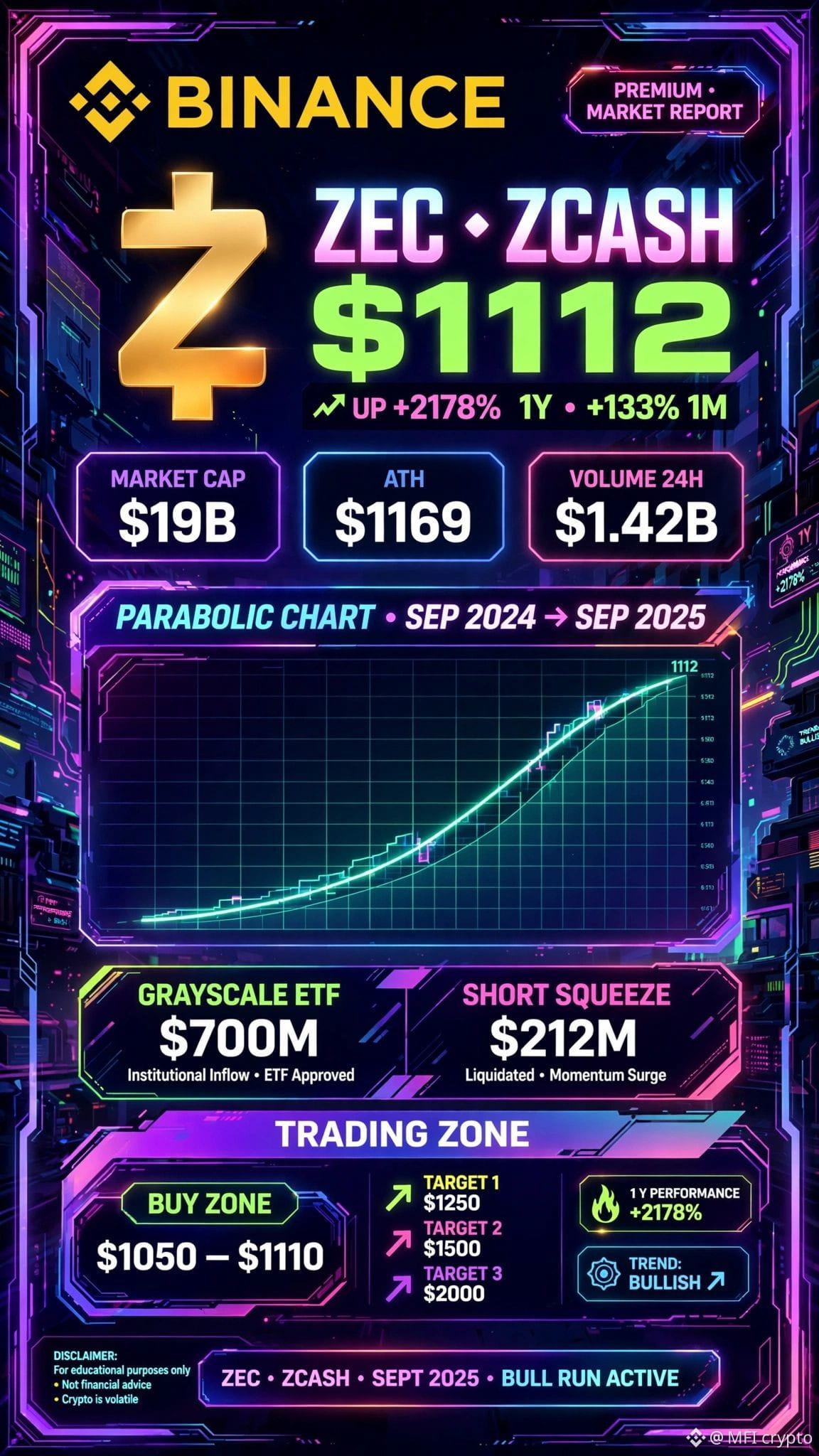
$ZEC JUST EXPLODED 2178% IN 1 YEAR 😱 PRIVACY COIN IS BACK*
Everyone laughed at privacy coins. Now ZEC is TOP 10 and crushing Bitcoin.
$ZEC NUMBERS ARE INSANE RIGHT NOW:*
Current Price: *$1,112* (after hitting $1,169 high)
Market Cap: *$19 BILLION* - Rank #10 (passed DOGE)
1 Month: *+133%*
6 Month: *+395%*
1 Year: *+2178%* 🔥🔥🔥
ATH was $3,191 in 2016 - still 66% down, huge room left!
*WHY $ZEC IS PUMPING HARD?*
✅ *First US Zcash ETF Launched - Grayscale ZCSH*
Launched Aug 25 on NYSE. In just 11 days:
- *$400M → $700M AUM* (now)
- *$179M inflow in 11 days*
- *Top 1% of 4,000 ETFs* for growth
- Fastest growing altcoin ETF in USA ever!
Institutional money finally buying privacy.
✅ *$212M SHORTS LIQUIDATED - Biggest Short Squeeze*
ZEC hit $1,051 on Sep 4 - 9 year high.
$34.5M - $44M bear shorts got rekt in 1 day.
Open Interest still *$2.15 BILLION* - more squeeze coming.
✅ *Mining ZEC More Profitable Than BTC*
Grayscale research: ZEC mining is *2x more profitable than BTC per rig* and *4x per MWh*.
Mining activity *up 2.5x this year*. Network getting stronger.
*My ZEC Plan:*
Buy Zone: $1,050 - $1,110 (dip zone)
Target 1: $1,250
Target 2: $1,500
Target 3: $2,000 (if ETF keeps pumping)
SL: $980
Bitcoin is down -11% this year. ZEC is up +123% YTD. Rotation is REAL.
Privacy will be the #1 narrative in 2026. ZEC is leading it.
You IN on ZEC or watching it go to $2K? 👇
#ZEC #Zcash #PrivacyCoin #ETF
#FedRateWatch
{spot}(ZECUSDT)
$ZEC JUST EXPLODED 2178% IN 1 YEAR 😱 PRIVACY COIN IS BACK*
Everyone laughed at privacy coins. Now ZEC is TOP 10 and crushing Bitcoin.
$ZEC NUMBERS ARE INSANE RIGHT NOW:*
Current Price: *$1,112* (after hitting $1,169 high)
Market Cap: *$19 BILLION* - Rank #10 (passed DOGE)
1 Month: *+133%*
6 Month: *+395%*
1 Year: *+2178%* 🔥🔥🔥
ATH was $3,191 in 2016 - still 66% down, huge room left!
*WHY $ZEC IS PUMPING HARD?*
✅ *First US Zcash ETF Launched - Grayscale ZCSH*
Launched Aug 25 on NYSE. In just 11 days:
- *$400M → $700M AUM* (now)
- *$179M inflow in 11 days*
- *Top 1% of 4,000 ETFs* for growth
- Fastest growing altcoin ETF in USA ever!
Institutional money finally buying privacy.
✅ *$212M SHORTS LIQUIDATED - Biggest Short Squeeze*
ZEC hit $1,051 on Sep 4 - 9 year high.
$34.5M - $44M bear shorts got rekt in 1 day.
Open Interest still *$2.15 BILLION* - more squeeze coming.
✅ *Mining ZEC More Profitable Than BTC*
Grayscale research: ZEC mining is *2x more profitable than BTC per rig* and *4x per MWh*.
Mining activity *up 2.5x this year*. Network getting stronger.
*My ZEC Plan:*
Buy Zone: $1,050 - $1,110 (dip zone)
Target 1: $1,250
Target 2: $1,500
Target 3: $2,000 (if ETF keeps pumping)
SL: $980
Bitcoin is down -11% this year. ZEC is up +123% YTD. Rotation is REAL.
Privacy will be the #1 narrative in 2026. ZEC is leading it.
You IN on ZEC or watching it go to $2K? 👇
#ZEC #Zcash #PrivacyCoin #ETF
#FedRateWatch
Everyone laughed at privacy coins. Now ZEC is TOP 10 and crushing Bitcoin.
$ZEC NUMBERS ARE INSANE RIGHT NOW:*
Current Price: *$1,112* (after hitting $1,169 high)
Market Cap: *$19 BILLION* - Rank #10 (passed DOGE)
1 Month: *+133%*
6 Month: *+395%*
1 Year: *+2178%* 🔥🔥🔥
ATH was $3,191 in 2016 - still 66% down, huge room left!
*WHY $ZEC IS PUMPING HARD?*
✅ *First US Zcash ETF Launched - Grayscale ZCSH*
Launched Aug 25 on NYSE. In just 11 days:
- *$400M → $700M AUM* (now)
- *$179M inflow in 11 days*
- *Top 1% of 4,000 ETFs* for growth
- Fastest growing altcoin ETF in USA ever!
Institutional money finally buying privacy.
✅ *$212M SHORTS LIQUIDATED - Biggest Short Squeeze*
ZEC hit $1,051 on Sep 4 - 9 year high.
$34.5M - $44M bear shorts got rekt in 1 day.
Open Interest still *$2.15 BILLION* - more squeeze coming.
✅ *Mining ZEC More Profitable Than BTC*
Grayscale research: ZEC mining is *2x more profitable than BTC per rig* and *4x per MWh*.
Mining activity *up 2.5x this year*. Network getting stronger.
*My ZEC Plan:*
Buy Zone: $1,050 - $1,110 (dip zone)
Target 1: $1,250
Target 2: $1,500
Target 3: $2,000 (if ETF keeps pumping)
SL: $980
Bitcoin is down -11% this year. ZEC is up +123% YTD. Rotation is REAL.
Privacy will be the #1 narrative in 2026. ZEC is leading it.
You IN on ZEC or watching it go to $2K? 👇
#ZEC #Zcash #PrivacyCoin #ETF
#FedRateWatch
1
130

·
--
$746 million pulled out in two days: ETFs are withdrawing, but BTC is still hanging around $76.5kOver the past two days, the institutional channel has been pulling funds out, but the spot price hasn’t fallen through as well.
SoSoValue: For US spot Bitcoin ETFs, net outflows were about $450.4 million on September 15, and another $295.98 million on September 16. The total over two days was about $746.3 million. Farside’s figures are close: on the 16th, about $295.9 million outflow in total—within that, BlackRock’s IBIT alone saw an outflow of about $144.11 million, ARKB about $84.4 million, FBTC about $52.72 million, and GBTC about $18.22 million. On that day, only Morgan Stanley’s MSBT had a net inflow of about $3.47 million. Cumulative net inflows still remain around $54.57–$54.64 billion, and total net assets are about $9.519 billion—there’s still underlying support, and the pace is clearly slowing.
$746 million pulled out in two days: ETFs are withdrawing, but BTC is still hanging around $76.5k
Over the past two days, the institutional channel has been pulling funds out, but the spot price hasn’t fallen through as well.
SoSoValue: For US spot Bitcoin ETFs, net outflows were about $450.4 million on September 15, and another $295.98 million on September 16. The total over two days was about $746.3 million. Farside’s figures are close: on the 16th, about $295.9 million outflow in total—within that, BlackRock’s IBIT alone saw an outflow of about $144.11 million, ARKB about $84.4 million, FBTC about $52.72 million, and GBTC about $18.22 million. On that day, only Morgan Stanley’s MSBT had a net inflow of about $3.47 million. Cumulative net inflows still remain around $54.57–$54.64 billion, and total net assets are about $9.519 billion—there’s still underlying support, and the pace is clearly slowing.
SoSoValue: For US spot Bitcoin ETFs, net outflows were about $450.4 million on September 15, and another $295.98 million on September 16. The total over two days was about $746.3 million. Farside’s figures are close: on the 16th, about $295.9 million outflow in total—within that, BlackRock’s IBIT alone saw an outflow of about $144.11 million, ARKB about $84.4 million, FBTC about $52.72 million, and GBTC about $18.22 million. On that day, only Morgan Stanley’s MSBT had a net inflow of about $3.47 million. Cumulative net inflows still remain around $54.57–$54.64 billion, and total net assets are about $9.519 billion—there’s still underlying support, and the pace is clearly slowing.
54
Log in to explore more content
Join global crypto users on Binance Square
⚡️ Get latest and useful information about crypto.
💬 Trusted by the world’s largest crypto exchange.
👍 Discover real insights from verified creators.
Email / Phone number
Trending Topics
1
#BitcoinSurpasses$77000
10,352 views
158 Discussing
2
#ParadigmDisclosesZECHolding
38,172 views
763 Discussing
3
#BitcoinETFsShed$450M
20,414 views
182 Discussing
4
#USWeeklyJoblessClaimsFallTo196K
19,781 views
446 Discussing
5
#ArkhamSaysBlackRockBuys$1.5BInETH
3,687 views
47 Discussing
6
#ElSalvadorBTCHoldingsRiseTo7777
45,262 views
760 Discussing
7
#MemeLaunchpads82%OfArcDayOneVolume
49,686 views
946 Discussing
8
#OstiumLoanDisputeHearingSetInNYFederalCourt
40,419 views
677 Discussing
9
#HyperliquidUSDCSupplyOvertakesSolana
17,876 views
331 Discussing
10
#SKPoliceRefer18PolymarketUsersToProsecutors
23,491 views
498 Discussing