Binance Square
#defi

defi

54.9M views
270,344 Discussing
THESTACKSURGE
·
--
💱 The DEX Renaissance: Uniswap's rally may be an early signal On July 31, 2026, $UNI's +11.30% surge to $4.45 on $410.65M of volume is the kind of move that precedes sector rotations. DEXs offer something CEXs cannot — custody-free trading — and that differentiation compounds when trust in centralized platforms waivers. 📌 Key Takeaway: Watch whether other DeFi tokens follow Uniswap's lead; a coordinated move would mark the first real DeFi rotation in months. #Uniswap #DeFi #Opinion #BinanceAlphaAlert
💱 The DEX Renaissance: Uniswap's rally may be an early signal
On July 31, 2026, $UNI 's +11.30% surge to $4.45 on $410.65M of volume is the kind of move that precedes sector rotations.
DEXs offer something CEXs cannot — custody-free trading — and that differentiation compounds when trust in centralized platforms waivers.

📌 Key Takeaway:
Watch whether other DeFi tokens follow Uniswap's lead; a coordinated move would mark the first real DeFi rotation in months.

#Uniswap #DeFi #Opinion
#BinanceAlphaAlert
Dropping BTC into a wallet and letting it sit idle feels like a missed opportunity now. With @babylonlabs_io and Aave V4 joining forces, Trustless Bitcoin Vaults (TBV) let us use native BTC as collateral without wrapping or bridging. Honestly, native borrowing is going to shift the whole DeFi landscape. This structural growth is bound to bring solid utility to $BABY in the long run. Keeping a close eye on this. #baby #Btc #Bitcoin #DeFi $BABY {spot}(BABYUSDT)
Dropping BTC into a wallet and letting it sit idle feels like a missed opportunity now. With @BabylonLabs_io and Aave V4 joining forces, Trustless Bitcoin Vaults (TBV) let us use native BTC as collateral without wrapping or bridging. Honestly, native borrowing is going to shift the whole DeFi landscape. This structural growth is bound to bring solid utility to $BABY in the long run. Keeping a close eye on this.

#baby #Btc #Bitcoin #DeFi

$BABY
A few years ago, using multiple blockchains often meant accepting extra complexity. Different wallets. Different bridges. Different interfaces. People adapted because there wasn't a better option. What catches my attention about @stonfi isn't simply that it's adding more chains. It's the effort to reduce the number of decisions users have to make before completing a swap. When infrastructure works quietly in the background, people stop thinking about which chain they're on and start focusing on what they want to do. The same idea appears in their educational tools. Instead of expecting newcomers to understand every DeFi concept from day one, they provide a place where people can learn by exploring. To me, that's a practical approach. The next stage of Web3 growth won't come from making blockchain more complicated. It will come from making blockchain feel natural enough that anyone can use it with confidence. #STONf #TON #DeFi
A few years ago, using multiple blockchains often meant accepting extra complexity.

Different wallets. Different bridges. Different interfaces.

People adapted because there wasn't a better option.

What catches my attention about @STONfi DEX isn't simply that it's adding more chains. It's the effort to reduce the number of decisions users have to make before completing a swap.

When infrastructure works quietly in the background, people stop thinking about which chain they're on and start focusing on what they want to do.

The same idea appears in their educational tools. Instead of expecting newcomers to understand every DeFi concept from day one, they provide a place where people can learn by exploring.

To me, that's a practical approach.

The next stage of Web3 growth won't come from making blockchain more complicated. It will come from making blockchain feel natural enough that anyone can use it with confidence.

#STONf #TON #DeFi
Article
The largest Asset in Crypto is now Free.The largest asset in crypto is finally becoming productive. For years, Bitcoin has been the industry’s strongest and most secure asset, yet most of it has remained idle because participating in DeFi usually meant wrapping BTC, bridging it to another chain, or trusting a custodian. That’s where Trustless Bitcoin Vaults (TBV) from @babylonlabs_io come in. TBV allows native Bitcoin to be locked on the Bitcoin network under predefined spending conditions while enabling integrated applications to recognize that locked BTC as collateral. The result? Native Bitcoin can be used in DeFi, starting with Bitcoin-backed borrowing on the Aave v4 testnet without wrapping assets, bridging them across chains, or relying on custodial intermediaries. What I find most compelling isn’t just the technology, it’s the vision behind it. When Mingchao (Fisher) Yu and David Tse founded Babylon, they weren’t simply trying to build another DeFi protocol. Their goal was to address the fragmented blockchain landscape by enabling security sharing, where Bitcoin’s unmatched security can help protect and strengthen other decentralized systems. Bitcoin has long been regarded as the reserve asset of crypto. Babylon’s vision is to expand that role by allowing native BTC to become programmable collateral—making it useful not only as a store of value, but also as foundational infrastructure for decentralized finance. The implications go far beyond borrowing. The same TBV primitive can support BTC-backed stablecoins, institutional lending, derivatives, cross-chain collateral, and many other applications that require native Bitcoin to remain secure while becoming economically productive. If you’re curious about where Bitcoin-native DeFi is heading, I recommend trying the native Bitcoin-backed borrowing testnet and submitting feedback. It’s a chance to experience TBV firsthand and contribute to the evolution of Bitcoin’s utility. @babylonlabs_io $BABY #baby #Bitcoin #DeFi #TBV

The largest Asset in Crypto is now Free.

The largest asset in crypto is finally becoming productive.
For years, Bitcoin has been the industry’s strongest and most secure asset, yet most of it has remained idle because participating in DeFi usually meant wrapping BTC, bridging it to another chain, or trusting a custodian.
That’s where Trustless Bitcoin Vaults (TBV) from @BabylonLabs_io come in.
TBV allows native Bitcoin to be locked on the Bitcoin network under predefined spending conditions while enabling integrated applications to recognize that locked BTC as collateral. The result? Native Bitcoin can be used in DeFi, starting with Bitcoin-backed borrowing on the Aave v4 testnet without wrapping assets, bridging them across chains, or relying on custodial intermediaries.
What I find most compelling isn’t just the technology, it’s the vision behind it.
When Mingchao (Fisher) Yu and David Tse founded Babylon, they weren’t simply trying to build another DeFi protocol. Their goal was to address the fragmented blockchain landscape by enabling security sharing, where Bitcoin’s unmatched security can help protect and strengthen other decentralized systems.
Bitcoin has long been regarded as the reserve asset of crypto. Babylon’s vision is to expand that role by allowing native BTC to become programmable collateral—making it useful not only as a store of value, but also as foundational infrastructure for decentralized finance.
The implications go far beyond borrowing. The same TBV primitive can support BTC-backed stablecoins, institutional lending, derivatives, cross-chain collateral, and many other applications that require native Bitcoin to remain secure while becoming economically productive.
If you’re curious about where Bitcoin-native DeFi is heading, I recommend trying the native Bitcoin-backed borrowing testnet and submitting feedback. It’s a chance to experience TBV firsthand and contribute to the evolution of Bitcoin’s utility.
@BabylonLabs_io $BABY #baby #Bitcoin #DeFi #TBV
Rida Malik7:
Bitcoin deserves secure DeFi participation.
Article
Uniswap Gains Attention Again — Is DeFi Quietly Making a Comeback?🦄 When DeFi Leads, the Market Starts Asking Bigger Questions Uniswap has regained momentum, bringing fresh attention back to the decentralized finance (DeFi) sector. Price action may grab headlines, but experienced investors are looking beyond weekly performance. The bigger question is: Is this simply a short-term rally, or is DeFi beginning to regain long-term relevance? Why It Matters DeFi remains one of blockchain's most established real-world applications. Market participants are watching: 🌊 Decentralized exchange activity💰 Liquidity returning to DeFi📈 User participation🔗 Growth across on-chain ecosystems When DeFi activity expands, it can signal improving confidence in blockchain-based financial services. The Bigger Picture 👀 The crypto industry has shifted through several narratives: NFTsMeme coinsAIReal-world assets Despite these trends, DeFi continues to provide one of the largest sources of on-chain utility. The key question: Could the next crypto cycle be driven by renewed adoption of decentralized finance rather than short-term speculation? What Traders Should Watch Important signals include: Total Value Locked (TVL)On-chain trading volumeLiquidity growthDeveloper activityEthereum ecosystem health Strong price performance can attract attention, but sustainable trends are usually supported by growing network usage. Relevant Assets: $UNI {spot}(UNIUSDT) $ETH {spot}(ETHUSDT) $BTC {spot}(BTCUSDT) #defi

Uniswap Gains Attention Again — Is DeFi Quietly Making a Comeback?

🦄 When DeFi Leads, the Market Starts Asking Bigger Questions
Uniswap has regained momentum, bringing fresh attention back to the decentralized finance (DeFi) sector.
Price action may grab headlines, but experienced investors are looking beyond weekly performance.
The bigger question is:
Is this simply a short-term rally, or is DeFi beginning to regain long-term relevance?
Why It Matters
DeFi remains one of blockchain's most established real-world applications.
Market participants are watching:
🌊 Decentralized exchange activity💰 Liquidity returning to DeFi📈 User participation🔗 Growth across on-chain ecosystems
When DeFi activity expands, it can signal improving confidence in blockchain-based financial services.
The Bigger Picture 👀
The crypto industry has shifted through several narratives:
NFTsMeme coinsAIReal-world assets
Despite these trends, DeFi continues to provide one of the largest sources of on-chain utility.
The key question:
Could the next crypto cycle be driven by renewed adoption of decentralized finance rather than short-term speculation?
What Traders Should Watch
Important signals include:
Total Value Locked (TVL)On-chain trading volumeLiquidity growthDeveloper activityEthereum ecosystem health
Strong price performance can attract attention, but sustainable trends are usually supported by growing network usage.
Relevant Assets:
$UNI
$ETH
$BTC
#defi
xStocks Could Change How #TON Users Access Global Markets For years, traditional equities and crypto have operated in largely separate financial environments. Tokenization is beginning to close that gap. With xStocks available through STON.fi, TON users can gain on-chain exposure to well-known companies such as Apple, Tesla, Alphabet, and Nvidia, alongside broader market exposure through products such as SPYx. What makes this interesting is not simply the ability to represent stocks as tokens. It is the infrastructure around them. Tokenized equities can exist alongside crypto assets, wallets, decentralized liquidity, and other blockchain applications. This creates a more connected financial environment where traditional assets can interact with blockchain-native infrastructure. @stonfi is positioning TON as part of that broader transition. The long-term question is no longer whether traditional assets can move on-chain. It is how much of the global financial system can eventually become accessible through blockchain infrastructure. #STONfi #defi
xStocks Could Change How #TON Users Access Global Markets

For years, traditional equities and crypto have operated in largely separate financial environments.

Tokenization is beginning to close that gap.

With xStocks available through STON.fi, TON users can gain on-chain exposure to well-known companies such as Apple, Tesla, Alphabet, and Nvidia, alongside broader market exposure through products such as SPYx.

What makes this interesting is not simply the ability to represent stocks as tokens.

It is the infrastructure around them.

Tokenized equities can exist alongside crypto assets, wallets, decentralized liquidity, and other blockchain applications. This creates a more connected financial environment where traditional assets can interact with blockchain-native infrastructure.

@STONfi DEX is positioning TON as part of that broader transition.

The long-term question is no longer whether traditional assets can move on-chain.

It is how much of the global financial system can eventually become accessible through blockchain infrastructure.

#STONfi #defi

DeFi DeFi keeps evolving beyond simple lending and staking. New protocols are focusing on efficiency, security, and better user experience. The next wave of adoption may come from products that feel simple enough for everyone to use. #DeFi #Web3 #ShareMyTradFi
💱 Uniswap's Quiet Revolution: The DEX that processes billions On July 31, 2026, Uniswap processed $410.65M in 24 hours while $UNI jumped +11.30% — a reminder that automated market makers now rival centralized books. Liquidity pools let anyone provide liquidity and earn fees, a model that has proven resilient across market cycles. 📌 Key Takeaway: DEXs have graduated from experiment to infrastructure — Uniswap's volumes prove that trustless trading can scale. #Uniswap #DeFi #Adoption #BinanceAlphaAlert
💱 Uniswap's Quiet Revolution: The DEX that processes billions
On July 31, 2026, Uniswap processed $410.65M in 24 hours while $UNI jumped +11.30% — a reminder that automated market makers now rival centralized books.
Liquidity pools let anyone provide liquidity and earn fees, a model that has proven resilient across market cycles.

📌 Key Takeaway:
DEXs have graduated from experiment to infrastructure — Uniswap's volumes prove that trustless trading can scale.

#Uniswap #DeFi #Adoption
#BinanceAlphaAlert
⚡ On-Chain Derivatives Go Mainstream: Hyperliquid leads the perpetuals revolution On July 31, 2026, $HYPE's +2.77% move to $55.14 reflects the growth of on-chain perpetual trading, with the platform at $12.26B in market cap. Self-custodied derivatives trading removes counterparty risk — the core promise pulling traders away from centralized venues. 📌 Key Takeaway: On-chain derivatives are the fastest-growing corner of DeFi — if volumes keep climbing, they will redefine how leverage is accessed. #Hyperliquid #DeFi #Derivatives #BinanceAlphaAlert
⚡ On-Chain Derivatives Go Mainstream: Hyperliquid leads the perpetuals revolution
On July 31, 2026, $HYPE 's +2.77% move to $55.14 reflects the growth of on-chain perpetual trading, with the platform at $12.26B in market cap.
Self-custodied derivatives trading removes counterparty risk — the core promise pulling traders away from centralized venues.

📌 Key Takeaway:
On-chain derivatives are the fastest-growing corner of DeFi — if volumes keep climbing, they will redefine how leverage is accessed.

#Hyperliquid #DeFi #Derivatives
#BinanceAlphaAlert
🚨 UNI Faces Selling Pressure, But Buyers Are Defending Support Uniswap ($UNI ) is trading around $4.29, down over 3% in the last 24 hours after failing to hold above $4.55. The 1H chart shows bears remain in control, although buyers have stepped in near the $4.22-$4.25 support zone. A sustained move above $4.35 could open the door for a recovery toward $4.50. If support fails, UNI may revisit lower levels before finding stronger demand. Trading volume remains active, suggesting volatility is far from over. The next few candles could determine whether this is a reversal or just a temporary bounce. Is UNI building a base for the next move, or is more downside still ahead? 👇 #Uniswap #defi #CryptoNews #Trading #BinanceSquare

🚨 UNI Faces Selling Pressure, But Buyers Are Defending Support
Uniswap ($UNI ) is trading around $4.29, down over 3% in the last 24 hours after failing to hold above $4.55. The 1H chart shows bears remain in control, although buyers have stepped in near the $4.22-$4.25 support zone.
A sustained move above $4.35 could open the door for a recovery toward $4.50. If support fails, UNI may revisit lower levels before finding stronger demand.
Trading volume remains active, suggesting volatility is far from over. The next few candles could determine whether this is a reversal or just a temporary bounce.
Is UNI building a base for the next move, or is more downside still ahead? 👇
#Uniswap #defi #CryptoNews #Trading #BinanceSquare

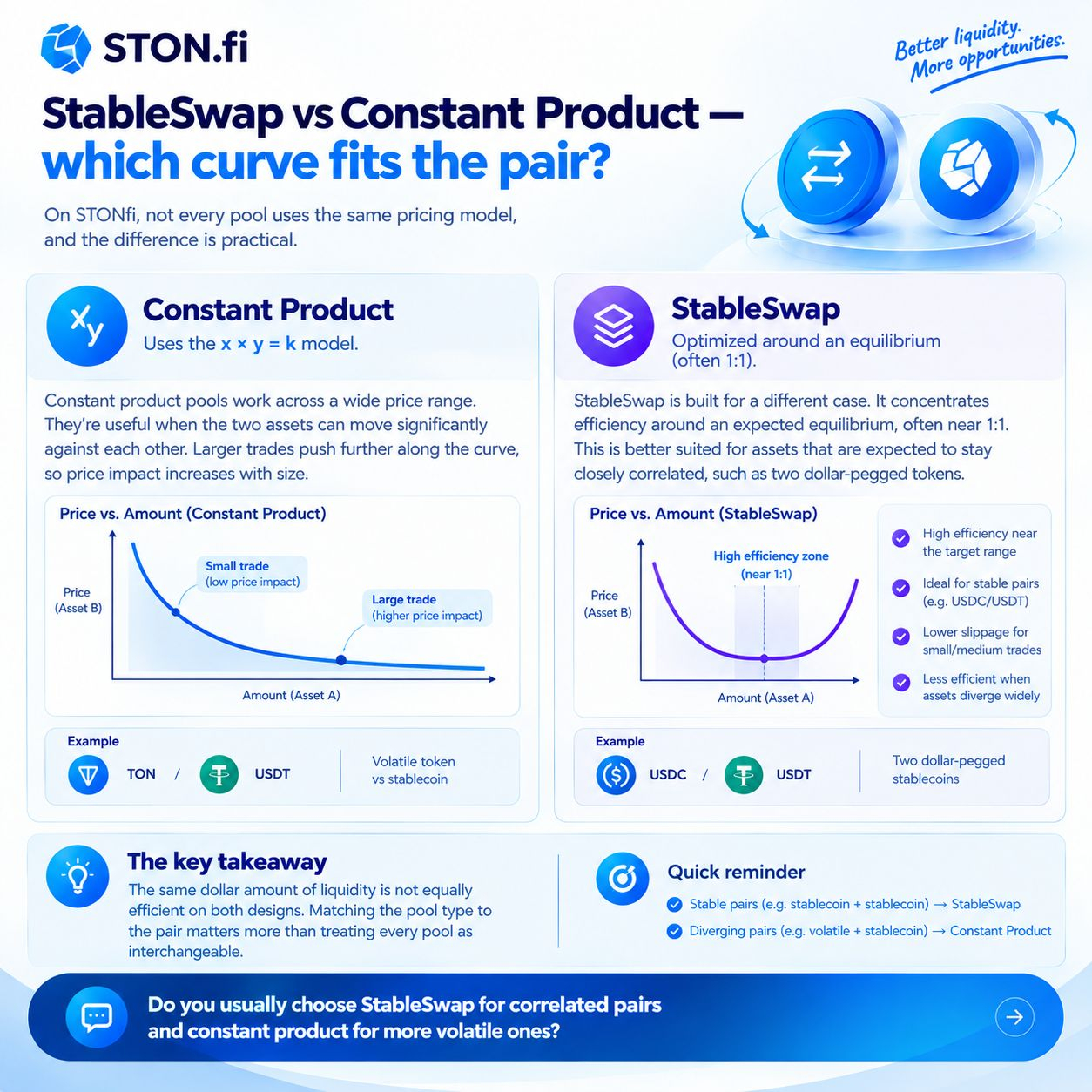
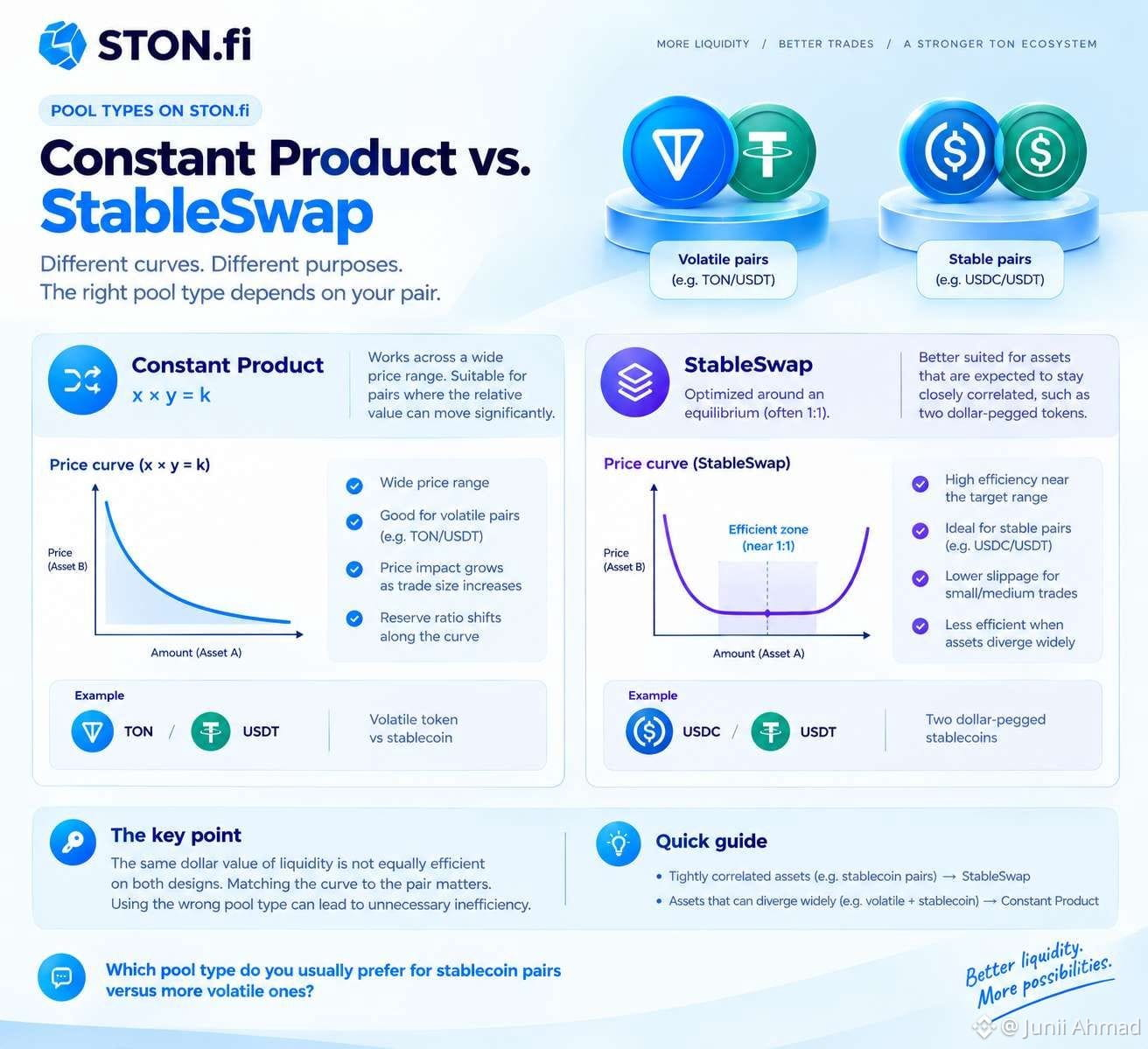
For a long time, I made DeFi decisions by looking at one number: APR. If the APR looked high, I was interested. But that approach eventually taught me an important lesson: a high APR doesn't tell you the entire story. You also need to understand the potential returns, the volatility of the pair, and the risk of impermanent loss. That’s why I started using three simple tools from STON.fi before making liquidity decisions. 1. APR Calculator I use it to translate an APR percentage into actual numbers based on my deposit size and timeframe. It makes it much easier to compare different opportunities instead of getting distracted by whichever farm has the biggest percentage. 2. STON.fi Pools Updates The Telegram channel provides regular snapshots of active pools and their APRs. I use it as a quick way to discover what is currently worth researching without constantly checking every pool manually. 3. Impermanent Loss Calculator This is arguably the most important one. Farming rewards aren't the only thing that matters. If the prices of the two assets in a liquidity pool move significantly apart, impermanent loss can affect the overall outcome. Now, before entering a volatile pool, I like to estimate that risk first. My process has become: APR → potential returns → impermanent loss → TVL/volume → decision. It only takes a few minutes, but it has made my DeFi decisions much more deliberate. The important thing to remember is that calculators are estimates, not guarantees. APRs change, liquidity changes, token prices move, and market conditions can completely alter the outcome. For me, the biggest improvement hasn't been finding the “highest APR.” It's learning to **understand the numbers before committing capital.** 📊 APR Calculator: https://tools.ston.fi/APY-calculator-APR 📉 Impermanent Loss Calculator: https://tools.ston.fi/impermanent-loss-calculator 📡 STON.fi Pools Updates: https://t.me/Stonfi_updates How do you evaluate a liquidity pool before entering it? #TON #DeFi #STONfi #Crypto
For a long time, I made DeFi decisions by looking at one number:

APR.

If the APR looked high, I was interested.

But that approach eventually taught me an important lesson: a high APR doesn't tell you the entire story.

You also need to understand the potential returns, the volatility of the pair, and the risk of impermanent loss.

That’s why I started using three simple tools from STON.fi before making liquidity decisions.

1. APR Calculator

I use it to translate an APR percentage into actual numbers based on my deposit size and timeframe.

It makes it much easier to compare different opportunities instead of getting distracted by whichever farm has the biggest percentage.

2. STON.fi Pools Updates

The Telegram channel provides regular snapshots of active pools and their APRs.

I use it as a quick way to discover what is currently worth researching without constantly checking every pool manually.

3. Impermanent Loss Calculator

This is arguably the most important one.

Farming rewards aren't the only thing that matters. If the prices of the two assets in a liquidity pool move significantly apart, impermanent loss can affect the overall outcome.

Now, before entering a volatile pool, I like to estimate that risk first.

My process has become:

APR → potential returns → impermanent loss → TVL/volume → decision.

It only takes a few minutes, but it has made my DeFi decisions much more deliberate.

The important thing to remember is that calculators are estimates, not guarantees. APRs change, liquidity changes, token prices move, and market conditions can completely alter the outcome.

For me, the biggest improvement hasn't been finding the “highest APR.”

It's learning to **understand the numbers before committing capital.**

📊 APR Calculator: https://tools.ston.fi/APY-calculator-APR

📉 Impermanent Loss Calculator: https://tools.ston.fi/impermanent-loss-calculator

📡 STON.fi Pools Updates: https://t.me/Stonfi_updates

How do you evaluate a liquidity pool before entering it?

#TON #DeFi #STONfi #Crypto
⚠️ Crowd is cheering $DEXE here — but **+5.62%** + range $2.201→$2.639 still looks like a trap setup… 🔥 Dominant tape narrative: **DEFI** — $DEXE rides the heat, not a random BTC filler. Crowd is chasing DEFI headlines around $DEXE at $2.558. We’re checking whether **+5.62%** confirms the story — or kills it. 📊 Key Takeaways: • Narrative: **DEFI** • Spot: **$2.558** • Key range: **$2.201 → $2.639** (24h) • Impulse: **+5.62%** · ~$20.6M quote vol 💬 Be honest — are you with the crowd on $DEXE, or calling the trap? Drop your side. Tags: $DEXE $USDT #DeFi #OnChain #Crypto #BinanceSquare
⚠️ Crowd is cheering $DEXE here — but **+5.62%** + range $2.201→$2.639 still looks like a trap setup…

🔥 Dominant tape narrative: **DEFI** — $DEXE rides the heat, not a random BTC filler.
Crowd is chasing DEFI headlines around $DEXE at $2.558. We’re checking whether **+5.62%** confirms the story — or kills it.

📊 Key Takeaways:
• Narrative: **DEFI**
• Spot: **$2.558**
• Key range: **$2.201 → $2.639** (24h)
• Impulse: **+5.62%** · ~$20.6M quote vol

💬 Be honest — are you with the crowd on $DEXE , or calling the trap? Drop your side.

Tags: $DEXE $USDT #DeFi #OnChain #Crypto #BinanceSquare
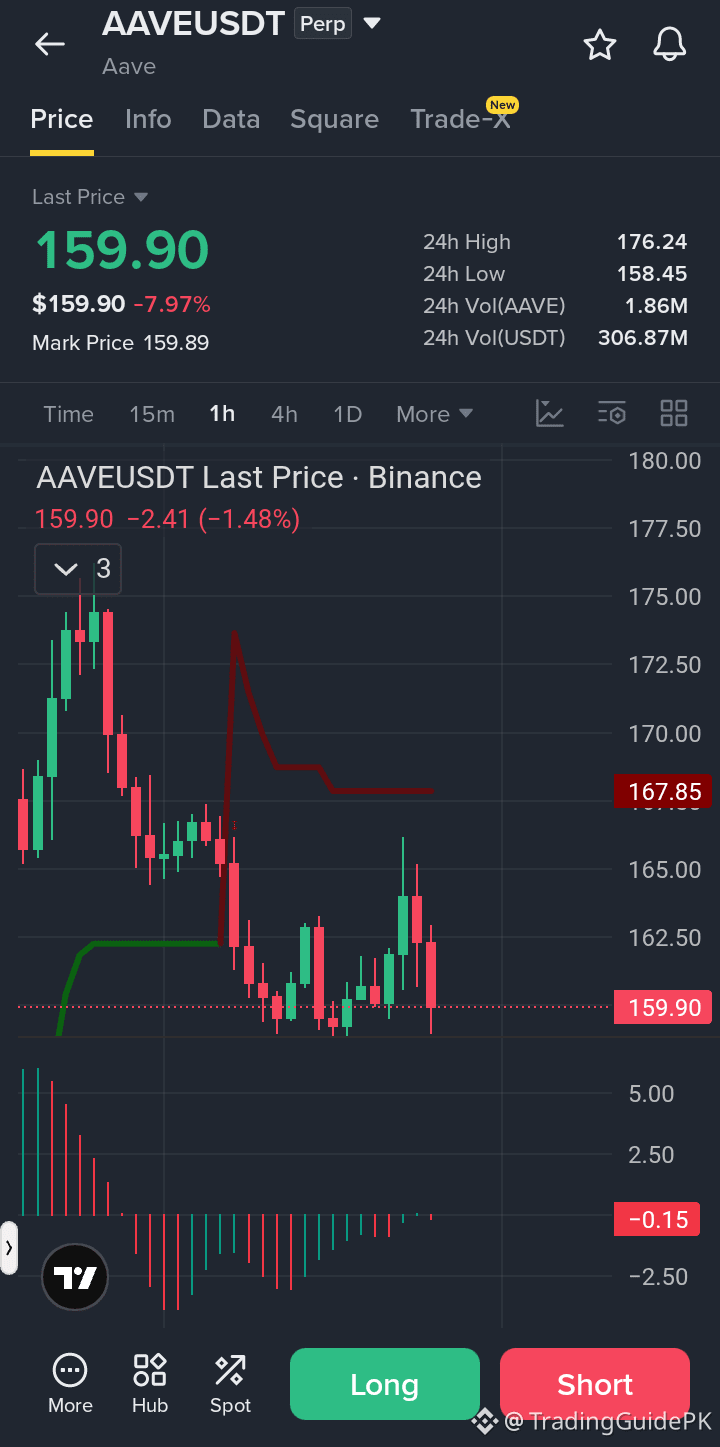
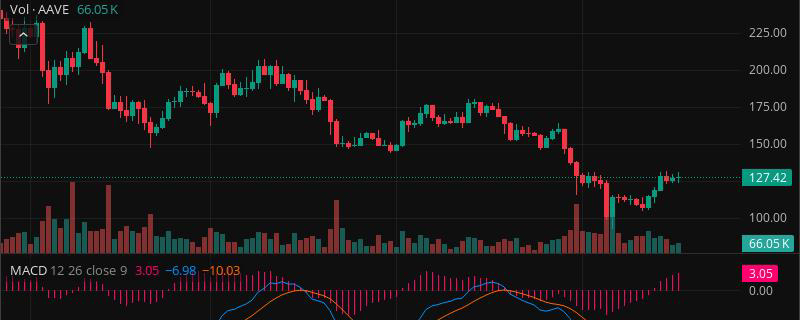
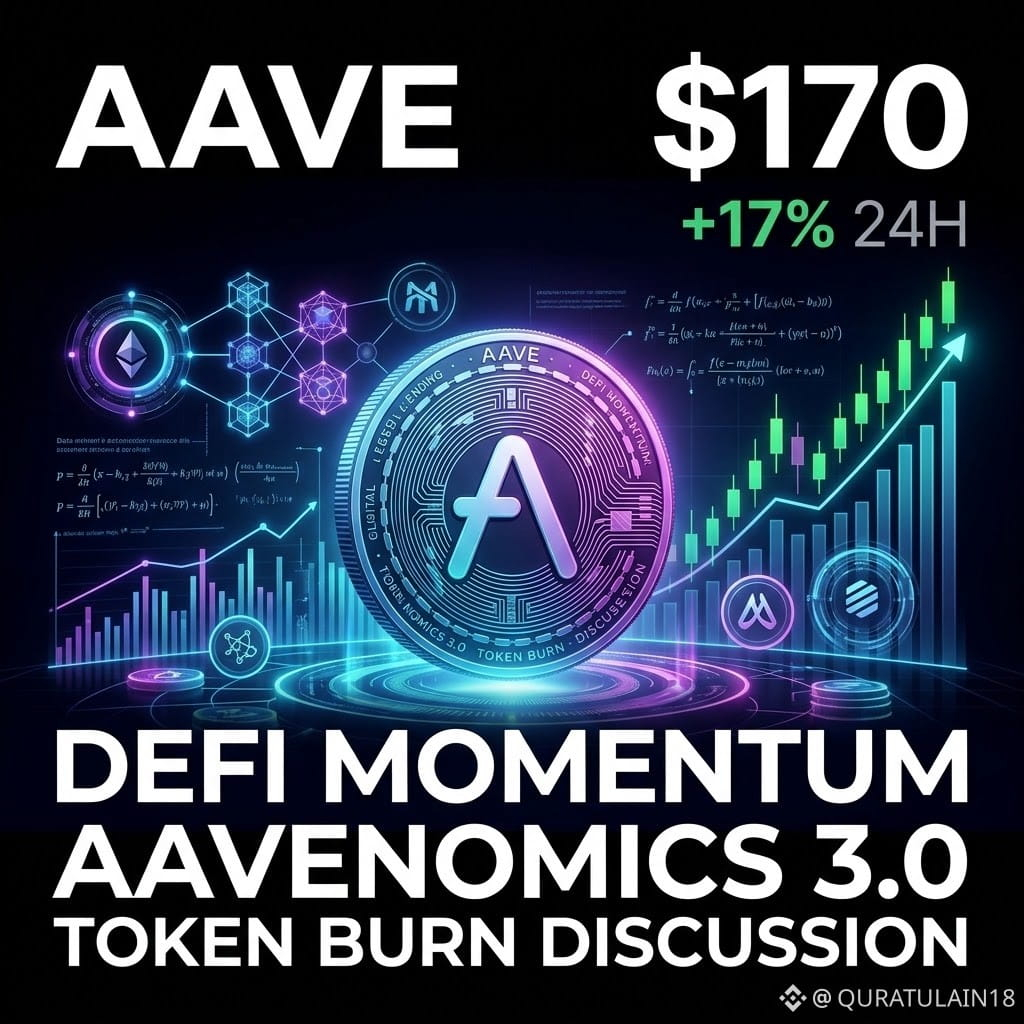
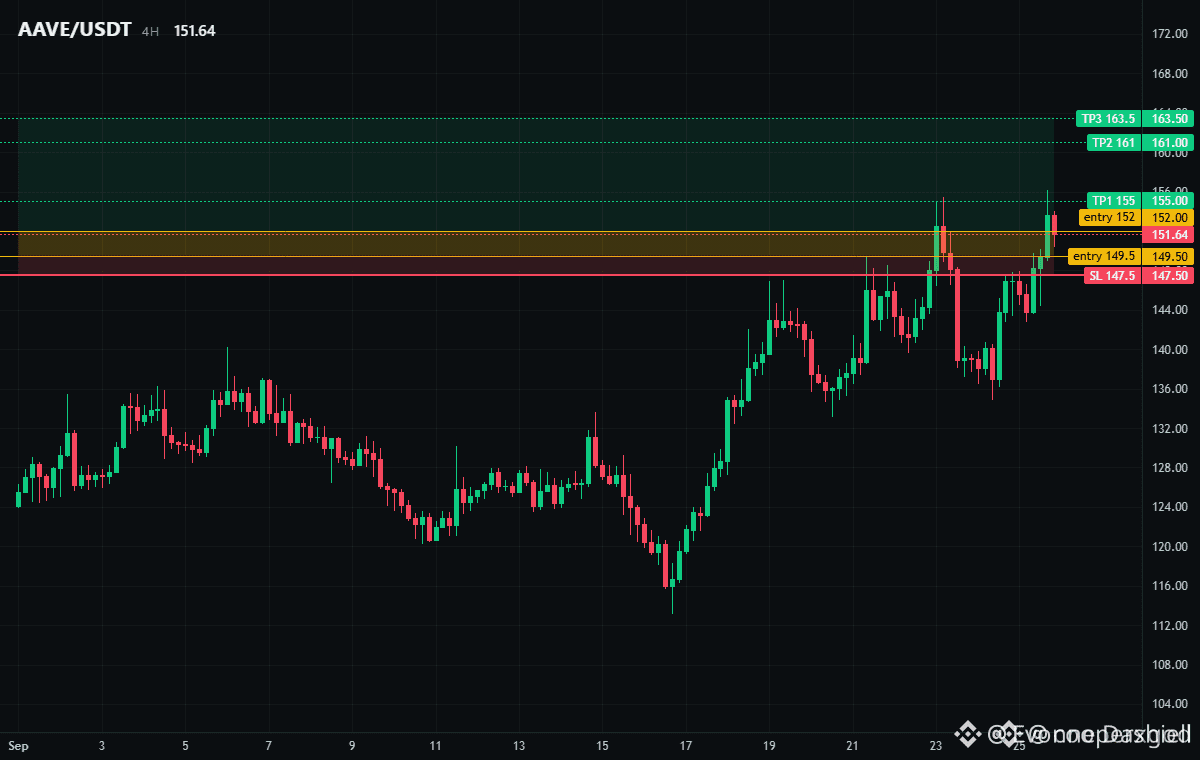
💰 Lending without banks? That's what $AAVE is building. Aave is one of the leading decentralized lending protocols, allowing users to lend and borrow crypto without traditional intermediaries. Strong adoption and continuous development keep it relevant in DeFi. 💬 Would you hold $AAVE for the next bull run? {future}(AAVEUSDT) #DeFi #Crypto #BinanceSquare
💰 Lending without banks? That's what $AAVE is building.
Aave is one of the leading decentralized lending protocols, allowing users to lend and borrow crypto without traditional intermediaries. Strong adoption and continuous development keep it relevant in DeFi.

💬 Would you hold $AAVE for the next bull run?

#DeFi #Crypto #BinanceSquare
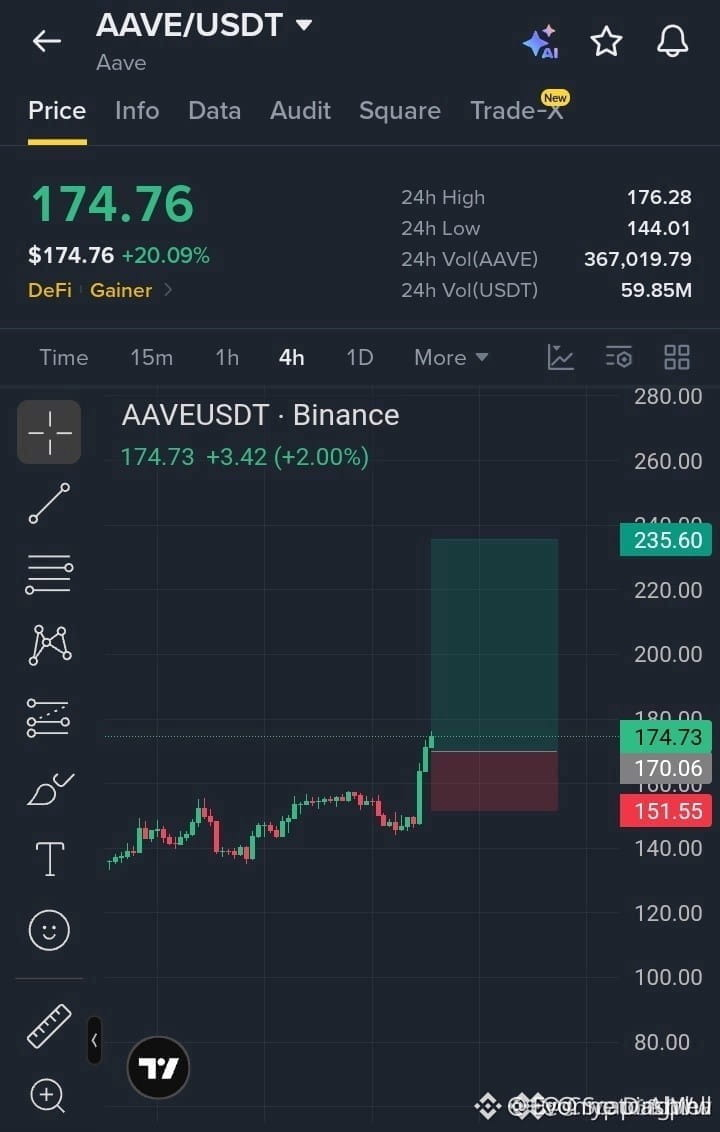
⚡ What Is DeFi Lending?: Borrowing and lending without a bank On July 31, 2026, DeFi lending protocols like Aave let users supply assets to earn yield or borrow against collateral — all managed by smart contracts, no bank required. Aave's $260.67M in daily volume and +4.14% price gain today reflect renewed interest in the sector. 📌 Key Takeaway: DeFi lending replaces the credit officer with code: collateralization is transparent, liquidations are automatic, and access is global. #DeFi #Aave #Education #BinanceAlphaAlert
⚡ What Is DeFi Lending?: Borrowing and lending without a bank
On July 31, 2026, DeFi lending protocols like Aave let users supply assets to earn yield or borrow against collateral — all managed by smart contracts, no bank required.
Aave's $260.67M in daily volume and +4.14% price gain today reflect renewed interest in the sector.

📌 Key Takeaway:
DeFi lending replaces the credit officer with code: collateralization is transparent, liquidations are automatic, and access is global.

#DeFi #Aave #Education
#BinanceAlphaAlert
🔥 Why are traders still watching $INJ ? Injective is designed for high-speed decentralized finance, supporting decentralized exchanges, derivatives, and tokenized assets with low fees. Its focus on DeFi infrastructure gives it a strong long-term narrative. 💬 Is $INJ undervalued right now? {future}(INJUSDT) #INJ #DeFi #Crypto #BinanceSquare
🔥 Why are traders still watching $INJ ?
Injective is designed for high-speed decentralized finance, supporting decentralized exchanges, derivatives, and tokenized assets with low fees. Its focus on DeFi infrastructure gives it a strong long-term narrative.

💬 Is $INJ undervalued right now?

#INJ #DeFi #Crypto #BinanceSquare
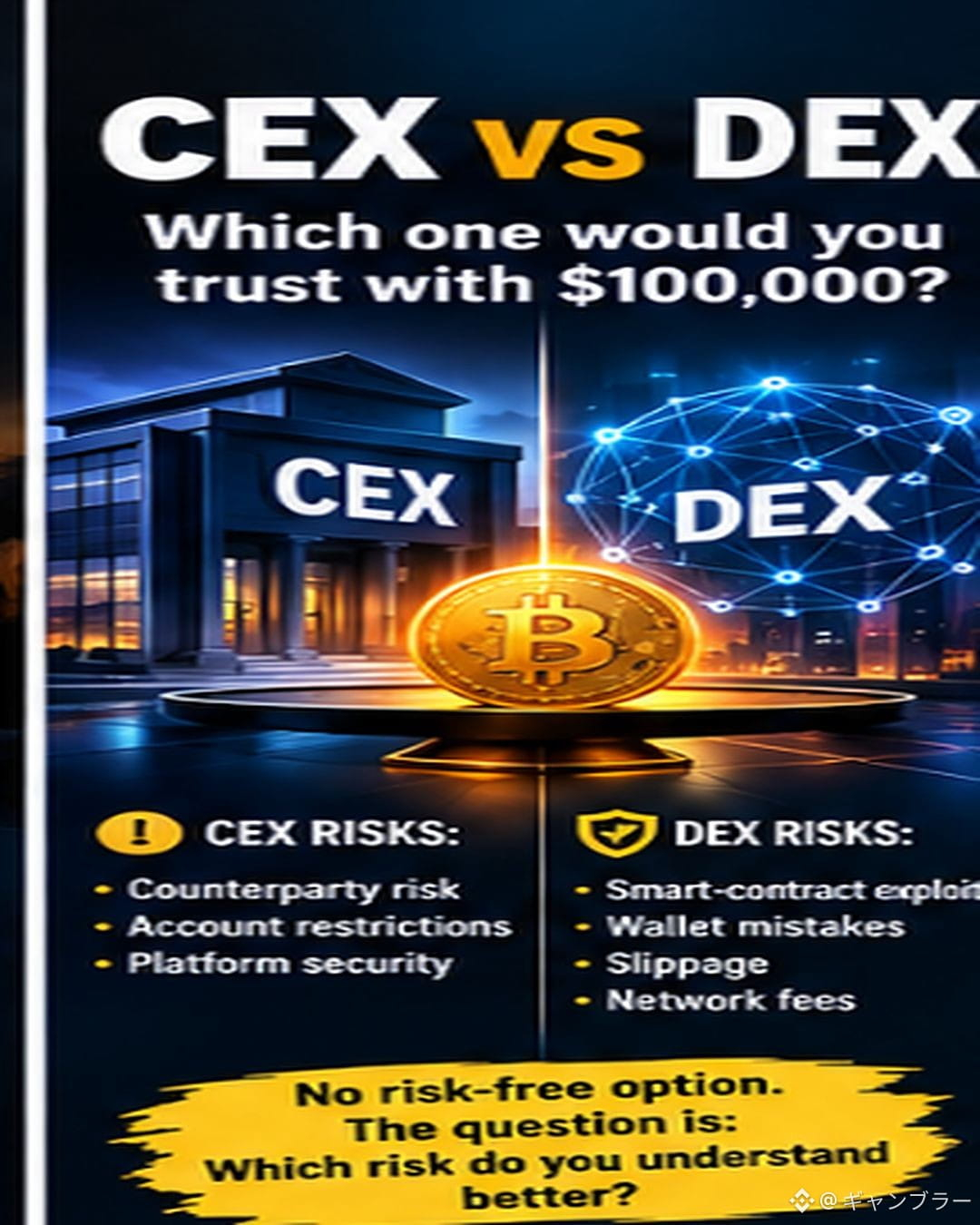
💱 DEX vs. CEX: Two ways to trade, one market On July 31, 2026, Centralized exchanges hold your funds and match orders on their own books; decentralized exchanges like Uniswap settle trades directly on-chain via liquidity pools. Uniswap's $410.65M in daily volume shows DEXs are no longer experimental — they are core market infrastructure. 📌 Key Takeaway: CEXs offer convenience and depth; DEXs offer custody and transparency. Most serious traders use both, depending on the situation. #DeFi #DEX #Education #BinanceAlphaAlert
💱 DEX vs. CEX: Two ways to trade, one market
On July 31, 2026, Centralized exchanges hold your funds and match orders on their own books; decentralized exchanges like Uniswap settle trades directly on-chain via liquidity pools.
Uniswap's $410.65M in daily volume shows DEXs are no longer experimental — they are core market infrastructure.

📌 Key Takeaway:
CEXs offer convenience and depth; DEXs offer custody and transparency. Most serious traders use both, depending on the situation.

#DeFi #DEX #Education
#BinanceAlphaAlert
Cross-Chain Is Becoming Less About Networks and More About User Experience I was exploring STON.fi's cross-chain interface recently, and one thing immediately stood out, the growing number of supported networks available from a single interface. Instead of switching between different applications, the network selector now includes ecosystems like TON, Ethereum, Base, BNB Chain, Arbitrum, Avalanche, Polygon, TRON, and Robinhood Chain. That got me thinking. Cross-chain isn't just about connecting more blockchains anymore. It's about making interactions between them easier to understand. As I explored the swap flow, I noticed the platform doesn't just ask you to confirm a transaction. Before approving, you can review important details like the estimated output, blockchain fee, minimum received, and the selected route through Omniston. I think that's one of the most underrated parts of DeFi. Good user experience isn't about showing less information, it's about presenting the right information at the right time. Whether you're swapping between networks or simply exploring how cross-chain infrastructure works, taking a few extra seconds to review those details can help you better understand what you're approving. Have you explored STON.fi's cross-chain interface yet? Which supported network are you most interested in using? Try it out at ston.fi $TON $STON #STONfi #CrossChain #defi

Cross-Chain Is Becoming Less About Networks and More About User Experience

I was exploring STON.fi's cross-chain interface recently, and one thing immediately stood out, the growing number of supported networks available from a single interface.

Instead of switching between different applications, the network selector now includes ecosystems like TON, Ethereum, Base, BNB Chain, Arbitrum, Avalanche, Polygon, TRON, and Robinhood Chain.
That got me thinking.

Cross-chain isn't just about connecting more blockchains anymore. It's about making interactions between them easier to understand.

As I explored the swap flow, I noticed the platform doesn't just ask you to confirm a transaction. Before approving, you can review important details like the estimated output, blockchain fee, minimum received, and the selected route through Omniston.
I think that's one of the most underrated parts of DeFi.

Good user experience isn't about showing less information, it's about presenting the right information at the right time.
Whether you're swapping between networks or simply exploring how cross-chain infrastructure works, taking a few extra seconds to review those details can help you better understand what you're approving.

Have you explored STON.fi's cross-chain interface yet? Which supported network are you most interested in using?

Try it out at ston.fi

$TON $STON
#STONfi #CrossChain #defi
Selective pressure is hitting DeFi infrastructure and smaller alts while majors drift lower on thin conviction 📉 BANK leads the damage with a brutal 27.87% collapse to 0.0603 on 50.2M USDT volume — the heaviest selling flow among losers and a textbook capitulation signal. EUL followed with a 9.52% drop to 1.349, but critically pushed 95.1M USDT in volume, the highest among declining assets and a sign of forced liquidation rather than quiet rotation. ESP and ZAMA round out the bleed at -11.21% and -9.82% respectively, suggesting sector-specific risk-off rather than broad contagion. Meanwhile, $BTC and ETH are down modest 2.67% and 3.19% on over 1.4 billion combined volume — stable relative to the mid-cap carnage. This divergence often marks tactical flush zones before the next directional setup. Watch for volume stabilization in DeFi names and whether majors reclaim intraday resistance or continue to grind lower on macro patience. Are you seeing this as sector rotation or the start of broader position unwinding? #DeFi #BANK #Euler #CryptoMarkets
Selective pressure is hitting DeFi infrastructure and smaller alts while majors drift lower on thin conviction 📉

BANK leads the damage with a brutal 27.87% collapse to 0.0603 on 50.2M USDT volume — the heaviest selling flow among losers and a textbook capitulation signal. EUL followed with a 9.52% drop to 1.349, but critically pushed 95.1M USDT in volume, the highest among declining assets and a sign of forced liquidation rather than quiet rotation. ESP and ZAMA round out the bleed at -11.21% and -9.82% respectively, suggesting sector-specific risk-off rather than broad contagion.

Meanwhile, $BTC and ETH are down modest 2.67% and 3.19% on over 1.4 billion combined volume — stable relative to the mid-cap carnage. This divergence often marks tactical flush zones before the next directional setup. Watch for volume stabilization in DeFi names and whether majors reclaim intraday resistance or continue to grind lower on macro patience.

Are you seeing this as sector rotation or the start of broader position unwinding?

#DeFi #BANK #Euler #CryptoMarkets
Real Yield vs. Inflationary Rewards: The DeFi Divide That Still Matters Early DeFi ran on a simple trick: print a governance token, distribute it as yield, call it a return. APYs looked incredible until you factored in that the yield was diluting you while you earned it. The protocols that survived figured out how to generate real yield: fees charged to users, distributed to capital providers. The distinction matters more than ever. Protocols with real yield have sustainable business models. When sentiment turns negative, their TVL holds because the income stream is real and does not evaporate when token prices drop 80%. Inflationary-reward protocols see TVL and token price collapse together in a reinforcing spiral. Look at where real yield has taken root. $ETH staking yield is backed by actual network fee revenue. $BNB DeFi routes genuine trading volume. $SOL high-throughput design keeps fee generation consistent even in volatile conditions. The checklist before entering any yield opportunity: Where does the yield come from? Is it denominated in the protocol own token? Is TVL growing organically or via mercenary capital chasing rewards? Real yield is boring. That is exactly why it compounds. #DeFi #RealYield #CryptoInvesting #Blockchain #BinanceSquare
Real Yield vs. Inflationary Rewards: The DeFi Divide That Still Matters

Early DeFi ran on a simple trick: print a governance token, distribute it as yield, call it a return. APYs looked incredible until you factored in that the yield was diluting you while you earned it. The protocols that survived figured out how to generate real yield: fees charged to users, distributed to capital providers.

The distinction matters more than ever. Protocols with real yield have sustainable business models. When sentiment turns negative, their TVL holds because the income stream is real and does not evaporate when token prices drop 80%. Inflationary-reward protocols see TVL and token price collapse together in a reinforcing spiral.

Look at where real yield has taken root. $ETH staking yield is backed by actual network fee revenue. $BNB DeFi routes genuine trading volume. $SOL high-throughput design keeps fee generation consistent even in volatile conditions.

The checklist before entering any yield opportunity: Where does the yield come from? Is it denominated in the protocol own token? Is TVL growing organically or via mercenary capital chasing rewards?

Real yield is boring. That is exactly why it compounds.

#DeFi #RealYield #CryptoInvesting #Blockchain #BinanceSquare
Log in to explore more content
Join global crypto users on Binance Square
⚡️ Get latest and useful information about crypto.
💬 Trusted by the world’s largest crypto exchange.
👍 Discover real insights from verified creators.
Email / Phone number