

Blockchain Boss X
8.1k Posts

Blockchain Boss X
 Square Verified+
Report
Block User
Crypto Markets | Blockchain | Web3 Research
Market trends, on-chain insights & macro analysis
Clear data. Balanced views. No hype.
Open Trade
Frequent Trader
2.5 Years
655 Following
30.0K+ Followers
4.7K+ Liked
Posts
Portfolio
All
Quotes
Live
·
--
Bullish
Long $LSK 🚨
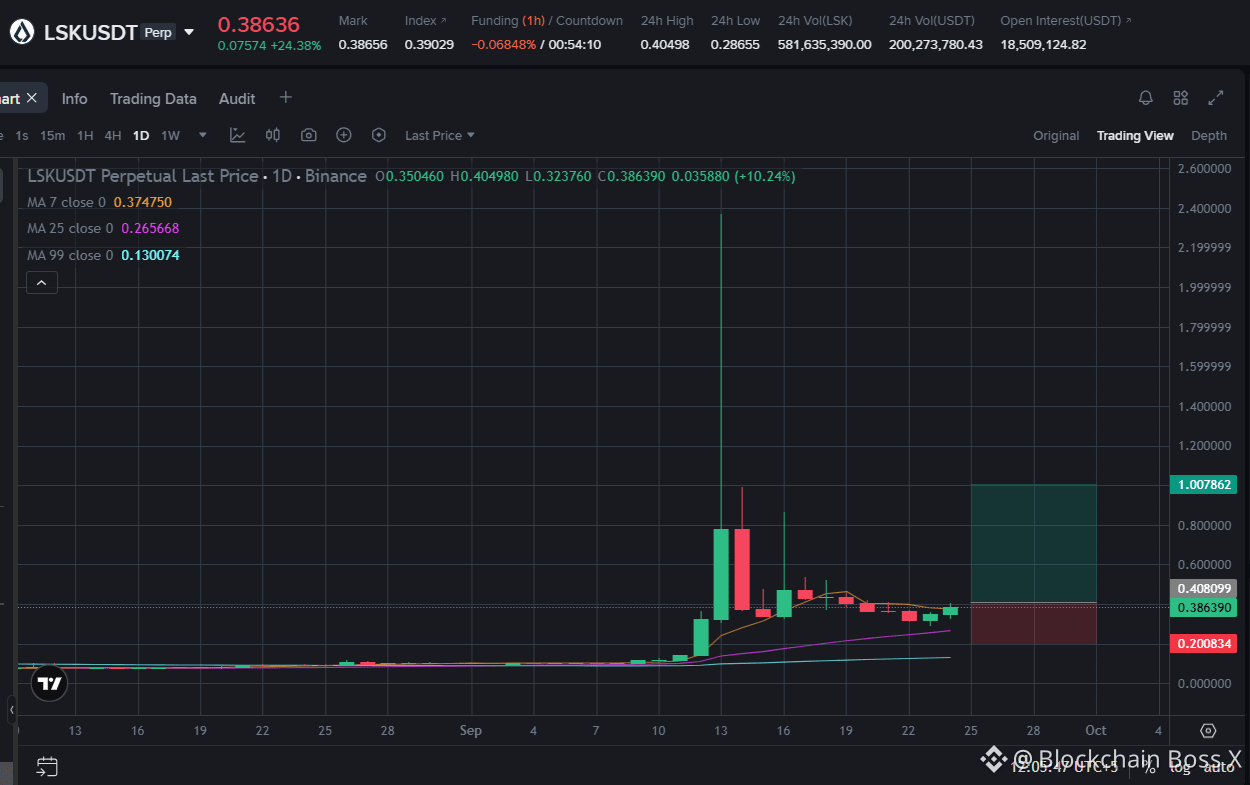
$LSK is holding above its short-term moving average after a strong daily move, with price currently trading around $0.386. Momentum remains positive while the visible structure holds.
Entry: 0.3863 — current price
TP: 1.0078
SL: 0.2008
Trade $LSK here 👇
High-volatility setup — manage risk carefully.
{future}(LSKUSDT)
Long $LSK 🚨
$LSK is holding above its short-term moving average after a strong daily move, with price currently trading around $0.386. Momentum remains positive while the visible structure holds.
Entry: 0.3863 — current price
TP: 1.0078
SL: 0.2008
Trade $LSK here 👇
High-volatility setup — manage risk carefully.
$LSK is holding above its short-term moving average after a strong daily move, with price currently trading around $0.386. Momentum remains positive while the visible structure holds.
Entry: 0.3863 — current price
TP: 1.0078
SL: 0.2008
Trade $LSK here 👇
High-volatility setup — manage risk carefully.
133
·
--
Bullish
#FortitudeRaisesCreditLineTo$50M
Fortitude Expands Credit Line to $50M—The ZEC Funding Detail Matters
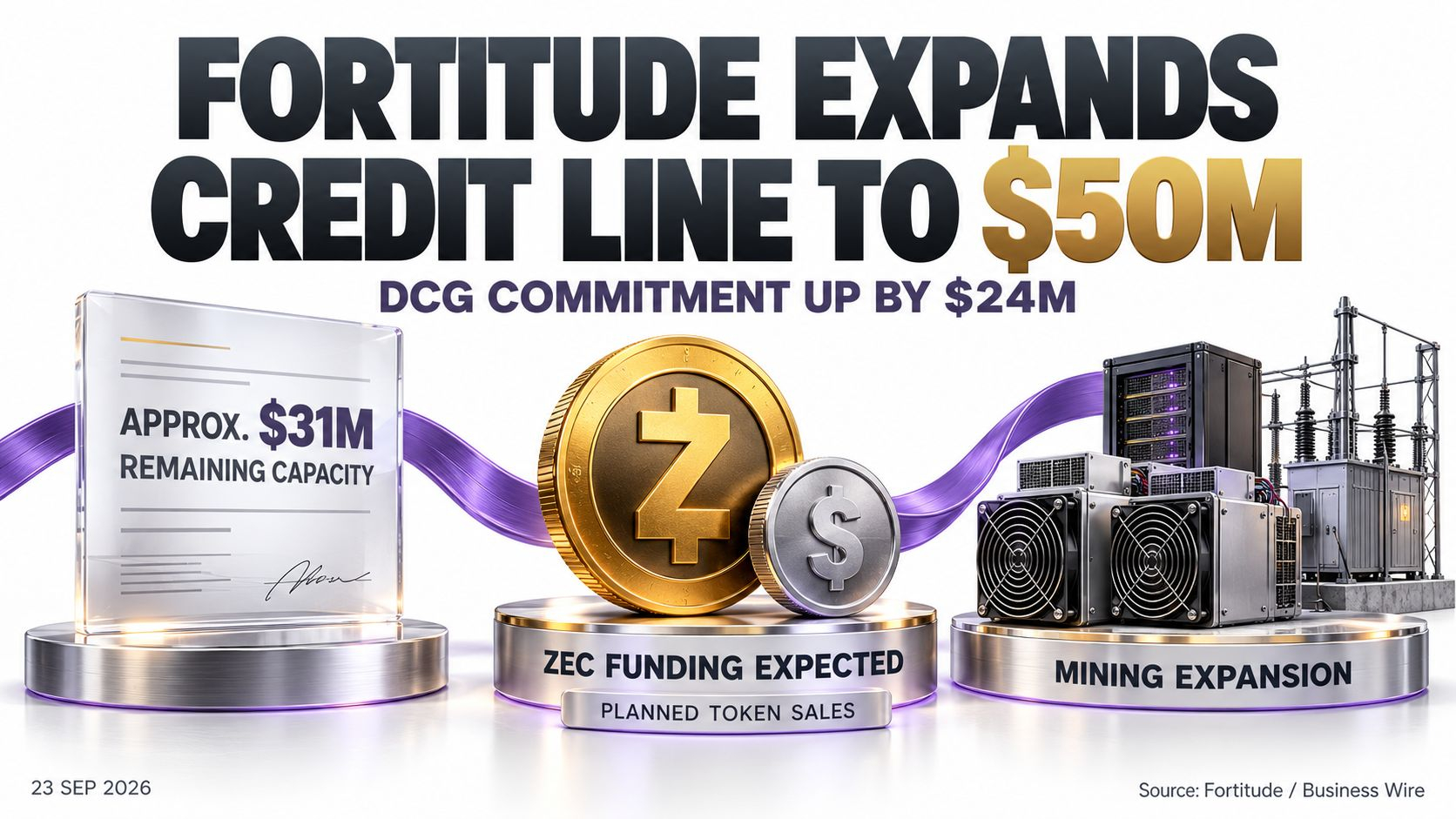
Fortitude Mining has expanded its credit facility with parent Digital Currency Group from $26 million to $50 million. The amendment adds $24 million to the commitment, leaving approximately $31 million available to borrow, subject to the facility’s terms.
Fortitude expects the remaining availability to be funded in ZEC and plans to sell those tokens to finance mining equipment, facilities and expansion. The loans remain denominated and repayable in US dollars.
About $7 million is expected to be drawn before September ends to help pay for previously announced orders for 9,000 mining machines.
My take: This links infrastructure investment with potential token sales. More funding could help bring machines online, while the market impact of selling ZEC would depend on timing, execution and available liquidity.
The operational test is whether the new capacity produces enough cash flow to justify its equipment, power and financing costs. I’d watch actual drawdowns, deployment milestones and operating margins before treating a larger borrowing limit as evidence of improved profitability.
For ZEC holders, the timing of capital deployment and token sales will help explain how this financing translates into market activity.
Which matters more for ZEC here: mining expansion or how the planned token sales are managed?
#zcash #CryptoMining
$ZEC $NOM $LSK
{future}(LSKUSDT)
{future}(NOMUSDT)
{future}(ZECUSDT)
#FortitudeRaisesCreditLineTo$50M
Fortitude Expands Credit Line to $50M—The ZEC Funding Detail Matters
Fortitude Mining has expanded its credit facility with parent Digital Currency Group from $26 million to $50 million. The amendment adds $24 million to the commitment, leaving approximately $31 million available to borrow, subject to the facility’s terms.
Fortitude expects the remaining availability to be funded in ZEC and plans to sell those tokens to finance mining equipment, facilities and expansion. The loans remain denominated and repayable in US dollars.
About $7 million is expected to be drawn before September ends to help pay for previously announced orders for 9,000 mining machines.
My take: This links infrastructure investment with potential token sales. More funding could help bring machines online, while the market impact of selling ZEC would depend on timing, execution and available liquidity.
The operational test is whether the new capacity produces enough cash flow to justify its equipment, power and financing costs. I’d watch actual drawdowns, deployment milestones and operating margins before treating a larger borrowing limit as evidence of improved profitability.
For ZEC holders, the timing of capital deployment and token sales will help explain how this financing translates into market activity.
Which matters more for ZEC here: mining expansion or how the planned token sales are managed?
#zcash #CryptoMining
$ZEC $NOM $LSK
Fortitude Expands Credit Line to $50M—The ZEC Funding Detail Matters
Fortitude Mining has expanded its credit facility with parent Digital Currency Group from $26 million to $50 million. The amendment adds $24 million to the commitment, leaving approximately $31 million available to borrow, subject to the facility’s terms.
Fortitude expects the remaining availability to be funded in ZEC and plans to sell those tokens to finance mining equipment, facilities and expansion. The loans remain denominated and repayable in US dollars.
About $7 million is expected to be drawn before September ends to help pay for previously announced orders for 9,000 mining machines.
My take: This links infrastructure investment with potential token sales. More funding could help bring machines online, while the market impact of selling ZEC would depend on timing, execution and available liquidity.
The operational test is whether the new capacity produces enough cash flow to justify its equipment, power and financing costs. I’d watch actual drawdowns, deployment milestones and operating margins before treating a larger borrowing limit as evidence of improved profitability.
For ZEC holders, the timing of capital deployment and token sales will help explain how this financing translates into market activity.
Which matters more for ZEC here: mining expansion or how the planned token sales are managed?
#zcash #CryptoMining
$ZEC $NOM $LSK
316


·
--
Bullish
#usweighspromotingdollarstablecoinsabroad
🇺🇸 US Weighs Overseas Stablecoin Push to Extend the Dollar’s Reach
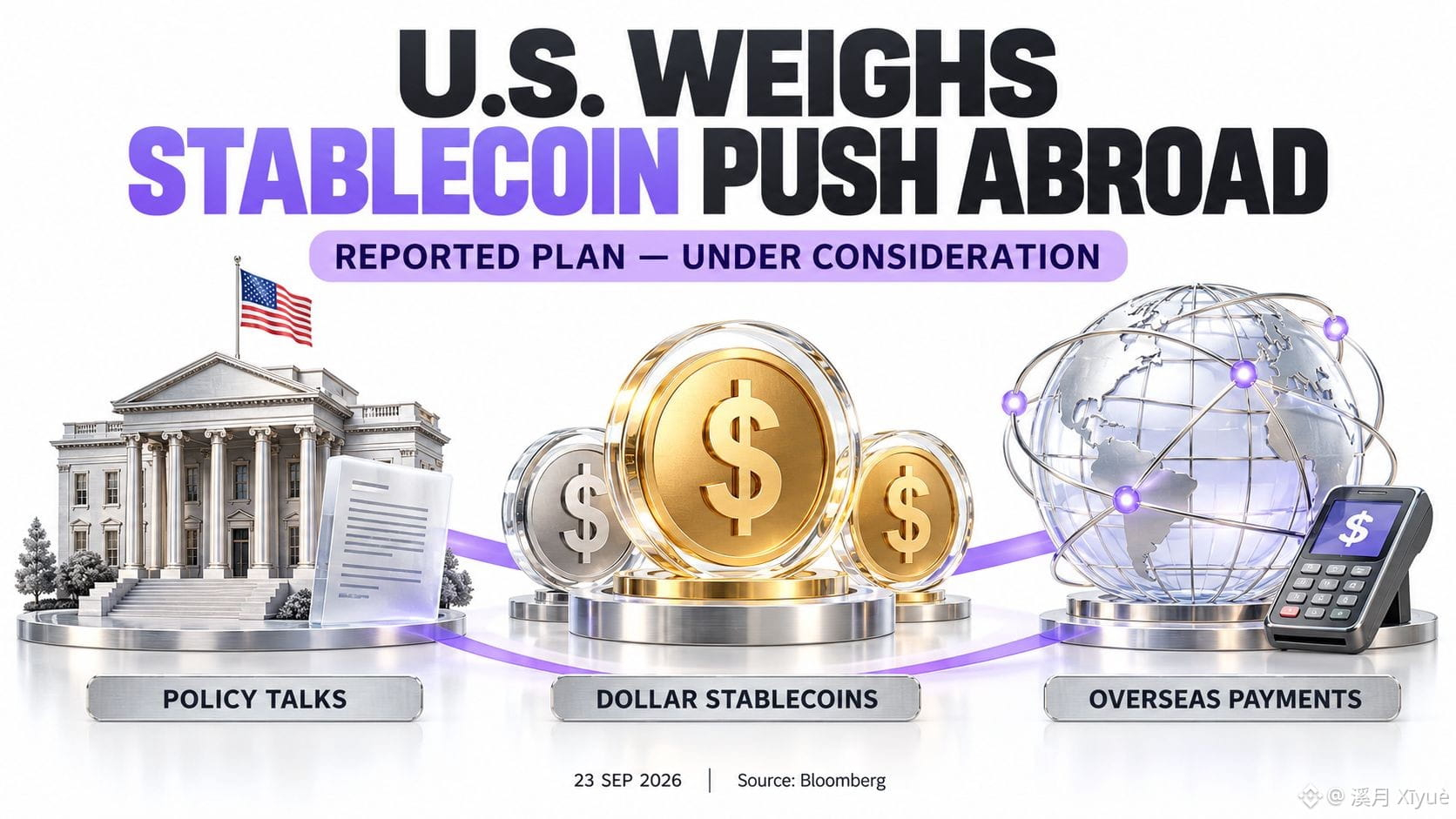
Bloomberg reported on September 23 that the Trump administration is considering ways to promote dollar stablecoins overseas, citing people familiar with the discussions.
Options reportedly include joint ventures with private firms. The Treasury and State Departments could participate, with possible involvement from the US International Development Finance Corporation. The initiative remains under consideration.
The reported goals are to reinforce the dollar’s international role and support Treasury demand. Stablecoin issuers commonly hold cash and short-term government debt as reserves.
My take: The commercial test is how easily users can move between digital dollars and local money. Merchants and remittance customers need dependable redemption, transparent fees and convenient ways to cash out. Policy backing alone cannot guarantee those services work well.
Additional Treasury demand would also depend on whether tokens attract new savings into dollar assets or shift money between existing dollar holdings.
For crypto investors, useful follow-through would be named partners, funded programs and actual payment usage. Any benefit to a particular blockchain or token would depend on where transactions settle and how fees are captured.
Would easier dollar access or cheaper cross-border payments drive stronger everyday adoption? $BTC $BNB $ETH
#USWeighsPromotingDollarStablecoinsAbroad #Stablecoins #digitalpayments
#usweighspromotingdollarstablecoinsabroad
🇺🇸 US Weighs Overseas Stablecoin Push to Extend the Dollar’s Reach
Bloomberg reported on September 23 that the Trump administration is considering ways to promote dollar stablecoins overseas, citing people familiar with the discussions.
Options reportedly include joint ventures with private firms. The Treasury and State Departments could participate, with possible involvement from the US International Development Finance Corporation. The initiative remains under consideration.
The reported goals are to reinforce the dollar’s international role and support Treasury demand. Stablecoin issuers commonly hold cash and short-term government debt as reserves.
My take: The commercial test is how easily users can move between digital dollars and local money. Merchants and remittance customers need dependable redemption, transparent fees and convenient ways to cash out. Policy backing alone cannot guarantee those services work well.
Additional Treasury demand would also depend on whether tokens attract new savings into dollar assets or shift money between existing dollar holdings.
For crypto investors, useful follow-through would be named partners, funded programs and actual payment usage. Any benefit to a particular blockchain or token would depend on where transactions settle and how fees are captured.
Would easier dollar access or cheaper cross-border payments drive stronger everyday adoption? $BTC $BNB $ETH
#USWeighsPromotingDollarStablecoinsAbroad #Stablecoins #digitalpayments
🇺🇸 US Weighs Overseas Stablecoin Push to Extend the Dollar’s Reach
Bloomberg reported on September 23 that the Trump administration is considering ways to promote dollar stablecoins overseas, citing people familiar with the discussions.
Options reportedly include joint ventures with private firms. The Treasury and State Departments could participate, with possible involvement from the US International Development Finance Corporation. The initiative remains under consideration.
The reported goals are to reinforce the dollar’s international role and support Treasury demand. Stablecoin issuers commonly hold cash and short-term government debt as reserves.
My take: The commercial test is how easily users can move between digital dollars and local money. Merchants and remittance customers need dependable redemption, transparent fees and convenient ways to cash out. Policy backing alone cannot guarantee those services work well.
Additional Treasury demand would also depend on whether tokens attract new savings into dollar assets or shift money between existing dollar holdings.
For crypto investors, useful follow-through would be named partners, funded programs and actual payment usage. Any benefit to a particular blockchain or token would depend on where transactions settle and how fees are captured.
Would easier dollar access or cheaper cross-border payments drive stronger everyday adoption? $BTC $BNB $ETH
#USWeighsPromotingDollarStablecoinsAbroad #Stablecoins #digitalpayments
1
279
·
--
Bullish
#us10ytreasuryyieldhits19yearhigh
🇺🇸 US 10-Year Treasury Yield Hits a 19-Year High—A New Test for Crypto
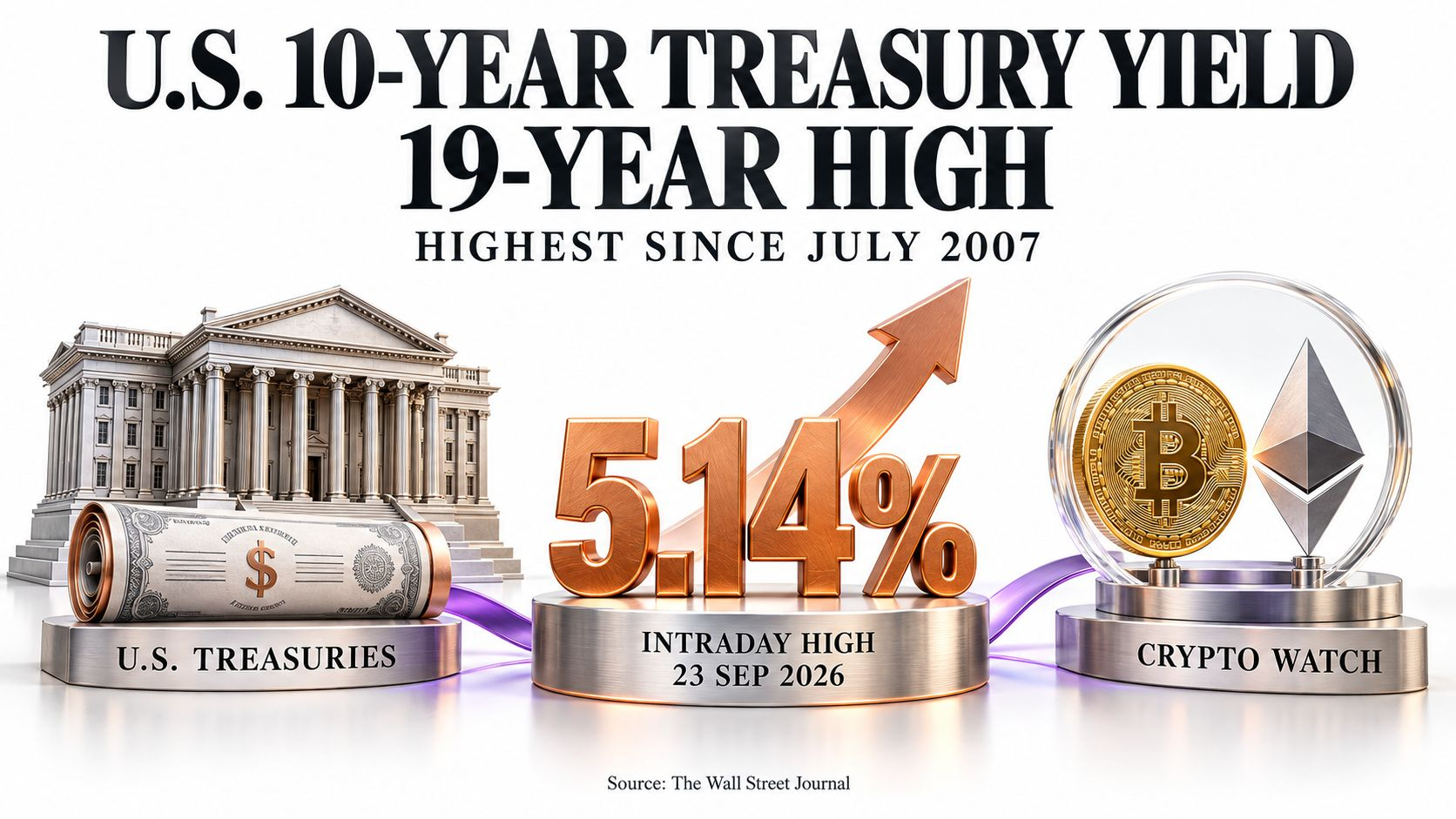
The US 10-year Treasury yield reached 5.14% intraday on September 23, its highest level since July 2007, before settling near 5.11%, according to The Wall Street Journal.
Meanwhile, S&P Global’s September flash survey showed US business activity growing at its fastest pace in over five years. Input costs increased at the fastest rate in nearly four years.
My take: Higher Treasury yields can raise borrowing costs and give investors a more competitive income alternative. That creates a tougher environment for assets whose appeal depends heavily on future growth or price appreciation.
The reason behind the move matters. Stronger economic activity can support corporate revenues, while persistent cost pressure can squeeze margins and keep monetary policy restrictive. Both forces can operate together.
For crypto, I’d watch the dollar, inflation-adjusted Treasury yields and Bitcoin ETF flows. Rising yields alongside a firmer dollar and weakening spot demand would suggest greater pressure on risk appetite. Steady inflows could help absorb that pressure.
The next few sessions should reveal whether the bond selloff persists and how crypto buyers respond. One yield milestone alone gives limited information about Bitcoin’s next move.
Can crypto demand stay firm if Treasury yields remain above 5%?
$BTC $ETH $SOL
#US10YTreasuryYieldHits19YearHigh #bitcoin #Macro
#us10ytreasuryyieldhits19yearhigh
🇺🇸 US 10-Year Treasury Yield Hits a 19-Year High—A New Test for Crypto
The US 10-year Treasury yield reached 5.14% intraday on September 23, its highest level since July 2007, before settling near 5.11%, according to The Wall Street Journal.
Meanwhile, S&P Global’s September flash survey showed US business activity growing at its fastest pace in over five years. Input costs increased at the fastest rate in nearly four years.
My take: Higher Treasury yields can raise borrowing costs and give investors a more competitive income alternative. That creates a tougher environment for assets whose appeal depends heavily on future growth or price appreciation.
The reason behind the move matters. Stronger economic activity can support corporate revenues, while persistent cost pressure can squeeze margins and keep monetary policy restrictive. Both forces can operate together.
For crypto, I’d watch the dollar, inflation-adjusted Treasury yields and Bitcoin ETF flows. Rising yields alongside a firmer dollar and weakening spot demand would suggest greater pressure on risk appetite. Steady inflows could help absorb that pressure.
The next few sessions should reveal whether the bond selloff persists and how crypto buyers respond. One yield milestone alone gives limited information about Bitcoin’s next move.
Can crypto demand stay firm if Treasury yields remain above 5%?
$BTC $ETH $SOL
#US10YTreasuryYieldHits19YearHigh #bitcoin #Macro
🇺🇸 US 10-Year Treasury Yield Hits a 19-Year High—A New Test for Crypto
The US 10-year Treasury yield reached 5.14% intraday on September 23, its highest level since July 2007, before settling near 5.11%, according to The Wall Street Journal.
Meanwhile, S&P Global’s September flash survey showed US business activity growing at its fastest pace in over five years. Input costs increased at the fastest rate in nearly four years.
My take: Higher Treasury yields can raise borrowing costs and give investors a more competitive income alternative. That creates a tougher environment for assets whose appeal depends heavily on future growth or price appreciation.
The reason behind the move matters. Stronger economic activity can support corporate revenues, while persistent cost pressure can squeeze margins and keep monetary policy restrictive. Both forces can operate together.
For crypto, I’d watch the dollar, inflation-adjusted Treasury yields and Bitcoin ETF flows. Rising yields alongside a firmer dollar and weakening spot demand would suggest greater pressure on risk appetite. Steady inflows could help absorb that pressure.
The next few sessions should reveal whether the bond selloff persists and how crypto buyers respond. One yield milestone alone gives limited information about Bitcoin’s next move.
Can crypto demand stay firm if Treasury yields remain above 5%?
$BTC $ETH $SOL
#US10YTreasuryYieldHits19YearHigh #bitcoin #Macro
1
1
1.1k
·
--
Bullish
Verified
#bchjumps28%oncmefutureslisting
📈 BCH Jumps 28% as CME Announces Futures Plans
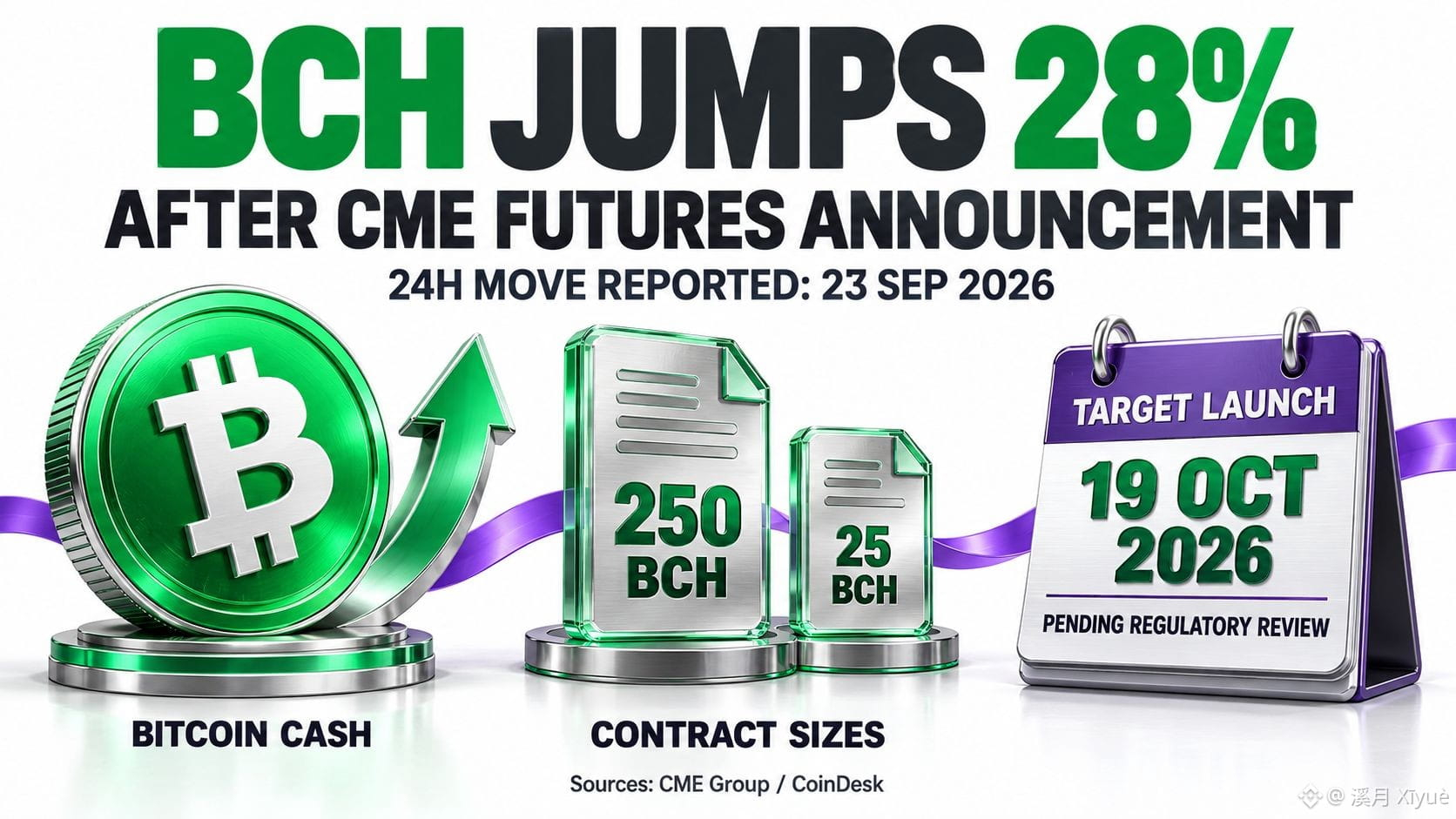
Bitcoin Cash rallied about 28% over 24 hours to nearly $349 in CoinDesk’s September 23 report, following CME Group’s announcement of planned BCH futures.
On September 22, CME said it plans to launch Bitcoin Cash and Uniswap futures on October 19, 2026, pending regulatory review. Standard BCH contracts will represent 250 BCH, with Micro contracts sized at 25 BCH.
These contracts will be financially settled, giving traders price exposure without delivery of BCH. That structure means futures activity alone cannot establish how much spot buying occurs.
My take: The meaningful development is broader access for institutions using regulated derivatives. Whether that translates into lasting demand will depend on actual participation once trading begins.
I’d watch spot trading volume before launch, then CME volume, open interest and trading spreads afterward. Consistent liquidity and participation would provide stronger evidence of adoption than the announcement rally alone. Open interest also includes both long and short positions.
A sharp move can pull future enthusiasm into today’s price. If spot buying fades while leverage builds elsewhere, volatility could increase even with the launch approaching.
What would convince you this rally has staying power: stronger spot demand or sustained futures activity after launch?
#BCHJumps28%OnCMEFuturesListing #BitcoinCash #cme
#bchjumps28%oncmefutureslisting
📈 BCH Jumps 28% as CME Announces Futures Plans
Bitcoin Cash rallied about 28% over 24 hours to nearly $349 in CoinDesk’s September 23 report, following CME Group’s announcement of planned BCH futures.
On September 22, CME said it plans to launch Bitcoin Cash and Uniswap futures on October 19, 2026, pending regulatory review. Standard BCH contracts will represent 250 BCH, with Micro contracts sized at 25 BCH.
These contracts will be financially settled, giving traders price exposure without delivery of BCH. That structure means futures activity alone cannot establish how much spot buying occurs.
My take: The meaningful development is broader access for institutions using regulated derivatives. Whether that translates into lasting demand will depend on actual participation once trading begins.
I’d watch spot trading volume before launch, then CME volume, open interest and trading spreads afterward. Consistent liquidity and participation would provide stronger evidence of adoption than the announcement rally alone. Open interest also includes both long and short positions.
A sharp move can pull future enthusiasm into today’s price. If spot buying fades while leverage builds elsewhere, volatility could increase even with the launch approaching.
What would convince you this rally has staying power: stronger spot demand or sustained futures activity after launch?
#BCHJumps28%OnCMEFuturesListing #BitcoinCash #cme
📈 BCH Jumps 28% as CME Announces Futures Plans
Bitcoin Cash rallied about 28% over 24 hours to nearly $349 in CoinDesk’s September 23 report, following CME Group’s announcement of planned BCH futures.
On September 22, CME said it plans to launch Bitcoin Cash and Uniswap futures on October 19, 2026, pending regulatory review. Standard BCH contracts will represent 250 BCH, with Micro contracts sized at 25 BCH.
These contracts will be financially settled, giving traders price exposure without delivery of BCH. That structure means futures activity alone cannot establish how much spot buying occurs.
My take: The meaningful development is broader access for institutions using regulated derivatives. Whether that translates into lasting demand will depend on actual participation once trading begins.
I’d watch spot trading volume before launch, then CME volume, open interest and trading spreads afterward. Consistent liquidity and participation would provide stronger evidence of adoption than the announcement rally alone. Open interest also includes both long and short positions.
A sharp move can pull future enthusiasm into today’s price. If spot buying fades while leverage builds elsewhere, volatility could increase even with the launch approaching.
What would convince you this rally has staying power: stronger spot demand or sustained futures activity after launch?
#BCHJumps28%OnCMEFuturesListing #BitcoinCash #cme
1
2
1.1k
·
--
Bearish
#wallstreetearningsrevisionsturnbearish
📉 Wall Street Earnings Revisions Turn Bearish—Will Crypto Feel the Pressure?
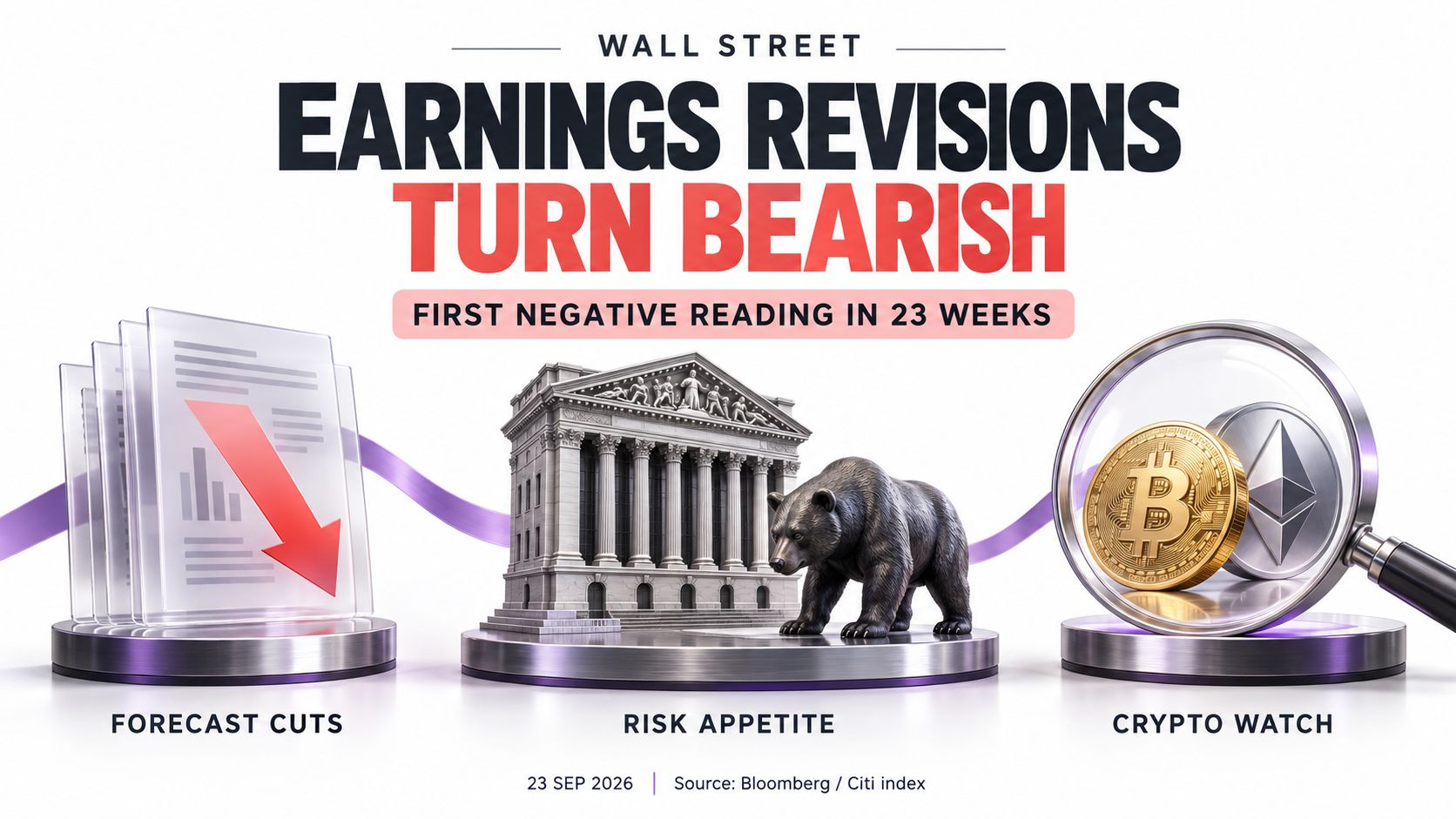
Bloomberg reported on September 23 that Citigroup’s US earnings revision index turned negative: more analysts cut profit estimates than raised them for the first time in 23 weeks. That ended the longest positive revision run since September 2021.
Consumer staples, discretionary businesses, materials and financials were key sources of weakness, according to BNP Paribas Wealth Management’s Stephan Kemper. He linked the pressure to higher living and energy costs.
My take: The next test is persistence. Several weeks of cuts across more industries would strengthen the warning. Stable company guidance and improving margins would weaken the bearish case.
For crypto, I’d watch whether earnings anxiety develops alongside higher Treasury yields, a stronger dollar and weaker Bitcoin fund flows. That combination could signal investors reducing exposure across risky assets. Firm spot demand could soften the impact.
Lower estimates can also make future earnings beats easier. The useful question is whether companies maintain sales and cash flow as expectations reset. Companies can still grow profits while analysts trim expectations.
Are these forecast cuts a temporary reset, or the start of a broader shift in risk appetite?
#WallStreetEarningsRevisionsTurnBearish #bitcoin #Macro
#wallstreetearningsrevisionsturnbearish
📉 Wall Street Earnings Revisions Turn Bearish—Will Crypto Feel the Pressure?
Bloomberg reported on September 23 that Citigroup’s US earnings revision index turned negative: more analysts cut profit estimates than raised them for the first time in 23 weeks. That ended the longest positive revision run since September 2021.
Consumer staples, discretionary businesses, materials and financials were key sources of weakness, according to BNP Paribas Wealth Management’s Stephan Kemper. He linked the pressure to higher living and energy costs.
My take: The next test is persistence. Several weeks of cuts across more industries would strengthen the warning. Stable company guidance and improving margins would weaken the bearish case.
For crypto, I’d watch whether earnings anxiety develops alongside higher Treasury yields, a stronger dollar and weaker Bitcoin fund flows. That combination could signal investors reducing exposure across risky assets. Firm spot demand could soften the impact.
Lower estimates can also make future earnings beats easier. The useful question is whether companies maintain sales and cash flow as expectations reset. Companies can still grow profits while analysts trim expectations.
Are these forecast cuts a temporary reset, or the start of a broader shift in risk appetite?
#WallStreetEarningsRevisionsTurnBearish #bitcoin #Macro
📉 Wall Street Earnings Revisions Turn Bearish—Will Crypto Feel the Pressure?
Bloomberg reported on September 23 that Citigroup’s US earnings revision index turned negative: more analysts cut profit estimates than raised them for the first time in 23 weeks. That ended the longest positive revision run since September 2021.
Consumer staples, discretionary businesses, materials and financials were key sources of weakness, according to BNP Paribas Wealth Management’s Stephan Kemper. He linked the pressure to higher living and energy costs.
My take: The next test is persistence. Several weeks of cuts across more industries would strengthen the warning. Stable company guidance and improving margins would weaken the bearish case.
For crypto, I’d watch whether earnings anxiety develops alongside higher Treasury yields, a stronger dollar and weaker Bitcoin fund flows. That combination could signal investors reducing exposure across risky assets. Firm spot demand could soften the impact.
Lower estimates can also make future earnings beats easier. The useful question is whether companies maintain sales and cash flow as expectations reset. Companies can still grow profits while analysts trim expectations.
Are these forecast cuts a temporary reset, or the start of a broader shift in risk appetite?
#WallStreetEarningsRevisionsTurnBearish #bitcoin #Macro
359
·
--
Bullish
#dollarindexreclaims101
Dollar Index Reclaims 101 — A Macro Test for Crypto
The dollar is back above 101, putting currency strength and interest-rate expectations back on crypto traders’ radar.
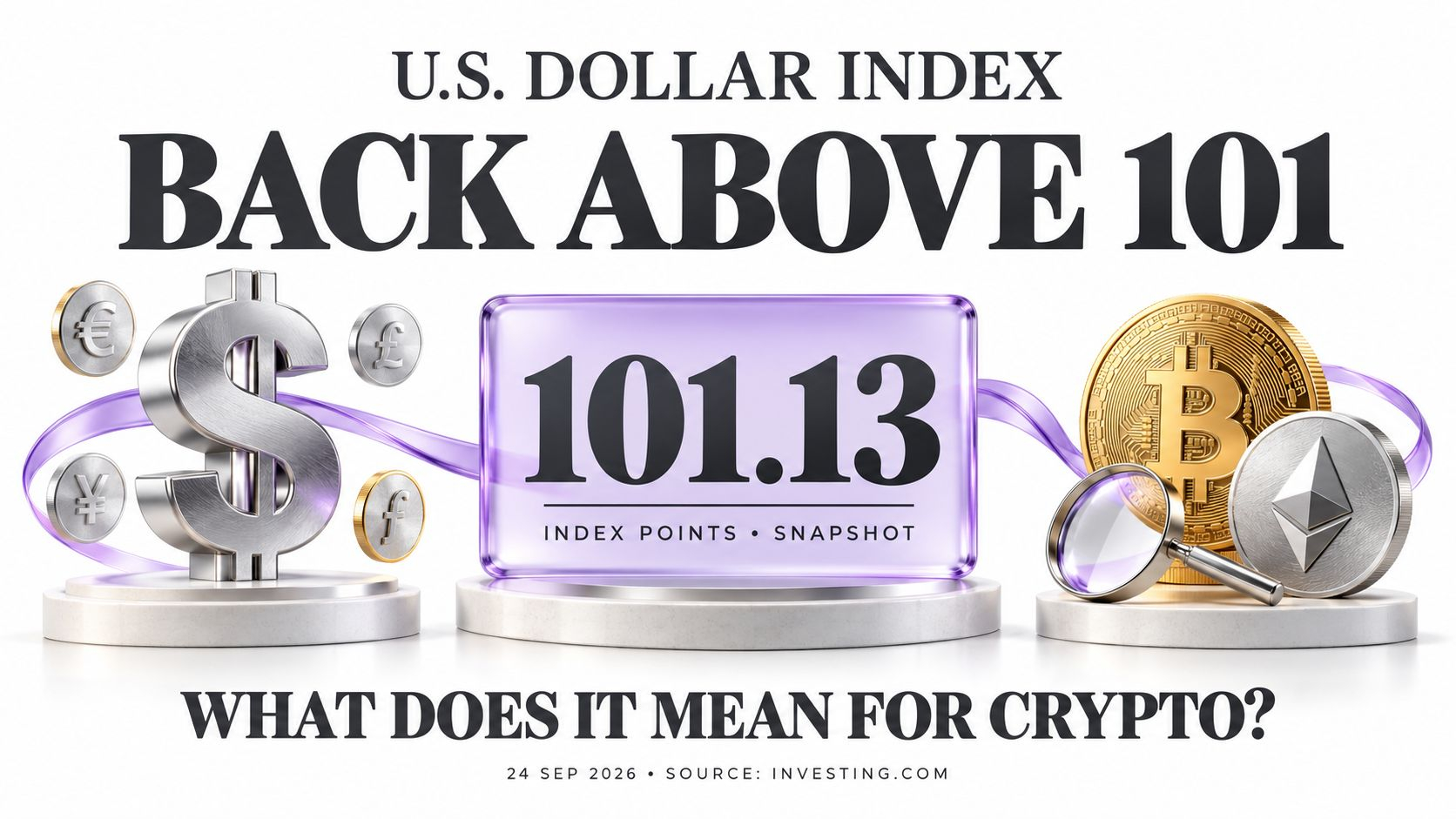
During a September 24, 2026 market check, the U.S. Dollar Index was around 101.13.
Reuters reported that the index was near a two-month high, supported by firm U.S. manufacturing data, rising Treasury yields and expectations of further Federal Reserve tightening.
One detail matters: DXY measures the dollar against six currencies, with the euro accounting for 57.6% of its basket.
My take: That weighting makes it useful to check whether the move reflects broad dollar demand, euro weakness, or both. For crypto, the more consequential combination would be a firm dollar alongside rising yields and fading risk appetite. Together, these could make conditions less supportive for speculative positions.
I would compare DXY with Treasury yields, Bitcoin’s spot demand and ETF flows over several sessions. If BTC holds up despite a stronger dollar, that would suggest resilience. If crypto weakens as yields and DXY climb together, the macro pressure would deserve closer attention.
The move above 101 gives markets a useful reference point. Its persistence and the response across other assets will determine how significant it becomes.
How much weight do you give DXY when assessing crypto’s next move?
#DollarIndexReclaims101 #DXY #bitcoin
#dollarindexreclaims101
Dollar Index Reclaims 101 — A Macro Test for Crypto
The dollar is back above 101, putting currency strength and interest-rate expectations back on crypto traders’ radar.
During a September 24, 2026 market check, the U.S. Dollar Index was around 101.13.
Reuters reported that the index was near a two-month high, supported by firm U.S. manufacturing data, rising Treasury yields and expectations of further Federal Reserve tightening.
One detail matters: DXY measures the dollar against six currencies, with the euro accounting for 57.6% of its basket.
My take: That weighting makes it useful to check whether the move reflects broad dollar demand, euro weakness, or both. For crypto, the more consequential combination would be a firm dollar alongside rising yields and fading risk appetite. Together, these could make conditions less supportive for speculative positions.
I would compare DXY with Treasury yields, Bitcoin’s spot demand and ETF flows over several sessions. If BTC holds up despite a stronger dollar, that would suggest resilience. If crypto weakens as yields and DXY climb together, the macro pressure would deserve closer attention.
The move above 101 gives markets a useful reference point. Its persistence and the response across other assets will determine how significant it becomes.
How much weight do you give DXY when assessing crypto’s next move?
#DollarIndexReclaims101 #DXY #bitcoin
Dollar Index Reclaims 101 — A Macro Test for Crypto
The dollar is back above 101, putting currency strength and interest-rate expectations back on crypto traders’ radar.
During a September 24, 2026 market check, the U.S. Dollar Index was around 101.13.
Reuters reported that the index was near a two-month high, supported by firm U.S. manufacturing data, rising Treasury yields and expectations of further Federal Reserve tightening.
One detail matters: DXY measures the dollar against six currencies, with the euro accounting for 57.6% of its basket.
My take: That weighting makes it useful to check whether the move reflects broad dollar demand, euro weakness, or both. For crypto, the more consequential combination would be a firm dollar alongside rising yields and fading risk appetite. Together, these could make conditions less supportive for speculative positions.
I would compare DXY with Treasury yields, Bitcoin’s spot demand and ETF flows over several sessions. If BTC holds up despite a stronger dollar, that would suggest resilience. If crypto weakens as yields and DXY climb together, the macro pressure would deserve closer attention.
The move above 101 gives markets a useful reference point. Its persistence and the response across other assets will determine how significant it becomes.
How much weight do you give DXY when assessing crypto’s next move?
#DollarIndexReclaims101 #DXY #bitcoin
1
1.6k
·
--
Bullish
Verified
#21shareslauncheseuropesfirstzcashetp
Zcash Reaches European Brokerage Accounts—Will Easier Access Bring Lasting Demand?
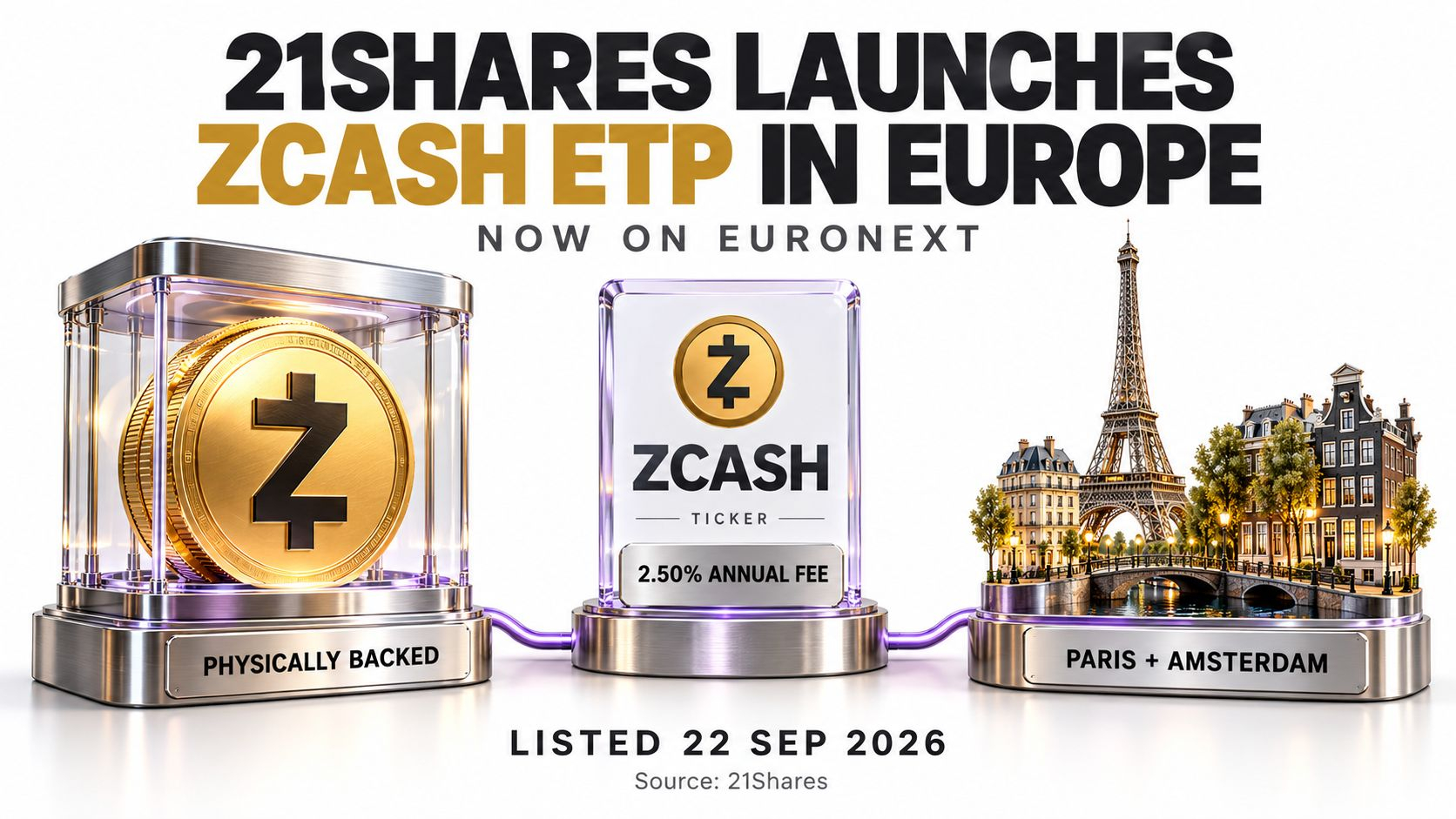
21Shares’ Zcash ETP began trading on Euronext Paris and Amsterdam on September 22, 2026, under the ticker ZCASH. Decrypt describes it as Europe’s first Zcash exchange-traded product.
The product is physically backed by ZEC and charges a 2.50% annual fee. Investors can gain exposure through brokers offering the product, with custody handled through the ETP structure.
My take: This expands access for investors whose portfolios already sit in brokerage accounts. The important test is whether that convenience converts into recurring allocations after the launch attention fades.
Trading volume, net creations and assets under management tell different stories. Busy trading can reflect existing units changing hands, while rising assets under management can partly reflect a higher ZEC price. Net creations provide a clearer view of demand for additional units.
The annual fee and the difference between buying and selling prices also matter. Easier access has a cost, and investors will weigh that cost against managing direct ownership.
There is also a distinction between investment demand and network adoption. Holding an ETP provides price exposure; using Zcash’s shielded payments remains a separate activity.
What would make this launch meaningful over time: sustained inflows, better trading liquidity, or wider use of Zcash itself?
#21SharesLaunchesEuropesFirstZcashETP #zcash #CryptoETP
#21shareslauncheseuropesfirstzcashetp
Zcash Reaches European Brokerage Accounts—Will Easier Access Bring Lasting Demand?
21Shares’ Zcash ETP began trading on Euronext Paris and Amsterdam on September 22, 2026, under the ticker ZCASH. Decrypt describes it as Europe’s first Zcash exchange-traded product.
The product is physically backed by ZEC and charges a 2.50% annual fee. Investors can gain exposure through brokers offering the product, with custody handled through the ETP structure.
My take: This expands access for investors whose portfolios already sit in brokerage accounts. The important test is whether that convenience converts into recurring allocations after the launch attention fades.
Trading volume, net creations and assets under management tell different stories. Busy trading can reflect existing units changing hands, while rising assets under management can partly reflect a higher ZEC price. Net creations provide a clearer view of demand for additional units.
The annual fee and the difference between buying and selling prices also matter. Easier access has a cost, and investors will weigh that cost against managing direct ownership.
There is also a distinction between investment demand and network adoption. Holding an ETP provides price exposure; using Zcash’s shielded payments remains a separate activity.
What would make this launch meaningful over time: sustained inflows, better trading liquidity, or wider use of Zcash itself?
#21SharesLaunchesEuropesFirstZcashETP #zcash #CryptoETP
Zcash Reaches European Brokerage Accounts—Will Easier Access Bring Lasting Demand?
21Shares’ Zcash ETP began trading on Euronext Paris and Amsterdam on September 22, 2026, under the ticker ZCASH. Decrypt describes it as Europe’s first Zcash exchange-traded product.
The product is physically backed by ZEC and charges a 2.50% annual fee. Investors can gain exposure through brokers offering the product, with custody handled through the ETP structure.
My take: This expands access for investors whose portfolios already sit in brokerage accounts. The important test is whether that convenience converts into recurring allocations after the launch attention fades.
Trading volume, net creations and assets under management tell different stories. Busy trading can reflect existing units changing hands, while rising assets under management can partly reflect a higher ZEC price. Net creations provide a clearer view of demand for additional units.
The annual fee and the difference between buying and selling prices also matter. Easier access has a cost, and investors will weigh that cost against managing direct ownership.
There is also a distinction between investment demand and network adoption. Holding an ETP provides price exposure; using Zcash’s shielded payments remains a separate activity.
What would make this launch meaningful over time: sustained inflows, better trading liquidity, or wider use of Zcash itself?
#21SharesLaunchesEuropesFirstZcashETP #zcash #CryptoETP
1
1
1.5k



·
--
Bullish
Verified
#21shareslauncheseuropesfirstzcashetp
21Shares Launches Zcash ETP on Euronext
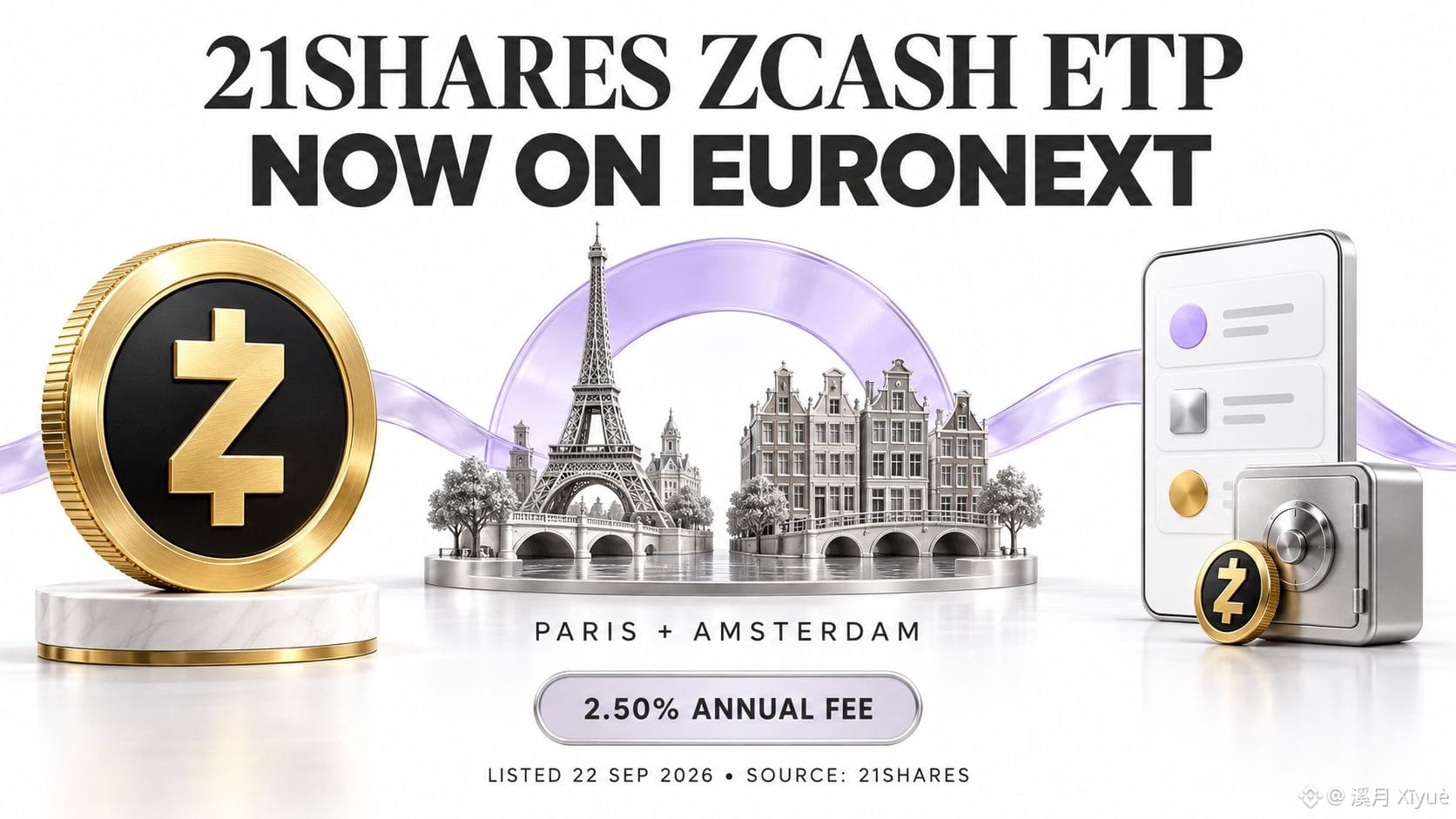
Zcash is reaching investors who prefer holding crypto exposure inside a regular securities account.
On September 22, 2026, 21Shares launched its physically backed Zcash ETP on Euronext Paris and Amsterdam, under the ticker ZCASH. The product carries a 2.50% annual fee, with underlying tokens held through institutional custody arrangements.
Cointelegraph describes the listing as Europe’s first Zcash ETP, expanding the privacy coin’s access to traditional investment channels.
My take: This launch could make Zcash easier to include in portfolios that already use conventional brokerage accounts. The practical trade-off is ongoing product fees and reliance on the issuer’s structure and custodians. Investors still carry exposure to ZEC’s price swings.
To assess demand, I would watch net creations, outstanding units and trading spreads over the coming weeks. Assets under management can rise simply because ZEC appreciates, so a larger balance alone cannot establish fresh buying. Consistent subscriptions and liquid trading would provide stronger evidence of sustained investor interest.
There is also a useful distinction between investment access and network adoption. Holding this security provides price exposure; it does not mean the investor is using Zcash’s shielded-payment features.
Will easier brokerage access translate into lasting demand for Zcash?
#21SharesLaunchesEuropesFirstZcashETP #zcash #zec
$TAKE $NIL $ZEC
{future}(ZECUSDT)
{future}(NILUSDT)
{future}(TAKEUSDT)
#21shareslauncheseuropesfirstzcashetp
21Shares Launches Zcash ETP on Euronext
Zcash is reaching investors who prefer holding crypto exposure inside a regular securities account.
On September 22, 2026, 21Shares launched its physically backed Zcash ETP on Euronext Paris and Amsterdam, under the ticker ZCASH. The product carries a 2.50% annual fee, with underlying tokens held through institutional custody arrangements.
Cointelegraph describes the listing as Europe’s first Zcash ETP, expanding the privacy coin’s access to traditional investment channels.
My take: This launch could make Zcash easier to include in portfolios that already use conventional brokerage accounts. The practical trade-off is ongoing product fees and reliance on the issuer’s structure and custodians. Investors still carry exposure to ZEC’s price swings.
To assess demand, I would watch net creations, outstanding units and trading spreads over the coming weeks. Assets under management can rise simply because ZEC appreciates, so a larger balance alone cannot establish fresh buying. Consistent subscriptions and liquid trading would provide stronger evidence of sustained investor interest.
There is also a useful distinction between investment access and network adoption. Holding this security provides price exposure; it does not mean the investor is using Zcash’s shielded-payment features.
Will easier brokerage access translate into lasting demand for Zcash?
#21SharesLaunchesEuropesFirstZcashETP #zcash #zec
$TAKE $NIL $ZEC
21Shares Launches Zcash ETP on Euronext
Zcash is reaching investors who prefer holding crypto exposure inside a regular securities account.
On September 22, 2026, 21Shares launched its physically backed Zcash ETP on Euronext Paris and Amsterdam, under the ticker ZCASH. The product carries a 2.50% annual fee, with underlying tokens held through institutional custody arrangements.
Cointelegraph describes the listing as Europe’s first Zcash ETP, expanding the privacy coin’s access to traditional investment channels.
My take: This launch could make Zcash easier to include in portfolios that already use conventional brokerage accounts. The practical trade-off is ongoing product fees and reliance on the issuer’s structure and custodians. Investors still carry exposure to ZEC’s price swings.
To assess demand, I would watch net creations, outstanding units and trading spreads over the coming weeks. Assets under management can rise simply because ZEC appreciates, so a larger balance alone cannot establish fresh buying. Consistent subscriptions and liquid trading would provide stronger evidence of sustained investor interest.
There is also a useful distinction between investment access and network adoption. Holding this security provides price exposure; it does not mean the investor is using Zcash’s shielded-payment features.
Will easier brokerage access translate into lasting demand for Zcash?
#21SharesLaunchesEuropesFirstZcashETP #zcash #zec
$TAKE $NIL $ZEC
1
634
·
--
Bullish
Verified
#cardanojoinsx402paymentstandard
Cardano’s x402 Support Opens a Path to AI Agent Payments
An AI assistant could buy a single piece of data with Cardano assets, without a person completing a checkout each time.
Cardano is included in the official x402 specification and TypeScript software kit. Developers can build payment flows using ADA and native tokens, including stablecoins issued on Cardano.
Here’s the idea: a service quotes its price through the web’s “402 Payment Required” response. Software signs a payment, and access follows verification and settlement. That could support paid data requests and API calls without a monthly subscription.
The rollout stage matters: Cardano Foundation’s reference facilitator has completed an onchain payment test on preproduction. Its documentation says it has not yet run against mainnet.
My take: The practical opportunity is easier billing for software that needs small amounts of data or computing on demand. Adoption will depend on reliable settlement, predictable costs and services worth paying for.
For ADA, I would watch completed commercial payments, repeat customers and fees generated. Developers also need sensible spending controls so agents stay within users’ budgets. Toolkit support creates an opportunity; sustained usage would show whether that opportunity produces meaningful economic activity.
Which service would you want an AI agent to pay for automatically?
#CardanoJoinsX402PaymentStandard #ADA #AIAgents
$TAKE $NIL $MET
{future}(METUSDT)
{future}(NILUSDT)
{future}(TAKEUSDT)
#cardanojoinsx402paymentstandard
Cardano’s x402 Support Opens a Path to AI Agent Payments
An AI assistant could buy a single piece of data with Cardano assets, without a person completing a checkout each time.
Cardano is included in the official x402 specification and TypeScript software kit. Developers can build payment flows using ADA and native tokens, including stablecoins issued on Cardano.
Here’s the idea: a service quotes its price through the web’s “402 Payment Required” response. Software signs a payment, and access follows verification and settlement. That could support paid data requests and API calls without a monthly subscription.
The rollout stage matters: Cardano Foundation’s reference facilitator has completed an onchain payment test on preproduction. Its documentation says it has not yet run against mainnet.
My take: The practical opportunity is easier billing for software that needs small amounts of data or computing on demand. Adoption will depend on reliable settlement, predictable costs and services worth paying for.
For ADA, I would watch completed commercial payments, repeat customers and fees generated. Developers also need sensible spending controls so agents stay within users’ budgets. Toolkit support creates an opportunity; sustained usage would show whether that opportunity produces meaningful economic activity.
Which service would you want an AI agent to pay for automatically?
#CardanoJoinsX402PaymentStandard #ADA #AIAgents
$TAKE $NIL $MET
Cardano’s x402 Support Opens a Path to AI Agent Payments
An AI assistant could buy a single piece of data with Cardano assets, without a person completing a checkout each time.
Cardano is included in the official x402 specification and TypeScript software kit. Developers can build payment flows using ADA and native tokens, including stablecoins issued on Cardano.
Here’s the idea: a service quotes its price through the web’s “402 Payment Required” response. Software signs a payment, and access follows verification and settlement. That could support paid data requests and API calls without a monthly subscription.
The rollout stage matters: Cardano Foundation’s reference facilitator has completed an onchain payment test on preproduction. Its documentation says it has not yet run against mainnet.
My take: The practical opportunity is easier billing for software that needs small amounts of data or computing on demand. Adoption will depend on reliable settlement, predictable costs and services worth paying for.
For ADA, I would watch completed commercial payments, repeat customers and fees generated. Developers also need sensible spending controls so agents stay within users’ budgets. Toolkit support creates an opportunity; sustained usage would show whether that opportunity produces meaningful economic activity.
Which service would you want an AI agent to pay for automatically?
#CardanoJoinsX402PaymentStandard #ADA #AIAgents
$TAKE $NIL $MET

1.3k
·
--
Bullish
#ZECBreaksAbove$1600AtRecordHigh
Zcash Breaks Above $1,600 — Can the Breakout Hold?
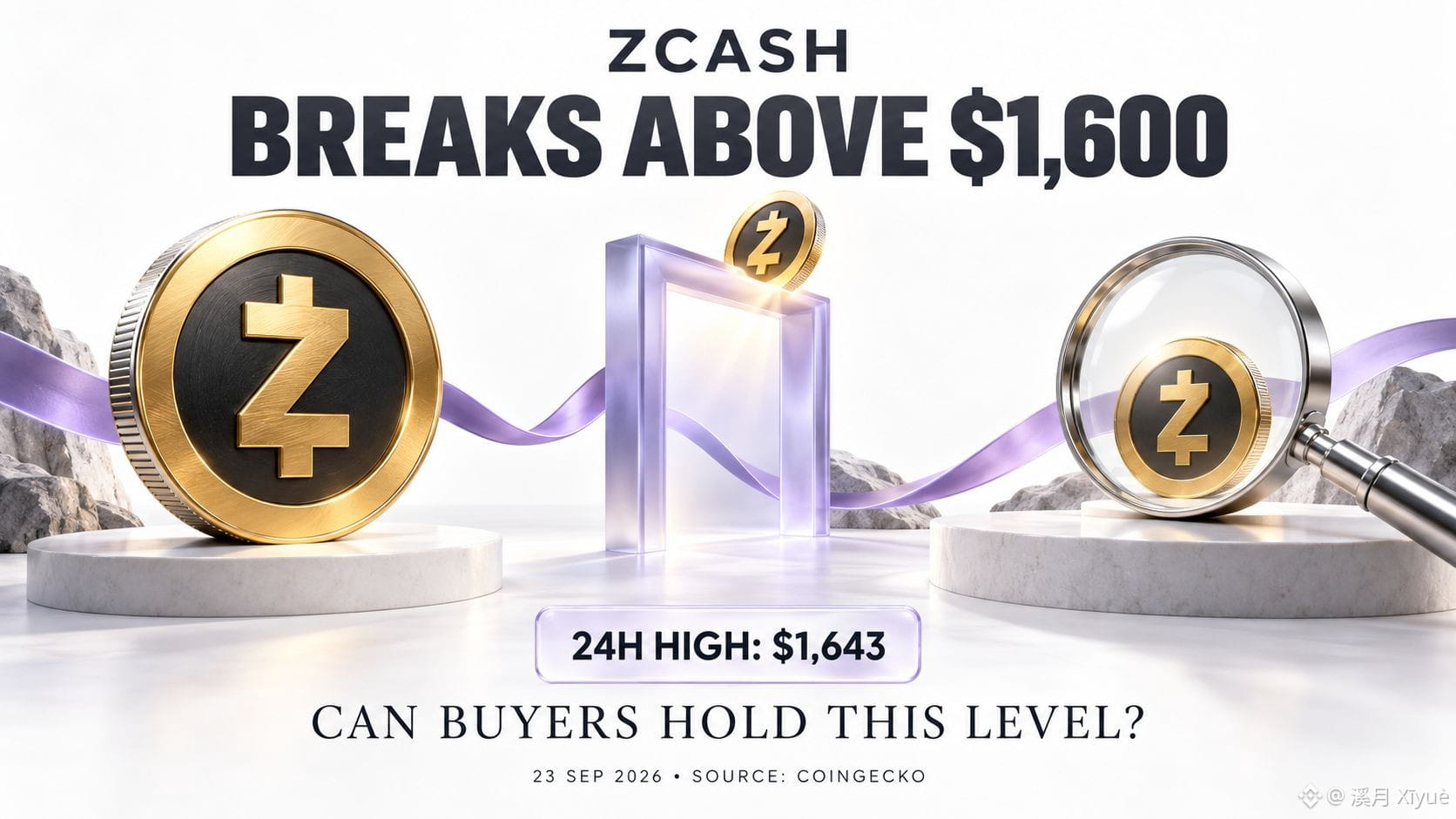
ZEC has cleared $1,600, putting the focus on whether buyers can establish support around this level.
During a September 23, 2026 market check, CoinGecko displayed ZEC near $1,613, with a 24-hour high of approximately $1,643 and reported trading volume of roughly $1.76 billion.
The “record high” label needs context: CoinGecko still lists ZEC’s historical all-time high at $3,191.93. The $1,600 breakout is confirmed, but it remains below that tracked historical peak.
My take: Holding above $1,600 through a pullback would make this move more convincing. A successful retest, supported by steady spot activity, could indicate buyers are comfortable accepting higher prices. A quick reversal below the level would weaken that interpretation and leave support unconfirmed.
I would also compare spot activity with derivatives open interest and funding rates. If leveraged positions expand rapidly while spot demand fades, the advance could become more vulnerable to sudden reversals. These are conditions to monitor, rather than claims about the current positioning.
For now, the useful question is how price behaves after crossing $1,600. One strong move gives traders a reference point; subsequent trading will show whether it holds.
What evidence would convince you this breakout has staying power?
#zcash #zec #PrivacyCoins
$MARSCOIN $ZEC $USELESS
{future}(USELESSUSDT)
{future}(ZECUSDT)
{future}(MARSCOINUSDT)
#ZECBreaksAbove$1600AtRecordHigh
Zcash Breaks Above $1,600 — Can the Breakout Hold?
ZEC has cleared $1,600, putting the focus on whether buyers can establish support around this level.
During a September 23, 2026 market check, CoinGecko displayed ZEC near $1,613, with a 24-hour high of approximately $1,643 and reported trading volume of roughly $1.76 billion.
The “record high” label needs context: CoinGecko still lists ZEC’s historical all-time high at $3,191.93. The $1,600 breakout is confirmed, but it remains below that tracked historical peak.
My take: Holding above $1,600 through a pullback would make this move more convincing. A successful retest, supported by steady spot activity, could indicate buyers are comfortable accepting higher prices. A quick reversal below the level would weaken that interpretation and leave support unconfirmed.
I would also compare spot activity with derivatives open interest and funding rates. If leveraged positions expand rapidly while spot demand fades, the advance could become more vulnerable to sudden reversals. These are conditions to monitor, rather than claims about the current positioning.
For now, the useful question is how price behaves after crossing $1,600. One strong move gives traders a reference point; subsequent trading will show whether it holds.
What evidence would convince you this breakout has staying power?
#zcash #zec #PrivacyCoins
$MARSCOIN $ZEC $USELESS
Zcash Breaks Above $1,600 — Can the Breakout Hold?
ZEC has cleared $1,600, putting the focus on whether buyers can establish support around this level.
During a September 23, 2026 market check, CoinGecko displayed ZEC near $1,613, with a 24-hour high of approximately $1,643 and reported trading volume of roughly $1.76 billion.
The “record high” label needs context: CoinGecko still lists ZEC’s historical all-time high at $3,191.93. The $1,600 breakout is confirmed, but it remains below that tracked historical peak.
My take: Holding above $1,600 through a pullback would make this move more convincing. A successful retest, supported by steady spot activity, could indicate buyers are comfortable accepting higher prices. A quick reversal below the level would weaken that interpretation and leave support unconfirmed.
I would also compare spot activity with derivatives open interest and funding rates. If leveraged positions expand rapidly while spot demand fades, the advance could become more vulnerable to sudden reversals. These are conditions to monitor, rather than claims about the current positioning.
For now, the useful question is how price behaves after crossing $1,600. One strong move gives traders a reference point; subsequent trading will show whether it holds.
What evidence would convince you this breakout has staying power?
#zcash #zec #PrivacyCoins
$MARSCOIN $ZEC $USELESS
1
1
483
·
--
Bullish
#BitwiseNEARStakingETPAssetsTop$100M
Bitwise’s NEAR Staking ETP Tops $100M as Assets Reach $110.65M
NEAR’s exchange-traded investment footprint has crossed a notable milestone.
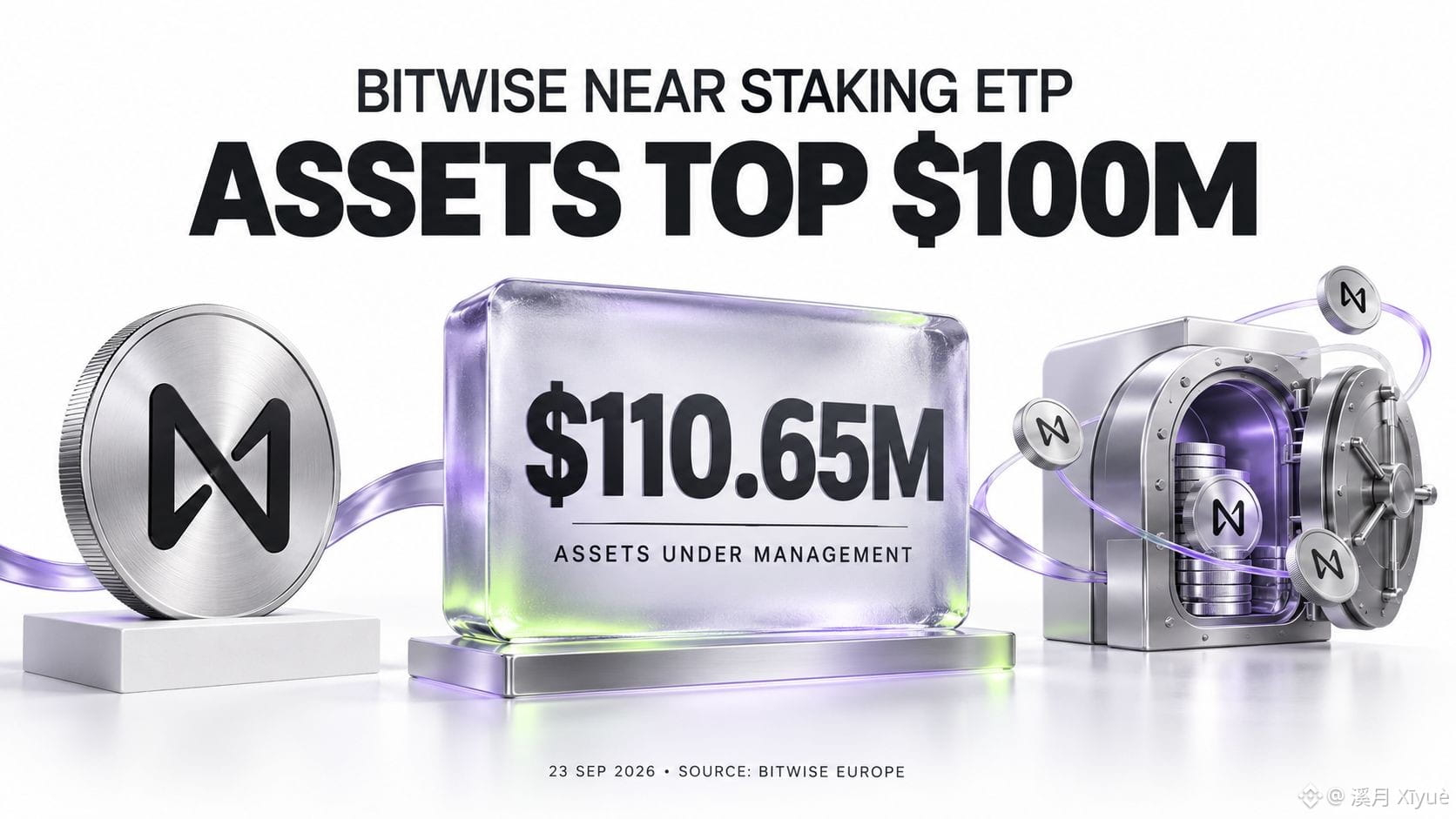
Bitwise reports $110.65 million in assets under management as of September 23, 2026. Its NEAR Staking ETP holds approximately 25.43 million NEAR tokens across 4.91 million outstanding units.
The European product provides NEAR exposure through a brokerage account. It is fully backed by tokens held in professional custody, with staking rewards accumulated inside the product. Those rewards vary, and fees affect returns.
My take: This is a meaningful milestone for the product’s size, but the next question is how much growth comes from new subscriptions. AUM changes with token prices, creations or redemptions, and staking accruals. A rising dollar balance alone cannot establish how much fresh money investors committed.
Watching outstanding units over time would help separate investor demand from market appreciation. If units continue expanding while NEAR’s price stabilizes, that would strengthen the case for broader demand through this investment channel.
For NEAR’s longer-term outlook, I would also compare product growth with network activity. Easier investment access and stronger blockchain usage answer different questions about adoption.
Which would you watch more closely: total AUM or growth in ETP units?
#Near #staking
$MUBARAK $MARSCOIN $USELESS
{future}(USELESSUSDT)
{future}(MARSCOINUSDT)
{future}(MUBARAKUSDT)
#BitwiseNEARStakingETPAssetsTop$100M
Bitwise’s NEAR Staking ETP Tops $100M as Assets Reach $110.65M
NEAR’s exchange-traded investment footprint has crossed a notable milestone.
Bitwise reports $110.65 million in assets under management as of September 23, 2026. Its NEAR Staking ETP holds approximately 25.43 million NEAR tokens across 4.91 million outstanding units.
The European product provides NEAR exposure through a brokerage account. It is fully backed by tokens held in professional custody, with staking rewards accumulated inside the product. Those rewards vary, and fees affect returns.
My take: This is a meaningful milestone for the product’s size, but the next question is how much growth comes from new subscriptions. AUM changes with token prices, creations or redemptions, and staking accruals. A rising dollar balance alone cannot establish how much fresh money investors committed.
Watching outstanding units over time would help separate investor demand from market appreciation. If units continue expanding while NEAR’s price stabilizes, that would strengthen the case for broader demand through this investment channel.
For NEAR’s longer-term outlook, I would also compare product growth with network activity. Easier investment access and stronger blockchain usage answer different questions about adoption.
Which would you watch more closely: total AUM or growth in ETP units?
#Near #staking
$MUBARAK $MARSCOIN $USELESS
Bitwise’s NEAR Staking ETP Tops $100M as Assets Reach $110.65M
NEAR’s exchange-traded investment footprint has crossed a notable milestone.
Bitwise reports $110.65 million in assets under management as of September 23, 2026. Its NEAR Staking ETP holds approximately 25.43 million NEAR tokens across 4.91 million outstanding units.
The European product provides NEAR exposure through a brokerage account. It is fully backed by tokens held in professional custody, with staking rewards accumulated inside the product. Those rewards vary, and fees affect returns.
My take: This is a meaningful milestone for the product’s size, but the next question is how much growth comes from new subscriptions. AUM changes with token prices, creations or redemptions, and staking accruals. A rising dollar balance alone cannot establish how much fresh money investors committed.
Watching outstanding units over time would help separate investor demand from market appreciation. If units continue expanding while NEAR’s price stabilizes, that would strengthen the case for broader demand through this investment channel.
For NEAR’s longer-term outlook, I would also compare product growth with network activity. Easier investment access and stronger blockchain usage answer different questions about adoption.
Which would you watch more closely: total AUM or growth in ETP units?
#Near #staking
$MUBARAK $MARSCOIN $USELESS
351
·
--
Bullish
#dogecoinrises15%
Dogecoin’s 15% Rally Brings the $0.10 Area Into Focus
DOGE led the early rebound, but holding its gains is the next test.
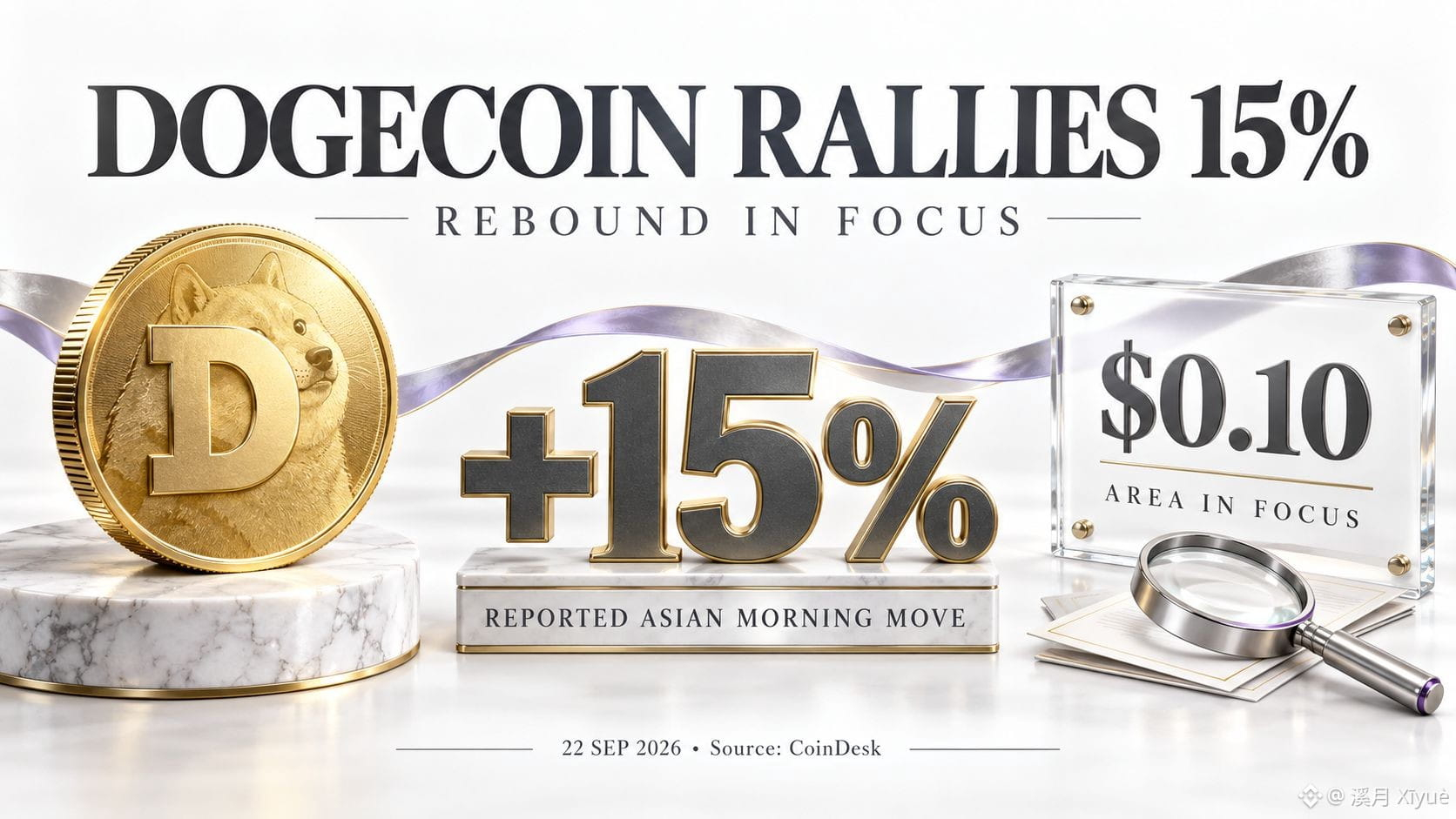
Dogecoin rose more than 15% to just above $0.10 during Asian morning trading on September 22, 2026, according to CoinDesk. It was the strongest performer among major tokens in that snapshot.
A later CoinGecko snapshot showed DOGE around $0.0996, below its reported 24-hour high of $0.1056, with approximately $3.22 billion in trading volume over the preceding day. The 15% headline therefore describes the earlier reported move.
My take: After a sharp jump, I would focus on whether DOGE can regain and hold the $0.10 area with sustained spot activity. A round number can attract attention, but repeated buying through ordinary pullbacks would provide more useful evidence of demand.
Volume also needs context: active trading includes both buyers and sellers. Comparing spot participation with changes in futures open interest can help assess whether the move is becoming increasingly dependent on leverage.
The next few sessions should offer a clearer picture of how much of the rebound buyers can preserve. Continued strength while the broader market settles would be more informative than the initial percentage jump alone.
What would strengthen your confidence in DOGE’s rebound: sustained spot volume or a firmer hold above $0.10?
#DogecoinRises15% #DOGE #CryptoMarket
$DOGE $MUBARAK $FLOCK
{future}(MUBARAKUSDT)
{future}(FLOCKUSDT)
{future}(DOGEUSDT)
#dogecoinrises15%
Dogecoin’s 15% Rally Brings the $0.10 Area Into Focus
DOGE led the early rebound, but holding its gains is the next test.
Dogecoin rose more than 15% to just above $0.10 during Asian morning trading on September 22, 2026, according to CoinDesk. It was the strongest performer among major tokens in that snapshot.
A later CoinGecko snapshot showed DOGE around $0.0996, below its reported 24-hour high of $0.1056, with approximately $3.22 billion in trading volume over the preceding day. The 15% headline therefore describes the earlier reported move.
My take: After a sharp jump, I would focus on whether DOGE can regain and hold the $0.10 area with sustained spot activity. A round number can attract attention, but repeated buying through ordinary pullbacks would provide more useful evidence of demand.
Volume also needs context: active trading includes both buyers and sellers. Comparing spot participation with changes in futures open interest can help assess whether the move is becoming increasingly dependent on leverage.
The next few sessions should offer a clearer picture of how much of the rebound buyers can preserve. Continued strength while the broader market settles would be more informative than the initial percentage jump alone.
What would strengthen your confidence in DOGE’s rebound: sustained spot volume or a firmer hold above $0.10?
#DogecoinRises15% #DOGE #CryptoMarket
$DOGE $MUBARAK $FLOCK
Dogecoin’s 15% Rally Brings the $0.10 Area Into Focus
DOGE led the early rebound, but holding its gains is the next test.
Dogecoin rose more than 15% to just above $0.10 during Asian morning trading on September 22, 2026, according to CoinDesk. It was the strongest performer among major tokens in that snapshot.
A later CoinGecko snapshot showed DOGE around $0.0996, below its reported 24-hour high of $0.1056, with approximately $3.22 billion in trading volume over the preceding day. The 15% headline therefore describes the earlier reported move.
My take: After a sharp jump, I would focus on whether DOGE can regain and hold the $0.10 area with sustained spot activity. A round number can attract attention, but repeated buying through ordinary pullbacks would provide more useful evidence of demand.
Volume also needs context: active trading includes both buyers and sellers. Comparing spot participation with changes in futures open interest can help assess whether the move is becoming increasingly dependent on leverage.
The next few sessions should offer a clearer picture of how much of the rebound buyers can preserve. Continued strength while the broader market settles would be more informative than the initial percentage jump alone.
What would strengthen your confidence in DOGE’s rebound: sustained spot volume or a firmer hold above $0.10?
#DogecoinRises15% #DOGE #CryptoMarket
$DOGE $MUBARAK $FLOCK
206
·
--
Bullish
Verified
#bnbmarketcappassesbnymellon
BNB Passes BNY Mellon in Market Cap — What Does It Tell Us?
BNB has edged ahead of a major traditional financial institution in market value.
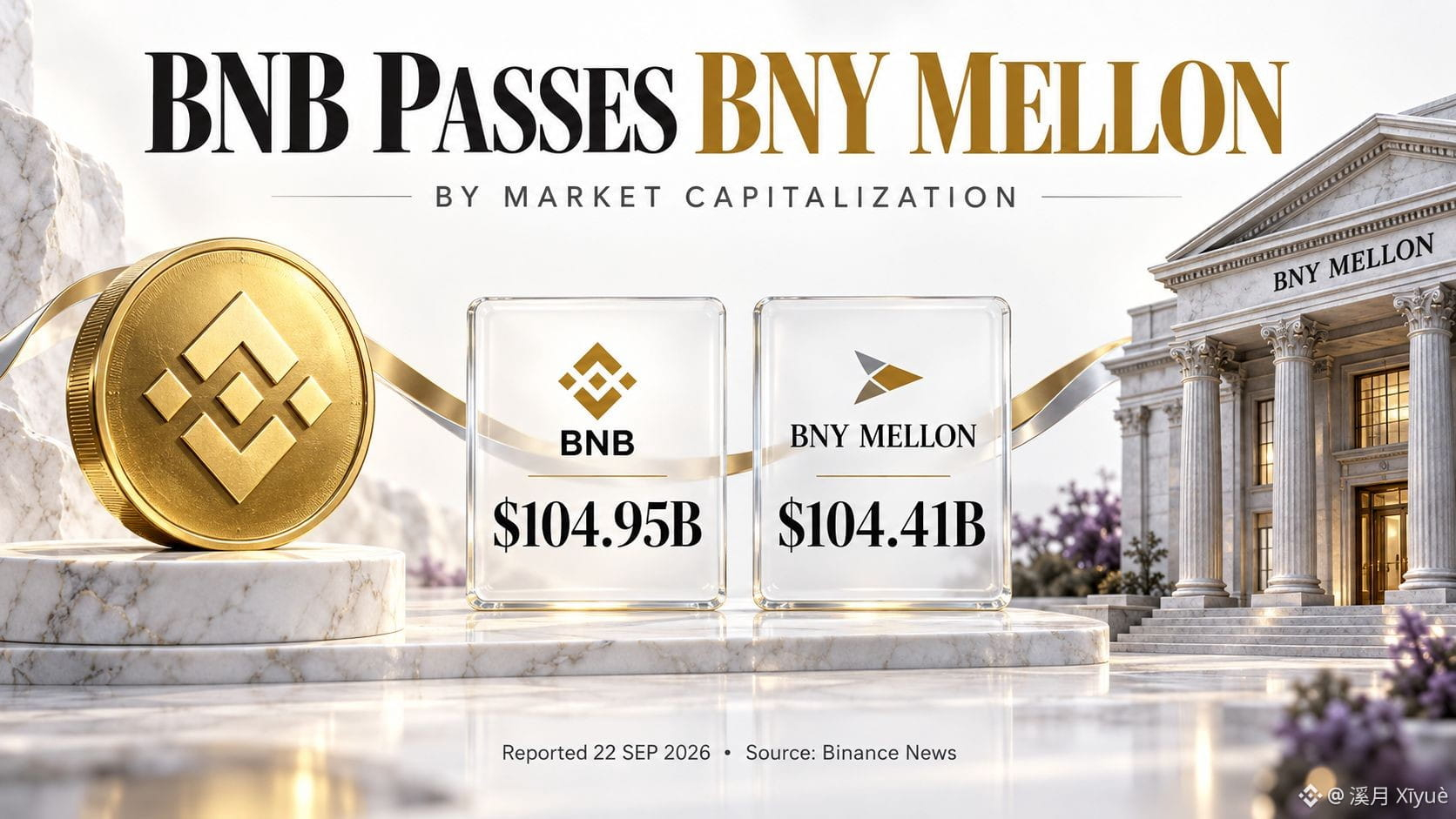
On September 22, 2026, Binance News reported BNB’s market capitalization at $104.95 billion, compared with BNY Mellon’s $104.41 billion. That represents a gap of approximately $540 million, or 0.5%, using the reported figures.
The comparison needs context. BNB’s figure values its circulating tokens, while BNY’s figure values the bank’s listed equity. The assets BNY safeguards for clients are a separate measure.
My take: This milestone shows the scale of BNB’s valuation, but assessing whether that value is supported requires looking beyond the ranking.
For BNB, I would follow sustained network activity, demand for transaction fees, supply changes and market liquidity. Those factors help explain whether token demand can persist through changing sentiment.
For a bank, earnings, capital strength and shareholder distributions provide a different basis for valuation. Similar market caps therefore represent different economic exposures and ownership rights.
The narrow reported gap also matters. Crypto trades continuously, while bank shares follow stock-market sessions, so rankings can change as prices and timestamps update.
The more useful follow-up is whether BNB’s underlying activity develops alongside its valuation.
Which tells you more about BNB’s progress: its market-cap ranking or sustained growth in network usage?
#BNBMarketCapPassesBNYMellon #bnb #CryptoMarket
$BNB $MUBARAK $NIL
{future}(NILUSDT)
{future}(MUBARAKUSDT)
{future}(BNBUSDT)
#bnbmarketcappassesbnymellon
BNB Passes BNY Mellon in Market Cap — What Does It Tell Us?
BNB has edged ahead of a major traditional financial institution in market value.
On September 22, 2026, Binance News reported BNB’s market capitalization at $104.95 billion, compared with BNY Mellon’s $104.41 billion. That represents a gap of approximately $540 million, or 0.5%, using the reported figures.
The comparison needs context. BNB’s figure values its circulating tokens, while BNY’s figure values the bank’s listed equity. The assets BNY safeguards for clients are a separate measure.
My take: This milestone shows the scale of BNB’s valuation, but assessing whether that value is supported requires looking beyond the ranking.
For BNB, I would follow sustained network activity, demand for transaction fees, supply changes and market liquidity. Those factors help explain whether token demand can persist through changing sentiment.
For a bank, earnings, capital strength and shareholder distributions provide a different basis for valuation. Similar market caps therefore represent different economic exposures and ownership rights.
The narrow reported gap also matters. Crypto trades continuously, while bank shares follow stock-market sessions, so rankings can change as prices and timestamps update.
The more useful follow-up is whether BNB’s underlying activity develops alongside its valuation.
Which tells you more about BNB’s progress: its market-cap ranking or sustained growth in network usage?
#BNBMarketCapPassesBNYMellon #bnb #CryptoMarket
$BNB $MUBARAK $NIL
BNB Passes BNY Mellon in Market Cap — What Does It Tell Us?
BNB has edged ahead of a major traditional financial institution in market value.
On September 22, 2026, Binance News reported BNB’s market capitalization at $104.95 billion, compared with BNY Mellon’s $104.41 billion. That represents a gap of approximately $540 million, or 0.5%, using the reported figures.
The comparison needs context. BNB’s figure values its circulating tokens, while BNY’s figure values the bank’s listed equity. The assets BNY safeguards for clients are a separate measure.
My take: This milestone shows the scale of BNB’s valuation, but assessing whether that value is supported requires looking beyond the ranking.
For BNB, I would follow sustained network activity, demand for transaction fees, supply changes and market liquidity. Those factors help explain whether token demand can persist through changing sentiment.
For a bank, earnings, capital strength and shareholder distributions provide a different basis for valuation. Similar market caps therefore represent different economic exposures and ownership rights.
The narrow reported gap also matters. Crypto trades continuously, while bank shares follow stock-market sessions, so rankings can change as prices and timestamps update.
The more useful follow-up is whether BNB’s underlying activity develops alongside its valuation.
Which tells you more about BNB’s progress: its market-cap ranking or sustained growth in network usage?
#BNBMarketCapPassesBNYMellon #bnb #CryptoMarket
$BNB $MUBARAK $NIL
2
1.1k
Log in to explore more content
Join global crypto users on Binance Square
⚡️ Get latest and useful information about crypto.
💬 Trusted by the world’s largest crypto exchange.
👍 Discover real insights from verified creators.
Email / Phone number