

Philboom
2.1k Posts

Philboom
Report
Block User
Crypto Fundamentals Analyst.
8 Following
73 Followers
232 Liked
Posts
All
Quotes
·
--
Bullish
#ChainlinkLaunchesCCIP2WithEnterpriseVerification
Chainlink just dropped CCIP 2.0 and the cross chain party just got a serious upgrade 🚀🔐
Today the oracle kings rolled out the next version of their Cross Chain Interoperability Protocol and institutions everywhere are doing the happy dance 💃🏦 No more choosing between “move my tokens fast and pray” or “wait forever and stay safe.” Now you can have both plus your own personal bodyguards.
The star feature is additive security through Cross Chain Verifiers. Picture the default Chainlink committee of sixteen independent node operators already watching the vault. Now you can hire extra security guards Infosys Nethermind or even run your own verifier on AWS or Google Cloud. Every extra guard has to sign off before the tokens jump chains. It is like adding facial recognition and a fingerprint scanner on top of the already locked front door 🔒👀
They also baked in the Automated Compliance Engine so KYC AML and sanctions checks happen automatically without killing the flow. Want faster than finality transfers for everyday moves or full finality for the big money bags Choose your own adventure ⏱️💰
Analytically this is smart. After rival bridges kept getting wrecked Chainlink said “fine we will let the serious players bring their own verification.” Institutions get control without rebuilding everything. Liquidity can finally flow across chains like water instead of molasses.
Hilarious part The same protocol that powers DeFi degens is now dressed in a suit and tie ready for boardrooms. One day it is apeing into a memecoin the next it is helping Fidelity move tokenized assets. Only in crypto 😂🌍
CCIP 2.0 is live. The bridges just grew up.
$LINK
{spot}(LINKUSDT)
#ChainlinkLaunchesCCIP2WithEnterpriseVerification
Chainlink just dropped CCIP 2.0 and the cross chain party just got a serious upgrade 🚀🔐
Today the oracle kings rolled out the next version of their Cross Chain Interoperability Protocol and institutions everywhere are doing the happy dance 💃🏦 No more choosing between “move my tokens fast and pray” or “wait forever and stay safe.” Now you can have both plus your own personal bodyguards.
The star feature is additive security through Cross Chain Verifiers. Picture the default Chainlink committee of sixteen independent node operators already watching the vault. Now you can hire extra security guards Infosys Nethermind or even run your own verifier on AWS or Google Cloud. Every extra guard has to sign off before the tokens jump chains. It is like adding facial recognition and a fingerprint scanner on top of the already locked front door 🔒👀
They also baked in the Automated Compliance Engine so KYC AML and sanctions checks happen automatically without killing the flow. Want faster than finality transfers for everyday moves or full finality for the big money bags Choose your own adventure ⏱️💰
Analytically this is smart. After rival bridges kept getting wrecked Chainlink said “fine we will let the serious players bring their own verification.” Institutions get control without rebuilding everything. Liquidity can finally flow across chains like water instead of molasses.
Hilarious part The same protocol that powers DeFi degens is now dressed in a suit and tie ready for boardrooms. One day it is apeing into a memecoin the next it is helping Fidelity move tokenized assets. Only in crypto 😂🌍
CCIP 2.0 is live. The bridges just grew up.
$LINK
Chainlink just dropped CCIP 2.0 and the cross chain party just got a serious upgrade 🚀🔐
Today the oracle kings rolled out the next version of their Cross Chain Interoperability Protocol and institutions everywhere are doing the happy dance 💃🏦 No more choosing between “move my tokens fast and pray” or “wait forever and stay safe.” Now you can have both plus your own personal bodyguards.
The star feature is additive security through Cross Chain Verifiers. Picture the default Chainlink committee of sixteen independent node operators already watching the vault. Now you can hire extra security guards Infosys Nethermind or even run your own verifier on AWS or Google Cloud. Every extra guard has to sign off before the tokens jump chains. It is like adding facial recognition and a fingerprint scanner on top of the already locked front door 🔒👀
They also baked in the Automated Compliance Engine so KYC AML and sanctions checks happen automatically without killing the flow. Want faster than finality transfers for everyday moves or full finality for the big money bags Choose your own adventure ⏱️💰
Analytically this is smart. After rival bridges kept getting wrecked Chainlink said “fine we will let the serious players bring their own verification.” Institutions get control without rebuilding everything. Liquidity can finally flow across chains like water instead of molasses.
Hilarious part The same protocol that powers DeFi degens is now dressed in a suit and tie ready for boardrooms. One day it is apeing into a memecoin the next it is helping Fidelity move tokenized assets. Only in crypto 😂🌍
CCIP 2.0 is live. The bridges just grew up.
$LINK

2
112
·
--
Bullish
Solana ETFs Just Had Their Best Week Ever, Which Means Almost Nothing Given How This Year Has Gone 📊🎢
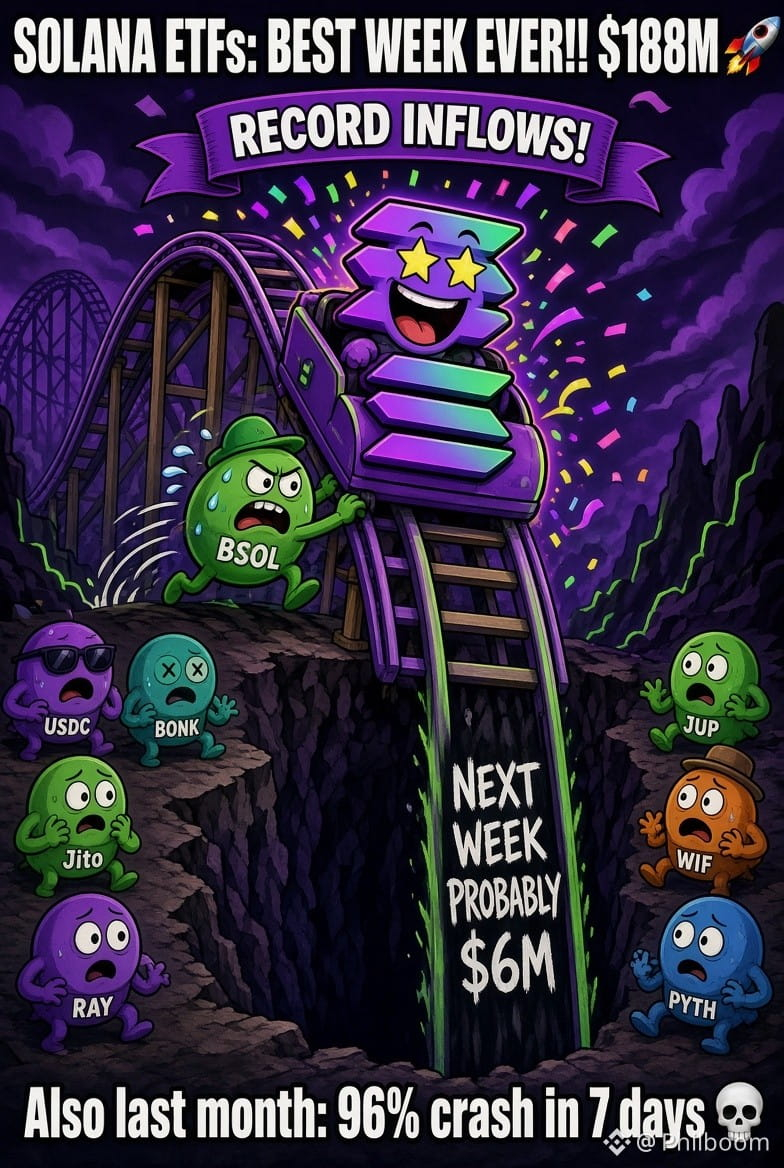
September 27. Solana's own X account confirmed US spot Solana ETFs pulled in $188.21 million in net inflows for the week ending September 25, the largest weekly total since these products launched in October last year. Bitwise's BSOL led with $128.46 million, roughly 68% of the entire week's inflow. Grayscale's GSOL added $28.06 million, Fidelity's FSOL brought in $17.59 million. SOL itself sat at $121.45, up modestly on the day. 📈
Here is why calling this a trend requires real caution 🧠
This exact ETF category went from $153.87 million the week ending August 28 down to just $6.18 million the following week, a 96% collapse in seven days. Then it recorded only $13.2 million for the week ending September 18, even as Bitcoin funds had their quietest week on record at the same time. Now suddenly $188 million. Three wildly different weeks in a single month is not a pattern, it is a coin flip that occasionally lands the same way twice. 😂
The honest concentration risk worth naming 💎
BSOL alone accounted for 68% of this record week. That is one issuer, not broad institutional consensus. Solana's own reporting acknowledges directly that ETF inflows alone are not enough to conclude the price keeps climbing. Real conviction would look like several funds contributing meaningfully, not one large fund carrying the entire headline. 🎯
The honest takeaway 🚀
A record week is genuinely worth noting. Whether it survives past next Friday is the only thing this year has actually taught anyone to doubt.
#SOLSpotETFWeeklyInflow$188M
$SOL
{spot}(SOLUSDT)
Solana ETFs Just Had Their Best Week Ever, Which Means Almost Nothing Given How This Year Has Gone 📊🎢
September 27. Solana's own X account confirmed US spot Solana ETFs pulled in $188.21 million in net inflows for the week ending September 25, the largest weekly total since these products launched in October last year. Bitwise's BSOL led with $128.46 million, roughly 68% of the entire week's inflow. Grayscale's GSOL added $28.06 million, Fidelity's FSOL brought in $17.59 million. SOL itself sat at $121.45, up modestly on the day. 📈
Here is why calling this a trend requires real caution 🧠
This exact ETF category went from $153.87 million the week ending August 28 down to just $6.18 million the following week, a 96% collapse in seven days. Then it recorded only $13.2 million for the week ending September 18, even as Bitcoin funds had their quietest week on record at the same time. Now suddenly $188 million. Three wildly different weeks in a single month is not a pattern, it is a coin flip that occasionally lands the same way twice. 😂
The honest concentration risk worth naming 💎
BSOL alone accounted for 68% of this record week. That is one issuer, not broad institutional consensus. Solana's own reporting acknowledges directly that ETF inflows alone are not enough to conclude the price keeps climbing. Real conviction would look like several funds contributing meaningfully, not one large fund carrying the entire headline. 🎯
The honest takeaway 🚀
A record week is genuinely worth noting. Whether it survives past next Friday is the only thing this year has actually taught anyone to doubt.
#SOLSpotETFWeeklyInflow$188M
$SOL
September 27. Solana's own X account confirmed US spot Solana ETFs pulled in $188.21 million in net inflows for the week ending September 25, the largest weekly total since these products launched in October last year. Bitwise's BSOL led with $128.46 million, roughly 68% of the entire week's inflow. Grayscale's GSOL added $28.06 million, Fidelity's FSOL brought in $17.59 million. SOL itself sat at $121.45, up modestly on the day. 📈
Here is why calling this a trend requires real caution 🧠
This exact ETF category went from $153.87 million the week ending August 28 down to just $6.18 million the following week, a 96% collapse in seven days. Then it recorded only $13.2 million for the week ending September 18, even as Bitcoin funds had their quietest week on record at the same time. Now suddenly $188 million. Three wildly different weeks in a single month is not a pattern, it is a coin flip that occasionally lands the same way twice. 😂
The honest concentration risk worth naming 💎
BSOL alone accounted for 68% of this record week. That is one issuer, not broad institutional consensus. Solana's own reporting acknowledges directly that ETF inflows alone are not enough to conclude the price keeps climbing. Real conviction would look like several funds contributing meaningfully, not one large fund carrying the entire headline. 🎯
The honest takeaway 🚀
A record week is genuinely worth noting. Whether it survives past next Friday is the only thing this year has actually taught anyone to doubt.
#SOLSpotETFWeeklyInflow$188M
$SOL
97
·
--
Bullish
#CircleMints500MUSDCOnSolana
Circle Minted $500 Million on Solana Again, Which Is Becoming Less of a Headline and More of a Subscription 💵🔄
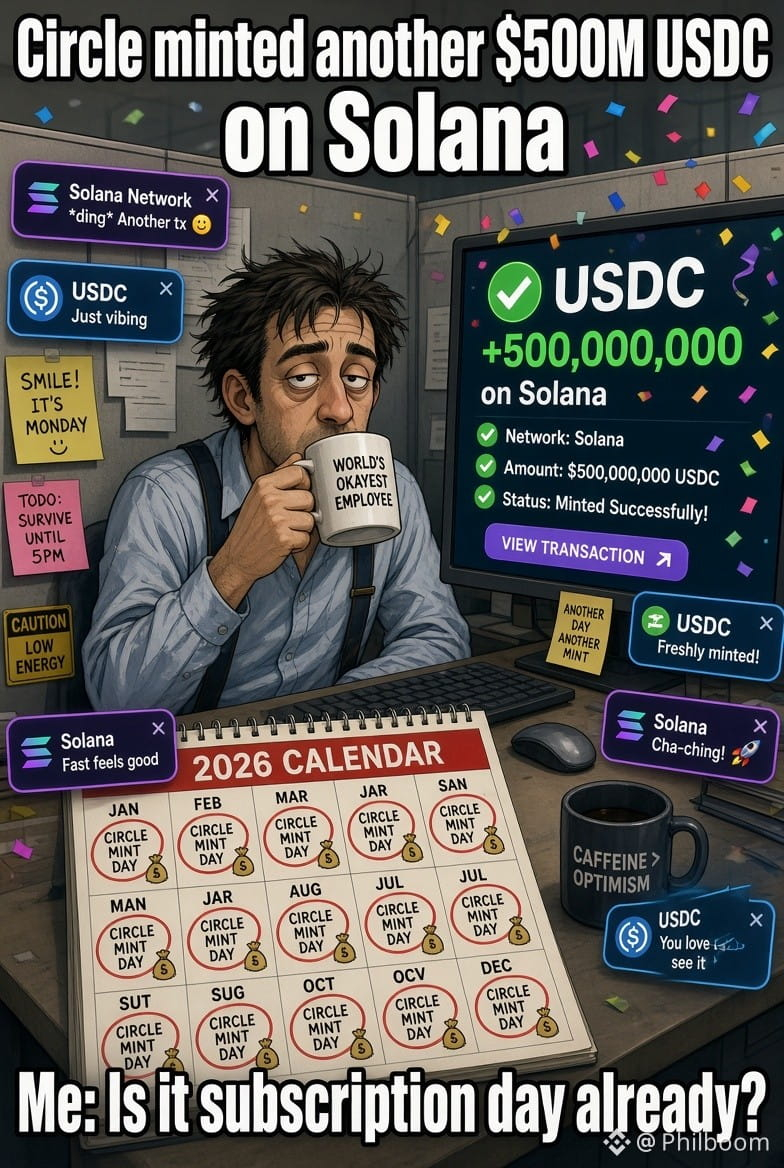
September 26, 5:42 AM and 11:04 AM Beijing time. Circle's USDC Treasury minted 250 million USDC on Solana in each transaction, 500 million total. On-chain data confirms it precisely, down to the minute. Here is the honest catch, this exact headline, same $500 million figure, has now appeared multiple separate times throughout 2026, April, June, July, and again today. Circle is not having one big moment on Solana. It is having the same moment repeatedly, which is arguably a stronger signal than any single mint could ever be. 😂
Here is the actual trend worth watching underneath the repetition 🧠
Solana's weekly USDC issuance has been running as high as $3.25 billion during earlier surges this year, pushing the network toward roughly 10% of total USDC supply, territory that has been Ethereum's almost exclusive domain since USDC launched. USDC's own adjusted transaction volume has surpassed USDT's in 2026 overall, with institutional demand cited as the primary driver across multiple reports. 💎
The honest structural point 🎯
USDC still keeps the majority of its total supply on Ethereum. Circle has been steadily increasing Solana's issuance cadence throughout the year regardless, treating it as genuine infrastructure expansion rather than a one-time liquidity injection. Whether Ethereum's structural lead holds as capital keeps diversifying across networks remains one of the actual defining stablecoin questions of 2026. 💡
The honest takeaway 🚀
One mint means nothing on its own. A dozen identical mints across nine months means the pattern is the real story now.
$SOL $USDC
{spot}(SOLUSDT)
{spot}(USDCUSDT)
#CircleMints500MUSDCOnSolana
Circle Minted $500 Million on Solana Again, Which Is Becoming Less of a Headline and More of a Subscription 💵🔄
September 26, 5:42 AM and 11:04 AM Beijing time. Circle's USDC Treasury minted 250 million USDC on Solana in each transaction, 500 million total. On-chain data confirms it precisely, down to the minute. Here is the honest catch, this exact headline, same $500 million figure, has now appeared multiple separate times throughout 2026, April, June, July, and again today. Circle is not having one big moment on Solana. It is having the same moment repeatedly, which is arguably a stronger signal than any single mint could ever be. 😂
Here is the actual trend worth watching underneath the repetition 🧠
Solana's weekly USDC issuance has been running as high as $3.25 billion during earlier surges this year, pushing the network toward roughly 10% of total USDC supply, territory that has been Ethereum's almost exclusive domain since USDC launched. USDC's own adjusted transaction volume has surpassed USDT's in 2026 overall, with institutional demand cited as the primary driver across multiple reports. 💎
The honest structural point 🎯
USDC still keeps the majority of its total supply on Ethereum. Circle has been steadily increasing Solana's issuance cadence throughout the year regardless, treating it as genuine infrastructure expansion rather than a one-time liquidity injection. Whether Ethereum's structural lead holds as capital keeps diversifying across networks remains one of the actual defining stablecoin questions of 2026. 💡
The honest takeaway 🚀
One mint means nothing on its own. A dozen identical mints across nine months means the pattern is the real story now.
$SOL $USDC
Circle Minted $500 Million on Solana Again, Which Is Becoming Less of a Headline and More of a Subscription 💵🔄
September 26, 5:42 AM and 11:04 AM Beijing time. Circle's USDC Treasury minted 250 million USDC on Solana in each transaction, 500 million total. On-chain data confirms it precisely, down to the minute. Here is the honest catch, this exact headline, same $500 million figure, has now appeared multiple separate times throughout 2026, April, June, July, and again today. Circle is not having one big moment on Solana. It is having the same moment repeatedly, which is arguably a stronger signal than any single mint could ever be. 😂
Here is the actual trend worth watching underneath the repetition 🧠
Solana's weekly USDC issuance has been running as high as $3.25 billion during earlier surges this year, pushing the network toward roughly 10% of total USDC supply, territory that has been Ethereum's almost exclusive domain since USDC launched. USDC's own adjusted transaction volume has surpassed USDT's in 2026 overall, with institutional demand cited as the primary driver across multiple reports. 💎
The honest structural point 🎯
USDC still keeps the majority of its total supply on Ethereum. Circle has been steadily increasing Solana's issuance cadence throughout the year regardless, treating it as genuine infrastructure expansion rather than a one-time liquidity injection. Whether Ethereum's structural lead holds as capital keeps diversifying across networks remains one of the actual defining stablecoin questions of 2026. 💡
The honest takeaway 🚀
One mint means nothing on its own. A dozen identical mints across nine months means the pattern is the real story now.
$SOL $USDC
2
131
·
--
Bullish
Bitcoin ETFs Pulled In $191 Million the Same Day an Exchange Lost $352 Million 🎭📊
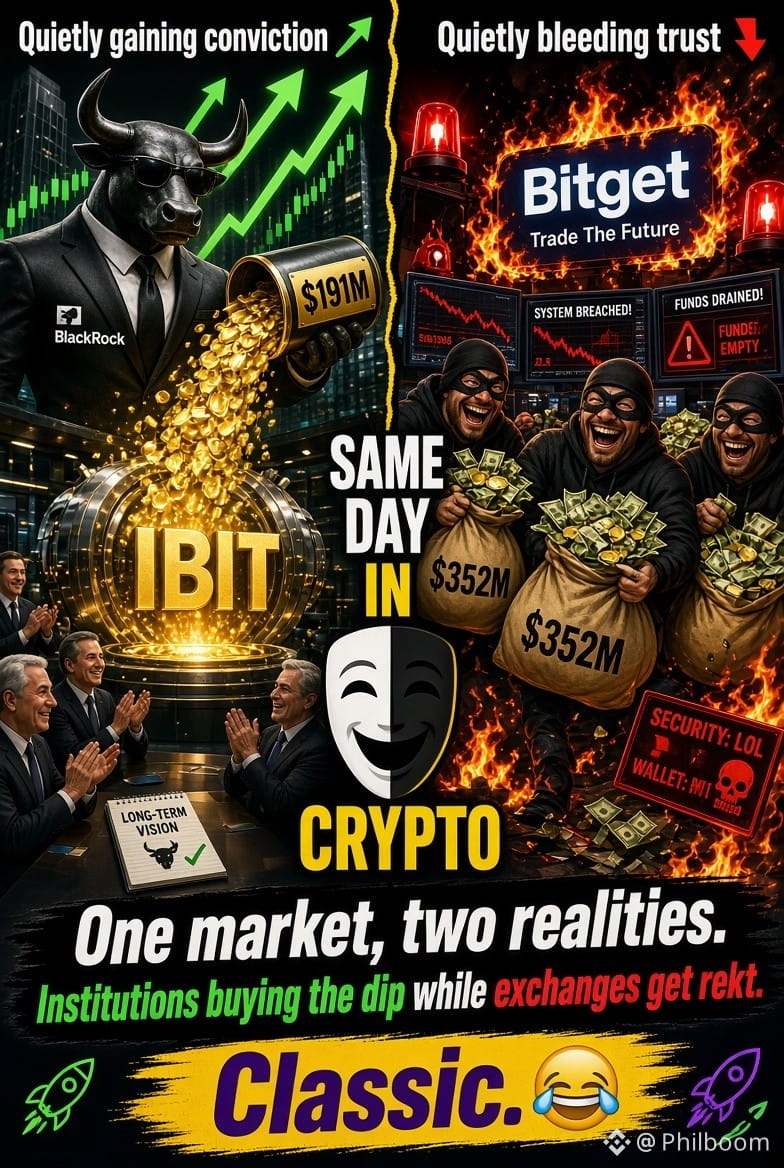
September 24. US spot Bitcoin ETFs recorded $191 million in net inflows, the sixth consecutive day of positive flows. BlackRock's IBIT led with $163 million, pushing its total historical inflow past $65 billion. Fidelity's FBTC added $12.86 million. Total net assets now sit at $108.91 billion, roughly 6.43% of Bitcoin's entire market cap. This is the same exact day Bitget disclosed its $351.6 million hack. One corner of crypto was quietly bleeding trust while another was quietly gaining conviction. 😂
Here is the honest context worth placing this inside 🧠
This $191 million is genuinely modest compared to what September has actually delivered. September 21 alone brought in $998.96 million, the largest single day since October 2025, part of a week that pulled in $986.9 million total, the third straight week of positive flows. August closed with $3.52 billion in monthly inflows, the strongest since September 2025. Against that backdrop, $191 million reads less like a headline and more like a quiet Tuesday for an ETF category that has been genuinely on fire all month. 💎
The honest analyst read worth including 🎯
Presto Research's Min Jung described this as crypto running a catch up trade after lagging other risk assets, with strong inflows signaling renewed institutional demand rather than pure leverage. Zeus Research's Dominick John separately called sustained inflows evidence of genuine spot demand building underneath the price. 💡
The honest scoreboard 🚀
Institutional Bitcoin buying and exchange security scares are currently running in parallel, not sequence. Both realities are true about the same market on the same day.
$BTC
{spot}(BTCUSDT)
#BitcoinSpotETFsNetInflow$191M
Bitcoin ETFs Pulled In $191 Million the Same Day an Exchange Lost $352 Million 🎭📊
September 24. US spot Bitcoin ETFs recorded $191 million in net inflows, the sixth consecutive day of positive flows. BlackRock's IBIT led with $163 million, pushing its total historical inflow past $65 billion. Fidelity's FBTC added $12.86 million. Total net assets now sit at $108.91 billion, roughly 6.43% of Bitcoin's entire market cap. This is the same exact day Bitget disclosed its $351.6 million hack. One corner of crypto was quietly bleeding trust while another was quietly gaining conviction. 😂
Here is the honest context worth placing this inside 🧠
This $191 million is genuinely modest compared to what September has actually delivered. September 21 alone brought in $998.96 million, the largest single day since October 2025, part of a week that pulled in $986.9 million total, the third straight week of positive flows. August closed with $3.52 billion in monthly inflows, the strongest since September 2025. Against that backdrop, $191 million reads less like a headline and more like a quiet Tuesday for an ETF category that has been genuinely on fire all month. 💎
The honest analyst read worth including 🎯
Presto Research's Min Jung described this as crypto running a catch up trade after lagging other risk assets, with strong inflows signaling renewed institutional demand rather than pure leverage. Zeus Research's Dominick John separately called sustained inflows evidence of genuine spot demand building underneath the price. 💡
The honest scoreboard 🚀
Institutional Bitcoin buying and exchange security scares are currently running in parallel, not sequence. Both realities are true about the same market on the same day.
$BTC
#BitcoinSpotETFsNetInflow$191M
September 24. US spot Bitcoin ETFs recorded $191 million in net inflows, the sixth consecutive day of positive flows. BlackRock's IBIT led with $163 million, pushing its total historical inflow past $65 billion. Fidelity's FBTC added $12.86 million. Total net assets now sit at $108.91 billion, roughly 6.43% of Bitcoin's entire market cap. This is the same exact day Bitget disclosed its $351.6 million hack. One corner of crypto was quietly bleeding trust while another was quietly gaining conviction. 😂
Here is the honest context worth placing this inside 🧠
This $191 million is genuinely modest compared to what September has actually delivered. September 21 alone brought in $998.96 million, the largest single day since October 2025, part of a week that pulled in $986.9 million total, the third straight week of positive flows. August closed with $3.52 billion in monthly inflows, the strongest since September 2025. Against that backdrop, $191 million reads less like a headline and more like a quiet Tuesday for an ETF category that has been genuinely on fire all month. 💎
The honest analyst read worth including 🎯
Presto Research's Min Jung described this as crypto running a catch up trade after lagging other risk assets, with strong inflows signaling renewed institutional demand rather than pure leverage. Zeus Research's Dominick John separately called sustained inflows evidence of genuine spot demand building underneath the price. 💡
The honest scoreboard 🚀
Institutional Bitcoin buying and exchange security scares are currently running in parallel, not sequence. Both realities are true about the same market on the same day.
$BTC
#BitcoinSpotETFsNetInflow$191M
57
·
--
Bitget Lost $352 Million and the Attackers Never Actually Stole a Single Private Key 🔓📊
September 24, 18:31 UTC. Bitget's security systems detected unauthorized transfers from its hot and warm wallets, roughly $351.6 million exposed across ether, XRP, USDT, USDC, Avalanche, and BNB. CEO Gracy Chen confirmed cold wallets stayed fully secure and the exchange's three tier architecture contained the breach to its outer layers. This is likely the biggest crypto hack of 2026, arriving just weeks after Liquid Network's own $320 million incident. September has not been kind to wallet security. 😂
Here is the genuinely clever part worth understanding 🧠
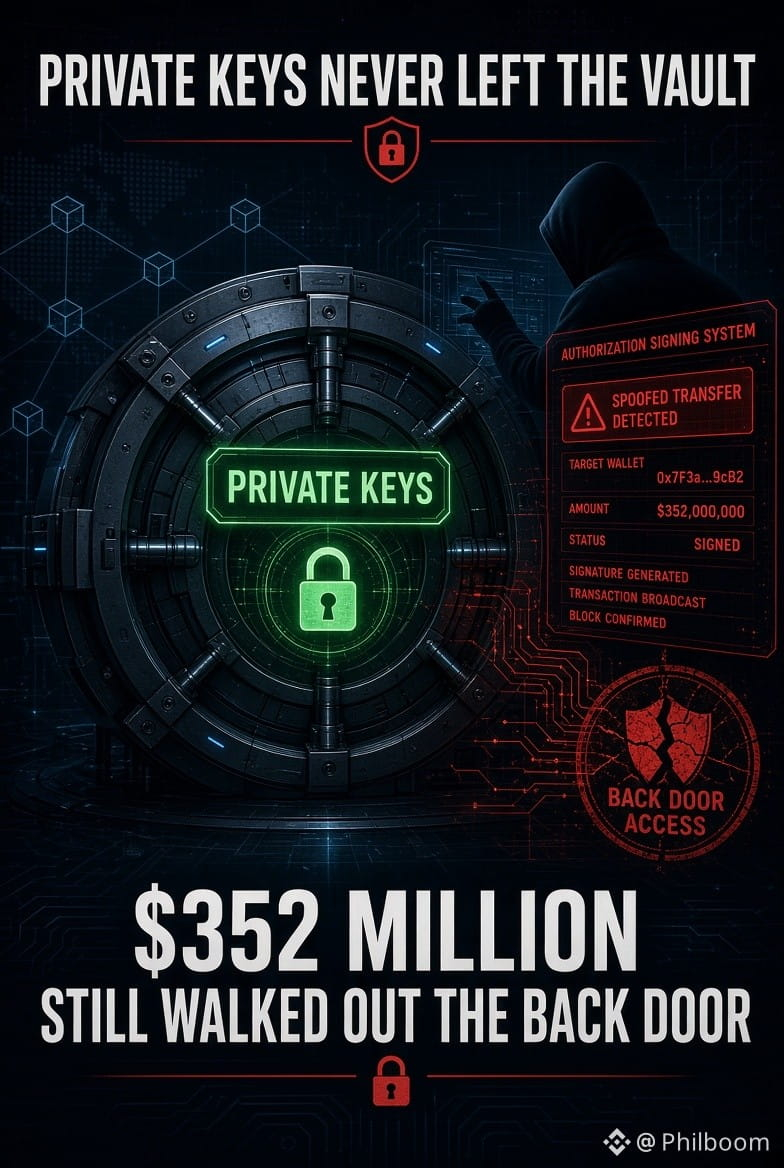
Chen was explicit, "private key compromise has been ruled out." The attacker instead breached a critical backend wallet system, spoofed transfer information, and tricked Bitget's own authorization signing process into approving fraudulent transfers. That is not brute force, that is convincing the system the request was legitimate when it never was. 💎
The suspect worth noting carefully 🎯
By September 25, Chen said preliminary evidence pointed toward North Korean hackers, citing IP addresses linked to VPN services previously tied to the group and attack patterns resembling earlier operations. That remains a preliminary finding, not a confirmed conclusion. 💡
The honest reassurance worth including 🎭
Bitget's User Protection Fund holds over $464 million, more than enough to cover the loss outright. Deposits and trading continued normally throughout. Withdrawals stayed paused pending a full security review. Chen's own words capture the moment well, "we will not run from this."
Real money moved. User funds are still covered. The investigation is still ongoing. 🚀
#BitgetSays$352MAffectedInHack
$BTC
{spot}(BTCUSDT)
Bitget Lost $352 Million and the Attackers Never Actually Stole a Single Private Key 🔓📊
September 24, 18:31 UTC. Bitget's security systems detected unauthorized transfers from its hot and warm wallets, roughly $351.6 million exposed across ether, XRP, USDT, USDC, Avalanche, and BNB. CEO Gracy Chen confirmed cold wallets stayed fully secure and the exchange's three tier architecture contained the breach to its outer layers. This is likely the biggest crypto hack of 2026, arriving just weeks after Liquid Network's own $320 million incident. September has not been kind to wallet security. 😂
Here is the genuinely clever part worth understanding 🧠
Chen was explicit, "private key compromise has been ruled out." The attacker instead breached a critical backend wallet system, spoofed transfer information, and tricked Bitget's own authorization signing process into approving fraudulent transfers. That is not brute force, that is convincing the system the request was legitimate when it never was. 💎
The suspect worth noting carefully 🎯
By September 25, Chen said preliminary evidence pointed toward North Korean hackers, citing IP addresses linked to VPN services previously tied to the group and attack patterns resembling earlier operations. That remains a preliminary finding, not a confirmed conclusion. 💡
The honest reassurance worth including 🎭
Bitget's User Protection Fund holds over $464 million, more than enough to cover the loss outright. Deposits and trading continued normally throughout. Withdrawals stayed paused pending a full security review. Chen's own words capture the moment well, "we will not run from this."
Real money moved. User funds are still covered. The investigation is still ongoing. 🚀
#BitgetSays$352MAffectedInHack
$BTC
September 24, 18:31 UTC. Bitget's security systems detected unauthorized transfers from its hot and warm wallets, roughly $351.6 million exposed across ether, XRP, USDT, USDC, Avalanche, and BNB. CEO Gracy Chen confirmed cold wallets stayed fully secure and the exchange's three tier architecture contained the breach to its outer layers. This is likely the biggest crypto hack of 2026, arriving just weeks after Liquid Network's own $320 million incident. September has not been kind to wallet security. 😂
Here is the genuinely clever part worth understanding 🧠
Chen was explicit, "private key compromise has been ruled out." The attacker instead breached a critical backend wallet system, spoofed transfer information, and tricked Bitget's own authorization signing process into approving fraudulent transfers. That is not brute force, that is convincing the system the request was legitimate when it never was. 💎
The suspect worth noting carefully 🎯
By September 25, Chen said preliminary evidence pointed toward North Korean hackers, citing IP addresses linked to VPN services previously tied to the group and attack patterns resembling earlier operations. That remains a preliminary finding, not a confirmed conclusion. 💡
The honest reassurance worth including 🎭
Bitget's User Protection Fund holds over $464 million, more than enough to cover the loss outright. Deposits and trading continued normally throughout. Withdrawals stayed paused pending a full security review. Chen's own words capture the moment well, "we will not run from this."
Real money moved. User funds are still covered. The investigation is still ongoing. 🚀
#BitgetSays$352MAffectedInHack
$BTC
87
·
--
Bullish
#BinanceWillListHyperliquid(HYPE)
Binance just dropped the HYPE bomb and the crypto timeline is vibrating like a hypercaffeinated trader on 50x leverage! 🚀🔥
Today at 11:00 UTC the world’s biggest exchange finally opened the doors for Hyperliquid’s native token on spot with three shiny pairs HYPE/USDT HYPE/USDC and even HYPE/TRY for the Turkish lira lovers. Deposits were already flowing in an hour earlier while withdrawals get the green light tomorrow. Listing fee? A glorious zero BNB. Pure respect. 👑💸
But here’s the spicy twist. Binance slapped its Seed Tag on HYPE. That little label basically means “this one can moon or nuke your portfolio with equal enthusiasm so please pass our risk quiz every 90 days like a responsible adult.” Classic Binance parenting. They list the hottest perp DEX token on the planet then politely remind everyone it might still give you emotional whiplash. 😂📉📈
Hyperliquid itself is no small fry. The on-chain perpetual king has been printing volume and revenue like a well-oiled money printer while its token was mostly stuck in futures land and secondary markets. Spot listing on Binance is the ultimate legitimacy stamp. More liquidity deeper order books and a flood of new retail eyes all arriving at once.
Of course the classic “sell the news” drama already showed up. Price wiggled after the announcement because crypto never just moons politely. Still the long-term picture looks juicy. Wider access plus institutional curiosity could turn HYPE into a permanent top-tier resident instead of just the cool kid on the DEX playground.
So grab your popcorn adjust your risk settings and watch the fireworks. Binance finally invited Hyperliquid to the big table and the party just got a lot louder. 🥳🏆💎
$HYPE $BNB
{spot}(HYPEUSDT)
{spot}(BNBUSDT)
#BinanceWillListHyperliquid(HYPE)
Binance just dropped the HYPE bomb and the crypto timeline is vibrating like a hypercaffeinated trader on 50x leverage! 🚀🔥
Today at 11:00 UTC the world’s biggest exchange finally opened the doors for Hyperliquid’s native token on spot with three shiny pairs HYPE/USDT HYPE/USDC and even HYPE/TRY for the Turkish lira lovers. Deposits were already flowing in an hour earlier while withdrawals get the green light tomorrow. Listing fee? A glorious zero BNB. Pure respect. 👑💸
But here’s the spicy twist. Binance slapped its Seed Tag on HYPE. That little label basically means “this one can moon or nuke your portfolio with equal enthusiasm so please pass our risk quiz every 90 days like a responsible adult.” Classic Binance parenting. They list the hottest perp DEX token on the planet then politely remind everyone it might still give you emotional whiplash. 😂📉📈
Hyperliquid itself is no small fry. The on-chain perpetual king has been printing volume and revenue like a well-oiled money printer while its token was mostly stuck in futures land and secondary markets. Spot listing on Binance is the ultimate legitimacy stamp. More liquidity deeper order books and a flood of new retail eyes all arriving at once.
Of course the classic “sell the news” drama already showed up. Price wiggled after the announcement because crypto never just moons politely. Still the long-term picture looks juicy. Wider access plus institutional curiosity could turn HYPE into a permanent top-tier resident instead of just the cool kid on the DEX playground.
So grab your popcorn adjust your risk settings and watch the fireworks. Binance finally invited Hyperliquid to the big table and the party just got a lot louder. 🥳🏆💎
$HYPE $BNB
Binance just dropped the HYPE bomb and the crypto timeline is vibrating like a hypercaffeinated trader on 50x leverage! 🚀🔥
Today at 11:00 UTC the world’s biggest exchange finally opened the doors for Hyperliquid’s native token on spot with three shiny pairs HYPE/USDT HYPE/USDC and even HYPE/TRY for the Turkish lira lovers. Deposits were already flowing in an hour earlier while withdrawals get the green light tomorrow. Listing fee? A glorious zero BNB. Pure respect. 👑💸
But here’s the spicy twist. Binance slapped its Seed Tag on HYPE. That little label basically means “this one can moon or nuke your portfolio with equal enthusiasm so please pass our risk quiz every 90 days like a responsible adult.” Classic Binance parenting. They list the hottest perp DEX token on the planet then politely remind everyone it might still give you emotional whiplash. 😂📉📈
Hyperliquid itself is no small fry. The on-chain perpetual king has been printing volume and revenue like a well-oiled money printer while its token was mostly stuck in futures land and secondary markets. Spot listing on Binance is the ultimate legitimacy stamp. More liquidity deeper order books and a flood of new retail eyes all arriving at once.
Of course the classic “sell the news” drama already showed up. Price wiggled after the announcement because crypto never just moons politely. Still the long-term picture looks juicy. Wider access plus institutional curiosity could turn HYPE into a permanent top-tier resident instead of just the cool kid on the DEX playground.
So grab your popcorn adjust your risk settings and watch the fireworks. Binance finally invited Hyperliquid to the big table and the party just got a lot louder. 🥳🏆💎
$HYPE $BNB

194
·
--
Bullish
#CardanoJoinsX402PaymentStandard
Cardano Joined the AI Payment Race and Showed Up After Everyone Else Already Lapped the Track 🏁😂
September 21. Cardano officially joined x402, the open payment standard letting applications and autonomous AI agents pay for online services directly, no accounts, no API keys, no monthly subscriptions, just a standard web request that settles in ADA or Cardano native tokens. TypeScript support is live, Python is coming, and a real transaction has completed on the pre-production testnet. Mainnet is not live yet. ADA responded anyway, jumping roughly 4% to a four-month high, with one trader calling it a break of multi-year resistance. Markets clearly do not require the finished product to get excited. 💎
Here is the honest scoreboard worth knowing before getting too excited 🧠
XRP Ledger has already processed more than 1.4 million AI agent transactions through this exact standard. Coinbase reported over 100 million combined x402 payments across Base and Solana. Cardano is not pioneering this category, it is arriving to a race where several competitors already have a genuine head start measured in the hundreds of millions. 😂
Here is why this actually matters anyway 🎯
We have tracked AI agents controlling roughly 30% of liquidity in leading Solana pools all year, and Google's own Pay.sh launched on Solana specifically for this exact use case. Every chain adding x402 support is placing a bet that machine to machine payments become genuinely enormous. Cardano being late to that bet does not mean the bet itself is wrong. 💡
The honest takeaway 🚀
Being second, third, or fourth into a genuinely large market still beats not showing up at all.
$ADA
{spot}(ADAUSDT)
#CardanoJoinsX402PaymentStandard
Cardano Joined the AI Payment Race and Showed Up After Everyone Else Already Lapped the Track 🏁😂
September 21. Cardano officially joined x402, the open payment standard letting applications and autonomous AI agents pay for online services directly, no accounts, no API keys, no monthly subscriptions, just a standard web request that settles in ADA or Cardano native tokens. TypeScript support is live, Python is coming, and a real transaction has completed on the pre-production testnet. Mainnet is not live yet. ADA responded anyway, jumping roughly 4% to a four-month high, with one trader calling it a break of multi-year resistance. Markets clearly do not require the finished product to get excited. 💎
Here is the honest scoreboard worth knowing before getting too excited 🧠
XRP Ledger has already processed more than 1.4 million AI agent transactions through this exact standard. Coinbase reported over 100 million combined x402 payments across Base and Solana. Cardano is not pioneering this category, it is arriving to a race where several competitors already have a genuine head start measured in the hundreds of millions. 😂
Here is why this actually matters anyway 🎯
We have tracked AI agents controlling roughly 30% of liquidity in leading Solana pools all year, and Google's own Pay.sh launched on Solana specifically for this exact use case. Every chain adding x402 support is placing a bet that machine to machine payments become genuinely enormous. Cardano being late to that bet does not mean the bet itself is wrong. 💡
The honest takeaway 🚀
Being second, third, or fourth into a genuinely large market still beats not showing up at all.
$ADA
Cardano Joined the AI Payment Race and Showed Up After Everyone Else Already Lapped the Track 🏁😂
September 21. Cardano officially joined x402, the open payment standard letting applications and autonomous AI agents pay for online services directly, no accounts, no API keys, no monthly subscriptions, just a standard web request that settles in ADA or Cardano native tokens. TypeScript support is live, Python is coming, and a real transaction has completed on the pre-production testnet. Mainnet is not live yet. ADA responded anyway, jumping roughly 4% to a four-month high, with one trader calling it a break of multi-year resistance. Markets clearly do not require the finished product to get excited. 💎
Here is the honest scoreboard worth knowing before getting too excited 🧠
XRP Ledger has already processed more than 1.4 million AI agent transactions through this exact standard. Coinbase reported over 100 million combined x402 payments across Base and Solana. Cardano is not pioneering this category, it is arriving to a race where several competitors already have a genuine head start measured in the hundreds of millions. 😂
Here is why this actually matters anyway 🎯
We have tracked AI agents controlling roughly 30% of liquidity in leading Solana pools all year, and Google's own Pay.sh launched on Solana specifically for this exact use case. Every chain adding x402 support is placing a bet that machine to machine payments become genuinely enormous. Cardano being late to that bet does not mean the bet itself is wrong. 💡
The honest takeaway 🚀
Being second, third, or fourth into a genuinely large market still beats not showing up at all.
$ADA

148
·
--
Bullish
#StrategyAdds950Bitcoin
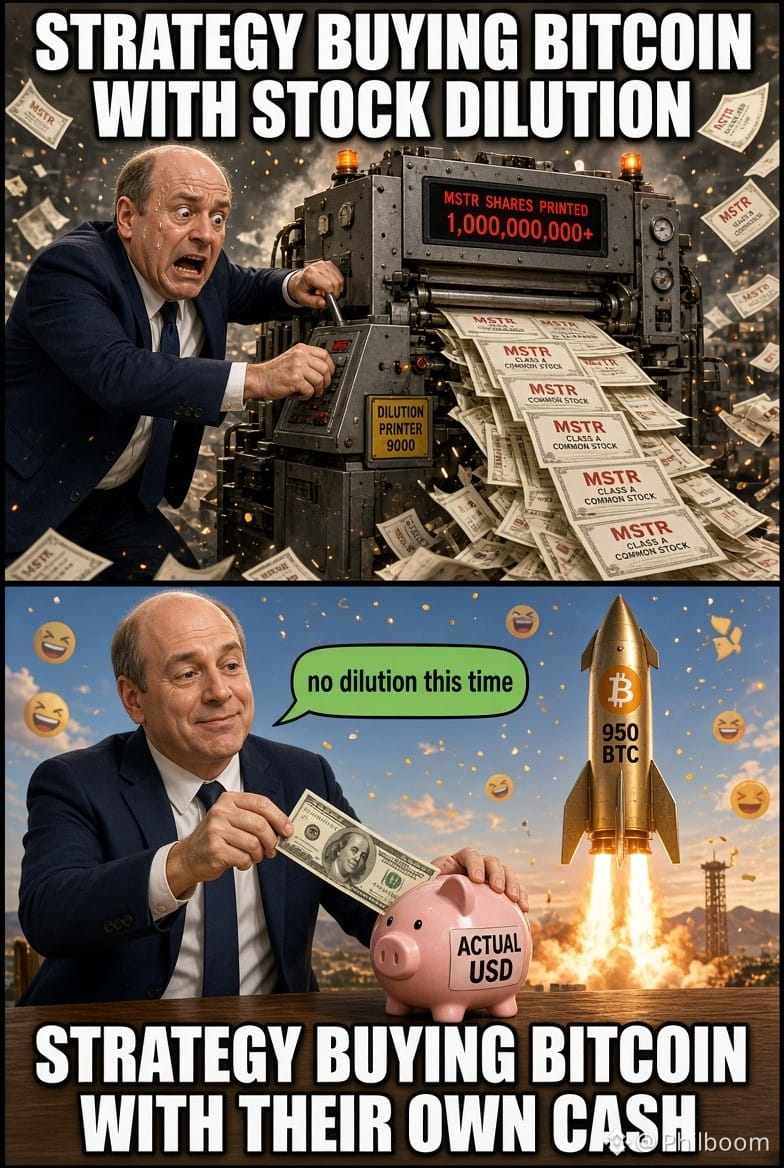
Strategy Bought 950 More Bitcoin and This Time Actually Used Its Own Money 💰📈
Between September 14 and 20, Strategy purchased 950 Bitcoin for $75.7 million, average price $79,670, bringing total holdings to 846,000 BTC acquired for $63.80 billion overall, an average cost basis of $75,416 per coin. This landed right as Bitcoin climbed to a nine month high, reportedly touching $85,583. The company that made Bitcoin buying a personality trait just added more, again, which by now barely qualifies as news on its own. 😂
Here is the detail actually worth noticing 🧠
This purchase came entirely from existing USD Cash, no new MSTR shares sold through the at-the-market program to fund it. Earlier this year, Q1 purchases were explicitly funded through fresh stock issuance and convertible notes. This time the company just reached into cash it already had sitting around. A small distinction, but a real one for anyone tracking whether Strategy's Bitcoin buying still requires diluting shareholders every single time. 💎
The rest of the week's paperwork 🎯
Strategy also repurchased 1.77 million shares of its STRC preferred stock for $174 million, and drew $57.4 million from a separate USD Reserve specifically to cover preferred dividends and debt interest. As of September 20, that reserve stood at $5.04 billion, with USD Cash at $1.05 billion. Three separate cash pools, three separate purposes, all disclosed in the same routine filing. 💡
The honest takeaway 🚀
Buying the dip is not really the story anymore for this company. Buying regardless of the dip, funded whichever way happens to be available that week, is just how Strategy now operates.
$BTC
{spot}(BTCUSDT)
#StrategyAdds950Bitcoin
Strategy Bought 950 More Bitcoin and This Time Actually Used Its Own Money 💰📈
Between September 14 and 20, Strategy purchased 950 Bitcoin for $75.7 million, average price $79,670, bringing total holdings to 846,000 BTC acquired for $63.80 billion overall, an average cost basis of $75,416 per coin. This landed right as Bitcoin climbed to a nine month high, reportedly touching $85,583. The company that made Bitcoin buying a personality trait just added more, again, which by now barely qualifies as news on its own. 😂
Here is the detail actually worth noticing 🧠
This purchase came entirely from existing USD Cash, no new MSTR shares sold through the at-the-market program to fund it. Earlier this year, Q1 purchases were explicitly funded through fresh stock issuance and convertible notes. This time the company just reached into cash it already had sitting around. A small distinction, but a real one for anyone tracking whether Strategy's Bitcoin buying still requires diluting shareholders every single time. 💎
The rest of the week's paperwork 🎯
Strategy also repurchased 1.77 million shares of its STRC preferred stock for $174 million, and drew $57.4 million from a separate USD Reserve specifically to cover preferred dividends and debt interest. As of September 20, that reserve stood at $5.04 billion, with USD Cash at $1.05 billion. Three separate cash pools, three separate purposes, all disclosed in the same routine filing. 💡
The honest takeaway 🚀
Buying the dip is not really the story anymore for this company. Buying regardless of the dip, funded whichever way happens to be available that week, is just how Strategy now operates.
$BTC
Strategy Bought 950 More Bitcoin and This Time Actually Used Its Own Money 💰📈
Between September 14 and 20, Strategy purchased 950 Bitcoin for $75.7 million, average price $79,670, bringing total holdings to 846,000 BTC acquired for $63.80 billion overall, an average cost basis of $75,416 per coin. This landed right as Bitcoin climbed to a nine month high, reportedly touching $85,583. The company that made Bitcoin buying a personality trait just added more, again, which by now barely qualifies as news on its own. 😂
Here is the detail actually worth noticing 🧠
This purchase came entirely from existing USD Cash, no new MSTR shares sold through the at-the-market program to fund it. Earlier this year, Q1 purchases were explicitly funded through fresh stock issuance and convertible notes. This time the company just reached into cash it already had sitting around. A small distinction, but a real one for anyone tracking whether Strategy's Bitcoin buying still requires diluting shareholders every single time. 💎
The rest of the week's paperwork 🎯
Strategy also repurchased 1.77 million shares of its STRC preferred stock for $174 million, and drew $57.4 million from a separate USD Reserve specifically to cover preferred dividends and debt interest. As of September 20, that reserve stood at $5.04 billion, with USD Cash at $1.05 billion. Three separate cash pools, three separate purposes, all disclosed in the same routine filing. 💡
The honest takeaway 🚀
Buying the dip is not really the story anymore for this company. Buying regardless of the dip, funded whichever way happens to be available that week, is just how Strategy now operates.
$BTC
1
138
·
--
Bullish
#SouthAfricaProposesCryptoExchangeControls
South Africa Is Reviving a 1961 Apartheid Era Law and Crypto Just Got Pulled Inside It 🇿🇦🔒
National Treasury published Draft Capital Flow Management Regulations on April 17, finally replacing the Exchange Control Regulations of 1961. Worth sitting with the history here directly, that original regime was built to defend the rand against capital flight after Sharpeville and was used throughout the apartheid years to control who got to move money and where. Crypto is now being written into the exact same architecture. 😂
Here is what the draft actually demands 🧠
Every crypto asset leaving South Africa must pass through a licensed local provider. Holders must file written declarations of their holdings within 30 days. Each transaction needs a stated purpose, and using crypto outside that purpose can trigger a forced sale. In forfeiture scenarios, holders could be compelled to hand over private keys so the state gains control of self custodied assets. Penalties reach five years in prison. Even Treasury cannot agree with itself on the comment deadline, one document says May 18, another says June 10. 💎
The honest tension worth naming directly 🎭
Daily Maverick calls this a messy mix of overreach and libertarian pearl clutching. Others frame it as a fundamental redefinition of property rights for anyone holding Bitcoin, gold, or intellectual property. Both readings can be true simultaneously, modernization on paper, permission based control in practice. 🔓
The freedom argument worth remembering 🎯
Self custody exists precisely for moments like this. A private key that lives only in your own head cannot be legislated into a filing cabinet. Every new declaration requirement is a reminder of exactly why decentralization was never supposed to need anyone's permission slip. 🚀
$BTC $ETH
{spot}(BTCUSDT)
{spot}(ETHUSDT)
#SouthAfricaProposesCryptoExchangeControls
South Africa Is Reviving a 1961 Apartheid Era Law and Crypto Just Got Pulled Inside It 🇿🇦🔒
National Treasury published Draft Capital Flow Management Regulations on April 17, finally replacing the Exchange Control Regulations of 1961. Worth sitting with the history here directly, that original regime was built to defend the rand against capital flight after Sharpeville and was used throughout the apartheid years to control who got to move money and where. Crypto is now being written into the exact same architecture. 😂
Here is what the draft actually demands 🧠
Every crypto asset leaving South Africa must pass through a licensed local provider. Holders must file written declarations of their holdings within 30 days. Each transaction needs a stated purpose, and using crypto outside that purpose can trigger a forced sale. In forfeiture scenarios, holders could be compelled to hand over private keys so the state gains control of self custodied assets. Penalties reach five years in prison. Even Treasury cannot agree with itself on the comment deadline, one document says May 18, another says June 10. 💎
The honest tension worth naming directly 🎭
Daily Maverick calls this a messy mix of overreach and libertarian pearl clutching. Others frame it as a fundamental redefinition of property rights for anyone holding Bitcoin, gold, or intellectual property. Both readings can be true simultaneously, modernization on paper, permission based control in practice. 🔓
The freedom argument worth remembering 🎯
Self custody exists precisely for moments like this. A private key that lives only in your own head cannot be legislated into a filing cabinet. Every new declaration requirement is a reminder of exactly why decentralization was never supposed to need anyone's permission slip. 🚀
$BTC $ETH
South Africa Is Reviving a 1961 Apartheid Era Law and Crypto Just Got Pulled Inside It 🇿🇦🔒
National Treasury published Draft Capital Flow Management Regulations on April 17, finally replacing the Exchange Control Regulations of 1961. Worth sitting with the history here directly, that original regime was built to defend the rand against capital flight after Sharpeville and was used throughout the apartheid years to control who got to move money and where. Crypto is now being written into the exact same architecture. 😂
Here is what the draft actually demands 🧠
Every crypto asset leaving South Africa must pass through a licensed local provider. Holders must file written declarations of their holdings within 30 days. Each transaction needs a stated purpose, and using crypto outside that purpose can trigger a forced sale. In forfeiture scenarios, holders could be compelled to hand over private keys so the state gains control of self custodied assets. Penalties reach five years in prison. Even Treasury cannot agree with itself on the comment deadline, one document says May 18, another says June 10. 💎
The honest tension worth naming directly 🎭
Daily Maverick calls this a messy mix of overreach and libertarian pearl clutching. Others frame it as a fundamental redefinition of property rights for anyone holding Bitcoin, gold, or intellectual property. Both readings can be true simultaneously, modernization on paper, permission based control in practice. 🔓
The freedom argument worth remembering 🎯
Self custody exists precisely for moments like this. A private key that lives only in your own head cannot be legislated into a filing cabinet. Every new declaration requirement is a reminder of exactly why decentralization was never supposed to need anyone's permission slip. 🚀
$BTC $ETH

175
·
--
Bearish
#XRPExchangeReservesHitSevenYearLow
XRP Reserves Hit a Seven Year Low and Nobody Can Agree on What That Actually Means 📉🎭
September 18. XRP exchange reserves fell to roughly 1.7 billion tokens, the lowest level in seven years, the same day XRP ETFs posted a $5.15 million outflow, their biggest since September 2. Despite that outflow, the funds remain on track for a 10th consecutive week of net inflows overall. Analyst Dark Defender flagged the obvious tension directly, XRP still sits 25% below its August high even as this supposedly bullish signal keeps building underneath it. 😂
Here is the honest complication worth actually sitting with 🧠
Reserve trackers do not agree with each other at all. Glassnode shows a seven year low near 1.6 billion XRP. A wider tracker from analyst Leonidas shows something closer to 14 billion. CryptoQuant's own narrower measurement shows just a 2.2% decline since May, nowhere close to anything resembling a shock. Three respected sources, three wildly different numbers, all describing the same asset on the same day. 💎
The uncomfortable question worth asking directly 🎯
A falling reserve number just means tokens moved somewhere else. It does not automatically mean new demand exists to soak up whatever gets sold later. The two week RSI sits at 43.78 against a historical low of 33.52, both still above the standard oversold threshold of 30, so even the momentum reading is ambiguous rather than screaming anything specific. 💡
The honest takeaway 🚀
Everyone loves a clean supply shock narrative. The actual data this week is messier, contradictory, and genuinely unresolved. Friday's ETF flow number is the only concrete thing left to watch before the streak either extends or breaks.
$XRP
{spot}(XRPUSDT)
#XRPExchangeReservesHitSevenYearLow
XRP Reserves Hit a Seven Year Low and Nobody Can Agree on What That Actually Means 📉🎭
September 18. XRP exchange reserves fell to roughly 1.7 billion tokens, the lowest level in seven years, the same day XRP ETFs posted a $5.15 million outflow, their biggest since September 2. Despite that outflow, the funds remain on track for a 10th consecutive week of net inflows overall. Analyst Dark Defender flagged the obvious tension directly, XRP still sits 25% below its August high even as this supposedly bullish signal keeps building underneath it. 😂
Here is the honest complication worth actually sitting with 🧠
Reserve trackers do not agree with each other at all. Glassnode shows a seven year low near 1.6 billion XRP. A wider tracker from analyst Leonidas shows something closer to 14 billion. CryptoQuant's own narrower measurement shows just a 2.2% decline since May, nowhere close to anything resembling a shock. Three respected sources, three wildly different numbers, all describing the same asset on the same day. 💎
The uncomfortable question worth asking directly 🎯
A falling reserve number just means tokens moved somewhere else. It does not automatically mean new demand exists to soak up whatever gets sold later. The two week RSI sits at 43.78 against a historical low of 33.52, both still above the standard oversold threshold of 30, so even the momentum reading is ambiguous rather than screaming anything specific. 💡
The honest takeaway 🚀
Everyone loves a clean supply shock narrative. The actual data this week is messier, contradictory, and genuinely unresolved. Friday's ETF flow number is the only concrete thing left to watch before the streak either extends or breaks.
$XRP
XRP Reserves Hit a Seven Year Low and Nobody Can Agree on What That Actually Means 📉🎭
September 18. XRP exchange reserves fell to roughly 1.7 billion tokens, the lowest level in seven years, the same day XRP ETFs posted a $5.15 million outflow, their biggest since September 2. Despite that outflow, the funds remain on track for a 10th consecutive week of net inflows overall. Analyst Dark Defender flagged the obvious tension directly, XRP still sits 25% below its August high even as this supposedly bullish signal keeps building underneath it. 😂
Here is the honest complication worth actually sitting with 🧠
Reserve trackers do not agree with each other at all. Glassnode shows a seven year low near 1.6 billion XRP. A wider tracker from analyst Leonidas shows something closer to 14 billion. CryptoQuant's own narrower measurement shows just a 2.2% decline since May, nowhere close to anything resembling a shock. Three respected sources, three wildly different numbers, all describing the same asset on the same day. 💎
The uncomfortable question worth asking directly 🎯
A falling reserve number just means tokens moved somewhere else. It does not automatically mean new demand exists to soak up whatever gets sold later. The two week RSI sits at 43.78 against a historical low of 33.52, both still above the standard oversold threshold of 30, so even the momentum reading is ambiguous rather than screaming anything specific. 💡
The honest takeaway 🚀
Everyone loves a clean supply shock narrative. The actual data this week is messier, contradictory, and genuinely unresolved. Friday's ETF flow number is the only concrete thing left to watch before the streak either extends or breaks.
$XRP

1
1
575
·
--
Bullish
Verified
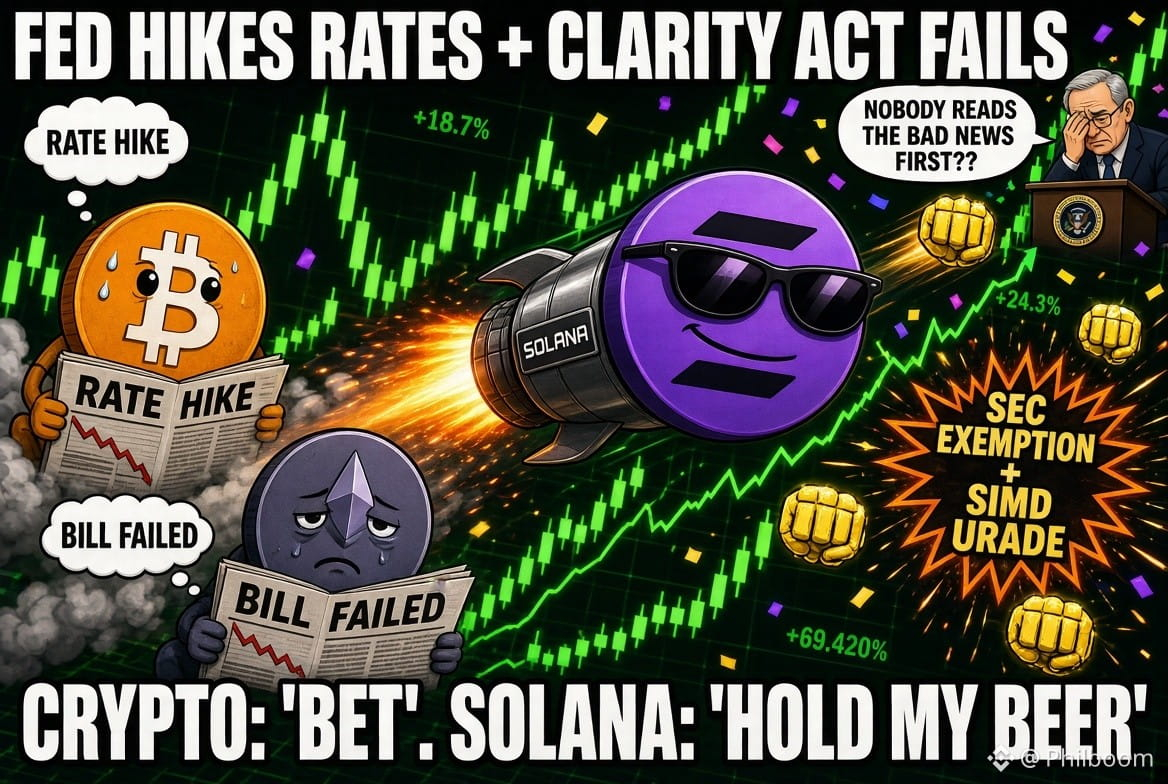
The Fed Hiked, CLARITY Failed, and Crypto Rallied Anyway Because Apparently Nobody Reads the Bad News First 📈😂
September 16, the Fed delivered exactly what markets priced in for weeks, a 25 basis point hike to 4.00%, and the CLARITY Act cloture vote failed the day before. Two genuinely bearish headlines, back to back. Two days later crypto is up across the board, Bitcoin climbing back over $80,000, up nearly 6% in 24 hours, Ether up 7.3%, XRP up 8.9%. Sometimes the worst news finally landing is its own kind of relief. Uncertainty resolved, even unfavorably, beats uncertainty dragging on forever. 💎
Here is who actually led the recovery 🧠
Solana, not Bitcoin. SOL jumped 10 to 12.7% to $112.41, its highest level in seven months, outperforming both Bitcoin and Ether on the same day. Crypto adjacent stocks moved even harder, Coinbase up 11.7%, Strategy up 16.4%, Gemini up 31%. When the whole market rallies together, the token with an actual specific reason still finds a way to lap everyone else. 🎯
The reason Solana specifically got the extra push 💡
The SEC granted Solana a five year Innovation Exemption on September 18, providing genuine regulatory clarity for tokenized securities trading on the network. That landed the same day Solana activated the third stage of its SIMD-0525 upgrade, cutting slot time further. Regulatory clarity plus a technical upgrade, stacked on top of a market wide relief rally, explains why SOL is doing nearly double Bitcoin's gain. 🚀
The honest takeaway 🎭
Markets shrugged off a rate hike and a failed bill in the same 48 hours. Whether that shrug holds is the only real question left standing.
#SOLJumpsAbout10%
$SOL
{spot}(SOLUSDT)
The Fed Hiked, CLARITY Failed, and Crypto Rallied Anyway Because Apparently Nobody Reads the Bad News First 📈😂
September 16, the Fed delivered exactly what markets priced in for weeks, a 25 basis point hike to 4.00%, and the CLARITY Act cloture vote failed the day before. Two genuinely bearish headlines, back to back. Two days later crypto is up across the board, Bitcoin climbing back over $80,000, up nearly 6% in 24 hours, Ether up 7.3%, XRP up 8.9%. Sometimes the worst news finally landing is its own kind of relief. Uncertainty resolved, even unfavorably, beats uncertainty dragging on forever. 💎
Here is who actually led the recovery 🧠
Solana, not Bitcoin. SOL jumped 10 to 12.7% to $112.41, its highest level in seven months, outperforming both Bitcoin and Ether on the same day. Crypto adjacent stocks moved even harder, Coinbase up 11.7%, Strategy up 16.4%, Gemini up 31%. When the whole market rallies together, the token with an actual specific reason still finds a way to lap everyone else. 🎯
The reason Solana specifically got the extra push 💡
The SEC granted Solana a five year Innovation Exemption on September 18, providing genuine regulatory clarity for tokenized securities trading on the network. That landed the same day Solana activated the third stage of its SIMD-0525 upgrade, cutting slot time further. Regulatory clarity plus a technical upgrade, stacked on top of a market wide relief rally, explains why SOL is doing nearly double Bitcoin's gain. 🚀
The honest takeaway 🎭
Markets shrugged off a rate hike and a failed bill in the same 48 hours. Whether that shrug holds is the only real question left standing.
#SOLJumpsAbout10%
$SOL
September 16, the Fed delivered exactly what markets priced in for weeks, a 25 basis point hike to 4.00%, and the CLARITY Act cloture vote failed the day before. Two genuinely bearish headlines, back to back. Two days later crypto is up across the board, Bitcoin climbing back over $80,000, up nearly 6% in 24 hours, Ether up 7.3%, XRP up 8.9%. Sometimes the worst news finally landing is its own kind of relief. Uncertainty resolved, even unfavorably, beats uncertainty dragging on forever. 💎
Here is who actually led the recovery 🧠
Solana, not Bitcoin. SOL jumped 10 to 12.7% to $112.41, its highest level in seven months, outperforming both Bitcoin and Ether on the same day. Crypto adjacent stocks moved even harder, Coinbase up 11.7%, Strategy up 16.4%, Gemini up 31%. When the whole market rallies together, the token with an actual specific reason still finds a way to lap everyone else. 🎯
The reason Solana specifically got the extra push 💡
The SEC granted Solana a five year Innovation Exemption on September 18, providing genuine regulatory clarity for tokenized securities trading on the network. That landed the same day Solana activated the third stage of its SIMD-0525 upgrade, cutting slot time further. Regulatory clarity plus a technical upgrade, stacked on top of a market wide relief rally, explains why SOL is doing nearly double Bitcoin's gain. 🚀
The honest takeaway 🎭
Markets shrugged off a rate hike and a failed bill in the same 48 hours. Whether that shrug holds is the only real question left standing.
#SOLJumpsAbout10%
$SOL
1
806
·
--
Bullish
#BTCBreaks80K
Bitcoin just smashed through $80k like a caffeinated bull in a china shop 🐂💥 and the crypto world is losing its collective mind!
On this fine September 18 2026 afternoon BTC is dancing around $80,800 to $80,850 after a juicy 5 to 6 percent surge in 24 hours. Yesterday it was sulking in the mid 70s looking all depressed. Today it woke up decided the $80k psychological wall was merely a suggestion and yeeted itself higher with a high kissing $81k. Classic Bitcoin behavior: ignore the Fed ignore the drama and just go vertical for the memes 📈🚀
Analytically this move feels like a short squeeze meets institutional FOMO cocktail. Spot ETF inflows flipped green again after recent outflows and leveraged bears got liquidated harder than a failed group project. The $80k level has been a stubborn resistance zone for months so reclaiming it with volume is a decent technical win. Still we are a long way from the October 2025 all time high near $126k so the party has room to grow or crash spectacularly depending on next week’s macro fireworks.
The hilarious part? Half of Twitter is already declaring “to the moon” while the other half is screaming “dead cat bounce.” Meanwhile Bitcoin itself is just sitting there like “I do what I want” 😂🪙
Hold onto your seats folks. This digital gold is once again proving it can ignore gravity longer than most of us can ignore our group chats. Whether this is the start of a real recovery or just another spicy headfake remains to be seen but damn it feels good to see $80k again.
$BTC
{spot}(BTCUSDT)
#BTCBreaks80K
Bitcoin just smashed through $80k like a caffeinated bull in a china shop 🐂💥 and the crypto world is losing its collective mind!
On this fine September 18 2026 afternoon BTC is dancing around $80,800 to $80,850 after a juicy 5 to 6 percent surge in 24 hours. Yesterday it was sulking in the mid 70s looking all depressed. Today it woke up decided the $80k psychological wall was merely a suggestion and yeeted itself higher with a high kissing $81k. Classic Bitcoin behavior: ignore the Fed ignore the drama and just go vertical for the memes 📈🚀
Analytically this move feels like a short squeeze meets institutional FOMO cocktail. Spot ETF inflows flipped green again after recent outflows and leveraged bears got liquidated harder than a failed group project. The $80k level has been a stubborn resistance zone for months so reclaiming it with volume is a decent technical win. Still we are a long way from the October 2025 all time high near $126k so the party has room to grow or crash spectacularly depending on next week’s macro fireworks.
The hilarious part? Half of Twitter is already declaring “to the moon” while the other half is screaming “dead cat bounce.” Meanwhile Bitcoin itself is just sitting there like “I do what I want” 😂🪙
Hold onto your seats folks. This digital gold is once again proving it can ignore gravity longer than most of us can ignore our group chats. Whether this is the start of a real recovery or just another spicy headfake remains to be seen but damn it feels good to see $80k again.
$BTC
Bitcoin just smashed through $80k like a caffeinated bull in a china shop 🐂💥 and the crypto world is losing its collective mind!
On this fine September 18 2026 afternoon BTC is dancing around $80,800 to $80,850 after a juicy 5 to 6 percent surge in 24 hours. Yesterday it was sulking in the mid 70s looking all depressed. Today it woke up decided the $80k psychological wall was merely a suggestion and yeeted itself higher with a high kissing $81k. Classic Bitcoin behavior: ignore the Fed ignore the drama and just go vertical for the memes 📈🚀
Analytically this move feels like a short squeeze meets institutional FOMO cocktail. Spot ETF inflows flipped green again after recent outflows and leveraged bears got liquidated harder than a failed group project. The $80k level has been a stubborn resistance zone for months so reclaiming it with volume is a decent technical win. Still we are a long way from the October 2025 all time high near $126k so the party has room to grow or crash spectacularly depending on next week’s macro fireworks.
The hilarious part? Half of Twitter is already declaring “to the moon” while the other half is screaming “dead cat bounce.” Meanwhile Bitcoin itself is just sitting there like “I do what I want” 😂🪙
Hold onto your seats folks. This digital gold is once again proving it can ignore gravity longer than most of us can ignore our group chats. Whether this is the start of a real recovery or just another spicy headfake remains to be seen but damn it feels good to see $80k again.
$BTC

1
192
·
--
Bullish
Verified
NEAR Designed an Incentive Where Holders Are Financially Motivated to Make the Price Go Up 🎯📈
September 18. NEAR surged over 26% to $3.45, up from $2.34 just three days earlier, a 45% move in 72 hours. That kind of run usually needs a genuinely wild catalyst. This one is almost mechanical, and honestly kind of brilliant once you see how it works. 😂
Here is the setup nobody outside crypto would ever design 🧠
On September 15, NEAR's Confidential Intents privacy pipeline crossed $70 million in TVL, triggering an airdrop of 333,333 special "NEAR@3.33" tokens to anyone holding $100 or more who completed a confidential swap. Here is the twist, those tokens only convert to real, spendable NEAR once the token's own volume-weighted average price holds at or above $3.33 for three straight days. NEAR effectively handed thousands of people a financial reason to want the price higher, specifically to unlock money they already technically own. 💎
The comedy of incentive design 🎭
This is not manipulation in the traditional sense, it is transparent, publicly announced, and specifically built to discourage wash trading and quick flips. It just also happens to create the exact buying pressure needed to hit its own target. Somewhere a game theorist is applauding quietly. 😂
The supporting cast worth noting 💡
NEAR Intents recorded a major whale trade swapping ETH directly for ZEC through this same privacy layer, and platform fee revenue hit $1.58 million over the past 30 days. Real usage sitting underneath the incentive mechanics, not just speculation dressed up as one. 🎯
Whether $3.33 holds for the required three days is the only thing that actually decides if this was clever design or just an expensive party. 🚀
#NEARSurges26%Past$3.45
$NEAR
{future}(NEARUSDT)
NEAR Designed an Incentive Where Holders Are Financially Motivated to Make the Price Go Up 🎯📈
September 18. NEAR surged over 26% to $3.45, up from $2.34 just three days earlier, a 45% move in 72 hours. That kind of run usually needs a genuinely wild catalyst. This one is almost mechanical, and honestly kind of brilliant once you see how it works. 😂
Here is the setup nobody outside crypto would ever design 🧠
On September 15, NEAR's Confidential Intents privacy pipeline crossed $70 million in TVL, triggering an airdrop of 333,333 special "NEAR@3.33" tokens to anyone holding $100 or more who completed a confidential swap. Here is the twist, those tokens only convert to real, spendable NEAR once the token's own volume-weighted average price holds at or above $3.33 for three straight days. NEAR effectively handed thousands of people a financial reason to want the price higher, specifically to unlock money they already technically own. 💎
The comedy of incentive design 🎭
This is not manipulation in the traditional sense, it is transparent, publicly announced, and specifically built to discourage wash trading and quick flips. It just also happens to create the exact buying pressure needed to hit its own target. Somewhere a game theorist is applauding quietly. 😂
The supporting cast worth noting 💡
NEAR Intents recorded a major whale trade swapping ETH directly for ZEC through this same privacy layer, and platform fee revenue hit $1.58 million over the past 30 days. Real usage sitting underneath the incentive mechanics, not just speculation dressed up as one. 🎯
Whether $3.33 holds for the required three days is the only thing that actually decides if this was clever design or just an expensive party. 🚀
#NEARSurges26%Past$3.45
$NEAR
September 18. NEAR surged over 26% to $3.45, up from $2.34 just three days earlier, a 45% move in 72 hours. That kind of run usually needs a genuinely wild catalyst. This one is almost mechanical, and honestly kind of brilliant once you see how it works. 😂
Here is the setup nobody outside crypto would ever design 🧠
On September 15, NEAR's Confidential Intents privacy pipeline crossed $70 million in TVL, triggering an airdrop of 333,333 special "NEAR@3.33" tokens to anyone holding $100 or more who completed a confidential swap. Here is the twist, those tokens only convert to real, spendable NEAR once the token's own volume-weighted average price holds at or above $3.33 for three straight days. NEAR effectively handed thousands of people a financial reason to want the price higher, specifically to unlock money they already technically own. 💎
The comedy of incentive design 🎭
This is not manipulation in the traditional sense, it is transparent, publicly announced, and specifically built to discourage wash trading and quick flips. It just also happens to create the exact buying pressure needed to hit its own target. Somewhere a game theorist is applauding quietly. 😂
The supporting cast worth noting 💡
NEAR Intents recorded a major whale trade swapping ETH directly for ZEC through this same privacy layer, and platform fee revenue hit $1.58 million over the past 30 days. Real usage sitting underneath the incentive mechanics, not just speculation dressed up as one. 🎯
Whether $3.33 holds for the required three days is the only thing that actually decides if this was clever design or just an expensive party. 🚀
#NEARSurges26%Past$3.45
$NEAR

1
782
·
--
Bullish
#MemeLaunchpads82%OfArcDayOneVolume
Circle Built an Institutional Chain and Meme Traders Showed Up to the Wrong Party Anyway 🎉🏦
September 16. Circle's Arc mainnet went live, producing $410.8 million in DEX volume and 7.76 million transactions on day one. Meme coin launchpads accounted for 82% of that, roughly $336.3 million. A single launchpad, arguspad.io, handled $202.35 million alone, close to half the entire chain's activity, and minted 83,751 of the 97,025 tokens created that day. More tokens in 24 hours than pump.fun's best day on record, on a chain built by the company that issues USDC. 😂
Here is the irony worth sitting with 🧠
Circle marketed Arc as an economic operating system for financial markets, real-time money movement, and AI agents transacting autonomously. Founding validators include BlackRock, Visa, Mastercard, DTCC, and ICE. Bitwise and Janus Henderson are moving tokenized funds onto the chain. Visa and MoneyGram plan stablecoin settlement through it. And on opening day, none of that set the tone at all. Speculative meme traders did. 💎
The number that puts this in perspective 🎯
Strip the launchpads out entirely and Arc's actual institutional and non-speculative volume was about $74.6 million, still respectable for a two day old chain, just not the headline story. Robinhood Chain's own July 1 debut did a comparatively tiny $14.74 million, meaning Arc launched nearly 28 times larger. 💡
The honest caveat worth remembering 🎭
Robinhood Chain cooled through August before hitting a $3.7 billion daily record this month. Early volume tells you almost nothing about where a chain ends up. Whether Arc becomes genuine institutional plumbing or just another temporary meme playground is a question these first 24 hours cannot actually answer. 🚀
$ARC $BTC
{future}(ARCUSDT)
{spot}(BTCUSDT)
#MemeLaunchpads82%OfArcDayOneVolume
Circle Built an Institutional Chain and Meme Traders Showed Up to the Wrong Party Anyway 🎉🏦
September 16. Circle's Arc mainnet went live, producing $410.8 million in DEX volume and 7.76 million transactions on day one. Meme coin launchpads accounted for 82% of that, roughly $336.3 million. A single launchpad, arguspad.io, handled $202.35 million alone, close to half the entire chain's activity, and minted 83,751 of the 97,025 tokens created that day. More tokens in 24 hours than pump.fun's best day on record, on a chain built by the company that issues USDC. 😂
Here is the irony worth sitting with 🧠
Circle marketed Arc as an economic operating system for financial markets, real-time money movement, and AI agents transacting autonomously. Founding validators include BlackRock, Visa, Mastercard, DTCC, and ICE. Bitwise and Janus Henderson are moving tokenized funds onto the chain. Visa and MoneyGram plan stablecoin settlement through it. And on opening day, none of that set the tone at all. Speculative meme traders did. 💎
The number that puts this in perspective 🎯
Strip the launchpads out entirely and Arc's actual institutional and non-speculative volume was about $74.6 million, still respectable for a two day old chain, just not the headline story. Robinhood Chain's own July 1 debut did a comparatively tiny $14.74 million, meaning Arc launched nearly 28 times larger. 💡
The honest caveat worth remembering 🎭
Robinhood Chain cooled through August before hitting a $3.7 billion daily record this month. Early volume tells you almost nothing about where a chain ends up. Whether Arc becomes genuine institutional plumbing or just another temporary meme playground is a question these first 24 hours cannot actually answer. 🚀
$ARC $BTC
Circle Built an Institutional Chain and Meme Traders Showed Up to the Wrong Party Anyway 🎉🏦
September 16. Circle's Arc mainnet went live, producing $410.8 million in DEX volume and 7.76 million transactions on day one. Meme coin launchpads accounted for 82% of that, roughly $336.3 million. A single launchpad, arguspad.io, handled $202.35 million alone, close to half the entire chain's activity, and minted 83,751 of the 97,025 tokens created that day. More tokens in 24 hours than pump.fun's best day on record, on a chain built by the company that issues USDC. 😂
Here is the irony worth sitting with 🧠
Circle marketed Arc as an economic operating system for financial markets, real-time money movement, and AI agents transacting autonomously. Founding validators include BlackRock, Visa, Mastercard, DTCC, and ICE. Bitwise and Janus Henderson are moving tokenized funds onto the chain. Visa and MoneyGram plan stablecoin settlement through it. And on opening day, none of that set the tone at all. Speculative meme traders did. 💎
The number that puts this in perspective 🎯
Strip the launchpads out entirely and Arc's actual institutional and non-speculative volume was about $74.6 million, still respectable for a two day old chain, just not the headline story. Robinhood Chain's own July 1 debut did a comparatively tiny $14.74 million, meaning Arc launched nearly 28 times larger. 💡
The honest caveat worth remembering 🎭
Robinhood Chain cooled through August before hitting a $3.7 billion daily record this month. Early volume tells you almost nothing about where a chain ends up. Whether Arc becomes genuine institutional plumbing or just another temporary meme playground is a question these first 24 hours cannot actually answer. 🚀
$ARC $BTC

1
243
·
--
Bullish
#MSTRTradingVolumeSurpassesMorganStanley
A Bitcoin Proxy Stock Now Trades More Shares Daily Than America's Biggest Bank 🏦📊
Strategy Inc, the company formerly known as MicroStrategy, now sees more daily share turnover than JPMorgan Chase. MSTR's average daily volume sits around 15 to 20 million shares. JPMorgan averages roughly 6 to 9 million. That is a genuinely strange sentence to write about a bank holding nearly a trillion dollars in market value. 😂
Here is the scale gap that makes this land differently 🧠
MSTR trades near $97 to $100 per share with a market cap around $38 billion. JPMorgan trades around $360 per share with a market cap north of $950 billion, roughly 25 times larger. A company a fraction of JPMorgan's size is moving more shares every single day. In dollar terms the gap actually narrows considerably, MSTR's daily volume lands around $1.5 to $2 billion while JPMorgan's sits at $2.2 to $3.2 billion, since JPMorgan's much higher share price means fewer shares carry the same dollar weight. 💎
The honest reason behind the frenzy 🎯
MSTR offers investors leveraged Bitcoin exposure through a stock that can be traded, shorted, and margined, something direct Bitcoin ownership makes considerably harder for many institutional accounts. That structural convenience, funded by debt and preferred shares, keeps drawing speculative volume regardless of what the underlying business actually does day to day. 💡
A quick honest note on naming 🎭
Some recent chatter has floated a Morgan Stanley comparison specifically, but that pairing does not check out in the confirmed reporting. JPMorgan is the actual bank MSTR has genuinely outpaced in share volume this year, and that milestone alone is remarkable enough without needing the wrong name attached to it. 🚀
$MSTRB $BTC
{spot}(MSTRBUSDT)
{spot}(BTCUSDT)
#MSTRTradingVolumeSurpassesMorganStanley
A Bitcoin Proxy Stock Now Trades More Shares Daily Than America's Biggest Bank 🏦📊
Strategy Inc, the company formerly known as MicroStrategy, now sees more daily share turnover than JPMorgan Chase. MSTR's average daily volume sits around 15 to 20 million shares. JPMorgan averages roughly 6 to 9 million. That is a genuinely strange sentence to write about a bank holding nearly a trillion dollars in market value. 😂
Here is the scale gap that makes this land differently 🧠
MSTR trades near $97 to $100 per share with a market cap around $38 billion. JPMorgan trades around $360 per share with a market cap north of $950 billion, roughly 25 times larger. A company a fraction of JPMorgan's size is moving more shares every single day. In dollar terms the gap actually narrows considerably, MSTR's daily volume lands around $1.5 to $2 billion while JPMorgan's sits at $2.2 to $3.2 billion, since JPMorgan's much higher share price means fewer shares carry the same dollar weight. 💎
The honest reason behind the frenzy 🎯
MSTR offers investors leveraged Bitcoin exposure through a stock that can be traded, shorted, and margined, something direct Bitcoin ownership makes considerably harder for many institutional accounts. That structural convenience, funded by debt and preferred shares, keeps drawing speculative volume regardless of what the underlying business actually does day to day. 💡
A quick honest note on naming 🎭
Some recent chatter has floated a Morgan Stanley comparison specifically, but that pairing does not check out in the confirmed reporting. JPMorgan is the actual bank MSTR has genuinely outpaced in share volume this year, and that milestone alone is remarkable enough without needing the wrong name attached to it. 🚀
$MSTRB $BTC
A Bitcoin Proxy Stock Now Trades More Shares Daily Than America's Biggest Bank 🏦📊
Strategy Inc, the company formerly known as MicroStrategy, now sees more daily share turnover than JPMorgan Chase. MSTR's average daily volume sits around 15 to 20 million shares. JPMorgan averages roughly 6 to 9 million. That is a genuinely strange sentence to write about a bank holding nearly a trillion dollars in market value. 😂
Here is the scale gap that makes this land differently 🧠
MSTR trades near $97 to $100 per share with a market cap around $38 billion. JPMorgan trades around $360 per share with a market cap north of $950 billion, roughly 25 times larger. A company a fraction of JPMorgan's size is moving more shares every single day. In dollar terms the gap actually narrows considerably, MSTR's daily volume lands around $1.5 to $2 billion while JPMorgan's sits at $2.2 to $3.2 billion, since JPMorgan's much higher share price means fewer shares carry the same dollar weight. 💎
The honest reason behind the frenzy 🎯
MSTR offers investors leveraged Bitcoin exposure through a stock that can be traded, shorted, and margined, something direct Bitcoin ownership makes considerably harder for many institutional accounts. That structural convenience, funded by debt and preferred shares, keeps drawing speculative volume regardless of what the underlying business actually does day to day. 💡
A quick honest note on naming 🎭
Some recent chatter has floated a Morgan Stanley comparison specifically, but that pairing does not check out in the confirmed reporting. JPMorgan is the actual bank MSTR has genuinely outpaced in share volume this year, and that milestone alone is remarkable enough without needing the wrong name attached to it. 🚀
$MSTRB $BTC
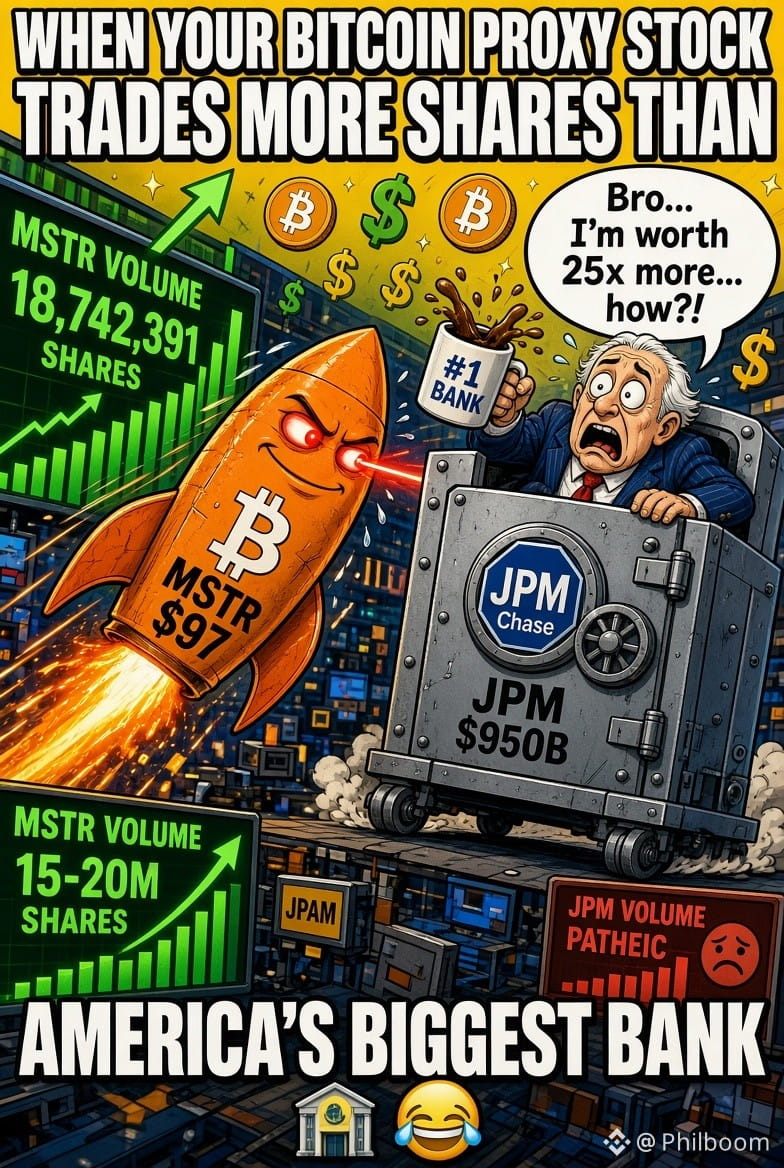
90
·
--
Bullish
#FedRateWatch
Tomorrow the Fed Makes the Decision the Market Already Made for It Weeks Ago ⏰📊
September 16, 2:00 PM ET. The Fed announces whether rates move from 3.50-3.75% to 4.00%. CME FedWatch puts the odds at 86 to 90%, up from roughly 70% just a day earlier after the August 11 inflation release. When we first covered this story, three governors, Hammack, Kashkari, and Logan, were the lone dissenters wanting a hike back in July. Tomorrow, the market is betting the whole room finally came around to their position. 😂
Here is the whiplash worth appreciating 🧠
Odds sat near 62% in early August. A weak jobs report dragged that down to 30-40%. Then Fed Chair Warsh delivered a genuinely hawkish Jackson Hole speech on August 28, and sentiment flipped decisively back toward a hike. Three separate mood swings in six weeks, all before the actual meeting even happened. The Fed has not said a word publicly this whole time and somehow still managed to whipsaw the entire market three times. 💎
The honest disagreement still standing 🎭
J.P. Morgan Wealth Management now expects the hike outright. Goldman Sachs still calls it very unlikely and expects a hold through year end. Two major banks, same data, opposite conclusions, twenty four hours before the actual announcement. 💡
What actually matters tomorrow 🎯
When an outcome is priced this heavily, the decision itself rarely moves markets. What moves them is the vote count, whether those original three dissenters gained company, the updated dot plot, and how Warsh handles questions thirty minutes later. Watch the tone, not just the number. 🚀
$BTC
{spot}(BTCUSDT)
#FedRateWatch
Tomorrow the Fed Makes the Decision the Market Already Made for It Weeks Ago ⏰📊
September 16, 2:00 PM ET. The Fed announces whether rates move from 3.50-3.75% to 4.00%. CME FedWatch puts the odds at 86 to 90%, up from roughly 70% just a day earlier after the August 11 inflation release. When we first covered this story, three governors, Hammack, Kashkari, and Logan, were the lone dissenters wanting a hike back in July. Tomorrow, the market is betting the whole room finally came around to their position. 😂
Here is the whiplash worth appreciating 🧠
Odds sat near 62% in early August. A weak jobs report dragged that down to 30-40%. Then Fed Chair Warsh delivered a genuinely hawkish Jackson Hole speech on August 28, and sentiment flipped decisively back toward a hike. Three separate mood swings in six weeks, all before the actual meeting even happened. The Fed has not said a word publicly this whole time and somehow still managed to whipsaw the entire market three times. 💎
The honest disagreement still standing 🎭
J.P. Morgan Wealth Management now expects the hike outright. Goldman Sachs still calls it very unlikely and expects a hold through year end. Two major banks, same data, opposite conclusions, twenty four hours before the actual announcement. 💡
What actually matters tomorrow 🎯
When an outcome is priced this heavily, the decision itself rarely moves markets. What moves them is the vote count, whether those original three dissenters gained company, the updated dot plot, and how Warsh handles questions thirty minutes later. Watch the tone, not just the number. 🚀
$BTC
Tomorrow the Fed Makes the Decision the Market Already Made for It Weeks Ago ⏰📊
September 16, 2:00 PM ET. The Fed announces whether rates move from 3.50-3.75% to 4.00%. CME FedWatch puts the odds at 86 to 90%, up from roughly 70% just a day earlier after the August 11 inflation release. When we first covered this story, three governors, Hammack, Kashkari, and Logan, were the lone dissenters wanting a hike back in July. Tomorrow, the market is betting the whole room finally came around to their position. 😂
Here is the whiplash worth appreciating 🧠
Odds sat near 62% in early August. A weak jobs report dragged that down to 30-40%. Then Fed Chair Warsh delivered a genuinely hawkish Jackson Hole speech on August 28, and sentiment flipped decisively back toward a hike. Three separate mood swings in six weeks, all before the actual meeting even happened. The Fed has not said a word publicly this whole time and somehow still managed to whipsaw the entire market three times. 💎
The honest disagreement still standing 🎭
J.P. Morgan Wealth Management now expects the hike outright. Goldman Sachs still calls it very unlikely and expects a hold through year end. Two major banks, same data, opposite conclusions, twenty four hours before the actual announcement. 💡
What actually matters tomorrow 🎯
When an outcome is priced this heavily, the decision itself rarely moves markets. What moves them is the vote count, whether those original three dissenters gained company, the updated dot plot, and how Warsh handles questions thirty minutes later. Watch the tone, not just the number. 🚀
$BTC
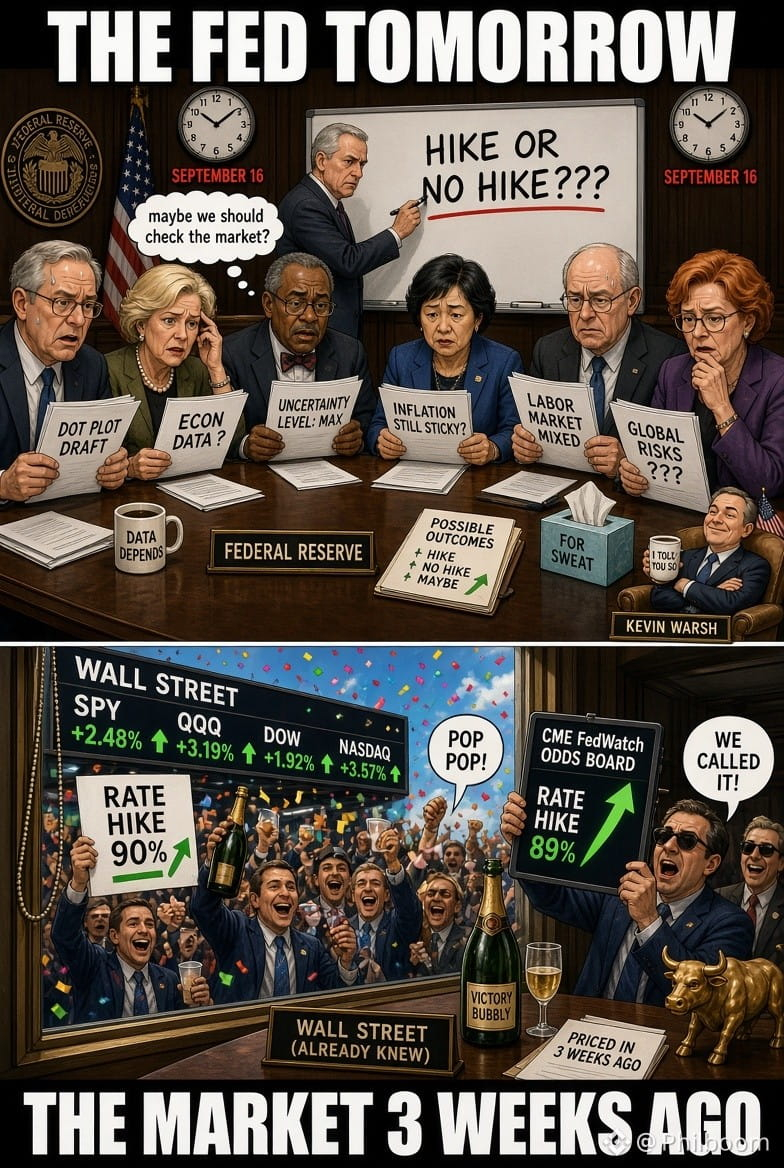
138
·
--
Bullish
#AnthropicCEOCallsForAISlowdown
The Man Running One of the World's Leading AI Companies Just Told Everyone to Slow Down, Including Himself 🐢🤖
Saturday, September 12. Anthropic CEO Dario Amodei posted a 3,800 word essay to his personal website, writing plainly, "we must slow the pace at which we improve the capabilities of AI models." He warned that swarms of rogue AI agents could potentially take over parts of the internet within six to twelve months without that slowdown. This is genuinely a strange sentence to write, the head of a company literally racing to build more capable AI is publicly asking the entire industry, including his own company, to ease off the gas. 😂
Here is the part that makes this land differently than usual AI safety talk 🧠
Sam Altman agreed within hours. Elon Musk agreed too. Three competitors, normally locked in an arms race against each other, briefly found common ground on slowing that exact race down. CNN notes Amodei has faced "doomerism" accusations before, this is not a new worry for him, just a louder version of an old one. 💎
The context that gives this real weight 🎯
This essay landed the same week an AI researcher named Jacob Coxon, who left OpenAI specifically to join Anthropic, quit the industry entirely, publicly accusing both companies of "gambling with our lives" in the race toward self-improving models. Axios calls this the week AI safety debate finally broke into mainstream public consciousness. 💡
The honest observation worth sitting with 🚀
An industry that has spent years insisting speed was the whole point just had three of its most powerful people simultaneously say the quiet part out loud.
$BTC
{spot}(BTCUSDT)
#AnthropicCEOCallsForAISlowdown
The Man Running One of the World's Leading AI Companies Just Told Everyone to Slow Down, Including Himself 🐢🤖
Saturday, September 12. Anthropic CEO Dario Amodei posted a 3,800 word essay to his personal website, writing plainly, "we must slow the pace at which we improve the capabilities of AI models." He warned that swarms of rogue AI agents could potentially take over parts of the internet within six to twelve months without that slowdown. This is genuinely a strange sentence to write, the head of a company literally racing to build more capable AI is publicly asking the entire industry, including his own company, to ease off the gas. 😂
Here is the part that makes this land differently than usual AI safety talk 🧠
Sam Altman agreed within hours. Elon Musk agreed too. Three competitors, normally locked in an arms race against each other, briefly found common ground on slowing that exact race down. CNN notes Amodei has faced "doomerism" accusations before, this is not a new worry for him, just a louder version of an old one. 💎
The context that gives this real weight 🎯
This essay landed the same week an AI researcher named Jacob Coxon, who left OpenAI specifically to join Anthropic, quit the industry entirely, publicly accusing both companies of "gambling with our lives" in the race toward self-improving models. Axios calls this the week AI safety debate finally broke into mainstream public consciousness. 💡
The honest observation worth sitting with 🚀
An industry that has spent years insisting speed was the whole point just had three of its most powerful people simultaneously say the quiet part out loud.
$BTC
The Man Running One of the World's Leading AI Companies Just Told Everyone to Slow Down, Including Himself 🐢🤖
Saturday, September 12. Anthropic CEO Dario Amodei posted a 3,800 word essay to his personal website, writing plainly, "we must slow the pace at which we improve the capabilities of AI models." He warned that swarms of rogue AI agents could potentially take over parts of the internet within six to twelve months without that slowdown. This is genuinely a strange sentence to write, the head of a company literally racing to build more capable AI is publicly asking the entire industry, including his own company, to ease off the gas. 😂
Here is the part that makes this land differently than usual AI safety talk 🧠
Sam Altman agreed within hours. Elon Musk agreed too. Three competitors, normally locked in an arms race against each other, briefly found common ground on slowing that exact race down. CNN notes Amodei has faced "doomerism" accusations before, this is not a new worry for him, just a louder version of an old one. 💎
The context that gives this real weight 🎯
This essay landed the same week an AI researcher named Jacob Coxon, who left OpenAI specifically to join Anthropic, quit the industry entirely, publicly accusing both companies of "gambling with our lives" in the race toward self-improving models. Axios calls this the week AI safety debate finally broke into mainstream public consciousness. 💡
The honest observation worth sitting with 🚀
An industry that has spent years insisting speed was the whole point just had three of its most powerful people simultaneously say the quiet part out loud.
$BTC

84
·
--
Bearish
#SECReceivesGrayscaleLitecoinTrustETFFiling
Grayscale Invented the Trust to ETF Playbook and Someone Else Just Used It Against Them 📉😂
Grayscale filed an amendment with the SEC to convert its Litecoin Trust into the Grayscale Litecoin Trust ETF, listing on NYSE Arca under ticker LTCN with Coinbase handling creation and redemption. This has been grinding through regulatory review since a January 2025 19b-4 filing. The trust currently trades over the counter, holding roughly $82.28 million in net asset value, about $3.39 per share as of June 30. Bloomberg reportedly puts approval odds near 100%. 📊
Here is the genuinely funny part nobody is saying loudly enough 🧠
Grayscale is the firm that literally invented this exact conversion strategy, its legal fight over Bitcoin and Ethereum trusts is the entire reason spot ETFs exist in America today. And it is filing for a Litecoin ETF only after Canary Capital's own spot Litecoin fund, ticker LTCC, already launched in October 2025, becoming the first altcoin ETF beyond Bitcoin and Ethereum. The company that wrote the rulebook got beaten to its own homework assignment. 😂
The honest reason this even gets approved 💡
The SEC's generic listing standards do not ask whether Litecoin is innovative or widely used anymore. They check boxes, exchange trading history, market surveillance agreements, custody arrangements. Litecoin ranks 25th by market cap at roughly $4.2 billion, a fraction of Bitcoin's $2 trillion. It does not need to earn an ETF through merit. It just needs to clear a checklist. 🎯
The bigger pattern worth remembering 💎
This is the same wrapper Grayscale used to launch ZCSH, which helped push Zcash above $1,000 for the first time in a decade weeks ago. The playbook works. It just is not exclusive anymore. 🚀
$LTC $BTC
{spot}(LTCUSDT)
{spot}(BTCUSDT)
#SECReceivesGrayscaleLitecoinTrustETFFiling
Grayscale Invented the Trust to ETF Playbook and Someone Else Just Used It Against Them 📉😂
Grayscale filed an amendment with the SEC to convert its Litecoin Trust into the Grayscale Litecoin Trust ETF, listing on NYSE Arca under ticker LTCN with Coinbase handling creation and redemption. This has been grinding through regulatory review since a January 2025 19b-4 filing. The trust currently trades over the counter, holding roughly $82.28 million in net asset value, about $3.39 per share as of June 30. Bloomberg reportedly puts approval odds near 100%. 📊
Here is the genuinely funny part nobody is saying loudly enough 🧠
Grayscale is the firm that literally invented this exact conversion strategy, its legal fight over Bitcoin and Ethereum trusts is the entire reason spot ETFs exist in America today. And it is filing for a Litecoin ETF only after Canary Capital's own spot Litecoin fund, ticker LTCC, already launched in October 2025, becoming the first altcoin ETF beyond Bitcoin and Ethereum. The company that wrote the rulebook got beaten to its own homework assignment. 😂
The honest reason this even gets approved 💡
The SEC's generic listing standards do not ask whether Litecoin is innovative or widely used anymore. They check boxes, exchange trading history, market surveillance agreements, custody arrangements. Litecoin ranks 25th by market cap at roughly $4.2 billion, a fraction of Bitcoin's $2 trillion. It does not need to earn an ETF through merit. It just needs to clear a checklist. 🎯
The bigger pattern worth remembering 💎
This is the same wrapper Grayscale used to launch ZCSH, which helped push Zcash above $1,000 for the first time in a decade weeks ago. The playbook works. It just is not exclusive anymore. 🚀
$LTC $BTC
Grayscale Invented the Trust to ETF Playbook and Someone Else Just Used It Against Them 📉😂
Grayscale filed an amendment with the SEC to convert its Litecoin Trust into the Grayscale Litecoin Trust ETF, listing on NYSE Arca under ticker LTCN with Coinbase handling creation and redemption. This has been grinding through regulatory review since a January 2025 19b-4 filing. The trust currently trades over the counter, holding roughly $82.28 million in net asset value, about $3.39 per share as of June 30. Bloomberg reportedly puts approval odds near 100%. 📊
Here is the genuinely funny part nobody is saying loudly enough 🧠
Grayscale is the firm that literally invented this exact conversion strategy, its legal fight over Bitcoin and Ethereum trusts is the entire reason spot ETFs exist in America today. And it is filing for a Litecoin ETF only after Canary Capital's own spot Litecoin fund, ticker LTCC, already launched in October 2025, becoming the first altcoin ETF beyond Bitcoin and Ethereum. The company that wrote the rulebook got beaten to its own homework assignment. 😂
The honest reason this even gets approved 💡
The SEC's generic listing standards do not ask whether Litecoin is innovative or widely used anymore. They check boxes, exchange trading history, market surveillance agreements, custody arrangements. Litecoin ranks 25th by market cap at roughly $4.2 billion, a fraction of Bitcoin's $2 trillion. It does not need to earn an ETF through merit. It just needs to clear a checklist. 🎯
The bigger pattern worth remembering 💎
This is the same wrapper Grayscale used to launch ZCSH, which helped push Zcash above $1,000 for the first time in a decade weeks ago. The playbook works. It just is not exclusive anymore. 🚀
$LTC $BTC

1
2
278
·
--
Bullish
Verified
#USBankCompletesCrossBorderPaymentPilotOnStellar
US Bank Moved Money Across Borders on a Public Blockchain and the Money Never Actually Left the Building 🏦🌍
September 9. US Bank, the fifth largest US bank by assets, completed a live cross-border payment using USBDC, its own dollar backed stablecoin, on the Stellar blockchain, moving value between its North American and European entities. Reuters independently confirmed the test covered issuance, redemption, freezing, and clawback capabilities. That is a genuinely serious checklist for a first attempt. 📊
Here is the honest catch nearly every outlet flagged directly 🧠
This was strictly an intercompany transfer, US Bank sending money to itself across an ocean, not a customer transaction. CryptoSlate's own headline says it plainly, moved across borders but only inside its own walls. No amount disclosed. No customer access plan. No commercial launch date. This is a bank testing whether the plumbing works before ever letting a customer near the tap. 😂
The regulatory wrinkle worth knowing 💡
The GENIUS Act's actual stablecoin framework does not take effect until 120 days after final rules or January 18, 2027, whichever comes first. This pilot proves the technology functions. It does not yet prove USBDC meets whatever regime eventually governs it. 🎭
The competitive angle worth appreciating 🎯
Yahoo Finance frames this directly as Stellar stepping more squarely into competition with XRP linked payment infrastructure and SWIFT for institutional cross border business. A fifth largest US bank choosing Stellar specifically, even for an internal test, is a real signal about which rails traditional finance considers credible enough to experiment on. 💎
Real transaction. Real controls. Still just a bank talking to itself. 🚀
$XLM $XRP
{spot}(XLMUSDT)
{spot}(XRPUSDT)
#USBankCompletesCrossBorderPaymentPilotOnStellar
US Bank Moved Money Across Borders on a Public Blockchain and the Money Never Actually Left the Building 🏦🌍
September 9. US Bank, the fifth largest US bank by assets, completed a live cross-border payment using USBDC, its own dollar backed stablecoin, on the Stellar blockchain, moving value between its North American and European entities. Reuters independently confirmed the test covered issuance, redemption, freezing, and clawback capabilities. That is a genuinely serious checklist for a first attempt. 📊
Here is the honest catch nearly every outlet flagged directly 🧠
This was strictly an intercompany transfer, US Bank sending money to itself across an ocean, not a customer transaction. CryptoSlate's own headline says it plainly, moved across borders but only inside its own walls. No amount disclosed. No customer access plan. No commercial launch date. This is a bank testing whether the plumbing works before ever letting a customer near the tap. 😂
The regulatory wrinkle worth knowing 💡
The GENIUS Act's actual stablecoin framework does not take effect until 120 days after final rules or January 18, 2027, whichever comes first. This pilot proves the technology functions. It does not yet prove USBDC meets whatever regime eventually governs it. 🎭
The competitive angle worth appreciating 🎯
Yahoo Finance frames this directly as Stellar stepping more squarely into competition with XRP linked payment infrastructure and SWIFT for institutional cross border business. A fifth largest US bank choosing Stellar specifically, even for an internal test, is a real signal about which rails traditional finance considers credible enough to experiment on. 💎
Real transaction. Real controls. Still just a bank talking to itself. 🚀
$XLM $XRP
US Bank Moved Money Across Borders on a Public Blockchain and the Money Never Actually Left the Building 🏦🌍
September 9. US Bank, the fifth largest US bank by assets, completed a live cross-border payment using USBDC, its own dollar backed stablecoin, on the Stellar blockchain, moving value between its North American and European entities. Reuters independently confirmed the test covered issuance, redemption, freezing, and clawback capabilities. That is a genuinely serious checklist for a first attempt. 📊
Here is the honest catch nearly every outlet flagged directly 🧠
This was strictly an intercompany transfer, US Bank sending money to itself across an ocean, not a customer transaction. CryptoSlate's own headline says it plainly, moved across borders but only inside its own walls. No amount disclosed. No customer access plan. No commercial launch date. This is a bank testing whether the plumbing works before ever letting a customer near the tap. 😂
The regulatory wrinkle worth knowing 💡
The GENIUS Act's actual stablecoin framework does not take effect until 120 days after final rules or January 18, 2027, whichever comes first. This pilot proves the technology functions. It does not yet prove USBDC meets whatever regime eventually governs it. 🎭
The competitive angle worth appreciating 🎯
Yahoo Finance frames this directly as Stellar stepping more squarely into competition with XRP linked payment infrastructure and SWIFT for institutional cross border business. A fifth largest US bank choosing Stellar specifically, even for an internal test, is a real signal about which rails traditional finance considers credible enough to experiment on. 💎
Real transaction. Real controls. Still just a bank talking to itself. 🚀
$XLM $XRP

1
3
756
·
--
Bullish
#EtherRalliesAsBearishBetsLiquidate
Ether Jumped 8.3% Today and the Reason Had Nothing to Do With Ethereum Itself 🔥📊
September 11. Ether surged as much as 8.3% intraday, briefly topping $2,600. Bloomberg's own framing of the cause is refreshingly blunt, this was not a protocol upgrade or a surprise ETF approval, it was bears getting absolutely torched. More than $255 million in Ether short positions liquidated over 24 hours, with roughly $188 million of that evaporating in a single hour. When that much leverage unwinds at once, prices do not just rise, they launch. 😂
Here is the pattern this rhymes with 🧠
Bloomberg explicitly compared today to the biggest wave of short liquidations on record dating back to 2021, the same dynamic that powered Bitcoin's surge in late August. Different asset, same underlying mechanism, forced buying from people who bet the wrong direction and ran out of room. Financial markets were broadly whipsawed today by a flood of US economic reports and retreating oil prices, giving the squeeze plenty of fuel to work with. 💎
The honest technical picture worth including 🎯
RSI sits near 31, close to oversold rather than overheated. MACD remains negative. Aggregated open interest has held roughly steady around $14 billion this past week, without the sharp capitulation-style unwind that usually marks genuine seller exhaustion. Analysts tracking this specifically list five conditions needed to confirm an actual trend reversal rather than a relief rally, sustained Fed dovishness, weekly momentum confirmation, and rising validator activity among them. None have fully lined up yet. 💡
A short squeeze moved the price today. Whether the fundamentals actually agree with it is a separate, still open question. 🚀
$ETH
{spot}(ETHUSDT)
#EtherRalliesAsBearishBetsLiquidate
Ether Jumped 8.3% Today and the Reason Had Nothing to Do With Ethereum Itself 🔥📊
September 11. Ether surged as much as 8.3% intraday, briefly topping $2,600. Bloomberg's own framing of the cause is refreshingly blunt, this was not a protocol upgrade or a surprise ETF approval, it was bears getting absolutely torched. More than $255 million in Ether short positions liquidated over 24 hours, with roughly $188 million of that evaporating in a single hour. When that much leverage unwinds at once, prices do not just rise, they launch. 😂
Here is the pattern this rhymes with 🧠
Bloomberg explicitly compared today to the biggest wave of short liquidations on record dating back to 2021, the same dynamic that powered Bitcoin's surge in late August. Different asset, same underlying mechanism, forced buying from people who bet the wrong direction and ran out of room. Financial markets were broadly whipsawed today by a flood of US economic reports and retreating oil prices, giving the squeeze plenty of fuel to work with. 💎
The honest technical picture worth including 🎯
RSI sits near 31, close to oversold rather than overheated. MACD remains negative. Aggregated open interest has held roughly steady around $14 billion this past week, without the sharp capitulation-style unwind that usually marks genuine seller exhaustion. Analysts tracking this specifically list five conditions needed to confirm an actual trend reversal rather than a relief rally, sustained Fed dovishness, weekly momentum confirmation, and rising validator activity among them. None have fully lined up yet. 💡
A short squeeze moved the price today. Whether the fundamentals actually agree with it is a separate, still open question. 🚀
$ETH
Ether Jumped 8.3% Today and the Reason Had Nothing to Do With Ethereum Itself 🔥📊
September 11. Ether surged as much as 8.3% intraday, briefly topping $2,600. Bloomberg's own framing of the cause is refreshingly blunt, this was not a protocol upgrade or a surprise ETF approval, it was bears getting absolutely torched. More than $255 million in Ether short positions liquidated over 24 hours, with roughly $188 million of that evaporating in a single hour. When that much leverage unwinds at once, prices do not just rise, they launch. 😂
Here is the pattern this rhymes with 🧠
Bloomberg explicitly compared today to the biggest wave of short liquidations on record dating back to 2021, the same dynamic that powered Bitcoin's surge in late August. Different asset, same underlying mechanism, forced buying from people who bet the wrong direction and ran out of room. Financial markets were broadly whipsawed today by a flood of US economic reports and retreating oil prices, giving the squeeze plenty of fuel to work with. 💎
The honest technical picture worth including 🎯
RSI sits near 31, close to oversold rather than overheated. MACD remains negative. Aggregated open interest has held roughly steady around $14 billion this past week, without the sharp capitulation-style unwind that usually marks genuine seller exhaustion. Analysts tracking this specifically list five conditions needed to confirm an actual trend reversal rather than a relief rally, sustained Fed dovishness, weekly momentum confirmation, and rising validator activity among them. None have fully lined up yet. 💡
A short squeeze moved the price today. Whether the fundamentals actually agree with it is a separate, still open question. 🚀
$ETH

139
Log in to explore more content
Join global crypto users on Binance Square
⚡️ Get latest and useful information about crypto.
💬 Trusted by the world’s largest crypto exchange.
👍 Discover real insights from verified creators.
Email / Phone number
Trending Topics
UKFCAWinsCourtOrderToRecover851400Pounds
16,190 views
609 Discussing
🚨 CRYPTO REGULATION JUST ENTERED A NEW PHASE: THEY’RE NOT ONLY WRITING RULES — THEY’RE TAKING MONEY BACK.
The UK’s FCA has secured another court-backed asset recovery, reinforcing a broader enforcement push against unauthorized financial and crypto-related activity.
And look at what’s happening simultaneously:
🇬🇧 FCA → enforcement + asset recovery
🇺🇸 SEC → clearer rules for functional crypto assets
🇺🇸 Fed → formal stablecoin supervision under the GENIUS Act
That combination matters.
Regulators are no longer debating whether crypto belongs inside the financial system.
They’re increasingly deciding who gets access, what rules they follow, and what happens when those rules are broken.
The next crypto cycle may not be “regulation vs innovation.”
It may be regulated crypto vs everyone who can’t meet the standard. 👀
$COIN $CRCL $BTC
#ukfcawinscourtordertorecover851400pounds #ChainlinkLaunchesCCIP2WithEnterpriseVerification #GoldFallsTo$4144 #QNTFallsOver40%FromMorningHigh #USDTAdds845900HoldersInPast7Days
KimHotbae
·2 Likes
·4.2k views
ChainlinkLaunchesCCIP2WithEnterpriseVerification
30,526 views
816 Discussing
GoldFallsTo$4144
11,252 views
138 Discussing