
eky-sky
734 Posts

eky-sky
Report
Block User
Open Trade
Frequent Trader
2.2 Years
416 Following
46 Followers
47 Liked
Posts
Portfolio
All
Quotes
·
--
Success is a product of consistency and patience
Success is a product of consistency and patience


Manta 甜心
·
--
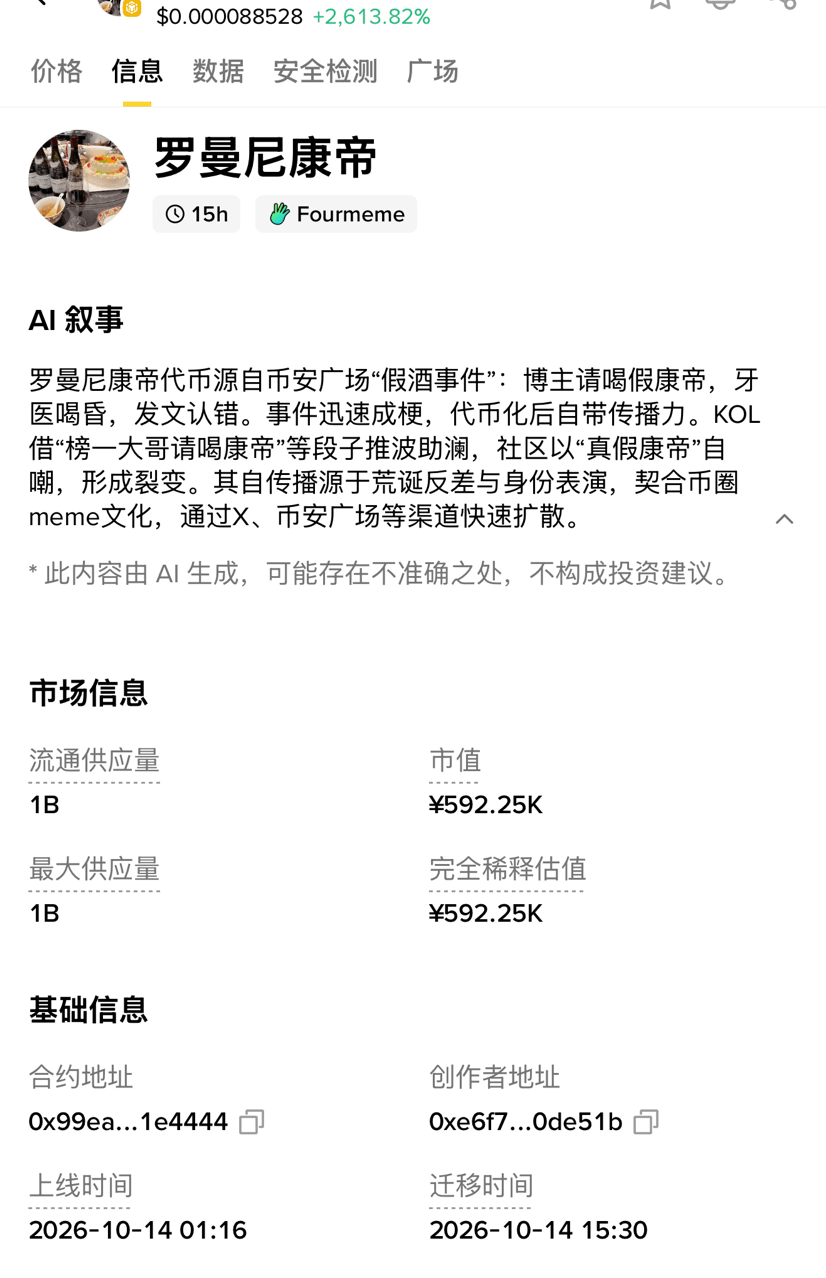
真是乌烟瘴气到了极致。现在发币门槛有多低?只要有个段子,哪怕是个烂梗,哪怕抠字眼抠出个假酒概念,就敢建池子喊单。群魔乱舞,镰刀互砍。
最让我觉得讽刺的是什么?
像那种有社区建设的Meme,你不玩,你嫌它慢,你嫌它不拉盘。
看到这种“假酒事件”套个AI外壳的盘子,你却两眼放光,梭哈冲锋,生怕错过了神话,最后被挂在山顶喝西北风。
真信仰的老马社区,和这些“抠字眼发币”的烂盘子,最大的区别就是:前者在建设,后者在演戏。
前者把Meme当事业,后者把你当提款机。
$牛来 $ETH $ZEC
最让我觉得讽刺的是什么?
像那种有社区建设的Meme,你不玩,你嫌它慢,你嫌它不拉盘。
看到这种“假酒事件”套个AI外壳的盘子,你却两眼放光,梭哈冲锋,生怕错过了神话,最后被挂在山顶喝西北风。
真信仰的老马社区,和这些“抠字眼发币”的烂盘子,最大的区别就是:前者在建设,后者在演戏。
前者把Meme当事业,后者把你当提款机。
$牛来 $ETH $ZEC
75
·
--
check out the exciting moves of Marvin 👇
check out the exciting moves of Marvin 👇
Manta 甜心
·
--
白西装红衬衫,MJ本人来了都得愣3秒
别人的二创是换皮,这支是连灵魂都改编了。
节奏一响,谁还管K线是什么颜色。🎵
$ETH $BTC $BNB
#Web3创作
别人的二创是换皮,这支是连灵魂都改编了。
节奏一响,谁还管K线是什么颜色。🎵
$ETH $BTC $BNB
#Web3创作
11
·
--
What do you think about this 👇
What do you think about this 👇
Manta 甜心
·
--
我用公式算了爆仓概率,发现期望值是负的。
但我没信,觉得别人爆仓是因为不会算,我会算。
结果 BTC 87,000 开 3 倍多,跌到 80,000,我的微积分没算到我会手抖。爆仓,亏 8 万。
当我看到这只🐕🦺,我算了笔账:
• Floki,老马养的柴犬,巅峰市值 35 亿美元。
• 而这老马养的哈瓦那犬,现在市值300多万。
我问自己:如果它能到 Floki 的 1/10,是多少?如果到 1/100,又是多少?
我的计算器显示:别按了,再按屏幕要裂了。
然后我对比了合约的数学模型:3 倍杠杆,跌 33% 归零。
而现货,跌 100% 才归零。
而它现在才几百万美元市值,再跌 90% 的概率,比它复制 Floki 路径的概率还低。
数学学霸终于把数学用在了正确的地方:买现货;不算爆仓线,算对标空间。
Floki 到过 35 亿,这只狗才刚开始。$ETH
$DOGE

88
·
--
What do you think about this👇
What do you think about this👇

MrStar
·
--
The New Digital Frontier: Who Will Own Your Attention?
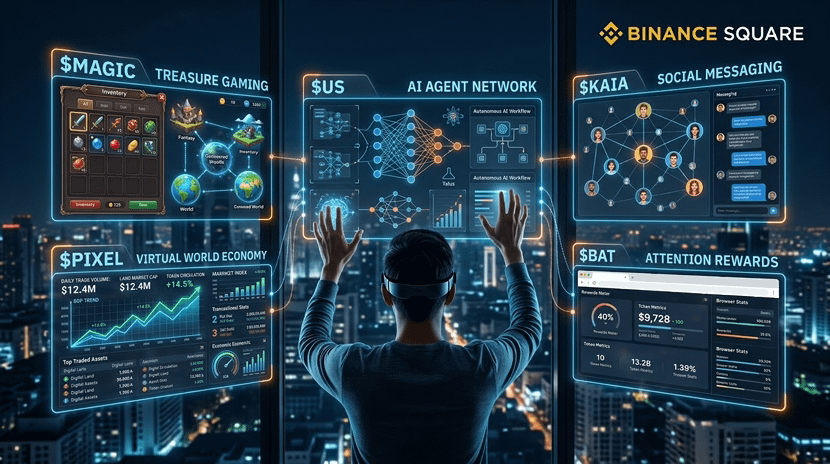
Traditional economies were built on physical production but the world of tomorrow is being constructed entirely around our digital attention. Every second we spend staring at a screen has become the fuel for a massive market. In the future your work your leisure or simply your browsing will take on a completely new meaning.The infrastructure for this shift is being quietly woven right now.
#GameFi
For example the $BAT project takes our digital attention away from corporate monopolies to return its value directly to the user. Even the advertisements we watch now hold actual worth.
On another front the gaming sector is undergoing a massive transformation. Ecosystems like $MAGIC establish cross game digital property while projects like $PIXEL turn playing games from a simple leisure activity into a standalone virtualeconomy.
Humans are not alone in this new order since artificial intelligence agents are claiming their space too. The $US network allows autonomous artificial intelligence agents to execute decisions and transact directly on the blockchain.
#AI
Furthermore protocols like $KAIA are integrating this vast digital existence into the messaging apps we use every day to reach massive audiences across Asia.
My stance on this #trajectory is uncompromising. Over the next decade our virtual assets will determine our economic standing just as much as our physical careers do. Traditional tech giants will want to keep using our data for free but decentralized systems will hand total control back to us. Every moment we fail to claim ownership of our own data pushes us closer to digital servitude.
#Metaverse
Where do you stand in this massive digital transformation? Do you believe your time in the virtual world holds genuine value? Share your thoughts in the comments below.
12
·
--
Smart people make a decision
Smart people make a decision
Manta 甜心
·
--
别找了,$BTC 下跌的原因不是美联储。
我刚翻完过去 72 小时的链上数据,发现了一个被所有人忽略的真相——这波从 87,000 砸到 81,000,表面是宏观利空,实际上是一场精心设计的割韭菜。
这几天市场流传着四个利空:美债收益率破 5.25%、比特币 ETF 连续六周净流出、原油涨到 107 美元、AI 股票抽血。
这些理由每一个都成立,但它们不是今天跌的理由。它们已经存在很久了,为什么偏偏在 87,000 这个位置集中爆发?因为有人需要它们在这个位置爆发。
我拉了一下数据,发现两个异常。
第一,87,000 附近的多头仓位,在暴跌前三天突然暴增,大量散户在 85,000-87,000 开多,杠杆 3-5 倍。
第二,81,000-82,000 区间,巨鲸钱包在过去 48 小时疯狂吸筹,净流入约 12,000 枚 BTC,接近 10 亿美元。
翻译成人话:有人在 87,000 制造恐慌,逼你割肉,然后在 81,000 默默捡你的筹码。
这不是市场自然下跌,这是流动性猎杀。
当多头足够密集时,砸盘成本远低于吸筹成本。
那他们什么时候收手?
盯三个信号:合约持仓量大幅下降、资金费率从负转正、大额稳定币流入交易所。目前持仓量已从高点回落 18%,资金费率负值开始收窄。
如果未来 48 小时出现大额稳定币流入,这场收割可能进入尾声。
我不是喊你抄底,只是把数据翻译给你听。
当所有人都在问为什么跌的时候,聪明人在问谁在买。
$ETH
#币安推出BinanceIntelligence #Evernorth推迟纳斯达克上市至10月12日

22
·
--
Can Machines really do it on their own with humans?
Can Machines really do it on their own with humans?
MrStar
·
--
When Algorithms Hold Wallets: Is #crypto Built for Machines?
Look closely at the current evolution of on chain activity and you will notice a quiet shift underway. We always assumed blockchains were invented to liberate human beings from traditional banks. What if the primary users of decentralized finance were never meant to be humans at all?
#FedMinutesFocusOnOctoberPause
Autonomous artificial intelligence agents are quickly transforming into self sovereign economic actors. These digital entities need to purchase computing power, pay for raw data streams and settle transactions in milliseconds without filling out bank forms. This is where crypto becomes the native currency of the synthetic world. Protocols like $FET empower independent software agents to negotiate contracts and settle micro transactions autonomously. Meanwhile decentralized compute networks like $RENDER provide the vital graphics processing hardware these visual machine models require to exist. Even specialized networks like $TAO reward competitive intelligence across open subnets without corporate gatekeepers.
My perspective is straightforward. Human participation in crypto will soon be dwarfed by algorithmic activity. Machines do not sleep, they do not care about bureaucratic working hours and they cannot open a legacy bank account. Crypto is not just surviving the rise of artificial intelligence. It is becoming the economic spine of the entire machine civilization.
Would you trust an autonomous artificial intelligence agent to manage its own wallet and negotiate on your behalf? Drop your perspective in the comments below.
#AI
Lets Vote ! 👇🏻👇🏻👇🏻
91
·
--
CRYPTO QUESTIONS NOBODY ASKS #10
🪙🔍 WHAT IS THE REAL PRODUCT BEHIND A TOKEN?
A token has a price.
But a price doesn't automatically tell you what the token actually does.
So here's a simple question:
What is the product?
Imagine two projects.
Project A has:
📈 A popular token
👥 A large social-media following
🔥 Lots of hype
💰 High trading activity
But very little is actually being built or used.
Project B has:
🛠️ A working product
👤 Real users
💳 People paying for a service
🌐 Useful infrastructure
📊 Growing activity
But the token isn't receiving the same attention.
Which one has the stronger underlying economic activity?
That's not a question that can be answered simply by looking at today's token price.
This is why researching crypto can go much deeper than:
“Is this coin going up?”
Try asking:
🔹 What problem does the project solve?
🔹 Who actually uses it?
🔹 Why does the token need to exist?
🔹 Does using the product create demand for the token?
🔹 How does the project generate revenue, if it does?
🔹 Who controls the supply?
🔹 What happens if the hype disappears?
These questions don't guarantee that a token will succeed.
But they can reveal something important:
Whether you're looking at a product with a token or simply a token with a story.
And sometimes those are very different things.
The crypto market can be driven by technology, speculation, community, incentives and narratives.
Understanding the difference is part of understanding the market itself.
👇 When you discover a new token, what's the FIRST thing you investigate: the team, technology, tokenomics, community, product or something else?
#CryptoQuestions #Altcoins
91
·
--
I believe!!!!!
I believe!!!!!

will win 张
·
--
Bullish充实的日子总是过得很快!
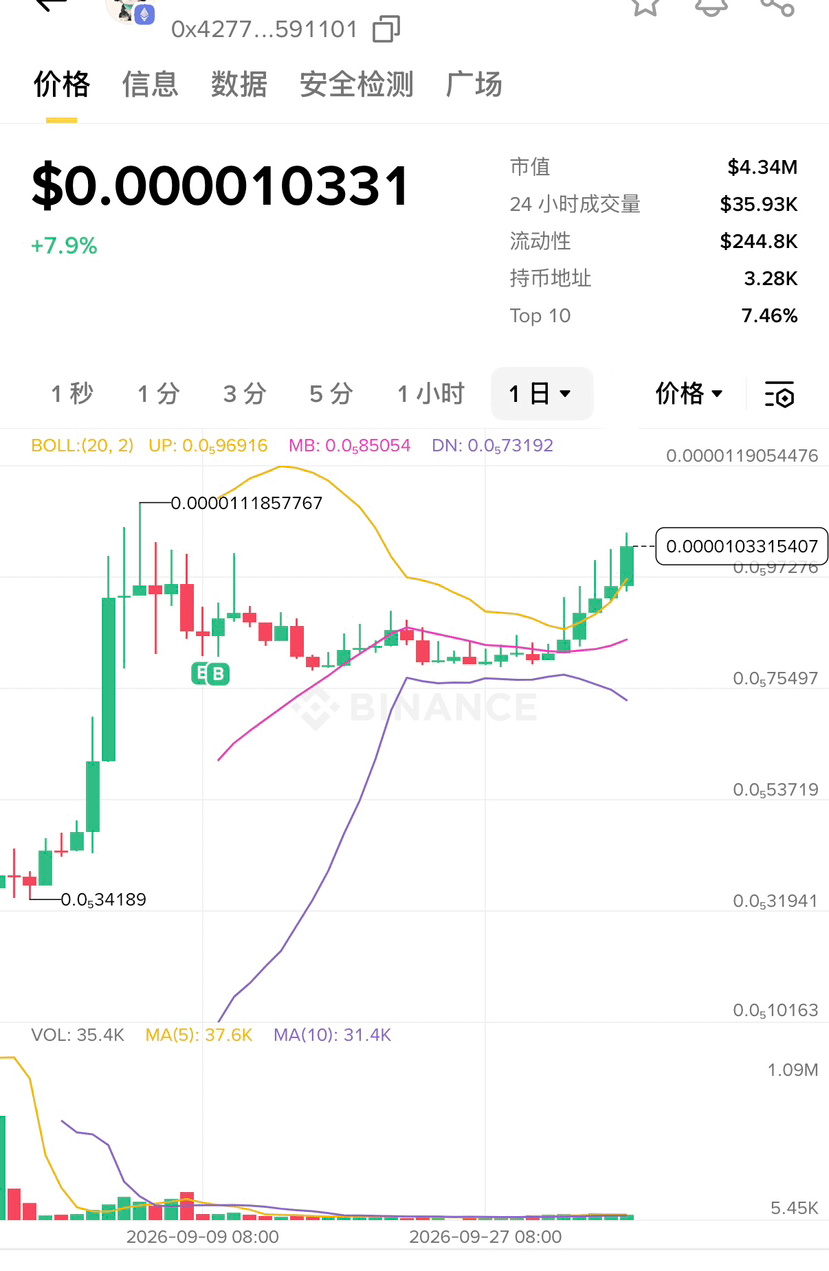
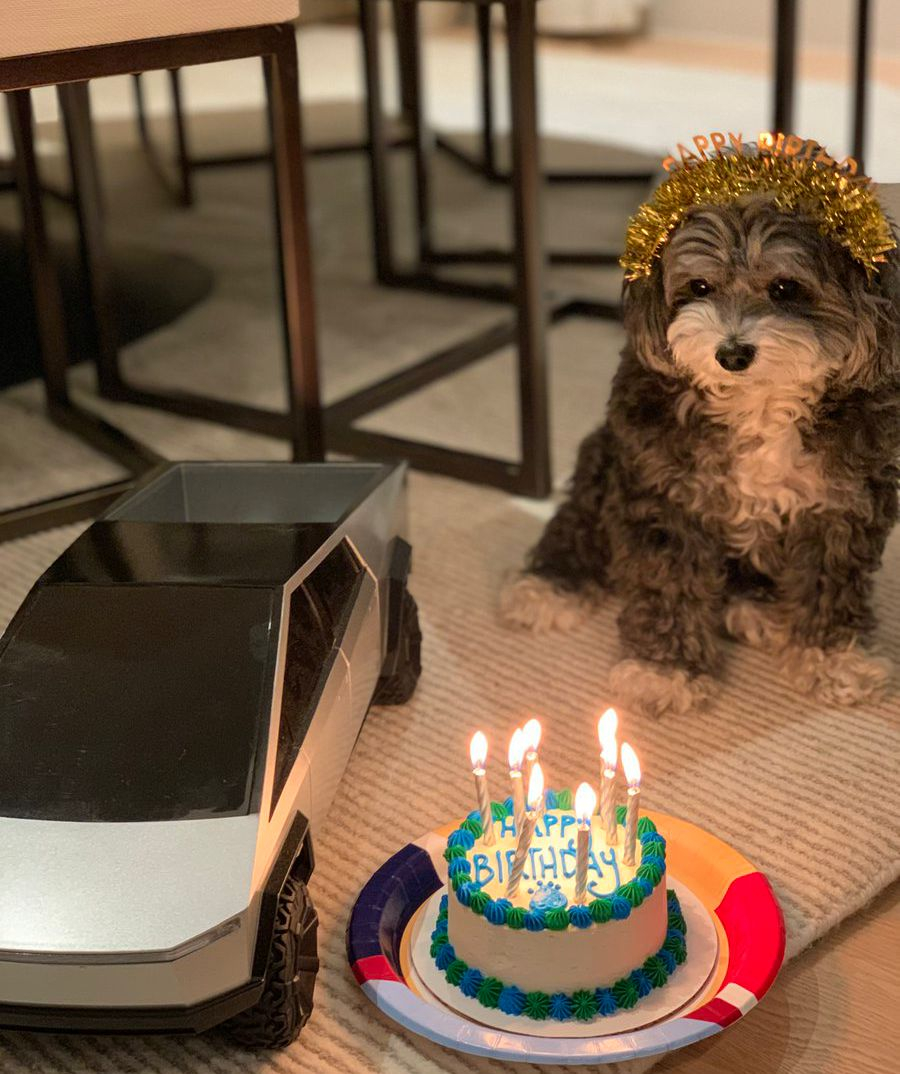
不知不觉建设$ETH 链马斯克火星🐕🦺已经一个多月!
每天不到6个小时睡觉,其它时间基本花在小🐕🦺身上!虽累但是我喜欢这个过程,这两年大部分时间都是这么过来的!社区伙伴也基本如此,比如甜心30天创作了30部音乐MV,每部花10几甚至20几个小时,我瞄一眼她创作流程界面就头大😂
当初跟社区一些伙伴的友谊也是因为一起拼搏而建立,我们都喜欢这种充满激情的氛围!现在的小🐕🦺也让大家重新找回感觉!
最初的被质疑,不理解,甚至泼脏水还有攻击,这一切都无法阻挡小🐕🦺的发展,反而让我们更加努力,除了正常的发帖,评论,直播,与各大直播间联合展播音乐MV,让更多人认识,了解,喜欢小🐕🦺!
今天币安直播,@Yi He 一姐说,短视频是风口!小🐕🦺一开始就已经走在正确的道路上,而且是遥遥领先!
小🐕🦺社区正在快速发展,币价也稳步上升,真正大爆发也随时到来,你可以不喜欢,不看好小🐕🦺,但你可以关注它,见证它如何成功或者失败😂但我更希望更多志同道合的人加入我们,一起收获成功,毕竟小🐕🦺确定性已经越来越高了!
$DOGE ,$MARSCOIN
30
·
--
CRYPTO QUESTIONS NOBODY ASKS #08
🔮📊 CAN PREDICTION MARKETS BECOME INFORMATION MARKETS?
When you hear the word “market,” you probably think about buying and selling.
But markets can do something else:
They can aggregate information.
Imagine a question:
“Will a particular event happen before the end of the year?”
Instead of asking thousands of people for their opinions, you create a market where participants trade positions based on what they believe will happen.
As people buy and sell, the market price changes.
That price can then be interpreted as a measure of the market's collective expectations.
This is the basic idea behind prediction markets.
And blockchain could make these markets accessible globally through smart contracts and digital assets.
But there's an important distinction:
A prediction-market price is not a guarantee of what will happen.
It reflects the positions of participants at a particular moment.
Participants can be wrong.
Markets can be thin.
Information can be incomplete.
And incentives can sometimes influence behavior.
So why is this interesting?
Because prediction markets potentially turn beliefs into tradeable information.
Instead of simply asking:
“What's your opinion?”
You can ask:
“Are you willing to put something behind that opinion?”
That creates a fascinating intersection between:
📊 Markets
🧠 Information
💰 Incentives
🤖 Data
⛓️ Blockchain
And perhaps the bigger question is:
Could prediction markets eventually become another way society measures expectations about the future?
Not necessarily replacing traditional polls, experts or research—but providing another source of information.
👇 Here's the question:
Would you trust a market's collective expectation more than a simple online poll? Why or why not?
#CryptoQuestions l
#PredictionMarkets #Markets
105
·
--
CRYPTO QUESTIONS NOBODY ASKS #07
⚡🌐 CAN A BLOCKCHAIN BECOME A UTILITY COMPANY?
When most people hear “blockchain,” they think:
Bitcoin.
Ethereum.
Trading.
DeFi.
But what if blockchain technology could coordinate physical infrastructure?
Imagine thousands of people operating physical devices:
📡 Internet hotspots
🛰️ Wireless networks
💾 Storage devices
⚡ Energy infrastructure
🚗 Sensors and connected vehicles
These devices provide real-world services.
A blockchain could potentially be used to coordinate participants, record contributions and distribute digital rewards according to predefined rules.
This concept is often called:
DePIN — Decentralized Physical Infrastructure Networks.
The interesting part is that the product isn't necessarily the token.
The product could be the real-world service.
For example:
A person provides wireless coverage.
Another provides storage.
Another contributes computing resources.
Users consume those services.
The network records activity and participants may receive digital incentives.
So instead of:
“Buy this token because it might go up.”
The more important question becomes:
“Is anyone actually using the infrastructure?”
That distinction matters.
A project can have an interesting token and still have little real-world demand.
But if people are genuinely paying for a useful service, the economics become much more interesting.
DePIN therefore raises a bigger question about crypto:
Can decentralized networks compete with traditional companies in building physical infrastructure?
Maybe the future of crypto isn't only about digital assets.
Maybe part of it is about using digital incentives to coordinate real-world resources.
👇 What physical infrastructure would you most like to see decentralized?
Internet, electricity, storage, computing or something else?
#CryptoQuestions #DePIN #Blockchain #Infrastructure
145
·
--
CRYPTO QUESTIONS NOBODY ASKS #06
🌍🔗 IF EVERYTHING GETS TOKENIZED, DO WE STILL NEED TRADITIONAL MARKETS?
Imagine a world where more than just cryptocurrencies exist on blockchain networks.
A government bond could be represented digitally.
A fund could be tokenized.
A piece of real estate could have blockchain-based ownership records.
An invoice could become a digital asset.
A commodity could be represented by tokens linked to an underlying asset.
Even financial contracts could potentially become programmable.
This is the idea behind tokenization.
But here's the question:
If more real-world assets become tokenized, what happens to the traditional financial markets built around them?
It doesn't necessarily mean stock exchanges, banks and brokers disappear.
Instead, some of their functions could potentially move onto blockchain infrastructure.
Imagine:
Asset → Token → Blockchain → Settlement
Instead of several systems communicating with each other, some parts of the process could happen on the same programmable network.
That could potentially make certain transactions faster, more automated and easier to settle.
But tokenization doesn't magically solve everything.
You still need to answer important questions:
🔐 Who legally owns the underlying asset?
⚖️ Which laws apply?
🏦 Who is responsible for custody?
📜 Does the token actually represent a legal claim?
🚨 What happens if the issuer fails?
These questions show why tokenization is much bigger than simply creating a token.
The technology may be relatively easy.
Creating trust between the digital asset and the real-world asset is the harder part.
And that leads to an interesting possibility:
Maybe the future isn't “traditional finance vs crypto.”
Maybe it's a financial system where traditional assets increasingly use blockchain infrastructure.
🤔 If you could tokenize one real-world asset today, what would you choose?
Property, gold, government bonds, business shares—or something else?
#CryptoQuestions #Tokenization #Blockchain #Crypto
114
·
--
CRYPTO QUESTIONS NOBODY ASKS #05
💰⚙️ WHAT HAPPENS WHEN MONEY BECOMES PROGRAMMABLE?
For most of history, money has simply been something we hold, send and receive.
But what if money could also follow instructions?
Imagine receiving a payment with rules attached:
➡️ It can only be spent on a particular service.
➡️ A payment is released automatically when a job is completed.
➡️ Funds are divided between several people the moment a transaction settles.
➡️ A machine automatically pays for the electricity or computing power it consumes.
➡️ An AI agent receives a limited budget and spends it according to predefined rules.
This is where programmable money becomes interesting.
Smart contracts can make digital assets interact with predefined conditions.
For example:
Condition: Service completed ✅
↓
Verification: Confirmed ✅
↓
Payment: Automatically released 💰
No person has to manually press “send” at the final stage.
But programmable money also raises difficult questions.
Who writes the rules?
What happens if the rules contain an error?
Who can change them?
What happens if someone exploits the code?
And perhaps most importantly:
How much control should humans give to automated financial systems?
The interesting future may not simply be about having digital money.
It could be about having money that can interact with software.
That could change payments, commerce, finance, gaming, AI and potentially many other industries.
But there's a catch:
The more programmable money becomes, the more important the code controlling it becomes.
So perhaps the future question isn't:
“Is crypto money?”
Maybe it's:
“What can money do when it becomes software?”
👇 What do you think?
Would you trust money that can automatically make decisions according to code?
#CryptoQuestions #ProgrammableMoney #Crypto
107
·
--
CRYPTO QUESTIONS NOBODY ASKS #04
⛓️💰 IF BLOCKCHAIN TRANSACTIONS BECOME ALMOST FREE, WHO CAPTURES THE VALUE?
We often hear that cheaper transactions are good for crypto.
And obviously, paying less to move money sounds attractive.
But there is a deeper economic question:
If using a blockchain becomes extremely cheap, where does the value go?
Imagine sending a transaction for almost nothing.
Then imagine millions of people and machines doing it every day.
Payments.
Gaming.
AI agents.
Trading.
Data.
Tokenized assets.
Machine-to-machine transactions.
The cost of using the network could become tiny.
That sounds like a perfect situation for users.
But someone still has to provide the infrastructure.
Validators or other network participants need to process transactions.
Developers need to build applications.
Infrastructure providers need to operate systems.
And investors may still expect economic value from the networks and applications they support.
So the interesting question isn't simply:
“Can blockchain fees become cheaper?”
It's:
“When blockspace becomes abundant and inexpensive, which part of the ecosystem captures the economic value?”
It could be the blockchain itself.
It could be applications built on top of it.
It could be infrastructure providers.
Or the value could shift between several layers.
This is one reason looking only at a token's price can miss an important part of the crypto economy.
The real question is:
Where does the economic activity actually happen and who captures it?
🤔 If blockchain transactions eventually become almost free, where do you think the biggest economic value will accumulate?
#CryptoQuestions #CryptoEconomics
84
·
--
$CELO the trajectory in recent time is very encouraging.
$CELO the trajectory in recent time is very encouraging.
142
·
--
CRYPTO QUESTIONS NOBODY ASKS #03
🏦📱 IS YOUR WALLET BECOMING YOUR BANK?
For decades, we have separated our financial activities.
A bank account for money.
A broker for investments.
An exchange for trading.
A payment app for transfers.
A separate platform for other financial services.
But crypto is slowly challenging that separation.
Imagine opening one wallet and being able to:
💰 Hold digital money
🔄 Swap assets
📈 Trade
💳 Make payments
🌎 Send money internationally
🏦 Earn returns through certain protocols
🏠 Hold tokenized assets
🤖 Give an AI agent limited permission to transact
Suddenly, the wallet isn't just somewhere you store crypto.
It starts becoming an interface to a financial system.
And here's the interesting part:
The wallet doesn't necessarily need to know where you live, which bank you use, or which country you're sending money to in order to interact with a blockchain network.
But that doesn't mean traditional banks are disappearing.
Banks still provide important functions such as regulated custody, lending, payments infrastructure and access to the traditional financial system.
Instead, we may be heading toward a world where banking and blockchain-based finance increasingly overlap.
The biggest question may therefore not be:
“Will crypto replace banks?”
It may be:
“Which financial services will eventually move into wallets?”
And if wallets become the main interface for money, payments and digital assets...
What exactly will a crypto wallet look like five or ten years from now?
👇 What do you think?
Will the wallet of the future look more like today's bank account—or something completely different?
#CryptoQuestions #crypto #Wallets
114
·
--
CRYPTO QUESTIONS NOBODY ASKS #02
💸🤖 What Happens When AI Agents Start Paying Each Other?
In #01, we asked:
Can a machine own crypto?
Now let's take the next step.
Imagine thousands or eventually millions of AI agents operating around the clock.
One agent needs data.
Another provides it.
One needs computing power.
Another supplies it.
One agent needs a translation.
Another specializes in translation.
Instead of humans arranging every transaction, the agents could potentially pay each other automatically.
And this is where crypto becomes interesting.
Imagine this:
🤖 Agent A needs a service
⬇️
🔎 Agent A finds Agent B
⬇️
📜 A smart contract defines the terms
⬇️
⚡ Agent B completes the service
⬇️
💰 Agent A sends payment
⬇️
⛓️ The blockchain records the settlement
The payment could potentially happen in seconds, without the traditional banking process sitting in the middle.
Stablecoins could be particularly useful for this because their value is designed to remain relatively stable compared with volatile cryptoassets.
But there is a much bigger question hiding underneath:
Who controls the money?
If an AI agent has access to a wallet, who sets its spending limits?
What happens if it makes a mistake?
Who is responsible if it pays the wrong agent?
And could malicious agents trick other agents into sending them money?
These aren't just technical questions.
They're questions about trust, identity, security and ownership.
The fascinating possibility is that crypto may not only be a financial system for humans.
It could eventually become part of the economic infrastructure through which machines interact with each other.
We're still early.
But if AI agents become increasingly autonomous, the economy of the future might contain transactions where neither side is human.
🤔 Would you trust an AI agent to control a crypto wallet and spend money on your behalf?
#CryptoQuestions #AI #Crypto
91
·
--
CRYPTO QUESTIONS NOBODY ASKS #01
🤖 Can a Machine Own Crypto?
We usually think of crypto users as humans.
But what happens when the “user” is an AI agent?
Imagine an AI agent with its own crypto wallet. It could receive funds, pay for computing power, purchase data, interact with smart contracts, and potentially exchange digital assets, without a human manually approving every transaction.
That changes the question.
It is no longer just:
“Can AI trade crypto?”
The bigger question becomes:
“Can AI become an economic participant in crypto?”
Stablecoins could make this especially interesting because they can function as digital payment and settlement assets. Smart contracts could provide rules for how funds are spent, while blockchain networks could provide the settlement layer.
A simple example:
AI Agent A needs computing power ⚙️
↓
AI Agent B provides the computing power
↓
A smart contract verifies the transaction
↓
Agent A pays Agent B in a stablecoin
↓
The transaction settles on-chain
No bank branch.
No human-to-human payment.
Potentially no manual approval.
This doesn't mean machines are already independent financial beings. There are still major questions around security, permissions, regulation, identity, liability and who ultimately controls the wallet.
But if AI agents become increasingly autonomous, crypto could provide one of the financial rails they use to interact with each other.
And that leads to an even bigger question:
If machines eventually become economic participants, what will they spend money on—and which crypto networks will provide the infrastructure?
👇 What do you think?
Could AI agents become genuine crypto users, or will humans always remain the real users behind them?
#Cryto #AI #CryptoQuestions
93
·
--
From Trade Barter to Digital coin: How Trade Evolved 📈
Centuries ago people traded food, animals, salt and other goods through barter.
Then came coins, paper money, banks and eventually electronic payments.
Today the internet allows us to trade stocks, currencies and crypto within seconds from almost anywhere in the world.
Interestingly the technology changed, but the basic idea stayed the same. People exchange something they have for something they believe is valuable.
From ancient markets to Bitcoin and meme coins, the story of trade is really the story of how humans define and transfer value.
What do you think comes after digital money? 👇
95
·
--
I think this is a great reminder of all the works Binance has put in.
I think this is a great reminder of all the works Binance has put in.
Manta 甜心
·
--
悉尼的晨跑者抬腕看表的时候,迪拜的商人还没睡。
8座城市,8个时区,同一个市场。
这就是"天涯共此时"的意义。
古人用月亮丈量思念的距离,
币安用连接消灭时区的距离。
#币安中秋故事
8座城市,8个时区,同一个市场。
这就是"天涯共此时"的意义。
古人用月亮丈量思念的距离,
币安用连接消灭时区的距离。
#币安中秋故事
87
·
--
I believe in market dynamics
I believe in market dynamics

星辰大海_
·
--
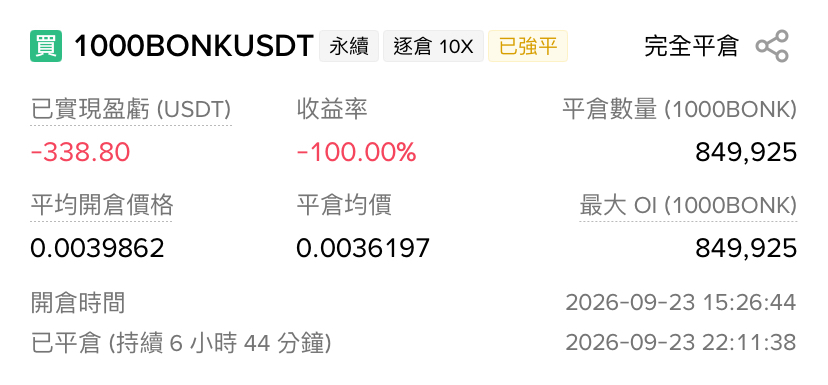
Bullish我爆了各位
我被爆了就代表要開始拉了
我宣佈迷因季正式開始!
繼續佈局馬斯克概念Meme
$BTC $DOGE $ETH
我被爆了就代表要開始拉了
我宣佈迷因季正式開始!
繼續佈局馬斯克概念Meme
$BTC $DOGE $ETH
78
Log in to explore more content
Join global crypto users on Binance Square
⚡️ Get latest and useful information about crypto.
💬 Trusted by the world’s largest crypto exchange.
👍 Discover real insights from verified creators.
Email / Phone number
Trending Topics
CanMarketsReboundAfterThanksgiving?
221,734 views
2,101 Discussing
Rate-Hike Bets Linger as US Markets Head Into Thanksgiving Closure
Binance News
·7 Likes
·5.9k views
EvolveAtBinanceBlockchainWeek
870,607 views
10,819 Discussing
CouldSpaceX’sOrbitalDataCentersBoostAIChipDemand?
109,524 views
1,259 Discussing