

Zaira malik
16 Posts

Zaira malik
Report
Block User
I am a full-time crypto trader. I share daily market updates and technical analysis.
I really like looking for the big trends and crypto trading setups.
1 Following
8 Followers
33 Liked
Posts
PINNED
·
--
Verified
#chainlinklaunchesccip2withenterpriseverification 🚨 CHAINLINK UPGRADED CROSS-CHAIN SECURITY!
Chainlink CCIP 2.0 is taking -chain infrastructure to the next level. This update is making it easier for institutions to use blockchain technology. The big change is that companies can now add their rules and checks before any transaction goes through.
🔹 Cross-Chain Verifiers (CCVs) allow institutions to use their validators. This means they can check and approve transfers in their way.
🔹 The Automated Compliance Engine (ACE) can automatically apply rules. It checks for KYC, AML transaction limits and sanctions.
🔹 Configurable finality gives issuers control. They can choose how fast a transaction settles or how strong the checks should be.
🔹 All current CCIP users have been moved to this version without disruption.
For traders this is important. More programmable cross-chain tools can support tokenized assets, stablecoins and real-world asset activity on blockchains.
Is CCIP 2.0 a step, toward mainstream RWA adoption? 👇#Khan62 #LINK #Web3 #altcoins $LINK $AAVE $ONDO
{future}(LINKUSDT)
{future}(AAVEUSDT)
{future}(ONDOUSDT)
#chainlinklaunchesccip2withenterpriseverification 🚨 CHAINLINK UPGRADED CROSS-CHAIN SECURITY!
Chainlink CCIP 2.0 is taking -chain infrastructure to the next level. This update is making it easier for institutions to use blockchain technology. The big change is that companies can now add their rules and checks before any transaction goes through.
🔹 Cross-Chain Verifiers (CCVs) allow institutions to use their validators. This means they can check and approve transfers in their way.
🔹 The Automated Compliance Engine (ACE) can automatically apply rules. It checks for KYC, AML transaction limits and sanctions.
🔹 Configurable finality gives issuers control. They can choose how fast a transaction settles or how strong the checks should be.
🔹 All current CCIP users have been moved to this version without disruption.
For traders this is important. More programmable cross-chain tools can support tokenized assets, stablecoins and real-world asset activity on blockchains.
Is CCIP 2.0 a step, toward mainstream RWA adoption? 👇#Khan62 #LINK #Web3 #altcoins $LINK $AAVE $ONDO
Chainlink CCIP 2.0 is taking -chain infrastructure to the next level. This update is making it easier for institutions to use blockchain technology. The big change is that companies can now add their rules and checks before any transaction goes through.
🔹 Cross-Chain Verifiers (CCVs) allow institutions to use their validators. This means they can check and approve transfers in their way.
🔹 The Automated Compliance Engine (ACE) can automatically apply rules. It checks for KYC, AML transaction limits and sanctions.
🔹 Configurable finality gives issuers control. They can choose how fast a transaction settles or how strong the checks should be.
🔹 All current CCIP users have been moved to this version without disruption.
For traders this is important. More programmable cross-chain tools can support tokenized assets, stablecoins and real-world asset activity on blockchains.
Is CCIP 2.0 a step, toward mainstream RWA adoption? 👇#Khan62 #LINK #Web3 #altcoins $LINK $AAVE $ONDO

1
1
1.4k
PINNED
·
--
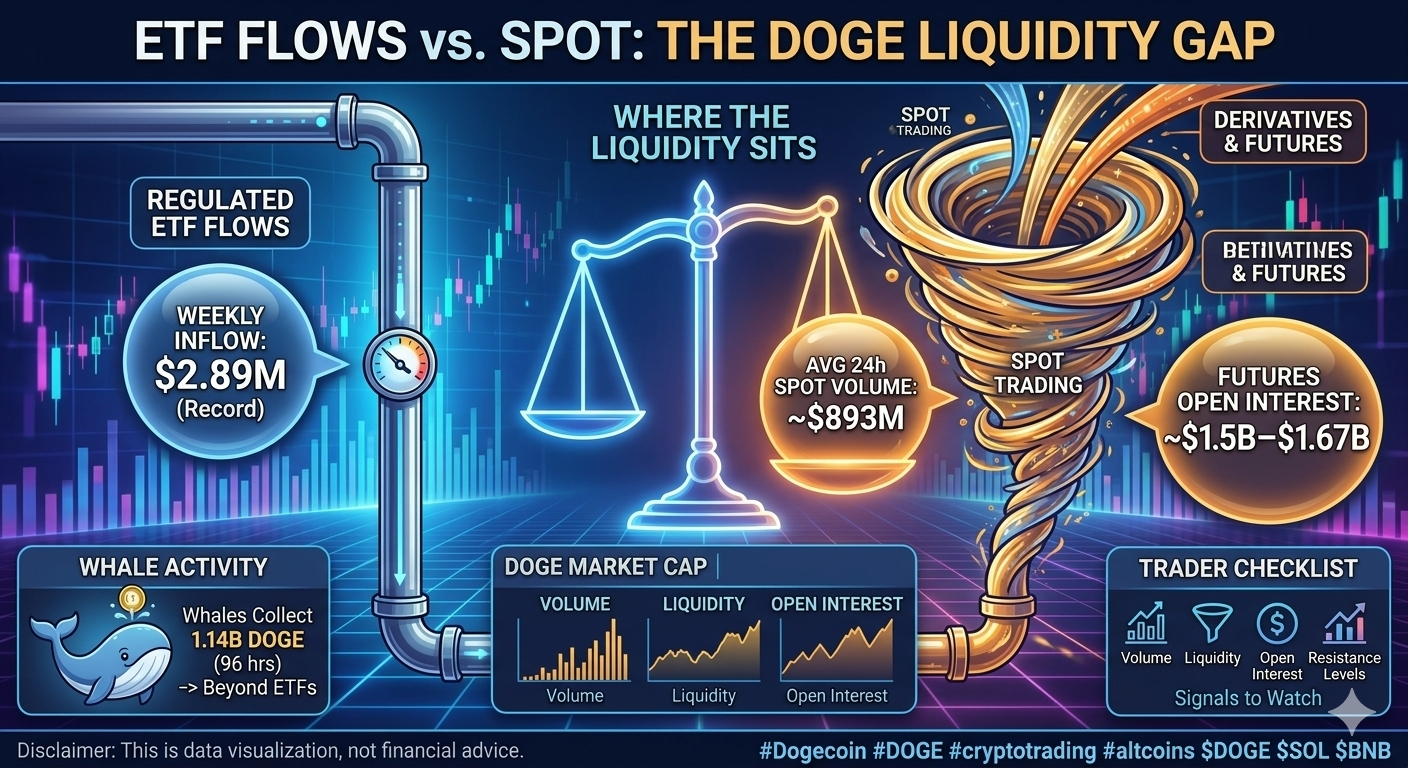
#dogecoinetfspostbiggestweeksincelaunch DOGE ETF FLOWS vs SPOT: The Liquidity Gap
I think Dogecoin’s ETF story is growing. Traders should watch where the liquidity sits.
• ETF weekly inflow: $2.89M record
• Average 24h spot volume: ~$893M
• DOGE market cap:
• Futures open interest: ~$1.5B–$1.67B
I see that spot trading and derivatives are much larger than regulated ETF flows. Whales also collected about 1.14B DOGE in 96 hours showing activity, beyond ETFs.
I think for traders ETF headlines matter,. Volume, liquidity, open interest and resistance levels may give more immediate signals.
Is DOGE ETF growth becoming meaningful. Does spot still stay firmly in control?#Dogecoin #DOGE #cryptotrading #altcoins
$DOGE $SOL
{future}(SOLUSDT)
$BNB
{future}(DOGEUSDT)
{future}(BNBUSDT)
#dogecoinetfspostbiggestweeksincelaunch DOGE ETF FLOWS vs SPOT: The Liquidity Gap
I think Dogecoin’s ETF story is growing. Traders should watch where the liquidity sits.
• ETF weekly inflow: $2.89M record
• Average 24h spot volume: ~$893M
• DOGE market cap:
• Futures open interest: ~$1.5B–$1.67B
I see that spot trading and derivatives are much larger than regulated ETF flows. Whales also collected about 1.14B DOGE in 96 hours showing activity, beyond ETFs.
I think for traders ETF headlines matter,. Volume, liquidity, open interest and resistance levels may give more immediate signals.
Is DOGE ETF growth becoming meaningful. Does spot still stay firmly in control?#Dogecoin #DOGE #cryptotrading #altcoins
$DOGE $SOL
$BNB
I think Dogecoin’s ETF story is growing. Traders should watch where the liquidity sits.
• ETF weekly inflow: $2.89M record
• Average 24h spot volume: ~$893M
• DOGE market cap:
• Futures open interest: ~$1.5B–$1.67B
I see that spot trading and derivatives are much larger than regulated ETF flows. Whales also collected about 1.14B DOGE in 96 hours showing activity, beyond ETFs.
I think for traders ETF headlines matter,. Volume, liquidity, open interest and resistance levels may give more immediate signals.
Is DOGE ETF growth becoming meaningful. Does spot still stay firmly in control?#Dogecoin #DOGE #cryptotrading #altcoins
$DOGE $SOL
$BNB
2
8
5.5k
·
--
Verified
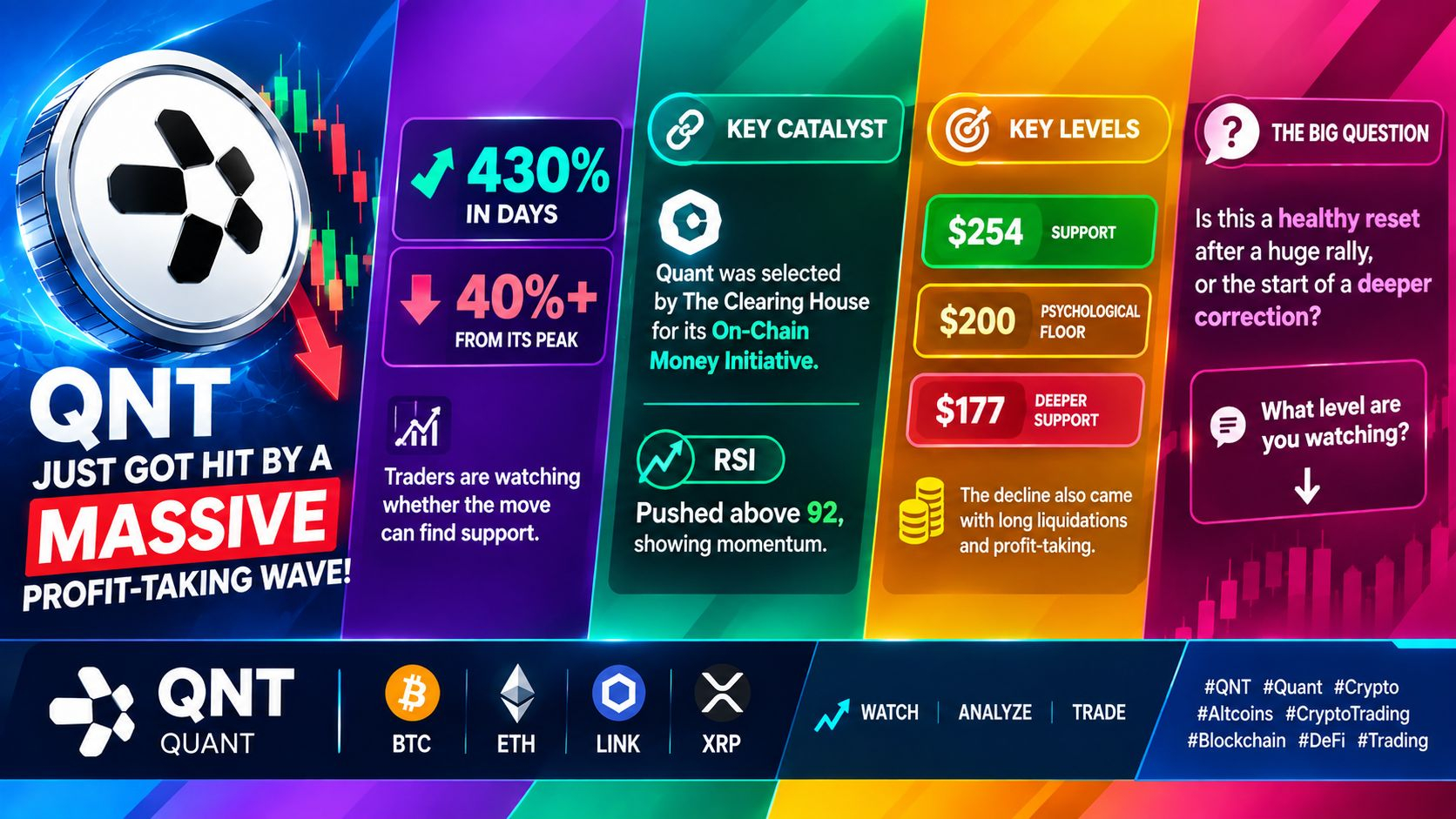
#qntfallsover40%frommorninghigh 🚨 QNT JUST GOT HIT BY A PROFIT-TAKING WAVE!
QNT exploded 430% in days then crashed than 40% from its peak. Traders ar
e watching whether the move can find support.
🔹 Catalyst: Quant was selected by The Clearing House for its On-Chain Money Initiative.
🔹 RSI pushed above 92 showing momentum.
🔹 Key levels: $254 support, $200 floor and $177 deeper support.
🔹 The decline also came with liquidations and profit‑taking.
The big question: Is this a reset, after a huge rally or the start of a deeper correction?
What level are you watching? 👇 #Khan62 #crypto #altcoins #CryptoTrading #blockchain #DeFi #Trading.$QNT $LINK · $XRP
{future}(XRPUSDT)
{future}(QNTUSDT)
{future}(LINKUSDT)
#qntfallsover40%frommorninghigh 🚨 QNT JUST GOT HIT BY A PROFIT-TAKING WAVE!
QNT exploded 430% in days then crashed than 40% from its peak. Traders ar
e watching whether the move can find support.
🔹 Catalyst: Quant was selected by The Clearing House for its On-Chain Money Initiative.
🔹 RSI pushed above 92 showing momentum.
🔹 Key levels: $254 support, $200 floor and $177 deeper support.
🔹 The decline also came with liquidations and profit‑taking.
The big question: Is this a reset, after a huge rally or the start of a deeper correction?
What level are you watching? 👇 #Khan62 #crypto #altcoins #CryptoTrading #blockchain #DeFi #Trading.$QNT $LINK · $XRP
QNT exploded 430% in days then crashed than 40% from its peak. Traders ar
e watching whether the move can find support.
🔹 Catalyst: Quant was selected by The Clearing House for its On-Chain Money Initiative.
🔹 RSI pushed above 92 showing momentum.
🔹 Key levels: $254 support, $200 floor and $177 deeper support.
🔹 The decline also came with liquidations and profit‑taking.
The big question: Is this a reset, after a huge rally or the start of a deeper correction?
What level are you watching? 👇 #Khan62 #crypto #altcoins #CryptoTrading #blockchain #DeFi #Trading.$QNT $LINK · $XRP
1
4
3.5k
·
--
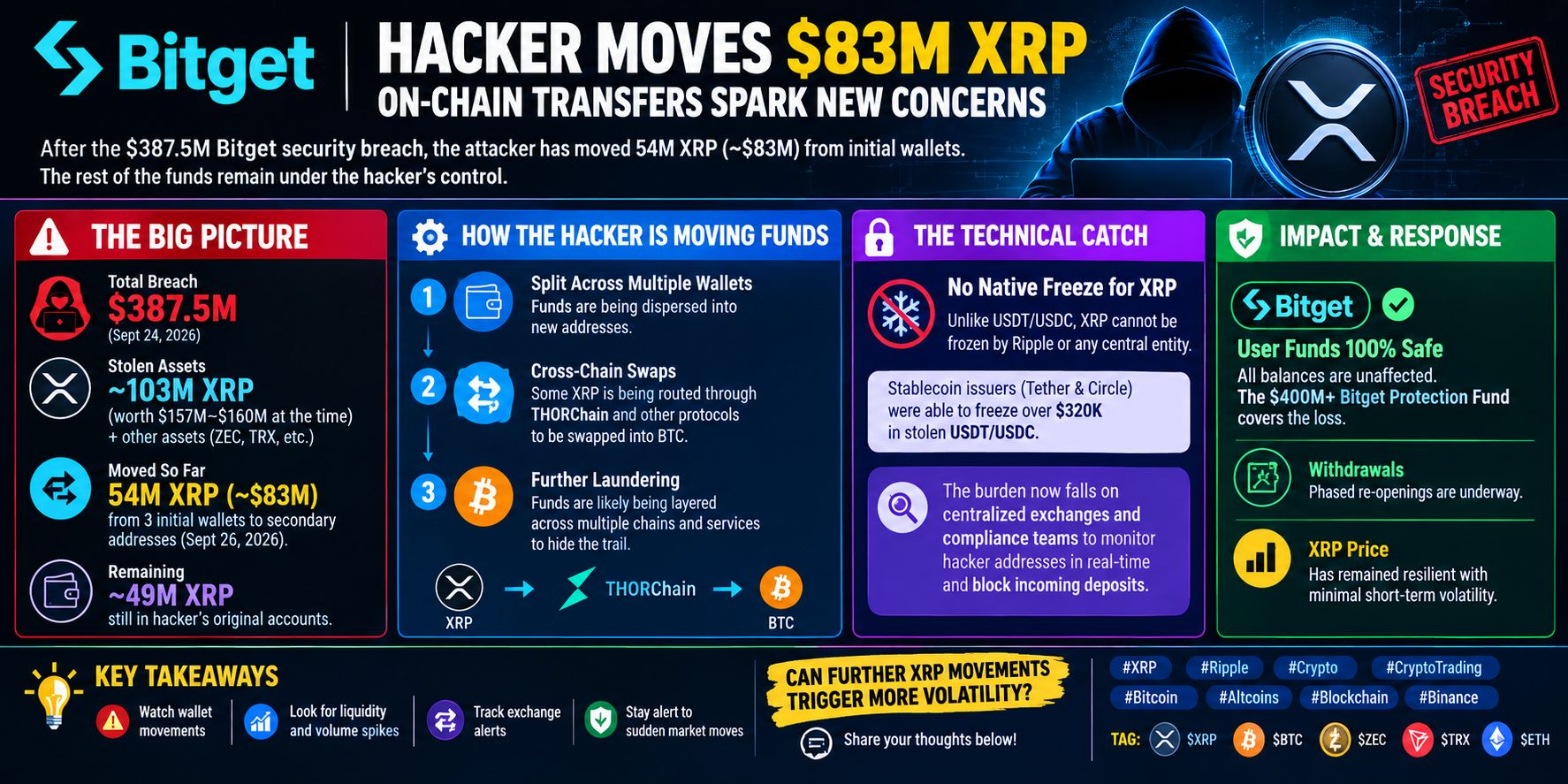
#BitgetHackerMoves$83MStolenXRP 🚨 $83M XRP MOVED. BITGET HACKER UNDER WATCH
On-chain trackers say that about 54M XRP which is roughly 83M dollar has moved from wallets connected to the Bitget exploit.
The bigger incident is said to have included around 103M XRP, along with assets.
Key points:
• Money is being sent to different wallets.
• Some XRP might have gone through -chain methods.
• Original XRP cannot be stopped the way some stablecoins can.
• Trading platforms and teams that follow rules need to keep an eye on deposits.
For XRP traders pay attention to exchange notifications wallet changes, money flow and unexpected increases in trading.
Will more XRP movement cause short-term changes, in price? Keep an eye on the wallets. Tell us what you think.#xrp #crypto #Khan62 #Binance $XRP $ZEC $BTC
{future}(XRPUSDT)
{future}(ZECUSDT)
{future}(BTCUSDT)
#BitgetHackerMoves$83MStolenXRP 🚨 $83M XRP MOVED. BITGET HACKER UNDER WATCH
On-chain trackers say that about 54M XRP which is roughly 83M dollar has moved from wallets connected to the Bitget exploit.
The bigger incident is said to have included around 103M XRP, along with assets.
Key points:
• Money is being sent to different wallets.
• Some XRP might have gone through -chain methods.
• Original XRP cannot be stopped the way some stablecoins can.
• Trading platforms and teams that follow rules need to keep an eye on deposits.
For XRP traders pay attention to exchange notifications wallet changes, money flow and unexpected increases in trading.
Will more XRP movement cause short-term changes, in price? Keep an eye on the wallets. Tell us what you think.#xrp #crypto #Khan62 #Binance $XRP $ZEC $BTC
On-chain trackers say that about 54M XRP which is roughly 83M dollar has moved from wallets connected to the Bitget exploit.
The bigger incident is said to have included around 103M XRP, along with assets.
Key points:
• Money is being sent to different wallets.
• Some XRP might have gone through -chain methods.
• Original XRP cannot be stopped the way some stablecoins can.
• Trading platforms and teams that follow rules need to keep an eye on deposits.
For XRP traders pay attention to exchange notifications wallet changes, money flow and unexpected increases in trading.
Will more XRP movement cause short-term changes, in price? Keep an eye on the wallets. Tell us what you think.#xrp #crypto #Khan62 #Binance $XRP $ZEC $BTC
1
141
·
--
#BTCFallsBelow$83000 🚨 BTC DROPS BELOW $83K. WATCH THESE KEY LEVELS
Bitcoin has fallen below $83,000 hitting $82,705 as selling pressure spreads across both crypto and traditional markets.
Now the most important levels to watch are:
• $80K to $81.5K: This is a support zone. If Bitcoin holds here it might stabilize.
• Below $80K: The next big drop could lead to $75K, which may act as a bottom if the selloff continues.
• $84.8K: This is a resistance level. Reclaiming it would be a sign of recovery.
• $86K: If buying interest returns this could be the upside target.
Leverage is playing a role in the move. A total of $6.54 million, in BTC positions were liquidated near $83,095 adding more downward pressure.
For traders keep an eye on support, trading volume, funding rates and liquidation data before making moves. These factors often show where the market is heading next.
Can Bitcoin hold above $80K?. Will another wave of liquidations push it lower? Share your thoughts and the levels you’re watching.#Bitcoin #BTC #crypto #Khan62 #altcoins $BTC $ETH $BNB
{future}(ETHUSDT)
{future}(BTCUSDT)
{future}(BNBUSDT)
#BTCFallsBelow$83000 🚨 BTC DROPS BELOW $83K. WATCH THESE KEY LEVELS
Bitcoin has fallen below $83,000 hitting $82,705 as selling pressure spreads across both crypto and traditional markets.
Now the most important levels to watch are:
• $80K to $81.5K: This is a support zone. If Bitcoin holds here it might stabilize.
• Below $80K: The next big drop could lead to $75K, which may act as a bottom if the selloff continues.
• $84.8K: This is a resistance level. Reclaiming it would be a sign of recovery.
• $86K: If buying interest returns this could be the upside target.
Leverage is playing a role in the move. A total of $6.54 million, in BTC positions were liquidated near $83,095 adding more downward pressure.
For traders keep an eye on support, trading volume, funding rates and liquidation data before making moves. These factors often show where the market is heading next.
Can Bitcoin hold above $80K?. Will another wave of liquidations push it lower? Share your thoughts and the levels you’re watching.#Bitcoin #BTC #crypto #Khan62 #altcoins $BTC $ETH $BNB
Bitcoin has fallen below $83,000 hitting $82,705 as selling pressure spreads across both crypto and traditional markets.
Now the most important levels to watch are:
• $80K to $81.5K: This is a support zone. If Bitcoin holds here it might stabilize.
• Below $80K: The next big drop could lead to $75K, which may act as a bottom if the selloff continues.
• $84.8K: This is a resistance level. Reclaiming it would be a sign of recovery.
• $86K: If buying interest returns this could be the upside target.
Leverage is playing a role in the move. A total of $6.54 million, in BTC positions were liquidated near $83,095 adding more downward pressure.
For traders keep an eye on support, trading volume, funding rates and liquidation data before making moves. These factors often show where the market is heading next.
Can Bitcoin hold above $80K?. Will another wave of liquidations push it lower? Share your thoughts and the levels you’re watching.#Bitcoin #BTC #crypto #Khan62 #altcoins $BTC $ETH $BNB
26
·
--
Verified
#USChinaRelease$30BTariffCutProductLists 🇨🇳 NVIDIA CHIPS MAY BE HEADING BACK TO CHINA
A possible breakthrough in Nvidia hardware could shift the balance in the AI-chip race.
Recent reports suggest China might allow big tech companies like Alibaba and ByteDance to buy Nvidia’s RTX Pro 5500. That would be a change after recent restrictions.
Key points:
• The RTX Pro 5500 is a Blackwell-generation workstation GPU.
• ByteDance reportedly considered buying many as one million units.
• Nvidia could start shipping to China in 2026.
• Chinese AI-chip stocks dropped as investors weighed the impact.
For traders keep an eye on NVDA, Chinese semiconductor stocks demand, for AI chips and U.S.-China chip policy updates.
Could this really reshape the AI-chip scene? What do you think? Share your opinion.#NVIDIA #AI #Khan62 #stockmarket
$NVDA $BABA $BTC
{future}(NVDAUSDT)
{future}(BABAUSDT)
{future}(BTCUSDT)
#USChinaRelease$30BTariffCutProductLists 🇨🇳 NVIDIA CHIPS MAY BE HEADING BACK TO CHINA
A possible breakthrough in Nvidia hardware could shift the balance in the AI-chip race.
Recent reports suggest China might allow big tech companies like Alibaba and ByteDance to buy Nvidia’s RTX Pro 5500. That would be a change after recent restrictions.
Key points:
• The RTX Pro 5500 is a Blackwell-generation workstation GPU.
• ByteDance reportedly considered buying many as one million units.
• Nvidia could start shipping to China in 2026.
• Chinese AI-chip stocks dropped as investors weighed the impact.
For traders keep an eye on NVDA, Chinese semiconductor stocks demand, for AI chips and U.S.-China chip policy updates.
Could this really reshape the AI-chip scene? What do you think? Share your opinion.#NVIDIA #AI #Khan62 #stockmarket
$NVDA $BABA $BTC
A possible breakthrough in Nvidia hardware could shift the balance in the AI-chip race.
Recent reports suggest China might allow big tech companies like Alibaba and ByteDance to buy Nvidia’s RTX Pro 5500. That would be a change after recent restrictions.
Key points:
• The RTX Pro 5500 is a Blackwell-generation workstation GPU.
• ByteDance reportedly considered buying many as one million units.
• Nvidia could start shipping to China in 2026.
• Chinese AI-chip stocks dropped as investors weighed the impact.
For traders keep an eye on NVDA, Chinese semiconductor stocks demand, for AI chips and U.S.-China chip policy updates.
Could this really reshape the AI-chip scene? What do you think? Share your opinion.#NVIDIA #AI #Khan62 #stockmarket
$NVDA $BABA $BTC
127
·
--
Verified
#USChinaRelease$30BTariffCutProductLists US China Tariff Cuts A Sixty Billion Trade Signal
Washington and Beijing released product lists covering about thirty billion dollars of goods in each direction after the Trump Xi summit.
Key points:
• United States list: seventy seven categories, including toys, household goods, sports equipment and holiday items.
• China list: one thousand six hundred nineteen product lines, including agriculture, seafood, coal, timber and medical equipment.
• ninety percent of covered products are expected to move toward Most Favored Nation tariff rates.
• Cuts take effect after required procedures.
For traders watch commodities, Asian equities, inflation expectations, shipping and global risk sentiment.
Could this trade relief support broader market liquidity? Share your view below! #cryptotrading #GlobalMarkets #china #TradeWar
$BNB $SOL $ETH
{future}(ETHUSDT)
{future}(SOLUSDT)
{future}(BNBUSDT)
#USChinaRelease$30BTariffCutProductLists US China Tariff Cuts A Sixty Billion Trade Signal
Washington and Beijing released product lists covering about thirty billion dollars of goods in each direction after the Trump Xi summit.
Key points:
• United States list: seventy seven categories, including toys, household goods, sports equipment and holiday items.
• China list: one thousand six hundred nineteen product lines, including agriculture, seafood, coal, timber and medical equipment.
• ninety percent of covered products are expected to move toward Most Favored Nation tariff rates.
• Cuts take effect after required procedures.
For traders watch commodities, Asian equities, inflation expectations, shipping and global risk sentiment.
Could this trade relief support broader market liquidity? Share your view below! #cryptotrading #GlobalMarkets #china #TradeWar
$BNB $SOL $ETH
Washington and Beijing released product lists covering about thirty billion dollars of goods in each direction after the Trump Xi summit.
Key points:
• United States list: seventy seven categories, including toys, household goods, sports equipment and holiday items.
• China list: one thousand six hundred nineteen product lines, including agriculture, seafood, coal, timber and medical equipment.
• ninety percent of covered products are expected to move toward Most Favored Nation tariff rates.
• Cuts take effect after required procedures.
For traders watch commodities, Asian equities, inflation expectations, shipping and global risk sentiment.
Could this trade relief support broader market liquidity? Share your view below! #cryptotrading #GlobalMarkets #china #TradeWar
$BNB $SOL $ETH
56
·
--
#fedproposespaymentstablecoinrules FED’S STABLECOIN RULES: A BIG CRYPTO SIGNAL
The Federal Reserve has announced two rulemaking packages to carry out the GENIUS Act placing payment stablecoins under rules.
Key points:
• 100 percent reserve backing with assets, such as short‑term Treasuries.
• Capital and risk controls.
• Redemption and reporting requirements.
• A dedicated approval process, for banks supervised by the Federal Reserve that want to issue stablecoins.
• Public comments will stay open for sixty days.
For traders this could be important because stablecoins link banking, dollar liquidity, exchanges and on‑chain payments.
Could stablecoin adoption speed up? What effect could this have on BTC. Altcoins? Share your view!..#stablecoin #crypto #cryptotrading #TradingSignals
$BTC $ETH $BNB
{future}(BTCUSDT)
{future}(ETHUSDT)
{future}(BNBUSDT)
#fedproposespaymentstablecoinrules FED’S STABLECOIN RULES: A BIG CRYPTO SIGNAL
The Federal Reserve has announced two rulemaking packages to carry out the GENIUS Act placing payment stablecoins under rules.
Key points:
• 100 percent reserve backing with assets, such as short‑term Treasuries.
• Capital and risk controls.
• Redemption and reporting requirements.
• A dedicated approval process, for banks supervised by the Federal Reserve that want to issue stablecoins.
• Public comments will stay open for sixty days.
For traders this could be important because stablecoins link banking, dollar liquidity, exchanges and on‑chain payments.
Could stablecoin adoption speed up? What effect could this have on BTC. Altcoins? Share your view!..#stablecoin #crypto #cryptotrading #TradingSignals
$BTC $ETH $BNB
The Federal Reserve has announced two rulemaking packages to carry out the GENIUS Act placing payment stablecoins under rules.
Key points:
• 100 percent reserve backing with assets, such as short‑term Treasuries.
• Capital and risk controls.
• Redemption and reporting requirements.
• A dedicated approval process, for banks supervised by the Federal Reserve that want to issue stablecoins.
• Public comments will stay open for sixty days.
For traders this could be important because stablecoins link banking, dollar liquidity, exchanges and on‑chain payments.
Could stablecoin adoption speed up? What effect could this have on BTC. Altcoins? Share your view!..#stablecoin #crypto #cryptotrading #TradingSignals
$BTC $ETH $BNB
444
·
--
Verified
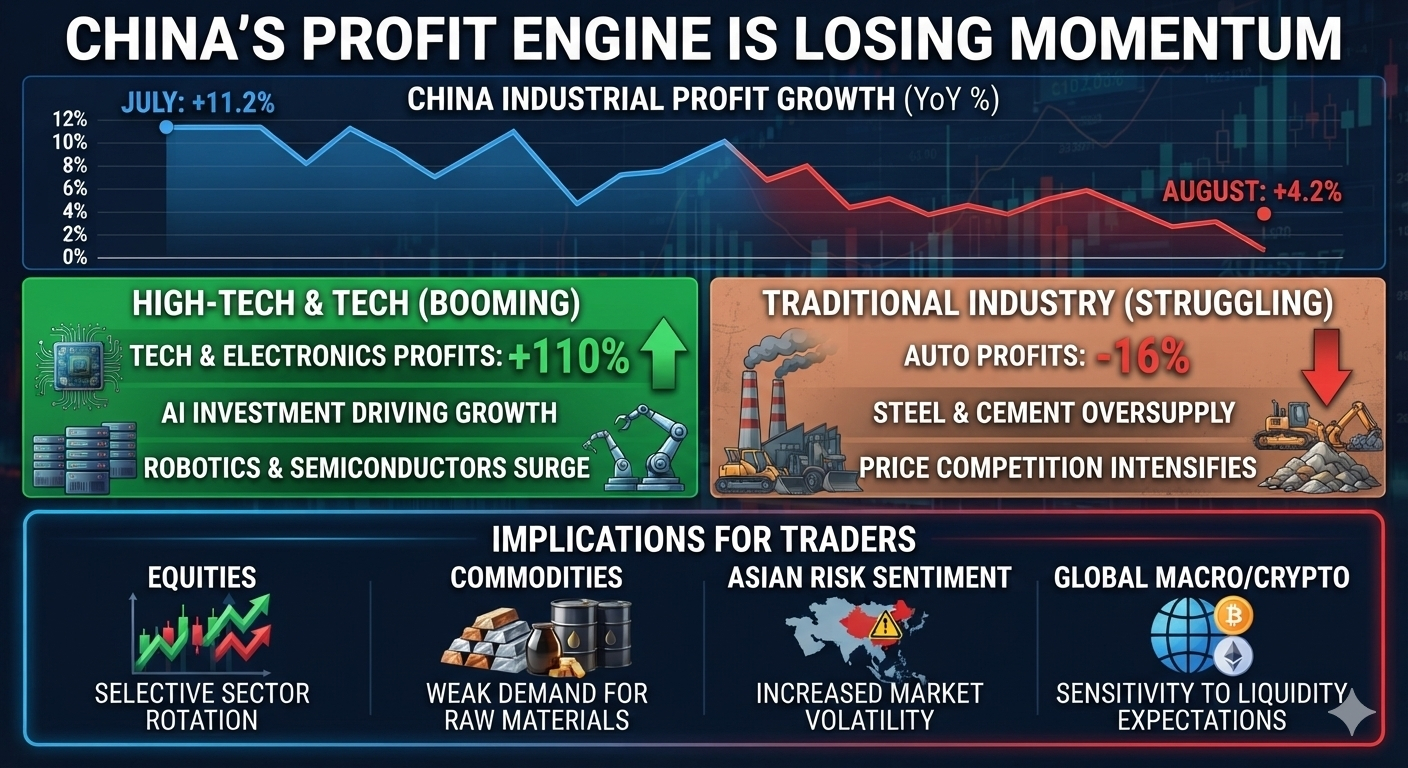
#chinaindustrialprofitgrowthslowsfourthmonth CHINA’S PROFIT ENGINE IS LOSING MOMENTUM
China’s industrial profits went up 4.2% compared to last year in August, which is much lower than the 11.2% increase in July.
This is important for markets.
• Profits from January to August: 5.27 trillion yuan, 15.7%
• Tech and electronics profits: up 110%
• Auto profits: down 16%
• Industrial revenue: up 6.6%
The numbers show a clear difference: AI and high-tech manufacturing are still doing very well but traditional industries are struggling with less demand, too much supply and a lot of price competition.
For traders keep an eye on equities, commodities, Asian risk sentiment and how crypto reacts to expectations, about global money supply.
Is China’s AI boom strong to make up for the overall slowdown? Share your thoughts.#china #Bitcoin #crypto #CryptoTrading #GlobalMarkets #StockMarket #Ethereum #altcoins
$NEO $VET $BTC
{future}(BTCUSDT)
{future}(VETUSDT)
{future}(NEOUSDT)
#chinaindustrialprofitgrowthslowsfourthmonth CHINA’S PROFIT ENGINE IS LOSING MOMENTUM
China’s industrial profits went up 4.2% compared to last year in August, which is much lower than the 11.2% increase in July.
This is important for markets.
• Profits from January to August: 5.27 trillion yuan, 15.7%
• Tech and electronics profits: up 110%
• Auto profits: down 16%
• Industrial revenue: up 6.6%
The numbers show a clear difference: AI and high-tech manufacturing are still doing very well but traditional industries are struggling with less demand, too much supply and a lot of price competition.
For traders keep an eye on equities, commodities, Asian risk sentiment and how crypto reacts to expectations, about global money supply.
Is China’s AI boom strong to make up for the overall slowdown? Share your thoughts.#china #Bitcoin #crypto #CryptoTrading #GlobalMarkets #StockMarket #Ethereum #altcoins
$NEO $VET $BTC
China’s industrial profits went up 4.2% compared to last year in August, which is much lower than the 11.2% increase in July.
This is important for markets.
• Profits from January to August: 5.27 trillion yuan, 15.7%
• Tech and electronics profits: up 110%
• Auto profits: down 16%
• Industrial revenue: up 6.6%
The numbers show a clear difference: AI and high-tech manufacturing are still doing very well but traditional industries are struggling with less demand, too much supply and a lot of price competition.
For traders keep an eye on equities, commodities, Asian risk sentiment and how crypto reacts to expectations, about global money supply.
Is China’s AI boom strong to make up for the overall slowdown? Share your thoughts.#china #Bitcoin #crypto #CryptoTrading #GlobalMarkets #StockMarket #Ethereum #altcoins
$NEO $VET $BTC
1
1
1.9k
·
--
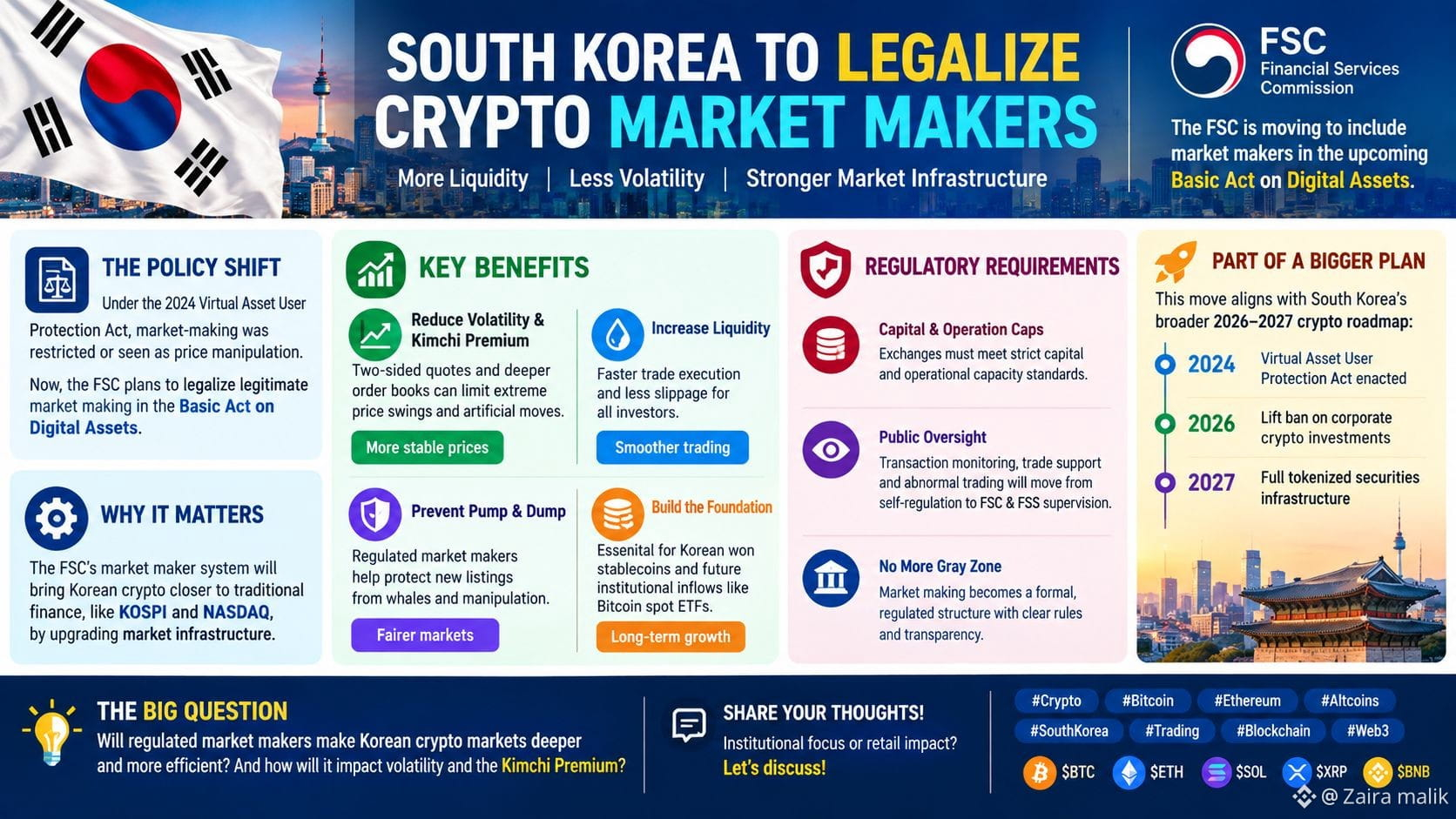
#skoreafscconsidersvirtualassetmarketmaker KOREA'S CRYPTO MARKET MAY SEE MORE LIQUIDITY
South Korea is creating a digital-asset plan while officials are making sure that trading is fair and the market is honest.
A market-maker system might change the way crypto markets work in South Korea:
• Having offers to buy and sell could make order books more filled.
• More liquidity could make it easier to trade without price changes.
• Better checking could stop tricks.
• High-quality systems could help more people use crypto.
For people who trade the message is clear: rules are getting strict more open and more organized.
Would regulated market makers make South Koreas crypto markets better and more efficient? What do you think will happen to price changes overall?
#BTC #ETH #altcoins #cryptotrading
$ETH $SOL $BNB
{future}(ETHUSDT)
{future}(SOLUSDT)
{future}(BNBUSDT)
#skoreafscconsidersvirtualassetmarketmaker KOREA'S CRYPTO MARKET MAY SEE MORE LIQUIDITY
South Korea is creating a digital-asset plan while officials are making sure that trading is fair and the market is honest.
A market-maker system might change the way crypto markets work in South Korea:
• Having offers to buy and sell could make order books more filled.
• More liquidity could make it easier to trade without price changes.
• Better checking could stop tricks.
• High-quality systems could help more people use crypto.
For people who trade the message is clear: rules are getting strict more open and more organized.
Would regulated market makers make South Koreas crypto markets better and more efficient? What do you think will happen to price changes overall?
#BTC #ETH #altcoins #cryptotrading
$ETH $SOL $BNB
South Korea is creating a digital-asset plan while officials are making sure that trading is fair and the market is honest.
A market-maker system might change the way crypto markets work in South Korea:
• Having offers to buy and sell could make order books more filled.
• More liquidity could make it easier to trade without price changes.
• Better checking could stop tricks.
• High-quality systems could help more people use crypto.
For people who trade the message is clear: rules are getting strict more open and more organized.
Would regulated market makers make South Koreas crypto markets better and more efficient? What do you think will happen to price changes overall?
#BTC #ETH #altcoins #cryptotrading
$ETH $SOL $BNB
2
3
4.9k
·
--
Verified
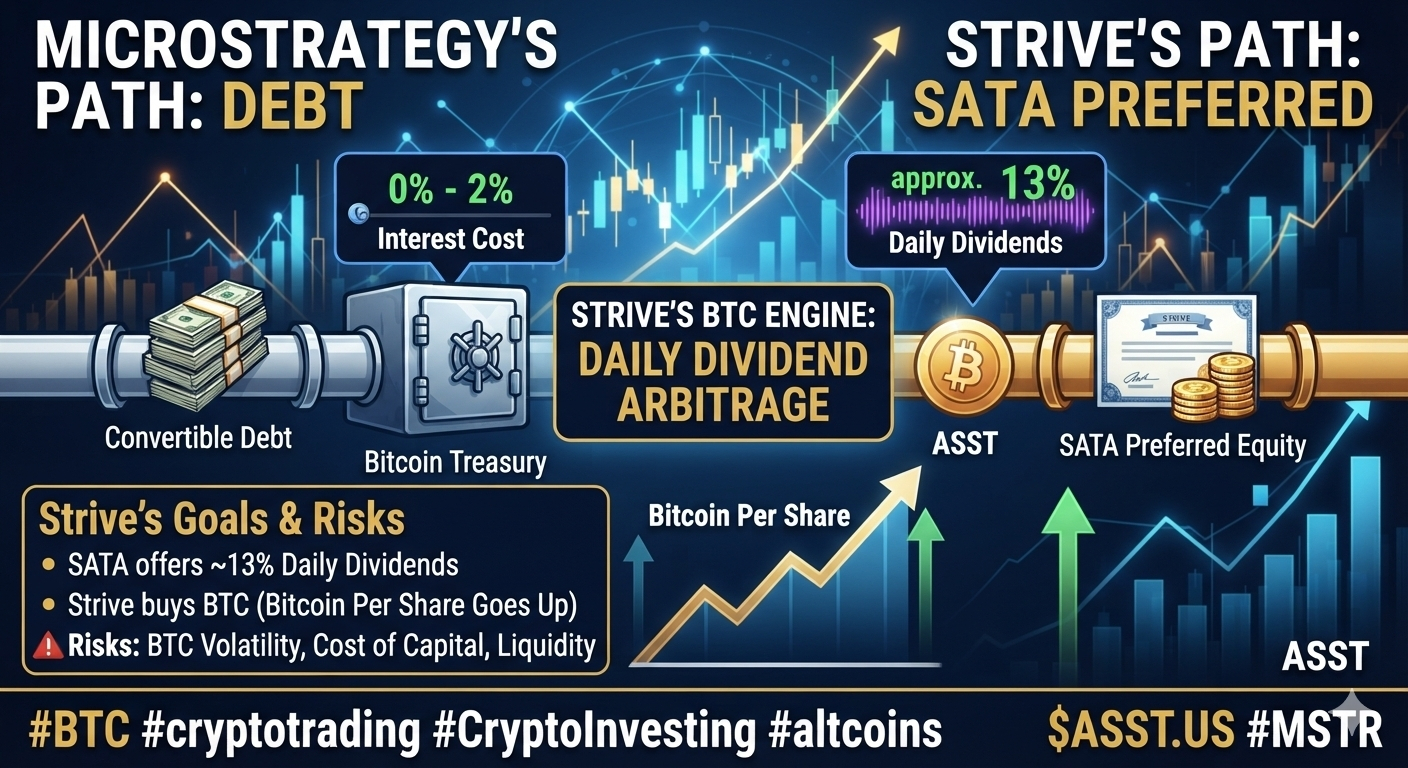
#strategystriveadd2305bitcointhisweek 🔥 STRIVE'S BTC ENGINE: A Different Way to Stack Bitcoin
Strive (NASDAQ: ASST) is going a way than MicroStrategy.
Of mostly using convertible debt Strive uses SATA preferred equity to get money and buy Bitcoin.
The main idea is:
• SATA offers about 13% dividends, given every day.
• Strive puts money into BTC.
• The plan is to make Bitcoin per share go up.
But people who trade should keep an eye on the risks: Bitcoin is very unstable preferred stock has costs there might not be liquidity and whether Bitcoin gains are more than the costs of financing.
It is an experiment, with the treasury.
Can Strives SATA model change how treasuries are handled? Let me know what you think below!
#BTC #cryptotrading #CryptoInvesting #altcoins
$ASST.US
{stock_us}(ASST.US)
{future}(MSTRUSDT)
$MSTR $SOL
{future}(SOLUSDT)
#strategystriveadd2305bitcointhisweek 🔥 STRIVE'S BTC ENGINE: A Different Way to Stack Bitcoin
Strive (NASDAQ: ASST) is going a way than MicroStrategy.
Of mostly using convertible debt Strive uses SATA preferred equity to get money and buy Bitcoin.
The main idea is:
• SATA offers about 13% dividends, given every day.
• Strive puts money into BTC.
• The plan is to make Bitcoin per share go up.
But people who trade should keep an eye on the risks: Bitcoin is very unstable preferred stock has costs there might not be liquidity and whether Bitcoin gains are more than the costs of financing.
It is an experiment, with the treasury.
Can Strives SATA model change how treasuries are handled? Let me know what you think below!
#BTC #cryptotrading #CryptoInvesting #altcoins
$ASST.US
$MSTR $SOL
Strive (NASDAQ: ASST) is going a way than MicroStrategy.
Of mostly using convertible debt Strive uses SATA preferred equity to get money and buy Bitcoin.
The main idea is:
• SATA offers about 13% dividends, given every day.
• Strive puts money into BTC.
• The plan is to make Bitcoin per share go up.
But people who trade should keep an eye on the risks: Bitcoin is very unstable preferred stock has costs there might not be liquidity and whether Bitcoin gains are more than the costs of financing.
It is an experiment, with the treasury.
Can Strives SATA model change how treasuries are handled? Let me know what you think below!
#BTC #cryptotrading #CryptoInvesting #altcoins
$ASST.US
$MSTR $SOL
2
5
3.6k
·
--
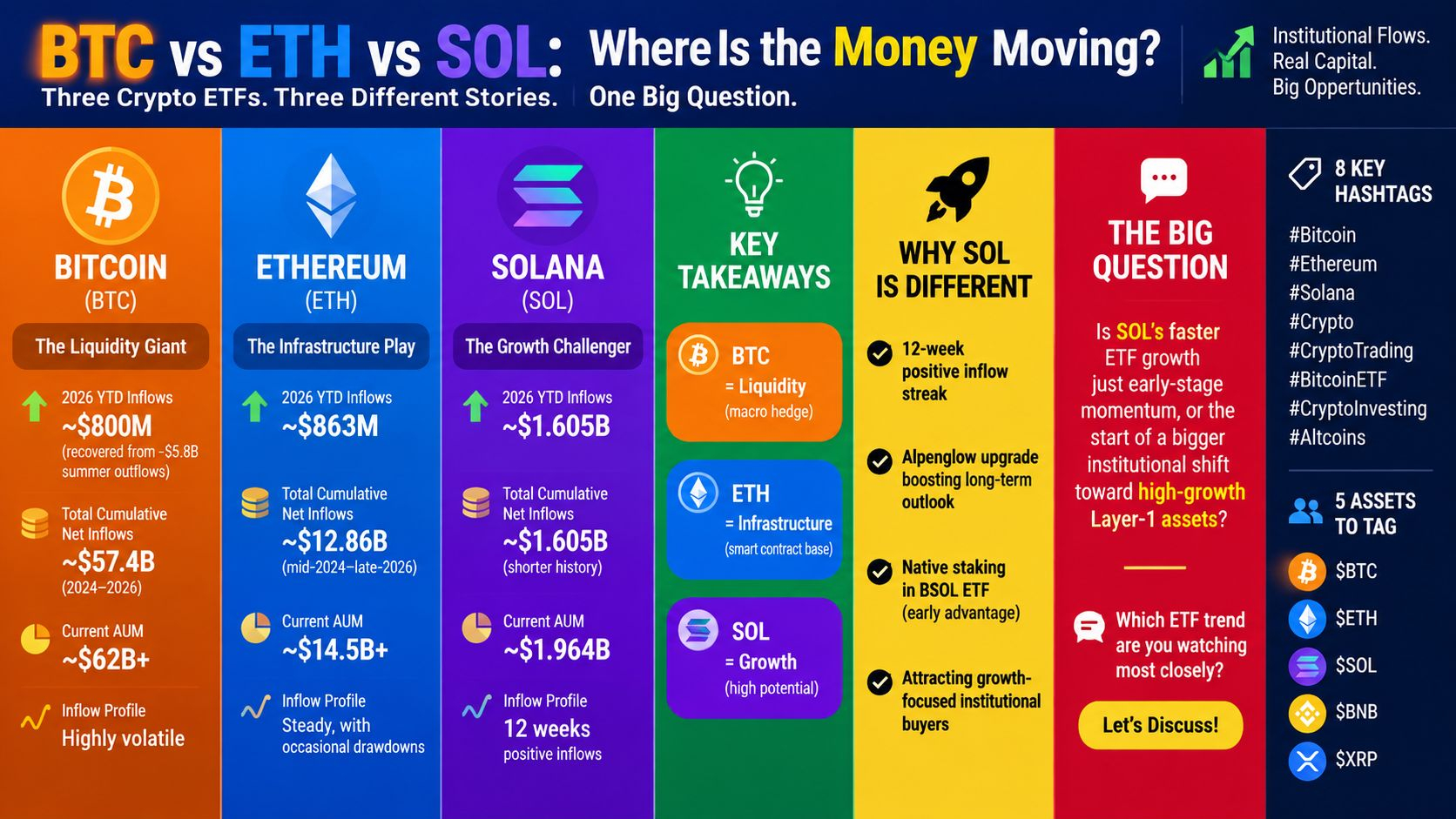
#SOLSpotETFWeeklyInflow$188M 🔥 BTC vs ETH vs SOL: Where Is the BIG Money Moving?
Three major crypto ETFs. Three different stories. 👀
🟠 Bitcoin: the institutional liquidity giant, with about $57.4 B cumulative net inflows.. 2026 Has been highly volatile including a 5.8 B dollar summer outflow before September’s strong recovery.
🔷 Ethereum: Around $12.86 B inflows, with 2026 YTD near $863 M. Slower than Bitcoin but showing steady institutional demand.
🟣 Solana: The new challenger is moving fast. $1.605 B inflows despite its shorter ETF history plus a reported 12‑week positive inflow streak.
The key question for traders:
👉 Is Solana’s ETF growth simply early‑stage momentum or the beginning of a bigger institutional shift, toward high‑growth Layer‑1 assets?
BTC = liquidity
ETH = infrastructure
SOL = growth
Which ETF trend are you watching most closely? 👇
#solana #crypto #Investing #ETH
$SOL
$ETH $BTC
{future}(SOLUSDT)
{future}(BTCUSDT)
{future}(ETHUSDT)
#SOLSpotETFWeeklyInflow$188M 🔥 BTC vs ETH vs SOL: Where Is the BIG Money Moving?
Three major crypto ETFs. Three different stories. 👀
🟠 Bitcoin: the institutional liquidity giant, with about $57.4 B cumulative net inflows.. 2026 Has been highly volatile including a 5.8 B dollar summer outflow before September’s strong recovery.
🔷 Ethereum: Around $12.86 B inflows, with 2026 YTD near $863 M. Slower than Bitcoin but showing steady institutional demand.
🟣 Solana: The new challenger is moving fast. $1.605 B inflows despite its shorter ETF history plus a reported 12‑week positive inflow streak.
The key question for traders:
👉 Is Solana’s ETF growth simply early‑stage momentum or the beginning of a bigger institutional shift, toward high‑growth Layer‑1 assets?
BTC = liquidity
ETH = infrastructure
SOL = growth
Which ETF trend are you watching most closely? 👇
#solana #crypto #Investing #ETH
$SOL
$ETH $BTC
Three major crypto ETFs. Three different stories. 👀
🟠 Bitcoin: the institutional liquidity giant, with about $57.4 B cumulative net inflows.. 2026 Has been highly volatile including a 5.8 B dollar summer outflow before September’s strong recovery.
🔷 Ethereum: Around $12.86 B inflows, with 2026 YTD near $863 M. Slower than Bitcoin but showing steady institutional demand.
🟣 Solana: The new challenger is moving fast. $1.605 B inflows despite its shorter ETF history plus a reported 12‑week positive inflow streak.
The key question for traders:
👉 Is Solana’s ETF growth simply early‑stage momentum or the beginning of a bigger institutional shift, toward high‑growth Layer‑1 assets?
BTC = liquidity
ETH = infrastructure
SOL = growth
Which ETF trend are you watching most closely? 👇
#solana #crypto #Investing #ETH
$SOL
$ETH $BTC
1
108
·
--
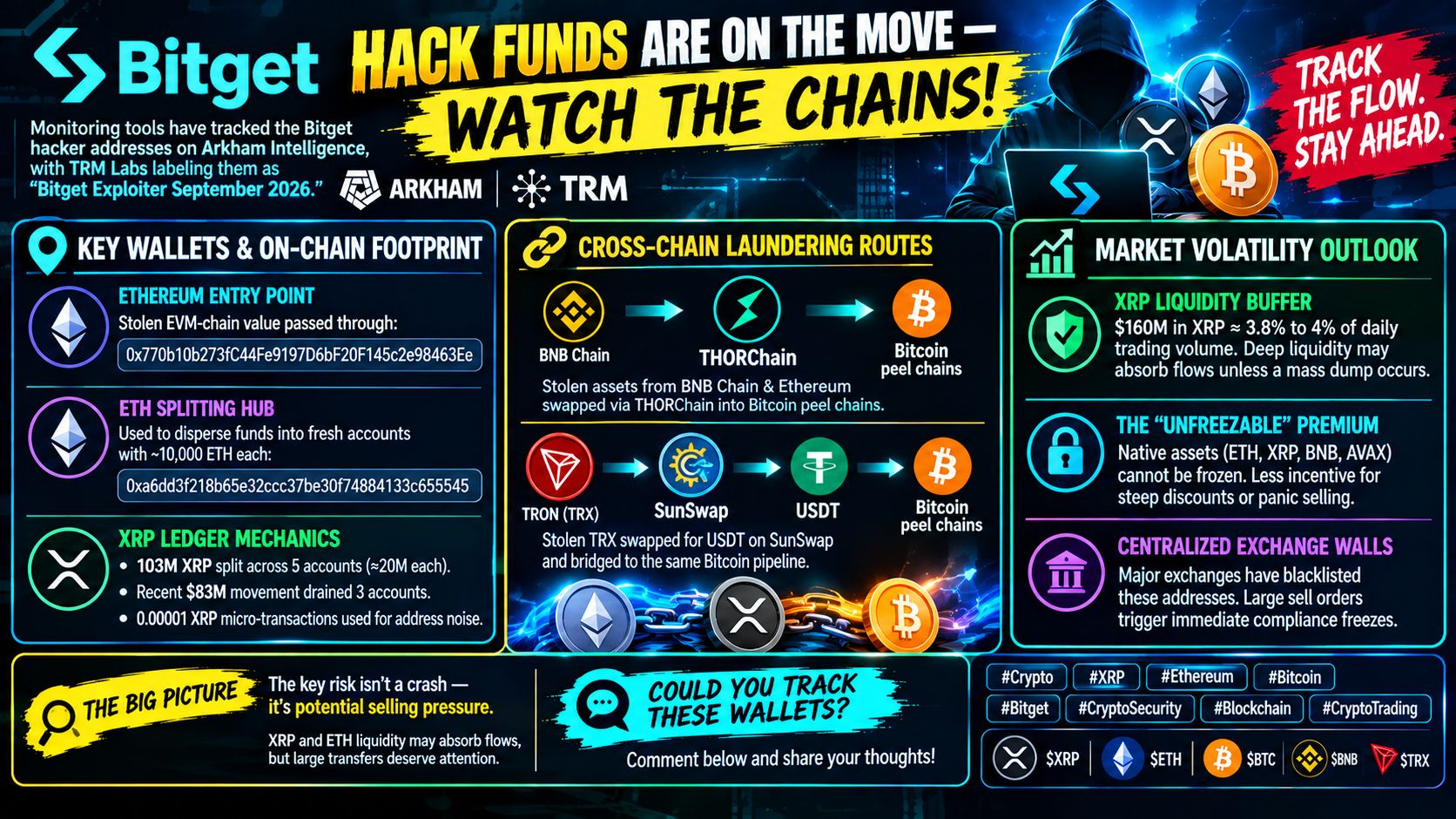
#BitgetHackerMoves$83MStolenXRP 🚨 BITGET HACK FUNDS ARE MOVING. WATCH THE BLOCKCHAIN!
Monitoring tools have gathered suspected Bitget hacker wallets making it easier to follow where the money is going.
🔹 Ethereum: stolen money went through consolidation wallets.
🔹 XRP: about 103 million XRP was split into accounts.
🔹 New movements suggest some XRP wallets were emptied.
🔹 THORChain has been found in -chain swapping paths.
🔹 Bitcoin peel-chain activity is also being watched.
For traders the main concern is selling pressure, not fear. XRP and ETH liquidity might handle the flow. Big transfers should be watched closely.
Would you follow these wallets? Leave a comment below.
#Crypto #xrp #CryptoSecurity #blockchain #cryptotrading
$XRP ·· $BNB · $TRX
{future}(XRPUSDT)
{future}(BNBUSDT)
{future}(TRXUSDT)
#BitgetHackerMoves$83MStolenXRP 🚨 BITGET HACK FUNDS ARE MOVING. WATCH THE BLOCKCHAIN!
Monitoring tools have gathered suspected Bitget hacker wallets making it easier to follow where the money is going.
🔹 Ethereum: stolen money went through consolidation wallets.
🔹 XRP: about 103 million XRP was split into accounts.
🔹 New movements suggest some XRP wallets were emptied.
🔹 THORChain has been found in -chain swapping paths.
🔹 Bitcoin peel-chain activity is also being watched.
For traders the main concern is selling pressure, not fear. XRP and ETH liquidity might handle the flow. Big transfers should be watched closely.
Would you follow these wallets? Leave a comment below.
#Crypto #xrp #CryptoSecurity #blockchain #cryptotrading
$XRP ·· $BNB · $TRX
Monitoring tools have gathered suspected Bitget hacker wallets making it easier to follow where the money is going.
🔹 Ethereum: stolen money went through consolidation wallets.
🔹 XRP: about 103 million XRP was split into accounts.
🔹 New movements suggest some XRP wallets were emptied.
🔹 THORChain has been found in -chain swapping paths.
🔹 Bitcoin peel-chain activity is also being watched.
For traders the main concern is selling pressure, not fear. XRP and ETH liquidity might handle the flow. Big transfers should be watched closely.
Would you follow these wallets? Leave a comment below.
#Crypto #xrp #CryptoSecurity #blockchain #cryptotrading
$XRP ·· $BNB · $TRX
1
211
Log in to explore more content
Join global crypto users on Binance Square
⚡️ Get latest and useful information about crypto.
💬 Trusted by the world’s largest crypto exchange.
👍 Discover real insights from verified creators.
Email / Phone number
Trending Topics
UKFCAWinsCourtOrderToRecover851400Pounds
2,813 views
272 Discussing
🚨 CRYPTO REGULATION JUST ENTERED A NEW PHASE: THEY’RE NOT ONLY WRITING RULES — THEY’RE TAKING MONEY BACK.
The UK’s FCA has secured another court-backed asset recovery, reinforcing a broader enforcement push against unauthorized financial and crypto-related activity.
And look at what’s happening simultaneously:
🇬🇧 FCA → enforcement + asset recovery
🇺🇸 SEC → clearer rules for functional crypto assets
🇺🇸 Fed → formal stablecoin supervision under the GENIUS Act
That combination matters.
Regulators are no longer debating whether crypto belongs inside the financial system.
They’re increasingly deciding who gets access, what rules they follow, and what happens when those rules are broken.
The next crypto cycle may not be “regulation vs innovation.”
It may be regulated crypto vs everyone who can’t meet the standard. 👀
$COIN $CRCL $BTC
#ukfcawinscourtordertorecover851400pounds #ChainlinkLaunchesCCIP2WithEnterpriseVerification #GoldFallsTo$4144 #QNTFallsOver40%FromMorningHigh #USDTAdds845900HoldersInPast7Days
KimHotbae
·1 Likes
·2.1k views
ChainlinkLaunchesCCIP2WithEnterpriseVerification
14,577 views
559 Discussing
GoldFallsTo$4144
6,571 views
106 Discussing