
David Ayzon
22.3k Posts

David Ayzon
 Square Verified
Report
Block User
Crypto Analyst 🧠 | Tracking Crypto Market Moves Daily 📊 | Binance Charts | X: @NamiShah190177
241 Following
38.7K+ Followers
28.9K+ Liked
Posts
All
Quotes
Videos
·
--
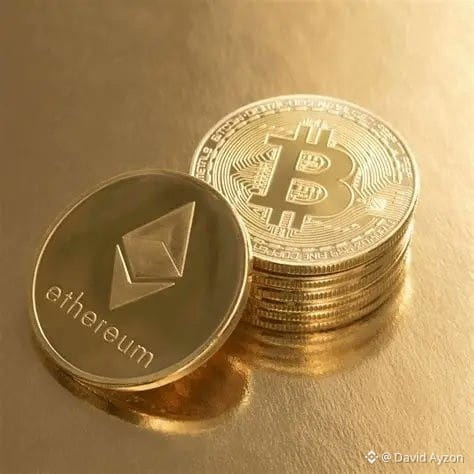
🚨 EU IS MAKING IT HARDER FOR UNVERIFIED CRYPTO COMPANIES TO HIDE!
By mid-2027, the European Union is targeting an upgraded crypto registry designed to make it easier to verify which crypto companies are officially authorised to operate.
This could be a major step toward a more transparent crypto industry. 👀
As crypto adoption grows, trust matters more than ever. Users need to know who they're dealing with, which companies are regulated, and who is operating without proper authorisation.
The message is becoming clear: Crypto's next phase isn't just about growth — it's about accountability, transparency, and legitimacy.
Bullish for regulatory clarity. A stronger industry starts with knowing who's actually authorised to play. 🔥
#CanMarketsReboundAfterThanksgiving?
#Nasdaq100FiveDayAvgIntradayVolatilityHits3.8%
#CorePCEBeatLiftsFedHikeOdds
#XRPLedgerVaultGets29Votes
#CouldSpaceX’sOrbitalDataCentersBoostAIChipDemand?
$ETH
{spot}(ETHUSDT)
$BTC
{spot}(BTCUSDT)
🚨 EU IS MAKING IT HARDER FOR UNVERIFIED CRYPTO COMPANIES TO HIDE!
By mid-2027, the European Union is targeting an upgraded crypto registry designed to make it easier to verify which crypto companies are officially authorised to operate.
This could be a major step toward a more transparent crypto industry. 👀
As crypto adoption grows, trust matters more than ever. Users need to know who they're dealing with, which companies are regulated, and who is operating without proper authorisation.
The message is becoming clear: Crypto's next phase isn't just about growth — it's about accountability, transparency, and legitimacy.
Bullish for regulatory clarity. A stronger industry starts with knowing who's actually authorised to play. 🔥
#CanMarketsReboundAfterThanksgiving?
#Nasdaq100FiveDayAvgIntradayVolatilityHits3.8%
#CorePCEBeatLiftsFedHikeOdds
#XRPLedgerVaultGets29Votes
#CouldSpaceX’sOrbitalDataCentersBoostAIChipDemand?
$ETH
$BTC

229
·
--
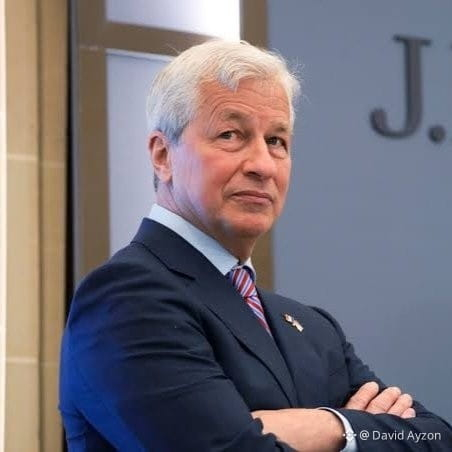
🚨 BITCOIN CAPITULATION OR THE OPPORTUNITY OF A LIFETIME?
JPMorgan is pointing to a signal that deserves attention.
Strategy's stock is now trading at a record discount to the value of its Bitcoin holdings — a gap that could reflect extreme fear across the market.
When investors start pricing Bitcoin exposure below the value of the underlying BTC, sentiment may be reaching a breaking point.
📉 Fear is rising.
🩸 Pressure is building.
₿ But capitulation has historically been where opportunities begin to emerge.
The real question is: Is this the beginning of a deeper crash, or the moment smart money starts paying attention?
The market is getting interesting. 👀
$BTC
{spot}(BTCUSDT)
🚨 BITCOIN CAPITULATION OR THE OPPORTUNITY OF A LIFETIME?
JPMorgan is pointing to a signal that deserves attention.
Strategy's stock is now trading at a record discount to the value of its Bitcoin holdings — a gap that could reflect extreme fear across the market.
When investors start pricing Bitcoin exposure below the value of the underlying BTC, sentiment may be reaching a breaking point.
📉 Fear is rising.
🩸 Pressure is building.
₿ But capitulation has historically been where opportunities begin to emerge.
The real question is: Is this the beginning of a deeper crash, or the moment smart money starts paying attention?
The market is getting interesting. 👀
$BTC

6
417
·
--
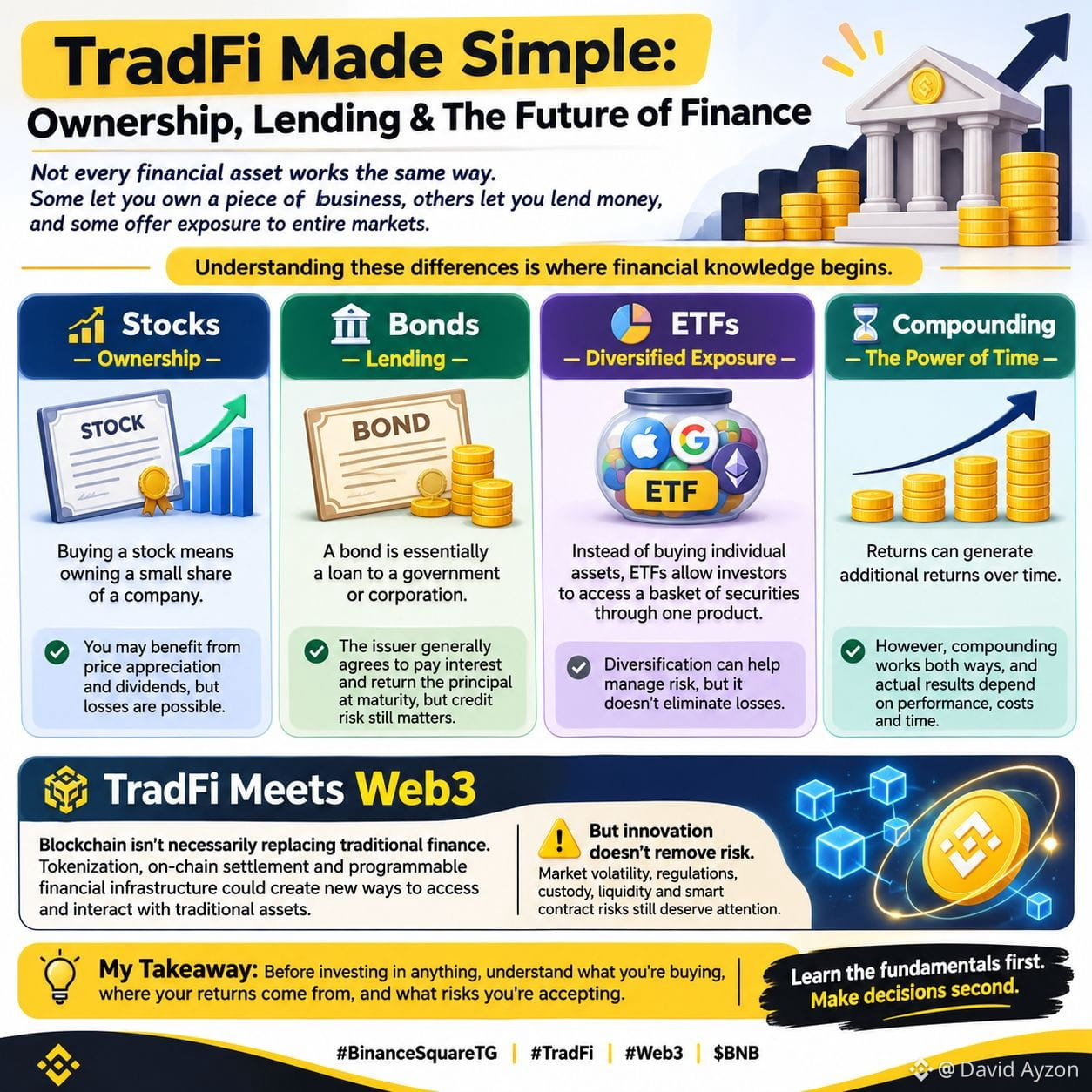
💛 TradFi Made Simple: Ownership, Lending & The Future of Finance
Not every financial asset works the same way. Some let you own a piece of a business, others let you lend money, and some offer exposure to entire markets.
Understanding these differences is where financial knowledge begins.
📈 Stocks — Ownership
Buying a stock means owning a small share of a company. You may benefit from price appreciation and dividends, but losses are possible if the business or market struggles.
🏦 Bonds — Lending
A bond is essentially a loan to a government or corporation. The issuer generally agrees to pay interest and return the principal at maturity, but credit risk still matters.
📊 ETFs — Diversified Exposure
Instead of buying individual assets, ETFs allow investors to access a basket of securities through one product. Diversification can help manage risk, but it doesn't eliminate losses.
⏳ Compounding — The Power of Time
Returns can generate additional returns over time. However, compounding works both ways, and actual results depend on performance, costs and time.
🌐 TradFi Meets Web3
Blockchain isn't necessarily replacing traditional finance. Tokenization, on-chain settlement and programmable financial infrastructure could create new ways to access and interact with traditional assets.
But innovation doesn't remove risk. Market volatility, regulations, custody, liquidity and smart contract risks still deserve attention.
My takeaway: Before investing in anything, understand what you're buying, where your returns come from, and what risks you're accepting.
Learn the fundamentals first. Make decisions second.
💛 #BinanceSquareTG #TradFi #Web3 $BNB
{spot}(BNBUSDT)
💛 TradFi Made Simple: Ownership, Lending & The Future of Finance
Not every financial asset works the same way. Some let you own a piece of a business, others let you lend money, and some offer exposure to entire markets.
Understanding these differences is where financial knowledge begins.
📈 Stocks — Ownership
Buying a stock means owning a small share of a company. You may benefit from price appreciation and dividends, but losses are possible if the business or market struggles.
🏦 Bonds — Lending
A bond is essentially a loan to a government or corporation. The issuer generally agrees to pay interest and return the principal at maturity, but credit risk still matters.
📊 ETFs — Diversified Exposure
Instead of buying individual assets, ETFs allow investors to access a basket of securities through one product. Diversification can help manage risk, but it doesn't eliminate losses.
⏳ Compounding — The Power of Time
Returns can generate additional returns over time. However, compounding works both ways, and actual results depend on performance, costs and time.
🌐 TradFi Meets Web3
Blockchain isn't necessarily replacing traditional finance. Tokenization, on-chain settlement and programmable financial infrastructure could create new ways to access and interact with traditional assets.
But innovation doesn't remove risk. Market volatility, regulations, custody, liquidity and smart contract risks still deserve attention.
My takeaway: Before investing in anything, understand what you're buying, where your returns come from, and what risks you're accepting.
Learn the fundamentals first. Make decisions second.
💛 #BinanceSquareTG #TradFi #Web3 $BNB

Binance TG Community
·
--
Design a TradFI knowledge card 💛 and win your share of $1,000 in USDC.
🔸 Follow @Binance TG Community ( Square )
🔸 Follow @Binance Blockchain Week ( Square )
🔸 🏷️Make your Binance Branded TradFI knowledge card on Square with 💛#BinanceSquareTG and make a separate post. Like+RT
🔸 add your TradFI token ticker to your post ( example $BNB )
🔸 Fill out the survey: here
🔸 subscribe to our next live stream here
📅 Campaign Period: November 24, 2026, 10:00 UTC – December 4th, 2026, 17:00 UTC.
3
205
·
--
Article
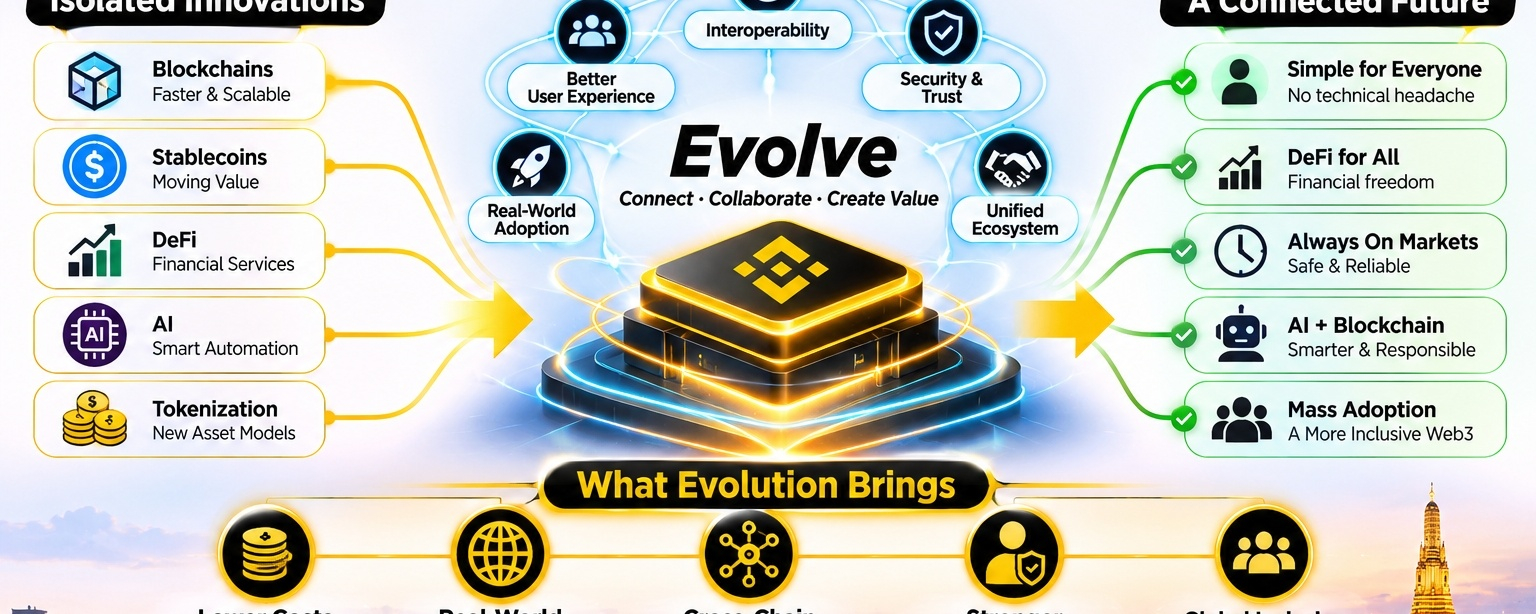
Blockchain's Next Evolution: The Real Breakthrough Is Connecting EverythingThe crypto industry has never lacked innovation. New blockchains, faster transactions, smarter contracts, AI-powered tools and tokenized assets continue to emerge.
But here's a question I think deserves more attention:
What happens when all these innovations finally start working together?
That's the question I'm taking into Binance Blockchain Week 2026 in Bangkok, happening November 28–29, under the theme "Evolve."
For me, evolution isn't simply building something newer. It's making what already exists more useful, accessible and connected.
1. Innovation Is Everywhere. Connectivity Is Still Missing.
We have blockchains capable of processing transactions, stablecoins moving value, DeFi providing financial services, AI automating tasks and tokenization creating new ways to represent assets.
Yet many of these systems still operate in separate environments.
Different networks. Different platforms. Different interfaces. Different liquidity pools.
The next major step shouldn't necessarily be another ecosystem competing for attention. It should be infrastructure that allows these ecosystems to communicate, cooperate and create value together.
Because technology becomes significantly more powerful when it stops working alone.
2. The User Shouldn't Need to Understand Everything
One thing I've noticed as someone who entered crypto without much technical knowledge is that even useful technology can feel intimidating.
Wallets, networks, private keys, bridges, gas fees and unfamiliar interfaces can turn a simple task into a complicated experience.
Mass adoption won't happen simply because blockchain becomes more advanced.
It will happen when the experience becomes easier.
Imagine sending money, accessing financial services or interacting with digital assets without needing to understand which blockchain is processing everything behind the scenes.
The best technology may eventually be the technology people use without even noticing.
3. Finance Needs More Than 24/7 Access
The idea of financial markets operating around the clock is exciting. Tokenization and blockchain-based settlement could create new opportunities for accessibility and efficiency.
But availability alone isn't evolution.
Liquidity, reliable pricing, investor protection, legal rights and proper infrastructure still matter.
A market that never closes is only valuable if people can participate in it safely and efficiently.
I want to see the industry focus not just on making financial products available, but on making them genuinely dependable.
4. AI + Blockchain: Potential Is Not Enough
AI agents could eventually handle repetitive financial tasks, analyse information and interact with blockchain applications.
But giving AI access to financial systems introduces another important question: control.
Who sets the permissions? What happens when an agent makes a mistake? How much authority should automation have?
I believe the strongest future will combine machine efficiency with human oversight.
Automation should make people more capable, not take away their ability to make decisions.
5. Real Evolution Should Be Measurable
Personally, I would measure blockchain's progress through a few simple signals:
→ Are transactions becoming cheaper and more accessible?
→ Are real-world applications solving genuine problems?
→ Can different networks communicate more securely?
→ Are users better protected?
→ Is technology reaching people who previously had limited access?
These questions matter more to me than temporary hype or impressive announcements.
What I Want to Take Away From Bangkok
At Binance Blockchain Week 2026, I want to hear more than predictions about the next big trend.
I want to understand how builders are connecting financial infrastructure, AI, digital ownership and real-world applications into systems that can actually work together.
Because perhaps blockchain's next breakthrough won't be one technology outperforming everything else.
Perhaps it will be multiple technologies finally complementing one another.
The future isn't just about building more. It's about building better connections between what we've already built.
That's my interpretation of Evolve.
And that's the kind of progress I want to see.
#BinanceBlockchainWeekEvolutionIsYours #币安区块链周进化由你
$INIT
{spot}(INITUSDT)
$HAEDAL
{spot}(HAEDALUSDT)
$ONE
{spot}(ONEUSDT)
Blockchain's Next Evolution: The Real Breakthrough Is Connecting Everything
The crypto industry has never lacked innovation. New blockchains, faster transactions, smarter contracts, AI-powered tools and tokenized assets continue to emerge.
But here's a question I think deserves more attention:
What happens when all these innovations finally start working together?
That's the question I'm taking into Binance Blockchain Week 2026 in Bangkok, happening November 28–29, under the theme "Evolve."
For me, evolution isn't simply building something newer. It's making what already exists more useful, accessible and connected.
1. Innovation Is Everywhere. Connectivity Is Still Missing.
We have blockchains capable of processing transactions, stablecoins moving value, DeFi providing financial services, AI automating tasks and tokenization creating new ways to represent assets.
Yet many of these systems still operate in separate environments.
Different networks. Different platforms. Different interfaces. Different liquidity pools.
The next major step shouldn't necessarily be another ecosystem competing for attention. It should be infrastructure that allows these ecosystems to communicate, cooperate and create value together.
Because technology becomes significantly more powerful when it stops working alone.
2. The User Shouldn't Need to Understand Everything
One thing I've noticed as someone who entered crypto without much technical knowledge is that even useful technology can feel intimidating.
Wallets, networks, private keys, bridges, gas fees and unfamiliar interfaces can turn a simple task into a complicated experience.
Mass adoption won't happen simply because blockchain becomes more advanced.
It will happen when the experience becomes easier.
Imagine sending money, accessing financial services or interacting with digital assets without needing to understand which blockchain is processing everything behind the scenes.
The best technology may eventually be the technology people use without even noticing.
3. Finance Needs More Than 24/7 Access
The idea of financial markets operating around the clock is exciting. Tokenization and blockchain-based settlement could create new opportunities for accessibility and efficiency.
But availability alone isn't evolution.
Liquidity, reliable pricing, investor protection, legal rights and proper infrastructure still matter.
A market that never closes is only valuable if people can participate in it safely and efficiently.
I want to see the industry focus not just on making financial products available, but on making them genuinely dependable.
4. AI + Blockchain: Potential Is Not Enough
AI agents could eventually handle repetitive financial tasks, analyse information and interact with blockchain applications.
But giving AI access to financial systems introduces another important question: control.
Who sets the permissions? What happens when an agent makes a mistake? How much authority should automation have?
I believe the strongest future will combine machine efficiency with human oversight.
Automation should make people more capable, not take away their ability to make decisions.
5. Real Evolution Should Be Measurable
Personally, I would measure blockchain's progress through a few simple signals:
→ Are transactions becoming cheaper and more accessible?
→ Are real-world applications solving genuine problems?
→ Can different networks communicate more securely?
→ Are users better protected?
→ Is technology reaching people who previously had limited access?
These questions matter more to me than temporary hype or impressive announcements.
What I Want to Take Away From Bangkok
At Binance Blockchain Week 2026, I want to hear more than predictions about the next big trend.
I want to understand how builders are connecting financial infrastructure, AI, digital ownership and real-world applications into systems that can actually work together.
Because perhaps blockchain's next breakthrough won't be one technology outperforming everything else.
Perhaps it will be multiple technologies finally complementing one another.
The future isn't just about building more. It's about building better connections between what we've already built.
That's my interpretation of Evolve.
And that's the kind of progress I want to see.
#BinanceBlockchainWeekEvolutionIsYours #币安区块链周进化由你
$INIT
$HAEDAL
$ONE
1
7
1.2k
·
--
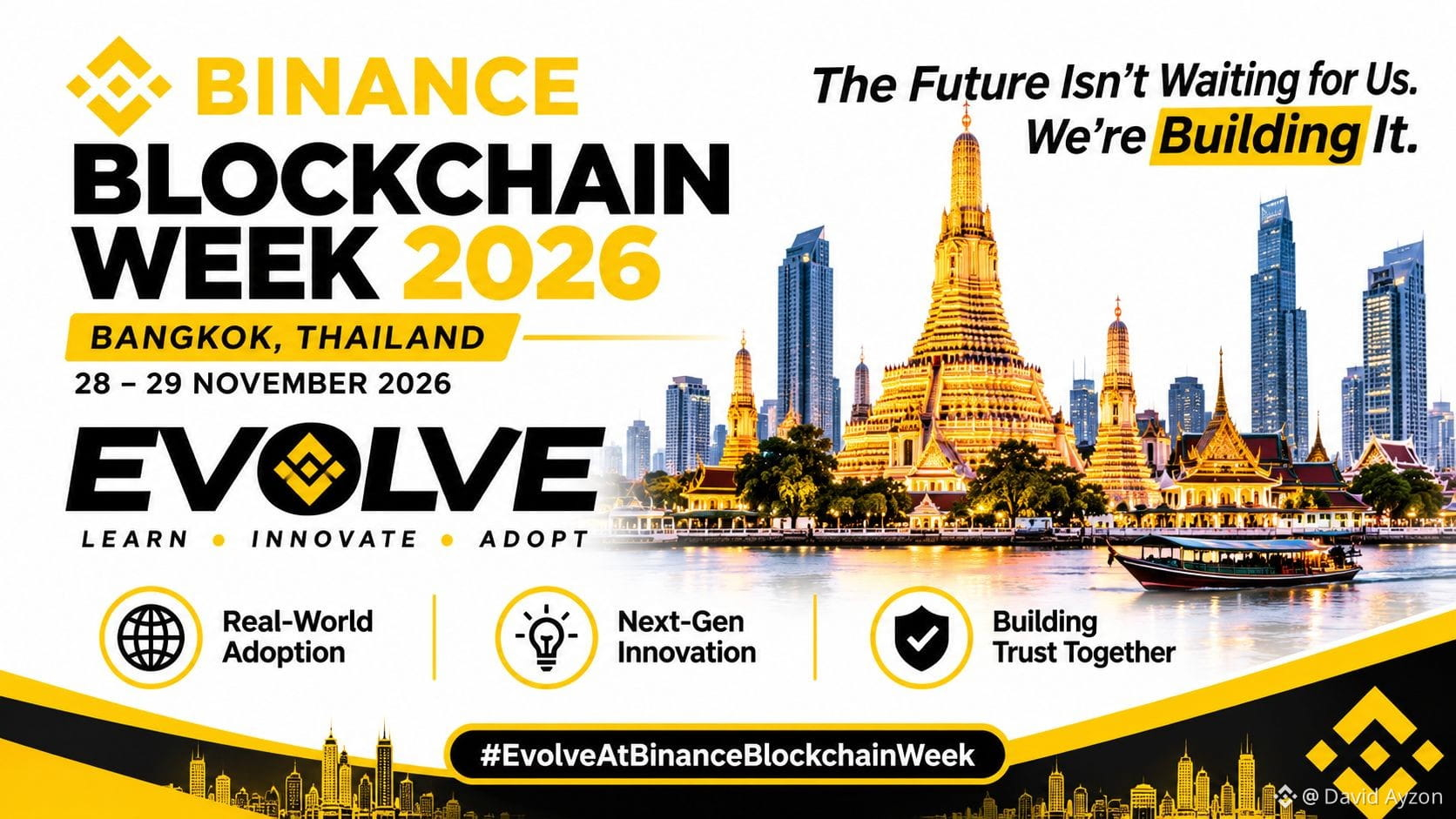
Binance Blockchain Week 2026: The Future Isn't Waiting for Us. We're Building It.
When I first started exploring crypto, I thought blockchain was mainly about digital currencies, trading, and market movements.
But the more I learned, the more I realized that blockchain is much bigger than that.
It's about creating new possibilities, connecting people, improving financial access, and changing how we interact with technology.
That's what makes me excited about Binance Blockchain Week 2026 in Bangkok.
This year's theme, Evolve, is more than just a word. It represents the direction our industry needs to move towards.
We've already witnessed incredible progress, but I believe some of the most important developments are still ahead of us.
I'm particularly interested in three things:
1. Real-world adoption
Blockchain needs to become useful beyond the crypto community. Faster payments, affordable transactions, and accessible financial services could make a meaningful difference in people's everyday lives.
2. The next generation of innovation
AI, tokenization, decentralized infrastructure, and digital ownership are opening doors to possibilities we are only beginning to understand.
3. Building trust and bringing people together
Technology alone cannot build a strong industry. Education, security, transparency, and a community that believes in responsible innovation matter just as much.
One thing I would love to take away from this event is a better understanding of what builders are actually creating, what challenges still exist, and where the next big opportunities for blockchain adoption might come from.
I may be following the event online rather than standing in Bangkok, but that doesn't make me any less excited to be part of this conversation.
Because evolution doesn't belong to a single company, developer, or country.
It belongs to everyone willing to learn, share ideas, and contribute to what comes next.
The next chapter of blockchain is not just something we should watch. It's something we should help build.
#EvolveAtBinanceBlockchainWeek
11
414
·
--
Article
Celo: The Invisible Financial Layer Connecting People, Stablecoins and AI AgentsWhat if the biggest achievement of blockchain technology is not making people understand crypto, but making them no longer need to think about it?
Imagine three different situations.
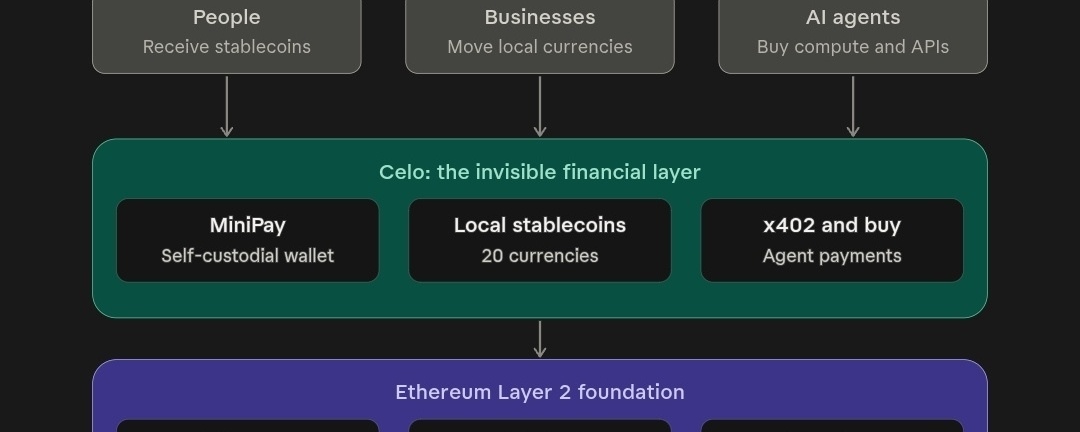
A freelancer receives digital dollars from a client in another country. A small business needs to move money between different local currencies. An AI agent wants to purchase computing resources or access a paid API without waiting for a human to complete the payment.
These situations look unrelated, but they share one requirement: money must move quickly, reliably, affordably, and with as little friction as possible.
This is where I find Celo's strategy particularly interesting.
Rather than positioning itself only as another blockchain competing for transactions, Celo is developing infrastructure around a much bigger idea: making programmable money useful across human payments, local economies, and emerging machine-to-machine commerce.
And its transition to an Ethereum Layer 2 may be one of the most important pieces of that strategy.
1. The Real Problem Is Not Moving Money. It Is Removing Friction.
Blockchain technology has already demonstrated that digital assets can move globally without following every traditional banking process.
But technical capability and everyday usability are two different things.
A person receiving stablecoins may still face several obstacles:
- Getting funds into a wallet.
- Understanding network fees.
- Finding liquidity for local currencies.
- Converting digital assets into usable money.
- Navigating complicated wallet interfaces.
- Trusting the security and reliability of the infrastructure.
These problems matter because mainstream users do not care about execution environments, consensus mechanisms, or transaction finality.
They care about whether their money arrives and whether they can actually use it.
My view is that the next stage of blockchain adoption will depend heavily on removing these small but persistent obstacles.
The winning financial infrastructure may be the infrastructure users barely notice.
2. Celo's Layer 2 Transformation Was About More Than Scaling
Celo launched in 2020 as an independent Layer 1 blockchain, with mobile accessibility and financial inclusion at the centre of its vision.
However, maintaining an independent network also meant operating a separate security and infrastructure ecosystem.
In May 2024, the Celo community approved a transition to an Ethereum Layer 2. The migration was completed on March 26, 2025, using the Optimism OP Stack.
This was not simply a change in classification.
Celo retained its existing network state and ecosystem while moving toward closer integration with Ethereum.
Its architecture combines several important components:
OP Stack: Provides the Layer 2 execution framework.
Ethereum: Provides the Layer 1 settlement foundation.
EigenDA: Provides data availability infrastructure.
Fee Abstraction: Allows users to pay transaction fees using supported ERC-20 assets, including stablecoins.
The Superchain connection also creates opportunities for shared infrastructure, interoperability, and collaboration with other OP Stack networks.
But I think the more interesting question is why Celo needs this architecture.
Its objective is not simply to process more transactions. It is to combine Ethereum alignment with a specialised financial use case: affordable, mobile-first payments.
There is an important technical distinction here: using Ethereum settlement does not mean every component inherits identical security assumptions to Ethereum. Data availability, sequencing, bridges, and operational infrastructure still deserve independent evaluation.
That is precisely why Celo's architecture should be examined as a complete system rather than judged by the L2 label alone.
3. MiniPay: The Distribution Layer That Makes the Technology Matter
Infrastructure without distribution rarely creates mainstream adoption.
A blockchain can have excellent technology, but if ordinary users cannot access it comfortably, its potential remains limited.
This is where MiniPay becomes an important part of Celo's strategy.
MiniPay is a self-custodial stablecoin wallet developed by Opera and built on Celo. Its approach is centred on making digital financial tools accessible through smartphones.
Instead of expecting every user to understand seed phrases, gas tokens, and complicated blockchain interfaces, MiniPay focuses on simplifying the experience.
Its reported adoption figures are worth examining.
According to the November 19, 2026 announcement:
- More than 20 million activated wallets.
- More than 600 million transactions processed.
- Availability across 70+ countries.
- 77 Mini Apps.
These are meaningful distribution indicators, although activated wallets should not be confused with unique monthly active users.
Another important development is MiniPay's upgrade to Privy, the Stripe-owned wallet infrastructure provider.
The integration introduces email, social-account, and passkey sign-in options while preserving the wallet's self-custodial design and allowing users to export their keys.
This matters because wallet access is one of the biggest onboarding barriers in crypto.
The wider Stripe connection is also developing. MiniPay introduced Link by Stripe deposits for users in the EU and US, providing another route for bringing money into the stablecoin ecosystem.
However, I would distinguish the availability of these integrations from universal payment acceptance. Their actual reach depends on supported markets, partners, and services.
The real opportunity is turning a crypto wallet into a familiar financial interface without removing the user's control over their assets.
4. Local-Currency Stablecoins: A More Interesting Payment Opportunity
One aspect of Celo that deserves more attention is its focus on currencies beyond the US dollar.
Most crypto payment conversations revolve around dollar-denominated stablecoins.
But the global economy does not operate in a single currency.
A business in Brazil may need Brazilian reais. A user in Nigeria may prefer naira. A merchant in Argentina may need Argentine pesos.
Local-currency stablecoins can potentially reduce unnecessary conversion steps and support more relevant financial applications.
Celo's ecosystem includes assets such as:
- USDC and USDT.
- USA₮.
- USDm and EURm.
- BRLm and XOFm.
- Other local-currency stablecoin assets.
Celo reported an ecosystem of 33 stablecoins representing 20 currencies in its October 2026 infrastructure update.
This creates an interesting possibility: rather than treating every international transaction as a dollar conversion problem, applications could increasingly work with the currencies their users actually need.
But the number of supported stablecoins is only one part of the equation.
Their reserve quality, issuer reliability, redemption mechanisms, regulatory standing, and local liquidity are equally important.
A token representing a local currency is not automatically equivalent to a bank deposit or guaranteed redemption at every location.
For Celo, the next challenge is making this multi-currency infrastructure useful beyond simply having more assets available.
5. The Unexpected Next User: AI Agents
This is where Celo's story becomes particularly interesting.
Until now, most payment infrastructure has been designed around humans.
A person opens an application, selects a service, confirms a payment, and receives something in return.
But AI agents are changing the way digital services are accessed.
An autonomous agent may need to purchase computing power, retrieve information, access an API, or pay another digital service to complete a task.
The question becomes:
How does software pay for software without requiring a human to manually complete every transaction?
Celo is exploring this through its x402 payment infrastructure.
The concept uses the HTTP 402 Payment Required response to allow online services to request payment before providing access.
The process can work like this:
1. An AI agent requests a paid service.
2. The service returns a payment requirement.
3. The agent signs a supported stablecoin payment authorization.
4. A facilitator verifies the authorization and handles settlement.
5. The service receives confirmation and provides access.
Celo's facilitator supports this type of payment flow, including gas sponsorship for supported assets.
The October 27, 2026 update expanded support to 10 stablecoins across eight currencies.
Even more interesting is Celo's launch of buy, a services marketplace where AI agents can discover and purchase more than 700 services covering computing, data, and APIs.
This is not just another wallet feature.
It represents an attempt to connect stablecoin infrastructure with an emerging economy in which software can independently purchase digital resources.
There is still a long way to go before autonomous payments become a mainstream commercial activity.
But the infrastructure being developed today could become relevant if agent-driven commerce expands.
6. Why the Superchain Connection Matters
The Superchain narrative is sometimes reduced to a collection of networks using the same technology.
I think its bigger significance is the possibility of building specialised networks that can share infrastructure while serving different markets.
Celo's identity within that ecosystem is particularly clear.
Ethereum provides the settlement foundation.
The OP Stack provides the execution architecture.
The wider Superchain creates opportunities for ecosystem connectivity.
Celo focuses on stablecoin payments, local financial markets, and mobile accessibility.
This division of purpose is important.
Not every blockchain needs to compete for the same users or applications. A specialised network can develop a stronger identity by solving a specific problem exceptionally well.
For Celo, that problem is making digital money practical in everyday financial activity.
However, interoperability is not automatic. Bridges, liquidity fragmentation, cross-chain messaging, and differing security assumptions remain important challenges.
The Superchain opportunity will ultimately depend on how effectively these networks become connected in practice.
7. The CELO Token: Does Network Growth Create Economic Value?
This is a question that deserves an honest answer.
A growing ecosystem does not automatically guarantee a rising native token value.
CELO has roles in governance, staking, and the network's economic model. Supported stablecoins can also be used for transaction fees, meaning users do not always need to acquire CELO just to make payments.
This creates an important distinction between network adoption and token demand.
One development worth watching is CELOccelerate.
Under this framework, net sequencer revenue, after applicable operating costs and revenue-sharing obligations, is directed toward the Community Fund through CELO acquisition.
CELO holders participate in governance decisions regarding the fund's use.
That means the purchased tokens are not automatically burned. Governance can determine whether they are held, reinvested, allocated, or burned through an approved decision.
I find this mechanism interesting because it attempts to connect actual network activity with the token's economic role.
But its long-term success depends on measurable factors:
- Sustainable sequencer revenue.
- Operating costs.
- Stablecoin payment activity.
- Transparent revenue reporting.
- Governance decisions.
- The relationship between token acquisition and circulating supply.
The important point is that token value capture must be demonstrated through real economic activity, not simply promised through an attractive ecosystem narrative.
8. What Could Stop This Vision From Working?
I would not consider Celo's opportunity without examining its challenges.
Competition: Ethereum L2s, Solana, and specialised payment networks are all competing for developers, liquidity, and financial applications.
Stablecoin dependencies: The reliability of stablecoin payments depends on issuers, reserves, redemption mechanisms, and local liquidity.
User retention: Twenty million activated wallets are encouraging, but recurring financial activity is a more meaningful measure of adoption.
Infrastructure security: Sequencing, data availability, bridges, and smart contracts all introduce technical risks that need continued attention.
Regulation: Local stablecoin rules and payment regulations can affect which financial services are available in different countries.
Token economics: Network growth must translate into sustainable revenue and meaningful economic value for the ecosystem.
These are not reasons to dismiss Celo. They are the challenges that will determine whether its strategy can succeed.
9. Five Things I Would Watch Next
Rather than judging Celo only by announcements or short-term market movements, I would monitor five developments:
1. MiniPay retention: Are activated wallets becoming regular users?
2. Stablecoin liquidity: Are local-currency assets gaining meaningful liquidity and real payment use cases?
3. Agentic payments: Are x402 and the buy marketplace generating recurring commercial transactions?
4. Network economics: Is sequencer revenue growing sustainably after operating costs?
5. Superchain connectivity: Are integrations creating meaningful benefits for developers, applications, and users?
These indicators can reveal whether Celo is progressing from a promising infrastructure narrative toward a sustainable financial ecosystem.
My Final Perspective: The Best Financial Infrastructure May Be Invisible
When I look at Celo, I see three different layers of opportunity coming together.
First, there are people who need accessible digital money.
Second, there are businesses and applications that need reliable payment infrastructure across currencies.
Third, there is an emerging generation of AI agents that may need to purchase digital services independently.
Celo is attempting to build infrastructure that can serve all three.
Its Ethereum Layer 2 transition gives it a different architectural position. Its Superchain alignment creates opportunities for broader connectivity. MiniPay provides a distribution channel, while stablecoins and agentic payment tools extend the potential use cases.
But I believe its biggest test is still ahead.
Can it convert wallet activations into recurring financial activity? Can local-currency stablecoins develop real liquidity? Can autonomous payments become a meaningful source of demand? And can network usage generate sustainable economic value?
Those questions matter more than the number of announcements a project publishes.
My central takeaway is simple: Celo's opportunity is not just to become a bigger blockchain. It is to become a financial layer that people, businesses, and eventually AI agents can use without needing to understand the blockchain underneath.
If that happens, the most successful part of Celo's technology might be the part that users never notice.
Celo is now a Layer 2. Secured by Ethereum. Built on the Superchain. But its real ambition is to make digital finance work in the real world.
What do you think will drive Celo's next stage of adoption: MiniPay, local-currency stablecoins, or AI-powered payments?
#Celo @celo $CELO
{spot}(CELOUSDT)
Disclosure: Original educational research prepared for the Binance Square Celo Creator Challenge. This article reflects an independent interpretation of publicly available information.
Disclaimer: This content is for educational purposes only and is not financial advice. Cryptocurrency assets involve significant risks. Always conduct your own research.
@Binance_Square_Official
Celo: The Invisible Financial Layer Connecting People, Stablecoins and AI Agents
What if the biggest achievement of blockchain technology is not making people understand crypto, but making them no longer need to think about it?
Imagine three different situations.
A freelancer receives digital dollars from a client in another country. A small business needs to move money between different local currencies. An AI agent wants to purchase computing resources or access a paid API without waiting for a human to complete the payment.
These situations look unrelated, but they share one requirement: money must move quickly, reliably, affordably, and with as little friction as possible.
This is where I find Celo's strategy particularly interesting.
Rather than positioning itself only as another blockchain competing for transactions, Celo is developing infrastructure around a much bigger idea: making programmable money useful across human payments, local economies, and emerging machine-to-machine commerce.
And its transition to an Ethereum Layer 2 may be one of the most important pieces of that strategy.
1. The Real Problem Is Not Moving Money. It Is Removing Friction.
Blockchain technology has already demonstrated that digital assets can move globally without following every traditional banking process.
But technical capability and everyday usability are two different things.
A person receiving stablecoins may still face several obstacles:
- Getting funds into a wallet.
- Understanding network fees.
- Finding liquidity for local currencies.
- Converting digital assets into usable money.
- Navigating complicated wallet interfaces.
- Trusting the security and reliability of the infrastructure.
These problems matter because mainstream users do not care about execution environments, consensus mechanisms, or transaction finality.
They care about whether their money arrives and whether they can actually use it.
My view is that the next stage of blockchain adoption will depend heavily on removing these small but persistent obstacles.
The winning financial infrastructure may be the infrastructure users barely notice.
2. Celo's Layer 2 Transformation Was About More Than Scaling
Celo launched in 2020 as an independent Layer 1 blockchain, with mobile accessibility and financial inclusion at the centre of its vision.
However, maintaining an independent network also meant operating a separate security and infrastructure ecosystem.
In May 2024, the Celo community approved a transition to an Ethereum Layer 2. The migration was completed on March 26, 2025, using the Optimism OP Stack.
This was not simply a change in classification.
Celo retained its existing network state and ecosystem while moving toward closer integration with Ethereum.
Its architecture combines several important components:
OP Stack: Provides the Layer 2 execution framework.
Ethereum: Provides the Layer 1 settlement foundation.
EigenDA: Provides data availability infrastructure.
Fee Abstraction: Allows users to pay transaction fees using supported ERC-20 assets, including stablecoins.
The Superchain connection also creates opportunities for shared infrastructure, interoperability, and collaboration with other OP Stack networks.
But I think the more interesting question is why Celo needs this architecture.
Its objective is not simply to process more transactions. It is to combine Ethereum alignment with a specialised financial use case: affordable, mobile-first payments.
There is an important technical distinction here: using Ethereum settlement does not mean every component inherits identical security assumptions to Ethereum. Data availability, sequencing, bridges, and operational infrastructure still deserve independent evaluation.
That is precisely why Celo's architecture should be examined as a complete system rather than judged by the L2 label alone.
3. MiniPay: The Distribution Layer That Makes the Technology Matter
Infrastructure without distribution rarely creates mainstream adoption.
A blockchain can have excellent technology, but if ordinary users cannot access it comfortably, its potential remains limited.
This is where MiniPay becomes an important part of Celo's strategy.
MiniPay is a self-custodial stablecoin wallet developed by Opera and built on Celo. Its approach is centred on making digital financial tools accessible through smartphones.
Instead of expecting every user to understand seed phrases, gas tokens, and complicated blockchain interfaces, MiniPay focuses on simplifying the experience.
Its reported adoption figures are worth examining.
According to the November 19, 2026 announcement:
- More than 20 million activated wallets.
- More than 600 million transactions processed.
- Availability across 70+ countries.
- 77 Mini Apps.
These are meaningful distribution indicators, although activated wallets should not be confused with unique monthly active users.
Another important development is MiniPay's upgrade to Privy, the Stripe-owned wallet infrastructure provider.
The integration introduces email, social-account, and passkey sign-in options while preserving the wallet's self-custodial design and allowing users to export their keys.
This matters because wallet access is one of the biggest onboarding barriers in crypto.
The wider Stripe connection is also developing. MiniPay introduced Link by Stripe deposits for users in the EU and US, providing another route for bringing money into the stablecoin ecosystem.
However, I would distinguish the availability of these integrations from universal payment acceptance. Their actual reach depends on supported markets, partners, and services.
The real opportunity is turning a crypto wallet into a familiar financial interface without removing the user's control over their assets.
4. Local-Currency Stablecoins: A More Interesting Payment Opportunity
One aspect of Celo that deserves more attention is its focus on currencies beyond the US dollar.
Most crypto payment conversations revolve around dollar-denominated stablecoins.
But the global economy does not operate in a single currency.
A business in Brazil may need Brazilian reais. A user in Nigeria may prefer naira. A merchant in Argentina may need Argentine pesos.
Local-currency stablecoins can potentially reduce unnecessary conversion steps and support more relevant financial applications.
Celo's ecosystem includes assets such as:
- USDC and USDT.
- USA₮.
- USDm and EURm.
- BRLm and XOFm.
- Other local-currency stablecoin assets.
Celo reported an ecosystem of 33 stablecoins representing 20 currencies in its October 2026 infrastructure update.
This creates an interesting possibility: rather than treating every international transaction as a dollar conversion problem, applications could increasingly work with the currencies their users actually need.
But the number of supported stablecoins is only one part of the equation.
Their reserve quality, issuer reliability, redemption mechanisms, regulatory standing, and local liquidity are equally important.
A token representing a local currency is not automatically equivalent to a bank deposit or guaranteed redemption at every location.
For Celo, the next challenge is making this multi-currency infrastructure useful beyond simply having more assets available.
5. The Unexpected Next User: AI Agents
This is where Celo's story becomes particularly interesting.
Until now, most payment infrastructure has been designed around humans.
A person opens an application, selects a service, confirms a payment, and receives something in return.
But AI agents are changing the way digital services are accessed.
An autonomous agent may need to purchase computing power, retrieve information, access an API, or pay another digital service to complete a task.
The question becomes:
How does software pay for software without requiring a human to manually complete every transaction?
Celo is exploring this through its x402 payment infrastructure.
The concept uses the HTTP 402 Payment Required response to allow online services to request payment before providing access.
The process can work like this:
1. An AI agent requests a paid service.
2. The service returns a payment requirement.
3. The agent signs a supported stablecoin payment authorization.
4. A facilitator verifies the authorization and handles settlement.
5. The service receives confirmation and provides access.
Celo's facilitator supports this type of payment flow, including gas sponsorship for supported assets.
The October 27, 2026 update expanded support to 10 stablecoins across eight currencies.
Even more interesting is Celo's launch of buy, a services marketplace where AI agents can discover and purchase more than 700 services covering computing, data, and APIs.
This is not just another wallet feature.
It represents an attempt to connect stablecoin infrastructure with an emerging economy in which software can independently purchase digital resources.
There is still a long way to go before autonomous payments become a mainstream commercial activity.
But the infrastructure being developed today could become relevant if agent-driven commerce expands.
6. Why the Superchain Connection Matters
The Superchain narrative is sometimes reduced to a collection of networks using the same technology.
I think its bigger significance is the possibility of building specialised networks that can share infrastructure while serving different markets.
Celo's identity within that ecosystem is particularly clear.
Ethereum provides the settlement foundation.
The OP Stack provides the execution architecture.
The wider Superchain creates opportunities for ecosystem connectivity.
Celo focuses on stablecoin payments, local financial markets, and mobile accessibility.
This division of purpose is important.
Not every blockchain needs to compete for the same users or applications. A specialised network can develop a stronger identity by solving a specific problem exceptionally well.
For Celo, that problem is making digital money practical in everyday financial activity.
However, interoperability is not automatic. Bridges, liquidity fragmentation, cross-chain messaging, and differing security assumptions remain important challenges.
The Superchain opportunity will ultimately depend on how effectively these networks become connected in practice.
7. The CELO Token: Does Network Growth Create Economic Value?
This is a question that deserves an honest answer.
A growing ecosystem does not automatically guarantee a rising native token value.
CELO has roles in governance, staking, and the network's economic model. Supported stablecoins can also be used for transaction fees, meaning users do not always need to acquire CELO just to make payments.
This creates an important distinction between network adoption and token demand.
One development worth watching is CELOccelerate.
Under this framework, net sequencer revenue, after applicable operating costs and revenue-sharing obligations, is directed toward the Community Fund through CELO acquisition.
CELO holders participate in governance decisions regarding the fund's use.
That means the purchased tokens are not automatically burned. Governance can determine whether they are held, reinvested, allocated, or burned through an approved decision.
I find this mechanism interesting because it attempts to connect actual network activity with the token's economic role.
But its long-term success depends on measurable factors:
- Sustainable sequencer revenue.
- Operating costs.
- Stablecoin payment activity.
- Transparent revenue reporting.
- Governance decisions.
- The relationship between token acquisition and circulating supply.
The important point is that token value capture must be demonstrated through real economic activity, not simply promised through an attractive ecosystem narrative.
8. What Could Stop This Vision From Working?
I would not consider Celo's opportunity without examining its challenges.
Competition: Ethereum L2s, Solana, and specialised payment networks are all competing for developers, liquidity, and financial applications.
Stablecoin dependencies: The reliability of stablecoin payments depends on issuers, reserves, redemption mechanisms, and local liquidity.
User retention: Twenty million activated wallets are encouraging, but recurring financial activity is a more meaningful measure of adoption.
Infrastructure security: Sequencing, data availability, bridges, and smart contracts all introduce technical risks that need continued attention.
Regulation: Local stablecoin rules and payment regulations can affect which financial services are available in different countries.
Token economics: Network growth must translate into sustainable revenue and meaningful economic value for the ecosystem.
These are not reasons to dismiss Celo. They are the challenges that will determine whether its strategy can succeed.
9. Five Things I Would Watch Next
Rather than judging Celo only by announcements or short-term market movements, I would monitor five developments:
1. MiniPay retention: Are activated wallets becoming regular users?
2. Stablecoin liquidity: Are local-currency assets gaining meaningful liquidity and real payment use cases?
3. Agentic payments: Are x402 and the buy marketplace generating recurring commercial transactions?
4. Network economics: Is sequencer revenue growing sustainably after operating costs?
5. Superchain connectivity: Are integrations creating meaningful benefits for developers, applications, and users?
These indicators can reveal whether Celo is progressing from a promising infrastructure narrative toward a sustainable financial ecosystem.
My Final Perspective: The Best Financial Infrastructure May Be Invisible
When I look at Celo, I see three different layers of opportunity coming together.
First, there are people who need accessible digital money.
Second, there are businesses and applications that need reliable payment infrastructure across currencies.
Third, there is an emerging generation of AI agents that may need to purchase digital services independently.
Celo is attempting to build infrastructure that can serve all three.
Its Ethereum Layer 2 transition gives it a different architectural position. Its Superchain alignment creates opportunities for broader connectivity. MiniPay provides a distribution channel, while stablecoins and agentic payment tools extend the potential use cases.
But I believe its biggest test is still ahead.
Can it convert wallet activations into recurring financial activity? Can local-currency stablecoins develop real liquidity? Can autonomous payments become a meaningful source of demand? And can network usage generate sustainable economic value?
Those questions matter more than the number of announcements a project publishes.
My central takeaway is simple: Celo's opportunity is not just to become a bigger blockchain. It is to become a financial layer that people, businesses, and eventually AI agents can use without needing to understand the blockchain underneath.
If that happens, the most successful part of Celo's technology might be the part that users never notice.
Celo is now a Layer 2. Secured by Ethereum. Built on the Superchain. But its real ambition is to make digital finance work in the real world.
What do you think will drive Celo's next stage of adoption: MiniPay, local-currency stablecoins, or AI-powered payments?
#Celo @celo $CELO
Disclosure: Original educational research prepared for the Binance Square Celo Creator Challenge. This article reflects an independent interpretation of publicly available information.
Disclaimer: This content is for educational purposes only and is not financial advice. Cryptocurrency assets involve significant risks. Always conduct your own research.
@Binance Square Official
71
57
5.3k
·
--
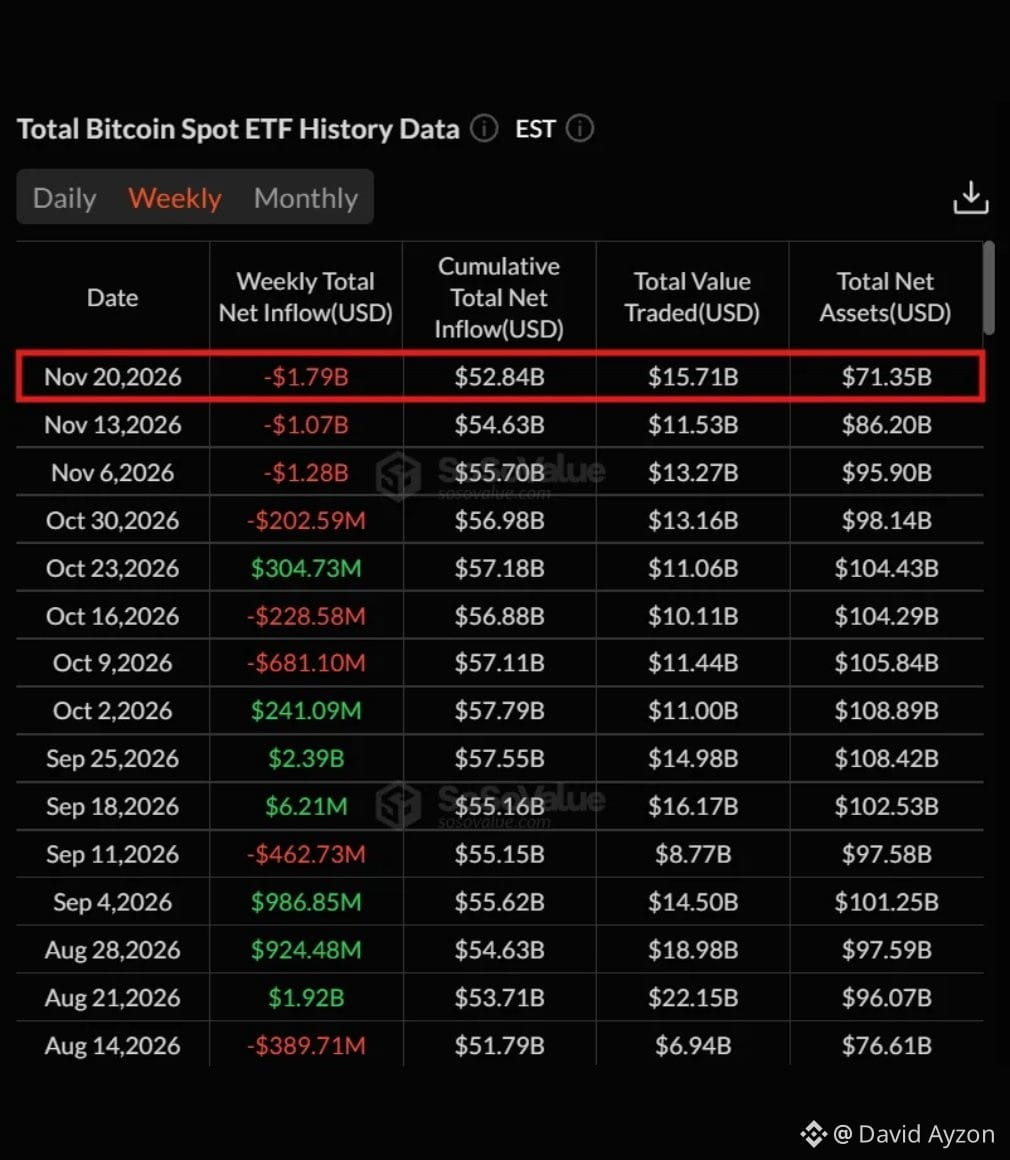
🚨 BITCOIN ETF SELL-OFF ALERT! 📉
BlackRock and other Bitcoin ETFs dumped $1.79 BILLION worth of BTC last week!
⚠️ The largest weekly outflow in 21 WEEKS!
Institutional selling is raising serious concerns. Is more downside ahead, or will buyers absorb the pressure? 👀
All eyes on Bitcoin! 🔥
$BTC
{spot}(BTCUSDT)
🚨 BITCOIN ETF SELL-OFF ALERT! 📉
BlackRock and other Bitcoin ETFs dumped $1.79 BILLION worth of BTC last week!
⚠️ The largest weekly outflow in 21 WEEKS!
Institutional selling is raising serious concerns. Is more downside ahead, or will buyers absorb the pressure? 👀
All eyes on Bitcoin! 🔥
$BTC
BlackRock and other Bitcoin ETFs dumped $1.79 BILLION worth of BTC last week!
⚠️ The largest weekly outflow in 21 WEEKS!
Institutional selling is raising serious concerns. Is more downside ahead, or will buyers absorb the pressure? 👀
All eyes on Bitcoin! 🔥
$BTC

BTC+1.23%
BLKUS+1.78%
2
190
·
--
Binance gainers board just now, and it's a mixed bag 👀
$XVG +18.00% (0.001678)
$NIGHT +15.22% (0.04874)
$CYPHB +12.93% (1.66)
$COOKIE +7.86% (0.00796)
Verge leading the list is not something I had on my card today. Midnight and Cypherpunk both holding double digits is the part I'm watching, since a lot of these fade fast once the volume dries up.
Top gainers lists are a snapshot, not a signal. I'm checking volume and liquidity before I think about any of these.
Which one would you actually look into first?
Which gainer is on your watchlist?
$XVG
59%
$NIGHT
33%
$CYPHB
6%
$COOKIE
2%
82 votes • Voting closed
4
14
4.2k
·
--
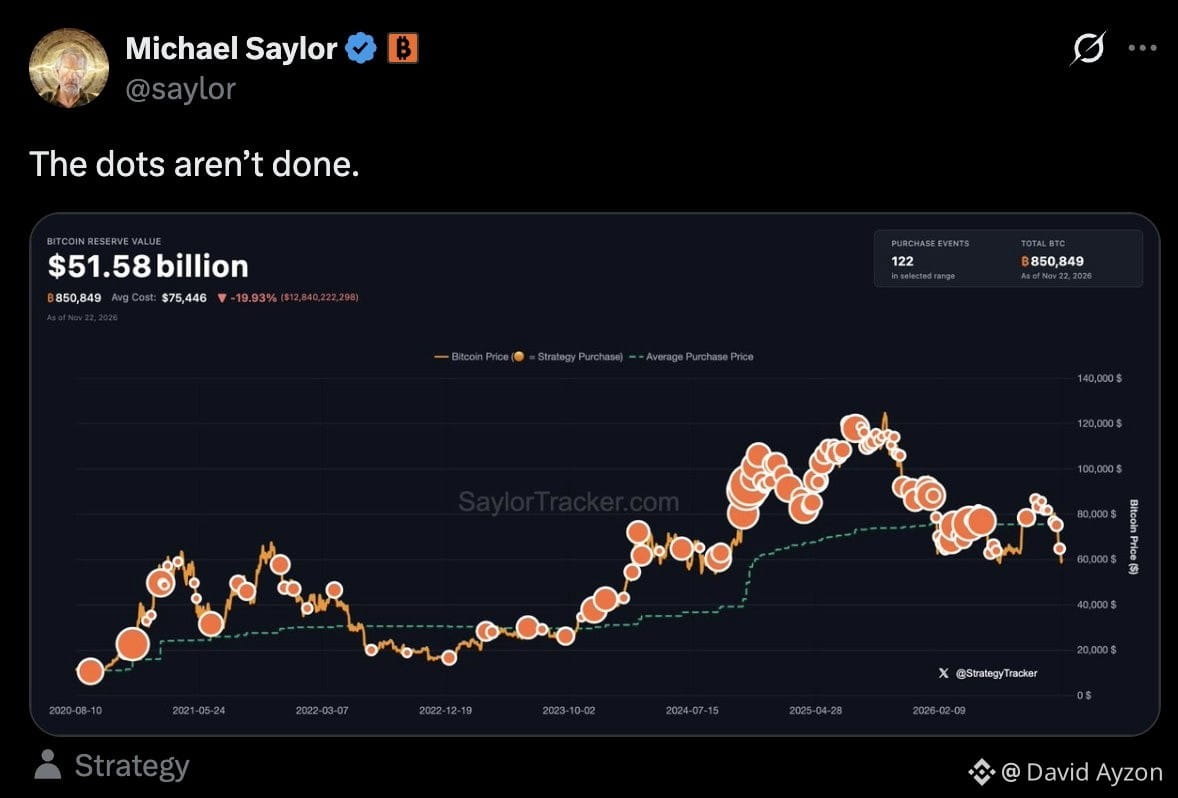
The dots aren't done.
That's the whole caption. Saylor dropped the chart today, Nov 22, and the numbers are right there:
850,849 BTC held
$75,446 average cost
$51.58B reserve value
down 19.93%, about $12.84B under water
122 purchase events since 2020
Look at the last dot on the chart. It sits at the far right edge, at the lowest price on the screen in months. Most people would be hiding their cost basis right now, and he's posting it.
Discipline or stubbornness, I honestly go back and forth. I lean discipline, but a $12.8B paper loss funded partly by stock issuance isn't nothing, and it can hurt if the market stays ugly.
Monday's filing tells us if the dots grew. Not financial advice.
$BTC
{spot}(BTCUSDT)
The dots aren't done.
That's the whole caption. Saylor dropped the chart today, Nov 22, and the numbers are right there:
850,849 BTC held
$75,446 average cost
$51.58B reserve value
down 19.93%, about $12.84B under water
122 purchase events since 2020
Look at the last dot on the chart. It sits at the far right edge, at the lowest price on the screen in months. Most people would be hiding their cost basis right now, and he's posting it.
Discipline or stubbornness, I honestly go back and forth. I lean discipline, but a $12.8B paper loss funded partly by stock issuance isn't nothing, and it can hurt if the market stays ugly.
Monday's filing tells us if the dots grew. Not financial advice.
$BTC
3
313
·
--
🚨 THE BIG THREE ARE SHOWING SIGNS OF LIFE! 🔥
BTC, ETH and BNB are back in green, but the bigger question is whether this recovery has enough strength to continue.
🟠 BTC— $59,727 (+3.13%)
24H High: $60,996 | Low: $57,793
🔵 ETH— $1,684.23 (+2.94%)
24H High: $1,716.58 | Low: $1,632.16
🟡 BNB— $546.36 (+4.27%)
24H High: $551.13 | Low: $522.87
📊 What stands out?
• BNB is leading the three with the strongest 24H gain.
• BTC is approaching the $61K resistance zone.
• ETH is testing the $1,715 area.
All three are trading above their 4H MA(7), but remain below MA(25).
Green candles are encouraging. A confirmed breakout is what the market needs next. 👀🔥
Which one leads the next move: BTC, ETH or BNB?
$BTC
{spot}(BTCUSDT)
$BNB
{spot}(BNBUSDT)
$ETH
{spot}(ETHUSDT)
🚨 THE BIG THREE ARE SHOWING SIGNS OF LIFE! 🔥
BTC, ETH and BNB are back in green, but the bigger question is whether this recovery has enough strength to continue.
🟠 BTC— $59,727 (+3.13%)
24H High: $60,996 | Low: $57,793
🔵 ETH— $1,684.23 (+2.94%)
24H High: $1,716.58 | Low: $1,632.16
🟡 BNB— $546.36 (+4.27%)
24H High: $551.13 | Low: $522.87
📊 What stands out?
• BNB is leading the three with the strongest 24H gain.
• BTC is approaching the $61K resistance zone.
• ETH is testing the $1,715 area.
All three are trading above their 4H MA(7), but remain below MA(25).
Green candles are encouraging. A confirmed breakout is what the market needs next. 👀🔥
Which one leads the next move: BTC, ETH or BNB?
$BTC
$BNB
$ETH
1
269
·
--
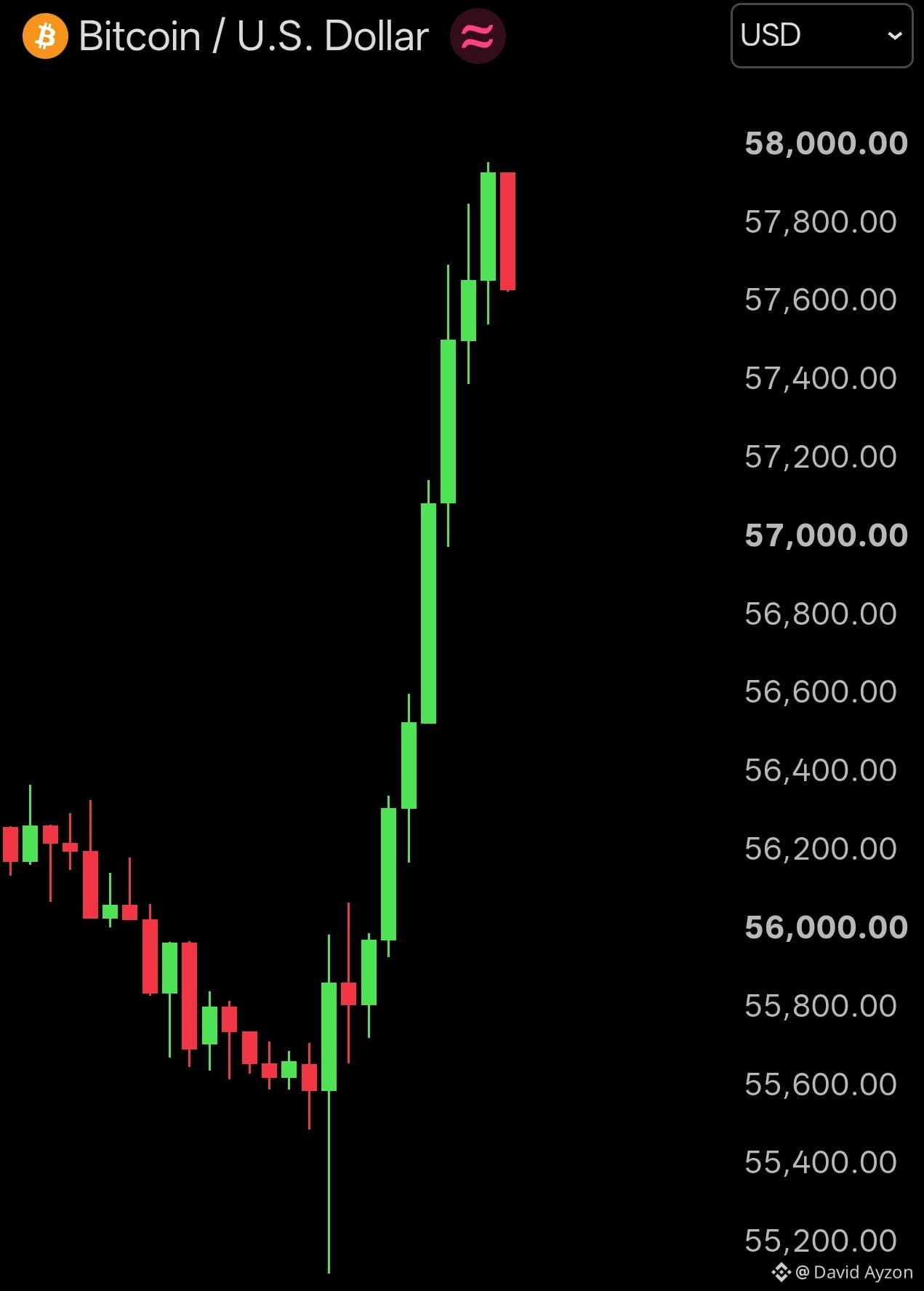
BREAKING: Bitcoin is up +5% from the day's low and reclaims $58,000.
Over $80 million in shorts liquidated in the last 30 minutes.
$BTC
{spot}(BTCUSDT)
BREAKING: Bitcoin is up +5% from the day's low and reclaims $58,000.
Over $80 million in shorts liquidated in the last 30 minutes.
$BTC
Over $80 million in shorts liquidated in the last 30 minutes.
$BTC
194
·
--
GM Binance Community! 💛
What's your Binance move today? 💛
$CLEAR
{alpha}(10x5200f539478f58d9aea962095ba3b16b5e550e00)
$DEBIT
{alpha}(560x66661c7229901f568f16bd1551b3ba826f83ce49)
GM Binance Community! 💛
What's your Binance move today? 💛
$CLEAR
$DEBIT
What's your Binance move today? 💛
$CLEAR
$DEBIT
📊 Trading
67%
🪪 KYC Verification
0%
🎁 Campaigns & Rewards
33%
🔍 Exploring Features
0%
12 votes • Voting closed
1
1.9k
·
--
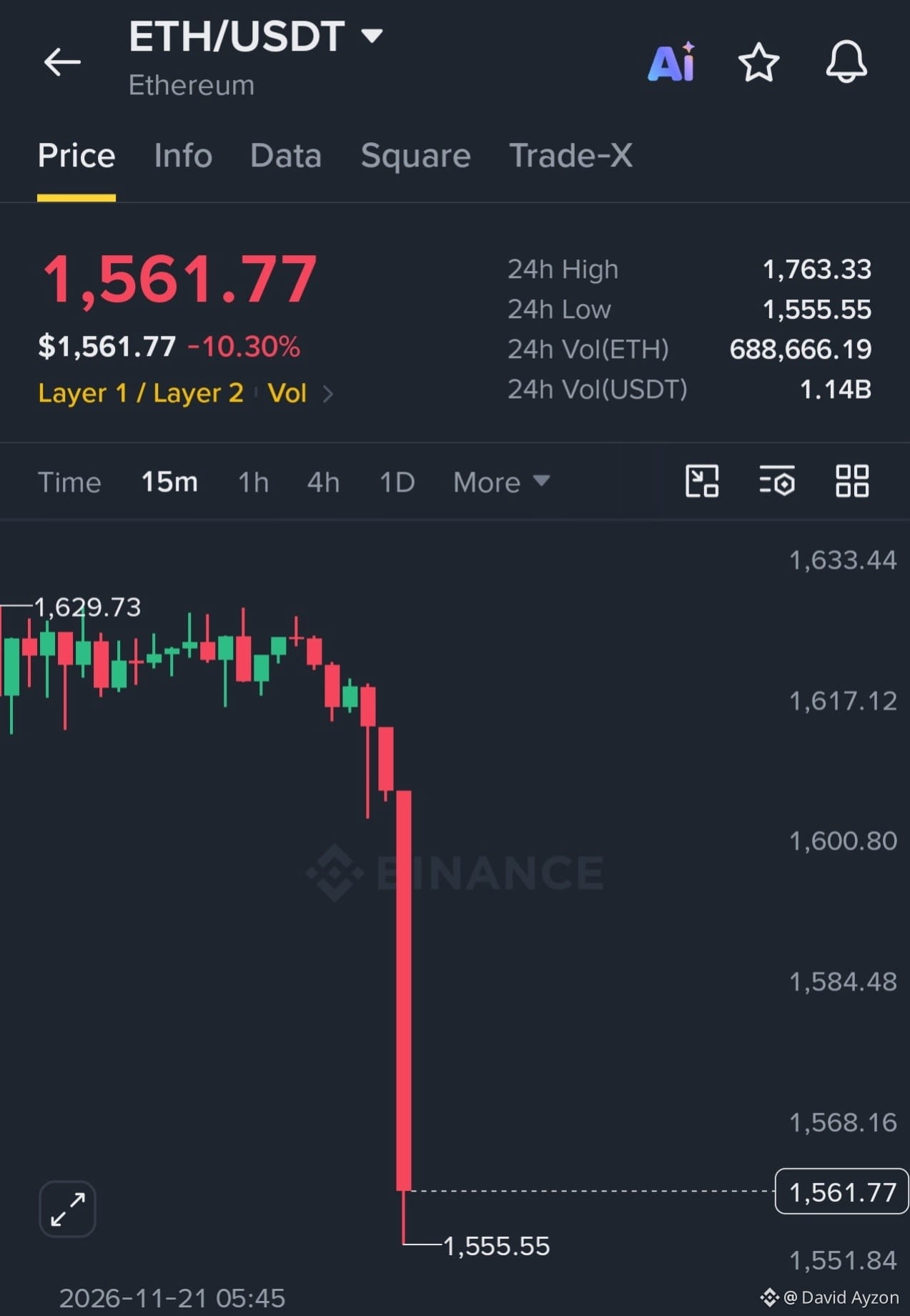
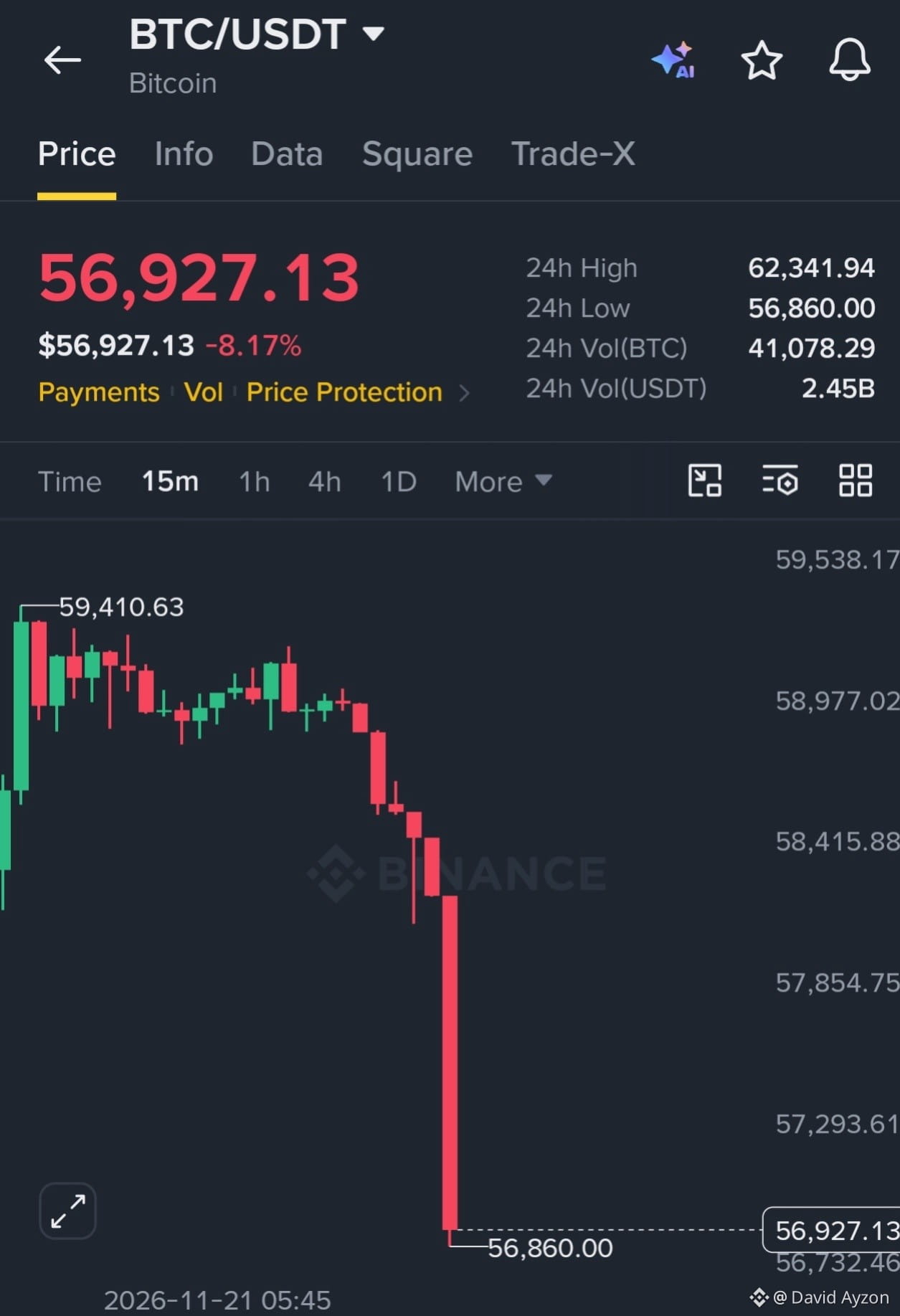
🚨BREAKING🚨
$BTC just crashed below $57,000, its lowest level in more than 2 years.
$400 Million longs liquidated in just 10 mins.
$BTC
{spot}(BTCUSDT)
🚨BREAKING🚨
$BTC just crashed below $57,000, its lowest level in more than 2 years.
$400 Million longs liquidated in just 10 mins.
$BTC
$BTC just crashed below $57,000, its lowest level in more than 2 years.
$400 Million longs liquidated in just 10 mins.
$BTC
168
·
--
Verified
The project fields in your template were blank, so I used Space and Time from earlier.
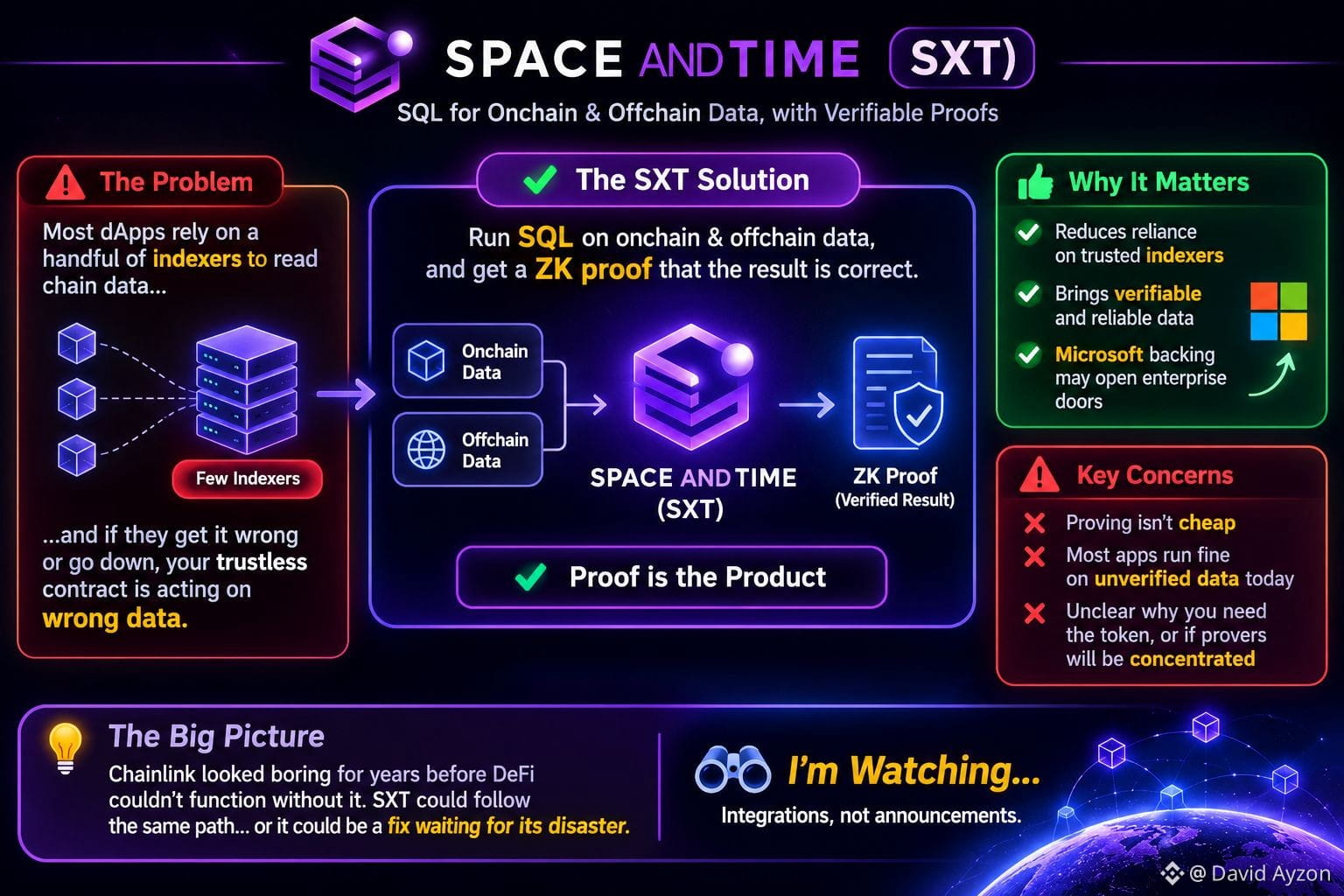
Spent a couple hours on Space and Time and the part that stuck with me wasn't the tech. It was how much of crypto's "decentralized" stack quietly leans on somebody's hosted API.
Nodes are everywhere, sure. But most dapps read chain data through a handful of indexers. If that layer gets it wrong or just goes down, your trustless contract is acting on whatever it was told.
SXT's pitch is running SQL over onchain and offchain data and getting a ZK proof that the result is correct. Oracles push you a number. Indexing setups ask you to trust whoever runs the indexer. Here the proof is the product, and the Microsoft backing at least suggests enterprise doors might open.
Where I'm not sold: proving isn't cheap, and most apps run fine on unverified data today. I also can't see yet why you'd need to hold the token instead of just paying for queries. And if provers end up concentrated in a few operators, that undercuts the whole point.
Chainlink looked boring for years before DeFi couldn't function without it. This could follow that shape, or it could be a fix waiting for its disaster. I'm watching integrations, not announcements.
#sxt $SXT @SpaceandTimeDB
The project fields in your template were blank, so I used Space and Time from earlier.
Spent a couple hours on Space and Time and the part that stuck with me wasn't the tech. It was how much of crypto's "decentralized" stack quietly leans on somebody's hosted API.
Nodes are everywhere, sure. But most dapps read chain data through a handful of indexers. If that layer gets it wrong or just goes down, your trustless contract is acting on whatever it was told.
SXT's pitch is running SQL over onchain and offchain data and getting a ZK proof that the result is correct. Oracles push you a number. Indexing setups ask you to trust whoever runs the indexer. Here the proof is the product, and the Microsoft backing at least suggests enterprise doors might open.
Where I'm not sold: proving isn't cheap, and most apps run fine on unverified data today. I also can't see yet why you'd need to hold the token instead of just paying for queries. And if provers end up concentrated in a few operators, that undercuts the whole point.
Chainlink looked boring for years before DeFi couldn't function without it. This could follow that shape, or it could be a fix waiting for its disaster. I'm watching integrations, not announcements.
#sxt $SXT @SpaceandTime
1
8
433
·
--
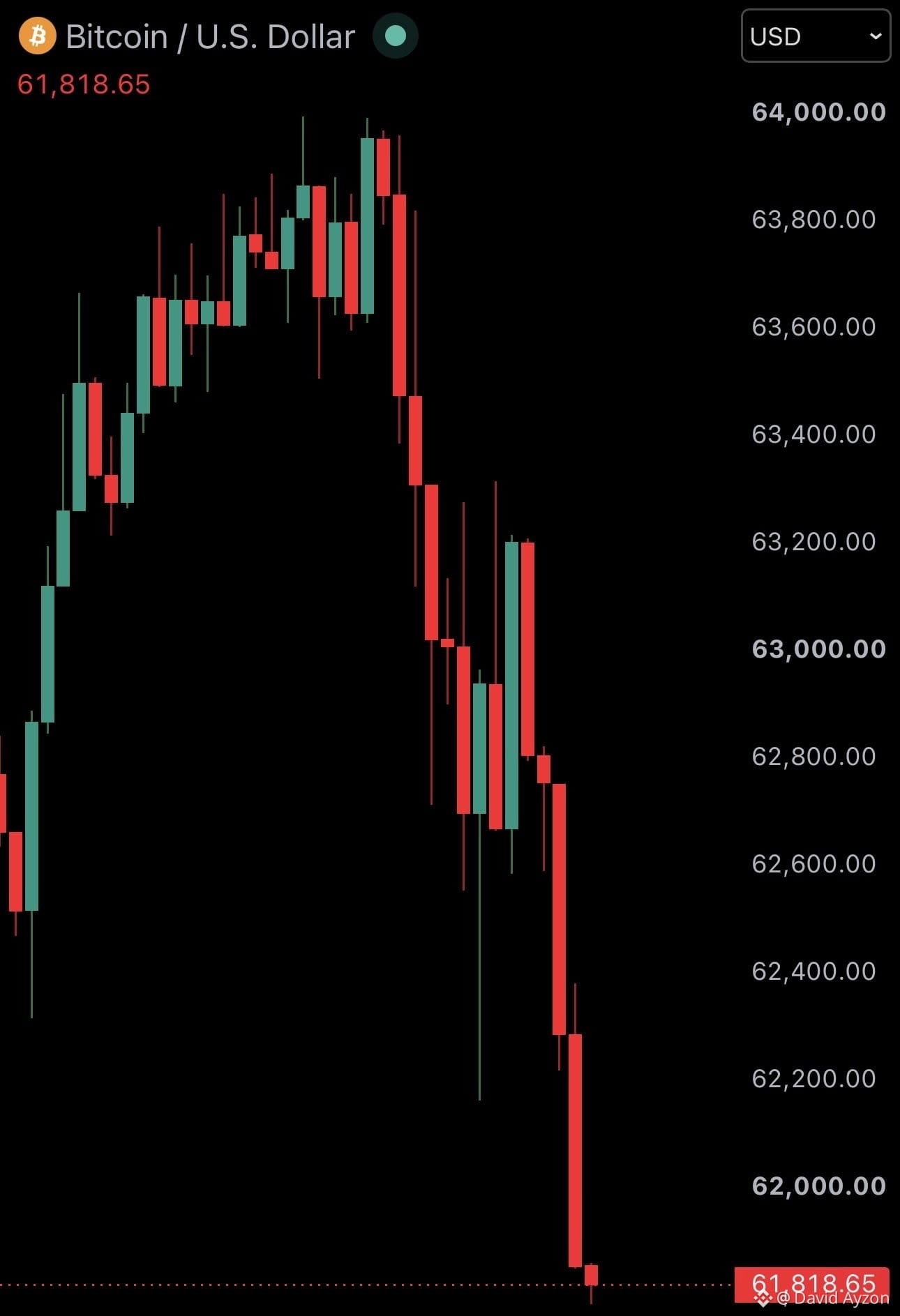
🚨 JUST IN: BITCOIN BREAKS BELOW $62,000!
$BTC is facing intense selling pressure as bearish momentum continues to shake the crypto market.
⚠️ $62K is a critical level to watch. If buyers fail to reclaim it, $60K could become the next major downside target.
Can Bitcoin bulls defend this zone, or is another major leg down coming?
The next move could be decisive! 👀
$BTC
{spot}(BTCUSDT)
🚨 JUST IN: BITCOIN BREAKS BELOW $62,000!
$BTC is facing intense selling pressure as bearish momentum continues to shake the crypto market.
⚠️ $62K is a critical level to watch. If buyers fail to reclaim it, $60K could become the next major downside target.
Can Bitcoin bulls defend this zone, or is another major leg down coming?
The next move could be decisive! 👀
$BTC
190
·
--
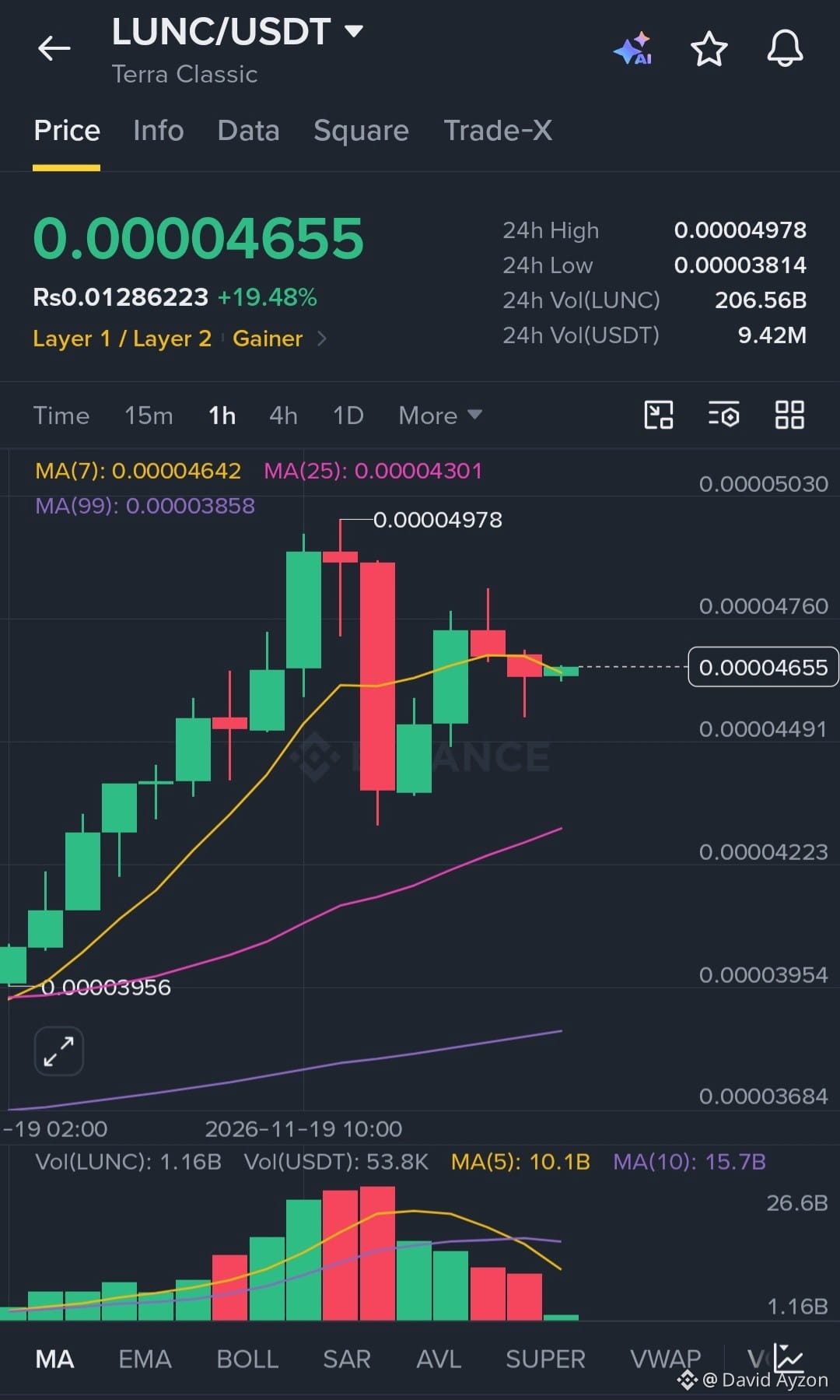
🚀 $LUNC IS MAKING NOISE!
Terra Classic is trading at $0.00004655, up 19.48% in 24 hours! 🔥
📊 Market Snapshot:
- 24H High: $0.00004978
- 24H Low: $0.00003814
- 24H Volume: 206.56B LUNC
- Trading Volume: $9.42M USDT
📈 1H Technical Outlook:
- MA(7): $0.00004642
- MA(25): $0.00004301
- MA(99): $0.00003858
LUNC is trading above all three moving averages, showing strong short-term bullish momentum.
⚡ Key Levels to Watch:
- Resistance: $0.00004760
- Major resistance: $0.00004978
- Support: $0.00004491
- Stronger support: $0.00004301
LUNC has pulled back from its recent high and is now consolidating around $0.00004655.
Can bulls break $0.00004978 and push toward $0.00005000, or is another correction coming?
The next move could get interesting! 👀🔥
$LUNC
{spot}(LUNCUSDT)
🚀 $LUNC IS MAKING NOISE!
Terra Classic is trading at $0.00004655, up 19.48% in 24 hours! 🔥
📊 Market Snapshot:
- 24H High: $0.00004978
- 24H Low: $0.00003814
- 24H Volume: 206.56B LUNC
- Trading Volume: $9.42M USDT
📈 1H Technical Outlook:
- MA(7): $0.00004642
- MA(25): $0.00004301
- MA(99): $0.00003858
LUNC is trading above all three moving averages, showing strong short-term bullish momentum.
⚡ Key Levels to Watch:
- Resistance: $0.00004760
- Major resistance: $0.00004978
- Support: $0.00004491
- Stronger support: $0.00004301
LUNC has pulled back from its recent high and is now consolidating around $0.00004655.
Can bulls break $0.00004978 and push toward $0.00005000, or is another correction coming?
The next move could get interesting! 👀🔥
$LUNC
4
190
·
--
🚨 JUST IN: HONG KONG FLAGS HYPERLIQUID!
🇭🇰 Hong Kong’s Securities and Futures Commission (SFC) has added Hyperliquid ($HYPE) to its suspicious virtual asset trading platforms alert list, citing concerns over unlicensed operations and marketing to local investors.
⚠️ Regulatory pressure is rising. Could this become a major challenge for HYPE?
All eyes on the next move. 👀
$HYPE
{spot}(HYPEUSDT)
🚨 JUST IN: HONG KONG FLAGS HYPERLIQUID!
🇭🇰 Hong Kong’s Securities and Futures Commission (SFC) has added Hyperliquid ($HYPE ) to its suspicious virtual asset trading platforms alert list, citing concerns over unlicensed operations and marketing to local investors.
⚠️ Regulatory pressure is rising. Could this become a major challenge for HYPE?
All eyes on the next move. 👀
$HYPE

6
378
·
--
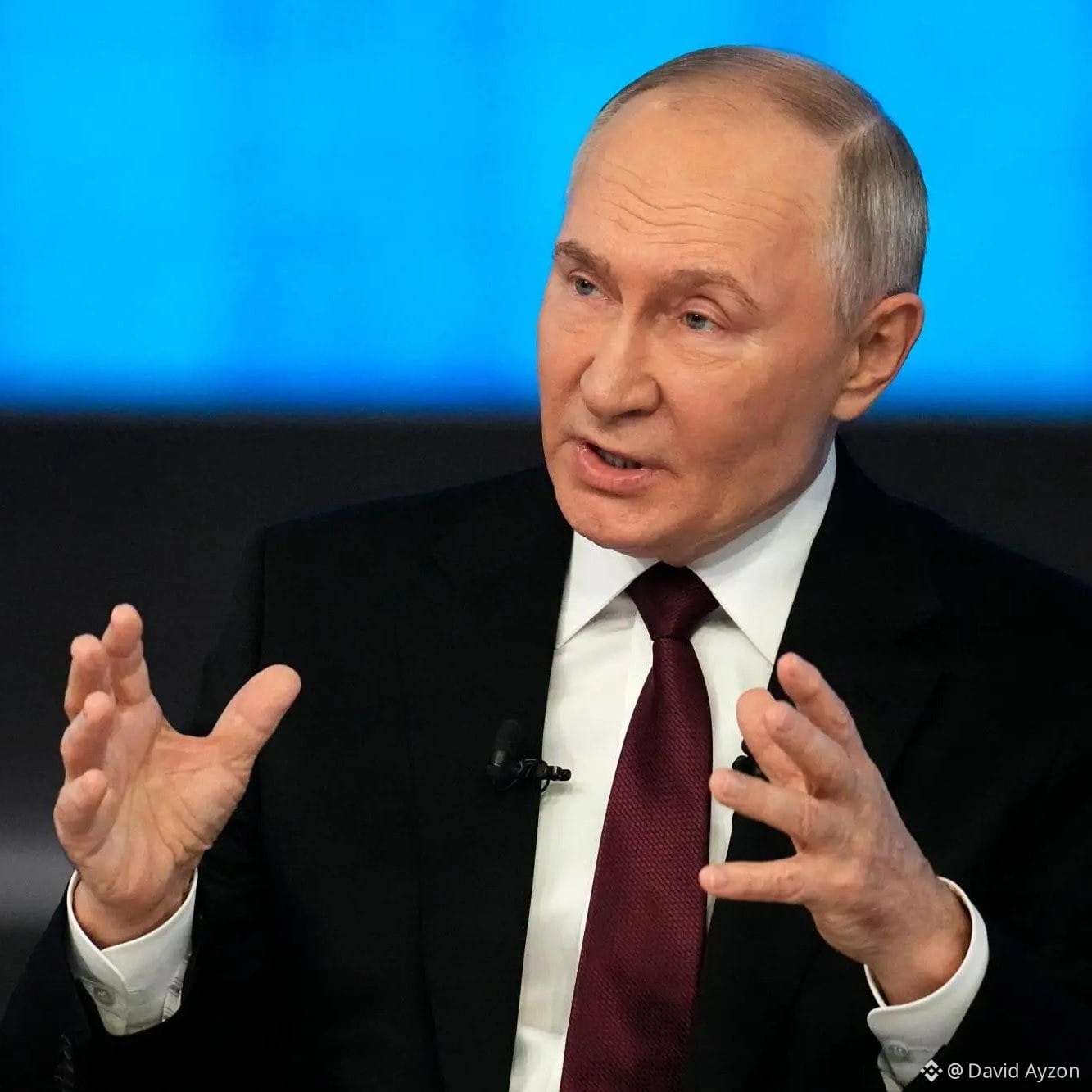
JUST IN: 🇷🇺 Russia is considering letting investment funds buy and hold cryptocurrencies, and allowing retail investors to trade crypto futures.
$BTC
JUST IN: 🇷🇺 Russia is considering letting investment funds buy and hold cryptocurrencies, and allowing retail investors to trade crypto futures.
$BTC
$BTC
4
186
·
--
🚨 BITCOIN MAY BE SETTING UP FOR ANOTHER BIG MOVE!
BTC is showing a striking resemblance to its pre-Coinbase IPO price action in 2021.
Back then, Bitcoin dipped, moved sideways, and eventually made another powerful leg up.
Could we be watching the same pattern unfold?
A few weeks of consolidation could set the stage for the next breakout. 👀$LUNC
History doesn't guarantee a repeat, but this setup deserves attention.$SENT
Is $BTC preparing for another rally? 🚀
{spot}(BTCUSDT)
{spot}(LUNCUSDT)
{spot}(SENTUSDT)
BTC’s next move? 👀
🚨 BITCOIN MAY BE SETTING UP FOR ANOTHER BIG MOVE!
BTC is showing a striking resemblance to its pre-Coinbase IPO price action in 2021.
Back then, Bitcoin dipped, moved sideways, and eventually made another powerful leg up.
Could we be watching the same pattern unfold?
A few weeks of consolidation could set the stage for the next breakout. 👀$LUNC
History doesn't guarantee a repeat, but this setup deserves attention.$SENT
Is $BTC preparing for another rally? 🚀
BTC’s next move? 👀
*🚀 Pump
73%
📈 Sideways
0%
📉 Dip
27%
🔥 New ATH
0%
11 votes • Voting closed
1
233
·
--
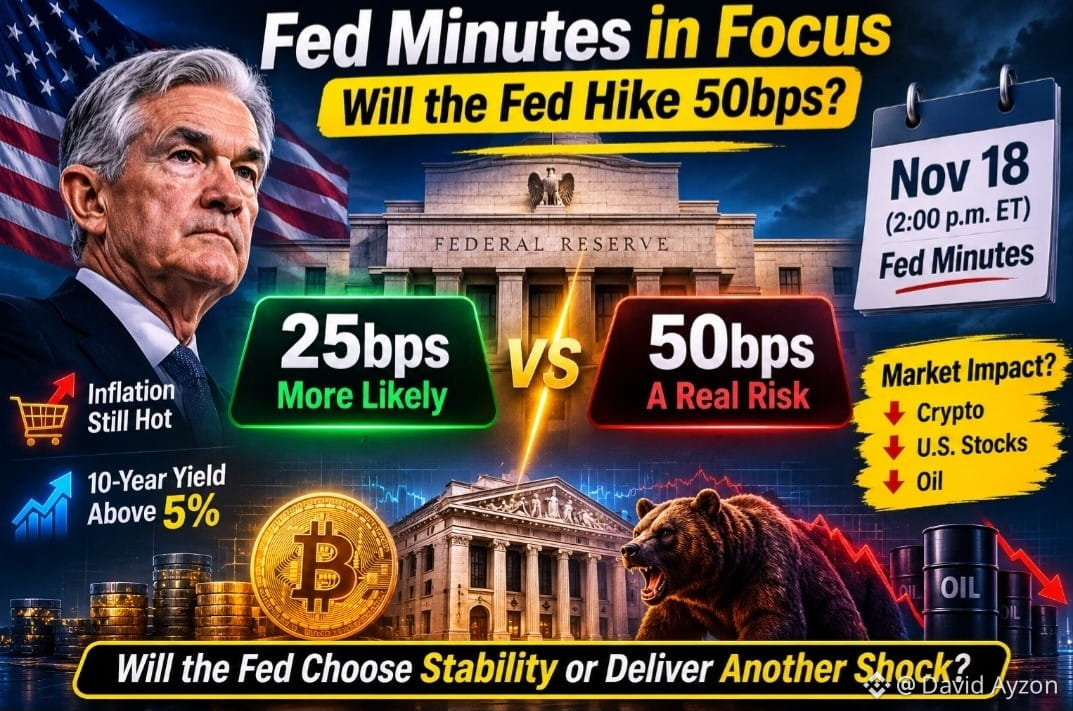
The real risk isn't just a Fed rate hike. It's how much tightening the market is still underestimating.
With inflation pressures rising and 10-year Treasury yields above 5%, even a 25bps hike could put pressure on risk assets. A 50bps move would be an entirely different shock.
My take: 25bps is still the more realistic scenario, but I'm not ignoring the possibility of a bigger surprise.
For $BTC, liquidity and Fed expectations matter more than short-term hype. I'd rather stay cautious than get caught on the wrong side of a policy shock.
Will the Fed choose stability or deliver another shock?
#WillFedHike50bps
3
247
Log in to explore more content
Join global crypto users on Binance Square
⚡️ Get latest and useful information about crypto.
💬 Trusted by the world’s largest crypto exchange.
👍 Discover real insights from verified creators.
Email / Phone number