
B i t
309 Posts

B i t
Report
Block User
Crypto Analyst • Market Strategist • Navigating Trends & Opportunities
29 Following
105 Followers
119 Liked
Posts
All
Quotes
Videos
PINNED
·
--
$BTC Potentially forming a third top could pave the way for altcoins to shine! Altcoin season might be gearing up – stay patient, watch your investments grow, and be ready to secure those profits!
{spot}(ETHUSDT)
{spot}(BNBUSDT)
{spot}(SOLUSDT)
$BTC Potentially forming a third top could pave the way for altcoins to shine! Altcoin season might be gearing up – stay patient, watch your investments grow, and be ready to secure those profits!

1
1
4
48
·
--
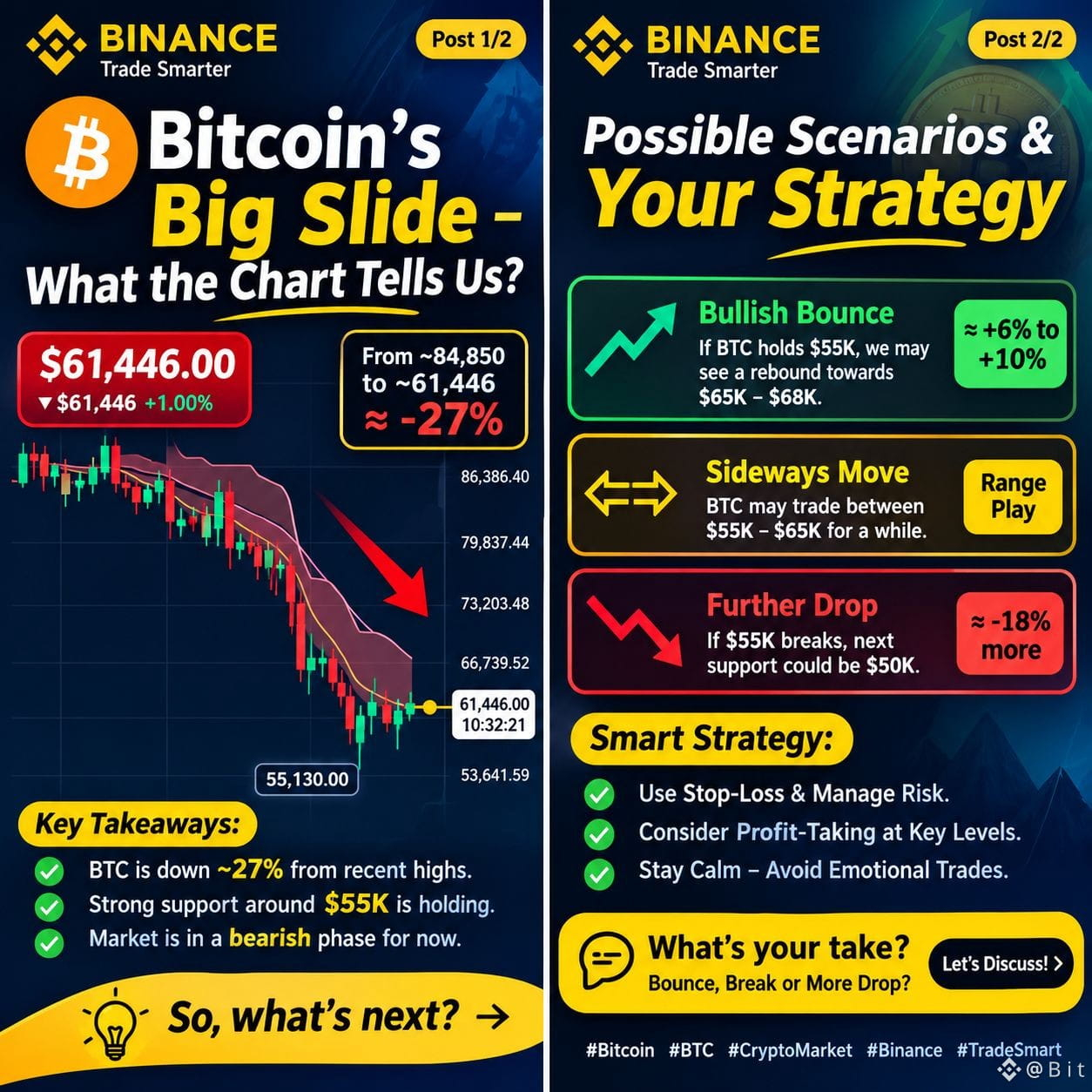
$BNB 🤔 BITCOIN: BOUNCE, CONSOLIDATION OR ANOTHER DROP?
After falling from nearly $84,900 to around $61,446, Bitcoin is approaching an interesting point.
I see three possible scenarios:
🟢 1. Bullish recovery
If buyers regain control and BTC breaks above $65,400, the next area to watch is $67,800.
🟡 2. Sideways consolidation
Bitcoin could move within a range while the market waits for stronger buying or selling pressure.
🔴 3. Another correction
If BTC loses the $59,900 area, the recent low around $55,130 becomes an important level to watch.
My strategy: No emotional buying, no revenge trading, and no ignoring stop-losses. Protecting capital matters more than catching every move.
🔥 NOW YOUR TURN!
What do you think happens next?
1️⃣ BTC goes to $70K
2️⃣ BTC stays around $60K
3️⃣ BTC revisits $55K
Drop your prediction below. Let's see which scenario the community gets right!
#BTC走势分析 #CryptoTradingInsights #BinanceHerYerde #CryptoCommu
2
64
·
--
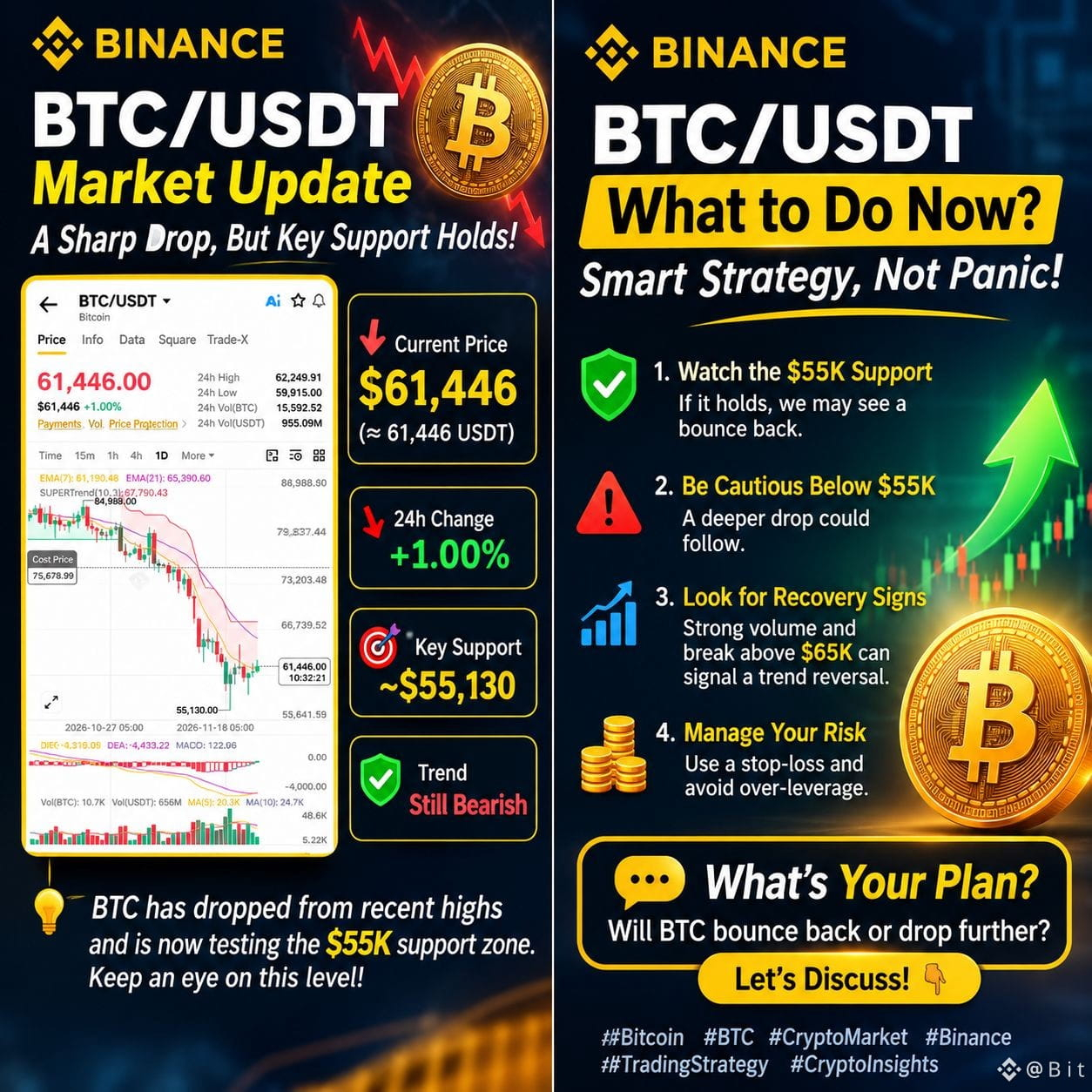
$BTC 🚨 BITCOIN UPDATE: Is BTC Preparing for a Comeback?
Bitcoin is trading around $61,446, following a significant correction from its recent high near $84,898.
Here's what the daily chart is telling us:
🔴 The bearish trend: BTC remains below EMA 21 ($65,380) and Supertrend ($67,790).
🟢 A small positive sign: Price has moved above EMA 7 ($61,190), while MACD momentum is showing early improvement.
📍 Key levels to watch:
- $59,915 – Immediate reference support (24h low)
- $55,130 – Recent major swing low
- $65,380 – First major recovery hurdle
- $67,790 – Supertrend resistance
The market is showing some recovery signals, but the bigger trend hasn't turned bullish yet.
Is this the beginning of a recovery, or just another temporary bounce?
#Bitcoin #Market #Binance #BTCAnalysis
2
2
498
·
--
#bitcoin doesn't need a new CEO. It needs better parenting! 😂
One day, BTC is flying to the moon 🚀; the next, it's throwing a market-wide tantrum 📉.
And guess who's crying? The altcoins! 😭
Maybe it's time for the market whales and institutional giants to stop playing with the emotions of millions of investors.
Until then, buckle up! Bitcoin's mood swings aren't over yet. 🎢
#Bitcoin #BTC #CryptoMarket #Altcoins #binance

1
111
·
--
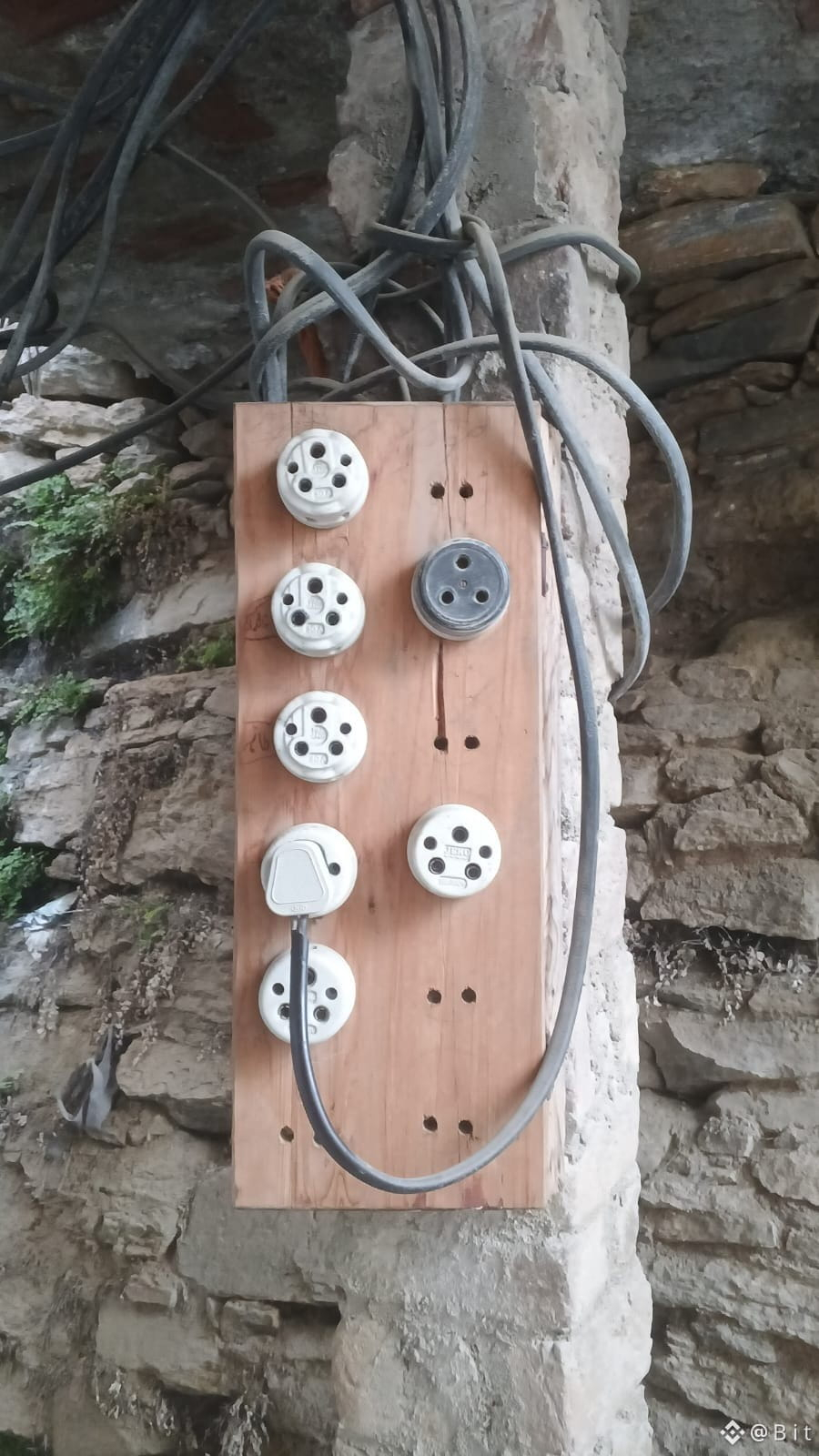
$BTC $270 BILLION wiped from crypto since news broke that Jensen Huang cheated on his wife.
Bitcoin is dumping like Satoshi cheated on his wife too. 💀
$BTC $270 BILLION wiped from crypto since news broke that Jensen Huang cheated on his wife.
Bitcoin is dumping like Satoshi cheated on his wife too. 💀
Bitcoin is dumping like Satoshi cheated on his wife too. 💀
102
·
--
Article
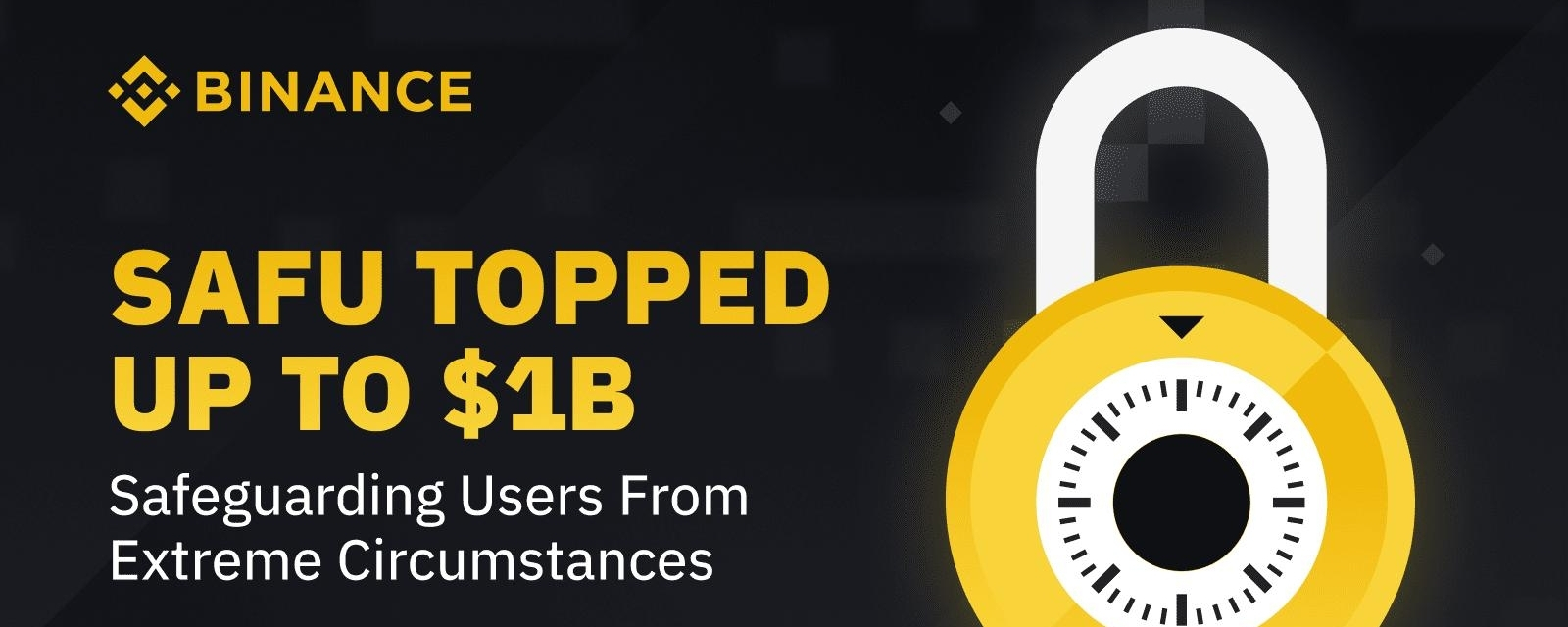
CRYPTO TRUST IS BUILT WHEN EXCHANGES TAKE RESPONSIBILITY — NOT JUST WHEN MARKETS GO UP!🔐
The latest Binance security incident raises an important question for the entire crypto industry:
Who protects users when an exchange experiences a major security failure?
Binance's latest update offers some important developments:
1️⃣ Financial accountability: Binance says it will absorb the financial impact of the stolen assets rather than pass it to users.
2️⃣ Emergency protection: SAFU and a portion of the Futures Insurance Fund are being used alongside corporate treasury resources.
3️⃣ Proof of Reserves: Binance has published a new reserve snapshot, with the full zero-knowledge proof expected by November 3.
4️⃣ Asset recovery: 90% of the impacted amount has reportedly been replenished, with the remaining 10% still being sourced.
But I believe the crypto industry needs to go further.
My three recommendations for building long-term trust:
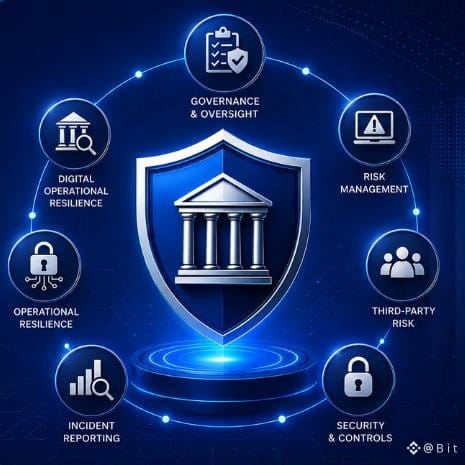
🔹 Independent security audits and transparent incident reporting.
🔹 Clearly defined emergency reserve and user-compensation frameworks.
🔹 Strong governance, risk management and independently verifiable Proof of Reserves.
Proof of Reserves is important, but it should be part of a broader accountability framework. It does not, by itself, prove that an exchange has no hidden liabilities or operational risks.
We cannot build the future of digital finance on speculation alone.
We need security, responsibility, transparency and trust.
One question for the crypto community:
Should exchanges be required to publish standardized security, reserve and incident-recovery reports, just as traditional financial institutions face regulatory reporting requirements?
Let's discuss. 👇
#Binance #blockchain #CryptoGovernance #Web3 #HackerAlert
CRYPTO TRUST IS BUILT WHEN EXCHANGES TAKE RESPONSIBILITY — NOT JUST WHEN MARKETS GO UP!
🔐
The latest Binance security incident raises an important question for the entire crypto industry:
Who protects users when an exchange experiences a major security failure?
Binance's latest update offers some important developments:
1️⃣ Financial accountability: Binance says it will absorb the financial impact of the stolen assets rather than pass it to users.
2️⃣ Emergency protection: SAFU and a portion of the Futures Insurance Fund are being used alongside corporate treasury resources.
3️⃣ Proof of Reserves: Binance has published a new reserve snapshot, with the full zero-knowledge proof expected by November 3.
4️⃣ Asset recovery: 90% of the impacted amount has reportedly been replenished, with the remaining 10% still being sourced.
But I believe the crypto industry needs to go further.
My three recommendations for building long-term trust:
🔹 Independent security audits and transparent incident reporting.
🔹 Clearly defined emergency reserve and user-compensation frameworks.
🔹 Strong governance, risk management and independently verifiable Proof of Reserves.
Proof of Reserves is important, but it should be part of a broader accountability framework. It does not, by itself, prove that an exchange has no hidden liabilities or operational risks.
We cannot build the future of digital finance on speculation alone.
We need security, responsibility, transparency and trust.
One question for the crypto community:
Should exchanges be required to publish standardized security, reserve and incident-recovery reports, just as traditional financial institutions face regulatory reporting requirements?
Let's discuss. 👇
#Binance #blockchain #CryptoGovernance #Web3 #HackerAlert
46
·
--
Bullish
🔐 CRYPTO TRUST IS BUILT WHEN EXCHANGES TAKE RESPONSIBILITY — NOT JUST WHEN MARKETS GO UP!
The latest #Binance security incident raises an important question for the entire crypto industry:
Who protects users when an exchange experiences a major security failure?
Binance's latest update offers some important developments:
1️⃣ **Financial accountability:** Binance says it will absorb the financial impact of the stolen assets rather than pass it to users.
2️⃣ **Emergency protection:** SAFU and a portion of the Futures Insurance Fund are being used alongside corporate treasury resources.
3️⃣ **Proof of Reserves:** Binance has published a new reserve snapshot, with the full zero-knowledge proof expected by November 3.
4️⃣ **Asset recovery:** 90% of the impacted amount has reportedly been replenished, with the remaining 10% still being sourced.
But I believe the crypto industry needs to go further.
My three recommendations for building long-term trust:
🔹 Independent security audits and transparent incident reporting.
🔹 Clearly defined emergency reserve and user-compensation frameworks.
🔹 Strong governance, risk management and independently verifiable Proof of Reserves.
Proof of Reserves is important, but it should be part of a broader accountability framework. It does not, by itself, prove that an exchange has no hidden liabilities or operational risks.
We cannot build the future of digital finance on speculation alone.
We need security, responsibility, transparency and trust.
One question for the crypto community:
Should exchanges be required to publish standardized security, reserve and incident-recovery reports, just as traditional financial institutions face regulatory reporting requirements?
Let's discuss. 👇
#Crypto_Jobs🎯 to #Binance ance #blockchain #ProofOfReserves #Web3
64
·
--
Bullish
🚨 **BINANCE HAS REPLENISHED 90% OF STOLEN ASSETS — USERS WON'T BEAR THE LOSS!**
A significant development in the latest Binance security incident.
According to Binance's October 31 update:
✅ 90% of the impacted stolen assets have been replenished.
✅ BTC, ETH, USDT, BNB, SOL, USDC, XRP, USD1, RLUSD and ZEC are reported as 100% backed.
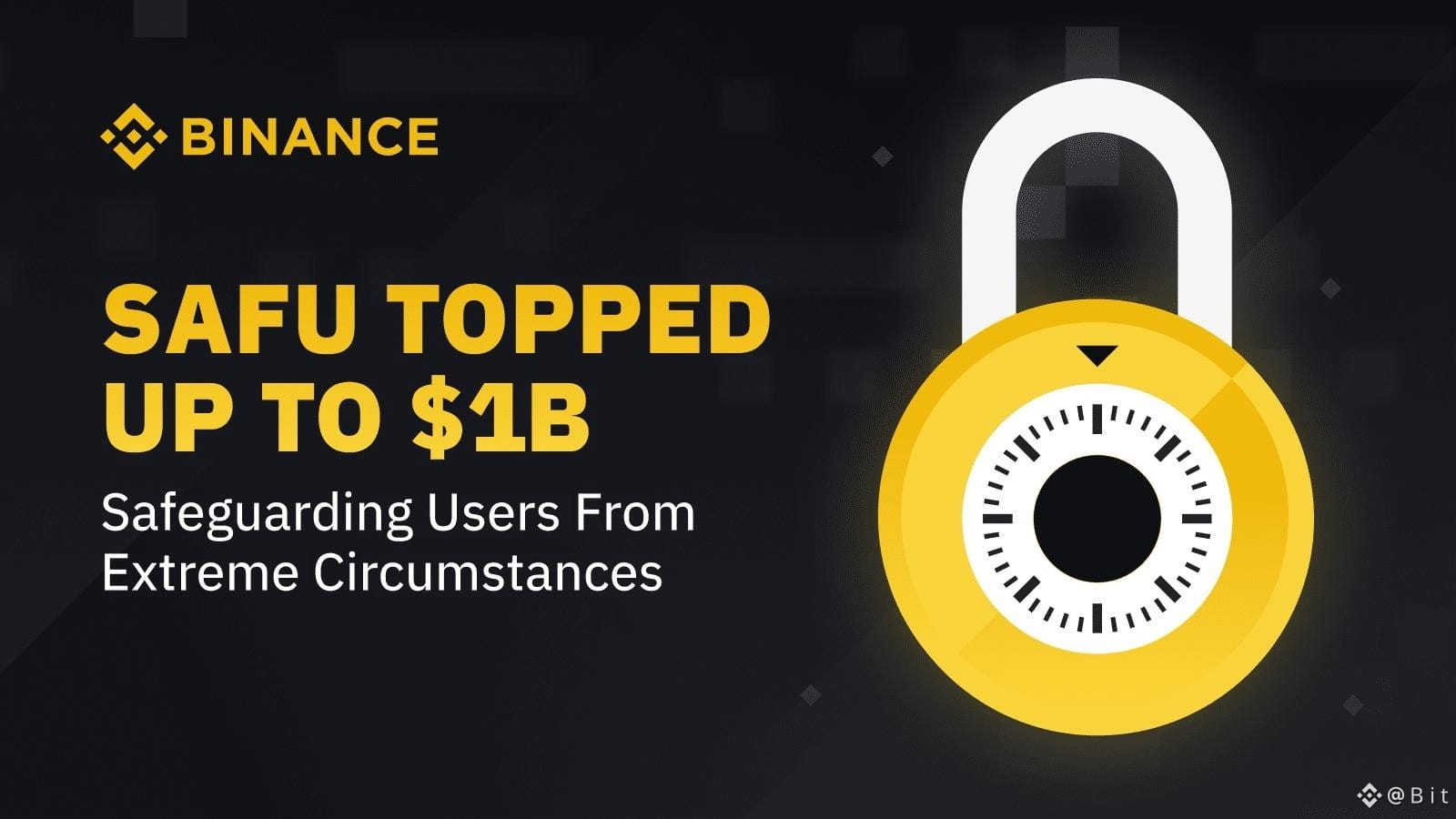
✅ Binance is using a combination of its SAFU fund, Futures Insurance Fund and corporate treasury.
✅ Binance has committed to absorbing the financial impact rather than passing the loss to users.
There is still 10% outstanding, mainly involving less-liquid tokens that may take longer to acquire.
What happens next?
• Binance aims to complete the remaining replenishment.
• A new Proof of Reserves snapshot has been published.
• Full zero-knowledge proof generation is expected by November 3.
• Withdrawals are targeted to resume on November 1, subject to confirmation.
💡 **My perspective:**
The real test of an exchange is not whether it can avoid every security incident. It is how responsibly it responds when something goes wrong.
Binance is demonstrating financial accountability through measurable recovery efforts. The remaining challenge is to maintain transparency and independently verifiable user protection.
Crypto needs more accountability, not just promises.
**Do you think exchanges should be legally required to maintain emergency funds to protect users against security incidents?**
#BinanceSquareFamily #CryptoSecurity #SAFUnds #ProofOfReserves erves #Bitcoin❗ #CryptoTransparency rency
101
·
--
$BNB Bitcoin dropped to $78,297 on Binance spot on Oct. 29 as a Binance hot wallet was reportedly drained by a wallet linked to Tornado Cash. Binance said the exchange was urgently investigating a potential security issue. Tether CEO Paolo Ardoino confirmed that Tether froze roughly $1.57 billion related to the potential hack. Circle froze about $823 million. On-chain watchers circulated an estimate near $2.8 billion across five chains, but the total remains unreconciled. CoinGlass reported nearly $1 billion in liquidations over the past 24 hours.
$BNB Bitcoin dropped to $78,297 on Binance spot on Oct. 29 as a Binance hot wallet was reportedly drained by a wallet linked to Tornado Cash. Binance said the exchange was urgently investigating a potential security issue. Tether CEO Paolo Ardoino confirmed that Tether froze roughly $1.57 billion related to the potential hack. Circle froze about $823 million. On-chain watchers circulated an estimate near $2.8 billion across five chains, but the total remains unreconciled. CoinGlass reported nearly $1 billion in liquidations over the past 24 hours.
44

·
--
Bullish
I think #sui will pump 1.46 with a massive candle soon 🤩
What you think guys...???
I think #sui will pump 1.46 with a massive candle soon 🤩
What you think guys...???
What you think guys...???
192
·
--
$MUBARAK Holder Concentration: The Risk Nobody Is Posting About
This is where the story gets less fun. The top 100 wallets hold 97.56% of the supply, per BscScan data. Whale wallets, just 0.03% of all holders, control 85.23% of the tokens.
$MUBARAK Holder Concentration: The Risk Nobody Is Posting About
This is where the story gets less fun. The top 100 wallets hold 97.56% of the supply, per BscScan data. Whale wallets, just 0.03% of all holders, control 85.23% of the tokens.
This is where the story gets less fun. The top 100 wallets hold 97.56% of the supply, per BscScan data. Whale wallets, just 0.03% of all holders, control 85.23% of the tokens.
1
317
·
--
1
1
196
Log in to explore more content
Join global crypto users on Binance Square
⚡️ Get latest and useful information about crypto.
💬 Trusted by the world’s largest crypto exchange.
👍 Discover real insights from verified creators.
Email / Phone number
Trending Topics
EvolveAtBinanceBlockchainWeek
1.5M views
16,311 Discussing
Binance Blockchain Week is officially underway! 🌍
On November 28–29, whether you’re in Bangkok or joining from afar, tune in to the livestreams and join the conversation on Binance Square!
Here’s what’s in store 👇
📺 Watch the main stage live
Tune in throughout both days as industry speakers share their perspectives on this year’s theme, “Evolve” From technological innovation to real-world applications, explore what’s next for crypto.
⚔️ Watch two trading competitions
The Aster Open Qualifier and the Binance Trading Master Tournament will both be streamed live. Tune in to follow the traders in action.
🏆 Watch The Blockchain 100 Awards Ceremony
The Blockchain 100 list was selected by the community. Join us in celebrating the creators and the ideas they share!
💬 Join the community conversation
Use #EvolveAtBinanceBlockchainWeek in a post with a photo to share what you’re looking forward to, your views on the industry, or your favorite moments from the event.
The event page is now live! Subscribe to all livestreams with one click so you don’t miss a moment 👏
Binance Blockchain Week
·334 Likes
·294.1k views
ChainflipVaultTheftHaltsProtocol
10,956 views
186 Discussing
VitalikWantsWalletChipDesignsOpened
18,602 views
295 Discussing