
#security
security
2M views
6,536 Discussing
Hot
Latest

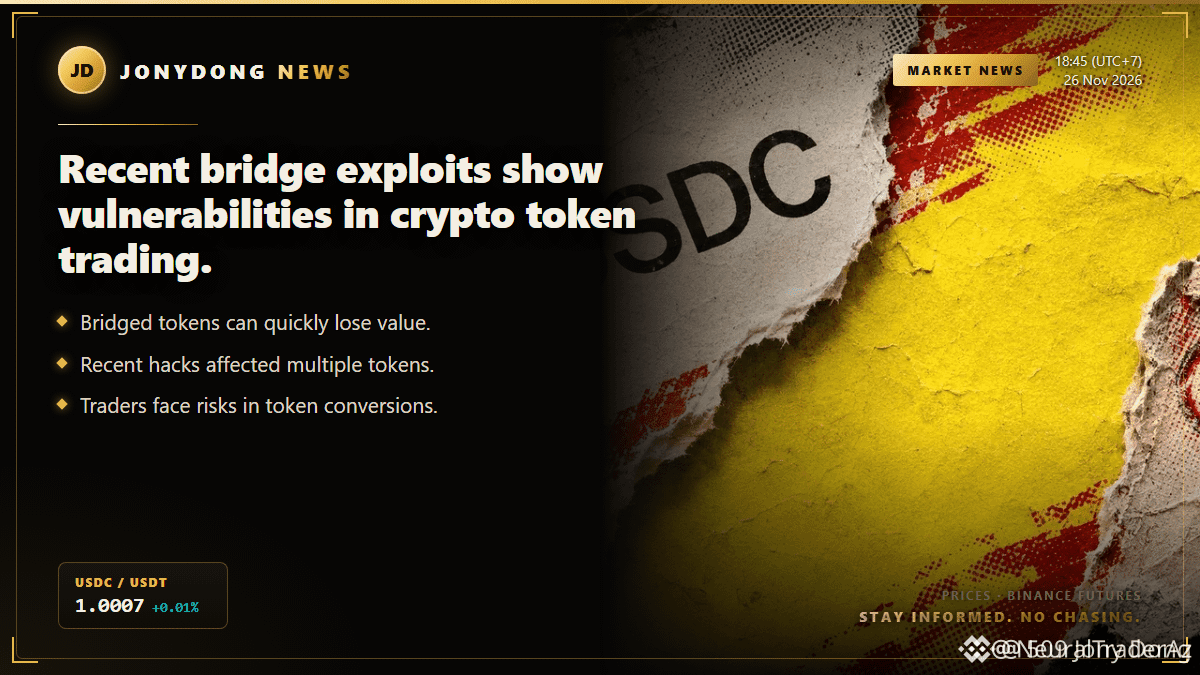
⚠️ BRIDGE EXPLOITS EXPOSE SEVERE LIQUIDITY RISKS IN WRAPPED $USDC ASSETS 🦈
Recent structural failures across cross-chain bridges reveal a harsh reality about liquidity segregation in $USDC wrappers. When structural backing collapses, redemption pathways evaporate instantly, leaving participants holding compromised assets trading at massive discounts far away from parity 📊.
Institutional risk management dictates auditing the underlying liquidity pool rather than trusting superficial price feeds. If the bridge contract is compromised, conversion velocity drops to zero and slippage becomes infinite 🔍.
💬 How do you evaluate the smart money footprint of bridged assets before deploying capital? 👇
⚠️ Not financial advice. Always manage your risk. 🛡️
🏷️ #USDC #Security #RiskManagement #Crypto
🦈 🔒
9

·
--
🚨 $BTC CUSTODY SHOCKWAVE EXPOSES INSTITUTIONAL DATA RISKS ACROSS TRADITIONAL BANKING GIANTS! 💥
Traditional finance merging with digital assets just hit a major friction point. A high-profile institutional custody arm recently suffered a severe security breach, leaking sensitive client directory and contact logs. 🌊
Smart money watches infrastructure vulnerabilities just as closely as order book depth. When institutional onboarding portals leak credentials, the attack vector shifts directly to targeted social engineering and phishing campaigns against major stakeholders. 📊
💡 How will this fresh wave of operational friction impact corporate treasury adoption timelines moving forward? 👇
⚠️ Not financial advice. Always manage your risk. 🛡️
🏷️ #BTC #Security #Custody #Crypto
🔥 💎
10


·
--
🔓 Standard Chartered's crypto custodian Zodia hit by data breach
Zodia Custody, the crypto custody unit Standard Chartered recently acquired, suffered a security breach detected on Monday. CEO Richard Clark told Reuters that some client and employee information, including names and email addresses, was leaked.
⭐ Leaked institutional client details are prime material for targeted phishing, a key risk as big banks fold crypto custody into their core business.
#Crypto #Security #StandardChartered #Custody
38

These bridge hacks are serious. They show risks in trading bridged tokens.
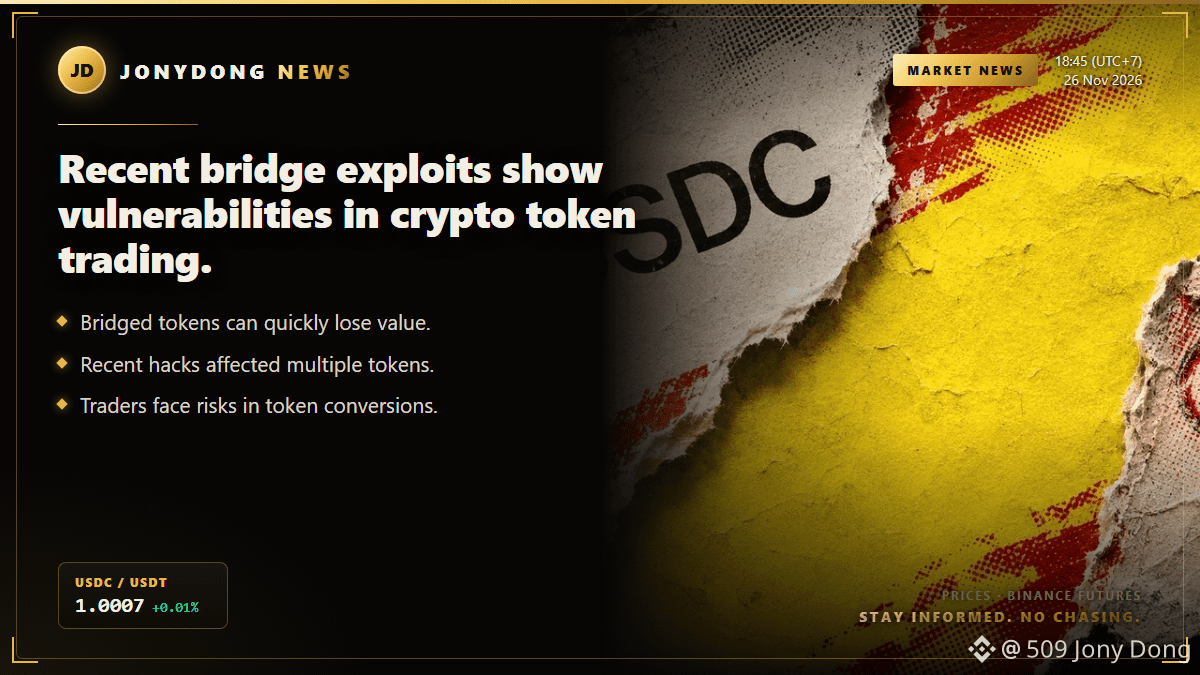
Recent bridge exploits show vulnerabilities in crypto token trading.
Recent bridge hacks at Fusionist and Cyber have revealed big vulnerabilities in the trading of bridged tokens. These exploits demonstrate how quickly a token can lose its backing, leading to steep drops in value. For instance, a version of USDC on Fantom was trading at around $0.12 on November 25, while the original USDC remained close to $1.
The incidents show that even if a token appears to have a price, the actual options for converting or selling it can diminish rapidly. In July, unauthorized withdrawals from Multichain’s Fantom bridge prompted its operations to cease. This left many users unable to convert their tokens, leading to further complications in the market.
The implications for traders are big. As the value of bridged tokens can diverge greatly from their original counterparts, traders need to be cautious. The ability to redeem tokens for their base assets isn't guaranteed, and this uncertainty can create volatility in the market. Understanding the risks associated with these bridges is essential for anyone trading in this space.
$USDC
#Security #CryptoNews
98

Chainflip just lost $12.6 million to a validator flaw. The cross-chain protocol says the bug exposed its Bitcoin and Ethereum vaults, and the funds are gone. $FLIP holders are left waiting for a post-mortem while the team works out what happened. Validator flaws are the nightmare scenario for bridges: the security model itself was the hole. Every cross-chain protocol should be reading this incident report twice.
#Chainflip #FLIP $FLIP #Security
#Chainflip #FLIP $FLIP #Security

Osmosis just locked down after a security incident. The Cosmos decentralized exchange restricted transfers on 84,000 wallets and froze 64 suspected attacker accounts following an incident linked to Web3Auth. $OSMO holders can still trade, but the freeze shows how fast a DEX can move when it suspects foul play. The incident is a reminder that even decentralized venues rely on centralized chokepoints when things go wrong. Full details are still coming.
#Osmosis #OSMO $OSMO #Security
#Osmosis #OSMO $OSMO #Security

55

·
--
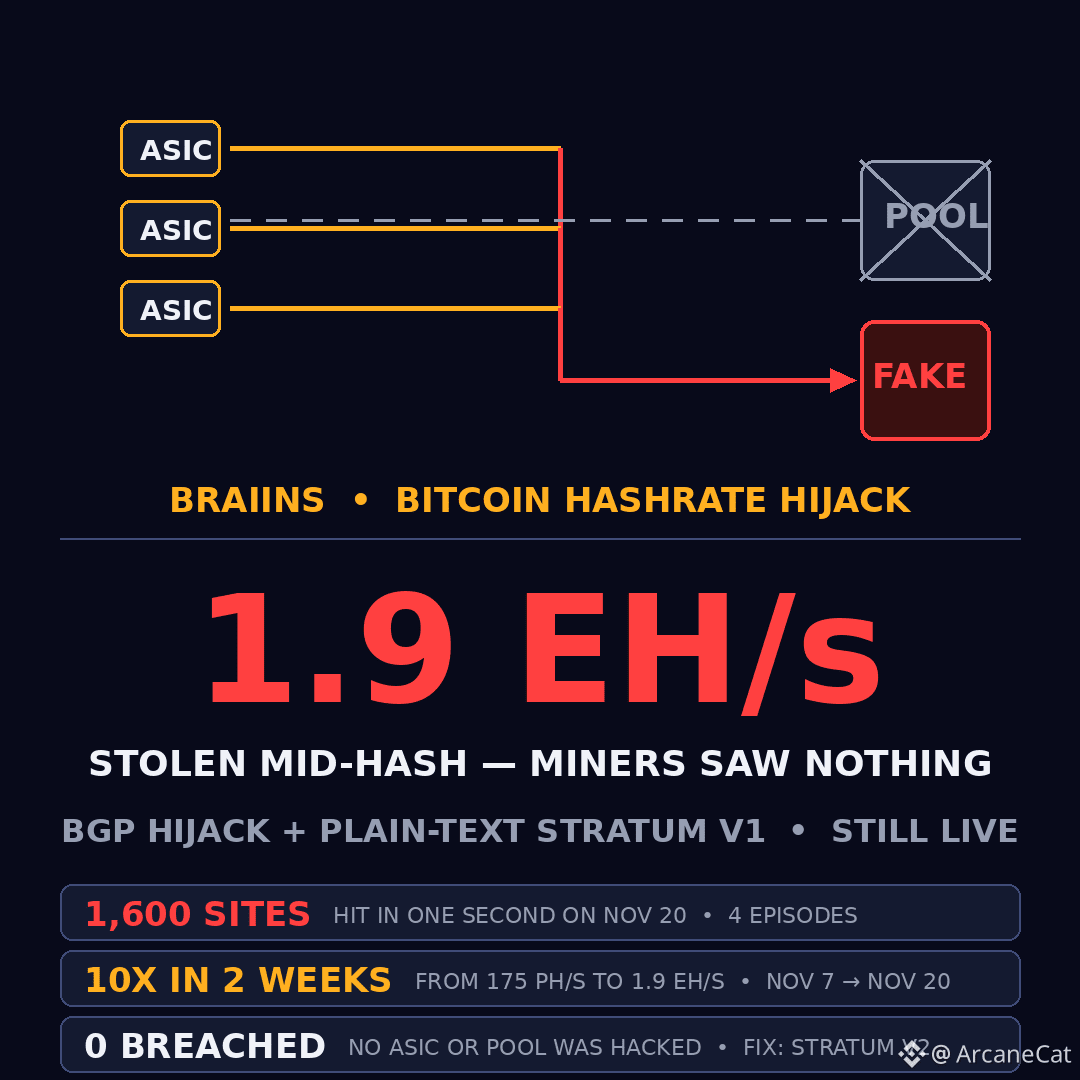
🚨 1,600 MINING FARMS HIJACKED — AND NOBODY TOUCHED A SINGLE MINER
Braiins just exposed a live attack on Bitcoin mining: attackers rerouted internet traffic (BGP hijack) and impersonated mining pools, stealing miners' hashrate through the unencrypted Stratum V1 protocol.
Nov 20: 4 episodes hit 1,050–1,600 mining sites at once, diverting up to 1.9 EH/s. It grew 10x in two weeks — from 175 PH/s to 1.9 EH/s.
Miners kept hashing at full power while their dashboards showed zero. No ASIC or pool was breached. The fix: Stratum V2 or TLS. Luxor flagged the same trick weeks ago.
#Bitcoin #BTC #Mining #Security
Not financial advice.
2
South Korea's Bithumb has identified more victims of its October breach. The exchange says additional records were exposed through its internal DaouOffice system, weeks after the incident first surfaced. $BTC and the wider market barely reacted — the news is about trust, not price. But exchange security is the industry's oldest wound, and every new disclosure reminds users why custody matters. Bithumb has not detailed the full scope yet. The story is not over.
#Bithumb #BTC $BTC #Security
#Bithumb #BTC $BTC #Security
32
·
--
⛏️ Bitcoin miners hit by hashrate hijacking attack
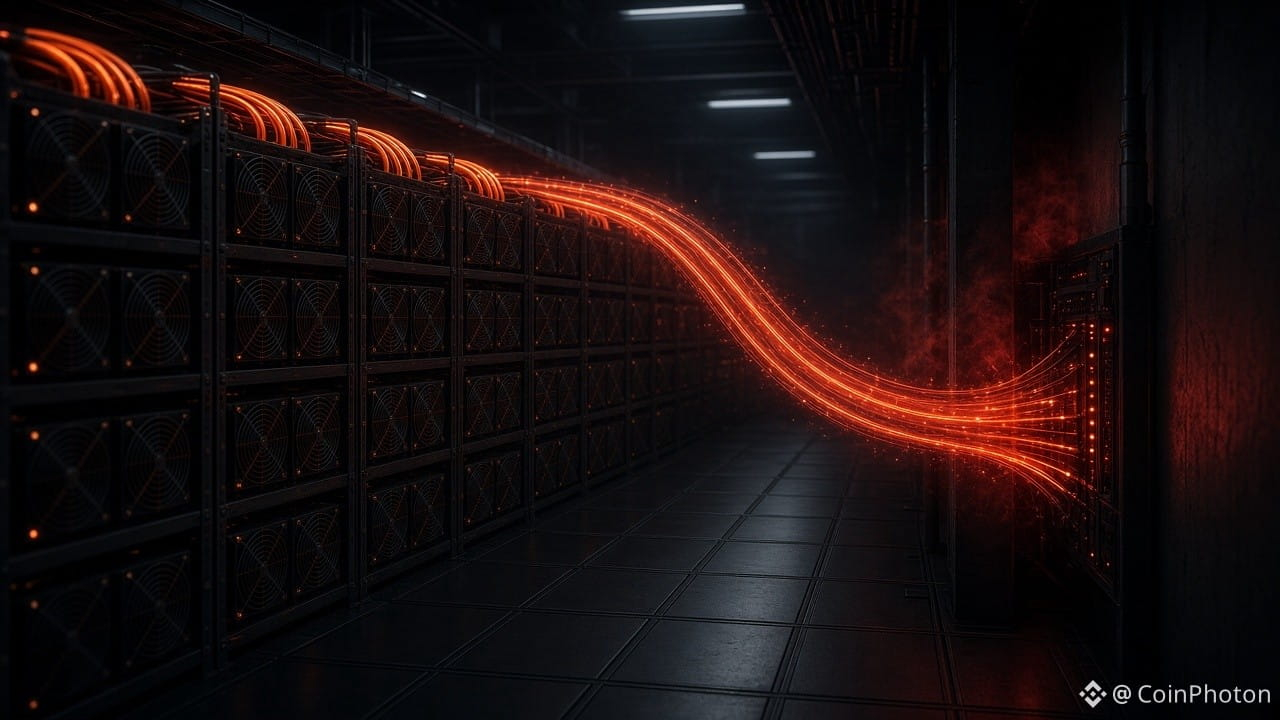
Mining pool Braiins says an ongoing attack is exploiting a weakness in the Stratum V1 protocol, rerouting internet traffic so imposters posing as mining pools capture miners' hashrate and send the rewards to their own wallets. The waves began in Latin America this month before spreading to Europe, with the targeted computing power growing from 175 PH/s to 1.9 EH/s in two weeks. Braiins says its own systems were not compromised and urged miners to switch to encrypted connections and Stratum V2.
⭐ With miner margins already squeezed by falling BTC prices, the threat of stolen rewards should speed up security upgrades across the mining industry.
#Bitcoin #BTC #Mining #Security
62

·
--
Bithumb just found more victims from its October breach, and this is your reminder to check your own exchange security tonight. ⚠️
Gadgets 360 reports that South Korean exchange Bithumb has identified additional victims and exposed records linked to an October breach of its internal DaouOffice system. 💥 A breach is never just one headline, the fallout keeps growing for weeks, and the exchange is still counting who was hit. My reading is simple, keep most funds in your own wallet, use a unique password and two factor authentication everywhere, and never leave life changing money sitting on any exchange, no matter how big the name. 🔒
Do you keep your crypto on exchanges, or in your own wallet? 🤔
Follow for more trades.
#Crypto #Bitcoin #FuturesTrading #TradingSignals #Security
1

·
--
👨🏾💻 Dev corner: how a fake job interview can hack a crypto company
Binance's Nov 3 incident report traced the Oct 29 breach (about 6.34B USD) to fake recruitment interviews and compromised developer software (crypto.news recap, Nov 7). This attack style is common, so here's how it works:
🔹 A "recruiter" contacts a developer on LinkedIn, Telegram or email with a great offer
🔹 The "technical test" is a code repo to clone and run, or a "video call app" to install
🔹 Running it installs malware that steals keys, session cookies, passwords and access tokens
🔹 From that one laptop, attackers move into internal systems, often the ones that approve wallet transactions
Why it works: it targets people, not cryptography. The math behind a private key is never broken.
How devs protect themselves:
🔹 Run take-home tests in a throwaway VM or container, never on your work machine
🔹 Read package.json scripts and install hooks before you run npm install
🔹 Never install software a recruiter sends; use known meeting apps only
🔹 Keep work credentials and wallet keys off personal devices, and use hardware security keys for 2FA
For everyone else: if a "job offer" asks you to download something or connect a wallet, walk away.
Have you ever received a suspicious job offer in crypto? 👇
#Security #Web3
📷 Photo: FlyD / Unsplash
34

·
--
🚨 $SOL DERIVATIVES VENUE HALTS TRADING AS SMART CONTRACT RISK STRIKES AGAIN!
On-chain liquidity flows require uncompromising protocol integrity, yet another structural halt on $SOL derivatives infrastructure highlights persistent smart contract vulnerabilities. Velocity, formerly operating under a different banner following a historic security incident earlier this year, has frozen all transactions to contain an active code anomaly. 📊
Institutional order flow demands robust risk mitigation, reminding market participants that smart contract risk remains an underlying friction point for decentralized venues. While user deposits remain secured for now, sudden venue freezes disrupt capital efficiency across the broader ecosystem.
Are you scaling back on-chain derivative exposure during code audits, or viewing this as standard protocol growing pains? 💬
⚠️ Not financial advice. Always manage your risk. 🛡️
🏷️ #SOL #DeFi #Security #Crypto
🦈

4

$ETH
Ethereum's post-quantum strategy is becoming more concrete. The Foundation plans hash-based cryptography for validators, user accounts and data commitments, with a 2029 internal target. ETH remains essential for gas and staking. This could strengthen long-term security, but wallet migration and implementation complexity are major challenges. Is preparing years ahead the smartest move for Ethereum?
#Ethereum #ETH #security
10



·
--
🔐 Coldcard Postmortem: 5-Year Seed Flaw Behind $107M Bitcoin Theft
📌 What happened
Coinkite published an 18-page postmortem on Nov 23 on the Coldcard seed-generation flaw that let thieves drain Bitcoin from customer wallets starting in July. A firmware setting switched off the hardware random number generator, so seeds fell back to a predictable software generator — and the defect survived at least 15 security reviews over five years.
📊 Key numbers
• 1,778.84 BTC stolen from 8,600+ addresses — ~$107M at current prices
• Flaw shipped in firmware from Mar 29, 2021 to Jul 30, 2026
• Effective seed entropy: ~40 bits (Mk2/Mk3) and ~72 bits (Mk4/Mk5/Q) vs 128 intended
• Thefts began Jul 29; fixed firmware shipped Jul 31
• ~300 loss tickets from 242 accounts as of Nov 18
• Compensation: "open; no decision" — Coinkite has not committed to reimburse victims
🔍 Why it matters
Coldcard is one of the most trusted names in Bitcoin self-custody, and this is a trust shock for the whole hardware-wallet sector: a single config error — a check that tested whether a setting was defined rather than enabled — silently weakened seeds for five years while reviewers confirmed the secure component existed without testing whether the code path reached it. It lands as BTC trades below $60,000, and the unanswered compensation question plus a September class-action filing keep the fallout live.
👀 What to watch
• Whether Coinkite announces a compensation plan
• The class-action case in Ontario and any further legal moves
• Whether other wallet makers publish RNG audits in response
• Any movement of the stolen 1,778.84 BTC
Not financial advice. Source: Coinkite postmortem / Bitcoin Magazine / CoinStats, Nov 24.
$BTC #Bitcoin #Coldcard #Security
81

·
--
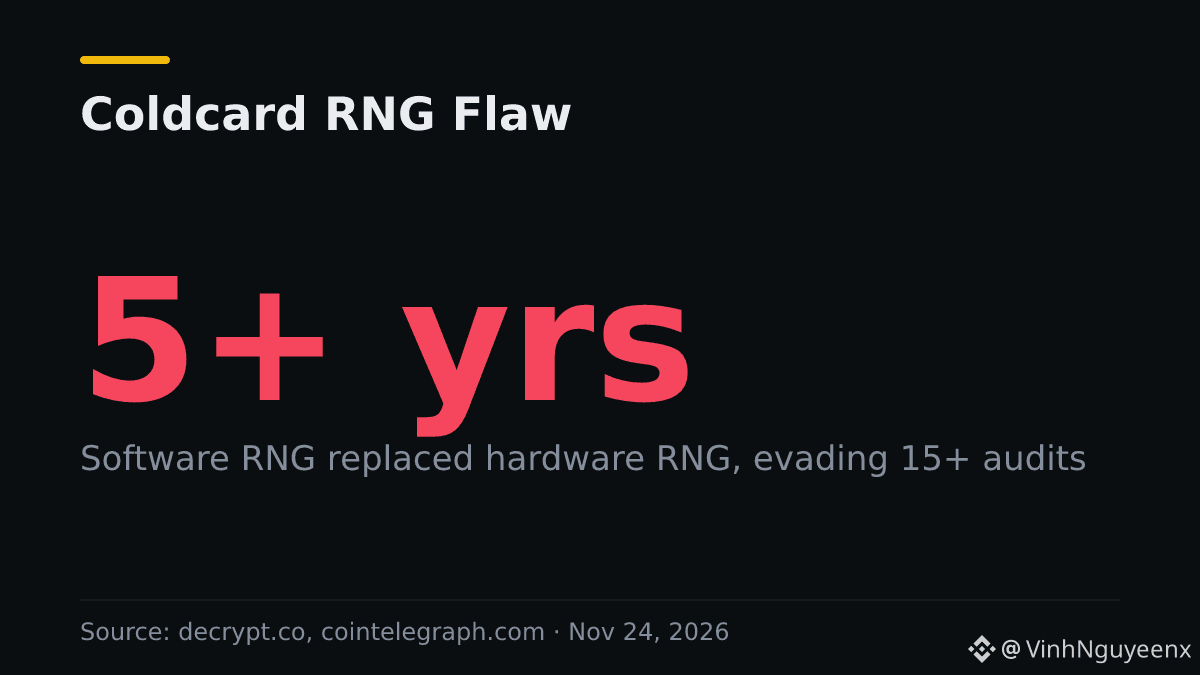
A hidden RNG flaw let Coldcard wallets evade detection for more than five years.
• Coinkite’s post‑mortem shows a software RNG replaced the hardware one for over five years (decrypt.co)
• Cointelegraph reports the flaw survived at least 15 security reviews before being disclosed (cointelegraph.com)
The incident highlights how even rigorous audits can miss subtle software swaps, urging hardware wallet makers to tighten supply‑chain checks.
What’s your top priority after this reveal?
A) Strengthen hardware audits
B) Rely on multi‑signature wallets
C) Switch to alternative wallets
$BTC #Coldcard #Security 🔐
⚠️ Not financial advice. DYOR.
49
·
--
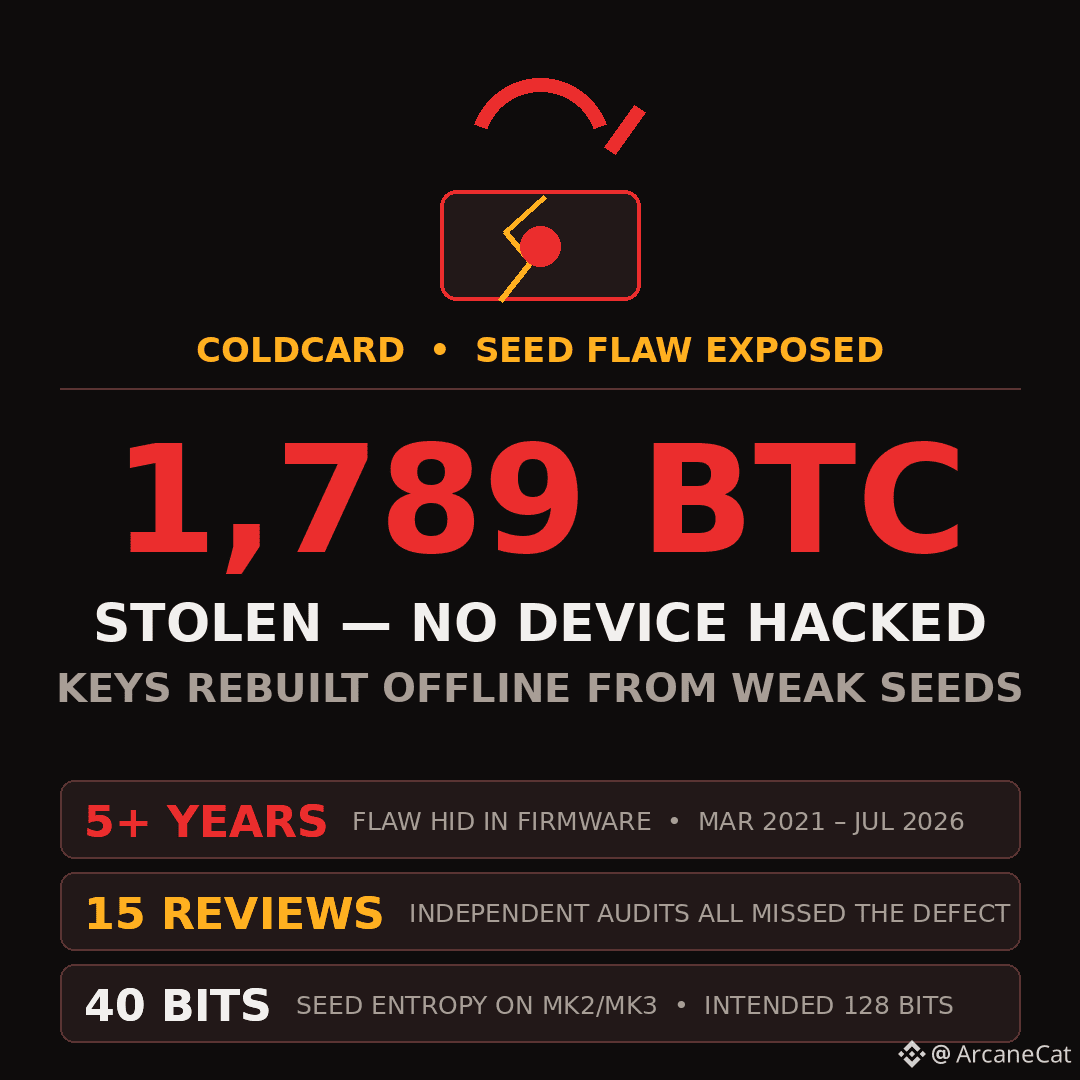
🚨 1,789 BTC STOLEN — 15 SECURITY AUDITS MISSED THE FLAW
Coinkite's Nov 23 postmortem is out: a Coldcard firmware bug ran undetected for 5+ years (Mar 2021–Jul 2026), silently swapping the hardware random-number generator for a predictable software one.
Seeds carried just 40–72 bits of entropy instead of 128 — attackers rebuilt private keys offline and drained 1,778.84 BTC from 8,600+ addresses, ~$107M. No device was hacked.
Thefts began Jul 29. Fixed Jul 31. The thief is still unknown.
Coldcard owners: update to the fixed firmware now.
#Bitcoin #BTC #Coldcard #Security
Not financial advice.
13
Log in to explore more content
Join global crypto users on Binance Square
⚡️ Get latest and useful information about crypto.
💬 Trusted by the world’s largest crypto exchange.
👍 Discover real insights from verified creators.
Email / Phone number
Trending Topics
1
#CanMarketsReboundAfterThanksgiving?
56,050 views
922 Discussing
2
#CouldSpaceX’sOrbitalDataCentersBoostAIChipDemand?
31,378 views
574 Discussing
3
#EvolveAtBinanceBlockchainWeek
707,132 views
8,202 Discussing
4
#CorePCEBeatLiftsFedHikeOdds
215,351 views
1,590 Discussing
5
#BitcoinAndStocksSlipAgainAmidTrump’sTariffPlans
250,547 views
2,326 Discussing
6
#JensenHuangSaysNvidiaDoesn’tNeedASuccessionPlan
120,511 views
1,393 Discussing
7
#NasdaqFuturesSlideMoreThan3%
53,873 views
475 Discussing
8
#USOctoberPCEPriceIndexAt0.3%MoM
61,580 views
454 Discussing
9
#BitcoinETFsPostRecord$4.94BNovemberOutflows
10,871 views
57 Discussing
10
#TetherInvestsInArgentinasLemon
23,347 views
273 Discussing