
#bttc
bttc
39.1M views
36,231 Discussing
Hot
Latest

Article
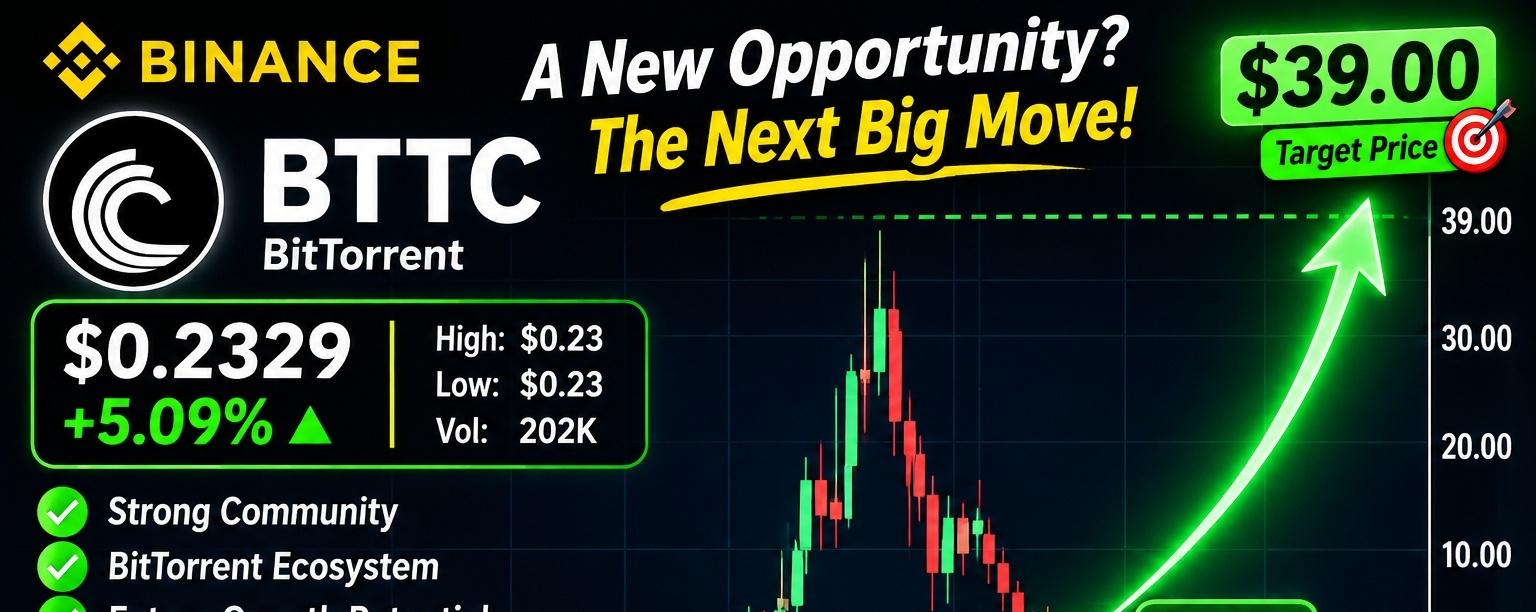
🚀 BTTC: A New Opportunity for Crypto Investors? The Next Big Move Could Be Interesting!The crypto market is full of opportunities, and BTTC (BitTorrent) is a project that deserves attention. Sometimes, the most interesting opportunities are the ones that investors are watching before the next major move begins.
🔥 Why BTTC Deserves Attention
According to the Binance chart, BTTC is currently around $0.2329, showing an impressive 5.09% gain at the latest recorded close.
This positive movement brings fresh attention to the token and could encourage more traders to watch its next move.
💎 What Makes BTTC Interesting?
BTTC is connected to the BitTorrent ecosystem, a well-known name in decentralized file-sharing technology.
Its connection with blockchain technology and the broader digital ecosystem gives it an interesting story in the crypto market.
📈 Could BTTC Deliver a Strong Comeback?
The latest positive price movement is something worth watching.
If buying interest continues, trading volume improves, and market momentum remains supportive, BTTC could have an opportunity to build stronger momentum.
For long-term observers, developments in the ecosystem and wider crypto market conditions will also be important.
🌟 My Bullish Outlook
I believe BTTC deserves a place on the crypto watchlist. Its current price movement has created an interesting discussion about its future potential.
The next strong move could attract even more attention from the crypto community.
Remember, smart investors look beyond short-term price movements and pay attention to technology, adoption, and long-term potential.
🔥 Now I Want to Hear From You!
Are you bullish on BTTC?
Do you believe BTTC could become one of the interesting comeback stories in the crypto market?
Share your thoughts below! Let's discuss the future of BTTC together. 🚀
#BTTC #BitTorrent #CryptoBullish #BinanceSquare #CryptoCommunity
⚠️ Crypto markets carry risk. This is market commentary, not a guarantee of future profits or financial advice. Always DYOR.
🚀 BTTC: A New Opportunity for Crypto Investors? The Next Big Move Could Be Interesting!
The crypto market is full of opportunities, and BTTC (BitTorrent) is a project that deserves attention. Sometimes, the most interesting opportunities are the ones that investors are watching before the next major move begins.
🔥 Why BTTC Deserves Attention
According to the Binance chart, BTTC is currently around $0.2329, showing an impressive 5.09% gain at the latest recorded close.
This positive movement brings fresh attention to the token and could encourage more traders to watch its next move.
💎 What Makes BTTC Interesting?
BTTC is connected to the BitTorrent ecosystem, a well-known name in decentralized file-sharing technology.
Its connection with blockchain technology and the broader digital ecosystem gives it an interesting story in the crypto market.
📈 Could BTTC Deliver a Strong Comeback?
The latest positive price movement is something worth watching.
If buying interest continues, trading volume improves, and market momentum remains supportive, BTTC could have an opportunity to build stronger momentum.
For long-term observers, developments in the ecosystem and wider crypto market conditions will also be important.
🌟 My Bullish Outlook
I believe BTTC deserves a place on the crypto watchlist. Its current price movement has created an interesting discussion about its future potential.
The next strong move could attract even more attention from the crypto community.
Remember, smart investors look beyond short-term price movements and pay attention to technology, adoption, and long-term potential.
🔥 Now I Want to Hear From You!
Are you bullish on BTTC?
Do you believe BTTC could become one of the interesting comeback stories in the crypto market?
Share your thoughts below! Let's discuss the future of BTTC together. 🚀
#BTTC #BitTorrent #CryptoBullish #BinanceSquare #CryptoCommunity
⚠️ Crypto markets carry risk. This is market commentary, not a guarantee of future profits or financial advice. Always DYOR.
2
507

·
--
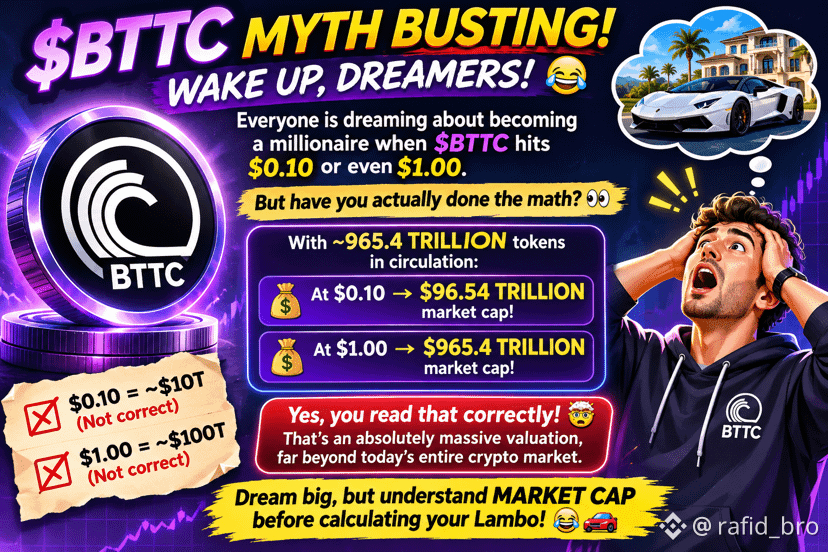
🚨 $BTTC MYTH BUSTING! WAKE UP, DREAMERS! 😂
Everyone is dreaming about becoming a millionaire when $BTTC hits $0.10 or even $1.00.
But have you actually done the math? 👀
Let's break it down:
With approximately 965.4 TRILLION tokens in circulation:
💰 At $0.10 → $96.54 TRILLION market cap!
💰 At $1.00 → $965.4 TRILLION market cap!
Yes, you read that correctly! 🤯
That's an absolutely massive valuation, far beyond today's entire crypto market.
Dream big, but understand MARKET CAP before calculating your Lambo! 😂🚗
Real question: What's a realistic long-term price target for $BTTC ?
#BTTC #BitTorrent #CryptoReality #CryptoAnalysis #BinanceSquare
4
681

🚀 $BTTC — ONE DAY, THE MARKET MAY BE SHOCKED!
People laugh at small prices, but every big crypto story starts somewhere.
I'm keeping my eyes on $BTTC because patience and long-term vision matter in crypto. 💎
Just imagine what 6 million BTTC could be worth:
🚀 $0.001 = $6000
🚀 $0.01 = $60,000
🚀 $0.10 = $600,000
🚀 $1.00 = $6,000,000
These are dream scenarios, not guaranteed price targets. But who knows what the future holds? 👀
🔥 Are you holding $BTTC , or have you already given up?
❤️ Like if you still believe!
💬 Comment your BTTC price target!
🚀 Follow for more crypto discussions!
#BTTC #BitTorrent #Crypto #Altcoins #CryptoCommunity
6
1k

🤣💰 500 MILLION $BTTC… DREAMING BIG! 🚀
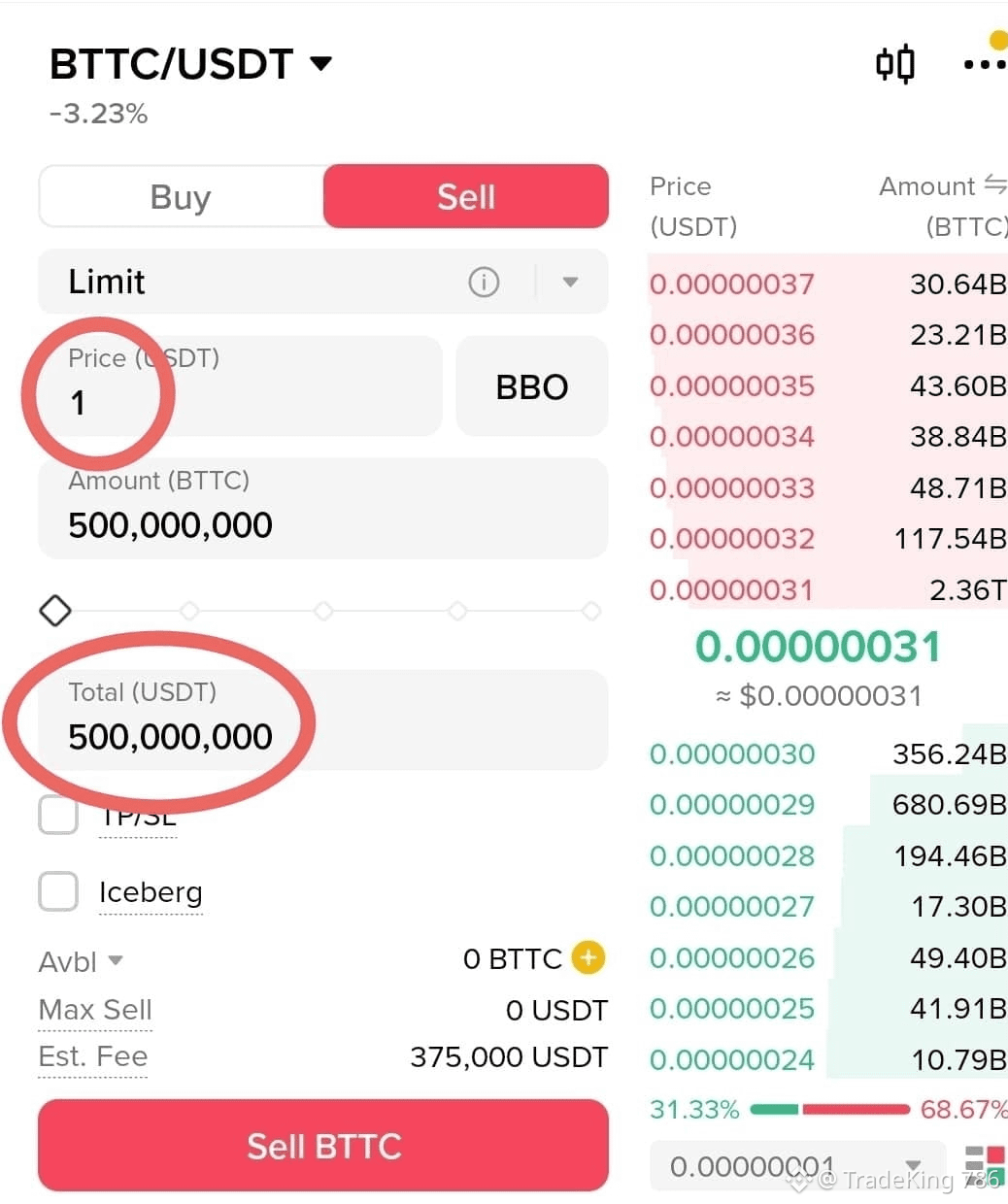
I'm proudly holding 500,000,000 $BTTC! 😎
Now imagine this crazy scenario:
🎯 If $BTTC ever reaches $1…
🤯 My portfolio would be worth $500 MILLION! 💸🤑
Come on, BTTC! Make this millionaire dream legendary! 🤣🚀
🐶 Who else is holding BTTC?
#BTTC #BitTorrent #Crypto #MemeCoins #CoinPulse
I'm proudly holding 500,000,000 $BTTC! 😎
Now imagine this crazy scenario:
🎯 If $BTTC ever reaches $1…
🤯 My portfolio would be worth $500 MILLION! 💸🤑
Come on, BTTC! Make this millionaire dream legendary! 🤣🚀
🐶 Who else is holding BTTC?
#BTTC #BitTorrent #Crypto #MemeCoins #CoinPulse
LIC420:
mochate
1
2
346

·
--
Bullish
{spot}(BTTCUSDT)
$BTTC
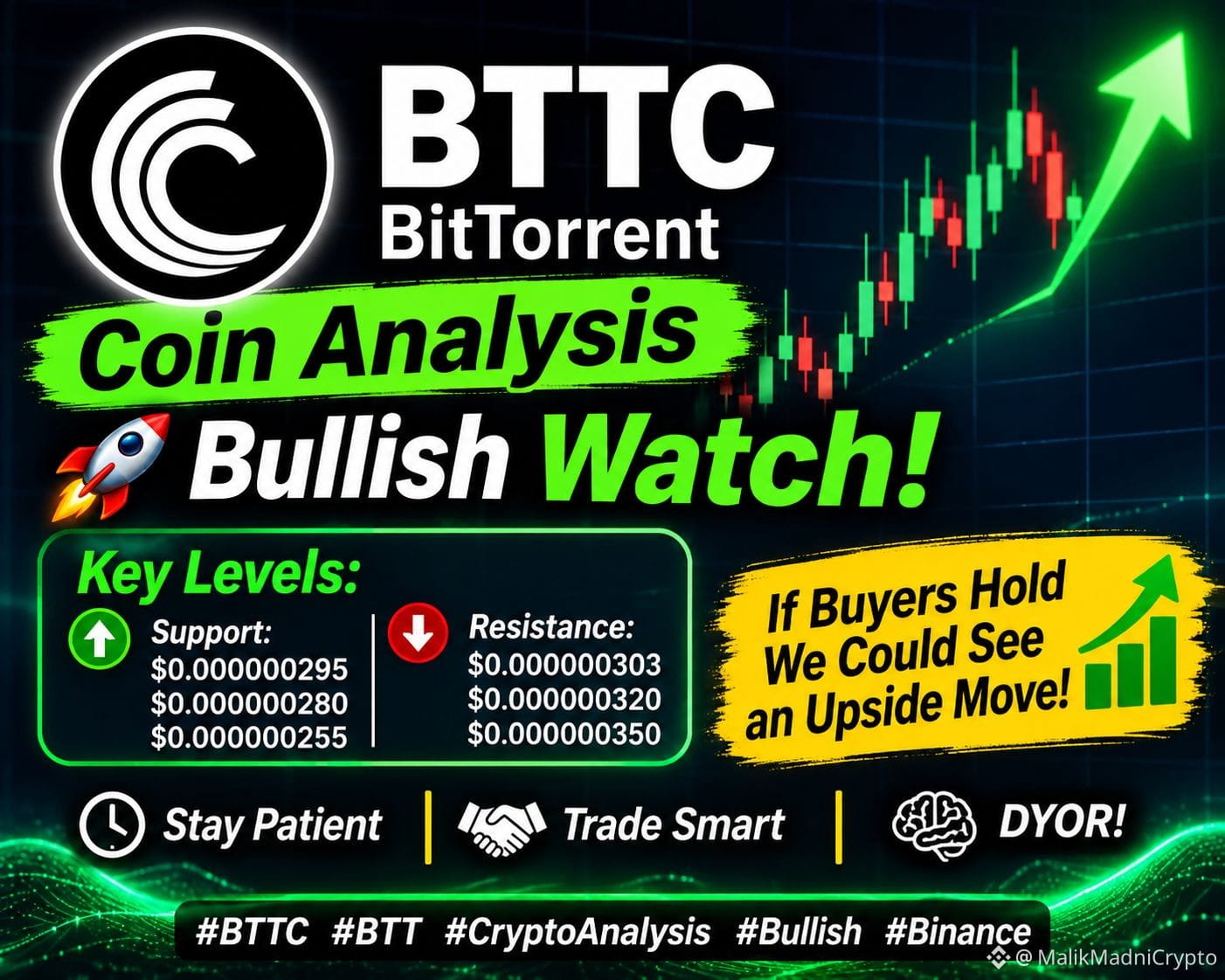
🚀 BTTC (BitTorrent) – BIG MOVE AHEAD?
📊 Market Analysis | November 26, 2026
BTTC is currently trading around $0.00000030.
🔍 Market Overview:
- Current Price: $0.00000030
- Market Cap: Around $290 Million
- 24H Change: Slightly Positive
- 7D Performance: Bearish
- Maximum Supply: 990 Trillion BTT
📈 Technical Analysis:
BTTC is currently trading in a consolidation zone. Buyers are trying to defend the current support area, while sellers are still putting pressure on the price.
🟢 Support Zones:
- $0.000000295
- $0.000000280
- $0.000000255
🔴 Resistance Zones:
- $0.000000303
- $0.000000320
- $0.000000350
🔥 Bullish Scenario:
If BTTC breaks above $0.000000303 with strong volume, we could see a move toward $0.000000320 and potentially $0.000000350.
⚠️ Bearish Scenario:
If support at $0.000000295 breaks, further downside toward $0.000000280 is possible.
💎 My Opinion:
BTTC is a project worth watching because of its expanding Web3 ecosystem, decentralized computing ambitions, and token buyback-and-burn strategy.
However, confirmation through price action and trading volume is important before making any decision.
🚀 Patience is the key. Don't FOMO!
#BTTC #BitTorrent #CryptoAnalysis #Altcoins #CryptoMarket #Bullish #CryptoTrading #Binance
@MalikMadniCrypto
147

·
--
$BTTC
{spot}(BTTCUSDT)
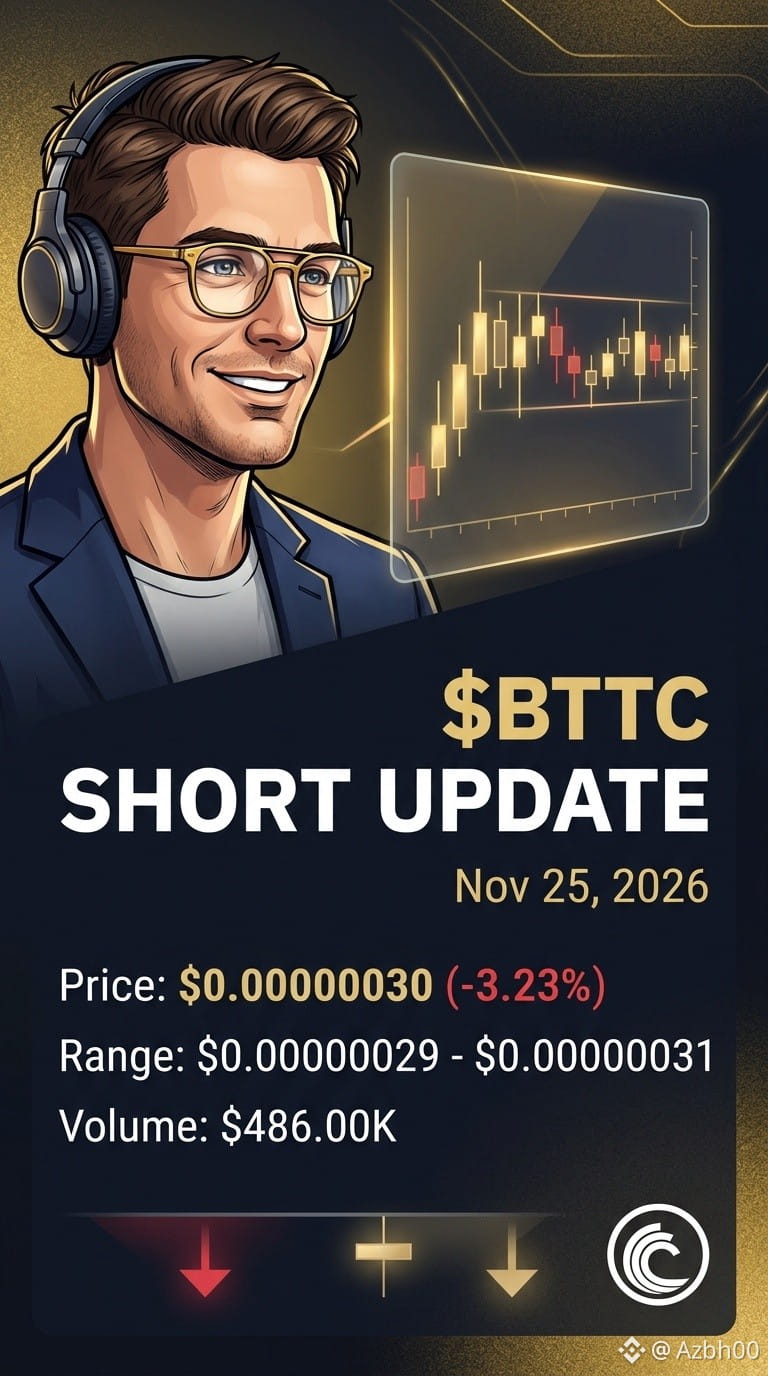
Latest Update — November 25, 2026 📈
$BTTC is trading at $0.00000031, up +3.33% over the past 24 hours. The session range sits between $0.00000029 and $0.00000031, with price currently testing the daily high.
🔍 Key Takeaways:
• Bullish Momentum: Holding near the $0.00000031 daily high signals fresh short-term buying interest.
• Key Risk: The narrow trading range means liquidity-driven volatility remains a factor—watch for strong volume to confirm a true breakout.
Do you think $BTTC can break above $0.00000031 with volume, or will it stay range-bound? Share your thoughts below! 👇
#BTTC #BitTorrent #CryptoUpdate #MarketAnalysis #BinanceSquare
$BTTC
Latest Update — November 25, 2026 📈
$BTTC is trading at $0.00000031, up +3.33% over the past 24 hours. The session range sits between $0.00000029 and $0.00000031, with price currently testing the daily high.
🔍 Key Takeaways:
• Bullish Momentum: Holding near the $0.00000031 daily high signals fresh short-term buying interest.
• Key Risk: The narrow trading range means liquidity-driven volatility remains a factor—watch for strong volume to confirm a true breakout.
Do you think $BTTC can break above $0.00000031 with volume, or will it stay range-bound? Share your thoughts below! 👇
#BTTC #BitTorrent #CryptoUpdate #MarketAnalysis #BinanceSquare
6
876
$BTTC
{spot}(BTTCUSDT)
: Understanding the Market Cap Behind Price Targets
Many investors discuss potential price targets of $0.10 or even $1 for $BTTC. However, it's important to consider the market capitalization required to support these valuations.
📊 At $0.10, BTTC would require an estimated $10 trillion market cap.
📊 At $1.00, its market cap would reach approximately $100 trillion.
These figures highlight why market capitalization and token supply matter when evaluating long-term price expectations.
A higher token price doesn't automatically mean a realistic valuation.
Before setting price targets, understand the numbers behind them.
What do you think about BTTC's long-term potential?$BTC
{future}(BTCUSDT)
#BTTC #BitTorrent #CryptoEducation #MarketCap #CryptoAnalysis
$BTTC
: Understanding the Market Cap Behind Price Targets
Many investors discuss potential price targets of $0.10 or even $1 for $BTTC . However, it's important to consider the market capitalization required to support these valuations.
📊 At $0.10, BTTC would require an estimated $10 trillion market cap.
📊 At $1.00, its market cap would reach approximately $100 trillion.
These figures highlight why market capitalization and token supply matter when evaluating long-term price expectations.
A higher token price doesn't automatically mean a realistic valuation.
Before setting price targets, understand the numbers behind them.
What do you think about BTTC's long-term potential?$BTC
#BTTC #BitTorrent #CryptoEducation #MarketCap #CryptoAnalysis
112

·
--
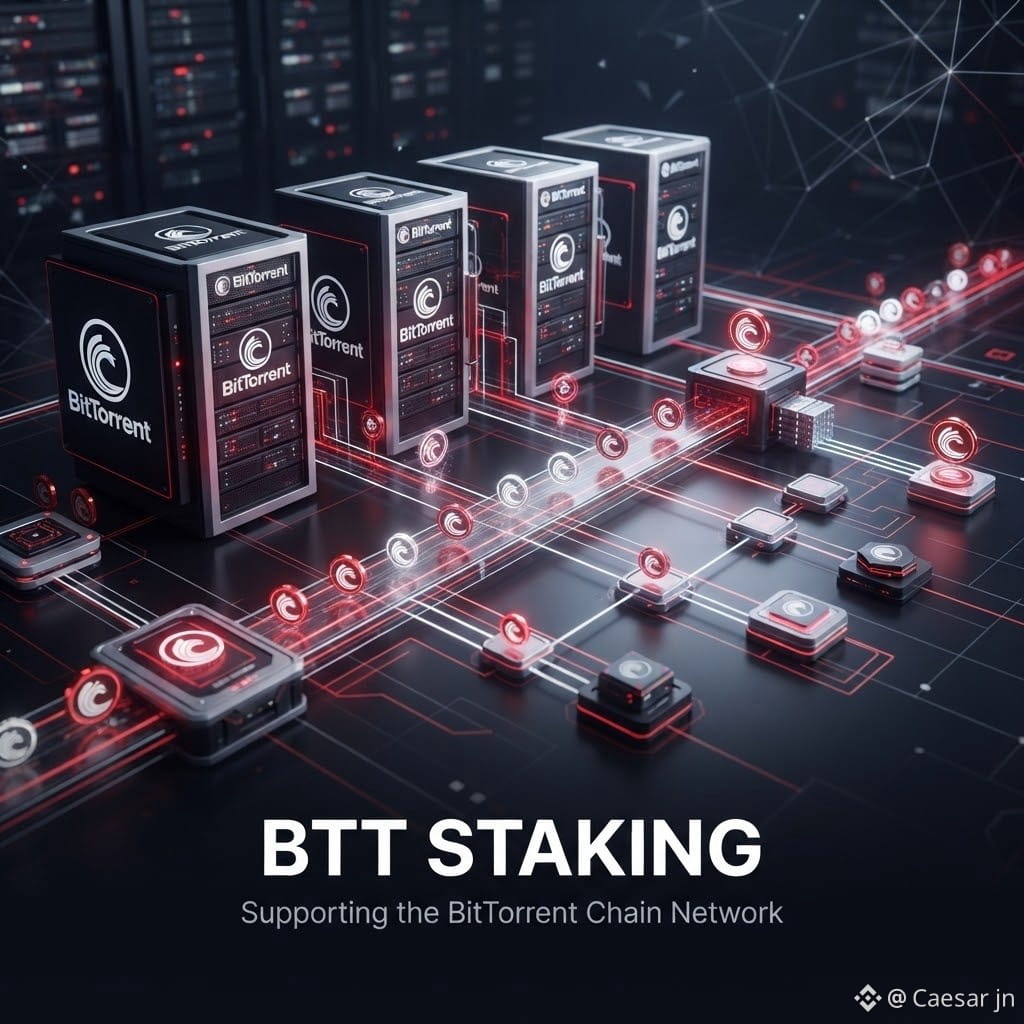
BTT Staking: Understanding Network Participation, Rewards, and Long-Term Utility
A blockchain network needs more than transactions and applications to function effectively. It also needs participants who help maintain its security, validate activity, and support the consensus process.
This is where staking becomes important in the BitTorrent ecosystem.
BTT has a role beyond trading and everyday token transfers. Through BitTorrent Chain (BTTC), holders can participate in network security by staking their tokens, either as validators or through delegation.
Understanding how this works helps explain why staking is an important part of BTT's wider utility.
1. What does BTT staking actually mean?
Staking involves committing BTT to support the network's Proof-of-Stake mechanism.
Validators participate directly in network operations. They run the required infrastructure, contribute to consensus, and perform responsibilities such as block production and checkpoint submission.
This work is important because BTTC relies on validators to maintain network operations and support the verification of cross-chain activity.
2. Delegation makes participation more accessible
Not every BTT holder has the technical knowledge, infrastructure, or resources required to operate a validator node.
Delegation provides another route.
A BTT holder can select a validator and delegate tokens to support that validator's participation. The delegator does not need to operate a full node personally.
According to BTTC's staking documentation, delegators can receive a share of validator rewards based on their contribution.
This creates an important relationship: validators provide the technical infrastructure, while delegators contribute economic support.
3. Where do staking rewards come from?
Staking rewards are connected to network participation and validator performance.
Validators can receive rewards for their responsibilities, and eligible delegators may receive a proportional share.
@BitTorrent_Official @JustinSun #TRONEcoStar #BTT #BTTC
BTT Staking: Understanding Network Participation, Rewards, and Long-Term Utility
A blockchain network needs more than transactions and applications to function effectively. It also needs participants who help maintain its security, validate activity, and support the consensus process.
This is where staking becomes important in the BitTorrent ecosystem.
BTT has a role beyond trading and everyday token transfers. Through BitTorrent Chain (BTTC), holders can participate in network security by staking their tokens, either as validators or through delegation.
Understanding how this works helps explain why staking is an important part of BTT's wider utility.
1. What does BTT staking actually mean?
Staking involves committing BTT to support the network's Proof-of-Stake mechanism.
Validators participate directly in network operations. They run the required infrastructure, contribute to consensus, and perform responsibilities such as block production and checkpoint submission.
This work is important because BTTC relies on validators to maintain network operations and support the verification of cross-chain activity.
2. Delegation makes participation more accessible
Not every BTT holder has the technical knowledge, infrastructure, or resources required to operate a validator node.
Delegation provides another route.
A BTT holder can select a validator and delegate tokens to support that validator's participation. The delegator does not need to operate a full node personally.
According to BTTC's staking documentation, delegators can receive a share of validator rewards based on their contribution.
This creates an important relationship: validators provide the technical infrastructure, while delegators contribute economic support.
3. Where do staking rewards come from?
Staking rewards are connected to network participation and validator performance.
Validators can receive rewards for their responsibilities, and eligible delegators may receive a proportional share.
@BitTorrent_Official @Justin Sun孙宇晨 #TRONEcoStar #BTT #BTTC
22

·
--
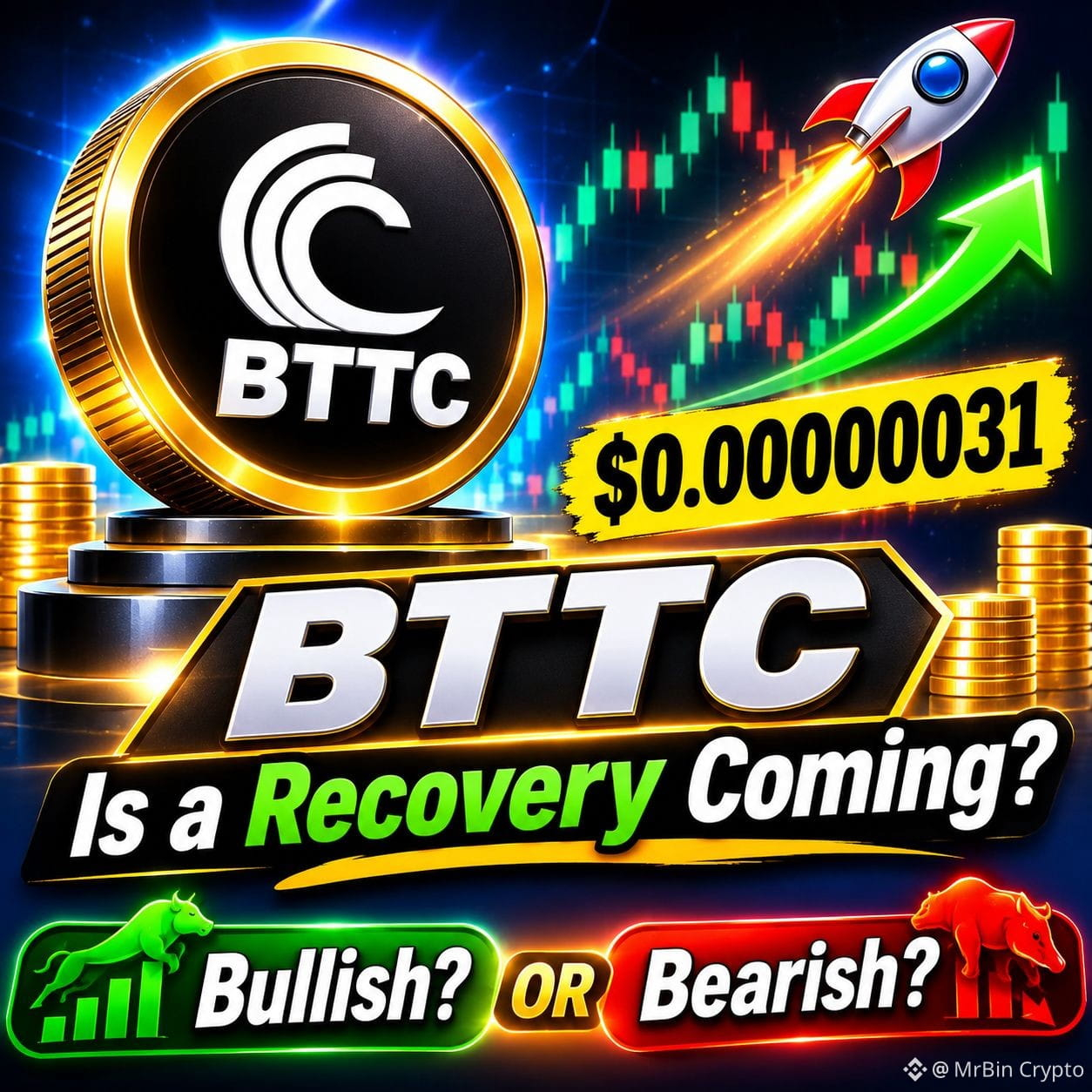
🚀 $BTTC – Is Something Brewing? 👀
BTTC is around $0.00000031!
Can buying pressure bring fresh momentum? Traders are watching volume and key resistance levels.
🔥 What’s your view on $BTTC ?
Bullish or Bearish?
DYOR. Always manage your risk.
#BTTC #CryptoCommunity #BinanceSquare #dyor
{spot}(BTTCUSDT)
🚀 $BTTC – Is Something Brewing? 👀
BTTC is around $0.00000031!
Can buying pressure bring fresh momentum? Traders are watching volume and key resistance levels.
🔥 What’s your view on $BTTC ?
Bullish or Bearish?
DYOR. Always manage your risk.
#BTTC #CryptoCommunity #BinanceSquare #dyor
BTTC is around $0.00000031!
Can buying pressure bring fresh momentum? Traders are watching volume and key resistance levels.
🔥 What’s your view on $BTTC ?
Bullish or Bearish?
DYOR. Always manage your risk.
#BTTC #CryptoCommunity #BinanceSquare #dyor
125
Verified
😴 THE SLEEPING GIANT EVERYONE FORGOT — $BTTC
{spot}(BTTCUSDT)
🌐
Before Netflix. Before Spotify. Before "the cloud."
There was BitTorrent — the network that taught the internet how to share files. 2004. A legend.
And its token is sitting here... at $0.0000003. 👀
📈 Price: ~$0.00000030
🏦 Market Cap: ~$290M
💧 24h Volume: ~$16M
🔢 Supply: 990 TRILLION (max)
🏆 ATH: $0.00000343 (Jan 2022) — still ~91% below it
For just $10, you get ~33 MILLION BTT. Let that sink in. 😳
Why is this giant still awake?
🔹 Oct 2026: BitTorrent unified its brand — P2P network + BTTC chain + BTTInferGrid, a decentralized AI inference network
🔹 BTT is the gas + staking token of BitTorrent Chain (bridging TRON, Ethereum & BNB Chain)
🔹 Service revenue funds quarterly buybacks & BURNS 🔥
Now the honest math ⚠️:
To delete ONE zero ($0.000003), BTT needs a ~$2.9B market cap — hard, but it HAS been there (that was the ATH zone).
To reach $0.01? ~$9.9 TRILLION market cap — more than all of crypto combined today
#BTTC #bitcoin #Binance
$BTC
{spot}(BTCUSDT)
😴 THE SLEEPING GIANT EVERYONE FORGOT — $BTTC
🌐
Before Netflix. Before Spotify. Before "the cloud."
There was BitTorrent — the network that taught the internet how to share files. 2004. A legend.
And its token is sitting here... at $0.0000003. 👀
📈 Price: ~$0.00000030
🏦 Market Cap: ~$290M
💧 24h Volume: ~$16M
🔢 Supply: 990 TRILLION (max)
🏆 ATH: $0.00000343 (Jan 2022) — still ~91% below it
For just $10, you get ~33 MILLION BTT. Let that sink in. 😳
Why is this giant still awake?
🔹 Oct 2026: BitTorrent unified its brand — P2P network + BTTC chain + BTTInferGrid, a decentralized AI inference network
🔹 BTT is the gas + staking token of BitTorrent Chain (bridging TRON, Ethereum & BNB Chain)
🔹 Service revenue funds quarterly buybacks & BURNS 🔥
Now the honest math ⚠️:
To delete ONE zero ($0.000003), BTT needs a ~$2.9B market cap — hard, but it HAS been there (that was the ATH zone).
To reach $0.01? ~$9.9 TRILLION market cap — more than all of crypto combined today
#BTTC #bitcoin #Binance
$BTC
2
693

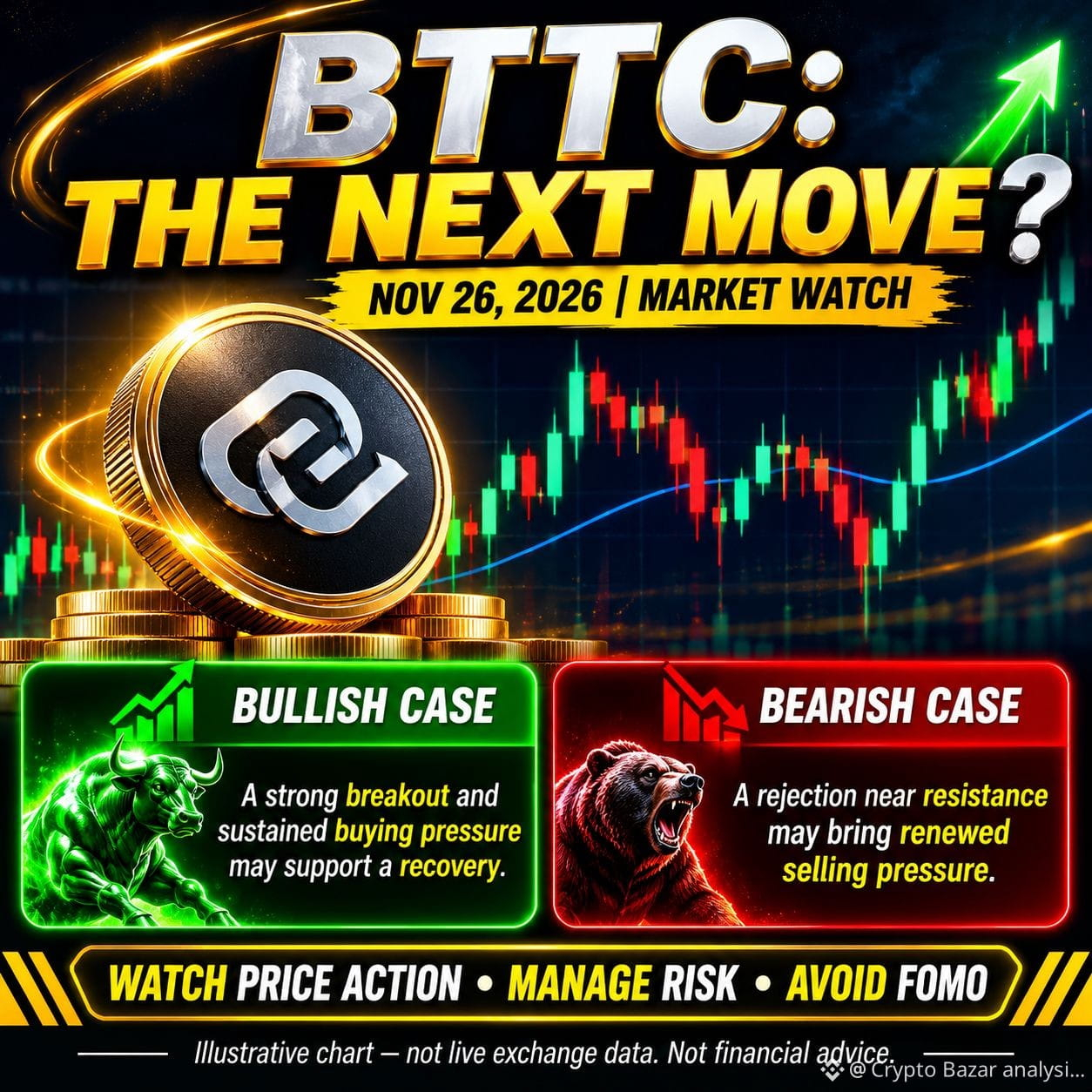
🚨 BTTC: One Big Move Could Change the Market Mood! 👀
$BTTC is at an interesting point. The next move depends on whether buyers can build momentum or sellers regain control.
🟢 Bullish Scenario: A strong breakout with sustained buying pressure could support a recovery and attract more buyers.
🔴 Bearish Scenario: If price gets rejected near resistance, selling pressure may increase and push the market lower.
🎯 Trading Strategy: Watch price action, wait for candle confirmation, manage risk, and avoid emotional entries.
⚠️ No guaranteed direction. Patience is key.
💬 What do you think? Will BTTC move UP 🚀 or DOWN 📉 next?
#BTTC #CryptoAnalysis #BinanceSquare #BullishOrBearish #RiskManagement
109

·
--
Here's what happened when I sat down and ran the market cap math on those $BTTC targets circulating right now.
Most holders already have $0.10 or $1.00 spent in their head, and never checked what those prices actually imply. That is how you end up holding through an entire cycle waiting for a number that cannot reasonably happen.
At $0.10, $BTTC would need a market cap of roughly $10 trillion. At $1.00, we are talking $100 trillion. That is several times the market cap of $BTC.
The circulating supply is the part almost nobody prices in. Those targets are not ambitious. They are structurally out of reach, and treating a high-supply token like a cheap microcap is how capital gets stuck for years.
The real risk is not missing a rally. It is anchoring your whole position to a fantasy valuation while better setups pass you by.
Where do you think this kind of target-setting actually leaves most holders?
#MarketCap #BTTC #CryptoReality
Here's what happened when I sat down and ran the market cap math on those $BTTC targets circulating right now.
Most holders already have $0.10 or $1.00 spent in their head, and never checked what those prices actually imply. That is how you end up holding through an entire cycle waiting for a number that cannot reasonably happen.
At $0.10, $BTTC would need a market cap of roughly $10 trillion. At $1.00, we are talking $100 trillion. That is several times the market cap of $BTC .
The circulating supply is the part almost nobody prices in. Those targets are not ambitious. They are structurally out of reach, and treating a high-supply token like a cheap microcap is how capital gets stuck for years.
The real risk is not missing a rally. It is anchoring your whole position to a fantasy valuation while better setups pass you by.
Where do you think this kind of target-setting actually leaves most holders?
#MarketCap #BTTC #CryptoReality

1

·
--
Bullish
THIS COIN COSTS LESS THAN A DROP OF TEA. AND THAT'S EXACTLY WHY MILLIONAIRES LOVE IT. 👑
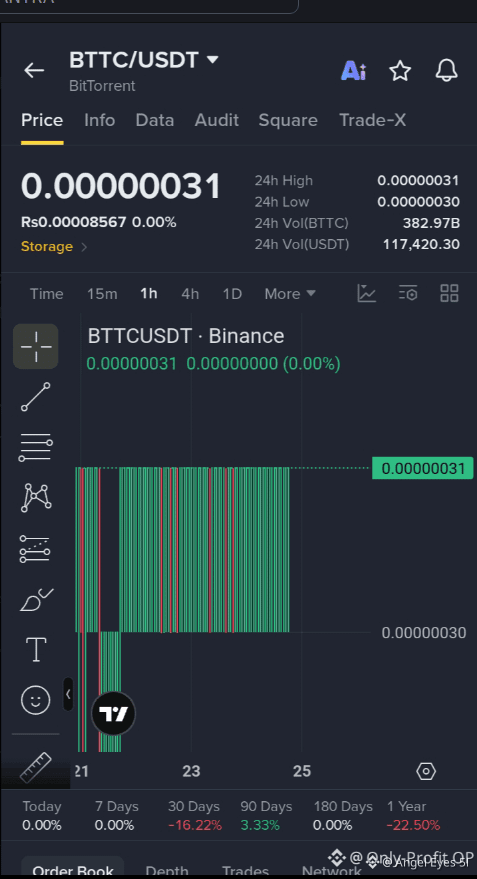
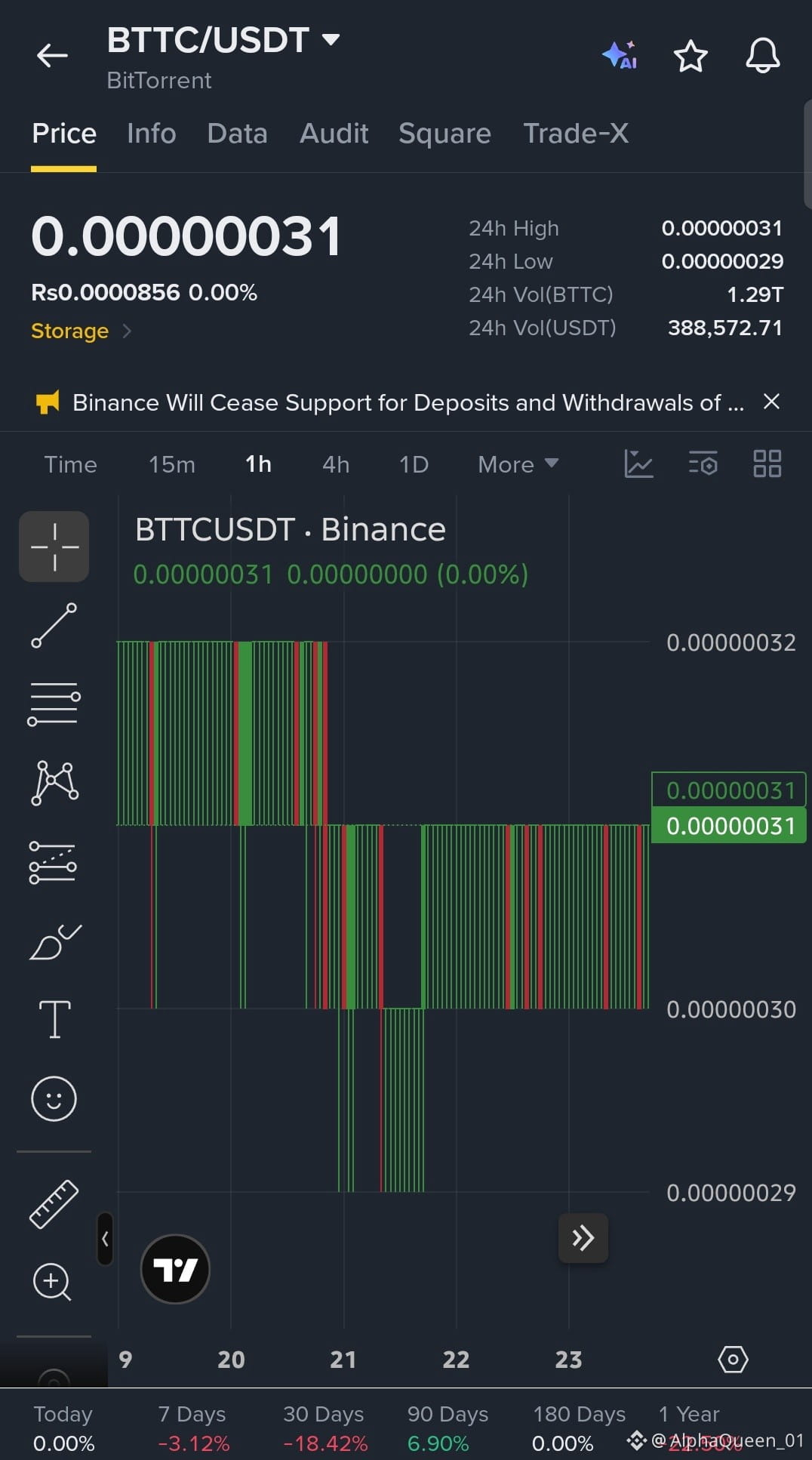
$BTTC / USDT - $0.00000031
Yes, you read it right.
ZERO. ZERO. ZERO. ZERO. ZERO. ZERO. 31.
People laugh and say: "Itna sasta coin?"
Millionaires smile and say: "Exactly. That's the opportunity." 😎
1.29 TRILLION BTTC traded in 24h.
Volume never lies. Big players are still here.
90 Days: +6.90% ✅
1 Year: -22.50% - people call it dead.
But listen Queen:
The poor buy when price is high because they need confidence.
The rich buy when price is low because they HAVE confidence.
$BTTC is Storage. It's BitTorrent. It's a LEGEND coin.
Old coins don't die. They wait for their season.
Imagine:
You buy 100 Million $BTTC today for just $31.
If it just removes ONE zero... your $31 becomes $310.
If it removes TWO zeros... your $31 becomes $3,100.
That's why millionaires love cheap coins.
Small price. Big dream. Massive upside.
Are you laughing at the zeros?
Or are you counting your future millions? 👀
Comment in group: HOLD or SELL $BTTC? 👇
Follow 👉 @Lan_Trades
Where Queens are made, not born.
#AlphaQueen_01 #BTTC #MillionaireMindset #CryptoQueen #Wealth
{spot}(BTTCUSDT)
THIS COIN COSTS LESS THAN A DROP OF TEA. AND THAT'S EXACTLY WHY MILLIONAIRES LOVE IT. 👑
$BTTC / USDT - $0.00000031
Yes, you read it right.
ZERO. ZERO. ZERO. ZERO. ZERO. ZERO. 31.
People laugh and say: "Itna sasta coin?"
Millionaires smile and say: "Exactly. That's the opportunity." 😎
1.29 TRILLION BTTC traded in 24h.
Volume never lies. Big players are still here.
90 Days: +6.90% ✅
1 Year: -22.50% - people call it dead.
But listen Queen:
The poor buy when price is high because they need confidence.
The rich buy when price is low because they HAVE confidence.
$BTTC is Storage. It's BitTorrent. It's a LEGEND coin.
Old coins don't die. They wait for their season.
Imagine:
You buy 100 Million $BTTC today for just $31.
If it just removes ONE zero... your $31 becomes $310.
If it removes TWO zeros... your $31 becomes $3,100.
That's why millionaires love cheap coins.
Small price. Big dream. Massive upside.
Are you laughing at the zeros?
Or are you counting your future millions? 👀
Comment in group: HOLD or SELL $BTTC ? 👇
Follow 👉 @AlphaQueen_01
Where Queens are made, not born.
#AlphaQueen_01 #BTTC #MillionaireMindset #CryptoQueen #Wealth
4
595
·
--
$BTTC : The Future Will Be Defined by Real Utility, Not Just Promises.
In Web3, long-term success is not built on hype alone. It comes from technology that solves problems, infrastructure that supports users, and an ecosystem that continues to develop.
That is why I believe BTTC deserves attention.
BitTorrent Chain represents an important part of the BitTorrent ecosystem's ambition to connect blockchain networks and support a more interoperable Web3 environment.
But the real opportunity lies in what comes next: stronger adoption, practical applications, growing network activity, and meaningful utility for BTT.
One thing I have come to appreciate about evaluating blockchain projects is that development matters, but sustained usage matters even more.
For BTTC, the long-term question is not simply how much attention it attracts today, but how much value its technology can deliver tomorrow.
Innovation creates possibilities. Adoption gives those possibilities meaning.
The BTTC journey is still unfolding. The progress ahead will be worth watching.
@BitTorrent_Official @JustinSun #BTT #BTTC #TRONEcoStar
$BTTC : The Future Will Be Defined by Real Utility, Not Just Promises.
In Web3, long-term success is not built on hype alone. It comes from technology that solves problems, infrastructure that supports users, and an ecosystem that continues to develop.
That is why I believe BTTC deserves attention.
BitTorrent Chain represents an important part of the BitTorrent ecosystem's ambition to connect blockchain networks and support a more interoperable Web3 environment.
But the real opportunity lies in what comes next: stronger adoption, practical applications, growing network activity, and meaningful utility for BTT.
One thing I have come to appreciate about evaluating blockchain projects is that development matters, but sustained usage matters even more.
For BTTC, the long-term question is not simply how much attention it attracts today, but how much value its technology can deliver tomorrow.
Innovation creates possibilities. Adoption gives those possibilities meaning.
The BTTC journey is still unfolding. The progress ahead will be worth watching.
@BitTorrent_Official @Justin Sun孙宇晨 #BTT #BTTC #TRONEcoStar
139

·
--
$BTTC to $1… 🤣💰
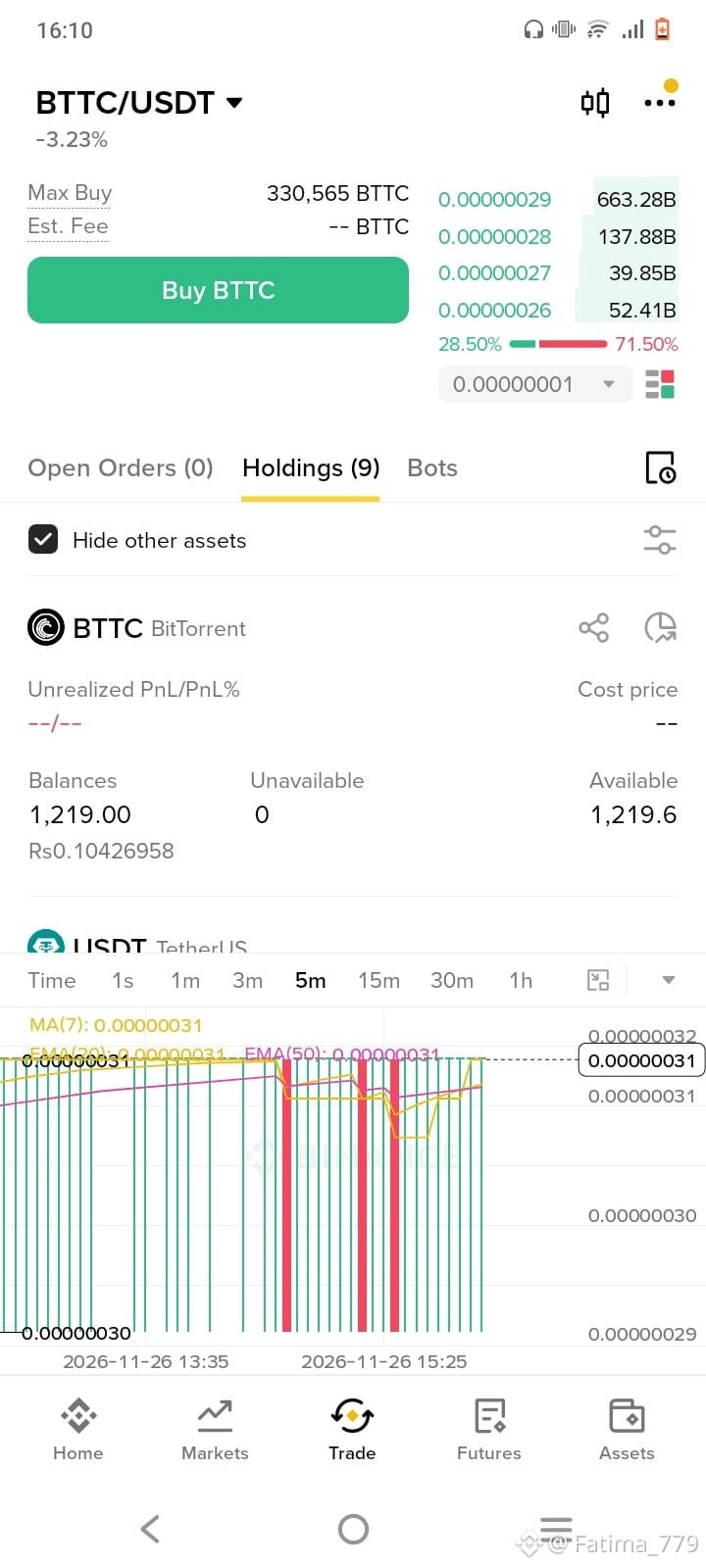
I'm holding just 1,219 $BTTC 😎
If BTTC ever reaches $1, I'll have $1,219!
Not a millionaire yet, just a dreamer with a tiny bag. 😂💎
Come on BTTC, don't disappoint me! 🚀
#BTTC #BitTorrent #Crypto
{spot}(BTTCUSDT)
$BTTC to $1… 🤣💰
I'm holding just 1,219 $BTTC 😎
If BTTC ever reaches $1, I'll have $1,219!
Not a millionaire yet, just a dreamer with a tiny bag. 😂💎
Come on BTTC, don't disappoint me! 🚀
#BTTC #BitTorrent #Crypto
I'm holding just 1,219 $BTTC 😎
If BTTC ever reaches $1, I'll have $1,219!
Not a millionaire yet, just a dreamer with a tiny bag. 😂💎
Come on BTTC, don't disappoint me! 🚀
#BTTC #BitTorrent #Crypto
2
204
💎 $BTTC TO $1? DREAM BIG, BUT THINK LONG TERM!
Millions of investors dream of seeing BTTC reach $1. But dreams need real adoption, utility, and massive market growth.
I'm still watching the BitTorrent ecosystem closely.
Can BTTC become a big surprise in the next crypto cycle? 🚀
Tell me honestly: What's your dream target for BTTC? 👇
#BTTC #BitTorrent #Crypto #Altcoins
samina Kaleem 12345:
🚀 BTTC to $1 would be a dream come true! But real adoption, utility, and long-term growth are essential. I'm staying optimistic and watching the ecosystem. Patience is key! 💎
7
35
28.1k

·
--
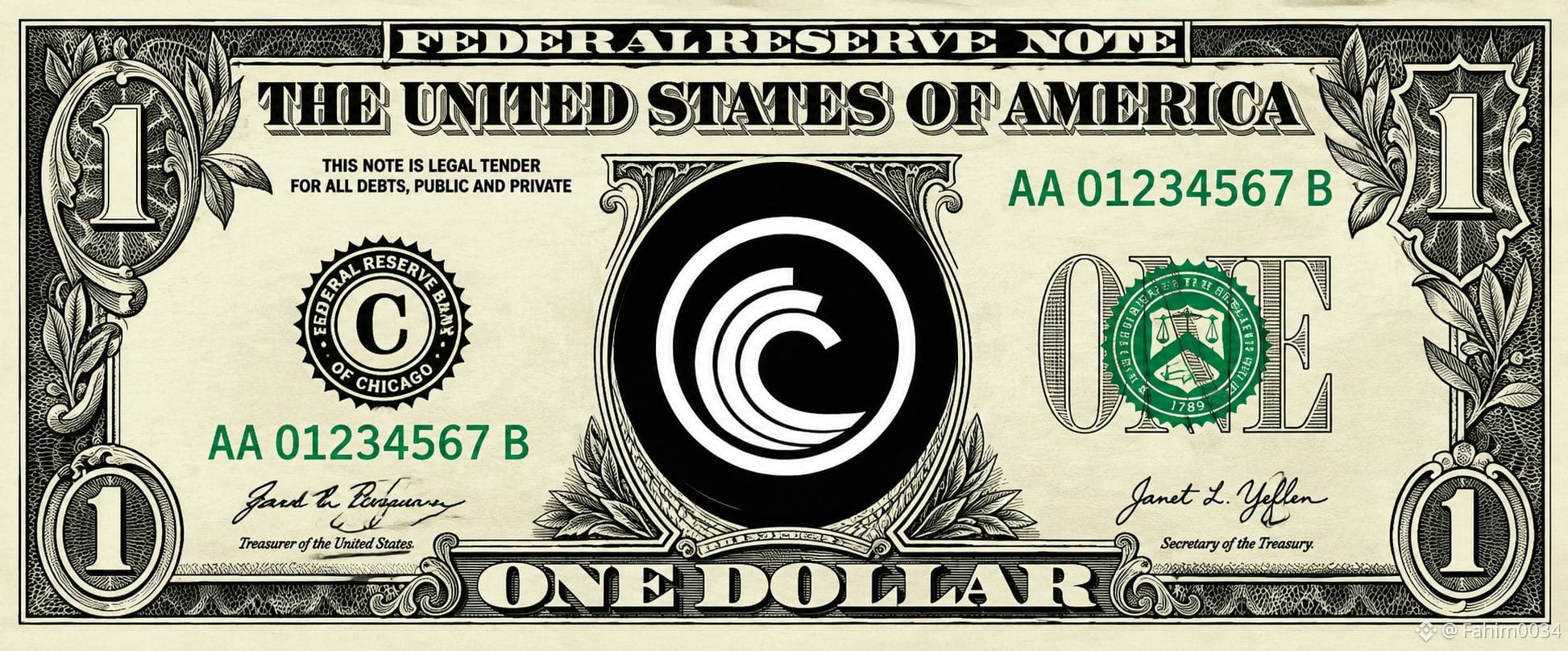
Big price targets always look exciting, but the numbers behind them matter even more. 👀
When discussing $BTC #BTTC. reaching $0.10 or $1, it's important to look beyond the token price and understand its potential market cap.
A higher price requires a much larger overall valuation, and that's where realistic calculations come in.
Crypto is full of big dreams, but understanding supply, market cap, and demand helps separate hype from reality.
Dream big, but always do the math before making predictions 📊
@BitTorrent_Official
#BTTC #BitTorrent #CryptoReality
1
215
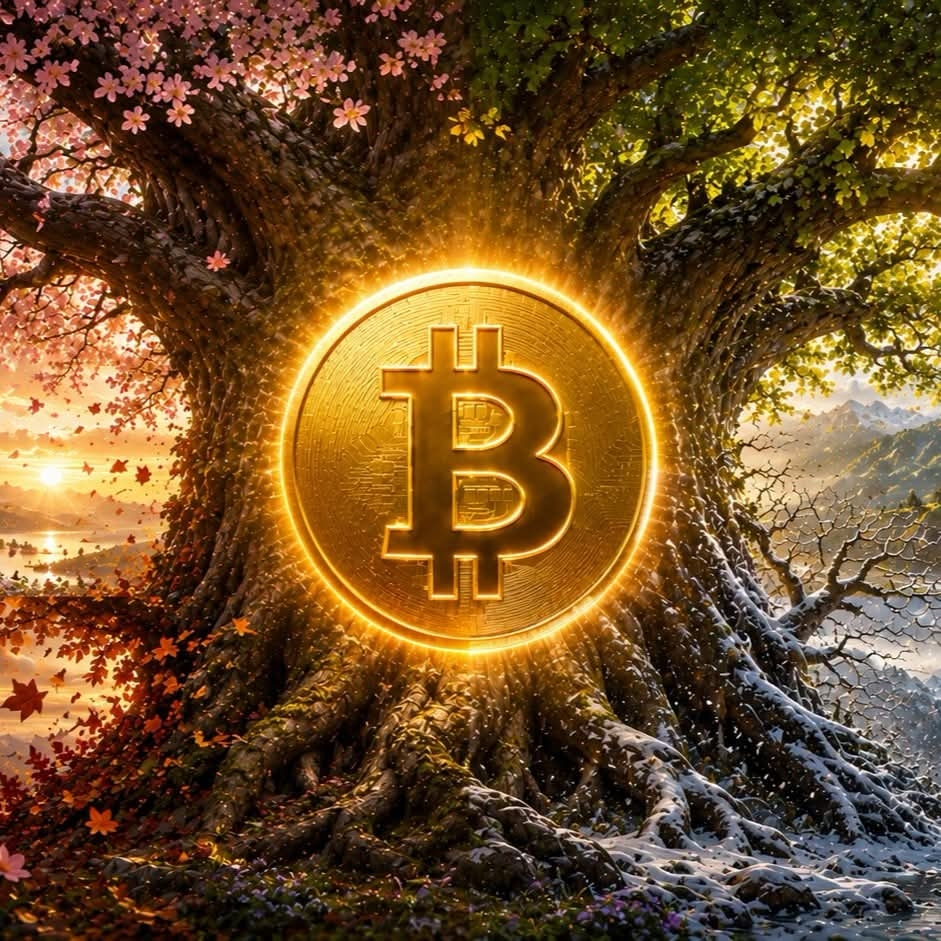
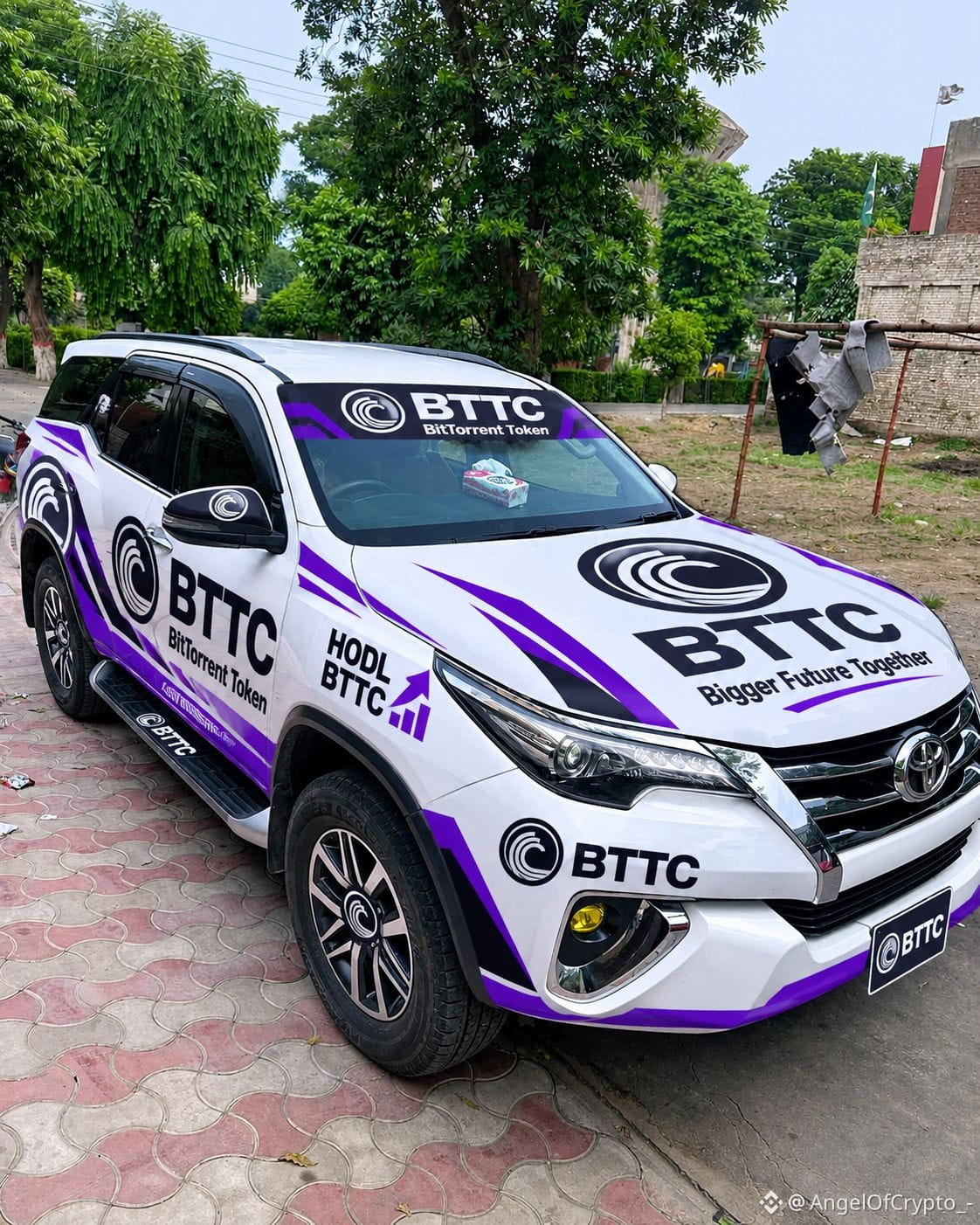
$BTTC continues to attract attention from holders who believe in its long-term potential. With the BitTorrent ecosystem continuing to develop, network utility, staking opportunities and the ongoing burn narrative remain important factors to watch. While the market is still unpredictable and price movements may take time, many investors are keeping $BTTC on their radar, hoping that stronger momentum and growing interest could bring new opportunities in the future.
#BTTC #BitTorrent #Crypto #Altcoins #BinanceSquare
#BTTC #BitTorrent #Crypto #Altcoins #BinanceSquare
5
943

·
--
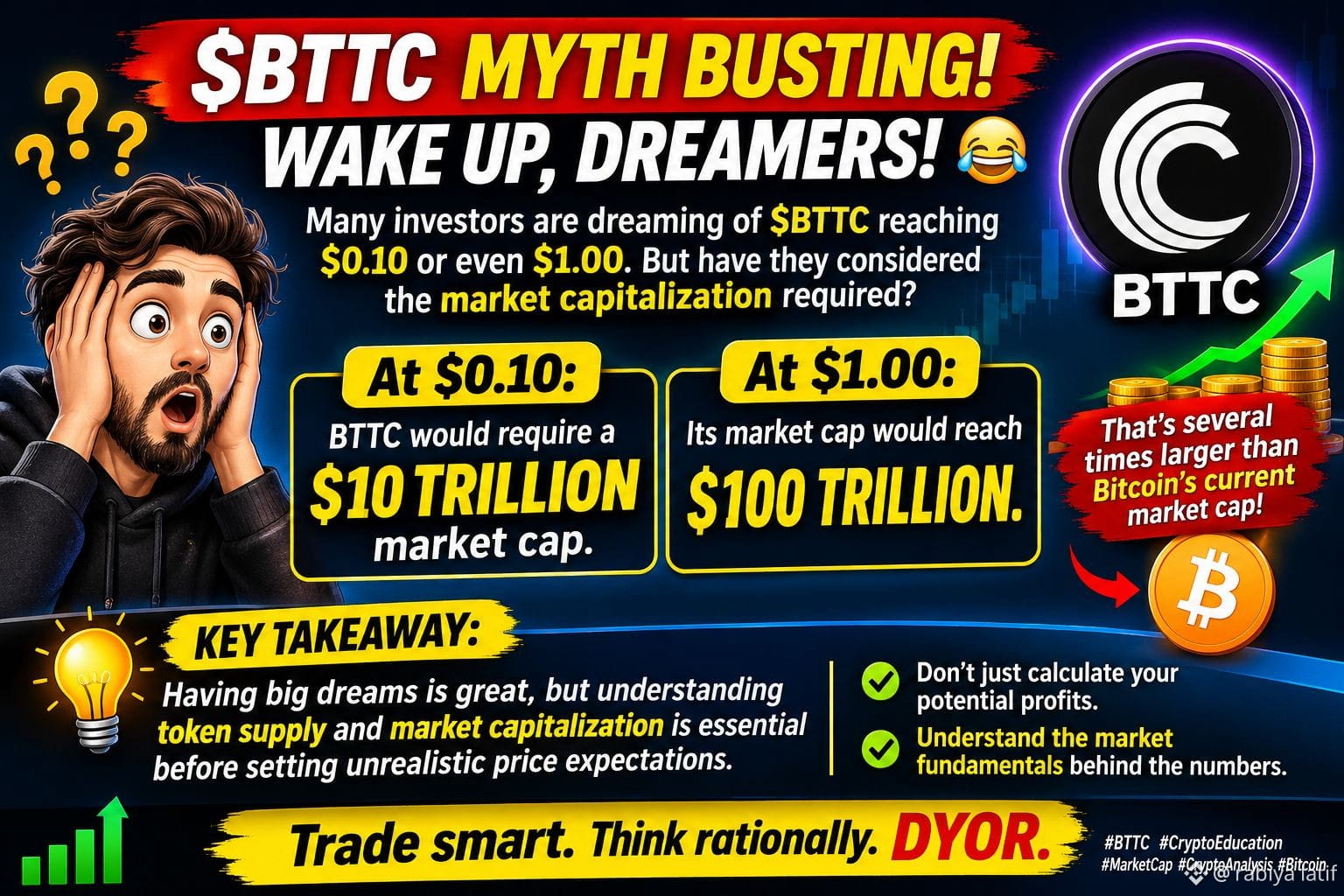
🚨 $BTTC #: UNDERSTANDING THE MARKET CAP REALITY!
Many investors are dreaming of $BTTC reaching $0.10 or even $1.00. But have they considered the market capitalization required to support those valuations?
Let's look at the numbers:
📊 At $0.10: $BTTC would require an estimated $10 trillion market cap.
📊 At $1.00: Its market cap would reach approximately $100 trillion.
🤯 These valuations would be several times larger than Bitcoin's current market capitalization.
The takeaway: Having big dreams is great, but understanding token supply and market capitalization is essential before setting unrealistic price expectations.
💡 Don't just calculate your potential profits. Understand the market fundamentals behind the numbers.
Trade smart. Think rationally. DYOR.
#BTTC #cryptoeducation #CryptoAnalysis #bitcoin
{spot}(BTTCUSDT)
🚨 $BTTC #: UNDERSTANDING THE MARKET CAP REALITY!
Many investors are dreaming of $BTTC reaching $0.10 or even $1.00. But have they considered the market capitalization required to support those valuations?
Let's look at the numbers:
📊 At $0.10: $BTTC would require an estimated $10 trillion market cap.
📊 At $1.00: Its market cap would reach approximately $100 trillion.
🤯 These valuations would be several times larger than Bitcoin's current market capitalization.
The takeaway: Having big dreams is great, but understanding token supply and market capitalization is essential before setting unrealistic price expectations.
💡 Don't just calculate your potential profits. Understand the market fundamentals behind the numbers.
Trade smart. Think rationally. DYOR.
#BTTC #cryptoeducation #CryptoAnalysis #bitcoin
3
482
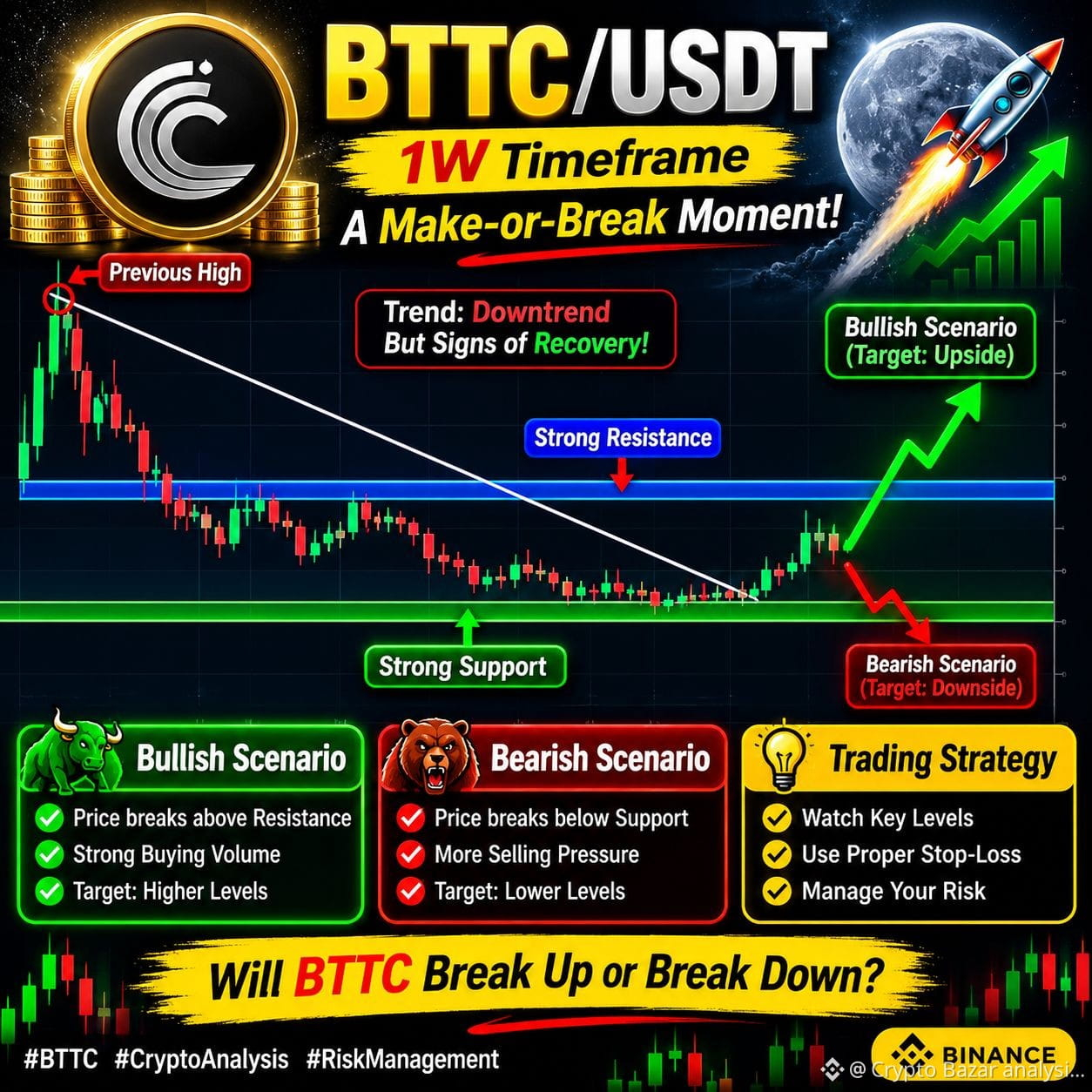
🚨 BTTC: A Major Turning Point — Recovery or Another Drop?
📊 Weekly Chart Analysis (1W)
$BTTC is showing early signs of recovery after a prolonged downtrend. However, the overall trend remains bearish, and buyers still need to prove their strength.
🟢 Bullish Scenario:
A strong breakout above resistance could attract more buyers.
Increasing buying volume may support further recovery.
🔴 Bearish Scenario:
Failure to break resistance may lead to another rejection.
A breakdown below support could increase selling pressure.
🎯 Trading Strategy: Watch key support and resistance levels. Wait for confirmation, use proper stop-loss, and manage risk carefully.
💬 Your Opinion: Is $BTTC.US preparing for a bigger recovery, or will sellers take control again?
#BTTC #CryptoAnalysis #BinanceSquare #TechnicalAnalysis #RiskManagement
🚨 BTTC: A Major Turning Point — Recovery or Another Drop?
📊 Weekly Chart Analysis (1W)
$BTTC is showing early signs of recovery after a prolonged downtrend. However, the overall trend remains bearish, and buyers still need to prove their strength.
🟢 Bullish Scenario:
A strong breakout above resistance could attract more buyers.
Increasing buying volume may support further recovery.
🔴 Bearish Scenario:
Failure to break resistance may lead to another rejection.
A breakdown below support could increase selling pressure.
🎯 Trading Strategy: Watch key support and resistance levels. Wait for confirmation, use proper stop-loss, and manage risk carefully.
💬 Your Opinion: Is $BTTC .US preparing for a bigger recovery, or will sellers take control again?
#BTTC #CryptoAnalysis #BinanceSquare #TechnicalAnalysis #RiskManagement
BTTCUS-3.39%
91
Log in to explore more content
Join global crypto users on Binance Square
⚡️ Get latest and useful information about crypto.
💬 Trusted by the world’s largest crypto exchange.
👍 Discover real insights from verified creators.
Email / Phone number
Trending Topics
1
#CanMarketsReboundAfterThanksgiving?
120,929 views
1,509 Discussing
2
#CouldSpaceX’sOrbitalDataCentersBoostAIChipDemand?
58,037 views
935 Discussing
3
#SouthKoreaProposesMandatoryDigitalAssetTransactionDisclosure
838 views
25 Discussing
4
#EvolveAtBinanceBlockchainWeek
765,794 views
9,453 Discussing
5
#KoreaFSCSeeksPowerToSuspendCryptoListings
10,948 views
192 Discussing
6
#SouthKoreaPlansToRequireTetherCircleLocalReserves
9,551 views
146 Discussing
7
#UKFCAReportedlyPlansDeFiAuthorizationRules
7,614 views
97 Discussing
8
#ZcashDevelopersUrgeZECMoveToIronwood
14,444 views
90 Discussing
9
#TetherGoldFaces$2.55BUnrealizedLoss
1,834 views
11 Discussing
10
#CorePCEBeatLiftsFedHikeOdds
260,150 views
1,740 Discussing