

LearnBits
2.9k Posts

LearnBits
Report
Block User
Bite-sized guides & daily insights on crypto and stock markets. Master the trends!
Open Trade
High-Frequency Trader
8 Years
121 Following
5.6K+ Followers
8.1K+ Liked
Posts
Portfolio
All
Quotes
Videos
Live
·
--
$AIN extremely aggressive price surge and a dramatic upward move today.
{future}(AINUSDT)
$AIN extremely aggressive price surge and a dramatic upward move today.
Long 🚀
Short 🔻
Wait and see ⚠️
23 hr(s) left

Semoga Beruntung!
From LearnBits
3
314
·
--
Asian Stocks Surge as AI Optimism Returns — But the Real Test Is Still Ahead 🚀
Asian markets rallied Tuesday as investors returned to technology shares ahead of a critical week of earnings and central bank decisions. South Korea’s Kospi jumped 3.9%, its biggest daily gain since early February, while Japan’s Nikkei climbed 1.9%.
The rebound follows renewed excitement around Anthropic’s reported IPO filing and fresh attention on how AI companies could turn rapid growth into lasting profits. Investors are now looking to Alphabet, Microsoft, and Amazon for evidence that enormous AI infrastructure budgets are translating into real demand and revenue.
But don’t mistake a strong session for an all-clear signal. Oil remains near $115 a barrel amid Middle East supply risks, while markets increasingly price in the possibility of a Federal Reserve rate hike in December. Higher energy costs could keep inflation sticky and put pressure on expensive growth stocks. ⚠️
This week’s earnings may decide whether the AI recovery has staying power. Strong cloud growth could fuel another rally; rising costs without convincing returns could bring volatility right back.
Asian Stocks Surge as AI Optimism Returns — But the Real Test Is Still Ahead 🚀
Asian markets rallied Tuesday as investors returned to technology shares ahead of a critical week of earnings and central bank decisions. South Korea’s Kospi jumped 3.9%, its biggest daily gain since early February, while Japan’s Nikkei climbed 1.9%.
The rebound follows renewed excitement around Anthropic’s reported IPO filing and fresh attention on how AI companies could turn rapid growth into lasting profits. Investors are now looking to Alphabet, Microsoft, and Amazon for evidence that enormous AI infrastructure budgets are translating into real demand and revenue.
But don’t mistake a strong session for an all-clear signal. Oil remains near $115 a barrel amid Middle East supply risks, while markets increasingly price in the possibility of a Federal Reserve rate hike in December. Higher energy costs could keep inflation sticky and put pressure on expensive growth stocks. ⚠️
This week’s earnings may decide whether the AI recovery has staying power. Strong cloud growth could fuel another rally; rising costs without convincing returns could bring volatility right back.
Asian markets rallied Tuesday as investors returned to technology shares ahead of a critical week of earnings and central bank decisions. South Korea’s Kospi jumped 3.9%, its biggest daily gain since early February, while Japan’s Nikkei climbed 1.9%.
The rebound follows renewed excitement around Anthropic’s reported IPO filing and fresh attention on how AI companies could turn rapid growth into lasting profits. Investors are now looking to Alphabet, Microsoft, and Amazon for evidence that enormous AI infrastructure budgets are translating into real demand and revenue.
But don’t mistake a strong session for an all-clear signal. Oil remains near $115 a barrel amid Middle East supply risks, while markets increasingly price in the possibility of a Federal Reserve rate hike in December. Higher energy costs could keep inflation sticky and put pressure on expensive growth stocks. ⚠️
This week’s earnings may decide whether the AI recovery has staying power. Strong cloud growth could fuel another rally; rising costs without convincing returns could bring volatility right back.
Semoga Beruntung!
From LearnBits
1
243
·
--
$CHIP said round 2. Bouncing hard into that 0.065 upper band. RSI is at 70 so the easy ride is done.
{future}(CHIPUSDT)
$CHIP said round 2. Bouncing hard into that 0.065 upper band. RSI is at 70 so the easy ride is done.
Long 🚀
Short 🛑
9 hr(s) left
Best Wishes!
From LearnBits
2
8
851
·
--
Verified
🚨 JPMorgan Is Bringing Its Digital Money to Ethereum — And That’s Bigger Than Another Crypto Partnership.
Ethereum’s biggest opportunity may not be another meme coin or DeFi boom. It could be helping the world’s largest banks move money.
JPMorgan has expanded its JPM Coin deposit token to the Ethereum network for institutional clients, according to a report covering the latest developments in tokenized finance. The move adds to the growing effort to bring traditional banking services onto blockchain infrastructure.
Here’s what makes this interesting: JPM Coin represents deposits held at JPMorgan. It isn’t a conventional stablecoin, and it isn’t designed as a retail cryptocurrency. Instead, it enables eligible institutional clients to transfer value using blockchain-based systems.
Why does Ethereum matter? Its established infrastructure and smart-contract capabilities make it a potential foundation for financial applications that need to interact with other blockchain-based assets and services.
But don’t jump straight to the conclusion that this guarantees an ETH price rally. Institutional adoption doesn’t automatically translate into greater demand for Ether. The impact depends on how the network is used, which transactions settle on-chain and whether that activity generates meaningful demand for network resources.
Still, the strategic shift is hard to ignore. Banks that once treated blockchain primarily as a technology to study are increasingly exploring how to use it in real financial operations.
The next phase of crypto adoption may be driven by banks moving deposits, not traders chasing tokens.
👀 If more major banks build on Ethereum, will ETH become a bigger institutional investment story?
🚨 JPMorgan Is Bringing Its Digital Money to Ethereum — And That’s Bigger Than Another Crypto Partnership.
Ethereum’s biggest opportunity may not be another meme coin or DeFi boom. It could be helping the world’s largest banks move money.
JPMorgan has expanded its JPM Coin deposit token to the Ethereum network for institutional clients, according to a report covering the latest developments in tokenized finance. The move adds to the growing effort to bring traditional banking services onto blockchain infrastructure.
Here’s what makes this interesting: JPM Coin represents deposits held at JPMorgan. It isn’t a conventional stablecoin, and it isn’t designed as a retail cryptocurrency. Instead, it enables eligible institutional clients to transfer value using blockchain-based systems.
Why does Ethereum matter? Its established infrastructure and smart-contract capabilities make it a potential foundation for financial applications that need to interact with other blockchain-based assets and services.
But don’t jump straight to the conclusion that this guarantees an ETH price rally. Institutional adoption doesn’t automatically translate into greater demand for Ether. The impact depends on how the network is used, which transactions settle on-chain and whether that activity generates meaningful demand for network resources.
Still, the strategic shift is hard to ignore. Banks that once treated blockchain primarily as a technology to study are increasingly exploring how to use it in real financial operations.
The next phase of crypto adoption may be driven by banks moving deposits, not traders chasing tokens.
👀 If more major banks build on Ethereum, will ETH become a bigger institutional investment story?
Ethereum’s biggest opportunity may not be another meme coin or DeFi boom. It could be helping the world’s largest banks move money.
JPMorgan has expanded its JPM Coin deposit token to the Ethereum network for institutional clients, according to a report covering the latest developments in tokenized finance. The move adds to the growing effort to bring traditional banking services onto blockchain infrastructure.
Here’s what makes this interesting: JPM Coin represents deposits held at JPMorgan. It isn’t a conventional stablecoin, and it isn’t designed as a retail cryptocurrency. Instead, it enables eligible institutional clients to transfer value using blockchain-based systems.
Why does Ethereum matter? Its established infrastructure and smart-contract capabilities make it a potential foundation for financial applications that need to interact with other blockchain-based assets and services.
But don’t jump straight to the conclusion that this guarantees an ETH price rally. Institutional adoption doesn’t automatically translate into greater demand for Ether. The impact depends on how the network is used, which transactions settle on-chain and whether that activity generates meaningful demand for network resources.
Still, the strategic shift is hard to ignore. Banks that once treated blockchain primarily as a technology to study are increasingly exploring how to use it in real financial operations.
The next phase of crypto adoption may be driven by banks moving deposits, not traders chasing tokens.
👀 If more major banks build on Ethereum, will ETH become a bigger institutional investment story?
Semoga Beruntung!
From LearnBits
3
10
711
·
--
Verified
Anthropic’s IPO Filing Just Put the AI Race Back in the Spotlight 🚀
Anthropic has reportedly filed confidentially for a U.S. IPO, adding fresh momentum to the race to turn artificial intelligence into a massive public-market opportunity. The move comes as investors grow increasingly selective about which AI companies can turn explosive demand into sustainable profits.
The timing is significant. Wall Street is preparing for earnings from Alphabet, Microsoft, and Amazon this week, with investors looking beyond headline revenue to see whether their enormous AI infrastructure investments are paying off. Meta’s recent spending increase has already raised concerns about how much capital the AI race will consume.
Meanwhile, oil prices eased on Monday after diplomatic efforts raised hopes of reducing Middle East tensions. That offered some relief to markets, although inflation risks and elevated bond yields remain major concerns for investors. 🛢️
The AI story isn’t over, but the market is demanding more proof. Anthropic’s potential listing could test investor appetite for AI businesses just as Big Tech earnings reveal whether the industry’s spending boom is translating into real returns.
📊 What will drive the next AI rally?
Anthropic’s IPO Filing Just Put the AI Race Back in the Spotlight 🚀
Anthropic has reportedly filed confidentially for a U.S. IPO, adding fresh momentum to the race to turn artificial intelligence into a massive public-market opportunity. The move comes as investors grow increasingly selective about which AI companies can turn explosive demand into sustainable profits.
The timing is significant. Wall Street is preparing for earnings from Alphabet, Microsoft, and Amazon this week, with investors looking beyond headline revenue to see whether their enormous AI infrastructure investments are paying off. Meta’s recent spending increase has already raised concerns about how much capital the AI race will consume.
Meanwhile, oil prices eased on Monday after diplomatic efforts raised hopes of reducing Middle East tensions. That offered some relief to markets, although inflation risks and elevated bond yields remain major concerns for investors. 🛢️
The AI story isn’t over, but the market is demanding more proof. Anthropic’s potential listing could test investor appetite for AI businesses just as Big Tech earnings reveal whether the industry’s spending boom is translating into real returns.
📊 What will drive the next AI rally?
Anthropic has reportedly filed confidentially for a U.S. IPO, adding fresh momentum to the race to turn artificial intelligence into a massive public-market opportunity. The move comes as investors grow increasingly selective about which AI companies can turn explosive demand into sustainable profits.
The timing is significant. Wall Street is preparing for earnings from Alphabet, Microsoft, and Amazon this week, with investors looking beyond headline revenue to see whether their enormous AI infrastructure investments are paying off. Meta’s recent spending increase has already raised concerns about how much capital the AI race will consume.
Meanwhile, oil prices eased on Monday after diplomatic efforts raised hopes of reducing Middle East tensions. That offered some relief to markets, although inflation risks and elevated bond yields remain major concerns for investors. 🛢️
The AI story isn’t over, but the market is demanding more proof. Anthropic’s potential listing could test investor appetite for AI businesses just as Big Tech earnings reveal whether the industry’s spending boom is translating into real returns.
📊 What will drive the next AI rally?
🚀 Anthropic IPO excitement
💰 Big Tech earnings
⚠️ Spending concerns deepen
6 hr(s) left
Semoga Beruntung!
From LearnBits
2
12
1.5k
·
--
The crypto market is experiencing a deep price correction and strong selling pressure across these altcoins today.
What is your next move? 👇
$BIRB : $0.07555 (-21.51%)
{future}(BIRBUSDT)
$Q : $0.059466 (-24.23%)
$ORDER : $0.04738 (-29.63%)
{future}(ORDERUSDT)
The crypto market is experiencing a deep price correction and strong selling pressure across these altcoins today.
What is your next move? 👇
$BIRB : $0.07555 (-21.51%)
$Q : $0.059466 (-24.23%)
$ORDER : $0.04738 (-29.63%)
What is your next move? 👇
$BIRB : $0.07555 (-21.51%)
$Q : $0.059466 (-24.23%)
$ORDER : $0.04738 (-29.63%)
Buy the dip 📉
52%
DCA gradually 📊
25%
Switch to other assets 🔄
4%
Secure position 🛑
19%
48 votes • Voting closed
Semoga Beruntung!
From LearnBits
3
9
4.2k
·
--
Micron Moves to Calm Taiwan Labor Tensions as AI Profits Surge 💰
Micron Technology is introducing a new global employee bonus program after mounting pressure from Taiwanese labor unions demanding a greater share of the company’s booming AI-driven profits. Announced on October 22, the plan will link quarterly bonuses to after-tax earnings after accounting for projected capital spending. Payments will be split between cash and company shares, with the stock portion vesting after one year. Reuters reported that the initiative is part of Micron’s broader effort to address employee concerns as demand for memory chips continues to surge.
The move comes after Micron reported record fiscal 2026 results, supported by growing demand for high-bandwidth memory (HBM) used in AI data centers. However, labor negotiations remain unresolved with one of its Taiwanese unions, which is seeking a larger share of global operating profits. ⚙️
For investors, the key issue is whether Micron can maintain production stability while scaling up to meet AI demand. Strong memory pricing is creating significant opportunities, but labor disputes and rising manufacturing costs could complicate execution. The coming months will test whether Micron can balance employee expectations with its aggressive expansion plans.
$MU
{future}(MUUSDT)
Micron Moves to Calm Taiwan Labor Tensions as AI Profits Surge 💰
Micron Technology is introducing a new global employee bonus program after mounting pressure from Taiwanese labor unions demanding a greater share of the company’s booming AI-driven profits. Announced on October 22, the plan will link quarterly bonuses to after-tax earnings after accounting for projected capital spending. Payments will be split between cash and company shares, with the stock portion vesting after one year. Reuters reported that the initiative is part of Micron’s broader effort to address employee concerns as demand for memory chips continues to surge.
The move comes after Micron reported record fiscal 2026 results, supported by growing demand for high-bandwidth memory (HBM) used in AI data centers. However, labor negotiations remain unresolved with one of its Taiwanese unions, which is seeking a larger share of global operating profits. ⚙️
For investors, the key issue is whether Micron can maintain production stability while scaling up to meet AI demand. Strong memory pricing is creating significant opportunities, but labor disputes and rising manufacturing costs could complicate execution. The coming months will test whether Micron can balance employee expectations with its aggressive expansion plans.
$MU
Micron Technology is introducing a new global employee bonus program after mounting pressure from Taiwanese labor unions demanding a greater share of the company’s booming AI-driven profits. Announced on October 22, the plan will link quarterly bonuses to after-tax earnings after accounting for projected capital spending. Payments will be split between cash and company shares, with the stock portion vesting after one year. Reuters reported that the initiative is part of Micron’s broader effort to address employee concerns as demand for memory chips continues to surge.
The move comes after Micron reported record fiscal 2026 results, supported by growing demand for high-bandwidth memory (HBM) used in AI data centers. However, labor negotiations remain unresolved with one of its Taiwanese unions, which is seeking a larger share of global operating profits. ⚙️
For investors, the key issue is whether Micron can maintain production stability while scaling up to meet AI demand. Strong memory pricing is creating significant opportunities, but labor disputes and rising manufacturing costs could complicate execution. The coming months will test whether Micron can balance employee expectations with its aggressive expansion plans.
$MU
Semoga Beruntung!
From LearnBits
12
1.3k
·
--
How are you positioning yourself amidst these latest market movements? Share your thoughts below!
$NEAR : $4.418 (-4.29%)
{future}(NEARUSDT)
$ORDER : $0.05388 (+54.92%)
{future}(ORDERUSDT)
$ZEC : $1,193.34 (+2.19%)
{future}(ZECUSDT)
How are you positioning yourself amidst these latest market movements? Share your thoughts below!
$NEAR : $4.418 (-4.29%)
$ORDER : $0.05388 (+54.92%)
$ZEC : $1,193.34 (+2.19%)
$NEAR : $4.418 (-4.29%)
$ORDER : $0.05388 (+54.92%)
$ZEC : $1,193.34 (+2.19%)
Buy the dip 📉
63%
Chase momentum 🚀
21%
Stay on the sidelines 🛑
16%
51 votes • Voting closed
Semoga Beruntung!
From LearnBits
14
3.6k
·
--
Hyperliquid’s $100 Million Buyback Move Meets a Growing Regulatory Challenge.
Hyperliquid is facing a test on two fronts: institutional confidence and regulatory scrutiny. On October 23, Nasdaq-listed Hyperliquid Strategies (PURR) expanded its stock repurchase authorization from $30 million to as much as $100 million, with approximately $72 million remaining available. The company also extended the program through October 31, 2027. The move signals confidence in its capital strategy, but the buyback targets PURR shares—not HYPE tokens directly.
At the same time, CME Group CEO Terry Duffy has questioned Hyperliquid’s ability to enter the U.S. market without addressing know-your-customer (KYC) requirements. Speaking on Bloomberg’s Odd Lots podcast, Duffy also raised concerns about high leverage and automatic liquidations potentially triggering cascading market disruptions. These are his regulatory concerns, not an announced enforcement action against Hyperliquid.
For $HYPE holders, the distinction matters. Hyperliquid’s growing role in onchain derivatives and the treasury company’s expanded buyback program may support confidence in the ecosystem, but neither eliminates regulatory uncertainty. The company’s ability to navigate compliance expectations while maintaining its decentralized trading model could become a defining issue for its next stage of growth.
Can Hyperliquid overcome regulatory hurdles and keep expanding, or will compliance become its biggest obstacle?
{future}(HYPEUSDT)
Hyperliquid’s $100 Million Buyback Move Meets a Growing Regulatory Challenge.
Hyperliquid is facing a test on two fronts: institutional confidence and regulatory scrutiny. On October 23, Nasdaq-listed Hyperliquid Strategies (PURR) expanded its stock repurchase authorization from $30 million to as much as $100 million, with approximately $72 million remaining available. The company also extended the program through October 31, 2027. The move signals confidence in its capital strategy, but the buyback targets PURR shares—not HYPE tokens directly.
At the same time, CME Group CEO Terry Duffy has questioned Hyperliquid’s ability to enter the U.S. market without addressing know-your-customer (KYC) requirements. Speaking on Bloomberg’s Odd Lots podcast, Duffy also raised concerns about high leverage and automatic liquidations potentially triggering cascading market disruptions. These are his regulatory concerns, not an announced enforcement action against Hyperliquid.
For $HYPE holders, the distinction matters. Hyperliquid’s growing role in onchain derivatives and the treasury company’s expanded buyback program may support confidence in the ecosystem, but neither eliminates regulatory uncertainty. The company’s ability to navigate compliance expectations while maintaining its decentralized trading model could become a defining issue for its next stage of growth.
Can Hyperliquid overcome regulatory hurdles and keep expanding, or will compliance become its biggest obstacle?
Hyperliquid is facing a test on two fronts: institutional confidence and regulatory scrutiny. On October 23, Nasdaq-listed Hyperliquid Strategies (PURR) expanded its stock repurchase authorization from $30 million to as much as $100 million, with approximately $72 million remaining available. The company also extended the program through October 31, 2027. The move signals confidence in its capital strategy, but the buyback targets PURR shares—not HYPE tokens directly.
At the same time, CME Group CEO Terry Duffy has questioned Hyperliquid’s ability to enter the U.S. market without addressing know-your-customer (KYC) requirements. Speaking on Bloomberg’s Odd Lots podcast, Duffy also raised concerns about high leverage and automatic liquidations potentially triggering cascading market disruptions. These are his regulatory concerns, not an announced enforcement action against Hyperliquid.
For $HYPE holders, the distinction matters. Hyperliquid’s growing role in onchain derivatives and the treasury company’s expanded buyback program may support confidence in the ecosystem, but neither eliminates regulatory uncertainty. The company’s ability to navigate compliance expectations while maintaining its decentralized trading model could become a defining issue for its next stage of growth.
Can Hyperliquid overcome regulatory hurdles and keep expanding, or will compliance become its biggest obstacle?
Semoga Beruntung!
From LearnBits
HYPE+2.82%
PURRUS+0.33%
9
934
·
--
#BinancePick Market sentiment is heating up for earnings season! 🔥
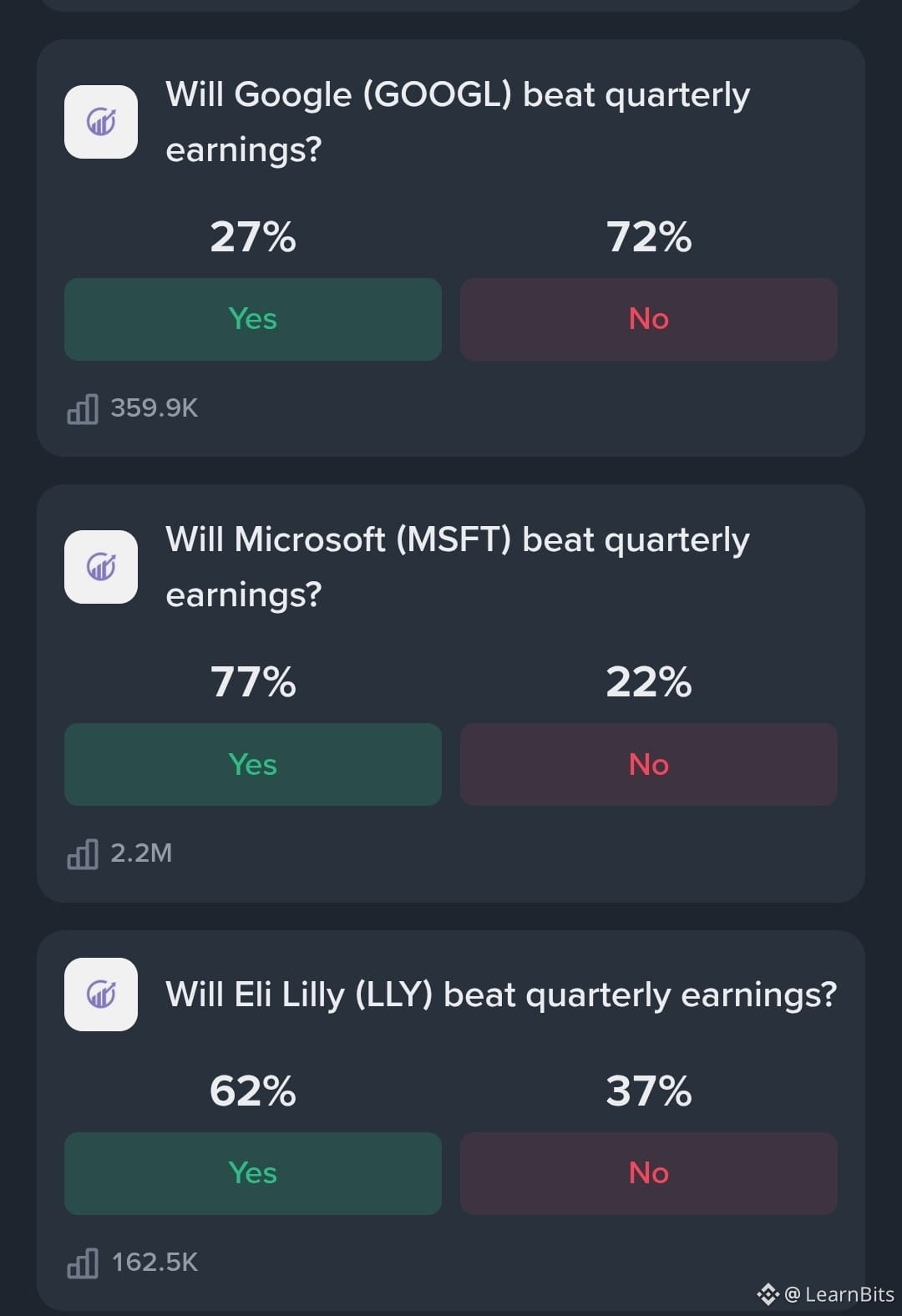
Google (GOOGL): 72% think they won't beat expectations.
Microsoft (MSFT): 77% are bullish on a beat.
Eli Lilly (LLY): 62% expect strong results.
Which side are you betting on? Drop your thoughts below! 👇
{future}(GOOGLUSDT)
{future}(MSFTUSDT)
{future}(LLYUSDT)
#BinancePick Market sentiment is heating up for earnings season! 🔥
Google (GOOGL): 72% think they won't beat expectations.
Microsoft (MSFT): 77% are bullish on a beat.
Eli Lilly (LLY): 62% expect strong results.
Which side are you betting on? Drop your thoughts below! 👇
Google (GOOGL): 72% think they won't beat expectations.
Microsoft (MSFT): 77% are bullish on a beat.
Eli Lilly (LLY): 62% expect strong results.
Which side are you betting on? Drop your thoughts below! 👇

Semoga Beruntung!
From LearnBits
7
844
·
--
Verified
Natural Gas Slips Below $3.00 as Mild Weather Forecasts Ease Winter Demand Pressure.
Natural gas futures retreated below the key $3.00 per MMBtu threshold, pressured by updated weather forecasts pointing to milder-than-average temperatures across major heating corridors heading into November. Utility providers report comfortable storage injections as domestic production remains robust, pulling prompt-month contracts lower despite the broader cross-asset volatility seen in petroleum markets.
While geopolitical risks continue to fuel dramatic swings in crude oil, the domestic gas market remains decoupled due to near-term supply abundance and weaker seasonal cooling demand. Analysts note that unless an early cold snap triggers accelerated withdrawals, pricing pressures are likely to stay subdued, offering temporary relief to energy-intensive industrials and utility consumers.
$NATGAS
{future}(NATGASUSDT)
Natural Gas Slips Below $3.00 as Mild Weather Forecasts Ease Winter Demand Pressure.
Natural gas futures retreated below the key $3.00 per MMBtu threshold, pressured by updated weather forecasts pointing to milder-than-average temperatures across major heating corridors heading into November. Utility providers report comfortable storage injections as domestic production remains robust, pulling prompt-month contracts lower despite the broader cross-asset volatility seen in petroleum markets.
While geopolitical risks continue to fuel dramatic swings in crude oil, the domestic gas market remains decoupled due to near-term supply abundance and weaker seasonal cooling demand. Analysts note that unless an early cold snap triggers accelerated withdrawals, pricing pressures are likely to stay subdued, offering temporary relief to energy-intensive industrials and utility consumers.
$NATGAS
Natural gas futures retreated below the key $3.00 per MMBtu threshold, pressured by updated weather forecasts pointing to milder-than-average temperatures across major heating corridors heading into November. Utility providers report comfortable storage injections as domestic production remains robust, pulling prompt-month contracts lower despite the broader cross-asset volatility seen in petroleum markets.
While geopolitical risks continue to fuel dramatic swings in crude oil, the domestic gas market remains decoupled due to near-term supply abundance and weaker seasonal cooling demand. Analysts note that unless an early cold snap triggers accelerated withdrawals, pricing pressures are likely to stay subdued, offering temporary relief to energy-intensive industrials and utility consumers.
$NATGAS
Semoga Beruntung!
From LearnBits
1
8
1.3k
·
--
Partly True
Copper Futures Surge to Record-Breaking Heights on Global Supply Crunch Fears.
Copper Futures Soar as Global Supply Deficits and Inventory Pressures Spark Intensive Market Buying.
Copper futures climbed sharply to hit an all-time high of $6.83 per pound, driven by escalating supply constraints, declining warehouse inventories, and tightening concentrate markets worldwide. Major mining operations have faced recurring operational disruptions, prompting traders and manufacturers to scramble for available physical material heading into the fourth quarter.
The structural supply deficit has amplified input costs across industrial sectors, raising profit margin concerns for global manufacturing and clean energy infrastructure providers. While industrial consumers grapple with heightened price volatility, market analysts emphasize that persistent deficits could sustain high valuation baselines unless major new extraction projects accelerate output.
$COPPER
{future}(COPPERUSDT)
Copper Futures Surge to Record-Breaking Heights on Global Supply Crunch Fears.
Copper Futures Soar as Global Supply Deficits and Inventory Pressures Spark Intensive Market Buying.
Copper futures climbed sharply to hit an all-time high of $6.83 per pound, driven by escalating supply constraints, declining warehouse inventories, and tightening concentrate markets worldwide. Major mining operations have faced recurring operational disruptions, prompting traders and manufacturers to scramble for available physical material heading into the fourth quarter.
The structural supply deficit has amplified input costs across industrial sectors, raising profit margin concerns for global manufacturing and clean energy infrastructure providers. While industrial consumers grapple with heightened price volatility, market analysts emphasize that persistent deficits could sustain high valuation baselines unless major new extraction projects accelerate output.
$COPPER
Copper Futures Soar as Global Supply Deficits and Inventory Pressures Spark Intensive Market Buying.
Copper futures climbed sharply to hit an all-time high of $6.83 per pound, driven by escalating supply constraints, declining warehouse inventories, and tightening concentrate markets worldwide. Major mining operations have faced recurring operational disruptions, prompting traders and manufacturers to scramble for available physical material heading into the fourth quarter.
The structural supply deficit has amplified input costs across industrial sectors, raising profit margin concerns for global manufacturing and clean energy infrastructure providers. While industrial consumers grapple with heightened price volatility, market analysts emphasize that persistent deficits could sustain high valuation baselines unless major new extraction projects accelerate output.
$COPPER
650
·
--
Verified
Energy Giants Rally on Brent Crude Spike as Wall Street Absorbs Broad Market Pullback.
Chevron Corporation (NYSE: CVX) and ConocoPhillips (NYSE: COP) emerged as rare bright spots on Wall Street, gaining 2.9% and 3.6% respectively, as international benchmark Brent crude settled up 3.1% at $116.72 per barrel. The jump pushed oil to its highest level since June 2022, driven by persistent supply concerns and fears of escalating geopolitical conflict in the Middle East.
While upstream producers capitalized on surging energy values, the broader market faced mounting pressure. The Dow Jones Industrial Average dropped 652.82 points to close at 52,215.16, and the S&P 500 slid 39.75 points to 7,623.68, weighed down by sticky inflation worries and steep valuations across the technology sector.
With energy costs escalating rapidly from under $97 earlier in the month, investors are recalibrating portfolios ahead of key central bank decisions and upcoming mega-cap tech earnings, heightening cross-asset volatility.
{future}(CVXUSDT)
{stock_us}(COP.US)
{future}(BZUSDT)
Energy Giants Rally on Brent Crude Spike as Wall Street Absorbs Broad Market Pullback.
Chevron Corporation (NYSE: CVX) and ConocoPhillips (NYSE: COP) emerged as rare bright spots on Wall Street, gaining 2.9% and 3.6% respectively, as international benchmark Brent crude settled up 3.1% at $116.72 per barrel. The jump pushed oil to its highest level since June 2022, driven by persistent supply concerns and fears of escalating geopolitical conflict in the Middle East.
While upstream producers capitalized on surging energy values, the broader market faced mounting pressure. The Dow Jones Industrial Average dropped 652.82 points to close at 52,215.16, and the S&P 500 slid 39.75 points to 7,623.68, weighed down by sticky inflation worries and steep valuations across the technology sector.
With energy costs escalating rapidly from under $97 earlier in the month, investors are recalibrating portfolios ahead of key central bank decisions and upcoming mega-cap tech earnings, heightening cross-asset volatility.
Chevron Corporation (NYSE: CVX) and ConocoPhillips (NYSE: COP) emerged as rare bright spots on Wall Street, gaining 2.9% and 3.6% respectively, as international benchmark Brent crude settled up 3.1% at $116.72 per barrel. The jump pushed oil to its highest level since June 2022, driven by persistent supply concerns and fears of escalating geopolitical conflict in the Middle East.
While upstream producers capitalized on surging energy values, the broader market faced mounting pressure. The Dow Jones Industrial Average dropped 652.82 points to close at 52,215.16, and the S&P 500 slid 39.75 points to 7,623.68, weighed down by sticky inflation worries and steep valuations across the technology sector.
With energy costs escalating rapidly from under $97 earlier in the month, investors are recalibrating portfolios ahead of key central bank decisions and upcoming mega-cap tech earnings, heightening cross-asset volatility.
797
·
--
Everyone's a genius during the $ERA pump. Late buyers are gonna get cooked if this rejects 0.098.
{future}(ERAUSDT)
Everyone's a genius during the $ERA pump. Late buyers are gonna get cooked if this rejects 0.098.
1k
·
--
Partly True
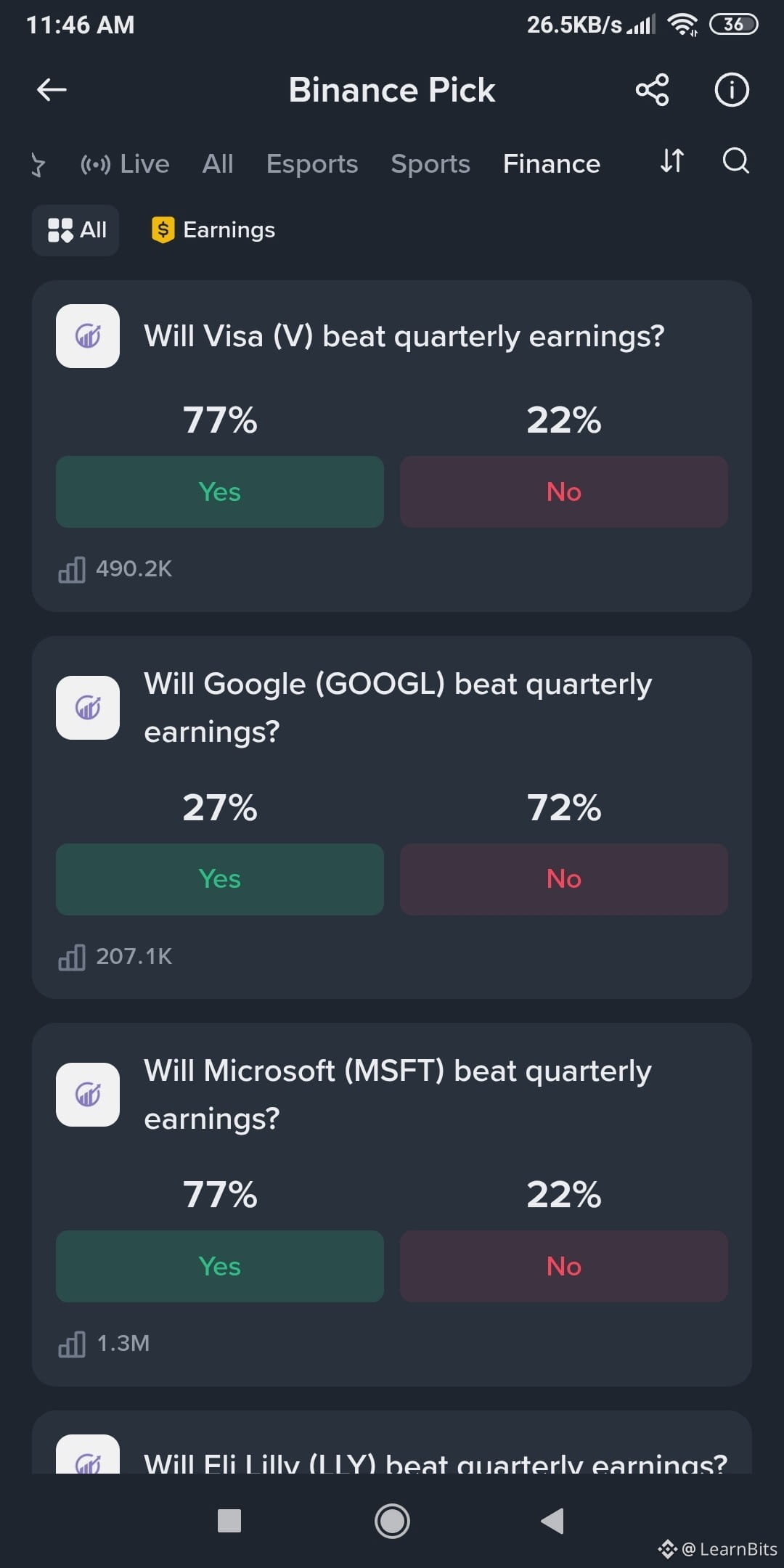
#BinancePick Checking out the latest finance predictions on Binance Pick, it's interesting to see market sentiment leaning strong with 77% expecting Visa and Microsoft to beat their quarterly earnings, while Google faces a more skeptical outlook with 72% predicting "No". It’s a great way to gauge community insights on major tech and financial giants this earnings season!
$GOOGL
{future}(GOOGLUSDT)
$MSFT
{future}(MSFTUSDT)
#BinancePick Checking out the latest finance predictions on Binance Pick, it's interesting to see market sentiment leaning strong with 77% expecting Visa and Microsoft to beat their quarterly earnings, while Google faces a more skeptical outlook with 72% predicting "No". It’s a great way to gauge community insights on major tech and financial giants this earnings season!
$GOOGL
$MSFT
$GOOGL
$MSFT

Best Wishes!
From LearnBits
1
6
946
·
--
🚨 JPMorgan Says Crypto’s Regulatory Breakthrough May Not Be Enough.
Crypto finally has regulators opening more doors for institutional money. But according to JPMorgan, there’s still one major problem: the rules could change again.
In a report highlighted on October 22, JPMorgan analysts said recent moves by U.S. regulators are helping offset the setback from the stalled CLARITY Act, the proposed legislation designed to establish clearer rules for the crypto market.
The SEC, CFTC and Office of the Comptroller of the Currency have been taking steps that could make it easier for traditional financial institutions to enter digital assets. That includes work on tokenized securities, regulated crypto trading and federal oversight for digital-asset businesses.
But JPMorgan’s warning is important: regulatory guidance is not the same as a law passed by Congress.
Agency policies can be reversed by future administrations, leaving businesses exposed to fresh uncertainty over which rules will apply. JPMorgan believes comprehensive market-structure legislation is unlikely to pass this year and could return to the agenda in 2027.
For crypto investors, that creates a complicated setup. Institutional adoption may continue in the short term, but lasting confidence depends on whether companies can build products without worrying that the legal framework will suddenly shift.
Bitcoin may be less exposed to some classification disputes than many other digital assets. Platforms and tokens tied to trading, decentralized finance and tokenization could face more uncertainty as regulators draw the boundaries.
The next phase of crypto adoption may depend less on promises and more on whether Washington can deliver durable rules.
Can institutional money keep flowing into crypto without clear legislation from Congress?
🚨 JPMorgan Says Crypto’s Regulatory Breakthrough May Not Be Enough.
Crypto finally has regulators opening more doors for institutional money. But according to JPMorgan, there’s still one major problem: the rules could change again.
In a report highlighted on October 22, JPMorgan analysts said recent moves by U.S. regulators are helping offset the setback from the stalled CLARITY Act, the proposed legislation designed to establish clearer rules for the crypto market.
The SEC, CFTC and Office of the Comptroller of the Currency have been taking steps that could make it easier for traditional financial institutions to enter digital assets. That includes work on tokenized securities, regulated crypto trading and federal oversight for digital-asset businesses.
But JPMorgan’s warning is important: regulatory guidance is not the same as a law passed by Congress.
Agency policies can be reversed by future administrations, leaving businesses exposed to fresh uncertainty over which rules will apply. JPMorgan believes comprehensive market-structure legislation is unlikely to pass this year and could return to the agenda in 2027.
For crypto investors, that creates a complicated setup. Institutional adoption may continue in the short term, but lasting confidence depends on whether companies can build products without worrying that the legal framework will suddenly shift.
Bitcoin may be less exposed to some classification disputes than many other digital assets. Platforms and tokens tied to trading, decentralized finance and tokenization could face more uncertainty as regulators draw the boundaries.
The next phase of crypto adoption may depend less on promises and more on whether Washington can deliver durable rules.
Can institutional money keep flowing into crypto without clear legislation from Congress?
Crypto finally has regulators opening more doors for institutional money. But according to JPMorgan, there’s still one major problem: the rules could change again.
In a report highlighted on October 22, JPMorgan analysts said recent moves by U.S. regulators are helping offset the setback from the stalled CLARITY Act, the proposed legislation designed to establish clearer rules for the crypto market.
The SEC, CFTC and Office of the Comptroller of the Currency have been taking steps that could make it easier for traditional financial institutions to enter digital assets. That includes work on tokenized securities, regulated crypto trading and federal oversight for digital-asset businesses.
But JPMorgan’s warning is important: regulatory guidance is not the same as a law passed by Congress.
Agency policies can be reversed by future administrations, leaving businesses exposed to fresh uncertainty over which rules will apply. JPMorgan believes comprehensive market-structure legislation is unlikely to pass this year and could return to the agenda in 2027.
For crypto investors, that creates a complicated setup. Institutional adoption may continue in the short term, but lasting confidence depends on whether companies can build products without worrying that the legal framework will suddenly shift.
Bitcoin may be less exposed to some classification disputes than many other digital assets. Platforms and tokens tied to trading, decentralized finance and tokenization could face more uncertainty as regulators draw the boundaries.
The next phase of crypto adoption may depend less on promises and more on whether Washington can deliver durable rules.
Can institutional money keep flowing into crypto without clear legislation from Congress?
2
559
·
--
$IRYS I'm not trying to be someone's exit liquidity today.
{future}(IRYSUSDT)
$IRYS I'm not trying to be someone's exit liquidity today.
Best Wishes!
From LearnBits
1
11
1.5k
·
--
🚨 Asia Is Building a New Payment Rail — And Crypto Is Inside the Room.
Cross-border payments could be entering a major shift, and some of the biggest names in crypto and traditional finance are now working alongside central banks.
On October 23, Singapore’s Monetary Authority confirmed that Malaysia’s central bank and the Bank of Thailand had joined its BLOOM initiative as policymaker members. The goal? Make digital money work across borders, banks and payment networks. 🌏
The participant list is worth watching: Ripple, Visa, Mastercard, Circle, Coinbase and JPMorgan are all involved, alongside other financial institutions and the World Bank Group.
But this isn’t simply a plan to launch another stablecoin.
BLOOM is exploring how regulated stablecoins and tokenized bank deposits can be accepted, exchanged and settled across different financial systems. It also focuses on interoperability, identity checks and sanctions screening.
That matters because international payments still involve multiple institutions, networks and compliance requirements. Making these systems work together could reduce implementation costs and help financial firms bring new payment services to market faster.
For crypto, the opportunity goes beyond short-term token speculation. If digital assets become part of the infrastructure moving real commercial payments, blockchain adoption could grow through actual financial activity rather than hype alone.
The big question is who captures the value. A growing digital-payment network doesn’t automatically guarantee higher token prices, especially when multiple technologies and institutions are involved.
👀 Will Asia become the testing ground for crypto-powered global payments?
🚨 Asia Is Building a New Payment Rail — And Crypto Is Inside the Room.
Cross-border payments could be entering a major shift, and some of the biggest names in crypto and traditional finance are now working alongside central banks.
On October 23, Singapore’s Monetary Authority confirmed that Malaysia’s central bank and the Bank of Thailand had joined its BLOOM initiative as policymaker members. The goal? Make digital money work across borders, banks and payment networks. 🌏
The participant list is worth watching: Ripple, Visa, Mastercard, Circle, Coinbase and JPMorgan are all involved, alongside other financial institutions and the World Bank Group.
But this isn’t simply a plan to launch another stablecoin.
BLOOM is exploring how regulated stablecoins and tokenized bank deposits can be accepted, exchanged and settled across different financial systems. It also focuses on interoperability, identity checks and sanctions screening.
That matters because international payments still involve multiple institutions, networks and compliance requirements. Making these systems work together could reduce implementation costs and help financial firms bring new payment services to market faster.
For crypto, the opportunity goes beyond short-term token speculation. If digital assets become part of the infrastructure moving real commercial payments, blockchain adoption could grow through actual financial activity rather than hype alone.
The big question is who captures the value. A growing digital-payment network doesn’t automatically guarantee higher token prices, especially when multiple technologies and institutions are involved.
👀 Will Asia become the testing ground for crypto-powered global payments?
Cross-border payments could be entering a major shift, and some of the biggest names in crypto and traditional finance are now working alongside central banks.
On October 23, Singapore’s Monetary Authority confirmed that Malaysia’s central bank and the Bank of Thailand had joined its BLOOM initiative as policymaker members. The goal? Make digital money work across borders, banks and payment networks. 🌏
The participant list is worth watching: Ripple, Visa, Mastercard, Circle, Coinbase and JPMorgan are all involved, alongside other financial institutions and the World Bank Group.
But this isn’t simply a plan to launch another stablecoin.
BLOOM is exploring how regulated stablecoins and tokenized bank deposits can be accepted, exchanged and settled across different financial systems. It also focuses on interoperability, identity checks and sanctions screening.
That matters because international payments still involve multiple institutions, networks and compliance requirements. Making these systems work together could reduce implementation costs and help financial firms bring new payment services to market faster.
For crypto, the opportunity goes beyond short-term token speculation. If digital assets become part of the infrastructure moving real commercial payments, blockchain adoption could grow through actual financial activity rather than hype alone.
The big question is who captures the value. A growing digital-payment network doesn’t automatically guarantee higher token prices, especially when multiple technologies and institutions are involved.
👀 Will Asia become the testing ground for crypto-powered global payments?
Best Wishes!
From LearnBits
2
8
946
·
--
Verified
AI’s Next Big Test: Can Big Tech Prove the Spending Is Worth It? 💰
Wall Street is heading into a make-or-break week as Alphabet, Microsoft, and Amazon prepare to report earnings. After a brutal tech selloff, investors want proof that the AI boom can deliver real profits — not just bigger spending budgets.
The pressure is building. Major technology companies are expected to spend around $800 billion on AI infrastructure this year, including data centers, advanced chips, and computing capacity. That massive investment has powered the market rally, but it’s also making investors nervous about future returns.
The timing is critical. The Nasdaq just suffered its steepest daily drop since June, while oil surged above $114 a barrel amid Middle East tensions. Higher energy costs could fuel inflation and complicate the outlook for interest rates, adding another challenge for expensive growth stocks. ⚠️
Next week’s earnings could separate the AI winners from the companies struggling to justify their valuations. Strong cloud growth and credible returns on AI spending could revive the rally. Vague promises and rising costs? That could trigger another wave of selling.
AI’s Next Big Test: Can Big Tech Prove the Spending Is Worth It? 💰
Wall Street is heading into a make-or-break week as Alphabet, Microsoft, and Amazon prepare to report earnings. After a brutal tech selloff, investors want proof that the AI boom can deliver real profits — not just bigger spending budgets.
The pressure is building. Major technology companies are expected to spend around $800 billion on AI infrastructure this year, including data centers, advanced chips, and computing capacity. That massive investment has powered the market rally, but it’s also making investors nervous about future returns.
The timing is critical. The Nasdaq just suffered its steepest daily drop since June, while oil surged above $114 a barrel amid Middle East tensions. Higher energy costs could fuel inflation and complicate the outlook for interest rates, adding another challenge for expensive growth stocks. ⚠️
Next week’s earnings could separate the AI winners from the companies struggling to justify their valuations. Strong cloud growth and credible returns on AI spending could revive the rally. Vague promises and rising costs? That could trigger another wave of selling.
Wall Street is heading into a make-or-break week as Alphabet, Microsoft, and Amazon prepare to report earnings. After a brutal tech selloff, investors want proof that the AI boom can deliver real profits — not just bigger spending budgets.
The pressure is building. Major technology companies are expected to spend around $800 billion on AI infrastructure this year, including data centers, advanced chips, and computing capacity. That massive investment has powered the market rally, but it’s also making investors nervous about future returns.
The timing is critical. The Nasdaq just suffered its steepest daily drop since June, while oil surged above $114 a barrel amid Middle East tensions. Higher energy costs could fuel inflation and complicate the outlook for interest rates, adding another challenge for expensive growth stocks. ⚠️
Next week’s earnings could separate the AI winners from the companies struggling to justify their valuations. Strong cloud growth and credible returns on AI spending could revive the rally. Vague promises and rising costs? That could trigger another wave of selling.
Best Wishes!
From LearnBits
7
764
·
--
How do you view the massive surge on this asset?
$IRYS : $0.04354 (+124.43%)
{future}(IRYSUSDT)
This asset is recording an extremely aggressive price increase in the market today. 👇
How do you view the massive surge on this asset?
$IRYS : $0.04354 (+124.43%)
This asset is recording an extremely aggressive price increase in the market today. 👇
$IRYS : $0.04354 (+124.43%)
This asset is recording an extremely aggressive price increase in the market today. 👇
Chase momentum 🚀
45%
Take profit 💰
23%
Wait for correction 📉
32%
112 votes • Voting closed
Best Wishes!
From LearnBits
13
4.7k
Log in to explore more content
Join global crypto users on Binance Square
⚡️ Get latest and useful information about crypto.
💬 Trusted by the world’s largest crypto exchange.
👍 Discover real insights from verified creators.
Email / Phone number
Trending Topics
StrategySkipsBitcoinPurchasesSpends$205MOnSTRCBuybacks
1,333 views
44 Discussing
Strategy Skips Bitcoin Buying and Spends $205M on STRC Buybacks : What Changed? 👀
Gourav-S
·1 Likes
·251 views
BitmineAdds10452ETH
14,325 views
329 Discussing
SouthKoreaConsidersEducationTaxOnCryptoExchanges
11,437 views
282 Discussing