

#cftcadvancesvoluntaryregcamframework
cftcadvancesvoluntaryregcamframework
Hot
Latest

❓ Spot Trading vs Leveraged Products: Navigating the Regulatory Evolution
The CFTC's proposed Reg CAM framework brings a clear distinction to how different trading products are structured. Spot traders purchasing assets like $BTC, $ETH, and SOL outright continue to benefit from direct ownership and fast execution without complex margin conditions attached. On the other hand, derivative and leverage traders gain a unified federal standard that replaces state-level fragmentation. Both market segments benefit from an overall increase in venue reliability, security, and market transparency. When managing your spot portfolio, which factor matters most to you?
Option A: Direct ownership via spot trading in $BTC and$ETH with maximum asset control
Option B: Structured access to leveraged products under clear federal rules
Option C: Long-term spot accumulation of tokenized real-world assets (RWAs) like $LINK
Cast your vote or share your perspective in the comments below! $BTC$ETH $SOL$LINK
#cftcadvancesvoluntaryregcamframework
❓ Spot Trading vs Leveraged Products: Navigating the Regulatory Evolution
The CFTC's proposed Reg CAM framework brings a clear distinction to how different trading products are structured. Spot traders purchasing assets like $BTC , $ETH , and SOL outright continue to benefit from direct ownership and fast execution without complex margin conditions attached. On the other hand, derivative and leverage traders gain a unified federal standard that replaces state-level fragmentation. Both market segments benefit from an overall increase in venue reliability, security, and market transparency. When managing your spot portfolio, which factor matters most to you?
Option A: Direct ownership via spot trading in $BTC and$ETH with maximum asset control
Option B: Structured access to leveraged products under clear federal rules
Option C: Long-term spot accumulation of tokenized real-world assets (RWAs) like $LINK
Cast your vote or share your perspective in the comments below! $BTC $ETH $SOL$LINK
#cftcadvancesvoluntaryregcamframework
🌿 Real-World Assets, Tokenization, and CFTC Oversight Trends
Beyond leverage and spot market mechanics, regulatory updates like the CFTC’s voluntary Reg CAM framework pave the way for real-world asset (RWA) expansion. As institutional interest grows around tokenized commodities, carbon credits, and real-world assets, clear compliance frameworks provide the trust required for large-scale adoption. High-quality spot markets for $LINK, $AVA, and$BNB act as the primary liquidity engines for tokenized assets, enabling efficient pricing, settlement, and transparent custody. The integration of federal standards helps clear technical and legal ambiguities surrounding token delivery and key management. A transparent ecosystem creates broader opportunity for retail and institutional spot traders alike. Are tokenized RWAs a significant part of your long-term spot portfolio? $LINK$AVAX $BNB$BTC
#cftcadvancesvoluntaryregcamframework
🌿 Real-World Assets, Tokenization, and CFTC Oversight Trends
Beyond leverage and spot market mechanics, regulatory updates like the CFTC’s voluntary Reg CAM framework pave the way for real-world asset (RWA) expansion. As institutional interest grows around tokenized commodities, carbon credits, and real-world assets, clear compliance frameworks provide the trust required for large-scale adoption. High-quality spot markets for $LINK, $AVA, and$BNB act as the primary liquidity engines for tokenized assets, enabling efficient pricing, settlement, and transparent custody. The integration of federal standards helps clear technical and legal ambiguities surrounding token delivery and key management. A transparent ecosystem creates broader opportunity for retail and institutional spot traders alike. Are tokenized RWAs a significant part of your long-term spot portfolio? $LINK$AVAX $BNB $BTC
#cftcadvancesvoluntaryregcamframework
🌐 Market Integrity and the Impact of Voluntary Federal Oversight
The advancement of the CFTC's Reg CAM framework represents a notable shift toward structured market oversight in digital assets. By offering an optional federal licensing route, the framework aims to prevent market manipulation, clarify asset custody requirements, and standardize reporting. Unleveraged spot trading markets for major assets like $BTC, $ETH, and$XRP benefit significantly from this ecosystem-wide transparency, as institutional participation builds deeper liquidity across major trading pairs. At the same time, traders seeking margin products gain added security through defined regulatory boundaries. Regulatory maturity serves as a catalyst for sustainable growth rather than a bottleneck for market participants. How do you adjust your spot market strategy when major regulatory announcements occur? $BTC$ETH $XRP$BNB
#cftcadvancesvoluntaryregcamframework
🌐 Market Integrity and the Impact of Voluntary Federal Oversight
The advancement of the CFTC's Reg CAM framework represents a notable shift toward structured market oversight in digital assets. By offering an optional federal licensing route, the framework aims to prevent market manipulation, clarify asset custody requirements, and standardize reporting. Unleveraged spot trading markets for major assets like $BTC, $ETH , and$XRP benefit significantly from this ecosystem-wide transparency, as institutional participation builds deeper liquidity across major trading pairs. At the same time, traders seeking margin products gain added security through defined regulatory boundaries. Regulatory maturity serves as a catalyst for sustainable growth rather than a bottleneck for market participants. How do you adjust your spot market strategy when major regulatory announcements occur? $BTC$ETH $XRP $BNB
#cftcadvancesvoluntaryregcamframework
1
🏛️ What Does the CFTC Reg CAM Voluntary Framework Mean for Crypto?
The Commodity Futures Trading Commission (CFTC) has advanced its voluntary regulatory framework (Regulation CAM), establishing a federal pathway for digital asset platforms. This voluntary framework is designed primarily for venues providing margin, financing, or derivatives, offering unified federal oversight instead of a complex web of state-by-state licenses. Meanwhile, fully paid spot trading without leverage remains distinguished under this proposal, allowing pure spot market execution for $BTC, $ETH, and$SOL to stay streamlined and accessible while maintaining actual delivery standards. Clear rules of the road help bridge traditional finance with Web3, boosting long-term market confidence across both derivatives and spot trading ecosystems. How do you see regulatory clarity impacting your spot trading preferences? $BTC$ETH $SOL$BNB
#cftcadvancesvoluntaryregcamframework
🏛️ What Does the CFTC Reg CAM Voluntary Framework Mean for Crypto?
The Commodity Futures Trading Commission (CFTC) has advanced its voluntary regulatory framework (Regulation CAM), establishing a federal pathway for digital asset platforms. This voluntary framework is designed primarily for venues providing margin, financing, or derivatives, offering unified federal oversight instead of a complex web of state-by-state licenses. Meanwhile, fully paid spot trading without leverage remains distinguished under this proposal, allowing pure spot market execution for $BTC, $ETH , and$SOL to stay streamlined and accessible while maintaining actual delivery standards. Clear rules of the road help bridge traditional finance with Web3, boosting long-term market confidence across both derivatives and spot trading ecosystems. How do you see regulatory clarity impacting your spot trading preferences? $BTC$ETH $SOL $BNB
#cftcadvancesvoluntaryregcamframework

·
--
#CFTCAdvancesVoluntaryRegCAMFramework #CFTCAdvancesVoluntaryRegCAMFramework is trending because the U.S. CFTC is moving forward with Regulation CAM—a proposed, voluntary federal oversight route for certain crypto trading platforms.
What it is
Reg CAM means Crypto Asset Markets.
It would let eligible platforms opt into a unified CFTC-led federal framework rather than navigate a patchwork of state-by-state money-transmitter rules.
The focus is mainly on retail crypto transactions involving leverage, margin, or financing.
Ordinary fully paid spot trading is generally outside the proposal’s main scope.
Why it matters
It signals a shift toward rulemaking and clearer operating standards for parts of the U.S. crypto market.
A single federal pathway could potentially simplify compliance for platforms that choose to participate.
The framework is still only a proposal and is in a public-comment stage; requirements, participation, and timing are not final.
What to watch
The final scope of which products and platforms are covered.
Customer-protection, market-surveillance, custody, and disclosure requirements.
Industry feedback and whether platforms see the voluntary federal route as practical.
The CFTC formally opened the rulemaking process on October 5, 2026, seeking public comment on Regulation CTX and Regulation CAM. (cftc.gov)
19

🚨 CFTC, CARBON CREDITS & RWA: WHAT DOES IT MEAN FOR WEB3? 🌱
The connection between traditional finance, environmental markets, and blockchain is becoming an interesting narrative for crypto investors. But there’s an important regulatory detail to understand. 👀
📌 What Actually Happened?
In September 2024, the U.S. Commodity Futures Trading Commission (CFTC) approved guidance for derivatives linked to voluntary carbon credits. The goal was to help improve market transparency, pricing, and integrity.
However, in September 2025, the CFTC withdrew that specific guidance, stating that existing regulations already covered these contracts. So, this should not be described as a newly advanced framework.
📊 Why Does This Matter for Crypto?
🌿 1. Carbon Credits & Tokenization
Blockchain could help improve the traceability of carbon credits, making it easier to track their ownership and retirement. However, tokenization alone does not guarantee that a carbon credit is legitimate.
🏦 2. The RWA Opportunity
Real-World Assets (RWA) aim to connect traditional assets and markets with blockchain infrastructure. Environmental assets could become part of this wider conversation as the market develops.
🔍 3. Transparency Is Key
Reliable verification, accurate reporting, and protection against double counting are essential. Without these safeguards, digital carbon markets may struggle to build institutional trust.
💡 My Take
The long-term opportunity is not simply putting carbon credits on-chain. It is building a system where environmental assets can be verified, tracked, and traded with greater confidence.
The RWA and ReFi narratives are worth watching, but regulatory developments do not automatically translate into token price gains or guaranteed adoption.
🌱 Can blockchain make carbon markets more transparent and trustworthy?
Share your thoughts below! 👇
#CFTCAdvancesVoluntaryRegCAMFramework #RWA #Web3 #ReFi #CryptoNews
{alpha}(560x9c8b5ca345247396bdfac0395638ca9045c6586e)
🚨 CFTC, CARBON CREDITS & RWA: WHAT DOES IT MEAN FOR WEB3? 🌱
The connection between traditional finance, environmental markets, and blockchain is becoming an interesting narrative for crypto investors. But there’s an important regulatory detail to understand. 👀
📌 What Actually Happened?
In September 2024, the U.S. Commodity Futures Trading Commission (CFTC) approved guidance for derivatives linked to voluntary carbon credits. The goal was to help improve market transparency, pricing, and integrity.
However, in September 2025, the CFTC withdrew that specific guidance, stating that existing regulations already covered these contracts. So, this should not be described as a newly advanced framework.
📊 Why Does This Matter for Crypto?
🌿 1. Carbon Credits & Tokenization
Blockchain could help improve the traceability of carbon credits, making it easier to track their ownership and retirement. However, tokenization alone does not guarantee that a carbon credit is legitimate.
🏦 2. The RWA Opportunity
Real-World Assets (RWA) aim to connect traditional assets and markets with blockchain infrastructure. Environmental assets could become part of this wider conversation as the market develops.
🔍 3. Transparency Is Key
Reliable verification, accurate reporting, and protection against double counting are essential. Without these safeguards, digital carbon markets may struggle to build institutional trust.
💡 My Take
The long-term opportunity is not simply putting carbon credits on-chain. It is building a system where environmental assets can be verified, tracked, and traded with greater confidence.
The RWA and ReFi narratives are worth watching, but regulatory developments do not automatically translate into token price gains or guaranteed adoption.
🌱 Can blockchain make carbon markets more transparent and trustworthy?
Share your thoughts below! 👇
#CFTCAdvancesVoluntaryRegCAMFramework #RWA #Web3 #ReFi #CryptoNews
1
58
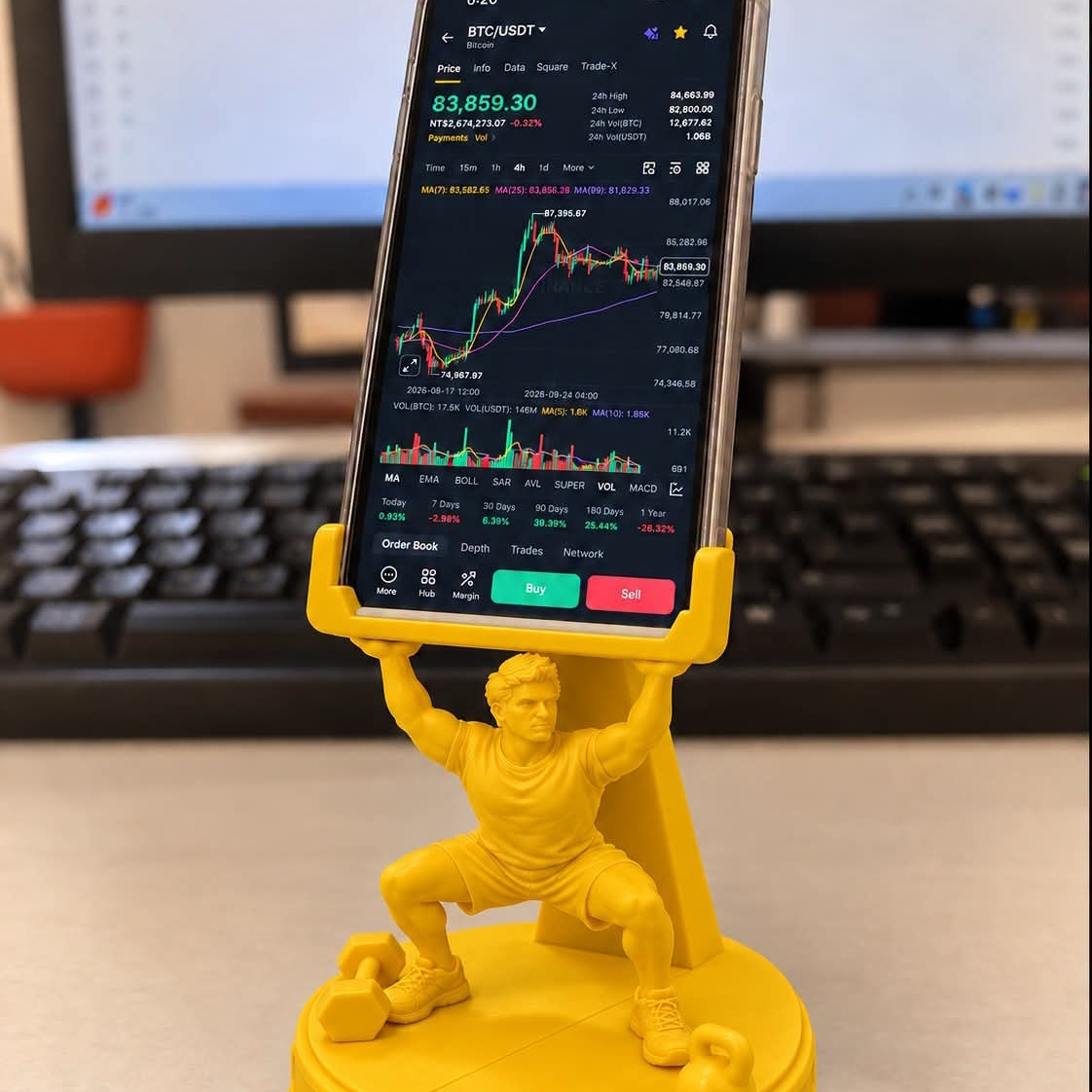
#CFTCAdvancesVoluntaryRegCAMFramework
🚨 The U.S. CFTC is advancing its Reg CAM framework, offering crypto exchanges a voluntary path toward federal oversight. 🇺🇸
🔹 Targets leveraged, margin, and financed retail trading
🔹 Spot trading without leverage is excluded
🔹 Public comments are open
🔹 Industry reactions remain mixed
📊 What it could mean:
Exchanges offering leveraged products may face greater regulatory scrutiny, potentially affecting trading activity and liquidity across crypto markets.
👀 Watchlist: $BTC $ETH $SOL
Regulatory clarity could reshape the crypto trading landscape, but the impact remains uncertain.
Is voluntary federal oversight bullish for long-term adoption or will it limit leverage traders?
#USDC #CFTC #Cryptonews #BinanceSquare
32
📊 How Spot Trading Fits into the New CFTC Reg CAM Guidelines
As discussions around the CFTC's proposed Reg CAM framework advance, understanding the practical impact on daily market activity is crucial. Under the proposed structure, standard spot trading—where users purchase digital assets directly without leverage or financing—operates independently from mandatory federal leverage registration. Direct spot asset purchases in $BTC, $ETH, and$BNB provide traders with immediate asset ownership without the compliance overhead tied to margin products. Conversely, platforms offering leveraged products can voluntarily register under federal supervision to offer standardized retail protection. Standardizing regulatory rules strengthens overall market integrity and liquidity across both spot and derivative channels. What is your primary focus in today's market: direct spot accumulation or leveraged strategies? $BTC$ETH $BNB$SOL
#cftcadvancesvoluntaryregcamframework
📊 How Spot Trading Fits into the New CFTC Reg CAM Guidelines
As discussions around the CFTC's proposed Reg CAM framework advance, understanding the practical impact on daily market activity is crucial. Under the proposed structure, standard spot trading—where users purchase digital assets directly without leverage or financing—operates independently from mandatory federal leverage registration. Direct spot asset purchases in $BTC, $ETH , and$BNB provide traders with immediate asset ownership without the compliance overhead tied to margin products. Conversely, platforms offering leveraged products can voluntarily register under federal supervision to offer standardized retail protection. Standardizing regulatory rules strengthens overall market integrity and liquidity across both spot and derivative channels. What is your primary focus in today's market: direct spot accumulation or leveraged strategies? $BTC$ETH $BNB $SOL
#cftcadvancesvoluntaryregcamframework
2

Article
CFTCAdvancesVoluntaryRegCAMFramework#CFTCAdvancesVoluntaryRegCAMFramework 🚨 US REGULATORS ARE MAKING THEIR NEXT MOVE IN CRYPTO!
The CFTC is advancing its Reg CAM framework, exploring a voluntary federal regulatory path for crypto trading platforms.
🔥 The goal?
✅ Clearer rules for crypto exchanges
✅ Stronger investor protection
✅ Federal oversight of leveraged and margined crypto trading
✅ A more structured US crypto market
But here's the key: this is still a proposed regulatory framework, not a finalized law.
If implemented, it could reshape how crypto platforms serve US traders.
👀 Will clearer regulations bring more institutional money into crypto?
#CryptoRegulation #CFTC #bitcoin #Q
CFTCAdvancesVoluntaryRegCAMFramework
#CFTCAdvancesVoluntaryRegCAMFramework 🚨 US REGULATORS ARE MAKING THEIR NEXT MOVE IN CRYPTO!
The CFTC is advancing its Reg CAM framework, exploring a voluntary federal regulatory path for crypto trading platforms.
🔥 The goal?
✅ Clearer rules for crypto exchanges
✅ Stronger investor protection
✅ Federal oversight of leveraged and margined crypto trading
✅ A more structured US crypto market
But here's the key: this is still a proposed regulatory framework, not a finalized law.
If implemented, it could reshape how crypto platforms serve US traders.
👀 Will clearer regulations bring more institutional money into crypto?
#CryptoRegulation #CFTC #bitcoin #Q
22

·
--
Bullish
#CFTCAdvancesVoluntaryRegCAMFramework The CFTC is exploring a new federal pathway for leveraged retail crypto trading. 👀
The proposed Regulation CTX & CAM framework is still at the preliminary stage, not a finalized rule. It could offer eligible exchanges a federal regulatory route, but compliance costs and the broad definition of leveraged transactions raise questions.
📌 Comments close December 14, 2026.
My take: potentially constructive for regulated US exchanges in the long run, but there’s no clear evidence this announcement moved crypto prices.
Do you think this will help US crypto adoption or create more regulatory hurdles? 🤔$BTC
{future}(BTCUSDT)
$ETH
{future}(ETHUSDT)
#CFTCAdvancesVoluntaryRegCAMFramework The CFTC is exploring a new federal pathway for leveraged retail crypto trading. 👀
The proposed Regulation CTX & CAM framework is still at the preliminary stage, not a finalized rule. It could offer eligible exchanges a federal regulatory route, but compliance costs and the broad definition of leveraged transactions raise questions.
📌 Comments close December 14, 2026.
My take: potentially constructive for regulated US exchanges in the long run, but there’s no clear evidence this announcement moved crypto prices.
Do you think this will help US crypto adoption or create more regulatory hurdles? 🤔$BTC
$ETH
44

·
--
#CFTCAdvancesVoluntaryRegCAMFramework
🇺🇸 CFTC Offers Crypto Exchanges a Federal Path to Leverage
🏛️ Regulation CAM would create a new type of CFTC-registered "crypto asset market"
📈 It targets retail crypto trading with margin, leverage or financing
✅ It's voluntary: spot-only exchanges can stay state-licensed
🏦 Trades go via futures brokers (FCMs); only they or banks they sponsor can lend
🔑 Self-custody trades fall outside it, except anti-fraud rules
📅 Comments due Dec 14. This is an early notice, not a final rule
⚠️ A CFTC adviser says it's unclear if the industry will want it
What it means for crypto: with the CLARITY Act stalled, this could open a legal US route for leveraged trading, but final rules are months away. $BTC is near $82.7K, up ~1% in 24h.
Would you trade on a CFTC-licensed exchange? 👇
$BTC $ETH
#CryptoNews #CFTC #Regulation #CFTCAdvancesVoluntaryRegCAMFramework
65

·
--
#CFTCAdvancesVoluntaryRegCAMFramework
#CFTCAdvancesVoluntaryRegCAMFramework refers to a significant regulatory development by the U.S. Commodity Futures Trading Commission (CFTC). [1, 2]
Following the legislative stagnation of the bipartisan Clarity Act in Congress, the CFTC officially launched an Advance Notice of Proposed Rulemaking (ANPRM). This initiative introduces Regulation $CAM.ETF
{etf_us}(CAM.ETF)
(Crypto Asset Markets) alongside Regulation CTX
(Crypto Asset Transactions). [1, 2, 3]
#FrameAirdrop
#CFTC247TradingCompliance
#CFTCAction
#CFTCAdvancesVoluntaryRegCAMFramework
#CFTCAdvancesVoluntaryRegCAMFramework refers to a significant regulatory development by the U.S. Commodity Futures Trading Commission (CFTC). [1, 2]
Following the legislative stagnation of the bipartisan Clarity Act in Congress, the CFTC officially launched an Advance Notice of Proposed Rulemaking (ANPRM). This initiative introduces Regulation $CAM.ETF
(Crypto Asset Markets) alongside Regulation CTX
(Crypto Asset Transactions). [1, 2, 3]
#FrameAirdrop
#CFTC247TradingCompliance
#CFTCAction
CAMETF+0.00%
78

·
--
🇺🇸 CFTC Advances Voluntary Crypto Regulatory Framework
📅 October 19, 2026
The US Commodity Futures Trading Commission is advancing discussions around Reg CAM, a proposed framework for crypto-asset markets.
🔍 Why Does It Matter?
• Aims to develop clearer rules for certain crypto transactions and market intermediaries.
• Could influence how eligible trading platforms approach federal oversight.
• Consumer protection and regulatory clarity remain important industry issues.
⚠️ This is a proposed regulatory framework, not a fully implemented final rule. Public comments and further regulatory steps still matter.
💬 Discussion: Would clearer US crypto regulations encourage more institutional participation, or create additional compliance costs for exchanges?
Share your thoughts below!
#CFTCAdvancesVoluntaryRegCAMFramework #CryptoRegulation #CryptoNews #BinanceSquare #bitcoin $BTC $ETH
{spot}(ETHUSDT)
{spot}(BTCUSDT)
🇺🇸 CFTC Advances Voluntary Crypto Regulatory Framework
📅 October 19, 2026
The US Commodity Futures Trading Commission is advancing discussions around Reg CAM, a proposed framework for crypto-asset markets.
🔍 Why Does It Matter?
• Aims to develop clearer rules for certain crypto transactions and market intermediaries.
• Could influence how eligible trading platforms approach federal oversight.
• Consumer protection and regulatory clarity remain important industry issues.
⚠️ This is a proposed regulatory framework, not a fully implemented final rule. Public comments and further regulatory steps still matter.
💬 Discussion: Would clearer US crypto regulations encourage more institutional participation, or create additional compliance costs for exchanges?
Share your thoughts below!
#CFTCAdvancesVoluntaryRegCAMFramework #CryptoRegulation #CryptoNews #BinanceSquare #bitcoin $BTC $ETH
49

·
--
#CFTCAdvancesVoluntaryRegCAMFramework
🚨 Big move from the CFTC
The CFTC is pushing forward its Reg $CAM.ETF (Crypto Asset Markets) framework — a voluntary path for crypto exchanges to opt into unified federal oversight.
It mainly targets platforms offering leveraged, margin, or financed trading to retail users. Pure spot trading stays mostly outside. Goal? Escape the messy state-by-state licensing maze after the Clarity Act stalled. Public comment period is open right now.
This feels like a pragmatic step after legislative gridlock. Giving platforms a clear federal option instead of endless state headaches is smart — more clarity usually helps the market mature. Still voluntary, so no one is forced in. If the rules stay balanced and don’t overreach, it could attract serious capital and clean up leverage products. Watching closely how exchanges respond. Progress > perfection.
#CFTC #CryptoRegulation #RegCAM #CryptoNews
CAMETF+0.00%
28

·
--
#CFTCAdvancesVoluntaryRegCAMFramework At first, I assumed crypto regulation in the US would remain stuck in the same debate: how to control the market without pushing innovation overseas. But the CFTC’s latest move suggests the conversation is becoming more concrete.
On October 5, 2026, the US Commodity Futures Trading Commission published an advance notice of proposed rulemaking for its Regulation Crypto Asset Transactions and Regulation Crypto Asset Markets framework, known as RegCAM.
What caught my attention is that the proposal focuses on how crypto markets should actually operate, not simply on whether crypto deserves a place in the financial system.
The CFTC is exploring rules for certain retail crypto commodity transactions, including requirements involving intermediaries, trading facilities, and customer protections. The agency is also asking the public to comment before moving toward a more defined regulatory framework.
There is an important distinction here: this is a proposed regulatory direction, not a finalized set of rules.
I think that matters because regulatory clarity can make it easier for legitimate businesses to plan, build products, and serve customers in the US. But the details will determine whether the framework supports innovation or creates unnecessary barriers for smaller companies.
For crypto traders, the bigger question is how these rules might affect access to platforms, market structure, and the way retail transactions are handled.
I'm watching the implementation details more closely than the headline. A regulatory announcement can influence sentiment overnight, but meaningful change depends on the rules that eventually take effect.
The CFTC has opened a public comment period running until December 14, 2026. That means the framework is still evolving, and the final outcome remains uncertain.
For me, the real story isn't simply that the US is regulating crypto. It's that regulators are working toward a more specific framework for how parts of the market should function.
$ZECP.ETF $ZEC
199


·
--
#CFTCAdvancesVoluntaryRegCAMFramework
CFTC Advances Voluntary Crypto Registration Framework : What Changes for Exchanges?
The US Commodity Futures Trading Commission (CFTC) is moving toward a more tailored regulatory framework for crypto trading platforms. Its proposed Regulation Crypto Asset Markets (CAM) would create an optional federal registration pathway for exchanges handling certain crypto transactions.
Announced on October 5 and published in the Federal Register on October 13, the initiative focuses on retail crypto transactions involving margin, leverage or financing. Eligible exchanges could choose a specialised CAM registration rather than registering under the traditional designated contract market (DCM) framework. The public comment deadline is December 14, 2026. "Official CFTC announcement".
My take: The key development is the potential for clearer federal rules tailored to crypto markets. A specialised registration route could give exchanges a more defined compliance framework while addressing customer protection, market surveillance and abusive trading practices.
However, this is still an advanced notice of proposed rulemaking, not a final regulation. The actual impact will depend on the final rules, registration requirements and how exchanges respond.
For crypto traders, regulatory clarity could matter over the long term, but it doesn't automatically mean lower fees, wider token listings or an immediate market rally.
Do you think a specialised federal framework will encourage more crypto exchanges to operate in the US?
Follow for more original, research-backed crypto updates.
#CryptoRegulation #CFTC #bitcoin #crypto
1
122

·
--
#CFTCAdvancesVoluntaryRegCAMFramework
CFTC Advances Voluntary Reg CAM Framework
The U.S. Commodity Futures Trading Commission (CFTC) is advancing a proposed federal regulatory framework called Regulation CAM (Crypto Asset Markets), which could give eligible cryptocurrency exchanges an optional route to federal registration and oversight.
The initiative is part of a broader effort to establish clearer rules for crypto trading platforms, particularly those offering leveraged, margined, or financed trading to retail customers. The CFTC announced its rulemaking initiative on October 5, 2026, alongside Regulation CTX (Crypto Asset Transactions).
Key details of the framework
Voluntary federal registration: Eligible exchanges could choose to register as a Crypto Asset Market (CAM) under a tailored CFTC regulatory framework.
Customer protection: The proposal seeks stronger safeguards against fraud, abusive trading practices, and misuse of customer assets.
Unified oversight: A federal framework could reduce uncertainty caused by differing state-level licensing requirements.
Current status: The CFTC is seeking public comments; the framework is not yet a finalized set of rules. The published notice lists December 14, 2026, as the comment deadline.
What this means for the crypto market
If adopted, Regulation CAM could provide qualifying U.S. crypto exchanges with a clearer path to federal oversight, potentially improving market transparency and investor confidence. However, implementation details and the industry's willingness to participate remain uncertain.
Bottom line: The CFTC is moving toward a more unified U.S. crypto regulatory system, with Regulation CAM offering a potential federal route for eligible trading platforms. This is a regulatory development, not a direct signal that Bitcoin or other cryptocurrencies will rise or fall.$NVDAB $AAPLB
52

·
--
📢 #CFTCAdvancesVoluntaryRegCAMFramework
🏛️ Can Voluntary Regulation Build More Trust in the Crypto Market?
The $CFTC 's move toward a voluntary regulatory framework raises an important question for the future of digital assets.
Could voluntary compliance help crypto businesses improve transparency and investor confidence, or is stronger mandatory regulation necessary to protect market participants?
💬 Let's discuss!
1️⃣ Is voluntary regulation a good first step? 2️⃣ Should crypto platforms follow stricter rules? 3️⃣ How could this affect the future of crypto adoption?
👇 Share your opinion and explain your reasoning. Let's hear different perspectives from the community!
#CryptoRegulation #CFTC #blockchain #CryptoCommunity
61

·
--
🚨 QUICK UPDATE ON THE VOLUNTARY CARBON MARKET REGULATION !
The Core Event : The U.S. Commodity Futures Trading Commission (CFTC) has issued guidance regarding derivatives linked to voluntary carbon credits.
The Main Goal : This framework aims to improve market transparency, accurate pricing, and integrity.
Why It Matters : It helps ensure reliable verification and protects the market against double-counting issues.
The Reality Check : Regulatory developments are positive for building institutional trust, but they do not guarantee automatic token price gains.
What are your thoughts on this regulatory move ? Share below! 👇
#cftcadvancesvoluntaryregcamframework
{future}(BTCUSDT)
🚨 QUICK UPDATE ON THE VOLUNTARY CARBON MARKET REGULATION !
The Core Event : The U.S. Commodity Futures Trading Commission (CFTC) has issued guidance regarding derivatives linked to voluntary carbon credits.
The Main Goal : This framework aims to improve market transparency, accurate pricing, and integrity.
Why It Matters : It helps ensure reliable verification and protects the market against double-counting issues.
The Reality Check : Regulatory developments are positive for building institutional trust, but they do not guarantee automatic token price gains.
What are your thoughts on this regulatory move ? Share below! 👇
#cftcadvancesvoluntaryregcamframework
61

Article
CFTC Advances Voluntary Regulatory Framework for Carbon Credits and Environmental Mitigation (CAM):#cftcadvancesvoluntaryregcamframework
🌿 CFTC Advances Voluntary Regulatory Framework for Carbon Credits and Environmental Mitigation (CAM): Standardization and the Future of RWAs in Web3.
🌿
The U.S. Commodity Futures Trading Commission (CFTC) has reached a decisive regulatory milestone by moving forward with a guidance framework for derivative contracts based on voluntary carbon credits and environmental mitigation and avoidance (CAM) mechanisms. This initiative aims to transform a historically fragmented market—lacking standardized liquidity—into a transparent, auditable, and regulated financial asset class. The measure establishes clear guidelines for regulated derivatives exchanges to incorporate environmental commodity contracts, ensuring the integrity of the underlying credits and combating practices such as double counting and greenwashing.
🌿
From a technical and regulatory standpoint, the CFTC’s proposal requires trading platforms to rigorously verify the quality of carbon projects, the genuine additionality of emission reductions, and the traceability of the underlying physical or digital records. Exchanges will be required to implement public transparency standards regarding certification criteria, mechanisms for physical delivery or financial settlement, and protocols for audits by independent third parties. This operational standard not only raises the bar for issuers of environmental certificates but also lays the groundwork for integrating futures and options contracts—complete with reliable benchmark pricing metrics—for institutional investors.
🌿
The implications of this resolution extend to both the traditional financial system and the crypto-asset ecosystem, serving as a direct catalyst for the Real-World Asset (RWA) and Regenerative Finance (ReFi) sectors. The CFTC’s standardization validates the on-chain tokenization of carbon credits, enabling Web3 protocols and institutions to leverage blockchain technology to verify the provenance and retirement status of these credits in real time. On platforms like Binance, the maturation of this narrative strengthens engagement with real-world asset (RWA) instruments, expanding hedging opportunities via stablecoins such as $USDT and $USDC, while driving volume in projects focused on the sustainability of digital infrastructure.
🌿
$RWA
{alpha}(560x9c8b5ca345247396bdfac0395638ca9045c6586e)
🌿
In conclusion, the advancement of the CFTC’s regulatory framework for carbon credits and environmental mitigation (CAM) sets a key precedent for the professionalization of global green commodity markets. In the short to medium term, this regulatory clarity will attract institutional liquidity and foster convergence between capital markets and decentralized technology.
🌿
🌿
CFTC Advances Voluntary Regulatory Framework for Carbon Credits and Environmental Mitigation (CAM):
#cftcadvancesvoluntaryregcamframework
🌿 CFTC Advances Voluntary Regulatory Framework for Carbon Credits and Environmental Mitigation (CAM): Standardization and the Future of RWAs in Web3.
🌿
The U.S. Commodity Futures Trading Commission (CFTC) has reached a decisive regulatory milestone by moving forward with a guidance framework for derivative contracts based on voluntary carbon credits and environmental mitigation and avoidance (CAM) mechanisms. This initiative aims to transform a historically fragmented market—lacking standardized liquidity—into a transparent, auditable, and regulated financial asset class. The measure establishes clear guidelines for regulated derivatives exchanges to incorporate environmental commodity contracts, ensuring the integrity of the underlying credits and combating practices such as double counting and greenwashing.
🌿
From a technical and regulatory standpoint, the CFTC’s proposal requires trading platforms to rigorously verify the quality of carbon projects, the genuine additionality of emission reductions, and the traceability of the underlying physical or digital records. Exchanges will be required to implement public transparency standards regarding certification criteria, mechanisms for physical delivery or financial settlement, and protocols for audits by independent third parties. This operational standard not only raises the bar for issuers of environmental certificates but also lays the groundwork for integrating futures and options contracts—complete with reliable benchmark pricing metrics—for institutional investors.
🌿
The implications of this resolution extend to both the traditional financial system and the crypto-asset ecosystem, serving as a direct catalyst for the Real-World Asset (RWA) and Regenerative Finance (ReFi) sectors. The CFTC’s standardization validates the on-chain tokenization of carbon credits, enabling Web3 protocols and institutions to leverage blockchain technology to verify the provenance and retirement status of these credits in real time. On platforms like Binance, the maturation of this narrative strengthens engagement with real-world asset (RWA) instruments, expanding hedging opportunities via stablecoins such as $USDT and $USDC, while driving volume in projects focused on the sustainability of digital infrastructure.
🌿
$RWA
🌿
In conclusion, the advancement of the CFTC’s regulatory framework for carbon credits and environmental mitigation (CAM) sets a key precedent for the professionalization of global green commodity markets. In the short to medium term, this regulatory clarity will attract institutional liquidity and foster convergence between capital markets and decentralized technology.
🌿
🌿
1
2
2.8k
Log in to explore more content
Join global crypto users on Binance Square
⚡️ Get latest and useful information about crypto.
💬 Trusted by the world’s largest crypto exchange.
👍 Discover real insights from verified creators.
Email / Phone number
Trending Topics
1
#CFTCAdvancesVoluntaryRegCAMFramework
7,002 views
138 Discussing
2
#ChinaQ3GDPGrowthQuickensTo4.5%
4,945 views
120 Discussing
3
#ZcashNU7ProposalWouldFreezeSproutSpending
16,968 views
195 Discussing
4
#KOSPIOpens3.17%Lower
10,755 views
169 Discussing
5
#GrayscaleAndRepublicLaunchThreeCryptoFunds
273,982 views
1,571 Discussing
6
#ElSalvadorBitcoinHoldingsSurpass7800BTC
106,058 views
1,232 Discussing
7
#BitcoinSurpasses$82K
63,833 views
228 Discussing
8
#FranceNationalAssemblyPassesCryptoToStablecoinTaxAmendment
5,319 views
126 Discussing
9
#DeepSeekReleasesUpdatedAIModel
113,037 views
1,250 Discussing
10
#CelestiaRises16%To2026High
454,522 views
2,580 Discussing