
Polius2007
202 Posts

Polius2007
Report
Block User
I build XTester Studio and CopyTrader. Sharing strategy research, product development and lessons from building tools for crypto traders.
Frequent Trader
8.7 Years
2 Following
27 Followers
28 Liked
Posts
All
Videos
PINNED
·
--
I build software for crypto traders: XTester Studio for strategy research and backtesting, and CopyTrader for traders who want to offer trade copying to their own audience.
Here I'll share what I'm working on, the experiments behind it and the product decisions along the way. That includes how to test a strategy idea, what a backtest can tell you, and the practical work of building a copy-trading service.
If you research strategies or run a trading community, I'd like to hear what takes the most time in your workflow.
My projects: https://easytrading.pw
#Backtesting #CopyTrading
4
3
458
·
--
Verified
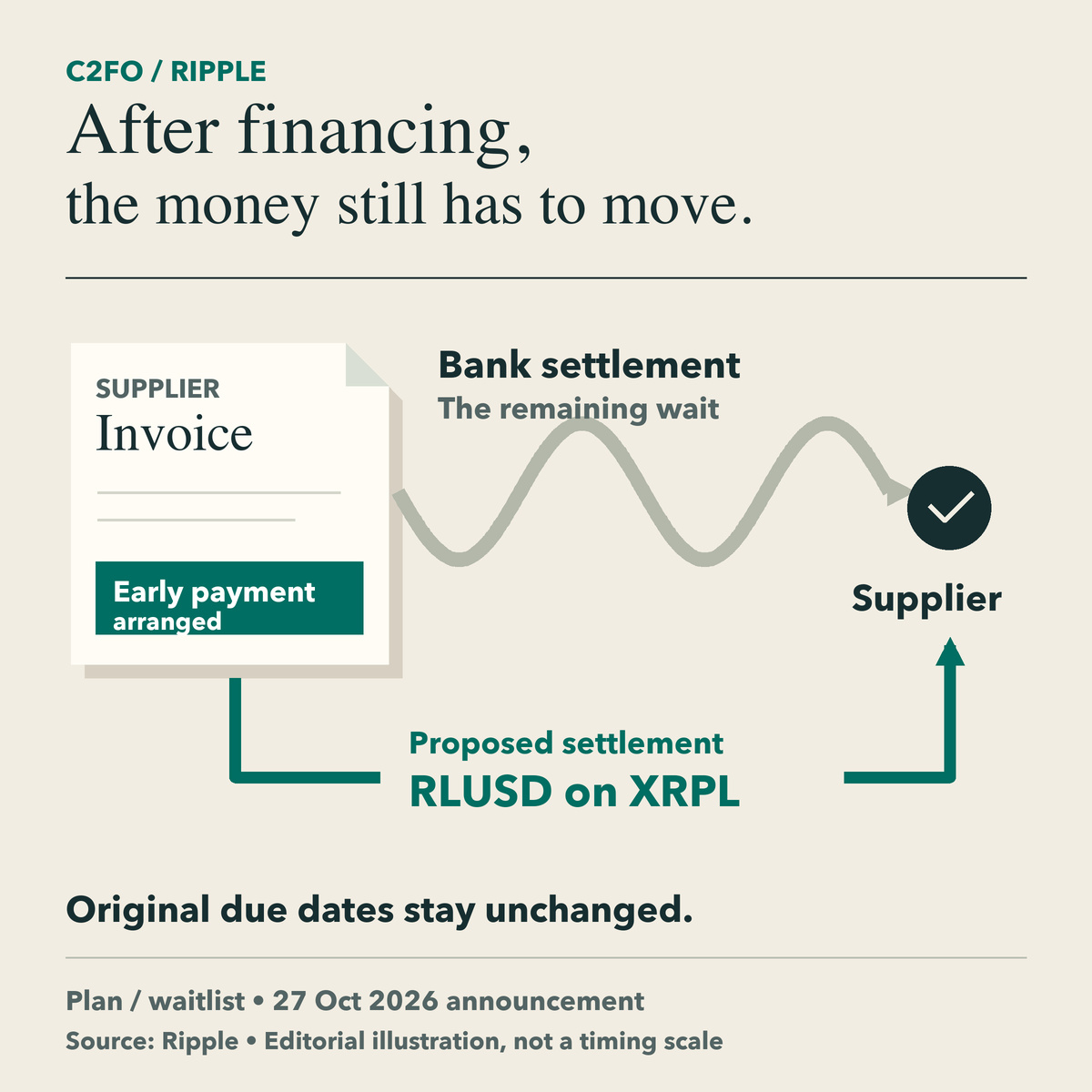
Even after a supplier secures early payment, the money can still take days to move through banks. C2FO, a working-capital platform that already arranges early payments, and Ripple want to shorten that last wait with RLUSD settlement on the XRP Ledger.
Under their October 27 plan for C2FO Instant Pay, participating capital providers would fund the payment and it would settle in RLUSD. Ripple says suppliers would receive funds in seconds rather than days. Customers would still pay on the original due dates.
The announcement directs interested businesses to a waitlist and reports no completed Instant Pay payment volume.
Source: Ripple and C2FO announcement, October 27, 2026.
https://ripple.com/ripple-press/c2fo-and-ripple-partner-to-modernize-trade-finance-using-the-xrp-ledger/
#RLUSD #Stablecoins
1
262
·
--
Verified
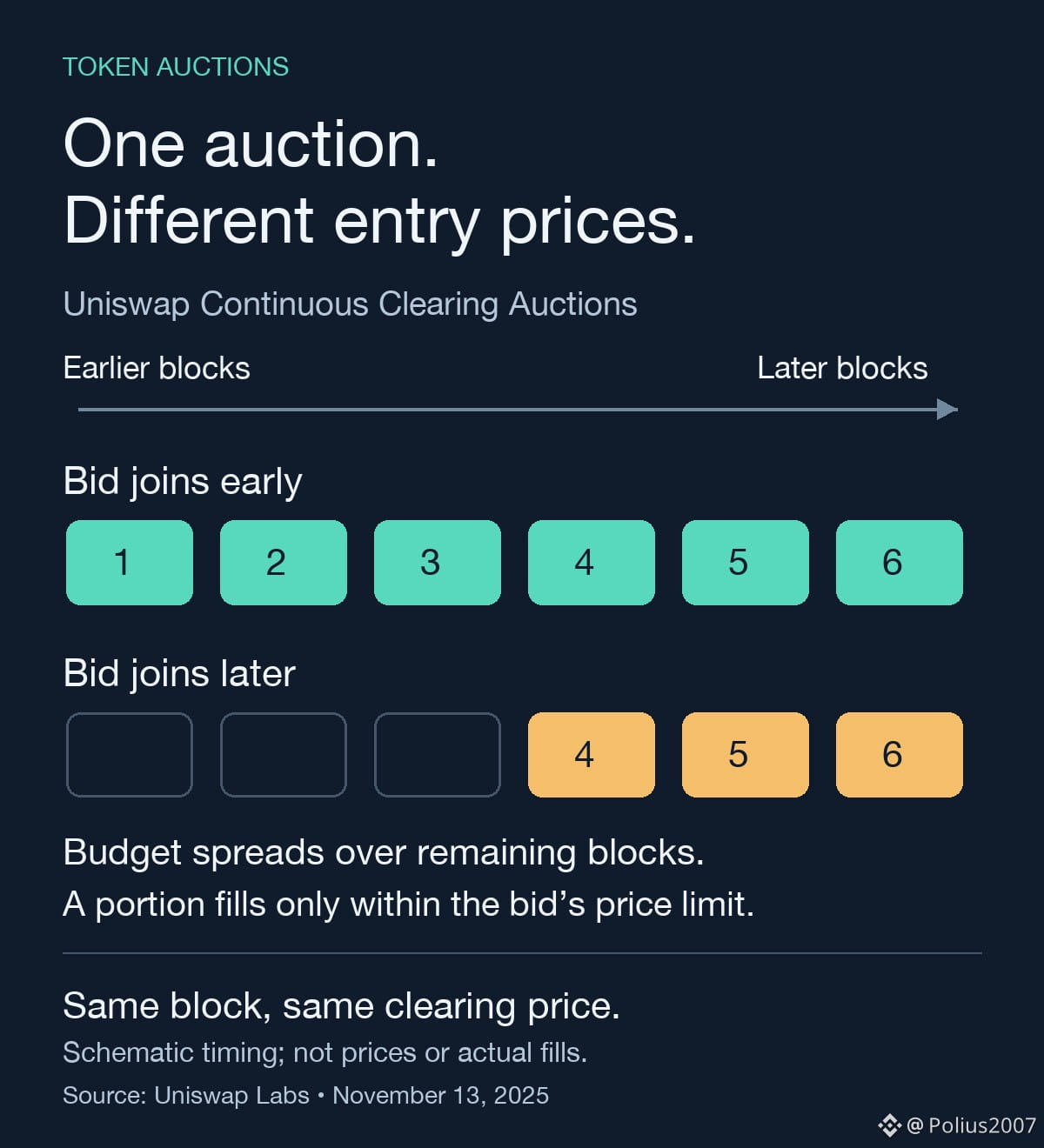
Bidding early in Uniswap's Continuous Clearing Auctions gives you access to more of the sale, but you can't withdraw a bid while it remains in range. Waiting keeps the decision to participate open, at the cost of missing the portions already sold.
Aztec used this auction design for its November 2025 token sale. Tokens are sold block by block, so when you join determines which parts of the auction your bid can reach. You set a spending budget and a maximum price; the budget is spread across the remaining blocks. Each portion fills only if that block's clearing price is at or below your limit.
Those earlier blocks can matter to what you pay. Everyone who fills in the same block pays the same clearing price, but buyers whose fills span different blocks can end up with different average entry prices. The auction's final price need not be the average a buyer paid.
Sources: Uniswap Labs' November 13, 2025 mechanism explainer and February 10, 2026 Aztec recap.
https://blog.uniswap.org/continuous-clearing-auctions
https://blog.uniswap.org/aztec-cca
#Crypto #TokenSales
1
517
·
--
Verified
A zero-fee stablecoin swap can be the trade a liquidity pool most wants you to make.
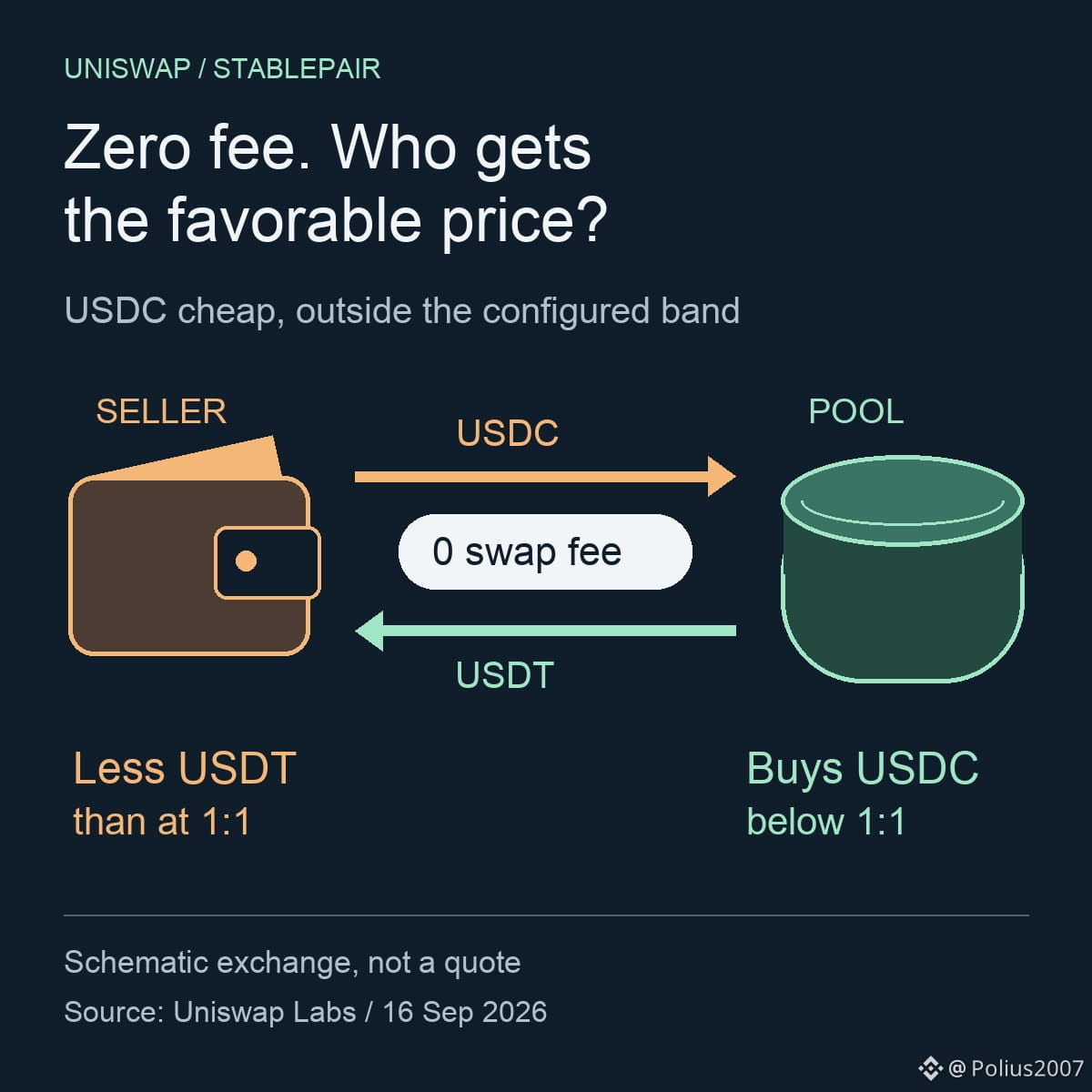
Take Uniswap's StablePair design. USDC is already cheap in a USDC/USDT pool, outside its configured band around the reference rate. Selling more USDC pushes the price farther away. The hook charges no swap fee: the pool is already buying at a favorable price.
For the seller, that means less USDT per USDC than at the 1:1 reference. Waiving the fee doesn't undo the cheap sale.
The opposite trade, which moves the pool back toward the reference, faces a fee that steps down block by block toward a configured floor. That auction aims to leave more of the price-correction profit with liquidity providers.
Source: Uniswap Labs' September 16, 2026 explanation of the existing StablePair design. Illustration is schematic.
https://blog.uniswap.org/keeping-value-in-the-pool-how-stablepair-hook-works
#Uniswap #Stablecoins
1
74
·
--
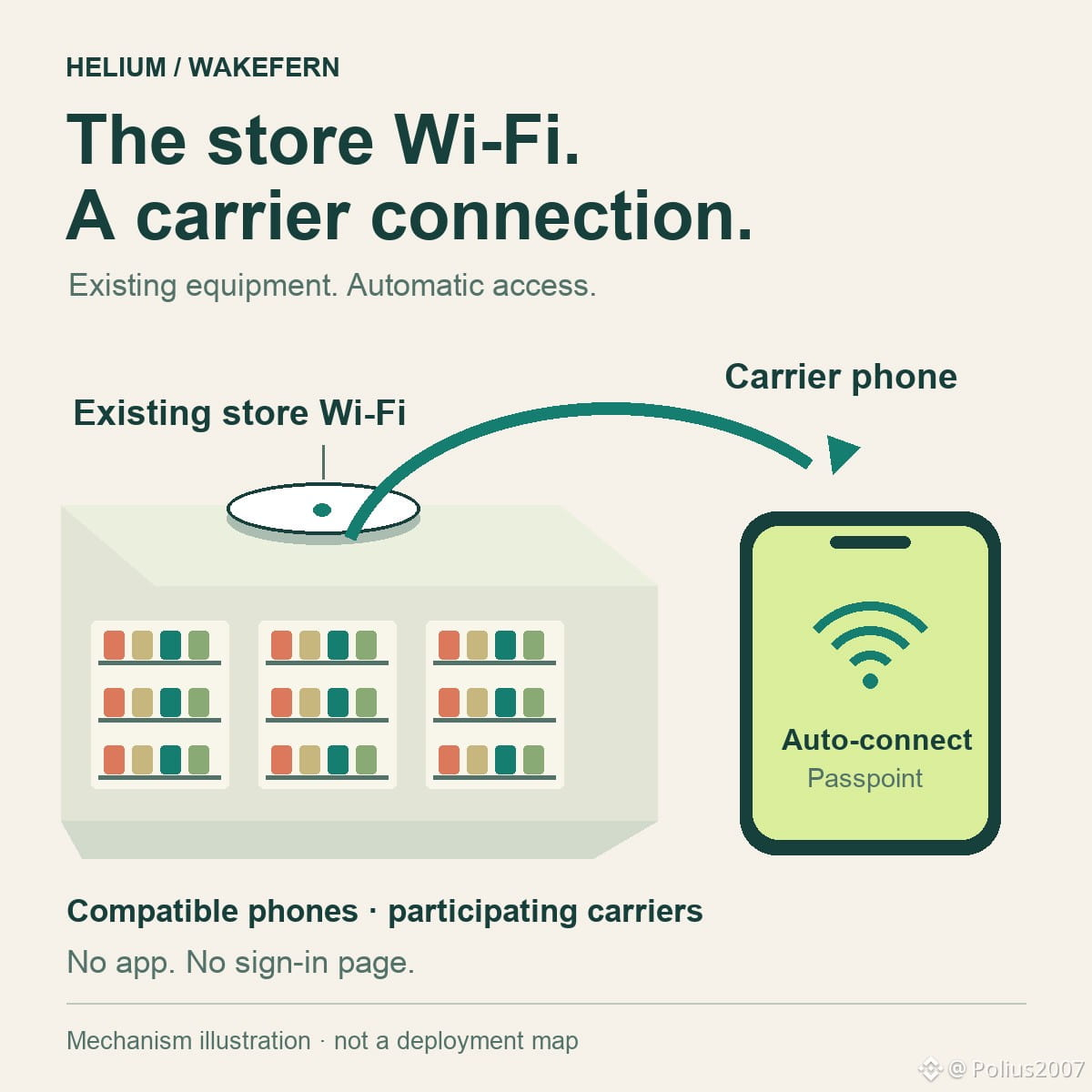
Helium is turning supermarket Wi-Fi into mobile-carrier coverage. The first Wakefern stores are live on its network, according to Helium's October 8 announcement, highlighted again in the Solana Foundation's November 6 roundup.
The deployment uses Wi-Fi the stores already have. Compatible phones on participating carriers connect automatically through Passpoint, a wireless access standard, without an app or a sign-in page. That gives shoppers another connection inside buildings where refrigeration equipment, steel shelving and concrete can weaken cellular signals. SignaConnect manages the rollout.
The crypto link is HNT. Helium says verified carrier data carried by the network burns HNT, while network deployers earn from supplying connectivity. A supermarket can therefore add paying network traffic using existing equipment, rather than relying only on new standalone hotspots.
Wakefern's cooperative includes roughly 365 supermarkets, but the announcement does not specify how many are connected or how much traffic they carry. The rollout establishes a new source of network use; its contribution to HNT burning remains unquantified.
Sources: Helium's October 8, 2026 deployment announcement and HNT overview, checked November 8.
https://www.helium.com/blog/wakefern-grocery-stores-join-helium-network
https://www.helium.com/hnt
#Helium #HNT
1
112
·
--
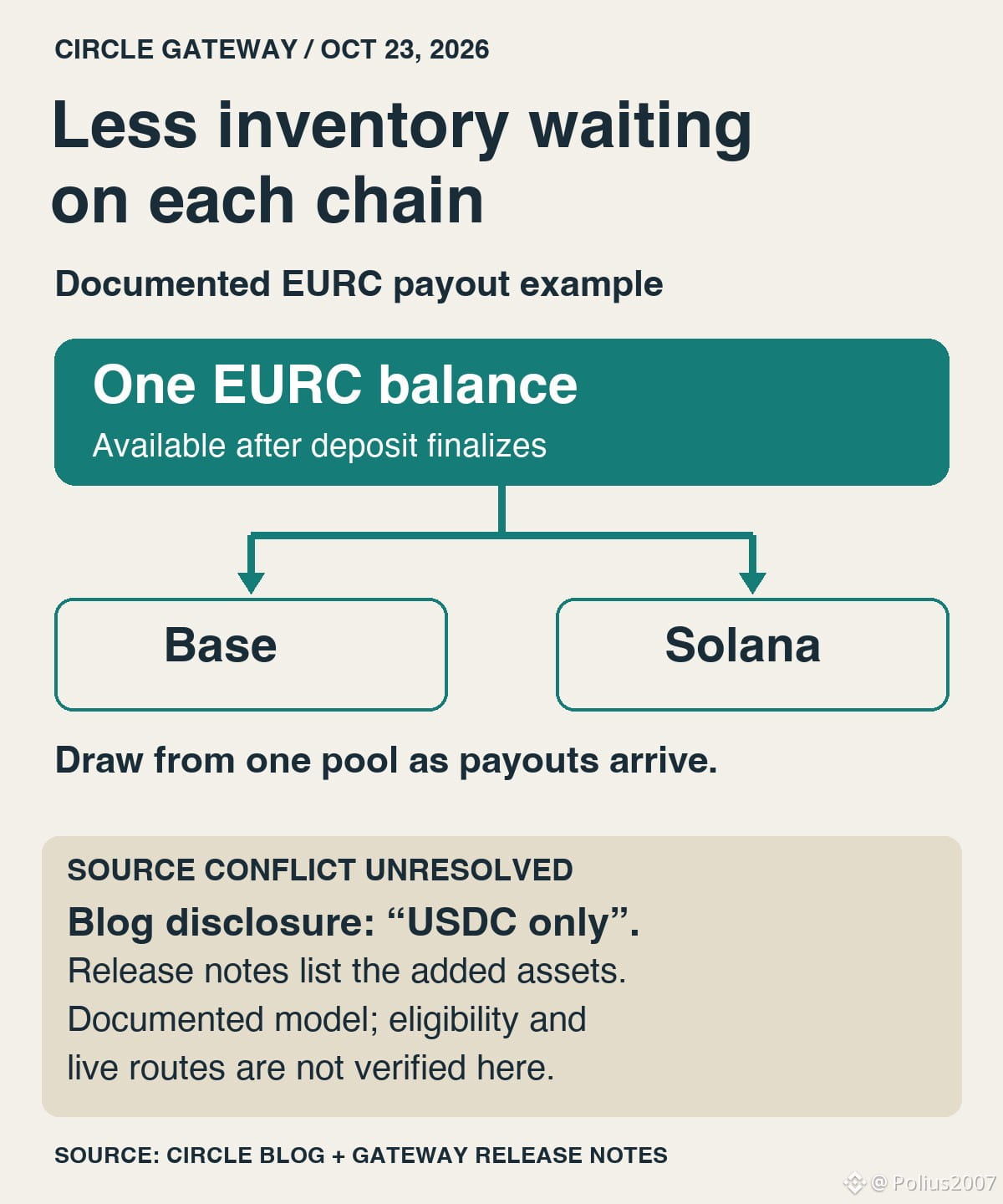
A payment provider serving Base and Solana has to decide where to keep funds ready for euro payouts. Circle’s documented Gateway model lets it draw on one EURC balance for both destinations, reducing the need to forecast and fund separate pools.
The October 23, 2026 expansion adds EURC, Circle’s euro-denominated token, and cirBTC, its wrapped bitcoin. Each asset keeps its own balance. Once a deposit finalizes, that balance becomes available across the asset’s supported chains.
Circle lists six for EURC: Arc, Avalanche, Base, Ethereum, Solana and World Chain. For cirBTC, it lists Arc and Ethereum. The practical change is where inventory can wait while customers decide where to withdraw or receive a payment.
One qualification: the blog disclosure still says “USDC only,” despite release notes confirming the added assets. That conflict remains unresolved; this describes the documented model, not verified eligibility or live routes.
Sources:
https://www.circle.com/blog/circle-gateway-now-supports-cirbtc-and-eurc
https://developers.circle.com/release-notes/gateway-2026#2026-10-23
212
·
--
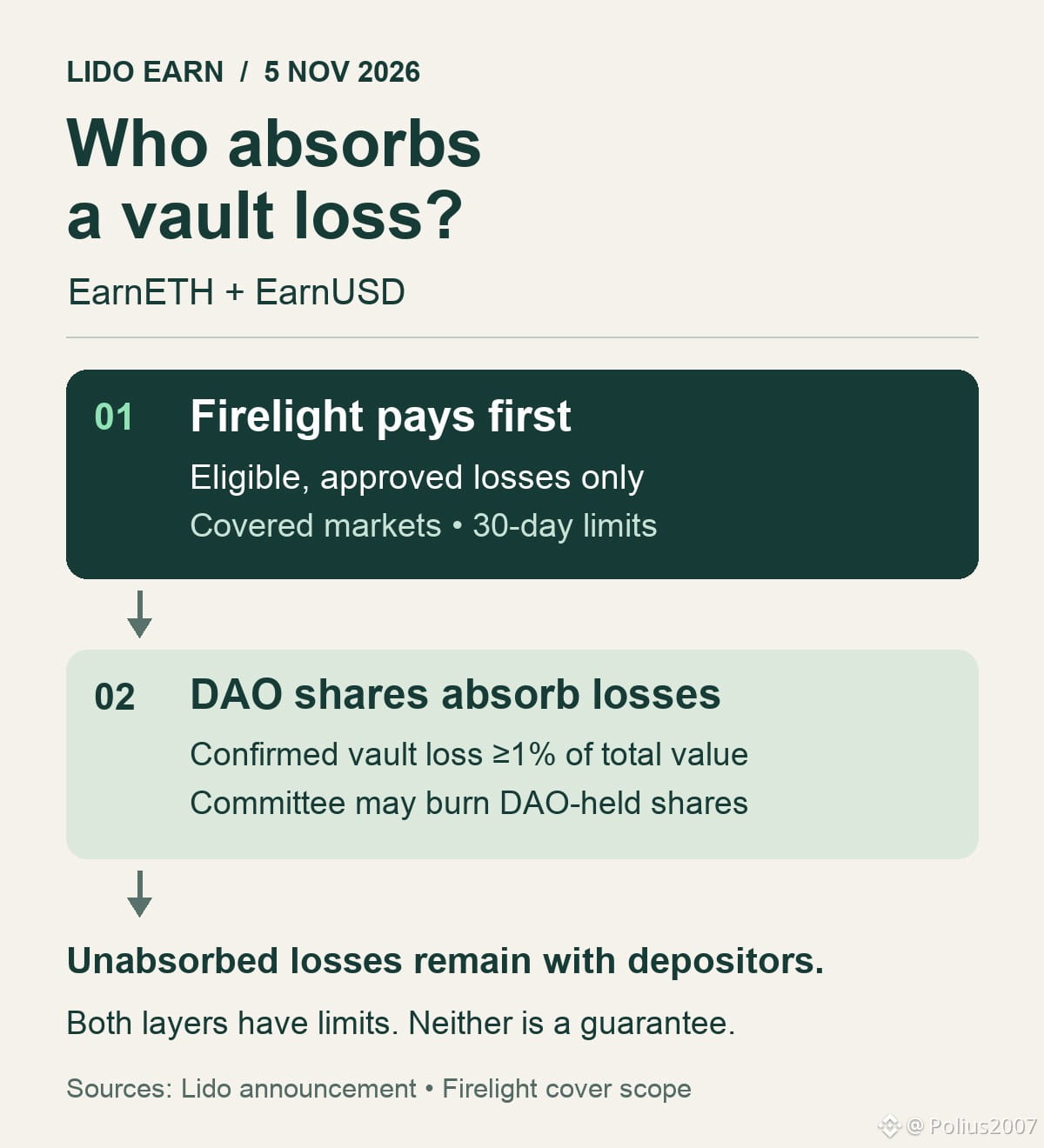
Lido Earn has added a new source of capital to absorb losses in its ETH and stablecoin vaults before depositors bear them.
From November 5, Firelight sits ahead of the Lido DAO’s existing protection for EarnETH and EarnUSD. These vaults put deposits into curated DeFi strategies. If an eligible loss is approved, Firelight pays first, within the limits agreed for that 30-day period. Remaining losses can then be absorbed by burning the DAO’s own shares in the affected vault.
That second step uses a different rule: once a vault loss of at least 1% of its total value is confirmed, the DAO’s Growth Committee can burn up to all of the DAO-held shares. Those shares belong to the DAO, not to other depositors.
For a depositor, both layers operate at the vault level. Lido says there is no individual compensation request to file. Firelight’s protection follows specified markets, however: moving a vault position into a new market mid-period does not extend cover until a later period includes it.
The new layer covers defined protocol failures, not ordinary price declines or liquidations at accurate prices. Its payout also depends on available capital at settlement. Neither layer guarantees that depositors will avoid losses.
Sources: Lido’s November 5, 2026 announcement and Firelight’s cover scope, checked November 7.
https://blog.lido.fi/lido-earn-introducing-two-layers-of-loss-protection/
https://docs.firelight.finance/resources/cover-scope
#Lido #DeFi
65
·
--
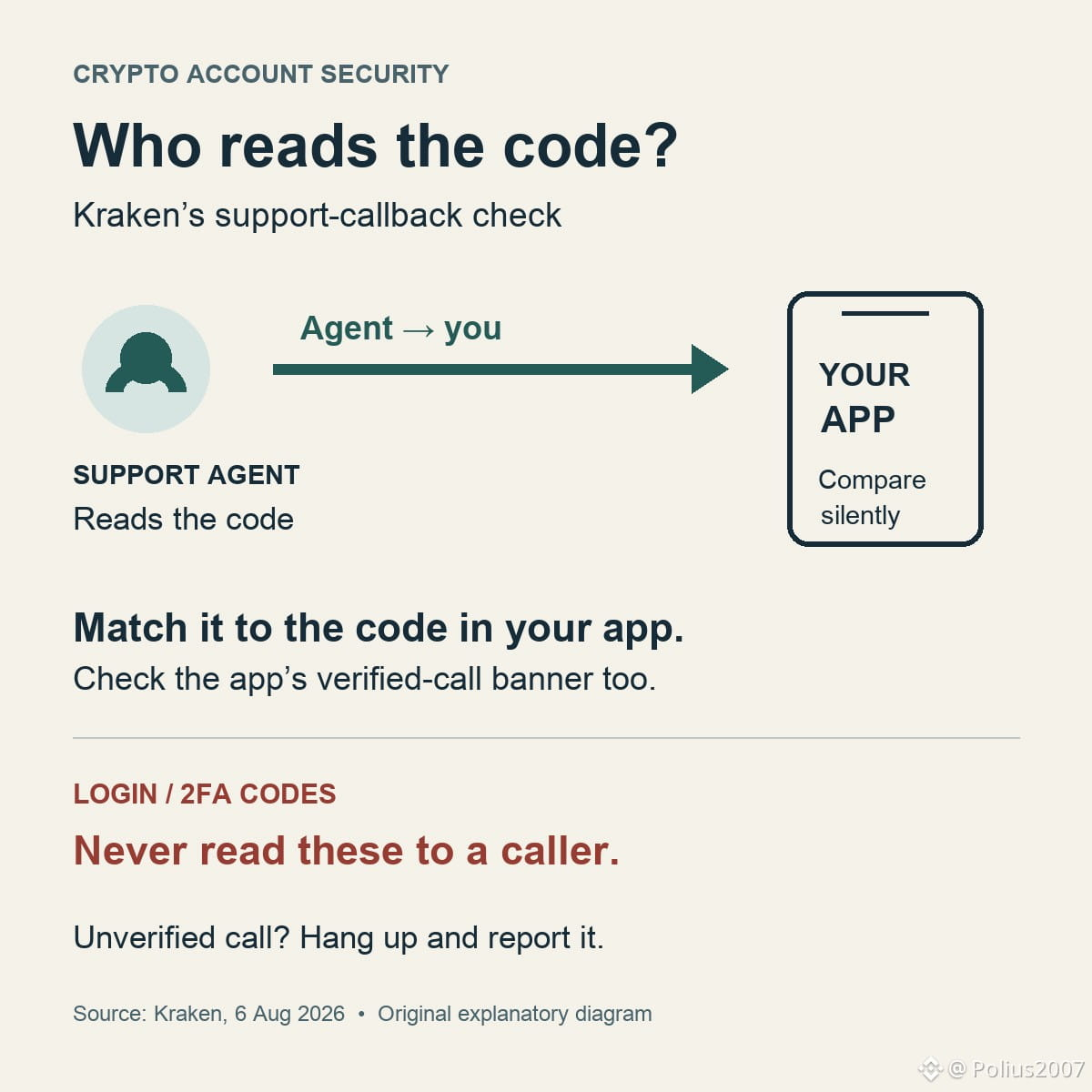
If someone calls claiming to be Kraken Support, ask them to read the verification code shown in your Kraken app. You compare it with your screen, rather than reading it out to the caller.
Kraken describes that check in its August 6 security update. During a support callback, the app displays a one-time code and a banner confirming the call. A matching code shows that the caller has legitimate access to your support case, according to Kraken. Caller ID alone cannot establish that: phone numbers can be spoofed.
This call-verification code is different from a login or two-factor authentication code. Kraken says support will never ask you to share your password or 2FA code, or move funds because of a phone request.
Kraken also says callbacks follow contact you initiated through its app, email or chat. If the app cannot verify the call, hang up and report it directly.
Source: Kraken's August 6, 2026 announcement, checked November 7. Existing features in Kraken, Kraken Pro and Krak, not a new launch today.
https://blog.kraken.com/product/security/how-to-verify-a-call-is-really-from-kraken-support
#CryptoSecurity
72
·
--
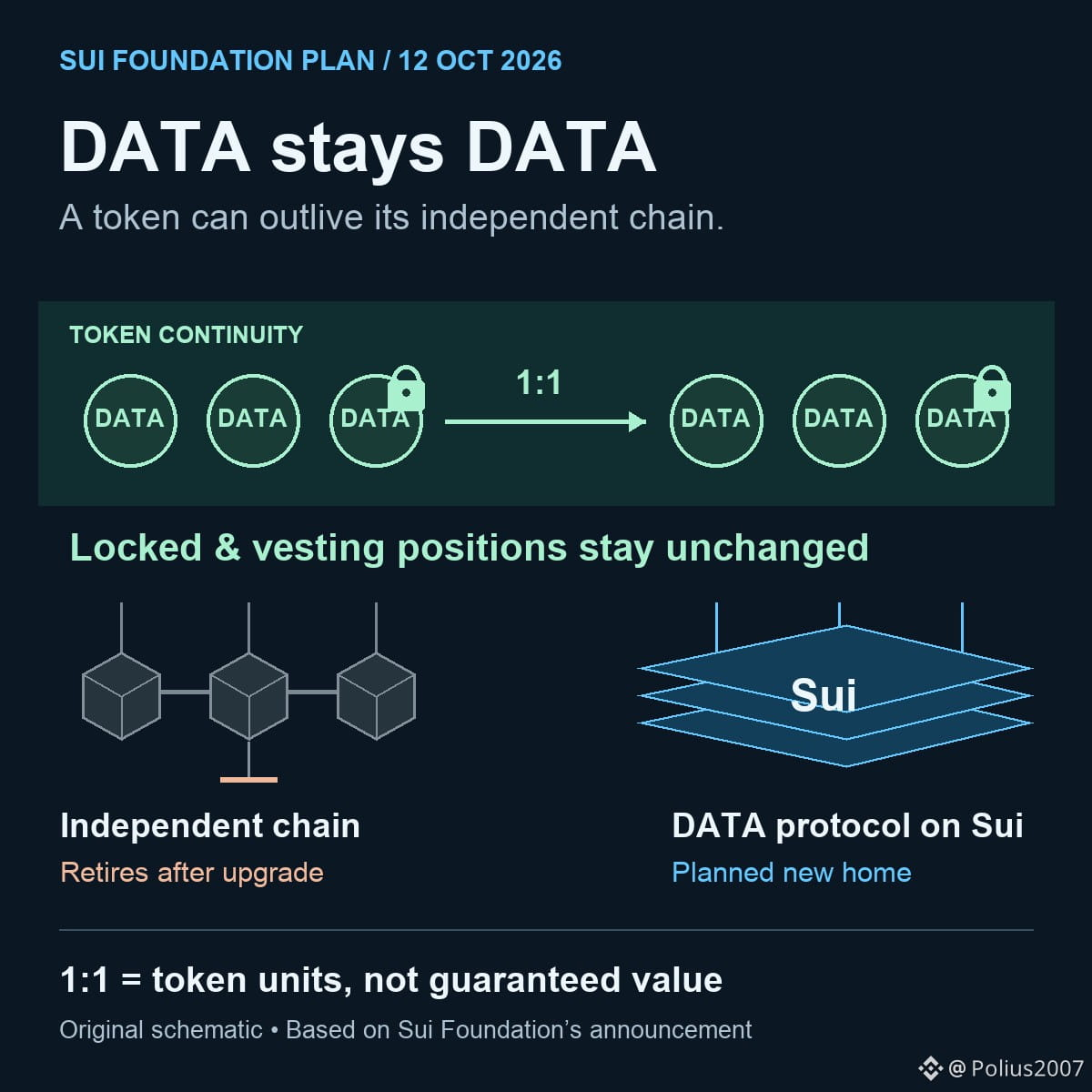
DATA Network's own blockchain would retire, but its DATA token would live on under the move to Sui announced by Sui Foundation on October 12, 2026.
Holders would keep DATA, not receive SUI instead. The plan carries tokens over one-to-one, with locked and vesting positions unchanged: the same number of tokens, not a guaranteed market value or an early unlock.
The announcement puts chain retirement after the upgrade is complete, with a detailed timeline and holder transition plan to be published beforehand.
https://www.sui.io/blog/data-network-joins-sui-walrus
#Sui #Crypto
350
·
--
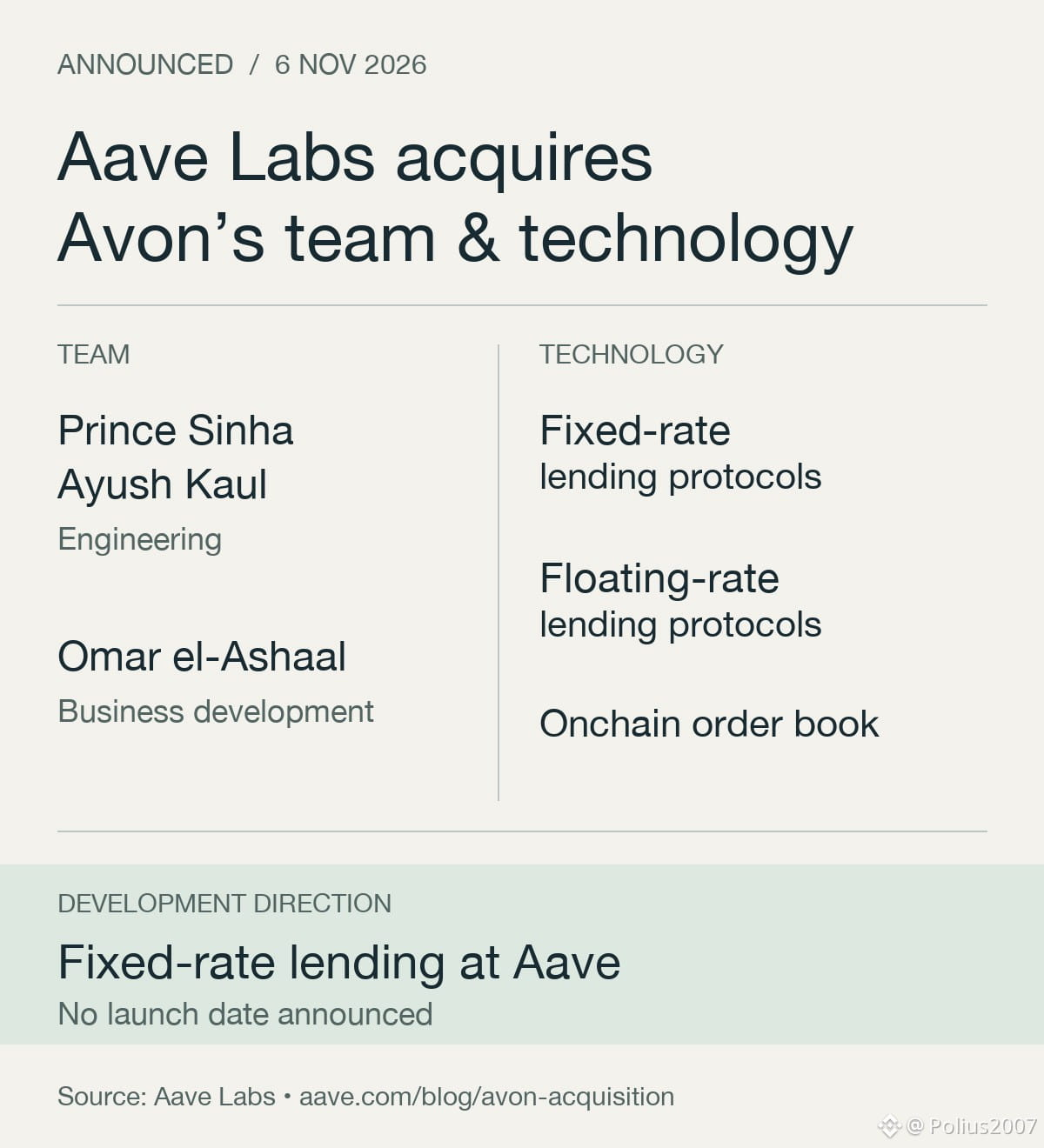
Aave Labs has acquired Avon’s team and lending technology to help expand its onchain lending capabilities, including fixed-rate loans.
The deal includes Avon’s fixed-rate and floating-rate lending protocols and its onchain order book. Avon’s team will continue developing the technology within the Aave ecosystem, with staff joining Aave Labs’ engineering and business development teams.
The November 6 announcement gives no launch date, supported assets or loan terms for a new fixed-rate offering.
Source: Aave Labs, November 6, 2026.
https://aave.com/blog/avon-acquisition
#Aave #DeFi
126
·
--
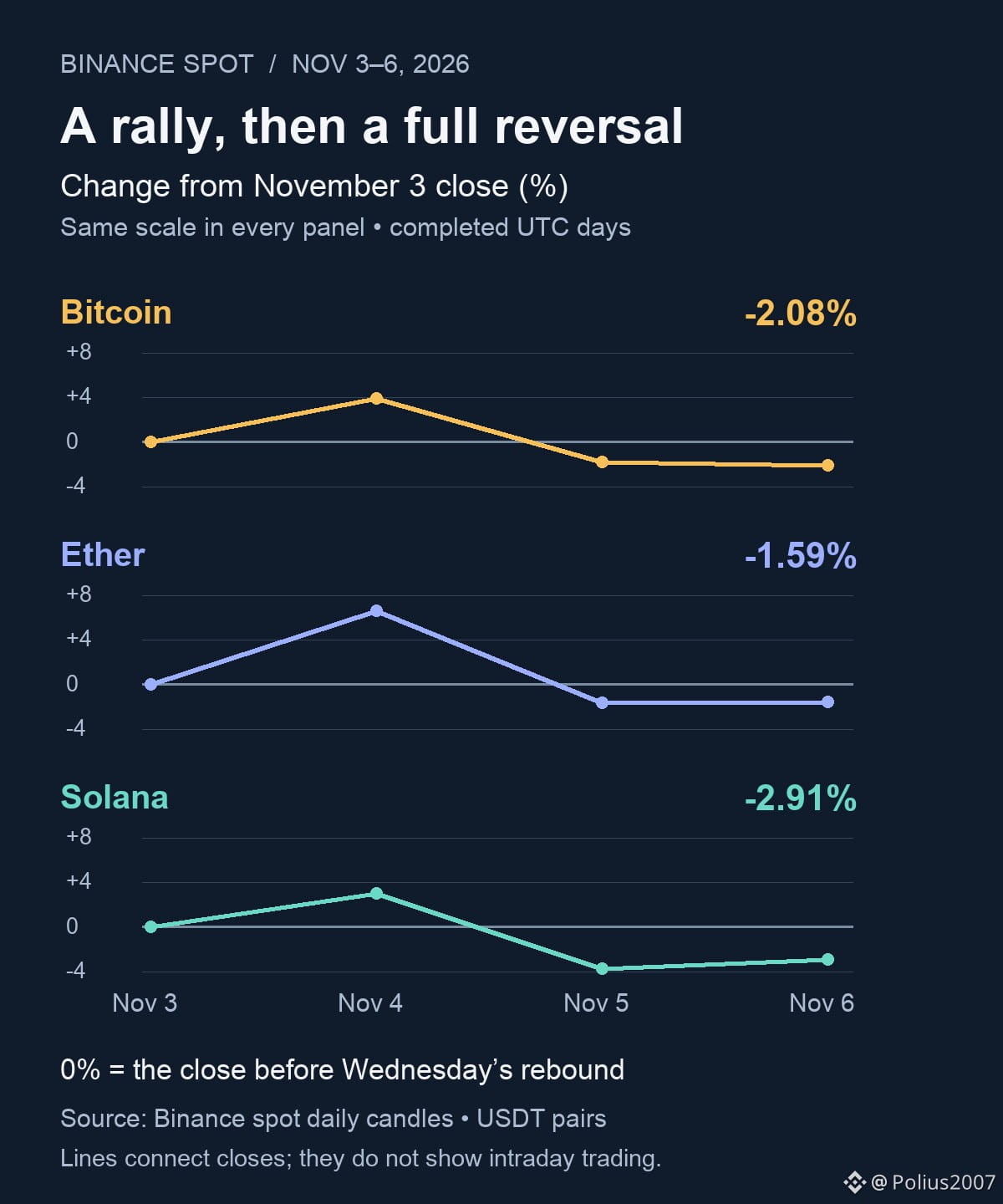
Wednesday's rally is gone from the closing prices of Bitcoin, Ether and Solana.
On Binance spot, Thursday's sell-off took all three below their November 3 closes—the starting point for Wednesday's rebound. Ether rose 6.59% on Wednesday, then fell 7.70% on Thursday. Bitcoin's moves were +3.94% and −5.49%; Solana's were +2.99% and −6.57%.
Friday didn't restore that ground. By the November 6 close, BTC was 2.08% below its pre-rally close, ETH 1.59% below and SOL 2.91% below. ETH and SOL edged higher on Friday, but all three still ended below where the rebound began.
Chart: each pair starts at 0% at the November 3 UTC close. Lines join completed daily closes, not intraday paths. Source: Binance BTC/USDT, ETH/USDT and SOL/USDT spot candles through November 6, 2026; retrieved November 7. These are historical closes, not live quotes.
#Bitcoin #Ethereum #Solana
186
·
--
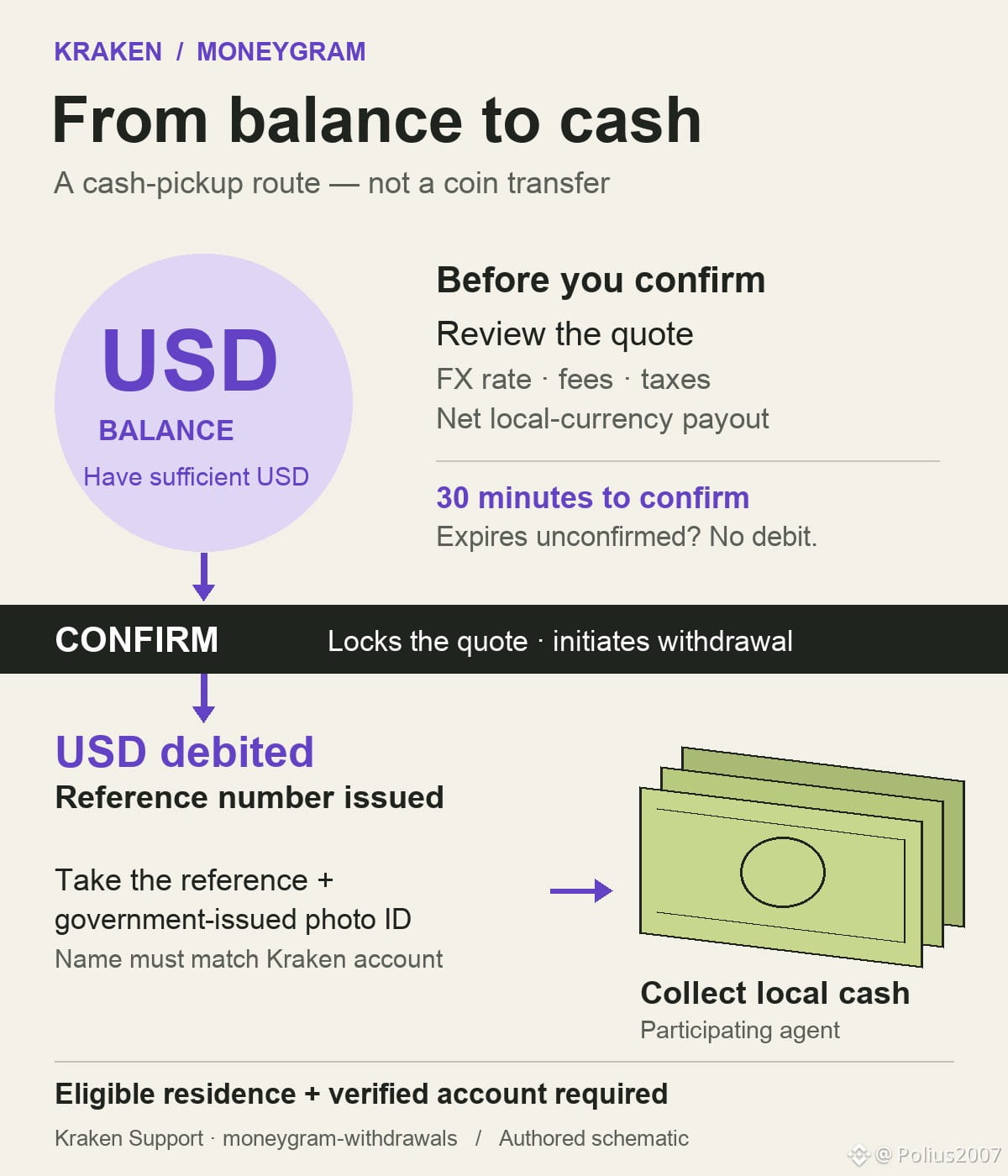
Kraken's MoneyGram cash pickup starts from a USD balance—not a transfer of your coins to a cash agent.
For a crypto holder using this route, that means having USD in the Kraken account before requesting local cash. Kraken's support guide says the withdrawal screen shows the exchange rate, fees, taxes and net payout before confirmation. The quote lasts 30 minutes; if it expires unconfirmed, no funds are deducted.
Confirming debits the USD balance and produces a reference number. To collect the cash, the customer brings that number and a government-issued photo ID whose name matches the Kraken account.
Availability depends on residence and account eligibility, not simply whether a MoneyGram location is nearby. Kraken says to check the withdrawal options in the account. Its guide describes cash pickup only; bank transfers through this integration are not supported.
Source: Kraken's MoneyGram withdrawal guide, checked November 6, 2026. This is an existing service, not a new launch announcement.
https://support.kraken.com/articles/moneygram-withdrawals
#Crypto
·
--
Choose a BTC price range and an expiry, and DeepBook Predict can quote that position without waiting for someone to bet against the same range.
Sui Foundation's September 24 launch announcement explains how: a Block Scholes volatility oracle prices the binary option, while a shared pool takes the other side.
Reading that quote as a crowd's forecast would miss how it was produced. It is closer to asking a derivatives desk to price a custom option than counting other traders' predictions.
At launch, Predict covered BTC only and was unavailable to US users, with other jurisdiction restrictions also applying.
https://www.sui.io/blog/deepbook-app-is-live-onchain-power-for-serious-traders
39
·
--
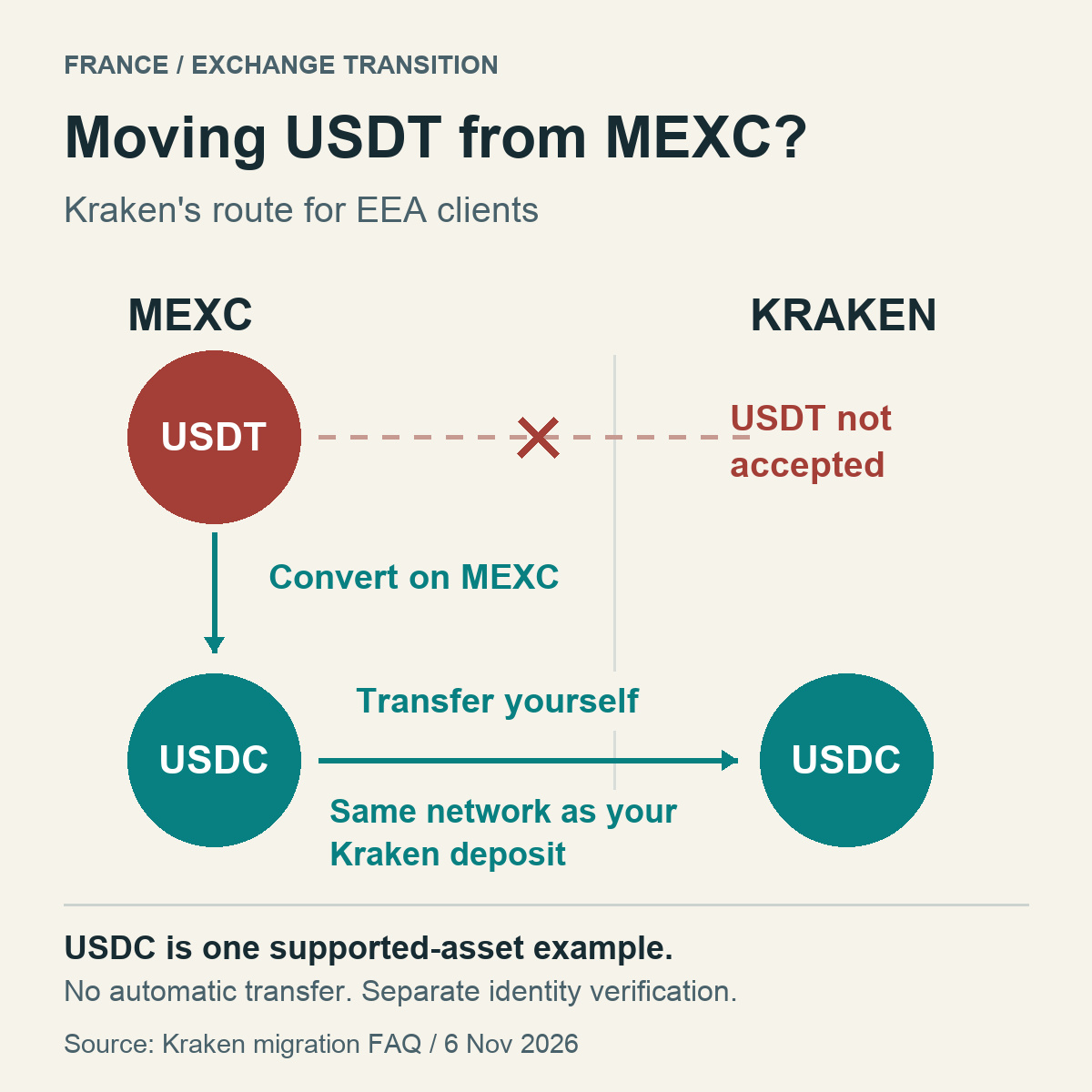
MEXC is referring its French customers to Kraken as it winds down operations in France, according to Kraken's November 6 announcement. For customers holding USDT, the move requires more than a new deposit address.
Kraken's migration FAQ says clients in the European Economic Area cannot deposit USDT. It describes converting USDT on MEXC into a supported asset, such as USDC, before withdrawing to Kraken.
The partnership does not move balances automatically or carry over identity verification. Customers must verify with Kraken and transfer their funds themselves. Before sending, match the MEXC withdrawal network to the deposit instructions for that asset in your verified Kraken account, using the official Kraken app or website. Kraken says it has no access to MEXC accounts.
Kraken sets no migration deadline in its FAQ. Any deadline for withdrawing from MEXC comes from MEXC's own notices, not from opening a Kraken account.
Sources: Kraken's November 6, 2026 announcement and migration FAQ.
https://blog.kraken.com/news/industry-news/kraken-and-mexc-expand-partnership-to-support-clients-in-france
https://www.kraken.com/campaigns/mexc-switch
#Stablecoins #Crypto
10
·
--
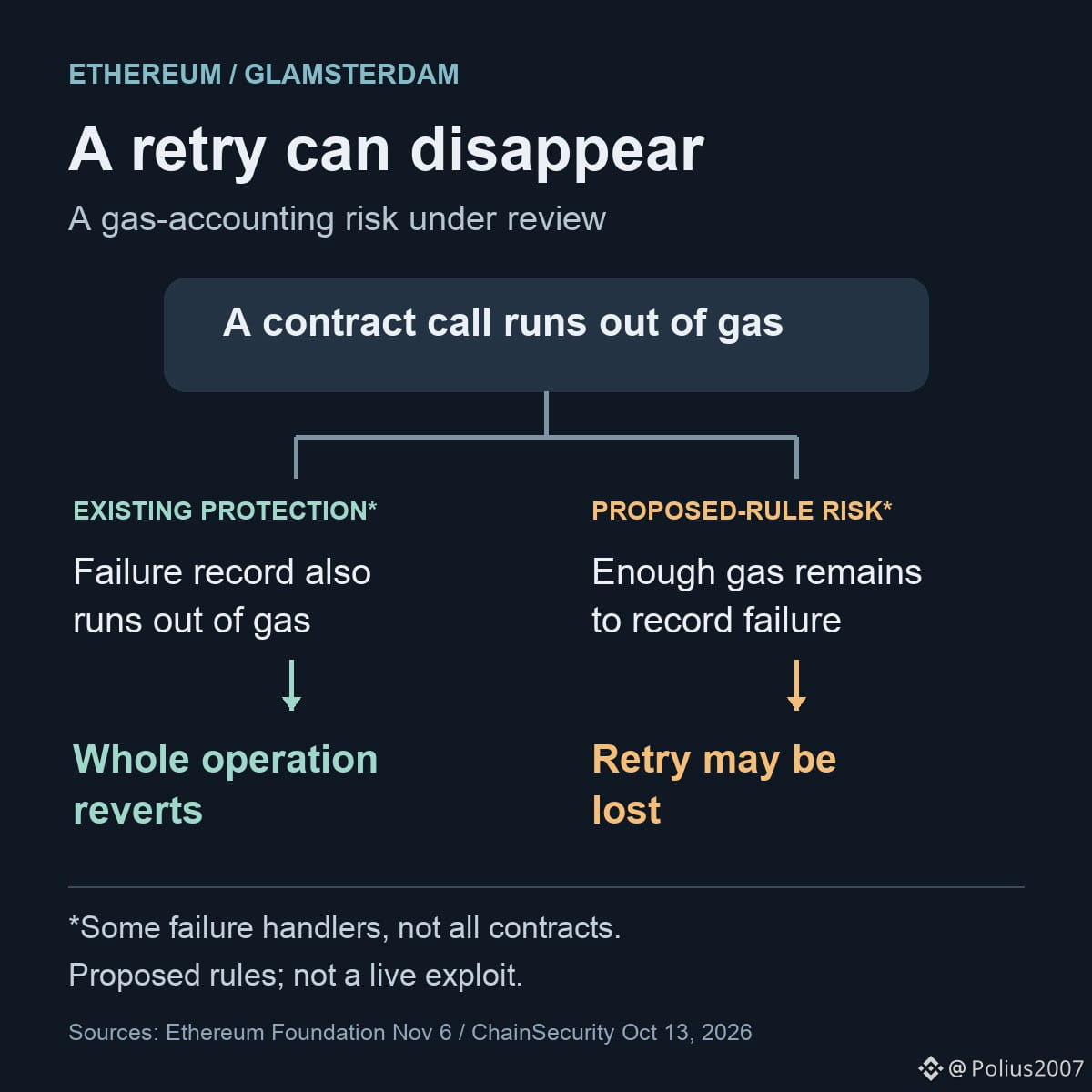
A few Ethereum projects would become vulnerable under Glamsterdam's proposed rules, the Ethereum Foundation said in its November 6 update. ChainSecurity found the issues during testnet testing of the upgrade.
The Foundation is engaging ChainSecurity and Dedaub alongside internal audits, and asking developers and auditors across Ethereum to check their projects. Its own review cannot cover every application, including the off-chain code those applications depend on.
One risk shows how a change in gas accounting can affect what users can recover from. ChainSecurity describes contracts where an unsuccessful operation can currently be tried again because the whole attempt rolls back. Under the proposed rules, some of those contracts could instead record a permanent failure, closing that retry path even though their code has not changed. This concerns how applications handle failed contract calls, not every failed wallet transaction.
The November 6 update names no affected projects and reports no live exploit. Hoodi's testnet upgrade remains on hold until the issues are resolved.
The open question is how widely existing applications depend on assumptions the upgrade would break. The Foundation wants that evidence for upcoming AllCoreDev discussions, including whether changes to the upgrade specifications could prevent the problems.
Sources: Ethereum Foundation, November 6; ChainSecurity's analysis of the October 13 specifications.
https://blog.ethereum.org/2026/11/06/glamsterdam-8037-8038
https://www.chainsecurity.com/blog/glamsterdam-gas/index.html
#Ethereum #ETH
37
·
--
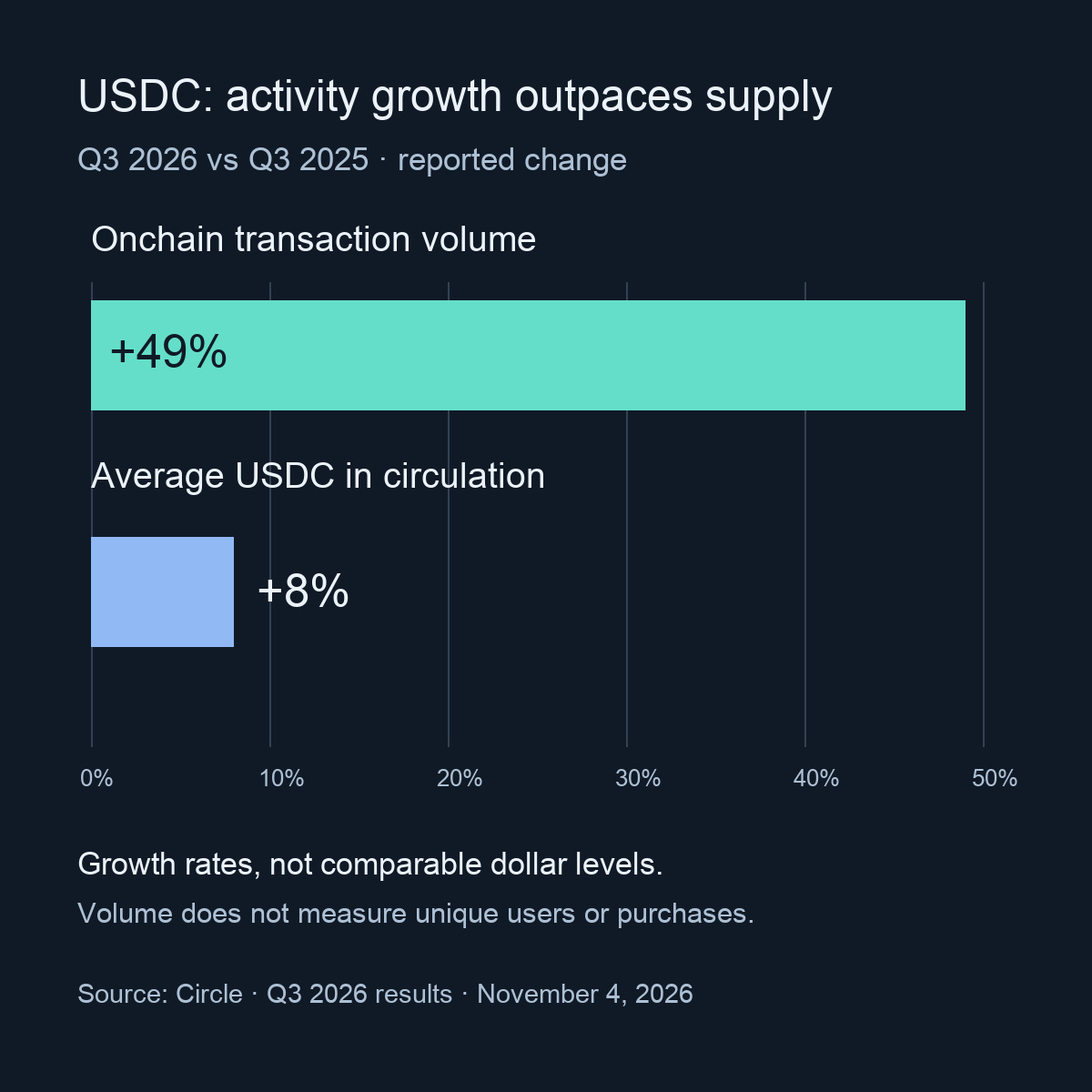
USDC's onchain transaction volume grew much faster than its average circulating supply in the third quarter.
Circle's November 4 disclosure puts Q3 volume at $13.9 trillion, up 49% from a year earlier. Average USDC in circulation rose 8% to $73.3 billion over the same comparison.
The gap shows that growth in the dollar amount moving onchain outpaced growth in the amount of USDC outstanding. It doesn't tell us how many people used it or how much went toward buying goods: the same tokens can move repeatedly.
Source: Circle's Q3 2026 results. Chart compares reported year-over-year growth, not the dollar levels of supply and transactions.
https://www.circle.com/pressroom/circle-reports-third-quarter-2026-results
#USDC #Stablecoins
306
·
--
A Payward-affiliated fund and its clients have bought AAVE on the secondary market, according to Aave Labs' November 5 announcement. Payward is the company behind Kraken.
The buyers acquired existing tokens; the announcement does not disclose how much they bought. It says Payward may make further acquisitions, without committing to an amount or timetable.
AAVE gives holders governance rights over Aave's lending network and its treasury. The undisclosed size leaves the buyers' potential voting influence unclear.
Source: Aave Labs, November 5, 2026.
https://aave.com/blog/aave-payward
#Aave #DeFi
100
·
--
MetaMask says all affected Ethereum validators operated by its staking service have now exited following September's infrastructure incident. Some staking customers have experienced withdrawal delays, and the company is still addressing outstanding customer impact.
In its November 5 update, MetaMask reports that an attacker briefly changed the addresses receiving execution-layer rewards for certain validators, diverting about 0.385 ETH. It says it found no evidence that customers' staked principal or withdrawal keys were compromised. The reward addresses and the keys controlling withdrawals serve different purposes.
Exiting a validator is one step in returning staked ETH. Funds can take additional time to become withdrawable or ready to stake again, and MetaMask says the precautionary exits may also have meant missed rewards.
MetaMask says wallet users do not need to take action over this incident. Customers whose staking arrangements were affected should follow guidance from MetaMask or their staking provider.
Source: MetaMask's November 5 update.
https://metamask.com/news/user-update
#Ethereum #Staking
84
·
--
S&P Global Ratings' lending-vault risk assessments are live on Base through Chainlink, according to Chainlink's October 30 recap. DeFi platforms can now use that analysis onchain.
The assessment follows the money inside a vault: the credit quality of its lending portfolio, whether its assets can meet withdrawals, and the people managing its allocations. It also examines the blockchain, lending protocol, and vault security and governance. Together, these inform S&P's opinion about the relative risk of a depositor losing value.
Lending vaults pool deposits and put them to work under defined strategies. The new feed gives platforms access to an outside assessment of those strategies and their risks. S&P calls this a Vault Risk Assessment, not a credit rating, and excludes yield levels from its analysis.
Sources: Chainlink, October 30; S&P Global Ratings, October 4, 2026.
https://chain.link/blog/link-nyc-recap-2026
https://press.spglobal.com/2026-10-04-S-P-Global-Ratings-launches-Vault-Risk-Assessment-for-digital-asset-markets
#DeFi #Chainlink
272
·
--
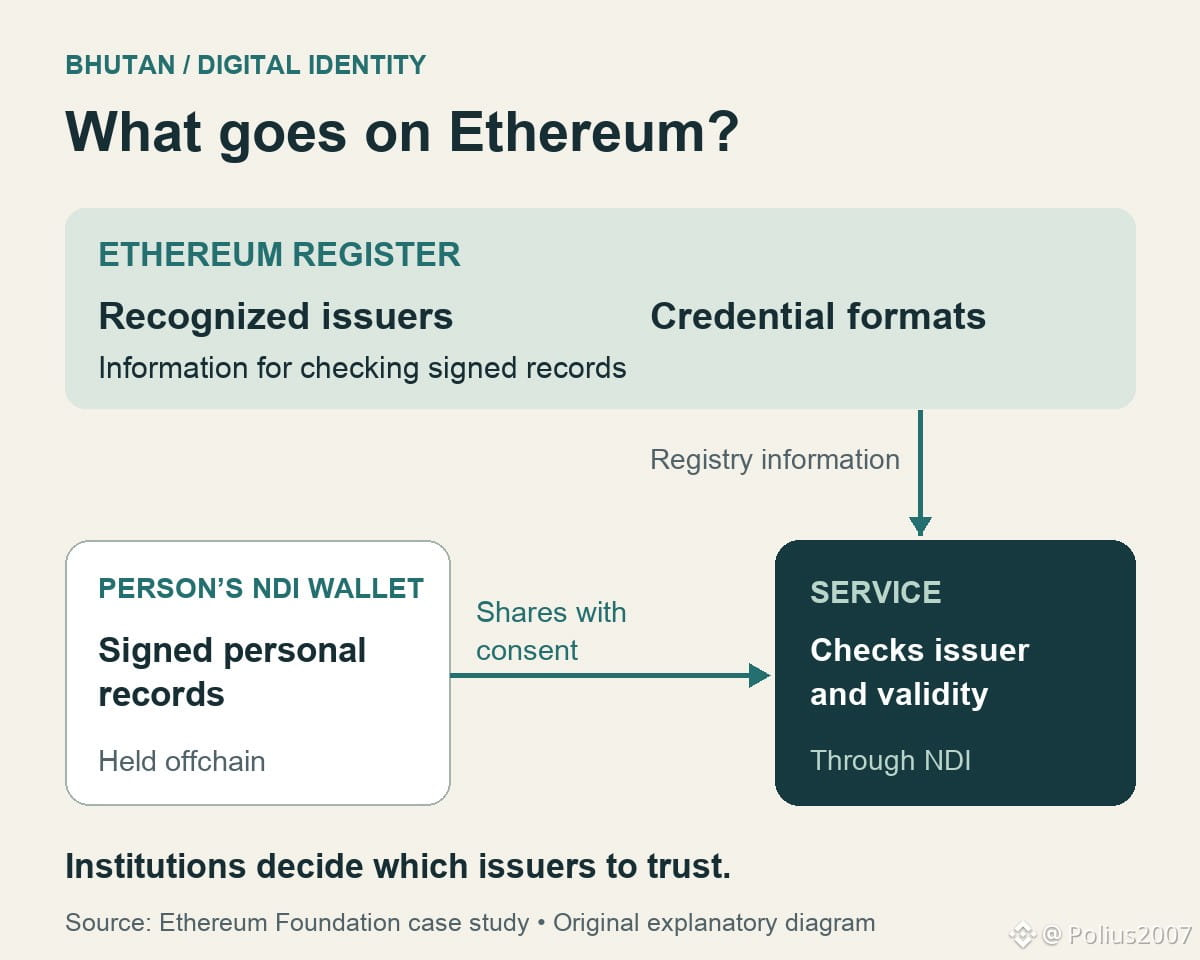
Bhutan Development Bank has remotely onboarded more than 7,000 customers through the country's National Digital Identity system, according to an Ethereum Foundation case study.
With NDI, people keep credentials, digitally signed records, in their own wallets and approve what they share with a service. Ethereum holds a register of recognized issuers and the formats those records should follow, rather than the personal records themselves.
A participating service uses that register as part of checking who signed a record and whether it remains valid. Bhutan's institutions decide which issuers to trust.
The Foundation reports 449,549 people onboarded to NDI by the end of 2025. Issuing or checking a credential does not always require an Ethereum transaction: that total measures NDI onboarding, not active Ethereum wallets.
Source: Ethereum Foundation's Bhutan NDI case study, highlighted November 3, 2026.
https://publicsector.ethereum.foundation/case-studies/bhutan-national-digital-identity/
#Ethereum
1
227
Log in to explore more content
Join global crypto users on Binance Square
⚡️ Get latest and useful information about crypto.
💬 Trusted by the world’s largest crypto exchange.
👍 Discover real insights from verified creators.
Email / Phone number
Trending Topics
BitcoinFiveWeeklyLosses
10,129 views
337 Discussing
Bitcoin News | Bitcoin Slides for Five Straight Weeks as AI Stock Rout Spills Into Crypto
Binance News
·7 Likes
·8.7k views
AIChipSlumpNasdaq
5,787 views
186 Discussing
NvidiaInvestigatesAfterHuang’sAffairApology
3,075 views
88 Discussing