

king_man_666
119 Posts

king_man_666
Report
Block User
Bitcoin maximalist, crypto enthusiasts, lab technician, mentor , Artificial intelligence expert,web3 , blockchain technology, Running bitcoin safari communi
Open Trade
Occasional Trader
4 Years
54 Following
56 Followers
32 Liked
Posts
Portfolio
All
Quotes
Videos
·
--
The Bitcoin Education Gap is Huge Plan ₿ Network is the Solution
90% of people who want to learn Bitcoin still struggle to find trusted, structured education. The internet is full of noise, scams, and random videos. Beginners don't know where to start.
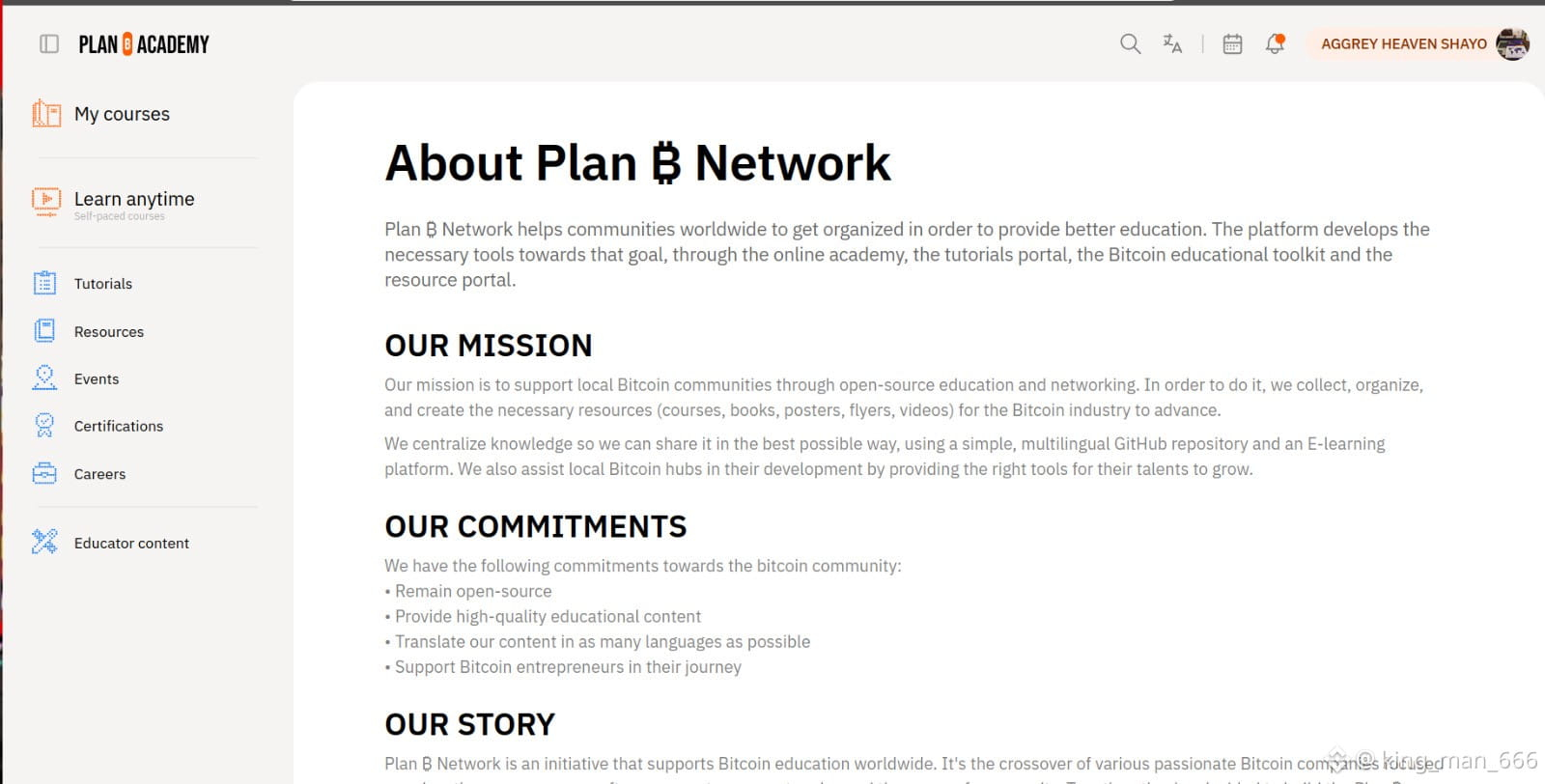
The solution I found is Plan ₿ Network (planb.network) one of the best open-source Bitcoin education platforms ever created.
Why it stands out:
1. 100% Free & Open-Source: No paywalls, ever. Quality Bitcoin education as a human right.
2. Structured Path: From Beginner to Expert, from "What is money?" to Lightning and coding. You always know your next step.
3. Built for Local Communities: It empowers grassroots education in Africa, Latin America, and Asia.
4. Global: Content is translated so language is never a barrier.
5. Learn from Legends: Professors like Adam Back, Saifedean Ammous, Jimmy Song, Giacomo Zucco, Peter Todd, Jack Mallers and many more.
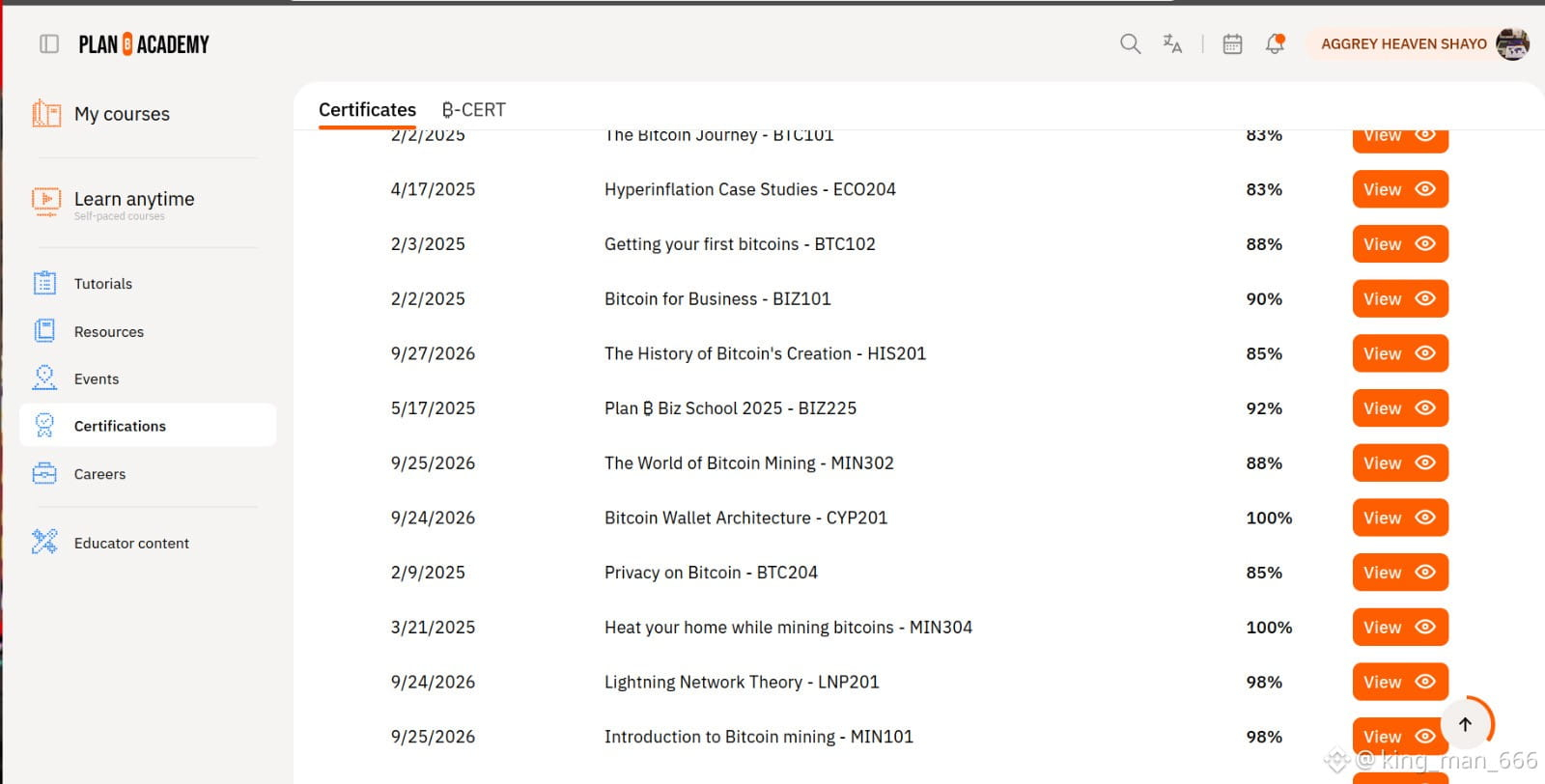
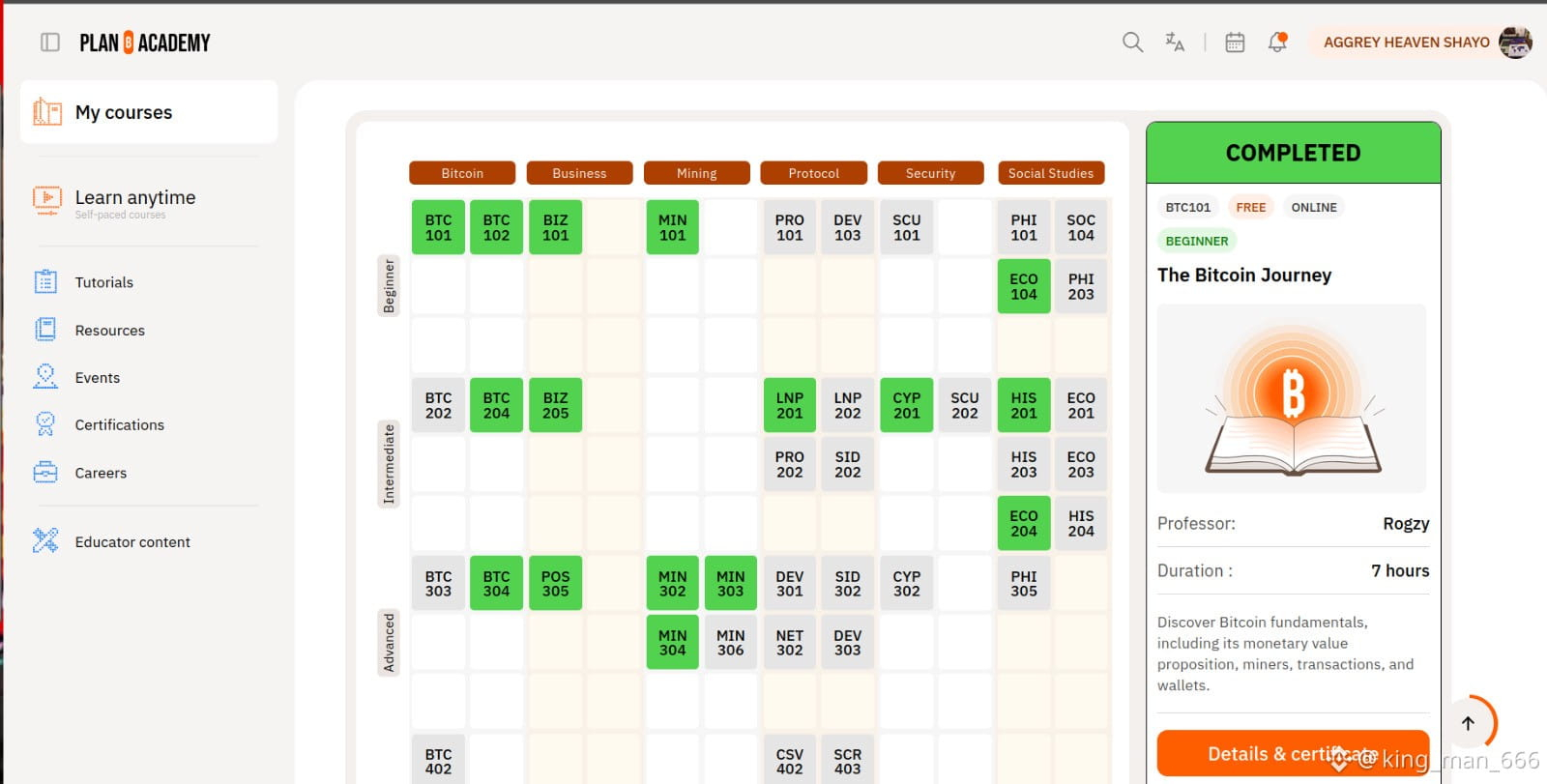
As founder of BitcoinSafariTz in Tanzania, I’ve completed 14 courses on PlanB and used that knowledge to teach universities and meetups across Tanzania.
My call: Let’s bring Plan ₿ to Africa. Imagine official Plan ₿ Clubs in universities across Tanzania, Kenya, Nigeria, Zambia students learning and teaching others. Africa has 1.4B young people who need financial freedom. Plan ₿ is the tool to reach them.
#bitcoin.” #EducationalContent #BTC #Wallet #BTC
The Bitcoin Education Gap is Huge Plan ₿ Network is the Solution
90% of people who want to learn Bitcoin still struggle to find trusted, structured education. The internet is full of noise, scams, and random videos. Beginners don't know where to start.
The solution I found is Plan ₿ Network (planb.network) one of the best open-source Bitcoin education platforms ever created.
Why it stands out:
1. 100% Free & Open-Source: No paywalls, ever. Quality Bitcoin education as a human right.
2. Structured Path: From Beginner to Expert, from "What is money?" to Lightning and coding. You always know your next step.
3. Built for Local Communities: It empowers grassroots education in Africa, Latin America, and Asia.
4. Global: Content is translated so language is never a barrier.
5. Learn from Legends: Professors like Adam Back, Saifedean Ammous, Jimmy Song, Giacomo Zucco, Peter Todd, Jack Mallers and many more.
As founder of BitcoinSafariTz in Tanzania, I’ve completed 14 courses on PlanB and used that knowledge to teach universities and meetups across Tanzania.
My call: Let’s bring Plan ₿ to Africa. Imagine official Plan ₿ Clubs in universities across Tanzania, Kenya, Nigeria, Zambia students learning and teaching others. Africa has 1.4B young people who need financial freedom. Plan ₿ is the tool to reach them.
#bitcoin.” #EducationalContent #BTC #Wallet #BTC
90% of people who want to learn Bitcoin still struggle to find trusted, structured education. The internet is full of noise, scams, and random videos. Beginners don't know where to start.
The solution I found is Plan ₿ Network (planb.network) one of the best open-source Bitcoin education platforms ever created.
Why it stands out:
1. 100% Free & Open-Source: No paywalls, ever. Quality Bitcoin education as a human right.
2. Structured Path: From Beginner to Expert, from "What is money?" to Lightning and coding. You always know your next step.
3. Built for Local Communities: It empowers grassroots education in Africa, Latin America, and Asia.
4. Global: Content is translated so language is never a barrier.
5. Learn from Legends: Professors like Adam Back, Saifedean Ammous, Jimmy Song, Giacomo Zucco, Peter Todd, Jack Mallers and many more.
As founder of BitcoinSafariTz in Tanzania, I’ve completed 14 courses on PlanB and used that knowledge to teach universities and meetups across Tanzania.
My call: Let’s bring Plan ₿ to Africa. Imagine official Plan ₿ Clubs in universities across Tanzania, Kenya, Nigeria, Zambia students learning and teaching others. Africa has 1.4B young people who need financial freedom. Plan ₿ is the tool to reach them.
#bitcoin.” #EducationalContent #BTC #Wallet #BTC
14
·
--
Finally, a dream come true!
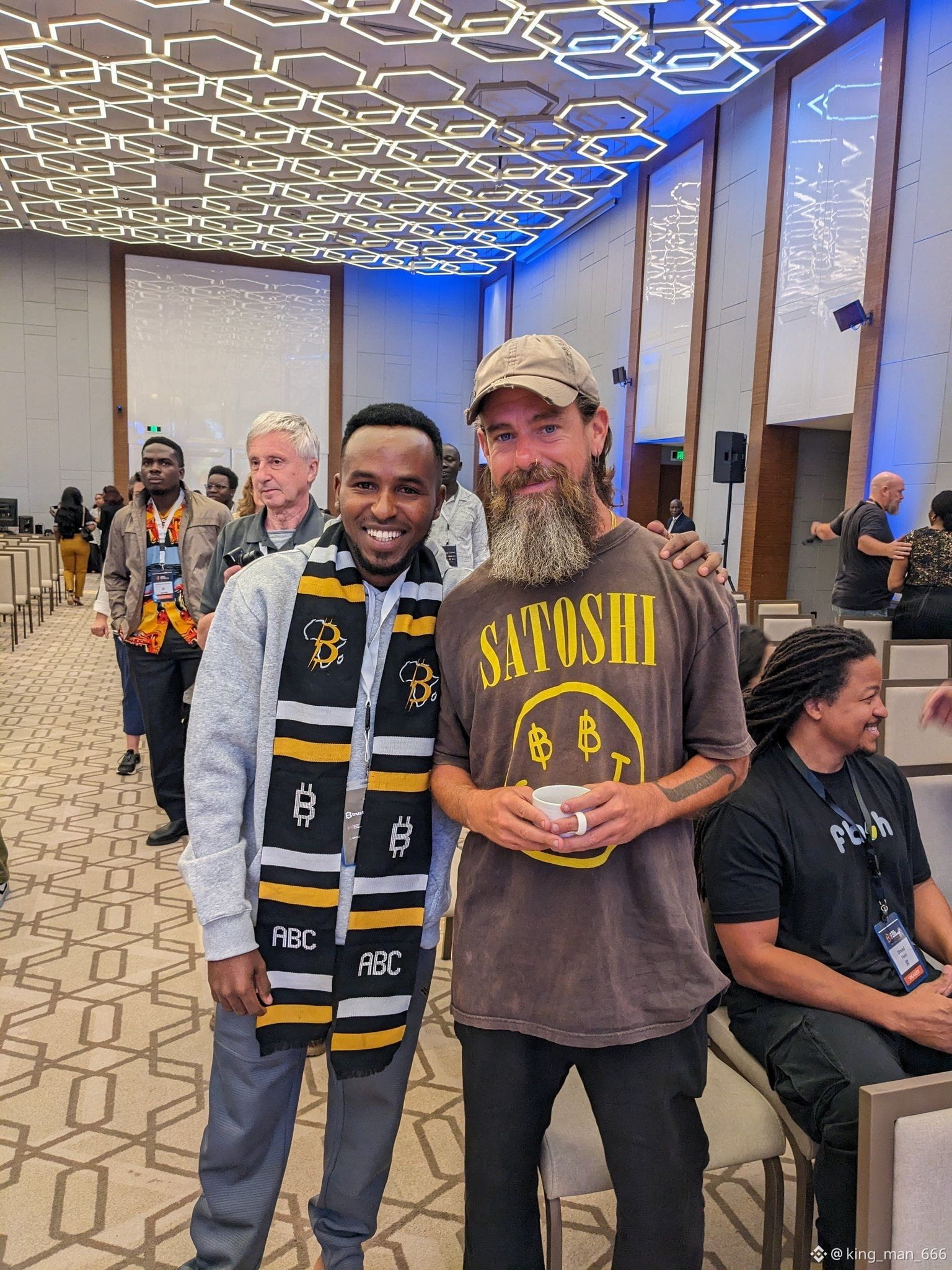
At the Africa Bitcoin Conference 2024 in Nairobi, Kenya 🇰🇪, I had the incredible honor of meeting Jack Dorsey - the former founder of Twitter (now X), founder of Block, and one of the biggest Bitcoin freedom fighters in the world.
This was more than just a handshake. It was a moment that confirmed why we are doing what we are doing at BitcoinSafariTz. While many people are chasing hype and shitcoins, Jack reminded us that Bitcoin is not just money, it's a tool for freedom, especially for Africa.
We talked about the future of open-source development in Africa, how Lightning Network will bank the unbanked, and why Africa will lead the global Bitcoin adoption. His humility, his focus, and his belief in Africa gave me so much energy to keep building.
From Dar es Salaam to Nairobi, the Safari continues. We are not just watching history, we are building it.
Thank you, Africa Bitcoin Conference. Thank you, Jack.
The future is decentralized. The future is African. The future is Bitcoin!
#Bitcoin #AfricaBitcoinConference #JackDorsey #BitcoinSafariT z #BTC
Finally, a dream come true!
At the Africa Bitcoin Conference 2024 in Nairobi, Kenya 🇰🇪, I had the incredible honor of meeting Jack Dorsey - the former founder of Twitter (now X), founder of Block, and one of the biggest Bitcoin freedom fighters in the world.
This was more than just a handshake. It was a moment that confirmed why we are doing what we are doing at BitcoinSafariTz. While many people are chasing hype and shitcoins, Jack reminded us that Bitcoin is not just money, it's a tool for freedom, especially for Africa.
We talked about the future of open-source development in Africa, how Lightning Network will bank the unbanked, and why Africa will lead the global Bitcoin adoption. His humility, his focus, and his belief in Africa gave me so much energy to keep building.
From Dar es Salaam to Nairobi, the Safari continues. We are not just watching history, we are building it.
Thank you, Africa Bitcoin Conference. Thank you, Jack.
The future is decentralized. The future is African. The future is Bitcoin!
#Bitcoin #AfricaBitcoinConference #JackDorsey #BitcoinSafariT z #BTC
At the Africa Bitcoin Conference 2024 in Nairobi, Kenya 🇰🇪, I had the incredible honor of meeting Jack Dorsey - the former founder of Twitter (now X), founder of Block, and one of the biggest Bitcoin freedom fighters in the world.
This was more than just a handshake. It was a moment that confirmed why we are doing what we are doing at BitcoinSafariTz. While many people are chasing hype and shitcoins, Jack reminded us that Bitcoin is not just money, it's a tool for freedom, especially for Africa.
We talked about the future of open-source development in Africa, how Lightning Network will bank the unbanked, and why Africa will lead the global Bitcoin adoption. His humility, his focus, and his belief in Africa gave me so much energy to keep building.
From Dar es Salaam to Nairobi, the Safari continues. We are not just watching history, we are building it.
Thank you, Africa Bitcoin Conference. Thank you, Jack.
The future is decentralized. The future is African. The future is Bitcoin!
#Bitcoin #AfricaBitcoinConference #JackDorsey #BitcoinSafariT z #BTC
18
·
--
My Experience: HRF Bitcoin Financial Freedom Webinar
Hello Plebs & Everyone,
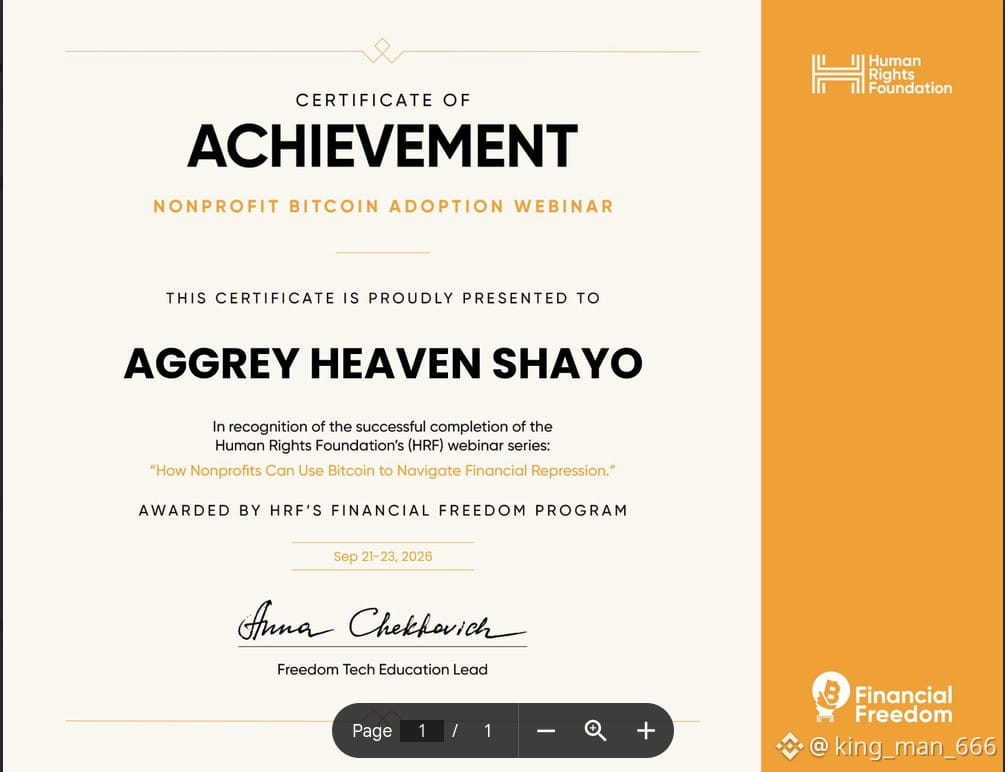
Last week, from September 21st to 23rd, 2026, I had the honor of attending all three days of the Bitcoin Financial Freedom Webinar organized by the Human Rights Foundation ( HRF) . The program was expertly led by BTC Sessions, Anna Chekhovich, and Win Ko Aung from HRF.
The 3 days were amazing, intensive, and focused on sovereignty and freedom.
What we learned:
Day 1 - Bitcoin 101: Why activists use Bitcoin, understanding Bitcoin and the Lightning Network, Bitcoin wallets, how to set up and back up a wallet, sending and receiving transactions, volatility, privacy and other challenges.
Day 2 - Using Bitcoin: Self-custody vs custodians, exchanges vs P2P options, converting Bitcoin into local currency and cash, and best options for different regions.
Day 3 - Building & Spending: Continuing education overview, Bitcoin crowdfunding for NGOs, accepting Bitcoin donations, privacy tools, BTCPay Server, and how to spend Bitcoin without converting it using tools like Tando in Kenya, ChapSmart in Tanzania, and Bitrefill and many others
It was a truly empowering experience. Huge thanks to the entire HRF team. I am proud to have received a Certificate of Achievement in Non-Profit Bitcoin Adoption.
If you want to stay connected, subscribe to the Financial Freedom newsletter for updates and resources: https://hrf.org/program/financial-freedom/financial-freedom-reports/
And if you missed it, you can register for the next webinar in December here: https://forms.gle/KUYHu8D8JW5isJAR6
#bitcoin.” #BitcoinEducation #freedomofmoney #Wallet #SelfCustody
My Experience: HRF Bitcoin Financial Freedom Webinar
Hello Plebs & Everyone,
Last week, from September 21st to 23rd, 2026, I had the honor of attending all three days of the Bitcoin Financial Freedom Webinar organized by the Human Rights Foundation ( HRF) . The program was expertly led by BTC Sessions, Anna Chekhovich, and Win Ko Aung from HRF.
The 3 days were amazing, intensive, and focused on sovereignty and freedom.
What we learned:
Day 1 - Bitcoin 101: Why activists use Bitcoin, understanding Bitcoin and the Lightning Network, Bitcoin wallets, how to set up and back up a wallet, sending and receiving transactions, volatility, privacy and other challenges.
Day 2 - Using Bitcoin: Self-custody vs custodians, exchanges vs P2P options, converting Bitcoin into local currency and cash, and best options for different regions.
Day 3 - Building & Spending: Continuing education overview, Bitcoin crowdfunding for NGOs, accepting Bitcoin donations, privacy tools, BTCPay Server, and how to spend Bitcoin without converting it using tools like Tando in Kenya, ChapSmart in Tanzania, and Bitrefill and many others
It was a truly empowering experience. Huge thanks to the entire HRF team. I am proud to have received a Certificate of Achievement in Non-Profit Bitcoin Adoption.
If you want to stay connected, subscribe to the Financial Freedom newsletter for updates and resources: https://hrf.org/program/financial-freedom/financial-freedom-reports/
And if you missed it, you can register for the next webinar in December here: https://forms.gle/KUYHu8D8JW5isJAR6
#bitcoin.” #BitcoinEducation #freedomofmoney #Wallet #SelfCustody
Hello Plebs & Everyone,
Last week, from September 21st to 23rd, 2026, I had the honor of attending all three days of the Bitcoin Financial Freedom Webinar organized by the Human Rights Foundation ( HRF) . The program was expertly led by BTC Sessions, Anna Chekhovich, and Win Ko Aung from HRF.
The 3 days were amazing, intensive, and focused on sovereignty and freedom.
What we learned:
Day 1 - Bitcoin 101: Why activists use Bitcoin, understanding Bitcoin and the Lightning Network, Bitcoin wallets, how to set up and back up a wallet, sending and receiving transactions, volatility, privacy and other challenges.
Day 2 - Using Bitcoin: Self-custody vs custodians, exchanges vs P2P options, converting Bitcoin into local currency and cash, and best options for different regions.
Day 3 - Building & Spending: Continuing education overview, Bitcoin crowdfunding for NGOs, accepting Bitcoin donations, privacy tools, BTCPay Server, and how to spend Bitcoin without converting it using tools like Tando in Kenya, ChapSmart in Tanzania, and Bitrefill and many others
It was a truly empowering experience. Huge thanks to the entire HRF team. I am proud to have received a Certificate of Achievement in Non-Profit Bitcoin Adoption.
If you want to stay connected, subscribe to the Financial Freedom newsletter for updates and resources: https://hrf.org/program/financial-freedom/financial-freedom-reports/
And if you missed it, you can register for the next webinar in December here: https://forms.gle/KUYHu8D8JW5isJAR6
#bitcoin.” #BitcoinEducation #freedomofmoney #Wallet #SelfCustody
18
·
--
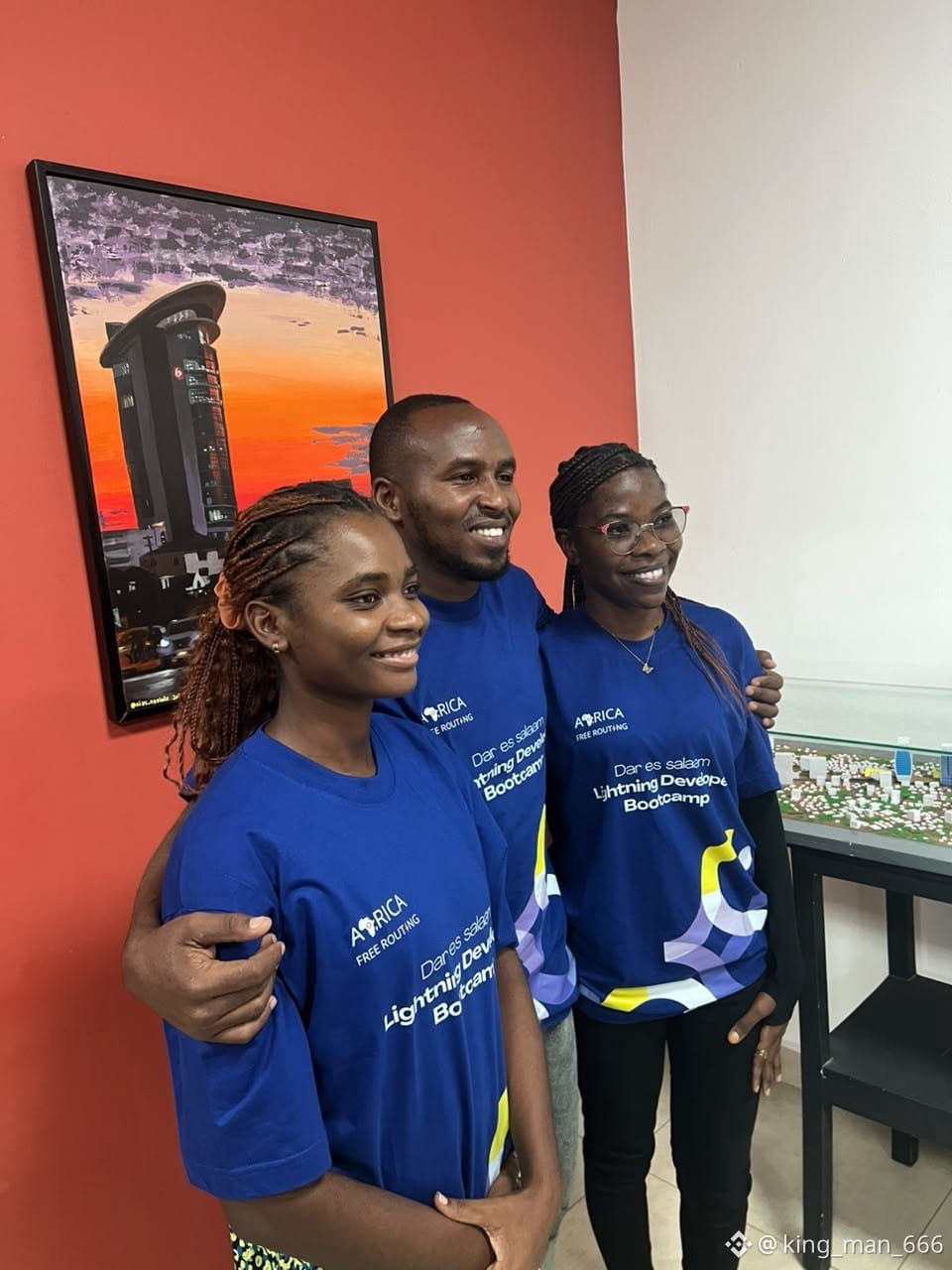
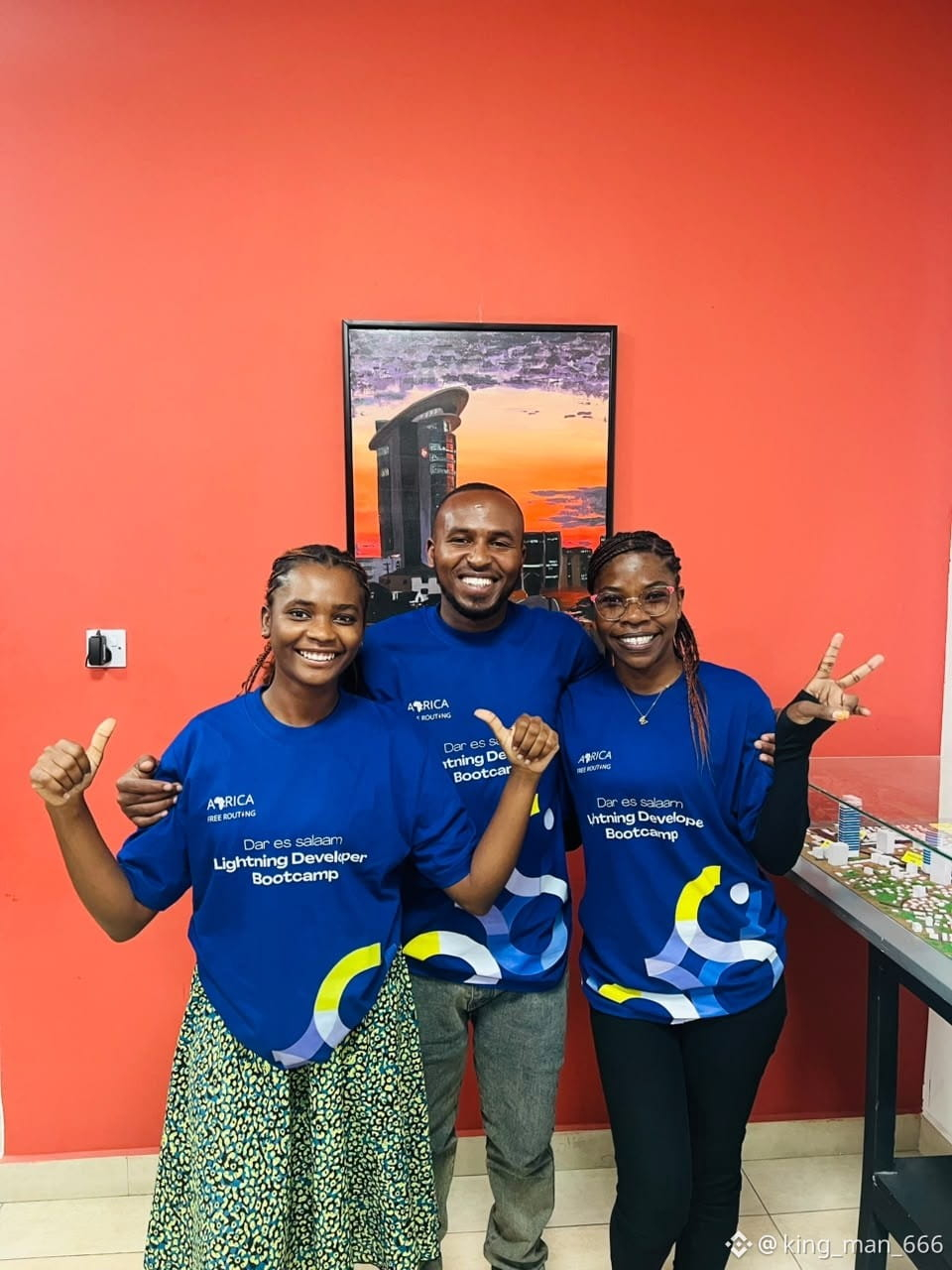
Last year we witnessed a major and historic event here in Tanzania, the Dar es Salaam Lightning Developer Bootcamp, which lasted for 5 days.
This bootcamp was led by brilliant leaders from Africa Free Routing, brothers Megasley & Yasir, and it was sponsored by major international organizations such as the Human Rights Foundation (HRF), Btrust, PlanB.network, and Tether, in collaboration with our Bitcoin family here in Tanzania, BitcoinSafariTz.
For 5 days, the developers learned in depth Bitcoin and Lightning Network technologies, starting from the fundamentals of protocol, how to build wallets, and up to how to create applications that work fast and at low cost.
At the end of the bootcamp, participants joined a hackathon and built various products aimed at solving real social challenges here in Tanzania using the Lightning Network. This is a big step toward building African solutions using Bitcoin technology.
But there is an important thing to consider. A large percentage of the participants were men, and the number of women was very small. In this Bitcoin world, many people still believe it is an opportunity for men only, and this is an incorrect mindset.
We need balance. We need women to wake up and learn this technology. We can learn from our neighbors in Kenya 🇰🇪, where there is great motivation and strong communities of women in the industry like BTC Dada, DadaDevs, Women in Blockchain, and many others.
There are many opportunities within Bitcoin for women, such as educators, developers, designers, entrepreneurs, and leaders.
Conclusion: This technology is for all of us. When we work together men and women, with unity and shared goals, we will go much further and help build a digital Tanzania owned by Tanzanians themselves. It’s time for our sisters to wake up!
#bitcoin.”
#hrf
#lightningnetwork
#BitcoinEducation
#BTC
Last year we witnessed a major and historic event here in Tanzania, the Dar es Salaam Lightning Developer Bootcamp, which lasted for 5 days.
This bootcamp was led by brilliant leaders from Africa Free Routing, brothers Megasley & Yasir, and it was sponsored by major international organizations such as the Human Rights Foundation (HRF), Btrust, PlanB.network, and Tether, in collaboration with our Bitcoin family here in Tanzania, BitcoinSafariTz.
For 5 days, the developers learned in depth Bitcoin and Lightning Network technologies, starting from the fundamentals of protocol, how to build wallets, and up to how to create applications that work fast and at low cost.
At the end of the bootcamp, participants joined a hackathon and built various products aimed at solving real social challenges here in Tanzania using the Lightning Network. This is a big step toward building African solutions using Bitcoin technology.
But there is an important thing to consider. A large percentage of the participants were men, and the number of women was very small. In this Bitcoin world, many people still believe it is an opportunity for men only, and this is an incorrect mindset.
We need balance. We need women to wake up and learn this technology. We can learn from our neighbors in Kenya 🇰🇪, where there is great motivation and strong communities of women in the industry like BTC Dada, DadaDevs, Women in Blockchain, and many others.
There are many opportunities within Bitcoin for women, such as educators, developers, designers, entrepreneurs, and leaders.
Conclusion: This technology is for all of us. When we work together men and women, with unity and shared goals, we will go much further and help build a digital Tanzania owned by Tanzanians themselves. It’s time for our sisters to wake up!
#bitcoin.”
#hrf
#lightningnetwork
#BitcoinEducation
#BTC
This bootcamp was led by brilliant leaders from Africa Free Routing, brothers Megasley & Yasir, and it was sponsored by major international organizations such as the Human Rights Foundation (HRF), Btrust, PlanB.network, and Tether, in collaboration with our Bitcoin family here in Tanzania, BitcoinSafariTz.
For 5 days, the developers learned in depth Bitcoin and Lightning Network technologies, starting from the fundamentals of protocol, how to build wallets, and up to how to create applications that work fast and at low cost.
At the end of the bootcamp, participants joined a hackathon and built various products aimed at solving real social challenges here in Tanzania using the Lightning Network. This is a big step toward building African solutions using Bitcoin technology.
But there is an important thing to consider. A large percentage of the participants were men, and the number of women was very small. In this Bitcoin world, many people still believe it is an opportunity for men only, and this is an incorrect mindset.
We need balance. We need women to wake up and learn this technology. We can learn from our neighbors in Kenya 🇰🇪, where there is great motivation and strong communities of women in the industry like BTC Dada, DadaDevs, Women in Blockchain, and many others.
There are many opportunities within Bitcoin for women, such as educators, developers, designers, entrepreneurs, and leaders.
Conclusion: This technology is for all of us. When we work together men and women, with unity and shared goals, we will go much further and help build a digital Tanzania owned by Tanzanians themselves. It’s time for our sisters to wake up!
#bitcoin.”
#hrf
#lightningnetwork
#BitcoinEducation
#BTC
1
·
--
Thrilled to share a new milestone! 🎉
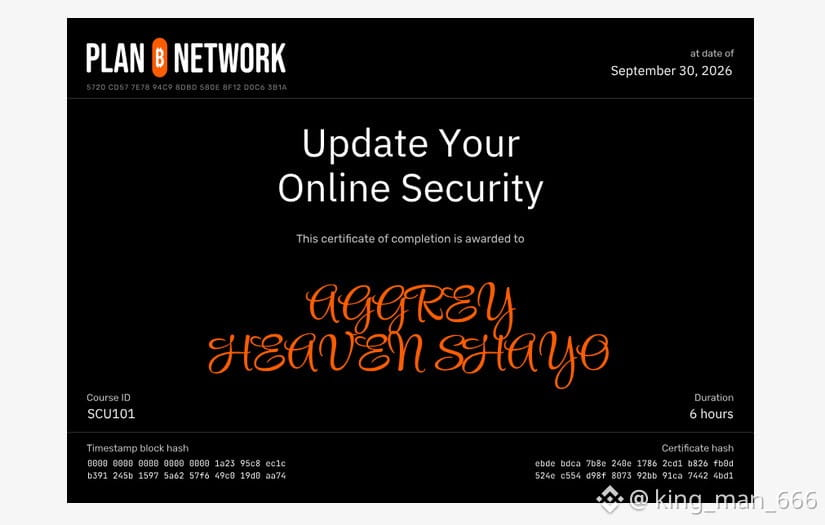
I have successfully completed the SCU101 - Update Your Online Security course at Plan ₿ Network Ita and earned my diploma with a score of 93/100 on the final exam! 🏆
This course was an eye-opener on digital hygiene, privacy, and how to stay truly secure in the Bitcoin era. Highly recommended for anyone who wants to take their online security to the next level.
A huge thank you to the PlanB Network team for making high-quality Bitcoin education free and open to all.
Onwards to the next course!
You can verify my certificate here:
https://planb.academy/en/exam-certificates/2bccae16-c1f3-4d80-895f-a5f0b6227069
#PBNDiploma #planbnetwork #BitcoinEducation #OnlineSecurity #Cybersecurity
Thrilled to share a new milestone! 🎉
I have successfully completed the SCU101 - Update Your Online Security course at Plan ₿ Network Ita and earned my diploma with a score of 93/100 on the final exam! 🏆
This course was an eye-opener on digital hygiene, privacy, and how to stay truly secure in the Bitcoin era. Highly recommended for anyone who wants to take their online security to the next level.
A huge thank you to the PlanB Network team for making high-quality Bitcoin education free and open to all.
Onwards to the next course!
You can verify my certificate here:
https://planb.academy/en/exam-certificates/2bccae16-c1f3-4d80-895f-a5f0b6227069
#PBNDiploma #planbnetwork #BitcoinEducation #OnlineSecurity #Cybersecurity
I have successfully completed the SCU101 - Update Your Online Security course at Plan ₿ Network Ita and earned my diploma with a score of 93/100 on the final exam! 🏆
This course was an eye-opener on digital hygiene, privacy, and how to stay truly secure in the Bitcoin era. Highly recommended for anyone who wants to take their online security to the next level.
A huge thank you to the PlanB Network team for making high-quality Bitcoin education free and open to all.
Onwards to the next course!
You can verify my certificate here:
https://planb.academy/en/exam-certificates/2bccae16-c1f3-4d80-895f-a5f0b6227069
#PBNDiploma #planbnetwork #BitcoinEducation #OnlineSecurity #Cybersecurity
16
·
--
Another step forward in my Bitcoin journey! 💪
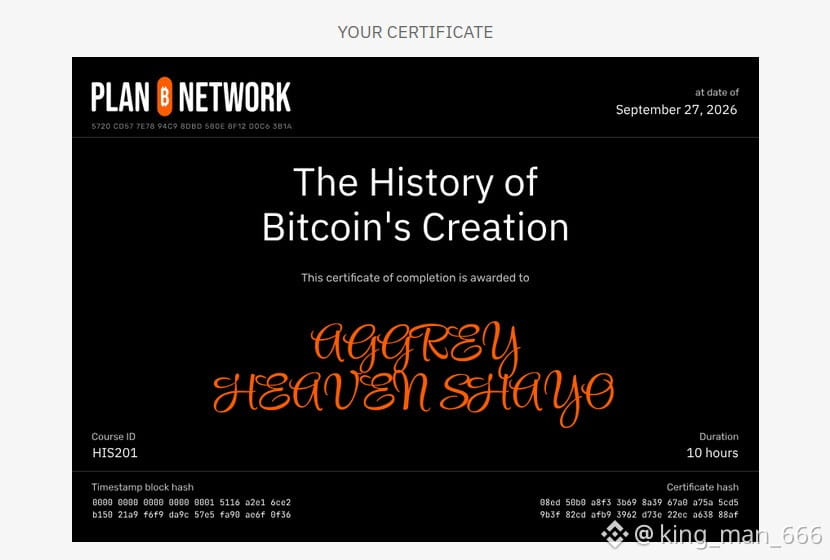
I'm proud to announce that I have successfully completed the HIS201 - History of Money & Bitcoin course at Plan ₿ Network Ita and earned my diploma with a score of 85/100 on the final exam!
Understanding the history of money is key to understanding why Bitcoin matters. This course connected the dots from barter to fiat and finally to sound money. Truly enlightening!
Grateful to Plan ₿ Network Ita for making world-class, free education accessible to everyone.
The learning never stops. Next course loading...
Verify my certificate here:
https://planb.academy/en/exam-certificates/3898ba13-0236-4011-a2eb-00c181612414
#PBNDiploma #planbnetwork #BitcoinEducation #HistoryOfMoney #BitcoinHistory
Another step forward in my Bitcoin journey! 💪
I'm proud to announce that I have successfully completed the HIS201 - History of Money & Bitcoin course at Plan ₿ Network Ita and earned my diploma with a score of 85/100 on the final exam!
Understanding the history of money is key to understanding why Bitcoin matters. This course connected the dots from barter to fiat and finally to sound money. Truly enlightening!
Grateful to Plan ₿ Network Ita for making world-class, free education accessible to everyone.
The learning never stops. Next course loading...
Verify my certificate here:
https://planb.academy/en/exam-certificates/3898ba13-0236-4011-a2eb-00c181612414
#PBNDiploma #planbnetwork #BitcoinEducation #HistoryOfMoney #BitcoinHistory
I'm proud to announce that I have successfully completed the HIS201 - History of Money & Bitcoin course at Plan ₿ Network Ita and earned my diploma with a score of 85/100 on the final exam!
Understanding the history of money is key to understanding why Bitcoin matters. This course connected the dots from barter to fiat and finally to sound money. Truly enlightening!
Grateful to Plan ₿ Network Ita for making world-class, free education accessible to everyone.
The learning never stops. Next course loading...
Verify my certificate here:
https://planb.academy/en/exam-certificates/3898ba13-0236-4011-a2eb-00c181612414
#PBNDiploma #planbnetwork #BitcoinEducation #HistoryOfMoney #BitcoinHistory
18
·
--
Perfect score! 100% unlocked! 🏆
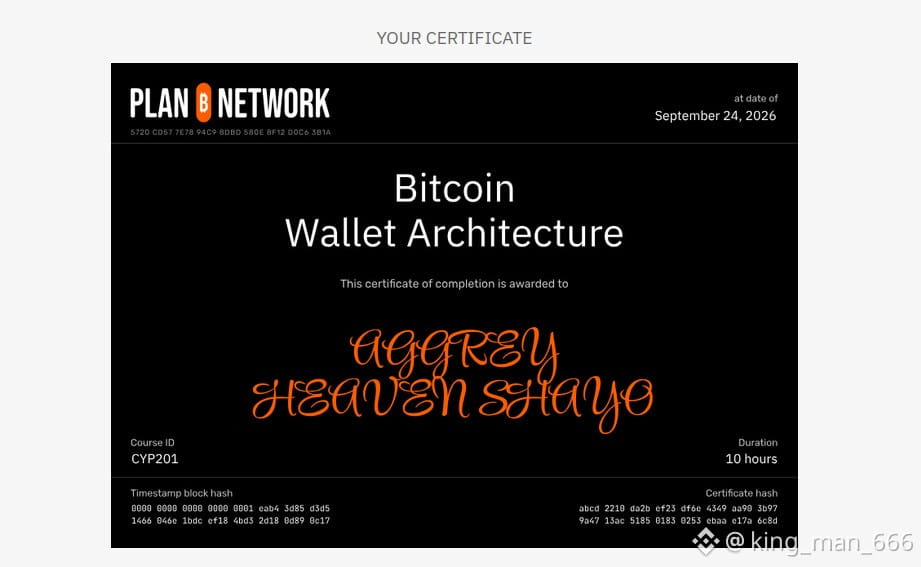
I'm beyond thrilled to announce I've completed the CYP201 - Bitcoin Wallet Architecture course at Plan ₿ Network Ita and earned my diploma with a flawless score of 100/100 on the final exam!
Cryptography is the backbone of Bitcoin from SHA-256 and digital signatures to public/private keys. This course demystified the math and magic that makes trustless money possible. It was challenging, but incredibly rewarding.
Immense gratitude to Plan ₿ Network Ita for making elite-level education free and accessible to everyone around the world.
The deeper you go, the more beautiful Bitcoin becomes.
Verify my certificate:
https://planb.academy/en/exam-certificates/83383edd-4d7b-44aa-9fc9-090dcf51dc93
#PBNDiploma #planbnetwork #Cryptography #SHA256 #Wallet
Perfect score! 100% unlocked! 🏆
I'm beyond thrilled to announce I've completed the CYP201 - Bitcoin Wallet Architecture course at Plan ₿ Network Ita and earned my diploma with a flawless score of 100/100 on the final exam!
Cryptography is the backbone of Bitcoin from SHA-256 and digital signatures to public/private keys. This course demystified the math and magic that makes trustless money possible. It was challenging, but incredibly rewarding.
Immense gratitude to Plan ₿ Network Ita for making elite-level education free and accessible to everyone around the world.
The deeper you go, the more beautiful Bitcoin becomes.
Verify my certificate:
https://planb.academy/en/exam-certificates/83383edd-4d7b-44aa-9fc9-090dcf51dc93
#PBNDiploma #planbnetwork #Cryptography #SHA256 #Wallet
I'm beyond thrilled to announce I've completed the CYP201 - Bitcoin Wallet Architecture course at Plan ₿ Network Ita and earned my diploma with a flawless score of 100/100 on the final exam!
Cryptography is the backbone of Bitcoin from SHA-256 and digital signatures to public/private keys. This course demystified the math and magic that makes trustless money possible. It was challenging, but incredibly rewarding.
Immense gratitude to Plan ₿ Network Ita for making elite-level education free and accessible to everyone around the world.
The deeper you go, the more beautiful Bitcoin becomes.
Verify my certificate:
https://planb.academy/en/exam-certificates/83383edd-4d7b-44aa-9fc9-090dcf51dc93
#PBNDiploma #planbnetwork #Cryptography #SHA256 #Wallet
21
·
--
Lightning speed! ⚡️
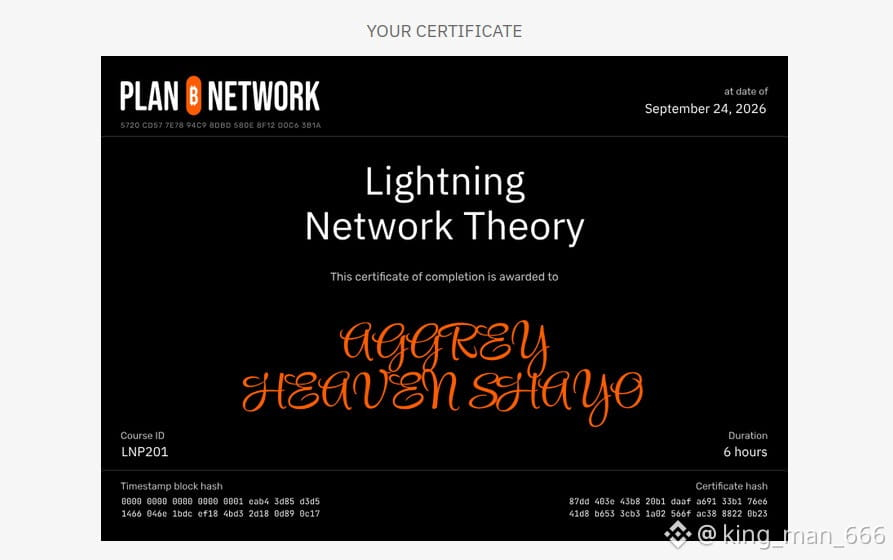
Proud to share that I've completed the LNP201 - Lightning Network Theory course at Plan ₿ Network Ita and earned my diploma with a score of 98/100 on the final exam! 🏆
From payment channels and HTLCs to routing and liquidity — this course showed me how Lightning makes Bitcoin instant, cheap, and scalable for everyday payments. Bitcoin is not just digital gold, it's ready to be cash for the world.
Thank you Plan ₿ Network Ita for this amazing free education and for lighting the way for the next generation of Bitcoiners!
The future is Lightning!
Verify here:
https://planb.academy/en/exam-certificates/a1ce5063-6451-48cd-87ed-aec69218c356
#PBNDiploma #lightningnetwork #lightningnetwork #LNP201 #BitcoinEducation
Lightning speed! ⚡️
Proud to share that I've completed the LNP201 - Lightning Network Theory course at Plan ₿ Network Ita and earned my diploma with a score of 98/100 on the final exam! 🏆
From payment channels and HTLCs to routing and liquidity — this course showed me how Lightning makes Bitcoin instant, cheap, and scalable for everyday payments. Bitcoin is not just digital gold, it's ready to be cash for the world.
Thank you Plan ₿ Network Ita for this amazing free education and for lighting the way for the next generation of Bitcoiners!
The future is Lightning!
Verify here:
https://planb.academy/en/exam-certificates/a1ce5063-6451-48cd-87ed-aec69218c356
#PBNDiploma #lightningnetwork #lightningnetwork #LNP201 #BitcoinEducation
Proud to share that I've completed the LNP201 - Lightning Network Theory course at Plan ₿ Network Ita and earned my diploma with a score of 98/100 on the final exam! 🏆
From payment channels and HTLCs to routing and liquidity — this course showed me how Lightning makes Bitcoin instant, cheap, and scalable for everyday payments. Bitcoin is not just digital gold, it's ready to be cash for the world.
Thank you Plan ₿ Network Ita for this amazing free education and for lighting the way for the next generation of Bitcoiners!
The future is Lightning!
Verify here:
https://planb.academy/en/exam-certificates/a1ce5063-6451-48cd-87ed-aec69218c356
#PBNDiploma #lightningnetwork #lightningnetwork #LNP201 #BitcoinEducation
21
·
--
The journey begins! 🧡
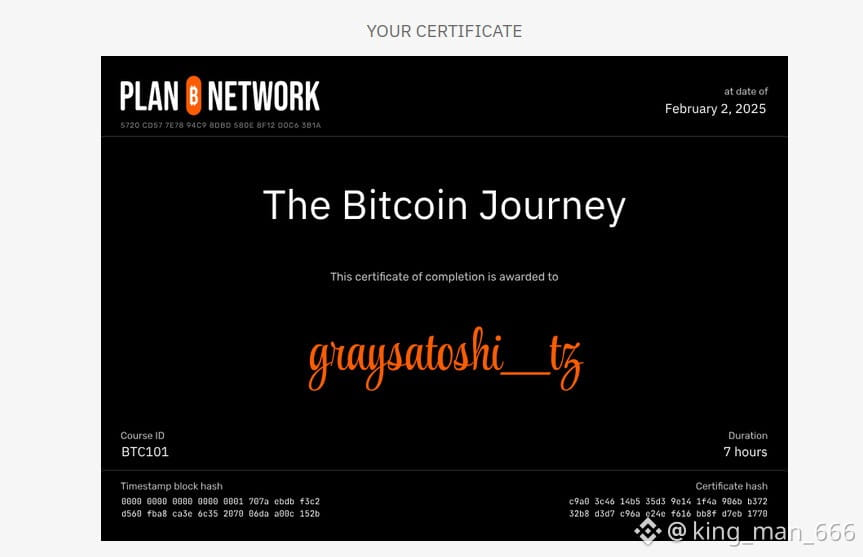
I'm thrilled to share that I've completed the BTC101 - The Bitcoin Journey course at Plan ₿ Network Ita and earned my diploma with a score of 83/100 on the final exam! 💪
BTC101 is the perfect starting point it takes you from the basics of what money is, why Bitcoin was created, and how it empowers financial sovereignty for everyone. This course truly strengthened my conviction and deepened my understanding of why Bitcoin matters.
Thank you Plan ₿ Network Ita for offering free, high-quality Bitcoin education to the world. This is just the beginning!
Verify here:
https://planb.academy/en/exam-certificates/0f2202de-520c-41f7-b200-315f28347459
#PBNDiploma #planbnetwork #BitcoinEducation #BTC101K #learnbitcoin
The journey begins! 🧡
I'm thrilled to share that I've completed the BTC101 - The Bitcoin Journey course at Plan ₿ Network Ita and earned my diploma with a score of 83/100 on the final exam! 💪
BTC101 is the perfect starting point it takes you from the basics of what money is, why Bitcoin was created, and how it empowers financial sovereignty for everyone. This course truly strengthened my conviction and deepened my understanding of why Bitcoin matters.
Thank you Plan ₿ Network Ita for offering free, high-quality Bitcoin education to the world. This is just the beginning!
Verify here:
https://planb.academy/en/exam-certificates/0f2202de-520c-41f7-b200-315f28347459
#PBNDiploma #planbnetwork #BitcoinEducation #BTC101K #learnbitcoin
I'm thrilled to share that I've completed the BTC101 - The Bitcoin Journey course at Plan ₿ Network Ita and earned my diploma with a score of 83/100 on the final exam! 💪
BTC101 is the perfect starting point it takes you from the basics of what money is, why Bitcoin was created, and how it empowers financial sovereignty for everyone. This course truly strengthened my conviction and deepened my understanding of why Bitcoin matters.
Thank you Plan ₿ Network Ita for offering free, high-quality Bitcoin education to the world. This is just the beginning!
Verify here:
https://planb.academy/en/exam-certificates/0f2202de-520c-41f7-b200-315f28347459
#PBNDiploma #planbnetwork #BitcoinEducation #BTC101K #learnbitcoin
42
·
--
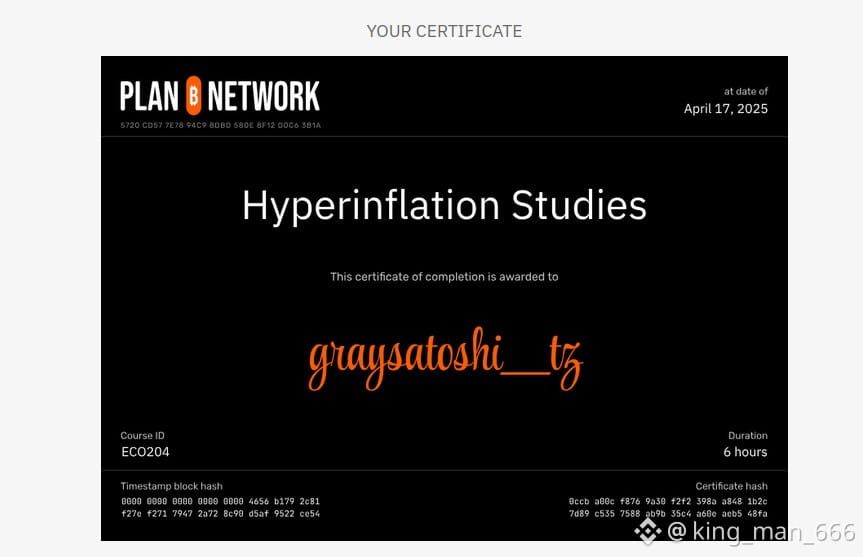
Why does sound money matter? History has the answer. 📉
I'm proud to share that I've completed the ECO204 - Hyperinflation Case Studies course at Plan ₿ Network Ita and earned my diploma with a score of 83/100 on the final exam! 💪
From Weimar Germany to Zimbabwe, Venezuela, and beyond this course was a powerful lesson on how money printing destroys economies and why Bitcoin as hard, scarce money is a necessary alternative. A truly eye-opening deep dive.
Thank you Plan ₿ Network Ita for making this critical economic education free and accessible.
The more you learn, the more you understand Bitcoin.
Verify here:
https://planb.academy/en/exam-certificates/10484642-79d3-4f0d-9967-fd0e475e4649
#PBNDiploma #planbnetwork #BitcoinEducation #Hyperinflation #SoundMoney
Why does sound money matter? History has the answer. 📉
I'm proud to share that I've completed the ECO204 - Hyperinflation Case Studies course at Plan ₿ Network Ita and earned my diploma with a score of 83/100 on the final exam! 💪
From Weimar Germany to Zimbabwe, Venezuela, and beyond this course was a powerful lesson on how money printing destroys economies and why Bitcoin as hard, scarce money is a necessary alternative. A truly eye-opening deep dive.
Thank you Plan ₿ Network Ita for making this critical economic education free and accessible.
The more you learn, the more you understand Bitcoin.
Verify here:
https://planb.academy/en/exam-certificates/10484642-79d3-4f0d-9967-fd0e475e4649
#PBNDiploma #planbnetwork #BitcoinEducation #Hyperinflation #SoundMoney
I'm proud to share that I've completed the ECO204 - Hyperinflation Case Studies course at Plan ₿ Network Ita and earned my diploma with a score of 83/100 on the final exam! 💪
From Weimar Germany to Zimbabwe, Venezuela, and beyond this course was a powerful lesson on how money printing destroys economies and why Bitcoin as hard, scarce money is a necessary alternative. A truly eye-opening deep dive.
Thank you Plan ₿ Network Ita for making this critical economic education free and accessible.
The more you learn, the more you understand Bitcoin.
Verify here:
https://planb.academy/en/exam-certificates/10484642-79d3-4f0d-9967-fd0e475e4649
#PBNDiploma #planbnetwork #BitcoinEducation #Hyperinflation #SoundMoney
3
·
--
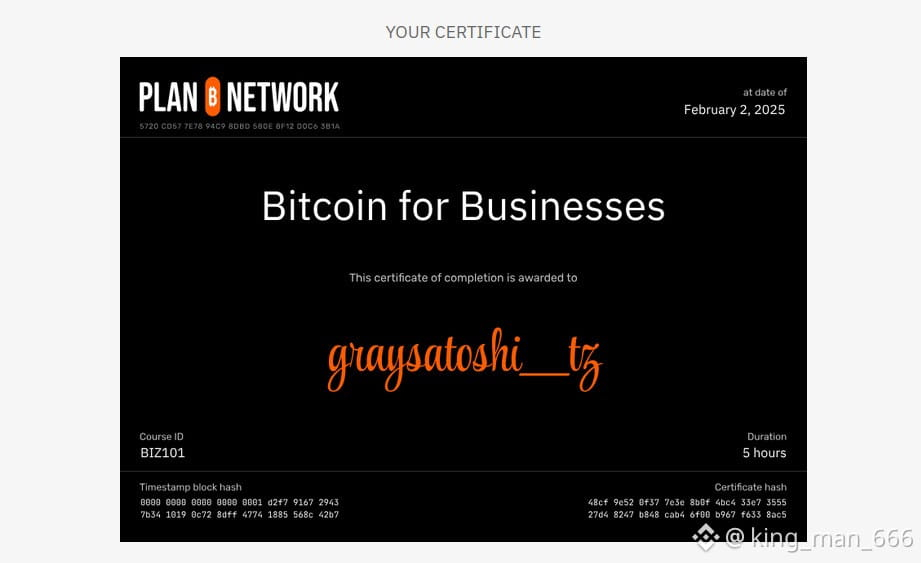
Bitcoin means business! 💼
I'm excited to announce I've completed the BIZ101 - Bitcoin for Business course at Plan ₿ Network Ita and earned my diploma with a score of 90/100 on the final exam! 🏆
This course was incredibly practical from accepting Bitcoin payments, treasury strategy, accounting, and circular economies to understanding why businesses need sound money on their balance sheet. Bitcoin isn't just for individuals, it's for smart businesses too.
Big thank you to Plan ₿ Network Ita for making high-quality, free Bitcoin business education accessible to everyone.
Ready to orange-pill the business world!
Verify my certificate:
https://planb.academy/en/exam-certificates/1f6f11dc-ad8f-4706-b849-ca68ffff4789
#PBNDiploma #planbnetwork #BitcoinForBusiness #BitcoinEducation #learnbitcoin
Bitcoin means business! 💼
I'm excited to announce I've completed the BIZ101 - Bitcoin for Business course at Plan ₿ Network Ita and earned my diploma with a score of 90/100 on the final exam! 🏆
This course was incredibly practical from accepting Bitcoin payments, treasury strategy, accounting, and circular economies to understanding why businesses need sound money on their balance sheet. Bitcoin isn't just for individuals, it's for smart businesses too.
Big thank you to Plan ₿ Network Ita for making high-quality, free Bitcoin business education accessible to everyone.
Ready to orange-pill the business world!
Verify my certificate:
https://planb.academy/en/exam-certificates/1f6f11dc-ad8f-4706-b849-ca68ffff4789
#PBNDiploma #planbnetwork #BitcoinForBusiness #BitcoinEducation #learnbitcoin
I'm excited to announce I've completed the BIZ101 - Bitcoin for Business course at Plan ₿ Network Ita and earned my diploma with a score of 90/100 on the final exam! 🏆
This course was incredibly practical from accepting Bitcoin payments, treasury strategy, accounting, and circular economies to understanding why businesses need sound money on their balance sheet. Bitcoin isn't just for individuals, it's for smart businesses too.
Big thank you to Plan ₿ Network Ita for making high-quality, free Bitcoin business education accessible to everyone.
Ready to orange-pill the business world!
Verify my certificate:
https://planb.academy/en/exam-certificates/1f6f11dc-ad8f-4706-b849-ca68ffff4789
#PBNDiploma #planbnetwork #BitcoinForBusiness #BitcoinEducation #learnbitcoin
40
·
--
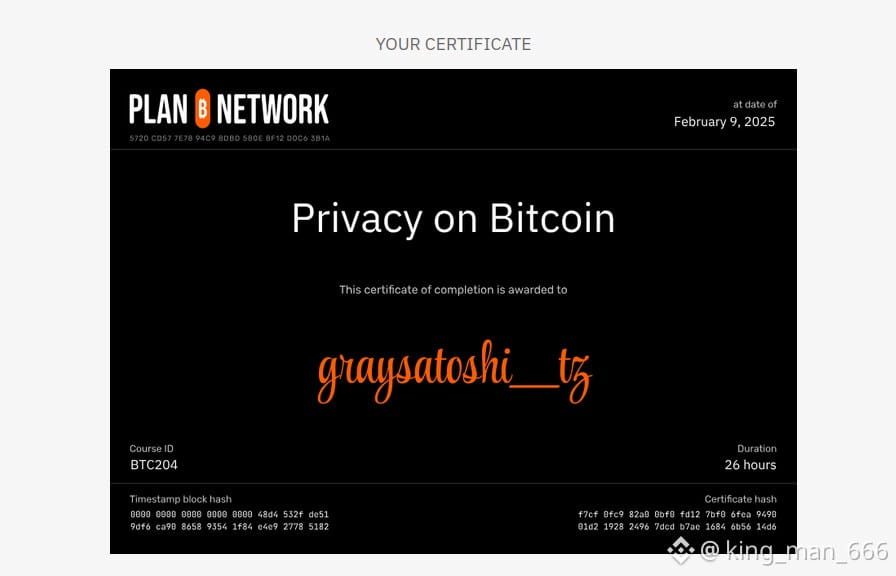
Privacy is not a crime, it's a right! 🛡️
Proud to announce I've completed the BTC204 - Privacy on Bitcoin course at Plan ₿ Network Ita and earned my diploma with a score of 85/100 on the final exam! 💪
This course was a deep dive into UTXOs, coinjoins, KYC, chain analysis, and how to use Bitcoin in a sovereign way. Bitcoin is transparent by default, but privacy is possible if you learn how to use the tools correctly. Essential knowledge for every Bitcoiner.
Thank you Plan ₿ Network Ita for making this crucial privacy education free and open to all.
Stay private, stay sovereign!
Verify here:
https://planb.academy/en/exam-certificates/93c1edfd-2c64-4d32-8b30-049b1517ca6
#PBNDiploma #PlanBNetwork #BitcoinPrivacy #LearnBitcoin #FinancialPrivacy
Privacy is not a crime, it's a right! 🛡️
Proud to announce I've completed the BTC204 - Privacy on Bitcoin course at Plan ₿ Network Ita and earned my diploma with a score of 85/100 on the final exam! 💪
This course was a deep dive into UTXOs, coinjoins, KYC, chain analysis, and how to use Bitcoin in a sovereign way. Bitcoin is transparent by default, but privacy is possible if you learn how to use the tools correctly. Essential knowledge for every Bitcoiner.
Thank you Plan ₿ Network Ita for making this crucial privacy education free and open to all.
Stay private, stay sovereign!
Verify here:
https://planb.academy/en/exam-certificates/93c1edfd-2c64-4d32-8b30-049b1517ca6
#PBNDiploma #PlanBNetwork #BitcoinPrivacy #LearnBitcoin #FinancialPrivacy
Proud to announce I've completed the BTC204 - Privacy on Bitcoin course at Plan ₿ Network Ita and earned my diploma with a score of 85/100 on the final exam! 💪
This course was a deep dive into UTXOs, coinjoins, KYC, chain analysis, and how to use Bitcoin in a sovereign way. Bitcoin is transparent by default, but privacy is possible if you learn how to use the tools correctly. Essential knowledge for every Bitcoiner.
Thank you Plan ₿ Network Ita for making this crucial privacy education free and open to all.
Stay private, stay sovereign!
Verify here:
https://planb.academy/en/exam-certificates/93c1edfd-2c64-4d32-8b30-049b1517ca6
#PBNDiploma #PlanBNetwork #BitcoinPrivacy #LearnBitcoin #FinancialPrivacy
53
·
--
A huge milestone unlocked! 🎓
I'm thrilled to have completed the Plan ₿ Biz School 2025, taught by the legendary giacomozucco on PlanB.network and to have earned my diploma!
This wasn't just a course it was a deep dive into the entrepreneurial, economic, and philosophical mindset needed to build on Bitcoin. Learning directly from Giacomo was inspiring, provocative, and truly mind-shifting. From business models to Bitcoin's ethos, this school delivers pure signal.
Endless gratitude to Plan ₿ Network and Professor giacomozucco for this world-class, free education.
Ready to build!
Verify here:
https://planb.academy/en/course-diplomas/7ee25256-07f5-4224-9a01-eaffedf03e10
#PBNDiploma #PBNDiploma #BitcoinEducation #PBNDiploma #PlanBBizSchool
A huge milestone unlocked! 🎓
I'm thrilled to have completed the Plan ₿ Biz School 2025, taught by the legendary giacomozucco on PlanB.network and to have earned my diploma!
This wasn't just a course it was a deep dive into the entrepreneurial, economic, and philosophical mindset needed to build on Bitcoin. Learning directly from Giacomo was inspiring, provocative, and truly mind-shifting. From business models to Bitcoin's ethos, this school delivers pure signal.
Endless gratitude to Plan ₿ Network and Professor giacomozucco for this world-class, free education.
Ready to build!
Verify here:
https://planb.academy/en/course-diplomas/7ee25256-07f5-4224-9a01-eaffedf03e10
#PBNDiploma #PBNDiploma #BitcoinEducation #PBNDiploma #PlanBBizSchool
I'm thrilled to have completed the Plan ₿ Biz School 2025, taught by the legendary giacomozucco on PlanB.network and to have earned my diploma!
This wasn't just a course it was a deep dive into the entrepreneurial, economic, and philosophical mindset needed to build on Bitcoin. Learning directly from Giacomo was inspiring, provocative, and truly mind-shifting. From business models to Bitcoin's ethos, this school delivers pure signal.
Endless gratitude to Plan ₿ Network and Professor giacomozucco for this world-class, free education.
Ready to build!
Verify here:
https://planb.academy/en/course-diplomas/7ee25256-07f5-4224-9a01-eaffedf03e10
#PBNDiploma #PBNDiploma #BitcoinEducation #PBNDiploma #PlanBBizSchool

57
·
--
A huge milestone unlocked! 🎓
I'm thrilled to have completed the Plan ₿ Biz School 2025, taught by the legendary giacomozucco on PlanB.network and to have earned my diploma!
This wasn't just a course it was a deep dive into the entrepreneurial, economic, and philosophical mindset needed to build on Bitcoin. Learning directly from Giacomo was inspiring, provocative, and truly mind-shifting. From business models to Bitcoin's ethos, this school delivers pure signal.
Endless gratitude to Plan ₿ Network and Professor giacomozucco for this world-class, free education.
Ready to build!
Verify here:
https://planb.academy/en/course-diplomas/7ee25256-07f5-4224-9a01-eaffedf03e10
#PBNDiploma #PBNDiploma #BitcoinEducation #PBNDiploma #PlanBBizSchool
A huge milestone unlocked! 🎓
I'm thrilled to have completed the Plan ₿ Biz School 2025, taught by the legendary giacomozucco on PlanB.network and to have earned my diploma!
This wasn't just a course it was a deep dive into the entrepreneurial, economic, and philosophical mindset needed to build on Bitcoin. Learning directly from Giacomo was inspiring, provocative, and truly mind-shifting. From business models to Bitcoin's ethos, this school delivers pure signal.
Endless gratitude to Plan ₿ Network and Professor giacomozucco for this world-class, free education.
Ready to build!
Verify here:
https://planb.academy/en/course-diplomas/7ee25256-07f5-4224-9a01-eaffedf03e10
#PBNDiploma #PBNDiploma #BitcoinEducation #PBNDiploma #PlanBBizSchool
I'm thrilled to have completed the Plan ₿ Biz School 2025, taught by the legendary giacomozucco on PlanB.network and to have earned my diploma!
This wasn't just a course it was a deep dive into the entrepreneurial, economic, and philosophical mindset needed to build on Bitcoin. Learning directly from Giacomo was inspiring, provocative, and truly mind-shifting. From business models to Bitcoin's ethos, this school delivers pure signal.
Endless gratitude to Plan ₿ Network and Professor giacomozucco for this world-class, free education.
Ready to build!
Verify here:
https://planb.academy/en/course-diplomas/7ee25256-07f5-4224-9a01-eaffedf03e10
#PBNDiploma #PBNDiploma #BitcoinEducation #PBNDiploma #PlanBBizSchool

71
·
--
What is an Altcoin?In the beginning, there was only Bitcoin, created by Satoshi Nakamoto.
But because of the open source nature of Bitcoin’s source code, this didn’t last long.
Source code is the code that programmers can modify to change how a software program or “app” works.
Open source software is software whose source code can be reviewed, used, copied, modified, and improved by anyone.
If you have access to a software program’s source code, you can make changes such as fixing parts that don’t work well, improving parts so they work better, or adding new features.
You can think of open source software like a recipe that is public so that everyone can see it and copy it.
The KFC Example
For example, if you’ve ever eaten at KFC, you know how delicious their fried chicken is using Colonel Sanders’ original recipe with 11 herbs and spices. 😋
But the recipe is a secret. It’s stored in a vault (cold storage) at KFC headquarters.
The KFC chicken’s source code (recipe) is considered “closed source” or “proprietary.”
Because we don’t know the exact recipe, if you wanted to make chicken similar to KFC yourself, you’d have to create your recipe from scratch, probably with lots of trial and error.
You’d end up spending a lot of time, instead of spending a lot of time eating… fried chicken.
And most likely, instead of KFC, you’d end up with GFC — Gross Fried Chicken. 🤣
Now… imagine if Colonel Sanders had decided to make that recipe public and allow anyone to use it. That would be open source.
And that’s exactly what Satoshi Nakamoto did!
He decided to share his “recipe” (source code) with the public and publish it online as open source software.
Without having to do reverse engineering of Bitcoin’s software and trying to figure out how to create a cryptocurrency from scratch, other cryptocurrencies started popping up quickly.
These cryptocurrencies are now called “altcoins.”
What are Altcoins?
The word “altcoin” comes from two words: “alt” and “coin.”
The word “alt” is short for alternative, and “coin” means coin.
So the word “altcoin” comes from the idea that all other cryptocurrencies are considered “alternative coins” to Bitcoin (BTC), which was the first cryptocurrency.
Altcoins are considered an alternative to Bitcoin because they are seen as attempts to replace Bitcoin or improve it.
One benefit of open source software like Bitcoin is that anyone in the world can take the original codebase and try to improve it or add functionality to the software.
For credit where it’s due, the first altcoin was Namecoin (NMC).
Namecoin (NMC)
The goal of Namecoin was to provide a decentralized domain name service (DNS) system.
Instead of websites having domains ending in “.com” or “.net”, which were under the control of ICANN (the main governing body for domain names), Namecoin created the “.bit” domain which was independent from ICANN and couldn’t be censored or shut down.
For example, instead of using “babypips.com” as our website URL, I could register “babypips.bit” by buying it with NMC and use it as our URL.
Unfortunately, the barrier to knowing how to access “.bit” websites was very high.
Namecoin was very difficult to use, which limited its adoption. 😔
Although Namecoin was the first altcoin, it definitely wasn’t the last.
Within a few years after Bitcoin’s source code was made public, hundreds of altcoins were born.
Then thousands! 😱
Many developers just copied or made small changes to Bitcoin’s software code and then launched their own cryptocurrencies.
Unsurprisingly, most of them couldn’t get user adoption, and after a few weeks or months they were abandoned and disappeared.
These altcoins ended up being called “shitcoins”, because literally they ended up being pieces of sh*t with no value.
But not all altcoins were complete crap.
Some were able to make meaningful adjustments or offer features different enough from Bitcoin that they were able to attract and grow their own community of users.
Here are examples of early altcoins that still exist today:
Litecoin (LTC)
In 2011, Charlie Lee, a developer at Google, started experimenting with Bitcoin’s source code.
He decided to create a version of Bitcoin that was “more accessible”, and called it Litecoin.
Although Litecoin is based on Bitcoin’s source code, it has several technical differences, such as:
- Faster transaction confirmation time: 2.5 minutes vs 10 minutes.
- Different hash function for mining: Scrypt vs SHA-256.
- Larger maximum supply: 84 million vs 21 million.
Charlie Lee’s goal for Litecoin wasn’t to replace Bitcoin, but for Litecoin to be “silver to Bitcoin’s gold.”
Dogecoin (DOGE)
In 2013, Dogecoin was an altcoin created as a “joke”, but it quickly attracted and grew its own online community.
It was inspired by an internet meme known as “Doge”, which was a picture of a Shiba Inu dog shown with colorful text in Comic Sans font.
Because of its popularity, DOGE, the native currency of Dogecoin, is considered the first meme coin and also the first dog coin.
While Litecoin was built from Bitcoin’s source code, Dogecoin was built from Litecoin’s source code.
(Do you start to see the “benefits” of open source software? Once you create something, anyone can take your work and copy it. Yay.)
Ripple (XRP)
Let’s say you’re from the US and your significant other, a famous Brazilian supermodel or footballer (pick your own), wants to send you money from their bank to your bank.
There are many steps that would need to be completed, and each step often has fees.
And that’s why international bank transfers can take several days and be expensive.
Ripple wanted to change that.
Its founders wanted to create a platform for banks that would enable international cross-border payments to be completed within seconds at low cost.
Ripple is a company that was originally founded in 2012 as Opencoin, then called Ripple Labs, and later dropped the word “Labs.”
The company created the XRP Ledger, their public blockchain, which uses XRP as its native cryptocurrency.
The creators chose the ticker symbol “XRP” from the words “ripple credits” or “ripples”, along with the prefix “X” used for non-national currencies according to the ISO 4217 standard.
Stellar (XLM)
A few years after Ripple was created, one of its co-founders, Jed McCaleb, created Stellar with Joyce Kim.
Although Stellar originally forked from Ripple’s codebase, that code was later completely changed.
Stellar’s goal is largely similar to Ripple’s:
To allow cross-border payments between any two currencies to be sent quickly and at low cost.
However, they differed in approach.
Ripple initially focused more on bank-to-bank transfers, while Stellar from the start focused on person-to-person transfers, especially for the “unbanked” — people from developing countries who didn’t have access to financial services.
Money transfers or remittances via the Stellar network are completed near real-time and at very low cost.
A big difference between Stellar and Bitcoin is transaction processing speed.
Stellar can process approximately 3,000 TPS (transactions per second) compared to 5 TPS for Bitcoin.
“Lumens” or XLM (originally known as “stellar”) is the native cryptocurrency of Stellar.
XLM is required to pay the base fee charged by the Stellar network for transactions.
Although Stellar’s initial goal was to increase financial inclusion by reaching people without access to banking worldwide, its priorities have shifted and it now focuses on helping financial firms connect via blockchain technology.
Ethereum (ETH)
You can’t talk about altcoins without mentioning — arguably — the most famous altcoin: Ethereum.
In 2013, Ethereum was conceived with the goal of expanding the capabilities of blockchain technology.
Before Ethereum, most altcoins were basically Bitcoin clones or spinoffs, built for one specific function…
To work as an alternative “currency” outside the traditional financial system.
Basically, it was the digital equivalent of cash that you could send directly from one person to another without a middleman.
For example:
- Bitcoin users can make transactions with BTC.
- Litecoin users can make transactions with LTC.
- Dogecoin users can make transactions with DOGE.
- Ripple users can make transactions with XRP.
- Stellar users can make transactions with XLM.
(And later convert again to your local fiat currency if you wanted.)
Yes, Ethereum can do exactly that using ether (ETH), its native currency, but that’s not its main purpose.
What sets Ethereum apart from Bitcoin and other altcoins at the time is that its blockchain design was more flexible and was built as a software platform.
So instead of just being another “currency”, developers were able to expand Ethereum’s functionality, such as having the ability to build decentralized applications (“dApps”) and even launch their own “tokens.”
Ethereum is so important that we’ll learn about it in more detail later.
But for now, just know that Ethereum is an altcoin.
And it’s one of the largest cryptocurrencies, second only to Bitcoin.
Now that you understand altcoins, let’s learn about some specific “genres” of altcoins.
What is an Altcoin?
In the beginning, there was only Bitcoin, created by Satoshi Nakamoto.
But because of the open source nature of Bitcoin’s source code, this didn’t last long.
Source code is the code that programmers can modify to change how a software program or “app” works.
Open source software is software whose source code can be reviewed, used, copied, modified, and improved by anyone.
If you have access to a software program’s source code, you can make changes such as fixing parts that don’t work well, improving parts so they work better, or adding new features.
You can think of open source software like a recipe that is public so that everyone can see it and copy it.
The KFC Example
For example, if you’ve ever eaten at KFC, you know how delicious their fried chicken is using Colonel Sanders’ original recipe with 11 herbs and spices. 😋
But the recipe is a secret. It’s stored in a vault (cold storage) at KFC headquarters.
The KFC chicken’s source code (recipe) is considered “closed source” or “proprietary.”
Because we don’t know the exact recipe, if you wanted to make chicken similar to KFC yourself, you’d have to create your recipe from scratch, probably with lots of trial and error.
You’d end up spending a lot of time, instead of spending a lot of time eating… fried chicken.
And most likely, instead of KFC, you’d end up with GFC — Gross Fried Chicken. 🤣
Now… imagine if Colonel Sanders had decided to make that recipe public and allow anyone to use it. That would be open source.
And that’s exactly what Satoshi Nakamoto did!
He decided to share his “recipe” (source code) with the public and publish it online as open source software.
Without having to do reverse engineering of Bitcoin’s software and trying to figure out how to create a cryptocurrency from scratch, other cryptocurrencies started popping up quickly.
These cryptocurrencies are now called “altcoins.”
What are Altcoins?
The word “altcoin” comes from two words: “alt” and “coin.”
The word “alt” is short for alternative, and “coin” means coin.
So the word “altcoin” comes from the idea that all other cryptocurrencies are considered “alternative coins” to Bitcoin (BTC), which was the first cryptocurrency.
Altcoins are considered an alternative to Bitcoin because they are seen as attempts to replace Bitcoin or improve it.
One benefit of open source software like Bitcoin is that anyone in the world can take the original codebase and try to improve it or add functionality to the software.
For credit where it’s due, the first altcoin was Namecoin (NMC).
Namecoin (NMC)
The goal of Namecoin was to provide a decentralized domain name service (DNS) system.
Instead of websites having domains ending in “.com” or “.net”, which were under the control of ICANN (the main governing body for domain names), Namecoin created the “.bit” domain which was independent from ICANN and couldn’t be censored or shut down.
For example, instead of using “babypips.com” as our website URL, I could register “babypips.bit” by buying it with NMC and use it as our URL.
Unfortunately, the barrier to knowing how to access “.bit” websites was very high.
Namecoin was very difficult to use, which limited its adoption. 😔
Although Namecoin was the first altcoin, it definitely wasn’t the last.
Within a few years after Bitcoin’s source code was made public, hundreds of altcoins were born.
Then thousands! 😱
Many developers just copied or made small changes to Bitcoin’s software code and then launched their own cryptocurrencies.
Unsurprisingly, most of them couldn’t get user adoption, and after a few weeks or months they were abandoned and disappeared.
These altcoins ended up being called “shitcoins”, because literally they ended up being pieces of sh*t with no value.
But not all altcoins were complete crap.
Some were able to make meaningful adjustments or offer features different enough from Bitcoin that they were able to attract and grow their own community of users.
Here are examples of early altcoins that still exist today:
Litecoin (LTC)
In 2011, Charlie Lee, a developer at Google, started experimenting with Bitcoin’s source code.
He decided to create a version of Bitcoin that was “more accessible”, and called it Litecoin.
Although Litecoin is based on Bitcoin’s source code, it has several technical differences, such as:
- Faster transaction confirmation time: 2.5 minutes vs 10 minutes.
- Different hash function for mining: Scrypt vs SHA-256.
- Larger maximum supply: 84 million vs 21 million.
Charlie Lee’s goal for Litecoin wasn’t to replace Bitcoin, but for Litecoin to be “silver to Bitcoin’s gold.”
Dogecoin (DOGE)
In 2013, Dogecoin was an altcoin created as a “joke”, but it quickly attracted and grew its own online community.
It was inspired by an internet meme known as “Doge”, which was a picture of a Shiba Inu dog shown with colorful text in Comic Sans font.
Because of its popularity, DOGE, the native currency of Dogecoin, is considered the first meme coin and also the first dog coin.
While Litecoin was built from Bitcoin’s source code, Dogecoin was built from Litecoin’s source code.
(Do you start to see the “benefits” of open source software? Once you create something, anyone can take your work and copy it. Yay.)
Ripple (XRP)
Let’s say you’re from the US and your significant other, a famous Brazilian supermodel or footballer (pick your own), wants to send you money from their bank to your bank.
There are many steps that would need to be completed, and each step often has fees.
And that’s why international bank transfers can take several days and be expensive.
Ripple wanted to change that.
Its founders wanted to create a platform for banks that would enable international cross-border payments to be completed within seconds at low cost.
Ripple is a company that was originally founded in 2012 as Opencoin, then called Ripple Labs, and later dropped the word “Labs.”
The company created the XRP Ledger, their public blockchain, which uses XRP as its native cryptocurrency.
The creators chose the ticker symbol “XRP” from the words “ripple credits” or “ripples”, along with the prefix “X” used for non-national currencies according to the ISO 4217 standard.
Stellar (XLM)
A few years after Ripple was created, one of its co-founders, Jed McCaleb, created Stellar with Joyce Kim.
Although Stellar originally forked from Ripple’s codebase, that code was later completely changed.
Stellar’s goal is largely similar to Ripple’s:
To allow cross-border payments between any two currencies to be sent quickly and at low cost.
However, they differed in approach.
Ripple initially focused more on bank-to-bank transfers, while Stellar from the start focused on person-to-person transfers, especially for the “unbanked” — people from developing countries who didn’t have access to financial services.
Money transfers or remittances via the Stellar network are completed near real-time and at very low cost.
A big difference between Stellar and Bitcoin is transaction processing speed.
Stellar can process approximately 3,000 TPS (transactions per second) compared to 5 TPS for Bitcoin.
“Lumens” or XLM (originally known as “stellar”) is the native cryptocurrency of Stellar.
XLM is required to pay the base fee charged by the Stellar network for transactions.
Although Stellar’s initial goal was to increase financial inclusion by reaching people without access to banking worldwide, its priorities have shifted and it now focuses on helping financial firms connect via blockchain technology.
Ethereum (ETH)
You can’t talk about altcoins without mentioning — arguably — the most famous altcoin: Ethereum.
In 2013, Ethereum was conceived with the goal of expanding the capabilities of blockchain technology.
Before Ethereum, most altcoins were basically Bitcoin clones or spinoffs, built for one specific function…
To work as an alternative “currency” outside the traditional financial system.
Basically, it was the digital equivalent of cash that you could send directly from one person to another without a middleman.
For example:
- Bitcoin users can make transactions with BTC.
- Litecoin users can make transactions with LTC.
- Dogecoin users can make transactions with DOGE.
- Ripple users can make transactions with XRP.
- Stellar users can make transactions with XLM.
(And later convert again to your local fiat currency if you wanted.)
Yes, Ethereum can do exactly that using ether (ETH), its native currency, but that’s not its main purpose.
What sets Ethereum apart from Bitcoin and other altcoins at the time is that its blockchain design was more flexible and was built as a software platform.
So instead of just being another “currency”, developers were able to expand Ethereum’s functionality, such as having the ability to build decentralized applications (“dApps”) and even launch their own “tokens.”
Ethereum is so important that we’ll learn about it in more detail later.
But for now, just know that Ethereum is an altcoin.
And it’s one of the largest cryptocurrencies, second only to Bitcoin.
Now that you understand altcoins, let’s learn about some specific “genres” of altcoins.
But because of the open source nature of Bitcoin’s source code, this didn’t last long.
Source code is the code that programmers can modify to change how a software program or “app” works.
Open source software is software whose source code can be reviewed, used, copied, modified, and improved by anyone.
If you have access to a software program’s source code, you can make changes such as fixing parts that don’t work well, improving parts so they work better, or adding new features.
You can think of open source software like a recipe that is public so that everyone can see it and copy it.
The KFC Example
For example, if you’ve ever eaten at KFC, you know how delicious their fried chicken is using Colonel Sanders’ original recipe with 11 herbs and spices. 😋
But the recipe is a secret. It’s stored in a vault (cold storage) at KFC headquarters.
The KFC chicken’s source code (recipe) is considered “closed source” or “proprietary.”
Because we don’t know the exact recipe, if you wanted to make chicken similar to KFC yourself, you’d have to create your recipe from scratch, probably with lots of trial and error.
You’d end up spending a lot of time, instead of spending a lot of time eating… fried chicken.
And most likely, instead of KFC, you’d end up with GFC — Gross Fried Chicken. 🤣
Now… imagine if Colonel Sanders had decided to make that recipe public and allow anyone to use it. That would be open source.
And that’s exactly what Satoshi Nakamoto did!
He decided to share his “recipe” (source code) with the public and publish it online as open source software.
Without having to do reverse engineering of Bitcoin’s software and trying to figure out how to create a cryptocurrency from scratch, other cryptocurrencies started popping up quickly.
These cryptocurrencies are now called “altcoins.”
What are Altcoins?
The word “altcoin” comes from two words: “alt” and “coin.”
The word “alt” is short for alternative, and “coin” means coin.
So the word “altcoin” comes from the idea that all other cryptocurrencies are considered “alternative coins” to Bitcoin (BTC), which was the first cryptocurrency.
Altcoins are considered an alternative to Bitcoin because they are seen as attempts to replace Bitcoin or improve it.
One benefit of open source software like Bitcoin is that anyone in the world can take the original codebase and try to improve it or add functionality to the software.
For credit where it’s due, the first altcoin was Namecoin (NMC).
Namecoin (NMC)
The goal of Namecoin was to provide a decentralized domain name service (DNS) system.
Instead of websites having domains ending in “.com” or “.net”, which were under the control of ICANN (the main governing body for domain names), Namecoin created the “.bit” domain which was independent from ICANN and couldn’t be censored or shut down.
For example, instead of using “babypips.com” as our website URL, I could register “babypips.bit” by buying it with NMC and use it as our URL.
Unfortunately, the barrier to knowing how to access “.bit” websites was very high.
Namecoin was very difficult to use, which limited its adoption. 😔
Although Namecoin was the first altcoin, it definitely wasn’t the last.
Within a few years after Bitcoin’s source code was made public, hundreds of altcoins were born.
Then thousands! 😱
Many developers just copied or made small changes to Bitcoin’s software code and then launched their own cryptocurrencies.
Unsurprisingly, most of them couldn’t get user adoption, and after a few weeks or months they were abandoned and disappeared.
These altcoins ended up being called “shitcoins”, because literally they ended up being pieces of sh*t with no value.
But not all altcoins were complete crap.
Some were able to make meaningful adjustments or offer features different enough from Bitcoin that they were able to attract and grow their own community of users.
Here are examples of early altcoins that still exist today:
Litecoin (LTC)
In 2011, Charlie Lee, a developer at Google, started experimenting with Bitcoin’s source code.
He decided to create a version of Bitcoin that was “more accessible”, and called it Litecoin.
Although Litecoin is based on Bitcoin’s source code, it has several technical differences, such as:
- Faster transaction confirmation time: 2.5 minutes vs 10 minutes.
- Different hash function for mining: Scrypt vs SHA-256.
- Larger maximum supply: 84 million vs 21 million.
Charlie Lee’s goal for Litecoin wasn’t to replace Bitcoin, but for Litecoin to be “silver to Bitcoin’s gold.”
Dogecoin (DOGE)
In 2013, Dogecoin was an altcoin created as a “joke”, but it quickly attracted and grew its own online community.
It was inspired by an internet meme known as “Doge”, which was a picture of a Shiba Inu dog shown with colorful text in Comic Sans font.
Because of its popularity, DOGE, the native currency of Dogecoin, is considered the first meme coin and also the first dog coin.
While Litecoin was built from Bitcoin’s source code, Dogecoin was built from Litecoin’s source code.
(Do you start to see the “benefits” of open source software? Once you create something, anyone can take your work and copy it. Yay.)
Ripple (XRP)
Let’s say you’re from the US and your significant other, a famous Brazilian supermodel or footballer (pick your own), wants to send you money from their bank to your bank.
There are many steps that would need to be completed, and each step often has fees.
And that’s why international bank transfers can take several days and be expensive.
Ripple wanted to change that.
Its founders wanted to create a platform for banks that would enable international cross-border payments to be completed within seconds at low cost.
Ripple is a company that was originally founded in 2012 as Opencoin, then called Ripple Labs, and later dropped the word “Labs.”
The company created the XRP Ledger, their public blockchain, which uses XRP as its native cryptocurrency.
The creators chose the ticker symbol “XRP” from the words “ripple credits” or “ripples”, along with the prefix “X” used for non-national currencies according to the ISO 4217 standard.
Stellar (XLM)
A few years after Ripple was created, one of its co-founders, Jed McCaleb, created Stellar with Joyce Kim.
Although Stellar originally forked from Ripple’s codebase, that code was later completely changed.
Stellar’s goal is largely similar to Ripple’s:
To allow cross-border payments between any two currencies to be sent quickly and at low cost.
However, they differed in approach.
Ripple initially focused more on bank-to-bank transfers, while Stellar from the start focused on person-to-person transfers, especially for the “unbanked” — people from developing countries who didn’t have access to financial services.
Money transfers or remittances via the Stellar network are completed near real-time and at very low cost.
A big difference between Stellar and Bitcoin is transaction processing speed.
Stellar can process approximately 3,000 TPS (transactions per second) compared to 5 TPS for Bitcoin.
“Lumens” or XLM (originally known as “stellar”) is the native cryptocurrency of Stellar.
XLM is required to pay the base fee charged by the Stellar network for transactions.
Although Stellar’s initial goal was to increase financial inclusion by reaching people without access to banking worldwide, its priorities have shifted and it now focuses on helping financial firms connect via blockchain technology.
Ethereum (ETH)
You can’t talk about altcoins without mentioning — arguably — the most famous altcoin: Ethereum.
In 2013, Ethereum was conceived with the goal of expanding the capabilities of blockchain technology.
Before Ethereum, most altcoins were basically Bitcoin clones or spinoffs, built for one specific function…
To work as an alternative “currency” outside the traditional financial system.
Basically, it was the digital equivalent of cash that you could send directly from one person to another without a middleman.
For example:
- Bitcoin users can make transactions with BTC.
- Litecoin users can make transactions with LTC.
- Dogecoin users can make transactions with DOGE.
- Ripple users can make transactions with XRP.
- Stellar users can make transactions with XLM.
(And later convert again to your local fiat currency if you wanted.)
Yes, Ethereum can do exactly that using ether (ETH), its native currency, but that’s not its main purpose.
What sets Ethereum apart from Bitcoin and other altcoins at the time is that its blockchain design was more flexible and was built as a software platform.
So instead of just being another “currency”, developers were able to expand Ethereum’s functionality, such as having the ability to build decentralized applications (“dApps”) and even launch their own “tokens.”
Ethereum is so important that we’ll learn about it in more detail later.
But for now, just know that Ethereum is an altcoin.
And it’s one of the largest cryptocurrencies, second only to Bitcoin.
Now that you understand altcoins, let’s learn about some specific “genres” of altcoins.
143
·
--
Article
BLOCKCHAIN EXPLORERLEARN QUICKLY - Blockchain Explorer
Have you ever sent crypto and then started to wonder:
“Did this money really arrive, or did it get lost on the way?”
Don’t worry… there’s a “Google” for blockchain that shows you everything LIVE.
Imagine you sent money via M-Pesa.
You get an SMS to verify, right?
In crypto there is no SMS…
But there’s something called a Blockchain Explorer.
👉 This is like Google for crypto
👉 It shows you:
- Where did the money come from
- Who did it go to
- Has it arrived or is it still on the way
In the simplest terms:
Blockchain Explorer = a place to check the truth of crypto transactions.
BLOCKCHAIN EXPLORER
LEARN QUICKLY - Blockchain Explorer
Have you ever sent crypto and then started to wonder:
“Did this money really arrive, or did it get lost on the way?”
Don’t worry… there’s a “Google” for blockchain that shows you everything LIVE.
Imagine you sent money via M-Pesa.
You get an SMS to verify, right?
In crypto there is no SMS…
But there’s something called a Blockchain Explorer.
👉 This is like Google for crypto
👉 It shows you:
- Where did the money come from
- Who did it go to
- Has it arrived or is it still on the way
In the simplest terms:
Blockchain Explorer = a place to check the truth of crypto transactions.
Have you ever sent crypto and then started to wonder:
“Did this money really arrive, or did it get lost on the way?”
Don’t worry… there’s a “Google” for blockchain that shows you everything LIVE.
Imagine you sent money via M-Pesa.
You get an SMS to verify, right?
In crypto there is no SMS…
But there’s something called a Blockchain Explorer.
👉 This is like Google for crypto
👉 It shows you:
- Where did the money come from
- Who did it go to
- Has it arrived or is it still on the way
In the simplest terms:
Blockchain Explorer = a place to check the truth of crypto transactions.
2
1
90
·
--
BitcoinSafariTz 2026 Bitcoin Pizza Day Recap 🍕
What happened:
We gathered in Tanzania for pizza, sats, and stories. Newbies set up Lightning wallets, sent first sats, and networked with builders and hodlers.
What we discussed:
Bitcoin adoption in TZ, self-custody, Lightning payments, P2P trading, and how to build circular Bitcoin economies locally.
Why May 22:
On May 22, 2010 Laszlo paid 10,000 BTC for 2 pizzas the first real-world Bitcoin transaction. We celebrate it to remember Bitcoin’s start as money.
#pizza #bitcoin #hold #BTC走势分析 #BTC☀️
BitcoinSafariTz 2026 Bitcoin Pizza Day Recap 🍕
What happened:
We gathered in Tanzania for pizza, sats, and stories. Newbies set up Lightning wallets, sent first sats, and networked with builders and hodlers.
What we discussed:
Bitcoin adoption in TZ, self-custody, Lightning payments, P2P trading, and how to build circular Bitcoin economies locally.
Why May 22:
On May 22, 2010 Laszlo paid 10,000 BTC for 2 pizzas the first real-world Bitcoin transaction. We celebrate it to remember Bitcoin’s start as money.
#pizza #bitcoin #hold #BTC走势分析 #BTC☀️
What happened:
We gathered in Tanzania for pizza, sats, and stories. Newbies set up Lightning wallets, sent first sats, and networked with builders and hodlers.
What we discussed:
Bitcoin adoption in TZ, self-custody, Lightning payments, P2P trading, and how to build circular Bitcoin economies locally.
Why May 22:
On May 22, 2010 Laszlo paid 10,000 BTC for 2 pizzas the first real-world Bitcoin transaction. We celebrate it to remember Bitcoin’s start as money.
#pizza #bitcoin #hold #BTC走势分析 #BTC☀️
1
642
·
--
Article
Bitcoin ATM machineWhat Is a Bitcoin ATM Machine?
A Bitcoin ATM (Automated Teller Machine) is a specialized kiosk that allows users to buy and sometimes sell Bitcoin and other cryptocurrencies using cash similar to how a bank ATM handles fiat currency. But unlike a bank ATM, it is not connected to a bank account; instead, it interacts with the Bitcoin blockchain and a cryptocurrency exchange.
⚙️ How Bitcoin ATMs Work Step by Step
1. User Wallet Requirement
To use a Bitcoin ATM you first need a crypto wallet (software or hardware) that can receive Bitcoin.
This wallet has a public receiving address shown as a QR code you scan at the ATM.
2. Insert Cash (or Debit Card)
You insert physical cash (e.g., Kenyan Shillings) into the machine.
The ATM then converts that value into Bitcoin at the current market rate (often with a premium fee).
3. Transaction Execution
The ATM sends the purchased Bitcoin directly to your wallet address through the blockchain.
This transaction is recorded on the blockchain and confirmed by the Bitcoin network.
4. Receipt & Confirmation
You receive a transaction receipt and may also get a confirmation code or SMS depending on the machine.
Many ATMs require identity verification (KYC) for larger amounts to comply with anti-money-laundering rules.
🔄 Buy vs Sell Functionality
One-way ATMs: Only let you buy Bitcoin with cash.
Two-way ATMs: Allow selling Bitcoin for cash too.
This feature isn’t always available and depends on the model and operator.
🧠 Key Technical Characteristics
📊 Blockchain Interaction
Bitcoin ATMs don’t hold your Bitcoin themselves; they initiate transactions on the blockchain which then propagate through the decentralized network.
Funds are transferred peer-to-peer between the ATM provider’s liquidity pool (or an exchange) and your wallet.
🔐 Security & Compliance
Transactions leverage public-key cryptography you control the private key via your wallet; the ATM just facilitates the transfer.
Recent trends are pushing mandatory ID checks (KYC) to meet global regulatory standards on money laundering.
💸 Fees and Costs
Bitcoin ATMs often charge significant fees (premium on top of market price) compared to online exchanges.
Typical costs can vary widely, impacted by liquidity and risk pricing from the ATM operator.
📍 Example: Bitcoin ATM in Nairobi
One of the most reported Bitcoin ATMs in Kenya is installed at Two Rivers Mall in Nairobi, Kenya, specifically in the ground floor public areas near banking ATMs like those of NCBA Bank.
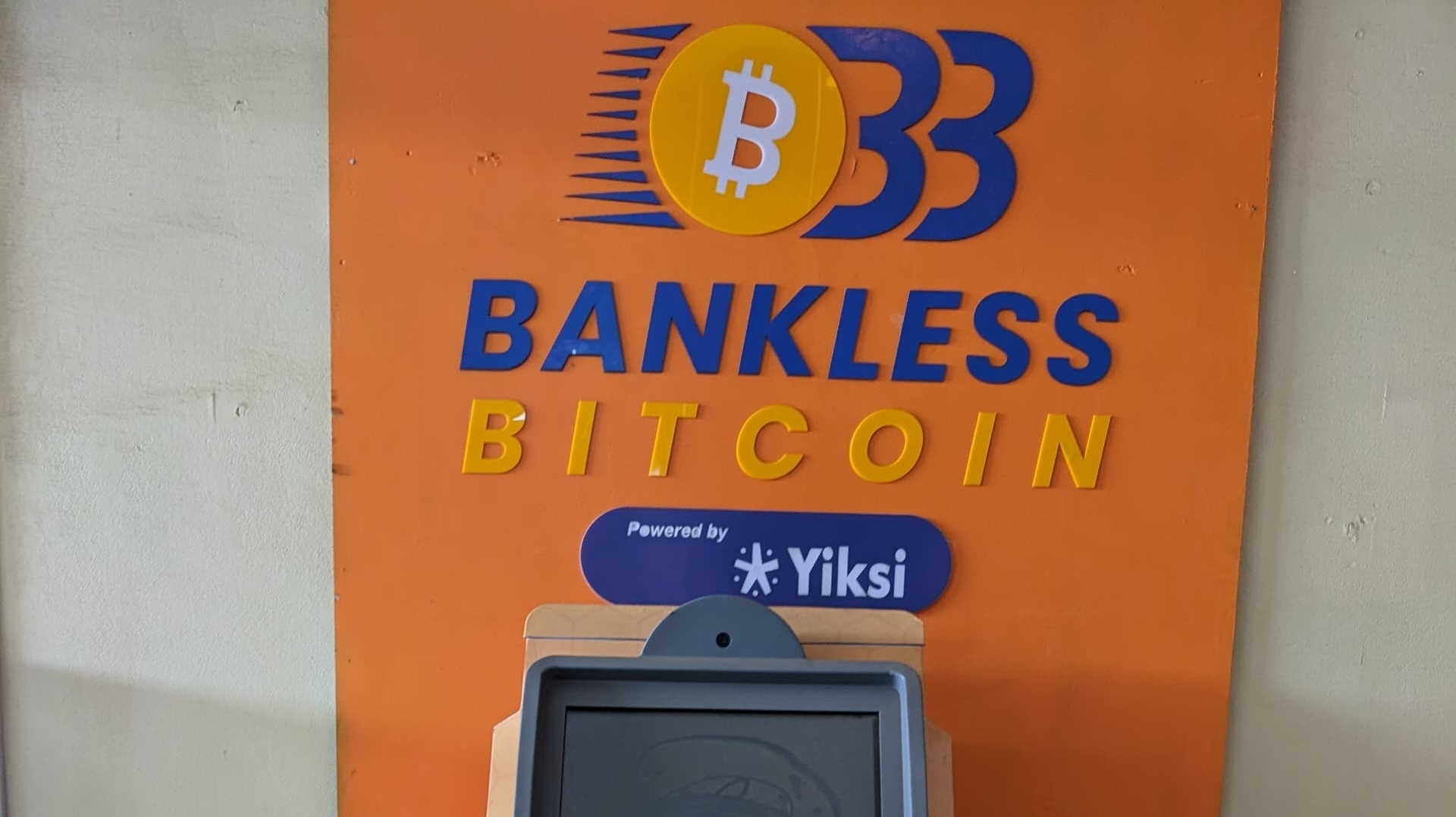
I visited Kenya last week and had a great time to visit the place where Bitcoin ATM machine is located in kenha ,Nairobi at 2 rivers mall
👉 The machine is typically branded “Bankless Bitcoin” and positioned beside traditional ATMs for visibility. It enables users to buy and sell Bitcoin using cash in a high-traffic retail environment.
⚠️ Regulatory Note (Kenya-Specific)
Kenya’s Virtual Assets Service Providers (VASP) Act came into force in late 2025, establishing a licensing regime for crypto services.
However, as of the end of 2025 there were no licensed crypto ATM operators authorized by the Central Bank of Kenya (CBK) or the Capital Markets Authority (CMA). Any operator claiming a license may still be operating in a regulatory grey zone. #bitcoin #btcatmmachine #BTC
Bitcoin ATM machine
What Is a Bitcoin ATM Machine?
A Bitcoin ATM (Automated Teller Machine) is a specialized kiosk that allows users to buy and sometimes sell Bitcoin and other cryptocurrencies using cash similar to how a bank ATM handles fiat currency. But unlike a bank ATM, it is not connected to a bank account; instead, it interacts with the Bitcoin blockchain and a cryptocurrency exchange.
⚙️ How Bitcoin ATMs Work Step by Step
1. User Wallet Requirement
To use a Bitcoin ATM you first need a crypto wallet (software or hardware) that can receive Bitcoin.
This wallet has a public receiving address shown as a QR code you scan at the ATM.
2. Insert Cash (or Debit Card)
You insert physical cash (e.g., Kenyan Shillings) into the machine.
The ATM then converts that value into Bitcoin at the current market rate (often with a premium fee).
3. Transaction Execution
The ATM sends the purchased Bitcoin directly to your wallet address through the blockchain.
This transaction is recorded on the blockchain and confirmed by the Bitcoin network.
4. Receipt & Confirmation
You receive a transaction receipt and may also get a confirmation code or SMS depending on the machine.
Many ATMs require identity verification (KYC) for larger amounts to comply with anti-money-laundering rules.
🔄 Buy vs Sell Functionality
One-way ATMs: Only let you buy Bitcoin with cash.
Two-way ATMs: Allow selling Bitcoin for cash too.
This feature isn’t always available and depends on the model and operator.
🧠 Key Technical Characteristics
📊 Blockchain Interaction
Bitcoin ATMs don’t hold your Bitcoin themselves; they initiate transactions on the blockchain which then propagate through the decentralized network.
Funds are transferred peer-to-peer between the ATM provider’s liquidity pool (or an exchange) and your wallet.
🔐 Security & Compliance
Transactions leverage public-key cryptography you control the private key via your wallet; the ATM just facilitates the transfer.
Recent trends are pushing mandatory ID checks (KYC) to meet global regulatory standards on money laundering.
💸 Fees and Costs
Bitcoin ATMs often charge significant fees (premium on top of market price) compared to online exchanges.
Typical costs can vary widely, impacted by liquidity and risk pricing from the ATM operator.
📍 Example: Bitcoin ATM in Nairobi
One of the most reported Bitcoin ATMs in Kenya is installed at Two Rivers Mall in Nairobi, Kenya, specifically in the ground floor public areas near banking ATMs like those of NCBA Bank.
I visited Kenya last week and had a great time to visit the place where Bitcoin ATM machine is located in kenha ,Nairobi at 2 rivers mall
👉 The machine is typically branded “Bankless Bitcoin” and positioned beside traditional ATMs for visibility. It enables users to buy and sell Bitcoin using cash in a high-traffic retail environment.
⚠️ Regulatory Note (Kenya-Specific)
Kenya’s Virtual Assets Service Providers (VASP) Act came into force in late 2025, establishing a licensing regime for crypto services.
However, as of the end of 2025 there were no licensed crypto ATM operators authorized by the Central Bank of Kenya (CBK) or the Capital Markets Authority (CMA). Any operator claiming a license may still be operating in a regulatory grey zone. #bitcoin #btcatmmachine #BTC
A Bitcoin ATM (Automated Teller Machine) is a specialized kiosk that allows users to buy and sometimes sell Bitcoin and other cryptocurrencies using cash similar to how a bank ATM handles fiat currency. But unlike a bank ATM, it is not connected to a bank account; instead, it interacts with the Bitcoin blockchain and a cryptocurrency exchange.
⚙️ How Bitcoin ATMs Work Step by Step
1. User Wallet Requirement
To use a Bitcoin ATM you first need a crypto wallet (software or hardware) that can receive Bitcoin.
This wallet has a public receiving address shown as a QR code you scan at the ATM.
2. Insert Cash (or Debit Card)
You insert physical cash (e.g., Kenyan Shillings) into the machine.
The ATM then converts that value into Bitcoin at the current market rate (often with a premium fee).
3. Transaction Execution
The ATM sends the purchased Bitcoin directly to your wallet address through the blockchain.
This transaction is recorded on the blockchain and confirmed by the Bitcoin network.
4. Receipt & Confirmation
You receive a transaction receipt and may also get a confirmation code or SMS depending on the machine.
Many ATMs require identity verification (KYC) for larger amounts to comply with anti-money-laundering rules.
🔄 Buy vs Sell Functionality
One-way ATMs: Only let you buy Bitcoin with cash.
Two-way ATMs: Allow selling Bitcoin for cash too.
This feature isn’t always available and depends on the model and operator.
🧠 Key Technical Characteristics
📊 Blockchain Interaction
Bitcoin ATMs don’t hold your Bitcoin themselves; they initiate transactions on the blockchain which then propagate through the decentralized network.
Funds are transferred peer-to-peer between the ATM provider’s liquidity pool (or an exchange) and your wallet.
🔐 Security & Compliance
Transactions leverage public-key cryptography you control the private key via your wallet; the ATM just facilitates the transfer.
Recent trends are pushing mandatory ID checks (KYC) to meet global regulatory standards on money laundering.
💸 Fees and Costs
Bitcoin ATMs often charge significant fees (premium on top of market price) compared to online exchanges.
Typical costs can vary widely, impacted by liquidity and risk pricing from the ATM operator.
📍 Example: Bitcoin ATM in Nairobi
One of the most reported Bitcoin ATMs in Kenya is installed at Two Rivers Mall in Nairobi, Kenya, specifically in the ground floor public areas near banking ATMs like those of NCBA Bank.
I visited Kenya last week and had a great time to visit the place where Bitcoin ATM machine is located in kenha ,Nairobi at 2 rivers mall
👉 The machine is typically branded “Bankless Bitcoin” and positioned beside traditional ATMs for visibility. It enables users to buy and sell Bitcoin using cash in a high-traffic retail environment.
⚠️ Regulatory Note (Kenya-Specific)
Kenya’s Virtual Assets Service Providers (VASP) Act came into force in late 2025, establishing a licensing regime for crypto services.
However, as of the end of 2025 there were no licensed crypto ATM operators authorized by the Central Bank of Kenya (CBK) or the Capital Markets Authority (CMA). Any operator claiming a license may still be operating in a regulatory grey zone. #bitcoin #btcatmmachine #BTC
2
57
·
--
Peer-to-Peer (P2P) is a decentralized communication and transaction model where two or more individuals interact directly with each other without relying on a central authority like a bank, company, or government. In a P2P network, each participant (or "peer") can act as both a provider and receiver of services or data.
In the context of finance, a common example is P2P Bitcoin transactions, where one person sends Bitcoin directly to another person’s wallet without going through a bank or third-party service. This offers more control, privacy, and fewer fees. For instance, if John in Tanzania wants to send Bitcoin to Mary in china, he can do so instantly using a Bitcoin wallet—no need for a bank or money transfer service.
In file sharing, platforms like BitTorrent use P2P to allow users to share and download files directly from each other, rather than relying on a central server.
P2P systems are resilient, cost-effective, and empower users by removing middlemen. However, they also require more responsibility, as users must secure their data or funds themselves.
Overall, P2P is at the core of many decentralized technologies, including blockchain, and it's transforming how we share, communicate, and exchange value globally.#PeerToPeer #PeerToPeer #PeerToPeer #PeerToPeer #P2P
Peer-to-Peer (P2P) is a decentralized communication and transaction model where two or more individuals interact directly with each other without relying on a central authority like a bank, company, or government. In a P2P network, each participant (or "peer") can act as both a provider and receiver of services or data.
In the context of finance, a common example is P2P Bitcoin transactions, where one person sends Bitcoin directly to another person’s wallet without going through a bank or third-party service. This offers more control, privacy, and fewer fees. For instance, if John in Tanzania wants to send Bitcoin to Mary in china, he can do so instantly using a Bitcoin wallet—no need for a bank or money transfer service.
In file sharing, platforms like BitTorrent use P2P to allow users to share and download files directly from each other, rather than relying on a central server.
P2P systems are resilient, cost-effective, and empower users by removing middlemen. However, they also require more responsibility, as users must secure their data or funds themselves.
Overall, P2P is at the core of many decentralized technologies, including blockchain, and it's transforming how we share, communicate, and exchange value globally.#PeerToPeer #PeerToPeer #PeerToPeer #PeerToPeer #P2P
In the context of finance, a common example is P2P Bitcoin transactions, where one person sends Bitcoin directly to another person’s wallet without going through a bank or third-party service. This offers more control, privacy, and fewer fees. For instance, if John in Tanzania wants to send Bitcoin to Mary in china, he can do so instantly using a Bitcoin wallet—no need for a bank or money transfer service.
In file sharing, platforms like BitTorrent use P2P to allow users to share and download files directly from each other, rather than relying on a central server.
P2P systems are resilient, cost-effective, and empower users by removing middlemen. However, they also require more responsibility, as users must secure their data or funds themselves.
Overall, P2P is at the core of many decentralized technologies, including blockchain, and it's transforming how we share, communicate, and exchange value globally.#PeerToPeer #PeerToPeer #PeerToPeer #PeerToPeer #P2P
27
Log in to explore more content
Join global crypto users on Binance Square
⚡️ Get latest and useful information about crypto.
💬 Trusted by the world’s largest crypto exchange.
👍 Discover real insights from verified creators.
Email / Phone number
Trending Topics
ZamaRises15.99%ToIntradayHigh$0.09
20,275 views
114 Discussing
#ZamaRises15.99%ToIntradayHigh$0.09
ZAMA just woke up and chose violence! 🚀 Token #ZamaRises15.99%ToIntradayHigh$0.09, breaking out of nowhere to touch the 0.09 USDT mark. What triggered this pump? Smart money accumulating or a sudden FOMO wave catching the bears off guard? 💸
Will it keep pumping or dump back down? 🎢 It's flirting right at the resistance line. If it holds, we fly; if not, it’s a classic trap!
What should traders do? Secure some profits if you rode it up, set tight stop-losses, and don’t chase the green candle like a degen. Watch the volume closely! 🧐
Not financial advice (NFA).
Join Binance now! Code: VINHTOCDO
Link: https://www.binance.com/register?ref=VINHTOCDO
Click to trade below to support me:
$ZAMA
$BTC
$BNB
#Zama #CryptoPumping #TradingAlert #AltcoinSeason #VINHTOCDO
Vinhtocdo
·1 Likes
·320 views
BitcoinSpotETFsDraw$6.34BInflowsInQ3
6,748 views
101 Discussing
EthereumValidatorExitQueueJumps392%
116,776 views
1,023 Discussing