
#stellar
stellar
1.8M views
4,187 Discussing
Hot
Latest

·
--
Verified
#usbankcompletescrossborderpaymentpilotonstellar
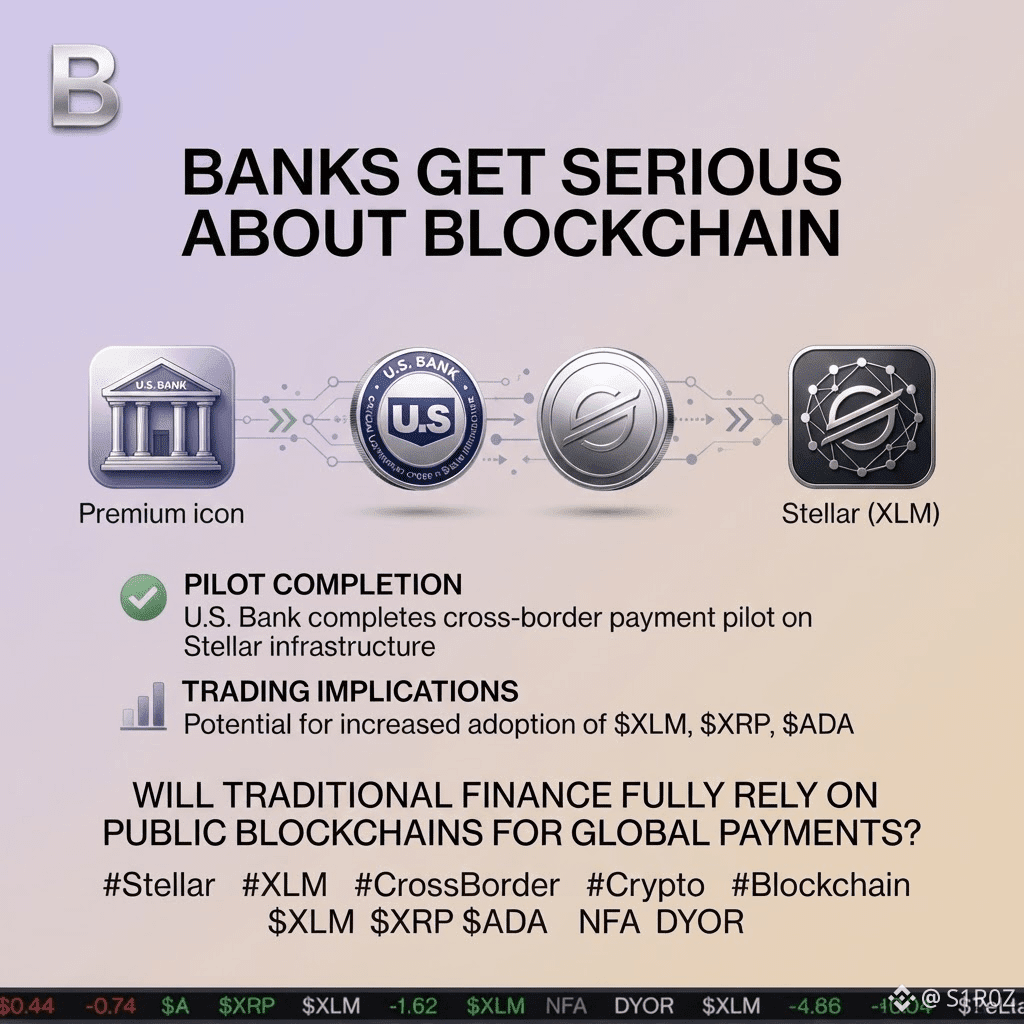
😂🏦 Banks are finally getting serious about blockchain payments.
U.S. Bank has completed a cross-border payment pilot on Stellar, testing blockchain infrastructure for international transfers.
Crypto users have been watching this use case for years, but seeing a major U.S. bank experiment with public blockchain rails is still worth paying attention to.
For traders, the interesting part is what happens next.
If financial institutions continue testing blockchain for cross-border payments and settlement, payment-focused networks like $XLM and $XRP could get more attention as real-world adoption develops.
But a pilot is still just a pilot. The bigger question is whether banks can turn these experiments into scalable, everyday payment infrastructure.
Do you think traditional finance will eventually rely on public blockchains for global payments?
#stellar #XLM #CrossBorder #Crypto #blockchain
$ADA
{spot}(XLMUSDT)
{spot}(XRPUSDT)
{spot}(ADAUSDT)
NFA. DYOR.
#usbankcompletescrossborderpaymentpilotonstellar
😂🏦 Banks are finally getting serious about blockchain payments.
U.S. Bank has completed a cross-border payment pilot on Stellar, testing blockchain infrastructure for international transfers.
Crypto users have been watching this use case for years, but seeing a major U.S. bank experiment with public blockchain rails is still worth paying attention to.
For traders, the interesting part is what happens next.
If financial institutions continue testing blockchain for cross-border payments and settlement, payment-focused networks like $XLM and $XRP could get more attention as real-world adoption develops.
But a pilot is still just a pilot. The bigger question is whether banks can turn these experiments into scalable, everyday payment infrastructure.
Do you think traditional finance will eventually rely on public blockchains for global payments?
#stellar #XLM #CrossBorder #Crypto #blockchain
$ADA
NFA. DYOR.
😂🏦 Banks are finally getting serious about blockchain payments.
U.S. Bank has completed a cross-border payment pilot on Stellar, testing blockchain infrastructure for international transfers.
Crypto users have been watching this use case for years, but seeing a major U.S. bank experiment with public blockchain rails is still worth paying attention to.
For traders, the interesting part is what happens next.
If financial institutions continue testing blockchain for cross-border payments and settlement, payment-focused networks like $XLM and $XRP could get more attention as real-world adoption develops.
But a pilot is still just a pilot. The bigger question is whether banks can turn these experiments into scalable, everyday payment infrastructure.
Do you think traditional finance will eventually rely on public blockchains for global payments?
#stellar #XLM #CrossBorder #Crypto #blockchain
$ADA
NFA. DYOR.
2
394

·
--
Bullish
$XLM 👀 Something interesting is happening
U.S. Bank just completed a live cross-border payment pilot using its USBDC stablecoin on Stellar.
The interesting part isn't “XLM is going to moon.”
It's that a major U.S. bank is actually testing real-world settlement on Stellar.
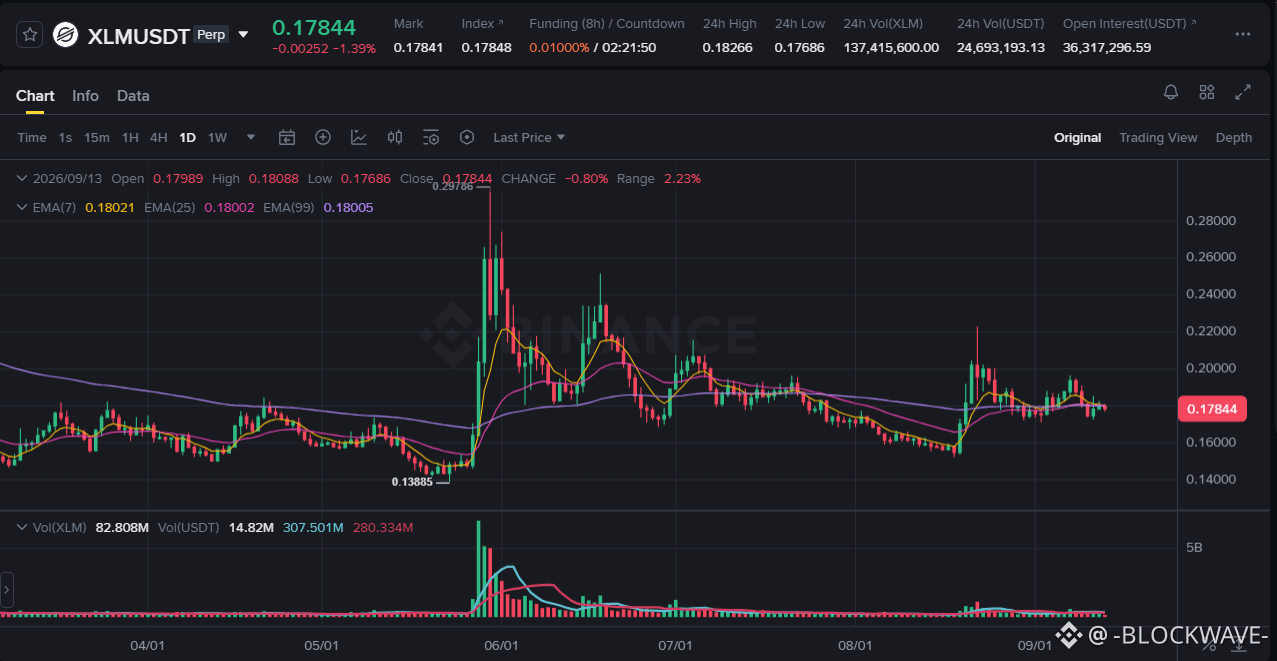
$XLM is around $0.178 right now.
Worth watching whether the market eventually prices in the adoption — or ignores it completely. 👀
No trade call. Just an interesting development to watch.
#XLM #stellar
$XLM 👀 Something interesting is happening
U.S. Bank just completed a live cross-border payment pilot using its USBDC stablecoin on Stellar.
The interesting part isn't “XLM is going to moon.”
It's that a major U.S. bank is actually testing real-world settlement on Stellar.
$XLM is around $0.178 right now.
Worth watching whether the market eventually prices in the adoption — or ignores it completely. 👀
No trade call. Just an interesting development to watch.
#XLM #stellar
U.S. Bank just completed a live cross-border payment pilot using its USBDC stablecoin on Stellar.
The interesting part isn't “XLM is going to moon.”
It's that a major U.S. bank is actually testing real-world settlement on Stellar.
$XLM is around $0.178 right now.
Worth watching whether the market eventually prices in the adoption — or ignores it completely. 👀
No trade call. Just an interesting development to watch.
#XLM #stellar
46
·
--
Verified
#usbankcompletescrossborderpaymentpilotonstellar
🏦 U.S. Bank just completed a live cross-border payment pilot on Stellar.
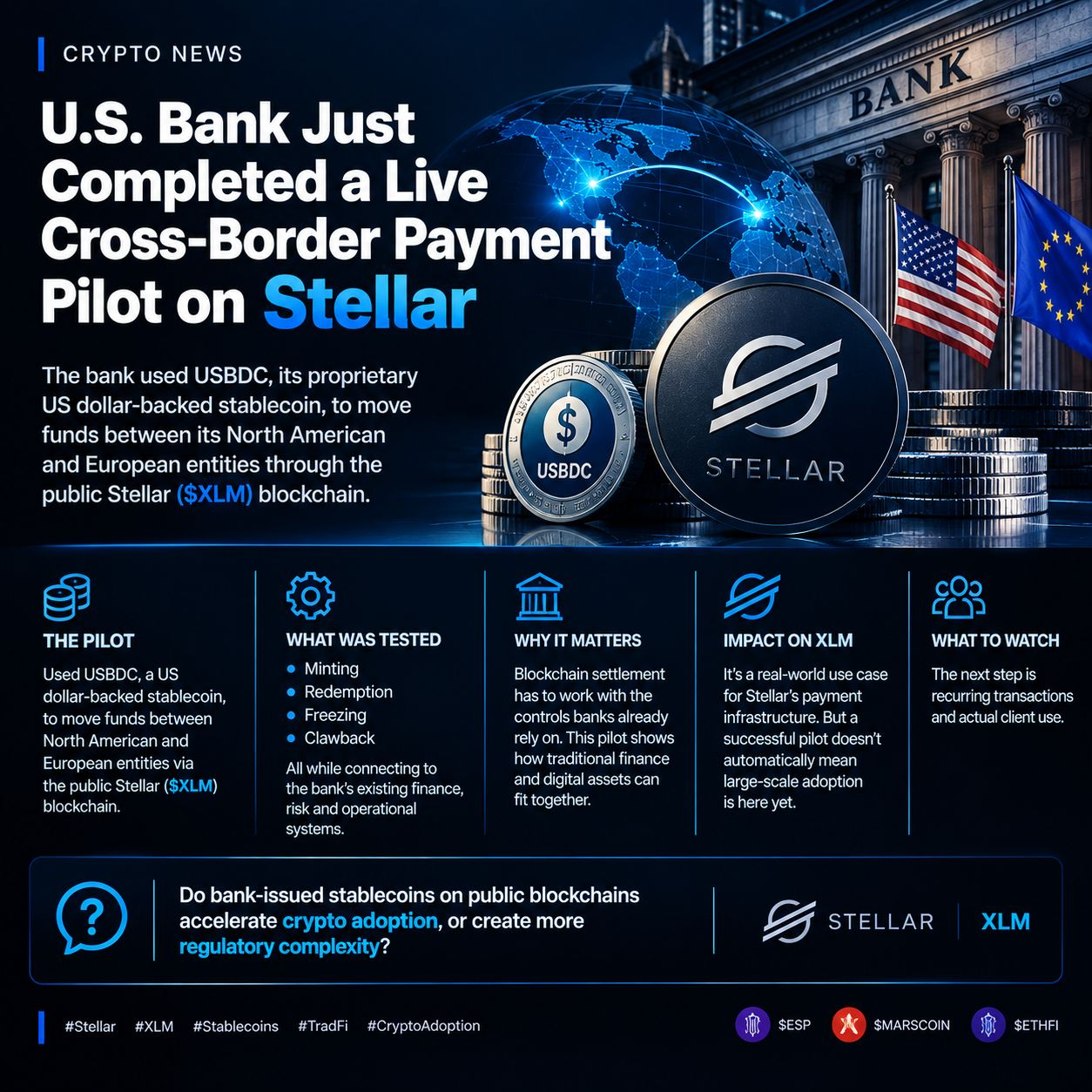
The bank used USBDC, its proprietary US dollar-backed stablecoin, to move funds between its North American and European entities through the public Stellar ($XLM) blockchain.
What caught my attention is that this wasn't just about moving money.
The pilot also tested minting, redemption, freezing and clawback, while connecting the process to the bank’s existing finance, risk and operational systems.
That’s important for institutional adoption. Blockchain settlement has to work with the controls banks already rely on.
For $XLM, the development is another real-world use case for Stellar’s payment infrastructure. But a successful pilot doesn't automatically mean large-scale adoption is here yet.
The next thing I’d watch is whether this moves from testing to recurring transactions and actual client use.
Do bank-issued stablecoins on public blockchains accelerate crypto adoption, or create more regulatory complexity?
#stellar #XLM #Stablecoins #TradFi #CryptoAdoption
$ESP
{spot}(ESPUSDT)
$MARSCOIN
{spot}(MARSCOINUSDT)
$ETHFI
{spot}(ETHFIUSDT)
#usbankcompletescrossborderpaymentpilotonstellar
🏦 U.S. Bank just completed a live cross-border payment pilot on Stellar.
The bank used USBDC, its proprietary US dollar-backed stablecoin, to move funds between its North American and European entities through the public Stellar ($XLM) blockchain.
What caught my attention is that this wasn't just about moving money.
The pilot also tested minting, redemption, freezing and clawback, while connecting the process to the bank’s existing finance, risk and operational systems.
That’s important for institutional adoption. Blockchain settlement has to work with the controls banks already rely on.
For $XLM, the development is another real-world use case for Stellar’s payment infrastructure. But a successful pilot doesn't automatically mean large-scale adoption is here yet.
The next thing I’d watch is whether this moves from testing to recurring transactions and actual client use.
Do bank-issued stablecoins on public blockchains accelerate crypto adoption, or create more regulatory complexity?
#stellar #XLM #Stablecoins #TradFi #CryptoAdoption
$ESP
$MARSCOIN
$ETHFI
🏦 U.S. Bank just completed a live cross-border payment pilot on Stellar.
The bank used USBDC, its proprietary US dollar-backed stablecoin, to move funds between its North American and European entities through the public Stellar ($XLM) blockchain.
What caught my attention is that this wasn't just about moving money.
The pilot also tested minting, redemption, freezing and clawback, while connecting the process to the bank’s existing finance, risk and operational systems.
That’s important for institutional adoption. Blockchain settlement has to work with the controls banks already rely on.
For $XLM, the development is another real-world use case for Stellar’s payment infrastructure. But a successful pilot doesn't automatically mean large-scale adoption is here yet.
The next thing I’d watch is whether this moves from testing to recurring transactions and actual client use.
Do bank-issued stablecoins on public blockchains accelerate crypto adoption, or create more regulatory complexity?
#stellar #XLM #Stablecoins #TradFi #CryptoAdoption
$ESP
$MARSCOIN
$ETHFI
74

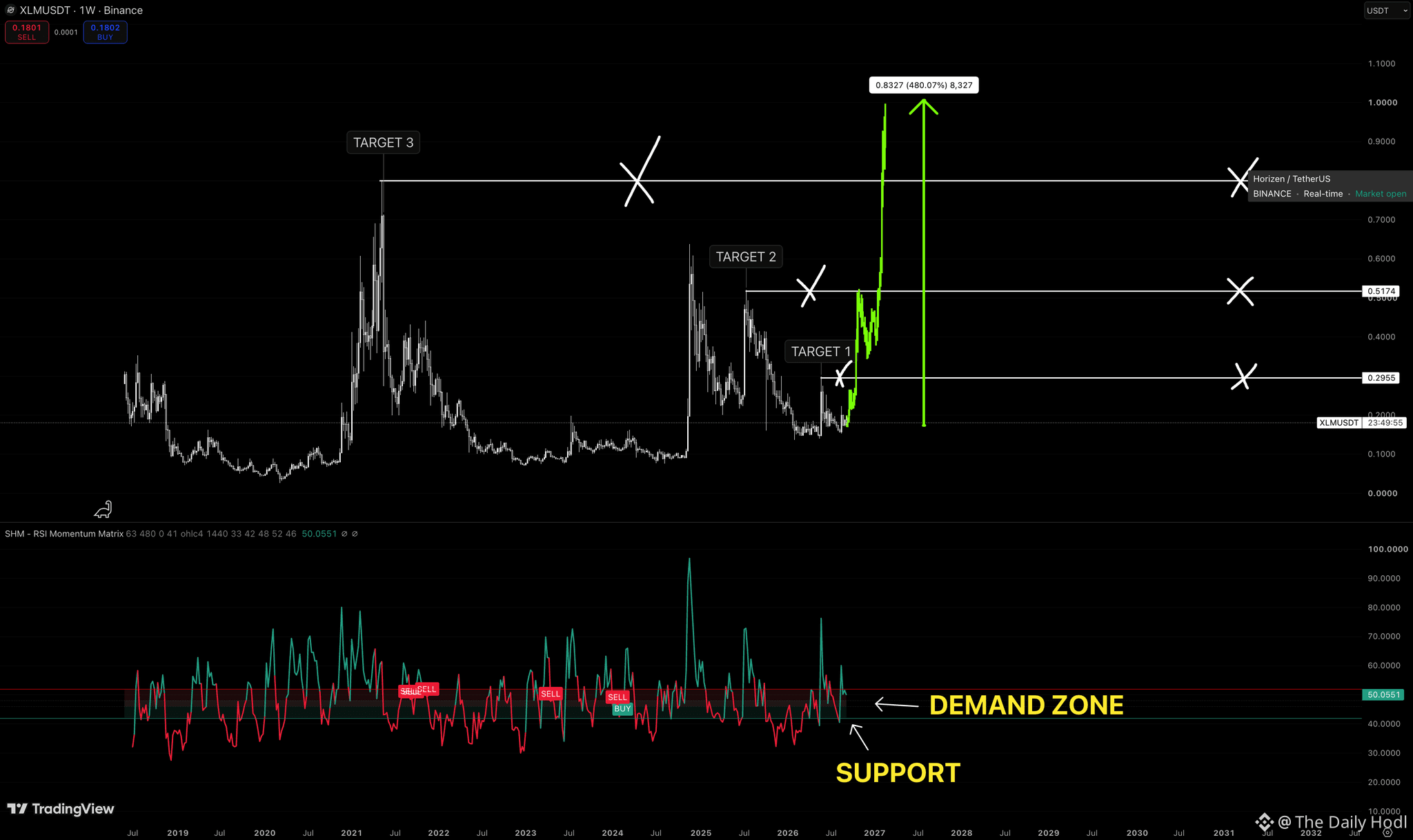
"🤫 #XLM SLEEPING GIANT! Trading $0.18 quietly at demand zone. Every prior consolidation preceded violent moves. $0.2955→$0.5174→$0.80 target. From here: +480%. Boring now = Exciting later! 📈 $XLM
{future}(XLMUSDT)
#stellar #Altseason
"🤫 #XLM SLEEPING GIANT! Trading $0.18 quietly at demand zone. Every prior consolidation preceded violent moves. $0.2955→$0.5174→$0.80 target. From here: +480%. Boring now = Exciting later! 📈 $XLM
#stellar #Altseason
#stellar #Altseason
66

·
--
🚀 **$XLM COULD BE READY FOR A MOVE!**
Stellar is another established large-cap asset traders continue to monitor.
📍 Entry: $0.175–$0.182
✅ Confirmation: Break above $0.185
🛑 SL: $0.168
🎯 TP1: $0.195
🎯 TP2: $0.205
📈 Resistance: $0.185 / $0.195
📉 Support: $0.175 / $0.168
❌ Invalidation: Break below $0.168
A breakout without volume is a warning sign.
#XLM #Stellar #Altcoin
{spot}(XLMUSDT)
{spot}(BTCUSDT)
🚀 **$XLM COULD BE READY FOR A MOVE!**
Stellar is another established large-cap asset traders continue to monitor.
📍 Entry: $0.175–$0.182
✅ Confirmation: Break above $0.185
🛑 SL: $0.168
🎯 TP1: $0.195
🎯 TP2: $0.205
📈 Resistance: $0.185 / $0.195
📉 Support: $0.175 / $0.168
❌ Invalidation: Break below $0.168
A breakout without volume is a warning sign.
#XLM #Stellar #Altcoin
Stellar is another established large-cap asset traders continue to monitor.
📍 Entry: $0.175–$0.182
✅ Confirmation: Break above $0.185
🛑 SL: $0.168
🎯 TP1: $0.195
🎯 TP2: $0.205
📈 Resistance: $0.185 / $0.195
📉 Support: $0.175 / $0.168
❌ Invalidation: Break below $0.168
A breakout without volume is a warning sign.
#XLM #Stellar #Altcoin
12

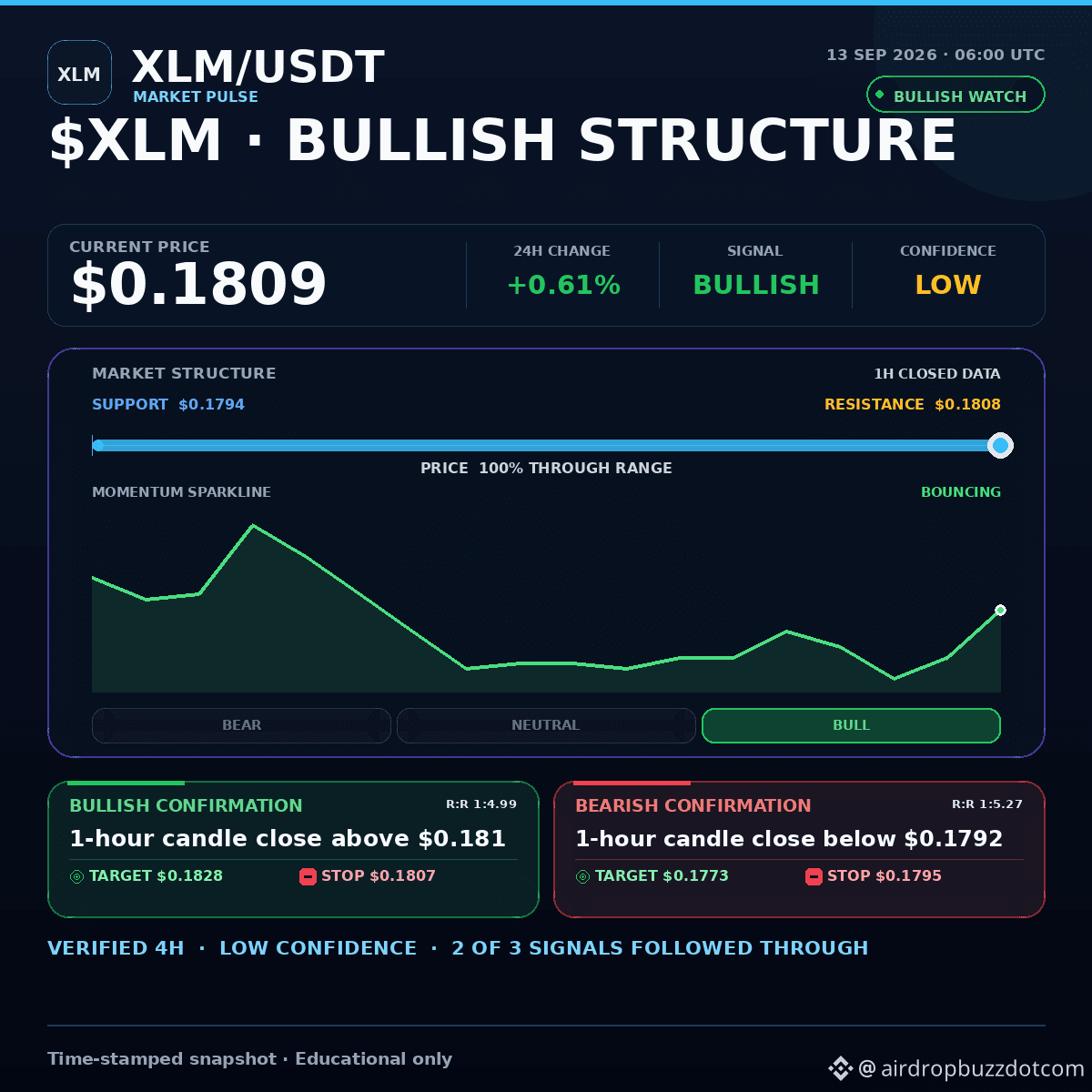
Watch the clock: the next 1H close can separate a $XLM break from a fakeout.
📊 Snapshot
• Price: $0.1809
• 24H: +0.61%
• Bias: Bullish
📈 Bull Trigger
1-hour close above $0.181 with rising open interest
📉 Bear Trigger
1-hour close below $0.1792 with rising open interest
🎯 Signal Read
The move becomes more credible if buyers hold beyond resistance rather than briefly trading through it.
📌 Confidence
Low · Low historical confidence · 2 of 3 directional moves were favorable
Signal Quality
- OI: Flat (+0.11%)
- 4H: Bearish | 1D: Bearish (Aligned)
- ATR filter: 0.50 ATR ($0.0004714)
- Risk/reward: 1:4.99
Bull scenario risk plan
- Entry: $0.181
- Stop: $0.1807
- Target: $0.1828
Triggers confirm conditions rather than price targets, so always wait for the candle close.
Bull or bear? Drop 🐂 or 🐻.
#XLM #Stellar #CryptoTrading #MarketPulse
Educational only. Time-stamped market snapshot, not financial advice.
Watch the clock: the next 1H close can separate a $XLM break from a fakeout.
📊 Snapshot
• Price: $0.1809
• 24H: +0.61%
• Bias: Bullish
📈 Bull Trigger
1-hour close above $0.181 with rising open interest
📉 Bear Trigger
1-hour close below $0.1792 with rising open interest
🎯 Signal Read
The move becomes more credible if buyers hold beyond resistance rather than briefly trading through it.
📌 Confidence
Low · Low historical confidence · 2 of 3 directional moves were favorable
Signal Quality
- OI: Flat (+0.11%)
- 4H: Bearish | 1D: Bearish (Aligned)
- ATR filter: 0.50 ATR ($0.0004714)
- Risk/reward: 1:4.99
Bull scenario risk plan
- Entry: $0.181
- Stop: $0.1807
- Target: $0.1828
Triggers confirm conditions rather than price targets, so always wait for the candle close.
Bull or bear? Drop 🐂 or 🐻.
#XLM #Stellar #CryptoTrading #MarketPulse
Educational only. Time-stamped market snapshot, not financial advice.
📊 Snapshot
• Price: $0.1809
• 24H: +0.61%
• Bias: Bullish
📈 Bull Trigger
1-hour close above $0.181 with rising open interest
📉 Bear Trigger
1-hour close below $0.1792 with rising open interest
🎯 Signal Read
The move becomes more credible if buyers hold beyond resistance rather than briefly trading through it.
📌 Confidence
Low · Low historical confidence · 2 of 3 directional moves were favorable
Signal Quality
- OI: Flat (+0.11%)
- 4H: Bearish | 1D: Bearish (Aligned)
- ATR filter: 0.50 ATR ($0.0004714)
- Risk/reward: 1:4.99
Bull scenario risk plan
- Entry: $0.181
- Stop: $0.1807
- Target: $0.1828
Triggers confirm conditions rather than price targets, so always wait for the candle close.
Bull or bear? Drop 🐂 or 🐻.
#XLM #Stellar #CryptoTrading #MarketPulse
Educational only. Time-stamped market snapshot, not financial advice.
36

·
--
$XLM
{future}(XLMUSDT)
— Focused on Fast Digital Payments
XLM is the native asset of the Stellar network, which focuses on moving money and digital assets efficiently across borders.
Stellar has maintained a strong payments-oriented identity while the wider crypto industry has expanded. Its focus on financial connectivity makes XLM an interesting project to follow during periods when payment and real-world utility narratives gain attention.
#XLM #Stellar #Crypto #BinanceSquare
$XLM
— Focused on Fast Digital Payments
XLM is the native asset of the Stellar network, which focuses on moving money and digital assets efficiently across borders.
Stellar has maintained a strong payments-oriented identity while the wider crypto industry has expanded. Its focus on financial connectivity makes XLM an interesting project to follow during periods when payment and real-world utility narratives gain attention.
#XLM #Stellar #Crypto #BinanceSquare
— Focused on Fast Digital Payments
XLM is the native asset of the Stellar network, which focuses on moving money and digital assets efficiently across borders.
Stellar has maintained a strong payments-oriented identity while the wider crypto industry has expanded. Its focus on financial connectivity makes XLM an interesting project to follow during periods when payment and real-world utility narratives gain attention.
#XLM #Stellar #Crypto #BinanceSquare
13

🦈 U.S. BANK SWEEPS INSTITUTIONAL RAILS WITH LIVE CROSS-BORDER SETTLEMENT ON $XLM ! ⚡
When America’s fifth-largest commercial bank bypasses private ledgers to execute live cross-border stablecoin settlements on a public chain, the institutional thesis changes completely. 🌊 Stellar is quietly building an absolute fortress in bank-grade infrastructure, backing it up with over 11.6 million daily transactions and $3.3 billion in real-world assets.
📊 Smart money is watching the $0.195 heavy resistance zone closely as regulatory catalysts loom. 💡 Turning this structural ceiling into support could spark the next major momentum expansion for the network. 💬 Are you bidding this institutional positioning early, or waiting for a clean breakout flip above resistance? 👇
⚠️ Not financial advice. Always manage your risk. 🛡️
🏷️ #XLM #Stellar #Crypto #Altcoins
⚡ 💎
🦈 U.S. BANK SWEEPS INSTITUTIONAL RAILS WITH LIVE CROSS-BORDER SETTLEMENT ON $XLM ! ⚡
When America’s fifth-largest commercial bank bypasses private ledgers to execute live cross-border stablecoin settlements on a public chain, the institutional thesis changes completely. 🌊 Stellar is quietly building an absolute fortress in bank-grade infrastructure, backing it up with over 11.6 million daily transactions and $3.3 billion in real-world assets.
📊 Smart money is watching the $0.195 heavy resistance zone closely as regulatory catalysts loom. 💡 Turning this structural ceiling into support could spark the next major momentum expansion for the network. 💬 Are you bidding this institutional positioning early, or waiting for a clean breakout flip above resistance? 👇
⚠️ Not financial advice. Always manage your risk. 🛡️
🏷️ #XLM #Stellar #Crypto #Altcoins
⚡ 💎
When America’s fifth-largest commercial bank bypasses private ledgers to execute live cross-border stablecoin settlements on a public chain, the institutional thesis changes completely. 🌊 Stellar is quietly building an absolute fortress in bank-grade infrastructure, backing it up with over 11.6 million daily transactions and $3.3 billion in real-world assets.
📊 Smart money is watching the $0.195 heavy resistance zone closely as regulatory catalysts loom. 💡 Turning this structural ceiling into support could spark the next major momentum expansion for the network. 💬 Are you bidding this institutional positioning early, or waiting for a clean breakout flip above resistance? 👇
⚠️ Not financial advice. Always manage your risk. 🛡️
🏷️ #XLM #Stellar #Crypto #Altcoins
⚡ 💎
18


·
--
Bullish
🚨 HISTORIC MILESTONE FOR STELLAR AND TRADITIONAL BANKING
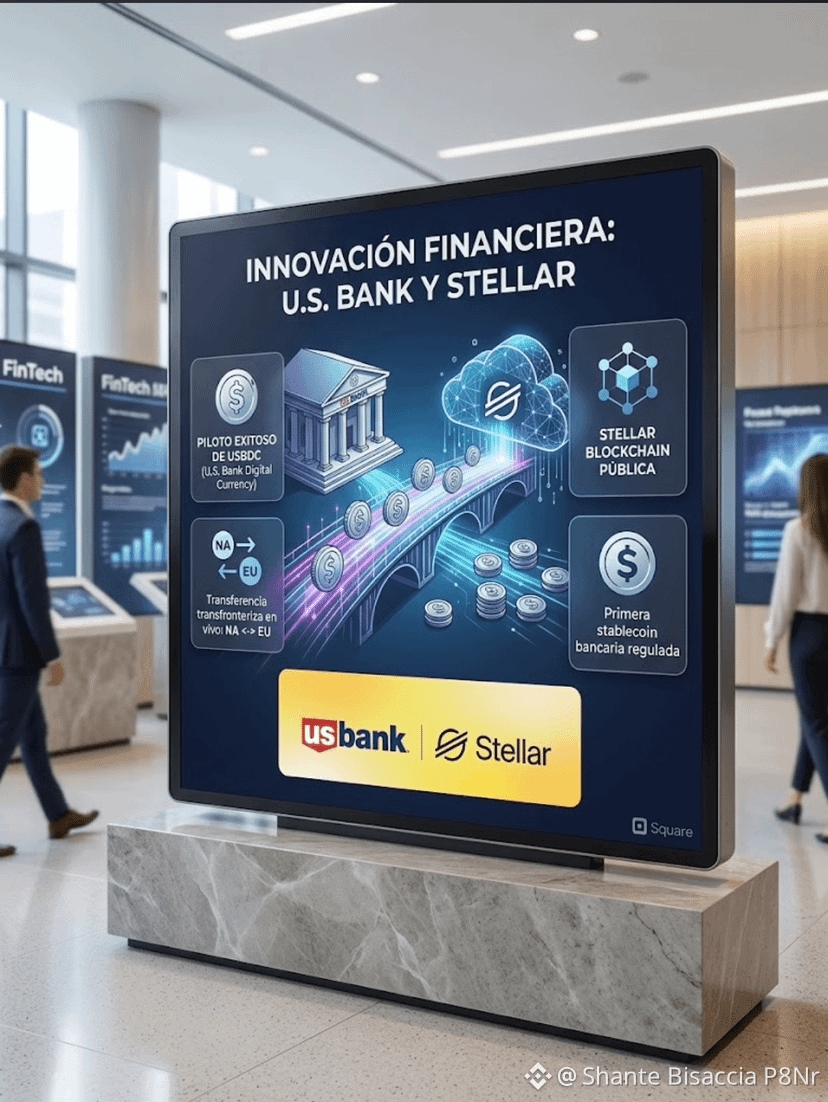
U.S. Bank (the 5th largest commercial bank in the U.S.) has announced the successful execution of a live pilot of its own USBDC stablecoin, USD-backed, directly on the public Stellar (XLM) network.
📌 Key points:
1.- Real Cross-Border Transfer: The test connected U.S. Bank entities in North America and Europe in real time.
2.- Blockchain publishes + Bank controls: It is one of the first stablecoins issued by a traditional bank deployed on a public blockchain, demonstrating issuance, payment, freezing, and recovery (clawback) capabilities under strict regulatory requirements.
3.- Future use cases: It paves the way for 24/7 liquidity management, collateral mobility, and corporate treasury operations without friction.
💡 Stellar (XLM)’s fundamental role:
Stellar is consolidating itself as the reference institutional-grade infrastructure for regulated finance.
With costs below a cent and near-instant settlement, it positions itself as the perfect highway to bridge traditional finance (TradFi) with Web3 innovation.
$XLM #Stellar #USBank
🚨 HISTORIC MILESTONE FOR STELLAR AND TRADITIONAL BANKING
U.S. Bank (the 5th largest commercial bank in the U.S.) has announced the successful execution of a live pilot of its own USBDC stablecoin, USD-backed, directly on the public Stellar (XLM) network.
📌 Key points:
1.- Real Cross-Border Transfer: The test connected U.S. Bank entities in North America and Europe in real time.
2.- Blockchain publishes + Bank controls: It is one of the first stablecoins issued by a traditional bank deployed on a public blockchain, demonstrating issuance, payment, freezing, and recovery (clawback) capabilities under strict regulatory requirements.
3.- Future use cases: It paves the way for 24/7 liquidity management, collateral mobility, and corporate treasury operations without friction.
💡 Stellar (XLM)’s fundamental role:
Stellar is consolidating itself as the reference institutional-grade infrastructure for regulated finance.
With costs below a cent and near-instant settlement, it positions itself as the perfect highway to bridge traditional finance (TradFi) with Web3 innovation.
$XLM #Stellar #USBank
U.S. Bank (the 5th largest commercial bank in the U.S.) has announced the successful execution of a live pilot of its own USBDC stablecoin, USD-backed, directly on the public Stellar (XLM) network.
📌 Key points:
1.- Real Cross-Border Transfer: The test connected U.S. Bank entities in North America and Europe in real time.
2.- Blockchain publishes + Bank controls: It is one of the first stablecoins issued by a traditional bank deployed on a public blockchain, demonstrating issuance, payment, freezing, and recovery (clawback) capabilities under strict regulatory requirements.
3.- Future use cases: It paves the way for 24/7 liquidity management, collateral mobility, and corporate treasury operations without friction.
💡 Stellar (XLM)’s fundamental role:
Stellar is consolidating itself as the reference institutional-grade infrastructure for regulated finance.
With costs below a cent and near-instant settlement, it positions itself as the perfect highway to bridge traditional finance (TradFi) with Web3 innovation.
$XLM #Stellar #USBank
1
462
·
--
🚨 Stellar XLM Coin Wins US Bank Stablecoin Innovation 🧠
📊 | $BTC | $ETH | $BNB |
- Welcome to follow our channel, like and comment to discuss! 📈
- US Bank has deployed its USBDC stablecoin on the Stellar network to enable real-time cross-border payments, with built-in compliance controls.
- This move will enhance Stellar's cross-border payment capabilities and provide a more efficient solution for global cash flow.
- The CEO emphasized that this is an important part of the company's global cash strategy.
- This innovation may draw attention from other institutions to the Stellar ecosystem. 🔥
- In the short term, the market may face downward pressure, with increased volatility.
- Whales may accumulate during the distribution phase or at market lows.
- The price is expected to face selling pressure in the near term, or a pullback could occur.
- If institutions continue investing, the uptrend may resume in the medium term.
- How do you think this will affect the global cross-border payments market?
- Stay tuned and leave your thoughts!
#Stellar #Stablecoin #USBank #Whales #CryptoNews
🚨 Stellar XLM Coin Wins US Bank Stablecoin Innovation 🧠
📊 | $BTC | $ETH | $BNB |
- Welcome to follow our channel, like and comment to discuss! 📈
- US Bank has deployed its USBDC stablecoin on the Stellar network to enable real-time cross-border payments, with built-in compliance controls.
- This move will enhance Stellar's cross-border payment capabilities and provide a more efficient solution for global cash flow.
- The CEO emphasized that this is an important part of the company's global cash strategy.
- This innovation may draw attention from other institutions to the Stellar ecosystem. 🔥
- In the short term, the market may face downward pressure, with increased volatility.
- Whales may accumulate during the distribution phase or at market lows.
- The price is expected to face selling pressure in the near term, or a pullback could occur.
- If institutions continue investing, the uptrend may resume in the medium term.
- How do you think this will affect the global cross-border payments market?
- Stay tuned and leave your thoughts!
#Stellar #Stablecoin #USBank #Whales #CryptoNews
📊 | $BTC | $ETH | $BNB |
- Welcome to follow our channel, like and comment to discuss! 📈
- US Bank has deployed its USBDC stablecoin on the Stellar network to enable real-time cross-border payments, with built-in compliance controls.
- This move will enhance Stellar's cross-border payment capabilities and provide a more efficient solution for global cash flow.
- The CEO emphasized that this is an important part of the company's global cash strategy.
- This innovation may draw attention from other institutions to the Stellar ecosystem. 🔥
- In the short term, the market may face downward pressure, with increased volatility.
- Whales may accumulate during the distribution phase or at market lows.
- The price is expected to face selling pressure in the near term, or a pullback could occur.
- If institutions continue investing, the uptrend may resume in the medium term.
- How do you think this will affect the global cross-border payments market?
- Stay tuned and leave your thoughts!
#Stellar #Stablecoin #USBank #Whales #CryptoNews
100

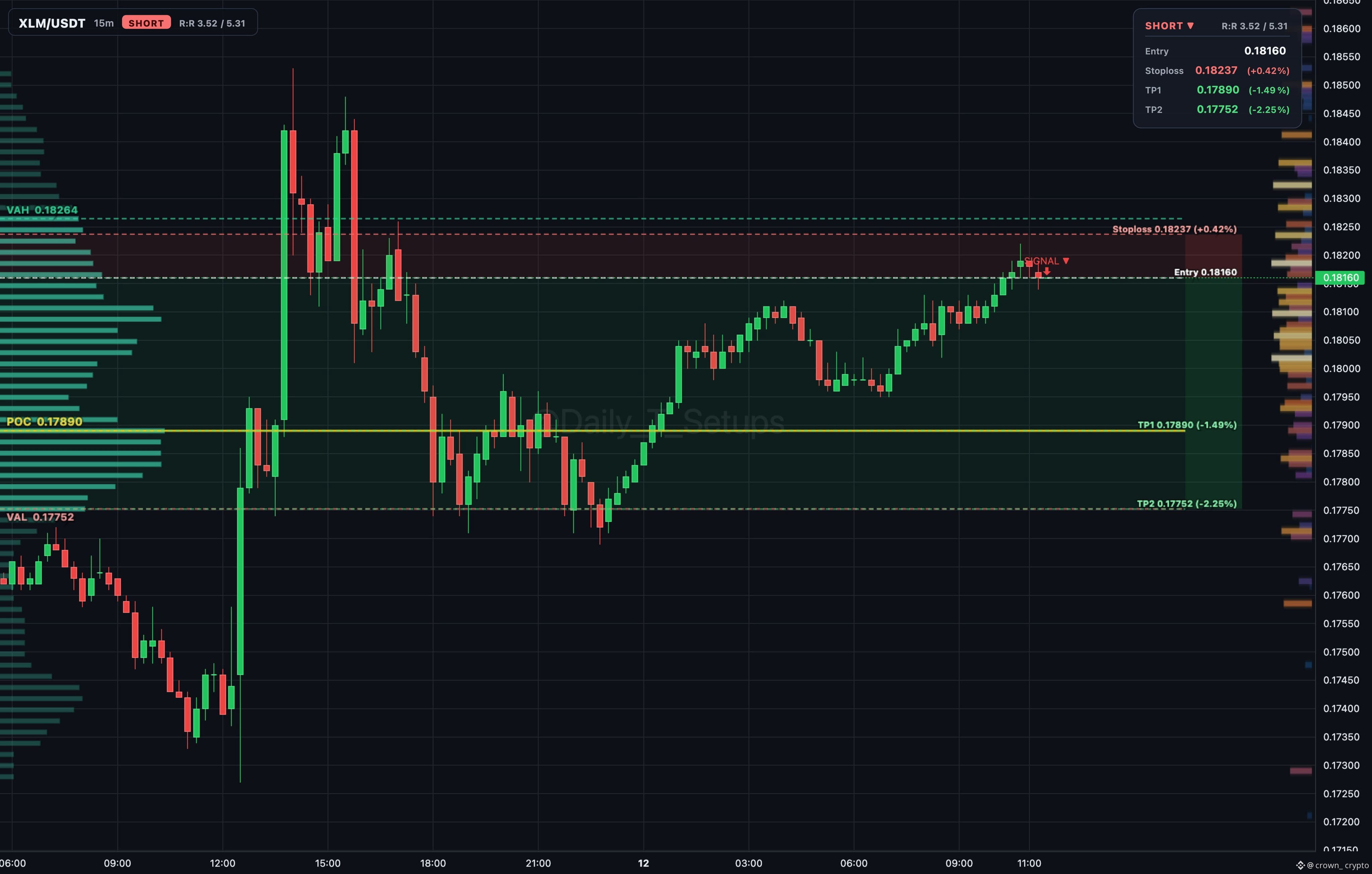
$XLM auction rotation shows sellers distributing inside value between 0.17752 and 0.18264.
🔽 Short setup
📍 Entry: 0.1816
🛑 Stop: 0.18237 (+0.4%)
🎯 TP1: 0.1789 (-1.5%)
🎯 TP2: 0.17752 (-2.2%)
⚖️ Half off at TP1 → stop to entry
#Stellar
{spot}(XLMUSDT)
$XLM auction rotation shows sellers distributing inside value between 0.17752 and 0.18264.
🔽 Short setup
📍 Entry: 0.1816
🛑 Stop: 0.18237 (+0.4%)
🎯 TP1: 0.1789 (-1.5%)
🎯 TP2: 0.17752 (-2.2%)
⚖️ Half off at TP1 → stop to entry
#Stellar
🔽 Short setup
📍 Entry: 0.1816
🛑 Stop: 0.18237 (+0.4%)
🎯 TP1: 0.1789 (-1.5%)
🎯 TP2: 0.17752 (-2.2%)
⚖️ Half off at TP1 → stop to entry
#Stellar
56

·
--
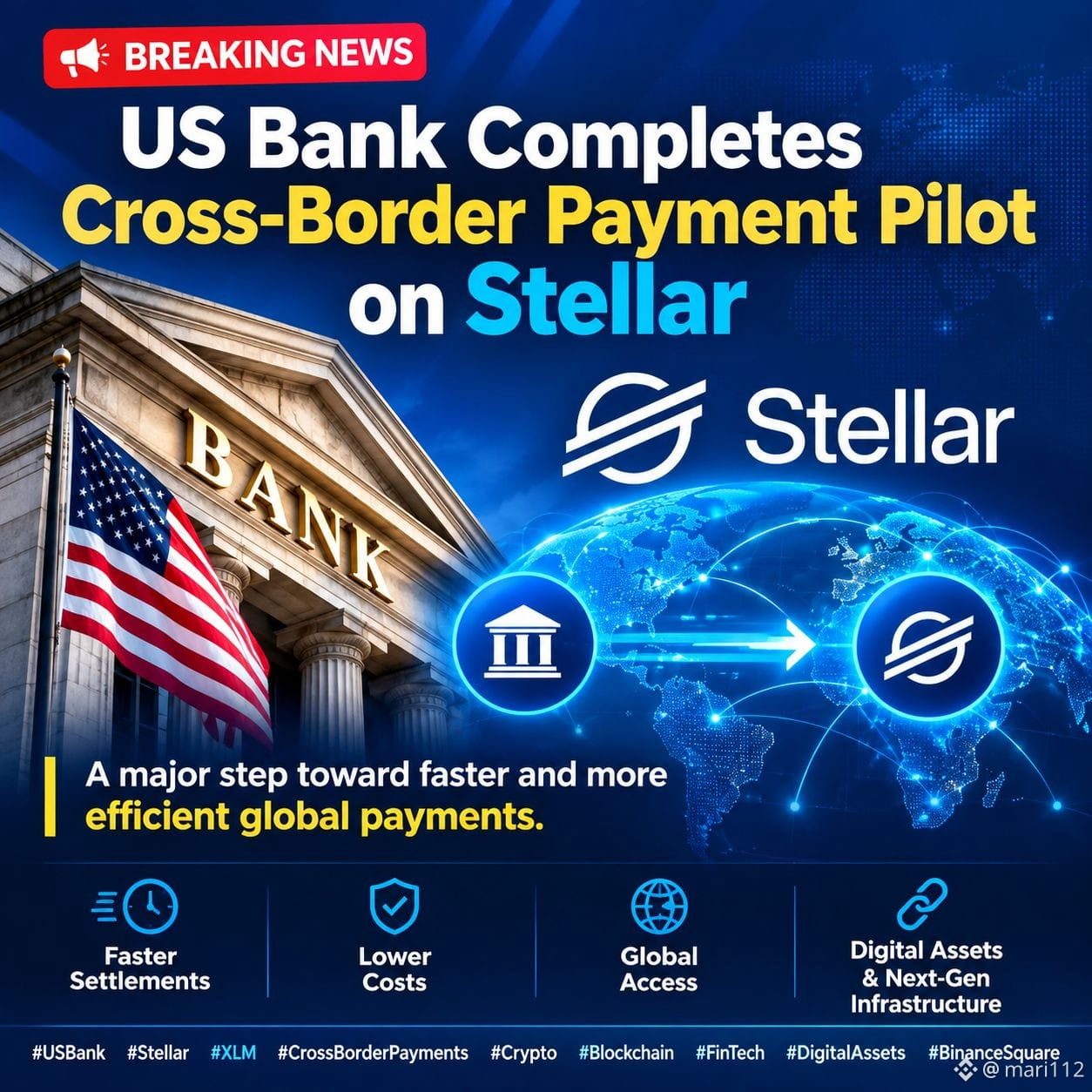
#USBankCompletesCrossBorderPaymentPilotOnStellar
A major step toward faster and more efficient global payments. 🌍💸
The pilot highlights Stellar’s potential for cross-border settlements, digital assets, and next-generation payment infrastructure. 🚀
#USBank #Stellar #CrossBorderPayments #BinanceSquare
#USBankCompletesCrossBorderPaymentPilotOnStellar
A major step toward faster and more efficient global payments. 🌍💸
The pilot highlights Stellar’s potential for cross-border settlements, digital assets, and next-generation payment infrastructure. 🚀
#USBank #Stellar #CrossBorderPayments #BinanceSquare
A major step toward faster and more efficient global payments. 🌍💸
The pilot highlights Stellar’s potential for cross-border settlements, digital assets, and next-generation payment infrastructure. 🚀
#USBank #Stellar #CrossBorderPayments #BinanceSquare
Crypto_Town_JS:
I understand, sis Keep sharing your analysis and thoughts. Consistency and learning are what matter most.
10
1
103

·
--
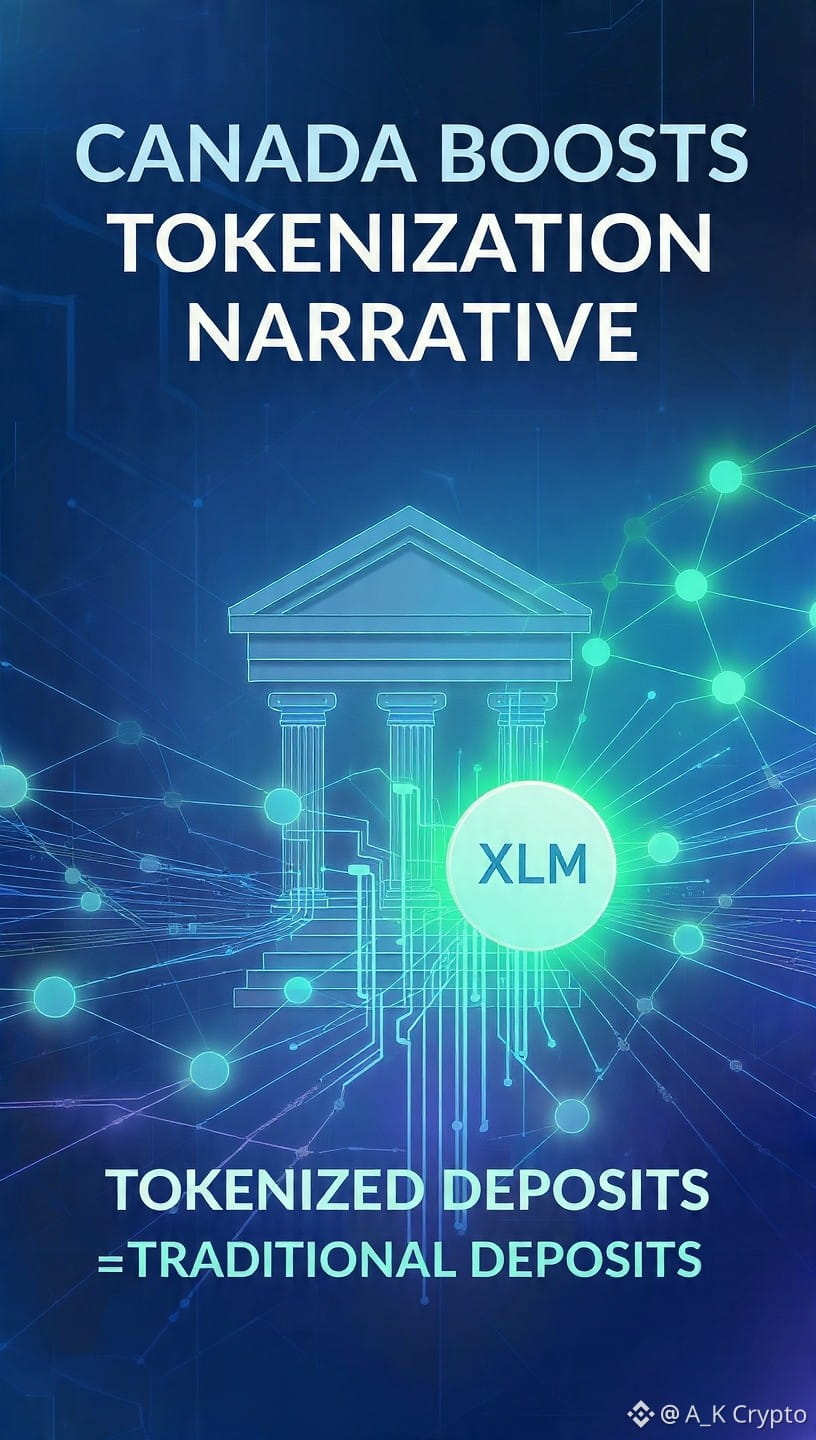
#CanadaOSFISaysTokenizedDepositsEqualTraditionalDeposits
🚨 CANADA JUST BOOSTED THE TOKENIZATION NARRATIVE
Canada’s banking regulator OSFI says tokenized deposits are not legally distinct from traditional deposits—the technology used to represent them doesn’t change their legal nature.
🔥 Why crypto traders are watching:
This could strengthen the broader RWA + tokenization narrative as traditional finance moves further toward blockchain-based infrastructure.
🟢 Coin to watch: $XLM (Stellar)
Stellar is closely linked to the institutional payments/tokenization theme, making $XLM one of the crypto assets traders may watch as this narrative develops.
👀 Big question:
Could tokenized deposits become the next major bridge between traditional banking and crypto?
#XLM #Stellar #RWA #Tokenization #Crypto #Blockchain #BinanceSquare
$XLM
{spot}(XLMUSDT)
#CanadaOSFISaysTokenizedDepositsEqualTraditionalDeposits
🚨 CANADA JUST BOOSTED THE TOKENIZATION NARRATIVE
Canada’s banking regulator OSFI says tokenized deposits are not legally distinct from traditional deposits—the technology used to represent them doesn’t change their legal nature.
🔥 Why crypto traders are watching:
This could strengthen the broader RWA + tokenization narrative as traditional finance moves further toward blockchain-based infrastructure.
🟢 Coin to watch: $XLM (Stellar)
Stellar is closely linked to the institutional payments/tokenization theme, making $XLM one of the crypto assets traders may watch as this narrative develops.
👀 Big question:
Could tokenized deposits become the next major bridge between traditional banking and crypto?
#XLM #Stellar #RWA #Tokenization #Crypto #Blockchain #BinanceSquare
$XLM
🚨 CANADA JUST BOOSTED THE TOKENIZATION NARRATIVE
Canada’s banking regulator OSFI says tokenized deposits are not legally distinct from traditional deposits—the technology used to represent them doesn’t change their legal nature.
🔥 Why crypto traders are watching:
This could strengthen the broader RWA + tokenization narrative as traditional finance moves further toward blockchain-based infrastructure.
🟢 Coin to watch: $XLM (Stellar)
Stellar is closely linked to the institutional payments/tokenization theme, making $XLM one of the crypto assets traders may watch as this narrative develops.
👀 Big question:
Could tokenized deposits become the next major bridge between traditional banking and crypto?
#XLM #Stellar #RWA #Tokenization #Crypto #Blockchain #BinanceSquare
$XLM
10

·
--
Bullish
Verified
#usbankcompletescrossborderpaymentpilotonstellar
U.S. Bank moved digital dollars between continents using Stellar.
On September 9, the bank announced a completed live payment pilot between its entities in North America and Europe. The transfer used USBDC, its proprietary dollar-backed stablecoin, on the public Stellar network.
The pilot also evaluates minting, redemption, freezing and clawback capabilities while connecting to the bank’s existing finance, risk and operational systems. The announcement gave no date for a wider client launch.
My view: the integration with everyday banking systems is what makes this worth following.
A payment product needs reliable accounting, clear redemption procedures and controls for handling problems. Testing those pieces together helps establish whether blockchain settlement can fit into a bank’s normal operations.
The next evidence I’d want is repeated transactions, measurable improvements in settlement and a clear path to client use. A successful internal transfer establishes a starting point; operating across more customers and payment routes introduces additional complexity.
For XLM, its network role includes transaction fees and minimum account balances. My interpretation is that payment growth needs to be assessed through those requirements: the dollar value transferred does not translate directly into equivalent XLM demand.
What would make this more significant to you: client access, recurring payment volume or proven cost savings?
#stellar #XLM #Stablecoins
{future}(XLMUSDT)
$LAB $VTHO $XLM
{future}(VTHOUSDT)
{future}(LABUSDT)
#usbankcompletescrossborderpaymentpilotonstellar
U.S. Bank moved digital dollars between continents using Stellar.
On September 9, the bank announced a completed live payment pilot between its entities in North America and Europe. The transfer used USBDC, its proprietary dollar-backed stablecoin, on the public Stellar network.
The pilot also evaluates minting, redemption, freezing and clawback capabilities while connecting to the bank’s existing finance, risk and operational systems. The announcement gave no date for a wider client launch.
My view: the integration with everyday banking systems is what makes this worth following.
A payment product needs reliable accounting, clear redemption procedures and controls for handling problems. Testing those pieces together helps establish whether blockchain settlement can fit into a bank’s normal operations.
The next evidence I’d want is repeated transactions, measurable improvements in settlement and a clear path to client use. A successful internal transfer establishes a starting point; operating across more customers and payment routes introduces additional complexity.
For XLM, its network role includes transaction fees and minimum account balances. My interpretation is that payment growth needs to be assessed through those requirements: the dollar value transferred does not translate directly into equivalent XLM demand.
What would make this more significant to you: client access, recurring payment volume or proven cost savings?
#stellar #XLM #Stablecoins
$LAB $VTHO $XLM
U.S. Bank moved digital dollars between continents using Stellar.
On September 9, the bank announced a completed live payment pilot between its entities in North America and Europe. The transfer used USBDC, its proprietary dollar-backed stablecoin, on the public Stellar network.
The pilot also evaluates minting, redemption, freezing and clawback capabilities while connecting to the bank’s existing finance, risk and operational systems. The announcement gave no date for a wider client launch.
My view: the integration with everyday banking systems is what makes this worth following.
A payment product needs reliable accounting, clear redemption procedures and controls for handling problems. Testing those pieces together helps establish whether blockchain settlement can fit into a bank’s normal operations.
The next evidence I’d want is repeated transactions, measurable improvements in settlement and a clear path to client use. A successful internal transfer establishes a starting point; operating across more customers and payment routes introduces additional complexity.
For XLM, its network role includes transaction fees and minimum account balances. My interpretation is that payment growth needs to be assessed through those requirements: the dollar value transferred does not translate directly into equivalent XLM demand.
What would make this more significant to you: client access, recurring payment volume or proven cost savings?
#stellar #XLM #Stablecoins
$LAB $VTHO $XLM

ABO3ZAM:
تحليل موفق، فالربط بين المؤسسات المالية والبلوكشين يمثل نقلة نوعية في تمركز الزخم طويل الأمد. لكن لا تغفل أن السيولة اللحظية تتبع الأخبار، لذا احذر من مطاردة السعر عند مناطق الرفض السعري، والتزم بإدارة المخاطر وتأمين الأرباح فور ظهور علامات تشبع الشراء.
1
3
2.5k

#usbankcompletescrossborderpaymentpilotonstellar
While retail traders were focused on daily price action, a tier-1 traditional bank quietly tested public blockchain rails.
U.S. Bank just settled an internal cross-border transaction between its North American and European branches. They skipped the private sandbox, minting their own dollar token, USBDC, and moving it directly across the Stellar public mainnet.
To be clear, this was strictly an intercompany pilot, not a commercial retail product launch. The bank retained full administrative oversight, deliberately testing compliance controls like asset freezing and clawbacks alongside the transfer.
This validates that heavily regulated financial institutions are actively integrating their core infrastructure with public, permissionless chains for global settlement.
Do you think major banks will eventually open these stablecoin settlement rails to corporate clients, or will they reserve this tech strictly for internal treasury operations?
#stellar #Crypto #fintech
$XLM
{future}(XLMUSDT)
#usbankcompletescrossborderpaymentpilotonstellar
While retail traders were focused on daily price action, a tier-1 traditional bank quietly tested public blockchain rails.
U.S. Bank just settled an internal cross-border transaction between its North American and European branches. They skipped the private sandbox, minting their own dollar token, USBDC, and moving it directly across the Stellar public mainnet.
To be clear, this was strictly an intercompany pilot, not a commercial retail product launch. The bank retained full administrative oversight, deliberately testing compliance controls like asset freezing and clawbacks alongside the transfer.
This validates that heavily regulated financial institutions are actively integrating their core infrastructure with public, permissionless chains for global settlement.
Do you think major banks will eventually open these stablecoin settlement rails to corporate clients, or will they reserve this tech strictly for internal treasury operations?
#stellar #Crypto #fintech
$XLM
While retail traders were focused on daily price action, a tier-1 traditional bank quietly tested public blockchain rails.
U.S. Bank just settled an internal cross-border transaction between its North American and European branches. They skipped the private sandbox, minting their own dollar token, USBDC, and moving it directly across the Stellar public mainnet.
To be clear, this was strictly an intercompany pilot, not a commercial retail product launch. The bank retained full administrative oversight, deliberately testing compliance controls like asset freezing and clawbacks alongside the transfer.
This validates that heavily regulated financial institutions are actively integrating their core infrastructure with public, permissionless chains for global settlement.
Do you think major banks will eventually open these stablecoin settlement rails to corporate clients, or will they reserve this tech strictly for internal treasury operations?
#stellar #Crypto #fintech
$XLM

ABO3ZAM:
تطورات كهذه تعزز تمركز الزخم المؤسسي على الشبكة، مما يمهد لسيولة طويلة الأمد. تقنياً، لا تنجرف خلف الاندفاع اللحظي، بل راقب السعر عند مناطق الرفض السعري القادمة. التزم بإدارة المخاطر الصارمة وقم بتأمين أرباحك دورياً مع كل صعود حاد يحققه الأصل.
2
143

·
--
Bullish
#usbankcompletescrossborderpaymentpilotonstellar
🚨 TRADITIONAL BANKING IS MOVING ON-CHAIN! 🔥
🇺🇸 U.S. Bank has completed a cross-border payment pilot on the Stellar network. 🌐💰
This is a big step because banks are testing how blockchain can make international payments faster, cheaper, and more efficient.
👀 The important part?
This isn’t just another crypto project talking about adoption — a major U.S. bank is testing blockchain infrastructure for real-world payments.
🔥 If more banks follow the same path, blockchain networks could play a much bigger role in global payments.
The bridge between traditional finance and crypto is getting stronger. 🚀$XLM
#stellar #XLM #crypto
#usbankcompletescrossborderpaymentpilotonstellar
🚨 TRADITIONAL BANKING IS MOVING ON-CHAIN! 🔥
🇺🇸 U.S. Bank has completed a cross-border payment pilot on the Stellar network. 🌐💰
This is a big step because banks are testing how blockchain can make international payments faster, cheaper, and more efficient.
👀 The important part?
This isn’t just another crypto project talking about adoption — a major U.S. bank is testing blockchain infrastructure for real-world payments.
🔥 If more banks follow the same path, blockchain networks could play a much bigger role in global payments.
The bridge between traditional finance and crypto is getting stronger. 🚀$XLM
#stellar #XLM #crypto
🚨 TRADITIONAL BANKING IS MOVING ON-CHAIN! 🔥
🇺🇸 U.S. Bank has completed a cross-border payment pilot on the Stellar network. 🌐💰
This is a big step because banks are testing how blockchain can make international payments faster, cheaper, and more efficient.
👀 The important part?
This isn’t just another crypto project talking about adoption — a major U.S. bank is testing blockchain infrastructure for real-world payments.
🔥 If more banks follow the same path, blockchain networks could play a much bigger role in global payments.
The bridge between traditional finance and crypto is getting stronger. 🚀$XLM
#stellar #XLM #crypto
87

🚨 Stellar Network Helps POWER MONEYGRAM Latin America VISA Card 🧠
📊 | $BTC | $ETH | $BNB |
- Please follow, like, and share your thoughts 📈
- MoneyGram has launched a Visa card based on the Stellar network, targeting the Latin American market.
- The card supports the USDC stablecoin for instant retail settlement.
- It is also compatible with mobile wallets, improving payment convenience for users. 🔥
- In the short term, the card launch could boost XLM trading volume in Latin America.
- If user adoption is high, USDC usage may grow rapidly, driving activity in the Stellar ecosystem.
- Whale activity remains neutral for now, with no large-scale buying or selling.
- The overall market is moving sideways, and volatility is expected to be limited in the near term.
- Do you think Stellar’s promotion in Latin America can drive XLM’s long-term rise?
- Feel free to follow this column and leave your views and suggestions.
- #Stellar #XLM #MoneyGram #Visa #Crypto
🚨 Stellar Network Helps POWER MONEYGRAM Latin America VISA Card 🧠
📊 | $BTC | $ETH | $BNB |
- Please follow, like, and share your thoughts 📈
- MoneyGram has launched a Visa card based on the Stellar network, targeting the Latin American market.
- The card supports the USDC stablecoin for instant retail settlement.
- It is also compatible with mobile wallets, improving payment convenience for users. 🔥
- In the short term, the card launch could boost XLM trading volume in Latin America.
- If user adoption is high, USDC usage may grow rapidly, driving activity in the Stellar ecosystem.
- Whale activity remains neutral for now, with no large-scale buying or selling.
- The overall market is moving sideways, and volatility is expected to be limited in the near term.
- Do you think Stellar’s promotion in Latin America can drive XLM’s long-term rise?
- Feel free to follow this column and leave your views and suggestions.
- #Stellar #XLM #MoneyGram #Visa #Crypto
📊 | $BTC | $ETH | $BNB |
- Please follow, like, and share your thoughts 📈
- MoneyGram has launched a Visa card based on the Stellar network, targeting the Latin American market.
- The card supports the USDC stablecoin for instant retail settlement.
- It is also compatible with mobile wallets, improving payment convenience for users. 🔥
- In the short term, the card launch could boost XLM trading volume in Latin America.
- If user adoption is high, USDC usage may grow rapidly, driving activity in the Stellar ecosystem.
- Whale activity remains neutral for now, with no large-scale buying or selling.
- The overall market is moving sideways, and volatility is expected to be limited in the near term.
- Do you think Stellar’s promotion in Latin America can drive XLM’s long-term rise?
- Feel free to follow this column and leave your views and suggestions.
- #Stellar #XLM #MoneyGram #Visa #Crypto
48

·
--
#stellar institutional bridge instead of speculation
$XLM trades at $0.1817 (+0.16% in 24h) within the range of $0.1769–$0.1828. However, the fundamentals impress: U.S. Bank successfully tested cross-border transfers on Stellar 🏦, and MoneyGram released a Visa card with USDC support.
The network is confidently scaling real-world usage in banks and retail. Will this translate into a price breakout? 📈
#stellar institutional bridge instead of speculation
$XLM trades at $0.1817 (+0.16% in 24h) within the range of $0.1769–$0.1828. However, the fundamentals impress: U.S. Bank successfully tested cross-border transfers on Stellar 🏦, and MoneyGram released a Visa card with USDC support.
The network is confidently scaling real-world usage in banks and retail. Will this translate into a price breakout? 📈
$XLM trades at $0.1817 (+0.16% in 24h) within the range of $0.1769–$0.1828. However, the fundamentals impress: U.S. Bank successfully tested cross-border transfers on Stellar 🏦, and MoneyGram released a Visa card with USDC support.
The network is confidently scaling real-world usage in banks and retail. Will this translate into a price breakout? 📈
Tisha Moving:
В любом случае пойдут в право.
4
1
139

#usbankcompletescrossborderpaymentpilotonstellar
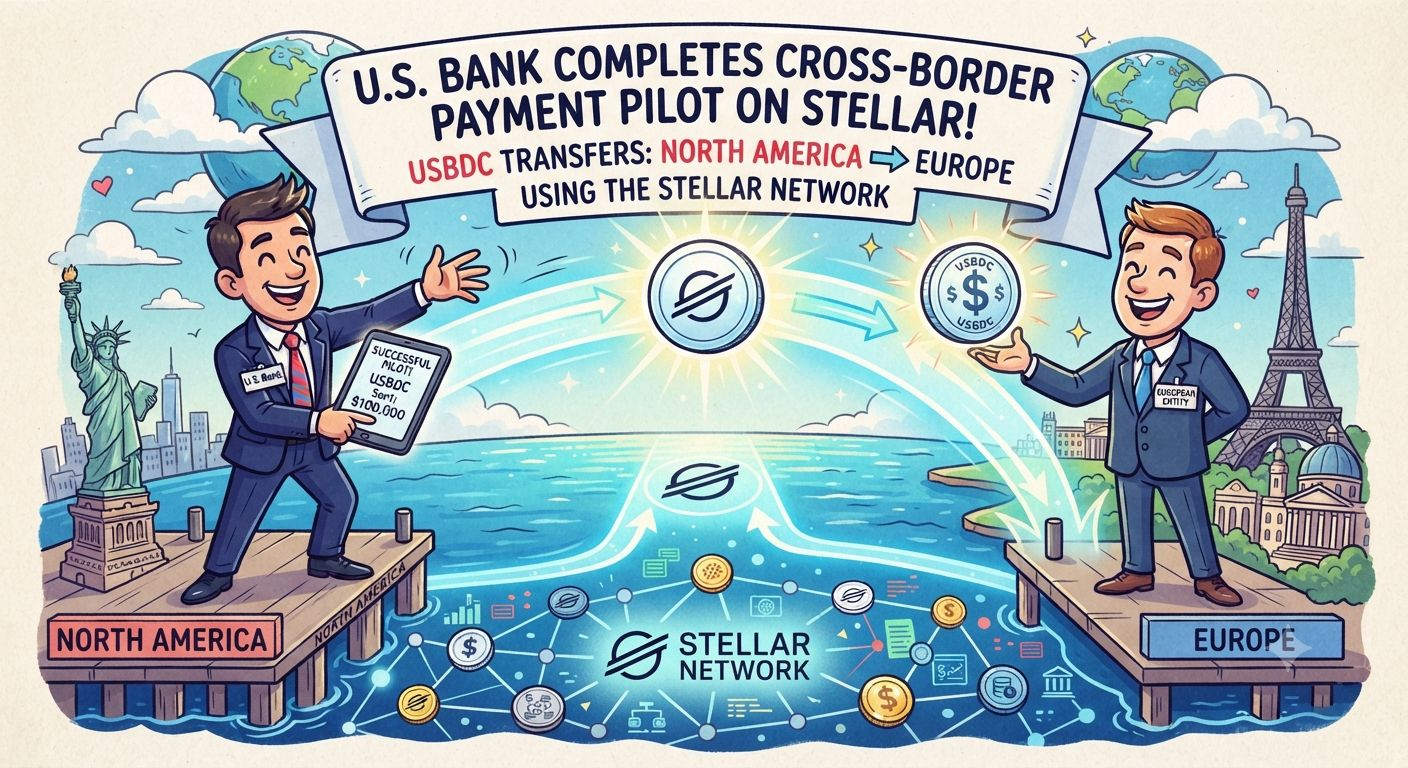
U.S. Bank moved digital dollars across continents using Stellar.
On September 9, the bank announced that a live payments pilot was completed between its entities in North America and Europe. The transfer used USBDC, its dollar-backed private stablecoin, on the public Stellar network.
The pilot also evaluates minting, redemption, freezing, and “clawback” capabilities while connecting to the bank’s existing finance, risk, and operations systems. The announcement provided no date for a broader customer rollout.
My take: what makes this topic interesting to follow is integration into everyday banking systems.
A payments product must have reliable accounting, clear redemption procedures, and controls to handle issues. Testing these elements together helps determine whether settlement via blockchain can fit into a bank’s normal operations.
The next proof I’d like to see: repeated transactions, measurable improvements in settlement, and a clear path toward customer use. A successful internal transfer sets a starting point; operating with more customers and more payment journeys introduces additional complexity.
For XLM, the role of its network includes transaction fees and minimum account balances. My interpretation is that payments growth should be assessed against these requirements: the dollar value transferred doesn’t directly translate into an equivalent demand for XLM.
What would make this more meaningful to you: customer access, the volume of recurring payments, or proven cost savings?
#stellar #XLM #Stablecoins
$VTHO
{future}(VTHOUSDT)
$LSK
{future}(LSKUSDT)
$ETH
{future}(ETHUSDT)
#usbankcompletescrossborderpaymentpilotonstellar
U.S. Bank moved digital dollars across continents using Stellar.
On September 9, the bank announced that a live payments pilot was completed between its entities in North America and Europe. The transfer used USBDC, its dollar-backed private stablecoin, on the public Stellar network.
The pilot also evaluates minting, redemption, freezing, and “clawback” capabilities while connecting to the bank’s existing finance, risk, and operations systems. The announcement provided no date for a broader customer rollout.
My take: what makes this topic interesting to follow is integration into everyday banking systems.
A payments product must have reliable accounting, clear redemption procedures, and controls to handle issues. Testing these elements together helps determine whether settlement via blockchain can fit into a bank’s normal operations.
The next proof I’d like to see: repeated transactions, measurable improvements in settlement, and a clear path toward customer use. A successful internal transfer sets a starting point; operating with more customers and more payment journeys introduces additional complexity.
For XLM, the role of its network includes transaction fees and minimum account balances. My interpretation is that payments growth should be assessed against these requirements: the dollar value transferred doesn’t directly translate into an equivalent demand for XLM.
What would make this more meaningful to you: customer access, the volume of recurring payments, or proven cost savings?
#stellar #XLM #Stablecoins
$VTHO
$LSK
$ETH
U.S. Bank moved digital dollars across continents using Stellar.
On September 9, the bank announced that a live payments pilot was completed between its entities in North America and Europe. The transfer used USBDC, its dollar-backed private stablecoin, on the public Stellar network.
The pilot also evaluates minting, redemption, freezing, and “clawback” capabilities while connecting to the bank’s existing finance, risk, and operations systems. The announcement provided no date for a broader customer rollout.
My take: what makes this topic interesting to follow is integration into everyday banking systems.
A payments product must have reliable accounting, clear redemption procedures, and controls to handle issues. Testing these elements together helps determine whether settlement via blockchain can fit into a bank’s normal operations.
The next proof I’d like to see: repeated transactions, measurable improvements in settlement, and a clear path toward customer use. A successful internal transfer sets a starting point; operating with more customers and more payment journeys introduces additional complexity.
For XLM, the role of its network includes transaction fees and minimum account balances. My interpretation is that payments growth should be assessed against these requirements: the dollar value transferred doesn’t directly translate into an equivalent demand for XLM.
What would make this more meaningful to you: customer access, the volume of recurring payments, or proven cost savings?
#stellar #XLM #Stablecoins
$VTHO
$LSK
$ETH
1
109
Log in to explore more content
Join global crypto users on Binance Square
⚡️ Get latest and useful information about crypto.
💬 Trusted by the world’s largest crypto exchange.
👍 Discover real insights from verified creators.
Email / Phone number
Trending Topics
1
#BitcoinCrosses$78000
10 views
31 Discussing
2
#AnthropicCEOCallsForAISlowdown
131,201 views
2,209 Discussing
3
#RevolutDataLeakReportedlyPostedAttackersThreatenDailyReleases
1,075 views
46 Discussing
4
#BrazilCentralBankRaisesVASPCapitalRequirements
7,331 views
280 Discussing
5
#BitcoinThirdSingleBlockReorgInFourWeeks
35,111 views
912 Discussing
6
#EthereumFallsBelow$2500
3,452 views
84 Discussing
7
#BitcoinDropsToIntradayLow$76367
1,546 views
42 Discussing
8
#WhiteHouseRejectsAISlowdownCalls
18,321 views
410 Discussing
9
#UKMayExemptTokenizedGoldFromFundRules
9,877 views
283 Discussing
10
#BitcoinSpotETFsRecord$463MNetOutflowLastWeek
1,179 views
22 Discussing