
#institutionaladoption
institutionaladoption
1.3M views
7,957 Discussing
Hot
Latest

South Korea is preparing to unlock corporate Bitcoin demand—and smart traders are watching the timeline, not just the headline. 🚨
South Korea’s Financial Services Commission (FSC) plans to publish corporate crypto investment guidelines next week alongside its Digital Asset Basic Act draft.
Here is the real breakdown:
📌 The Scale: Around 3,500 listed companies and professional-investor firms could gain approval to buy Bitcoin and crypto for investment.
📌 The Bottleneck: Arriving 21 months after the Feb 2025 roadmap, corporate access was delayed because Korea lacked Over-The-Counter (OTC) desk rules to absorb large block trades.
📌 The Reality Check: Next week’s guidelines do not trigger instant buying. Lawmakers target January 2027 to pass the bill, and the FSC must still finalize investment caps and launch dates.
Korea built a massive crypto market on retail alone. Corporate treasuries are the next catalyst.
Are you positioning ahead of Asian institutional inflows, or waiting for the bill to pass? 👇
$BTC $ETH $PIEVERSE
{future}(PIEVERSEUSDT)
{future}(BTCUSDT)
{future}(ETHUSDT)
#southkoreaplanstolet3500listedfirmsbuybitcoin #BTC #SouthKorea #InstitutionalAdoption
South Korea is preparing to unlock corporate Bitcoin demand—and smart traders are watching the timeline, not just the headline. 🚨
South Korea’s Financial Services Commission (FSC) plans to publish corporate crypto investment guidelines next week alongside its Digital Asset Basic Act draft.
Here is the real breakdown:
📌 The Scale: Around 3,500 listed companies and professional-investor firms could gain approval to buy Bitcoin and crypto for investment.
📌 The Bottleneck: Arriving 21 months after the Feb 2025 roadmap, corporate access was delayed because Korea lacked Over-The-Counter (OTC) desk rules to absorb large block trades.
📌 The Reality Check: Next week’s guidelines do not trigger instant buying. Lawmakers target January 2027 to pass the bill, and the FSC must still finalize investment caps and launch dates.
Korea built a massive crypto market on retail alone. Corporate treasuries are the next catalyst.
Are you positioning ahead of Asian institutional inflows, or waiting for the bill to pass? 👇
$BTC $ETH $PIEVERSE
#southkoreaplanstolet3500listedfirmsbuybitcoin #BTC #SouthKorea #InstitutionalAdoption

2
1.5k

SOUTH KOREA CORPORATE TREASURERS ARE QUIETLY PREPARING TO FLOOD $BTC AND $ETH WITH LIQUIDITY! 🦈 ⚡
Smart money never chases headlines; it positions months ahead of the liquidity floodgates. With over 3,000 listed firms gearing up under new regulatory frameworks, the transition from retail-driven momentum to heavy institutional accumulation is taking shape across $BTC , $ETH , and $PIEVERSE . 📊
While retail traders sleep on the timeline, OTC desk rules are quietly being laid down to absorb massive block trades without slippage. This is structural positioning at its finest. 💡
Are you loading your bags ahead of the Asian corporate wave, or waiting for the breakout to happen on your screen? 👇
⚠️ Not financial advice. Always manage your risk. 🛡️
🏷️ #BTC #InstitutionalAdoption #Crypto #SouthKorea
🔥 💎

12

🚨 KOREAN INSTITUTIONAL TREASURIES ARE PREPARING TO UNLOCK MASSIVE LIQUIDITY FOR $BTC 💥
The upcoming Financial Services Commission guidelines mark a structural shift from retail dominance to institutional accumulation for assets like $BTC and $ETH . 📊 While full legislative clearance targets early 2027, smart money tracks regulatory footprints well ahead of the herd. 🔍
Around 3,500 listed firms represent a latent capital pool waiting for specialized OTC desk rules. ⚡ Positioning ahead of corporate treasury inflows defines superior long-term portfolio execution.
Are you accumulating positions now or waiting for the official regulatory green light? 👇
⚠️ Not financial advice. Always manage your risk. 🛡️
🏷️ #BTC #InstitutionalAdoption #MarketStructure #SmartMoney
🦈 📈


🦈 $BTC INSTITUTIONAL FOOTPRINT EXPANDS AS REGULATORY RED CARPETS ROLL OUT FOR 2027 🏛️
Smart money never moves in a vacuum, and recent regulatory pivots reveal a clear institutional blueprint forming for 2027. While retail liquidity faces increased friction, macro capital allocators are quietly engineering compliant pathways to absorb high-beta assets. 🌊
This structural bifurcation confirms that long-term accumulation channels belong strictly to top-tier liquidity heavyweights. Focus your positioning on core structural assets like $BTC and $ETH where order book depth can absorb multi-billion-dollar inflows without slippage. 📊
Are you aligning your portfolio structure with institutional footprints or chasing high-noise retail rotations? 👇
⚠️ Not financial advice. Always manage your risk. 🛡️
🏷️ #BTC #InstitutionalAdoption #CryptoNews #SmartMoney
🦈 ⚖️

1

🚨 INSTITUTIONS ARE LAYING THE TRACKS FOR $BTC WHILE RETAIL GETS LOCKED OUT! 🦈
The playbook is shifting right in front of our eyes as major regulatory shifts carve a red carpet for institutional capital by 2027. While everyday participants face tighter scrutiny, smart money is methodically positioning ahead of the long-term liquidity wave. 🌊
Ignore the short-term noise and focus on high-liquidity heavyweights like $BTC and $ETH where institutional allocation actually lands. 📊 Accumulation phases reward patience, not emotional chasing when the macro narrative finally explodes. ⚡
Are you aligning your portfolio with whale accumulation or getting distracted by retail traps? 👇
⚠️ Not financial advice. Always manage your risk. 🛡️
🏷️ #BTC #InstitutionalAdoption #CryptoNews #SmartMoney
🔥 💎

7

Sovereign and Institutional Bitcoin Accumulation Surges
Q3 filings confirm massive Bitcoin exposure from Abu Dhabi funds and major players like Brevan Howard and Susquehanna.
#Bitcoin #InstitutionalAdoption
Sovereign and Institutional Bitcoin Accumulation Surges
Q3 filings confirm massive Bitcoin exposure from Abu Dhabi funds and major players like Brevan Howard and Susquehanna.
#Bitcoin #InstitutionalAdoption
Q3 filings confirm massive Bitcoin exposure from Abu Dhabi funds and major players like Brevan Howard and Susquehanna.
#Bitcoin #InstitutionalAdoption
44

🚨 WALL STREET IS QUIETLY EMBRACING BITCOIN.
Michael Saylor says banks are bringing Bitcoin to their clients.
And the latest institutional holdings reveal just how significant this shift could be.
Major U.S. banks increased their exposure to Spot Bitcoin ETFs in Q3.
Look at the reported numbers:
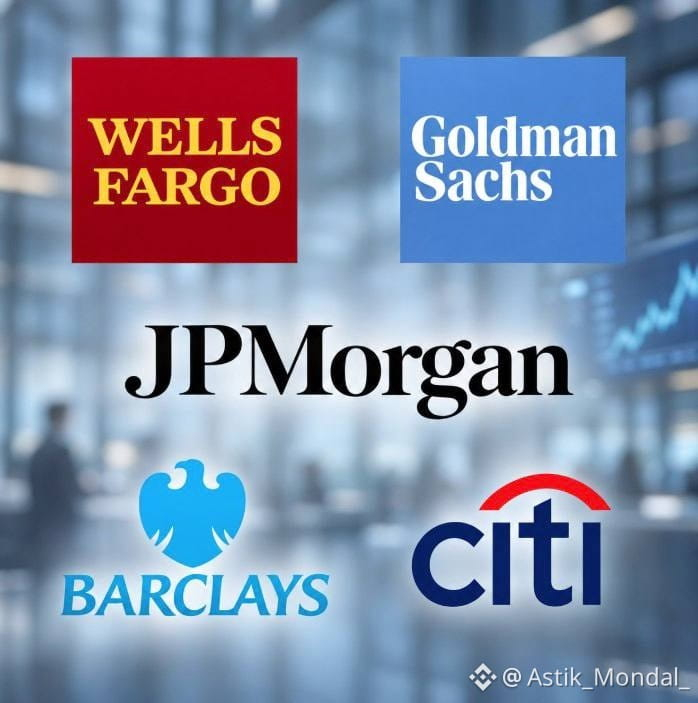
Wells Fargo: $2.35 BILLION Goldman Sachs: $1.28 BILLION JPMorgan: $549 MILLION Barclays: $187 MILLION Citi: $144 MILLION
Wells Fargo leads the group with approximately $2.35 billion in reported exposure, equivalent to roughly 30,553 BTC.
But Goldman Sachs deserves special attention.
Its Spot Bitcoin ETF holdings surged 121% compared with Q2.
Think about what this means.
Some of the world's biggest financial institutions are increasing their exposure to Bitcoin through regulated investment products.
This is a major development for institutional adoption.
For years, traditional finance questioned Bitcoin.
Now, major banking institutions are participating in the Bitcoin ETF market.
The bigger narrative is changing.
Bitcoin is increasingly becoming part of traditional financial infrastructure.
The next wave of Bitcoin adoption may not come from retail investors. It may come through the banks that once stood on the sidelines.
#Bitcoin #BTC #Crypto #BitcoinETF #InstitutionalAdoption
2
131

·
--
Bearish
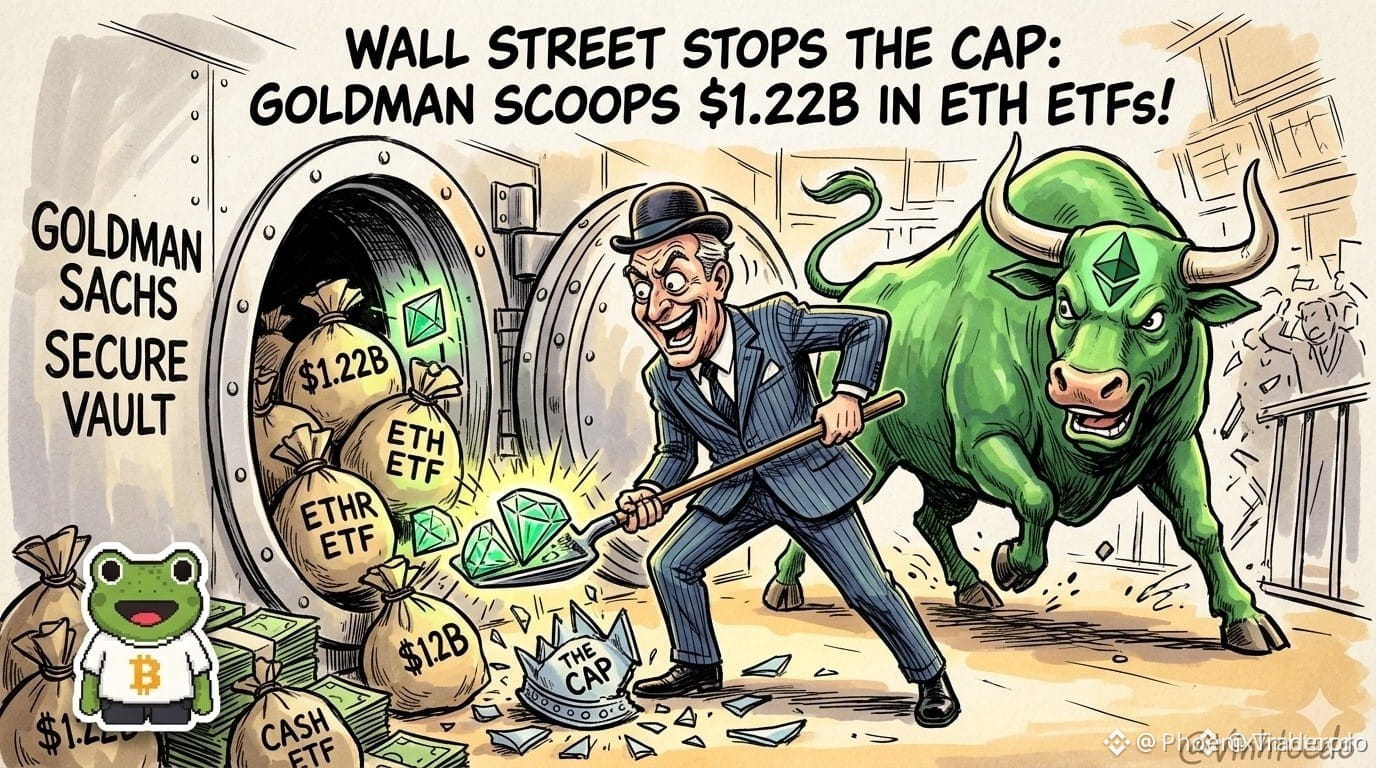
#GoldmanSachsReports122BInEtherETFHoldings
💰 Wall Street Is Accumulating ETH!
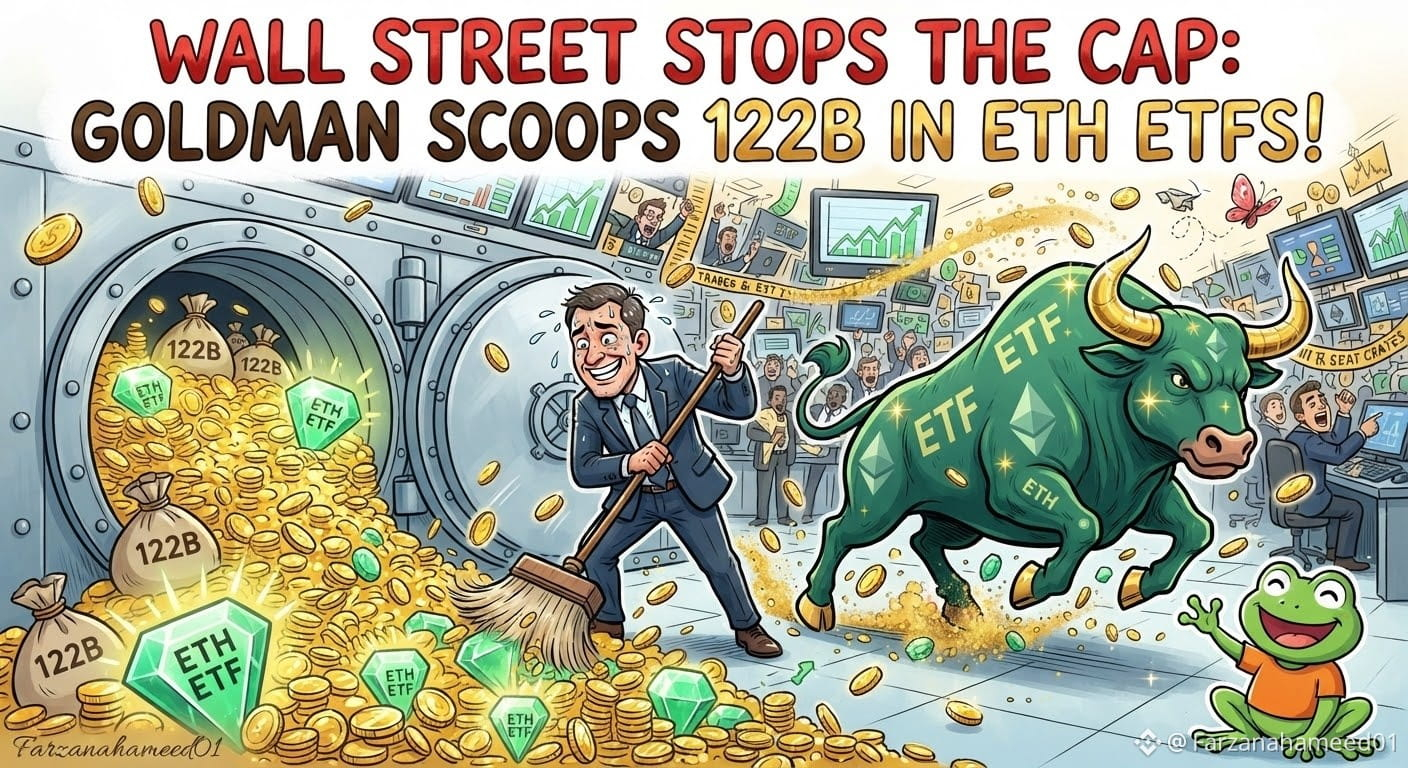
Wall Street has stopped changing its mind - Goldman Sachs is accumulating $1.22 billion in Ether ETFs!
Detailed analysis: The Q3 13F filing revealed an aggressive all-in move: Increased its stake in ETHA by 352%, to $602.9 million. Poured capital into Grayscale and Fidelity, bringing its total ETH holdings to nearly 6 times their previous level in 3 months, helping drive ETH prices up 71% in Q3.
📊 Quick analysis:
◆ Significance: Institutional adoption is real here. When a big bank like Goldman goes all-in on ETH ETFs, it shows big money is trusting Ethereum more. 13F reports are just historical data and may reflect market-making or hedging activities.
◆ What I am learning: I do not trade, I am only learning and sharing. I am learning to never rush into FOMO on big news, and why waiting for a pullback and managing capital carefully matters more than chasing the top.
⚠️ This is only for learning and sharing, not financial advice. ✨
👇
$ETH - Watch for institutional buying on pullbacks, strong.
$BTC - Watch for Wall Street rotation into crypto, strong.
$ETHA.ETF - Watch for ETF inflows supporting ETH, strong.
✨𝐅𝐀𝐑𝐙𝐀𝐍𝐀 𝐇𝐀𝐌𝐄𝐄𝐃 𝐎𝐅𝐅𝐈𝐂𝐈𝐀𝐋 • 🦋
#GoldmanSachs #Ethereum #CryptoNews #ETF
#InstitutionalAdoption
Kalsoom Chart MasterX 160:
SOL hit TP2 at $75 overnight — who's still holding for $78.50?
6
8
382

·
--
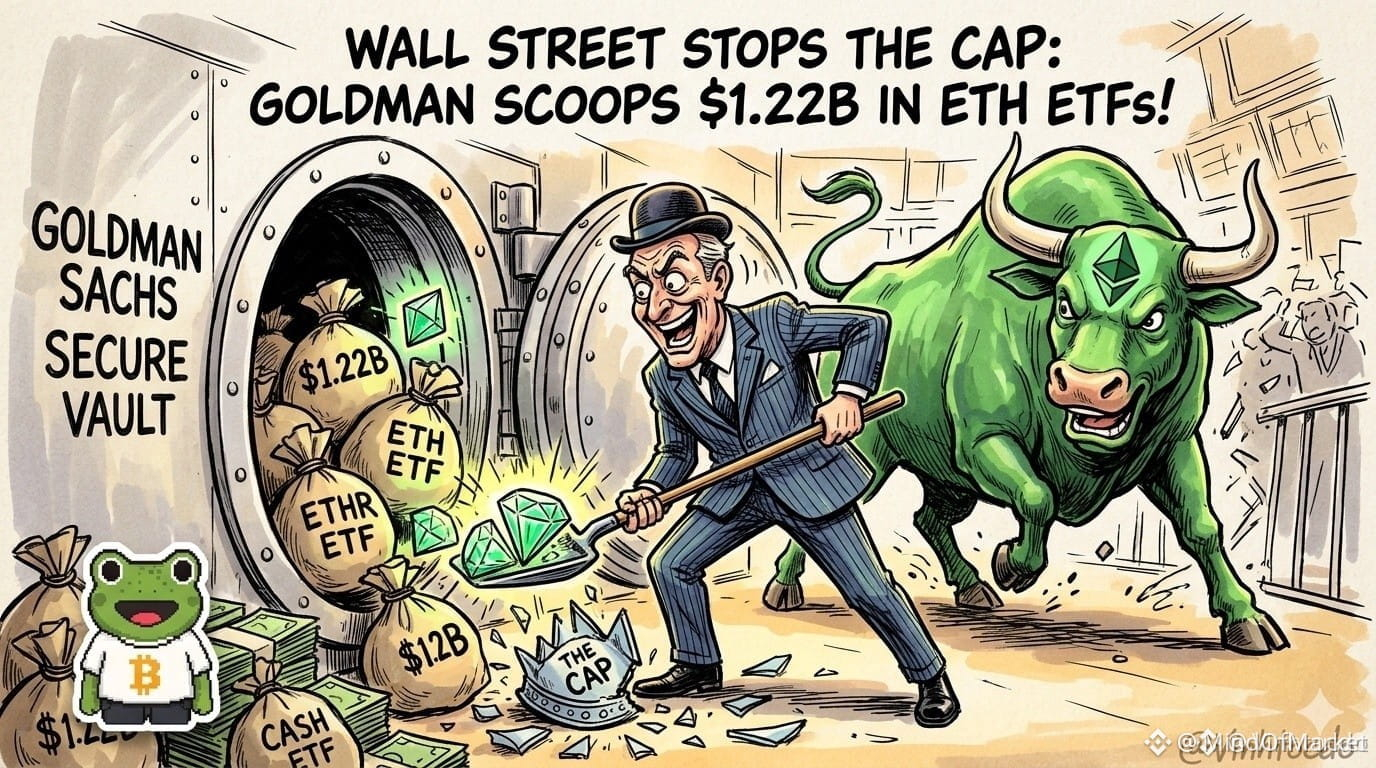
🦈 $ETH INSTITUTIONAL ACCELERATION: GOLDMAN SACHS UNVEILS A MASSIVE 1.22B DOLLAR ETF FOOTPRINT! 📈
Latest Q3 regulatory filings reveal institutional balance sheets scaling their $ETH exposure by nearly sixfold, led by aggressive allocations into top-tier exchange products. While this structural demand footprint validates long-term accumulation, seasoned participants know quarterly disclosures map past footprint rather than immediate execution triggers. 📊
Rather than chasing late-stage momentum during an expansion phase, patient capital waits for a calculated liquidity retracement into discount arrays. 💬 How are you positioning your portfolio around these verified institutional inflows? 👇
⚠️ Not financial advice. Always manage your risk. 🛡️
🏷️ #ETH #Ethereum #InstitutionalAdoption #Crypto
🔥 💎
WALL STREET JUST UNLOCKED A BILLION-DOLLAR WAR CHEST FOR $ETH ! 🦈 💥
Fresh 13F filings just exposed institutional heavyweights pumping nearly six times their previous capital into $ETH spot vehicles during Q3. 📊 That kind of aggressive capital rotation explains the heavy buying pressure behind the recent quarterly surge.
Smart money accumulation at this scale is rarely retail FOMO, but remember that quarterly filings are lagging snapshots of past positioning. 🔍 Instead of chasing green candles blindly, let the macro trend settle and look for structured retracements before committing capital.
💬 Are you treating institutional inflows as your green light to buy every dip, or staying patient for a cleaner liquidity sweep? 👇
⚠️ Not financial advice. Always manage your risk. 🛡️
🏷️ #ETH #Ethereum #InstitutionalAdoption #Crypto
🦈 🌊
14
🚨 $BTC INSTITUTIONAL GATEWAYS OPEN AS CFTC CLEARS BLOCKCHAIN DERIVATIVES INFRASTRUCTURE! 💥
Regulatory frameworks are shifting beneath the surface as traditional financial institutions build out immutable derivatives architecture. This regulatory greenlight marks a structural shift for smart money capital allocation into digital asset rails. 📊
When clearinghouse applications clear institutional hurdles, liquidity channels deepen significantly beyond retail horizons. Expect sophisticated participants to position early ahead of systemic volume expansion. 💡
Are you positioning for this macro structural shift or waiting for spot validation? 👇
⚠️ Not financial advice. Always manage your risk. 🛡️
🏷️ #BTC #InstitutionalAdoption #Crypto #MarketStructure
🔥 💎
11

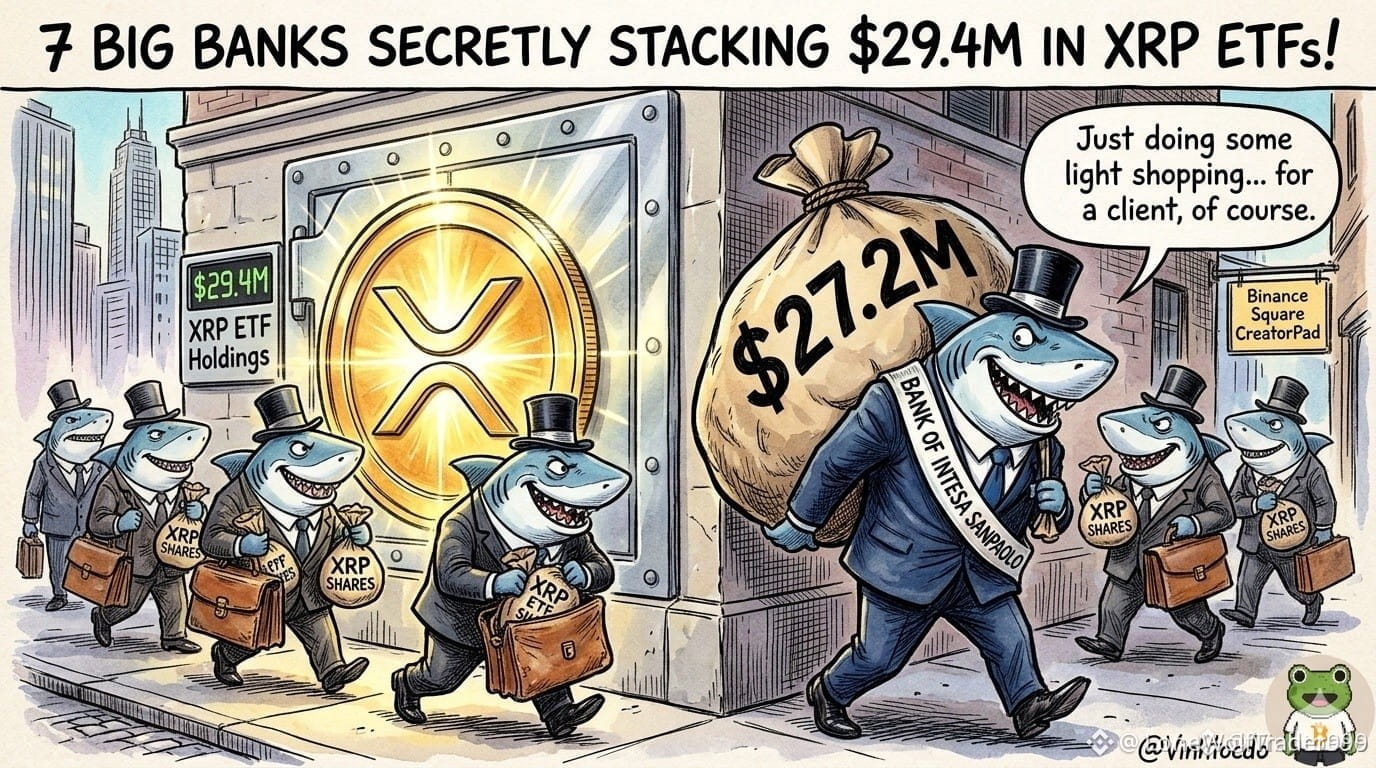
🦈 $XRP WHALES ARE QUIETLY ACCUMULATING WHILE RETAIL SLEEPS THROUGH THE ACCUMULATION ZONE! ⚡
Traditional finance heavyweights just dropped their latest disclosures, revealing millions parked straight into $XRP institutional vehicles. 📊
Smart money is layering positions across multiple financial products while market choppiness shakes out emotional weak hands. 🌊
Track the underlying order flow rather than chasing noise, because stealth accumulation always precedes the real expansion phase. 💬 Are you positioning alongside institutional capital or waiting on the sidelines? 👇
⚠️ Not financial advice. Always manage your risk. 🛡️
🏷️ #XRP #InstitutionalAdoption #Crypto #SmartMoney
🦈 💎
6
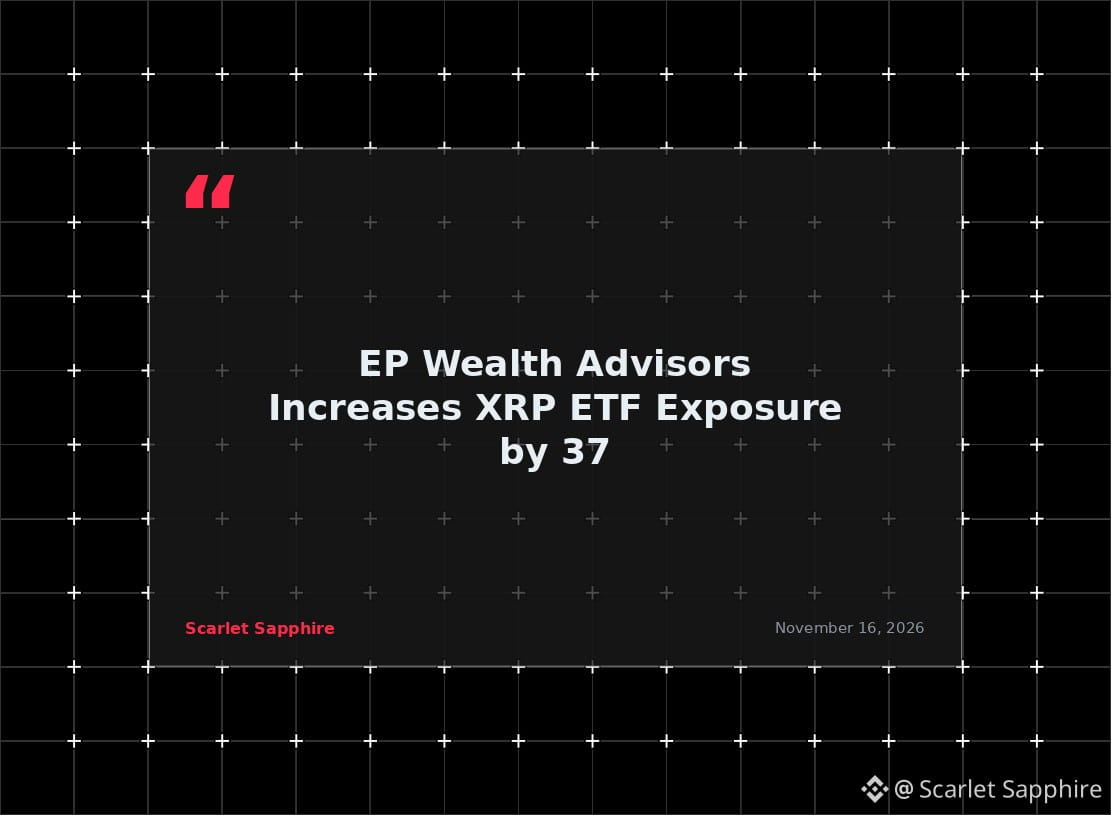
EP Wealth Advisors Increases XRP ETF Exposure by 37%
US wealth management giant EP Wealth Advisors has significantly ramped up its position in an XRP ETF, signaling growing institutional interest in the asset class via SEC regulated products.
#XRP #InstitutionalAdoption
EP Wealth Advisors Increases XRP ETF Exposure by 37%
US wealth management giant EP Wealth Advisors has significantly ramped up its position in an XRP ETF, signaling growing institutional interest in the asset class via SEC regulated products.
#XRP #InstitutionalAdoption
US wealth management giant EP Wealth Advisors has significantly ramped up its position in an XRP ETF, signaling growing institutional interest in the asset class via SEC regulated products.
#XRP #InstitutionalAdoption
63

·
--
🚨 BIG NEWS FOR CRYPTO! 21 GLOBAL BANKS PLAN $270 MILLION STABLECOIN PROJECT!
A major development is taking place in the crypto industry!
🏦 A consortium of 21 major banks, including Goldman Sachs, Citigroup, Santander and Deutsche Bank, is planning to invest approximately $270 million in a new US dollar-backed stablecoin project called Project Faro.
🔥 Why is this important?
• More traditional banks are entering the digital asset industry.
• Stablecoin adoption could grow significantly.
• Institutional involvement may strengthen long-term confidence in crypto.
• Strategy's Michael Saylor has also hinted at another possible Bitcoin purchase.
📊 Bitcoin Market Update:
BTC recently dropped close to $62,000 before recovering toward $65,000. However, the Fear & Greed Index remains at Extreme Fear (10/100).
⚠️ This recovery is not yet a confirmed trend reversal.
My Opinion: While the market is facing serious pressure, institutional adoption and banking involvement are important developments to watch. Smart investors should follow the news, manage risk and avoid emotional trading.
🚀 Follow me for daily crypto news, market analysis and potential trading opportunities!
$BTC $TRUMP $NVDAB
#Bitcoin #BTC #CryptoNews #Stablecoin #GoldmanSachs #CryptoMarket #InstitutionalAdoption #BinanceSquare #CryptoTrading

406

·
--
Harvard and Dartmouth Earn 42% in Q3: Crypto ETFs and Staking Holdings Reveal a Shift in Institutional Allocations
U.S. Ivy League endowment funds delivered strong results in Q3, but what’s really worth noting is how they moved in crypto assets—their allocation priorities seem to be quietly shifting even as they turn a profit.
According to information reported by Cointelegraph, the endowment funds of Harvard and Dartmouth achieved combined returns of 42% in the third quarter. Harvard’s gold ETF holdings grew nearly 20-fold quarter over quarter, signaling a clear preference for safe-haven and inflation-resistant assets. Meanwhile, Dartmouth chose to maintain its existing positions in Solana and Ethereum staking, making no additions or reductions.
Why does this matter? In recent months, the market has repeatedly discussed the narrative of “institutional outflows,” and data on crypto ETF flows was once decidedly bearish. Endowment funds are typically long-term investors with a low risk appetite, so the stability of their holdings is often seen as a mild signal that risk appetite may be stabilizing. The 42% overall Q3 return shows that they are not conservative when it comes to risk assets, but their choices in crypto appear restrained—they have neither aggressively increased their positions nor cut their losses and exited.
Looking at the data, several key points are worth unpacking: first, the scale of the 42% overall return; second, the nearly 20-fold increase in gold ETF holdings; and third, Dartmouth’s decision to “stay put” on its staking positions. Holding staking positions suggests the rationale for long-term allocation remains in place, rather than reflecting short-term trading in and out.
How might the market react? If the behavior of these allocation-focused investors is interpreted as a sign that risk appetite is stabilizing, it could help soften the previously bearish institutional narrative. However, it’s worth noting that the disclosed holdings do not show new capital flowing in—they may reflect passive holding rather than active buying. And the sample represents only two Ivy League institutions, so it is not enough to indicate a shift across the entire institutional investor base.
The counterarguments are also clear: endowment funds typically make decisions more slowly than the market, so changes to their holdings may lag; and the sample is too small to infer a broad trend. The nearly 20-fold increase in gold holdings instead suggests that some capital is still shifting toward traditional safe-haven assets.
What should we watch next? More important is whether these allocation-focused investors make genuine net additions in subsequent quarters, and whether overall crypto ETF flows begin to move in sync with endowment fund behavior. Until the data confirms this, it is better to view the current signal as “mild” rather than a “turning point.”
{observation}
#BitcoinETF #InstitutionalAdoption #AssetAllocation
The above is a compilation of information and personal analysis, and does not constitute investment advice.
3
·
--
Harvard and Dartmouth Endowments Gain 42% in Q3, While Crypto ETF and Staking Holdings Reveal a Shift in Institutional Allocation
Ivy League endowments are putting real money into long-term crypto asset allocations. This signal differs from the recent market buzz around ETF fund flows—it points to a fundamental shift in holding periods.
According to Cointelegraph, the overall funds of the Harvard and Dartmouth endowments gained 42% in Q3 this year. Harvard’s gold ETF holdings grew nearly 20-fold, while Dartmouth continued to hold staked positions in Solana and Ether, with no notable changes.
Why does this deserve separate attention? Discussions of institutional entry over the past few months have mostly focused on daily net inflows into spot ETFs. These figures are volatile and easily influenced by short-term sentiment. Endowment funds operate on a completely different logic: their capital comes from alumni donations and the long-term management of endowments, so decisions are made slowly and holding periods are measured in years. When these funds choose to add crypto assets to their portfolios and hold them long term, it reflects an allocation-level judgment, not a trading-level bet.
The data suggest that Harvard’s substantial increase in gold ETF holdings in Q3 was essentially driven by demand for safe-haven and hedging assets. Dartmouth, on the other hand, chose to hold staked crypto assets. Staking itself means being willing to forgo liquidity in exchange for long-term returns, which differs from the logic of holding spot assets for the short term.
The market’s reaction remains to be seen. Endowment funds naturally allocate at a slow pace, so their impact on short-term prices may be limited. Their significance lies more in the signal they send: when Ivy League institutions begin systematically holding crypto assets, they may provide long-term validation for the broader institutional allocation narrative.
One caveat is that the information disclosed this time is fairly limited. It does not specify the size of holdings in individual coins, making it difficult to determine their weight in the overall portfolio. Therefore, this should not be interpreted as definitive evidence of large-scale capital inflows.
Going forward, it will be worth watching whether more endowment funds follow suit with similar allocations, and whether these long-term investors can maintain their holdings through market volatility rather than buying and selling in response to sentiment.
#BitcoinETF #InstitutionalAdoption
The above is a summary of information and personal analysis, and does not constitute investment advice.
Follow me for continued coverage of key market developments and data.
312

·
--
DBS and JPMorgan launch 24/7 cross-border transfers of tokenized deposits, expanding access to stablecoin settlement
Traditional financial giants are moving fiat deposits directly onto on-chain settlement networks. According to Cointelegraph, DBS and Kinexys, a division of JPMorgan, have partnered to launch a 24/7 cross-border transfer service for tokenized deposits. Its first client is Ant International, which can now transfer U.S. dollar deposits in real time between locations including Singapore.
The significance lies not in individual transactions, but in the infrastructure model. Over the past decade, the use case in which stablecoins have truly gained widespread institutional adoption has been cross-border payments and settlement—because they bypass the operating hours and intermediaries of the traditional SWIFT system. Now, established banks and top-tier investment banks are entering the space themselves, turning “deposit tokenization + real-time cross-border transfers” into a standardized capability. This effectively creates an institutional-grade official channel for stablecoin settlement.
From a capital-flow perspective, this is a classic signal of “expanded access.” Stablecoins are valuable not only as a unit of account, but also as an entry point for fiat currency into the crypto ecosystem. The more numerous and seamless these entry points are, the more efficiently capital can move on-chain, and the more active the ecosystem’s overall liquidity pools become. Tokenized deposits themselves are not crypto-native stablecoins, so their direct impact on token prices is limited, but their infrastructure significance deserves attention.
The scale and pace are what to watch. So far, only the first client has been disclosed, and the rollout remains at an early stage, with both the number of clients and transfer volumes quite limited. The true impact of institutional-grade infrastructure will depend on whether it can move from pilot programs to large-scale adoption.
One countervailing factor is that tokenized deposits are deeply tied to the traditional banking system. Their expansion is constrained by regulation, compliance, and banks’ own strategies, so they may not spread as quickly as decentralized stablecoins. Their effect on token prices is also indirect and long-term, making it difficult to trigger price moves in the short term.
What to watch next: Focus on additional clients and actual transfer volumes, as well as whether more banks join this settlement network. If volumes continue to grow, stablecoins’ position as a leading means of cross-border settlement will be further reinforced. From a trading perspective, this kind of infrastructure news is more of a long-term positive. In the short term, it is more worthwhile to watch whether overall liquidity and funding rates provide meaningful confirmation, rather than chase a rally.
#Stablecoins #TokenizedDeposits #InstitutionalAdoption
The above is a summary of information and personal analysis, and does not constitute investment advice.
Follow me for ongoing coverage of key market developments and data.
39
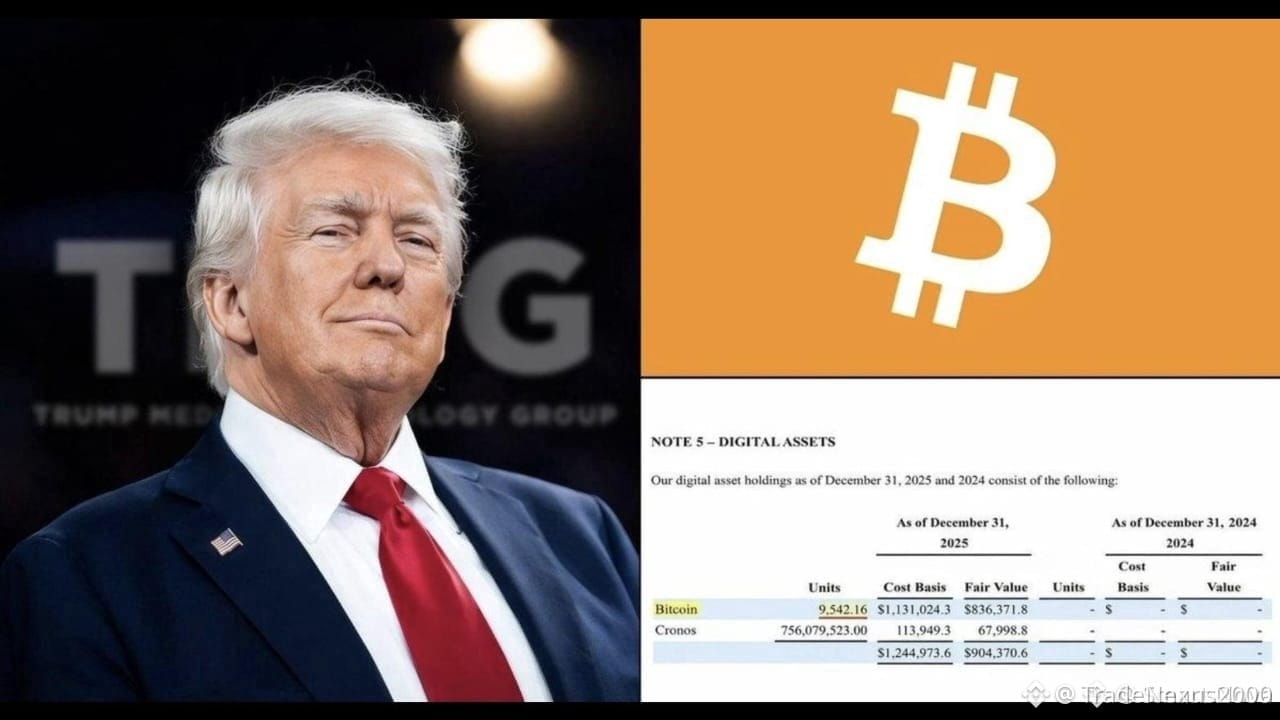
🦈 INSTITUTIONAL ACCUMULATION ACCELERATES AS $BTC RESERVES SWELL ACROSS CORPORATE BALANCE SHEETS 📊
Corporate entities continue locking up circulating supply, shifting macro dynamics through stealth accumulation and structured yield deployment. With over fifteen thousand coins absorbed onto a single balance sheet and a massive portion committed to structural options strategies, spot liquidity tightens further. 🌊
This ongoing absorption mirrors broader institutional footprints locking up float away from open order books. As balance sheet allocations scale up, the underlying structural floor strengthens against macroeconomic headwinds. 💡
Are corporate treasury strategies becoming the primary driver of long-term supply contraction? 🤔
⚠️ Not financial advice. Always manage your risk. 🛡️
🏷️ #BTC #CorporateTreasury #InstitutionalAdoption #Crypto
🦈 ⚖️
8
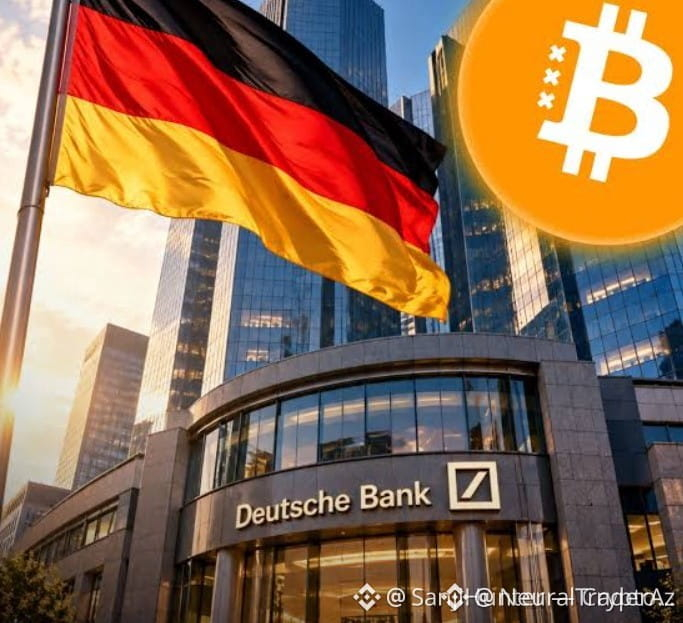
🦈 $BTC AND $ETH ENTER THE VAULTS AS INSTITUTIONAL CUSTODY INFRASTRUCTURE GOES LIVE IN EUROPE! 🏦
The institutional plumbing for digital assets is quietly scaling as Europe's premier banking giants roll out production-grade custody infrastructure for $BTC and $ETH . 🦈 While custody activation does not instantly equate to fresh spot market bids, it builds the foundational piping required for multi-billion dollar corporate allocations. 📊
Smart money watches the underlying infrastructure long before retail chases the price action. 💡 Are you positioning for when this custody layer transitions from passive storage to aggressive market accumulation? 👇
⚠️ Not financial advice. Always manage your risk. 🛡️
🏷️ #BTC #InstitutionalAdoption #Crypto #Ethereum
🦈 ⚖️

·
--
🟢 Bullish
🚨 Major Asset Manager Eyes Multi-Asset Crypto ETF Approval!
Whispers are growing loud about a leading global asset manager filing for a groundbreaking multi-asset crypto ETF. This would open the floodgates for more diversified institutional capital.
📊 Market Impact: Massive institutional validation and a potential catalyst for a significant market rally, proving crypto's long-term integration into traditional finance.
#InstitutionalAdoption #ETFs
Log in to explore more content
Join global crypto users on Binance Square
⚡️ Get latest and useful information about crypto.
💬 Trusted by the world’s largest crypto exchange.
👍 Discover real insights from verified creators.
Email / Phone number
Trending Topics
1
#BTCRemainsUnderPressureAfterHawkishFOMCMinutes
51,168 views
688 Discussing
2
#AnthropicToDebutAfter$83IPOPricing
13,993 views
72 Discussing
3
#NvidiaBoardReportedlySplitOverHuang’sReturn
17,473 views
297 Discussing
4
#CanGTA6'sLaunchLiftTTWOShares?
9,370 views
218 Discussing
5
#FOMCMinutesHighlightAIDebtRisks
17,713 views
278 Discussing
6
#SouthKoreaPlansToLet3500ListedFirmsBuyBitcoin
17,977 views
307 Discussing
7
#AnthropicGrayMarketSharesPointTo22%To26%Gains
3,371 views
56 Discussing
8
#BitcoinSpotETFsSee$306MNetOutflows
135 views
2 Discussing
9
#TrumpAdministrationLaunchesProjectToCombatCybercrime
58 views
7 Discussing
10
#FedMinutesShowAlmostAllOfficialsExpectMoreHikes
5,846 views
72 Discussing