

#aws
aws
99,382 views
381 Discussing
Hot
Latest

·
--
Amazon falls 6% after hours: cloud is strong, but overall results miss expectationsAmazon's report is a bit of a mixed bag.
Revenue was about $201.9 billion, and earnings per share were $1.89—both fell short of Wall Street expectations. Shares dropped more than 6% after hours.
AWS was especially strong. Revenue was about $46 billion, up 39.3% year over year—the fastest growth in nearly five years—with an annualized run rate of around $184 billion. Operating income was about $17.8 billion, with a margin close to 39%. AI-related revenue is still growing at a triple-digit rate.
Cloud is accelerating, but the overall results fell short, and Amazon is still sticking to its full-year capital spending plan of $220 billion. Free cash flow over the past twelve months was about negative $42.4 billion, driven by spending on AI infrastructure.
Fourth-quarter revenue guidance is $240 billion to $247 billion. The market heard that and sold off first. Operating income is projected to reach a record range, but investors are asking: can profits keep up with the pace of spending?
Amazon falls 6% after hours: cloud is strong, but overall results miss expectations
Amazon's report is a bit of a mixed bag.
Revenue was about $201.9 billion, and earnings per share were $1.89—both fell short of Wall Street expectations. Shares dropped more than 6% after hours.
AWS was especially strong. Revenue was about $46 billion, up 39.3% year over year—the fastest growth in nearly five years—with an annualized run rate of around $184 billion. Operating income was about $17.8 billion, with a margin close to 39%. AI-related revenue is still growing at a triple-digit rate.
Cloud is accelerating, but the overall results fell short, and Amazon is still sticking to its full-year capital spending plan of $220 billion. Free cash flow over the past twelve months was about negative $42.4 billion, driven by spending on AI infrastructure.
Fourth-quarter revenue guidance is $240 billion to $247 billion. The market heard that and sold off first. Operating income is projected to reach a record range, but investors are asking: can profits keep up with the pace of spending?
3

Amazon’s earnings report is a real split-personality situation: AWS surged 39% to $46 billion, its fastest growth in five years, and the cheering hadn’t even died down yet; meanwhile, EPS came in at just $1.89, missing the $1.97 estimate, and revenue of $201.9 billion also fell a little short. The stock promptly plunged 7.3% after hours. Cloud bulls: We’re absolutely crushing it! Retail bulls: Don’t look at me—I’m dragging everyone down. Shareholders: Let’s start by emptying our wallets. With a $220 billion AI infrastructure bill staring us in the face, is this genuinely expensive or worth it? Pick a side in the comments: A, 39% cloud growth is reason enough to be confident—buy the dip without thinking; B, free cash flow has burned down to negative $42.4 billion, so don’t try to catch a falling knife yet.
$BTC $ETH $SOL
#亚马逊 #财报 #AWS
$BTC $ETH $SOL
#亚马逊 #财报 #AWS

35
A counterintuitive question: Cloud is sold out, so what could make Amazon’s stock fail to rise tonight? AWS grew 37% last quarter, its fastest pace in 18 quarters. Tonight, the market wants 38%—about $45.6 billion—which means growth has to accelerate again. Revenue is expected to hit $202 billion, with EPS at $1.96, both right at the top of the company’s guidance range of $197 billion to $202 billion. The CEO said outright that cloud capacity for 2026 and 2027 is basically sold out, and even $220 billion in capital spending won’t be enough. The options market has already priced in a 6.6% to 7.2% move—which basically says tomorrow night it’s either a big jump or a big drop, with no middle ground. Pick a side in the comments: A, AWS tops 38% and the stock takes off; B, soft guidance sends it down 7% first. Which side are you betting on? $BTC $ETH $SOL #亚马逊 #财报 #AWS
A counterintuitive question: Cloud is sold out, so what could make Amazon’s stock fail to rise tonight? AWS grew 37% last quarter, its fastest pace in 18 quarters. Tonight, the market wants 38%—about $45.6 billion—which means growth has to accelerate again. Revenue is expected to hit $202 billion, with EPS at $1.96, both right at the top of the company’s guidance range of $197 billion to $202 billion. The CEO said outright that cloud capacity for 2026 and 2027 is basically sold out, and even $220 billion in capital spending won’t be enough. The options market has already priced in a 6.6% to 7.2% move—which basically says tomorrow night it’s either a big jump or a big drop, with no middle ground. Pick a side in the comments: A, AWS tops 38% and the stock takes off; B, soft guidance sends it down 7% first. Which side are you betting on? $BTC $ETH $SOL #亚马逊 #财报 #AWS

·
--
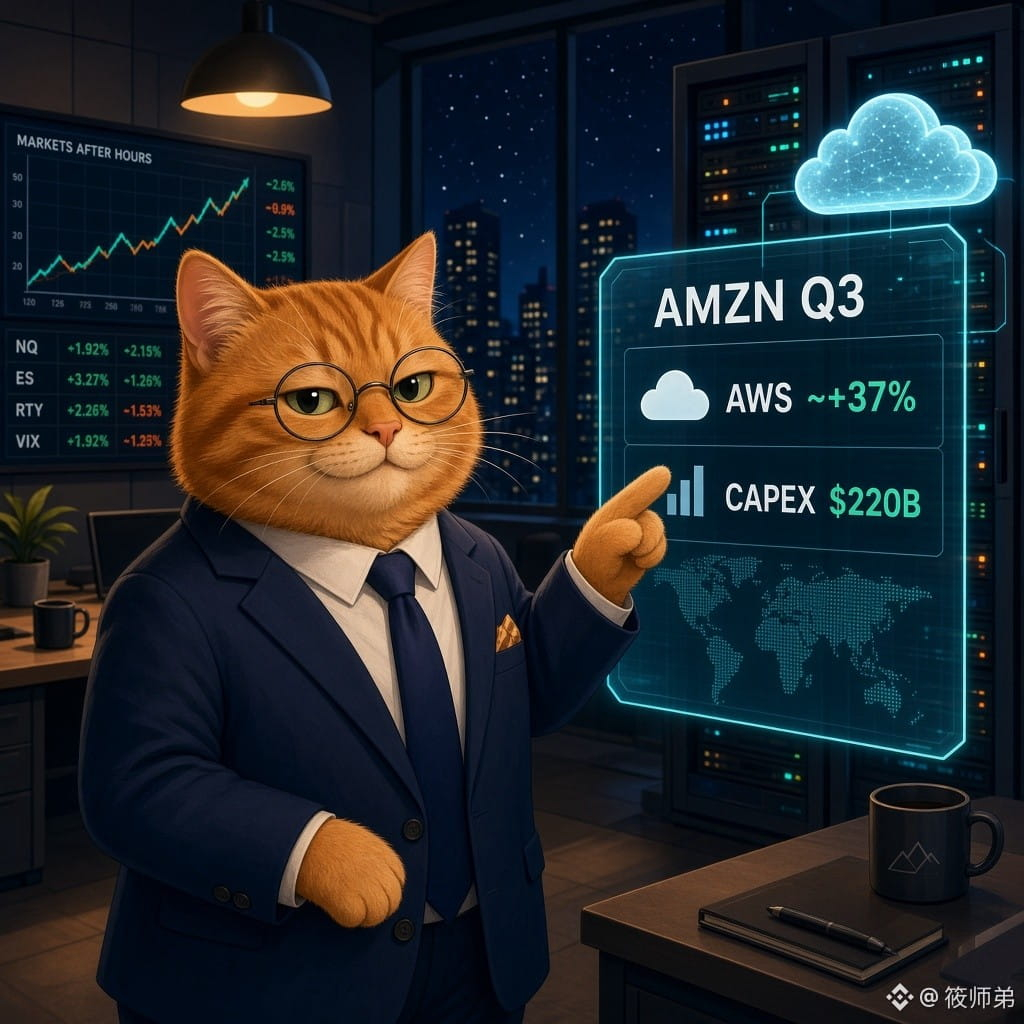
Amazon Q3 earnings tonight: watching AWS growth and $220B in AI spending
Reported after the market close on Oct. 29 ET (around early the following morning in Beijing). Zacks consensus estimates revenue of about $202.1 billion (+12%) and EPS of about $2.01; the company’s guidance is revenue of $197–202 billion and operating income of $22.5–26.5 billion (Yahoo Finance/Zacks).
AWS consensus is about $45.4 billion (+about 37.5%). In Q2, it grew 37% to $42.2 billion, its fastest growth in 18 quarters; AWS backlog is about $496 billion (Zacks). BofA sees AWS growth potentially reaching about 40%, with operating income of about $26.4 billion, slightly above consensus (Yahoo).
Full-year capex is about $220 billion (partly due to higher memory costs). Investors are focused on FCF and AI returns (Yahoo/GeekWire).
【View】
The third report in Big Tech’s cloud week: Microsoft and Google have just reported, and Amazon will show whether AI compute capacity is still selling out, and whether Trainium/Bedrock can handle orders from OpenAI/Anthropic. If growth accelerates again but capex doesn’t come down, the stock’s reaction will hinge on “the growth story vs. the cash-flow story.”
【Opportunities/Risks】
Opportunity: Further upward revisions to AWS guidance/backlog, and details on multi-gigawatt Trainium contracts, would benefit the compute, storage, and liquid-cooling supply chain.
Risk: Weak retail performance and oil prices weigh on Q4 guidance; another capex increase could pressure FCF. If AWS growth comes in below about 37% or guidance is soft, the AI infrastructure narrative could come under renewed pressure. Watch for short-term correlation with $BTC if risk appetite retreats.
Which worries you more: “Amazon beats expectations on AWS but ramps up capex again,” or “growth slows but cash flow improves”?
#亚马逊 #AWS #AI财报 #Crypto Markets
$BTC $RENDER
For informational purposes only; not investment advice.
385

·
--
I couldn't attach the image. Want me to make it again?
*Copy karne ke liye text:*
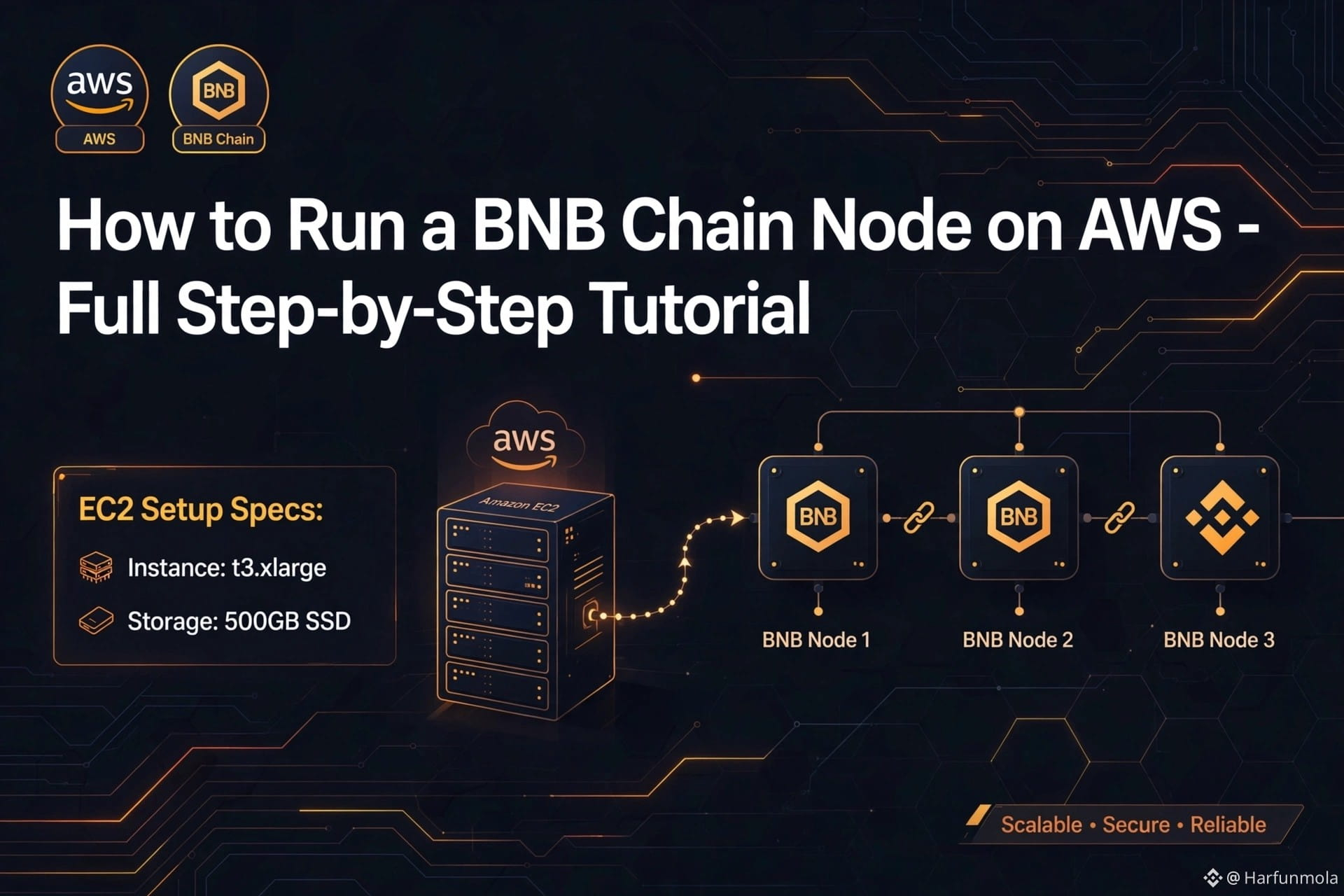
🚀 *How to Run a BNB Chain Node on AWS - Full Step-by-Step Tutorial* $BNB
I've just deployed my own BNB Chain BSC Full Node on AWS and here's the complete guide for you!
*What you will learn:*
✅ EC2 Setup (Recommended: http://t3.xlarge, 500GB+ SSD)
✅ Install Dependencies & BSC Client (geth)
✅ Sync from Snapshot - Fast Sync
✅ Configure RPC & Peer Settings
✅ Monitoring & Auto-restart with systemd
✅ Cost optimization tips on AWS
AWS makes it super easy - high availability, secure, and scalable. Perfect for developers building on $BNB Chain, validators, and data indexing.
Full tutorial thread coming in comments! Drop a ❤️ if you want the GitHub repo + AWS CloudFormation template.
Let's BUILD on BNB Chain! 🔶
#BNBChain #AWS
1
1
85

·
--
The eve of Amazon’s AMZN earnings: The stock hasn’t fallen much, but the test is tougher than Google’s.
First, where things stand: At the close of U.S. trading on October 26, Amazon (AMZN) was at $249.09, up 0.44% for the day, with an intraday range of $247.23 to $250.79. Don’t be fooled by that small daily gain: the stock is still below its 50-day moving average of about $255, but holding above its 200-day moving average of about $243. Its 52-week range is $196 to $287.20, leaving the current price about 13% below its high—a classic pre-earnings position caught in the middle, neither up nor down.
Earnings are just around the corner: Amazon will report its third-quarter results after the U.S. market closes on October 29 (early morning on October 30 Beijing time). The market expects earnings per share of about $1.96 and revenue of about $202.2 billion, up roughly 12% from about $180.2 billion in the same period last year. The company’s own guidance is for sales of $197 billion to $202 billion and operating income of $22.5 billion to $26.5 billion. Expectations are basically hugging the top of the guidance range, leaving little room for error.
Three things to watch, in order of importance: First, can AWS sustain its high growth? Last quarter, AWS revenue was $42.2 billion, up 37% year over year—its fastest growth in 18 quarters—with a backlog of about $496 billion. The market expects growth to cool to the 30%–35% range in the third quarter; a dip below that range could easily trigger selling. Second, capital spending: The 2026 forecast has already been raised from $200 billion to $220 billion, and spending in the second half is expected to reach about $61 billion per quarter. Free cash flow is already slightly negative, so any further increase would be a negative. Third, e-commerce itself: Third-quarter growth will be weighed down by Prime Day shifting into the second quarter, by about 4 percentage points. Slower headline growth doesn’t necessarily mean the business is deteriorating. Advertising was a bright spot last quarter, growing 26% to $19.8 billion.
There’s another distortion that’s easy to overlook: Last quarter’s earnings per share of $5.75 included about $53.4 billion in paper gains on Amazon’s Anthropic stake. Treating that as operating profit would seriously overstate the company’s earning power, so on earnings night, look at the underlying operating performance excluding those gains.
The options market is pricing in a post-earnings move of about 7%, while Amazon’s reactions after its previous two earnings reports were a gain of about 10.9% in July and a drop of about 13.5% in February—both larger than implied volatility. In other words, betting on direction on earnings night isn’t a great wager for retail investors.
My view: Amazon’s three engines—e-commerce, AWS, and advertising—are all still running, but the market is now asking just one question: When will that $220 billion in spending turn into free cash flow? So I’m not betting on direction on the eve of earnings. If AWS holds above 30% growth, spending doesn’t exceed expectations, and operating income guidance isn’t weak, a pullback could be an opportunity to watch. If AWS slows significantly or spending is ramped up again, don’t rush to catch a falling knife if the stock breaks below the 200-day moving average area.
This is personal research and not investment advice. Will you hold through earnings, or wait for the dust to settle before deciding?
$AMZN #Amazon #亚马逊 #美股财报 #AWS

53
Amazon CEO Andy Jassy said during an interview with a16z that AWS’s computing capacity for 2026 is already sold out, 2027 is basically fully booked, and a substantial portion of 2028 is already committed. The company is spending about $220 billion on capital expenditures this year, and his exact words were: “There will still be a tremendous amount of unmet demand.” Even more staggering: its in-house Trainium chips have secured over $225 billion in future orders. AWS reported second-quarter revenue of $42.2 billion, up 37% year over year, or $169 billion annualized. But here’s the other side: free cash flow was negative $7.6 billion over the past 12 months, and Deutsche Bank has raised its 2027 capex forecast to about $330 billion. If $220 billion can’t buy enough capacity, is this a genuine shortage or has the spending frenzy gone too far? Pick a side in the comments: A) It’s a real shortage—orders booked through 2028 prove it; B) When the financials turn, this kind of spend-at-all-costs narrative will be the first bubble to burst.
$BTC $ETH $SOL
#亚马逊 #AWS #AI computing power
$BTC $ETH $SOL
#亚马逊 #AWS #AI computing power
41

·
--
🚀 AMAZON (AMZN): Can AWS and AI Drive the Next Growth Wave?
$AMZNB
{spot}(AMZNBUSDT)
Amazon is more than an online shopping giant. Its cloud business and AI investments are becoming increasingly important to its future.
🔹 AWS Growth: Amazon Web Services remains a key business to watch as companies expand their cloud infrastructure.
🔹 AI Investment: Amazon is investing in AI technology and infrastructure to compete in the rapidly growing AI market.
🔹 Earnings Spotlight: Investors will be watching revenue growth, operating profit, AWS performance, and capital spending.
🔹 Big Question: Can Amazon turn its massive AI investments into stronger long-term profits?
🔹 Key Risks: Rising costs, intense competition, and weaker-than-expected guidance could pressure the stock.
📊 My Take: Amazon has multiple growth opportunities, but investors should focus on financial results rather than hype alone.
⚠️ Earnings announcements can trigger sharp price movements in either direction. Always assess the risks before investing.
#Amazon #AMZN #AWS #artificialintelligence #stockmarket
Disclaimer: This post is for educational purposes only and is not financial advice. Always do your own research (DYOR).
🚀 AMAZON (AMZN): Can AWS and AI Drive the Next Growth Wave?
$AMZNB
Amazon is more than an online shopping giant. Its cloud business and AI investments are becoming increasingly important to its future.
🔹 AWS Growth: Amazon Web Services remains a key business to watch as companies expand their cloud infrastructure.
🔹 AI Investment: Amazon is investing in AI technology and infrastructure to compete in the rapidly growing AI market.
🔹 Earnings Spotlight: Investors will be watching revenue growth, operating profit, AWS performance, and capital spending.
🔹 Big Question: Can Amazon turn its massive AI investments into stronger long-term profits?
🔹 Key Risks: Rising costs, intense competition, and weaker-than-expected guidance could pressure the stock.
📊 My Take: Amazon has multiple growth opportunities, but investors should focus on financial results rather than hype alone.
⚠️ Earnings announcements can trigger sharp price movements in either direction. Always assess the risks before investing.
#Amazon #AMZN #AWS #artificialintelligence #stockmarket
Disclaimer: This post is for educational purposes only and is not financial advice. Always do your own research (DYOR).
59

·
--
Computing capacity is booked through the year after next. The race for AI infrastructure is more concrete than the hype.
Amazon CEO Andy Jassy said that driven by demand for AI infrastructure, AWS cloud computing capacity is sold out through 2027, with orders extending into 2028. When cloud providers publicly say they are “fully booked,” they are effectively acknowledging that supply is still struggling to keep up with demand—not that demand has peaked.
The implications for crypto: mining rigs, GPU rentals, inference nodes, and data center power will all be squeezed by the same supply curve. In the short term, prices hinge on sentiment; in the medium term, on who can secure electricity and rack space. Scarce computing capacity will raise both training costs and the real bar for on-chain AI narratives.
#AI #AWS #算力 #Infrastructure
16

AWS Cloud Services Outlook for 2027: Capacity Fully Booked Through 2028
Amazon CEO Andy Jassy revealed that a surge in demand for AI infrastructure has fully booked AWS cloud computing capacity through 2027, with no spare capacity expected in 2028 either. Technical analysts say this is worth watching, as it could signal a new wave of growth potential in the cloud computing market.#AWS #CloudComputing
Amazon CEO Andy Jassy revealed that a surge in demand for AI infrastructure has fully booked AWS cloud computing capacity through 2027, with no spare capacity expected in 2028 either. Technical analysts say this is worth watching, as it could signal a new wave of growth potential in the cloud computing market.#AWS #CloudComputing
9

·
--
AWS Deep Insight Unlocks a New Perspective on Production
For those tracking funding, AWS has launched the Deep Insight multi-agent system to help you keep a close eye on production challenges. Combining Anthropic technology with AWS cloud, it automatically analyzes data for deeper insights. Three deployment options—self-hosted, web, and managed AgentCore—flexibly adapt to different needs. #资金追踪 #智能生产 #AWS
For those tracking funding, AWS has launched the Deep Insight multi-agent system to help you keep a close eye on production challenges. Combining Anthropic technology with AWS cloud, it automatically analyzes data for deeper insights. Three deployment options—self-hosted, web, and managed AgentCore—flexibly adapt to different needs. #资金追踪 #智能生产 #AWS
25

·
--
Amazon is spending $220B on AI. But when will that spending pay off?
Amazon is making a huge bet on AI infrastructure, and the numbers show both the opportunity and the risk.
AWS revenue jumped 37% year over year to $42.2 billion in Q2 2026. Yet, Amazon's trailing 12-month free cash flow turned negative at -$7.6 billion, as heavy investment in data centers, servers, and AI infrastructure consumed more cash.
The company expects to spend around $220 billion on capital expenditure this year. That's a massive commitment, even for a business of Amazon's size.
Here's what I am watching:
• The bullish case: Rising AI demand could help AWS turn today's infrastructure spending into long-term revenue and profits.
• The risk: If demand slows or returns take longer than expected, the pressure on cash flow could persist.
• The key question: Can AI revenue grow fast enough to justify the cost of building all this infrastructure?
Negative free cash flow doesn't automatically mean Amazon is in trouble. It means investors need to pay attention to how efficiently the company turns its AI investments into real returns.
AI growth is exciting, but cash flow tells another part of the story.
Would you view this as a long-term opportunity for $AMZNB or a warning sign for investors?
#Amazon #AI #AWS #Stocks
{spot}(AMZNBUSDT)
Amazon is spending $220B on AI. But when will that spending pay off?
Amazon is making a huge bet on AI infrastructure, and the numbers show both the opportunity and the risk.
AWS revenue jumped 37% year over year to $42.2 billion in Q2 2026. Yet, Amazon's trailing 12-month free cash flow turned negative at -$7.6 billion, as heavy investment in data centers, servers, and AI infrastructure consumed more cash.
The company expects to spend around $220 billion on capital expenditure this year. That's a massive commitment, even for a business of Amazon's size.
Here's what I am watching:
• The bullish case: Rising AI demand could help AWS turn today's infrastructure spending into long-term revenue and profits.
• The risk: If demand slows or returns take longer than expected, the pressure on cash flow could persist.
• The key question: Can AI revenue grow fast enough to justify the cost of building all this infrastructure?
Negative free cash flow doesn't automatically mean Amazon is in trouble. It means investors need to pay attention to how efficiently the company turns its AI investments into real returns.
AI growth is exciting, but cash flow tells another part of the story.
Would you view this as a long-term opportunity for $AMZNB or a warning sign for investors?
#Amazon #AI #AWS #Stocks
137

📦 $AMZN.US
{stock_us}(AMZN.US)
: TWO BUSINESS DRIVERS THAT DESERVE ATTENTION!
Amazon's investment case includes both e-commerce and Amazon Web Services (AWS). The key is understanding how revenue growth translates into operating profit and free cash flow. 🔍 My watchlist: 1️⃣ AWS growth and AI-related demand. 2️⃣ Retail operating margins. 3️⃣ Capital spending and free cash flow. 4️⃣ Earnings guidance and stock valuation. 📈 Bullish setup: Strong business results plus a confirmed technical breakout. 📉 Risk scenario: Rising spending, weaker margins or disappointing guidance. Don't confuse a good company with a guaranteed profitable trade. 💬 Which matters more for $AMZN: AWS growth or retail profitability? #AMZNon #AmazonStock #AWS #Investing
📦 $AMZN.US
: TWO BUSINESS DRIVERS THAT DESERVE ATTENTION!
Amazon's investment case includes both e-commerce and Amazon Web Services (AWS). The key is understanding how revenue growth translates into operating profit and free cash flow. 🔍 My watchlist: 1️⃣ AWS growth and AI-related demand. 2️⃣ Retail operating margins. 3️⃣ Capital spending and free cash flow. 4️⃣ Earnings guidance and stock valuation. 📈 Bullish setup: Strong business results plus a confirmed technical breakout. 📉 Risk scenario: Rising spending, weaker margins or disappointing guidance. Don't confuse a good company with a guaranteed profitable trade. 💬 Which matters more for $AMZN: AWS growth or retail profitability? #AMZNon #AmazonStock #AWS #Investing
1
108

·
--
☁️ AWS vs Azure vs Google Cloud: Which Cloud Giant Leads the Future?Cloud computing powers AI, Web3 applications, enterprise software, and modern digital services. Three major players dominate the infrastructure market: Amazon Web Services (AWS), Microsoft Azure, and Google Cloud Platform (GCP).
Here’s what makes each platform stand out. 👇
🔹 1. Amazon Web Services (AWS)
AWS remains the leading cloud infrastructure provider by market share.
Key strengths:
• Broad range of compute, storage, database, and networking services
• Amazon EC2 for flexible cloud computing
• AWS Lambda for serverless applications
• Amazon Bedrock for building generative AI applications
• A large global ecosystem of developers and enterprise customers
Best suited for startups, large-scale applications, and businesses needing flexible infrastructure.
🔹 2. Microsoft Azure
Azure stands out through its integration with Microsoft's enterprise ecosystem.
Key strengths:
• Integration with Microsoft 365 and Entra ID
• Strong support for Windows Server, .NET, and SQL Server
• Azure OpenAI and enterprise AI services
• Hybrid cloud management through Azure Arc
• Enterprise security, governance, and compliance tools
Best suited for Microsoft-centric businesses and organizations with complex enterprise requirements.
🔹 3. Google Cloud Platform (GCP)
GCP has strong capabilities in data analytics, Kubernetes, and AI.
Key strengths:
• BigQuery for large-scale data analytics
• Google Kubernetes Engine (GKE) for containerized applications
• Vertex AI for machine learning and AI development
• Gemini model integration
• Firebase and Firestore for application development
Best suited for AI-driven products, analytics-heavy workloads, and modern cloud-native applications.
📊 Which Platform Wins?
🏆 AWS: Broad service ecosystem
🏢 Azure: Microsoft enterprise integration
🤖 GCP: Data analytics and AI capabilities
There is no universal winner. The right platform depends on workload requirements, team expertise, security needs, and total operating costs.
🚀 Why This Matters for Web3
Blockchain applications still need reliable infrastructure for websites, APIs, analytics, indexing, monitoring, and off-chain services.
Cloud providers help developers build and scale these systems. However, cloud hosting does not replace blockchain decentralization, and infrastructure choices introduce their own availability and dependency risks.
💡 My Take
AWS is a strong general-purpose choice. Azure fits Microsoft-heavy environments. GCP deserves serious consideration for AI, analytics, and Firebase-based development.
The smartest decision starts with the product you want to build, not the biggest brand name.
Which cloud platform would you choose for your next project?
#AWS #Azure #GoogleCloud #Aİ #Web3
☁️ AWS vs Azure vs Google Cloud: Which Cloud Giant Leads the Future?
Cloud computing powers AI, Web3 applications, enterprise software, and modern digital services. Three major players dominate the infrastructure market: Amazon Web Services (AWS), Microsoft Azure, and Google Cloud Platform (GCP).
Here’s what makes each platform stand out. 👇
🔹 1. Amazon Web Services (AWS)
AWS remains the leading cloud infrastructure provider by market share.
Key strengths:
• Broad range of compute, storage, database, and networking services
• Amazon EC2 for flexible cloud computing
• AWS Lambda for serverless applications
• Amazon Bedrock for building generative AI applications
• A large global ecosystem of developers and enterprise customers
Best suited for startups, large-scale applications, and businesses needing flexible infrastructure.
🔹 2. Microsoft Azure
Azure stands out through its integration with Microsoft's enterprise ecosystem.
Key strengths:
• Integration with Microsoft 365 and Entra ID
• Strong support for Windows Server, .NET, and SQL Server
• Azure OpenAI and enterprise AI services
• Hybrid cloud management through Azure Arc
• Enterprise security, governance, and compliance tools
Best suited for Microsoft-centric businesses and organizations with complex enterprise requirements.
🔹 3. Google Cloud Platform (GCP)
GCP has strong capabilities in data analytics, Kubernetes, and AI.
Key strengths:
• BigQuery for large-scale data analytics
• Google Kubernetes Engine (GKE) for containerized applications
• Vertex AI for machine learning and AI development
• Gemini model integration
• Firebase and Firestore for application development
Best suited for AI-driven products, analytics-heavy workloads, and modern cloud-native applications.
📊 Which Platform Wins?
🏆 AWS: Broad service ecosystem
🏢 Azure: Microsoft enterprise integration
🤖 GCP: Data analytics and AI capabilities
There is no universal winner. The right platform depends on workload requirements, team expertise, security needs, and total operating costs.
🚀 Why This Matters for Web3
Blockchain applications still need reliable infrastructure for websites, APIs, analytics, indexing, monitoring, and off-chain services.
Cloud providers help developers build and scale these systems. However, cloud hosting does not replace blockchain decentralization, and infrastructure choices introduce their own availability and dependency risks.
💡 My Take
AWS is a strong general-purpose choice. Azure fits Microsoft-heavy environments. GCP deserves serious consideration for AI, analytics, and Firebase-based development.
The smartest decision starts with the product you want to build, not the biggest brand name.
Which cloud platform would you choose for your next project?
#AWS #Azure #GoogleCloud #Aİ #Web3
101

·
--
$AMZN 的云业务负责人 Matt Garman 昨天甩出一份承诺,姿态很硬。
未来五年,他掌管的部门会往数据中心所在的社区投 10 亿美元,钱怎么用由当地自己定:教育、职业培训、能源账单、水资源保护都能填进去。配套动作是放弃跟地方政府签保密协议,改成开放日让居民进来看。
他把国内这轮反弹归到外部,点名全国正在审议的 100 多项暂停令,说美国输不起这场竞赛。环保组织 Stand.Earth 当场反驳,说这份承诺回避了公司在德州新建的那座电厂,预计每年 3300 万吨空气污染,用电量相当于 190 万户家庭。
一边加注表态,一边被追着算旧账。10 亿美元对上一整年 2200 亿美元的资本开支,比例落在两百二十分之一附近。
#AMZN #AWS
未来五年,他掌管的部门会往数据中心所在的社区投 10 亿美元,钱怎么用由当地自己定:教育、职业培训、能源账单、水资源保护都能填进去。配套动作是放弃跟地方政府签保密协议,改成开放日让居民进来看。
他把国内这轮反弹归到外部,点名全国正在审议的 100 多项暂停令,说美国输不起这场竞赛。环保组织 Stand.Earth 当场反驳,说这份承诺回避了公司在德州新建的那座电厂,预计每年 3300 万吨空气污染,用电量相当于 190 万户家庭。
一边加注表态,一边被追着算旧账。10 亿美元对上一整年 2200 亿美元的资本开支,比例落在两百二十分之一附近。
#AMZN #AWS

83

Amazon Eyes $8B Nvidia Chip Sale-Leaseback 🤖
Amazon is reportedly exploring a deal to transfer about $8 billion of Nvidia Grace Blackwell chips into a special-purpose vehicle, then lease the chips back for its U.S. data centers. The structure could make Amazon’s AI infrastructure spending more asset-light while preserving AWS compute capacity.
$NVDAB
{spot}(NVDABUSDT)
$AMZNB
{spot}(AMZNBUSDT)
The proposal is still under discussion, not a finalized transaction. Is this smart balance-sheet management- or a warning about the cost of the AI race?
#Amazon #Nvidia #AIInfrastructure #AWS #CoinVahini
Amazon Eyes $8B Nvidia Chip Sale-Leaseback 🤖
Amazon is reportedly exploring a deal to transfer about $8 billion of Nvidia Grace Blackwell chips into a special-purpose vehicle, then lease the chips back for its U.S. data centers. The structure could make Amazon’s AI infrastructure spending more asset-light while preserving AWS compute capacity.
$NVDAB
$AMZNB
The proposal is still under discussion, not a finalized transaction. Is this smart balance-sheet management- or a warning about the cost of the AI race?
#Amazon #Nvidia #AIInfrastructure #AWS #CoinVahini
24

·
--
🎯 AWS computing power has risen in price again—AI narratives get shaken along
📰 A report from BMO (Bank of America) reveals: AWS reserved GPU capacity will increase another 15% on October 7. This is the second round after July, and compute costs have been climbing steadily
💬 The more expensive compute gets, the better the “decentralized AI and DePIN” story that sells cheap compute sounds. Keep an eye on the on-chain AI sector—don’t just watch the coin price
🏷️ #AWS #AI算力 #DePIN #链上AI #科技跨界
15

⚠️ Amazon fixes a major billing error in AWS that threatens crypto companies!
Amazon revealed it has resolved a software bug in its AWS cloud service, where the billing system displayed inaccurate estimates reaching billions of dollars for customers. This issue raises questions about how much crypto companies rely on the tech giant's cloud infrastructure and the potential risks involved.
━━━━━━━━━━━━━━
📊 Impact: 📈 High
🏷️ OTHER
#AWS #Amazon #CloudComputing #CryptoInfrastructure #TechNews
🔗 Source: https://cryptobriefing.com/aws-billing-bug-crypto-infrastructure-risk/
23

#bedrock $BR If you are diving into Amazon Bedrock, you need to understand Tokens. Think of tokens as the currency of GenAI. They aren't exactly whole words; rather, they are the syllables or characters that models process. On average, 1 token is about 4 characters or 0.75 words.
Every prompt you send and every response Bedrock generates consumes tokens. Pricing is usually calculated per 1,000 tokens. To optimize your costs and performance, always keep an eye on your token count and write efficient, concise prompts.
#AmazonBedrock #GenerativeAI #CloudComputing #AWS
Every prompt you send and every response Bedrock generates consumes tokens. Pricing is usually calculated per 1,000 tokens. To optimize your costs and performance, always keep an eye on your token count and write efficient, concise prompts.
#AmazonBedrock #GenerativeAI #CloudComputing #AWS
131

#AmazonRaises2026CapexTo
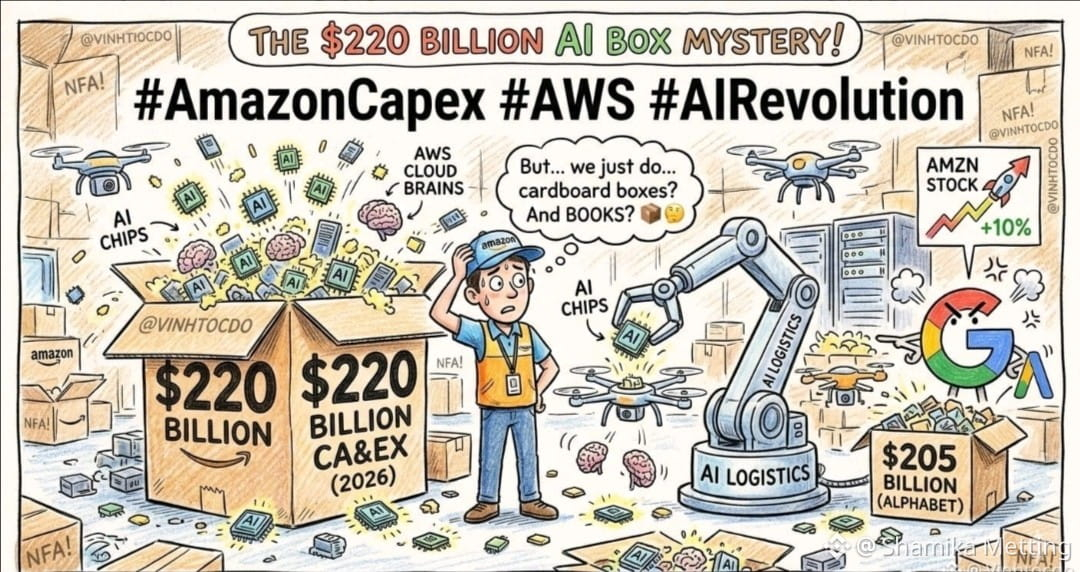
🚨 Amazon increased its capital expenditures for 2026 by 10% to reach an unbelievable figure of $220 billion! This is insane even compared to Alphabet’s $205 billion investment! 🤯
But wait… is Amazon just an e-commerce shop? Why do they need billions in AI chips? To compute cardboard boxes? 📦😂
Turns out they dominate cloud computing (AWS) and AI logistics! Their AWS growth crushes expectations, and their future AI order backlog is $496 billion. They’re not just selling books anymore—they’re renting out AI brains! 🧠
The stock is up 10%. What should traders do? Follow the tech giants or sit back and do nothing? 📉📈
Not financial advice (NFA)!
Please follow up
#AmazonCapex #AWS #AIRevolution
$BTC
{future}(BTCUSDT)
#AmazonRaises2026CapexTo
🚨 Amazon increased its capital expenditures for 2026 by 10% to reach an unbelievable figure of $220 billion! This is insane even compared to Alphabet’s $205 billion investment! 🤯
But wait… is Amazon just an e-commerce shop? Why do they need billions in AI chips? To compute cardboard boxes? 📦😂
Turns out they dominate cloud computing (AWS) and AI logistics! Their AWS growth crushes expectations, and their future AI order backlog is $496 billion. They’re not just selling books anymore—they’re renting out AI brains! 🧠
The stock is up 10%. What should traders do? Follow the tech giants or sit back and do nothing? 📉📈
Not financial advice (NFA)!
Please follow up
#AmazonCapex #AWS #AIRevolution
$BTC
1
65
Log in to explore more content
Join global crypto users on Binance Square
⚡️ Get latest and useful information about crypto.
💬 Trusted by the world’s largest crypto exchange.
👍 Discover real insights from verified creators.
Email / Phone number
Trending Topics
1
#$1.5BInLeveragedCryptoBetsLiquidated
2,241 views
41 Discussing
2
#KOSPIFalls3.53%BackBelow6000
5,017 views
188 Discussing
3
#USMidtermElections
112,755 views
1,434 Discussing
4
#StrategySTRCReaches$99.95ForFirstTimeIn165Days
1,797 views
56 Discussing
5
#BinanceWillListPredictPREDICT
28,634 views
636 Discussing
6
#SwitzerlandFirstSpotBitcoinETFExpectedToTradeInNovember
1,201 views
68 Discussing
7
#StrategyReports$21BQ3OperatingProfit
1,267 views
41 Discussing
8
#Strategy三季度营业利润210亿美元
18,072 views
69 Discussing
9
#TwoAddressesHoldingAbout1.28BUSDTFrozen
14,432 views
361 Discussing
10
#FirstDigitalBlacklistsAttackerAddressHoldingAbout3.4MFDUSD
501 views
16 Discussing