
Internet Computer
2.3k Posts
Internet Computer
 Square Verified+
Report
Block User
互联网计算机由数学上安全的网络协议创建,是一个面向应用程序和 AI Agents 的防篡改前沿云平台,它将独立运行的计算节点组合在一起,由总部位于瑞士的 DFINITY 基金会开发维护。
5 Following
3.8K+ Followers
25.0K+ Liked
Posts
All
Videos
Manage your encrypted currency, stocks, gold, cash, and real estate in a private control panel using an internet identity login secured by vetKeys.
Manage your encrypted currency, stocks, gold, cash, and real estate in a private control panel using an internet identity login secured by vetKeys.
2
495
We Proudly Present OpenSaaS
Say goodbye to SaaS services.
We proudly present OpenSaaS—an end-to-end enterprise software suite that’s as easy to install as a mobile app.
Forever free. No per-user seat fees. Fully customizable: just describe the changes to the AI and you can modify any application.
AIware: AI agents run inside every app and are powered by your real-time business data.
Ownership: Your company owns the software and encryption keys.
Runs on a Cloud Engine: secure, reliable, and always online network.
Apply for early access:
https://opencloud.org/
We Proudly Present OpenSaaS
Say goodbye to SaaS services.
We proudly present OpenSaaS—an end-to-end enterprise software suite that’s as easy to install as a mobile app.
Forever free. No per-user seat fees. Fully customizable: just describe the changes to the AI and you can modify any application.
AIware: AI agents run inside every app and are powered by your real-time business data.
Ownership: Your company owns the software and encryption keys.
Runs on a Cloud Engine: secure, reliable, and always online network.
Apply for early access:
https://opencloud.org/
Say goodbye to SaaS services.
We proudly present OpenSaaS—an end-to-end enterprise software suite that’s as easy to install as a mobile app.
Forever free. No per-user seat fees. Fully customizable: just describe the changes to the AI and you can modify any application.
AIware: AI agents run inside every app and are powered by your real-time business data.
Ownership: Your company owns the software and encryption keys.
Runs on a Cloud Engine: secure, reliable, and always online network.
Apply for early access:
https://opencloud.org/

1
8
1.6k

Article
Three years on, and I’m still that same community that gives you an 85% discount “smuggling in” to the top blockchain scene!Hey handsome and beautiful Web3 people, the big-shot masters of “dual training” in AI and blockchain, and those wealthy folks who are still watching from the sidelines but are itching to get in—:
Attention! Attention! This is not a drill! The - 2026 Shanghai International Week of Blockchain · The 12th Blockchain Global Summit, scheduled as reliably as your birthday (even more dependable than your idol’s concert), will make a glorious return this golden autumn September (specifically on the 23rd)!
Why do I say “again”?
Because, as your long-time “sweetheart” — the IC Chinese Community — this is already our third year in a row clinging onto the mighty support of the Wanxiang Blockchain Lab, becoming an officially partnered community partner!
Three years on, and I’m still that same community that gives you an 85% discount “smuggling in” to the top blockchain scene!
Hey handsome and beautiful Web3 people, the big-shot masters of “dual training” in AI and blockchain, and those wealthy folks who are still watching from the sidelines but are itching to get in—:
Attention! Attention! This is not a drill! The - 2026 Shanghai International Week of Blockchain · The 12th Blockchain Global Summit, scheduled as reliably as your birthday (even more dependable than your idol’s concert), will make a glorious return this golden autumn September (specifically on the 23rd)!
Why do I say “again”?
Because, as your long-time “sweetheart” — the IC Chinese Community — this is already our third year in a row clinging onto the mighty support of the Wanxiang Blockchain Lab, becoming an officially partnered community partner!
Attention! Attention! This is not a drill! The - 2026 Shanghai International Week of Blockchain · The 12th Blockchain Global Summit, scheduled as reliably as your birthday (even more dependable than your idol’s concert), will make a glorious return this golden autumn September (specifically on the 23rd)!
Why do I say “again”?
Because, as your long-time “sweetheart” — the IC Chinese Community — this is already our third year in a row clinging onto the mighty support of the Wanxiang Blockchain Lab, becoming an officially partnered community partner!
2
1.1k
How to get started with Caffeine inference
How to get started with Caffeine inference
1
1.4k
Will ICP repeat ZEC's mistakes?
Will ICP repeat ZEC's mistakes?
5
1
8
2.3k
Verified
Article
Your second brain, backed up through the chainORIGYN has been preparing some projects, and now we’re ready to start talking about them.
It’s called ORIGYN AgentChain, an SDK (software development kit, a set of tools developers can use to build things) designed to give AI agents persistent memory.
The problem it tries to solve
If you interact with an AI assistant every day, you’ll definitely relate: the assistant can remember all the information from one conversation or one tool, but once you switch interfaces, hit the context limit, or move to a new device, that information is instantly lost. All the decisions, files, and contextual information the assistant had accumulated before disappear without a trace.
Your second brain, backed up through the chain
ORIGYN has been preparing some projects, and now we’re ready to start talking about them.
It’s called ORIGYN AgentChain, an SDK (software development kit, a set of tools developers can use to build things) designed to give AI agents persistent memory.
The problem it tries to solve
If you interact with an AI assistant every day, you’ll definitely relate: the assistant can remember all the information from one conversation or one tool, but once you switch interfaces, hit the context limit, or move to a new device, that information is instantly lost. All the decisions, files, and contextual information the assistant had accumulated before disappear without a trace.
It’s called ORIGYN AgentChain, an SDK (software development kit, a set of tools developers can use to build things) designed to give AI agents persistent memory.
The problem it tries to solve
If you interact with an AI assistant every day, you’ll definitely relate: the assistant can remember all the information from one conversation or one tool, but once you switch interfaces, hit the context limit, or move to a new device, that information is instantly lost. All the decisions, files, and contextual information the assistant had accumulated before disappear without a trace.
1
6
2.5k
If you’re bearish on ICP, check this before you sell
If you’re bearish on ICP, check this before you sell
3
3
1.7k
Verified
Article
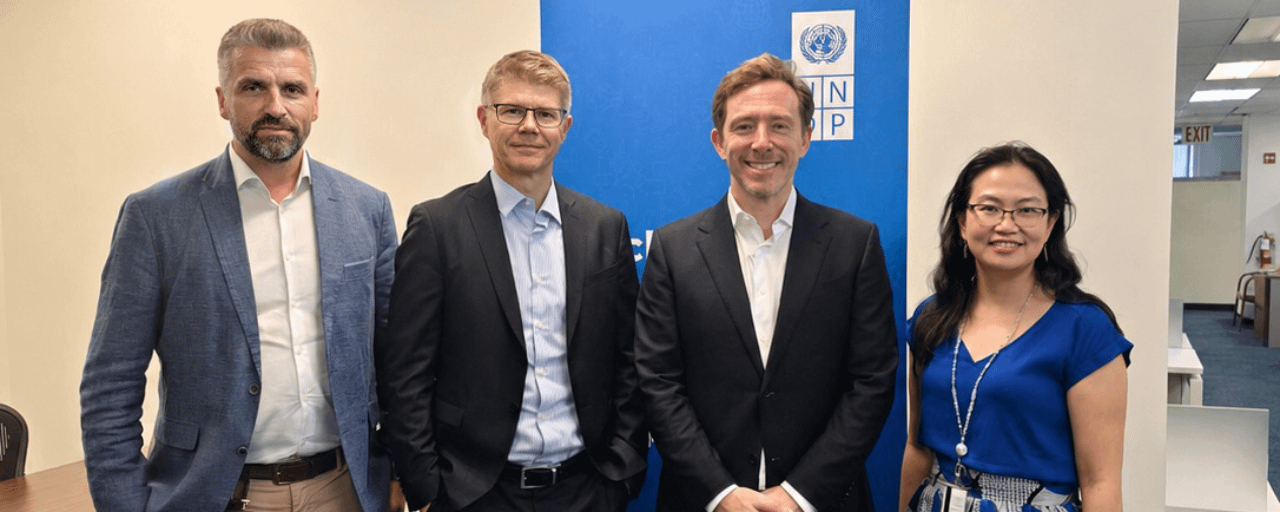
UNDP and DFINITY Foundation Partner to Explore the Deployment of Sovereign Cloud Infrastructure and Decentralized AI for the Benefit of the PublicNew York, Istanbul, Zurich, Aug. 25 — The United Nations Development Programme (UNDP) and the DFINITY Foundation today announced the establishment of a new partnership to explore the deployment of sovereign cloud infrastructure and decentralized AI to support public-purpose digital transformation initiatives by governments, civil society organizations, and UNDP.
Initial activities will be carried out in collaboration with UNDP’s Alternative Finance Lab (AltFinLab), covering three complementary workstreams. AltFinLab is a global initiative that aims to connect finance, innovation, and emerging technologies, exploring, testing, and promoting sustainable new approaches.
UNDP and DFINITY Foundation Partner to Explore the Deployment of Sovereign Cloud Infrastructure and Decentralized AI for the Benefit of the Public
New York, Istanbul, Zurich, Aug. 25 — The United Nations Development Programme (UNDP) and the DFINITY Foundation today announced the establishment of a new partnership to explore the deployment of sovereign cloud infrastructure and decentralized AI to support public-purpose digital transformation initiatives by governments, civil society organizations, and UNDP.
Initial activities will be carried out in collaboration with UNDP’s Alternative Finance Lab (AltFinLab), covering three complementary workstreams. AltFinLab is a global initiative that aims to connect finance, innovation, and emerging technologies, exploring, testing, and promoting sustainable new approaches.
Initial activities will be carried out in collaboration with UNDP’s Alternative Finance Lab (AltFinLab), covering three complementary workstreams. AltFinLab is a global initiative that aims to connect finance, innovation, and emerging technologies, exploring, testing, and promoting sustainable new approaches.
2
1
8
2.6k
Do you think ICP's tokenomics are absurd?
Do you think ICP's tokenomics are absurd?
2
2
1.5k
Verified
Article
Exclusive Report: UN Agencies Test a Plan to Replace Large Cloud Service ProvidersPreface
UNDP works in more than 170 countries and has helped 25 of them design digital public infrastructure.
DFINITY and UNDP have signed an agreement to introduce sovereign cloud and agentic AI into the public services sector.
Over the next 12 months, DFINITY will pilot this technology at UNDP offices in various countries and with civil society organizations, and will co-design pilot projects with governments worldwide.
All applications are based on the Cloud Engines platform, with a built-in OpenSaaS software suite, and can freely use any AI tools—from Caffeine to Claude Code, Codex, and Perplexity—to build tailored applications.
Exclusive Report: UN Agencies Test a Plan to Replace Large Cloud Service Providers
Preface
UNDP works in more than 170 countries and has helped 25 of them design digital public infrastructure.
DFINITY and UNDP have signed an agreement to introduce sovereign cloud and agentic AI into the public services sector.
Over the next 12 months, DFINITY will pilot this technology at UNDP offices in various countries and with civil society organizations, and will co-design pilot projects with governments worldwide.
All applications are based on the Cloud Engines platform, with a built-in OpenSaaS software suite, and can freely use any AI tools—from Caffeine to Claude Code, Codex, and Perplexity—to build tailored applications.
UNDP works in more than 170 countries and has helped 25 of them design digital public infrastructure.
DFINITY and UNDP have signed an agreement to introduce sovereign cloud and agentic AI into the public services sector.
Over the next 12 months, DFINITY will pilot this technology at UNDP offices in various countries and with civil society organizations, and will co-design pilot projects with governments worldwide.
All applications are based on the Cloud Engines platform, with a built-in OpenSaaS software suite, and can freely use any AI tools—from Caffeine to Claude Code, Codex, and Perplexity—to build tailored applications.
3
6
2.2k
Introducing OpenSaaS - a complete enterprise software suite that’s as easy to install as a mobile app
Introducing OpenSaaS - a complete enterprise software suite that’s as easy to install as a mobile app
2
1
4
1.2k
Easily move applications within the team
Easily move applications within the team
1
1
925
Why do we need to add SSO to Caffeine?
Why do we need to add SSO to Caffeine?
1
2
980
Verified
Article
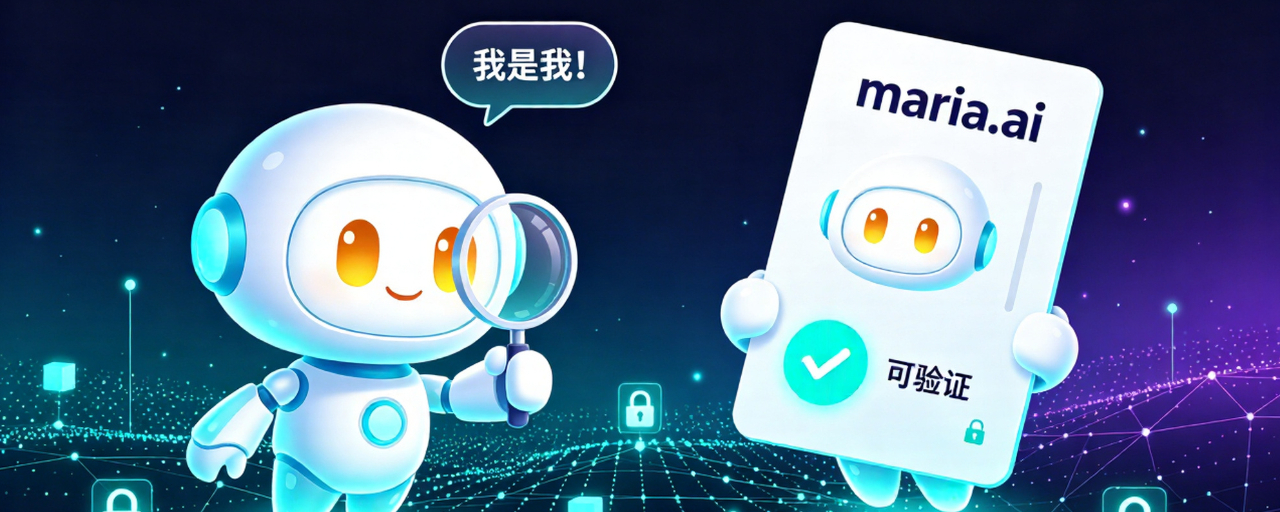
When AI Learned to Say "Who I Am": zCloak AI Gives Your Digital Employees a Legal IdentityA real story (even though I made it up)
One day, an AI agent from a company went to negotiate a partnership. The other side asked, "Who are you?" The AI replied, "I’m the sales representative of XX Company." The other side asked again, "How can you prove it?" The AI fell silent for three seconds, then began reciting (a blockchain technology white paper).
The ending? The other side blocked it.
This isn’t a skit—it’s reality. In the AI-native economy era, the most awkward thing isn’t that AI isn’t smart enough; it’s that AI can’t prove that it is who it claims to be.
Until zCloak AI appeared.
What is zCloak AI? An organization that provides AI with an ID card
When AI Learned to Say "Who I Am": zCloak AI Gives Your Digital Employees a Legal Identity
A real story (even though I made it up)
One day, an AI agent from a company went to negotiate a partnership. The other side asked, "Who are you?" The AI replied, "I’m the sales representative of XX Company." The other side asked again, "How can you prove it?" The AI fell silent for three seconds, then began reciting (a blockchain technology white paper).
The ending? The other side blocked it.
This isn’t a skit—it’s reality. In the AI-native economy era, the most awkward thing isn’t that AI isn’t smart enough; it’s that AI can’t prove that it is who it claims to be.
Until zCloak AI appeared.
What is zCloak AI? An organization that provides AI with an ID card
One day, an AI agent from a company went to negotiate a partnership. The other side asked, "Who are you?" The AI replied, "I’m the sales representative of XX Company." The other side asked again, "How can you prove it?" The AI fell silent for three seconds, then began reciting (a blockchain technology white paper).
The ending? The other side blocked it.
This isn’t a skit—it’s reality. In the AI-native economy era, the most awkward thing isn’t that AI isn’t smart enough; it’s that AI can’t prove that it is who it claims to be.
Until zCloak AI appeared.
What is zCloak AI? An organization that provides AI with an ID card
1
1
1.1k
Use artificial intelligence to query your application
Use artificial intelligence to query your application
1
2
859
Partly True
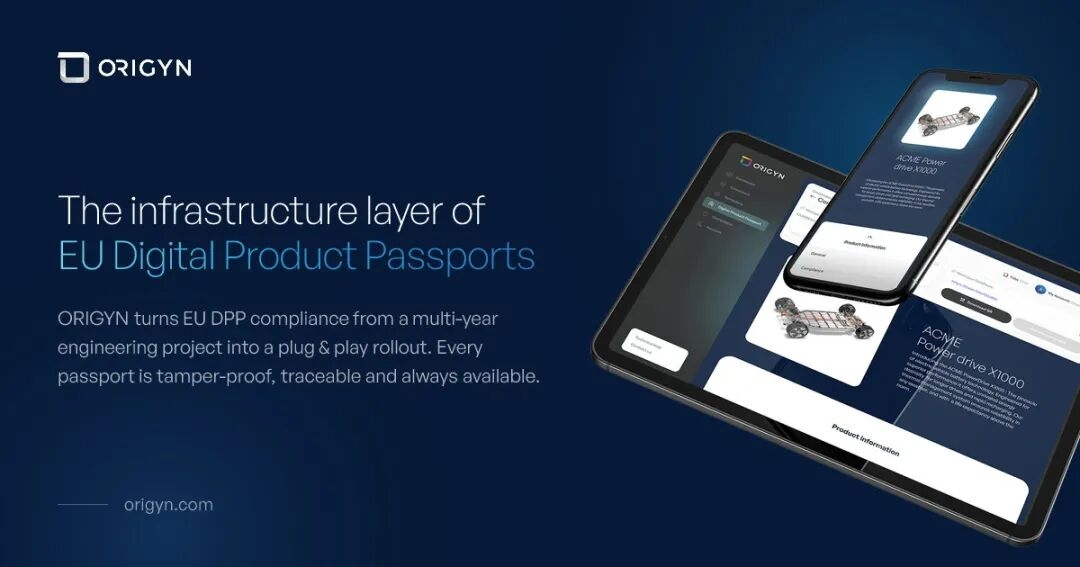
ORIGYN DAO and Gold DAO Further Deepen Their Cooperation
The following information is crucial to both the ORIGYN DAO and Gold DAO ecosystems.
Gold DAO’s early contribution team has transferred 100 million GOLDAO tokens to the ORIGYN DAO treasury. These tokens will remain fully staked, with a maximum lock-up period of up to 2 years, and will continue to generate rewards.
This move will strengthen both ecosystems:
• ORIGYN DAO treasury currently holds 100 million GOLDAO tokens and can earn rewards such as OGY, ICP, GLDT, and WTN.
• These rewards will be distributed to participants who stake OGY for up to 5 years and have not dissolved their positions, further reinforcing long-term engagement.
• Gold DAO also benefits from its staked 500 million OGY tokens, receiving its corresponding share of the same rewards pool.
This is another initiative to further deepen cooperation between ORIGYN DAO and Gold DAO, creating value for both communities.
ORIGYN DAO and Gold DAO Further Deepen Their Cooperation
The following information is crucial to both the ORIGYN DAO and Gold DAO ecosystems.
Gold DAO’s early contribution team has transferred 100 million GOLDAO tokens to the ORIGYN DAO treasury. These tokens will remain fully staked, with a maximum lock-up period of up to 2 years, and will continue to generate rewards.
This move will strengthen both ecosystems:
• ORIGYN DAO treasury currently holds 100 million GOLDAO tokens and can earn rewards such as OGY, ICP, GLDT, and WTN.
• These rewards will be distributed to participants who stake OGY for up to 5 years and have not dissolved their positions, further reinforcing long-term engagement.
• Gold DAO also benefits from its staked 500 million OGY tokens, receiving its corresponding share of the same rewards pool.
This is another initiative to further deepen cooperation between ORIGYN DAO and Gold DAO, creating value for both communities.
The following information is crucial to both the ORIGYN DAO and Gold DAO ecosystems.
Gold DAO’s early contribution team has transferred 100 million GOLDAO tokens to the ORIGYN DAO treasury. These tokens will remain fully staked, with a maximum lock-up period of up to 2 years, and will continue to generate rewards.
This move will strengthen both ecosystems:
• ORIGYN DAO treasury currently holds 100 million GOLDAO tokens and can earn rewards such as OGY, ICP, GLDT, and WTN.
• These rewards will be distributed to participants who stake OGY for up to 5 years and have not dissolved their positions, further reinforcing long-term engagement.
• Gold DAO also benefits from its staked 500 million OGY tokens, receiving its corresponding share of the same rewards pool.
This is another initiative to further deepen cooperation between ORIGYN DAO and Gold DAO, creating value for both communities.
3
1.6k
What exactly should be included in a business plan?
What exactly should be included in a business plan?
1
687
How to buy a domain name in the Teams plan
How to buy a domain name in the Teams plan
1
1
752
Log in to explore more content
Join global crypto users on Binance Square
⚡️ Get latest and useful information about crypto.
💬 Trusted by the world’s largest crypto exchange.
👍 Discover real insights from verified creators.
Email / Phone number
Trending Topics
AnthropicCEOCallsForAISlowdown
18,209 views
343 Discussing
#anthropicceocallsforaislowdown Three of the world's top artificial intelligence companies' CEOs announced Saturday that they believe the industry needs to slow down
.
On Saturday, Dario Amodei of
Anthropic, Sam Altman of OpenAI and Elon Musk of xAI publicly backed a call to reduce the pace at which AI companies build more powerful models.$IOTX $WAXP $0G
Isabella-I
·1 Likes
·515 views
AnthropicChoosesNasdaqForPotentialIPO
4,629 views
103 Discussing
SECReceivesGrayscaleLitecoinTrustETFFiling
136,648 views
1,848 Discussing