
#riskanalysis
riskanalysis
283,649 views
480 Discussing
Hot
Latest
·
--
Article
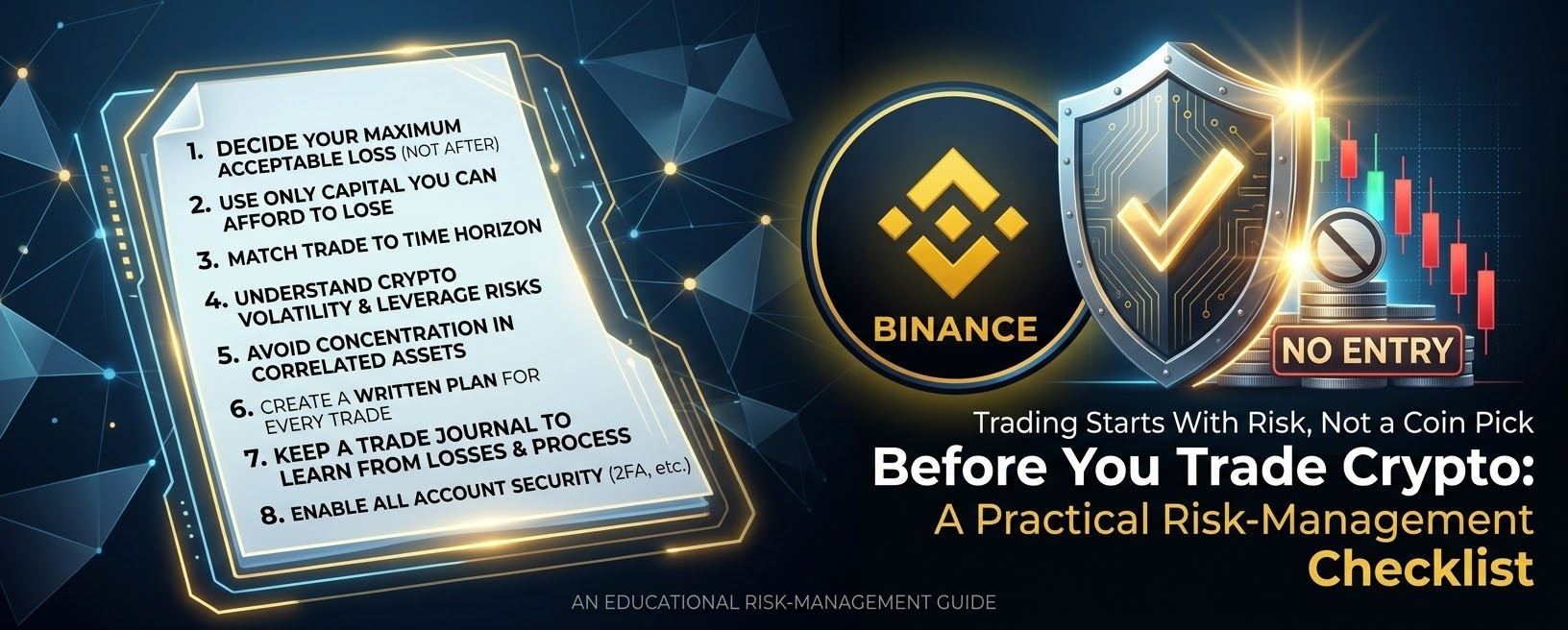
Before You Trade Crypto: A Practical Risk-Management ChecklistIntroduction: Trading Starts With Risk, Not a Coin Pick
It’s an undeniable reality: the crypto market can move sharply in either direction. While everyone hopes to catch the next big surge, fewer are prepared for the equally common downside. This is where a plan comes in. It’s crucial to understand that a risk-management plan does not eliminate losses. Instead, its purpose is to prevent a single trade, or a series of trades, from causing disproportionate damage to your portfolio. This guide is an educational checklist to help you develop a disciplined process—it is not a market prediction, trading advice, or financial instruction. Before you pick a coin, you must manage your risk.
1. Decide What Money Is Actually at Risk
The first step in any risk-management process is defining your capital.
Distinguish Essential vs. Speculative Capital: Separate essential money—the funds you need for rent, bills, or your emergency savings—from speculative capital. Only the latter should ever be considered for a crypto market.
The Problem With Borrowed Money: Explain why using borrowed money or money needed soon can amplify stress. This often leads to poor, emotional decisions when the market is volatile.
Define Your Personal Maximum Loss: Prompt yourself to define a specific maximum amount you are comfortable losing across all your crypto positions. This number will serve as your boundary.
2. Match the Trade to a Time Horizon
What is your objective for the trade? Are you a short-term trader, a swing trader, or a longer-term investor?
Define Short-Term Trading, Swing Trading, and Longer-Term Investing: Understand the difference between short-term (minutes to days), swing (days to weeks), and longer-term investing (months to years). Each horizon has its own risk profile.
Avoid Thesis Creep: Explain that a short-term idea should not quietly become a long-term holding simply because its price falls. Changing your thesis only to justify a losing position is a classic mistake.
Encourage Readers to Write it Down: Before you enter a position, write down your intended holding period. This keeps you accountable to your original plan.
3. Understand Volatility and Leverage
The crypto market is known for its volatility, which is very different from a small daily price movement in traditional assets.
Volatility Differs: Understand that crypto can be far more volatile than stocks or bonds. A sudden drop or spike is part of the landscape.
Describe Leverage as an Amplifier: Understand leverage as an amplifier of both gains and losses. Remember the liquidation risk—if you are highly leveraged, a relatively small adverse move can result in the loss of your entire margin.
Higher Leverage Means Less Room for Normal Market Fluctuations: Recognize that high leverage leaves very little room for normal, small market fluctuations that occur every day.
4. Set a Risk Budget Before Entering
Crucially, the time to decide your maximum acceptable loss is before a trade, not after it moves.
Set a Pre-Trade Risk Budget: Cover the factors you should consider when setting this budget: your total account size, existing exposure, current market volatility, and your personal risk tolerance.
Use Only a Clearly Labeled Hypothetical Example: Imagine, for instance, a hypothetical $10,000 simulated portfolio where you decide to risk no more than 2% ($200) on any single trade. If the price reaches the level where that trade represents a $200 loss, you would exit the trade to preserve your capital. This is a disciplined process.
5. Avoid Concentration Risk
You might feel diversified by holding several different tokens, but true risk management requires deeper analysis.
Define Token Concentration: Understand why holding multiple tokens can still be a concentrated position if all those tokens move together in a correlated manner with the broader crypto market.
Consider Sectors and Correlation: Discuss concentration risk in terms of individual assets, sectors, narratives, and, most importantly, correlation. If one single event, such as a major regulatory announcement for all crypto or a specific blockchain's issue, can affect most of your holdings at once, you have concentration risk.
6. Create a Written Trade Plan
A written plan separate planned decisions from emotional reactions. Consider using this compact template for every trade:
Written Trade Plan Template
Asset: (e.g., BTC)
Thesis/Reason for Interest: (e.g., strong fundamental on-chain data and a bullish technical breakout)
Time Horizon: (e.g., 2 weeks, swing trade)
Conditions That Would Support Thesis: (e.g., price remaining above a key technical level and favorable news)
Conditions That Would Weaken Thesis: (e.g., regulatory concerns or a reversal of technical indicators)
Maximum Loss Budget: (e.g., 1.5% of my total trading account, including all potential fees and slippage)
Target Exit Conditions: (e.g., target price 15% above my entry)
What Would Invalidate the Original Idea? (e.g., price falling 5% below my entry, which would signal that my technical breakout interpretation was incorrect)
7. Use a Pre-Trade Checklist
Before executing any trade, make sure you can answer these questions:
Do I Understand What I Am Buying or Trading? Do you know the basics of the project, its technology, and its risks?
Is This Money I Can Afford to Put at Risk? If this trade were to lose, would it cause you stress or affect your ability to pay essential bills?
Have I Accounted for Fees, Slippage, and Volatility? Have you considered all costs, the spread, and potential market volatility when setting your position size?
Am I Already Overexposed to Similar Assets? Will this trade add to a portfolio that is already heavy in that same sector or correlated assets?
What Would Make Me Reassess the Idea? Have you defined the conditions under which you would reconsider your thesis or exit the trade?
Am I Acting Because of Research—Or Fear of Missing Out (FOMO)? Are you entering based on a planned strategy and diligent research, or because you're worried about missing a rapid price surge?
Have I Enabled Account-Security Tools? Are your security protocols robust, including two-factor authentication (2FA) and anti-phishing protections?
8. Keep a Trade Journal
A trade journal helps track your decisions, not just your wins and losses.
Keep a Trade Journal: Track your original thesis, entry context (e.g., price, time, sentiment), emotions at the time, the result, and lessons learned.
Review Patterns, Not Outcomes: Review patterns of your behavior and strategy rather than judging everything by the outcome of a single trade.
profitable Trades with Poor Process and Losing Trades with Sound Process: Recognize that a profitable trade can still involve a poor, risky process, while a losing trade can follow sound risk management. The goal is long-term, repeatable discipline.
9. Common Risk-Management Mistakes
Avoid these pitfalls that can quickly erase profits:
Increasing Exposure After Losses Without a Predefined Plan: Increasing your exposure when you are already on a losing streak can be an emotional reaction and rarely works.
Treating Leverage as a Shortcut to Returns: Leverage is a powerful tool with high risks. Using it to try to get quick rich is a recipe for disaster.
Chasing Rapid Price Moves Driven by Social-Media Hype: Understand that chasing FOMO often means buying near the top of a speculative surge.
Ignoring Fees and Liquidity: Don’t underestimate the impact of trading fees or the difficulty of exiting a position in a less liquid market.
Failing to Secure the Account: All your risk-management efforts are in vain if you don't secure your account.
Changing a Plan Only Because of Emotion: Sticking to your pre-written plan keeps your emotions in check.
Conclusion: Process Over Prediction
A trade-management checklist can guarantee a specific result. The first goal in the crypto market is not to capture every single move, it's to remain able to participate in future opportunities. Therefore, risk management is about establishing a repeatable habit: defining your risk, documenting your plan, reviewing your outcomes, and protecting your account. Success in this market often comes from following a sound process, not from making lucky predictions.
#RiskAnalysis #CryptoPatience
Before You Trade Crypto: A Practical Risk-Management Checklist
Introduction: Trading Starts With Risk, Not a Coin Pick
It’s an undeniable reality: the crypto market can move sharply in either direction. While everyone hopes to catch the next big surge, fewer are prepared for the equally common downside. This is where a plan comes in. It’s crucial to understand that a risk-management plan does not eliminate losses. Instead, its purpose is to prevent a single trade, or a series of trades, from causing disproportionate damage to your portfolio. This guide is an educational checklist to help you develop a disciplined process—it is not a market prediction, trading advice, or financial instruction. Before you pick a coin, you must manage your risk.
1. Decide What Money Is Actually at Risk
The first step in any risk-management process is defining your capital.
Distinguish Essential vs. Speculative Capital: Separate essential money—the funds you need for rent, bills, or your emergency savings—from speculative capital. Only the latter should ever be considered for a crypto market.
The Problem With Borrowed Money: Explain why using borrowed money or money needed soon can amplify stress. This often leads to poor, emotional decisions when the market is volatile.
Define Your Personal Maximum Loss: Prompt yourself to define a specific maximum amount you are comfortable losing across all your crypto positions. This number will serve as your boundary.
2. Match the Trade to a Time Horizon
What is your objective for the trade? Are you a short-term trader, a swing trader, or a longer-term investor?
Define Short-Term Trading, Swing Trading, and Longer-Term Investing: Understand the difference between short-term (minutes to days), swing (days to weeks), and longer-term investing (months to years). Each horizon has its own risk profile.
Avoid Thesis Creep: Explain that a short-term idea should not quietly become a long-term holding simply because its price falls. Changing your thesis only to justify a losing position is a classic mistake.
Encourage Readers to Write it Down: Before you enter a position, write down your intended holding period. This keeps you accountable to your original plan.
3. Understand Volatility and Leverage
The crypto market is known for its volatility, which is very different from a small daily price movement in traditional assets.
Volatility Differs: Understand that crypto can be far more volatile than stocks or bonds. A sudden drop or spike is part of the landscape.
Describe Leverage as an Amplifier: Understand leverage as an amplifier of both gains and losses. Remember the liquidation risk—if you are highly leveraged, a relatively small adverse move can result in the loss of your entire margin.
Higher Leverage Means Less Room for Normal Market Fluctuations: Recognize that high leverage leaves very little room for normal, small market fluctuations that occur every day.
4. Set a Risk Budget Before Entering
Crucially, the time to decide your maximum acceptable loss is before a trade, not after it moves.
Set a Pre-Trade Risk Budget: Cover the factors you should consider when setting this budget: your total account size, existing exposure, current market volatility, and your personal risk tolerance.
Use Only a Clearly Labeled Hypothetical Example: Imagine, for instance, a hypothetical $10,000 simulated portfolio where you decide to risk no more than 2% ($200) on any single trade. If the price reaches the level where that trade represents a $200 loss, you would exit the trade to preserve your capital. This is a disciplined process.
5. Avoid Concentration Risk
You might feel diversified by holding several different tokens, but true risk management requires deeper analysis.
Define Token Concentration: Understand why holding multiple tokens can still be a concentrated position if all those tokens move together in a correlated manner with the broader crypto market.
Consider Sectors and Correlation: Discuss concentration risk in terms of individual assets, sectors, narratives, and, most importantly, correlation. If one single event, such as a major regulatory announcement for all crypto or a specific blockchain's issue, can affect most of your holdings at once, you have concentration risk.
6. Create a Written Trade Plan
A written plan separate planned decisions from emotional reactions. Consider using this compact template for every trade:
Written Trade Plan Template
Asset: (e.g., BTC)
Thesis/Reason for Interest: (e.g., strong fundamental on-chain data and a bullish technical breakout)
Time Horizon: (e.g., 2 weeks, swing trade)
Conditions That Would Support Thesis: (e.g., price remaining above a key technical level and favorable news)
Conditions That Would Weaken Thesis: (e.g., regulatory concerns or a reversal of technical indicators)
Maximum Loss Budget: (e.g., 1.5% of my total trading account, including all potential fees and slippage)
Target Exit Conditions: (e.g., target price 15% above my entry)
What Would Invalidate the Original Idea? (e.g., price falling 5% below my entry, which would signal that my technical breakout interpretation was incorrect)
7. Use a Pre-Trade Checklist
Before executing any trade, make sure you can answer these questions:
Do I Understand What I Am Buying or Trading? Do you know the basics of the project, its technology, and its risks?
Is This Money I Can Afford to Put at Risk? If this trade were to lose, would it cause you stress or affect your ability to pay essential bills?
Have I Accounted for Fees, Slippage, and Volatility? Have you considered all costs, the spread, and potential market volatility when setting your position size?
Am I Already Overexposed to Similar Assets? Will this trade add to a portfolio that is already heavy in that same sector or correlated assets?
What Would Make Me Reassess the Idea? Have you defined the conditions under which you would reconsider your thesis or exit the trade?
Am I Acting Because of Research—Or Fear of Missing Out (FOMO)? Are you entering based on a planned strategy and diligent research, or because you're worried about missing a rapid price surge?
Have I Enabled Account-Security Tools? Are your security protocols robust, including two-factor authentication (2FA) and anti-phishing protections?
8. Keep a Trade Journal
A trade journal helps track your decisions, not just your wins and losses.
Keep a Trade Journal: Track your original thesis, entry context (e.g., price, time, sentiment), emotions at the time, the result, and lessons learned.
Review Patterns, Not Outcomes: Review patterns of your behavior and strategy rather than judging everything by the outcome of a single trade.
profitable Trades with Poor Process and Losing Trades with Sound Process: Recognize that a profitable trade can still involve a poor, risky process, while a losing trade can follow sound risk management. The goal is long-term, repeatable discipline.
9. Common Risk-Management Mistakes
Avoid these pitfalls that can quickly erase profits:
Increasing Exposure After Losses Without a Predefined Plan: Increasing your exposure when you are already on a losing streak can be an emotional reaction and rarely works.
Treating Leverage as a Shortcut to Returns: Leverage is a powerful tool with high risks. Using it to try to get quick rich is a recipe for disaster.
Chasing Rapid Price Moves Driven by Social-Media Hype: Understand that chasing FOMO often means buying near the top of a speculative surge.
Ignoring Fees and Liquidity: Don’t underestimate the impact of trading fees or the difficulty of exiting a position in a less liquid market.
Failing to Secure the Account: All your risk-management efforts are in vain if you don't secure your account.
Changing a Plan Only Because of Emotion: Sticking to your pre-written plan keeps your emotions in check.
Conclusion: Process Over Prediction
A trade-management checklist can guarantee a specific result. The first goal in the crypto market is not to capture every single move, it's to remain able to participate in future opportunities. Therefore, risk management is about establishing a repeatable habit: defining your risk, documenting your plan, reviewing your outcomes, and protecting your account. Success in this market often comes from following a sound process, not from making lucky predictions.
#RiskAnalysis #CryptoPatience
75

Managing risk on Binance requires combining core trading principles with the exchange’s built-in order types and risk control tools.
1. Core Position Sizing & Capital Allocation Rules
. Follow the 1% to 2% Rule: Never risk more than 1%–2% of your total trading account balance on a single trade. If your portfolio is $10,000, your maximum potential loss on a bad trade should not exceed $100–$200.
. Calculate Position Size Before Entry: Adjust your trade size based on the distance between your entry price and stop-loss price.
. Target a Minimum Risk-to-Reward Ratio: Aim for a ratio of at least 1:2. Risking $100 should offer a potential target profit of $200. This maintains long-term profitability even with a 50% win rate
#managerisk
#RiskAnalysis
94

·
--
The real secret to continue in the crypto trading market 🔐
Many traders focus only on trade profits, forgetting that “risk management” is what protects you from big losses during sudden market fluctuations. Setting the risk percentage for each trade (Risk to Reward Ratio) and sticking to a stop loss (Stop Loss) is what separates a successful trader from a novice.
💡 To apply this strategy practically, I’ve attached my currently active trades, in which I commit to carefully planned entry and exit points. You can view and follow them through the trading card attached directly below!
How do you manage your portfolio risk in these current times? Share your method with us 👇
#Binance #TradingTips #RiskAnalysis #Crypto
89

$BTC
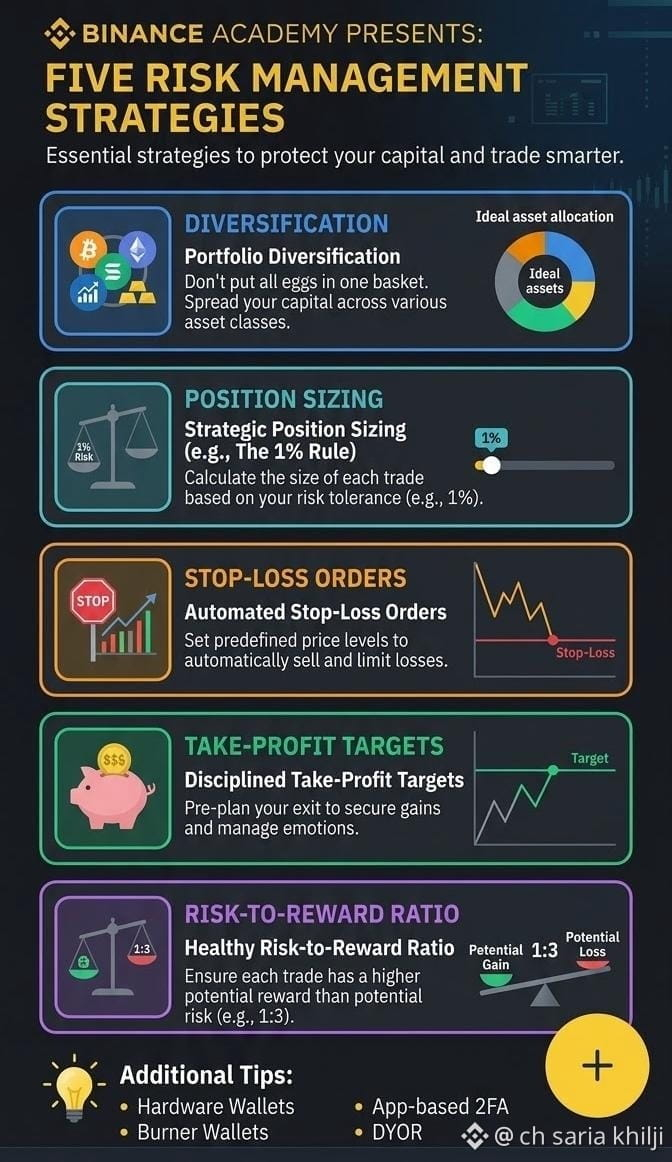
5 Risk Management Strategies Every Crypto Investor Should Know
Managing risk is one of the most important skills in crypto.
Here are five strategies to help protect your portfolio:
1️⃣ Acceptance
Sometimes the potential loss is small enough that it makes sense to simply accept the risk and invest without spending extra to mitigate it.
2️⃣ Transfer
Shift the risk to a third party through instruments like insurance or derivatives.
You pay a fee, but you gain protection.
3️⃣ Avoidance
If an asset carries too much risk for your comfort level, the simplest strategy is to stay out entirely.
4️⃣ Reduction
Diversify across different assets, sectors, or asset classes to minimize the impact of any single loss on your overall portfolio.
5️⃣ The 1% Rule
Never risk more than 1% of your total total capital on a single trade. Pair this with stop-loss orders to cap your downside automatically.
💡 Additional tips:
🔸 Use hardware wallets for long-term holdings
🔸 Enable app-based 2FA rather than SMS
🔸 Use burner wallets for DeFi interactions
🔸 Always DYOR before investing
Good risk management keeps you in the game long enough to win.
#RiskAnalysis
#RiskManagementMastery
#RiskTaking
1
121

·
--
Bearish
$GALA Risks and Fundamental Backdrop
Problems with Large Sales: A few days ago (August 19), a large suspicious wallet dumped 2 billion GALA tokens, causing the price to fall by 15%. Any short positions in GALA now have long-term justification due to persistent selling pressure from sellers and whales.
#RiskAnalysis
Problems with Large Sales: A few days ago (August 19), a large suspicious wallet dumped 2 billion GALA tokens, causing the price to fall by 15%. Any short positions in GALA now have long-term justification due to persistent selling pressure from sellers and whales.
#RiskAnalysis
518

Today I'm talking about TermMax and This is my analysis TermMax Technical Risk & Architecture Analysis: Key Factors to Monitor
While TermMax introduces innovative Fixed-Rate Lending and One-Click Leverage to the DeFi ecosystem, its underlying mechanics carry structural risks that every trader should evaluate. Below is a detailed breakdown of potential vulnerabilities and operational trade-offs.
⚠️ 1. Secondary Market Liquidity & Maturity Risk
Fixed-rate models lock yields based on specific maturity dates.
The Issue: Exiting positions before maturity requires selling FTs (Fixed-Rate Tokens) on secondary markets. If pool liquidity remains low, users risk severe Slippage when attempting early redemptions.
📉 2. Oracle Vulnerability & Flash Loan Risks
Automated One-Click Leverage relies on continuous on-chain price feeds.
The Issue: Extreme market volatility or flash-loan-induced price swings can result in unexpected Liquidation Events if price feeds lag or experience temporary oracle divergence.
🗝️ 3. Smart Contract Complexity & Multi-Asset Exposure
TermMax utilizes complex token interactions involving FTs, XTs, and GTs (ERC-721 positions).
The Issue: Higher smart contract complexity increases the potential attack surface for logic bugs. Additionally, users must keep track of admin multisig controls and parameter upgrade rights.
📊 4. Tokenomics & Vesting Pressure
A significant portion of early token allocation typically remains subject to vesting schedules.
The Issue: As team and investor unlocks reach their cliff periods, token secondary markets may face notable Selling Pressure over time.
💡 Final Assessment:
Fixed-rate leverage protocols offer high precision, but safety requires vigilance. Test with smaller allocation sizes first, monitor liquidity depth, and verify ongoing Immunefi bug bounty status before committing large capital. @termmax #TermMax #defi #RiskAnalysis #Web3
$ETH $SOL $RE
Today I'm talking about TermMax and This is my analysis TermMax Technical Risk & Architecture Analysis: Key Factors to Monitor
While TermMax introduces innovative Fixed-Rate Lending and One-Click Leverage to the DeFi ecosystem, its underlying mechanics carry structural risks that every trader should evaluate. Below is a detailed breakdown of potential vulnerabilities and operational trade-offs.
⚠️ 1. Secondary Market Liquidity & Maturity Risk
Fixed-rate models lock yields based on specific maturity dates.
The Issue: Exiting positions before maturity requires selling FTs (Fixed-Rate Tokens) on secondary markets. If pool liquidity remains low, users risk severe Slippage when attempting early redemptions.
📉 2. Oracle Vulnerability & Flash Loan Risks
Automated One-Click Leverage relies on continuous on-chain price feeds.
The Issue: Extreme market volatility or flash-loan-induced price swings can result in unexpected Liquidation Events if price feeds lag or experience temporary oracle divergence.
🗝️ 3. Smart Contract Complexity & Multi-Asset Exposure
TermMax utilizes complex token interactions involving FTs, XTs, and GTs (ERC-721 positions).
The Issue: Higher smart contract complexity increases the potential attack surface for logic bugs. Additionally, users must keep track of admin multisig controls and parameter upgrade rights.
📊 4. Tokenomics & Vesting Pressure
A significant portion of early token allocation typically remains subject to vesting schedules.
The Issue: As team and investor unlocks reach their cliff periods, token secondary markets may face notable Selling Pressure over time.
💡 Final Assessment:
Fixed-rate leverage protocols offer high precision, but safety requires vigilance. Test with smaller allocation sizes first, monitor liquidity depth, and verify ongoing Immunefi bug bounty status before committing large capital. @TermMax #TermMax #defi #RiskAnalysis #Web3
$ETH $SOL $RE
3
4
135


·
--
STAY AWAY FROM THESE. 📉
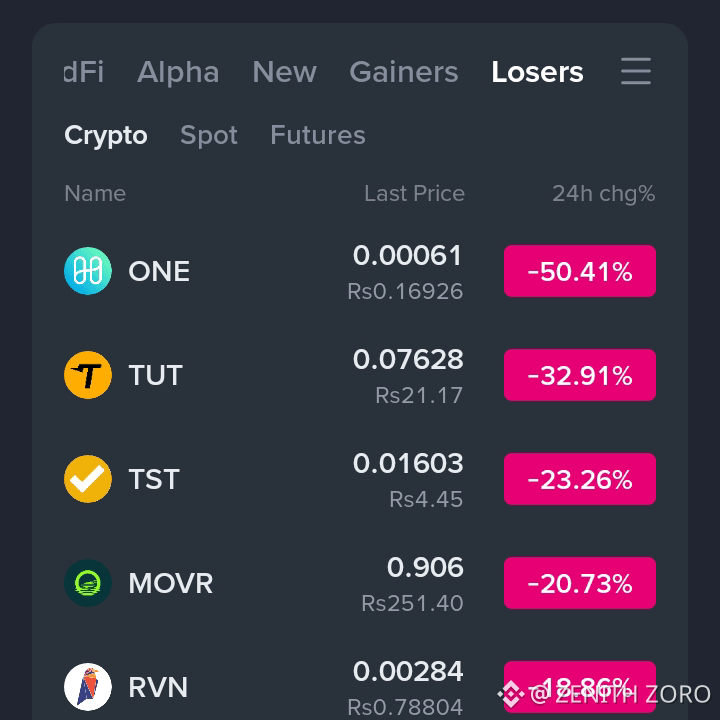
ONE: -50.41%
$TUT : -32.91%
$TST : -23.26%
MOVR: -20.73%
$RVN : -18.86%
Massive crashes = Massive risk.
These coins aren't "cheap" now.
They're DANGEROUS.
Bounces look tempting.
Bounces are TRAPS.
Fall knives kill traders.
Stay safe. 👀
#Crypto #Losers #RiskAnalysis
STAY AWAY FROM THESE. 📉
ONE: -50.41%
$TUT : -32.91%
$TST : -23.26%
MOVR: -20.73%
$RVN : -18.86%
Massive crashes = Massive risk.
These coins aren't "cheap" now.
They're DANGEROUS.
Bounces look tempting.
Bounces are TRAPS.
Fall knives kill traders.
Stay safe. 👀
#Crypto #Losers #RiskAnalysis
ONE: -50.41%
$TUT : -32.91%
$TST : -23.26%
MOVR: -20.73%
$RVN : -18.86%
Massive crashes = Massive risk.
These coins aren't "cheap" now.
They're DANGEROUS.
Bounces look tempting.
Bounces are TRAPS.
Fall knives kill traders.
Stay safe. 👀
#Crypto #Losers #RiskAnalysis
573

Article
SUI: The Giant with Feet of Clay — Analysis of Hidden Risks⚠️ Introduction: The Illusion of Promise
SUI Network has captivated the crypto community with its narrative of a 'revolutionary Layer 1 blockchain', but a deep dive reveals major structural issues that threaten its long-term viability.
🔴 1. Critical Centralization
The centralization of SUI poses a fundamental danger:
Validators limited to around 100 entities only, creating a real risk of transaction censorship
Majority control by the initial fund, concentrating decision-making power in a few hands
SUI: The Giant with Feet of Clay — Analysis of Hidden Risks
⚠️ Introduction: The Illusion of Promise
SUI Network has captivated the crypto community with its narrative of a 'revolutionary Layer 1 blockchain', but a deep dive reveals major structural issues that threaten its long-term viability.
🔴 1. Critical Centralization
The centralization of SUI poses a fundamental danger:
Validators limited to around 100 entities only, creating a real risk of transaction censorship
Majority control by the initial fund, concentrating decision-making power in a few hands
152

🚨 Lake Energy Solar RWA: The $1,500 Daily Revenue Trap
📊 Alpha Breakdown:
Lake Energy promotes a solar energy RWA with a $1,500 daily revenue claim. This analysis breaks down the tokenomics and liquidity depth. I compare the offer to historical rug pulls and provide a tactical assessment for the current crypto market....
🔗 Full Breakdown on YourWeb3Guy:
https://www.yourweb3guy.com/news/lake-energy-solar-rwa-the-1-500-daily-revenue-trap
#RWA #SolarEnergy #DeFi #RiskAnalysis
25

$PONS Short-term plan: watch for a base near 0.72. If price holds above 0.72 and prints a bullish reversal candle with rising volume, consider a long entry targeting 0.90–1.00 with a stop below 0.70 (around 0.69). If price breaks below 0.70, anticipate further downside toward 0.60–0.68 and consider a controlled short or wait for a stronger confirmation.
$ ( RISK MANAGEMENT )
Long scenario: enter near 0.72 with stop around 0.69–0.70; target 0.90–1.00; potential risk/reward favorable if a bounce occurs with volume. Short scenario: break below 0.70 invites further downside toward 0.60–0.68; use a stop above 0.75 to define risk.
$PONS #RiskAnalysis #USIranTradeTankerStrikesEscalate
382

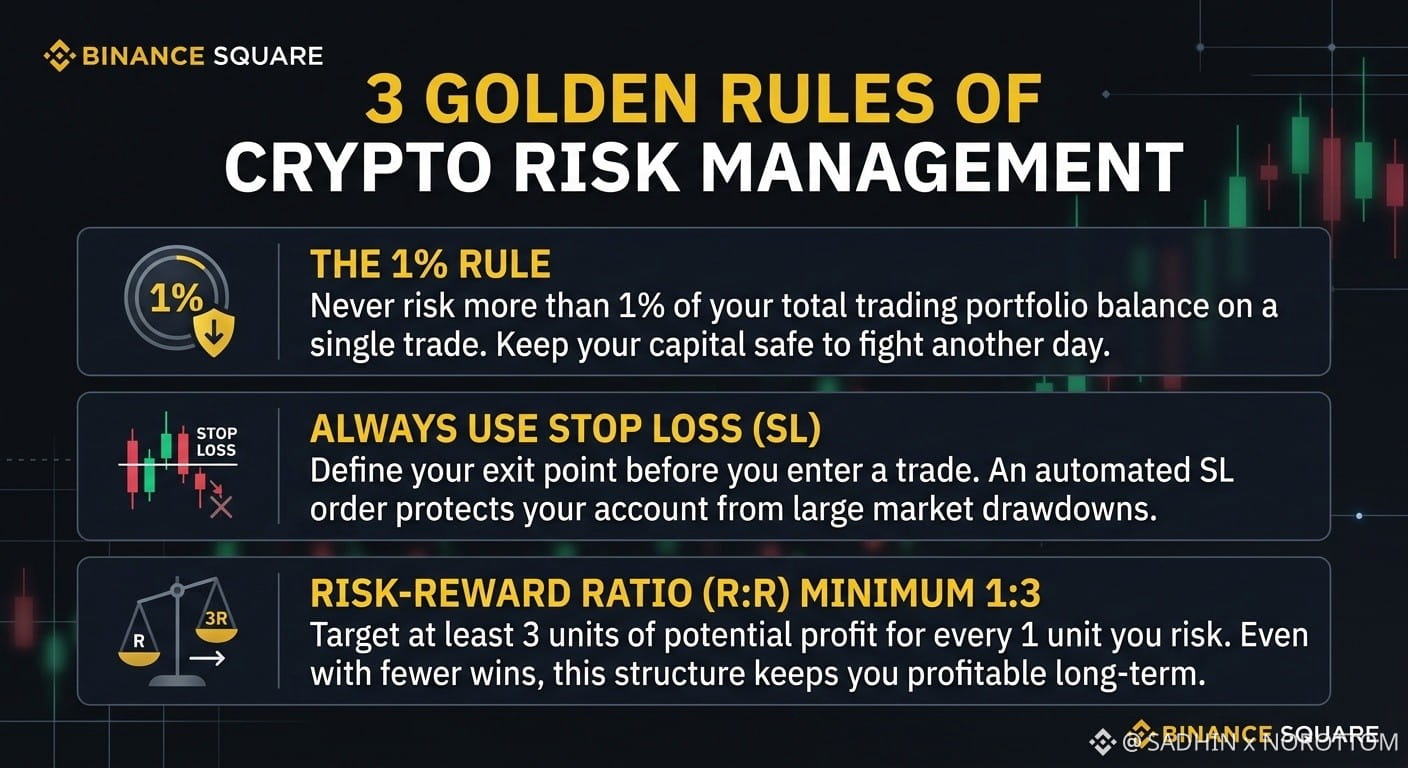
💲💲Here are top 3 risk management tricks for the #binance users.
⚠️⚠️⚠️⚠️⚠️👇👇👇.
Don't forget to follow me❗❗❗👑👑
$AGT
{future}(AGTUSDT)
$BTC
{spot}(BTCUSDT)
#ElonMusk. #TrendingPredictions #RiskAnalysis #TradingCommunity $LLYB
{spot}(LLYBUSDT)
💲💲Here are top 3 risk management tricks for the #binance users.
⚠️⚠️⚠️⚠️⚠️👇👇👇.
Don't forget to follow me❗❗❗👑👑
$AGT
$BTC
#ElonMusk. #TrendingPredictions #RiskAnalysis #TradingCommunity $LLYB
⚠️⚠️⚠️⚠️⚠️👇👇👇.
Don't forget to follow me❗❗❗👑👑
$AGT
$BTC
#ElonMusk. #TrendingPredictions #RiskAnalysis #TradingCommunity $LLYB
267

·
--
Bullish
$CPIX.US 😳 Inflation, ⛔🏥⛽️⛽️⛽️⛽️⛽️⛽️🏦🏦🏦🏦🏦🏦🏦🏦🏦🏦🏦🏦🏦🏦🏦🏦🏦
🔥 CPI, the Fed, and Bitcoin: Has the December rate hike already been priced in?
🚨The latest inflation data could play a crucial role in the Federal Reserve’s decision on interest rates in December.
📉
If inflation remains higher than expected, the possibility of another rate hike could put pressure on risk assets, including Bitcoin and altcoins.
However, if the market has already priced in this possibility, the actual reaction could be very different.
The key question is: Will Bitcoin react to the economic data, or has the market already priced in the risk?
#RiskAnalysis $GOOGLB
$BTC
{future}(BTCUSDT)
{spot}(GOOGLBUSDT)
$CPIX.US 😳 Inflation, ⛔🏥⛽️⛽️⛽️⛽️⛽️⛽️🏦🏦🏦🏦🏦🏦🏦🏦🏦🏦🏦🏦🏦🏦🏦🏦🏦
🔥 CPI, the Fed, and Bitcoin: Has the December rate hike already been priced in?
🚨The latest inflation data could play a crucial role in the Federal Reserve’s decision on interest rates in December.
📉
If inflation remains higher than expected, the possibility of another rate hike could put pressure on risk assets, including Bitcoin and altcoins.
However, if the market has already priced in this possibility, the actual reaction could be very different.
The key question is: Will Bitcoin react to the economic data, or has the market already priced in the risk?
#RiskAnalysis $GOOGLB
$BTC

102

Understanding OI-to-Market-Cap Ratios
Some third-party reports have described SHELL's derivatives open interest as relatively high compared with its reported market capitalization.
This ratio can provide context about how much derivatives exposure exists relative to the estimated spot-market value.
However, the calculation is sensitive to both OI and circulating-supply methodology. Different market-cap estimates can produce very different ratios.
It is therefore important to check the underlying numbers before interpreting a high OI-to-market-cap ratio as excessive leverage.
#SHELL #OpenInterest #RiskAnalysis
22

·
--

Article
Jesse Livermore and the Short Sale of the “Great Crash of 1929”Concept: A gambler’s instinct, an understanding of market psychology, major trends, and a tragic lesson in risk management.
History
Jesse Livermore (nicknamed “The Boy Plunger” and “The Great Bear of Wall Street”) was one of the most charismatic and distinctive traders in history. He started out as a quotation boy in the late 19th century, studying prices on the ticker tape (tape reading), and made and lost million-dollar fortunes from scratch several times. His peak came during the economic crisis of 1929.
Jesse Livermore and the Short Sale of the “Great Crash of 1929”
Concept: A gambler’s instinct, an understanding of market psychology, major trends, and a tragic lesson in risk management.
History
Jesse Livermore (nicknamed “The Boy Plunger” and “The Great Bear of Wall Street”) was one of the most charismatic and distinctive traders in history. He started out as a quotation boy in the late 19th century, studying prices on the ticker tape (tape reading), and made and lost million-dollar fortunes from scratch several times. His peak came during the economic crisis of 1929.
1
137

·
--
$BTC Market Update: No Longs Until Confirmation
BTC has closed below the Daily EMA50, although the breakdown came without significant volume.
The last time BTC traded below its Daily EMA50 was on August 16. This level is now worth watching closely to see whether buyers can reclaim it with strength.
For now, I'm expecting further downside until BTC shows a convincing recovery. A weak bounce isn't enough to change my outlook.
Personally, I'm staying away from long positions until the price settles and establishes a clearer direction.
With limited capital, we need to be selective. There's no need to force entries or catch a falling market just because the price looks cheaper.
I'll wait for confirmation before considering my next move. Protecting capital comes first.
Follow to learn about my insights and progress.
#BTC #RiskAnalysis
{future}(BTCUSDT)
$BTC Market Update: No Longs Until Confirmation
BTC has closed below the Daily EMA50, although the breakdown came without significant volume.
The last time BTC traded below its Daily EMA50 was on August 16. This level is now worth watching closely to see whether buyers can reclaim it with strength.
For now, I'm expecting further downside until BTC shows a convincing recovery. A weak bounce isn't enough to change my outlook.
Personally, I'm staying away from long positions until the price settles and establishes a clearer direction.
With limited capital, we need to be selective. There's no need to force entries or catch a falling market just because the price looks cheaper.
I'll wait for confirmation before considering my next move. Protecting capital comes first.
Follow to learn about my insights and progress.
#BTC #RiskAnalysis
135

·
--
🚀 Why Most Crypto Traders Fail🚀 Most people lose money in crypto not because of bad trades, but because of bad habits.
Successful traders: ✔️ Manage risk before chasing profits
✔️ Stay patient during market volatility
✔️ Keep learning and adapting
✔️ Protect their accounts with strong security
Remember: A single emotional decision can erase months of hard work.
Discipline beats luck. Every. Single. Time. 💯
What's the most important lesson crypto has taught you? 👇
$BTC
#BitcoinSurpasses$74K
#RiskAnalysis
#CME247CryptoFuturesOptions
#Crypto_Jobs🎯
🚀 Why Most Crypto Traders Fail
🚀 Most people lose money in crypto not because of bad trades, but because of bad habits.
Successful traders: ✔️ Manage risk before chasing profits
✔️ Stay patient during market volatility
✔️ Keep learning and adapting
✔️ Protect their accounts with strong security
Remember: A single emotional decision can erase months of hard work.
Discipline beats luck. Every. Single. Time. 💯
What's the most important lesson crypto has taught you? 👇
$BTC
#BitcoinSurpasses$74K
#RiskAnalysis
#CME247CryptoFuturesOptions
#Crypto_Jobs🎯
205

That is a very risky way to play it.
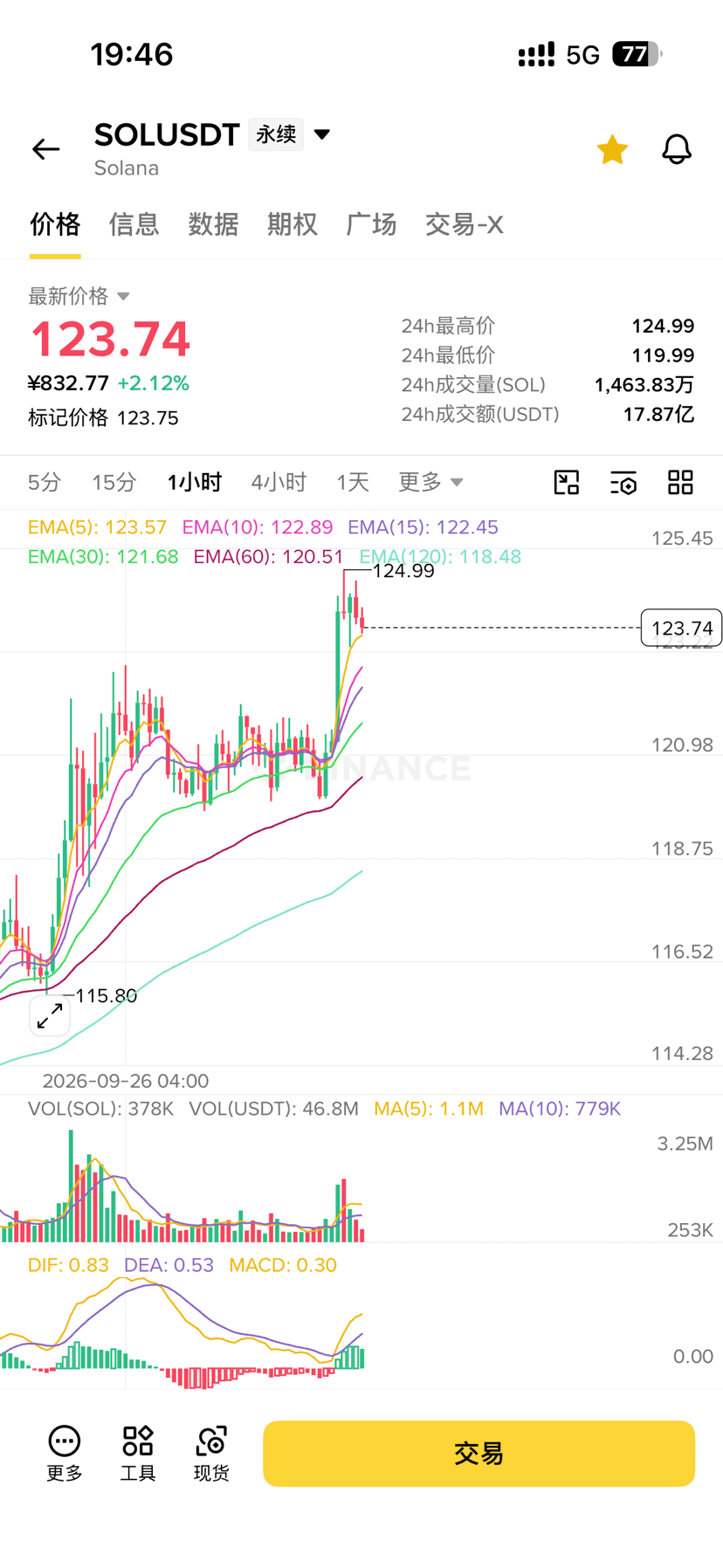
Yes $SOL can pull back to 120 from 124 to 125 resistance, we talked about that, but shorting directly at market without a stop is dangerous, especially when trend on 4H is still bullish and 500M USDC just came into Solana ecosystem.
If you short here smart risk management is key. Many traders wait for rejection confirmation like a 4H close below 122 or a break of 122.10 low, with stop above 125.50, target 120 then 119.
No waterfall is guaranteed. Price already bounced from 118 to 124, so shorts can get squeezed if it breaks 125.
This is not financial advice. Use stop loss and do not go all in on one short.
#StopLossTruths
#RiskAnalysis
$DOT
$XRP

江阳ETH
·
--
Bearish$SOL 123 This position can be used to set up a one-handed short-term short order! It's already started to pull back! Target 120. If you don't have a position, short at the current price directly! Wait for the waterfall to feed on the meat!
1
100

·
--
I’m building a simple trading framework around $BTC instead of reacting emotionally to every move. My focus is on trend, volume, and key support/resistance zones, while keeping risk management at the center of every setup. If momentum strengthens with confirmation, I look for continuation; if market structure weakens, I stay patient and protect capital. For me, consistency matters more than chasing every opportunity. #BTC $NVDAB
{spot}(BTCUSDT)
#TradingTales #RiskAnalysis #BinanceSquare
I’m building a simple trading framework around $BTC instead of reacting emotionally to every move. My focus is on trend, volume, and key support/resistance zones, while keeping risk management at the center of every setup. If momentum strengthens with confirmation, I look for continuation; if market structure weakens, I stay patient and protect capital. For me, consistency matters more than chasing every opportunity. #BTC $NVDAB
#TradingTales #RiskAnalysis #BinanceSquare
#TradingTales #RiskAnalysis #BinanceSquare
Hold
0%
Sell
0%
0 votes • Voting closed
117


Article
The psychological trap of market cycles$ETH The psychological trap of market cycles
The primary reason most retail traders lose money isn't a lack of technical knowledge, but an inability to manage their own emotions during market cycles. While financial markets are driven by numbers, they are powered by human psychology. When the market moves, three distinct emotional traps—**FOMO, Panic, and Revenge Trading**—systematically drain trader accounts.
Understanding how these emotions operate is the first step toward surviving them.
1. FOMO (Fear of Missing Out)
FOMO is the emotional catalyst that forces traders to buy at the absolute peak of a market cycle. When an asset's price is skyrocketing, green candles dominate the charts, and social media is flooded with stories of overnight riches, the brain's reward center lights up. Fearing that they will be left behind while everyone else gets rich, traders abandon their risk management plans and buy in.
* The Trap: Buying an asset after it has already rallied significantly.
* The Consequence: Because the asset is overextended, smart money begins taking profits shortly after the FOMO buyer enters. The market reverses, leaving the late buyer holding the bag at the exact top.
2. Panic (The Capitulation Phase)
Panic is the emotional reflex that forces traders to sell at the absolute bottom of a market cycle.
When the market inevitably corrects, the euphoria of FOMO quickly turns into anxiety, which then cascades into terror. As red candles wipe out paper gains and eat into principal capital, the instinct to "survive" takes over. Unable to stomach the pain of further losses, the trader sells their position to make the bleeding stop.
* The Trap: Selling assets during a sharp, fear-driven market dip.
* The Consequence: Selling in a panic locks in permanent, realized losses. Ironically, because markets move in waves, capitulation often happens right at the exhaustion point of a sell-off, meaning the trader sells right before the market rebounds.
3. Revenge Trading (The Account Destroyer)
Revenge trading is the irrational attempt to win back lost money by immediately taking bigger, riskier positions.
After locking in heavy losses from panic selling, a trader feels anger, shame, and a desperate need to "make things right." Rather than stepping away to clear their head, they jump back into the market—often with larger position sizes or higher leverage—to recoup their losses in a single trade.
* The Trap: Trading out of anger and impatience rather than waiting for a valid setup.
* The Consequence: Because the trader is emotionally compromised, their analysis is sloppy. This leads to a rapid succession of even larger losses, frequently culminating in a completely blown trading account.
Breaking the Cycle
To survive these emotional pitfalls, successful traders implement strict structural rules to protect themselves from their own psychology:
* Pre-defined Trading Plans: Never enter a trade without a set entry price, stop-loss, and take-profit target.
* The "Cool Down" Rule: Walk away from the screen for at least 24 hours after a major loss to prevent revenge trading.
* Automated Execution: Use limit orders and stop-losses to take the manual decision-making out of live market movements.
#Binance #bitcoin #TradingSignals #RiskAnalysis
The psychological trap of market cycles
$ETH The psychological trap of market cycles
The primary reason most retail traders lose money isn't a lack of technical knowledge, but an inability to manage their own emotions during market cycles. While financial markets are driven by numbers, they are powered by human psychology. When the market moves, three distinct emotional traps—**FOMO, Panic, and Revenge Trading**—systematically drain trader accounts.
Understanding how these emotions operate is the first step toward surviving them.
1. FOMO (Fear of Missing Out)
FOMO is the emotional catalyst that forces traders to buy at the absolute peak of a market cycle. When an asset's price is skyrocketing, green candles dominate the charts, and social media is flooded with stories of overnight riches, the brain's reward center lights up. Fearing that they will be left behind while everyone else gets rich, traders abandon their risk management plans and buy in.
* The Trap: Buying an asset after it has already rallied significantly.
* The Consequence: Because the asset is overextended, smart money begins taking profits shortly after the FOMO buyer enters. The market reverses, leaving the late buyer holding the bag at the exact top.
2. Panic (The Capitulation Phase)
Panic is the emotional reflex that forces traders to sell at the absolute bottom of a market cycle.
When the market inevitably corrects, the euphoria of FOMO quickly turns into anxiety, which then cascades into terror. As red candles wipe out paper gains and eat into principal capital, the instinct to "survive" takes over. Unable to stomach the pain of further losses, the trader sells their position to make the bleeding stop.
* The Trap: Selling assets during a sharp, fear-driven market dip.
* The Consequence: Selling in a panic locks in permanent, realized losses. Ironically, because markets move in waves, capitulation often happens right at the exhaustion point of a sell-off, meaning the trader sells right before the market rebounds.
3. Revenge Trading (The Account Destroyer)
Revenge trading is the irrational attempt to win back lost money by immediately taking bigger, riskier positions.
After locking in heavy losses from panic selling, a trader feels anger, shame, and a desperate need to "make things right." Rather than stepping away to clear their head, they jump back into the market—often with larger position sizes or higher leverage—to recoup their losses in a single trade.
* The Trap: Trading out of anger and impatience rather than waiting for a valid setup.
* The Consequence: Because the trader is emotionally compromised, their analysis is sloppy. This leads to a rapid succession of even larger losses, frequently culminating in a completely blown trading account.
Breaking the Cycle
To survive these emotional pitfalls, successful traders implement strict structural rules to protect themselves from their own psychology:
* Pre-defined Trading Plans: Never enter a trade without a set entry price, stop-loss, and take-profit target.
* The "Cool Down" Rule: Walk away from the screen for at least 24 hours after a major loss to prevent revenge trading.
* Automated Execution: Use limit orders and stop-losses to take the manual decision-making out of live market movements.
#Binance #bitcoin #TradingSignals #RiskAnalysis
1
111

·
--
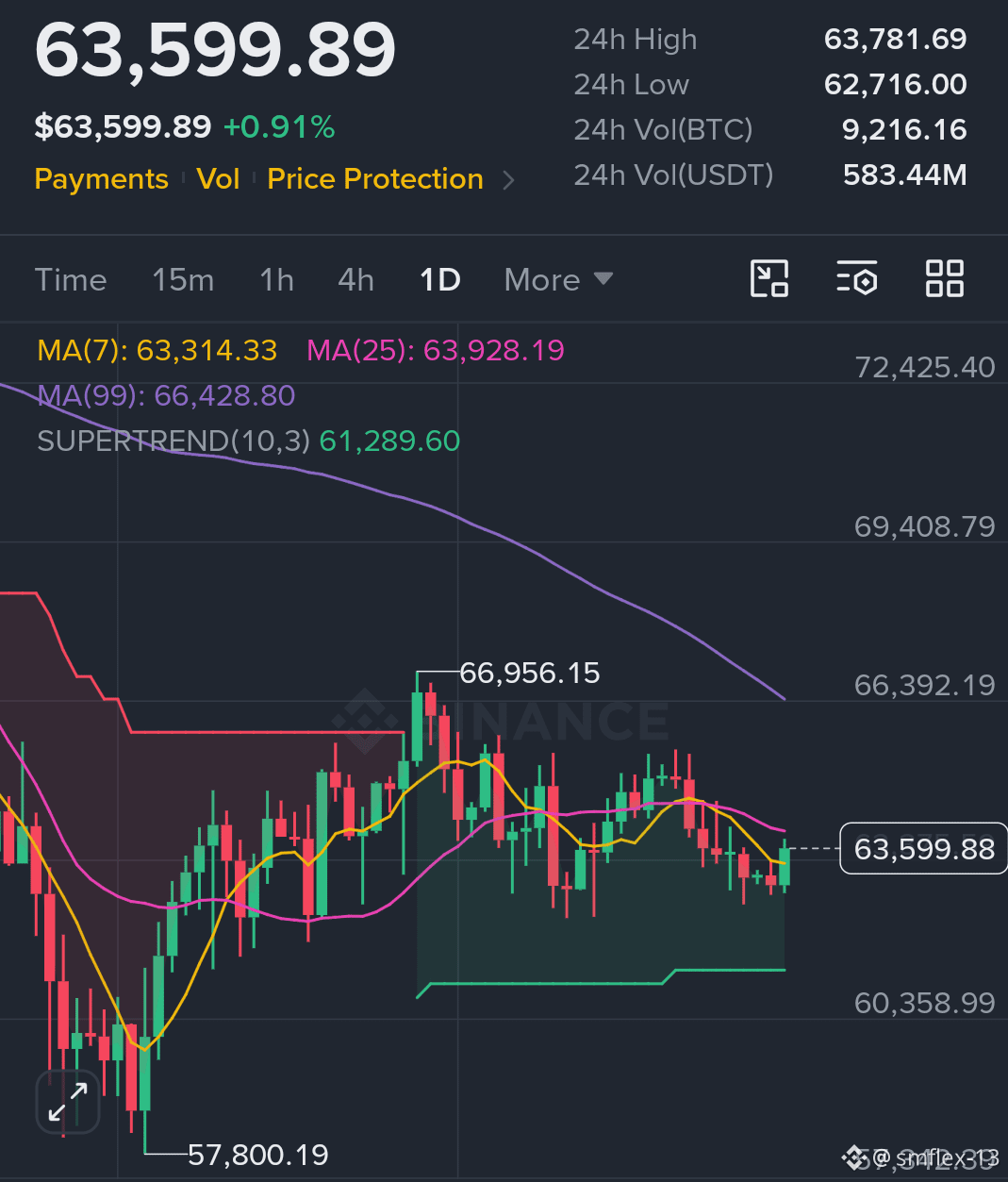
🟢 $BTC — Long Setup
#BTC is at 63,599.89 (+0.91%). Price is above MA(7) and the Supertrend, but still below MA(25) = 63,928.19. So the setup is bullish, but 63,780–63,930 is the key resistance zone.
MA(7): 63,314.33
MA(25): 63,928.19
MA(99): 66,428.80
Supertrend: 61,289.60
24h High: 63,781.69
24h Low: 62,716
Preferred entry: 63,450–63,600 on retest
TP1: 63,780
TP2: 63,930
TP3: 64,400–64,600
SL: 63,200
🔼 Confirmation: Break and hold above 63,930 with volume → stronger continuation toward 64.4k–64.6k.
⚠️ Don't chase directly into 63,780–63,930 resistance. If BTC loses 63,200, invalidate the long.
#RiskAnalysis
Long confidence: 8/10.
#Futures_Signals
1
26
Log in to explore more content
Join global crypto users on Binance Square
⚡️ Get latest and useful information about crypto.
💬 Trusted by the world’s largest crypto exchange.
👍 Discover real insights from verified creators.
Email / Phone number
Trending Topics
1
#AnthropicRejectsIPODelayValuationinQuestion
547,170 views
4,489 Discussing
2
#HuangExitNvidiaStrategyInFocus
10 views
7 Discussing
3
#BitMineReports$6.3BNetLossForFiscal2026
552 views
42 Discussing
4
#CoreWeaveJumps10%On168%RevenueGrowth
107,466 views
1,245 Discussing
5
#ZcashFallsBelow$1000ForFirstTimeSinceSeptember
57,724 views
239 Discussing
6
#MSCIRemovalMayCurbStrategy’sBitcoinBuying
18,076 views
305 Discussing
7
#TradFiForBeginners
493,345 views
3,349 Discussing
8
#CanNvidiaEarningsEaseMarketConcerns?
209,959 views
2,103 Discussing
9
#USJoblessClaimsRise
19.1M views
7,509 Discussing
10
#PythAddsNYSERealTimeDataToMarketplace
8,980 views
189 Discussing