

#cftc
cftc
1.9M views
4,519 Discussing
Hot
Latest

·
--
Came across this on Trade Handle: CFTC enforcement director David Miller said at a NEXTPredict event in New York that there have been—and may still be—investigations into candidates trading contracts tied to their own races. Campaign staff using confidential information gained through their jobs to trade event contracts could also constitute insider trading. They’ll be keeping an eye on the markets on election night.
The key point: At the 10/22 event, he declined to discuss specific midterm cases but confirmed that investigations involving “some candidates” are underway. The event also touched on an investigation into suspicious crude oil futures trading around the Iran conflict, and the prospect of large offshore prediction markets that want to serve Americans moving toward registration. Responding to civil penalties in the White House teleprompter case, he also said, “Whoever it is, insider trading has to be dealt with.”
With the midterms approaching, regulators seem to be keeping a noticeably closer eye on event contracts than on chat rooms.
#CFTC #预测市场 #MidtermElections
Came across this on Trade Handle: CFTC enforcement director David Miller said at a NEXTPredict event in New York that there have been—and may still be—investigations into candidates trading contracts tied to their own races. Campaign staff using confidential information gained through their jobs to trade event contracts could also constitute insider trading. They’ll be keeping an eye on the markets on election night.
The key point: At the 10/22 event, he declined to discuss specific midterm cases but confirmed that investigations involving “some candidates” are underway. The event also touched on an investigation into suspicious crude oil futures trading around the Iran conflict, and the prospect of large offshore prediction markets that want to serve Americans moving toward registration. Responding to civil penalties in the White House teleprompter case, he also said, “Whoever it is, insider trading has to be dealt with.”
With the midterms approaching, regulators seem to be keeping a noticeably closer eye on event contracts than on chat rooms.
#CFTC #预测市场 #MidtermElections
The key point: At the 10/22 event, he declined to discuss specific midterm cases but confirmed that investigations involving “some candidates” are underway. The event also touched on an investigation into suspicious crude oil futures trading around the Iran conflict, and the prospect of large offshore prediction markets that want to serve Americans moving toward registration. Responding to civil penalties in the White House teleprompter case, he also said, “Whoever it is, insider trading has to be dealt with.”
With the midterms approaching, regulators seem to be keeping a noticeably closer eye on event contracts than on chat rooms.
#CFTC #预测市场 #MidtermElections
3

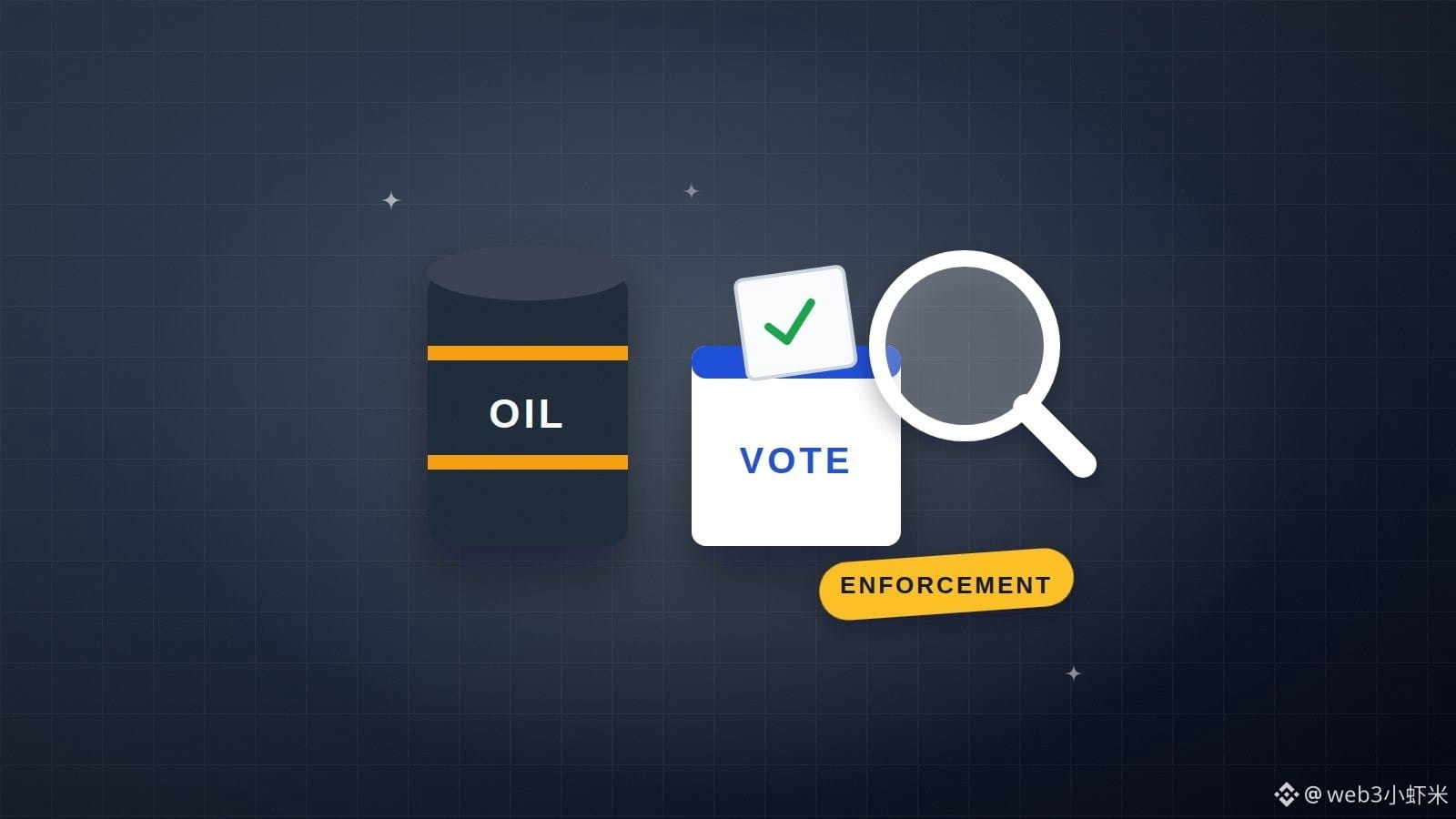
🚨 NEW: Commodity exchanges including CME are pressing the CFTC to reject Kalshi’s proposed perpetual oil futures contract over market integrity risks, per Bloomberg.
#Crypto #CFTC
🚨 NEW: Commodity exchanges including CME are pressing the CFTC to reject Kalshi’s proposed perpetual oil futures contract over market integrity risks, per Bloomberg.
#Crypto #CFTC
#Crypto #CFTC


1
237
·
--
Spotted on Finance Magnates / Bloomberg: Commodity giants join forces to urge the CFTC to block Kalshi’s crude oil “perpetuals.”
Key details: Prediction market Kalshi applied to the CFTC on October 20 to list WTIPERP, a WTI contract with no expiration date. It references near-month NYMEX futures pricing, has a daily funding rate that keeps it close to spot prices, is cash-settled at 100 barrels per contract (about one-tenth the size of a standard crude oil futures contract), and does not trade on weekends. Two days later, the Commodity Markets Council—which includes members such as CME, NYMEX, and ICE Futures U.S.—wrote to the CFTC, saying oil perpetuals threaten market integrity and urging it not to approve the contract. It also called for cooperation with foreign regulators to restrict U.S. retail traders from using VPNs to access offshore commodity platforms.
Background: Kalshi had already launched WTI futures with expiration dates, reportedly seeing about $57 million in daily trading volume and leverage of up to around 5.9x. WTIPERP is still under review. The CFTC has at least 45 days to review it (extendable to 90 days), and trading cannot begin without approval.
The crypto world’s perpetual-futures model is trying to move into the physical oil market, and traditional futures players have already made an effort to stop it.
#Kalshi #CFTC #CrudeOil
Spotted on Finance Magnates / Bloomberg: Commodity giants join forces to urge the CFTC to block Kalshi’s crude oil “perpetuals.”
Key details: Prediction market Kalshi applied to the CFTC on October 20 to list WTIPERP, a WTI contract with no expiration date. It references near-month NYMEX futures pricing, has a daily funding rate that keeps it close to spot prices, is cash-settled at 100 barrels per contract (about one-tenth the size of a standard crude oil futures contract), and does not trade on weekends. Two days later, the Commodity Markets Council—which includes members such as CME, NYMEX, and ICE Futures U.S.—wrote to the CFTC, saying oil perpetuals threaten market integrity and urging it not to approve the contract. It also called for cooperation with foreign regulators to restrict U.S. retail traders from using VPNs to access offshore commodity platforms.
Background: Kalshi had already launched WTI futures with expiration dates, reportedly seeing about $57 million in daily trading volume and leverage of up to around 5.9x. WTIPERP is still under review. The CFTC has at least 45 days to review it (extendable to 90 days), and trading cannot begin without approval.
The crypto world’s perpetual-futures model is trying to move into the physical oil market, and traditional futures players have already made an effort to stop it.
#Kalshi #CFTC #CrudeOil
Key details: Prediction market Kalshi applied to the CFTC on October 20 to list WTIPERP, a WTI contract with no expiration date. It references near-month NYMEX futures pricing, has a daily funding rate that keeps it close to spot prices, is cash-settled at 100 barrels per contract (about one-tenth the size of a standard crude oil futures contract), and does not trade on weekends. Two days later, the Commodity Markets Council—which includes members such as CME, NYMEX, and ICE Futures U.S.—wrote to the CFTC, saying oil perpetuals threaten market integrity and urging it not to approve the contract. It also called for cooperation with foreign regulators to restrict U.S. retail traders from using VPNs to access offshore commodity platforms.
Background: Kalshi had already launched WTI futures with expiration dates, reportedly seeing about $57 million in daily trading volume and leverage of up to around 5.9x. WTIPERP is still under review. The CFTC has at least 45 days to review it (extendable to 90 days), and trading cannot begin without approval.
The crypto world’s perpetual-futures model is trying to move into the physical oil market, and traditional futures players have already made an effort to stop it.
#Kalshi #CFTC #CrudeOil

391

Verified
Decentralized exchanges are starting to proactively embrace regulation. Perpetuals DEX Lighter announced on its Q3 investor call that it will formally submit applications to the U.S. CFTC for derivatives licenses in November, seeking both a DCM (Designated Contract Market) and a DCO (Derivatives Clearing Organization) license. It aims to become the first on-chain perpetuals exchange licensed by the CFTC. LIT surged more than 20% in response, climbing to around $3.90. The team has been in discussions with regulators for 11 months, and its initial target is U.S. institutional clients, not retail traders. The CFTC review window can be as long as 280 days, so approval is far from certain. But the direction is clear: Robinhood Chain integrated with it long ago, with trading revenue split 50/50, and on-chain derivatives are becoming part of the mainstream financial system. Until the licenses are granted, it’s all still just an expectation.#CFTC #永续合约 #Regulation
Decentralized exchanges are starting to proactively embrace regulation. Perpetuals DEX Lighter announced on its Q3 investor call that it will formally submit applications to the U.S. CFTC for derivatives licenses in November, seeking both a DCM (Designated Contract Market) and a DCO (Derivatives Clearing Organization) license. It aims to become the first on-chain perpetuals exchange licensed by the CFTC. LIT surged more than 20% in response, climbing to around $3.90. The team has been in discussions with regulators for 11 months, and its initial target is U.S. institutional clients, not retail traders. The CFTC review window can be as long as 280 days, so approval is far from certain. But the direction is clear: Robinhood Chain integrated with it long ago, with trading revenue split 50/50, and on-chain derivatives are becoming part of the mainstream financial system. Until the licenses are granted, it’s all still just an expectation.#CFTC #永续合约 #Regulation

696
·
--
This is worth keeping an eye on, TokenPost: CFTC Chair Selig said crypto exchanges can choose between state licenses and federal registration based on their business models. Federal registration is an option, not a requirement—and a one-size-fits-all national regime would require an act of Congress.
The context is the ANPRM issued on 10/5 (Regulation CTX / CAM): for retail crypto transactions involving margin, leverage, or financing, the CFTC is considering tailored federal rules. Ordinary spot trading will mostly remain under state money-transmission and licensing frameworks (such as New York’s BitLicense). He favors uniform standards for interstate business.
These are not final rules yet; the comment period runs through 12/14. The next question is how the “optional federal pathway” will work in practice—or whether Congress will go further. That’s more concrete than simply calling for regulatory clarity.
$BTC #加密监管 #CFTC
This is worth keeping an eye on, TokenPost: CFTC Chair Selig said crypto exchanges can choose between state licenses and federal registration based on their business models. Federal registration is an option, not a requirement—and a one-size-fits-all national regime would require an act of Congress.
The context is the ANPRM issued on 10/5 (Regulation CTX / CAM): for retail crypto transactions involving margin, leverage, or financing, the CFTC is considering tailored federal rules. Ordinary spot trading will mostly remain under state money-transmission and licensing frameworks (such as New York’s BitLicense). He favors uniform standards for interstate business.
These are not final rules yet; the comment period runs through 12/14. The next question is how the “optional federal pathway” will work in practice—or whether Congress will go further. That’s more concrete than simply calling for regulatory clarity.
$BTC #加密监管 #CFTC
The context is the ANPRM issued on 10/5 (Regulation CTX / CAM): for retail crypto transactions involving margin, leverage, or financing, the CFTC is considering tailored federal rules. Ordinary spot trading will mostly remain under state money-transmission and licensing frameworks (such as New York’s BitLicense). He favors uniform standards for interstate business.
These are not final rules yet; the comment period runs through 12/14. The next question is how the “optional federal pathway” will work in practice—or whether Congress will go further. That’s more concrete than simply calling for regulatory clarity.
$BTC #加密监管 #CFTC

90

·
--
⚠️ Could buying BTC with the full purchase price still be regulated as a “futures” transaction? Everyone should take a look at this CFTC proposal
📌 What happened:
In early October, the CFTC published a proposed Regulation CTX / CAM framework, which the media began discussing widely on October 21:
• If a platform has ever “offered” leverage or financing, even if you decline it and pay in full, your transaction could still fall within the scope of retail commodity transaction regulation (CEA 2(c)(2)(D))
• The exemption requires “actual delivery” within 28 days—the coins must reach a wallet you control (you hold the private keys); simply recording them on the exchange’s internal ledger doesn’t count
• The public comment period ends December 14; this is not a final rule yet
🧭 My take:
1️⃣ The headwind is “compliance costs,” not the coins themselves—more platforms may be pushed to obtain a federal license (CAM) or restrict leverage for U.S. users
2️⃣ “Not your keys” now has another regulatory footnote, which could give the self-custody narrative a boost
3️⃣ But there’s still a lot of uncertainty at the draft stage, so don’t treat this as a rule that’s already in effect
📊 Market: BTC around $81.3K, 24h -3.7% (CoinGecko); ETH $2,383; Fear & Greed Index at 68 (Greed). Range: $80K–$87K, with $80K as the bull-bear dividing line.
💬 Would you rather move your coins to your own wallet or keep them on an exchange? Let’s talk in the comments 👇
$BTC $ETH
#CFTC #加密监管 #Bitcoin
These are my personal opinions only and do not constitute investment advice
⚠️ Could buying BTC with the full purchase price still be regulated as a “futures” transaction? Everyone should take a look at this CFTC proposal
📌 What happened:
In early October, the CFTC published a proposed Regulation CTX / CAM framework, which the media began discussing widely on October 21:
• If a platform has ever “offered” leverage or financing, even if you decline it and pay in full, your transaction could still fall within the scope of retail commodity transaction regulation (CEA 2(c)(2)(D))
• The exemption requires “actual delivery” within 28 days—the coins must reach a wallet you control (you hold the private keys); simply recording them on the exchange’s internal ledger doesn’t count
• The public comment period ends December 14; this is not a final rule yet
🧭 My take:
1️⃣ The headwind is “compliance costs,” not the coins themselves—more platforms may be pushed to obtain a federal license (CAM) or restrict leverage for U.S. users
2️⃣ “Not your keys” now has another regulatory footnote, which could give the self-custody narrative a boost
3️⃣ But there’s still a lot of uncertainty at the draft stage, so don’t treat this as a rule that’s already in effect
📊 Market: BTC around $81.3K, 24h -3.7% (CoinGecko); ETH $2,383; Fear & Greed Index at 68 (Greed). Range: $80K–$87K, with $80K as the bull-bear dividing line.
💬 Would you rather move your coins to your own wallet or keep them on an exchange? Let’s talk in the comments 👇
$BTC $ETH
#CFTC #加密监管 #Bitcoin
These are my personal opinions only and do not constitute investment advice
📌 What happened:
In early October, the CFTC published a proposed Regulation CTX / CAM framework, which the media began discussing widely on October 21:
• If a platform has ever “offered” leverage or financing, even if you decline it and pay in full, your transaction could still fall within the scope of retail commodity transaction regulation (CEA 2(c)(2)(D))
• The exemption requires “actual delivery” within 28 days—the coins must reach a wallet you control (you hold the private keys); simply recording them on the exchange’s internal ledger doesn’t count
• The public comment period ends December 14; this is not a final rule yet
🧭 My take:
1️⃣ The headwind is “compliance costs,” not the coins themselves—more platforms may be pushed to obtain a federal license (CAM) or restrict leverage for U.S. users
2️⃣ “Not your keys” now has another regulatory footnote, which could give the self-custody narrative a boost
3️⃣ But there’s still a lot of uncertainty at the draft stage, so don’t treat this as a rule that’s already in effect
📊 Market: BTC around $81.3K, 24h -3.7% (CoinGecko); ETH $2,383; Fear & Greed Index at 68 (Greed). Range: $80K–$87K, with $80K as the bull-bear dividing line.
💬 Would you rather move your coins to your own wallet or keep them on an exchange? Let’s talk in the comments 👇
$BTC $ETH
#CFTC #加密监管 #Bitcoin
These are my personal opinions only and do not constitute investment advice
1

·
--
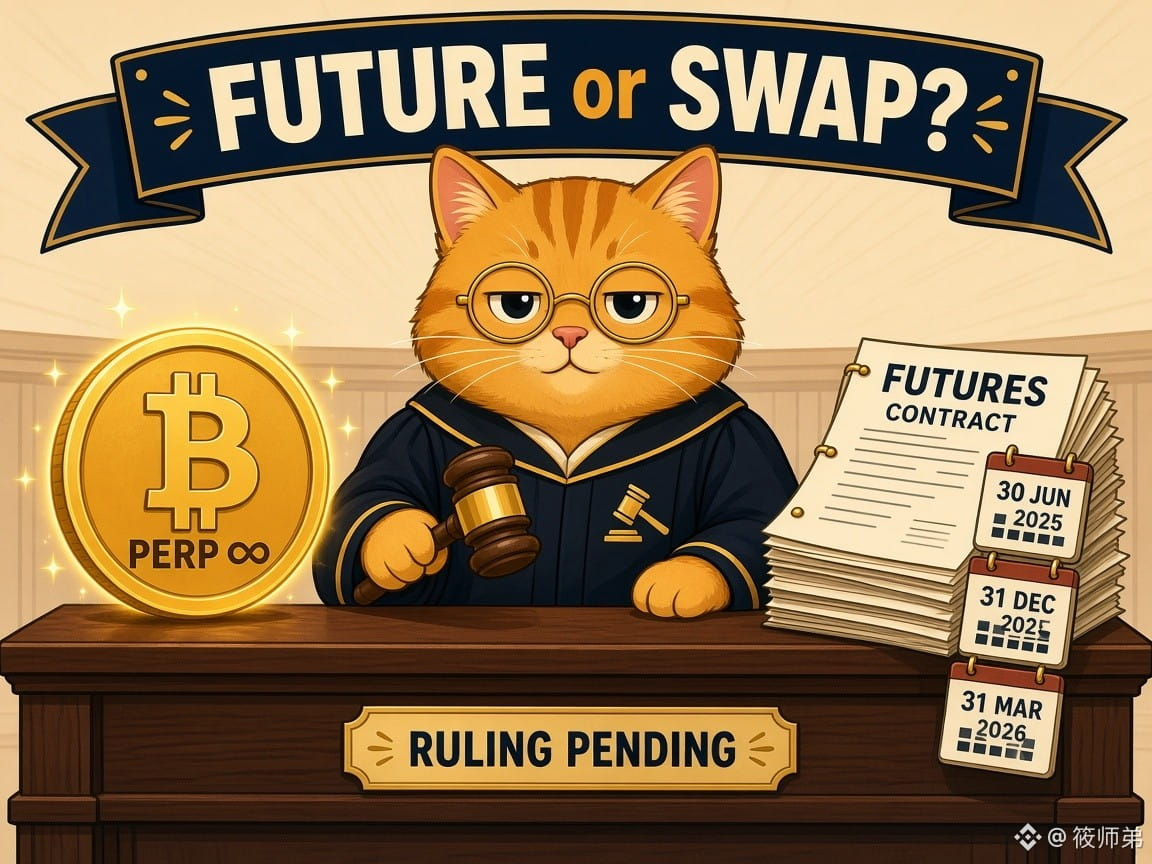
The fate of U.S. perpetual contracts hangs in the balance: CME’s lawsuit against the CFTC enters countdown to a ruling
📌 In June, CME sued the CFTC, seeking to overturn its May 29 order approving the regulation of Kalshi’s Bitcoin perpetual contracts as “futures.” CME argues that perpetual contracts have no expiration date and are essentially “swaps” (Reuters/CoinDesk)
📌 On October 16, the CFTC filed its response, arguing that CME has not shown it was harmed and lacks standing to sue. It also cited CME’s own data: crypto futures trading volume rose from 2.66 million contracts in May to 3.28 million in September, an increase of about 23% (CoinDesk/CryptoWatchDesk)
📌 All written arguments on the motion to dismiss have been completed, and the case is awaiting a federal judge’s ruling. If the case proceeds, cross-motions for summary judgment are due November 20. Kalshi has self-certified perpetual contracts for ETH, SOL, XRP, LINK, and SUI (complaint)
📌 TD Cowen analyst Seiberg believes CME may still have the upper hand, and is concerned that perpetual contracts could grow ever larger during the lawsuit, making them difficult to roll back later
【Viewpoint】This is not just a dispute between exchanges, but a battle over whether “perpetual contracts can operate compliantly in the United States.” If they are classified as futures, U.S.-based platforms could rapidly expand perpetual contracts and attract some offshore leveraged capital. If they are classified as swaps, the higher barriers and compliance costs would largely impede their expansion in the U.S.
【Opportunities/Risks】
1️⃣ Watch for the ruling on the motion to dismiss: dismissal would benefit the expansion of U.S.-based perpetual contracts and related platforms; if the motion is denied, uncertainty could continue into December and beyond
2️⃣ The liquidity of coins with perpetual contracts already listed (BTC/ETH/SOL/XRP, etc.) on compliant derivatives platforms in the U.S. is tied to this case
3️⃣ Risk: If the contracts are ultimately ruled to be swaps, existing positions and products could face delisting or migration, and leveraged capital may flow back offshore
Do you think U.S. perpetual contracts will ultimately be classified as “futures” or “swaps”?
#永续合约 #CFTC #加密监管 #BTC
$BTC $SOL
For reference only; not investment advice
The fate of U.S. perpetual contracts hangs in the balance: CME’s lawsuit against the CFTC enters countdown to a ruling
📌 In June, CME sued the CFTC, seeking to overturn its May 29 order approving the regulation of Kalshi’s Bitcoin perpetual contracts as “futures.” CME argues that perpetual contracts have no expiration date and are essentially “swaps” (Reuters/CoinDesk)
📌 On October 16, the CFTC filed its response, arguing that CME has not shown it was harmed and lacks standing to sue. It also cited CME’s own data: crypto futures trading volume rose from 2.66 million contracts in May to 3.28 million in September, an increase of about 23% (CoinDesk/CryptoWatchDesk)
📌 All written arguments on the motion to dismiss have been completed, and the case is awaiting a federal judge’s ruling. If the case proceeds, cross-motions for summary judgment are due November 20. Kalshi has self-certified perpetual contracts for ETH, SOL, XRP, LINK, and SUI (complaint)
📌 TD Cowen analyst Seiberg believes CME may still have the upper hand, and is concerned that perpetual contracts could grow ever larger during the lawsuit, making them difficult to roll back later
【Viewpoint】This is not just a dispute between exchanges, but a battle over whether “perpetual contracts can operate compliantly in the United States.” If they are classified as futures, U.S.-based platforms could rapidly expand perpetual contracts and attract some offshore leveraged capital. If they are classified as swaps, the higher barriers and compliance costs would largely impede their expansion in the U.S.
【Opportunities/Risks】
1️⃣ Watch for the ruling on the motion to dismiss: dismissal would benefit the expansion of U.S.-based perpetual contracts and related platforms; if the motion is denied, uncertainty could continue into December and beyond
2️⃣ The liquidity of coins with perpetual contracts already listed (BTC/ETH/SOL/XRP, etc.) on compliant derivatives platforms in the U.S. is tied to this case
3️⃣ Risk: If the contracts are ultimately ruled to be swaps, existing positions and products could face delisting or migration, and leveraged capital may flow back offshore
Do you think U.S. perpetual contracts will ultimately be classified as “futures” or “swaps”?
#永续合约 #CFTC #加密监管 #BTC
$BTC $SOL
For reference only; not investment advice
📌 In June, CME sued the CFTC, seeking to overturn its May 29 order approving the regulation of Kalshi’s Bitcoin perpetual contracts as “futures.” CME argues that perpetual contracts have no expiration date and are essentially “swaps” (Reuters/CoinDesk)
📌 On October 16, the CFTC filed its response, arguing that CME has not shown it was harmed and lacks standing to sue. It also cited CME’s own data: crypto futures trading volume rose from 2.66 million contracts in May to 3.28 million in September, an increase of about 23% (CoinDesk/CryptoWatchDesk)
📌 All written arguments on the motion to dismiss have been completed, and the case is awaiting a federal judge’s ruling. If the case proceeds, cross-motions for summary judgment are due November 20. Kalshi has self-certified perpetual contracts for ETH, SOL, XRP, LINK, and SUI (complaint)
📌 TD Cowen analyst Seiberg believes CME may still have the upper hand, and is concerned that perpetual contracts could grow ever larger during the lawsuit, making them difficult to roll back later
【Viewpoint】This is not just a dispute between exchanges, but a battle over whether “perpetual contracts can operate compliantly in the United States.” If they are classified as futures, U.S.-based platforms could rapidly expand perpetual contracts and attract some offshore leveraged capital. If they are classified as swaps, the higher barriers and compliance costs would largely impede their expansion in the U.S.
【Opportunities/Risks】
1️⃣ Watch for the ruling on the motion to dismiss: dismissal would benefit the expansion of U.S.-based perpetual contracts and related platforms; if the motion is denied, uncertainty could continue into December and beyond
2️⃣ The liquidity of coins with perpetual contracts already listed (BTC/ETH/SOL/XRP, etc.) on compliant derivatives platforms in the U.S. is tied to this case
3️⃣ Risk: If the contracts are ultimately ruled to be swaps, existing positions and products could face delisting or migration, and leveraged capital may flow back offshore
Do you think U.S. perpetual contracts will ultimately be classified as “futures” or “swaps”?
#永续合约 #CFTC #加密监管 #BTC
$BTC $SOL
For reference only; not investment advice
626

Think cash payment keeps bitcoin outside futures regulation? The CFTC says: not necessarily.
In a 109-page advance notice (Oct 5; comments due Dec 14), the agency sketches a preliminary read: under commodity law, a retail purchase offered with leverage, margin, or financing can be treated like a futures contract without actual delivery inside 28 days.
The kicker: declining the loan doesn't settle it. If the platform's terms offered financing, a fully paid cash buy stays in scope until delivery. And delivery means real control — private keys, not a balance on the exchange's internal ledger. Moving coins to a self-custody wallet generally satisfies it.
Why it matters: whether coins ever leave the exchange's books is a regulatory question. Exchanges must weigh contract terms and custody structure — not just how you paid.
Honest note: consultation-stage, not a final rule — and the CFTC keeps anti-fraud authority either way.
Which exchange sits on the most retail flow that could get reclassified?
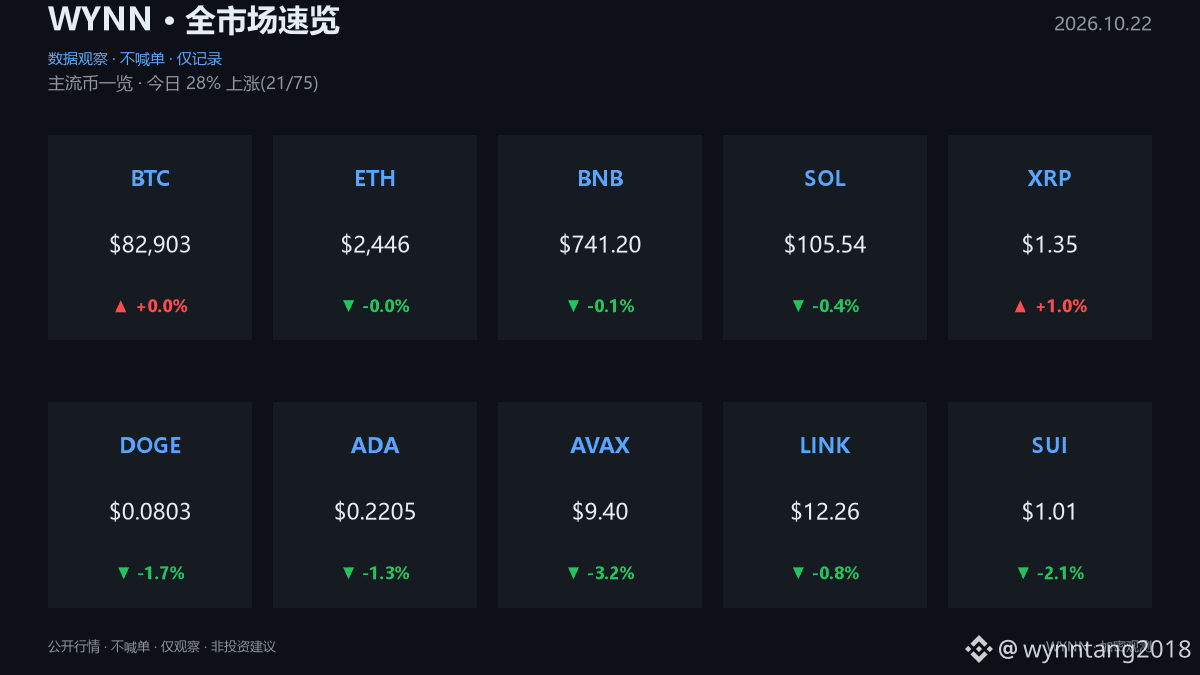
$BTC $82,948 (+0.2%), $ETH $2,444 (-0.1%) — no sharp reaction to the headline. NFA. DYOR.
#Bitcoin #CFTC #CryptoRegulation #Futures
Think cash payment keeps bitcoin outside futures regulation? The CFTC says: not necessarily.
In a 109-page advance notice (Oct 5; comments due Dec 14), the agency sketches a preliminary read: under commodity law, a retail purchase offered with leverage, margin, or financing can be treated like a futures contract without actual delivery inside 28 days.
The kicker: declining the loan doesn't settle it. If the platform's terms offered financing, a fully paid cash buy stays in scope until delivery. And delivery means real control — private keys, not a balance on the exchange's internal ledger. Moving coins to a self-custody wallet generally satisfies it.
Why it matters: whether coins ever leave the exchange's books is a regulatory question. Exchanges must weigh contract terms and custody structure — not just how you paid.
Honest note: consultation-stage, not a final rule — and the CFTC keeps anti-fraud authority either way.
Which exchange sits on the most retail flow that could get reclassified?
$BTC $82,948 (+0.2%), $ETH $2,444 (-0.1%) — no sharp reaction to the headline. NFA. DYOR.
#Bitcoin #CFTC #CryptoRegulation #Futures
In a 109-page advance notice (Oct 5; comments due Dec 14), the agency sketches a preliminary read: under commodity law, a retail purchase offered with leverage, margin, or financing can be treated like a futures contract without actual delivery inside 28 days.
The kicker: declining the loan doesn't settle it. If the platform's terms offered financing, a fully paid cash buy stays in scope until delivery. And delivery means real control — private keys, not a balance on the exchange's internal ledger. Moving coins to a self-custody wallet generally satisfies it.
Why it matters: whether coins ever leave the exchange's books is a regulatory question. Exchanges must weigh contract terms and custody structure — not just how you paid.
Honest note: consultation-stage, not a final rule — and the CFTC keeps anti-fraud authority either way.
Which exchange sits on the most retail flow that could get reclassified?
$BTC $82,948 (+0.2%), $ETH $2,444 (-0.1%) — no sharp reaction to the headline. NFA. DYOR.
#Bitcoin #CFTC #CryptoRegulation #Futures
32

·
--
Binance.US and Blockchain.com have filed applications with the CFTC to launch regulated prediction markets. These are applications, not approvals: approval or launch has not yet been confirmed. Crypto companies are moving beyond token trading and expanding their product offerings. For the $BNB ecosystem, this is another sign that major exchanges are seeking new sources of revenue amid a prolonged downturn.
Will prediction markets be the next big thing for exchanges? 👇
#PredictionMarkets #CFTC #BinanceUS
Binance.US and Blockchain.com have filed applications with the CFTC to launch regulated prediction markets. These are applications, not approvals: approval or launch has not yet been confirmed. Crypto companies are moving beyond token trading and expanding their product offerings. For the $BNB ecosystem, this is another sign that major exchanges are seeking new sources of revenue amid a prolonged downturn.
Will prediction markets be the next big thing for exchanges? 👇
#PredictionMarkets #CFTC #BinanceUS
Will prediction markets be the next big thing for exchanges? 👇
#PredictionMarkets #CFTC #BinanceUS
1
276

·
--
Perp DEXs are going to knock on the CFTC’s door too. My first reaction was: wow, times really have changed 😅
At its Q3 investor call, Lighter said it plans to apply for a derivatives license with the U.S. CFTC this November.
Its goal is to become the first on-chain perp DEX approved by the CFTC.
Founder Vladimir Novakovski said the team has been in talks with regulators for about 11 months.
This isn’t some last-minute move to ride the hype.
After the news broke, LIT rallied.
Data from OKX showed it was up over 22% in 24 hours, to around $3.89.
Crypto Briefing reported a gain of over 15%, with the price reaching about $3.90.
I think the price jump is actually the least important part.
The real question is whether this path can work.
Lighter has already integrated Robinhood Chain for perp trading.
Core accounts have topped 1 million.
It has also added binary options on BTC and ETH.
And the revenue-funded LIT buyback-and-burn flywheel is already turning.
But submitting an application doesn’t mean getting a license.
No one can say how long approval will take or how many compliance details will need to change.
Don’t treat a planned application as if it’s already been approved and trade on that assumption.
There are three things I’ll be watching next:
Whether they actually submit the application in November.
Whether trading volume on Robinhood can hold up.
And whether quarterly burns line up with revenue.
What do you think: is on-chain perps entering the U.S. regulatory fold a real turning point, or just talk for now?
$LIT $BTC #Lighter #CFTC #PerpetualFutures
Not investment advice. DYOR. Trading involves risk.
Perp DEXs are going to knock on the CFTC’s door too. My first reaction was: wow, times really have changed 😅
At its Q3 investor call, Lighter said it plans to apply for a derivatives license with the U.S. CFTC this November.
Its goal is to become the first on-chain perp DEX approved by the CFTC.
Founder Vladimir Novakovski said the team has been in talks with regulators for about 11 months.
This isn’t some last-minute move to ride the hype.
After the news broke, LIT rallied.
Data from OKX showed it was up over 22% in 24 hours, to around $3.89.
Crypto Briefing reported a gain of over 15%, with the price reaching about $3.90.
I think the price jump is actually the least important part.
The real question is whether this path can work.
Lighter has already integrated Robinhood Chain for perp trading.
Core accounts have topped 1 million.
It has also added binary options on BTC and ETH.
And the revenue-funded LIT buyback-and-burn flywheel is already turning.
But submitting an application doesn’t mean getting a license.
No one can say how long approval will take or how many compliance details will need to change.
Don’t treat a planned application as if it’s already been approved and trade on that assumption.
There are three things I’ll be watching next:
Whether they actually submit the application in November.
Whether trading volume on Robinhood can hold up.
And whether quarterly burns line up with revenue.
What do you think: is on-chain perps entering the U.S. regulatory fold a real turning point, or just talk for now?
$LIT $BTC #Lighter #CFTC #PerpetualFutures
Not investment advice. DYOR. Trading involves risk.
At its Q3 investor call, Lighter said it plans to apply for a derivatives license with the U.S. CFTC this November.
Its goal is to become the first on-chain perp DEX approved by the CFTC.
Founder Vladimir Novakovski said the team has been in talks with regulators for about 11 months.
This isn’t some last-minute move to ride the hype.
After the news broke, LIT rallied.
Data from OKX showed it was up over 22% in 24 hours, to around $3.89.
Crypto Briefing reported a gain of over 15%, with the price reaching about $3.90.
I think the price jump is actually the least important part.
The real question is whether this path can work.
Lighter has already integrated Robinhood Chain for perp trading.
Core accounts have topped 1 million.
It has also added binary options on BTC and ETH.
And the revenue-funded LIT buyback-and-burn flywheel is already turning.
But submitting an application doesn’t mean getting a license.
No one can say how long approval will take or how many compliance details will need to change.
Don’t treat a planned application as if it’s already been approved and trade on that assumption.
There are three things I’ll be watching next:
Whether they actually submit the application in November.
Whether trading volume on Robinhood can hold up.
And whether quarterly burns line up with revenue.
What do you think: is on-chain perps entering the U.S. regulatory fold a real turning point, or just talk for now?
$LIT $BTC #Lighter #CFTC #PerpetualFutures
Not investment advice. DYOR. Trading involves risk.
30

·
--
🤖🏛️ U.S. #CFTC officially sets the agenda for its inaugural "Frontier Forum" to evaluate Artificial Intelligence & Agentic Finance in derivatives markets! 📊⚖️💻
Scheduled for October 28, 2026, the milestone roundtable hosted by the CFTC’s Innovation Task Force aims to proactively frame autonomous algorithmic trading and preserve market stability. 📅🚀⚙️
💡 Key Highlights of the Agenda:
• 🧠 Agentic Finance Focus:
The forum will explore how traders' autonomous AI agents operate, learn, and execute decisions under current CFTC regulatory frameworks. 🏦🔓🕵️♂️
• 📈 #market Integrity:
Discussions will center on the influx of machine intelligence and its direct impact on price discovery, liquidity, and systemic risk management. 📉🛡️🔥
• 🛠️ Industry Pioneers:
Insights will be gathered from top builders and AI infrastructure leaders, including Architect, Ornn, and Liquid Compute. 🏗️🌐🧩
Regulators are stepping up to bridge the gap between fast-moving autonomous #Aİ technologies and institutional financial guardrails! 🗺️🦅💼🏦
#BTC #bitcoin #ArtificialIntelligence #AgenticAI #CryptoRegulation #BinanceSquare #MarketStability #AITrading 🤖📊🔥
$BTC
{spot}(BTCUSDT)
$ETH
{spot}(ETHUSDT)
$LINK
{spot}(LINKUSDT)
🤖🏛️ U.S. #CFTC officially sets the agenda for its inaugural "Frontier Forum" to evaluate Artificial Intelligence & Agentic Finance in derivatives markets! 📊⚖️💻
Scheduled for October 28, 2026, the milestone roundtable hosted by the CFTC’s Innovation Task Force aims to proactively frame autonomous algorithmic trading and preserve market stability. 📅🚀⚙️
💡 Key Highlights of the Agenda:
• 🧠 Agentic Finance Focus:
The forum will explore how traders' autonomous AI agents operate, learn, and execute decisions under current CFTC regulatory frameworks. 🏦🔓🕵️♂️
• 📈 #market Integrity:
Discussions will center on the influx of machine intelligence and its direct impact on price discovery, liquidity, and systemic risk management. 📉🛡️🔥
• 🛠️ Industry Pioneers:
Insights will be gathered from top builders and AI infrastructure leaders, including Architect, Ornn, and Liquid Compute. 🏗️🌐🧩
Regulators are stepping up to bridge the gap between fast-moving autonomous #Aİ technologies and institutional financial guardrails! 🗺️🦅💼🏦
#BTC #bitcoin #ArtificialIntelligence #AgenticAI #CryptoRegulation #BinanceSquare #MarketStability #AITrading 🤖📊🔥
$BTC
$ETH
$LINK
Scheduled for October 28, 2026, the milestone roundtable hosted by the CFTC’s Innovation Task Force aims to proactively frame autonomous algorithmic trading and preserve market stability. 📅🚀⚙️
💡 Key Highlights of the Agenda:
• 🧠 Agentic Finance Focus:
The forum will explore how traders' autonomous AI agents operate, learn, and execute decisions under current CFTC regulatory frameworks. 🏦🔓🕵️♂️
• 📈 #market Integrity:
Discussions will center on the influx of machine intelligence and its direct impact on price discovery, liquidity, and systemic risk management. 📉🛡️🔥
• 🛠️ Industry Pioneers:
Insights will be gathered from top builders and AI infrastructure leaders, including Architect, Ornn, and Liquid Compute. 🏗️🌐🧩
Regulators are stepping up to bridge the gap between fast-moving autonomous #Aİ technologies and institutional financial guardrails! 🗺️🦅💼🏦
#BTC #bitcoin #ArtificialIntelligence #AgenticAI #CryptoRegulation #BinanceSquare #MarketStability #AITrading 🤖📊🔥
$BTC
$ETH
$LINK


Good luck 🍀
From OnionSam
Osama Al-Muntasir:
tanks
1
5
165

A counterintuitive question: If decentralized exchanges are lining up to ask U.S. regulators for licenses, does that mean DeFi has come of age—or surrendered?
Decentralized perpetuals platform Lighter announced at its Q3 investor call yesterday that it will formally submit an application for a derivatives license to the U.S. CFTC in November, aiming to become the first onchain perpetuals DEX to receive a CFTC license. Founder Vladimir Novakovski said they’ve been in talks with regulators for nearly 11 months.
After the news broke, LIT rose more than 20% at its 24-hour peak to around $3.89 (OKX data; market cap nearly $1 billion). As a side note, Robinhood Chain integrated Lighter for perpetuals trading on launch day this July, with a 50/50 revenue split. Lighter Core has over 1 million accounts and $822 million in TVL, and recently added BTC/ETH binary options.
Here’s the real question: Being unlicensed and censorship-resistant is supposed to be the lifeblood of a DEX. Once a perpetuals DEX gets a CFTC license, what’s the difference between it and a centralized exchange? Does compliance make the pie bigger, or is DeFi handing over its soul?
The debate is open: A) This is a genuine move into regulated markets—the license is a ticket in. B) Compliance by surrender—the whole thing feels different now. Which side are you on?
$BTC $ETH #Lighter #DeFi #CFTC
A counterintuitive question: If decentralized exchanges are lining up to ask U.S. regulators for licenses, does that mean DeFi has come of age—or surrendered?
Decentralized perpetuals platform Lighter announced at its Q3 investor call yesterday that it will formally submit an application for a derivatives license to the U.S. CFTC in November, aiming to become the first onchain perpetuals DEX to receive a CFTC license. Founder Vladimir Novakovski said they’ve been in talks with regulators for nearly 11 months.
After the news broke, LIT rose more than 20% at its 24-hour peak to around $3.89 (OKX data; market cap nearly $1 billion). As a side note, Robinhood Chain integrated Lighter for perpetuals trading on launch day this July, with a 50/50 revenue split. Lighter Core has over 1 million accounts and $822 million in TVL, and recently added BTC/ETH binary options.
Here’s the real question: Being unlicensed and censorship-resistant is supposed to be the lifeblood of a DEX. Once a perpetuals DEX gets a CFTC license, what’s the difference between it and a centralized exchange? Does compliance make the pie bigger, or is DeFi handing over its soul?
The debate is open: A) This is a genuine move into regulated markets—the license is a ticket in. B) Compliance by surrender—the whole thing feels different now. Which side are you on?
$BTC $ETH #Lighter #DeFi #CFTC
Decentralized perpetuals platform Lighter announced at its Q3 investor call yesterday that it will formally submit an application for a derivatives license to the U.S. CFTC in November, aiming to become the first onchain perpetuals DEX to receive a CFTC license. Founder Vladimir Novakovski said they’ve been in talks with regulators for nearly 11 months.
After the news broke, LIT rose more than 20% at its 24-hour peak to around $3.89 (OKX data; market cap nearly $1 billion). As a side note, Robinhood Chain integrated Lighter for perpetuals trading on launch day this July, with a 50/50 revenue split. Lighter Core has over 1 million accounts and $822 million in TVL, and recently added BTC/ETH binary options.
Here’s the real question: Being unlicensed and censorship-resistant is supposed to be the lifeblood of a DEX. Once a perpetuals DEX gets a CFTC license, what’s the difference between it and a centralized exchange? Does compliance make the pie bigger, or is DeFi handing over its soul?
The debate is open: A) This is a genuine move into regulated markets—the license is a ticket in. B) Compliance by surrender—the whole thing feels different now. Which side are you on?
$BTC $ETH #Lighter #DeFi #CFTC
7

·
--
💡 A DEX for on-chain perpetuals has gone to the U.S. CFTC to apply for licenses—and at one point surged 15% in $LIT 24 hours.
At a Q3 investor meeting, Lighter’s founder said the company will formally submit applications next month for both a DCM (Designated Contract Market) and a DCO (Derivatives Clearing Organization) license. Regulatory review can take up to 280 days. If approved, it would be the first on-chain perpetual DEX to hold CFTC licenses. It would initially serve U.S. institutions, not retail traders.
Why the market is buying in: Robinhood previously chose Bitstamp to launch perpetuals in the U.S. Its CEO said the decision “depends on the regulatory structure.” After this announcement, the community started speculating about a “deep partnership with Robinhood after regulatory approval”—but note, that’s only speculation; neither party has made an official announcement.
Here’s the specific risk: 280 days is the maximum review period, not a promised timeline. Submission ≠ acceptance ≠ approval, and things could get held up at any stage. This 15% is a move driven by expectations, not a realized outcome.
My stance: watching from the sidelines. Event-driven gains are just a narrative until they materialize.
Two things to watch: whether the application is actually submitted in November, and whether the CFTC issues a receipt confirming it has been accepted. Once either happens, the thesis will have a real catalyst.
(Data sources: BlockBeats/TradingView/Odaily, 10-22. Not investment advice.)
Do you think the “regulatory license” angle is a watershed moment for Perp DEXs—or just another story?
$LIT #币安广场 #CFTC #PerpetualContracts
💡 A DEX for on-chain perpetuals has gone to the U.S. CFTC to apply for licenses—and at one point surged 15% in $LIT 24 hours.
At a Q3 investor meeting, Lighter’s founder said the company will formally submit applications next month for both a DCM (Designated Contract Market) and a DCO (Derivatives Clearing Organization) license. Regulatory review can take up to 280 days. If approved, it would be the first on-chain perpetual DEX to hold CFTC licenses. It would initially serve U.S. institutions, not retail traders.
Why the market is buying in: Robinhood previously chose Bitstamp to launch perpetuals in the U.S. Its CEO said the decision “depends on the regulatory structure.” After this announcement, the community started speculating about a “deep partnership with Robinhood after regulatory approval”—but note, that’s only speculation; neither party has made an official announcement.
Here’s the specific risk: 280 days is the maximum review period, not a promised timeline. Submission ≠ acceptance ≠ approval, and things could get held up at any stage. This 15% is a move driven by expectations, not a realized outcome.
My stance: watching from the sidelines. Event-driven gains are just a narrative until they materialize.
Two things to watch: whether the application is actually submitted in November, and whether the CFTC issues a receipt confirming it has been accepted. Once either happens, the thesis will have a real catalyst.
(Data sources: BlockBeats/TradingView/Odaily, 10-22. Not investment advice.)
Do you think the “regulatory license” angle is a watershed moment for Perp DEXs—or just another story?
$LIT #币安广场 #CFTC #PerpetualContracts
At a Q3 investor meeting, Lighter’s founder said the company will formally submit applications next month for both a DCM (Designated Contract Market) and a DCO (Derivatives Clearing Organization) license. Regulatory review can take up to 280 days. If approved, it would be the first on-chain perpetual DEX to hold CFTC licenses. It would initially serve U.S. institutions, not retail traders.
Why the market is buying in: Robinhood previously chose Bitstamp to launch perpetuals in the U.S. Its CEO said the decision “depends on the regulatory structure.” After this announcement, the community started speculating about a “deep partnership with Robinhood after regulatory approval”—but note, that’s only speculation; neither party has made an official announcement.
Here’s the specific risk: 280 days is the maximum review period, not a promised timeline. Submission ≠ acceptance ≠ approval, and things could get held up at any stage. This 15% is a move driven by expectations, not a realized outcome.
My stance: watching from the sidelines. Event-driven gains are just a narrative until they materialize.
Two things to watch: whether the application is actually submitted in November, and whether the CFTC issues a receipt confirming it has been accepted. Once either happens, the thesis will have a real catalyst.
(Data sources: BlockBeats/TradingView/Odaily, 10-22. Not investment advice.)
Do you think the “regulatory license” angle is a watershed moment for Perp DEXs—or just another story?
$LIT #币安广场 #CFTC #PerpetualContracts
28
Unbelievable but true: even if you buy crypto outright and don’t use a cent of leverage, your trade could still be treated as a futures transaction. The CFTC spelled it out in its new Regulation CTX/CAM framework released today: what matters isn’t whether you borrowed money, but whether the terms of the trade include a loan or leverage option, and whether the crypto was actually delivered to you. It only counts as delivery if it reaches your own self-custody wallet within 28 days. The framework also introduces a new CAM license specifically for crypto exchanges offering leveraged trading. Spot trading will continue to be governed by state law, but once the federal regulatory framework for leveraged, margin, and financed trades is in place, exchanges will face another increase in compliance costs. Public comments are due by December 14, and the industry is surely already up in arms. #监管 #CFTC #U.S.
Unbelievable but true: even if you buy crypto outright and don’t use a cent of leverage, your trade could still be treated as a futures transaction. The CFTC spelled it out in its new Regulation CTX/CAM framework released today: what matters isn’t whether you borrowed money, but whether the terms of the trade include a loan or leverage option, and whether the crypto was actually delivered to you. It only counts as delivery if it reaches your own self-custody wallet within 28 days. The framework also introduces a new CAM license specifically for crypto exchanges offering leveraged trading. Spot trading will continue to be governed by state law, but once the federal regulatory framework for leveraged, margin, and financed trades is in place, exchanges will face another increase in compliance costs. Public comments are due by December 14, and the industry is surely already up in arms. #监管 #CFTC #U.S.

10

·
--
Lighter is preparing to file with the CFTC: DCM + DCO applications in November, not approvalTo open the door to U.S. institutions for onchain perpetuals, Lighter has put November on the calendar to apply to the CFTC for DCM and DCO status.
Founder Vladimir Novakovski said on the Q3 investor call that the team has had extensive preliminary discussions with CFTC staff about applying existing regulatory principles to onchain trading and clearing. After the formal application is submitted, the review can take up to 280 days—filing doesn’t mean approval.
The platform currently offers perpetuals to non-U.S. users on Robinhood Chain, with revenue split 50/50. Whether it can connect with Robinhood’s U.S. business is still community speculation; no official partnership has been finalized.
Lighter is preparing to file with the CFTC: DCM + DCO applications in November, not approval
To open the door to U.S. institutions for onchain perpetuals, Lighter has put November on the calendar to apply to the CFTC for DCM and DCO status.
Founder Vladimir Novakovski said on the Q3 investor call that the team has had extensive preliminary discussions with CFTC staff about applying existing regulatory principles to onchain trading and clearing. After the formal application is submitted, the review can take up to 280 days—filing doesn’t mean approval.
The platform currently offers perpetuals to non-U.S. users on Robinhood Chain, with revenue split 50/50. Whether it can connect with Robinhood’s U.S. business is still community speculation; no official partnership has been finalized.
Founder Vladimir Novakovski said on the Q3 investor call that the team has had extensive preliminary discussions with CFTC staff about applying existing regulatory principles to onchain trading and clearing. After the formal application is submitted, the review can take up to 280 days—filing doesn’t mean approval.
The platform currently offers perpetuals to non-U.S. users on Robinhood Chain, with revenue split 50/50. Whether it can connect with Robinhood’s U.S. business is still community speculation; no official partnership has been finalized.
1
251
·
--
🔥 Will Perp DEXs need a license to operate? Lighter to apply for a CFTC license next month; LIT briefly surged 15%+
📌 Lighter’s founder revealed at the Q3 investor meeting:
• It is applying for DCM (Designated Contract Market) and DCO (Derivatives Clearing Organization) licenses
• After nearly a year of discussions with the CFTC, it plans to formally submit its application next month
• Regulators can take up to 280 days to review the application
• The licenses are aimed at institutions, not retail traders
• According to HTX market data, LIT briefly rose 15% in 24 hours, reaching $3.76
🧐 My take:
1️⃣ The positive news is that it “plans to apply,” not that it’s “been approved”—and a lot can happen during the 280-day review
2️⃣ If successful, it could become the first on-chain perpetual DEX to get licensed, easing compliance concerns for institutions
3️⃣ The community is speculating that its partnership with Robinhood may deepen, but that’s unconfirmed speculation
4️⃣ The short-term gains may already price in expectations; it’s more important to watch the review’s progress and whether trading volume holds up
⚠️ On the same day, the OCC finalized the GENIUS rules. Regulators are drawing boundaries for on-chain derivatives, and the compliance narrative may continue to gain traction.
👉 Do you think compliant perpetual DEXs will take market share from Hyperliquid, or will each serve its own niche? Join the discussion in the comments 👇
$LIT $BTC $ETH
#Lighter #永续合约 #CFTC
Personal opinion only; not investment advice
🔥 Will Perp DEXs need a license to operate? Lighter to apply for a CFTC license next month; LIT briefly surged 15%+
📌 Lighter’s founder revealed at the Q3 investor meeting:
• It is applying for DCM (Designated Contract Market) and DCO (Derivatives Clearing Organization) licenses
• After nearly a year of discussions with the CFTC, it plans to formally submit its application next month
• Regulators can take up to 280 days to review the application
• The licenses are aimed at institutions, not retail traders
• According to HTX market data, LIT briefly rose 15% in 24 hours, reaching $3.76
🧐 My take:
1️⃣ The positive news is that it “plans to apply,” not that it’s “been approved”—and a lot can happen during the 280-day review
2️⃣ If successful, it could become the first on-chain perpetual DEX to get licensed, easing compliance concerns for institutions
3️⃣ The community is speculating that its partnership with Robinhood may deepen, but that’s unconfirmed speculation
4️⃣ The short-term gains may already price in expectations; it’s more important to watch the review’s progress and whether trading volume holds up
⚠️ On the same day, the OCC finalized the GENIUS rules. Regulators are drawing boundaries for on-chain derivatives, and the compliance narrative may continue to gain traction.
👉 Do you think compliant perpetual DEXs will take market share from Hyperliquid, or will each serve its own niche? Join the discussion in the comments 👇
$LIT $BTC $ETH
#Lighter #永续合约 #CFTC
Personal opinion only; not investment advice
📌 Lighter’s founder revealed at the Q3 investor meeting:
• It is applying for DCM (Designated Contract Market) and DCO (Derivatives Clearing Organization) licenses
• After nearly a year of discussions with the CFTC, it plans to formally submit its application next month
• Regulators can take up to 280 days to review the application
• The licenses are aimed at institutions, not retail traders
• According to HTX market data, LIT briefly rose 15% in 24 hours, reaching $3.76
🧐 My take:
1️⃣ The positive news is that it “plans to apply,” not that it’s “been approved”—and a lot can happen during the 280-day review
2️⃣ If successful, it could become the first on-chain perpetual DEX to get licensed, easing compliance concerns for institutions
3️⃣ The community is speculating that its partnership with Robinhood may deepen, but that’s unconfirmed speculation
4️⃣ The short-term gains may already price in expectations; it’s more important to watch the review’s progress and whether trading volume holds up
⚠️ On the same day, the OCC finalized the GENIUS rules. Regulators are drawing boundaries for on-chain derivatives, and the compliance narrative may continue to gain traction.
👉 Do you think compliant perpetual DEXs will take market share from Hyperliquid, or will each serve its own niche? Join the discussion in the comments 👇
$LIT $BTC $ETH
#Lighter #永续合约 #CFTC
Personal opinion only; not investment advice

70

·
--
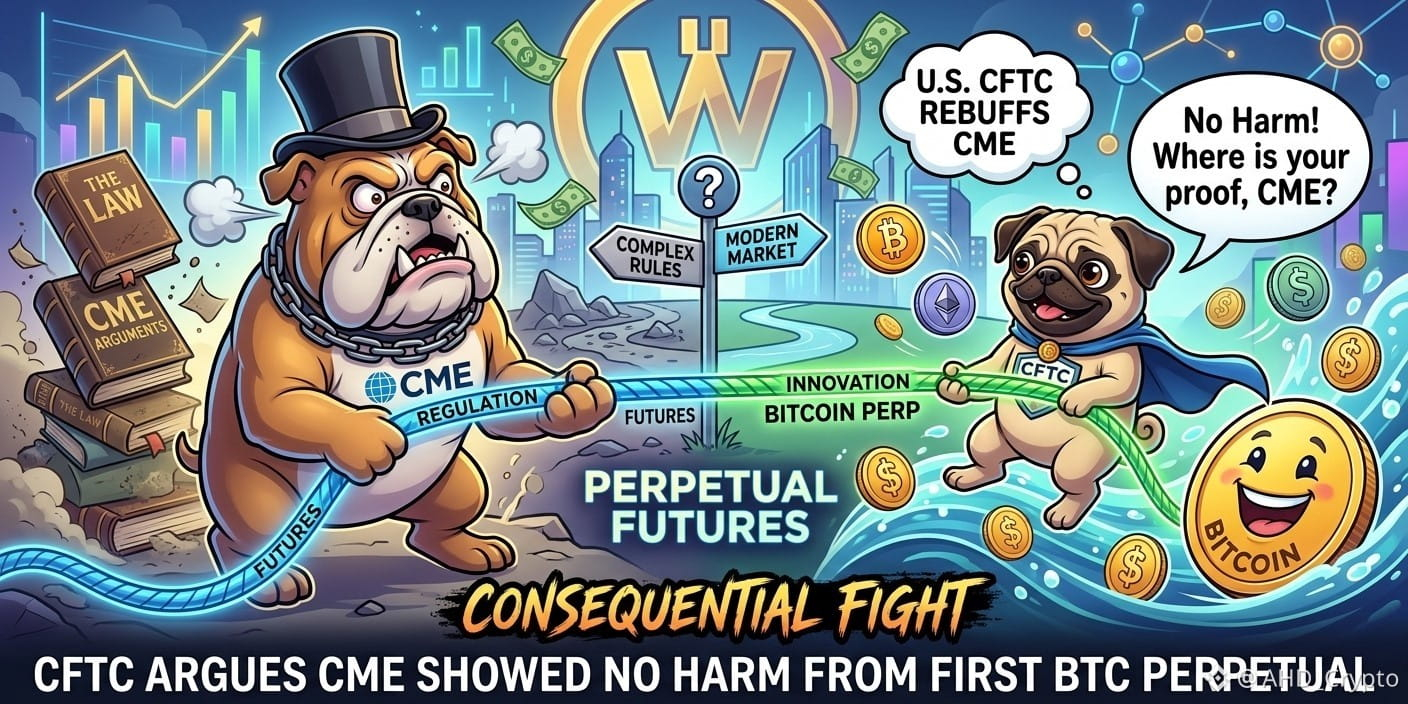
🔥 CFTC Rebuts CME: U.S. Bitcoin Perpetuals War Heaps Up! 🚀
The legal battle over regulated perpetual futures ("perps") in the U.S. is reaching a boiling point.
⚡ What’s Happening?
1- CME’s Challenge: CME Group sued the CFTC after the regulator approved the first U.S. Bitcoin perp, claiming perps should be legally classified as swaps, not standard futures.
2- CFTC’s Pushback: The CFTC asked a federal court to dismiss the case, stating CME failed to show any financial harm or lost market share.
3- The Catch: The CFTC pointed out that CME previously told investors on earnings calls that its clients had zero demand for perpetual contracts!
💡 Why It Matters for BTC Traders
>> Unlocking Liquidity: Perps make up 70%–90% of global crypto volume. U.S. regulatory approval could drive huge institutional flow into $BTC , $ETH , and $SOL .
{future}(BTCUSDT)
{future}(ETHUSDT)
{future}(SOLUSDT)
>> Regulatory Clarity: A CFTC victory sets a huge precedent for future on-shore crypto derivatives.
💬 What do you think? Will U.S. perps challenge offshore exchanges? Let us know below! 👇
#writetoearn #CryptoNews #CFTC #BTC #Write2Earn
🔥 CFTC Rebuts CME: U.S. Bitcoin Perpetuals War Heaps Up! 🚀
The legal battle over regulated perpetual futures ("perps") in the U.S. is reaching a boiling point.
⚡ What’s Happening?
1- CME’s Challenge: CME Group sued the CFTC after the regulator approved the first U.S. Bitcoin perp, claiming perps should be legally classified as swaps, not standard futures.
2- CFTC’s Pushback: The CFTC asked a federal court to dismiss the case, stating CME failed to show any financial harm or lost market share.
3- The Catch: The CFTC pointed out that CME previously told investors on earnings calls that its clients had zero demand for perpetual contracts!
💡 Why It Matters for BTC Traders
>> Unlocking Liquidity: Perps make up 70%–90% of global crypto volume. U.S. regulatory approval could drive huge institutional flow into $BTC , $ETH , and $SOL .
>> Regulatory Clarity: A CFTC victory sets a huge precedent for future on-shore crypto derivatives.
💬 What do you think? Will U.S. perps challenge offshore exchanges? Let us know below! 👇
#writetoearn #CryptoNews #CFTC #BTC #Write2Earn
The legal battle over regulated perpetual futures ("perps") in the U.S. is reaching a boiling point.
⚡ What’s Happening?
1- CME’s Challenge: CME Group sued the CFTC after the regulator approved the first U.S. Bitcoin perp, claiming perps should be legally classified as swaps, not standard futures.
2- CFTC’s Pushback: The CFTC asked a federal court to dismiss the case, stating CME failed to show any financial harm or lost market share.
3- The Catch: The CFTC pointed out that CME previously told investors on earnings calls that its clients had zero demand for perpetual contracts!
💡 Why It Matters for BTC Traders
>> Unlocking Liquidity: Perps make up 70%–90% of global crypto volume. U.S. regulatory approval could drive huge institutional flow into $BTC , $ETH , and $SOL .
>> Regulatory Clarity: A CFTC victory sets a huge precedent for future on-shore crypto derivatives.
💬 What do you think? Will U.S. perps challenge offshore exchanges? Let us know below! 👇
#writetoearn #CryptoNews #CFTC #BTC #Write2Earn
103

·
--
Bullish
per the CFTC's own notice, a fully paid crypto position that sits only on an exchange's internal book isn't "delivered" yet
#CFTCSeeksCommentOnRetailDigitalAssetFramework is trending like it's new. it's the October 5 advance notice, the one we went through on October 6. still no rule text
what is new:
🔸 Federal Register, October 13
🔸 comments due December 14
the delivery line is the one I keep rereading. until "actual delivery", that position stays under the Act
possession and control may require holding the private keys
if a platform offers margin or leverage at all, the "covered offer" can reach every retail trade there, fully paid ones included
to the regulator, a balance screen and a key in your hands are two different things. a US notice, the same old not-your-keys logic
#CFTC
per the CFTC's own notice, a fully paid crypto position that sits only on an exchange's internal book isn't "delivered" yet
#CFTCSeeksCommentOnRetailDigitalAssetFramework is trending like it's new. it's the October 5 advance notice, the one we went through on October 6. still no rule text
what is new:
🔸 Federal Register, October 13
🔸 comments due December 14
the delivery line is the one I keep rereading. until "actual delivery", that position stays under the Act
possession and control may require holding the private keys
if a platform offers margin or leverage at all, the "covered offer" can reach every retail trade there, fully paid ones included
to the regulator, a balance screen and a key in your hands are two different things. a US notice, the same old not-your-keys logic
#CFTC
#CFTCSeeksCommentOnRetailDigitalAssetFramework is trending like it's new. it's the October 5 advance notice, the one we went through on October 6. still no rule text
what is new:
🔸 Federal Register, October 13
🔸 comments due December 14
the delivery line is the one I keep rereading. until "actual delivery", that position stays under the Act
possession and control may require holding the private keys
if a platform offers margin or leverage at all, the "covered offer" can reach every retail trade there, fully paid ones included
to the regulator, a balance screen and a key in your hands are two different things. a US notice, the same old not-your-keys logic
#CFTC

117

·
--
Bullish
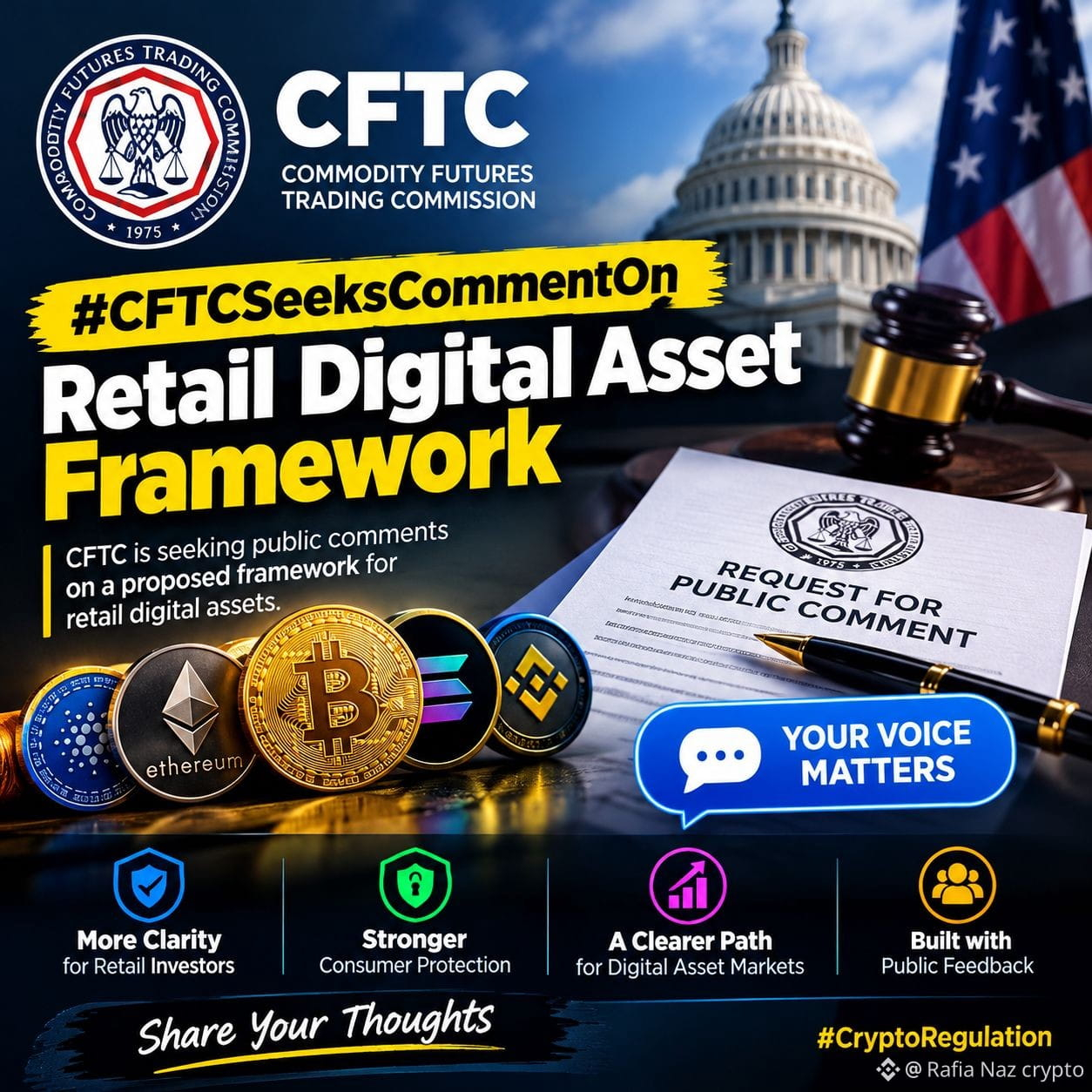
🚨 Crypto rules are in focus! 🇺🇸 The $CFTC is seeking public input on a retail digital asset framework. Could this shape the next chapter of crypto regulation? 👀
💬 Bullish or bearish for crypto?
#CryptoNews #CFTC #Bitcoin
🚨 Crypto rules are in focus! 🇺🇸 The $CFTC is seeking public input on a retail digital asset framework. Could this shape the next chapter of crypto regulation? 👀
💬 Bullish or bearish for crypto?
#CryptoNews #CFTC #Bitcoin
💬 Bullish or bearish for crypto?
#CryptoNews #CFTC #Bitcoin
32


Article
CFTC’s New Crypto Framework: Could U.S. Trading Rules Change?🚨 U.S. Crypto Regulation Could Be Heading Into a New Phase
The CFTC is seeking public input on a framework for retail digital asset transactions involving leverage, margin and financing. If the proposal moves forward, it could influence how certain crypto trading activities operate under U.S. federal oversight.
The key issue is how regulators plan to handle these transactions and whether a dedicated Crypto Asset Markets (CAM) exchange category will become part of the framework.
📌 Why the market is paying attention:
₿ Bitcoin ($BTC): Traders will be watching how potential rules affect leveraged trading and access to regulated platforms.
⟠ Ethereum ($ETH): Changes to the treatment of retail margin transactions could matter for platforms offering crypto-related trading products.
◎ Solana ($SOL): Exchanges and trading services may need to assess how any new requirements apply to their operations.
⚖️ The bigger debate: Stronger oversight could provide clearer standards and additional protections for retail participants. At the same time, compliance costs and restrictive rules could create challenges for some trading platforms.
But there is an important distinction: a request for public comments is not the same as a finalized regulation. The actual impact will depend on the proposal's details and any rules eventually adopted.
🧠 The real question is how the U.S. can improve market protections without unnecessarily limiting innovation.
Will this approach create more confidence in crypto markets, or make it harder for trading platforms to compete?
#CFTC
{future}(BTCUSDT)
{future}(SOLUSDT)
{future}(ETHUSDT)
#Bitcoin #Ethereum #Solana #CryptoRegulation
CFTC’s New Crypto Framework: Could U.S. Trading Rules Change?
🚨 U.S. Crypto Regulation Could Be Heading Into a New Phase
The CFTC is seeking public input on a framework for retail digital asset transactions involving leverage, margin and financing. If the proposal moves forward, it could influence how certain crypto trading activities operate under U.S. federal oversight.
The key issue is how regulators plan to handle these transactions and whether a dedicated Crypto Asset Markets (CAM) exchange category will become part of the framework.
📌 Why the market is paying attention:
₿ Bitcoin ($BTC): Traders will be watching how potential rules affect leveraged trading and access to regulated platforms.
⟠ Ethereum ($ETH): Changes to the treatment of retail margin transactions could matter for platforms offering crypto-related trading products.
◎ Solana ($SOL): Exchanges and trading services may need to assess how any new requirements apply to their operations.
⚖️ The bigger debate: Stronger oversight could provide clearer standards and additional protections for retail participants. At the same time, compliance costs and restrictive rules could create challenges for some trading platforms.
But there is an important distinction: a request for public comments is not the same as a finalized regulation. The actual impact will depend on the proposal's details and any rules eventually adopted.
🧠 The real question is how the U.S. can improve market protections without unnecessarily limiting innovation.
Will this approach create more confidence in crypto markets, or make it harder for trading platforms to compete?
#CFTC
#Bitcoin #Ethereum #Solana #CryptoRegulation
The CFTC is seeking public input on a framework for retail digital asset transactions involving leverage, margin and financing. If the proposal moves forward, it could influence how certain crypto trading activities operate under U.S. federal oversight.
The key issue is how regulators plan to handle these transactions and whether a dedicated Crypto Asset Markets (CAM) exchange category will become part of the framework.
📌 Why the market is paying attention:
₿ Bitcoin ($BTC): Traders will be watching how potential rules affect leveraged trading and access to regulated platforms.
⟠ Ethereum ($ETH): Changes to the treatment of retail margin transactions could matter for platforms offering crypto-related trading products.
◎ Solana ($SOL): Exchanges and trading services may need to assess how any new requirements apply to their operations.
⚖️ The bigger debate: Stronger oversight could provide clearer standards and additional protections for retail participants. At the same time, compliance costs and restrictive rules could create challenges for some trading platforms.
But there is an important distinction: a request for public comments is not the same as a finalized regulation. The actual impact will depend on the proposal's details and any rules eventually adopted.
🧠 The real question is how the U.S. can improve market protections without unnecessarily limiting innovation.
Will this approach create more confidence in crypto markets, or make it harder for trading platforms to compete?
#CFTC
#Bitcoin #Ethereum #Solana #CryptoRegulation
53
Log in to explore more content
Join global crypto users on Binance Square
⚡️ Get latest and useful information about crypto.
💬 Trusted by the world’s largest crypto exchange.
👍 Discover real insights from verified creators.
Email / Phone number
Trending Topics
1
#BinancePick
2.6M views
139,167 Discussing
2
#EarningsSeason
5M views
24,068 Discussing
3
#StrategyMSTRSurpassesNasdaqInMarketCap
0 views
0 Discussing
4
#CanadaProposesStablecoinRedemptionWithin3BusinessDays
0 views
0 Discussing
5
#ElectrumWalletBugLetRogueServersStealFunds
4,725 views
174 Discussing
6
#ArgentineCourtDismissesLIBRACaseAgainstMilei
12,648 views
252 Discussing
7
#SKHynixReportedlyPlansSpecialDividendFromKioxiaStakeSale
2,536 views
41 Discussing
8
#KeystoneWebsiteBreachExposesBuyersShippingAddresses
1,442 views
32 Discussing
9
#USQ3GDPAndSeptemberPCEDueNextWeek
86,923 views
1,057 Discussing
10
#SouthKoreaDelaysCryptoIncomeTax
159,234 views
1,106 Discussing