

TOXIC BYTE
11.8k Beiträge

TOXIC BYTE
 Square Verified+
Melden
Nutzer blockieren
Crypto believer | Market survivor | Web3 mind | Bull & Bear both welcome |
Trade eröffnen
Regelmäßiger Trader
1.1 Jahre
178 Following
39.0K+ Follower
19.3K+ Like gegeben
Beiträge
Portfolio
Alle
Live
·
--
🎙️ 🎉2026 wilder Bullenmarkt, das Signal ist gegeben – der Markt ist auf der BSC-Chain alles! Am 1. November wird Musk den Hund Marvin vom Mars zum Geburtstag feiern. Diese On-Chain-Chancen müssen wir unbedingt nutzen!
Beenden
03 h 41 m 53 s
13.1k
20
66
·
--
#CPIWatch
CPI könnte heute einer der größten Markttreiber sein.
Da das Fed-Treffen im September näher rückt, könnten die Inflationsdaten die nächste Bewegung bei Bitcoin, Aktien, Gold, dem DXY und den Renditen von US-Staatsanleihen beeinflussen.
Die Erwartungen liegen bei etwa 0,4 % MoM für den Headline-CPI und 0,2 % MoM für den Core-CPI.
Aber ich schaue nicht nur auf die Headline-Zahl.
Der eigentliche Fokus liegt auf dem Core CPI, Shelter, Services und Energy – insbesondere darauf, ob steigende Öl- und Gaspreise beginnen, in die breitere Inflation durchzusickern.
Ein schwächer als erwartet ausfallender Bericht könnte die Zinserwartungen senken, die Renditen unter Druck setzen und die Liquiditätsbedingungen verbessern – und so ein stärkeres Umfeld für BTC und Aktien schaffen.
Ein heißeres Core-Ergebnis könnte das Gegenteil bewirken: höhere Renditen, ein stärkerer DXY, weniger Erwartungen für eine Zinssenkung durch die Fed und mehr Druck auf Risikoassets.
Für mich ist die Ausgangslage einfach:
CPI-Überraschung → Fed-Erwartungen → Renditen von US-Staatsanleihen → DXY → Liquidität → BTC & Aktien.
Beobachte die Reaktion, nicht nur die Veröffentlichung.
Die erste Bewegung kann emotional sein.
Das eigentliche Signal kommt, nachdem der Markt Zeit hatte, die Daten zu verarbeiten.
$BTC
#BTC #Inflation #Macro #Markets
#CPIWatch
CPI könnte heute einer der größten Markttreiber sein.
Da das Fed-Treffen im September näher rückt, könnten die Inflationsdaten die nächste Bewegung bei Bitcoin, Aktien, Gold, dem DXY und den Renditen von US-Staatsanleihen beeinflussen.
Die Erwartungen liegen bei etwa 0,4 % MoM für den Headline-CPI und 0,2 % MoM für den Core-CPI.
Aber ich schaue nicht nur auf die Headline-Zahl.
Der eigentliche Fokus liegt auf dem Core CPI, Shelter, Services und Energy – insbesondere darauf, ob steigende Öl- und Gaspreise beginnen, in die breitere Inflation durchzusickern.
Ein schwächer als erwartet ausfallender Bericht könnte die Zinserwartungen senken, die Renditen unter Druck setzen und die Liquiditätsbedingungen verbessern – und so ein stärkeres Umfeld für BTC und Aktien schaffen.
Ein heißeres Core-Ergebnis könnte das Gegenteil bewirken: höhere Renditen, ein stärkerer DXY, weniger Erwartungen für eine Zinssenkung durch die Fed und mehr Druck auf Risikoassets.
Für mich ist die Ausgangslage einfach:
CPI-Überraschung → Fed-Erwartungen → Renditen von US-Staatsanleihen → DXY → Liquidität → BTC & Aktien.
Beobachte die Reaktion, nicht nur die Veröffentlichung.
Die erste Bewegung kann emotional sein.
Das eigentliche Signal kommt, nachdem der Markt Zeit hatte, die Daten zu verarbeiten.
$BTC
#BTC #Inflation #Macro #Markets
CPI könnte heute einer der größten Markttreiber sein.
Da das Fed-Treffen im September näher rückt, könnten die Inflationsdaten die nächste Bewegung bei Bitcoin, Aktien, Gold, dem DXY und den Renditen von US-Staatsanleihen beeinflussen.
Die Erwartungen liegen bei etwa 0,4 % MoM für den Headline-CPI und 0,2 % MoM für den Core-CPI.
Aber ich schaue nicht nur auf die Headline-Zahl.
Der eigentliche Fokus liegt auf dem Core CPI, Shelter, Services und Energy – insbesondere darauf, ob steigende Öl- und Gaspreise beginnen, in die breitere Inflation durchzusickern.
Ein schwächer als erwartet ausfallender Bericht könnte die Zinserwartungen senken, die Renditen unter Druck setzen und die Liquiditätsbedingungen verbessern – und so ein stärkeres Umfeld für BTC und Aktien schaffen.
Ein heißeres Core-Ergebnis könnte das Gegenteil bewirken: höhere Renditen, ein stärkerer DXY, weniger Erwartungen für eine Zinssenkung durch die Fed und mehr Druck auf Risikoassets.
Für mich ist die Ausgangslage einfach:
CPI-Überraschung → Fed-Erwartungen → Renditen von US-Staatsanleihen → DXY → Liquidität → BTC & Aktien.
Beobachte die Reaktion, nicht nur die Veröffentlichung.
Die erste Bewegung kann emotional sein.
Das eigentliche Signal kommt, nachdem der Markt Zeit hatte, die Daten zu verarbeiten.
$BTC
#BTC #Inflation #Macro #Markets

17
10
261

·
--
🎙️ Wahrung des ökologischen Gleichgewichts und Aufbau des Binance-Platzes

Beenden
04 h 10 m 20 s
8.5k
34
88
·
--
Bullisch
$SOL
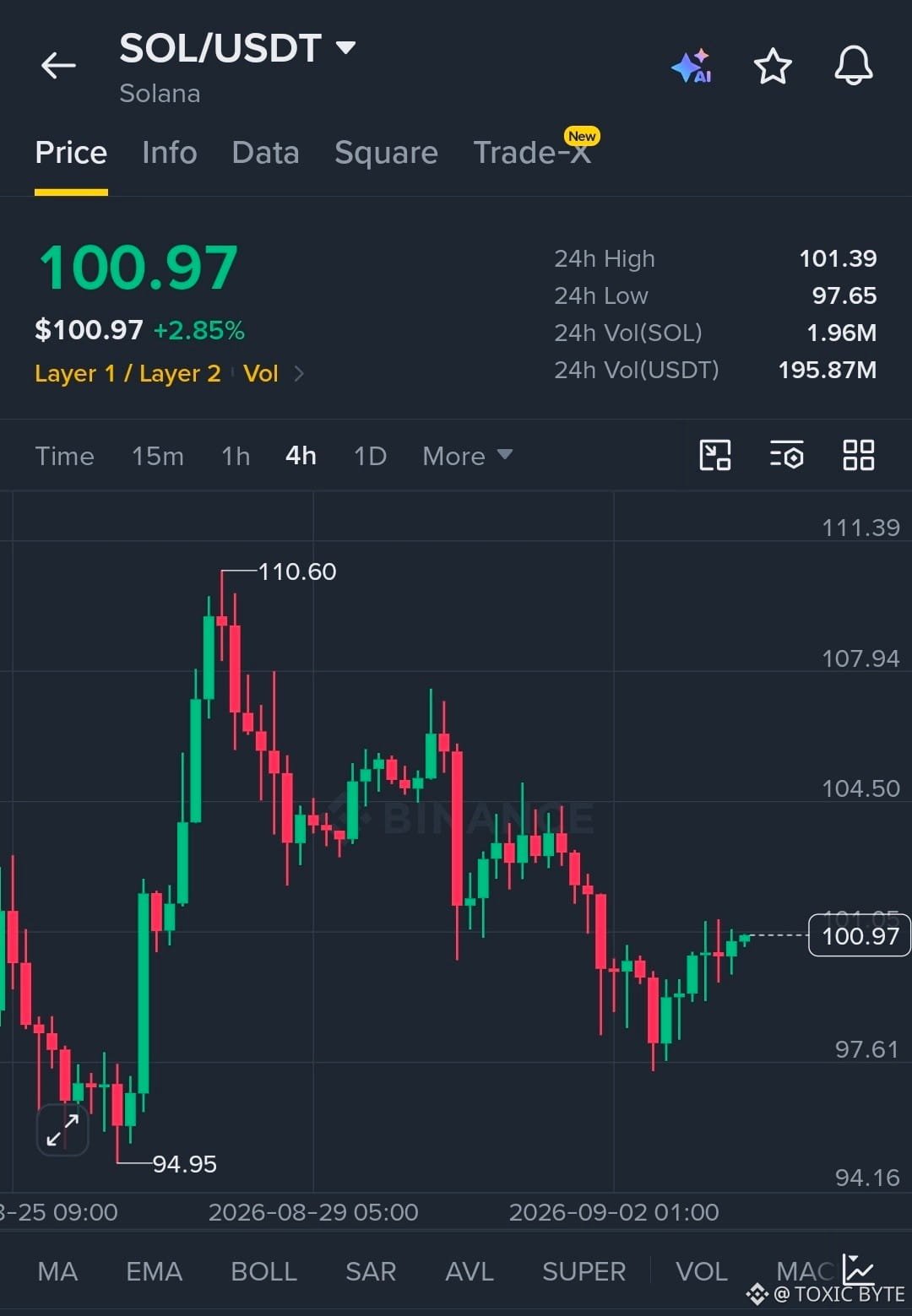
SOL zeigt eine starke Erholung von 97.65 und drückt nun in Richtung der Widerstandszone bei 101.40. Ein sauberer Ausbruch kann die Bewegung Richtung 104.50 und darüber hinaus beschleunigen. Käufer haben den Momentum-Vorschub, aber 99.00 ist die entscheidende Unterstützung, die es zu schützen gilt.
Trade Setup — LONG
EP: 100.70–101.20
TP1: 102.80
TP2: 104.50
TP3: 107.00
SL: 98.80
Wichtige Marke: 101.40
Bruch & Halten darüber = bullische Fortsetzung.
Unter 98.80 = Setup ungültig.
Los geht's.
#CFTCSeeksToDismissCMEMotionInPerpFutures
#US10YearTreasuryYieldHitsHighestSinceNov2023
{spot}(SOLUSDT)
$SOL
SOL zeigt eine starke Erholung von 97.65 und drückt nun in Richtung der Widerstandszone bei 101.40. Ein sauberer Ausbruch kann die Bewegung Richtung 104.50 und darüber hinaus beschleunigen. Käufer haben den Momentum-Vorschub, aber 99.00 ist die entscheidende Unterstützung, die es zu schützen gilt.
Trade Setup — LONG
EP: 100.70–101.20
TP1: 102.80
TP2: 104.50
TP3: 107.00
SL: 98.80
Wichtige Marke: 101.40
Bruch & Halten darüber = bullische Fortsetzung.
Unter 98.80 = Setup ungültig.
Los geht's.
#CFTCSeeksToDismissCMEMotionInPerpFutures
#US10YearTreasuryYieldHitsHighestSinceNov2023
SOL zeigt eine starke Erholung von 97.65 und drückt nun in Richtung der Widerstandszone bei 101.40. Ein sauberer Ausbruch kann die Bewegung Richtung 104.50 und darüber hinaus beschleunigen. Käufer haben den Momentum-Vorschub, aber 99.00 ist die entscheidende Unterstützung, die es zu schützen gilt.
Trade Setup — LONG
EP: 100.70–101.20
TP1: 102.80
TP2: 104.50
TP3: 107.00
SL: 98.80
Wichtige Marke: 101.40
Bruch & Halten darüber = bullische Fortsetzung.
Unter 98.80 = Setup ungültig.
Los geht's.
#CFTCSeeksToDismissCMEMotionInPerpFutures
#US10YearTreasuryYieldHitsHighestSinceNov2023
108
·
--
Bullisch
$ETH
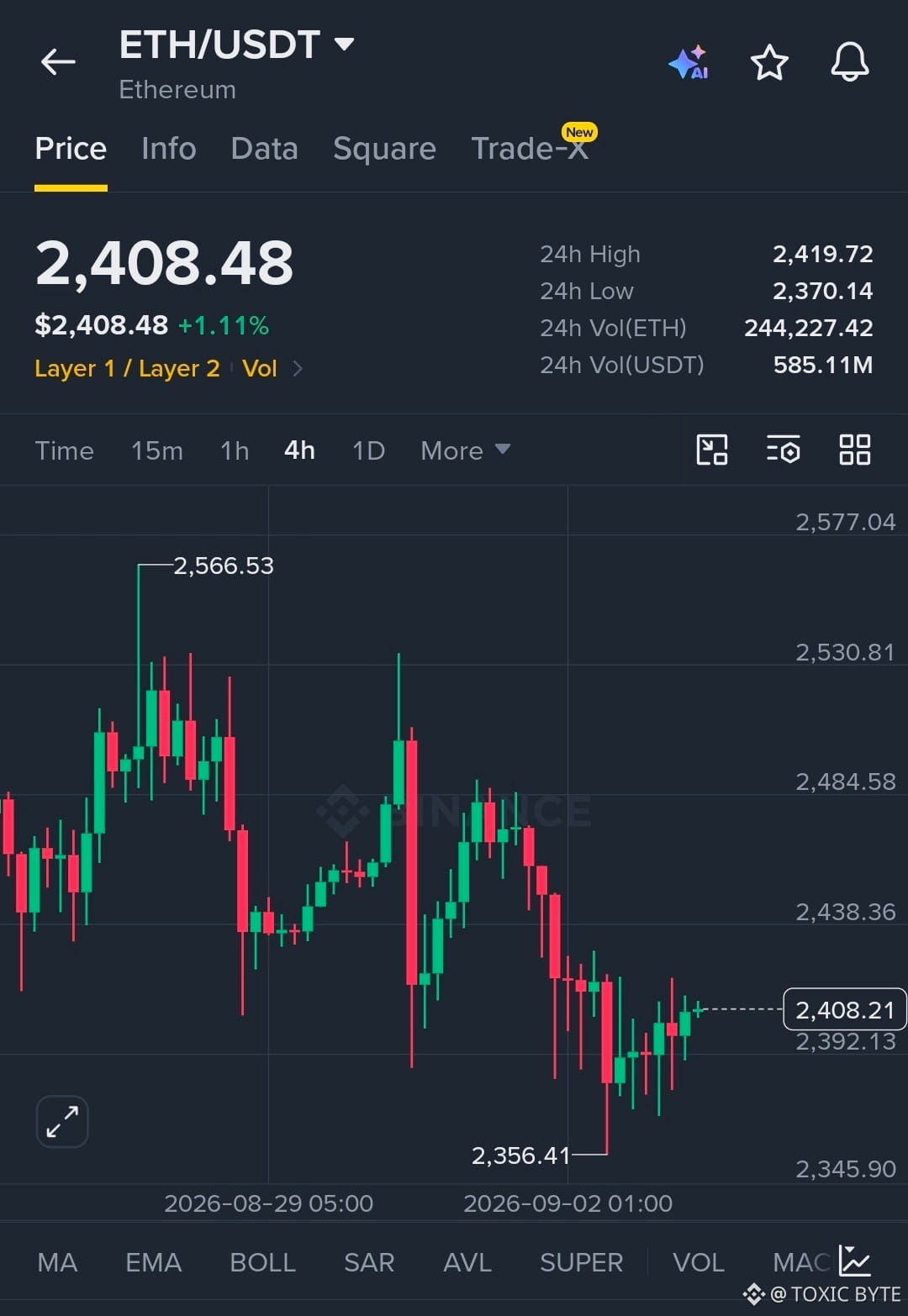
ETH hält weiterhin die Marke von 2.400, nachdem es nach einem harten Rückprall von 2.356,41 wieder dorthin zurückgesprungen ist. Die Käufer versuchen, Schwung aufzubauen, doch 2.438 ist der entscheidende Widerstand, den es zu brechen gilt. Ein sauberer Move darüber könnte den Weg in Richtung 2.484 öffnen.
Trade Setup — LONG
EP: 2.405–2.420
TP1: 2.438
TP2: 2.480
TP3: 2.520
SL: 2.375
Wichtige Marke: 2.438
Darüber = bullische Fortsetzung.
Unter 2.375 = Setup ungültig.
Los geht's.
#SolanaFallsOver3%
#EtherXRPETFInflowStreaksEnd
#PredictionMarketsPutCLARITYAct2026OddsAt15%
#IranStrikesUSBaseInKuwait
#USGainsControlOfVenezuelanOilFields
{spot}(ETHUSDT)
$ETH
ETH hält weiterhin die Marke von 2.400, nachdem es nach einem harten Rückprall von 2.356,41 wieder dorthin zurückgesprungen ist. Die Käufer versuchen, Schwung aufzubauen, doch 2.438 ist der entscheidende Widerstand, den es zu brechen gilt. Ein sauberer Move darüber könnte den Weg in Richtung 2.484 öffnen.
Trade Setup — LONG
EP: 2.405–2.420
TP1: 2.438
TP2: 2.480
TP3: 2.520
SL: 2.375
Wichtige Marke: 2.438
Darüber = bullische Fortsetzung.
Unter 2.375 = Setup ungültig.
Los geht's.
#SolanaFallsOver3%
#EtherXRPETFInflowStreaksEnd
#PredictionMarketsPutCLARITYAct2026OddsAt15%
#IranStrikesUSBaseInKuwait
#USGainsControlOfVenezuelanOilFields
ETH hält weiterhin die Marke von 2.400, nachdem es nach einem harten Rückprall von 2.356,41 wieder dorthin zurückgesprungen ist. Die Käufer versuchen, Schwung aufzubauen, doch 2.438 ist der entscheidende Widerstand, den es zu brechen gilt. Ein sauberer Move darüber könnte den Weg in Richtung 2.484 öffnen.
Trade Setup — LONG
EP: 2.405–2.420
TP1: 2.438
TP2: 2.480
TP3: 2.520
SL: 2.375
Wichtige Marke: 2.438
Darüber = bullische Fortsetzung.
Unter 2.375 = Setup ungültig.
Los geht's.
#SolanaFallsOver3%
#EtherXRPETFInflowStreaksEnd
#PredictionMarketsPutCLARITYAct2026OddsAt15%
#IranStrikesUSBaseInKuwait
#USGainsControlOfVenezuelanOilFields
97
·
--
Bullisch
$BTC — BREAKOUT WATCH
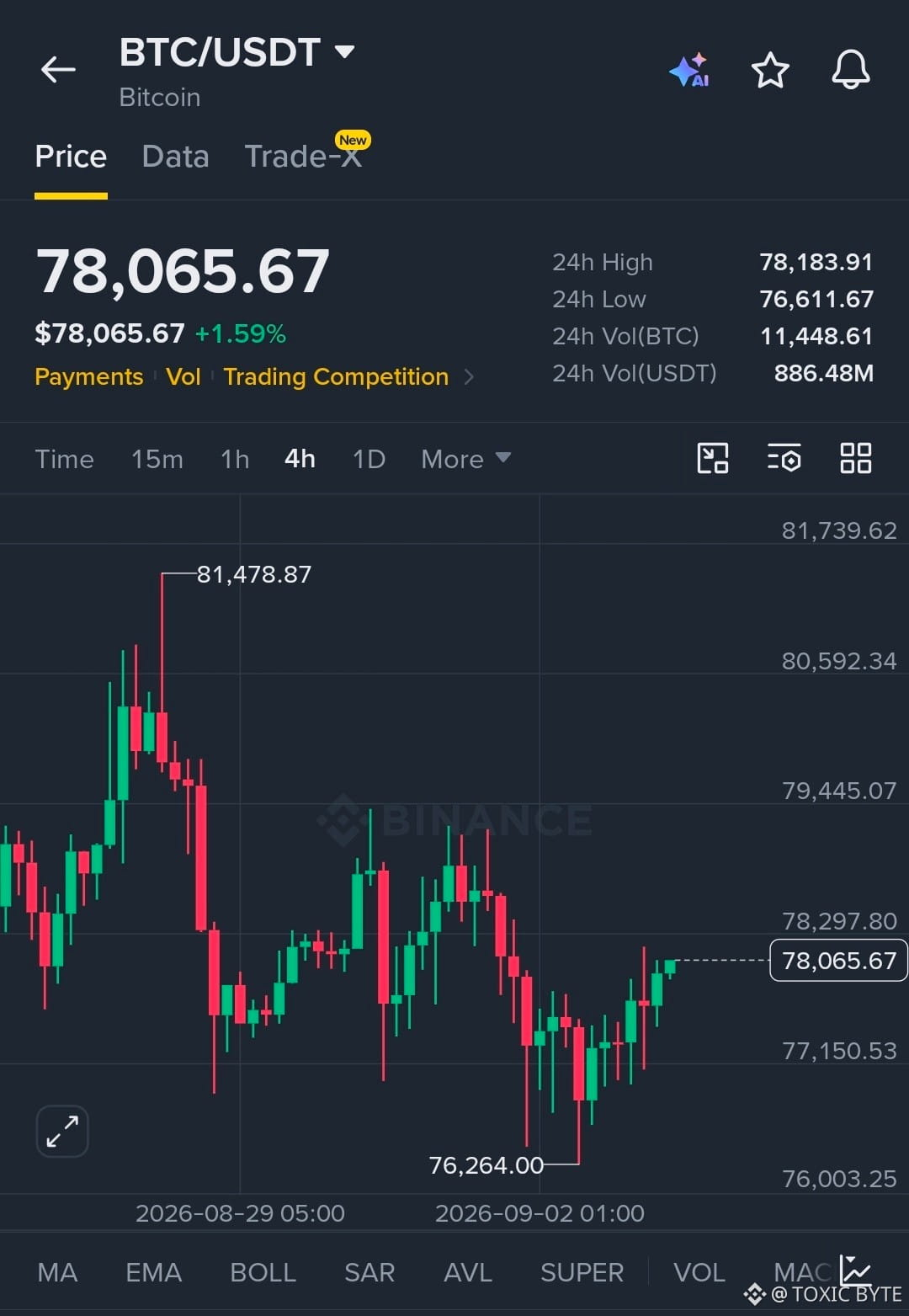
BTC erholt sich stark von 76.264$ und drängt in Richtung des Widerstands bei 78.300$. Ein sauberer Ausbruch könnte den nächsten Anstieg auslösen.
EP: 78.050–78.250
TP: 78.800 / 79.400
SL: 77.450
Los geht’s. Abwarten und Bestätigung abwarten sowie das Risiko managen.
#CFTCSeeksToDismissCMEMotionInPerpFutures
#OilSteadiesAfterThreeDayRally
{spot}(BTCUSDT)
$BTC — BREAKOUT WATCH
BTC erholt sich stark von 76.264$ und drängt in Richtung des Widerstands bei 78.300$. Ein sauberer Ausbruch könnte den nächsten Anstieg auslösen.
EP: 78.050–78.250
TP: 78.800 / 79.400
SL: 77.450
Los geht’s. Abwarten und Bestätigung abwarten sowie das Risiko managen.
#CFTCSeeksToDismissCMEMotionInPerpFutures
#OilSteadiesAfterThreeDayRally
BTC erholt sich stark von 76.264$ und drängt in Richtung des Widerstands bei 78.300$. Ein sauberer Ausbruch könnte den nächsten Anstieg auslösen.
EP: 78.050–78.250
TP: 78.800 / 79.400
SL: 77.450
Los geht’s. Abwarten und Bestätigung abwarten sowie das Risiko managen.
#CFTCSeeksToDismissCMEMotionInPerpFutures
#OilSteadiesAfterThreeDayRally
103
·
--
Bullisch
$BNB — BREAKOUT SETUP
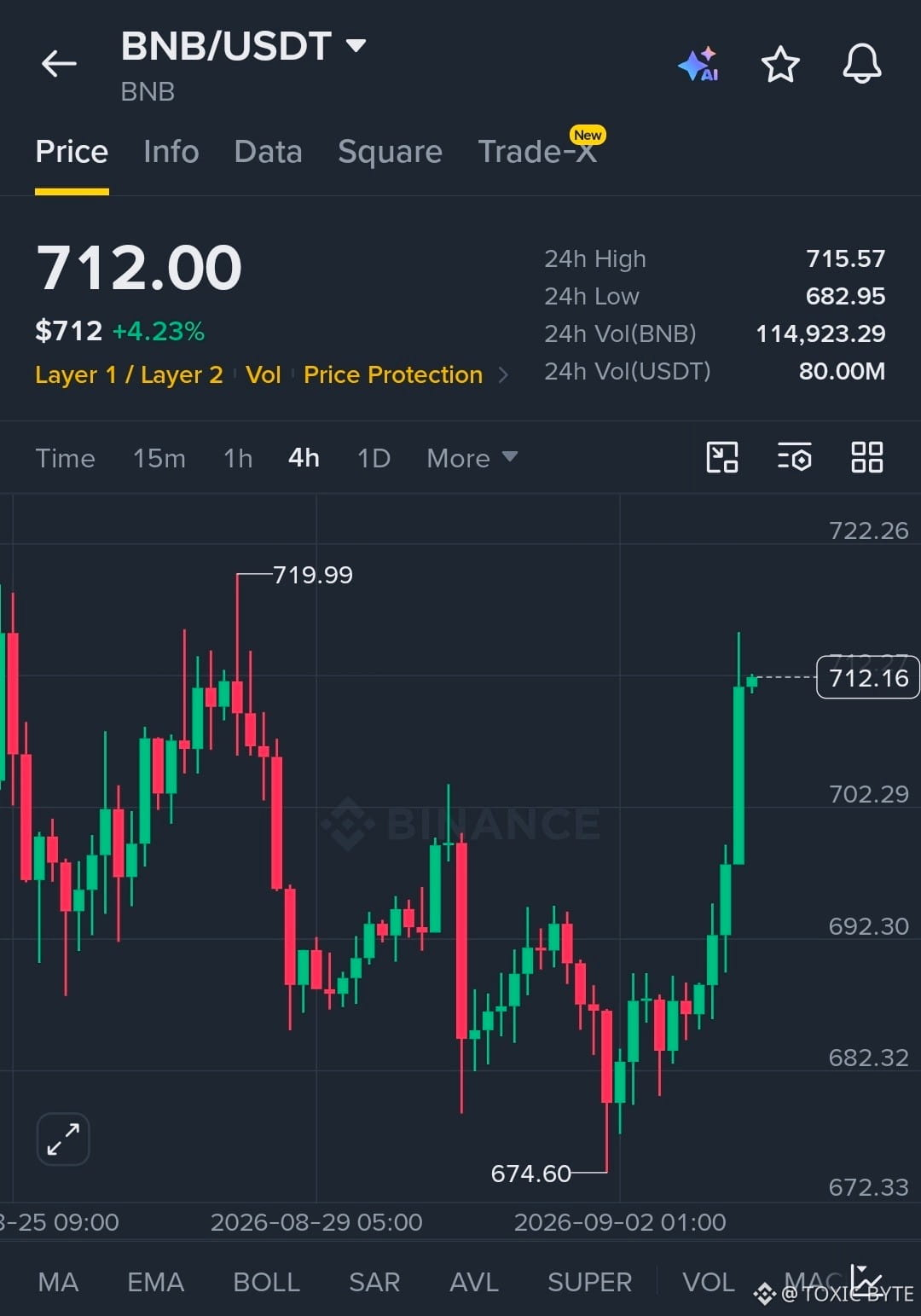
BNB drängt stark in Richtung der Widerstandszone 715–720. Ein sauberer Ausbruch könnte den Weg nach oben öffnen.
EP: 712–714
TP: 719.5 / 725
SL: 707
Auf geht’s. Halte das Risiko kontrolliert und warte auf Bestätigung.
#EtherXRPETFInflowStreaksEnd
#US10YearTreasuryYieldHitsHighestSinceNov2023
{spot}(BNBUSDT)
$BNB — BREAKOUT SETUP
BNB drängt stark in Richtung der Widerstandszone 715–720. Ein sauberer Ausbruch könnte den Weg nach oben öffnen.
EP: 712–714
TP: 719.5 / 725
SL: 707
Auf geht’s. Halte das Risiko kontrolliert und warte auf Bestätigung.
#EtherXRPETFInflowStreaksEnd
#US10YearTreasuryYieldHitsHighestSinceNov2023
BNB drängt stark in Richtung der Widerstandszone 715–720. Ein sauberer Ausbruch könnte den Weg nach oben öffnen.
EP: 712–714
TP: 719.5 / 725
SL: 707
Auf geht’s. Halte das Risiko kontrolliert und warte auf Bestätigung.
#EtherXRPETFInflowStreaksEnd
#US10YearTreasuryYieldHitsHighestSinceNov2023
99
·
--
Bullisch
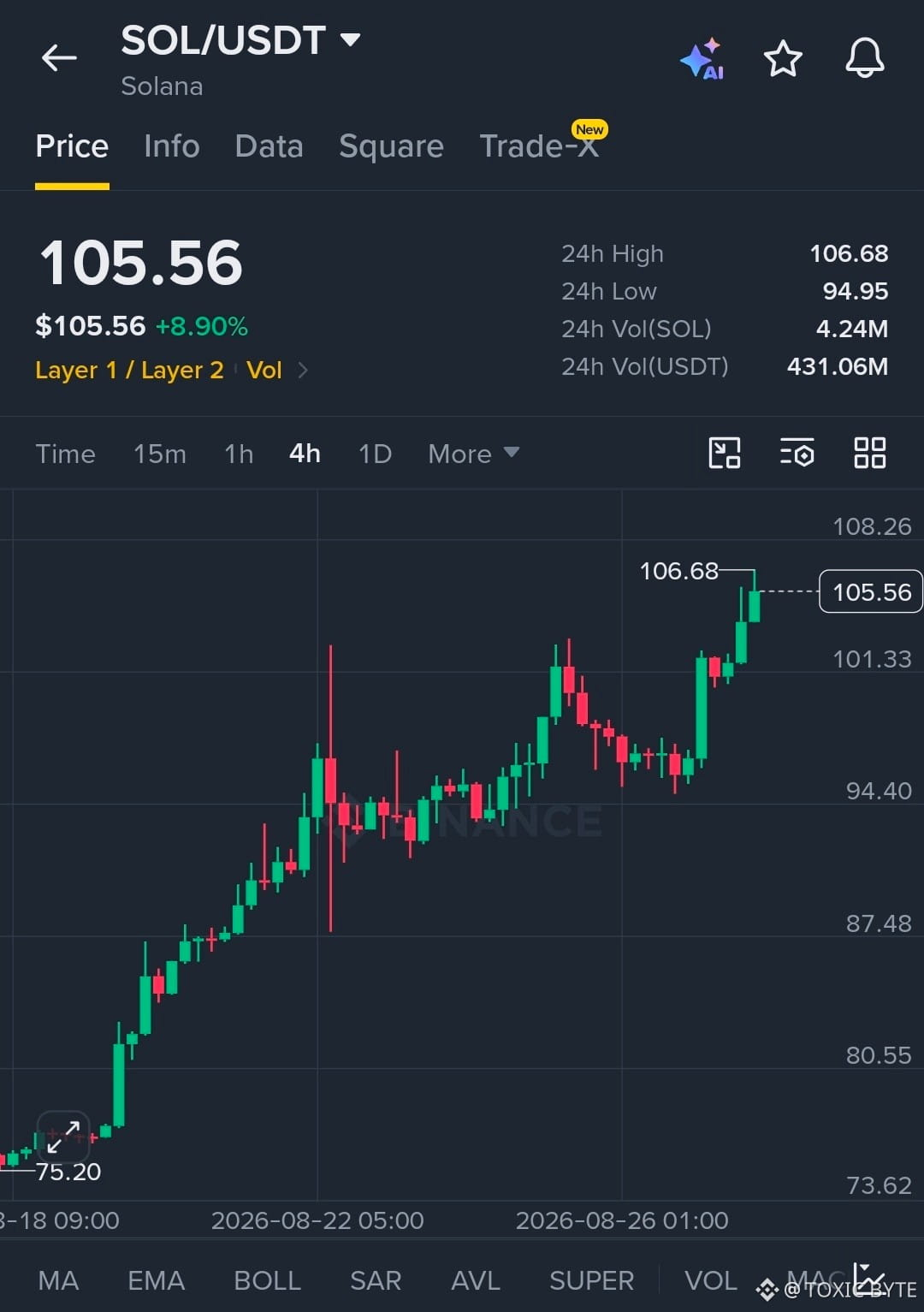
$SOL zeigt starke Dynamik auf dem 4H-Chart, hält sich über der 101–103-Zone und drängt in Richtung des 106.68-Widerstands. Ein sauberer Ausbruch und ein Halten über 106.68 könnte den Weg für die nächste Bewegung öffnen.
Trading-Setup
EP: 104.80–105.80 TP1: 108.00 TP2: 110.00 SL: 102.20
Los geht’s
#NvidiaRises4%OnRevenueBeat
#DollarPostsBiggestGainInNearlyFourWeeks
$SOL zeigt starke Dynamik auf dem 4H-Chart, hält sich über der 101–103-Zone und drängt in Richtung des 106.68-Widerstands. Ein sauberer Ausbruch und ein Halten über 106.68 könnte den Weg für die nächste Bewegung öffnen.
Trading-Setup
EP: 104.80–105.80 TP1: 108.00 TP2: 110.00 SL: 102.20
Los geht’s
#NvidiaRises4%OnRevenueBeat
#DollarPostsBiggestGainInNearlyFourWeeks
Trading-Setup
EP: 104.80–105.80 TP1: 108.00 TP2: 110.00 SL: 102.20
Los geht’s
#NvidiaRises4%OnRevenueBeat
#DollarPostsBiggestGainInNearlyFourWeeks
143
·
--
Bullisch
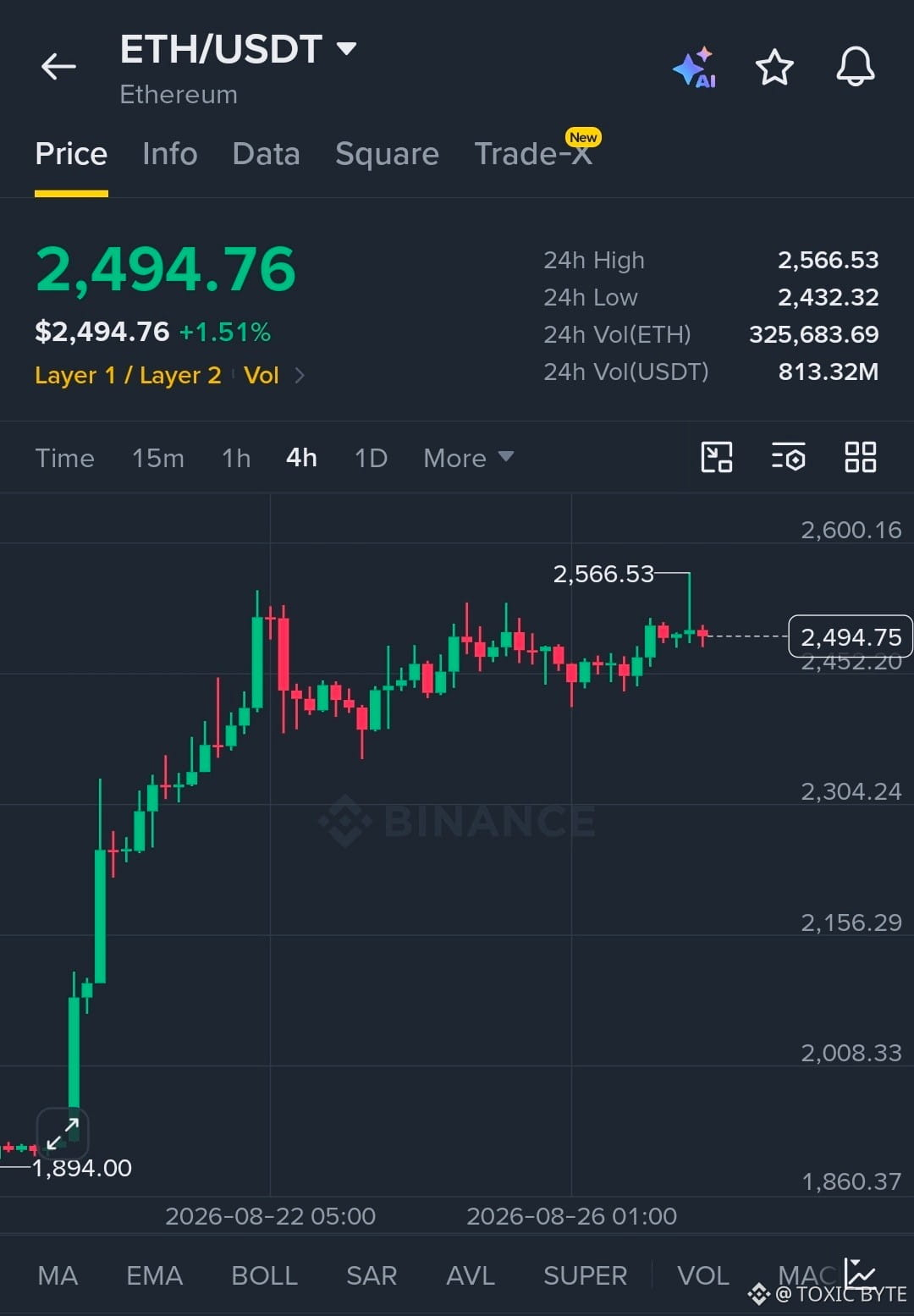
$ETH hält auf dem 4H-Chart ungefähr 2.495 US-Dollar, aber der eigentliche Kampf liegt nahe dem 2.566-Widerstand.
Die Struktur bleibt nach dem Move von 1.894 US-Dollar bullisch, wobei der Preis sich oberhalb des 2.450-Bereichs konsolidiert. Ein sauberer 4H-Ausbruch über 2.566 könnte die nächste Ausweitung in Richtung 2.650 und 2.750 auslösen.
Wenn 2.450 jedoch entscheidend bricht, kann der Schwung nachlassen und ein tieferer Pullback wird wahrscheinlicher.
Das Setup ist einfach: 2.450 verteidigen, 2.566 brechen – und ETH kann beschleunigen.
Trade Setup
EP: 2.470–2.510 TP1: 2.566 TP2: 2.650 TP3: 2.750 SL: 2.415
Auf Bestätigung nahe dem Widerstand warten, statt einem Ausbruch hinterherzulaufen.
#BestBuyQ2RevenueTopsEstimatesLiftsOutlook
#ChinaOpposesUSProposed7.5%Tariff
$ETH hält auf dem 4H-Chart ungefähr 2.495 US-Dollar, aber der eigentliche Kampf liegt nahe dem 2.566-Widerstand.
Die Struktur bleibt nach dem Move von 1.894 US-Dollar bullisch, wobei der Preis sich oberhalb des 2.450-Bereichs konsolidiert. Ein sauberer 4H-Ausbruch über 2.566 könnte die nächste Ausweitung in Richtung 2.650 und 2.750 auslösen.
Wenn 2.450 jedoch entscheidend bricht, kann der Schwung nachlassen und ein tieferer Pullback wird wahrscheinlicher.
Das Setup ist einfach: 2.450 verteidigen, 2.566 brechen – und ETH kann beschleunigen.
Trade Setup
EP: 2.470–2.510 TP1: 2.566 TP2: 2.650 TP3: 2.750 SL: 2.415
Auf Bestätigung nahe dem Widerstand warten, statt einem Ausbruch hinterherzulaufen.
#BestBuyQ2RevenueTopsEstimatesLiftsOutlook
#ChinaOpposesUSProposed7.5%Tariff
Die Struktur bleibt nach dem Move von 1.894 US-Dollar bullisch, wobei der Preis sich oberhalb des 2.450-Bereichs konsolidiert. Ein sauberer 4H-Ausbruch über 2.566 könnte die nächste Ausweitung in Richtung 2.650 und 2.750 auslösen.
Wenn 2.450 jedoch entscheidend bricht, kann der Schwung nachlassen und ein tieferer Pullback wird wahrscheinlicher.
Das Setup ist einfach: 2.450 verteidigen, 2.566 brechen – und ETH kann beschleunigen.
Trade Setup
EP: 2.470–2.510 TP1: 2.566 TP2: 2.650 TP3: 2.750 SL: 2.415
Auf Bestätigung nahe dem Widerstand warten, statt einem Ausbruch hinterherzulaufen.
#BestBuyQ2RevenueTopsEstimatesLiftsOutlook
#ChinaOpposesUSProposed7.5%Tariff
98
·
--
Bullisch
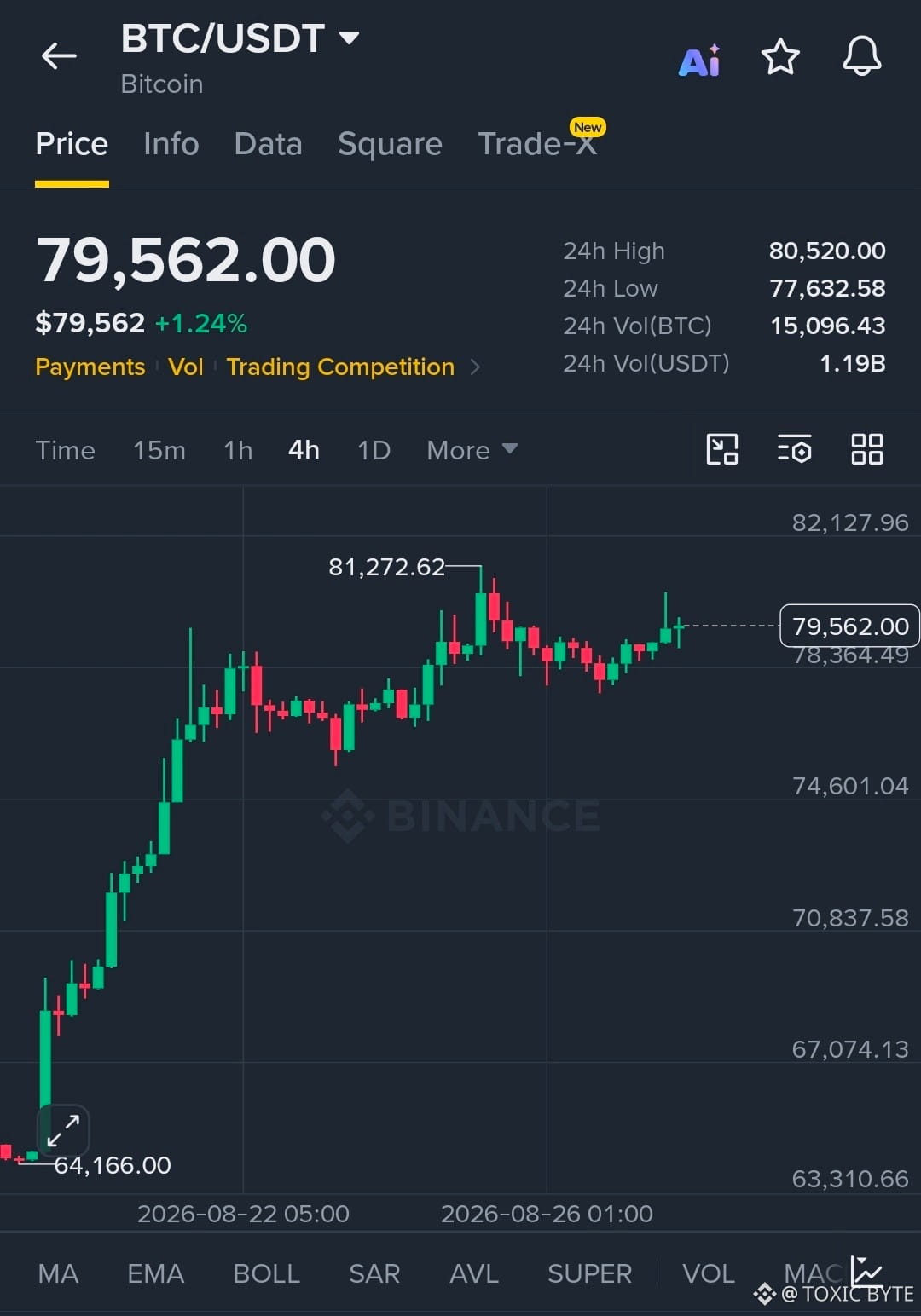
$BTC hält sich stark bei etwa 79.562 $ auf dem 4H-Chart, nachdem es einen kraftvollen Move aus der 64K-Zone gegeben hat.
Der Kurs konsolidiert oberhalb der Unterstützung bei 78.364 $, während der Momentum weiterhin bullisch bleibt. Die entscheidende Ausbruchsschwelle liegt bei 80.520 $, wobei das vorherige Swing-High nahe 81.272 $ als wichtigerer Widerstand fungiert.
Ein sauberer 4H-Ausbruch über 80.520 $ könnte den Weg Richtung 81.272+ öffnen.
Das Setup bleibt bullisch, solange BTC den Bereich von 78.300 $ hält. Verliert es diese Marke, beginnt die bullische Struktur zu schwächen.
Der nächste Schritt ist einfach: die Hochs zurückerobern oder die Unterstützung verteidigen.
#DollarPostsBiggestGainInNearlyFourWeeks
#NvidiaRises4%OnRevenueBeat
$BTC hält sich stark bei etwa 79.562 $ auf dem 4H-Chart, nachdem es einen kraftvollen Move aus der 64K-Zone gegeben hat.
Der Kurs konsolidiert oberhalb der Unterstützung bei 78.364 $, während der Momentum weiterhin bullisch bleibt. Die entscheidende Ausbruchsschwelle liegt bei 80.520 $, wobei das vorherige Swing-High nahe 81.272 $ als wichtigerer Widerstand fungiert.
Ein sauberer 4H-Ausbruch über 80.520 $ könnte den Weg Richtung 81.272+ öffnen.
Das Setup bleibt bullisch, solange BTC den Bereich von 78.300 $ hält. Verliert es diese Marke, beginnt die bullische Struktur zu schwächen.
Der nächste Schritt ist einfach: die Hochs zurückerobern oder die Unterstützung verteidigen.
#DollarPostsBiggestGainInNearlyFourWeeks
#NvidiaRises4%OnRevenueBeat
Der Kurs konsolidiert oberhalb der Unterstützung bei 78.364 $, während der Momentum weiterhin bullisch bleibt. Die entscheidende Ausbruchsschwelle liegt bei 80.520 $, wobei das vorherige Swing-High nahe 81.272 $ als wichtigerer Widerstand fungiert.
Ein sauberer 4H-Ausbruch über 80.520 $ könnte den Weg Richtung 81.272+ öffnen.
Das Setup bleibt bullisch, solange BTC den Bereich von 78.300 $ hält. Verliert es diese Marke, beginnt die bullische Struktur zu schwächen.
Der nächste Schritt ist einfach: die Hochs zurückerobern oder die Unterstützung verteidigen.
#DollarPostsBiggestGainInNearlyFourWeeks
#NvidiaRises4%OnRevenueBeat
108
·
--
Bullisch
$BNB hält sich stabil bei rund 708 US-Dollar nach einer soliden Erholung. Die Bullen drängen in Richtung des Widerstands bei 716 US-Dollar, und ein Ausbruch könnte den Weg zu 726 US-Dollar öffnen.
Trade Setup EP: 704–709 TP1: 716 TP2: 726 SL: 694
Bullisch oberhalb von 704 US-Dollar. Auf geht’s.
#ChinaOpposesUSProposed7.5%Tariff
#DollarPostsBiggestGainInNearlyFourWeeks
$BNB hält sich stabil bei rund 708 US-Dollar nach einer soliden Erholung. Die Bullen drängen in Richtung des Widerstands bei 716 US-Dollar, und ein Ausbruch könnte den Weg zu 726 US-Dollar öffnen.
Trade Setup EP: 704–709 TP1: 716 TP2: 726 SL: 694
Bullisch oberhalb von 704 US-Dollar. Auf geht’s.
#ChinaOpposesUSProposed7.5%Tariff
#DollarPostsBiggestGainInNearlyFourWeeks
Trade Setup EP: 704–709 TP1: 716 TP2: 726 SL: 694
Bullisch oberhalb von 704 US-Dollar. Auf geht’s.
#ChinaOpposesUSProposed7.5%Tariff
#DollarPostsBiggestGainInNearlyFourWeeks
113
·
--
$PORTAL
{spot}(PORTALUSDT)
bewegt sich mit +15.81% Gewinn. Momentum-Trader beobachten die Lage genau, während der Kurs sich der nächsten Ausbruchszonen nähert.
EP: 0.01690–0.01720
TP: 0.01850 / 0.02000 / 0.02200
SL: 0.01600
$PORTAL
bewegt sich mit +15.81% Gewinn. Momentum-Trader beobachten die Lage genau, während der Kurs sich der nächsten Ausbruchszonen nähert.
EP: 0.01690–0.01720
TP: 0.01850 / 0.02000 / 0.02200
SL: 0.01600
bewegt sich mit +15.81% Gewinn. Momentum-Trader beobachten die Lage genau, während der Kurs sich der nächsten Ausbruchszonen nähert.
EP: 0.01690–0.01720
TP: 0.01850 / 0.02000 / 0.02200
SL: 0.01600
128
·
--
Bullisch
$LSK
{spot}(LSKUSDT)
ist um +16.34% gestiegen und zeigt starke bullische Dynamik. Wenn Käufer die aktuelle Zone verteidigen, könnte eine weitere Aufwärtswelle folgen.
EP: 0.10050–0.10200
TP: 0.10800 / 0.11500 / 0.12200
SL: 0.09600
$LSK
ist um +16.34% gestiegen und zeigt starke bullische Dynamik. Wenn Käufer die aktuelle Zone verteidigen, könnte eine weitere Aufwärtswelle folgen.
EP: 0.10050–0.10200
TP: 0.10800 / 0.11500 / 0.12200
SL: 0.09600
ist um +16.34% gestiegen und zeigt starke bullische Dynamik. Wenn Käufer die aktuelle Zone verteidigen, könnte eine weitere Aufwärtswelle folgen.
EP: 0.10050–0.10200
TP: 0.10800 / 0.11500 / 0.12200
SL: 0.09600
96
·
--
Bullisch
$EDEN
{spot}(EDENUSDT)
gewinnt +17,67% und Käufer greifen aggressiv ein. Beobachte den Bereich 0,057 für die Fortsetzung.
EP: 0,05680–0,05750
TP: 0,06100 / 0,06500 / 0,07000
SL: 0,05400
$EDEN
gewinnt +17,67% und Käufer greifen aggressiv ein. Beobachte den Bereich 0,057 für die Fortsetzung.
EP: 0,05680–0,05750
TP: 0,06100 / 0,06500 / 0,07000
SL: 0,05400
gewinnt +17,67% und Käufer greifen aggressiv ein. Beobachte den Bereich 0,057 für die Fortsetzung.
EP: 0,05680–0,05750
TP: 0,06100 / 0,06500 / 0,07000
SL: 0,05400
102
·
--
Bullisch
$BICO
{spot}(BICOUSDT)
drückt hart mit +26,31% und der Momentum-Aufbau erfolgt schnell. Eine Breakout-Fortsetzung könnte den Preis in Richtung der nächsten Widerstandsbereiche treiben.
EP: 0,02380–0,02440
TP: 0,02600 / 0,02800 / 0,03050
SL: 0,02260
$BICO
drückt hart mit +26,31% und der Momentum-Aufbau erfolgt schnell. Eine Breakout-Fortsetzung könnte den Preis in Richtung der nächsten Widerstandsbereiche treiben.
EP: 0,02380–0,02440
TP: 0,02600 / 0,02800 / 0,03050
SL: 0,02260
drückt hart mit +26,31% und der Momentum-Aufbau erfolgt schnell. Eine Breakout-Fortsetzung könnte den Preis in Richtung der nächsten Widerstandsbereiche treiben.
EP: 0,02380–0,02440
TP: 0,02600 / 0,02800 / 0,03050
SL: 0,02260
82
·
--
$ONG
{spot}(ONGUSDT)
zeigt eine starke Dynamik mit +42,96%. Die Bullen sind eindeutig aktiv, aber vermeide es, der Kerze hinterherzulaufen. Ein Retest könnte eine sauberere Setups bieten.
EP: 0,14700–0,15000
TP: 0,16000 / 0,17000 / 0,18500
SL: 0,14000
$ONG
zeigt eine starke Dynamik mit +42,96%. Die Bullen sind eindeutig aktiv, aber vermeide es, der Kerze hinterherzulaufen. Ein Retest könnte eine sauberere Setups bieten.
EP: 0,14700–0,15000
TP: 0,16000 / 0,17000 / 0,18500
SL: 0,14000
zeigt eine starke Dynamik mit +42,96%. Die Bullen sind eindeutig aktiv, aber vermeide es, der Kerze hinterherzulaufen. Ein Retest könnte eine sauberere Setups bieten.
EP: 0,14700–0,15000
TP: 0,16000 / 0,17000 / 0,18500
SL: 0,14000
249
·
--
$BMT
{spot}(BMTUSDT)
explodiert mit +60,23% Gewinnen und einem klar aggressiven Momentum. Nach diesem Move achte auf einen kontrollierten Rücksetzer, bevor du einsteigst.
EP: 0.02450–0.02500
TP: 0.02750 / 0.03000 / 0.03300
SL: 0.02280
$BMT
explodiert mit +60,23% Gewinnen und einem klar aggressiven Momentum. Nach diesem Move achte auf einen kontrollierten Rücksetzer, bevor du einsteigst.
EP: 0.02450–0.02500
TP: 0.02750 / 0.03000 / 0.03300
SL: 0.02280
explodiert mit +60,23% Gewinnen und einem klar aggressiven Momentum. Nach diesem Move achte auf einen kontrollierten Rücksetzer, bevor du einsteigst.
EP: 0.02450–0.02500
TP: 0.02750 / 0.03000 / 0.03300
SL: 0.02280
143
·
--
$ADA
{spot}(ADAUSDT)
handelt nahe $0.2253, wobei derzeit Verkäufer die Kontrolle haben.
Trade Setup
EP: $0.223–0.226
TP: $0.232 / $0.240
SL: $0.217
Eine Rückeroberung von $0.23 würde das bullische Setup stärken.
$ADA
handelt nahe $0.2253, wobei derzeit Verkäufer die Kontrolle haben.
Trade Setup
EP: $0.223–0.226
TP: $0.232 / $0.240
SL: $0.217
Eine Rückeroberung von $0.23 würde das bullische Setup stärken.
handelt nahe $0.2253, wobei derzeit Verkäufer die Kontrolle haben.
Trade Setup
EP: $0.223–0.226
TP: $0.232 / $0.240
SL: $0.217
Eine Rückeroberung von $0.23 würde das bullische Setup stärken.
2
63
·
--
$SUI
{spot}(SUIUSDT)
sitzt nach einem Rückgang um $0.8226 herum.
Handels-Setup
EP: $0.815–0.825
TP: $0.850 / $0.880
SL: $0.790
Benötigt einen starken Reclaim über $0.83 zur Bestätigung.
$SUI
sitzt nach einem Rückgang um $0.8226 herum.
Handels-Setup
EP: $0.815–0.825
TP: $0.850 / $0.880
SL: $0.790
Benötigt einen starken Reclaim über $0.83 zur Bestätigung.
sitzt nach einem Rückgang um $0.8226 herum.
Handels-Setup
EP: $0.815–0.825
TP: $0.850 / $0.880
SL: $0.790
Benötigt einen starken Reclaim über $0.83 zur Bestätigung.
1
91
Anmelden und weiter Inhalte entdecken
Krypto-Nutzer weltweit auf Binance Square kennenlernen
⚡️ Bleib in Sachen Krypto stets am Puls.
💬 Die weltgrößte Kryptobörse vertraut darauf.
👍 Erhalte verlässliche Einblicke von verifizierten Creators.
E-Mail-Adresse/Telefonnummer
Trendthemen
ZcashETFPostsFirstWeeklyOutflow$93.6M
26,367 Aufrufe
76 Kommentare
ZCASH-ETF-UPDATE
Der Zcash-ETF verzeichnete seit dem Start im August erstmals einen wöchentlichen Nettoabfluss.
Anleger zogen 93,6 Mio. $ ab, da <a>$ZEC </a> in Richtung 1.300 $ fiel. Grayscale’s ZCSH hatte zwei Wochen zuvor 98,2 Mio. $ angezogen, doch laut SoSoValue wurden seit dem 22. September keine täglichen Nettozuflüsse mehr erfasst.
ZEC lag am 3. Oktober bei etwa 1.308 $, ein Rückgang von rund 17,5% für die Woche und etwa 23% im Vergleich zu seinem jüngsten Hoch bei 1.690 $.
$ZEC
Vicky-143
·2 Likes
·2.4k Aufrufe
GreekPoliceBustCryptoScamRingArrest17
41,540 Aufrufe
434 Kommentare
BitcoinRejectedAt$87K
106,298 Aufrufe
135 Kommentare