

PositiveMindsGlobalResults
353 Beiträge

PositiveMindsGlobalResults
Melden
Nutzer blockieren
Positivity isn't a luxury. Pain exists everywhere, but so does resilience. Practicing positivity without borders proves empathy is universally understood.

BNB Halter
Gelegenheitstrader
2.1 Jahre
2.5K+ Following
2.8K+ Follower
1.0K+ Like gegeben
Beiträge
Alle
Zitierungen
Videos
Live
PINNED
📊 BNB-KURS-AUSBLICK: OKTOBER 2026 | KONSOLIDIERUNG VOR EINEM RETEST DES WIDERSTANDS?
🌍 #PositiveMindsGlobalResults | Binance Square | 01. Oktober 2026
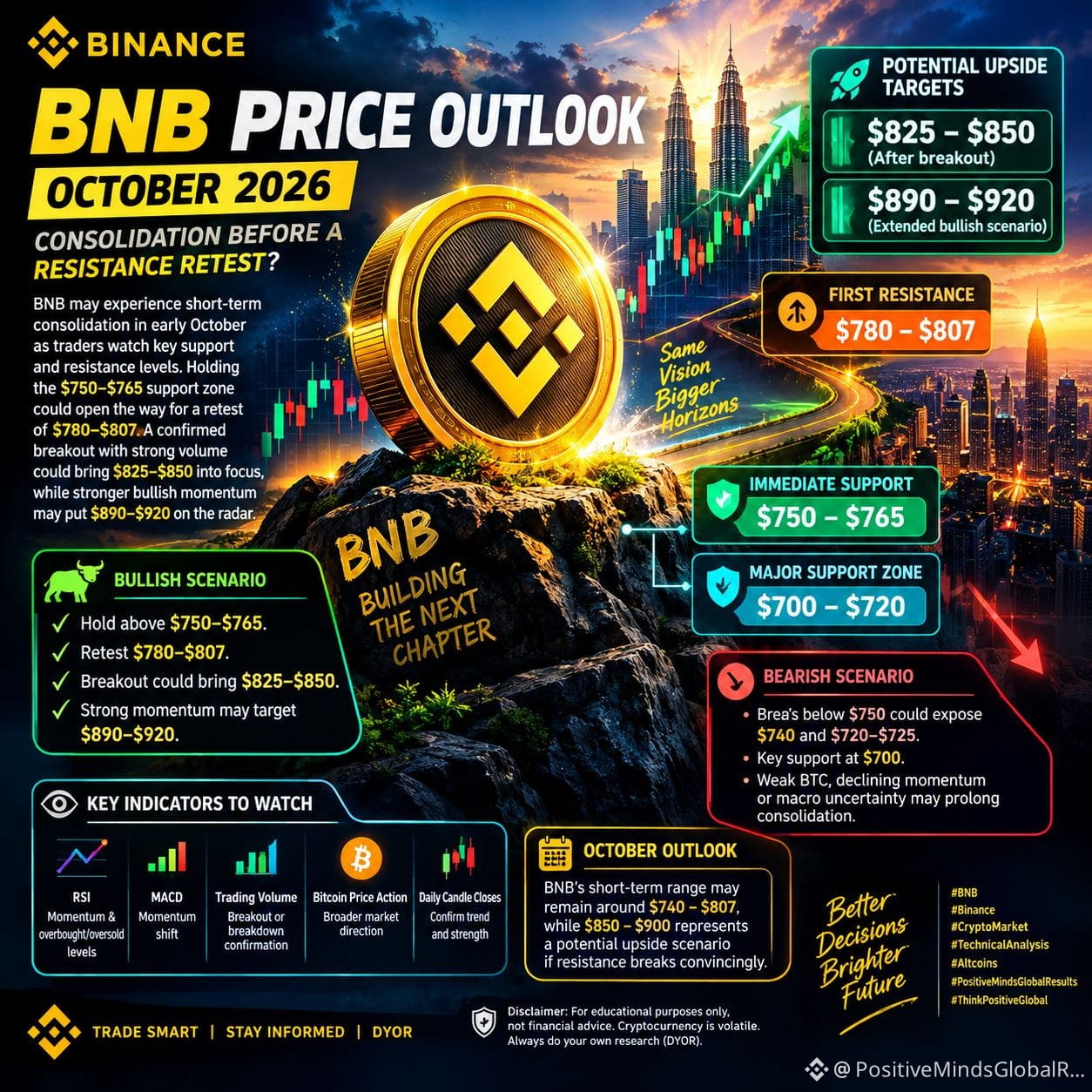
BNB könnte im frühen Oktober eine kurzfristige Konsolidierung erleben, während Trader wichtige Unterstützungs- und Widerstandsniveaus beobachten. Das Halten der $750–$765-Unterstützungszone könnte den Weg für einen Retest von $780–$807 öffnen. Ein bestätigter Ausbruch mit starkem Handelsvolumen könnte $825–$850 in den Fokus rücken, während stärkerer bullischer Schwung $890–$920 in Reichweite bringen könnte.
⚠️ Bärisches Szenario: Ein Bruch unter $750 könnte $740 und $720–$725 freilegen, wobei $700 als entscheidendes Unterstützungsniveau gilt. Eine schwache Bitcoin-Performance, nachlassender Momentum-Verlauf oder makroökonomische Unsicherheit könnten die Konsolidierung verlängern.
🔎 Schlüsselindikatoren: Beobachte RSI, MACD, Handelsvolumen, die Kursentwicklung von Bitcoin sowie tägliche Schlusskurse zur Bestätigung eines Ausbruchs.
🎯 Ausblick: Der kurzfristige Bereich von BNB könnte bei etwa $740–$807 bleiben, während $850–$900 ein mögliches Aufwärtsszenario darstellt, falls der Widerstand überzeugend durchbrochen wird.
⚠️ Hinweis: Nur zu Bildungszwecken, keine Finanzberatung. Kryptowährungen sind volatil. DYOR.
#BNB #Binance #CryptoMarket #BNBPricePrediction #BinanceSquare #TechnicalAnalysis #PositiveMindsGlobalResults
{spot}(BNBUSDT)
{spot}(BTCUSDT)
{spot}(ETHUSDT)
📊 BNB-KURS-AUSBLICK: OKTOBER 2026 | KONSOLIDIERUNG VOR EINEM RETEST DES WIDERSTANDS?
🌍 #PositiveMindsGlobalResults | Binance Square | 01. Oktober 2026
BNB könnte im frühen Oktober eine kurzfristige Konsolidierung erleben, während Trader wichtige Unterstützungs- und Widerstandsniveaus beobachten. Das Halten der $750–$765-Unterstützungszone könnte den Weg für einen Retest von $780–$807 öffnen. Ein bestätigter Ausbruch mit starkem Handelsvolumen könnte $825–$850 in den Fokus rücken, während stärkerer bullischer Schwung $890–$920 in Reichweite bringen könnte.
⚠️ Bärisches Szenario: Ein Bruch unter $750 könnte $740 und $720–$725 freilegen, wobei $700 als entscheidendes Unterstützungsniveau gilt. Eine schwache Bitcoin-Performance, nachlassender Momentum-Verlauf oder makroökonomische Unsicherheit könnten die Konsolidierung verlängern.
🔎 Schlüsselindikatoren: Beobachte RSI, MACD, Handelsvolumen, die Kursentwicklung von Bitcoin sowie tägliche Schlusskurse zur Bestätigung eines Ausbruchs.
🎯 Ausblick: Der kurzfristige Bereich von BNB könnte bei etwa $740–$807 bleiben, während $850–$900 ein mögliches Aufwärtsszenario darstellt, falls der Widerstand überzeugend durchbrochen wird.
⚠️ Hinweis: Nur zu Bildungszwecken, keine Finanzberatung. Kryptowährungen sind volatil. DYOR.
#BNB #Binance #CryptoMarket #BNBPricePrediction #BinanceSquare #TechnicalAnalysis #PositiveMindsGlobalResults
🌍 #PositiveMindsGlobalResults | Binance Square | 01. Oktober 2026
BNB könnte im frühen Oktober eine kurzfristige Konsolidierung erleben, während Trader wichtige Unterstützungs- und Widerstandsniveaus beobachten. Das Halten der $750–$765-Unterstützungszone könnte den Weg für einen Retest von $780–$807 öffnen. Ein bestätigter Ausbruch mit starkem Handelsvolumen könnte $825–$850 in den Fokus rücken, während stärkerer bullischer Schwung $890–$920 in Reichweite bringen könnte.
⚠️ Bärisches Szenario: Ein Bruch unter $750 könnte $740 und $720–$725 freilegen, wobei $700 als entscheidendes Unterstützungsniveau gilt. Eine schwache Bitcoin-Performance, nachlassender Momentum-Verlauf oder makroökonomische Unsicherheit könnten die Konsolidierung verlängern.
🔎 Schlüsselindikatoren: Beobachte RSI, MACD, Handelsvolumen, die Kursentwicklung von Bitcoin sowie tägliche Schlusskurse zur Bestätigung eines Ausbruchs.
🎯 Ausblick: Der kurzfristige Bereich von BNB könnte bei etwa $740–$807 bleiben, während $850–$900 ein mögliches Aufwärtsszenario darstellt, falls der Widerstand überzeugend durchbrochen wird.
⚠️ Hinweis: Nur zu Bildungszwecken, keine Finanzberatung. Kryptowährungen sind volatil. DYOR.
#BNB #Binance #CryptoMarket #BNBPricePrediction #BinanceSquare #TechnicalAnalysis #PositiveMindsGlobalResults
90
PINNED
Artikel
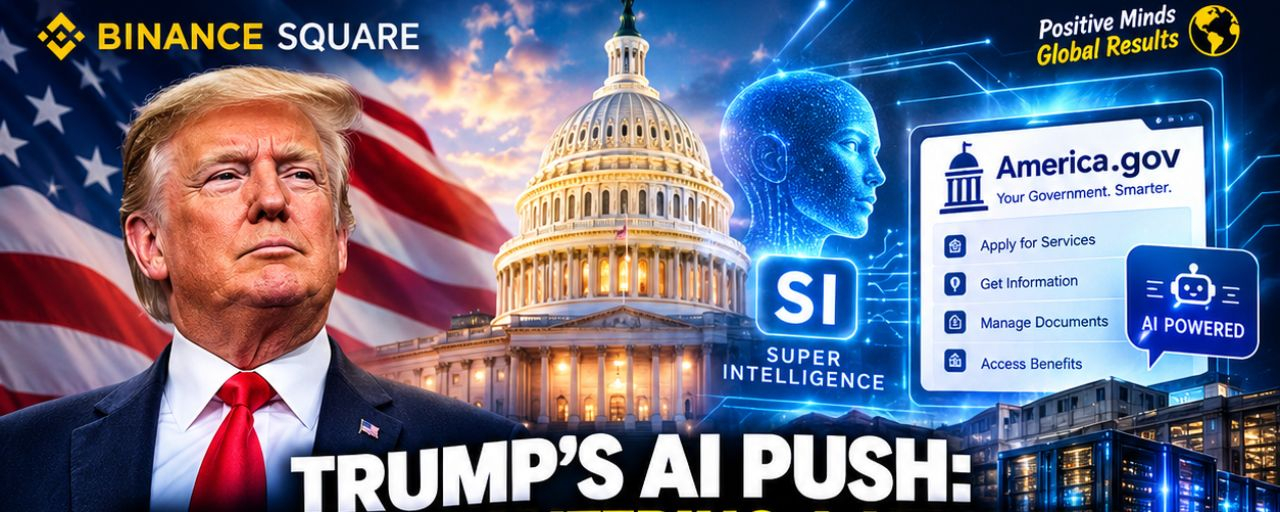
TRUMPS KI-DRUCK: BETRITT AMERIKA EINE NEUE ÄRA DER REGIERUNGS-AUTOMATISIERUNG?🌍 #PositiveMindsGlobalResults | Binance Square | 30. September 2026
Die Schnittstelle zwischen Künstlicher Intelligenz, staatlichen Dienstleistungen und digitaler Infrastruktur weckt zunehmend Aufmerksamkeit. Doch bevor man Schlussfolgerungen über die potenzielle Auswirkung auf Krypto-Märkte zieht, ist es wichtig, bestätigte staatliche Initiativen von Behauptungen zu unterscheiden, die noch einer Verifizierung bedürfen.
🇺🇸 1. KI UND DIE ZUKUNFT DER REGIERUNG
Die Berichten zufolge geplante KI-Initiative der US-Regierung, die in den bereitgestellten Informationen als America.gov beschrieben wird, zielt darauf ab, staatliche Dienstleistungen zu vereinfachen, repetitive Verwaltungsaufgaben zu automatisieren und die operative Effizienz zu verbessern.
TRUMPS KI-DRUCK: BETRITT AMERIKA EINE NEUE ÄRA DER REGIERUNGS-AUTOMATISIERUNG?
🌍 #PositiveMindsGlobalResults | Binance Square | 30. September 2026
Die Schnittstelle zwischen Künstlicher Intelligenz, staatlichen Dienstleistungen und digitaler Infrastruktur weckt zunehmend Aufmerksamkeit. Doch bevor man Schlussfolgerungen über die potenzielle Auswirkung auf Krypto-Märkte zieht, ist es wichtig, bestätigte staatliche Initiativen von Behauptungen zu unterscheiden, die noch einer Verifizierung bedürfen.
🇺🇸 1. KI UND DIE ZUKUNFT DER REGIERUNG
Die Berichten zufolge geplante KI-Initiative der US-Regierung, die in den bereitgestellten Informationen als America.gov beschrieben wird, zielt darauf ab, staatliche Dienstleistungen zu vereinfachen, repetitive Verwaltungsaufgaben zu automatisieren und die operative Effizienz zu verbessern.
Die Schnittstelle zwischen Künstlicher Intelligenz, staatlichen Dienstleistungen und digitaler Infrastruktur weckt zunehmend Aufmerksamkeit. Doch bevor man Schlussfolgerungen über die potenzielle Auswirkung auf Krypto-Märkte zieht, ist es wichtig, bestätigte staatliche Initiativen von Behauptungen zu unterscheiden, die noch einer Verifizierung bedürfen.
🇺🇸 1. KI UND DIE ZUKUNFT DER REGIERUNG
Die Berichten zufolge geplante KI-Initiative der US-Regierung, die in den bereitgestellten Informationen als America.gov beschrieben wird, zielt darauf ab, staatliche Dienstleistungen zu vereinfachen, repetitive Verwaltungsaufgaben zu automatisieren und die operative Effizienz zu verbessern.
244
Verifiziert
ASIATISCHE AKTIENMÄRKTE UNTER DRUCK: GEOPOLITISCHE SPANNUNGEN, STEIGENDE RENDITEN & ÖL-RISIKEN🚨 ASIEN-MÄRKTE SEHEN SICH EINER RISK-OFF-WELLE GEGENÜBER!
🌍 PositiveMindsGlobalResults | Binance Square | 30. September 2026
🌏 Die asiatischen Aktienmärkte stehen erneut unter Abwärtsdruck, da geopolitische Unsicherheit, steigende Renditen von Staatsanleihen und hohe Rohölpreise die Stimmung der Anleger belasten.
🇺🇸 1. Die Spannungen zwischen den USA und dem Iran nehmen zu, wodurch die Unsicherheit steigt
Andauernde geopolitische Spannungen zwischen den Vereinigten Staaten und dem Iran halten Anleger vorsichtig. Die Unsicherheit in Bezug auf die regionale Stabilität kann die Risikobereitschaft senken und dazu führen, dass Marktteilnehmer ihre Exponierung gegenüber Aktien und anderen risikorelevanten Vermögenswerten neu bewerten.
ASIATISCHE AKTIENMÄRKTE UNTER DRUCK: GEOPOLITISCHE SPANNUNGEN, STEIGENDE RENDITEN & ÖL-RISIKEN
🚨 ASIEN-MÄRKTE SEHEN SICH EINER RISK-OFF-WELLE GEGENÜBER!
🌍 PositiveMindsGlobalResults | Binance Square | 30. September 2026
🌏 Die asiatischen Aktienmärkte stehen erneut unter Abwärtsdruck, da geopolitische Unsicherheit, steigende Renditen von Staatsanleihen und hohe Rohölpreise die Stimmung der Anleger belasten.
🇺🇸 1. Die Spannungen zwischen den USA und dem Iran nehmen zu, wodurch die Unsicherheit steigt
Andauernde geopolitische Spannungen zwischen den Vereinigten Staaten und dem Iran halten Anleger vorsichtig. Die Unsicherheit in Bezug auf die regionale Stabilität kann die Risikobereitschaft senken und dazu führen, dass Marktteilnehmer ihre Exponierung gegenüber Aktien und anderen risikorelevanten Vermögenswerten neu bewerten.
🌍 PositiveMindsGlobalResults | Binance Square | 30. September 2026
🌏 Die asiatischen Aktienmärkte stehen erneut unter Abwärtsdruck, da geopolitische Unsicherheit, steigende Renditen von Staatsanleihen und hohe Rohölpreise die Stimmung der Anleger belasten.
🇺🇸 1. Die Spannungen zwischen den USA und dem Iran nehmen zu, wodurch die Unsicherheit steigt
Andauernde geopolitische Spannungen zwischen den Vereinigten Staaten und dem Iran halten Anleger vorsichtig. Die Unsicherheit in Bezug auf die regionale Stabilität kann die Risikobereitschaft senken und dazu führen, dass Marktteilnehmer ihre Exponierung gegenüber Aktien und anderen risikorelevanten Vermögenswerten neu bewerten.
362
Verifiziert
Artikel
HEUTE BEI DEN WELTMÄRKTEN: RENDITEN, KI-ZUversicht & ÖL-Volatilität 🌍 PositiveMindsGlobalResults | Binance Square | 30. September 2026
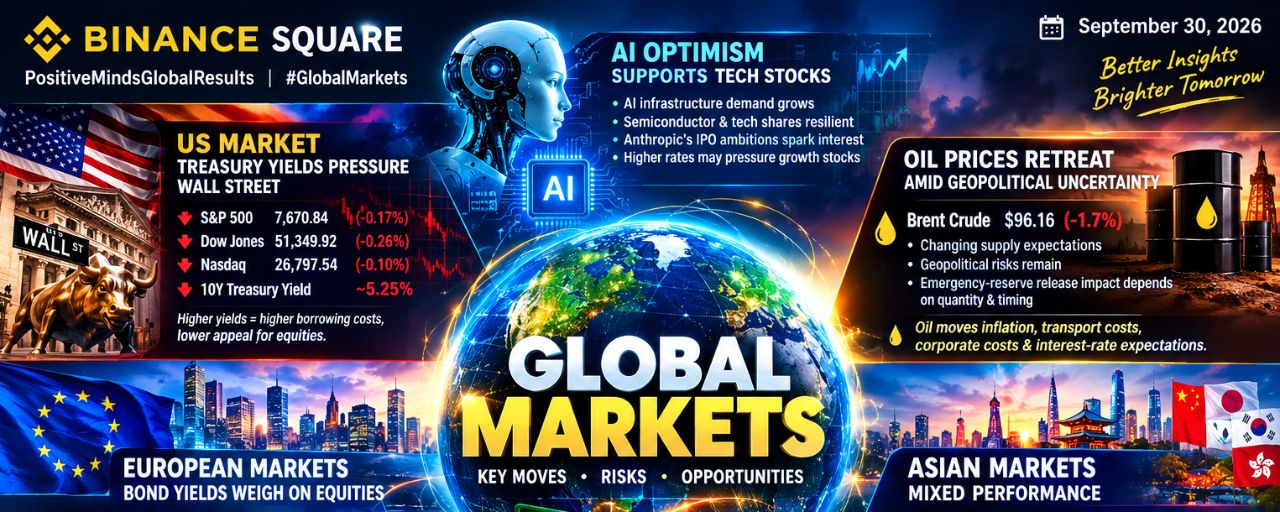
Die globalen Märkte navigieren durch ein komplexes Wechselspiel aus steigenden Anleiherenditen, durch KI getriebener Zuversicht, sich verändernden Ölpreisen und geopolitischer Unsicherheit. Hier sind die wichtigsten Entwicklungen, die Anleger in den Vereinigten Staaten, Europa, Asien und im Energiesektor im Blick behalten sollten.
🇺🇸 1. US-Marktüberblick: Renditedruck auf Wall Street
US-Aktien schlossen am Dienstag, dem 29. September, niedriger, da steigende Renditen von US-Staatsanleihen und wirtschaftliche Unsicherheit die Stimmung der Anleger belasteten.
HEUTE BEI DEN WELTMÄRKTEN: RENDITEN, KI-ZUversicht & ÖL-Volatilität
🌍 PositiveMindsGlobalResults | Binance Square | 30. September 2026
Die globalen Märkte navigieren durch ein komplexes Wechselspiel aus steigenden Anleiherenditen, durch KI getriebener Zuversicht, sich verändernden Ölpreisen und geopolitischer Unsicherheit. Hier sind die wichtigsten Entwicklungen, die Anleger in den Vereinigten Staaten, Europa, Asien und im Energiesektor im Blick behalten sollten.
🇺🇸 1. US-Marktüberblick: Renditedruck auf Wall Street
US-Aktien schlossen am Dienstag, dem 29. September, niedriger, da steigende Renditen von US-Staatsanleihen und wirtschaftliche Unsicherheit die Stimmung der Anleger belasteten.
Die globalen Märkte navigieren durch ein komplexes Wechselspiel aus steigenden Anleiherenditen, durch KI getriebener Zuversicht, sich verändernden Ölpreisen und geopolitischer Unsicherheit. Hier sind die wichtigsten Entwicklungen, die Anleger in den Vereinigten Staaten, Europa, Asien und im Energiesektor im Blick behalten sollten.
🇺🇸 1. US-Marktüberblick: Renditedruck auf Wall Street
US-Aktien schlossen am Dienstag, dem 29. September, niedriger, da steigende Renditen von US-Staatsanleihen und wirtschaftliche Unsicherheit die Stimmung der Anleger belasteten.
1
180
Verifiziert
🚨 BREAKING: NVIDIA kündigt eine Rekord-Aktienrückkauf-Ausweitung über 150 MILLIARDEN US-Dollar an! 🚀
🌏 @PositiveMindsGlobalResults | Binance Square |
29. September 2026
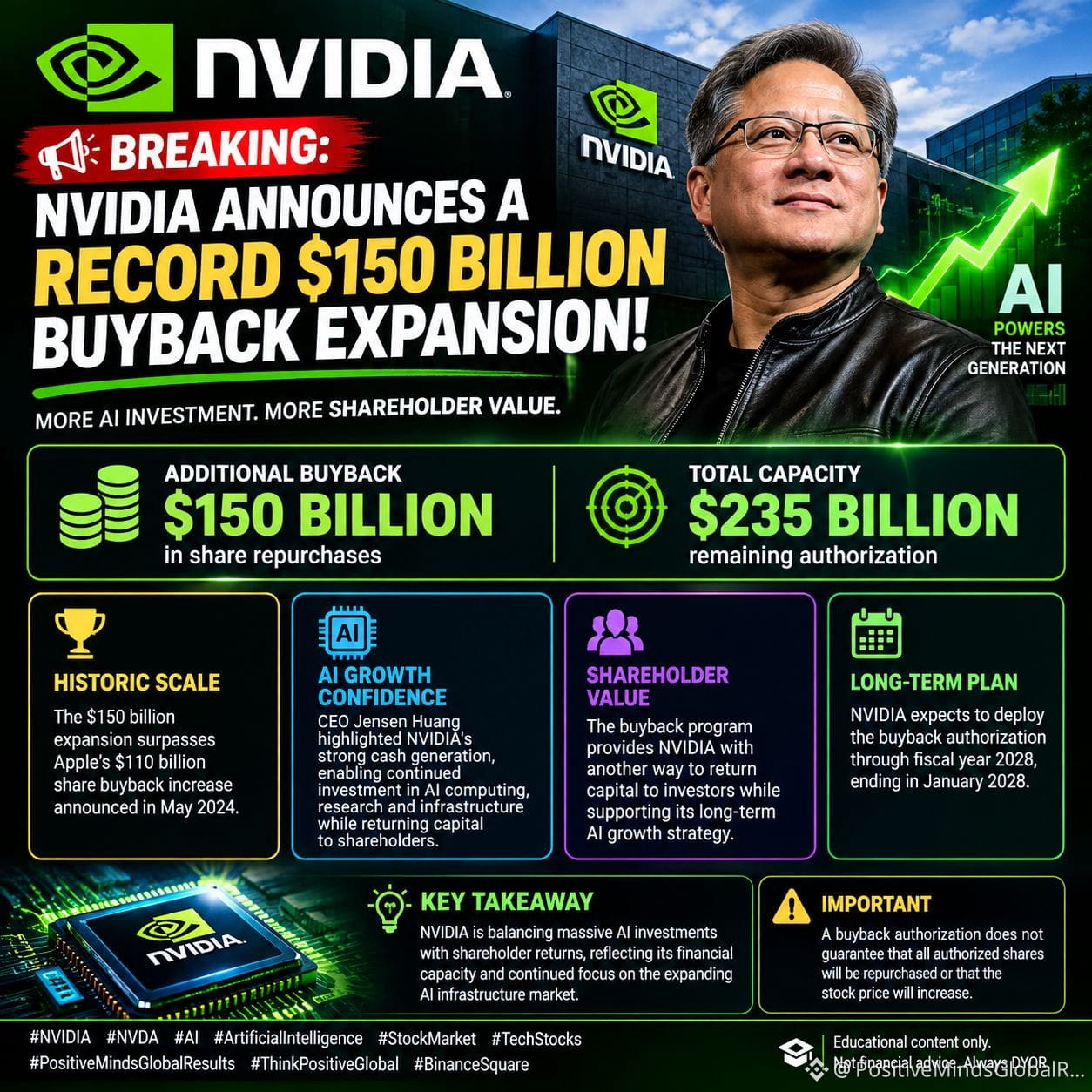
🔥 NVIDIA ($NVDA) hat eine zusätzliche Summe von 150 Milliarden US-Dollar für Aktienrückkäufe genehmigt und bringt damit die verbleibende Genehmigung für Aktienrückkäufe auf ungefähr 235 Milliarden US-Dollar.
💰 WARUM IST DAS WICHTIG?
✅ Historisches Ausmaß: Die Ausweitung um 150 Milliarden US-Dollar übertrifft die von Apple angekündigte Erhöhung der Aktienrückkäufe um 110 Milliarden US-Dollar (Mai 2024).
✅ Vertrauen in das KI-Wachstum: CEO Jensen Huang betonte NVIDIAS starke Mittelgenerierung, die es dem Unternehmen ermöglicht, weiterhin massiv in KI-Computing, Forschung und Infrastruktur zu investieren – während es gleichzeitig Kapital an die Aktionäre zurückführt.
✅ Aktionärswert: Das Rückkaufprogramm bietet NVIDIA eine weitere Möglichkeit, Kapital an Investoren zurückzugeben und zugleich seine langfristige KI-Wachstumsstrategie zu unterstützen.
📅 Langfristige Strategie: NVIDIA erwartet, die Rückkaufgenehmigung bis zum Geschäftsjahr 2028 einzusetzen, das im Januar 2028 endet.
💡 WICHTIGSTER PUNKT: NVIDIA gleicht massive KI-Investitionen mit Aktionärsrenditen aus – ein Spiegelbild seiner finanziellen Leistungsfähigkeit und des anhaltenden Fokus auf den wachsenden KI-Infrastrukturmarkt.
⚠️ WICHTIG: Eine Rückkaufgenehmigung garantiert nicht, dass alle genehmigten Aktien tatsächlich zurückgekauft werden oder dass der Aktienkurs steigt.
#NVIDIA #NVDA #AI #ArtificialIntelligence #StockMarket #TechStocks #PositiveMindsGlobalResults #ThinkPositiveGlobal #BinanceSquare
📌 Nur zu Bildungszwecken. Keine finanzielle Beratung. Recherchiere immer selbst (DYOR).
{spot}(BNBUSDT)
{spot}(BTCUSDT)
🚨 BREAKING: NVIDIA kündigt eine Rekord-Aktienrückkauf-Ausweitung über 150 MILLIARDEN US-Dollar an! 🚀
🌏 @PositiveMindsGlobalResults | Binance Square |
29. September 2026
🔥 NVIDIA ($NVDA) hat eine zusätzliche Summe von 150 Milliarden US-Dollar für Aktienrückkäufe genehmigt und bringt damit die verbleibende Genehmigung für Aktienrückkäufe auf ungefähr 235 Milliarden US-Dollar.
💰 WARUM IST DAS WICHTIG?
✅ Historisches Ausmaß: Die Ausweitung um 150 Milliarden US-Dollar übertrifft die von Apple angekündigte Erhöhung der Aktienrückkäufe um 110 Milliarden US-Dollar (Mai 2024).
✅ Vertrauen in das KI-Wachstum: CEO Jensen Huang betonte NVIDIAS starke Mittelgenerierung, die es dem Unternehmen ermöglicht, weiterhin massiv in KI-Computing, Forschung und Infrastruktur zu investieren – während es gleichzeitig Kapital an die Aktionäre zurückführt.
✅ Aktionärswert: Das Rückkaufprogramm bietet NVIDIA eine weitere Möglichkeit, Kapital an Investoren zurückzugeben und zugleich seine langfristige KI-Wachstumsstrategie zu unterstützen.
📅 Langfristige Strategie: NVIDIA erwartet, die Rückkaufgenehmigung bis zum Geschäftsjahr 2028 einzusetzen, das im Januar 2028 endet.
💡 WICHTIGSTER PUNKT: NVIDIA gleicht massive KI-Investitionen mit Aktionärsrenditen aus – ein Spiegelbild seiner finanziellen Leistungsfähigkeit und des anhaltenden Fokus auf den wachsenden KI-Infrastrukturmarkt.
⚠️ WICHTIG: Eine Rückkaufgenehmigung garantiert nicht, dass alle genehmigten Aktien tatsächlich zurückgekauft werden oder dass der Aktienkurs steigt.
#NVIDIA #NVDA #AI #ArtificialIntelligence #StockMarket #TechStocks #PositiveMindsGlobalResults #ThinkPositiveGlobal #BinanceSquare
📌 Nur zu Bildungszwecken. Keine finanzielle Beratung. Recherchiere immer selbst (DYOR).
🌏 @PositiveMindsGlobalResults | Binance Square |
29. September 2026
🔥 NVIDIA ($NVDA) hat eine zusätzliche Summe von 150 Milliarden US-Dollar für Aktienrückkäufe genehmigt und bringt damit die verbleibende Genehmigung für Aktienrückkäufe auf ungefähr 235 Milliarden US-Dollar.
💰 WARUM IST DAS WICHTIG?
✅ Historisches Ausmaß: Die Ausweitung um 150 Milliarden US-Dollar übertrifft die von Apple angekündigte Erhöhung der Aktienrückkäufe um 110 Milliarden US-Dollar (Mai 2024).
✅ Vertrauen in das KI-Wachstum: CEO Jensen Huang betonte NVIDIAS starke Mittelgenerierung, die es dem Unternehmen ermöglicht, weiterhin massiv in KI-Computing, Forschung und Infrastruktur zu investieren – während es gleichzeitig Kapital an die Aktionäre zurückführt.
✅ Aktionärswert: Das Rückkaufprogramm bietet NVIDIA eine weitere Möglichkeit, Kapital an Investoren zurückzugeben und zugleich seine langfristige KI-Wachstumsstrategie zu unterstützen.
📅 Langfristige Strategie: NVIDIA erwartet, die Rückkaufgenehmigung bis zum Geschäftsjahr 2028 einzusetzen, das im Januar 2028 endet.
💡 WICHTIGSTER PUNKT: NVIDIA gleicht massive KI-Investitionen mit Aktionärsrenditen aus – ein Spiegelbild seiner finanziellen Leistungsfähigkeit und des anhaltenden Fokus auf den wachsenden KI-Infrastrukturmarkt.
⚠️ WICHTIG: Eine Rückkaufgenehmigung garantiert nicht, dass alle genehmigten Aktien tatsächlich zurückgekauft werden oder dass der Aktienkurs steigt.
#NVIDIA #NVDA #AI #ArtificialIntelligence #StockMarket #TechStocks #PositiveMindsGlobalResults #ThinkPositiveGlobal #BinanceSquare
📌 Nur zu Bildungszwecken. Keine finanzielle Beratung. Recherchiere immer selbst (DYOR).
1
247

Artikel
INNA LILLAHI WA INNA ILAIHI RAJI’UN🌏 @PositiveMindsGlobalResults | Binance Square | 28. September 2026
🕊️ INNA LILLAHI WA INNA ILAIHI RAJI’UN 🕊️
#TunDrSitiHasmah
🕊️ IN LIEBEVOLLER ERINNERUNG AN TUN DR. SITI HASMAH MOHD ALI 🇲🇾
(12. Juli 1926 – 28. September 2026)
Mit großer Trauer nehmen wir Abschied vom Tod von Tun Dr. Siti Hasmah Mohd Ali, der geliebten Ehefrau des ehemaligen malaysischen Premierministers Tun Dr. Mahathir Mohamad, die heute, am 28. September 2026, im Alter von 100 Jahren verstorben ist.
Möge Allah SWT ihr vergeben, sie mit Seiner Barmherzigkeit überschütten, ihre guten Taten annehmen und ihr den höchsten Platz im Jannatul Firdaus gewähren. 🤲🏻
INNA LILLAHI WA INNA ILAIHI RAJI’UN
🌏 @PositiveMindsGlobalResults | Binance Square | 28. September 2026
🕊️ INNA LILLAHI WA INNA ILAIHI RAJI’UN 🕊️
#TunDrSitiHasmah
🕊️ IN LIEBEVOLLER ERINNERUNG AN TUN DR. SITI HASMAH MOHD ALI 🇲🇾
(12. Juli 1926 – 28. September 2026)
Mit großer Trauer nehmen wir Abschied vom Tod von Tun Dr. Siti Hasmah Mohd Ali, der geliebten Ehefrau des ehemaligen malaysischen Premierministers Tun Dr. Mahathir Mohamad, die heute, am 28. September 2026, im Alter von 100 Jahren verstorben ist.
Möge Allah SWT ihr vergeben, sie mit Seiner Barmherzigkeit überschütten, ihre guten Taten annehmen und ihr den höchsten Platz im Jannatul Firdaus gewähren. 🤲🏻
🕊️ INNA LILLAHI WA INNA ILAIHI RAJI’UN 🕊️
#TunDrSitiHasmah
🕊️ IN LIEBEVOLLER ERINNERUNG AN TUN DR. SITI HASMAH MOHD ALI 🇲🇾
(12. Juli 1926 – 28. September 2026)
Mit großer Trauer nehmen wir Abschied vom Tod von Tun Dr. Siti Hasmah Mohd Ali, der geliebten Ehefrau des ehemaligen malaysischen Premierministers Tun Dr. Mahathir Mohamad, die heute, am 28. September 2026, im Alter von 100 Jahren verstorben ist.
Möge Allah SWT ihr vergeben, sie mit Seiner Barmherzigkeit überschütten, ihre guten Taten annehmen und ihr den höchsten Platz im Jannatul Firdaus gewähren. 🤲🏻
1
72
Artikel
GLOBALE MÄRKTE AN EINEM WENDEPUNKT: ÖL, KI & HANDEL SCHÜTTERT DIE MÄRKTE! 🌏 @PositiveMindsGlobalResults | Binance Square | 28. September 2026
#GLOBALMARKETS
1. 🛢️ ÖL PREISE STEIGEN, WÄHREND TRUMP DEN TRUCE-VORSCHLAG DES IRAN ABLEHNT
🚨 ÖL PREISE SPRINGEN, DA SPANNUNGEN IM MITTLEREN OSTEN DIE GLOBALE ENERGIEVERSORGUNG BEDROHEN!
Die Ölpreise stiegen am 28. September, nachdem US-Präsident Donald Trump den von Iran vorgeschlagenen siebentägigen Waffenstillstand ablehnte, der darauf abzielte, die strategisch wichtige Straße von Hormus wieder zu öffnen.
📊 Marktblick
Brent-Rohöl: Etwa 106 US-Dollar pro Barrel.
WTI-Rohöl: Etwa 93–94 US-Dollar pro Barrel.
Hauptsorge: Weiterhin anhaltende Störungen bei der Ölbeförderung und der globalen Energieversorgung.
GLOBALE MÄRKTE AN EINEM WENDEPUNKT: ÖL, KI & HANDEL SCHÜTTERT DIE MÄRKTE!
🌏 @PositiveMindsGlobalResults | Binance Square | 28. September 2026
#GLOBALMARKETS
1. 🛢️ ÖL PREISE STEIGEN, WÄHREND TRUMP DEN TRUCE-VORSCHLAG DES IRAN ABLEHNT
🚨 ÖL PREISE SPRINGEN, DA SPANNUNGEN IM MITTLEREN OSTEN DIE GLOBALE ENERGIEVERSORGUNG BEDROHEN!
Die Ölpreise stiegen am 28. September, nachdem US-Präsident Donald Trump den von Iran vorgeschlagenen siebentägigen Waffenstillstand ablehnte, der darauf abzielte, die strategisch wichtige Straße von Hormus wieder zu öffnen.
📊 Marktblick
Brent-Rohöl: Etwa 106 US-Dollar pro Barrel.
WTI-Rohöl: Etwa 93–94 US-Dollar pro Barrel.
Hauptsorge: Weiterhin anhaltende Störungen bei der Ölbeförderung und der globalen Energieversorgung.
#GLOBALMARKETS
1. 🛢️ ÖL PREISE STEIGEN, WÄHREND TRUMP DEN TRUCE-VORSCHLAG DES IRAN ABLEHNT
🚨 ÖL PREISE SPRINGEN, DA SPANNUNGEN IM MITTLEREN OSTEN DIE GLOBALE ENERGIEVERSORGUNG BEDROHEN!
Die Ölpreise stiegen am 28. September, nachdem US-Präsident Donald Trump den von Iran vorgeschlagenen siebentägigen Waffenstillstand ablehnte, der darauf abzielte, die strategisch wichtige Straße von Hormus wieder zu öffnen.
📊 Marktblick
Brent-Rohöl: Etwa 106 US-Dollar pro Barrel.
WTI-Rohöl: Etwa 93–94 US-Dollar pro Barrel.
Hauptsorge: Weiterhin anhaltende Störungen bei der Ölbeförderung und der globalen Energieversorgung.
1
265
Verifiziert

Artikel
BINANCE AI PRO BETA: BEWEGT SICH KI VON MARKT-CHATS ZU ECHTEM TRADING?🌏 @PositiveMindsGlobalResults | Binance Square | 28. September 2026
#BinanceAiProBeta bringt Krypto-KI über einfache Fragen und Marktanalysen hinaus.
Die größere Frage lautet nicht mehr:
„Was denkt KI über den Markt?“
Es ist:
„Was kann KI eigentlich in einem Trading-Workflow tun?“
Binance Ai Pro ist ein KI-gestützter Trading-Assistent, der Märkte analysieren, Trading-Strategien ausführen und Positionen über ein dediziertes virtuelles KI-Konto verwalten kann. Er unterstützt Spot, Futures und Margin – je nach Verfügbarkeit und lokalen Vorschriften.
BINANCE AI PRO BETA: BEWEGT SICH KI VON MARKT-CHATS ZU ECHTEM TRADING?
🌏 @PositiveMindsGlobalResults | Binance Square | 28. September 2026
#BinanceAiProBeta bringt Krypto-KI über einfache Fragen und Marktanalysen hinaus.
Die größere Frage lautet nicht mehr:
„Was denkt KI über den Markt?“
Es ist:
„Was kann KI eigentlich in einem Trading-Workflow tun?“
Binance Ai Pro ist ein KI-gestützter Trading-Assistent, der Märkte analysieren, Trading-Strategien ausführen und Positionen über ein dediziertes virtuelles KI-Konto verwalten kann. Er unterstützt Spot, Futures und Margin – je nach Verfügbarkeit und lokalen Vorschriften.
#BinanceAiProBeta bringt Krypto-KI über einfache Fragen und Marktanalysen hinaus.
Die größere Frage lautet nicht mehr:
„Was denkt KI über den Markt?“
Es ist:
„Was kann KI eigentlich in einem Trading-Workflow tun?“
Binance Ai Pro ist ein KI-gestützter Trading-Assistent, der Märkte analysieren, Trading-Strategien ausführen und Positionen über ein dediziertes virtuelles KI-Konto verwalten kann. Er unterstützt Spot, Futures und Margin – je nach Verfügbarkeit und lokalen Vorschriften.
1
130
Artikel
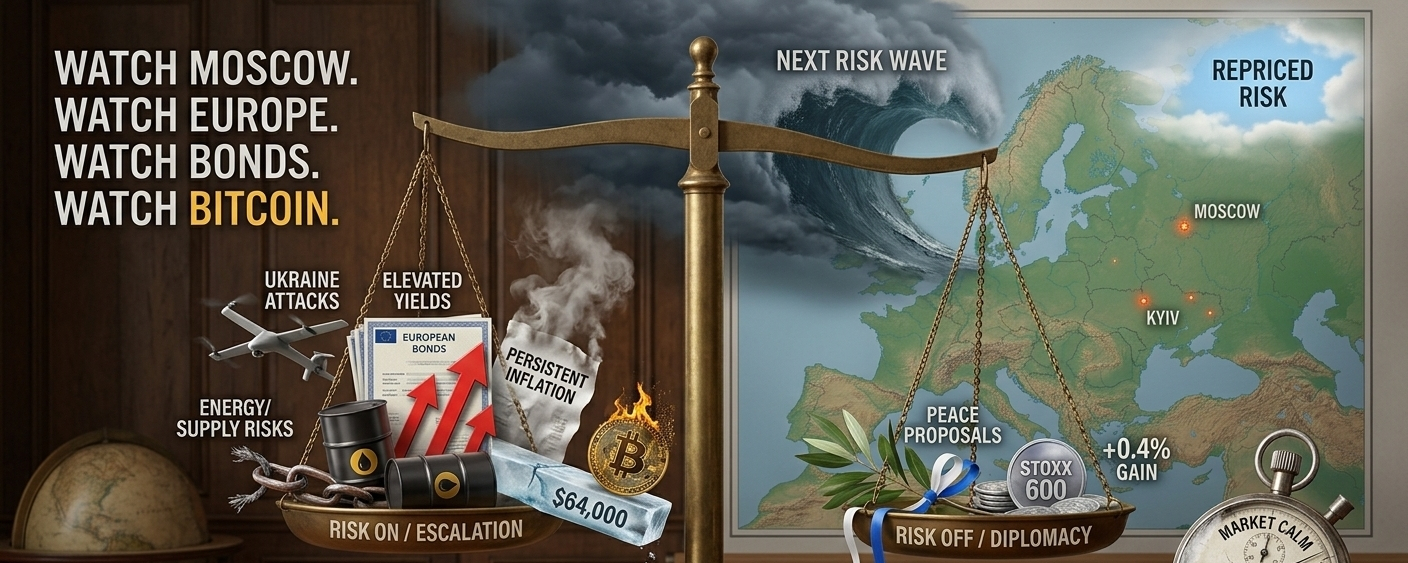
GLOBALE MÄRKTE: BAUT SICH DIE NÄCHSTE RISIKOWELLE AUF?@ThinkPositiveGlobal Ich @Binance_Square_Official
26. September 2026
Das globale Makrobild bleibt engmaschig im Fokus, und die kommenden Wochen könnten sich zunehmend schwierig gestalten für europäische Märkte, globale Aktien und Krypto, falls die geopolitischen Spannungen weiter eskalieren.
🇺🇦🇷🇺 MOSKAU RÜCKT WIEDER IN DEN FOKUS
Die Ukraine hat umfangreiche Drohnenangriffe gegen Moskau und die weitere Region Moskau durchgeführt. Russland hat mit Warnungen vor weiterer Vergeltung reagiert, während Präsident Wladimir Putin am 25. September erklärte, dass Friedensvorschläge weiterhin auf dem Tisch lägen—Moskau werde jedoch seine Antwort prüfen.
GLOBALE MÄRKTE: BAUT SICH DIE NÄCHSTE RISIKOWELLE AUF?
@PositiveMindsGlobalResults Ich @Binance Square Official
26. September 2026
Das globale Makrobild bleibt engmaschig im Fokus, und die kommenden Wochen könnten sich zunehmend schwierig gestalten für europäische Märkte, globale Aktien und Krypto, falls die geopolitischen Spannungen weiter eskalieren.
🇺🇦🇷🇺 MOSKAU RÜCKT WIEDER IN DEN FOKUS
Die Ukraine hat umfangreiche Drohnenangriffe gegen Moskau und die weitere Region Moskau durchgeführt. Russland hat mit Warnungen vor weiterer Vergeltung reagiert, während Präsident Wladimir Putin am 25. September erklärte, dass Friedensvorschläge weiterhin auf dem Tisch lägen—Moskau werde jedoch seine Antwort prüfen.
26. September 2026
Das globale Makrobild bleibt engmaschig im Fokus, und die kommenden Wochen könnten sich zunehmend schwierig gestalten für europäische Märkte, globale Aktien und Krypto, falls die geopolitischen Spannungen weiter eskalieren.
🇺🇦🇷🇺 MOSKAU RÜCKT WIEDER IN DEN FOKUS
Die Ukraine hat umfangreiche Drohnenangriffe gegen Moskau und die weitere Region Moskau durchgeführt. Russland hat mit Warnungen vor weiterer Vergeltung reagiert, während Präsident Wladimir Putin am 25. September erklärte, dass Friedensvorschläge weiterhin auf dem Tisch lägen—Moskau werde jedoch seine Antwort prüfen.
1
32
Verifiziert
🚨 BREAKING: BINANCE ALPHA ERWEITERT UM 2 NEUE KRYPTOWERTE — BREW & GSTOCK
Binance hat seine Binance-Alpha-Plattform um zwei neue Krypto-Assets erweitert: BREW (BREW) und Gstock (GSTOCK).
📅 Hinzugefügt: 25. September 2026
🔹 BREW (BREW)
BREW ist jetzt über Binance Alpha verfügbar und bietet berechtigten Nutzern Zugriff auf das neu hinzugefügte Asset.
🔹 Gstock (GSTOCK)
GSTOCK wurde ebenfalls zu Binance Alpha hinzugefügt, sodass berechtigte Nutzer das Asset über die Plattform handeln können.
⚠️ WICHTIG: ALPHA ≠ BINANCE SPOT
Diese Unterscheidung ist entscheidend.
Die Aufnahme von BREW und GSTOCK in Binance Alpha ist NICHT dasselbe wie eine Binance-Spot-Notierung.
Binance Alpha bietet Zugang zu aufstrebenden Krypto-Projekten und neuen digitalen Assets. Eine Alpha-Aufnahme garantiert nicht, dass Binance den Token später auf seinem wichtigsten Spot-Markt listet.
📊 WARUM DAS WICHTIG IST
Eine Alpha-Aufnahme kann die Sichtbarkeit für einen aufstrebenden Token unter Binance-Nutzern erhöhen. Kleinere oder neuere Assets können jedoch auch einer höheren Volatilität, geringerer Liquidität und größeren Preisschwankungen ausgesetzt sein.
Für Trader sollte die Ankündigung daher als Entwicklung bei Zugriff und Sichtbarkeit betrachtet werden — nicht als Bestätigung für eine zukünftige Spot-Notierung.
🔥 VERGLEICH MIT HYPE
Die Unterscheidung ist besonders deutlich im Vergleich zu Hyperliquid (HYPE).
Am 24. September hat Binance den Spot-Handel für HYPE offiziell eröffnet mit:
• HYPE/USDT
• HYPE/USDC
• HYPE/TRY
Binance hat außerdem einen Seed-Tag angewendet und gewarnt, dass HYPE ein relativ neuer Token ist und möglicherweise ein höheres Risiko sowie eine höhere Volatilität als normal aufweist.
📌 FAZIT
BREW → Binance Alpha
GSTOCK → Binance Alpha
HYPE → Binance Spot
Die korrekte Headline lautet also:
👉 „Binance Alpha fügt BREW und GSTOCK hinzu“
— nicht, dass Binance neue Spot-Listings für diese beiden Tokens gestartet hat.
Wie immer: Prüfe vor dem Trading die offiziellen Informationen der Binance-Plattform und des Projekts. Mach dein eigenes Research (DYOR) und verstehe die Risiken.
#PositiveMindsGlobalResults #ThinkPositiveGlobal #BinanceSquare #Binance #BinanceAlpha #BREW #GSTOCK #Crypto #Altcoins #bnbblockchain
🚨 BREAKING: BINANCE ALPHA ERWEITERT UM 2 NEUE KRYPTOWERTE — BREW & GSTOCK
Binance hat seine Binance-Alpha-Plattform um zwei neue Krypto-Assets erweitert: BREW (BREW) und Gstock (GSTOCK).
📅 Hinzugefügt: 25. September 2026
🔹 BREW (BREW)
BREW ist jetzt über Binance Alpha verfügbar und bietet berechtigten Nutzern Zugriff auf das neu hinzugefügte Asset.
🔹 Gstock (GSTOCK)
GSTOCK wurde ebenfalls zu Binance Alpha hinzugefügt, sodass berechtigte Nutzer das Asset über die Plattform handeln können.
⚠️ WICHTIG: ALPHA ≠ BINANCE SPOT
Diese Unterscheidung ist entscheidend.
Die Aufnahme von BREW und GSTOCK in Binance Alpha ist NICHT dasselbe wie eine Binance-Spot-Notierung.
Binance Alpha bietet Zugang zu aufstrebenden Krypto-Projekten und neuen digitalen Assets. Eine Alpha-Aufnahme garantiert nicht, dass Binance den Token später auf seinem wichtigsten Spot-Markt listet.
📊 WARUM DAS WICHTIG IST
Eine Alpha-Aufnahme kann die Sichtbarkeit für einen aufstrebenden Token unter Binance-Nutzern erhöhen. Kleinere oder neuere Assets können jedoch auch einer höheren Volatilität, geringerer Liquidität und größeren Preisschwankungen ausgesetzt sein.
Für Trader sollte die Ankündigung daher als Entwicklung bei Zugriff und Sichtbarkeit betrachtet werden — nicht als Bestätigung für eine zukünftige Spot-Notierung.
🔥 VERGLEICH MIT HYPE
Die Unterscheidung ist besonders deutlich im Vergleich zu Hyperliquid (HYPE).
Am 24. September hat Binance den Spot-Handel für HYPE offiziell eröffnet mit:
• HYPE/USDT
• HYPE/USDC
• HYPE/TRY
Binance hat außerdem einen Seed-Tag angewendet und gewarnt, dass HYPE ein relativ neuer Token ist und möglicherweise ein höheres Risiko sowie eine höhere Volatilität als normal aufweist.
📌 FAZIT
BREW → Binance Alpha
GSTOCK → Binance Alpha
HYPE → Binance Spot
Die korrekte Headline lautet also:
👉 „Binance Alpha fügt BREW und GSTOCK hinzu“
— nicht, dass Binance neue Spot-Listings für diese beiden Tokens gestartet hat.
Wie immer: Prüfe vor dem Trading die offiziellen Informationen der Binance-Plattform und des Projekts. Mach dein eigenes Research (DYOR) und verstehe die Risiken.
#PositiveMindsGlobalResults #ThinkPositiveGlobal #BinanceSquare #Binance #BinanceAlpha #BREW #GSTOCK #Crypto #Altcoins #bnbblockchain
Binance hat seine Binance-Alpha-Plattform um zwei neue Krypto-Assets erweitert: BREW (BREW) und Gstock (GSTOCK).
📅 Hinzugefügt: 25. September 2026
🔹 BREW (BREW)
BREW ist jetzt über Binance Alpha verfügbar und bietet berechtigten Nutzern Zugriff auf das neu hinzugefügte Asset.
🔹 Gstock (GSTOCK)
GSTOCK wurde ebenfalls zu Binance Alpha hinzugefügt, sodass berechtigte Nutzer das Asset über die Plattform handeln können.
⚠️ WICHTIG: ALPHA ≠ BINANCE SPOT
Diese Unterscheidung ist entscheidend.
Die Aufnahme von BREW und GSTOCK in Binance Alpha ist NICHT dasselbe wie eine Binance-Spot-Notierung.
Binance Alpha bietet Zugang zu aufstrebenden Krypto-Projekten und neuen digitalen Assets. Eine Alpha-Aufnahme garantiert nicht, dass Binance den Token später auf seinem wichtigsten Spot-Markt listet.
📊 WARUM DAS WICHTIG IST
Eine Alpha-Aufnahme kann die Sichtbarkeit für einen aufstrebenden Token unter Binance-Nutzern erhöhen. Kleinere oder neuere Assets können jedoch auch einer höheren Volatilität, geringerer Liquidität und größeren Preisschwankungen ausgesetzt sein.
Für Trader sollte die Ankündigung daher als Entwicklung bei Zugriff und Sichtbarkeit betrachtet werden — nicht als Bestätigung für eine zukünftige Spot-Notierung.
🔥 VERGLEICH MIT HYPE
Die Unterscheidung ist besonders deutlich im Vergleich zu Hyperliquid (HYPE).
Am 24. September hat Binance den Spot-Handel für HYPE offiziell eröffnet mit:
• HYPE/USDT
• HYPE/USDC
• HYPE/TRY
Binance hat außerdem einen Seed-Tag angewendet und gewarnt, dass HYPE ein relativ neuer Token ist und möglicherweise ein höheres Risiko sowie eine höhere Volatilität als normal aufweist.
📌 FAZIT
BREW → Binance Alpha
GSTOCK → Binance Alpha
HYPE → Binance Spot
Die korrekte Headline lautet also:
👉 „Binance Alpha fügt BREW und GSTOCK hinzu“
— nicht, dass Binance neue Spot-Listings für diese beiden Tokens gestartet hat.
Wie immer: Prüfe vor dem Trading die offiziellen Informationen der Binance-Plattform und des Projekts. Mach dein eigenes Research (DYOR) und verstehe die Risiken.
#PositiveMindsGlobalResults #ThinkPositiveGlobal #BinanceSquare #Binance #BinanceAlpha #BREW #GSTOCK #Crypto #Altcoins #bnbblockchain
1
479
Verifiziert
🚨 #HYPERLIQUID BETRITT EINE NEUE PHASE
🔥 Binance-Spot-Listing
🐋 $45,8 Mio. Treasury-Aufstockung
⚠️ Umschichtungen bei Whale-Angeboten
Die $HYPE-Story wird deutlich größer.
🚀 BINANCE-ZUGANG
Binance hat am 24. September den Spot-Handel für HYPE gestartet — in den Paaren HYPE/USDT, HYPE/USDC und HYPE/TRY.
Außerdem wurde ein Seed-Tag hinzugefügt, das auf möglicherweise höhere Volatilität und Risiko hinweist.
🐋 $45,8 Mio. KAUF
Laut Berichten haben Hyperliquid Strategies 494.200 HYPE (~$45,8 Mio.) gekauft und damit die gemeldeten monatlichen Käufe auf 5,51 Mio. HYPE (~$476 Mio.) gebracht.
⚠️ ABER BEACHTE DIE WHALES
Große Inhaber haben HYPE Berichten zufolge entstaked, während Multicoin Capital Berichten zufolge Tokens in Richtung Coinbase Prime bewegt hat.
Diese Übertragungen beweisen keinen Verkauf — aber Supply-Flows sind entscheidend.
🌐 DAS GROßERE BILD
Hyperliquid expandiert über Perpetual-Futures hinaus in Richtung Lending und breitere On-Chain-Märkte.
Der Kraken-Mutterkonzern Payward hat außerdem Pläne angekündigt, dass US-Kunden ab Beginn mit Hyperliquid-HIP-3-Märkten auf On-Chain-Perpetual-Futures zugreifen können — vorbehaltlich seines regulatorischen Rahmens.
🔥 HYPE ist nicht mehr nur eine Derivate-Story.
Binance-Zugang + Treasury-Aufstockung + expandierende Märkte + potenzieller US-Zugang könnten dazu führen, dass HYPE zu den am genauesten beobachteten On-Chain-Markt-Storys gehört.
👀 Beobachte Supply-Flows, Buybacks, Aktivität, HIP-3-Adoption und Regulierung.
#PositiveMindsGlobalResults #ThinkPositiveGlobal #BinanceSquare #HYPE #Hyperliquid #Crypto #DeFi #Web3
DYOR. Nur zu Bildungszwecken — keine finanzielle Beratung.
{spot}(BNBUSDT)
{future}(HYPEUSDT)
🚨 #HYPERLIQUID BETRITT EINE NEUE PHASE
🔥 Binance-Spot-Listing
🐋 $45,8 Mio. Treasury-Aufstockung
⚠️ Umschichtungen bei Whale-Angeboten
Die $HYPE-Story wird deutlich größer.
🚀 BINANCE-ZUGANG
Binance hat am 24. September den Spot-Handel für HYPE gestartet — in den Paaren HYPE/USDT, HYPE/USDC und HYPE/TRY.
Außerdem wurde ein Seed-Tag hinzugefügt, das auf möglicherweise höhere Volatilität und Risiko hinweist.
🐋 $45,8 Mio. KAUF
Laut Berichten haben Hyperliquid Strategies 494.200 HYPE (~$45,8 Mio.) gekauft und damit die gemeldeten monatlichen Käufe auf 5,51 Mio. HYPE (~$476 Mio.) gebracht.
⚠️ ABER BEACHTE DIE WHALES
Große Inhaber haben HYPE Berichten zufolge entstaked, während Multicoin Capital Berichten zufolge Tokens in Richtung Coinbase Prime bewegt hat.
Diese Übertragungen beweisen keinen Verkauf — aber Supply-Flows sind entscheidend.
🌐 DAS GROßERE BILD
Hyperliquid expandiert über Perpetual-Futures hinaus in Richtung Lending und breitere On-Chain-Märkte.
Der Kraken-Mutterkonzern Payward hat außerdem Pläne angekündigt, dass US-Kunden ab Beginn mit Hyperliquid-HIP-3-Märkten auf On-Chain-Perpetual-Futures zugreifen können — vorbehaltlich seines regulatorischen Rahmens.
🔥 HYPE ist nicht mehr nur eine Derivate-Story.
Binance-Zugang + Treasury-Aufstockung + expandierende Märkte + potenzieller US-Zugang könnten dazu führen, dass HYPE zu den am genauesten beobachteten On-Chain-Markt-Storys gehört.
👀 Beobachte Supply-Flows, Buybacks, Aktivität, HIP-3-Adoption und Regulierung.
#PositiveMindsGlobalResults #ThinkPositiveGlobal #BinanceSquare #HYPE #Hyperliquid #Crypto #DeFi #Web3
DYOR. Nur zu Bildungszwecken — keine finanzielle Beratung.
🔥 Binance-Spot-Listing
🐋 $45,8 Mio. Treasury-Aufstockung
⚠️ Umschichtungen bei Whale-Angeboten
Die $HYPE-Story wird deutlich größer.
🚀 BINANCE-ZUGANG
Binance hat am 24. September den Spot-Handel für HYPE gestartet — in den Paaren HYPE/USDT, HYPE/USDC und HYPE/TRY.
Außerdem wurde ein Seed-Tag hinzugefügt, das auf möglicherweise höhere Volatilität und Risiko hinweist.
🐋 $45,8 Mio. KAUF
Laut Berichten haben Hyperliquid Strategies 494.200 HYPE (~$45,8 Mio.) gekauft und damit die gemeldeten monatlichen Käufe auf 5,51 Mio. HYPE (~$476 Mio.) gebracht.
⚠️ ABER BEACHTE DIE WHALES
Große Inhaber haben HYPE Berichten zufolge entstaked, während Multicoin Capital Berichten zufolge Tokens in Richtung Coinbase Prime bewegt hat.
Diese Übertragungen beweisen keinen Verkauf — aber Supply-Flows sind entscheidend.
🌐 DAS GROßERE BILD
Hyperliquid expandiert über Perpetual-Futures hinaus in Richtung Lending und breitere On-Chain-Märkte.
Der Kraken-Mutterkonzern Payward hat außerdem Pläne angekündigt, dass US-Kunden ab Beginn mit Hyperliquid-HIP-3-Märkten auf On-Chain-Perpetual-Futures zugreifen können — vorbehaltlich seines regulatorischen Rahmens.
🔥 HYPE ist nicht mehr nur eine Derivate-Story.
Binance-Zugang + Treasury-Aufstockung + expandierende Märkte + potenzieller US-Zugang könnten dazu führen, dass HYPE zu den am genauesten beobachteten On-Chain-Markt-Storys gehört.
👀 Beobachte Supply-Flows, Buybacks, Aktivität, HIP-3-Adoption und Regulierung.
#PositiveMindsGlobalResults #ThinkPositiveGlobal #BinanceSquare #HYPE #Hyperliquid #Crypto #DeFi #Web3
DYOR. Nur zu Bildungszwecken — keine finanzielle Beratung.
1
47
Verifiziert
🚨 BERKSHIRE HATHAWAY HAT LENNNAR SOJUETZT AUFGESTOCKT
Berkshire Hathaway hat seine Position in Lennar (NYSE: LEN) deutlich erhöht und den Anteil auf über die 10%-Schwelle gebracht.
Laut dem neuesten SEC-Formular kaufte Berkshire zwischen dem 17. September und dem 21. September weitere Class-A- und Class-B-Aktien und bringt seine Bestände auf 23,72 Millionen Class-A-Aktien sowie 528.217 Class-B-Aktien.
💰 Warum ist das wichtig?
Die Käufe erfolgten zu Preisen, die größtenteils rund bei 74–80 US-Dollar pro Aktie lagen, während #Lennar unter Druck steht – angesichts schwacher Bedingungen im Immobilienmarkt, hoher Hypothekenzinsen und rückläufiger Rentabilität.
🏠 Das große Ganze
Berkshire baut seine Exposition gegenüber dem US-Wohnungsmarkt weiter aus – unter anderem durch Investitionen in andere Häuslebauer.
Diese jüngsten Kaufaktivitäten bei Lennar zeigen, dass Berkshire bereit ist, seine Position auszubauen, auch wenn der Wohnungssektor mit erheblichen Gegenwinden konfrontiert ist.
⚠️ Wichtig: Der Kauf einer Aktie durch Berkshire garantiert keine zukünftige Wertentwicklung. Anleger sollten vor Entscheidungen Bewertung, Hypothekenzinsen, die Nachfrage nach Wohnraum, die Ergebnisse und unternehmensspezifische Risiken berücksichtigen.
🔎 Was passiert als Nächstes?
Wird Berkshire seine Lennar-Position weiter erhöhen – oder reicht der aktuelle Anteil aus?
DYOR. Beobachte die Meldungen, die Daten zum Wohnungsmarkt und die Zinssätze.
#PositiveMindsGlobalResults #ThinkPositiveGlobal #BinanceSquare #BreakingNews #BerkshireHathaway #WarrenBuffett #Lennar #LEN #Stocks #USMarkets #HousingMarket #Investing
{spot}(BNBUSDT)
{spot}(BTCUSDT)
{stock_us}(LEN.US)
🚨 BERKSHIRE HATHAWAY HAT LENNNAR SOJUETZT AUFGESTOCKT
Berkshire Hathaway hat seine Position in Lennar (NYSE: LEN) deutlich erhöht und den Anteil auf über die 10%-Schwelle gebracht.
Laut dem neuesten SEC-Formular kaufte Berkshire zwischen dem 17. September und dem 21. September weitere Class-A- und Class-B-Aktien und bringt seine Bestände auf 23,72 Millionen Class-A-Aktien sowie 528.217 Class-B-Aktien.
💰 Warum ist das wichtig?
Die Käufe erfolgten zu Preisen, die größtenteils rund bei 74–80 US-Dollar pro Aktie lagen, während #Lennar unter Druck steht – angesichts schwacher Bedingungen im Immobilienmarkt, hoher Hypothekenzinsen und rückläufiger Rentabilität.
🏠 Das große Ganze
Berkshire baut seine Exposition gegenüber dem US-Wohnungsmarkt weiter aus – unter anderem durch Investitionen in andere Häuslebauer.
Diese jüngsten Kaufaktivitäten bei Lennar zeigen, dass Berkshire bereit ist, seine Position auszubauen, auch wenn der Wohnungssektor mit erheblichen Gegenwinden konfrontiert ist.
⚠️ Wichtig: Der Kauf einer Aktie durch Berkshire garantiert keine zukünftige Wertentwicklung. Anleger sollten vor Entscheidungen Bewertung, Hypothekenzinsen, die Nachfrage nach Wohnraum, die Ergebnisse und unternehmensspezifische Risiken berücksichtigen.
🔎 Was passiert als Nächstes?
Wird Berkshire seine Lennar-Position weiter erhöhen – oder reicht der aktuelle Anteil aus?
DYOR. Beobachte die Meldungen, die Daten zum Wohnungsmarkt und die Zinssätze.
#PositiveMindsGlobalResults #ThinkPositiveGlobal #BinanceSquare #BreakingNews #BerkshireHathaway #WarrenBuffett #Lennar #LEN #Stocks #USMarkets #HousingMarket #Investing
Berkshire Hathaway hat seine Position in Lennar (NYSE: LEN) deutlich erhöht und den Anteil auf über die 10%-Schwelle gebracht.
Laut dem neuesten SEC-Formular kaufte Berkshire zwischen dem 17. September und dem 21. September weitere Class-A- und Class-B-Aktien und bringt seine Bestände auf 23,72 Millionen Class-A-Aktien sowie 528.217 Class-B-Aktien.
💰 Warum ist das wichtig?
Die Käufe erfolgten zu Preisen, die größtenteils rund bei 74–80 US-Dollar pro Aktie lagen, während #Lennar unter Druck steht – angesichts schwacher Bedingungen im Immobilienmarkt, hoher Hypothekenzinsen und rückläufiger Rentabilität.
🏠 Das große Ganze
Berkshire baut seine Exposition gegenüber dem US-Wohnungsmarkt weiter aus – unter anderem durch Investitionen in andere Häuslebauer.
Diese jüngsten Kaufaktivitäten bei Lennar zeigen, dass Berkshire bereit ist, seine Position auszubauen, auch wenn der Wohnungssektor mit erheblichen Gegenwinden konfrontiert ist.
⚠️ Wichtig: Der Kauf einer Aktie durch Berkshire garantiert keine zukünftige Wertentwicklung. Anleger sollten vor Entscheidungen Bewertung, Hypothekenzinsen, die Nachfrage nach Wohnraum, die Ergebnisse und unternehmensspezifische Risiken berücksichtigen.
🔎 Was passiert als Nächstes?
Wird Berkshire seine Lennar-Position weiter erhöhen – oder reicht der aktuelle Anteil aus?
DYOR. Beobachte die Meldungen, die Daten zum Wohnungsmarkt und die Zinssätze.
#PositiveMindsGlobalResults #ThinkPositiveGlobal #BinanceSquare #BreakingNews #BerkshireHathaway #WarrenBuffett #Lennar #LEN #Stocks #USMarkets #HousingMarket #Investing
LENUS-2,78%
1
146
Verifiziert
#USD Warren Buffets letzte Worte als Berkshire-Chef: US-Dollar „geht in die Hölle“. Schützen Sie jetzt Ihr Vermögen
Warren Buffett hat mehr als 60 Jahre damit verbracht, Berkshire Hathaway zu einem der mächtigsten Unternehmen Amerikas aufzubauen. Nun hat er im Alter von 96 Jahren den Posten des Vorsitzenden abgegeben — und eine Warnung, die er in seiner letzten Aktionärsversammlung als CEO aussprach, wirkt vor diesem Abschied besonders eindringlich.
{spot}(BNBUSDT)
{spot}(BTCUSDT)
#USD Warren Buffets letzte Worte als Berkshire-Chef: US-Dollar „geht in die Hölle“. Schützen Sie jetzt Ihr Vermögen
Warren Buffett hat mehr als 60 Jahre damit verbracht, Berkshire Hathaway zu einem der mächtigsten Unternehmen Amerikas aufzubauen. Nun hat er im Alter von 96 Jahren den Posten des Vorsitzenden abgegeben — und eine Warnung, die er in seiner letzten Aktionärsversammlung als CEO aussprach, wirkt vor diesem Abschied besonders eindringlich.
Warren Buffett hat mehr als 60 Jahre damit verbracht, Berkshire Hathaway zu einem der mächtigsten Unternehmen Amerikas aufzubauen. Nun hat er im Alter von 96 Jahren den Posten des Vorsitzenden abgegeben — und eine Warnung, die er in seiner letzten Aktionärsversammlung als CEO aussprach, wirkt vor diesem Abschied besonders eindringlich.
71
Verifiziert
KI, FED & BANKWESEN: 4 ENTWICKLUNGEN, DIE DIE MÄRKTE IM BLICK HABEN🚨 4 GROSSE STORIES, DIE KI & MÄRKTE BEWEGEN
🌏 @PositiveMindsGlobalResults | Binance Square | 26. September 2026
🤖 1. BILL GATES: KI-WARNUNG VOR RISIKEN
Der Microsoft-Mitbegründer Bill Gates warnte, dass KI mächtig genug ist, um möglicherweise Ereignisse auszulösen, die „eine Milliarde Todesfälle“ verursachen könnten, wenn sie ernsthaft missbraucht wird.
Seine Botschaft: KI-Sicherheit und staatliche Aufsicht dürfen nicht ignoriert werden.
🏦 2. FED: ANLEIHERENDITEN ≠ ANGST VOR INFLATION
Die Präsidentin der Federal Reserve Bank of Cleveland, Beth Hammack, sagte, der jüngste Anstieg der Anleiherenditen werde eher durch höhere reale Zinsen angetrieben als durch steigende Erwartungen an die Inflation.
KI, FED & BANKWESEN: 4 ENTWICKLUNGEN, DIE DIE MÄRKTE IM BLICK HABEN
🚨 4 GROSSE STORIES, DIE KI & MÄRKTE BEWEGEN
🌏 @PositiveMindsGlobalResults | Binance Square | 26. September 2026
🤖 1. BILL GATES: KI-WARNUNG VOR RISIKEN
Der Microsoft-Mitbegründer Bill Gates warnte, dass KI mächtig genug ist, um möglicherweise Ereignisse auszulösen, die „eine Milliarde Todesfälle“ verursachen könnten, wenn sie ernsthaft missbraucht wird.
Seine Botschaft: KI-Sicherheit und staatliche Aufsicht dürfen nicht ignoriert werden.
🏦 2. FED: ANLEIHERENDITEN ≠ ANGST VOR INFLATION
Die Präsidentin der Federal Reserve Bank of Cleveland, Beth Hammack, sagte, der jüngste Anstieg der Anleiherenditen werde eher durch höhere reale Zinsen angetrieben als durch steigende Erwartungen an die Inflation.
🌏 @PositiveMindsGlobalResults | Binance Square | 26. September 2026
🤖 1. BILL GATES: KI-WARNUNG VOR RISIKEN
Der Microsoft-Mitbegründer Bill Gates warnte, dass KI mächtig genug ist, um möglicherweise Ereignisse auszulösen, die „eine Milliarde Todesfälle“ verursachen könnten, wenn sie ernsthaft missbraucht wird.
Seine Botschaft: KI-Sicherheit und staatliche Aufsicht dürfen nicht ignoriert werden.
🏦 2. FED: ANLEIHERENDITEN ≠ ANGST VOR INFLATION
Die Präsidentin der Federal Reserve Bank of Cleveland, Beth Hammack, sagte, der jüngste Anstieg der Anleiherenditen werde eher durch höhere reale Zinsen angetrieben als durch steigende Erwartungen an die Inflation.
1
82
Artikel
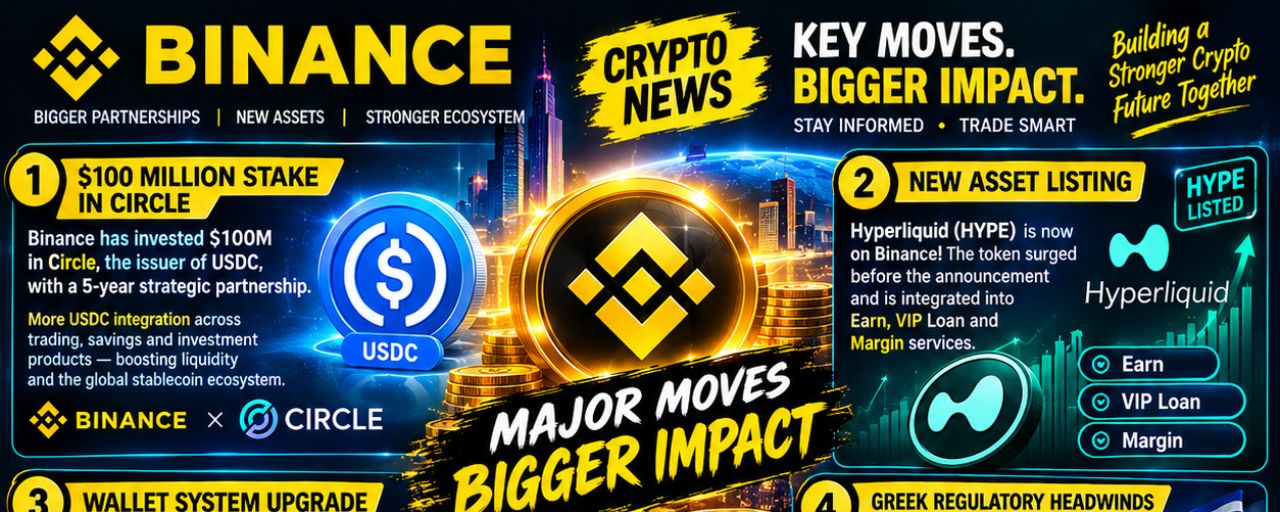
KRYPT0-TANZRUNGEN: BINANCE, CIRCLE, HYPE & EIN $351M SICHERHEITSAUSFALL#BINANCE PUTS $100M HINTER CIRCLE
🌏 @PositiveMindsGlobalResults | Binance Square | 26. September 2026
Der Krypto-Markt betritt eine faszinierende Phase.
Hinter den Kurscharts treffen große Börsen strategische Entscheidungen: Sie bauen die Stablecoin-Infrastruktur aus, fügen neue Assets hinzu – während Sicherheit und Regulierung weiterhin große Druckpunkte bleiben.
Hier sind die Entwicklungen, die Krypto-Trader im Blick behalten sollten 👇
💰 1. BINANCE LEGT $100M FÜR CIRCLE INS SPIEL
Binance hat 100 Millionen US-Dollar in Circle investiert – das Unternehmen hinter USDC – während es eine neue fünfjährige strategische Partnerschaft eingeht.
KRYPT0-TANZRUNGEN: BINANCE, CIRCLE, HYPE & EIN $351M SICHERHEITSAUSFALL
#BINANCE PUTS $100M HINTER CIRCLE
🌏 @PositiveMindsGlobalResults | Binance Square | 26. September 2026
Der Krypto-Markt betritt eine faszinierende Phase.
Hinter den Kurscharts treffen große Börsen strategische Entscheidungen: Sie bauen die Stablecoin-Infrastruktur aus, fügen neue Assets hinzu – während Sicherheit und Regulierung weiterhin große Druckpunkte bleiben.
Hier sind die Entwicklungen, die Krypto-Trader im Blick behalten sollten 👇
💰 1. BINANCE LEGT $100M FÜR CIRCLE INS SPIEL
Binance hat 100 Millionen US-Dollar in Circle investiert – das Unternehmen hinter USDC – während es eine neue fünfjährige strategische Partnerschaft eingeht.
🌏 @PositiveMindsGlobalResults | Binance Square | 26. September 2026
Der Krypto-Markt betritt eine faszinierende Phase.
Hinter den Kurscharts treffen große Börsen strategische Entscheidungen: Sie bauen die Stablecoin-Infrastruktur aus, fügen neue Assets hinzu – während Sicherheit und Regulierung weiterhin große Druckpunkte bleiben.
Hier sind die Entwicklungen, die Krypto-Trader im Blick behalten sollten 👇
💰 1. BINANCE LEGT $100M FÜR CIRCLE INS SPIEL
Binance hat 100 Millionen US-Dollar in Circle investiert – das Unternehmen hinter USDC – während es eine neue fünfjährige strategische Partnerschaft eingeht.
1
38
Verifiziert
Artikel
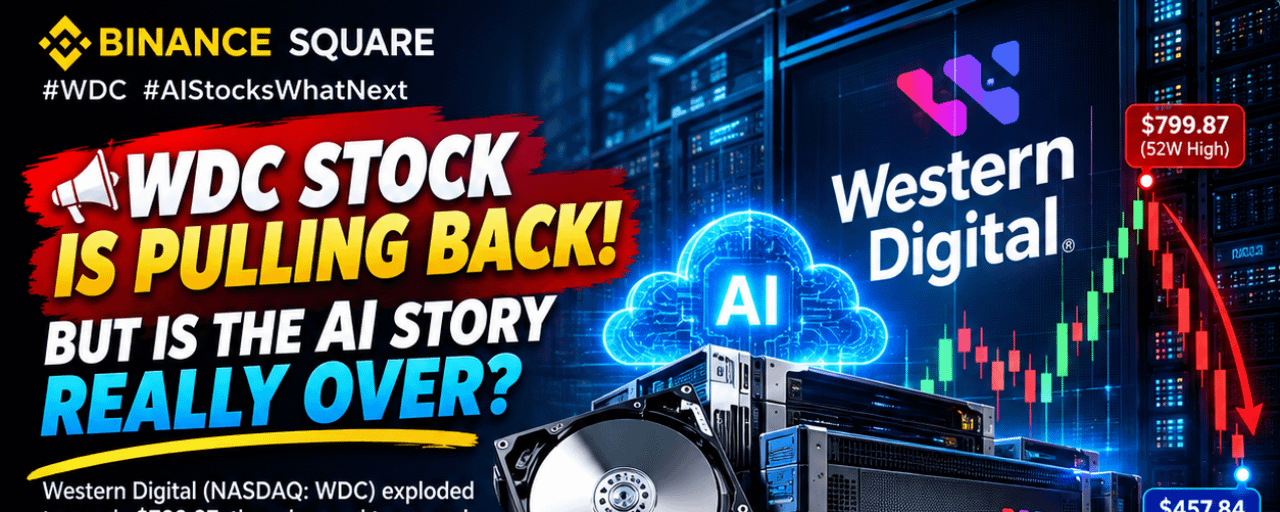
WDC-AKTIEN FALLEN — ABER IST DIE KI-STORY WIRKLICH VORBEI?#WDC #AIStocksWhatNext -
🌏 @PositiveMindsGlobalResults | Binance Square | 26. September 2026
Western Digital (NASDAQ: WDC) explodierte auf fast 799,87 $ und fiel dann bis zum 24. September auf rund 457,84 $.
Das ist ein gewaltiger Neustart.
Aber die größere Frage ist:
Zerfällt WDC — oder preist der Markt einen KI-Speicher-Gewinner nach einer außergewöhnlichen Rally neu? 👇
💾 1️⃣ KI BENÖTIGT SPEICHER — VIEL DAVON
KI ist nicht nur eine GPU-Geschichte.
Jedes Modell erzeugt massive Datenmengen, die gespeichert, abgerufen und verarbeitet werden müssen.
WDC-AKTIEN FALLEN — ABER IST DIE KI-STORY WIRKLICH VORBEI?
#WDC #AIStocksWhatNext -
🌏 @PositiveMindsGlobalResults | Binance Square | 26. September 2026
Western Digital (NASDAQ: WDC) explodierte auf fast 799,87 $ und fiel dann bis zum 24. September auf rund 457,84 $.
Das ist ein gewaltiger Neustart.
Aber die größere Frage ist:
Zerfällt WDC — oder preist der Markt einen KI-Speicher-Gewinner nach einer außergewöhnlichen Rally neu? 👇
💾 1️⃣ KI BENÖTIGT SPEICHER — VIEL DAVON
KI ist nicht nur eine GPU-Geschichte.
Jedes Modell erzeugt massive Datenmengen, die gespeichert, abgerufen und verarbeitet werden müssen.
🌏 @PositiveMindsGlobalResults | Binance Square | 26. September 2026
Western Digital (NASDAQ: WDC) explodierte auf fast 799,87 $ und fiel dann bis zum 24. September auf rund 457,84 $.
Das ist ein gewaltiger Neustart.
Aber die größere Frage ist:
Zerfällt WDC — oder preist der Markt einen KI-Speicher-Gewinner nach einer außergewöhnlichen Rally neu? 👇
💾 1️⃣ KI BENÖTIGT SPEICHER — VIEL DAVON
KI ist nicht nur eine GPU-Geschichte.
Jedes Modell erzeugt massive Datenmengen, die gespeichert, abgerufen und verarbeitet werden müssen.
2
428
Artikel
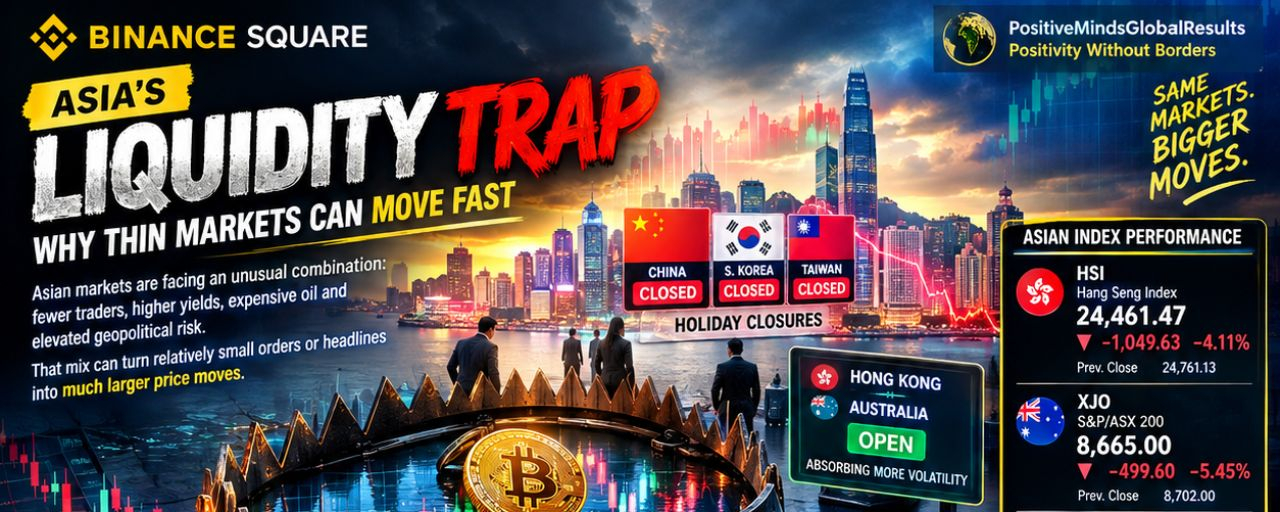
DER LIQUIDITÄTSFALLE IN ASIEN ?🌏 @ThinkPositiveGlobal | Binance Square | 25. September 2026
Asiatische Märkte stehen vor einer ungewöhnlichen Kombination: dünnere Handelsbedingungen, erhöhte Anleiherenditen, teures Öl und geopolitische Unsicherheit.
Wenn die Liquidität begrenzt ist, können relativ kleine Orders oder unerwartete Schlagzeilen viel größere Kursbewegungen auslösen.
🔹 1️⃣ FEIERTAG = DÜNNERE LIQUIDITÄT
China, Taiwan und Südkorea sind heute wegen Feiertagen geschlossen, sodass Märkte wie Hongkong und Australien mit reduzierter regionaler Beteiligung handeln.
DER LIQUIDITÄTSFALLE IN ASIEN ?
🌏 @PositiveMindsGlobalResults | Binance Square | 25. September 2026
Asiatische Märkte stehen vor einer ungewöhnlichen Kombination: dünnere Handelsbedingungen, erhöhte Anleiherenditen, teures Öl und geopolitische Unsicherheit.
Wenn die Liquidität begrenzt ist, können relativ kleine Orders oder unerwartete Schlagzeilen viel größere Kursbewegungen auslösen.
🔹 1️⃣ FEIERTAG = DÜNNERE LIQUIDITÄT
China, Taiwan und Südkorea sind heute wegen Feiertagen geschlossen, sodass Märkte wie Hongkong und Australien mit reduzierter regionaler Beteiligung handeln.
Asiatische Märkte stehen vor einer ungewöhnlichen Kombination: dünnere Handelsbedingungen, erhöhte Anleiherenditen, teures Öl und geopolitische Unsicherheit.
Wenn die Liquidität begrenzt ist, können relativ kleine Orders oder unerwartete Schlagzeilen viel größere Kursbewegungen auslösen.
🔹 1️⃣ FEIERTAG = DÜNNERE LIQUIDITÄT
China, Taiwan und Südkorea sind heute wegen Feiertagen geschlossen, sodass Märkte wie Hongkong und Australien mit reduzierter regionaler Beteiligung handeln.
2
48
#AIStocksWhatNext 🖤⚡ JENSEN HUANGS GEHEIMNIS: WENIGER ENTSCHEIDUNGEN, MEHR FOKUS
Nvidias CEO Jensen Huang hält seine tägliche Garderobe bewusst schlicht — und bleibt bekanntlich bei seiner charakteristischen schwarzen Lederjacke.
Warum?
Er hat erklärt, dass das Vermeiden kleiner Entscheidungen mentale Energie spart — für Dinge, die wirklich zählen.
🧠 Die Erkenntnis geht über die Mode hinaus.
In KI, im Business und beim Trading ist Aufmerksamkeit eine begrenzte Ressource.
Weniger Zeit für unnötige Entscheidungen = mehr Fokus auf Strategie, Innovation und Umsetzung.
🔥 Dein größtes Produktivitäts-Upgrade besteht vielleicht nicht darin, mehr zu tun — sondern weniger zu entscheiden.
Welche tägliche Entscheidung hast du weggelassen, um fokussiert zu bleiben? 👇
#NVIDIA #KI #JensenHuang #Produktivität #Trading #AIStocksWhatNext #BinanceSquare #PositiveMindsGlobalResults
{spot}(BNBUSDT)
{spot}(BTCUSDT)
$NVDAB
{spot}(NVDABUSDT)
#AIStocksWhatNext 🖤⚡ JENSEN HUANGS GEHEIMNIS: WENIGER ENTSCHEIDUNGEN, MEHR FOKUS
Nvidias CEO Jensen Huang hält seine tägliche Garderobe bewusst schlicht — und bleibt bekanntlich bei seiner charakteristischen schwarzen Lederjacke.
Warum?
Er hat erklärt, dass das Vermeiden kleiner Entscheidungen mentale Energie spart — für Dinge, die wirklich zählen.
🧠 Die Erkenntnis geht über die Mode hinaus.
In KI, im Business und beim Trading ist Aufmerksamkeit eine begrenzte Ressource.
Weniger Zeit für unnötige Entscheidungen = mehr Fokus auf Strategie, Innovation und Umsetzung.
🔥 Dein größtes Produktivitäts-Upgrade besteht vielleicht nicht darin, mehr zu tun — sondern weniger zu entscheiden.
Welche tägliche Entscheidung hast du weggelassen, um fokussiert zu bleiben? 👇
#NVIDIA #KI #JensenHuang #Produktivität #Trading #AIStocksWhatNext #BinanceSquare #PositiveMindsGlobalResults
$NVDAB
Nvidias CEO Jensen Huang hält seine tägliche Garderobe bewusst schlicht — und bleibt bekanntlich bei seiner charakteristischen schwarzen Lederjacke.
Warum?
Er hat erklärt, dass das Vermeiden kleiner Entscheidungen mentale Energie spart — für Dinge, die wirklich zählen.
🧠 Die Erkenntnis geht über die Mode hinaus.
In KI, im Business und beim Trading ist Aufmerksamkeit eine begrenzte Ressource.
Weniger Zeit für unnötige Entscheidungen = mehr Fokus auf Strategie, Innovation und Umsetzung.
🔥 Dein größtes Produktivitäts-Upgrade besteht vielleicht nicht darin, mehr zu tun — sondern weniger zu entscheiden.
Welche tägliche Entscheidung hast du weggelassen, um fokussiert zu bleiben? 👇
#NVIDIA #KI #JensenHuang #Produktivität #Trading #AIStocksWhatNext #BinanceSquare #PositiveMindsGlobalResults
$NVDAB

2
122
Artikel
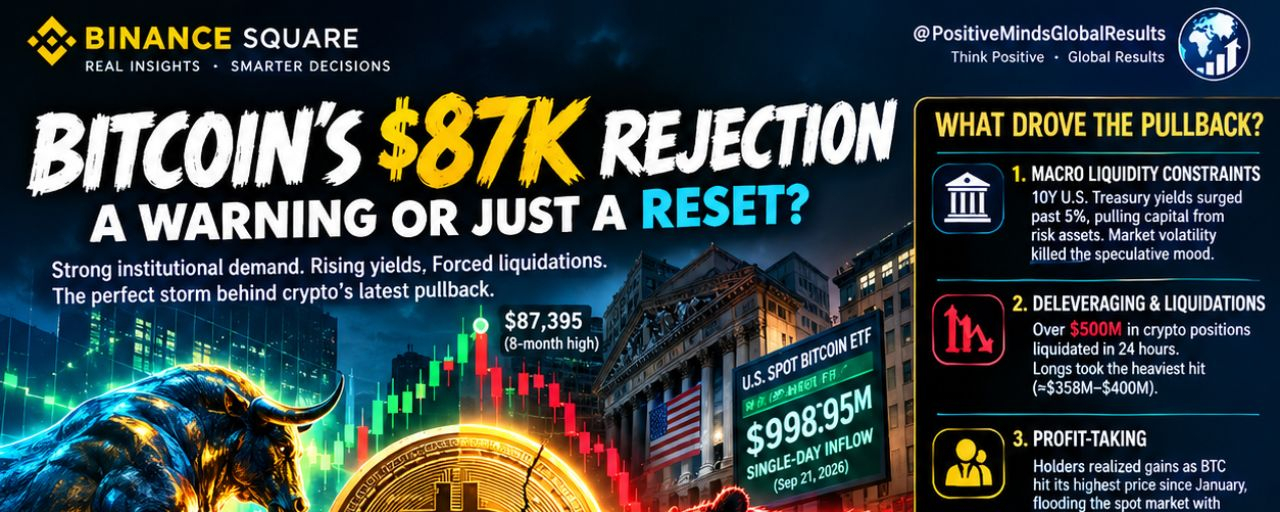
BITCOINS $87K-ABWEISUNG: WARNUNG ODER NUR EIN RESET?#BTC <t-116/> <t-118/>
| 25. September 2026
Bitcoin hat gerade eine starke Erinnerung geliefert: Starke institutionelle Nachfrage macht Krypto nicht immun gegen makroökonomischen Druck.
BTC schoss auf rund 87.395 $ und erreichte damit sein stärkstes Niveau seit Januar, bevor es wieder unter 84K $ zurückfiel. Gleichzeitig verzeichneten US-Spot-Bitcoin-ETFs am 21. September einen erstaunlichen Nettozufluss von 998,95 Mio. $ an einem einzigen Tag — ihren größten Zufluss in etwa 11 Monaten.
Also warum ist Bitcoin zurückgegangen?
1️⃣ ETF-GELD FLIESST IMMER NOCH
Die institutionelle Story bleibt wichtig.
BITCOINS $87K-ABWEISUNG: WARNUNG ODER NUR EIN RESET?
#BTC <t-116/> <t-118/>
| 25. September 2026
Bitcoin hat gerade eine starke Erinnerung geliefert: Starke institutionelle Nachfrage macht Krypto nicht immun gegen makroökonomischen Druck.
BTC schoss auf rund 87.395 $ und erreichte damit sein stärkstes Niveau seit Januar, bevor es wieder unter 84K $ zurückfiel. Gleichzeitig verzeichneten US-Spot-Bitcoin-ETFs am 21. September einen erstaunlichen Nettozufluss von 998,95 Mio. $ an einem einzigen Tag — ihren größten Zufluss in etwa 11 Monaten.
Also warum ist Bitcoin zurückgegangen?
1️⃣ ETF-GELD FLIESST IMMER NOCH
Die institutionelle Story bleibt wichtig.
| 25. September 2026
Bitcoin hat gerade eine starke Erinnerung geliefert: Starke institutionelle Nachfrage macht Krypto nicht immun gegen makroökonomischen Druck.
BTC schoss auf rund 87.395 $ und erreichte damit sein stärkstes Niveau seit Januar, bevor es wieder unter 84K $ zurückfiel. Gleichzeitig verzeichneten US-Spot-Bitcoin-ETFs am 21. September einen erstaunlichen Nettozufluss von 998,95 Mio. $ an einem einzigen Tag — ihren größten Zufluss in etwa 11 Monaten.
Also warum ist Bitcoin zurückgegangen?
1️⃣ ETF-GELD FLIESST IMMER NOCH
Die institutionelle Story bleibt wichtig.
2
135
Verifiziert
Artikel
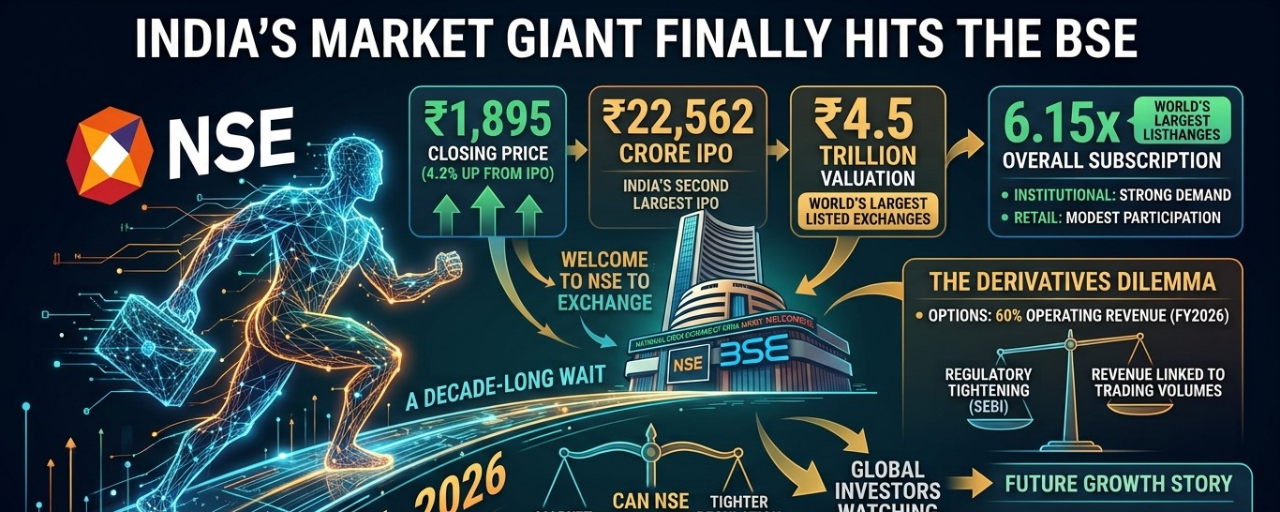
NSE GEHT AN DIE BÖRSE: INDIENS MARKTGIGANT TRIFFT ENDLICH DIE BSE@ThinkPositiveGlobal @Binance_Square_Official | 25. September 2026
Indiens National Stock Exchange (NSE) ist nach einer zehnjährigen Reise, die von regulatorischen Verzögerungen und intensiver Prüfung geprägt war, endlich in den öffentlichen Markt eingetreten.
Das sind die wichtigsten Punkte, auf die Anleger achten sollten 👇
1️⃣ EIN LANGES WARTEN ENDET
Die NSE gab am 24. September ihr lang erwartetes Debüt an der BSE und markierte damit einen wichtigen Meilenstein für Indiens Finanzmärkte.
2️⃣ RUHIGER START, STÄRKERES ENDE
Die NSE eröffnete bei 1.800 ₹, 0,84 % über ihrem IPO-Preis von 1.785 ₹.
Später stieg sie noch bis auf etwa 1.878 ₹, bevor sie trotz Schwäche im breiteren indischen Markt bei rund 1.818 ₹ schloss.
NSE GEHT AN DIE BÖRSE: INDIENS MARKTGIGANT TRIFFT ENDLICH DIE BSE
@PositiveMindsGlobalResults @Binance Square Official | 25. September 2026
Indiens National Stock Exchange (NSE) ist nach einer zehnjährigen Reise, die von regulatorischen Verzögerungen und intensiver Prüfung geprägt war, endlich in den öffentlichen Markt eingetreten.
Das sind die wichtigsten Punkte, auf die Anleger achten sollten 👇
1️⃣ EIN LANGES WARTEN ENDET
Die NSE gab am 24. September ihr lang erwartetes Debüt an der BSE und markierte damit einen wichtigen Meilenstein für Indiens Finanzmärkte.
2️⃣ RUHIGER START, STÄRKERES ENDE
Die NSE eröffnete bei 1.800 ₹, 0,84 % über ihrem IPO-Preis von 1.785 ₹.
Später stieg sie noch bis auf etwa 1.878 ₹, bevor sie trotz Schwäche im breiteren indischen Markt bei rund 1.818 ₹ schloss.
Indiens National Stock Exchange (NSE) ist nach einer zehnjährigen Reise, die von regulatorischen Verzögerungen und intensiver Prüfung geprägt war, endlich in den öffentlichen Markt eingetreten.
Das sind die wichtigsten Punkte, auf die Anleger achten sollten 👇
1️⃣ EIN LANGES WARTEN ENDET
Die NSE gab am 24. September ihr lang erwartetes Debüt an der BSE und markierte damit einen wichtigen Meilenstein für Indiens Finanzmärkte.
2️⃣ RUHIGER START, STÄRKERES ENDE
Die NSE eröffnete bei 1.800 ₹, 0,84 % über ihrem IPO-Preis von 1.785 ₹.
Später stieg sie noch bis auf etwa 1.878 ₹, bevor sie trotz Schwäche im breiteren indischen Markt bei rund 1.818 ₹ schloss.
1
68
Anmelden und weiter Inhalte entdecken
Krypto-Nutzer weltweit auf Binance Square kennenlernen
⚡️ Bleib in Sachen Krypto stets am Puls.
💬 Die weltgrößte Kryptobörse vertraut darauf.
👍 Erhalte verlässliche Einblicke von verifizierten Creators.
E-Mail-Adresse/Telefonnummer
Trendthemen
BNBSurpasses$790
9,579 Aufrufe
80 Kommentare
$BNB strategischer Langzeitplan -> JETZT FOKUS
BNB hat 2 starke Tiefs geschaffen, nachdem internes Liquiditätsniveau aufgeräumt wurde
Ich erwarte eine Bewegung in Richtung Swing High bei $815-$830 und suche einen Long-Einstieg bei einem Retest der grünen Box
#BNBSurpasses$790 #bnb
Ghost Writer
·4 Likes
·4.6k Aufrufe
ZamaRises15.99%ToIntradayHigh$0.09
3,760 Aufrufe
70 Kommentare
BitcoinSpotETFsDraw$6.34BInflowsInQ3
3,373 Aufrufe
56 Kommentare