
Hamza364
15 Beiträge

Hamza364
Melden
Nutzer blockieren
Trade eröffnen
9 Tage
10 Following
1 Follower
0 Like gegeben
Beiträge
Portfolio
·
--
Übersetzung ansehen
🟠 Bitcoin — Easy Update
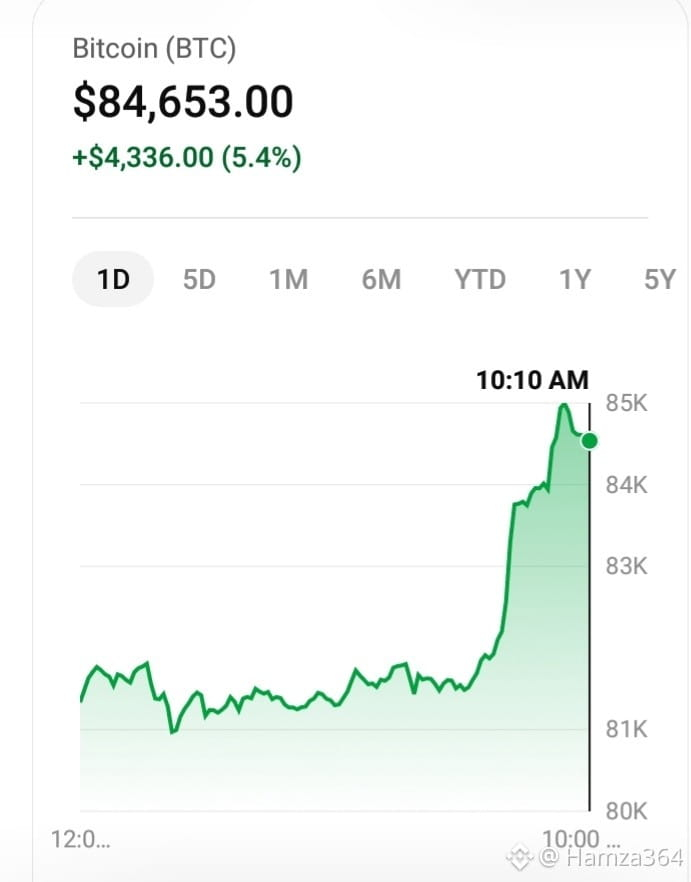
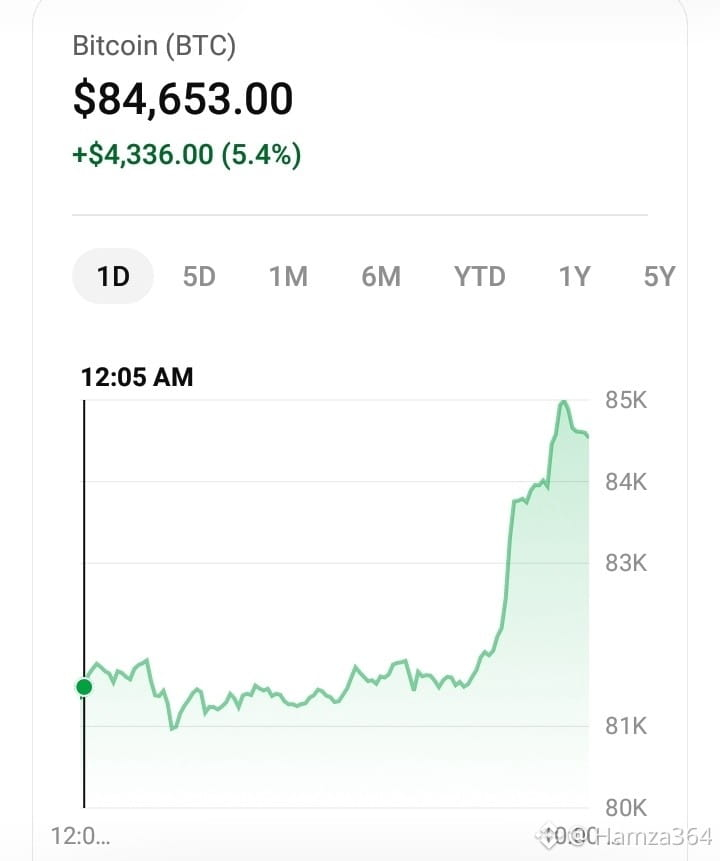
🔥 $BTC reached $85K+
📈 Price: Around $84.6K
💰 ETF buying is supporting Bitcoin.
🚀 BTC is moving up strongly.
⚠️ Important: Watch the $85K level.
👉 Simple: BTC broke $85K, and now traders are watching whether it can stay above this level.
🟠 Bitcoin — Easy Update
🔥 $BTC reached $85K+
📈 Price: Around $84.6K
💰 ETF buying is supporting Bitcoin.
🚀 BTC is moving up strongly.
⚠️ Important: Watch the $85K level.
👉 Simple: BTC broke $85K, and now traders are watching whether it can stay above this level.
🔥 $BTC reached $85K+
📈 Price: Around $84.6K
💰 ETF buying is supporting Bitcoin.
🚀 BTC is moving up strongly.
⚠️ Important: Watch the $85K level.
👉 Simple: BTC broke $85K, and now traders are watching whether it can stay above this level.
1
·
--
Bullisch
$#SouthAfricaProposesCryptoExchangeControls
🇿🇦 Südafrika Krypto — aktuelles Update
🔥 Gute Nachricht: Südafrika plant strengere Regeln für Krypto, das über seine Grenzen hinweg transferiert wird.
💱 Was ändert sich?
Bestimmte Krypto-Überweisungen zu ausländischen Börsen oder Self-Custody-Wallets könnten Beschränkungen im Devisenkontroll- und Meldewesen unterliegen.
🏦 Unternehmen: Der Entwurf könnte südafrikanischen Unternehmen einschränken, Krypto für einige grenzüberschreitende Transaktionen zu verwenden.
💰 Marktauswirkung: Mindestens 2,2 Mrd. Rand (130 Mio. USD+) in krypto-bezogenen Geschäften wurden Berichten zufolge vorerst gestoppt, weil es Unsicherheit über die vorgeschlagenen Regeln gibt.
⚠️ Wichtig: Diese Regeln sind noch NICHT final. Die Konsultationsphase läuft bis zum 30. September 2026, und die SARB sagt, dass die Vorschläge noch geändert werden können.
👀 Einfache Zusammenfassung:
Südafrika will mehr Kontrolle über grenzüberschreitendes Krypto → die Branche stemmt sich dagegen → die Regeln werden noch diskutiert.
$#SouthAfricaProposesCryptoExchangeControls
🇿🇦 Südafrika Krypto — aktuelles Update
🔥 Gute Nachricht: Südafrika plant strengere Regeln für Krypto, das über seine Grenzen hinweg transferiert wird.
💱 Was ändert sich?
Bestimmte Krypto-Überweisungen zu ausländischen Börsen oder Self-Custody-Wallets könnten Beschränkungen im Devisenkontroll- und Meldewesen unterliegen.
🏦 Unternehmen: Der Entwurf könnte südafrikanischen Unternehmen einschränken, Krypto für einige grenzüberschreitende Transaktionen zu verwenden.
💰 Marktauswirkung: Mindestens 2,2 Mrd. Rand (130 Mio. USD+) in krypto-bezogenen Geschäften wurden Berichten zufolge vorerst gestoppt, weil es Unsicherheit über die vorgeschlagenen Regeln gibt.
⚠️ Wichtig: Diese Regeln sind noch NICHT final. Die Konsultationsphase läuft bis zum 30. September 2026, und die SARB sagt, dass die Vorschläge noch geändert werden können.
👀 Einfache Zusammenfassung:
Südafrika will mehr Kontrolle über grenzüberschreitendes Krypto → die Branche stemmt sich dagegen → die Regeln werden noch diskutiert.
🇿🇦 Südafrika Krypto — aktuelles Update
🔥 Gute Nachricht: Südafrika plant strengere Regeln für Krypto, das über seine Grenzen hinweg transferiert wird.
💱 Was ändert sich?
Bestimmte Krypto-Überweisungen zu ausländischen Börsen oder Self-Custody-Wallets könnten Beschränkungen im Devisenkontroll- und Meldewesen unterliegen.
🏦 Unternehmen: Der Entwurf könnte südafrikanischen Unternehmen einschränken, Krypto für einige grenzüberschreitende Transaktionen zu verwenden.
💰 Marktauswirkung: Mindestens 2,2 Mrd. Rand (130 Mio. USD+) in krypto-bezogenen Geschäften wurden Berichten zufolge vorerst gestoppt, weil es Unsicherheit über die vorgeschlagenen Regeln gibt.
⚠️ Wichtig: Diese Regeln sind noch NICHT final. Die Konsultationsphase läuft bis zum 30. September 2026, und die SARB sagt, dass die Vorschläge noch geändert werden können.
👀 Einfache Zusammenfassung:
Südafrika will mehr Kontrolle über grenzüberschreitendes Krypto → die Branche stemmt sich dagegen → die Regeln werden noch diskutiert.
·
--
Bullisch
Übersetzung ansehen
#BitcoinHits$85K
🟠 Bitcoin — Latest Update | Sept 21, 2026
🔥 BTC crossed $85,000 today, reaching an 8-month high. It was around $85,117, up about 4.7% at one point.
📈 Why is BTC moving up?
Strong ETF/institutional demand
Investors closing short positions
Falling oil prices are helping broader risk sentiment
BTC has now moved clearly above the previous $80K area.
💰 ETF: U.S. spot Bitcoin ETFs had about $433M of inflows on Friday, supporting demand.
⚠️ Watch: After the fast move toward $85K, short-term volatility and profit-taking can remain high.
🎯 Easy takeaway:
BTC broke $85K → 8-month high → ETF demand remains important → $85K area is now the key zone to watch.
#BitcoinHits$85K
🟠 Bitcoin — Latest Update | Sept 21, 2026
🔥 BTC crossed $85,000 today, reaching an 8-month high. It was around $85,117, up about 4.7% at one point.
📈 Why is BTC moving up?
Strong ETF/institutional demand
Investors closing short positions
Falling oil prices are helping broader risk sentiment
BTC has now moved clearly above the previous $80K area.
💰 ETF: U.S. spot Bitcoin ETFs had about $433M of inflows on Friday, supporting demand.
⚠️ Watch: After the fast move toward $85K, short-term volatility and profit-taking can remain high.
🎯 Easy takeaway:
BTC broke $85K → 8-month high → ETF demand remains important → $85K area is now the key zone to watch.
🟠 Bitcoin — Latest Update | Sept 21, 2026
🔥 BTC crossed $85,000 today, reaching an 8-month high. It was around $85,117, up about 4.7% at one point.
📈 Why is BTC moving up?
Strong ETF/institutional demand
Investors closing short positions
Falling oil prices are helping broader risk sentiment
BTC has now moved clearly above the previous $80K area.
💰 ETF: U.S. spot Bitcoin ETFs had about $433M of inflows on Friday, supporting demand.
⚠️ Watch: After the fast move toward $85K, short-term volatility and profit-taking can remain high.
🎯 Easy takeaway:
BTC broke $85K → 8-month high → ETF demand remains important → $85K area is now the key zone to watch.
16
·
--
Bullisch
#BOJRaisesRatesTo31YearHigh
🇩🇪 BOJ — neueste Aktualisierung | 21. Sept. 2026
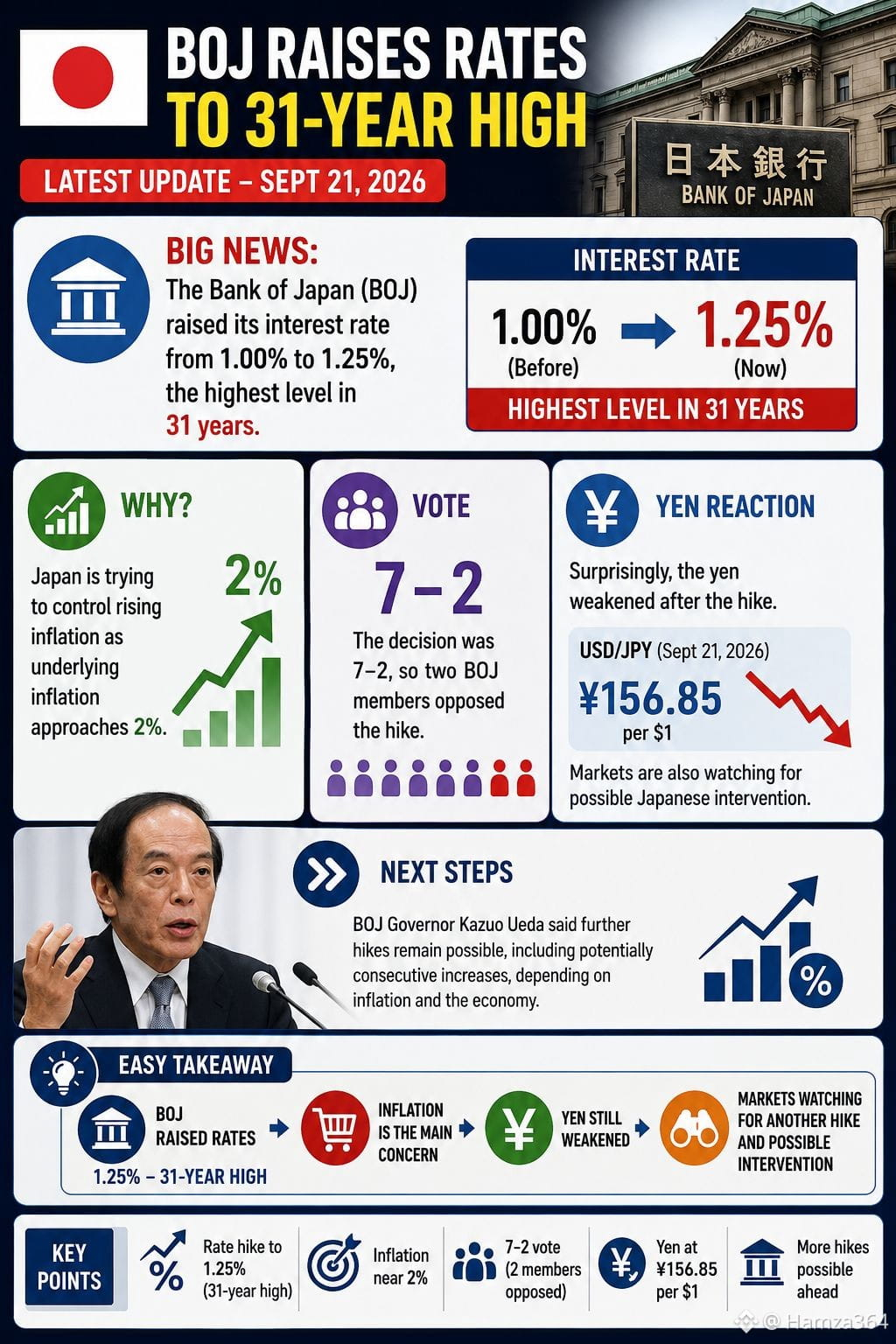
🔥 Große Neuigkeit: Die Bank of Japan (BOJ) hat ihren Leitzins von 1,00 % → 1,25 % angehoben – der höchste Stand seit 31 Jahren.
📈 Warum? Japan versucht, die steigende Inflation unter Kontrolle zu bringen, während die Kerninflation sich der 2 %-Marke nähert.
⚖️ Abstimmung: Die Entscheidung fiel mit 7–2, also lehnten zwei BOJ-Mitglieder die Zinserhöhung ab.
💴 Yen-Reaktion: Überraschenderweise schwächte sich der Yen nach der Anhebung. Am 21. Sept. lag er bei rund ¥156,85 pro $1, während die Märkte außerdem auf mögliche japanische Interventionen achteten.
👀 Nächstes: BOJ-Gouverneur Kazuo Ueda sagte, weitere Zinsschritte seien weiterhin möglich – einschließlich potenziell aufeinanderfolgender Erhöhungen –, abhängig von Inflation und Wirtschaft.
Kurzfazit:
BOJ erhöhte die Zinsen → Inflation ist das Hauptthema → Yen blieb dennoch schwächer → die Märkte warten auf eine weitere Erhöhung und mögliche Intervention.
#BOJRaisesRatesTo31YearHigh
🇩🇪 BOJ — neueste Aktualisierung | 21. Sept. 2026
🔥 Große Neuigkeit: Die Bank of Japan (BOJ) hat ihren Leitzins von 1,00 % → 1,25 % angehoben – der höchste Stand seit 31 Jahren.
📈 Warum? Japan versucht, die steigende Inflation unter Kontrolle zu bringen, während die Kerninflation sich der 2 %-Marke nähert.
⚖️ Abstimmung: Die Entscheidung fiel mit 7–2, also lehnten zwei BOJ-Mitglieder die Zinserhöhung ab.
💴 Yen-Reaktion: Überraschenderweise schwächte sich der Yen nach der Anhebung. Am 21. Sept. lag er bei rund ¥156,85 pro $1, während die Märkte außerdem auf mögliche japanische Interventionen achteten.
👀 Nächstes: BOJ-Gouverneur Kazuo Ueda sagte, weitere Zinsschritte seien weiterhin möglich – einschließlich potenziell aufeinanderfolgender Erhöhungen –, abhängig von Inflation und Wirtschaft.
Kurzfazit:
BOJ erhöhte die Zinsen → Inflation ist das Hauptthema → Yen blieb dennoch schwächer → die Märkte warten auf eine weitere Erhöhung und mögliche Intervention.
🇩🇪 BOJ — neueste Aktualisierung | 21. Sept. 2026
🔥 Große Neuigkeit: Die Bank of Japan (BOJ) hat ihren Leitzins von 1,00 % → 1,25 % angehoben – der höchste Stand seit 31 Jahren.
📈 Warum? Japan versucht, die steigende Inflation unter Kontrolle zu bringen, während die Kerninflation sich der 2 %-Marke nähert.
⚖️ Abstimmung: Die Entscheidung fiel mit 7–2, also lehnten zwei BOJ-Mitglieder die Zinserhöhung ab.
💴 Yen-Reaktion: Überraschenderweise schwächte sich der Yen nach der Anhebung. Am 21. Sept. lag er bei rund ¥156,85 pro $1, während die Märkte außerdem auf mögliche japanische Interventionen achteten.
👀 Nächstes: BOJ-Gouverneur Kazuo Ueda sagte, weitere Zinsschritte seien weiterhin möglich – einschließlich potenziell aufeinanderfolgender Erhöhungen –, abhängig von Inflation und Wirtschaft.
Kurzfazit:
BOJ erhöhte die Zinsen → Inflation ist das Hauptthema → Yen blieb dennoch schwächer → die Märkte warten auf eine weitere Erhöhung und mögliche Intervention.
30
·
--
Bullisch
#SaylorHintsStrategyBitcoinBuy
🟠 Strategie / Saylor — Neueste Nachrichten | 21. Sept. 2026
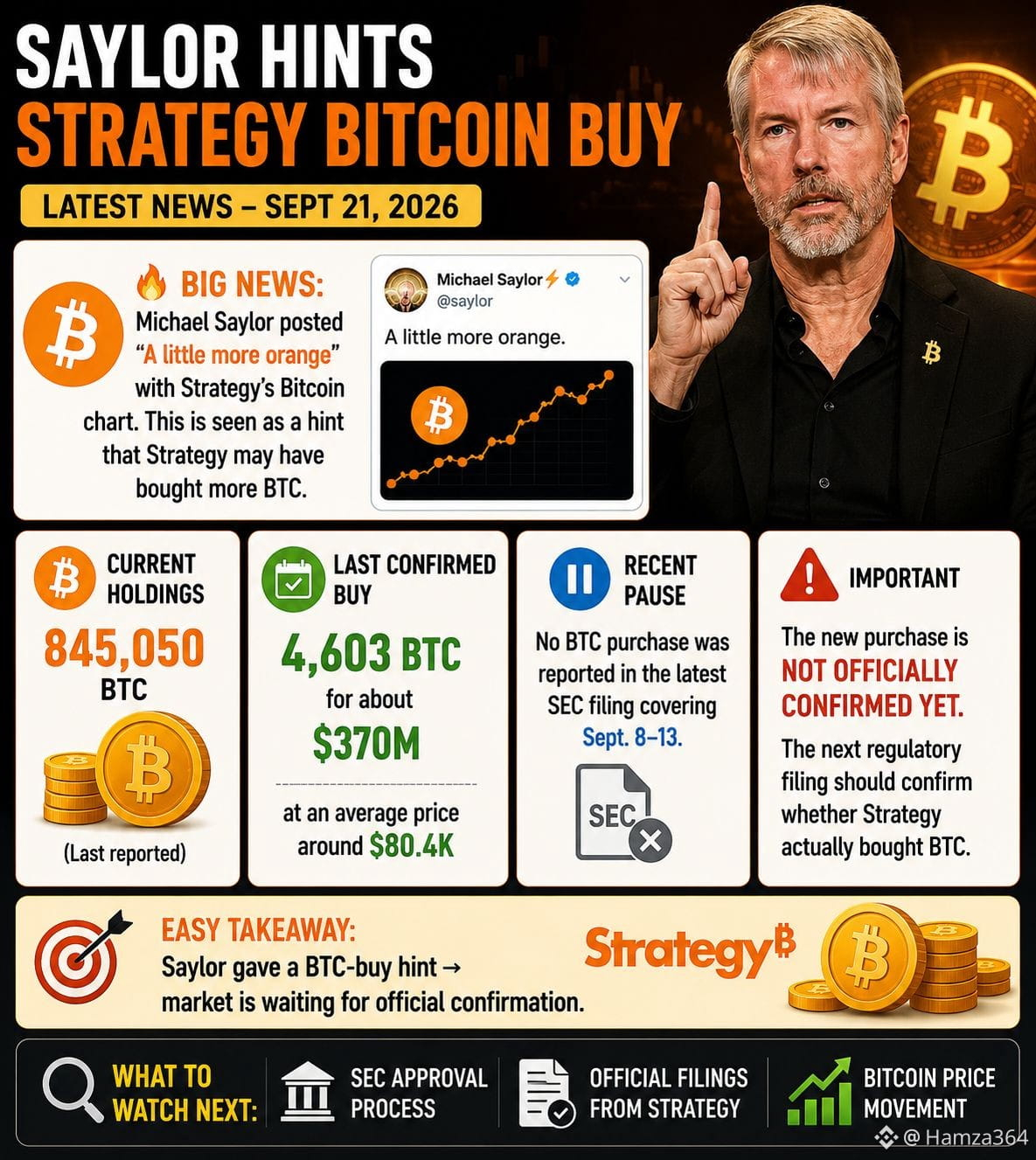
🔥 Große Neuigkeit: Michael Saylor hat „Ein bisschen mehr Orange“ mit dem Bitcoin-Chart der Strategie gepostet. Das wird als Hinweis darauf gesehen, dass die Strategie möglicherweise mehr BTC gekauft hat.
₿ Aktuelle Bestände: Die Strategie meldete zuletzt 845.050 BTC.
💰 Letzter bestätigter Kauf: 4.603 BTC für etwa 370 Mio. $ bei einem durchschnittlichen Preis von rund 80,4 Tsd. $.
⏸️ Jüngste Pause: In der neuesten SEC-Einreichung, die den Zeitraum vom 8. bis 13. Sept. abdeckt, wurde kein BTC-Kauf gemeldet.
⚠️ Wichtig: Der neue Kauf ist noch nicht offiziell bestätigt. Die nächste regulatorische Einreichung sollte bestätigen, ob die Strategie tatsächlich BTC gekauft hat.
👀 Einfache Schlussfolgerung:
Saylor gab einen BTC-Kauf-Hinweis → der Markt wartet auf die offizielle Bestätigung.
#SaylorHintsStrategyBitcoinBuy
🟠 Strategie / Saylor — Neueste Nachrichten | 21. Sept. 2026
🔥 Große Neuigkeit: Michael Saylor hat „Ein bisschen mehr Orange“ mit dem Bitcoin-Chart der Strategie gepostet. Das wird als Hinweis darauf gesehen, dass die Strategie möglicherweise mehr BTC gekauft hat.
₿ Aktuelle Bestände: Die Strategie meldete zuletzt 845.050 BTC.
💰 Letzter bestätigter Kauf: 4.603 BTC für etwa 370 Mio. $ bei einem durchschnittlichen Preis von rund 80,4 Tsd. $.
⏸️ Jüngste Pause: In der neuesten SEC-Einreichung, die den Zeitraum vom 8. bis 13. Sept. abdeckt, wurde kein BTC-Kauf gemeldet.
⚠️ Wichtig: Der neue Kauf ist noch nicht offiziell bestätigt. Die nächste regulatorische Einreichung sollte bestätigen, ob die Strategie tatsächlich BTC gekauft hat.
👀 Einfache Schlussfolgerung:
Saylor gab einen BTC-Kauf-Hinweis → der Markt wartet auf die offizielle Bestätigung.
🟠 Strategie / Saylor — Neueste Nachrichten | 21. Sept. 2026
🔥 Große Neuigkeit: Michael Saylor hat „Ein bisschen mehr Orange“ mit dem Bitcoin-Chart der Strategie gepostet. Das wird als Hinweis darauf gesehen, dass die Strategie möglicherweise mehr BTC gekauft hat.
₿ Aktuelle Bestände: Die Strategie meldete zuletzt 845.050 BTC.
💰 Letzter bestätigter Kauf: 4.603 BTC für etwa 370 Mio. $ bei einem durchschnittlichen Preis von rund 80,4 Tsd. $.
⏸️ Jüngste Pause: In der neuesten SEC-Einreichung, die den Zeitraum vom 8. bis 13. Sept. abdeckt, wurde kein BTC-Kauf gemeldet.
⚠️ Wichtig: Der neue Kauf ist noch nicht offiziell bestätigt. Die nächste regulatorische Einreichung sollte bestätigen, ob die Strategie tatsächlich BTC gekauft hat.
👀 Einfache Schlussfolgerung:
Saylor gab einen BTC-Kauf-Hinweis → der Markt wartet auf die offizielle Bestätigung.
49
·
--
Bullisch
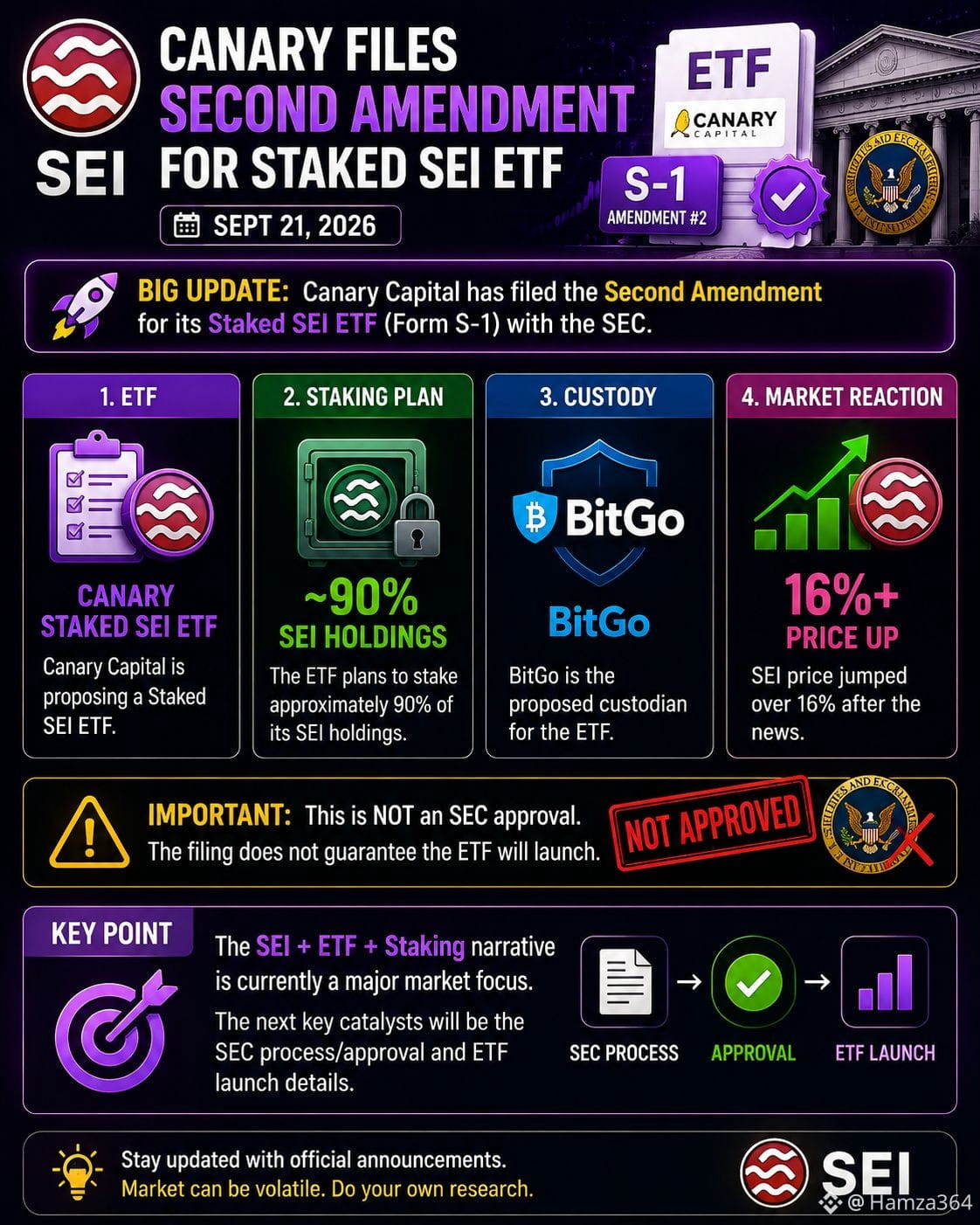
#CanaryFilesSecondAmendmentForStakedSEIETF
🟣 SEI — Aktuelle Nachrichten | 21. Sept. 2026
🔥 Große Aktualisierung: Canary Capital hat die zweite Änderung (Second Amendment) zu seinem gestakten SEI-ETF S-1 bei der SEC eingereicht.
🏦 ETF: Canary Staked SEI ETF
🔒 Verwahrung: Der ETF plant, ungefähr 90% seiner SEI-Beteiligungen zu staken.
🛡️ Verwahrung/Verwahrer: BitGo ist der vorgeschlagene Verwahrer.
📈 Marktreaktion: SEI stieg nach der Nachricht um 16%+.
⚠️ Wichtig: Dies ist keine SEC-Zulassung. Die Einreichung allein garantiert nicht, dass der ETF auf den Markt kommt.
👀 Kernaussage
Die Story rund um SEI + ETF + Staking ist derzeit ein zentraler Fokus des Marktes.
Die nächsten wichtigen Auslöser sind der SEC-Prozess/die Genehmigung und die Details zum ETF-Launch.
#CanaryFilesSecondAmendmentForStakedSEIETF
🟣 SEI — Aktuelle Nachrichten | 21. Sept. 2026
🔥 Große Aktualisierung: Canary Capital hat die zweite Änderung (Second Amendment) zu seinem gestakten SEI-ETF S-1 bei der SEC eingereicht.
🏦 ETF: Canary Staked SEI ETF
🔒 Verwahrung: Der ETF plant, ungefähr 90% seiner SEI-Beteiligungen zu staken.
🛡️ Verwahrung/Verwahrer: BitGo ist der vorgeschlagene Verwahrer.
📈 Marktreaktion: SEI stieg nach der Nachricht um 16%+.
⚠️ Wichtig: Dies ist keine SEC-Zulassung. Die Einreichung allein garantiert nicht, dass der ETF auf den Markt kommt.
👀 Kernaussage
Die Story rund um SEI + ETF + Staking ist derzeit ein zentraler Fokus des Marktes.
Die nächsten wichtigen Auslöser sind der SEC-Prozess/die Genehmigung und die Details zum ETF-Launch.
🟣 SEI — Aktuelle Nachrichten | 21. Sept. 2026
🔥 Große Aktualisierung: Canary Capital hat die zweite Änderung (Second Amendment) zu seinem gestakten SEI-ETF S-1 bei der SEC eingereicht.
🏦 ETF: Canary Staked SEI ETF
🔒 Verwahrung: Der ETF plant, ungefähr 90% seiner SEI-Beteiligungen zu staken.
🛡️ Verwahrung/Verwahrer: BitGo ist der vorgeschlagene Verwahrer.
📈 Marktreaktion: SEI stieg nach der Nachricht um 16%+.
⚠️ Wichtig: Dies ist keine SEC-Zulassung. Die Einreichung allein garantiert nicht, dass der ETF auf den Markt kommt.
👀 Kernaussage
Die Story rund um SEI + ETF + Staking ist derzeit ein zentraler Fokus des Marktes.
Die nächsten wichtigen Auslöser sind der SEC-Prozess/die Genehmigung und die Details zum ETF-Launch.
117
·
--
Bullisch
Übersetzung ansehen
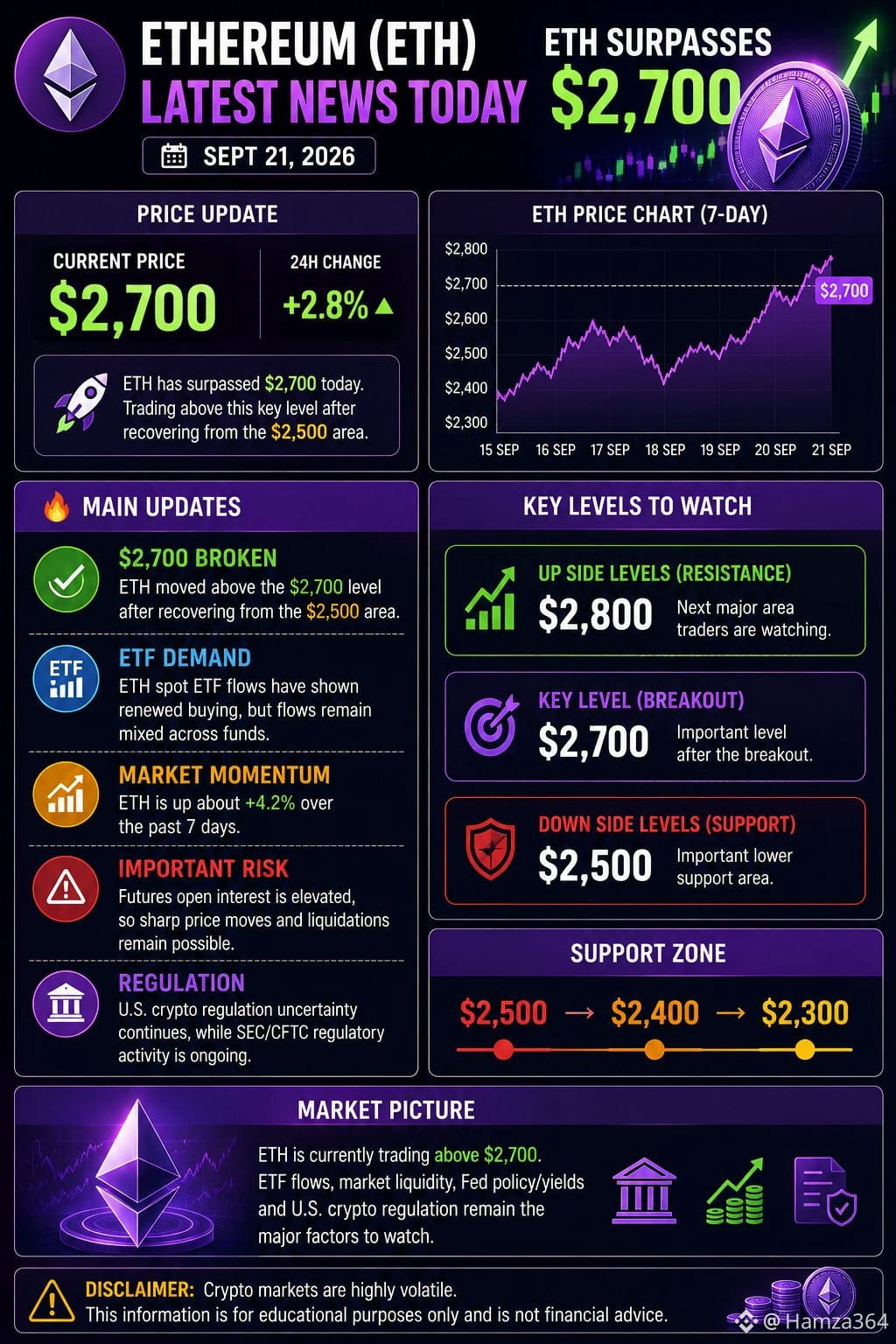
#EthereumSurpasses$2700
🟣 ETH — Latest News | Sept 21, 2026
💰 Price: around $2,700
📈 24H: about +2.8%
🔥 Update: ETH has surpassed $2,700 today.
🔥 Main Updates
$2,700 broken: ETH moved above this key level after recovering from the $2,500 area.
ETF demand: ETH spot ETF flows have recently shown renewed buying, but flows remain mixed across funds.
Market momentum: ETH is up about 4.2% over 7 days according to today's market data.
Important risk: Futures open interest is elevated, so sharp price moves/liquidations remain possible.
📊 Levels to Watch
🟢 $2,700: important level after the breakout
🔴 $2,800: next major area traders are watching
🟡 $2,500: important lower support area
Overall: ETH has moved above $2,700, with ETF flows and market liquidity remaining key things to watch.
#EthereumSurpasses$2700
🟣 ETH — Latest News | Sept 21, 2026
💰 Price: around $2,700
📈 24H: about +2.8%
🔥 Update: ETH has surpassed $2,700 today.
🔥 Main Updates
$2,700 broken: ETH moved above this key level after recovering from the $2,500 area.
ETF demand: ETH spot ETF flows have recently shown renewed buying, but flows remain mixed across funds.
Market momentum: ETH is up about 4.2% over 7 days according to today's market data.
Important risk: Futures open interest is elevated, so sharp price moves/liquidations remain possible.
📊 Levels to Watch
🟢 $2,700: important level after the breakout
🔴 $2,800: next major area traders are watching
🟡 $2,500: important lower support area
Overall: ETH has moved above $2,700, with ETF flows and market liquidity remaining key things to watch.
🟣 ETH — Latest News | Sept 21, 2026
💰 Price: around $2,700
📈 24H: about +2.8%
🔥 Update: ETH has surpassed $2,700 today.
🔥 Main Updates
$2,700 broken: ETH moved above this key level after recovering from the $2,500 area.
ETF demand: ETH spot ETF flows have recently shown renewed buying, but flows remain mixed across funds.
Market momentum: ETH is up about 4.2% over 7 days according to today's market data.
Important risk: Futures open interest is elevated, so sharp price moves/liquidations remain possible.
📊 Levels to Watch
🟢 $2,700: important level after the breakout
🔴 $2,800: next major area traders are watching
🟡 $2,500: important lower support area
Overall: ETH has moved above $2,700, with ETF flows and market liquidity remaining key things to watch.
52
·
--
Bullisch
Übersetzung ansehen
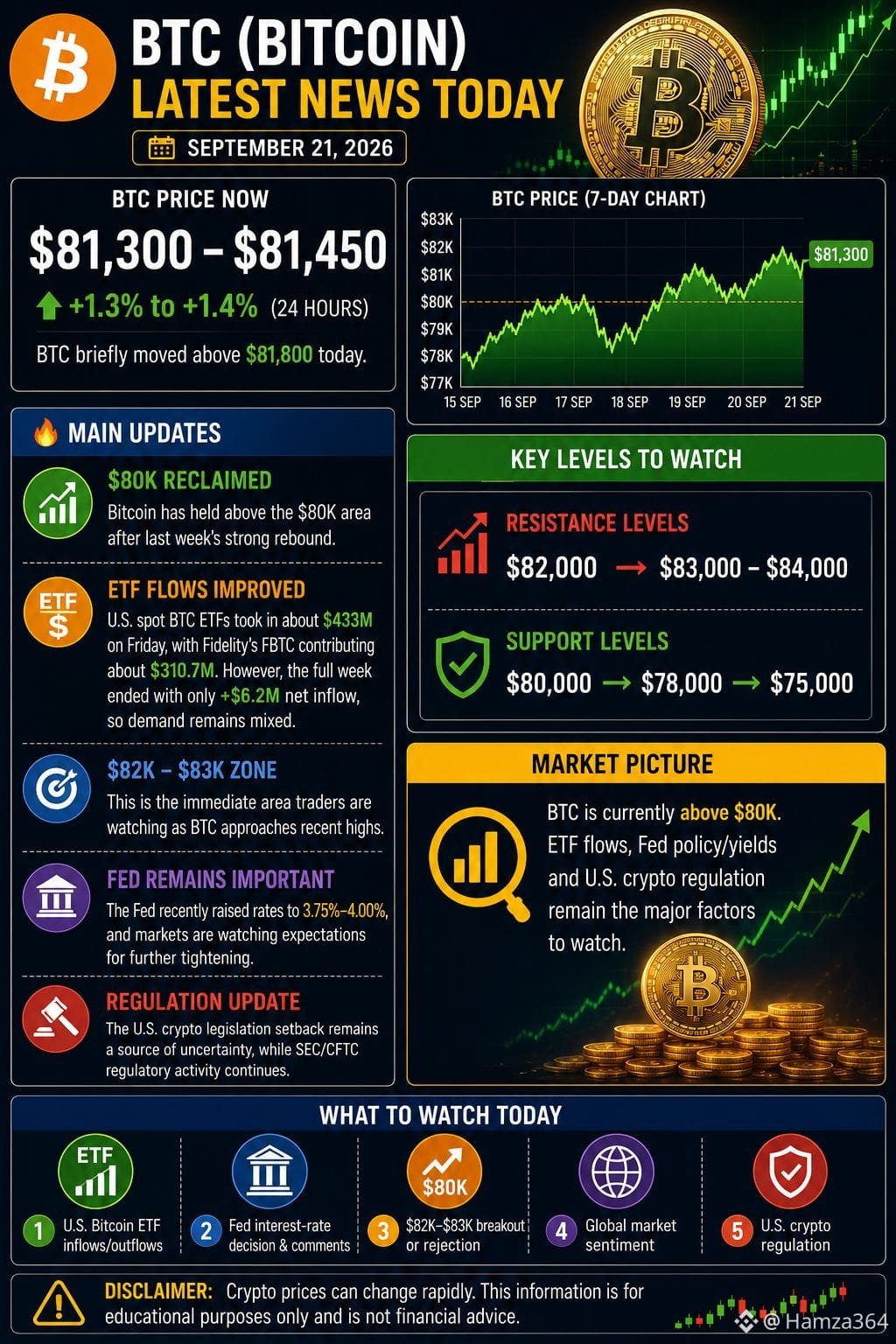
₿ BTC — Latest News Today | Sept 21, 2026
BTC price: around $81,300–$81,450, up roughly 1.3–1.4% in 24h. $BTC briefly moved above $81,800 today.
🔥 Main updates
$80K reclaimed: Bitcoin has held above the $80K area after last week's strong rebound.
ETF flows improved: U.S. spot BTC ETFs took in about $433M on Friday, with Fidelity's FBTC contributing about $310.7M. However, the full week ended with only +$6.2M net inflow, so demand remains mixed.
$82K–$83K zone: This is the immediate area traders are watching as BTC approaches recent highs.
Fed remains important: The Fed recently raised rates to 3.75%–4.00%, and markets are watching expectations for further tightening.
Regulation: The U.S. crypto legislation setback remains a source of uncertainty, while SEC/CFTC regulatory activity continues.
📊 Levels to watch
Resistance: $82K → $83K–$84K
Support: $80K → $78K → $75K
Market picture: BTC is currently above $80K, while ETF flows, Fed policy/yields and U.S. crypto regulation remain the major factors to watch.
₿ BTC — Latest News Today | Sept 21, 2026
BTC price: around $81,300–$81,450, up roughly 1.3–1.4% in 24h. $BTC briefly moved above $81,800 today.
🔥 Main updates
$80K reclaimed: Bitcoin has held above the $80K area after last week's strong rebound.
ETF flows improved: U.S. spot BTC ETFs took in about $433M on Friday, with Fidelity's FBTC contributing about $310.7M. However, the full week ended with only +$6.2M net inflow, so demand remains mixed.
$82K–$83K zone: This is the immediate area traders are watching as BTC approaches recent highs.
Fed remains important: The Fed recently raised rates to 3.75%–4.00%, and markets are watching expectations for further tightening.
Regulation: The U.S. crypto legislation setback remains a source of uncertainty, while SEC/CFTC regulatory activity continues.
📊 Levels to watch
Resistance: $82K → $83K–$84K
Support: $80K → $78K → $75K
Market picture: BTC is currently above $80K, while ETF flows, Fed policy/yields and U.S. crypto regulation remain the major factors to watch.
BTC price: around $81,300–$81,450, up roughly 1.3–1.4% in 24h. $BTC briefly moved above $81,800 today.
🔥 Main updates
$80K reclaimed: Bitcoin has held above the $80K area after last week's strong rebound.
ETF flows improved: U.S. spot BTC ETFs took in about $433M on Friday, with Fidelity's FBTC contributing about $310.7M. However, the full week ended with only +$6.2M net inflow, so demand remains mixed.
$82K–$83K zone: This is the immediate area traders are watching as BTC approaches recent highs.
Fed remains important: The Fed recently raised rates to 3.75%–4.00%, and markets are watching expectations for further tightening.
Regulation: The U.S. crypto legislation setback remains a source of uncertainty, while SEC/CFTC regulatory activity continues.
📊 Levels to watch
Resistance: $82K → $83K–$84K
Support: $80K → $78K → $75K
Market picture: BTC is currently above $80K, while ETF flows, Fed policy/yields and U.S. crypto regulation remain the major factors to watch.
83
·
--
Bullisch
Übersetzung ansehen
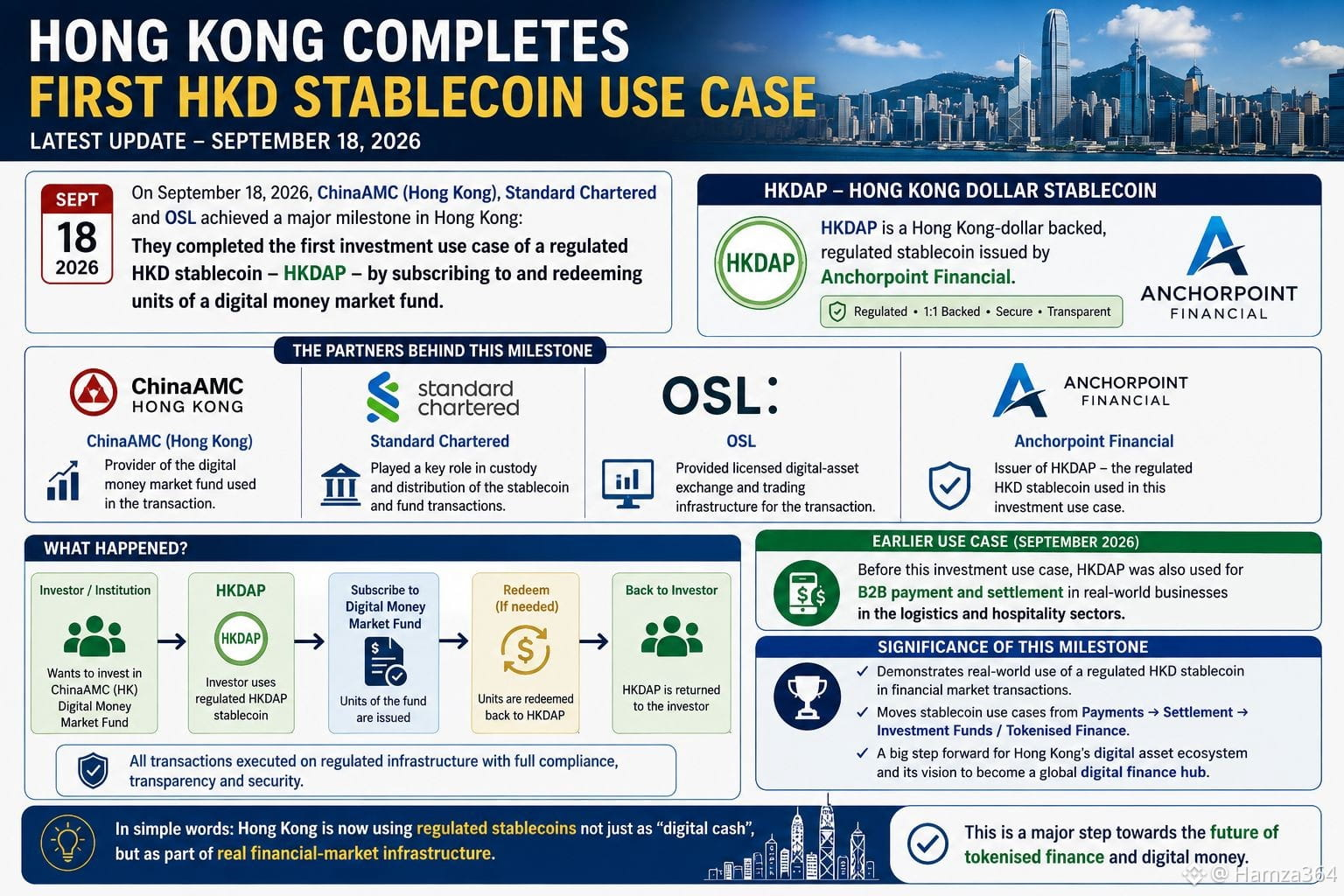
🇭🇰 Hong Kong’s first HKD stablecoin investment use case
18 September 2026 ko ChinaAMC (Hong Kong), Standard Chartered aur OSL ne Hong Kong mein ek important milestone complete kiya: regulated HKD stablecoin HKDAP ko use karke digital money market fund ke units subscribe aur redeem kiye gaye.
Kya hua?
HKDAP = Hong Kong-dollar backed regulated stablecoin, issued by Anchorpoint Financial.
OSL ne licensed digital-asset exchange/trading infrastructure provide ki.
Standard Chartered ne custody/distribution side par role nibhaya.
ChinaAMC (HK) ka digital money market fund transaction mein use hua.
Isse pehle September mein HKDAP ka B2B payment/settlement use case bhi logistics aur hospitality businesses mein implement hua tha.
🔥 Iska significance kya hai?
Ye sirf stablecoin launch nahi hai — actual financial transaction mein regulated HKD stablecoin ka use demonstrate hua hai. Isse stablecoins ke possible use cases payments → settlement → investment funds/tokenised finance tak expand hote dikh rahe hain.
Simple words: Hong Kong ab regulated stablecoin ko sirf “digital cash” ke taur par nahi, balki financial-market infrastructure ke part ke taur par test kar raha hai.
Note: HKDAP ko Anchorpoint ne regulated stablecoin ke taur par develop kiya hai; Anchorpoint ki official site bhi 18 Sept. transaction ko list karti hai.
🇭🇰 Hong Kong’s first HKD stablecoin investment use case
18 September 2026 ko ChinaAMC (Hong Kong), Standard Chartered aur OSL ne Hong Kong mein ek important milestone complete kiya: regulated HKD stablecoin HKDAP ko use karke digital money market fund ke units subscribe aur redeem kiye gaye.
Kya hua?
HKDAP = Hong Kong-dollar backed regulated stablecoin, issued by Anchorpoint Financial.
OSL ne licensed digital-asset exchange/trading infrastructure provide ki.
Standard Chartered ne custody/distribution side par role nibhaya.
ChinaAMC (HK) ka digital money market fund transaction mein use hua.
Isse pehle September mein HKDAP ka B2B payment/settlement use case bhi logistics aur hospitality businesses mein implement hua tha.
🔥 Iska significance kya hai?
Ye sirf stablecoin launch nahi hai — actual financial transaction mein regulated HKD stablecoin ka use demonstrate hua hai. Isse stablecoins ke possible use cases payments → settlement → investment funds/tokenised finance tak expand hote dikh rahe hain.
Simple words: Hong Kong ab regulated stablecoin ko sirf “digital cash” ke taur par nahi, balki financial-market infrastructure ke part ke taur par test kar raha hai.
Note: HKDAP ko Anchorpoint ne regulated stablecoin ke taur par develop kiya hai; Anchorpoint ki official site bhi 18 Sept. transaction ko list karti hai.
18 September 2026 ko ChinaAMC (Hong Kong), Standard Chartered aur OSL ne Hong Kong mein ek important milestone complete kiya: regulated HKD stablecoin HKDAP ko use karke digital money market fund ke units subscribe aur redeem kiye gaye.
Kya hua?
HKDAP = Hong Kong-dollar backed regulated stablecoin, issued by Anchorpoint Financial.
OSL ne licensed digital-asset exchange/trading infrastructure provide ki.
Standard Chartered ne custody/distribution side par role nibhaya.
ChinaAMC (HK) ka digital money market fund transaction mein use hua.
Isse pehle September mein HKDAP ka B2B payment/settlement use case bhi logistics aur hospitality businesses mein implement hua tha.
🔥 Iska significance kya hai?
Ye sirf stablecoin launch nahi hai — actual financial transaction mein regulated HKD stablecoin ka use demonstrate hua hai. Isse stablecoins ke possible use cases payments → settlement → investment funds/tokenised finance tak expand hote dikh rahe hain.
Simple words: Hong Kong ab regulated stablecoin ko sirf “digital cash” ke taur par nahi, balki financial-market infrastructure ke part ke taur par test kar raha hai.
Note: HKDAP ko Anchorpoint ne regulated stablecoin ke taur par develop kiya hai; Anchorpoint ki official site bhi 18 Sept. transaction ko list karti hai.
26
·
--
Bullisch
Übersetzung ansehen
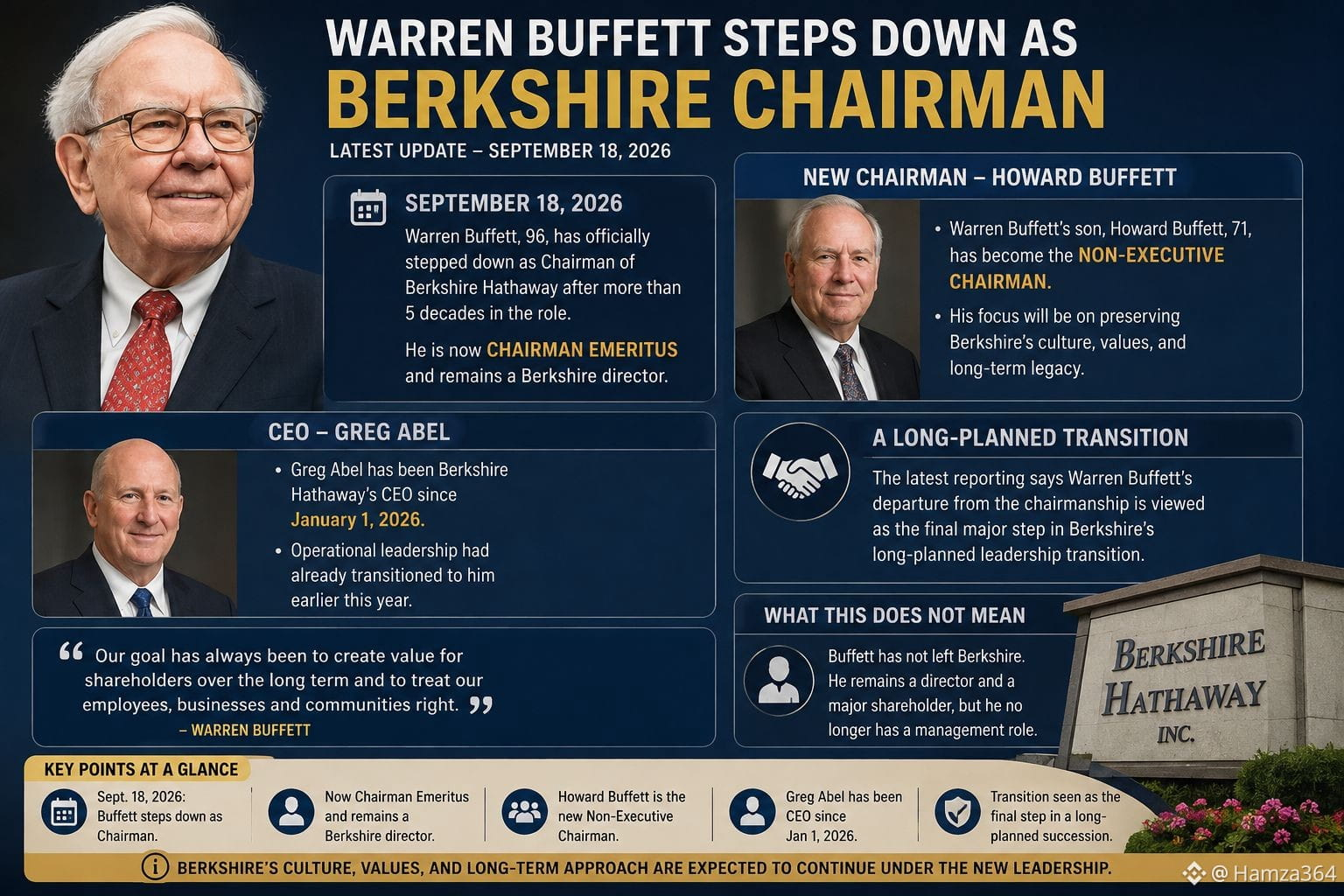
Sept. 18, 2026: Warren Buffett, 96, stepped down as chairman of Berkshire Hathaway after more than five decades in the role. �
Reuters
He is now Chairman Emeritus and remains a Berkshire director. �
Reuters +1
His son, Howard Buffett, 71, became the non-executive chairman, with a stated focus on preserving Berkshire's culture and values. �
Reuters +1
Greg Abel has already been Berkshire's CEO since January 1, 2026, so operational leadership had already shifted away from Warren Buffett. �
Securities and Exchange Commission
The latest reporting says Warren Buffett's departure from the chairmanship is viewed as the final major step in Berkshire's long-planned leadership transition. �
The Business Times
Important: This does not mean Buffett has left Berkshire completely. He remains a director and a major shareholder, but he no longer has a management role. �
Reuters
Sept. 18, 2026: Warren Buffett, 96, stepped down as chairman of Berkshire Hathaway after more than five decades in the role. �
Reuters
He is now Chairman Emeritus and remains a Berkshire director. �
Reuters +1
His son, Howard Buffett, 71, became the non-executive chairman, with a stated focus on preserving Berkshire's culture and values. �
Reuters +1
Greg Abel has already been Berkshire's CEO since January 1, 2026, so operational leadership had already shifted away from Warren Buffett. �
Securities and Exchange Commission
The latest reporting says Warren Buffett's departure from the chairmanship is viewed as the final major step in Berkshire's long-planned leadership transition. �
The Business Times
Important: This does not mean Buffett has left Berkshire completely. He remains a director and a major shareholder, but he no longer has a management role. �
Reuters
Reuters
He is now Chairman Emeritus and remains a Berkshire director. �
Reuters +1
His son, Howard Buffett, 71, became the non-executive chairman, with a stated focus on preserving Berkshire's culture and values. �
Reuters +1
Greg Abel has already been Berkshire's CEO since January 1, 2026, so operational leadership had already shifted away from Warren Buffett. �
Securities and Exchange Commission
The latest reporting says Warren Buffett's departure from the chairmanship is viewed as the final major step in Berkshire's long-planned leadership transition. �
The Business Times
Important: This does not mean Buffett has left Berkshire completely. He remains a director and a major shareholder, but he no longer has a management role. �
Reuters
36
·
--
Bullisch
Übersetzung ansehen
Michael Saylor / Strategy’s Bitcoin-buying strategy:
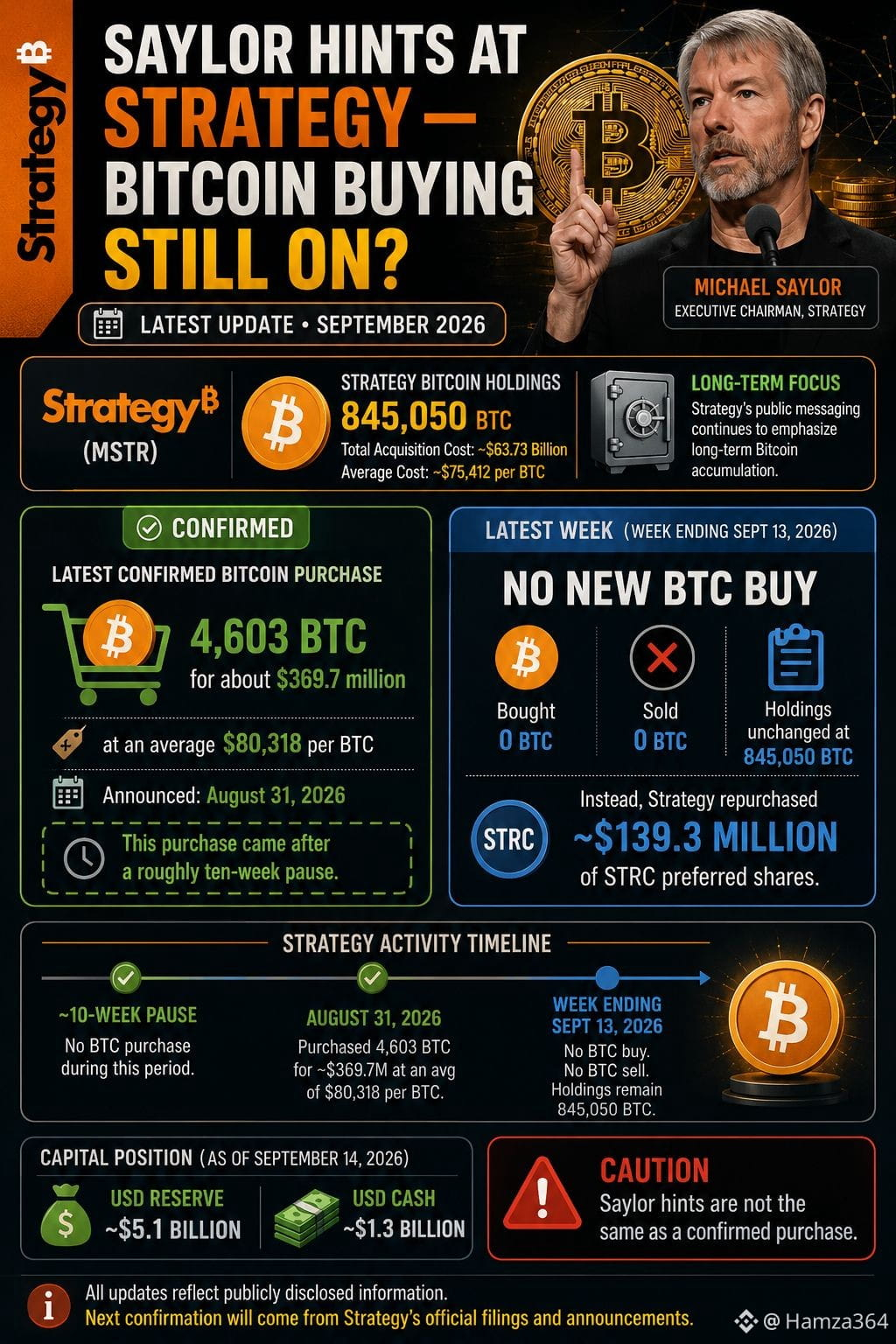
Strategy currently holds 845,050 BTC; its latest reported average acquisition cost is about $75,412 per BTC.
Strategy did buy 4,603 BTC for about $370 million at the end of August after a roughly 10-week pause. Saylor posted “We’re back” beforehand.
But the latest weekly update shows no new BTC purchase. Instead, Strategy used about $139 million for a preferred-stock buyback, leaving BTC holdings unchanged at 845,050 $BTC .
So Saylor’s latest hints should be treated as signals/speculation, not confirmation of a new Bitcoin purchase. The company has been balancing BTC accumulation with maintaining its cash reserves and buying back its securities.
Bottom line: Saylor remains committed to the Bitcoin treasury strategy, but as of the latest report there is no confirmed fresh BTC buy. The market is watching his next Sunday/X post and the following SEC filing for confirmation.
Michael Saylor / Strategy’s Bitcoin-buying strategy:
Strategy currently holds 845,050 BTC; its latest reported average acquisition cost is about $75,412 per BTC.
Strategy did buy 4,603 BTC for about $370 million at the end of August after a roughly 10-week pause. Saylor posted “We’re back” beforehand.
But the latest weekly update shows no new BTC purchase. Instead, Strategy used about $139 million for a preferred-stock buyback, leaving BTC holdings unchanged at 845,050 $BTC .
So Saylor’s latest hints should be treated as signals/speculation, not confirmation of a new Bitcoin purchase. The company has been balancing BTC accumulation with maintaining its cash reserves and buying back its securities.
Bottom line: Saylor remains committed to the Bitcoin treasury strategy, but as of the latest report there is no confirmed fresh BTC buy. The market is watching his next Sunday/X post and the following SEC filing for confirmation.
Strategy currently holds 845,050 BTC; its latest reported average acquisition cost is about $75,412 per BTC.
Strategy did buy 4,603 BTC for about $370 million at the end of August after a roughly 10-week pause. Saylor posted “We’re back” beforehand.
But the latest weekly update shows no new BTC purchase. Instead, Strategy used about $139 million for a preferred-stock buyback, leaving BTC holdings unchanged at 845,050 $BTC .
So Saylor’s latest hints should be treated as signals/speculation, not confirmation of a new Bitcoin purchase. The company has been balancing BTC accumulation with maintaining its cash reserves and buying back its securities.
Bottom line: Saylor remains committed to the Bitcoin treasury strategy, but as of the latest report there is no confirmed fresh BTC buy. The market is watching his next Sunday/X post and the following SEC filing for confirmation.
44
·
--
Bullisch
Übersetzung ansehen
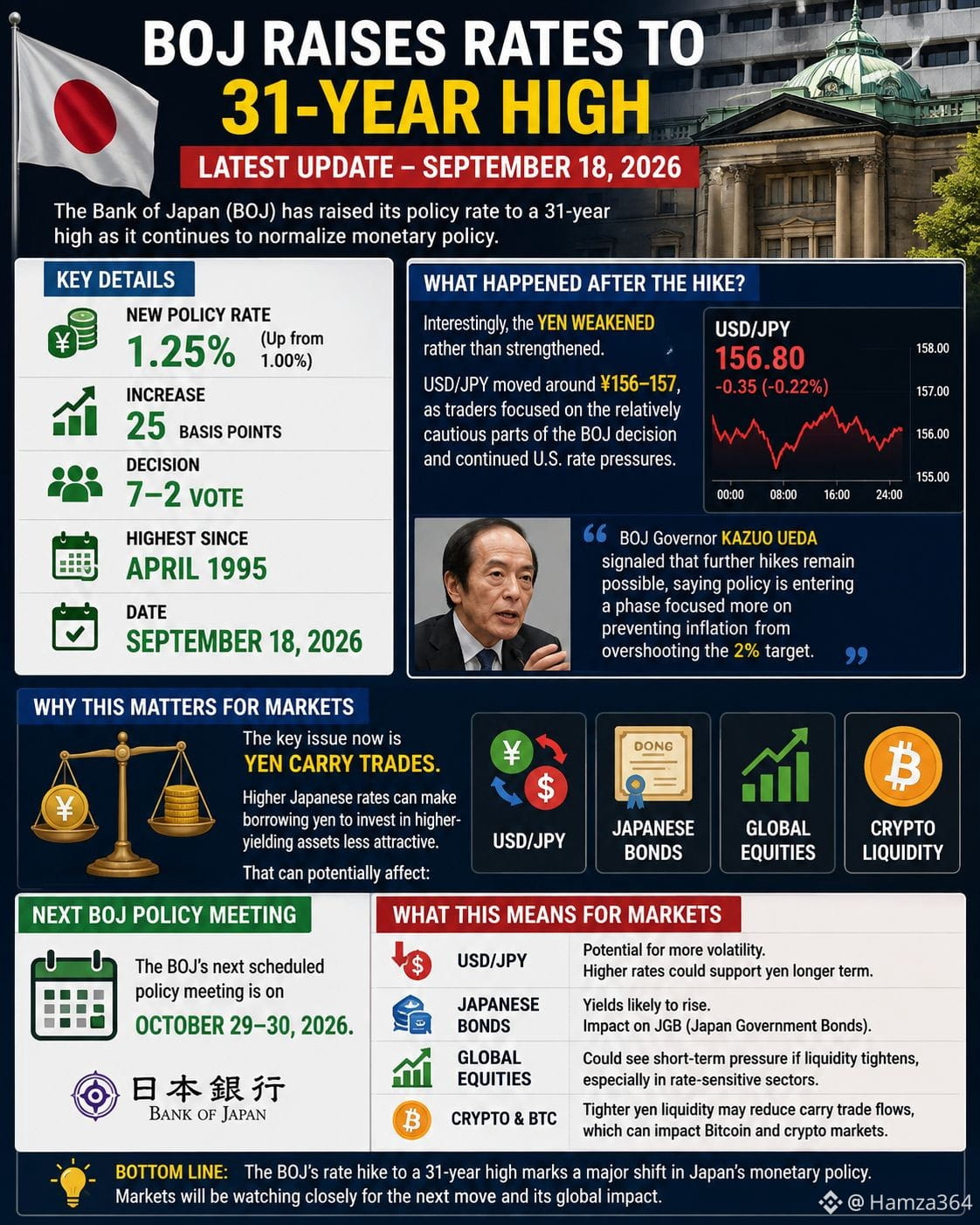
the Bank of Japan (BOJ) has just raised its policy rate to a 31-year high.
New rate: 1.25%, up from 1.00%
Increase: 25 basis points
Decision: 7–2 vote
Highest since: April 1995
Date: September 18, 2026
What happened after the hike?
Interestingly, the yen weakened rather than strengthened. USD/JPY moved around ¥156–157, as traders focused on the relatively cautious parts of the BOJ decision and continued U.S. rate pressures.
BOJ Governor Kazuo Ueda signaled that further hikes remain possible, saying policy is entering a phase focused more on preventing inflation from overshooting the 2% target.
Why this matters for markets
The key issue now is yen carry trades. Higher Japanese rates can make borrowing yen to invest in higher-yielding assets less attractive. That can potentially affect USD/JPY, Japanese bonds, global equities and crypto liquidity.
The BOJ's next scheduled policy meeting is October 29–30, 2026.
the Bank of Japan (BOJ) has just raised its policy rate to a 31-year high.
New rate: 1.25%, up from 1.00%
Increase: 25 basis points
Decision: 7–2 vote
Highest since: April 1995
Date: September 18, 2026
What happened after the hike?
Interestingly, the yen weakened rather than strengthened. USD/JPY moved around ¥156–157, as traders focused on the relatively cautious parts of the BOJ decision and continued U.S. rate pressures.
BOJ Governor Kazuo Ueda signaled that further hikes remain possible, saying policy is entering a phase focused more on preventing inflation from overshooting the 2% target.
Why this matters for markets
The key issue now is yen carry trades. Higher Japanese rates can make borrowing yen to invest in higher-yielding assets less attractive. That can potentially affect USD/JPY, Japanese bonds, global equities and crypto liquidity.
The BOJ's next scheduled policy meeting is October 29–30, 2026.
New rate: 1.25%, up from 1.00%
Increase: 25 basis points
Decision: 7–2 vote
Highest since: April 1995
Date: September 18, 2026
What happened after the hike?
Interestingly, the yen weakened rather than strengthened. USD/JPY moved around ¥156–157, as traders focused on the relatively cautious parts of the BOJ decision and continued U.S. rate pressures.
BOJ Governor Kazuo Ueda signaled that further hikes remain possible, saying policy is entering a phase focused more on preventing inflation from overshooting the 2% target.
Why this matters for markets
The key issue now is yen carry trades. Higher Japanese rates can make borrowing yen to invest in higher-yielding assets less attractive. That can potentially affect USD/JPY, Japanese bonds, global equities and crypto liquidity.
The BOJ's next scheduled policy meeting is October 29–30, 2026.
48
·
--
Bullisch
Übersetzung ansehen
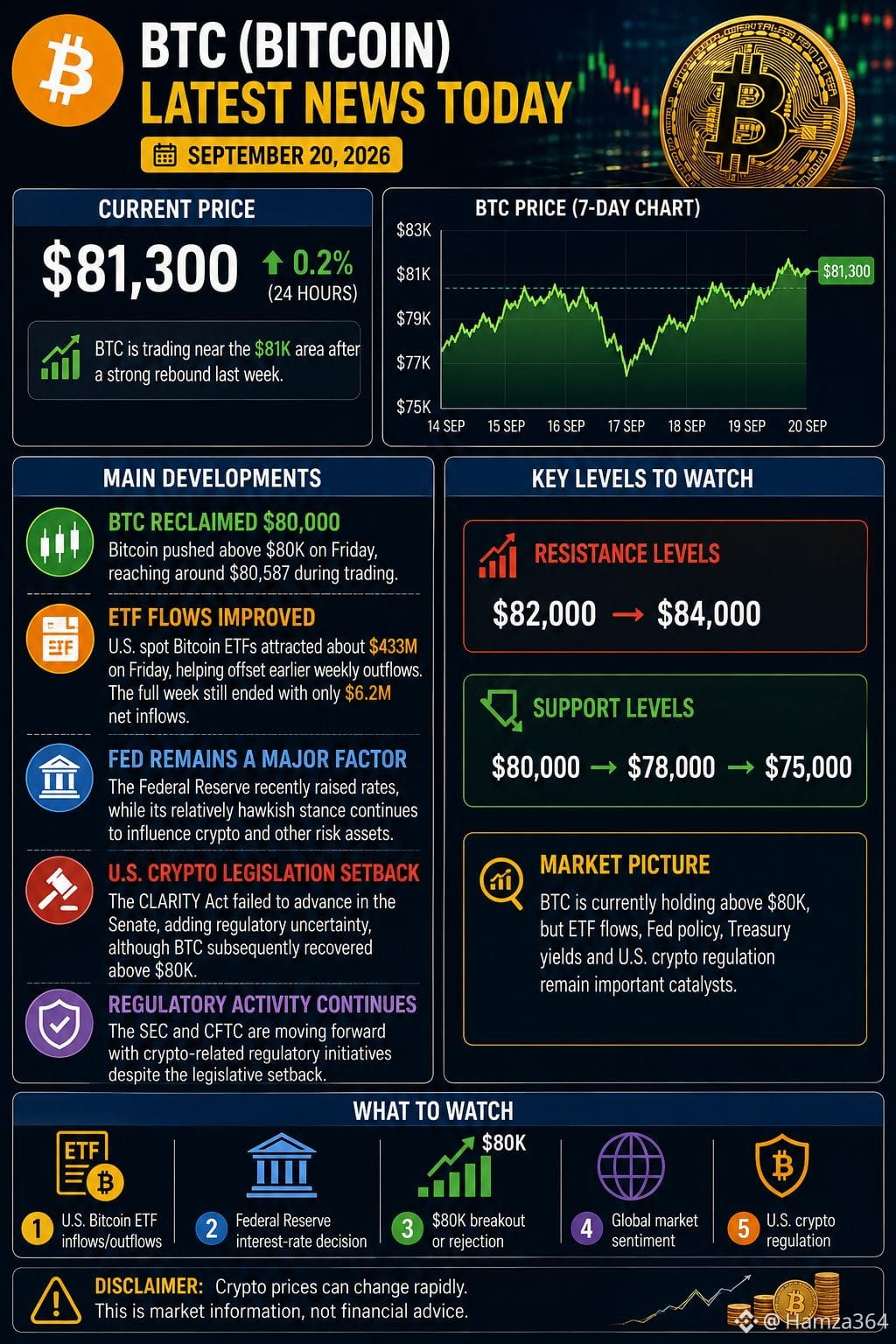
₿ BTC — Latest News Today
September 20, 2026
Current BTC price: about $81,300, up roughly 0.2% in 24 hours. BTC is trading near the $81K area after a strong rebound last week.
🔥 Main developments
BTC reclaimed $80,000: Bitcoin pushed above $80K on Friday, reaching around $80,587 during trading.
ETF flows improved: U.S. spot Bitcoin ETFs attracted about $433M on Friday, helping offset earlier weekly outflows. The full week still ended with only $6.2M net inflows.
Fed remains a major factor: The Federal Reserve recently raised rates, while its relatively hawkish stance continues to influence crypto and other risk assets.
U.S. crypto legislation setback: The CLARITY Act failed to advance in the Senate, adding regulatory uncertainty, although BTC subsequently recovered above $80K.
Regulatory activity continues: The SEC and CFTC are moving forward with crypto-related regulatory initiatives despite the legislative setback.
📊 Key levels to watch
Resistance: $82K → $84K
Support: $80K → $78K → $75K
Market picture: BTC is currently holding above $80K, but ETF flows, Fed policy, Treasury yields and U.S. crypto regulation remain important catalysts.
₿ BTC — Latest News Today
September 20, 2026
Current BTC price: about $81,300, up roughly 0.2% in 24 hours. BTC is trading near the $81K area after a strong rebound last week.
🔥 Main developments
BTC reclaimed $80,000: Bitcoin pushed above $80K on Friday, reaching around $80,587 during trading.
ETF flows improved: U.S. spot Bitcoin ETFs attracted about $433M on Friday, helping offset earlier weekly outflows. The full week still ended with only $6.2M net inflows.
Fed remains a major factor: The Federal Reserve recently raised rates, while its relatively hawkish stance continues to influence crypto and other risk assets.
U.S. crypto legislation setback: The CLARITY Act failed to advance in the Senate, adding regulatory uncertainty, although BTC subsequently recovered above $80K.
Regulatory activity continues: The SEC and CFTC are moving forward with crypto-related regulatory initiatives despite the legislative setback.
📊 Key levels to watch
Resistance: $82K → $84K
Support: $80K → $78K → $75K
Market picture: BTC is currently holding above $80K, but ETF flows, Fed policy, Treasury yields and U.S. crypto regulation remain important catalysts.
September 20, 2026
Current BTC price: about $81,300, up roughly 0.2% in 24 hours. BTC is trading near the $81K area after a strong rebound last week.
🔥 Main developments
BTC reclaimed $80,000: Bitcoin pushed above $80K on Friday, reaching around $80,587 during trading.
ETF flows improved: U.S. spot Bitcoin ETFs attracted about $433M on Friday, helping offset earlier weekly outflows. The full week still ended with only $6.2M net inflows.
Fed remains a major factor: The Federal Reserve recently raised rates, while its relatively hawkish stance continues to influence crypto and other risk assets.
U.S. crypto legislation setback: The CLARITY Act failed to advance in the Senate, adding regulatory uncertainty, although BTC subsequently recovered above $80K.
Regulatory activity continues: The SEC and CFTC are moving forward with crypto-related regulatory initiatives despite the legislative setback.
📊 Key levels to watch
Resistance: $82K → $84K
Support: $80K → $78K → $75K
Market picture: BTC is currently holding above $80K, but ETF flows, Fed policy, Treasury yields and U.S. crypto regulation remain important catalysts.
68
·
--
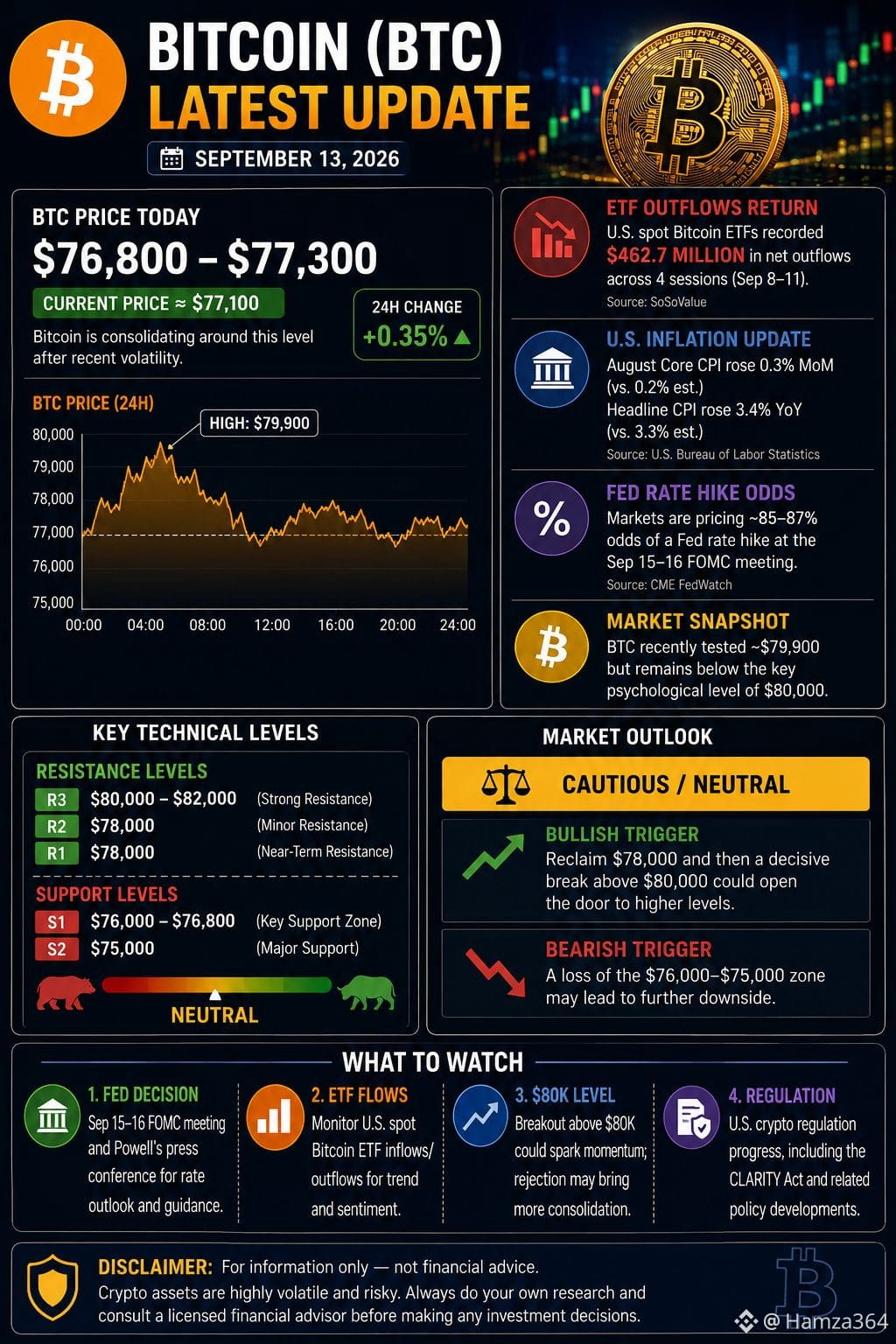
Bitcoin (BTC) — Aktuelles Update
Datum: 13. September 2026
💰 BTC-Preis: 76.800 $ – 77.300 $
Aktueller Preis: Etwa 77.100 $
📉 ETF-Abflüsse: Jüngste Abflüsse aus US-amerikanischen Spot-Bitcoin-ETFs setzen BTC unter Druck.
🇺🇸 Inflation: Der August-Core-CPI lag bei 0,3 % im Monatsvergleich (MoM) und damit über der erwarteten 0,2 %.
🏦 Fed: Die Unsicherheit rund um die Zinsentscheidung der Federal Reserve könnte weiterhin BTC und andere risikoreiche Assets beeinflussen.
🎯 Wichtige Widerstandsniveaus:
78.000 $ → 80.000 $ → 82.000 $
🛡️ Wichtige Unterstützungsniveaus:
76.000 $ → 75.000 $
📊 Ausblick für kurzfristig: Vorsichtig / Neutral
🟢 Bullisches Szenario: Wenn BTC 78K zurückerobert und sich deutlich über 80K durchsetzt, könnten die nächsten potenziellen Ziele bei 82K–84K liegen.
🔴 Bärisches Szenario: Wenn BTC die Unterstützungszone 76K–75K verliert, könnte ein Abwärtsweg in Richtung 73K–70K möglich werden.
👀 Worauf es zu achten gilt:
Zuflüsse/Abflüsse bei US-Bitcoin-ETFs
Zinsentscheidung der Federal Reserve
Ausbruch über 80K oder Zurückweisung
Stimmung an den globalen Märkten
US-Krypto-Regulierung
⚠️ Hinweis: Kryptomärkte sind äußerst volatil. Diese Informationen dienen ausschließlich zu Bildungszwecken und stellen keine finanzielle Beratung dar.
Bitcoin (BTC) — Aktuelles Update
Datum: 13. September 2026
💰 BTC-Preis: 76.800 $ – 77.300 $
Aktueller Preis: Etwa 77.100 $
📉 ETF-Abflüsse: Jüngste Abflüsse aus US-amerikanischen Spot-Bitcoin-ETFs setzen BTC unter Druck.
🇺🇸 Inflation: Der August-Core-CPI lag bei 0,3 % im Monatsvergleich (MoM) und damit über der erwarteten 0,2 %.
🏦 Fed: Die Unsicherheit rund um die Zinsentscheidung der Federal Reserve könnte weiterhin BTC und andere risikoreiche Assets beeinflussen.
🎯 Wichtige Widerstandsniveaus:
78.000 $ → 80.000 $ → 82.000 $
🛡️ Wichtige Unterstützungsniveaus:
76.000 $ → 75.000 $
📊 Ausblick für kurzfristig: Vorsichtig / Neutral
🟢 Bullisches Szenario: Wenn BTC 78K zurückerobert und sich deutlich über 80K durchsetzt, könnten die nächsten potenziellen Ziele bei 82K–84K liegen.
🔴 Bärisches Szenario: Wenn BTC die Unterstützungszone 76K–75K verliert, könnte ein Abwärtsweg in Richtung 73K–70K möglich werden.
👀 Worauf es zu achten gilt:
Zuflüsse/Abflüsse bei US-Bitcoin-ETFs
Zinsentscheidung der Federal Reserve
Ausbruch über 80K oder Zurückweisung
Stimmung an den globalen Märkten
US-Krypto-Regulierung
⚠️ Hinweis: Kryptomärkte sind äußerst volatil. Diese Informationen dienen ausschließlich zu Bildungszwecken und stellen keine finanzielle Beratung dar.
Datum: 13. September 2026
💰 BTC-Preis: 76.800 $ – 77.300 $
Aktueller Preis: Etwa 77.100 $
📉 ETF-Abflüsse: Jüngste Abflüsse aus US-amerikanischen Spot-Bitcoin-ETFs setzen BTC unter Druck.
🇺🇸 Inflation: Der August-Core-CPI lag bei 0,3 % im Monatsvergleich (MoM) und damit über der erwarteten 0,2 %.
🏦 Fed: Die Unsicherheit rund um die Zinsentscheidung der Federal Reserve könnte weiterhin BTC und andere risikoreiche Assets beeinflussen.
🎯 Wichtige Widerstandsniveaus:
78.000 $ → 80.000 $ → 82.000 $
🛡️ Wichtige Unterstützungsniveaus:
76.000 $ → 75.000 $
📊 Ausblick für kurzfristig: Vorsichtig / Neutral
🟢 Bullisches Szenario: Wenn BTC 78K zurückerobert und sich deutlich über 80K durchsetzt, könnten die nächsten potenziellen Ziele bei 82K–84K liegen.
🔴 Bärisches Szenario: Wenn BTC die Unterstützungszone 76K–75K verliert, könnte ein Abwärtsweg in Richtung 73K–70K möglich werden.
👀 Worauf es zu achten gilt:
Zuflüsse/Abflüsse bei US-Bitcoin-ETFs
Zinsentscheidung der Federal Reserve
Ausbruch über 80K oder Zurückweisung
Stimmung an den globalen Märkten
US-Krypto-Regulierung
⚠️ Hinweis: Kryptomärkte sind äußerst volatil. Diese Informationen dienen ausschließlich zu Bildungszwecken und stellen keine finanzielle Beratung dar.
195
·
--
Bullisch
Übersetzung ansehen
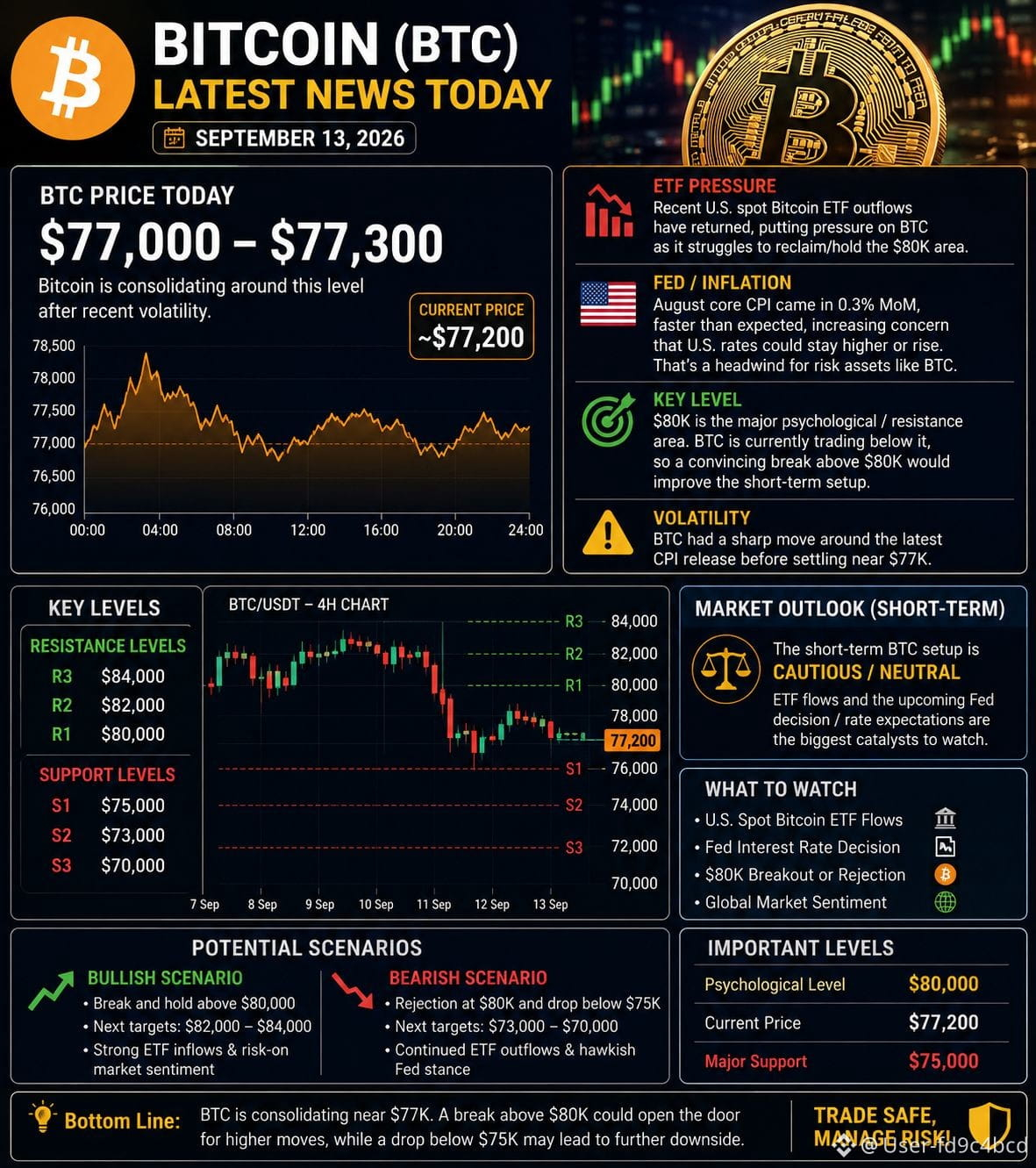
#bitcoin 💰 $BTC price: around $77,000–$77,300. $BTC has been relatively volatile but is currently consolidating around this level. �
CoinStats +1
📉 ETF pressure: Recent U.S. spot $BTC ETF outflows have returned, putting pressure on BTC as it struggles to reclaim/hold the $80K area. �
Analytics Insight +1
🇺🇸 Fed/inflation: August core CPI came in 0.3% month-over-month, faster than expected, increasing concern that U.S. rates could stay higher or rise. That's a headwind for risk assets like BTC. �
CoinDesk
📊 Key levels: $80K is the major psychological/resistance area. BTC is currently trading below it, so a convincing break above $80K would improve the short-term setup.
⚠️ Volatility: BTC had a sharp move around the latest CPI release before settling near $77K. �
CryptoPotato
Bottom line: The short-term BTC setup is cautious/neutral rather than strongly bullish. ETF flows and the upcoming Fed decision/rate expectations are probably the biggest catalysts to watch.#BTC #btc70k #Binance
{spot}(BTCUSDT)
#bitcoin 💰 $BTC price: around $77,000–$77,300. $BTC has been relatively volatile but is currently consolidating around this level. �
CoinStats +1
📉 ETF pressure: Recent U.S. spot $BTC ETF outflows have returned, putting pressure on BTC as it struggles to reclaim/hold the $80K area. �
Analytics Insight +1
🇺🇸 Fed/inflation: August core CPI came in 0.3% month-over-month, faster than expected, increasing concern that U.S. rates could stay higher or rise. That's a headwind for risk assets like BTC. �
CoinDesk
📊 Key levels: $80K is the major psychological/resistance area. BTC is currently trading below it, so a convincing break above $80K would improve the short-term setup.
⚠️ Volatility: BTC had a sharp move around the latest CPI release before settling near $77K. �
CryptoPotato
Bottom line: The short-term BTC setup is cautious/neutral rather than strongly bullish. ETF flows and the upcoming Fed decision/rate expectations are probably the biggest catalysts to watch.#BTC #btc70k #Binance
CoinStats +1
📉 ETF pressure: Recent U.S. spot $BTC ETF outflows have returned, putting pressure on BTC as it struggles to reclaim/hold the $80K area. �
Analytics Insight +1
🇺🇸 Fed/inflation: August core CPI came in 0.3% month-over-month, faster than expected, increasing concern that U.S. rates could stay higher or rise. That's a headwind for risk assets like BTC. �
CoinDesk
📊 Key levels: $80K is the major psychological/resistance area. BTC is currently trading below it, so a convincing break above $80K would improve the short-term setup.
⚠️ Volatility: BTC had a sharp move around the latest CPI release before settling near $77K. �
CryptoPotato
Bottom line: The short-term BTC setup is cautious/neutral rather than strongly bullish. ETF flows and the upcoming Fed decision/rate expectations are probably the biggest catalysts to watch.#BTC #btc70k #Binance
85
Anmelden und weiter Inhalte entdecken
Krypto-Nutzer weltweit auf Binance Square kennenlernen
⚡️ Bleib in Sachen Krypto stets am Puls.
💬 Die weltgrößte Kryptobörse vertraut darauf.
👍 Erhalte verlässliche Einblicke von verifizierten Creators.
E-Mail-Adresse/Telefonnummer
Trendthemen
CircleLaunchesInstitutionalBTCBackedBorrowing
695 Aufrufe
148 Kommentare
🚨Bitcoin wurde für Institutionen deutlich nützlicher – ohne dass es verkauft werden muss.
Circle ($CRCL ) hat Digital Asset-Backed Borrowing für berechtigte Circle Mint-Kunden gestartet. Dabei können Institutionen BTC hinterlegen, cirBTC prägen, es als Sicherheit in unterstützten Kreditmärkten nutzen und USDC direkt zurück in ihr Circle Mint-Guthaben ausleihen.
Der entscheidende Punkt:
Institutionen können Liquidität in US-Dollar freischalten, ohne ihre BTC-Exposure verkaufen zu müssen.
Zum Launch wird das Produkt von Arc und Ethereum unterstützt, wobei Morpho das erste genehmigte Drittanbieter-Kreditprotokoll ist. Circle sagt, dass weitere Protokolle – darunter Aave – folgen sollen.
Das schafft eine starke Kapital-Effizienz-Schleife:
BTC halten → BTC als Sicherheit nutzen → USDC leihen → Liquidität einsetzen → BTC-Exposure behalten.
Und cirBTC selbst ist 1:1 durch natives BTC abgesichert, wobei Rücklagen so ausgelegt sind, dass sie onchain unabhängig verifizierbar sein sollen.
Das ist mehr als nur ein weiteres Kreditprodukt.
Es bringt Bitcoin näher daran, innerhalb von Onchain-Credit-Märkten als Sicherheiten auf institutionellem Niveau zu dienen.
$BTC lag bisher ungenutzt herum. Jetzt können Institutionen es zum Laufen bringen, ohne es verkaufen zu müssen. 👀
#CircleLaunchesInstitutionalBTCBackedBorrowing #BitcoinHits$85K #ZetaChainVotesToMigrateZETAToSolana #ECBStartsBlockchainEuroSettlement #SolanaCutsTargetSlotTimeTo250ms
KimHotbae
·0 Likes
·272 Aufrufe
BitcoinHits$85K
3,928 Aufrufe
161 Kommentare
ZetaChainVotesToMigrateZETAToSolana
709 Aufrufe
102 Kommentare