

MeharAhmad23
16 Beiträge

MeharAhmad23
Melden
Nutzer blockieren
Trade eröffnen
Gelegenheitstrader
2.2 Jahre
3 Following
8 Follower
8 Like gegeben
Beiträge
Portfolio
·
--

Artikel
Übersetzung ansehen
Binance Qafila 2026:🚀 Binance Qafila 2026: $1 Million #USDC Rewards Campaign
Today’s crypto update highlights Binance Qafila 2026, a campaign launched with a total reward pool of $1 million in #USDC token vouchers. Eligible users can participate in different activities, including trading challenges, Earn subscriptions, and referrals, with rewards depending on the campaign rules and individual eligibility. The campaign is scheduled to run through November 30, 2026, but not every participant is guaranteed a reward. Users should check the official Binance announcement for complete details before participating. "htt$ps://www.binance.com/en/support/announcement/detail/ade351b5d80842b69784d836e0338a6d" (https://www.binance.com/en/support/announcement/detail/ade351b5d80842b69784d836e0338a6d)
#Binance #Qafila2026 #CryptoRewards #USDC #CryptoUpdate
Binance Qafila 2026:
🚀 Binance Qafila 2026: $1 Million #USDC Rewards Campaign
Today’s crypto update highlights Binance Qafila 2026, a campaign launched with a total reward pool of $1 million in #USDC token vouchers. Eligible users can participate in different activities, including trading challenges, Earn subscriptions, and referrals, with rewards depending on the campaign rules and individual eligibility. The campaign is scheduled to run through November 30, 2026, but not every participant is guaranteed a reward. Users should check the official Binance announcement for complete details before participating. "htt$ps://www.binance.com/en/support/announcement/detail/ade351b5d80842b69784d836e0338a6d" (https://www.binance.com/en/support/announcement/detail/ade351b5d80842b69784d836e0338a6d)
#Binance #Qafila2026 #CryptoRewards #USDC #CryptoUpdate
76
·
--
Binance Qafila bietet der Krypto-Community mit einem USDC-Prämienpool von 1.000.000 $ eine spannende Gelegenheit. Ab dem 20. Oktober 2026 können Nutzer die Kampagne und ihre Aktivitäten erkunden. Lies die offiziellen Binance-Regeln, um dich vor der Teilnahme über die Teilnahmebedingungen und Prämien zu informieren.
#Binance #Qafila #USDC #CryptoRewards
https://www.binance.com/en/ti/act/Qafila
#Binance #Qafila #USDC #CryptoRewards
https://www.binance.com/en/ti/act/Qafila

89
·
--
Übersetzung ansehen
#pixel $PIXEL
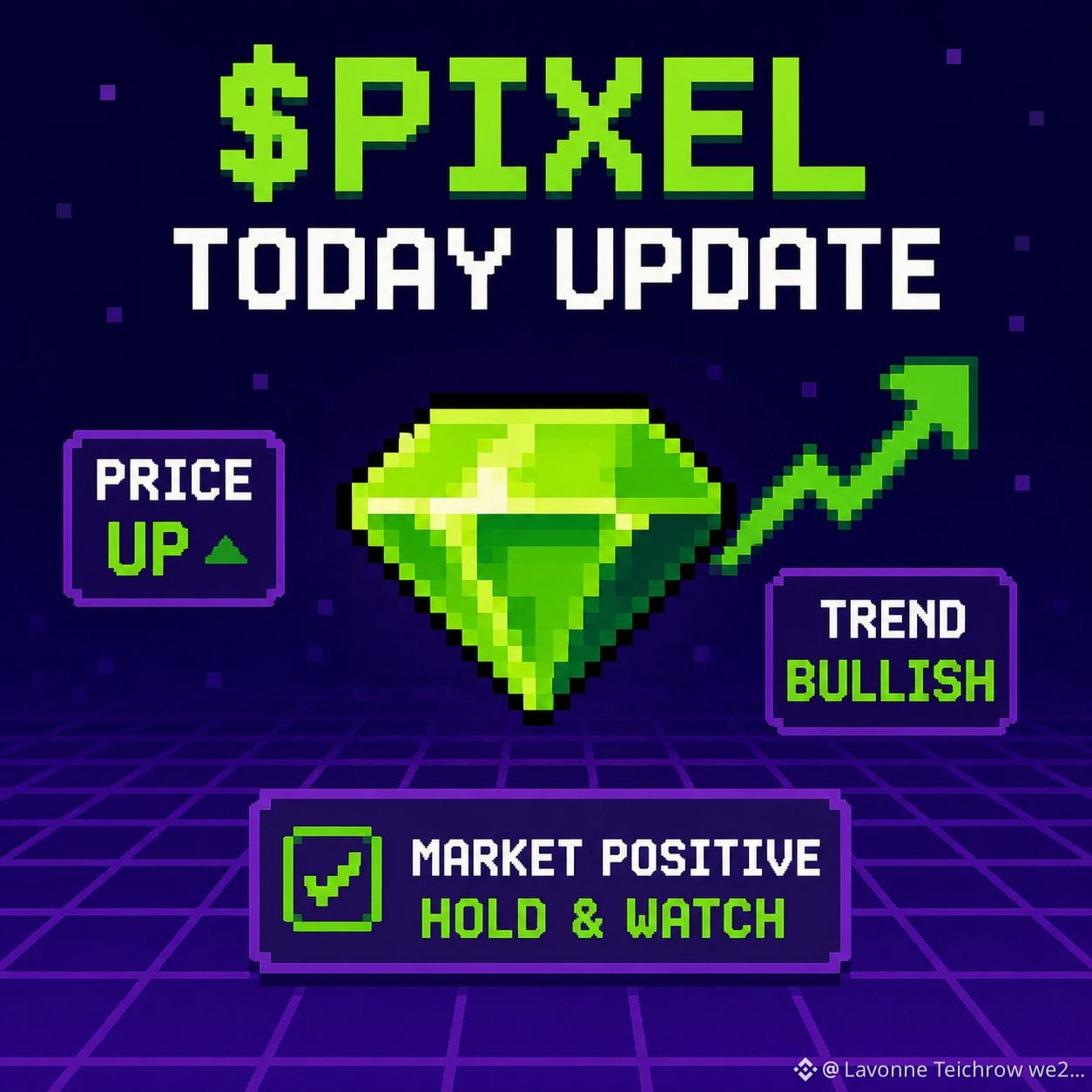
PIXEL ($PIXEL L) – Today’s Market Update
The price action of PIXEL ($PIXEL
{spot}(PIXELUSDT)
EL) is showing renewed interest in the market today, with a noticeable increase in trading volume and short-term momentum. Buyers are gradually stepping in after a period of consolidation, suggesting that confidence is slowly returning among traders. This uptick is likely influenced by growing attention around gaming and metaverse-related tokens, where PIXEL continues to position itself as a relevant player. On lower timeframes, the chart reflects higher lows forming, which is often considered a bullish signal if sustained. However, the market still remains sensitive to overall crypto sentiment, meaning any major movement in Bitcoin could impact PIXEL’s direction.
From a broader perspective, PIXEL is benefiting from increased community engagement and ongoing ecosystem developments, which are helping maintain its relevance despite market fluctuations. Social media mentions and trading discussions around the token have picked up, hinting at rising speculative interest. While this does not guarantee a strong rally, it does create conditions for potential volatility and short-term opportunities. Traders are closely watching key resistance levels, and a breakout above these zones could trigger a sharper upward move. On the downside, maintaining current support levels will be crucial to avoid another pullback, making today’s session important for setting the tone in the near term.
#pixel $PIXEL
PIXEL ($PIXEL L) – Today’s Market Update
The price action of PIXEL ($PIXEL
EL) is showing renewed interest in the market today, with a noticeable increase in trading volume and short-term momentum. Buyers are gradually stepping in after a period of consolidation, suggesting that confidence is slowly returning among traders. This uptick is likely influenced by growing attention around gaming and metaverse-related tokens, where PIXEL continues to position itself as a relevant player. On lower timeframes, the chart reflects higher lows forming, which is often considered a bullish signal if sustained. However, the market still remains sensitive to overall crypto sentiment, meaning any major movement in Bitcoin could impact PIXEL’s direction.
From a broader perspective, PIXEL is benefiting from increased community engagement and ongoing ecosystem developments, which are helping maintain its relevance despite market fluctuations. Social media mentions and trading discussions around the token have picked up, hinting at rising speculative interest. While this does not guarantee a strong rally, it does create conditions for potential volatility and short-term opportunities. Traders are closely watching key resistance levels, and a breakout above these zones could trigger a sharper upward move. On the downside, maintaining current support levels will be crucial to avoid another pullback, making today’s session important for setting the tone in the near term.
1
87
·
--
Übersetzung ansehen
#CHIPPricePump
#CHIP Price Pump (simple explanation):
A “price pump” means when the price of a coin or token (here, CHIP) suddenly rises very quickly. This usually happens when many people start buying at the same time.
The reasons can include:
High demand (more people are buying)
Positive news or updates
Big investors entering the market
Sometimes hype or rumors
In simple words: when there are more buyers than sellers, the price pumps up.
269
·
--
Übersetzung ansehen
Solana/usdt trending trading???Solana has become one of the fastest-growing blockchain networks, and $SOL /USDT is now a trending pair among traders. Its high-speed transactions and low fees attract developers and investors, which directly impacts its market demand. This pair is known for strong upward rallies followed by quick corrections.
Currently, $SOL /USDT is considered a high-momentum trading pair. It’s ideal for traders who like volatility and quick profits, but it also carries higher risk compared to BTC and ETH. News about ecosystem growth or outages can significantly impact price, so staying updated is essential.
Solana/usdt trending trading???
Solana has become one of the fastest-growing blockchain networks, and $SOL /USDT is now a trending pair among traders. Its high-speed transactions and low fees attract developers and investors, which directly impacts its market demand. This pair is known for strong upward rallies followed by quick corrections.
Currently, $SOL /USDT is considered a high-momentum trading pair. It’s ideal for traders who like volatility and quick profits, but it also carries higher risk compared to BTC and ETH. News about ecosystem growth or outages can significantly impact price, so staying updated is essential.
Currently, $SOL /USDT is considered a high-momentum trading pair. It’s ideal for traders who like volatility and quick profits, but it also carries higher risk compared to BTC and ETH. News about ecosystem growth or outages can significantly impact price, so staying updated is essential.
34
·
--
Übersetzung ansehen
Bitcoin treding trading???BTC/USDT ($BITCOIN )
$BITCOIN remains the most dominant asset in crypto trading, and the BTC/USDT pair consistently records the highest volume globally. Traders prefer this pair because it offers deep liquidity, meaning you can enter and exit trades بسهولة without large price slippage. It’s widely used for scalping, day trading, and even long-term accumulation, especially during market uncertainty when Bitcoin acts as a “digital gold.”
Recently, BTC/USDT has seen strong momentum due to institutional inflows and global adoption trends. Large investors and hedge funds continue to accumulate Bitcoin, which keeps volatility high but structured. This makes it ideal for both beginners and experienced traders who want relatively safer exposure compared to smaller altcoins.
Bitcoin treding trading???
BTC/USDT ($BITCOIN )
$BITCOIN remains the most dominant asset in crypto trading, and the BTC/USDT pair consistently records the highest volume globally. Traders prefer this pair because it offers deep liquidity, meaning you can enter and exit trades بسهولة without large price slippage. It’s widely used for scalping, day trading, and even long-term accumulation, especially during market uncertainty when Bitcoin acts as a “digital gold.”
Recently, BTC/USDT has seen strong momentum due to institutional inflows and global adoption trends. Large investors and hedge funds continue to accumulate Bitcoin, which keeps volatility high but structured. This makes it ideal for both beginners and experienced traders who want relatively safer exposure compared to smaller altcoins.
70
·
--
Aktualisierung der PRL-PreispumpenDer Markt zeigt heute einen vorsichtigen Ton für $PRL , wobei der Preis bei etwa 0,220 $ liegt und um ca. 7,5 % gefallen ist. Trotz des Rückgangs deutet das Orderbuch darauf hin, dass es auf beiden Seiten noch aktives Interesse gibt, da Kauf- und Verkaufswände relativ ausgewogen erscheinen. Kurzfristige Volatilität wie diese ist üblich, insbesondere nach den jüngsten Bewegungen, und sie spiegelt oft wider, dass Händler schnelle Gewinne mitnehmen, anstatt eine vollständige Stimmungsänderung vorzunehmen. Wenn sich der Momentum von den aktuellen Niveaus aufbaut, könnte eine kleine Erholung oder ein „Mini-Pump“ stattfinden, aber es wäre wahrscheinlich notwendig, ein stärkeres Volumen zu haben, um eine Aufwärtsbewegung aufrechtzuerhalten.
Aktualisierung der PRL-Preispumpen
Der Markt zeigt heute einen vorsichtigen Ton für $PRL , wobei der Preis bei etwa 0,220 $ liegt und um ca. 7,5 % gefallen ist. Trotz des Rückgangs deutet das Orderbuch darauf hin, dass es auf beiden Seiten noch aktives Interesse gibt, da Kauf- und Verkaufswände relativ ausgewogen erscheinen. Kurzfristige Volatilität wie diese ist üblich, insbesondere nach den jüngsten Bewegungen, und sie spiegelt oft wider, dass Händler schnelle Gewinne mitnehmen, anstatt eine vollständige Stimmungsänderung vorzunehmen. Wenn sich der Momentum von den aktuellen Niveaus aufbaut, könnte eine kleine Erholung oder ein „Mini-Pump“ stattfinden, aber es wäre wahrscheinlich notwendig, ein stärkeres Volumen zu haben, um eine Aufwärtsbewegung aufrechtzuerhalten.
372
·
--
Übersetzung ansehen
why BNB pice pump's???The recent price pump in $BNB (Binance Coin) is being driven by a combination of short-term trading momentum and broader market confidence around Binance. From today’s chart, BNB briefly touched the $630–$631 range, which suggests strong intraday buying pressure rather than a slow organic climb. One key factor is increased trading volume—when more traders enter the market, especially with leveraged positions, price moves become sharper. Another driver is the general bullish sentiment across the crypto market. When major assets like Bitcoin and Ethereum show strength, capital often rotates into large-cap altcoins like BNB. Additionally, $BNB has a unique role within the Binance ecosystem: it’s used for fee discounts, staking, and participation in token launches. When platform activity rises, demand for BNB naturally increases. Today’s move also shows signs of a technical rebound—price dipped earlier and then sharply recovered, which often happens when traders buy the “dip” near support levels like the moving average (MA60 shown on your chart). This creates a quick upward spike as sell pressure gets absorbed.
On a deeper level, BNB’s strength today is also tied to ongoing ecosystem growth and investor expectations. Binance continues to expand services, including DeFi, staking, and layer-2 integrations, which increases long-term utility for $BNB . Even rumors or anticipation of upgrades can trigger buying behavior before any official announcements. Another important factor is tokenomics—BNB has periodic token burns that reduce supply over time, making it more attractive during bullish phases. Market psychology also plays a big role: once traders see a breakout above a certain level (like $630), it can trigger FOMO (fear of missing out), bringing in more buyers and pushing price higher in the short term. However, it’s worth noting that this kind of pump doesn’t always mean a sustained uptrend. The chart you shared shows volatility, with quick drops and rebounds, which suggests traders are actively taking profits. So while today’s pump is real, it’s likely driven by a mix of technical bounce, strong trading volume, and positive sentiment around Binance rather than a single major news event.
why BNB pice pump's???
The recent price pump in $BNB (Binance Coin) is being driven by a combination of short-term trading momentum and broader market confidence around Binance. From today’s chart, BNB briefly touched the $630–$631 range, which suggests strong intraday buying pressure rather than a slow organic climb. One key factor is increased trading volume—when more traders enter the market, especially with leveraged positions, price moves become sharper. Another driver is the general bullish sentiment across the crypto market. When major assets like Bitcoin and Ethereum show strength, capital often rotates into large-cap altcoins like BNB. Additionally, $BNB has a unique role within the Binance ecosystem: it’s used for fee discounts, staking, and participation in token launches. When platform activity rises, demand for BNB naturally increases. Today’s move also shows signs of a technical rebound—price dipped earlier and then sharply recovered, which often happens when traders buy the “dip” near support levels like the moving average (MA60 shown on your chart). This creates a quick upward spike as sell pressure gets absorbed.
On a deeper level, BNB’s strength today is also tied to ongoing ecosystem growth and investor expectations. Binance continues to expand services, including DeFi, staking, and layer-2 integrations, which increases long-term utility for $BNB . Even rumors or anticipation of upgrades can trigger buying behavior before any official announcements. Another important factor is tokenomics—BNB has periodic token burns that reduce supply over time, making it more attractive during bullish phases. Market psychology also plays a big role: once traders see a breakout above a certain level (like $630), it can trigger FOMO (fear of missing out), bringing in more buyers and pushing price higher in the short term. However, it’s worth noting that this kind of pump doesn’t always mean a sustained uptrend. The chart you shared shows volatility, with quick drops and rebounds, which suggests traders are actively taking profits. So while today’s pump is real, it’s likely driven by a mix of technical bounce, strong trading volume, and positive sentiment around Binance rather than a single major news event.
On a deeper level, BNB’s strength today is also tied to ongoing ecosystem growth and investor expectations. Binance continues to expand services, including DeFi, staking, and layer-2 integrations, which increases long-term utility for $BNB . Even rumors or anticipation of upgrades can trigger buying behavior before any official announcements. Another important factor is tokenomics—BNB has periodic token burns that reduce supply over time, making it more attractive during bullish phases. Market psychology also plays a big role: once traders see a breakout above a certain level (like $630), it can trigger FOMO (fear of missing out), bringing in more buyers and pushing price higher in the short term. However, it’s worth noting that this kind of pump doesn’t always mean a sustained uptrend. The chart you shared shows volatility, with quick drops and rebounds, which suggests traders are actively taking profits. So while today’s pump is real, it’s likely driven by a mix of technical bounce, strong trading volume, and positive sentiment around Binance rather than a single major news event.
33
·
--
Artikel
Übersetzung ansehen
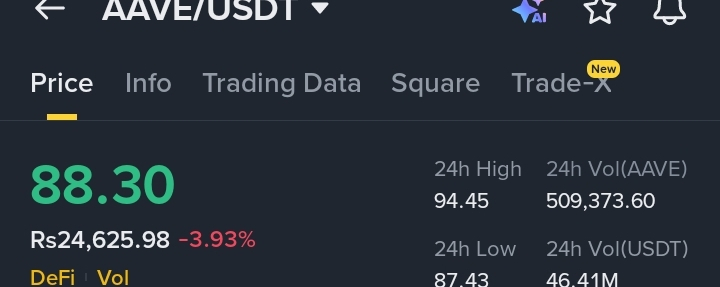
why AAVE usdt price pumps ???The recent price surge in $AAVE ’s USDT market is tied to a mix of broader crypto momentum and protocol-specific demand shifts. First, Aave benefits heavily when overall liquidity in decentralized finance expands, and that’s exactly what’s happening right now. As traders rotate capital back into DeFi, borrowing activity spikes—especially for stablecoins like Tether (USDT), which are widely used for leverage and arbitrage. When more users want to borrow USDT on Aave, utilization rates rise, and that pushes interest rates higher. Higher rates attract more lenders seeking yield, increasing demand for Aave’s pools and, indirectly, boosting the protocol’s total value locked (TVL). On top of that, whale wallets and institutional players appear to be positioning themselves for short-term opportunities, borrowing USDT to deploy into other trades such as ETH or altcoin breakouts. This kind of activity creates a feedback loop: more borrowing → higher rates → more deposits → stronger protocol metrics → positive sentiment around Aave. At the same time, broader macro sentiment in crypto has turned bullish, with Bitcoin and Ethereum showing strength, which typically lifts DeFi tokens like AAVE as investors move further out on the risk curve. Social media hype and trading volume spikes also amplify the move, as retail traders jump in once they see strong price action.
Another key factor behind the USDT-related pump on $AAVE is liquidity dynamics across exchanges and DeFi platforms. When centralized exchanges experience tighter USDT liquidity or when funding rates shift, traders often turn to DeFi protocols like Aave to source stablecoins quickly. This increases borrowing demand sharply in a short period, which can make it look like a “pump” tied specifically to USDT activity. Additionally, recent governance discussions and upgrades within the $AAVE ecosystem have improved confidence in the protocol’s long-term sustainability, encouraging more capital inflow. Even subtle changes—like adjustments to collateral factors or risk parameters—can significantly impact how much USDT is borrowed or supplied. There’s also the influence of cross-chain activity, as Aave deployments on networks like Polygon and other Layer 2 solutions make borrowing cheaper and faster, attracting new users. However, it’s important to stay grounded: these pumps are often cyclical and driven by short-term leverage demand rather than fundamental changes in USDT itself. If borrowing demand cools or market sentiment shifts, rates and activity can drop just as quickly, leading to a pullback. So while the current surge reflects strong DeFi engagement and liquidity demand, it’s not necessarily a permanent trend—more a signal of active market conditions than a guaranteed long-term rally.
why AAVE usdt price pumps ???
The recent price surge in $AAVE ’s USDT market is tied to a mix of broader crypto momentum and protocol-specific demand shifts. First, Aave benefits heavily when overall liquidity in decentralized finance expands, and that’s exactly what’s happening right now. As traders rotate capital back into DeFi, borrowing activity spikes—especially for stablecoins like Tether (USDT), which are widely used for leverage and arbitrage. When more users want to borrow USDT on Aave, utilization rates rise, and that pushes interest rates higher. Higher rates attract more lenders seeking yield, increasing demand for Aave’s pools and, indirectly, boosting the protocol’s total value locked (TVL). On top of that, whale wallets and institutional players appear to be positioning themselves for short-term opportunities, borrowing USDT to deploy into other trades such as ETH or altcoin breakouts. This kind of activity creates a feedback loop: more borrowing → higher rates → more deposits → stronger protocol metrics → positive sentiment around Aave. At the same time, broader macro sentiment in crypto has turned bullish, with Bitcoin and Ethereum showing strength, which typically lifts DeFi tokens like AAVE as investors move further out on the risk curve. Social media hype and trading volume spikes also amplify the move, as retail traders jump in once they see strong price action.
Another key factor behind the USDT-related pump on $AAVE is liquidity dynamics across exchanges and DeFi platforms. When centralized exchanges experience tighter USDT liquidity or when funding rates shift, traders often turn to DeFi protocols like Aave to source stablecoins quickly. This increases borrowing demand sharply in a short period, which can make it look like a “pump” tied specifically to USDT activity. Additionally, recent governance discussions and upgrades within the $AAVE ecosystem have improved confidence in the protocol’s long-term sustainability, encouraging more capital inflow. Even subtle changes—like adjustments to collateral factors or risk parameters—can significantly impact how much USDT is borrowed or supplied. There’s also the influence of cross-chain activity, as Aave deployments on networks like Polygon and other Layer 2 solutions make borrowing cheaper and faster, attracting new users. However, it’s important to stay grounded: these pumps are often cyclical and driven by short-term leverage demand rather than fundamental changes in USDT itself. If borrowing demand cools or market sentiment shifts, rates and activity can drop just as quickly, leading to a pullback. So while the current surge reflects strong DeFi engagement and liquidity demand, it’s not necessarily a permanent trend—more a signal of active market conditions than a guaranteed long-term rally.
Another key factor behind the USDT-related pump on $AAVE is liquidity dynamics across exchanges and DeFi platforms. When centralized exchanges experience tighter USDT liquidity or when funding rates shift, traders often turn to DeFi protocols like Aave to source stablecoins quickly. This increases borrowing demand sharply in a short period, which can make it look like a “pump” tied specifically to USDT activity. Additionally, recent governance discussions and upgrades within the $AAVE ecosystem have improved confidence in the protocol’s long-term sustainability, encouraging more capital inflow. Even subtle changes—like adjustments to collateral factors or risk parameters—can significantly impact how much USDT is borrowed or supplied. There’s also the influence of cross-chain activity, as Aave deployments on networks like Polygon and other Layer 2 solutions make borrowing cheaper and faster, attracting new users. However, it’s important to stay grounded: these pumps are often cyclical and driven by short-term leverage demand rather than fundamental changes in USDT itself. If borrowing demand cools or market sentiment shifts, rates and activity can drop just as quickly, leading to a pullback. So while the current surge reflects strong DeFi engagement and liquidity demand, it’s not necessarily a permanent trend—more a signal of active market conditions than a guaranteed long-term rally.
60
·
--
Warum pumpen die APT-Preise???Aptos ($APT ) pumpen heute hauptsächlich aufgrund einer Mischung aus Marktmomentum und frischen Ökosystem-Katalysatoren. Einer der größten Treiber ist das erneute Interesse der Investoren an Layer-1-Blockchains, während Kapital aus großen Kappen wie Bitcoin und Ethereum in Mid-Cap-Altcoins umschichtet. Händler sind auf der Suche nach höheren Renditen, und Aptos – bekannt für seine hochleistungsfähige Architektur und die Programmiersprache Move – profitiert von diesem Wandel. Darüber hinaus gibt es zunehmendes Gerücht über Entwicklungen im Ökosystem, einschließlich neuer DeFi-Integrationen, NFT-Aktivitäten und potenziellen Partnerschaften, die auf eine steigende Nutzung in der realen Welt hindeuten. Das soziale Sentiment hat ebenfalls zugenommen, was oft kurzfristige Rallyes anheizt, da Einzelhändler einsteigen.
Warum pumpen die APT-Preise???
Aptos ($APT ) pumpen heute hauptsächlich aufgrund einer Mischung aus Marktmomentum und frischen Ökosystem-Katalysatoren. Einer der größten Treiber ist das erneute Interesse der Investoren an Layer-1-Blockchains, während Kapital aus großen Kappen wie Bitcoin und Ethereum in Mid-Cap-Altcoins umschichtet. Händler sind auf der Suche nach höheren Renditen, und Aptos – bekannt für seine hochleistungsfähige Architektur und die Programmiersprache Move – profitiert von diesem Wandel. Darüber hinaus gibt es zunehmendes Gerücht über Entwicklungen im Ökosystem, einschließlich neuer DeFi-Integrationen, NFT-Aktivitäten und potenziellen Partnerschaften, die auf eine steigende Nutzung in der realen Welt hindeuten. Das soziale Sentiment hat ebenfalls zugenommen, was oft kurzfristige Rallyes anheizt, da Einzelhändler einsteigen.
1
149
·
--
Artikel
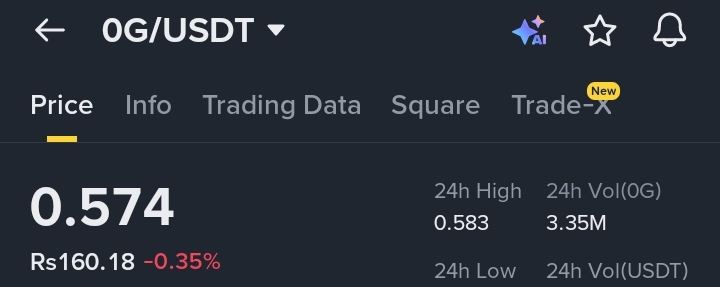
warum OG Preis-Pump's???Der kürzliche Pump bei Tether (oft als $OG USDT bezeichnet) wird normalerweise von kurzfristigen Nachfragesspitzen, Liquiditätsungleichgewichten oder vorübergehenden Depegging-Ängsten angetrieben, statt von echtem Wertwachstum, da er darauf ausgelegt ist, nahe bei 1 $ zu bleiben.
Die heutige Bewegung spiegelt wahrscheinlich die Marktvolatilität und den Handelsdruck auf den Kryptomärkten wider (z.B. Veränderungen bei Bitcoin oder Handelsströmen), nicht einen grundlegenden Preisanstieg – daher ist jeder "Pump" typischerweise kurzlebig und selbstkorrektiv.
warum OG Preis-Pump's???
Der kürzliche Pump bei Tether (oft als $OG USDT bezeichnet) wird normalerweise von kurzfristigen Nachfragesspitzen, Liquiditätsungleichgewichten oder vorübergehenden Depegging-Ängsten angetrieben, statt von echtem Wertwachstum, da er darauf ausgelegt ist, nahe bei 1 $ zu bleiben.
Die heutige Bewegung spiegelt wahrscheinlich die Marktvolatilität und den Handelsdruck auf den Kryptomärkten wider (z.B. Veränderungen bei Bitcoin oder Handelsströmen), nicht einen grundlegenden Preisanstieg – daher ist jeder "Pump" typischerweise kurzlebig und selbstkorrektiv.
Die heutige Bewegung spiegelt wahrscheinlich die Marktvolatilität und den Handelsdruck auf den Kryptomärkten wider (z.B. Veränderungen bei Bitcoin oder Handelsströmen), nicht einen grundlegenden Preisanstieg – daher ist jeder "Pump" typischerweise kurzlebig und selbstkorrektiv.
169
·
--
Artikel
Übersetzung ansehen
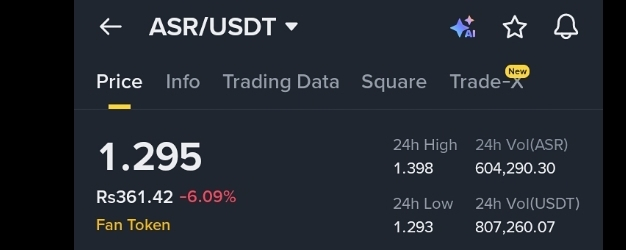
why ASR/usdt price pump's???$ASR /USDT (the AS Roma fan token) usually pumps because it’s a low market cap, high-volatility altcoin, so even small buying pressure can move price quickly. Recent data shows its trading volume jumped sharply (around +90% in 24h), which signals fresh demand entering the market . When volume rises like this—often due to traders, whales, or short-term hype—the price can spike even without major news. Also, fan tokens like $ASR are heavily influenced by overall crypto sentiment and social media activity, meaning quick rallies and drops are normal behavior .
For today’s small pump (under ~$500 move in pair terms), it’s likely driven by short-term trading momentum + technical bounce, not fundamentals. $ASR is currently moving around key support/resistance levels, so traders buy dips and trigger mini breakouts. These coins often react to Bitcoin trend, exchange activity, or even football-related hype, but most daily pumps are simply liquidity-driven moves rather than long-term growth signals.
why ASR/usdt price pump's???
$ASR /USDT (the AS Roma fan token) usually pumps because it’s a low market cap, high-volatility altcoin, so even small buying pressure can move price quickly. Recent data shows its trading volume jumped sharply (around +90% in 24h), which signals fresh demand entering the market . When volume rises like this—often due to traders, whales, or short-term hype—the price can spike even without major news. Also, fan tokens like $ASR are heavily influenced by overall crypto sentiment and social media activity, meaning quick rallies and drops are normal behavior .
For today’s small pump (under ~$500 move in pair terms), it’s likely driven by short-term trading momentum + technical bounce, not fundamentals. $ASR is currently moving around key support/resistance levels, so traders buy dips and trigger mini breakouts. These coins often react to Bitcoin trend, exchange activity, or even football-related hype, but most daily pumps are simply liquidity-driven moves rather than long-term growth signals.
For today’s small pump (under ~$500 move in pair terms), it’s likely driven by short-term trading momentum + technical bounce, not fundamentals. $ASR is currently moving around key support/resistance levels, so traders buy dips and trigger mini breakouts. These coins often react to Bitcoin trend, exchange activity, or even football-related hype, but most daily pumps are simply liquidity-driven moves rather than long-term growth signals.
345
·
--
Artikel
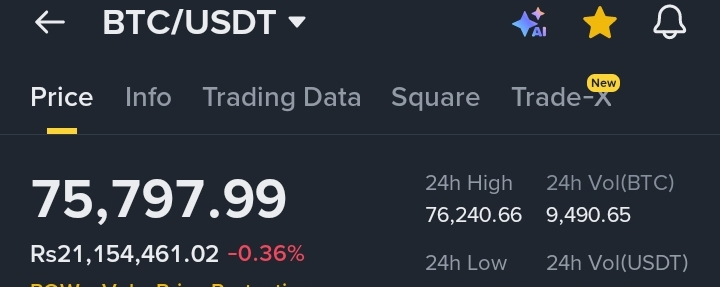
Warum pumpen die Bitcoin-Preise?$BITCOIN Der Preis „steigt“ normalerweise, wenn die Nachfrage plötzlich das Angebot übersteigt. Das kann durch große institutionelle Käufe (wie ETFs oder große Fonds, die BTC ansammeln), positive makroökonomische Nachrichten (z. B. Erwartungen an Zinssätze oder einen schwächeren Dollar) oder wichtige Signalsignale wie Unternehmen, die $BITCOIN zu ihren Bilanzen hinzufügen, geschehen. Da Bitcoin ein festes Angebot hat, kann selbst ein moderater Anstieg der Nachfrage die Preise schnell nach oben treiben, insbesondere in einem Markt, in dem die Liquidität gering ist. Short Squeezes spielen ebenfalls eine Rolle – wenn Händler, die gegen Bitcoin wetten, gezwungen sind, zu höheren Preisen zurückzukaufen, beschleunigt sich die Aufwärtsbewegung.
Warum pumpen die Bitcoin-Preise?
$BITCOIN Der Preis „steigt“ normalerweise, wenn die Nachfrage plötzlich das Angebot übersteigt. Das kann durch große institutionelle Käufe (wie ETFs oder große Fonds, die BTC ansammeln), positive makroökonomische Nachrichten (z. B. Erwartungen an Zinssätze oder einen schwächeren Dollar) oder wichtige Signalsignale wie Unternehmen, die $BITCOIN zu ihren Bilanzen hinzufügen, geschehen. Da Bitcoin ein festes Angebot hat, kann selbst ein moderater Anstieg der Nachfrage die Preise schnell nach oben treiben, insbesondere in einem Markt, in dem die Liquidität gering ist. Short Squeezes spielen ebenfalls eine Rolle – wenn Händler, die gegen Bitcoin wetten, gezwungen sind, zu höheren Preisen zurückzukaufen, beschleunigt sich die Aufwärtsbewegung.
1
122
·
--
Artikel
Übersetzung ansehen
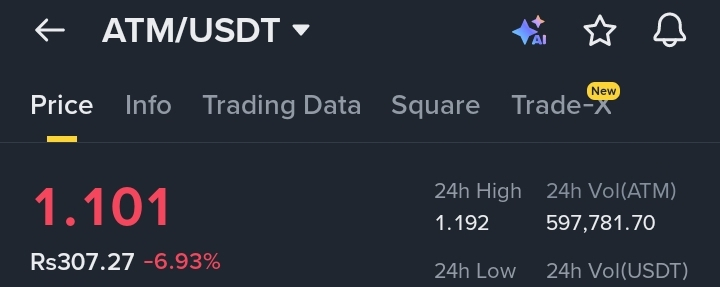
why ATM/usdt price pump's???The “ $ATM USDT price pump” people refer to is usually about sudden spikes in tokens paired with Tether (USDT) on exchanges, not USDT itself (since it’s designed to stay near $1). These pumps often happen when liquidity flows quickly into a specific trading pair—either due to hype, news, or coordinated buying. Traders holding USDT (a stablecoin) can rapidly deploy it into altcoins, creating sharp upward moves. Low market cap tokens are especially sensitive, so even moderate buying pressure can push prices up fast. Sometimes, it’s also driven by arbitrage between exchanges, where price differences trigger automated buying and selling.
Another major factor is market psychology and leverage. When traders see a price rising against USDT, it can trigger FOMO (fear of missing out), causing more buying and amplifying the move. On derivatives platforms, liquidations of short positions can accelerate the pump—when shorts are forced to close, they effectively buy back the asset, pushing prices even higher. In some cases, these pumps are temporary and driven by speculation rather than fundamentals, so they can reverse just as quickly. Keeping an eye on trading volume, order book depth, and broader crypto sentiment (especially movements in Bitcoin) helps explain whether a pump has real momentum or is just short-term hype.
why ATM/usdt price pump's???
The “ $ATM USDT price pump” people refer to is usually about sudden spikes in tokens paired with Tether (USDT) on exchanges, not USDT itself (since it’s designed to stay near $1). These pumps often happen when liquidity flows quickly into a specific trading pair—either due to hype, news, or coordinated buying. Traders holding USDT (a stablecoin) can rapidly deploy it into altcoins, creating sharp upward moves. Low market cap tokens are especially sensitive, so even moderate buying pressure can push prices up fast. Sometimes, it’s also driven by arbitrage between exchanges, where price differences trigger automated buying and selling.
Another major factor is market psychology and leverage. When traders see a price rising against USDT, it can trigger FOMO (fear of missing out), causing more buying and amplifying the move. On derivatives platforms, liquidations of short positions can accelerate the pump—when shorts are forced to close, they effectively buy back the asset, pushing prices even higher. In some cases, these pumps are temporary and driven by speculation rather than fundamentals, so they can reverse just as quickly. Keeping an eye on trading volume, order book depth, and broader crypto sentiment (especially movements in Bitcoin) helps explain whether a pump has real momentum or is just short-term hype.
Another major factor is market psychology and leverage. When traders see a price rising against USDT, it can trigger FOMO (fear of missing out), causing more buying and amplifying the move. On derivatives platforms, liquidations of short positions can accelerate the pump—when shorts are forced to close, they effectively buy back the asset, pushing prices even higher. In some cases, these pumps are temporary and driven by speculation rather than fundamentals, so they can reverse just as quickly. Keeping an eye on trading volume, order book depth, and broader crypto sentiment (especially movements in Bitcoin) helps explain whether a pump has real momentum or is just short-term hype.
1
2
94
·
--
Artikel
Übersetzung ansehen
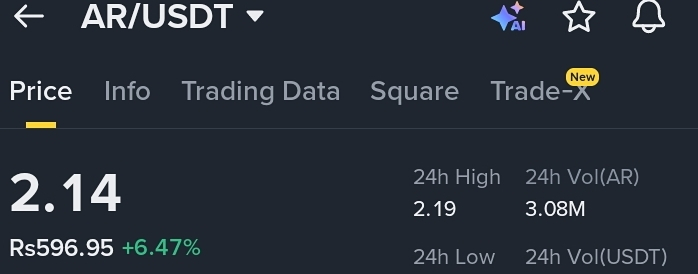
why AR/usdt pumps Price?The recent pump in $Arweave against Tether is largely being driven by a mix of narrative momentum and ecosystem-specific developments. Arweave has been gaining renewed attention because of growing interest in decentralized storage and “permaweb” applications, especially as AI and data permanence become hotter topics in crypto. Any announcements, partnerships, or upgrades tied to Arweave’s infrastructure—like improvements in data accessibility or integrations with Web3 platforms—tend to spark speculative demand. On top of that, when broader market sentiment turns bullish, mid-cap tokens like $AR often outperform due to their lower liquidity and higher upside potential, amplifying price moves.
Another key factor is market structure and trading behavior. $AR has relatively thinner liquidity compared to large-cap assets, so even moderate inflows can push prices up quickly. Traders often rotate profits from majors like Bitcoin and Ethereum into smaller narratives like storage or AI-related tokens, creating short-term spikes. Short squeezes can also accelerate pumps if traders betting against $AR are forced to close positions. Finally, social media hype and influencer attention can’t be ignored—once momentum builds, it becomes self-reinforcing as more traders jump in. Still, these moves can be volatile, so sharp pullbacks are just as common after rapid gains.
why AR/usdt pumps Price?
The recent pump in $Arweave against Tether is largely being driven by a mix of narrative momentum and ecosystem-specific developments. Arweave has been gaining renewed attention because of growing interest in decentralized storage and “permaweb” applications, especially as AI and data permanence become hotter topics in crypto. Any announcements, partnerships, or upgrades tied to Arweave’s infrastructure—like improvements in data accessibility or integrations with Web3 platforms—tend to spark speculative demand. On top of that, when broader market sentiment turns bullish, mid-cap tokens like $AR often outperform due to their lower liquidity and higher upside potential, amplifying price moves.
Another key factor is market structure and trading behavior. $AR has relatively thinner liquidity compared to large-cap assets, so even moderate inflows can push prices up quickly. Traders often rotate profits from majors like Bitcoin and Ethereum into smaller narratives like storage or AI-related tokens, creating short-term spikes. Short squeezes can also accelerate pumps if traders betting against $AR are forced to close positions. Finally, social media hype and influencer attention can’t be ignored—once momentum builds, it becomes self-reinforcing as more traders jump in. Still, these moves can be volatile, so sharp pullbacks are just as common after rapid gains.
Another key factor is market structure and trading behavior. $AR has relatively thinner liquidity compared to large-cap assets, so even moderate inflows can push prices up quickly. Traders often rotate profits from majors like Bitcoin and Ethereum into smaller narratives like storage or AI-related tokens, creating short-term spikes. Short squeezes can also accelerate pumps if traders betting against $AR are forced to close positions. Finally, social media hype and influencer attention can’t be ignored—once momentum builds, it becomes self-reinforcing as more traders jump in. Still, these moves can be volatile, so sharp pullbacks are just as common after rapid gains.
5
401
Anmelden und weiter Inhalte entdecken
Krypto-Nutzer weltweit auf Binance Square kennenlernen
⚡️ Bleib in Sachen Krypto stets am Puls.
💬 Die weltgrößte Kryptobörse vertraut darauf.
👍 Erhalte verlässliche Einblicke von verifizierten Creators.
E-Mail-Adresse/Telefonnummer
Trendthemen
FedWatch
16.3M Aufrufe
39,438 Kommentare
🚨 🇺🇸 PETER SCHIFF HAT SOEBEN EINE DEUTLICHE WARNUNG AN DIE FED GERICHTET!
Peter Schiff bezeichnet Kevin Warshs harte Rhetorik zur Inflation als „Bluff“, und seine Prognose könnte erhebliche Auswirkungen auf die Märkte haben.
Schiff glaubt, dass die Fed irgendwann wieder zur Geldschöpfung durch quantitative Lockerung (QE) zurückkehren und sogar im nächsten Jahr die Zinsen senken könnte, obwohl die Inflation weiter steigt.
Denk einen Moment darüber nach.
🔥 Die Inflation könnte weiterhin ein Problem bleiben. 🔥 Die Fed könnte trotzdem auf eine lockerere Geldpolitik zusteuern. 🔥 Mehr Liquidität könnte in die Finanzmärkte fließen.
Sollte dieses Szenario eintreten, könnte das für Aktien, Gold, Bitcoin und den gesamten Kryptomarkt ein völlig anderes Marktumfeld schaffen.
Doch es gibt einen Haken: Bleibt die Inflation hoch, könnte die Fed vor der schwierigen Entscheidung stehen, ob sie steigende Preise bekämpfen oder die Wirtschaft stützen soll.
Wird Warsh an einer strikten Inflationspolitik festhalten, oder wird die Fed irgendwann ihren Kurs ändern?
Der nächste Schritt könnte für Anleger sehr wichtig sein.
#FedWatch #EarningsSeason #USMidtermElections #BrazilCryptoExchangesMustApplyForLicensesByFriday #StanDruckenmillerBecomesInvestorInTradeXYZ
Jackson Liam
·4 Likes
·8.5k Aufrufe
EarningsSeason
6.5M Aufrufe
32,141 Kommentare
USMidtermElections
45,540 Aufrufe
642 Kommentare