

Crypto_Brothers
710 Beiträge

Crypto_Brothers
Melden
Nutzer blockieren
Community Builders | Market Analysis | Crypto News | X : @CryptoBrother_X
Trade eröffnen
Hochfrequenz-Trader
4 Jahre
62 Following
238 Follower
403 Like gegeben
Beiträge
Portfolio
Alle
Zitierungen
PINNED
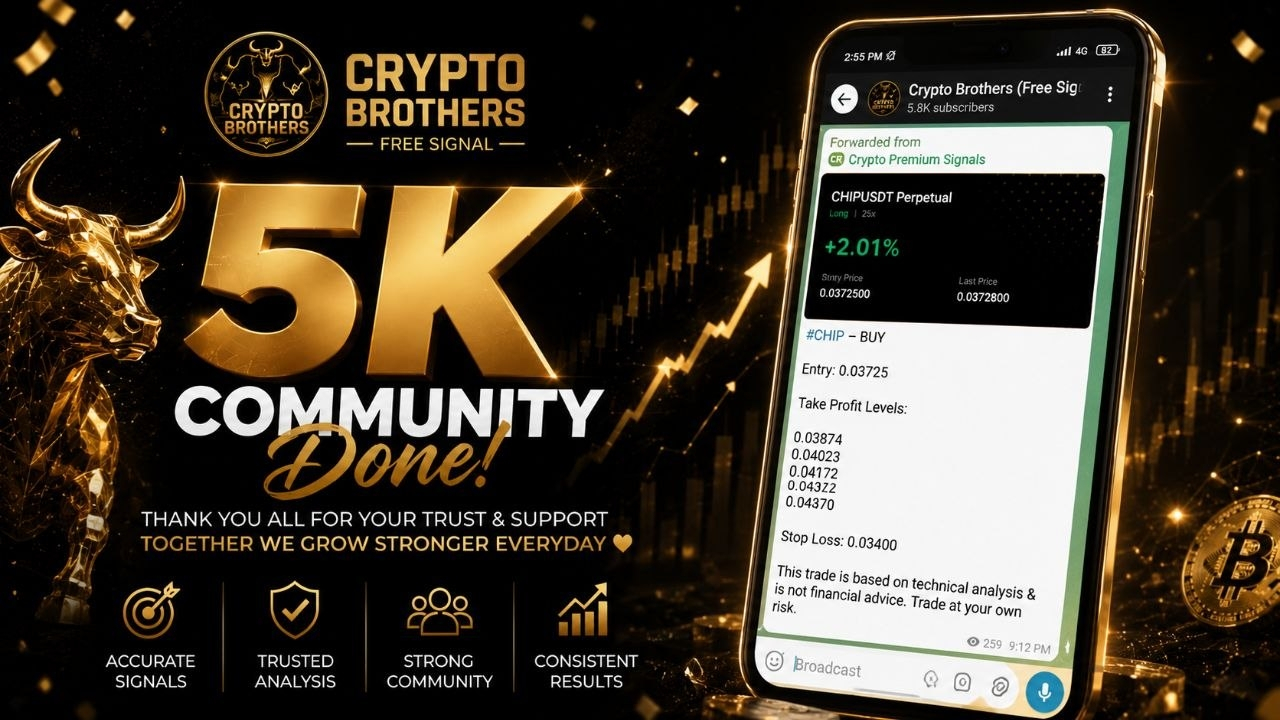
5K COMMUNITY DONE 🎉
Wir Haben Gerade Ein Neues Meilenstein Erreicht — 5K Starke Familie 💛
Das Ist Erst Der Anfang Von Etwas Größerem.
Unser Netzwerk Wächst Jeden Tag —
Mehr Aktive Trader, Mehr Smarte Moves, Mehr Ergebnisse.
Konsistenz, Disziplin & Echte Werte —
Das Hat Diese Community Gebaut.
Bleib Verbunden, Bleib Auf Dem Laufenden & Sei Teil Der Reise.
Folge Mir (X) : CryptoBrother_X
Folge Mir (T..) : CryptoBrothersFreeSignal
Großes Kommt Als Nächstes…
#crypto #TradingCommunity #freesignal #MarketAnalysis #cryptosignals
1
23
·
--
Bärisch
Übersetzung ansehen
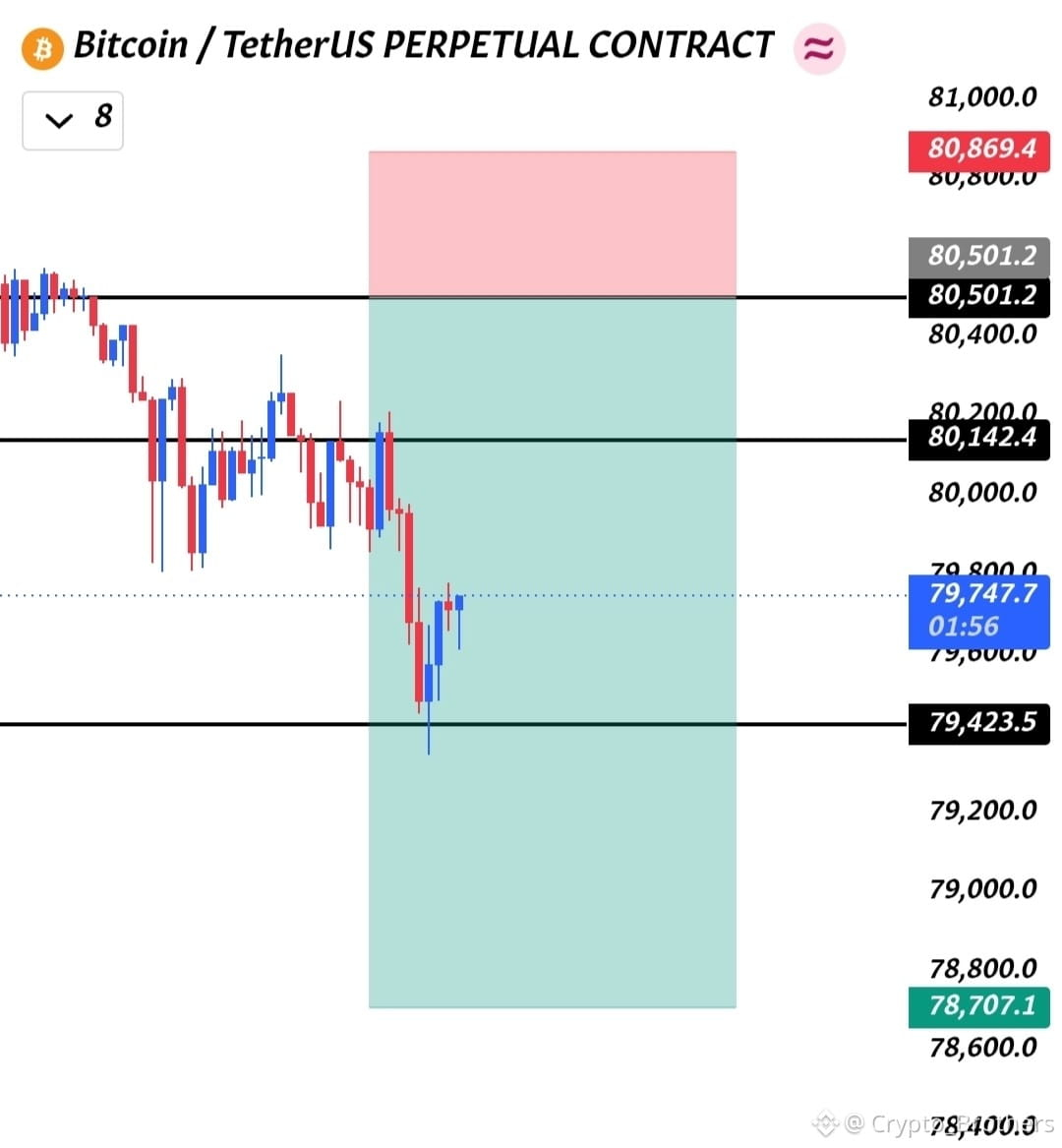
🎯 $BTC SHORT — TP1 HIT | BEARISH TARGET IN PLAY
Bitcoin has moved into the first profit-taking zone, reaching TP1 at 79,423 from the planned short setup. The initial downside objective has been achieved, marking progress toward the next key support level.
📊 BTCUSDT PERPETUAL — TRADE UPDATE
🔹 Entry Zone: 80,142 – 80,501
✅ TP1: 79,423 — HIT
🎯 TP2: 78,707
🛑 Stop Loss: 80,870
💼 POSITION MANAGEMENT
Book approximately 70% of the position at TP1.
Move the Stop Loss on the remaining position to Entry/CTC, subject to execution and market structure.
Monitor the next downside objective at 78,707.
The first target is complete. The remaining position can continue toward TP2 if bearish structure remains intact.
#BTC #squarecreator #BTCUSDTAnalysis #cryptotrading #priceaction
Crypto_Brothers
·
--
Bärisch🚨 $BTC /USDT — SHORT TRADE SETUP
Based on the current Market Structure and Price Action of $BTC /USDT, this Trade setup has been prepared with a clearly defined Entry Zone, Take-Profit Targets, and Stop Loss. The primary plan is to build the position after confirmation and manage the trade according to the predefined levels.
Entry Zone : 80,142 - 80,501
Take-Profit Targets:
TP1: 79,423
TP2: 78,707
Stop-Loss: 80,870
🔰 TRADING GUIDELINES
✔ Position Building:
Enter approximately 30% of the planned position at the Current Market Price. If price returns to the original Entry Zone and provides a valid rejection/confirmation, add the remaining 70% position.
✔ Profit Management:
Once TP1 is reached, book approximately 70% of the position to secure profits. The remaining 30% can be held for further targets with the Stop Loss moved to Entry/CTC, as long as the Market Structure remains favorable.
✔ Risk & Discipline:
Our setups generally target a 1:4 to 1:5 Risk-to-Reward ratio. Therefore, focus on proper risk management, Stop Loss discipline, and long-term consistency rather than the outcome of a single trade. If Stop Loss is hit, avoid revenge trading, overtrading, or unnecessary re-entry.
⚠️ Never over-leverage. Never chase the market. Always follow the plan.
#CryptoTrading #TradingSignals #CryptoMarket #TechnicalAnalysis #BTC
96
·
--
Bärisch
Übersetzung ansehen
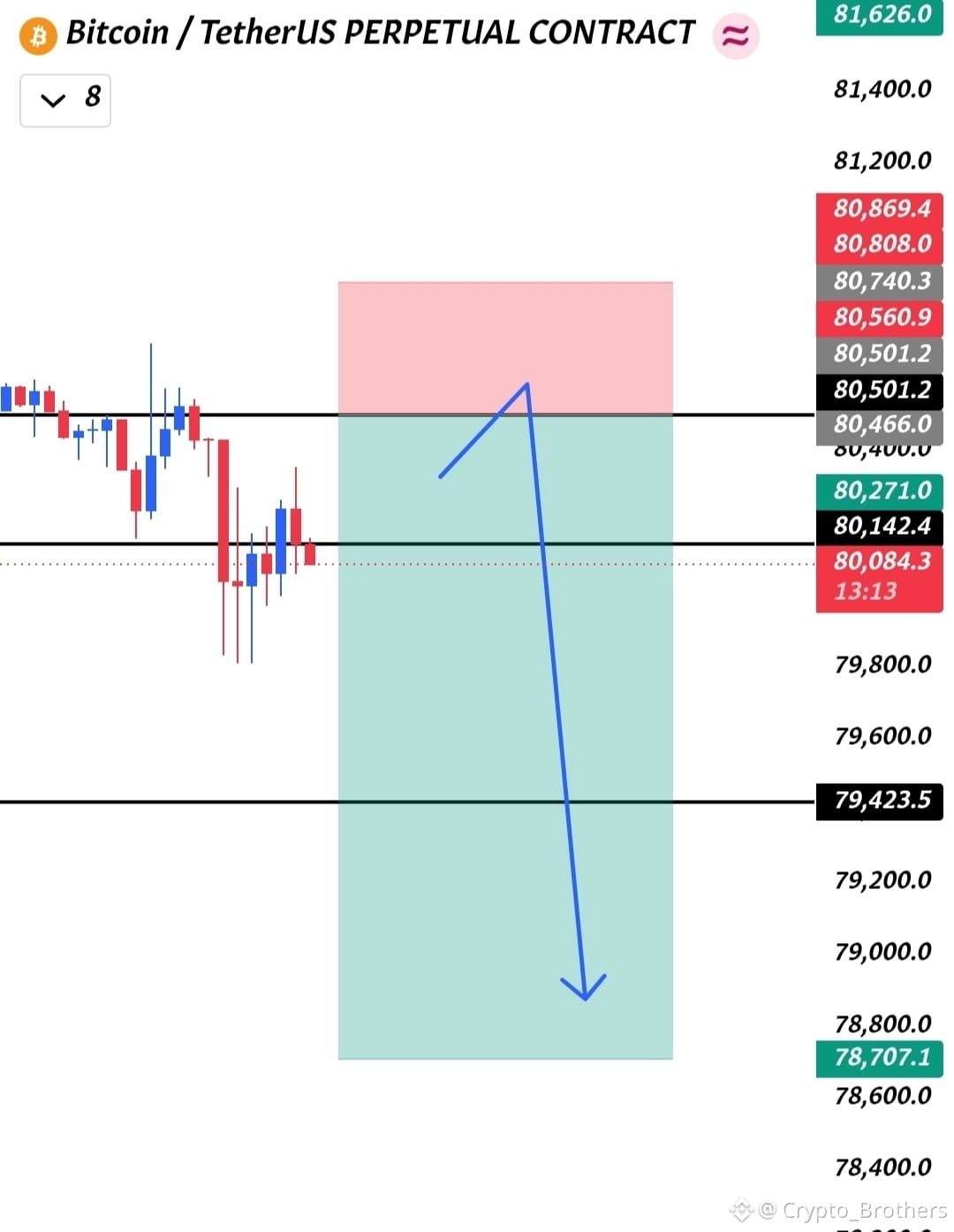
🚨 $BTC /USDT — SHORT TRADE SETUP
Based on the current Market Structure and Price Action of $BTC /USDT, this Trade setup has been prepared with a clearly defined Entry Zone, Take-Profit Targets, and Stop Loss. The primary plan is to build the position after confirmation and manage the trade according to the predefined levels.
Entry Zone : 80,142 - 80,501
Take-Profit Targets:
TP1: 79,423
TP2: 78,707
Stop-Loss: 80,870
{future}(BTCUSDT)
🔰 TRADING GUIDELINES
✔ Position Building:
Enter approximately 30% of the planned position at the Current Market Price. If price returns to the original Entry Zone and provides a valid rejection/confirmation, add the remaining 70% position.
✔ Profit Management:
Once TP1 is reached, book approximately 70% of the position to secure profits. The remaining 30% can be held for further targets with the Stop Loss moved to Entry/CTC, as long as the Market Structure remains favorable.
✔ Risk & Discipline:
Our setups generally target a 1:4 to 1:5 Risk-to-Reward ratio. Therefore, focus on proper risk management, Stop Loss discipline, and long-term consistency rather than the outcome of a single trade. If Stop Loss is hit, avoid revenge trading, overtrading, or unnecessary re-entry.
⚠️ Never over-leverage. Never chase the market. Always follow the plan.
#CryptoTrading #TradingSignals #CryptoMarket #TechnicalAnalysis #BTC
🚨 $BTC /USDT — SHORT TRADE SETUP
Based on the current Market Structure and Price Action of $BTC /USDT, this Trade setup has been prepared with a clearly defined Entry Zone, Take-Profit Targets, and Stop Loss. The primary plan is to build the position after confirmation and manage the trade according to the predefined levels.
Entry Zone : 80,142 - 80,501
Take-Profit Targets:
TP1: 79,423
TP2: 78,707
Stop-Loss: 80,870
🔰 TRADING GUIDELINES
✔ Position Building:
Enter approximately 30% of the planned position at the Current Market Price. If price returns to the original Entry Zone and provides a valid rejection/confirmation, add the remaining 70% position.
✔ Profit Management:
Once TP1 is reached, book approximately 70% of the position to secure profits. The remaining 30% can be held for further targets with the Stop Loss moved to Entry/CTC, as long as the Market Structure remains favorable.
✔ Risk & Discipline:
Our setups generally target a 1:4 to 1:5 Risk-to-Reward ratio. Therefore, focus on proper risk management, Stop Loss discipline, and long-term consistency rather than the outcome of a single trade. If Stop Loss is hit, avoid revenge trading, overtrading, or unnecessary re-entry.
⚠️ Never over-leverage. Never chase the market. Always follow the plan.
#CryptoTrading #TradingSignals #CryptoMarket #TechnicalAnalysis #BTC
1
69
·
--
Bullisch
Übersetzung ansehen
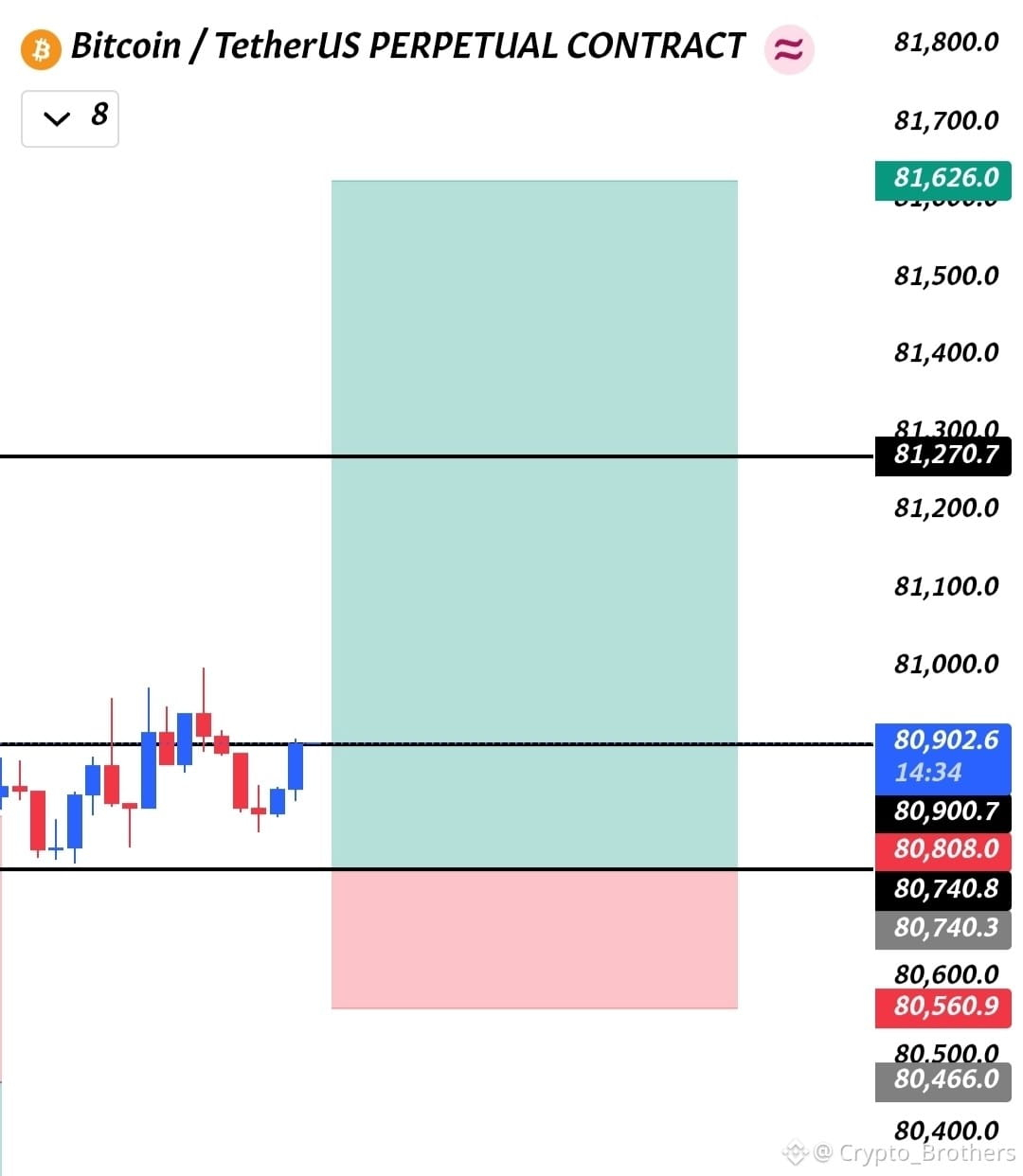
🚨 $BTC /USDT — LONG TRADE SETUP
Based on the current Market Structure and Price Action of $BTC /USDT, this Trade setup has been prepared with a clearly defined Entry Zone, Take-Profit Targets, and Stop Loss. The primary plan is to build the position after confirmation and manage the trade according to the predefined levels.
Entry Zone : 80,902 - 80,740
Take-Profit Targets:
TP1: 81,270
TP2: 81,626
Stop-Loss: 80,560
{future}(BTCUSDT)
🔰 TRADING GUIDELINES
✔ Position Building:
Enter approximately 30% of the planned position at the Current Market Price. If price returns to the original Entry Zone and provides a valid rejection/confirmation, add the remaining 70% position.
✔ Profit Management:
Once TP1 is reached, book approximately 70% of the position to secure profits. The remaining 30% can be held for further targets with the Stop Loss moved to Entry/CTC, as long as the Market Structure remains favorable.
✔ Risk & Discipline:
Our setups generally target a 1:4 to 1:5 Risk-to-Reward ratio. Therefore, focus on proper risk management, Stop Loss discipline, and long-term consistency rather than the outcome of a single trade. If Stop Loss is hit, avoid revenge trading, overtrading, or unnecessary re-entry.
⚠️ Never over-leverage. Never chase the market. Always follow the plan.
#cryptotrading #TradingSignals #CryptoMarket #TechnicalAnalysis #BTC
🚨 $BTC /USDT — LONG TRADE SETUP
Based on the current Market Structure and Price Action of $BTC /USDT, this Trade setup has been prepared with a clearly defined Entry Zone, Take-Profit Targets, and Stop Loss. The primary plan is to build the position after confirmation and manage the trade according to the predefined levels.
Entry Zone : 80,902 - 80,740
Take-Profit Targets:
TP1: 81,270
TP2: 81,626
Stop-Loss: 80,560
🔰 TRADING GUIDELINES
✔ Position Building:
Enter approximately 30% of the planned position at the Current Market Price. If price returns to the original Entry Zone and provides a valid rejection/confirmation, add the remaining 70% position.
✔ Profit Management:
Once TP1 is reached, book approximately 70% of the position to secure profits. The remaining 30% can be held for further targets with the Stop Loss moved to Entry/CTC, as long as the Market Structure remains favorable.
✔ Risk & Discipline:
Our setups generally target a 1:4 to 1:5 Risk-to-Reward ratio. Therefore, focus on proper risk management, Stop Loss discipline, and long-term consistency rather than the outcome of a single trade. If Stop Loss is hit, avoid revenge trading, overtrading, or unnecessary re-entry.
⚠️ Never over-leverage. Never chase the market. Always follow the plan.
#cryptotrading #TradingSignals #CryptoMarket #TechnicalAnalysis #BTC
1
57
·
--
Bullisch
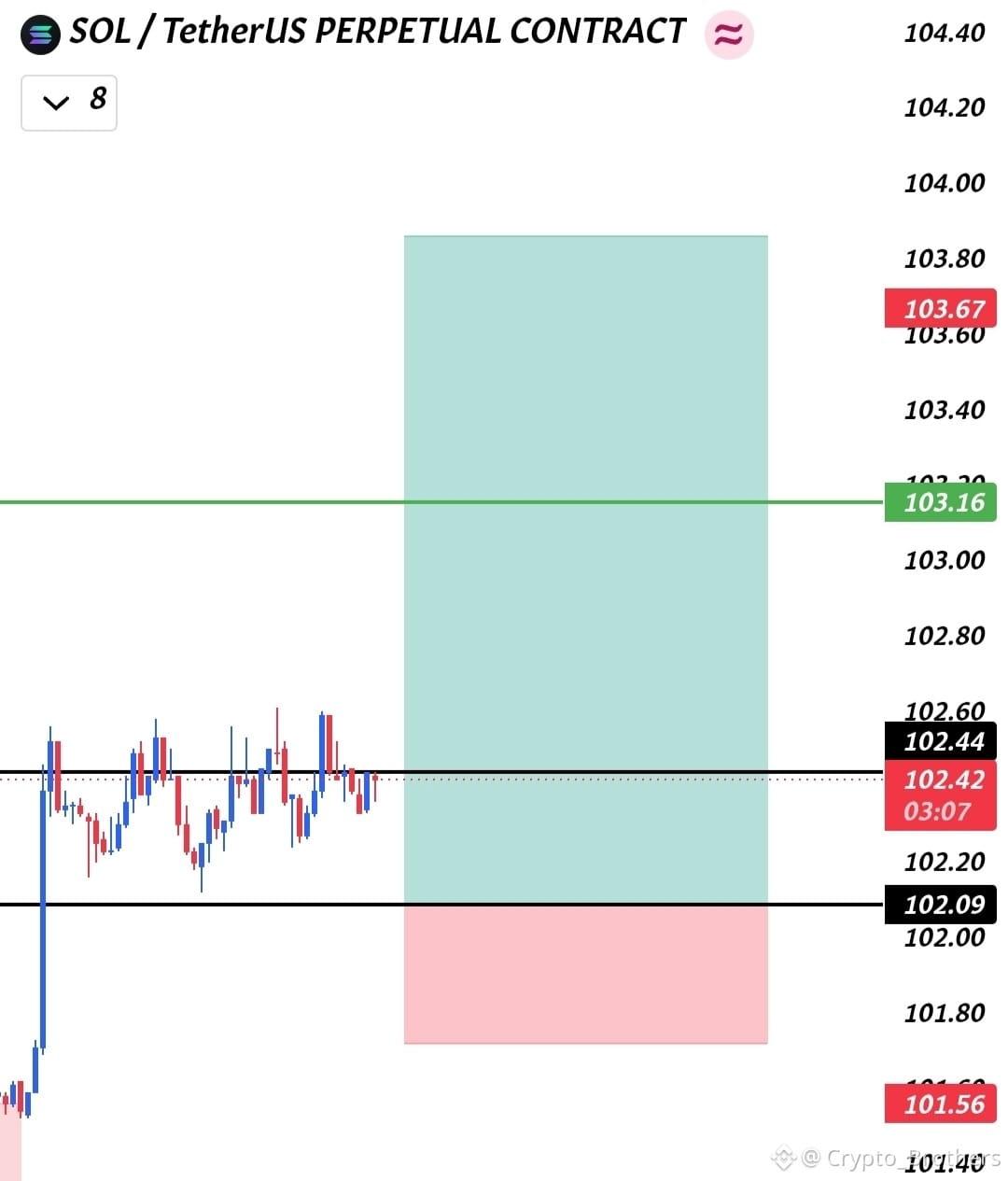
🚨 $SOL /USDT — LONG-TRADE-SETUP
Basierend auf der aktuellen Marktstruktur und dem Kursverhalten von $SOL /USDT wurde dieses Trade-Setup mit einer klar definierten Einstiegszone, Take-Profit-Zielen und einem Stop-Loss erstellt. Der primäre Plan besteht darin, die Position nach einer Bestätigung aufzubauen und den Trade entsprechend den vorab festgelegten Levels zu verwalten.
Einstiegszone: 102.44 - 102.09
Take-Profit-Ziele:
TP1: 103.16
TP2: 103.86
Stop-Loss: 101.56
{future}(SOLUSDT)
🔰 HANDELSRICHTLINIEN
✔ Positionsaufbau:
Eröffne etwa 30 % der geplanten Position zum aktuellen Marktpreis. Kehrt der Kurs in die ursprüngliche Einstiegszone zurück und zeigt dort eine gültige Zurückweisung/Bestätigung, füge die verbleibenden 70 % hinzu.
✔ Gewinnmanagement:
Sobald TP1 erreicht ist, realisiere etwa 70 % der Position, um Gewinne zu sichern. Die verbleibenden 30 % können für weitere Ziele gehalten werden. Verschiebe dabei den Stop-Loss auf den Einstieg/CTC, solange die Marktstruktur günstig bleibt.
✔ Risikomanagement und Disziplin:
Unsere Setups zielen in der Regel auf ein Chance-Risiko-Verhältnis von 1:4 bis 1:5 ab. Konzentriere dich daher auf ein angemessenes Risikomanagement, die konsequente Einhaltung des Stop-Loss und langfristige Beständigkeit, statt auf das Ergebnis eines einzelnen Trades. Wird der Stop-Loss ausgelöst, vermeide Rachetrading, übermäßiges Trading oder unnötige Wiedereinstiege.
⚠️ Verwende niemals einen übermäßigen Hebel. Jage niemals dem Markt hinterher. Halte dich immer an den Plan.
#CryptoTrading #TradingSignals #CryptoMarket #TechnicalAnalysis #Solana
🚨 $SOL /USDT — LONG-TRADE-SETUP
Basierend auf der aktuellen Marktstruktur und dem Kursverhalten von $SOL /USDT wurde dieses Trade-Setup mit einer klar definierten Einstiegszone, Take-Profit-Zielen und einem Stop-Loss erstellt. Der primäre Plan besteht darin, die Position nach einer Bestätigung aufzubauen und den Trade entsprechend den vorab festgelegten Levels zu verwalten.
Einstiegszone: 102.44 - 102.09
Take-Profit-Ziele:
TP1: 103.16
TP2: 103.86
Stop-Loss: 101.56
🔰 HANDELSRICHTLINIEN
✔ Positionsaufbau:
Eröffne etwa 30 % der geplanten Position zum aktuellen Marktpreis. Kehrt der Kurs in die ursprüngliche Einstiegszone zurück und zeigt dort eine gültige Zurückweisung/Bestätigung, füge die verbleibenden 70 % hinzu.
✔ Gewinnmanagement:
Sobald TP1 erreicht ist, realisiere etwa 70 % der Position, um Gewinne zu sichern. Die verbleibenden 30 % können für weitere Ziele gehalten werden. Verschiebe dabei den Stop-Loss auf den Einstieg/CTC, solange die Marktstruktur günstig bleibt.
✔ Risikomanagement und Disziplin:
Unsere Setups zielen in der Regel auf ein Chance-Risiko-Verhältnis von 1:4 bis 1:5 ab. Konzentriere dich daher auf ein angemessenes Risikomanagement, die konsequente Einhaltung des Stop-Loss und langfristige Beständigkeit, statt auf das Ergebnis eines einzelnen Trades. Wird der Stop-Loss ausgelöst, vermeide Rachetrading, übermäßiges Trading oder unnötige Wiedereinstiege.
⚠️ Verwende niemals einen übermäßigen Hebel. Jage niemals dem Markt hinterher. Halte dich immer an den Plan.
#CryptoTrading #TradingSignals #CryptoMarket #TechnicalAnalysis #Solana
86
Übersetzung ansehen
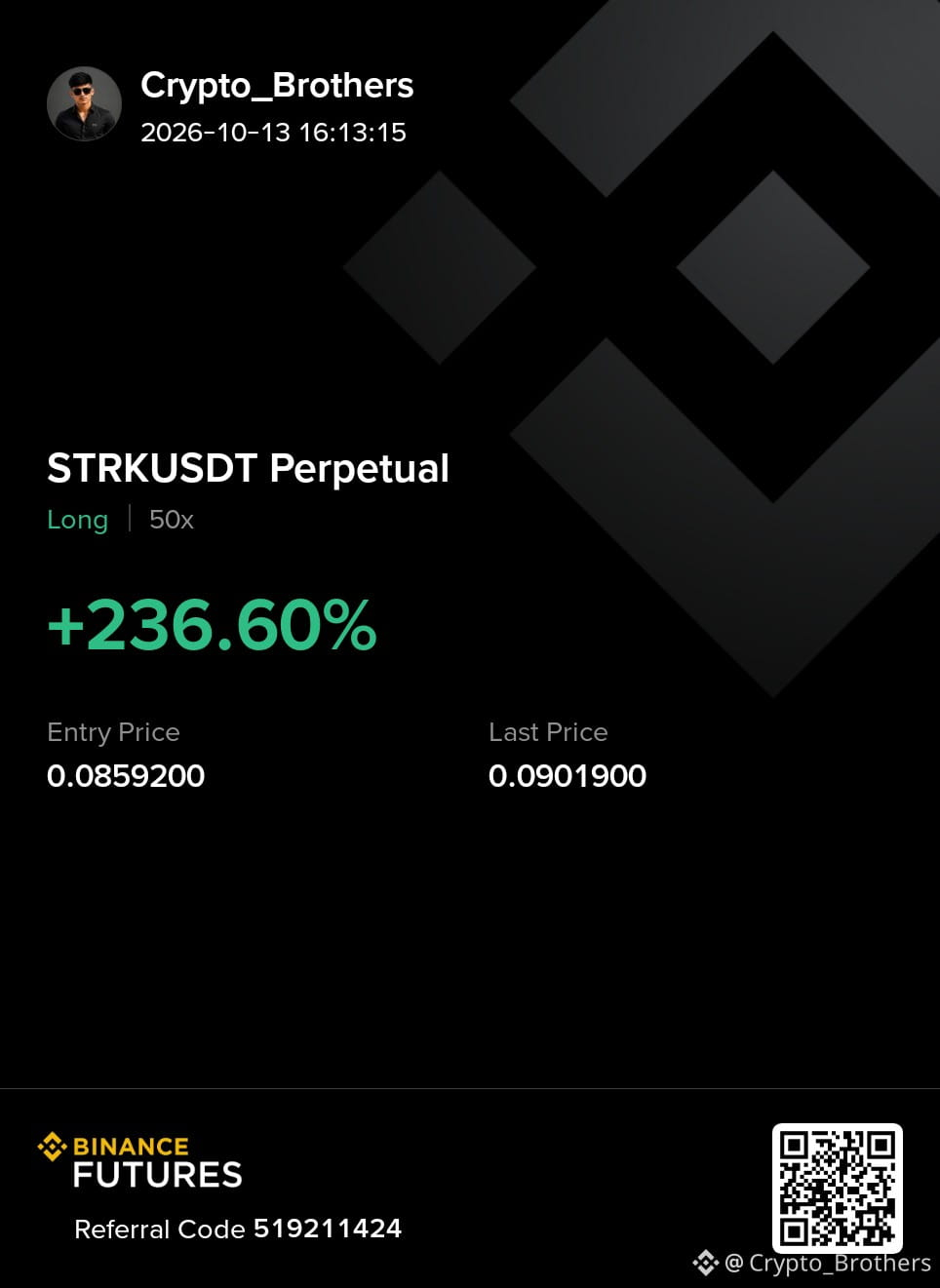
$STRK 🔥
$STRK 🔥
Crypto_Brothers
·
--
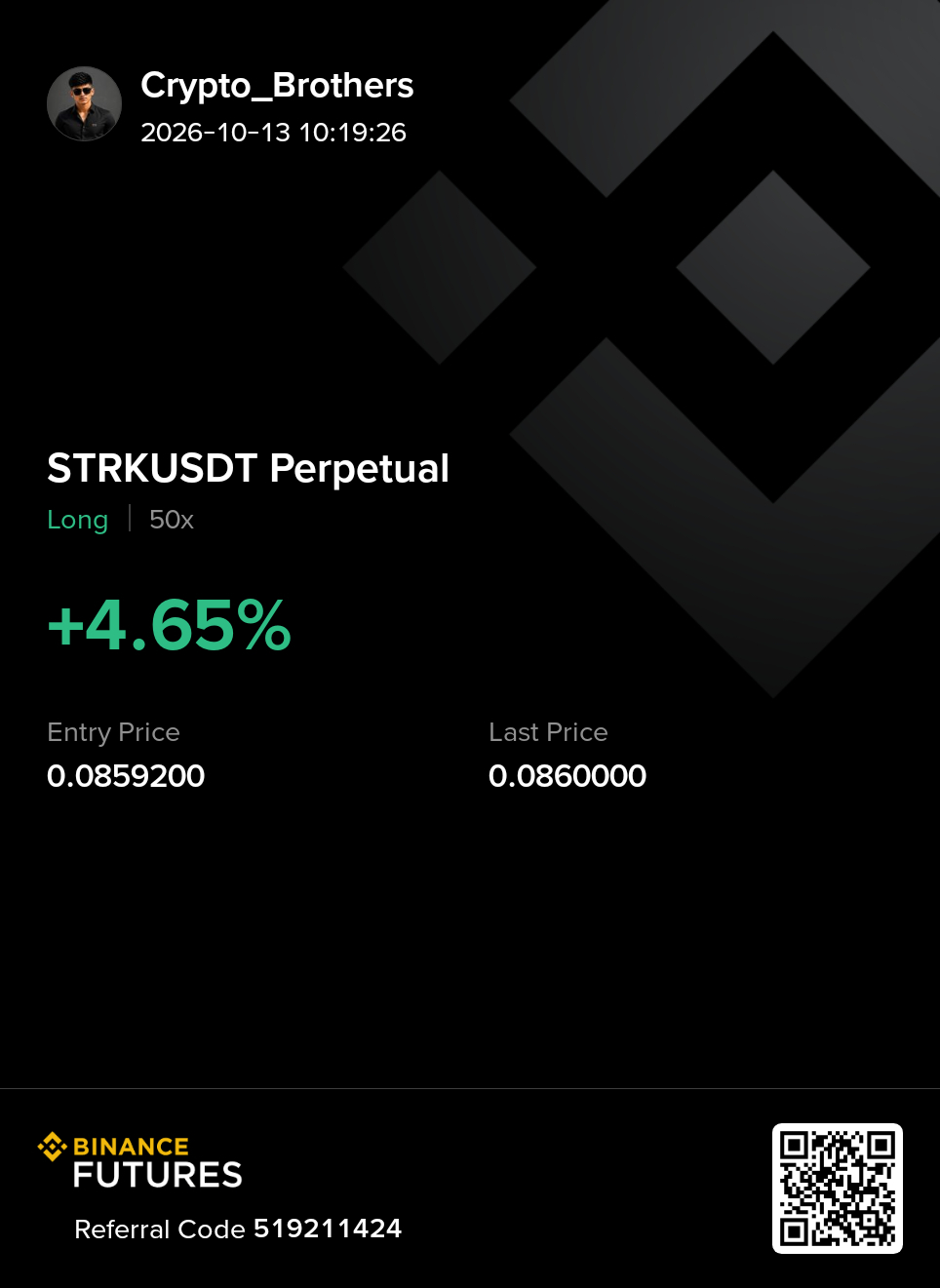
Bullisch$STRK – KAUFEN
Einstieg: 0.08592
Gewinnmitnahmeziele:
0.08935
0.09279
0.09623
0.09966
0.10310
Stop-Loss: 0.07900
Dieser Trade basiert auf technischer Analyse und ist keine Finanzberatung. Handeln Sie auf eigenes Risiko.
Einstieg: 0.08592
Gewinnmitnahmeziele:
0.08935
0.09279
0.09623
0.09966
0.10310
Stop-Loss: 0.07900
Dieser Trade basiert auf technischer Analyse und ist keine Finanzberatung. Handeln Sie auf eigenes Risiko.
22
·
--
Bullisch
Übersetzung ansehen
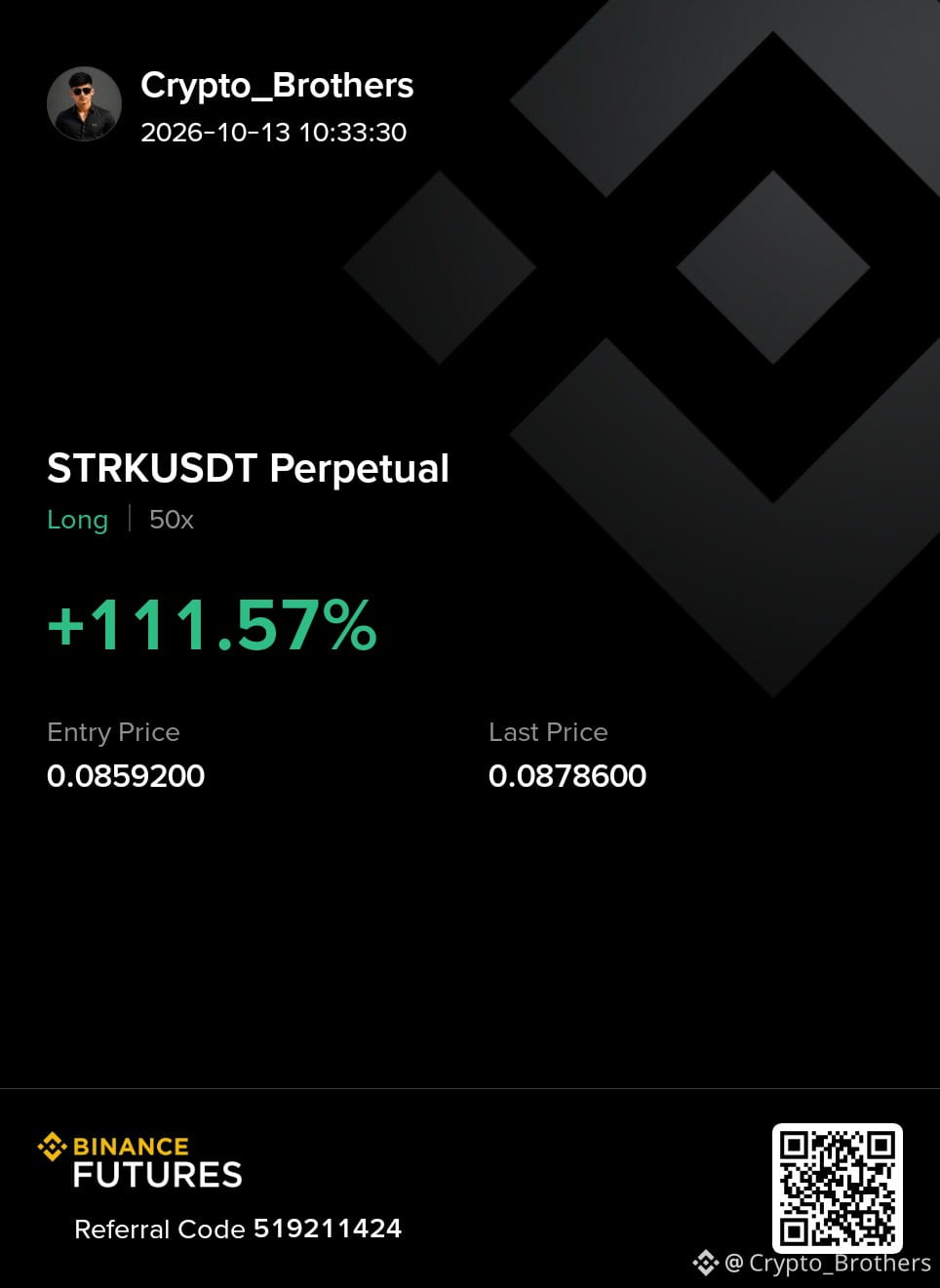
$STRK 110% Profits Done ✅
$STRK 110% Profits Done ✅
Crypto_Brothers
·
--
Bullisch$STRK – KAUFEN
Einstieg: 0.08592
Gewinnmitnahmeziele:
0.08935
0.09279
0.09623
0.09966
0.10310
Stop-Loss: 0.07900
Dieser Trade basiert auf technischer Analyse und ist keine Finanzberatung. Handeln Sie auf eigenes Risiko.
Einstieg: 0.08592
Gewinnmitnahmeziele:
0.08935
0.09279
0.09623
0.09966
0.10310
Stop-Loss: 0.07900
Dieser Trade basiert auf technischer Analyse und ist keine Finanzberatung. Handeln Sie auf eigenes Risiko.
9
·
--
Bullisch
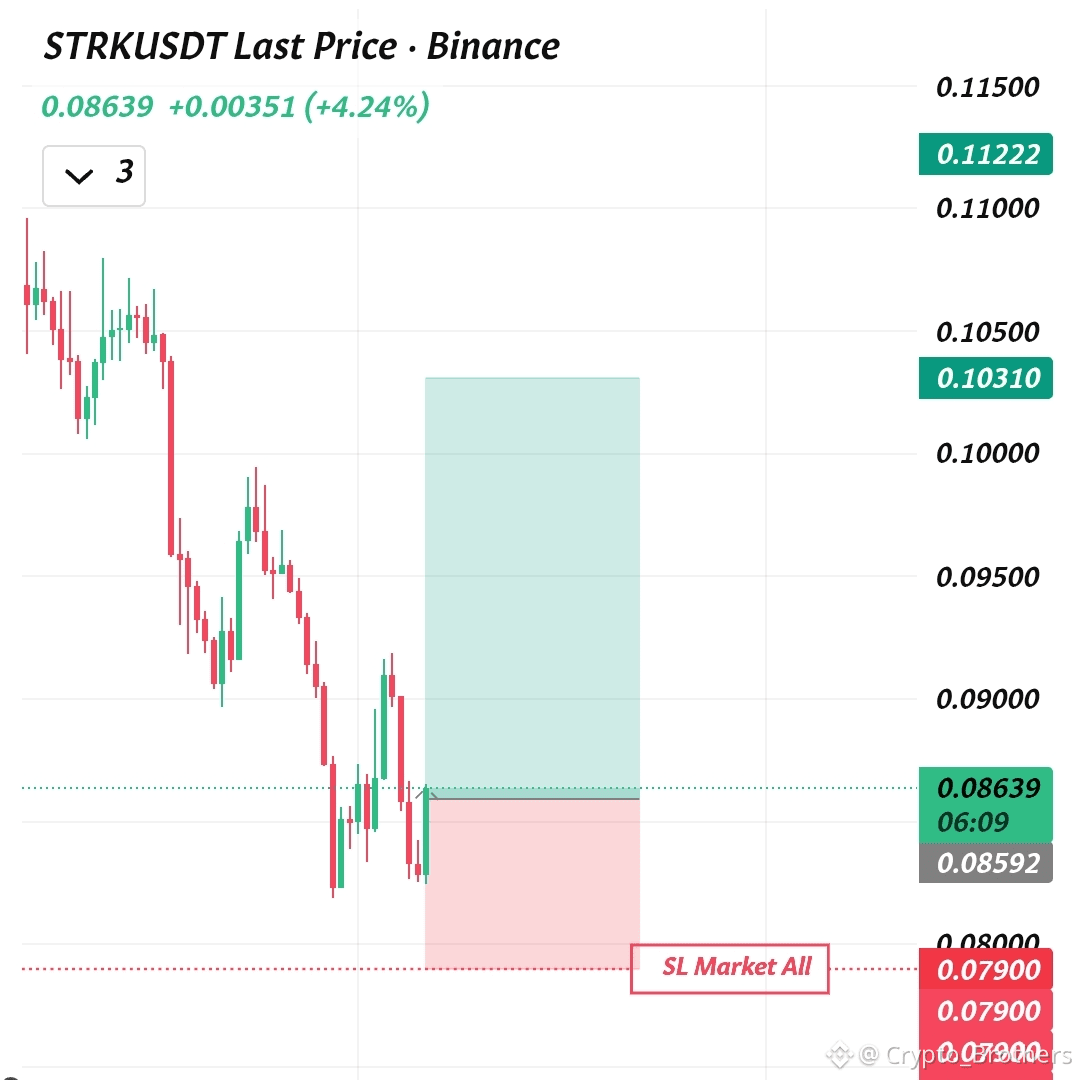
$STRK – KAUFEN
Einstieg: 0.08592
Gewinnmitnahmeziele:
0.08935
0.09279
0.09623
0.09966
0.10310
Stop-Loss: 0.07900
{future}(STRKUSDT)
Dieser Trade basiert auf technischer Analyse und ist keine Finanzberatung. Handeln Sie auf eigenes Risiko.
$STRK – KAUFEN
Einstieg: 0.08592
Gewinnmitnahmeziele:
0.08935
0.09279
0.09623
0.09966
0.10310
Stop-Loss: 0.07900
Dieser Trade basiert auf technischer Analyse und ist keine Finanzberatung. Handeln Sie auf eigenes Risiko.
Einstieg: 0.08592
Gewinnmitnahmeziele:
0.08935
0.09279
0.09623
0.09966
0.10310
Stop-Loss: 0.07900
Dieser Trade basiert auf technischer Analyse und ist keine Finanzberatung. Handeln Sie auf eigenes Risiko.
2
1
310
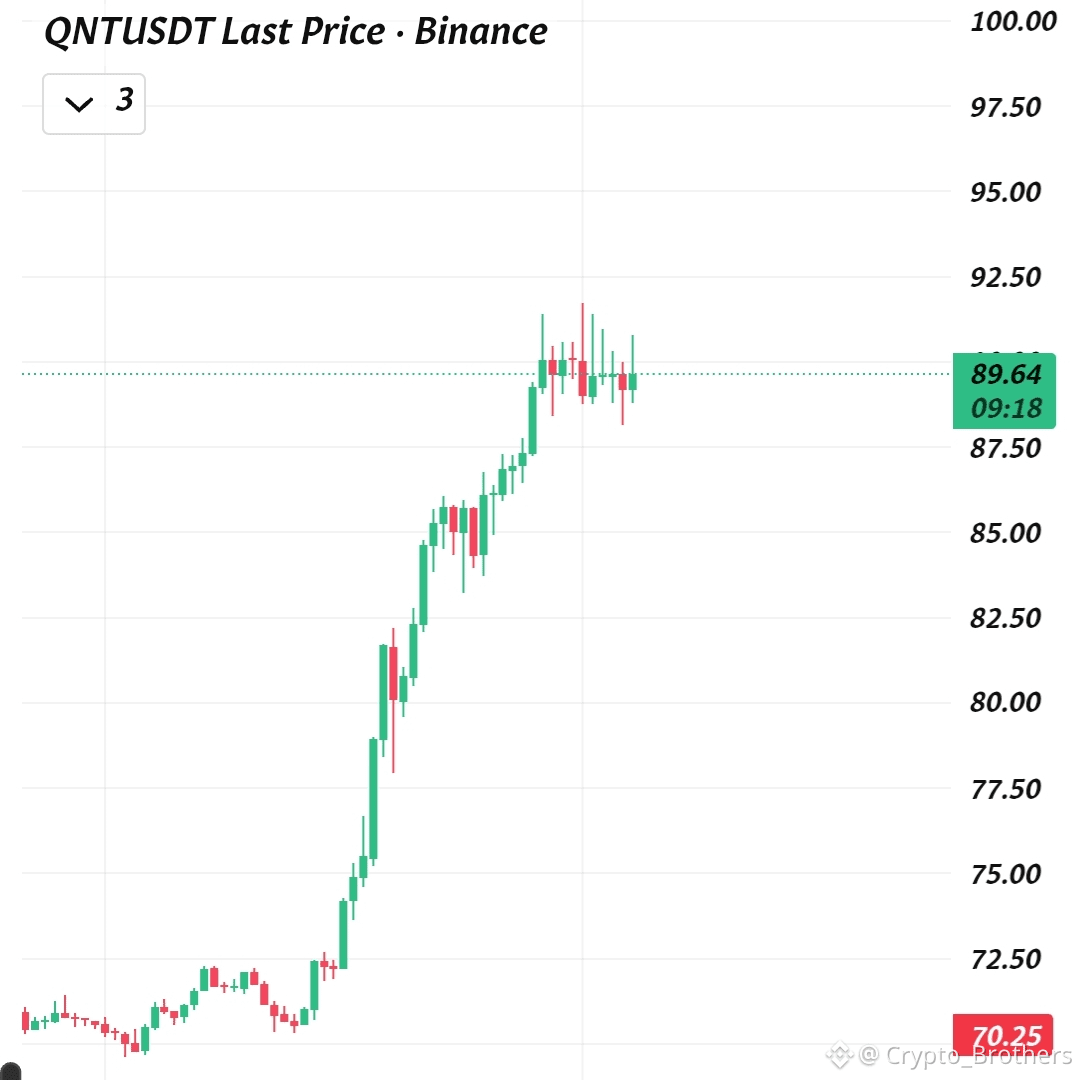
🚨 WICHTIGES UPDATE: Das US-Finanzministerium wird am 1. Oktober einen weiteren Liquiditäts-Rückkauf durchführen.
Dies folgt auf die Operation vom 10. September, bei der das Finanzministerium anbot, bis zu 6 Milliarden US-Dollar in 10- bis 20-jährigen Anleihen zurückzukaufen – dreimal so groß wie sein vorheriger Kauf von länger laufenden Anleihen.
Das wichtigste Ziel besteht darin, die Liquidität in älteren, weniger aktiv gehandelten Treasuries zu verbessern, nachdem ein starker Anleihe-Verkauf die langfristigen Renditen auf mehrjährige Hochs getrieben hatte.
Eine stärkere Nachfrage nach Treasuries kann dazu beitragen, die Anleihekurse zu stützen und die Renditen möglicherweise zu senken – und damit ein positives makroökonomisches Umfeld für sowohl Aktien als auch Kryptowährungen schaffen.
Obwohl diese Maßnahme die allgemeine Marktliquidität unterstützt, ist es wichtig zu betonen, dass sie nicht gleichbedeutend mit einer Quantitativen Lockerung (QE) der Federal Reserve ist.


TLTETF+0,00%
91
·
--
Bullisch
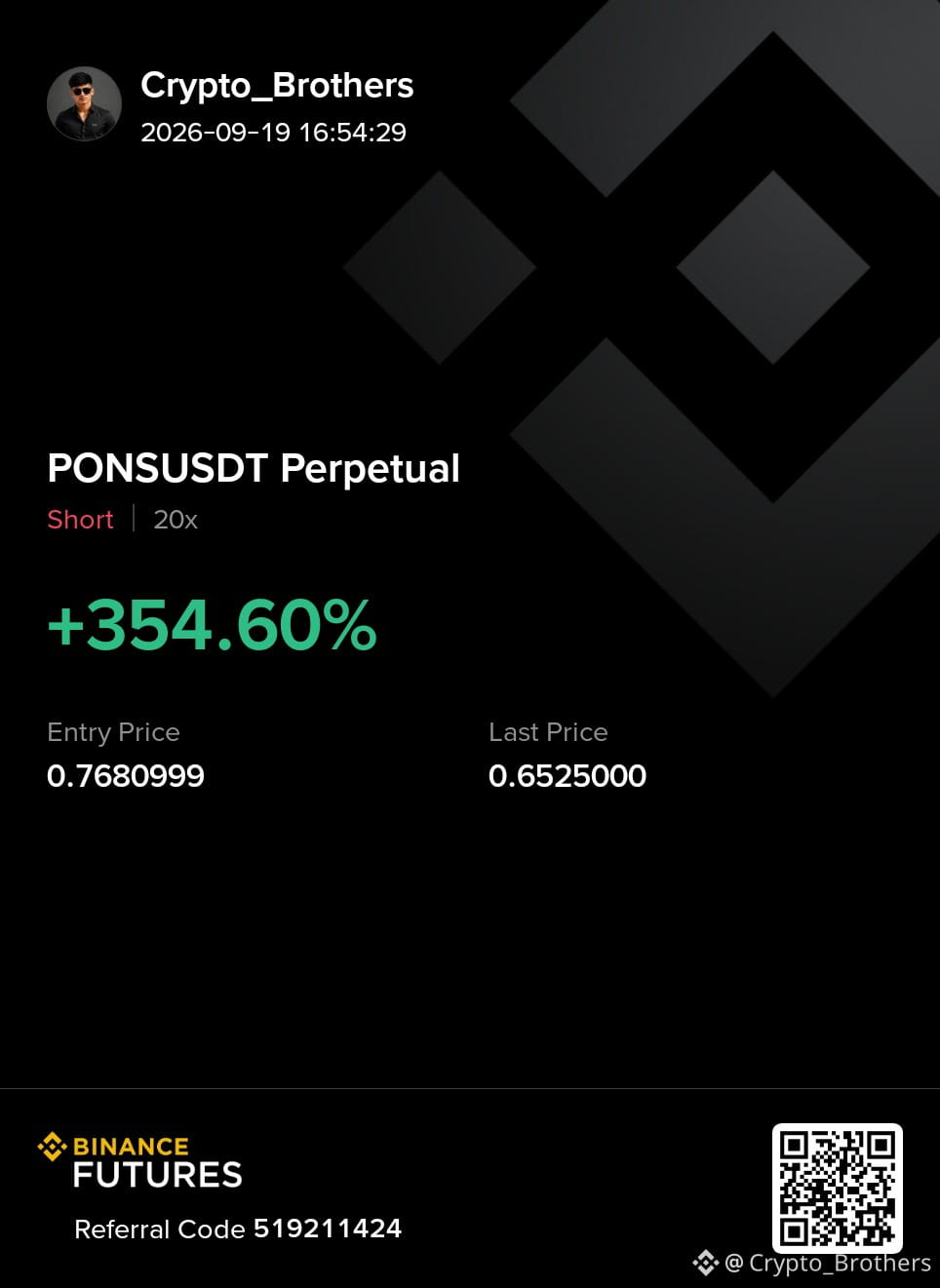
$PONS 350%+ Gewinne erzielt 🔥
Verpasse den nächsten Trade nicht.
$PONS 350%+ Gewinne erzielt 🔥
Verpasse den nächsten Trade nicht.
Verpasse den nächsten Trade nicht.
Crypto_Brothers
·
--
Bärisch$PONS JETZT KAUFEN
SL : 0.88
SL : 0.88
405
·
--
Bullisch
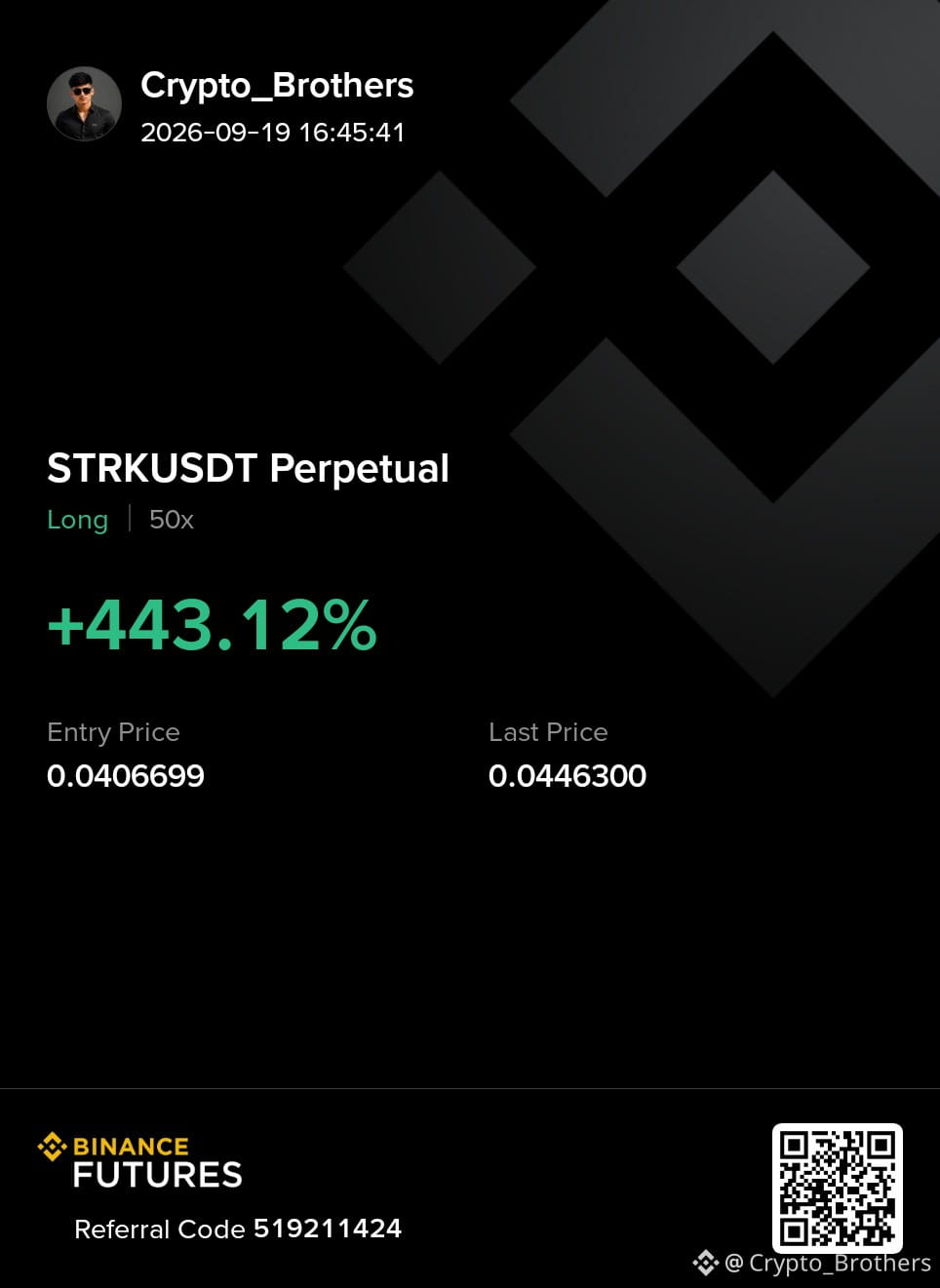
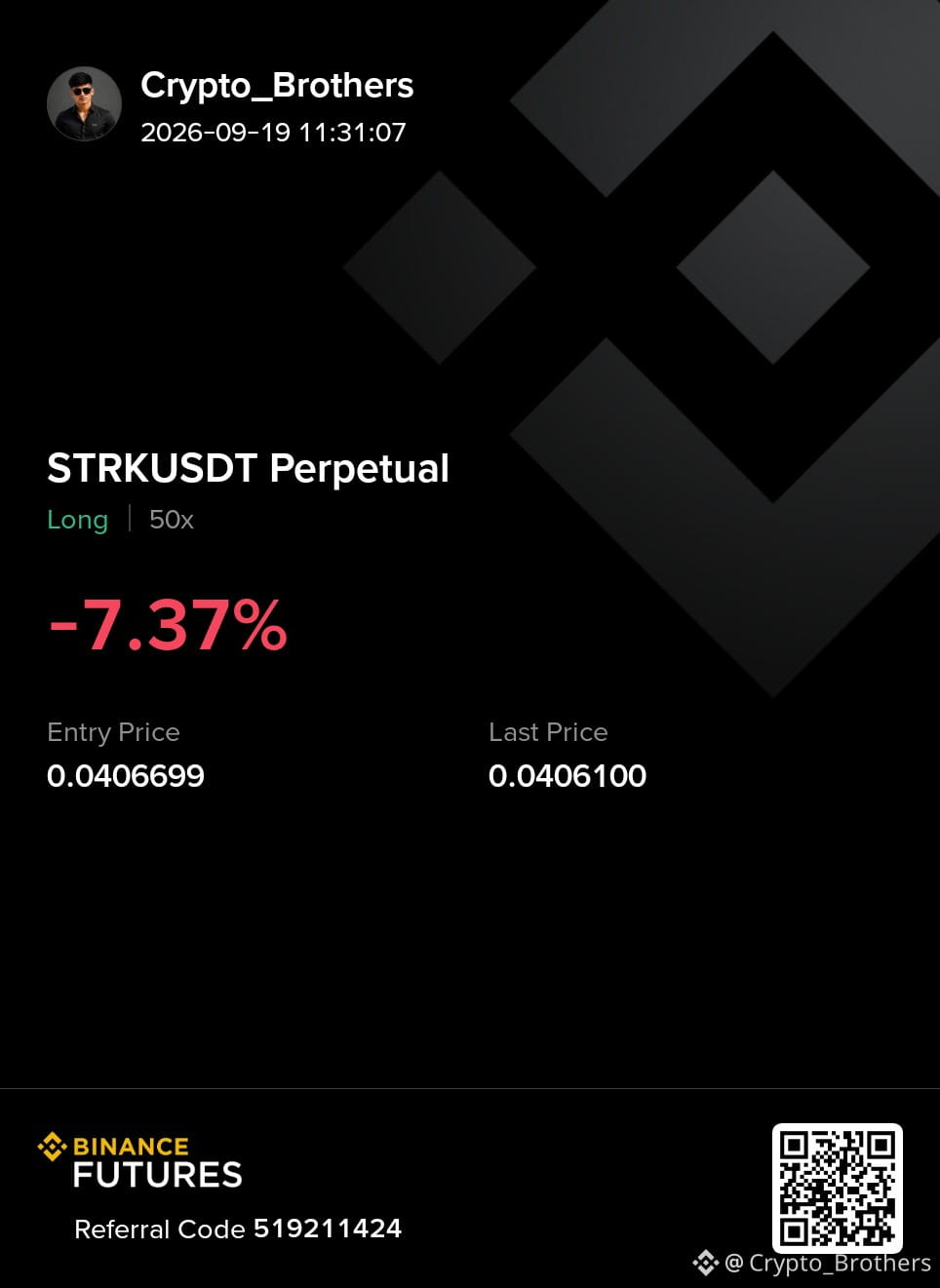
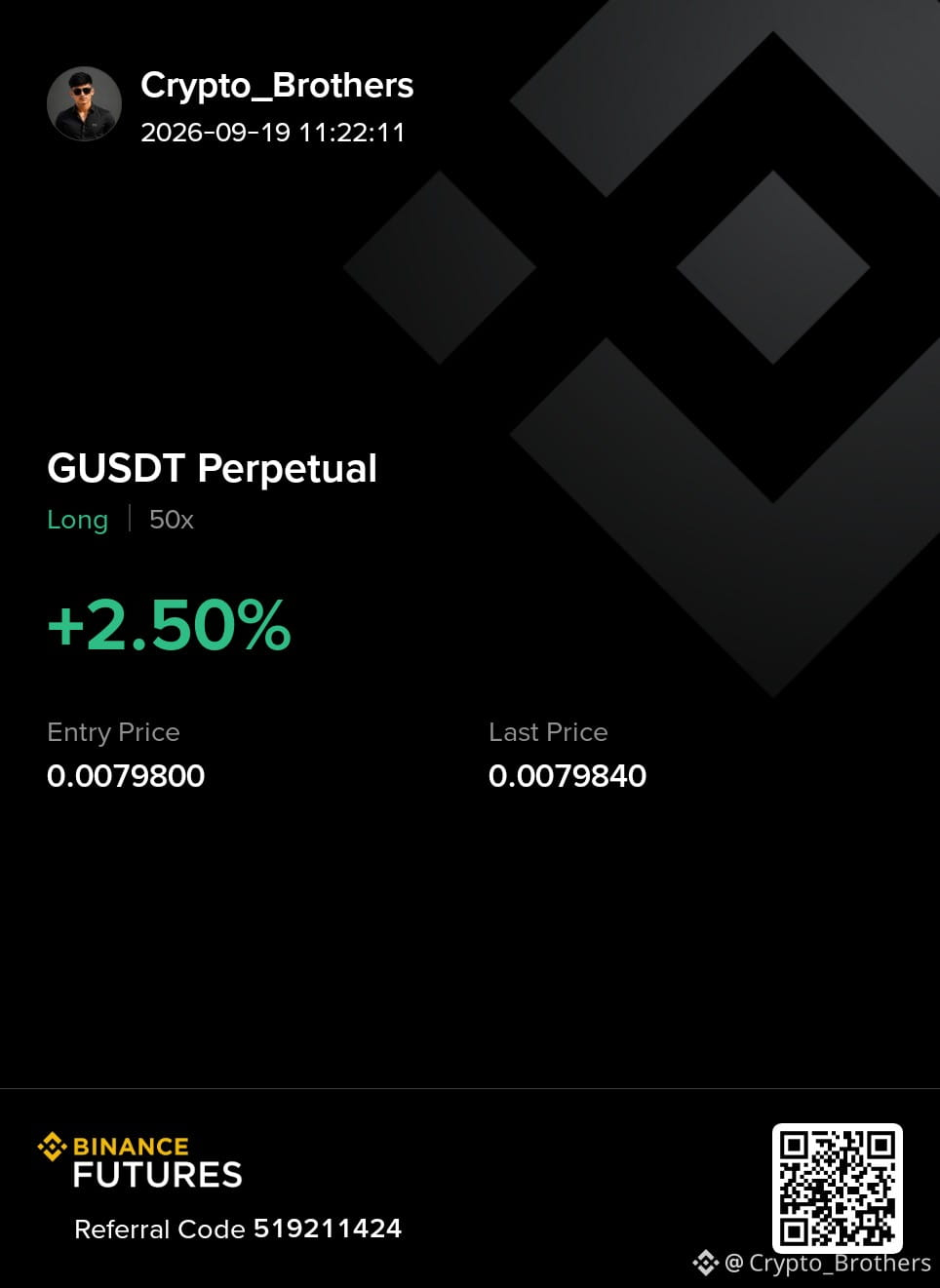
$STRK 440%+ Gewinne erzielt 🔥
Verpasse den nächsten Trade nicht.
$STRK 440%+ Gewinne erzielt 🔥
Verpasse den nächsten Trade nicht.
Verpasse den nächsten Trade nicht.
Crypto_Brothers
·
--
Bullisch$STRK LONG NOW
SL : 0.0360
SL : 0.0360
91
·
--
Bullisch
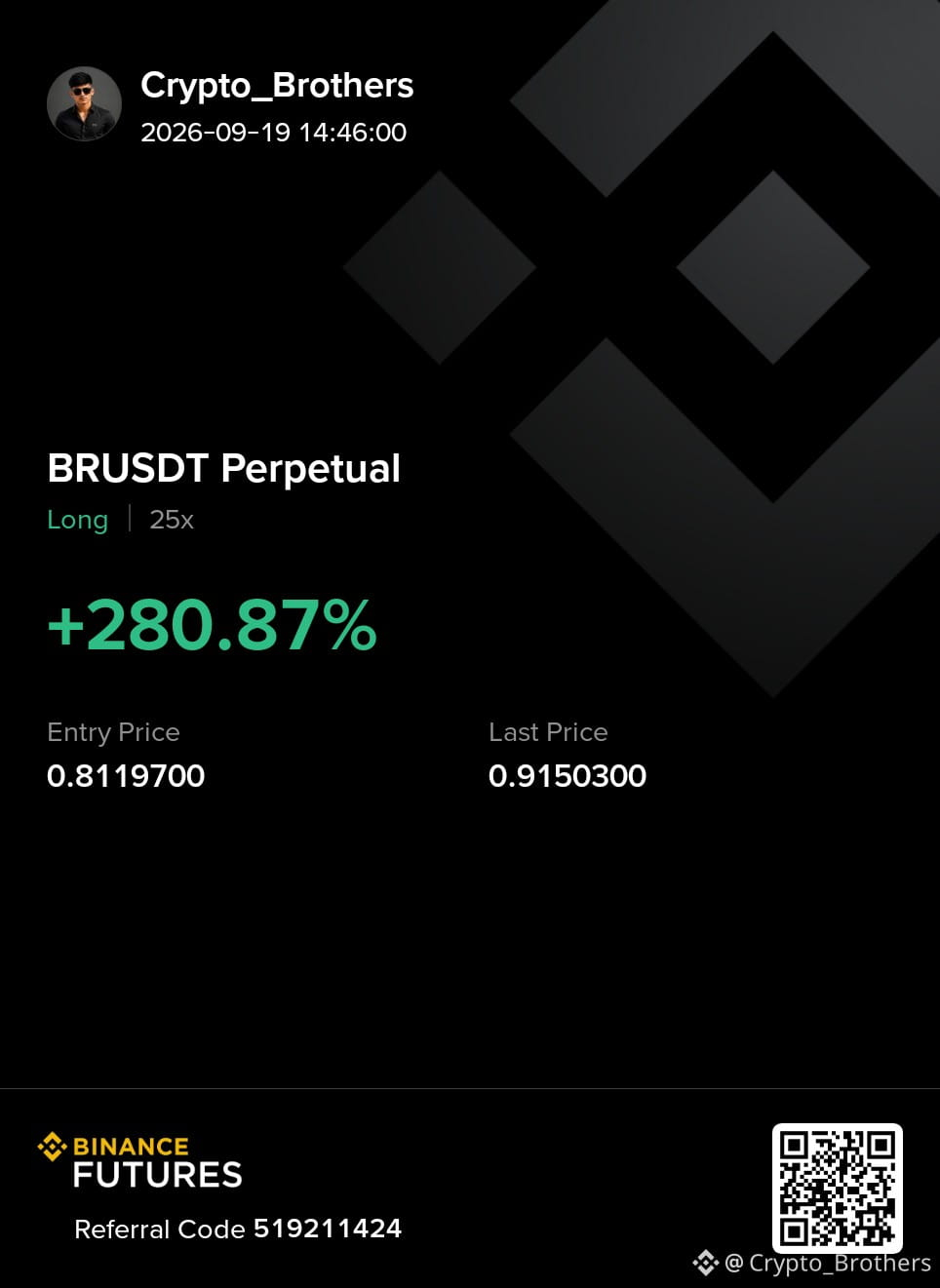
$BR
280%+ Gewinne erzielt 🔥
$BR
280%+ Gewinne erzielt 🔥
280%+ Gewinne erzielt 🔥
Crypto_Brothers
·
--
Bullisch$BR LONG Jetzt
SL : 0.6166
SL : 0.6166
185
·
--
Bullisch
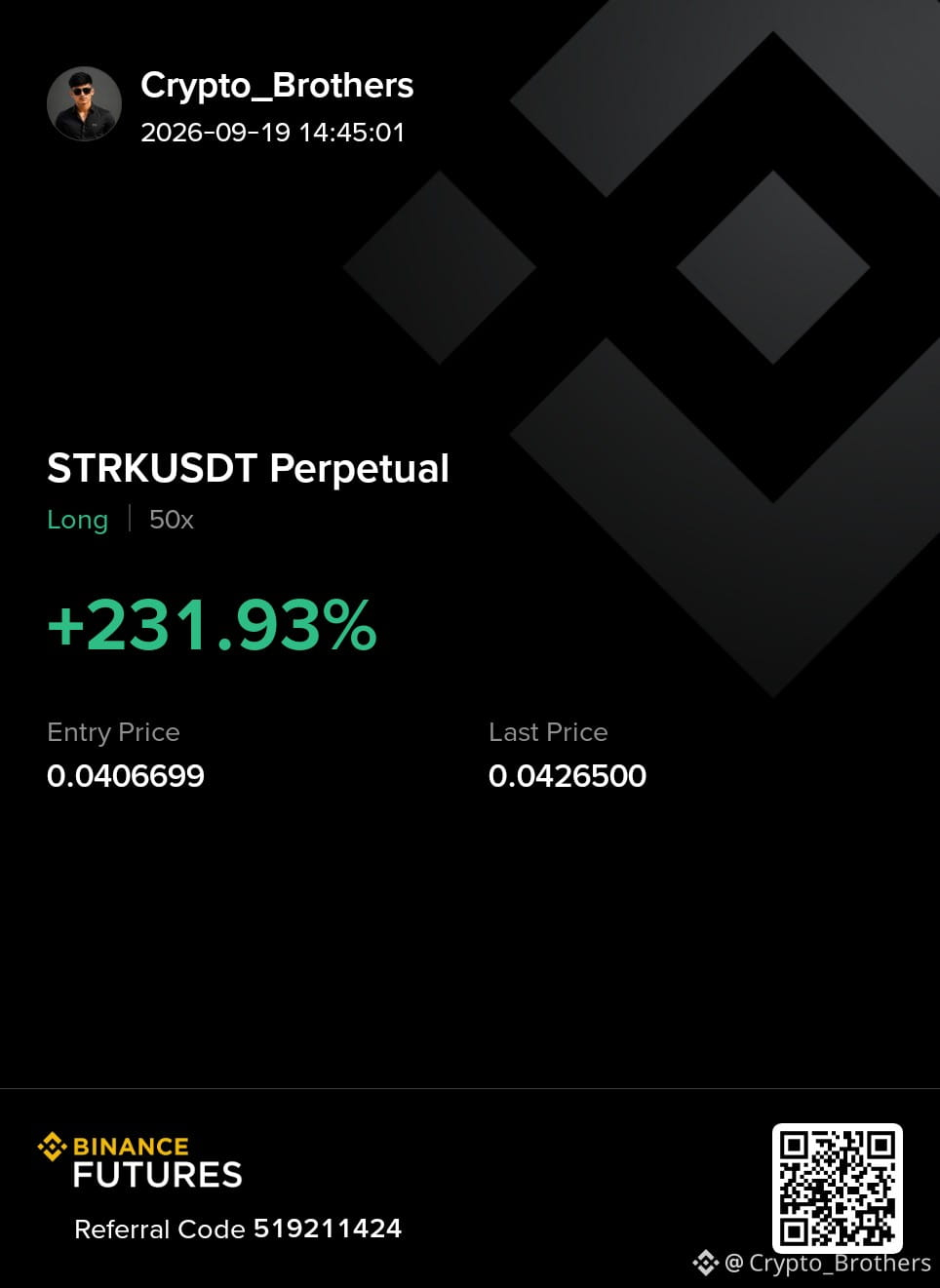
$STRK
240%+ Gewinn gemacht 🔥
$STRK
240%+ Gewinn gemacht 🔥
240%+ Gewinn gemacht 🔥
Crypto_Brothers
·
--
Bullisch$STRK LONG NOW
SL : 0.0360
SL : 0.0360
52
·
--
Bullisch
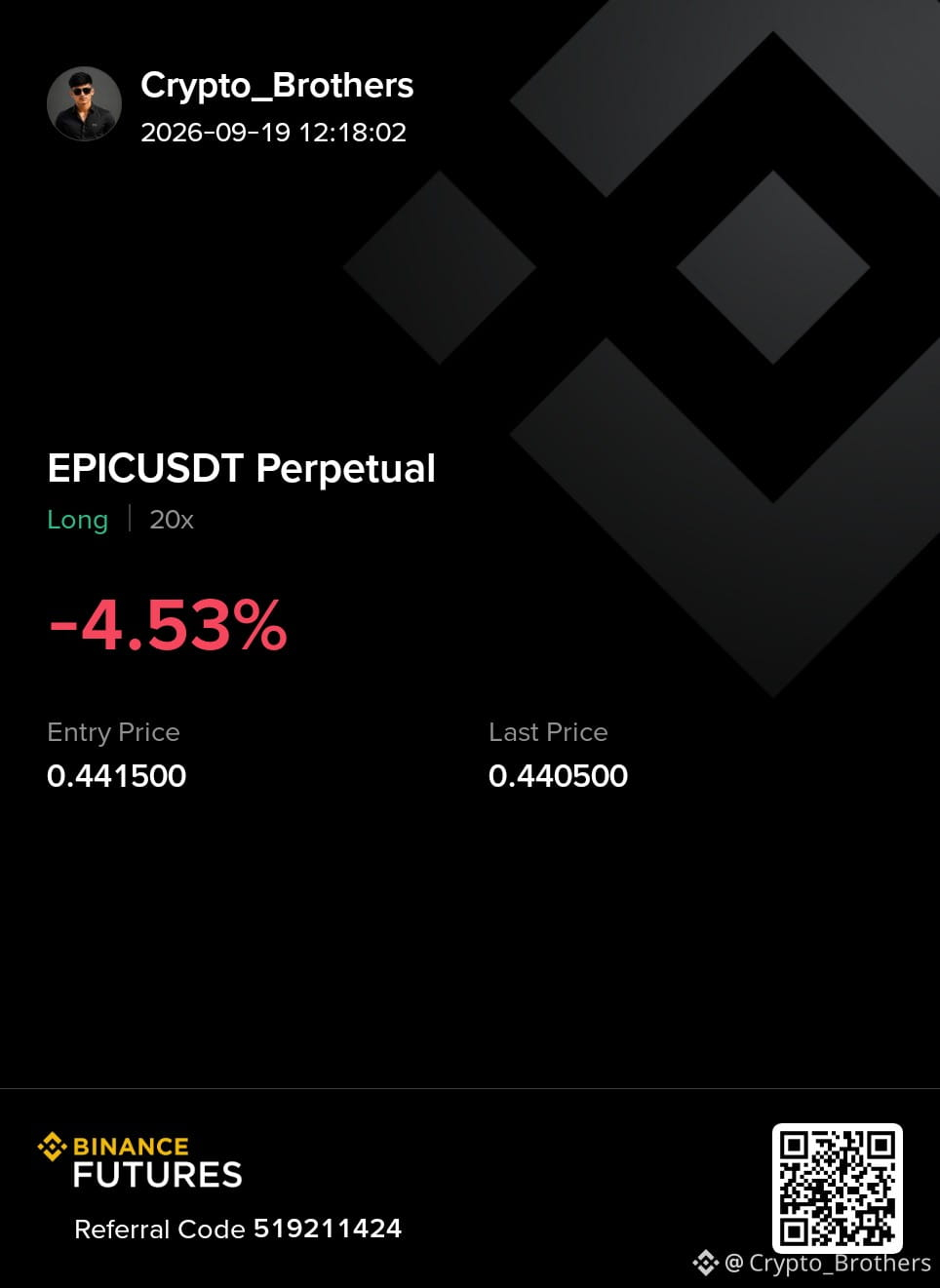
$EPIC – JETZT KAUFEN
Einstieg: 0.4415
Take-Profit-Level:
0.4635
0.4856
0.5077
0.5298
0.5518
Stop-Loss: 0.3800
{future}(EPICUSDT)
Dieser Handel basiert auf technischer Analyse & ist keine Finanzberatung. Handel auf eigenes Risiko.
#Epic #freesignal #crypto #TechnicalAnalysiss #MarketSentimentToday
$EPIC – JETZT KAUFEN
Einstieg: 0.4415
Take-Profit-Level:
0.4635
0.4856
0.5077
0.5298
0.5518
Stop-Loss: 0.3800
Dieser Handel basiert auf technischer Analyse & ist keine Finanzberatung. Handel auf eigenes Risiko.
#Epic #freesignal #crypto #TechnicalAnalysiss #MarketSentimentToday
Einstieg: 0.4415
Take-Profit-Level:
0.4635
0.4856
0.5077
0.5298
0.5518
Stop-Loss: 0.3800
Dieser Handel basiert auf technischer Analyse & ist keine Finanzberatung. Handel auf eigenes Risiko.
#Epic #freesignal #crypto #TechnicalAnalysiss #MarketSentimentToday
133
·
--
Bullisch
2
108
·
--
Bullisch
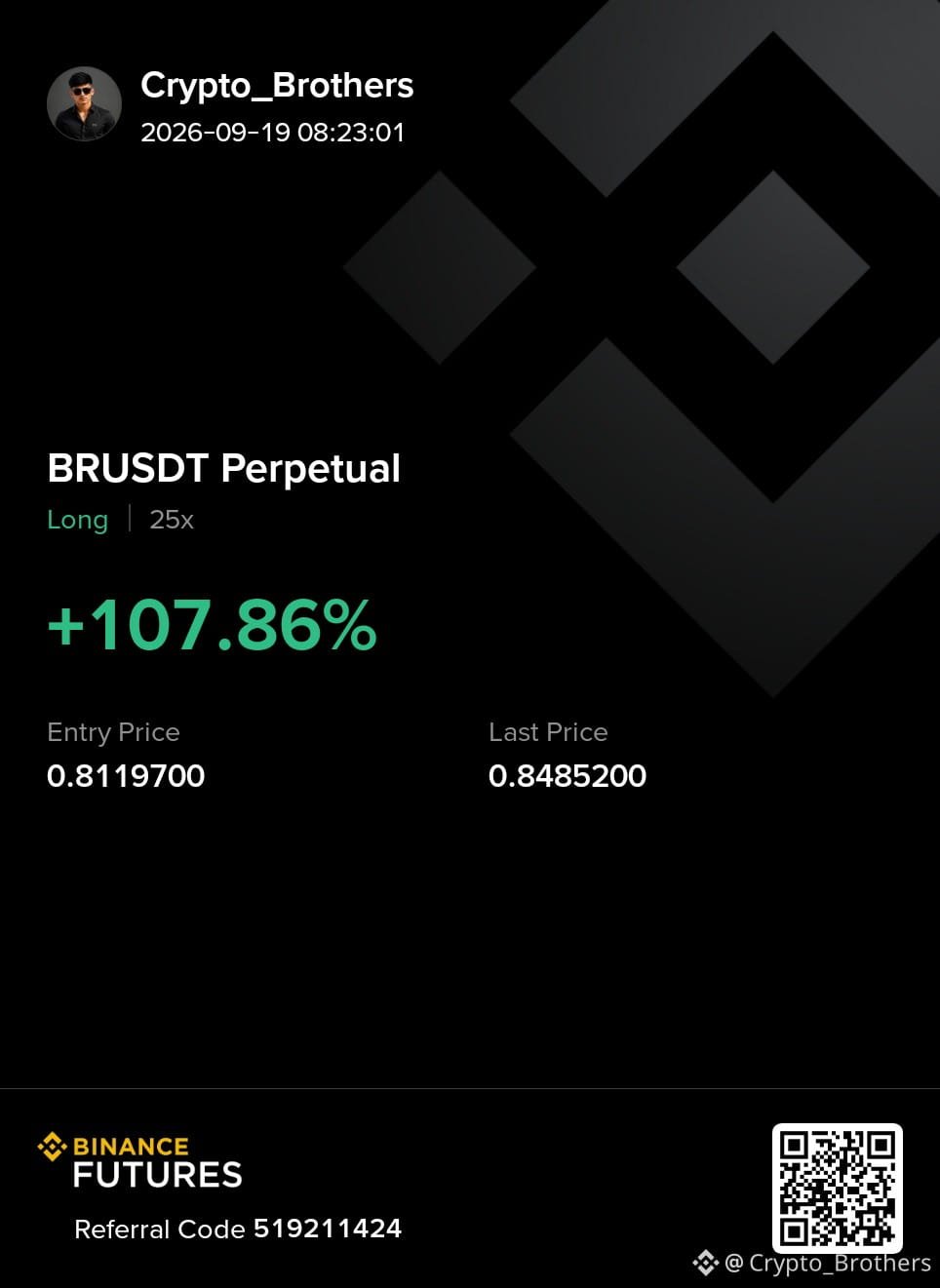
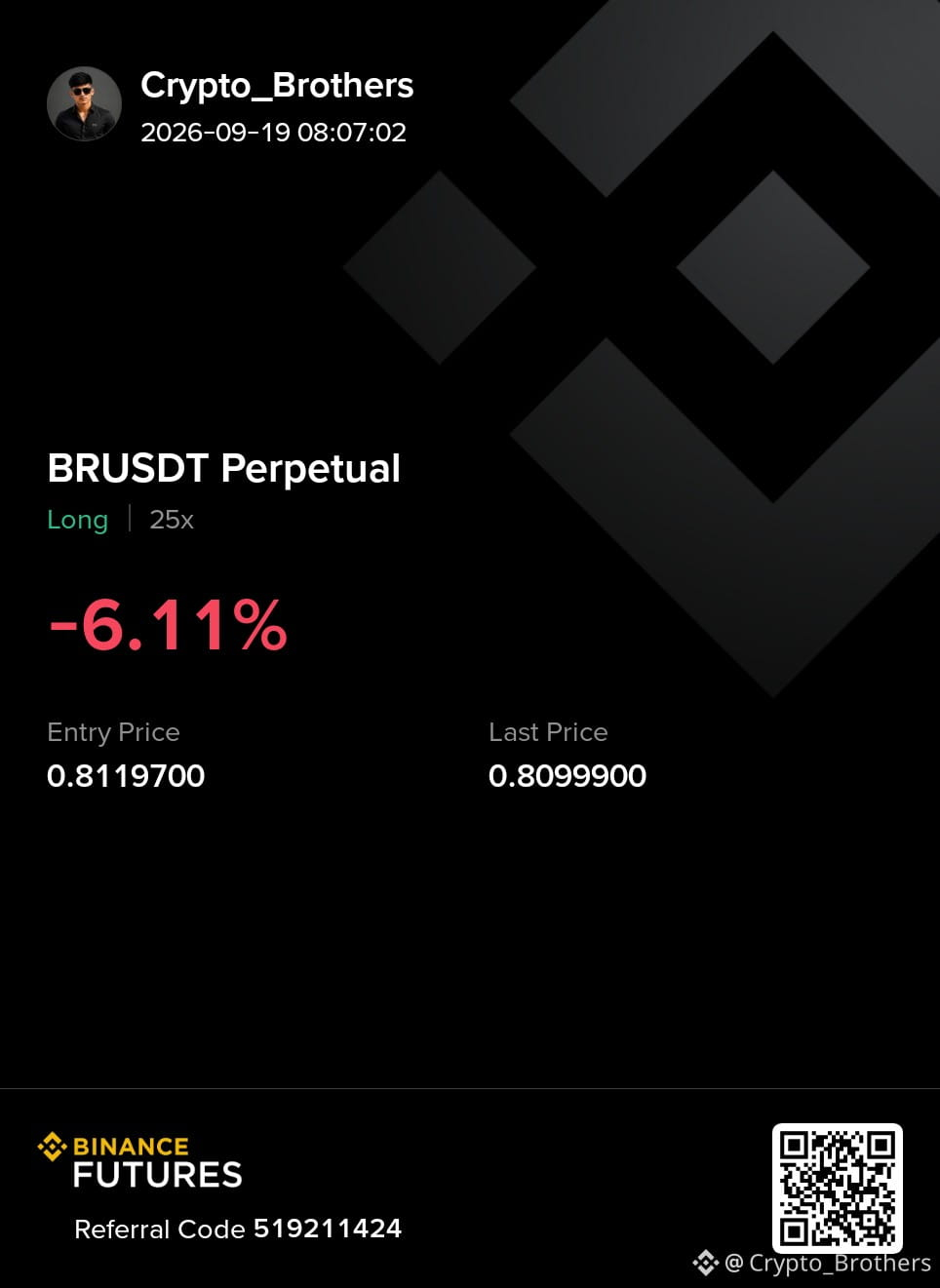
$BR 100%+ Gewinne erzielt ✅
Los geht’s, Leute
$BR 100%+ Gewinne erzielt ✅
Los geht’s, Leute
Los geht’s, Leute
Crypto_Brothers
·
--
Bullisch$BR LONG Jetzt
SL : 0.6166
SL : 0.6166
335
·
--
Bullisch
2
121
·
--
Bullisch
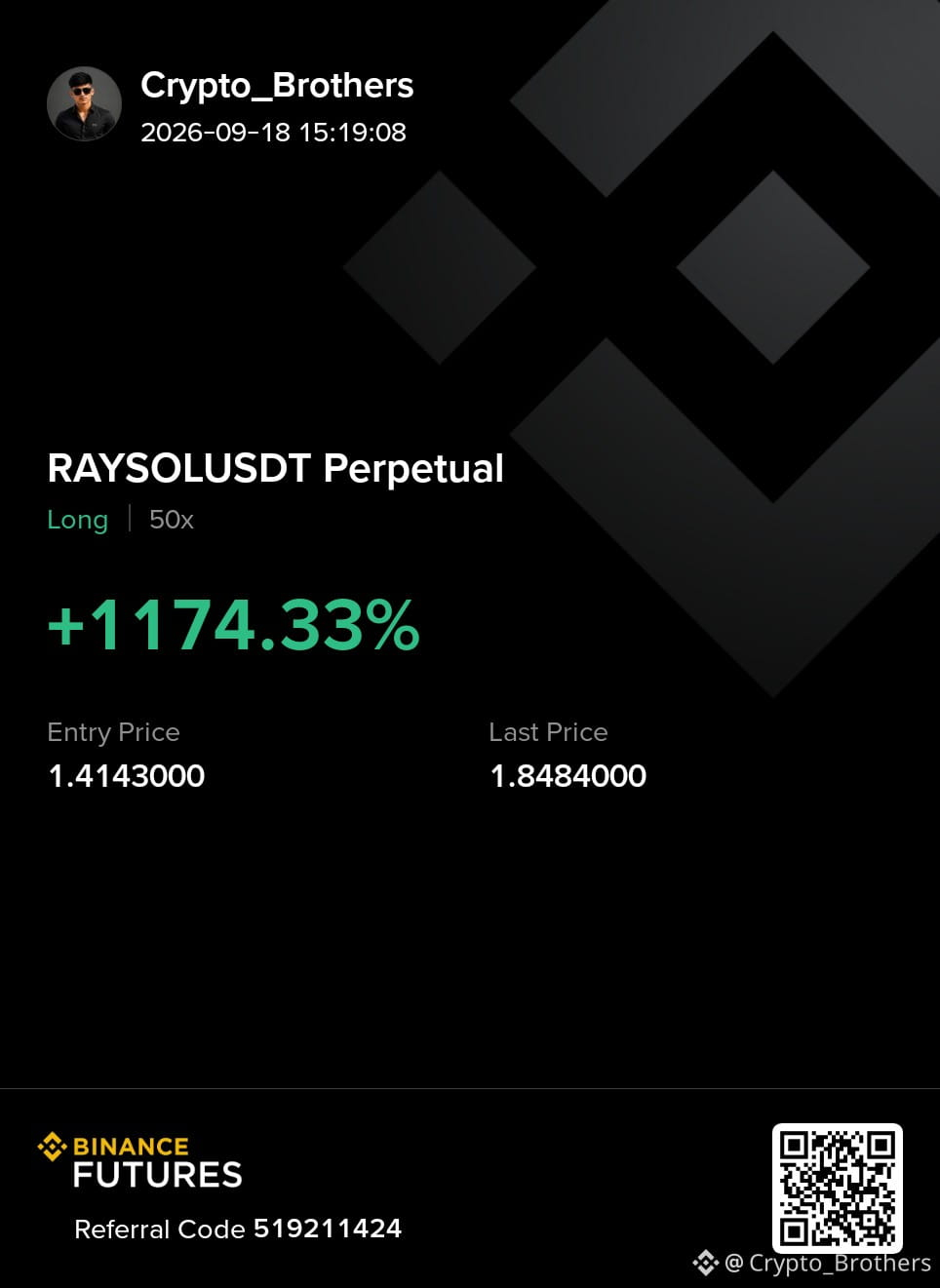
$RAYSOL Don't Stop 🔥
1170% BIG Profits Done ✅
Nächste Ziele: 1.90
$RAYSOL Don't Stop 🔥
1170% BIG Profits Done ✅
Nächste Ziele: 1.90
1170% BIG Profits Done ✅
Nächste Ziele: 1.90
Crypto_Brothers
·
--
Bullisch$RAYSOL JETZT KAUFEN
SL : 1.2500
SL : 1.2500
67
Anmelden und weiter Inhalte entdecken
Krypto-Nutzer weltweit auf Binance Square kennenlernen
⚡️ Bleib in Sachen Krypto stets am Puls.
💬 Die weltgrößte Kryptobörse vertraut darauf.
👍 Erhalte verlässliche Einblicke von verifizierten Creators.
E-Mail-Adresse/Telefonnummer
Trendthemen
BinancePick
3.1M Aufrufe
153,244 Kommentare
Mach bei #Gewinnsaison mit: Prognostiziere Unternehmensergebnisse auf Binance Pick und teile deine Meinung auf Binance Square!
Binance Square Official
·413 Likes
·343.4k Aufrufe
EarningsSeason
5.3M Aufrufe
26,056 Kommentare
AnthropicTTMRevenueGrewAbout1200%
35,426 Aufrufe
442 Kommentare