

OnchainSani
77 Beiträge
OnchainSani
Melden
Nutzer blockieren
BP-A4423694FCC8
9 Following
15 Follower
92 Like gegeben
Beiträge
Alle
Zitierungen
·
--
Bullisch
TON-Nutzer konnten auf EVM-Produkte zugreifen, ohne den Cross-Chain-Flow manuell verwalten zu müssen.
Ein neues STON.fi Open-Source-Beispiel hat meine Aufmerksamkeit auf sich gezogen, weil es Cross-Chain aus einer anderen Perspektive angeht.
Statt mit:
„Wie kann ich meine Assets bridge’n?“
anzufangen, startet es mit:
„Wie kann ein TON-Nutzer auf ein EVM-natives Produkt zugreifen?“
Das Beispiel zeigt, wie das innerhalb einer Telegram Mini App funktionieren kann.
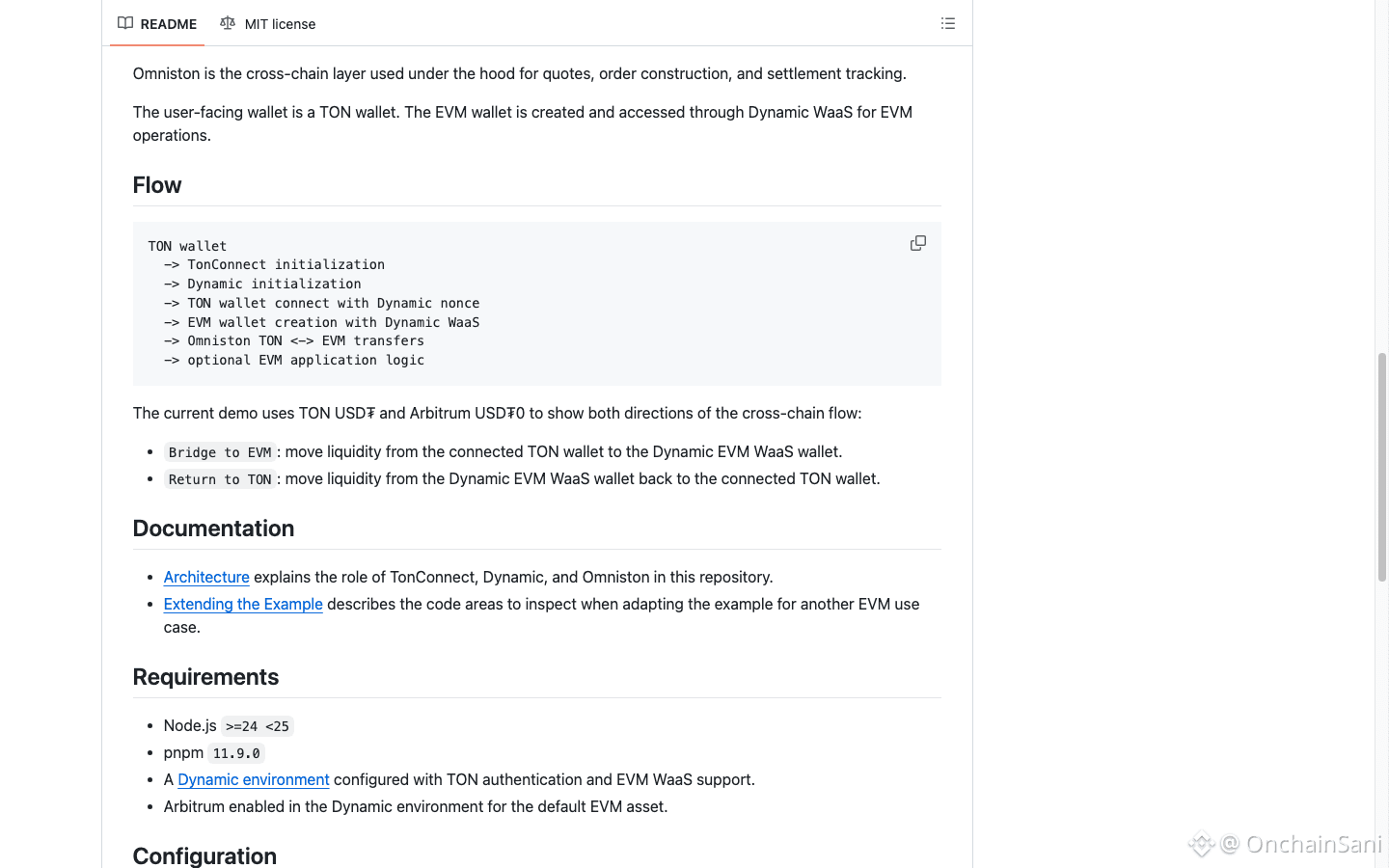
Ein TON-Nutzer verbindet sich über TonConnect, während im Hintergrund eine dynamisch eingebettete EVM-Wallet erstellt wird.
Omniston übernimmt die Cross-Chain-Ausführung.
Die Beispiel-Route lautet:
TON USDT ↔ Arbitrum USDT0
Was ich interessant finde, ist die UX.
Der Nutzer muss die TON- und die EVM-Seite nicht unbedingt manuell aufeinander abstimmen, bevor er das Produkt nutzt.
Die Anwendung kann einen Großteil dieser Komplexität abstrahieren.
Und das ist nicht nur theoretisch.
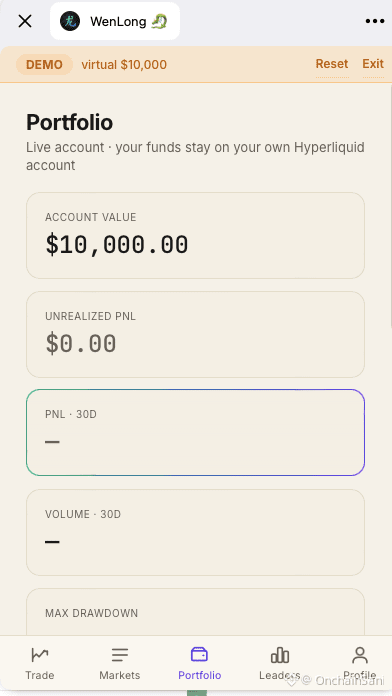
STON.fi verweist auf Beispiele wie Predict mit Polymarket und WenLong, bei denen Cross-Chain-Infrastruktur genutzt wird, um TON-Nutzer mit EVM-basierten Produkten zu verbinden.
Für Builder ist das wahrscheinlich die größere Geschichte.
Ein EVM-natives Produkt muss sich nicht zwangsläufig selbst als TON-natives Application neu aufbauen, nur damit sein Erlebnis für TON-Nutzer zugänglich wird.
Das Integrations-Pattern ist jetzt öffentlich verfügbar, damit Entwickler es prüfen und darauf aufbauen können.
[Open the GitHub example](https://github.com/ston-fi/omniston-ton-evm-miniapp-example?utm_source=chatgpt.com)
TON-Nutzer konnten auf EVM-Produkte zugreifen, ohne den Cross-Chain-Flow manuell verwalten zu müssen.
Ein neues STON.fi Open-Source-Beispiel hat meine Aufmerksamkeit auf sich gezogen, weil es Cross-Chain aus einer anderen Perspektive angeht.
Statt mit:
„Wie kann ich meine Assets bridge’n?“
anzufangen, startet es mit:
„Wie kann ein TON-Nutzer auf ein EVM-natives Produkt zugreifen?“
Das Beispiel zeigt, wie das innerhalb einer Telegram Mini App funktionieren kann.
Ein TON-Nutzer verbindet sich über TonConnect, während im Hintergrund eine dynamisch eingebettete EVM-Wallet erstellt wird.
Omniston übernimmt die Cross-Chain-Ausführung.
Die Beispiel-Route lautet:
TON USDT ↔ Arbitrum USDT0
Was ich interessant finde, ist die UX.
Der Nutzer muss die TON- und die EVM-Seite nicht unbedingt manuell aufeinander abstimmen, bevor er das Produkt nutzt.
Die Anwendung kann einen Großteil dieser Komplexität abstrahieren.
Und das ist nicht nur theoretisch.
STON.fi verweist auf Beispiele wie Predict mit Polymarket und WenLong, bei denen Cross-Chain-Infrastruktur genutzt wird, um TON-Nutzer mit EVM-basierten Produkten zu verbinden.
Für Builder ist das wahrscheinlich die größere Geschichte.
Ein EVM-natives Produkt muss sich nicht zwangsläufig selbst als TON-natives Application neu aufbauen, nur damit sein Erlebnis für TON-Nutzer zugänglich wird.
Das Integrations-Pattern ist jetzt öffentlich verfügbar, damit Entwickler es prüfen und darauf aufbauen können.
Open the GitHub example
Ein neues STON.fi Open-Source-Beispiel hat meine Aufmerksamkeit auf sich gezogen, weil es Cross-Chain aus einer anderen Perspektive angeht.
Statt mit:
„Wie kann ich meine Assets bridge’n?“
anzufangen, startet es mit:
„Wie kann ein TON-Nutzer auf ein EVM-natives Produkt zugreifen?“
Das Beispiel zeigt, wie das innerhalb einer Telegram Mini App funktionieren kann.
Ein TON-Nutzer verbindet sich über TonConnect, während im Hintergrund eine dynamisch eingebettete EVM-Wallet erstellt wird.
Omniston übernimmt die Cross-Chain-Ausführung.
Die Beispiel-Route lautet:
TON USDT ↔ Arbitrum USDT0
Was ich interessant finde, ist die UX.
Der Nutzer muss die TON- und die EVM-Seite nicht unbedingt manuell aufeinander abstimmen, bevor er das Produkt nutzt.
Die Anwendung kann einen Großteil dieser Komplexität abstrahieren.
Und das ist nicht nur theoretisch.
STON.fi verweist auf Beispiele wie Predict mit Polymarket und WenLong, bei denen Cross-Chain-Infrastruktur genutzt wird, um TON-Nutzer mit EVM-basierten Produkten zu verbinden.
Für Builder ist das wahrscheinlich die größere Geschichte.
Ein EVM-natives Produkt muss sich nicht zwangsläufig selbst als TON-natives Application neu aufbauen, nur damit sein Erlebnis für TON-Nutzer zugänglich wird.
Das Integrations-Pattern ist jetzt öffentlich verfügbar, damit Entwickler es prüfen und darauf aufbauen können.
Open the GitHub example
63
·
--
Bullisch
Ich habe einen Polygon→ TON Cross-Chain-Routenweg auf STON.fi getestet
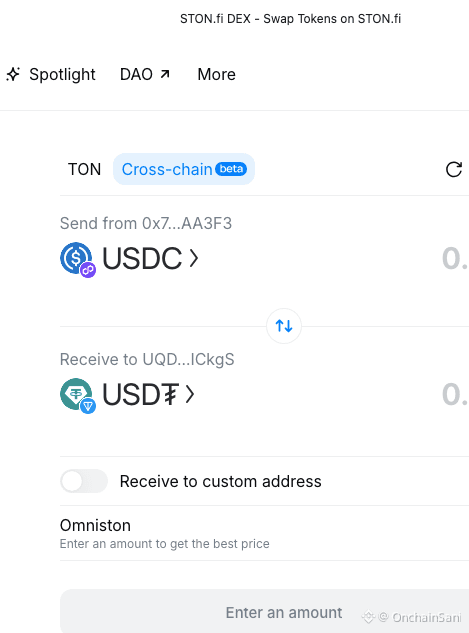
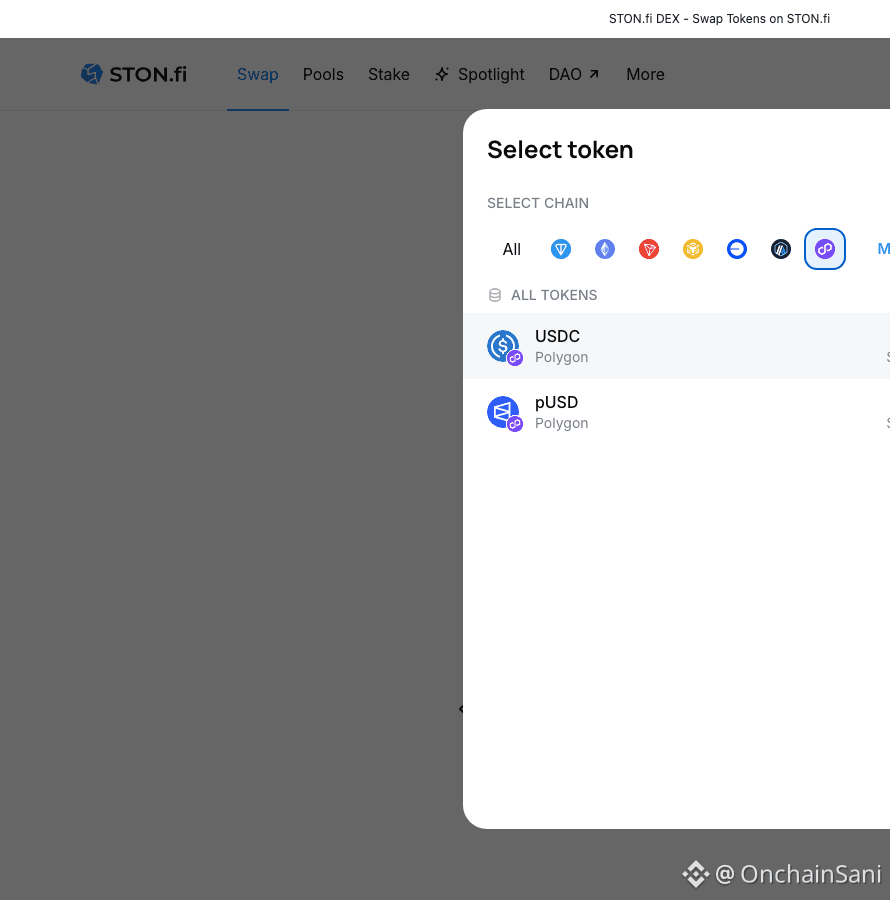
Ich wollte herausfinden, wie es sich tatsächlich anfühlt, USDC von Polygon nach USDT auf TON über STON.fi zu übertragen.
Ich habe zuerst USDC als mein Quell-Asset ausgewählt.
Das erste, was ich überprüft habe, war das Netzwerk, denn USDC gibt es auf mehreren Chains.
Dann habe ich USDT auf TON als Ziel ausgewählt
An diesem Punkt war die Route leicht zu verstehen.
Ich habe nicht erst das USDC manuell irgendwohin verschoben und dann versucht, den nächsten Schritt herauszufinden.
Bevor ich bestätigt habe, habe ich das Angebot und die Transaktionsdetails geprüft.
Das ist für mich ein wichtiger Teil des Prozesses.
Ich möchte wissen:
Woher das Asset kommt Wohin es geht Was ich voraussichtlich erhalte Welche Gebühren oder anderen Transaktionsdetails angezeigt werden
Der grundlegende Ablauf ist:
USDC auf Polygon → STON.fi → USDT auf TON
Das Spannende ist nicht nur, dass sich die Assets auf unterschiedlichen Netzwerken befinden.
Sondern dass das Nutzererlebnis diese Cross-Chain-Übertragung als einen verständlichen Ablauf darstellen kann, statt den Nutzer jede einzelne Schritte manuell koordinieren zu lassen.
Ich habe einen Polygon→ TON Cross-Chain-Routenweg auf STON.fi getestet
Ich wollte herausfinden, wie es sich tatsächlich anfühlt, USDC von Polygon nach USDT auf TON über STON.fi zu übertragen.
Ich habe zuerst USDC als mein Quell-Asset ausgewählt.
Das erste, was ich überprüft habe, war das Netzwerk, denn USDC gibt es auf mehreren Chains.
Dann habe ich USDT auf TON als Ziel ausgewählt
An diesem Punkt war die Route leicht zu verstehen.
Ich habe nicht erst das USDC manuell irgendwohin verschoben und dann versucht, den nächsten Schritt herauszufinden.
Bevor ich bestätigt habe, habe ich das Angebot und die Transaktionsdetails geprüft.
Das ist für mich ein wichtiger Teil des Prozesses.
Ich möchte wissen:
Woher das Asset kommt Wohin es geht Was ich voraussichtlich erhalte Welche Gebühren oder anderen Transaktionsdetails angezeigt werden
Der grundlegende Ablauf ist:
USDC auf Polygon → STON.fi → USDT auf TON
Das Spannende ist nicht nur, dass sich die Assets auf unterschiedlichen Netzwerken befinden.
Sondern dass das Nutzererlebnis diese Cross-Chain-Übertragung als einen verständlichen Ablauf darstellen kann, statt den Nutzer jede einzelne Schritte manuell koordinieren zu lassen.
Ich wollte herausfinden, wie es sich tatsächlich anfühlt, USDC von Polygon nach USDT auf TON über STON.fi zu übertragen.
Ich habe zuerst USDC als mein Quell-Asset ausgewählt.
Das erste, was ich überprüft habe, war das Netzwerk, denn USDC gibt es auf mehreren Chains.
Dann habe ich USDT auf TON als Ziel ausgewählt
An diesem Punkt war die Route leicht zu verstehen.
Ich habe nicht erst das USDC manuell irgendwohin verschoben und dann versucht, den nächsten Schritt herauszufinden.
Bevor ich bestätigt habe, habe ich das Angebot und die Transaktionsdetails geprüft.
Das ist für mich ein wichtiger Teil des Prozesses.
Ich möchte wissen:
Woher das Asset kommt Wohin es geht Was ich voraussichtlich erhalte Welche Gebühren oder anderen Transaktionsdetails angezeigt werden
Der grundlegende Ablauf ist:
USDC auf Polygon → STON.fi → USDT auf TON
Das Spannende ist nicht nur, dass sich die Assets auf unterschiedlichen Netzwerken befinden.
Sondern dass das Nutzererlebnis diese Cross-Chain-Übertragung als einen verständlichen Ablauf darstellen kann, statt den Nutzer jede einzelne Schritte manuell koordinieren zu lassen.
63
·
--
Bullisch
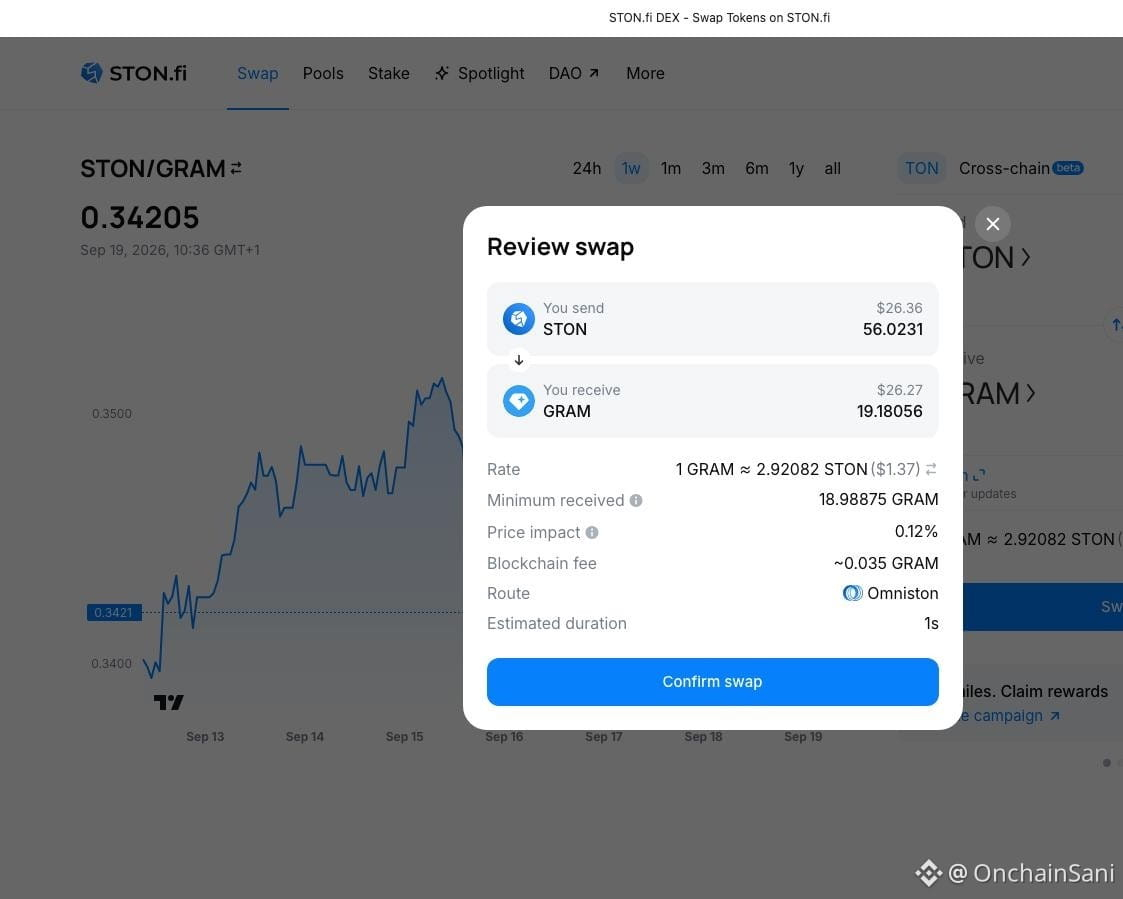
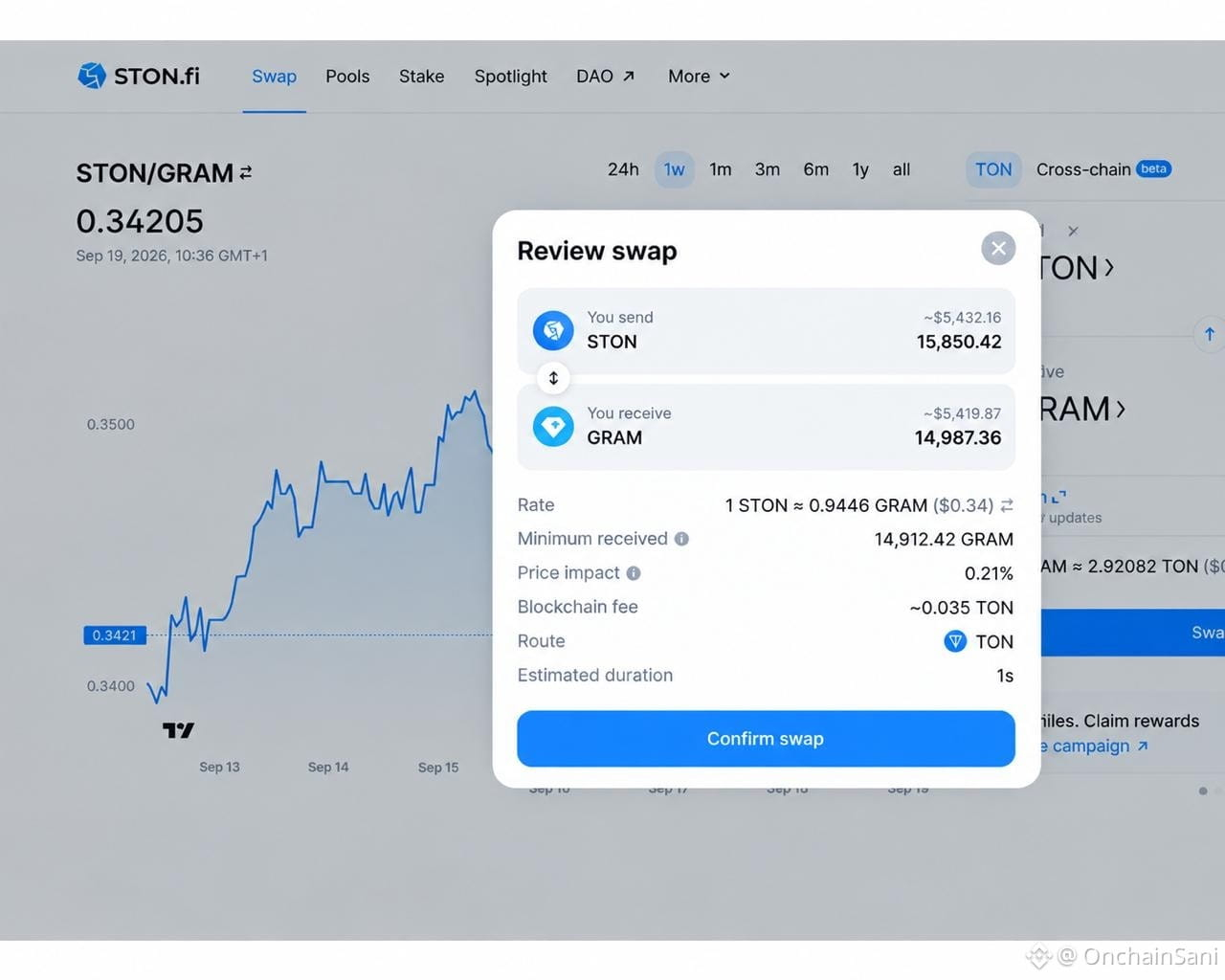
So prüfe ich den Price Impact, bevor ich einen größeren Swap auf TON durchführe
Wenn ich einen größeren Swap auf TON mache, sehe ich nicht nur auf den Token-Preis.
Ich möchte wissen, welchen Preis ich tatsächlich für die Menge bekomme, die ich tausche.
Darum prüfe ich den Price Impact auf STON.fi, bevor ich bestätige.
Mein Ablauf ist einfach:
1. Gib die tatsächliche Menge ein, die ich tauschen möchte.
2. Prüfe die geschätzte Menge, die ich erhalte.
3. Prüfe den Price Impact.
4. Reduziere die Menge und vergleiche, ob der Impact hoch wirkt.
5. Prüfe, ob eine andere Route verfügbar ist.
Wenn eine deutliche Reduzierung der Menge den Price Impact spürbar verbessert, ist das eine hilfreiche Information. Das bedeutet, dass die Größe des Trades einen messbaren Einfluss auf die Ausführung hat.
Eine Sache, die ich nicht mache, ist, Slippage automatisch zu erhöhen, nur weil der Price Impact hoch ist.
Price Impact und Slippage sind nicht dasselbe.
Price Impact geht auf den Effekt deines Trades auf die verfügbare Liquidität ein, während Slippage den Unterschied zwischen erwarteter und tatsächlicher Ausführung beschreibt, der durch Markt-/Ausführungsänderungen verursacht wird.
Für mich lässt sich die wichtigste Erkenntnis ganz einfach so zusammenfassen:
Frag nicht nur „Wie ist der Token-Preis?“
Frag stattdessen:
„Welchen Preis bekomme ich tatsächlich für die Größe meines Trades?“
Du kannst das anhand des Quotes selbst auf STON.fi prüfen, bevor du bestätigst:
So prüfe ich den Price Impact, bevor ich einen größeren Swap auf TON durchführe
Wenn ich einen größeren Swap auf TON mache, sehe ich nicht nur auf den Token-Preis.
Ich möchte wissen, welchen Preis ich tatsächlich für die Menge bekomme, die ich tausche.
Darum prüfe ich den Price Impact auf STON.fi, bevor ich bestätige.
Mein Ablauf ist einfach:
1. Gib die tatsächliche Menge ein, die ich tauschen möchte.
2. Prüfe die geschätzte Menge, die ich erhalte.
3. Prüfe den Price Impact.
4. Reduziere die Menge und vergleiche, ob der Impact hoch wirkt.
5. Prüfe, ob eine andere Route verfügbar ist.
Wenn eine deutliche Reduzierung der Menge den Price Impact spürbar verbessert, ist das eine hilfreiche Information. Das bedeutet, dass die Größe des Trades einen messbaren Einfluss auf die Ausführung hat.
Eine Sache, die ich nicht mache, ist, Slippage automatisch zu erhöhen, nur weil der Price Impact hoch ist.
Price Impact und Slippage sind nicht dasselbe.
Price Impact geht auf den Effekt deines Trades auf die verfügbare Liquidität ein, während Slippage den Unterschied zwischen erwarteter und tatsächlicher Ausführung beschreibt, der durch Markt-/Ausführungsänderungen verursacht wird.
Für mich lässt sich die wichtigste Erkenntnis ganz einfach so zusammenfassen:
Frag nicht nur „Wie ist der Token-Preis?“
Frag stattdessen:
„Welchen Preis bekomme ich tatsächlich für die Größe meines Trades?“
Du kannst das anhand des Quotes selbst auf STON.fi prüfen, bevor du bestätigst:
Wenn ich einen größeren Swap auf TON mache, sehe ich nicht nur auf den Token-Preis.
Ich möchte wissen, welchen Preis ich tatsächlich für die Menge bekomme, die ich tausche.
Darum prüfe ich den Price Impact auf STON.fi, bevor ich bestätige.
Mein Ablauf ist einfach:
1. Gib die tatsächliche Menge ein, die ich tauschen möchte.
2. Prüfe die geschätzte Menge, die ich erhalte.
3. Prüfe den Price Impact.
4. Reduziere die Menge und vergleiche, ob der Impact hoch wirkt.
5. Prüfe, ob eine andere Route verfügbar ist.
Wenn eine deutliche Reduzierung der Menge den Price Impact spürbar verbessert, ist das eine hilfreiche Information. Das bedeutet, dass die Größe des Trades einen messbaren Einfluss auf die Ausführung hat.
Eine Sache, die ich nicht mache, ist, Slippage automatisch zu erhöhen, nur weil der Price Impact hoch ist.
Price Impact und Slippage sind nicht dasselbe.
Price Impact geht auf den Effekt deines Trades auf die verfügbare Liquidität ein, während Slippage den Unterschied zwischen erwarteter und tatsächlicher Ausführung beschreibt, der durch Markt-/Ausführungsänderungen verursacht wird.
Für mich lässt sich die wichtigste Erkenntnis ganz einfach so zusammenfassen:
Frag nicht nur „Wie ist der Token-Preis?“
Frag stattdessen:
„Welchen Preis bekomme ich tatsächlich für die Größe meines Trades?“
Du kannst das anhand des Quotes selbst auf STON.fi prüfen, bevor du bestätigst:
324
·
--
Bullisch
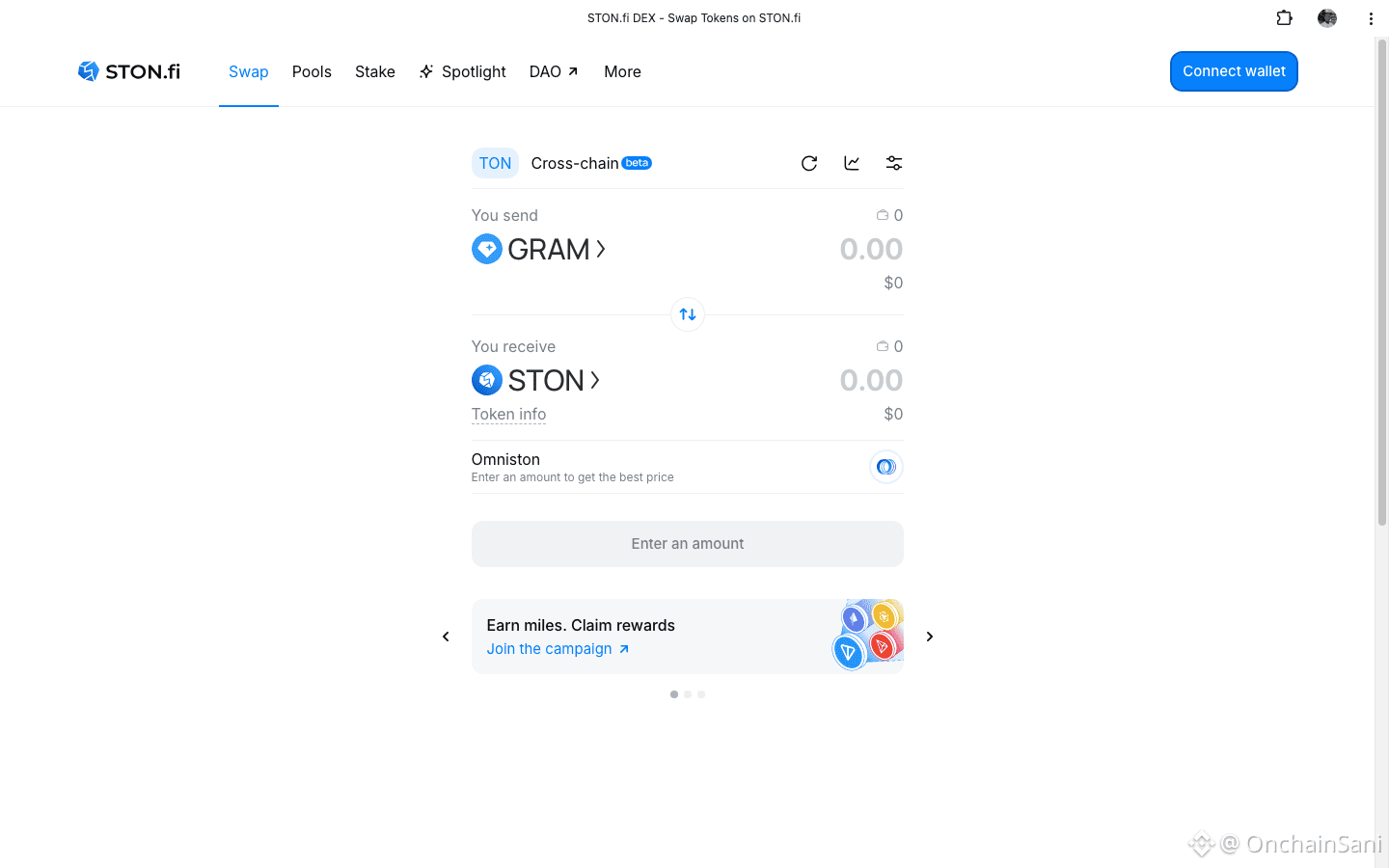
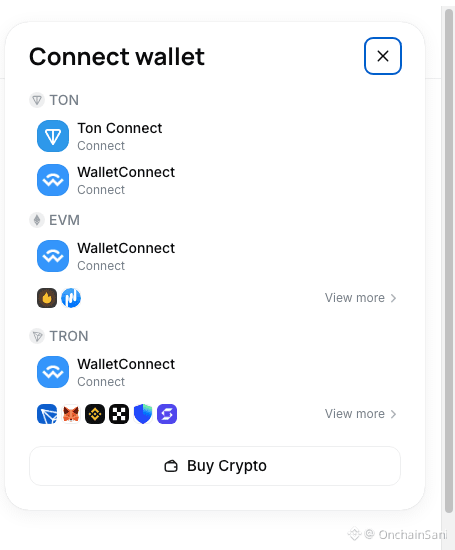
Ich habe das Verbinden mit STON.fi über WalletConnect getestet
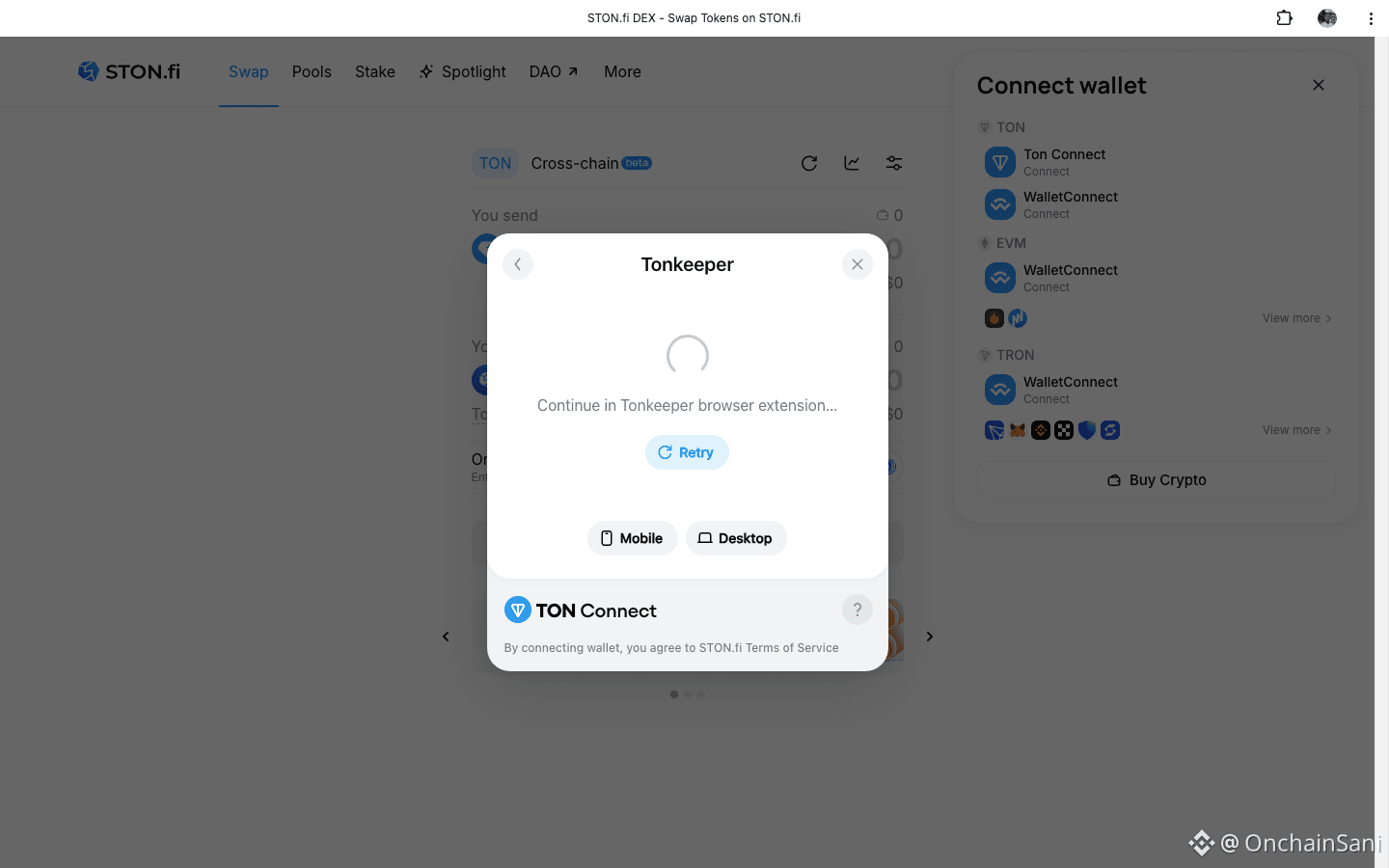
Ich wollte sehen, wie kompliziert es tatsächlich ist, eine unterstützte Multi-Chain-Wallet mit STON.fi über WalletConnect zu verbinden.
Der Ablauf war:
Wallet verbinden → Alle Wallets anzeigen → WalletConnect → Verbinden
STON.fi sagt, dass die TON-Integration von WalletConnect es unterstützten Wallets ermöglicht, mit TON-DApps zu interagieren, ohne zu einer TON-nativen Wallet zu wechseln.
Was mir gefiel, war die Einfachheit des Prozesses.
Ich habe keine neue DEX-Benutzeroberfläche gelernt.
Ich habe einfach die Wallet verbunden, die ich bereits verwende, und bin mit der STON.fi-Oberfläche weitergemacht.
Für etwas so Grundlegendes wie die Wallet-Verbindung ist das gutes UX.
Ich habe das Verbinden mit STON.fi über WalletConnect getestet
Ich wollte sehen, wie kompliziert es tatsächlich ist, eine unterstützte Multi-Chain-Wallet mit STON.fi über WalletConnect zu verbinden.
Der Ablauf war:
Wallet verbinden → Alle Wallets anzeigen → WalletConnect → Verbinden
STON.fi sagt, dass die TON-Integration von WalletConnect es unterstützten Wallets ermöglicht, mit TON-DApps zu interagieren, ohne zu einer TON-nativen Wallet zu wechseln.
Was mir gefiel, war die Einfachheit des Prozesses.
Ich habe keine neue DEX-Benutzeroberfläche gelernt.
Ich habe einfach die Wallet verbunden, die ich bereits verwende, und bin mit der STON.fi-Oberfläche weitergemacht.
Für etwas so Grundlegendes wie die Wallet-Verbindung ist das gutes UX.
Ich wollte sehen, wie kompliziert es tatsächlich ist, eine unterstützte Multi-Chain-Wallet mit STON.fi über WalletConnect zu verbinden.
Der Ablauf war:
Wallet verbinden → Alle Wallets anzeigen → WalletConnect → Verbinden
STON.fi sagt, dass die TON-Integration von WalletConnect es unterstützten Wallets ermöglicht, mit TON-DApps zu interagieren, ohne zu einer TON-nativen Wallet zu wechseln.
Was mir gefiel, war die Einfachheit des Prozesses.
Ich habe keine neue DEX-Benutzeroberfläche gelernt.
Ich habe einfach die Wallet verbunden, die ich bereits verwende, und bin mit der STON.fi-Oberfläche weitergemacht.
Für etwas so Grundlegendes wie die Wallet-Verbindung ist das gutes UX.
58
·
--
Bullisch
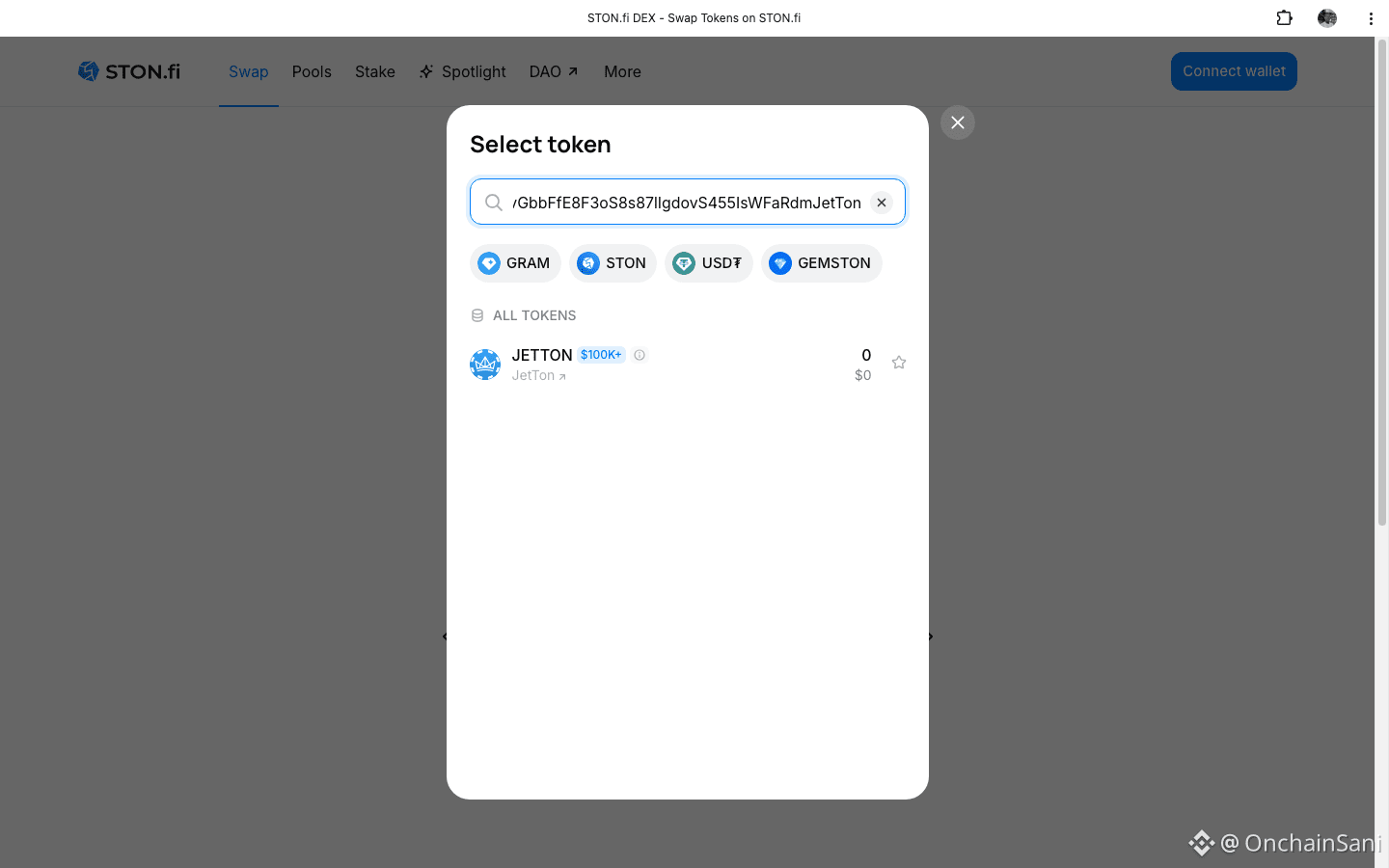
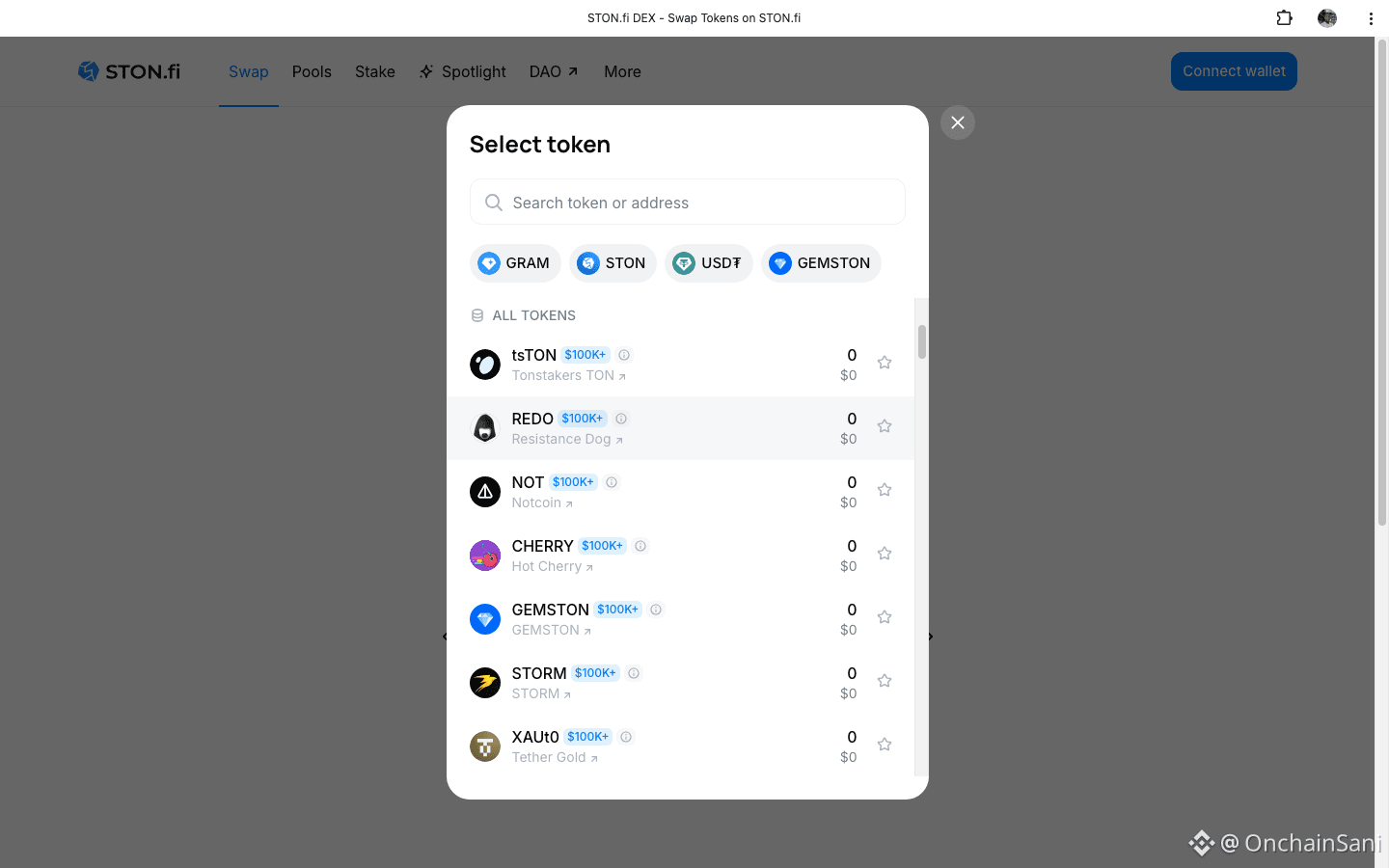
Eine kleine Gewohnheit hat verändert, wie ich mit unbekannten Tokens umgehe
Früher habe ich nach einem Token per Name gesucht, ihn ausgewählt und bin direkt zum Zitat weitergegangen.
Jetzt mache ich zuerst noch einen zusätzlichen Check:
den Contract Address.
Token-Namen reichen nicht aus, wenn man mit unbekannten Assets zu tun hat.
Mein Ablauf auf STON.fi ist jetzt:
Offizieller Contract → Token finden → verifizieren → Zitat prüfen → tauschen.
Der eigene Guide von STON.fi erklärt, dass manche Tokens möglicherweise nicht über die normale Namenssuche auftauchen, sondern über ihre Contract Address zugänglich sind, während bestimmte betrügerische oder eingeschränkte Tokens vor der Ansicht verborgen oder blockiert werden können.
Ich sehe das nicht als Garantie dafür, dass ein Token sicher ist.
Es ist lediglich eine weitere Ebene in meinem eigenen Verifizierungsprozess.
Die wichtigste Erkenntnis für mich:
Lass dich nicht von einem vertrauten Token-Namen dazu verleiten, die Prüfung der Contract Address zu überspringen.
Ein paar Sekunden Verifikation lohnen sich.
Eine kleine Gewohnheit hat verändert, wie ich mit unbekannten Tokens umgehe
Früher habe ich nach einem Token per Name gesucht, ihn ausgewählt und bin direkt zum Zitat weitergegangen.
Jetzt mache ich zuerst noch einen zusätzlichen Check:
den Contract Address.
Token-Namen reichen nicht aus, wenn man mit unbekannten Assets zu tun hat.
Mein Ablauf auf STON.fi ist jetzt:
Offizieller Contract → Token finden → verifizieren → Zitat prüfen → tauschen.
Der eigene Guide von STON.fi erklärt, dass manche Tokens möglicherweise nicht über die normale Namenssuche auftauchen, sondern über ihre Contract Address zugänglich sind, während bestimmte betrügerische oder eingeschränkte Tokens vor der Ansicht verborgen oder blockiert werden können.
Ich sehe das nicht als Garantie dafür, dass ein Token sicher ist.
Es ist lediglich eine weitere Ebene in meinem eigenen Verifizierungsprozess.
Die wichtigste Erkenntnis für mich:
Lass dich nicht von einem vertrauten Token-Namen dazu verleiten, die Prüfung der Contract Address zu überspringen.
Ein paar Sekunden Verifikation lohnen sich.
Früher habe ich nach einem Token per Name gesucht, ihn ausgewählt und bin direkt zum Zitat weitergegangen.
Jetzt mache ich zuerst noch einen zusätzlichen Check:
den Contract Address.
Token-Namen reichen nicht aus, wenn man mit unbekannten Assets zu tun hat.
Mein Ablauf auf STON.fi ist jetzt:
Offizieller Contract → Token finden → verifizieren → Zitat prüfen → tauschen.
Der eigene Guide von STON.fi erklärt, dass manche Tokens möglicherweise nicht über die normale Namenssuche auftauchen, sondern über ihre Contract Address zugänglich sind, während bestimmte betrügerische oder eingeschränkte Tokens vor der Ansicht verborgen oder blockiert werden können.
Ich sehe das nicht als Garantie dafür, dass ein Token sicher ist.
Es ist lediglich eine weitere Ebene in meinem eigenen Verifizierungsprozess.
Die wichtigste Erkenntnis für mich:
Lass dich nicht von einem vertrauten Token-Namen dazu verleiten, die Prüfung der Contract Address zu überspringen.
Ein paar Sekunden Verifikation lohnen sich.
98
·
--
Ich habe eine BNB-Chain-→-X-Layer-Route auf STON.fi ausprobiert
Ich wollte sehen, wie sich die neue X-Layer-Integration tatsächlich anfühlt, also habe ich einen Cross-Chain-Swap von BNB Chain → X Layer auf STON.fi ausprobiert.
Was mir sofort gefallen hat, war, dass ich Bridging und Swapping nicht als völlig getrennte Erlebnisse behandeln musste.
Die Route wurde über die Cross-Chain-Swap-Oberfläche angezeigt.
Und genau hier spielt Omniston eine wichtige Rolle.
Die Execution Layer von STON.fi, Omniston, koordiniert den Cross-Chain-Ablauf vom Angebot bis zur Abwicklung und übernimmt die komplizierte Weiterleitung im Hintergrund.
Vor der Bestätigung habe ich den erwarteten Betrag und das Ziel überprüft.
Das ist wahrscheinlich eine Gewohnheit, die ich bei jeder Cross-Chain-Transaktion beibehalten werde:
Nicht einfach bestätigen. Prüfen, was man tatsächlich bekommt.
Je mehr Netzwerke STON.fi verbindet, desto nützlicher wird diese Art von Infrastruktur.
Anstatt jede Chain einzeln zu betrachten, besteht das Ziel letztlich darin, einfach den Vermögenswert und das Ziel auszuwählen und die Execution Layer den Rest erledigen zu lassen.
Das ist der Teil der X-Layer-Integration, den ich am interessantesten finde.
@ston_fi
#STONfi #TON #CrossChain #Omniston #DeFi
Ich habe eine BNB-Chain-→-X-Layer-Route auf STON.fi ausprobiert
Ich wollte sehen, wie sich die neue X-Layer-Integration tatsächlich anfühlt, also habe ich einen Cross-Chain-Swap von BNB Chain → X Layer auf STON.fi ausprobiert.
Was mir sofort gefallen hat, war, dass ich Bridging und Swapping nicht als völlig getrennte Erlebnisse behandeln musste.
Die Route wurde über die Cross-Chain-Swap-Oberfläche angezeigt.
Und genau hier spielt Omniston eine wichtige Rolle.
Die Execution Layer von STON.fi, Omniston, koordiniert den Cross-Chain-Ablauf vom Angebot bis zur Abwicklung und übernimmt die komplizierte Weiterleitung im Hintergrund.
Vor der Bestätigung habe ich den erwarteten Betrag und das Ziel überprüft.
Das ist wahrscheinlich eine Gewohnheit, die ich bei jeder Cross-Chain-Transaktion beibehalten werde:
Nicht einfach bestätigen. Prüfen, was man tatsächlich bekommt.
Je mehr Netzwerke STON.fi verbindet, desto nützlicher wird diese Art von Infrastruktur.
Anstatt jede Chain einzeln zu betrachten, besteht das Ziel letztlich darin, einfach den Vermögenswert und das Ziel auszuwählen und die Execution Layer den Rest erledigen zu lassen.
Das ist der Teil der X-Layer-Integration, den ich am interessantesten finde.
@ston_fi
#STONfi #TON #CrossChain #Omniston #DeFi
Ich wollte sehen, wie sich die neue X-Layer-Integration tatsächlich anfühlt, also habe ich einen Cross-Chain-Swap von BNB Chain → X Layer auf STON.fi ausprobiert.
Was mir sofort gefallen hat, war, dass ich Bridging und Swapping nicht als völlig getrennte Erlebnisse behandeln musste.
Die Route wurde über die Cross-Chain-Swap-Oberfläche angezeigt.
Und genau hier spielt Omniston eine wichtige Rolle.
Die Execution Layer von STON.fi, Omniston, koordiniert den Cross-Chain-Ablauf vom Angebot bis zur Abwicklung und übernimmt die komplizierte Weiterleitung im Hintergrund.
Vor der Bestätigung habe ich den erwarteten Betrag und das Ziel überprüft.
Das ist wahrscheinlich eine Gewohnheit, die ich bei jeder Cross-Chain-Transaktion beibehalten werde:
Nicht einfach bestätigen. Prüfen, was man tatsächlich bekommt.
Je mehr Netzwerke STON.fi verbindet, desto nützlicher wird diese Art von Infrastruktur.
Anstatt jede Chain einzeln zu betrachten, besteht das Ziel letztlich darin, einfach den Vermögenswert und das Ziel auszuwählen und die Execution Layer den Rest erledigen zu lassen.
Das ist der Teil der X-Layer-Integration, den ich am interessantesten finde.
@ston_fi
#STONfi #TON #CrossChain #Omniston #DeFi

1
89
·
--
Ich habe hinter einen einfachen NVDAx → AAPLx Swap geschaut
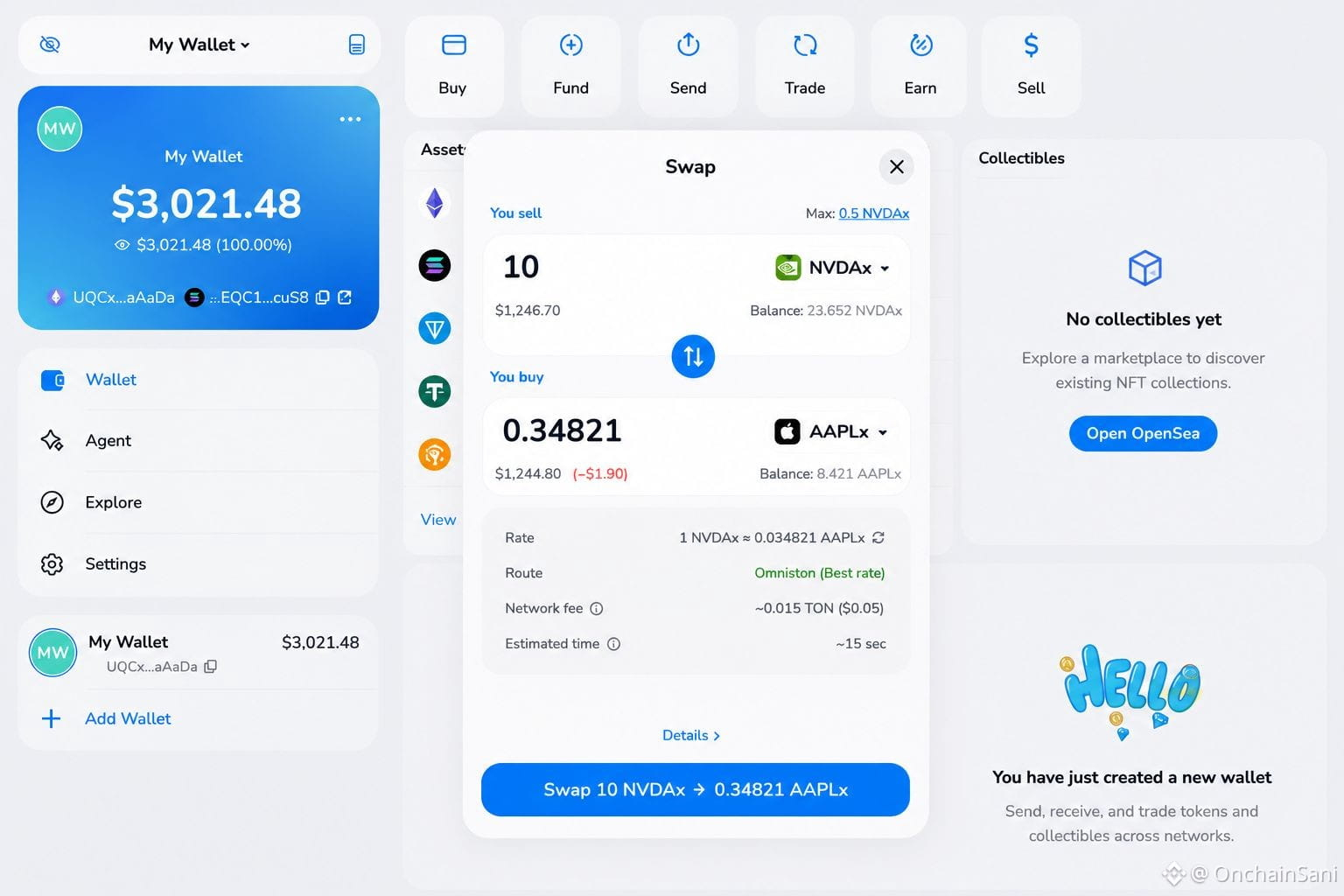
Ich habe mir das Swap-Erlebnis in „My Wallet“ angesehen und beschlossen, über das eigentliche Token-Paar hinauszuschauen.
Die Benutzeroberfläche lässt den Prozess ganz einfach wirken:
NVDAx → AAPLx
Du gibst den Betrag ein, prüfst das Angebot und siehst dir die Transaktionsdetails an.
Doch eine Einzelheit hat meine Aufmerksamkeit erregt:
Route: Omniston
Genau dort kommt STON.fi ins Spiel.
Omniston ist die von STON.fi entwickelte Ausführungs- und Liquiditäts-Routing-Infrastruktur.
Statt dass Nutzer manuell nach verschiedenen DEX-Routen suchen müssen, kann sie verfügbare Liquidität prüfen und dabei helfen, einen effizienten Weg zur Ausführung des Swaps zu finden.
Das ist interessant, weil das Nutzererlebnis diese ganze Komplexität gar nicht offenlegen muss.
Du siehst einfach die Assets, das Angebot, die geschätzte Gebühr und das erwartete Ergebnis.
Die Infrastruktur übernimmt den komplizierten Teil darunter.
Ich denke, das ist eine wichtige Entwicklung für DeFi.
Die beste Infrastruktur ist nicht immer die, die die Nutzer wahrnehmen.
Manchmal ist es die Infrastruktur, die dafür sorgt, dass ein komplizierter Prozess in einer Wallet einfach wirkt.
Ich habe hauptsächlich den Ablauf erkundet, statt einen echten Trade auszuführen, aber zu sehen, wie Omniston unter dem Swap-Erlebnis „sitzt“, hat die STON.fi-Integration viel besser verständlich gemacht.
Und tokenisierte Assets wie NVDAx und AAPLx machen das ganze Experiment noch spannender.
Wallet → Liquidität → Routing → Ausführung.
Der Nutzer muss nur das finale Erlebnis sehen.
@ston_fi
#STONfi #TON #DeFi #xStocks
Ich habe hinter einen einfachen NVDAx → AAPLx Swap geschaut
Ich habe mir das Swap-Erlebnis in „My Wallet“ angesehen und beschlossen, über das eigentliche Token-Paar hinauszuschauen.
Die Benutzeroberfläche lässt den Prozess ganz einfach wirken:
NVDAx → AAPLx
Du gibst den Betrag ein, prüfst das Angebot und siehst dir die Transaktionsdetails an.
Doch eine Einzelheit hat meine Aufmerksamkeit erregt:
Route: Omniston
Genau dort kommt STON.fi ins Spiel.
Omniston ist die von STON.fi entwickelte Ausführungs- und Liquiditäts-Routing-Infrastruktur.
Statt dass Nutzer manuell nach verschiedenen DEX-Routen suchen müssen, kann sie verfügbare Liquidität prüfen und dabei helfen, einen effizienten Weg zur Ausführung des Swaps zu finden.
Das ist interessant, weil das Nutzererlebnis diese ganze Komplexität gar nicht offenlegen muss.
Du siehst einfach die Assets, das Angebot, die geschätzte Gebühr und das erwartete Ergebnis.
Die Infrastruktur übernimmt den komplizierten Teil darunter.
Ich denke, das ist eine wichtige Entwicklung für DeFi.
Die beste Infrastruktur ist nicht immer die, die die Nutzer wahrnehmen.
Manchmal ist es die Infrastruktur, die dafür sorgt, dass ein komplizierter Prozess in einer Wallet einfach wirkt.
Ich habe hauptsächlich den Ablauf erkundet, statt einen echten Trade auszuführen, aber zu sehen, wie Omniston unter dem Swap-Erlebnis „sitzt“, hat die STON.fi-Integration viel besser verständlich gemacht.
Und tokenisierte Assets wie NVDAx und AAPLx machen das ganze Experiment noch spannender.
Wallet → Liquidität → Routing → Ausführung.
Der Nutzer muss nur das finale Erlebnis sehen.
@ston_fi
#STONfi #TON #DeFi #xStocks
Ich habe mir das Swap-Erlebnis in „My Wallet“ angesehen und beschlossen, über das eigentliche Token-Paar hinauszuschauen.
Die Benutzeroberfläche lässt den Prozess ganz einfach wirken:
NVDAx → AAPLx
Du gibst den Betrag ein, prüfst das Angebot und siehst dir die Transaktionsdetails an.
Doch eine Einzelheit hat meine Aufmerksamkeit erregt:
Route: Omniston
Genau dort kommt STON.fi ins Spiel.
Omniston ist die von STON.fi entwickelte Ausführungs- und Liquiditäts-Routing-Infrastruktur.
Statt dass Nutzer manuell nach verschiedenen DEX-Routen suchen müssen, kann sie verfügbare Liquidität prüfen und dabei helfen, einen effizienten Weg zur Ausführung des Swaps zu finden.
Das ist interessant, weil das Nutzererlebnis diese ganze Komplexität gar nicht offenlegen muss.
Du siehst einfach die Assets, das Angebot, die geschätzte Gebühr und das erwartete Ergebnis.
Die Infrastruktur übernimmt den komplizierten Teil darunter.
Ich denke, das ist eine wichtige Entwicklung für DeFi.
Die beste Infrastruktur ist nicht immer die, die die Nutzer wahrnehmen.
Manchmal ist es die Infrastruktur, die dafür sorgt, dass ein komplizierter Prozess in einer Wallet einfach wirkt.
Ich habe hauptsächlich den Ablauf erkundet, statt einen echten Trade auszuführen, aber zu sehen, wie Omniston unter dem Swap-Erlebnis „sitzt“, hat die STON.fi-Integration viel besser verständlich gemacht.
Und tokenisierte Assets wie NVDAx und AAPLx machen das ganze Experiment noch spannender.
Wallet → Liquidität → Routing → Ausführung.
Der Nutzer muss nur das finale Erlebnis sehen.
@ston_fi
#STONfi #TON #DeFi #xStocks
1
92
·
--
Was passiert hinter der einfachen WenLong-Erfahrung?
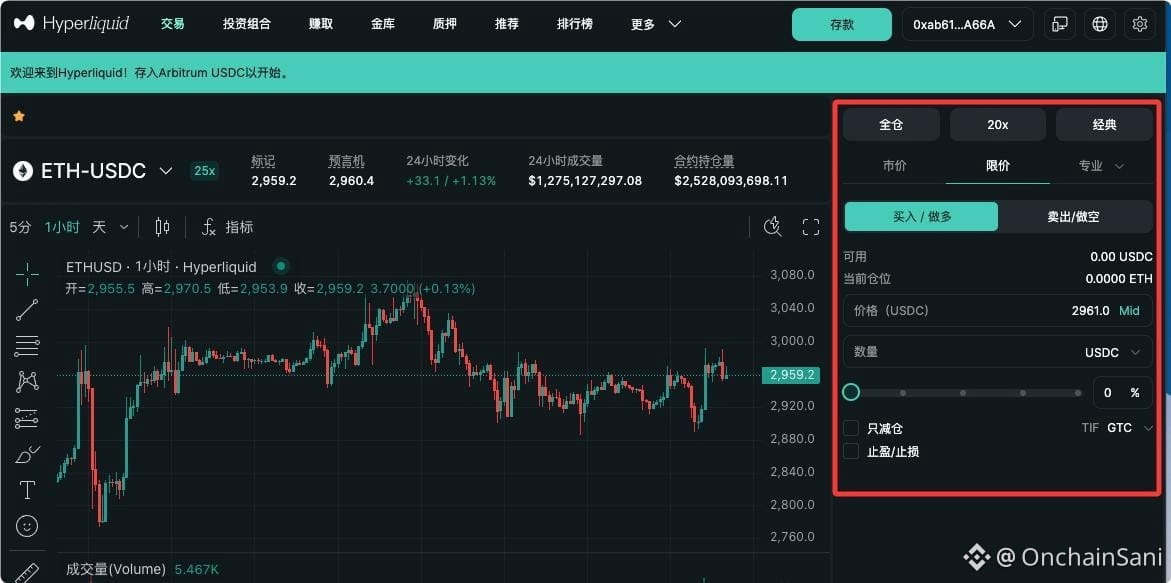
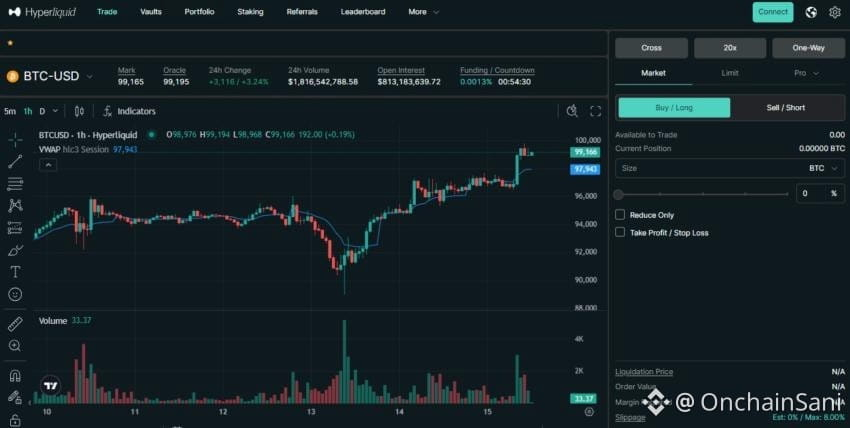
Ich habe WenLong in Telegram erkundet und mich zunächst auf den offensichtlichen Teil konzentriert – die Hyperliquid-Trading-Oberfläche.
Aber der spannendere Teil ist das, was passiert, bevor der Trade überhaupt bei Hyperliquid ankommt.
Ein Nutzer kann mit USDT auf TON starten, während der Hyperliquid-Flow USDC auf Arbitrum erfordert.
Daher braucht es einen Weg, diese Umgebungen miteinander zu verbinden.
Genau hier spielt STON.fi's Omniston eine Rolle.
Omniston stellt das Cross-Chain-Routing und die Ausführungsinfrastruktur für den Swap-Abschnitt bereit, sodass der Nutzer nicht jede einzelne Station manuell zusammensetzen muss.
Der vereinfachte Ablauf ist:
USDT auf TON
↓
Omniston
↓
USDC auf Arbitrum
↓
Hyperliquid
Was ich an diesem Ansatz mag, ist die Trennung der Zuständigkeiten.
WenLong konzentriert sich darauf, den Nutzern die Telegram-Traderfahrung zu geben.
Omniston, entwickelt von STON.fi, übernimmt darunter die Cross-Chain-Ausführung.
Der Nutzer erhält eine einfachere Reise, während die komplizierte Infrastruktur im Hintergrund bleibt.
Und ich denke, genau dahin muss auch die Cross-Chain-UX gehen.
Nicht unbedingt dafür sorgen, dass Nutzer mehr Infrastruktur verstehen – sondern dass die Infrastruktur besser funktioniert, sodass die Nutzer weniger darüber nachdenken müssen.
@ston_fi
Informiere dich selbst (DYOR), insbesondere wenn du mit gehebelten Produkten interagierst.
Was passiert hinter der einfachen WenLong-Erfahrung?
Ich habe WenLong in Telegram erkundet und mich zunächst auf den offensichtlichen Teil konzentriert – die Hyperliquid-Trading-Oberfläche.
Aber der spannendere Teil ist das, was passiert, bevor der Trade überhaupt bei Hyperliquid ankommt.
Ein Nutzer kann mit USDT auf TON starten, während der Hyperliquid-Flow USDC auf Arbitrum erfordert.
Daher braucht es einen Weg, diese Umgebungen miteinander zu verbinden.
Genau hier spielt STON.fi's Omniston eine Rolle.
Omniston stellt das Cross-Chain-Routing und die Ausführungsinfrastruktur für den Swap-Abschnitt bereit, sodass der Nutzer nicht jede einzelne Station manuell zusammensetzen muss.
Der vereinfachte Ablauf ist:
USDT auf TON
↓
Omniston
↓
USDC auf Arbitrum
↓
Hyperliquid
Was ich an diesem Ansatz mag, ist die Trennung der Zuständigkeiten.
WenLong konzentriert sich darauf, den Nutzern die Telegram-Traderfahrung zu geben.
Omniston, entwickelt von STON.fi, übernimmt darunter die Cross-Chain-Ausführung.
Der Nutzer erhält eine einfachere Reise, während die komplizierte Infrastruktur im Hintergrund bleibt.
Und ich denke, genau dahin muss auch die Cross-Chain-UX gehen.
Nicht unbedingt dafür sorgen, dass Nutzer mehr Infrastruktur verstehen – sondern dass die Infrastruktur besser funktioniert, sodass die Nutzer weniger darüber nachdenken müssen.
@ston_fi
Informiere dich selbst (DYOR), insbesondere wenn du mit gehebelten Produkten interagierst.
Ich habe WenLong in Telegram erkundet und mich zunächst auf den offensichtlichen Teil konzentriert – die Hyperliquid-Trading-Oberfläche.
Aber der spannendere Teil ist das, was passiert, bevor der Trade überhaupt bei Hyperliquid ankommt.
Ein Nutzer kann mit USDT auf TON starten, während der Hyperliquid-Flow USDC auf Arbitrum erfordert.
Daher braucht es einen Weg, diese Umgebungen miteinander zu verbinden.
Genau hier spielt STON.fi's Omniston eine Rolle.
Omniston stellt das Cross-Chain-Routing und die Ausführungsinfrastruktur für den Swap-Abschnitt bereit, sodass der Nutzer nicht jede einzelne Station manuell zusammensetzen muss.
Der vereinfachte Ablauf ist:
USDT auf TON
↓
Omniston
↓
USDC auf Arbitrum
↓
Hyperliquid
Was ich an diesem Ansatz mag, ist die Trennung der Zuständigkeiten.
WenLong konzentriert sich darauf, den Nutzern die Telegram-Traderfahrung zu geben.
Omniston, entwickelt von STON.fi, übernimmt darunter die Cross-Chain-Ausführung.
Der Nutzer erhält eine einfachere Reise, während die komplizierte Infrastruktur im Hintergrund bleibt.
Und ich denke, genau dahin muss auch die Cross-Chain-UX gehen.
Nicht unbedingt dafür sorgen, dass Nutzer mehr Infrastruktur verstehen – sondern dass die Infrastruktur besser funktioniert, sodass die Nutzer weniger darüber nachdenken müssen.
@ston_fi
Informiere dich selbst (DYOR), insbesondere wenn du mit gehebelten Produkten interagierst.
1
109
·
--
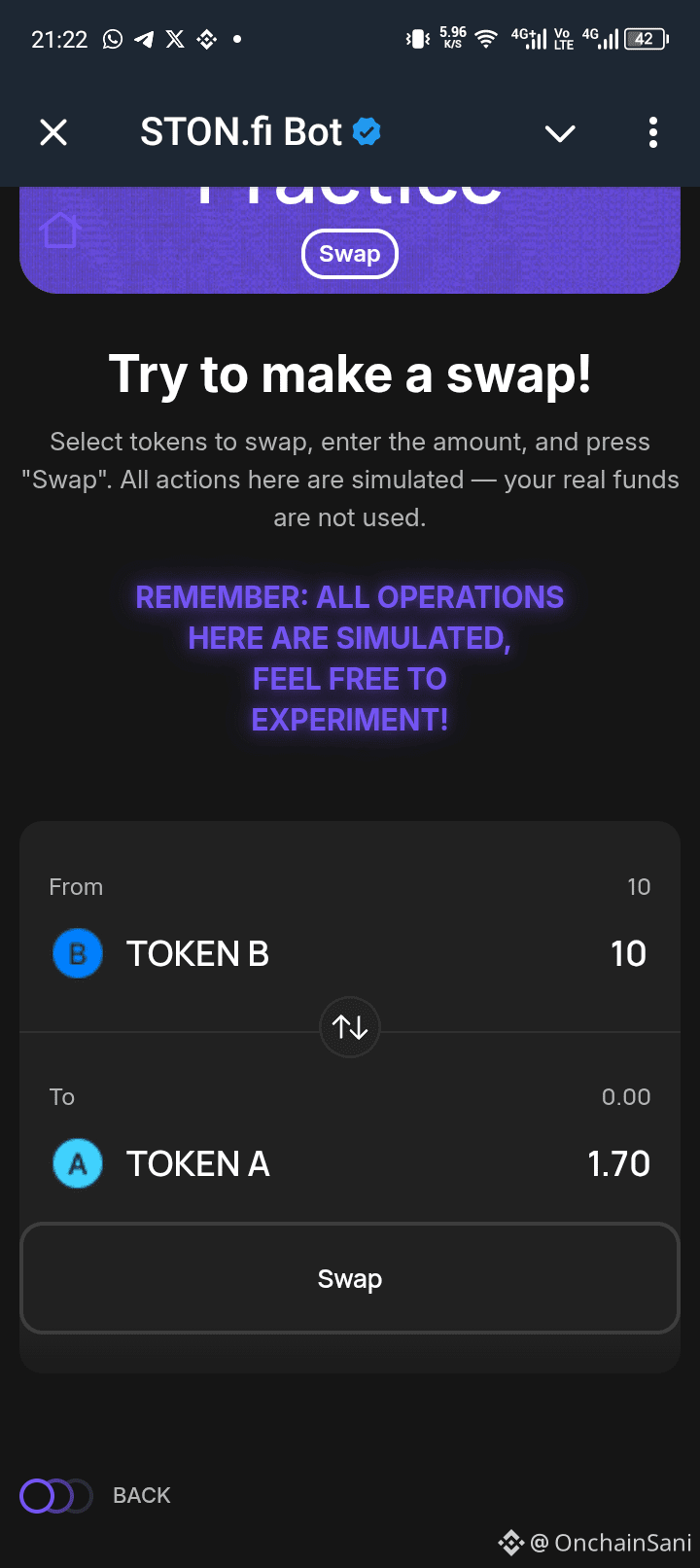
Du kannst DeFi auf STON.fi üben, ohne echte Gelder zu verwenden
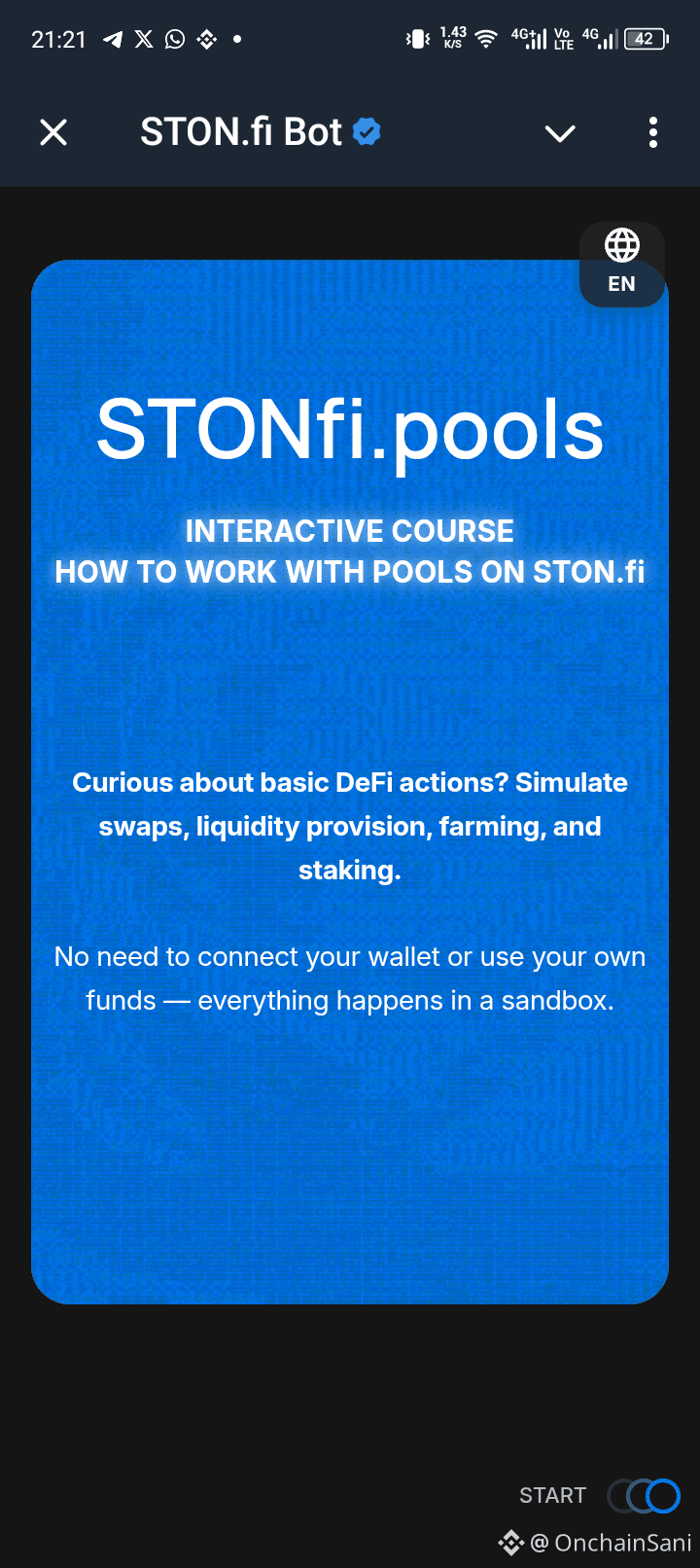
Eine Sache, die ich kürzlich auf STON.fi ausprobiert habe, ist der STONfi.pools interaktive Kurs.
Was dabei mein Interesse geweckt hat: Du musst keine Wallet verbinden oder deine eigenen Gelder einsetzen.
Stattdessen übst du in einem Simulator.
Der Kurs ermöglicht dir das Erkunden von:
Swaps
Liquidität bereitstellen
Farming
Staking
Ich finde das besonders hilfreich für Einsteiger, weil DeFi sich oft kompliziert anfühlt, wenn man zum ersten Mal auf eine ungewohnte Oberfläche trifft.
Wenn du mit echten Geldern lernst, während du noch dabei bist, schafft das unnötigen Druck.
Mit dem Simulator kannst du dich Schritt für Schritt durch den Prozess klicken, verstehen, was jeder Schritt macht, und den Ablauf kennenlernen, bevor du zu echten Transaktionen wechselst.
Natürlich beseitigt die Simulation nicht die Risiken von echtem DeFi.
Bevor du echte Gelder verwendest, musst du immer noch Dinge wie Slippage, impermanenten Verlust, Smart-Contract-Risiko, Gebühren und Marktvolatilität verstehen.
Aber wenn du erst die Oberfläche lernst, kann der gesamte Prozess weniger einschüchternd wirken.
Für mich ist die Idee ganz einfach:
Lern den Ablauf zuerst. Setz das Geld später ein.
@ston_fi
#STONfi #TON #defi
Du kannst DeFi auf STON.fi üben, ohne echte Gelder zu verwenden
Eine Sache, die ich kürzlich auf STON.fi ausprobiert habe, ist der STONfi.pools interaktive Kurs.
Was dabei mein Interesse geweckt hat: Du musst keine Wallet verbinden oder deine eigenen Gelder einsetzen.
Stattdessen übst du in einem Simulator.
Der Kurs ermöglicht dir das Erkunden von:
Swaps
Liquidität bereitstellen
Farming
Staking
Ich finde das besonders hilfreich für Einsteiger, weil DeFi sich oft kompliziert anfühlt, wenn man zum ersten Mal auf eine ungewohnte Oberfläche trifft.
Wenn du mit echten Geldern lernst, während du noch dabei bist, schafft das unnötigen Druck.
Mit dem Simulator kannst du dich Schritt für Schritt durch den Prozess klicken, verstehen, was jeder Schritt macht, und den Ablauf kennenlernen, bevor du zu echten Transaktionen wechselst.
Natürlich beseitigt die Simulation nicht die Risiken von echtem DeFi.
Bevor du echte Gelder verwendest, musst du immer noch Dinge wie Slippage, impermanenten Verlust, Smart-Contract-Risiko, Gebühren und Marktvolatilität verstehen.
Aber wenn du erst die Oberfläche lernst, kann der gesamte Prozess weniger einschüchternd wirken.
Für mich ist die Idee ganz einfach:
Lern den Ablauf zuerst. Setz das Geld später ein.
@ston_fi
#STONfi #TON #defi
Eine Sache, die ich kürzlich auf STON.fi ausprobiert habe, ist der STONfi.pools interaktive Kurs.
Was dabei mein Interesse geweckt hat: Du musst keine Wallet verbinden oder deine eigenen Gelder einsetzen.
Stattdessen übst du in einem Simulator.
Der Kurs ermöglicht dir das Erkunden von:
Swaps
Liquidität bereitstellen
Farming
Staking
Ich finde das besonders hilfreich für Einsteiger, weil DeFi sich oft kompliziert anfühlt, wenn man zum ersten Mal auf eine ungewohnte Oberfläche trifft.
Wenn du mit echten Geldern lernst, während du noch dabei bist, schafft das unnötigen Druck.
Mit dem Simulator kannst du dich Schritt für Schritt durch den Prozess klicken, verstehen, was jeder Schritt macht, und den Ablauf kennenlernen, bevor du zu echten Transaktionen wechselst.
Natürlich beseitigt die Simulation nicht die Risiken von echtem DeFi.
Bevor du echte Gelder verwendest, musst du immer noch Dinge wie Slippage, impermanenten Verlust, Smart-Contract-Risiko, Gebühren und Marktvolatilität verstehen.
Aber wenn du erst die Oberfläche lernst, kann der gesamte Prozess weniger einschüchternd wirken.
Für mich ist die Idee ganz einfach:
Lern den Ablauf zuerst. Setz das Geld später ein.
@ston_fi
#STONfi #TON #defi
1
87
·
--
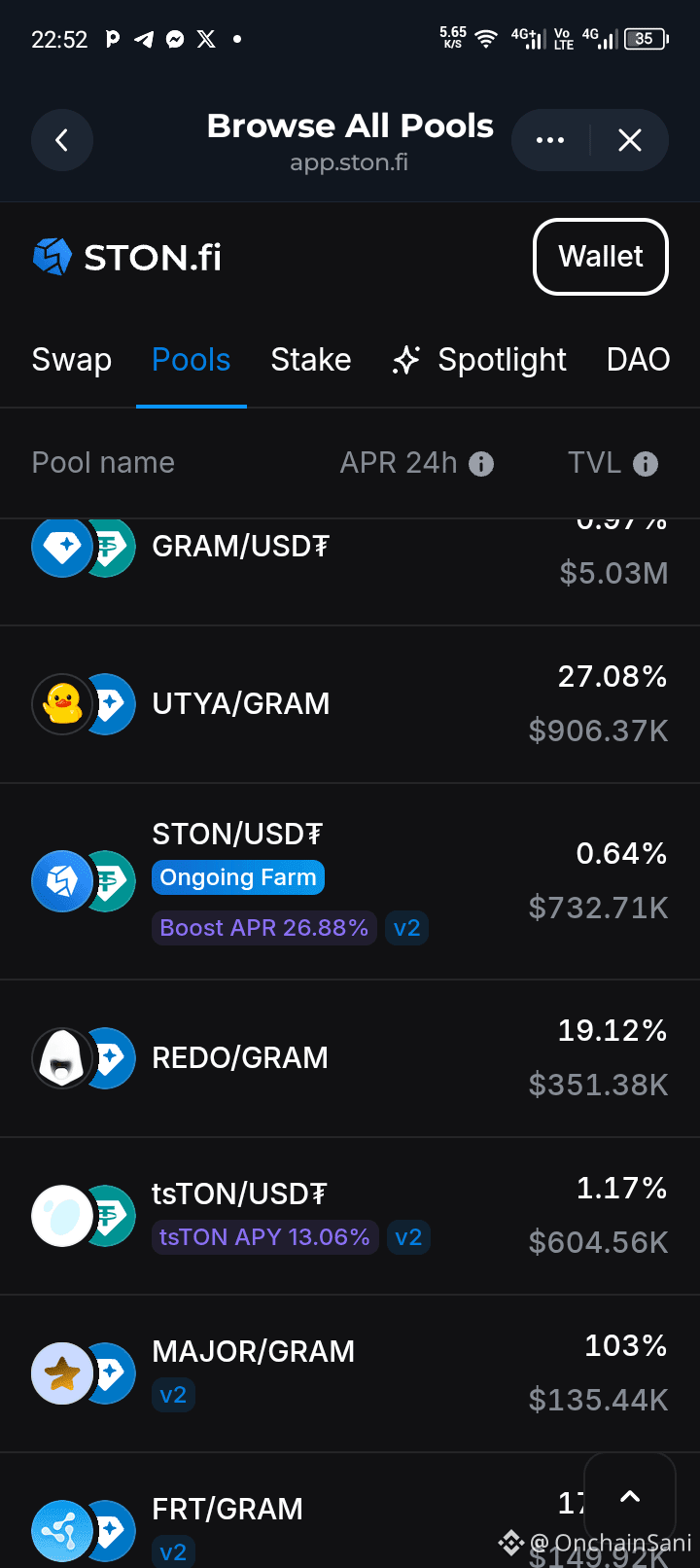
Was ich aus dem Vergleich der STON.fi Liquiditätspools gelernt habe
Ich habe mir etwas Zeit genommen, den Abschnitt „STON.fi Pools“ zu erkunden, statt einfach nach dem Pool mit der höchsten APR zu suchen.
Das Erste, was mir auffiel, war, wie unterschiedlich die Zahlen sein konnten.
Zum Beispiel zeigte REDO/GRAM bei meinem Check eine APR von 25,59%, während STON/USDT nur 0,13% anzeigte.
Auf den ersten Blick wäre es leicht anzunehmen, dass die höhere Zahl automatisch attraktiver ist.
Aber wenn man die Pools öffnet, bekommt man mehr Kontext.
Der STON/USDT-Pool zeigte:
• 24h APR: 0,13%
• 7d APR: 0,4%
• 30d APR: 1,01%
• TVL: etwa 727 Tsd. US-Dollar
• 24h-Volumen: etwa 1,32 Tsd. US-Dollar
Danach habe ich GEMSTON/USDT geprüft, das zeigte:
• 24h APR: 0,75%
• 7d APR: 0,92%
• 30d APR: 1,39%
• TVL: etwa 209 Tsd. US-Dollar
• 24h-Volumen: etwa 2,14 Tsd. US-Dollar
Dieser Vergleich hat mir eine Sache deutlich gemacht:
APR braucht Kontext.
TVL sagt mir etwas über die Größe des Pools, während das Volumen mir eine Vorstellung von der aktuellen Handelsaktivität gibt. Wenn man sich außerdem unterschiedliche APR-Zeiträume ansieht, erhält man mehr Informationen als mit nur einem einzigen Prozentwert.
Außerdem gibt es das Token-Paar selbst und die damit verbundenen Risiken – einschließlich der Möglichkeit eines impermanenten Verlusts.
Mein Ansatz ist jetzt also einfach:
APR → TVL → Volumen → APR-Historie → Token-Paar → Risiken
Ich sage nicht, dass mir das automatisch zeigt, welchen Pool ich auswählen sollte.
Es gibt mir einfach einen viel besseren Ausgangspunkt, um meine eigenen Recherchen anzustellen.
Den tatsächlichen Pool zu erkunden war viel nützlicher, als einfach der größten Zahl hinterherzulaufen.
@ston_fi
#STONfi #TON #DeFi #liquidity
Was ich aus dem Vergleich der STON.fi Liquiditätspools gelernt habe
Ich habe mir etwas Zeit genommen, den Abschnitt „STON.fi Pools“ zu erkunden, statt einfach nach dem Pool mit der höchsten APR zu suchen.
Das Erste, was mir auffiel, war, wie unterschiedlich die Zahlen sein konnten.
Zum Beispiel zeigte REDO/GRAM bei meinem Check eine APR von 25,59%, während STON/USDT nur 0,13% anzeigte.
Auf den ersten Blick wäre es leicht anzunehmen, dass die höhere Zahl automatisch attraktiver ist.
Aber wenn man die Pools öffnet, bekommt man mehr Kontext.
Der STON/USDT-Pool zeigte:
• 24h APR: 0,13%
• 7d APR: 0,4%
• 30d APR: 1,01%
• TVL: etwa 727 Tsd. US-Dollar
• 24h-Volumen: etwa 1,32 Tsd. US-Dollar
Danach habe ich GEMSTON/USDT geprüft, das zeigte:
• 24h APR: 0,75%
• 7d APR: 0,92%
• 30d APR: 1,39%
• TVL: etwa 209 Tsd. US-Dollar
• 24h-Volumen: etwa 2,14 Tsd. US-Dollar
Dieser Vergleich hat mir eine Sache deutlich gemacht:
APR braucht Kontext.
TVL sagt mir etwas über die Größe des Pools, während das Volumen mir eine Vorstellung von der aktuellen Handelsaktivität gibt. Wenn man sich außerdem unterschiedliche APR-Zeiträume ansieht, erhält man mehr Informationen als mit nur einem einzigen Prozentwert.
Außerdem gibt es das Token-Paar selbst und die damit verbundenen Risiken – einschließlich der Möglichkeit eines impermanenten Verlusts.
Mein Ansatz ist jetzt also einfach:
APR → TVL → Volumen → APR-Historie → Token-Paar → Risiken
Ich sage nicht, dass mir das automatisch zeigt, welchen Pool ich auswählen sollte.
Es gibt mir einfach einen viel besseren Ausgangspunkt, um meine eigenen Recherchen anzustellen.
Den tatsächlichen Pool zu erkunden war viel nützlicher, als einfach der größten Zahl hinterherzulaufen.
@ston_fi
#STONfi #TON #DeFi #liquidity
Ich habe mir etwas Zeit genommen, den Abschnitt „STON.fi Pools“ zu erkunden, statt einfach nach dem Pool mit der höchsten APR zu suchen.
Das Erste, was mir auffiel, war, wie unterschiedlich die Zahlen sein konnten.
Zum Beispiel zeigte REDO/GRAM bei meinem Check eine APR von 25,59%, während STON/USDT nur 0,13% anzeigte.
Auf den ersten Blick wäre es leicht anzunehmen, dass die höhere Zahl automatisch attraktiver ist.
Aber wenn man die Pools öffnet, bekommt man mehr Kontext.
Der STON/USDT-Pool zeigte:
• 24h APR: 0,13%
• 7d APR: 0,4%
• 30d APR: 1,01%
• TVL: etwa 727 Tsd. US-Dollar
• 24h-Volumen: etwa 1,32 Tsd. US-Dollar
Danach habe ich GEMSTON/USDT geprüft, das zeigte:
• 24h APR: 0,75%
• 7d APR: 0,92%
• 30d APR: 1,39%
• TVL: etwa 209 Tsd. US-Dollar
• 24h-Volumen: etwa 2,14 Tsd. US-Dollar
Dieser Vergleich hat mir eine Sache deutlich gemacht:
APR braucht Kontext.
TVL sagt mir etwas über die Größe des Pools, während das Volumen mir eine Vorstellung von der aktuellen Handelsaktivität gibt. Wenn man sich außerdem unterschiedliche APR-Zeiträume ansieht, erhält man mehr Informationen als mit nur einem einzigen Prozentwert.
Außerdem gibt es das Token-Paar selbst und die damit verbundenen Risiken – einschließlich der Möglichkeit eines impermanenten Verlusts.
Mein Ansatz ist jetzt also einfach:
APR → TVL → Volumen → APR-Historie → Token-Paar → Risiken
Ich sage nicht, dass mir das automatisch zeigt, welchen Pool ich auswählen sollte.
Es gibt mir einfach einen viel besseren Ausgangspunkt, um meine eigenen Recherchen anzustellen.
Den tatsächlichen Pool zu erkunden war viel nützlicher, als einfach der größten Zahl hinterherzulaufen.
@ston_fi
#STONfi #TON #DeFi #liquidity
1
218
·
--
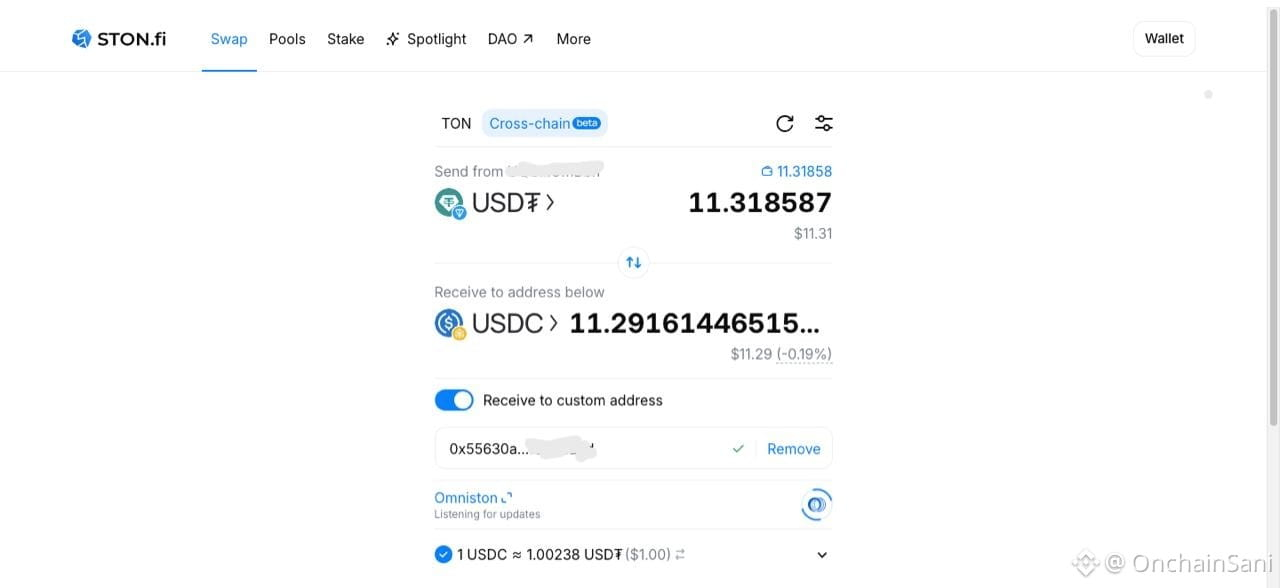
Ich habe die benutzerdefinierte Adressoption von STON.fi ausprobiert
Ich habe die neue Option „Empfangen an benutzerdefinierte Adresse“ beim Cross-Chain-Swap von STON.fi getestet.
Der nützliche Teil ist ziemlich einfach: Du verbindest die Wallet, von der aus du tauschst, aber du kannst die resultierenden Tokens an eine andere Wallet senden, ohne dass du diese Ziel-Wallet mit dem dApp verbinden musst.
Ich habe den Ablauf getestet und fand ihn nützlich für Situationen, in denen du Assets über verschiedene Wallets hinweg verwaltest.
Du musst nur vor der Bestätigung auf die Zieladresse und das Netzwerk achten. Das ist der Teil, den ich jedes Mal doppelt prüfen würde.
Es ist nur eine kleine Ergänzung, aber sie gibt Cross-Chain-Swaps etwas mehr Flexibilität.
@ston_fi
#STONfi #TON #DeFi #CrossChain
Ich habe die benutzerdefinierte Adressoption von STON.fi ausprobiert
Ich habe die neue Option „Empfangen an benutzerdefinierte Adresse“ beim Cross-Chain-Swap von STON.fi getestet.
Der nützliche Teil ist ziemlich einfach: Du verbindest die Wallet, von der aus du tauschst, aber du kannst die resultierenden Tokens an eine andere Wallet senden, ohne dass du diese Ziel-Wallet mit dem dApp verbinden musst.
Ich habe den Ablauf getestet und fand ihn nützlich für Situationen, in denen du Assets über verschiedene Wallets hinweg verwaltest.
Du musst nur vor der Bestätigung auf die Zieladresse und das Netzwerk achten. Das ist der Teil, den ich jedes Mal doppelt prüfen würde.
Es ist nur eine kleine Ergänzung, aber sie gibt Cross-Chain-Swaps etwas mehr Flexibilität.
@ston_fi
#STONfi #TON #DeFi #CrossChain
Ich habe die neue Option „Empfangen an benutzerdefinierte Adresse“ beim Cross-Chain-Swap von STON.fi getestet.
Der nützliche Teil ist ziemlich einfach: Du verbindest die Wallet, von der aus du tauschst, aber du kannst die resultierenden Tokens an eine andere Wallet senden, ohne dass du diese Ziel-Wallet mit dem dApp verbinden musst.
Ich habe den Ablauf getestet und fand ihn nützlich für Situationen, in denen du Assets über verschiedene Wallets hinweg verwaltest.
Du musst nur vor der Bestätigung auf die Zieladresse und das Netzwerk achten. Das ist der Teil, den ich jedes Mal doppelt prüfen würde.
Es ist nur eine kleine Ergänzung, aber sie gibt Cross-Chain-Swaps etwas mehr Flexibilität.
@ston_fi
#STONfi #TON #DeFi #CrossChain
1
99
·
--
Artikel
3 kostenlose STON_fi-Tools, die dir helfen können, bessere DeFi-Entscheidungen zu treffenEine Sache, die ich im Laufe der Zeit gelernt habe, ist, dass viele DeFi-Fehler passieren, bevor man überhaupt eine Transaktion durchführt.
Manchmal stellen wir Liquidität bereit, ohne mögliche Renditen zu schätzen. Ein anderes Mal verfolgen wir eine hohe APR, ohne die damit verbundenen Risiken zu verstehen. Fundierte Entscheidungen beginnen in der Regel damit, die richtige Information zu haben.
Darum war ich auch froh zu sehen, dass STON.fi drei kostenlose Tools eingeführt hat, die Nutzern helfen sollen, Chancen zu bewerten, bevor sie ihre Assets einsetzen.
1. APR-Rechner
Der APR-Rechner hilft dabei, potenzielle Renditen anhand deiner eigenen Eingaben zu schätzen.
3 kostenlose STON_fi-Tools, die dir helfen können, bessere DeFi-Entscheidungen zu treffen
Eine Sache, die ich im Laufe der Zeit gelernt habe, ist, dass viele DeFi-Fehler passieren, bevor man überhaupt eine Transaktion durchführt.
Manchmal stellen wir Liquidität bereit, ohne mögliche Renditen zu schätzen. Ein anderes Mal verfolgen wir eine hohe APR, ohne die damit verbundenen Risiken zu verstehen. Fundierte Entscheidungen beginnen in der Regel damit, die richtige Information zu haben.
Darum war ich auch froh zu sehen, dass STON.fi drei kostenlose Tools eingeführt hat, die Nutzern helfen sollen, Chancen zu bewerten, bevor sie ihre Assets einsetzen.
1. APR-Rechner
Der APR-Rechner hilft dabei, potenzielle Renditen anhand deiner eigenen Eingaben zu schätzen.
Manchmal stellen wir Liquidität bereit, ohne mögliche Renditen zu schätzen. Ein anderes Mal verfolgen wir eine hohe APR, ohne die damit verbundenen Risiken zu verstehen. Fundierte Entscheidungen beginnen in der Regel damit, die richtige Information zu haben.
Darum war ich auch froh zu sehen, dass STON.fi drei kostenlose Tools eingeführt hat, die Nutzern helfen sollen, Chancen zu bewerten, bevor sie ihre Assets einsetzen.
1. APR-Rechner
Der APR-Rechner hilft dabei, potenzielle Renditen anhand deiner eigenen Eingaben zu schätzen.
1
20
·
--
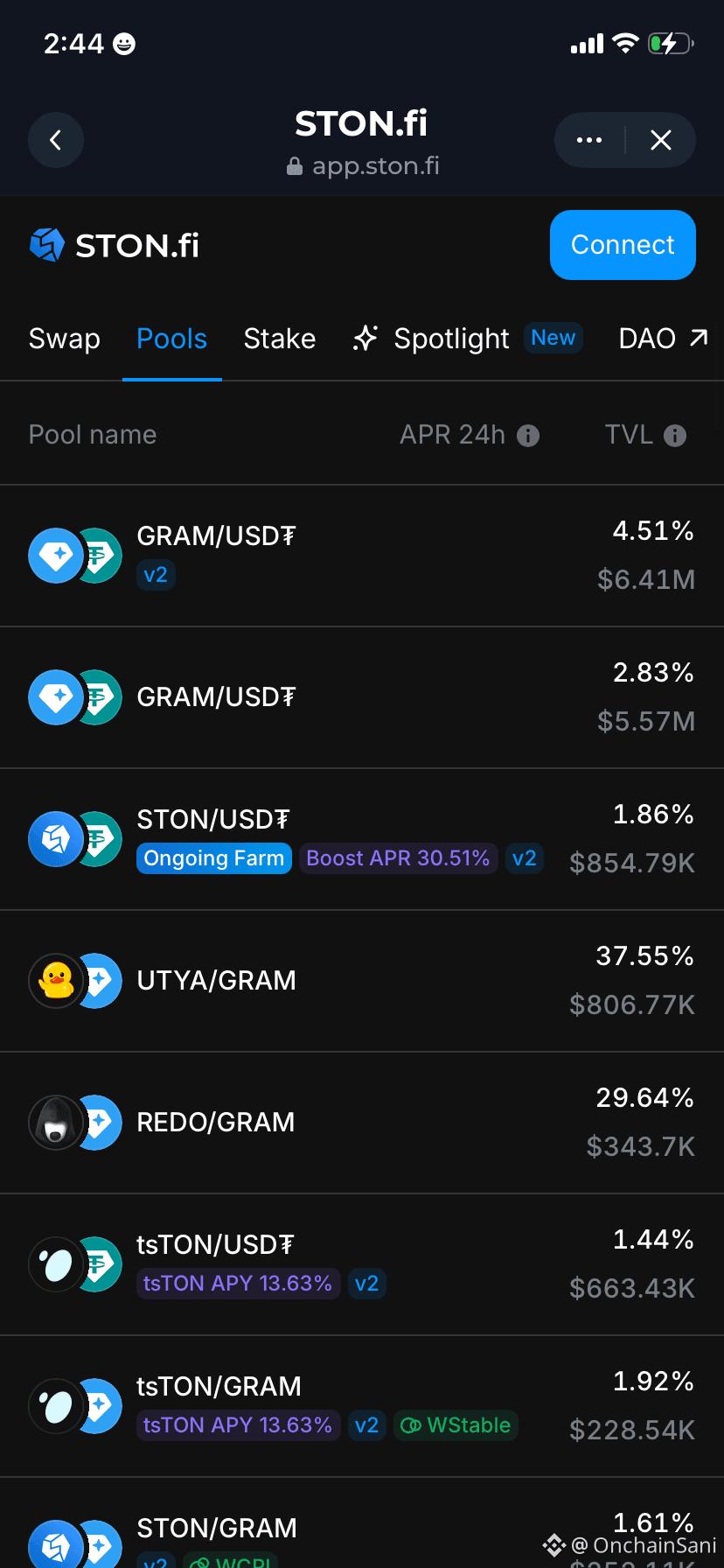
Ich habe heute etwas Zeit damit verbracht, verschiedene Liquiditätspools auf STON.fi zu durchsuchen, statt mich nur auf einen zu konzentrieren.
Das Öffnen einiger unterschiedlicher Pool-Seiten hat mir geholfen zu verstehen, wie sich Token-Paarungen auf der Plattform unterscheiden.
Ich habe nicht nach dem „besten“ Pool gesucht, sondern wollte verstehen, wie der Abschnitt „Pools“ aufgebaut ist.
Diese kleine Gewohnheit macht das Erkunden des Ökosystems viel interessanter, weil jeder Vergleich mir etwas Neues beibringt.
Ich habe heute etwas Zeit damit verbracht, verschiedene Liquiditätspools auf STON.fi zu durchsuchen, statt mich nur auf einen zu konzentrieren.
Das Öffnen einiger unterschiedlicher Pool-Seiten hat mir geholfen zu verstehen, wie sich Token-Paarungen auf der Plattform unterscheiden.
Ich habe nicht nach dem „besten“ Pool gesucht, sondern wollte verstehen, wie der Abschnitt „Pools“ aufgebaut ist.
Diese kleine Gewohnheit macht das Erkunden des Ökosystems viel interessanter, weil jeder Vergleich mir etwas Neues beibringt.
Das Öffnen einiger unterschiedlicher Pool-Seiten hat mir geholfen zu verstehen, wie sich Token-Paarungen auf der Plattform unterscheiden.
Ich habe nicht nach dem „besten“ Pool gesucht, sondern wollte verstehen, wie der Abschnitt „Pools“ aufgebaut ist.
Diese kleine Gewohnheit macht das Erkunden des Ökosystems viel interessanter, weil jeder Vergleich mir etwas Neues beibringt.
1
184
·
--
#newt Newton Protocol Mainnet Beta führt eine On-Chain-Authorisierungsebene ein, die Transaktionen vor der Ausführung prüft.
Statt auf Risiken zu reagieren, sobald sie auftreten, setzt es in Echtzeit programmierbare Compliance-Regeln über verschiedene Chains hinweg ein, wodurch On-Chain-Aktivitäten stärker kontrolliert und überprüfbar werden.
@NewtonProtocol $NEWT #Newt $NEWT
#newt $NEWT
#newt Newton Protocol Mainnet Beta führt eine On-Chain-Authorisierungsebene ein, die Transaktionen vor der Ausführung prüft.
Statt auf Risiken zu reagieren, sobald sie auftreten, setzt es in Echtzeit programmierbare Compliance-Regeln über verschiedene Chains hinweg ein, wodurch On-Chain-Aktivitäten stärker kontrolliert und überprüfbar werden.
@NewtonProtocol $NEWT #Newt $NEWT
#newt $NEWT
Statt auf Risiken zu reagieren, sobald sie auftreten, setzt es in Echtzeit programmierbare Compliance-Regeln über verschiedene Chains hinweg ein, wodurch On-Chain-Aktivitäten stärker kontrolliert und überprüfbar werden.
@NewtonProtocol $NEWT #Newt $NEWT
#newt $NEWT
1
59
·
--
#newt Newton Protocol Mainnet Beta führt eine On-Chain-Authentifizierungsebene ein, die Transaktionen vor der Ausführung prüft.
Statt erst nach dem Eintritt von Risiken zu reagieren, setzt sie in Echtzeit programmierbare Compliance-Regeln über verschiedene Chains hinweg ein, wodurch On-Chain-Aktivitäten besser kontrollierbar und verifizierbar werden.
@NewtonProtocol $NEWT #Newt $NEWT
#newt Newton Protocol Mainnet Beta führt eine On-Chain-Authentifizierungsebene ein, die Transaktionen vor der Ausführung prüft.
Statt erst nach dem Eintritt von Risiken zu reagieren, setzt sie in Echtzeit programmierbare Compliance-Regeln über verschiedene Chains hinweg ein, wodurch On-Chain-Aktivitäten besser kontrollierbar und verifizierbar werden.
@NewtonProtocol $NEWT #Newt $NEWT
Statt erst nach dem Eintritt von Risiken zu reagieren, setzt sie in Echtzeit programmierbare Compliance-Regeln über verschiedene Chains hinweg ein, wodurch On-Chain-Aktivitäten besser kontrollierbar und verifizierbar werden.
@NewtonProtocol $NEWT #Newt $NEWT
1
84
·
--
Artikel
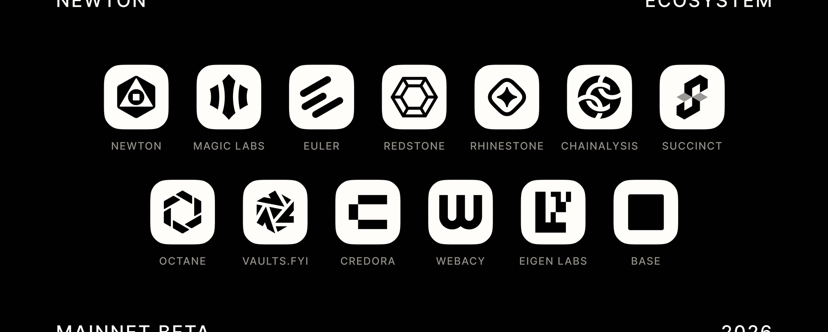
NEWTON MAINNET BETANewton Protocol Mainnet Beta führt eine Pre-Execution-Authorisierungsebene ein, in der Onchain-Transaktionen ausgewertet werden, bevor sie zur Abwicklung zugelassen werden. Anstatt sich ausschließlich auf die nachgelagerte Transaktionsüberwachung zu verlassen, wird jede Transaktion anhand programmierbarer Compliance-Regeln geprüft, bevor sie ausgeführt wird.
Diese Regeln können eine Identitätsprüfung, Einschränkungen der Gerichtsbarkeit, Übertragungsgrenzen und risikobasierte Kontrollen umfassen. Wenn eine Transaktion eingereicht wird, generiert Newton eine verifizierbare Bestätigung (Attestation), die bestätigt, ob die Richtlinienbedingungen erfüllt wurden. Smart Contracts können diese Bestätigung dann direkt vor der Ausführung der Transaktion durchsetzen.
NEWTON MAINNET BETA
Newton Protocol Mainnet Beta führt eine Pre-Execution-Authorisierungsebene ein, in der Onchain-Transaktionen ausgewertet werden, bevor sie zur Abwicklung zugelassen werden. Anstatt sich ausschließlich auf die nachgelagerte Transaktionsüberwachung zu verlassen, wird jede Transaktion anhand programmierbarer Compliance-Regeln geprüft, bevor sie ausgeführt wird.
Diese Regeln können eine Identitätsprüfung, Einschränkungen der Gerichtsbarkeit, Übertragungsgrenzen und risikobasierte Kontrollen umfassen. Wenn eine Transaktion eingereicht wird, generiert Newton eine verifizierbare Bestätigung (Attestation), die bestätigt, ob die Richtlinienbedingungen erfüllt wurden. Smart Contracts können diese Bestätigung dann direkt vor der Ausführung der Transaktion durchsetzen.
Diese Regeln können eine Identitätsprüfung, Einschränkungen der Gerichtsbarkeit, Übertragungsgrenzen und risikobasierte Kontrollen umfassen. Wenn eine Transaktion eingereicht wird, generiert Newton eine verifizierbare Bestätigung (Attestation), die bestätigt, ob die Richtlinienbedingungen erfüllt wurden. Smart Contracts können diese Bestätigung dann direkt vor der Ausführung der Transaktion durchsetzen.
1
82
·
--
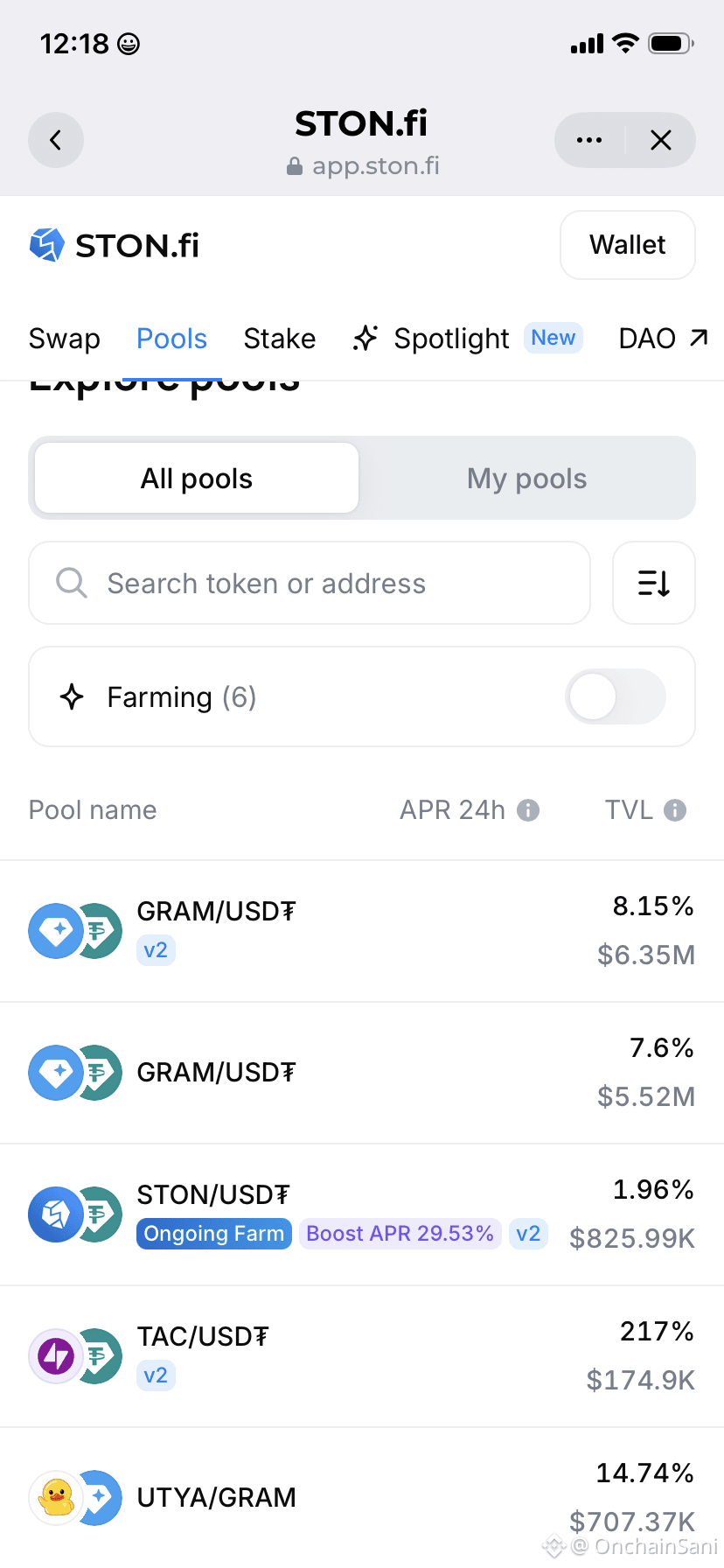
Ich habe heute den Bereich „Pools“ auf STON.fi geöffnet und damit gerechnet, mir nur kurz alles anzusehen.
Stattdessen habe ich Zeit damit verbracht, einzelne Pools zu öffnen, weil mir aufgefallen ist, dass dieselben Assets in mehreren Paarungen immer wieder auftauchen.
Das hat mich neugierig gemacht, wie sich verschiedene Projekte innerhalb des Ökosystems miteinander verbinden.
Das Interessante ist, dass ich gar nicht mehr nach Chancen gesucht habe.
Ich habe nach Mustern gesucht.
Manchmal kann das Durchstöbern von Pools mehr über die Aktivitäten im Ökosystem verraten als nur auf die Token-Preise zu schauen.
Ich habe heute den Bereich „Pools“ auf STON.fi geöffnet und damit gerechnet, mir nur kurz alles anzusehen.
Stattdessen habe ich Zeit damit verbracht, einzelne Pools zu öffnen, weil mir aufgefallen ist, dass dieselben Assets in mehreren Paarungen immer wieder auftauchen.
Das hat mich neugierig gemacht, wie sich verschiedene Projekte innerhalb des Ökosystems miteinander verbinden.
Das Interessante ist, dass ich gar nicht mehr nach Chancen gesucht habe.
Ich habe nach Mustern gesucht.
Manchmal kann das Durchstöbern von Pools mehr über die Aktivitäten im Ökosystem verraten als nur auf die Token-Preise zu schauen.
Stattdessen habe ich Zeit damit verbracht, einzelne Pools zu öffnen, weil mir aufgefallen ist, dass dieselben Assets in mehreren Paarungen immer wieder auftauchen.
Das hat mich neugierig gemacht, wie sich verschiedene Projekte innerhalb des Ökosystems miteinander verbinden.
Das Interessante ist, dass ich gar nicht mehr nach Chancen gesucht habe.
Ich habe nach Mustern gesucht.
Manchmal kann das Durchstöbern von Pools mehr über die Aktivitäten im Ökosystem verraten als nur auf die Token-Preise zu schauen.
1
242
·
--
Bullisch
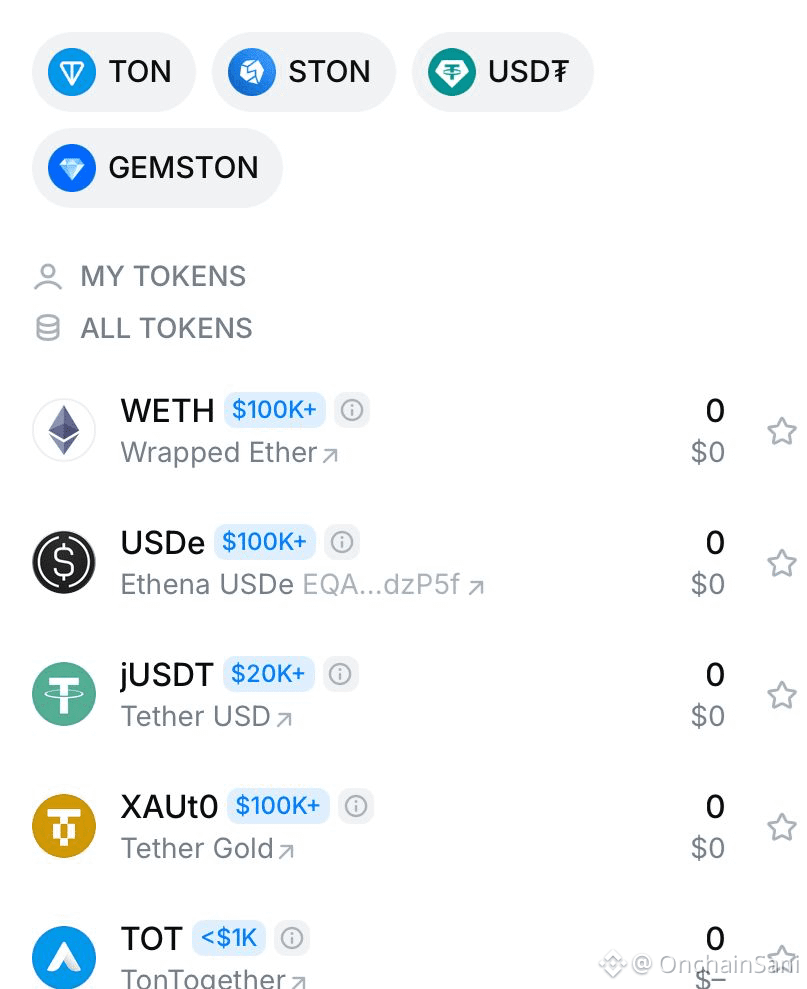
Während ich heute STON.fi genutzt habe, habe ich etwas Zeit damit verbracht, mit verschiedenen Token-Paaren zu interagieren, statt mich einfach nur an eine vertraute Swap-Route zu halten.
Eine Sache, die ich bemerkt habe, ist, wie stark sich deine Wahrnehmung von DeFi verändert, sobald du anfängst, Swaps tatsächlich regelmäßig auszuführen, statt nur darüber zu lesen.
Dann geht es nicht mehr darum, „welchen Token soll ich kaufen“, sondern viel mehr darum, wie reibungslos die Ausführung abläuft und wie vorhersehbar sich der Prozess anfühlt.
Diese Erfahrung ist für mich am stärksten herausgestochen.
Nicht die Token selbst, sondern der Interaktionsablauf hinter ihnen.
Mit der Zeit merkst du, dass Konsistenz in der Ausführung wichtiger ist als zu versuchen, ständig neuen Möglichkeiten hinterherzujagen.
Während ich heute STON.fi genutzt habe, habe ich etwas Zeit damit verbracht, mit verschiedenen Token-Paaren zu interagieren, statt mich einfach nur an eine vertraute Swap-Route zu halten.
Eine Sache, die ich bemerkt habe, ist, wie stark sich deine Wahrnehmung von DeFi verändert, sobald du anfängst, Swaps tatsächlich regelmäßig auszuführen, statt nur darüber zu lesen.
Dann geht es nicht mehr darum, „welchen Token soll ich kaufen“, sondern viel mehr darum, wie reibungslos die Ausführung abläuft und wie vorhersehbar sich der Prozess anfühlt.
Diese Erfahrung ist für mich am stärksten herausgestochen.
Nicht die Token selbst, sondern der Interaktionsablauf hinter ihnen.
Mit der Zeit merkst du, dass Konsistenz in der Ausführung wichtiger ist als zu versuchen, ständig neuen Möglichkeiten hinterherzujagen.
Eine Sache, die ich bemerkt habe, ist, wie stark sich deine Wahrnehmung von DeFi verändert, sobald du anfängst, Swaps tatsächlich regelmäßig auszuführen, statt nur darüber zu lesen.
Dann geht es nicht mehr darum, „welchen Token soll ich kaufen“, sondern viel mehr darum, wie reibungslos die Ausführung abläuft und wie vorhersehbar sich der Prozess anfühlt.
Diese Erfahrung ist für mich am stärksten herausgestochen.
Nicht die Token selbst, sondern der Interaktionsablauf hinter ihnen.
Mit der Zeit merkst du, dass Konsistenz in der Ausführung wichtiger ist als zu versuchen, ständig neuen Möglichkeiten hinterherzujagen.
1
140
·
--
Bullisch
Was schafft Resilienz für ein Ökosystem?
In letzter Zeit habe ich darüber nachgedacht, was ein DeFi-Ökosystem widerstandsfähig macht – sowohl in aktiven als auch in ruhigen Phasen.
Es ist leicht, sich auf Kennzahlen zu konzentrieren, wenn die Märkte spannend sind.
Doch Resilienz entsteht oft aus etwas Tieferem:
beständige Nutzer,
aktive Communities
und Infrastruktur, die von Menschen weiter genutzt wird – unabhängig von den Marktbedingungen.
Das habe ich in letzter Zeit stärker zu schätzen gelernt, während ich Zeit bei STON.fi und im gesamten TON-Ökosystem verbringe.
Was schafft Resilienz für ein Ökosystem?
In letzter Zeit habe ich darüber nachgedacht, was ein DeFi-Ökosystem widerstandsfähig macht – sowohl in aktiven als auch in ruhigen Phasen.
Es ist leicht, sich auf Kennzahlen zu konzentrieren, wenn die Märkte spannend sind.
Doch Resilienz entsteht oft aus etwas Tieferem:
beständige Nutzer,
aktive Communities
und Infrastruktur, die von Menschen weiter genutzt wird – unabhängig von den Marktbedingungen.
Das habe ich in letzter Zeit stärker zu schätzen gelernt, während ich Zeit bei STON.fi und im gesamten TON-Ökosystem verbringe.
In letzter Zeit habe ich darüber nachgedacht, was ein DeFi-Ökosystem widerstandsfähig macht – sowohl in aktiven als auch in ruhigen Phasen.
Es ist leicht, sich auf Kennzahlen zu konzentrieren, wenn die Märkte spannend sind.
Doch Resilienz entsteht oft aus etwas Tieferem:
beständige Nutzer,
aktive Communities
und Infrastruktur, die von Menschen weiter genutzt wird – unabhängig von den Marktbedingungen.
Das habe ich in letzter Zeit stärker zu schätzen gelernt, während ich Zeit bei STON.fi und im gesamten TON-Ökosystem verbringe.
1
106
·
--
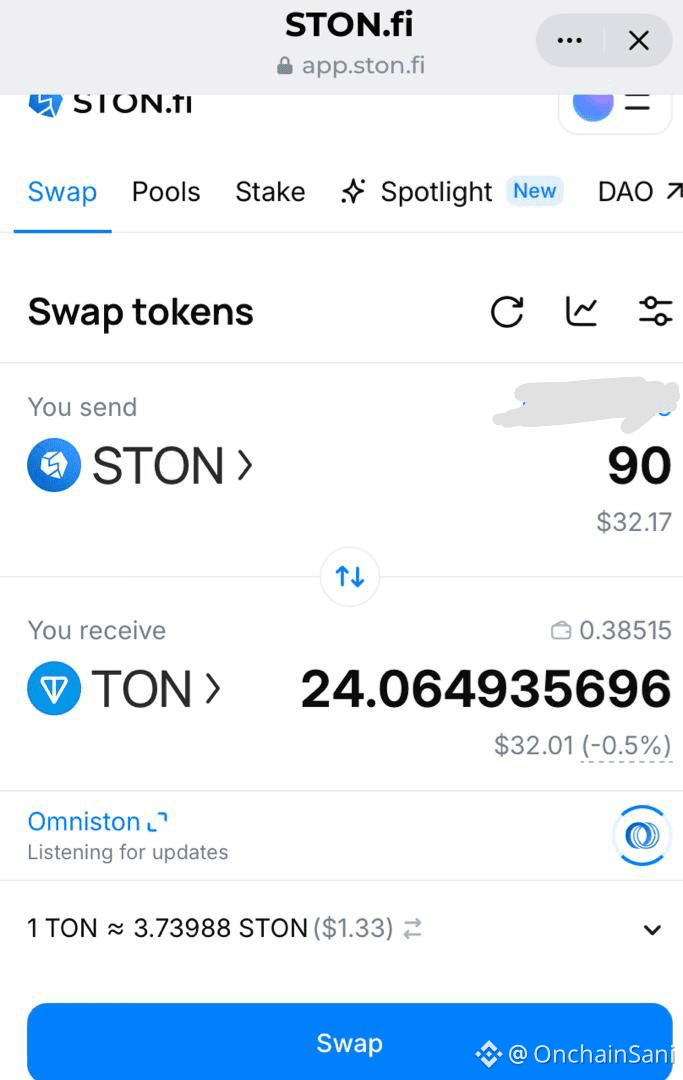
Je länger ich damit verbringe, TON DeFi zu erkunden, desto mehr schätze ich den Unterschied zwischen dem Umgang mit Infrastruktur und dem Verständnis von Infrastruktur.
Die Nutzung einer DEX ist unkompliziert.
Zu verstehen, woher die Liquidität kommt, wie Pools die Teilnahme anziehen und wie die Ausführung effizient bleibt, ist eine ganz andere Ebene des Lernens.
Das habe ich mit der Zeit zunehmend zu schätzen gelernt, während ich STON.fi verwende.
Die sichtbare Erfahrung ist wichtig.
Aber die unsichtbaren Systeme darunter erzählen oft die spannendere Geschichte.
Je länger ich damit verbringe, TON DeFi zu erkunden, desto mehr schätze ich den Unterschied zwischen dem Umgang mit Infrastruktur und dem Verständnis von Infrastruktur.
Die Nutzung einer DEX ist unkompliziert.
Zu verstehen, woher die Liquidität kommt, wie Pools die Teilnahme anziehen und wie die Ausführung effizient bleibt, ist eine ganz andere Ebene des Lernens.
Das habe ich mit der Zeit zunehmend zu schätzen gelernt, während ich STON.fi verwende.
Die sichtbare Erfahrung ist wichtig.
Aber die unsichtbaren Systeme darunter erzählen oft die spannendere Geschichte.
Die Nutzung einer DEX ist unkompliziert.
Zu verstehen, woher die Liquidität kommt, wie Pools die Teilnahme anziehen und wie die Ausführung effizient bleibt, ist eine ganz andere Ebene des Lernens.
Das habe ich mit der Zeit zunehmend zu schätzen gelernt, während ich STON.fi verwende.
Die sichtbare Erfahrung ist wichtig.
Aber die unsichtbaren Systeme darunter erzählen oft die spannendere Geschichte.
1
2
619
Anmelden und weiter Inhalte entdecken
Krypto-Nutzer weltweit auf Binance Square kennenlernen
⚡️ Bleib in Sachen Krypto stets am Puls.
💬 Die weltgrößte Kryptobörse vertraut darauf.
👍 Erhalte verlässliche Einblicke von verifizierten Creators.
E-Mail-Adresse/Telefonnummer
Trendthemen
CircleMints500MUSDCOnSolana
143,446 Aufrufe
2,632 Kommentare
#circlemints500musdconsolana 🚨 500 Mio. USDC PUT SOLANA DEFI UNTER DER LUPE
Circle hat 500 Millionen Dollar in USDC auf Solana hinzugefügt. Das ist eine Zahl.. Hier ist, worauf Trader wirklich achten müssen. 👀
Ein Sprung von 500 Millionen Dollar in der USDC-Angebotsmenge bedeutet nicht automatisch 500 Millionen Dollar Kaufdruck. So funktioniert das nicht. Die eigentliche Geschichte beginnt erst danach.
🔹 Fließt das USDC in Lending-Protokolle?
🔹 Steigt die Nachfrage nach Krediten und kommt dadurch mehr Liquidität rein?
🔹 Sinken die USDC-Lending-Renditen, wenn das Angebot wächst?
🔹 Verschiebt sich diese Stablecoin-Liquidität irgendwann in SOL und andere Solana-Assets?
Circle sagt, dass das USDC im Voraus geprägt und gehalten werden kann, bevor es in das Umlaufangebot gelangt. Das bedeutet: Die Schlagzeile ist der Anfang. Der tatsächliche Geldfluss nach der Prägung ist wichtiger als die Ankündigung.
Jupiter ist bereits ein Akteur auf Solana für USDC-Lending und -Borrowing. Daher sind die Auslastungsrate und die Borrowing-Aktivität dort Metriken, die man im Blick behalten sollte.
📊 Das ist mein Hauptaugenmerk:
Zuflüsse → DeFi-Auslastung → steigende Kreditnachfrage → SOL-Liquidität.
Wird diese 500-Millionen-Dollar-Summe untätig bleiben?. Fließt sie zuerst in DeFi?. Und wird sie dann irgendwann in riskantere Assets wie SOL, JUP, KMNO wechseln?
Die nächsten Tage könnten uns viel darüber verraten, wie Solana DeFi auf diese Einspeisung reagiert.
#solana #crypto #Khan62 #USDC
$KMNO $JUP $ORCA
Khan 62
·6 Likes
·5.1k Aufrufe
PolymarketBankFailureBetsDrawFDICConcern
128,450 Aufrufe
2,145 Kommentare
BlackRockBuildsTokenizedPortfoliosForOndo
123,534 Aufrufe
1,538 Kommentare