
mikeskcv
28 Beiträge

mikeskcv
Melden
Nutzer blockieren
5 Following
1 Follower
10 Like gegeben
Beiträge
·
--
Übersetzung ansehen
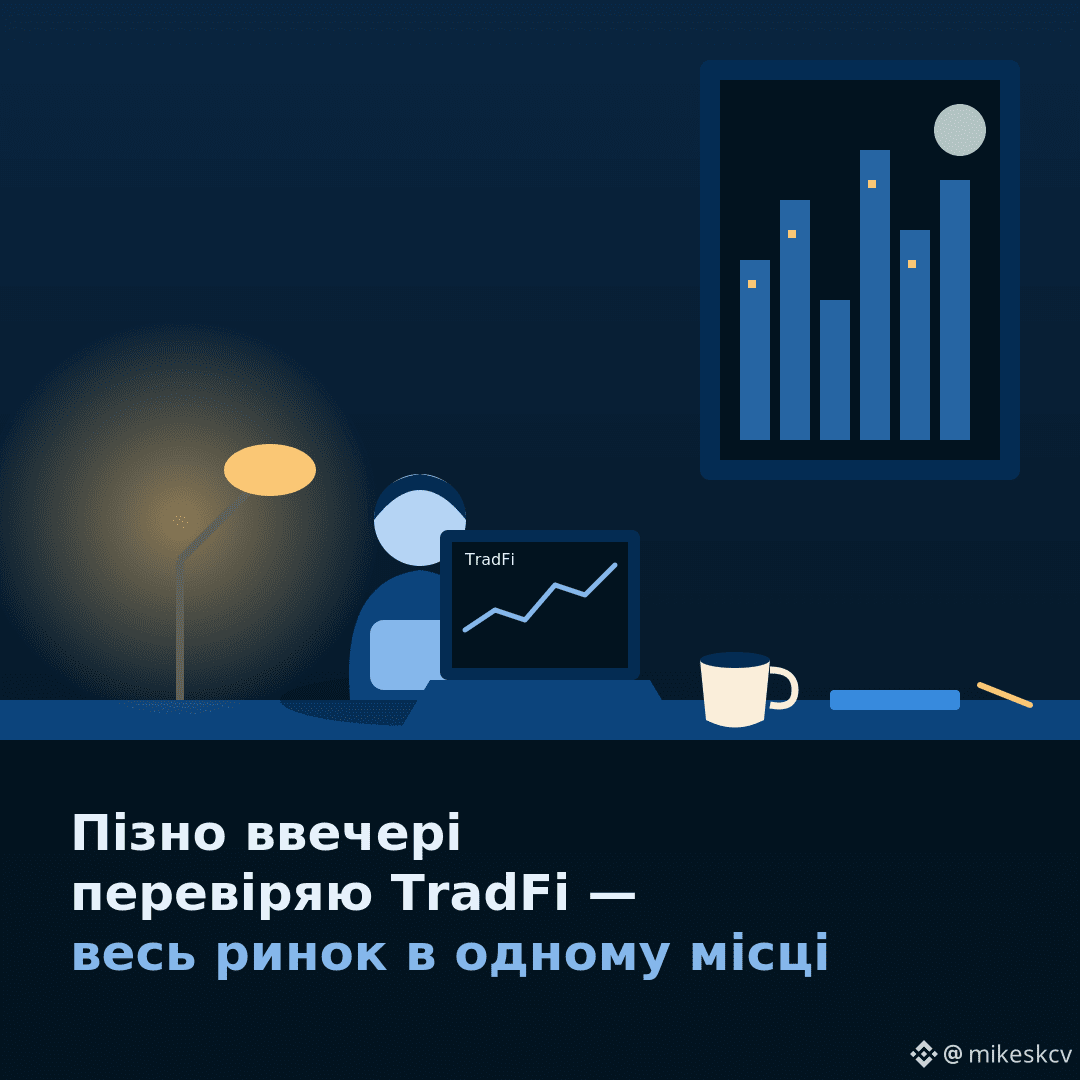
Ставки центробанків знову в новинах, і цікаво спостерігати, як традиційні активи на це реагують. TradFi на Binance зручний саме тим, що не треба тримати відкритими пʼять вкладок з різними біржами — все в одному місці, і картина ринку складається швидше.
#TradFi #Binance #CreateWithBinance #ринок
Ставки центробанків знову в новинах, і цікаво спостерігати, як традиційні активи на це реагують. TradFi на Binance зручний саме тим, що не треба тримати відкритими пʼять вкладок з різними біржами — все в одному місці, і картина ринку складається швидше.
#TradFi #Binance #CreateWithBinance #ринок
#TradFi #Binance #CreateWithBinance #ринок
114
·
--
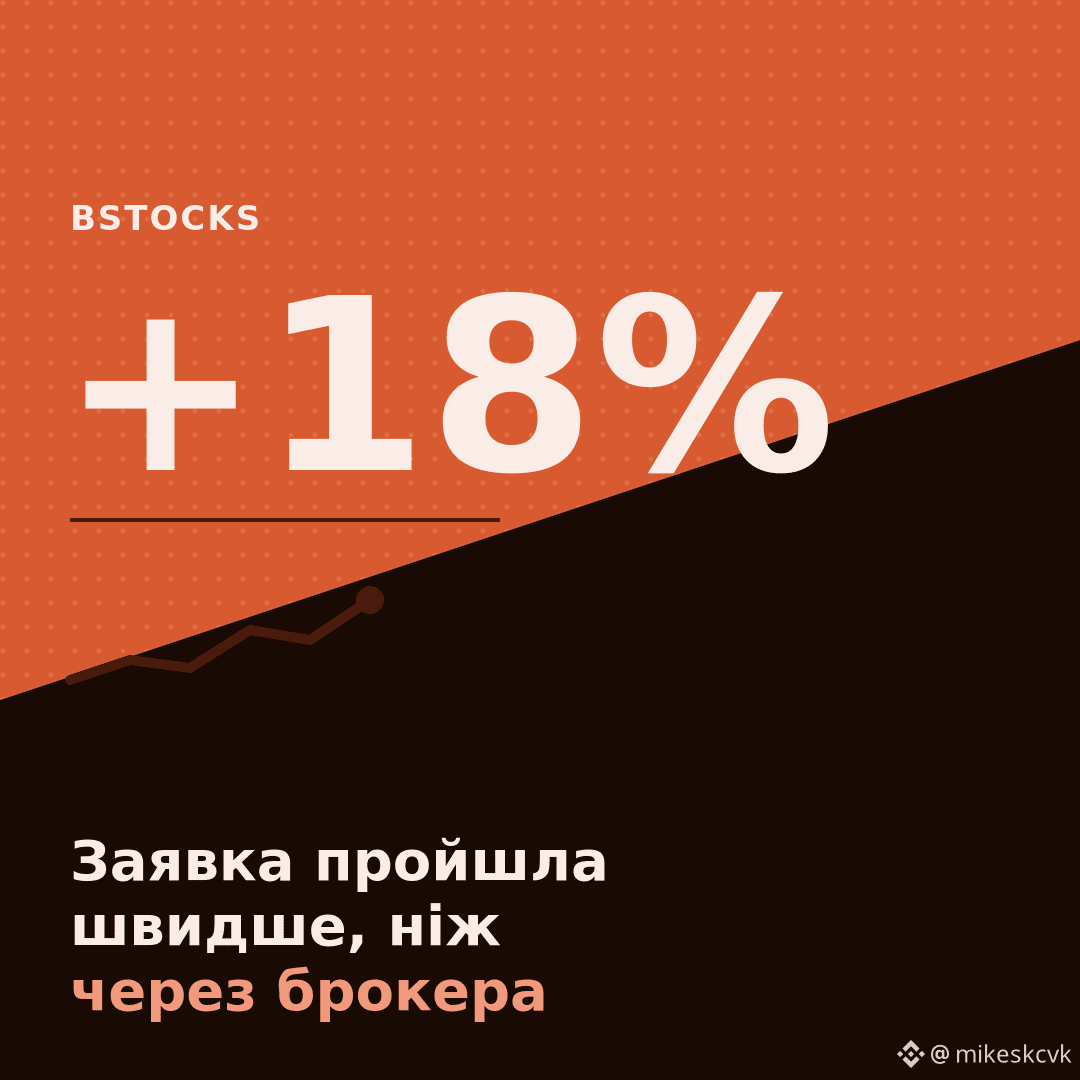
Ich habe diese Woche bStocks ausprobiert. Ich habe einen kleinen Anteil an Apple gekauft – die Order wurde schneller ausgeführt als über einen herkömmlichen Broker, und die Gebühr hat mich angenehm überrascht. Bisher bin ich im Plus.
#bStocks #Binance #CreateWithBinance #інвестиції
Ich habe diese Woche bStocks ausprobiert. Ich habe einen kleinen Anteil an Apple gekauft – die Order wurde schneller ausgeführt als über einen herkömmlichen Broker, und die Gebühr hat mich angenehm überrascht. Bisher bin ich im Plus.
#bStocks #Binance #CreateWithBinance #інвестиції
#bStocks #Binance #CreateWithBinance #інвестиції
181
·
--
Übersetzung ansehen
#termmax @termmax
What if the most interesting part of DeFi lending isn't the yield?
But who gets to choose the terms?
That's what I find interesting about TermMax.
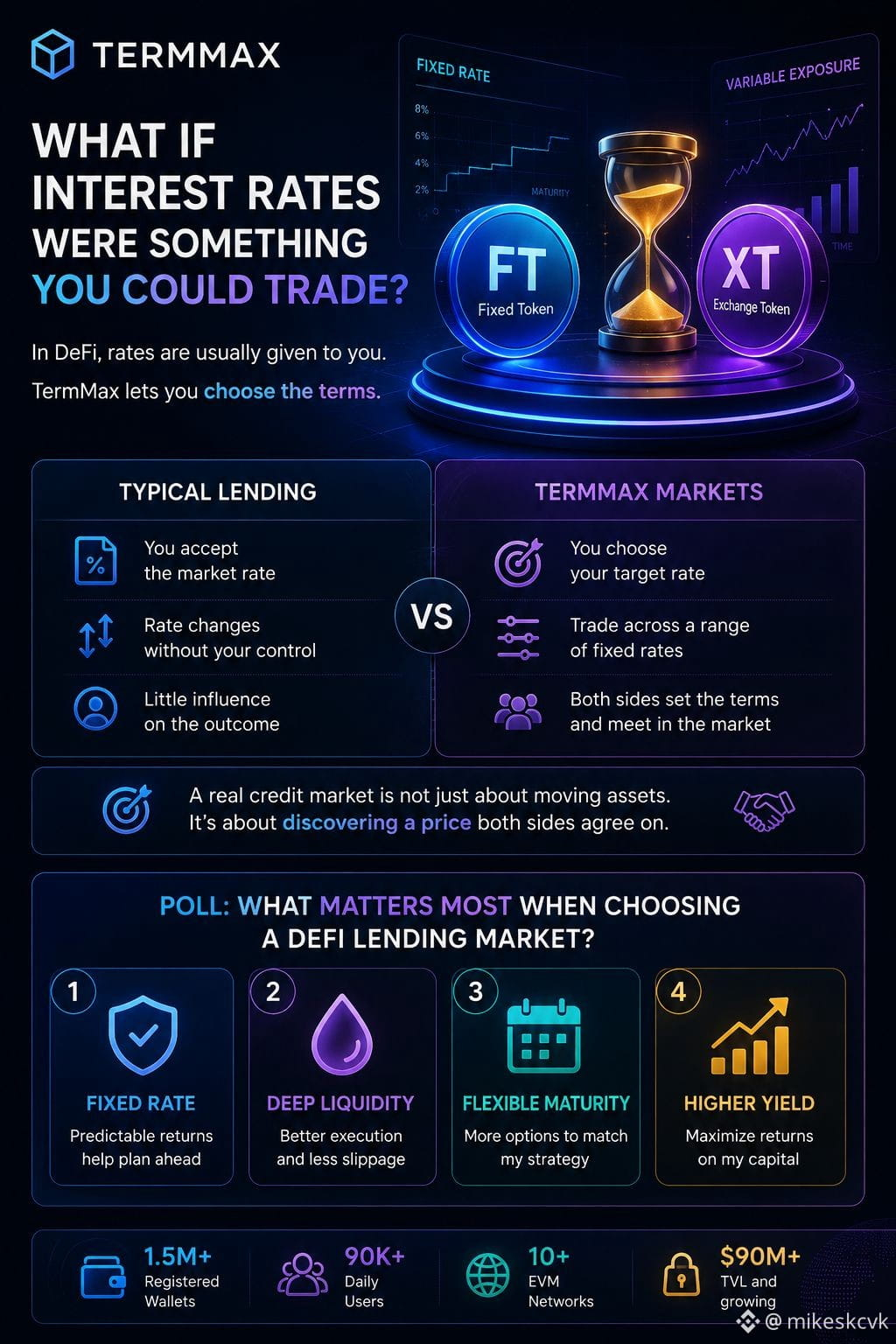
In a typical lending market, you mostly accept whatever rate the market is giving you.
But fixed-rate markets introduce another possibility.
A borrower can think:
“At what rate does this loan actually make sense for
me?”
And a lender can think:
“At what return am I comfortable locking my capital?”
Now the interest rate isn't just a number on a dashboard.
It's part of the negotiation.
That changes how I look at on-chain credit.
Because a real financial market isn't only about moving assets from A to B.
It's about discovering a price that both sides are willing to accept.
TermMax is experimenting with that idea on-chain.
And honestly, I think this is a more interesting question than chasing the highest APY:
Can DeFi create efficient markets for the price of time and capital?
That's what I'll be watching.
#termmax @TermMax
What if the most interesting part of DeFi lending isn't the yield?
But who gets to choose the terms?
That's what I find interesting about TermMax.
In a typical lending market, you mostly accept whatever rate the market is giving you.
But fixed-rate markets introduce another possibility.
A borrower can think:
“At what rate does this loan actually make sense for
me?”
And a lender can think:
“At what return am I comfortable locking my capital?”
Now the interest rate isn't just a number on a dashboard.
It's part of the negotiation.
That changes how I look at on-chain credit.
Because a real financial market isn't only about moving assets from A to B.
It's about discovering a price that both sides are willing to accept.
TermMax is experimenting with that idea on-chain.
And honestly, I think this is a more interesting question than chasing the highest APY:
Can DeFi create efficient markets for the price of time and capital?
That's what I'll be watching.
What if the most interesting part of DeFi lending isn't the yield?
But who gets to choose the terms?
That's what I find interesting about TermMax.
In a typical lending market, you mostly accept whatever rate the market is giving you.
But fixed-rate markets introduce another possibility.
A borrower can think:
“At what rate does this loan actually make sense for
me?”
And a lender can think:
“At what return am I comfortable locking my capital?”
Now the interest rate isn't just a number on a dashboard.
It's part of the negotiation.
That changes how I look at on-chain credit.
Because a real financial market isn't only about moving assets from A to B.
It's about discovering a price that both sides are willing to accept.
TermMax is experimenting with that idea on-chain.
And honestly, I think this is a more interesting question than chasing the highest APY:
Can DeFi create efficient markets for the price of time and capital?
That's what I'll be watching.
88
·
--
Übersetzung ansehen
#termmax @termmax
The most interesting TermMax update isn't the $TMX TGE.
It's something much less exciting at first glance:
App V2.
Why?
Because DeFi has a fragmentation problem.
One chain for this position.
Another chain for that vault.
Different interfaces.
Different orders.
Different liquidity.
You can have a great protocol and still make the user experience feel like managing five different accounts.
TermMax V2 is moving in the opposite direction.
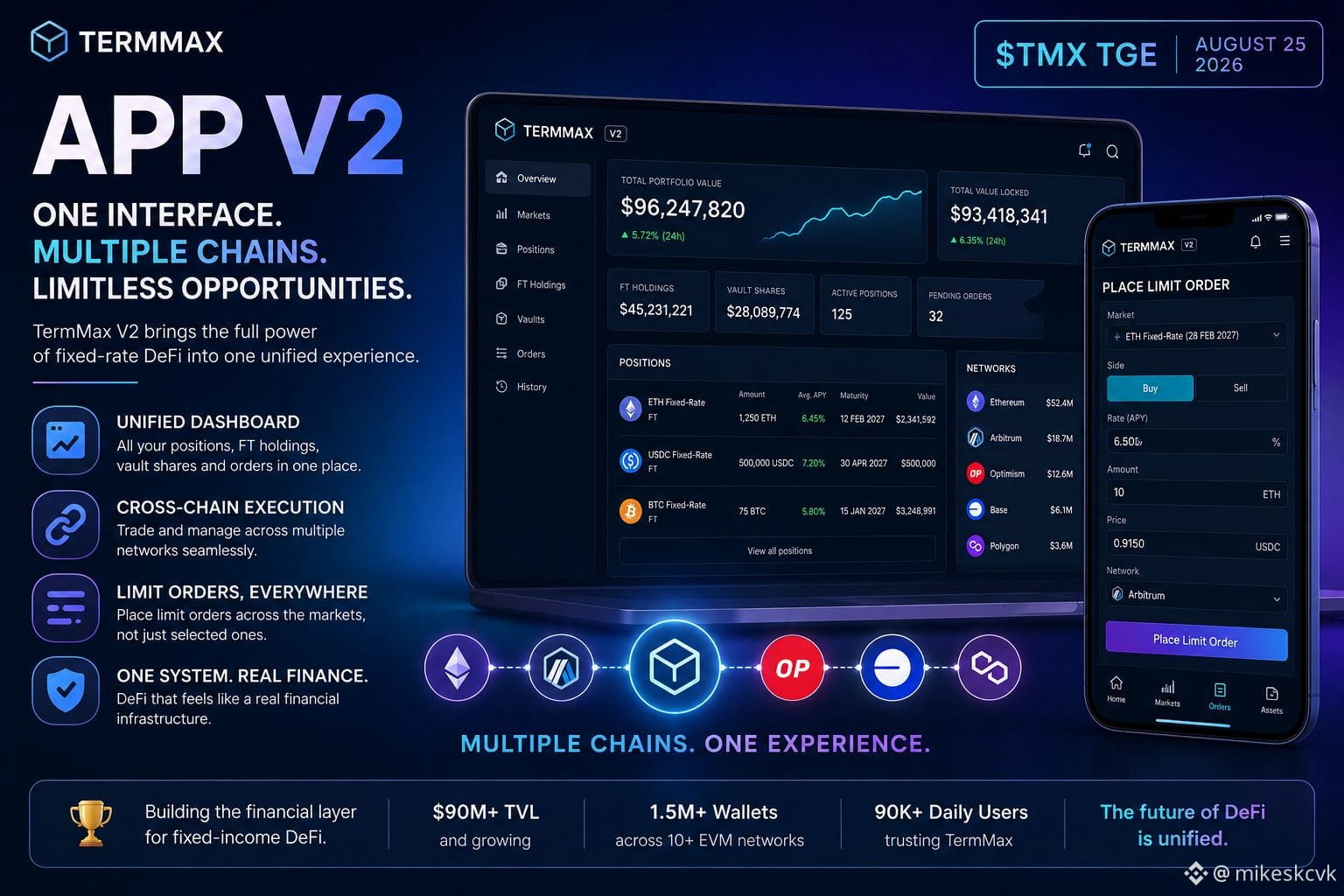
One interface for multiple chains.
One dashboard for positions, FT holdings, vault shares and orders.
And limit orders across the markets instead of restricting them to selected ones.
That might sound like a UX improvement.
I think it's more important than that.
If fixed-rate DeFi is supposed to become actual financial infrastructure, users shouldn't have to think about the underlying chain every time they make a transaction.
The chain should become the infrastructure.
The product should be the market.
And this is where TermMax gets interesting to me.
The next stage of DeFi may not be about adding more protocols.
It may be about making the protocols we already have feel like one financial system.
$TMX TGE is coming on August 25.
But I'm more interested in what happens after the infrastructure is already built.
#termmax @TermMax
The most interesting TermMax update isn't the $TMX TGE.
It's something much less exciting at first glance:
App V2.
Why?
Because DeFi has a fragmentation problem.
One chain for this position.
Another chain for that vault.
Different interfaces.
Different orders.
Different liquidity.
You can have a great protocol and still make the user experience feel like managing five different accounts.
TermMax V2 is moving in the opposite direction.
One interface for multiple chains.
One dashboard for positions, FT holdings, vault shares and orders.
And limit orders across the markets instead of restricting them to selected ones.
That might sound like a UX improvement.
I think it's more important than that.
If fixed-rate DeFi is supposed to become actual financial infrastructure, users shouldn't have to think about the underlying chain every time they make a transaction.
The chain should become the infrastructure.
The product should be the market.
And this is where TermMax gets interesting to me.
The next stage of DeFi may not be about adding more protocols.
It may be about making the protocols we already have feel like one financial system.
$TMX TGE is coming on August 25.
But I'm more interested in what happens after the infrastructure is already built.
The most interesting TermMax update isn't the $TMX TGE.
It's something much less exciting at first glance:
App V2.
Why?
Because DeFi has a fragmentation problem.
One chain for this position.
Another chain for that vault.
Different interfaces.
Different orders.
Different liquidity.
You can have a great protocol and still make the user experience feel like managing five different accounts.
TermMax V2 is moving in the opposite direction.
One interface for multiple chains.
One dashboard for positions, FT holdings, vault shares and orders.
And limit orders across the markets instead of restricting them to selected ones.
That might sound like a UX improvement.
I think it's more important than that.
If fixed-rate DeFi is supposed to become actual financial infrastructure, users shouldn't have to think about the underlying chain every time they make a transaction.
The chain should become the infrastructure.
The product should be the market.
And this is where TermMax gets interesting to me.
The next stage of DeFi may not be about adding more protocols.
It may be about making the protocols we already have feel like one financial system.
$TMX TGE is coming on August 25.
But I'm more interested in what happens after the infrastructure is already built.
1
82
·
--
Bullisch
Übersetzung ansehen
#termmax @termmax
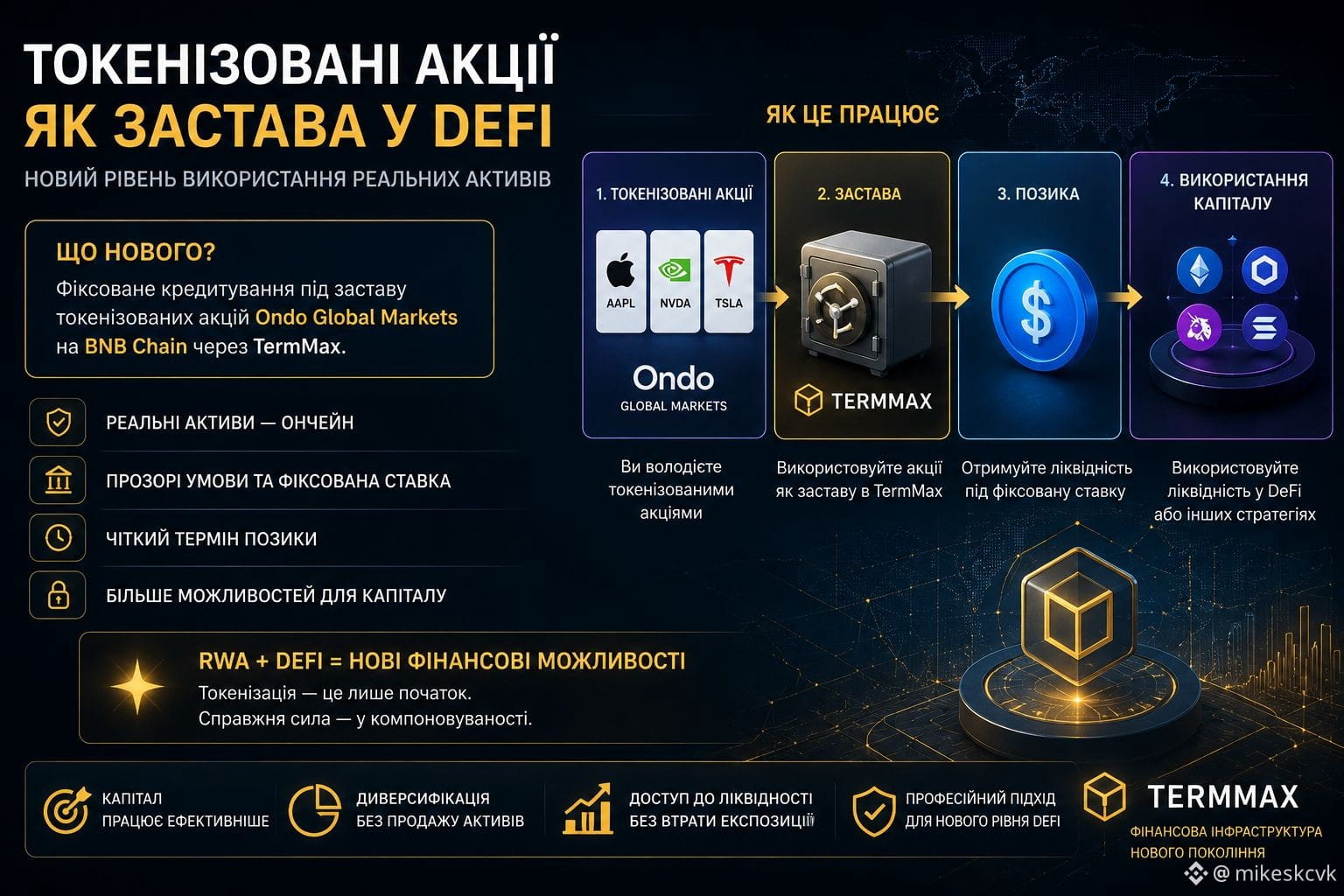
Більшість людей дивляться на токенізовані акції як на спосіб отримати доступ до традиційних ринків через блокчейн.
Але мені цікавіше інше питання.
Що, якщо такі активи можуть не просто лежати в портфелі?
Що, якщо вони можуть працювати як фінансовий інструмент?
Саме тут стає цікаво.
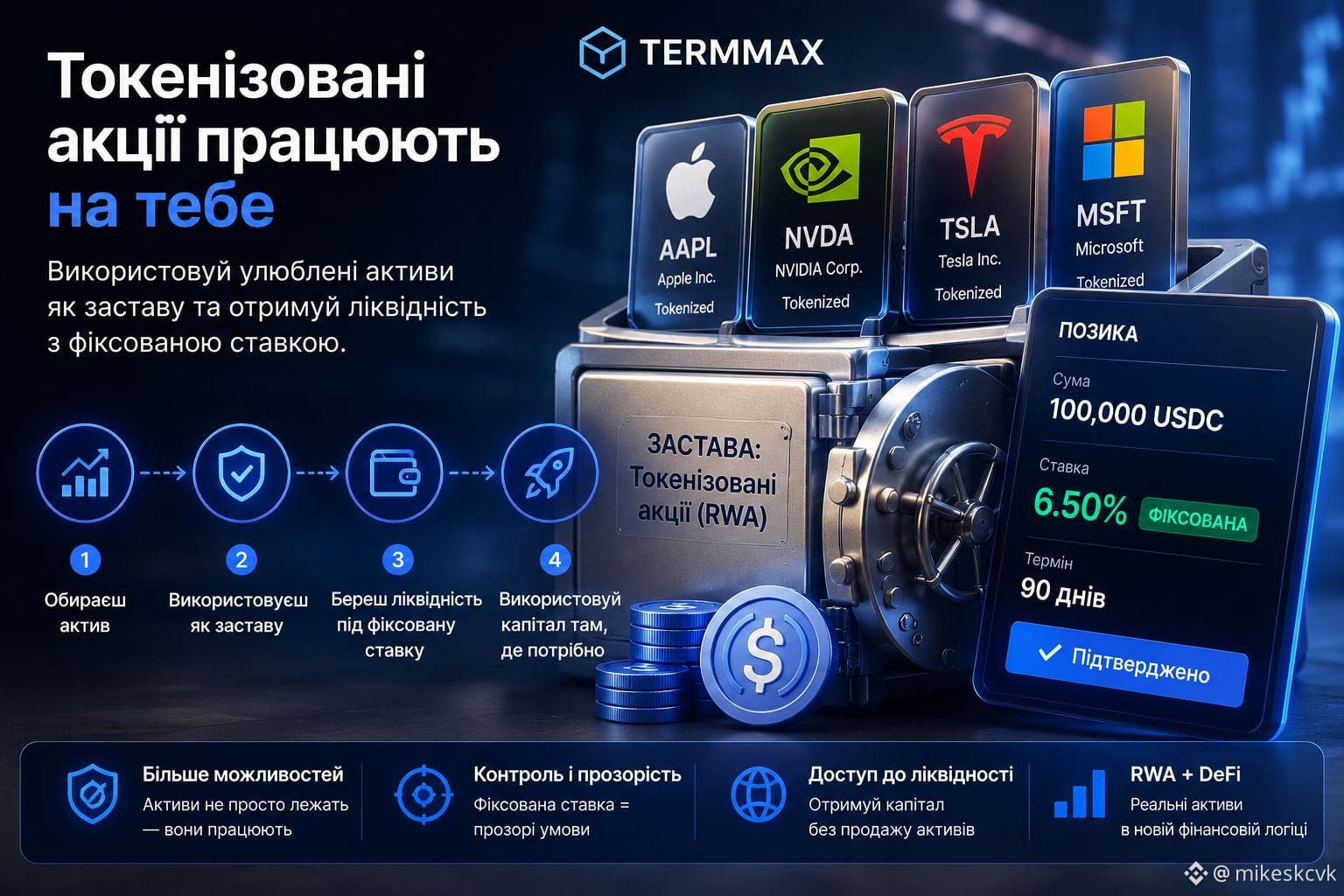
TermMax дозволяє використовувати токенізовані акції як заставу для отримання ліквідності під фіксовану ставку.
Тобто актив не просто відображає ціну акції.
Він стає частиною DeFi-екосистеми.
У результаті з'являється нова логіка:
📈 Тримаєш токенізовані акції
🔒 Використовуєш їх як заставу
💵 Отримуєш ліквідність
🚀 Використовуєш капітал в інших стратегіях
На мою думку, саме тут прихований справжній потенціал RWA.
Не в самій токенізації.
А в тому, що реальні активи починають взаємодіяти з DeFi так само гнучко, як криптоактиви.
І що більше таких сценаріїв з'являтиметься, то цікавішою ставатиме вся екосистема.
Токенізація — це лише перший крок.
Справжня цінність починається тоді, коли активи можна використовувати по-новому.
#termmax @TermMax
Більшість людей дивляться на токенізовані акції як на спосіб отримати доступ до традиційних ринків через блокчейн.
Але мені цікавіше інше питання.
Що, якщо такі активи можуть не просто лежати в портфелі?
Що, якщо вони можуть працювати як фінансовий інструмент?
Саме тут стає цікаво.
TermMax дозволяє використовувати токенізовані акції як заставу для отримання ліквідності під фіксовану ставку.
Тобто актив не просто відображає ціну акції.
Він стає частиною DeFi-екосистеми.
У результаті з'являється нова логіка:
📈 Тримаєш токенізовані акції
🔒 Використовуєш їх як заставу
💵 Отримуєш ліквідність
🚀 Використовуєш капітал в інших стратегіях
На мою думку, саме тут прихований справжній потенціал RWA.
Не в самій токенізації.
А в тому, що реальні активи починають взаємодіяти з DeFi так само гнучко, як криптоактиви.
І що більше таких сценаріїв з'являтиметься, то цікавішою ставатиме вся екосистема.
Токенізація — це лише перший крок.
Справжня цінність починається тоді, коли активи можна використовувати по-новому.
Більшість людей дивляться на токенізовані акції як на спосіб отримати доступ до традиційних ринків через блокчейн.
Але мені цікавіше інше питання.
Що, якщо такі активи можуть не просто лежати в портфелі?
Що, якщо вони можуть працювати як фінансовий інструмент?
Саме тут стає цікаво.
TermMax дозволяє використовувати токенізовані акції як заставу для отримання ліквідності під фіксовану ставку.
Тобто актив не просто відображає ціну акції.
Він стає частиною DeFi-екосистеми.
У результаті з'являється нова логіка:
📈 Тримаєш токенізовані акції
🔒 Використовуєш їх як заставу
💵 Отримуєш ліквідність
🚀 Використовуєш капітал в інших стратегіях
На мою думку, саме тут прихований справжній потенціал RWA.
Не в самій токенізації.
А в тому, що реальні активи починають взаємодіяти з DeFi так само гнучко, як криптоактиви.
І що більше таких сценаріїв з'являтиметься, то цікавішою ставатиме вся екосистема.
Токенізація — це лише перший крок.
Справжня цінність починається тоді, коли активи можна використовувати по-новому.
138
·
--
Übersetzung ansehen
Most people look at a lending protocol and ask:
“What's the APY?”
I think that's only half the story.
The other half is what happens to your capital while you're earning that APY.
Can you predict when the position ends?
Do you know exactly what you're lending into?
Can you build a strategy around a specific maturity?
That's the part of TermMax I find interesting.
Its approach treats lending more like an actual financial instrument: the position has defined terms and a maturity instead of being just another deposit sitting in a pool.
And this matters beyond retail DeFi.
If on-chain credit is ever going to attract serious capital, investors will need more than attractive yields.
They'll need products they can understand, price and plan around.
Maybe DeFi's next upgrade isn't another way to chase yield.
Maybe it's making lending feel more like a real financial market.
That's a much more interesting direction to me.
#termmax @termmax
Quick DeFi poll 👇
When you choose a lending opportunity, what do you care about MOST?
Most people look at a lending protocol and ask:
“What's the APY?”
I think that's only half the story.
The other half is what happens to your capital while you're earning that APY.
Can you predict when the position ends?
Do you know exactly what you're lending into?
Can you build a strategy around a specific maturity?
That's the part of TermMax I find interesting.
Its approach treats lending more like an actual financial instrument: the position has defined terms and a maturity instead of being just another deposit sitting in a pool.
And this matters beyond retail DeFi.
If on-chain credit is ever going to attract serious capital, investors will need more than attractive yields.
They'll need products they can understand, price and plan around.
Maybe DeFi's next upgrade isn't another way to chase yield.
Maybe it's making lending feel more like a real financial market.
That's a much more interesting direction to me.
#termmax @TermMax
Quick DeFi poll 👇
When you choose a lending opportunity, what do you care about MOST?
“What's the APY?”
I think that's only half the story.
The other half is what happens to your capital while you're earning that APY.
Can you predict when the position ends?
Do you know exactly what you're lending into?
Can you build a strategy around a specific maturity?
That's the part of TermMax I find interesting.
Its approach treats lending more like an actual financial instrument: the position has defined terms and a maturity instead of being just another deposit sitting in a pool.
And this matters beyond retail DeFi.
If on-chain credit is ever going to attract serious capital, investors will need more than attractive yields.
They'll need products they can understand, price and plan around.
Maybe DeFi's next upgrade isn't another way to chase yield.
Maybe it's making lending feel more like a real financial market.
That's a much more interesting direction to me.
#termmax @TermMax
Quick DeFi poll 👇
When you choose a lending opportunity, what do you care about MOST?
Higher APY
0%
Fixed maturity
0%
Liquidity
0%
Risk / security
0%
0 Stimmen • Abstimmung beendet
56
·
--
Übersetzung ansehen
I used to think a bigger balance automatically meant a bigger position.
Then I started paying more attention to what one unit actually represents.
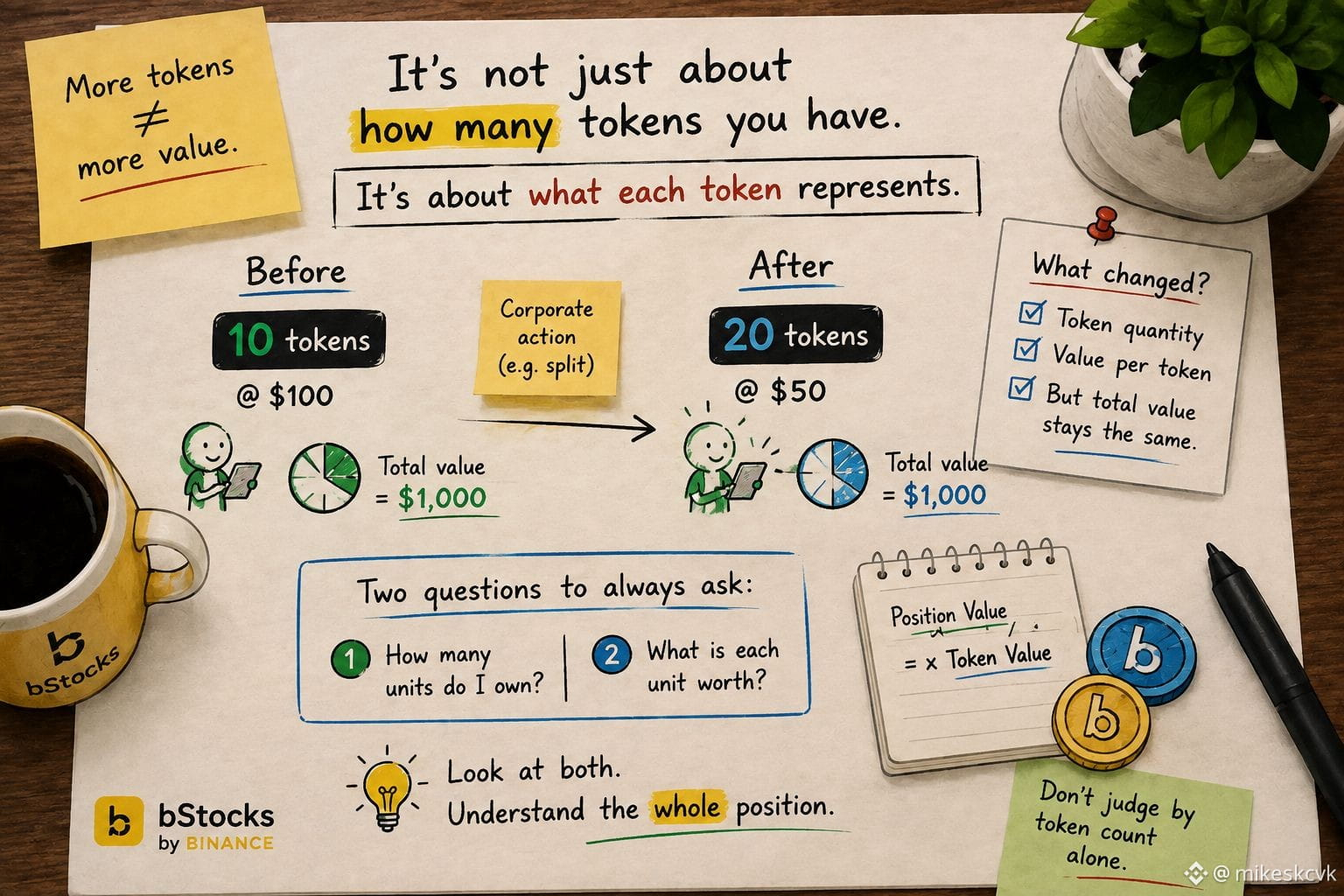
Imagine I have 10 tokens.
Later, I look again and see 20.
My first instinct would probably be:
“Nice. I doubled my position.”
But that conclusion can be completely wrong.
If a corporate action changes the unit structure, the number of tokens can change while the economic exposure is adjusted at the same time.
So the balance by itself isn't enough.
I now think about it as two separate questions:
How many units do I own?
and
What is each unit worth?
Those two numbers need to be looked at together.
Otherwise, a simple change in quantity can create a very misleading impression.
It's the same reason I don't judge a company by its share count alone.
More shares doesn't automatically mean more value.
The unit matters.
The price matters.
And the relationship between them matters even more.
That's a small detail, but it's exactly the kind of detail that can make a tokenized asset look confusing when nothing unusual actually happened to the underlying economic position.
Would you check the token quantity first, or the total position value first?
#bstockscis @BinanceCIS
I used to think a bigger balance automatically meant a bigger position.
Then I started paying more attention to what one unit actually represents.
Imagine I have 10 tokens.
Later, I look again and see 20.
My first instinct would probably be:
“Nice. I doubled my position.”
But that conclusion can be completely wrong.
If a corporate action changes the unit structure, the number of tokens can change while the economic exposure is adjusted at the same time.
So the balance by itself isn't enough.
I now think about it as two separate questions:
How many units do I own?
and
What is each unit worth?
Those two numbers need to be looked at together.
Otherwise, a simple change in quantity can create a very misleading impression.
It's the same reason I don't judge a company by its share count alone.
More shares doesn't automatically mean more value.
The unit matters.
The price matters.
And the relationship between them matters even more.
That's a small detail, but it's exactly the kind of detail that can make a tokenized asset look confusing when nothing unusual actually happened to the underlying economic position.
Would you check the token quantity first, or the total position value first?
#bstockscis @BinanceCIS
Then I started paying more attention to what one unit actually represents.
Imagine I have 10 tokens.
Later, I look again and see 20.
My first instinct would probably be:
“Nice. I doubled my position.”
But that conclusion can be completely wrong.
If a corporate action changes the unit structure, the number of tokens can change while the economic exposure is adjusted at the same time.
So the balance by itself isn't enough.
I now think about it as two separate questions:
How many units do I own?
and
What is each unit worth?
Those two numbers need to be looked at together.
Otherwise, a simple change in quantity can create a very misleading impression.
It's the same reason I don't judge a company by its share count alone.
More shares doesn't automatically mean more value.
The unit matters.
The price matters.
And the relationship between them matters even more.
That's a small detail, but it's exactly the kind of detail that can make a tokenized asset look confusing when nothing unusual actually happened to the underlying economic position.
Would you check the token quantity first, or the total position value first?
#bstockscis @BinanceCIS
1
1
99
·
--
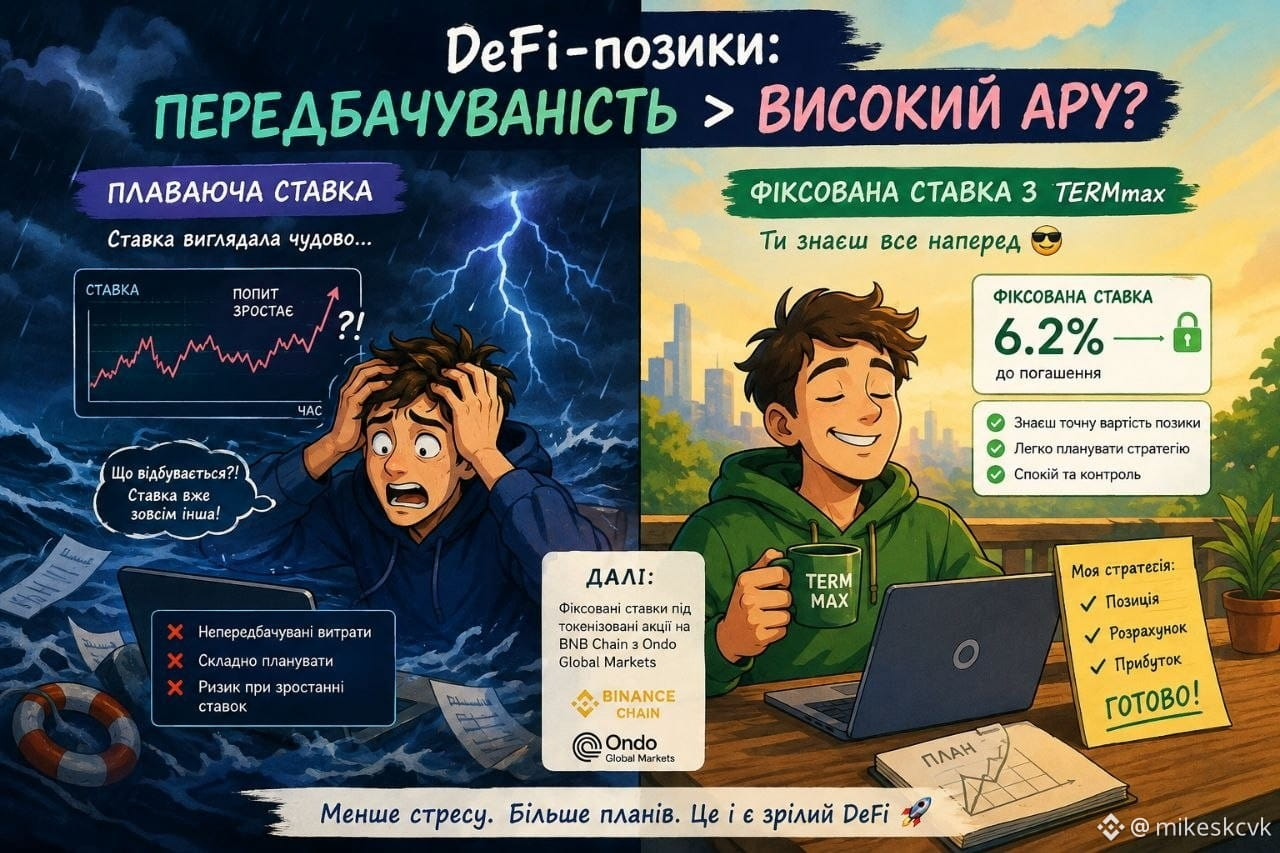
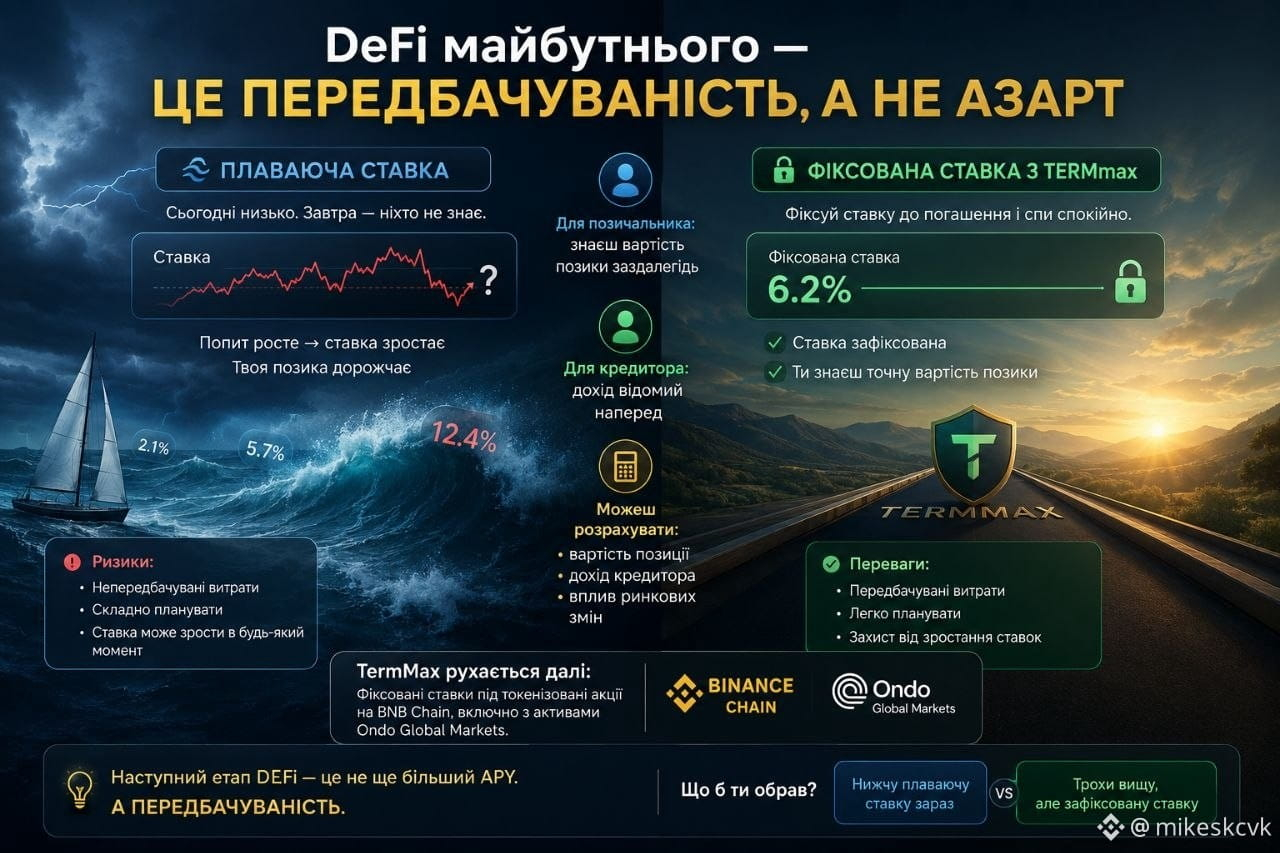
DeFi gewöhnt uns an schwankende Zinssätze.
Solange du nicht irgendwann einen Kredit für ein paar Monate brauchst.
Heute ist der Zinssatz günstig. Morgen ist die Kreditkosten schon anders — durch Nachfrage- oder Liquiditätsänderungen.
Genau deshalb interessiert mich TermMax.
Hier kannst du den Zinssatz bis zur Fälligkeit fixieren.
Für den Kreditnehmer — transparente Kreditkosten.
Für den Kreditgeber — prognostizierter Ertrag.
Und das ist besonders interessant für größere Strategien, bei denen es wichtig ist, die Kapitalkosten im Voraus zu kennen.
Noch spannender: TermMax bewegt sich in Richtung RWA. Das Team hat bereits Fixed-Rate-Borrowing in tokenisierte Aktien auf der BNB Chain integriert.
Vielleicht ist der nächste Schritt in DeFi nicht der maximale APY.
Sondern die Planbarkeit.
Was wählst du: einen niedrigeren variablen Zinssatz oder etwas höher, aber dafür fixiert?
#termmax @termmax
DeFi gewöhnt uns an schwankende Zinssätze.
Solange du nicht irgendwann einen Kredit für ein paar Monate brauchst.
Heute ist der Zinssatz günstig. Morgen ist die Kreditkosten schon anders — durch Nachfrage- oder Liquiditätsänderungen.
Genau deshalb interessiert mich TermMax.
Hier kannst du den Zinssatz bis zur Fälligkeit fixieren.
Für den Kreditnehmer — transparente Kreditkosten.
Für den Kreditgeber — prognostizierter Ertrag.
Und das ist besonders interessant für größere Strategien, bei denen es wichtig ist, die Kapitalkosten im Voraus zu kennen.
Noch spannender: TermMax bewegt sich in Richtung RWA. Das Team hat bereits Fixed-Rate-Borrowing in tokenisierte Aktien auf der BNB Chain integriert.
Vielleicht ist der nächste Schritt in DeFi nicht der maximale APY.
Sondern die Planbarkeit.
Was wählst du: einen niedrigeren variablen Zinssatz oder etwas höher, aber dafür fixiert?
#termmax @TermMax
Solange du nicht irgendwann einen Kredit für ein paar Monate brauchst.
Heute ist der Zinssatz günstig. Morgen ist die Kreditkosten schon anders — durch Nachfrage- oder Liquiditätsänderungen.
Genau deshalb interessiert mich TermMax.
Hier kannst du den Zinssatz bis zur Fälligkeit fixieren.
Für den Kreditnehmer — transparente Kreditkosten.
Für den Kreditgeber — prognostizierter Ertrag.
Und das ist besonders interessant für größere Strategien, bei denen es wichtig ist, die Kapitalkosten im Voraus zu kennen.
Noch spannender: TermMax bewegt sich in Richtung RWA. Das Team hat bereits Fixed-Rate-Borrowing in tokenisierte Aktien auf der BNB Chain integriert.
Vielleicht ist der nächste Schritt in DeFi nicht der maximale APY.
Sondern die Planbarkeit.
Was wählst du: einen niedrigeren variablen Zinssatz oder etwas höher, aber dafür fixiert?
#termmax @TermMax
131
·
--
Übersetzung ansehen
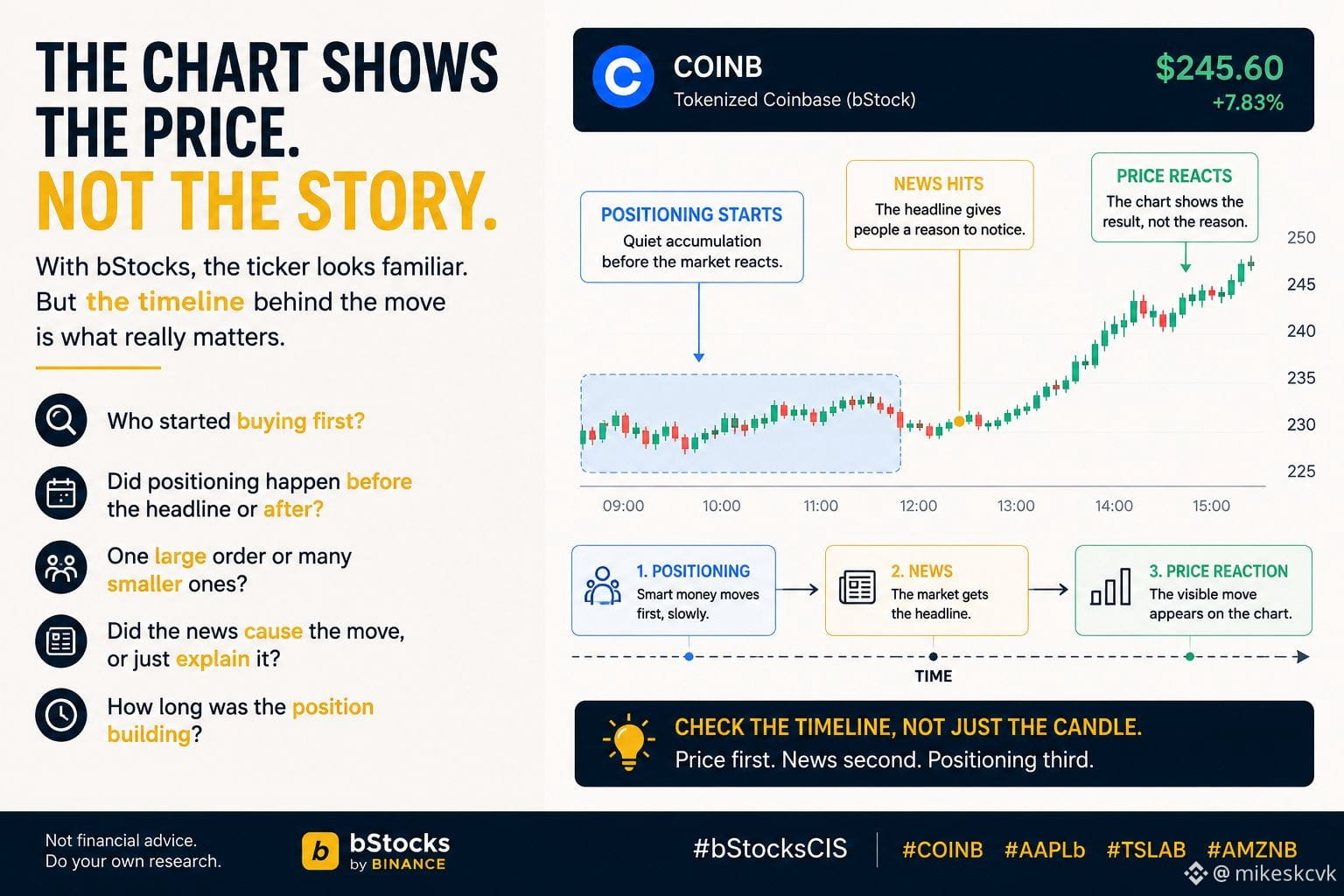
One thing I’ve started paying more attention to with tokenized stocks is the difference between what the chart shows and what actually happened before the chart moved.
Take #COINB as an example.
A sharp green candle can make it look like the market suddenly “decided” that the company was worth more.
But the candle only tells me where the market traded.
It doesn’t tell me: — who started buying first
— how long the position was building
— whether the move came from one large order or many smaller ones
— whether the price reaction happened before or after the headline
— or whether the headline simply gave traders a reason to notice the move.
That last part is easy to miss.
Sometimes the news is the explanation people remember, while the positioning happened much earlier.
And that changes how I read a chart.
Instead of asking:
“Why did #COINB go up today?”
I’d rather ask:
“What was already happening before today?”
For bStocks, I think this distinction is especially useful because the interface can make a traditional stock ticker feel very familiar. The familiar ticker doesn’t mean every piece of market information should be interpreted exactly like a normal brokerage position.
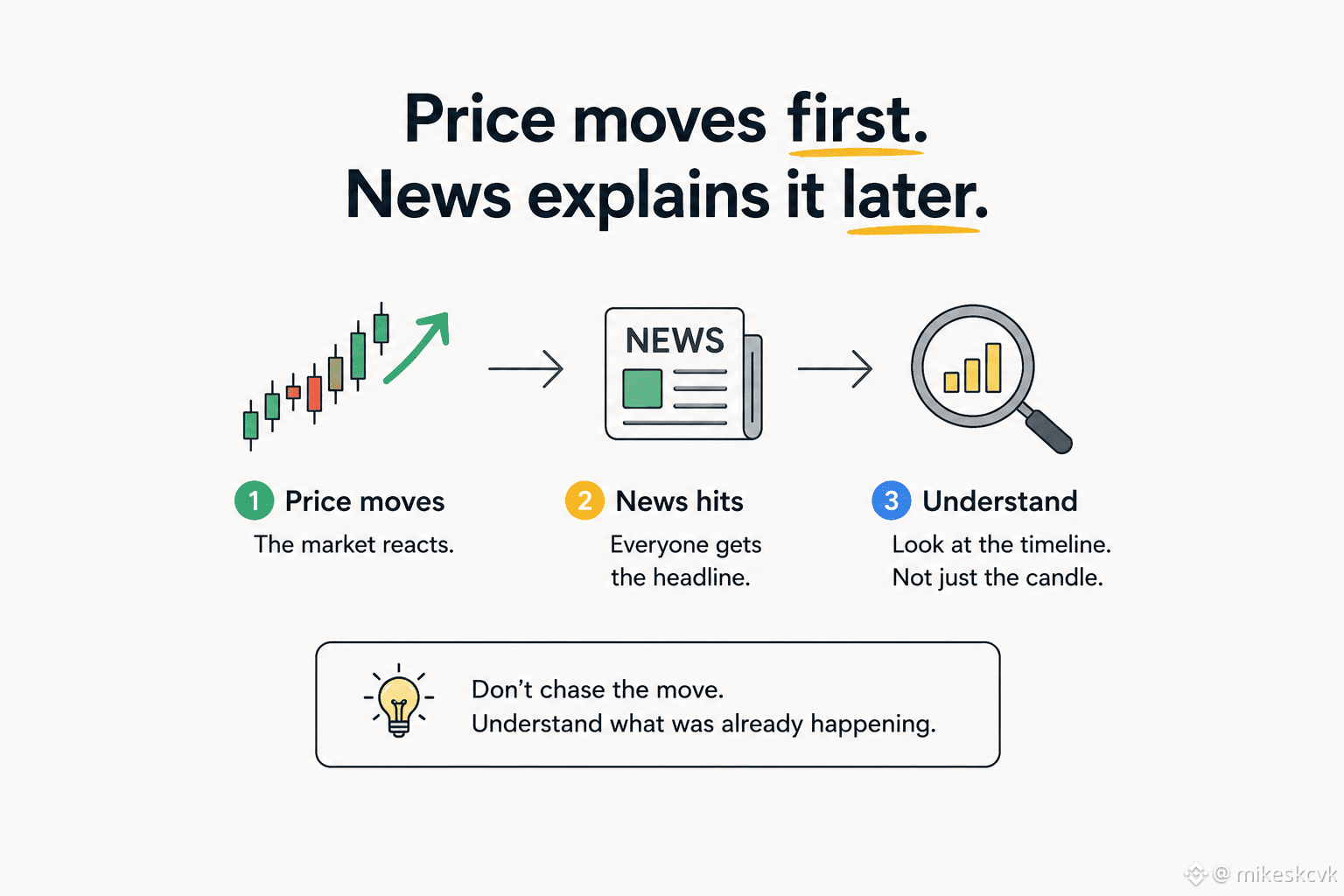
So now, when I see a big move, my first instinct isn’t to chase the candle.
I check the timeline.
Price first.
News second.
Positioning third.
The order matters more than I thought.
#bstockscis @BinanceCIS
One thing I’ve started paying more attention to with tokenized stocks is the difference between what the chart shows and what actually happened before the chart moved.
Take #COINB as an example.
A sharp green candle can make it look like the market suddenly “decided” that the company was worth more.
But the candle only tells me where the market traded.
It doesn’t tell me: — who started buying first
— how long the position was building
— whether the move came from one large order or many smaller ones
— whether the price reaction happened before or after the headline
— or whether the headline simply gave traders a reason to notice the move.
That last part is easy to miss.
Sometimes the news is the explanation people remember, while the positioning happened much earlier.
And that changes how I read a chart.
Instead of asking:
“Why did #COINB go up today?”
I’d rather ask:
“What was already happening before today?”
For bStocks, I think this distinction is especially useful because the interface can make a traditional stock ticker feel very familiar. The familiar ticker doesn’t mean every piece of market information should be interpreted exactly like a normal brokerage position.
So now, when I see a big move, my first instinct isn’t to chase the candle.
I check the timeline.
Price first.
News second.
Positioning third.
The order matters more than I thought.
#bstockscis @BinanceCIS
Take #COINB as an example.
A sharp green candle can make it look like the market suddenly “decided” that the company was worth more.
But the candle only tells me where the market traded.
It doesn’t tell me: — who started buying first
— how long the position was building
— whether the move came from one large order or many smaller ones
— whether the price reaction happened before or after the headline
— or whether the headline simply gave traders a reason to notice the move.
That last part is easy to miss.
Sometimes the news is the explanation people remember, while the positioning happened much earlier.
And that changes how I read a chart.
Instead of asking:
“Why did #COINB go up today?”
I’d rather ask:
“What was already happening before today?”
For bStocks, I think this distinction is especially useful because the interface can make a traditional stock ticker feel very familiar. The familiar ticker doesn’t mean every piece of market information should be interpreted exactly like a normal brokerage position.
So now, when I see a big move, my first instinct isn’t to chase the candle.
I check the timeline.
Price first.
News second.
Positioning third.
The order matters more than I thought.
#bstockscis @BinanceCIS
82
·
--
Übersetzung ansehen
I used to read a collateral haircut as if it were a simple discount.
That was the wrong mental model.
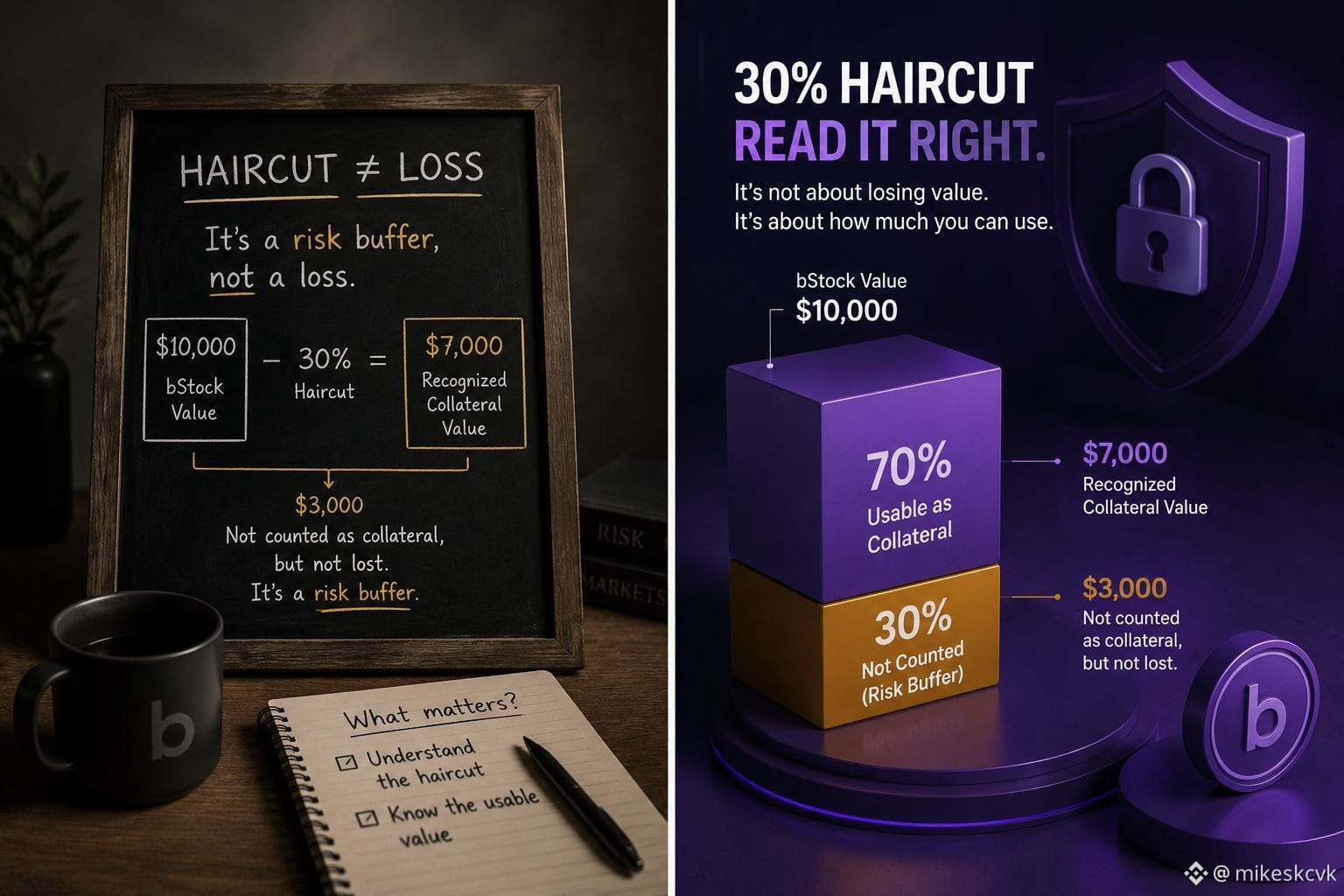
Say a tokenized stock has a 30% haircut.
My first instinct would be:
“Okay, so 30% of the asset is basically gone.”
But that is not what the number is telling you.
The more useful question is:
How much of the asset’s value can actually be recognized as collateral?
If you have $10,000 of a bStock and the applicable haircut is 30%, the recognized collateral value is $7,000.
The remaining $3,000 hasn’t disappeared.
It simply isn't counted toward the collateral value under that haircut assumption.
That distinction matters because collateral calculations are about risk buffers, not about declaring part of an asset worthless.
And there is another detail I would check before doing any calculation:
What exactly is the haircut applied to?
The answer can depend on the asset, the relevant rules, and the specific collateral framework.
So instead of remembering:
“30% haircut = 30% loss,”
I now remember:
“30% haircut = 70% recognized collateral value.”
A small wording difference, but a completely different way to read the number.
For me, this is one of those bStocks concepts that becomes much easier once you stop thinking about the percentage as a “loss” and start thinking about it as a risk-adjusted collateral value.
Would you interpret a 30% haircut correctly without doing the calculation?
{spot}(NVDABUSDT)
$NVDAB
#bstockscis @BinanceCIS
I used to read a collateral haircut as if it were a simple discount.
That was the wrong mental model.
Say a tokenized stock has a 30% haircut.
My first instinct would be:
“Okay, so 30% of the asset is basically gone.”
But that is not what the number is telling you.
The more useful question is:
How much of the asset’s value can actually be recognized as collateral?
If you have $10,000 of a bStock and the applicable haircut is 30%, the recognized collateral value is $7,000.
The remaining $3,000 hasn’t disappeared.
It simply isn't counted toward the collateral value under that haircut assumption.
That distinction matters because collateral calculations are about risk buffers, not about declaring part of an asset worthless.
And there is another detail I would check before doing any calculation:
What exactly is the haircut applied to?
The answer can depend on the asset, the relevant rules, and the specific collateral framework.
So instead of remembering:
“30% haircut = 30% loss,”
I now remember:
“30% haircut = 70% recognized collateral value.”
A small wording difference, but a completely different way to read the number.
For me, this is one of those bStocks concepts that becomes much easier once you stop thinking about the percentage as a “loss” and start thinking about it as a risk-adjusted collateral value.
Would you interpret a 30% haircut correctly without doing the calculation?
$NVDAB
#bstockscis @BinanceCIS
That was the wrong mental model.
Say a tokenized stock has a 30% haircut.
My first instinct would be:
“Okay, so 30% of the asset is basically gone.”
But that is not what the number is telling you.
The more useful question is:
How much of the asset’s value can actually be recognized as collateral?
If you have $10,000 of a bStock and the applicable haircut is 30%, the recognized collateral value is $7,000.
The remaining $3,000 hasn’t disappeared.
It simply isn't counted toward the collateral value under that haircut assumption.
That distinction matters because collateral calculations are about risk buffers, not about declaring part of an asset worthless.
And there is another detail I would check before doing any calculation:
What exactly is the haircut applied to?
The answer can depend on the asset, the relevant rules, and the specific collateral framework.
So instead of remembering:
“30% haircut = 30% loss,”
I now remember:
“30% haircut = 70% recognized collateral value.”
A small wording difference, but a completely different way to read the number.
For me, this is one of those bStocks concepts that becomes much easier once you stop thinking about the percentage as a “loss” and start thinking about it as a risk-adjusted collateral value.
Would you interpret a 30% haircut correctly without doing the calculation?
$NVDAB
#bstockscis @BinanceCIS
96
·
--
Übersetzung ansehen
I keep seeing the same assumption:
“Tokenized stocks are just traditional stocks in another format.”
But if that were the whole point, the question becomes pretty simple:
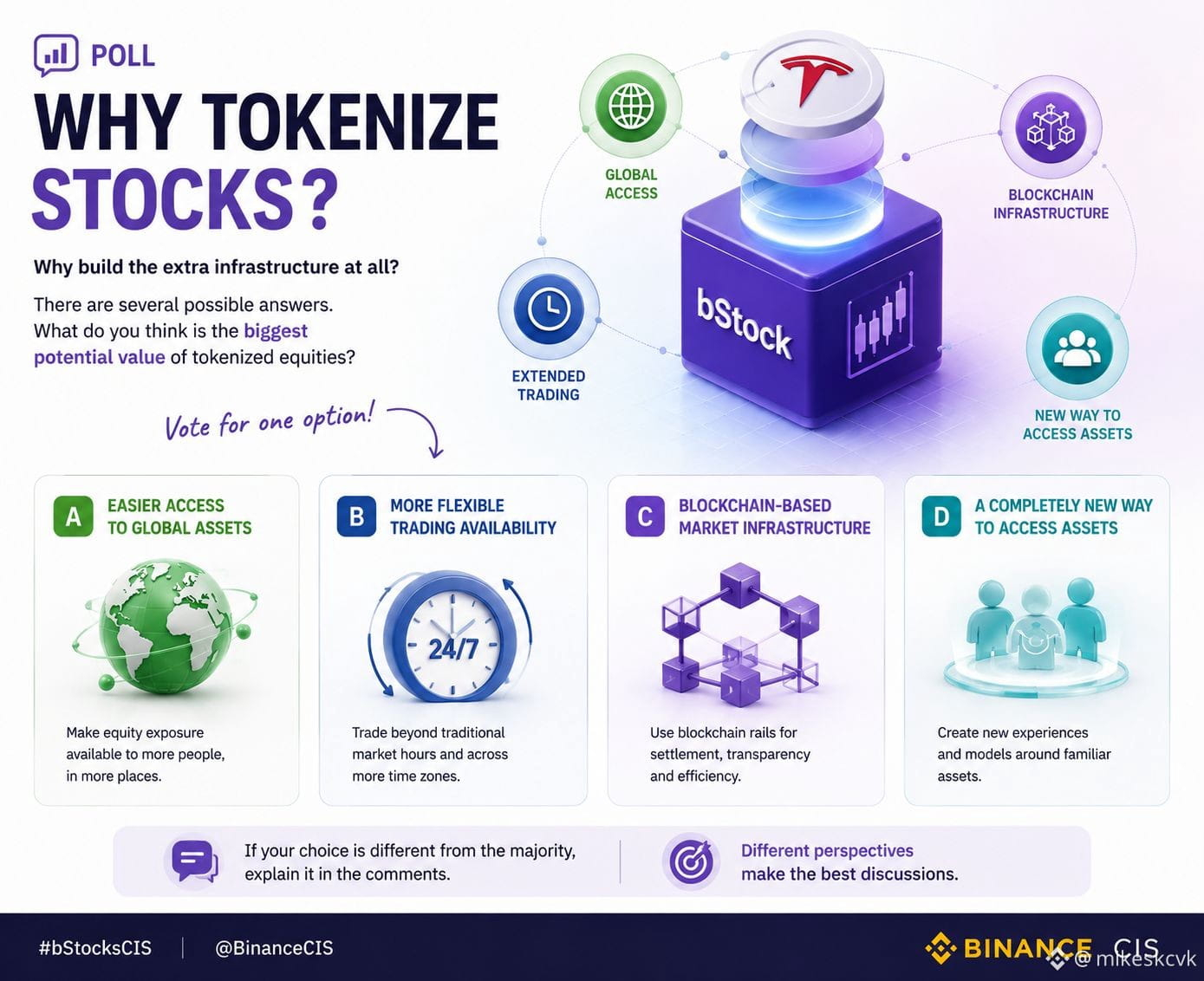
Why build the extra infrastructure at all?
There are several possible answers.
Maybe the biggest value is making equity exposure more accessible.
Maybe it is the ability to interact with markets through blockchain infrastructure.
May$be extended trading availability matters more.
Or maybe the real advantage is simply creating a different way for people to access familiar assets.
I don't think there is one universal answer.
So I'm curious what the community actually thinks.
What is the biggest potential value of tokenized equities?
A — Easier access to global assets
B — More flexible trading availability
C — Blockchain-based market infrastructure
D — A completely new way to access familiar assets
Vote for one.
And if your choice is different from the majority, explain it — that's probably where the interesting discussion starts.
#bstockscis @BinanceCIS
I keep seeing the same assumption:
“Tokenized stocks are just traditional stocks in another format.”
But if that were the whole point, the question becomes pretty simple:
Why build the extra infrastructure at all?
There are several possible answers.
Maybe the biggest value is making equity exposure more accessible.
Maybe it is the ability to interact with markets through blockchain infrastructure.
May$be extended trading availability matters more.
Or maybe the real advantage is simply creating a different way for people to access familiar assets.
I don't think there is one universal answer.
So I'm curious what the community actually thinks.
What is the biggest potential value of tokenized equities?
A — Easier access to global assets
B — More flexible trading availability
C — Blockchain-based market infrastructure
D — A completely new way to access familiar assets
Vote for one.
And if your choice is different from the majority, explain it — that's probably where the interesting discussion starts.
#bstockscis @BinanceCIS
“Tokenized stocks are just traditional stocks in another format.”
But if that were the whole point, the question becomes pretty simple:
Why build the extra infrastructure at all?
There are several possible answers.
Maybe the biggest value is making equity exposure more accessible.
Maybe it is the ability to interact with markets through blockchain infrastructure.
May$be extended trading availability matters more.
Or maybe the real advantage is simply creating a different way for people to access familiar assets.
I don't think there is one universal answer.
So I'm curious what the community actually thinks.
What is the biggest potential value of tokenized equities?
A — Easier access to global assets
B — More flexible trading availability
C — Blockchain-based market infrastructure
D — A completely new way to access familiar assets
Vote for one.
And if your choice is different from the majority, explain it — that's probably where the interesting discussion starts.
#bstockscis @BinanceCIS
76
·
--
Bullisch
Übersetzung ansehen
A smaller market does not automatically mean an uninteresting market.
That is something I keep in mind when looking at tokenized equities.
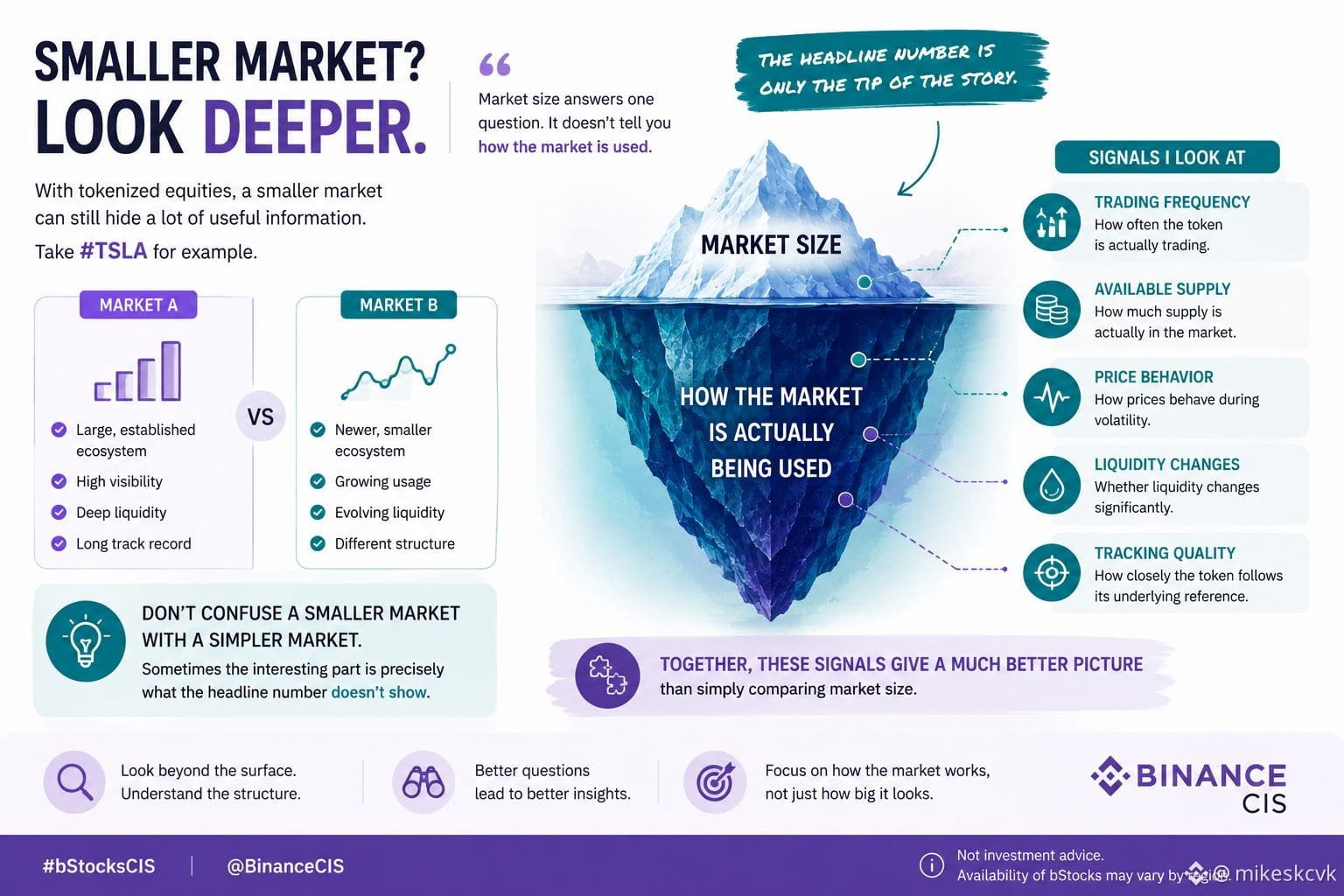
Imagine two markets showing almost the same underlying asset.
One has a huge established ecosystem.
The other is newer, smaller, and built around tokenized exposure.
It would be easy to look at the second one and say:
“Too small. Move on.”
But size answers only one question.
It doesn't tell me how the market is being used.
For example, with #TSLA I would rather look at several signals together:
→ how often the token trades
→ how much supply is actually available
→ how prices behave during volatility
→ whether liquidity changes significantly
→ how closely the token follows its underlying reference
None of these tells the whole story alone.
But together, they give a much better picture than simply comparing market size.
That is probably my biggest takeaway from studying bStocks:
Don't confuse a smaller market with a simpler market.
Sometimes the interesting part is precisely what the headline number doesn't show.
#bstockscis @BinanceCIS
A smaller market does not automatically mean an uninteresting market.
That is something I keep in mind when looking at tokenized equities.
Imagine two markets showing almost the same underlying asset.
One has a huge established ecosystem.
The other is newer, smaller, and built around tokenized exposure.
It would be easy to look at the second one and say:
“Too small. Move on.”
But size answers only one question.
It doesn't tell me how the market is being used.
For example, with #TSLA I would rather look at several signals together:
→ how often the token trades
→ how much supply is actually available
→ how prices behave during volatility
→ whether liquidity changes significantly
→ how closely the token follows its underlying reference
None of these tells the whole story alone.
But together, they give a much better picture than simply comparing market size.
That is probably my biggest takeaway from studying bStocks:
Don't confuse a smaller market with a simpler market.
Sometimes the interesting part is precisely what the headline number doesn't show.
#bstockscis @BinanceCIS
That is something I keep in mind when looking at tokenized equities.
Imagine two markets showing almost the same underlying asset.
One has a huge established ecosystem.
The other is newer, smaller, and built around tokenized exposure.
It would be easy to look at the second one and say:
“Too small. Move on.”
But size answers only one question.
It doesn't tell me how the market is being used.
For example, with #TSLA I would rather look at several signals together:
→ how often the token trades
→ how much supply is actually available
→ how prices behave during volatility
→ whether liquidity changes significantly
→ how closely the token follows its underlying reference
None of these tells the whole story alone.
But together, they give a much better picture than simply comparing market size.
That is probably my biggest takeaway from studying bStocks:
Don't confuse a smaller market with a simpler market.
Sometimes the interesting part is precisely what the headline number doesn't show.
#bstockscis @BinanceCIS
1
80
·
--
Übersetzung ansehen
I used to think that when evaluating a new financial product, the most important thing was understanding what exactly you are buying.
Now I'd add another question:
What happens around that asset after you buy it?
That's where tokenized stocks become much more interesting than a simple comparison with traditional markets.
An asset isn't just a price.
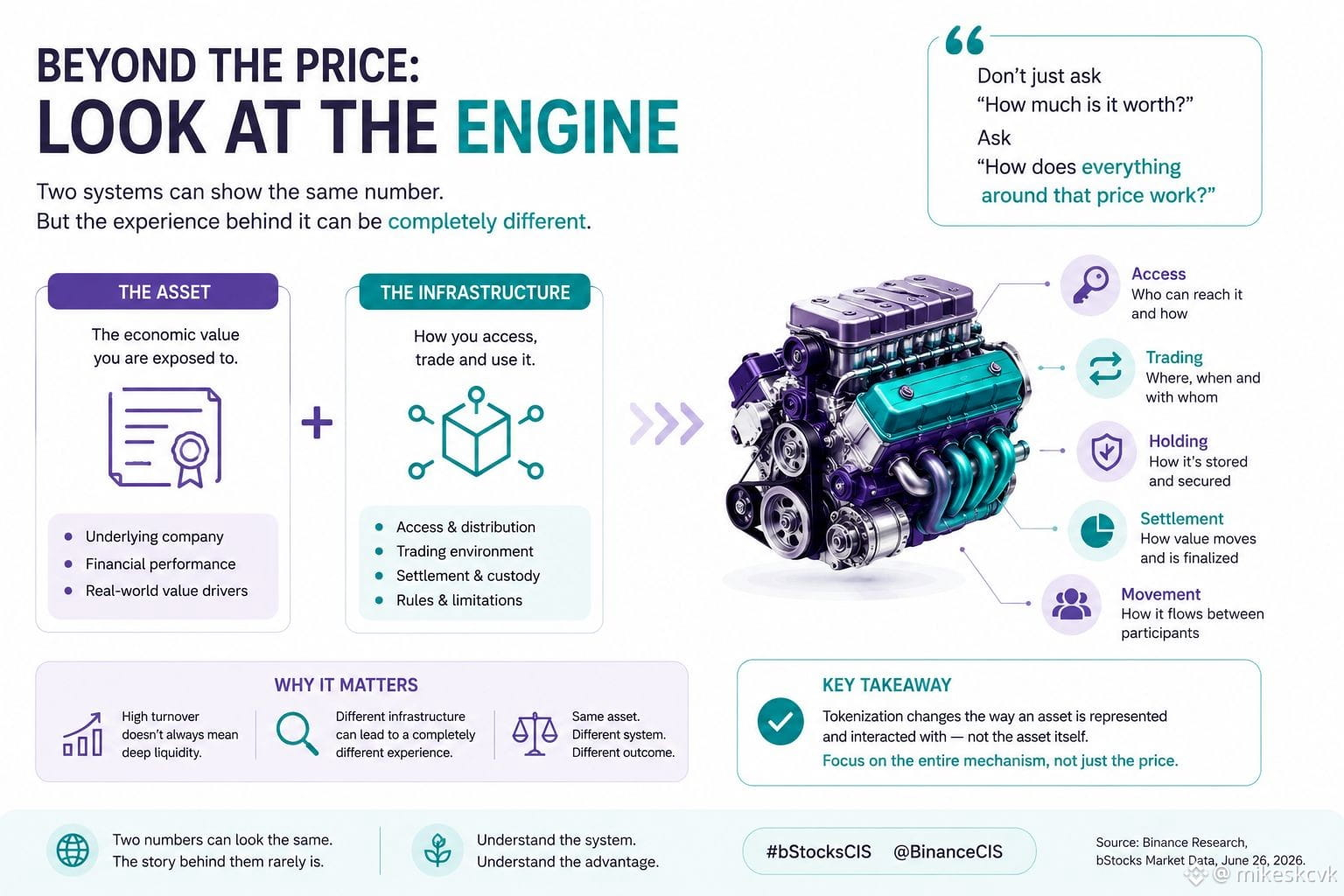
There is an entire process around it:
access → trading → holding → settlement → movement between participants
If you only look at the price chart, most of that story disappears.
So I try to separate two things.
The asset — what the economic value is connected to.
The infrastructure — how that asset is represented and accessed by the user.
Those are not the same thing.
And that's one of the parts of bStocks I find most interesting.
Tokenization doesn't magically change the underlying asset.
It changes the way that asset is represented and interacted with inside a different financial environment.
So my main takeaway is simple:
Don't evaluate a tokenized product only by asking:
“How much is it worth?”
Ask:
“How does everything around that price actually work?”
Two systems can display a very similar number on a screen while providing a completely different experience underneath.
And that's the difference I'm most interested in watching with bStocks.
@BinanceCIS #bstockscis
I used to think that when evaluating a new financial product, the most important thing was understanding what exactly you are buying.
Now I'd add another question:
What happens around that asset after you buy it?
That's where tokenized stocks become much more interesting than a simple comparison with traditional markets.
An asset isn't just a price.
There is an entire process around it:
access → trading → holding → settlement → movement between participants
If you only look at the price chart, most of that story disappears.
So I try to separate two things.
The asset — what the economic value is connected to.
The infrastructure — how that asset is represented and accessed by the user.
Those are not the same thing.
And that's one of the parts of bStocks I find most interesting.
Tokenization doesn't magically change the underlying asset.
It changes the way that asset is represented and interacted with inside a different financial environment.
So my main takeaway is simple:
Don't evaluate a tokenized product only by asking:
“How much is it worth?”
Ask:
“How does everything around that price actually work?”
Two systems can display a very similar number on a screen while providing a completely different experience underneath.
And that's the difference I'm most interested in watching with bStocks.
@BinanceCIS #bstockscis
Now I'd add another question:
What happens around that asset after you buy it?
That's where tokenized stocks become much more interesting than a simple comparison with traditional markets.
An asset isn't just a price.
There is an entire process around it:
access → trading → holding → settlement → movement between participants
If you only look at the price chart, most of that story disappears.
So I try to separate two things.
The asset — what the economic value is connected to.
The infrastructure — how that asset is represented and accessed by the user.
Those are not the same thing.
And that's one of the parts of bStocks I find most interesting.
Tokenization doesn't magically change the underlying asset.
It changes the way that asset is represented and interacted with inside a different financial environment.
So my main takeaway is simple:
Don't evaluate a tokenized product only by asking:
“How much is it worth?”
Ask:
“How does everything around that price actually work?”
Two systems can display a very similar number on a screen while providing a completely different experience underneath.
And that's the difference I'm most interested in watching with bStocks.
@BinanceCIS #bstockscis
1
80
·
--
Übersetzung ansehen
I think one of the easiest ways to misunderstand tokenized stocks is to focus only on the word “stock”.
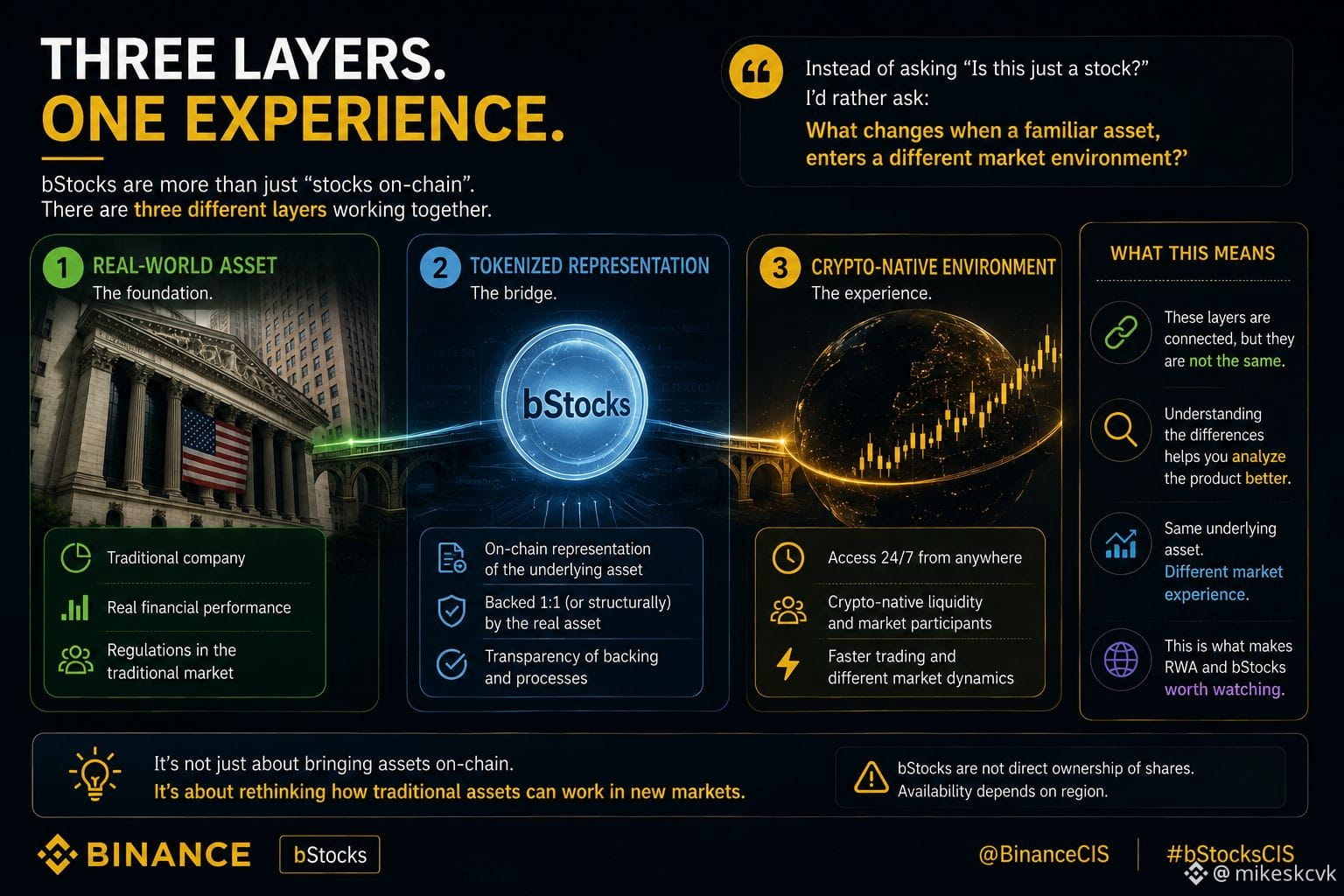
The more I look at bStocks, the more I see three different things happening at once.
There is the real-world asset.
Then there is the tokenized representation.
And finally, there is the crypto-native environment where the token can be traded.
Those three layers are connected, but they are not the same thing.
And that changes how I would look at the product.
Instead of asking:
“Is this just a stock?”
I'd rather ask:
“What changes when a familiar asset enters a different market environment?”
Trading hours, access, liquidity and the way people interact with the asset can all become part of the picture.
That shift in perspective makes much more sense to me than simply comparing a token to a traditional share.
Same underlying idea.
Different market experience. 🔎
That's what makes this space worth watching. 🌍@BinanceCIS 😀 #bstockscis
I think one of the easiest ways to misunderstand tokenized stocks is to focus only on the word “stock”.
The more I look at bStocks, the more I see three different things happening at once.
There is the real-world asset.
Then there is the tokenized representation.
And finally, there is the crypto-native environment where the token can be traded.
Those three layers are connected, but they are not the same thing.
And that changes how I would look at the product.
Instead of asking:
“Is this just a stock?”
I'd rather ask:
“What changes when a familiar asset enters a different market environment?”
Trading hours, access, liquidity and the way people interact with the asset can all become part of the picture.
That shift in perspective makes much more sense to me than simply comparing a token to a traditional share.
Same underlying idea.
Different market experience. 🔎
That's what makes this space worth watching. 🌍@BinanceCIS 😀 #bstockscis
The more I look at bStocks, the more I see three different things happening at once.
There is the real-world asset.
Then there is the tokenized representation.
And finally, there is the crypto-native environment where the token can be traded.
Those three layers are connected, but they are not the same thing.
And that changes how I would look at the product.
Instead of asking:
“Is this just a stock?”
I'd rather ask:
“What changes when a familiar asset enters a different market environment?”
Trading hours, access, liquidity and the way people interact with the asset can all become part of the picture.
That shift in perspective makes much more sense to me than simply comparing a token to a traditional share.
Same underlying idea.
Different market experience. 🔎
That's what makes this space worth watching. 🌍@BinanceCIS 😀 #bstockscis
73
·
--
Übersetzung ansehen
I used to think the hardest part of understanding tokenized stocks was the technology.
Honestly, I think it's the terminology.
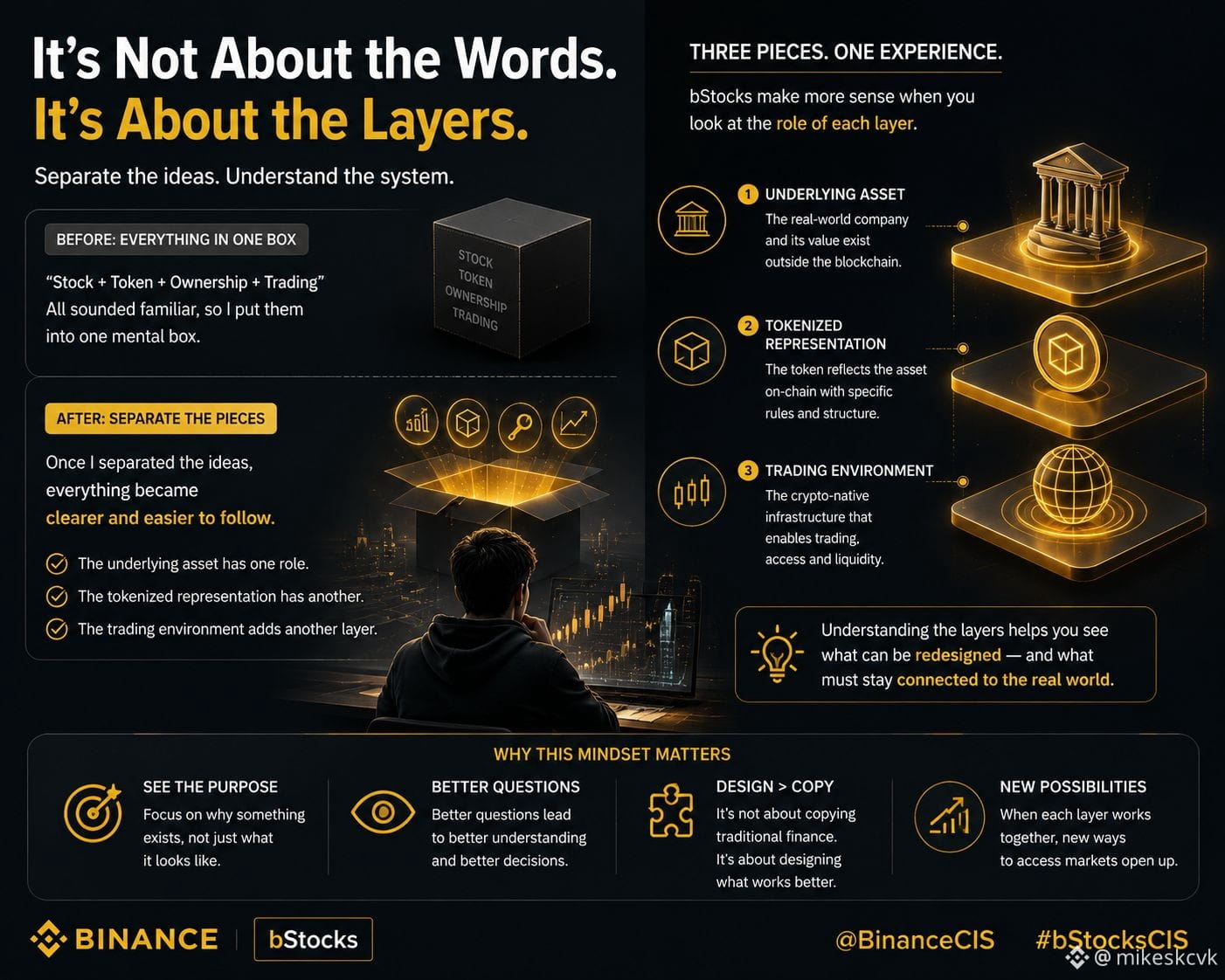
Words like “stock”, “token”, “ownership” and “trading” sound familiar, so it's very easy to put them all into one mental box.
But bStocks made me slow down and separate those ideas.
A tokenized asset isn't interesting just because it looks familiar.
What's interesting is the infrastructure around it.
The underlying asset has one role.
The tokenized representation has another.
And the trading environment adds another layer on top.
Once I started separating those pieces, the whole concept became much easier to follow.
Maybe that's also why RWA is interesting to me.
It's not simply about bringing traditional assets onto blockchain.
It's about figuring out which parts of the old financial experience can be redesigned without losing the connection to the underlying asset.
Still learning, but I definitely look at tokenization differently now. 🔎
@BinanceCIS #bstockscis
I used to think the hardest part of understanding tokenized stocks was the technology.
Honestly, I think it's the terminology.
Words like “stock”, “token”, “ownership” and “trading” sound familiar, so it's very easy to put them all into one mental box.
But bStocks made me slow down and separate those ideas.
A tokenized asset isn't interesting just because it looks familiar.
What's interesting is the infrastructure around it.
The underlying asset has one role.
The tokenized representation has another.
And the trading environment adds another layer on top.
Once I started separating those pieces, the whole concept became much easier to follow.
Maybe that's also why RWA is interesting to me.
It's not simply about bringing traditional assets onto blockchain.
It's about figuring out which parts of the old financial experience can be redesigned without losing the connection to the underlying asset.
Still learning, but I definitely look at tokenization differently now. 🔎
@BinanceCIS #bstockscis
Honestly, I think it's the terminology.
Words like “stock”, “token”, “ownership” and “trading” sound familiar, so it's very easy to put them all into one mental box.
But bStocks made me slow down and separate those ideas.
A tokenized asset isn't interesting just because it looks familiar.
What's interesting is the infrastructure around it.
The underlying asset has one role.
The tokenized representation has another.
And the trading environment adds another layer on top.
Once I started separating those pieces, the whole concept became much easier to follow.
Maybe that's also why RWA is interesting to me.
It's not simply about bringing traditional assets onto blockchain.
It's about figuring out which parts of the old financial experience can be redesigned without losing the connection to the underlying asset.
Still learning, but I definitely look at tokenization differently now. 🔎
@BinanceCIS #bstockscis
92
·
--
Übersetzung ansehen
I was thinking about bStocks from the opposite direction today.
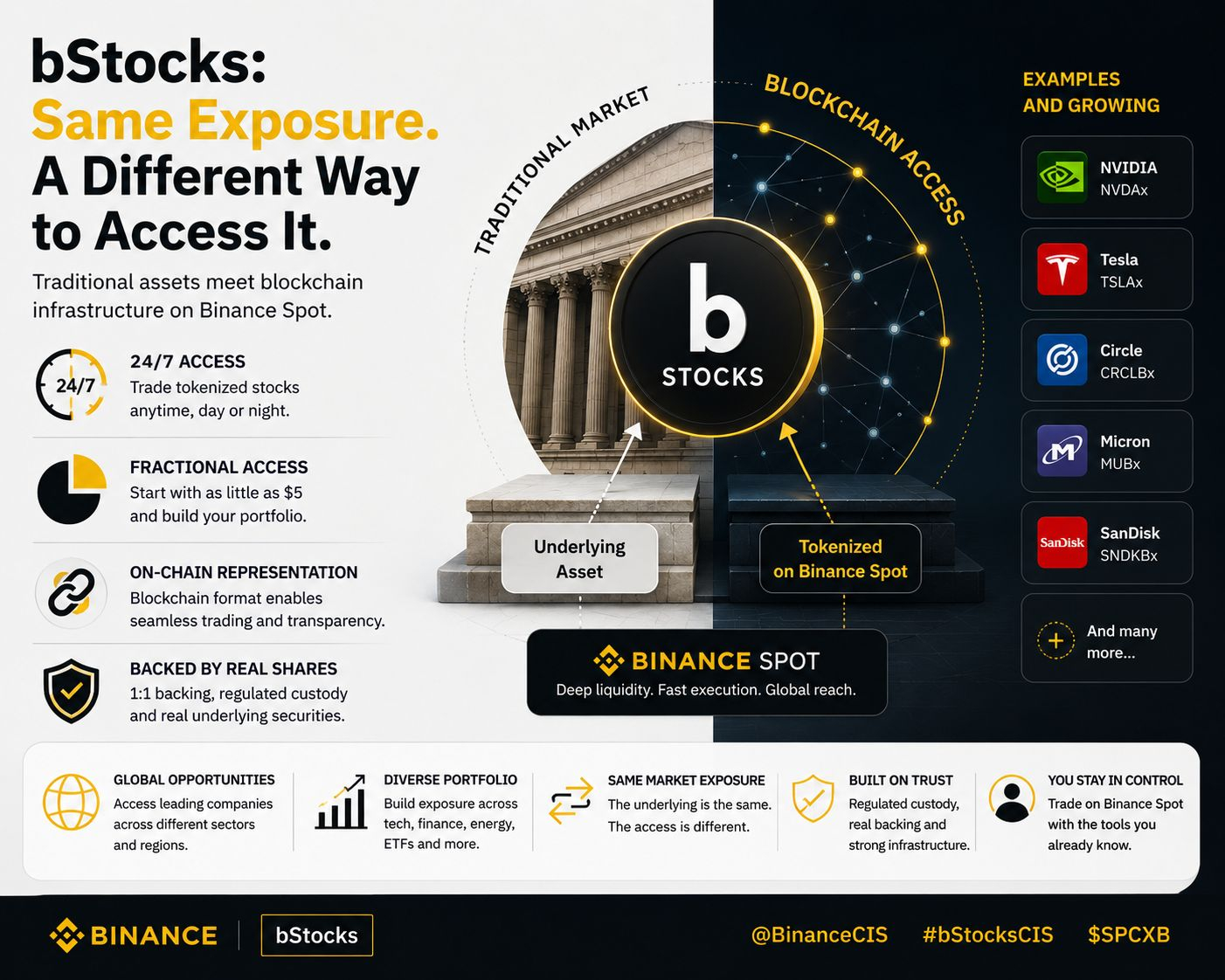
Instead of asking “which stock is tokenized?”, I think the better question is “what changes when the same market exposure gets a blockchain-based format?”
You get a different trading environment, 24/7 access on Binance Spot, fractional access and an on-chain representation — while the underlying structure still connects back to the traditional asset.
That mix is probably the most interesting part for me.
It’s not about replacing the stock market. It’s about experimenting with a different way to access it. 🔎🌍
@BinanceCIS #bStocksCIS $SPCXB
I was thinking about bStocks from the opposite direction today.
Instead of asking “which stock is tokenized?”, I think the better question is “what changes when the same market exposure gets a blockchain-based format?”
You get a different trading environment, 24/7 access on Binance Spot, fractional access and an on-chain representation — while the underlying structure still connects back to the traditional asset.
That mix is probably the most interesting part for me.
It’s not about replacing the stock market. It’s about experimenting with a different way to access it. 🔎🌍
@BinanceCIS #bStocksCIS $SPCXB
Instead of asking “which stock is tokenized?”, I think the better question is “what changes when the same market exposure gets a blockchain-based format?”
You get a different trading environment, 24/7 access on Binance Spot, fractional access and an on-chain representation — while the underlying structure still connects back to the traditional asset.
That mix is probably the most interesting part for me.
It’s not about replacing the stock market. It’s about experimenting with a different way to access it. 🔎🌍
@BinanceCIS #bStocksCIS $SPCXB
162
·
--
Übersetzung ansehen
Something I found interesting while digging into bStocks is the difference between the asset itself and the way you access it.
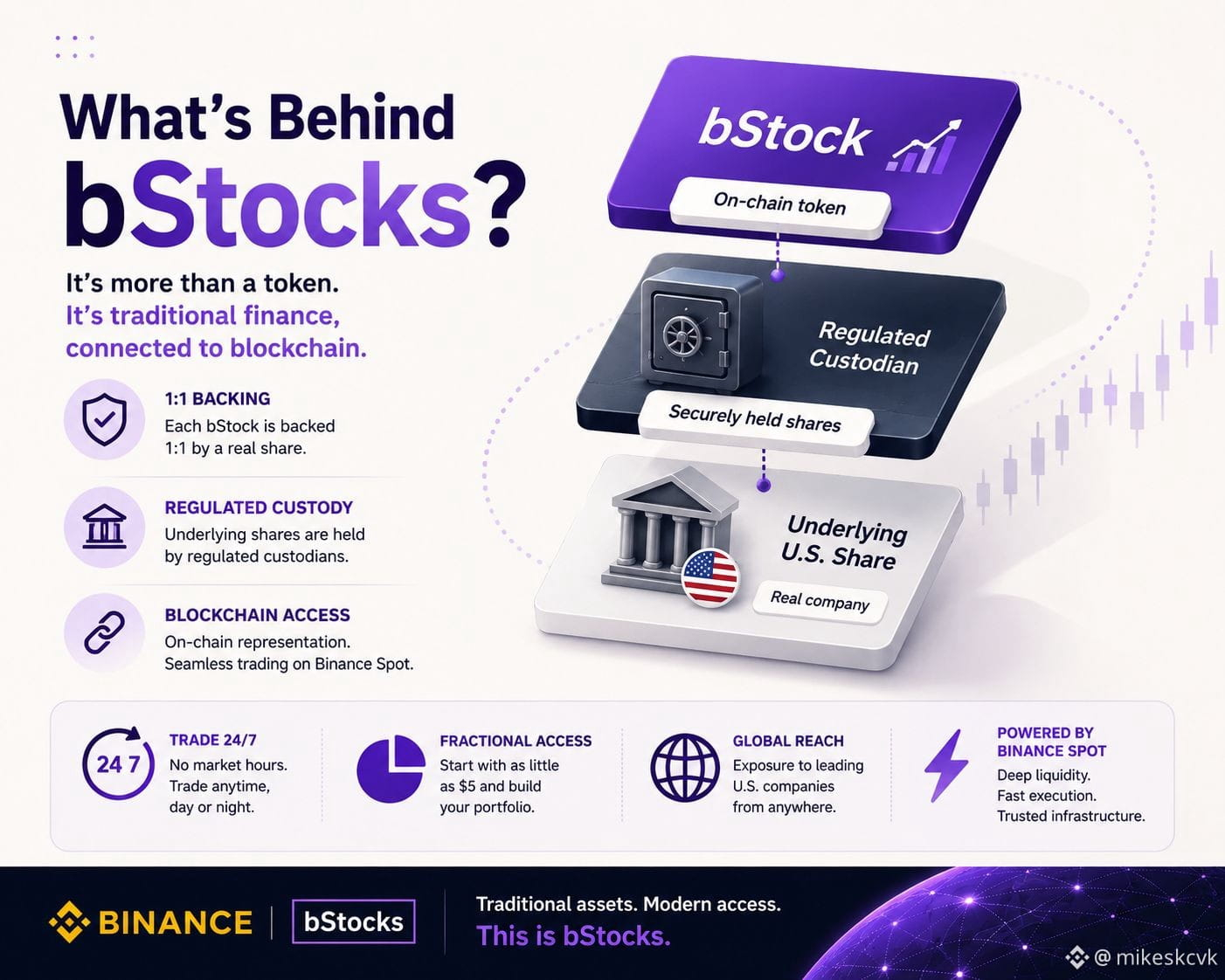
There’s still an underlying security behind the structure, with 1:1 backing and regulated custody. The blockchain part changes the way that exposure is represented and traded.
So I wouldn’t describe bStocks simply as “a stock put on a blockchain”.
There’s quite a bit more going on underneath — custody, tokenization, trading infrastructure and the connection to Binance Spot.
That’s honestly the part I find more interesting than just looking at the price chart. 😅🔎
@BinanceCIS $SPCXB #bstockscis
Something I found interesting while digging into bStocks is the difference between the asset itself and the way you access it.
There’s still an underlying security behind the structure, with 1:1 backing and regulated custody. The blockchain part changes the way that exposure is represented and traded.
So I wouldn’t describe bStocks simply as “a stock put on a blockchain”.
There’s quite a bit more going on underneath — custody, tokenization, trading infrastructure and the connection to Binance Spot.
That’s honestly the part I find more interesting than just looking at the price chart. 😅🔎
@BinanceCIS $SPCXB #bstockscis
There’s still an underlying security behind the structure, with 1:1 backing and regulated custody. The blockchain part changes the way that exposure is represented and traded.
So I wouldn’t describe bStocks simply as “a stock put on a blockchain”.
There’s quite a bit more going on underneath — custody, tokenization, trading infrastructure and the connection to Binance Spot.
That’s honestly the part I find more interesting than just looking at the price chart. 😅🔎
@BinanceCIS $SPCXB #bstockscis
1
114
·
--
Übersetzung ansehen
I used to think the value of bStocks was only about putting stocks on the blockchain.
After reading more about how they work, I think the real value is the structure behind them.
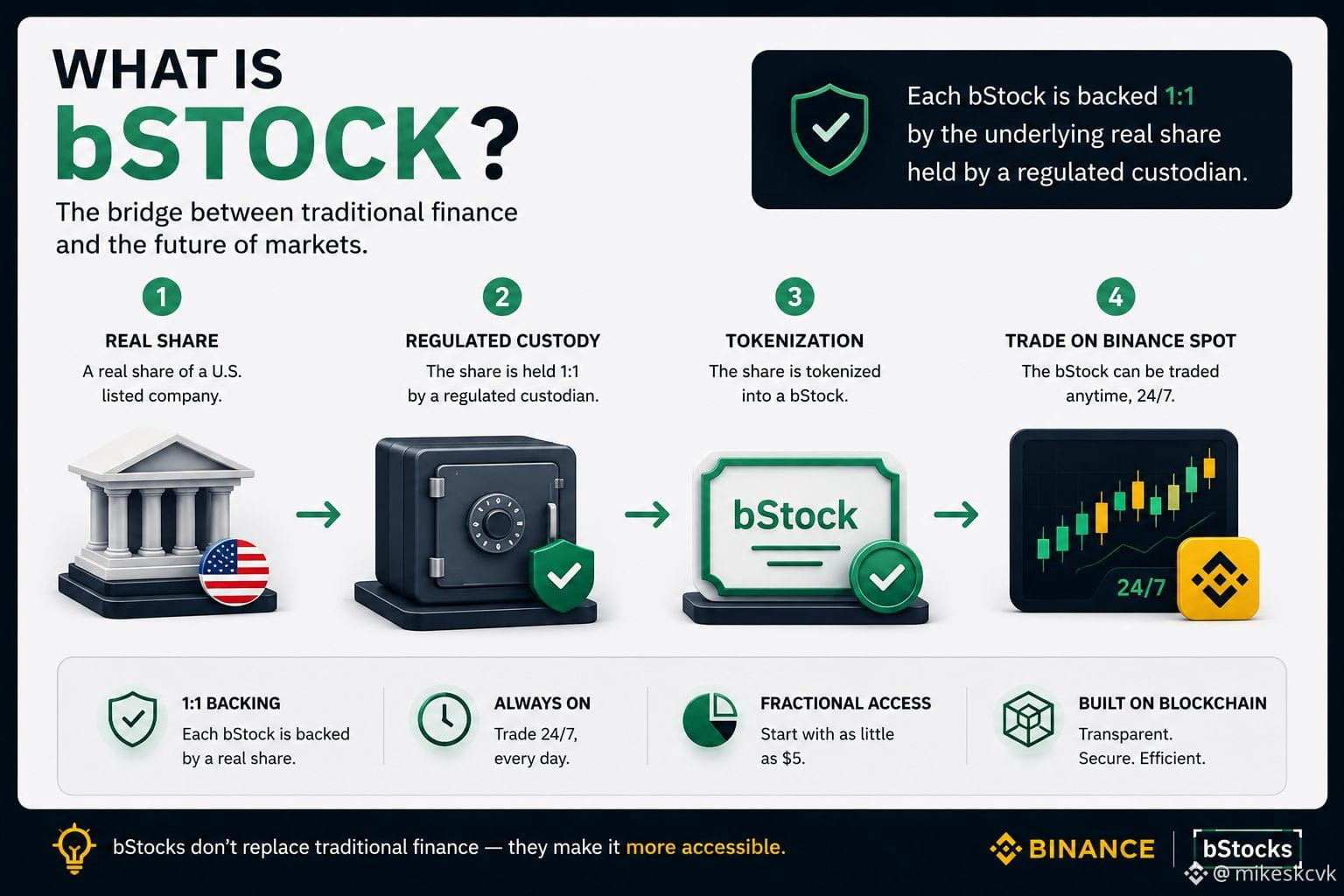
Binance explains that each bStock is backed 1:1 by an underlying share held by a regulated custodian. That connection between traditional finance and blockchain is what makes the concept interesting to me.
Sometimes understanding how a product works is more valuable than watching its price chart.
Have you spent more time learning the mechanics of bStocks, or are you mainly following the market? 📚💭
#bstockscis
I used to think the value of bStocks was only about putting stocks on the blockchain.
After reading more about how they work, I think the real value is the structure behind them.
Binance explains that each bStock is backed 1:1 by an underlying share held by a regulated custodian. That connection between traditional finance and blockchain is what makes the concept interesting to me.
Sometimes understanding how a product works is more valuable than watching its price chart.
Have you spent more time learning the mechanics of bStocks, or are you mainly following the market? 📚💭
#bstockscis
After reading more about how they work, I think the real value is the structure behind them.
Binance explains that each bStock is backed 1:1 by an underlying share held by a regulated custodian. That connection between traditional finance and blockchain is what makes the concept interesting to me.
Sometimes understanding how a product works is more valuable than watching its price chart.
Have you spent more time learning the mechanics of bStocks, or are you mainly following the market? 📚💭
#bstockscis
1
103
·
--
Übersetzung ansehen
One thing I like about blockchain is that it's not only about crypto anymore.
Projects like bStocks show how technology can be used to represent traditional financial assets in a digital way. Whether this model becomes mainstream or not, it's interesting to watch how finance keeps evolving.
I'm curious to see where tokenization will be in the next few years.
What real-world asset do you think could be tokenized next? 💭🚀
@BinanceCIS $SPCXB #bstockscis
One thing I like about blockchain is that it's not only about crypto anymore.
Projects like bStocks show how technology can be used to represent traditional financial assets in a digital way. Whether this model becomes mainstream or not, it's interesting to watch how finance keeps evolving.
I'm curious to see where tokenization will be in the next few years.
What real-world asset do you think could be tokenized next? 💭🚀
@BinanceCIS $SPCXB #bstockscis
Projects like bStocks show how technology can be used to represent traditional financial assets in a digital way. Whether this model becomes mainstream or not, it's interesting to watch how finance keeps evolving.
I'm curious to see where tokenization will be in the next few years.
What real-world asset do you think could be tokenized next? 💭🚀
@BinanceCIS $SPCXB #bstockscis

1
1
109
·
--
Übersetzung ansehen
Я помітив цікаву особливість bStocks: найважливіше тут не лише сам актив, а спосіб його представлення.
Токенізація не створює нову компанію і не змінює базову цінну паперу. Вона дозволяє взаємодіяти з активом через блокчейн-інфраструктуру, зберігаючи зв'язок із реальним базовим активом.
Мені здається, саме такі рішення показують, як поступово поєднуються традиційні фінанси та Web3.
Як думаєте, які ще реальні активи можуть бути токенізовані в майбутньому?
@BinanceCIS #bStocksCIS $SPCXB #BinanceSquare
{spot}(SPCXBUSDT)
#bstockscis
Я помітив цікаву особливість bStocks: найважливіше тут не лише сам актив, а спосіб його представлення.
Токенізація не створює нову компанію і не змінює базову цінну паперу. Вона дозволяє взаємодіяти з активом через блокчейн-інфраструктуру, зберігаючи зв'язок із реальним базовим активом.
Мені здається, саме такі рішення показують, як поступово поєднуються традиційні фінанси та Web3.
Як думаєте, які ще реальні активи можуть бути токенізовані в майбутньому?
@BinanceCIS #bStocksCIS $SPCXB #BinanceSquare
#bstockscis
Токенізація не створює нову компанію і не змінює базову цінну паперу. Вона дозволяє взаємодіяти з активом через блокчейн-інфраструктуру, зберігаючи зв'язок із реальним базовим активом.
Мені здається, саме такі рішення показують, як поступово поєднуються традиційні фінанси та Web3.
Як думаєте, які ще реальні активи можуть бути токенізовані в майбутньому?
@BinanceCIS #bStocksCIS $SPCXB #BinanceSquare
#bstockscis

1
1
65
Anmelden und weiter Inhalte entdecken
Krypto-Nutzer weltweit auf Binance Square kennenlernen
⚡️ Bleib in Sachen Krypto stets am Puls.
💬 Die weltgrößte Kryptobörse vertraut darauf.
👍 Erhalte verlässliche Einblicke von verifizierten Creators.
E-Mail-Adresse/Telefonnummer
Trendthemen
StellarActivatesProtocol28At211TPS
3,409 Aufrufe
120 Kommentare
#stellaractivatesprotocol28at211tps
Stellar aktiviert Protokoll 28 als Netzwerk zeichnet 211+ TPS auf
Stellar hat Protokoll 28, bekannt als Adapter, nach seinem geplanten Mainnet-Upgrade aktiviert. Die Entwicklung geht einher mit einem neuen nachhaltigen Durchsatzrekord von mehr als 211 Transaktionen pro Sekunde über 100 aufeinanderfolgende Blöcke hinweg, wie Blockchain-Daten zeigen, die in jüngsten Berichten zitiert werden.
Protokoll 28 konzentriert sich stark auf die Verbesserung der Entwicklererfahrung beim Erstellen von Smart Contracts auf Stellar. Die drei wichtigsten Änderungen sind CAP-83, CAP-85 und CAP-86.
CAP-85 ermöglicht es mehreren Soroban-Contracts, auf eine extern verwaltete ausführbare Datei zu verweisen. Das bedeutet, dass Entwickler eine gemeinsam genutzte Contract-Implementierung atomar aktualisieren können, anstatt jeden einzelnen Contract separat zu upgraden. CAP-86 führt die Sparse-Map-Funktionalität ein, die darauf ausgelegt ist, Contract-Datenmigrationen zu erleichtern, wenn sich Anwendungen weiterentwickeln.
CAP-83 verändert außerdem, wie Validatoren während des Konsenses Transaktions-Sets handhaben können. Stellar sagt, die Verbesserung sei so gestaltet, dass der Konsens weiterlaufen kann, wenn Transaktionsdaten verzögert oder ungültig sind.
Die Kennzahl von 211+ TPS sollte getrennt von dem Protokoll-Upgrade selbst betrachtet werden. Stellar aktiviert nach und nach das parallele Herunterladen von Transaktions-Sets, während Protokoll 28 Infrastruktur bereitstellt, die darauf ausgelegt ist, höhere Arbeitslasten zu unterstützen.
Für Entwickler und Infrastrukturbetreiber markiert das Upgrade einen weiteren Schritt in Stellar’ fortlaufenden Bemühungen, seine Smart-Contract- und Finanzanwendungen zu skalieren.
$XLM
$BTC
$AVA
Crypto Futrures Afridi
·0 Likes
·497 Aufrufe
SECGrantsInnovationExemptionForTokenizedStocks
3,162 Aufrufe
136 Kommentare
XRPGains3%AsRippleAddsMPPSupport
1,743 Aufrufe
93 Kommentare