
Daily_alerts by Liam
77 Beiträge

Daily_alerts by Liam
Trade eröffnen
Regelmäßiger Trader
3.4 Jahre
302 Following
109 Follower
2 Like gegeben
Beiträge
Portfolio
Alle
Zitierungen
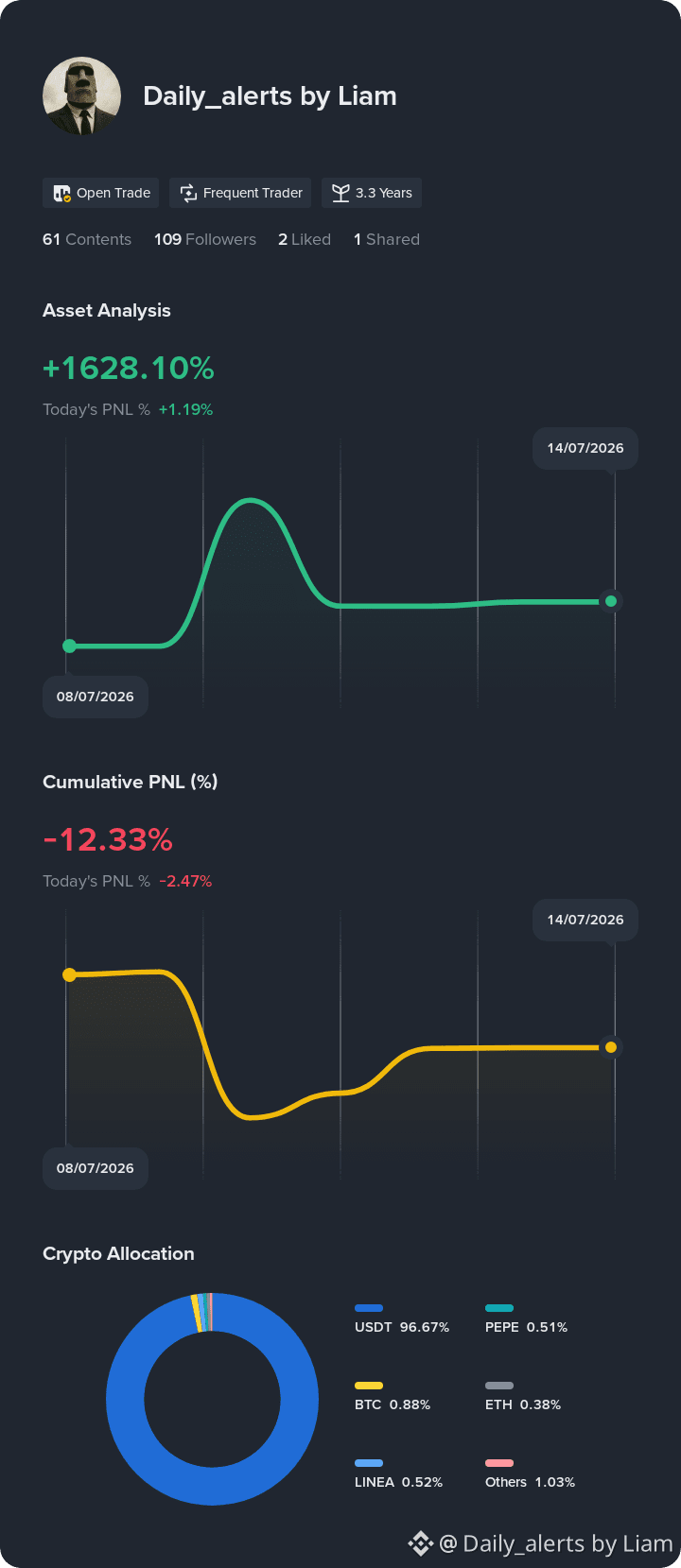
Binance wird heute 9! 🎉
Vor neun Jahren startete Binance mit einer einfachen Mission: Krypto für alle zugänglich zu machen.
Heute ist das Unternehmen zu einem der größten Krypto-Ökosysteme der Welt herangewachsen und versorgt Millionen von Nutzern auf der ganzen Welt mit Handel, Web3, Bildung, Zahlungen und Innovationen in der Blockchain.
In einer Branche, in der viele Projekte nicht einmal einen kompletten Marktzyklus überleben, ist es eine besondere Leistung, nach 9 Jahren immer noch da zu sein – ein Meilenstein, der auf kontinuierlicher Innovation, Durchhaltevermögen und Gemeinschaft beruht.
Alles Gute zum 9. Jahrestag, binance! 🥂
Auf die gemeinsame Gestaltung der Zukunft von Web3.
$BNB
#BinanceTurns9 #BİNANCE #BNB #crypto #Web3
Vor neun Jahren startete Binance mit einer einfachen Mission: Krypto für alle zugänglich zu machen.
Heute ist das Unternehmen zu einem der größten Krypto-Ökosysteme der Welt herangewachsen und versorgt Millionen von Nutzern auf der ganzen Welt mit Handel, Web3, Bildung, Zahlungen und Innovationen in der Blockchain.
In einer Branche, in der viele Projekte nicht einmal einen kompletten Marktzyklus überleben, ist es eine besondere Leistung, nach 9 Jahren immer noch da zu sein – ein Meilenstein, der auf kontinuierlicher Innovation, Durchhaltevermögen und Gemeinschaft beruht.
Alles Gute zum 9. Jahrestag, binance! 🥂
Auf die gemeinsame Gestaltung der Zukunft von Web3.
$BNB
#BinanceTurns9 #BİNANCE #BNB #crypto #Web3
Verifiziert
ZachXBTs Untersuchung — Insider-Kontrollvorwürfe zu $LAB
Der On-Chain-Ermittler ZachXBT erhob erstmals im Mai 2026 den Vorwurf, dass 95 % oder mehr des effektiven Umlaufs von LAB von Insidern kontrolliert werden — Team-Wallets, frühe Investoren, Market Maker und verbundene Einheiten.
Wichtigste Ergebnisse der Untersuchung:
Bitget-Einzahlungen: Zwischen März und April 2026 gab das Team direkt 196 Millionen+ LAB-Token an eine einzelne Einheit. Davon wurden 100 Millionen an Bitget-Einzahlungsadressen gesendet.
Inaktive Wallets: Im Mai 2026 wurden 100 Millionen LAB (im Wert von ca. 480 Millionen US-Dollar) von Bitget abgezogen und auf 10 neu erstellte Wallets aufgeteilt. Laut ZachXBT gab es auf der Gegenseite dieser Transaktion keinen echten externen Käufer — das bedeutet, dass die gesamte Bewegung von einer einzigen Partei gesteuert wurde.
Private OTC-Geschäfte: Mitgründer Vova Sadkov unterzeichnete Darlehensvereinbarungen mit einem monatlichen Zinssatz von 7,5 %. Private Angebote kursierten in Telegram-/WhatsApp-Gruppen, wobei einige Tranchen mit 60–80 % Abschlag verkauft wurden.
Geänderte Vesting-Bedingungen: Es gibt den Vorwurf, dass das Team einseitig die Vesting-Cliffs einiger Teilnehmer von 3 Monaten auf 9 Monate verlängert hat, ohne eine ordnungsgemäße Zustimmung einzuholen.
10.000 US-Dollar Kopfgeld: ZachXBT kündigte ein Kopfgeld an, das auf Gründer Vova Sadkov abzielt — für jeden, der Verträge, Chat-Verläufe oder Insider-Dokumente liefern kann, die die Market-Making-Aktivitäten belegen.
Ähnliches Muster: ZachXBT stellte fest, dass dasselbe Muster auch bei Token wie RAVE und SKYAI zu beobachten war, bei denen Insider 90 % oder mehr des Angebots kontrollierten.
$LAB
Der On-Chain-Ermittler ZachXBT erhob erstmals im Mai 2026 den Vorwurf, dass 95 % oder mehr des effektiven Umlaufs von LAB von Insidern kontrolliert werden — Team-Wallets, frühe Investoren, Market Maker und verbundene Einheiten.
Wichtigste Ergebnisse der Untersuchung:
Bitget-Einzahlungen: Zwischen März und April 2026 gab das Team direkt 196 Millionen+ LAB-Token an eine einzelne Einheit. Davon wurden 100 Millionen an Bitget-Einzahlungsadressen gesendet.
Inaktive Wallets: Im Mai 2026 wurden 100 Millionen LAB (im Wert von ca. 480 Millionen US-Dollar) von Bitget abgezogen und auf 10 neu erstellte Wallets aufgeteilt. Laut ZachXBT gab es auf der Gegenseite dieser Transaktion keinen echten externen Käufer — das bedeutet, dass die gesamte Bewegung von einer einzigen Partei gesteuert wurde.
Private OTC-Geschäfte: Mitgründer Vova Sadkov unterzeichnete Darlehensvereinbarungen mit einem monatlichen Zinssatz von 7,5 %. Private Angebote kursierten in Telegram-/WhatsApp-Gruppen, wobei einige Tranchen mit 60–80 % Abschlag verkauft wurden.
Geänderte Vesting-Bedingungen: Es gibt den Vorwurf, dass das Team einseitig die Vesting-Cliffs einiger Teilnehmer von 3 Monaten auf 9 Monate verlängert hat, ohne eine ordnungsgemäße Zustimmung einzuholen.
10.000 US-Dollar Kopfgeld: ZachXBT kündigte ein Kopfgeld an, das auf Gründer Vova Sadkov abzielt — für jeden, der Verträge, Chat-Verläufe oder Insider-Dokumente liefern kann, die die Market-Making-Aktivitäten belegen.
Ähnliches Muster: ZachXBT stellte fest, dass dasselbe Muster auch bei Token wie RAVE und SKYAI zu beobachten war, bei denen Insider 90 % oder mehr des Angebots kontrollierten.
$LAB
$LAB Token-Untersuchung: Die vollständige Geschichte vom Insider-Dumping bis zum Crash
Was ist der LAB-Token?
LAB ist der native Token eines Multi-Chain-Trading-Terminals, das für Spot-, Limit- und Perpetual-Trades entwickelt wurde und in eine KI-gestützte Research-Engine integriert ist. Das Token Generation Event (TGE) fand im Oktober 2025 statt. Der Gründer ist Vova Sadkov (ein in Dubai ansässiger Unternehmer), zusammen mit Mitgründer Mark. Beide hatten zuvor an einem Projekt namens Eesee gearbeitet, das Investoren zufolge ohne Umsetzung der Verpflichtungen durch das Team aufgegeben wurde.
Nach dem Launch sammelte LAB 5 Millionen US-Dollar an Finanzierung von Amber Group, Selini Capital, Re7 Capital und Cypher Capital. Eine Community-Runde brachte 1,5 Millionen US-Dollar in nur 10 Minuten ein — das Retail-Interesse war von Anfang an stark.
Tokenomics: Die maximale Gesamtmenge beträgt 1 Milliarde LAB. Zum Launch war nur ein kleiner Teil im Umlauf, der Rest war im Rahmen eines Vesting-Plans für das Team, Investoren und Zuteilungen für das Ökosystem gesperrt.
Preisverlauf — Eine Achterbahnfahrt
Frühe Phase: $LAB wurde in der Spanne von 0,50–0,70 US-Dollar gehandelt, ohne viel Aufmerksamkeit.
Anfang Mai 2026: Ein plötzlicher Anstieg von 350%+ brachte ihn innerhalb von Stunden auf eine Bewertung von 6 Milliarden US-Dollar (FDV) — ohne größere Produktankündigung, die dies erklären würde.
Höhepunkt: Allzeithoch über 27,9 US-Dollar
Crash beginnt: Ein 65%+-Crash innerhalb weniger Stunden direkt nach dem Höhepunkt.
Juli 2026: Ein weiterer massiver Crash — von 14 US-Dollar direkt auf 2 US-Dollar, ein Rückgang von 85% an einem einzigen Tag.
Mitte Juli 2026: Der Preis pendelt um 0,55 US-Dollar, 97%+ unter seinem Allzeithoch.
Diese Volatilität war nicht nur normale Marktbewegung — dahinter steckt eine ernsthafte On-Chain-Untersuchung.
$LAB
Was ist der LAB-Token?
LAB ist der native Token eines Multi-Chain-Trading-Terminals, das für Spot-, Limit- und Perpetual-Trades entwickelt wurde und in eine KI-gestützte Research-Engine integriert ist. Das Token Generation Event (TGE) fand im Oktober 2025 statt. Der Gründer ist Vova Sadkov (ein in Dubai ansässiger Unternehmer), zusammen mit Mitgründer Mark. Beide hatten zuvor an einem Projekt namens Eesee gearbeitet, das Investoren zufolge ohne Umsetzung der Verpflichtungen durch das Team aufgegeben wurde.
Nach dem Launch sammelte LAB 5 Millionen US-Dollar an Finanzierung von Amber Group, Selini Capital, Re7 Capital und Cypher Capital. Eine Community-Runde brachte 1,5 Millionen US-Dollar in nur 10 Minuten ein — das Retail-Interesse war von Anfang an stark.
Tokenomics: Die maximale Gesamtmenge beträgt 1 Milliarde LAB. Zum Launch war nur ein kleiner Teil im Umlauf, der Rest war im Rahmen eines Vesting-Plans für das Team, Investoren und Zuteilungen für das Ökosystem gesperrt.
Preisverlauf — Eine Achterbahnfahrt
Frühe Phase: $LAB wurde in der Spanne von 0,50–0,70 US-Dollar gehandelt, ohne viel Aufmerksamkeit.
Anfang Mai 2026: Ein plötzlicher Anstieg von 350%+ brachte ihn innerhalb von Stunden auf eine Bewertung von 6 Milliarden US-Dollar (FDV) — ohne größere Produktankündigung, die dies erklären würde.
Höhepunkt: Allzeithoch über 27,9 US-Dollar
Crash beginnt: Ein 65%+-Crash innerhalb weniger Stunden direkt nach dem Höhepunkt.
Juli 2026: Ein weiterer massiver Crash — von 14 US-Dollar direkt auf 2 US-Dollar, ein Rückgang von 85% an einem einzigen Tag.
Mitte Juli 2026: Der Preis pendelt um 0,55 US-Dollar, 97%+ unter seinem Allzeithoch.
Diese Volatilität war nicht nur normale Marktbewegung — dahinter steckt eine ernsthafte On-Chain-Untersuchung.
$LAB
🚀 Krypto-Marktanalyse — 10. Juli 2026
Die gesamte Marktkapitalisierung des Kryptomarkts liegt bei fast 2,25 Bio. US-Dollar und ist in 24 Stunden um ~1,9% gestiegen. Hier die Aufschlüsselung:
📈 $BTC — 64.000+ $ (um ~3% gestiegen)
Bitcoin erholte sich nach dem Rücksetzer der letzten Woche, nachdem Trumps Warnungen im Zusammenhang mit dem Iran eine Bewegung ausgelöst hatten. Ein schwächerer US-Dollar sowie ein starker Rallye in den asiatischen (Seoul/Tokyo) Chip- und KI-Aktien zogen BTC nach oben. Auch Wale sammeln still und leise. Analysten beobachten den Widerstand bei 65K $ — ein klarer Ausbruch könnte einen Short Squeeze Richtung 67K $ auslösen.
📈 $ETH — 1.750-1.790 $ (um ~1-3% gestiegen)
Ein großer Wal zog heute 9.882 ETH (~17 Mio. $) von Binance ab und brachte die 10-Tage-Summe auf 34.500+ ETH, die von Exchanges abgezogen wurden. Abflüsse von Börsen deuten häufig auf langfristiges Vertrauen hin, was die Stimmung zusätzlich verbessert.
📈 $XRP — 1,09-1,11 $ (um ~1,3-1,5% gestiegen)
Vom Support-Bereich bei 1,05 $ zurückgesprungen. Daten zu Exchange-Flows zeigen, dass Investoren sich eindecken. Ein Ausbruch über den Widerstand bei 1,17 $ könnte den Weg in Richtung 1,30 $ öffnen.
📈 $SOL — 78-79 $ (um ~1,5-1,8% gestiegen)
Bewegte sich mit dem breiteren Markt, blieb aber diese Woche unter den großen Werten der schwächste Performer.
⚪ $SUI — ~0,73-0,75 $ (flach/gemischt)
Unterperformte im Vergleich zu den großen Werten — ohne den gleichen Momentum.
🔑 Was treibt das wirklich an?
Kein krypto-spezifisches News-Thema — hauptsächlich:
Ein schwächerer US-Dollar
Starke Rallye bei asiatischen KI-/Halbleiter-Aktien
Leverage-getriebene Short-Liquidationen (über 215 Mio. $ liquidiert, größtenteils Shorts)
Institutionelle Wal-Sammlungen bei BTC und ETH
📊 Kann es von hier aus noch höher gehen?
Die Meinungen gehen auseinander:
Bullen verweisen auf einen möglichen täglichen Trend-Ausbruch bei BTC — ein Schlusskurs über 65K $ und ein neuer Hochpunkt, der einen Squeeze Richtung 67K $ befeuern könnte. Einige Analysten sehen 70K $ als „on deck“, falls eine wichtige Trendlinie bricht.
Bären halten dagegen, dass der Fear & Greed Index immer noch in „Extreme Fear“ feststeckt (23/100), die Spot-Volumes für den Sommer nach wie vor dünn sind, Bitcoin-ETFs gerade zwei Tage in Folge negative Abflüsse hatten — nach einer kurzen Phase mit Zuflüssen — und dass Q2 2026 das dritte straight verlierende Quartal für Krypto war, weil institutionelles Geld in KI-Aktien umschichtete.
Mehrere Analysten beschreiben das als eine „Erleichterungs-Rallye“ innerhalb eines größeren Abwärtstrends — nicht als bestätigte Trendwende.
Die gesamte Marktkapitalisierung des Kryptomarkts liegt bei fast 2,25 Bio. US-Dollar und ist in 24 Stunden um ~1,9% gestiegen. Hier die Aufschlüsselung:
📈 $BTC — 64.000+ $ (um ~3% gestiegen)
Bitcoin erholte sich nach dem Rücksetzer der letzten Woche, nachdem Trumps Warnungen im Zusammenhang mit dem Iran eine Bewegung ausgelöst hatten. Ein schwächerer US-Dollar sowie ein starker Rallye in den asiatischen (Seoul/Tokyo) Chip- und KI-Aktien zogen BTC nach oben. Auch Wale sammeln still und leise. Analysten beobachten den Widerstand bei 65K $ — ein klarer Ausbruch könnte einen Short Squeeze Richtung 67K $ auslösen.
📈 $ETH — 1.750-1.790 $ (um ~1-3% gestiegen)
Ein großer Wal zog heute 9.882 ETH (~17 Mio. $) von Binance ab und brachte die 10-Tage-Summe auf 34.500+ ETH, die von Exchanges abgezogen wurden. Abflüsse von Börsen deuten häufig auf langfristiges Vertrauen hin, was die Stimmung zusätzlich verbessert.
📈 $XRP — 1,09-1,11 $ (um ~1,3-1,5% gestiegen)
Vom Support-Bereich bei 1,05 $ zurückgesprungen. Daten zu Exchange-Flows zeigen, dass Investoren sich eindecken. Ein Ausbruch über den Widerstand bei 1,17 $ könnte den Weg in Richtung 1,30 $ öffnen.
📈 $SOL — 78-79 $ (um ~1,5-1,8% gestiegen)
Bewegte sich mit dem breiteren Markt, blieb aber diese Woche unter den großen Werten der schwächste Performer.
⚪ $SUI — ~0,73-0,75 $ (flach/gemischt)
Unterperformte im Vergleich zu den großen Werten — ohne den gleichen Momentum.
🔑 Was treibt das wirklich an?
Kein krypto-spezifisches News-Thema — hauptsächlich:
Ein schwächerer US-Dollar
Starke Rallye bei asiatischen KI-/Halbleiter-Aktien
Leverage-getriebene Short-Liquidationen (über 215 Mio. $ liquidiert, größtenteils Shorts)
Institutionelle Wal-Sammlungen bei BTC und ETH
📊 Kann es von hier aus noch höher gehen?
Die Meinungen gehen auseinander:
Bullen verweisen auf einen möglichen täglichen Trend-Ausbruch bei BTC — ein Schlusskurs über 65K $ und ein neuer Hochpunkt, der einen Squeeze Richtung 67K $ befeuern könnte. Einige Analysten sehen 70K $ als „on deck“, falls eine wichtige Trendlinie bricht.
Bären halten dagegen, dass der Fear & Greed Index immer noch in „Extreme Fear“ feststeckt (23/100), die Spot-Volumes für den Sommer nach wie vor dünn sind, Bitcoin-ETFs gerade zwei Tage in Folge negative Abflüsse hatten — nach einer kurzen Phase mit Zuflüssen — und dass Q2 2026 das dritte straight verlierende Quartal für Krypto war, weil institutionelles Geld in KI-Aktien umschichtete.
Mehrere Analysten beschreiben das als eine „Erleichterungs-Rallye“ innerhalb eines größeren Abwärtstrends — nicht als bestätigte Trendwende.
#newt $NEWT Newton-Protokoll (NEWT): Onchain-Compliance als neues Gesicht 🔐
In der Krypto-Welt gibt es ein neues Buzzword — Newton Protocol! Das ist eine dezentrale Policy-Engine, die Compliance, Risiko und Business-Regeln in Code umwandelt und sie onchain durchsetzt.
✅ Echtzeit-Transaktionschecks (Sanktionen, Identität, Risiko)
✅ Zero-Knowledge-Proofs schützen auch die Privatsphäre
✅ Basierend auf dem Ethereum-Restaking-Sicherheitsmodell
✅ Entwickelt für Institutionen, Stablecoins und RWA-Plattformen
Compliance ist jetzt nicht mehr nur manuelle Prüfung, sondern wird Teil eines Smart Contracts. Die Zukunft des institutionellen DeFi beginnt hier! 🚀
#NEWT #NewtonProtocol #Web3 #DeFi #Blockchain
In der Krypto-Welt gibt es ein neues Buzzword — Newton Protocol! Das ist eine dezentrale Policy-Engine, die Compliance, Risiko und Business-Regeln in Code umwandelt und sie onchain durchsetzt.
✅ Echtzeit-Transaktionschecks (Sanktionen, Identität, Risiko)
✅ Zero-Knowledge-Proofs schützen auch die Privatsphäre
✅ Basierend auf dem Ethereum-Restaking-Sicherheitsmodell
✅ Entwickelt für Institutionen, Stablecoins und RWA-Plattformen
Compliance ist jetzt nicht mehr nur manuelle Prüfung, sondern wird Teil eines Smart Contracts. Die Zukunft des institutionellen DeFi beginnt hier! 🚀
#NEWT #NewtonProtocol #Web3 #DeFi #Blockchain
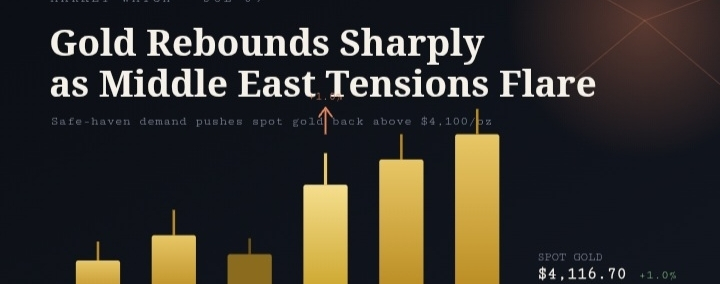
🟡 Gold steigt über 4.100 $ hinaus, während die Spannungen im Nahen Osten eskalieren
Gold ist heute um über 1% gestiegen und hat sich von einem Tief der letzten Woche erholt, nachdem Iran Angriffe auf US-Militärstandorte im Golf gestartet hat und damit einen fragilen 3‑Wochen-Waffenstillstand belastet.
📊 Spot Gold: 4.116,70 $ (+1%)
📊 Silber: 59,66 $ (+2,4%)
📊 Platin: 1.615 $ (+2,4%)
📊 Palladium: 1.255,61 $ (+3,4%) 🚀
Die Märkte rechnen nun mit einer 64%‑Wahrscheinlichkeit für einen Zinsschritt der Fed im September (CME FedWatch). Höhere Zinsen könnten die Aufwärtsbewegung bei Gold begrenzen — doch das geopolitische Risiko hält die Bullen vorerst unter Kontrolle.
HSBC hat seine Goldprognosen für 2026/2027 auf 4.560 / 4.925 $ gekürzt
$XAUT $XAG $XPT
#GOLD #XAUT #Silver
Gold ist heute um über 1% gestiegen und hat sich von einem Tief der letzten Woche erholt, nachdem Iran Angriffe auf US-Militärstandorte im Golf gestartet hat und damit einen fragilen 3‑Wochen-Waffenstillstand belastet.
📊 Spot Gold: 4.116,70 $ (+1%)
📊 Silber: 59,66 $ (+2,4%)
📊 Platin: 1.615 $ (+2,4%)
📊 Palladium: 1.255,61 $ (+3,4%) 🚀
Die Märkte rechnen nun mit einer 64%‑Wahrscheinlichkeit für einen Zinsschritt der Fed im September (CME FedWatch). Höhere Zinsen könnten die Aufwärtsbewegung bei Gold begrenzen — doch das geopolitische Risiko hält die Bullen vorerst unter Kontrolle.
HSBC hat seine Goldprognosen für 2026/2027 auf 4.560 / 4.925 $ gekürzt
$XAUT $XAG $XPT
#GOLD #XAUT #Silver
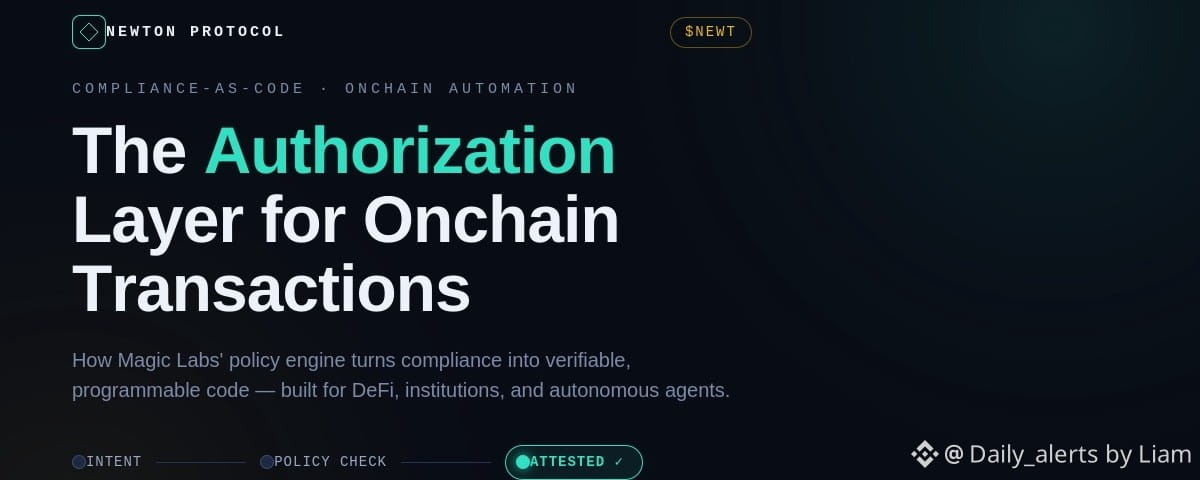
#newt $NEWT Newton Protocol hat jetzt Echtzeit-Überprüfungen der Zuständigkeit On-Chain über Persona eingeführt – die Identität wird auf der Transaktionsebene verifiziert, nicht in der Benutzeroberfläche. Keine personenbezogenen Daten on-chain, nur ein kryptografischer Nachweis. Compliance-as-Code, live. 🔐
🚨 $LAB Token-Update — 9. Juli 2026
💥 WICHTIGER VOLATILITÄTSALARM: LAB wird derzeit bei etwa 1,17–1,25 $ gehandelt, nachdem es in nur 48 Stunden fast 80–90 % eingebrochen ist — zuvor lag es diese Woche noch über 17 $ und hatte kurzzeitig eine Marktkapitalisierung von 5 Mrd. $+ erreicht, bevor es auf unter 400 Mio. $ abstürzte.
📉 Was passiert ist:
Starker Verkaufsdruck durch große Inhaber/Marktteilnehmer löste eine Liquiditätskaskade aus
Das Handelsvolumen stieg um über 130 % und kam beinahe an die gesamte Marktkapitalisierung des Tokens an einem einzigen Tag heran
Das $LAB Trade-Team erkannte „erheblichen Verkaufsdruck durch große Marktteilnehmer“ an, wies jedoch die Verantwortung für den Crash zurück
⚠️ Laufende Bedenken:
On-Chain-Ermittler ZachXBT hat wiederholt behauptet, dass Insider einen sehr großen Anteil (angeblich 90 %+) der Token-Gesamtmenge kontrollieren
Berichte über Kursmanipulation an zentralisierten Börsen, wobei Kritiker sagen, Plattformen wie Binance, Bitget und Gate hätten nicht genug getan, um einzugreifen
Ein großes Token-Unlock (~282 Mio. Tokens, im Wert von ~1,9 Mrd. $ zu den jüngsten Preisen) ist für Mitte August 2026 geplant, was zusätzlichen starken Verkaufsdruck auslösen könnte
📊 Zu $LAB B: Es handelt sich um den nativen Token eines Multi-Chain-Handelsterminals, das Spot-, Limit- und Perpetual-Futures-Handel über Ketten wie Ethereum, Solana und BNB Chain kombiniert, mit KI-gestütztem Order-Routing.
⚠️ Wichtig: LAB ist aktuell ein extrem risikoreicher, stark volatiler Vermögenswert, bei dem glaubwürdige Manipulations- und Transparenzbedenken von unabhängigen Forschern gemeldet wurden. Das ist keine Finanzberatung — bitte führe gründliche unabhängige Recherchen durch (DYOR), bevor du Entscheidungen triffst.
#LAB #crypto #CryptoNewss #Web3
💥 WICHTIGER VOLATILITÄTSALARM: LAB wird derzeit bei etwa 1,17–1,25 $ gehandelt, nachdem es in nur 48 Stunden fast 80–90 % eingebrochen ist — zuvor lag es diese Woche noch über 17 $ und hatte kurzzeitig eine Marktkapitalisierung von 5 Mrd. $+ erreicht, bevor es auf unter 400 Mio. $ abstürzte.
📉 Was passiert ist:
Starker Verkaufsdruck durch große Inhaber/Marktteilnehmer löste eine Liquiditätskaskade aus
Das Handelsvolumen stieg um über 130 % und kam beinahe an die gesamte Marktkapitalisierung des Tokens an einem einzigen Tag heran
Das $LAB Trade-Team erkannte „erheblichen Verkaufsdruck durch große Marktteilnehmer“ an, wies jedoch die Verantwortung für den Crash zurück
⚠️ Laufende Bedenken:
On-Chain-Ermittler ZachXBT hat wiederholt behauptet, dass Insider einen sehr großen Anteil (angeblich 90 %+) der Token-Gesamtmenge kontrollieren
Berichte über Kursmanipulation an zentralisierten Börsen, wobei Kritiker sagen, Plattformen wie Binance, Bitget und Gate hätten nicht genug getan, um einzugreifen
Ein großes Token-Unlock (~282 Mio. Tokens, im Wert von ~1,9 Mrd. $ zu den jüngsten Preisen) ist für Mitte August 2026 geplant, was zusätzlichen starken Verkaufsdruck auslösen könnte
📊 Zu $LAB B: Es handelt sich um den nativen Token eines Multi-Chain-Handelsterminals, das Spot-, Limit- und Perpetual-Futures-Handel über Ketten wie Ethereum, Solana und BNB Chain kombiniert, mit KI-gestütztem Order-Routing.
⚠️ Wichtig: LAB ist aktuell ein extrem risikoreicher, stark volatiler Vermögenswert, bei dem glaubwürdige Manipulations- und Transparenzbedenken von unabhängigen Forschern gemeldet wurden. Das ist keine Finanzberatung — bitte führe gründliche unabhängige Recherchen durch (DYOR), bevor du Entscheidungen triffst.
#LAB #crypto #CryptoNewss #Web3
🚀 $SOL Preis-Update — 9. Juli 2026
💰 Aktueller Preis: ca. $77 (zwischen $76,9–$78,1 an den Börsen)
📉 24h-Änderung: -1 bis -4% (derzeit leichter Verkaufsdruck)
📊 Marktkapitalisierung: ca. $44,8B (Platz #7-8 unter den Top-Kryptos)
📈 7-Tage: Insgesamt ungefähr unverändert, mit einer leichten Erholung über die Woche
🔥 Was passiert im Netzwerk:
Täglich aktive Adressen erreichen 5,6M+ — starke Netzwerk-Nutzung trotz Kurskonsolidierung
Institutionelle Adoption steigt — Securitize tokenisierte $295M in Aktien auf Solana (unterstützt von BlackRock)
RWA (Real World Assets) TVL erreicht ein neues Allzeithoch — $3,4B+
Stablecoin-Umlaufmenge auf Solana hat $16B+ überschritten
Jupiter hat eine nachlaufende Stop-Loss-Funktion für Limit-Orders eingeführt
On-Chain-Governance (SGPs) ist jetzt live — Validatoren mit 100K+ $SOL gestaket können Vorschläge einreichen
⚠️ Hinweis: Kryptopreise sind extrem volatil — mach immer deine eigene Recherche (DYOR), bevor du investierst.
#solana #SOL #Crypto #Web3
💰 Aktueller Preis: ca. $77 (zwischen $76,9–$78,1 an den Börsen)
📉 24h-Änderung: -1 bis -4% (derzeit leichter Verkaufsdruck)
📊 Marktkapitalisierung: ca. $44,8B (Platz #7-8 unter den Top-Kryptos)
📈 7-Tage: Insgesamt ungefähr unverändert, mit einer leichten Erholung über die Woche
🔥 Was passiert im Netzwerk:
Täglich aktive Adressen erreichen 5,6M+ — starke Netzwerk-Nutzung trotz Kurskonsolidierung
Institutionelle Adoption steigt — Securitize tokenisierte $295M in Aktien auf Solana (unterstützt von BlackRock)
RWA (Real World Assets) TVL erreicht ein neues Allzeithoch — $3,4B+
Stablecoin-Umlaufmenge auf Solana hat $16B+ überschritten
Jupiter hat eine nachlaufende Stop-Loss-Funktion für Limit-Orders eingeführt
On-Chain-Governance (SGPs) ist jetzt live — Validatoren mit 100K+ $SOL gestaket können Vorschläge einreichen
⚠️ Hinweis: Kryptopreise sind extrem volatil — mach immer deine eigene Recherche (DYOR), bevor du investierst.
#solana #SOL #Crypto #Web3
📉 Ethereum (ETH) Marktupdate 📉
$ETH H wird derzeit bei etwa $1.720–1.770 gehandelt, mit einer Marktkapitalisierung von ungefähr $207–233 Milliarden — hält damit den #2. Platz im Krypto-Ranking.
🔹 Kurzfristiger Trend ist eher bärisch, die Stimmung befindet sich im Bereich „Extreme Fear“
🔹 Wichtigster Support: $1.716 | Widerstand: $1.750–1.800 (50-Tage-EMA)
🔹 Die Bitcoin-Dominanz liegt bei knapp 56% und sorgt dafür, dass Kapital in BTC geparkt bleibt, statt in ETH zu rotieren
📈 Doch die Fundamentaldaten bleiben stark — DeFi TVL liegt weiterhin über $45B, die institutionelle Adoption nimmt zu (JPMorgan’s tokenisierter Fonds auf Ethereum ist in einem Monat um 250% gewachsen) und ein großes Upgrade (Fusaka) ist für H2 2026 vorgesehen.
💬 Bullisch auf lange Sicht, vorsichtig auf kurze Sicht — genau dort steht $ETH TH gerade.
#ETH #CryptoMarketAlert #Web3
$ETH H wird derzeit bei etwa $1.720–1.770 gehandelt, mit einer Marktkapitalisierung von ungefähr $207–233 Milliarden — hält damit den #2. Platz im Krypto-Ranking.
🔹 Kurzfristiger Trend ist eher bärisch, die Stimmung befindet sich im Bereich „Extreme Fear“
🔹 Wichtigster Support: $1.716 | Widerstand: $1.750–1.800 (50-Tage-EMA)
🔹 Die Bitcoin-Dominanz liegt bei knapp 56% und sorgt dafür, dass Kapital in BTC geparkt bleibt, statt in ETH zu rotieren
📈 Doch die Fundamentaldaten bleiben stark — DeFi TVL liegt weiterhin über $45B, die institutionelle Adoption nimmt zu (JPMorgan’s tokenisierter Fonds auf Ethereum ist in einem Monat um 250% gewachsen) und ein großes Upgrade (Fusaka) ist für H2 2026 vorgesehen.
💬 Bullisch auf lange Sicht, vorsichtig auf kurze Sicht — genau dort steht $ETH TH gerade.
#ETH #CryptoMarketAlert #Web3
$LAB B wurde gerade brutal verprügelt — allein in den letzten 24 Stunden um 70–80%+ gefallen, und diese Woche um über 60% tiefer. 📉
Von Hochs von 27$+ bis hin zu Kursen im einstelligen Bereich. Brutale Korrektur nach Wochen von parabolischem Pumpen.
Worum es hier geht:
⚠️ Nur ~31% des Angebots sind im Umlauf — im August steht ein Token-Unlock von 282M bevor (mehr Verkaufsdruck liegt noch vor)
⚠️ ZachXBT behauptet, dass Insiders 95%+ des Angebots halten — Manipulationssorgen sind real
⚠️ Extremes Leverage im Markt hat den Crash verstärkt
So sehen Low-Float, High-FDV-Token aus. Keine Finanzberatung — beobachte einfach das Kursgeschehen. 🧠
Von Hochs von 27$+ bis hin zu Kursen im einstelligen Bereich. Brutale Korrektur nach Wochen von parabolischem Pumpen.
Worum es hier geht:
⚠️ Nur ~31% des Angebots sind im Umlauf — im August steht ein Token-Unlock von 282M bevor (mehr Verkaufsdruck liegt noch vor)
⚠️ ZachXBT behauptet, dass Insiders 95%+ des Angebots halten — Manipulationssorgen sind real
⚠️ Extremes Leverage im Markt hat den Crash verstärkt
So sehen Low-Float, High-FDV-Token aus. Keine Finanzberatung — beobachte einfach das Kursgeschehen. 🧠
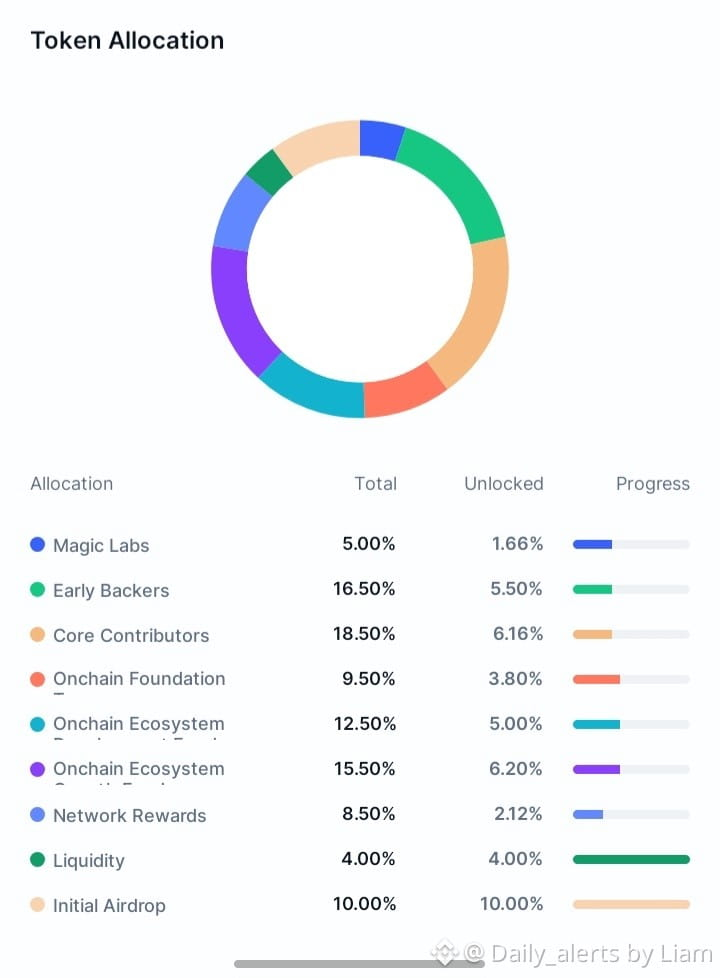
#newt $NEWT Newton Protocol ($NEWT ) — Aufbau der Autorisierungsebene für Onchain-Compliance. So setzt sich die Tokenomics zusammen 👇
$BNB B Updates: AI Agent Studio macht das Erstellen von KI-Agenten deutlich einfacher
Einen KI-Agenten zu bauen, der Echtzeit-Marktdaten abruft, war bisher ein komplizierter Prozess. Entwickler mussten API-Schlüssel einrichten, einen Tarif wählen und ein eigenes Zahlungssystem entwickeln, bevor sie überhaupt starten konnten. Jetzt erledigt AI-Agent Studio all das in nur einem Schritt.
Dieses Update ist für zwei Arten von Nutzern gedacht:
Entwickler können auf API-Schlüssel, Abrechnungspläne und individuelle Zahlungseinbindungen verzichten und so deutlich schneller KI-Agenten bauen.
Händler und alltägliche Token-Inhaber erhalten eine einfachere Möglichkeit, Preis-Updates und Marktwarnungen zu empfangen, ohne Code zu schreiben. Eine einfache Anfrage in natürlicher Sprache genügt, um einen Agenten zu erstellen.
Wer einen KI-Agenten entwickelt, kann ihn jetzt nahezu ohne Aufwand direkt mit den CoinMarketCap-Daten über den B402-Pool von Binance Pay verbinden. Jedes Mal, wenn der Agent Daten anfordert, bezahlt er diese Anfrage automatisch aus seinem eigenen Wallet. Die Anfrage wird über einen dedizierten Endpunkt gesendet – eine feste Adresse, die Programmen ermöglicht, gezielt bestimmte Informationen abzurufen.
Wie Binance Pay B402 es KI-Agenten ermöglicht, jede Datenanfrage zu bezahlen
Sobald ein Agent Daten anfordert, bezahlt er diese einzelne Anfrage automatisch über sein eigenes Wallet. Die Zahlungen werden über B402 mit dem x402-Protokoll verarbeitet und werden sofort auf BSC ausgeglichen, sobald die Anfrage gestellt wird. Es ist weder ein separates CoinMarketCap-Konto erforderlich noch irgendein benutzerdefinierter Zahlungscode.
Das ist ein wichtiger Schritt für das $BNB B-Ökosystem, denn es beseitigt eine der größten Hürden beim Aufbau von KI-gestützten Anwendungen. Was früher mehrere Einzelschritte erforderte, wird nun auf einen einzigen Klick reduziert.
Diese neueste Aktualisierung der BNB-2026-Roadmap spiegelt Binance’ umfassendere Vision wider, leistungsstarke KI-Tools für alle zugänglich zu machen – nicht nur für erfahrene Entwickler.
#BNB_Market_Update
Einen KI-Agenten zu bauen, der Echtzeit-Marktdaten abruft, war bisher ein komplizierter Prozess. Entwickler mussten API-Schlüssel einrichten, einen Tarif wählen und ein eigenes Zahlungssystem entwickeln, bevor sie überhaupt starten konnten. Jetzt erledigt AI-Agent Studio all das in nur einem Schritt.
Dieses Update ist für zwei Arten von Nutzern gedacht:
Entwickler können auf API-Schlüssel, Abrechnungspläne und individuelle Zahlungseinbindungen verzichten und so deutlich schneller KI-Agenten bauen.
Händler und alltägliche Token-Inhaber erhalten eine einfachere Möglichkeit, Preis-Updates und Marktwarnungen zu empfangen, ohne Code zu schreiben. Eine einfache Anfrage in natürlicher Sprache genügt, um einen Agenten zu erstellen.
Wer einen KI-Agenten entwickelt, kann ihn jetzt nahezu ohne Aufwand direkt mit den CoinMarketCap-Daten über den B402-Pool von Binance Pay verbinden. Jedes Mal, wenn der Agent Daten anfordert, bezahlt er diese Anfrage automatisch aus seinem eigenen Wallet. Die Anfrage wird über einen dedizierten Endpunkt gesendet – eine feste Adresse, die Programmen ermöglicht, gezielt bestimmte Informationen abzurufen.
Wie Binance Pay B402 es KI-Agenten ermöglicht, jede Datenanfrage zu bezahlen
Sobald ein Agent Daten anfordert, bezahlt er diese einzelne Anfrage automatisch über sein eigenes Wallet. Die Zahlungen werden über B402 mit dem x402-Protokoll verarbeitet und werden sofort auf BSC ausgeglichen, sobald die Anfrage gestellt wird. Es ist weder ein separates CoinMarketCap-Konto erforderlich noch irgendein benutzerdefinierter Zahlungscode.
Das ist ein wichtiger Schritt für das $BNB B-Ökosystem, denn es beseitigt eine der größten Hürden beim Aufbau von KI-gestützten Anwendungen. Was früher mehrere Einzelschritte erforderte, wird nun auf einen einzigen Klick reduziert.
Diese neueste Aktualisierung der BNB-2026-Roadmap spiegelt Binance’ umfassendere Vision wider, leistungsstarke KI-Tools für alle zugänglich zu machen – nicht nur für erfahrene Entwickler.
#BNB_Market_Update
Anmelden und weiter Inhalte entdecken