
ILIQ69
208 Beiträge

ILIQ69
39 Following
54 Follower
240 Like gegeben
Beiträge
PINNED
Eine Rückgabe eines Tresors kann einfach aussehen, bis man eine praktischere Frage stellt: Welchen Vermögenswert könnte ich bei der Abwicklung tatsächlich erhalten?
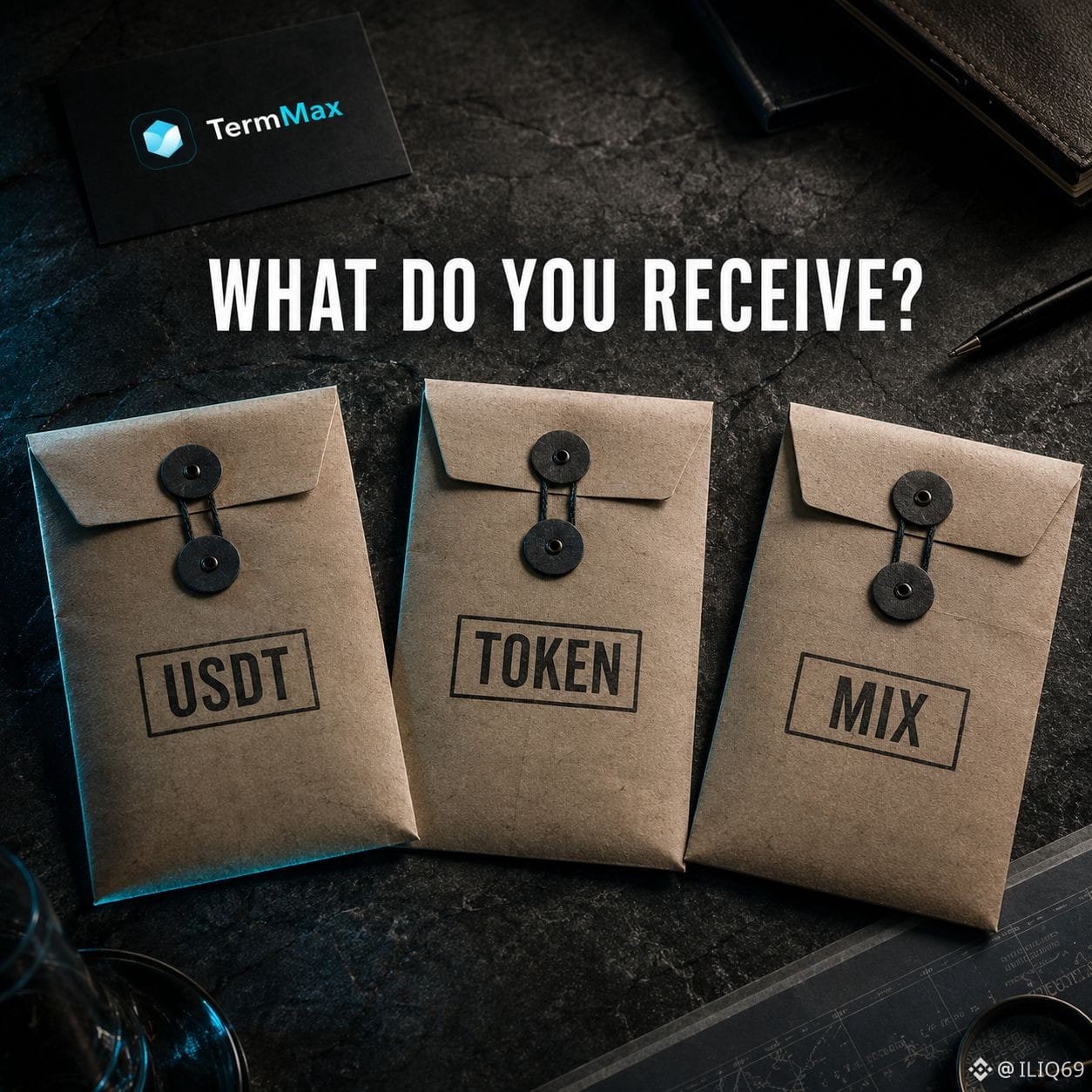
Die TermMax-Alpha-Dokumentation erklärt, dass ein Dual-Investment-Tresor nach Ablauf mit USDT, dem Token oder einer Mischung aus beidem enden kann – je nach Szenario einer teilweisen Ausübung. Die finale Zusammensetzung hängt vom Abwicklungsergebnis und der verfügbaren Liquidität ab.
Diese Einzelheit bringt mich dazu, ein Renditeangebot anders zu lesen. Die Rate ist nur ein Teil der Entscheidung. Der Abwicklungswert ist ein anderer. Wenn ich USDT einzahle, aber das Setup unter bestimmten Bedingungen in Tokens ausgeglichen werden kann, muss ich mit dieser Möglichkeit vor meiner Einzahlung vertraut sein.
Welches endgültige Ergebnis möchten Sie vor der Einzahlung am klarsten festgelegt haben?
@TermMax $TMX #TermMax
Die TermMax-Alpha-Dokumentation erklärt, dass ein Dual-Investment-Tresor nach Ablauf mit USDT, dem Token oder einer Mischung aus beidem enden kann – je nach Szenario einer teilweisen Ausübung. Die finale Zusammensetzung hängt vom Abwicklungsergebnis und der verfügbaren Liquidität ab.
Diese Einzelheit bringt mich dazu, ein Renditeangebot anders zu lesen. Die Rate ist nur ein Teil der Entscheidung. Der Abwicklungswert ist ein anderer. Wenn ich USDT einzahle, aber das Setup unter bestimmten Bedingungen in Tokens ausgeglichen werden kann, muss ich mit dieser Möglichkeit vor meiner Einzahlung vertraut sein.
Welches endgültige Ergebnis möchten Sie vor der Einzahlung am klarsten festgelegt haben?
@TermMax $TMX #TermMax
Settlement asset
0%
Strike price
0%
Maturity date
0%
Partial-exercise rules
0%
0 Stimmen • Abstimmung beendet
Ein fester Kreditzinssatz bedeutet nicht automatisch, dass die gesamte Position ein fixes Ergebnis hat. Diese Unterscheidung wird deutlicher, wenn zinstragende Sicherheiten ins Spiel kommen.
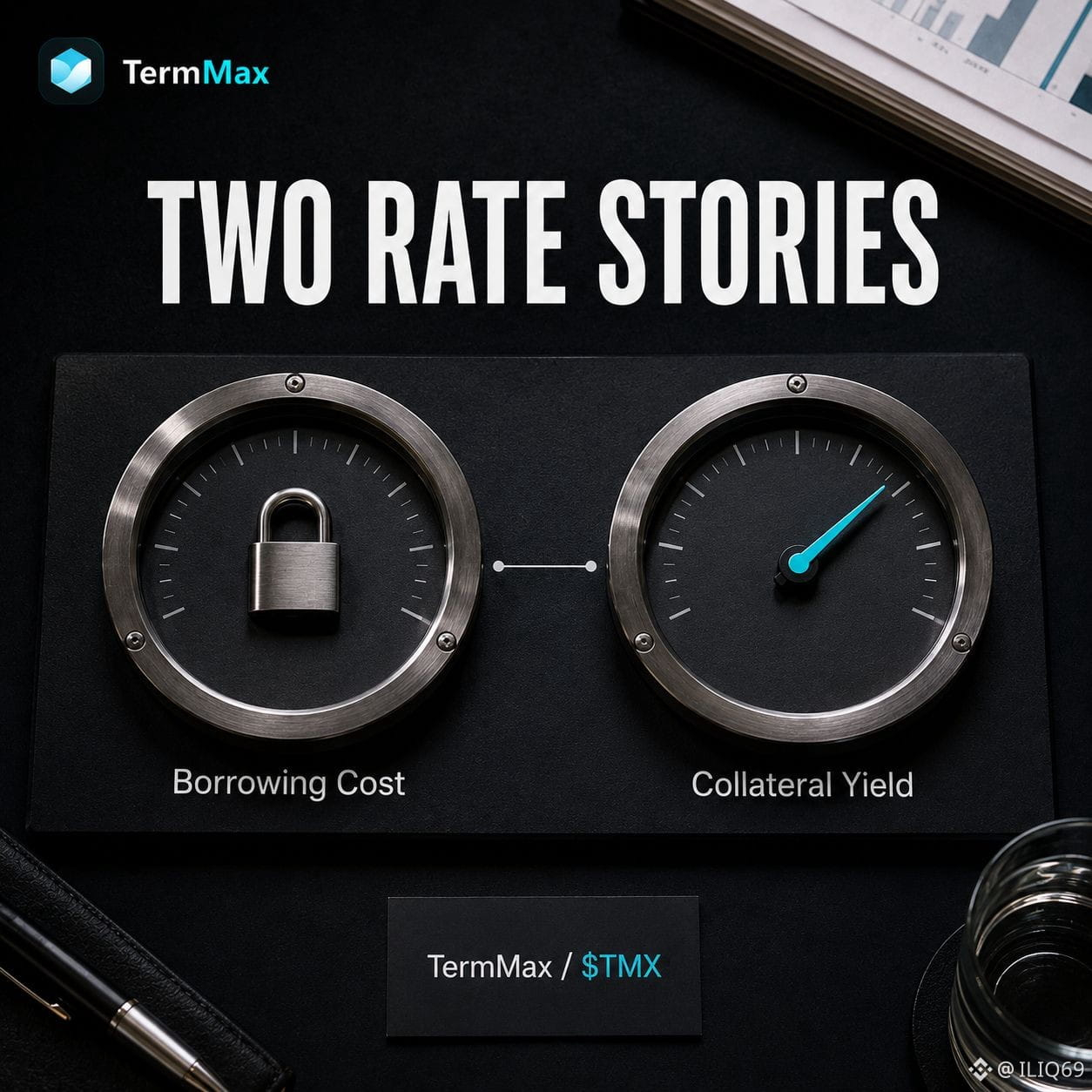
Die TermMax-Dokumentation sagt, dass der Borrowing-Zinssatz fest bleiben kann, während die Einnahmen aus der Sicherheit davon abhängen, was diese Sicherheit ist. Ein festverzinsliches Asset wie ein PT kann fixe Erträge haben, während Sicherheiten mit einer variablen Rendite sich weiterhin mit dem Markt bewegen können.
Daher würde ich die Position in zwei Fragen aufteilen: Was sind meine bekannten Kosten der Kreditaufnahme, und wie verhält sich die Rendite des Assets, das ich gesperrt habe? Wenn man beide Seiten „fix“ nennt, würde man den Teil verdecken, der sich noch ändern kann.
Welche Seite würdest du zuerst trennen, wenn du eine Position mit Ertrag/Rendite bewertest?
@TermMax #TermMax
Die TermMax-Dokumentation sagt, dass der Borrowing-Zinssatz fest bleiben kann, während die Einnahmen aus der Sicherheit davon abhängen, was diese Sicherheit ist. Ein festverzinsliches Asset wie ein PT kann fixe Erträge haben, während Sicherheiten mit einer variablen Rendite sich weiterhin mit dem Markt bewegen können.
Daher würde ich die Position in zwei Fragen aufteilen: Was sind meine bekannten Kosten der Kreditaufnahme, und wie verhält sich die Rendite des Assets, das ich gesperrt habe? Wenn man beide Seiten „fix“ nennt, würde man den Teil verdecken, der sich noch ändern kann.
Welche Seite würdest du zuerst trennen, wenn du eine Position mit Ertrag/Rendite bewertest?
@TermMax #TermMax
Borrowing cost
0%
Collateral yield
0%
LTV risk
0%
All three together
0%
0 Stimmen • Abstimmung beendet
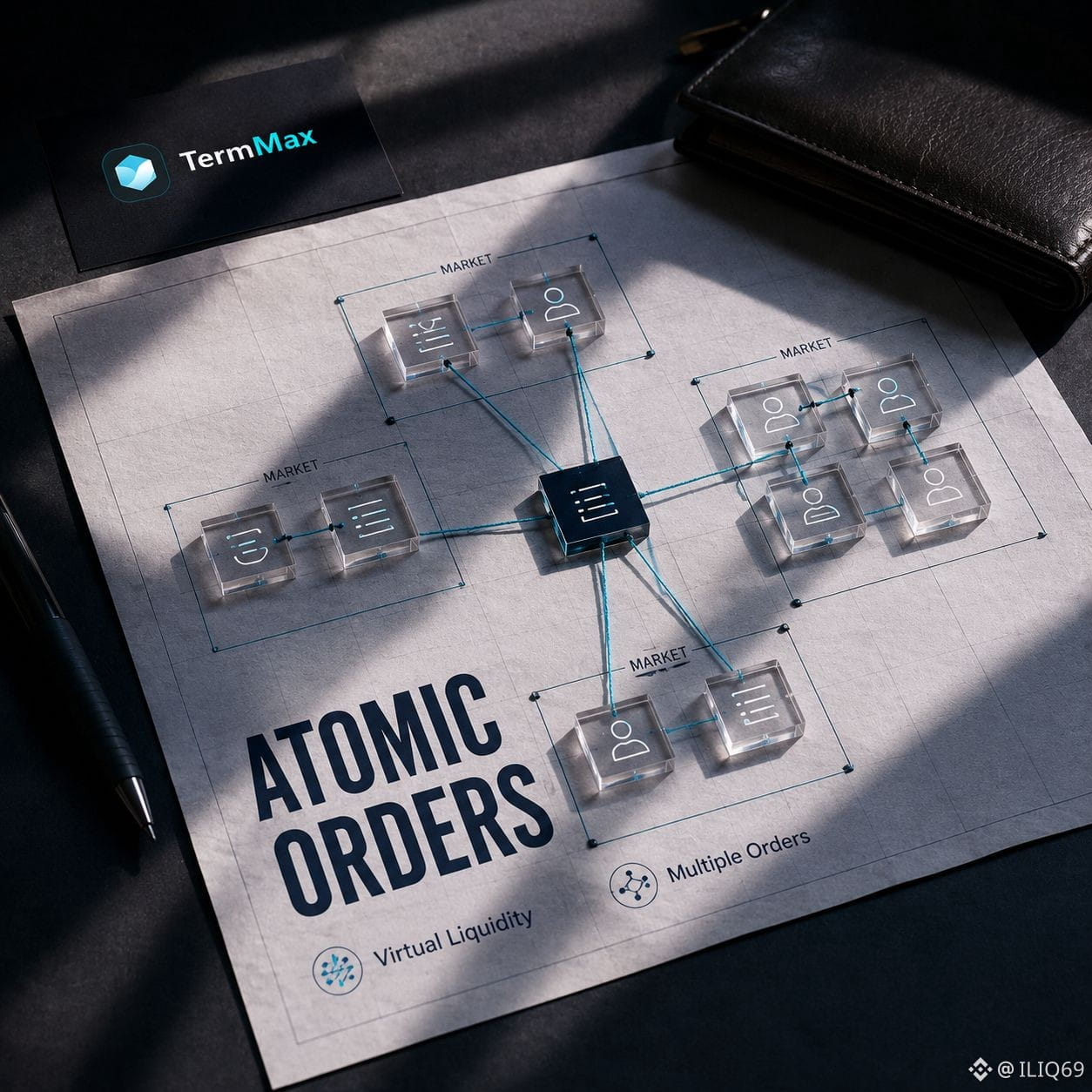
Der Teil der TMX-Whitepaper, den ich fast übersprungen hätte, waren „Atomic Orders“. TermMax beschreibt, wie virtuelle Liquidität über mehrere Orders verteilt wird, bevor die Mittel tatsächlich ausgeliehen werden.
Das klingt nach „Rohrleitungen“, aber ich denke, es verändert, was „verfügbare Liquidität“ wirklich bedeutet. Kapital muss nicht zu früh einen einzelnen Markt wählen, nur um bereit zu sein. Es kann für mehr als eine Gelegenheit positioniert werden, statt im Moment des Eintritts in das System in einzelne Teile zersplittert zu werden.
Ich würde das nicht als Beweis dafür sehen, dass jeder Markt eine tiefe Ausführung haben wird. Ein cleveres Design muss trotzdem unter Live-Bedingungen funktionieren. Aber es ist ein interessanteres Problem als nur eine einzelne attraktive Rate anzuzeigen: Wo sollte Liquidität warten, bevor jemand sie benötigt?
Würden Sie lieber Liquidität in einem Markt reservieren oder sie über mehrere Gelegenheiten hinweg positioniert lassen?
@TermMax $TMX #TermMax
Das klingt nach „Rohrleitungen“, aber ich denke, es verändert, was „verfügbare Liquidität“ wirklich bedeutet. Kapital muss nicht zu früh einen einzelnen Markt wählen, nur um bereit zu sein. Es kann für mehr als eine Gelegenheit positioniert werden, statt im Moment des Eintritts in das System in einzelne Teile zersplittert zu werden.
Ich würde das nicht als Beweis dafür sehen, dass jeder Markt eine tiefe Ausführung haben wird. Ein cleveres Design muss trotzdem unter Live-Bedingungen funktionieren. Aber es ist ein interessanteres Problem als nur eine einzelne attraktive Rate anzuzeigen: Wo sollte Liquidität warten, bevor jemand sie benötigt?
Würden Sie lieber Liquidität in einem Markt reservieren oder sie über mehrere Gelegenheiten hinweg positioniert lassen?
@TermMax $TMX #TermMax
Reserve one market
0%
Spread it across markets
0%
Depends on execution
0%
I need more data
0%
0 Stimmen • Abstimmung beendet
Die FT- und XT-Struktur auf @TermMax wirkte auf mich zunächst technisch. Dann habe ich aufgehört, Abkürzungen auswendig zu lernen, und stattdessen ein einfacheres Denkmodell verwendet.
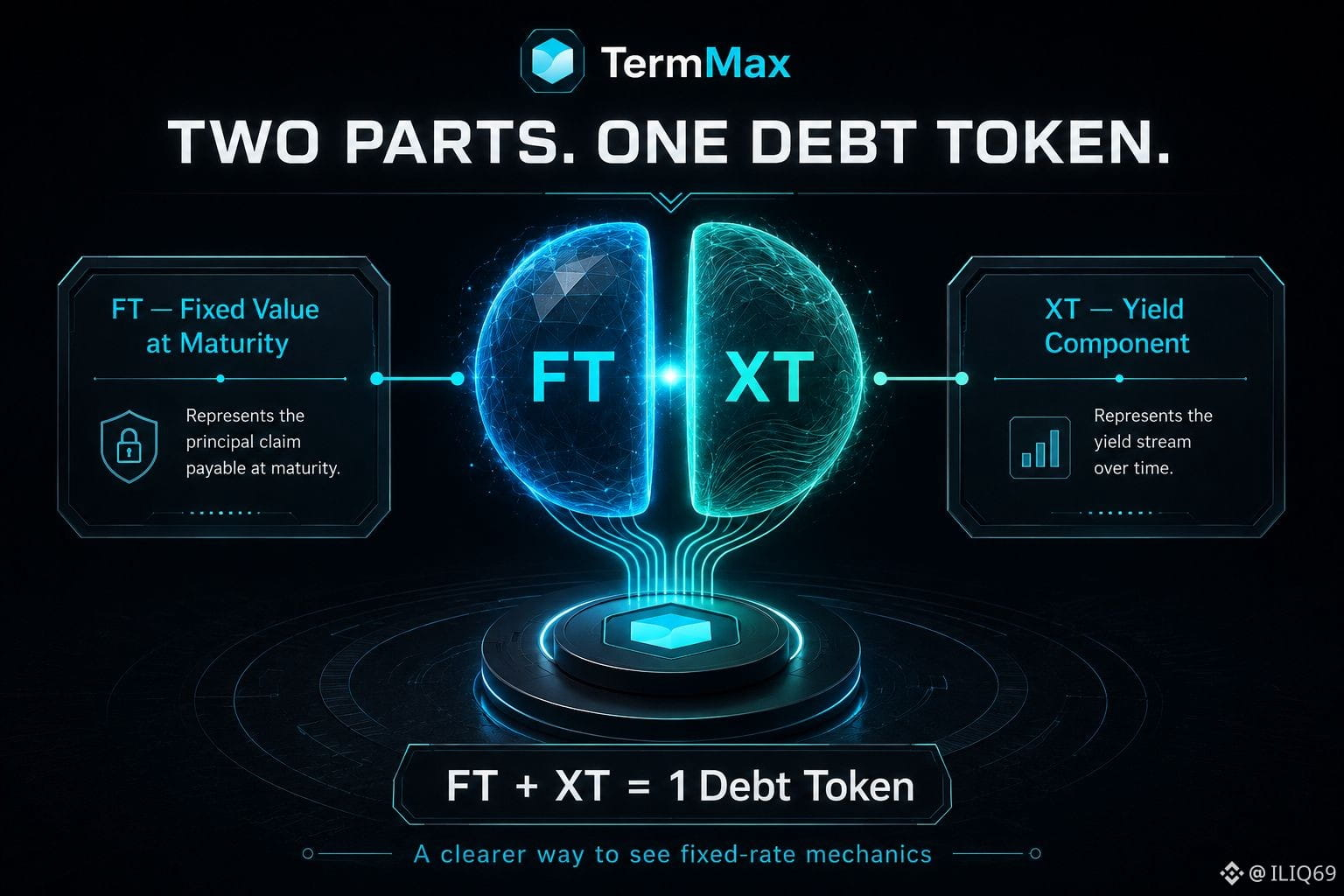
Ein Debt Token kann durch zwei verbundene Teile dargestellt werden: FT + XT. Die FT trägt die festverzinsliche Forderung bis zur Fälligkeit, während XT die andere Seite dieses Werts vor der Fälligkeit repräsentiert. Zusammen machen sie den ursprünglichen Debt Token vollständig.
Ich mag Systeme, die die Wirtschaftlichkeit sichtbar machen, statt alles in einer einzigen Black-Box-Bilanz zu verstecken. Das nimmt kein Risiko weg und macht den Prozess nicht zu „leichtem Geld“, aber es gibt Kreditgebern und Kreditnehmern einen klareren Weg zu sehen, wie sich die feste Rendite und die Kreditkosten zusammensetzen.
Welchen Teil des FT- + XT-Modells würdest du gerne mit einem echten Beispiel erklärt bekommen?
@TermMax #TermMax
Ein Debt Token kann durch zwei verbundene Teile dargestellt werden: FT + XT. Die FT trägt die festverzinsliche Forderung bis zur Fälligkeit, während XT die andere Seite dieses Werts vor der Fälligkeit repräsentiert. Zusammen machen sie den ursprünglichen Debt Token vollständig.
Ich mag Systeme, die die Wirtschaftlichkeit sichtbar machen, statt alles in einer einzigen Black-Box-Bilanz zu verstecken. Das nimmt kein Risiko weg und macht den Prozess nicht zu „leichtem Geld“, aber es gibt Kreditgebern und Kreditnehmern einen klareren Weg zu sehen, wie sich die feste Rendite und die Kreditkosten zusammensetzen.
Welchen Teil des FT- + XT-Modells würdest du gerne mit einem echten Beispiel erklärt bekommen?
@TermMax #TermMax
How FT earns yield
0%
What XT represents
0%
Why they equal one asset
0%
The borrower flow
0%
0 Stimmen • Abstimmung beendet
Der Teil eines Handels, den ich vor dem Kauf verstehen möchte, ist der Ausstiegspfad.
Binance erklärt, dass berechtigte Nutzer zwischen einem unterstützten Direktaktienwert und dem entsprechenden bStock im Verhältnis 1:1 umwandeln können, ohne dass eine Umwandlungsgebühr anfällt. Außerdem weist sie darauf hin, dass die Umwandlung vorübergehend angehalten werden kann, um eine Corporate-Action-Verarbeitung oder Wartung durchzuführen. Das ist hilfreich, aber es ist kein Grund, die Details zu überspringen.
Für mich ist die praktische Erkenntnis ganz einfach: Die Voraussetzungen, die Produktbedingungen und der operative Zeitpunkt sind entscheidend, bevor ich sie brauche — nicht nachdem ich bereits eine Position aufgebaut habe. Und weil ein bStock eine Zertifikatsstruktur und kein direkter Aktienbesitz ist, sollte ich verstehen, was ich halte, bevor ich einen Umwandlungsplan festlege.
Das ist nicht der aufregendste Teil des Tradings, aber es ist der Teil, der den Rest bewusster wirken lässt.
Würdest du die Regeln zur Umwandlung und zur Berechtigung prüfen, bevor du einen bStock kaufst?
#bstockscis @BinanceCIS #bStocksCIS $EWYB
Binance erklärt, dass berechtigte Nutzer zwischen einem unterstützten Direktaktienwert und dem entsprechenden bStock im Verhältnis 1:1 umwandeln können, ohne dass eine Umwandlungsgebühr anfällt. Außerdem weist sie darauf hin, dass die Umwandlung vorübergehend angehalten werden kann, um eine Corporate-Action-Verarbeitung oder Wartung durchzuführen. Das ist hilfreich, aber es ist kein Grund, die Details zu überspringen.
Für mich ist die praktische Erkenntnis ganz einfach: Die Voraussetzungen, die Produktbedingungen und der operative Zeitpunkt sind entscheidend, bevor ich sie brauche — nicht nachdem ich bereits eine Position aufgebaut habe. Und weil ein bStock eine Zertifikatsstruktur und kein direkter Aktienbesitz ist, sollte ich verstehen, was ich halte, bevor ich einen Umwandlungsplan festlege.
Das ist nicht der aufregendste Teil des Tradings, aber es ist der Teil, der den Rest bewusster wirken lässt.
Würdest du die Regeln zur Umwandlung und zur Berechtigung prüfen, bevor du einen bStock kaufst?
#bstockscis @BinanceCIS #bStocksCIS $EWYB

Always before buying
50%
Only for a large position
0%
Only when I need it
50%
I did not know this existed
0%
2 Stimmen • Abstimmung beendet
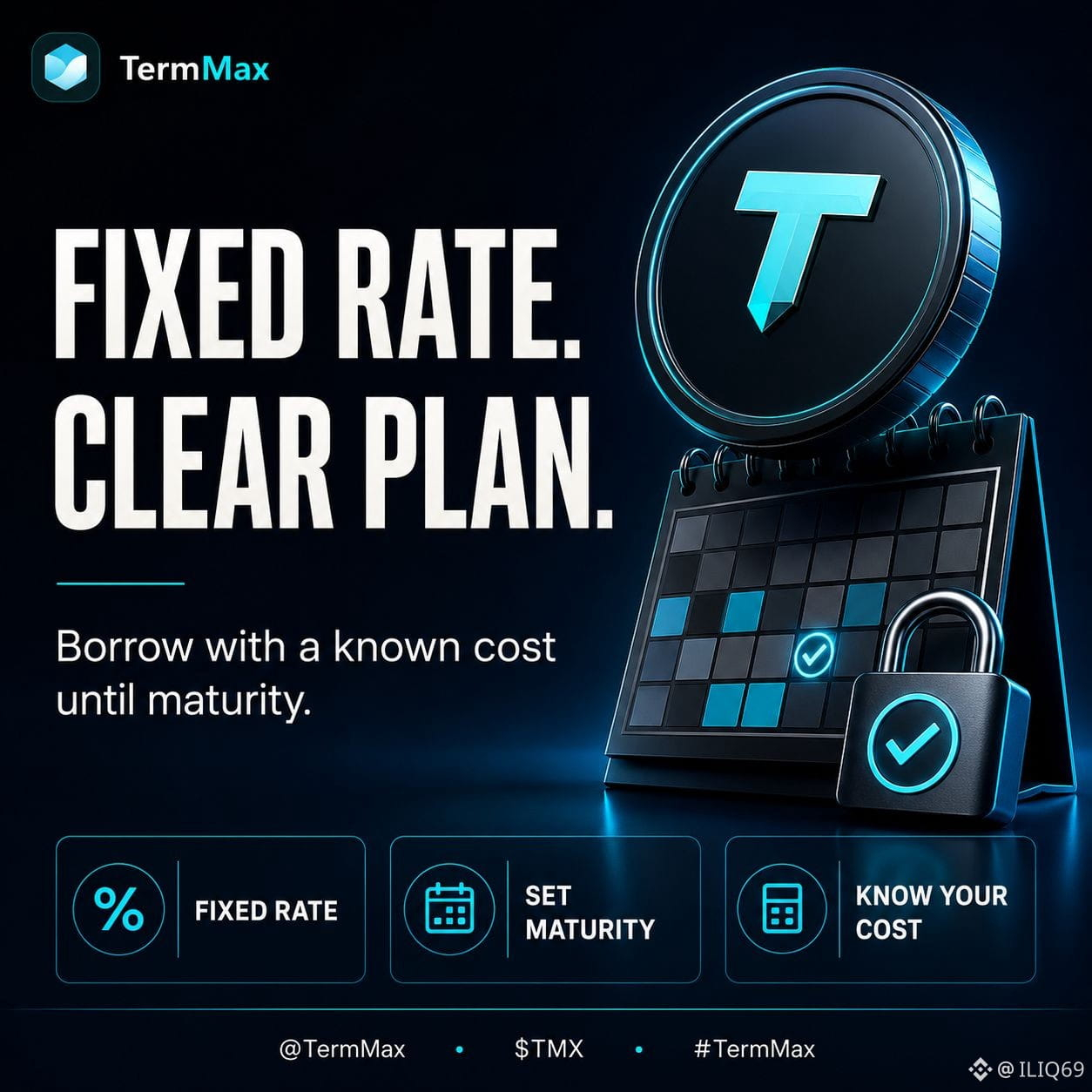
@TermMax hat mich daran denken lassen, wie DeFi-Kredite sich wie das Planen eines kleinen Business-Budgets anfühlen. Ich kann akzeptieren, dass es Kosten gibt; schwierig ist eher eine Kostenart, die sich verschiebt, während der Plan gleich bleibt.
Bei einem festen Zinssatz und einer festen Laufzeit kenne ich die Frage im Voraus: Lohnt sich diese Kreditaufnahme im Verhältnis zur Zeit, die ich dafür kaufe? Das wirkt ehrlicher, als ein APY-Widget wie eine Zusage zu behandeln.
Der Trade-off bleibt trotzdem wichtig. Ein fester Zinssatz kann weniger attraktiv wirken, wenn die variablen Sätze später fallen, und Sicherheiten können sich weiterhin gegen dich bewegen. Aber Gewissheit hat einen Wert, wenn das Ziel ist, eine bewusste Entscheidung zu treffen, statt jeden Tag ein Dashboard zu aktualisieren.
Was würde dir beim Leihen mehr helfen: ein bekannter Zinssatz oder maximale Flexibilität?
@TermMax #TermMax
Bei einem festen Zinssatz und einer festen Laufzeit kenne ich die Frage im Voraus: Lohnt sich diese Kreditaufnahme im Verhältnis zur Zeit, die ich dafür kaufe? Das wirkt ehrlicher, als ein APY-Widget wie eine Zusage zu behandeln.
Der Trade-off bleibt trotzdem wichtig. Ein fester Zinssatz kann weniger attraktiv wirken, wenn die variablen Sätze später fallen, und Sicherheiten können sich weiterhin gegen dich bewegen. Aber Gewissheit hat einen Wert, wenn das Ziel ist, eine bewusste Entscheidung zu treffen, statt jeden Tag ein Dashboard zu aktualisieren.
Was würde dir beim Leihen mehr helfen: ein bekannter Zinssatz oder maximale Flexibilität?
@TermMax #TermMax
A known rate
0%
Maximum flexibility
0%
A mix of both
0%
Not borrowing now
0%
0 Stimmen • Abstimmung beendet
Es gibt eine nützliche Spannung bei bStocks, über die meiner Meinung nach zu wenig gesprochen wird: Der Markt kann 24/7 geöffnet sein, während das zugrunde liegende Unternehmen seine Geschäftsgeschichte dennoch weiterhin auf einem normalen Berichtszeitplan erzählt.
Mit $NVDAB kann sich der Preis zu jeder Stunde auf Binance Spot bewegen. Aber für einen ernsthaften Forschungsprozess braucht man immer noch die Ergebnisse des Unternehmens, die Orientierung, den Produktzyklus, die Kundennachfrage und die Risiken. Ein Live-Chart kann zeigen, dass sich die Aufmerksamkeit verändert hat; er kann jedoch nicht erklären, ob sich die geschäftliche These verbessert hat.
Daher versuche ich, zwei Aktivitäten voneinander zu trennen. Die eine ist das Beobachten des Marktes. Die andere ist das Lesen des Unternehmens. Das Erste ist schnell und emotional; das Zweite ist langsamer und meistens nützlicher.
Diese Unterscheidung sorgt dafür, dass mir der 24/7-Zugang nicht zu 24/7-Rauschen wird.
Was liest du zuerst, wenn ein Unternehmen Ergebnisse veröffentlicht?
#bstockscis @BinanceCIS #bStocksCIS $NVDAB
Mit $NVDAB kann sich der Preis zu jeder Stunde auf Binance Spot bewegen. Aber für einen ernsthaften Forschungsprozess braucht man immer noch die Ergebnisse des Unternehmens, die Orientierung, den Produktzyklus, die Kundennachfrage und die Risiken. Ein Live-Chart kann zeigen, dass sich die Aufmerksamkeit verändert hat; er kann jedoch nicht erklären, ob sich die geschäftliche These verbessert hat.
Daher versuche ich, zwei Aktivitäten voneinander zu trennen. Die eine ist das Beobachten des Marktes. Die andere ist das Lesen des Unternehmens. Das Erste ist schnell und emotional; das Zweite ist langsamer und meistens nützlicher.
Diese Unterscheidung sorgt dafür, dass mir der 24/7-Zugang nicht zu 24/7-Rauschen wird.
Was liest du zuerst, wenn ein Unternehmen Ergebnisse veröffentlicht?
#bstockscis @BinanceCIS #bStocksCIS $NVDAB

Revenue and earnings
100%
Forward guidance
0%
Management commentary
0%
I wait for analysis
0%
1 Stimmen • Abstimmung beendet
Eine bStocks-Gewohnheit, die ich aufbauen möchte, ist eine absichtlich langweilige: Ich verwechsel es nicht, dass ein Markt geöffnet ist, mit der Annahme, dass eine Order automatisch eine gute Idee ist.
$SPCXB kann auf Binance Spot rund um die Uhr handeln. Das ist nützlich, besonders wenn eine traditionelle Börse geschlossen ist. Aber „zum Handel verfügbar“ ist nicht dasselbe wie „ich sollte mit einer Marktorder sofort loslegen“. Bevor ich eintrete, möchte ich das Live-Orderbuch ansehen, den maximalen Preis festlegen, den ich zahlen möchte, und die Position dimensionieren, bevor Emotionen übernehmen.
Das ist keine Prognose über SpaceX. Es ist eine Ausführungsregel für jedes Asset, das 24/7 handelbar ist: Bequemlichkeit soll mich besser vorbereiten – nicht impulsiver machen.
Der beste Trade, den ich vermeide, könnte der sein, den ich fast gemacht hätte, weil eine Chart in der Mitternacht plötzlich spannend aussah.
Wenn du einen immer offenen Markt tradest: Welche Regel hilft dir am meisten?
#bstockscis @BinanceCIS #bStocksCIS $SPCXB
$SPCXB kann auf Binance Spot rund um die Uhr handeln. Das ist nützlich, besonders wenn eine traditionelle Börse geschlossen ist. Aber „zum Handel verfügbar“ ist nicht dasselbe wie „ich sollte mit einer Marktorder sofort loslegen“. Bevor ich eintrete, möchte ich das Live-Orderbuch ansehen, den maximalen Preis festlegen, den ich zahlen möchte, und die Position dimensionieren, bevor Emotionen übernehmen.
Das ist keine Prognose über SpaceX. Es ist eine Ausführungsregel für jedes Asset, das 24/7 handelbar ist: Bequemlichkeit soll mich besser vorbereiten – nicht impulsiver machen.
Der beste Trade, den ich vermeide, könnte der sein, den ich fast gemacht hätte, weil eine Chart in der Mitternacht plötzlich spannend aussah.
Wenn du einen immer offenen Markt tradest: Welche Regel hilft dir am meisten?
#bstockscis @BinanceCIS #bStocksCIS $SPCXB

Use limit orders
0%
Check the order book
67%
Set a position size first
0%
Wait for the main session
33%
3 Stimmen • Abstimmung beendet
Verifiziert
Die einfache KI-Erzählung lautet: „Kaufe das Unternehmen, das den schnellsten Chip entwickelt.“ $ASMLB stellt eine andere Frage: Wer stellt eigentlich die Ausrüstung her, die Chiphersteller dabei unterstützt, fortschrittliche Chips herzustellen?
ASML entwickelt und fertigt Lithografiemaschinen sowie die Software und Dienstleistungen, die Chiphersteller in der Produktion nutzen. Das rückt sein Geschäft weiter nach vorn – weg von einer vertrauten Konsumtech-Überschrift.
Außerdem verändert das, wonach ich recherchieren würde. Ich würde nicht den nächsten Smartphone-Launch als ganze These verwenden. Ich würde die Investitionsausgaben der Kunden betrachten, die Fertigungs-Roadmap und die Frage, ob Kunden die Ausrüstung übernehmen und komplexe Anlagen effektiv einsetzen.
Das ist keine Behauptung, dass eine Position besser ist als eine andere. Es ist eine Erinnerung daran, dass „Halbleiter“ eine Kette sehr unterschiedlicher Unternehmen ist – jedes mit eigenen Engpässen.
Welcher Teil des Chip-Ökosystems interessiert dich am meisten?
#bstockscis @BinanceCIS #bStocksCIS $ASMLB
ASML entwickelt und fertigt Lithografiemaschinen sowie die Software und Dienstleistungen, die Chiphersteller in der Produktion nutzen. Das rückt sein Geschäft weiter nach vorn – weg von einer vertrauten Konsumtech-Überschrift.
Außerdem verändert das, wonach ich recherchieren würde. Ich würde nicht den nächsten Smartphone-Launch als ganze These verwenden. Ich würde die Investitionsausgaben der Kunden betrachten, die Fertigungs-Roadmap und die Frage, ob Kunden die Ausrüstung übernehmen und komplexe Anlagen effektiv einsetzen.
Das ist keine Behauptung, dass eine Position besser ist als eine andere. Es ist eine Erinnerung daran, dass „Halbleiter“ eine Kette sehr unterschiedlicher Unternehmen ist – jedes mit eigenen Engpässen.
Welcher Teil des Chip-Ökosystems interessiert dich am meisten?
#bstockscis @BinanceCIS #bStocksCIS $ASMLB

Chip design
29%
Manufacturing equipment
0%
Memory and storage
28%
Servers and systems
43%
7 Stimmen • Abstimmung beendet
Wenn ich Nokia erwähnt sehe, ist mein erstes Gedankensbild immer noch ein altes Telefon. Genau deshalb ist $NOKB eine nützliche Forschungsübung.
Nokia beschreibt sich selbst als ein B2B-Technologieunternehmen, das in mobilen, Festnetz- und Cloud-Netzwerken tätig ist, mit Kunden, die unter anderem Diensteanbieter und Unternehmen umfassen. Das bedeutet: Eine schnelle Consumer-Produkt-Erzählung greift zu kurz – entscheidend ist die geschäftliche Perspektive.
Wenn ich diesen Ticker recherchieren würde, würde ich Nostalgie weniger interessant finden und mich mehr für Investitionszyklen in Netzwerke, Kundenverträge, Technologiestandards und die Frage interessieren, wie Ausgaben für Infrastruktur in Ergebnisse umgewandelt werden. Das ist eine ruhigere Geschichte als ein viraler Gadget-Launch, aber auch ein genauerer Ausgangspunkt.
Die Erkenntnis ist einfach: Bevor man mit einer vertrauten Marke handelt, sollte man fragen, was das Unternehmen heute wirklich verkauft.
Was würdest du als Erstes prüfen, wenn du $NOKB recherchierst?
@BinanceCIS #bStocksCIS #bstockscis
Nokia beschreibt sich selbst als ein B2B-Technologieunternehmen, das in mobilen, Festnetz- und Cloud-Netzwerken tätig ist, mit Kunden, die unter anderem Diensteanbieter und Unternehmen umfassen. Das bedeutet: Eine schnelle Consumer-Produkt-Erzählung greift zu kurz – entscheidend ist die geschäftliche Perspektive.
Wenn ich diesen Ticker recherchieren würde, würde ich Nostalgie weniger interessant finden und mich mehr für Investitionszyklen in Netzwerke, Kundenverträge, Technologiestandards und die Frage interessieren, wie Ausgaben für Infrastruktur in Ergebnisse umgewandelt werden. Das ist eine ruhigere Geschichte als ein viraler Gadget-Launch, aber auch ein genauerer Ausgangspunkt.
Die Erkenntnis ist einfach: Bevor man mit einer vertrauten Marke handelt, sollte man fragen, was das Unternehmen heute wirklich verkauft.
Was würdest du als Erstes prüfen, wenn du $NOKB recherchierst?
@BinanceCIS #bStocksCIS #bstockscis

Network customers
25%
5G and cloud strategy
50%
Financial results
0%
Competitive landscape
25%
4 Stimmen • Abstimmung beendet
Verifiziert
Eine Sache, die ich am Recherchieren von $INTCB mag, ist, dass es mich zwingt, die „Chip-Unternehmen“-Etikettierung abzulegen. Sie ist zu vage, um nützlich zu sein.
Intel berichtet über Produktgeschäfte, die Prozessoren und verwandte Halbleiterlösungen entwickeln und verkaufen. Außerdem gibt es Intel Foundry, ein Fertigungs- und Dienstleistungsgeschäft, das externe Kunden bedienen soll. Diese Bereiche hängen zusammen, aber sie erfordern unterschiedliche Belege.
Für die Produktseite würde ich mir Nachfrage und Wettbewerbsfähigkeit ansehen. Für die Foundry-Seite würde ich nach Fertigungsdurchführung, Kundenvertrauen und danach fragen, ob sich die Nachfrage von außen tatsächlich entwickelt. Wenn man beides einfach nur „AI Exposure“ nennt, verdeckt das mehr, als es erklärt.
Das ist meine Lieblingsart von bStock-Recherche: keine Vorhersage, sondern eine bessere Landkarte dessen, was der Ticker bedeutet.
Welche $INTCB -Story würdest du zuerst studieren?
#bstockscis @BinanceCIS #bStocksCIS $INTCB
Intel berichtet über Produktgeschäfte, die Prozessoren und verwandte Halbleiterlösungen entwickeln und verkaufen. Außerdem gibt es Intel Foundry, ein Fertigungs- und Dienstleistungsgeschäft, das externe Kunden bedienen soll. Diese Bereiche hängen zusammen, aber sie erfordern unterschiedliche Belege.
Für die Produktseite würde ich mir Nachfrage und Wettbewerbsfähigkeit ansehen. Für die Foundry-Seite würde ich nach Fertigungsdurchführung, Kundenvertrauen und danach fragen, ob sich die Nachfrage von außen tatsächlich entwickelt. Wenn man beides einfach nur „AI Exposure“ nennt, verdeckt das mehr, als es erklärt.
Das ist meine Lieblingsart von bStock-Recherche: keine Vorhersage, sondern eine bessere Landkarte dessen, was der Ticker bedeutet.
Welche $INTCB -Story würdest du zuerst studieren?
#bstockscis @BinanceCIS #bStocksCIS $INTCB

Consumer and data-center chips
25%
Intel Foundry
0%
Manufacturing execution
25%
All of the above
50%
4 Stimmen • Abstimmung beendet
Verifiziert
KI-Diskussionen beginnen normalerweise damit, dass der Chip die Berechnung übernimmt. Ich habe begonnen, mehr Aufmerksamkeit auf den Speicher zu richten, der dem System hilft, die Daten in Bewegung zu halten.
Das eigene Produktportfolio von Micron umfasst DRAM-, NAND- und NOR-Speicher sowie Speicherprodukte. Das macht $MUB jedoch nicht zu einem Abkürzungsweg für „den KI-Handel“. Es stellt mir vielmehr eine klarere Forschungsfrage: Welcher Teil des Compute-Stacks ist dieses Unternehmen tatsächlich ausgesetzt, und was muss richtig laufen, damit aus Nachfrage ein besseres Geschäftsergebnis entsteht?
Diese Unterscheidung ist wichtig. Eine starke Schlagzeile über KI kann einen ganzen Sektor nach oben ziehen, während die Wirtschaftlichkeit von Speicher weiterhin von Angebot, Produktmix, Kundennachfrage und Umsetzung abhängt.
Daher würde ich lieber die Rolle des Unternehmens im System verstehen, statt einen Ticker zu kaufen, nur weil er neben einer KI-Schlagzeile auftaucht.
Was würdest du zuerst recherchieren, bevor du $MUB ansiehst?
@BinanceCIS #bStocksCIS #bstockscis
Das eigene Produktportfolio von Micron umfasst DRAM-, NAND- und NOR-Speicher sowie Speicherprodukte. Das macht $MUB jedoch nicht zu einem Abkürzungsweg für „den KI-Handel“. Es stellt mir vielmehr eine klarere Forschungsfrage: Welcher Teil des Compute-Stacks ist dieses Unternehmen tatsächlich ausgesetzt, und was muss richtig laufen, damit aus Nachfrage ein besseres Geschäftsergebnis entsteht?
Diese Unterscheidung ist wichtig. Eine starke Schlagzeile über KI kann einen ganzen Sektor nach oben ziehen, während die Wirtschaftlichkeit von Speicher weiterhin von Angebot, Produktmix, Kundennachfrage und Umsetzung abhängt.
Daher würde ich lieber die Rolle des Unternehmens im System verstehen, statt einen Ticker zu kaufen, nur weil er neben einer KI-Schlagzeile auftaucht.
Was würdest du zuerst recherchieren, bevor du $MUB ansiehst?
@BinanceCIS #bStocksCIS #bstockscis

Memory product mix
50%
Demand outlook
25%
Supply conditions
0%
Earnings report
25%
4 Stimmen • Abstimmung beendet
Der Name „Stablecoin“ kann eine gefährliche gedankliche Abkürzung erzeugen.
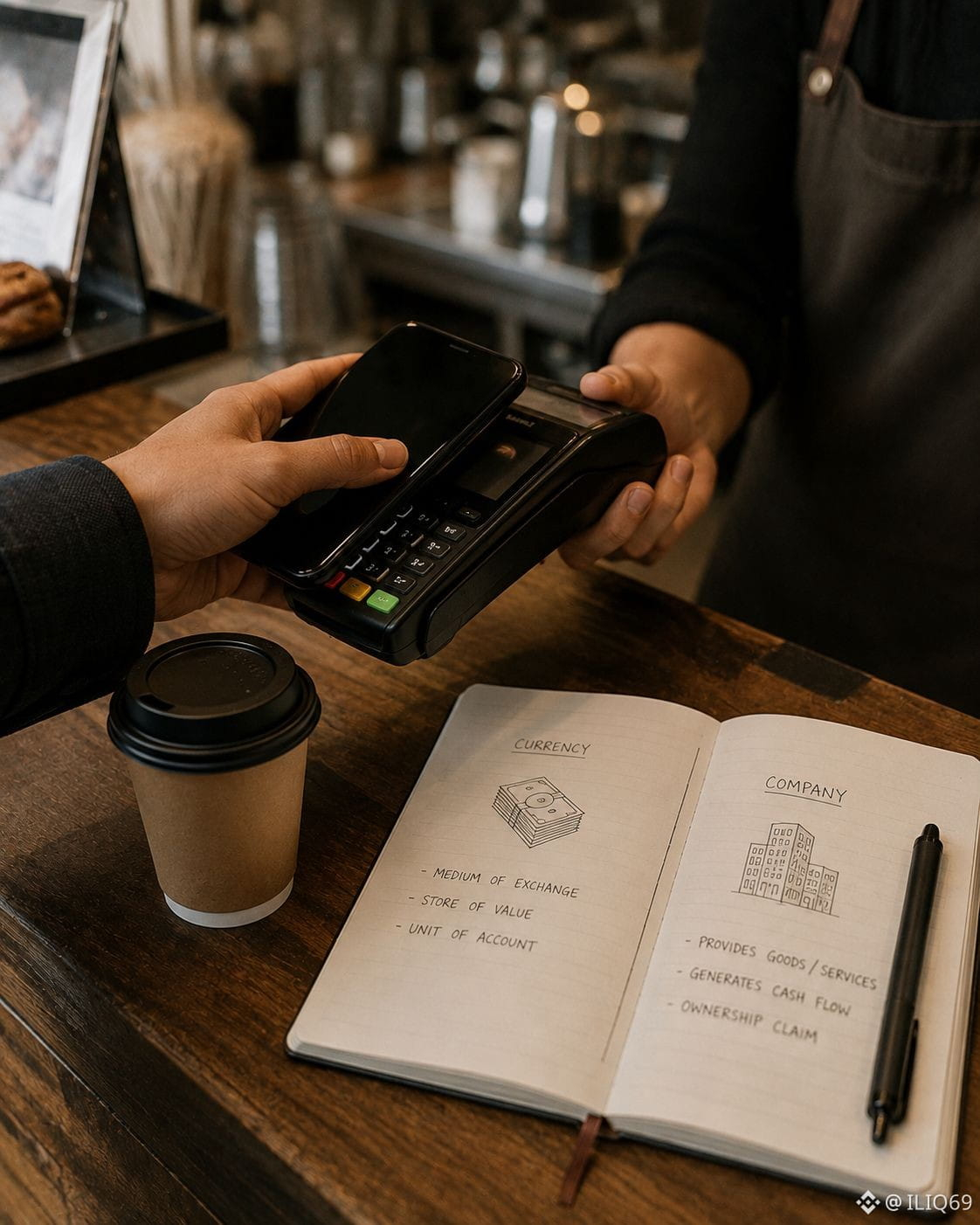
USDC ist dafür ausgelegt, eine Dollar-Bindung (Dollar-Peg) zu halten. $CRCLB ist eine Exponierung gegenüber Circle als Unternehmen über eine bStock-Struktur. Das sind völlig unterschiedliche Dinge. Das eine soll im Preis stabil sein; das andere ist ein aktienähnliches, mit dem Unternehmen verknüpftes Instrument, dessen Wert auf das Erlösmodell der Firma, die Akzeptanz, den Wettbewerb, die Regulierung, die Ausgaben und die Markterwartungen reagieren kann.
Deshalb würde ich $CRCLB niemals als „sichere Version von USDC“ bezeichnen. Die sinnvolle Verbindung ist nicht die Preisstabilität — sondern dass Circle Infrastruktur rund um Stablecoins und blockchainbasierte Finanzdienstleistungen betreibt.
Für mich ist die entscheidende Frage, ob ich verstehe, wie das Unternehmen Geld verdient, wächst und ausgibt, statt ob ich seinen Stablecoin in meiner Wallet nutze.
Welchen Geschäftstreiber würdest du zuerst für $CRCLB recherchieren?
@BinanceCIS #bStocksCIS #bstockscis
USDC ist dafür ausgelegt, eine Dollar-Bindung (Dollar-Peg) zu halten. $CRCLB ist eine Exponierung gegenüber Circle als Unternehmen über eine bStock-Struktur. Das sind völlig unterschiedliche Dinge. Das eine soll im Preis stabil sein; das andere ist ein aktienähnliches, mit dem Unternehmen verknüpftes Instrument, dessen Wert auf das Erlösmodell der Firma, die Akzeptanz, den Wettbewerb, die Regulierung, die Ausgaben und die Markterwartungen reagieren kann.
Deshalb würde ich $CRCLB niemals als „sichere Version von USDC“ bezeichnen. Die sinnvolle Verbindung ist nicht die Preisstabilität — sondern dass Circle Infrastruktur rund um Stablecoins und blockchainbasierte Finanzdienstleistungen betreibt.
Für mich ist die entscheidende Frage, ob ich verstehe, wie das Unternehmen Geld verdient, wächst und ausgibt, statt ob ich seinen Stablecoin in meiner Wallet nutze.
Welchen Geschäftstreiber würdest du zuerst für $CRCLB recherchieren?
@BinanceCIS #bStocksCIS #bstockscis
USDC adoption
43%
Reserve income
14%
Regulation
29%
Competition
14%
7 Stimmen • Abstimmung beendet
Verifiziert
Nicht jeder Ticker verdient es, so recherchiert zu werden, als wäre er eine einzige Firma. $EWYB ist eine gute Erinnerung daran.
Der zugrunde liegende EWY-Fonds ist darauf ausgelegt, einen Index südkoreanischer Aktien abzubilden. Die Frage lautet also nicht nur: „Gefällt mir diese Chart?“ Sondern auch: Welches Land, welche Sektoren, welche Währungsrisiken und welche Gruppe von Unternehmen wähle ich über eine einzige Position?
Das wirkt ehrlicher, als bei jedem ETF pauschal von „automatisch diversifiziert“ zu sprechen. Ein Warenkorb kann viele Unternehmen enthalten und dennoch gegenüber den Vorschriften eines einzigen Marktes, dem Exportzyklus, der Technologiebewertung und der Stimmung der Anleger exponiert sein.
Für ein Krypto-natives Portfolio finde ich das interessant, weil es das Gespräch von der Auswahl eines bekannten Namens hin zu einer bewussten Länderperspektive verschiebt. Das ist eine ganz andere Entscheidung.
Würdest du lieber eine einzelne Firma gründlich recherchieren oder eine Länder-Warenkorb-Ansicht mit $EWYB wählen?
@BinanceCIS #bStocksCIS $EWYB
Der zugrunde liegende EWY-Fonds ist darauf ausgelegt, einen Index südkoreanischer Aktien abzubilden. Die Frage lautet also nicht nur: „Gefällt mir diese Chart?“ Sondern auch: Welches Land, welche Sektoren, welche Währungsrisiken und welche Gruppe von Unternehmen wähle ich über eine einzige Position?
Das wirkt ehrlicher, als bei jedem ETF pauschal von „automatisch diversifiziert“ zu sprechen. Ein Warenkorb kann viele Unternehmen enthalten und dennoch gegenüber den Vorschriften eines einzigen Marktes, dem Exportzyklus, der Technologiebewertung und der Stimmung der Anleger exponiert sein.
Für ein Krypto-natives Portfolio finde ich das interessant, weil es das Gespräch von der Auswahl eines bekannten Namens hin zu einer bewussten Länderperspektive verschiebt. Das ist eine ganz andere Entscheidung.
Würdest du lieber eine einzelne Firma gründlich recherchieren oder eine Länder-Warenkorb-Ansicht mit $EWYB wählen?
@BinanceCIS #bStocksCIS $EWYB

One company deeply
0%
Country basket
75%
Mix of both
25%
Still learning ETFs
0%
4 Stimmen • Abstimmung beendet
@BinanceCIS #bStocksCIS
Früher habe ich mir Strategie angesehen und gedacht: „Das ist im Grunde Bitcoin mit einem Börsenticker.“ Je mehr ich gelesen habe, desto weniger nützlich wurde diese Abkürzung.
Strategy beschreibt sich selbst als Bitcoin-Treasury-Unternehmen, aber $MSTRB ist dennoch eine Exponierung gegenüber einem börsennotierten Unternehmen. Ihre Geschichte umfasst die Bitcoin-Treasury des Unternehmens, seine Entscheidungen zur Kapitalbeschaffung und sein Geschäft mit Unternehmensanalytik. Das kann manchmal in dieselbe Richtung zeigen, aber es ist nicht dasselbe Risiko.
Für mich verändert das den Forschungsprozess. Wenn ich nur $BTC beobachte, verpasse ich die Unternehmensebene. Wenn ich nur den Unternehmens-Chart beobachte, verpasse ich, warum die Treasury-Strategie wichtig ist. Eine saubere These braucht beides.
Ich behandle $MSTRB nicht als „gehebelt auf BTC“. Ich behandle es als ein separates Instrument mit einer BTC-sensitiven These und unternehmensspezifischen Entscheidungen dahinter.
Welche Perspektive würdest du zuerst prüfen, bevor du $MSTRB recherchierst?
Früher habe ich mir Strategie angesehen und gedacht: „Das ist im Grunde Bitcoin mit einem Börsenticker.“ Je mehr ich gelesen habe, desto weniger nützlich wurde diese Abkürzung.
Strategy beschreibt sich selbst als Bitcoin-Treasury-Unternehmen, aber $MSTRB ist dennoch eine Exponierung gegenüber einem börsennotierten Unternehmen. Ihre Geschichte umfasst die Bitcoin-Treasury des Unternehmens, seine Entscheidungen zur Kapitalbeschaffung und sein Geschäft mit Unternehmensanalytik. Das kann manchmal in dieselbe Richtung zeigen, aber es ist nicht dasselbe Risiko.
Für mich verändert das den Forschungsprozess. Wenn ich nur $BTC beobachte, verpasse ich die Unternehmensebene. Wenn ich nur den Unternehmens-Chart beobachte, verpasse ich, warum die Treasury-Strategie wichtig ist. Eine saubere These braucht beides.
Ich behandle $MSTRB nicht als „gehebelt auf BTC“. Ich behandle es als ein separates Instrument mit einer BTC-sensitiven These und unternehmensspezifischen Entscheidungen dahinter.
Welche Perspektive würdest du zuerst prüfen, bevor du $MSTRB recherchierst?

Bitcoin treasury
25%
Capital structure
25%
Software business
0%
All three together
50%
4 Stimmen • Abstimmung beendet
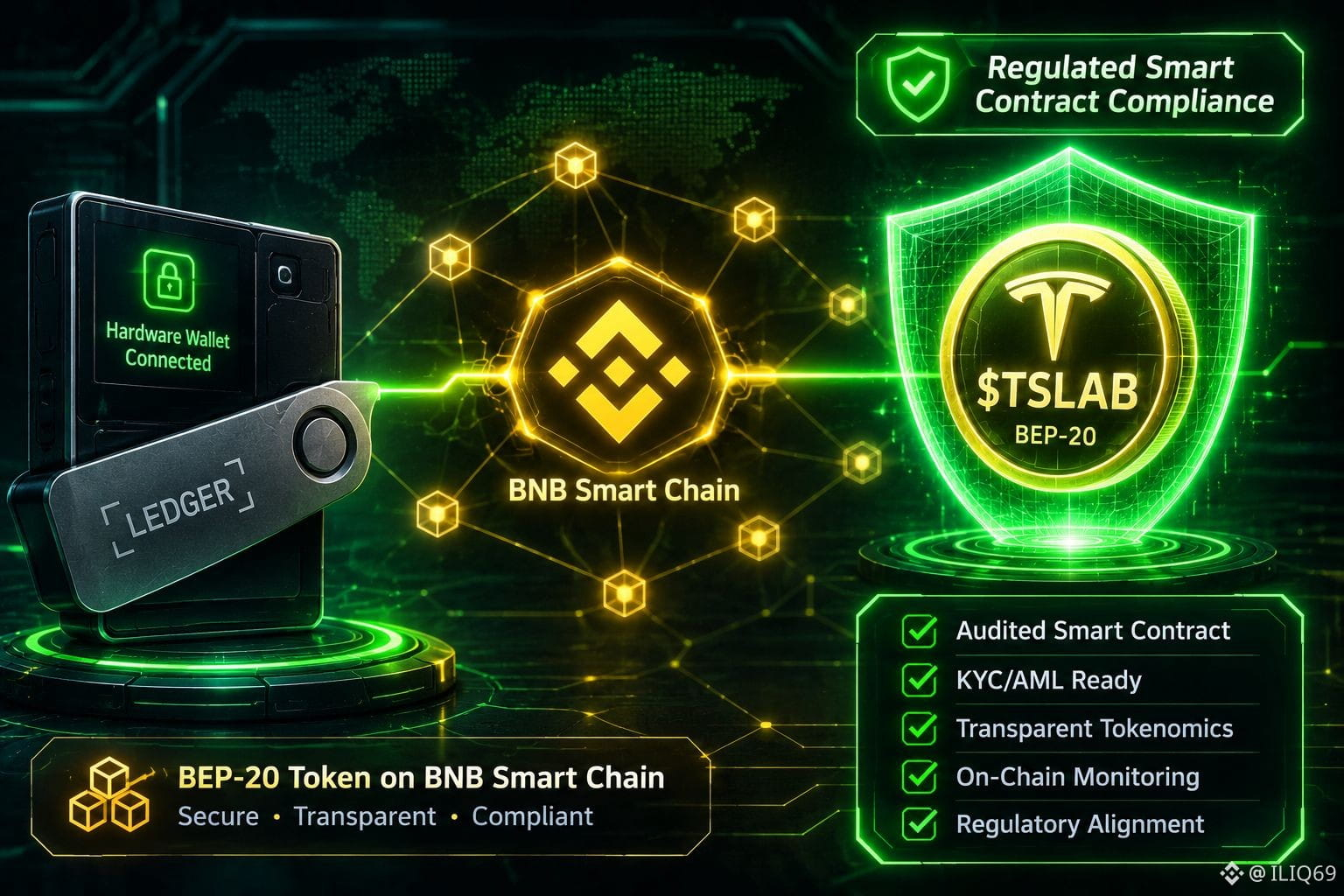
Ich habe gestern meine Position $TSLAB in meine persönliche BNB Smart Chain Wallet zurückgezogen, in der Annahme, sie würde sich wie eine Standard-Kryptowährung verhalten. Ich lag falsch, und zu verstehen warum ist entscheidend für alle, die RWA handeln.
Aktien werden als BEP-20 Tokens von BTech Holdings unter der ADGM/FSRA-Regulierung ausgegeben. Wenn man die privaten Schlüssel besitzt, erhält man zwar nutzerkontrolliertes Custody, aber der zugrunde liegende Smart Contract behält regulatorische Transfer-Kontrollen.
Wenn eine Adresse in Konflikt mit Compliance-, Sanktions- oder geografischen Einschränkungen steht, kann der Vertrag den Transfer einschränken oder einfrieren.
Was das in der Praxis bedeutet:
1️⃣ Private Key Control: Du besitzt die Signatur und die Wallet-Custody. 2️⃣ Reguliertes Umfeld: Der Emittent setzt die rechtliche Compliance On-Chain durch.
3️⃣ Hybride Sicherheit: Du erhältst Blockchain-Portabilität ohne zustimmungslose Anonymität.
Es ist weder eine „traditionelle Aktie“ noch ein „reiner DeFi-Token“. Es ist ein reguliertes Wertpapier, das auf öffentlicher Infrastruktur läuft.
Willst du bStocks lieber in deiner Self-Custody-Wallet halten oder direkt auf Binance? @BinanceCIS #bStocksCIS $TSLAB
Aktien werden als BEP-20 Tokens von BTech Holdings unter der ADGM/FSRA-Regulierung ausgegeben. Wenn man die privaten Schlüssel besitzt, erhält man zwar nutzerkontrolliertes Custody, aber der zugrunde liegende Smart Contract behält regulatorische Transfer-Kontrollen.
Wenn eine Adresse in Konflikt mit Compliance-, Sanktions- oder geografischen Einschränkungen steht, kann der Vertrag den Transfer einschränken oder einfrieren.
Was das in der Praxis bedeutet:
1️⃣ Private Key Control: Du besitzt die Signatur und die Wallet-Custody. 2️⃣ Reguliertes Umfeld: Der Emittent setzt die rechtliche Compliance On-Chain durch.
3️⃣ Hybride Sicherheit: Du erhältst Blockchain-Portabilität ohne zustimmungslose Anonymität.
Es ist weder eine „traditionelle Aktie“ noch ein „reiner DeFi-Token“. Es ist ein reguliertes Wertpapier, das auf öffentlicher Infrastruktur läuft.
Willst du bStocks lieber in deiner Self-Custody-Wallet halten oder direkt auf Binance? @BinanceCIS #bStocksCIS $TSLAB
Self-custody (BNB Chain)
50%
Directly on Binance Spot
33%
I use both methods
17%
6 Stimmen • Abstimmung beendet
Wall Street schläft, aber dein Portfolio muss es nicht. 📉📈
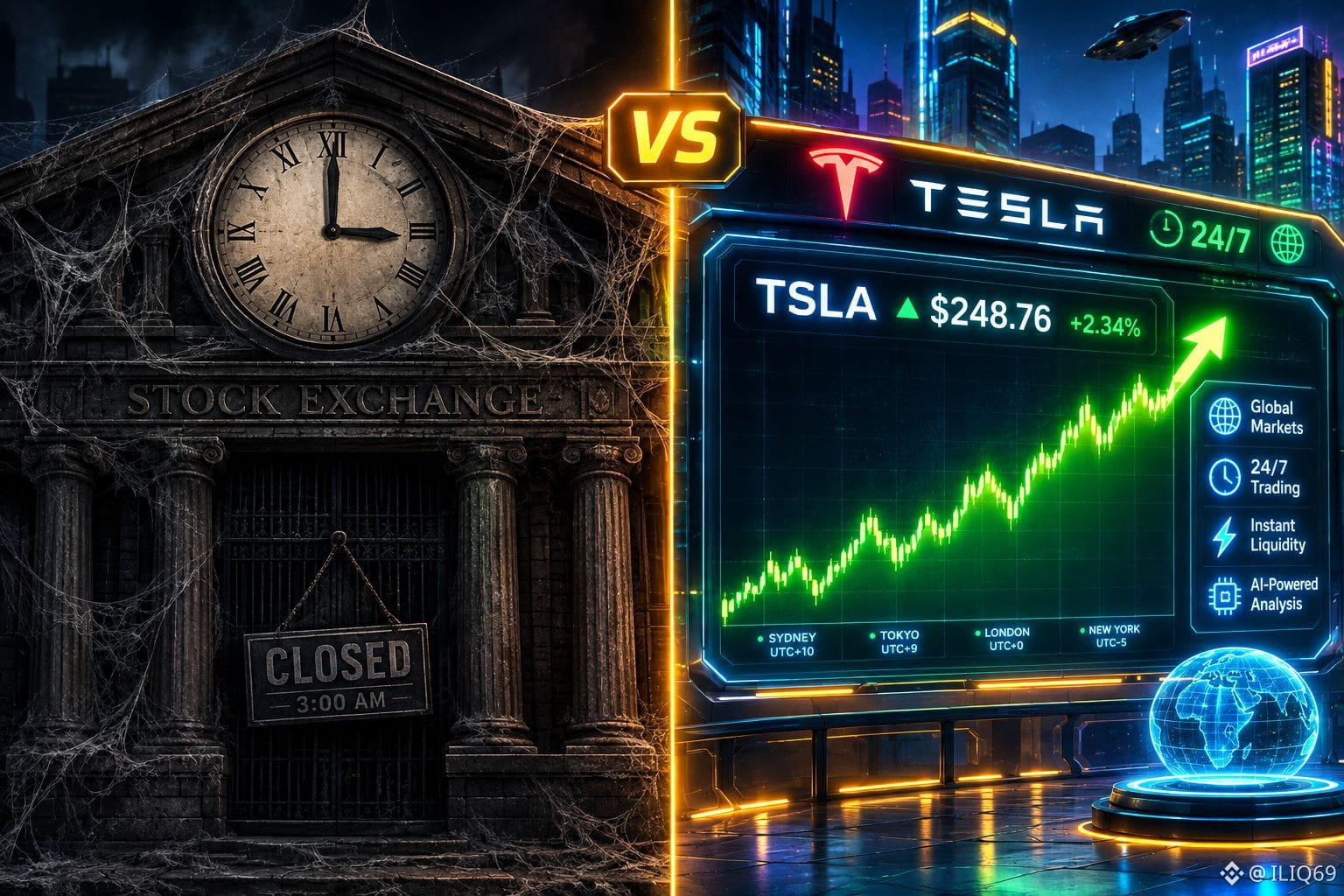
Seit Jahrzehnten sind Privatanleger an die Glocke von 9:30 bis 16:00 Uhr EST gebunden. Wenn am Freitagabend ein massives makroökonomisches Ereignis eintritt, sind traditionelle Investoren bis Montagmorgen gefangen.
Das bStocks-Ökosystem verändert diese Machtbalance grundlegend. Durch die Nutzung von @BinanceCIS ermöglichen tokenisierte RWA (Real World Assets) 24/7-Liquidität.
Warum das für deine $TSLAB -Strategie wichtig ist:
1️⃣ Event-Driven Trading: Reagiere auf Wochenendnachrichten sofort – nicht erst am Montag.
2️⃣ Globale Zugänglichkeit: Trade in deiner lokalen Zeitzone, nicht in der von New York. 3️⃣ Kontinuierliches Hedging: Balanciere gleichzeitig deine Crypto- und Equity-Exponierung, ohne darauf warten zu müssen, dass die traditionellen Märkte öffnen.
Das traditionelle Brokerage-Modell beginnt, wie ein Relikt aus der Vergangenheit auszusehen. Wartest du immer noch auf die Eröffnungsglocke – oder bist du zu konstanter Liquidität gewechselt?
Welcher Vorteil von 24/7-Trading ist für deine Strategie am kritischsten? #bStocksCIS
Seit Jahrzehnten sind Privatanleger an die Glocke von 9:30 bis 16:00 Uhr EST gebunden. Wenn am Freitagabend ein massives makroökonomisches Ereignis eintritt, sind traditionelle Investoren bis Montagmorgen gefangen.
Das bStocks-Ökosystem verändert diese Machtbalance grundlegend. Durch die Nutzung von @BinanceCIS ermöglichen tokenisierte RWA (Real World Assets) 24/7-Liquidität.
Warum das für deine $TSLAB -Strategie wichtig ist:
1️⃣ Event-Driven Trading: Reagiere auf Wochenendnachrichten sofort – nicht erst am Montag.
2️⃣ Globale Zugänglichkeit: Trade in deiner lokalen Zeitzone, nicht in der von New York. 3️⃣ Kontinuierliches Hedging: Balanciere gleichzeitig deine Crypto- und Equity-Exponierung, ohne darauf warten zu müssen, dass die traditionellen Märkte öffnen.
Das traditionelle Brokerage-Modell beginnt, wie ein Relikt aus der Vergangenheit auszusehen. Wartest du immer noch auf die Eröffnungsglocke – oder bist du zu konstanter Liquidität gewechselt?
Welcher Vorteil von 24/7-Trading ist für deine Strategie am kritischsten? #bStocksCIS
Reacting to weekend news
60%
Trading in my own timezone
40%
Continuous portfolio hedging
0%
5 Stimmen • Abstimmung beendet
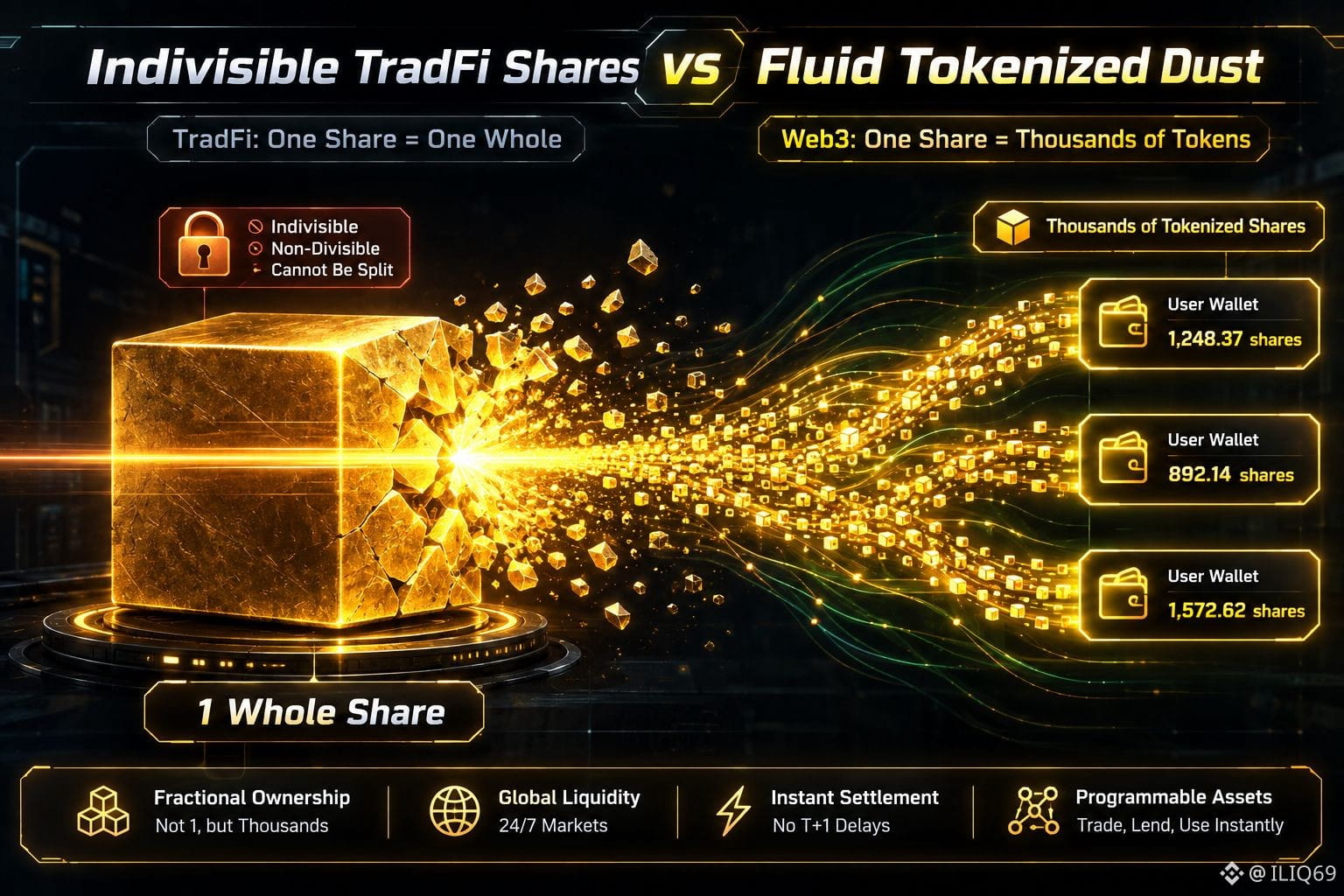
Der Gedanke an fraktionierte Aktien hat traditionelle Verwahrstellen schon immer vor mathematische Kopfschmerzen gestellt. Man kann nicht nativ 0,015 einer Apple-Aktie halten. Das traditionelle Ledger ist auf ganze, nicht teilbare Einheiten aufgebaut. Es ist ein absolutes Zahlensystem für ganze Zahlen. Doch schau dir das Orderbuch von bStocks an. Du kannst exakte USDT-Beträge in $NVDAB einsetzen – bis hin zu Mikrofraktionen. Das ist kein bloßer UI-Trick; es ist eine massive Pooling-Operation. Der zugrunde liegende Verwahrer in Abu Dhabi aggregiert diese fraktionierten Anforderungen, hält die vollständigen Aktien in einem sicheren Tresor und stellt teilbare Tokens auf der Blockchain aus. Das macht starre traditionelle Wertpapiere effektiv zu flüssiger, teilbarer Krypto-Liquidität. Das ist ein brillantes Zusammenspiel der Architektur. Du bekommst die Kapitaleffizienz eines ERC-20-Tokens kombiniert mit der regulatorischen Absicherung eines Legacy-Assets. Aber es wirft eine technische Frage auf: Was passiert mit dem „Dust“? Wenn Tausende Nutzer jeweils 0,0001 einer Aktie halten, führt der Verwahrer im Grunde einen kontinuierlichen Ausgleich zwischen On-Chain-Fragmentierung und Off-Chain-Ganzheit durch. Das ist ein großer Fortschritt für die Effizienz von Retail-Kapital, er erfordert jedoch absolutes Vertrauen in die Mathematik des Intermediärs. Weitere architektonische Details unter @BinanceCIS #bStocksCIS
Verifiziert
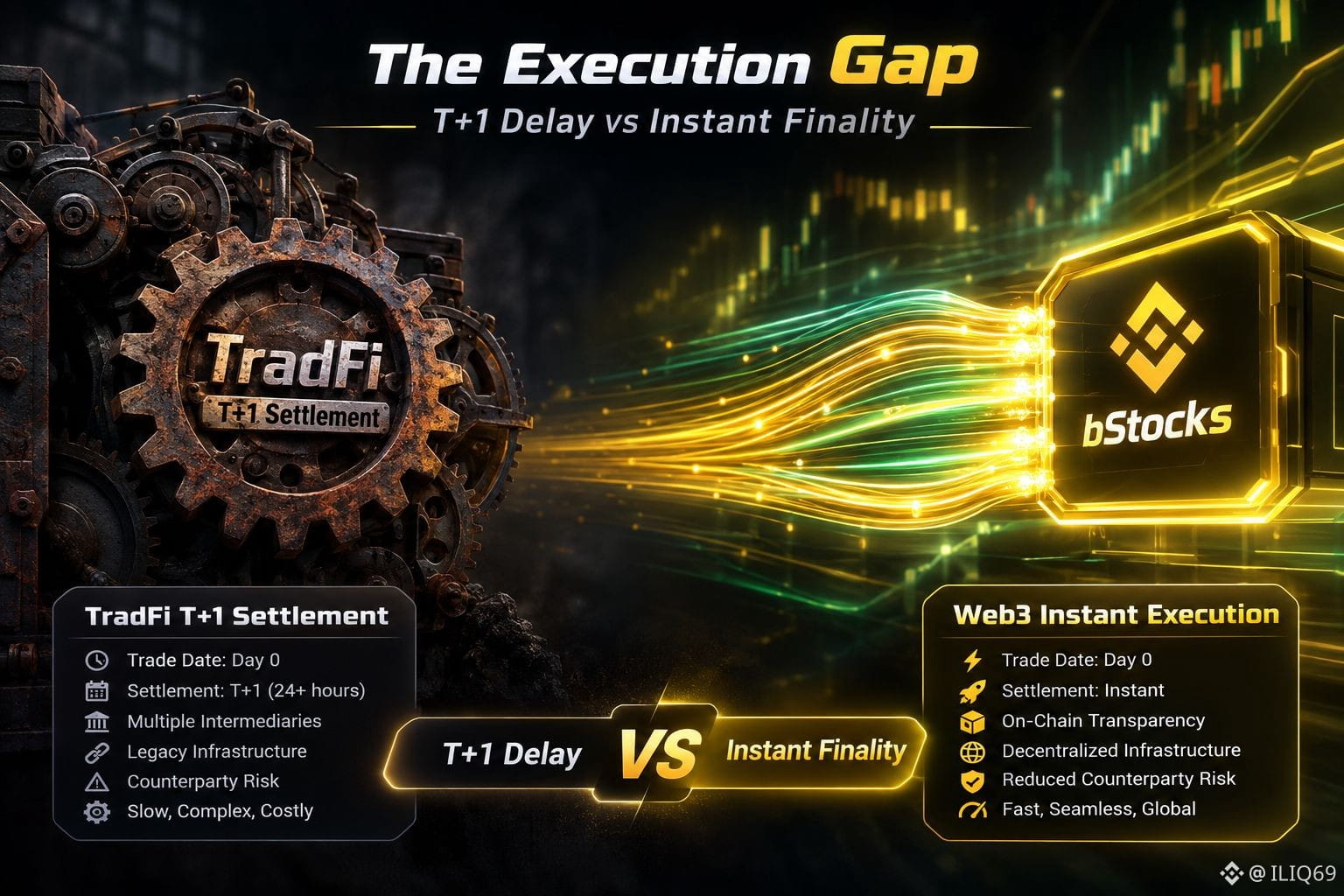
Ich habe mir genauer angeschaut, wie die Ausführung bei tokenisierten Aktien tatsächlich funktioniert, und dabei zeigt sich ein grundlegender Konflikt zwischen Web3-Schnelligkeit und der Architektur von TradFi. Im traditionellen Finanzwesen dauert es T+1 Tage, bis beim Kauf eines Anteils die Abwicklung der Unterlagen tatsächlich erfolgt. Das ist ein höchst starres, stark reguliertes bürokratisches Verfahren. Krypto funktioniert nicht so. Ein Blockchain-Status ändert sich augenblicklich. Per Design erwarten wir absolute Endgültigkeit in dem Moment, in dem wir auf „Kaufen“ klicken. Das schafft eine enorme UX-Hürde, wenn man diese beiden Welten verbindet. Binance löst das mit bStocks. Wenn du auf $TSLAB „Kaufen“ drückst, wird dein Guthaben im Dashboard sofort angezeigt. Aber im Hintergrund zwingen sie eine veraltete TradFi-Abwicklungs-Schicht dazu, mit Krypto-Geschwindigkeit zu arbeiten. Die Börse übernimmt im Wesentlichen das Risiko der Zeitverzögerung und fungiert als Puffer zwischen deiner sofortigen USDT-Abbuchung und dem langsam vorankommenden Tresor des Custodians in ADGM. Das ist ein faszinierender Workaround, der zeigt, dass BTech Holdings Aktien nicht nur „auf Krypto zu portieren“ versucht. Sie zwingen Legacy-Märkte, sich an die ungeduldige Basisschicht von Web3 anzupassen. Aber das bringt mich zum Nachdenken: Wie geht das System mit extremer Volatilität um, wenn der Legacy-Markt geschlossen ist, aber der Krypto-Liquiditätspool weiterhin aktiv ist? Überwiegt die reine Geschwindigkeit nativer Krypto die operative Reibung der custodialen Absicherung? Tauche tief ein in die Mechanik bei @BinanceCIS #bStocksCIS
Verifiziert
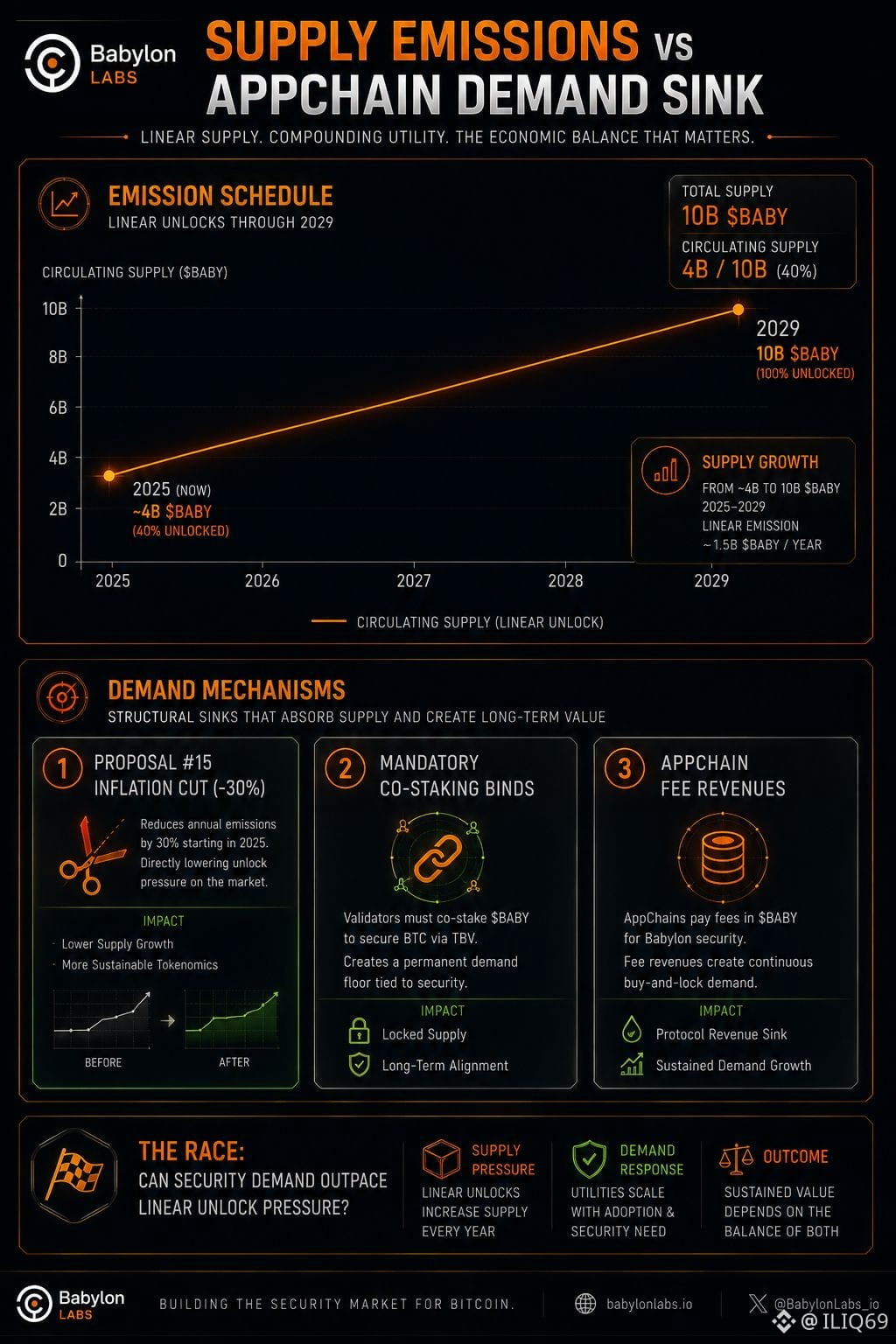
Ich habe die Angebotsdynamik für $BABY über die nächsten Jahre hinweg eingeordnet, und das stellt das aktuelle Preisverhalten in einen viel klareren strukturellen Kontext.
Das zirkulierende Angebot liegt bei etwa 4 Milliarden Tokens bei einer Gesamtobergrenze von 10 Milliarden. Mit monatlich linearen Freigaben bis 2029 läuft eine fortlaufende Emission weiter, die der Markt kontinuierlich verarbeiten muss. Wenn man sich den Chart im Rückblick ansieht – über 80 % unter den frühen Hochs – liegt die Annahme nahe, dass im Protokoll etwas kaputt ist.
Doch ein Blick auf die tatsächliche Infrastruktur erzählt eine andere Geschichte. Das Protokoll nimmt Consumer Chains auf und erweitert seine Co-Staking-Fähigkeiten. Die zentrale Spannung dreht sich nicht darum, ob natives BTC-Staking funktioniert – sondern um die Ausführungsgeschwindigkeit. Können neue AppChains Babylons Sicherheit schnell genug übernehmen, um eine Nachfragesog-Kraft für Token zu erzeugen, die den monatlichen Unlock-Plan übertrifft?
Derzeit akkumulieren BTC-Staker Erträge, während die Inhaber von $BABY der Inflationskurve gegenüberstehen. Vorschlag #15 hat bereits einen Schritt in Richtung Lösung unternommen, indem die Inflation um 30 % gesenkt und BTC-$BABY Co-Staking ermöglicht wurde. Aber solange die Fee-Einnahmen aus Consumer Chains nicht deutlich skalieren, bleibt diese Distanz zwischen linearen Emissionen und Token-Nachfrage das zentrale Schlachtfeld für die Preisfindung.
@BabylonLabs_io #baby
Das zirkulierende Angebot liegt bei etwa 4 Milliarden Tokens bei einer Gesamtobergrenze von 10 Milliarden. Mit monatlich linearen Freigaben bis 2029 läuft eine fortlaufende Emission weiter, die der Markt kontinuierlich verarbeiten muss. Wenn man sich den Chart im Rückblick ansieht – über 80 % unter den frühen Hochs – liegt die Annahme nahe, dass im Protokoll etwas kaputt ist.
Doch ein Blick auf die tatsächliche Infrastruktur erzählt eine andere Geschichte. Das Protokoll nimmt Consumer Chains auf und erweitert seine Co-Staking-Fähigkeiten. Die zentrale Spannung dreht sich nicht darum, ob natives BTC-Staking funktioniert – sondern um die Ausführungsgeschwindigkeit. Können neue AppChains Babylons Sicherheit schnell genug übernehmen, um eine Nachfragesog-Kraft für Token zu erzeugen, die den monatlichen Unlock-Plan übertrifft?
Derzeit akkumulieren BTC-Staker Erträge, während die Inhaber von $BABY der Inflationskurve gegenüberstehen. Vorschlag #15 hat bereits einen Schritt in Richtung Lösung unternommen, indem die Inflation um 30 % gesenkt und BTC-$BABY Co-Staking ermöglicht wurde. Aber solange die Fee-Einnahmen aus Consumer Chains nicht deutlich skalieren, bleibt diese Distanz zwischen linearen Emissionen und Token-Nachfrage das zentrale Schlachtfeld für die Preisfindung.
@BabylonLabs_io #baby
Anmelden und weiter Inhalte entdecken