

Nairobi_
1.8k Beiträge

Nairobi_
Melden
Nutzer blockieren
BP-368DAD8C0B13
290 Following
6.7K+ Follower
1.9K+ Like gegeben
Beiträge
Alle
Zitierungen
Live
·
--
Übersetzung ansehen
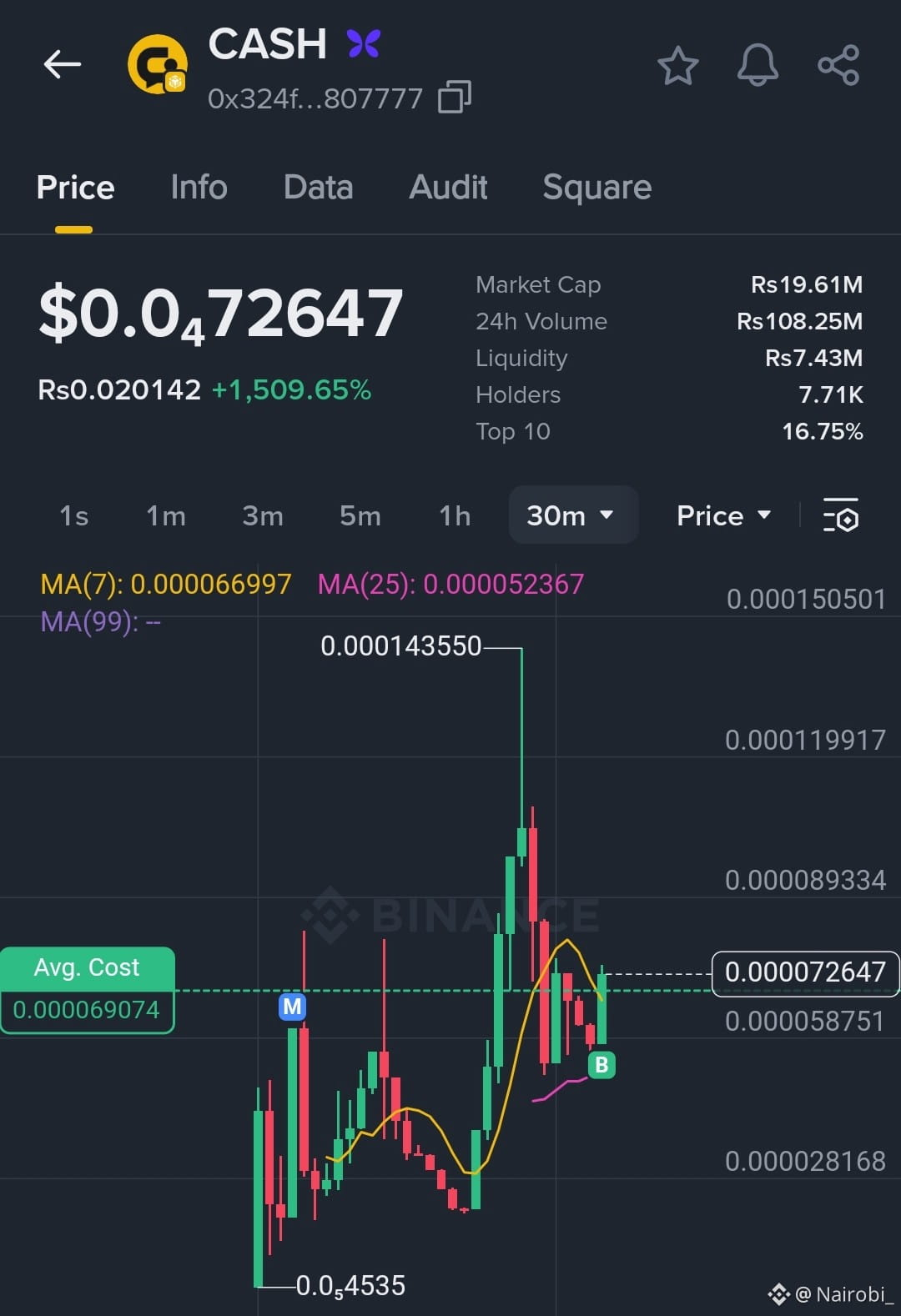
$CASH is up 1,509% and the chart is already telling two different stories.
It ripped to 0.00014355, then got rejected hard and settled around 0.000047.
Now it’s trying to reclaim 0.00007.
Market cap is only $19.6M, but 24h volume hit $108M with $7.4M liquidity.
Small cap, huge volatility. This one needs a lot more than a green candle to prove itself.
SR-9126143BA2FFB1C394561C6A
$CASH is up 1,509% and the chart is already telling two different stories.
It ripped to 0.00014355, then got rejected hard and settled around 0.000047.
Now it’s trying to reclaim 0.00007.
Market cap is only $19.6M, but 24h volume hit $108M with $7.4M liquidity.
Small cap, huge volatility. This one needs a lot more than a green candle to prove itself.
SR-9126143BA2FFB1C394561C6A
It ripped to 0.00014355, then got rejected hard and settled around 0.000047.
Now it’s trying to reclaim 0.00007.
Market cap is only $19.6M, but 24h volume hit $108M with $7.4M liquidity.
Small cap, huge volatility. This one needs a lot more than a green candle to prove itself.
SR-9126143BA2FFB1C394561C6A
3
·
--
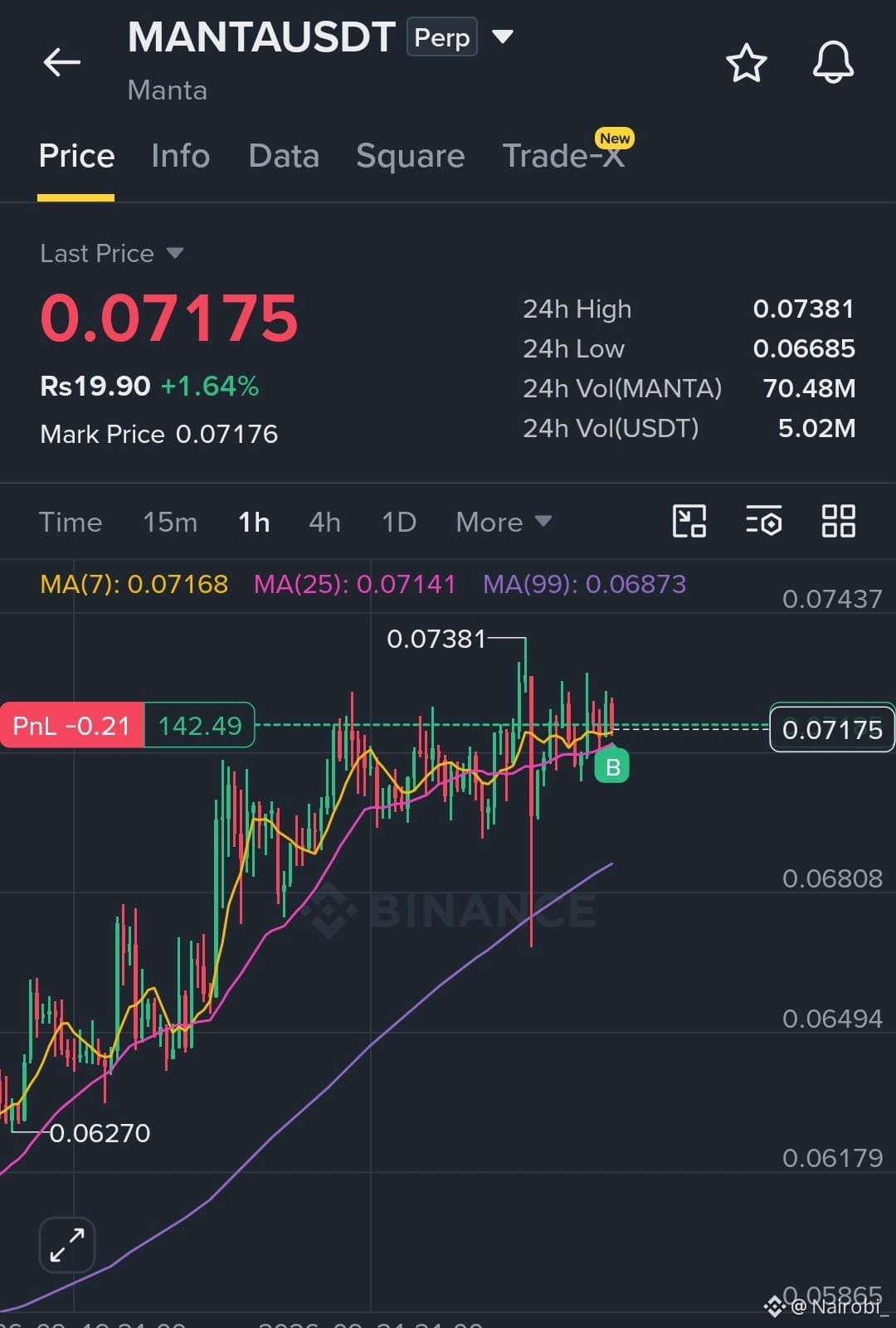
Ich bin langfristig bei $MANTA here dabei.
Nicht, weil da gerade gepumpt wird—ich mag die Struktur tatsächlich.
Der Kurs hält sich über dem MA25, der MA99 trendet nach oben, und wir sehen höhere Tiefs nach dem Move von $0.0627. Der Chart komprimiert im Grunde unter dem Widerstand bei $0.0738.
Mein Plan:
🟢 Long: $0.0708–$0.0720
🎯 TP1: $0.0738
🎯 TP2: $0.0765
🎯 TP3: $0.0800
🛑 Ungültig: unter $0.0685
Ich suche nicht sofort eine große Bewegung. Ich will, dass MANTA $0.0738 durchbricht, es in Unterstützung umdreht und dann einfach den Schwung machen lässt.
Das Schöne? Das Risiko ist hier ziemlich klar.
Wenn $0.0685 hält, bleibe ich bei dem Trade.
Wenn es bricht, „verheirate“ ich die Position nicht. 😂
Mal sehen, was MANTA vorhat. 👀
$MARSCOIN $NIL
Ich bin langfristig bei $MANTA here dabei.
Nicht, weil da gerade gepumpt wird—ich mag die Struktur tatsächlich.
Der Kurs hält sich über dem MA25, der MA99 trendet nach oben, und wir sehen höhere Tiefs nach dem Move von $0.0627. Der Chart komprimiert im Grunde unter dem Widerstand bei $0.0738.
Mein Plan:
🟢 Long: $0.0708–$0.0720
🎯 TP1: $0.0738
🎯 TP2: $0.0765
🎯 TP3: $0.0800
🛑 Ungültig: unter $0.0685
Ich suche nicht sofort eine große Bewegung. Ich will, dass MANTA $0.0738 durchbricht, es in Unterstützung umdreht und dann einfach den Schwung machen lässt.
Das Schöne? Das Risiko ist hier ziemlich klar.
Wenn $0.0685 hält, bleibe ich bei dem Trade.
Wenn es bricht, „verheirate“ ich die Position nicht. 😂
Mal sehen, was MANTA vorhat. 👀
$MARSCOIN $NIL
Nicht, weil da gerade gepumpt wird—ich mag die Struktur tatsächlich.
Der Kurs hält sich über dem MA25, der MA99 trendet nach oben, und wir sehen höhere Tiefs nach dem Move von $0.0627. Der Chart komprimiert im Grunde unter dem Widerstand bei $0.0738.
Mein Plan:
🟢 Long: $0.0708–$0.0720
🎯 TP1: $0.0738
🎯 TP2: $0.0765
🎯 TP3: $0.0800
🛑 Ungültig: unter $0.0685
Ich suche nicht sofort eine große Bewegung. Ich will, dass MANTA $0.0738 durchbricht, es in Unterstützung umdreht und dann einfach den Schwung machen lässt.
Das Schöne? Das Risiko ist hier ziemlich klar.
Wenn $0.0685 hält, bleibe ich bei dem Trade.
Wenn es bricht, „verheirate“ ich die Position nicht. 😂
Mal sehen, was MANTA vorhat. 👀
$MARSCOIN $NIL
2
246
·
--
Ich habe meine Bestände von $NVDAB mit einem Gewinn von 6$ verkauft 😛
Ich habe meine Bestände von $NVDAB mit einem Gewinn von 6$ verkauft 😛
92
·
--
Das Perpetuals-Board ist heute aufgewacht und hat sich für reines Chaos entschieden 📈⚡
🟢 $ZETA +70,95%
🟢 $PTB +60,13%
🟢 $SAGA +35,74%
🟢 $NIL +34,37%
🟢 $KMNO +28,41%
🟢 $BTW +26,99%
🟢 $MINA +24,94%
🟢 $VVV +24,73%
ZETA läuft gerade ein Masterclass-Programm für vertikale Momentum-Bewegung und legt über +70% hin, ohne zurückzublicken.
Währenddessen legt PTB +60% drauf, während es bei 0,0011 handelt – das ist Quintessenz-Perp-„Degeneracy“.
Der wildeste Teil? Selbst wenn VVV und MINA heute +24% machen, sitzt du direkt auf der Benchmark-Basis. Das ganze Board bewegt sich, als hätte die Marktstruktur heute frei genommen.
Wenn bei so einem Tape der Hebel reinhaut, ist der echte Test nicht, den Pump zu erwischen – sondern rechtzeitig wegzugehen, bevor Funding-Rates und Retests alles wieder zurückdrehen.
Welcher dieser Top-Runner hat die Beine, um morgen weiterzumachen?
Das Perpetuals-Board ist heute aufgewacht und hat sich für reines Chaos entschieden 📈⚡
🟢 $ZETA +70,95%
🟢 $PTB +60,13%
🟢 $SAGA +35,74%
🟢 $NIL +34,37%
🟢 $KMNO +28,41%
🟢 $BTW +26,99%
🟢 $MINA +24,94%
🟢 $VVV +24,73%
ZETA läuft gerade ein Masterclass-Programm für vertikale Momentum-Bewegung und legt über +70% hin, ohne zurückzublicken.
Währenddessen legt PTB +60% drauf, während es bei 0,0011 handelt – das ist Quintessenz-Perp-„Degeneracy“.
Der wildeste Teil? Selbst wenn VVV und MINA heute +24% machen, sitzt du direkt auf der Benchmark-Basis. Das ganze Board bewegt sich, als hätte die Marktstruktur heute frei genommen.
Wenn bei so einem Tape der Hebel reinhaut, ist der echte Test nicht, den Pump zu erwischen – sondern rechtzeitig wegzugehen, bevor Funding-Rates und Retests alles wieder zurückdrehen.
Welcher dieser Top-Runner hat die Beine, um morgen weiterzumachen?
🟢 $ZETA +70,95%
🟢 $PTB +60,13%
🟢 $SAGA +35,74%
🟢 $NIL +34,37%
🟢 $KMNO +28,41%
🟢 $BTW +26,99%
🟢 $MINA +24,94%
🟢 $VVV +24,73%
ZETA läuft gerade ein Masterclass-Programm für vertikale Momentum-Bewegung und legt über +70% hin, ohne zurückzublicken.
Währenddessen legt PTB +60% drauf, während es bei 0,0011 handelt – das ist Quintessenz-Perp-„Degeneracy“.
Der wildeste Teil? Selbst wenn VVV und MINA heute +24% machen, sitzt du direkt auf der Benchmark-Basis. Das ganze Board bewegt sich, als hätte die Marktstruktur heute frei genommen.
Wenn bei so einem Tape der Hebel reinhaut, ist der echte Test nicht, den Pump zu erwischen – sondern rechtzeitig wegzugehen, bevor Funding-Rates und Retests alles wieder zurückdrehen.
Welcher dieser Top-Runner hat die Beine, um morgen weiterzumachen?
$ZETA (Trend continuation)
21%
$PTB (Micro-cap momentum)
20%
$SAGA (Mid-tier breakout)
47%
Fade all (Trap / Retest due)
12%
34 Stimmen • Abstimmung beendet
3.5k
·
--
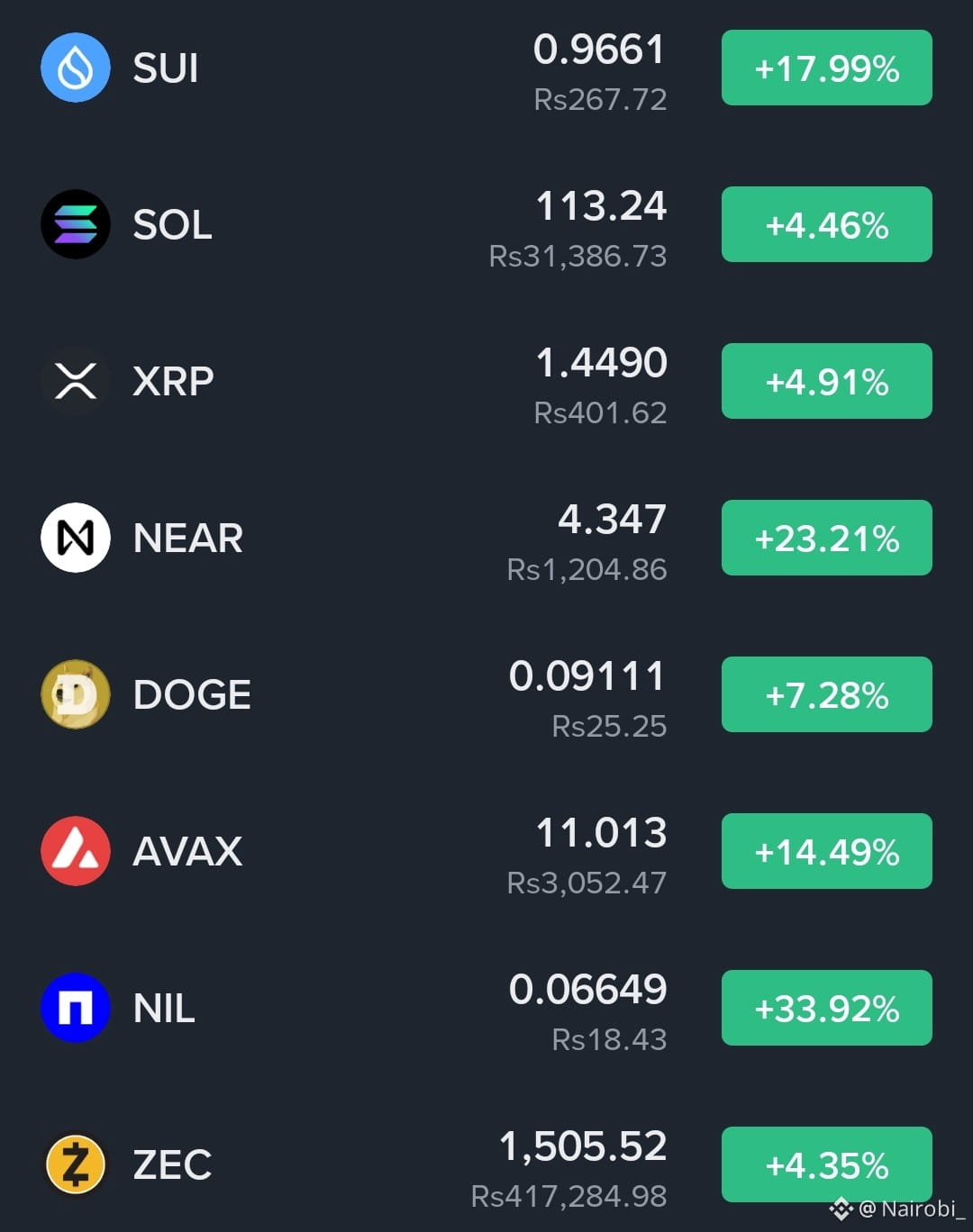
ALTSEASON IST GRAD AUFGEWACHT? 👀
Das Geld beginnt in Alts zu rotieren, und die Zahlen werden immer schwerer zu ignorieren:
🟢 $NIL +33.92%
🟢 $NEAR +23.21%
🟢 $SUI +17.99%
🟢 $AVAX +14.49%
🟢 $DOGE +7.28%
🟢 $XRP +4.91%
🟢 $SOL +4.46%
🟢 $ZEC +4.35%
Das ist genau die Art von Bildschirm, bei der jeder Trader plötzlich daran denkt, dass er eine Watchlist hat 😂
Aber die eigentliche Frage ist…
Hältst du deine Alts schon, oder wartest du auf „Bestätigung“, während sie ohne dich weiterlaufen? 👀
Lass die Alt, die du beobachtest, unten.
Mal sehen, welche Bags Crypto Twitter wirklich mit sich herumträgt. 🫡
#SolanaCutsTargetSlotTimeTo250ms
#BTCBreaks80K
#AltSeasonComing
ALTSEASON IST GRAD AUFGEWACHT? 👀
Das Geld beginnt in Alts zu rotieren, und die Zahlen werden immer schwerer zu ignorieren:
🟢 $NIL +33.92%
🟢 $NEAR +23.21%
🟢 $SUI +17.99%
🟢 $AVAX +14.49%
🟢 $DOGE +7.28%
🟢 $XRP +4.91%
🟢 $SOL +4.46%
🟢 $ZEC +4.35%
Das ist genau die Art von Bildschirm, bei der jeder Trader plötzlich daran denkt, dass er eine Watchlist hat 😂
Aber die eigentliche Frage ist…
Hältst du deine Alts schon, oder wartest du auf „Bestätigung“, während sie ohne dich weiterlaufen? 👀
Lass die Alt, die du beobachtest, unten.
Mal sehen, welche Bags Crypto Twitter wirklich mit sich herumträgt. 🫡
#SolanaCutsTargetSlotTimeTo250ms
#BTCBreaks80K
#AltSeasonComing
Das Geld beginnt in Alts zu rotieren, und die Zahlen werden immer schwerer zu ignorieren:
🟢 $NIL +33.92%
🟢 $NEAR +23.21%
🟢 $SUI +17.99%
🟢 $AVAX +14.49%
🟢 $DOGE +7.28%
🟢 $XRP +4.91%
🟢 $SOL +4.46%
🟢 $ZEC +4.35%
Das ist genau die Art von Bildschirm, bei der jeder Trader plötzlich daran denkt, dass er eine Watchlist hat 😂
Aber die eigentliche Frage ist…
Hältst du deine Alts schon, oder wartest du auf „Bestätigung“, während sie ohne dich weiterlaufen? 👀
Lass die Alt, die du beobachtest, unten.
Mal sehen, welche Bags Crypto Twitter wirklich mit sich herumträgt. 🫡
#SolanaCutsTargetSlotTimeTo250ms
#BTCBreaks80K
#AltSeasonComing
1
334
·
--
Dieses Board weigert sich einfach komplett, sich normal zu verhalten 😭
🟢 $BULLA +121.19%
🟢 $MARSCOIN +93.26%
🟢 $4 +54.05%
🟢 $BU +45.58%
🟢 $AKE +38.61%
🟢 牛来 +38.41%
🟢 $FLOCK +34.12%
BULLA hat sich in 24 Stunden mehr als verdoppelt.
MARSCOIN hat fast dasselbe geschafft.
Und irgendwie wirkt +54% bei 4 daneben wie eine normale Bewegung neben denen 😂
Worauf ich jetzt achte, ist nicht, wer am stärksten gepumpt hat – das ist offensichtlich.
Es geht darum, wer die erste ernsthafte Welle von Gewinnmitnahmen übersteht, ohne die Hälfte davon wieder abzugeben.
Wer hat noch einen weiteren Schub?
Dieses Board weigert sich einfach komplett, sich normal zu verhalten 😭
🟢 $BULLA +121.19%
🟢 $MARSCOIN +93.26%
🟢 $4 +54.05%
🟢 $BU +45.58%
🟢 $AKE +38.61%
🟢 牛来 +38.41%
🟢 $FLOCK +34.12%
BULLA hat sich in 24 Stunden mehr als verdoppelt.
MARSCOIN hat fast dasselbe geschafft.
Und irgendwie wirkt +54% bei 4 daneben wie eine normale Bewegung neben denen 😂
Worauf ich jetzt achte, ist nicht, wer am stärksten gepumpt hat – das ist offensichtlich.
Es geht darum, wer die erste ernsthafte Welle von Gewinnmitnahmen übersteht, ohne die Hälfte davon wieder abzugeben.
Wer hat noch einen weiteren Schub?
🟢 $BULLA +121.19%
🟢 $MARSCOIN +93.26%
🟢 $4 +54.05%
🟢 $BU +45.58%
🟢 $AKE +38.61%
🟢 牛来 +38.41%
🟢 $FLOCK +34.12%
BULLA hat sich in 24 Stunden mehr als verdoppelt.
MARSCOIN hat fast dasselbe geschafft.
Und irgendwie wirkt +54% bei 4 daneben wie eine normale Bewegung neben denen 😂
Worauf ich jetzt achte, ist nicht, wer am stärksten gepumpt hat – das ist offensichtlich.
Es geht darum, wer die erste ernsthafte Welle von Gewinnmitnahmen übersteht, ohne die Hälfte davon wieder abzugeben.
Wer hat noch einen weiteren Schub?
🔘 BULLA
44%
🔘 MARSCOIN
36%
🔘 4
10%
🔘 FLOCK
10%
39 Stimmen • Abstimmung beendet
1
3.3k
·
--
Die gestrigen Gewinner werden heute überprüft.
Der hässliche ist $CYS at -33.52%.
Dann kommt:
$牛来 -22.55%
$TRIA -22.17%
$ZORA -17.93%
$SKR -17.20%
$BLESS -16.21%
$4 -12.01%
Was diese Liste interessant macht, ist nicht nur das Rot.
Es ist zu sehen, dass ZORA und SKR hier auftauchen, nachdem sie vor kurzem noch auf der Gewinner-Seite saßen.
Das ist der Teil des Momentum-Tradings, den die Leute normalerweise vergessen.
Grün zieht Aufmerksamkeit an.
Rot prüft die Überzeugung.
Jetzt bin ich eher neugierig auf die Reaktion als auf den Rückgang selbst.
Die gestrigen Gewinner werden heute überprüft.
Der hässliche ist $CYS at -33.52%.
Dann kommt:
$牛来 -22.55%
$TRIA -22.17%
$ZORA -17.93%
$SKR -17.20%
$BLESS -16.21%
$4 -12.01%
Was diese Liste interessant macht, ist nicht nur das Rot.
Es ist zu sehen, dass ZORA und SKR hier auftauchen, nachdem sie vor kurzem noch auf der Gewinner-Seite saßen.
Das ist der Teil des Momentum-Tradings, den die Leute normalerweise vergessen.
Grün zieht Aufmerksamkeit an.
Rot prüft die Überzeugung.
Jetzt bin ich eher neugierig auf die Reaktion als auf den Rückgang selbst.
Der hässliche ist $CYS at -33.52%.
Dann kommt:
$牛来 -22.55%
$TRIA -22.17%
$ZORA -17.93%
$SKR -17.20%
$BLESS -16.21%
$4 -12.01%
Was diese Liste interessant macht, ist nicht nur das Rot.
Es ist zu sehen, dass ZORA und SKR hier auftauchen, nachdem sie vor kurzem noch auf der Gewinner-Seite saßen.
Das ist der Teil des Momentum-Tradings, den die Leute normalerweise vergessen.
Grün zieht Aufmerksamkeit an.
Rot prüft die Überzeugung.
Jetzt bin ich eher neugierig auf die Reaktion als auf den Rückgang selbst.
🔘 SKR bounces first
20%
🔘 ZORA gets bought back
5%
🔘 CYS gives strongest rebound
75%
🔘 Red continues tomorrow
0%
20 Stimmen • Abstimmung beendet
1
1.4k
·
--
Rot heute Abend. Und BTR wurde absolut vernichtet.
$BTR -37,57% bei 0,09813 $
CYS -21,12%
$MAGMA -20,25%
$PROM -19,68%
$ONG -17,42%
$RIVER -17,05%
$BLESS -16,57%
BTR ist hier der eindeutige Ausreißer. Ein fast -38% Tag nach all der Aufmerksamkeit, die es zuletzt hatte, ist genau der Grund, warum diese High-Volatility-Moves Spaß machen… bis eben nicht.
MAGMA und PROM tauchen hier ebenfalls wieder auf, was auch einiges aussagt. Vorher hatten sie jede Menge Momentum, jetzt zeigt die andere Seite dieses Trades.
Die Frage ist jetzt nicht „wer hat am härtesten verkauft?“
Sondern: Wer hat die besten Chancen, als Erster wieder abzuprallen?
Rot heute Abend. Und BTR wurde absolut vernichtet.
$BTR -37,57% bei 0,09813 $
CYS -21,12%
$MAGMA -20,25%
$PROM -19,68%
$ONG -17,42%
$RIVER -17,05%
$BLESS -16,57%
BTR ist hier der eindeutige Ausreißer. Ein fast -38% Tag nach all der Aufmerksamkeit, die es zuletzt hatte, ist genau der Grund, warum diese High-Volatility-Moves Spaß machen… bis eben nicht.
MAGMA und PROM tauchen hier ebenfalls wieder auf, was auch einiges aussagt. Vorher hatten sie jede Menge Momentum, jetzt zeigt die andere Seite dieses Trades.
Die Frage ist jetzt nicht „wer hat am härtesten verkauft?“
Sondern: Wer hat die besten Chancen, als Erster wieder abzuprallen?
$BTR -37,57% bei 0,09813 $
CYS -21,12%
$MAGMA -20,25%
$PROM -19,68%
$ONG -17,42%
$RIVER -17,05%
$BLESS -16,57%
BTR ist hier der eindeutige Ausreißer. Ein fast -38% Tag nach all der Aufmerksamkeit, die es zuletzt hatte, ist genau der Grund, warum diese High-Volatility-Moves Spaß machen… bis eben nicht.
MAGMA und PROM tauchen hier ebenfalls wieder auf, was auch einiges aussagt. Vorher hatten sie jede Menge Momentum, jetzt zeigt die andere Seite dieses Trades.
Die Frage ist jetzt nicht „wer hat am härtesten verkauft?“
Sondern: Wer hat die besten Chancen, als Erster wieder abzuprallen?
🔘 BTR — oversold bounce
85%
🔘 MAGMA — buyers return
6%
🔘 PROM — recovery setup
3%
🔘 None — more pain first
6%
35 Stimmen • Abstimmung beendet
1.5k
·
--
Ganz ehrlich: Dieses Board fühlt sich langsam weniger wie ein zufälliger Pump an und mehr wie eine komplette Momentum-Rotation.
$SKR ist immer noch der, auf den jeder als Erstes schauen muss, +71,10%.
Dann wird die zweite Zeile spannend:
$ZORA +39,37%
$HEMI +37,39%
Dieser Abstand ist winzig.
Eine stärkere Kerze – und ZORA oder HEMI können leicht zum nächsten Namen werden, über den alle anfangen zu reden.
Dann hast du noch:
$0G +24,21%
$FLOCK +22,31%
Normalerweise würden +20% schon reichen, um den Bildschirm zu dominieren.
Heute geben sie dir einfach einen Platz am Tisch 😂
Was ich jetzt beobachte, ist nicht, wer am meisten gepumpt hat.
Sondern wer das Momentum noch halten kann, nachdem Trader anfangen, Gewinne mitzunehmen.
Ganz ehrlich: Dieses Board fühlt sich langsam weniger wie ein zufälliger Pump an und mehr wie eine komplette Momentum-Rotation.
$SKR ist immer noch der, auf den jeder als Erstes schauen muss, +71,10%.
Dann wird die zweite Zeile spannend:
$ZORA +39,37%
$HEMI +37,39%
Dieser Abstand ist winzig.
Eine stärkere Kerze – und ZORA oder HEMI können leicht zum nächsten Namen werden, über den alle anfangen zu reden.
Dann hast du noch:
$0G +24,21%
$FLOCK +22,31%
Normalerweise würden +20% schon reichen, um den Bildschirm zu dominieren.
Heute geben sie dir einfach einen Platz am Tisch 😂
Was ich jetzt beobachte, ist nicht, wer am meisten gepumpt hat.
Sondern wer das Momentum noch halten kann, nachdem Trader anfangen, Gewinne mitzunehmen.
$SKR ist immer noch der, auf den jeder als Erstes schauen muss, +71,10%.
Dann wird die zweite Zeile spannend:
$ZORA +39,37%
$HEMI +37,39%
Dieser Abstand ist winzig.
Eine stärkere Kerze – und ZORA oder HEMI können leicht zum nächsten Namen werden, über den alle anfangen zu reden.
Dann hast du noch:
$0G +24,21%
$FLOCK +22,31%
Normalerweise würden +20% schon reichen, um den Bildschirm zu dominieren.
Heute geben sie dir einfach einen Platz am Tisch 😂
Was ich jetzt beobachte, ist nicht, wer am meisten gepumpt hat.
Sondern wer das Momentum noch halten kann, nachdem Trader anfangen, Gewinne mitzunehmen.
🔘 SKR — still the leader
60%
🔘 ZORA — next one up
19%
🔘 HEMI — strongest challenger
13%
🔘 0G / FLOCK — sleeper move
8%
52 Stimmen • Abstimmung beendet
1
3.7k
·
--
MOVR hat wirklich „macht Platz“ gesagt 😭
🟢 $MOVR : +44,35% — 0,9885 $
🟢 $MAGMA : +32,99% — 0,35265 $
🟢 $VET : +28,30% — 0,007254 $
Witzig ist, dass dieses Trio schon früher in der Liste der Gewinner rumhing… und irgendwie sind sie immer noch da.
MOVR hat tatsächlich härter nachgelegt.
MAGMA liegt immer noch bequem über +30%.
Und VET macht +28% so, als wäre das ein ganz normaler Donnerstag.
Inzwischen ist die Frage nicht mehr, wer gepumpt hat.
Sondern: Wer hat noch genug Sprit für eine weitere Etappe? 👀
MOVR hat wirklich „macht Platz“ gesagt 😭
🟢 $MOVR : +44,35% — 0,9885 $
🟢 $MAGMA : +32,99% — 0,35265 $
🟢 $VET : +28,30% — 0,007254 $
Witzig ist, dass dieses Trio schon früher in der Liste der Gewinner rumhing… und irgendwie sind sie immer noch da.
MOVR hat tatsächlich härter nachgelegt.
MAGMA liegt immer noch bequem über +30%.
Und VET macht +28% so, als wäre das ein ganz normaler Donnerstag.
Inzwischen ist die Frage nicht mehr, wer gepumpt hat.
Sondern: Wer hat noch genug Sprit für eine weitere Etappe? 👀
🟢 $MOVR : +44,35% — 0,9885 $
🟢 $MAGMA : +32,99% — 0,35265 $
🟢 $VET : +28,30% — 0,007254 $
Witzig ist, dass dieses Trio schon früher in der Liste der Gewinner rumhing… und irgendwie sind sie immer noch da.
MOVR hat tatsächlich härter nachgelegt.
MAGMA liegt immer noch bequem über +30%.
Und VET macht +28% so, als wäre das ein ganz normaler Donnerstag.
Inzwischen ist die Frage nicht mehr, wer gepumpt hat.
Sondern: Wer hat noch genug Sprit für eine weitere Etappe? 👀
🔘 $MOVR — momentum king
50%
🔘 $MAGMA — still heating up
30%
🔘 $VET — sleeper pick
20%
🔘 None — pullback first
0%
10 Stimmen • Abstimmung beendet
464
·
--
$PROM gab uns die Pumpe. Jetzt schaue ich, ob sie diese Pumpe in eine Fortsetzung umwandeln kann.
Der 1H-Chart ist immer noch stark: Der Kurs ist ungefähr von 2,60 $ → 4,05 $ gelaufen, hat sich abgekühlt und versucht jetzt, bei etwa 3,75 $ zu halten, statt die Bewegung komplett zurückzuverfolgen.
Das ist wichtig.
Mein Setup 👇
🟢 Einstiegzone: 3,68–3,76 $
🎯 TP1: 3,90 $
🎯 TP2: 4,05 $
🎯 TP3: 4,25–4,30 $
🔴 Ungültigkeit: 1H-Schlusskurs unter 3,55 $
Am besten gefällt mir, dass PROM immer noch deutlich über dem MA25 bei rund 3,31 $ sitzt, während der kurze MA sich um den aktuellen Kurs herum abflacht. Im Grunde entscheidet der Markt gerade, ob das eine Konsolidierung wird, bevor es zu einem nächsten Schub kommt… oder ob das das Top der Bewegung ist.
Für mich ist 4,05 $ die entscheidende Boss-Level.
Sauber darüber ausbrechen und drüber halten? Dann schaue ich höher.
3,55 $ verlieren? Das Setup ist weg. Kein Diskutieren mit dem Chart.
Was macht PROM als Nächstes?
$UAI $SUPER
$PROM gab uns die Pumpe. Jetzt schaue ich, ob sie diese Pumpe in eine Fortsetzung umwandeln kann.
Der 1H-Chart ist immer noch stark: Der Kurs ist ungefähr von 2,60 $ → 4,05 $ gelaufen, hat sich abgekühlt und versucht jetzt, bei etwa 3,75 $ zu halten, statt die Bewegung komplett zurückzuverfolgen.
Das ist wichtig.
Mein Setup 👇
🟢 Einstiegzone: 3,68–3,76 $
🎯 TP1: 3,90 $
🎯 TP2: 4,05 $
🎯 TP3: 4,25–4,30 $
🔴 Ungültigkeit: 1H-Schlusskurs unter 3,55 $
Am besten gefällt mir, dass PROM immer noch deutlich über dem MA25 bei rund 3,31 $ sitzt, während der kurze MA sich um den aktuellen Kurs herum abflacht. Im Grunde entscheidet der Markt gerade, ob das eine Konsolidierung wird, bevor es zu einem nächsten Schub kommt… oder ob das das Top der Bewegung ist.
Für mich ist 4,05 $ die entscheidende Boss-Level.
Sauber darüber ausbrechen und drüber halten? Dann schaue ich höher.
3,55 $ verlieren? Das Setup ist weg. Kein Diskutieren mit dem Chart.
Was macht PROM als Nächstes?
$UAI $SUPER
Der 1H-Chart ist immer noch stark: Der Kurs ist ungefähr von 2,60 $ → 4,05 $ gelaufen, hat sich abgekühlt und versucht jetzt, bei etwa 3,75 $ zu halten, statt die Bewegung komplett zurückzuverfolgen.
Das ist wichtig.
Mein Setup 👇
🟢 Einstiegzone: 3,68–3,76 $
🎯 TP1: 3,90 $
🎯 TP2: 4,05 $
🎯 TP3: 4,25–4,30 $
🔴 Ungültigkeit: 1H-Schlusskurs unter 3,55 $
Am besten gefällt mir, dass PROM immer noch deutlich über dem MA25 bei rund 3,31 $ sitzt, während der kurze MA sich um den aktuellen Kurs herum abflacht. Im Grunde entscheidet der Markt gerade, ob das eine Konsolidierung wird, bevor es zu einem nächsten Schub kommt… oder ob das das Top der Bewegung ist.
Für mich ist 4,05 $ die entscheidende Boss-Level.
Sauber darüber ausbrechen und drüber halten? Dann schaue ich höher.
3,55 $ verlieren? Das Setup ist weg. Kein Diskutieren mit dem Chart.
Was macht PROM als Nächstes?
$UAI $SUPER
🚀 Break $4.05
33%
📈 Tap $4.25+
45%
😴 Chop around $3.70
0%
📉 Lose $3.55
22%
9 Stimmen • Abstimmung beendet
243
·
--
die 6% sind nie nachgegeben.
der Handel wurde trotzdem schlechter.
das war der TermMax-Leverage-Detail, auf den ich ständig den falschen Wert geschoben habe.
ich hatte einen renditebringenden Vermögenswert, der 12% abwarf.
TermMax konnte mir dagegen zu einem festen Satz von 6% Geld leihen, das geliehene Kapital nutzen, um die Exposure auf das Collateral zu erhöhen, und dann die Collateral- plus Schuldenposition in GT verpacken.
12 kommt rein.
6 geht raus.
Leverage auf die Spanne drauf.
ziemlich einfache Geschichte, die man gern mag.
und der beruhigende Teil war die 6%.
ich musste nicht darüber nachdenken, ob irgendwo die Auslastung die Finanzierung auf 9 treibt, dann auf 14, während ich bereits in der Position steckte.
TermMax hatte diese Seite eingefroren.
dann fiel die Rendite des Collaterals auf 4%.
an meinem Kredit passierte nichts.
das machte es so seltsam.
der GT hatte immer noch die Schulden.
der TermMax-Kreditsatz lag immer noch bei 6%.
die Laufzeit hatte sich nicht geändert.
niemand hat meine feste Finanzierung neu bepreist, nur weil die Marktlage hässlicher wurde.
die exakte Zahl, die ich schützen wollte, war weiterhin geschützt.
nur: Jetzt lieh ich mir zu 6% Geld, um die Exposure auf etwas zu erhöhen, das 4% einbringt.
und der Leverage hatte nicht aufgehört zu funktionieren.
er hat lediglich eine Spanne multipliziert, die ich so nicht mehr multipliziert haben wollte.
ich glaube, ich hatte „Fixed-Rate-Leverage“ still und leise in „vorhersehbare gehebeltete Rendite“ umgedeutet.
das ist nicht dasselbe.
TermMax kann das Problem mit dem beweglichen Kredit-Zinssatz beseitigen.
es kann aber nicht erzwingen, dass renditebringendes Collateral weiterhin die APY liefert, die ich genutzt habe, als ich eingestiegen bin.
diese 12% gehören zu einem anderen Mechanismus.
Belohnungen können fallen.
die zugrunde liegende Rendite kann sich zusammenziehen.
und der GT muss dafür nicht einmal „kaputt“ gemacht werden.
deshalb komme ich immer wieder auf die 6% zurück.
wenn sie auf 15% gesprungen wären, wäre der Fehlschlag offensichtlich gewesen.
aber hier hat TermMax genau das getan, worum ich gebeten habe.
6% blieben 6%.
der instabile Wert lag auf der anderen Seite.
12 wurde 4.
gleiche feste Schulden.
ein ganz anderer Grund, warum man den Leverage überhaupt wollen würde.
TermMax konnte eine Kante dieser Spanne fixieren.
ich frage mich immer noch, warum ich den Abstand zwischen ihnen je so behandelt habe, als wäre er ebenfalls etwas Festes.
@termmax #TermMax #termmax $AVAAI $ONG $BOME
die 6% sind nie nachgegeben.
der Handel wurde trotzdem schlechter.
das war der TermMax-Leverage-Detail, auf den ich ständig den falschen Wert geschoben habe.
ich hatte einen renditebringenden Vermögenswert, der 12% abwarf.
TermMax konnte mir dagegen zu einem festen Satz von 6% Geld leihen, das geliehene Kapital nutzen, um die Exposure auf das Collateral zu erhöhen, und dann die Collateral- plus Schuldenposition in GT verpacken.
12 kommt rein.
6 geht raus.
Leverage auf die Spanne drauf.
ziemlich einfache Geschichte, die man gern mag.
und der beruhigende Teil war die 6%.
ich musste nicht darüber nachdenken, ob irgendwo die Auslastung die Finanzierung auf 9 treibt, dann auf 14, während ich bereits in der Position steckte.
TermMax hatte diese Seite eingefroren.
dann fiel die Rendite des Collaterals auf 4%.
an meinem Kredit passierte nichts.
das machte es so seltsam.
der GT hatte immer noch die Schulden.
der TermMax-Kreditsatz lag immer noch bei 6%.
die Laufzeit hatte sich nicht geändert.
niemand hat meine feste Finanzierung neu bepreist, nur weil die Marktlage hässlicher wurde.
die exakte Zahl, die ich schützen wollte, war weiterhin geschützt.
nur: Jetzt lieh ich mir zu 6% Geld, um die Exposure auf etwas zu erhöhen, das 4% einbringt.
und der Leverage hatte nicht aufgehört zu funktionieren.
er hat lediglich eine Spanne multipliziert, die ich so nicht mehr multipliziert haben wollte.
ich glaube, ich hatte „Fixed-Rate-Leverage“ still und leise in „vorhersehbare gehebeltete Rendite“ umgedeutet.
das ist nicht dasselbe.
TermMax kann das Problem mit dem beweglichen Kredit-Zinssatz beseitigen.
es kann aber nicht erzwingen, dass renditebringendes Collateral weiterhin die APY liefert, die ich genutzt habe, als ich eingestiegen bin.
diese 12% gehören zu einem anderen Mechanismus.
Belohnungen können fallen.
die zugrunde liegende Rendite kann sich zusammenziehen.
und der GT muss dafür nicht einmal „kaputt“ gemacht werden.
deshalb komme ich immer wieder auf die 6% zurück.
wenn sie auf 15% gesprungen wären, wäre der Fehlschlag offensichtlich gewesen.
aber hier hat TermMax genau das getan, worum ich gebeten habe.
6% blieben 6%.
der instabile Wert lag auf der anderen Seite.
12 wurde 4.
gleiche feste Schulden.
ein ganz anderer Grund, warum man den Leverage überhaupt wollen würde.
TermMax konnte eine Kante dieser Spanne fixieren.
ich frage mich immer noch, warum ich den Abstand zwischen ihnen je so behandelt habe, als wäre er ebenfalls etwas Festes.
@TermMax #TermMax #termmax $AVAAI $ONG $BOME
der Handel wurde trotzdem schlechter.
das war der TermMax-Leverage-Detail, auf den ich ständig den falschen Wert geschoben habe.
ich hatte einen renditebringenden Vermögenswert, der 12% abwarf.
TermMax konnte mir dagegen zu einem festen Satz von 6% Geld leihen, das geliehene Kapital nutzen, um die Exposure auf das Collateral zu erhöhen, und dann die Collateral- plus Schuldenposition in GT verpacken.
12 kommt rein.
6 geht raus.
Leverage auf die Spanne drauf.
ziemlich einfache Geschichte, die man gern mag.
und der beruhigende Teil war die 6%.
ich musste nicht darüber nachdenken, ob irgendwo die Auslastung die Finanzierung auf 9 treibt, dann auf 14, während ich bereits in der Position steckte.
TermMax hatte diese Seite eingefroren.
dann fiel die Rendite des Collaterals auf 4%.
an meinem Kredit passierte nichts.
das machte es so seltsam.
der GT hatte immer noch die Schulden.
der TermMax-Kreditsatz lag immer noch bei 6%.
die Laufzeit hatte sich nicht geändert.
niemand hat meine feste Finanzierung neu bepreist, nur weil die Marktlage hässlicher wurde.
die exakte Zahl, die ich schützen wollte, war weiterhin geschützt.
nur: Jetzt lieh ich mir zu 6% Geld, um die Exposure auf etwas zu erhöhen, das 4% einbringt.
und der Leverage hatte nicht aufgehört zu funktionieren.
er hat lediglich eine Spanne multipliziert, die ich so nicht mehr multipliziert haben wollte.
ich glaube, ich hatte „Fixed-Rate-Leverage“ still und leise in „vorhersehbare gehebeltete Rendite“ umgedeutet.
das ist nicht dasselbe.
TermMax kann das Problem mit dem beweglichen Kredit-Zinssatz beseitigen.
es kann aber nicht erzwingen, dass renditebringendes Collateral weiterhin die APY liefert, die ich genutzt habe, als ich eingestiegen bin.
diese 12% gehören zu einem anderen Mechanismus.
Belohnungen können fallen.
die zugrunde liegende Rendite kann sich zusammenziehen.
und der GT muss dafür nicht einmal „kaputt“ gemacht werden.
deshalb komme ich immer wieder auf die 6% zurück.
wenn sie auf 15% gesprungen wären, wäre der Fehlschlag offensichtlich gewesen.
aber hier hat TermMax genau das getan, worum ich gebeten habe.
6% blieben 6%.
der instabile Wert lag auf der anderen Seite.
12 wurde 4.
gleiche feste Schulden.
ein ganz anderer Grund, warum man den Leverage überhaupt wollen würde.
TermMax konnte eine Kante dieser Spanne fixieren.
ich frage mich immer noch, warum ich den Abstand zwischen ihnen je so behandelt habe, als wäre er ebenfalls etwas Festes.
@TermMax #TermMax #termmax $AVAAI $ONG $BOME
ONG
75%
BOME
13%
AVAAI
12%
TMX
0%
8 Stimmen • Abstimmung beendet
2
750
·
--
das Dusk-Netzwerkdetail, zu dem ich immer wieder zurückkam, ist, dass ein Knoten eine Nachricht verifizieren kann, ohne notwendigerweise zu lernen, wo diese Nachricht ihren Ursprung hatte.
meine erste Lektüre von Dusk’s Kadcast-Layer drehte sich größtenteils um Effizienz.
Dusk organisiert Peers mit Kademlia-ähnlicher XOR-Distanz und leitet dann Blöcke, Transaktionen und Konsensnachrichten über ausgewählte Peers weiter, statt jeden Nachbarn zu überschwemmen.
weniger doppelte Übertragungen. weniger Bandbreite. ergibt Sinn.
dann verändert die Sicherheitsseite das Bild.
Nachrichten in Dusk sind signiert, und Knoten verifizieren diese Signaturen, bevor sie sie weiterleiten.
so kann das Netzwerk illegitime Daten zurückweisen, ohne dass jede Relaisstation wissen muss, was die ursprüngliche Netzwerkquelle war.
die Ausbreitung von Kadcast innerhalb von Dusk verschleiert diese Quelle.
eine Nachricht bewegt sich über ausgewählte Peers mit zunehmenden XOR-Distanzen. bis ein anderer Dusk-Knoten sie erhält, kann der Knoten, der sie weitergereicht hat, nicht der Knoten sein, der sie erstellt hat.
das schafft eine Unterscheidung, die ich beiläufig zusammengezogen habe:
wer hat diese Nachricht authentifiziert?
und
wo ist diese Nachricht in das Netzwerk gelangt?
das sind nicht dieselben Fragen.
die Signatur schützt die Echtheit.
der Routingpfad bewahrt keine einfache Spur zurück zum Ursprung.
das ist auf Dusk besonders wichtig, weil Transaktionsprivatsphäre bereits Teil des Ledger-Designs ist. das Verbergen von Transaktionsinhalten, während gleichzeitig der Netzwerkursprung trivial zu verfolgen wäre, würde eine andere Art von Metadaten offenlegen.
darüber hinaus gibt es in demselben Mechanismus einen Trade-off.
Dusk braucht weiterhin eine Routing-Struktur. Knoten verwalten Peer-Tabellen, ersetzen ausgefallene Peers und können alternative Peers nutzen, wenn ein Pfad fehlschlägt.
also ist Privatsphäre hier nicht „niemand weiß irgendetwas“.
was Dusk vermeidet, ist, dass die Zustellung davon abhängt, einen sauberen Quell-zu-Ziel-Pfad offenzulegen.
Authentizität gehört zur Nachricht.
Ursprung gehört zum Netzwerkpfad.
und sobald diese getrennt sind, verändert sich meine Frage:
für ein privatsphäreorientiertes Netzwerk wie Dusk: wie viel Metadaten kann die Transportebene preisgeben, bevor die Privatsphäre auf Transaktionsebene aufhört, die gesamte Privatsphäre-Geschichte zu sein?
@Dusk_Foundation #Dusk $DUSK $HYPE $ZEC
das Dusk-Netzwerkdetail, zu dem ich immer wieder zurückkam, ist, dass ein Knoten eine Nachricht verifizieren kann, ohne notwendigerweise zu lernen, wo diese Nachricht ihren Ursprung hatte.
meine erste Lektüre von Dusk’s Kadcast-Layer drehte sich größtenteils um Effizienz.
Dusk organisiert Peers mit Kademlia-ähnlicher XOR-Distanz und leitet dann Blöcke, Transaktionen und Konsensnachrichten über ausgewählte Peers weiter, statt jeden Nachbarn zu überschwemmen.
weniger doppelte Übertragungen. weniger Bandbreite. ergibt Sinn.
dann verändert die Sicherheitsseite das Bild.
Nachrichten in Dusk sind signiert, und Knoten verifizieren diese Signaturen, bevor sie sie weiterleiten.
so kann das Netzwerk illegitime Daten zurückweisen, ohne dass jede Relaisstation wissen muss, was die ursprüngliche Netzwerkquelle war.
die Ausbreitung von Kadcast innerhalb von Dusk verschleiert diese Quelle.
eine Nachricht bewegt sich über ausgewählte Peers mit zunehmenden XOR-Distanzen. bis ein anderer Dusk-Knoten sie erhält, kann der Knoten, der sie weitergereicht hat, nicht der Knoten sein, der sie erstellt hat.
das schafft eine Unterscheidung, die ich beiläufig zusammengezogen habe:
wer hat diese Nachricht authentifiziert?
und
wo ist diese Nachricht in das Netzwerk gelangt?
das sind nicht dieselben Fragen.
die Signatur schützt die Echtheit.
der Routingpfad bewahrt keine einfache Spur zurück zum Ursprung.
das ist auf Dusk besonders wichtig, weil Transaktionsprivatsphäre bereits Teil des Ledger-Designs ist. das Verbergen von Transaktionsinhalten, während gleichzeitig der Netzwerkursprung trivial zu verfolgen wäre, würde eine andere Art von Metadaten offenlegen.
darüber hinaus gibt es in demselben Mechanismus einen Trade-off.
Dusk braucht weiterhin eine Routing-Struktur. Knoten verwalten Peer-Tabellen, ersetzen ausgefallene Peers und können alternative Peers nutzen, wenn ein Pfad fehlschlägt.
also ist Privatsphäre hier nicht „niemand weiß irgendetwas“.
was Dusk vermeidet, ist, dass die Zustellung davon abhängt, einen sauberen Quell-zu-Ziel-Pfad offenzulegen.
Authentizität gehört zur Nachricht.
Ursprung gehört zum Netzwerkpfad.
und sobald diese getrennt sind, verändert sich meine Frage:
für ein privatsphäreorientiertes Netzwerk wie Dusk: wie viel Metadaten kann die Transportebene preisgeben, bevor die Privatsphäre auf Transaktionsebene aufhört, die gesamte Privatsphäre-Geschichte zu sein?
@Dusk #Dusk $DUSK $HYPE $ZEC
meine erste Lektüre von Dusk’s Kadcast-Layer drehte sich größtenteils um Effizienz.
Dusk organisiert Peers mit Kademlia-ähnlicher XOR-Distanz und leitet dann Blöcke, Transaktionen und Konsensnachrichten über ausgewählte Peers weiter, statt jeden Nachbarn zu überschwemmen.
weniger doppelte Übertragungen. weniger Bandbreite. ergibt Sinn.
dann verändert die Sicherheitsseite das Bild.
Nachrichten in Dusk sind signiert, und Knoten verifizieren diese Signaturen, bevor sie sie weiterleiten.
so kann das Netzwerk illegitime Daten zurückweisen, ohne dass jede Relaisstation wissen muss, was die ursprüngliche Netzwerkquelle war.
die Ausbreitung von Kadcast innerhalb von Dusk verschleiert diese Quelle.
eine Nachricht bewegt sich über ausgewählte Peers mit zunehmenden XOR-Distanzen. bis ein anderer Dusk-Knoten sie erhält, kann der Knoten, der sie weitergereicht hat, nicht der Knoten sein, der sie erstellt hat.
das schafft eine Unterscheidung, die ich beiläufig zusammengezogen habe:
wer hat diese Nachricht authentifiziert?
und
wo ist diese Nachricht in das Netzwerk gelangt?
das sind nicht dieselben Fragen.
die Signatur schützt die Echtheit.
der Routingpfad bewahrt keine einfache Spur zurück zum Ursprung.
das ist auf Dusk besonders wichtig, weil Transaktionsprivatsphäre bereits Teil des Ledger-Designs ist. das Verbergen von Transaktionsinhalten, während gleichzeitig der Netzwerkursprung trivial zu verfolgen wäre, würde eine andere Art von Metadaten offenlegen.
darüber hinaus gibt es in demselben Mechanismus einen Trade-off.
Dusk braucht weiterhin eine Routing-Struktur. Knoten verwalten Peer-Tabellen, ersetzen ausgefallene Peers und können alternative Peers nutzen, wenn ein Pfad fehlschlägt.
also ist Privatsphäre hier nicht „niemand weiß irgendetwas“.
was Dusk vermeidet, ist, dass die Zustellung davon abhängt, einen sauberen Quell-zu-Ziel-Pfad offenzulegen.
Authentizität gehört zur Nachricht.
Ursprung gehört zum Netzwerkpfad.
und sobald diese getrennt sind, verändert sich meine Frage:
für ein privatsphäreorientiertes Netzwerk wie Dusk: wie viel Metadaten kann die Transportebene preisgeben, bevor die Privatsphäre auf Transaktionsebene aufhört, die gesamte Privatsphäre-Geschichte zu sein?
@Dusk #Dusk $DUSK $HYPE $ZEC
PHOENIX AND MOONLIGHT
75%
DUSK VM
25%
DUSK DS
0%
KADCAST's PROPAGATION
0%
4 Stimmen • Abstimmung beendet
4
4
233
·
--
Verifiziert
Eine TermMax-Vault-Regel hat mich mehr beschäftigt als die Schlagzeilen-Idee von „verwalteter Fixed-Rate-Liquidität“.
Ein Kurator verwaltet Aufträge, Allokation und Strategie für Einleger. Nutzer stellen Kapital bereit; jemand anderes entscheidet, wie es eingesetzt wird.
Dann habe ich das Timelock-Design bemerkt.
In TermMax-Vaults warten nicht alle sensiblen Änderungen auf die gleiche Weise. Änderungen, die das Risiko erhöhen, die Performance Fee anheben, eine Market-Whitelist hinzufügen, das Timelock verkürzen oder den Guardian ändern, müssen durch das Timelock laufen. Einige risikoreduzierende Änderungen können sofort wirksam werden.
Zuerst sah das nach einer Governance-Erleichterung aus.
Ich glaube jedoch, es ist wirklich eine Aussage über Zeit.
TermMax trennt Berechtigung von Geschwindigkeit.
Ein Kurator kann die Befugnis haben, eine Änderung vorzuschlagen, aber Befugnis bedeutet nicht, dass die Änderung jetzt sofort wirksam werden sollte. Das System fragt: Erweitert das die Exposition der Einleger oder reduziert es sie?
Das ist wichtig, weil ein Vault weiterläuft, während die Governance stattfindet. Orders können bereits live sein. Kapital kann bereits allokiert sein. Einleger beobachten möglicherweise nicht jede Änderung an jedem Parameter.
Also ist die Verzögerung bei einer risikosteigernden Änderung nicht nur eine Formalie. Sie schafft eine Phase, in der der vorgeschlagene Zustand und der aktive Zustand unterschiedlich sind, und der Guardian kann die anstehende Änderung prüfen oder widerrufen, bevor sie wirklich wird.
TermMax erzwingt nicht dieselbe Verzögerung, wenn sich die Änderung in die sicherere Richtung bewegt.
Diese Asymmetrie ist mir geblieben.
Die meisten Berechtigungssysteme beantworten die Frage: „Wer darf das?“
Das Vault-Design von TermMax stellt außerdem die Frage: „Wie schnell soll diese Art von Aktion überhaupt wirksam werden dürfen?“
Das sind unterschiedliche Kontrollen.
Der Kurator verwaltet die Strategie. Der Guardian kann während der Wartezeit eingreifen. Der Vault-Vertrag bestimmt, wann eine anstehende Entscheidung ausführbar wird.
Daher ist in TermMax delegiertes Management nicht dasselbe wie delegierte Unmittelbarkeit.
Die Frage, die mir bleibt, ist, was Einleger genauer beobachten sollten: Wer den Vault kontrolliert – oder welche Änderungen erlaubt sind, schon Realität zu werden, bevor sie Zeit haben, darauf zu reagieren.
@termmax #TermMax $BTW $HEMI $TREE
Eine TermMax-Vault-Regel hat mich mehr beschäftigt als die Schlagzeilen-Idee von „verwalteter Fixed-Rate-Liquidität“.
Ein Kurator verwaltet Aufträge, Allokation und Strategie für Einleger. Nutzer stellen Kapital bereit; jemand anderes entscheidet, wie es eingesetzt wird.
Dann habe ich das Timelock-Design bemerkt.
In TermMax-Vaults warten nicht alle sensiblen Änderungen auf die gleiche Weise. Änderungen, die das Risiko erhöhen, die Performance Fee anheben, eine Market-Whitelist hinzufügen, das Timelock verkürzen oder den Guardian ändern, müssen durch das Timelock laufen. Einige risikoreduzierende Änderungen können sofort wirksam werden.
Zuerst sah das nach einer Governance-Erleichterung aus.
Ich glaube jedoch, es ist wirklich eine Aussage über Zeit.
TermMax trennt Berechtigung von Geschwindigkeit.
Ein Kurator kann die Befugnis haben, eine Änderung vorzuschlagen, aber Befugnis bedeutet nicht, dass die Änderung jetzt sofort wirksam werden sollte. Das System fragt: Erweitert das die Exposition der Einleger oder reduziert es sie?
Das ist wichtig, weil ein Vault weiterläuft, während die Governance stattfindet. Orders können bereits live sein. Kapital kann bereits allokiert sein. Einleger beobachten möglicherweise nicht jede Änderung an jedem Parameter.
Also ist die Verzögerung bei einer risikosteigernden Änderung nicht nur eine Formalie. Sie schafft eine Phase, in der der vorgeschlagene Zustand und der aktive Zustand unterschiedlich sind, und der Guardian kann die anstehende Änderung prüfen oder widerrufen, bevor sie wirklich wird.
TermMax erzwingt nicht dieselbe Verzögerung, wenn sich die Änderung in die sicherere Richtung bewegt.
Diese Asymmetrie ist mir geblieben.
Die meisten Berechtigungssysteme beantworten die Frage: „Wer darf das?“
Das Vault-Design von TermMax stellt außerdem die Frage: „Wie schnell soll diese Art von Aktion überhaupt wirksam werden dürfen?“
Das sind unterschiedliche Kontrollen.
Der Kurator verwaltet die Strategie. Der Guardian kann während der Wartezeit eingreifen. Der Vault-Vertrag bestimmt, wann eine anstehende Entscheidung ausführbar wird.
Daher ist in TermMax delegiertes Management nicht dasselbe wie delegierte Unmittelbarkeit.
Die Frage, die mir bleibt, ist, was Einleger genauer beobachten sollten: Wer den Vault kontrolliert – oder welche Änderungen erlaubt sind, schon Realität zu werden, bevor sie Zeit haben, darauf zu reagieren.
@TermMax #TermMax $BTW $HEMI $TREE
Ein Kurator verwaltet Aufträge, Allokation und Strategie für Einleger. Nutzer stellen Kapital bereit; jemand anderes entscheidet, wie es eingesetzt wird.
Dann habe ich das Timelock-Design bemerkt.
In TermMax-Vaults warten nicht alle sensiblen Änderungen auf die gleiche Weise. Änderungen, die das Risiko erhöhen, die Performance Fee anheben, eine Market-Whitelist hinzufügen, das Timelock verkürzen oder den Guardian ändern, müssen durch das Timelock laufen. Einige risikoreduzierende Änderungen können sofort wirksam werden.
Zuerst sah das nach einer Governance-Erleichterung aus.
Ich glaube jedoch, es ist wirklich eine Aussage über Zeit.
TermMax trennt Berechtigung von Geschwindigkeit.
Ein Kurator kann die Befugnis haben, eine Änderung vorzuschlagen, aber Befugnis bedeutet nicht, dass die Änderung jetzt sofort wirksam werden sollte. Das System fragt: Erweitert das die Exposition der Einleger oder reduziert es sie?
Das ist wichtig, weil ein Vault weiterläuft, während die Governance stattfindet. Orders können bereits live sein. Kapital kann bereits allokiert sein. Einleger beobachten möglicherweise nicht jede Änderung an jedem Parameter.
Also ist die Verzögerung bei einer risikosteigernden Änderung nicht nur eine Formalie. Sie schafft eine Phase, in der der vorgeschlagene Zustand und der aktive Zustand unterschiedlich sind, und der Guardian kann die anstehende Änderung prüfen oder widerrufen, bevor sie wirklich wird.
TermMax erzwingt nicht dieselbe Verzögerung, wenn sich die Änderung in die sicherere Richtung bewegt.
Diese Asymmetrie ist mir geblieben.
Die meisten Berechtigungssysteme beantworten die Frage: „Wer darf das?“
Das Vault-Design von TermMax stellt außerdem die Frage: „Wie schnell soll diese Art von Aktion überhaupt wirksam werden dürfen?“
Das sind unterschiedliche Kontrollen.
Der Kurator verwaltet die Strategie. Der Guardian kann während der Wartezeit eingreifen. Der Vault-Vertrag bestimmt, wann eine anstehende Entscheidung ausführbar wird.
Daher ist in TermMax delegiertes Management nicht dasselbe wie delegierte Unmittelbarkeit.
Die Frage, die mir bleibt, ist, was Einleger genauer beobachten sollten: Wer den Vault kontrolliert – oder welche Änderungen erlaubt sind, schon Realität zu werden, bevor sie Zeit haben, darauf zu reagieren.
@TermMax #TermMax $BTW $HEMI $TREE
CURATOR PROTECTION
50%
GUARDIAN WATCHING
0%
FT AND GT
50%
MATURITY FLOW
0%
6 Stimmen • Abstimmung beendet
4
9
3.3k
·
--
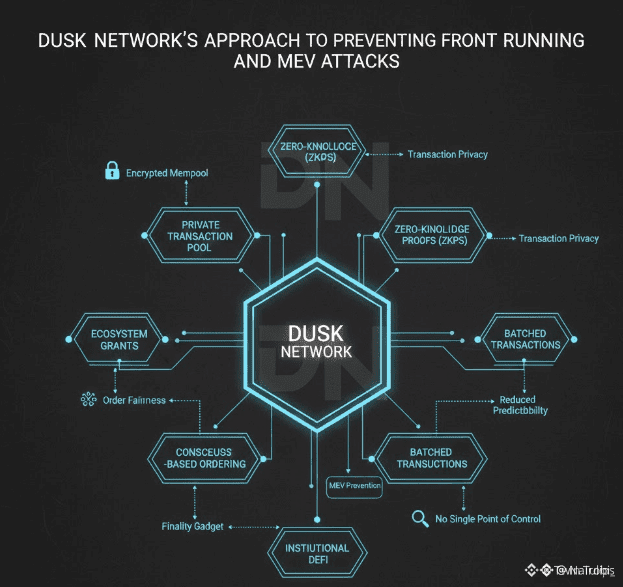
Das Dusk-Staking-Detail, zu dem ich immer wieder zurückkam, ist: Wenn man DUSK sperrt, erhält man nicht sofort diese Staking-Konsensmacht.
Mein erster Eindruck war simpel:
Staking-Tokens.
Zum Provisioner werden.
In den Konsens eintreten.
Aber Dusk fügt zwischen diesen Dingen noch einen weiteren Zustand ein:
Berechtigung.
Ein Stake wird als Betrag plus der Blockhöhe erfasst, in der seine Transaktion aufgenommen wurde. Um an der deterministischen Selektion teilzunehmen, muss er das Minimum erfüllen und eine Reifephase durchlaufen, die an Epochen gebunden ist.
Diese Phase ist nicht einfach „N Blöcke ab Einlage warten“.
Sie umfasst den Rest der Epoche, in die der Stake fällt, plus eine weitere vollständige Epoche. Das Ergebnis: Neue Stakes werden an einer Epochen-Grenze berechtigt.
Damit können zwei Stakes, die zu sehr unterschiedlichen Zeiten zugesagt wurden, dennoch gemeinsam Konsensrechte erwerben.
Wer nahe am Anfang einer Epoche stakt, muss länger warten als jemand nahe an ihrem Ende – doch beide können die Berechtigungsgrenze gleichzeitig überschreiten.
Das wirkt klein, bis man die Zustände voneinander trennt.
Gesperrtes Kapital ist bereits dem Staking-System ausgesetzt.
Berechtigtes Kapital kann tatsächlich in die Selektion eintreten.
Ausgewähltes Kapital erhält eine konkrete Rolle im Konsens.
Das sind drei unterschiedliche Zeitpunkte.
Strafen zerlegen das Bild noch einmal. Eine Suspendierung kann einen Provisioner für Epochen von der Selektion ausschließen. Soft Slashing kann einen Teil des Stakes sperren und sein Gewicht reduzieren. Hard Slashing kann den Stake verbrennen.
Daher bedeutet „weiterhin gestakt“ nicht zwangsläufig „weiterhin mit derselben Konsenseinfluss-Wirkung ausgestattet“.
Das macht die Epochen-Grenze mehr als nur Buchhaltung.
Sie ist Teil der Sicherheitsoberfläche des Protokolls.
Stell dir einen großen Stake vor, der spät in einer Epoche ankommt. Das Kapital ist zwar festgelegt, aber es kann die Auswahl des Komitees nicht sofort neu formen, nur weil die Transaktion finalisiert wurde.
Dusk macht den Besitz am Stake unmittelbar – und die Konsensberechtigung zeitlich verzögert.
Und das hat die Frage für mich verändert.
Wenn wir sagen, ein PoS-Netzwerk habe neues Stake gewonnen: Meinen wir dann, dass das Kapital gesperrt wurde?
Oder dass das Protokoll dem Kapital tatsächlich erlaubt hat, damit zu beginnen, Blöcke zu entscheiden?
@Dusk_Foundation #Dusk $DUSK $GPS $VELVET
Das Dusk-Staking-Detail, zu dem ich immer wieder zurückkam, ist: Wenn man DUSK sperrt, erhält man nicht sofort diese Staking-Konsensmacht.
Mein erster Eindruck war simpel:
Staking-Tokens.
Zum Provisioner werden.
In den Konsens eintreten.
Aber Dusk fügt zwischen diesen Dingen noch einen weiteren Zustand ein:
Berechtigung.
Ein Stake wird als Betrag plus der Blockhöhe erfasst, in der seine Transaktion aufgenommen wurde. Um an der deterministischen Selektion teilzunehmen, muss er das Minimum erfüllen und eine Reifephase durchlaufen, die an Epochen gebunden ist.
Diese Phase ist nicht einfach „N Blöcke ab Einlage warten“.
Sie umfasst den Rest der Epoche, in die der Stake fällt, plus eine weitere vollständige Epoche. Das Ergebnis: Neue Stakes werden an einer Epochen-Grenze berechtigt.
Damit können zwei Stakes, die zu sehr unterschiedlichen Zeiten zugesagt wurden, dennoch gemeinsam Konsensrechte erwerben.
Wer nahe am Anfang einer Epoche stakt, muss länger warten als jemand nahe an ihrem Ende – doch beide können die Berechtigungsgrenze gleichzeitig überschreiten.
Das wirkt klein, bis man die Zustände voneinander trennt.
Gesperrtes Kapital ist bereits dem Staking-System ausgesetzt.
Berechtigtes Kapital kann tatsächlich in die Selektion eintreten.
Ausgewähltes Kapital erhält eine konkrete Rolle im Konsens.
Das sind drei unterschiedliche Zeitpunkte.
Strafen zerlegen das Bild noch einmal. Eine Suspendierung kann einen Provisioner für Epochen von der Selektion ausschließen. Soft Slashing kann einen Teil des Stakes sperren und sein Gewicht reduzieren. Hard Slashing kann den Stake verbrennen.
Daher bedeutet „weiterhin gestakt“ nicht zwangsläufig „weiterhin mit derselben Konsenseinfluss-Wirkung ausgestattet“.
Das macht die Epochen-Grenze mehr als nur Buchhaltung.
Sie ist Teil der Sicherheitsoberfläche des Protokolls.
Stell dir einen großen Stake vor, der spät in einer Epoche ankommt. Das Kapital ist zwar festgelegt, aber es kann die Auswahl des Komitees nicht sofort neu formen, nur weil die Transaktion finalisiert wurde.
Dusk macht den Besitz am Stake unmittelbar – und die Konsensberechtigung zeitlich verzögert.
Und das hat die Frage für mich verändert.
Wenn wir sagen, ein PoS-Netzwerk habe neues Stake gewonnen: Meinen wir dann, dass das Kapital gesperrt wurde?
Oder dass das Protokoll dem Kapital tatsächlich erlaubt hat, damit zu beginnen, Blöcke zu entscheiden?
@Dusk #Dusk $DUSK $GPS $VELVET
Mein erster Eindruck war simpel:
Staking-Tokens.
Zum Provisioner werden.
In den Konsens eintreten.
Aber Dusk fügt zwischen diesen Dingen noch einen weiteren Zustand ein:
Berechtigung.
Ein Stake wird als Betrag plus der Blockhöhe erfasst, in der seine Transaktion aufgenommen wurde. Um an der deterministischen Selektion teilzunehmen, muss er das Minimum erfüllen und eine Reifephase durchlaufen, die an Epochen gebunden ist.
Diese Phase ist nicht einfach „N Blöcke ab Einlage warten“.
Sie umfasst den Rest der Epoche, in die der Stake fällt, plus eine weitere vollständige Epoche. Das Ergebnis: Neue Stakes werden an einer Epochen-Grenze berechtigt.
Damit können zwei Stakes, die zu sehr unterschiedlichen Zeiten zugesagt wurden, dennoch gemeinsam Konsensrechte erwerben.
Wer nahe am Anfang einer Epoche stakt, muss länger warten als jemand nahe an ihrem Ende – doch beide können die Berechtigungsgrenze gleichzeitig überschreiten.
Das wirkt klein, bis man die Zustände voneinander trennt.
Gesperrtes Kapital ist bereits dem Staking-System ausgesetzt.
Berechtigtes Kapital kann tatsächlich in die Selektion eintreten.
Ausgewähltes Kapital erhält eine konkrete Rolle im Konsens.
Das sind drei unterschiedliche Zeitpunkte.
Strafen zerlegen das Bild noch einmal. Eine Suspendierung kann einen Provisioner für Epochen von der Selektion ausschließen. Soft Slashing kann einen Teil des Stakes sperren und sein Gewicht reduzieren. Hard Slashing kann den Stake verbrennen.
Daher bedeutet „weiterhin gestakt“ nicht zwangsläufig „weiterhin mit derselben Konsenseinfluss-Wirkung ausgestattet“.
Das macht die Epochen-Grenze mehr als nur Buchhaltung.
Sie ist Teil der Sicherheitsoberfläche des Protokolls.
Stell dir einen großen Stake vor, der spät in einer Epoche ankommt. Das Kapital ist zwar festgelegt, aber es kann die Auswahl des Komitees nicht sofort neu formen, nur weil die Transaktion finalisiert wurde.
Dusk macht den Besitz am Stake unmittelbar – und die Konsensberechtigung zeitlich verzögert.
Und das hat die Frage für mich verändert.
Wenn wir sagen, ein PoS-Netzwerk habe neues Stake gewonnen: Meinen wir dann, dass das Kapital gesperrt wurde?
Oder dass das Protokoll dem Kapital tatsächlich erlaubt hat, damit zu beginnen, Blöcke zu entscheiden?
@Dusk #Dusk $DUSK $GPS $VELVET
3
4
478
·
--
Die Details zum Phoenix-Manöver sind leicht zu übersehen:
Ausgegebene Hinweise bleiben im Merkle-Baum.
Ich behandelte diesen Baum anfangs wie einen privaten UTXO-Satz. Wenn ein Hinweis ausgegeben wurde, nahm ich an, er würde verschwinden.
Das Whitepaper sagt etwas anderes.
Wenn ein Phoenix-Hinweis ausgegeben wird, leitet sein Besitzer einen Nullifier aus dem Geheimen Schlüssel des Hinweises ab. Das Netzwerk protokolliert diesen Nullifier, sodass der Hinweis nicht erneut ausgegeben werden kann.
Aber es lernt nicht, zu welchem Hinweis der Nullifier gehört.
Also bleibt der Hinweis. Der Baum wächst weiter.
Das schafft eine Unterscheidung, an die ich nicht gedacht hatte:
protokolliert ist nicht dasselbe wie ausgabefähig.
Ein aktueller Merkle-Root ermöglicht es dem Netzwerk zu verifizieren, dass ein Eingabe-Hinweis zum Baum gehört. Die reine Mitgliedschaft bedeutet nicht, dass der Wert noch „lebendig“ ist.
Diese Antwort steckt in der Nullifier-Liste.
Und Phoenix hält die öffentliche Verknüpfung zwischen beiden verdeckt.
In Moonlight ordnet Dusk ein Konto einem öffentlichen Kontostand zu.
Phoenix funktioniert anders. Das Netzwerk verifiziert einen ZK-Beweis, dass Eingabe-Hinweise korrekt nullifiziert sind und genug Wert für neue Hinweise, Einzahlung und den maximalen Gasverbrauch besitzen, ohne die Beträge offenzulegen.
So kann ein Phoenix-Hinweis weiterhin protokolliert bleiben, obwohl sein ökonomischer Nutzen bereits verschwunden ist.
Der Datensatz überlebt.
Das Ausgaberecht nicht.
Dann gibt es noch eine weitere Trennung.
Ein View Key kann an eine vertrauenswürdige Partei gegeben werden, damit sie das Netzwerk durchsucht und Transaktionen identifiziert, die an den Benutzer adressiert sind. Aber sie kann diese Hinweise trotzdem nicht ausgeben, weil der Geheimschlüssel des Hinweises den gesamten Geheimschlüssel des Nutzers erfordert.
Daher sind „kann meinen privaten Zustand sehen“ und „kann meinen privaten Zustand kontrollieren“ unterschiedliche Berechtigungen.
Es zeigen sich zwei Grenzen:
protokolliert / ausgabefähig
sichtbar / kontrollierbar
Der Sonderfall, zu dem ich immer wieder zurückkomme, ist eine Anwendung, die rekonstruiert, was ein Nutzer gerade hat.
Dass der Hinweis vorhanden ist, reicht nicht aus.
Ihn erkennen zu können, reicht ebenfalls nicht.
Du brauchst Historie, den Nullifikationszustand und das richtige geheime Material.
Das lässt mich dann fragen:
In einem privaten Ledger—ist „aktueller Zustand“ überhaupt ein einzelnes Objekt, oder ist er die Schnittmenge von Aufzeichnungen, die beim Lesen allein absichtlich unvollständig sind?
@Dusk_Foundation #dusk $DUSK $VELVET $APR
Die Details zum Phoenix-Manöver sind leicht zu übersehen:
Ausgegebene Hinweise bleiben im Merkle-Baum.
Ich behandelte diesen Baum anfangs wie einen privaten UTXO-Satz. Wenn ein Hinweis ausgegeben wurde, nahm ich an, er würde verschwinden.
Das Whitepaper sagt etwas anderes.
Wenn ein Phoenix-Hinweis ausgegeben wird, leitet sein Besitzer einen Nullifier aus dem Geheimen Schlüssel des Hinweises ab. Das Netzwerk protokolliert diesen Nullifier, sodass der Hinweis nicht erneut ausgegeben werden kann.
Aber es lernt nicht, zu welchem Hinweis der Nullifier gehört.
Also bleibt der Hinweis. Der Baum wächst weiter.
Das schafft eine Unterscheidung, an die ich nicht gedacht hatte:
protokolliert ist nicht dasselbe wie ausgabefähig.
Ein aktueller Merkle-Root ermöglicht es dem Netzwerk zu verifizieren, dass ein Eingabe-Hinweis zum Baum gehört. Die reine Mitgliedschaft bedeutet nicht, dass der Wert noch „lebendig“ ist.
Diese Antwort steckt in der Nullifier-Liste.
Und Phoenix hält die öffentliche Verknüpfung zwischen beiden verdeckt.
In Moonlight ordnet Dusk ein Konto einem öffentlichen Kontostand zu.
Phoenix funktioniert anders. Das Netzwerk verifiziert einen ZK-Beweis, dass Eingabe-Hinweise korrekt nullifiziert sind und genug Wert für neue Hinweise, Einzahlung und den maximalen Gasverbrauch besitzen, ohne die Beträge offenzulegen.
So kann ein Phoenix-Hinweis weiterhin protokolliert bleiben, obwohl sein ökonomischer Nutzen bereits verschwunden ist.
Der Datensatz überlebt.
Das Ausgaberecht nicht.
Dann gibt es noch eine weitere Trennung.
Ein View Key kann an eine vertrauenswürdige Partei gegeben werden, damit sie das Netzwerk durchsucht und Transaktionen identifiziert, die an den Benutzer adressiert sind. Aber sie kann diese Hinweise trotzdem nicht ausgeben, weil der Geheimschlüssel des Hinweises den gesamten Geheimschlüssel des Nutzers erfordert.
Daher sind „kann meinen privaten Zustand sehen“ und „kann meinen privaten Zustand kontrollieren“ unterschiedliche Berechtigungen.
Es zeigen sich zwei Grenzen:
protokolliert / ausgabefähig
sichtbar / kontrollierbar
Der Sonderfall, zu dem ich immer wieder zurückkomme, ist eine Anwendung, die rekonstruiert, was ein Nutzer gerade hat.
Dass der Hinweis vorhanden ist, reicht nicht aus.
Ihn erkennen zu können, reicht ebenfalls nicht.
Du brauchst Historie, den Nullifikationszustand und das richtige geheime Material.
Das lässt mich dann fragen:
In einem privaten Ledger—ist „aktueller Zustand“ überhaupt ein einzelnes Objekt, oder ist er die Schnittmenge von Aufzeichnungen, die beim Lesen allein absichtlich unvollständig sind?
@Dusk #dusk $DUSK $VELVET $APR
Ausgegebene Hinweise bleiben im Merkle-Baum.
Ich behandelte diesen Baum anfangs wie einen privaten UTXO-Satz. Wenn ein Hinweis ausgegeben wurde, nahm ich an, er würde verschwinden.
Das Whitepaper sagt etwas anderes.
Wenn ein Phoenix-Hinweis ausgegeben wird, leitet sein Besitzer einen Nullifier aus dem Geheimen Schlüssel des Hinweises ab. Das Netzwerk protokolliert diesen Nullifier, sodass der Hinweis nicht erneut ausgegeben werden kann.
Aber es lernt nicht, zu welchem Hinweis der Nullifier gehört.
Also bleibt der Hinweis. Der Baum wächst weiter.
Das schafft eine Unterscheidung, an die ich nicht gedacht hatte:
protokolliert ist nicht dasselbe wie ausgabefähig.
Ein aktueller Merkle-Root ermöglicht es dem Netzwerk zu verifizieren, dass ein Eingabe-Hinweis zum Baum gehört. Die reine Mitgliedschaft bedeutet nicht, dass der Wert noch „lebendig“ ist.
Diese Antwort steckt in der Nullifier-Liste.
Und Phoenix hält die öffentliche Verknüpfung zwischen beiden verdeckt.
In Moonlight ordnet Dusk ein Konto einem öffentlichen Kontostand zu.
Phoenix funktioniert anders. Das Netzwerk verifiziert einen ZK-Beweis, dass Eingabe-Hinweise korrekt nullifiziert sind und genug Wert für neue Hinweise, Einzahlung und den maximalen Gasverbrauch besitzen, ohne die Beträge offenzulegen.
So kann ein Phoenix-Hinweis weiterhin protokolliert bleiben, obwohl sein ökonomischer Nutzen bereits verschwunden ist.
Der Datensatz überlebt.
Das Ausgaberecht nicht.
Dann gibt es noch eine weitere Trennung.
Ein View Key kann an eine vertrauenswürdige Partei gegeben werden, damit sie das Netzwerk durchsucht und Transaktionen identifiziert, die an den Benutzer adressiert sind. Aber sie kann diese Hinweise trotzdem nicht ausgeben, weil der Geheimschlüssel des Hinweises den gesamten Geheimschlüssel des Nutzers erfordert.
Daher sind „kann meinen privaten Zustand sehen“ und „kann meinen privaten Zustand kontrollieren“ unterschiedliche Berechtigungen.
Es zeigen sich zwei Grenzen:
protokolliert / ausgabefähig
sichtbar / kontrollierbar
Der Sonderfall, zu dem ich immer wieder zurückkomme, ist eine Anwendung, die rekonstruiert, was ein Nutzer gerade hat.
Dass der Hinweis vorhanden ist, reicht nicht aus.
Ihn erkennen zu können, reicht ebenfalls nicht.
Du brauchst Historie, den Nullifikationszustand und das richtige geheime Material.
Das lässt mich dann fragen:
In einem privaten Ledger—ist „aktueller Zustand“ überhaupt ein einzelnes Objekt, oder ist er die Schnittmenge von Aufzeichnungen, die beim Lesen allein absichtlich unvollständig sind?
@Dusk #dusk $DUSK $VELVET $APR
1
3
147
·
--
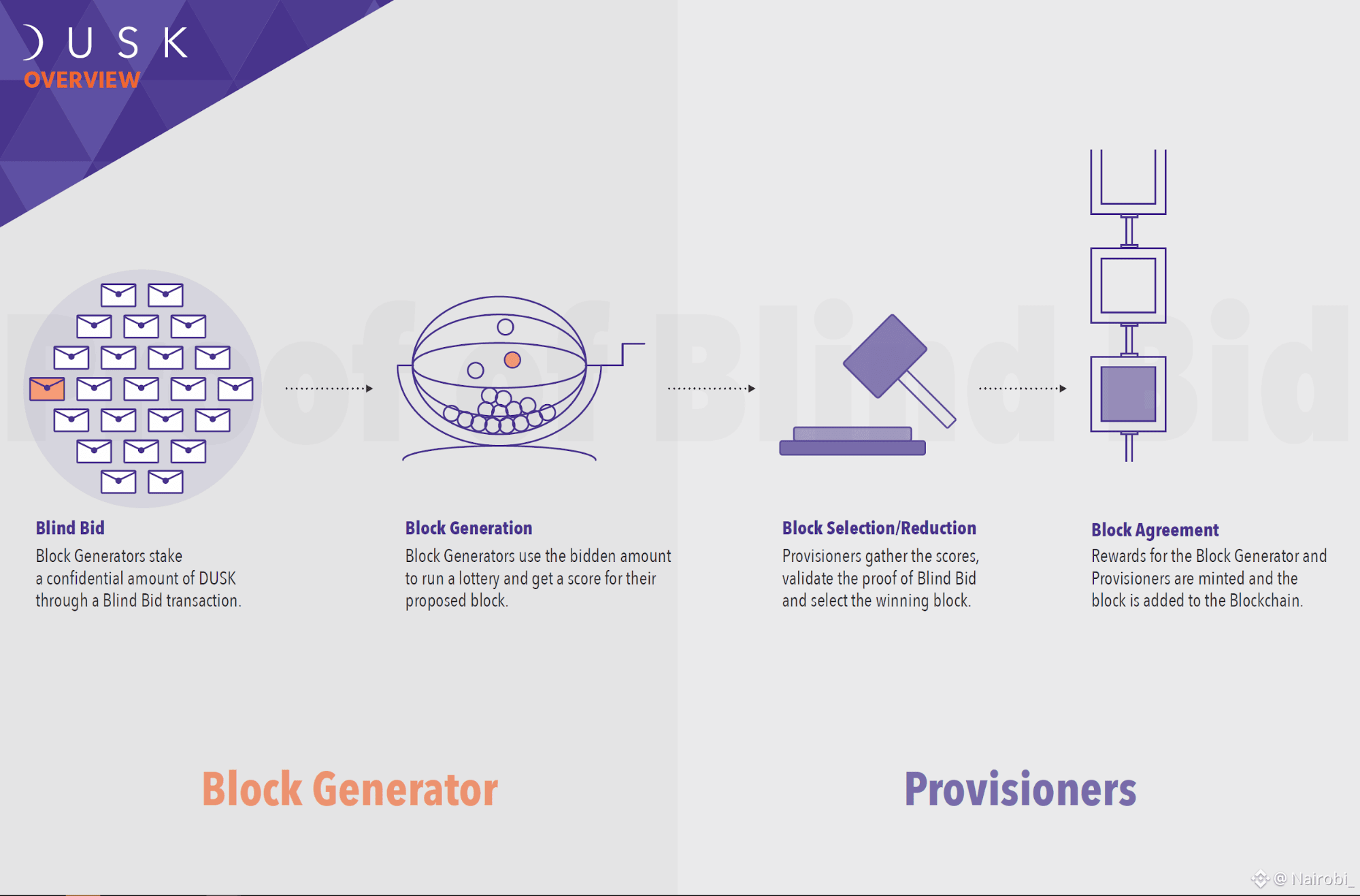
die Dämmerungs-Details, zu denen ich immer wieder zurückkam, waren: Ein Block kann eine Success-Attestation haben und dennoch nicht final sein.
Mein erster Blick auf „Succinct Attestation“ war einfacher.
Ein Vorschlag landet.
Die Validations erreichen eine Supermajorität an gültigen Stimmen.
Die Ratifikation bestätigt das.
Aggregierte BLS-Signaturen beweisen das Quorum.
Ist das nicht genug?
Nicht ganz.
Dusk’ Abschnitt zu der rollierenden Finalität teilt einen Block in akzeptiert, attestiert, bestätigt und final.
Wenn ein Block in Iteration I > 0 erzeugt wird, während eine frühere Iteration noch keine Fail-Attestation hat, kann er eine Success-Attestation tragen und wird nur als akzeptiert markiert.
Denn „das Komitee erreichte das Quorum“ klingt sehr nah an „dieser Block kann nicht verschwinden“.
Beides sind bei Dusk unterschiedliche Aussagen.
Die ungelöste frühere Iteration ist weiterhin relevant. Wenn ein Block mit niedrigerer Iteration später Einigkeit erreicht, kann ein Fallback den akzeptierten Block ersetzen und dessen Nachfolger verwerfen.
Also belegt die Success-Attestation, dass Einigkeit passiert ist.
Sie beweist jedoch nicht immer, dass die Kette das Auswählen abgeschlossen hat.
Ein attestierter Block landet entweder in Iteration 0 oder hat Fail-Attestationen, die jede frühere Iteration abdecken, sodass kein Block mit niedrigerer Iteration ihn direkt ersetzen kann. Bestätigt hängt von späteren Blöcken ab. Final wird erst erreicht, wenn der Block bestätigt ist und sein Vorgänger bereits final ist.
Das hat „Finalität in Sekunden“ für mich weniger nach einem einzelnen Ereignis wirken lassen und eher nach einer Grenze, die eine Anwendung korrekt lesen muss.
Eine Anwendung auf Dusk fragt nicht nur, ob Konsens etwas unterschrieben hat.
Sicherheiten freigeben?
Eine Sicherheitsübertragung erkennen?
Lass einen anderen Vertrag den Zustand als unumkehrbar behandeln?
Das verdient möglicherweise nicht dieselbe Schwelle.
Meistens passiert das wohl schnell. in Ordnung
Der Randfall ist es, der mich interessiert: Ein Block wirkt erfolgreich, eine Anwendung reagiert darauf, und eine niedrigere Iteration ist immer noch am Leben.
Dusk versteckt diese Lücke nicht. Es benennt sie.
Akzeptiert ist nicht final.
Und als ich das bemerkte, änderte sich meine Integrationsfrage.
Nicht: „Hat der Konsens Erfolg gehabt?“
Wie unumkehrbar muss dieser Anwendung Dusk erscheinen, bevor sie handelt?
@Dusk_Foundation $DUSK #Dusk $ACE $APR
die Dämmerungs-Details, zu denen ich immer wieder zurückkam, waren: Ein Block kann eine Success-Attestation haben und dennoch nicht final sein.
Mein erster Blick auf „Succinct Attestation“ war einfacher.
Ein Vorschlag landet.
Die Validations erreichen eine Supermajorität an gültigen Stimmen.
Die Ratifikation bestätigt das.
Aggregierte BLS-Signaturen beweisen das Quorum.
Ist das nicht genug?
Nicht ganz.
Dusk’ Abschnitt zu der rollierenden Finalität teilt einen Block in akzeptiert, attestiert, bestätigt und final.
Wenn ein Block in Iteration I > 0 erzeugt wird, während eine frühere Iteration noch keine Fail-Attestation hat, kann er eine Success-Attestation tragen und wird nur als akzeptiert markiert.
Denn „das Komitee erreichte das Quorum“ klingt sehr nah an „dieser Block kann nicht verschwinden“.
Beides sind bei Dusk unterschiedliche Aussagen.
Die ungelöste frühere Iteration ist weiterhin relevant. Wenn ein Block mit niedrigerer Iteration später Einigkeit erreicht, kann ein Fallback den akzeptierten Block ersetzen und dessen Nachfolger verwerfen.
Also belegt die Success-Attestation, dass Einigkeit passiert ist.
Sie beweist jedoch nicht immer, dass die Kette das Auswählen abgeschlossen hat.
Ein attestierter Block landet entweder in Iteration 0 oder hat Fail-Attestationen, die jede frühere Iteration abdecken, sodass kein Block mit niedrigerer Iteration ihn direkt ersetzen kann. Bestätigt hängt von späteren Blöcken ab. Final wird erst erreicht, wenn der Block bestätigt ist und sein Vorgänger bereits final ist.
Das hat „Finalität in Sekunden“ für mich weniger nach einem einzelnen Ereignis wirken lassen und eher nach einer Grenze, die eine Anwendung korrekt lesen muss.
Eine Anwendung auf Dusk fragt nicht nur, ob Konsens etwas unterschrieben hat.
Sicherheiten freigeben?
Eine Sicherheitsübertragung erkennen?
Lass einen anderen Vertrag den Zustand als unumkehrbar behandeln?
Das verdient möglicherweise nicht dieselbe Schwelle.
Meistens passiert das wohl schnell. in Ordnung
Der Randfall ist es, der mich interessiert: Ein Block wirkt erfolgreich, eine Anwendung reagiert darauf, und eine niedrigere Iteration ist immer noch am Leben.
Dusk versteckt diese Lücke nicht. Es benennt sie.
Akzeptiert ist nicht final.
Und als ich das bemerkte, änderte sich meine Integrationsfrage.
Nicht: „Hat der Konsens Erfolg gehabt?“
Wie unumkehrbar muss dieser Anwendung Dusk erscheinen, bevor sie handelt?
@Dusk $DUSK #Dusk $ACE $APR
Mein erster Blick auf „Succinct Attestation“ war einfacher.
Ein Vorschlag landet.
Die Validations erreichen eine Supermajorität an gültigen Stimmen.
Die Ratifikation bestätigt das.
Aggregierte BLS-Signaturen beweisen das Quorum.
Ist das nicht genug?
Nicht ganz.
Dusk’ Abschnitt zu der rollierenden Finalität teilt einen Block in akzeptiert, attestiert, bestätigt und final.
Wenn ein Block in Iteration I > 0 erzeugt wird, während eine frühere Iteration noch keine Fail-Attestation hat, kann er eine Success-Attestation tragen und wird nur als akzeptiert markiert.
Denn „das Komitee erreichte das Quorum“ klingt sehr nah an „dieser Block kann nicht verschwinden“.
Beides sind bei Dusk unterschiedliche Aussagen.
Die ungelöste frühere Iteration ist weiterhin relevant. Wenn ein Block mit niedrigerer Iteration später Einigkeit erreicht, kann ein Fallback den akzeptierten Block ersetzen und dessen Nachfolger verwerfen.
Also belegt die Success-Attestation, dass Einigkeit passiert ist.
Sie beweist jedoch nicht immer, dass die Kette das Auswählen abgeschlossen hat.
Ein attestierter Block landet entweder in Iteration 0 oder hat Fail-Attestationen, die jede frühere Iteration abdecken, sodass kein Block mit niedrigerer Iteration ihn direkt ersetzen kann. Bestätigt hängt von späteren Blöcken ab. Final wird erst erreicht, wenn der Block bestätigt ist und sein Vorgänger bereits final ist.
Das hat „Finalität in Sekunden“ für mich weniger nach einem einzelnen Ereignis wirken lassen und eher nach einer Grenze, die eine Anwendung korrekt lesen muss.
Eine Anwendung auf Dusk fragt nicht nur, ob Konsens etwas unterschrieben hat.
Sicherheiten freigeben?
Eine Sicherheitsübertragung erkennen?
Lass einen anderen Vertrag den Zustand als unumkehrbar behandeln?
Das verdient möglicherweise nicht dieselbe Schwelle.
Meistens passiert das wohl schnell. in Ordnung
Der Randfall ist es, der mich interessiert: Ein Block wirkt erfolgreich, eine Anwendung reagiert darauf, und eine niedrigere Iteration ist immer noch am Leben.
Dusk versteckt diese Lücke nicht. Es benennt sie.
Akzeptiert ist nicht final.
Und als ich das bemerkte, änderte sich meine Integrationsfrage.
Nicht: „Hat der Konsens Erfolg gehabt?“
Wie unumkehrbar muss dieser Anwendung Dusk erscheinen, bevor sie handelt?
@Dusk $DUSK #Dusk $ACE $APR
SELECTIVE DISCLOSURE
0%
DUSKVM
0%
DUSK'S MOONLIGHT
100%
DUSK'S PHOENIX
0%
1 Stimmen • Abstimmung beendet
3
1
149
·
--
Ich dachte, die öffentliche Dusk-Citadel-Session sei der Teil gewesen, in dem Dusk endlich etwas preisgibt.
innerhalb von Dusk war das Zero-Knowledge-Proof bereits akzeptiert.
die Citadel-Session existierte onchain.
also öffnete ich sie in der Erwartung, genau das, was ich gerade bewiesen hatte, irgendwo darin zu finden.
möglicherweise eine Akkreditierung. einen Wohnsitz. irgendein Attribut, um das der Dusk-Dienst sich tatsächlich kümmert.
und es war nicht da.
was mich ehrlich gesagt erst misstrauisch machte, bevor es mich beeindruckte.
denn wenn Dusk diese Citadel-Session öffentlich im Dusk L1 aufzeichnet: Was genau wurde öffentlich, wenn die eigentliche Berechtigungsnachweis (das Credential) selbst nie auftauchte?
ich habe „verifiziert auf Dusk“ weiterhin so behandelt, als müsse das heißen, dass irgendwo etwas offengelegt wurde.
offenbar nicht.
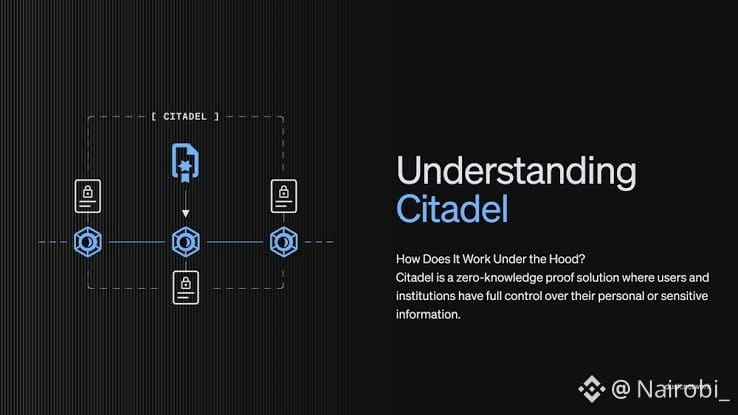
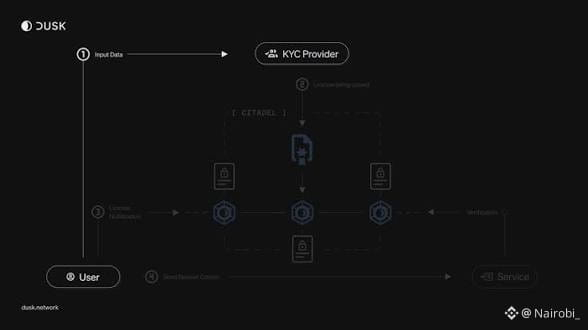
innerhalb der Citadel kann der Besitz einer gültigen Lizenz eines vertrauenswürdigen Anbieters über Zero-Knowledge bewiesen werden. der Citadel-Vertrag prüft diesen Beweis und zeichnet die Session auf.
dann bekommt der Dienst das Session-Cookie und entscheidet, ob der Dusk-Citadel-Beweis seine eigene Richtlinie erfüllt.
aber ich kann diese öffentliche Session immer noch öffnen und finde die Lizenz, die ich verwendet habe, nicht.
keine signierten Attribute wurden dort abgelegt.
kein Akkreditierungsfeld sitzt dort.
kein Wallet-Schlüssel wird dahinter offengelegt.
das ließ mich einfach nicht los.
Dusk hatte gemacht, dass sichtbar wird, dass eine Verifizierung passiert ist, ohne sichtbar zu machen, dass ich mich verifiziert habe – zumindest nicht auf die gleiche Weise.
und ja: selektive Offenlegung klang viel einfacher, bevor ich das gesehen hatte.
ich hatte mir vorgestellt, dass Dusk Privatsphäre alles geschlossen hält, bis jemand Legitimes danach fragt, und dann wird ein bestimmtes Stück Information geöffnet.
Citadel wirkt dagegen eher unerträglich präzise.
ein Dienst bekommt genug aus dem Dusk-Beweis, um seine Entscheidung zu treffen.
das Dusk L1 bekommt genug, um die Session beizubehalten.
und irgendwie erfordert keiner von beiden, dass die gesamte Kette das Credential selbst übernehmen muss.
also öffnete ich immer wieder diese Citadel-Session, auf der Suche nach der Offenlegung.
die Session war immer noch öffentlich.
der Grund, warum ich qualifiziert war, war immer noch nicht da.
und vielleicht ist das es, was mich hier an Dusk immer wieder erwischt.
es wurde etwas offengelegt.
ich bin nur nicht sicher, warum ich je angenommen habe, dass alle es erhalten müssen
@Dusk_Foundation $DUSK #dusk $ACE $VELVET
Ich dachte, die öffentliche Dusk-Citadel-Session sei der Teil gewesen, in dem Dusk endlich etwas preisgibt.
innerhalb von Dusk war das Zero-Knowledge-Proof bereits akzeptiert.
die Citadel-Session existierte onchain.
also öffnete ich sie in der Erwartung, genau das, was ich gerade bewiesen hatte, irgendwo darin zu finden.
möglicherweise eine Akkreditierung. einen Wohnsitz. irgendein Attribut, um das der Dusk-Dienst sich tatsächlich kümmert.
und es war nicht da.
was mich ehrlich gesagt erst misstrauisch machte, bevor es mich beeindruckte.
denn wenn Dusk diese Citadel-Session öffentlich im Dusk L1 aufzeichnet: Was genau wurde öffentlich, wenn die eigentliche Berechtigungsnachweis (das Credential) selbst nie auftauchte?
ich habe „verifiziert auf Dusk“ weiterhin so behandelt, als müsse das heißen, dass irgendwo etwas offengelegt wurde.
offenbar nicht.
innerhalb der Citadel kann der Besitz einer gültigen Lizenz eines vertrauenswürdigen Anbieters über Zero-Knowledge bewiesen werden. der Citadel-Vertrag prüft diesen Beweis und zeichnet die Session auf.
dann bekommt der Dienst das Session-Cookie und entscheidet, ob der Dusk-Citadel-Beweis seine eigene Richtlinie erfüllt.
aber ich kann diese öffentliche Session immer noch öffnen und finde die Lizenz, die ich verwendet habe, nicht.
keine signierten Attribute wurden dort abgelegt.
kein Akkreditierungsfeld sitzt dort.
kein Wallet-Schlüssel wird dahinter offengelegt.
das ließ mich einfach nicht los.
Dusk hatte gemacht, dass sichtbar wird, dass eine Verifizierung passiert ist, ohne sichtbar zu machen, dass ich mich verifiziert habe – zumindest nicht auf die gleiche Weise.
und ja: selektive Offenlegung klang viel einfacher, bevor ich das gesehen hatte.
ich hatte mir vorgestellt, dass Dusk Privatsphäre alles geschlossen hält, bis jemand Legitimes danach fragt, und dann wird ein bestimmtes Stück Information geöffnet.
Citadel wirkt dagegen eher unerträglich präzise.
ein Dienst bekommt genug aus dem Dusk-Beweis, um seine Entscheidung zu treffen.
das Dusk L1 bekommt genug, um die Session beizubehalten.
und irgendwie erfordert keiner von beiden, dass die gesamte Kette das Credential selbst übernehmen muss.
also öffnete ich immer wieder diese Citadel-Session, auf der Suche nach der Offenlegung.
die Session war immer noch öffentlich.
der Grund, warum ich qualifiziert war, war immer noch nicht da.
und vielleicht ist das es, was mich hier an Dusk immer wieder erwischt.
es wurde etwas offengelegt.
ich bin nur nicht sicher, warum ich je angenommen habe, dass alle es erhalten müssen
@Dusk $DUSK #dusk $ACE $VELVET
innerhalb von Dusk war das Zero-Knowledge-Proof bereits akzeptiert.
die Citadel-Session existierte onchain.
also öffnete ich sie in der Erwartung, genau das, was ich gerade bewiesen hatte, irgendwo darin zu finden.
möglicherweise eine Akkreditierung. einen Wohnsitz. irgendein Attribut, um das der Dusk-Dienst sich tatsächlich kümmert.
und es war nicht da.
was mich ehrlich gesagt erst misstrauisch machte, bevor es mich beeindruckte.
denn wenn Dusk diese Citadel-Session öffentlich im Dusk L1 aufzeichnet: Was genau wurde öffentlich, wenn die eigentliche Berechtigungsnachweis (das Credential) selbst nie auftauchte?
ich habe „verifiziert auf Dusk“ weiterhin so behandelt, als müsse das heißen, dass irgendwo etwas offengelegt wurde.
offenbar nicht.
innerhalb der Citadel kann der Besitz einer gültigen Lizenz eines vertrauenswürdigen Anbieters über Zero-Knowledge bewiesen werden. der Citadel-Vertrag prüft diesen Beweis und zeichnet die Session auf.
dann bekommt der Dienst das Session-Cookie und entscheidet, ob der Dusk-Citadel-Beweis seine eigene Richtlinie erfüllt.
aber ich kann diese öffentliche Session immer noch öffnen und finde die Lizenz, die ich verwendet habe, nicht.
keine signierten Attribute wurden dort abgelegt.
kein Akkreditierungsfeld sitzt dort.
kein Wallet-Schlüssel wird dahinter offengelegt.
das ließ mich einfach nicht los.
Dusk hatte gemacht, dass sichtbar wird, dass eine Verifizierung passiert ist, ohne sichtbar zu machen, dass ich mich verifiziert habe – zumindest nicht auf die gleiche Weise.
und ja: selektive Offenlegung klang viel einfacher, bevor ich das gesehen hatte.
ich hatte mir vorgestellt, dass Dusk Privatsphäre alles geschlossen hält, bis jemand Legitimes danach fragt, und dann wird ein bestimmtes Stück Information geöffnet.
Citadel wirkt dagegen eher unerträglich präzise.
ein Dienst bekommt genug aus dem Dusk-Beweis, um seine Entscheidung zu treffen.
das Dusk L1 bekommt genug, um die Session beizubehalten.
und irgendwie erfordert keiner von beiden, dass die gesamte Kette das Credential selbst übernehmen muss.
also öffnete ich immer wieder diese Citadel-Session, auf der Suche nach der Offenlegung.
die Session war immer noch öffentlich.
der Grund, warum ich qualifiziert war, war immer noch nicht da.
und vielleicht ist das es, was mich hier an Dusk immer wieder erwischt.
es wurde etwas offengelegt.
ich bin nur nicht sicher, warum ich je angenommen habe, dass alle es erhalten müssen
@Dusk $DUSK #dusk $ACE $VELVET
2
1
146
·
--
Ich habe in der Dusk-Wallet ständig zwischen „public“ und „shielded“ gewechselt, weil ich dachte, dass eine davon die „echte“ Version von DUSK sei.
derselbe Token.
dieselbe Network.
dieselbe Wallet.
Moonlight hat sich wie ein gewöhnliches Public-Konto verhalten. Kontostand sichtbar. Absender sichtbar. Empfänger sichtbar. Betrag sichtbar.
Dann verwandelte Phoenix denselben DUSK in verschlüsselte Notizen und der Transfer stoppte—und ließ mich denselben Pfad hinter mir.
Und ja, das fühlte sich inkonsistent an.
Wenn Dusk eine Privacy-Blockchain ist, warum wirkt dann ein Send komplett öffentlich?
Oder wenn DUSK öffentlich genug ist, um über Moonlight zu laufen: Was genau wird privat, wenn ich Phoenix wähle?
Ich habe versucht, Privacy an das Asset zu „heften“.
Das war der Teil, den ich falsch verstanden hatte.
Moonlight und Phoenix sind zwei Transaktionsmodelle innerhalb von DuskDS. Das eine hält Wert in einem Public-Konto-Modell. Das andere nutzt shielded notes und Zero-Knowledge-Proofs, ohne dabei dieselben Daten zu Absender, Empfänger und Betrag offenzulegen.
Die Münze wurde keine andere Münze.
Was Beobachter lernen durften, war das.
Und irgendwie störte mich das mehr als eine Chain, die einfach die ganze Zeit privat ist.
Denn jetzt war Privacy keine Eigenschaft, die ich Dusk einfach zuweisen und dann vergessen konnte.
Die Entscheidung steckte im Ablauf.
Sende ich über Moonlight, hinterlässt Dusk einen öffentlichen Kontotrail.
Sende ich über Phoenix, kann der Transfer sich abwickeln, ohne gewöhnlichen Beobachtern das gleiche finanzielle Bild zu geben.
dieselbe Abwicklungsschicht.
andere Sichtbarkeit.
Und Dusk-Apps machen das schwerer, zu egalisieren. Ein DuskVM-Flow kann transparent bleiben, wenn öffentlicher Status nützlich ist, und Privacy oder Zero-Knowledge-Funktionen verwenden, wenn die Anwendung sie braucht.
Also klang „Dusk ist privat“ auf einmal zu simpel.
Ich kann dasselbe Network nutzen und zwischen einem Balance wechseln, der dafür gedacht ist, angesehen zu werden, und einem Transfer, bei dem es reicht, Korrektheit nachzuweisen.
Ich bleibe immer noch bei dieser Wallet-Entscheidung stehen.
Nicht, weil ich nicht wüsste, was public und shielded bedeutet.
Sondern weil ich erwartet hatte, dass Privacy zur Chain gehört.
Dusk macht es jedes Mal wieder zu einer Sache des Flows, den ich tatsächlich auswähle.
@Dusk_Foundation #Dusk $DUSK #dusk $AKE $COTI
Ich habe in der Dusk-Wallet ständig zwischen „public“ und „shielded“ gewechselt, weil ich dachte, dass eine davon die „echte“ Version von DUSK sei.
derselbe Token.
dieselbe Network.
dieselbe Wallet.
Moonlight hat sich wie ein gewöhnliches Public-Konto verhalten. Kontostand sichtbar. Absender sichtbar. Empfänger sichtbar. Betrag sichtbar.
Dann verwandelte Phoenix denselben DUSK in verschlüsselte Notizen und der Transfer stoppte—und ließ mich denselben Pfad hinter mir.
Und ja, das fühlte sich inkonsistent an.
Wenn Dusk eine Privacy-Blockchain ist, warum wirkt dann ein Send komplett öffentlich?
Oder wenn DUSK öffentlich genug ist, um über Moonlight zu laufen: Was genau wird privat, wenn ich Phoenix wähle?
Ich habe versucht, Privacy an das Asset zu „heften“.
Das war der Teil, den ich falsch verstanden hatte.
Moonlight und Phoenix sind zwei Transaktionsmodelle innerhalb von DuskDS. Das eine hält Wert in einem Public-Konto-Modell. Das andere nutzt shielded notes und Zero-Knowledge-Proofs, ohne dabei dieselben Daten zu Absender, Empfänger und Betrag offenzulegen.
Die Münze wurde keine andere Münze.
Was Beobachter lernen durften, war das.
Und irgendwie störte mich das mehr als eine Chain, die einfach die ganze Zeit privat ist.
Denn jetzt war Privacy keine Eigenschaft, die ich Dusk einfach zuweisen und dann vergessen konnte.
Die Entscheidung steckte im Ablauf.
Sende ich über Moonlight, hinterlässt Dusk einen öffentlichen Kontotrail.
Sende ich über Phoenix, kann der Transfer sich abwickeln, ohne gewöhnlichen Beobachtern das gleiche finanzielle Bild zu geben.
dieselbe Abwicklungsschicht.
andere Sichtbarkeit.
Und Dusk-Apps machen das schwerer, zu egalisieren. Ein DuskVM-Flow kann transparent bleiben, wenn öffentlicher Status nützlich ist, und Privacy oder Zero-Knowledge-Funktionen verwenden, wenn die Anwendung sie braucht.
Also klang „Dusk ist privat“ auf einmal zu simpel.
Ich kann dasselbe Network nutzen und zwischen einem Balance wechseln, der dafür gedacht ist, angesehen zu werden, und einem Transfer, bei dem es reicht, Korrektheit nachzuweisen.
Ich bleibe immer noch bei dieser Wallet-Entscheidung stehen.
Nicht, weil ich nicht wüsste, was public und shielded bedeutet.
Sondern weil ich erwartet hatte, dass Privacy zur Chain gehört.
Dusk macht es jedes Mal wieder zu einer Sache des Flows, den ich tatsächlich auswähle.
@Dusk #Dusk $DUSK #dusk $AKE $COTI
derselbe Token.
dieselbe Network.
dieselbe Wallet.
Moonlight hat sich wie ein gewöhnliches Public-Konto verhalten. Kontostand sichtbar. Absender sichtbar. Empfänger sichtbar. Betrag sichtbar.
Dann verwandelte Phoenix denselben DUSK in verschlüsselte Notizen und der Transfer stoppte—und ließ mich denselben Pfad hinter mir.
Und ja, das fühlte sich inkonsistent an.
Wenn Dusk eine Privacy-Blockchain ist, warum wirkt dann ein Send komplett öffentlich?
Oder wenn DUSK öffentlich genug ist, um über Moonlight zu laufen: Was genau wird privat, wenn ich Phoenix wähle?
Ich habe versucht, Privacy an das Asset zu „heften“.
Das war der Teil, den ich falsch verstanden hatte.
Moonlight und Phoenix sind zwei Transaktionsmodelle innerhalb von DuskDS. Das eine hält Wert in einem Public-Konto-Modell. Das andere nutzt shielded notes und Zero-Knowledge-Proofs, ohne dabei dieselben Daten zu Absender, Empfänger und Betrag offenzulegen.
Die Münze wurde keine andere Münze.
Was Beobachter lernen durften, war das.
Und irgendwie störte mich das mehr als eine Chain, die einfach die ganze Zeit privat ist.
Denn jetzt war Privacy keine Eigenschaft, die ich Dusk einfach zuweisen und dann vergessen konnte.
Die Entscheidung steckte im Ablauf.
Sende ich über Moonlight, hinterlässt Dusk einen öffentlichen Kontotrail.
Sende ich über Phoenix, kann der Transfer sich abwickeln, ohne gewöhnlichen Beobachtern das gleiche finanzielle Bild zu geben.
dieselbe Abwicklungsschicht.
andere Sichtbarkeit.
Und Dusk-Apps machen das schwerer, zu egalisieren. Ein DuskVM-Flow kann transparent bleiben, wenn öffentlicher Status nützlich ist, und Privacy oder Zero-Knowledge-Funktionen verwenden, wenn die Anwendung sie braucht.
Also klang „Dusk ist privat“ auf einmal zu simpel.
Ich kann dasselbe Network nutzen und zwischen einem Balance wechseln, der dafür gedacht ist, angesehen zu werden, und einem Transfer, bei dem es reicht, Korrektheit nachzuweisen.
Ich bleibe immer noch bei dieser Wallet-Entscheidung stehen.
Nicht, weil ich nicht wüsste, was public und shielded bedeutet.
Sondern weil ich erwartet hatte, dass Privacy zur Chain gehört.
Dusk macht es jedes Mal wieder zu einer Sache des Flows, den ich tatsächlich auswähle.
@Dusk #Dusk $DUSK #dusk $AKE $COTI
DUSK
67%
AKE
33%
COTI
0%
3 Stimmen • Abstimmung beendet
6
5
173
Anmelden und weiter Inhalte entdecken
Krypto-Nutzer weltweit auf Binance Square kennenlernen
⚡️ Bleib in Sachen Krypto stets am Puls.
💬 Die weltgrößte Kryptobörse vertraut darauf.
👍 Erhalte verlässliche Einblicke von verifizierten Creators.
E-Mail-Adresse/Telefonnummer
Trendthemen
NFPWatch
10.8M Aufrufe
19,216 Kommentare
Krypto-News | Bitcoin nähert sich der Marke von 85.000 US-Dollar, während die Renditen von US-Staatsanleihen vor dem Bericht zu den NFP zurückgehen
Binance News
·39 Likes
·49.9k Aufrufe
BitcoinFundingRateTriplesTo10%
160,358 Aufrufe
1,152 Kommentare
BitcoinSurpasses$86KUp2.99%
51,993 Aufrufe
113 Kommentare