

Crypto Pulse Media
1.9k Beiträge
Crypto Pulse Media
Melden
Nutzer blockieren
Real-Time Crypto Market Intelligence Bitcoin • Altcoins • Web3 • Blockchain Global Coverage | Data-Driven Insights Crypto Pulse Media – Stay Ahead of the Market
734 Following
522 Follower
610 Like gegeben
Beiträge
Artikel
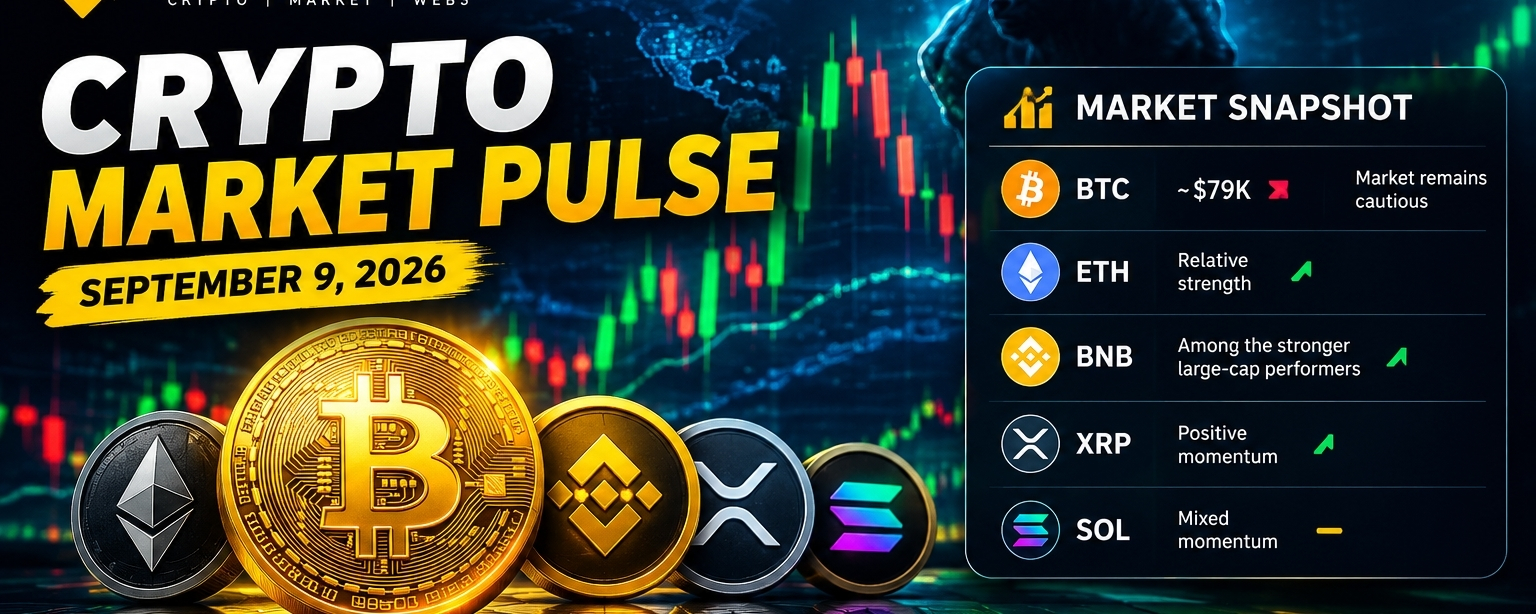
Bitcoin zeigt sich nach jüngster Volatilität widerstandsfähig, wobei BTC weiterhin im Bereich der **$79K** handelt und🚨 **CRYPTO-MARKT-UPDATE — 9. SEPTEMBER 2026**
📈 **Marktüberblick**
• **BTC:** rund $79K — der Markt bleibt vorsichtig
• **ETH:** zeigt relative Stärke
• **BNB:** zählt zu den stärkeren Large Caps
• **XRP:** ebenfalls mit positivem Momentum
• **SOL:** Handel mit gemischtem Momentum
🔥 **Was treibt den Markt?**
Globale Märkte beobachten steigende geopolitische Spannungen und höhere Ölpreise, während Anleger zudem dem nächsten **US-Notenbankentscheid** und den anstehenden Inflationsdaten entgegensehen.
Bitcoin zeigt sich nach jüngster Volatilität widerstandsfähig, wobei BTC weiterhin im Bereich der **$79K** handelt und
🚨 **CRYPTO-MARKT-UPDATE — 9. SEPTEMBER 2026**
📈 **Marktüberblick**
• **BTC:** rund $79K — der Markt bleibt vorsichtig
• **ETH:** zeigt relative Stärke
• **BNB:** zählt zu den stärkeren Large Caps
• **XRP:** ebenfalls mit positivem Momentum
• **SOL:** Handel mit gemischtem Momentum
🔥 **Was treibt den Markt?**
Globale Märkte beobachten steigende geopolitische Spannungen und höhere Ölpreise, während Anleger zudem dem nächsten **US-Notenbankentscheid** und den anstehenden Inflationsdaten entgegensehen.
📈 **Marktüberblick**
• **BTC:** rund $79K — der Markt bleibt vorsichtig
• **ETH:** zeigt relative Stärke
• **BNB:** zählt zu den stärkeren Large Caps
• **XRP:** ebenfalls mit positivem Momentum
• **SOL:** Handel mit gemischtem Momentum
🔥 **Was treibt den Markt?**
Globale Märkte beobachten steigende geopolitische Spannungen und höhere Ölpreise, während Anleger zudem dem nächsten **US-Notenbankentscheid** und den anstehenden Inflationsdaten entgegensehen.
2
315
Artikel
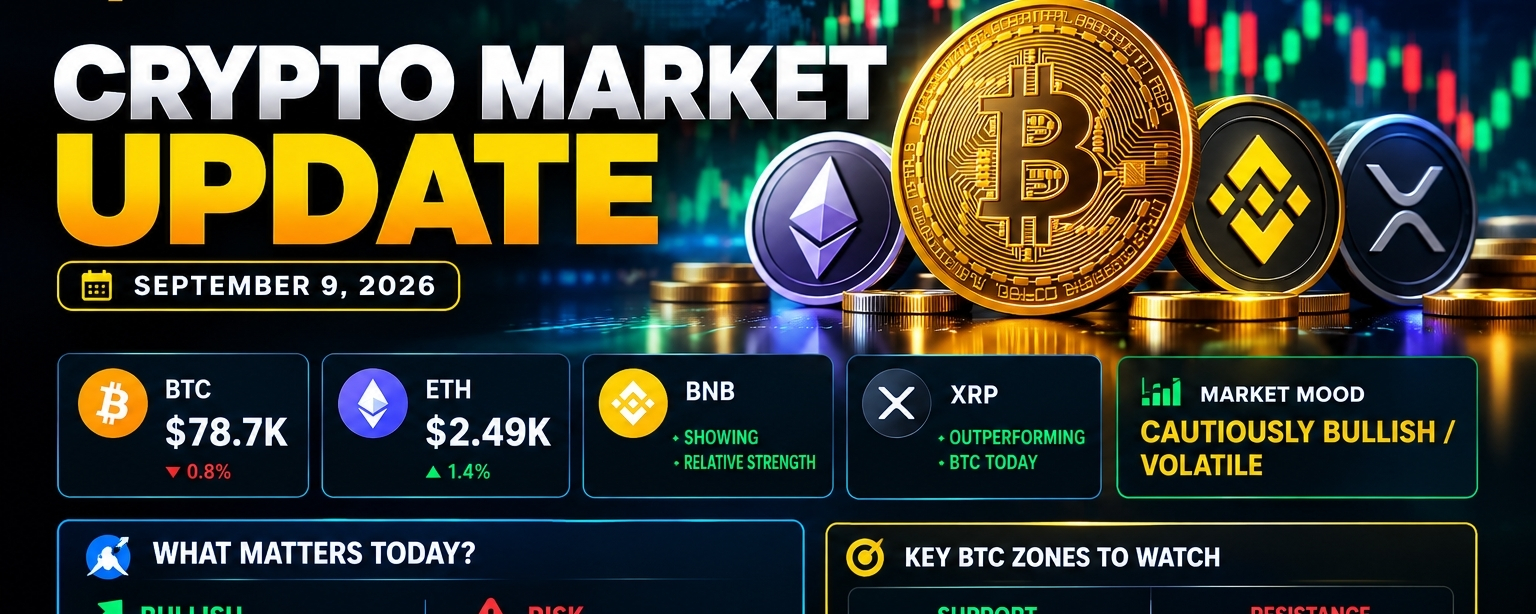
Bitcoin handelt um **78,5–78,8 Tsd. $**, bleibt unter dem jüngsten Hoch von 82 Tsd. $+, während Händler weiterhin c🚨 **KRYPTOMARKT-UPDATE — 9. SEPTEMBER 2026**
🔹 **BTC:** ~78,7 Tsd. $
🔹 **ETH:** ~2,49 Tsd. $
🔹 **BNB:** zeigt relative Stärke
🔹 **XRP:** schlägt heute ebenfalls den BTC
🔹 **Marktstimmung:** Vorsichtig bullisch / volatil
📌 **Was heute zählt?**
Der Kryptomarkt wird in zwei Richtungen gezogen:
➡️ **Bullisch:** Bitcoin bleibt deutlich über den Niveaus, die seinen jüngsten Anstieg getragen haben, während die Zuflüsse in institutionelle BTC-ETFs zuletzt eine starke Nachfrage gezeigt haben. ([The Wall Street Journal][2])
➡️ **Risiko:** Höhere Ölpreise und erneute geopolitische Spannungen erhöhen die Inflationssorgen. Das könnte riskante Assets belasten, falls die Märkte mit einer strafferen Geldpolitik rechnen.
Bitcoin handelt um **78,5–78,8 Tsd. $**, bleibt unter dem jüngsten Hoch von 82 Tsd. $+, während Händler weiterhin c
🚨 **KRYPTOMARKT-UPDATE — 9. SEPTEMBER 2026**
🔹 **BTC:** ~78,7 Tsd. $
🔹 **ETH:** ~2,49 Tsd. $
🔹 **BNB:** zeigt relative Stärke
🔹 **XRP:** schlägt heute ebenfalls den BTC
🔹 **Marktstimmung:** Vorsichtig bullisch / volatil
📌 **Was heute zählt?**
Der Kryptomarkt wird in zwei Richtungen gezogen:
➡️ **Bullisch:** Bitcoin bleibt deutlich über den Niveaus, die seinen jüngsten Anstieg getragen haben, während die Zuflüsse in institutionelle BTC-ETFs zuletzt eine starke Nachfrage gezeigt haben. ([The Wall Street Journal][2])
➡️ **Risiko:** Höhere Ölpreise und erneute geopolitische Spannungen erhöhen die Inflationssorgen. Das könnte riskante Assets belasten, falls die Märkte mit einer strafferen Geldpolitik rechnen.
🔹 **BTC:** ~78,7 Tsd. $
🔹 **ETH:** ~2,49 Tsd. $
🔹 **BNB:** zeigt relative Stärke
🔹 **XRP:** schlägt heute ebenfalls den BTC
🔹 **Marktstimmung:** Vorsichtig bullisch / volatil
📌 **Was heute zählt?**
Der Kryptomarkt wird in zwei Richtungen gezogen:
➡️ **Bullisch:** Bitcoin bleibt deutlich über den Niveaus, die seinen jüngsten Anstieg getragen haben, während die Zuflüsse in institutionelle BTC-ETFs zuletzt eine starke Nachfrage gezeigt haben. ([The Wall Street Journal][2])
➡️ **Risiko:** Höhere Ölpreise und erneute geopolitische Spannungen erhöhen die Inflationssorgen. Das könnte riskante Assets belasten, falls die Märkte mit einer strafferen Geldpolitik rechnen.
299
Artikel
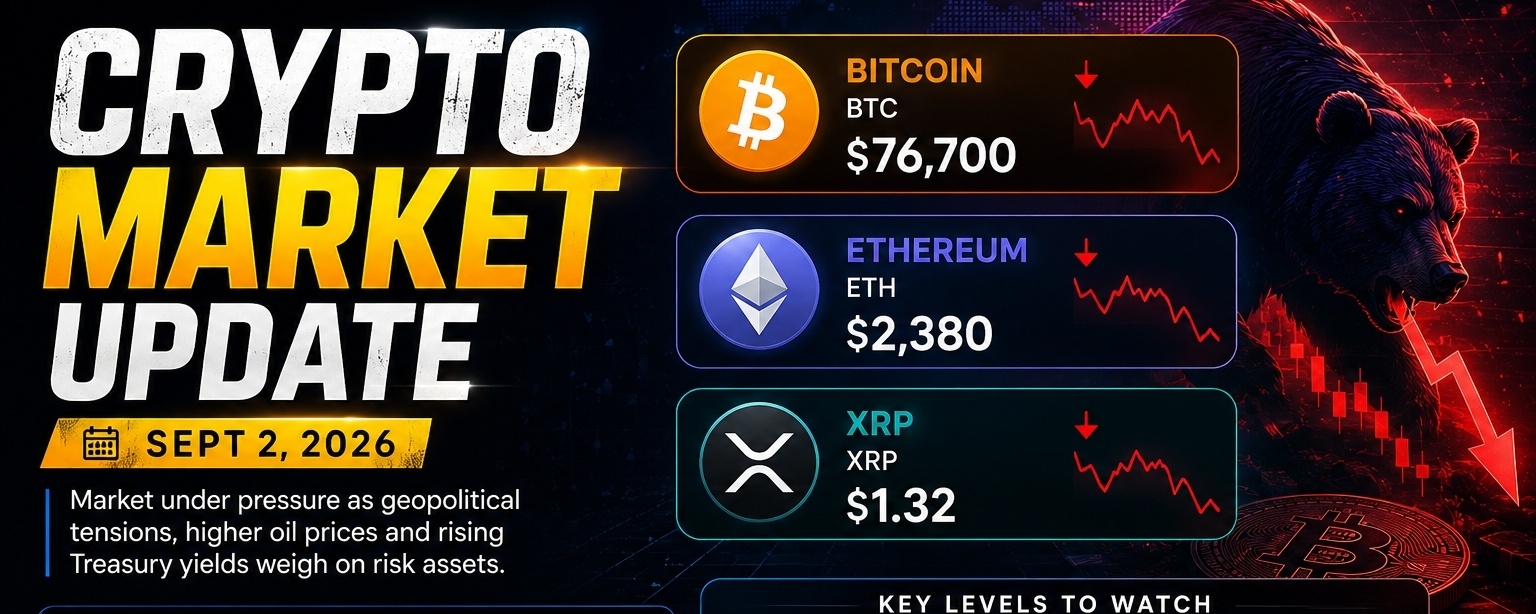
Bitcoin steht nach seinem starken August-Rallye erneut unter Verkaufsdruck.BTC: ca. 76,7 Tsd. $
🔷 ETH: ca. 2,38 Tsd. $
💵 XRP: ca. 1,32 Tsd. $
Der Markt reagiert auf erneut aufkommende geopolitische Spannungen, höhere Ölpreise und steigende Renditen von US-Staatsanleihen. Risikowerte stehen unter Druck, während Händler ihre Erwartungen an Zinssätze neu bewerten.
📌 Wichtige Niveaus, die du im Blick behalten solltest:
• BTC: Unterstützungszone bei 76 Tsd.–77 Tsd. $
• 79 Tsd.–80 Tsd. $ bleibt ein bedeutender Widerstandsbereich
• ETH muss $2,4K+ zurückerobern, um mit stärkerem Momentum zu laufen
Die September-Volatilität ist da. Bleib geduldig, steuere das Risiko und beobachte die Konjunkturdaten. 👀
#Bitcoin #BTC #Ethereum #ETH #Krypto #KryptoMarkt #Altcoins #Web3
Bitcoin steht nach seinem starken August-Rallye erneut unter Verkaufsdruck.
BTC: ca. 76,7 Tsd. $
🔷 ETH: ca. 2,38 Tsd. $
💵 XRP: ca. 1,32 Tsd. $
Der Markt reagiert auf erneut aufkommende geopolitische Spannungen, höhere Ölpreise und steigende Renditen von US-Staatsanleihen. Risikowerte stehen unter Druck, während Händler ihre Erwartungen an Zinssätze neu bewerten.
📌 Wichtige Niveaus, die du im Blick behalten solltest:
• BTC: Unterstützungszone bei 76 Tsd.–77 Tsd. $
• 79 Tsd.–80 Tsd. $ bleibt ein bedeutender Widerstandsbereich
• ETH muss $2,4K+ zurückerobern, um mit stärkerem Momentum zu laufen
Die September-Volatilität ist da. Bleib geduldig, steuere das Risiko und beobachte die Konjunkturdaten. 👀
#Bitcoin #BTC #Ethereum #ETH #Krypto #KryptoMarkt #Altcoins #Web3
🔷 ETH: ca. 2,38 Tsd. $
💵 XRP: ca. 1,32 Tsd. $
Der Markt reagiert auf erneut aufkommende geopolitische Spannungen, höhere Ölpreise und steigende Renditen von US-Staatsanleihen. Risikowerte stehen unter Druck, während Händler ihre Erwartungen an Zinssätze neu bewerten.
📌 Wichtige Niveaus, die du im Blick behalten solltest:
• BTC: Unterstützungszone bei 76 Tsd.–77 Tsd. $
• 79 Tsd.–80 Tsd. $ bleibt ein bedeutender Widerstandsbereich
• ETH muss $2,4K+ zurückerobern, um mit stärkerem Momentum zu laufen
Die September-Volatilität ist da. Bleib geduldig, steuere das Risiko und beobachte die Konjunkturdaten. 👀
#Bitcoin #BTC #Ethereum #ETH #Krypto #KryptoMarkt #Altcoins #Web3
1
85
Artikel
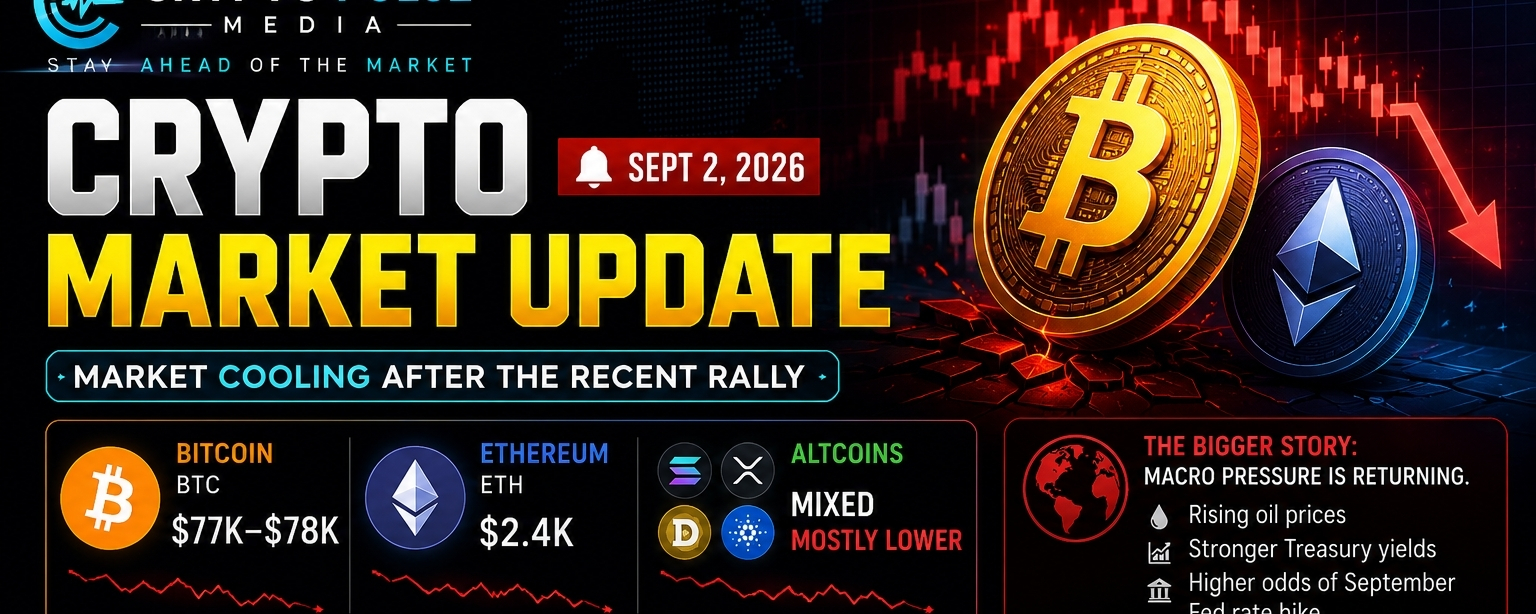
Aktuelle Marktbedingungen zeigen nach der jüngsten Rally eine gewisse Schwäche. Bitcoin wird derzeit bei etwaDas Makro-Risiko rückt ebenfalls wieder in den Fokus: Steigende Ölpreise, stärkere US-Treasury-Renditen und erhöhte Erwartungen an eine Zinserhöhung der Fed im September bringen Druck auf riskante Assets – einschließlich Krypto. ([Reuters][2])
🚨 KRYPTOMARKT-UPDATE — 2. SEPTEMBER 2026
Bitcoin kühlt in der Nähe der Zone von 77.000–78.000 $ ab, nachdem es zuletzt zugelegt hatte. Ethereum hält sich bei rund 2,4 Tsd. $, während mehrere große Altcoins stärkere Rücksetzer verzeichnen.
🌍 Die größere Geschichte: Der Makro-Druck kommt zurück.
• BTC: ~77.000–78.000 $
• ETH: ~2,4 Tsd. $
• Altcoins: Gemischt → überwiegend niedriger
Aktuelle Marktbedingungen zeigen nach der jüngsten Rally eine gewisse Schwäche. Bitcoin wird derzeit bei etwa
Das Makro-Risiko rückt ebenfalls wieder in den Fokus: Steigende Ölpreise, stärkere US-Treasury-Renditen und erhöhte Erwartungen an eine Zinserhöhung der Fed im September bringen Druck auf riskante Assets – einschließlich Krypto. ([Reuters][2])
🚨 KRYPTOMARKT-UPDATE — 2. SEPTEMBER 2026
Bitcoin kühlt in der Nähe der Zone von 77.000–78.000 $ ab, nachdem es zuletzt zugelegt hatte. Ethereum hält sich bei rund 2,4 Tsd. $, während mehrere große Altcoins stärkere Rücksetzer verzeichnen.
🌍 Die größere Geschichte: Der Makro-Druck kommt zurück.
• BTC: ~77.000–78.000 $
• ETH: ~2,4 Tsd. $
• Altcoins: Gemischt → überwiegend niedriger
🚨 KRYPTOMARKT-UPDATE — 2. SEPTEMBER 2026
Bitcoin kühlt in der Nähe der Zone von 77.000–78.000 $ ab, nachdem es zuletzt zugelegt hatte. Ethereum hält sich bei rund 2,4 Tsd. $, während mehrere große Altcoins stärkere Rücksetzer verzeichnen.
🌍 Die größere Geschichte: Der Makro-Druck kommt zurück.
• BTC: ~77.000–78.000 $
• ETH: ~2,4 Tsd. $
• Altcoins: Gemischt → überwiegend niedriger
98
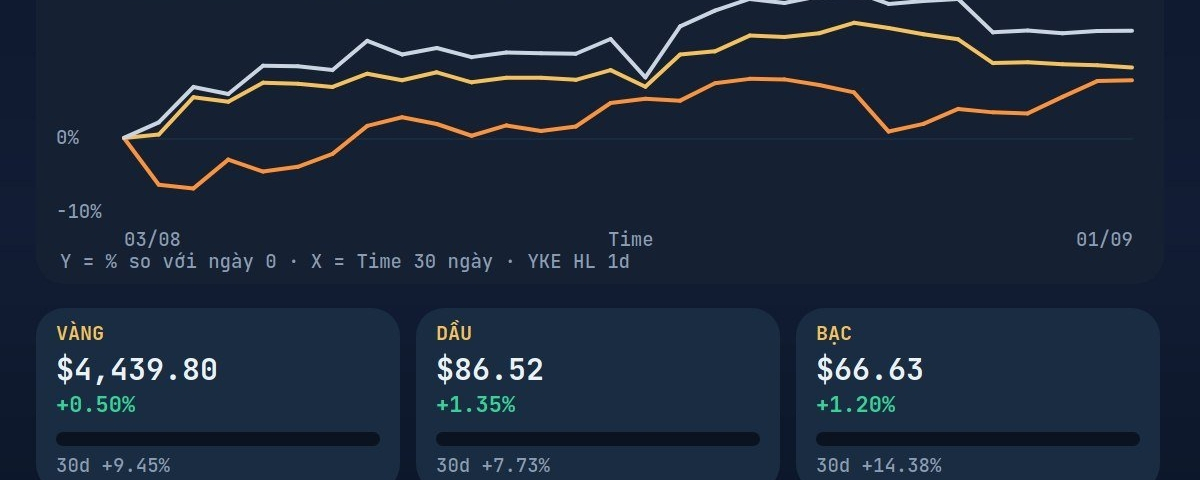
Artikel
Der heutige Markt zeigt Schwäche: Bitcoin liegt bei etwa **77.000–78.000 $**, während Ethereum bei etwa **2,4Bitcoin steht erneut unter Verkaufsdruck, da BTC es schwer hat, den Bereich von 78.000 $ zu halten.
📉 BTC: ~77.000–78.000 $
📉 ETH: ~2,4K
📉 SOL: ~99 $
📉 XRP: ~1,35 $
Die größere Story: Riskante Assets stehen unter Druck, während die Märkte den Kurs der US-Zinsen neu bewerten.
Der September war historisch gesehen für Bitcoin ein schwieriger Monat, daher könnte die Volatilität weiterhin hoch bleiben.
👀 Wichtige Punkte, auf die es zu achten gilt:
• BTC erobert die 80.000 $-Marke zurück
• ETH hält die 2,4K-Zone
• Erwartungen an die US-Zinsen
• Institutionelle Krypto-Zuflüsse
• Altcoin-Stärke im Vergleich zu BTC
Der heutige Markt zeigt Schwäche: Bitcoin liegt bei etwa **77.000–78.000 $**, während Ethereum bei etwa **2,4
Bitcoin steht erneut unter Verkaufsdruck, da BTC es schwer hat, den Bereich von 78.000 $ zu halten.
📉 BTC: ~77.000–78.000 $
📉 ETH: ~2,4K
📉 SOL: ~99 $
📉 XRP: ~1,35 $
Die größere Story: Riskante Assets stehen unter Druck, während die Märkte den Kurs der US-Zinsen neu bewerten.
Der September war historisch gesehen für Bitcoin ein schwieriger Monat, daher könnte die Volatilität weiterhin hoch bleiben.
👀 Wichtige Punkte, auf die es zu achten gilt:
• BTC erobert die 80.000 $-Marke zurück
• ETH hält die 2,4K-Zone
• Erwartungen an die US-Zinsen
• Institutionelle Krypto-Zuflüsse
• Altcoin-Stärke im Vergleich zu BTC
📉 BTC: ~77.000–78.000 $
📉 ETH: ~2,4K
📉 SOL: ~99 $
📉 XRP: ~1,35 $
Die größere Story: Riskante Assets stehen unter Druck, während die Märkte den Kurs der US-Zinsen neu bewerten.
Der September war historisch gesehen für Bitcoin ein schwieriger Monat, daher könnte die Volatilität weiterhin hoch bleiben.
👀 Wichtige Punkte, auf die es zu achten gilt:
• BTC erobert die 80.000 $-Marke zurück
• ETH hält die 2,4K-Zone
• Erwartungen an die US-Zinsen
• Institutionelle Krypto-Zuflüsse
• Altcoin-Stärke im Vergleich zu BTC
111
Artikel
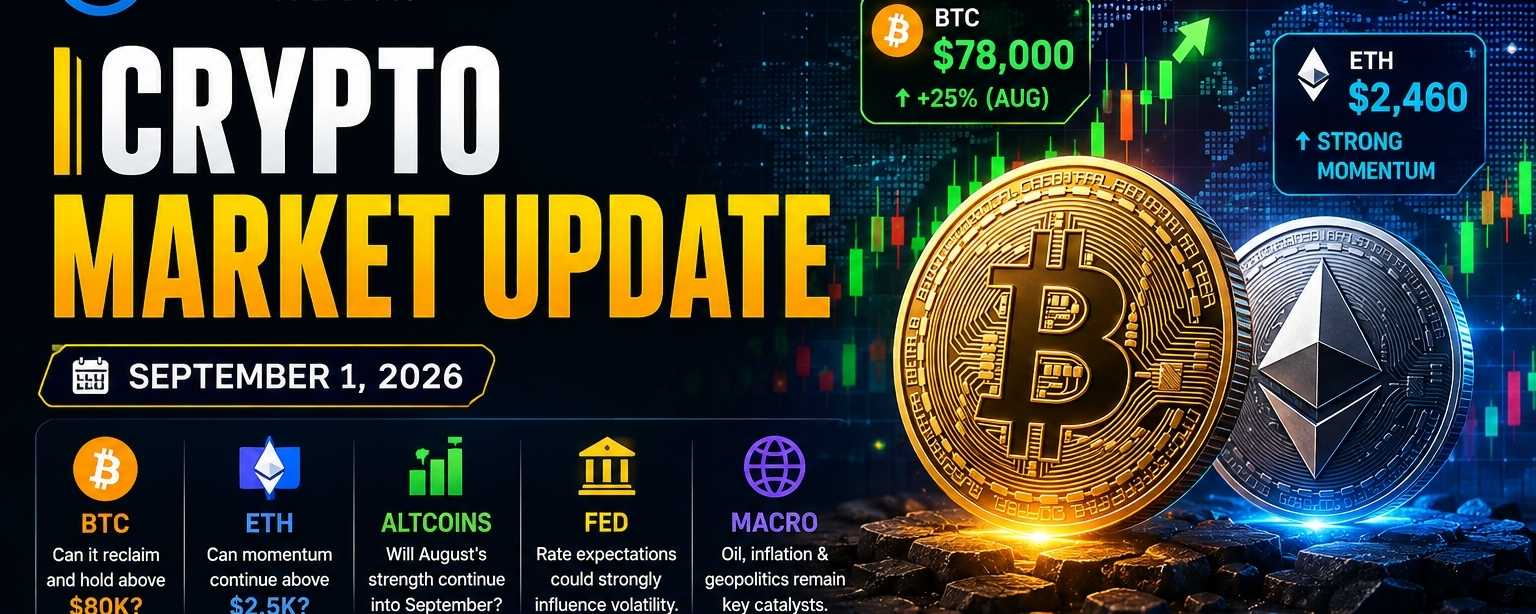
Bitcoin hält sich bei rund **78K US-Dollar**, nachdem es im August eine kraftvolle Rally hingelegt hat. BTC legte im August ungefähr **25%** zuthereum notiert derzeit bei etwa **2,45K–2,46K US-Dollar**, während ETH ebenfalls eine starke monatliche Erholung verzeichnet hat. ([Fortune][2])
Aber der September beginnt mit einer neuen Herausforderung: **steigende Ölpreise, Inflationssorgen und wachsende Erwartungen an eine Zinserhöhung der US-Notenbank (Federal Reserve)** erzeugen Druck auf risikoreiche Anlagen. Die aktuellen Markterwartungen bringen die Wahrscheinlichkeit einer September-Anhebung auf etwa **65–66%**.
**Worauf Trader achten sollten 👀**
* 🟠 BTC: Kann es zurückerobern und über **80K** bleiben?
* 🔵 ETH: Kann der Aufwärtsimpuls weiter über **2,5K** anhalten?
Bitcoin hält sich bei rund **78K US-Dollar**, nachdem es im August eine kraftvolle Rally hingelegt hat. BTC legte im August ungefähr **25%** zu
thereum notiert derzeit bei etwa **2,45K–2,46K US-Dollar**, während ETH ebenfalls eine starke monatliche Erholung verzeichnet hat. ([Fortune][2])
Aber der September beginnt mit einer neuen Herausforderung: **steigende Ölpreise, Inflationssorgen und wachsende Erwartungen an eine Zinserhöhung der US-Notenbank (Federal Reserve)** erzeugen Druck auf risikoreiche Anlagen. Die aktuellen Markterwartungen bringen die Wahrscheinlichkeit einer September-Anhebung auf etwa **65–66%**.
**Worauf Trader achten sollten 👀**
* 🟠 BTC: Kann es zurückerobern und über **80K** bleiben?
* 🔵 ETH: Kann der Aufwärtsimpuls weiter über **2,5K** anhalten?
Aber der September beginnt mit einer neuen Herausforderung: **steigende Ölpreise, Inflationssorgen und wachsende Erwartungen an eine Zinserhöhung der US-Notenbank (Federal Reserve)** erzeugen Druck auf risikoreiche Anlagen. Die aktuellen Markterwartungen bringen die Wahrscheinlichkeit einer September-Anhebung auf etwa **65–66%**.
**Worauf Trader achten sollten 👀**
* 🟠 BTC: Kann es zurückerobern und über **80K** bleiben?
* 🔵 ETH: Kann der Aufwärtsimpuls weiter über **2,5K** anhalten?
44
Artikel
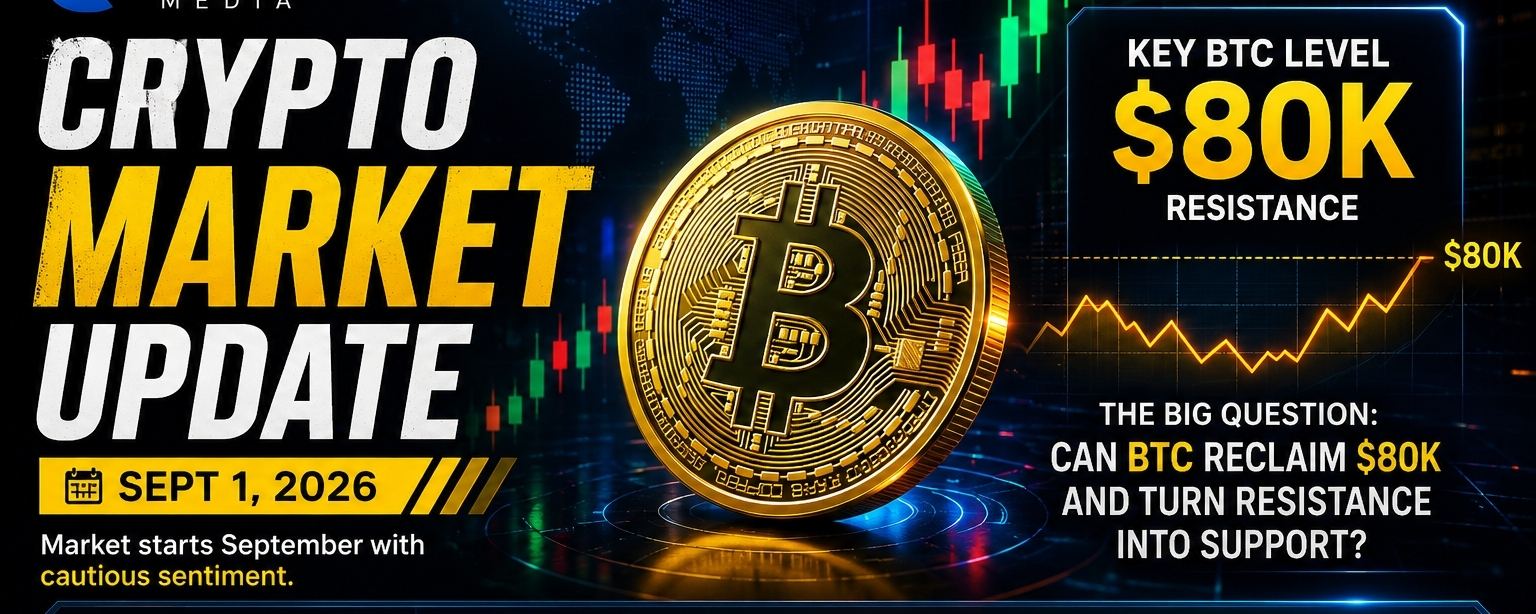
Aktuelle Daten zeigen, dass BTC bei rund **$78K** liegt, während ETH bei rund **$2,45K** liegt. Bitcoin hält sich unter der entscheidenden KRYPTOMARKT-UPDATE — 1. SEP 2026
Bitcoin pendelt derzeit im Bereich um $78K, während der Markt den September mit vorsichtigem Sentiment startet.
📉 BTC: ~$78K
⚡ ETH: ~$2,45K
🎯 Wichtige BTC-Marke: $80K
🌍 Makro- + Fed-Erwartungen bleiben die wichtigsten Auslöser
Die große Frage: Kann BTC $80K zurückerobern und den Widerstand in Unterstützung verwandeln?
September könnte für einige ernsthafte Volatilität sorgen. Bleib wachsam. 👀
#Bitcoin #BTC #Ethereum #ETH #Krypto #Kryptomarkt #Altcoins
Aktuelle Daten zeigen, dass BTC bei rund **$78K** liegt, während ETH bei rund **$2,45K** liegt. Bitcoin hält sich unter der entscheidenden
KRYPTOMARKT-UPDATE — 1. SEP 2026
Bitcoin pendelt derzeit im Bereich um $78K, während der Markt den September mit vorsichtigem Sentiment startet.
📉 BTC: ~$78K
⚡ ETH: ~$2,45K
🎯 Wichtige BTC-Marke: $80K
🌍 Makro- + Fed-Erwartungen bleiben die wichtigsten Auslöser
Die große Frage: Kann BTC $80K zurückerobern und den Widerstand in Unterstützung verwandeln?
September könnte für einige ernsthafte Volatilität sorgen. Bleib wachsam. 👀
#Bitcoin #BTC #Ethereum #ETH #Krypto #Kryptomarkt #Altcoins
Bitcoin pendelt derzeit im Bereich um $78K, während der Markt den September mit vorsichtigem Sentiment startet.
📉 BTC: ~$78K
⚡ ETH: ~$2,45K
🎯 Wichtige BTC-Marke: $80K
🌍 Makro- + Fed-Erwartungen bleiben die wichtigsten Auslöser
Die große Frage: Kann BTC $80K zurückerobern und den Widerstand in Unterstützung verwandeln?
September könnte für einige ernsthafte Volatilität sorgen. Bleib wachsam. 👀
#Bitcoin #BTC #Ethereum #ETH #Krypto #Kryptomarkt #Altcoins
24
Artikel
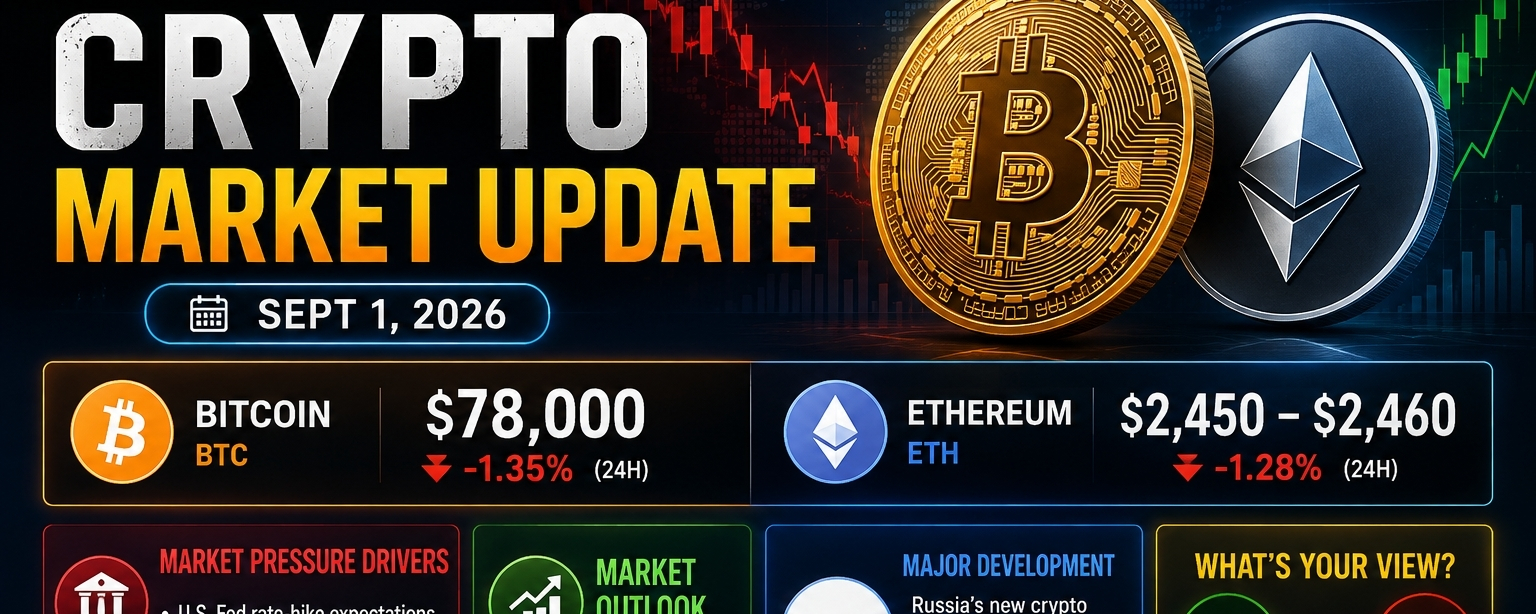
Bitcoin wird im Bereich der **78K** gehandelt, während Ethereum bei **2,45K–2,46K** liegt. Der MarktEine wichtige Entwicklung heute: **Russlands neue Krypto-Regeln treten in Kraft** und ermöglichen, dass BTC, ETH und USDT in seiner regulierten Digital-Asset-Branche eine Rolle spielen.
🚨 KRYPTOMARKT-UPDATE | 1. SEPT
Bitcoin hält sich nahe der 78.000-$-Zone, während Ethereum bei etwa 2,45K–2,46K handelt.
📉 Der Marktdruck steigt, während Händler beobachten:
• Erwartungen an US-Notenbank-Zinsanhebungen
• Inflation & Ölpreise
• Geopolitische Spannungen
• Wichtige Wirtschaftsdaten im Vorfeld
🇷🇺 In der Zwischenzeit tritt Russlands neues Krypto-Regelwerk nun in Kraft und bringt BTC, ETH & USDT weiter in seinen regulierten Digital-Asset-Markt.
Bitcoin wird im Bereich der **78K** gehandelt, während Ethereum bei **2,45K–2,46K** liegt. Der Markt
Eine wichtige Entwicklung heute: **Russlands neue Krypto-Regeln treten in Kraft** und ermöglichen, dass BTC, ETH und USDT in seiner regulierten Digital-Asset-Branche eine Rolle spielen.
🚨 KRYPTOMARKT-UPDATE | 1. SEPT
Bitcoin hält sich nahe der 78.000-$-Zone, während Ethereum bei etwa 2,45K–2,46K handelt.
📉 Der Marktdruck steigt, während Händler beobachten:
• Erwartungen an US-Notenbank-Zinsanhebungen
• Inflation & Ölpreise
• Geopolitische Spannungen
• Wichtige Wirtschaftsdaten im Vorfeld
🇷🇺 In der Zwischenzeit tritt Russlands neues Krypto-Regelwerk nun in Kraft und bringt BTC, ETH & USDT weiter in seinen regulierten Digital-Asset-Markt.
🚨 KRYPTOMARKT-UPDATE | 1. SEPT
Bitcoin hält sich nahe der 78.000-$-Zone, während Ethereum bei etwa 2,45K–2,46K handelt.
📉 Der Marktdruck steigt, während Händler beobachten:
• Erwartungen an US-Notenbank-Zinsanhebungen
• Inflation & Ölpreise
• Geopolitische Spannungen
• Wichtige Wirtschaftsdaten im Vorfeld
🇷🇺 In der Zwischenzeit tritt Russlands neues Krypto-Regelwerk nun in Kraft und bringt BTC, ETH & USDT weiter in seinen regulierten Digital-Asset-Markt.
11
Artikel
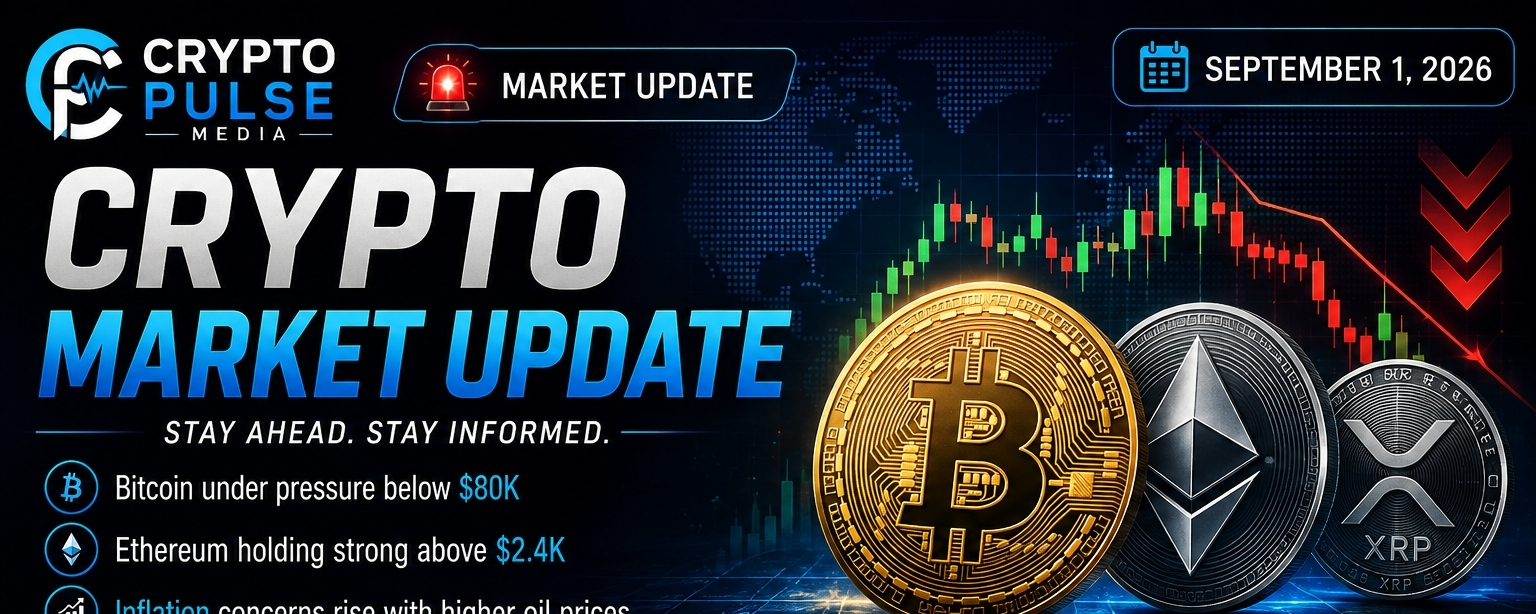
Bitcoin startet den September unter Druck, da makroökonomische Unsicherheit die Risikoassets belastet.₿ **BTC:** etwa 78.000 $
🔷 **ETH:** etwa 2,45 Tsd. $
💵 **XRP:** etwa 1,38 $
📉 **Was bewegt den Markt?**
• Bitcoin bleibt unter der wichtigen psychologischen Marke von 80.000 $.
• Ethereum hält sich nach einer starken monatlichen Erholung über 2,4 Tsd. $.
• Steigende Ölpreise verstärken die Inflationssorgen.
• Die Märkte beobachten zunehmend die Möglichkeit einer US-Zinserhöhung in diesem Monat.
• Krypto-Trader warten auf weitere makroökonomische Signale, bevor sie aggressive Schritte unternehmen.
🌍 **Eine bedeutende regulatorische Entwicklung:** Russlands neues Krypto-Regelwerk tritt heute in Kraft und ermöglicht den regulierten Zugang zu BTC, ETH und USDT unter strengen Bedingungen.
Bitcoin startet den September unter Druck, da makroökonomische Unsicherheit die Risikoassets belastet.
₿ **BTC:** etwa 78.000 $
🔷 **ETH:** etwa 2,45 Tsd. $
💵 **XRP:** etwa 1,38 $
📉 **Was bewegt den Markt?**
• Bitcoin bleibt unter der wichtigen psychologischen Marke von 80.000 $.
• Ethereum hält sich nach einer starken monatlichen Erholung über 2,4 Tsd. $.
• Steigende Ölpreise verstärken die Inflationssorgen.
• Die Märkte beobachten zunehmend die Möglichkeit einer US-Zinserhöhung in diesem Monat.
• Krypto-Trader warten auf weitere makroökonomische Signale, bevor sie aggressive Schritte unternehmen.
🌍 **Eine bedeutende regulatorische Entwicklung:** Russlands neues Krypto-Regelwerk tritt heute in Kraft und ermöglicht den regulierten Zugang zu BTC, ETH und USDT unter strengen Bedingungen.
🔷 **ETH:** etwa 2,45 Tsd. $
💵 **XRP:** etwa 1,38 $
📉 **Was bewegt den Markt?**
• Bitcoin bleibt unter der wichtigen psychologischen Marke von 80.000 $.
• Ethereum hält sich nach einer starken monatlichen Erholung über 2,4 Tsd. $.
• Steigende Ölpreise verstärken die Inflationssorgen.
• Die Märkte beobachten zunehmend die Möglichkeit einer US-Zinserhöhung in diesem Monat.
• Krypto-Trader warten auf weitere makroökonomische Signale, bevor sie aggressive Schritte unternehmen.
🌍 **Eine bedeutende regulatorische Entwicklung:** Russlands neues Krypto-Regelwerk tritt heute in Kraft und ermöglicht den regulierten Zugang zu BTC, ETH und USDT unter strengen Bedingungen.
18
Artikel
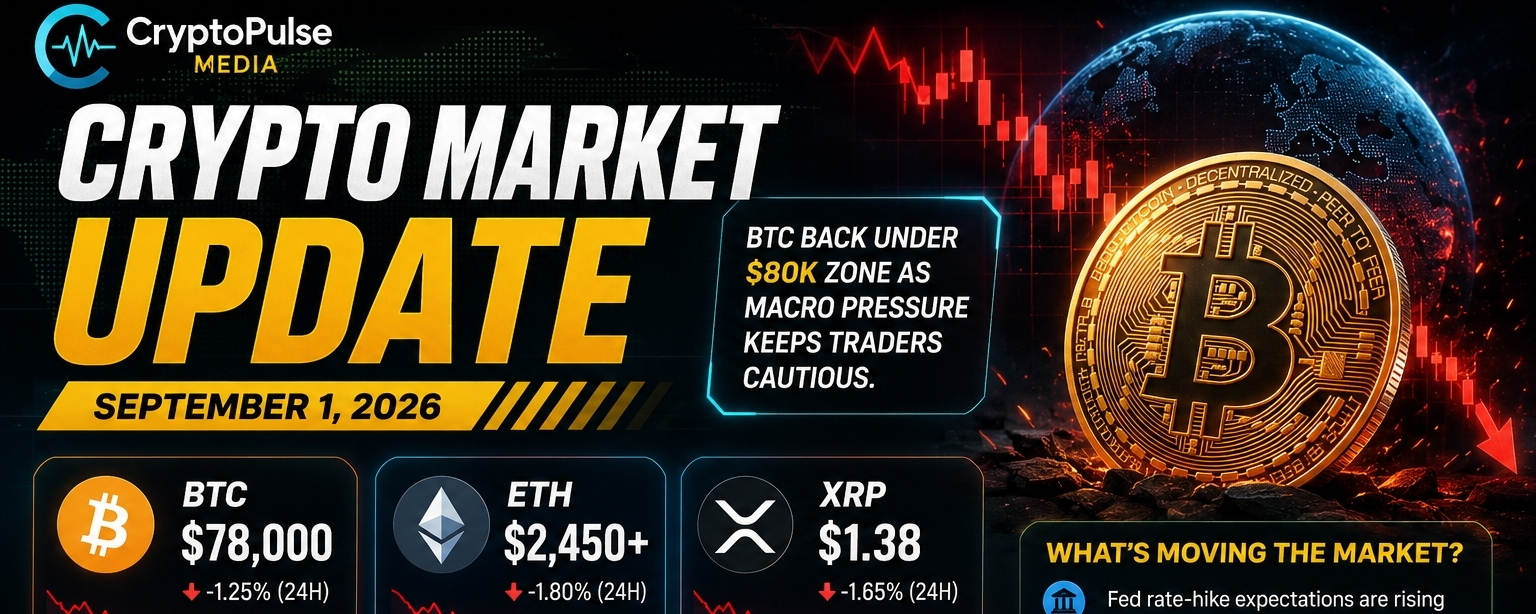
Bitcoin wird bei rund **$78K** gehandelt, während Ethereum bei etwa **$2,45K–$2,46K** liegt. BTC bleibt unter thDie große Schlagzeile heute sind **die Erwartungen an die Zinsentwicklung**. Die Märkte preisen zunehmend eine mögliche Zinserhöhung der US-Notenbank diesen Monat ein, während steigende Ölpreise und geopolitische Spannungen die Inflationssorgen verstärken.
Gleichzeitig tritt **das neue Krypto-Regelwerk Russlands heute in Kraft**, wobei Bitcoin, Ethereum und USDT im Rahmen des neuen Regelwerks eine festgelegte Rolle erhalten.
🚨 KRYPTOMARKT-UPDATE | 1. SEPTEMBER 2026
Bitcoin ist wieder unter die $80K-Zone gefallen und wird bei rund $78K gehandelt, da der Makrodruck die Krypto-Trader vorsichtig hält.
Bitcoin wird bei rund **$78K** gehandelt, während Ethereum bei etwa **$2,45K–$2,46K** liegt. BTC bleibt unter th
Die große Schlagzeile heute sind **die Erwartungen an die Zinsentwicklung**. Die Märkte preisen zunehmend eine mögliche Zinserhöhung der US-Notenbank diesen Monat ein, während steigende Ölpreise und geopolitische Spannungen die Inflationssorgen verstärken.
Gleichzeitig tritt **das neue Krypto-Regelwerk Russlands heute in Kraft**, wobei Bitcoin, Ethereum und USDT im Rahmen des neuen Regelwerks eine festgelegte Rolle erhalten.
🚨 KRYPTOMARKT-UPDATE | 1. SEPTEMBER 2026
Bitcoin ist wieder unter die $80K-Zone gefallen und wird bei rund $78K gehandelt, da der Makrodruck die Krypto-Trader vorsichtig hält.
Gleichzeitig tritt **das neue Krypto-Regelwerk Russlands heute in Kraft**, wobei Bitcoin, Ethereum und USDT im Rahmen des neuen Regelwerks eine festgelegte Rolle erhalten.
🚨 KRYPTOMARKT-UPDATE | 1. SEPTEMBER 2026
Bitcoin ist wieder unter die $80K-Zone gefallen und wird bei rund $78K gehandelt, da der Makrodruck die Krypto-Trader vorsichtig hält.
58
Artikel
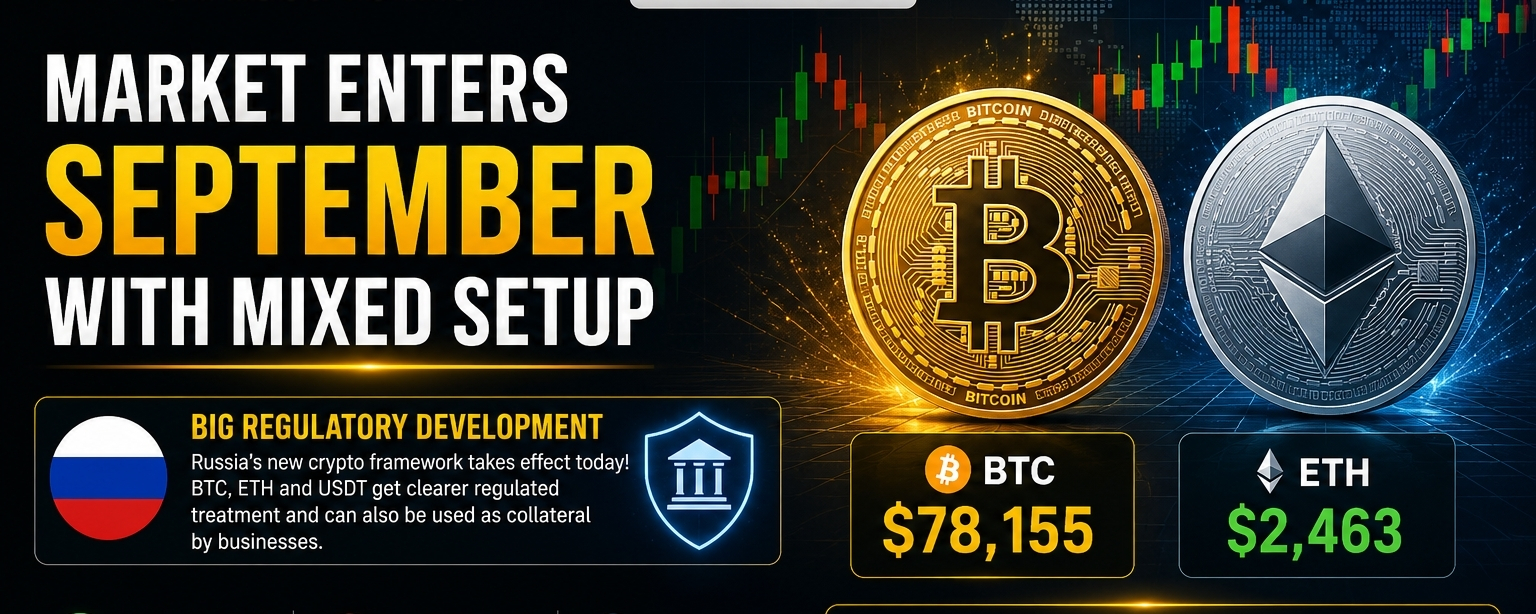
Bitcoin startet den September bei rund **$78K**, während Ethereum nahe **$2,46K** gehandelt wird. BTC ist sho**Große regulatorische Entwicklung:** Der neue Krypto-Rahmen Russlands tritt heute in Kraft – mit **BTC, ETH und USDT**, die eine klarere Behandlung im regulierten Markt erhalten. BTC, ETH und USDT können unter dem neuen Rahmen auch als Sicherheiten von Unternehmen genutzt werden.
📈 **Marktbeobachtung**
* ₿ BTC: ~$78.155
* Ξ ETH: ~$2.463
* 🔥 ETH hat im vergangenen Monat stark zugelegt
* ⚠️ Inflationssorgen bleiben ein zentrales Marktrisiko
* 👀 Der September könnte zu höherer Volatilität führen
**CryptoPulse-Fazit:**
Der Markt startet in den September mit einer gemischten Ausgangslage – Bitcoin muss den Bereich um $78K verteidigen, während Ethereum weiterhin Aufmerksamkeit auf sich zieht. Regulatorische Entwicklungen könnten außerdem zu einem wichtigen Katalysator für den Markt werden.
Bitcoin startet den September bei rund **$78K**, während Ethereum nahe **$2,46K** gehandelt wird. BTC ist sho
**Große regulatorische Entwicklung:** Der neue Krypto-Rahmen Russlands tritt heute in Kraft – mit **BTC, ETH und USDT**, die eine klarere Behandlung im regulierten Markt erhalten. BTC, ETH und USDT können unter dem neuen Rahmen auch als Sicherheiten von Unternehmen genutzt werden.
📈 **Marktbeobachtung**
* ₿ BTC: ~$78.155
* Ξ ETH: ~$2.463
* 🔥 ETH hat im vergangenen Monat stark zugelegt
* ⚠️ Inflationssorgen bleiben ein zentrales Marktrisiko
* 👀 Der September könnte zu höherer Volatilität führen
**CryptoPulse-Fazit:**
Der Markt startet in den September mit einer gemischten Ausgangslage – Bitcoin muss den Bereich um $78K verteidigen, während Ethereum weiterhin Aufmerksamkeit auf sich zieht. Regulatorische Entwicklungen könnten außerdem zu einem wichtigen Katalysator für den Markt werden.
📈 **Marktbeobachtung**
* ₿ BTC: ~$78.155
* Ξ ETH: ~$2.463
* 🔥 ETH hat im vergangenen Monat stark zugelegt
* ⚠️ Inflationssorgen bleiben ein zentrales Marktrisiko
* 👀 Der September könnte zu höherer Volatilität führen
**CryptoPulse-Fazit:**
Der Markt startet in den September mit einer gemischten Ausgangslage – Bitcoin muss den Bereich um $78K verteidigen, während Ethereum weiterhin Aufmerksamkeit auf sich zieht. Regulatorische Entwicklungen könnten außerdem zu einem wichtigen Katalysator für den Markt werden.
16
Artikel
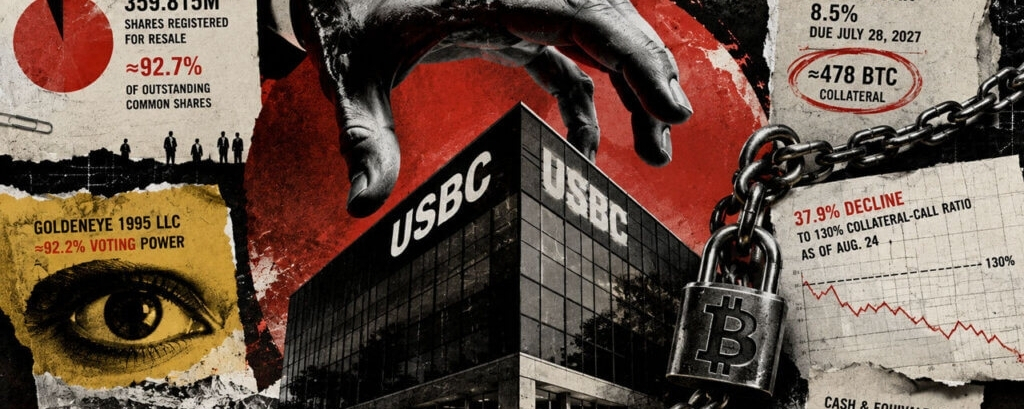
Bitcoin-Treasury-Unternehmen registriert 93% der Aktien für den Weiterverkauf und setzt ein Drittel seines Krypto in eine OptionDie Aktien sind bereits ausgegeben und dürfen niemals verkauft werden, während gleichzeitig Kredit-, Treasury- und Cash-Risiken bestehen bleiben.
SBC hat einen Block bereits ausgegebener Aktien registriert, der fast seinem gesamten ausstehenden Stammaktienbestand entspricht, für einen möglichen Weiterverkauf. Dadurch entsteht ein potenzieller Marktüberhang neben einer Bilanz, die stark auf Bitcoin angewiesen ist.
Der geänderte vorläufige Prospekt des Unternehmens vom 27. August deckt bis zu 359.815.000 Aktien ab, die von verkaufenden Aktionären gehalten werden. Das entspricht etwa 92,7 % der am 24. August ausstehenden 388.144.429 Stammaktien. USBC würde aus einem Verkauf oder einer sonstigen Veräußerung durch diese Aktionäre keine Erlöse erhalten.
Bitcoin-Treasury-Unternehmen registriert 93% der Aktien für den Weiterverkauf und setzt ein Drittel seines Krypto in eine Option
Die Aktien sind bereits ausgegeben und dürfen niemals verkauft werden, während gleichzeitig Kredit-, Treasury- und Cash-Risiken bestehen bleiben.
SBC hat einen Block bereits ausgegebener Aktien registriert, der fast seinem gesamten ausstehenden Stammaktienbestand entspricht, für einen möglichen Weiterverkauf. Dadurch entsteht ein potenzieller Marktüberhang neben einer Bilanz, die stark auf Bitcoin angewiesen ist.
Der geänderte vorläufige Prospekt des Unternehmens vom 27. August deckt bis zu 359.815.000 Aktien ab, die von verkaufenden Aktionären gehalten werden. Das entspricht etwa 92,7 % der am 24. August ausstehenden 388.144.429 Stammaktien. USBC würde aus einem Verkauf oder einer sonstigen Veräußerung durch diese Aktionäre keine Erlöse erhalten.
SBC hat einen Block bereits ausgegebener Aktien registriert, der fast seinem gesamten ausstehenden Stammaktienbestand entspricht, für einen möglichen Weiterverkauf. Dadurch entsteht ein potenzieller Marktüberhang neben einer Bilanz, die stark auf Bitcoin angewiesen ist.
Der geänderte vorläufige Prospekt des Unternehmens vom 27. August deckt bis zu 359.815.000 Aktien ab, die von verkaufenden Aktionären gehalten werden. Das entspricht etwa 92,7 % der am 24. August ausstehenden 388.144.429 Stammaktien. USBC würde aus einem Verkauf oder einer sonstigen Veräußerung durch diese Aktionäre keine Erlöse erhalten.
39
Artikel
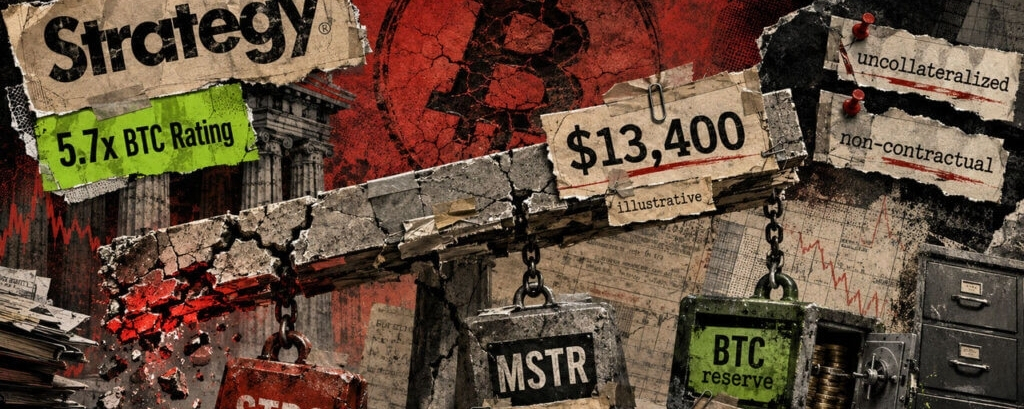
Michael Saylor’s 13.400-Dollar-Bitcoin-Floor legt die exakte Reihenfolge der Verluste innerhalb von Strategy’s Schuldenstac offenDas eingereichte Verhältnis bewegt sich mit Bargeld und Forderungen, während MSTR-Verwässerung und rechtliche Vorrangstellung die realen Verluste prägen.
Strateg, das Bitcoin-Treasury-Unternehmen, bewirbt einen rund 13.400 US-Dollar „BTC Floor“ für STRC, seine variabel verzinsliche kumulative Vorzugsaktie ohne feste Laufzeit. Bei Bitcoin nahe 78.000 US-Dollar klingt die Bezeichnung nach einem gewaltigen Puffer. Die von der SEC eingereichte Begründung definiert jedoch etwas engeres: den Bitcoin-Preis, bei dem das illustrative STRC-Deckungsverhältnis von Strategy 1,0x erreicht.
Die Kennzahl macht keine Aussage über Bitcoins von Strategy und hat keine Bedeutung für Solvenz oder Erholung. STRC schloss am 28. August bei 97,33 US-Dollar und bot den Inhabern damit eine einfache effektive Rendite von 12,33 % bei der aktuellen 12-US-Dollar-Jahresdividende. Das eingereichte Dashboard verwendete einen Preis vom 21. August in Höhe von 96,18 US-Dollar und nannte eine Rendite von 12,48 %, ein Nominalvolumen von 9,972 Milliarden US-Dollar, 59 Basispunkte BTC Credit, 4,68 % BTC Risk und eine -14,61 % BTC Floor ARR.
Michael Saylor’s 13.400-Dollar-Bitcoin-Floor legt die exakte Reihenfolge der Verluste innerhalb von Strategy’s Schuldenstac offen
Das eingereichte Verhältnis bewegt sich mit Bargeld und Forderungen, während MSTR-Verwässerung und rechtliche Vorrangstellung die realen Verluste prägen.
Strateg, das Bitcoin-Treasury-Unternehmen, bewirbt einen rund 13.400 US-Dollar „BTC Floor“ für STRC, seine variabel verzinsliche kumulative Vorzugsaktie ohne feste Laufzeit. Bei Bitcoin nahe 78.000 US-Dollar klingt die Bezeichnung nach einem gewaltigen Puffer. Die von der SEC eingereichte Begründung definiert jedoch etwas engeres: den Bitcoin-Preis, bei dem das illustrative STRC-Deckungsverhältnis von Strategy 1,0x erreicht.
Die Kennzahl macht keine Aussage über Bitcoins von Strategy und hat keine Bedeutung für Solvenz oder Erholung. STRC schloss am 28. August bei 97,33 US-Dollar und bot den Inhabern damit eine einfache effektive Rendite von 12,33 % bei der aktuellen 12-US-Dollar-Jahresdividende. Das eingereichte Dashboard verwendete einen Preis vom 21. August in Höhe von 96,18 US-Dollar und nannte eine Rendite von 12,48 %, ein Nominalvolumen von 9,972 Milliarden US-Dollar, 59 Basispunkte BTC Credit, 4,68 % BTC Risk und eine -14,61 % BTC Floor ARR.
Strateg, das Bitcoin-Treasury-Unternehmen, bewirbt einen rund 13.400 US-Dollar „BTC Floor“ für STRC, seine variabel verzinsliche kumulative Vorzugsaktie ohne feste Laufzeit. Bei Bitcoin nahe 78.000 US-Dollar klingt die Bezeichnung nach einem gewaltigen Puffer. Die von der SEC eingereichte Begründung definiert jedoch etwas engeres: den Bitcoin-Preis, bei dem das illustrative STRC-Deckungsverhältnis von Strategy 1,0x erreicht.
Die Kennzahl macht keine Aussage über Bitcoins von Strategy und hat keine Bedeutung für Solvenz oder Erholung. STRC schloss am 28. August bei 97,33 US-Dollar und bot den Inhabern damit eine einfache effektive Rendite von 12,33 % bei der aktuellen 12-US-Dollar-Jahresdividende. Das eingereichte Dashboard verwendete einen Preis vom 21. August in Höhe von 96,18 US-Dollar und nannte eine Rendite von 12,48 %, ein Nominalvolumen von 9,972 Milliarden US-Dollar, 59 Basispunkte BTC Credit, 4,68 % BTC Risk und eine -14,61 % BTC Floor ARR.
44
Artikel
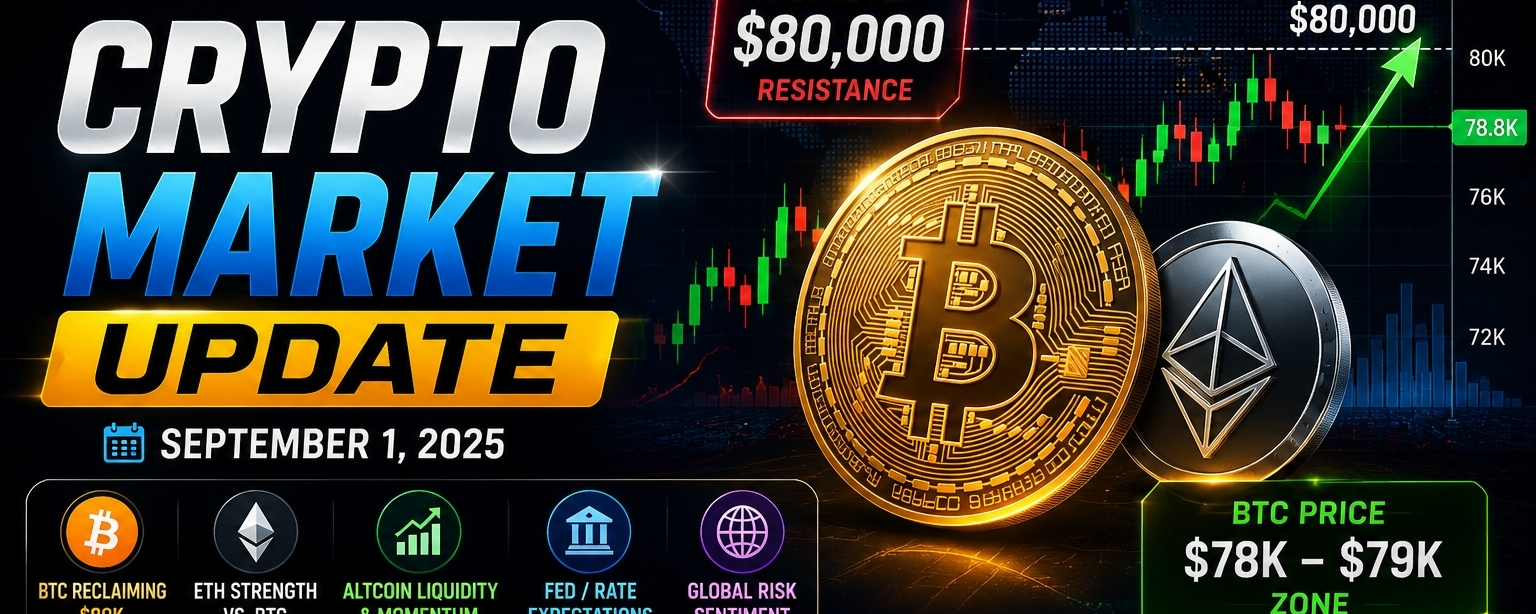
Die heutige Marktlage: BTC handelt im Bereich der **78.000–79.000 US-Dollar**, während der Markt aufBitcoin geht mit Blick auf eine entscheidende Marke in den September: **80.000 US-Dollar**. 👀
BTC schwebt derzeit in der **78.000–79.000 US-Dollar**-Zone, während der Makrodruck zunimmt, da die globalen Anleiherenditen und die Ölpreise steigen.
📌 Das solltest du im Blick behalten:
• BTC erobert die Marke von 80.000 USD zurück
• ETH-Stärke im Vergleich zu BTC
• Altcoin-Liquidität & Momentum
• Fed/Zinserwartungen
• Globale Risikostimmung
September könnte **hohe Volatilität** bringen. Verfolge keine grünen Kerzen – beobachte Kursverlauf, Volumen und Marktstruktur.
Die nächste große Bewegung könnte mit Bitcoin beginnen. ⚡️
Die heutige Marktlage: BTC handelt im Bereich der **78.000–79.000 US-Dollar**, während der Markt auf
Bitcoin geht mit Blick auf eine entscheidende Marke in den September: **80.000 US-Dollar**. 👀
BTC schwebt derzeit in der **78.000–79.000 US-Dollar**-Zone, während der Makrodruck zunimmt, da die globalen Anleiherenditen und die Ölpreise steigen.
📌 Das solltest du im Blick behalten:
• BTC erobert die Marke von 80.000 USD zurück
• ETH-Stärke im Vergleich zu BTC
• Altcoin-Liquidität & Momentum
• Fed/Zinserwartungen
• Globale Risikostimmung
September könnte **hohe Volatilität** bringen. Verfolge keine grünen Kerzen – beobachte Kursverlauf, Volumen und Marktstruktur.
Die nächste große Bewegung könnte mit Bitcoin beginnen. ⚡️
BTC schwebt derzeit in der **78.000–79.000 US-Dollar**-Zone, während der Makrodruck zunimmt, da die globalen Anleiherenditen und die Ölpreise steigen.
📌 Das solltest du im Blick behalten:
• BTC erobert die Marke von 80.000 USD zurück
• ETH-Stärke im Vergleich zu BTC
• Altcoin-Liquidität & Momentum
• Fed/Zinserwartungen
• Globale Risikostimmung
September könnte **hohe Volatilität** bringen. Verfolge keine grünen Kerzen – beobachte Kursverlauf, Volumen und Marktstruktur.
Die nächste große Bewegung könnte mit Bitcoin beginnen. ⚡️
79
Artikel
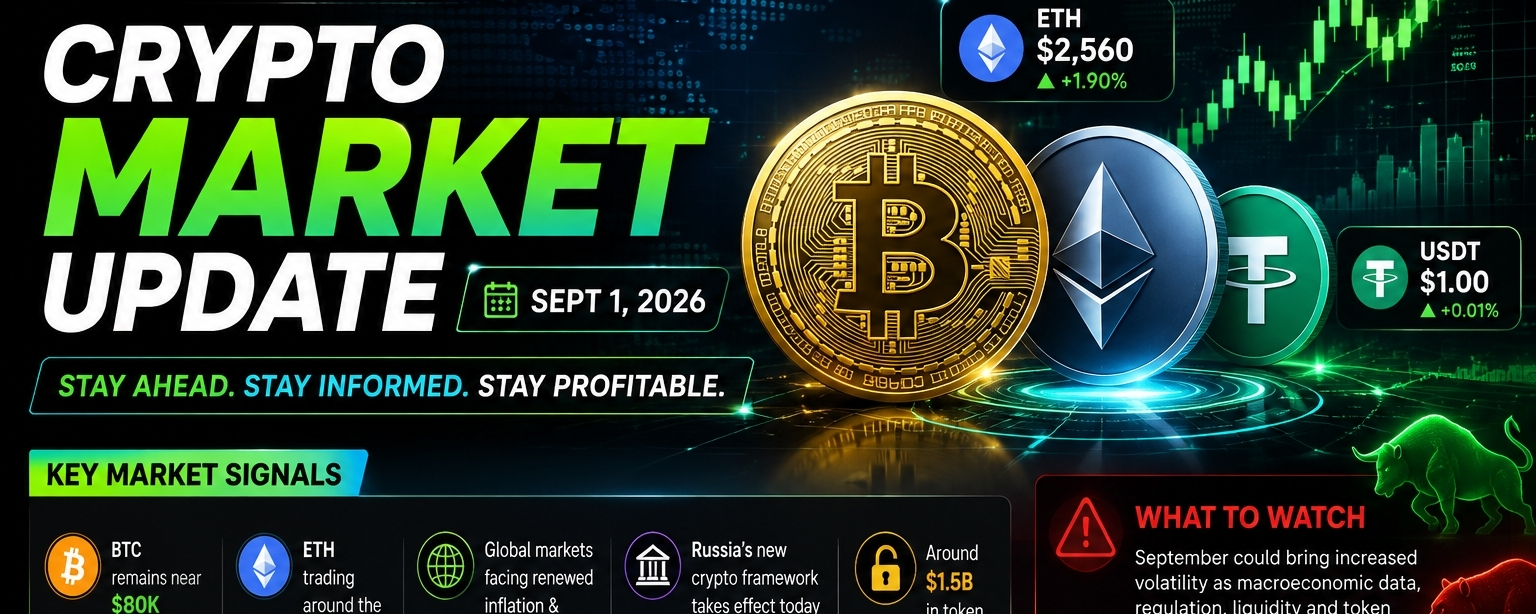
Bitcoin startet den September im Bereich von 78.000–80.000 $, wobei Händler besonders darauf achten, ob BTC kann📊 WICHTIGE MARKTSIGNale:
• BTC bleibt nahe der psychologischen Marke von 80.000 $
• ETH handelt im Bereich der mittleren 2.000 $
• Globale Märkte sehen sich erneut mit Inflation und geopolitischem Druck konfrontiert
• Russlands neue Krypto-Regelung tritt heute in Kraft, wobei BTC, ETH und USDT eine zentrale Rolle erhalten
• Rund 1,5 Mrd. $ an Token-Freigaben werden in der ersten Septemberwoche erwartet
⚠️ WAS SIE SCHAUEN SOLLT:
September könnte angesichts des Zusammentreffens makroökonomischer Daten, Regulierung, Liquidität und Token-Angebotsereignisse mit erhöhter Volatilität einhergehen.
Bitcoin startet den September im Bereich von 78.000–80.000 $, wobei Händler besonders darauf achten, ob BTC kann
📊 WICHTIGE MARKTSIGNale:
• BTC bleibt nahe der psychologischen Marke von 80.000 $
• ETH handelt im Bereich der mittleren 2.000 $
• Globale Märkte sehen sich erneut mit Inflation und geopolitischem Druck konfrontiert
• Russlands neue Krypto-Regelung tritt heute in Kraft, wobei BTC, ETH und USDT eine zentrale Rolle erhalten
• Rund 1,5 Mrd. $ an Token-Freigaben werden in der ersten Septemberwoche erwartet
⚠️ WAS SIE SCHAUEN SOLLT:
September könnte angesichts des Zusammentreffens makroökonomischer Daten, Regulierung, Liquidität und Token-Angebotsereignisse mit erhöhter Volatilität einhergehen.
• BTC bleibt nahe der psychologischen Marke von 80.000 $
• ETH handelt im Bereich der mittleren 2.000 $
• Globale Märkte sehen sich erneut mit Inflation und geopolitischem Druck konfrontiert
• Russlands neue Krypto-Regelung tritt heute in Kraft, wobei BTC, ETH und USDT eine zentrale Rolle erhalten
• Rund 1,5 Mrd. $ an Token-Freigaben werden in der ersten Septemberwoche erwartet
⚠️ WAS SIE SCHAUEN SOLLT:
September könnte angesichts des Zusammentreffens makroökonomischer Daten, Regulierung, Liquidität und Token-Angebotsereignisse mit erhöhter Volatilität einhergehen.
52
Artikel
Bitcoin startet mit starkem Momentum in den September nach einem großen August-Rallye, aber der Markt ist nun📊 Markteinblick:
₿ BTC: ~78.000–80.000 $-Bereich
◆ ETH: zeigt wieder Stärke
◎ SOL: bleibt eine der stärkeren Large-Cap-Altcoins
📈 BTC legte im August rund 24 % zu
🔥 GROßE ENTWICKLUNG:
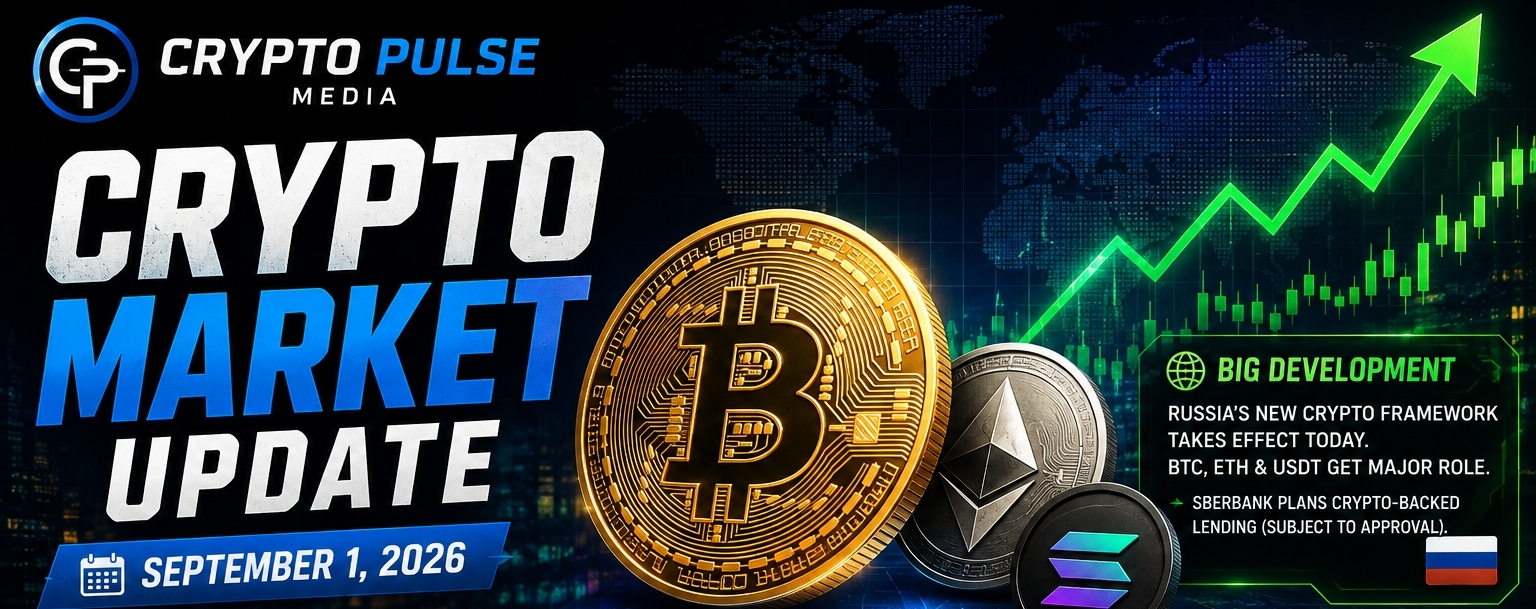
Das neue Krypto-Regelwerk für Russland tritt heute in Kraft: BTC, ETH und USDT erhalten eine wichtige Rolle im regulierten Markt. Auch Sberbank plant kryptounterstützte Kredite, abhängig von der regulatorischen Genehmigung.
⚠️ Währenddessen kämpfen die globalen Märkte mit steigenden Renditen bei Anleihen, Öl über 91 $ und neuen Sorgen wegen Inflation/Zinsanhebungen. Das könnte die Volatilität bei riskanten Assets hoch halten – auch im Krypto-Sektor.
Bitcoin startet mit starkem Momentum in den September nach einem großen August-Rallye, aber der Markt ist nun
📊 Markteinblick:
₿ BTC: ~78.000–80.000 $-Bereich
◆ ETH: zeigt wieder Stärke
◎ SOL: bleibt eine der stärkeren Large-Cap-Altcoins
📈 BTC legte im August rund 24 % zu
🔥 GROßE ENTWICKLUNG:
Das neue Krypto-Regelwerk für Russland tritt heute in Kraft: BTC, ETH und USDT erhalten eine wichtige Rolle im regulierten Markt. Auch Sberbank plant kryptounterstützte Kredite, abhängig von der regulatorischen Genehmigung.
⚠️ Währenddessen kämpfen die globalen Märkte mit steigenden Renditen bei Anleihen, Öl über 91 $ und neuen Sorgen wegen Inflation/Zinsanhebungen. Das könnte die Volatilität bei riskanten Assets hoch halten – auch im Krypto-Sektor.
₿ BTC: ~78.000–80.000 $-Bereich
◆ ETH: zeigt wieder Stärke
◎ SOL: bleibt eine der stärkeren Large-Cap-Altcoins
📈 BTC legte im August rund 24 % zu
🔥 GROßE ENTWICKLUNG:
Das neue Krypto-Regelwerk für Russland tritt heute in Kraft: BTC, ETH und USDT erhalten eine wichtige Rolle im regulierten Markt. Auch Sberbank plant kryptounterstützte Kredite, abhängig von der regulatorischen Genehmigung.
⚠️ Währenddessen kämpfen die globalen Märkte mit steigenden Renditen bei Anleihen, Öl über 91 $ und neuen Sorgen wegen Inflation/Zinsanhebungen. Das könnte die Volatilität bei riskanten Assets hoch halten – auch im Krypto-Sektor.
80
Artikel
Lasst uns daraus eine **tägliche originale Binance Square-Serie** für CryptoPulse Media machen—basierend auf o### 📊 CryptoPulse Media — Tägliches Markt-Update
**1. September 2026**
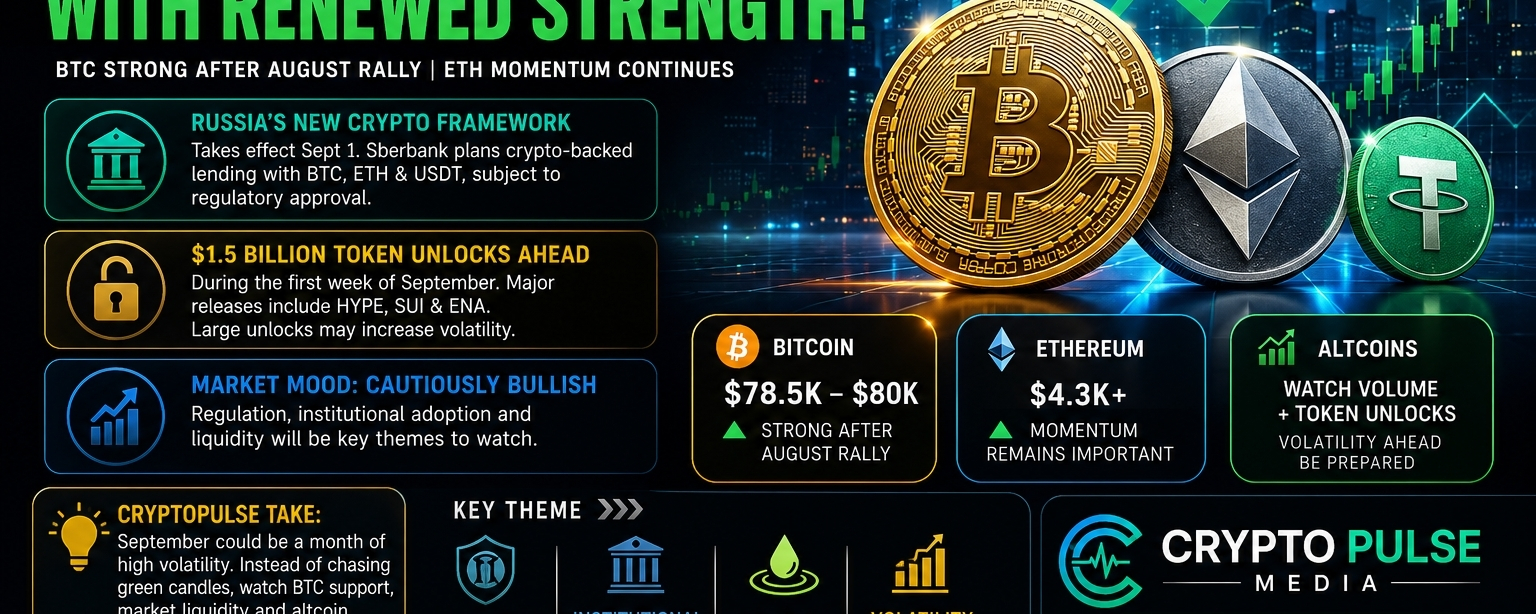
Bitcoin startet den September mit neuer Stärke nach einem starken August-Rallye. Aktuelle Marktdaten zeigen BTC bei rund **78,5 Tsd.–80 Tsd. US-Dollar**, während Ethereum ebenfalls positive Impulse zeigt.
Eine wichtige Entwicklung, die es heute zu beobachten gilt, ist **Rusus neuer Krypto-Rahmen**, der am 1. September in Kraft tritt. Sberbank plant kryptogestützte Kredite mit **BTC, ETH und USDT**, vorbehaltlich der behördlichen Genehmigung.
In der Zwischenzeit sollten Händler den Altcoin-Markt im Blick behalten. In der ersten Septemberwoche werden voraussichtlich rund **1,5 Milliarden US-Dollar** an Token-Freigaben erwartet, darunter große Auslieferungen bei HYPE, SUI und ENA. Große Freigaben können kurzfristigen Verkaufsdruck und Volatilität erhöhen.
Lasst uns daraus eine **tägliche originale Binance Square-Serie** für CryptoPulse Media machen—basierend auf o
### 📊 CryptoPulse Media — Tägliches Markt-Update
**1. September 2026**
Bitcoin startet den September mit neuer Stärke nach einem starken August-Rallye. Aktuelle Marktdaten zeigen BTC bei rund **78,5 Tsd.–80 Tsd. US-Dollar**, während Ethereum ebenfalls positive Impulse zeigt.
Eine wichtige Entwicklung, die es heute zu beobachten gilt, ist **Rusus neuer Krypto-Rahmen**, der am 1. September in Kraft tritt. Sberbank plant kryptogestützte Kredite mit **BTC, ETH und USDT**, vorbehaltlich der behördlichen Genehmigung.
In der Zwischenzeit sollten Händler den Altcoin-Markt im Blick behalten. In der ersten Septemberwoche werden voraussichtlich rund **1,5 Milliarden US-Dollar** an Token-Freigaben erwartet, darunter große Auslieferungen bei HYPE, SUI und ENA. Große Freigaben können kurzfristigen Verkaufsdruck und Volatilität erhöhen.
**1. September 2026**
Bitcoin startet den September mit neuer Stärke nach einem starken August-Rallye. Aktuelle Marktdaten zeigen BTC bei rund **78,5 Tsd.–80 Tsd. US-Dollar**, während Ethereum ebenfalls positive Impulse zeigt.
Eine wichtige Entwicklung, die es heute zu beobachten gilt, ist **Rusus neuer Krypto-Rahmen**, der am 1. September in Kraft tritt. Sberbank plant kryptogestützte Kredite mit **BTC, ETH und USDT**, vorbehaltlich der behördlichen Genehmigung.
In der Zwischenzeit sollten Händler den Altcoin-Markt im Blick behalten. In der ersten Septemberwoche werden voraussichtlich rund **1,5 Milliarden US-Dollar** an Token-Freigaben erwartet, darunter große Auslieferungen bei HYPE, SUI und ENA. Große Freigaben können kurzfristigen Verkaufsdruck und Volatilität erhöhen.
109

Artikel
XRPL-Konsens friert ein, nachdem nur 12% zentraler Knoten entfernt wurden – aber ein einfacher Kniff verdreifacht die Zahl der XRP-defBei 60% Teilnahme erhöhten zwei zufällige Verbindungen die simulierten Schwellen für Quorum-Ausfälle von 11% auf 38% und von 12% auf 33%.
Eine neue Studie zum XRP Ledger sagt, dass zwei oder drei zusätzliche Peer-Verbindungen pro teilnehmendem Knoten die Anzahl der Knoten, die ein gezielter Angriff entfernen muss, um den modellierten Konsens zu stören, erheblich erhöhen können.
Der XRPL-Konsens hängt davon ab, dass genügend vertrauenswürdige Validatoren die Nachrichten des jeweils anderen erhalten. Ein separates Peer-to-Peer-Netzwerk überträgt diese Nachrichten zwischen den Servern, sodass zusätzliche Routen den Validator-Datenverkehr am Laufen halten könnten, falls ein Angriff die meist ausgelasteten Knotenpunkte des Netzwerks entfernt.
XRPL-Konsens friert ein, nachdem nur 12% zentraler Knoten entfernt wurden – aber ein einfacher Kniff verdreifacht die Zahl der XRP-def
Bei 60% Teilnahme erhöhten zwei zufällige Verbindungen die simulierten Schwellen für Quorum-Ausfälle von 11% auf 38% und von 12% auf 33%.
Eine neue Studie zum XRP Ledger sagt, dass zwei oder drei zusätzliche Peer-Verbindungen pro teilnehmendem Knoten die Anzahl der Knoten, die ein gezielter Angriff entfernen muss, um den modellierten Konsens zu stören, erheblich erhöhen können.
Der XRPL-Konsens hängt davon ab, dass genügend vertrauenswürdige Validatoren die Nachrichten des jeweils anderen erhalten. Ein separates Peer-to-Peer-Netzwerk überträgt diese Nachrichten zwischen den Servern, sodass zusätzliche Routen den Validator-Datenverkehr am Laufen halten könnten, falls ein Angriff die meist ausgelasteten Knotenpunkte des Netzwerks entfernt.
Eine neue Studie zum XRP Ledger sagt, dass zwei oder drei zusätzliche Peer-Verbindungen pro teilnehmendem Knoten die Anzahl der Knoten, die ein gezielter Angriff entfernen muss, um den modellierten Konsens zu stören, erheblich erhöhen können.
Der XRPL-Konsens hängt davon ab, dass genügend vertrauenswürdige Validatoren die Nachrichten des jeweils anderen erhalten. Ein separates Peer-to-Peer-Netzwerk überträgt diese Nachrichten zwischen den Servern, sodass zusätzliche Routen den Validator-Datenverkehr am Laufen halten könnten, falls ein Angriff die meist ausgelasteten Knotenpunkte des Netzwerks entfernt.
106
Artikel
US-Treasury nutzt Stablecoins, um kurzfristige Schulden zu finanzieren, aber sie können sein 28-Mrd.-$-Problem bei Langläufern nicht lösenGENIUS-Reserven enden bei 93 Tagen, während das Treasury die Liquiditätsrückkäufe über Schuldtitel mit Laufzeiten von 10 bis 30 Jahren hinweg ausweitet.
Die Nachfrage nach Stablecoins wird im US-Staatsanleihenmarkt zunehmend bedeutsam, aber die Laufzeit dieser Nachfrage ist wichtiger als die Schlagzeilen-Zahl der Gesamtnachfrage.
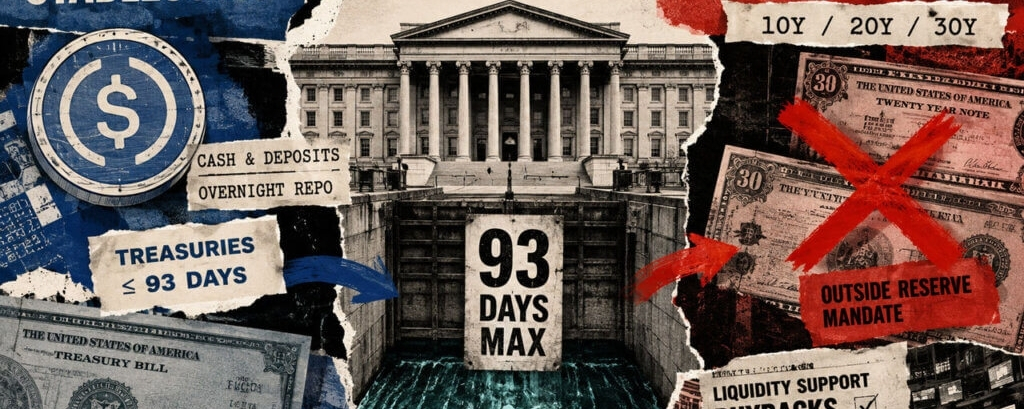
Washington hat nun zwei Erzählungen über den Schuldenmarkt gleichzeitig laufen. Der föderale Rahmen für die erlaubten Zahlungs-„Stablecoins“-Kanäle überführt Rücklagen in cash-ähnliche Instrumente und Treasuries mit höchstens 93 Tagen Restlaufzeit. Weiter hinten auf der Zinskurve sagte das US-Finanzministerium am 19. August, es werde die maximale Größe der Liquiditätsstützungs-Käufe in den nominalen Segmenten mit Laufzeiten von 10 bis 20 Jahren sowie 20 bis 30 Jahren mindestens verdoppeln, beginnend am 9. September.
US-Treasury nutzt Stablecoins, um kurzfristige Schulden zu finanzieren, aber sie können sein 28-Mrd.-$-Problem bei Langläufern nicht lösen
GENIUS-Reserven enden bei 93 Tagen, während das Treasury die Liquiditätsrückkäufe über Schuldtitel mit Laufzeiten von 10 bis 30 Jahren hinweg ausweitet.
Die Nachfrage nach Stablecoins wird im US-Staatsanleihenmarkt zunehmend bedeutsam, aber die Laufzeit dieser Nachfrage ist wichtiger als die Schlagzeilen-Zahl der Gesamtnachfrage.
Washington hat nun zwei Erzählungen über den Schuldenmarkt gleichzeitig laufen. Der föderale Rahmen für die erlaubten Zahlungs-„Stablecoins“-Kanäle überführt Rücklagen in cash-ähnliche Instrumente und Treasuries mit höchstens 93 Tagen Restlaufzeit. Weiter hinten auf der Zinskurve sagte das US-Finanzministerium am 19. August, es werde die maximale Größe der Liquiditätsstützungs-Käufe in den nominalen Segmenten mit Laufzeiten von 10 bis 20 Jahren sowie 20 bis 30 Jahren mindestens verdoppeln, beginnend am 9. September.
Die Nachfrage nach Stablecoins wird im US-Staatsanleihenmarkt zunehmend bedeutsam, aber die Laufzeit dieser Nachfrage ist wichtiger als die Schlagzeilen-Zahl der Gesamtnachfrage.
Washington hat nun zwei Erzählungen über den Schuldenmarkt gleichzeitig laufen. Der föderale Rahmen für die erlaubten Zahlungs-„Stablecoins“-Kanäle überführt Rücklagen in cash-ähnliche Instrumente und Treasuries mit höchstens 93 Tagen Restlaufzeit. Weiter hinten auf der Zinskurve sagte das US-Finanzministerium am 19. August, es werde die maximale Größe der Liquiditätsstützungs-Käufe in den nominalen Segmenten mit Laufzeiten von 10 bis 20 Jahren sowie 20 bis 30 Jahren mindestens verdoppeln, beginnend am 9. September.
24

Artikel
Nachrichten
BitGo und NYDIG ziehen an entgegengesetzten Enden eines Seils rund um Bitcoin und stellen dabei Umsatz-Hürden gegenüber, wobei die Gegenüberstellung mit:Der BitGo-NYDIG-Deal stellt rund 42,5 Millionen US-Dollar anfangs gegen die von NYDIG behauptete 3+ GW-Leistungs- und Compute-Präsenz, wobei die Profitabilität auf beiden Seiten noch nicht belegt ist.
Der NYDIG-Deal von BitGo überträgt sein institutionelles Handelsgeschäft an den Anbieter für Verwahr- und Handelsinfrastruktur für digitale Assets, während NYDIG sagt, es konzentriere Ressourcen auf Strom, Bitcoin-Mining und Rechenzentrums-High-Performance-Computing.
Die von BitGo offengelegten Abschlussbedingungen sehen rund 42,5 Millionen US-Dollar an Gegenleistung upfront vor. BitGo ergänzt ein institutionelles Team, Kundenbeziehungen und Finanzprodukte rund um seine Verwahr- und Abwicklungsplattform. NYDIG richtet den Fokus auf eine von dem Unternehmen beschriebene Strom- und Compute-Präsenz von mehr als 3 GW.
Nachrichten BitGo und NYDIG ziehen an entgegengesetzten Enden eines Seils rund um Bitcoin und stellen dabei Umsatz-Hürden gegenüber, wobei die Gegenüberstellung mit:
Der BitGo-NYDIG-Deal stellt rund 42,5 Millionen US-Dollar anfangs gegen die von NYDIG behauptete 3+ GW-Leistungs- und Compute-Präsenz, wobei die Profitabilität auf beiden Seiten noch nicht belegt ist.
Der NYDIG-Deal von BitGo überträgt sein institutionelles Handelsgeschäft an den Anbieter für Verwahr- und Handelsinfrastruktur für digitale Assets, während NYDIG sagt, es konzentriere Ressourcen auf Strom, Bitcoin-Mining und Rechenzentrums-High-Performance-Computing.
Die von BitGo offengelegten Abschlussbedingungen sehen rund 42,5 Millionen US-Dollar an Gegenleistung upfront vor. BitGo ergänzt ein institutionelles Team, Kundenbeziehungen und Finanzprodukte rund um seine Verwahr- und Abwicklungsplattform. NYDIG richtet den Fokus auf eine von dem Unternehmen beschriebene Strom- und Compute-Präsenz von mehr als 3 GW.
Der NYDIG-Deal von BitGo überträgt sein institutionelles Handelsgeschäft an den Anbieter für Verwahr- und Handelsinfrastruktur für digitale Assets, während NYDIG sagt, es konzentriere Ressourcen auf Strom, Bitcoin-Mining und Rechenzentrums-High-Performance-Computing.
Die von BitGo offengelegten Abschlussbedingungen sehen rund 42,5 Millionen US-Dollar an Gegenleistung upfront vor. BitGo ergänzt ein institutionelles Team, Kundenbeziehungen und Finanzprodukte rund um seine Verwahr- und Abwicklungsplattform. NYDIG richtet den Fokus auf eine von dem Unternehmen beschriebene Strom- und Compute-Präsenz von mehr als 3 GW.
62
Anmelden und weiter Inhalte entdecken
Krypto-Nutzer weltweit auf Binance Square kennenlernen
⚡️ Bleib in Sachen Krypto stets am Puls.
💬 Die weltgrößte Kryptobörse vertraut darauf.
👍 Erhalte verlässliche Einblicke von verifizierten Creators.
E-Mail-Adresse/Telefonnummer
Trendthemen
FedMinutesFocusOnOctoberPause
93,904 Aufrufe
1,003 Kommentare
🚨 HOHE ALARMSTUFE ‼️ BITTE HANDELT IN DER NÄCHSTEN STUNDE NICHT BLIND 🚨
Leute, in weniger als einer Stunde werden die FOMC-Protokolle veröffentlicht.
Nach der Volatilität, die wir heute bereits erlebt haben, möchte ich wirklich nicht, dass jemand kurz vor der Veröffentlichung irgendwelche zufälligen Positionen mit hohem Hebel eröffnet.
Die stärkste Reaktion erwarte ich bei Gold (XAU), Silber (XAG), BTC und ETH. Coins wie SOL und andere stark gehebelte Altcoins mit mittlerer oder niedriger Marktkapitalisierung können jede Bewegung von BTC noch verstärken.
Gold und Silber reagieren heute Abend besonders empfindlich, weil der Markt bereits auf den US-Dollar und die Renditen von US-Staatsanleihen reagiert und beide Metalle vor der Veröffentlichung der Fed-Protokolle stark unter Druck standen.
Kurz gesagt:
📉 FOMC-Protokolle mit falkenhaftem Ton → Dollar und Renditen können steigen → Druck auf BTC, Krypto, Gold und Silber
📈 FOMC-Protokolle mit taubenhaftem Ton → Dollar und Renditen können nachgeben → BTC, Gold, Silber und andere Risikoanlagen können kräftig steigen.
Und bitte denkt daran: Die erste Kerze kann eine Falle sein. Es kann zunächst zu einem Pump kommen, dann zu einem sofortigen Dump, Liquidationen auf beiden Seiten und erst danach zur tatsächlichen Richtungsbewegung.
Schützt also vorerst eure Positionen, reduziert unnötigen Hebel und springt nicht aus FOMO auf die erste Bewegung auf.
Heute Abend beobachte ich zuerst $XAU , $XAG und $BTC . An ihnen werden wir sehr schnell erkennen, wie der Markt die Fed einschätzt.
Ich halte euch rechtzeitig auf dem Laufenden.
Folgt @Panda Traders und aktiviert jetzt eure Benachrichtigungen.
#FedMinutesFocusOnOctoberPause
Panda Traders
·15 Likes
·2.9k Aufrufe
BinanceLaunchesBinanceIntelligence
1M Aufrufe
6,255 Kommentare
EvernorthDelaysNasdaqDebutToOct12
5,611 Aufrufe
193 Kommentare