
Bisma-Malik
57 Beiträge

Bisma-Malik
Melden
Nutzer blockieren
Big opportunity Higher Risk Management
Trade eröffnen
Gelegenheitstrader
6.3 Monate
19 Following
1.0K+ Follower
104 Like gegeben
Beiträge
Portfolio
·
--
Übersetzung ansehen
$LINK
$LINK/USDT — Long Setup
EP (Entry): $11.40 – $11.52
TP1: $11.85
TP2: $12.05
TP3: $12.26
SL: $11.18
Bias: Bullish rebound
Entry trigger: Hold $11.40–$11.52 support. More conservative entry after confirmation above $11.75.
$LINK
$LINK /USDT — Long Setup
EP (Entry): $11.40 – $11.52
TP1: $11.85
TP2: $12.05
TP3: $12.26
SL: $11.18
Bias: Bullish rebound
Entry trigger: Hold $11.40–$11.52 support. More conservative entry after confirmation above $11.75.
$LINK /USDT — Long Setup
EP (Entry): $11.40 – $11.52
TP1: $11.85
TP2: $12.05
TP3: $12.26
SL: $11.18
Bias: Bullish rebound
Entry trigger: Hold $11.40–$11.52 support. More conservative entry after confirmation above $11.75.

105
·
--

Artikel
Aufbau der Zukunft von Web3- und KI-Infrastruktur mit NEAR-ProtokollAufbau der Zukunft von Web3- und KI-Infrastruktur mit $NEAR -Protokoll
Da sich die technologische Landschaft rasch in Richtung einer agentengetriebenen Wirtschaft verändert, muss die Blockchain-Infrastruktur sich weiterentwickeln, um den Anforderungen fortschrittlicher künstlicher Intelligenz und nahtloser plattformübergreifender Interoperabilität gerecht zu werden. An vorderster Front dieser Entwicklung steht das NEAR-Protokoll, eine offene, ge-shardete Layer-1-Blockchain, die von Grund auf entwickelt wurde, um die nächste Generation dezentraler Anwendungen und autonomer Agenten zu ermöglichen.
Die Vision: Die Währung der Agenten
Aufbau der Zukunft von Web3- und KI-Infrastruktur mit NEAR-Protokoll
Aufbau der Zukunft von Web3- und KI-Infrastruktur mit $NEAR -Protokoll
Da sich die technologische Landschaft rasch in Richtung einer agentengetriebenen Wirtschaft verändert, muss die Blockchain-Infrastruktur sich weiterentwickeln, um den Anforderungen fortschrittlicher künstlicher Intelligenz und nahtloser plattformübergreifender Interoperabilität gerecht zu werden. An vorderster Front dieser Entwicklung steht das NEAR-Protokoll, eine offene, ge-shardete Layer-1-Blockchain, die von Grund auf entwickelt wurde, um die nächste Generation dezentraler Anwendungen und autonomer Agenten zu ermöglichen.
Die Vision: Die Währung der Agenten
Da sich die technologische Landschaft rasch in Richtung einer agentengetriebenen Wirtschaft verändert, muss die Blockchain-Infrastruktur sich weiterentwickeln, um den Anforderungen fortschrittlicher künstlicher Intelligenz und nahtloser plattformübergreifender Interoperabilität gerecht zu werden. An vorderster Front dieser Entwicklung steht das NEAR-Protokoll, eine offene, ge-shardete Layer-1-Blockchain, die von Grund auf entwickelt wurde, um die nächste Generation dezentraler Anwendungen und autonomer Agenten zu ermöglichen.
Die Vision: Die Währung der Agenten
328
·
--
Übersetzung ansehen
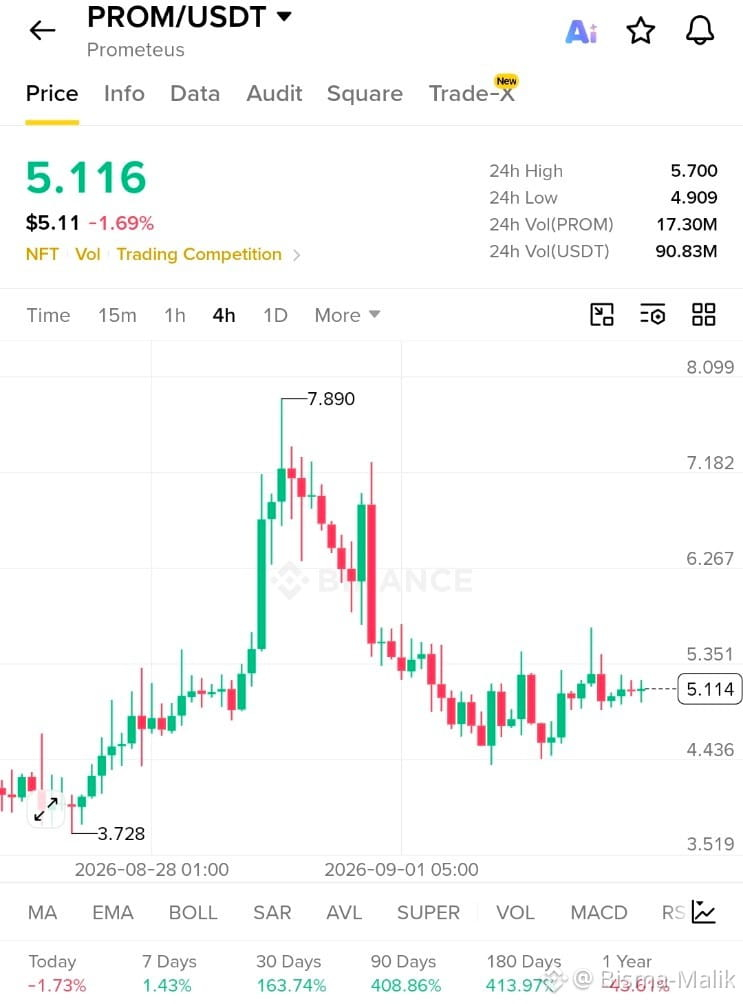
$PROM
PROM/USDT — Trading Setup
LONG SETUP
EP1: $5.00–$5.10
EP2: $4.90–$4.98
SL: $4.72
TP1: $5.35
TP2: $5.70
TP3: $6.25
TP4: $7.10
$PROM
PROM/USDT — Trading Setup
LONG SETUP
EP1: $5.00–$5.10
EP2: $4.90–$4.98
SL: $4.72
TP1: $5.35
TP2: $5.70
TP3: $6.25
TP4: $7.10
PROM/USDT — Trading Setup
LONG SETUP
EP1: $5.00–$5.10
EP2: $4.90–$4.98
SL: $4.72
TP1: $5.35
TP2: $5.70
TP3: $6.25
TP4: $7.10
192
·
--
Übersetzung ansehen
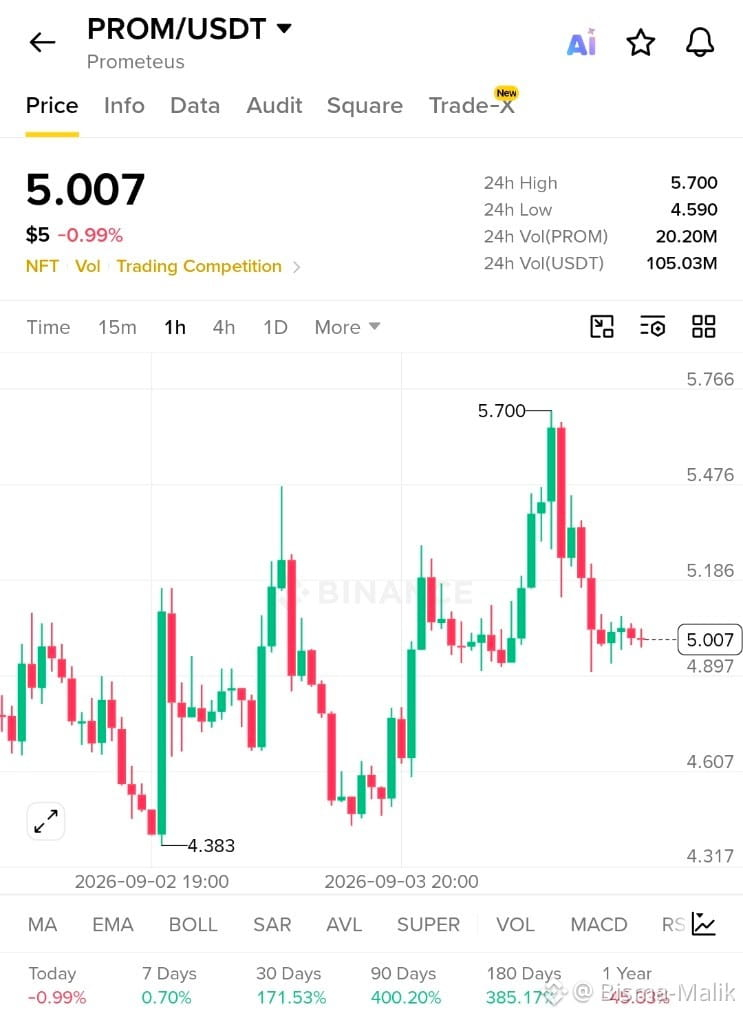
$PROM
LONG Setup
Entry Point $4.85 – $5.05
TP1: $5.25
TP2: $5.48
TP3: $5.70
TP4: $6.00
Stop Loss: $4.55
$PROM
LONG Setup
Entry Point $4.85 – $5.05
TP1: $5.25
TP2: $5.48
TP3: $5.70
TP4: $6.00
Stop Loss: $4.55
LONG Setup
Entry Point $4.85 – $5.05
TP1: $5.25
TP2: $5.48
TP3: $5.70
TP4: $6.00
Stop Loss: $4.55

167
·
--
Übersetzung ansehen
$ENSO
ENSO/USDT Trading Setup
ENSO is currently trading around $0.865, moving inside a relatively tight range after reaching a 24h high of $0.886 and finding support near $0.831. The chart looks interesting for a potential bounce if buyers continue defending the current support zone.
Entry Point: $0.855 – $0.868
Take Profit 1: $0.880
Take Profit 2: $0.895
Take Profit 3: $0.915
Take Profit 4: $0.940
Stop Loss: $0.838
#Write2Earn
{spot}(ENSOUSDT)
$ENSO
ENSO/USDT Trading Setup
ENSO is currently trading around $0.865, moving inside a relatively tight range after reaching a 24h high of $0.886 and finding support near $0.831. The chart looks interesting for a potential bounce if buyers continue defending the current support zone.
Entry Point: $0.855 – $0.868
Take Profit 1: $0.880
Take Profit 2: $0.895
Take Profit 3: $0.915
Take Profit 4: $0.940
Stop Loss: $0.838
#Write2Earn
ENSO/USDT Trading Setup
ENSO is currently trading around $0.865, moving inside a relatively tight range after reaching a 24h high of $0.886 and finding support near $0.831. The chart looks interesting for a potential bounce if buyers continue defending the current support zone.
Entry Point: $0.855 – $0.868
Take Profit 1: $0.880
Take Profit 2: $0.895
Take Profit 3: $0.915
Take Profit 4: $0.940
Stop Loss: $0.838
#Write2Earn

1
139
·
--
Übersetzung ansehen
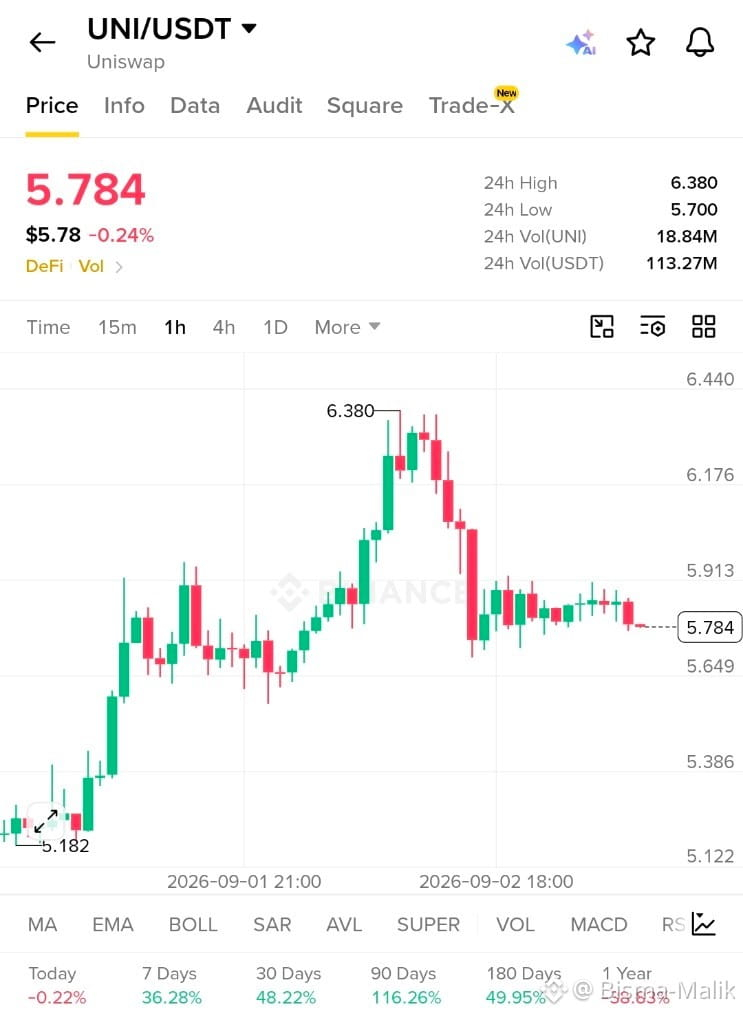
$UNI
UNI/USDT Trading Setup
UNI is currently trading around $5.784 after a strong recent move. The market has pulled back from the $6.38 high, and the $5.70 area is now an important support zone to watch.
Trading Setup: LONG
EP: $5.70 – $5.82
TP1: $5.95
TP2: $6.18
TP3: $6.38
TP4: $6.60
SL: $5.48
. #UNI #Uniswap #CryptoTrading #TradingSignal
$UNI
UNI/USDT Trading Setup
UNI is currently trading around $5.784 after a strong recent move. The market has pulled back from the $6.38 high, and the $5.70 area is now an important support zone to watch.
Trading Setup: LONG
EP: $5.70 – $5.82
TP1: $5.95
TP2: $6.18
TP3: $6.38
TP4: $6.60
SL: $5.48
. #UNI #Uniswap #CryptoTrading #TradingSignal
UNI/USDT Trading Setup
UNI is currently trading around $5.784 after a strong recent move. The market has pulled back from the $6.38 high, and the $5.70 area is now an important support zone to watch.
Trading Setup: LONG
EP: $5.70 – $5.82
TP1: $5.95
TP2: $6.18
TP3: $6.38
TP4: $6.60
SL: $5.48
. #UNI #Uniswap #CryptoTrading #TradingSignal

106
·
--
Übersetzung ansehen
$ETH
ETH/USDT Trading Signal
ETH is currently trading around $2,409 and price is moving close to an important support area. The 24h range between $2,383 and $2,485 shows that volatility is still active, so patience and proper risk management are important.
I’m watching the $2,400–$2,410 zone closely. If ETH holds this support and buyers step in, we could see a recovery toward the higher resistance levels.
Entry Point : $2,400 – $2,415
Take Profit 1: $2,425
Take Profit 2: $2,450
Take Profit 3: $2,475
Take Profit 4: $2,500
Stop Loss : $2,370
ETH is still showing strong performance on the 30-day timeframe, despite the recent short-term pullback. I’m not chasing the price here—waiting for confirmation around support is the smarter approach.
$ETH
ETH/USDT Trading Signal
ETH is currently trading around $2,409 and price is moving close to an important support area. The 24h range between $2,383 and $2,485 shows that volatility is still active, so patience and proper risk management are important.
I’m watching the $2,400–$2,410 zone closely. If ETH holds this support and buyers step in, we could see a recovery toward the higher resistance levels.
Entry Point : $2,400 – $2,415
Take Profit 1: $2,425
Take Profit 2: $2,450
Take Profit 3: $2,475
Take Profit 4: $2,500
Stop Loss : $2,370
ETH is still showing strong performance on the 30-day timeframe, despite the recent short-term pullback. I’m not chasing the price here—waiting for confirmation around support is the smarter approach.
ETH/USDT Trading Signal
ETH is currently trading around $2,409 and price is moving close to an important support area. The 24h range between $2,383 and $2,485 shows that volatility is still active, so patience and proper risk management are important.
I’m watching the $2,400–$2,410 zone closely. If ETH holds this support and buyers step in, we could see a recovery toward the higher resistance levels.
Entry Point : $2,400 – $2,415
Take Profit 1: $2,425
Take Profit 2: $2,450
Take Profit 3: $2,475
Take Profit 4: $2,500
Stop Loss : $2,370
ETH is still showing strong performance on the 30-day timeframe, despite the recent short-term pullback. I’m not chasing the price here—waiting for confirmation around support is the smarter approach.

93
·
--
Übersetzung ansehen
$LINK
Chainlink ($LINK) is one project I continue to watch closely in the crypto market.
What makes Chainlink interesting to me is that it is not simply another blockchain token competing for attention. Chainlink provides critical oracle infrastructure that helps connect blockchains with real-world data, traditional financial systems, and other networks.
The bigger picture is becoming even more interesting as tokenized assets, stablecoins, DeFi, and institutional adoption continue to grow. Chainlink is positioning its technology across these areas through data services, cross-chain connectivity, and infrastructure for onchain finance.
My trading approach for $LINK
I’m not chasing every green candle. I prefer watching key support and resistance zones, waiting for confirmation, and managing risk properly.
🔹 Watch support before entering aggressively
🔹 Look for increasing volume during breakouts
🔹 Take partial profits at resistance levels
🔹 Always keep a Stop Loss
🔹 Avoid FOMO after a strong pump
$LINK has strong infrastructure fundamentals, but good projects can still experience sharp market corrections. For traders, the trend and key price levels matter just as much as the long-term story.
Trade the chart, respect the risk, and keep an eye on the bigger picture.
{spot}(LINKUSDT)
#Crypto #DeFi #RWA #Trading #BinanceSquare
$LINK
Chainlink ($LINK ) is one project I continue to watch closely in the crypto market.
What makes Chainlink interesting to me is that it is not simply another blockchain token competing for attention. Chainlink provides critical oracle infrastructure that helps connect blockchains with real-world data, traditional financial systems, and other networks.
The bigger picture is becoming even more interesting as tokenized assets, stablecoins, DeFi, and institutional adoption continue to grow. Chainlink is positioning its technology across these areas through data services, cross-chain connectivity, and infrastructure for onchain finance.
My trading approach for $LINK
I’m not chasing every green candle. I prefer watching key support and resistance zones, waiting for confirmation, and managing risk properly.
🔹 Watch support before entering aggressively
🔹 Look for increasing volume during breakouts
🔹 Take partial profits at resistance levels
🔹 Always keep a Stop Loss
🔹 Avoid FOMO after a strong pump
$LINK has strong infrastructure fundamentals, but good projects can still experience sharp market corrections. For traders, the trend and key price levels matter just as much as the long-term story.
Trade the chart, respect the risk, and keep an eye on the bigger picture.
#Crypto #DeFi #RWA #Trading #BinanceSquare
Chainlink ($LINK ) is one project I continue to watch closely in the crypto market.
What makes Chainlink interesting to me is that it is not simply another blockchain token competing for attention. Chainlink provides critical oracle infrastructure that helps connect blockchains with real-world data, traditional financial systems, and other networks.
The bigger picture is becoming even more interesting as tokenized assets, stablecoins, DeFi, and institutional adoption continue to grow. Chainlink is positioning its technology across these areas through data services, cross-chain connectivity, and infrastructure for onchain finance.
My trading approach for $LINK
I’m not chasing every green candle. I prefer watching key support and resistance zones, waiting for confirmation, and managing risk properly.
🔹 Watch support before entering aggressively
🔹 Look for increasing volume during breakouts
🔹 Take partial profits at resistance levels
🔹 Always keep a Stop Loss
🔹 Avoid FOMO after a strong pump
$LINK has strong infrastructure fundamentals, but good projects can still experience sharp market corrections. For traders, the trend and key price levels matter just as much as the long-term story.
Trade the chart, respect the risk, and keep an eye on the bigger picture.
#Crypto #DeFi #RWA #Trading #BinanceSquare

1
69
·
--
Übersetzung ansehen
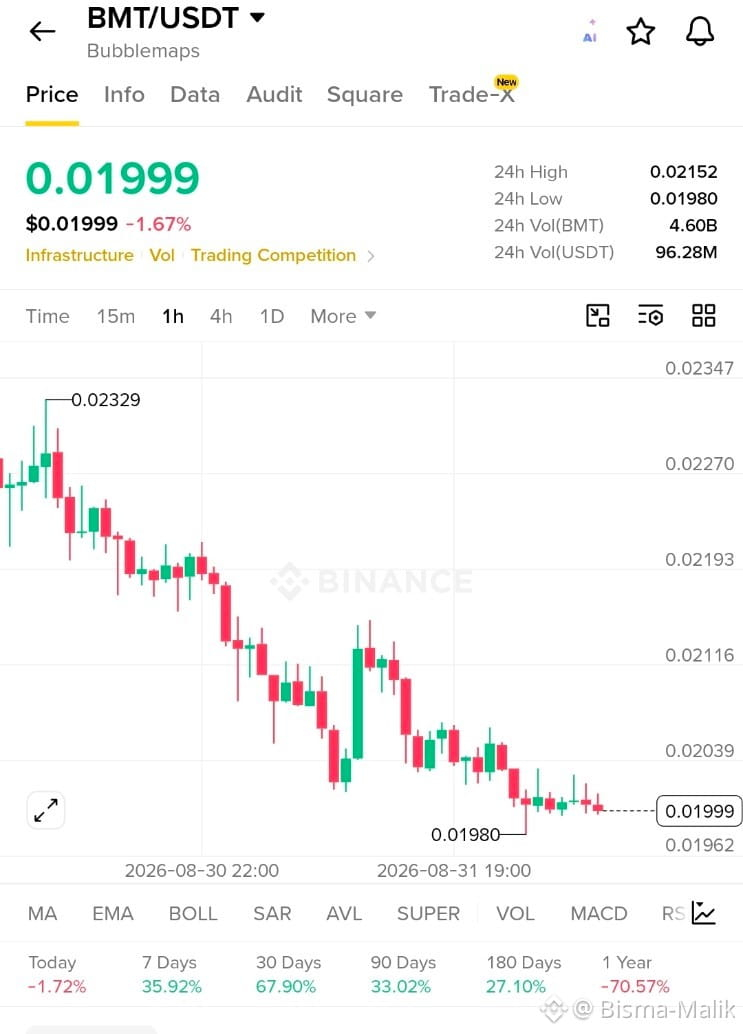
$BMT
BMT/USDT Trading Setup
$BMT is currently trading around $0.01999, sitting very close to an important support area around $0.01980. After an impressive 35.92% gain in the last 7 days, the market appears to be taking a small breather.
I’m watching this support carefully. If buyers continue defending this zone, BMT could see another move toward the recent resistance levels.
🔹 Entry Zone : $0.01980 – $0.02020
🔹 TP1: $0.02080
🔹 TP2: $0.02150
🔹 TP3: $0.02230
🔹 TP4: $0.02340
🔻 Stop Loss : $0.01920
The key level for me is $0.01980. A strong hold above it could give bulls another opportunity, but if support breaks, patience is better than forcing a trade.
#BMT #Bubblemaps #Crypto #BinanceSquare #Trading
$BMT
BMT/USDT Trading Setup
$BMT is currently trading around $0.01999, sitting very close to an important support area around $0.01980. After an impressive 35.92% gain in the last 7 days, the market appears to be taking a small breather.
I’m watching this support carefully. If buyers continue defending this zone, BMT could see another move toward the recent resistance levels.
🔹 Entry Zone : $0.01980 – $0.02020
🔹 TP1: $0.02080
🔹 TP2: $0.02150
🔹 TP3: $0.02230
🔹 TP4: $0.02340
🔻 Stop Loss : $0.01920
The key level for me is $0.01980. A strong hold above it could give bulls another opportunity, but if support breaks, patience is better than forcing a trade.
#BMT #Bubblemaps #Crypto #BinanceSquare #Trading
BMT/USDT Trading Setup
$BMT is currently trading around $0.01999, sitting very close to an important support area around $0.01980. After an impressive 35.92% gain in the last 7 days, the market appears to be taking a small breather.
I’m watching this support carefully. If buyers continue defending this zone, BMT could see another move toward the recent resistance levels.
🔹 Entry Zone : $0.01980 – $0.02020
🔹 TP1: $0.02080
🔹 TP2: $0.02150
🔹 TP3: $0.02230
🔹 TP4: $0.02340
🔻 Stop Loss : $0.01920
The key level for me is $0.01980. A strong hold above it could give bulls another opportunity, but if support breaks, patience is better than forcing a trade.
#BMT #Bubblemaps #Crypto #BinanceSquare #Trading
158
·
--
Übersetzung ansehen
$ETH
ETH/USDT Trading Setup
ETH is currently trading around $2,417 after a sharp -3.72% move. Price is sitting close to an important support area, so I’m watching this zone carefully instead of chasing the dump.
Entry Zone: $2,395 – $2,425
Stop Loss: $2,360
Take Profit Targets:
TP1: $2,455
TP2: $2,500
TP3: $2,535
TP4: $2,600
The $2,387 support is the key level to watch. If ETH holds this area and buyers return, a relief bounce toward the resistance levels is possible. If support breaks, stay patient and manage risk properly.
Always use proper risk management — crypto markets can move fast.
#ETH #Ethereum #CryptoTrading #ETHUSDT #TradingSignal
$ETH
ETH/USDT Trading Setup
ETH is currently trading around $2,417 after a sharp -3.72% move. Price is sitting close to an important support area, so I’m watching this zone carefully instead of chasing the dump.
Entry Zone: $2,395 – $2,425
Stop Loss: $2,360
Take Profit Targets:
TP1: $2,455
TP2: $2,500
TP3: $2,535
TP4: $2,600
The $2,387 support is the key level to watch. If ETH holds this area and buyers return, a relief bounce toward the resistance levels is possible. If support breaks, stay patient and manage risk properly.
Always use proper risk management — crypto markets can move fast.
#ETH #Ethereum #CryptoTrading #ETHUSDT #TradingSignal
ETH/USDT Trading Setup
ETH is currently trading around $2,417 after a sharp -3.72% move. Price is sitting close to an important support area, so I’m watching this zone carefully instead of chasing the dump.
Entry Zone: $2,395 – $2,425
Stop Loss: $2,360
Take Profit Targets:
TP1: $2,455
TP2: $2,500
TP3: $2,535
TP4: $2,600
The $2,387 support is the key level to watch. If ETH holds this area and buyers return, a relief bounce toward the resistance levels is possible. If support breaks, stay patient and manage risk properly.
Always use proper risk management — crypto markets can move fast.
#ETH #Ethereum #CryptoTrading #ETHUSDT #TradingSignal

76
·
--

Artikel
Übersetzung ansehen
$BTCWhy We Still Fall in Love with $BTC (Beyond the Charts)
Let’s be honest: if you’ve been in crypto for more than a few months, you’ve probably checked your portfolio at 2:00 AM at least once.
We talk endlessly about candle patterns, support lines, and moving averages. But stripped of the noise, Bitcoin ($BTC) isn’t just a ticker symbol moving across a screen—it represents a massive shift in how humanity thinks about value, trust, and time.
Whether you’re a hardened OG from 2017 or someone who bought their first fraction of a coin last week, here is a fresh look at why continues to stand in a league of its own.
1. The Power of "21 Million"
In a world where central banks print trillions at the push of a button, Bitcoin introduced a concept the digital world had never seen before: absolute scarcity.
Hard-Coded Cap: There will only ever be 21,000,000 $BTC created.
Lost Supply: Estimates suggest that around 3 to 4 million BTC are lost forever—trapped on old hard drives or forgotten seeds.
That means the real circulating supply available to the 8 billion people on Earth is far smaller than it looks on paper. When you own $BTC, you own a piece of a finite pie that no government or corporation can inflate.
2. Digital Gold vs. Everyday Money
Early on, Satoshi Nakamoto envisioned Bitcoin as a peer-to-peer electronic cash system. While Layer-2 solutions like the Lightning Network make daily payments faster, the global consensus around has evolved into "Digital Gold."
Traditional gold is heavy, hard to verify, and expensive to transport across borders.
$BTC gives you the same store-of-value properties—scarcity, durability, divisibility—packed into a cryptographic ledger that you can carry in your memory or transfer across the world in minutes.
3. Technical & Macro Analysis: Decoding the Current Market
While the structural thesis for Bitcoin remains unbreakable, managing your risk in the short to mid-term requires looking closely at the charts and macro indicators.
Key Technical Levels to Watch
Immediate Resistance ($80,000 – $81,000): After surging off local lows, faces immediate overhead supply around $80K–$81K. A decisive daily close above this level is required to unlock momentum toward the major supply and options-gamma cluster between $85,000 and $86,000.
Crucial Support ($76,000 – $77,000): This zone acts as the primary floor for the current market structure. Holding above $76.8K maintains the short-term bullish trend across lower timeframes.
Macro Support Floor ($67,000 – $69,000): If short-term support fails, the daily EMA20 and mid-Bollinger band zone near $67K–$69K represents the macro structural base preventing deeper mean-reversion.
Macro Indicators Driving Momentum
Institutional ETF Inflows: Recent institutional spot demand has been the primary engine absorbing liquid sell pressure. Sustained net positive ETF daily inflows remain critical to sustaining any upward breakout attempt.
Derivatives Health & Leverage: Funding rates remain reasonably reset (hovering near ~+0.0045%), indicating that recent moves were spot-driven and short-squeeze clear-outs rather than over-leveraged long positions.
MVRV-Z & Network Valuation: The MVRV-Z score sits well below historic cycle-peak zones, confirming that while short-term indicators may hit temporary overbought conditions, the macro cycle is far from euphoric exhaustion.
4. The Psychology of HODLing
Trading charts look clean, but real market cycles are dirty, emotional rollercoasters.
$BTC tests human psychology like no other asset:
FOMO (Fear of Missing Out) makes people buy near local tops.
Panic tempts people to sell during 30% corrections.
The reason "HODL" became the ultimate crypto mantra isn't just because it sounds catchy—it’s because history has rewarded patience over emotional reactions. The market is a machine that transfers wealth from the impatient to the patient.
The Big Picture
Markets will expand and contract, technical indicators will fluctuate, and critics will declare Bitcoin "dead" for the 500th time.
Yet, block after block, every ~10 minutes, the Bitcoin network keeps running without a single central authority, CEO, or customer support line. That reliability is why institutions are piling into ETFs, nations are exploring strategic reserves, and millions of regular people use it as their financial safet
$BTC
Why We Still Fall in Love with $BTC (Beyond the Charts)
Let’s be honest: if you’ve been in crypto for more than a few months, you’ve probably checked your portfolio at 2:00 AM at least once.
We talk endlessly about candle patterns, support lines, and moving averages. But stripped of the noise, Bitcoin ($BTC ) isn’t just a ticker symbol moving across a screen—it represents a massive shift in how humanity thinks about value, trust, and time.
Whether you’re a hardened OG from 2017 or someone who bought their first fraction of a coin last week, here is a fresh look at why continues to stand in a league of its own.
1. The Power of "21 Million"
In a world where central banks print trillions at the push of a button, Bitcoin introduced a concept the digital world had never seen before: absolute scarcity.
Hard-Coded Cap: There will only ever be 21,000,000 $BTC created.
Lost Supply: Estimates suggest that around 3 to 4 million BTC are lost forever—trapped on old hard drives or forgotten seeds.
That means the real circulating supply available to the 8 billion people on Earth is far smaller than it looks on paper. When you own $BTC , you own a piece of a finite pie that no government or corporation can inflate.
2. Digital Gold vs. Everyday Money
Early on, Satoshi Nakamoto envisioned Bitcoin as a peer-to-peer electronic cash system. While Layer-2 solutions like the Lightning Network make daily payments faster, the global consensus around has evolved into "Digital Gold."
Traditional gold is heavy, hard to verify, and expensive to transport across borders.
$BTC gives you the same store-of-value properties—scarcity, durability, divisibility—packed into a cryptographic ledger that you can carry in your memory or transfer across the world in minutes.
3. Technical & Macro Analysis: Decoding the Current Market
While the structural thesis for Bitcoin remains unbreakable, managing your risk in the short to mid-term requires looking closely at the charts and macro indicators.
Key Technical Levels to Watch
Immediate Resistance ($80,000 – $81,000): After surging off local lows, faces immediate overhead supply around $80K–$81K. A decisive daily close above this level is required to unlock momentum toward the major supply and options-gamma cluster between $85,000 and $86,000.
Crucial Support ($76,000 – $77,000): This zone acts as the primary floor for the current market structure. Holding above $76.8K maintains the short-term bullish trend across lower timeframes.
Macro Support Floor ($67,000 – $69,000): If short-term support fails, the daily EMA20 and mid-Bollinger band zone near $67K–$69K represents the macro structural base preventing deeper mean-reversion.
Macro Indicators Driving Momentum
Institutional ETF Inflows: Recent institutional spot demand has been the primary engine absorbing liquid sell pressure. Sustained net positive ETF daily inflows remain critical to sustaining any upward breakout attempt.
Derivatives Health & Leverage: Funding rates remain reasonably reset (hovering near ~+0.0045%), indicating that recent moves were spot-driven and short-squeeze clear-outs rather than over-leveraged long positions.
MVRV-Z & Network Valuation: The MVRV-Z score sits well below historic cycle-peak zones, confirming that while short-term indicators may hit temporary overbought conditions, the macro cycle is far from euphoric exhaustion.
4. The Psychology of HODLing
Trading charts look clean, but real market cycles are dirty, emotional rollercoasters.
$BTC tests human psychology like no other asset:
FOMO (Fear of Missing Out) makes people buy near local tops.
Panic tempts people to sell during 30% corrections.
The reason "HODL" became the ultimate crypto mantra isn't just because it sounds catchy—it’s because history has rewarded patience over emotional reactions. The market is a machine that transfers wealth from the impatient to the patient.
The Big Picture
Markets will expand and contract, technical indicators will fluctuate, and critics will declare Bitcoin "dead" for the 500th time.
Yet, block after block, every ~10 minutes, the Bitcoin network keeps running without a single central authority, CEO, or customer support line. That reliability is why institutions are piling into ETFs, nations are exploring strategic reserves, and millions of regular people use it as their financial safet
Let’s be honest: if you’ve been in crypto for more than a few months, you’ve probably checked your portfolio at 2:00 AM at least once.
We talk endlessly about candle patterns, support lines, and moving averages. But stripped of the noise, Bitcoin ($BTC ) isn’t just a ticker symbol moving across a screen—it represents a massive shift in how humanity thinks about value, trust, and time.
Whether you’re a hardened OG from 2017 or someone who bought their first fraction of a coin last week, here is a fresh look at why continues to stand in a league of its own.
1. The Power of "21 Million"
In a world where central banks print trillions at the push of a button, Bitcoin introduced a concept the digital world had never seen before: absolute scarcity.
Hard-Coded Cap: There will only ever be 21,000,000 $BTC created.
Lost Supply: Estimates suggest that around 3 to 4 million BTC are lost forever—trapped on old hard drives or forgotten seeds.
That means the real circulating supply available to the 8 billion people on Earth is far smaller than it looks on paper. When you own $BTC , you own a piece of a finite pie that no government or corporation can inflate.
2. Digital Gold vs. Everyday Money
Early on, Satoshi Nakamoto envisioned Bitcoin as a peer-to-peer electronic cash system. While Layer-2 solutions like the Lightning Network make daily payments faster, the global consensus around has evolved into "Digital Gold."
Traditional gold is heavy, hard to verify, and expensive to transport across borders.
$BTC gives you the same store-of-value properties—scarcity, durability, divisibility—packed into a cryptographic ledger that you can carry in your memory or transfer across the world in minutes.
3. Technical & Macro Analysis: Decoding the Current Market
While the structural thesis for Bitcoin remains unbreakable, managing your risk in the short to mid-term requires looking closely at the charts and macro indicators.
Key Technical Levels to Watch
Immediate Resistance ($80,000 – $81,000): After surging off local lows, faces immediate overhead supply around $80K–$81K. A decisive daily close above this level is required to unlock momentum toward the major supply and options-gamma cluster between $85,000 and $86,000.
Crucial Support ($76,000 – $77,000): This zone acts as the primary floor for the current market structure. Holding above $76.8K maintains the short-term bullish trend across lower timeframes.
Macro Support Floor ($67,000 – $69,000): If short-term support fails, the daily EMA20 and mid-Bollinger band zone near $67K–$69K represents the macro structural base preventing deeper mean-reversion.
Macro Indicators Driving Momentum
Institutional ETF Inflows: Recent institutional spot demand has been the primary engine absorbing liquid sell pressure. Sustained net positive ETF daily inflows remain critical to sustaining any upward breakout attempt.
Derivatives Health & Leverage: Funding rates remain reasonably reset (hovering near ~+0.0045%), indicating that recent moves were spot-driven and short-squeeze clear-outs rather than over-leveraged long positions.
MVRV-Z & Network Valuation: The MVRV-Z score sits well below historic cycle-peak zones, confirming that while short-term indicators may hit temporary overbought conditions, the macro cycle is far from euphoric exhaustion.
4. The Psychology of HODLing
Trading charts look clean, but real market cycles are dirty, emotional rollercoasters.
$BTC tests human psychology like no other asset:
FOMO (Fear of Missing Out) makes people buy near local tops.
Panic tempts people to sell during 30% corrections.
The reason "HODL" became the ultimate crypto mantra isn't just because it sounds catchy—it’s because history has rewarded patience over emotional reactions. The market is a machine that transfers wealth from the impatient to the patient.
The Big Picture
Markets will expand and contract, technical indicators will fluctuate, and critics will declare Bitcoin "dead" for the 500th time.
Yet, block after block, every ~10 minutes, the Bitcoin network keeps running without a single central authority, CEO, or customer support line. That reliability is why institutions are piling into ETFs, nations are exploring strategic reserves, and millions of regular people use it as their financial safet
86
·
--

Artikel
Übersetzung ansehen
Proof of Humanity in the Age of AI$WLD
I’m watching the same cycle unfold again, the one that keeps repeating no matter how much technology changes. New narratives arrive, funding appears, communities gather, and for a while everything looks stronger than it really is. Then the pressure starts. Incentives become harder to maintain, users become harder to retain, verification becomes more expensive than expected, and the parts that were hidden during launch slowly move into view. I’ve seen this before. I’m waiting for the point where enthusiasm runs into reality because that is usually where the real story begins. I focus on where things break, not because failure is inevitable, but because systems reveal themselves most clearly when they are forced to carry weight.
Lately I’ve been looking at World and the broader idea behind it through that lens. The first question that comes to mind is not whether identity matters online. It clearly does. The internet has spent years becoming easier to automate, easier to manipulate, and increasingly difficult to verify. The distinction between a real person and a generated presence continues to fade. AI has accelerated a problem that was already growing long before anyone started talking about large language models. In that environment, proving humanity sounds like a reasonable direction to explore. The question is whether this particular approach solves a real problem or simply creates a different one.
Crypto has always struggled with verification. Most systems are designed around wallets, not people. Wallets can be created endlessly. Incentives can be farmed endlessly. Distribution models often assume participation is organic when it is actually driven by rewards. Every cycle introduces new mechanisms intended to separate genuine users from opportunistic ones, and almost every cycle eventually discovers how difficult that separation really is. Sybil resistance remains one of the most persistent unsolved problems in the space. Everyone agrees it matters. Very few solutions survive contact with scale.
That is where World becomes difficult to evaluate. The idea itself is easy to understand. Create a system that allows individuals to prove they are unique humans while preserving privacy. On paper, that sounds increasingly relevant as AI systems become more capable. But crypto is full of ideas that sound necessary in theory and become far less convincing in practice. The gap between concept and reality is usually where projects either earn their place or disappear.
The part I keep returning to is adoption. Not growth metrics, not registrations, not headline numbers, but actual long-term behavior. Crypto often mistakes participation for commitment. People show up for incentives, airdrops, speculation, or curiosity. They leave when those forces disappear. Distribution looks successful until rewards stop flowing. Engagement looks healthy until activity becomes voluntary. The market has seen this pattern repeatedly. Large user counts have a habit of shrinking once the economic motivation weakens.
Verification systems face a similar challenge. A verification network only becomes meaningful if enough people believe it is meaningful. That sounds obvious, but network effects are fragile. Trust does not arrive because technology exists. It arrives because enough participants decide the trade-offs are worth accepting. The history of crypto is filled with technically impressive systems that never crossed that threshold. They solved a problem correctly but failed to solve it in a way people actually wanted.
There is also the question of permanence. Many crypto projects are built around temporary conditions. They work while funding is abundant. They work while attention is concentrated. They work while narratives remain fresh. Then conditions change. Markets slow down. New stories emerge. Communities move elsewhere. Suddenly the underlying system has to justify its existence without momentum carrying it forward. That is often where weakness appears.
World sits in an unusual position because it is attempting to build infrastructure around something deeper than financial speculation. That could be meaningful, or it could become another example of crypto trying to engineer a solution before society has fully agreed on the problem. The distinction matters. History shows that being early and being wrong can look almost identical for a very long time.
I find myself paying less attention to announcements and more attention to friction. Where do users hesitate? What assumptions are required for the model to function? What happens when incentives are removed? What happens when expansion slows? What happens when growth is no longer the primary metric? These questions usually reveal more than any roadmap ever will.
The longer I spend in this market, the less interested I become in predictions. Most systems appear strongest near the beginning. The launch phase hides weaknesses because expectations are still being written. The real test comes later, when attention fades and the structure has to stand on its own. That is when distribution models are tested. That is when verification systems are tested. That is when necessity becomes more important than innovation.
For now, I keep watching. The problem World is trying to address does not seem temporary. The internet is becoming increasingly difficult to trust, and that trend appears unlikely to reverse. Whether this particular solution becomes durable is a different question entirely. Crypto has a long history of identifying real problems and then overestimating how quickly they can be solved. Maybe this is different. Maybe it is not. The market will eventually answer that in the only way it ever does, not through promises or presentations, but through time. Until then, I’m mostly observing the pressure points, waiting to see what holds, what bends, and what quietly begins to crack when nobody is looking.
@WORLD
Proof of Humanity in the Age of AI
$WLD
I’m watching the same cycle unfold again, the one that keeps repeating no matter how much technology changes. New narratives arrive, funding appears, communities gather, and for a while everything looks stronger than it really is. Then the pressure starts. Incentives become harder to maintain, users become harder to retain, verification becomes more expensive than expected, and the parts that were hidden during launch slowly move into view. I’ve seen this before. I’m waiting for the point where enthusiasm runs into reality because that is usually where the real story begins. I focus on where things break, not because failure is inevitable, but because systems reveal themselves most clearly when they are forced to carry weight.
Lately I’ve been looking at World and the broader idea behind it through that lens. The first question that comes to mind is not whether identity matters online. It clearly does. The internet has spent years becoming easier to automate, easier to manipulate, and increasingly difficult to verify. The distinction between a real person and a generated presence continues to fade. AI has accelerated a problem that was already growing long before anyone started talking about large language models. In that environment, proving humanity sounds like a reasonable direction to explore. The question is whether this particular approach solves a real problem or simply creates a different one.
Crypto has always struggled with verification. Most systems are designed around wallets, not people. Wallets can be created endlessly. Incentives can be farmed endlessly. Distribution models often assume participation is organic when it is actually driven by rewards. Every cycle introduces new mechanisms intended to separate genuine users from opportunistic ones, and almost every cycle eventually discovers how difficult that separation really is. Sybil resistance remains one of the most persistent unsolved problems in the space. Everyone agrees it matters. Very few solutions survive contact with scale.
That is where World becomes difficult to evaluate. The idea itself is easy to understand. Create a system that allows individuals to prove they are unique humans while preserving privacy. On paper, that sounds increasingly relevant as AI systems become more capable. But crypto is full of ideas that sound necessary in theory and become far less convincing in practice. The gap between concept and reality is usually where projects either earn their place or disappear.
The part I keep returning to is adoption. Not growth metrics, not registrations, not headline numbers, but actual long-term behavior. Crypto often mistakes participation for commitment. People show up for incentives, airdrops, speculation, or curiosity. They leave when those forces disappear. Distribution looks successful until rewards stop flowing. Engagement looks healthy until activity becomes voluntary. The market has seen this pattern repeatedly. Large user counts have a habit of shrinking once the economic motivation weakens.
Verification systems face a similar challenge. A verification network only becomes meaningful if enough people believe it is meaningful. That sounds obvious, but network effects are fragile. Trust does not arrive because technology exists. It arrives because enough participants decide the trade-offs are worth accepting. The history of crypto is filled with technically impressive systems that never crossed that threshold. They solved a problem correctly but failed to solve it in a way people actually wanted.
There is also the question of permanence. Many crypto projects are built around temporary conditions. They work while funding is abundant. They work while attention is concentrated. They work while narratives remain fresh. Then conditions change. Markets slow down. New stories emerge. Communities move elsewhere. Suddenly the underlying system has to justify its existence without momentum carrying it forward. That is often where weakness appears.
World sits in an unusual position because it is attempting to build infrastructure around something deeper than financial speculation. That could be meaningful, or it could become another example of crypto trying to engineer a solution before society has fully agreed on the problem. The distinction matters. History shows that being early and being wrong can look almost identical for a very long time.
I find myself paying less attention to announcements and more attention to friction. Where do users hesitate? What assumptions are required for the model to function? What happens when incentives are removed? What happens when expansion slows? What happens when growth is no longer the primary metric? These questions usually reveal more than any roadmap ever will.
The longer I spend in this market, the less interested I become in predictions. Most systems appear strongest near the beginning. The launch phase hides weaknesses because expectations are still being written. The real test comes later, when attention fades and the structure has to stand on its own. That is when distribution models are tested. That is when verification systems are tested. That is when necessity becomes more important than innovation.
For now, I keep watching. The problem World is trying to address does not seem temporary. The internet is becoming increasingly difficult to trust, and that trend appears unlikely to reverse. Whether this particular solution becomes durable is a different question entirely. Crypto has a long history of identifying real problems and then overestimating how quickly they can be solved. Maybe this is different. Maybe it is not. The market will eventually answer that in the only way it ever does, not through promises or presentations, but through time. Until then, I’m mostly observing the pressure points, waiting to see what holds, what bends, and what quietly begins to crack when nobody is looking.
@WORLD
I’m watching the same cycle unfold again, the one that keeps repeating no matter how much technology changes. New narratives arrive, funding appears, communities gather, and for a while everything looks stronger than it really is. Then the pressure starts. Incentives become harder to maintain, users become harder to retain, verification becomes more expensive than expected, and the parts that were hidden during launch slowly move into view. I’ve seen this before. I’m waiting for the point where enthusiasm runs into reality because that is usually where the real story begins. I focus on where things break, not because failure is inevitable, but because systems reveal themselves most clearly when they are forced to carry weight.
Lately I’ve been looking at World and the broader idea behind it through that lens. The first question that comes to mind is not whether identity matters online. It clearly does. The internet has spent years becoming easier to automate, easier to manipulate, and increasingly difficult to verify. The distinction between a real person and a generated presence continues to fade. AI has accelerated a problem that was already growing long before anyone started talking about large language models. In that environment, proving humanity sounds like a reasonable direction to explore. The question is whether this particular approach solves a real problem or simply creates a different one.
Crypto has always struggled with verification. Most systems are designed around wallets, not people. Wallets can be created endlessly. Incentives can be farmed endlessly. Distribution models often assume participation is organic when it is actually driven by rewards. Every cycle introduces new mechanisms intended to separate genuine users from opportunistic ones, and almost every cycle eventually discovers how difficult that separation really is. Sybil resistance remains one of the most persistent unsolved problems in the space. Everyone agrees it matters. Very few solutions survive contact with scale.
That is where World becomes difficult to evaluate. The idea itself is easy to understand. Create a system that allows individuals to prove they are unique humans while preserving privacy. On paper, that sounds increasingly relevant as AI systems become more capable. But crypto is full of ideas that sound necessary in theory and become far less convincing in practice. The gap between concept and reality is usually where projects either earn their place or disappear.
The part I keep returning to is adoption. Not growth metrics, not registrations, not headline numbers, but actual long-term behavior. Crypto often mistakes participation for commitment. People show up for incentives, airdrops, speculation, or curiosity. They leave when those forces disappear. Distribution looks successful until rewards stop flowing. Engagement looks healthy until activity becomes voluntary. The market has seen this pattern repeatedly. Large user counts have a habit of shrinking once the economic motivation weakens.
Verification systems face a similar challenge. A verification network only becomes meaningful if enough people believe it is meaningful. That sounds obvious, but network effects are fragile. Trust does not arrive because technology exists. It arrives because enough participants decide the trade-offs are worth accepting. The history of crypto is filled with technically impressive systems that never crossed that threshold. They solved a problem correctly but failed to solve it in a way people actually wanted.
There is also the question of permanence. Many crypto projects are built around temporary conditions. They work while funding is abundant. They work while attention is concentrated. They work while narratives remain fresh. Then conditions change. Markets slow down. New stories emerge. Communities move elsewhere. Suddenly the underlying system has to justify its existence without momentum carrying it forward. That is often where weakness appears.
World sits in an unusual position because it is attempting to build infrastructure around something deeper than financial speculation. That could be meaningful, or it could become another example of crypto trying to engineer a solution before society has fully agreed on the problem. The distinction matters. History shows that being early and being wrong can look almost identical for a very long time.
I find myself paying less attention to announcements and more attention to friction. Where do users hesitate? What assumptions are required for the model to function? What happens when incentives are removed? What happens when expansion slows? What happens when growth is no longer the primary metric? These questions usually reveal more than any roadmap ever will.
The longer I spend in this market, the less interested I become in predictions. Most systems appear strongest near the beginning. The launch phase hides weaknesses because expectations are still being written. The real test comes later, when attention fades and the structure has to stand on its own. That is when distribution models are tested. That is when verification systems are tested. That is when necessity becomes more important than innovation.
For now, I keep watching. The problem World is trying to address does not seem temporary. The internet is becoming increasingly difficult to trust, and that trend appears unlikely to reverse. Whether this particular solution becomes durable is a different question entirely. Crypto has a long history of identifying real problems and then overestimating how quickly they can be solved. Maybe this is different. Maybe it is not. The market will eventually answer that in the only way it ever does, not through promises or presentations, but through time. Until then, I’m mostly observing the pressure points, waiting to see what holds, what bends, and what quietly begins to crack when nobody is looking.
@WORLD
1
1
255
·
--

Artikel
Bitcoin: Mehr als nur eine Münze — Die finanzielle Revolution unserer ZeitWenn die meisten Leute das Wort Bitcoin hören, denken sie sofort an Charts, Kerzen, Volatilität und Preisprognosen. Einige sehen es als riskante Investition. Andere nennen es digitales Gold. Aber wenn du dir wirklich Zeit nimmst, um die Vision hinter Bitcoin zu erkunden, wirst du erkennen, dass Bitcoin nie nur als ein weiteres handelbares Asset geschaffen wurde.
Bitcoin wurde entworfen, um die Art und Weise zu verändern, wie die Welt über Geld selbst denkt.
Zurück im Jahr 2008, während der globalen Finanzkrise, stellte ein anonymer Schöpfer bekannt als Satoshi Nakamoto eine revolutionäre Idee vor: ein dezentrales Peer-to-Peer-Elektronikzahlungssystem, das ohne Banken oder zentrale Behörden funktioniert.
Bitcoin: Mehr als nur eine Münze — Die finanzielle Revolution unserer Zeit
Wenn die meisten Leute das Wort Bitcoin hören, denken sie sofort an Charts, Kerzen, Volatilität und Preisprognosen. Einige sehen es als riskante Investition. Andere nennen es digitales Gold. Aber wenn du dir wirklich Zeit nimmst, um die Vision hinter Bitcoin zu erkunden, wirst du erkennen, dass Bitcoin nie nur als ein weiteres handelbares Asset geschaffen wurde.
Bitcoin wurde entworfen, um die Art und Weise zu verändern, wie die Welt über Geld selbst denkt.
Zurück im Jahr 2008, während der globalen Finanzkrise, stellte ein anonymer Schöpfer bekannt als Satoshi Nakamoto eine revolutionäre Idee vor: ein dezentrales Peer-to-Peer-Elektronikzahlungssystem, das ohne Banken oder zentrale Behörden funktioniert.
Bitcoin wurde entworfen, um die Art und Weise zu verändern, wie die Welt über Geld selbst denkt.
Zurück im Jahr 2008, während der globalen Finanzkrise, stellte ein anonymer Schöpfer bekannt als Satoshi Nakamoto eine revolutionäre Idee vor: ein dezentrales Peer-to-Peer-Elektronikzahlungssystem, das ohne Banken oder zentrale Behörden funktioniert.
1
87
·
--
$BTC
🚀 Bitcoin war nie nur eine Frage des Preises… es ging um Freiheit.
Laut <a>...</a> wurde Bitcoin als ein dezentrales Peer-to-Peer-Zahlungssystem geschaffen, bei dem keine Bank, Regierung oder einzelne Autorität das Netzwerk kontrolliert. Die Idee ist einfach: Finanzielle Macht zurück zu den Leuten.
Deshalb wird jeder Dip immer noch aggressiv gekauft. Institutionen akkumulieren, das Vertrauen der Retail-Trader kehrt zurück, und BTC dominiert weiterhin die Krypto-Markterzählung im Jahr 2026.
📈 #BTC Trading Setup
🔹 Einstieg Zone (EP): 80.800 – 81.300
🎯 Take Profit Ziele (TP):
• TP1: 82.500
• TP2: 84.000
• TP3: 86.500
🛑 Stop Loss (SL): 79.400
💡 Marktstruktur:
BTC hält immer noch den bullishen Momentum über den Schlüsselunterstützungsniveaus. Solange die Käufer die 80K-Region verteidigen, begünstigt der Trend eine Fortsetzung in Richtung neuer Höchststände.
⚠️ Risikomanagement ist wichtig:
Überleverage niemals. Schütze zuerst das Kapital – Chancen kommen jeden Tag in Krypto.
#crypto #trading #BinanceSquare #blockchain #BTCUSDT
@Binance_Square_Official
$BTC
🚀 Bitcoin war nie nur eine Frage des Preises… es ging um Freiheit.
Laut <a>...</a> wurde Bitcoin als ein dezentrales Peer-to-Peer-Zahlungssystem geschaffen, bei dem keine Bank, Regierung oder einzelne Autorität das Netzwerk kontrolliert. Die Idee ist einfach: Finanzielle Macht zurück zu den Leuten.
Deshalb wird jeder Dip immer noch aggressiv gekauft. Institutionen akkumulieren, das Vertrauen der Retail-Trader kehrt zurück, und BTC dominiert weiterhin die Krypto-Markterzählung im Jahr 2026.
📈 #BTC Trading Setup
🔹 Einstieg Zone (EP): 80.800 – 81.300
🎯 Take Profit Ziele (TP):
• TP1: 82.500
• TP2: 84.000
• TP3: 86.500
🛑 Stop Loss (SL): 79.400
💡 Marktstruktur:
BTC hält immer noch den bullishen Momentum über den Schlüsselunterstützungsniveaus. Solange die Käufer die 80K-Region verteidigen, begünstigt der Trend eine Fortsetzung in Richtung neuer Höchststände.
⚠️ Risikomanagement ist wichtig:
Überleverage niemals. Schütze zuerst das Kapital – Chancen kommen jeden Tag in Krypto.
#crypto #trading #BinanceSquare #blockchain #BTCUSDT
@Binance Square Official
🚀 Bitcoin war nie nur eine Frage des Preises… es ging um Freiheit.
Laut <a>...</a> wurde Bitcoin als ein dezentrales Peer-to-Peer-Zahlungssystem geschaffen, bei dem keine Bank, Regierung oder einzelne Autorität das Netzwerk kontrolliert. Die Idee ist einfach: Finanzielle Macht zurück zu den Leuten.
Deshalb wird jeder Dip immer noch aggressiv gekauft. Institutionen akkumulieren, das Vertrauen der Retail-Trader kehrt zurück, und BTC dominiert weiterhin die Krypto-Markterzählung im Jahr 2026.
📈 #BTC Trading Setup
🔹 Einstieg Zone (EP): 80.800 – 81.300
🎯 Take Profit Ziele (TP):
• TP1: 82.500
• TP2: 84.000
• TP3: 86.500
🛑 Stop Loss (SL): 79.400
💡 Marktstruktur:
BTC hält immer noch den bullishen Momentum über den Schlüsselunterstützungsniveaus. Solange die Käufer die 80K-Region verteidigen, begünstigt der Trend eine Fortsetzung in Richtung neuer Höchststände.
⚠️ Risikomanagement ist wichtig:
Überleverage niemals. Schütze zuerst das Kapital – Chancen kommen jeden Tag in Krypto.
#crypto #trading #BinanceSquare #blockchain #BTCUSDT
@Binance Square Official

2
186
·
--
$BTC
🚨 BTC/USDT Trading Signal
* Marktsentiment: Neutral-Bärisch (Kurzfristig) / Bullisch (Mittelfristig).
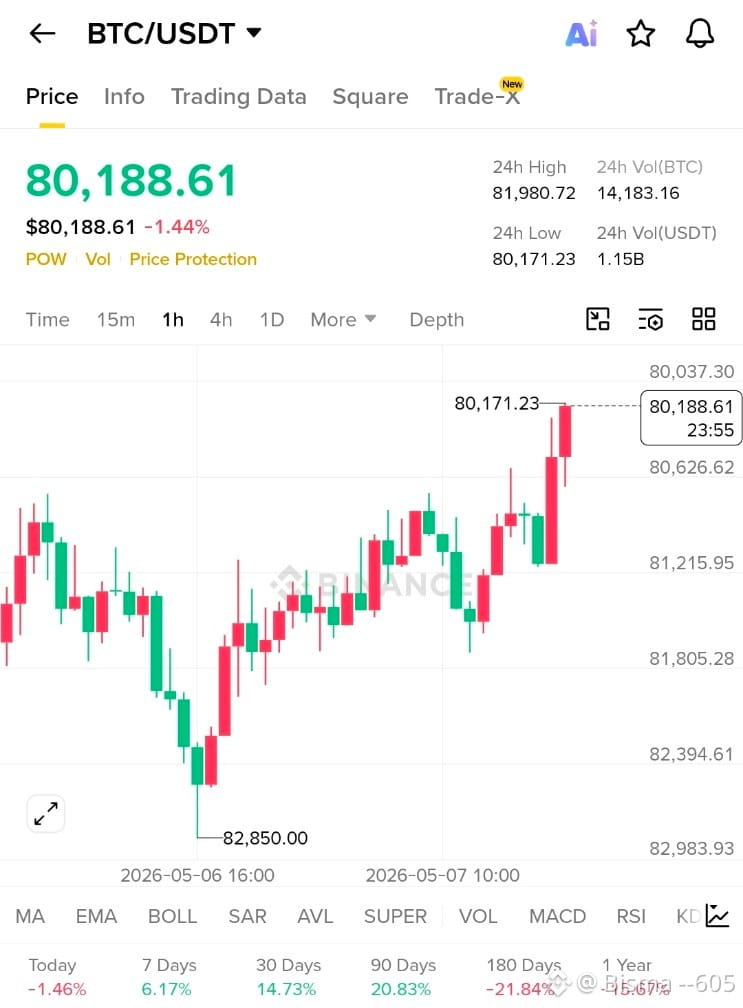
* Aktueller Preis: $80,188.61
* Wichtige Aktion: Überwachung des Unterstützungspunktes bei $80,000. Ein entscheidender Schlusskurs unter diesem Niveau könnte eine tiefere Korrektur in Richtung $78,000 oder die Liquiditätszone bei $75,000 auslösen.
📊 Technische Levels
* Sofortiger Widerstand: $82,000 – $83,000. Ein Ausbruch über diesen Bereich ist notwendig, um eine Fortsetzung des Bullenmarktes in Richtung $85,000+ zu bestätigen.
* Entscheidende Unterstützung: $80,000. Wenn dies scheitert, achte auf defensive Käufe bei $78,920 (50% Retracement) und $75,800 (100-Tage EMA).
* Indikatoren: RSI ist neutral bei ~54, was darauf hindeutet, dass es Spielraum für Bewegung in beide Richtungen gibt, ohne überdehnt zu sein.
💡 Handelssetup
* Long-Einstieg (Aggressiv): Kaufen bei einer bestätigten Erholung von $80,000 mit einem engen Stop-Loss.
* Long-Einstieg (Konservativ): Warten auf einen täglichen Schlusskurs über $82,133, um den nächsten Anstieg zu bestätigen.
* Ziele: $82,800 | $84,500 | $85,500.
* Stop Loss: Unter $79,500 (zum Schutz vor einem Durchbruch der psychologischen $80k-Marke).
Zusammenfassung: Bitcoin befindet sich in einer "sofortigen Entscheidungszone". Während institutionelle ETF-Zuflüsse unterstützend bleiben, schaffen jüngste Gewinnmitnahmen großer Halter (Wale) und hohe Leverage im Markt kurzfristige Volatilität.
Möchtest du, dass ich die neuesten Liquidationsdaten überprüfe, um zu sehen, wo der nächste "Short Squeeze" ausgelöst werden könnte?
$BTC
🚨 BTC/USDT Trading Signal
* Marktsentiment: Neutral-Bärisch (Kurzfristig) / Bullisch (Mittelfristig).
* Aktueller Preis: $80,188.61
* Wichtige Aktion: Überwachung des Unterstützungspunktes bei $80,000. Ein entscheidender Schlusskurs unter diesem Niveau könnte eine tiefere Korrektur in Richtung $78,000 oder die Liquiditätszone bei $75,000 auslösen.
📊 Technische Levels
* Sofortiger Widerstand: $82,000 – $83,000. Ein Ausbruch über diesen Bereich ist notwendig, um eine Fortsetzung des Bullenmarktes in Richtung $85,000+ zu bestätigen.
* Entscheidende Unterstützung: $80,000. Wenn dies scheitert, achte auf defensive Käufe bei $78,920 (50% Retracement) und $75,800 (100-Tage EMA).
* Indikatoren: RSI ist neutral bei ~54, was darauf hindeutet, dass es Spielraum für Bewegung in beide Richtungen gibt, ohne überdehnt zu sein.
💡 Handelssetup
* Long-Einstieg (Aggressiv): Kaufen bei einer bestätigten Erholung von $80,000 mit einem engen Stop-Loss.
* Long-Einstieg (Konservativ): Warten auf einen täglichen Schlusskurs über $82,133, um den nächsten Anstieg zu bestätigen.
* Ziele: $82,800 | $84,500 | $85,500.
* Stop Loss: Unter $79,500 (zum Schutz vor einem Durchbruch der psychologischen $80k-Marke).
Zusammenfassung: Bitcoin befindet sich in einer "sofortigen Entscheidungszone". Während institutionelle ETF-Zuflüsse unterstützend bleiben, schaffen jüngste Gewinnmitnahmen großer Halter (Wale) und hohe Leverage im Markt kurzfristige Volatilität.
Möchtest du, dass ich die neuesten Liquidationsdaten überprüfe, um zu sehen, wo der nächste "Short Squeeze" ausgelöst werden könnte?
🚨 BTC/USDT Trading Signal
* Marktsentiment: Neutral-Bärisch (Kurzfristig) / Bullisch (Mittelfristig).
* Aktueller Preis: $80,188.61
* Wichtige Aktion: Überwachung des Unterstützungspunktes bei $80,000. Ein entscheidender Schlusskurs unter diesem Niveau könnte eine tiefere Korrektur in Richtung $78,000 oder die Liquiditätszone bei $75,000 auslösen.
📊 Technische Levels
* Sofortiger Widerstand: $82,000 – $83,000. Ein Ausbruch über diesen Bereich ist notwendig, um eine Fortsetzung des Bullenmarktes in Richtung $85,000+ zu bestätigen.
* Entscheidende Unterstützung: $80,000. Wenn dies scheitert, achte auf defensive Käufe bei $78,920 (50% Retracement) und $75,800 (100-Tage EMA).
* Indikatoren: RSI ist neutral bei ~54, was darauf hindeutet, dass es Spielraum für Bewegung in beide Richtungen gibt, ohne überdehnt zu sein.
💡 Handelssetup
* Long-Einstieg (Aggressiv): Kaufen bei einer bestätigten Erholung von $80,000 mit einem engen Stop-Loss.
* Long-Einstieg (Konservativ): Warten auf einen täglichen Schlusskurs über $82,133, um den nächsten Anstieg zu bestätigen.
* Ziele: $82,800 | $84,500 | $85,500.
* Stop Loss: Unter $79,500 (zum Schutz vor einem Durchbruch der psychologischen $80k-Marke).
Zusammenfassung: Bitcoin befindet sich in einer "sofortigen Entscheidungszone". Während institutionelle ETF-Zuflüsse unterstützend bleiben, schaffen jüngste Gewinnmitnahmen großer Halter (Wale) und hohe Leverage im Markt kurzfristige Volatilität.
Möchtest du, dass ich die neuesten Liquidationsdaten überprüfe, um zu sehen, wo der nächste "Short Squeeze" ausgelöst werden könnte?
1
120
·
--

Artikel
KAVA/USDT Marktausblick: Momentum kehrt zurück, während Bullen eine wichtige Widerstandszone herausfordern$KAVA
KAVA/USDT Marktausblick: Momentum kehrt zurück, während Bullen eine wichtige Widerstandszone herausfordern
In einem Markt, in dem viele Altcoins weiterhin Schwierigkeiten haben, verlorenen Boden zurückzugewinnen, zeigt KAVA/USDT erste Anzeichen einer konstruktiven Erholung. Das Paar wird derzeit um $0.05451 gehandelt und verzeichnet einen Anstieg von +3.18% am Tag, während die Preisbewegung beginnt, sich über wichtigen Kurz- und Mittelzeitunterstützungsniveaus zu stabilisieren.
Auf den ersten Blick mag der Zug bescheiden erscheinen. Bei näherer Betrachtung des Charts deutet jedoch alles darauf hin, dass KAVA in einen technisch bedeutenden Bereich eintritt – einen, in dem die nächsten Kerzen bestimmen könnten, ob dies der Beginn einer stärkeren Aufwärtsbewegung ist oder einfach nur ein weiterer kurzlebiger Erholungsversuch.
KAVA/USDT Marktausblick: Momentum kehrt zurück, während Bullen eine wichtige Widerstandszone herausfordern
$KAVA
KAVA/USDT Marktausblick: Momentum kehrt zurück, während Bullen eine wichtige Widerstandszone herausfordern
In einem Markt, in dem viele Altcoins weiterhin Schwierigkeiten haben, verlorenen Boden zurückzugewinnen, zeigt KAVA/USDT erste Anzeichen einer konstruktiven Erholung. Das Paar wird derzeit um $0.05451 gehandelt und verzeichnet einen Anstieg von +3.18% am Tag, während die Preisbewegung beginnt, sich über wichtigen Kurz- und Mittelzeitunterstützungsniveaus zu stabilisieren.
Auf den ersten Blick mag der Zug bescheiden erscheinen. Bei näherer Betrachtung des Charts deutet jedoch alles darauf hin, dass KAVA in einen technisch bedeutenden Bereich eintritt – einen, in dem die nächsten Kerzen bestimmen könnten, ob dies der Beginn einer stärkeren Aufwärtsbewegung ist oder einfach nur ein weiterer kurzlebiger Erholungsversuch.
KAVA/USDT Marktausblick: Momentum kehrt zurück, während Bullen eine wichtige Widerstandszone herausfordern
In einem Markt, in dem viele Altcoins weiterhin Schwierigkeiten haben, verlorenen Boden zurückzugewinnen, zeigt KAVA/USDT erste Anzeichen einer konstruktiven Erholung. Das Paar wird derzeit um $0.05451 gehandelt und verzeichnet einen Anstieg von +3.18% am Tag, während die Preisbewegung beginnt, sich über wichtigen Kurz- und Mittelzeitunterstützungsniveaus zu stabilisieren.
Auf den ersten Blick mag der Zug bescheiden erscheinen. Bei näherer Betrachtung des Charts deutet jedoch alles darauf hin, dass KAVA in einen technisch bedeutenden Bereich eintritt – einen, in dem die nächsten Kerzen bestimmen könnten, ob dies der Beginn einer stärkeren Aufwärtsbewegung ist oder einfach nur ein weiterer kurzlebiger Erholungsversuch.
1
147
·
--
Artikel
AUDIO/USDT Marktupdate – Ein ruhiges Setup vor dem nächsten Schritt?$AUDIO
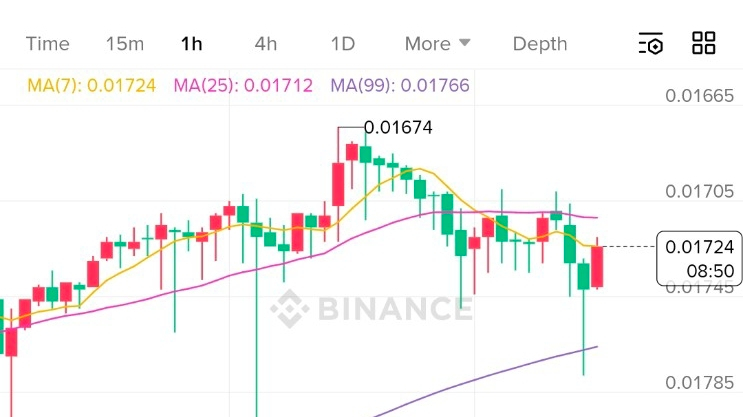
Der Markt flüstert manchmal, bevor er laut spricht, und im Moment scheint Audius (AUDIO) genau das zu tun. Der Handel liegt bei etwa $0.01724, der Token zeigt eine ruhige Oberfläche, aber unter dieser Ruhe gibt es Anzeichen dafür, dass Händler genau auf den nächsten Ausbruch oder Rückgang achten.
Im Moment schwebt AUDIO genau um seinen kurzfristigen gleitenden Durchschnitt. Der MA(7) liegt bei $0.01724, fast identisch mit dem aktuellen Preis, was uns sagt, dass der Markt in einem vorübergehenden Gleichgewicht zwischen Käufern und Verkäufern ist. In der Zwischenzeit liegt der MA(25) bei $0.01712, etwas unter dem aktuellen Preis, was darauf hindeutet, dass die kurzfristige Stimmung immer noch einen kleinen bullishen Vorteil hat.
AUDIO/USDT Marktupdate – Ein ruhiges Setup vor dem nächsten Schritt?
$AUDIO
Der Markt flüstert manchmal, bevor er laut spricht, und im Moment scheint Audius (AUDIO) genau das zu tun. Der Handel liegt bei etwa $0.01724, der Token zeigt eine ruhige Oberfläche, aber unter dieser Ruhe gibt es Anzeichen dafür, dass Händler genau auf den nächsten Ausbruch oder Rückgang achten.
Im Moment schwebt AUDIO genau um seinen kurzfristigen gleitenden Durchschnitt. Der MA(7) liegt bei $0.01724, fast identisch mit dem aktuellen Preis, was uns sagt, dass der Markt in einem vorübergehenden Gleichgewicht zwischen Käufern und Verkäufern ist. In der Zwischenzeit liegt der MA(25) bei $0.01712, etwas unter dem aktuellen Preis, was darauf hindeutet, dass die kurzfristige Stimmung immer noch einen kleinen bullishen Vorteil hat.
Der Markt flüstert manchmal, bevor er laut spricht, und im Moment scheint Audius (AUDIO) genau das zu tun. Der Handel liegt bei etwa $0.01724, der Token zeigt eine ruhige Oberfläche, aber unter dieser Ruhe gibt es Anzeichen dafür, dass Händler genau auf den nächsten Ausbruch oder Rückgang achten.
Im Moment schwebt AUDIO genau um seinen kurzfristigen gleitenden Durchschnitt. Der MA(7) liegt bei $0.01724, fast identisch mit dem aktuellen Preis, was uns sagt, dass der Markt in einem vorübergehenden Gleichgewicht zwischen Käufern und Verkäufern ist. In der Zwischenzeit liegt der MA(25) bei $0.01712, etwas unter dem aktuellen Preis, was darauf hindeutet, dass die kurzfristige Stimmung immer noch einen kleinen bullishen Vorteil hat.
1
301
·
--
Artikel
STO/USDT Analyse: Warum dieser AI-DeFi Token beginnt, Aufmerksamkeit zu erregen\u003cc-178/\u003e
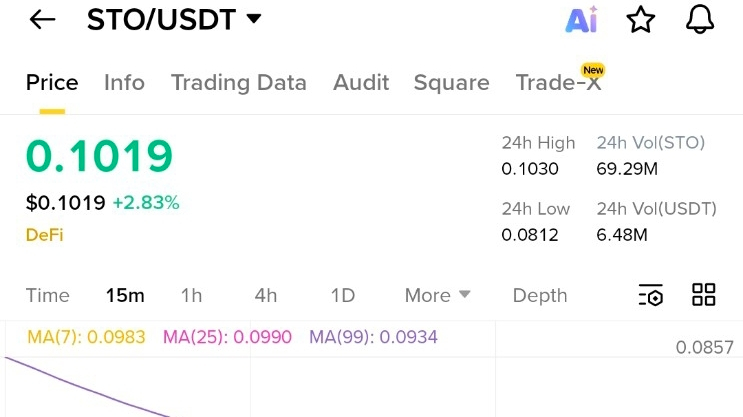
In einem Markt, der Händlern selten einen Moment zum Durchatmen lässt, baut STO/USDT leise etwas Interessantes auf.
Während die meisten Token noch um Richtung kämpfen, hält STO seine Stärke, derzeit bei etwa 0,1019 $, um 2,83 % in den letzten 24 Stunden gestiegen.
Auf den ersten Blick mag das wie eine weitere grüne Kerze aussehen – aber das Gesamtbild erzählt eine viel stärkere Geschichte.
Mehr als ein täglicher Pump – STO baut echten Schwung auf.
Was wirklich heraussticht, ist nicht nur die Bewegung von heute… es ist das, was STO im letzten Monat getan hat.
STO/USDT Analyse: Warum dieser AI-DeFi Token beginnt, Aufmerksamkeit zu erregen
\u003cc-178/\u003e
In einem Markt, der Händlern selten einen Moment zum Durchatmen lässt, baut STO/USDT leise etwas Interessantes auf.
Während die meisten Token noch um Richtung kämpfen, hält STO seine Stärke, derzeit bei etwa 0,1019 $, um 2,83 % in den letzten 24 Stunden gestiegen.
Auf den ersten Blick mag das wie eine weitere grüne Kerze aussehen – aber das Gesamtbild erzählt eine viel stärkere Geschichte.
Mehr als ein täglicher Pump – STO baut echten Schwung auf.
Was wirklich heraussticht, ist nicht nur die Bewegung von heute… es ist das, was STO im letzten Monat getan hat.
In einem Markt, der Händlern selten einen Moment zum Durchatmen lässt, baut STO/USDT leise etwas Interessantes auf.
Während die meisten Token noch um Richtung kämpfen, hält STO seine Stärke, derzeit bei etwa 0,1019 $, um 2,83 % in den letzten 24 Stunden gestiegen.
Auf den ersten Blick mag das wie eine weitere grüne Kerze aussehen – aber das Gesamtbild erzählt eine viel stärkere Geschichte.
Mehr als ein täglicher Pump – STO baut echten Schwung auf.
Was wirklich heraussticht, ist nicht nur die Bewegung von heute… es ist das, was STO im letzten Monat getan hat.
1
70
·
--
#Binance März Super Airdrop: $50,000 USDT Zuteilung, Aufgaben abschließen & Farm Punkte https://www.binance.com/activity/trading-competition/march-super-airdrop-V1?ref=1223326648
@Binance_Academy
@wine
@NewBinanacier--005
#Binance März Super Airdrop: $50,000 USDT Zuteilung, Aufgaben abschließen & Farm Punkte https://www.binance.com/activity/trading-competition/march-super-airdrop-V1?ref=1223326648
@Binance Academy
@win小酒
@帅哥-144
@Binance Academy
@win小酒
@帅哥-144
1
17

Anmelden und weiter Inhalte entdecken
Krypto-Nutzer weltweit auf Binance Square kennenlernen
⚡️ Bleib in Sachen Krypto stets am Puls.
💬 Die weltgrößte Kryptobörse vertraut darauf.
👍 Erhalte verlässliche Einblicke von verifizierten Creators.
E-Mail-Adresse/Telefonnummer
Trendthemen
SECReceivesGrayscaleLitecoinTrustETFFiling
53,585 Aufrufe
1,040 Kommentare
#secreceivesgrayscalelitecointrustetffiling
SEC ERHÄLT GRAYSCALE-LITECOIN-ETF-ANTRAG: LTC BEKOMMT NOCH EINE WEITERE AUFMERKSAMKEIT 🚨
Der Markt bewegte sich ruhig, als eine weitere Litecoin-Überschrift aufkam. Für Trader, die an der Seitenlinie zusehen, ist es genau diese Art von Einreichung, bei der man kurz innehalten und sich fragt: Wird der institutionelle Zugang gerade näher gerückt?
Der Litecoin Trust von Grayscale ist einen weiteren Schritt in Richtung einer ETF-Struktur gegangen. Die jüngsten Einreichungen stehen im Zusammenhang mit dem vorgeschlagenen Übergang sowie dem Prozess für die Notierung an der NYSE Arca. Die SEC-Dokumente zeigen frühere Verfahren rund um den Litecoin-Vorschlag von Grayscale, während die aktuellen Aktivitäten der Einreichungen die Geschichte lebendig halten.
Der entscheidende Punkt: Eine Einreichung ist keine Genehmigung. Anleger sollten den regulatorischen Fortschritt von der Erwartung einer sofortigen ETF-Auflegung trennen.
Mein Fazit: Die größere Story ist die Zugänglichkeit. Eine ETF-Struktur könnte es traditionellen Anlegern potenziell leichter machen, ein LTC-Exposure aufzubauen – für jene, die regulierte Marktprodukte bevorzugen, statt Kryptowährungen direkt zu halten.
Litecoin wird derzeit bei etwa 53,69 $ auf Binance gehandelt. Das Asset zeigt eine moderate Bewegung über 24 Stunden. Dadurch wirkt die regulatorische Entwicklung spannender, als nur einer headline-getriebenen Preisreaktion hinterherzulaufen.
Der echte Test kommt als Nächstes: regulatorische Entscheidungen, die Marktnachfrage, Liquidität und ob das institutionelle Interesse den Papierkram tatsächlich verfolgt.
Eine Einreichung kann die Tür öffnen, aber Nachfrage entscheidet darüber, was passiert, nachdem sie offen ist.
❓Glaubst du, dass ein Grayscale-Litecoin-ETF die institutionelle Nachfrage nach LTC spürbar verändern könnte?
Haftungsausschluss: Dies dient nur zu Informationszwecken und stellt keine Finanzberatung dar. Krypto-Assets sind volatil, und regulatorische Ergebnisse sind ungewiss.
#Litecoin #CryptoETF #GrowWithSAC $LTC $ETH $SOL
#SECReceivesGrayscaleLitecoinTrustETFFiling
Sienna Leo-你真棒-带我走
·2 Likes
·1.5k Aufrufe
ClarityActFacesProceduralVoteSept15
172,293 Aufrufe
1,951 Kommentare
US10YearTreasuryYieldNears5%
59,186 Aufrufe
1,064 Kommentare