

Crypto Paws
434 Beiträge
Crypto Paws
Melden
Nutzer blockieren
Exploring crypto, sharing insights, and following every market move. One paw at a time.
167 Following
1.0K+ Follower
298 Like gegeben
Beiträge
Alle
Zitierungen
Live
·
--
Teilweise korrekt
Je länger ich mir die Validatorkoönung @Dusk_Foundation angesehen habe, desto interessanter wurde eine dieser Widersprüche für mich: Das Ergebnis muss reproduzierbar sein, aber künftige Teilnehmende dürfen nicht zu früh vorhersehbar sein.
Genau dort spielt der Seed eine Rolle. Dusk aktualisiert den Seed aus der Signatur des aktuellen Blockgenerators über den vorherigen Seed, dann verwendet es diesen sich entwickelnden Wert im deterministischen Auswahlprozess. Sobald die erforderlichen Informationen vorliegen, kann jede Person das Ergebnis unabhängig reproduzieren. Aber vorher sollten künftige Auswahlen nicht einfach berechenbar sein.
Ich mag diese Unterscheidung, weil deterministisch nicht zwangsläufig vorhersagbar bedeutet.
Trotzdem lenkt es meinen Fokus auf den Seed selbst. Wenn die Auswahl des künftigen Komitees von einer nicht vorhersagbaren Eingabe abhängt, dann werden die Annahmen darüber, wie diese Eingabe erzeugt wird, Teil des Sicherheitsmodells.
Also frage ich mich: Trifft die gestaffelte (seeded) Sortition von Dusk das richtige Gleichgewicht zwischen Reproduzierbarkeit und Unvorhersagbarkeit, oder wird der Seed zu einer Sicherheitsgrenze, die genauso viel Prüfung verdient wie der Auswahlalgorithmus selbst?
$DUSK
{future}(DUSKUSDT)
$BTR
{future}(BTRUSDT)
$BTW
{future}(BTWUSDT)
@Dusk_Foundation #dusk
🧐 Was ist die zentrale Herausforderung bei Dusk’ seeded Sortition?
Je länger ich mir die Validatorkoönung @Dusk angesehen habe, desto interessanter wurde eine dieser Widersprüche für mich: Das Ergebnis muss reproduzierbar sein, aber künftige Teilnehmende dürfen nicht zu früh vorhersehbar sein.
Genau dort spielt der Seed eine Rolle. Dusk aktualisiert den Seed aus der Signatur des aktuellen Blockgenerators über den vorherigen Seed, dann verwendet es diesen sich entwickelnden Wert im deterministischen Auswahlprozess. Sobald die erforderlichen Informationen vorliegen, kann jede Person das Ergebnis unabhängig reproduzieren. Aber vorher sollten künftige Auswahlen nicht einfach berechenbar sein.
Ich mag diese Unterscheidung, weil deterministisch nicht zwangsläufig vorhersagbar bedeutet.
Trotzdem lenkt es meinen Fokus auf den Seed selbst. Wenn die Auswahl des künftigen Komitees von einer nicht vorhersagbaren Eingabe abhängt, dann werden die Annahmen darüber, wie diese Eingabe erzeugt wird, Teil des Sicherheitsmodells.
Also frage ich mich: Trifft die gestaffelte (seeded) Sortition von Dusk das richtige Gleichgewicht zwischen Reproduzierbarkeit und Unvorhersagbarkeit, oder wird der Seed zu einer Sicherheitsgrenze, die genauso viel Prüfung verdient wie der Auswahlalgorithmus selbst?
$DUSK
$BTR
$BTW
@Dusk #dusk
🧐 Was ist die zentrale Herausforderung bei Dusk’ seeded Sortition?
Genau dort spielt der Seed eine Rolle. Dusk aktualisiert den Seed aus der Signatur des aktuellen Blockgenerators über den vorherigen Seed, dann verwendet es diesen sich entwickelnden Wert im deterministischen Auswahlprozess. Sobald die erforderlichen Informationen vorliegen, kann jede Person das Ergebnis unabhängig reproduzieren. Aber vorher sollten künftige Auswahlen nicht einfach berechenbar sein.
Ich mag diese Unterscheidung, weil deterministisch nicht zwangsläufig vorhersagbar bedeutet.
Trotzdem lenkt es meinen Fokus auf den Seed selbst. Wenn die Auswahl des künftigen Komitees von einer nicht vorhersagbaren Eingabe abhängt, dann werden die Annahmen darüber, wie diese Eingabe erzeugt wird, Teil des Sicherheitsmodells.
Also frage ich mich: Trifft die gestaffelte (seeded) Sortition von Dusk das richtige Gleichgewicht zwischen Reproduzierbarkeit und Unvorhersagbarkeit, oder wird der Seed zu einer Sicherheitsgrenze, die genauso viel Prüfung verdient wie der Auswahlalgorithmus selbst?
$DUSK
$BTR
$BTW
@Dusk #dusk
🧐 Was ist die zentrale Herausforderung bei Dusk’ seeded Sortition?
🔄 Reproducible selection
0%
🎲 Unpredictable selection
34%
⚖️ Both equally
33%
🔐 Seed security
33%
3 Stimmen • Abstimmung beendet
1
1.1k
·
--
#dusk $DUSK @Dusk_Foundation
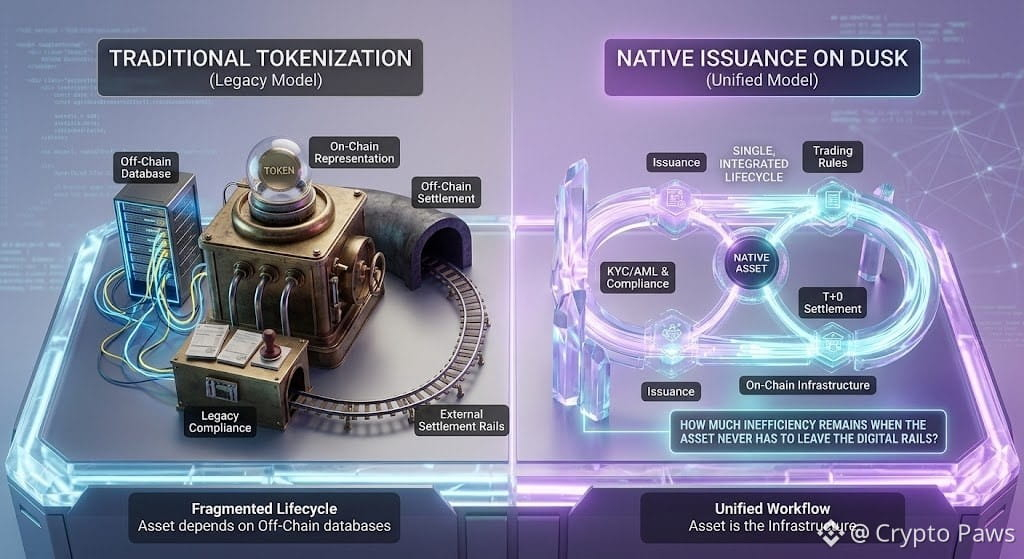
Die Tokenisierung kann ein Asset direkt auf der Onchain-Ebene platzieren, ohne dass sich dabei tatsächlich dessen finanzieller Lebenszyklus dorthin verlagert.
Diese Unterscheidung macht Dusk für mich so interessant.
Ein traditionelles tokenisiertes Asset kann weiterhin von Off-Chain-Datenbanken, Legacy-Compliance-Prozessen und externen Abwicklungsmechanismen abhängen. Die Blockchain mag das Asset abbilden, während der zugrunde liegende Arbeitsablauf weitgehend unverändert bleibt.
Die native Emission geht einen anderen Weg.
Auf Dusk wird das Asset direkt onchain erstellt. So werden Ausgabe, KYC/AML, Compliance, Handelsregeln und Abwicklung Teil desselben Lebenszyklus.
Das verändert die Rolle der Blockchain.
Anstatt nur eine weitere Schicht über der bestehenden Infrastruktur zu sein, kann sie selbst zur Infrastruktur werden – mit privatem, konformem Sekundärhandel und T+0-Abwicklung, die rund um die Uhr verfügbar sind.
Die größere Frage lautet:
Wie viel Ineffizienz bleibt bestehen, wenn das Asset die digitalen Schienen nie verlassen muss?
$ONT
{future}(ONTUSDT)
$SOLV
#dusk $DUSK @Dusk
Die Tokenisierung kann ein Asset direkt auf der Onchain-Ebene platzieren, ohne dass sich dabei tatsächlich dessen finanzieller Lebenszyklus dorthin verlagert.
Diese Unterscheidung macht Dusk für mich so interessant.
Ein traditionelles tokenisiertes Asset kann weiterhin von Off-Chain-Datenbanken, Legacy-Compliance-Prozessen und externen Abwicklungsmechanismen abhängen. Die Blockchain mag das Asset abbilden, während der zugrunde liegende Arbeitsablauf weitgehend unverändert bleibt.
Die native Emission geht einen anderen Weg.
Auf Dusk wird das Asset direkt onchain erstellt. So werden Ausgabe, KYC/AML, Compliance, Handelsregeln und Abwicklung Teil desselben Lebenszyklus.
Das verändert die Rolle der Blockchain.
Anstatt nur eine weitere Schicht über der bestehenden Infrastruktur zu sein, kann sie selbst zur Infrastruktur werden – mit privatem, konformem Sekundärhandel und T+0-Abwicklung, die rund um die Uhr verfügbar sind.
Die größere Frage lautet:
Wie viel Ineffizienz bleibt bestehen, wenn das Asset die digitalen Schienen nie verlassen muss?
$ONT
$SOLV
Die Tokenisierung kann ein Asset direkt auf der Onchain-Ebene platzieren, ohne dass sich dabei tatsächlich dessen finanzieller Lebenszyklus dorthin verlagert.
Diese Unterscheidung macht Dusk für mich so interessant.
Ein traditionelles tokenisiertes Asset kann weiterhin von Off-Chain-Datenbanken, Legacy-Compliance-Prozessen und externen Abwicklungsmechanismen abhängen. Die Blockchain mag das Asset abbilden, während der zugrunde liegende Arbeitsablauf weitgehend unverändert bleibt.
Die native Emission geht einen anderen Weg.
Auf Dusk wird das Asset direkt onchain erstellt. So werden Ausgabe, KYC/AML, Compliance, Handelsregeln und Abwicklung Teil desselben Lebenszyklus.
Das verändert die Rolle der Blockchain.
Anstatt nur eine weitere Schicht über der bestehenden Infrastruktur zu sein, kann sie selbst zur Infrastruktur werden – mit privatem, konformem Sekundärhandel und T+0-Abwicklung, die rund um die Uhr verfügbar sind.
Die größere Frage lautet:
Wie viel Ineffizienz bleibt bestehen, wenn das Asset die digitalen Schienen nie verlassen muss?
$ONT
$SOLV
1
70
·
--
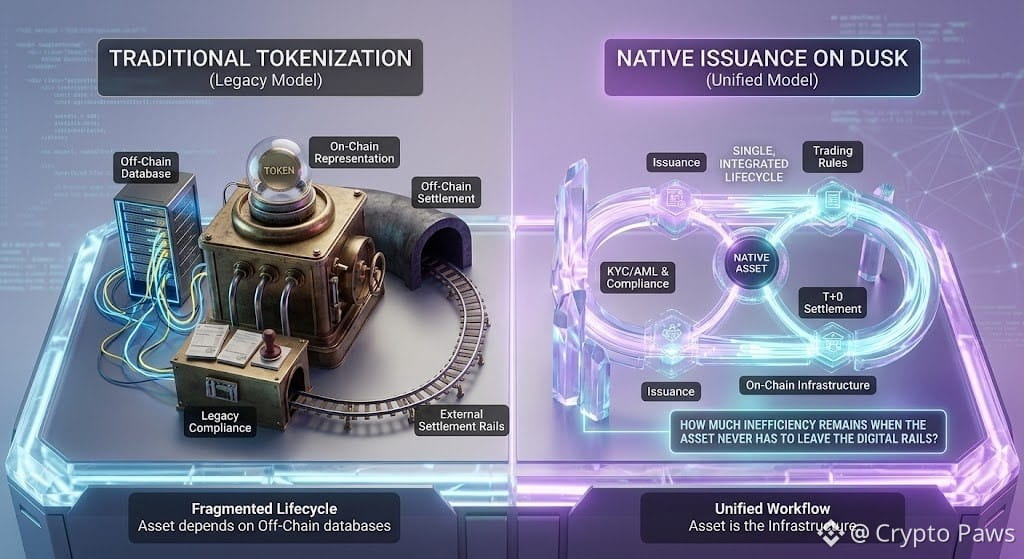
Tokenisierung kann ein Asset auf der On-Chain bringen, ohne dabei wirklich dessen finanziellen Lebenszyklus dorthin zu verlagern.
Diese Unterscheidung macht Dusk für mich interessant.
Ein traditionelles tokenisiertes Asset kann weiterhin von Off-Chain-Datenbanken, herkömmlichen Compliance-Prozessen und externen Abwicklungswegen (Settlement Rails) abhängig sein. Die Blockchain kann das Asset abbilden, während der zugrunde liegende Arbeitsablauf weitgehend unverändert bleibt.
Nativer Emission geht einen anderen Weg.
Auf Dusk wird das Asset direkt onchain erstellt, sodass Emission, KYC/AML, Compliance, Handelsregeln und Settlement Teil desselben Lebenszyklus werden.
Das verändert die Rolle der Blockchain.
Anstatt nur eine weitere Schicht über bestehender Infrastruktur zu sein, kann sie selbst zur Infrastruktur werden – mit privatem, compliantem sekundärem Handel und T+0-Abwicklung, verfügbar 24/7.
Die größere Frage ist:
Wie viel Ineffizienz bleibt bestehen, wenn das Asset die digitalen Schnittstellen niemals verlassen muss?
$SOLV
{future}(SOLVUSDT)
$ONT
{future}(ONTUSDT)
$DUSK
{future}(DUSKUSDT)
Tokenisierung kann ein Asset auf der On-Chain bringen, ohne dabei wirklich dessen finanziellen Lebenszyklus dorthin zu verlagern.
Diese Unterscheidung macht Dusk für mich interessant.
Ein traditionelles tokenisiertes Asset kann weiterhin von Off-Chain-Datenbanken, herkömmlichen Compliance-Prozessen und externen Abwicklungswegen (Settlement Rails) abhängig sein. Die Blockchain kann das Asset abbilden, während der zugrunde liegende Arbeitsablauf weitgehend unverändert bleibt.
Nativer Emission geht einen anderen Weg.
Auf Dusk wird das Asset direkt onchain erstellt, sodass Emission, KYC/AML, Compliance, Handelsregeln und Settlement Teil desselben Lebenszyklus werden.
Das verändert die Rolle der Blockchain.
Anstatt nur eine weitere Schicht über bestehender Infrastruktur zu sein, kann sie selbst zur Infrastruktur werden – mit privatem, compliantem sekundärem Handel und T+0-Abwicklung, verfügbar 24/7.
Die größere Frage ist:
Wie viel Ineffizienz bleibt bestehen, wenn das Asset die digitalen Schnittstellen niemals verlassen muss?
$SOLV
$ONT
$DUSK
Diese Unterscheidung macht Dusk für mich interessant.
Ein traditionelles tokenisiertes Asset kann weiterhin von Off-Chain-Datenbanken, herkömmlichen Compliance-Prozessen und externen Abwicklungswegen (Settlement Rails) abhängig sein. Die Blockchain kann das Asset abbilden, während der zugrunde liegende Arbeitsablauf weitgehend unverändert bleibt.
Nativer Emission geht einen anderen Weg.
Auf Dusk wird das Asset direkt onchain erstellt, sodass Emission, KYC/AML, Compliance, Handelsregeln und Settlement Teil desselben Lebenszyklus werden.
Das verändert die Rolle der Blockchain.
Anstatt nur eine weitere Schicht über bestehender Infrastruktur zu sein, kann sie selbst zur Infrastruktur werden – mit privatem, compliantem sekundärem Handel und T+0-Abwicklung, verfügbar 24/7.
Die größere Frage ist:
Wie viel Ineffizienz bleibt bestehen, wenn das Asset die digitalen Schnittstellen niemals verlassen muss?
$SOLV
$ONT
$DUSK
140
·
--
Ich dachte früher, die Transaktionsfinalität sei im Grunde binär: bestätigt oder nicht bestätigt.
Die Betrachtung von @Dusk_Foundation hat mich diese Annahme überdenken lassen.
Eine Transaktion kann vier unterschiedliche Zustände durchlaufen: Akzeptiert, Bestätigt, Stabil und schließlich Final.
Akzeptiert bedeutet, dass sie in die Kette eingetreten ist. Bestätigt bedeutet, dass sich mehr Blöcke um sie herum aufgebaut haben. Stabil signalisiert ein tieferes Vertrauen in die Abwicklung. Final ist der Punkt, an dem kryptografische Finalität erreicht ist und eine Umkehr nicht mehr möglich ist.
Was ich daran interessant finde, ist die Information, die diese Entwicklung den Nutzern gibt.
Anstatt jede Transaktion als gleich zuverlässig abgerechnet zu behandeln, zeigt Dusk, wie sich das Vertrauen im Laufe der Zeit entwickelt.
Dadurch wird „Finalität“ weniger wie ein Schalter und eher wie eine messbare Reise.
Die Frage, die ich stellen würde, ist:
Könnte dieses gestufte Modell das Abwicklungsrisiko in realen Finanzanwendungen leichter verständlich machen?
$PROM
{future}(PROMUSDT)
$CATI
{future}(CATIUSDT)
$DUSK
{future}(DUSKUSDT)
#dusk @Dusk_Foundation
Was ist am wichtigsten, wenn man die Finalität einer Transaktion beurteilt?
Ich dachte früher, die Transaktionsfinalität sei im Grunde binär: bestätigt oder nicht bestätigt.
Die Betrachtung von @Dusk hat mich diese Annahme überdenken lassen.
Eine Transaktion kann vier unterschiedliche Zustände durchlaufen: Akzeptiert, Bestätigt, Stabil und schließlich Final.
Akzeptiert bedeutet, dass sie in die Kette eingetreten ist. Bestätigt bedeutet, dass sich mehr Blöcke um sie herum aufgebaut haben. Stabil signalisiert ein tieferes Vertrauen in die Abwicklung. Final ist der Punkt, an dem kryptografische Finalität erreicht ist und eine Umkehr nicht mehr möglich ist.
Was ich daran interessant finde, ist die Information, die diese Entwicklung den Nutzern gibt.
Anstatt jede Transaktion als gleich zuverlässig abgerechnet zu behandeln, zeigt Dusk, wie sich das Vertrauen im Laufe der Zeit entwickelt.
Dadurch wird „Finalität“ weniger wie ein Schalter und eher wie eine messbare Reise.
Die Frage, die ich stellen würde, ist:
Könnte dieses gestufte Modell das Abwicklungsrisiko in realen Finanzanwendungen leichter verständlich machen?
$PROM
$CATI
$DUSK
#dusk @Dusk
Was ist am wichtigsten, wenn man die Finalität einer Transaktion beurteilt?
Die Betrachtung von @Dusk hat mich diese Annahme überdenken lassen.
Eine Transaktion kann vier unterschiedliche Zustände durchlaufen: Akzeptiert, Bestätigt, Stabil und schließlich Final.
Akzeptiert bedeutet, dass sie in die Kette eingetreten ist. Bestätigt bedeutet, dass sich mehr Blöcke um sie herum aufgebaut haben. Stabil signalisiert ein tieferes Vertrauen in die Abwicklung. Final ist der Punkt, an dem kryptografische Finalität erreicht ist und eine Umkehr nicht mehr möglich ist.
Was ich daran interessant finde, ist die Information, die diese Entwicklung den Nutzern gibt.
Anstatt jede Transaktion als gleich zuverlässig abgerechnet zu behandeln, zeigt Dusk, wie sich das Vertrauen im Laufe der Zeit entwickelt.
Dadurch wird „Finalität“ weniger wie ein Schalter und eher wie eine messbare Reise.
Die Frage, die ich stellen würde, ist:
Könnte dieses gestufte Modell das Abwicklungsrisiko in realen Finanzanwendungen leichter verständlich machen?
$PROM
$CATI
$DUSK
#dusk @Dusk
Was ist am wichtigsten, wenn man die Finalität einer Transaktion beurteilt?
⚡ Fast confirmation
0%
🛡️ Deep settlement confidence
0%
🔒 Irreversibility
0%
📊 Clear finality stages
0%
0 Stimmen • Abstimmung beendet
1
108
·
--
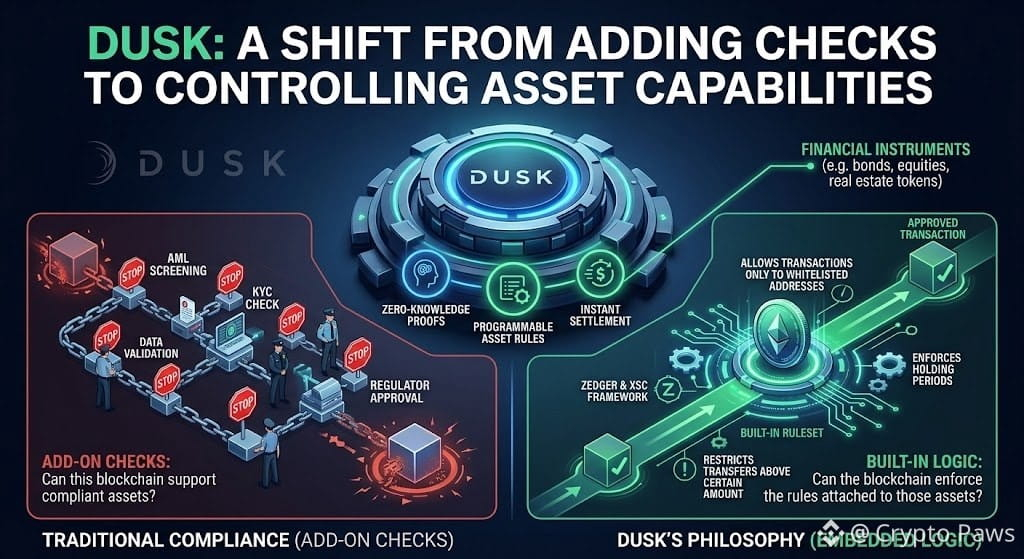
Eine Sache, die ich leicht übersehen kann, wenn es um @Dusk_Foundation geht, ist, dass seine Compliance-Story nicht wirklich darum geht, einfach mehr Prüfungen hinzuzufügen.
Es geht darum, zu kontrollieren, was einem Asset erlaubt ist zu tun.
Das ist eine sehr unterschiedliche Design-Philosophie.
Mit Zedger und dem XSC-Framework nähert sich Dusk regulierten Assets auf Transaktions- und Vertragsebene—also dort, wo Berechtigungen, geeignete Teilnehmer und spezifische Asset-Aktionen Teil der Logik des Systems werden können.
Das verändert die Frage von:
„Kann diese Blockchain konforme Assets unterstützen?“
den zu:
„Kann die Blockchain die Regeln durchsetzen, die an diese Assets geknüpft sind?“
Diese Unterscheidung wird zunehmend wichtiger, wenn das Ziel nicht nur kryptonative Tokens sind, sondern regulierte Finanzinstrumente.
Ich denke, das ist eine der eher unterschätzten Ideen hinter @Dusk_Foundation
#dusk
$LINK
{future}(LINKUSDT)
$ADA
{future}(ADAUSDT)
$DUSK
{future}(DUSKUSDT)
Eine Sache, die ich leicht übersehen kann, wenn es um @Dusk geht, ist, dass seine Compliance-Story nicht wirklich darum geht, einfach mehr Prüfungen hinzuzufügen.
Es geht darum, zu kontrollieren, was einem Asset erlaubt ist zu tun.
Das ist eine sehr unterschiedliche Design-Philosophie.
Mit Zedger und dem XSC-Framework nähert sich Dusk regulierten Assets auf Transaktions- und Vertragsebene—also dort, wo Berechtigungen, geeignete Teilnehmer und spezifische Asset-Aktionen Teil der Logik des Systems werden können.
Das verändert die Frage von:
„Kann diese Blockchain konforme Assets unterstützen?“
den zu:
„Kann die Blockchain die Regeln durchsetzen, die an diese Assets geknüpft sind?“
Diese Unterscheidung wird zunehmend wichtiger, wenn das Ziel nicht nur kryptonative Tokens sind, sondern regulierte Finanzinstrumente.
Ich denke, das ist eine der eher unterschätzten Ideen hinter @Dusk
#dusk
$LINK
$ADA
$DUSK
Es geht darum, zu kontrollieren, was einem Asset erlaubt ist zu tun.
Das ist eine sehr unterschiedliche Design-Philosophie.
Mit Zedger und dem XSC-Framework nähert sich Dusk regulierten Assets auf Transaktions- und Vertragsebene—also dort, wo Berechtigungen, geeignete Teilnehmer und spezifische Asset-Aktionen Teil der Logik des Systems werden können.
Das verändert die Frage von:
„Kann diese Blockchain konforme Assets unterstützen?“
den zu:
„Kann die Blockchain die Regeln durchsetzen, die an diese Assets geknüpft sind?“
Diese Unterscheidung wird zunehmend wichtiger, wenn das Ziel nicht nur kryptonative Tokens sind, sondern regulierte Finanzinstrumente.
Ich denke, das ist eine der eher unterschätzten Ideen hinter @Dusk
#dusk
$LINK
$ADA
$DUSK
1
129
·
--
Was mich an zustandsbasiertem Konsens wirklich fesselt, ist nicht das Kapital, das gebunden wird – sondern wie dieses Kapital still und leise mitbestimmen kann, wer den größten Einfluss hat.
Wenn wirtschaftliches Engagement Teil der Konsenssicherheit wird, haben die Teilnehmenden einen klaren Grund, das Netzwerk zu schützen. Ihr Einsatz gibt ihnen etwas Sinnvolles zu verlieren, was ehrliches Verhalten zu einer rationaleren Wahl machen kann.
Aber Sicherheit und Einfluss sind nicht exakt dasselbe.
Wenn eine kleine Gruppe einen großen Anteil am gesamten Einsatz kontrolliert, kann ihre wirtschaftliche Position sich in größere Teilnahmemöglichkeiten und einen stärkeren Einfluss auf den Konsens übersetzen.
Das stellt eine tiefere Design-Herausforderung dar: Ein Netzwerk kann technisch sicher bleiben, während es wirtschaftlich unausgewogener wird.
Für mich ist das eigentliche Maß für Dezentralisierung nicht nur, wie viele Teilnehmende es gibt, sondern ob eine bedeutungsvolle Konsenswirkung breit verteilt bleibt.
$MOVE
{future}(MOVEUSDT)
$POL
{future}(POLUSDT)
$DUSK
{future}(DUSKUSDT)
#dusk
@Dusk_Foundation
Wenn Einsatz den Teilnehmenden mehr Einfluss im Konsens gibt, was sollte dann am meisten zählen?
Was mich an zustandsbasiertem Konsens wirklich fesselt, ist nicht das Kapital, das gebunden wird – sondern wie dieses Kapital still und leise mitbestimmen kann, wer den größten Einfluss hat.
Wenn wirtschaftliches Engagement Teil der Konsenssicherheit wird, haben die Teilnehmenden einen klaren Grund, das Netzwerk zu schützen. Ihr Einsatz gibt ihnen etwas Sinnvolles zu verlieren, was ehrliches Verhalten zu einer rationaleren Wahl machen kann.
Aber Sicherheit und Einfluss sind nicht exakt dasselbe.
Wenn eine kleine Gruppe einen großen Anteil am gesamten Einsatz kontrolliert, kann ihre wirtschaftliche Position sich in größere Teilnahmemöglichkeiten und einen stärkeren Einfluss auf den Konsens übersetzen.
Das stellt eine tiefere Design-Herausforderung dar: Ein Netzwerk kann technisch sicher bleiben, während es wirtschaftlich unausgewogener wird.
Für mich ist das eigentliche Maß für Dezentralisierung nicht nur, wie viele Teilnehmende es gibt, sondern ob eine bedeutungsvolle Konsenswirkung breit verteilt bleibt.
$MOVE
$POL
$DUSK
#dusk
@Dusk
Wenn Einsatz den Teilnehmenden mehr Einfluss im Konsens gibt, was sollte dann am meisten zählen?
Wenn wirtschaftliches Engagement Teil der Konsenssicherheit wird, haben die Teilnehmenden einen klaren Grund, das Netzwerk zu schützen. Ihr Einsatz gibt ihnen etwas Sinnvolles zu verlieren, was ehrliches Verhalten zu einer rationaleren Wahl machen kann.
Aber Sicherheit und Einfluss sind nicht exakt dasselbe.
Wenn eine kleine Gruppe einen großen Anteil am gesamten Einsatz kontrolliert, kann ihre wirtschaftliche Position sich in größere Teilnahmemöglichkeiten und einen stärkeren Einfluss auf den Konsens übersetzen.
Das stellt eine tiefere Design-Herausforderung dar: Ein Netzwerk kann technisch sicher bleiben, während es wirtschaftlich unausgewogener wird.
Für mich ist das eigentliche Maß für Dezentralisierung nicht nur, wie viele Teilnehmende es gibt, sondern ob eine bedeutungsvolle Konsenswirkung breit verteilt bleibt.
$MOVE
$POL
$DUSK
#dusk
@Dusk
Wenn Einsatz den Teilnehmenden mehr Einfluss im Konsens gibt, was sollte dann am meisten zählen?
Maximum network security
0%
Wider stake distribution
0%
Equal participation opportunty
0%
Strong limits on concentration
0%
0 Stimmen • Abstimmung beendet
1
155
·
--
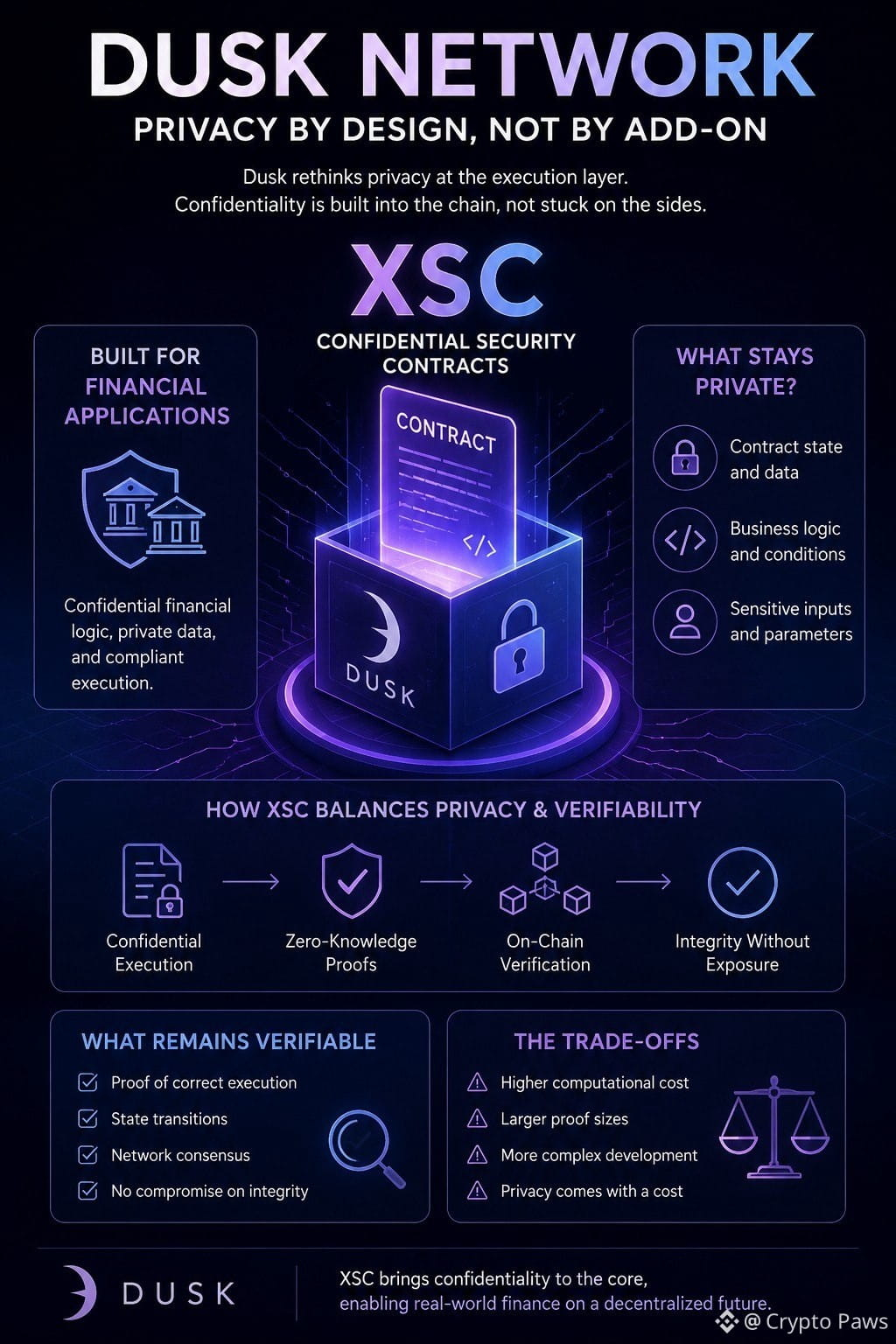
Als ich Dusk zum ersten Mal ansah, erkannte ich eine weitere, datenschutzorientierte Layer-1. Doch ihre Architektur ließ mich diese Sicht überdenken.
Die herausragende Idee ist XSC – Confidential Security Contracts.
Statt Datenschutz als etwas zu behandeln, das um Smart Contracts herum „draufgesetzt“ wird, bringt Dusk Vertraulichkeit näher an die Ausführungsschicht. Das ist wichtig für Finanzanwendungen, bei denen sensible Informationen nicht nur Salden oder Transaktionen umfassen können, sondern auch die Logik und Bedingungen, die ausgeführt werden.
Das schafft eine zentrale Herausforderung: Wie kann eine Blockchain die finanzielle Logik vertraulich halten, während das Netzwerk dennoch verifizieren kann, dass die Ausführung korrekt ist?
Traditionelle Blockchains setzen stark auf Transparenz. Vertrauliche Ausführung verfolgt den entgegengesetzten Ansatz, indem sie einschränkt, was öffentlich sichtbar wird. Die spannende Aufgabe besteht darin, ein Gleichgewicht zwischen diesen beiden Zielen zu finden.
Darum denke ich, dass XSC mehr Aufmerksamkeit verdient. Wenn sensible Eingaben und Vertragslogik geschützt bleiben können, während das Netzwerk weiterhin eine gültige Ausführung überprüfen kann, wird Privatsphäre mehr als nur eine Funktion.
Sie wird Teil der Infrastruktur selbst.
Für mich macht das Dusk interessanter zu untersuchen – nicht einfach als Privacy-Chain, sondern als Versuch, neu zu denken, wie vertrauliche Finanzanwendungen auf einer öffentlichen Blockchain funktionieren können.
$TUT
{future}(TUTUSDT)
$ZEC
{future}(ZECUSDT)
$DUSK #dusk @Dusk_Foundation
Als ich Dusk zum ersten Mal ansah, erkannte ich eine weitere, datenschutzorientierte Layer-1. Doch ihre Architektur ließ mich diese Sicht überdenken.
Die herausragende Idee ist XSC – Confidential Security Contracts.
Statt Datenschutz als etwas zu behandeln, das um Smart Contracts herum „draufgesetzt“ wird, bringt Dusk Vertraulichkeit näher an die Ausführungsschicht. Das ist wichtig für Finanzanwendungen, bei denen sensible Informationen nicht nur Salden oder Transaktionen umfassen können, sondern auch die Logik und Bedingungen, die ausgeführt werden.
Das schafft eine zentrale Herausforderung: Wie kann eine Blockchain die finanzielle Logik vertraulich halten, während das Netzwerk dennoch verifizieren kann, dass die Ausführung korrekt ist?
Traditionelle Blockchains setzen stark auf Transparenz. Vertrauliche Ausführung verfolgt den entgegengesetzten Ansatz, indem sie einschränkt, was öffentlich sichtbar wird. Die spannende Aufgabe besteht darin, ein Gleichgewicht zwischen diesen beiden Zielen zu finden.
Darum denke ich, dass XSC mehr Aufmerksamkeit verdient. Wenn sensible Eingaben und Vertragslogik geschützt bleiben können, während das Netzwerk weiterhin eine gültige Ausführung überprüfen kann, wird Privatsphäre mehr als nur eine Funktion.
Sie wird Teil der Infrastruktur selbst.
Für mich macht das Dusk interessanter zu untersuchen – nicht einfach als Privacy-Chain, sondern als Versuch, neu zu denken, wie vertrauliche Finanzanwendungen auf einer öffentlichen Blockchain funktionieren können.
$TUT
$ZEC
$DUSK #dusk @Dusk
Die herausragende Idee ist XSC – Confidential Security Contracts.
Statt Datenschutz als etwas zu behandeln, das um Smart Contracts herum „draufgesetzt“ wird, bringt Dusk Vertraulichkeit näher an die Ausführungsschicht. Das ist wichtig für Finanzanwendungen, bei denen sensible Informationen nicht nur Salden oder Transaktionen umfassen können, sondern auch die Logik und Bedingungen, die ausgeführt werden.
Das schafft eine zentrale Herausforderung: Wie kann eine Blockchain die finanzielle Logik vertraulich halten, während das Netzwerk dennoch verifizieren kann, dass die Ausführung korrekt ist?
Traditionelle Blockchains setzen stark auf Transparenz. Vertrauliche Ausführung verfolgt den entgegengesetzten Ansatz, indem sie einschränkt, was öffentlich sichtbar wird. Die spannende Aufgabe besteht darin, ein Gleichgewicht zwischen diesen beiden Zielen zu finden.
Darum denke ich, dass XSC mehr Aufmerksamkeit verdient. Wenn sensible Eingaben und Vertragslogik geschützt bleiben können, während das Netzwerk weiterhin eine gültige Ausführung überprüfen kann, wird Privatsphäre mehr als nur eine Funktion.
Sie wird Teil der Infrastruktur selbst.
Für mich macht das Dusk interessanter zu untersuchen – nicht einfach als Privacy-Chain, sondern als Versuch, neu zu denken, wie vertrauliche Finanzanwendungen auf einer öffentlichen Blockchain funktionieren können.
$TUT
$ZEC
$DUSK #dusk @Dusk
63
2
2.8k
·
--
Was, wenn Privatsphäre nicht darum geht, zu verschwinden, sondern darum zu entscheiden, was Menschen sehen dürfen?
Das ist der Teil von @Dusk_Foundation , der mich interessiert. Mit DUSK kann ein Profil sowohl mit einer öffentlichen als auch mit einer geschützten Adresse verbunden werden und so unterschiedliche Wege für unterschiedliche Situationen schaffen.
Manche Aktivitäten erfordern möglicherweise Transparenz. Andere Aktivitäten verdienen möglicherweise Privatsphäre.
Anstatt eine einzige Entscheidung für alles durchzusetzen, gibt Dusk dem Nutzer mehr Kontrolle darüber, wie seine Aktivitäten offengelegt werden.
Das fühlt sich näher an dem an, wie echtes finanzielles Leben tatsächlich funktioniert.
Würdest du eine Adresse für alles bevorzugen oder separate öffentliche und private Bereiche – je nach Situation?
$DUSK #dusk
$NEIRO
{future}(NEIROUSDT)
$ENA
{future}(ENAUSDT)
Wenn @Dusk_Foundation dir ermöglicht, zwischen öffentlicher und geschützter Aktivität zu entscheiden: Was wäre für dich am wichtigsten?
Was, wenn Privatsphäre nicht darum geht, zu verschwinden, sondern darum zu entscheiden, was Menschen sehen dürfen?
Das ist der Teil von @Dusk , der mich interessiert. Mit DUSK kann ein Profil sowohl mit einer öffentlichen als auch mit einer geschützten Adresse verbunden werden und so unterschiedliche Wege für unterschiedliche Situationen schaffen.
Manche Aktivitäten erfordern möglicherweise Transparenz. Andere Aktivitäten verdienen möglicherweise Privatsphäre.
Anstatt eine einzige Entscheidung für alles durchzusetzen, gibt Dusk dem Nutzer mehr Kontrolle darüber, wie seine Aktivitäten offengelegt werden.
Das fühlt sich näher an dem an, wie echtes finanzielles Leben tatsächlich funktioniert.
Würdest du eine Adresse für alles bevorzugen oder separate öffentliche und private Bereiche – je nach Situation?
$DUSK #dusk
$NEIRO
$ENA
Wenn @Dusk dir ermöglicht, zwischen öffentlicher und geschützter Aktivität zu entscheiden: Was wäre für dich am wichtigsten?
Das ist der Teil von @Dusk , der mich interessiert. Mit DUSK kann ein Profil sowohl mit einer öffentlichen als auch mit einer geschützten Adresse verbunden werden und so unterschiedliche Wege für unterschiedliche Situationen schaffen.
Manche Aktivitäten erfordern möglicherweise Transparenz. Andere Aktivitäten verdienen möglicherweise Privatsphäre.
Anstatt eine einzige Entscheidung für alles durchzusetzen, gibt Dusk dem Nutzer mehr Kontrolle darüber, wie seine Aktivitäten offengelegt werden.
Das fühlt sich näher an dem an, wie echtes finanzielles Leben tatsächlich funktioniert.
Würdest du eine Adresse für alles bevorzugen oder separate öffentliche und private Bereiche – je nach Situation?
$DUSK #dusk
$NEIRO
$ENA
Wenn @Dusk dir ermöglicht, zwischen öffentlicher und geschützter Aktivität zu entscheiden: Was wäre für dich am wichtigsten?
Maximum transparency
63%
Maximum privacy
25%
Switch based on context
0%
Keep both options available
12%
8 Stimmen • Abstimmung beendet
43
4
2.9k
·
--
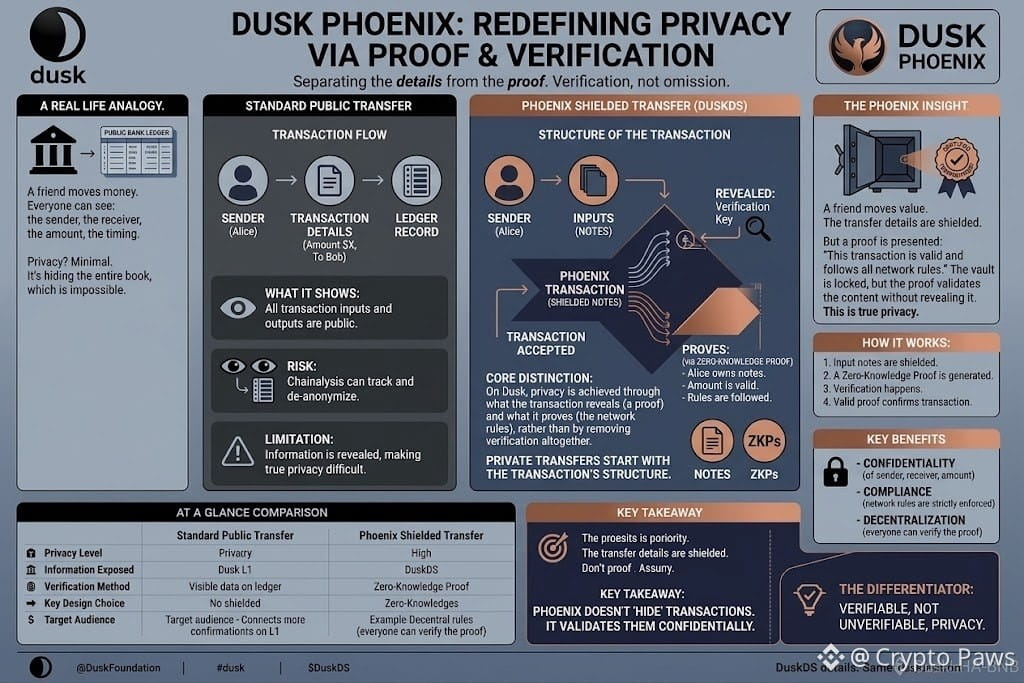
Der Teil von Phoenix, der meine Denkweise über private Überweisungen verändert hat, ist, dass die Privatsphäre bereits in der Struktur der Transaktion selbst beginnt.
Nach dem Lesen der Dusk-Dokumentation verstehe ich Phoenix als ein verschlüsseltes Transfermodell auf DuskDS, das auf Notizen und Zero-Knowledge-Beweisen aufbaut. Statt die üblichen Übermittlungsdetails offenzulegen, kann die Transaktion beweisen, dass die Überweisung gültig ist, ohne die zugrunde liegenden Informationen öffentlich preiszugeben.
Was ich dabei wichtig finde, ist, dass es nicht einfach nur darum geht, „eine Transaktion zu verbergen“. Das Netzwerk muss weiterhin überprüfen, dass die Regeln eingehalten werden. Phoenix trennt die Informationen, die vertraulich bleiben müssen, von dem Beweis, der es dem Netzwerk ermöglicht, die Transaktion zu validieren.
Dieser Unterschied ist die zentrale Erkenntnis, die ich mitgenommen habe: Auf DuskDS wird Privatsphäre dadurch erreicht, was die Transaktion offenlegt und was sie beweist, statt dadurch, dass die Verifikation insgesamt entfernt wird.
Für mich macht das Phoenix zu einem besonders interessanten Bestandteil des Transaktionsdesigns von Dusk.
$DUSK #dusk @Dusk_Foundation
$RE
{future}(REUSDT)
$TREE
{future}(TREEUSDT)
#zec
#WLD
#MUBARAK
Der Teil von Phoenix, der meine Denkweise über private Überweisungen verändert hat, ist, dass die Privatsphäre bereits in der Struktur der Transaktion selbst beginnt.
Nach dem Lesen der Dusk-Dokumentation verstehe ich Phoenix als ein verschlüsseltes Transfermodell auf DuskDS, das auf Notizen und Zero-Knowledge-Beweisen aufbaut. Statt die üblichen Übermittlungsdetails offenzulegen, kann die Transaktion beweisen, dass die Überweisung gültig ist, ohne die zugrunde liegenden Informationen öffentlich preiszugeben.
Was ich dabei wichtig finde, ist, dass es nicht einfach nur darum geht, „eine Transaktion zu verbergen“. Das Netzwerk muss weiterhin überprüfen, dass die Regeln eingehalten werden. Phoenix trennt die Informationen, die vertraulich bleiben müssen, von dem Beweis, der es dem Netzwerk ermöglicht, die Transaktion zu validieren.
Dieser Unterschied ist die zentrale Erkenntnis, die ich mitgenommen habe: Auf DuskDS wird Privatsphäre dadurch erreicht, was die Transaktion offenlegt und was sie beweist, statt dadurch, dass die Verifikation insgesamt entfernt wird.
Für mich macht das Phoenix zu einem besonders interessanten Bestandteil des Transaktionsdesigns von Dusk.
$DUSK #dusk @Dusk
$RE
$TREE
#zec
#WLD
#MUBARAK
Nach dem Lesen der Dusk-Dokumentation verstehe ich Phoenix als ein verschlüsseltes Transfermodell auf DuskDS, das auf Notizen und Zero-Knowledge-Beweisen aufbaut. Statt die üblichen Übermittlungsdetails offenzulegen, kann die Transaktion beweisen, dass die Überweisung gültig ist, ohne die zugrunde liegenden Informationen öffentlich preiszugeben.
Was ich dabei wichtig finde, ist, dass es nicht einfach nur darum geht, „eine Transaktion zu verbergen“. Das Netzwerk muss weiterhin überprüfen, dass die Regeln eingehalten werden. Phoenix trennt die Informationen, die vertraulich bleiben müssen, von dem Beweis, der es dem Netzwerk ermöglicht, die Transaktion zu validieren.
Dieser Unterschied ist die zentrale Erkenntnis, die ich mitgenommen habe: Auf DuskDS wird Privatsphäre dadurch erreicht, was die Transaktion offenlegt und was sie beweist, statt dadurch, dass die Verifikation insgesamt entfernt wird.
Für mich macht das Phoenix zu einem besonders interessanten Bestandteil des Transaktionsdesigns von Dusk.
$DUSK #dusk @Dusk
$RE
$TREE
#zec
#WLD
#MUBARAK
54
3
2k
·
--
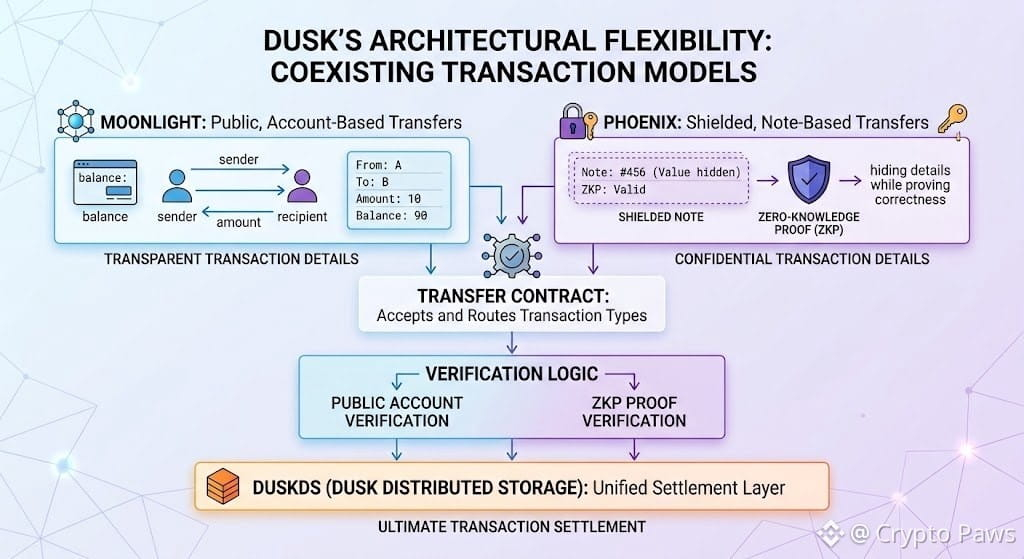
Ich dachte früher, dass Transaktionsprivatsphäre hauptsächlich darin besteht, zwischen „öffentlich“ und „privat“ zu wählen. Nach der Lektüre der Dusk-Dokumentation sehe ich Phoenix und Moonlight anders: Dabei handelt es sich um zwei Transaktionsmodelle, die für unterschiedliche Informationsanforderungen entwickelt wurden, die jedoch dieselbe Abrechnungsebene gemeinsam nutzen.
$DUSK #dusk @Dusk_Foundation
Moonlight verwendet öffentliche, kontobasierte Überweisungen, bei denen Guthaben, Absender, Empfänger und Betrag sichtbar sind. Phoenix verfolgt den entgegengesetzten Ansatz mit geschützten, note-basierten Transfers und Zero-Knowledge-Beweisen: Es werden Transaktionsdetails verborgen, während dennoch die Korrektheit nachgewiesen wird.
Am interessantesten finde ich, dass Dusk kein einziges Modell für jeden Anwendungsfall erzwingt. Der Transfer Contract kann beide Transaktionstypen akzeptieren und sie über die passende Verifikationslogik weiterleiten, wobei sich beide letztlich auf DuskDS abwickeln.
Für mich liegt die übersehene Erkenntnis in der architektonischen Flexibilität: Transparenz und Vertraulichkeit können auf Ebene der Transaktionsmodelle koexistieren, ohne separate Abrechnungssysteme zu erfordern.
Das macht das Design von @Dusk_Foundation nuancierter, als es einfach als „Privacy-Blockchain“ zu bezeichnen.
#DASH
#WLD
#VIXFallsTo2026Low
#EthereumFoundationLaunchesGlamsterdamTestnet $DASH
{future}(DASHUSDT)
$WLD
{future}(WLDUSDT)
Ich dachte früher, dass Transaktionsprivatsphäre hauptsächlich darin besteht, zwischen „öffentlich“ und „privat“ zu wählen. Nach der Lektüre der Dusk-Dokumentation sehe ich Phoenix und Moonlight anders: Dabei handelt es sich um zwei Transaktionsmodelle, die für unterschiedliche Informationsanforderungen entwickelt wurden, die jedoch dieselbe Abrechnungsebene gemeinsam nutzen.
$DUSK #dusk @Dusk
Moonlight verwendet öffentliche, kontobasierte Überweisungen, bei denen Guthaben, Absender, Empfänger und Betrag sichtbar sind. Phoenix verfolgt den entgegengesetzten Ansatz mit geschützten, note-basierten Transfers und Zero-Knowledge-Beweisen: Es werden Transaktionsdetails verborgen, während dennoch die Korrektheit nachgewiesen wird.
Am interessantesten finde ich, dass Dusk kein einziges Modell für jeden Anwendungsfall erzwingt. Der Transfer Contract kann beide Transaktionstypen akzeptieren und sie über die passende Verifikationslogik weiterleiten, wobei sich beide letztlich auf DuskDS abwickeln.
Für mich liegt die übersehene Erkenntnis in der architektonischen Flexibilität: Transparenz und Vertraulichkeit können auf Ebene der Transaktionsmodelle koexistieren, ohne separate Abrechnungssysteme zu erfordern.
Das macht das Design von @Dusk nuancierter, als es einfach als „Privacy-Blockchain“ zu bezeichnen.
#DASH
#WLD
#VIXFallsTo2026Low
#EthereumFoundationLaunchesGlamsterdamTestnet $DASH
$WLD
$DUSK #dusk @Dusk
Moonlight verwendet öffentliche, kontobasierte Überweisungen, bei denen Guthaben, Absender, Empfänger und Betrag sichtbar sind. Phoenix verfolgt den entgegengesetzten Ansatz mit geschützten, note-basierten Transfers und Zero-Knowledge-Beweisen: Es werden Transaktionsdetails verborgen, während dennoch die Korrektheit nachgewiesen wird.
Am interessantesten finde ich, dass Dusk kein einziges Modell für jeden Anwendungsfall erzwingt. Der Transfer Contract kann beide Transaktionstypen akzeptieren und sie über die passende Verifikationslogik weiterleiten, wobei sich beide letztlich auf DuskDS abwickeln.
Für mich liegt die übersehene Erkenntnis in der architektonischen Flexibilität: Transparenz und Vertraulichkeit können auf Ebene der Transaktionsmodelle koexistieren, ohne separate Abrechnungssysteme zu erfordern.
Das macht das Design von @Dusk nuancierter, als es einfach als „Privacy-Blockchain“ zu bezeichnen.
#DASH
#WLD
#VIXFallsTo2026Low
#EthereumFoundationLaunchesGlamsterdamTestnet $DASH
$WLD
74
2
110
·
--
#dusk $DUSK @Dusk_Foundation
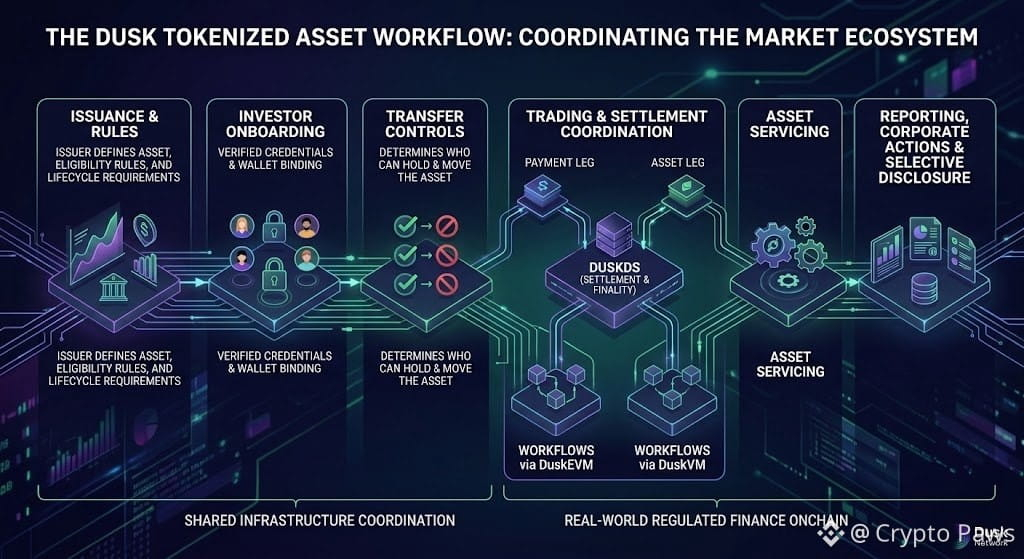
Früher dachte ich, dass die Tokenisierung eines Finanzassets vor allem darum geht, Eigentum On-Chain abzubilden. Nach dem Lesen der Markt-Infrastruktur-Dokumentation von Dusk sehe ich das schwierigere Problem anders: Das Asset muss sich durch einen vollständigen Workflow bewegen, nicht nur durch eine einzelne Transaktion.
Am @Dusk_Foundation kann diese Reise damit beginnen, dass ein Emittent das Asset definiert, Regeln zur Teilnahme festlegt und die Anforderungen an den Lebenszyklus bestimmt. Von dort aus können Investoren über verifizierte Credentials oder Wallet-Bindung onboardet werden, während Transfer-Controls bestimmen, wer das Asset tatsächlich halten oder bewegen darf.
Was ich dabei noch interessanter finde, ist, was danach passiert. Der Handel muss die Abwicklung mit der Settlement-Seite koordinieren, und die Asset-Komponente muss möglicherweise parallel zu einer Zahlungs-Komponente abgewickelt werden. DuskDS liefert die Grundlage für Settlement und Finalität, während DuskEVM oder DuskVM je nach Workflow die Anwendunglogik unterstützen können.
Dann geht der Lebenszyklus weiter mit Servicing, Reporting, Corporate Actions und selektiver Offenlegung.
Das hat meine Sicht auf Dusk verändert. Der spannende Teil ist nicht einfach, ein Finanzasset auf eine Blockchain zu übertragen; es geht darum, den umgebenden Markt-Workflow auf gemeinsam genutzter Infrastruktur zu koordinieren.
Für mich ist das eine deutlich aussagekräftigere Art, darüber nachzudenken, regulierte Finanzen On-Chain zu bringen.
$ACE
{future}(ACEUSDT)
$PORTAL
{future}(PORTALUSDT)
#SECReviewsSix3xLeveragedCommodityETFs #GPS
#Portal
#ACE
#dusk $DUSK @Dusk
Früher dachte ich, dass die Tokenisierung eines Finanzassets vor allem darum geht, Eigentum On-Chain abzubilden. Nach dem Lesen der Markt-Infrastruktur-Dokumentation von Dusk sehe ich das schwierigere Problem anders: Das Asset muss sich durch einen vollständigen Workflow bewegen, nicht nur durch eine einzelne Transaktion.
Am @Dusk kann diese Reise damit beginnen, dass ein Emittent das Asset definiert, Regeln zur Teilnahme festlegt und die Anforderungen an den Lebenszyklus bestimmt. Von dort aus können Investoren über verifizierte Credentials oder Wallet-Bindung onboardet werden, während Transfer-Controls bestimmen, wer das Asset tatsächlich halten oder bewegen darf.
Was ich dabei noch interessanter finde, ist, was danach passiert. Der Handel muss die Abwicklung mit der Settlement-Seite koordinieren, und die Asset-Komponente muss möglicherweise parallel zu einer Zahlungs-Komponente abgewickelt werden. DuskDS liefert die Grundlage für Settlement und Finalität, während DuskEVM oder DuskVM je nach Workflow die Anwendunglogik unterstützen können.
Dann geht der Lebenszyklus weiter mit Servicing, Reporting, Corporate Actions und selektiver Offenlegung.
Das hat meine Sicht auf Dusk verändert. Der spannende Teil ist nicht einfach, ein Finanzasset auf eine Blockchain zu übertragen; es geht darum, den umgebenden Markt-Workflow auf gemeinsam genutzter Infrastruktur zu koordinieren.
Für mich ist das eine deutlich aussagekräftigere Art, darüber nachzudenken, regulierte Finanzen On-Chain zu bringen.
$ACE
$PORTAL
#SECReviewsSix3xLeveragedCommodityETFs #GPS
#Portal
#ACE
Früher dachte ich, dass die Tokenisierung eines Finanzassets vor allem darum geht, Eigentum On-Chain abzubilden. Nach dem Lesen der Markt-Infrastruktur-Dokumentation von Dusk sehe ich das schwierigere Problem anders: Das Asset muss sich durch einen vollständigen Workflow bewegen, nicht nur durch eine einzelne Transaktion.
Am @Dusk kann diese Reise damit beginnen, dass ein Emittent das Asset definiert, Regeln zur Teilnahme festlegt und die Anforderungen an den Lebenszyklus bestimmt. Von dort aus können Investoren über verifizierte Credentials oder Wallet-Bindung onboardet werden, während Transfer-Controls bestimmen, wer das Asset tatsächlich halten oder bewegen darf.
Was ich dabei noch interessanter finde, ist, was danach passiert. Der Handel muss die Abwicklung mit der Settlement-Seite koordinieren, und die Asset-Komponente muss möglicherweise parallel zu einer Zahlungs-Komponente abgewickelt werden. DuskDS liefert die Grundlage für Settlement und Finalität, während DuskEVM oder DuskVM je nach Workflow die Anwendunglogik unterstützen können.
Dann geht der Lebenszyklus weiter mit Servicing, Reporting, Corporate Actions und selektiver Offenlegung.
Das hat meine Sicht auf Dusk verändert. Der spannende Teil ist nicht einfach, ein Finanzasset auf eine Blockchain zu übertragen; es geht darum, den umgebenden Markt-Workflow auf gemeinsam genutzter Infrastruktur zu koordinieren.
Für mich ist das eine deutlich aussagekräftigere Art, darüber nachzudenken, regulierte Finanzen On-Chain zu bringen.
$ACE
$PORTAL
#SECReviewsSix3xLeveragedCommodityETFs #GPS
#Portal
#ACE
56
4
985
·
--
Verifiziert
$DUSK #dusk @Dusk_Foundation
Ein Vermögenswert onchain zu bringen ist leicht zu beschreiben. Den regulierten Markt-Infrastrukturbetreiber tatsächlich mit der Blockchain-Abwicklung zu verbinden, ist der schwierigere Schritt – und genau das hat meine Aufmerksamkeit auf @Dusk_Foundation gelenkt.
Nach meiner Lektüre arbeitet Dusk mit EU-lizenzierten Institutionen zusammen, darunter NPEX, eine von der AFM regulierte Handelsstätte, die als MTF, Broker und ECSP lizenziert ist. NPEX plant, über Dusk 300 Mio.+ EUR an Vermögenswerten onchain zu bringen. Ich sehe die Bedeutung weniger in der Schlagzeilenzahl und mehr in der Infrastruktur dahinter.
Der zweite, besonders interessante Effekt ist, dass sich die Blockchain-Abwicklung mit einem bestehenden regulierten Markt-Framework verbinden kann, statt neben diesem zu operieren. Wenn diese Verbindung funktioniert, verschiebt sich das Gespräch von „Können Vermögenswerte tokenisiert werden?“ zu „Wie können regulierte finanzielle Prozesse effizienter werden, sobald die Abwicklung onchain ist?“
Das ist ein viel aussagekräftigerer Test für die institutionelle Übernahme.
$CHIP
{future}(CHIPUSDT)
$DOS
{future}(DOSUSDT)
#beat
#BOME
#SP500TopsRecord7800
#COWRises55.77%In24h
Was ist am wichtigsten, wenn regulierte Märkte onchain gehen?
$DUSK #dusk @Dusk
Ein Vermögenswert onchain zu bringen ist leicht zu beschreiben. Den regulierten Markt-Infrastrukturbetreiber tatsächlich mit der Blockchain-Abwicklung zu verbinden, ist der schwierigere Schritt – und genau das hat meine Aufmerksamkeit auf @Dusk gelenkt.
Nach meiner Lektüre arbeitet Dusk mit EU-lizenzierten Institutionen zusammen, darunter NPEX, eine von der AFM regulierte Handelsstätte, die als MTF, Broker und ECSP lizenziert ist. NPEX plant, über Dusk 300 Mio.+ EUR an Vermögenswerten onchain zu bringen. Ich sehe die Bedeutung weniger in der Schlagzeilenzahl und mehr in der Infrastruktur dahinter.
Der zweite, besonders interessante Effekt ist, dass sich die Blockchain-Abwicklung mit einem bestehenden regulierten Markt-Framework verbinden kann, statt neben diesem zu operieren. Wenn diese Verbindung funktioniert, verschiebt sich das Gespräch von „Können Vermögenswerte tokenisiert werden?“ zu „Wie können regulierte finanzielle Prozesse effizienter werden, sobald die Abwicklung onchain ist?“
Das ist ein viel aussagekräftigerer Test für die institutionelle Übernahme.
$CHIP
$DOS
#beat
#BOME
#SP500TopsRecord7800
#COWRises55.77%In24h
Was ist am wichtigsten, wenn regulierte Märkte onchain gehen?
Ein Vermögenswert onchain zu bringen ist leicht zu beschreiben. Den regulierten Markt-Infrastrukturbetreiber tatsächlich mit der Blockchain-Abwicklung zu verbinden, ist der schwierigere Schritt – und genau das hat meine Aufmerksamkeit auf @Dusk gelenkt.
Nach meiner Lektüre arbeitet Dusk mit EU-lizenzierten Institutionen zusammen, darunter NPEX, eine von der AFM regulierte Handelsstätte, die als MTF, Broker und ECSP lizenziert ist. NPEX plant, über Dusk 300 Mio.+ EUR an Vermögenswerten onchain zu bringen. Ich sehe die Bedeutung weniger in der Schlagzeilenzahl und mehr in der Infrastruktur dahinter.
Der zweite, besonders interessante Effekt ist, dass sich die Blockchain-Abwicklung mit einem bestehenden regulierten Markt-Framework verbinden kann, statt neben diesem zu operieren. Wenn diese Verbindung funktioniert, verschiebt sich das Gespräch von „Können Vermögenswerte tokenisiert werden?“ zu „Wie können regulierte finanzielle Prozesse effizienter werden, sobald die Abwicklung onchain ist?“
Das ist ein viel aussagekräftigerer Test für die institutionelle Übernahme.
$CHIP
$DOS
#beat
#BOME
#SP500TopsRecord7800
#COWRises55.77%In24h
Was ist am wichtigsten, wenn regulierte Märkte onchain gehen?
🏛️ Licensed institutions
67%
🔗 Blockchain settlement
11%
📋 Regulatory authorization
11%
⚙️ Better market workflows
11%
9 Stimmen • Abstimmung beendet
71
7
4.8k
·
--
$DUSK #dusk @Dusk_Foundation
Hedger hat meine Denkweise bezüglich vertraulicher EVM-Ausführung verändert. Es geht nicht nur darum, Daten zu verbergen; es trennt Privatsphäre von Verifikation.
Homomorphe Verschlüsselung hält Werte verschlüsselt, während die Berechnung stattfindet. Zero-Knowledge-Beweise übernehmen eine andere Aufgabe: zu beweisen, dass die Berechnung den Regeln gefolgt ist, ohne Klartext offenzulegen.
Also sehe ich es so:
EINER SCHÜTZT DIE DATEN. DER ANDERE PRÜFT DIE ARBEIT.
Dieser Unterschied ist entscheidend. HE kann Werte unlesbar halten, aber das beweist für sich genommen nicht, dass das Ergebnis korrekt ist. ZK kann Korrektheit verifizieren, aber ohne Verschlüsselung könnten die Daten dennoch sichtbar sein.
Das macht Hedger von @Dusk für mich interessant. Die beiden Grundbausteine ergänzen sich in vertraulichen EVM-Workflows.
Aber es gibt einen Zielkonflikt.
Kryptografische Berechnungen und das Beweisen erzeugen zusätzlichen Aufwand. Für regulierte Finanzanwendungen kann dieser Overhead gerechtfertigt sein.
Die Frage, zu der ich immer wieder zurückkehre, ist:
Kann vertrauliche EVM-Ausführung Privatsphäre bewahren, ohne den Workflow im großen Maßstab zu teuer zu machen?
Worauf würdest du in vertraulicher EVM-Ausführung zuerst setzen?
$DUSK #dusk @Dusk
Hedger hat meine Denkweise bezüglich vertraulicher EVM-Ausführung verändert. Es geht nicht nur darum, Daten zu verbergen; es trennt Privatsphäre von Verifikation.
Homomorphe Verschlüsselung hält Werte verschlüsselt, während die Berechnung stattfindet. Zero-Knowledge-Beweise übernehmen eine andere Aufgabe: zu beweisen, dass die Berechnung den Regeln gefolgt ist, ohne Klartext offenzulegen.
Also sehe ich es so:
EINER SCHÜTZT DIE DATEN. DER ANDERE PRÜFT DIE ARBEIT.
Dieser Unterschied ist entscheidend. HE kann Werte unlesbar halten, aber das beweist für sich genommen nicht, dass das Ergebnis korrekt ist. ZK kann Korrektheit verifizieren, aber ohne Verschlüsselung könnten die Daten dennoch sichtbar sein.
Das macht Hedger von @Dusk für mich interessant. Die beiden Grundbausteine ergänzen sich in vertraulichen EVM-Workflows.
Aber es gibt einen Zielkonflikt.
Kryptografische Berechnungen und das Beweisen erzeugen zusätzlichen Aufwand. Für regulierte Finanzanwendungen kann dieser Overhead gerechtfertigt sein.
Die Frage, zu der ich immer wieder zurückkehre, ist:
Kann vertrauliche EVM-Ausführung Privatsphäre bewahren, ohne den Workflow im großen Maßstab zu teuer zu machen?
Worauf würdest du in vertraulicher EVM-Ausführung zuerst setzen?
Hedger hat meine Denkweise bezüglich vertraulicher EVM-Ausführung verändert. Es geht nicht nur darum, Daten zu verbergen; es trennt Privatsphäre von Verifikation.
Homomorphe Verschlüsselung hält Werte verschlüsselt, während die Berechnung stattfindet. Zero-Knowledge-Beweise übernehmen eine andere Aufgabe: zu beweisen, dass die Berechnung den Regeln gefolgt ist, ohne Klartext offenzulegen.
Also sehe ich es so:
EINER SCHÜTZT DIE DATEN. DER ANDERE PRÜFT DIE ARBEIT.
Dieser Unterschied ist entscheidend. HE kann Werte unlesbar halten, aber das beweist für sich genommen nicht, dass das Ergebnis korrekt ist. ZK kann Korrektheit verifizieren, aber ohne Verschlüsselung könnten die Daten dennoch sichtbar sein.
Das macht Hedger von @Dusk für mich interessant. Die beiden Grundbausteine ergänzen sich in vertraulichen EVM-Workflows.
Aber es gibt einen Zielkonflikt.
Kryptografische Berechnungen und das Beweisen erzeugen zusätzlichen Aufwand. Für regulierte Finanzanwendungen kann dieser Overhead gerechtfertigt sein.
Die Frage, zu der ich immer wieder zurückkehre, ist:
Kann vertrauliche EVM-Ausführung Privatsphäre bewahren, ohne den Workflow im großen Maßstab zu teuer zu machen?
Worauf würdest du in vertraulicher EVM-Ausführung zuerst setzen?
🔘 Maximum privacy
33%
🔘 Lower computation cost
17%
🔘 Balanced performance
33%
🔘 Proven scalability
17%
6 Stimmen • Abstimmung beendet
45
2
241
·
--
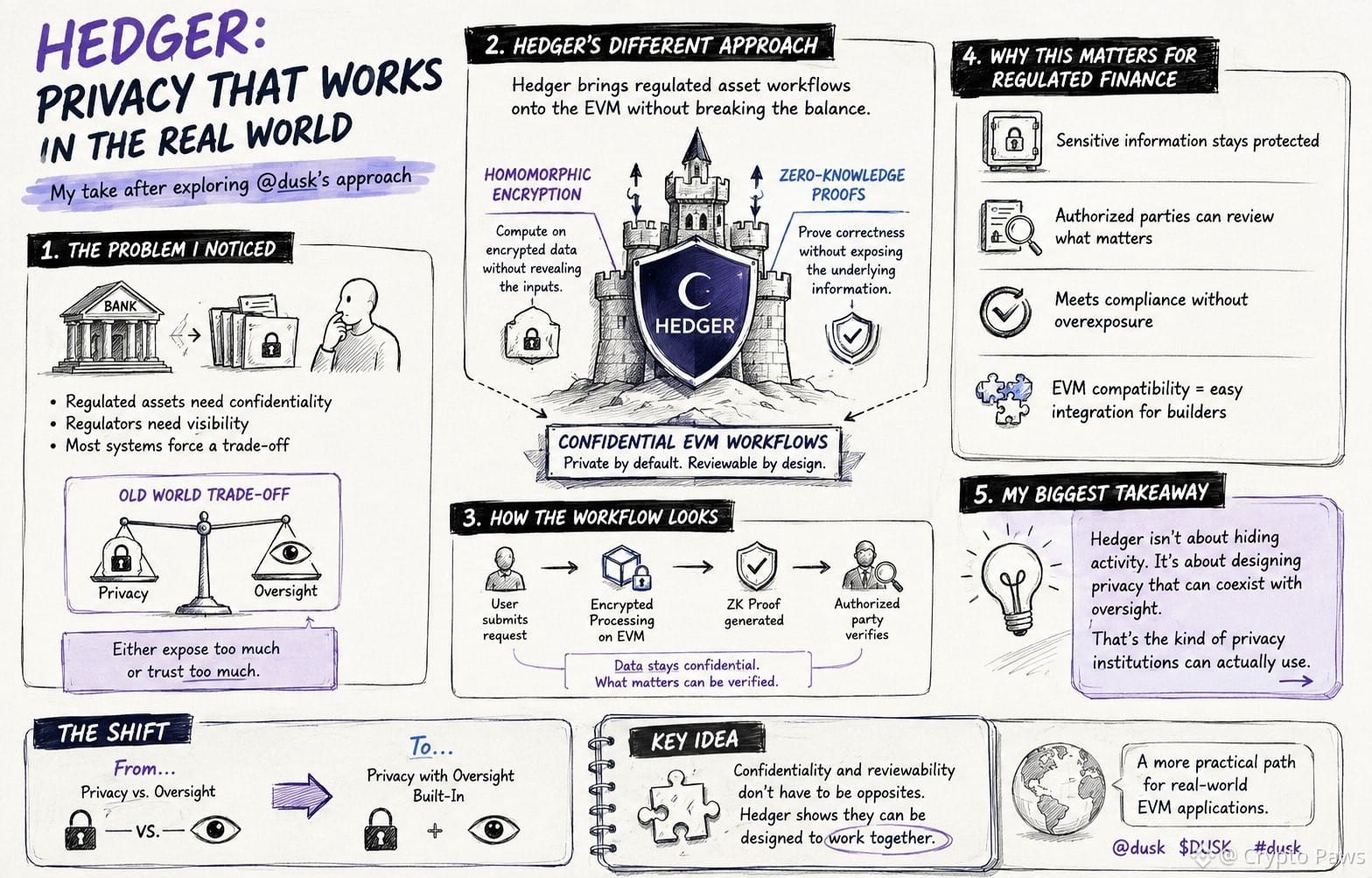
Was mich bei meinem Blick in Hedger nicht einfach nur das Wort „Privatsphäre“ beeindruckt hat, sondern die Idee, regulierte Asset-Workflows in eine EVM-Umgebung zu übertragen, ohne Vertraulichkeit und Nachvollziehbarkeit als Gegensätze zu behandeln.
Meine Lesart des Ansatzes von @Dusk_Foundation ist, dass Hedger mithilfe homomorpher Verschlüsselung zusammen mit Zero-Knowledge-Beweisen vertrauliche EVM-Workflows unterstützt, bei denen autorisierte Parteien weiterhin prüfen können, was wirklich wichtig ist. Diese Unterscheidung ist für regulierte Finanzanwendungen entscheidend: Sensible Informationen können geschützt bleiben, während der Workflow gleichzeitig einen Weg zur Verifizierung behält.
Für mich bedeutet das, dass Hedger weniger darauf ausgerichtet ist, Aktivitäten zu verbergen, und vielmehr darauf, Privatsphäre so zu gestalten, dass sie mit Aufsicht koexistieren kann. Das ist für institutionelle EVM-Anwendungen ein viel praxisnäheres Problem.
$DUSK #dusk @Dusk_Foundation
$DOLO
$ALICE
#OilEdgesHigher
#AnthropicIPOMeetingsSkipFinancialsValuation #KalshiOrderedToSuspendWashingtonOperations #ProCapFilesBitcoinTreasuryDiscountETF
Was mich bei meinem Blick in Hedger nicht einfach nur das Wort „Privatsphäre“ beeindruckt hat, sondern die Idee, regulierte Asset-Workflows in eine EVM-Umgebung zu übertragen, ohne Vertraulichkeit und Nachvollziehbarkeit als Gegensätze zu behandeln.
Meine Lesart des Ansatzes von @Dusk ist, dass Hedger mithilfe homomorpher Verschlüsselung zusammen mit Zero-Knowledge-Beweisen vertrauliche EVM-Workflows unterstützt, bei denen autorisierte Parteien weiterhin prüfen können, was wirklich wichtig ist. Diese Unterscheidung ist für regulierte Finanzanwendungen entscheidend: Sensible Informationen können geschützt bleiben, während der Workflow gleichzeitig einen Weg zur Verifizierung behält.
Für mich bedeutet das, dass Hedger weniger darauf ausgerichtet ist, Aktivitäten zu verbergen, und vielmehr darauf, Privatsphäre so zu gestalten, dass sie mit Aufsicht koexistieren kann. Das ist für institutionelle EVM-Anwendungen ein viel praxisnäheres Problem.
$DUSK #dusk @Dusk
$DOLO
$ALICE
#OilEdgesHigher
#AnthropicIPOMeetingsSkipFinancialsValuation #KalshiOrderedToSuspendWashingtonOperations #ProCapFilesBitcoinTreasuryDiscountETF
Meine Lesart des Ansatzes von @Dusk ist, dass Hedger mithilfe homomorpher Verschlüsselung zusammen mit Zero-Knowledge-Beweisen vertrauliche EVM-Workflows unterstützt, bei denen autorisierte Parteien weiterhin prüfen können, was wirklich wichtig ist. Diese Unterscheidung ist für regulierte Finanzanwendungen entscheidend: Sensible Informationen können geschützt bleiben, während der Workflow gleichzeitig einen Weg zur Verifizierung behält.
Für mich bedeutet das, dass Hedger weniger darauf ausgerichtet ist, Aktivitäten zu verbergen, und vielmehr darauf, Privatsphäre so zu gestalten, dass sie mit Aufsicht koexistieren kann. Das ist für institutionelle EVM-Anwendungen ein viel praxisnäheres Problem.
$DUSK #dusk @Dusk
$DOLO
$ALICE
#OilEdgesHigher
#AnthropicIPOMeetingsSkipFinancialsValuation #KalshiOrderedToSuspendWashingtonOperations #ProCapFilesBitcoinTreasuryDiscountETF
52
4
1.2k
·
--
Ich komme immer wieder auf einen Teil von @Dusk_Foundation zurück, der sich strategisch als besonders wichtig anfühlt: DuskEVM fordert Entwickler nicht dazu auf, das EVM-Denken aufzugeben. Indem es Solidity-Buildern einen vertrauten Weg in @Dusk_Foundation bietet, senkt es die Hürde, um Finanzanwendungen auf einem Netzwerk zu entwickeln, das für regulierte Märkte ausgelegt ist. Was das Ganze noch spannender macht, ist Hedger. Sein Einsatz von homomorpher Verschlüsselung und Zero-Knowledge-Beweisen weist auf vertrauliche EVM-Workflows hin, bei denen Privatsphäre nicht bedeutet, dass man die Möglichkeit verliert, Aktivitäten zu prüfen. Für mich ist das die eigentliche Geschichte hinter $DUSK : programmierbare Privatsphäre wird zur Infrastruktur – nicht zu einer später hinzugefügten Funktion. #dusk
#USJulyCPI&PPIDueThisWeek #SheinSaidToLaunchHKIPOSubscriptionAroundAug20 $APR
$EDEN
Welche DuskEVM-Funktion ist für die regulierte Onchain-Finanzwelt am wichtigsten?
Ich komme immer wieder auf einen Teil von @Dusk zurück, der sich strategisch als besonders wichtig anfühlt: DuskEVM fordert Entwickler nicht dazu auf, das EVM-Denken aufzugeben. Indem es Solidity-Buildern einen vertrauten Weg in @Dusk bietet, senkt es die Hürde, um Finanzanwendungen auf einem Netzwerk zu entwickeln, das für regulierte Märkte ausgelegt ist. Was das Ganze noch spannender macht, ist Hedger. Sein Einsatz von homomorpher Verschlüsselung und Zero-Knowledge-Beweisen weist auf vertrauliche EVM-Workflows hin, bei denen Privatsphäre nicht bedeutet, dass man die Möglichkeit verliert, Aktivitäten zu prüfen. Für mich ist das die eigentliche Geschichte hinter $DUSK : programmierbare Privatsphäre wird zur Infrastruktur – nicht zu einer später hinzugefügten Funktion. #dusk
#USJulyCPI&PPIDueThisWeek #SheinSaidToLaunchHKIPOSubscriptionAroundAug20 $APR
$EDEN
Welche DuskEVM-Funktion ist für die regulierte Onchain-Finanzwelt am wichtigsten?
#USJulyCPI&PPIDueThisWeek #SheinSaidToLaunchHKIPOSubscriptionAroundAug20 $APR
$EDEN
Welche DuskEVM-Funktion ist für die regulierte Onchain-Finanzwelt am wichtigsten?
🔐 Confidential EVM workflows
75%
🧩 Solidity/EVM compatibility
25%
🧾 Reviewable ZK privacy
0%
🏦 Institutional access
0%
4 Stimmen • Abstimmung beendet
52
2
201
·
--
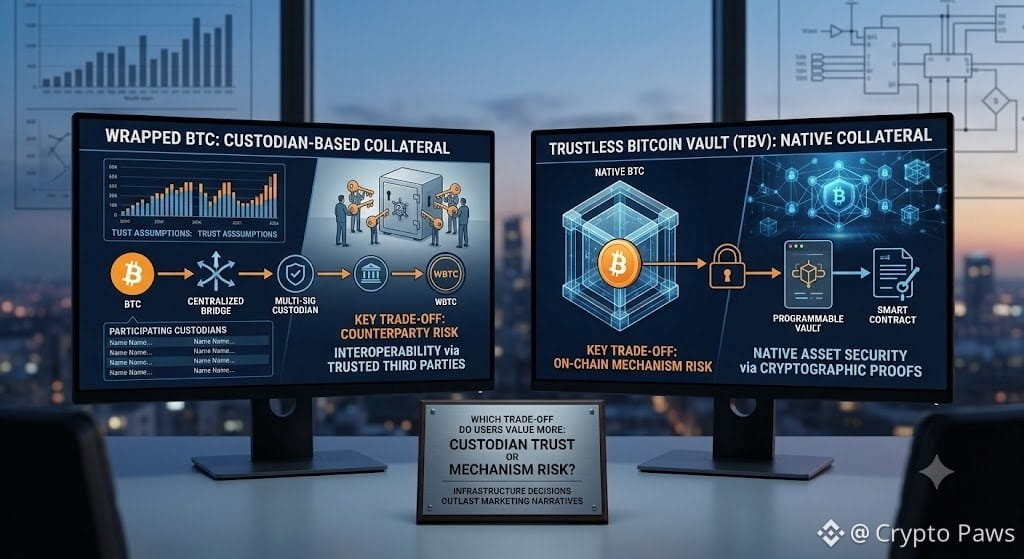
Nachdem ich Zeit damit verbracht habe, Bitcoin-Sicherheitenmodelle zu vergleichen, kam ich zu dem Schluss, dass der eigentliche Unterschied nicht „Wrapped BTC“ gegenüber „native BTC“ ist – sondern die Vertrauensannahmen, die jedes Design von den Nutzern verlangt. Wrapped BTC hat eine wichtige Rolle dabei gespielt, die Interoperabilität zu erweitern, hängt jedoch in der Regel von Custodians oder Bridge-Mechanismen ab, die Teil des Sicherheitsmodells werden. Trustless Bitcoin Vaults (TBV) gehen das Problem anders an, indem sie native Bitcoin als Sicherheiten beibehalten und es mit Kreditvergabe-Infrastruktur verbinden. Das verändert die Verwahrung, beseitigt aber nicht das Ziel der Interoperabilität. Ich sehe das nicht als ein Modell, das das andere ersetzt. Wrapped BTC mag weiterhin praktisch sein, wenn die breite Ökosystem-Kompatibilität am wichtigsten ist, während TBV eine Alternative für Nutzer bietet, die darauf Wert legen, das Vertrauen in Vermittler zu minimieren. Beim Lesen der Architektur wurde mir klar, dass Infrastrukturentscheidungen Marketingnarrativen oft überdauern, weil sie bestimmen, wie Risiko verteilt wird. Während sich native Bitcoin-Sicherheiten weiterentwickeln: Welchen Trade-off glaubst du, werden Nutzer langfristig am meisten schätzen? @babylonlabs_io $BABY #baby
$TUT
$BICO
#BICO
#Epic
#zec
#lorenzoprotocol
Nachdem ich Zeit damit verbracht habe, Bitcoin-Sicherheitenmodelle zu vergleichen, kam ich zu dem Schluss, dass der eigentliche Unterschied nicht „Wrapped BTC“ gegenüber „native BTC“ ist – sondern die Vertrauensannahmen, die jedes Design von den Nutzern verlangt. Wrapped BTC hat eine wichtige Rolle dabei gespielt, die Interoperabilität zu erweitern, hängt jedoch in der Regel von Custodians oder Bridge-Mechanismen ab, die Teil des Sicherheitsmodells werden. Trustless Bitcoin Vaults (TBV) gehen das Problem anders an, indem sie native Bitcoin als Sicherheiten beibehalten und es mit Kreditvergabe-Infrastruktur verbinden. Das verändert die Verwahrung, beseitigt aber nicht das Ziel der Interoperabilität. Ich sehe das nicht als ein Modell, das das andere ersetzt. Wrapped BTC mag weiterhin praktisch sein, wenn die breite Ökosystem-Kompatibilität am wichtigsten ist, während TBV eine Alternative für Nutzer bietet, die darauf Wert legen, das Vertrauen in Vermittler zu minimieren. Beim Lesen der Architektur wurde mir klar, dass Infrastrukturentscheidungen Marketingnarrativen oft überdauern, weil sie bestimmen, wie Risiko verteilt wird. Während sich native Bitcoin-Sicherheiten weiterentwickeln: Welchen Trade-off glaubst du, werden Nutzer langfristig am meisten schätzen? @BabylonLabs_io $BABY #baby
$TUT
$BICO
#BICO
#Epic
#zec
#lorenzoprotocol
$TUT
$BICO
#BICO
#Epic
#zec
#lorenzoprotocol
1
195
·
--
Ich habe einen Teil meines Abends damit verbracht, nachzuverfolgen, wie Trustless Bitcoin Vaults (TBV) natives BTC über seinen Borrowing-Workflow bewegt—statt nur die Schlagzeilen-Features zu lesen. Was auffiel, war nicht eine einzelne Transaktion, sondern wie jede Phase so gestaltet ist, dass die nativen Eigenschaften von Bitcoin erhalten bleiben.
Der Weg beginnt, wenn natives BTC als Sicherheiten hinterlegt und vom Protokoll verifiziert wird. Anstatt es in eine umhüllte (wrapped) Darstellung umzuwandeln, verankert TBV die Sicherheiten weiterhin direkt bei Bitcoin und ermöglicht gleichzeitig eine Borrowing-Position über Aave v4 auf Ethereum. Von dort aus werden die Sicherheiten kontinuierlich überwacht, sodass das Darlehen auch dann korrekt abgesichert bleibt, wenn sich die Marktbedingungen ändern.
Wenn das Sicherheitenverhältnis zu stark abfällt, wird Liquidation Teil des Lebenszyklus statt einer Ausnahme. Das Protokoll koordiniert die Abwicklung und erhält dabei einen Rückweg zur nativen Bitcoin-Einlösung, statt sich auf dauerhaft gehaltene umhüllte Assets zu verlassen.
Dieser gesamte Ablauf hat mir gezeigt, warum das Vermeiden von Bridges und Custodians nicht nur eine Sicherheitspräferenz ist—@babylonlabs_io fundamentally ändert sich dadurch, wie Sicherheiten durch das System gelangen. Nachdem ich diesen Lebenszyklus von Anfang bis Ende verfolgt habe, bleibt mir eine Frage: Könnte das zum Modell werden, um natives Bitcoin in DeFi zu bringen, ohne das zu kompromittieren, was Bitcoin einzigartig macht? @babylonlabs_io $BABY #baby
#dexe
#UNI📈
#EUL
#bank
$BANK
{future}(BANKUSDT)
$ZEC
{future}(ZECUSDT)
Welche Phase des TBV-Sicherheiten-Lebenszyklus ist für Bitcoin-native DeFi am wichtigsten?
Stimm unten ab und erkläre, warum du genau diese Phase gewählt hast. 👇
Ich habe einen Teil meines Abends damit verbracht, nachzuverfolgen, wie Trustless Bitcoin Vaults (TBV) natives BTC über seinen Borrowing-Workflow bewegt—statt nur die Schlagzeilen-Features zu lesen. Was auffiel, war nicht eine einzelne Transaktion, sondern wie jede Phase so gestaltet ist, dass die nativen Eigenschaften von Bitcoin erhalten bleiben.
Der Weg beginnt, wenn natives BTC als Sicherheiten hinterlegt und vom Protokoll verifiziert wird. Anstatt es in eine umhüllte (wrapped) Darstellung umzuwandeln, verankert TBV die Sicherheiten weiterhin direkt bei Bitcoin und ermöglicht gleichzeitig eine Borrowing-Position über Aave v4 auf Ethereum. Von dort aus werden die Sicherheiten kontinuierlich überwacht, sodass das Darlehen auch dann korrekt abgesichert bleibt, wenn sich die Marktbedingungen ändern.
Wenn das Sicherheitenverhältnis zu stark abfällt, wird Liquidation Teil des Lebenszyklus statt einer Ausnahme. Das Protokoll koordiniert die Abwicklung und erhält dabei einen Rückweg zur nativen Bitcoin-Einlösung, statt sich auf dauerhaft gehaltene umhüllte Assets zu verlassen.
Dieser gesamte Ablauf hat mir gezeigt, warum das Vermeiden von Bridges und Custodians nicht nur eine Sicherheitspräferenz ist—@BabylonLabs_io fundamentally ändert sich dadurch, wie Sicherheiten durch das System gelangen. Nachdem ich diesen Lebenszyklus von Anfang bis Ende verfolgt habe, bleibt mir eine Frage: Könnte das zum Modell werden, um natives Bitcoin in DeFi zu bringen, ohne das zu kompromittieren, was Bitcoin einzigartig macht? @BabylonLabs_io $BABY #baby
#dexe
#UNI📈
#EUL
#bank
$BANK
$ZEC
Welche Phase des TBV-Sicherheiten-Lebenszyklus ist für Bitcoin-native DeFi am wichtigsten?
Stimm unten ab und erkläre, warum du genau diese Phase gewählt hast. 👇
Der Weg beginnt, wenn natives BTC als Sicherheiten hinterlegt und vom Protokoll verifiziert wird. Anstatt es in eine umhüllte (wrapped) Darstellung umzuwandeln, verankert TBV die Sicherheiten weiterhin direkt bei Bitcoin und ermöglicht gleichzeitig eine Borrowing-Position über Aave v4 auf Ethereum. Von dort aus werden die Sicherheiten kontinuierlich überwacht, sodass das Darlehen auch dann korrekt abgesichert bleibt, wenn sich die Marktbedingungen ändern.
Wenn das Sicherheitenverhältnis zu stark abfällt, wird Liquidation Teil des Lebenszyklus statt einer Ausnahme. Das Protokoll koordiniert die Abwicklung und erhält dabei einen Rückweg zur nativen Bitcoin-Einlösung, statt sich auf dauerhaft gehaltene umhüllte Assets zu verlassen.
Dieser gesamte Ablauf hat mir gezeigt, warum das Vermeiden von Bridges und Custodians nicht nur eine Sicherheitspräferenz ist—@BabylonLabs_io fundamentally ändert sich dadurch, wie Sicherheiten durch das System gelangen. Nachdem ich diesen Lebenszyklus von Anfang bis Ende verfolgt habe, bleibt mir eine Frage: Könnte das zum Modell werden, um natives Bitcoin in DeFi zu bringen, ohne das zu kompromittieren, was Bitcoin einzigartig macht? @BabylonLabs_io $BABY #baby
#dexe
#UNI📈
#EUL
#bank
$BANK
$ZEC
Welche Phase des TBV-Sicherheiten-Lebenszyklus ist für Bitcoin-native DeFi am wichtigsten?
Stimm unten ab und erkläre, warum du genau diese Phase gewählt hast. 👇
🟠 Native BTC Deposit
0%
🔒 Continuous Risk Monitoring
50%
⚡ Permissionless Liquidation
50%
♻️ Native BTC Redemption
0%
2 Stimmen • Abstimmung beendet
4
3
2.8k
·
--
$BABY #baby @babylonlabs_io
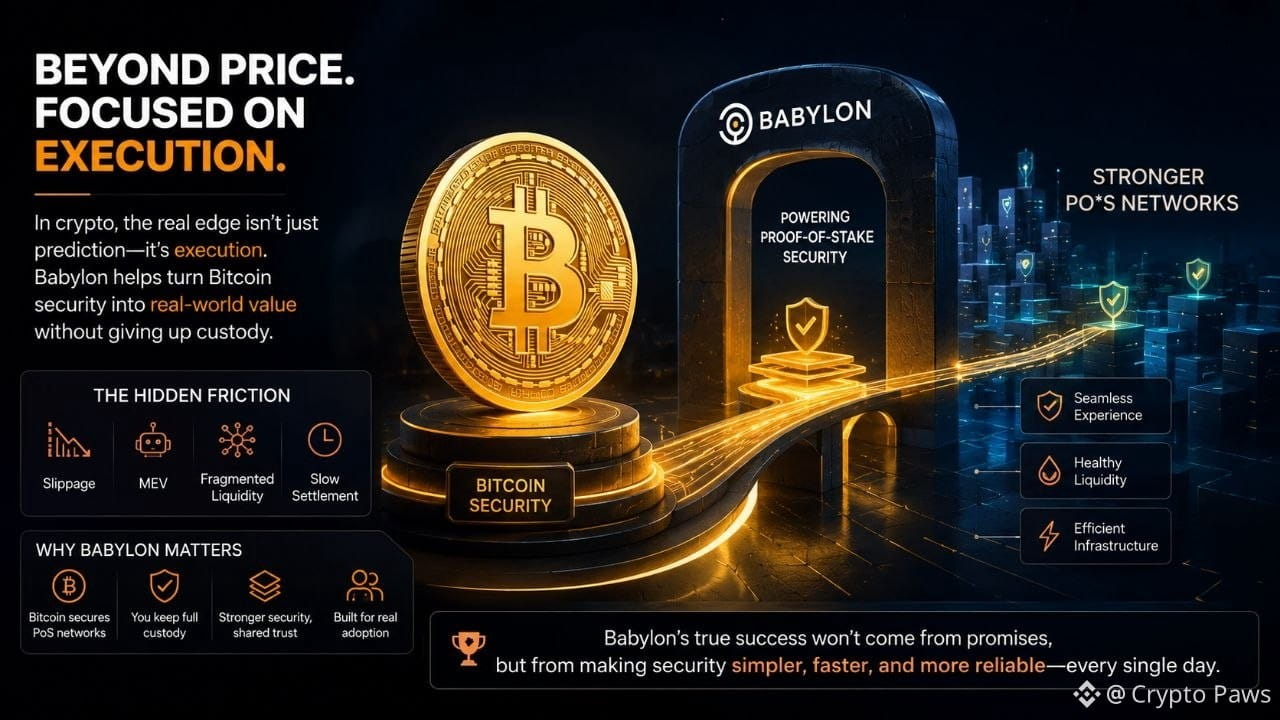
Je tiefer ich in Krypto eintauche, desto mehr glaube ich, dass das größte Hindernis nicht Marktschwankungen sind – sondern die Ausführungsqualität. Jede Order sieht sich mit versteckter Reibung konfrontiert: durch Slippage, MEV, fragmentierte Liquidität und eine langsame Abwicklung. All das nagt still und leise an der Performance. Deshalb sticht Babylon für mich heraus. Indem es Bitcoin-Inhabern ermöglicht, die PoS-Sicherheit zu stärken, während sie die volle Kontrolle über ihre Assets behalten, löst es ein Problem, das seit Jahren besteht. Aber eine überzeugende Architektur ist nur der Anfang. Tatsächliche Akzeptanz hängt von verlässlicher Infrastruktur, gesunder Liquidität und einem Erlebnis ab, das sich jeden Tag mühelos anfühlt. Langfristig wird Babylons Erfolg nicht daran gemessen, ob es kühne Versprechen abgibt, sondern daran, ob Nutzer es dauerhaft als einfacher, effizienter und vertrauenswürdiger empfinden als konkurrierende Ökosysteme.
$BABY #baby @BabylonLabs_io
Je tiefer ich in Krypto eintauche, desto mehr glaube ich, dass das größte Hindernis nicht Marktschwankungen sind – sondern die Ausführungsqualität. Jede Order sieht sich mit versteckter Reibung konfrontiert: durch Slippage, MEV, fragmentierte Liquidität und eine langsame Abwicklung. All das nagt still und leise an der Performance. Deshalb sticht Babylon für mich heraus. Indem es Bitcoin-Inhabern ermöglicht, die PoS-Sicherheit zu stärken, während sie die volle Kontrolle über ihre Assets behalten, löst es ein Problem, das seit Jahren besteht. Aber eine überzeugende Architektur ist nur der Anfang. Tatsächliche Akzeptanz hängt von verlässlicher Infrastruktur, gesunder Liquidität und einem Erlebnis ab, das sich jeden Tag mühelos anfühlt. Langfristig wird Babylons Erfolg nicht daran gemessen, ob es kühne Versprechen abgibt, sondern daran, ob Nutzer es dauerhaft als einfacher, effizienter und vertrauenswürdiger empfinden als konkurrierende Ökosysteme.
Je tiefer ich in Krypto eintauche, desto mehr glaube ich, dass das größte Hindernis nicht Marktschwankungen sind – sondern die Ausführungsqualität. Jede Order sieht sich mit versteckter Reibung konfrontiert: durch Slippage, MEV, fragmentierte Liquidität und eine langsame Abwicklung. All das nagt still und leise an der Performance. Deshalb sticht Babylon für mich heraus. Indem es Bitcoin-Inhabern ermöglicht, die PoS-Sicherheit zu stärken, während sie die volle Kontrolle über ihre Assets behalten, löst es ein Problem, das seit Jahren besteht. Aber eine überzeugende Architektur ist nur der Anfang. Tatsächliche Akzeptanz hängt von verlässlicher Infrastruktur, gesunder Liquidität und einem Erlebnis ab, das sich jeden Tag mühelos anfühlt. Langfristig wird Babylons Erfolg nicht daran gemessen, ob es kühne Versprechen abgibt, sondern daran, ob Nutzer es dauerhaft als einfacher, effizienter und vertrauenswürdiger empfinden als konkurrierende Ökosysteme.
2
3
89
·
--
Verifiziert
$BABY #baby @babylonlabs_io
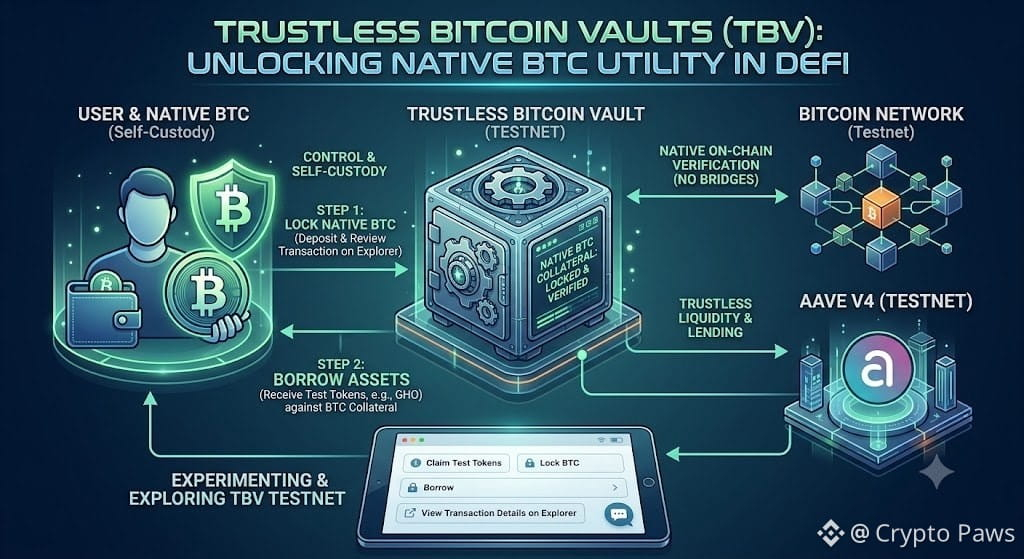
Über Jahre schien eine Annahme unausweichlich: Wenn man Bitcoin in DeFi nutzen wollte, musste man es zunächst in etwas anderes umwandeln. Gedeckte (Wrapped) Assets, Cross-Chain-Bridges und Custodial-Lösungen erweiterten die Einsatzmöglichkeiten, führten jedoch auch zusätzliches Vertrauen und mehr Komplexität ein, die viele Bitcoin-Nutzer nie wollten.
Trustless Bitcoin Vaults (TBV) schlägt eine andere Grundlage vor. Anstatt native BTC durch eine synthetische Version zu ersetzen, untersucht das Konzept, ob Bitcoin selbst als zugrunde liegende Sicherheit dienen kann, während Nutzer ihre Selbstverwaltung behalten. Die erste Umsetzung, die mit Aave v4 gebaut wurde, zeigt ein Modell, um gegen nativen Bitcoin Kredite aufzunehmen – ohne auf zentrale Vermittler angewiesen zu sein.
Anstatt mich nur auf Dokumentation zu verlassen, habe ich das öffentliche Testnetz erkundet. Ich habe Test-Tokens beansprucht, das Vault bedient, den Kreditaufnahmeprozess getestet, Transaktionen über den Explorer überprüft und Feedback geteilt – so erhielt ich ein viel klareres Verständnis für das Design. Die Erfahrung fühlte sich weniger wie ein weiteres Lending-Protokoll an, sondern eher wie ein Experiment, Bitcoins Kernprinzipien zu bewahren und gleichzeitig seine finanzielle Nutzbarkeit zu erweitern.
Es ist noch früh, und die langfristige Akzeptanz wird von Sicherheit, Benutzerfreundlichkeit und nachgewiesener Zuverlässigkeit abhängen. Dennoch finde ich die Richtung überzeugend, weil sie darauf abzielt, Annahmen von Vertrauen zu minimieren, statt neue zu schaffen. Wenn du neugierig auf die nächste Phase der Bitcoin-Infrastruktur bist, lohnt es sich, das TBV-Testnetz aus erster Hand zu erkunden, bevor du dir eine Meinung bildest.
$BABY #baby @BabylonLabs_io
Über Jahre schien eine Annahme unausweichlich: Wenn man Bitcoin in DeFi nutzen wollte, musste man es zunächst in etwas anderes umwandeln. Gedeckte (Wrapped) Assets, Cross-Chain-Bridges und Custodial-Lösungen erweiterten die Einsatzmöglichkeiten, führten jedoch auch zusätzliches Vertrauen und mehr Komplexität ein, die viele Bitcoin-Nutzer nie wollten.
Trustless Bitcoin Vaults (TBV) schlägt eine andere Grundlage vor. Anstatt native BTC durch eine synthetische Version zu ersetzen, untersucht das Konzept, ob Bitcoin selbst als zugrunde liegende Sicherheit dienen kann, während Nutzer ihre Selbstverwaltung behalten. Die erste Umsetzung, die mit Aave v4 gebaut wurde, zeigt ein Modell, um gegen nativen Bitcoin Kredite aufzunehmen – ohne auf zentrale Vermittler angewiesen zu sein.
Anstatt mich nur auf Dokumentation zu verlassen, habe ich das öffentliche Testnetz erkundet. Ich habe Test-Tokens beansprucht, das Vault bedient, den Kreditaufnahmeprozess getestet, Transaktionen über den Explorer überprüft und Feedback geteilt – so erhielt ich ein viel klareres Verständnis für das Design. Die Erfahrung fühlte sich weniger wie ein weiteres Lending-Protokoll an, sondern eher wie ein Experiment, Bitcoins Kernprinzipien zu bewahren und gleichzeitig seine finanzielle Nutzbarkeit zu erweitern.
Es ist noch früh, und die langfristige Akzeptanz wird von Sicherheit, Benutzerfreundlichkeit und nachgewiesener Zuverlässigkeit abhängen. Dennoch finde ich die Richtung überzeugend, weil sie darauf abzielt, Annahmen von Vertrauen zu minimieren, statt neue zu schaffen. Wenn du neugierig auf die nächste Phase der Bitcoin-Infrastruktur bist, lohnt es sich, das TBV-Testnetz aus erster Hand zu erkunden, bevor du dir eine Meinung bildest.
Über Jahre schien eine Annahme unausweichlich: Wenn man Bitcoin in DeFi nutzen wollte, musste man es zunächst in etwas anderes umwandeln. Gedeckte (Wrapped) Assets, Cross-Chain-Bridges und Custodial-Lösungen erweiterten die Einsatzmöglichkeiten, führten jedoch auch zusätzliches Vertrauen und mehr Komplexität ein, die viele Bitcoin-Nutzer nie wollten.
Trustless Bitcoin Vaults (TBV) schlägt eine andere Grundlage vor. Anstatt native BTC durch eine synthetische Version zu ersetzen, untersucht das Konzept, ob Bitcoin selbst als zugrunde liegende Sicherheit dienen kann, während Nutzer ihre Selbstverwaltung behalten. Die erste Umsetzung, die mit Aave v4 gebaut wurde, zeigt ein Modell, um gegen nativen Bitcoin Kredite aufzunehmen – ohne auf zentrale Vermittler angewiesen zu sein.
Anstatt mich nur auf Dokumentation zu verlassen, habe ich das öffentliche Testnetz erkundet. Ich habe Test-Tokens beansprucht, das Vault bedient, den Kreditaufnahmeprozess getestet, Transaktionen über den Explorer überprüft und Feedback geteilt – so erhielt ich ein viel klareres Verständnis für das Design. Die Erfahrung fühlte sich weniger wie ein weiteres Lending-Protokoll an, sondern eher wie ein Experiment, Bitcoins Kernprinzipien zu bewahren und gleichzeitig seine finanzielle Nutzbarkeit zu erweitern.
Es ist noch früh, und die langfristige Akzeptanz wird von Sicherheit, Benutzerfreundlichkeit und nachgewiesener Zuverlässigkeit abhängen. Dennoch finde ich die Richtung überzeugend, weil sie darauf abzielt, Annahmen von Vertrauen zu minimieren, statt neue zu schaffen. Wenn du neugierig auf die nächste Phase der Bitcoin-Infrastruktur bist, lohnt es sich, das TBV-Testnetz aus erster Hand zu erkunden, bevor du dir eine Meinung bildest.
74
3
111
·
--
$BABY #baby @babylonlabs_io
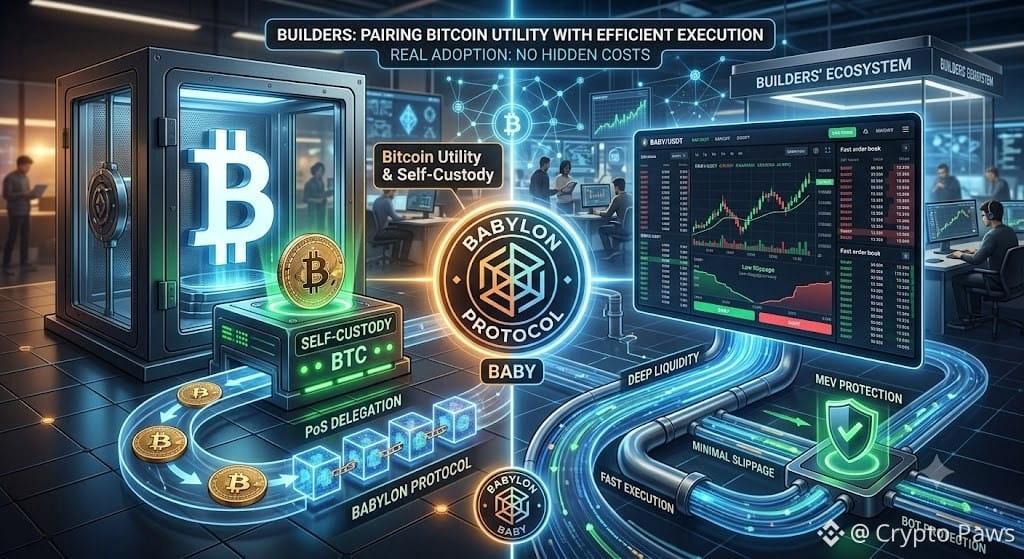
Die meisten Krypto-Gespräche beginnen mit dem Preis, aber ich achte normalerweise mehr darauf, ob ein Protokoll ein echtes Problem löst. Genau das hat Babylon für mich herausstechen lassen. Dass Bitcoin in eigener Verwahrung bleibt, während man zur PoS-Sicherheit beiträgt, wirkt wie ein praktischer Anwendungsfall – statt wie eine weitere Wrapped-BTC-Erzählung. Doch allein eine starke Infrastruktur reicht nicht aus. Die größte Frustration beginnt, wenn es an den Handel geht. Slippage weitet die Einstiege aus, MEV entzieht Wert, Bots reagieren schneller als Menschen, und zersplitterte Liquidität verwandelt ein gutes Setup innerhalb von Sekunden in einen schlechteren Fill. Diese unsichtbaren Kosten treffen oft stärker als eine unzutreffende Marktprognose. Deshalb beobachte ich das Ökosystem rund um BABY genauso genau wie den Token selbst. Wenn Entwickler Bitcoin-Nutzen mit effizienter Ausführung, tieferer Liquidität und einem reibungsloseren Handelserlebnis kombinieren können, wird das Netzwerk deutlich überzeugender. Wirkliche Akzeptanz entsteht, wenn die Technologie zuverlässig funktioniert, ohne dass Nutzer bei jeder Interaktion versteckte Kosten zahlen müssen.
$BABY #baby @BabylonLabs_io
Die meisten Krypto-Gespräche beginnen mit dem Preis, aber ich achte normalerweise mehr darauf, ob ein Protokoll ein echtes Problem löst. Genau das hat Babylon für mich herausstechen lassen. Dass Bitcoin in eigener Verwahrung bleibt, während man zur PoS-Sicherheit beiträgt, wirkt wie ein praktischer Anwendungsfall – statt wie eine weitere Wrapped-BTC-Erzählung. Doch allein eine starke Infrastruktur reicht nicht aus. Die größte Frustration beginnt, wenn es an den Handel geht. Slippage weitet die Einstiege aus, MEV entzieht Wert, Bots reagieren schneller als Menschen, und zersplitterte Liquidität verwandelt ein gutes Setup innerhalb von Sekunden in einen schlechteren Fill. Diese unsichtbaren Kosten treffen oft stärker als eine unzutreffende Marktprognose. Deshalb beobachte ich das Ökosystem rund um BABY genauso genau wie den Token selbst. Wenn Entwickler Bitcoin-Nutzen mit effizienter Ausführung, tieferer Liquidität und einem reibungsloseren Handelserlebnis kombinieren können, wird das Netzwerk deutlich überzeugender. Wirkliche Akzeptanz entsteht, wenn die Technologie zuverlässig funktioniert, ohne dass Nutzer bei jeder Interaktion versteckte Kosten zahlen müssen.
Die meisten Krypto-Gespräche beginnen mit dem Preis, aber ich achte normalerweise mehr darauf, ob ein Protokoll ein echtes Problem löst. Genau das hat Babylon für mich herausstechen lassen. Dass Bitcoin in eigener Verwahrung bleibt, während man zur PoS-Sicherheit beiträgt, wirkt wie ein praktischer Anwendungsfall – statt wie eine weitere Wrapped-BTC-Erzählung. Doch allein eine starke Infrastruktur reicht nicht aus. Die größte Frustration beginnt, wenn es an den Handel geht. Slippage weitet die Einstiege aus, MEV entzieht Wert, Bots reagieren schneller als Menschen, und zersplitterte Liquidität verwandelt ein gutes Setup innerhalb von Sekunden in einen schlechteren Fill. Diese unsichtbaren Kosten treffen oft stärker als eine unzutreffende Marktprognose. Deshalb beobachte ich das Ökosystem rund um BABY genauso genau wie den Token selbst. Wenn Entwickler Bitcoin-Nutzen mit effizienter Ausführung, tieferer Liquidität und einem reibungsloseren Handelserlebnis kombinieren können, wird das Netzwerk deutlich überzeugender. Wirkliche Akzeptanz entsteht, wenn die Technologie zuverlässig funktioniert, ohne dass Nutzer bei jeder Interaktion versteckte Kosten zahlen müssen.
2
2
85
Anmelden und weiter Inhalte entdecken
Krypto-Nutzer weltweit auf Binance Square kennenlernen
⚡️ Bleib in Sachen Krypto stets am Puls.
💬 Die weltgrößte Kryptobörse vertraut darauf.
👍 Erhalte verlässliche Einblicke von verifizierten Creators.
E-Mail-Adresse/Telefonnummer
Trendthemen
NFPWatch
10.6M Aufrufe
18,006 Kommentare
Krypto-News | Bitcoin nähert sich der Marke von 85.000 US-Dollar, während die Renditen von US-Staatsanleihen vor dem Bericht zu den NFP zurückgehen
Binance News
·30 Likes
·39.9k Aufrufe
BitcoinFundingRateTriplesTo10%
14,811 Aufrufe
326 Kommentare
BitcoinSurpasses$86KUp2.99%
4,667 Aufrufe
44 Kommentare