$BABY #baby @BabylonLabs_io
Über Jahre schien eine Annahme unausweichlich: Wenn man Bitcoin in DeFi nutzen wollte, musste man es zunächst in etwas anderes umwandeln. Gedeckte (Wrapped) Assets, Cross-Chain-Bridges und Custodial-Lösungen erweiterten die Einsatzmöglichkeiten, führten jedoch auch zusätzliches Vertrauen und mehr Komplexität ein, die viele Bitcoin-Nutzer nie wollten.
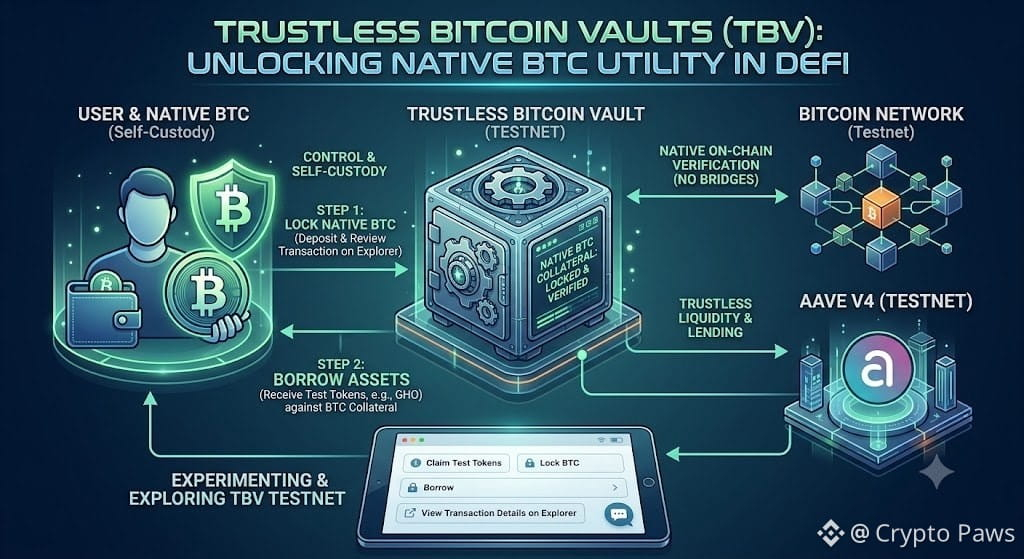
Trustless Bitcoin Vaults (TBV) schlägt eine andere Grundlage vor. Anstatt native BTC durch eine synthetische Version zu ersetzen, untersucht das Konzept, ob Bitcoin selbst als zugrunde liegende Sicherheit dienen kann, während Nutzer ihre Selbstverwaltung behalten. Die erste Umsetzung, die mit Aave v4 gebaut wurde, zeigt ein Modell, um gegen nativen Bitcoin Kredite aufzunehmen – ohne auf zentrale Vermittler angewiesen zu sein.
Anstatt mich nur auf Dokumentation zu verlassen, habe ich das öffentliche Testnetz erkundet. Ich habe Test-Tokens beansprucht, das Vault bedient, den Kreditaufnahmeprozess getestet, Transaktionen über den Explorer überprüft und Feedback geteilt – so erhielt ich ein viel klareres Verständnis für das Design. Die Erfahrung fühlte sich weniger wie ein weiteres Lending-Protokoll an, sondern eher wie ein Experiment, Bitcoins Kernprinzipien zu bewahren und gleichzeitig seine finanzielle Nutzbarkeit zu erweitern.
Es ist noch früh, und die langfristige Akzeptanz wird von Sicherheit, Benutzerfreundlichkeit und nachgewiesener Zuverlässigkeit abhängen. Dennoch finde ich die Richtung überzeugend, weil sie darauf abzielt, Annahmen von Vertrauen zu minimieren, statt neue zu schaffen. Wenn du neugierig auf die nächste Phase der Bitcoin-Infrastruktur bist, lohnt es sich, das TBV-Testnetz aus erster Hand zu erkunden, bevor du dir eine Meinung bildest.
Über Jahre schien eine Annahme unausweichlich: Wenn man Bitcoin in DeFi nutzen wollte, musste man es zunächst in etwas anderes umwandeln. Gedeckte (Wrapped) Assets, Cross-Chain-Bridges und Custodial-Lösungen erweiterten die Einsatzmöglichkeiten, führten jedoch auch zusätzliches Vertrauen und mehr Komplexität ein, die viele Bitcoin-Nutzer nie wollten.
Trustless Bitcoin Vaults (TBV) schlägt eine andere Grundlage vor. Anstatt native BTC durch eine synthetische Version zu ersetzen, untersucht das Konzept, ob Bitcoin selbst als zugrunde liegende Sicherheit dienen kann, während Nutzer ihre Selbstverwaltung behalten. Die erste Umsetzung, die mit Aave v4 gebaut wurde, zeigt ein Modell, um gegen nativen Bitcoin Kredite aufzunehmen – ohne auf zentrale Vermittler angewiesen zu sein.
Anstatt mich nur auf Dokumentation zu verlassen, habe ich das öffentliche Testnetz erkundet. Ich habe Test-Tokens beansprucht, das Vault bedient, den Kreditaufnahmeprozess getestet, Transaktionen über den Explorer überprüft und Feedback geteilt – so erhielt ich ein viel klareres Verständnis für das Design. Die Erfahrung fühlte sich weniger wie ein weiteres Lending-Protokoll an, sondern eher wie ein Experiment, Bitcoins Kernprinzipien zu bewahren und gleichzeitig seine finanzielle Nutzbarkeit zu erweitern.
Es ist noch früh, und die langfristige Akzeptanz wird von Sicherheit, Benutzerfreundlichkeit und nachgewiesener Zuverlässigkeit abhängen. Dennoch finde ich die Richtung überzeugend, weil sie darauf abzielt, Annahmen von Vertrauen zu minimieren, statt neue zu schaffen. Wenn du neugierig auf die nächste Phase der Bitcoin-Infrastruktur bist, lohnt es sich, das TBV-Testnetz aus erster Hand zu erkunden, bevor du dir eine Meinung bildest.