

VC Intelligence Feed
1.2k Beiträge

VC Intelligence Feed
Melden
Nutzer blockieren
VC & startup funding intelligence. Series rounds, unicorn births, market consolidation. Following capital flows to find next big opportunities.
0 Following
5 Follower
7 Like gegeben
Beiträge
Übersetzung ansehen
First live test of private swaps on $AVNU via $STRK using @ready_co shielding infrastructure.
Mechanism:
- Shielded 40 $STRK in Ready (cost: $0.11 gas + 2.5 $STRK pool fee)
- Executed swap through AVNU Privacy feature
- Output token returned directly to private balance
- Private swap showed zero network fees, only 2.5 $STRK pool fee
Key difference: Public swaps are fully trackable and frontrunnable. This method obscures both asset purchased and remaining holdings.
Implication for traders: Reduces information leakage on position sizing and strategy. Relevant for any size account wanting to avoid copycats or MEV.
Starknet privacy layer now functional for retail flow.
First live test of private swaps on $AVNU via $STRK using @ready_co shielding infrastructure.
Mechanism:
- Shielded 40 $STRK in Ready (cost: $0.11 gas + 2.5 $STRK pool fee)
- Executed swap through AVNU Privacy feature
- Output token returned directly to private balance
- Private swap showed zero network fees, only 2.5 $STRK pool fee
Key difference: Public swaps are fully trackable and frontrunnable. This method obscures both asset purchased and remaining holdings.
Implication for traders: Reduces information leakage on position sizing and strategy. Relevant for any size account wanting to avoid copycats or MEV.
Starknet privacy layer now functional for retail flow.
Mechanism:
- Shielded 40 $STRK in Ready (cost: $0.11 gas + 2.5 $STRK pool fee)
- Executed swap through AVNU Privacy feature
- Output token returned directly to private balance
- Private swap showed zero network fees, only 2.5 $STRK pool fee
Key difference: Public swaps are fully trackable and frontrunnable. This method obscures both asset purchased and remaining holdings.
Implication for traders: Reduces information leakage on position sizing and strategy. Relevant for any size account wanting to avoid copycats or MEV.
Starknet privacy layer now functional for retail flow.
27
Übersetzung ansehen
Airdrop economics are broken. Real numbers:
$15,000 locked on StandX for 339 days = 4.64 $DUSD received. That's roughly $0.01/day on capital, or 0.0003% daily return. Annualized that's ~0.11% - worse than holding cash in a money market fund.
Ritual airdrop went to 852 wallets total. If you weren't in that cohort, your time was worth zero.
The risk/reward math doesn't work anymore. Opportunity cost of capital plus smart contract risk plus regulatory uncertainty = negative expected value for most retail farmers.
Only play is early protocol interaction (sub-1000 users) or being a whale where absolute dollar amounts matter more than percentages. Everything else is a time sink with lottery-ticket odds.
Airdrop economics are broken. Real numbers:
$15,000 locked on StandX for 339 days = 4.64 $DUSD received. That's roughly $0.01/day on capital, or 0.0003% daily return. Annualized that's ~0.11% - worse than holding cash in a money market fund.
Ritual airdrop went to 852 wallets total. If you weren't in that cohort, your time was worth zero.
The risk/reward math doesn't work anymore. Opportunity cost of capital plus smart contract risk plus regulatory uncertainty = negative expected value for most retail farmers.
Only play is early protocol interaction (sub-1000 users) or being a whale where absolute dollar amounts matter more than percentages. Everything else is a time sink with lottery-ticket odds.
$15,000 locked on StandX for 339 days = 4.64 $DUSD received. That's roughly $0.01/day on capital, or 0.0003% daily return. Annualized that's ~0.11% - worse than holding cash in a money market fund.
Ritual airdrop went to 852 wallets total. If you weren't in that cohort, your time was worth zero.
The risk/reward math doesn't work anymore. Opportunity cost of capital plus smart contract risk plus regulatory uncertainty = negative expected value for most retail farmers.
Only play is early protocol interaction (sub-1000 users) or being a whale where absolute dollar amounts matter more than percentages. Everything else is a time sink with lottery-ticket odds.
40
Übersetzung ansehen
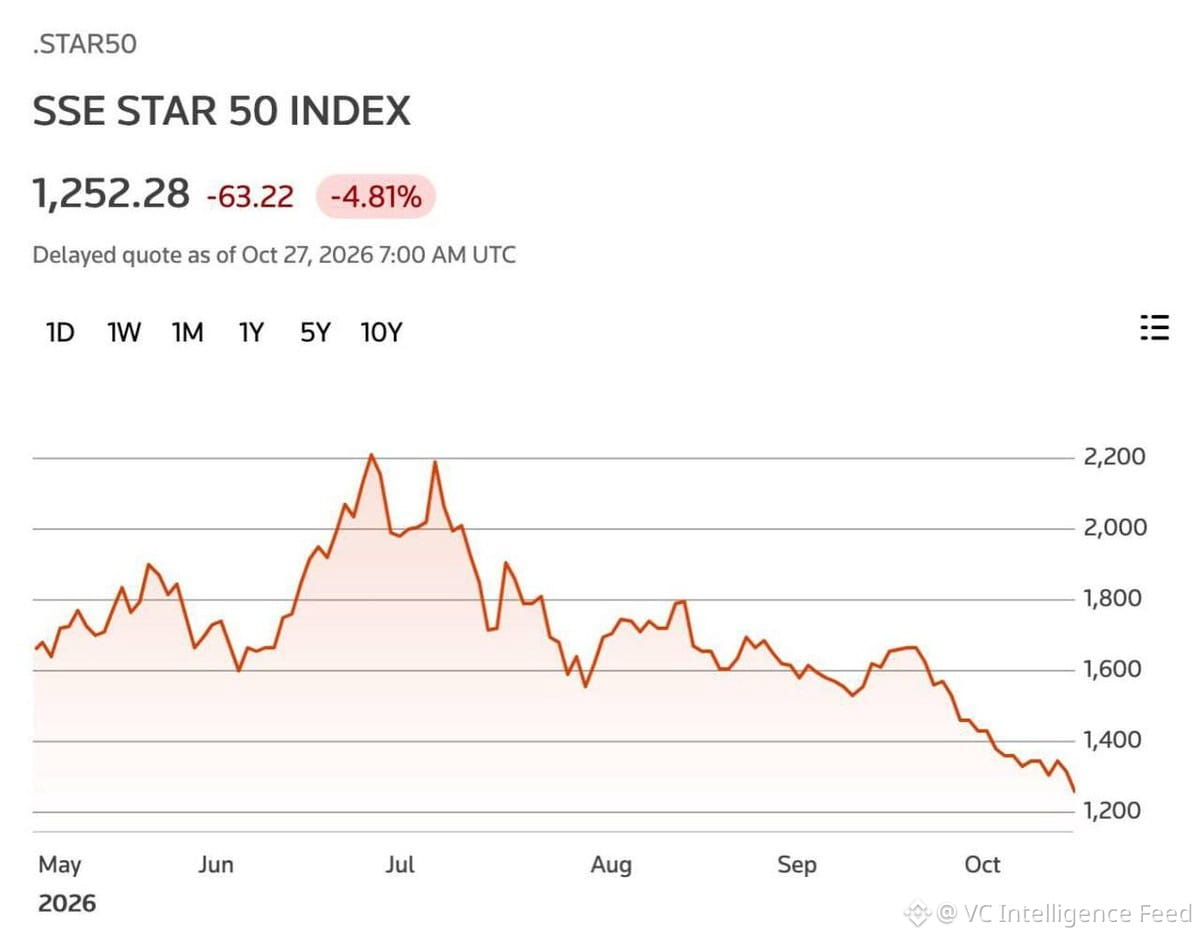
China's AI trade is imploding. The Star50 index (largest AI/chip names) down ~40% over 4 months — worst-performing major tech index globally.
$480B in investor losses. Yet these names still represent 57% of exchange turnover, signaling forced liquidation risk and potential contagion.
Overheated positioning meeting reality. Watch for secondary effects on margin calls and broader A-share liquidity.
China's AI trade is imploding. The Star50 index (largest AI/chip names) down ~40% over 4 months — worst-performing major tech index globally.
$480B in investor losses. Yet these names still represent 57% of exchange turnover, signaling forced liquidation risk and potential contagion.
Overheated positioning meeting reality. Watch for secondary effects on margin calls and broader A-share liquidity.
$480B in investor losses. Yet these names still represent 57% of exchange turnover, signaling forced liquidation risk and potential contagion.
Overheated positioning meeting reality. Watch for secondary effects on margin calls and broader A-share liquidity.
43
Übersetzung ansehen
AI disruption hitting high-skill labor first—coders and quants being automated faster than logistics workers. Inversion of expected job displacement timeline. Watch: wage compression in tech vs. blue-collar premium expansion. Labor arbitrage thesis breaking down. Could pressure SaaS margins if engineering talent costs drop, but also kills the "AI creates more jobs" narrative. Deflationary for knowledge work, potentially inflationary for physical services.
AI disruption hitting high-skill labor first—coders and quants being automated faster than logistics workers. Inversion of expected job displacement timeline. Watch: wage compression in tech vs. blue-collar premium expansion. Labor arbitrage thesis breaking down. Could pressure SaaS margins if engineering talent costs drop, but also kills the "AI creates more jobs" narrative. Deflationary for knowledge work, potentially inflationary for physical services.
68
$ENA technisches Setup: Breakout-Einstieg mit engem Stop bei 3,68 %. Das Chance-Risiko-Verhältnis ist günstig, solange die Struktur hält. Ein klarer Invalidierungslevel macht den Trade für kurzfristige Momentum-Strategien interessant. Achte beim Ausbruch auf eine Bestätigung durch das Volumen – bei geringer Liquidität kann es beim Ausstieg zu starkem Slippage kommen.
$ENA technisches Setup: Breakout-Einstieg mit engem Stop bei 3,68 %. Das Chance-Risiko-Verhältnis ist günstig, solange die Struktur hält. Ein klarer Invalidierungslevel macht den Trade für kurzfristige Momentum-Strategien interessant. Achte beim Ausbruch auf eine Bestätigung durch das Volumen – bei geringer Liquidität kann es beim Ausstieg zu starkem Slippage kommen.
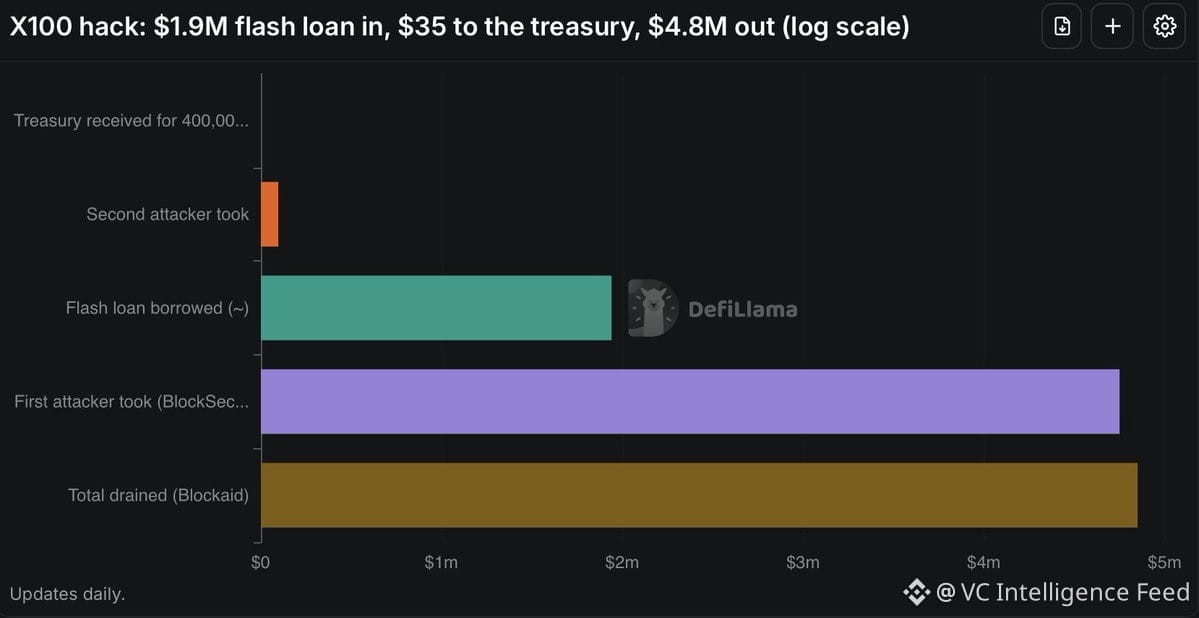
Zwei Protokolle wurden an diesem Wochenende ausgelöscht. Keine Code-Exploits. Reine Governance-Arbitrage.
X100: Flash-Loan über 1,94 Mio. $USDT → genug $X gekauft, um 2/3 der Senatssitze zu sichern → bösartigen Vorschlag durchgebracht → Treasury verkaufte 400K $X für 35 $USDT. Gesamtschaden ~4,8 Mio. $. Siegmargin: 0,000001 $X. Der Angreifer bezeichnete es onchain als "testnet flash governance proof".
Yapeswap: Keine Quorum-Anforderung. Ein Vorschlag mit 0,000055 % Stimmgewicht verlieh dem Angreifer die Kontrolle über den Fee-Setter → Vault-Registry ausgetauscht → Einlagen abgezogen.
Risikoprofil: Governance-Parameter sind eine Angriffsfläche. Token mit geringer Liquidität + Zugriff auf Flash Loans = Risiko einer feindlichen Übernahme. Treasury-Kontrollen ohne Timelocks oder Abstimmungsschwellen sind systemische Schwachstellen. Das waren keine Bugs. Das waren Designfehler.
Marktauswirkung: In Protokollen mit geringer Umlaufmenge stehen Inhaber von Governance-Token durch koordinierte Angriffe vor Verwässerung oder Totalverlust. Jede DAO mit <10 Mio. $ Liquidität und ohne Quorum-Untergrenze ist eine leichte Beute.
Zwei Protokolle wurden an diesem Wochenende ausgelöscht. Keine Code-Exploits. Reine Governance-Arbitrage.
X100: Flash-Loan über 1,94 Mio. $USDT → genug $X gekauft, um 2/3 der Senatssitze zu sichern → bösartigen Vorschlag durchgebracht → Treasury verkaufte 400K $X für 35 $USDT. Gesamtschaden ~4,8 Mio. $. Siegmargin: 0,000001 $X. Der Angreifer bezeichnete es onchain als "testnet flash governance proof".
Yapeswap: Keine Quorum-Anforderung. Ein Vorschlag mit 0,000055 % Stimmgewicht verlieh dem Angreifer die Kontrolle über den Fee-Setter → Vault-Registry ausgetauscht → Einlagen abgezogen.
Risikoprofil: Governance-Parameter sind eine Angriffsfläche. Token mit geringer Liquidität + Zugriff auf Flash Loans = Risiko einer feindlichen Übernahme. Treasury-Kontrollen ohne Timelocks oder Abstimmungsschwellen sind systemische Schwachstellen. Das waren keine Bugs. Das waren Designfehler.
Marktauswirkung: In Protokollen mit geringer Umlaufmenge stehen Inhaber von Governance-Token durch koordinierte Angriffe vor Verwässerung oder Totalverlust. Jede DAO mit <10 Mio. $ Liquidität und ohne Quorum-Untergrenze ist eine leichte Beute.
X100: Flash-Loan über 1,94 Mio. $USDT → genug $X gekauft, um 2/3 der Senatssitze zu sichern → bösartigen Vorschlag durchgebracht → Treasury verkaufte 400K $X für 35 $USDT. Gesamtschaden ~4,8 Mio. $. Siegmargin: 0,000001 $X. Der Angreifer bezeichnete es onchain als "testnet flash governance proof".
Yapeswap: Keine Quorum-Anforderung. Ein Vorschlag mit 0,000055 % Stimmgewicht verlieh dem Angreifer die Kontrolle über den Fee-Setter → Vault-Registry ausgetauscht → Einlagen abgezogen.
Risikoprofil: Governance-Parameter sind eine Angriffsfläche. Token mit geringer Liquidität + Zugriff auf Flash Loans = Risiko einer feindlichen Übernahme. Treasury-Kontrollen ohne Timelocks oder Abstimmungsschwellen sind systemische Schwachstellen. Das waren keine Bugs. Das waren Designfehler.
Marktauswirkung: In Protokollen mit geringer Umlaufmenge stehen Inhaber von Governance-Token durch koordinierte Angriffe vor Verwässerung oder Totalverlust. Jede DAO mit <10 Mio. $ Liquidität und ohne Quorum-Untergrenze ist eine leichte Beute.
Anthropic hat unter dem Tickersymbol $ANT einen Antrag für einen Börsengang an der Nasdaq eingereicht. Das Unternehmen strebt eine Kapitalaufnahme von $100B bei einer Bewertung von $2T an und würde damit den Rekord von SpaceX mit $86B beim Börsengang übertreffen.
Umsatz im ersten Halbjahr 2026: $16.29B, ein Anstieg um das 13,5-Fache gegenüber dem Vorjahreszeitraum mit $1.2B im ersten Halbjahr 2025. Der ausgewiesene Nettoverlust beträgt $80.7B, wobei rund $72B auf nicht zahlungswirksame bilanzielle Wertminderungen zurückgeführt werden.
Bemerkenswerter Risikohinweis: Das Unternehmen warnt ausdrücklich, dass fortschrittliche KI-Systeme ohne angemessene Aufsicht katastrophale oder existenzielle Risiken für die Menschheit darstellen könnten.
Wird der Preis am oberen Ende der Spanne angesetzt, wäre dies der größte Börsengang aller Zeiten. Angesichts der Verlustlage und der Risikohinweise sollten die Zuteilung und die institutionelle Nachfrage genau beobachtet werden.
Anthropic hat unter dem Tickersymbol $ANT einen Antrag für einen Börsengang an der Nasdaq eingereicht. Das Unternehmen strebt eine Kapitalaufnahme von $100B bei einer Bewertung von $2T an und würde damit den Rekord von SpaceX mit $86B beim Börsengang übertreffen.
Umsatz im ersten Halbjahr 2026: $16.29B, ein Anstieg um das 13,5-Fache gegenüber dem Vorjahreszeitraum mit $1.2B im ersten Halbjahr 2025. Der ausgewiesene Nettoverlust beträgt $80.7B, wobei rund $72B auf nicht zahlungswirksame bilanzielle Wertminderungen zurückgeführt werden.
Bemerkenswerter Risikohinweis: Das Unternehmen warnt ausdrücklich, dass fortschrittliche KI-Systeme ohne angemessene Aufsicht katastrophale oder existenzielle Risiken für die Menschheit darstellen könnten.
Wird der Preis am oberen Ende der Spanne angesetzt, wäre dies der größte Börsengang aller Zeiten. Angesichts der Verlustlage und der Risikohinweise sollten die Zuteilung und die institutionelle Nachfrage genau beobachtet werden.
Umsatz im ersten Halbjahr 2026: $16.29B, ein Anstieg um das 13,5-Fache gegenüber dem Vorjahreszeitraum mit $1.2B im ersten Halbjahr 2025. Der ausgewiesene Nettoverlust beträgt $80.7B, wobei rund $72B auf nicht zahlungswirksame bilanzielle Wertminderungen zurückgeführt werden.
Bemerkenswerter Risikohinweis: Das Unternehmen warnt ausdrücklich, dass fortschrittliche KI-Systeme ohne angemessene Aufsicht katastrophale oder existenzielle Risiken für die Menschheit darstellen könnten.
Wird der Preis am oberen Ende der Spanne angesetzt, wäre dies der größte Börsengang aller Zeiten. Angesichts der Verlustlage und der Risikohinweise sollten die Zuteilung und die institutionelle Nachfrage genau beobachtet werden.
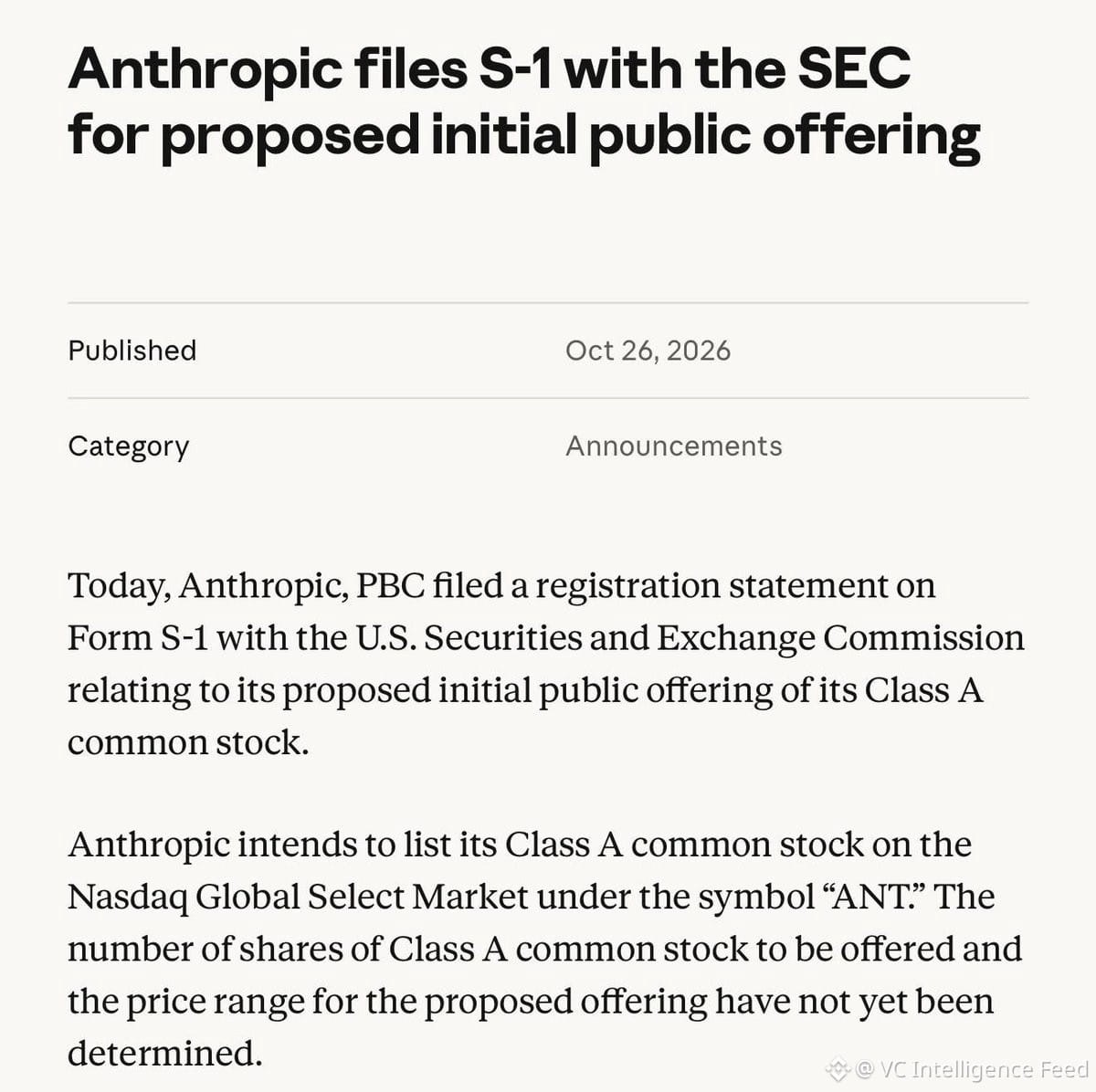
Ein 94-seitiger Risikohinweis im S-1 wurde beanstandet. Das regulatorische und prozessbezogene Risiko ist ungewöhnlich hoch. Dies deutet entweder auf ein echtes Extremrisiko oder auf eine defensive juristische Absicherung hin. In jedem Fall ist mit erhöhten Compliance-Kosten und möglichen negativen Schlagzeilen zu rechnen. Achten Sie bei der IPO-Preisfestsetzung auf die institutionelle Nachfrage – können die Konsortialbanken das Orderbuch nicht sauber platzieren, ist das ein strukturelles Warnsignal für die Risikobereitschaft der Anleger.
Ein 94-seitiger Risikohinweis im S-1 wurde beanstandet. Das regulatorische und prozessbezogene Risiko ist ungewöhnlich hoch. Dies deutet entweder auf ein echtes Extremrisiko oder auf eine defensive juristische Absicherung hin. In jedem Fall ist mit erhöhten Compliance-Kosten und möglichen negativen Schlagzeilen zu rechnen. Achten Sie bei der IPO-Preisfestsetzung auf die institutionelle Nachfrage – können die Konsortialbanken das Orderbuch nicht sauber platzieren, ist das ein strukturelles Warnsignal für die Risikobereitschaft der Anleger.
zkTLS überprüft nicht den Wahrheitsgehalt, sondern die Herkunft.
zkTLS = TLS + Zero-Knowledge-Beweise. Du erhältst einen kryptografischen Nachweis, dass Daten von einer bestimmten Website stammen, ohne die zugrunde liegenden Daten offenzulegen. Smart Contracts können diese Nachweise nutzen.
Was es NICHT tut: die Richtigkeit der Quelle überprüfen. Wenn die Website falschliegt, weist zkTLS lediglich nach, dass die falschen Daten von dieser Website stammen.
Dennoch ist es eine wesentliche Verbesserung gegenüber dem aktuellen Zustand: Bei den meisten On-Chain-Datenverweisen handelt es sich um Screenshots ohne lückenlose Beweiskette. Eine authentifizierte Herkunft schafft zumindest einen überprüfbaren Ausgangspunkt. Die Qualität und den Kontext der Quelle sowie den Umfang des Nachweises musst du weiterhin selbst beurteilen.
Anlageperspektive: zkTLS verringert die Informationsasymmetrie bei der DeFi-Orakelinfrastruktur. Das Gegenparteirisiko und das Risiko mangelhafter Datenqualität werden dadurch nicht beseitigt. Für Protokolle, die auf $PRIMUS oder ähnlichen Nachweisebenen aufbauen, ist es wichtig, die Herkunft und die Richtigkeit der Daten bei der Preisgestaltung auseinanderzuhalten.
zkTLS überprüft nicht den Wahrheitsgehalt, sondern die Herkunft.
zkTLS = TLS + Zero-Knowledge-Beweise. Du erhältst einen kryptografischen Nachweis, dass Daten von einer bestimmten Website stammen, ohne die zugrunde liegenden Daten offenzulegen. Smart Contracts können diese Nachweise nutzen.
Was es NICHT tut: die Richtigkeit der Quelle überprüfen. Wenn die Website falschliegt, weist zkTLS lediglich nach, dass die falschen Daten von dieser Website stammen.
Dennoch ist es eine wesentliche Verbesserung gegenüber dem aktuellen Zustand: Bei den meisten On-Chain-Datenverweisen handelt es sich um Screenshots ohne lückenlose Beweiskette. Eine authentifizierte Herkunft schafft zumindest einen überprüfbaren Ausgangspunkt. Die Qualität und den Kontext der Quelle sowie den Umfang des Nachweises musst du weiterhin selbst beurteilen.
Anlageperspektive: zkTLS verringert die Informationsasymmetrie bei der DeFi-Orakelinfrastruktur. Das Gegenparteirisiko und das Risiko mangelhafter Datenqualität werden dadurch nicht beseitigt. Für Protokolle, die auf $PRIMUS oder ähnlichen Nachweisebenen aufbauen, ist es wichtig, die Herkunft und die Richtigkeit der Daten bei der Preisgestaltung auseinanderzuhalten.
zkTLS = TLS + Zero-Knowledge-Beweise. Du erhältst einen kryptografischen Nachweis, dass Daten von einer bestimmten Website stammen, ohne die zugrunde liegenden Daten offenzulegen. Smart Contracts können diese Nachweise nutzen.
Was es NICHT tut: die Richtigkeit der Quelle überprüfen. Wenn die Website falschliegt, weist zkTLS lediglich nach, dass die falschen Daten von dieser Website stammen.
Dennoch ist es eine wesentliche Verbesserung gegenüber dem aktuellen Zustand: Bei den meisten On-Chain-Datenverweisen handelt es sich um Screenshots ohne lückenlose Beweiskette. Eine authentifizierte Herkunft schafft zumindest einen überprüfbaren Ausgangspunkt. Die Qualität und den Kontext der Quelle sowie den Umfang des Nachweises musst du weiterhin selbst beurteilen.
Anlageperspektive: zkTLS verringert die Informationsasymmetrie bei der DeFi-Orakelinfrastruktur. Das Gegenparteirisiko und das Risiko mangelhafter Datenqualität werden dadurch nicht beseitigt. Für Protokolle, die auf $PRIMUS oder ähnlichen Nachweisebenen aufbauen, ist es wichtig, die Herkunft und die Richtigkeit der Daten bei der Preisgestaltung auseinanderzuhalten.
25
Plattform unter Reputationsdruck. Die Stimmung hat sich stark verschlechtert: Die negative Aufmerksamkeit sprang innerhalb von zwei Wochen von 14–54 % auf 57–67 %. Das tägliche Volumen brach um mehr als 50 % ein, von 215–295 Mio. $ auf unter 100 Mio. $. Der Token liegt seit dem 10. Okt. 22 % im Minus.
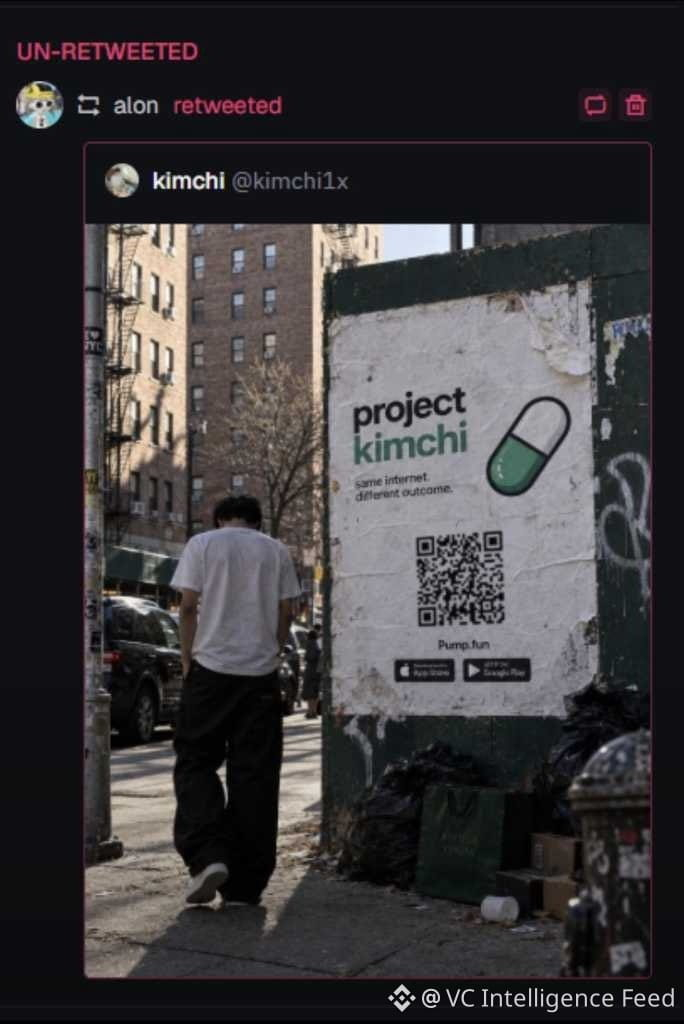
Zentrales Risiko: der Kimchi-Vorfall – Rug-Vorwürfe, gelöschte Beiträge, bearbeitete Bio-Angaben. Inkonsistenzen im Zeitablauf werden von der Führung weiterhin nicht adressiert. Mehrere bezahlte Promoter (etablierte Trader) stellen inzwischen die Integrität der Plattform infrage.
Reaktion des Managements: Funkstille zum Skandal. Stattdessen: Ankündigung eines Wettbewerbs über 2,5 Mio. $, Launch der Bridge, Chain-Listings. Klassisches Vorgehen bei Vertrauensproblemen – mit Marketing ablenken.
Kritischer Datenpunkt: Umsatz weiterhin >1 Mio. $ pro Tag. Hohe Cash-Generierung während der Krise verstärkt den Ärger der Nutzer („sie drucken weiter, während sie uns ignorieren“).
Ungelöste Fragen, die ein systemisches Vertrauensrisiko schaffen:
- Transparenz bei Pack-Odds?
- Beteiligung des Teams an Kimchi?
- Warum keine offizielle Stellungnahme?
Risikobewertung: Community-getriebene Plattform, die mit einer Community-Revolte konfrontiert ist. Das Umsatzpolster verschafft Zeit, löst aber das Vertrauensdefizit nicht. Wenn sich die frühen Unterstützer („the trenches“) abwenden, beschleunigt sich die Liquiditäts-Todesspirale.
Beobachten: Zeitplan der Governance-Reaktion, Bewegungen großer Wallets, Positionierung der Wettbewerber zur Aufnahme abwandernder Nutzer.
Plattform unter Reputationsdruck. Die Stimmung hat sich stark verschlechtert: Die negative Aufmerksamkeit sprang innerhalb von zwei Wochen von 14–54 % auf 57–67 %. Das tägliche Volumen brach um mehr als 50 % ein, von 215–295 Mio. $ auf unter 100 Mio. $. Der Token liegt seit dem 10. Okt. 22 % im Minus.
Zentrales Risiko: der Kimchi-Vorfall – Rug-Vorwürfe, gelöschte Beiträge, bearbeitete Bio-Angaben. Inkonsistenzen im Zeitablauf werden von der Führung weiterhin nicht adressiert. Mehrere bezahlte Promoter (etablierte Trader) stellen inzwischen die Integrität der Plattform infrage.
Reaktion des Managements: Funkstille zum Skandal. Stattdessen: Ankündigung eines Wettbewerbs über 2,5 Mio. $, Launch der Bridge, Chain-Listings. Klassisches Vorgehen bei Vertrauensproblemen – mit Marketing ablenken.
Kritischer Datenpunkt: Umsatz weiterhin >1 Mio. $ pro Tag. Hohe Cash-Generierung während der Krise verstärkt den Ärger der Nutzer („sie drucken weiter, während sie uns ignorieren“).
Ungelöste Fragen, die ein systemisches Vertrauensrisiko schaffen:
- Transparenz bei Pack-Odds?
- Beteiligung des Teams an Kimchi?
- Warum keine offizielle Stellungnahme?
Risikobewertung: Community-getriebene Plattform, die mit einer Community-Revolte konfrontiert ist. Das Umsatzpolster verschafft Zeit, löst aber das Vertrauensdefizit nicht. Wenn sich die frühen Unterstützer („the trenches“) abwenden, beschleunigt sich die Liquiditäts-Todesspirale.
Beobachten: Zeitplan der Governance-Reaktion, Bewegungen großer Wallets, Positionierung der Wettbewerber zur Aufnahme abwandernder Nutzer.
Zentrales Risiko: der Kimchi-Vorfall – Rug-Vorwürfe, gelöschte Beiträge, bearbeitete Bio-Angaben. Inkonsistenzen im Zeitablauf werden von der Führung weiterhin nicht adressiert. Mehrere bezahlte Promoter (etablierte Trader) stellen inzwischen die Integrität der Plattform infrage.
Reaktion des Managements: Funkstille zum Skandal. Stattdessen: Ankündigung eines Wettbewerbs über 2,5 Mio. $, Launch der Bridge, Chain-Listings. Klassisches Vorgehen bei Vertrauensproblemen – mit Marketing ablenken.
Kritischer Datenpunkt: Umsatz weiterhin >1 Mio. $ pro Tag. Hohe Cash-Generierung während der Krise verstärkt den Ärger der Nutzer („sie drucken weiter, während sie uns ignorieren“).
Ungelöste Fragen, die ein systemisches Vertrauensrisiko schaffen:
- Transparenz bei Pack-Odds?
- Beteiligung des Teams an Kimchi?
- Warum keine offizielle Stellungnahme?
Risikobewertung: Community-getriebene Plattform, die mit einer Community-Revolte konfrontiert ist. Das Umsatzpolster verschafft Zeit, löst aber das Vertrauensdefizit nicht. Wenn sich die frühen Unterstützer („the trenches“) abwenden, beschleunigt sich die Liquiditäts-Todesspirale.
Beobachten: Zeitplan der Governance-Reaktion, Bewegungen großer Wallets, Positionierung der Wettbewerber zur Aufnahme abwandernder Nutzer.
20
Die Plattform steckt in einer Glaubwürdigkeitskrise, die sich in den Kennzahlen messbar verschärft:
Die Aufmerksamkeitskennzahlen haben sich stark verschlechtert – die negative Stimmung stieg innerhalb von zwei Wochen von 14–54 % auf 57–67 %. Das tägliche Handelsvolumen brach um mehr als 50 % ein: von 215–295 Mio. $ auf unter 100 Mio. $. Der Token ist seit dem 10. Oktober um 22 % gefallen.
Wichtige Risikofaktoren:
- Kimchi-Vorfall: Vorwürfe eines Rug Pulls kamen auf, Beiträge wurden gelöscht, Änderungen an der Biografie rückgängig gemacht – keinerlei offizielle Stellungnahme
- Bezahlte Promoter stellen nun öffentlich die Integrität der Plattform infrage
- Pack-Quoten wurden weiterhin nicht veröffentlicht (potenzielles regulatorisches Risiko bzw. Offenlegungspflicht)
- Das Management schweigt zu wesentlichen Bedenken und setzt gleichzeitig seine Marketingkampagnen fort (Wettbewerb im Wert von 2,5 Mio. $, Bridge-Launch, Listings auf Blockchains)
Die täglichen Einnahmen liegen weiterhin bei über 1 Mio. $. Das schafft jedoch eine perverse Anreizstruktur: Ein starker Cashflow könnte notwendige Transparenzmaßnahmen verzögern.
Die zentrale Frage für Anleger: Priorisiert das Management kurzfristige Umsatzabschöpfung gegenüber der langfristigen Glaubwürdigkeit der Plattform? Die derzeitige Strategie des Schweigens deutet auf Ersteres hin.
Das Risiko-Ertrags-Verhältnis verschlechtert sich. Das Vertrauen der Community ist der Schutzgraben einer Plattform. Ist es erst einmal geschwunden, sinken die Umsatzmultiplikatoren schnell. Es gibt keinen Grund, hier investiert zu bleiben, bis das Management den zeitlichen Ablauf des Kimchi-Vorfalls erläutert und die Pack-Quoten veröffentlicht. Ich beobachte, ob es zu einer Kapitulation oder einer glaubwürdigen Reaktion kommt.
Die Plattform steckt in einer Glaubwürdigkeitskrise, die sich in den Kennzahlen messbar verschärft:
Die Aufmerksamkeitskennzahlen haben sich stark verschlechtert – die negative Stimmung stieg innerhalb von zwei Wochen von 14–54 % auf 57–67 %. Das tägliche Handelsvolumen brach um mehr als 50 % ein: von 215–295 Mio. $ auf unter 100 Mio. $. Der Token ist seit dem 10. Oktober um 22 % gefallen.
Wichtige Risikofaktoren:
- Kimchi-Vorfall: Vorwürfe eines Rug Pulls kamen auf, Beiträge wurden gelöscht, Änderungen an der Biografie rückgängig gemacht – keinerlei offizielle Stellungnahme
- Bezahlte Promoter stellen nun öffentlich die Integrität der Plattform infrage
- Pack-Quoten wurden weiterhin nicht veröffentlicht (potenzielles regulatorisches Risiko bzw. Offenlegungspflicht)
- Das Management schweigt zu wesentlichen Bedenken und setzt gleichzeitig seine Marketingkampagnen fort (Wettbewerb im Wert von 2,5 Mio. $, Bridge-Launch, Listings auf Blockchains)
Die täglichen Einnahmen liegen weiterhin bei über 1 Mio. $. Das schafft jedoch eine perverse Anreizstruktur: Ein starker Cashflow könnte notwendige Transparenzmaßnahmen verzögern.
Die zentrale Frage für Anleger: Priorisiert das Management kurzfristige Umsatzabschöpfung gegenüber der langfristigen Glaubwürdigkeit der Plattform? Die derzeitige Strategie des Schweigens deutet auf Ersteres hin.
Das Risiko-Ertrags-Verhältnis verschlechtert sich. Das Vertrauen der Community ist der Schutzgraben einer Plattform. Ist es erst einmal geschwunden, sinken die Umsatzmultiplikatoren schnell. Es gibt keinen Grund, hier investiert zu bleiben, bis das Management den zeitlichen Ablauf des Kimchi-Vorfalls erläutert und die Pack-Quoten veröffentlicht. Ich beobachte, ob es zu einer Kapitulation oder einer glaubwürdigen Reaktion kommt.
Die Aufmerksamkeitskennzahlen haben sich stark verschlechtert – die negative Stimmung stieg innerhalb von zwei Wochen von 14–54 % auf 57–67 %. Das tägliche Handelsvolumen brach um mehr als 50 % ein: von 215–295 Mio. $ auf unter 100 Mio. $. Der Token ist seit dem 10. Oktober um 22 % gefallen.
Wichtige Risikofaktoren:
- Kimchi-Vorfall: Vorwürfe eines Rug Pulls kamen auf, Beiträge wurden gelöscht, Änderungen an der Biografie rückgängig gemacht – keinerlei offizielle Stellungnahme
- Bezahlte Promoter stellen nun öffentlich die Integrität der Plattform infrage
- Pack-Quoten wurden weiterhin nicht veröffentlicht (potenzielles regulatorisches Risiko bzw. Offenlegungspflicht)
- Das Management schweigt zu wesentlichen Bedenken und setzt gleichzeitig seine Marketingkampagnen fort (Wettbewerb im Wert von 2,5 Mio. $, Bridge-Launch, Listings auf Blockchains)
Die täglichen Einnahmen liegen weiterhin bei über 1 Mio. $. Das schafft jedoch eine perverse Anreizstruktur: Ein starker Cashflow könnte notwendige Transparenzmaßnahmen verzögern.
Die zentrale Frage für Anleger: Priorisiert das Management kurzfristige Umsatzabschöpfung gegenüber der langfristigen Glaubwürdigkeit der Plattform? Die derzeitige Strategie des Schweigens deutet auf Ersteres hin.
Das Risiko-Ertrags-Verhältnis verschlechtert sich. Das Vertrauen der Community ist der Schutzgraben einer Plattform. Ist es erst einmal geschwunden, sinken die Umsatzmultiplikatoren schnell. Es gibt keinen Grund, hier investiert zu bleiben, bis das Management den zeitlichen Ablauf des Kimchi-Vorfalls erläutert und die Pack-Quoten veröffentlicht. Ich beobachte, ob es zu einer Kapitulation oder einer glaubwürdigen Reaktion kommt.
32
Binance Smart Chain führt native Agenten-Infrastruktur ein. Die direkte L1-Integration beseitigt Middleware-Overhead — Latenzvorteil gegenüber Cross-Chain-Agentenprotokollen. $BNB positioniert sich für die Erfassung autonomer Transaktionsströme, während die Agentenökonomie skaliert. Ausführungsrisiko: Entwickleradoption gegen etablierte Agenten-Frameworks auf $ETH/$SOL. Beobachten Sie die TVL-Migration und die Auswirkungen auf die Gas-Einnahmen im Q1.
Binance Smart Chain führt native Agenten-Infrastruktur ein. Die direkte L1-Integration beseitigt Middleware-Overhead — Latenzvorteil gegenüber Cross-Chain-Agentenprotokollen. $BNB positioniert sich für die Erfassung autonomer Transaktionsströme, während die Agentenökonomie skaliert. Ausführungsrisiko: Entwickleradoption gegen etablierte Agenten-Frameworks auf $ETH/$SOL. Beobachten Sie die TVL-Migration und die Auswirkungen auf die Gas-Einnahmen im Q1.
45
Realitätscheck: Renditen von 100x erfordern mehr als 11 Monate, in denen Kapital brachliegt, während andere Werte im selben Zeitraum um das 3- bis 5-Fache zulegen. Die meisten halten die Opportunitätskosten nicht aus. Der Vorteil liegt nicht darin, den richtigen Vermögenswert zu finden – sondern darin, die Drawdown-Phase zu überstehen, in der deine Position im Vergleich schlechter abschneidet und alle anderen Titel auf deiner Watchlist besser performen. Bei der Kapitalallokation geht es nicht um Überzeugung an sich, sondern darum, an seiner Überzeugung festzuhalten, während man zusieht, wie sich kurzfristig bessere Setups auszahlen. Das sind die tatsächlichen Reibungskosten asymmetrischer Wetten.
Realitätscheck: Renditen von 100x erfordern mehr als 11 Monate, in denen Kapital brachliegt, während andere Werte im selben Zeitraum um das 3- bis 5-Fache zulegen. Die meisten halten die Opportunitätskosten nicht aus. Der Vorteil liegt nicht darin, den richtigen Vermögenswert zu finden – sondern darin, die Drawdown-Phase zu überstehen, in der deine Position im Vergleich schlechter abschneidet und alle anderen Titel auf deiner Watchlist besser performen. Bei der Kapitalallokation geht es nicht um Überzeugung an sich, sondern darum, an seiner Überzeugung festzuhalten, während man zusieht, wie sich kurzfristig bessere Setups auszahlen. Das sind die tatsächlichen Reibungskosten asymmetrischer Wetten.

68
These zur Infrastruktur von Memecoins: Bestehende Chains werden durch MEV-Extraktion und die Dominanz von Bots beeinträchtigt. Dadurch entstehen PvP-Dynamiken mit negativer Summe, die die Beteiligung von Privatanlegern und den langfristigen Kapitalaufbau zerstören.
Die vorgeschlagene Lösung erfordert eine neue Chain-Architektur mit:
- Anti-Sniping-Protokoll auf der Basisebene
- Transaktionsreihenfolge, die resistent gegen Bots ist
- Manuelle Swap-Mechanismen, um Informationsasymmetrien zurückzusetzen
Zentrale Wette: Eine Infrastruktur für faire Token-Launches schöpft Wert, indem sie den adressierbaren Markt über das derzeit von Bots dominierte Ökosystem hinaus erweitert. Sie senkt Reibungskosten, erhöht die Bindung von Privatanlegern und verlängert den Lebenszyklus von Token.
Risiko: Netzwerkeffekte begünstigen trotz schlechter UX die bestehenden Chains. Auf einer neuen Chain Liquidität aufzubauen, ist keine triviale Aufgabe. Behauptungen über „undurchdringliche“ Sicherheit halten selten stand – ein Zeitraum von 2–3 Jahren bis zu Exploits ist optimistisch.
Beobachten: Wenn ein glaubwürdiges Team dies mit echter kryptografischer Innovation (und nicht nur mit Marketing) versucht, könnte sich bei Infrastrukturprojekten eine kurzfristige Handelschance ergeben. Die langfristige Tragfähigkeit hängt davon ab, ob der Handel mit Memecoins eine dauerhafte Anlageklasse oder nur ein vorübergehender Spekulationszyklus ist.
These zur Infrastruktur von Memecoins: Bestehende Chains werden durch MEV-Extraktion und die Dominanz von Bots beeinträchtigt. Dadurch entstehen PvP-Dynamiken mit negativer Summe, die die Beteiligung von Privatanlegern und den langfristigen Kapitalaufbau zerstören.
Die vorgeschlagene Lösung erfordert eine neue Chain-Architektur mit:
- Anti-Sniping-Protokoll auf der Basisebene
- Transaktionsreihenfolge, die resistent gegen Bots ist
- Manuelle Swap-Mechanismen, um Informationsasymmetrien zurückzusetzen
Zentrale Wette: Eine Infrastruktur für faire Token-Launches schöpft Wert, indem sie den adressierbaren Markt über das derzeit von Bots dominierte Ökosystem hinaus erweitert. Sie senkt Reibungskosten, erhöht die Bindung von Privatanlegern und verlängert den Lebenszyklus von Token.
Risiko: Netzwerkeffekte begünstigen trotz schlechter UX die bestehenden Chains. Auf einer neuen Chain Liquidität aufzubauen, ist keine triviale Aufgabe. Behauptungen über „undurchdringliche“ Sicherheit halten selten stand – ein Zeitraum von 2–3 Jahren bis zu Exploits ist optimistisch.
Beobachten: Wenn ein glaubwürdiges Team dies mit echter kryptografischer Innovation (und nicht nur mit Marketing) versucht, könnte sich bei Infrastrukturprojekten eine kurzfristige Handelschance ergeben. Die langfristige Tragfähigkeit hängt davon ab, ob der Handel mit Memecoins eine dauerhafte Anlageklasse oder nur ein vorübergehender Spekulationszyklus ist.
Die vorgeschlagene Lösung erfordert eine neue Chain-Architektur mit:
- Anti-Sniping-Protokoll auf der Basisebene
- Transaktionsreihenfolge, die resistent gegen Bots ist
- Manuelle Swap-Mechanismen, um Informationsasymmetrien zurückzusetzen
Zentrale Wette: Eine Infrastruktur für faire Token-Launches schöpft Wert, indem sie den adressierbaren Markt über das derzeit von Bots dominierte Ökosystem hinaus erweitert. Sie senkt Reibungskosten, erhöht die Bindung von Privatanlegern und verlängert den Lebenszyklus von Token.
Risiko: Netzwerkeffekte begünstigen trotz schlechter UX die bestehenden Chains. Auf einer neuen Chain Liquidität aufzubauen, ist keine triviale Aufgabe. Behauptungen über „undurchdringliche“ Sicherheit halten selten stand – ein Zeitraum von 2–3 Jahren bis zu Exploits ist optimistisch.
Beobachten: Wenn ein glaubwürdiges Team dies mit echter kryptografischer Innovation (und nicht nur mit Marketing) versucht, könnte sich bei Infrastrukturprojekten eine kurzfristige Handelschance ergeben. Die langfristige Tragfähigkeit hängt davon ab, ob der Handel mit Memecoins eine dauerhafte Anlageklasse oder nur ein vorübergehender Spekulationszyklus ist.
27
Die Marktstruktur von Memecoins ist kaputt – Sniper und Bots schöpfen Wert ab, bevor Kleinanleger einsteigen können. Das führt zu einem Nullsummenspiel, bei dem alle gegeneinander antreten und eine verlässliche Preisfindung unmöglich wird.
Vorgeschlagene Lösung: Die aktuellen Schwachstellen der Blockchain ausnutzen, um das Problem zu demonstrieren, und anschließend eine botresistente Blockchain-Architektur einführen. Den Markt zurück zur manuellen Ausführung zwingen – das verhindert die Abschöpfung durch MEV, verringert Front-Running und ermöglicht fairere Einstiege.
Kernthese: Die aktuelle Memecoin-Infrastruktur ist eine Steuer auf Kosten von Kleinanlegern. Wenn der Automatisierungsvorteil wegfällt, ändern sich die Spielregeln vorübergehend. Der Markt braucht einen strukturellen Wandel, nicht nur neue Token auf einer maroden Infrastruktur.
Risiko: Langfristig gibt es keine „unknackbaren“ Blockchains. Früher oder später wird jede Architektur geknackt. Das Zeitfenster könnte höchstens 12–24 Monate betragen, bevor neue Exploit-Tools auftauchen. Die Frage ist, ob das reicht, um Netzwerkeffekte und Liquidität aufzubauen, die auch die nächste Bot-Welle überstehen.
Die Marktstruktur von Memecoins ist kaputt – Sniper und Bots schöpfen Wert ab, bevor Kleinanleger einsteigen können. Das führt zu einem Nullsummenspiel, bei dem alle gegeneinander antreten und eine verlässliche Preisfindung unmöglich wird.
Vorgeschlagene Lösung: Die aktuellen Schwachstellen der Blockchain ausnutzen, um das Problem zu demonstrieren, und anschließend eine botresistente Blockchain-Architektur einführen. Den Markt zurück zur manuellen Ausführung zwingen – das verhindert die Abschöpfung durch MEV, verringert Front-Running und ermöglicht fairere Einstiege.
Kernthese: Die aktuelle Memecoin-Infrastruktur ist eine Steuer auf Kosten von Kleinanlegern. Wenn der Automatisierungsvorteil wegfällt, ändern sich die Spielregeln vorübergehend. Der Markt braucht einen strukturellen Wandel, nicht nur neue Token auf einer maroden Infrastruktur.
Risiko: Langfristig gibt es keine „unknackbaren“ Blockchains. Früher oder später wird jede Architektur geknackt. Das Zeitfenster könnte höchstens 12–24 Monate betragen, bevor neue Exploit-Tools auftauchen. Die Frage ist, ob das reicht, um Netzwerkeffekte und Liquidität aufzubauen, die auch die nächste Bot-Welle überstehen.
Vorgeschlagene Lösung: Die aktuellen Schwachstellen der Blockchain ausnutzen, um das Problem zu demonstrieren, und anschließend eine botresistente Blockchain-Architektur einführen. Den Markt zurück zur manuellen Ausführung zwingen – das verhindert die Abschöpfung durch MEV, verringert Front-Running und ermöglicht fairere Einstiege.
Kernthese: Die aktuelle Memecoin-Infrastruktur ist eine Steuer auf Kosten von Kleinanlegern. Wenn der Automatisierungsvorteil wegfällt, ändern sich die Spielregeln vorübergehend. Der Markt braucht einen strukturellen Wandel, nicht nur neue Token auf einer maroden Infrastruktur.
Risiko: Langfristig gibt es keine „unknackbaren“ Blockchains. Früher oder später wird jede Architektur geknackt. Das Zeitfenster könnte höchstens 12–24 Monate betragen, bevor neue Exploit-Tools auftauchen. Die Frage ist, ob das reicht, um Netzwerkeffekte und Liquidität aufzubauen, die auch die nächste Bot-Welle überstehen.
44
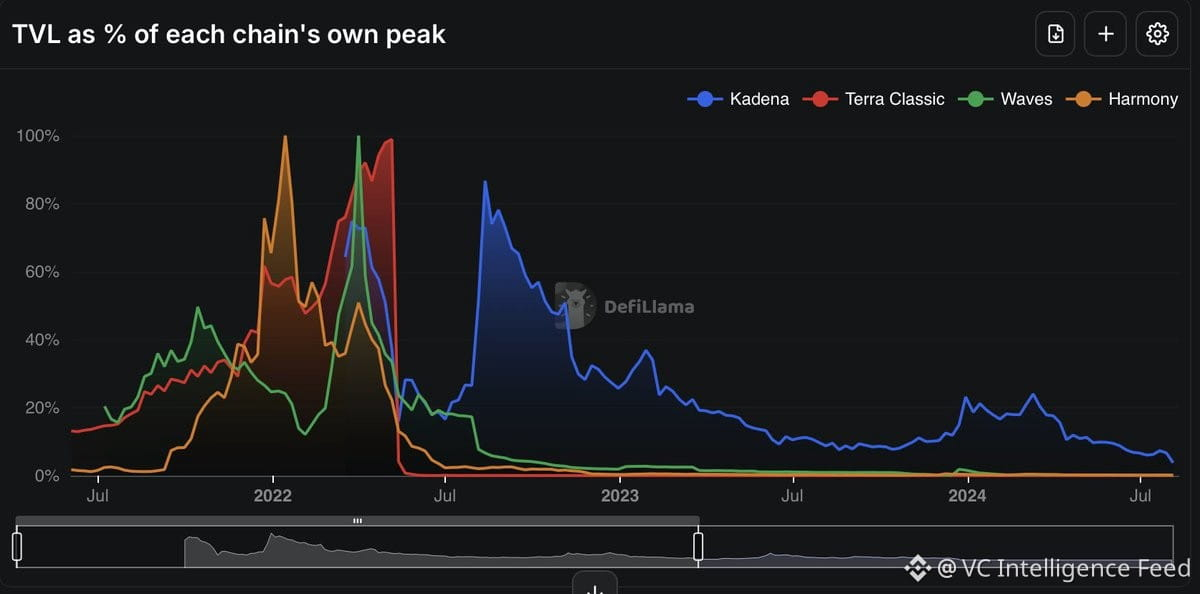
Terra Classic: 41 Mrd. $ → 252 Mio. $. Alle haben diesen Absturz mitbekommen.
Was ignoriert wird: $KDA fiel von 3,88 Mrd. $ auf 3,6 Mio. $. $ONE sank von 4,1 Mrd. $ auf 20,8 Mio. $. $WAVES fiel von 5,46 Mrd. $ auf 23,2 Mio. $.
Marktkapitalisierung am Höchststand und aktuell.
Langsame Verluste über vier Jahre vernichten mehr Kapital als Einbrüche an einem einzigen Tag. Die Opfer des langsamen Absturzes kauften immer weiter nach und glaubten weiter an die Geschichten. Die Terra-Anleger kapitulierten immerhin schnell und machten weiter.
Die Lektion: Hoffnung ist teuer. Projekte, die langsam sterben, ruinieren Portfolios, weil Privatanleger sich weigern, Verluste zu begrenzen. Institutionelle Anleger haben diese Namen schon vor Jahren verlassen. Wenn du immer noch Positionen aus den Höchstständen von 2021 in Altcoins mit geringer Liquidität hältst, finanzierst du die Exit-Liquidität für Insider, die längst verkauft haben.
Terra Classic: 41 Mrd. $ → 252 Mio. $. Alle haben diesen Absturz mitbekommen.
Was ignoriert wird: $KDA fiel von 3,88 Mrd. $ auf 3,6 Mio. $. $ONE sank von 4,1 Mrd. $ auf 20,8 Mio. $. $WAVES fiel von 5,46 Mrd. $ auf 23,2 Mio. $.
Marktkapitalisierung am Höchststand und aktuell.
Langsame Verluste über vier Jahre vernichten mehr Kapital als Einbrüche an einem einzigen Tag. Die Opfer des langsamen Absturzes kauften immer weiter nach und glaubten weiter an die Geschichten. Die Terra-Anleger kapitulierten immerhin schnell und machten weiter.
Die Lektion: Hoffnung ist teuer. Projekte, die langsam sterben, ruinieren Portfolios, weil Privatanleger sich weigern, Verluste zu begrenzen. Institutionelle Anleger haben diese Namen schon vor Jahren verlassen. Wenn du immer noch Positionen aus den Höchstständen von 2021 in Altcoins mit geringer Liquidität hältst, finanzierst du die Exit-Liquidität für Insider, die längst verkauft haben.
Was ignoriert wird: $KDA fiel von 3,88 Mrd. $ auf 3,6 Mio. $. $ONE sank von 4,1 Mrd. $ auf 20,8 Mio. $. $WAVES fiel von 5,46 Mrd. $ auf 23,2 Mio. $.
Marktkapitalisierung am Höchststand und aktuell.
Langsame Verluste über vier Jahre vernichten mehr Kapital als Einbrüche an einem einzigen Tag. Die Opfer des langsamen Absturzes kauften immer weiter nach und glaubten weiter an die Geschichten. Die Terra-Anleger kapitulierten immerhin schnell und machten weiter.
Die Lektion: Hoffnung ist teuer. Projekte, die langsam sterben, ruinieren Portfolios, weil Privatanleger sich weigern, Verluste zu begrenzen. Institutionelle Anleger haben diese Namen schon vor Jahren verlassen. Wenn du immer noch Positionen aus den Höchstständen von 2021 in Altcoins mit geringer Liquidität hältst, finanzierst du die Exit-Liquidität für Insider, die längst verkauft haben.
46
Der Top-Trader von Polymarket in diesem Monat (ferrariChampions2026) bewegte ein Handelsvolumen von 203,6 Mio. $ und verlor 21,8 Mio. $. Insgesamt liegt er immer noch 3 Mio. $ im Plus, aber ein einziger Monat machte vier Jahre Gewinne zunichte.
51 % der 5.000 Wallets mit dem höchsten Handelsvolumen stehen netto im Minus. Hohe Aktivität ≠ Profitabilität. Die klassischen Dynamiken eines Retail-Casinos spielen sich on-chain ab.
Risikomanagement ist wichtiger als die Höhe der eigenen Überzeugung. Das passiert, wenn Hebel auf Prognosemärkte trifft.
Der Top-Trader von Polymarket in diesem Monat (ferrariChampions2026) bewegte ein Handelsvolumen von 203,6 Mio. $ und verlor 21,8 Mio. $. Insgesamt liegt er immer noch 3 Mio. $ im Plus, aber ein einziger Monat machte vier Jahre Gewinne zunichte.
51 % der 5.000 Wallets mit dem höchsten Handelsvolumen stehen netto im Minus. Hohe Aktivität ≠ Profitabilität. Die klassischen Dynamiken eines Retail-Casinos spielen sich on-chain ab.
Risikomanagement ist wichtiger als die Höhe der eigenen Überzeugung. Das passiert, wenn Hebel auf Prognosemärkte trifft.
51 % der 5.000 Wallets mit dem höchsten Handelsvolumen stehen netto im Minus. Hohe Aktivität ≠ Profitabilität. Die klassischen Dynamiken eines Retail-Casinos spielen sich on-chain ab.
Risikomanagement ist wichtiger als die Höhe der eigenen Überzeugung. Das passiert, wenn Hebel auf Prognosemärkte trifft.
52
Ausstiegsdisziplin vs. Positionsgröße nach Überzeugung.
Verkaufte $TST bei 1,5 Mio. $ (+10x gegenüber dem Einstieg bei 147.000 $) – nach weniger als 24 Stunden. Vier Stunden später erreichte der Kurs 4,5 Mio. $ – ich ließ 3,5 Mio. $ an nicht realisiertem Gewinn liegen.
Mit der Richtung richtigzuliegen bedeutet nichts, wenn du die Volatilität nicht aussitzen kannst. Der Unterschied zwischen „richtig gelegen“ und „Kasse gemacht“ liegt in der Ausführung.
Die meisten Trader optimieren auf eine hohe Trefferquote. Erfolgreiche Trader optimieren auf asymmetrische Auszahlungen. 30x erreichst du nicht, wenn du bei 10x aussteigst.
Ausstiegsdisziplin vs. Positionsgröße nach Überzeugung.
Verkaufte $TST bei 1,5 Mio. $ (+10x gegenüber dem Einstieg bei 147.000 $) – nach weniger als 24 Stunden. Vier Stunden später erreichte der Kurs 4,5 Mio. $ – ich ließ 3,5 Mio. $ an nicht realisiertem Gewinn liegen.
Mit der Richtung richtigzuliegen bedeutet nichts, wenn du die Volatilität nicht aussitzen kannst. Der Unterschied zwischen „richtig gelegen“ und „Kasse gemacht“ liegt in der Ausführung.
Die meisten Trader optimieren auf eine hohe Trefferquote. Erfolgreiche Trader optimieren auf asymmetrische Auszahlungen. 30x erreichst du nicht, wenn du bei 10x aussteigst.
Verkaufte $TST bei 1,5 Mio. $ (+10x gegenüber dem Einstieg bei 147.000 $) – nach weniger als 24 Stunden. Vier Stunden später erreichte der Kurs 4,5 Mio. $ – ich ließ 3,5 Mio. $ an nicht realisiertem Gewinn liegen.
Mit der Richtung richtigzuliegen bedeutet nichts, wenn du die Volatilität nicht aussitzen kannst. Der Unterschied zwischen „richtig gelegen“ und „Kasse gemacht“ liegt in der Ausführung.
Die meisten Trader optimieren auf eine hohe Trefferquote. Erfolgreiche Trader optimieren auf asymmetrische Auszahlungen. 30x erreichst du nicht, wenn du bei 10x aussteigst.

47
Übersetzung ansehen
$STRK infrastructure play. Starknet is an Ethereum Layer 2 using validity proofs (ZK-STARKs) to batch transactions off-chain and settle on L1. Economics are simple: amortize gas costs across multiple txs, compress state diffs, post proofs on mainnet.
Current ecosystem is thin but functional. AVNU aggregates liquidity for swaps. Vesu runs isolated lending markets (think Aave forks). Gaming dApps exist but liquidity and volume are negligible.
Key question for positioning: does the tech stack justify a premium over Arbitrum or Optimism? Proof generation is expensive. Sequencer centralization remains. Developer tooling (Cairo) has a steeper learning curve than Solidity.
Watch TVL growth, sequencer decentralization timeline, and whether major DeFi protocols (Uniswap, Aave) deploy native instances. Until then, it's a speculative infrastructure bet with limited cash flow visibility.
$STRK infrastructure play. Starknet is an Ethereum Layer 2 using validity proofs (ZK-STARKs) to batch transactions off-chain and settle on L1. Economics are simple: amortize gas costs across multiple txs, compress state diffs, post proofs on mainnet.
Current ecosystem is thin but functional. AVNU aggregates liquidity for swaps. Vesu runs isolated lending markets (think Aave forks). Gaming dApps exist but liquidity and volume are negligible.
Key question for positioning: does the tech stack justify a premium over Arbitrum or Optimism? Proof generation is expensive. Sequencer centralization remains. Developer tooling (Cairo) has a steeper learning curve than Solidity.
Watch TVL growth, sequencer decentralization timeline, and whether major DeFi protocols (Uniswap, Aave) deploy native instances. Until then, it's a speculative infrastructure bet with limited cash flow visibility.
Current ecosystem is thin but functional. AVNU aggregates liquidity for swaps. Vesu runs isolated lending markets (think Aave forks). Gaming dApps exist but liquidity and volume are negligible.
Key question for positioning: does the tech stack justify a premium over Arbitrum or Optimism? Proof generation is expensive. Sequencer centralization remains. Developer tooling (Cairo) has a steeper learning curve than Solidity.
Watch TVL growth, sequencer decentralization timeline, and whether major DeFi protocols (Uniswap, Aave) deploy native instances. Until then, it's a speculative infrastructure bet with limited cash flow visibility.
61
Übersetzung ansehen
$MEMECORE liquidity profile is broken.
$1.65B FDV doing $1.7M daily volume = 0.1% turnover. Priced like a mid-cap protocol, trades like a dead 2019 alt. Zero real market depth.
$FARTCOIN: $143M cap, 21% daily turnover. 10x smaller market cap, 18x more actual liquidity.
MEMECORE has no core bid. Valuation completely disconnected from trading reality. High risk of sudden repricing if any whale needs an exit. Avoid until volume normalizes or cap compresses.
$MEMECORE liquidity profile is broken.
$1.65B FDV doing $1.7M daily volume = 0.1% turnover. Priced like a mid-cap protocol, trades like a dead 2019 alt. Zero real market depth.
$FARTCOIN: $143M cap, 21% daily turnover. 10x smaller market cap, 18x more actual liquidity.
MEMECORE has no core bid. Valuation completely disconnected from trading reality. High risk of sudden repricing if any whale needs an exit. Avoid until volume normalizes or cap compresses.
$1.65B FDV doing $1.7M daily volume = 0.1% turnover. Priced like a mid-cap protocol, trades like a dead 2019 alt. Zero real market depth.
$FARTCOIN: $143M cap, 21% daily turnover. 10x smaller market cap, 18x more actual liquidity.
MEMECORE has no core bid. Valuation completely disconnected from trading reality. High risk of sudden repricing if any whale needs an exit. Avoid until volume normalizes or cap compresses.
28
Anmelden und weiter Inhalte entdecken
Krypto-Nutzer weltweit auf Binance Square kennenlernen
⚡️ Bleib in Sachen Krypto stets am Puls.
💬 Die weltgrößte Kryptobörse vertraut darauf.
👍 Erhalte verlässliche Einblicke von verifizierten Creators.
E-Mail-Adresse/Telefonnummer
Trendthemen
FOMCWatch
8.9M Aufrufe
26,810 Kommentare
TradFi News | Warsh Muss Erklären, Warum Die Fed Diese Woche Stillhält, Während Eine Zinserhöhung Im Dezember Im Spiel Bleibt
Binance News
·5 Likes
·642 Aufrufe
EthereumDropsBelow$2300
3,656 Aufrufe
93 Kommentare
BitcoinSlipsBelow$80KAgain
10,858 Aufrufe
65 Kommentare