

#defi
defi
57.6M Aufrufe
305,370 Kommentare
Hot
Zuletzt

·
--
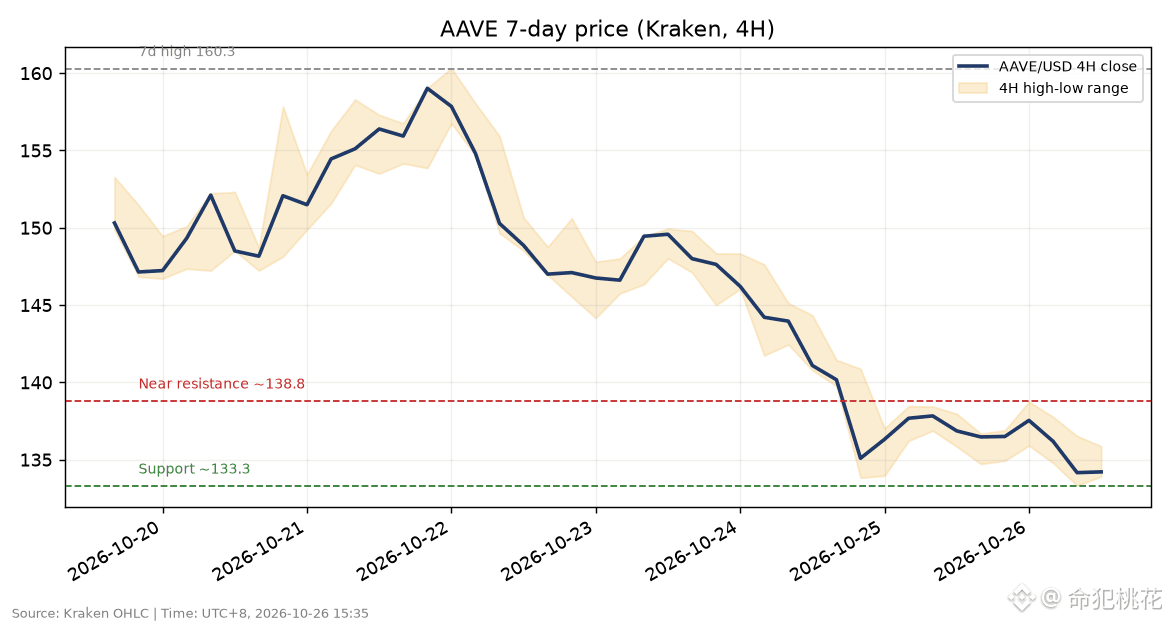
$AAVE In den letzten Tagen ist der Kurs von 160 auf 134 zurückgefallen. Ich möchte mir das unter dem Gesichtspunkt ansehen, ob das Protokoll tatsächlich Geld verdient.
Preis: Der aktuelle Kurs auf Kraken liegt bei etwa 134,2. Der heutige Eröffnungskurs lag bei 136,17, das Tief bei 133,32. Die Schlusskurse der letzten 7 Tage bewegten sich im 4-Stunden-Chart ungefähr zwischen 134 und 159. Vor einer Woche lag der Kurs bei etwa 150; insgesamt ist er um rund 10 % zurückgegangen. Das 30-Tage-Hoch liegt bei 187,6 – davon ist der aktuelle Kurs bereits deutlich entfernt.
On-Chain-Daten (DefiLlama):
1. Der TVL des Protokolls liegt bei etwa 17,58 Mrd. US-Dollar, davon entfallen rund 12,16 Mrd. auf ausstehende Kredite. Das zeigt, dass die Mittel weiterhin tatsächlich genutzt werden.
2. Die Gebühren des Protokolls beliefen sich in den letzten 7 Tagen auf etwa 8,2 Mio. US-Dollar, annualisiert also auf rund 430 Mio. Die dem Protokoll zufließenden Einnahmen lagen bei etwa 1,1 Mio., annualisiert bei rund 57,5 Mio.
3. Bei einer umlaufenden Marktkapitalisierung von 2,07 Mrd. US-Dollar entspricht das etwa dem 4,8-Fachen der annualisierten Gebühren, aber rund dem 36-Fachen der annualisierten Protokolleinnahmen. Je nachdem, welche Kennzahl man betrachtet, fällt das Fazit sehr unterschiedlich aus.
Katalysatoren: Die ersten extern kuratierten Märkte von V4 (verwaltet von Sentora) sind auf Ethereum live gegangen. Auf Base wurde außerdem ein Markt eröffnet, auf dem tokenisierte US-Aktien als Sicherheiten für USDC-Kredite dienen. Risiken: Laut On-Chain-Überwachung hat eine Institution kürzlich etwa 35.000 AAVE an eine Börse transferiert; der Vorschlag für das V3.8-Upgrade und die Bereinigung von Märkten mit geringer Nutzung befindet sich noch in der Governance-Abstimmung.
Orientierungspunkte: Nach unten ist das heutige Tief bei 133,3 relevant, nach oben zunächst der Bereich um 138,8 – das Hoch der gestrigen Erholung. Ein Durchbruch unter das vorherige Tief könnte die kurzfristige Dynamik schwächen.
Was ist für euch wichtiger: die Gebühren des Protokolls oder die Einnahmen, die tatsächlich den Token-Inhabern zugutekommen?
#AAVE #DeFi #On-Chain-Daten
Keine Anlageberatung. Bitte beurteilt die Risiken selbst.
$AAVE In den letzten Tagen ist der Kurs von 160 auf 134 zurückgefallen. Ich möchte mir das unter dem Gesichtspunkt ansehen, ob das Protokoll tatsächlich Geld verdient.
Preis: Der aktuelle Kurs auf Kraken liegt bei etwa 134,2. Der heutige Eröffnungskurs lag bei 136,17, das Tief bei 133,32. Die Schlusskurse der letzten 7 Tage bewegten sich im 4-Stunden-Chart ungefähr zwischen 134 und 159. Vor einer Woche lag der Kurs bei etwa 150; insgesamt ist er um rund 10 % zurückgegangen. Das 30-Tage-Hoch liegt bei 187,6 – davon ist der aktuelle Kurs bereits deutlich entfernt.
On-Chain-Daten (DefiLlama):
1. Der TVL des Protokolls liegt bei etwa 17,58 Mrd. US-Dollar, davon entfallen rund 12,16 Mrd. auf ausstehende Kredite. Das zeigt, dass die Mittel weiterhin tatsächlich genutzt werden.
2. Die Gebühren des Protokolls beliefen sich in den letzten 7 Tagen auf etwa 8,2 Mio. US-Dollar, annualisiert also auf rund 430 Mio. Die dem Protokoll zufließenden Einnahmen lagen bei etwa 1,1 Mio., annualisiert bei rund 57,5 Mio.
3. Bei einer umlaufenden Marktkapitalisierung von 2,07 Mrd. US-Dollar entspricht das etwa dem 4,8-Fachen der annualisierten Gebühren, aber rund dem 36-Fachen der annualisierten Protokolleinnahmen. Je nachdem, welche Kennzahl man betrachtet, fällt das Fazit sehr unterschiedlich aus.
Katalysatoren: Die ersten extern kuratierten Märkte von V4 (verwaltet von Sentora) sind auf Ethereum live gegangen. Auf Base wurde außerdem ein Markt eröffnet, auf dem tokenisierte US-Aktien als Sicherheiten für USDC-Kredite dienen. Risiken: Laut On-Chain-Überwachung hat eine Institution kürzlich etwa 35.000 AAVE an eine Börse transferiert; der Vorschlag für das V3.8-Upgrade und die Bereinigung von Märkten mit geringer Nutzung befindet sich noch in der Governance-Abstimmung.
Orientierungspunkte: Nach unten ist das heutige Tief bei 133,3 relevant, nach oben zunächst der Bereich um 138,8 – das Hoch der gestrigen Erholung. Ein Durchbruch unter das vorherige Tief könnte die kurzfristige Dynamik schwächen.
Was ist für euch wichtiger: die Gebühren des Protokolls oder die Einnahmen, die tatsächlich den Token-Inhabern zugutekommen?
#AAVE #DeFi #On-Chain-Daten
Keine Anlageberatung. Bitte beurteilt die Risiken selbst.
Preis: Der aktuelle Kurs auf Kraken liegt bei etwa 134,2. Der heutige Eröffnungskurs lag bei 136,17, das Tief bei 133,32. Die Schlusskurse der letzten 7 Tage bewegten sich im 4-Stunden-Chart ungefähr zwischen 134 und 159. Vor einer Woche lag der Kurs bei etwa 150; insgesamt ist er um rund 10 % zurückgegangen. Das 30-Tage-Hoch liegt bei 187,6 – davon ist der aktuelle Kurs bereits deutlich entfernt.
On-Chain-Daten (DefiLlama):
1. Der TVL des Protokolls liegt bei etwa 17,58 Mrd. US-Dollar, davon entfallen rund 12,16 Mrd. auf ausstehende Kredite. Das zeigt, dass die Mittel weiterhin tatsächlich genutzt werden.
2. Die Gebühren des Protokolls beliefen sich in den letzten 7 Tagen auf etwa 8,2 Mio. US-Dollar, annualisiert also auf rund 430 Mio. Die dem Protokoll zufließenden Einnahmen lagen bei etwa 1,1 Mio., annualisiert bei rund 57,5 Mio.
3. Bei einer umlaufenden Marktkapitalisierung von 2,07 Mrd. US-Dollar entspricht das etwa dem 4,8-Fachen der annualisierten Gebühren, aber rund dem 36-Fachen der annualisierten Protokolleinnahmen. Je nachdem, welche Kennzahl man betrachtet, fällt das Fazit sehr unterschiedlich aus.
Katalysatoren: Die ersten extern kuratierten Märkte von V4 (verwaltet von Sentora) sind auf Ethereum live gegangen. Auf Base wurde außerdem ein Markt eröffnet, auf dem tokenisierte US-Aktien als Sicherheiten für USDC-Kredite dienen. Risiken: Laut On-Chain-Überwachung hat eine Institution kürzlich etwa 35.000 AAVE an eine Börse transferiert; der Vorschlag für das V3.8-Upgrade und die Bereinigung von Märkten mit geringer Nutzung befindet sich noch in der Governance-Abstimmung.
Orientierungspunkte: Nach unten ist das heutige Tief bei 133,3 relevant, nach oben zunächst der Bereich um 138,8 – das Hoch der gestrigen Erholung. Ein Durchbruch unter das vorherige Tief könnte die kurzfristige Dynamik schwächen.
Was ist für euch wichtiger: die Gebühren des Protokolls oder die Einnahmen, die tatsächlich den Token-Inhabern zugutekommen?
#AAVE #DeFi #On-Chain-Daten
Keine Anlageberatung. Bitte beurteilt die Risiken selbst.

651

·
--
Artikel
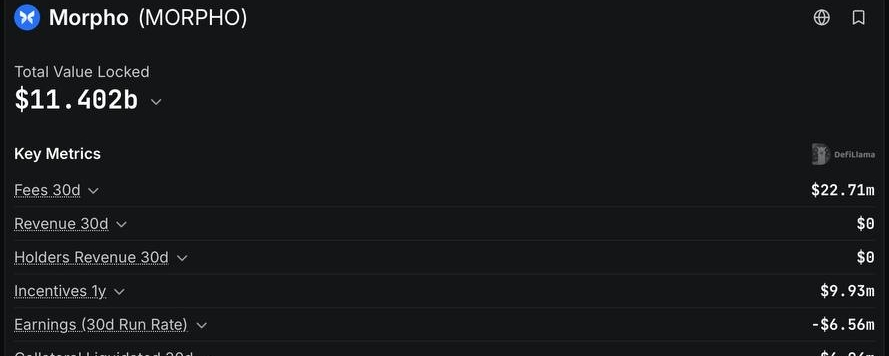
Morpho hat Gebühren in Höhe von 22,71 Mio. $ generiert. Warum betragen die Einnahmen dann 0 $? Morpho hat Vermögenswerte im Milliardenwert gesperrt und Gebühren in Millionenhöhe generiert – doch eine Zahl sollte Anlegern besonders auffallen: 0 $ an ausgewiesenen Protokolleinnahmen.
Laut DeFiLlama
• TVL: $11.402B
• Aktive Kredite: $5.819B
• Gebühren der letzten 30 Tage: $22.71M
• Protokolleinnahmen der letzten 30 Tage: $0
• MORPHO-Kurs: $2.01
• Marktkapitalisierung: $1.416B
• FDV: $2.014B
Was ist also los?
Gebühren und Einnahmen sind nicht dasselbe. Die Gebührenkonfiguration von Morpho Blue ermöglicht es dem Protokoll, Kreditaktivitäten zu erleichtern, ohne derzeit unter der angezeigten Kennzahl Protokolleinnahmen auszuweisen.
Morpho hat Gebühren in Höhe von 22,71 Mio. $ generiert. Warum betragen die Einnahmen dann 0 $?
Morpho hat Vermögenswerte im Milliardenwert gesperrt und Gebühren in Millionenhöhe generiert – doch eine Zahl sollte Anlegern besonders auffallen: 0 $ an ausgewiesenen Protokolleinnahmen.
Laut DeFiLlama
• TVL: $11.402B
• Aktive Kredite: $5.819B
• Gebühren der letzten 30 Tage: $22.71M
• Protokolleinnahmen der letzten 30 Tage: $0
• MORPHO-Kurs: $2.01
• Marktkapitalisierung: $1.416B
• FDV: $2.014B
Was ist also los?
Gebühren und Einnahmen sind nicht dasselbe. Die Gebührenkonfiguration von Morpho Blue ermöglicht es dem Protokoll, Kreditaktivitäten zu erleichtern, ohne derzeit unter der angezeigten Kennzahl Protokolleinnahmen auszuweisen.
Laut DeFiLlama
• TVL: $11.402B
• Aktive Kredite: $5.819B
• Gebühren der letzten 30 Tage: $22.71M
• Protokolleinnahmen der letzten 30 Tage: $0
• MORPHO-Kurs: $2.01
• Marktkapitalisierung: $1.416B
• FDV: $2.014B
Was ist also los?
Gebühren und Einnahmen sind nicht dasselbe. Die Gebührenkonfiguration von Morpho Blue ermöglicht es dem Protokoll, Kreditaktivitäten zu erleichtern, ohne derzeit unter der angezeigten Kennzahl Protokolleinnahmen auszuweisen.
2
676

·
--
Übersetzung ansehen
币不出托管也能去DeFi借钱:$LINK 给机构修了条「侧门」机构想进 DeFi 借贷,卡住的从来不是利率,是那句话:币不能离开托管。
Chainlink 10月26日发布 CustodySync,首发合作方是 Anchorage Digital Bank(美国联邦特许的加密银行)。思路很直接:抵押物继续放在合格托管人那儿,链上只放一个"影子"。
按 Chainlink 官方博客的说法,流程大概是这样:
1. 机构把资产存进托管,托管余额通过 Chainlink Proof of Reserve 公布上链,谁都能查。
2. 链上生成一个限制转让的收据代币,代表托管里的抵押物,拿去借贷市场做抵押;出了这套集成,它不对底层资产构成任何权利。
3. 借出来的钱一笔交易直接到借款人手上,每次借、还、计息都自动回写到托管方的账本。
4. 两边用同一套价格:链上读 Data Feeds,托管系统收 Data Streams,LTV 按同一个数算。
5. 触发清算线时,由指定的抵押代理(这里是 Anchorage)走自己的流程去卖,链上先记下已承诺的成交款,再一次性结算。
我的看法:这不是"机构上链",更像是 DeFi 给传统托管开了个 API 接口。钱进 DeFi 的池子,但风控、清算这些最敏感的环节,还是握在持牌机构手里。对习惯了三方托管的大钱来说,这比"先把币转进合约"好接受得多。
代价也很清楚:清算不再是链上机器人几秒钟抢单,而是托管方按自己的节奏处理,极端行情下这中间的时差谁来扛,得看协议参数怎么设。另外 Aave 治理论坛上已经挂出用这套方案做托管抵押借贷的提案,还没定,可以盯一下 $AAVE 那边怎么投。
Chainlink 说这是 Link:NYC(10月29日)前的第一个发布,这周还有后续。
信息来源:Chainlink 官方博客及 X 账号、crypto.news。不构成投资建议。
#Chainlink #DeFi #RWA
币不出托管也能去DeFi借钱:$LINK 给机构修了条「侧门」
机构想进 DeFi 借贷,卡住的从来不是利率,是那句话:币不能离开托管。
Chainlink 10月26日发布 CustodySync,首发合作方是 Anchorage Digital Bank(美国联邦特许的加密银行)。思路很直接:抵押物继续放在合格托管人那儿,链上只放一个"影子"。
按 Chainlink 官方博客的说法,流程大概是这样:
1. 机构把资产存进托管,托管余额通过 Chainlink Proof of Reserve 公布上链,谁都能查。
2. 链上生成一个限制转让的收据代币,代表托管里的抵押物,拿去借贷市场做抵押;出了这套集成,它不对底层资产构成任何权利。
3. 借出来的钱一笔交易直接到借款人手上,每次借、还、计息都自动回写到托管方的账本。
4. 两边用同一套价格:链上读 Data Feeds,托管系统收 Data Streams,LTV 按同一个数算。
5. 触发清算线时,由指定的抵押代理(这里是 Anchorage)走自己的流程去卖,链上先记下已承诺的成交款,再一次性结算。
我的看法:这不是"机构上链",更像是 DeFi 给传统托管开了个 API 接口。钱进 DeFi 的池子,但风控、清算这些最敏感的环节,还是握在持牌机构手里。对习惯了三方托管的大钱来说,这比"先把币转进合约"好接受得多。
代价也很清楚:清算不再是链上机器人几秒钟抢单,而是托管方按自己的节奏处理,极端行情下这中间的时差谁来扛,得看协议参数怎么设。另外 Aave 治理论坛上已经挂出用这套方案做托管抵押借贷的提案,还没定,可以盯一下 $AAVE 那边怎么投。
Chainlink 说这是 Link:NYC(10月29日)前的第一个发布,这周还有后续。
信息来源:Chainlink 官方博客及 X 账号、crypto.news。不构成投资建议。
#Chainlink #DeFi #RWA
Chainlink 10月26日发布 CustodySync,首发合作方是 Anchorage Digital Bank(美国联邦特许的加密银行)。思路很直接:抵押物继续放在合格托管人那儿,链上只放一个"影子"。
按 Chainlink 官方博客的说法,流程大概是这样:
1. 机构把资产存进托管,托管余额通过 Chainlink Proof of Reserve 公布上链,谁都能查。
2. 链上生成一个限制转让的收据代币,代表托管里的抵押物,拿去借贷市场做抵押;出了这套集成,它不对底层资产构成任何权利。
3. 借出来的钱一笔交易直接到借款人手上,每次借、还、计息都自动回写到托管方的账本。
4. 两边用同一套价格:链上读 Data Feeds,托管系统收 Data Streams,LTV 按同一个数算。
5. 触发清算线时,由指定的抵押代理(这里是 Anchorage)走自己的流程去卖,链上先记下已承诺的成交款,再一次性结算。
我的看法:这不是"机构上链",更像是 DeFi 给传统托管开了个 API 接口。钱进 DeFi 的池子,但风控、清算这些最敏感的环节,还是握在持牌机构手里。对习惯了三方托管的大钱来说,这比"先把币转进合约"好接受得多。
代价也很清楚:清算不再是链上机器人几秒钟抢单,而是托管方按自己的节奏处理,极端行情下这中间的时差谁来扛,得看协议参数怎么设。另外 Aave 治理论坛上已经挂出用这套方案做托管抵押借贷的提案,还没定,可以盯一下 $AAVE 那边怎么投。
Chainlink 说这是 Link:NYC(10月29日)前的第一个发布,这周还有后续。
信息来源:Chainlink 官方博客及 X 账号、crypto.news。不构成投资建议。
#Chainlink #DeFi #RWA
109

·
--
Übersetzung ansehen
$HYPE
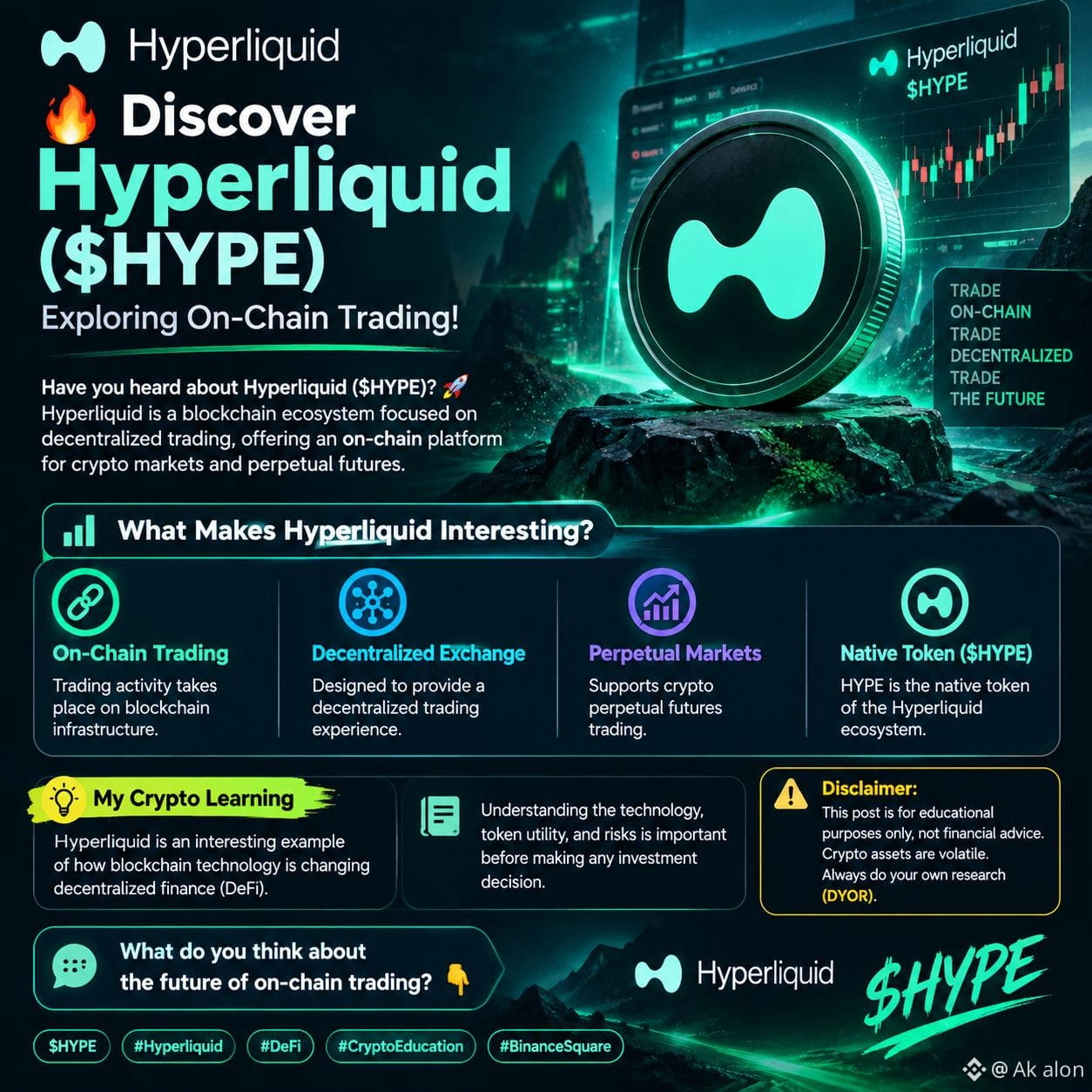
🔥 Discover Hyperliquid ($HYPE ): Exploring On-Chain Trading!
Have you heard about Hyperliquid (HYPE)? 🚀
Hyperliquid is a blockchain ecosystem focused on decentralized trading, offering an on-chain platform for crypto markets and perpetual futures.
📊 What Makes Hyperliquid Interesting?
🔹 On-Chain Trading: Trading activity takes place on blockchain infrastructure.
🔹 Decentralized Exchange: Designed to provide a decentralized trading experience.
🔹 Perpetual Markets: Supports crypto perpetual futures trading.
🔹 Native Token (HYPE): HYPE is the native token of the Hyperliquid ecosystem.
💡 My Crypto Learning: Hyperliquid is an interesting example of how blockchain technology is changing decentralized finance (DeFi).
📚 Understanding the technology, token utility, and risks is important before making any investment decision.
⚠️ Disclaimer: This post is for educational purposes only, not financial advice. Crypto assets are volatile. Always do your own research (DYOR).
What do you think about the future of on-chain trading? 👇
$HYPE #DeFi #cryptoeducation #BinanceSquare
$HYPE
🔥 Discover Hyperliquid ($HYPE ): Exploring On-Chain Trading!
Have you heard about Hyperliquid (HYPE)? 🚀
Hyperliquid is a blockchain ecosystem focused on decentralized trading, offering an on-chain platform for crypto markets and perpetual futures.
📊 What Makes Hyperliquid Interesting?
🔹 On-Chain Trading: Trading activity takes place on blockchain infrastructure.
🔹 Decentralized Exchange: Designed to provide a decentralized trading experience.
🔹 Perpetual Markets: Supports crypto perpetual futures trading.
🔹 Native Token (HYPE): HYPE is the native token of the Hyperliquid ecosystem.
💡 My Crypto Learning: Hyperliquid is an interesting example of how blockchain technology is changing decentralized finance (DeFi).
📚 Understanding the technology, token utility, and risks is important before making any investment decision.
⚠️ Disclaimer: This post is for educational purposes only, not financial advice. Crypto assets are volatile. Always do your own research (DYOR).
What do you think about the future of on-chain trading? 👇
$HYPE #DeFi #cryptoeducation #BinanceSquare
🔥 Discover Hyperliquid ($HYPE ): Exploring On-Chain Trading!
Have you heard about Hyperliquid (HYPE)? 🚀
Hyperliquid is a blockchain ecosystem focused on decentralized trading, offering an on-chain platform for crypto markets and perpetual futures.
📊 What Makes Hyperliquid Interesting?
🔹 On-Chain Trading: Trading activity takes place on blockchain infrastructure.
🔹 Decentralized Exchange: Designed to provide a decentralized trading experience.
🔹 Perpetual Markets: Supports crypto perpetual futures trading.
🔹 Native Token (HYPE): HYPE is the native token of the Hyperliquid ecosystem.
💡 My Crypto Learning: Hyperliquid is an interesting example of how blockchain technology is changing decentralized finance (DeFi).
📚 Understanding the technology, token utility, and risks is important before making any investment decision.
⚠️ Disclaimer: This post is for educational purposes only, not financial advice. Crypto assets are volatile. Always do your own research (DYOR).
What do you think about the future of on-chain trading? 👇
$HYPE #DeFi #cryptoeducation #BinanceSquare
92

$MORPHO hat heute wieder heimlich einen kräftigen Satz gemacht: Auf Binance ist der Kurs innerhalb von 24 Stunden um etwa 9 % gestiegen – von etwas über 2 US-Dollar bis auf 2,17 US-Dollar. Das 24-Stunden-Handelsvolumen allein auf Binance lag bei fast 10 Millionen US-Dollar. Unterschätze diese 9 % nicht: Wer gestern bei etwa 2 US-Dollar 10.000 U gehalten hat, besitzt heute bereits 10.850 U – ein Plus von 850 U. Noch wichtiger sind die Fundamentaldaten: Die USDG-Kreditvergabe auf Morpho erreichte innerhalb von 18 Tagen 115 Millionen US-Dollar. Bei einem DeFi-Protokoll mit echter Kreditnachfrage ist ein Kursanstieg nicht bloß heiße Luft. Der RSI im Stundenchart liegt mit 70,5 bereits im überkauften Bereich. Überleg dir vor einem Einstieg auf dem Höchststand gut, ob du einen Rücksetzer verkraften kannst.#Morpho #DeFi
$MORPHO hat heute wieder heimlich einen kräftigen Satz gemacht: Auf Binance ist der Kurs innerhalb von 24 Stunden um etwa 9 % gestiegen – von etwas über 2 US-Dollar bis auf 2,17 US-Dollar. Das 24-Stunden-Handelsvolumen allein auf Binance lag bei fast 10 Millionen US-Dollar. Unterschätze diese 9 % nicht: Wer gestern bei etwa 2 US-Dollar 10.000 U gehalten hat, besitzt heute bereits 10.850 U – ein Plus von 850 U. Noch wichtiger sind die Fundamentaldaten: Die USDG-Kreditvergabe auf Morpho erreichte innerhalb von 18 Tagen 115 Millionen US-Dollar. Bei einem DeFi-Protokoll mit echter Kreditnachfrage ist ein Kursanstieg nicht bloß heiße Luft. Der RSI im Stundenchart liegt mit 70,5 bereits im überkauften Bereich. Überleg dir vor einem Einstieg auf dem Höchststand gut, ob du einen Rücksetzer verkraften kannst.#Morpho #DeFi
67


Übersetzung ansehen
DeFi游说组织自己花钱做的民调,结果把自己打脸了,这才是最好笑的。
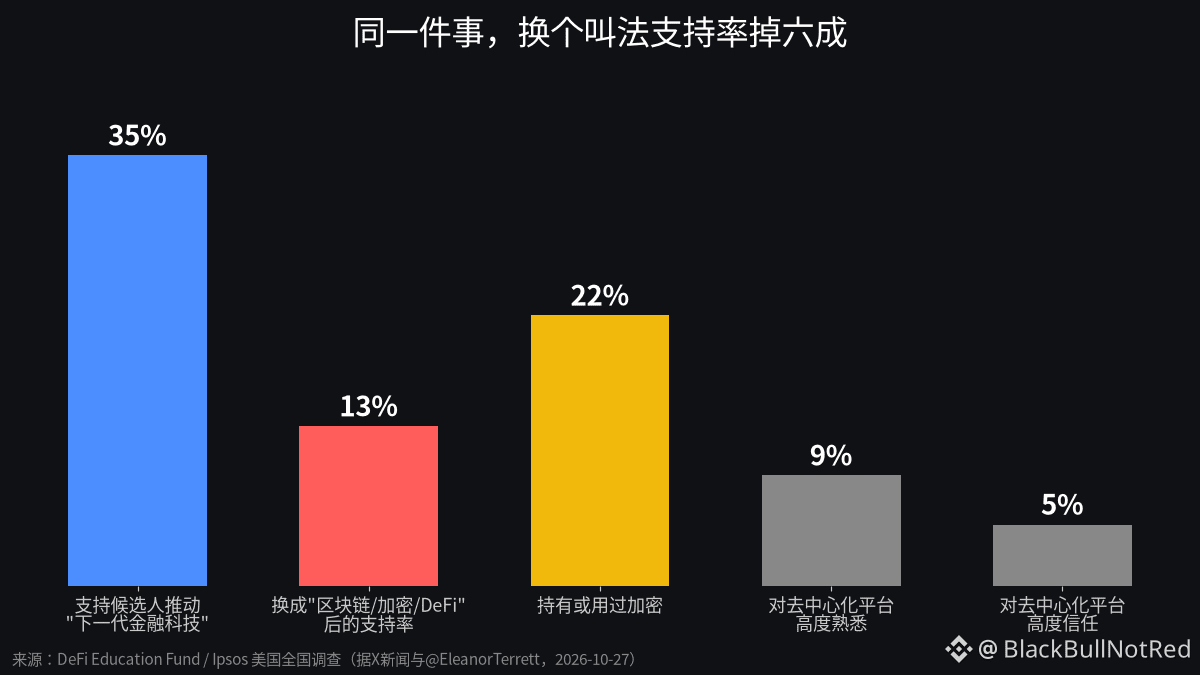
DeFi Education Fund 联合 Ipsos 做的美国全国调查:35%的人支持候选人推动"下一代金融科技"。同一件事,题目里直接写明区块链、加密、DeFi,支持率掉到13%。
翻译一下:美国人不讨厌这套东西能干的事,讨厌的是"crypto"这个牌子。这个牌子是谁搞臭的?跑路盘、喊单号、几轮爆雷的平台,还有一堆拿项目方钱写"机构入场"的KOL,自己心里有数。
更扎心的是:持有或用过加密的人到了22%,比去年18%还涨了,但对去中心化平台高度熟悉的只有9%,高度信任的只有5%。用的人在变多,信的人没跟上,大部分人就是进来炒一把。
所以别再把"22%美国人持币"拿去当大规模采用的证据刷屏了。人家这份报告真正想说的是:游说的时候少提crypto,多说金融科技。行业连自己的名字都要藏着用,还天天喊主流化?
#DeFi #加密监管
DeFi游说组织自己花钱做的民调,结果把自己打脸了,这才是最好笑的。
DeFi Education Fund 联合 Ipsos 做的美国全国调查:35%的人支持候选人推动"下一代金融科技"。同一件事,题目里直接写明区块链、加密、DeFi,支持率掉到13%。
翻译一下:美国人不讨厌这套东西能干的事,讨厌的是"crypto"这个牌子。这个牌子是谁搞臭的?跑路盘、喊单号、几轮爆雷的平台,还有一堆拿项目方钱写"机构入场"的KOL,自己心里有数。
更扎心的是:持有或用过加密的人到了22%,比去年18%还涨了,但对去中心化平台高度熟悉的只有9%,高度信任的只有5%。用的人在变多,信的人没跟上,大部分人就是进来炒一把。
所以别再把"22%美国人持币"拿去当大规模采用的证据刷屏了。人家这份报告真正想说的是:游说的时候少提crypto,多说金融科技。行业连自己的名字都要藏着用,还天天喊主流化?
#DeFi #加密监管
DeFi Education Fund 联合 Ipsos 做的美国全国调查:35%的人支持候选人推动"下一代金融科技"。同一件事,题目里直接写明区块链、加密、DeFi,支持率掉到13%。
翻译一下:美国人不讨厌这套东西能干的事,讨厌的是"crypto"这个牌子。这个牌子是谁搞臭的?跑路盘、喊单号、几轮爆雷的平台,还有一堆拿项目方钱写"机构入场"的KOL,自己心里有数。
更扎心的是:持有或用过加密的人到了22%,比去年18%还涨了,但对去中心化平台高度熟悉的只有9%,高度信任的只有5%。用的人在变多,信的人没跟上,大部分人就是进来炒一把。
所以别再把"22%美国人持币"拿去当大规模采用的证据刷屏了。人家这份报告真正想说的是:游说的时候少提crypto,多说金融科技。行业连自己的名字都要藏着用,还天天喊主流化?
#DeFi #加密监管

·
--
Übersetzung ansehen
🚀 UNISWAP (UNI): Is DeFi Entering a New Growth Phase?
$UNI
{spot}(UNIUSDT)
Uniswap is one of the best-known decentralized trading protocols in the crypto ecosystem.
🔹 Decentralized Trading: Uniswap allows users to swap supported tokens without relying on a traditional centralized exchange.
🔹 DeFi Innovation: Its ecosystem continues to explore new ways to make on-chain trading more accessible.
🔹 Tokenized Assets: Growing interest in bringing traditional financial assets onto blockchain networks could create new opportunities for decentralized finance.
🔹 What to Watch: Protocol usage, trading volume, liquidity, ecosystem development, and UNI token utility.
🔹 Key Risk: More activity on a protocol does not automatically translate into higher value for its governance token.
📊 My Take: DeFi has long-term potential, but sustainable adoption and real token utility matter more than short-term hype.
⚠️ Crypto markets are volatile. Research the project and understand the risks before investing.
#uniswap #UNI #DeFi #CryptoNews #blockchain
Disclaimer: This post is for educational purposes only and is not financial advice. Always do your own research (DYOR).
🚀 UNISWAP (UNI): Is DeFi Entering a New Growth Phase?
$UNI
Uniswap is one of the best-known decentralized trading protocols in the crypto ecosystem.
🔹 Decentralized Trading: Uniswap allows users to swap supported tokens without relying on a traditional centralized exchange.
🔹 DeFi Innovation: Its ecosystem continues to explore new ways to make on-chain trading more accessible.
🔹 Tokenized Assets: Growing interest in bringing traditional financial assets onto blockchain networks could create new opportunities for decentralized finance.
🔹 What to Watch: Protocol usage, trading volume, liquidity, ecosystem development, and UNI token utility.
🔹 Key Risk: More activity on a protocol does not automatically translate into higher value for its governance token.
📊 My Take: DeFi has long-term potential, but sustainable adoption and real token utility matter more than short-term hype.
⚠️ Crypto markets are volatile. Research the project and understand the risks before investing.
#uniswap #UNI #DeFi #CryptoNews #blockchain
Disclaimer: This post is for educational purposes only and is not financial advice. Always do your own research (DYOR).
$UNI
Uniswap is one of the best-known decentralized trading protocols in the crypto ecosystem.
🔹 Decentralized Trading: Uniswap allows users to swap supported tokens without relying on a traditional centralized exchange.
🔹 DeFi Innovation: Its ecosystem continues to explore new ways to make on-chain trading more accessible.
🔹 Tokenized Assets: Growing interest in bringing traditional financial assets onto blockchain networks could create new opportunities for decentralized finance.
🔹 What to Watch: Protocol usage, trading volume, liquidity, ecosystem development, and UNI token utility.
🔹 Key Risk: More activity on a protocol does not automatically translate into higher value for its governance token.
📊 My Take: DeFi has long-term potential, but sustainable adoption and real token utility matter more than short-term hype.
⚠️ Crypto markets are volatile. Research the project and understand the risks before investing.
#uniswap #UNI #DeFi #CryptoNews #blockchain
Disclaimer: This post is for educational purposes only and is not financial advice. Always do your own research (DYOR).
31

·
--
Übersetzung ansehen
🚨 前天还坐在领跌榜头名的币,今晚冲进了前50涨幅榜第一。
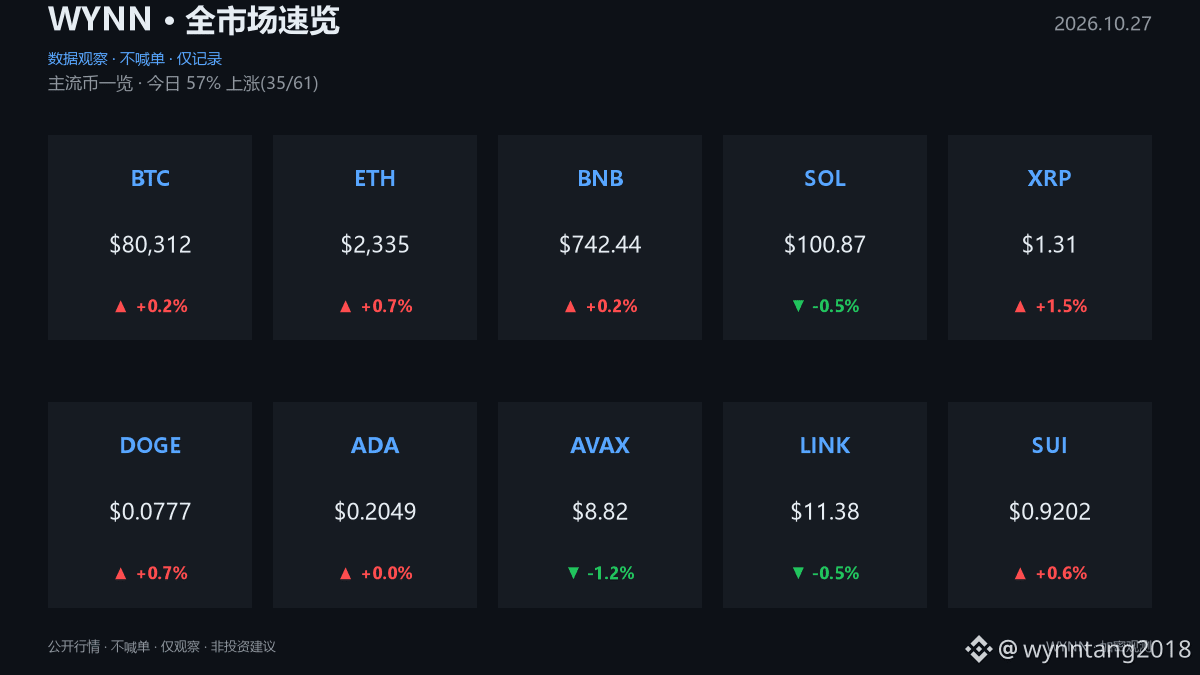
$MORPHO 24小时 +7.3%(CoinPulse 13:00 UTC 快照,CryptoBriefing 报 +8.6% 至 $2.17),市值排名一天从65爬到62。前天它还是前100跌得最狠的那只,7日仍 -10%——这轮更像超跌修复,不是趋势反转。
但基本面子在给底气:Base 链上 cbBTC/USDC 借贷余额冲到约16亿美元,创该协议纪录,九成靠 Coinbase 客户贡献;资金利用率 90.2%,借贷利率从7.5%降到5%——真实借款需求在涨,不全是拉盘。
风险说具体:小时线RSI已过70,短线拥挤;明晚 FOMC 落地前,全场风偏都可能被一句话改写。
关注条件:站稳 $2.19 算反弹确认;放量失守 $2.17,回看 $2.12。数据截至今日,不构成投资建议。
两天前领跌、今天靠真需求翻身——这个位置你盯不盯?
$MORPHO #DeFi #币安广场 #行情观察
🚨 前天还坐在领跌榜头名的币,今晚冲进了前50涨幅榜第一。
$MORPHO 24小时 +7.3%(CoinPulse 13:00 UTC 快照,CryptoBriefing 报 +8.6% 至 $2.17),市值排名一天从65爬到62。前天它还是前100跌得最狠的那只,7日仍 -10%——这轮更像超跌修复,不是趋势反转。
但基本面子在给底气:Base 链上 cbBTC/USDC 借贷余额冲到约16亿美元,创该协议纪录,九成靠 Coinbase 客户贡献;资金利用率 90.2%,借贷利率从7.5%降到5%——真实借款需求在涨,不全是拉盘。
风险说具体:小时线RSI已过70,短线拥挤;明晚 FOMC 落地前,全场风偏都可能被一句话改写。
关注条件:站稳 $2.19 算反弹确认;放量失守 $2.17,回看 $2.12。数据截至今日,不构成投资建议。
两天前领跌、今天靠真需求翻身——这个位置你盯不盯?
$MORPHO #DeFi #币安广场 #行情观察
$MORPHO 24小时 +7.3%(CoinPulse 13:00 UTC 快照,CryptoBriefing 报 +8.6% 至 $2.17),市值排名一天从65爬到62。前天它还是前100跌得最狠的那只,7日仍 -10%——这轮更像超跌修复,不是趋势反转。
但基本面子在给底气:Base 链上 cbBTC/USDC 借贷余额冲到约16亿美元,创该协议纪录,九成靠 Coinbase 客户贡献;资金利用率 90.2%,借贷利率从7.5%降到5%——真实借款需求在涨,不全是拉盘。
风险说具体:小时线RSI已过70,短线拥挤;明晚 FOMC 落地前,全场风偏都可能被一句话改写。
关注条件:站稳 $2.19 算反弹确认;放量失守 $2.17,回看 $2.12。数据截至今日,不构成投资建议。
两天前领跌、今天靠真需求翻身——这个位置你盯不盯?
$MORPHO #DeFi #币安广场 #行情观察
10

Übersetzung ansehen
$EIGEN — EigenLayer's restaking ecosystem remains an important Ethereum infrastructure narrative; watch for a confirmed trend reversal and stronger volume.
$ETHFI — Ether.fi's liquid-restaking exposure keeps it on the DeFi radar; a breakout that holds resistance could improve momentum.
$REZ — Renzo's restaking narrative may attract sector interest, but buyers need to establish stronger support before a recovery looks convincing.
#EIGEN #ETHFI #REZ #DeFi #CryptoMarket
$EIGEN — EigenLayer's restaking ecosystem remains an important Ethereum infrastructure narrative; watch for a confirmed trend reversal and stronger volume.
$ETHFI — Ether.fi's liquid-restaking exposure keeps it on the DeFi radar; a breakout that holds resistance could improve momentum.
$REZ — Renzo's restaking narrative may attract sector interest, but buyers need to establish stronger support before a recovery looks convincing.
#EIGEN #ETHFI #REZ #DeFi #CryptoMarket
$ETHFI — Ether.fi's liquid-restaking exposure keeps it on the DeFi radar; a breakout that holds resistance could improve momentum.
$REZ — Renzo's restaking narrative may attract sector interest, but buyers need to establish stronger support before a recovery looks convincing.
#EIGEN #ETHFI #REZ #DeFi #CryptoMarket
·
--
Übersetzung ansehen
🚀 INJECTIVE (INJ): Can DeFi Innovation Attract More Attention?
$INJ
{spot}(INJUSDT)
Injective is a blockchain ecosystem focused on decentralized finance (DeFi), designed to support financial applications and on-chain trading.
🔹 DeFi Focus: Injective provides infrastructure for developers building decentralized financial products.
🔹 Trading Ecosystem: Its technology aims to support fast, efficient on-chain financial markets.
🔹 Market Attention: INJ has recently appeared among trending crypto assets, showing renewed interest from market participants.
🔹 What to Watch: Network activity, developer adoption, ecosystem growth, token utility, and trading volume.
🔹 Important Risk: Trending status can change quickly. Short-term excitement does not necessarily reflect long-term project value.
📊 Key Takeaway: Sustainable adoption matters more than temporary hype. Always research a project's fundamentals before making a decision.
#injective #INJ #DeFi #CryptoNews #Blockchain
Disclaimer: This post is for educational purposes only and is not financial advice. Always do your own research (DYOR).
🚀 INJECTIVE (INJ): Can DeFi Innovation Attract More Attention?
$INJ
Injective is a blockchain ecosystem focused on decentralized finance (DeFi), designed to support financial applications and on-chain trading.
🔹 DeFi Focus: Injective provides infrastructure for developers building decentralized financial products.
🔹 Trading Ecosystem: Its technology aims to support fast, efficient on-chain financial markets.
🔹 Market Attention: INJ has recently appeared among trending crypto assets, showing renewed interest from market participants.
🔹 What to Watch: Network activity, developer adoption, ecosystem growth, token utility, and trading volume.
🔹 Important Risk: Trending status can change quickly. Short-term excitement does not necessarily reflect long-term project value.
📊 Key Takeaway: Sustainable adoption matters more than temporary hype. Always research a project's fundamentals before making a decision.
#injective #INJ #DeFi #CryptoNews #Blockchain
Disclaimer: This post is for educational purposes only and is not financial advice. Always do your own research (DYOR).
$INJ
Injective is a blockchain ecosystem focused on decentralized finance (DeFi), designed to support financial applications and on-chain trading.
🔹 DeFi Focus: Injective provides infrastructure for developers building decentralized financial products.
🔹 Trading Ecosystem: Its technology aims to support fast, efficient on-chain financial markets.
🔹 Market Attention: INJ has recently appeared among trending crypto assets, showing renewed interest from market participants.
🔹 What to Watch: Network activity, developer adoption, ecosystem growth, token utility, and trading volume.
🔹 Important Risk: Trending status can change quickly. Short-term excitement does not necessarily reflect long-term project value.
📊 Key Takeaway: Sustainable adoption matters more than temporary hype. Always research a project's fundamentals before making a decision.
#injective #INJ #DeFi #CryptoNews #Blockchain
Disclaimer: This post is for educational purposes only and is not financial advice. Always do your own research (DYOR).
96
Übersetzung ansehen
$UNI — Uniswap's DeFi activity narrative keeps UNI worth watching; price confirmation and volume matter more than headlines alone.
$AAVE — Aave's lending ecosystem is a key DeFi theme; watch whether price breaks resistance or remains trapped in consolidation.
$CRV — Curve's DeFi exposure can bring sharp swings; wait for a clear trend and confirmed volume before entering.
#UNI #AAVE #CRV #DeFi #CryptoTrading
$UNI — Uniswap's DeFi activity narrative keeps UNI worth watching; price confirmation and volume matter more than headlines alone.
$AAVE — Aave's lending ecosystem is a key DeFi theme; watch whether price breaks resistance or remains trapped in consolidation.
$CRV — Curve's DeFi exposure can bring sharp swings; wait for a clear trend and confirmed volume before entering.
#UNI #AAVE #CRV #DeFi #CryptoTrading
$AAVE — Aave's lending ecosystem is a key DeFi theme; watch whether price breaks resistance or remains trapped in consolidation.
$CRV — Curve's DeFi exposure can bring sharp swings; wait for a clear trend and confirmed volume before entering.
#UNI #AAVE #CRV #DeFi #CryptoTrading

·
--
Bullisch
Übersetzung ansehen
🚀 OSMOSIS ($OSMO): A MAJOR TOKENOMICS SHIFT — IS THE MARKET WAKING UP?
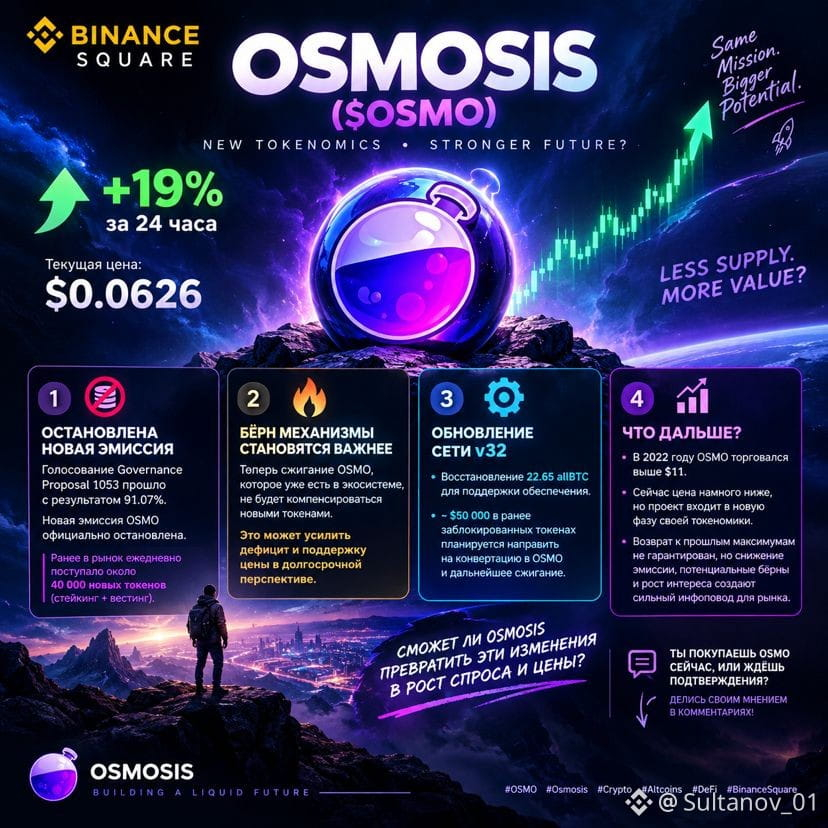
🔥 OSMO is up nearly 19% in 24 hours, trading around $0.0626 as a major change in its tokenomics draws attention.
Here’s why this matters 👇
💎 1. NEW TOKEN ISSUANCE HALTED
Governance Proposal 1053 passed with 91.07% approval, and new OSMO issuance has stopped. Previously, roughly 40,000 newly issued tokens per day were entering circulation through staking rewards and developer vesting.
Less new supply could change the long-term supply-demand equation.
🔥 2. BURN MECHANISMS GAIN IMPORTANCE
With new issuance halted, OSMO burned through existing mechanisms will no longer be offset by newly minted tokens. That could strengthen the token’s supply dynamics over time.
⚙️ 3. OSMOSIS v32 UPGRADE
The planned upgrade includes recovery of 22.65 allBTC to restore backing and a mechanism to move approximately $50,000 in previously trapped tokens toward conversion into OSMO for burning.
📈 4. WHAT COULD COME NEXT?
OSMO previously traded above $11 during the 2022 bull market. Today’s price is dramatically lower, but the project is entering a new phase in its token economics.
A return to previous highs is far from guaranteed. However, reduced issuance, potential burns and renewed market interest create a development worth watching.
🎯 The key question: can Osmosis turn these fundamental changes into sustained demand and price growth?
Are you accumulating OSMO at these levels, or waiting for confirmation?
👇 Share your thoughts!
#Osmosis #crypto #altcoins #defi #BinanceSquare
🚀 OSMOSIS ($OSMO): A MAJOR TOKENOMICS SHIFT — IS THE MARKET WAKING UP?
🔥 OSMO is up nearly 19% in 24 hours, trading around $0.0626 as a major change in its tokenomics draws attention.
Here’s why this matters 👇
💎 1. NEW TOKEN ISSUANCE HALTED
Governance Proposal 1053 passed with 91.07% approval, and new OSMO issuance has stopped. Previously, roughly 40,000 newly issued tokens per day were entering circulation through staking rewards and developer vesting.
Less new supply could change the long-term supply-demand equation.
🔥 2. BURN MECHANISMS GAIN IMPORTANCE
With new issuance halted, OSMO burned through existing mechanisms will no longer be offset by newly minted tokens. That could strengthen the token’s supply dynamics over time.
⚙️ 3. OSMOSIS v32 UPGRADE
The planned upgrade includes recovery of 22.65 allBTC to restore backing and a mechanism to move approximately $50,000 in previously trapped tokens toward conversion into OSMO for burning.
📈 4. WHAT COULD COME NEXT?
OSMO previously traded above $11 during the 2022 bull market. Today’s price is dramatically lower, but the project is entering a new phase in its token economics.
A return to previous highs is far from guaranteed. However, reduced issuance, potential burns and renewed market interest create a development worth watching.
🎯 The key question: can Osmosis turn these fundamental changes into sustained demand and price growth?
Are you accumulating OSMO at these levels, or waiting for confirmation?
👇 Share your thoughts!
#Osmosis #crypto #altcoins #defi #BinanceSquare
🔥 OSMO is up nearly 19% in 24 hours, trading around $0.0626 as a major change in its tokenomics draws attention.
Here’s why this matters 👇
💎 1. NEW TOKEN ISSUANCE HALTED
Governance Proposal 1053 passed with 91.07% approval, and new OSMO issuance has stopped. Previously, roughly 40,000 newly issued tokens per day were entering circulation through staking rewards and developer vesting.
Less new supply could change the long-term supply-demand equation.
🔥 2. BURN MECHANISMS GAIN IMPORTANCE
With new issuance halted, OSMO burned through existing mechanisms will no longer be offset by newly minted tokens. That could strengthen the token’s supply dynamics over time.
⚙️ 3. OSMOSIS v32 UPGRADE
The planned upgrade includes recovery of 22.65 allBTC to restore backing and a mechanism to move approximately $50,000 in previously trapped tokens toward conversion into OSMO for burning.
📈 4. WHAT COULD COME NEXT?
OSMO previously traded above $11 during the 2022 bull market. Today’s price is dramatically lower, but the project is entering a new phase in its token economics.
A return to previous highs is far from guaranteed. However, reduced issuance, potential burns and renewed market interest create a development worth watching.
🎯 The key question: can Osmosis turn these fundamental changes into sustained demand and price growth?
Are you accumulating OSMO at these levels, or waiting for confirmation?
👇 Share your thoughts!
#Osmosis #crypto #altcoins #defi #BinanceSquare
65

·
--
Artikel
DeFi-Geld ist nicht weg, sondern nur woanders: Die Verschiebungen hinter 8,8 Milliarden US-Dollar TVLDas Geld in DeFi hat den Markt nicht verlassen, sondern nur den Platz gewechselt.
Am 27. Oktober sank der insgesamt in DeFi gebundene Wert auf rund 88 Milliarden US-Dollar – ein Rückgang von etwa 2,5 % innerhalb einer Woche. Die Zahl wirkt beunruhigend, doch bei genauerem Hinsehen zeigt sich ein anderes Bild: Das abfließende Geld ist nicht verschwunden, sondern von großen Protokollen an neue Orte geflossen, die besser zu seinen Bedürfnissen passen.
Schauen wir zuerst auf die Abflüsse. Lido ist weiterhin das größte Protokoll im gesamten Netzwerk, mit rund 22,4 Milliarden US-Dollar an gebundenem Kapital. Innerhalb einer Woche ging dieser Wert jedoch um mehr als 3 % zurück. Bei Aave ist der Rückgang noch deutlicher: Ende September waren dort noch rund 19,1 Milliarden US-Dollar gebunden, am 27. Oktober nur noch etwa 17,4 Milliarden. Das Ethereum-Ökosystem verlor innerhalb einer Woche rund 1,2 Milliarden US-Dollar und kommt nun auf etwa 48,4 Milliarden – weiterhin mehr als die Hälfte des Gesamtmarkts. Wenn die Marktführer niesen, hört es der ganze Markt.
DeFi-Geld ist nicht weg, sondern nur woanders: Die Verschiebungen hinter 8,8 Milliarden US-Dollar TVL
Das Geld in DeFi hat den Markt nicht verlassen, sondern nur den Platz gewechselt.
Am 27. Oktober sank der insgesamt in DeFi gebundene Wert auf rund 88 Milliarden US-Dollar – ein Rückgang von etwa 2,5 % innerhalb einer Woche. Die Zahl wirkt beunruhigend, doch bei genauerem Hinsehen zeigt sich ein anderes Bild: Das abfließende Geld ist nicht verschwunden, sondern von großen Protokollen an neue Orte geflossen, die besser zu seinen Bedürfnissen passen.
Schauen wir zuerst auf die Abflüsse. Lido ist weiterhin das größte Protokoll im gesamten Netzwerk, mit rund 22,4 Milliarden US-Dollar an gebundenem Kapital. Innerhalb einer Woche ging dieser Wert jedoch um mehr als 3 % zurück. Bei Aave ist der Rückgang noch deutlicher: Ende September waren dort noch rund 19,1 Milliarden US-Dollar gebunden, am 27. Oktober nur noch etwa 17,4 Milliarden. Das Ethereum-Ökosystem verlor innerhalb einer Woche rund 1,2 Milliarden US-Dollar und kommt nun auf etwa 48,4 Milliarden – weiterhin mehr als die Hälfte des Gesamtmarkts. Wenn die Marktführer niesen, hört es der ganze Markt.
Am 27. Oktober sank der insgesamt in DeFi gebundene Wert auf rund 88 Milliarden US-Dollar – ein Rückgang von etwa 2,5 % innerhalb einer Woche. Die Zahl wirkt beunruhigend, doch bei genauerem Hinsehen zeigt sich ein anderes Bild: Das abfließende Geld ist nicht verschwunden, sondern von großen Protokollen an neue Orte geflossen, die besser zu seinen Bedürfnissen passen.
Schauen wir zuerst auf die Abflüsse. Lido ist weiterhin das größte Protokoll im gesamten Netzwerk, mit rund 22,4 Milliarden US-Dollar an gebundenem Kapital. Innerhalb einer Woche ging dieser Wert jedoch um mehr als 3 % zurück. Bei Aave ist der Rückgang noch deutlicher: Ende September waren dort noch rund 19,1 Milliarden US-Dollar gebunden, am 27. Oktober nur noch etwa 17,4 Milliarden. Das Ethereum-Ökosystem verlor innerhalb einer Woche rund 1,2 Milliarden US-Dollar und kommt nun auf etwa 48,4 Milliarden – weiterhin mehr als die Hälfte des Gesamtmarkts. Wenn die Marktführer niesen, hört es der ganze Markt.
219

·
--
Artikel
Übersetzung ansehen
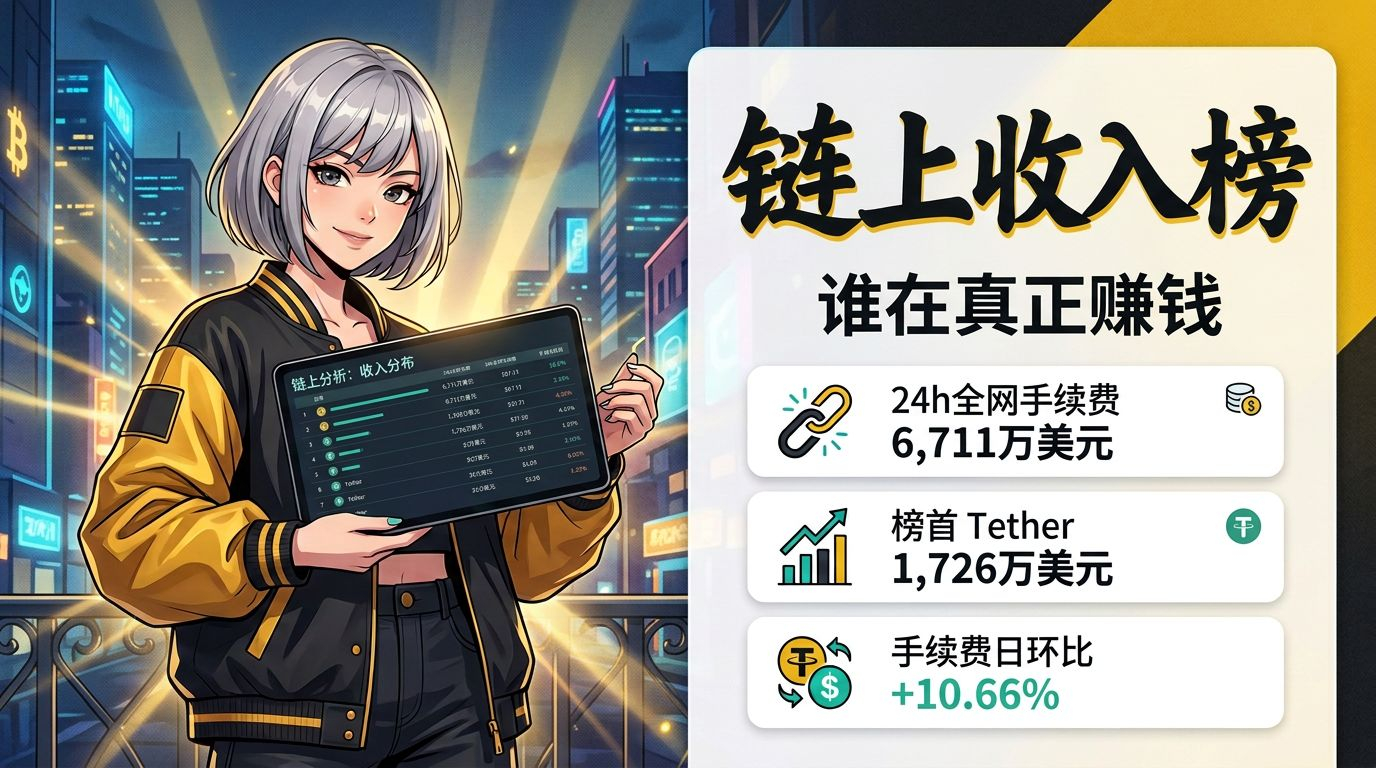
新手科普:看懂链上收入榜,谁在真正赚钱新手科普:看懂“链上收入榜”,比盯K线更能分辨谁在真赚钱
很多新手看项目只看币价和热度,却忽略了一个更扎实的指标:协议收入(Fees/Revenue)。它回答一个朴素的问题:用户是不是真的在为这个产品付费?
一、什么是链上手续费与收入
手续费是用户使用协议时支付的总费用,比如交易费、借贷利息、发行稳定币的利差。其中一部分归流动性提供者或储备,一部分才是协议自身的收入。链上数据公开可查,不靠项目方自述,所以比“路线图”更难作假。
二、今天的数据怎么说(来源:DefiLlama,2026-10-27 晚)
• 全链上协议24小时手续费合计约6,711万美元,日环比+10.66%,7日变化-2.86%。
• 榜首是稳定币发行方Tether,约1,726万美元;第二是Circle(USDC),约682万美元。两家合计占全榜约三分之一。
• 随后是PumpSwap约308万、Hyperliquid永续约273万、Polymarket US约197万、pump.fun约197万美元。
• 公链TVL方面:以太坊约483亿美元,Tron约62亿、Base约60亿、Solana约57亿、BSC约55亿。
三、这几个数字能读出什么
1. 稳定币发行本质是“吃利息”的生意,收入榜被它们占据,说明链上最稳定的现金流来自美元资产的收益,而不是炒作。
2. Meme发射台、永续、预测市场出现在前排,说明真实需求集中在“交易与投机”场景,但这类收入随行情波动大,日环比+10%与周环比-3%同时出现就是例子。
3. TVL大不等于收入高:锁仓量是“存量”,手续费是“流量”,两者要一起看。
四、新手三步自查清单
1. 看7日、30日手续费趋势,而不是单日峰值。
2. 看收入是否来自真实使用(交易、借贷),还是靠代币补贴堆出来的。
3. 对比估值与收入,收入长期下滑而币价上涨时要多留个心眼。
五、风险提示
手续费数据可能被刷量、补贴短期推高;不同统计口径(Fees与Revenue)差异很大;榜单每天都在变,今天的排名不代表未来。
你平时研究项目时,最看重哪个指标:TVL、手续费还是用户数?评论区聊聊。
数据来源:DefiLlama。以上内容仅为数据分享,不构成投资建议。
#链上数据 #新手科普 #DeFi
新手科普:看懂链上收入榜,谁在真正赚钱
新手科普:看懂“链上收入榜”,比盯K线更能分辨谁在真赚钱
很多新手看项目只看币价和热度,却忽略了一个更扎实的指标:协议收入(Fees/Revenue)。它回答一个朴素的问题:用户是不是真的在为这个产品付费?
一、什么是链上手续费与收入
手续费是用户使用协议时支付的总费用,比如交易费、借贷利息、发行稳定币的利差。其中一部分归流动性提供者或储备,一部分才是协议自身的收入。链上数据公开可查,不靠项目方自述,所以比“路线图”更难作假。
二、今天的数据怎么说(来源:DefiLlama,2026-10-27 晚)
• 全链上协议24小时手续费合计约6,711万美元,日环比+10.66%,7日变化-2.86%。
• 榜首是稳定币发行方Tether,约1,726万美元;第二是Circle(USDC),约682万美元。两家合计占全榜约三分之一。
• 随后是PumpSwap约308万、Hyperliquid永续约273万、Polymarket US约197万、pump.fun约197万美元。
• 公链TVL方面:以太坊约483亿美元,Tron约62亿、Base约60亿、Solana约57亿、BSC约55亿。
三、这几个数字能读出什么
1. 稳定币发行本质是“吃利息”的生意,收入榜被它们占据,说明链上最稳定的现金流来自美元资产的收益,而不是炒作。
2. Meme发射台、永续、预测市场出现在前排,说明真实需求集中在“交易与投机”场景,但这类收入随行情波动大,日环比+10%与周环比-3%同时出现就是例子。
3. TVL大不等于收入高:锁仓量是“存量”,手续费是“流量”,两者要一起看。
四、新手三步自查清单
1. 看7日、30日手续费趋势,而不是单日峰值。
2. 看收入是否来自真实使用(交易、借贷),还是靠代币补贴堆出来的。
3. 对比估值与收入,收入长期下滑而币价上涨时要多留个心眼。
五、风险提示
手续费数据可能被刷量、补贴短期推高;不同统计口径(Fees与Revenue)差异很大;榜单每天都在变,今天的排名不代表未来。
你平时研究项目时,最看重哪个指标:TVL、手续费还是用户数?评论区聊聊。
数据来源:DefiLlama。以上内容仅为数据分享,不构成投资建议。
#链上数据 #新手科普 #DeFi
很多新手看项目只看币价和热度,却忽略了一个更扎实的指标:协议收入(Fees/Revenue)。它回答一个朴素的问题:用户是不是真的在为这个产品付费?
一、什么是链上手续费与收入
手续费是用户使用协议时支付的总费用,比如交易费、借贷利息、发行稳定币的利差。其中一部分归流动性提供者或储备,一部分才是协议自身的收入。链上数据公开可查,不靠项目方自述,所以比“路线图”更难作假。
二、今天的数据怎么说(来源:DefiLlama,2026-10-27 晚)
• 全链上协议24小时手续费合计约6,711万美元,日环比+10.66%,7日变化-2.86%。
• 榜首是稳定币发行方Tether,约1,726万美元;第二是Circle(USDC),约682万美元。两家合计占全榜约三分之一。
• 随后是PumpSwap约308万、Hyperliquid永续约273万、Polymarket US约197万、pump.fun约197万美元。
• 公链TVL方面:以太坊约483亿美元,Tron约62亿、Base约60亿、Solana约57亿、BSC约55亿。
三、这几个数字能读出什么
1. 稳定币发行本质是“吃利息”的生意,收入榜被它们占据,说明链上最稳定的现金流来自美元资产的收益,而不是炒作。
2. Meme发射台、永续、预测市场出现在前排,说明真实需求集中在“交易与投机”场景,但这类收入随行情波动大,日环比+10%与周环比-3%同时出现就是例子。
3. TVL大不等于收入高:锁仓量是“存量”,手续费是“流量”,两者要一起看。
四、新手三步自查清单
1. 看7日、30日手续费趋势,而不是单日峰值。
2. 看收入是否来自真实使用(交易、借贷),还是靠代币补贴堆出来的。
3. 对比估值与收入,收入长期下滑而币价上涨时要多留个心眼。
五、风险提示
手续费数据可能被刷量、补贴短期推高;不同统计口径(Fees与Revenue)差异很大;榜单每天都在变,今天的排名不代表未来。
你平时研究项目时,最看重哪个指标:TVL、手续费还是用户数?评论区聊聊。
数据来源:DefiLlama。以上内容仅为数据分享,不构成投资建议。
#链上数据 #新手科普 #DeFi
103

Übersetzung ansehen
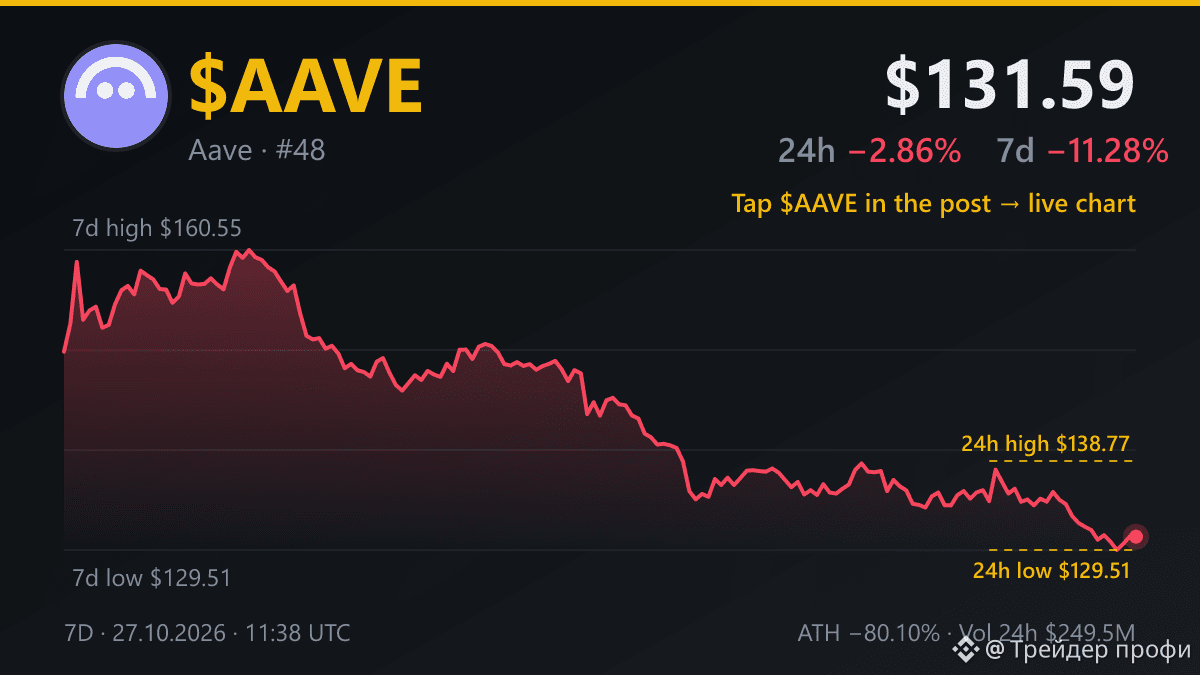
Why is $AAVE down 2.86% while testing its 7-day low?
With no headlines driving the drop, Aave is trading at $131.59 after sliding 11.28% over 7 days. 24h volume hit $249.5M, but price sits right near the 24h low of $129.51, which is also its 7d floor. It remains -80.1% from its ATH. Meanwhile $BTC slips 0.54% to $79,935 as overall market sentiment holds neutral.
Is $AAVE about to break below $129.51 or bounce back toward $138.77?
Key support levels matter most when market catalyst news is silent.
Just my read, not financial advice. DYOR.
#AAVE #Crypto #DeFi
Why is $AAVE down 2.86% while testing its 7-day low?
With no headlines driving the drop, Aave is trading at $131.59 after sliding 11.28% over 7 days. 24h volume hit $249.5M, but price sits right near the 24h low of $129.51, which is also its 7d floor. It remains -80.1% from its ATH. Meanwhile $BTC slips 0.54% to $79,935 as overall market sentiment holds neutral.
Is $AAVE about to break below $129.51 or bounce back toward $138.77?
Key support levels matter most when market catalyst news is silent.
Just my read, not financial advice. DYOR.
#AAVE #Crypto #DeFi
With no headlines driving the drop, Aave is trading at $131.59 after sliding 11.28% over 7 days. 24h volume hit $249.5M, but price sits right near the 24h low of $129.51, which is also its 7d floor. It remains -80.1% from its ATH. Meanwhile $BTC slips 0.54% to $79,935 as overall market sentiment holds neutral.
Is $AAVE about to break below $129.51 or bounce back toward $138.77?
Key support levels matter most when market catalyst news is silent.
Just my read, not financial advice. DYOR.
#AAVE #Crypto #DeFi
2
·
--
Bullisch
Übersetzung ansehen
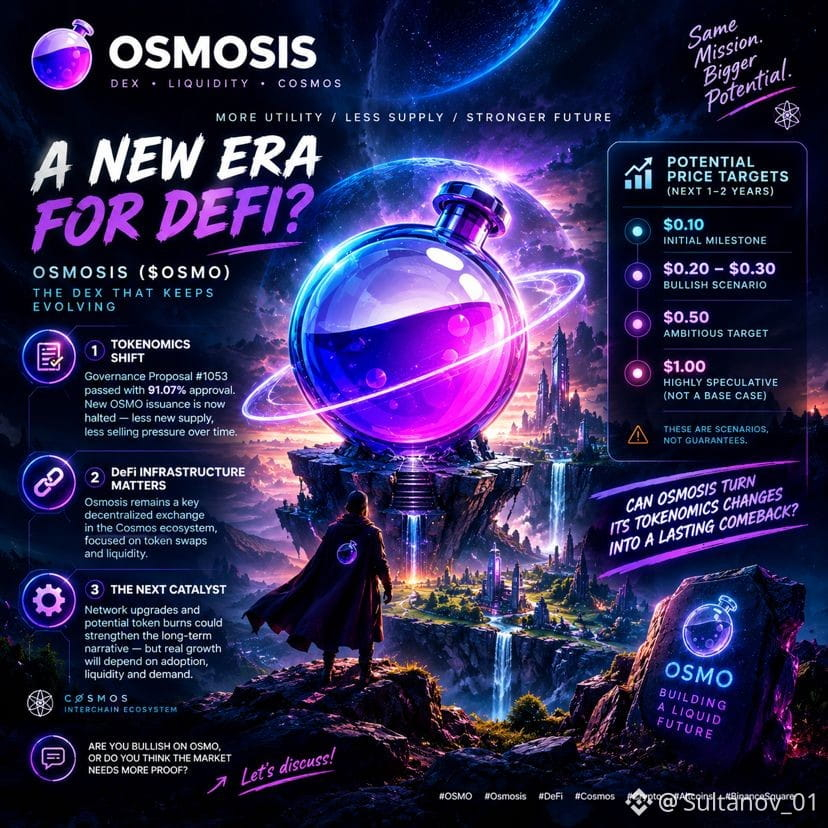
🚨 OSMOSIS ($OSMO): A NEW ERA FOR DEFI? 🔥
The market is watching Osmosis — and its tokenomics are entering a new chapter.
📈 What makes OSMO interesting right now?
💎 1. A major tokenomics shift
Governance Proposal #1053 passed with 91.07% approval, marking a major change to OSMO issuance. Less new supply could mean less selling pressure over time.
⚙️ 2. DeFi infrastructure matters
Osmosis remains an important decentralized exchange in the Cosmos ecosystem, focused on token swaps and liquidity.
🔥 3. The next catalyst
Network upgrades and potential token burns could strengthen the long-term narrative — but sustainable growth will depend on adoption, liquidity, and real demand.
🎯 My watchlist targets for the next 1–2 years:
* $0.30 — an initial milestone
* $0.30–$0.60 — a bullish scenario
* $1.00 — an ambitious target
* $3.00 — a highly speculative possibility, not a base case
These are scenarios, NOT guarantees.
🚀 The big question: Can Osmosis turn its tokenomics changes into a lasting comeback?
Are you bullish on OSMO, or do you think the market needs more proof?
👇 Let’s discuss!
$OSMO
#OSMO #OSMOSIS #defi #BinanceSquare
{spot}(OSMOUSDT)
🚨 OSMOSIS ($OSMO ): A NEW ERA FOR DEFI? 🔥
The market is watching Osmosis — and its tokenomics are entering a new chapter.
📈 What makes OSMO interesting right now?
💎 1. A major tokenomics shift
Governance Proposal #1053 passed with 91.07% approval, marking a major change to OSMO issuance. Less new supply could mean less selling pressure over time.
⚙️ 2. DeFi infrastructure matters
Osmosis remains an important decentralized exchange in the Cosmos ecosystem, focused on token swaps and liquidity.
🔥 3. The next catalyst
Network upgrades and potential token burns could strengthen the long-term narrative — but sustainable growth will depend on adoption, liquidity, and real demand.
🎯 My watchlist targets for the next 1–2 years:
* $0.30 — an initial milestone
* $0.30–$0.60 — a bullish scenario
* $1.00 — an ambitious target
* $3.00 — a highly speculative possibility, not a base case
These are scenarios, NOT guarantees.
🚀 The big question: Can Osmosis turn its tokenomics changes into a lasting comeback?
Are you bullish on OSMO, or do you think the market needs more proof?
👇 Let’s discuss!
$OSMO
#OSMO #OSMOSIS #defi #BinanceSquare
The market is watching Osmosis — and its tokenomics are entering a new chapter.
📈 What makes OSMO interesting right now?
💎 1. A major tokenomics shift
Governance Proposal #1053 passed with 91.07% approval, marking a major change to OSMO issuance. Less new supply could mean less selling pressure over time.
⚙️ 2. DeFi infrastructure matters
Osmosis remains an important decentralized exchange in the Cosmos ecosystem, focused on token swaps and liquidity.
🔥 3. The next catalyst
Network upgrades and potential token burns could strengthen the long-term narrative — but sustainable growth will depend on adoption, liquidity, and real demand.
🎯 My watchlist targets for the next 1–2 years:
* $0.30 — an initial milestone
* $0.30–$0.60 — a bullish scenario
* $1.00 — an ambitious target
* $3.00 — a highly speculative possibility, not a base case
These are scenarios, NOT guarantees.
🚀 The big question: Can Osmosis turn its tokenomics changes into a lasting comeback?
Are you bullish on OSMO, or do you think the market needs more proof?
👇 Let’s discuss!
$OSMO
#OSMO #OSMOSIS #defi #BinanceSquare
1
76
Übersetzung ansehen
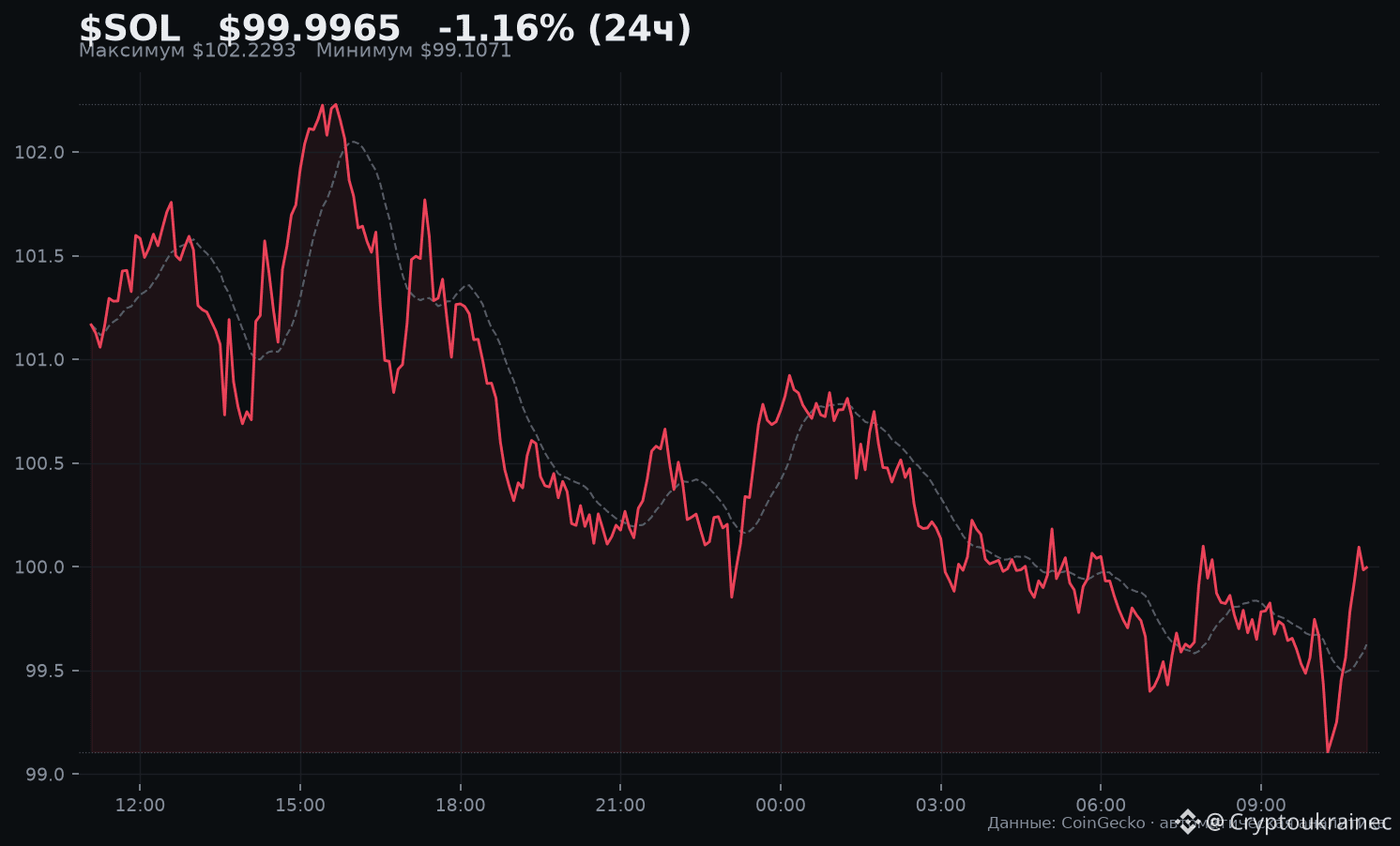
DeFi-протокол Bloom взломан: хакеры вывели $953K за считанные минуты. Атака демонстрирует системный риск: автоматизированные эксплойты действуют быстрее, чем команды безопасности успевают среагировать. BTC держится у $79,874. Пока капитал ротирует в DeFi — уязвимости будут монетизироваться.
$BTC $BNB #DeFi #Hack $SOL
DeFi-протокол Bloom взломан: хакеры вывели $953K за считанные минуты. Атака демонстрирует системный риск: автоматизированные эксплойты действуют быстрее, чем команды безопасности успевают среагировать. BTC держится у $79,874. Пока капитал ротирует в DeFi — уязвимости будут монетизироваться.
$BTC $BNB #DeFi #Hack $SOL
$BTC $BNB #DeFi #Hack $SOL
1
40
·
--
Die eigentliche Herausforderung: DeFi zugänglich machenBei der Verbreitung von Blockchain geht es nicht nur darum, neue Wallets zu gewinnen. Es geht darum, Menschen nach ihrer ersten Nutzung praktische Gründe dafür zu geben, dezentrale Anwendungen zu verwenden.
Das ist eine spannende Herausforderung für das TON-Ökosystem, und @ston_fi ist in diesem Zusammenhang ein Projekt, das man im Auge behalten sollte.
Als dezentrale Börse auf TON stellt STON.fi die Infrastruktur für den On-Chain-Tausch unterstützter Token bereit. Doch hinter jedem Tausch steht ein umfassenderes System aus Liquidität, Preisbildung, Smart Contracts und Nutzerentscheidungen.
Stellen wir uns jemanden vor, der zum ersten Mal in DeFi einsteigt. Diese Person muss verstehen, welchen Token sie erhält, welche Gebühren anfallen können, wie Transaktionen funktionieren und welche Risiken sie eingeht. Wenn diese Details verwirrend wirken, kann selbst ein technisch leistungsstarkes Protokoll schwierig zu nutzen sein.
Die eigentliche Herausforderung: DeFi zugänglich machen
Bei der Verbreitung von Blockchain geht es nicht nur darum, neue Wallets zu gewinnen. Es geht darum, Menschen nach ihrer ersten Nutzung praktische Gründe dafür zu geben, dezentrale Anwendungen zu verwenden.
Das ist eine spannende Herausforderung für das TON-Ökosystem, und @ston_fi ist in diesem Zusammenhang ein Projekt, das man im Auge behalten sollte.
Als dezentrale Börse auf TON stellt STON.fi die Infrastruktur für den On-Chain-Tausch unterstützter Token bereit. Doch hinter jedem Tausch steht ein umfassenderes System aus Liquidität, Preisbildung, Smart Contracts und Nutzerentscheidungen.
Stellen wir uns jemanden vor, der zum ersten Mal in DeFi einsteigt. Diese Person muss verstehen, welchen Token sie erhält, welche Gebühren anfallen können, wie Transaktionen funktionieren und welche Risiken sie eingeht. Wenn diese Details verwirrend wirken, kann selbst ein technisch leistungsstarkes Protokoll schwierig zu nutzen sein.
Das ist eine spannende Herausforderung für das TON-Ökosystem, und @ston_fi ist in diesem Zusammenhang ein Projekt, das man im Auge behalten sollte.
Als dezentrale Börse auf TON stellt STON.fi die Infrastruktur für den On-Chain-Tausch unterstützter Token bereit. Doch hinter jedem Tausch steht ein umfassenderes System aus Liquidität, Preisbildung, Smart Contracts und Nutzerentscheidungen.
Stellen wir uns jemanden vor, der zum ersten Mal in DeFi einsteigt. Diese Person muss verstehen, welchen Token sie erhält, welche Gebühren anfallen können, wie Transaktionen funktionieren und welche Risiken sie eingeht. Wenn diese Details verwirrend wirken, kann selbst ein technisch leistungsstarkes Protokoll schwierig zu nutzen sein.
69

·
--
Chainlink führt CustodySync ein: Verwahrte institutionelle Vermögenswerte können erstmals direkt in DeFi-Kreditmärkte eingebunden werden🔗 Chainlink führt CustodySync ein: Verwahrte institutionelle Vermögenswerte können erstmals direkt in DeFi-Kreditmärkte eingebunden werden
Chainlink hat heute CustodySync vorgestellt. Damit können regulierte Verwahrstellen die Vermögenswerte ihrer Kunden, die bei ihnen verwahrt werden, direkt an DeFi-Kreditmärkte anbinden – ohne die Vermögenswerte aus der Verwahrung transferieren zu müssen.
Die erste Implementierung erfolgte bei Anchorage Digital, der ersten bundesweit zugelassenen Digital-Asset-Bank der USA. Sie ist bereits in deren Atlas-Produkt verfügbar. Für die Bewertung werden einheitlich Chainlink Proof of Reserves und Preis-Feeds verwendet. So greifen die Off-Chain-Verwahrung und das On-Chain-Protokoll auf dieselben Daten zu und Fehl-Liquidationen aufgrund abweichender Bewertungen werden reduziert.
Chainlink führt CustodySync ein: Verwahrte institutionelle Vermögenswerte können erstmals direkt in DeFi-Kreditmärkte eingebunden werden
🔗 Chainlink führt CustodySync ein: Verwahrte institutionelle Vermögenswerte können erstmals direkt in DeFi-Kreditmärkte eingebunden werden
Chainlink hat heute CustodySync vorgestellt. Damit können regulierte Verwahrstellen die Vermögenswerte ihrer Kunden, die bei ihnen verwahrt werden, direkt an DeFi-Kreditmärkte anbinden – ohne die Vermögenswerte aus der Verwahrung transferieren zu müssen.
Die erste Implementierung erfolgte bei Anchorage Digital, der ersten bundesweit zugelassenen Digital-Asset-Bank der USA. Sie ist bereits in deren Atlas-Produkt verfügbar. Für die Bewertung werden einheitlich Chainlink Proof of Reserves und Preis-Feeds verwendet. So greifen die Off-Chain-Verwahrung und das On-Chain-Protokoll auf dieselben Daten zu und Fehl-Liquidationen aufgrund abweichender Bewertungen werden reduziert.
Chainlink hat heute CustodySync vorgestellt. Damit können regulierte Verwahrstellen die Vermögenswerte ihrer Kunden, die bei ihnen verwahrt werden, direkt an DeFi-Kreditmärkte anbinden – ohne die Vermögenswerte aus der Verwahrung transferieren zu müssen.
Die erste Implementierung erfolgte bei Anchorage Digital, der ersten bundesweit zugelassenen Digital-Asset-Bank der USA. Sie ist bereits in deren Atlas-Produkt verfügbar. Für die Bewertung werden einheitlich Chainlink Proof of Reserves und Preis-Feeds verwendet. So greifen die Off-Chain-Verwahrung und das On-Chain-Protokoll auf dieselben Daten zu und Fehl-Liquidationen aufgrund abweichender Bewertungen werden reduziert.
4
Anmelden und weiter Inhalte entdecken
Krypto-Nutzer weltweit auf Binance Square kennenlernen
⚡️ Bleib in Sachen Krypto stets am Puls.
💬 Die weltgrößte Kryptobörse vertraut darauf.
👍 Erhalte verlässliche Einblicke von verifizierten Creators.
E-Mail-Adresse/Telefonnummer
Trendthemen
1
#CanMicrosoftDeliverOnAI
1,022 Aufrufe
73 Kommentare
2
#CanGoogleDefindItsCore
619 Aufrufe
70 Kommentare
3
#FOMCWatch
9M Aufrufe
27,223 Kommentare
4
#EthereumDropsBelow$2300
5,400 Aufrufe
113 Kommentare
5
#BitcoinSlipsBelow$80KAgain
17,719 Aufrufe
82 Kommentare
6
#ThailandLaunchesWORPTStablecoinToQRPaymentApp
30,433 Aufrufe
516 Kommentare
7
#StrategySkipsBitcoinPurchasesSpends$205MOnSTRCBuybacks
7,995 Aufrufe
84 Kommentare
8
#BitmineAdds10452ETH
67,668 Aufrufe
910 Kommentare
9
#SouthKoreaConsidersEducationTaxOnCryptoExchanges
36,324 Aufrufe
672 Kommentare
10
#OCCUrgesCommunityBanksToEnterStablecoinPayments
28,430 Aufrufe
478 Kommentare